Edmilson Roque
Shared posts
Nonstandard transitions in the Kuramoto model: a role of asymmetry in natural frequency distributions
Phase-amplitude reduction of transient dynamics far from attractors for limit-cycling systems. (arXiv:1701.05428v2 [nlin.AO] UPDATED)
Phase reduction framework for limit-cycling systems based on isochrons has been used as a powerful tool for analyzing rhythmic phenomena. Recently, the notion of isostables, which complements the isochrons by characterizing amplitudes of the system state, i.e., deviations from the limit-cycle attractor, has been introduced to describe transient dynamics around the limit cycle [Wilson and Moehlis, Phys. Rev. E 94, 052213 (2016)]. In this study, we introduce a framework for a reduced phase-amplitude description of transient dynamics of stable limit-cycling systems. In contrast to the preceding study, the isostables are treated in a fully consistent way with the Koopman operator analysis, which enables us to avoid discontinuities of the isostables and to apply the framework to system states far from the limit cycle. We also propose a new, convenient bi-orthogonalization method to obtain the response functions of the amplitudes, which can be interpreted as an extension of the adjoint covariant Lyapunov vector to transient dynamics in limit-cycling systems. We illustrate the utility of the proposed reduction framework by estimating optimal injection timing of external input that efficiently suppresses deviations of the system state from the limit cycle in a model of a biochemical oscillator.
Macroscopic Models for Networks of Coupled Biological Oscillators. (arXiv:1701.04404v1 [q-bio.QM])
The study of synchronization in populations of coupled biological oscillators is fundamental to many areas of biology to include neuroscience, cardiac dynamics and circadian rhythms. Studying these systems may involve tracking the concentration of hundreds of variables in thousands of individual cells resulting in an extremely high-dimensional description of the system. However, for many of these systems the behaviors of interest occur on a collective or macroscopic scale. We define a new macroscopic reduction for networks of coupled oscillators motivated by an elegant structure we find in experimental measurements of circadian gene expression and several mathematical models for coupled biological oscillators. We characterize the emergence of this structure through a simple argument and demonstrate its applicability to stochastic and heterogeneous systems of coupled oscillators. Finally, we perform the macroscopic reduction for the heterogeneous stochastic Kuramoto equation and compare the low-dimensional macroscopic model with numerical results from the high-dimensional microscopic model.
Fundamental difference between superblockers and superspreaders in networks
Author(s): Filippo Radicchi and Claudio Castellano
Two important problems regarding spreading phenomena in complex topologies are the optimal selection of node sets either to minimize or maximize the extent of outbreaks. Both problems are nontrivial when a small fraction of the nodes in the network can be used to achieve the desired goal. The minimi…
[Phys. Rev. E 95, 012318] Published Wed Jan 18, 2017
Optimizing Synchronization Stability of the Kuramoto Model in Complex Networks and Power Grids. (arXiv:1607.04509v2 [math.OC] UPDATED)
Maintaining the stability of synchronization state is crucial for the functioning of many natural and artificial systems. In this study, we develop methods to optimize the synchronization stability of the Kuramoto model by minimizing the dominant Lyapunov exponent. With the help of the recently proposed cut-set space approximation of the steady states, we greatly simplify the objective function, and further derive its gradient and Hessian with respect to natural frequencies, which leads to an efficient algorithm with the quasi-Newton's method. The optimized systems are demonstrated to achieve better synchronization stability for the Kuramoto model with or without inertia in certain regimes. Hence our method is applicable in improving the stability of power grids. It is also viable to adjust the coupling strength of each link to improve the stability of the system. Various operational constraints can also be easily integrated into our scope by employing the interior point method in convex optimization. The properties of the optimized networks are also discussed.
Lie-B\"acklund symmetry and non-invariant solutions of nonlinear evolution equations. (arXiv:1701.03722v1 [math.AP])
We study the symmetry reduction of nonlinear partial differential equations which are used for describing diffusion processes in nonhomogeneous medium. We find ansatzes reducing partial differential equations to systems of ordinary differential equations. The ansatzes are constructed by using operators of Lie-B\"acklund symmetry of third order ordinary differential equation. The method gives the possibility to find solutions which cannot be obtained by virtue of classical Lie method. Such solutions have been constructed for nonlinear diffusion equations which are invariant with respect to one-parameter, two-parameter and three-parameter Lie groups of point transformations.
Superfluid Black Holes
Author(s): Robie A. Hennigar, Robert B. Mann, and Erickson Tjoa
We present what we believe is the first example of a “λ-line” phase transition in black hole thermodynamics. This is a line of (continuous) second order phase transitions which in the case of liquid He4 marks the onset of superfluidity. The phase transition occurs for a class of asymptotically anti–…
[Phys. Rev. Lett. 118, 021301] Published Thu Jan 12, 2017
Approximate-master-equation approach for the Kinouchi-Copelli neural model on networks
Author(s): Chong-Yang Wang, Zhi-Xi Wu, and Michael Z. Q. Chen
In this work, we use the approximate-master-equation approach to study the dynamics of the Kinouchi-Copelli neural model on various networks. By categorizing each neuron in terms of its state and also the states of its neighbors, we are able to uncover how the coupled system evolves with respective …
[Phys. Rev. E 95, 012310] Published Thu Jan 12, 2017
Optimizing synchronization stability of the Kuramoto model in complex networks and power grids
Author(s): Bo Li and K. Y. Michael Wong
Maintaining the stability of synchronization state is crucial for the functioning of many natural and artificial systems. In this study, we develop methods to optimize the synchronization stability of the Kuramoto model by minimizing the dominant Lyapunov exponent. Using the recently proposed cut-se…
[Phys. Rev. E 95, 012207] Published Fri Jan 13, 2017
Equivalence between non-Markovian and Markovian dynamics in epidemic spreading processes. (arXiv:1701.02805v1 [physics.soc-ph])
A general formalism is introduced to allow the steady state of non-Markovian processes on networks to be reduced to equivalent Markovian processes on the same substrates. The example of an epidemic spreading process is considered in detail, where all the non-Markovian aspects are shown to be captured within a single parameter, the effective infection rate. Remarkably, this result is independent of the topology of the underlying network, as demonstrated by numerical simulations on two-dimensional lattices and various types of random networks. Furthermore, an analytic approximation for the effective infection rate is introduced, which enables the calculation of the critical point and of the critical exponents for the non-Markovian dynamics.
Curing critical links in oscillator networks as power flow models
Dynamics of Panic Pedestrians in Evacuation. (arXiv:1701.01236v1 [nlin.CG])
A modified lattice gas model is proposed to study pedestrian evacuation from a single room. The payoff matrix in this model represents the complicated interactions between selfish individuals, and the mean force imposed on an individual is given by considering the impacts of neighborhood payoff, walls, and defector herding. Each passer-by moves to his selected location according to the Fermi function, and the average velocity of pedestrian flow is defined as a function of the motion rule. Two pedestrian types are included: cooperators, who adhere to the evacuation instructions; and defectors, who ignore the rules and act individually. It is observed that the escape time increases with the panic level, and the system remains smooth for a low panic level, but exhibits three stages for a high panic level. We prove that the panic level determines the dynamics of this system, and the initial density of cooperators has a negligible impact. The system experiences three phases, a single phase of cooperator, a mixed two-phase pedestrian, and a single phase of defector sequentially as the panic level upgrades. The phase transition has been proven basically robust to the changes of empty site contribution, wall's pressure, and noise amplitude in the motion rule. It is further shown that pedestrians derive the greatest benefit from overall cooperation, but are trapped in the worst situation if they are all defectors.
Braess paradox in a network of totally asymmetric exclusion processes
Author(s): Stefan Bittihn and Andreas Schadschneider
We study the Braess paradox in the transport network as originally proposed by Braess with totally asymmetric exclusion processes (TASEPs) on the edges. The Braess paradox describes the counterintuitive situation in which adding an edge to a road network leads to a user optimum with higher travel ti…
[Phys. Rev. E 94, 062312] Published Wed Dec 21, 2016
Control of epidemics via social partnership adjustment
Author(s): Bin Wu, Shanjun Mao, Jiazeng Wang, and Da Zhou
Epidemic control is of great importance for human society. Adjusting interacting partners is an effective individualized control strategy. Intuitively, it is done either by shortening the interaction time between susceptible and infected individuals or by increasing the opportunities for contact bet…
[Phys. Rev. E 94, 062314] Published Fri Dec 23, 2016
Spectral Entropies as Information-Theoretic Tools for Complex Network Comparison
Author(s): Manlio De Domenico and Jacob Biamonte
Disorder—known as entropy—is inherent to all systems, natural and manmade. A way of quantifying a complex network’s entropy is proposed.

[Phys. Rev. X 6, 041062] Published Wed Dec 21, 2016
Nonequilibrium Thermodynamics of Chemical Reaction Networks: Wisdom from Stochastic Thermodynamics
Author(s): Riccardo Rao and Massimiliano Esposito
Coupled chemical reactions play an integral role in cellular functioning. A thermodynamical theory of chemical networks that process energy and information from their surroundings is presented.

[Phys. Rev. X 6, 041064] Published Thu Dec 22, 2016
Synchronization and long-time memory in neural networks with inhibitory hubs and synaptic plasticity
Author(s): Elena Bertolotti, Raffaella Burioni, Matteo di Volo, and Alessandro Vezzani
\footnotesize We investigate the dynamical role of inhibitory and highly connected nodes (hub) in synchronization and input processing of leaky-integrate-and-fire neural networks with short term synaptic plasticity. We take advantage of a heterogeneous mean-field approximation to encode the role of …[Phys. Rev. E] Published Mon Dec 12, 2016
Multi-resolution community detection in massive networks. (arXiv:1612.04668v2 [physics.soc-ph] UPDATED)
Aiming at improving the efficiency and accuracy of community detection in complex networks, we proposed a new algorithm, which is based on the idea that communities could be detected from subnetworks by comparing the internal and external cohesion of each subnetwork. In our method, similar nodes are firstly gathered into meta-communities, which are then decided to be retained or merged through a multilevel label propagation process, until all of them meet our community criterion. Our algorithm requires neither any priori information of communities nor optimization of any objective function. Experimental results on both synthetic and real-world networks show that, our algorithm performs quite well and runs extremely fast, compared with several other popular algorithms. By tuning a resolution parameter, we can also observe communities at different scales, so this could reveal the hierarchical structure of the network. To further explore the effectiveness of our method, we applied it to the E-Coli transcriptional regulatory network, and found that all the identified modules have strong structural and functional coherence.
Echo Behavior in Large Populations of Chemical Oscillators
Author(s): Tianran Chen, Mark R. Tinsley, Edward Ott, and Kenneth Showalter
A set of over 1000 tiny, parallel chemical reactions demonstrates the first example of an echo phenomenon in a chemical system.

[Phys. Rev. X 6, 041054] Published Thu Dec 15, 2016
Uncovering the Dynamics of Crowdlearning and the Value of Knowledge. (arXiv:1612.04831v1 [cs.SI])
Learning from the crowd has become increasingly popular in the Web and social media. There is a wide variety of crowdlearning sites in which, on the one hand, users learn from the knowledge that other users contribute to the site, and, on the other hand, knowledge is reviewed and curated by the same users using assessment measures such as upvotes or likes.
In this paper, we present a probabilistic modeling framework of crowdlearning, which uncovers the evolution of a user's expertise over time by leveraging other users' assessments of her contributions. The model allows for both off-site and on-site learning and captures forgetting of knowledge. We then develop a scalable estimation method to fit the model parameters from millions of recorded learning and contributing events. We show the effectiveness of our model by tracing activity of ~25 thousand users in Stack Overflow over a 4.5 year period. We find that answers with high knowledge value are rare. Newbies and experts tend to acquire less knowledge than users in the middle range. Prolific learners tend to be also proficient contributors that post answers with high knowledge value.
Infrequent social interaction can accelerate the spread of a persuasive idea
Author(s): James Burridge and Michał Gnacik
We study the spread of a persuasive new idea through a population of continuous time random walkers in one dimension. The idea spreads via social gatherings involving groups of nearby walkers who act according to a biased ``majority rule'': After each gathering, the group takes on the new idea if mo…[Phys. Rev. E] Published Wed Dec 14, 2016
Influence of trust in the spreading of information
Author(s): Hongrun Wu, Alex Arenas, and Sergio Gómez
The understanding and prediction of information diffusion processes on networks is a major challenge in network theory with many implications in social sciences. Many theoretical advances came at the hand of stochastic spreading models. Nevertheless, these stochastic models overlooked the influence …[Phys. Rev. E] Published Thu Dec 15, 2016
Percolation in real multiplex networks
Author(s): Ginestra Bianconi and Filippo Radicchi
We present an exact mathematical framework able to describe site-percolation transitions in real multiplex networks. Specifically, we consider the average percolation diagram valid over an infinite number of random configurations where nodes are present in the system with given probability. The appr…
[Phys. Rev. E 94, 060301(R)] Published Fri Dec 16, 2016
Unification of theoretical approaches for epidemic spreading on complex networks. (arXiv:1612.04216v1 [physics.soc-ph])
Models of epidemic spreading on complex networks have attracted great attention among researchers in physics, mathematics, and epidemiology due to their success in predicting and controlling scenarios of epidemic spreading in real-world scenarios. To understand the interplay between epidemic spreading and the topology of a contact network, several outstanding theoretical approaches have been developed. An accurate theoretical approach describing the spreading dynamics must take both the network topology and dynamical correlations into consideration at the expense of increasing the complexity of the equations. In this short survey we unify the most widely used theoretical approaches for epidemic spreading on complex networks in terms of increasing complexity, including the mean-field, the heterogeneous mean-field, the quench mean-field, dynamical message-passing, link percolation, and pairwise approximation. We build connections among these approaches to provide new insights into developing an accurate theoretical approach to spreading dynamics on complex networks.
Quantifying perceived impact of scientific publications. (arXiv:1612.03962v1 [cs.DL])
Citations are commonly held to represent scientific impact. To date, however, there is no empirical evidence in support of this postulate that is central to research assessment exercises and Science of Science studies. Here, we report on the first empirical verification of the degree to which citation numbers represent scientific impact as it is actually perceived by experts in their respective field. We run a large-scale survey of about 2000 corresponding authors who performed a pairwise impact assessment task across more than 20000 scientific articles. Results of the survey show that citation data and perceived impact do not align well, unless one properly accounts for strong psychological biases that affect the opinions of experts with respect to their own papers vs. those of others. First, researchers tend to largely prefer their own publications to the most cited papers in their field of research. Second, there is only a mild positive correlation between the number of citations of top-cited papers in given research areas and expert preference in pairwise comparisons. This also applies to pairs of papers with several orders of magnitude differences in their total number of accumulated citations. However, when researchers were asked to choose among pairs of their own papers, thus eliminating the bias favouring one's own papers over those of others, they did systematically prefer the most cited article. We conclude that, when scientists have full information and are making unbiased choices, expert opinion on impact is congruent with citation numbers.
A priority-based model for smartphone screen touches. (arXiv:1612.03196v4 [cs.SI] UPDATED)
The distribution of intervals between human actions such as email posts or keyboard strokes demonstrates distinct properties at short vs long time scales. For instance, at long time scales, it has been shown that those inter-event intervals follow a scale-invariant (or power-law) distribution. In contrast, little do we know about the events that occur at the shorter time-scales and how they relate to the scale-invariant pattern. Here, we analysed the intervals between smartphone screen touches of 84 individuals which span several orders of magnitudes (from milliseconds to days). To capture these intervals, we propose a priority-based generative model for smartphone touching events. At short-time scale, the model is governed by refractory effects, while at longer time scales, the inter-touch intervals are governed by the priority difference between smartphone tasks and other tasks. The flexibility of the model allows to capture inter-individual variations at short and long time scales while its tractability enables very efficient model fitting. We show that each individuals has a specific power-low exponent which is tightly related to the effective refractory time constant suggesting that the fine motor control properties (which influence short intervals) are related to the higher cognitive processes (which affect longer intervals).
Nonlocality in complex networks. (arXiv:1612.03193v2 [physics.soc-ph] UPDATED)
Understanding the interactions among nodes in complex networks are of great importance, since it shows how these nodes are cooperatively supporting the functioning of the systems. Scientists have developed numerous methods and approaches to uncover the underlying physical connectivity based on measurements of functional quantities of the nodes states. However, little is known about how this local connectivity impacts on the non-local interactions and exchanges of physical flows between arbitrary nodes. In this paper, we show how to determine the non-local interchange of physical flows between any pair of nodes in a complex network, even if they are not physically connected by an edge. We show that such non-local interactions can happen in a steady or dynamic state of either a linear or non-linear network. Our approach can be used to conservative flow networks and, under certain conditions, to bidirectional flow networks .
Another phase transition in the Axelrod model. (arXiv:1612.02537v1 [physics.soc-ph])
Axelrod's model of cultural dissemination, despite its apparent simplicity, demonstrates complex behavior that has been of much interest in statistical physics. Despite the many variations and extensions of the model that have been investigated, a systematic investigation of the effects of changing the size of the neighborhood on the lattice in which interactions can occur has not been made. Here we investigate the effect of varying the radius R of the von Neumann neighborhood in which agents can interact. We show, in addition to the well-known phase transition at the critical value of q, the number of traits, another phase transition at a critical value of R, and draw a q -- R phase diagram for the Axelrod model on a square lattice. In addition, we present a mean-field approximation of the model in which behavior on an infinite lattice can be analyzed.
Densification and structural transitions in networks that grow by node copying
Author(s): U. Bhat, P. L. Krapivsky, R. Lambiotte, and S. Redner
The authors introduce a simple growing network model that allows them to give extensive analytical results for its properties. The model grows by a copying mechanism in which a new node attaches to a randomly selected target node and also, with copying probability p, to each of the neighbors of the target. A key finding is that a transition from a sparse to a dense regime occurs as the copying probability increases beyond 1/2.

[Phys. Rev. E 94, 062302] Published Thu Dec 08, 2016
How Bright is the Proton? A Precise Determination of the Photon Parton Distribution Function
Author(s): Aneesh Manohar, Paolo Nason, Gavin P. Salam, and Giulia Zanderighi
The distribution of photons inside the proton can be determined in a model-independent way from electron-proton scattering data.
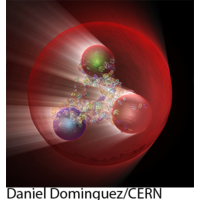
[Phys. Rev. Lett. 117, 242002] Published Fri Dec 09, 2016