In this paper, we focus on the topic Synchronization and consensus of Complex Networks and their relationships. It is revealed that two topics are closely relating to each other and all results given in \cite{Li} can be obtained by the results in \cite{Lu2006}.
Edmilson Roque
Shared posts
01 Feb 21:45
Synchronization, Consensus of Complex Networks and their relationships. (arXiv:1609.06006v3 [nlin.AO] UPDATED)
by Tianping Chen
Edmilson Roque likes this
01 Feb 00:42
Redundant Interdependencies Boost the Robustness of Multiplex Networks
by Filippo Radicchi and Ginestra Bianconi
Edmilson RoqueThe guys never stops, never...
Author(s): Filippo Radicchi and Ginestra Bianconi
When analyzing the robustness of complex, interconnected networks—such as interdependent infrastructures—models often predict that the system becomes more fragile as the number of layers increases. A new model indicates that such multilayered networks can instead be made more robust with the introduction of redundant interdependencies.
[Phys. Rev. X 7, 011013] Published Tue Jan 31, 2017
Edmilson Roque, Thomas likes this
31 Jan 22:55
Power-law statistics and universal scaling in the absence of criticality
by Jonathan Touboul and Alain Destexhe
Author(s): Jonathan Touboul and Alain Destexhe
Critical states are sometimes identified experimentally through power-law statistics or universal scaling functions. We show here that such features naturally emerge from networks in self-sustained irregular regimes away from criticality. In these regimes, statistical physics theory of large interac…
[Phys. Rev. E 95, 012413] Published Tue Jan 31, 2017
Edmilson Roque likes this
31 Jan 18:05
Symmetry reduction and soliton-like solutions for the generalized Korteweg-de Vries equation. (arXiv:1701.08460v2 [math-ph] UPDATED)
by Juan Manuel Conde Martín, David Blázquez-Sanz
We analyze the gKdV equation, a generalized version of Korteweg-de Vries with an arbitrary function $f(u)$. In general, for a function $f(u)$ the Lie algebra of symmetries of gKdV is the $2$-dimensional Lie algebra of translations of the plane $xt$. This implies the existence of plane wave solutions. Indeed, for some specific values of $f(u)$ the equation gKdV admits a Lie algebra of symmetries of dimension grater than $2$. We compute the similarity reductions corresponding to these exceptional symmetries. We prove that the gKdV equation has soliton-like solutions under some general assumptions, and we find a closed formula for the plane wave solutions, that are of hyperbolic secant type.
Edmilson Roque likes this
31 Jan 18:03
Qualitative changes in phase-response curve and synchronization at the saddle-node-loop bifurcation
by Janina Hesse, Jan-Hendrik Schleimer, and Susanne Schreiber
Author(s): Janina Hesse, Jan-Hendrik Schleimer, and Susanne Schreiber
Prominent changes in neuronal dynamics have previously been attributed to a specific switch in onset bifurcation, the Bogdanov-Takens (BT) point. This study unveils another, relevant and so far underestimated transition point: the saddle-node loop bifurcation, which can be reached by several paramet…[Phys. Rev. E] Published Mon Jan 30, 2017
Edmilson Roque likes this
31 Jan 18:03
Brazilian Congress structural balance analysis. (arXiv:1609.00767v2 [cs.SI] UPDATED)
by Mario Levorato, Yuri Frota
In this work, we study the behavior of Brazilian politicians and political parties with the help of clustering algorithms for signed social networks. For this purpose, we extract and analyze a collection of signed networks representing voting sessions of the lower house of Brazilian National Congress. We process all available voting data for the period between 2011 and 2016, by considering voting similarities between members of the Congress to define weighted signed links. The solutions obtained by solving Correlation Clustering (CC) problems are the basis for investigating deputies voting networks as well as questions about loyalty, leadership, coalitions, political crisis, and social phenomena such as mediation and polarization.
Edmilson Roque likes this
28 Jan 13:32
Generalized entropies and the similarity of texts
by Eduardo G Altmann, Laércio Dias and Martin Gerlach
We show how generalized Gibbs–Shannon entropies can provide new insights on the statistical
properties of texts. The universal distribution of word frequencies (Zipf’s law) implies that the
generalized entropies, computed at the word level, are dominated by words in a specific range of
frequencies. Here we show that this is the case not only for the generalized entropies but also for
the generalized (Jensen–Shannon) divergences, used to compute the similarity between different
texts. This finding allows us to identify the contribution of specific words (and word frequencies)
for the different generalized entropies and also to estimate the size of the databases needed to
obtain a reliable estimation of the divergences. We test our results in large databases of books
(from the google n-gram database) and scientific papers (indexed by Web of Science).
Edmilson Roque, Thomas likes this
27 Jan 20:11
Impact of centrality on cooperative processes
by Sandro M. Reia, Sebastian Herrmann, and José F. Fontanari
Author(s): Sandro M. Reia, Sebastian Herrmann, and José F. Fontanari
The solution of today's complex problems requires the grouping of task forces whose members are usually connected remotely over long physical distances and different time zones. Hence, understanding the effects of imposed communication patterns (i.e., who can communicate with whom) on group performa…[Phys. Rev. E] Published Wed Jan 25, 2017
Edmilson Roque, Thomas likes this
27 Jan 20:08
Using Hamiltonian control to desynchronize Kuramoto oscillators
by Oltiana Gjata, Malbor Asllani, Luigi Barletti, and Timoteo Carletti
Author(s): Oltiana Gjata, Malbor Asllani, Luigi Barletti, and Timoteo Carletti
Many coordination phenomena are based on a synchronisation process, whose global behaviour emerges from the interactions among the individual parts. Often in nature, such self-organised mechanism allows the system to behave as a whole and thus grounding its very first existence, or expected function…[Phys. Rev. E] Published Fri Jan 27, 2017
Edmilson Roque, Thomas likes this
27 Jan 16:45
One-Dimensional Self-Organization and Nonequilibrium Phase Transition in a Hamiltonian System
by Jiao Wang and Giulio Casati
Author(s): Jiao Wang and Giulio Casati
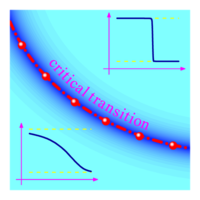
Nonequilibrium phase transitions, known from 2D and 3D systems, are also demonstrated in 1D, with implications for transport in these systems.
[Phys. Rev. Lett. 118, 040601] Published Fri Jan 27, 2017
Edmilson Roque likes this
27 Jan 16:44
Universal Dichotomy for Dynamical Systems with Variable Delay
by Andreas Otto, David Müller, and Günter Radons
Author(s): Andreas Otto, David Müller, and Günter Radons
We show that the dynamics of systems with a time-dependent delay is fundamentally affected by the functional form of the retarded argument. Associating with the latter an iterated map, the access map, and a corresponding Koopman operator, we identify two universality classes. Members in the first ar…
[Phys. Rev. Lett. 118, 044104] Published Fri Jan 27, 2017
Edmilson Roque likes this
27 Jan 13:06
[Working Life] A scientist on any schedule
by Audrey L. Mayer
Author: Audrey L. Mayer
Lei Zhang, Edmilson Roque and one other like this
27 Jan 13:04
Complexity in synchronized and non-synchronized states: A comparative analysis and application
Abstract
This analysis shows the dynamics of a hyperchaotic system changes from its original state to a synchronized state with nonlinear controller. The decreasing complexity of the coupled systems also quantifies the loss of information from its original state to the synchronized state. We proposed and modified a chaos synchronization based secure communication scheme to implement in case of non synchronization. The scheme is designed and illustrated using examples and simulations. Security analysis of the proposed scheme is also investigated. This analysis gives a new direction on chaos based cryptography in case of the coupled systems completely in non synchronized state.
Thomas, Edmilson Roque likes this
26 Jan 16:59
Phase reduction theory for hybrid nonlinear oscillators. (arXiv:1604.06633v2 [nlin.AO] UPDATED)
by Sho Shirasaka, Wataru Kurebayashi, Hiroya Nakao
Hybrid dynamical systems characterized by discrete switching of smooth dynamics have been used to model various rhythmic phenomena. However, the phase reduction theory, a fundamental framework for analyzing the synchronization of limit-cycle oscillations in rhythmic systems, has mostly been restricted to smooth dynamical systems. Here we develop a general phase reduction theory for weakly perturbed limit cycles in hybrid dynamical systems that facilitates analysis, control, and optimization of nonlinear oscillators whose smooth models are unavailable or intractable. On the basis of the generalized theory, we analyze injection locking of hybrid limit-cycle oscillators by periodic forcing and reveal their characteristic synchronization properties, such as ultrafast and robust entrainment to the periodic forcing and logarithmic scaling at the synchronization transition. We also illustrate the theory by analyzing the synchronization dynamics of a simple physical model of biped locomotion.
Edmilson Roque likes this
26 Jan 16:59
A Network of Networks Approach to Interconnected Power Grids. (arXiv:1701.06968v1 [physics.soc-ph])
by Paul Schultz, Frank Hellmann, Jobst Heitzig, Jürgen Kurths
We present two different approaches to model power grids as interconnected networks of networks. Both models are derived from a model for spatially embedded mono-layer networks and are generalised to handle an arbitrary number of network layers. The two approaches are distinguished by their use case. The static glue stick construction model yields a multi-layer network from a predefined layer interconnection scheme, i.e. different layers are attached with transformer edges. It is especially suited to construct multi-layer power grids with a specified number of nodes in and transformers between layers. We contrast it with a genuine growth model which we label interconnected layer growth model.
Edmilson Roque likes this
26 Jan 16:59
Jamming transitions induced by an attraction in pedestrian flow. (arXiv:1701.06909v5 [physics.soc-ph] UPDATED)
by Jaeyoung Kwak, Hang-Hyun Jo, Tapio Luttinen, Iisakki Kosonen
We numerically study jamming transitions in pedestrian flow interacting with an attraction, mostly based on the social force model for pedestrians who can join the attraction. We formulate the joining probability as a function of social influence from others, reflecting that individual choice behavior is likely influenced by others. By controlling pedestrian influx and the social influence parameter, we identify various pedestrian flow patterns. For the bidirectional flow scenario, we observe a transition from the free flow phase to the freezing phase, in which oppositely walking pedestrians reach a complete stop and block each other. On the other hand, a different transition behavior appears in the unidirectional flow scenario, i.e., from the free flow phase to the localized jam phase and then to the extended jam phase. It is also observed that the extended jam phase can end up in freezing phenomena with a certain probability when pedestrian flux is high with strong social influence. This study highlights that attractive interactions between pedestrians and an attraction can trigger jamming transitions by increasing the number of conflicts among pedestrians near the attraction. In order to avoid excessive pedestrian jams, we suggest suppressing the number of conflicts under a certain level by moderating pedestrian influx especially when the social influence is strong.
Edmilson Roque likes this
26 Jan 10:49
Symmetry Analysis and Conservation Laws of some third-order Difference Equations. (arXiv:1701.06560v1 [nlin.SI])
by S. Mamba, M.K. Folly-Gbetoula, A.H. Kara
We derive a method for finding Lie Symmetries for third-order difference equations. We use these symmetries to reduce the order of the difference equations and hence obtain the solutions of some third-order difference equations. We also introduce a technique for obtaining their first integrals.
Edmilson Roque likes this
26 Jan 10:46

Animal behaviour: How ants navigate backwards
Animal behaviour: How ants navigate backwards
Nature 541, 7638 (2017). doi:10.1038/541439b
Ants can find their way home even when forced to walk backwards while carrying food, showing that they are capable of complex navigational behaviour.Ants of many species walk forwards when carrying small items of food, but move backwards to drag larger items behind them.
Edmilson Roque likes this
24 Jan 17:34
Dynamics of oscillators globally coupled via two mean fields. (arXiv:1701.06499v2 [nlin.CD] UPDATED)
by Xiyun Zhang, Arkady Pikovsky, Zonghua Liu
Many studies of synchronization properties of coupled oscillators, based on the classical Kuramoto approach, focus on ensembles coupled via a mean field. Here we introduce a setup of Kuramoto-type phase oscillators coupled via two mean fields. We derive stability properties of the incoherent state and find traveling wave solutions with different locking patterns; stability properties of these waves are found numerically. Mostly nontrivial states appear when the two fields compete, i.e. one tends to synchronize oscillators while the other one desynchronizes them. Here we identify normal branches which bifurcate from the incoherent state in a usual way, and anomalous branches, appearance of which cannot be described as a bifurcation. Furthermore, hybrid branches combining properties of both are described. In the situations where no stable traveling wave exists, modulated quasiperiodic in time dynamics is observed. Our results indicate that a competition between two coupling channels can lead to a complex system behavior, providing a potential generalized framework for understanding of complex phenomena in natural oscillatory systems.
Edmilson Roque likes this
24 Jan 17:33
Time-varying coupling functions: Dynamical inference and cause of synchronization transitions
by Tomislav Stankovski
Author(s): Tomislav Stankovski
Interactions in nature can be described by their coupling strength, direction of coupling and coupling function. The coupling strength and directionality are relatively well understood and studied, at least for two interacting systems, however there can be a complexity in the interactions uniquely d…[Phys. Rev. E] Published Mon Jan 23, 2017
Edmilson Roque likes this
23 Jan 23:37
Phase reduction theory for hybrid nonlinear oscillators
by Sho Shirasaka, Wataru Kurebayashi, and Hiroya Nakao
Author(s): Sho Shirasaka, Wataru Kurebayashi, and Hiroya Nakao
Hybrid dynamical systems characterized by discrete switching of smooth dynamics have been used to model various rhythmic phenomena. However, the phase reduction theory, a fundamental framework for analyzing the synchronization of limit-cycle oscillations in rhythmic systems, has mostly been restrict…
[Phys. Rev. E 95, 012212] Published Mon Jan 23, 2017
Edmilson Roque, Thomas likes this
23 Jan 23:36
Network susceptibilities: Theory and applications
by Debsankha Manik, Martin Rohden, Henrik Ronellenfitsch, Xiaozhu Zhang, Sarah Hallerberg, Dirk Witthaut, and Marc Timme
Author(s): Debsankha Manik, Martin Rohden, Henrik Ronellenfitsch, Xiaozhu Zhang, Sarah Hallerberg, Dirk Witthaut, and Marc Timme
We introduce the concept of network susceptibilities quantifying the response of the collective dynamics of a network to small parameter changes. We distinguish two types of susceptibilities: vertex susceptibilities and edge susceptibilities, measuring the responses due to changes in the properties …
[Phys. Rev. E 95, 012319] Published Mon Jan 23, 2017
Edmilson Roque, Thomas likes this
23 Jan 23:24
Diversity of chimera-like patterns from a model of 2D arrays of neurons with nonlocal coupling. (arXiv:1701.05671v1 [nlin.CD])
by Changhai Tian, Xiyun Zhang, Zhenhua Wang, Zonghua Liu
Chimera states have been studied in 1D arrays, and a variety of different chimera states have been found using different models. Research has recently been extended to 2D arrays but only to phase models of them. Here, we extend it to a nonphase model of 2D arrays of neurons and focus on the influence of nonlocal coupling. Using extensive numerical simulations, we find, surprisingly, that this system can show most types of previously observed chimera states, in contrast to previous models, where only one or a few types of chimera states can be observed in each model. We also find that this model can show some special chimera-like patterns such as gridding and multicolumn patterns, which were previously observed only in phase models. Further, we present an effective approach, i.e., removing some of the coupling links, to generate heterogeneous coupling, which results in diverse chimera-like patterns and even induces transformations from one chimera-like pattern to another.
Edmilson Roque likes this
23 Jan 23:24
Oscillators that sync and swarm. (arXiv:1701.05670v2 [nlin.AO] UPDATED)
by Kevin P. O'Keeffe, Steven H. Strogatz
Synchronization occurs in many natural and technological systems, from cardiac pacemaker cells to coupled lasers. In the synchronized state, the individual cells or lasers coordinate the timing of their oscillations, but they do not move through space. A complementary form of self-organization occurs among swarming insects, flocking birds, or schooling fish; now the individuals move through space, but without conspicuously altering their internal states. Here we explore systems in which both synchronization and swarming occur together. Specifically, we consider oscillators whose phase dynamics and spatial dynamics are coupled. We call them swarmalators, to highlight their dual character. A case study of a generalized Kuramoto model predicts five collective states as possible long-term modes of organization. These states may be observable in groups of sperm, Japanese tree frogs, colloidal suspensions of magnetic particles, and other biological and physical systems in which self-assembly and synchronization interact.
Edmilson Roque likes this
23 Jan 17:04

Weak synchronization and large-scale collective oscillation in dense bacterial suspensions
by Chong Chen
Nature advance online publication 23 January 2017. doi:10.1038/nature20817
Authors: Chong Chen, Song Liu, Xia-qing Shi, Hugues Chaté & Yilin Wu
Collective oscillatory behaviour is ubiquitous in nature, having a vital role in many biological processes from embryogenesis and organ development to pace-making in neuron networks. Elucidating the mechanisms that give rise to synchronization is essential to the understanding of biological self-organization. Collective oscillations in biological multicellular systems often arise from long-range coupling mediated by diffusive chemicals, by electrochemical mechanisms, or by biomechanical interaction between cells and their physical environment. In these examples, the phase of some oscillatory intracellular degree of freedom is synchronized. Here, in contrast, we report the discovery of a weak synchronization mechanism that does not require long-range coupling or inherent oscillation of individual cells. We find that millions of motile cells in dense bacterial suspensions can self-organize into highly robust collective oscillatory motion, while individual cells move in an erratic manner, without obvious periodic motion but with frequent, abrupt and random directional changes. So erratic are individual trajectories that uncovering the collective oscillations of our micrometre-sized cells requires individual velocities to be averaged over tens or hundreds of micrometres. On such large scales, the oscillations appear to be in phase and the mean position of cells typically describes a regular elliptic trajectory. We found that the phase of the oscillations is organized into a centimetre-scale travelling wave. We present a model of noisy self-propelled particles with strictly local interactions that accounts faithfully for our observations, suggesting that self-organized collective oscillatory motion results from spontaneous chiral and rotational symmetry breaking. These findings reveal a previously unseen type of long-range order in active matter systems (those in which energy is spent locally to produce non-random motion). This mechanism of collective oscillation may inspire new strategies to control the self-organization of active matter and swarming robots.
Edmilson Roque likes this
23 Jan 17:04

Impact of Social Reward on the Evolution of the Cooperation Behavior in Complex Networks
by Yu’e Wu
Impact of Social Reward on the Evolution of the Cooperation Behavior in Complex Networks
Scientific Reports, Published online: 23 January 2017; doi:10.1038/srep41076
Edmilson Roque likes this
21 Jan 20:45
Smallest chimera states
by Yuri Maistrenko, Serhiy Brezetsky, Patrycja Jaros, Roman Levchenko, and Tomasz Kapitaniak
Author(s): Yuri Maistrenko, Serhiy Brezetsky, Patrycja Jaros, Roman Levchenko, and Tomasz Kapitaniak
We demonstrate that chimera behavior can be observed in small networks consisting of three identical oscillators, with mutual all-to-all coupling. Three different types of chimeras, characterized by the coexistence of two coherent oscillators and one incoherent oscillator (i.e., rotating with anothe…
[Phys. Rev. E 95, 010203(R)] Published Fri Jan 20, 2017
Edmilson Roque likes this
21 Jan 20:44
Dynamical Symmetry Breaking and Phase Transitions in Driven Diffusive Systems
by Yongjoo Baek, Yariv Kafri, and Vivien Lecomte
Author(s): Yongjoo Baek, Yariv Kafri, and Vivien Lecomte
We study the probability distribution of a current flowing through a diffusive system connected to a pair of reservoirs at its two ends. Sufficient conditions for the occurrence of a host of possible phase transitions both in and out of equilibrium are derived. These transitions manifest themselves …
[Phys. Rev. Lett. 118, 030604] Published Fri Jan 20, 2017
20 Jan 14:10
Uniformly sampling graphs with self-loops and a given degree sequence. (arXiv:1701.04888v1 [math.CO] CROSS LISTED)
by Joel Nishimura
`Double edge swaps' transform one graph into another while preserving the graph's degree sequence, and have thus been used in a number of popular Markov chain Monte Carlo (MCMC) sampling techniques. However, while double edge-swap MCMC sampling can, for any fixed degree sequence, sample simple graphs, multigraphs, and pseudographs uniformly, this is not true for graphs which allow self-loops but not multiedges (loopy graphs). Indeed, we exactly characterize the degree sequences where double edge swaps cannot reach every valid loopy graph and develop an efficient algorithm to determine such degree sequences. The same classification scheme to characterize degree sequences can be used to prove that, for all degree sequences, loopy graphs are connected by a combination of double and triple edge swaps. Thus, we contribute the first MCMC sampler that uniformly samples loopy graphs with any given sequence.
Edmilson Roque likes this
20 Jan 14:10
Science and Facebook: the same popularity law!. (arXiv:1701.05347v1 [physics.soc-ph])
by Zoltán Néda, Levente Varga, Tamás S. Biró
The distribution of scientific citations for publications selected with different rules (author, topic, institution, country, journal, etc.) collapse on a single curve if one plots the citations relative to their mean value. We find that the distribution of shares for the Facebook posts re-scale in the same manner to the very same curve with scientific citations. This finding suggests that citations are subjected to the same growth mechanism with Facebook popularity measures, being influenced by a statistically similar social environment and selection mechanism. In a simple master-equation approach the exponential growth of the number of publications and a preferential selection mechanism leads to a Tsallis-Pareto distribution offering an excellent description for the observed statistics. Based on our model and on the data derived from PubMed we predict that according to the present trend the average citations per scientific publications exponentially relaxes to about 4.
Edmilson Roque likes this