Shared posts

11 Apr 02:16

Preparation of ZnIn2S4 nanosheet-coated CdS nanorod heterostructures for efficient photocatalytic reduction of Cr(VI)

caoxing

小童

Publication date: 15 September 2018
Source:Applied Catalysis B: Environmental, Volume 232
Author(s): Guping Zhang, Dongyun Chen, Najun Li, Qingfeng Xu, Hua Li, Jinghui He, Jianmei Lu
Nowadays, hexavalent chromium (Cr(VI)) in wastewater seriously threatens ecological systems and human health due to its acute toxicity and potential carcinogenicity. Simultaneously, semiconductor photocatalytic reduction is gaining increasing significant research attention in the treatment of Cr(VI). Hence, three-dimensional (3D) ZnIn2S4/CdS composite photocatalysts, assembled by 1D CdS nanorods and 2D ZnIn2S4 nanosheets, were prepared via a hydrothermal method for reduction of Cr(VI). The composition, microstructure, surface elements and optical properties of the ZnIn2S4/CdS composites were thoroughly characterized by X-ray diffraction (XRD), scanning electron microscopy (SEM), X-ray photoelectron spectroscopy (XPS) and UV–vis diffuse reflectance spectroscopy. The as-prepared ZnIn2S4/CdS composites showed higher photocatalytic activity for reduction of Cr(VI) compared with pure CdS and ZnIn2S4 under visible light irradiation. Meanwhile, the ZnIn2S4/CdS composite with a mole ratio of 0.33:1 displayed the best photocatalytic activity, with the efficiency for reduction of Cr(VI) (50 mg/L) reaching 100% within 30 min. The 3D heterostructure not only provided a large surface area, but also effectively separated photogenerated electrons and holes. Importantly, the structure and activity of the catalyst were maintained after three cycles, showing its superior stability. The photocatalytic mechanism of the as-prepared composites was also discussed in detail.

Graphical abstract

image
11 Apr 02:15

Construction of hierarchical 2D-2D Zn3In2S6/fluorinated polymeric carbon nitride nanosheets photocatalyst for boosting photocatalytic degradation and hydrogen production performance

caoxing

小童

Publication date: 5 October 2018
Source:Applied Catalysis B: Environmental, Volume 233
Author(s): Yan Wu, Hou Wang, Wenguang Tu, Yue Liu, Shuyang Wu, Yong Zen Tan, Jia Wei Chew
The development of novel hybrid photocatalysts with high efficiency and durability for photocatalytic degradation and hydrogen production is highly desired, but still remains a great challenge currently. In this work, novel hierarchical composites consisting of petal-like Zn3In2S6 nanosheets and varying amounts of fluorine doped polymeric carbon nitride (FCN) were successfully prepared as photocatalysts for the photocatalytic degradation of methyl orange and H2 evolution under visible light irradiation. The incorporation of FCN into Zn3In2S6 nanosheets significantly enhanced the photocatalytic activity for H2 evolution (reduction) and degradation of methyl orange (oxidation). And the best-performing Zn3In2S6/FCN composite (i.e., ZF3) exhibited enhanced visible-light-driven photocatalytic methyl orange degradation efficiency of about 7.36 and 5.35 times higher than those of pure FCN and Zn3In2S6, respectively. Trapping experiments combined with electron spin resonance spectroscopy indicated that the active radicals (O2 and OH) and oxidizing h+ were responsible for the photocatalytic reaction. Meanwhile, the cumulative H2 evolution quantity by ZF3 sample via photocatalytic H2 evolution from water splitting under 5 h of light irradiation reached 2553.9 μmol.g−1, which was 3.66 times higher than that of Zn3In2S6 (698.2 μmol.g−1). Cyclic tests demonstrated the stability of the ZF3 composite over five cycles of repeated use. These excellent performances were found to be attributable to the remarkable charge carrier separation between FCN and Zn3In2S6, with the aid of interfacial heterojunction structures. Based on the above results, the possible photocatalytic reaction mechanisms of ZF3 composite in both pollutant degradation and H2 evolution from water splitting were also proposed. This study provides new insights into the preparation of highly-efficient hierarchical composite photocatalysts, which are promising for implementation in wide-ranging environmental applications.

Graphical abstract

image
11 Apr 02:14

P-doped ZnxCd1−xS solid solutions as photocatalysts for hydrogen evolution from water splitting coupled with photocatalytic oxidation of 5-hydroxymethylfurfural

caoxing

小童

Publication date: 5 October 2018
Source:Applied Catalysis B: Environmental, Volume 233
Author(s): Hui-Fang Ye, Rui Shi, Xiao Yang, Wen-Fu Fu, Yong Chen
Photocatalytic water splitting over semiconductors without using of any electron sacrificial agents is essential to the conversion of solar energy into chemical energy. Herein, we report remarkable photocatalytic hydrogen production from pure water without the assistance of electron sacrificial agents by using P-doped ZnxCd1−xS with rich S vacancies (ZnxCd1−xS-P) as the photocatalyst. It is found that interstitial P doping in ZnxCd1−xS solid solutions with rich S vacancies can prolong the lifetime of charge carriers and enhance the generation and separation of photogenerated electrons-holes, resulting in a H2 evolution rate of up to 419 μmol h−1 g−1, which is 72 and 7.5 times higher than those of ZnS-P (5.8 μmol h−1 g−1) and CdS-P (56 μmol h−1 g−1), respectively. Furthermore, the introduction of biomass-derived compound 5-hydroxymethylfurfural (HMF) into this system further promotes the photocatalytic hydorgen evolution reaction and simultaneously obtains value-added HMF oxidation products.

Graphical abstract

image
11 Apr 02:13

Activation of amorphous Bi2WO6 with synchronous Bi metal and Bi2O3 coupling: Photocatalysis mechanism and reaction pathway

caoxing

韩彤关注一下

Publication date: 15 September 2018
Source:Applied Catalysis B: Environmental, Volume 232
Author(s): Wenjie He, Yanjun Sun, Guangming Jiang, Hongwei Huang, Xianming Zhang, Fan Dong
Amorphous semiconductors usually suffer from low photocatalysis efficiency due to the fast charge recombination rate. In this work, to activate the amorphous Bi2WO6, Bi2O3 and Bi particles were in sequence deposited over its surface via a facile in situ chemical reduction of amorphous Bi2WO6 by NaBH4 at room temperature. In the resultant ternary Bi/Bi2O3/Bi2WO6, the well-formed heterojunctions (i.e. Bi-Bi2O3 and Bi2O3-Bi2WO6) and the surface plasmon resonance effect of Bi both contribute to an increase in charge carrier concentration, an efficient e/h+ separation and then an enhanced visible light photocatalytic performance. The molar ratio of Bi, Bi2O3 and Bi2WO6 in composite can be modulated by the dosage of NaBH4, and consequently the amount of each heterojunction (i.e. Bi/Bi2O3 or Bi2O3/Bi2WO6) as well as the intensity of SPR effect could be tuned. The photocatalytic NO removal test under visible light irradiation shows that BWO-0.8 (0.8 denotes the molar ratio of NaBH4 to Bi2WO6) presents a maximum NO removal efficiency of 55.4%, much higher than that of the pristine amorphous Bi2WO6 (10%). The enhanced activity can be attributed to the balanced SPR effect of Bi metal and the heterojunction effect, making their overall contribution maximized. The pathway study of photocatalytic NO oxidation by in situ FT-IR suggests that NO is converted to nitrates adsorbed over the catalyst surface. The present work could provide a new approach to activate the amorphous semiconductors for efficient visible light photocatalysis.

Graphical abstract

image
11 Apr 02:11

In situ constructing interfacial contact MoS2/ZnIn2S4 heterostructure for enhancing solar photocatalytic hydrogen evolution

caoxing

小童关注一下

Publication date: 5 October 2018
Source:Applied Catalysis B: Environmental, Volume 233
Author(s): Zizhong Zhang, Lin Huang, Jiangjie Zhang, Fengjiao Wang, Yanyu Xie, Xiaotong Shang, Yuyao Gu, Huibo Zhao, Xuxu Wang
Construction of heterostructure by intimately interfacing two or more semiconductor materials with different geometrical and electronically energetic alignments at nanoscale is very important to achieve the composite photocatalysts with a high photocatalytic efficiency. Here, we in-situ prepared an intimate contact MoS2/ZnIn2S4 heterostructure photocatalyst by a one-pot solvothermal reaction. The MoS2/ZnIn2S4 heterostructure significantly enhanced the photocatalytic H2 evolution of ZnIn2S4 under visible light illumination. The hydrogen evolution rate reaches 3891.6 μmol g−1 h−1 over 5%-MoS2/ZnIn2S4, which exceeded the photocatalytic activity of Pt-loaded ZnIn2S4 samples. The subtle atomic-level intimate contact and strong interactions between ZnIn2S4 and MoS2 was ascribed to a highly efficient charge carrier separation and thus photocatalytic activity for MoS2/ZnIn2S4. These results provide inspiration for the design of composited photocatalysts with efficient photocatalytic H2 evolution.

Graphical abstract

image
11 Apr 02:00

[ASAP] Interplay between Surface Chemistry, Precursor Reactivity, and Temperature Determines Outcome of ZnS Shelling Reactions on CuInS2 Nanocrystals

by Anne C. Berends, Ward van der Stam, Jan P. Hofmann, Eva Bladt, Johannes D. Meeldijk, Sara Bals, Celso de Mello Donega
caoxing

小童关注一下

TOC Graphic

Chemistry of Materials
DOI: 10.1021/acs.chemmater.8b00477
02 Apr 04:24

Directing the Outcome of CO2 Reduction at Bismuth Cathodes Using Varied Ionic Liquid Promoters

by Abderrahman Atifi, David W. Boyce, John L. DiMeglio and Joel Rosenthal
caoxing

韩彤关注一下

TOC Graphic

ACS Catalysis
DOI: 10.1021/acscatal.7b03433
14 Mar 03:09

Metal-Organic Framework (MOF) Nanorods, Nanotubes, and Nanowires

by Roberto Christian Arbulu, Ying-Bing Jiang, Eric John Peterson, Yang Qin
caoxing

韩彤关注一下

New mechanisms of controlled growth of one-dimensional (1D) metal-organic framework (MOF) nano- and super-structures under size-confinement and surface directing effects have been discovered. Through applying interfacial synthesis templated by track-etched polycarbonate (PCTE) membranes, congruent polycrystalline zeolitic imidazolate framework-8 (ZIF-8) solid nanorods and hollow nanotubes were found to form within 100 nm membrane pores, while single crystalline ZIF-8 nanowires grew inside 30 nm pores, all of which possess large aspect ratios up to 60 and show preferential crystal orientation with the {100} planes aligned parallel to the pore's long axis. Our findings provide a generalizable methodology for controlling size, morphology, and lattice orientation of MOF nanomaterials.

07 Mar 03:15

Selective oxidation of amines using O2 catalyzed by cobalt thioporphyrazine under visible light

caoxing

韩彤留意一下

Publication date: May 2018
Source:Journal of Catalysis, Volume 361
Author(s): Juanjuan Jin, Changjun Yang, Bingguang Zhang, Kejian Deng
A highly efficient oxidation of amines including primary and secondary amines into imines using O2 as the oxidant was realized by cobalt tetra(2-hydroxymethyl-1,4-dithiin)porphyrazine (CoPz(hmdtn)4) under irradiation of visible light (λ ≥ 420 nm). Particularly, the photocatalytic selective oxidation of benzylamine into N-benzylidenebenzylamine was thoroughly studied in order to get more insight into the reaction kinetics and mechanism for the oxidation of amine. The photocatalytic oxidation of benzylamine was observed to follow pseudo-first-order reaction kinetics. Moreover, a reasonable linear relationship between the log(k X/k H) values and the Brown-Okamoto constant (σ +) parameters was obtained for oxidation of para- and meta-substituted benzylamines. Besides imine, the presence of other intermediate products such as NH-imine and H2O2 was further evidenced in this photocatalytic system. Additionally, the reactive oxygen species (ROSs) generated in this photocatalytic process were confirmed by electron spin resonance (ESR) technique. The possible photocatalytic transformation pathway of amine into imine was also proposed, involving the dehydrogenation of amine to form NH-imine and the nucleophilic addition of NH-imine by free amine to afford the final imine.

Graphical abstract

image
07 Mar 03:04

Photocatalytic Hydrogen Production Coupled with Selective Benzylamine Oxidation over MOF Composites

by Hai-Long Jiang, Hang Liu, Caiyun Xu, Dandan Li
caoxing

韩彤关注一下

Photocatalytic water splitting requires separation of the mixed H2 and O2 products and is often hampered by the sluggish O2-producing half reaction. Herein, we report, for the first time, a novel approach to address these issues by coupling the H2-producing half reaction with value-added benzylamine oxidation reaction using metal-organic framework (MOF) composites. Upon MOF photoexcitation, the electrons rapidly reduce the protons to generate H2 and the holes promote considerable benzylamine oxidation to N-benzylbenzaldimine with high selectivity. Further experimental characterizations and theoretical calculation reveal that the highly conjugated s-triazine strut in the MOF structure is crucial to the efficient charge separation and excellent photocatalytic activity.

26 Feb 08:55

Deficient Bi24O31Br10 as a highly efficient photocatalyst for selective oxidation of benzyl alcohol into benzaldehyde under blue LED irradiation

Publication date: 15 July 2018
Source:Applied Catalysis B: Environmental, Volume 228
Author(s): Xin Xiao, Chunxia Zheng, Mingli Lu, Ling Zhang, Fei Liu, Xiaoxi Zuo, Junmin Nan
The selective oxidation of benzyl alcohol (BA) into benzaldehyde (BAD) is an attractive model reaction for organic synthesis. Using a microwave-calcination route, a novel flower-like Bi24O31Br10 with surface oxygen vacancies and bromine vacancies was successfully synthesized. In the construction of Bi24O31Br10, glucose acts as a complexing, reducing, and structure-directing agent. The as-synthesized Bi24O31Br10 exhibits excellent activity for the photocatalytic aerobic oxidation of BA into BAD, with >99% conversion and >99% selectivity under blue LED irradiation at ambient conditions, which is 3.3-, 4.7-, and 27.8-fold higher than that of TiO2, Bi4O5Br2, and Bi12O17Cl2, respectively. The high selectivity is due to the suitable energy band of the as-synthesized Bi24O31Br10 (Eg = 2.51 eV, valence band potential = +2.38 V), while the high conversion rate is largely due to the efficient separation of photogenerated carriers, surface defects, positively charge surface, and 3D micro/nano-architecture. The primary active species, including h+, e, O2 , and OH, are all involved in the photoreaction. On the basis of experimental results and quantum-chemistry calculations, a direct hole oxidative mechanism with two-step dehydrogenation pathway was suggested. In addition, the as-synthesized Bi24O31Br10 catalyst remains stable during the photocatalytic process, indicating its potential for practical applications.

Graphical abstract

image
26 Feb 08:51

Light-enhanced acid catalysis over a metal-organic framework

caoxing

大家认真学习!

Chem. Commun., 2018, 54,2498-2501
DOI: 10.1039/C8CC00130H, Communication
Caiyun Xu, Keju Sun, Yu-Xiao Zhou, Xiao Ma, Hai-Long Jiang
A sulfonate group-functionalized metal-organic framework exhibits unprecedented light-enhanced catalytic activity, even higher than H2SO4, and excellent recyclability toward acid-engaged reactions under light irradiation.
The content of this RSS Feed (c) The Royal Society of Chemistry
26 Feb 08:49

Stable Metal–Organic Frameworks: Design, Synthesis, and Applications

by Shuai Yuan, Liang Feng, Kecheng Wang, Jiandong Pang, Matheiu Bosch, Christina Lollar, Yujia Sun, Junsheng Qin, Xinyu Yang, Peng Zhang, Qi Wang, Lanfang Zou, Yingmu Zhang, Liangliang Zhang, Yu Fang, Jialuo Li, Hong-Cai Zhou
caoxing

韩彤留意一下

Abstract

Metal–organic frameworks (MOFs) are an emerging class of porous materials with potential applications in gas storage, separations, catalysis, and chemical sensing. Despite numerous advantages, applications of many MOFs are ultimately limited by their stability under harsh conditions. Herein, the recent advances in the field of stable MOFs, covering the fundamental mechanisms of MOF stability, design, and synthesis of stable MOF architectures, and their latest applications are reviewed. First, key factors that affect MOF stability under certain chemical environments are introduced to guide the design of robust structures. This is followed by a short review of synthetic strategies of stable MOFs including modulated synthesis and postsynthetic modifications. Based on the fundamentals of MOF stability, stable MOFs are classified into two categories: high-valency metal–carboxylate frameworks and low-valency metal–azolate frameworks. Along this line, some representative stable MOFs are introduced, their structures are described, and their properties are briefly discussed. The expanded applications of stable MOFs in Lewis/Brønsted acid catalysis, redox catalysis, photocatalysis, electrocatalysis, gas storage, and sensing are highlighted. Overall, this review is expected to guide the design of stable MOFs by providing insights into existing structures, which could lead to the discovery and development of more advanced functional materials.

Thumbnail image of graphical abstract

Stable metal–organic frameworks (MOFs) with high resistance to harsh chemical environments are reviewed with regard to recent progress in their research and development. Fundamental mechanisms of MOF stability, design and synthesis of stable MOF architectures, and their latest applications are summarized, providing a fundamental outline for the discovery of new stable MOFs.

26 Feb 08:47

A Predictive Model for the Decarboxylation of Silver Benzoate Complexes Relevant to Decarboxylative Coupling Reactions

by Robert A. Crovak and Jessica M. Hoover
caoxing

小童关注一下

TOC Graphic

Journal of the American Chemical Society
DOI: 10.1021/jacs.7b13305
26 Feb 08:03

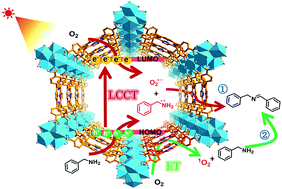
Direct evidence of charge separation in a metal-organic framework: efficient and selective photocatalytic oxidative coupling of amines via charge and energy transfer

caoxing

韩彤关注一下

Chem. Sci., 2018, 9,3152-3158
DOI: 10.1039/C7SC05296K, Edge Article
Open Access Open Access
Creative Commons Licence&nbsp This article is licensed under a Creative Commons Attribution 3.0 Unported Licence.
Caiyun Xu, Hang Liu, Dandan Li, Ji-Hu Su, Hai-Long Jiang
For the first time, the photoexcited charge separation in a metal-organic framework has been evidenced with clear ESR signals, based on efficient and selective photocatalytic oxidative coupling of amines.
The content of this RSS Feed (c) The Royal Society of Chemistry
26 Feb 07:57

Visible-Light Photocatalysis: Does it make a difference in Organic Synthesis?

by Leyre Marzo, Santhosh K. Pagire, Oliver Reiser, Burkhard König
caoxing

大家着重学习一下fire

Visible light photocatalysis has evolved over the last decade into a widely used method in organic synthesis. For many important transformations, such as cross-coupling reactions, alpha-amino functionalizations, cycloadditions, ATRA reactions, or fluorinations, photocatalytic variants have been reported. In this review, we try to compare classical and photocatalytic procedures for selected classes of reactions and highlight their advantages and limitations. In many cases, the photocatalytic reactions proceed at milder reaction conditions, typically at room temperature, and stoichiometric reagents are replaced by simple oxidants or reductants, like air oxygen or amines. This way, besides providing alternative protocols for established transformations that allow a broadening of the substrate scope, also new transformations become possible, especially by merging photocatalysis with organo- or metal catalysis. Does visible light photocatalysis make a difference in organic synthesis? The prospect to shuttle electrons back and forth to substrates and intermediates or to selectively transfer energy through a visible light absorbing photocatalyst holds the promise to improve current protocols in radical chemistry and to open up new avenues by accessing reactive species hitherto unknown.

26 Feb 07:48

High Performance BiOCl Nanosheets/TiO2 Nanotube Arrays Heterojunction UV Photodetector: The Influences of Self-Induced Inner Electric Fields in the BiOCl Nanosheets

by Weixin Ouyang, Feng Teng, Xiaosheng Fang
caoxing

韩彤可以留意一下

Abstract

BiOCl nanosheets/TiO2 nanotube arrays heterojunction UV photodetector (PD) with high performance is fabricated by a facile anodization process and an impregnation method. The heterojunction at the interface and the internal electric fields in the BiOCl nanosheets faciliate the separation of photogenerated charge carriers and regulate the transportation of the electrons. Compared with the large dark current (≈10−5 A), low on/off ratio (8.5), and slow decay time (>60 s) of the TiO2 PD, the optimized heterojunction PD (6-BiOCl–TiO2) yields dramatically decreased dark current (≈1 nA), ultrahigh on/off ratio (up to 2.2 × 10⁵), and fast decay speed (0.81 s) under 350 nm light illumination at −5 V. Moreover, it exhibits an increased responsivity of 41.94 A W−1, a remarkable detectivity (D*) of 1.41 × 10¹⁴ Jones, and a high linear dynamic range of 103.59 dB. The loading amount and growth orientations of the BiOCl nanosheets alter the roles of the self-induced internal electric field in regulating the behaviors of the charge carriers, thus affecting the photoelectric properties of the heterojunction PDs. These results demonstrate that rational construction of novel heterojunctions hold great potentials for fabricating photodetectors with high performance.

Thumbnail image of graphical abstract

A BiOCl–TiO2 heterojunction UV photodetector with high performance is fabricated. Heterojunctions formed between BiOCl nanosheets and TiO2 nanotube arrays improve the UV photoresponses and response speed of TiO2 film photodetectors. The loading amount and growth orientation of BiOCl nanosheets on the TiO2 film have great influences on the photoelectric performance of the heterojunction photodetector.

26 Feb 07:18

A Fully Noble Metal-Free Photosystem Based on Cobalt-Polyoxometalates Immobilized in a Porphyrinic Metal–Organic Framework for Water Oxidation

by Grégoire Paille, Maria Gomez-Mingot, Catherine Roch-Marchal, Benedikt Lassalle-Kaiser, Pierre Mialane, Marc Fontecave, Caroline Mellot-Draznieks and Anne Dolbecq
caoxing

很有参考价值fist

TOC Graphic

Journal of the American Chemical Society
DOI: 10.1021/jacs.7b11788
26 Feb 07:10

Titanium Phosphonate Based Metal–Organic Frameworks with Hierarchical Porosity for Enhanced Photocatalytic Hydrogen Evolution

by Hui Li, Ying Sun, Zhong-Yong Yuan, Yun-Pei Zhu, Tianyi Ma
caoxing

韩彤关注一下

Abstract

Photocatalytic hydrogen production is crucial for solar-to-chemical conversion process, wherein high-efficiency photocatalysts lie in the heart of this area. A photocatalyst of hierarchically mesoporous titanium phosphonate based metal–organic frameworks, featuring well-structured spheres, a periodic mesostructure, and large secondary mesoporosity, are rationally designed with the complex of polyelectrolyte and cathodic surfactant serving as the template. The well-structured hierarchical porosity and homogeneously incorporated phosphonate groups can favor the mass transfer and strong optical absorption during the photocatalytic reactions. Correspondingly, the titanium phosphonates exhibit significantly improved photocatalytic hydrogen evolution rate along with impressive stability. This work can provide more insights into designing advanced photocatalysts for energy conversion and render a tunable platform in photoelectrochemistry.

Thumbnail image of graphical abstract

A multi-structured photocatalyst: A metal–organic framework (MOF) nanostructure synthesized by a surfactant-directed strategy features a stable framework of titanium phosphates, a well-defined sphere, and hierarchical nanopores. These features ensure competitive photoactivity in evolving hydrogen under both visible light and full-spectrum simulator irradiation, along with high durability.

26 Feb 07:09

Functionalization of Metal–Organic Frameworks for Photoactive Materials

by Jina Hao, Xiaoyu Xu, Honghan Fei, Liangchun Li, Bing Yan
caoxing

韩彤着重看一下

Abstract

Metal–organic frameworks (MOFs) are intriguing platforms with multiple functionalities. Additional functionalization of MOFs generates novel materials for various applications. Here, three main topics are examined regarding the functionalization of MOFs for use as photoactive materials. The first is chemical approaches for postsynthetic modification of the metal clusters and organic linkers in MOFs; that is, sites on pore surfaces and chemical trapping of photoactive moieties within the pores, which create materials with chemical functionalities for water splitting and CO2 reduction by light. The second topic focuses on the functionalization of MOFs for photochemical response and the versatile applications of such materials. State-of-the-art research on functionalizing MOFs through photochemical reactions on the pore surface and within the pores as guests is also summarized. The third topic introduces the functionalization of MOFs for photofunctional materials, including photoluminescent tuning and integration, photoluminescent LED devices and barcodes, and photophysical applications for chemical sensing. Finally, conclusions and perspectives on the fields are given.

Thumbnail image of graphical abstract

The photoactive properties of functionalized metal–organic frameworks are reviewed for photochemical and photophysical applications, including photocatalytic solar fuel production, photochemical response, and photoluminescent tuning and sensing.

26 Feb 06:48

Single Pt Atoms Confined into a Metal–Organic Framework for Efficient Photocatalysis

by Xinzuo Fang, Qichao Shang, Yu Wang, Long Jiao, Tao Yao, Yafei Li, Qun Zhang, Yi Luo, Hai-Long Jiang
caoxing

韩彤留意一下

Abstract

It is highly desirable yet remains challenging to improve the dispersion and usage of noble metal cocatalysts, beneficial to charge transfer in photocatalysis. Herein, for the first time, single Pt atoms are successfully confined into a metal–organic framework (MOF), in which electrons transfer from the MOF photosensitizer to the Pt acceptor for hydrogen production by water splitting under visible-light irradiation. Remarkably, the single Pt atoms exhibit a superb activity, giving a turnover frequency of 35 h−1, ≈30 times that of Pt nanoparticles stabilized by the same MOF. Ultrafast transient absorption spectroscopy further unveils that the single Pt atoms confined into the MOF provide highly efficient electron transfer channels and density functional theory calculations indicate that the introduction of single Pt atoms into the MOF improves the hydrogen binding energy, thus greatly boosting the photocatalytic H2 production activity.

Thumbnail image of graphical abstract

Metal–organic frameworks (MOFs) are promising templates to stabilize single atoms for catalysis. A porphyrinic MOF is used as template to obtain single platinum atoms for the first time. The obtained catalyst exhibits superb visible-light photocatalytic efficiency in hydrogen production and the turnover frequency value of single platinum (Pt) atoms is ≈30 times than that of MOF-stabilized platinum nanoparticles.

26 Feb 06:22

C–C Coupling on Single-Atom-Based Heterogeneous Catalyst

by Xiaoyan Zhang, Zaicheng Sun, Bin Wang, Yu Tang, Luan Nguyen, Yuting Li and Franklin Feng Tao
caoxing

小童看一下

TOC Graphic

Journal of the American Chemical Society
DOI: 10.1021/jacs.7b09314
26 Feb 05:14

Integration of Plasmonic Effects and Schottky Junctions into Metal–Organic Framework Composites: Steering Charge Flow for Enhanced Visible-Light Photocatalysis

by Hai-Long Jiang, Juan-Ding Xiao, Lili Han, Jun Luo, Shu-Hong Yu
caoxing

韩彤留意一下

Abstract

A wide range of light absorption and rapid electron–hole separation are desired for efficient photocatalysis. Herein, on the basis of a semiconductor-like metal–organic framework (MOF), a Pt@MOF/Au catalyst with two types of metal–MOF interfaces integrates the surface plasmon resonance excitation of Au nanorods with a Pt-MOF Schottky junction, which not only extends the light absorption of the MOF from the UV to the visible region but also greatly accelerates charge transfer. The spatial separation of Pt and Au particles by the MOF further steers the formation of charge flow and expedites the charge migration. As a result, the Pt@MOF/Au presents an exceptionally high photocatalytic H2 production rate by water splitting under visible light irradiation, far superior to Pt/MOF/Au, MOF/Au and other counterparts with similar Pt or Au contents, highlighting the important role of each component and the Pt location in the catalyst.

Thumbnail image of graphical abstract

Up the junction: A wide-band gap semiconductor-like metal–organic framework (MOF), MIL-125, with Pt nanoparticles in its crystal structure and Au nanorods on its outer surface gives Pt@MIL-125/Au, a catalyst with two metal–MOF interfaces. The integration of surface plasmon resonance (SPR) Au excitation with the Pt–MOF Schottky junction results in high photocatalytic H2 production activity.

26 Feb 03:20

Oxygen vacancy regulation on tungsten oxides with specific exposed facets for enhanced visible-light-driven photocatalytic oxidation

caoxing

韩彤留意下

Nanoscale, 2018, 10,2908-2915
DOI: 10.1039/C7NR08590G, Paper
Jie Meng, Qingyun Lin, Tao Chen, Xiao Wei, Jixue Li, Ze Zhang
The density of oxygen vacancy on WO3 with specific exposed facets can be regulated through different cooling methods.
The content of this RSS Feed (c) The Royal Society of Chemistry
26 Feb 03:14

Photocatalytic hydrogen generation from a visible-light responsive metal-organic framework system: the impact of nickel phosphide nanoparticles

caoxing

韩彤留意一下

J. Mater. Chem. A, 2018, 6,2476-2481
DOI: 10.1039/C7TA10225A, Communication
Stavroula Kampouri, Tu N. Nguyen, Christopher P. Ireland, Bardiya Valizadeh, Fatmah Mish Ebrahim, Gloria Capano, Daniele Ongari, Amber Mace, Nestor Guijarro, Kevin Sivula, Andrzej Sienkiewicz, Laszlo Forro, Berend Smit, Kyriakos C. Stylianou
We showcase the key role of the co-catalyst when combined with MIL-125-NH2 towards the photocatalytic H2 generation.
The content of this RSS Feed (c) The Royal Society of Chemistry
26 Feb 03:07

Molecular adsorption promotes carrier migration: Key step for molecular oxygen activation of defective Bi4O5I2

caoxing

韩彤留意一下

Publication date: 15 June 2018
Source:Applied Catalysis B: Environmental, Volume 226
Author(s): Xiaoli Jin, Chade Lv, Xin Zhou, Congmin Zhang, Qingqiang Meng, Yue Liu, Gang Chen
Oxide defect engineering in semiconductors is of growing interest and considered as an important strategy for promoting photocatalytic performance, as it enables to couple solar energy into oxygen activation. Herein, the surface oxygen vacancies are introduced into bismuth-rich Bi4O5I2 nanosheets (Bi4O5I2-OV) via a facile solvothermal route. By introducing oxygen vacancies into Bi4O5I2, the molecule oxygen adsorption is significantly improved. More importantly, attributed to the molecular oxygen adsorption, an instantaneous surface-bulk homojunction is constructed, which facilitates the separation and transport of photogenerated charge carriers. Therefore, noticeable molecular oxygen activation and N2 fixation are achieved in Bi4O5I2-OV. These findings may shed light on designing highly efficient photocatalysts and provide fresh insights into understanding the charge migration mechanism in oxygen vacancies-related photocatalytic system.

Graphical abstract

image
26 Feb 03:05

Efficient photocatalytic CO2 reduction over Co(II) species modified CdS in aqueous solution

caoxing

小童留意一下

Publication date: 15 June 2018
Source:Applied Catalysis B: Environmental, Volume 226
Author(s): Guixia Zhao, Wei Zhou, Yubing Sun, Xiangke Wang, Huimin Liu, Xianguang Meng, Kun Chang, Jinhua Ye
Efficient photocatalytic reduction of CO2 into value-added chemical fuels has been a thorny, challenging and long-term project in the environmental/energy fields due to the low efficiency, especially in the inorganic aqueous environment. In this report, we present a facial approach to modify CdS with Co(II) species through controlling decarboxylation of the Co-EDTA precursor for improved CO2 reduction. Performance evaluation and microstructure characterization reveal that the resulted tetra-coordinated Co(II) modified CdS exhibits the most optimized CO evolution rate of 9.8 μmol h−1 (i.e., 392 μmol h−1 g(catalyst) −1 with TOF of 7.94 h−1) in aqueous solution under visible light, where the competitive hydrogen evolution reaction is significantly inhibited. Further investigation implies that the fully utilized Co(II) active sites, the tetra-coordinated Co(II) species, the favorable interaction between CO2 and Co(II) sites and efficient charge transferring ensured the high efficiency and improved selectivity. This work would provide a good strategy for the structure engineering of catalytic site to improve photocatalytic CO2 reduction.

Graphical abstract

image
26 Feb 02:38

Dual Role of a Photocatalyst: Generation of Ni(0) Catalyst and Promotion of Catalytic C–N Bond Formation

by Zheng-Hang Qi and Jing Ma
caoxing

小童留意一下

TOC Graphic

ACS Catalysis
DOI: 10.1021/acscatal.7b03024
26 Feb 02:33

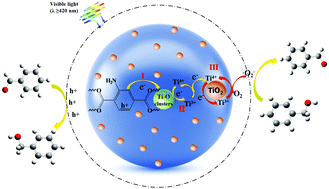
Amorphous TiO2@NH2-MIL-125(Ti) homologous MOF-encapsulated heterostructures with enhanced photocatalytic activity

caoxing

韩彤留意一下

Chem. Commun., 2018, 54,1917-1920
DOI: 10.1039/C7CC09072B, Communication
Xiyi Li, Yunhong Pi, Qingqing Hou, Hao Yu, Zhong Li, Yingwei Li, Jing Xiao
We have provided the first case of successfully synthesising amorphous TiO2@NH2-MIL-125(Ti) MOF-encapsulated heterostructures by a facile process.
The content of this RSS Feed (c) The Royal Society of Chemistry
26 Feb 02:23

Hierarchically ZnIn2S4 nanosheet-constructed microwire arrays: template-free synthesis and excellent photocatalytic performances

caoxing

小童留意一下

Nanoscale, 2018, 10,4735-4744
DOI: 10.1039/C7NR09413B, Paper
Xinglong Tu, Jing Lu, Ming Li, Yanjie Su, Guilin Yin, Dannong He
ZnIn2S4 NCMAs are successfully synthesized on a zinc substrate without any template or surfactant for the first time.
The content of this RSS Feed (c) The Royal Society of Chemistry