06 Nov 13:25
J. Mater. Chem. A, 2017, 5,22288-22296
DOI: 10.1039/C7TA06804B, Paper
Helin Wang, Lingcheng Chen, Yi Xiao
A simple molecular structure of ortho-derived perylene diimides (PDI) diploid has been developed for non-fullerene organic solar cells (OSCs) with a high power conversion efficiency (PCE) of 8.3%, indicating that such a concise molecular structure with a high PCE has great potential for the practical applications in OSCs.
The content of this RSS Feed (c) The Royal Society of Chemistry
06 Nov 13:24
J. Mater. Chem. A, 2017, 5,21650-21657
DOI: 10.1039/C7TA07390A, Communication
Zhe Liu, Deyu Liu, Kaili Zhang, Tingting Zhu, Yaqian Zhong, Feng Li, Yonghai Li, Mingliang Sun, Renqiang Yang
An asymmetric benzodithiophene polymer achieved around 10% PCE with an ITIC acceptor.
The content of this RSS Feed (c) The Royal Society of Chemistry
06 Nov 13:22
J. Mater. Chem. A, 2017, 5,22588-22597
DOI: 10.1039/C7TA07049G, Paper
Xiaojun Li, Tinghai Yan, Haijun Bin, Guangchao Han, Lingwei Xue, Feng Liu, Yuanping Yi, Zhi-Guo Zhang, Thomas P. Russell, Yongfang Li
A low bandgap n-OS molecule SJ-IC was synthesized by inserting double bond [small pi]-bridges between the donor and acceptor units of IDT-IC, and SJ-IC as an acceptor shows broad absorption and improved photovoltaic performance when using a broad bandgap polymer J61 as a donor.
The content of this RSS Feed (c) The Royal Society of Chemistry
06 Nov 13:20
J. Mater. Chem. A, 2017, 5,23067-23077
DOI: 10.1039/C7TA07576F, Paper
Keisuke Ogumi, Takafumi Nakagawa, Hiroshi Okada, Ryohei Sakai, Huan Wang, Yutaka Matsuo
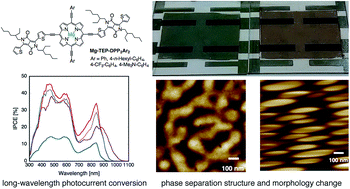
Acceptor-donor-acceptor conjugated magnesium porphyrins showed a power conversion efficiency of 5.73%, high open-circuit voltage of 0.79 V, or an extended incident photon-to-current conversion efficiency spectrum to 1100 nm, depending on the substituents.
The content of this RSS Feed (c) The Royal Society of Chemistry
06 Nov 13:19
J. Mater. Chem. A, 2017, 5,22480-22488
DOI: 10.1039/C7TA07830G, Communication
Jing Liu, Lik-Kuen Ma, Zhengke Li, Huawei Hu, Tingxuan Ma, Chenhui Zhu, Harald Ade, He Yan
The introduction of an asymmetric unit enables a fine-tuned morphology and thus up to 10.4% efficiency for non-fullerene organic solar cells.
The content of this RSS Feed (c) The Royal Society of Chemistry
06 Nov 13:17
J. Mater. Chem. A, 2017, 5,22536-22541
DOI: 10.1039/C7TA07882J, Paper
Nicole Bauer, Qianqian Zhang, Jingshuai Zhu, Zhengxing Peng, Liang Yan, Chenhui Zhu, Harald Ade, Xiaowei Zhan, Wei You
Donor polymer fluorination in ITIC-based device led to a large increase in the current and an efficiency twice that of the non-fluorinated polymer based device.
The content of this RSS Feed (c) The Royal Society of Chemistry
06 Nov 08:39
by Jie Xue, Qingxin Liang, Yunge Zhang, Ruoyun Zhang, Lian Duan, Juan Qiao
Abstract
The simultaneous realization of high quantum yield and exciton utilizing efficiency (ηr) is still a formidable challenge in near-infrared (NIR) fluorescent organic light-emitting diodes (FOLEDs). Here, to achieve a high quantum yield, a novel NIR dye, 4,9-bis(4-(diphenylamino)phenyl)-naphtho[2,3-c][1,2,5]selenadiazole, is designed and synthesized with a large highest occupied molecular orbital/lowest unoccupied molecular orbital overlap and an aggregation-induced emission property, which demonstrates a high photoluminescence quantum yield of 27% at 743 nm in toluene and 29% at 723 nm in a blend film. For a high ηr, an orange-emitting thermally activated delayed fluorescent material, 1,2-bis(9,9-dimethyl-9,10-dihydroacridine)-4,5-dicyanobenzene, is chosen as the sensitizing host to harvest triplet excitons in devices. The optimized devices achieve a good ηr of 45.7% and a high external quantum efficiency up to 2.65% at 730 nm, with a very small efficiency roll-off of 2.41% at 200 mA cm−2, which are among the most efficient values for NIR-FOLEDs over 700 nm. The effective utilization of triplet excitons via the thermally activated delayed fluorescence-sensitizing host will pave a way to realize high-efficiency NIR-FOLEDs with small efficiency roll-off.

A novel and efficient near-infrared fluorescent emitter is designed and synthesized possessing aggregation-induced emission characteristic and a high photoluminescence quantum yield of 29% at 723 nm in the blend film. The optimized near-infrared fluorescent organic light emitting diode employing a thermal-activated delayed fluorescent material as the sensitizing host achieves a high maximum external quantum efficiency of 2.65% with an emission peak at 730 nm.
06 Nov 08:38
by Sang Woo Kim, Joonhyeong Choi, Thi Thu Trang Bui, Changyeon Lee, Changsoon Cho, Kwangmin Na, Jihye Jung, Chang Eun Song, Biwu Ma, Jung-Yong Lee, Won Suk Shin, Bumjoon J. Kim

In article number 1703070, Won Suk Shin, Bumjoon J. Kim, and co-workers describe the importance of the design of polymer donor-polymer acceptor pair to achieve complementary light absorption in all-polymer solar cells (all-PSCs). Synthetic donor-acceptor random copolymers with tunable light absorption characteristics were developed, which resulted in high performance all-PSC with a power conversion efficiency of 6.8%.
13 Oct 11:51
by Cheng Zhou, Zhiming Chen, Guichuan Zhang, Caitlin McDowell, Peng Luo, Xiaoe Jia, Michael J. Ford, Ming Wang, Guillermo C. Bazan, Fei Huang, Yong Cao
Abstract
Two donor–acceptor (D–A) conjugated polymers composed of the same ratio of 5-fluorobenzothiadiazole and thiophene subunits are synthesized through different routes, providing a precisely regioregular (2TRR) and a random (2TRA) polymer structures. Detailed structural analyses indicate that the backbone of regioregular 2TRR has only one donor segment of bithiophene, while the backbone of random 2TRA consists of three different donor segments: thiophene, bithiophene, and terthiophene (in a ratio of 0.16:0.68:0.16). Synergetic contributions from these segments allow the “tetrapolymer” 2TRA to achieve more favorable film morphology and a higher hole-mobility relative to 2TRR. Consequently, the random polymer 2TRA achieves a substantially higher power conversion efficiency (8.8%) than the regioregular polymer 2TRR (5.1%). Notably, the “tetrapolymer” 2TRA is readily synthesized from two monomers, rather than through complex conventional preparation required for similar multipolymers. These findings provide a novel route toward the design and synthesis of multipolymeric materials and demonstrate their potential advantages in high-performance organic electronic applications.

Two conjugated polymers are synthesized using the same components in different sequences, regioregular and random. Readily synthesized with only two monomers, detailed structure analyses indicate that the random polymer 2TRA contains three distinct donor segments in its “tetrapolymer” backbone, granting a favorable morphology, higher hole-mobility, and better photovoltaic performance in blends with PC71BM than its regioregular analog (2TRR).
13 Oct 11:50
by Huawei Hu, Kui Jiang, Philip C. Y. Chow, Long Ye, Guangye Zhang, Zhengke Li, Joshua H. Carpenter, Harald Ade, He Yan
Abstract
Nonfullerene polymer solar cells (PSCs) based on polymer donors and nonfullerene small molecular acceptors (SMAs) have recently attracted considerable attention. Although much of the progress is driven by the development of novel SMAs, the donor polymer also plays an important role in achieving efficient nonfullerene PSCs. However, it is far from clear how the polymer donor choice influences the morphology and performance of the SMAs and the nonfullerene blends. In addition, it is challenging to carry out quantitative analysis of the morphology of polymer:SMA blends, due to the low material contrast and overlapping scattering features of the π–π stacking between the two organic components. Here, a series of nonfullerene blends is studied based on ITIC-Th blended with five different donor polymers. Through quantitative morphology analysis, the (010) coherence length of the SMA is characterized and a positive correlation between the coherence length of the SMA and the device fill factor (FF) is established. The study reveals that the donor polymer can significantly change the molecular ordering of the SMA and thus improve the electron mobility and domain purity of the blend, which has an overall positive effect that leads to the enhanced device FF for nonfullerene PSCs.

Morphological analysis reveals influence of the donor polymer on the structural/electronic properties of small molecular acceptor and the overall blend morphology. A direct correlation is found between the (010) coherence length of small molecular acceptor with device fill-factor and photocurrent density, which is in good agreement with the parameters reported for state-of-art high-efficiency nonfullerene polymer solar cells.
13 Oct 11:49
by Huatong Yao, Yunke Li, Huawei Hu, Philip C. Y. Chow, Shangshang Chen, Jingbo Zhao, Zhengke Li, Joshua H. Carpenter, Joshua Yuk Lin Lai, Guofang Yang, Yuhang Liu, Haoran Lin, Harald Ade, He Yan
Abstract
The device performance of polymer solar cells (PSCs) is strongly dependent on the blend morphology. One of the strategies for improving PSC performance is side-chain engineering, which plays an important role in controlling the aggregation properties of the polymers and thus the domain crystallinity/purity of the donor–acceptor blends. In particular, for a family of high-performance donor polymers with strong temperature-dependent aggregation properties, the device performances are very sensitive to the size of alkyl chains, and the best device performance can only be achieved with an optimized odd-numbered alkyl chain. However, the synthetic route of odd-numbered alkyl chains is costly and complicated, which makes it difficult for large-scale synthesis. Here, this study presents a facile method to optimize the aggregation properties and blend morphology by employing donor polymers with a mixture of two even-numbered, randomly distributed alkyl chains. In a model polymer system, this study suggests that the structural and electronic properties of the random polymers comprising a mixture of 2-octyldodecyl and 2-decyltetradecyl alkyl chains can be systematically tuned by varying the mixing ratio, and a high power conversion efficiency (11.1%) can be achieved. This approach promotes the scalability of donor polymers and thus facilitates the commercialization of PSCs.

The structural and electronic properties of random polymers comprising a mixture of commercially available alkyl chains can be systematically tuned and a power conversion efficiency up to 11.1% can be achieved, which is one of the highest values to date for polymer:fullerene solar cells. These random polymers are easier to scale up compared to that obtained using odd-numbered alkyl chains.
13 Oct 11:49
by Kui Feng, Guofang Yang, Xiaopeng Xu, Guangjun Zhang, He Yan, Omar Awartani, Long Ye, Harald Ade, Ying Li, Qiang Peng
Abstract
Newly developed benzo[1,2-b:4,5-b′]dithiophene (BDT) block with 3,4-ethylenedioxythiophene (EDOT) side chains is first employed to build efficient photovoltaic copolymers. The resulting copolymers, PBDTEDOT-BT and PBDTEDOTFBT, have a large bandgap more than 1.80 eV, which is attributed to the increased steric hindrance between the BDT and EDOT skeletons. Both copolymers possess the satisfied absorptions, low-lying highest occupied molecular orbital (HOMO) levels and high crystallinity. Using the fluorination strategy, PBDTEDOT-FBT exhibits a wider and stronger absorption and a deeper HOMO level than those of PBDTEDOT-BT. PBDTEDOT-FBT:[6,6]-Phenyl C71 butyric acid methyl ester (PC71BM) blend also shows the higher hole mobility and better surface morphology compared with the PBDTEDOTBT:PC71BM blend. Combination of above advantages, PBDTEDOT-FBT devices exhibit much higher power conversion efficiency (PCE) of 10.11%, with an improved open circuit voltage (Voc) of 0.86 V, short circuit current densities (Jsc) of 16.01 mA cm−2, and fill factor (FF) of 72.6%. This work not only provides a newly efficient candidate of BDT donor block modified with EDOT conjugated side chains, but also achieves high-performance large bandgap copolymers for polymer solar cells (PSCs) via the synergistic effect of fluorination and side chain engineering strategies.

Combination of fluorination and side chain engineering strategies, newly developed benzo[1,2-b:4,5-b′]dithiophene block with 3,4-ethylenedioxythiophene side chains is first employed to build the efficient large bandgap copolymers with efficiency of 10.11%.
13 Oct 11:49
by Munkhbayar Batmunkh, Munkhjargal Bat-Erdene, Joseph G. Shapter
Abstract
Few-layer ultrathin nanosheets and ultrasmall quantum dots of black phosphorus (BP) have attracted increasing research interest due to their fascinating properties including a tunable bandgap, high carrier mobility, and ambipolar conduction ability. These excellent properties together with their unique structures make BP derivatives promising candidates for a wide range of device applications. In this research news, the latest advancements in the synthesis, properties, and applications of BP and its derivatives are highlighted. In particular, the focus is on the use of these rising star materials for emerging solar cells, in terms of both theoretical predictions and experimental investigations. Finally, the authors' personal perspectives on potential future research directions are provided.

Few-layer phosphorus, often called phosphorene, is the most recent addition to the family of 2D nanomaterials. The material has several interesting properties including a tunable bandgap, high carrier mobility, and ambipolar conductivity. This article explores the current state of synthesis of few-layer black phosphorus derivatives and their successful application in various emerging solar cells.
13 Oct 11:47
by Dongyu Li, Wei Qin, Bin Xu, Jun Qian, Ben Zhong Tang
Abstract
Stimulated emission depletion (STED) nanoscopy is a typical super-resolution imaging technique that has become a powerful tool for visualizing intracellular structures on the nanometer scale. Aggregation-induced emission (AIE) luminogens are ideal fluorescent agents for bioimaging. Herein, long-term super-resolution fluorescence imaging of cancer cells, based on STED nanoscopy assisted by AIE nanoparticles (NPs) is realized. 2,3-Bis(4-(phenyl(4-(1,2,2-triphenylvinyl)phenyl)amino)phenyl) fumaronitrile (TTF), a typical AIE luminogen, is doped into colloidal mesoporous silica to form fluorescent NPs. TTF@SiO2 NPs bear three significant features, which are all essential for STED nanoscopy. First, their STED efficiency can reach more than 60%. Second, they are highly resistant to photobleaching, even under long-term and high-power STED light irradiation. Third, they have a large Stokes' shift of ≈150 nm, which is beneficial for restraining the fluorescence background induced by the STED light irradiation. STED nanoscopy imaging of TTF@SiO2-NPs-stained HeLa cells is performed, exhibiting a high lateral spatial resolution of 30 nm. More importantly, long-term (more than half an hour) super-resolution cell imaging is achieved with low fluorescence loss. Considering that AIE luminogens are widely used for organelle targeting, cellular mapping, and tracing, AIE-NPs-based STED nanoscopy holds great potential for many basic biomedical studies that require super-resolution and long-term imaging.

A star aggregation-induced emission luminogen is doped into silica nanoparticles, which serve as fluorescent probes for stimulated emission depletion (STED) nanoscopy imaging with a high lateral spatial resolution of 30 nm. The nanoparticles are highly resistant to photobleaching, even under long-term and high-power STED light irradiation. Consequently, super-resolution bioimaging is performed for more than half an hour, with low fluorescence loss.
02 Oct 14:42
by Shiyu Feng, Cai'e Zhang, Yahui Liu, Zhaozhao Bi, Zhe Zhang, Xinjun Xu, Wei Ma, Zhishan Bo
Abstract
A kind of new fused-ring electron acceptor, IDT-OB, bearing asymmetric side chains, is synthesized for high-efficiency thick-film organic solar cells. The introduction of asymmetric side chains can increase the solubility of acceptor molecules, enable the acceptor molecules to pack closely in a dislocated way, and form favorable phase separation when blended with PBDB-T. As expected, PBDB-T:IDT-OB-based devices exhibit high and balanced hole and electron mobility and give a high power conversion efficiency (PCE) of 10.12%. More importantly, the IDT-OB-based devices are not very sensitive to the film thickness, a PCE of 9.17% can still be obtained even the thickness of active layer is up to 210 nm.

A new fused-ring electron acceptor (IDT-OB), bearing asymmetric side chains, is facilely synthesized for high-efficiency thick-film organic solar cells. The asymmetric structure makes it easier to form ideal phase separation when blended with a polymer donor. Power conversion efficiencies of 10.12% and 8.57% are obtained with active-layer thicknesses of 130 and 320 nm, respectively.
02 Oct 14:41
by Hao Zhang, Xiaohui Wang, Liyan Yang, Shaoqing Zhang, Yun Zhang, Chang He, Wei Ma, Jianhui Hou
Abstract
An all-small-molecule ternary solar cell is achieved with a power conversion efficiency of 10.48% by incorporating phenyl-C71-butyric-acid-methyl ester (PC71BM) into a nonfullerene binary system. The addition of PC71BM is found to modulate the film morphology by improving the domain purity and decreasing the domain size. This modulation facilitates charge generation and suppresses charge recombination, as manifested by the significantly enhanced short-circuit current density and fill factor. The results correlate the domain characteristics with the device performance and offer new insight from the perspective of morphology modulation for constructing efficient ternary devices.

An all-small-molecule ternary solar cell is achieved with a power conversion efficiency of 10.48% by incorporating the phenyl-C71-butyric-acid-methyl ester (PC71BM) into a nonfullerene small-molecule binary system. The addition of PC71BM is found to modulate the film morphology by improving the domain purity and decreasing the domain size. This facilitates charge generation and suppresses charge recombination.
02 Oct 14:35
by Xiaomin Wu, Shuqiong Lan, Guocheng Zhang, Qizhen Chen, Huipeng Chen, Tailiang Guo
Abstract
Here, conjugated polymer is added as third component to tune the solution viscosity, morphology, and function of small molecule (SM) based bulk-heterojunction (BHJ) solar cells, which are fabricated using blade coating. Novel information about the effect of blade coating speed on the nanoscale morphology and function of ternary blend solar cells is provided. The crystal sizes increase with an increase of coating speed for both binary and ternary blends, while the addition of the third component tends to favor smaller SM crystal grains and improves the connectivity of SM crystals. Small angle neutron scattering experiments provide the first clear experimental evidence that the addition of the third component would significantly impact the fullerene phase separation, which is crucial for bimolecular recombination and charge transport. It shows that for both binary and ternary blends, the concentration and sizes of [6,6]-phenyl-C61-butyric acid methyl ester (PCBM) aggregates increase with an increase of coating speed, while addition of third component does not affect the volume fraction of PCBM aggregates but impacts the size of PCBM aggregates. It is demonstrated that the judicious selection of blade coating speed and addition of conjugated polymer optimize the morphology of SM-BHJ, providing guidelines for high performance SM-BHJs from roll-to-roll production.

The crystallization of small molecules and fullerene phase separation in SM-BHJ blends are significantly impacted by the blade coating speed as well as the addition of a third component. The judicious selection of blade coating speed and the addition of a conjugated polymer optimizes the morphology of SM-BHJ, which will provide guidelines for high performance SM-BHJ from roll-to-roll production.
02 Oct 14:34
by Lin Hu, Tiefeng Liu, Jiashun Duan, Xiaoyi Ma, Congwu Ge, Youyu Jiang, Fei Qin, Sixing Xiong, Fangyuan Jiang, Bin Hu, Xike Gao, Yuanping Yi, Yinhua Zhou
Abstract
This study reports an effective amidine-type n-dopant of 1,8-Diazabicyclo[5.4.0]undec-7-ene (DBU) that can universally dope electron acceptors, including PC61BM, N2200, and ITIC, by mixing the dopant with the acceptors in organic solvents or exposing the acceptor films in the dopant vapor. The doping mechanism is due to its strong electron-donating property that is also confirmed via the chemical reduction of PEDOT:PSS (yielding color change). The DBU doping considerably increases the electrical conductivity and shifts the Fermi levels up of the PC61BM films. When the DBU-doped PC61BM is used as an electron-transporting layer in perovskite solar cells, the n-doping removes the “S-shape” of J–V characteristics, which leads to the fill factor enhancement from 0.54 to 0.76. Furthermore, the DBU doping can effectively lower the threshold voltage and enhance the electron mobility of PC61BM-based n-channel field-effect transistors. These results show that the DBU can be a promising n-dopant for solution-processed electronics.

An effective, solution-processed amidine-type n-dopant of 1,8-diazabicyclo[5.4.0]undec-7-ene (DBU), which can universally dope electron acceptor materials, including PC61BM, N2200, and ITIC, is reported. The DBU doping can enhance the performance of the perovskite solar cells and the electron mobility of the field-effect transistors.
29 Sep 08:04
by Naoto Notsuka, Ryota Kabe, Kenichi Goushi, Chihaya Adachi
Abstract
Long-lived triplet excitons on organic molecules easily deactivate at room temperature because of the presence of thermally activated nonradiative pathways. This study demonstrates long-lived phosphorescence at room temperature resulting from suppression of the nonradiative deactivation of triplet excitons in conventional organic semiconducting host–guest systems. The nonradiative deactivation pathway strongly depends on the triplet energy gap between the guest emitting molecules and the host matrices. The triplet energy gap required to confine the long-lived triplet excitons (≈0.5 eV) is much larger than that of conventional host–guest systems for phosphorescent emitters. By effectively confining the triplet excitons, this study demonstrates long-lived room-temperature phosphorescence under optical and electrical excitation.

The nonradiative deactivation pathway of long-lived room-temperature phosphorescence is strongly affected by the triplet energy gap between the guest emitting molecules and the host matrices in organic semiconducting host–guest systems. The triplet energy gap required to confine the long-lived triplet excitons (≈0.5 eV) is much larger than that of conventional triplet exciton harvesting host–guest systems.
29 Sep 08:02
by Julien Gorenflot, Andreas Paulke, Fortunato Piersimoni, Jannic Wolf, Zhipeng Kan, Federico Cruciani, Abdulrahman El Labban, Dieter Neher, Pierre M. Beaujuge, Frédéric Laquai
Abstract
An original set of experimental and modeling tools is used to quantify the yield of each of the physical processes leading to photocurrent generation in organic bulk heterojunction solar cells, enabling evaluation of materials and processing condition beyond the trivial comparison of device performances. Transient absorption spectroscopy, “the” technique to monitor all intermediate states over the entire relevant timescale, is combined with time-delayed collection field experiments, transfer matrix simulations, spectral deconvolution, and parametrization of the charge carrier recombination by a two-pool model, allowing quantification of densities of excitons and charges and extrapolation of their kinetics to device-relevant conditions. Photon absorption, charge transfer, charge separation, and charge extraction are all quantified for two recently developed wide-bandgap donor polymers: poly(4,8-bis((2-ethylhexyl)oxy)benzo[1,2-b:4,5-b′]dithiophene-3,4-difluorothiophene) (PBDT[2F]T) and its nonfluorinated counterpart poly(4,8-bis((2-ethylhexyl)oxy)benzo[1,2-b:4,5-b′]dithiophene-3,4-thiophene) (PBDT[2H]T) combined with PC71BM in bulk heterojunctions. The product of these yields is shown to agree well with the devices' external quantum efficiency. This methodology elucidates in the specific case studied here the origin of improved photocurrents obtained when using PBDT[2F]T instead of PBDT[2H]T as well as upon using solvent additives. Furthermore, a higher charge transfer (CT)-state energy is shown to lead to significantly lower energy losses (resulting in higher VOC) during charge generation compared to P3HT:PCBM.

The individual efficiencies and losses associated with each step of photocurrent generation in PBDT[2X]T:PC71BM solar cells are determined using a combination of advanced transient spectroscopic, charge extraction, and steady-state spectroscopic techniques, aiding the development of a fuller understanding of the complex interplay between chemical structure, thin film processing conditions, and their impact on device performance.
29 Sep 07:59
by Nicola Gasparini, Michael Salvador, Thomas Heumueller, Moses Richter, Andrej Classen, Shreetu Shrestha, Gebhard J. Matt, Sarah Holliday, Sebastian Strohm, Hans-Joachim Egelhaaf, Andrew Wadsworth, Derya Baran, Iain McCulloch, Christoph J. Brabec
Abstract
Organic semiconductors are in general known to have an inherently lower charge carrier mobility compared to their inorganic counterparts. Bimolecular recombination of holes and electrons is an important loss mechanism and can often be described by the Langevin recombination model. Here, the device physics of bulk heterojunction solar cells based on a nonfullerene acceptor (IDTBR) in combination with poly(3-hexylthiophene) (P3HT) are elucidated, showing an unprecedentedly low bimolecular recombination rate. The high fill factor observed (above 65%) is attributed to non-Langevin behavior with a Langevin prefactor (β/βL) of 1.9 × 10⁻⁴. The absence of parasitic recombination and high charge carrier lifetimes in P3HT:IDTBR solar cells inform an almost ideal bimolecular recombination behavior. This exceptional recombination behavior is explored to fabricate devices with layer thicknesses up to 450 nm without significant performance losses. The determination of the photoexcited carrier mobility by time-of-flight measurements reveals a long-lived and nonthermalized carrier transport as the origin for the exceptional transport physics. The crystalline microstructure arrangement of both components is suggested to be decisive for this slow recombination dynamics. Further, the thickness-independent power conversion efficiency is of utmost technological relevance for upscaling production and reiterates the importance of understanding material design in the context of low bimolecular recombination.

Nonfullerene-based organic solar cells with an unprecedentedly low bimolecular recombination rate are presented. The absence of parasitic recombination and high carrier lifetimes in the devices inform an almost ideal bimolecular recombination behavior with a Langevin prefactor (β/βL) of 1.9 × 10⁻⁴. This exceptional recombination behavior allows the fabrication of solar cells with layer thicknesses up to 450 nm without significant performance losses.
29 Sep 07:57
by Wonho Lee, Seonju Jeong, Changyeon Lee, Gibok Han, Changsoon Cho, Jung-Yong Lee, Bumjoon J. Kim

In article number 1602812, Jung-Yong Lee, Bumjoon J. Kim, and co-workers investigate nonconjugated polymer additives (nPAs) for highly efficient and stable polymer solar cells (PSCs). The P2VP nPA self-assembles vertically on the ZnO surface via a single coating process for the deposition of active materials. The self-assembled P2VP reduces the work function and surface defect density of ZnO, which leads to efficient and stable PSCs with up to 11.14% efficiency.
29 Sep 07:56
by Vincent M. Le Corre, Azadeh Rahimi Chatri, Nutifafa Y. Doumon, L. Jan Anton Koster
Abstract
Charge transport in organic photovoltaic (OPV) devices is often characterized by steady-state mobilities. However, the suitability of steady-state mobilities to describe charge transport has recently been called into question, and it has been argued that dispersion plays a significant role. In this paper, the importance of the dispersion of charge carrier motion on the performance of organic photovoltaic devices is investigated. An experiment to measure the charge extraction time under realistic operating conditions is set up. This experiment is applied to different blends and shows that extraction time is directly related to the geometrical average of the steady-state mobilities. This demonstrates that under realistic operating conditions the steady-state mobilities govern the charge extraction of OPV and gives a valuable insight in device performance.

Charge transport in organic photovoltaic devices is often characterized by steady-state mobilities. However, the suitability of steady-state mobilities to describe charge transport has recently been called into question and it has been argued that dispersion plays a significant role. In this paper, the importance of the dispersion of charge carrier motion on the performance of organic photovoltaic devices is investigated.
29 Sep 07:53
by Won Sik Yoon, Dong Won Kim, Min-Woo Choi, Jun-Mo Park, Soo Young Park
Abstract
Highly crystalline conjugated polymers represent a key material for producing high-performance thick-active-layer polymer solar cells (PSCs). However, despite their potential, a limited number of crystalline polymers are used in PSCs because of the lack of highly coplanar acceptor building blocks and insufficient light absorptivity (α < 105) of most donor (D)–acceptor (A)-type polymers. This study reports a series of novel 3,7-di(thiophen-2-yl)-1,5-naphthyridine-2,6-dione (NTDT) acceptor-based conjugated polymers, PNTDT-2T, PNTDT-TT, and PNTDT-2F2T, synthesized with 2,2′-bithiophene (2T), thieno[3,2-b]thiophene (TT), and 3,3′-difluoro-2,2′-bithiophene (2F2T) donor units, respectively. PNTDT-2F2T exhibits superior polymer crystallinity and a much higher absorption coefficient than those of PNTDT-2T or PNTDT-TT because of adequate matching between highly coplanar A (NTDT) and D (2F2T) building blocks. A bulk heterojunction solar cell based on PNTDT-2F2T exhibits a power conversion efficiency of up to 9.63%, with a high short circuit current of 18.80 mA cm−2 and fill factor of 0.70, when a thick active layer (>200 nm) is used, without postfabrication hot processing. The findings demonstrate that the polymer crystallinity and absorption coefficient can be effectively controlled by selecting appropriate D and A building blocks, and that NTDT is a novel and versatile A building block for highly efficient thick-active-layer PSCs.

A novel 1,5-naphthyridine-2,6-dione-based conjugated polymer is developed and applied as a donor in the active layers of efficient polymer solar cells. PNTDT-2F2T exhibits outstanding polymer crystallinity and absorption coefficient. A polymer solar cell device made using PNTDT-2F2T exhibits a high power conversion efficiency (9.63%) with a thick active layer (>200 nm).
29 Sep 07:53
by Junyi Wang, Shiliang Wang, Chunhui Duan, Fallon J. M. Colberts, Jiangquan Mai, Xi Liu, Xiao'e Jia, Xinhui Lu, René A. J. Janssen, Fei Huang, Yong Cao
Abstract
To advance polymer solar cells (PSCs) toward real-world applications, it is crucial to develop materials that are compatible with a low-cost large-scale manufacturing technology. In this context, a practically useful polymer should fulfill several critical requirements: the capability to provide high power conversion efficiencies (PCEs) via low-cost fabrication using environmentally friendly solvents under mild thermal conditions, resulting in an active layer that is thick enough to minimize defects in large-area films. Here, the development of new photovoltaic polymers is reported through rational molecular design to meet these requirements. Benzodithiophene (BDT)-difluorobenzoxadiazole (ffBX)-2-decyltetradecyl (DT), a wide-bandgap polymer based on ffBX and BDT emerges as the first example that fulfills the qualifications. When blended with a low-cost acceptor (C60-fullerene derivative), BDT-ffBX-DT produces a PCE of 9.4% at active layer thickness over 250 nm. BDT-ffBX-DT devices can be fabricated from nonhalogenated solvents at low processing temperature. The success of BDT-ffBX-DT originates from its appropriate electronic structure and charge transport characteristics, in combination with a favorable face-on orientation of the polymer backbone in blends, and the ability to form proper phase separation morphology with a fibrillar bicontinuous interpenetrating network in bulk-heterojunction films. With these characteristics, BDT-ffBX-DT represents a meaningful step toward future everyday applications of polymer solar cells.

Two new conjugated polymers based on difluorobenzoxadiazole bring real-world applications of polymer solar cells closer. They integrate multiple advantages including high power conversion efficiency built on low-cost acceptors, allowing thick active layers, and processability from green solvents under mild conditions. Particularly, benzodithiophene-difluorobenzoxadiazole-2-decyltetradecyl (BDT-ffBX-DT) is a champion in meeting a comprehensive list of prerequisites for future application of polymer solar cells.
28 Sep 13:10
by Xiaofeng Xu, Zhaojun Li, Wei Zhang, Xiangyi Meng, Xianshao Zou, Dario Di Carlo Rasi, Wei Ma, Arkady Yartsev, Mats R. Andersson, René A. J. Janssen, Ergang Wang
Abstract
In very recent years, growing efforts have been devoted to the development of all-polymer solar cells (all-PSCs). One of the advantages of all-PSCs over the fullerene-based PSCs is the versatile design of both donor and acceptor polymers which allows the optimization of energy levels to maximize the open-circuit voltage (Voc). However, there is no successful example of all-PSCs with both high Voc over 1 V and high power conversion efficiency (PCE) up to 8% reported so far. In this work, a combination of a donor polymer poly[4,8-bis(5-(2-octylthio)thiophen-2-yl)benzo[1,2-b:4,5-b′]dithiophene-2,6-diyl-alt-(5-(2-ethylhexyl)-4H-thieno[3,4-c]pyrrole-4,6(5H)-dione)-1,3-diyl] (PBDTS-TPD) with a low-lying highest occupied molecular orbital level and an acceptor polymer poly[[N,N′-bis(2-octyldodecyl)-naphthalene-1,4,5,8-bis(dicarboximide)-2,6-diyl]-alt-thiophene-2,5-diyl] (PNDI-T) with a high-lying lowest unoccupied molecular orbital level is used, realizing high-performance all-PSCs with simultaneously high Voc of 1.1 V and high PCE of 8.0%, and surpassing the performance of the corresponding PC71BM-based PSCs. The PBDTS-TPD:PNDI-T all-PSCs achieve a maximum internal quantum efficiency of 95% at 450 nm, which reveals that almost all the absorbed photons can be converted into free charges and collected by electrodes. This work demonstrates the advantages of all-PSCs by incorporating proper donor and acceptor polymers to boost both Voc and PCEs.

High-performance all-polymer solar cells with high Voc of 1.1 V and PCE of 8.0% are realized by incorporating a pair of the donor polymer poly[4,8-bis(5-(2-octylthio)thiophen-2-yl)benzo[1,2-b:4,5-b′]dithiophene-2,6-diyl-alt-(5-(2-ethylhexyl)-4H-thieno[3,4-c]pyrrole-4,6(5H)-dione)-1,3-diyl] and acceptor polymer poly[[N,N′-bis(2-octyldodecyl)-naphthalene-1,4,5,8-bis(dicarboximide)-2,6-diyl]-alt-thiophene-2,5-diyl]. The simultaneously high Voc and power conversion efficiency stem from the low photon energy loss and high internal quantum efficiency near unity.
28 Sep 13:05
by Han-Hee Cho, Seonha Kim, Taesu Kim, Vijaya Gopalan Sree, Sung-Ho Jin, Felix Sunjoo Kim, Bumjoon J. Kim
Abstract
Designing polymers that facilitate exciton dissociation and charge transport is critical for the production of highly efficient all-polymer solar cells (all-PSCs). Here, the development of a new class of high-performance naphthalenediimide (NDI)-based polymers with large dipole moment change (Δµge) and delocalized lowest unoccupied molecular orbital (LUMO) as electron acceptors for all-PSCs is reported. A series of NDI-based copolymers incorporating electron-withdrawing cyanovinylene groups into the backbone (PNDITCVT-R) is designed and synthesized with 2-hexyldecyl (R = HD) and 2-octyldodecyl (R = OD) side chains. Density functional theory calculations reveal an enhancement in Δµge and delocalization of the LUMO upon the incorporation of cyanovinylene groups. All-PSCs fabricated from these new NDI-based polymer acceptors exhibit outstanding power conversion efficiencies (7.4%) and high fill factors (65%), which is attributed to efficient exciton dissociation, well-balanced charge transport, and suppressed monomolecular recombination. Morphological studies by grazing X-ray scattering and resonant soft X-ray scattering measurements show the blend films containing polymer donor and PNDITCVT-R acceptors to exhibit favorable face-on orientation and well-mixed morphology with small domain spacing (30–40 nm).

High-performance polymer acceptors with high electron mobility and large dipole moment difference are developed by introducing electron-withdrawing cyanovinylene groups into naphthalenediimide-based polymers. All-polymer solar cells fabricated using these new polymer acceptors exhibit outstanding power conversion efficiencies of up to 7.4% and high fill factors (65%) as a result of efficient exciton dissociation and enhanced charge transport.
Bin, ZZQ and 13 others like this
28 Sep 12:42
by Tong Zhang, Xiaoli Zhao, Dalei Yang, Yumeng Tian, Xiaoniu Yang
Abstract
Currently, constructing ternary organic solar cells (OSCs) and developing nonfullerene small molecule acceptors (n-SMAs) are two pivotal avenues to enhance the device performance. However, introducing n-SMAs into the ternary OSCs to construct thick layer device is still a challenge due to their inferior charge transport property and unclear aggregation mechanism. In this work, a novel wide band gap copolymer 4,8-bis(4,5-dioctylthiophen-2-yl) benzo[1,2-b:4,5-b′]dithiophene-2,6-diyl-alt-N-(2-hexyldecyl)-5,5′-bis(thiophen-2-yl)-2,2′-bithiophene-3,3′-dicarboximide (PDOT) is designed and blend of PDOT:PC71BM achieves a power conversion efficiency (PCE) of 9.5% with active layer thickness over 200 nm. The rationally selected n-SMA based on a bulky seven-ring fused core (indacenodithieno[3,2-b]thiophene) end-capped with 2-(3-oxo-2,3-dihydroinden-1-ylidene) malononitrile groups (ITIC) is introduced into the host binary PDOT:PC71BM system to extend the absorption range and reduce the photo energy loss. After fully investigating the morphology evolution of the ternary blends, the different aggregation behavior of n-SMAs with respect to their fullerene counterpart is revealed and the adverse effect of introducing n-SMAs on charge transport is successfully avoided. The ternary OSC delivers a PCE of 11.2% with a 230 nm thick active layer, which is among the highest efficiencies of thick layer OSCs. The results demonstrate the feasibility of using n-SMAs to construct a thick layer ternary device for the first time, which will greatly promote the efficiency of thick layer ternary devices.

A ternary organic solar cell with a thick photoactive layer is constructed by introducing a nonfullerene small molecule acceptor into the host binary system based on a novel wide band-gap donor polymer and PC71BM, achieving high Voc of 0.96 V and PCE of 11.2%, which exhibits significant application potential in further roll-to-roll production.
28 Sep 12:41
J. Mater. Chem. A, 2017, 5,20473-20481
DOI: 10.1039/C7TA06332F, Paper
Mu He, Miaomiao Li, Xin Dong, Hongkun Tian, Hui Tong, Jun Liu, Zhiyuan Xie, Yanhou Geng, Fosong Wang
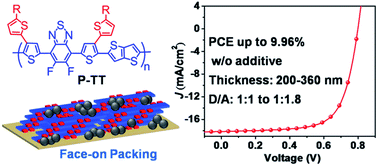
A difluorobenzothiadiazole-based polymer P-TT with alkylthiophene side chains diplays a desirable blend film morphology and high PCE with wide processing windows.
The content of this RSS Feed (c) The Royal Society of Chemistry
04 Sep 11:22
by Yajie Zhang, Dan Deng, Zaiyu Wang, Yuheng Wang, Jianqi Zhang, Jin Fang, Yang Yang, Guanghao Lu, Wei Ma, Zhixiang Wei
Abstract
Bulk heterojunction (BHJ) morphologies are vital to the device performance of organic solar cells (OSCs), including phase separation in lateral and vertical directions. However, the morphology developed from the blend solution is not easily predicted and controlled, especially in the vertical direction, because the BHJ morphology is kinetically frozen during the rapid solvent evaporation process. Here, a simple approach to control BHJ morphologies with optimized phase distribution for small molecule:[6,6]-phenyl-C71-butyric acid methyl ester (PC71 BM) blends by enhancing the substrate temperature during the spin-coating process. Three molecules with various fluorine atoms in the end acceptor units are selected. The relationship among molecular structures, substrate temperature effects on the morphology, and device performances are symmetrically investigated. Low temperature induces a multiple-sublayer-like architecture with significantly varied distributions of composition, morphology, and localized state energy, while high processing temperature induces more uniform film. The short-circuit current, open-circuit voltage, and fill factor of the devices are tuned with synergic improvement of efficiency toward over 10% and 11% for conventional and inverted devices. This work reveals the origination of vertical phase segregation, and provides a facile strategy to optimize the hierarchical phase separation for enhancing the performance of OSCs.

Vertical phase segregation in small molecule photovoltaic devices is manipulated via substrate temperature tuning. Low temperature induces multiple-sublayer-like architecture with significantly varied distributions of composition, morphology, and localized state energy, while high processing temperature induces more uniform film. The parameters of devices are largely tuned with synergic improvement of efficiency toward over 10% and 11% for conventional and inverted devices.