The magnetic properties of materials based on two-dimensional transition-metal dichalcogenides (TMDC) have been investigated by means of first-principles DFT calculations, namely Fe-intercalated bulk Fe$_{1/4}$TaS$_2$ compounds as well as TMDC monolayers with deposited Fe films. Changing the structure and the composition of systems consisting of Fe overlayers on top of a TMDC monolayers resulted in considerable variations of their physical properties. For the considered systems the Dzyaloshinskii-Moriya (DM) interaction has been determined and used for the subsequent investigation of their magnetic structure using Monte Carlo simulations. Rather strong DM interactions as well as large $D/J$ ratios have been obtained in some of these materials, which can lead to the formation of skyrmionic structures varying with the strength of the applied external magnetic field.
Dr.thedudeman
Shared posts
Dzyaloshinskii-Moriya interactions and magnetic texture in the Fe films deposited on transition-metal dichalcogenides. (arXiv:1507.07712v2 [cond-mat.mtrl-sci] UPDATED)
Observation of intervalley quantum interference in epitaxial monolayer WSe2. (arXiv:1507.07637v1 [cond-mat.mtrl-sci])
Monolayer (ML) transition metal dichalcogenides (TMDs) have been attracting great research attentions lately for their extraordinary properties, in particular the exotic spin-valley coupled electronic structures that promise future spintronic and valleytronic applications1-3. The energy bands of ML TMDs have well separated valleys that constitute effectively an extra internal degree of freedom for low energy carriers3-12. The large spin-orbit coupling in the TMDs makes the spin index locked to the valley index, which has some interesting consequences such as the magnetoelectric effects in 2H bilayers13. A direct experimental characterization of the spin-valley coupled electronic structure can be of great interests for both fundamental physics and device applications. In this work, we report the first experimental observation of the quasi-particle interference (QPI) patterns in ML WSe2 using low-temperature (LT) scanning tunneling microscopy/spectroscopy (STM/S). We observe intervalley quantum interference involving the Q-valleys in the conduction band due to spin-conserved scattering processes, while spin-flip intervalley scattering is absent. This experiment establishes unequivocally the presence of spin-valley coupling and affirms the large spin-splitting at the Q valleys. Importantly, the inefficient spin-flip intervalley scattering implies long valley and spin lifetime in ML WSe2, which represents a key figure of merit for valley-spintronic applications.
Surface alloying and iron selenide formation in Fe/Bi_{2} Se_{3} (0001) observed by x-ray absorption fine structure experiments
Author(s): A. Polyakov, Holger L. Meyerheim, E. Daryl Crozier, R. A. Gordon, K. Mohseni, S. Roy, A. Ernst, M. G. Vergniory, X. Zubizarreta, M. M. Otrokov, E. V. Chulkov, and J. Kirschner
The atomic structure of ultrathin iron films deposited on the (0001) surface of the topological insulator Bi2Se3 is analyzed by surface x-ray absorption spectroscopy. Iron atoms deposited on a Bi2Se3 (0001) surface kept at 160 K substitute bismuth atoms within the first quintuple layer. Iron atoms a…
[Phys. Rev. B 92, 045423] Published Wed Jul 22, 2015
New fabrication technique for highly sensitive qPlus sensor with well defined spring constant. (arXiv:1506.03867v1 [cond-mat.mes-hall])
A new technique for the fabrication of highly sensitive qPlus sensor for atomic force microscopy (AFM) is described. Focused ion beam was used to cut then weld onto a bare quartz tuning fork a sharp micro-tip from an electrochemically etched tungsten wire. The resulting qPlus sensor exhibits high resonance frequency and quality factor allowing increased force gradient sensitivity. Its spring constant can be determined precisely which allows accurate quantitative AFM measurements. The sensor is shown to be very stable and could undergo usual UHV tip cleaning including e-beam and field evaporation as well as in-situ STM tip treatment. Preliminary results with STM and AFM atomic resolution imaging at $4.5\,K$ of the silicon $Si(111)-7\times 7$ surface are presented.
Line and Point Defects in MoSe2 Bilayer Studied by Scanning Tunneling Microscopy and Spectroscopy. (arXiv:1506.04467v1 [cond-mat.mtrl-sci])
Bilayer (BL) MoSe2 films grown by molecular-beam epitaxy (MBE) are studied by scanning tunneling microscopy and spectroscopy (STM/S). Similar to monolayer (ML) films, networks of inversion domain boundary (DB) defects are observed both in the top and bottom layers of BL MoSe2, and often they are seen spatially correlated such that one is on top of the other. There are also isolated ones in the bottom layer without companion in the top-layer and are detected by STM/S through quantum tunneling of the defect states through the barrier of the MoSe2 ML. Comparing the DB states in BL MoSe2 with that of ML film reveals some common features as well as differences. Quantum confinement of the defect states is indicated. Point defects in BL MoSe2 are also observed by STM/S, where ionization of the donor defect by the tip-induced electric field is evidenced. These results are of great fundamental interests as well as practical relevance of devices made of MoSe2 ultrathin layers.
Molecular-beam epitaxy of monolayer and bilayer WSe2: A scanning tunneling microscopy/spectroscopy study and deduction of exciton binding energy. (arXiv:1506.04460v1 [cond-mat.mtrl-sci])
Interests in two-dimensional transition-metal dichalcogenides have prompted some recent efforts to grow ultrathin layers of these materials epitaxially using molecular-beam epitaxy. However, growths of monolayer and bilayer WSe2, an important member of the transition-metal dichalcogenides family, by the molecular-beam epitaxy method remain uncharted probably because of the difficulty in generating tungsten fluxes from the elemental source. In this work, we present a scanning tunneling microscopy and spectroscopy study of molecular-beam epitaxy-grown WSe2 monolayer and bilayer, showing atomically flat epifilm with no domain boundary defect. This contrasts epitaxial MoSe2 films grown by the same method, where a dense network of the domain boudaries defects is present. The scanning tunneling spectroscopy measurements of monolayer and bilayer WSe2 domains of the same sample reveal not only the bandgap narrowing upon increasing the film thickness from monolayer to bilayer, but also a band-bending effect across the boundary between monolayer and bilayer domains. This band-bending appears to be dictated by the edge states at steps of the bilayer islands. Finally, comparison is made between the scanning tunneling spectroscopy-measured electronic bandgaps with the exciton emission energies measured by photoluminescence, and the exciton binding energies in monolayer and bilayer WSe2/MoSe2 are thus estimated.
Long range coherent magnetic bound states in superconductors. (arXiv:1506.06666v1 [cond-mat.supr-con])
The quantum coherent coupling of completely different degrees of freedom is a challenging path towards creating new functionalities for quantum electronics. Usually the antagonistic coupling between spins of magnetic impurities and superconductivity leads to the destruction of the superconducting order. Here we show that a localized classical spin of an iron atom immersed in a superconducting condensate can give rise to new kind of long range coherent magnetic quantum state. In addition to the well-known Shiba bound state present on top of an impurity we reveal the existence of a star shaped pattern which extends as far as 12 nm from the impurity location. This large spatial dispersion turns out to be related, in a non-trivial way, to the superconducting coherence length. Inside star branches we observed short scale interference fringes with a particle-hole asymmetry. Our theoretical approach captures these features and relates them to the electronic band structure and the Fermi wave length of the superconductor. The discovery of a directional long range effect implies that distant magnetic atoms could coherently interact leading to new topological superconducting phases with fascinating properties.
Two-band superconductivity of bulk and surface states in Ag thin films on Nb. (arXiv:1506.06524v3 [cond-mat.supr-con] UPDATED)
We use epitaxial strain to shift the energy of the two-dimensional Ag(111) surface states of Ag islands on Nb(110) substrates, allowing to spatially tune the bottom of the surface-state band $E_{\rm SS}$ through the Fermi level $E_{\rm F}$. Bulk and surface-state contributions to the Ag(111) local density of states (LDOS) can be separated with scanning tunneling spectroscopy. For thick islands ($\approx$\, 20 nm), the Ag surface states are decoupled from the Ag bulk states via orthogonality, and the superconductive gap induced by proximity to Nb is due to bulk states only. However, for thin islands (3-4 nm), surface-state electrons develop superconducting correlations as identified by a complete energy gap in the LDOS when $E_{\rm F}$ is smaller than but close to $E_{\rm F}$. The induced superconductivity in this case is of two-band nature and appears to occur when the surface-state wave function reaches down to the Ag/Nb interface.
Characterization of collective ground states in single-layer NbSe2. (arXiv:1506.08460v2 [cond-mat.mes-hall] UPDATED)
Layered transition metal dichalcogenides (TMDs) are ideal systems for exploring the effects of dimensionality on correlated electronic phases such as charge density wave (CDW) order and superconductivity. In bulk NbSe2 a CDW sets in at TCDW = 33 K and superconductivity sets in at Tc = 7.2 K. Below Tc these electronic states coexist but their microscopic formation mechanisms remain controversial. Here we present an electronic characterization study of a single 2D layer of NbSe2 by means of low temperature scanning tunneling microscopy/spectroscopy (STM/STS), angle-resolved photoemission spectroscopy (ARPES), and electrical transport measurements. We demonstrate that 3x3 CDW order in NbSe2 remains intact in 2D. Superconductivity also still remains in the 2D limit, but its onset temperature is depressed to 1.9 K. Our STS measurements at 5 K reveal a CDW gap of {\Delta} = 4 meV at the Fermi energy, which is accessible via STS due to the removal of bands crossing the Fermi level for a single layer. Our observations are consistent with the simplified (compared to bulk) electronic structure of single-layer NbSe2, thus providing new insight into CDW formation and superconductivity in this model strongly-correlated system.
High-temperature superconductivity in potassium-coated multilayer FeSe thin films
Nature Materials 14, 775 (2015). doi:10.1038/nmat4302
Authors: Y. Miyata, K. Nakayama, K. Sugawara, T. Sato & T. Takahashi
The recent discovery of possible high-temperature (Tc) superconductivity over 65 K in a monolayer FeSe film on SrTiO3 (refs , , , , , ) triggered a fierce debate on how superconductivity evolves from bulk to film, because bulk FeSe crystal exhibits a Tc of no higher than 10 K (ref. ). However, the difficulty in controlling the carrier density and the number of FeSe layers has hindered elucidation of this problem. Here, we demonstrate that deposition of potassium onto FeSe films markedly expands the accessible doping range towards the heavily electron-doped region. Intriguingly, we have succeeded in converting non-superconducting films with various thicknesses into superconductors with Tc as high as 48 K. We also found a marked increase in the magnitude of the superconducting gap on decreasing the FeSe film thickness, indicating that the interface plays a crucial role in realizing the high-temperature superconductivity. The results presented provide a new strategy to enhance and optimize Tc in ultrathin films of iron-based superconductors.
Superconductivity: The FeSe riddle
Nature Materials 14, 755 (2015). doi:10.1038/nmat4371
Author: I. I. Mazin
Electron–phonon coupling has been considered as a possible mechanism behind the high superconducting critical temperature of FeSe monolayers. The doping dependence of the superconductivity casts serious doubt that it plays a decisive role.
Entanglement-induced Kondo screening in atomic spin chains. (arXiv:1507.04785v1 [cond-mat.mes-hall])
Quantum entanglement permeates the complex ground states of correlated electron materials defying single-particle descriptions. Coupled magnetic atoms have potential as model systems for entanglement in condensed matter giving the opportunity to create artificial many-body states which can be controlled by tuning the underlying interactions. They provide an avenue to unravel the complexities of correlated-electron materials. Here we use low temperature scanning tunnelling microscopy (STM) and atomic manipulation to tune entanglement in chains of magnetic atoms. We find that a Kondo singlet state can emerge from this entanglement. The many electron Kondo state is based on the screening of the entangled spin ground state of the chain by substrate electrons and can be engineered to envelop at least ten magnetic atoms. The concomitant Kondo resonance measured in the differential conductance enables the electric read-out of entanglement. By tuning composition and coupling strength within atomic chains it is possible to create model spin chains with defined entanglement. This lays the foundation for a new class of experiments to construct exotic correlated-electron materials atom by atom.
Perpendicular Reading of Single Confined Magnetic Skyrmions. (arXiv:1507.06330v1 [cond-mat.mes-hall])
Thin-film sub-5 nm magnetic skyrmions constitute an ultimate scaling alternative for future digital data storage. Skyrmions are robust non-collinear spin-textures that can be moved and manipulated by small electrical currents. We show here an innovative technique to detect isolated nanoskyrmions with a current-perpendicular-to-plane geometry, which has immediate implications for device concepts. We explore the physics behind such a mechanism by studying the atomistic electronic structure of the magnetic quasiparticles. We investigate how the isolated skyrmion local-density-of-states which tunnels into the vacuum, when compared to the ferromagnetic background, is modified by the site-dependent spin-mixing of electronic states with different relative canting angles. Local transport properties are sensitive to this effect, as we report an atomistic conductance anisotropy of over 20% for magnetic skyrmions in Pd/Fe/Ir(111) thin-films. In single skyrmions, engineering this spin-mixing magnetoresistance possibly could be incorporated in future magnetic storage technologies.
A metallic mosaic phase and the origin of Mott insulating state in 1T-TaS2. (arXiv:1507.01312v1 [cond-mat.mtrl-sci])
Electron-electron and electron-phonon interactions are two major driving forces that stabilize various charge-ordered phases of matter. The intricate interplay between the two give rises to a peculiar charge density wave (CDW) state, which is also known as a Mott insulator, as the ground state of layered compound 1T-TaS2. The delicate balance also makes it possible to use external perturbations to create and manipulate novel phases in this material. Here, we study a mosaic CDW phase induced by voltage pulses from the tip of a scanning tunneling microscope (STM), and find that the new phase exhibit electronic structures that are entirely different from the Mott ground state of 1T-TaS2 at low temperatures. The mosaic phase consists of nanometer-sized domains characterized by well-defined phase shifts of the CDW order parameter in the topmost layer, and by altered stacking relative to the layer underneath. We discover that the nature of the new phases is dictated by the stacking order, and our results shed fresh light on the origin of the Mott phase in this layered compound.
Electrical detection of magnetic skyrmions by non-collinear magnetoresistance. (arXiv:1507.04337v1 [cond-mat.mes-hall])
Magnetic skyrmions are localised non-collinear spin textures with high potential for future spintronic applications. Skyrmion phases have been discovered in a number of materials and a focus of current research is the preparation, detection, and manipulation of individual skyrmions for an implementation in devices. Local experimental characterization of skyrmions has been performed by, e.g., Lorentz microscopy or atomic-scale tunnel magnetoresistance measurements using spin-polarised scanning tunneling microscopy. Here, we report on a drastic change of the differential tunnel conductance for magnetic skyrmions arising from their non-collinearity: mixing between the spin channels locally alters the electronic structure, making a skyrmion electronically distinct from its ferromagnetic environment. We propose this non-collinear magnetoresistance (NCMR) as a reliable all-electrical detection scheme for skyrmions with an easy implementation into device architectures.
End states and subgap structure in proximity-coupled chains of magnetic adatoms. (arXiv:1507.03104v2 [cond-mat.mes-hall] UPDATED)
A recent experiment [Nadj-Perge et al., Science 346, 602 (2014)] provides evidence for Majorana zero modes in iron (Fe) chains on the superconducting Pb(110) surface. Here, we study this system by scanning tunneling microscopy using superconducting tips. This high-resolution technique resolves a rich subgap structure, including zero-energy excitations in some chains. We compare the symmetry properties of the data under voltage reversal against theoretical expectations and provide evidence that the putative Majorana signature overlaps with a previously unresolved low-energy resonance. Interpreting the data within a Majorana framework suggests that the topological gap is significantly smaller than previously believed. Aided by model calculations, we also analyze higher-energy features of the subgap spectrum and their relation to high-bias peaks which we associate with the Fe d-bands.
Periodic Charging of Individual Molecules Coupled to the Motion of an Atomic Force Microscopy Tip

Pasteur’s Experiment Performed at the Nanoscale: Manual Separation of Chiral Molecules, One by One

Surface electronic structure and evidence of plain s-wave superconductivity in (Li0.8Fe0.2)OHFeSe. (arXiv:1507.02577v2 [cond-mat.supr-con] UPDATED)
(Li0.8Fe0.2)OHFeSe is a newly-discovered intercalated iron-selenide superconductor with a Tc above 40 K, which is much higher than the Tc of bulk FeSe (8 K). Here we report a systematic study of (Li0.8Fe0.2)OHFeSe by low temperature scanning tunneling microscopy (STM). We observed two kinds of surface terminations, namely FeSe and (Li0.8Fe0.2)OH surfaces. On the FeSe surface, the superconducting state is fully gapped with double coherence peaks, and a vortex core state with split peaks near EF is observed. Through quasi-particle interference (QPI) measurements, we clearly observed intra- and inter-pocket scatterings in between the electron pockets at the M point, as well as some evidence of scattering that connects gamma and M points. Upon applying magnetic field, the QPI intensity of all the scattering channels are found to behave similarly. Furthermore, we studied impurity effects on the superconductivity by investigating intentionally introduced impurities and intrinsic defects. We observed that magnetic impurities such as Cr adatoms can induce in-gap states and suppress superconductivity. However, nonmagnetic impurities such as Zn adatoms do not induce visible in-gap states. Meanwhile, we show that Zn adatoms can induce in-gap states in thick FeSe films, which is believed to have an (s+-)wave pairing symmetry. Our experimental results suggest it is likely that (Li0.8Fe0.2)OHFeSe is a plain s-wave superconductor, whose order parameter has the same sign on all Fermi surface sections.
Magnetic adatoms as memory bits: A quantum master equation analysis
Author(s): Christian Karlewski, Michael Marthaler, Tobias Märkl, Timofey Balashov, Wulf Wulfhekel, and Gerd Schön
Due to underlying symmetries, the ground states of magnetic adatoms may be highly stable, which opens perspectives for application as single-atom memory. A specific example is a single holmium atom (with J=8) on a platinum (111) surface for which exceptionally long lifetimes were observed in recent …
[Phys. Rev. B 91, 245430] Published Tue Jun 23, 2015
Observation of a robust zero-energy bound state in iron-based superconductor Fe(Te,Se)
Nature Physics. doi:10.1038/nphys3371
Authors: J-X. Yin, Zheng Wu, J-H. Wang, Z-Y. Ye, Jing Gong, X-Y. Hou, Lei Shan, Ang Li, X-J. Liang, X-X. Wu, Jian Li, C-S. Ting, Z-Q. Wang, J-P. Hu, P-H. Hor, H. Ding & S. H. Pan
In superconductors, electrons are paired and condensed into the ground state. An impurity can break the electron pairs into quasiparticles with energy states inside the superconducting gap. The characteristics of such in-gap states reflect accordingly the properties of the superconducting ground state. A zero-energy in-gap state is particularly noteworthy, because it can be the consequence of non-trivial pairing symmetry or topology. Here we use scanning tunnelling microscopy/spectroscopy to demonstrate that an isotropic zero-energy bound state with a decay length of ∼10 Å emerges at each interstitial iron impurity in superconducting Fe(Te,Se). More noticeably, this zero-energy bound state is robust against a magnetic field up to 8 T, as well as perturbations by neighbouring impurities. Such a spectroscopic feature has no natural explanation in terms of impurity states in superconductors with s-wave symmetry, but bears all the characteristics of the Majorana bound state proposed for topological superconductors, indicating that the superconducting state and the scattering mechanism of the interstitial iron impurities in Fe(Te,Se) are highly unconventional.
Interplay between Orbital Magnetic Moment and Crystal Field Symmetry: Fe atoms on MgO. (arXiv:1506.07807v1 [cond-mat.mes-hall])
We combine density functional theory, x-ray magnetic circular dichroism, multiplet calculations, and scanning tunneling spectroscopy to assess the magnetic properties of Fe atoms adsorbed on a thin layer of MgO(100) on Ag(100). Despite the strong axial field due to the O ligand, the weak cubic field induced by the four-fold coordination to Mg atoms entirely quenches the first order orbital moment. This is in marked contrast to Co, which has an out-of-plane orbital moment of $L_z = \pm 3$ that is protected from mixing in a cubic ligand field. The spin-orbit interaction restores a large fraction of the Fe orbital moment leading a zero-field splitting of $14.0 \pm 0.3$~meV, the largest value reported for surface adsorbed Fe atoms.
Two Dimensional Ising Superconductivity in Gated MoS$_{2}$. (arXiv:1506.07620v2 [cond-mat.supr-con] UPDATED)
The Zeeman effect, which is usually considered to be detrimental to superconductivity, can surprisingly protect the superconducting states created by gating a layered transition metal dichalcogenide. This effective Zeeman field, which is originated from intrinsic spin orbit coupling induced by breaking in-plane inversion symmetry, can reach nearly a hundred Tesla in magnitude. It strongly pins the spin orientation of the electrons to the out-of-plane directions and protects the superconductivity from being destroyed by an in-plane external magnetic field. In magnetotransport experiments of ionic-gate MoS$_{2}$ transistors, where gating prepares individual superconducting state with different carrier doping, we indeed observe a spin- protected superconductivity by measuring an in-plane critical field $\textit{B}$$_{c2}$ far beyond the Pauli paramagnetic limit. The gating-enhanced $\textit{B}$$_{c2}$ is more than an order of magnitude larger compared to the bulk superconducting phases where the effective Zeeman field is weakened by interlayer coupling. Our study gives the first experimental evidence of an Ising superconductor, in which spins of the pairing electrons are strongly pinned by an effective Zeeman field.
Characterization of a Surface Reaction by Means of Atomic Force Microscopy

Metal dichalcogenides: Two dimensions and one photon
Nature Nanotechnology 10, 485 (2015). doi:10.1038/nnano.2015.104
Author: V. Perebeinos
Single-photon sources have been demonstrated in two-dimensional semiconductors.
Theory of light-enhanced phonon-mediated superconductivity. (arXiv:1505.07575v2 [cond-mat.supr-con] UPDATED)
We investigate the dynamics of a phonon-mediated superconductor driven out of equilibrium. The electronic hopping amplitude is ramped down in time, resulting in an increased electronic density of states. The dynamics of the coupled electron-phonon model is investigated by solving Migdal-Eliashberg equations for the double-time Keldysh Green's functions. The increase of the density of states near the Fermi level leads to an enhancement of superconductivity when the system thermalizes to the new state at the same temperature. We provide a time- and momentum-resolved view on this thermalization process, and show that it involves fast processes associated with single-particle scattering and much slower dynamics associated with the superconducting order parameter. The importance of electron-phonon coupling for the rapid enhancement and the efficient thermalization of superconductivity is demonstrated, and the results are compared to a BCS time-dependent mean-field approximation.
Monolayer PtSe2, a New Semiconducting Transition-Metal-Dichalcogenide, Epitaxially Grown by Direct Selenization of Pt

Site-Dependent Evolution of Electrical Conductance from Tunneling to Atomic Point Contact
Author(s): Howon Kim and Yukio Hasegawa
A highly stable scanning tunneling microscope measures the electrical properties of a metal on a scale smaller than individual atoms.
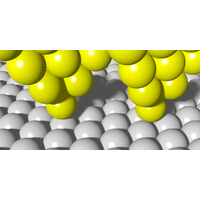
[Phys. Rev. Lett. 114, 206801] Published Fri May 22, 2015
Pristine and intercalated transition metal dichalcogenide superconductors. (arXiv:1505.06384v1 [cond-mat.supr-con])
Transition metal dichalcogenides (TMDs) are quasi-two-dimensional layered compounds exhibiting strongly competing charge-density wave (CDW) and superconducting (SC) order parameters (OPs). The weak van der Waals interlayer bonding between hexagonal layers of octahedral or trigonal prismatic TMD building blocks allows for many polytypes. The non-superconducting $1T$ polytypes can have one or more CDWs. The $2H$ polytypes have two or more Fermi surfaces and saddle bands, allowing for dual orderings, which can be coexisting CDW and SC orderings, two SC gaps as in MgB$_2$, or two CDW gaps. The CDW transitions $T_{\rm CDW}$s usually greatly exceed the low superconducting $T_{\rm c}$s, their orbital OPs are generally highly anisotropic and can even contain nodes, are remarkably similar to the the high-$T_{\rm c}$ cuprate pseudogaps, and the SC OPs can be greatly affected by their presence. In 2$H$-NbSe$_2$, the CDW renders its general $s$-wave SC OP orbital symmetry to be highly anisotropic and strongly reduces its Josephson coupling strength ($I_{\rm c}R_{\rm n}$) with Pb. Pressure and intercalation generally suppress the CDWs, enhancing $T_{\rm c}$. The misfit intercalation compound (LaSe)$_{1.14}$(NbSe$_2$) and many intercalated $2H$-TMDs, such as TaS$_2$(pyridine)$_{1/2}$, have completely incoherent $c$-axis transport, dimensional-crossover effects, and behave as stacks of intrinsic Josephson junctions. Except for the anomalously large violation of the Pauli limit of the upper critical field of (LaSe)$_{1.14}$(NbSe$_2$), these properties are very similar to those of the cuprate Bi$_2$Sr$_2$CaCu$_2$O$_{8+\delta}$ and of the organic layered superconductor, $\kappa$-(ET)$_2$Cu[N(CN)$_2$]Br. Intercalates of TMDs with water and metallic ions are very similar to Na$_x$CoO$_2\cdot y$H$_2$O.
Long distance transport of magnon spin information in a magnetic insulator at room temperature. (arXiv:1505.06325v1 [cond-mat.mes-hall])
The transport of spin information has been studied in various materials, such as metals, semiconductors and graphene. In these materials, spin is transported by diffusion of conduction electrons. Here we study the diffusion and relaxation of spin in a magnetic insulator, where the large bandgap prohibits the motion of electrons. Spin can still be transported, however, through the diffusion of non-equilibrium magnons, the quanta of spin wave excitations in magnetically ordered materials. Here we show experimentally that these magnons can be excited and detected fully electrically in linear response, and can transport spin angular momentum through the magnetic insulator yttrium iron garnet (YIG) over distances as large as 40 micrometer. We identify two transport regimes: the diffusion limited regime for distances shorter than the magnon relaxation length, and the relaxation limited regime for larger distances. With a model similar to the diffusion-relaxation model for electron spin transport in (semi)conducting materials, we extract the magnon relaxation length lambda = 9.4 micrometer in a 200 nm thin YIG film at room temperature.