Shared posts

18 Sep 02:49

Sarah Spencer’s Giant Star Map Tapestry

by Jonathan Crowe
Sarah Spencer (Twitter)

This huge star map tapestry is the work of Australian maker Sarah Spencer, who created it by hacking a 1980s-era knitting machine. Yes, this thing was knitted: it apparently took more than 100 hours and 15 kg (33 lbs) of (locally sourced Australian) wool to produce this 4.6×2.8-metre (15×9-foot) monster, which is accurate (with the caveat that an equatorial projection distorts familiar circumpolar constellations) and reasonably detailed: the constellations are labelled and the stars’ apparent magnitude is indicated. Space.com has the story. [Boing Boing]

06 Sep 16:02

Creating Simulations with Leaflet Maps

by Keir Clarke
AgentMaps is a new LeafletJS plug-in that allows you to create animated social simulations on an interactive map. These social simulations can take the form of simulated neighborhood commuting patterns, the spread of an epidemic in a town, traffic flow around an intersection or anything else that requires modelling the flow of agents around a location on a map. AgentMaps allows you to build and
06 Sep 14:54

Anti-Semitic Map Vandalism Strikes Mapbox

by Jonathan Crowe

An incident of map vandalism roiled the Internet last week. Users of several online services, including CitiBike, Foursquare and SnapChat, discovered that New York City had been relabelled “Jewtropolis” on the services’ maps: see coverage at Gizmodo, Mashable and TechCrunch. The problem was quickly traced to Mapbox, which provides maps to these services. Mapbox, understandably upset about the act of vandalism, soon figured out what the hell happened.

The problem was traced to OpenStreetMap, one of Mapbox’s data sources. On August 10 an OSM user renamed a number of New York landmarks, as well as New York itself, after a number of alt-right and neo-Nazi memes. The edits were quickly reverted and the user blocked—on OpenStreetMap. They nevertheless entered the Mapbox review pipeline, where they were, in fact, caught and flagged on the 16th, but a human editor mistakenly okayed the renaming of New York to Jewtropolis. A simple human error, but with a delayed fuse: the edit turned up on Mapbox’s public map two weeks later. When all hell broke loose on the 30th, the map was fixed within a few hours.

Vandalism of online maps isn’t a new thing: in 2015 Google ran into trouble when a series of juvenile map edits exposed the shortcomings of the Map Maker program’s moderation system and led to a temporary suspension of Map Maker (it closed for good in 2017) and an apology from Google. Anything involving user contributions needs a moderation system, and OpenStreetMap and Mapbox both have them. But moderation systems can and do still fail from time to time. (That’s a take on this incident that isn’t on Bill Morris’s list.)

15 Jun 22:41

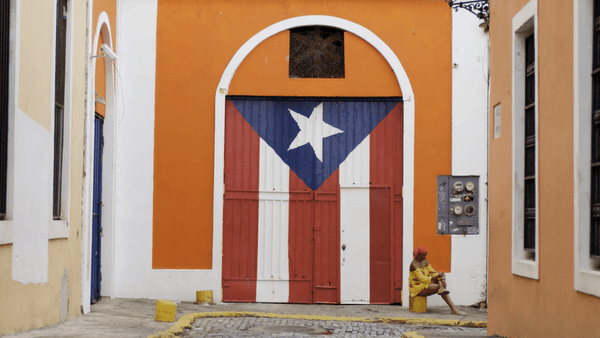
“Presente”: Join Lin-Manuel Miranda in supporting Puerto Rico’s recovery

To support ongoing relief efforts in Puerto Rico, Google is now matching donations up to $2 million to the Hispanic Federation and Mercy Corps. We asked ”Hamilton” creator Lin-Manuel Miranda to share his thoughts on why this is important. Read his story below, and donate now at g.co/supportPR.

Puerto Rico is 35 by 100 miles—an archipelago with a main island and two adjacent island-municipalities, Culebra and Vieques. But this tiny paradise has made an outsized impression on the world stage...artists…musicians…major league shortstops…and five Miss Universes. A territory of the United States since 1898, Puerto Ricans, by birth, are U.S. citizens. Right now, there are more Puerto Ricans in the continental United States (over 4.5 million) than on the island, 3.3 million. It’s not surprising that when the island is in trouble, the diaspora says, “presente.” 

Puerto Rico is my second home. It’s where my parents were born. My mom lived there until she was a toddler, and my dad grew up there until he was about 18 and came to New York for graduate school. I had the incredible privilege and good fortune of having them send me to Puerto Rico every summer. My sister and I lived with my grandparents in Vega Alta, a humble town on the northern coast of the island. I used to work at my aunt’s school supply store on the frozen slushie machine.

And Puerto Rico is where Hurricane Maria made landfall on September 20, 2017—the largest hurricane to hit the Caribbean in modern history. The devastation was widespread: most estimates put the damage costs at over $90 billion, the third most costly hurricane ever. In less than 48 hours, 80 percent of Puerto Rico’s agriculture was destroyed and 85 percent of above-ground telephone and internet cables were knocked out.

After Maria made landfall, there was a terrible silence from the island that lasted for days. We looked for any news or pictures on social media. We texted over and over again, hoping our loved ones could find a way to get a message through. For me, it was five days until we heard from any family members; we found a picture of our uncle helping in a supply line in Vega Alta.

Never before has a hurricane done this much damage to the island—to its already fragile power grid, to the way of life, to the land itself. I’ll never forget when we flew to Puerto Rico a month after Maria; seeing bare mountains for the first time was terrifying. 

Nature is already making a comeback—those islands that were brown in the wake of Maria are green again. But due to the unpreparedness for this crisis and the halting attempts to restore power, Puerto Ricans in many parts of the island are still struggling. Power is still not fully restored. And this year’s hurricane season has just begun.

In the nine months since Hurricane Maria, people all over the world have opened their piggy banks and opened their hearts to help. Across the country, many have made their voices heard, demanding action from Congress. It has meant so much. Progress has been made, but there is still work to be done.

Now I ask that you join us once again in supporting economic recovery efforts on the island. Google will be matching donations up to $2 million to the Hispanic Federation and Mercy Corps—two organizations that have been helping people on the ground throughout the relief effort. You can donate now at g.co/supportPR.

I wake up every morning and I’m grateful that my family is from Puerto Rico. I feel an incredible connection to the island, to the people, to the culture, to our spirit, to our resilience. I know many others feel this connection, because you have chosen to help Puerto Rico and ease this crisis. Thank you for joining this effort, and thank you Google for your $2 million challenge grant.

Siempre,

Lin-Manuel

11 Jun 15:17

Alejandro Polanco’s Lost Worlds

by Jonathan Crowe

Speaking of lost islands, invented places, myths and mistakes, our friend Alejandro Polanco’s latest project is this poster map of lost worlds—he calls it “the fantasy map I always dreamed of.” See his blog post (in Spanish) or the project’s Kickstarter page:

Over the last twenty years, in my work as a graphic designer and mapmaker, I have enjoyed reading numerous books on lost continents, mythological animals, phantom islands and cartographic errors. However, I have never found all those ingredients gathered in a single fantasy map. That’s why I decided to create “Lost Worlds,” a poster in which I have compiled some of the main details about lost continents, historical errors on famous maps, islands that once were believed to really exist, fantastic animals. . . . The documentation work has been meticulous and, for the final design, I have chosen the cases that I consider to be the most representative. It is, in short, a map to feed our imagination and our dreams.

Like his previous project, Minimal Geography, it’s full of inset maps and descriptive text. The main map locates lost continents, phantom islands and cryptid creatures; the inset maps include examples of old maps that contain the sorts of imaginary and erroneous features Edward Brooke-Hitching covers in The Phantom Atlas.

Alejandro is, as I mentioned, crowdfunding this map on Kickstarter, where it’s already past its (nominal) target. Available as a digital download; prices start at €6 (higher tiers include other products.

14 May 15:22

Alaska’s Cartographic Revenge

by Jonathan Crowe

If Shetland gets relegated to inset maps all the time, that goes double for Alaska, which on maps of the United States gets reduced in scale too. In response, this map turns the tables by relegating the lower 48 (as well as Hawaii) to a tiny and crude inset map. The 17×25-inch paper map costs $15. [Maps on the Web]

13 May 19:46

Help fight the opioid epidemic this National Prescription Drug Take Back Day

by Susan MolinariPublic Policy, Americas

We're deeply concerned by the opioid crisis that has impacted families in every corner of the United States. We started by thinking about how to bring Google’s technical expertise to help families combat the epidemic.

Research by the federal government has shown that prescription drug abuse is a large driver of opioid addiction, and that the majority of abused prescription drugs are obtained from family or friends, often from a home medicine cabinet. The U.S. Drug Enforcement Administration (DEA) has found that one way that Americans can help prevent drug abuse and addiction is to properly dispose of unneeded or expired prescription drugs. Yet many people aren’t aware of, or can’t easily find, prescription drug disposal programs in their communities.

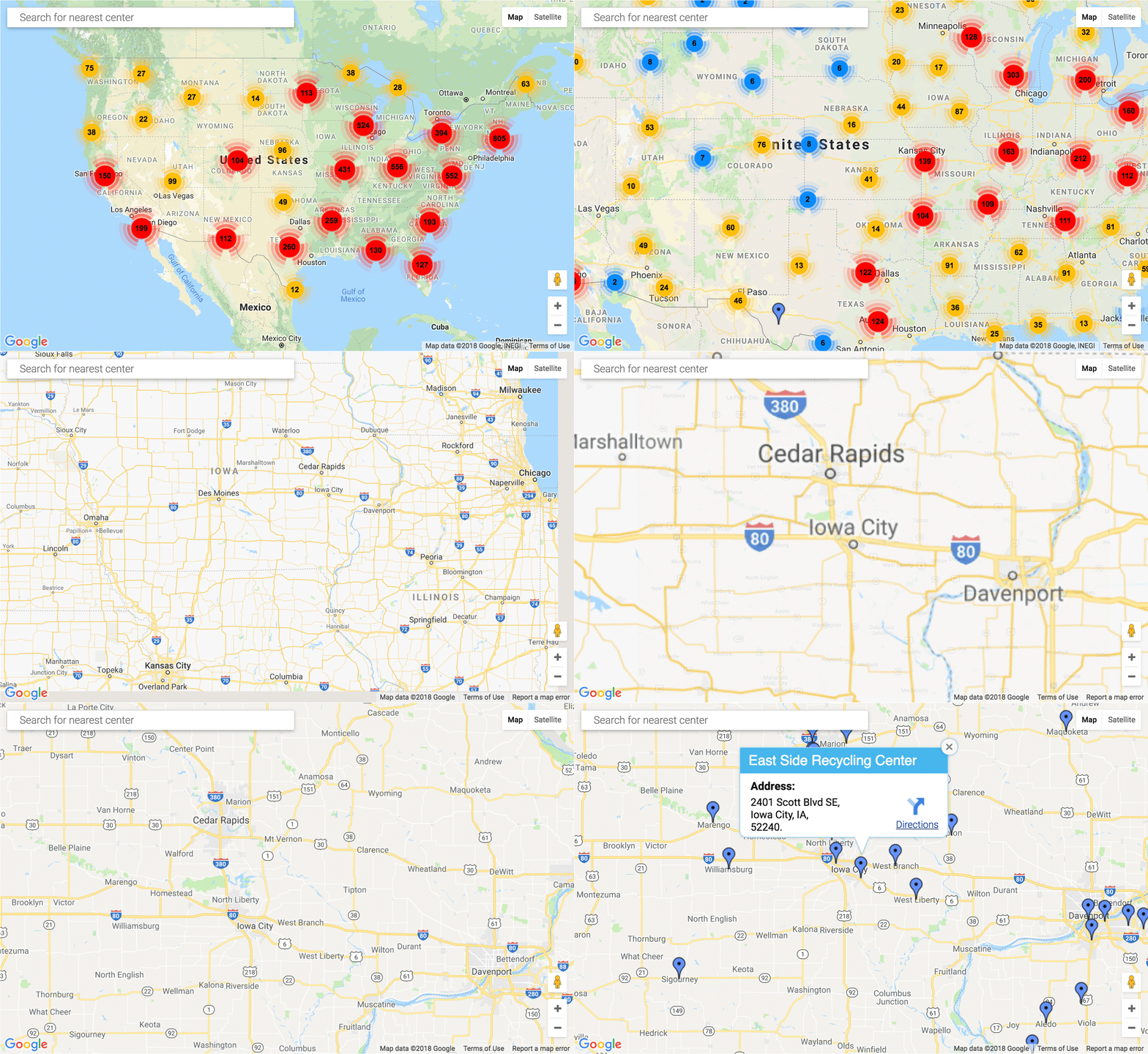
Using Google Maps API, our team worked with the DEA to create a locator tool for the National Prescription Drug Take Back Day this Saturday, April 28. The locator tool can help anyone find a place near them to safely dispose of leftover prescription medications. Click on the image below to access the locator, and enter an address or zip code to find nearby Take Back Day events this Saturday and help fight the opioid epidemic.

rxlocator_map.gif

Longer term, we’re working with the DEA and state governments like Iowa, Arizona, Massachusetts, and Michigan to gather data on year-round take back options for future Google Maps integration.

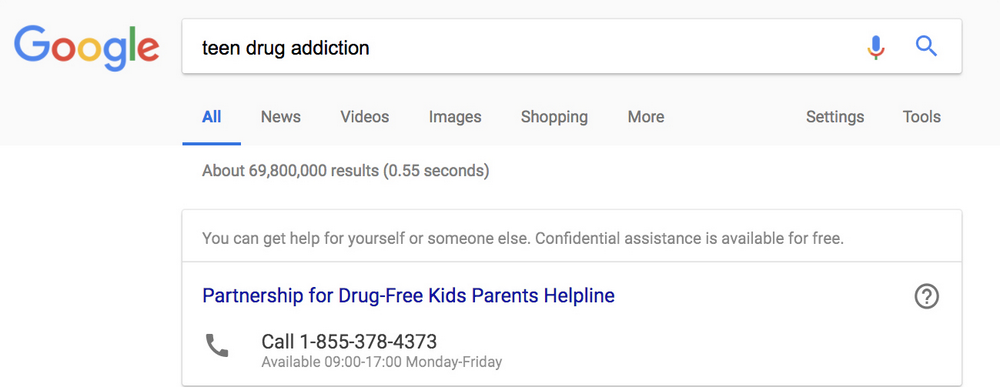
In addition to making it easier to find take back locations, we’re also proud to support non-profit organizations on the frontlines of this crisis. We’ve worked with the Partnership for Drug-Free Kids since 2015 to help parents searching online for support connect to the Partnership’s  Parent Helpline. This service provides free counseling and advice to parents who need help addressing the many challenges of a child’s substance use. Today, we’re announcing $750,000 in matching grants from Google.org to help expand the Parent Helpline and get even more families the support and help they need. 

searchbox_teendrug.jpg

We’re also committed to ensuring that the public understands the danger of opioid abuse and the resources available for those who need help, by making useful information about opioid addiction and prescription drugs available in Google Search.

search_healthbox.jpg

There are no easy answers to a challenge as large as the opioid crisis, but we’re committed to doing our part to ensure that people in every corner of the country have access to the resources they need to address this urgent public health emergency.

07 May 19:39

Advice on Choropleth Maps

by Jonathan Crowe

Last month Lisa Charlotte Rost published a post on Datawrapper’s blog full of tips about choropleth maps: when to use them (and when not to), how to make them better (lots about colour use), along with some examples of good ones. Worth bookmarking.

She followed that up with another post focusing on one particular factor: the size of the geographic unit. Choropleth maps that shows data by municipality, county, region, state or country will look quite different, even if they show the same data. Averages tend to cancel out extremes. She gives the following examples:

29 Apr 14:38

An Update on Leonia, NJ’s War on Waze

by Jonathan Crowe

Leonia, New Jersey’s decision to close its residential streets to non-residents (previously)—an attempt to deal with the traffic being routed that way by navigation apps like Waze—has also, like the apps that created the problem in the first place, resulted in some unintended consequences. On, for example, visiting relatives and local businesses.

Previously: New Jersey Borough to Close Streets to Congestion-Rerouted Traffic.

18 Apr 14:09

Preserving endangered wonders of the world, for generations to come

by Chance CoughenourGoogle Arts & Culture

When Ben Kacyra watched on TV as the Taliban destroyed 1,500 year-old Buddhist statues in Bamiyan, Afghanistan in 2001, he felt compelled to do something. Mr. Kacyra, who happens to be one of the creators of the world's first three-dimensional laser scanning system, realized that his technology could be used to record monuments at risk of damage due to natural disasters, war, or tourism, so that they could be preserved for future generations.

He founded CyArk, a non-profit that has created the world’s largest and most detailed 3D digital archive of endangered wonders of the world—a lasting record of monuments at risk of disappearing. Now, Google Arts & Culture has partnered with CyArk to open up access to their virtual wonders and share their stories with everyone.

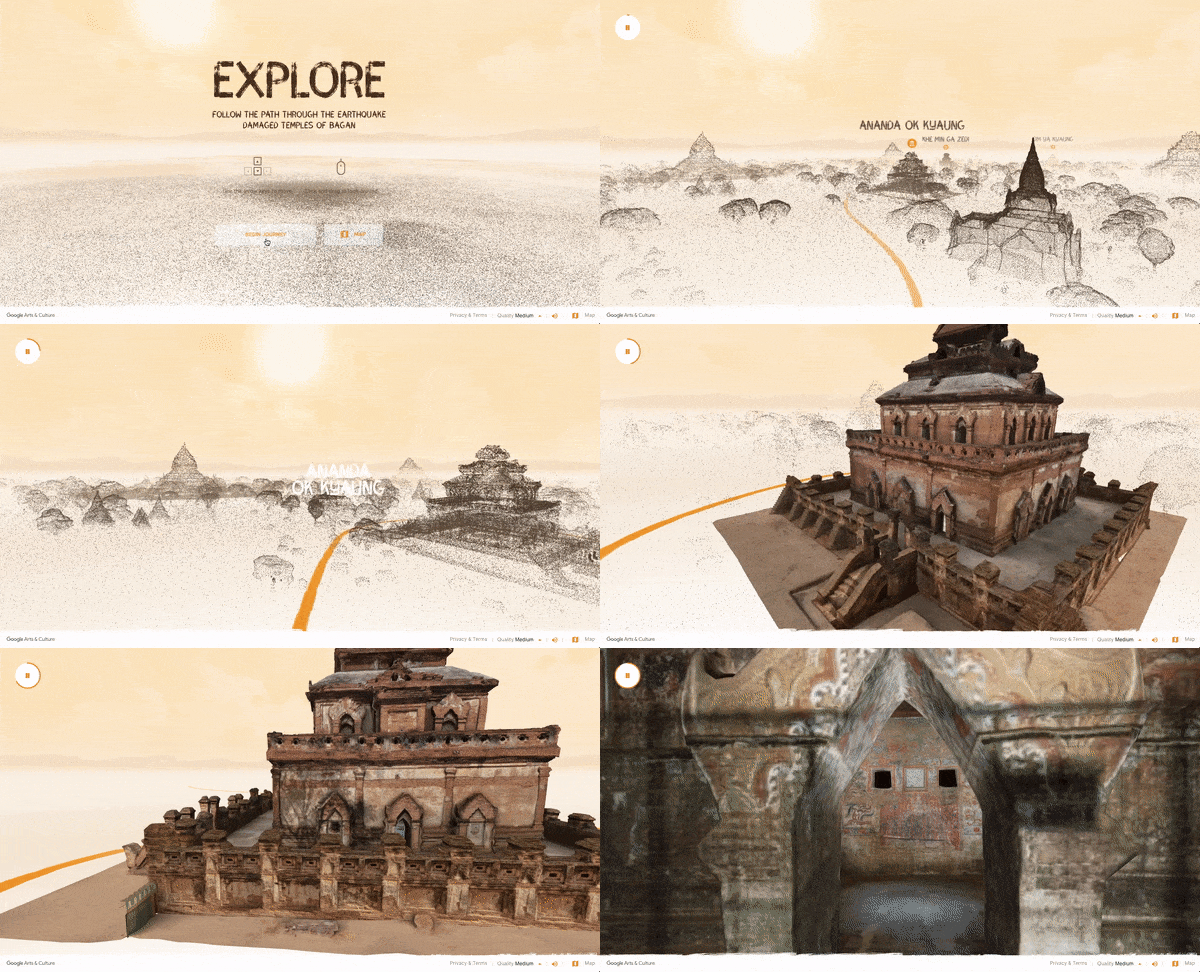
bagan VR.gif

The Ananda Ok Kyaung temple, in Bagan, Myanmar remains closed to visitors due to the damage from a 2016 earthquake. You can now virtually step inside and discover its famous wall paintings.

With modern technology, we can capture these monuments in fuller detail than ever before, including the color and texture of surfaces and the geometry captured by laser scanners with millimeter precision in 3D. These detailed scans can also be used to identify areas of damage and assist restoration efforts.

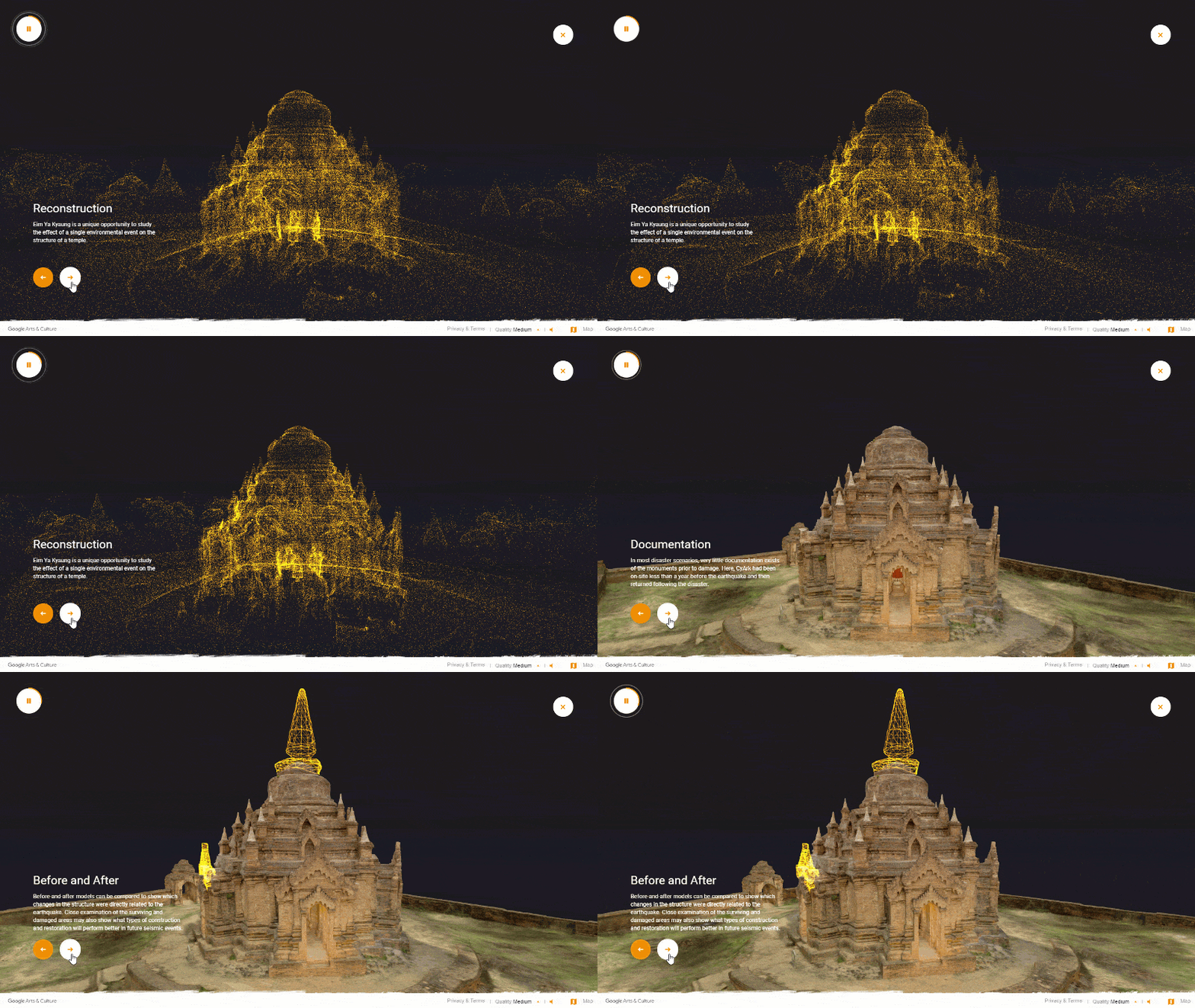
Bagan compare damage.gif

Eim Ya Kyaung in Bagan, Myanmar. The temple was built in 1242 and was damaged by an earthquake.

The image above shows a structure in Bagan, Myanmar, where a 2016 earthquake damaged many of the city’s famous temples. Before disaster struck however, CyArk’s team had scanned and photographed the site—inside and outside, from the ground and from above. Using the data they collected, we reconstructed Bagan’s key monuments in 3D so you can now travel through this breathtaking place and even step inside the temples using a computer, smartphone or virtual reality viewer like Daydream.

As part of this new online exhibition you can explore stories from over 25 iconic locations across 18 countries around the world, including the Al Azem Palace in war-torn Damascus, Syria and the ancient Mayan metropolis of Chichen Itza in Mexico. For many of the sites, we also developed intricate 3D models that allow you to inspect from every angle, using the new Google Poly 3D viewer on Google Arts & Culture.

Scroll through some of the iconic locations:


  • AyutthayaGAC.png

    Capturing photogrammetry data at the historic city of Ayutthaya, Thailand with a drone

  • CyArk_Al Azem Palace_3-D point cloud scan.png

    3D aerial scan of Ayutthaya

  • Chichen Itza 3D point cloud.png

    3D point cloud of El Castillo, the Temple of Kukulcan in Chichén Itzá, Mexico

  • CyArk_Mesa Verde.png

    Scanning of the renowned cliff dwellings of Mesa Verde, USA.

  • 3D model_Mesa Verde.png

    3D model of Mesa Verde’s cliff dwellings

  • Somaliland Rock Art Technical training.png

    Training digital archaeologists at the Somaliland Rock Art site

  • CyArk_Al Azem Palace_3-D point cloud scan.png

    3D aerial scan of Al Azem Palace in Syria

Over the past seven years, we’ve partnered with 1,500 museums in over 70 countries to bring their collections online and put more of the world’s culture at your fingertips. This project marks a new chapter for Google Arts & Culture, as it’s the first time we’re putting 3D heritage sites on the platform.

To help the work of restorers, researchers, educators and the entire community working to preserve our cultural heritage, we’re opening up access to the source data collected by CyArk from around the world. Now anyone can apply to download the data, with the help of the Google Cloud Platform.

You don’t need to be an archaeologist to uncover fascinating details in this collection! Discover Google Arts & Culture’s "Open Heritage” project online—or download our free app for iOS or Android.

18 Apr 14:08

Helping publishers recover lost revenue from ad blocking

by Varun Chirravuri

Today, the majority of the internet is supported by digital advertising. But bad ad experiences—the ones that blare music unexpectedly, or force you to wait 10 seconds before you get to the page—are hurting publishers who make the content, apps and services we use everyday. When people encounter annoying ads, and then decide to block all ads, it cuts off revenue for the sites you actually find useful. Many of these people don't intend to defund the sites they love when they install an ad blocker, but when they do, they block all ads on every site they visit.  

Last year we announced Funding Choices to help publishers with good ad experiences recover lost revenue due to ad blocking. While Funding Choices is still in beta, millions of ad blocking users every month are now choosing to see ads on publisher websites, or “whitelisting” that site, after seeing a Funding Choices message. In fact, in the last month over 4.5 million visitors who were asked to allow ads said yes, creating over 90 million additional paying page views for those sites.

Over the coming weeks, we’re expanding Funding Choices to 31 additional countries, giving publishers the ability to ask visitors from those countries to choose between allowing ads on a site, or purchasing an ad removal pass through Google Contributor. Also, we’ve started a test that allows publishers to use their own proprietary subscription services within Funding Choices.

How Funding Choices works

Funding Choice gives publishers a way to have a conversation with their site visitors through custom messages they can use to express how ad blocking impacts their business and content. When a visitor arrives at a site using an ad blocker, Funding Choices allows the site to display one of three message types to that user:

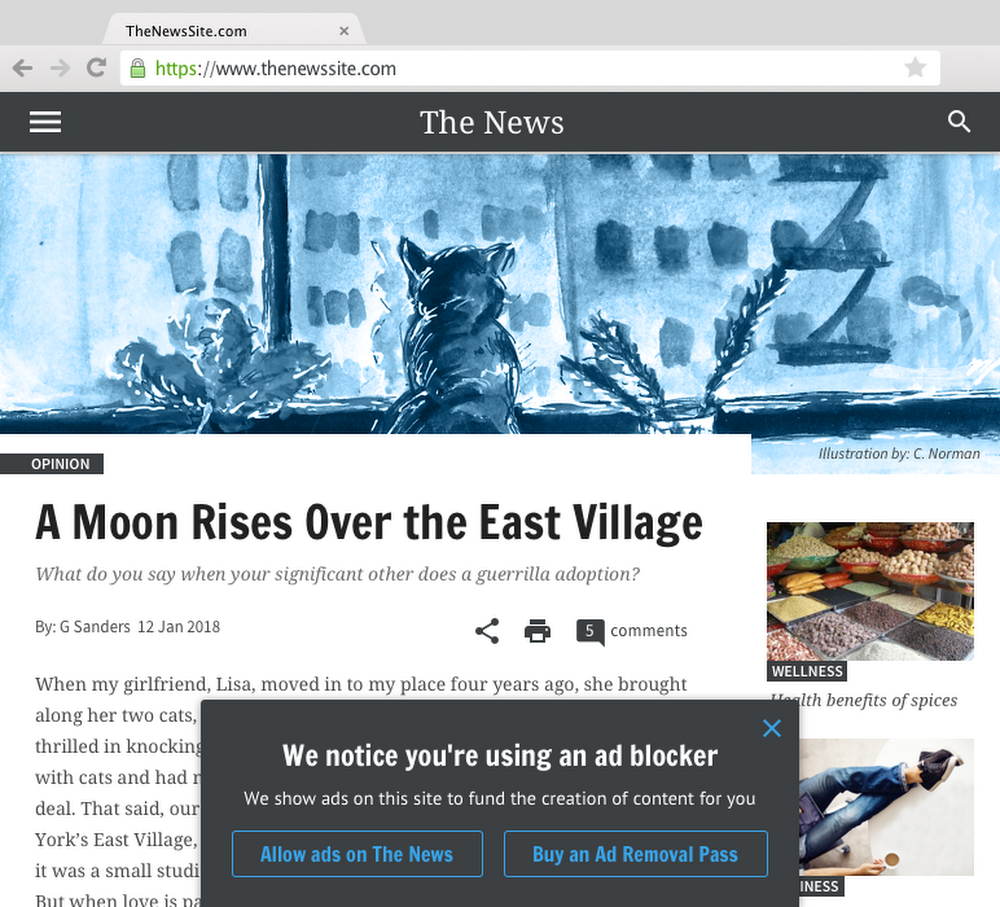
A dismissible message that doesn’t restrict access to content:


FC_dismissible 10APR18.png

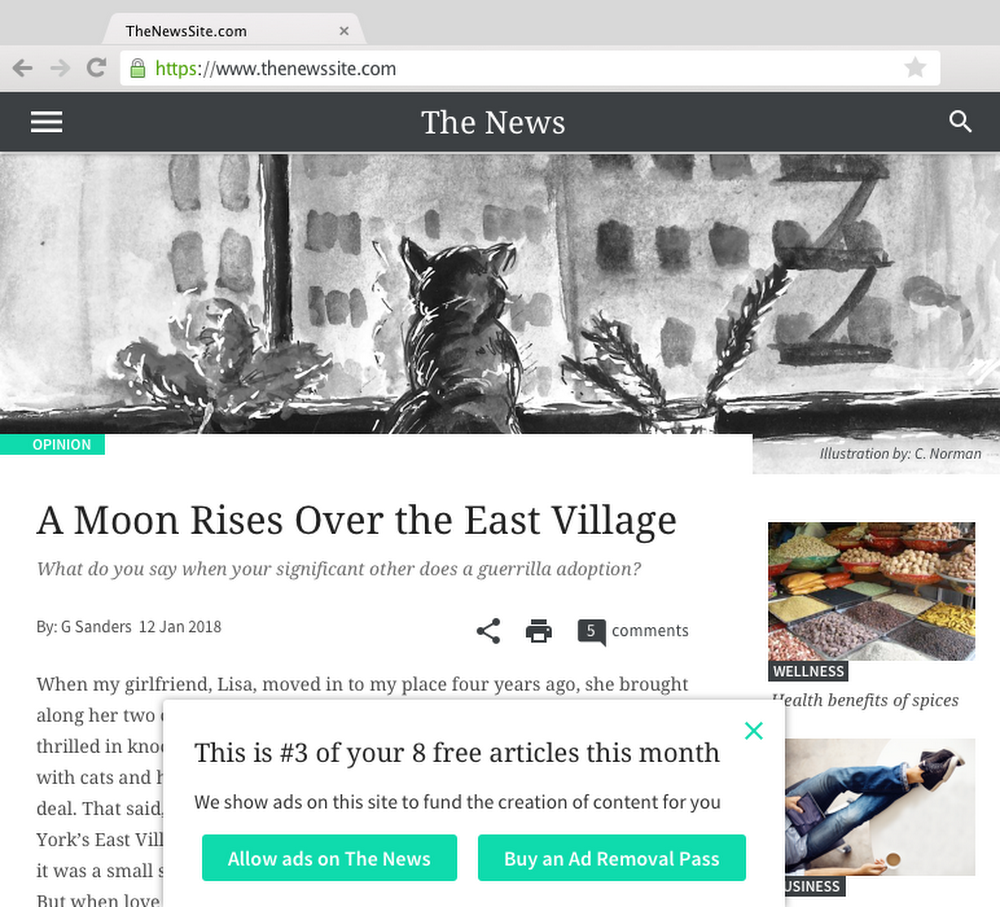
A dismissible message that counts and limits the number of page views that person is allowed per month, as determined by the site owner, before the content is blocked.

FC_dismissible pinned countdown 10APR18.png

Or, a message that blocks access to content until the visitor chooses to allow ads on the site, or to pay to access the content with either the site’s proprietary subscription service or a pass that removes all ads on that site through Google Contributor.

FC_non-dismissible 10APR18.png

On average, publishers using Funding Choices are seeing 16 percent of visitors allow ads on their sites with some seeing rates as high as 37 percent.


Ad blockers designed to remove all ads from all sites are making it difficult for publishers with good ad experiences to maintain sustainable businesses. Our goal for Funding Choices is to help publishers get paid for their work by reducing the impact of ad blocking on them, and we look forward to continuing to expand the product availability.

18 Apr 14:00

The Great Polish Map of Scotland

by Jonathan Crowe

The Great Polish Map of Scotland, a giant concrete relief map 50 metres by 40 metres in size, was the brainchild of Jan Tomasik, a hotelier and former Polish Army soldier who was stationed in Scotland during the Second World War. He envisioned the map as a monument to Scotland’s hospitality to the visiting Polish soldiers. The map, designed and built by visiting academics from Kraków’s Jagiellonian University, was completed in 1979; it stands on the grounds of Barony Castle Hotel in Eddleston, which Tomasik had bought in 1968.

The hotel closed in 1985 (for a while), and the map began to deteriorate. In 2010 a campaign began to restore the map, which proved successful: the restored version of the map, complete with water surrounding the Scottish land mass, was unveiled to the public last Thursday, in the presence of the Scottish culture secretary and Polish diplomats.

A 3D digital map of the castle has also been announced, but it does not seem to be online.

Regrettably, Shetland is not included on the map. Nobody tell Tavis Scott.

05 Apr 18:53

The Ordnance Survey’s April Fool’s Island

by Jonathan Crowe

The Ordnance Survey isn’t above an April Fool’s prank, it seems. For the April 2018 issue of Country Walking magazine, they created a fictional island in the Atlantic Ocean that “had been lost to the sea centuries ago, only for it to have now mysteriously risen out of the waves in need of mapping.” (Its name, “Hy-Breasal,” might have been a tip-off.) In a post on the Ordnance Survey’s blog, cartographer Mark Wolstenholme explains how he used existing OS mapping to create a made-up island in a very short time frame.

After an aborted attempt at cutting up Lundy, I chose the Outer Hebrides’ isle of Pabbay for the main part of our new island. To disguise its origin, I flipped and rotated the island. To achieve that, all the names, symbols and vegetation had to stripped off, and because OS Explorer mapping is a raster image, that meant a lot of pixel selecting in Photoshop. Another restriction with the raster, meant I could only rotate the island by 90 or 180 degrees. Any other angle would re-interpolate the pixels and the print quality would be lost.

To further disguise the island, I looked for a smaller island to add, this time taken from the Orkney Islands. This was joined by the addition of an area of sand and reworked low water line. To finish the shaping, I added a handful of rocky outcrops around the coast as well as some mud, sand and a redrawn high-water line through the dunes. A bigger loch was hand drawn and is unique to this island.

Adding new features and Easter eggs in Illustrator and Photoshop came next. Read the post for the details.

25 Mar 16:45

New Orleans: ‘Totally Unrealistic’ Fantasy City

by Jonathan Crowe

Don’t miss writer and game designer James L. Sutter critiquing New Orleans as though it was a city from a fantasy novel. A major criticism of fantasy maps, whether of cities or worlds, is their lack of realism: unrealistic rivers, mountains and so forth. New Orleans, with its totally unrealistic terrain, doesn’t pass the test. “Please clean up your map and resubmit when it follows the rules of a real-world city,” Sutter concludes.

13 Mar 13:05

Understanding the inner workings of neural networks

by Chris Olah

Neural networks are a powerful approach to machine learning, allowing computers to understand images, recognize speech, translate sentences, play Go, and much more. As much as we’re using neural networks in our technology at Google, there’s more to learn about how these systems accomplish these feats. For example, neural networks can learn how to recognize images far more accurately than any program we directly write, but we don’t really know how exactly they decide whether a dog in a picture is a Retriever, a Beagle, or a German Shepherd.

We’ve been working for several years to better grasp how neural networks operate. Last week we shared new research on how these techniques come together to give us a deeper understanding of why networks make the decisions they do—but first, let’s take a step back to explain how we got here.

Neural networks consist of a series of “layers,” and their understanding of an image evolves over the course of multiple layers. In 2015, we started a project called DeepDream to get a sense of what neural networks “see” at the different layers. Itled to a much larger research project that would not only develop beautiful art, but also shed light on the inner workings of neural networks.

pasted image 0 (11).png
Outside Google, DeepDream grew into a small art movement producing all sorts of amazing things.

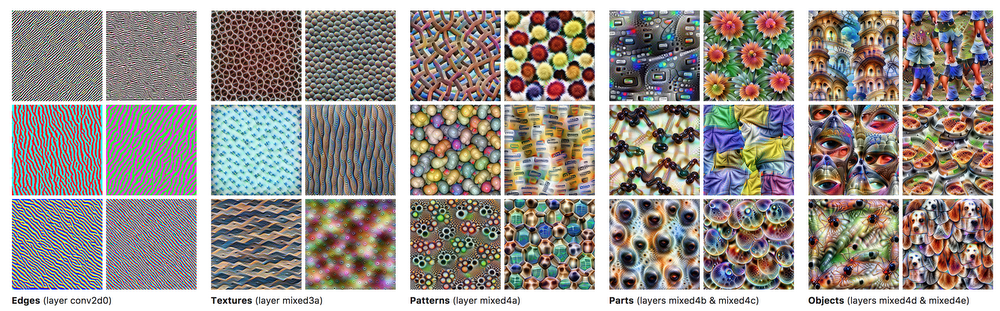
Last year, we shared new work on this subject, showing how techniques building on DeepDream—and lots of excellent research from our colleagues around the world—can help us explore how neural networks build up their understanding of images. We showed that neural networks build on previous layers to detect more sophisticated ideas and eventually reach complex conclusions. For instance, early layers detect edges and textures of images, but later layers progress to detecting parts of objects.

pasted image 0 (12).png
The neural network first detects edges, then textures, patterns, parts, and objects.

Last week we released another milestone in our research: an exploration of how different techniques for understanding neural networks fit together into a bigger picture.

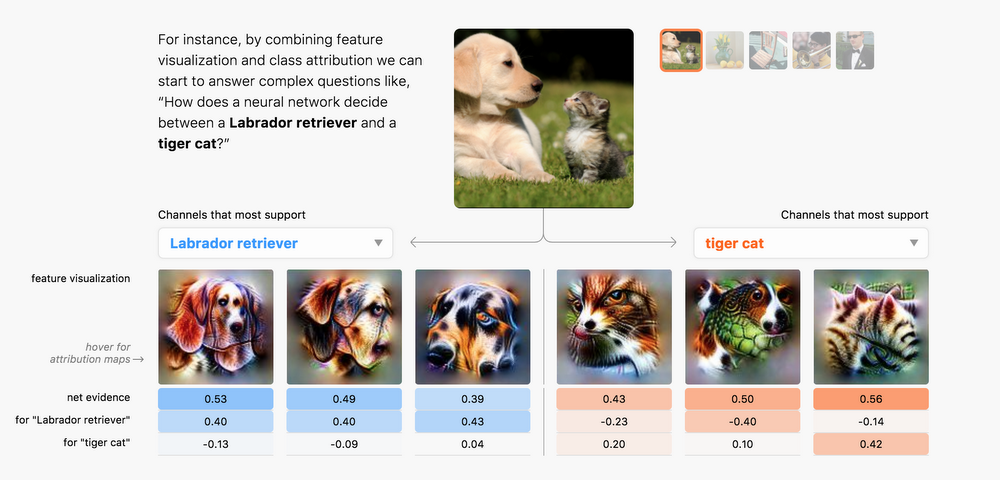
This work, which we've published in the online journal Distill, explores how different techniques allow us to “stand in the middle of a neural network” and see how decisions made at an individual point influence a final output. For instance, we can see how a network detects a “floppy ear,” and then that increases the probability that the image will be labeled as a Labrador Retriever or Beagle.

In one example, we explore which neurons activate in response to different inputs—a kind of “MRI for neural networks.” The network has some floppy ear detectors that really like this dog!

SemanticDict2-ezgif-crop.gif

We can also see how different neurons in the middle of the network—like those floppy ear detectors—affect the decision to classify an image as a Labrador Retriever or tiger cat.

pasted image 0 (13).png

If you want to learn more, check out our interactive paper, published in Distill. We’ve also open sourced our neural net visualization library, Lucid, so you can make these visualizations, too.

08 Mar 20:12

Atlas Obscura Wants a Map of Your Dream Island

by Jonathan Crowe

Atlas Obscura is asking readers to draw a map of their perfect dream island and send it in to them. That’s something I can absolutely get behind.

If you could make an island to your exact specifications, what would it look like? What would make it unique—the true island of your individual dreams?

Maybe your island is made entirely of recycled bottles, or only accepts currency featuring Darth Vader. Perhaps your island is set up as a villains’ lair, or populated with magical creatures that don’t exist anywhere else in the world. Is your island an expansive paradise that will take years to explore, or a simple spot of sand surrounded by boundless ocean? Does it have a treehouse? A mansion? Is there a skull-shaped cave? A water park? A hidden base in a volcano? Mischievous monkeys? Pirate ghosts? A lost society of evolved super-beings?

You’ve got until, uh, tomorrow afternoon. Atlas Obscura will publish their favourites on Friday.

08 Mar 20:12

Indigenous Place Names in Canada

by Jonathan Crowe

The University of Maine’s Canadian-American Center has published a map of indigenous place names in Canada:

Commissioned by Dr. Stephen J. Hornsby, Director of the Canadian-American Center, Coming Home to Indigenous Place Names in Canada was researched and designed by Dr. Margaret Wickens Pearce. The map depicts Indigenous place names across Canada, shared by permission of First Nations, Métis, and Inuit communities and people. The names express territorial rights and describe the shapes, sounds, and stories of sovereign lands. The names mark the locations of the gathering places, the communities, the places of danger and beauty, and the places where treaties were signed. The names are ancient and recent, both in and outside of time, and they express and assert the Indigenous presence across the Canadian landscape in Indigenous languages.

The map is available for purchase; a PDF is available for download for personal or educational use. [MAPS-L]

Previously: Mi’kmaw Place Names Digital Atlas.

23 Feb 15:34

The Chiswick Timeline

by Jonathan Crowe
Abundance London

The Chiswick Timeline, a public mural of historic maps of Chiswick, London, situated along the walls of the underpass next to the Turnham Green tube station, opened earlier this month. A project of Abundance London, the mural is a series of panels reproducing maps of Chiswick from as early as the late 16th century, and traces its development into the London suburb it is today. An accompanying fold-out book is also available. [Londonist]

20 Feb 14:54

Gladys West, GPS’s Hidden Figure

by Jonathan Crowe

The Associated Press has a story about Gladys West, now 87, an African-American mathematician who did pivotal early work on the calculations that led to GPS.

She collected information from the orbiting machines, focusing on information that helped to determine their exact location as they transmitted from around the world. Data was entered into large scale “super computers” that filled entire rooms, and she worked on computer software that processed geoid heights, or precise surface elevations.

The process that led to GPS is too scientific for a newspaper story, but Gladys West would say it took a lot of work—equations checked and double-checked, along with lots of data collection and analysis. Although she might not have grasped its future usage, she was pleased by the company she kept.

If that reminds you a bit of Hidden Figures, it’s not just you. And if reading this piece makes you want to read about the process that led to GPS, even if it’s too scientific for a newspaper story, it’s not just you either. [Blavity]

06 Feb 15:30

Planetary Maps for Children

by Jonathan Crowe

Planetary Maps for Children is a collection of pictorial maps of several moons and planets of the Solar System (so far: Venus, Mars, the Moon, Io, Europa, Titan, and Pluto and Charon), aimed at younger map readers. The maps are vibrant and colourful, full of sight gags and “fabulous make-believe creatures” and other sight gags. They’re available in digital, poster and virtual globe formats and available in several languages; the whole thing is a project of the ICA’s Commission on Planetary Cartography. [via]

06 Feb 15:29

Are Africa and South America That Hard to Tell Apart?

by Jonathan Crowe

People seem to be having an awfully hard time telling Africa apart from South America and swapping the former in for the latter: Exhibit A courtesy of Harrison Cole; Exhibit B via Reddit. [Gretchen PetersonMapFail]

30 Jan 17:15

Non-Anonymized Strava User Data Is Accessible

by Jonathan Crowe

More on the privacy issues regarding Strava’s global heat map and its customer data. Now Wired UK is reporting that Strava’s data isn’t anonymous. Because you can compare your results with nearby users, all it takes is a local GPS tracklog—which can be created out of whole cloth, as Steve Loughran’s blog post demonstrates—to see detailed information about users. Wired UK:

By uploading an altered GPS file, it’s possible to de-anonymise the company’s data and show exactly who was exercising inside the walls of some of the world’s most top-secret facilities. Once someone makes a data request for a specific geographic location—a nuclear weapons facility, for example—it’s possible to view the names, running speeds, running routes and heart rates of anyone who shared their fitness data within that area.

The leaderboard for an area, the Guardian reports, can be extremely revealing. “The leaderboard for one 600m stretch outside an airbase in Afghanistan, for instance, reveals the full names of more than 50 service members who were stationed there, and the date they ran that stretch. One of the runners set his personal best on 20 January this year, meaning he is almost certainly still stationed there.”

Which makes the security issue regarding military personnel using fitness trackers even worse than simply the anonymous aggregate of the routes they take. Yes, this is very much an unintended and unforseen consequence of relatively innocuous social sharing bumping up against operational and personal security protocols; and it’s as much on military personnel to, you know, not use GPS-enabled devices that upload your location to a third-party server as it is on companies to have clear and effective privacy controls. This is very much the result of a whole lot of people not thinking things through.

Previously: Strava Heat Map Reveals Soldiers’ Locations.

18 Jan 15:26

Urbano Monte’s 1587 World Map, Digitally Assembled

by Jonathan Crowe
David Rumsey Map Collection

In the real world, Urbano Monte’s 1587 map of the world exists as a series of 60 manuscript sheets designed to be assembled into a large world map—one that would be, at 10 feet square, the largest early world map known to exist.1 As the David Rumsey Map Collection explains, “the whole map was to be stuck on a wooden panel 5 and a half brachia square (about ten feet) so that it could be revolved around a central pivot or pin through the north pole.”

But with only two copies known to exist, that ain’t happening. So what the Rumsey Collection has done, with the copy they recently acquired via Barry Ruderman, is to do it virtually, creating a digital edition of the map as a single image (see above). The digital Monte map was apparently revealed at the Ruderman Conference last October (previously).

The Rumsey Collection’s blog post has lots of images of the individual sheets, and explains how digitizing the map explains Monte’s choice of projection:

Monte wanted to show the entire earth as close as possible to a three-dimensional sphere using a two-dimensional surface. His projection does just that, notwithstanding the distortions around the south pole. Those same distortions exist in the Mercator’s world map, and by their outsized prominence on Monte’s map they gave him a vast area to indulge in all the speculations about Antarctica that proliferated in geographical descriptions in the 16th century. While Mercator’s projection became standard in years to come due to its ability to accurately measure distance and bearing, Monte’s polar projection gave a better view of the relationships of the continents and oceans.

The Mercator version of Monte’s map is here. A Google Earth KMZ file of the map as a digital globe is here. For background on Monte’s map, see the accompanying essay by Katherine Parker, “A Mind at Work” (PDF). For more coverage, see All Over the Map’s blog post.

10 Jan 14:34

Memory machines: VR180 cameras, and capturing life as you see it

by Clay BavorVirtual and Augmented Reality

When I was growing up, my dad and even my grandfather always had camcorders stuck to their shoulders. They were our family documentarians, and were always the first to try a new gadget or gizmo if it would help us remember the places we went and the special times we shared. Decades later, I’m so grateful, and I treasure the memories they captured on Betamax and film.

cbtl1
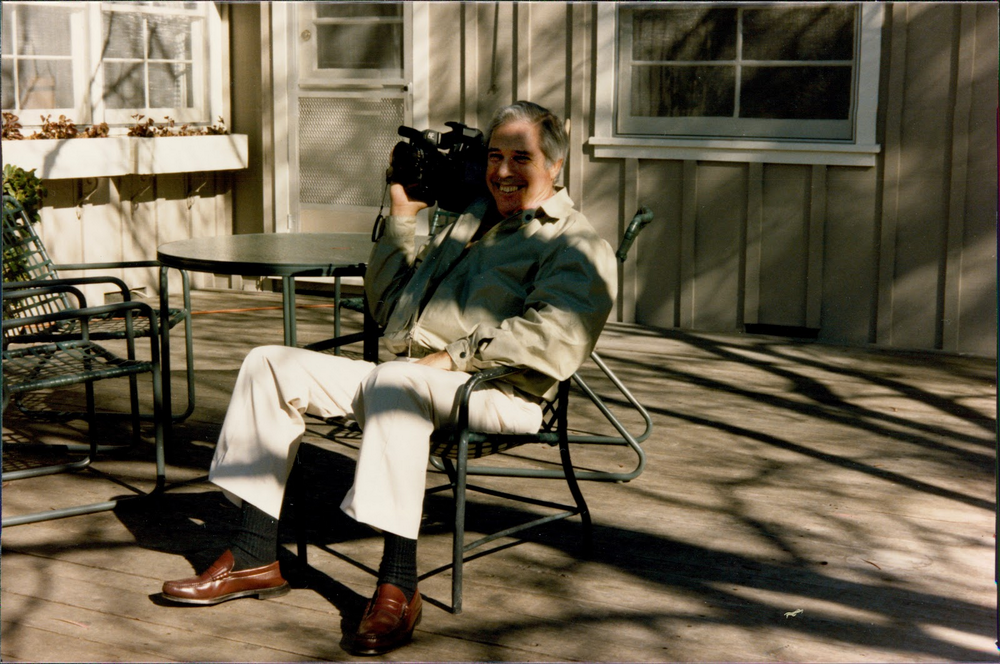
My grandfather Henry in the backyard with his video camera.

We care about photos and videos because they connect us with important moments, special trips, and time together with the people who matter most to us. They’re abstract representations that help us remember—little visual gifts to our future selves. That being said, for most of the 20th century, photos and videos were the best you could do. They’re better than nothing, but so far from the real thing.

cbtl2
A photo of me at Disneyland at age 4, taken by my dad with a Nikon EM 35mm SLR.

But as the technology used to capture these moments has improved, the fidelity has also increased. From primitive pinhole cameras, to black and white film cameras, to color, to video, there’s been a continuous upward trajectory of resolution and quality. Today's high-end VR cameras are a big leap forward. Through immersive, stereoscopic footage, they do something more compelling than refreshing your memory—they make you feel like you're there. And the closer cameras get to capturing the moment just the way we experienced it, the closer we get to creating time machines for ourselves.

Though Google started by making VR cameras for filmmakers and professional creators a few years ago, our team has always aimed to help people capture their personal memories in VR. But in order to make this tech accessible to everyone, we had to rethink the camera itself. There are 360 cameras in the market today, but they present some challenges—they can be costly, confusing to use (where do you point it?), and the photographer always ends up in the frame. So, we focused on the pixels that matter (the ones in front of you!) with a new format we're calling VR180. And we started designing high-quality, pocket-sized cameras that anyone could use to capture VR180 experiences with just a click of a button. The first VR180 cameras will hit shelves throughout this year, just in time for you to start hitting “record” on your own memories in 2018.

I've been using the VR180 prototypes for a while now, in places like my living room or on trips to the beach. It’s easy to share the captures with my family and friends. They can look at them on their phones, or use a viewer like Cardboard or Daydream View to step into the moment as if they were there. It’s amazing that I can film my sons jumping on the trampoline, or having a quiet breakfast, or being back where I was many years ago, on a ride at a carnival—and not only share those moments with family far away, but also relive them myself, in a way that makes me feel like I’m right back in each moment.

cbtl3
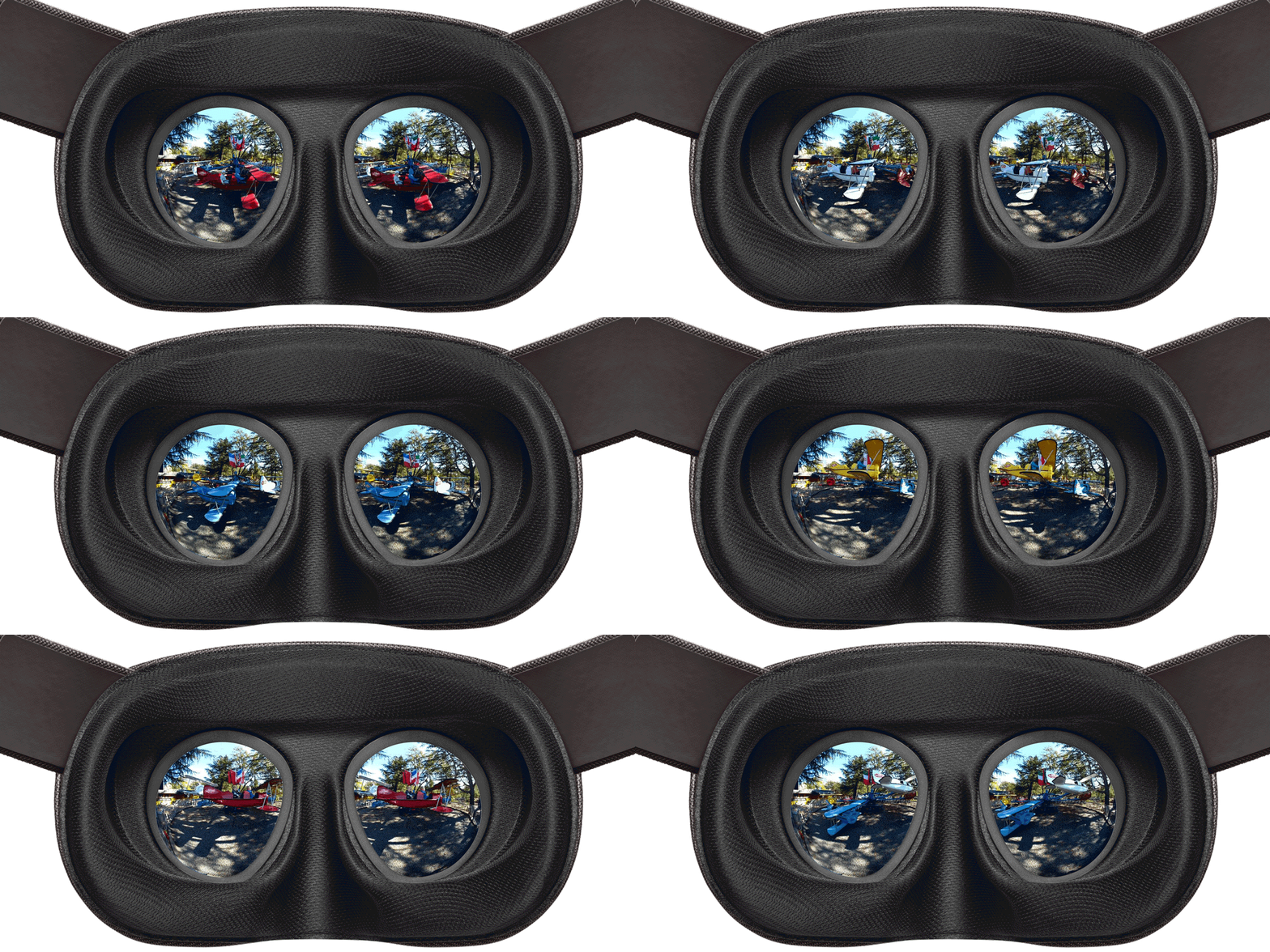
VR180 capture of one of my sons on a carnival ride, captured with one of our camera prototypes.

That’s why these VR180 cameras are so special. They do your memories justice, by enabling you to capture life the way you see it—with two eyes. When I’ve shown my family these recordings, they look into the headset, and smile. They say things like, “This is amazing!” and, when they take the headset off: “I only wish we had these cameras sooner.”

I couldn’t agree more.

29 Dec 14:15

#mappingfantasy

by Jonathan Crowe

Cat Rambo livetweeted some of the good bits from the online class on creating fantasy maps she taught with Alex Acks and Paul Weimer earlier this month (see previous entry), using the #mappingfantasy hashtag. Most of those good bits were common sense worldbuilding advice; by and large the intended audience is authors creating their fantasy worlds. They’re the ones who benefit most from basic geological or geographical advice, such as:

Other tips would be familiar to cartography students.

Here’s a point that makes sense from a worldbuilding perspective, but it has led to the cliché that every point on the map has to be visited:

On the other hand, there were some subversive bits that are so prosaic and pregnant with meaning that I’d love to know the context.

07 Dec 15:36

Gain a deeper understanding of Posttraumatic Stress Disorder on Google

by Paula Schnurr

Editor’s note:

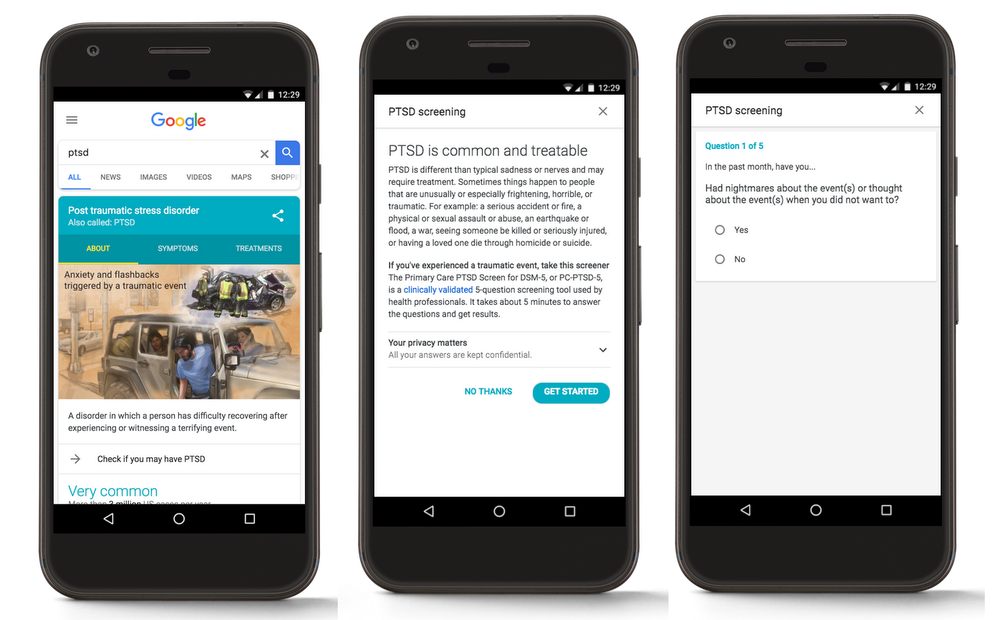
Now when you search for "Posttraumatic Stress Disorder," “PTSD” or related queries on Google on mobile, you'll see a Knowledge Panel that will give you the option to tap “check if you may have PTSD”, which will bring you to PC-PTSD-5, a clinically validated screening questionnaire to assess your likelihood of having the condition. To ensure that the information shared in the PC-PTSD-5 questionnaire is accurate and useful, we’ve partnered with the National Alliance on Mental Illness and the National Center for PTSD, who have authored a guest post about this effort.

In any given year, about 14 million adults in the U.S. will experience Posttraumatic Stress Disorder (PTSD). PTSD can develop after any traumatic event, including combat, hurricanes, earthquakes or experiences like mass shootings, assaults or even car accidents. However, despite how common this condition is, treatment- seeking is low. In fact, only about half the people who have PTSD will receive treatment. To help people understand PTSD, we’ve collaborated with Google to provide simple, direct access to information that may help those who are suffering.

When you search for PTSD in the U.S. on your phone, a Knowledge Panel for the condition appears, providing an overview, facts and treatment information about the disorder. Now for the first time,the PC-PTSD-5, a clinically validated screening questionnaire to test your likelihood of having PTSD, is available directly from the search result. By tapping “check if you may have PTSD,” you can answer a private questionnaire to assess your likelihood of having PTSD and have a more informed conversation with your doctor. Getting an in-person assessment is essential to a diagnosis of PTSD, and this commonly- used screening tool gives you important information you can bring to your appointment.

PTSD screen.png

PTSD can be treated, and the PC-PTSD-5 can be a crucial step toward getting proper diagnosis and treatment. If you, a family member or friend is struggling, organizations like the National Alliance on Mental Illness (NAMI) and the VA’s National Center for PTSD can provide support and information. Contact the NAMI HelpLine at 800-950-NAMI (6264) or info@nami.org if you have any questions about PTSD or finding support and resources. Veterans and their families can contact the VA National Center for PTSD at www.ptsd.va.gov for information and resources or the Veteran’s Crisis line at 1-800-273-8255 for immediate support.

07 Dec 14:52

Expanding our work against abuse of our platform

by John G. Doe
As the CEO of YouTube, I’ve seen how our open platform has been a force for creativity, learning and access to information. I’ve seen how activists have used it to advocate for social change, mobilize protests, and document war crimes. I’ve seen how it serves as both an entertainment destination and a video library for the world. I’ve seen how it has expanded economic opportunity, allowing small businesses to market and sell their goods across borders. And I’ve seen how it has helped enlighten my children, giving them a bigger, broader understanding of our world and the billions who inhabit it.

But I’ve also seen up-close that there can be another, more troubling, side of YouTube’s openness. I’ve seen how some bad actors are exploiting our openness to mislead, manipulate, harass or even harm.

In the last year, we took actions to protect our community against violent or extremist content, testing new systems to combat emerging and evolving threats. We tightened our policies on what content can appear on our platform, or earn revenue for creators. We increased our enforcement teams. And we invested in powerful new machine learning technology to scale the efforts of our human moderators to take down videos and comments that violate our policies.

Now, we are applying the lessons we’ve learned from our work fighting violent extremism content over the last year in order to tackle other problematic content. Our goal is to stay one step ahead of bad actors, making it harder for policy-violating content to surface or remain on YouTube.

More people reviewing more content
Human reviewers remain essential to both removing content and training machine learning systems because human judgment is critical to making contextualized decisions on content. Since June, our trust and safety teams have manually reviewed nearly 2 million videos for violent extremist content, helping train our machine-learning technology to identify similar videos in the future. We are also taking aggressive action on comments, launching new comment moderation tools and in some cases shutting down comments altogether. In the last few weeks we’ve used machine learning to help human reviewers find and terminate hundreds of accounts and shut down hundreds of thousands of comments. Our teams also work closely with NCMEC, the IWF, and other child safety organizations around the world to report predatory behavior and accounts to the correct law enforcement agencies.

We will continue the significant growth of our teams into next year, with the goal of bringing the total number of people across Google working to address content that might violate our policies to over 10,000 in 2018.

At the same time, we are expanding the network of academics, industry groups and subject matter experts who we can learn from and support to help us better understand emerging issues.

Tackling issues at scale
We will use our cutting-edge machine learning more widely to allow us to quickly and efficiently remove content that violates our guidelines. In June we deployed this technology to flag violent extremist content for human review and we’ve seen tremendous progress.
  • Since June we have removed over 150,000 videos for violent extremism.
  • Machine learning is helping our human reviewers remove nearly five times as many videos than they were previously.
  • Today, 98 percent of the videos we remove for violent extremism are flagged by our machine-learning algorithms.
  • Our advances in machine learning let us now take down nearly 70 percent of violent extremist content within eight hours of upload and nearly half of it in two hours and we continue to accelerate that speed.
  • Since we started using machine learning to flag violent and extremist content in June, the technology has reviewed and flagged content that would have taken 180,000 people working 40 hours a week to assess.
Because we have seen these positive results, we have begun training machine-learning technology across other challenging content areas, including child safety and hate speech.

Greater transparency
We understand that people want a clearer view of how we’re tackling problematic content. Our Community Guidelines give users notice about what we do not allow on our platforms and we want to share more information about how these are enforced. That’s why in 2018 we will be creating a regular report where we will provide more aggregate data about the flags we receive and the actions we take to remove videos and comments that violate our content policies. We are looking into developing additional tools to help bring even more transparency around flagged content.

A new approach to advertising on YouTube
We’re also taking actions to protect advertisers and creators from inappropriate content. We want advertisers to have peace of mind that their ads are running alongside content that reflects their brand’s values. Equally, we want to give creators confidence that their revenue won’t be hurt by the actions of bad actors.

We believe this requires a new approach to advertising on YouTube, carefully considering which channels and videos are eligible for advertising. We are planning to apply stricter criteria, conduct more manual curation, while also significantly ramping up our team of ad reviewers to ensure ads are only running where they should. This will also help vetted creators see more stability around their revenue. It’s important we get this right for both advertisers and creators, and over the next few weeks, we’ll be speaking with both to hone this approach.

We are taking these actions because it’s the right thing to do. Creators make incredible content that builds global fan bases. Fans come to YouTube to watch, share, and engage with this content. Advertisers, who want to reach those people, fund this creator economy. Each of these groups is essential to YouTube’s creative ecosystem—none can thrive on YouTube without the other—and all three deserve our best efforts.

As challenges to our platform evolve and change, our enforcement methods must and will evolve to respond to them. But no matter what challenges emerge, our commitment to combat them will be sustained and unwavering. We will take the steps necessary to protect our community and ensure that YouTube continues to be a place where creators, advertisers, and viewers can thrive.

Susan Wojcicki, CEO of YouTube
22 Nov 23:43

Horror Vacui: The Fear of Blank Spaces

by Jonathan Crowe
Olaus Magnus, Carta Marina, 1539. Detail. James Ford Bell Library.

In an article I published in 2013, I argued that one key difference between fantasy maps and the real-world medieval and early modern maps they purport to imitate is blank spaces: fantasy maps are full of blank spaces (that which is not in the story is not on the map), whereas real-world maps were covered in cartouches, sea monsters, inset illustrations and other embellishments. One of my sources for that article was a book by Chet Van Duzer: Sea Monsters on Medieval and Renaissance Maps (reviewed here).

Recently Van Duzer has been giving talks on the very subject of the lack of empty spaces on old maps. Which, as you can imagine, is very relevant to my interests. In October he spoke on the subject at the Barry Lawrence Ruderman Conference on Cartography, and earlier this month he gave a similar talk at the New York Map Society. Here’s the abstract from the Ruderman Conference:

Historians of cartography occasionally refer to cartographers’ horror vacui, that is, their fear or hesitancy to leave spaces blank on maps that might be filled with decorations. Some scholars have denied that this impulse was a factor in the design of maps, but the question has never been examined carefully. In this talk I will undertake such an examination, showing that horror vacui was indeed an important factor in the design of maps, at least for some cartographers, from the sixteenth to the early eighteenth century. Some of the factors that motivated cartographers’ concern about empty spaces will also be examined, as will maps by cartographers who evidently did not experience this fear. In the eighteenth and nineteenth centuries maps began to be thought of as more purely scientific instruments, cartographic decoration declined generally, and cartographers managed to restrain their concern about spaces lacking decoration in the interest of presenting their work as modern and professional.​

But since I couldn’t make it to those events, all I had was that tantalizing abstract. (Publish something!) Fortunately, we now have a little more: Greg Miller has written a piece about Van Duzer’s research over on the National Geographic All Over the Map blog.

21 Nov 03:41

Picturing America: The Golden Age of Pictorial Maps

by Jonathan Crowe

With Picturing America: The Golden Age of Pictorial Maps (University of Chicago Press, March 2017), Stephen J. Hornsby makes the case for the pictorial map as a distinct and significant genre of mapmaking that is worthy of study and preservation.

Because pictorial maps were artistic rather than scientific, Hornsby argues, they were ignored as a subject of cartographic study—“treated as ephemera, the flotsam and jetsam of an enormous sea of popular culture.”1 As such they have not been preserved to the same extent as more strictly cartographic maps. (Being printed on cheap acid paper didn’t help.) But as products of popular culture they were distinctive—and ubiquitous. “By World War II,” he writes, “pictorial maps had created a powerful visual image of the United States and were beginning to reimagine the look of the world for a mass consumer audience.”2 They were so prevalent, I suppose, that they were invisible. Taken for granted. It frequently falls to the historian of popular culture to point out that the common and everyday is, in fact, significant. That’s what Hornsby is doing here.

Drawing mainly on the holdings of the Library of Congress’s Geography and Map Division, which served as the final home of pictorial map collections assembled by librarians like Ethel M. Fair and Muriel H. Parry, Hornsby explores the history of the pictorial map genre from the 1920s to the 1960s. Influenced by nineteenth-century advertising and bird’s-eye maps, as well as the work of MacDonald Gill, the illustrators of pictorial maps—Charles H. Owens, Jo Mora, Ernest Dudley Chase, George Annand, Ilonka Karasz, C. Eleanor Hall—created advertisements, posters, brochures, and maps for news organizations. In many ways their work was the infographics of their time; like medieval mappae mundi or early modern maps with sea monsters, pictorial maps were able to impart a good deal of qualitative information that would otherwise be unmappable, and with a distinctive artistic flair.3

Charles Vernon Farrow, A Map of the Wondrous Isle of Manhattan, 1926. Pictorial map, 94 cm × 57 cm, David Rumsey Map Collection.

After fifty-four pages of essay describing and analyzing his subject matter, Hornsby moves on to six sections of plates, beautifully reproduced, organized by theme rather than by date or artist: Maps to Amuse (maps featuring cartoons, maps that exaggerate one state at the expense of the rest); Maps to Instruct; Maps of Place and Region (including city maps that can be seen as the direct successor to bird’s-eye maps, only with a lot more colour and whimsy); Maps of Industry (tourism maps, rail and shipping maps, industrial promotion), Maps of War (where oblique views of the globe came into fashion), and Maps for Postwar America.

That last section highlights an important fact about pictorial maps: they were very much a generational project. Pictorial maps waned as these illustrators retired or passed on and as photography gained traction in commercial art.4 Which highlights Hornsby’s point that pictorial maps were a coherent genre, born out of common influences and the creation of a specific group of people, at a specific moment of time. Picturing America recaptures that whimsical, vibrant, beautiful moment.

For more on Picturing America, see All Over the Map’s profile from last March.

I received a review copy from the publisher.

Amazon | iBooks

31 Oct 13:52

The Illustrative Purposes of Old Maps

by Jonathan Crowe

Excellent Twitter thread from Jeannette Ng talking about old maps in the context of fantasy map design. It’s a subject near and dear to my heart: fantasy maps are essentially modern maps whose design language post-dates 16th- or 17th-century mapmakers like Olaus Magnus and Joan Blaeu; Ng talks about what are essentially the non-geographic purposes of old maps, and as I understand things she is entirely correct. Start here and scroll down.