Shared posts

19 Mar 21:08

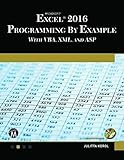
Microsoft Excel 2016 Programming by Example

by foxebook

Editorial Reviews

Updated for Excel 2016 and based on the bestselling editions from previous versions, Microsoft Excel 2016 Programming by Example with VBA, XML and ASP is a practical, how-to book on Excel programming, suitable for readers already proficient with the Excel user interface (UI). If you are looking to automate Excel routine tasks, this book will progressively introduce you to programming concepts via numerous, illustrated, hands-on exercises. Includes a comprehensive disc with source code, supplemental files, and color screen captures (Also available from the publisher for download by writing to info@merclearning.com). More advanced topics are demonstrated via custom projects. From recording and editing a macro and writing VBA code to working with XML documents and using Classic ASP pages to access and display data on the Web, this book takes you on a programming journey that will change the way you work with Excel. The book provides information on performing automatic operations on files, folders, and other Microsoft Office applications. It also covers proper use of event procedures, testing and debugging, and guides you through programming advanced Excel features such as PivotTables, PivotCharts, and the Ribbon interface.

Features:

  • Contains 28 chapters loaded with illustrated "Hands-On" exercises and projects that guide you through the VBA programming language. Each example tells you exactly where to enter code, how to test it and then run it.
  • Includes a comprehensive disc with source code, supplemental files, and color screen captures (Also available from the publisher for download by writing to info@merclearning.com).
  • Takes you from introductory topics--including recording and editing macros, using variables, and constants, writing subroutines/functions, conditional statements, and various methods of coding loops to repeat actions--to intermediate and advanced topics that include working with collections, class modules, arrays, file and database access, custom forms, error handling and debugging.
  • Includes comprehensive coverage of native file handling in VBA, Windows Scripting Host (WSH), and low-level File Access.
  • Demonstrates how to interact with Microsoft Access databases using both ADO and DAO Object Libraries to access and manipulate data.
  • Includes chapters on programming charts, PivotTables, dialog boxes, custom forms, the Ribbon, Backstage View, context/shortcut menu customizations, as well as proper use of event procedures and callbacks.
  • Provides a quick Hands-On introduction to the data analysis and transformation process using the new Excel 2016 Get & Transform feature and the “M” language formulas.
  • Provides a practical coverage of using Web queries, HTML, XML, and VBScript in Classic ASP to retrieve and publish Excel data to the Web.

On The Companion Files:

  • All source code and supplemental files for the Hands-On exercises and custom projects
  • All images from the text (including 4-color screenshots)

Book Details

Book Preview

Click to Look Inside This eBook: Browse Sample Pages

PDF eBook Free Download

Note: There is a file embedded within this post, please visit this post to download the file.

The post Microsoft Excel 2016 Programming by Example appeared first on Fox eBook.
19 Mar 21:05

Excel Data Analysis: Modeling and Simulation, 2nd Edition

by foxebook

Editorial Reviews

This book offers a comprehensive and readable introduction to modern business and data analytics. It is based on the use of Excel, a tool that virtually all students and professionals have access to. The explanations are focused on understanding the techniques and their proper application, and are supplemented by a wealth of in-chapter and end-of-chapter exercises. In addition to the general statistical methods, the book also includes Monte Carlo simulation and optimization. The second edition has been thoroughly revised: new topics, exercises and examples have been added, and the readability has been further improved. The book is primarily intended for students in business, economics and government, as well as professionals, who need a more rigorous introduction to business and data analytics – yet also need to learn the topic quickly and without overly academic explanations.

Book Details

  • Author: Hector Guerrero
  • Pages: 346 pages
  • Edition: 2nd ed. 2019
  • Publication Date: 2018-12-15
  • Publisher: Springer
  • Language: English
  • ISBN-10: 3030012786
  • ISBN-13: 9783030012786

Book Preview

Click to Look Inside This eBook: Browse Sample Pages

PDF eBook Free Download

Note: There is a file embedded within this post, please visit this post to download the file.

The post Excel Data Analysis: Modeling and Simulation, 2nd Edition appeared first on Fox eBook.

19 Mar 21:03

Practical Security Automation and Testing

by foxebook

Editorial Reviews

Your one stop guide to automating infrastructure security using DevOps and DevSecOps

Key Features

  • Secure and automate techniques to protect web, mobile or cloud services
  • Automate secure code inspection in C++, Java, Python, and JavaScript
  • Integrate security testing with automation frameworks like fuzz, BDD, Selenium and Robot Framework

Book Description

Security automation is the automatic handling of software security assessments tasks. This book helps you to build your security automation framework to scan for vulnerabilities without human intervention.

This book will teach you to adopt security automation techniques to continuously improve your entire software development and security testing. You will learn to use open source tools and techniques to integrate security testing tools directly into your CI/CD framework. With this book, you will see how to implement security inspection at every layer, such as secure code inspection, fuzz testing, Rest API, privacy, infrastructure security, and web UI testing.

With the help of practical examples, this book will teach you to implement the combination of automation and Security in DevOps. You will learn about the integration of security testing results for an overall security status for projects.

By the end of this book, you will be confident implementing automation security in all layers of your software development stages and will be able to build your own in-house security automation platform throughout your mobile and cloud releases.

What you will learn

  • Automate secure code inspection with open source tools and effective secure code scanning suggestions
  • Apply security testing tools and automation frameworks to identify security vulnerabilities in web, mobile and cloud services
  • Integrate security testing tools such as OWASP ZAP, NMAP, SSLyze, SQLMap, and OpenSCAP
  • Implement automation testing techniques with Selenium, JMeter, Robot Framework, Gauntlt, BDD, DDT, and Python unittest
  • Execute security testing of a Rest API Implement web application security with open source tools and script templates for CI/CD integration
  • Integrate various types of security testing tool results from a single project into one dashboard

Who this book is for

The book is for software developers, architects, testers and QA engineers who are looking to leverage automated security testing techniques.

Table of Contents

  1. The Scope and Challenges of Security Automation
  2. Integrating Security and Automation
  3. Secure Code Inspection
  4. Sensitive Information and Privacy Testing
  5. Security API and Fuzz Testing
  6. Web Application Security Testing
  7. Android Security Testing
  8. Infrastructure Security
  9. BDD Acceptance Security Testing
  10. Project Background and Automation Approach
  11. Automated Testing for Web Applications
  12. Automated Fuzz API Security Testing
  13. Automated Infrastructure Security
  14. Managing and Presenting Test Results
  15. Summary of Automation Security Testing Tips

Book Details

Book Preview

Click to Look Inside This eBook: Browse Sample Pages

PDF eBook Free Download

Note: There is a file embedded within this post, please visit this post to download the file.

The post Practical Security Automation and Testing appeared first on Fox eBook.

19 Mar 21:02

Professional SQL Server High Availability and Disaster Recovery

by foxebook

Editorial Reviews

Leverage powerful features of the SQL Server and watch your infrastructure transform into a high-performing, reliable network of systems.

Key Features

  • Explore more than 20 real-world use cases to understand SQL Server features
  • Get to grips with the SQL Server Always On technology
  • Learn how to choose HA and DR topologies for your system

Book Description

Professional SQL Server High Availability and Disaster Recovery explains the high availability and disaster recovery technologies available in SQL Server: Replication, AlwaysOn, and Log Shipping. You'll learn what they are, how to monitor them, and how to troubleshoot any related problems. You will be introduced to the availability groups of AlwaysOn and learn how to configure them to extend your database mirroring. Through this book, you will be able to explore the technical implementations of high availability and disaster recovery technologies that you can use when you create a highly available infrastructure, including hybrid topologies.

By the end of the book, you'll be equipped with all that you need to know to develop robust and high performance infrastructure.

What you will learn

  • Configure and troubleshoot Replication, AlwaysOn, and Log Shipping
  • Study the best practices to implement HA and DR solutions
  • Design HA and DR topologies for the SQL Server and study how to choose a topology for your environment
  • Use T-SQL to configure replication, AlwaysOn, and log shipping
  • Migrate from On-Premise SQL Server to Azure SQL Database
  • Manage and maintain AlwaysOn availability groups for extended database mirroring

Who this book is for

Professional SQL Server High Availability and Disaster Recovery is for you if you are a database administrator or database developer who wants to improve the performance of your production environment. Prior experience of working with SQL Server will help you get the most out of this book.

Table of Contents

  1. Getting Started with SQL Server HA and DR
  2. Transactional Replication
  3. Monitoring Transactional Replication
  4. AlwaysOn Availability Groups
  5. Managing AlwaysOn Availability Groups
  6. Configuring and Managing Log Shipping

Book Details

  • Author: Ahmad Osama
  • Pages: 564 pages
  • Edition: 1
  • Publication Date: 2019-01-31
  • Publisher: Packt Publishing
  • Language: English
  • ISBN-10: 1789802598
  • ISBN-13: 9781789802597

Book Preview

Click to Look Inside This eBook: Browse Sample Pages

PDF eBook Free Download

Note: There is a file embedded within this post, please visit this post to download the file.

The post Professional SQL Server High Availability and Disaster Recovery appeared first on Fox eBook.

19 Mar 20:59

Machine Learning with the Elastic Stack

by foxebook

Editorial Reviews

Machine Learning with the Elastic Stack: Expert techniques to integrate machine learning with distributed search and analytics

Leverage Elastic Stack's machine learning features to gain valuable insight from your data

Key Features

  • Combine machine learning with the analytic capabilities of Elastic Stack
  • Analyze large volumes of search data and gain actionable insight from them
  • Use external analytical tools with your Elastic Stack to improve its performance

Book Description

Machine Learning with the Elastic Stack is a comprehensive overview of the embedded commercial features of anomaly detection and forecasting. The book starts with installing and setting up Elastic Stack. You will perform time series analysis on varied kinds of data, such as log files, network flows, application metrics, and financial data.

As you progress through the chapters, you will deploy machine learning within the Elastic Stack for logging, security, and metrics. In the concluding chapters, you will see how machine learning jobs can be automatically distributed and managed across the Elasticsearch cluster and made resilient to failure.

By the end of this book, you will understand the performance aspects of incorporating machine learning within the Elastic ecosystem and create anomaly detection jobs and view results from Kibana directly.

What you will learn

  • Install the Elastic Stack to use machine learning features
  • Understand how Elastic machine learning is used to detect a variety of anomaly types
  • Apply effective anomaly detection to IT operations and security analytics
  • Leverage the output of Elastic machine learning in custom views, dashboards, and proactive alerting
  • Combine your created jobs to correlate anomalies of different layers of infrastructure
  • Learn various tips and tricks to get the most out of Elastic machine learning

Who this book is for

If you are a data professional eager to gain insight on Elasticsearch data without having to rely on a machine learning specialist or custom development, Machine Learning with the Elastic Stack is for you. Those looking to integrate machine learning within their search and analytics applications will also find this book very useful. Prior experience with the Elastic Stack is needed to get the most out of this book.

Table of Contents

  1. Machine Learning for IT
  2. Installing the Elastic Stack with Machine Learning
  3. Event Change Detection
  4. IT Operational Analytics and Root Cause Analysis
  5. Security Analytics with Elastic Machine Learning
  6. Alerting on ML Analysis
  7. Using Elastic ML data in Kibana dashboards
  8. Using Elastic ML with Kibana Canvas
  9. Forecasting
  10. ML Tips and Tricks

Book Details

Book Preview

Click to Look Inside This eBook: Browse Sample Pages

PDF eBook Free Download

Note: There is a file embedded within this post, please visit this post to download the file.

The post Machine Learning with the Elastic Stack appeared first on Fox eBook.

19 Mar 20:58

Learning Python for Forensics, 2nd Edition

by foxebook

Editorial Reviews

Design, develop, and deploy innovative forensic solutions using Python

Key Features

  • Discover how to develop Python scripts for effective digital forensic analysis
  • Master the skills of parsing complex data structures with Python libraries
  • Solve forensic challenges through the development of practical Python scripts

Book Description

Digital forensics plays an integral role in solving complex cybercrimes and helping organizations make sense of cybersecurity incidents. This second edition of Learning Python for Forensics illustrates how Python can be used to support these digital investigations and permits the examiner to automate the parsing of forensic artifacts to spend more time examining actionable data.

The second edition of Learning Python for Forensics will illustrate how to develop Python scripts using an iterative design. Further, it demonstrates how to leverage the various built-in and community-sourced forensics scripts and libraries available for Python today. This book will help strengthen your analysis skills and efficiency as you creatively solve real-world problems through instruction-based tutorials.

By the end of this book, you will build a collection of Python scripts capable of investigating an array of forensic artifacts and master the skills of extracting metadata and parsing complex data structures into actionable reports. Most importantly, you will have developed a foundation upon which to build as you continue to learn Python and enhance your efficacy as an investigator.

What you will learn

  • Learn how to develop Python scripts to solve complex forensic problems
  • Build scripts using an iterative design
  • Design code to accommodate present and future hurdles
  • Leverage built-in and community-sourced libraries
  • Understand the best practices in forensic programming
  • Learn how to transform raw data into customized reports and visualizations
  • Create forensic frameworks to automate analysis of multiple forensic artifacts
  • Conduct effective and efficient investigations through programmatic processing

Who this book is for

If you are a forensics student, hobbyist, or professional seeking to increase your understanding in forensics through the use of a programming language, then Learning Python for Forensics is for you. You are not required to have previous experience in programming to learn and master the content within this book. This material, created by forensic professionals, was written with a unique perspective and understanding for examiners who wish to learn programming.

Table of Contents

  1. Now for Something Completely Different
  2. Python Fundamentals
  3. Parsing Text Files
  4. Working with Serialized Data Structures
  5. Using Databases in Python
  6. Interpreting Structured Binary Data from the Windows Registry
  7. Finding Similar Files with Fuzzy Hashing
  8. Extracting Embedded Metadata from Multimedia and Office Files
  9. Converting Timestamps with a GUI Application
  10. Rapidly Triage Systems
  11. Parsing Outlook PST Containers
  12. Recovering Transient SQLite Database Records
  13. Coming Full Circle

Book Details

Book Preview

Click to Look Inside This eBook: Browse Sample Pages

PDF eBook Free Download

Note: There is a file embedded within this post, please visit this post to download the file.

The post Learning Python for Forensics, 2nd Edition appeared first on Fox eBook.

17 Mar 22:41

Mastering Kali Linux for Advanced Penetration Testing, 3rd Edition

by foxebook

Editorial Reviews

A practical guide to testing your infrastructure security with Kali Linux, the preferred choice of pentesters and hackers

Key Features

  • Employ advanced pentesting techniques with Kali Linux to build highly secured systems
  • Discover various stealth techniques to remain undetected and defeat modern infrastructures
  • Explore red teaming techniques to exploit secured environment

Book Description

This book takes you, as a tester or security practitioner, through the reconnaissance, vulnerability assessment, exploitation, privilege escalation, and post-exploitation activities used by pentesters.

To start with, you'll use a laboratory environment to validate tools and techniques, along with an application that supports a collaborative approach for pentesting. You'll then progress to passive reconnaissance with open source intelligence and active reconnaissance of the external and internal infrastructure. You'll also focus on how to select, use, customize, and interpret the results from different vulnerability scanners, followed by examining specific routes to the target, which include bypassing physical security and the exfiltration of data using a variety of techniques. You'll discover concepts such as social engineering, attacking wireless networks, web services, and embedded devices.

Once you are confident with these topics, you'll learn the practical aspects of attacking user client systems by backdooring with fileless techniques, followed by focusing on the most vulnerable part of the network – directly attacking the end user. By the end of this book, you'll have explored approaches for carrying out advanced pentesting in tightly secured environments, understood pentesting and hacking techniques employed on embedded peripheral devices.

What you will learn

  • Configure the most effective Kali Linux tools to test infrastructure security
  • Employ stealth to avoid detection in the infrastructure being tested
  • Recognize when stealth attacks are being used against your infrastructure
  • Exploit networks and data systems using wired and wireless networks as well as web services
  • Identify and download valuable data from target systems
  • Maintain access to compromised systems
  • Use social engineering to compromise the weakest part of the network - the end users

Who this book is for

This third edition of Mastering Kali Linux for Advanced Penetration Testing is for you if you are a security analyst, pentester, ethical hacker, IT professional, or security consultant wanting to maximize the success of your infrastructure testing using some of the advanced features of Kali Linux. Prior exposure of penetration testing and ethical hacking basics will be helpful in making the most out of this book.

Table of Contents

  1. Goal-Based Penetration Testing with Kali Linux
  2. Open Source Intelligence and Passive Reconnaissance
  3. Active Reconnaissance of the External and Internal Networks
  4. Vulnerability Assessment
  5. Physical Security and Social Engineering
  6. Wireless and Bluetooth Attacks
  7. Reconnaissance and Exploitation of Web-Based Applications
  8. Client-Side Exploitation
  9. By-Passing Security Controls
  10. Exploitation
  11. Action on the Objective and Lateral movement
  12. Privilege Escalation
  13. Command and Control
  14. Embedded and peripheral devices hacking

Book Details

Book Preview

Click to Look Inside This eBook: Browse Sample Pages

PDF eBook Free Download

Note: There is a file embedded within this post, please visit this post to download the file.

The post Mastering Kali Linux for Advanced Penetration Testing, 3rd Edition appeared first on Fox eBook.

17 Mar 22:33

Becoming the Hacker: The Playbook for Getting Inside the Mind of the Attacker

by foxebook

Editorial Reviews

Web penetration testing by becoming an ethical hacker. Protect the web by learning the tools, and the tricks of the web application attacker.

Key Features

  • Builds on books and courses on penetration testing for beginners
  • Covers both attack and defense perspectives
  • Examines which tool to deploy to suit different applications and situations

Book Description

Becoming the Hacker will teach you how to approach web penetration testing with an attacker's mindset. While testing web applications for performance is common, the ever-changing threat landscape makes security testing much more difficult for the defender.

There are many web application tools that claim to provide a complete survey and defense against potential threats, but they must be analyzed in line with the security needs of each web application or service. We must understand how an attacker approaches a web application and the implications of breaching its defenses.

Through the first part of the book, Adrian Pruteanu walks you through commonly encountered vulnerabilities and how to take advantage of them to achieve your goal. The latter part of the book shifts gears and puts the newly learned techniques into practice, going over scenarios where the target may be a popular content management system or a containerized application and its network.

Becoming the Hacker is a clear guide to web application security from an attacker's point of view, from which both sides can benefit.

What you will learn

  • Study the mindset of an attacker
  • Adopt defensive strategies
  • Classify and plan for standard web application security threats
  • Prepare to combat standard system security problems
  • Defend WordPress and mobile applications
  • Use security tools and plan for defense against remote execution

Who this book is for

The reader should have basic security experience, for example, through running a network or encountering security issues during application development. Formal education in security is useful, but not required. This title is suitable for people with at least two years of experience in development, network management, or DevOps, or with an established interest in security.

Table of Contents

  1. Introduction to Attacking Web Applications
  2. Efficient Discovery
  3. Low-hanging Fruit
  4. Advanced Bruteforcing
  5. File Inclusion Attacks
  6. Out of Band Exploitation
  7. Automated Testing
  8. Bad Serialization
  9. Practical Client-Side Attacks
  10. Practical Server-Side Attacks
  11. Attacking APIs
  12. Attacking CMS
  13. Breaking Containers

Book Details

  • Author: Adrian Pruteanu
  • Pages: 404 pages
  • Edition: 1
  • Publication Date: 2019-01-31
  • Publisher: Packt Publishing
  • Language: English
  • ISBN-10: 1788627962
  • ISBN-13: 9781788627962

Book Preview

Click to Look Inside This eBook: Browse Sample Pages

PDF eBook Free Download

Note: There is a file embedded within this post, please visit this post to download the file.

The post Becoming the Hacker: The Playbook for Getting Inside the Mind of the Attacker appeared first on Fox eBook.

17 Mar 22:28

Mastering Python Scripting for System Administrators

by foxebook

Editorial Reviews

Leverage the features and libraries of Python to administrate your environment efficiently.

Key Features

  • Learn how to solve problems of system administrators and automate routine activities
  • Learn to handle regular expressions, network administration
  • Building GUI, web-scraping and database administration including data analytics

Book Description

Python has evolved over time and extended its features in relation to every possible IT operation. Python is simple to learn, yet has powerful libraries that can be used to build powerful Python scripts for solving real-world problems and automating administrators' routine activities. The objective of this book is to walk through a series of projects that will teach readers Python scripting with each project.

This book will initially cover Python installation and quickly revise basic to advanced programming fundamentals. The book will then focus on the development process as a whole, from setup to planning to building different tools. It will include IT administrators' routine activities (text processing, regular expressions, file archiving, and encryption), network administration (socket programming, email handling, the remote controlling of devices using telnet/ssh, and protocols such as SNMP/DHCP), building graphical user interface, working with websites (Apache log file processing, SOAP and REST APIs communication, and web scraping), and database administration (MySQL and similar database data administration, data analytics, and reporting).

By the end of this book, you will be able to use the latest features of Python and be able to build powerful tools that will solve challenging, real-world tasks

What you will learn

  • Understand how to install Python and debug Python scripts
  • Understand and write scripts for automating testing and routine administrative activities
  • Understand how to write scripts for text processing, encryption, decryption, and archiving
  • Handle files, such as pdf, excel, csv, and txt files, and generate reports
  • Write scripts for remote network administration, including handling emails
  • Build interactive tools using a graphical user interface
  • Handle Apache log files, SOAP and REST APIs communication
  • Automate database administration and perform statistical analysis

Who this book is for

This book would be ideal for users with some basic understanding of Python programming and who are interested in scaling their programming skills to command line scripting and system administration.

Prior knowledge of Python would be necessary.

Table of Contents

  1. Python Scripting Overview
  2. Debugging and Profiling Python Scripts
  3. Unit Testing - Introduction to the Unit Testing Framework
  4. Automating Regular Administrative Activities
  5. Handling Files, Directories, and Data
  6. File Archiving, Encrypting, and Decrypting
  7. Text Processing and Regular Expressions
  8. Documentation and Reporting
  9. Working with Various Files
  10. Basic Networking - Socket Programming
  11. Handling Emails Using Python Scripting
  12. Remote Monitoring of Hosts Over Telnet and SSH
  13. Building Graphical User Interfaces
  14. Working with Apache and Other Log Files
  15. SOAP and REST API Communication
  16. Web Scraping - Extracting Useful Data from Websites
  17. Statistics Gathering and Reporting
  18. MySQL and SQLite Database Administrations
  19. Assessments

Book Details

  • Author: Ganesh Sanjiv Naik
  • Pages: 318 pages
  • Edition: 1
  • Publication Date: 2019-01-30
  • Publisher: Packt Publishing
  • Language: English
  • ISBN-10: 178913322X
  • ISBN-13: 9781789133226

Book Preview

Click to Look Inside This eBook: Browse Sample Pages

PDF eBook Free Download

Note: There is a file embedded within this post, please visit this post to download the file.

The post Mastering Python Scripting for System Administrators appeared first on Fox eBook.

17 Mar 22:26

Foundations of Blockchain: The pathway to cryptocurrencies and decentralized blockchain applications

by foxebook

Editorial Reviews

Learn the foundations of blockchain technology - its core concepts and algorithmic solutions across cryptography, peer-to-peer technology, and game theory.

Key Features

  • Learn the core concepts and foundations of the blockchain and cryptocurrencies
  • Understand the protocols and algorithms behind decentralized applications
  • Master how to architect, build, and optimize blockchain applications

Book Description

Blockchain technology is a combination of three popular concepts: cryptography, peer-to-peer networking, and game theory. This book is for anyone who wants to dive into blockchain from first principles and learn how decentralized applications and cryptocurrencies really work.

This book begins with an overview of blockchain technology, including key definitions, its purposes and characteristics, so you can assess the full potential of blockchain. All essential aspects of cryptography are then presented, as the backbone of blockchain. For readers who want to study the underlying algorithms of blockchain, you'll see Python implementations throughout.

You'll then learn how blockchain architecture can create decentralized applications. You'll see how blockchain achieves decentralization through peer-to-peer networking, and how a simple blockchain can be built in a P2P network. You'll learn how these elements can implement a cryptocurrency such as Bitcoin, and the wider applications of blockchain work through smart contracts. Blockchain optimization techniques, and blockchain security strategies are then presented. To complete this foundation, we consider blockchain applications in the financial and non-financial sectors, and also analyze the future of blockchain. A study of blockchain use cases includes supply chains, payment systems, crowdfunding, and DAOs, which rounds out your foundation in blockchain technology.

What you will learn

  • The core concepts and technical foundations of blockchain
  • The algorithmic principles and solutions that make up blockchain and cryptocurrencies
  • Blockchain cryptography explained in detail
  • How to realize blockchain projects with hands-on Python code
  • How to architect the blockchain and blockchain applications
  • Decentralized application development with MultiChain, NEO, and Ethereum
  • Optimizing and enhancing blockchain performance and security
  • Classical blockchain use cases and how to implement them

Who this book is for

This book is for anyone who wants to dive into blockchain technology from first principles and build a foundational knowledge of blockchain. Familiarity with Python will be helpful if you want to follow how the blockchain protocols are implemented. For readers who are blockchain application developers, most of the applications used in this book can be executed on any platform.

Table of Contents

  1. Introduction
  2. A Bit of Cryptography
  3. Cryptography in Blockchain
  4. Networking in Blockchain
  5. Cryptocurrency
  6. Diving into Blockchain – Proof of Existence
  7. Diving into Blockchain – Proof of Ownership
  8. Blockchain Projects
  9. Blockchain Optimizations and Enhancements
  10. Blockchain Security
  11. When shouldn't we use blockchain?
  12. Blockchain Use Cases

Book Details

  • Author: Koshik Raj
  • Pages: 372 pages
  • Edition: 1
  • Publication Date: 2019-01-29
  • Publisher: Packt Publishing
  • Language: English
  • ISBN-10: 1789139392
  • ISBN-13: 9781789139396

Book Preview

Click to Look Inside This eBook: Browse Sample Pages

PDF eBook Free Download

Note: There is a file embedded within this post, please visit this post to download the file.

The post Foundations of Blockchain: The pathway to cryptocurrencies and decentralized blockchain applications appeared first on Fox eBook.

17 Mar 22:24

Classic Computer Science Problems in Python

by foxebook

Editorial Reviews

Summary

Classic Computer Science Problems in Python deepens your knowledge of problem-solving techniques from the realm of computer science by challenging you with time-tested scenarios, exercises, and algorithms. As you work through examples in search, clustering, graphs, and more, you'll remember important things you've forgotten and discover classic solutions to your "new" problems!

Purchase of the print book includes a free eBook in PDF, Kindle, and ePub formats from Manning Publications.

About the Technology

Computer science problems that seem new or unique are often rooted in classic algorithms, coding techniques, and engineering principles. And classic approaches are still the best way to solve them! Understanding these techniques in Python expands your potential for success in web development, data munging, machine learning, and more.

About the Book

Classic Computer Science Problems in Python sharpens your CS problem-solving skills with time-tested scenarios, exercises, and algorithms, using Python. You'll tackle dozens of coding challenges, ranging from simple tasks like binary search algorithms to clustering data using k-means. You'll especially enjoy the feeling of satisfaction as you crack problems that connect computer science to the real-world concerns of apps, data, performance, and even nailing your next job interview!

What's Inside

  • Search algorithms
  • Common techniques for graphs
  • Neural networks
  • Genetic algorithms
  • Adversarial search
  • Uses type hints throughout
  • Covers Python 3.7

About the Reader

For intermediate Python programmers.

About the Author

David Kopec is an assistant professor of Computer Science and Innovation at Champlain College in Burlington, Vermont. He is the author of Dart for Absolute Beginne (Apress, 2014) and Classic Computer Science Problems in Swift (Manning, 2018).

Table of Contents

  1. Small problems
  2. Search problems
  3. Constraint-satisfaction problems
  4. Graph problems
  5. Genetic algorithms
  6. K-means clustering
  7. Fairly simple neural networks
  8. Adversarial search
  9. Miscellaneous problems

Book Details

  • Author: David Kopec
  • Pages: 224 pages
  • Edition: 1
  • Publication Date: 2019-03-15
  • Publisher: Manning Publications
  • Language: English
  • ISBN-10: 1617295981
  • ISBN-13: 9781617295980

Book Preview

Click to Look Inside This eBook: Browse Sample Pages

PDF eBook Free Download

Note: There is a file embedded within this post, please visit this post to download the file.

The post Classic Computer Science Problems in Python appeared first on Fox eBook.

17 Mar 22:21

Intelligent Projects Using Python

by foxebook

Editorial Reviews

Implement machine learning and deep learning methodologies to build smart, cognitive AI projects using Python

Key Features

  • A go-to guide to help you master AI algorithms and concepts
  • 8 real-world projects tackling different challenges in healthcare, e-commerce, and surveillance
  • Use TensorFlow, Keras, and other Python libraries to implement smart AI applications

Book Description

This book will be a perfect companion if you want to build insightful projects from leading AI domains using Python.

The book covers detailed implementation of projects from all the core disciplines of AI. We start by covering the basics of how to create smart systems using machine learning and deep learning techniques. You will assimilate various neural network architectures such as CNN, RNN, LSTM, to solve critical new world challenges. You will learn to train a model to detect diabetic retinopathy conditions in the human eye and create an intelligent system for performing a video-to-text translation. You will use the transfer learning technique in the healthcare domain and implement style transfer using GANs. Later you will learn to build AI-based recommendation systems, a mobile app for sentiment analysis and a powerful chatbot for carrying customer services. You will implement AI techniques in the cybersecurity domain to generate Captchas. Later you will train and build autonomous vehicles to self-drive using reinforcement learning. You will be using libraries from the Python ecosystem such as TensorFlow, Keras and more to bring the core aspects of machine learning, deep learning, and AI.

By the end of this book, you will be skilled to build your own smart models for tackling any kind of AI problems without any hassle.

What you will learn

  • Build an intelligent machine translation system using seq-2-seq neural translation machines
  • Create AI applications using GAN and deploy smart mobile apps using TensorFlow
  • Translate videos into text using CNN and RNN
  • Implement smart AI Chatbots, and integrate and extend them in several domains
  • Create smart reinforcement, learning-based applications using Q-Learning
  • Break and generate CAPTCHA using Deep Learning and Adversarial Learning

Who this book is for

This book is intended for data scientists, machine learning professionals, and deep learning practitioners who are ready to extend their knowledge and potential in AI. If you want to build real-life smart systems to play a crucial role in every complex domain, then this book is what you need. Knowledge of Python programming and a familiarity with basic machine learning and deep learning concepts are expected to help you get the most out of the book

Table of Contents

  1. Foundations of Artificial Intelligence Based Systems
  2. Transfer Learning
  3. Neural Machine Translation
  4. Style Transfer in Fashion Industry using GANs
  5. Video to text Translation Applications
  6. Intelligent Recommender System
  7. Mobile App for Sentiment Analysis of Movie Reviews from Twitter feed
  8. Conversational AI Chat bots for Customer Services
  9. Regenerating Captcha using Audio Morphing
  10. Train autonomous vehicles to avoid obstacles using Reinforcement Learning

Book Details

  • Author: Santanu Pattanayak
  • Pages: 342 pages
  • Edition: 1
  • Publication Date: 2019-01-31
  • Publisher: Packt Publishing
  • Language: English
  • ISBN-10: 1788996925
  • ISBN-13: 9781788996921

Book Preview

Click to Look Inside This eBook: Browse Sample Pages

PDF eBook Free Download

Note: There is a file embedded within this post, please visit this post to download the file.

The post Intelligent Projects Using Python appeared first on Fox eBook.

17 Mar 22:19

Learn Spring for Android Application Development

by foxebook

Editorial Reviews

A hands-on guide to Android programming with Spring MVC, Spring Boot, and Spring Security

Key Features

  • Build native Android applications with Spring for Android
  • Explore Reactive programming, concurrency, and multithreading paradigms for building fast and efficient applications
  • Write more expressive and robust code with Kotlin using its coroutines and other latest features

Book Description

As the new official language for Android, Kotlin is attracting new as well as existing Android developers. As most developers are still working with Java and want to switch to Kotlin, they find a combination of these two appealing. This book addresses this interest by bringing together Spring, a widely used Java SE framework for building enterprise-grade applications, and Kotlin.

Learn Spring for Android Application Development will guide you in leveraging some of the powerful modules of the Spring Framework to build lightweight and robust Android apps using Kotlin. You will work with various modules, such as Spring AOP, Dependency Injection, and Inversion of Control, to develop applications with better dependency management. You'll also explore other modules of the Spring Framework, such as Spring MVC, Spring Boot, and Spring Security. Each chapter has practice exercises at the end for you to assess your learning.

By the end of the book, you will be fully equipped to develop Android applications with Spring technologies.

What you will learn

  • Get to grips with the basics of the Spring Framework
  • Write web applications using the Spring Framework with Kotlin
  • Develop Android apps with Kotlin
  • Connect a RESTful web service with your app using Retrofilt
  • Understand JDBC, JPA, MySQL for Spring and SQLite Room for Android
  • Explore Spring Security fundamentals, Basic Authentication, and OAuth2
  • Delve into Concurrency and Reactive programming using Kotlin
  • Develop testable applications with Spring and Android

Who this book is for

If you're an aspiring Android developer or an existing developer who wants to learn how to use Spring to build robust Android applications in Kotlin, this book is for you. Though not necessary, basic knowledge of Spring will assist with understanding key concepts covered in this book.

Table of Contents

  1. About the Environment
  2. Overview of Kotlin
  3. Overview of Spring Framework
  4. Modules
  5. Securing Applications With Spring Security
  6. Accessing Database
  7. Concurrency
  8. Reactive programming
  9. Creating an Application
  10. Testing an Application

Book Details

Book Preview

Click to Look Inside This eBook: Browse Sample Pages

PDF eBook Free Download

Note: There is a file embedded within this post, please visit this post to download the file.

The post Learn Spring for Android Application Development appeared first on Fox eBook.

17 Mar 22:16

Learning PostgreSQL 11, 3rd Edition

by foxebook

Editorial Reviews

Leverage the power of PostgreSQL 11 to build powerful database and data warehousing applications

Key Features

  • Monitor, secure, and fine-tune your PostgreSQL 11 database
  • Learn client-side and server-side programming using SQL and PL/pgSQL
  • Discover tips on implementing efficient database solutions

Book Description

PostgreSQL is one of the most popular open source database management systems in the world, and it supports advanced features included in SQL standards. This book will familiarize you with the latest features in PostgreSQL 11, and get you up and running with building efficient PostgreSQL database solutions from scratch.

Learning PostgreSQL, 11 begins by covering the concepts of relational databases and their core principles. You'll explore the Data Definition Language (DDL) and commonly used DDL commands supported by ANSI SQL. You'll also learn how to create tables, define integrity constraints, build indexes, and set up views and other schema objects. As you advance, you'll come to understand Data Manipulation Language (DML) and server-side programming capabilities using PL/pgSQL, giving you a robust background to develop, tune, test, and troubleshoot your database application. The book will guide you in exploring NoSQL capabilities and connecting to your database to manipulate data objects. You'll get to grips with using data warehousing in analytical solutions and reports, and scaling the database for high availability and performance.

By the end of this book, you'll have gained a thorough understanding of PostgreSQL 11 and developed the necessary skills to build efficient database solutions.

What you will learn

  • Understand the basics of relational databases, relational algebra, and data modeling
  • Install a PostgreSQL server, create a database, and implement your data model
  • Create tables and views, define indexes and stored procedures, and implement triggers
  • Make use of advanced data types such as Arrays, hstore, and JSONB
  • Connect your Python applications to PostgreSQL and work with data efficiently
  • Identify bottlenecks to enhance reliability and performance of database applications

Who this book is for

This book is for you if you're interested in learning about PostgreSQL from scratch. Those looking to build solid database or data warehousing applications or wanting to get up to speed with the latest features of PostgreSQL 11 will also find this book useful. No prior knowledge of database programming or administration is required to get started.

Table of Contents

  1. Relational Databases
  2. PostgreSQL in Action
  3. PostgreSQL Basic Building Blocks
  4. PostgreSQL Advanced Building Blocks
  5. SQL Language
  6. Advanced Query Writing
  7. Server-Side Programming with PL/pgSQL
  8. OLAP and Data Warehousing
  9. Beyond Conventional Data Types
  10. Transactions and Concurrency Control
  11. PostgreSQL Security
  12. The PostgreSQL Catalog
  13. Optimizing Database Performance
  14. Testing
  15. Using PostgreSQL in Python Applications
  16. Scalability
  17. What's Next?

Book Details

Book Preview

Click to Look Inside This eBook: Browse Sample Pages

PDF eBook Free Download

Note: There is a file embedded within this post, please visit this post to download the file.

The post Learning PostgreSQL 11, 3rd Edition appeared first on Fox eBook.

17 Mar 22:14

Apache Spark Quick Start Guide

by foxebook

Editorial Reviews

A practical guide for solving complex data processing challenges by applying the best optimizations techniques in Apache Spark.

Key Features

  • Learn about the core concepts and the latest developments in Apache Spark
  • Master writing efficient big data applications with Spark's built-in modules for SQL, Streaming, Machine Learning and Graph analysis
  • Get introduced to a variety of optimizations based on the actual experience

Book Description

Apache Spark is a ?exible framework that allows processing of batch and real-time data. Its unified engine has made it quite popular for big data use cases. This book will help you to get started with Apache Spark 2.0 and write big data applications for a variety of use cases.

It will also introduce you to Apache Spark – one of the most popular Big Data processing frameworks. Although this book is intended to help you get started with Apache Spark, but it also focuses on explaining the core concepts.

This practical guide provides a quick start to the Spark 2.0 architecture and its components. It teaches you how to set up Spark on your local machine. As we move ahead, you will be introduced to resilient distributed datasets (RDDs) and DataFrame APIs, and their corresponding transformations and actions. Then, we move on to the life cycle of a Spark application and learn about the techniques used to debug slow-running applications. You will also go through Spark's built-in modules for SQL, streaming, machine learning, and graph analysis.

Finally, the book will lay out the best practices and optimization techniques that are key for writing efficient Spark applications. By the end of this book, you will have a sound fundamental understanding of the Apache Spark framework and you will be able to write and optimize Spark applications.

What you will learn

  • Learn core concepts such as RDDs, DataFrames, transformations, and more
  • Set up a Spark development environment
  • Choose the right APIs for your applications
  • Understand Spark's architecture and the execution ?ow of a Spark application
  • Explore built-in modules for SQL, streaming, ML, and graph analysis
  • Optimize your Spark job for better performance

Who this book is for

If you are a big data enthusiast and love processing huge amount of data, this book is for you. If you are data engineer and looking for the best optimization techniques for your Spark applications, then you will find this book helpful. This book also helps data scientists who want to implement their machine learning algorithms in Spark. You need to have a basic understanding of any one of the programming languages such as Scala, Python or Java.

Table of Contents

  1. Introduction to Apache Spark
  2. Apache Spark Installation
  3. Spark RDD
  4. Spark DataFrame and Dataset
  5. Spark Architecture and Application Execution Flow
  6. Spark SQL
  7. Spark Streaming, Machine Learning, and Graph Analysis
  8. Spark Optimizations

Book Details

Book Preview

Click to Look Inside This eBook: Browse Sample Pages

PDF eBook Free Download

Note: There is a file embedded within this post, please visit this post to download the file.

The post Apache Spark Quick Start Guide appeared first on Fox eBook.
17 Mar 22:13

Advanced MySQL 8

by foxebook

Editorial Reviews

Design cost-efficient database solutions, scale enterprise operations and reduce overhead business costs with MySQL

Key Features

  • Explore the new and advanced features of MySQL 8.0
  • Use advanced techniques to optimize MySQL performance
  • Create MySQL-based applications for your enterprise with the help of practical examples

Book Description

Advanced MySQL 8 teaches you to enhance your existing database infrastructure and build various tools to improve your enterprise applications and overall website performance. The book starts with the new and exciting MySQL 8.0 features and how to utilize them for maximum efficiency. As you make your way through the chapters, you will learn to optimize MySQL performance using indexes and advanced data query techniques for large queries. You will also discover MySQL Server 8.0 settings and work with the MySQL data dictionary to boost the performance of your database. In the concluding chapters, you will cover MySQL 8.0 Group Replication, which will enable you to create elastic, highly available, and fault-tolerant replication topologies. You will also explore backup and recovery techniques for your databases and understand important tips and tricks to help your critical data reach its full potential.

By the end of this book, you'll have learned about new MySQL 8.0 security features that allow a database administrator (DBA) to simplify user management and increase the security of their multi-user environments.

What you will learn

  • Explore new and exciting features of MySQL 8.0
  • Analyze and optimize large MySQL queries
  • Understand MySQL Server 8.0 settings
  • Master the deployment of Group Replication and use it in an InnoDB cluster
  • Monitor large distributed databases
  • Discover different types of backups and recovery methods for your databases
  • Explore tips to help your critical data reach its full potential

Who this book is for

Advanced MySQL 8 is for database administrators, data architects, and database developers who want to dive deeper into building advanced database applications in the MySQL environment.

Table of Contents

  1. Introduction and Topics
  2. MySQL 8 - New Features
  3. Indexing Your Data For High Performance
  4. Advanced Data Techniques For Large Queries
  5. MySQL data dictionary in MySQL 8.0
  6. MySQL Server Settings
  7. Group Replication in MySQL 8.0
  8. InnoDB Cluster in MySQL 8.0
  9. Monitoring Your Large Distributed Databases
  10. Authentication and Security Management with MySQL 8.0
  11. Advanced MySQL 8.0 Performance Tips & Techniques

Book Details

Book Preview

Click to Look Inside This eBook: Browse Sample Pages

PDF eBook Free Download

Note: There is a file embedded within this post, please visit this post to download the file.

The post Advanced MySQL 8 appeared first on Fox eBook.
10 Mar 06:07

Hands-On Full-Stack Web Development with GraphQL and React

by foxebook

Editorial Reviews

Hands-On Full-Stack Web Development with GraphQL and React: Build scalable full-stack applications while learning to solve complex problems with GraphQL

Unearth the power of GraphQL, React, Apollo, Node, and Express to build a scalable, production ready application

Key Features

  • Build full stack applications with modern APIs using GraphQL and Apollo
  • Integrate Apollo into React and build frontend components using GraphQL
  • Implement a self-updating notification pop-up with a unique GraphQL feature called Subscriptions

Book Description

React, one of the most widely used JavaScript frameworks, allows developers to build fast and scalable front end applications for any use case. GraphQL is the modern way of querying an API. It represents an alternative to REST and is the next evolution in web development. Combining these two revolutionary technologies will give you a future-proof and scalable stack you can start building your business around.

This book will guide you in implementing applications by using React, Apollo, Node.js and SQL. We'll focus on solving complex problems with GraphQL, such as abstracting multi-table database architectures and handling image uploads. Our client, and server will be powered by Apollo. Finally we will go ahead and build a complete Graphbook. While building the app, we'll cover the tricky parts of connecting React to the back end, and maintaining and synchronizing state. We'll learn all about querying data and authenticating users. We'll write test cases to verify the front end and back end functionality for our application and cover deployment. By the end of the book, you will be proficient in using GraphQL and React for your full-stack development requirements.

What you will learn

  • Resolve data from multi-table database and system architectures
  • Build a GraphQL API by implementing models and schemas with Apollo and Sequelize
  • Set up an Apollo Client and build front end components using React
  • Use Mocha to test your full-stack application
  • Write complex React components and share data across them
  • Deploy your application using Docker

Who this book is for

The book is for web developers who want to enhance their skills and build complete full stack applications using industry standards. Familiarity with JavaScript, React, and GraphQL is expected to get the most from this book.

Table of Contents

  1. Preparing Your Development Environment
  2. Setting up GraphQL with Express.js
  3. Connecting to The Database
  4. Integrating React into the Backend with Apollo
  5. Reusable React Components
  6. Authentication with Apollo and React
  7. Handling Image Uploads
  8. Routing in React
  9. Implementing Server-Side Rendering
  10. Real-Time Subscriptions
  11. Writing Tests
  12. Optimizing GraphQL with Apollo Engine
  13. Continuous Deployment with CircleCI and Heroku

Book Details

  • Author: Sebastian Grebe
  • Pages: 468 pages
  • Edition: 1
  • Publication Date: 2019-01-31
  • Publisher: Packt Publishing
  • Language: English
  • ISBN-10: 1789134528
  • ISBN-13: 9781789134520

Book Preview

Click to Look Inside This eBook: Browse Sample Pages

PDF eBook Free Download

Note: There is a file embedded within this post, please visit this post to download the file.

The post Hands-On Full-Stack Web Development with GraphQL and React appeared first on Fox eBook.
29 Jan 22:16

Hands-On GPU-Accelerated Computer Vision with OpenCV and CUDA

by foxebook

Editorial Reviews

Hands-On GPU-Accelerated Computer Vision with OpenCV and CUDA: Effective techniques for processing complex image data in real time using GPUs

Discover how CUDA allows OpenCV to handle complex and rapidly growing image data processing in computer and machine vision by accessing the power of GPU

Key Features

  • Explore examples to leverage the GPU processing power with OpenCV and CUDA
  • Enhance the performance of algorithms on embedded hardware platforms
  • Discover C++ and Python libraries for GPU acceleration

Book Description

Computer vision has been revolutionizing a wide range of industries, and OpenCV is the most widely chosen tool for computer vision with its ability to work in multiple programming languages. Nowadays, in computer vision, there is a need to process large images in real time, which is difficult to handle for OpenCV on its own. This is where CUDA comes into the picture, allowing OpenCV to leverage powerful NVDIA GPUs. This book provides a detailed overview of integrating OpenCV with CUDA for practical applications.

To start with, you'll understand GPU programming with CUDA, an essential aspect for computer vision developers who have never worked with GPUs. You'll then move on to exploring OpenCV acceleration with GPUs and CUDA by walking through some practical examples.

Once you have got to grips with the core concepts, you'll familiarize yourself with deploying OpenCV applications on NVIDIA Jetson TX1, which is popular for computer vision and deep learning applications. The last chapters of the book explain PyCUDA, a Python library that leverages the power of CUDA and GPUs for accelerations and can be used by computer vision developers who use OpenCV with Python.

By the end of this book, you'll have enhanced computer vision applications with the help of this book's hands-on approach.

What you will learn

  • Understand how to access GPU device properties and capabilities from CUDA programs
  • Learn how to accelerate searching and sorting algorithms
  • Detect shapes such as lines and circles in images
  • Explore object tracking and detection with algorithms
  • Process videos using different video analysis techniques in Jetson TX1
  • Access GPU device properties from the PyCUDA program
  • Understand how kernel execution works

Who this book is for

This book is a go-to guide for you if you are a developer working with OpenCV and want to learn how to process more complex image data by exploiting GPU processing. A thorough understanding of computer vision concepts and programming languages such as C++ or Python is expected.

Table of Contents

  1. Introduction to CUDA and Getting Started with CUDA
  2. Parallel programming using CUDA C
  3. Threads,Synchronization and Memory
  4. Advanced concepts in CUDA
  5. Getting started with OpenCV with CUDA support
  6. Basic computer vision Operations using OpenCV and CUDA
  7. Object detection and tracking using OpenCV and CUDA
  8. Introduction to Jetson Tx1 development board and installing OpenCV on Jetson TX1
  9. Deploying computer vision applications on Jetson TX1
  10. Getting started with PyCUDA
  11. Working with PyCUDA
  12. Basic Computer vision application using PyCUDA

Book Details

  • Author: Bhaumik Vaidya
  • Pages: 380 pages
  • Edition: 1
  • Publication Date: 2018-09-26
  • Publisher: Packt Publishing
  • Language: English
  • ISBN-10: 1789348293
  • ISBN-13: 9781789348293

Book Preview

Click to Look Inside This eBook: Browse Sample Pages

PDF eBook Free Download

Note: There is a file embedded within this post, please visit this post to download the file.

The post Hands-On GPU-Accelerated Computer Vision with OpenCV and CUDA appeared first on Fox eBook.

29 Jan 22:14

DevOps Automation Cookbook

by foxebook

Editorial Reviews

About This Book

  • Use some of the powerful tools that have emerged to enable systems administrators and developers to take control and automate the management, monitoring, and creation of complex infrastructures
  • Covers some of the most exciting technologies available to DevOps engineers, and demonstrates multiple techniques for using them
  • A hands-on guide filled with clear examples and multiple methodologies to demonstrate the various DevOps tools available

Who This Book Is For

If you are a systems administrator or developer who is keen to employ DevOps techniques to help with the day-to-day complications of managing complex infrastructures, then this book is for you.

What You Will Learn

  • Manage, use, and work with code in the Git version management system
  • Manage the life cycle of hosts, from creation to on-going management, using Puppet Razor
  • Create hosts automatically using a simple combination of TFTP, DHCP, and pre-seeds
  • Implement virtual hosts using the ubiquitous VMware ESXi hypervisor
  • Control configuration using the powerful and popular Ansible configuration management system
  • Develop powerful, consistent, and portable containers using Docker
  • Track trends, discover data, and monitor key systems using InfluxDB, syslog, and Sensu
  • Deal efficiently with powerful cloud infrastructures using the Amazon AWS Infrastructure-as-a-Service and the Heroku Platform-as-a-Service

In Detail

This book takes a collection of some of the coolest software available today and shows you how to use it to create impressive changes to the way you deliver applications and software.

Starting off with the fundamental command-line tools, you will learn about the Ansible tool. You will explore how to build hosts automatically and interactive pre-seed. You will also delve into the concept of manipulating guests with ESXi. Following this, you will venture into the application of Docker, learn how to build containers in Jenkins, and deploy apps using a combination of Ansible, Docker, and Jenkins. You will also discover how to filter data with Grafana and use InfluxDB along with unconventional log management. Finally, you will employ the Heroku and Amazon AWS platforms.

Table of Contents

Chapter 1: Basic Command Line Tools
Chapter 2: Ad Hoc Tasks with Ansible
Chapter 3: Automatic Host builds
Chapter 4: Virtualization with VMware ESXi
Chapter 5: Automation with Ansible
Chapter 6: Containerization with Docker
Chapter 7: Using Jenkins for Continuous Deployment
Chapter 8: Metric Collection with InfluxDB
Chapter 9: Log Management
Chapter 10: Monitoring with Sensu
Chapter 11: IAAS with Amazon AWS
Chapter 12: Application Performance Monitoring with New Relic

Book Details

  • Author: Michael Duffy
  • Pages: 353 pages
  • Edition: 1
  • Publication Date: 2015-12-01
  • Publisher: Packt Publishing
  • Language: English
  • ISBN-10: 1784392820
  • ISBN-13: 9781784392826

Book Preview

Click to Look Inside This eBook: Browse Sample Pages

PDF eBook Free Download

Note: There is a file embedded within this post, please visit this post to download the file.

The post DevOps Automation Cookbook appeared first on Fox eBook.
29 Jan 22:10

Mission Python: Code a Space Adventure Game!

by foxebook

Editorial Reviews

Program a graphical adventure game in this hands-on, beginner-friendly introduction to coding in the Python language.

Launch into coding with Mission Python, a space-themed guide to building a complete computer game in Python. You'll learn programming fundamentals like loops, strings, and lists as you build Escape!, an exciting game with a map to explore, items to collect, and tricky logic puzzles to solve. As you work through the book, you'll build exercises and mini-projects, like making a spacewalk simulator and creating an astronaut's safety checklist that will put your new Python skills to the test. You'll learn how to use Pygame Zero, a free resource that lets you add graphics and sound effects to your creations, and you'll get useful game-making tips, such as how to design fun puzzles and intriguing maps. Before you know it, you'll have a working, awesome game to stump your friends with (and some nifty coding skills, too!). You can follow this book using a Raspberry Pi or a Microsoft Windows PC, and the 3D graphics and sound effects you need are provided as a download.

Table of Contents

Chapter 1 Your First Spacewalk
Chapter 2 Lists Can Save Your Life
Chapter 3 Repeat After Me
Chapter 4 Creating The Space Station
Chapter 5 Preparing The Space Station Equipment
Chapter 6 Installing The Space Station Equipment
Chapter 7 Moving Into The Space Station
Chapter 8 Repairing The Space Station
Chapter 9 Unpacking Your Personal Items
Appendix A Escape: The Complete Game Listing
Appendix B Table Of Variables, Lists, And Dictionaries
Appendix C Debugging Your Listings

Book Details

  • Author: Sean McManus
  • Pages: 280 pages
  • Edition: 1
  • Publication Date: 2018-10-16
  • Publisher: No Starch Press
  • Language: English
  • ISBN-10: 1593278578
  • ISBN-13: 9781593278571

Book Preview

Click to Look Inside This eBook: Browse Sample Pages

PDF eBook Free Download

Note: There is a file embedded within this post, please visit this post to download the file.

The post Mission Python: Code a Space Adventure Game! appeared first on Fox eBook.

29 Jan 22:08

Python: Beginner’s Guide to Artificial Intelligence

by foxebook

Editorial Reviews

Develop real-world applications powered by the latest advances in intelligent systems

Key Features

  • Gain real-world contextualization using deep learning problems concerning research and application
  • Get to know the best practices to improve and optimize your machine learning systems and algorithms
  • Design and implement machine intelligence using real-world AI-based examples

Book Description

This Learning Path offers practical knowledge and techniques you need to create and contribute to machine learning, deep learning, and modern data analysis. You will be introduced to various machine learning and deep learning algorithms from scratch, and show you how to apply them to practical industry challenges using realistic and interesting examples. You will learn to build powerful, robust, and accurate predictive models with the power of TensorFlow, combined with other open-source Python libraries.

Throughout the Learning Path, you'll learn how to develop deep learning applications for machine learning systems. Discover how to attain deep learning programming on GPU in a distributed way.

By the end of this Learning Path, you know the fundamentals of AI and have worked through a number of case studies that will help you apply your skills to real-world projects.

This Learning Path includes content from the following Packt products:

  • Artificial Intelligence By Example by Denis Rothman
  • Python Deep Learning Projects by Matthew Lamons, Rahul Kumar, and Abhishek Nagaraja
  • Hands-On Artificial Intelligence with TensorFlow by Amir Ziai, Ankit Dixit

What you will learn

  • Use adaptive thinking to solve real-life AI case studies
  • Rise beyond being a modern-day factory code worker
  • Understand future AI solutions and adapt quickly to them
  • Master deep neural network implementation using TensorFlow
  • Predict continuous target outcomes using regression analysis
  • Dive deep into textual and social media data using sentiment analysis

Who this book is for

This Learning Path is for anyone who wants to understand the fundamentals of Artificial Intelligence and implement it practically by devising smart solutions. You will learn to extend your machine learning and deep learning knowledge by creating practical AI smart solutions. Prior experience with Python and statistical knowledge is essential to make the most out of this Learning Path.

Table of Contents

  1. Become an Adaptive Thinker
  2. Think Like a Machine
  3. Apply Machine Thinking to a Human Problem
  4. Become an Unconventional Innovator
  5. Manage the Power of Machine Learning and Deep Learning
  6. Focus on Optimizing Your Solutions
  7. When and How to Use Artificial Intelligence
  8. Revolutions Designed for Some Corporations and Disruptive Innovations for Small to Large Companies
  9. Getting Your Neurons to Work
  10. Applying Biomimicking to Artificial Intelligence
  11. Conceptual Representation Learning
  12. Optimizing Blockchains with AI
  13. Cognitive NLP Chatbots
  14. Improve the Emotional Intelligence Deficiencies of Chatbots
  15. Building Deep Learning Environments
  16. Training NN for Prediction Using Regression
  17. Generative Language Model for Content Creation
  18. Building Speech Recognition with DeepSpeech2
  19. Handwritten Digits Classification Using ConvNets
  20. Object Detection Using OpenCV and TensorFlow
  21. Building Face Recognition Using FaceNet
  22. Generative Adversarial Networks
  23. From GPUs to Quantum computing - AI Hardware
  24. TensorFlow Serving

Book Details

Book Preview

Click to Look Inside This eBook: Browse Sample Pages

PDF eBook Free Download

Note: There is a file embedded within this post, please visit this post to download the file.

The post Python: Beginner’s Guide to Artificial Intelligence appeared first on Fox eBook.
29 Jan 22:05

Python 3 Object-Oriented Programming, 3rd Edition

by foxebook

Editorial Reviews

Uncover modern Python with this guide to Python data structures, design patterns, and effective object-oriented techniques

Key Features

  • In-depth analysis of many common object-oriented design patterns that are more suitable to Python's unique style
  • Learn the latest Python syntax and libraries
  • Explore abstract design patterns and implement them in Python 3.8

Book Description

Object-oriented programming (OOP) is a popular design paradigm in which data and behaviors are encapsulated in such a way that they can be manipulated together. This third edition of Python 3 Object-Oriented Programming fully explains classes, data encapsulation, and exceptions with an emphasis on when you can use each principle to develop well-designed software.

Starting with a detailed analysis of object-oriented programming, you will use the Python programming language to clearly grasp key concepts from the object-oriented paradigm. You will learn how to create maintainable applications by studying higher level design patterns. The book will show you the complexities of string and file manipulation, and how Python distinguishes between binary and textual data. Not one, but two very powerful automated testing systems, unittest and pytest, will be introduced in this book. You'll get a comprehensive introduction to Python's concurrent programming ecosystem.

By the end of the book, you will have thoroughly learned object-oriented principles using Python syntax and be able to create robust and reliable programs confidently.

What you will learn

  • Implement objects in Python by creating classes and defining methods
  • Grasp common concurrency techniques and pitfalls in Python 3
  • Extend class functionality using inheritance
  • Understand when to use object-oriented features, and more importantly when not to use them
  • Discover what design patterns are and why they are different in Python
  • Uncover the simplicity of unit testing and why it's so important in Python
  • Explore concurrent object-oriented programming

Who this book is for

If you're new to object-oriented programming techniques, or if you have basic Python skills and wish to learn in depth how and when to correctly apply OOP in Python, this is the book for you. If you are an object-oriented programmer for other languages or seeking a leg up in the new world of Python 3.8, you too will find this book a useful introduction to Python. Previous experience with Python 3 is not necessary.

Table of Contents

  1. Object-oriented Design
  2. Objects in Python
  3. When Objects Are Alike
  4. Expecting the Unexpected
  5. When to Use Object-oriented Programming
  6. Python Data Structures
  7. Python Object-oriented Shortcuts
  8. Strings and Serialization
  9. The Iterator Pattern
  10. Python Design Patterns I
  11. Python Design Patterns II
  12. Testing Object-oriented Programs
  13. Concurrency

Book Details

  • Author: Dusty Phillips
  • Pages: 466 pages
  • Edition: 1
  • Publication Date: 2018-10-30
  • Publisher: Packt Publishing
  • Language: English
  • ISBN-10: 1789615852
  • ISBN-13: 9781789615852

Book Preview

Click to Look Inside This eBook: Browse Sample Pages

PDF eBook Free Download

Note: There is a file embedded within this post, please visit this post to download the file.

The post Python 3 Object-Oriented Programming, 3rd Edition appeared first on Fox eBook.
29 Jan 22:03

Beginning Swift: Master the fundamentals of programming in Swift 4

by foxebook

Editorial Reviews

Master the fundamentals of programming in Swift 4

Key Features

  • Covers theory and practice in equal parts
  • Teaches you how to correctly structure and architect software using Swift
  • Uses real-world examples to connect the theory to a professional setting
  • Imparts expertise in the core Swift standard library

Book Description

Take your first foray into programming for Apple devices with Swift.

Swift is fundamentally different from Objective-C, as it is a protocol-oriented language. While you can still write normal object-oriented code in Swift, it requires a new way of thinking to take advantage of its powerful features and a solid understanding of the basics to become productive.

This course helps you develop client-side and server-side applications, as well as web services using Swift. We'll begin with exploring the fundamental Swift programming concepts, language structure, and the Swift programming syntax. Then, we'll learn to create original custom operators with Swift operators, branching, and loops.

Moving on, we'll learn how to run application codes and compile errors. Having made progress with it, we'll see how Swift compares to other computer languages and how to transform your thinking. Then, master the usage of key language elements, such as strings and collections. Finally, grasp how Swift supports modern application development using advanced features, such as built-in Unicode support and higher-order functions.

This is an introductory course to the Swift programming language with Xcode.After completing this course, students will be well-prepared to begin developing native end-user applications for iOS or macOS, or to develop server-side (back-end) application and web services using Swift on Linux.

What you will learn

  • Explore the fundamental Swift programming concepts, language structure, and the Swift programming syntax
  • Learn how Swift compares to other computer languages and how to transform your thinking to leverage new concepts such as optionals and protocols
  • Master how to use key language elements, such as strings and collections
  • Grasp how Swift supports modern application development using advanced features, such as built-in Unicode support and higher-order functions.

Who This Book Is For

If you are seeking fundamental Swift programming skills, in preparation for learning to develop native applications for iOS or macOS, this book is the best for you. You don't need to have any prior Swift knowledge; however, object-oriented programming experience is desired.

Table of Contents

Chapter 1. Swift basics
Chapter 2. Swift Operators and Control Flow
Chapter 3. Functions, Classes, and Structs
Chapter 4. Collections
Chapter 5. Strings
Chapter 6. Functional Programming and Lazy Operations

Book Details

Book Preview

Click to Look Inside This eBook: Browse Sample Pages

PDF eBook Free Download

Note: There is a file embedded within this post, please visit this post to download the file.

The post Beginning Swift: Master the fundamentals of programming in Swift 4 appeared first on Fox eBook.
29 Jan 22:00

Learn Swift by Building Applications: Explore Swift programming through iOS app development

by foxebook

Editorial Reviews

Start building your very own mobile apps with this comprehensive introduction to Swift and object-oriented programming

Key Features

  • A complete beginner's guide to Swift programming language
  • Understand core Swift programming concepts and techniques for creating popular iOS apps
  • Start your journey toward building mobile app development with this practical guide

Book Description

Swift Language is now more powerful than ever; it has introduced new ways to solve old problems and has gone on to become one of the fastest growing popular languages. It is now a de-facto choice for iOS developers and it powers most of the newly released and popular apps. This practical guide will help you to begin your journey with Swift programming through learning how to build iOS apps.

You will learn all about basic variables, if clauses, functions, loops, and other core concepts; then structures, classes, and inheritance will be discussed. Next, you'll dive into developing a weather app that consumes data from the internet and presents information to the user. The final project is more complex, involving creating an Instagram like app that integrates different external libraries. The app also uses CocoaPods as its package dependency manager, to give you a cutting-edge tool to add to your skillset. By the end of the book, you will have learned how to model real-world apps in Swift.

What you will learn

  • Become a pro at iOS development by creating simple-to-complex iOS mobile applications
  • Master Playgrounds, a unique and intuitive approach to teaching Xcode
  • Tackle the basics, including variables, if clauses, functions, loops and structures, classes, and inheritance
  • Model real-world objects in Swift and have an in-depth understanding of the data structures used, along with OOP concepts and protocols
  • Use CocoaPods, an open source Swift package manager to ease your everyday developer requirements
  • Develop a wide range of apps, from a simple weather app to an Instagram-like social app
  • Get ahead in the industry by learning how to use third-party libraries efficiently in your apps

Who This Book Is For

This book is for beginners who are new to Swift or may have some preliminary knowledge of Objective-C. If you are interested in learning and mastering Swift in Apple's ecosystem, namely mobile development, then this book is for you.

Table of Contents

  1. Swift Basics – Variables and Functions
  2. Getting Familiar with Xcode and Playgrounds
  3. Creating a Minimal Mobile App
  4. Structures, Classes, and Inheritance
  5. Adding Interactivity to Your First App
  6. How to Use Data Structures, OOP, and Protocols
  7. Developing a Simple Weather App
  8. Introducing CocoaPods and Project Dependencies
  9. Improving a Version of a Weather App
  10. Building an Instagram-Like App
  11. Instagram-Like App Continued
  12. Contributing to an Open Source Project

Book Details

  • Author: Emil Atanasov
  • Pages: 366 pages
  • Edition: 1
  • Publication Date: 2018-05-25
  • Publisher: Packt Publishing
  • Language: English
  • ISBN-10: 178646392X
  • ISBN-13: 9781786463920

Book Preview

Click to Look Inside This eBook: Browse Sample Pages

PDF eBook Free Download

Note: There is a file embedded within this post, please visit this post to download the file.

The post Learn Swift by Building Applications: Explore Swift programming through iOS app development appeared first on Fox eBook.

29 Jan 21:56

JavaScript Data Structures and Algorithms

by foxebook

Editorial Reviews

Explore data structures and algorithm concepts and their relation to everyday JavaScript development. A basic understanding of these ideas is essential to any JavaScript developer wishing to analyze and build great software solutions.

You'll discover how to implement data structures such as hash tables, linked lists, stacks, queues, trees, and graphs. You'll also learn how a URL shortener, such as bit.ly, is developed and what is happening to the data as a PDF is uploaded to a webpage. This book covers the practical applications of data structures and algorithms to encryption, searching, sorting, and pattern matching.

It is crucial for JavaScript developers to understand how data structures work and how to design algorithms. This book and the accompanying code provide that essential foundation for doing so. With JavaScript Data Structures and Algorithms you can start developing your knowledge and applying it to your JavaScript projects today.

What You'll Learn

  • Review core data structure fundamentals: arrays, linked-lists, trees, heaps, graphs, and hash-table
  • Review core algorithm fundamentals: search, sort, recursion, breadth/depth first search, dynamic programming, bitwise operators
  • Examine how the core data structure and algorithms knowledge fits into context of JavaScript explained using prototypical inheritance and native JavaScript objects/data types
  • Take a high-level look at commonly used design patterns in JavaScript

Who This Book Is For

Existing web developers and software engineers seeking to develop or revisit their fundamental data structures knowledge; beginners and students studying JavaScript independently or via a course or coding bootcamp.

Book Details

  • Author: Sammie Bae
  • Pages: 357 pages
  • Edition: 1st ed.
  • Publication Date: 2019-02-21
  • Publisher: Apress
  • Language: English
  • ISBN-10: 1484239873
  • ISBN-13: 9781484239872

Book Preview

Click to Look Inside This eBook: Browse Sample Pages

PDF eBook Free Download

Note: There is a file embedded within this post, please visit this post to download the file.

The post JavaScript Data Structures and Algorithms appeared first on Fox eBook.
29 Jan 21:54

Grokking Deep Learning

by foxebook

Editorial Reviews

Artificial Intelligence is the most exciting technology of the century, and Deep Learning is, quite literally, the "brain" behind the world's smartest Artificial Intelligence systems out there.

Grokking Deep Learning is the perfect place to begin the deep learning journey. Rather than just learning the "black box" API of some library or framework, readers will actually understand how to build these algorithms completely from scratch.

Want to dig even deeper into Deep Learning? Be sure to check out our video course Grokking Deep Learning in Motion, available exclusively at Manning.com (https://www.manning.com/livevideo/​grokking-deep-learning-in-motion)!

Purchase of the print book includes a free eBook in PDF, Kindle, and ePub formats from Manning Publications.

Table of contents

Chapter 1 Introducing Deep Learning: Why You Should Learn It
Chapter 2 Fundamental Concepts: How Do Machines Learn
Chapter 3 Introduction To Neural Prediction: Forward Propagation
Chapter 4 Introduction To Neural Learning: Gradient Descent
Chapter 5 Learning Multiple Weights At A Time: Generalizing Gradient Descent
Chapter 6 Building Your First Deep Neural Network: Introduction To Backpropagation
Chapter 7 How To Picture Neural Networks: In Your Head And On Paper
Chapter 8 Learning Signal And Ignoring Noise: Introduction To Regularization And Batching
Chapter 9 Modeling Probabilities And Nonlinearities: Activation Functions
Chapter 10 Neural Learning About Edges And Corners: Intro To Convolutional Neural Networks
Chapter 11 Neural Networks That Understand Language: King
Chapter 12 Neural Networks That Write Like Shakespeare: Recurrent Layers For Variable-Length Data
Chapter 13 Introducing Automatic Optimization: Let
Chapter 14 Learning To Write Like Shakespeare: Long Short-Term Memory
Chapter 15 Deep Learning On Unseen Data: Introducing Federated Learning
Chapter 16 Where To Go From Here: A Brief Guide

Book Details

  • Author: Andrew Trask
  • Pages: 325 pages
  • Edition: 1
  • Publication Date: 2019-01-25
  • Publisher: Manning Publications
  • Language: English
  • ISBN-10: 1617293709
  • ISBN-13: 9781617293702

Book Preview

Click to Look Inside This eBook: Browse Sample Pages

PDF eBook Free Download

Note: There is a file embedded within this post, please visit this post to download the file.

The post Grokking Deep Learning appeared first on Fox eBook.
14 Jan 13:49

Mastering Flask Web Development, 2nd Edition

by foxebook

Editorial Reviews

Learn to build modern, secure, highly available web MVC applications and API's using Python`s Flask framework.

Key Features

  • Create production-ready MVC and REST API with the dynamic features of Flask
  • Utilize the various extensions like Flask-JWT and Flask-SQLAlchemy to develop powerful applications
  • Deploy your flask application on real-world platforms like AWS and Heroku on VM's or Docker containers

Book Description

Flask is a popular Python framework known for its lightweight and modular design. Mastering Flask Web Development will take you on a complete tour of the Flask environment and teach you how to build a production-ready application.

You'll begin by learning about the installation of Flask and basic concepts such as MVC and accessing a database using an ORM. You will learn how to structure your application so that it can scale to any size with the help of Flask Blueprints. You'll then learn how to use Jinja2 templates with a high level of expertise. You will also learn how to develop with SQL or NoSQL databases, and how to develop REST APIs and JWT authentication. Next, you'll move on to build role-based access security and authentication using LDAP, OAuth, OpenID, and database. Also learn how to create asynchronous tasks that can scale to any load using Celery and RabbitMQ or Redis. You will also be introduced to a wide range of Flask extensions to leverage technologies such as cache, localization, and debugging. You will learn how to build your own Flask extensions, how to write tests, and how to get test coverage reports. Finally, you will learn how to deploy your application on Heroku and AWS using various technologies, such as Docker, CloudFormation, and Elastic Beanstalk, and will also learn how to develop Jenkins pipelines to build, test, and deploy applications.

What you will learn

  • Develop a Flask extension using best practices
  • Implement various authentication methods: LDAP, JWT, Database, OAuth, and OpenID
  • Learn how to develop role-based access security and become an expert on Jinja2 templates
  • Build tests for your applications and APIs
  • Install and configure a distributed task queue using Celery and RabbitMQ
  • Develop RESTful APIs and secure REST API's
  • Deploy highly available applications that scale on Heroku and AWS using Docker or VMs

Who this book is for

The ideal target audience for this book would be Python developers who want to use Flask and its advanced features to create Enterprise grade and lightweight applications. The book is for those who have some exposure of Flask and want to take it from introductory to master level.

Table of Contents

  1. Getting Started
  2. Creating Models with SQLAlchemy
  3. Creating Views with Templates
  4. Creating Controllers with Blueprints
  5. Advanced Application Structure
  6. Securing Your App
  7. Using NoSQL with Flask
  8. Building RESTful APIs
  9. Creating Asynchronous Tasks with Celery
  10. Useful Flask Extensions
  11. Building Your Own Extension
  12. Testing Flask Apps
  13. Deploying Flask Apps

Book Details

Book Preview

Click to Look Inside This eBook: Browse Sample Pages

PDF eBook Free Download

Note: There is a file embedded within this post, please visit this post to download the file.

The post Mastering Flask Web Development, 2nd Edition appeared first on Fox eBook.
02 Dec 22:29

Predictive Statistics: Analysis and Inference beyond Models

by foxebook

Editorial Reviews

All scientific disciplines prize predictive success. Conventional statistical analyses, however, treat prediction as secondary, instead focusing on modeling and hence estimation, testing, and detailed physical interpretation, tackling these tasks before the predictive adequacy of a model is established. This book outlines a fully predictive approach to statistical problems based on studying predictors; the approach does not require predictors correspond to a model although this important special case is included in the general approach. Throughout, the point is to examine predictive performance before considering conventional inference. These ideas are traced through five traditional subfields of statistics, helping readers to refocus and adopt a directly predictive outlook. The book also considers prediction via contemporary 'black box' techniques and emerging data types and methodologies where conventional modeling is so difficult that good prediction is the main criterion available for evaluating the performance of a statistical method. Well-documented open-source R code in a Github repository allows readers to replicate examples and apply techniques to other investigations.

Table of Contents

Part I The Predictive View
1 Why Prediction?
2 Defining a Predictive Paradigm
3 What about Modeling?
4 Models and Predictors: A Bickering Couple

Part II Established Settings for Prediction
5 Time Series
6 Longitudinal Data
7 Survival Analysis
8 Nonparametric Methods
9 Model Selection

Part III Contemporary Prediction
10 Blackbox Techniques
11 Ensemble Methods
12 The Future of Prediction

Book Details

Book Preview

Click to Look Inside This eBook: Browse Sample Pages

PDF eBook Free Download

Note: There is a file embedded within this post, please visit this post to download the file.

The post Predictive Statistics: Analysis and Inference beyond Models appeared first on Fox eBook.
02 Dec 22:27

Programming Skills for Data Science

by foxebook

Editorial Reviews

Programming Skills for Data Science: Start Writing Code to Wrangle, Analyze, and Visualize Data with R (Addison-Wesley Data & Analytics Series)
The Foundational Hands-On Skills You Need to Dive into Data Science

“Freeman and Ross have created the definitive resource for new and aspiring data scientists to learn foundational programming skills.”

–From the foreword by Jared Lander, series editor

Using data science techniques, you can transform raw data into actionable insights for domains ranging from urban planning to precision medicine. Programming Skills for Data Science brings together all the foundational skills you need to get started, even if you have no programming or data science experience.

Leading instructors Michael Freeman and Joel Ross guide you through installing and configuring the tools you need to solve professional-level data science problems, including the widely used R language and Git version-control system. They explain how to wrangle your data into a form where it can be easily used, analyzed, and visualized so others can see the patterns you’ve uncovered. Step by step, you’ll master powerful R programming techniques and troubleshooting skills for probing data in new ways, and at larger scales.

Freeman and Ross teach through practical examples and exercises that can be combined into complete data science projects. Everything’s focused on real-world application, so you can quickly start analyzing your own data and getting answers you can act upon. Learn to

  • Install your complete data science environment, including R and RStudio
  • Manage projects efficiently, from version tracking to documentation
  • Host, manage, and collaborate on data science projects with GitHub
  • Master R language fundamentals: syntax, programming concepts, and data structures
  • Load, format, explore, and restructure data for successful analysis
  • Interact with databases and web APIs
  • Master key principles for visualizing data accurately and intuitively
  • Produce engaging, interactive visualizations with ggplot and other R packages
  • Transform analyses into sharable documents and sites with R Markdown
  • Create interactive web data science applications with Shiny
  • Collaborate smoothly as part of a data science team

Register your book for convenient access to downloads, updates, and/or corrections as they become available. See inside book for details.

Table of Contents

I Getting Started
1 Setting Up Your Computer
2 Using the Command Line
II Managing Projects
3 Version Control with git and GitHub
4 Using Markdown for Documentation
III Foundational R Skills
5 Introduction to R
6 Functions
7 Vectors
8 Lists
IV Data Wrangling
9 Understanding Data
10 Data Frames
11 Manipulating Data with dplyr
12 Reshaping Data with tidyr
13 Accessing Databases
14 Accessing Web APIs
V Data Visualization
15 Designing Data Visualizations
16 Creating Visualizations with ggplot2
17 Interactive Visualization in R
VI Building and Sharing Applications
18 Dynamic Reports with R Markdown
19 Building Interactive Web Applications with Shiny
20 Working Collaboratively
21 Moving Forward

Book Details

Book Preview

Click to Look Inside This eBook: Browse Sample Pages

PDF eBook Free Download

Note: There is a file embedded within this post, please visit this post to download the file.

The post Programming Skills for Data Science appeared first on Fox eBook.
02 Dec 22:22

Python: Real-World Data Science

by foxebook

Editorial Reviews

Unleash the power of Python and its robust data science capabilities About This Book * Unleash the power of Python 3 objects * Learn to use powerful Python libraries for effective data processing and analysis * Harness the power of Python to analyze data and create insightful predictive models * Unlock deeper insights into machine learning with this vital guide to cutting-edge predictive analytics Who This Book Is For Entry-level analysts who want to enter in the data science world will find this course very useful to get themselves acquainted with Python's data science capabilities for doing real-world data analysis. What You Will Learn * Install and setup Python * Implement objects in Python by creating classes and defining methods * Get acquainted with NumPy to use it with arrays and array-oriented computing in data analysis * Create effective visualizations for presenting your data using Matplotlib * Process and analyze data using the time series capabilities of pandas * Interact with different kind of database systems, such as file, disk format, Mongo, and Redis * Apply data mining concepts to real-world problems * Compute on big data, including real-time data from the Internet * Explore how to use different machine learning models to ask different questions of your data In Detail The Python: Real-World Data Science course will take you on a journey to become an efficient data science practitioner by thoroughly understanding the key concepts of Python. This learning path is divided into four modules and each module are a mini course in their own right, and as you complete each one, you'll have gained key skills and be ready for the material in the next module. The course begins with getting your Python fundamentals nailed down. After getting familiar with Python core concepts, it's time that you dive into the field of data science. In the second module, you'll learn how to perform data analysis using Python in a practical and example-driven way. The third module will teach you how to design and develop data mining applications using a variety of datasets, starting with basic classification and affinity analysis to more complex data types including text, images, and graphs. Machine learning and predictive analytics have become the most important approaches to uncover data gold mines. In the final module, we'll discuss the necessary details regarding machine learning concepts, offering intuitive yet informative explanations on how machine learning algorithms work, how to use them, and most importantly, how to avoid the common pitfalls. Style and approach This course includes all the resources that will help you jump into the data science field with Python and learn how to make sense of data. The aim is to create a smooth learning path that will teach you how to get started with powerful Python libraries and perform various data science techniques in depth.

Table of Contents

1. Course Module 1: Python Fundamentals
1. Introduction and First Steps – Take a Deep Breath
2. Object-oriented Design
3. Objects in Python
4. When Objects Are Alike
5. Expecting the Unexpected
6. When to Use Object-oriented Programming
7. Python Data Structures
8. Python Object-oriented Shortcuts
9. Strings and Serialization
10. The Iterator Pattern
11. Python Design Patterns I
12. Python Design Patterns II
13. Testing Object-oriented Programs
14. Concurrency

2. Course Module 2: Data Analysis
1. Introducing Data Analysis and Libraries
2. NumPy Arrays and Vectorized Computation
3. Data Analysis with pandas
4. Data Visualization
5. Time Series
6. Interacting with Databases
7. Data Analysis Application Examples

3. Course Module 3: Data Mining
1. Getting Started with Data Mining
2. Classifying with scikit-learn Estimators
3. Predicting Sports Winners with Decision Trees
4. Recommending Movies Using Affinity Analysis
5. Extracting Features with Transformers
6. Social Media Insight Using Naive Bayes
7. Discovering Accounts to Follow Using Graph Mining
8. Beating CAPTCHAs with Neural Networks
9. Authorship Attribution
10. Clustering News Articles
11. Classifying Objects in Images Using Deep Learning
12. Working with Big Data
13. Next Steps…

4. Course Module 4: Machine Learning
1. Giving Computers the Ability to Learn from Data
2. Training Machine Learning Algorithms for Classification
3. A Tour of Machine Learning Classifiers Using scikit-learn
4. Building Good Training Sets – Data Preprocessing
5. Compressing Data via Dimensionality Reduction
6. Learning Best Practices for Model Evaluation and Hyperparameter Tuning
7. Combining Different Models for Ensemble Learning
8. Predicting Continuous Target Variables with Regression Analysis
A. Reflect and Test Yourself! Answers
B. Bibliography

Book Details

Book Preview

Click to Look Inside This eBook: Browse Sample Pages

PDF eBook Free Download

Note: There is a file embedded within this post, please visit this post to download the file.

The post Python: Real-World Data Science appeared first on Fox eBook.