Shared posts

15 Jul 14:42

Nutella Filled Mini Doughnuts

by Kitchen Confidante
Dan Jones

Oh my.

Nutella Filled Mini Doughnuts

Doughnuts are a rare treat in our house, so when we make them, it's a family affair. I love the cinnamon and orange scented dough, and just a touch of sweetness from the chocolate hazelnut Nutella - it's a little bite of delight, for sure.

Ingredients:
3 1/4 teaspoons active dry yeast
1 1/2 cups buttermilk, room temperature
3 cups bread flour
3/4 cups all purpose flour
1/4 cup granulated sugar
1 1/2 teaspoons salt
1 teaspoon cinnamon
zest of 1 orange
1 large egg
1 teaspoon vanilla extract
6 tablespoons unsalted butter, softened
1/4 cup granulated sugar
1 teaspoon cinnamon
Nutella, for filling

View recipe and add to recipe box at ZipList...
View full recipe at Kitchen Confidante...
View more trending recipes...
15 Jul 14:40

Smartphone Wallpaper Images

by Larry Richman

The New Era magazine this month provides several inspirational images you can use as the background wallpaper for your phone, tablet, computer, or music player to help you:

  • Make time for good things, like service and family history.
  • Be wise in how much time you spend surfing the web or gaming.
  • Choose media that matches gospel standards.
  • Be an influence for good.

Download these images in several sizes at lds.org/go/techsupport.


Outsmart-smartphone

You can also print the image below, cut it out, fold it around your charging cord, and tape the ends together to create a tag as a daily reminder to plug in to spiritual power.

Plug In to the Source of Power

“Every time you plug in your phone, use it as a reminder to ask yourself if you have plugged in to the most important source of spiritual power—prayer and scripture study, which will charge you with inspiration through the Holy Ghost.” — Randall L. Ridd, “The Choice Generation,” Ensign, May 2014, 57.
plug-source-power

15 Jul 14:38

I Wish I Was Batman [T-Shirt]

by Amy Ratcliffe

i wish i was batman

Being Batman has its perks. I mean, there’s the tragic origin story and regular deaths of those around you, but you’d be rich and have a lot of cool gadgets. However, if you wish to be Batman, you probably don’t have the money or the fighting skills. This t-shirt says it all.

Product Page ($21.99 via TeeCraze)

14 Jul 14:56

Where Online Services Go When They Die

The author, then 11 years old, using Prodigy for the first time on Christmas Day, 1992 (Benj Edwards)

Michael Doino approached the late hours of October 1, 1999, with a lingering sense of dread.  It was finally time, after 11 years, to pull the plug on Prodigy Classic, a commercial online service he had helped shepherd from a plucky upstart into a nationwide giant.

"It was very bittersweet, very sad," recalls Doino, a veteran project manager at the company. "I had been there before the Prodigy service went live."

Some time before midnight, Doino logged into the main Prodigy Classic server and, as instructed, uploaded a file to redirect Prodigy Classic users to the company's newer Prodigy Internet service.  At that moment, the written record of a massive, unique online culture, including millions of messages and tens of thousands of hand-drawn pieces of digital art, seemingly vanished into thin air.

Doino, front and center, 1999 (Prodigy)

It had no where to go but away. That data was never on the Internet; it existed in a proprietary format on a proprietary network, far out of reach from the technological layman.  It was then shuffled around, forgotten, and perhaps overwritten by a series of indifferent corporate overlords.

Fifteen years later, a Prodigy enthusiast named Jim Carpenter has found an ingenious way to bring some of that data back from the dead. With a little bit of Python code and some old Prodigy software at hand, Carpenter, working alone, recently managed to partially reverse-engineer the Prodigy client and eke out some Prodigy content that was formerly thought to have been lost forever.

"Honestly, I wasn't a huge fan of Prodigy," says Carpenter, a 38 year-old freelance programmer based in Massachusetts, recalling his time on the service around the turn of the 1990s. "I had already been using the Internet for a couple of years and Prodigy seemed so closed in. But I still used Prodigy every single day. It was the graphics."

It was Carpenter's drive to see those graphics once again that got him fiddling with Prodigy clients in late 2012. "Finding decent color screen shots of Prodigy is nearly impossible," says Carpenter.

He knew the sign-on screen was stored on the hard drive, so he began to wonder what else he might find in the client software. Using a hex editor, Carpenter fiddled with the client software until he found even more graphical data. "As far as I knew, the only thing I might be able to get is a screenshot of the set-up options dialog."

And he did.  But what he found next blew his mind.

* * *

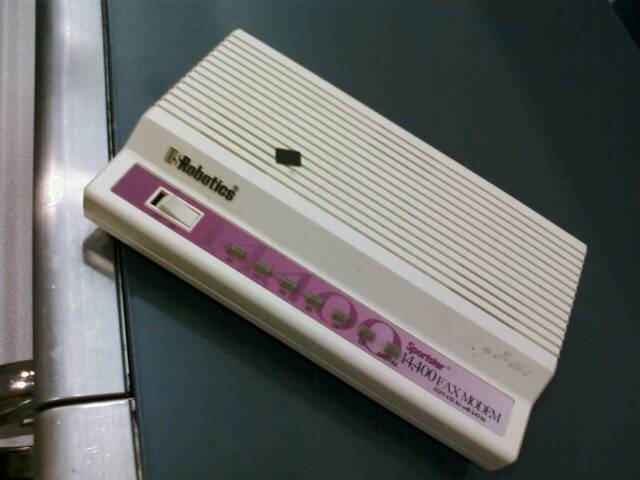
When any sizable online service disappears, a piece of our civilization's cultural fabric goes with it. In this case, the missing cultural repository is Prodigy, a consumer-oriented online service that launched in 1988 as a partnership between Sears and IBM. Users accessed it by dialing into regional servers with a personal computer and a modem over traditional telephone lines. Once connected, they could trade emails, participate in online message board discussions, read the daily news, shop for mail-order items, check the weather, stocks, sports scores, play games, and more.  

Prodigy's technology felt like a centralized, parallel universe Internet where technologies looked very, very similar to what we know now but were in fact fundamentally different.

Prodigy even devoted a portion of the user's screen to graphical banner ads. It was very much like a microcosm of the modern Internet—if the entire World Wide Web was published by a single company. Over its 11-year lifespan, a generation of Americans grew up with Prodigy as part of their shared cultural heritage. In an earlier era, we may have spoken about another common cultural experience—say, Buster Keaton films—as a cultural frame of reference for an entire generation. Everybody saw them, everybody referenced them. And while Prodigy was nowhere near as popular as Buster Keaton among the general public, hundreds of thousands of people with a computer and a modem in the early 1990s tried Prodigy at least once. What those early online explorers saw when they logged in was, to them, glorious: colors, fonts, illustrations, and a point-and-click interface—features which, at Prodigy's launch in 1988, were entirely new. Prior to Prodigy, competitors like CompuServe and GEnie forced users to type obtuse commands to get any meaningful result (and that result also happened to be a screen full of lifeless text).

Prodigy gained its distinctive flair from a now-forgotten graphical protocol called North American Presentation Level Protocol Syntax, or NAPLPS for short. NAPLPS was a product of the brief Teletext era of the late 1970s, when TV networks sought to piggyback extra digital information such as weather forecasts or sports scores using something called the "vertical blanking interval" of a TV broadcast signal. The vertical blanking interval could only hold a small amount of data, so engineers devised a way to present digital color graphics and text in the most economical way possible. NAPLPS did this by reducing an image into a set of mathematical instructions (i.e. "draw an oval at this location and fill it with blue") instead of storing data on every pixel in a bitmap image like JPEG or GIF files do today.

Screenshot of Where in the World is Carmen San Diego? on Prodigy circa 1988 (Prodigy)

The NAPLPS method required a custom piece of hardware or software, commonly called a "terminal" or "client," on the receiving end to receive the drawing instructions and to translate them into an image or page layout on the user's screen. Teletext never caught on in the US (although it did flourish in Europe), nor did Videotex, the two-way interactive version of the concept that required remote computers accessed by modem and corresponding terminals hooked to TV sets.

* * *

Coming on the heels of Videotex mania, which swept the Western world in the late 1970s and early 1980s, Sears, CBS, and IBM joined together in 1984 to craft a Videotex service of its own.  They called their partnership Trintex: "Tri" for the three companies, and "tex" for Videotex. The plan, as conceived from a corporate standpoint, was almost naively simple: the world's largest retailer (Sears) would provide online shopping. The world's largest media conglomerate (CBS) would provide content and information, and the world's largest computer company (IBM) would provide the underlying technology.

Kim Moser

How the trio got there, however, would turn out to be far more complicated. A very expensive technological effort (which, among other minor hiccups, required creating a nationwide proprietary telecommunications network with hundreds of nodes), would end up inadvertently crafting a consumer online world for the everyman that eerily presaged the Internet we know today—if in a Bizarro Superman type way.

Looking back, Prodigy's technology felt like a centralized, parallel universe Internet where technologies looked very, very similar to what we know now but are in fact fundamentally different—like lifting the hoods of two identical-looking cars and finding a diesel engine under one and a gasoline engine under the other. They both get you there, but in different ways. Even so, the similarities were close enough that patents, legal precedents, and online techniques forged from the Trintex and Prodigy partnerships still loom over the Internet in ways that few in the public understand.

To put the Trintex partnership in modern terms, it was as if Wal-Mart, Comcast, and Apple were to team up today and rewrite the rules of media distribution and general retail commerce. It's a terrifying prospect. But the online landscape back then was raw and rough, undefined and relatively new, so few feared a partnership from such a trinity of giants in 1984.

And, as giants are wont to do, it took them four years to bring the service to the market. Along the way, CBS dropped out, and Sears and IBM were left to fend alone. The remaining pair changed the name from "Trintex" to "Prodigy" to reflect not only the lack of a third partner, but also to reposition the company with a mass-market name that would appeal to the general public.

After launch in 1988, Prodigy soared in the consumer online space until it was handily surpassed in subscribership by AOL in the early-mid 1990s. Then, of course, it was wholly trampled in the late 1990s by that hungry, all-consuming digital maw called the Internet.

* * *

At the time it was finally shuttered, Prodigy was an absolute dinosaur technologically. Built from systems that were state-of-the art at the dawn of the 1980s, and existing on top of a complex and proprietary network infrastructure that was always separate from the Internet, Prodigy existed in spite of itself.

Eager to pivot entirely to its burgeoning ISP business, Prodigy's parent sought a convenient escape route from Prodigy Classic in the late 1990s. Subscribership to its Classic service had dwindled to 208,000—down from 1 million a few years earlier—and the infrastructure was costly to maintain. Conveniently citing the "Y2K problem," Prodigy's CEO, Samer Salameh, announced a Classic shutdown in early 1999.

The data saved to STAGE.DAT was frozen in time like a mosquito stuck in digital amber.

After that shutdown, loyal Prodigy customers, who had hung on to the bitter end, were suspicious about the stated reasons for the closing. And they were mad. Fifteen years later, we can now confirm that their suspicions were correct: "As far as I know, Prodigy Classic being shut down was not influenced by Y2K issues," recalls Doino, the Prodigy employee who actually pulled the plug on the service in 1999.

But even an insurmountable tide of customer goodwill cannot stop one of the most sacred laws of the free market: that unprofitable products, even if they happen to be one-of-a-kind repositories of digital human culture, eventually meet their end at the hands of a corporation that needs to make money to survive. When Prodigy Classic shut down, its servers entirely shifted over to servicing the ISP portion of Prodigy's business. The network of regional servers—called Prodigy Local Sites—was dismantled. The actual Prodigy Classic data became neglected, and its whereabouts are uncertain, although I'm trying my best to track it down.

Even if Prodigy's archives are found, various former Prodigy employees say the data is trapped behind a technological minefield of obsolete storage formats, protocols, programming languages, and computer systems. And, naturally, each one must be present and working in tandem to have any hope of ever accessing the information. In other words, to resurrect some of Prodigy, you'd have to make all of it work again.

"Numerous attorneys fighting patent cases have asked me about this," says Les Briney, Prodigy's former executive director of technology and architecture.  (Briney is describing IBM's existing portfolio of lucrative Prodigy-related patents, which apply to many parts of the modern Web.)  "My estimate is in the million dollar range to do this."

But plenty of things seem costly-to-impossible until you actually do them. Just ask Carpenter, the programmer who stumbled upon something stunning when he was tinkering with Prodigy client software. He’d uncovered some of the old graphical images he was after, but then he found an unexpected trove leading into the past: "Then I discovered STAGE.DAT."

Prodigy in 1992, as captured on a home video by the author's father. (Benj Edwards)

STAGE.DAT, as it turns out, was one of the Prodigy client's two cache files. These two files, CACHE.DAT  and STAGE.DAT, stored both temporarily and frequently used data on the user's machine to speed up page load times. (This same STAGE.DAT got Prodigy in trouble in the early 1990s when users discovered that it could contain fragments of data culled from their PCs. As it turns out, Prodigy's client was filling in "empty" portions of STAGE.DAT with random snippets of system memory. Users were convinced Prodigy was spying on them, uploading this data to its servers (it wasn't); Prodigy denied this and released a tool for the paranoid to zero out their STAGE.DAT files.)

Prodigy's entire architecture, in fact, was based on this caching system, with a central server at the hub in Yorktown Heights, New York, and hundreds of regional caching servers spread throughout the US. That way, server load was distributed, and loading times were minimized from the user's standpoint. Data would propagate from the top down. Whenever a Prodigy user called up a page, a portion of that data was ultimately downloaded to his machine, much in the way web browsers cache HTML and image data today.

So here's the key to Carpenter's discovery: Whenever a user last dialed into Prodigy before it shut down in 1999, the data saved to STAGE.DAT was frozen in time like a mosquito stuck in digital amber. Carpenter found a way to tap into that amber and extract the data. His series of Python programs reads through a previously used STAGE.DAT file, generates a list of pointers to the pages or object data contained within, then directs the Prodigy client to display them one at a time so he can take screenshots.

The fact that Carpenter has to go through such a Rube Goldbergian series of steps to get at these images is a result of Prodigy's complexity. As it turns out, the service didn't use the vanilla NAPLPS standard to render its graphics. Prodigy's graphically rich screens—most of which were hand-drawn by Prodigy's staff of artists—existed as a proprietary, object-oriented superset of NAPLPS. Different portions of any given Prodigy page, including graphics, text, and interactive elements existed as separate "objects" that the Prodigy client assembled onto the user's display.

Like the caching system, this object-oriented behavior was born out of both technological necessity and a desire to reduce business costs, explains Robert Filepp, one of the original engineers who designed Prodigy's backend technology. Prior to the birth of Prodigy, AT&T held a limited Videotex subscription service trial in New Jersey. During the trial, says Filepp, "[AT&T] had a game called 'Make a Monster' in which users could take out body parts and decide to put them together into different pieces." But the monsters didn't actually have separate body parts, data-wise. "The artists had to create every possible combination and permutation of content, one per page."

At the end of the trial, AT&T had almost as many people developing content as they did subscribers, since each and every new piece of information introduced on the service required an entirely different screenful of NAPLPS artwork. To avoid this problem, David Waks, Prodigy's former head of research and development—who could also be called the godfather of Prodigy's architecture—conceived of the object-oriented approach where different portions of the screen could be updated independently of each other.  But this was only one part of his greater plan.

In sketching out the specifications for Prodigy, Waks envisioned a world in which, instead of dumb terminals hooked up to TV sets, users of a Videotex service would use custom client software running on personal computers—a dramatic leap forward, conceptually. In order for the same interactive Videotex content to be displayed on multiple incompatible platforms, Waks imagined a sort of virtual machine environment that would execute an embedded programming language while also displaying resolution-independent vector graphics to that machine's best ability. So, not only to save artist manpower, but to save bandwidth, it was best to break each page into chunks that could be shuffled around to regional servers and cached, then fed into graphical templates hosted on users' machines.

Screenshot of a weather forecast on Prodigy circa 1988 (Prodigy)

With Waks' approach, later adopted by Prodigy with some modifications, every page became a package of objects: some of the objects could be programs, some of them could be text, and some of them could be graphics. It was up to the client to reassemble them in the correct manner. Even today, the vintage Prodigy "Reception System" client software (as Prodigy called it) is the key to unlocking the service's graphically rich pages. With 250,000 lines of C++ code created and modified by 30 engineers for over the course of a decade, the Reception System is very difficult to reverse engineer and duplicate. Carpenter, spry as he is, isn't up to that challenge yet. But his gears are turning.

"Some day I'd like to create something to emulate the Prodigy backend and serve up requested objects to the client," says Carpenter, who plans to use the existing Prodigy client as the interface. "Perhaps I could bring Prodigy back online like hobbyists have brought QuantumLink back."

We may see a day, thanks to the efforts of devoted hobbyists like Carpenter, where anyone on the Internet can view original Prodigy on the web. Imagine a Javascript-based Prodigy Reception System in the vein of Javascript MESS that runs in any browser and renders original Prodigy pages in all their original, dynamic glory. After all, each Prodigy page is not just a static screen, but a collection of potentially interactive objects.

A few limited simulations of Prodigy already exist, like this MadMaze recreation, hosted on my website. But to appreciate the full cultural value of what Prodigy brought to millions of users for over a decade, the public deserves to have continued access to the real thing.

To do so, Carpenter needs more data, and he's turning to the Internet for help.

"I need everything in people's old C:\PRODIGY directory," he says. "The whole thing zipped up, because a STAGE.DAT is meant to work with a specific version of a Reception System. The objects within it may use features only found in certain versions of the RS."

The Prodigy log-in screen as it looked in 1991, pulled from a STAGE.DAT file by Jim Carpenter. (Prodigy)

The key, as he mentioned, is to find the files from an existing Prodigy installation. Note that the Prodigy client installation disks themselves are not sufficient because they were never used to connect to the Prodigy service, and thus they do not contain downloaded content in the cache files. (If you have anything you think would help, email me.)

Carpenter also needs technical specifications and source code for the Reception System, which may be floating out there somewhere. Needless to say, finding working Prodigy installations from over 20 years ago is tricky. Luckily, I found one of my working Prodigy installations and gave it to Carpenter last year.  He managed to extract many of the Prodigy on-screen illustrations that you see accompanying this article.

* * *

As we invest more of our lives into the electronic realm, corporate decisions to shut down online services without recourse are beginning to resemble digital acts of Nero burning Rome—cultural history and entire communities are trashed in the process.

"From the beginning, online services have visualized what they do as some sort of product, but this is wrong," says Jason Scott, an archivist at the Internet Archive. "They have become critical public spaces and libraries of community speech. In some cases, you can have hundreds of thousands or even millions of people represented in this data."

We, as members of the public, have to be vigilant about how our commercially-driven society treats our shared cultural heritage. As we've seen from previous shutterings of services like Geocities, the world of business can seem painfully callous and indifferent to the needs of history, and that seems unlikely to change any time soon. "I am skeptical that these businesses will spontaneously decide to think in terms of archives and long-term preservation," says Scott. "It's just not in their DNA. Legacy is a luxury to the modern business."

Ultimately, it's up to us, the public, to save what we can.
14 Jul 14:35

R.I.P in peace Full Image  Facebook Twitter


R.I.P in peace

Full Image  Facebook Twitter

14 Jul 13:25

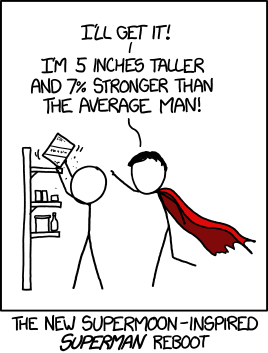
Superm*n

See also: Spider-Man reboot in which he can produce several inches of web, doesn't need as much chalk powder on his hands when he goes rock climbing, and occasionally feels vaguely uneasy about situations.
14 Jul 05:45

I’ll keep you guys posted on the results.  Full...


I’ll keep you guys posted on the results. 


Full Image  Facebook Twitter

14 Jul 01:59

177

by extrafabulouscomics@gmail.com

chickn

14 Jul 01:59

Little Girl Writes Brilliant Letter to LEGO

Little Girl Writes Brilliant Letter to LEGO


A 7-year-old named Charlotte wrote a letter to LEGO pointing out the lack of "LEGO girls" at her local toy store (there's a typed up version of her letter below hers)... ♥

Little Girl Writes Brilliant Letter to LEGO
(via: The Meta Picture)

LEGO is soon releasing a female scientist Minifigure set including a chemist, astronomer and paleontologist...
Little Girl Writes Brilliant Letter to LEGO


Follow us on:
 

July 13 2014
14 Jul 01:57

Church Releases Major Update for LDS Tools App

13 Jul 18:43

I actually love bulbasaur. I had to write it that way for the...


I actually love bulbasaur. I had to write it that way for the joke.

Full Image  Facebook Twitter 

13 Jul 18:43

Attack on Titan Pokemon

Attack on Titan Pokemon


Artist Beth Emery aka zsparky drew these seriously terrifying Pok?mon as Titans. They are definitely the most creepy, but awesome thing we've seen today. Now we need a picture of Eren Jaeger as a Pok?mon trainer... GOTTA KILL 'EM ALL!!

Attack on Titan Pokemon

Attack on Titan Pokemon

Attack on Titan Pokemon

Attack on Titan Pokemon

Attack on Titan Pokemon

Artist: Beth Emery aka zsparky

(via: Cheezburger)

Follow us on:
 

July 11 2014
13 Jul 15:18

Zoom Up To 12 MPH With RocketSkates

by Geek Girl Diva
Dan Jones

These sound awesome.
And awesomely expensive.

red rocket skates

While you may feel a little Kickstartered out thanks to a certain potato salad project, the ACTON R RocketSkates project is worth a look if you like the idea of roller skating minus all that pesky exercise. The project page describes them best:

WHAT ARE THE ACTON R ROCKETSKATES™?

They are electric, motorized skates. Simply strap the RocketSkates™ over your shoes and off you go!

Remote controllers? We don’t need remote controls! Your hands are now free for interpretive dance moves as you cruise about town- your feet control the skates.

Each skate has two hub motors controlled by an on-board microprocessor, and are powered by a lithium-ion battery pack. The skates communicate with each other so they maintain the same speed and behavior.

RocketSkates™ connect to smartphone via the ACTON App. You can monitor your skates and their performance. Route tracking, skate diagnosis, battery status, games, and social interactivity; the app keeps you in touch with other RocketSkaters.

A Software Developer Kit (SDK) will be available for developers interested in creating games and app features for RocketSkates™.

I say best because, of course, I’d describe them as “OMG SKATES THAT MAKE YOU GO ZOOOOOOOM!”

Currently, they come in 3 models: the R-6 lasts for 45 minutes/6 miles, the R-8 lasts for 70 minutes/8 miles, and the R-10 lasts for 90 minutes/10 miles.

Head after the break for more pictures and the video.

rocket skates 2

rocket skates

trade_all-models

(Kickstarter via Engadget)

13 Jul 15:17

*vaccine comic fixed Full Image  Facebook Twitter 


*vaccine comic fixed 
Full Image  Facebook Twitter 

13 Jul 12:31

#153: Still you love me.

by 1111

1111comics - 00153 - still you love me

Unconditional love is a rare thing.

I haven’t seen my puppy in over a year now. I miss him immensely.

Happy Melancholy Monday.

13 Jul 12:30

Why Robot Journalism Is Great For Journalists

Don't fear the revolution.

Your newest Intelligencer blogger. Your newest Intelligencer blogger. Photo: Bettmann/Corbis

Earlier this week, one of my business-beat colleagues got assigned to recap the quarterly earnings of Alcoa, the giant metals company, for the Associated Press. The reporter’s story began: “Alcoa Inc. (AA) on Tuesday reported a second-quarter profit of $138 million, reversing a year-ago loss, and the results beat analysts' expectation. The company reported strong results in its engineered-products business, which makes parts for industrial customers, while looking to cut costs in its aluminum-smelting segment.”


It may not have been the most artful start to a story, but it got the point across, with just enough background information for a casual reader to make sense of it. Not bad. The most impressive part, though, was how long the story took to produce: less than a second.

That impossible-sounding deadline was possible because the AP’s story wasn’t written by a person at all. It was the product of a piece of software — a robot, really — created by a Durham, North Carolina-based company called Automated Insights. The AP announced last month that it would use Automated Insights' software, called Wordsmith, to produce up to 4,440 robot-written corporate-earnings reports per quarter, more than ten times the number its human reporters currently produce. When Alcoa’s earnings report hit the wire that day, the data was instantly compiled by a firm called Zacks Investment Research and passed through the AP's proprietary algorithm, which pulled out key numbers and phrases and matched them against other contextual information. In milliseconds, the software produced a full story written in AP style, indistinguishable from one made with human hands. In short order, the story appeared on many AP member sites, including NPR, Hawaii News Now, and KAIT8. (According to an Automated Insights spokesman, human AP employees were involved in editing and adding to the Alcoa story after the fact, but the AP has said that in the future, the process for many stories will be fully automated.)

By this point, we’re no longer surprised when machines replace human workers in auto factories or electronics-manufacturing plants. That’s the norm. But we hoity-toity journalists had long assumed that our jobs were safe from automation. (We’re knowledge workers, after all.) So when the AP announced its new automated workforce, you could hear the panic spread to old-line news desks across the nation. Unplug the printers, Bob! The robots are coming!

I’m not an alarmist, though. In fact, I welcome our new robot colleagues. Not only am I not scared of losing my job to a piece of software, I think the introduction of automated reporting is the best thing to happen to journalists in a long time.

For one thing, humans still have the talent edge. At the moment, the software created by Automated Insights is only capable of generating certain types of news stories — namely, short stories that use single-source data as an input, and whose output follows a regular pattern. The software’s algorithms comb data feeds for facts and key trends, and combine them with historical data and other contextual information to form narrative sentences. Currently, Automated Insight’s software is being used to write fantasy-football recaps for Yahoo Sports and internal sales reports for Fortune 500 companies, create real-estate listings, and do other, similar types of simple reporting. A rival company, Narrative Science, has built earthquake-reporting software for the Los Angeles Times, which was put to the test earlier this year.

Robot-generated stories aren’t all fill-in-the-blank jobs; the more advanced algorithms use things like perspective, tone, and humor to tailor a story to its audience. A robot recapping a basketball game, for example, might be able to produce two versions of a story using the same data: one upbeat  story that reads as if a fan of the winning team had written it; and another glum version written from the loser’s perspective.

But these robots, as sophisticated as they are, can’t approach the full creativity of a human writer. They can’t contextualize Emmy snubs like Matt Zoller Seitz, assail opponents of Obamacare like Jonathan Chait, or collect summer-camp sex stories like Maureen O’Connor. My colleagues’ jobs (and mine, knock wood) are too complex for today’s artificial intelligence to handle; they require human skills like picking up the phone, piecing together data points from multiple sources, and drawing original, evidence-based conclusions.

The stories that today’s robots can write are, frankly, the kinds of stories that humans hate writing anyway. I should know; at my last job at the New York Times, I was occasionally called on to write quick recaps of corporate earnings, much like the ones the AP’s robots now write. It was a miserable early-morning task that consisted of pulling numbers off a press release, copying them into a pre-written outline, affixing a headline, and publishing as quickly as possible so that traders would know whether to buy or sell. The stories were inevitably excruciatingly dull, and frankly, a robot probably could have done better with them. (The bot could at least have given some spark to a sentence like “BlackRock, the asset management giant, reported a fourth-quarter profit of $555 million, down 16 percent from a year ago.”)

If the Times had used an earnings-story robot,rather than passing the task to cub reporters, I could have spent my mornings working on stories that required actual human intelligence — profiles, trend pieces, voice-driven analysis. This is exactly why I’m not worried about the coming of the robot-reporters: rather than putting us out of work, it might free us up to do more of the kinds of work we actually like.

Robbie Allen, the CEO of Automated Insights and a former Cisco engineer, agrees. “The publishing industry at large is facing lots of challenges with its business model, and new things have to be tried out,” he told me in an interview this week. But he insisted that “new things” doesn’t just mean mass layoffs. “I’m not worried for reporters at all,” he said. “Our technology simulates what a data analyst does. It doesn’t simulate what a reporter does all that well.”

What a robot can do, Allen said, is churn out stories at a superhuman pace. Last year, Wordsmith, the company’s software, produced 300 million stories — more than every other media outlet in the world combined. This year, Wordsmith is expected to work even harder — producing more than a billion stories. Few of these will be gripping reads. Most will be sports recaps, personalized financial reports, or other commodified, just-the-facts types of news. But together, they’ll make up the biggest feat of news production in the history of the world. More isn’t necessarily better, of course, but there’s something to knowing that whatever obscure sports team you’re following, whichever esoteric stock you’re curious about, there will be a full, readable report waiting for you, instantly, at every turn.

“Most of our implementations have not been replacing what already exists,” Allen said. “You can’t find reporters who are are willing to write ten thousand fantasy football recaps a week.”

Ken Doctor, an independent analyst who studies the news industry, told me this week that the rise of robot reporting is a product of the times — both technologically and in terms of the troubled economics of the news industry, which has led media organizations to search for ways to reduce their costs. “The robots are just another tool of new journalism,” he said. In the future, Doctor predicts, robots won’t just be reporters’ competitors. They’ll collaborate with us by preparing data-dense paragraphs that we can then supplement with our own analysis, producing a hybrid story that’s better than our human efforts alone.

“Journalism is becoming a more highly skilled job,” Doctor said. “Simply showing up, in the Woody Allen sense — being able to read a press release or interview a single person, and write up a story that is understandable in 750 words — that's not going to be enough. The optimistic part of this is that we'd use computers to do the basic work of organizing facts, and that the judgment and analysis, the interpretation, the experience is brought to it by humans.”

Robot assistance may even spur human reporters to do our jobs better. With software producing the equivalent of old-school “clip files” for us, we’ll essentially have full-time research assistants. The information in our stories will be more accurate, since it will come directly from data feeds and not from human copying and pasting, and we’ll have to issue fewer corrections for messing things up. Plus, with our nuts-and-bolts reporting out of the way, we’ll be able to focus on the kinds of stories that educate and entertain readers in a deep way, rather than just dragging simple information from Point A to Point B. Perhaps we’ll even start sprucing up our basic news stories, just to prove to readers that they’re not written with automated help. (“Could a robot have made a Beyoncé reference like this?”)

I’m not trying to be overly flip. The world needs earnings reports and sports recaps, and right now, it’s someone’s job to write them. The automation of news will, in all certainty, reduce the need for human reporters, especially at the local and regional levels, where funding is sparse. And as the technology behind content-creating robots gets more sophisticated, their reach will extend to other types of news. TV recaps, aggregated blog posts, sports analysis, political campaign coverage, BuzzFeed listicles — all of these could, conceivably, be automated, and the humans currently producing them could be cut out of the picture. The robots could even make inroads into PR and communications; according to Allen, several political organizers, including some former Obama campaign staffers, have already reached out to Automated Insights about using Wordsmith to create personalized voter outreach emails.

But even in the worst-case scenario, the rise of automated reporting is much, much less dangerous for the career prospects of journalists than the basic economic difficulties that are already facing the news business — the migration of print content online, the dry-up of advertising revenue, et cetera. That’s reassuring on some level, and terrifying on another. But the upshot is that the robot revolution isn’t something for most writers to fear. If anything, it will only make our jobs easier and more fun. We should be celebrating the rise of machines that can supplement and assist us in our jobs, while doing the most banal parts of our workloads for us.

After all, if we wanted to do something mindless and repetitive with our lives, we’d have become robots.

12 Jul 00:01

This Pokèmon Cosplay Just Set A New Bar Of Awesome

by Geek Girl Diva

pokemon cosplay a

We’ve seen people cosplay Pokèmon and we’ve seen people play Pokemon trainers, but this cosplay by 4 Itchy Tasty Cosplay at Anime Expo pairs the trainers with their Pokèmon as puppets and it’s pretty much perfection.

In addition to being one of the cosplayers, Brett Horn created the puppets which are built to mimic the Pokèmon they’re based on.

They were definitely a hit at Anime Expo and I’m thinking they’ll be out again given how popular this cosplay was.

You can check out more pictures and a video of the puppets in action after the break…

pokemon cosplay 1

pokemon cosplay 2

pokemon cosplay 3

pokemon cosplay 4

pokemon cosplay 5

pokemon cosplay 6

pokemon cosplay 7

pokemon cosplay b

Pokemon gif from video by PWNEDCAST.

Send your cosplay pics to tips@fashionablygeek.com.

(via Kotaku)

11 Jul 22:49

Holding the Door For Someone

by DOGHOUSE DIARIES

Holding the Door For Someone

Any good door-holding stories? Share them with us on Facebook.

11 Jul 22:49

No, Steven Spielberg Did Not Kill A Dinosaur

No, superstar movie director Steven Spielberg did not poach a dinosaur and then have a picture taken showing him with his trophy kill.

Hard to believe, right? Well, a photo posted on Facebook meant to be satire went viral -- being shared more than 30,000 times, because so many people not only believed it was real but also were furious at the "Jurassic Park" director.

The post by Jay Branscomb on his page happened days after Facebook deleted photos from the page of Kendall Jones, a 19-year-old Texas cheerleader and hunter who posted numerous photos of herself posing with a variety of animals that she shot while on safari in Zimbabwe.

The photos sparked massive outrage from animal-rights activists and other Facebook users.

So, Branscomb posted the picture of Spielberg with a mechanical Triceratops on the set of "Jurassic Park," the 1993 worldwide blockbuster about dinosaurs being brought back to life, with the comment: "Disgraceful photo of recreational hunter happily posing next to a Triceratops he just slaughtered. Please share so the world can name and shame this despicable man."

Many users did not get the joke and responded accordingly.

"I just reported this picture. I hope you all can join me in stopping these cowards," one user wrote.

And another: "Disgusting! I bet he only kept the horns!"

Still, there were plenty of others who did get the joke, and had fun with it.

"If this senseless poaching continues these gentle creatures may become extinct, but your $20.00 per month could help save these endangered creatures , please reach out & help the Tri-tops," a user said.  

Follow @theryanparker for breaking news.

Copyright © 2014, Los Angeles Times
11 Jul 14:40

13 Ways The NSA Spies On Us

Over the last year, through the revelations of Ed Snowden and independent reporting by others, we've learned more and more about the National Security Agency's spying programs. Indeed, there have now been so many revelations that it can be hard to keep them straight. So here's a handy guide to the most significant ways the NSA spies on people in the United States and around the world.

1. The NSA collects every American's phone records

6998063888_a3ea494e83_k

(Chris Goldberg)

This was one of the first programs revealed by Snowden and it continues to be one of the most controversial. The Patriot Act allows the NSA to obtain business records that are relevant to terrorist investigations. The government claims that this gives it the power to obtain records — phone number dialed, time and duration of call — about every domestic phone call in the United States. In January the Obama administration proposed changes to require judicial oversight of access to the database.

2. The PRISM program lets the NSA access private user data on leading online services

12505346455_3c928ab778_k

(Danja Vasiliev)

A slide disclosed by Snowden lists 9 major internet companies — Microsoft, Yahoo, Google, Facebook, PalTalk, YouTube, Skype, AOL, and Apple — as participating in the PRISM program. The program allows the NSA to get private information such as emails, Facebook messages, and stored documents. It's not known how carefully these information requests are scrutinized.

3. The NSA engages in offensive hacking operations

3863955491_ecf10edee8_o

(Katie Dalton)

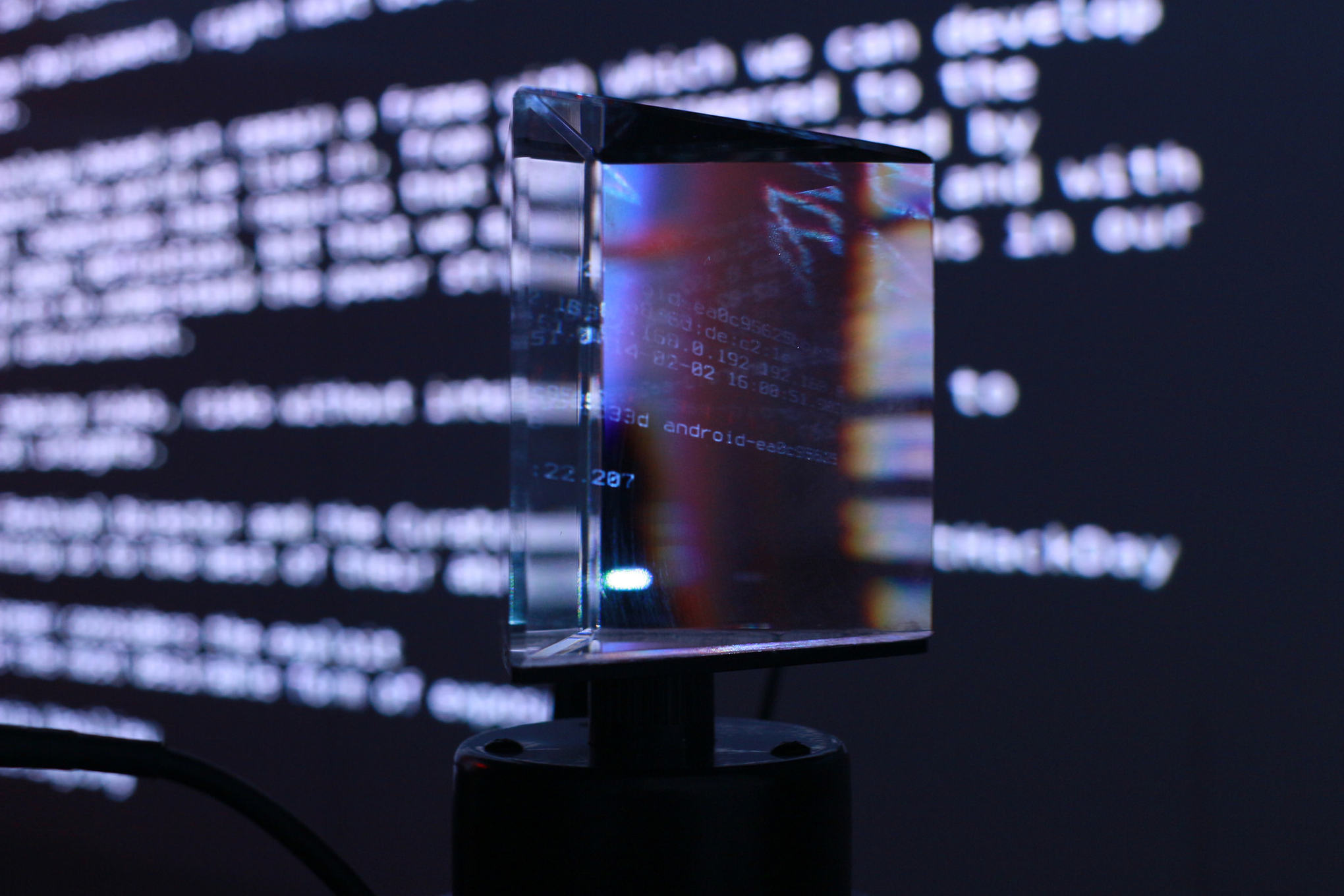
Tailored Access Operations is the NSA's elite hacking unit. While some other NSA programs collect information in bulk, TAO engages in targeted attacks on high-value targets. It is believed that the NSA has a large library of exploits, allowing it to hack into a wide variety of consumer gadgets and business IT systems.

4. The NSA taps long-distance internet connections

9287370881_fa46df0a9a_o

(Barta IV)

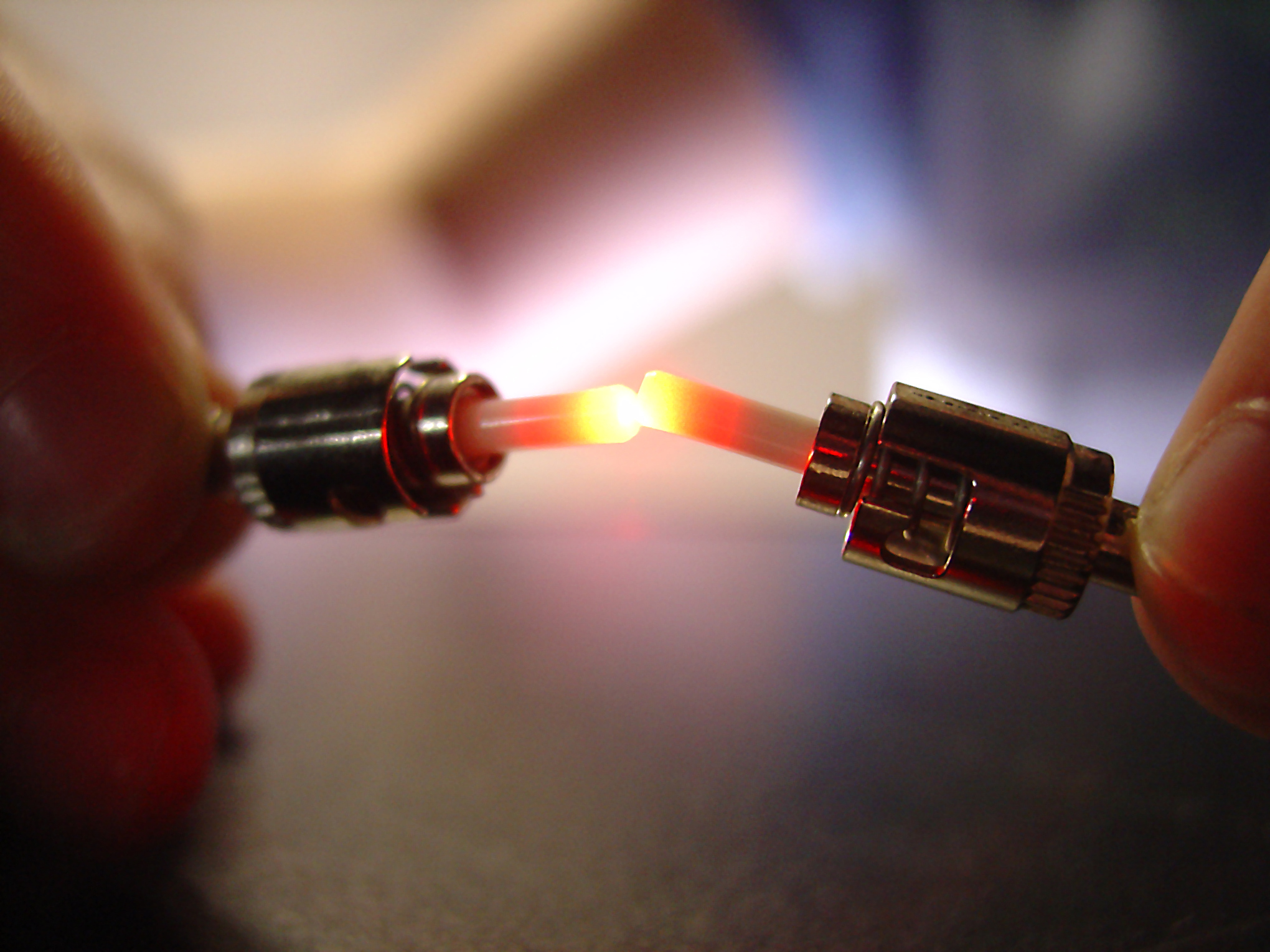
The NSA works with countries around the world to tap into underseas fiber optic cables carrying vast quantities of fiber optic data. There's also evidence that the NSA has been tapping into fiber optic cables in the United States.

5. The NSA intercepted data flowing within Google and Yahoo data centers

4249731778_ab4fc01fd9_b

(Robert Scoble)

When you log into GMail, you'll see a "lock" icon indicating that communications between your computer and Google's server is protected by encryption. But until recently, Google didn't employ encryption when it moved data between its own servers. The NSA tapped into these connections and harvested large quantities of user data. Yahoo was also targeted.

6. The NSA spies on foreign leaders

185793196

German Chancellor Angela Merkel (Sean Gallup/Getty Images)

Recently there has been growing tension between the United States and Germany over charges that the NSA spied on the cell phone of German chancellor Angela Merkel. And she's not the only world leader who has allegedly been targeted by the US government. Brazilian president Dilma Rousseff and Mexican president Enrique Peña Nieto have also reportedly had their phone calls or emails intercepted. Documents released by Snowden suggest that at least 35 world leaders have been targeted by the NSA.

7. The NSA spies on millions of ordinary people overseas

The NSA has tapped into communications systems in Brazil and Germany — and likely other countries as well — to collect information about ordinary peoples' phone calls and emails.

4941673545_2f09df7e02_b

Rio de Janiero (Terry Dunn)

8. The NSA tracks cell phone locations around the world

4763857847_9b39ec4636_b

(Jerry Wong)

The NSA spies on cell phone networks around the world, collecting 5 billion records per day about the locations of users' cell phones. The agency isn't allowed to deliberately target cell phone users in the United States, but some American cell phone records are collected "incidentally."

9. From 2001 to 2011, the NSA collected vast amounts of information about Americans' internet usage

3191084319_8da8bfae47_o

(Richard Masoner)

In 2001, the Bush administration began collecting data about Americans' internet usage. The data collected included the sender and recipients of emails, as well as information about which websites a user browsed. The program operated for two years under President Obama but was shut down in 2011.

10. The NSA has undermined the security of encryption products

4410169795_cf75f88453_o

(John O'Shea)

Over the last decade, the NSA has persuaded technology companies to modify their products to make them "exploitable" — that is, vulnerable to targeted attacks by the NSA.

11. The NSA uses tracking cookies to choose hacking targets

47025604_0d13bb79ce_b

(Jeramey Jannene)

Most commercial websites have "tracking cookies," small bits of data that are stored on a user's computer to help with ad targeting. Documents released by Snowden shows that the NSA uses these cookies to identify users as hacking targets.

12. The NSA has cracked a popular standard for encrypting cell phone communications

3335777264_589d6c2f55_b

(Raging Wire)

Most cell phone communications are encrypted to protect the privacy of users. But the NSA has cracked one of the most popular encryption standards, called A5, allowing them to intercept the contents of cell phone communications.

13. The NSA can record every phone call in a certain, unspecified, country and store it for 30 days

3231400982_94ae0f9b5c_b

(Eelke)

The Washington Post has reported that an NSA program allows the agency to record every phone call in an unspecified country, and store them for 30 days for later analysis. The Post didn't identify the country, but the Intercept has reported that the program is being used in the Bahamas.

Update: I modified #13 to include the Intercept's reporting about the phone program being used in the Bahamas.

11 Jul 14:36

The TSA’s Instagram Feed Is Terrifying And Totally Awesome

An "augmented" smartphone case discovered at Boston International Airport.

An "augmented" smartphone case discovered at Boston International Airport.

Bear mace discovered in a carry-on bag at the Anchorage airport. You can pack bear mace in your checked bags if the volume is less than four ounces and it has less than a 2% active ingredient of either CS or CN.

Bear mace discovered in a carry-on bag at the Anchorage airport. You can pack bear mace in your checked bags if the volume is less than four ounces and it has less than a 2% active ingredient of either CS or CN.

A handgun and loaded magazine caught at the Austin-Bergstrom International Airport.

A handgun and loaded magazine caught at the Austin-Bergstrom International Airport.

This dark knight shuriken was discovered in a carry-on bag this week at the Buffalo Niagara International Airport.

This dark knight shuriken was discovered in a carry-on bag this week at the Buffalo Niagara International Airport.

A pocket .45 discovered at the Dallas Fort Worth airport.

A pocket .45 discovered at the Dallas Fort Worth airport.

An Improvised Explosive Device (IED) training kit discovered in checked baggage at the Honolulu airport. It's not really an IED, but definitely looks like one.

An Improvised Explosive Device (IED) training kit discovered in checked baggage at the Honolulu airport. It's not really an IED, but definitely looks like one.

An inert 60mm mortar round discovered at the Washington Dulles Airport.

An inert 60mm mortar round discovered at the Washington Dulles Airport.

Some kind of...throwing star with six folding blades? Discovered in a passenger’s carry-on bag at the Las Vegas airport.

Some kind of...throwing star with six folding blades? Discovered in a passenger’s carry-on bag at the Las Vegas airport.

This novelty watch looked enough like an explosive device to get it seized at the Oakland International Airport.

This novelty watch looked enough like an explosive device to get it seized at the Oakland International Airport.

This comb-knife was discovered in a passenger’s carry-on bag at the Detroit Airport.

This comb-knife was discovered in a passenger’s carry-on bag at the Detroit Airport.

Samurai sword discovered in a carry on bag at BOS.

Samurai sword discovered in a carry on bag at BOS.

Throwing stars discovered in a carry-on bag at the Dallas Love Airport.

Throwing stars discovered in a carry-on bag at the Dallas Love Airport.

81 pounds of marijuana discovered in checked baggage at the Oakland International Airport.

81 pounds of marijuana discovered in checked baggage at the Oakland International Airport.

An "augmented" smartphone case discovered at Boston International Airport.

An "augmented" smartphone case discovered at Boston International Airport.

Bear mace discovered in a carry-on bag at the Anchorage airport. You can pack bear mace in your checked bags if the volume is less than four ounces and it has less than a 2% active ingredient of either CS or CN.

Bear mace discovered in a carry-on bag at the Anchorage airport. You can pack bear mace in your checked bags if the volume is less than four ounces and it has less than a 2% active ingredient of either CS or CN.

A handgun and loaded magazine caught at the Austin-Bergstrom International Airport.

A handgun and loaded magazine caught at the Austin-Bergstrom International Airport.

This dark knight shuriken was discovered in a carry-on bag this week at the Buffalo Niagara International Airport.

This dark knight shuriken was discovered in a carry-on bag this week at the Buffalo Niagara International Airport.

A pocket .45 discovered at the Dallas Fort Worth airport.

A pocket .45 discovered at the Dallas Fort Worth airport.

An Improvised Explosive Device (IED) training kit discovered in checked baggage at the Honolulu airport. It's not really an IED, but definitely looks like one.

An Improvised Explosive Device (IED) training kit discovered in checked baggage at the Honolulu airport. It's not really an IED, but definitely looks like one.

An inert 60mm mortar round discovered at the Washington Dulles Airport.

An inert 60mm mortar round discovered at the Washington Dulles Airport.

Some kind of...throwing star with six folding blades? Discovered in a passenger’s carry-on bag at the Las Vegas airport.

Some kind of...throwing star with six folding blades? Discovered in a passenger’s carry-on bag at the Las Vegas airport.

This novelty watch looked enough like an explosive device to get it seized at the Oakland International Airport.

This novelty watch looked enough like an explosive device to get it seized at the Oakland International Airport.

This comb-knife was discovered in a passenger’s carry-on bag at the Detroit Airport.

This comb-knife was discovered in a passenger’s carry-on bag at the Detroit Airport.

Samurai sword discovered in a carry on bag at BOS.

Samurai sword discovered in a carry on bag at BOS.

Throwing stars discovered in a carry-on bag at the Dallas Love Airport.

Throwing stars discovered in a carry-on bag at the Dallas Love Airport.

81 pounds of marijuana discovered in checked baggage at the Oakland International Airport.

81 pounds of marijuana discovered in checked baggage at the Oakland International Airport.

The Transportation Security Administration hasn’t endeared itself to the public by shuffling every airline passenger in America through full-body scanners and getting up close and personal with a pat-down search if they decline. It’s been accused of overreach, overspending, and redundancy. But one thing the bureaucratic behemoth has definitely done right is to create an always entertaining and occasionally unbelievable Instagram feed.

The feed is essentially a gallery of some of the craziest items people try to get past security checkpoints. There’s no shortage of material—the TSA claims an average of 40 firearms (often loaded) are seized at checkpoints every week. Nine-bladed super knife? Grenade? Everything you need to assemble a bomb? Yes, all that and more. Everything that’s seized is photographed for posterity, if not the spectacle, and then shared on social media to show people what’s what.

“We’re just using a new mechanism to reach an audience with Instagram,” says TSA Press Secretary Ross Feinstein. “We’re not trying to make a statement that people are trying to do anything nefarious with these items. We’re just trying to alert people that these are still prohibited items.”

In addition to the guns and other prohibited items, the TSA feed also features adorable drug-sniffing dogs, spotlights various employees and calls out programs and promotions. In the year since it was started, the feed has drawn more than 72,000 followers. Over that time, the agency has made some headway reminding travelers of the rules and making the case that the TSA’s work is meant to keep them safe. “Many often assume our officers are not discovering dangerous, prohibited items,” says Feinstein. The feed undoubtedly is part of a carefully scripted PR strategy to improve the agency’s image, but it’s hard to not get drawn in.

Bob Burns (known as Blogger Bob) is the guy who makes the feed what it is. Each week he reviews reports from some 450 airports nationwide, looking for the most interesting incidents. He works with the agency’s national coordination centers to secure the photos from the airports, which he posts with friendly reminders of what’s prohibited on a plane and why.

“I’ll ask for a photograph and a lot of times I’ll be surprised by what I see,” Bob says. “A lot of times I’m not even sure what the photo’s going to look like—the report might just say ‘a four inch knife,’ but for all I know it could be a steak knife or it could be one of these fantasy Klingon knives.”

Blogger Bob joined TSA one year to the day after 9/11. Before that, he did a stint in the Army and as a traveling singer/songwriter. He quickly ascended the TSA ranks and helped launch the TSA blog and Week in Review section in 2008. Even now, there is no dedicated social media team or budget, just Bob. As the TSA’s social media voice, he toes the party line, but knows from experience just how weird and interesting the stuff gathered at the front lines is.

“I used Instagram personally so I knew the kind of photos people shared, and I just knew that the photos we had from the week in review would be successful,” he says.

Beyond the blog and Instagram, the TSA also maintains an active Twitter account and says its social media channels were established strictly to improve communication. The blog has been the site of contentious conversations about the organization, and Feinstein says customer complaints have been addressed and resolved using Twitter.

When the government starts a social media account, it can draw a lot of attention. Look no further than the sudden popularity of the CIA’s first tweet. In the right hands, a social media presence can give personality to an otherwise inscrutable organization. Bob says the social media channels have helped to shift the conversation a bit.

“You change it from people complaining about TSA to people saying, ‘Wow look what TSA found, I can’t believe someone would try to come through with this,’” He says. “We like to show not only that our workforce is capable of finding these things, but we’d like to educate people.”

Despite its popularity, TSA’s Instagram account is ultimately something it really wishes didn’t exist. It’s fed by the mistaken and often dangerous oversight of passengers who at best slow us all down as we slog through security. At worst, they put people passengers in danger.

“We would love to put a blog post on our website every Friday that says, ‘We did not discover any firearms at checkpoints nationwide, we didn’t discover any prohibited items like knives or any suspicious items whatsoever,’” says Feinstein. “While we like utilizing social media, we’d rather not find these items.”

11 Jul 14:32

Today we have a guest comic from Alex of 1111 Comics! Let me...

Dan Jones

Variation on the last one


Today we have a guest comic from Alex of 1111 Comics! Let me just say that if you liked the ‘We go forward’ comic, you’ll like pretty much everything he makes. His work is an excellent mix of meaning and humor, if you’re into that sorta thing — and if you’re not, you should be.

His Stuff:

Website | Facebook | Twitter | TumblrPatreon

11 Jul 12:53

How Domino's Lost Its Mascot

Dan Jones

I remember the Noid well. I didn't know anything about this story, though.

The spots soon employed the slogan “Avoid the Noid,” and reminded customers that their company’s pizzas were “Noid-proof.” The campaign was a smash success. In 1989, a computer game, “Avoid the Noid,” was released to commemorate the red antagonist (the goal was to deliver a pizza with a half-hour whilst avoiding a lumbering swarm of Noids), plush toys were abound, and the character was a household name.

Then, right at the height of his popularity, the Noid endured perhaps the worst mascot PR in history.

On

January 30, 1989, a man wielding a .357 magnum revolver stormed into a Domino’s in Atlanta, Georgia and took two employees hostage. For five hours, he engaged in a standoff with police, all the while ordering his hostages to make him pizzas. Before the police could negotiate with his demands ($100,000, a getaway car, and a copy of The Widow’s Son -- a novel about Freemasons), the two employees escaped. In the ensuing chaos, the captor fired two gunshots into the establishment’s ceiling, was forcefully apprehended, and received charges of kidnapping, aggravated assault, and theft by extortion.

The assailant, a 22-year-old named Kenneth Lamar Noid, was apparently upset about the chain’s new mascot. A police officer on the scene later

revealed that Noid had “an ongoing feud in his mind with the owner of Domino’s Pizza about the Noid commercials,” and thought the advertisements had specifically made fun of him. A headline the following morning in the Boca Raton News sparked a talk show frenzy: “Domino’s Hostages Couldn’t Avoid the Noid This Time.”

A subsequent court hearing found Noid innocent by

reason of insanity; a paranoid schizophrenic, he was found to have “acute psychological problems,” was turned over to the Department of Human Resources, and ended up in Georgia’s Mental Health Institute, where he spent three months. Years later, in 1995, unable to shake the idea that the Domino’s ad campaign had intentionally targeted him, Noid committed suicide in his Florida apartment.

Following the ordeal, Domino’s swiftly terminated the Noid campaign. For nearly twenty years, the annoying character lay in glorious respite, before briefly returning in 2011 (his 25th anniversary). This time though, he was merely part of a short-lived promotional marketing campaign: in Domino’s Facebook game, “The Noid’s Super Pizza Shootout.” As quickly as he came, the Noid returned to the void.

This post was written by Zachary Crockett. Follow him on 

Twitter here, or Google Plus here.
11 Jul 12:53

World's fastest pancake flipper

by Jason Kottke

Everyone has a superpower. This guy's superpower is that he can flip mini-pancakes faster than I thought humanly possible.

I love watching stuff like this...here's a guy chopping lemons in half 20 times quicker than Superman himself would.

ps. This is still the world's best pancake recipe.

Tags: food   video
11 Jul 12:51

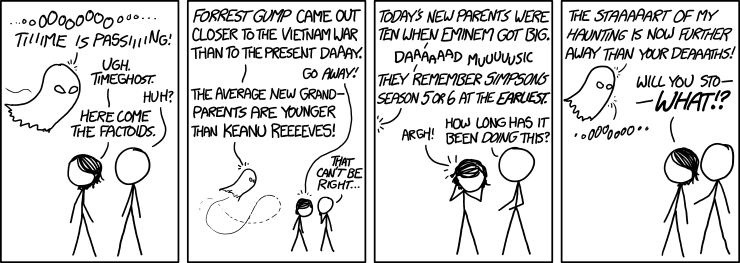
Timeghost

'Hello, Ghostbusters?' 'ooOOoooo people born years after that movie came out are having a second chiiiild right now ooOoooOoo'
11 Jul 12:51

14,000 Men Born Between 1893 And 1897 Were Just Asked To Register For The Draft

By Mark Berman July 10 at 4:30 PM


Martha Weaver holding a letter for her late father, Fred Minnick, requiring him to register for the nation’s military draft. Her father was born in 1894 and died in 1992. (Jerry Sowden/The Derrick via AP)

Are you a man born in Pennsylvania between 1893 and 1897? If so, a government agency may have just reminded you to register for the draft.

The Selective Service System, which keeps a roster of potential men who can be enlisted in the military, inadvertently sent out mailings to more than 14,000 Pennsylvania men born in those years, reminding them to register.

These letters were sent due to a computer error, the agency said in a message posted online, and the Selective Service has apologized to the families who have received these letters.

The problem occurred following an automated data transfer between Pennsylvania and the Selective Service, which included the names of the 14,215 men born near the end of the 19th century. The letters started going out on June 30, sent to men who would be at least 117 years old.

“It’s never happened before,” Pat Shuback, a spokesman for the Selective Service, told the Associated Press.

Shuback said that the agency uses a two-digit code for the birth year, which is why the years 1893 to 1897 were mixed up with the years from 1993 to 1997. (The agency was actually going to send letters to more than 27,000 men, he said, but they started getting phone calls last week that alerted them to the mix-up.)

Families who received these letters don’t need to do anything or respond to the letters, the agency said.

The draft was first utilized in the U.S. during the Civil War. While the nation has not had a draft since 1973, the Selective Service still requires registration to keep the list in case the draft is ever reinstated. (Not registering, by the way, can cost you up to $250,000 and up to five years in prison.)

Mark Berman is a reporter on the National staff. He anchors Post Nation, a destination for breaking news, developing stories and quick analysis of events around the country.

SECTION: {section=national, subsection=null}!!!
INITIAL commentConfig: {includereply=true, canvas_permalink_id=washpost.com/8bvh5zpd9k, allow_comments=true, commentmaxlength=2000, includeshare=true, display_comments=true, canvas_permalink_app_instance=bg52e9xhqr, display_more=true, moderationrequired=false, includefeaturenotification=true, comments_period=14, defaultsort=reverseChronological, canvas_allcomments_id=washpost.com/km4ey0dajm, includevoteofftopic=false, allow_videos=false, includesorts=true, markerdisplay=post_commenter:Post Commenter|staff:Post Writer|top_commenter:Post Forum|top_local:Washingtologist|top_sports:SuperFan|fact_checker:Fact Checker|post_recommended:Post Recommended|world_watcher:World Watcher|cultuer_connoisseur:Culture Connoisseur|weather_watcher:Capital Weather Watcher|post_contributor:Post Contributor, childrenitemsperpage=3, includeheader=true, includeverifiedcommenters=true, defaulttab=all, includerecommend=true, includereport=true, maxitemstop=2, source=washpost.com, allow_photos=false, maxitems=7, display_ugc_photos=false, includepause=true, canvas_allcomments_app_instance=6634zxcgfd, includepermalink=false}!!!

UGC FROM ARTICLE: !!!

FINAL commentConfig: {includereply=true, canvas_permalink_id=washpost.com/8bvh5zpd9k, allow_comments=true, commentmaxlength=2000, includeshare=true, display_comments=true, canvas_permalink_app_instance=bg52e9xhqr, display_more=true, moderationrequired=false, includefeaturenotification=true, comments_period=14, defaultsort=reverseChronological, canvas_allcomments_id=washpost.com/km4ey0dajm, includevoteofftopic=false, allow_videos=false, includesorts=true, markerdisplay=post_commenter:Post Commenter|staff:Post Writer|top_commenter:Post Forum|top_local:Washingtologist|top_sports:SuperFan|fact_checker:Fact Checker|post_recommended:Post Recommended|world_watcher:World Watcher|cultuer_connoisseur:Culture Connoisseur|weather_watcher:Capital Weather Watcher|post_contributor:Post Contributor, childrenitemsperpage=3, includeheader=true, includeverifiedcommenters=true, defaulttab=all, includerecommend=true, includereport=true, maxitemstop=2, source=washpost.com, allow_photos=false, maxitems=7, display_ugc_photos=false, includepause=true, canvas_allcomments_app_instance=6634zxcgfd, includepermalink=false}!!

SECTION: {section=national, subsection=null}!!!
INITIAL commentConfig: {includereply=true, canvas_permalink_id=washpost.com/8bvh5zpd9k, allow_comments=true, commentmaxlength=2000, includeshare=true, display_comments=true, canvas_permalink_app_instance=bg52e9xhqr, display_more=true, moderationrequired=false, includefeaturenotification=true, comments_period=14, defaultsort=reverseChronological, canvas_allcomments_id=washpost.com/km4ey0dajm, includevoteofftopic=false, allow_videos=false, includesorts=true, markerdisplay=post_commenter:Post Commenter|staff:Post Writer|top_commenter:Post Forum|top_local:Washingtologist|top_sports:SuperFan|fact_checker:Fact Checker|post_recommended:Post Recommended|world_watcher:World Watcher|cultuer_connoisseur:Culture Connoisseur|weather_watcher:Capital Weather Watcher|post_contributor:Post Contributor, childrenitemsperpage=3, includeheader=true, includeverifiedcommenters=true, defaulttab=all, includerecommend=true, includereport=true, maxitemstop=2, source=washpost.com, allow_photos=false, maxitems=7, display_ugc_photos=false, includepause=true, canvas_allcomments_app_instance=6634zxcgfd, includepermalink=false}!!!

UGC FROM ARTICLE: !!!

FINAL commentConfig: {includereply=true, canvas_permalink_id=washpost.com/8bvh5zpd9k, allow_comments=true, commentmaxlength=2000, includeshare=true, display_comments=true, canvas_permalink_app_instance=bg52e9xhqr, display_more=true, moderationrequired=false, includefeaturenotification=true, comments_period=14, defaultsort=reverseChronological, canvas_allcomments_id=washpost.com/km4ey0dajm, includevoteofftopic=false, allow_videos=false, includesorts=true, markerdisplay=post_commenter:Post Commenter|staff:Post Writer|top_commenter:Post Forum|top_local:Washingtologist|top_sports:SuperFan|fact_checker:Fact Checker|post_recommended:Post Recommended|world_watcher:World Watcher|cultuer_connoisseur:Culture Connoisseur|weather_watcher:Capital Weather Watcher|post_contributor:Post Contributor, childrenitemsperpage=3, includeheader=true, includeverifiedcommenters=true, defaulttab=all, includerecommend=true, includereport=true, maxitemstop=2, source=washpost.com, allow_photos=false, maxitems=7, display_ugc_photos=false, includepause=true, canvas_allcomments_app_instance=6634zxcgfd, includepermalink=false}!!

11 Jul 10:37

Uber driver flees inspector, takes passengers for wild ride

Dan Jones

Yikes.

WASHINGTON - Tuesday afternoon an Uber Black driver took three passengers for a wild ride after the driver fled a D.C. taxi inspector and traveled into Virginia.

The passengers climbed into an Uber car with Virginia plates Tuesday as the inspector was asking for documents to confirm that the driver hadn't accepted a street hail and had instead used the Uber app to set up the pickup. Only taxis can accept street hails in the District, says Neville Waters, public information officer for the D.C. Taxicab Commission.

The inspector also wanted to make sure the Uber car was returning to Virginia and not dropping off the riders at another location in D.C. Instead of cooperating with the inspector, the Uber driver took off at a high rate of sped, Waters says.

The inspector followed the Uber car as it entered the 9th Street Tunnel toward Interstate 395 and the Virginia line. The unmarked Uber car was driving recklessly, according to the inspector.

The car took one of the first Virginia exits and let out the passengers, then backed up an exit ramp and re-entered the highway. The driver has not been accounted for, Waters says.

The inspector helped the passengers find a taxi so they could continue on their way, he says.

"They had been in distress and calling for help," he says.

Because of a power outage at the District's communication center, police and other District radios were inoperable. And the inspector was not able to reach police while the car sped away, Waters says.

A Metropolitan Police Department spokeswoman says officers are looking into the incident.

In a statement to WTOP, Uber says that rider safety is its top priority and that the company will cooperate in any investigation. The driver has been deactivated pending the outcome of that review.

The Uber Black driver was commercially licensed and registered in Virginia, according to Uber.

WTOP could not directly reach the passengers involved for comment. However one of the passengers, Ryan Simonetti, tweeted after the incident.

Was just kidnapped by an @uber driver in DC, held against my will, and involved in a high speed chase across state lines with police #Crazy

— Ryan W Simonetti (@rwsimonetti) July 8, 2014

He later released a statement saying he was a "dedicated" Uber customer but hoped the company had learned from the incident.

"We experienced an unfortunate and dangerous incident with an Uber driver and we are very grateful that we emerged from this experience safely, but quite shaken."

Simonetti's company Convene runs a conference center in Tysons Corner, where he and his colleagues were headed when they ordered an Uber car from downtown D.C.

D.C. officials don't know why the driver took off.

If the driver had accepted a street hail, the District could have impounded his vehicle and he could have faced infractions for any other traffic violations related to his insurance or license.

"This is why it was so odd, is that it was an actual electronic dispatch. He was taking the person from D.C. to Virginia. On the surface, everything was legit," Waters says. "They would have been on their way."

Ride-sharing services like Uber and Lyft have come under fire in D.C. and Virginia for violating existing regulations for taxis and limos. Virginia has sent cease and desist notices to both companies, which said they planned to continue operating.

Related Stories:

Follow @WTOP on Twitter and on Facebook.

11 Jul 10:37

Astrophysicists Just Realized 80% Of The Light In The Universe Is Missing

An astonishing five times too much, in fact, and it is leading astrophysicists to speculate that the photons could be coming from an "exotic new source", or even decaying dark matter.

It means that 80 per cent of light in the universe is effectively missing.

“It’s as if you’re in a big, brightly-lit room, but you look around and see only a few 40-watt light bulbs,” noted Carnegie’s Juna Kollmeier, lead author of the study. “Where is all that light coming from? It’s missing from our census.”

Intriguingly, the mismatch only appears in the nearby, relatively well-studied cosmos.

When telescopes focus on galaxies billions of light-years away (and therefore are viewing the universe billions of years in its past), everything seems to add up.

The fact that this accounting works in the early universe but falls apart locally has scientists puzzled.

The light in question consists of highly energetic ultraviolet photons that are able to convert electrically neutral hydrogen atoms into electrically charged ions.

The two known sources for such ionizing photons are quasars - powered by hot gas falling onto supermassive black holes over a million times the mass of the Sun - and the hottest young stars.

Observations indicate that the ionizing photons from young stars are almost always absorbed by gas in their host galaxy, so they never escape to affect intergalactic hydrogen. But the number of known quasars is far lower than needed to produce the required light.

“Either our accounting of the light from galaxies and quasars is very far off, or there’s some other major source of ionizing photons that we’ve never recognized,” Kollmeier said.

“We are calling this missing light the photon underproduction crisis. But it’s the astronomers who are in crisis -- somehow or other, the universe is getting along just fine.”

The anomaly emerged from comparing supercomputer simulations of intergalactic gas to the most recent analysis of observations from Hubble Space Telescope’s Cosmic Origins Spectrograph.

“The simulations fit the data beautifully in the early universe, and they fit the local data beautifully if we’re allowed to assume that this extra light is really there,” said Ben Oppenheimer a co-author of the study from the University of Colorado.

“It’s possible the simulations do not reflect reality, which by itself would be a surprise, because intergalactic hydrogen is the component of the universe that we think we understand the best.”

“The most exciting possibility is that the missing photons are coming from some exotic new source, not galaxies or quasars at all,” said Neal Katz a co-author from the University of Massachusetts at Amherst.

For example, the mysterious dark matter, which holds galaxies together but has never been seen directly, could itself decay and ultimately be responsible for this extra light.

“You know it’s a crisis when you start seriously talking about decaying dark matter,” Katz added.

“The great thing about a 400 per cent discrepancy is that you know something is really wrong,” said co-author David Weinberg of the Ohio State University.

“We still don’t know for sure what it is, but at least one thing we thought we knew about the present day universe isn’t true.”

10 Jul 21:55

20 Signs You’ve Been in The Single’s Ward Too Long

by Adam Williams

Rebecca Lane and Alison Moore at Utah Valley 360 bring us some funny gifs for those who’ve been in a Mormon

10 Jul 10:49

georgetakei: Please don’t make it so… http://ift.tt/1kCcRQK


georgetakei:

Please don’t make it so… http://ift.tt/1kCcRQK