Today on Toothpaste For Dinner: iphone june 29 2017
The Worst Things For Sale is Drew's blog. It updates every day. Subscribe to the Worst Things For Sale RSS!
Timmy the Tooth"ducking"
Timmy the Tooth"According to (a guy who has proven himself time and again to be a shill for Arsenal) Alexis Sanchez has told Arsenal he’ll put pen-to-paper on a new deal if he’s offered £400,000 a week"

According to The Mirror’s John Cross, Alexis Sanchez has told Arsenal he’ll put pen-to-paper on a new deal if he’s offered £400,000 a week.
The figure is £125,000 a week more than the Gunners have so far been willing to offer the Chile international who is now in the final year of his current £140,000 a week contract at the Emirates.
Bayern Munich, previously favourites to sign Sanchez, have been put off by the player’s demands leaving Manchester City as the only serious contenders for his signature.
Arsene Wenger has repeatedly said that he doesn’t want to sell to a Premier League rival, especially given his side fell outside the top four for the first time during his tenure last season.
A four-year contract at the figure Sanchez wants would see him earn over £19 million a year and set a precedent for contract negotiations with the club’s other first team stars. As has been well-documented, the likes of Mesut Ozil and Alex Oxlade-Chamberlain are also in negotiations about extending their respective deals.
It leaves Ivan Gazidis and Arsene Wenger with quite a headache. In simple terms, there are three options – spend around £75 million in wages to keep him for four years, keep him for a year and lose him on a free, sell him to a rival and pocket £50 million that could at least be reinvested. Hmm…
Alexis is currently on holiday after featuring for Chile in the Confederations Cup. He’s not expected back at London Colney until much later this month.
Timmy the Tooth"C. Eat haphazardly and take bites out of wherever the fuck you choose."
1. When you butter your corn cob, you:
A. Daintily take a pat of butter with a knife and then use the knife to glide the butter over the corn cob’s kernels.
B. Stick the whole cob onto a stick of butter and roll it around.
C. Spray the butter onto the corn cob with a butter flavored spray you buy at the grocery store.
D. Dip the whole cob into a vat of melted butter you perpetually keep in your trailer in case anyone breaks into your trailer you can push them into a vat of hot butter.
2. When you salt the corn cob, you:
A. Gingerly place some salt directly onto your hand and then sprinkle it onto the cob.
B. You don’t use salt; you use Mrs. Dash.
C. You have trained one of your kitty cats to salt the cob for you.
D. The doctor says you can’t use salt because of a variety of health-related issues that you have, so you always put mayonnaise on the cob in its stead.
3. To hold onto the corn cob, you usually:
A. Use the stem of the corn cob as a handle.
B. Use corn cob skewers.
C. Use your feet to hold the corn cob.
D. Put the corn on the cob onto a drill bit, turn on the drill and let the corn cob spin inside your mouth.
4. If you use corn cob skewers, your corn cob skewers are:
A. Shaped like little corn cobs themselves.
B. Vintage corn cob skewers from your grandma’s kitchen.
C. Crystal skewers you put on your Williams Sonoma wedding registry.
D. Pewter and shaped like Confederate Civil War Generals.
5. When you eat your corn cob, you:
A. Chew across the cob horizontally like a typewriter carriage moving left to right.
B. Roll it vertically and chomp around the cob like a logroller.
C. Eat haphazardly and take bites out of wherever the fuck you choose.
D. Eat the whole cob, much like one would a hot dog.
6. (If you do not have facial hair, you may proceed to Question 7) You check your beard or mustache for stray corn kernels:
A. Independently, with some frequency.
B. After each individual cob.
C. Only after the entire meal.
D. Never. I never ever check my mustache and/or beard for errant corn. Or any sort of residue.
7. The best way to describe your method of ingesting the corn is:
A. Daintily nibbling.
B. Sophisticated munching.
C. Chomping, as God intended.
D. Gnawing on the cob like a hungry lion might gnaw on the carcass of a wildebeest.
8. When you see an errant piece of corn silk on your cob, you:
A. Discreetly remove it and put it in the side of your plate.
B. Eat it anyway. No big deal.
C. That just wouldn’t happen in light of the diligent way you inspect your corn cob before you even start to eat it.
D. Gesticulate wildly and act like Superman might when he sees a piece of kryptonite.
9. When you are done eating the corn on the cob, the person seated across from you:
A. Is unsullied and delighted by your effervescence.
B. Has a few errant corn niblets in his or her hair that he or she discreetly removes.
C. Has enough corn on his or her halter or tank top to feed a family of five in the Sudan for a month.
D. Has applied for entry to the witness protection program.
10. While you eat corn on the cob, conversation basically consists of:
A. Enthusiastically describing how sweet and delicious and perfectly ripened the corn is.
B. Generally speaking of how much you like summer foods and summer activities in general.
C. Your truck; and how you really hope the veneers on your front teeth don’t come off while you are eating.
D. Grunting.
Mostly A’s
You look appropriately ugly and gross and stupid when you eat corn on the cob. You sort of like a cute monster who is just kind of gross, like a lovable gremlin or E.T. when Gertie saw E.T. for the first time, when he was hiding in Elliot’s closet amidst the stuffed animals. You are ugly and grotesque but not irredeemably so.
Mostly B’s
You look highly gross and stupid; you’re scary but not so revolting that people never want to see again — you look like maybe just someone with botched plastic surgery or a wilderness girl unleashed from the wilderness and eating human food for the first time, like Jodie Foster in Nell.
Mostly C’s
You look like a fucking monster and you make people want to vomit. But watching you eat corn on the cob doesn’t make people’s eyeballs bleed because you resemble a monster that they have seen before, like King Kong or Godzilla; or like what would happen if Tom Petty and Tori Spelling had a baby.
Mostly D’s
You look like what would happen Freddie Kruger and Aileen Wuornos had a baby and that baby took a shit and then Steve Bannon ate the shit and then shit out that shit and Steve Bannon’s shit came to life and started running around a nursing home in Florida with a machete. That’s how bad you look when you eat corn on the cob. Also, everyone hates you.
Timmy the ToothMaking this tonight.

Welcome to our July bakealong challenge. Each month, we’ll announce a new recipe for you to try, along with helpful tips and step-by-step instructions here on our blog. We invite you to bake this month’s recipe, Blueberry Hand Pies, then share a photo of your creation, tagging it #bakealong. Enjoy! Have you ever baked a pie? […]
The post Blueberry Hand Pies Bakealong appeared first on Flourish - King Arthur Flour.
Timmy the ToothWell..




These Balloon Animals are nothing short of breathtaking.
Timmy the ToothDavid.
Our cartoonist kicks off his off-season series on the Premier League at 25, with a look back at the whole shebang’s inception
Timmy the ToothCool
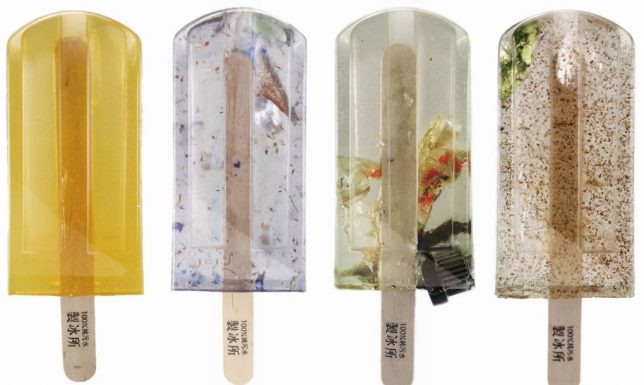
A stomach-churning twist on classic frozen treats, 100 stabilized ice pops made from Taiwan’s polluted lakes, rivers, beaches and ports feature an unsettling array of sewage found in public waters.
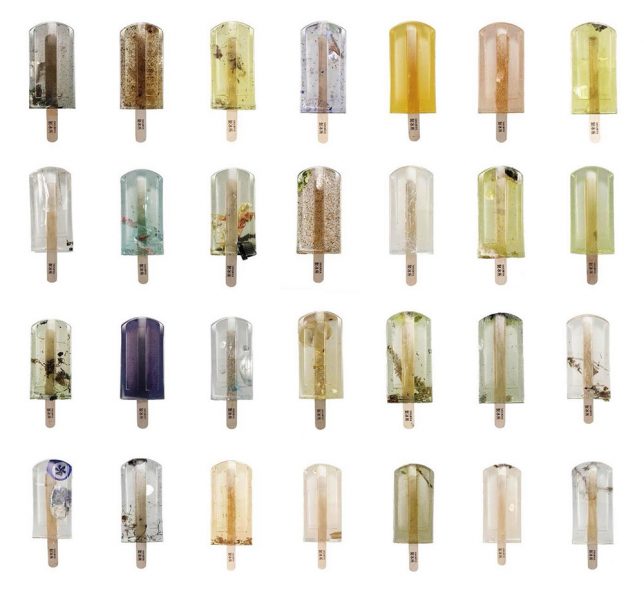
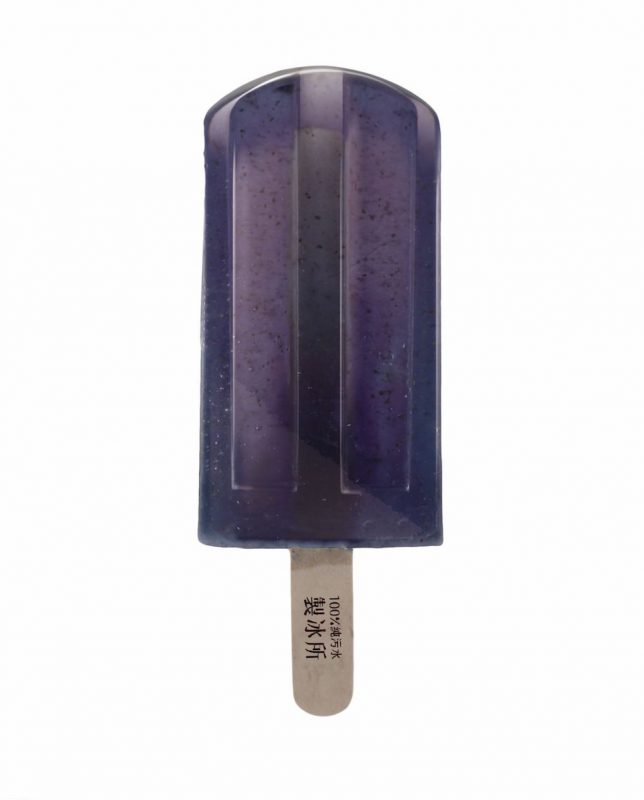
Each of these edible-scale popsicles was first frozen then preserved in polyester resin and wrapped in packaging. Diverse flavors feature ingredients such as plastic, arsenic, mercury and metal. Unappetizing titles include Yang-tzu-chou Drainage, The Large Ditch in Tianwei, and New Huwei Creek.
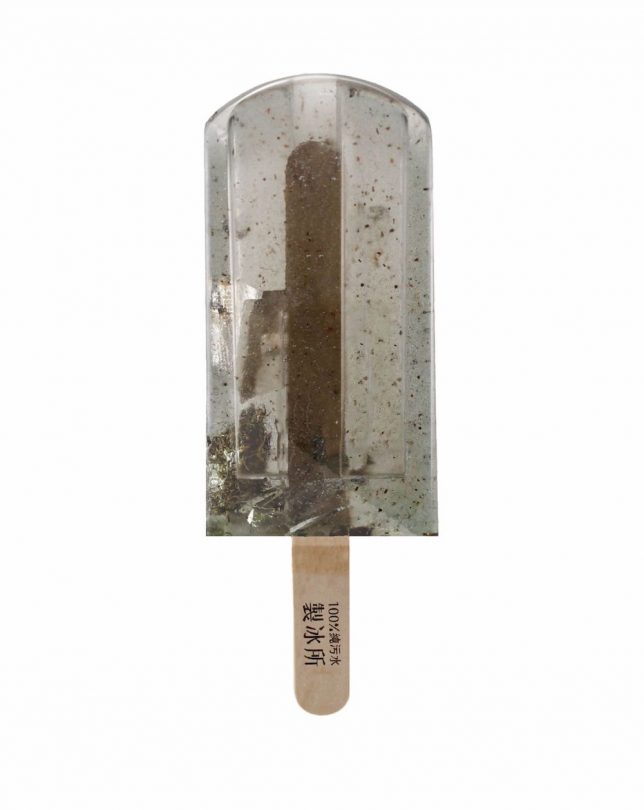
Some even look tasty at a glance, like some kind of hand-crafted iced delight. But the game of choosing something to try quickly becomes a nightmare of deciding which might be least terrible. Surely one without bits of cork, bottle caps or candy wrappers would be better, but then again: invisible poisons could be much worse.
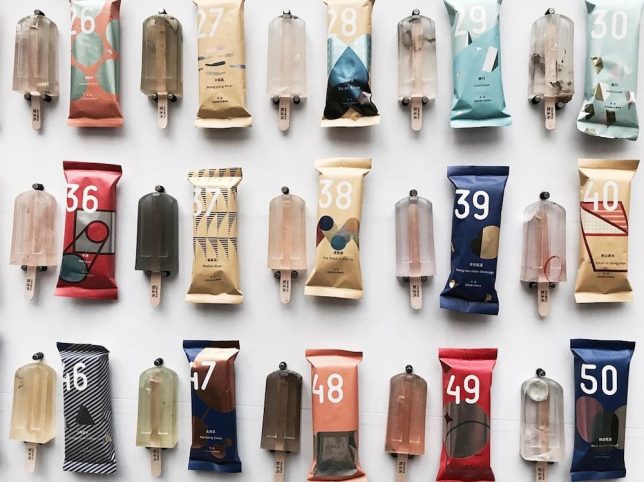
Art students Hung I-chen, Guo Yi-hui, and Cheng Yu-ti from the National Taiwan University of the Arts concocted titled their line of less-than-delicious designs “Polluted Water Popsicles.” Their work was nominated for the Young Pin Design Award and featured in the New Generation of Design Exhibition this May at the Taipei World Trade Center.
When a cold front blew in over Lake Ontario, photographer John Kucko caught wind of the phenomenon and rushed to shoot images of a remarkably frozen home. Located in Webster, New York, the ...
While you put the finishing touches on a lopsided snowman in your front yard, ice and snow artists around the world build life-sized ice castles, hotel rooms made of packed snow, and delicate ice ...
Beneath one idyllic meadow field in rural Hamburg, Germany, a slumbering city hides. Its walls barely peek up above the surface of the soil; after dark, gentle light wafts up from the ...



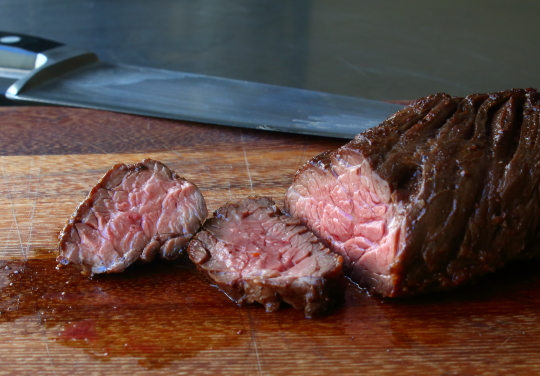
Timmy the ToothMy favorite cut but difficult to find.



Once notorious both for its lawlessness and a maze of urban density so intense that sunlight couldn’t penetrate to its lowest levels, Kowloon Walled City was demolished in the 1990s, but a new version of it is rising from the ashes. Standing in stark contrast to the modern towers of Hong Kong just beyond its borders, Kowloon was an autonomous ‘city of anarchy’ built up from the ground like lasagna. 500 buildings were packed into less than seven acres, and there were no municipal services like trash collection or running water.


Outsiders called it the City of Darkness, and it certainly had a squalid appearance, but former residents remember it with fondness as a friendly and tight-knit community where everyone worked together to uphold their own poor but inventive society. But Hong Kong (and later, Britain – check out our previous coverage for the history) wasn’t too fond of the fact that it was run by the mob and packed with gambling dens and brothels, not to mention concerns about its structural soundness. So in 1993, all 50,000 inhabitants were cleared out and the whole thing was razed to the ground.


In its place came a 330,000-square-foot park full of paths and pavilions named after the city’s former streets and buildings. Ponds, gardens and floral walkways took the place of layer after layer of haphazard architecture. That park is still there – but it seems that the wild profusion of growth associated with Kowloon’s spirit couldn’t be contained. It may be modernized, with orderly rows of skyscrapers instead of a labyrinthine network of mismatched towers, but it’s growing more packed every year, and this level of density is creeping into the rest of Hong Kong, too.


Photographer Andy Yeung proves as much with his new drone photography series, Walled City. “The Kowloon Walled City was once the densest place on Earth. Hundreds of houses stacked on top of each other enclosed in the center of the structure. This notorious city was demolished in 1990s. However, if you look hard enough you will notice that the city is not dead.”


“Part of it still exists in many of current high density housing apartments where the only view out of the window is neighbor’s window. I hope this series can get people to think about claustrophobic living in Hong Kong from a new perspective.”
See the whole series at Andy Yeung’s website or on 500px.
Kowloon Walled City, the lawless metropolis just outside Hong Kong, was evacuated and destroyed - but there is still one place in the world where it can be experienced almost as it really was, in a ...
Twenty years ago, a dank, lawless, congested and compacted city located just outside Hong Kong was evacuated and destroyed, putting an end to the nearly century-old settlement first created as a ...
Hong Kong has inspired so many iconic images of urban density shot from the ground or horizontally across buildings, but seeing it from above via drone footage gives the city an entirely fresh ...
Timmy the ToothBeef lava
1. Onion Stack
2. Mojo Bones
3. Rasta Pasta
4. Mr. Mongoose
5. Beef Lava
6. Shrimpkens
7. Big Kahuna
8. Brazilian Freeze
9. Sparkling Volcano
10. Green Python
11. Cha-one-in-a-meleon
Rainforest Café menu item: 1, 5
Justin’s nickname: 4, 7, 11
Both: 2, 3, 6, 8, 9, 10


















As public art interventions go, googly-eye additions to urban objects and surfaces are pretty simple to implement, effectively animating their surroundings without too much work (or risk of being caught).


Humans are naturally wired to read faces into ordinary things, but an extra cue or too by someone like Vanyu Krastev solidifies the effect, often with hilarious results.
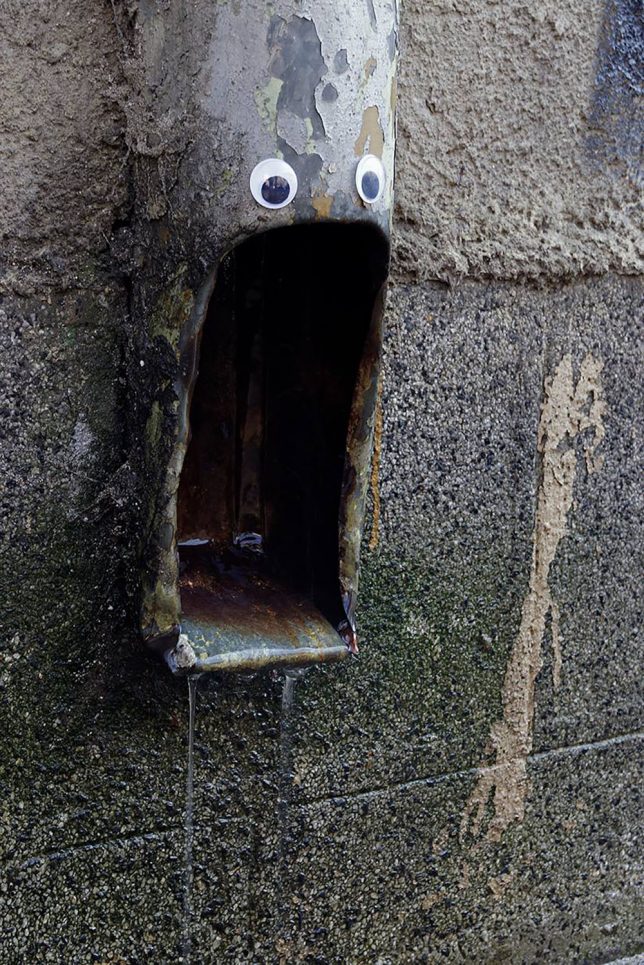

Cracked bollards become crooked Pac Man-esque creatures and gaping water pipes seem to scream while doors and garbage cans gain strange sentience. The emotive range of these inanimate objects is quite impressive, considering it’s entirely in the eye of the viewer (and the two eyes placed on a given thing).
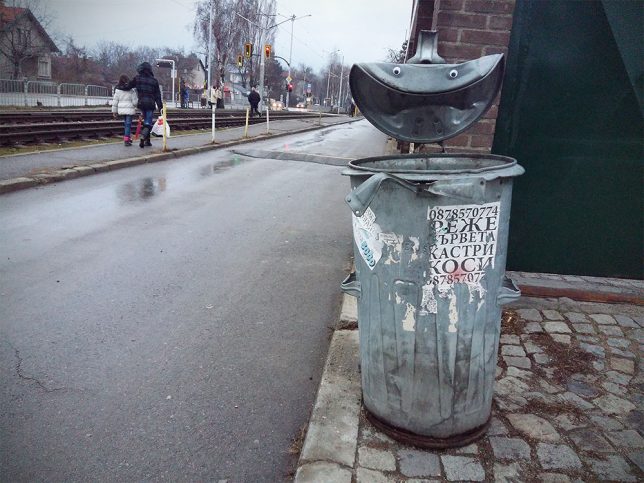

Eyebombing is nothing new (at least as old as the internet and probably as old as ‘googly eyes’ themselves), but always a fun way to lighten someone’s day as they pass by on the street. It’s also a form of expression anyone can engage in — very little skill or cash required.


It is “different from traditional types of street art like tagging, sticking, stencils” according to Eyebombing.com because “the above forms are largely driven by egocentric behaviour, like getting seen, respect and maybe a hope to get famous, often using vandalism as modus operandi.”
Unlike graffiti tags or other stylized and personalized approaches to urban art, eyebombing is an equalizer. Like a crowd behind Guy Fawkes masks, the work of any of the following 21 example ...
Part art project and part urban safety experiment, this series of Funnycross installations in Madrid have been positioned outside a cross section of city schools. Designed by Bulgarian ...
Sprouting up alongside the streets of New York City, garbage cans packed with colorful flowers are turning repelled waste receptacles into attractive centers of attention for garbage-weary ...
Timmy the ToothCool guys don't look at tornadoes.

This is one of those “Not the Onion” posts as this actually did happen on June 2, 2017. Meet Alberta-based Theunis Wessels who thought it was more important to mow his damn lawn than to seek shelter from the terrifying looming tornado right behind him.
Theunis’ wife, Cecilia, captured the image as...
Timmy the ToothThis is... so.. what am I even living in anymore.

James from Gunnerblog is getting his video on this month, planning on doing an Arsenal related video every day.
We’ll be carrying them on the site here, and do him a favour and give his channel a like and subscribe.
Here’s his latest Gunnervlog.
And one from the weekend about Kylian Mbappé
What do you reckon, would you have Szczesny back?
Timmy the ToothYes.

(Photo Credit: cocoparisienne.)
Season 6, Episode 38
This week on Freakonomics Radio: the biggest problem with humanity is humans themselves. Too often, we make choices — what we eat, how we spend our money and time — that undermine our well-being.
Stephen J. Dubner asks, “How can we stop?” And this radio hour has two answers: think small, and make behavior change stick.
To find out more, check out the podcasts from which this hour was drawn: “Big Returns from Thinking Small” and “Could Solving This One Problem Solve All the Others?.”
You can subscribe to the Freakonomics Radio podcast at Apple Podcasts or elsewhere, or get the RSS feed.
The post Could Solving This One Problem Solve All the Others? appeared first on Freakonomics.
Timmy the Tooth3 stupid
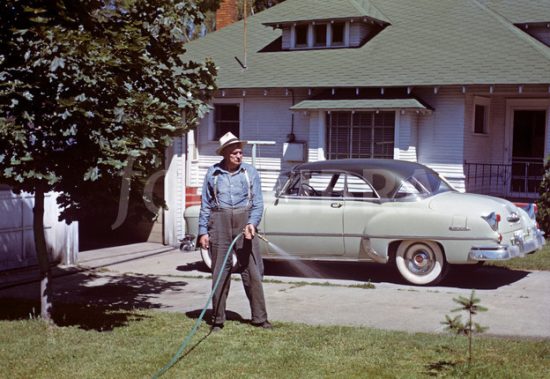
Our American suburban tradition of watering lawns arose in the 1950s. (Photo: Ninian Reid/Flickr)
Our latest Freakonomics Radio episode is called “How Stupid Is Our Obsession With Lawns?” (You can subscribe to the podcast at Apple Podcasts or elsewhere, get the RSS feed, or listen via the media player above.)
Nearly two percent of America is grassy green. Sure, lawns are beautiful and useful and they smell great. But are the costs — financial, environmental and otherwise — worth the benefits?
Below is a transcript of the episode, modified for your reading pleasure. For more information on the people and ideas in the episode, see the links at the bottom of this post. And you’ll find credits for the music in the episode noted within the transcript.
* * *
[MUSIC: Matthew Reid, “Romance” (from Limitations)]
Where I live, in the great northeast of the United States, spring has finally gone full-bloom and summer’s right around the corner. When you get outside, it’s beautiful. The trees, the flowers — and of course, the lawns! Who doesn’t love a good lawn? It looks good, smells good, feels good. For a lot of people, a lawn is the perfect form of nature. Even though, let’s be honest, the lawns we like don’t actually occur in nature. Even though the process of producing such a lawn is full of the most unnatural activity. Even though this unnatural slice of nature requires so many inputs — the water, the fertilizer, the weed-killers, the mowers and trimmers and the leaf-blowers, the fuel to power all this machinery, the fuel to power the trucks to transport the people who run the machinery … all in pursuit of the perfect lawn.
* * *
Stephen J. DUBNER: Give me — [as] briefly as you can — a history of the lawn.
Ted STEINBERG: If you go look at the Oxford English Dictionary and try to find the word “lawn,” you’ll see that it dates from the 16th century from Old English for “an open space” or what was called a “glade.”
[MUSIC: The Texas Gypsies, “Maxwell Swing” (from Cafe Du Swing)]
Ted Steinberg is a history and law professor at Case Western Reserve.
STEINBERG: I’m the author of several books including American Green: The Obsessive Quest for the Perfect Lawn. These lawns that existed back in 16th, 17th, 18th-century England were typically found on estates.
DUBNER: Now talk about how America got into lawns and the degree to which they upped the game.
STEINBERG: Lawns go way back in American history. Washington and Jefferson, of course, had lawns. Nevertheless, even well into the 20th century, people, especially working-class people, were more concerned with, how shall I say, the “use value” of their yards as opposed to “exchange value” of the landscape. What I mean by that is working-class people would raise small livestock in their yards or vegetables. That said, the really big expansion in the “lawnscape” — if I can call it that — happened after the second World War with suburbanization.
Clip from a 1950s newsreel: This is Levittown, one of the most remarkable housing developments ever conceived.
STEINBERG: Between 1947 and 1951 or 1952 or so, the Levitts mass produced some 17,000 homes on what had been a bunch of potato fields on Long Island in New York. Every one of those 17,000 homes had a lawn surrounding it. If you look back at the deeds for Levittown and other places, you’ll find that there are covenants in them requiring the owner of [a] new Levittown home to mow their lawn, their yard once a week.
Clip from a 1950s newsreel: Yes, that old potato patch has come to a good end.

An aerial view of Levittown on Long Island, on Feb. 25, 1950. (Photo: AP Photo)
[MUSIC: Spencer Garn, “Corn Nuggets”]
Today, Americans spend roughly $60 billion a year in what’s known as the turfgrass industry. This covers lawn supplies, lawn services, and so on. That figure includes sports fields, commercial properties, and private lawns; lawns account for two-thirds of the total square footage. How much square footage is that?
Cristina MILESI: That’s about 40.5 million acres of turf.
That’s Cristina Milesi.
MILESI: I am a scientist by training, and I worked for NASA for over 10 years.
Today Milesi in an independent environmental scientist. Forty-odd million acres of turf — for reference, that’s bigger than Iowa. Milesi hadn’t set out to measure the size of America’s lawn. In fact, quite the opposite.
MILESI: I was working to map the amount of paved area in the United States.
Mapping out paved areas included using satellite data that measured nighttime light emissions.
MILESI: Light emissions that come from, basically, turning on street lights at night.
She and her team also used aerial photography — which, of course, showed more than just paved areas.
MILESI: We also took measurements of how much lawn area there was and how many shrubs — shrub area and tree area.
And that’s how they came up with 40.5 million acres of turf. Which is a bit less than 2 percent of the United States. Paved areas, meanwhile, make up just 1.3 percent. The sheer volume of grass got Milesi thinking …
MILESI: How are lawns functioning as an ecosystem? We use water, but also fertilizer and pesticides. Then we use lawnmowers and leaf blowers. But they are plants, so they photosynthesize. They absorb carbon. What’s the balance between what we put in and what we put out? I decided this would be a worthwhile question to ask.
The specific question being whether lawns are, from a carbon perspective, net-positive or net-negative. She began by trying to tally how much water people use on their lawns. The standard recommendation, especially where rainfall doesn’t do the job, is one inch of water per week.
MILESI: I came up to some numbers that I could not believe.
What are these unbelievable numbers? The total was 20 trillion gallons per year. On lawn-watering. You want a little context for that number? Consider we use just 30 trillion gallons to irrigate all our crops. Next Milesi calculated much carbon the turfgrass stores in the soil.
MILESI: Then I subtracted from it the amount of carbon that was associated with nitrogen fertilization, and the amount of carbon that was emitted by using a typical lawn mower.
And: what’d she learn?
MILESI: I learned that the turf would become a sink of carbon. This is not surprising. A plant, given plenty of attention, photosynthesizes carbon. But it comes at the cost of producing the fertilizer, mowing the grass and all the industry that comes around it.
So even with those costs included, lawns look pretty good from a carbon perspective. On the other hand, Milesi’s model didn’t include inputs like the carbon emissions from the trucks that lawn crews drive, or the original manufacture of all that lawn-care equipment. Nor did it include the energy used to deliver water to households, and clean it for human consumption.
MILESI: We should not forget that this is drinking water. I did not account for those costs.
And, as just about any economist will tell you, water is often woefully underpriced — which can lead to overuse. Especially if you’re growing a grass species that wasn’t meant to grow where you live.
STEINBERG: Kentucky bluegrass or creeping bentgrass evolved in the cool moist climes of northern Europe.
Ted Steinberg again.
STEINBERG: It’s not all that easy to grow them here in the continental United States and especially in arid parts of North America. If you go to California, you’ll find — still — lawns with cool-season turfgrass. Every square foot of that turfgrass requires 28 gallons of water, roughly speaking, per year. Every square foot. But that’s for the coastal environment. If you move inland to a more arid part of California, that number increases to 37 gallons of water.
Eric GARCETTI: We waste so much water.
That’s Eric Garcetti.
GARCETTI: I’m the mayor of the city of Los Angeles.
We spoke with Garcetti last year, when California was deep in drought. In Los Angeles, lawns and landscaping use a whopping 50 percent of Los Angeles’s water — and the drought had doubled what the city was paying to import water. So Garcetti used incentives to change behavior. The city paid residents to install rain barrels to capture water for their lawns; it paid them to replace their lawns with drought-tolerant plants.
GARCETTI: I said, “If you have a lawn and you’re using it, great. Keep it and pay for the water to water it. But if you’re not, let us pay you to switch that out to beautiful, flowering, green plants that use a lot less water.” We’re able to do that with over 50 million square feet of lawn just in the last couple years. We reduced our water usage by 19 percent without having to fine anybody, without having to crack down with the water police, but by inspiring people through public education and rebates, giving them free cisterns, changing out their toilets, all those sorts of things.
What works in California won’t necessarily work elsewhere. And California is more aggressive than most with environmental regulations. For instance: it’s currently pushing to lower emissions on lawn-care equipment, which tends to have particularly dirty little engines. They’re also really noisy.
Erica WALKER: If you hear the sound of a leaf blower, it has these really interesting low-frequency and high-frequency components.
That’s Erica Walker. She just got her Ph.D. in Environmental Health at Harvard.
WALKER: Not only is it traveling inside of your walls, but it has this high-pitched hum that’s really annoying.
In Boston, Walker helped compile a citywide noise report, which mapped, among other things, “leaf-blower annoyance levels.” A lot of places have banned leaf-blowers or restricted their hours — especially the noisier, gas-powered models. Walker was interested in the relationship between noise and public health in a city like Boston.
WALKER: Sleep disturbance is the direct relationship between sounds and negative health.
The World Health Organization suggests that daytime noise levels shouldn’t exceed 55 decibels. Walker wondered how leaf-blowers registered, even if you weren’t the one blowing the leaves.
WALKER: We see that even when you move 400 feet away from the point of operation, you’re still getting sound levels in excess of what the World Health Organization recommends. But then we also learned that these leaf blowers have a strong contribution from the lower frequencies. It has an ability to travel very long distances and penetrate through the walls. It’s really hard to mitigate. We see in the epidemiological literature that low-frequency sound is creating negative health effects above and beyond high-frequency sound.
[MUSIC: David Lange, “Waltz with Pierrot” (from Mélange)]
So what’ve we learned so far? We have a lot of lawn in America; and our pursuit of the perfect lawn is noisy and resource- and labor-intensive. They do, however, serve as carbon sinks — and, of course, they’re beautiful, at least many people think so. And useful — for playing, for picnicking, for relaxing. Coming up on Freakonomics Radio: we love lawns so much we even plant them beside our highways!
Alan TURNER: A standard cloverleaf takes up about 16 acres of lawn.
And: if you don’t want to have a lawn in your yard, what can you have?
Jim KOVALESKI: I think the best year I had it was like 2,000 pounds of sweet potatoes.
* * *
Why did we make this episode, about the costs and benefits of lawns? Mostly because of you. Occasionally we ask Freakonomics Radio listeners for story ideas — especially for what we colloquially call our “Stupid Stuff” series — that is, things we do or use or submit to that are, on some level, kind of stupid. Well, last time we asked for your “Stupid Stuff” ideas, quite a few of them concerned lawns. Pat Allen from Trinity, Florida wrote: “What is up with the America addiction to lawns?” John Faulkner of Arlington, Virginia complained about noisy, smelly lawnmowers. And then there was Alan Turner.
TURNER: I’m from Newcastle, Delaware. My formal training, my initial career was in landscape architecture. Right now I’m looking at the highway median at the rest stop on I-95 just south of Wilmington, Delaware.
Turner’s pet peeve is what’s in that highway median: grass.
TURNER: It looks like this grass gets mowed three times in the summer, let’s say.
It’s not just in highway medians, but also those cloverleaf interchanges.
TURNER: A standard cloverleaf takes up about 16 acres of lawn.
Turner understands why these are all grass.
TURNER: Grass is cheap. Grass is the cheapest ground cover you can install. The problem with grass is that it’s also the most expensive ground cover to maintain.
And it has to be maintained — mowed, especially — for safety, for good sightlines. So you’ve got all that mowing. And all those traffic delays when the mowers are out there in the medians. Turner’s idea is to plant highway medians with plants that don’t require maintenance like grass does.
TURNER: The seed might cost slightly more, but that’s the only difference. Then you get a permanent ground cover that needs no mowing.
[MUSIC: Pat Andrews, “Happy Go Lucky”]
Doug HECOX: I can honestly say this is the first time I’ve ever been asked to talk to anybody about roadside vegetation management.
That’s Doug Hecox, with the Federal Highway Administration. It advises states on how to maintain their highway grass.
HECOX: Nobody asks us about plants. They ask us about traffic and potholes. I think, conservatively, we’ve got about 17 million acres of roadside vegetation.
Roadside grass dates back to the early days of auto travel.
HECOX: Having a grassy area near the road in case somebody broke down or wanted to rest after this ordeal of driving around … It was a very tempting option. That’s what began [it]. As time went on grass became an expectation, because everywhere you went, there it was. When you didn’t have it, people noticed it. That was the prevailing attitude.“We want these roads to look inviting. We want them to look like your front yard.”
That began to change as early as the 1960’s, as state and local governments realized how many resources went toward maintaining all that grass.
HECOX: In the 70s and 80s, we began to realize that water was really a big issue. States dealing with tight budgets began to plant native grasses, things that were a little bit more water-efficient.
And: grasses that didn’t require as much mowing. But still: how about Alan Turner’s idea to get rid of grass entirely in favor of something that requires no mowing?
HECOX: He does have a point. However, I’m also not willing to say that states haven’t already considered that. There may be reasons why they have to plant what they have. Budgets are so tight at the state D.O.T. level.
Okay, so what about not replanting but also just not mowing the grass at all?
HECOX: If you were to let something just go wild or return to nature, that sounds great. It sounds easy. It sounds cheap, and it is. It’s not necessarily the best choice, though. That’s where the invasive species thrive. In the south, you’ve got kudzu that grows all over the place. You’ve got other invasive species that pop up and start to proliferate, invading local neighborhood lawns or farmers’ crops. It can get out of control.
Sara WIGGINTON: I totally understand what he’s saying and that’s the assumption.
That’s Sara Wigginton.
WIGGINTON: But we have to look and see if what we assume is really what’s going to happen. That’s basically what we decided to do.
She’s an ecologist working on her Ph.D. at the University of Rhode Island.
WIGGINTON: My ecological research focuses on finding creative solutions to human-caused environmental issues.
She and her colleagues had a question about invasive species.
They took advantage of a sort of natural experiment in Rhode Island. The Department of Transportation typically mows its roadsides anywhere from three to ten times a year. But over the past decade, it decided to significantly reduce mowing in some areas and eliminate it entirely in others.
WIGGINTON: We classify that as passive restoration because you’re just taking it out of the circulation and then letting it go, letting succession take course.
This allowed Wigginton and her colleagues to compare the number of invasive plant species in the mowed areas versus the unmowed, which had begun to grow wild. They also looked at young forests nearby, which had never been mowed. How did they collect those data?
WIGGINTON: It’s not super glamorous. We basically lay out really long tape using compasses to make straight angles. Then, in a very time consuming process, we document every single species that we see in these subplots.
What’d they find?
WIGGINTON: We found that invasive species are not proliferating significantly in these areas that are taken out of the traditional mowing scheme. They have the same number of invasives as both the young forests and the traditionally mowed areas. I would advise that state D.O.T.s move as much of their land as is reasonable to a reduced, low, or no-mow management scheme.
STEINBERG: The easiest thing to do is to elect to have what I call a low-maintenance lawn.
[MUSIC: Jetty Rae, “Queen of the Universe” (from Can’t Curse the Free)]
Ted Steinberg again. He’s talking about personal lawns now, not highway medians.
STEINBERG: Overtreatment is the single biggest problem that we have here in the United States with respect to lawn care. Right away, scale back on the chemical applications. You can get away with three applications of fertilizer per season. People also need to actually learn a little bit about the ecology of their yard. To do it right, you should get a soil test. Not a big deal. Leave the clippings on the lawn, for God’s sakes. Don’t put them out on the curb because the clippings break down and they return nutrients to the soil. I would argue, consider stopping the irrigation. Brown’s not so bad.
DUBNER: I think you just lost a lot of our lawn-loving audience right there.
STEINBERG: That’s too bad.
DUBNER: I’m not saying I disagree with you. I’m just saying that [when] people think of a lawn, brown is death. Brown is the enemy. Brown is not a lawn.
STEINBERG: The next time your lawn — if you’re worried about this — turns brown, go out there, get down on your hands and knees and look at the grass. It’s not dead. If you have a horrible drought, okay, I get it. But if it’s not, when it appears to be brown, it’s actually dormant. You’ll see a little bit of green where the blade meets the soil. The individual plants, most of them, are still alive.
DUBNER: Ted, even you would have to admit that if you got your way, and if America suddenly woke up and said, “You know what? A low-maintenance lawn is good enough. It makes a lot of sense. Aesthetically, it’s fine. Environmentally, it’s probably better. Noise wise, et cetera, et cetera.” But think of the jobs you’re killing. This is a pretty substantial part of the labor market. Especially for low-education workers. Are you, Ted Steinberg, professor of history and law, willing to take the heat for killing off all those jobs?
STEINBERG: One of the big problems that we have in the United States today, maybe even in the world, is a lack of meaningful employment. But actually, it might not be as dire as you’re implying here. You’re still going to need people to mow the lawn. Maybe not as much. You don’t really need to mow your lawn once a week. This could represent a savings, obviously, to consumers. It might not be the case that the floor is going to fall out of the job market because Ted Steinberg advocates for less in the way of perfection in lawn care.
There’s also the possibility of repurposing your yard entirely. Maybe a tennis court. Or an outdoor library. Or … taking a page from our past …
[MUSIC: Jetty Rae, “Born to Rise” (from Can’t Curse the Free)]
DUBNER:Hey, Jim. My name’s Stephen. How are you?
KOVALESKI: Good. Hi, Stephen. I’m Jim.
Jim Kovaleski is a front-yard farmer in New Port Richey, Florida, a small city just outside Tampa.
DUBNER: Let me ask you this: you came up in lawn care. Did you enjoy that work?
KOVALESKI: I might have thought I did. But now, every time I see a lawn trailer, I just shiver. It’s just like terror. So I don’t. No, I didn’t. And I had to use so many chemicals, especially as I came to Florida because the lawns they got here, they’ve got kinds of grass that will not grow without pesticides and herbicides. You can’t get them to do anything.
But vegetables and fruit are a different story. He grows sweet potatoes and black-eyed peas; star fruit and avocados …
KOVALESKI: Lettuce and broccoli and cabbage and cauliflower.
Kovaleski turned a front yard into productive farmland. He started with his own yard, then expanded to his mom’s house, down the street.
KOVALESKI: Then my ex-wife bought a house right next door to her three years ago and offered me her front yard, which [has] full sun. It’s allowed me to have a lot more growing space.
He sells his produce at a local farmer’s market.
KOVALESKI: The best year I had it was like 2,000 pounds of sweet potatoes. But theoretically, if I get better at this, this should produce like 15,000 pounds. I cannot believe how much value can come out of a small piece of land.
Kovaleski gardens all winter in Florida, then drives his 1965 cherry-red pickup truck to Maine, where he does the same thing. In both places, he’s best known for his salad mix.
KOVALESKI: I call it a greens mix. I plant very diverse. It could be a hundred different leafy greens. I’ll go through the garden and mix it as I pick it. Then I wash it, spin it, put it in a bag and sell that. In Florida, I probably sell 2,000 to 2,500 of those bags a year. In Maine, it’s pretty much the same mix. Maybe 1,000 up there. It’s a shortish season and it’s not as populated, so I make more of my money in Florida for sure.
DUBNER: How much money do you make?
KOVALESKI: You know, I’m doing really well. I do keep track because I want to show people how much you can make, because it’s pretty much a cash business. I could hide stuff but I haven’t. I’ve kept track for the last three years, or two years really good. First year that I kept good track was like 24 grand and then $27,000. I bet I’m on a pace of like $35,000 this year. I have very little expenses. So, you know, 35 grand’s a lot of money. I don’t know where to spend it, actually.
DUBNER: Do you have any help or no, it’s just you?
KOVALESKI: No, I’m a fussbudget. I’ve learned that it’s more stressful for me to try to work with other people and make things happen. More of my focus is to see how productive a small piece of land can be. I’m seeing it every year I’m getting better at it.
DUBNER: Are there or were there any legal issues or ordinances you had to deal with to plant a garden in a front yard there?
KOVALESKI: We’re fortunate here because it is non-deed restricted community so there’s not much for ordinances. There’s nothing against the law to do this. Potentially, there could be some enforcement issues about height of vegetation, but [it] always looks so good that was never an issue.
DUBNER: You sound like a pretty live-and-let-live kind of guy. But on the other hand, it sounds like you would be happy if you started a front yard garden revolution.
KOVALESKI: I would. I wouldn’t think I’d be one to lead something like that, but I’ve found that people follow things that work. I haven’t done any promotion over this 10 years. But there’s been a lot of press. I’ve been amazed at how people are longing for this. It’s poised to take off. Potentially, we can put people back to work on the land.
[MUSIC: Addam Farmer, “Acoustic Hey Days” (from Jealousy Vol 2.]
A farm in every yard? That’s hardly the direction our economy has been moving in — either the agricultural economy or the lawn-care economy. But who’s to say? The rise of the lawn was probably not foreseen. Would a return to personal farming be any more surprising? That’s it for Freakonomics Radio this week. Coming up next time: Steve Hilton was for years the man behind, and beside, British prime minister David Cameron:
Steve HILTON: We haven’t been in touch since the Brexit vote. There’s not much to say beyond that.
Now he lives in America, where he’s taken up a new crusade:
HILTON: We want to end the way that big money donors dominate politics.
And while Hilton is nearly unknown here, that won’t last for long. He’s got a new show on Fox News, The Next Revolution.
HILTON: That is going to focus on what I’m calling “positive populism:” how we deal with the issues that have arisen as a result of the populist uprisings we’ve seen around the world.
Steve Hilton in all his candid, occasionally absurd glory:
HILTON: That’s right.
That’s next time, on Freakonomics Radio.
Freakonomics Radio is produced by WNYC Studios and Dubner Productions. This episode was produced by Christopher Werth. Our staff also includes Shelley Lewis, Stephanie Tam, Merritt Jacob, Greg Rosalsky, Eliza Lambert, Alison Hockenberry, Emma Morgenstern, Harry Huggins, and Brian Gutierrez; we also had help this week from Sam Bair. Thanks to Kevin Morris at the National Turfgrass Evaluation Program, Teresa Adams at the University of Wisconsin-Madison, Robert King of the Delaware Department of Transportation and Christopher Dilbeck and Dr. Michael Benjamin at the California Air Resources Board for their help in reporting this episode. Thanks also to Justin Mabee, Amy Sturgeon, Pat Allen, John Faulkner, Sara Schneewind and all of the other listeners who sent us their suggestions about lawn care. Ted Steinberg’s latest book is Gotham Unbound: The Ecological History of Greater New York. You can subscribe to Freakonomics Radio on Apple Podcasts, Stitcher, or wherever you get your podcasts. You can also find us on Twitter and Facebook.
Here’s where you can learn more about the people and ideas in this episode:
SOURCES
RESOURCES
EXTRA
The post How Stupid Is Our Obsession With Lawns? appeared first on Freakonomics.

A pane of glass overlaid with a simple line drawing brings crumbling ruins to life at one of Austria’s most famous historical sites, reanimating the partial building near the Open Air Museum Petronell. When a viewer lines up the illustration with the structure, known as Heidentor (Heathen’s Gate), the image completes itself in a compelling yet entirely low-tech fashion.
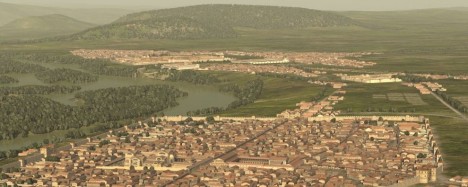
Located just east of Vienna, Carnuntum dates back to the the 1st Century A.D., when Roman soldiers expanded on an existing town 50,000 people to create a military encampment. Between 354 AD and 361 AD a huge triumphal monument was erected next to the camp and city. Contemporary reports suggest that Emperor Constantius II had it built to commemorate his victories.
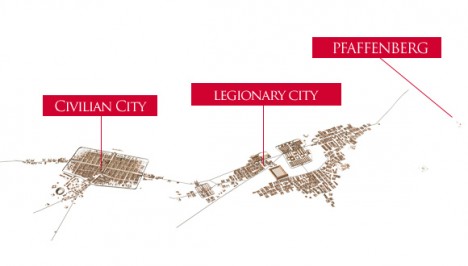
“When the remains of Carnuntum disappeared after the Migration Period the monument remained as an isolated building in a natural landscape and led Medieval people to believe it was the tomb of a pagan giant. Hence, they called it Heidentor.”

Preserving ancient historical sites is often a balance between stabilization and restoration; fully restoring can enhance the exterior appearance, but is costly and arguably diminishes the authenticity of a ruin. This approach strikes a balance, much like augmented overlays in digital history apps.
They're evidence of extraterrestrial visitation, time travelers or lost civilizations like Atlantis – or perhaps they're here to show us that some ancient peoples were far more advanced than we ...
Photographers traveling to photograph the ruins of Rome are generally so distracted by ancient remnants they naturally overlook this unique decaying structure on the outskirts of the city: the ...
The Colosseum, the Great Pyramid of Giza, the Great Wall of China and Machu Picchu are world-famous ancient architectural wonders, but they're hardly the only man-made structures worthy of ...

In centuries past, art has mostly depicted religious and political figures alongside artist’s models and ordinary people, but as future generations look back on our era, they’ll see a confusing mishmash of celebrities and fictional characters interwoven into our fine art legacy. Often removed from their context and mixed together, figures from music, movies, television and comic books presented as art subjects make a statement on our obsession with image, fame, heroes and the qualities we project onto the most famous faces our culture has created.
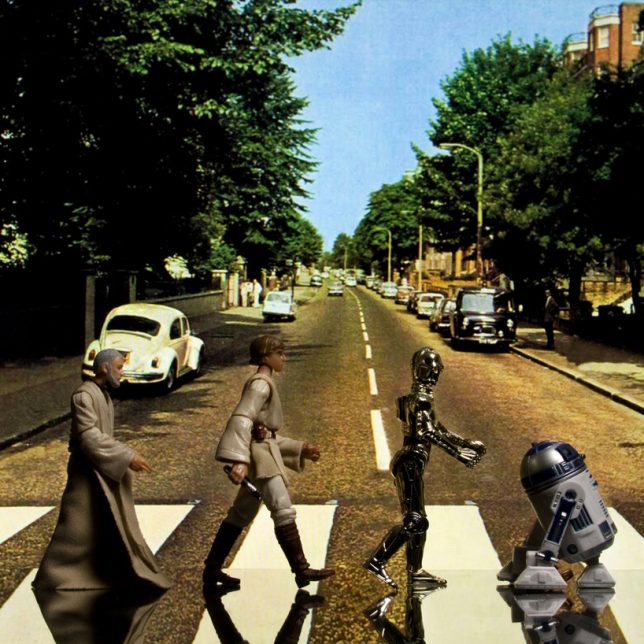


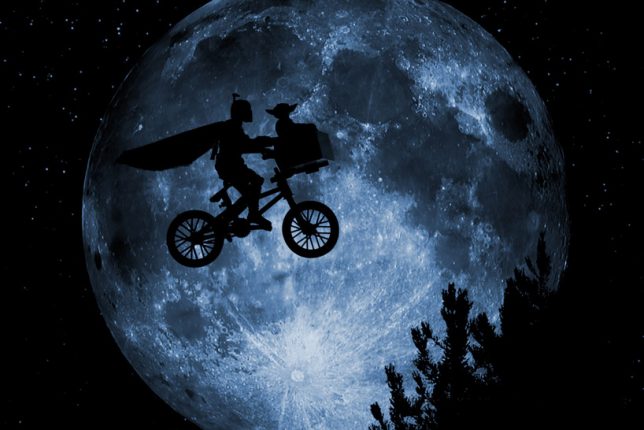
For ‘365 Days of Clones,’ Canadian art teacher David Eger recreated famous photographs using Star Wars figurines, including play son ‘Raising the Flag on Iwo Jima,’ ‘Abbey Road,’ ‘American Gothic’ and even the iconic flying-across-the-moon-on-a-bicycle scene from E.T.



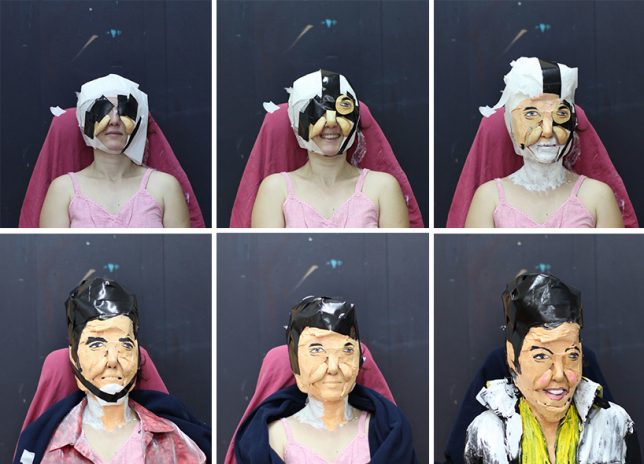
Models are used as the basis of living sculptures, their features changed with globs of paint, plastic, paper, clothes and wigs so they roughly resemble celebrities like Karl Lagerfeld, Steve Jobs and Pamela Anderson. Artist Marie-Lou Desmeules refers to her creations as ‘pop zombies,’ asking viewers to consider what these artistic impersonations say about image in our society.

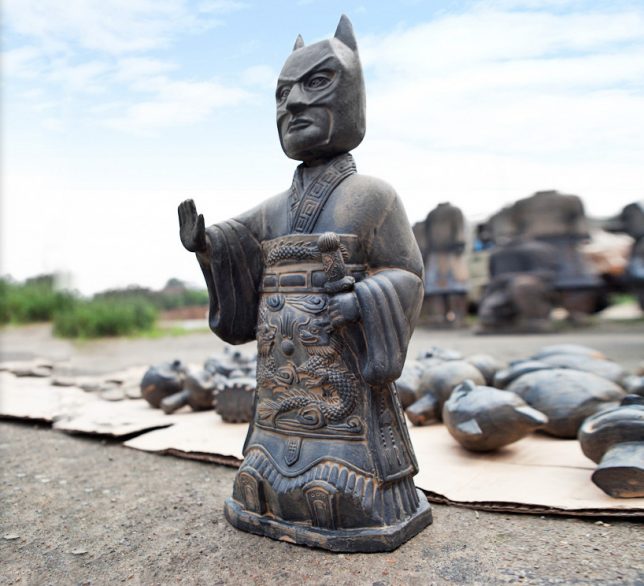

Rather than the nameless soldiers of old who made up the historical Chinese terra-cotta army, the Xi’an-American Warriors by Lizabeth Eva Rossof bear the faces of Spiderman, Bart Simpson, Batman, Shrek, Mickey Mouse and other fictional characters, reflecting both the far reach of America’s media influence and modern-day China’s industry of counterfeiting these copyrighted properties.
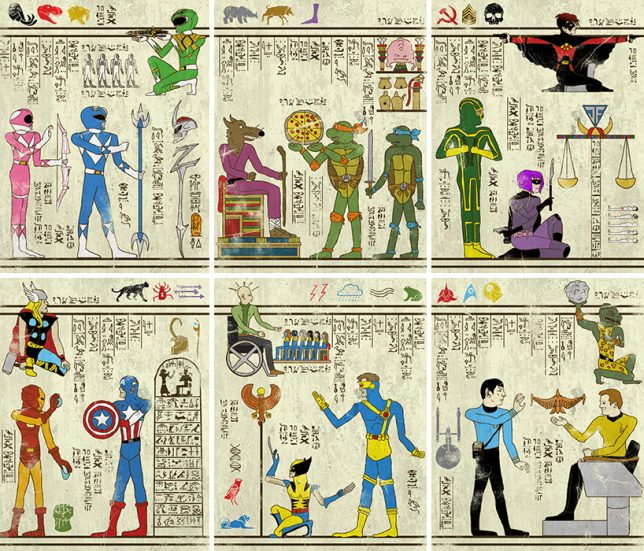
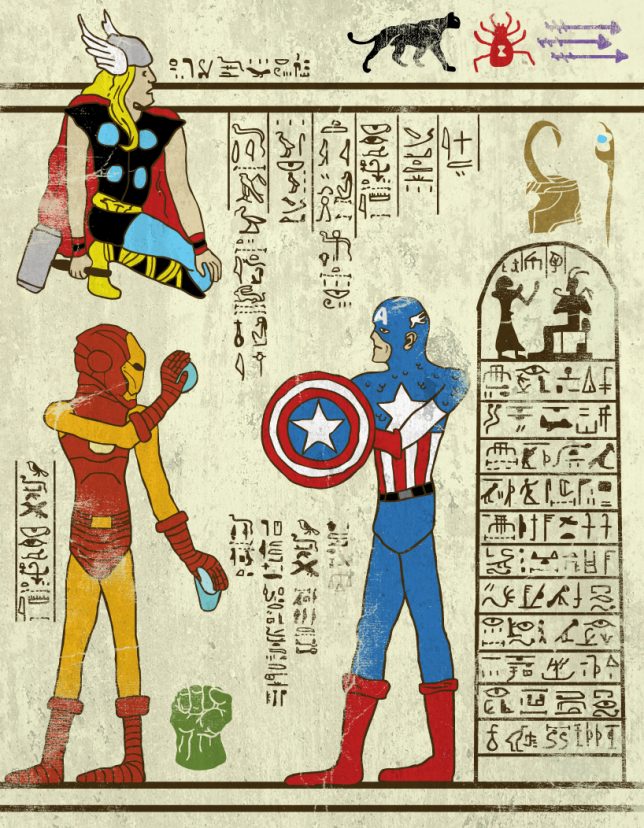
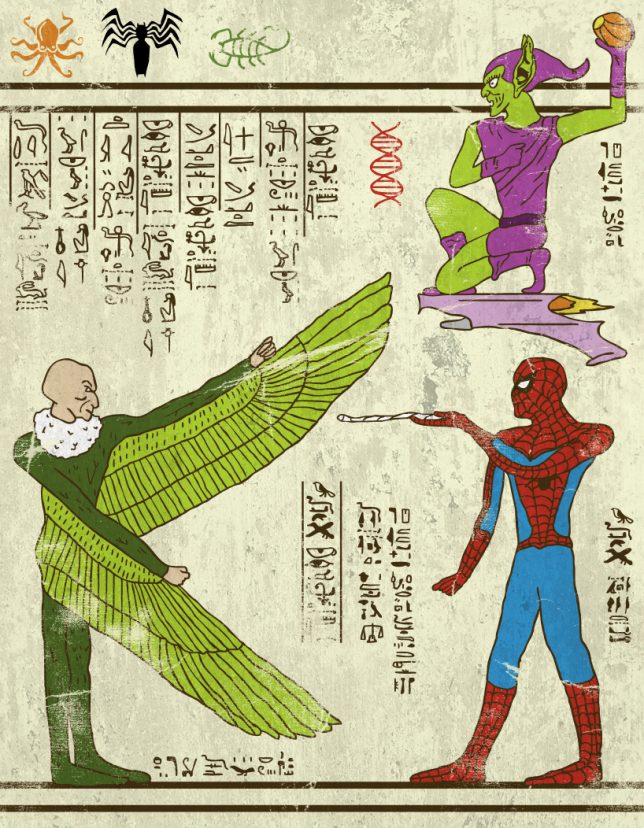
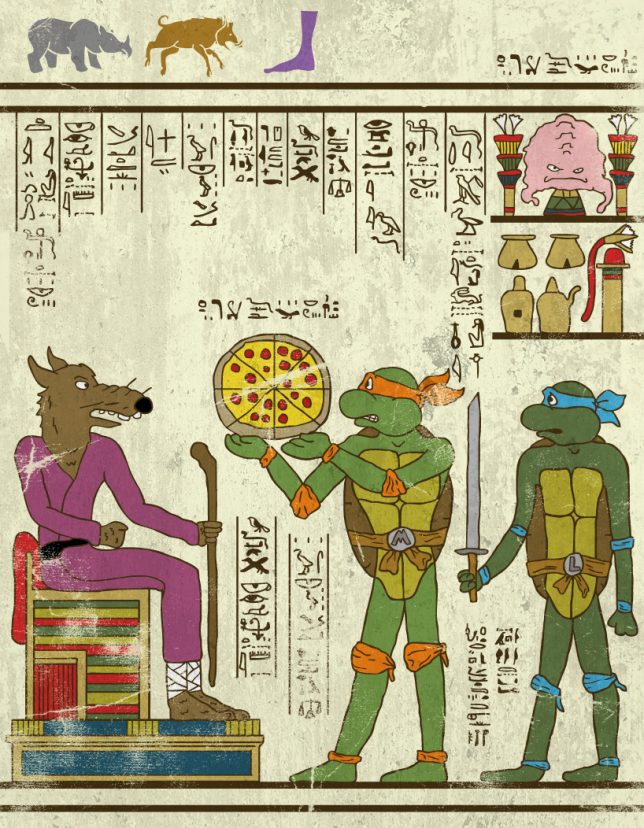
In ancient Egyptian hieroglyphics, artist Josh Lane saw a graphic style of art that lends itself surprisingly well to modern-day cartoon and comic book styles. For his ‘Hero-Glyphics’ series, he dropped modern characters into poses he thought best fit each one’s personality, using background details and symbols to tell a story.
Dressed in garments from centuries long past, figures from classical paintings peer out the windows of metro cars, vend souvenirs, browse comics and otherwise interact with unlikely scenes in ...
Gods, angels, cherubs and human mortals from famous historical artworks can be found browsing the beverage display at the corner store, passed out in front of the liquor shop, or riding the bus ...
Masterpieces from Greek antiquity through the nineteenth century are literally seen through a modern lens, remade into action figures or inserted into contemporary settings, in this collection of ...

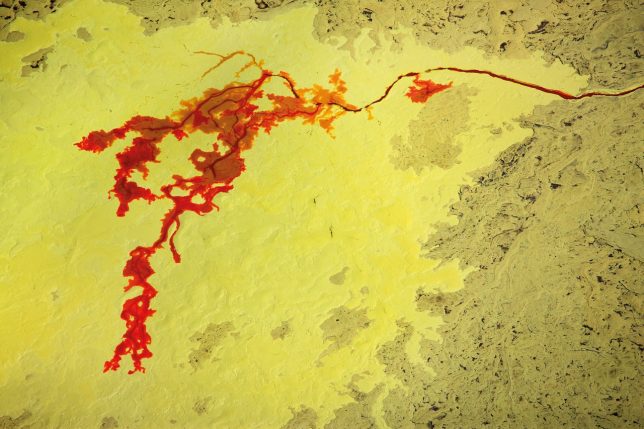
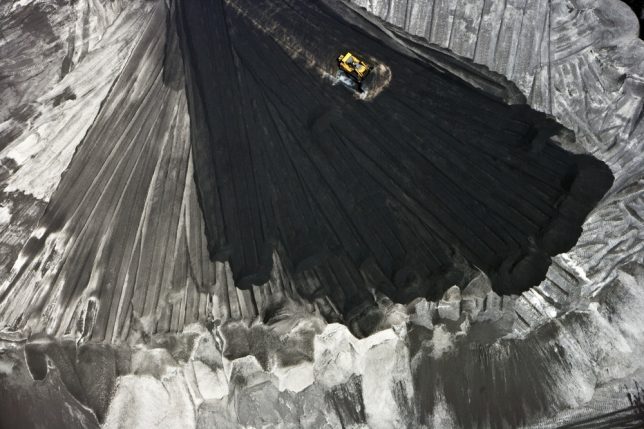
In strikingly well-composed, vividly colored scenes resembling abstract paintings, J. Henry Fair’s aerial photographs of toxic waste and industrial activity on Earth give us an uncomfortable look at the cost of human progress. In fact, the images seem unreal: how could the damage caused by industrial pollution be so strangely beautiful? Tar sands, mountaintop removal mining, fertilizer runoff, coal ash, factory farming and devastating oil spills aren’t exactly the stuff that stunning art is usually made of, but Fair is no ordinary artist, forcing us to face the duality of what we’ve created.

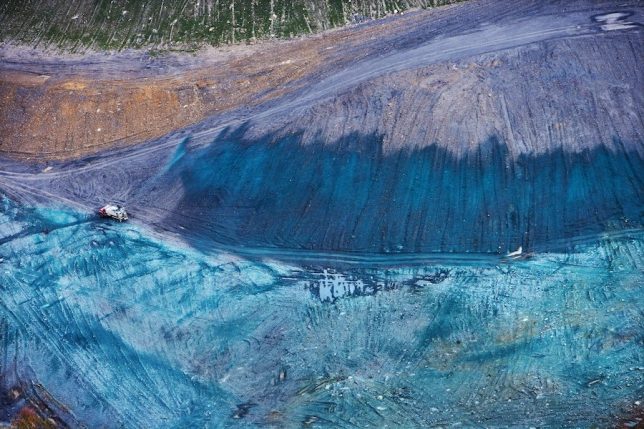

Shooting these scenes from the air gives us a perspective we don’t normally have, as if we’re flying over them in person, reckoning with the damage that comes with our consumption of fossil fuels, large-scale farmed meat, chemicals and other commodities that do significant harm to the environment in their sourcing and manufacturing.


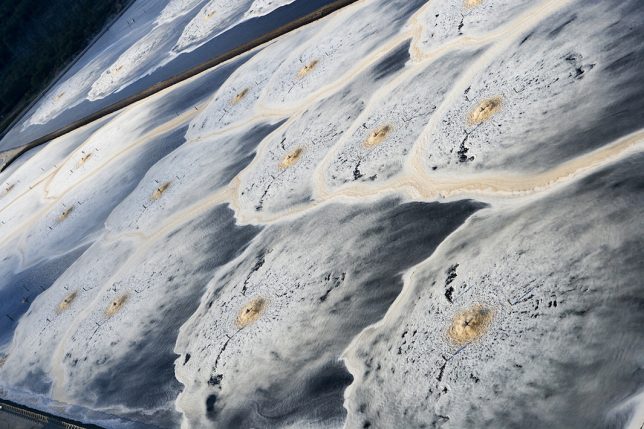
Coal combustion waste may not be pretty, but its splashes of rust and bronze against its black and white surroundings are undeniably striking. Some heavy metals, like ‘red mud’ bauxite waste from aluminum production, are almost floral in their contrast to green. Oil from the BP Deepwater Horizon spill is mesmerizing in its flowing red ribbons against the cobalt blue of the Gulf of Mexico waters. Phospho-gypsum fertilizer waste is a brilliant blue-green, like a gemstone; it contains both uranium and radium, piled dangerously close to drinking water aquifers.

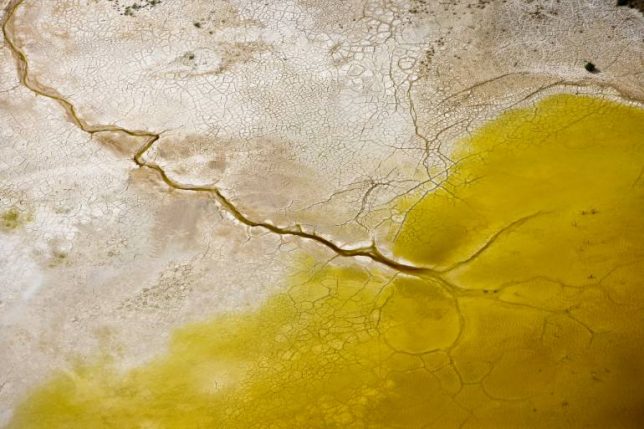

“What interests me about this series is its essential irony and hope,” he says. “The thinking person participating in the modern world understands that all of us are living unsustainably, the impending consequences on our economy are real and significant. But in fact, with a little effort and luck, these limitations could be overcome, ensuring a secure future. And so we must hope, as we are all invested. My goal is to produce beautiful images that stimulate an aesthetic response, and thus dialog. If the pictures are not beautiful, the viewer will not stop to consider them.”

These images and many more are available in the form of a hardcover book set to be released on July 6th, ‘Industrial Scars: The Hidden Costs of Consumption.’
The toll exacted from the earth for human progress is rarely more dramatically visible than from overhead, looking down onto the mines, oil fields, salt flats, recycling yards and other ...
Other than a few brief glimpses near airports, few of us ever get to see the Earth from high up in the sky, taking in all of the complex textures and patterns created by nature and human ...
No matter how far and often you might wander around your city, there’s one way you most likely never get to experience it: from above. Approached from directly overhead, the bird’s-eye-view ...
Timmy the ToothWell, this is insane.

Makeup artist Mimi Choy slices, disjoints, stretches, blurs and otherwise radically transforms her own face in stunningly realistic optical illusions using nothing but makeup. No templates, prosthetics or Photoshop go into the creation of her surreal photos – she freehand them all, often using standard cosmetics from brands like MakeupForever and Kryolan theater makeup. The Vancouver, Canada-based artist shows off her trippy looks on Instagram alongside her more standard everyday makeup looks.
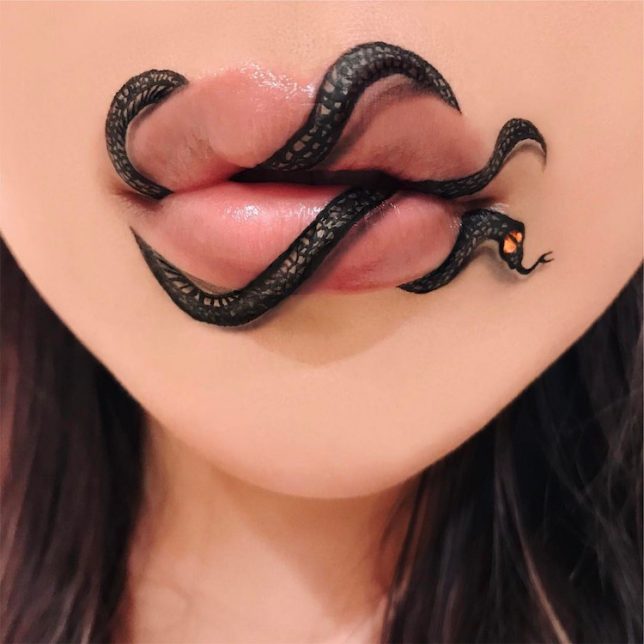



Mostly using herself as a canvas for her optical illusions, Mimi says, “To be honest, I never thought anybody would be interested in following my bizarre late-night creations a few years ago because it wasn’t ‘on trend.’ But I continued because illusion art is challenging and I like having to push limits each time. Later on, I realized it’s not about creating looks that are ‘popular’ or would guarantee likes/follows, it’s about creating our own trend and breaking barriers.”




Mimi says she rarely even has a specific plan in mind when she starts painting – she just goes for it, and allows the result to come about spontaneously. Check out her Instagram @mimles for lots more wild and intricate makeup creations.
The word 'eyeteeth' has taken on a new meaning with a set of surreal and disconcerting images from Swedish makeup artist Sandra Holmbom. While most of Holmbom's looks are much more conventional, ...
As you approach a curve in a parking garage, suddenly a large abstract object seems to float in space just ahead, as if overlaid on top of a static image rather than a three-dimensional setting. ...
You might have to pinch yourself to ensure that you're still awake as you walk into surreal dreamscapes of billowing clouds, seemingly endless fields of stars and rooms that appear to bend and ...
Timmy the ToothLooks like it will be a great venue to host the slayings when the apocalypse comes.

Judging by the looks of the newly renovated Khalifa International Stadium—the first stadium construction project the nation has completed ahead of the 2022 World Cup it will host—Qatar’s massive population of migrant workers, who toil under life-threatening conditions in a working system often described as slave-like,…
Timmy the ToothDamnit, I really wanted to see what happened, but I got 20 seconds in and had to tap out.

The Fox News Specialists, the new Fox program that gave the world Joe Namath yakking about Syria with Karl Rove, has blessed us again. Yapping cheshire cat and First Take host Stephen A. Smith linked up with apartheid apologist Ted Nugent on another edition of the show this afternoon, and the two specialists got into…
Timmy the ToothDigging the earrings.

According to local Hartford, Conn., news anchor Dennis House, this picture was sent to him by an Avon resident named Bob Belfiore, whose neighbor was confronted by a hungry black bear while she was making brownies.
Timmy the ToothThis kid is going to be a bigger bust than Big Dog Robinson.

LaVar Ball—the supremely annoying father of upcoming lottery pick Lonzo Ball, and two younger basketball teens—is in the headlines yet again. Darren Rovell reports that Nike, Adidas, and Under Armour—the three companies that combined control 99 percent of the basketball shoe market—have all declined to sign a shoe…
Timmy the ToothHe once put a cigar out in a teenage teammate's eye. That was BEFORE he was running around betting on his own team.

Burnley midfielder and one-time England international Joey Barton has been banned from soccer for 18 months by the F.A. today after an investigation revealed he had bet on 1,260 matches from 2006 to 2013, including at least five games in which he himself played. Barton released a statement owning up to what he called…
Timmy the ToothWHAT???
By Edmund Willison
25 April 2017
This week sees the return of the former darling of tennis, Maria Sharapova, after a 15-month drugs ban from professional sport. The highest earning woman in global sport plays as a wild card in the Porsche Grand Prix in Stuttgart from Wednesday.
In the wake of her positive test early last year for a recently banned substance, meldonium, her fans and other members of the ‘tennis family’, including some sponsors and media, sought a possible explanation to clear Sharapova’s name. One line was rarely heard – “The testers finally caught up”.
Herein lies the problem anti-doping authorities face: positives tests do not prove intent to enhance performance illegally. The discovery of a new drug that provides an unfair athletic advantage, followed by a spate of positives for that substance should increase faith in the job the authorities are doing. Yet a prevailing attitude among many is to entertain the myriad excuses put forth by athletes for their drug use: administrational errors, innocent mistakes, existing medical problems. The narrative becomes skewed.
The meldonium scandal is not unique. In the early Noughties there were similarly hundreds of positive tests for another substance, an anabolic steroid, nandrolone, across a range of sports from football to tennis, from athletics to martial arts to baseball. Arguably the two most famous positive tests (famous now, at least) belonged to a then football player, now manager, Pep Guardiola.
The respective journeys of Sharapova and Guardiola through the anti-doping prosecution process attest to the uphill battle anti-doping organisations can face. One admitted to the use of the drug, the other didn’t. One was cleared of intent, the other was cleared entirely.
Their stories illustrate how ‘drug cases’ in sport are often far from light and dark. A substance can be completely legal one day, totally illegal the next; legal in one situation, prohibited in another. Sportspeople need to be 100 per cent responsible for any substance in their system, yet are allowed to argue mitigation on why they might not be responsible.
Ultimately rules are framed in black and white. Innocent. Guilty. The uncomfortable reality is so many shades of grey.
The Sharapova and Guardiola cases underline different paths that athletes take to clear their names. Guardiola used a variety of defences over a number of appeals, while Sharapova was restricted to one line of defence after admitting to taking meldonium. The job of the authorities is ever more difficult – how do you separate the honest from the untruthful?
.
 In late November 2001, the Italian National Olympic Committee (CONI) announced that Pep Guardiola, then playing for Brescia Football Club (left), had twice tested positive for nandrolone. The timing was devastating. After a period out of the game this was only his second official match for the club.
Guardiola had provided urine samples after a league game in Piacenza on 21 October and on 4 November 2001 after a match against Lazio in Rome; both samples showed levels of the anabolic steroid nandrolone above the permitted legal limit of 2ng/ml. The steroid can improve an athlete’s ability to train harder, aid recovery by reducing fatigue and help the body build muscle by producing more protein. Its performance-enhancing properties are therefore applicable across almost all sports.
Nandrolone is detectable by testing for the presence of its metabolites 19-norandrosterone (NA) and 19-noretiocholanolone (NE). Guardiola’s urine sample from October showed the presence of 9ng/ml of 19-norandrosterone (NA) and 12ng/ml of 19-noretiocholanolone (NE), six times the legal limit, for the A sample. In the B sample 8ng/ml of NA were found; NE was not tested for. The A sample from the urine taken in November showed the presence of 5ng/ml of NA and 10ng/ml of NE. In the B sample, 6ng/ml of NA was found.
The disciplinary committee of the Lega Nazionale Professionisti (the Italian league) consequently fined Guardiola €50,000, suspended him from football for four months and required him to submit to random drug testing for the four months that followed the end of the suspension. La Commissione d’Appello Federale (CAF, or football’s federal court of justice) upheld the decision after an unsuccessful appeal from Guardiola and his representatives.
Guardiola was adamant that he had done no wrong and the two positive tests had to be some sort of mistake. “A machine says I have taken nandrolone, but I know I didn’t,” he said. “Before Piacenza I only took the multivitamins that Dr. Ramon Segura, my trusted physiologist, has prepared for me for six or seven years. They consist of only specific vitamins, as evidenced by the more than 60 doping tests that I have undertaken over the many years of my career, all came back negative. I am innocent and I’m going to prove it.”
.
As Guardiola mentioned, his personal doctor at the time was Dr. Ramon Segura. Dr. Segura was also physician to another player who tested positive for nandrolone just seven months before Guardiola. FC Barcelona defender Frank de Boer failed a test for nandrolone after a UEFA cup match against Celta Vigo. He produced a result of 8.6ng/ml, again well over the limit of 2ng/ml.
In the initial disciplinary proceedings conducted by the CONI in December 2001, Dr. Segura argued that the supplements he had given Guardiola were contaminated and were the cause of the positive test.
The lead prosecutor Giacomo Aiello listened to more than three hours of testimony from Dr. Segura. Dr. Segura provided the list of supplements Guardiola’s defence had had analysed in a lab in Cologne in an attempt to argue that they had been contaminated with nandrolone. However Aiello stated that the results came back “negative” and specifically that no nandrolone metabolites were found in the substances. These supplements could not have been the source of the positive test.
It became clear that despite claiming contamination, Dr. Segura could not even be sure of the contents of these supplements. It was discovered during Guardiola’s unsuccessful appeal that Dr. Segura’s behaviour in preparing Guardiola’s supplements was deemed “risky”. These supplements were prepared with “raw materials purchased from different suppliers according to market availability”, without suitable “certification of manufacturers”.
This assumedly would have caused great concern to Pep Guardiola given his trust in the doctor whose supplements he had been taking for many years. Their relationship remained strong however. Dr. Segura returned to FC Barcelona in 2009, the same season Guardiola became club manager. Guardiola took a keen interest in the substances his former physician provided to his players. “Guardiola took this program of daily supplementation very seriously and insisted to the players on the need for it and made sure they followed it,” Dr. Segura explained.
(The anguish for the two did not stop after leaving the commune of Brescia. They would face another doping scandal soon after their reunion. In 2010 UEFA fined Barcelona €30,000 for failing to provide accurate details of their players’ whereabouts. When anti-doping officials arrived to take samples, the players were not present to be tested. Barcelona blamed a system failure for their inability to notify authorities of a change in their training schedule.)
Dr. Segura’s testimony as part of Guardiola’s defence in 2001 did not suffice. The appeal committee ruled that Guardiola’s punishment should be upheld and that:
.
The damage to Guardiola’s reputation continued – he faced criminal proceedings. Judge Matteo Mantovani of the Court of Brescia / Tribunale di Brescia dealt Guardiola a seven-month suspended prison sentence, a €9,000 fine and required him to pay the prosecution’s legal fees. This was the first criminal conviction for doping in Italy after the special law 376 came into force in 2000, legislating doping as a criminal offence.
Guardiola’s defence in criminal court differed to his civil case. Dr. Jordi Segura, not Dr. Ramon Segura, testified on Guardiola’s behalf. He attempted to demonstrate endocrinologically, yet unsuccessfully, that Guardiola suffered from Gilbert syndrome and this caused the endogenous production of nandrolone.
Gilbert syndrome is a genetic condition. People with Gilbert syndrome have mildly elevated levels of bilirubin which can sometimes give rise to jaundice (yellowing of the whites of the eyes and sometimes the skin). The condition is largely harmless and patients do not usually need treatment.
Brescia club doctor Dr. Ernesto Alicicco also protested Guardiola’s innocence. He testified that he had reviewed the substances Guardiola was taking, prescribed by Dr. Ramon Segura, and declared that there was not even a hint of suspicion that the substances were taken for doping purposes.
Dr. Alicicco himself was no stranger to doping scandals. In 1990, while AS Roma club doctor, two of his players tested positive for phentermine. Phentermine is a psychostimulant drug, pharmacologically similar to amphetamine, that is used medically as an appetite suppressant for short-term use and as an adjunct to exercise and reduced calorie intake.
Dr. Alicicco was forced to defend himself in consequent criminal proceedings. He was initially suspected by deputy prosecutor Silverio Piro of prescribing these “psychotropic substances [phentermine] for non-therapeutic uses.” Alicicco was eventually cleared only for Andrea Carnevale, who was banned for a year for the failed test, to claim he was also given another substance, Micoren, by the Roma doctors.
“Some drugs like Micoren we took them, but I’m not a doctor and I do not know what to say the drugs were that they gave us,” he stated. The use of Micoren was widespread in Italian football in years gone by and has since caused great controversy.
Micoren is used as a support drug in the treatment of pulmonary disease and respiratory failure. It improves breathing, but, at least in the short-term, also has strong side effects: vasoconstriction, tachycardia, and cardiac and circulatory problems.
In 2005, an Italian judge investigated the suspicious deaths of three former Fiorentina players, who had taken Micoren, amid fears that drugs their clubs allegedly gave them triggered their fatal illnesses.
Dr. Alicicco would eventually respond to the claims of his former patient. “Carnivale remembers wrongly. Moreover he played for many teams, it is likely he was thinking of some other dressing room that he attended. And then, believe me, the Micoren was just fresh water,” Dr. Alicicco asserted.
.
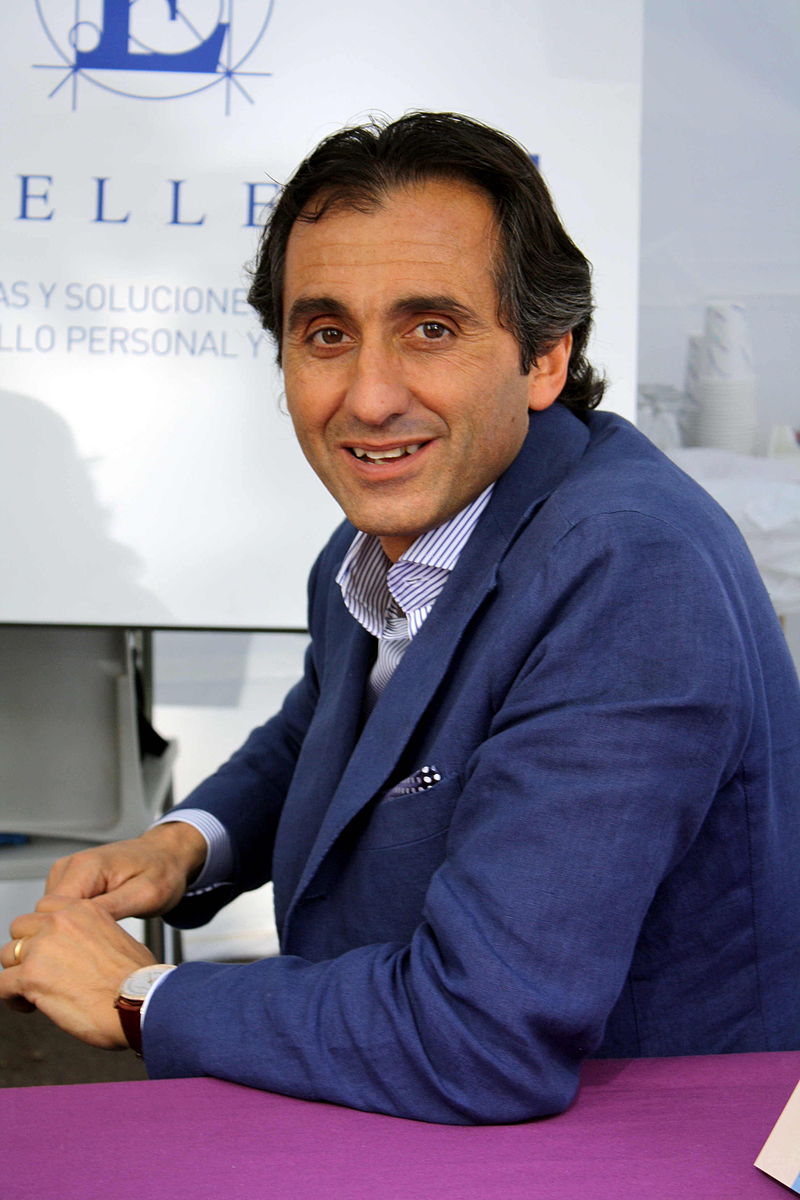
In 2007, there was finally some light at the end of the tunnel for Guardiola. After two failed appeals a shred of hope remained when Guardiola’s close friend, personal assistant and formal water polo great Manuel Estiarte (below left, still Guardiola’s right-hand man at Manchester City) discovered changes in the World Anti-Doping Agency’s (WADA) guidelines which he thought could exonerate Guardiola.
 In 2005, WADA had found that a phenomenon called “unstable urine” in samples could lead to positive tests for low levels of nandrolone. In very rare cases nandrolone could be found in samples not because of external administration but as a result of a chemical reaction that “may occur in a vial containing urine.”
WADA instructed all accredited labs to perform “stability tests” on urine samples with nandrolone concentration from 2 to 10ng/ml moving forward. Guardiola’s values were at the high end of this scale (12ng/ml for NE). Those samples that were deemed “unstable” would not constitute an adverse analytic finding for nandrolone.
Then-WADA Director General David Howman stood by the efficacy of previous testing for nandrolone and said the chances of urine becoming unstable were “very rare”. The chances were between 1 out of 1,000 and 1 out of 10,000 positive tests for nandrolone.
Guardiola was cleared by the Brescia Court of Appeals. This was not because his samples were deemed “unstable” but because it could have been possible that his four samples had been “unstable”. Guardiola was absolved of all blame because of “the impossibility to now perform stability tests on the samples taken” in 2001.
Stability tests must be carried out within five weeks of the collection of a sample. In 2007, no sample even remained to be re-tested.
Yet Italian anti-doping prosecutors would appeal the decision in 2009 arguing that Guardiola should not have been allowed another appeal. The change in WADA’s guidelines did not constitute “new evidence”, they argued, because anti-doping laboratories were correctly following the testing procedures set by WADA at the time. Further they argued that Guardiola’s representatives had never contested how the sample was collected or analysed in previous cases and that this did not form part of his previous defence.
This appeal was rejected and in 2009, beyond reasonable doubt, Guardiola was now an innocent man. His nightmare was over.
The same could not be said of his former teammate Frank de Boer. His defence, like Guardiola’s first attempted defence, attributed his positive test to contaminated supplements. De Boer said he ingested the supplements while away on national team duty with the Netherlands. The supplements were Platina multi-vitamin pills from Ortho Company. Research showed that they did not contain any nandrolone and in fact the manufacturer took legal action against de Boer. As a result he was no longer allowed to name the company in the context of the doping affair.
De Boer, who was never cleared, was not the only high profile individual to be caught taking nandrolone in the early 2000s. So were footballers Edgar Davids, Jaap Stam, Fernando Couto, and Christophe Dugarry as well as seven professional tennis players. The Association of Tennis Professionals (ATP) ruled the doping violations were caused by supplements given to the players by the ATP’s own physios. WADA rejected this explanation and called upon the ATP to investigate further. They never did, at least not publicly.
.
In the three months after meldonium was added to WADA’s prohibited substance last year, there were 172 positive tests.
Maria Sharapova admitted to knowingly taking the substance during this time period and in so doing restricted herself to one line of defence – that she was unaware meldonium was banned. Some athletes escaped punishment after successfully arguing they took meldonium unknowingly. Others argued they had stopped taking the drug before its ban but it had yet to clear their system.
Instead Maria Sharapova explained that the reason for her doping violation was because she was unaware meldonium was a recently prohibited substance. Her agent claimed he did not go on his annual holiday since he was in the midst of a divorce. During this holiday he would usually take time to review WADA’s banned substance list for the upcoming year. Believe the excuse or not, Sharapova could have genuinely been unaware of the rule change.
The range of defences used by athletes to explain their failed tests underline how difficult it is for authorities to ascertain the truth. Yet these arguments all miss the point when it comes to the use of performance-enhancing drugs.
WADA eventually added meldonium to its Probihited List in 2016 due to “a growing body of evidence”, crucially including athletes’ statements, that the substance provided an unfair athletic advantage, was being used at alarming dosages and was being abused worldwide.
This extent of use was corroborated by WADA’s testing figures; in 2015 alone there were 3,625 meldonium positives. On the assumption that thousands of top-class sportspeople were not all suddenly stricken by conditions needing anti-ischemia medication, it appeared clear that, pre-2016, athletes taking meldonium were being provided with an unfair competitive advantage. (Or thought they were).
While the ingestion of the drug may have been “legal” before midnight on the last day of 2015, its purpose was to enhance performance. As with many forms of doping, they were all once “legal”. EPO, blood transfusions, anabolic steroids, meldonium – the drug testers generally do catch up, at some point. How much of a benefit meldonium provides will emerge with time.
.
So what caused all the nandrolone positives? A phenomena as rare as “unstable” urine could surely not have accounted for so many failed tests.
In 1999, some 33 British athletes tested positive for nandrolone which was a 65 per cent increase on the previous year. Between 1999 and mid-2001 there were more than 600 positives worldwide.
Despite arguments, amongst others, that the spate of positive tests were because of the body’s natural production of nandrolone, the likely reason was predictably more sinister. Prohormones were banned by the International Olympic Committee in 1999, the year the wave of positives began.
Sportingintelligence spoke to Professor Christiane Ayotte, President of the World Association of Anti‐Doping Scientists, who believed this to be “undoubtedly” the cause.
“The reason for all these cases were undoubtedly, the presence on the market of dietary supplements containing what the industry referred to as “prohormones”, precursors of nandrolone such as norandrostenedione, norandrostenediol and isomers between 1995 – 2005,” she says.
Prohormones were introduced into the fitness supplement market by the US chemist Patrick Arnold in 1996. Arnold developed the designer steroid THG, also known as “the clear”, that lay at the centre of the BALCO drug scandal that uncovered the extent of track queen Marion Jones’ drug use, amongst others.
Prohormones are referred to by athletes and bodybuilders as substances that are expected to convert to active hormones in the body. The intent is to provide the benefits of taking anabolic steroids without the associated legal risks, and to achieve the hoped-for benefits or advantages without use of the steroids themselves.
With prohormones, Patrick Arnold used a legal loophole that allowed the marketing of anabolic steroids as long as they were previously unknown compounds (not listed on the banned substances list).
Arnold’s prohormone androstenedione was quickly followed by a number of other similar substances. They all had different effects, some being converted to testosterone in the body, but it was norandrostenedione and norandrostenediol that converted to the anabolic hormone nandrolone – the source of the positive tests?
These supplements were legally sold over the counter worldwide. While banned in professional sport, this was a contributing factor in their widespread use.
The sale of prohormones was banned as part of the Anabolic Steroid Control Act of 2004. From then on they were deemed anabolic steroids. The act states that “the term ‘anabolic steroid’ means any drug or hormonal substance, chemically and pharmacologically related to testosterone (other than estrogens, progestins, corticosteroids and dehydroepiandrosterone).” Apart from the definition, the document listed the presently known prohormones.
As prohormones could no longer be bought over the counter the number of positive nandrolone tests dwindled, almost immediately. Prohormones were manufactured solely for the fitness world – they never had a medical use.
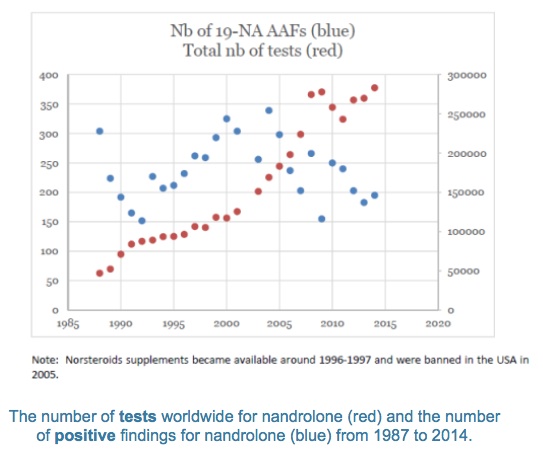
.
While this was surely the cause of the positive tests, the nandrolone epidemic was worsened by lax quality controls at the time surrounding dietary supplements. “Since the quality controls were absent, other products from the same manufacturers/distributors that were not labelled as such, were containing these steroids (prohormones),” Professor Ayotte says.
The issue of responsibility returns. Did some athletes unknowingly take supplements containing precursors to nandrolone? How many knew they did? Did Sharapova know meldonium was banned? Once again culpability is irrelevant when it comes to a level playing field. Prohormones, whether taken knowingly or not, provide an unfair athletic advantage.
And herein lies the difficulty the anti-doping authorities face. The results of drugs tests do not “strictly” speak for the motivations or intentions of an athlete. Drugs can be banned, the playing field can be levelled but when can intent be proven? So many nandrolone positives, so many meldonium positives, so many differing defences yet so few two-year bans – the punishment for a major drug offence.
At what point do excuses become irrelevant? EPO? Nandrolone? Meldonium? When is a legal drug so potent that athletes are still aware of its unfair performance-enhancing properties? One answer lies in the words of Brigitte Berendonk, an athlete on the East German doping program, when recalling a teammate of hers.
“He talked about the feeling of well being when he was on [a cycle of] his steroids. He would say he felt invincible and that he could tear out a tree with his all its roots; that was his strength. And whenever he walked into the arena he would feel this strong and this powerful. You feel you can beat any competitor when you are doped”.
Anabolic steroids: “legal” once upon a time.
.
Edmund Willison is a journalist and researcher specialising on doping in sport. He works closely with Hajo Seppelt from the German television station, ARD. You can follow him @honestsport_ew
.
FIXING, DOPING and whistle-blowing: secrets tennis wants to hide
REVEALED: The best paid teams in global sport
Follow SPORTINGINTELLIGENCE on Twitter


