Shared posts

12 Jun 17:18

DNA

by Miss Cellania

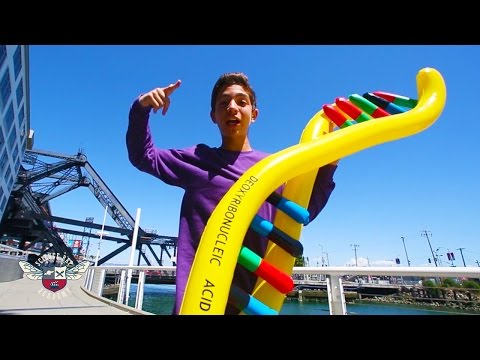
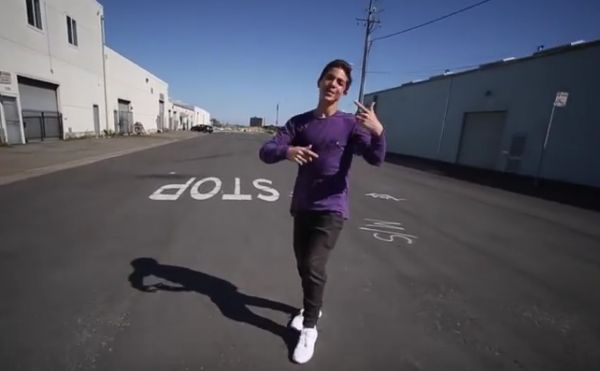
From the Science Rap Academy, here’s a rap about DNA. It goes pretty fast, so follow the captions and marvel at how quick this kid can spill out all those syllables.

(YouTube link)

This was written, performed, shot, edited, and produced by the 8th grade class of the Nueva School in California. It is based on “Fade Away” by Logic. -via Geeks Are Sexy

02 Jun 22:23

Appeals court rules brief "Vogue" horn sample was not copyright infringement

by Rob Beschizza

doot

The 9th Circuit Court affirmed today that a quarter-second sample used by Madonna didn't infringe the copyright of the original artist. Billboard reports that 1990 hit Vogue's use of a brass hit from 1976's "Love Break" was so small as to be trivial.

"After listening to the audio recordings submitted by the parties, we conclude that a reasonable juror could not conclude that an average audience would recognize the appropriation of the horn hit," writes 9th Circuit judge Susan Graber in today's opinion. "That common-sense conclusion is borne out by dry analysis. The horn hit is very short—less than a second. The horn hit occurs only a few times in Vogue. Without careful attention, the horn hits are easy to miss. Moreover, the horn hits in Vogue do not sound identical to the horn hits from Love Break... Even if one grants the dubious proposition that a listener recognized some similarities between the horn hits in the two songs, it is hard to imagine that he or she would conclude that sampling had occurred."

The ruling seems to run counter to other recent courtroom action where a song was found to infringe a Marvin Gaye classic despite containing no samples of it at all. But things are complicated in copyright! Note that the court listens to the recordings: subjective similarity is at hand, not just technology. Which perhaps explains why an extensively imitative passage with no direct sampling might be found infringing, but a short sample re-used in a novel and transformative way is not.

Update. Cory adds:

The 9th circuit court found that the sample was "de minimus" -- too small to bother with. That's a circuit split with Bridgeport Music, Inc. v. Dimension Films, where the Sixth ruled that even two seconds of a sample, even distorted beyond recognition, was not de minimus.

This may tee up a Supreme Court hearing, because that's where circuit splits often head.

But neither case turned on fair use, which would, in theory, create a much more expansive sampling right. There have been some very favorable fair use rulings lately (Oracle, Hathi Trust), and the Supremes have turned down some of these for certori, meaning that they largely agreed with expansive fair use doctrines and suggests they wouldn't hear a fair use based case that ruled in favor of the sampler, and might overturn one that went the other way.

The caselaw on sampling and fair use is REALLY thin, mostly this 2 LiveCrew case, where the sample was part of a work that commented on the person they were sampling, a much easier fair use case to make than the a broader fair use claim (such as one that argued that the taking was small enough, and the impact on the artist's legitimate markets was insignificant enough, that the sample was legal).

That kind of fair use of sampling might enable the legal production of hip-hop in the mode of the two most successful genre albums of all time (Nation of Millions, Paul's Boutique), both of which would be impossible to make under current sampling practice

01 Jun 22:31

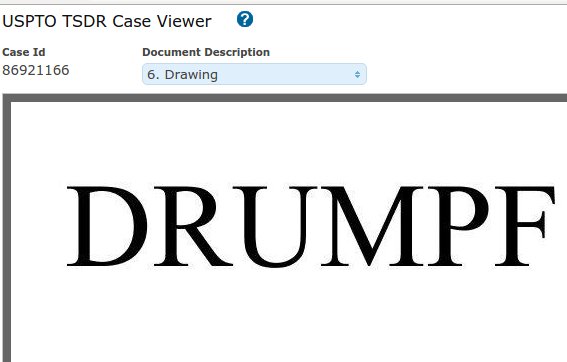
US Patent and Trademark won't issue a trademark for "Drumpf"

by Cory Doctorow

056c026d-1c66-4d42-9fae-a8e96df290c5-1020x1084

When John Oliver revealed that Donald Trump's family name had been changed from "Drumpf" and called on America to #makedonalddrumpfagain, it provided a handy hook for a way of talking about the orange one's micron-thick layer of slickness and the everyday rot within it. (more…)

01 Jun 22:30

Why 3D scans aren't copyrightable

by Cory Doctorow

missingmenu2_preview_featured

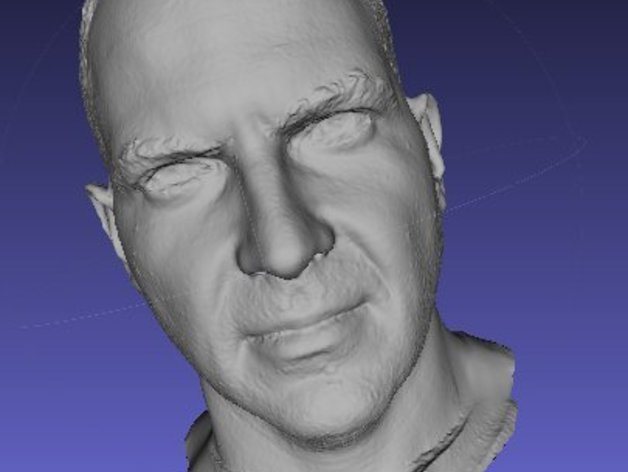
Something that baffles laypeople about copyright is what is, and is not, copyrightable; US law and international treaties protect the creative part of copyright, but not the labor part of copyright: merely working hard ("the sweat of the brow") on something isn't enough to give rise to a new copyright, but even a trivial amount of creative work is. So copying out the phone book gives you no copyright, even if it takes you all year, doesn't make it copyrightable. But writing a single haiku does. (more…)

01 Jun 01:22

The MPAA lobbyist who wrote SOPA will help draft the Democratic Party platform

by Cory Doctorow

056c026d-1c66-4d42-9fae-a8e96df290c5-1020x1082

"Hollywood" Howard Berman, former-Congressman-turned-MPAA-lobbyist is one of the 15-member panel selected by the Democratic Party establishment to draft the party's platform for this summer's convention. (more…)

01 Jun 01:04

German court hands Kraftwerk its ass, rules sampling is legal

by Cory Doctorow

800px-KRAFTWERK_im_Kiew_03

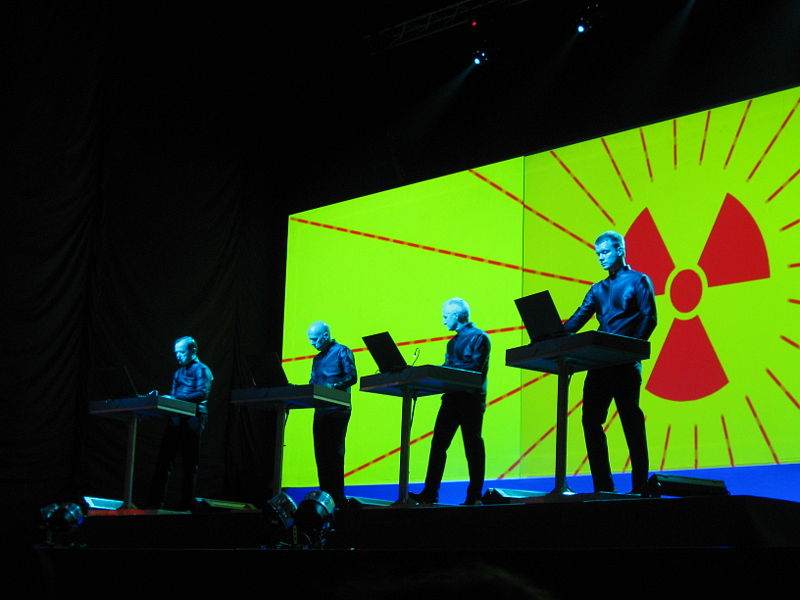
Today, Kraftwerk lost its vindictive, 19-year-long copyright suit against Sabrina Setlur, whose 1997 song "Nur mir" looped a drum sequence from Kraftwerk's 1977 "Metall auf Metall." (more…)

28 May 14:14

Study shows detailed, compromising inferences can be readily made with metadata

by Cory Doctorow

1223787629_e67ae9c054_o

In Evaluating the privacy properties of telephone metadata, a paper by researchers from Stanford's departments of Law and Computer Science published in Proceedings of the National Academy of Sciences, the authors analyzed metadata from six months' worth of volunteers' phone logs to see what kind of compromising information they could extract from them. (more…)

28 May 14:01

"Pickup artist" douche uses copyright to sue Youtube critics, fans raise $100K defense fund

by Cory Doctorow
animation

Ewan McGee writes, "Creators of the YouTube channel H3H3 productions are being sued by the creator of the YouTube channel MattHossZone for showing/talking about one of his 'pick up' videos. YouTuber Philip DeFranco talks about the story in his YouTube show, sets up a GoFundMe page for the creators of H3H3 to help them with their legal fees, and donations come pouring in, including support from well-known names like Mark "Markiplier" Fischbach, Markus "Notch" Persson and others. In just 12 hours over 3,000 people have already donated more than $95,000 in total." (more…)

20 May 22:31

Fox uses someone else's YouTube video, then orders YouTube to remove original video

by Mark Frauenfelder
Screen Shot 2016-05-20 at 9.08.13 AM

There should be a three-strikes-and-you're-out rule for any individual or corporation that issues bogus DMCA takedown notices.

From Torrent Freak:

This week's episode of Family Guy included a clip from 1980s Nintendo video game Double Dribble showing a glitch to get a free 3-point goal. Fox obtained the clip from YouTube where it had been sitting since it was first uploaded in 2009. Shortly after, Fox told YouTube the game footage infringed its copyrights. YouTube took it down.

14 May 02:31

You Can Now Create GIFs With 'The Simpsons' Quote Search Engine

by Andrew LaSane

After 27 years on television,The Simpsons has contributed a lot to pop culture, including a number of memorable quotes. We recently covered Frinkiac, a search engine that helps users find stills to match those famous one-liners. Now, according to Gizmodo, the site has added a tool that allows users to string together screenshots and build GIFs.

To use the GIF maker, users first search for the appropriate one-liner. Then, they highlight all of the screenshots that match the quote (making sure that the compilation isn't longer than four seconds), and click "Build" to let the site do the rest.

We tested the new feature to see how it works. Check out a few of our creations below.

"You've never licked maple syrup off your lover's stomach?"

"You better not be in my ass-groove!"

"Everything's comin' up Milhouse"

"Boring"

"You choo-choo-choose me?"

[h/t Gizmodo]

Images via Frinkiac

May 13, 2016 - 6:15pm
29 Apr 00:00

Game reviewer learns how to make big corporations fight each other on YouTube

by Mark Frauenfelder
youtuber

When game critic Jim Sterling uses video clips of the games he reviews on YouTube, the game companies claim copyright ownership of the video and run ads on Sterling's reviews. He doesn't like that because his videos are funded by Patreon and he doesn't think his audience should have to see ads. So what he does now is add video clips from other game publishers' titles. This causes the different companies to battle for control of the video, and they both lose out.

“I figured every time I talk about Nintendo, I’m going to throw in other stuff that gets flagged by Content ID, and just watch the corporations battle it out,” Sterling said. His hope was that by pulling this stunt, he could stop any company from monetizing the video at all, since it wouldn’t be clear who really owned the footage in the first place. And if anybody did manage to monetize the video, they’d probably only get peanuts for it. The scheme panned out just the way he thought it would, Jim Sterling tells Kotaku.
21 Apr 02:03

Printer ink wars may make private property the exclusive domain of corporations

by Cory Doctorow

Serfs paying their feudal lords

Printer manufacturer Lexmark hates America, and everything good and right in the world, because we keep stubbornly insisting that if we buy a printer cartridge, we can refill it, because it's ours.

(more…)

15 Apr 15:27

Watch This Supercut of Popular Movies Organized By Color

by Anna Green

Ever since the earliest days of hand-tinted black-and-white movies, filmmakers have been using hues to express emotion, evoke a mood, or set a scene’s tone. The color palette of a shot can subtly change the way we experience a scene, adding a sense of tension or excitement, as well as making a character stand out or blend in to the background.

In “Color Theory,” Vimeo user Kat Smith has created a color-coded supercut of shots from popular movies, revealing the different ways filmmakers put color to use. Each segment of the video is oriented around a specific color, grouping films of disparate genres not by theme, but by shared color palette.

Although Smith presents the supercut without explanation or analysis, certain patterns emerge if you watch her video closely. Many of the red shots center on violence or romance, while pink seems to most frequently appear in comedic moments. Other colors, meanwhile, appear to run the gamut of emotions and themes. Orange, for instance, includes shots of Steve Buscemi chatting in Ghost World (2001), the Oompa Loompas dancing in Willy Wonka and the Chocolate Factory (1971), and Gollum grasping desperately at the One Ring in The Return of the King (2003), which are hard to connect on any thematic grounds.

Set to a remix of "Somewhere Over the Rainbow," "Color Theory” is, according to Smith, “a super colorful supercut … that gives you a taste of the rainbow in feature film form.” Check it out above.

Banner Image Credit: Kat Smith, Vimeo

April 15, 2016 - 7:30am
24 Feb 00:28

Citing copyright, Army blocks Chelsea Manning from receiving printouts from EFF's website

by Cory Doctorow

USDB 2

Chelsea Manning's helpers write, "Citing potential copyright infringement, the Army censored materials on prison censorship from the Electronic Frontier Foundation that were sent to Chelsea by one of her volunteers." (more…)

25 Jan 22:24

Dumb and Dumber Presented as a Drama is Funnier Than the Real Thing

by Lisa Marcus

And for those who found themselves smirking at the screen whenever they were informed of a "very special episode" coming up, this clip is a recut of the trailer for Dumb and Dumber. A very special recut. One in which the movie is supposed to be a drama about two brave underdogs overcoming the odds. Mashable does this idea justice. Even the bad bangs are put to good use. Via Vulture

25 Jan 20:19

Appeals court orders confirms patent troll must pay costs

by Rob Beschizza

patenttroll2-615

Following a 2014 verdict, courts may now punish patent trolls with the defense costs that their litigation incurs. An appeals court has now upheld an attorney fees ruling handed to Lumen View, a company that makes nothing of value, yet behaved as if it owned the abstract concept of matchmaking.

The US Court of Appeals for the Federal Circuit decided, however, that the $300k awarded was too high, and returned the case to district court for another hearing. Joe Mullin writes:

In Friday's decision, the appeals judges agreed with Cote that Lumen View was out of line.

"Even if Lumen View’s litigation conduct was not quite sanctionable, the court reasonably determined that the case was exceptional," wrote US Circuit Judge Alan Lourie on behalf of a unanimous panel. "The allegations of infringement were ill-supported, particularly in light of the parties’ communications and the proposed claim constructions, and thus the lawsuit appears to have been baseless."

However, the judges found that Cote overstepped when she doubled the fees against Lumen View.

21 Jan 02:48

Netflix demands Net Neutrality, but makes an exception for T-Mobile

by Cory Doctorow

BingeOnLogoLarge-640x367

T-Mobile's "Binge On" service advertises itself as a "video optimization" service that publishers and customers opt into, but it's really just throttling for all video, something T-Mobile CEO John Legere vehemently denied, then admitted to. (more…)

17 Jan 18:11

The DIY Scientist, the Olympian, and the Mutated Gene

by Miss Cellania


Jill Viles was always skinny. Her arms and legs had no fat, and as she grew, they also began to have less and less muscle tissue. Doctors checked her out, but had no diagnosis. So she did the research on her own. Because others in her family had curious body morphologies that weren’t as severe, she suspected a genetic condition. She even found a name for it: Emery-Dreifuss, but medical experts dismissed her self-diagnosis. When Viles answered a call to join a genetic research study in Italy, she couldn’t even get a doctor to do a DNA swab or a blood test -but she sent blood anyway. Four years later, she got confirmation of her self-diagnosis from Italy, just in time to save her father’s life. Viles also found out exactly which gene was affected. But that’s only the beginning of the story. Further research led Viles to pinpoint another rare genetic syndrome caused by mutations of the same gene (partial lipodystrophy) that caused loss of fat, and even led her to suspect it in an Olympic athlete she had seen photographs of. So she reached out to Canadian hurdler Priscilla Lopes-Schliep, who didn’t suffer from muscle atrophy, but instead has such amazingly well-defined muscles that she was suspected of doping.      

Priscilla thinks that because of her physique, she was targeted for more than the normal amount of drug testing. (Targeted testing is a standard part of anti-doping.) She was tested right after having her daughter, Natalia. At the World Championships in Berlin in 2009, she was tested just minutes before winning a silver medal. There’s not even supposed to be any drug testing that close to the race.

The following month, at a meet in Greece, someone stole her training journal out of her bag. It was at the very bottom, underneath expensive workout clothes and shoes, none of which were taken. Why steal a training journal?  We’ll never know. But I’ve covered a lot of doping stories, and I’m convinced someone thought the journal contained her steroid regimen.

The story of how Jill Viles pressed ahead with her research in spite of rejection from one medical expert after another is gripping, even when it gets really technical at the genetic level. Read how her determination saved more than one life, and may eventually lead to treatments for some rare genetic conditions. -via Digg

16 Jan 16:37

Copyright troll Rightscorp must pay $450,000 over robocalls

by Rob Beschizza

patenttroll2-615

Copyright shakedown company Rightscorp, which threatens suspected music sharers with lawsuits unless they give Rightscorp money, has agreed to pay $450,000 to settle claims it illegally targeted thousands of people with recorded messages.

Morgan Pietz, an attorney who played a key role in bringing down Prenda Law, sued Rightscorp in 2014, saying that the company's efforts to get settlements from alleged pirates went too far. Rightscorp's illegal "robocalls" violated the Telephone Consumer Protection Act (TCPA), a 1991 law that limits how automated calling devices are used. The class-action lawsuit claimed that some Rightscorp targets were receiving one robocall on their cell phone per day. It's generally illegal to have automated devices call cell phones.

Earlier this week, Pietz and his co-counsel filed court papers outlining the settlement. Rightscorp will pay $450,000 into a settlement fund, which will be paid out to the 2,059 identified class members who received the allegedly illegal calls. Each class member who fills out an "affidavit of noninfringement" will receive up to $100. The rest of the fund will pay for costs of notice and claim administration (about $25,000) and attorneys' fees and costs, which cannot exceed $330,000. Rightscorp will also "release any and all alleged claims" against the class members. The company had accused the 2,059 class members of committing 126,409 acts of copyright infringement.

08 Jan 00:37

This Supercut Shows How Hollywood Thinks Hacking Works

by Andrew LaSane

One movie trope Hollywood just can't seem to move past? The frantic hacker. Here's how those scenes usually go: A character on the screen is shown banging away at a keyboard while a timer counts down and lines of code flash across their monitor. But how realistic is that? YouTuber elsafrickey compiled clips from various movies made between 1970 and 2000, and the resulting supercut shows that while technology has changed over the years, the misrepresentation of hacking has remained consistent.

One of the films included in the supercut is the 1995 cult classic Hackers. In conjunction with the film's 20th anniversary, the website Hopes and Fears gathered a group of real hackers together to watch and discuss the scenes that they say created a "certain mystique around hacking culture that other tech films never quite matched." The hackers took issue with several parts of the movie, from the characters' most basic actions to what the film got wrong about coding. "I think one of the most unrealistic parts is taking a floppy that you wrote on a machine, putting it in another one, and all of the files had no read errors," said someone identified only as Hacker 2, to which Hacker 4 added, "I think one of the most unrealistic things is pulling something from a Mac and putting into a PC in that era."

Still, the creative liberties filmmakers take make sense, one hacker told Hopes and Fears. "The truth is that if you were to watch a real movie about real hacking, it would be the most boring sh*t imaginable. It would be unwatchable," the anonymous source said. Eric Limer of Gizmodo has also defended these kinds of big-screen depictions, writing that "there's a whole host of problems, starting with how screens during real hacking don't necessarily have any motion, and static data display is boring on the big screen for any amount of time longer than a second ... add that to tiny text sizes that are unreadable at any reasonable filming distance, and you've got a pretty good argument for replacing it all with some flashing lights and colors."

Check out some of Tinseltown's most memorable hacker portrayals above.

[h/t: Visual News]

January 7, 2016 - 7:00am
06 Jan 21:23

Ex-copyright troll now sends letters inviting "pirates" to join fan-clubs

by Cory Doctorow

muzit1

Tommy Funderburk used to be a copyright troll whose company, Payartists, sent legal threats to people accused of copyright infringement, though they didn't represent any actual artists (the closest they came was in representing Frank Zappa's widow). (more…)

06 Jan 16:40

New York Public Library does the public domain right

by Cory Doctorow

nypl.digitalcollections.29219280-892b-0132-4271-58d385a7bbd0.001.g

The New York Public Library is aggressively digitizing the public domain works in its collections, adding high-quality machine-readable metadata to each of the hundreds of thousands of assets, providing an API, offering residencies to remixers who do interesting things with the collection, and offering all those assets in high-rez with "No permission required. No restrictions on use." (more…)

03 Jan 18:28

Supercut: People Falling onto Cars to the Tune of the 1812 Overture

by John Farrier


(Video Link)

Super Cut Online lines up a surprisingly common trope: falling out of a building and landing painfully (and often fatally) on a car. It's everywhere, from children's movies such as Garfield to action flicks like Fast and Furious 7.

Super Cut Online correctly concludes that it fits neatly with the finale to Tchaikovsky's The Year of 1812, a commemoration of Russia's successful defense against Napoleon Bonaparte.

Here's the complete list in order where all 56 movies these scenes came from:

The Dark Knight
Sha Po Lang
Daredevil
Inside Moves
Con Air
The Saint
The Guyver 2
Stone Cold
Superman : Doomsday
Rush Hour 2
Garfield
Kick-Ass
The Matrix Reloaded
Carrie 2 : The Rage
Home Alone : Lost in New York
Crank
The Avengers : Age of Ultron
Die Hard
Hellbound
Darkman
Eraser
End of Days
Transformers
X-Men
Live Free or Die Hard
Edge of Tomorrow
Tribulation
Men in Black
Mad Max Fury Road
Sherlock Holmes
The Untouchables
Unleashed
Hellboy II : The Golden Army
The Avengers
Old Boy
Quantum of Solace
The Incredibles
The Last Boyscout
Friday the 13th
Lethal Weapon
The Fifth Element
Ant Man
Bachelor
Freerunner
Collateral
Looker
Batman
Iron Man
Indiana Jones and The Temple of Doom
Fast and Furious 7
Batman Returns
Crank
The Victim
Left Behind III
Teenage Mutant Ninja Turtles
South Park Bigger, Longer and Uncut

-via VA Viper

03 Jan 18:26

Breaking the DRM on the 1982 Apple ][+ port of Burger Time

by Cory Doctorow

056c026d-1c66-4d42-9fae-a8e96df290c5-1020x914

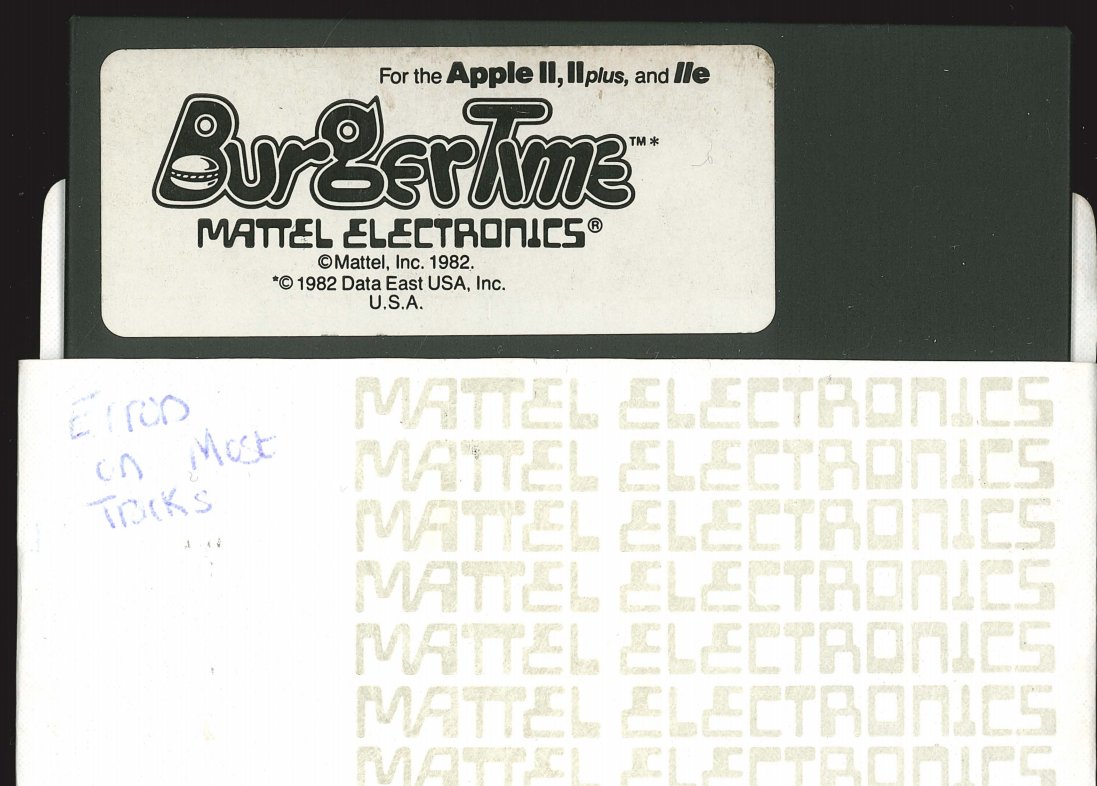
4AM is a prolific computer historian whose practice involves cracking the copy protection on neglected Apple ][+ floppy disks, producing not just games, but voluminous logs that reveal the secret history of the cat-and-mouse between crackers and publishers. (more…)

01 Jan 16:20

Public Domain Day outside the USA: what Canada and the rest of the world get today

by Cory Doctorow

Quartz

In the USA, laws passed in 1976 and 1998 ensure that virtually nothing ever enters the public domain, but it's a different story in the rest of the world -- for now, at least. (more…)

31 Dec 22:38

Happy public domain day: here's what copyright term extension stole from you in 2015

by Cory Doctorow

collage2016

When Congress amended US copyright law in 1976, they extended the copyrights on works whose creators had produced them with the promise of not more than 56 years. Since then, almost nothing has entered the US public domain. (more…)

31 Dec 22:27

Lessig on how the economics of data-retention will drive privacy tech

by Cory Doctorow

Panopticon

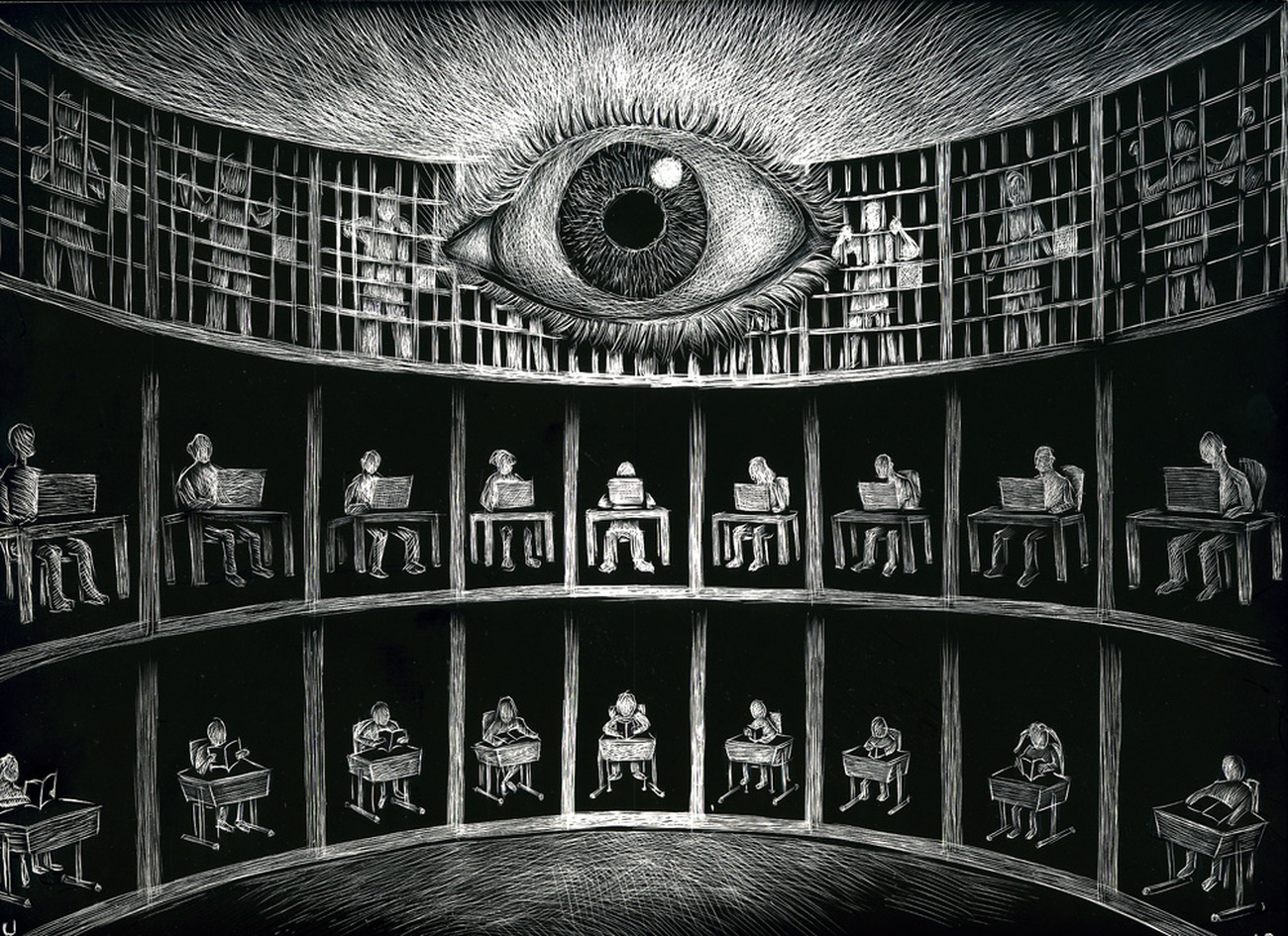
In an interview with the WSJ's CIO blog, Lawrence Lessig proposes that the existence of cryptographic tools that allow for "zero-knowledge" data-querying, combined with the potential liability from leaks, will drive companies to retain less data on their customers. (more…)

20 Dec 21:38

Copyright infringement "gang" raided by UK cops: 3 harmless middle-aged karaoke fans

by Cory Doctorow

karaoke-640x483

The City of London Police's Intellectual Property Crime Unit's breathless press-release about their raid on a "gang suspected of uploading and distributing tens of thousands of karaoke tracks online" obscures the truth: they busted three middle-aged dudes who loved singing, so they hunted down otherwise unavailable tracks and shared them with other karaoke fans, not making a penny in the process. (more…)

19 Dec 00:35

A win for copyright trolls: Cox must pay $25M for not disconnecting users

by Cory Doctorow

056c026d-1c66-4d42-9fae-a8e96df290c5-1020x919

BMG hired Rightscorp, a publicly traded blackmail company, to send threatening letters to Cox Cable subscribers it accused of infringing its copyrights, demanding cash payments to stay out of court. (more…)

19 Dec 00:22

A Side-by-Side Look at Every Film Quentin Tarantino Has Drawn Inspiration From

by Lisa Marcus


Vimeo Link

It is widely acknowledged among all types of artists that borrowing from other artists is par for the course. One example of how a film director uses inspiration from earlier films is shown here, with a look at Quentin Tarantino's films side-by-side with others that have shaped scenes in his movies such as Reservoir Dogs, Pulp Fiction, Jackie Brown, Kill Bill and more.