Marcos Pires
Shared posts
A Eukaryotic-like Serine/Threonine Kinase Protects Staphylococci against Phages
A Functional Role for Antibodies in Tuberculosis
Bacterial cell wall biogenesis is mediated by SEDS and PBP polymerase families functioning semi-autonomously
Bacterial cell wall biogenesis is mediated by SEDS and PBP polymerase families functioning semi-autonomously
Nature Microbiology, Published online: 19 September 2016; doi:10.1038/nmicrobiol.2016.172
Cell growth requires the SEDS-family protein RodA to provide transglycosylase activity alongside PBPs.
Combating multidrug-resistant Gram-negative bacteria with structurally nanoengineered antimicrobial peptide polymers
Combating multidrug-resistant Gram-negative bacteria with structurally nanoengineered antimicrobial peptide polymers
Nature Microbiology, Published online: 12 September 2016; doi:10.1038/nmicrobiol.2016.162
Star-shaped engineered peptide nanoparticles are effective at killing a variety of multidrug-resistant Gram-negative pathogens in vivo with low host toxicity and resistance.
[Report] Spatiotemporal microbial evolution on antibiotic landscapes
Vinylboronic Acids as Fast Reacting, Synthetically Accessible, and Stable Bioorthogonal Reactants in the Carboni–Lindsey Reaction
Abstract
Bioorthogonal reactions are widely used for the chemical modification of biomolecules. The application of vinylboronic acids (VBAs) as non-strained, synthetically accessible and water-soluble reaction partners in a bioorthogonal inverse electron-demand Diels–Alder (iEDDA) reaction with 3,6-dipyridyl-s-tetrazines is described. Depending on the substituents, VBA derivatives give second-order rate constants up to 27 m−1 s−1 in aqueous environments at room temperature, which is suitable for biological labeling applications. The VBAs are shown to be biocompatible, non-toxic, and highly stable in aqueous media and cell lysate. Furthermore, VBAs can be used orthogonally to the strain-promoted alkyne–azide cycloaddition for protein modification, making them attractive complements to the bioorthogonal molecular toolbox.

Bioorthogonal iEDDA reagents: Vinylboronic acids (VBAs) were studied as non-strained, synthetically accessible, and water-soluble bioorthogonal reagents in the Carboni–Lindsey reaction with dipyridyl-s-tetrazines. The VBAs were shown to be biocompatible, non-toxic, and highly stable in aqueous media and cell lysate. Furthermore, VBAs were used orthogonally to the strain-promoted alkyne–azide cycloaddition for protein modification.
Turnover of Bacterial Cell Wall by SltB3, a Multidomain Lytic Transglycosylase of Pseudomonas aeruginosa
Inhibition of TLR1/2 dimerization by enantiomers of metal complexes

DOI: 10.1039/C6CC06155A, Communication
Complex 1 and its enantiomer [capital Lambda]-1 are reported for the first time to inhibit NF-[small kappa]B transduction via the modulation of Pam3CSK4-induced TLR1/2 heterodimerization.
The content of this RSS Feed (c) The Royal Society of Chemistry
Structural and Biochemical Basis for Intracellular Kinase Inhibition by Src-specific Peptidic Macrocycles
Hybrid Antibiotic Overcomes Resistance in P. aeruginosa by Enhancing Outer Membrane Penetration and Reducing Efflux

Oxidative p-Tyr to DOPA conversion in host defense [Microbiology]
Colistin- and Carbapenem-Resistant Escherichia coli Harboring mcr-1 and blaNDM-5, Causing a Complicated Urinary Tract Infection in a Patient from the United States
Colistin is increasingly used as an antibiotic of last resort for the treatment of carbapenem-resistant Gram-negative infections. The plasmid-borne colistin resistance gene mcr-1 was initially identified in animal and clinical samples from China and subsequently reported worldwide, including in the United States. Of particular concern is the spread of mcr-1 into carbapenem-resistant bacteria, thereby creating strains that approach pan-resistance. While several reports of mcr-1 have involved carbapenem-resistant strains, no such isolates have been described in the United States. Here, we report the isolation and identification of an Escherichia coli strain harboring both mcr-1 and carbapenemase gene blaNDM-5 from a urine sample in a patient without recent travel outside the United States. The isolate exhibited resistance to both colistin and carbapenems, but was susceptible to amikacin, aztreonam, gentamicin, nitrofurantoin, tigecycline, and trimethoprim-sulfamethoxazole. The mcr-1- and blaNDM-5-harboring plasmids were completely sequenced and shown to be highly similar to plasmids previously reported from China. The strain in this report was first isolated in August 2014, highlighting an earlier presence of mcr-1 within the United States than previously recognized.
IMPORTANCE Colistin has become the last line of defense for the treatment of infections caused by Gram-negative bacteria resistant to multiple classes of antibiotics, in particular carbapenem-resistant Enterobacteriaceae (CRE). Resistance to colistin, encoded by the plasmid-borne gene mcr-1, was first identified in animal and clinical samples from China in November 2015 and has subsequently been reported from numerous other countries. In April 2016, mcr-1 was identified in a carbapenem-susceptible Escherichia coli strain from a clinical sample in the United States, followed by a second report from a carbapenem-susceptible E. coli strain originally isolated in May 2015. We report the isolation and identification of an E. coli strain harboring both colistin (mcr-1) and carbapenem (blaNDM-5) resistance genes, originally isolated in August 2014 from urine of a patient with recurrent urinary tract infections. To our knowledge, this is the first report in the United States of a clinical bacterial isolate with both colistin and carbapenem resistance, highlighting the importance of active surveillance efforts for colistin- and carbapenem-resistant organisms.
Molecular Basis for Lytic Bacteriophage Resistance in Enterococci
The human intestine harbors diverse communities of bacteria and bacteriophages. Given the specificity of phages for their bacterial hosts, there is growing interest in using phage therapies to combat the rising incidence of multidrug-resistant bacterial infections. A significant barrier to such therapies is the rapid development of phage-resistant bacteria, highlighting the need to understand how bacteria acquire phage resistance in vivo. Here we identify novel lytic phages in municipal raw sewage that kill Enterococcus faecalis, a Gram-positive opportunistic pathogen that resides in the human intestine. We show that phage infection of E. faecalis requires a predicted integral membrane protein that we have named PIPEF (for phage infection protein from E. faecalis). We find that PIPEF is conserved in E. faecalis and harbors a 160-amino-acid hypervariable region that determines phage tropism for distinct enterococcal strains. Finally, we use a gnotobiotic mouse model of in vivo phage predation to show that the sewage phages temporarily reduce E. faecalis colonization of the intestine but that E. faecalis acquires phage resistance through mutations in PIPEF. Our findings define the molecular basis for an evolutionary arms race between E. faecalis and the lytic phages that prey on them. They also suggest approaches for engineering E. faecalis phages that have altered host specificity and that can subvert phage resistance in the host bacteria.
IMPORTANCE Bacteriophage therapy has received renewed attention as a potential solution to the rise in antibiotic-resistant bacterial infections. However, bacteria can acquire phage resistance, posing a major barrier to phage therapy. To overcome this problem, it is necessary to understand phage resistance mechanisms in bacteria. We have unraveled one such resistance mechanism in Enterococcus faecalis, a Gram-positive natural resident of the human intestine that has acquired antibiotic resistance and can cause opportunistic infections. We have identified a cell wall protein hypervariable region that specifies phage tropism in E. faecalis. Using a gnotobiotic mouse model of in vivo phage predation, we show that E. faecalis acquires phage resistance through mutations in this cell wall protein. Our findings define the molecular basis for lytic phage resistance in E. faecalis. They also suggest opportunities for engineering E. faecalis phages that circumvent the problem of bacterial phage resistance.
Directed evolution of artificial metalloenzymes for in vivo metathesis
Nature advance online publication 29 August 2016. doi:10.1038/nature19114
Authors: Markus Jeschek, Raphael Reuter, Tillmann Heinisch, Christian Trindler, Juliane Klehr, Sven Panke & Thomas R. Ward
The field of biocatalysis has advanced from harnessing natural enzymes to using directed evolution to obtain new biocatalysts with tailor-made functions. Several tools have recently been developed to expand the natural enzymatic repertoire with abiotic reactions. For example, artificial metalloenzymes, which combine the versatile reaction scope of transition metals with the beneficial catalytic features of enzymes, offer an attractive means to engineer new reactions. Three complementary strategies exist: repurposing natural metalloenzymes for abiotic transformations; in silico metalloenzyme (re-)design; and incorporation of abiotic cofactors into proteins. The third strategy offers the opportunity to design a wide variety of artificial metalloenzymes for non-natural reactions. However, many metal cofactors are inhibited by cellular components and therefore require purification of the scaffold protein. This limits the throughput of genetic optimization schemes applied to artificial metalloenzymes and their applicability in vivo to expand natural metabolism. Here we report the compartmentalization and in vivo evolution of an artificial metalloenzyme for olefin metathesis, which represents an archetypal organometallic reaction without equivalent in nature. Building on previous work on an artificial metallohydrolase, we exploit the periplasm of Escherichia coli as a reaction compartment for the ‘metathase’ because it offers an auspicious environment for artificial metalloenzymes, mainly owing to low concentrations of inhibitors such as glutathione, which has recently been identified as a major inhibitor. This strategy facilitated the assembly of a functional metathase in vivo and its directed evolution with substantially increased throughput compared to conventional approaches that rely on purified protein variants. The evolved metathase compares favourably with commercial catalysts, shows activity for different metathesis substrates and can be further evolved in different directions by adjusting the workflow. Our results represent the systematic implementation and evolution of an artificial metalloenzyme that catalyses an abiotic reaction in vivo, with potential applications in, for example, non-natural metabolism.
Activity-Based Profiling Reveals a Regulatory Link between Oxidative Stress and Protein Arginine Phosphorylation
Glyco-seek: Ultrasensitive Detection of Protein-Specific Glycosylation by Proximity Ligation Polymerase Chain Reaction

Dual Targeting of Intracellular Pathogenic Bacteria with a Cleavable Conjugate of Kanamycin and an Antibacterial Cell-Penetrating Peptide

Outer Membrane Vesicle Biosynthesis in Salmonella: Is There More to Gram-Negative Bacteria?
Recent research has focused on the biological role of outer membrane vesicles (OMVs), which are derived from the outer membranes (OMs) of Gram-negative bacteria, and their potential exploitation as therapeutics. OMVs have been characterized in many ways and functions. Until recently, research focused on hypothetical and empirical models that addressed the molecular mechanisms of OMV biogenesis, such as vesicles bulging from the OM in various ways. The recently reported study by Elhenawy et al. (mBio 7:e00940-16, 2016, http://dx.doi.org/10.1128/mBio.00940-16) provided further insights into OMV biogenesis of Salmonella enterica serovar Typhimurium. That study showed that deacylation of lipopolysaccharides (LPS) influences the level of OMV production and, furthermore, determines a sorting of high versus low acylated LPS in OMs and OMVs, respectively. Interestingly, deacylation may inversely correlate with other LPS modifications, suggesting some synergy toward optimized host resistance via best OM compositions for S. Typhimurium.
SEDS proteins are a widespread family of bacterial cell wall polymerases
Nature advance online publication 15 August 2016. doi:10.1038/nature19331
Authors: Alexander J. Meeske, Eammon P. Riley, William P. Robins, Tsuyoshi Uehara, John J. Mekalanos, Daniel Kahne, Suzanne Walker, Andrew C. Kruse, Thomas G. Bernhardt & David Z. Rudner
Bacterial-mediated neutrophil chemotaxis [Microbiology]
Host Physiologic Changes Induced by Influenza A Virus Lead to Staphylococcus aureus Biofilm Dispersion and Transition from Asymptomatic Colonization to Invasive Disease
Staphylococcus aureus is a ubiquitous opportunistic human pathogen and a major health concern worldwide, causing a wide variety of diseases from mild skin infections to systemic disease. S. aureus is a major source of severe secondary bacterial pneumonia after influenza A virus infection, which causes widespread morbidity and mortality. While the phenomenon of secondary bacterial pneumonia is well established, the mechanisms behind the transition from asymptomatic colonization to invasive staphylococcal disease following viral infection remains unknown. In this report, we have shown that S. aureus biofilms, grown on an upper respiratory epithelial substratum, disperse in response to host physiologic changes related to viral infection, such as febrile range temperatures, exogenous ATP, norepinephrine, and increased glucose. Mice that were colonized with S. aureus and subsequently exposed to these physiologic stimuli or influenza A virus coinfection developed pronounced pneumonia. This study provides novel insight into the transition from colonization to invasive disease, providing a better understanding of the events involved in the pathogenesis of secondary staphylococcal pneumonia.
IMPORTANCE In this study, we have determined that host physiologic changes related to influenza A virus infection causes S. aureus to disperse from a biofilm state. Additionally, we report that these same host physiologic changes promote S. aureus dissemination from the nasal tissue to the lungs in an animal model. Furthermore, this study identifies important aspects involved in the transition of S. aureus from asymptomatic colonization to pneumonia.
The Cell Wall Polymer Lipoteichoic Acid Becomes Nonessential in Staphylococcus aureus Cells Lacking the ClpX Chaperone
Lipoteichoic acid (LTA) is an important cell wall component of Gram-positive bacteria and a promising target for the development of vaccines and antimicrobial compounds against Staphylococcus aureus. Here we demonstrate that mutations in the conditionally essential ltaS (LTA synthase) gene arise spontaneously in an S. aureus mutant lacking the ClpX chaperone. A wide variety of ltaS mutations were selected, and among these, a substantial portion resulted in premature stop codons and other changes predicted to abolish LtaS synthesis. Consistent with this assumption, the clpX ltaS double mutants did not produce LTA, and genetic analyses confirmed that LTA becomes nonessential in the absence of the ClpX chaperone. In fact, inactivation of ltaS alleviated the severe growth defect conferred by the clpX deletion. Microscopic analyses showed that the absence of ClpX partly alleviates the septum placement defects of an LTA-depleted strain, while other phenotypes typical of LTA-negative S. aureus mutants, including increased cell size and decreased autolytic activity, are retained. In conclusion, our results indicate that LTA has an essential role in septum placement that can be bypassed by inactivating the ClpX chaperone.
IMPORTANCE Lipoteichoic acid is an essential component of the Staphylococcus aureus cell envelope and an attractive target for the development of vaccines and antimicrobials directed against antibiotic-resistant Gram-positive bacteria such as methicillin-resistant S. aureus and vancomycin-resistant enterococci. In this study, we showed that the lipoteichoic acid polymer is essential for growth of S. aureus only as long as the ClpX chaperone is present in the cell. Our results indicate that lipoteichoic acid and ClpX play opposite roles in a pathway that controls two key cell division processes in S. aureus, namely, septum formation and autolytic activity. The discovery of a novel functional connection in the genetic network that controls cell division in S. aureus may expand the repertoire of possible strategies to identify compounds or compound combinations that kill antibiotic-resistant S. aureus.
Structural basis of metallo-β-lactamase, serine-β-lactamase and penicillin-binding protein inhibition by cyclic boronates
Article
Bacterial beta-lactamases are responsible for resistance to beta-lactams, the most important family of antibiotics. Here, the authors reveal cyclic boronate inhibitors that are active against both serine- and metallo-beta-lactamases and represent a promising strategy for combined antimicrobial treatments.
Nature Communications doi: 10.1038/ncomms12406
Authors: Jürgen Brem, Ricky Cain, Samuel Cahill, Michael A. McDonough, Ian J. Clifton, Juan-Carlos Jiménez-Castellanos, Matthew B. Avison, James Spencer, Colin W. G. Fishwick, Christopher J. Schofield
A Fluorescent Transport Assay Enables Studying AmpG Permeases Involved in Peptidoglycan Recycling and Antibiotic Resistance

DamX Controls Reversible Cell Morphology Switching in Uropathogenic Escherichia coli
The ability to change cell morphology is an advantageous characteristic adopted by multiple pathogenic bacteria in order to evade host immune detection and assault during infection. Uropathogenic Escherichia coli (UPEC) exhibits such cellular dynamics and has been shown to transition through a series of distinct morphological phenotypes during a urinary tract infection. Here, we report the first systematic spatio-temporal gene expression analysis of the UPEC transition through these phenotypes by using a flow chamber-based in vitro infection model that simulates conditions in the bladder. This analysis revealed a novel association between the cell division gene damX and reversible UPEC filamentation. We demonstrate a lack of reversible bacterial filamentation in a damX deletion mutant in vitro and absence of a filamentous response by this mutant in a murine model of cystitis. While deletion of damX abrogated UPEC filamentation and secondary surface colonization in tissue culture and in mouse infections, transient overexpression of damX resulted in reversible UPEC filamentation. In this study, we identify a hitherto-unknown damX-mediated mechanism underlying UPEC morphotypical switching. Murine infection studies showed that DamX is essential for establishment of a robust urinary tract infection, thus emphasizing its role as a mediator of virulence. Our study demonstrates the value of an in vitro methodology, in which uroepithelium infection is closely simulated, when undertaking targeted investigations that are challenging to perform in animal infection models.
IMPORTANCE Urinary tract infections (UTIs) are most often caused by uropathogenic Escherichia coli (UPEC) and account for a considerable health care burden. UPEC exhibits a dynamic lifestyle in the course of infection, in which the bacterium transiently adopts alternative morphologies ranging from rod shaped to coccoid and filamentous, rendering it better at immune evasion and host epithelium adhesion. This penchant for morphotype switching might in large measure account for UPEC’s success as a pathogen. In aiming to uncover genes underlying the phenomenon of UPEC morphotype switching, this study identifies damX, a cell division gene, as a mediator of reversible filamentation during UTI. DamX-mediated filamentation represents an additional pathway for bacterial cell shape control, an alternative to SulA-mediated FtsZ sequestration during E. coli uropathogenesis, and hence represents a potential target for combating UTI.
A Precise Chemical Strategy To Alter the Receptor Specificity of the Adeno-Associated Virus
Abstract
The ability to target the adeno-associated virus (AAV) to specific types of cells, by altering the cell-surface receptor it binds, is desirable to generate safe and efficient therapeutic vectors. Chemical attachment of receptor-targeting agents onto the AAV capsid holds potential to alter its tropism, but is limited by the lack of site specificity of available conjugation strategies. The development of an AAV production platform is reported that enables incorporation of unnatural amino acids (UAAs) into specific sites on the virus capsid. Incorporation of an azido-UAA enabled site-specific attachment of a cyclic-RGD peptide onto the capsid, retargeting the virus to the αvβ3 integrin receptors, which are overexpressed in tumor vasculature. Retargeting ability was site-dependent, underscoring the importance of achieving site-selective capsid modification. This work provides a general chemical approach to introduce various receptor binding agents onto the AAV capsid with site selectivity to generate optimized vectors with engineered infectivity.

An adeno-associated virus (AAV) production platform is reported that enables efficient incorporation of unnatural amino acids into specific sites of the virus capsid. This work provides a general chemical approach to introduce various receptor binding agents onto the AAV capsid with exquisite site selectivity to generate optimized vectors with engineered infectivity.
Antimicrobial peptides trigger a division block in Escherichia coli through stimulation of a signalling system
Article
The PhoQ/PhoP system regulates antimicrobial peptide defense in bacteria. Here the authors show that at sublethal concentrations of antimicrobial peptides, PhoPQ induces QueE, that then localizes to the divisome and blocks cell division independently of its function in queuosine biosynthesis.
Nature Communications doi: 10.1038/ncomms12340
Authors: Srujana S. Yadavalli, Jeffrey N. Carey, Rachel S. Leibman, Annie I. Chen, Andrew M. Stern, Manuela Roggiani, Andrew M. Lippa, Mark Goulian
Toll-like receptor 2 activation depends on lipopeptide shedding by bacterial surfactants
Article
The role played by human protein TLR2 in inflammation and sepsis varies for different bacterial pathogens. Here, Hanzelmann et al . show that the differential abilities of Staphylococcus aureus strains to activate TLR2 depend on their production of peptides that release lipoproteins known to act as TLR2 agonists.
Nature Communications doi: 10.1038/ncomms12304
Authors: Dennis Hanzelmann, Hwang-Soo Joo, Mirita Franz-Wachtel, Tobias Hertlein, Stefan Stevanovic, Boris Macek, Christiane Wolz, Friedrich Götz, Michael Otto, Dorothee Kretschmer, Andreas Peschel
Gut Microbial Metabolites Fuel Host Antibody Responses
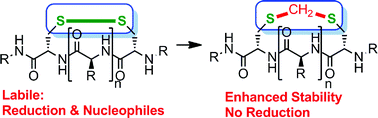
Converting disulfide bridges in native peptides to stable methylene thioacetals
DOI: 10.1039/C6SC02285E, Edge Article
 Open Access
   This article is licensed under a Creative Commons Attribution-NonCommercial 3.0 Unported Licence.
A mild and simple protocol converts the labile disulfide bond of unprotected native peptides into highly stable methylene thioacetals, annihilating reductive lability and increasing stability.
The content of this RSS Feed (c) The Royal Society of Chemistry