02 Oct 13:14
Chem. Sci., 2017, 8,7991-7997
DOI: 10.1039/C7SC03413J, Edge Article

Open Access
Peter 't Hart, Thomas M. Wood, Kamaleddin Haj Mohammad Ebrahim Tehrani, Roel M. van Harten, Malgorzata Sleszynska, Inmaculada Rentero Rebollo, Antoni P. A. Hendrickx, Rob J. L. Willems, Eefjan Breukink, Nathaniel I. Martin
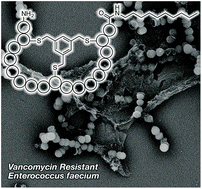
Lipid II binding lipopeptides discovered via bicyclic peptide phage display exhibit promising antibacterial activity.
The content of this RSS Feed (c) The Royal Society of Chemistry

28 Sep 12:43
by Uwe Heiko Bunz, Jinsong Han, Haoran Cheng, Benhua Wang, Markus Braun, Xiaobo Fan, Markus Bender, Wei Huang, Cornelius Domhan, Walter Mier, Thomas Lindner, Kai Seehafer, Michael Wink
Abstract
A negatively charged poly(para-phenyleneethynylene) (PPE) forms electrostatic complexes with four positively charged antimicrobial peptides (AMP). The AMPs partially quench the fluorescence of the PPE and discriminate fourteen different bacteria in water and in human urine by pattern-based fluorescence recognition; the AMP-PPE complexes bind differentially to the components of bacterial surfaces. The bacterial species and strains form clusters according to staining properties (Gram-positive and Gram-negative) or genetic similarity (genus, species, and strain). The identification and data treatment is performed by pattern evaluation with linear discriminant analysis (LDA) of the collected fluorescence intensity data.

Discriminated! Electrostatic complexes formed from four cationic antimicrobial peptides (AMPs) and one anionic poly(para-phenylene-ethynylene) (PPE) were examined as a new type of an array-based sensor. The array identifies and discriminates 14 different types of bacteria according to Gram status and their genetic relationship in human urine by subjecting the obtained fluorescence response patterns to linear discriminant analysis.
28 Sep 12:43
by Tomonori Tamura, Zhining Song, Kazuma Amaike, Shin Lee, Sifei Yin, Shigeki Kiyonaka and Itaru Hamachi

Journal of the American Chemical Society
DOI: 10.1021/jacs.7b07339

27 Sep 18:21
by Aaron Chevalier
Nature advance online publication 27 September 2017. doi:10.1038/nature23912
Authors: Aaron Chevalier, Daniel-Adriano Silva, Gabriel J. Rocklin, Derrick R. Hicks, Renan Vergara, Patience Murapa, Steffen M. Bernard, Lu Zhang, Kwok-Ho Lam, Guorui Yao, Christopher D. Bahl, Shin-Ichiro Miyashita, Inna Goreshnik, James T. Fuller, Merika T. Koday, Cody M. Jenkins, Tom Colvin, Lauren Carter, Alan Bohn, Cassie M. Bryan, D. Alejandro Fernández-Velasco, Lance Stewart, Min Dong, Xuhui Huang, Rongsheng Jin, Ian A. Wilson, Deborah H. Fuller & David Baker

26 Sep 19:10
by Yiben Wang, Klare M. Lazor, Kristen E. DeMeester, Hai Liang, Tyler K. Heiss and Catherine L. Grimes

Journal of the American Chemical Society
DOI: 10.1021/jacs.7b06820

26 Sep 02:06
by Bobo Dang, Haifan Wu, Vikram Khipple Mulligan, Marco Mravic, Yibing Wu, Thomas Lemmin, Alexander Ford, Daniel-Adriano Silva, David Baker, William F. DeGrado
The folding of natural proteins typically relies on hydrophobic packing, metal binding, or disulfide bond formation in the protein core. Alternatively, a 3D structure can be defined by incorporating a multivalent cross-linking agent, and this approach has been successfully developed for the selection of bicyclic peptides from large random-sequence libraries....
25 Sep 18:23
Chem. Commun., 2017, 53,11357-11359
DOI: 10.1039/C7CC03415F, Communication
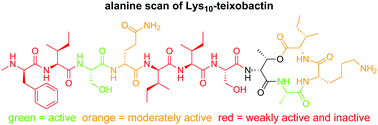
K. H. Chen, S. P. Le, X. Han, J. M. Frias, J. S. Nowick
An alanine scan reveals the tolerance of amino acids in teixobactin toward substitution.
The content of this RSS Feed (c) The Royal Society of Chemistry

21 Sep 19:56
by Shuaishuai Ni, Hanwen Wei, Baoli Li, Feifei Chen, Yifu Liu, Wenhua Chen, Yixiang Xu, Xiaoxia Qiu, Xiaokang Li, Yanli Lu, Wenwen Liu, Linhao Hu, Dazheng Lin, Manjiong Wang, Xinyu Zheng, Fei Mao, Jin Zhu, Lefu Lan and Jian Li

Journal of Medicinal Chemistry
DOI: 10.1021/acs.jmedchem.7b00949

21 Sep 19:29
by Lin-Ya Huang, Shih-Chi Wang, Ting-Jen R. Cheng and Chi-Huey Wong

Biochemistry
DOI: 10.1021/acs.biochem.7b00603

21 Sep 19:02
by Stephanie A. Ragland
by Stephanie A. Ragland, Alison K. Criss
Lysozyme is a cornerstone of innate immunity. The canonical mechanism for bacterial killing by lysozyme occurs through the hydrolysis of cell wall peptidoglycan (PG). Conventional type (c-type) lysozymes are also highly cationic and can kill certain bacteria independently of PG hydrolytic activity. Reflecting the ongoing arms race between host and invading microorganisms, both gram-positive and gram-negative bacteria have evolved mechanisms to thwart killing by lysozyme. In addition to its direct antimicrobial role, more recent evidence has shown that lysozyme modulates the host immune response to infection. The degradation and lysis of bacteria by lysozyme enhance the release of bacterial products, including PG, that activate pattern recognition receptors in host cells. Yet paradoxically, lysozyme is important for the resolution of inflammation at mucosal sites. This review will highlight recent advances in our understanding of the diverse mechanisms that bacteria use to protect themselves against lysozyme, the intriguing immunomodulatory function of lysozyme, and the relationship between these features in the context of infection.

21 Sep 19:01
by Niu, D., Wei, H.-J., Lin, L., George, H., Wang, T., Lee, I.-H., Zhao, H.-Y., Wang, Y., Kan, Y., Shrock, E., Lesha, E., Wang, G., Luo, Y., Qing, Y., Jiao, D., Zhao, H., Zhou, X., Wang, S., Wei, H., Güell, M., Church, G. M., Yang, L.
Xenotransplantation is a promising strategy to alleviate the shortage of organs for human transplantation. In addition to the concerns about pig-to-human immunological compatibility, the risk of cross-species transmission of porcine endogenous retroviruses (PERVs) has impeded the clinical application of this approach. We previously demonstrated the feasibility of inactivating PERV activity in an immortalized pig cell line. We now confirm that PERVs infect human cells, and we observe the horizontal transfer of PERVs among human cells. Using CRISPR-Cas9, we inactivated all of the PERVs in a porcine primary cell line and generated PERV-inactivated pigs via somatic cell nuclear transfer. Our study highlights the value of PERV inactivation to prevent cross-species viral transmission and demonstrates the successful production of PERV-inactivated animals to address the safety concern in clinical xenotransplantation.
21 Sep 14:26
by Kenneth M. Lum, Yoshiaki Sato, Brittney A. Beyer, Warren C. Plaisted, Justin L. Anglin, Luke L. Lairson and Benjamin F. Cravatt

ACS Chemical Biology
DOI: 10.1021/acschembio.7b00581

19 Sep 19:25
by Chan, J. M., Dillard, J. P.
Maintenance of the structural macromolecule peptidoglycan (PG), which involves regulated cycles of PG synthesis and PG degradation, is pivotal for cellular integrity and survival. PG fragments generated from the degradation process are usually efficiently recycled by Gram-negative bacteria. However, Neisseria gonorrhoeae and a limited number of Gram-negative bacteria release PG fragments in amounts sufficient to induce host tissue inflammation and damage during an infection. Due to limited redundancy in PG-modifying machineries and genetic tractability, N. gonorrhoeae serves as a great model organism for the study of biological processes related to PG. This review summarizes the generation, modification, and release of inflammatory PG molecules by N. gonorrhoeae and related species and discusses these findings in the context of understanding bacterial physiology and pathogenesis.
19 Sep 01:38
by Mingxin Dong, Amirhossein Babalhavaeji, Catherine V. Collins, Kareem Jarrah, Oleg Sadovski, Qiuyun Dai and G. Andrew Woolley

Journal of the American Chemical Society
DOI: 10.1021/jacs.7b06471

15 Sep 14:05
by Abdullah Akbar, Nicole M. R. McNeil, Marie R. Albert, Viviane Ta, Gautam Adhikary, Karine Bourgeois, Richard L. Eckert and Jeffrey W. Keillor

Journal of Medicinal Chemistry
DOI: 10.1021/acs.jmedchem.7b01070

15 Sep 14:03
by Geller, L. T., Barzily-Rokni, M., Danino, T., Jonas, O. H., Shental, N., Nejman, D., Gavert, N., Zwang, Y., Cooper, Z. A., Shee, K., Thaiss, C. A., Reuben, A., Livny, J., Avraham, R., Frederick, D. T., Ligorio, M., Chatman, K., Johnston, S. E., Mosher, C. M., Brandis, A., Fuks, G., Gurbatri, C., Gopalakrishnan, V., Kim, M., Hurd, M. W., Katz, M., Fleming, J., Maitra, A., Smith, D. A., Skalak, M., Bu, J., Michaud, M., Trauger, S. A., Barshack, I., Golan, T., Sandbank, J., Flaherty, K. T., Mandinova, A., Garrett, W. S., Thayer, S. P., Ferrone, C. R., Huttenhower, C., Bhatia, S. N., Gevers, D., Wargo, J. A., Golub, T. R., Straussman, R.
Growing evidence suggests that microbes can influence the efficacy of cancer therapies. By studying colon cancer models, we found that bacteria can metabolize the chemotherapeutic drug gemcitabine (2',2'-difluorodeoxycytidine) into its inactive form, 2',2'-difluorodeoxyuridine. Metabolism was dependent on the expression of a long isoform of the bacterial enzyme cytidine deaminase (CDDL), seen primarily in Gammaproteobacteria. In a colon cancer mouse model, gemcitabine resistance was induced by intratumor Gammaproteobacteria, dependent on bacterial CDDL expression, and abrogated by cotreatment with the antibiotic ciprofloxacin. Gemcitabine is commonly used to treat pancreatic ductal adenocarcinoma (PDAC), and we hypothesized that intratumor bacteria might contribute to drug resistance of these tumors. Consistent with this possibility, we found that of the 113 human PDACs that were tested, 86 (76%) were positive for bacteria, mainly Gammaproteobacteria.
15 Sep 14:02
by Elizabeth A. Grossman, Carl C. Ward, Jessica N. Spradlin, Leslie A. Bateman, Tucker R. Huffman, David K. Miyamoto, Jordan I. Kleinman, Daniel K. Nomura
Many natural products exhibit therapeutic activity, but translating these molecules into drugs is hindered by difficulty in their synthesis and isolation. Grossman, Ward et al. show that chemoproteomic technologies can be used to discover simpler molecules that react with the same sites as those targeted by natural products.
13 Sep 19:13
by Masao Ohashi
Nature advance online publication 13 September 2017. doi:10.1038/nature23882
Authors: Masao Ohashi, Fang Liu, Yang Hai, Mengbin Chen, Man-cheng Tang, Zhongyue Yang, Michio Sato, Kenji Watanabe, K. N. Houk & Yi Tang
Pericyclic reactions—which proceed in a concerted fashion through a cyclic transition state—are among the most powerful synthetic transformations used to make multiple regioselective and stereoselective carbon–carbon bonds. They have been widely applied to the synthesis of biologically active complex natural products containing contiguous stereogenic carbon centres. Despite the prominence of pericyclic reactions in total synthesis, only three naturally existing enzymatic examples (the intramolecular Diels–Alder reaction, and the Cope and the Claisen rearrangements) have been characterized. Here we report a versatile S-adenosyl-l-methionine (SAM)-dependent enzyme, LepI, that can catalyse stereoselective dehydration followed by three pericyclic transformations: intramolecular Diels–Alder and hetero-Diels–Alder reactions via a single ambimodal transition state, and a retro-Claisen rearrangement. Together, these transformations lead to the formation of the dihydropyran core of the fungal natural product, leporin. Combined in vitro enzymatic characterization and computational studies provide insight into how LepI regulates these bifurcating biosynthetic reaction pathways by using SAM as the cofactor. These pathways converge to the desired biosynthetic end product via the (SAM-dependent) retro-Claisen rearrangement catalysed by LepI. We expect that more pericyclic biosynthetic enzymatic transformations remain to be discovered in naturally occurring enzyme ‘toolboxes’. The new role of the versatile cofactor SAM is likely to be found in other examples of enzyme catalysis.

13 Sep 12:57
by Joyce Wang, Betsy Foxman, Lona Mody, Evan S. Snitkin
The emergence and spread of multidrug-resistant organisms (MDROs) across global healthcare networks poses a serious threat to hospitalized individuals. Strategies to limit the emergence and spread of MDROs include oversight to decrease selective pressure for MDROs by promoting appropriate antibiotic use via antibiotic stewardship programs. However, restricting the use of...
12 Sep 17:56
by Karthik R. Chamakura
A viral protein antibiotic inhibits lipid II flippase activity
Nature Microbiology, Published online: 11 September 2017; doi:10.1038/s41564-017-0023-4
LysM, the lysis protein of the Escherichia coli levivirus M, represents a new ‘protein antibiotic’ that interferes with the synthesis of peptidoglycan by inhibiting lipid II flipping.

12 Sep 17:55
by Brian F. Fisher, Seong Ho Hong and Samuel H. Gellman

Journal of the American Chemical Society
DOI: 10.1021/jacs.7b07930

12 Sep 11:53
by Meiresonne, N. Y., van der Ploeg, R., Hink, M. A., den Blaauwen, T., Sogaard-Andersen, L.
ABSTRACT
One of the mechanisms of β-lactam antibiotic resistance requires the activity of d,d-carboxypeptidases (d,d-CPases) involved in peptidoglycan (PG) synthesis, making them putative targets for new antibiotic development. The activity of PG-synthesizing enzymes is often correlated with their association with other proteins. The PG layer is maintained in the periplasm between the two membranes of the Gram-negative cell envelope. Because no methods existed to detect in vivo interactions in this compartment, we have developed and validated a Förster resonance energy transfer assay. Using the fluorescent-protein donor-acceptor pair mNeonGreen-mCherry, periplasmic protein interactions were detected in fixed and in living bacteria, in single samples or in plate reader 96-well format. We show that the d,d-CPases PBP5, PBP6a, and PBP6b of Escherichia coli change dimer conformation between resting and active states. Complementation studies and changes in localization suggest that these d,d-CPases are not redundant but that their balanced activity is required for robust PG synthesis.
IMPORTANCE The periplasmic space between the outer and the inner membrane of Gram-negative bacteria contains many essential regulatory, transport, and cell wall-synthesizing and -hydrolyzing proteins. To date, no assay is available to determine protein interactions in this compartment. We have developed a periplasmic protein interaction assay for living and fixed bacteria in single samples or 96-well-plate format. Using this assay, we were able to demonstrate conformation changes related to the activity of proteins that could not have been detected by any other living-cell method available. The assay uniquely expands our toolbox for antibiotic screening and mode-of-action studies.
12 Sep 11:51
by Mathieu F. Chellat, Rainer Riedl

Seek, and ye shall find: After years of focusing research on synthetic antibiotics out of fear that all the useful natural ones had already been found, a novel antibacterial compound has been discovered through conventional microbial extract screening. The broad-spectrum nucleoside-analogue inhibitor pseudouridimycin is selective for bacterial RNA polymerase and elicits very low resistance rates.
07 Sep 13:41
by Katarzyna Magiera-Mularz, Lukasz Skalniak, Krzysztof M. Zak, Bogdan Musielak, Ewa Rudzinska-Szostak, Łukasz Berlicki, Justyna Kocik, Przemyslaw Grudnik, Dominik Sala, Tryfonas Zizigas-Zarganis, Shabnam Shaabani, Alexander Dömling, Grzegorz Dubin, Tad A. Holak
Abstract
Blockade of the immunoinhibitory PD-1/PD-L1 pathway using monoclonal antibodies has shown impressive results with durable clinical antitumor responses. Anti-PD-1 and anti-PD-L1 antibodies have now been approved for the treatment of a number of tumor types, whereas the development of small molecules targeting immune checkpoints lags far behind. We characterized two classes of macrocyclic-peptide inhibitors directed at the PD-1/PD-L1 pathway. We show that these macrocyclic compounds act by directly binding to PD-L1 and that they are capable of antagonizing PD-L1 signaling and, similarly to antibodies, can restore the function of T-cells. We also provide the crystal structures of two of these small-molecule inhibitors bound to PD-L1. The structures provide a rationale for the checkpoint inhibition by these small molecules, and a description of their small molecule/PD-L1 interfaces provides a blueprint for the design of small-molecule inhibitors of the PD-1/PD-L1 pathway.

Circle of life: Macrocyclic peptide inhibitors can block the PD-1/PD-L1 pathway by directly binding to PD-L1, and similarly to anti-PD-L1 antibodies, they can restore the function of T-cells. Structures of the macrocycle/PD-L1 interfaces provide a foundation for the design of small-molecule inhibitors with antitumor properties.
06 Sep 18:55
by Matthew J. Langton, Lorel M. Scriven, Nicholas H. Williams and Christopher A. Hunter

Journal of the American Chemical Society
DOI: 10.1021/jacs.7b07747

06 Sep 17:31
by Wei Mi
Nature advance online publication 06 September 2017. doi:10.1038/nature23649
Authors: Wei Mi, Yanyan Li, Sung Hwan Yoon, Robert K. Ernst, Thomas Walz & Maofu Liao

05 Sep 13:04
by Eleanor Silvester
Interspecies quorum sensing in co-infections can manipulate trypanosome transmission potential
Nature Microbiology, Published online: 4 September 2017; doi:10.1038/s41564-017-0014-5
Quorum-sensing-mediated interactions between Trypanosoma congolense and Trypanosoma brucei promote the differentiation of T. brucei into transmissible ‘stumpy forms’, suggesting that cross-species interactions during co-infections modulate disease dynamics.

02 Sep 18:45
by Marya Ahmed and Shana O. Kelley

ACS Chemical Biology
DOI: 10.1021/acschembio.7b00540

01 Sep 14:23
by Angela Casillo, Marcello Ziaco, Buko Lindner, Ermenegilda Parrilli, Dominik Schwudke, Aurora Holgado, Lynn Verstrepen, Filomena Sannino, Rudi Beyaert, Rosa Lanzetta, Maria Luisa Tutino, Maria Michela Corsaro

The back cover picture shows one of the strategies for counteracting the cold stress adopted from the Arctic isolate Colwellia psychrerythraea 34H. Bacteria thriving in cold habitats have developed various mechanisms to avoid the cells freezing. Some of these strategies involve outer-membrane (OM) molecules such as lipopolysaccharides. These molecules are embedded in the OM through their glycolipid portion and, together with phospholipids, are devoted to maintaining the fluidity of the membrane. We have completely characterised the lipid A portion of the lipopolysaccharide from Colwellia, a contribution to the elucidation of the structure–function relationship for these molecules isolated from psychrophiles. More information can be found in the full paper by A. Casillo, M. M. Corsaro et al. on page 1845 in Issue 18, 2017 (DOI: 10.1002/cbic.201700287).
01 Sep 14:23
by Joseph P. Gerdt, Danielle M. Wittenwyler, Joshua B. Combs, Michelle E. Boursier, Jacob W. Brummond, He Xu and Helen E. Blackwell

ACS Chemical Biology
DOI: 10.1021/acschembio.7b00458

   This article is licensed under a Creative Commons Attribution 3.0 Unported Licence.