Shared posts

05 Jul 00:24

Design, Synthesis, and Evaluation of a Low-Molecular-Weight 11C-Labeled Tetrazine for Pretargeted PET Imaging Applying Bioorthogonal in Vivo Click Chemistry

by Christoph Denk, Dennis Svatunek, Severin Mairinger, Johann Stanek, Thomas Filip, Dominik Matscheko, Claudia Kuntner, Thomas Wanek and Hannes Mikula

TOC Graphic

Bioconjugate Chemistry
DOI: 10.1021/acs.bioconjchem.6b00234
30 Jun 19:24

Triggered Drug Release from an Antibody–Drug Conjugate Using Fast “Click-to-Release” Chemistry in Mice

by Raffaella Rossin, Sander M. J. van Duijnhoven, Wolter ten Hoeve, Henk M. Janssen, Freek J. M. Hoeben, Ron M. Versteegen and Marc S. Robillard

TOC Graphic

Bioconjugate Chemistry
DOI: 10.1021/acs.bioconjchem.6b00231
30 Jun 15:11

Resistance to antibiotics and to immune system are interconnected in bacteria

Antibiotics and the immune system are the two forces that cope with bacterial infections. Now, two studies from Isabel Gordo's laboratory, at Instituto Gulbenkian de Ciência (IGC, Portugal), show for the first time that resistance to antibiotics and to the immune system is interconnected in bacteria. The researchers further discovered that bacteria adaptation to the immune system influences the spectrum of antibiotic resistance and, as a side effect, bacteria become more resistant to some antibiotics, but also more sensitive to other classes of antibiotics. These results were now published in the scientific journals Antimicrobial Agents and Chemotherapy and Evolutionary Applications.
26 Jun 20:32

Lab Mice Are Poor Models of the Human Immune System

by Esther Landhuis
But housing ultraclean lab rodents with “dirty” mice from pet stores could help

-- Read more on ScientificAmerican.com
20 Jun 15:01

Progress and prospects for small-molecule probes of bacterial imaging

by Ozden Kocaoglu

Nature Chemical Biology 12, 472 (2016). doi:10.1038/nchembio.2109

Authors: Ozden Kocaoglu & Erin E Carlson

20 Jun 12:22

Supramolecular Antibiotic Switches: A Potential Strategy for Combating Drug Resistance

by Haotian Bai, Fengting Lv, Libing Liu, Shu Wang

Abstract

Bacterial infectious disease is a serious public health concern throughout the world. Pathogen drug resistance, arising from both rational use and abuse/misuse of germicides, complicates the situation. Aside from developing novel antibiotics and antimicrobial agents, molecular approaches have become another significant method to overcome the problem of pathogen drug resistance. Established supramolecular systems, the antibiotic properties of which can be switched “on” and “off” through host–guest interactions, show great potential in combating issues regarding antibiotic resistance in the long term, as indicated by several recent studies. In this Concept, recently developed strategies for antibacterial regulation are summarized and further directions for research into antibiotic switches are proposed.

Thumbnail image of graphical abstract

99 problems but a switch ain't one: Bacterial infectious disease is a serious public health concern throughout the world. Supramolecular antibiotic systems that can be switched “on” and “off” through host–guest interactions show great potential in combating issues regarding antibiotic resistance in the long term. In this Concept, recently developed strategies for antibacterial regulation are summarized and further research directions are proposed.

20 Jun 12:10

Host-mediated sugar oxidation promotes post-antibiotic pathogen expansion

by Franziska Faber

Nature advance online publication 15 June 2016. doi:10.1038/nature18597

Authors: Franziska Faber, Lisa Tran, Mariana X. Byndloss, Christopher A. Lopez, Eric M. Velazquez, Tobias Kerrinnes, Sean-Paul Nuccio, Tamding Wangdi, Oliver Fiehn, Renée M. Tsolis & Andreas J. Bäumler

Changes in the gut microbiota may underpin many human diseases, but the mechanisms that are responsible for altering microbial communities remain poorly understood. Antibiotic usage elevates the risk of contracting gastroenteritis caused by Salmonella enterica serovars, increases the duration for which patients shed the pathogen in their faeces, and may on occasion produce a bacteriologic and symptomatic relapse. These antibiotic-induced changes in the gut microbiota can be studied in mice, in which the disruption of a balanced microbial community by treatment with the antibiotic streptomycin leads to an expansion of S. enterica serovars in the large bowel. However, the mechanisms by which streptomycin treatment drives an expansion of S. enterica serovars are not fully resolved. Here we show that host-mediated oxidation of galactose and glucose promotes post-antibiotic expansion of S. enterica serovar Typhimurium (S. Typhimurium). By elevating expression of the gene encoding inducible nitric oxide synthase (iNOS) in the caecal mucosa, streptomycin treatment increased post-antibiotic availability of the oxidation products galactarate and glucarate in the murine caecum. S. Typhimurium used galactarate and glucarate within the gut lumen of streptomycin pre-treated mice, and genetic ablation of the respective catabolic pathways reduced S. Typhimurium competitiveness. Our results identify host-mediated oxidation of carbohydrates in the gut as a mechanism for post-antibiotic pathogen expansion.

20 Jun 11:07

Glycoengineered OMVs elicit protective antibodies [Applied Biological Sciences]

by Chen, L., Valentine, J. L., Huang, C.-J., Endicott, C. E., Moeller, T. D., Rasmussen, J. A., Fletcher, J. R., Boll, J. M., Rosenthal, J. A., Dobruchowska, J., Wang, Z., Heiss, C., Azadi, P., Putnam, D., Trent, M. S., Jones, B. D., DeLisa, M. P.
The O-antigen polysaccharide (O-PS) component of lipopolysaccharides on the surface of gram-negative bacteria is both a virulence factor and a B-cell antigen. Antibodies elicited by O-PS often confer protection against infection; therefore, O-PS glycoconjugate vaccines have proven useful against a number of different pathogenic bacteria. However, conventional methods for natural...
19 Jun 17:00

Helical Foldamers Incorporating Photoswitchable Residues for Light-Mediated Modulation of Conformational Preference

by Daniela Mazzier, Marco Crisma, Matteo De Poli, Giulia Marafon, Cristina Peggion, Jonathan Clayden and Alessandro Moretto

TOC Graphic

Journal of the American Chemical Society
DOI: 10.1021/jacs.6b04435
17 Jun 16:16

Classic Spotlight: Cellular Sites of Peptidoglycan Synthesis Revealed [Editorials]

by de Boer, P. A. J.
15 Jun 16:10

A luciferin analogue generating near-infrared bioluminescence achieves highly sensitive deep-tissue imaging

by Takahiro Kuchimaru

Article

D -luciferin is the standard bioluminescent substrate for in vitro and in vivo imaging. Here the authors introduce AkaLumine-HCl, a soluble luciferin analogue with a near-infrared emission maximum, which allows deep tissue imaging at lower concentrations than D -luciferin.

Nature Communications doi: 10.1038/ncomms11856

Authors: Takahiro Kuchimaru, Satoshi Iwano, Masahiro Kiyama, Shun Mitsumata, Tetsuya Kadonosono, Haruki Niwa, Shojiro Maki, Shinae Kizaka-Kondoh

15 Jun 16:05

Imaging and therapeutic applications of zinc(II)-dipicolylamine molecular probes for anionic biomembranes

Chem. Commun., 2016, 52,8787-8801
DOI: 10.1039/C6CC03669D, Feature Article
Douglas R. Rice, Kasey J. Clear, Bradley D. Smith
Synthetic ZnDPA receptors are used for molecular imaging of disease and targeted therapeutics.
The content of this RSS Feed (c) The Royal Society of Chemistry
07 Jun 00:03

A Visual Guide to Antibiotic Resistance

by Amanda Montañez
Illustration breaks down the microscopic mechanisms behind a global threat

-- Read more on ScientificAmerican.com
03 Jun 00:23

Engineering Gram Selectivity of Mixed-Charge Gold Nanoparticles by Tuning the Balance of Surface Charges

by Pramod P. Pillai, Bartlomiej Kowalczyk, Kristiana Kandere-Grzybowska, Magdalena Borkowska, Bartosz A. Grzybowski

Abstract

Nanoparticles covered with ligand shells comprising both positively and negatively charged ligands exhibit Gram-selective antibacterial action controlled by a single experimental parameter, namely the proportion of [+] and [−] ligands tethered onto these particles. Gram selectivity is attributed to the interplay between polyvalent electrostatic and non-covalent interactions that work in unison to disrupt the bacterial cell wall. The [+/−] nanoparticles are effective in low doses, are non-toxic to mammalian cells, and are tolerated well in mice. These results constitute the first example of rational engineering of Gram selectivity at the (macro)molecular level.

Thumbnail image of graphical abstract

Gram-specific antimicrobial activity: Nanoparticles covered with mixtures of negatively and positively charged ligands in optimal proportions exhibit antibiotic properties that can be engineered specific to either Gram-positive or Gram-negative bacteria. Arrows in the experimental images point to the places at which the particles rupture the bacterial cell wall.

02 Jun 11:42

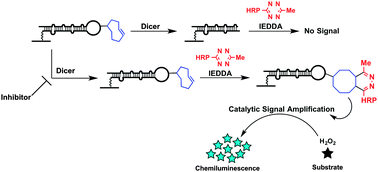
A click chemistry-based microRNA maturation assay optimized for high-throughput screening

Chem. Commun., 2016, 52,8267-8270
DOI: 10.1039/C6CC02894B, Communication
Daniel A. Lorenz, Amanda L. Garner
A catalytic enzyme-linked click chemistry assay (cat-ELCCA) for Dicer-catalyzed pre-microRNA maturation was optimized to employ inverse-electron demand Diels-Alder (IEDDA) chemistry affording high-throughput screening capability.
The content of this RSS Feed (c) The Royal Society of Chemistry
01 Jun 13:55

Carolyn Bertozzi: Glycan Chemist

Bertozzi opens visual windows onto complex sugars on and inside living cells.
27 May 20:10

Superbug resistant to last resort antibiotic identified in the US

Researchers have identified a transferrable gene for colistin resistance in the U.S. that may mean the “end of the road” for antibiotics.
27 May 12:49

Gut microbiota, metabolites and host immunity

by Michelle G. Rooks

Nature Reviews Immunology 16, 341 (2016). doi:10.1038/nri.2016.42

Authors: Michelle G. Rooks & Wendy S. Garrett

The microbiota — the collection of microorganisms that live within and on all mammals — provides crucial signals for the development and function of the immune system. Increased availability of technologies that profile microbial communities is facilitating the entry of many immunologists into the evolving

26 May 23:42

Promiscuity in the Enzymatic Catalysis of Phosphate and Sulfate Transfer

by Anna Pabis, Fernanda Duarte and Shina C. L. Kamerlin

TOC Graphic

Biochemistry
DOI: 10.1021/acs.biochem.6b00297
26 May 12:07

Insight into bacterial cell division could lead to advancements in the fight against harmful bacteria

Escherichia coli (E. coli) are bacteria that live all around and inside of us. Most E. coli are harmless, but some strains can cause illness, and can even, in extreme cases, be deadly. With recent outbreaks of E. coli around the world, there is a fear of acquiring an infection from these bacteria. An important component of fighting these kinds of bad bacteria is a better understanding of how bacteria divide and multiply. In each bacterium, a large protein complex – called the divisome – governs cell division. The divisome assembles in the middle of the cell to divide the cell and later disassembles to recycle the proteins.
25 May 16:37

A Small-Molecule Screening Platform for the Discovery of Inhibitors of Undecaprenyl Diphosphate Synthase

by Tomasz L. Czarny and Eric D. Brown

TOC Graphic

ACS Infectious Diseases
DOI: 10.1021/acsinfecdis.6b00044
25 May 16:36

Treatment of Gram-negative bacterial infections by potentiation of antibiotics

Publication date: October 2016
Source:Current Opinion in Microbiology, Volume 33
Author(s): Thomas P Zabawa, Michael J Pucci, Thomas R Parr, Troy Lister
Infections caused by antibiotic-resistant pathogens, particularly Gram-negative bacteria, represent significant treatment challenges for physicians resulting in high rates of morbidity and mortality. The outer membrane of Gram-negative bacteria acts as a permeability barrier to many compounds that would otherwise be effective antibacterial agents, including those effective against Gram-positive pathogens. Potentiator molecules disrupt this barrier allowing entry of otherwise impermeant molecules, thus providing a strategy to render multi-drug resistant pathogens susceptible to a broader range of antibiotics. Potentiator molecules are cationic and the mechanism of disruption involves interaction with the negatively charged outer membrane. This physical attribute, along with an often high degree of lipophilicity typically endears these molecules with unacceptable toxicity. Presented herein are examples of advanced potentiator molecules being evaluated for use in combination therapy for the treatment of resistant Gram-negative infections.

Graphical abstract

image
24 May 20:40

New Red-Emitting Tetrazine-Phenoxazine Fluorogenic Labels for Live-Cell Intracellular Bioorthogonal Labeling Schemes

by Gergely Knorr, Eszter Kozma, András Herner, Edward A. Lemke, Péter Kele

Abstract

The synthesis of a set of tetrazine-bearing fluorogenic dyes suitable for intracellular labeling of proteins in live cells is presented. The red excitability and emission properties ensure minimal autofluorescence, while through-bond energy-transfer-based fluorogenicity reduces nonspecific background fluorescence of unreacted dyes. The tetrazine motif efficiently quenches fluorescence of the phenoxazine core, which can be selectively turned on chemically upon bioorthogonal inverse-electron-demand Diels–Alder reaction with proteins modified genetically with strained trans-cyclooctenes.

Thumbnail image of graphical abstract

Put a tag on it: The synthesis and bioorthogonal labeling potential of a set of tetrazine-based fluorogenic dyes suitable for intracellular labeling of proteins in live cells is presented (see figure). The red excitability and emission properties ensure minimal autofluorescence, while the through-bond energy-transfer-based fluorogenicity reduces nonspecific background fluorescence of unreacted dyes.

22 May 21:18

White House announces microbiome initiative

by Elizabeth K. Wilson
Half a billion will go toward studying microbe communities on Earth
21 May 14:36

18F-Labeling of Mannan for Inflammation Research with Positron Emission Tomography

by Xiang-Guo Li, Cecilia Hagert, Riikka Siitonen, Helena Virtanen, Outi Sareila, Heidi Liljenbäck, Jouni Tuisku, Juhani Knuuti, Jörgen Bergman, Rikard Holmdahl and Anne Roivainen

TOC Graphic

ACS Medicinal Chemistry Letters
DOI: 10.1021/acsmedchemlett.6b00160
20 May 19:19

Multifaceted molecule casts a universal glow on cell surfaces

by Erika Gebel Berg
A new fluorescent probe binds to and illuminates the surfaces of bacterial, fungal, and mammalian cells
20 May 14:20

Total Synthesis of Teixobactin

by Andrew M. Giltrap, Luke J. Dowman, Gayathri Nagalingam, Jessica L. Ochoa, Roger G. Linington, Warwick J. Britton and Richard J. Payne

TOC Graphic

Organic Letters
DOI: 10.1021/acs.orglett.6b01324
18 May 20:34

Click-EM for imaging metabolically tagged nonprotein biomolecules

by John T Ngo

Nature Chemical Biology 12, 459 (2016). doi:10.1038/nchembio.2076

Authors: John T Ngo, Stephen R Adams, Thomas J Deerinck, Daniela Boassa, Frances Rodriguez-Rivera, Sakina F Palida, Carolyn R Bertozzi, Mark H Ellisman & Roger Y Tsien

17 May 20:22

An “Unlikely” Pair: The Antimicrobial Synergy of Polymyxin B in Combination with the Cystic Fibrosis Transmembrane Conductance Regulator Drugs KALYDECO and ORKAMBI

by Elena K. Schneider, Mohammad A. K. Azad, Mei-Ling Han, Qi (Tony) Zhou, Jiping Wang, Johnny X. Huang, Matthew A. Cooper, Yohei Doi, Mark A. Baker, Phillip J. Bergen, Mark T. Muller, Jian Li and Tony Velkov

TOC Graphic

ACS Infectious Diseases
DOI: 10.1021/acsinfecdis.6b00035
15 May 12:16

Review stapling peptides using cysteine crosslinking

by David P. Fairlie, Aline Dantas de Araujo

Abstract

Stapled peptides are an emerging class of cyclic peptide molecules with enhanced biophysical properties such as conformational and proteolytic stability, cellular uptake and elevated binding affinity and specificity for their biological targets. Among the limited number of chemistries available for their synthesis, the cysteine-based stapling strategy has received considerable development in the last few years driven by facile access from cysteine-functionalized peptide precursors. Here we present some recent advances in peptide and protein stapling where the side-chains of cysteine residues are covalently connected with a range of different crosslinkers affording bisthioether macrocyclic peptides of varying topology and biophysical properties. © 2016 Wiley Periodicals, Inc. Biopolymers (Pept Sci) 106: 843–852, 2016.