R.P. Aditya
Shared posts
First Woman Drafted in N.B.A. Avoids Coronavirus, but Not Its Frustrations

Physics Travel Guide – Physics concepts explained in three levels of difficulty
Article URL: https://physicstravelguide.com
Comments URL: https://news.ycombinator.com/item?id=22757466
Points: 402
# Comments: 35
Here Are Lists (and a Map!) of Farmers Market Alternatives

A Forest Submerged 60,000 Years Ago Could Save Your Life One Day

Philadelphia Hospital to Stay Closed After Owner Requests Nearly $1 Million a Month
R.P. Adityathanks for nature!

They Survived the Spanish Flu, the Depression and the Holocaust

The Scientific Sorcery of Radiocarbon Dating
Several years ago, I went back to Chicago to see some old friends: artifacts, really—ancient sandals to be precise.
The sandals were at the Field Museum of Natural History in Chicago, Illinois, where I worked in the early 2000s. They had been found in Tularosa Cave, New Mexico, in 1950, and their construction from reed matting made clear they were from early Indigenous people of that region, a group that archaeologists call the Mogollon (pronounced MOH’-gee-yoan). But I wanted to know exactly how old they were, so I was returning to collect samples for radiocarbon dating.
Back in the museum’s Room 38, a cavernous space that once hosted my office, I took each of a dozen sandal fragments out of their protective, archive-quality packages. I carefully turned them around in my gloved hands, searching for a discrete place from which to cut a small, 15-milligram-size piece (smaller than your pinky fingernail). I packed each sample into a small packet, filled out some paperwork, and sent them off to a laboratory for processing. Several days later—voila! I got the results. The oldest sandal dated to 1,710 ± 40 radiocarbon years before present.
Radiocarbon dating is an astonishing thing. On the surface, it seems so simple: submit samples and get dates! But there is a long and fascinating history behind this seemingly magical technology, and the answers it spits out are not always as clear-cut as they seem.

The origins of radiocarbon dating trace back to chemists, including Harold Urey (pictured), and the Manhattan Project. U.S. Department of Energy/Flickr
The technique holds a special place in my heart. Maybe it’s because, as an archaeologist interested in determining the age of things, radiocarbon dating is astonishingly useful. Perhaps it’s because I grew up on the University of Chicago campus, which played a vital role in the origins of radiocarbon research. Or maybe it’s because the history and application of radiocarbon dating has everything that fascinates me about the history of science: award-winning scientists, unexpected glitches, and startling revelations.
The story begins on December 8, 1941, a day after the Japanese bombed Pearl Harbor. In response to that horrific event, physical chemist Willard Libby of the University of California, Berkeley, decided to join the war effort by offering his services to physical chemist Harold Urey of Columbia University, whose lab was studying different radioactive atoms, including uranium. (Urey won the Nobel Prize in chemistry in 1934 for his discovery of deuterium, a heavy version of hydrogen.) Urey would soon be heading part of the research for the Manhattan Project, the massive effort to develop an atomic bomb before the Germans or Japanese did. Urey accepted Libby’s offer, and Libby moved to New York.
In the meantime, something remarkable happened on the south side of Chicago, just a few short miles south of the Field Museum. On December 2, 1942, in a squash court (you read right!) underneath the athletic stands at the University of Chicago’s Stagg Field, physicist Enrico Fermi oversaw the first controlled and Everything with carbon in it—from your lunch to yourself—has a little radioactive carbon in it.
sustained nuclear chain reaction in the blandly named Chicago Pile-1, a huge block of material consisting of about 770,000 pounds of graphite, more than 80,000 pounds of uranium oxide, and more than 12,000 pounds of uranium. In plain English, Chicago Pile-1 was a nuclear reactor. That experiment paved the way for America’s entry into the nuclear age.
At the end of the war, Libby left Columbia to join Fermi’s lab in Chicago. There he really began to focus on carbon and its remarkable properties. In 1946, Libby published a short letter to the editor of Physical Review in which he pointed out that, based on his research and that of others, there should be a difference between the amount of radioactive carbon in dead and fossilized organisms when compared to modern, living organisms. That insight marked the birth of radiocarbon dating.
Every moment of every day, cosmic rays bombard Earth’s upper atmosphere. Those cosmic rays interact with nitrogen atoms to produce atoms of radioactive carbon-14 (also written as 14C). There’s just a tiny amount (about one in a trillion) of this kind of carbon atom when compared to the amount of nonradioactive 13C and 12C atoms on the planet. But this tiny scattering of 14C gets everywhere: It mixes up in the air, which is soaked up by plants, which are eaten by animals, and so on up the food chain.
Everything with carbon in it—from your lunch to yourself—has a little radioactive carbon in it. That radioactive carbon is in equilibrium with the environment around it. As Libby realized, when those things die, the process of absorbing any new radioactive 14C stops, and however much radioactive 14C was there starts to decay. The longer a thing has been dead, the less 14C it has left in it.
The half-life of 14C is 5,730 ± 40 years. That means that after 5,730 years, half of the 14C in any given object will have decayed. After another 5,730 years, half of that remaining 14C will have decayed too, so there is a quarter of the original amount, and so on. To derive a radiocarbon age for an archaeological sample, a scientist simply measures the amount of radioactive 14C remaining and calculates how many years it has been since that organism died.
That’s absolutely amazing. But it isn’t actually quite so simple.
Physicists, including Libby, initially assumed that 14C was spread uniformly around the planet. But it’s not. That can have a dramatic effect on radiocarbon dating. Take modern shellfish from coastal Peru, for example: Their radiocarbon date suggests that they’re about 400 years old. Are they related to Rip Van Winkle? No! As remarkable as it may be, they seem that old because they are ingesting seawater that has been on a 400-year trip from its time at the surface in the North Atlantic, where it soaked up its original content of 14C. These mollusks look as old as the water they eat (or, more accurately, filter).

Burning fossil fuels injects old carbon, deprived of carbon-14, into the atmosphere. Gerry Machen/Flickr
Carbon-14 production also isn’t constant over time. Scientists now know that 14C production depends on sunspot flares, changes in the intensity of the earth’s magnetic field, and other geophysical phenomena. Ever since the Industrial Revolution, people have been flooding the atmosphere with old, 14C-deficient carbon by burning fossil fuels. Then there was the nuclear bomb. From 1950 to 1964, the United States, the Soviet Union, and other countries conducted above-ground nuclear tests that injected an abundance of radioactivity into the upper atmosphere. These are some of the reasons that radiocarbon dating isn’t used on objects less than about 300 years old.
Scientists have had to continually tweak and twiddle the conversion equations that tell archaeologists like me how old an object is based on its radiocarbon date. There are rules and calibrations unique to marine life from one ocean to another, from one hemisphere to another, and from different material types—from bones to plants to freshwater clamshells. Researchers keep learning weird and wonderful ways that radiocarbon dates can be “wrong” and how to correct for those errors. Indeed, scientists continuously update the calibration curves that are used to convert radiocarbon “years” to calendar years because the two are not the same.
Remember that sandal from Tularosa Cave that was dated to 1,710 ± 40 radiocarbon years old? Because of all these complicated factors, I had to convert that radiocarbon “date” to calendar years. Scientists have developed a calibration curve based on the radiocarbon dating of individual, annual growth rings in ancient bristlecone pine trees from California and ancient oaks from Europe. That calibration curve tells me that the sandal samples actually date to between 40 B.C. (2,060 years ago) and A.D. 120 (1,900 years ago) on the Christian calendar. In other words, that sandal was made by a Native American from plants that lived when ancient Rome dominated the Mediterranean and the Han dynasty dominated China.
Although imperfect, radiocarbon dating has revolutionized archaeology. (Stay tuned for my next column for examples of that.) To me, it is a complete marvel that archaeologists can use a technique from nuclear physics to date ancient materials up to 70,000 years old—including my beloved sandals from New Mexico.
The post The Scientific Sorcery of Radiocarbon Dating appeared first on SAPIENS.
Everything I Know About Parenting in a Crisis, I Learned From My Mom
I’m American, and I’m multilingual. Why does it feel so scary to speak in another language in public?

Answering a call from mom in public suddenly takes on new — and nerve-racking — meaning.
/cdn.vox-cdn.com/uploads/chorus_asset/file/15986155/Vox_The_Highlight_Logo_wide.jpg)
Humor, political cartoons, and graphic journalism from The Highlight, Vox’s home for features and longform journalism.
/cdn.vox-cdn.com/uploads/chorus_asset/file/19785656/terry1.jpg)
/cdn.vox-cdn.com/uploads/chorus_asset/file/19785658/terry2.jpg)
/cdn.vox-cdn.com/uploads/chorus_asset/file/19785699/terry3.jpg)
/cdn.vox-cdn.com/uploads/chorus_asset/file/19785682/terry4.jpg)
/cdn.vox-cdn.com/uploads/chorus_asset/file/19785695/terry5.jpg)
/cdn.vox-cdn.com/uploads/chorus_asset/file/19785705/terry6.jpg)
/cdn.vox-cdn.com/uploads/chorus_asset/file/19785706/terry7.jpg)
/cdn.vox-cdn.com/uploads/chorus_asset/file/19785707/terry8.jpg)
/cdn.vox-cdn.com/uploads/chorus_asset/file/19785708/terry9.jpg)
/cdn.vox-cdn.com/uploads/chorus_asset/file/19785709/terry10.jpg)
/cdn.vox-cdn.com/uploads/chorus_asset/file/19785710/terry11.jpg)
/cdn.vox-cdn.com/uploads/chorus_asset/file/19785713/terry12.jpg)
/cdn.vox-cdn.com/uploads/chorus_asset/file/19785714/terry13.jpg)
/cdn.vox-cdn.com/uploads/chorus_asset/file/19785715/terry14.jpg)
/cdn.vox-cdn.com/uploads/chorus_asset/file/19785716/terry15.jpg)
/cdn.vox-cdn.com/uploads/chorus_asset/file/19785717/terry16.jpg)
/cdn.vox-cdn.com/uploads/chorus_asset/file/19785774/terry17.jpg)
/cdn.vox-cdn.com/uploads/chorus_asset/file/19785777/terry18.jpg)
/cdn.vox-cdn.com/uploads/chorus_asset/file/19785779/terry19.jpg)
/cdn.vox-cdn.com/uploads/chorus_asset/file/19785781/terry20.jpg)
/cdn.vox-cdn.com/uploads/chorus_asset/file/19785782/terry21.jpg)
/cdn.vox-cdn.com/uploads/chorus_asset/file/19785783/terry22.jpg)
/cdn.vox-cdn.com/uploads/chorus_asset/file/19785787/terry24.jpg)
/cdn.vox-cdn.com/uploads/chorus_asset/file/19785790/terry25.jpg)
/cdn.vox-cdn.com/uploads/chorus_asset/file/19785792/terry26.jpg)
/cdn.vox-cdn.com/uploads/chorus_asset/file/19785793/terry27.jpg)
/cdn.vox-cdn.com/uploads/chorus_asset/file/19785794/terry28.jpg)
/cdn.vox-cdn.com/uploads/chorus_asset/file/19785795/terry29.jpg)
/cdn.vox-cdn.com/uploads/chorus_asset/file/19785796/terry30.jpg)
/cdn.vox-cdn.com/uploads/chorus_asset/file/19785797/terry31.jpg)
/cdn.vox-cdn.com/uploads/chorus_asset/file/19785801/terry32.jpg)
Terry Blas is the illustrator and writer behind the autobiographical comics “Ghetto Swirl,” “You Say Latino” and “You Say Latinx” Terry’s work has appeared in the comics Steven Universe, The Amazing World of Gumball, Adventure Time, and Rick and Morty. His first graphic novel, Dead Weight: Murder at Camp Bloom, is a murder mystery set at a weight-loss camp. His second graphic novel, Hotel Dare, is an all-ages sci-fi/fantasy/adventure inspired by his childhood memories of Mexico.
Grief in Ethiopia as trailblazing Australian doctor dies
Article URL: https://www.bbc.com/news/world-australia-51965688
Comments URL: https://news.ycombinator.com/item?id=22632798
Points: 308
# Comments: 39
If the heart is a muscle, why doesn't it ever get tired?
Article URL: https://www.reddit.com/r/askscience/comments/fm2z8x/if_a_heart_is_a_muscle_why_doesnt_it_ever_get/
Comments URL: https://news.ycombinator.com/item?id=22643333
Points: 429
# Comments: 154
Can building science help reduce the risk of COVID-19?
 Yes, but not necessarily in the way you think.
Coronavirus Treatment: Hundreds of Scientists Scramble to Find One

Doodle With Children's Book Author and Illustrator Mo Willems

Each weekday for the next few weeks, author and illustrator Mo Willems will invite kids into his studio at lunchtime to create some of his beloved characters. Starting this week, new episodes of Lunch Doodles with Mo Willems will be posted at 1 p.m. Eastern time and will remain online to be streamed at any time.
They Knew Saber-Toothed Tigers Were Big. Then They Found This Skull.

Outbreak – playable simulations of a disease outbreak
Article URL: https://meltingasphalt.com/interactive/outbreak/
Comments URL: https://news.ycombinator.com/item?id=22596158
Points: 341
# Comments: 64
TSA Admits Liquid Ban Is Security Theater
The TSA is allowing people to bring larger bottles of hand sanitizer with them on airplanes:
Passengers will now be allowed to travel with containers of liquid hand sanitizer up to 12 ounces. However, the agency cautioned that the shift could mean slightly longer waits at checkpoint because the containers may have to be screened separately when going through security.
Won't airplanes blow up as a result? Of course not.
Would they have blown up last week were the restrictions lifted back then? Of course not.
It's always been security theater.
Interesting context:
The TSA can declare this rule change because the limit was always arbitrary, just one of the countless rituals of security theater to which air passengers are subjected every day. Flights are no more dangerous today, with the hand sanitizer, than yesterday, and if the TSA allowed you to bring 12 ounces of shampoo on a flight tomorrow, flights would be no more dangerous then. The limit was bullshit. The ease with which the TSA can toss it aside makes that clear.
All over America, the coronavirus is revealing, or at least reminding us, just how much of contemporary American life is bullshit, with power structures built on punishment and fear as opposed to our best interest. Whenever the government or a corporation benevolently withdraws some punitive threat because of the coronavirus, it's a signal that there was never any good reason for that threat to exist in the first place.
Activists create a 12.5M block library in Minecraft to bypass censorship
Article URL: https://www.pulse.com.gh/bi/tech/activists-created-a-125-million-block-digital-library-in-minecraft-to-bypass/bn4gpcc
Comments URL: https://news.ycombinator.com/item?id=22581802
Points: 448
# Comments: 104
Getting Comfortable with Furniture Customization
Haunted by a Gene

Republicans Want Medicare for All, but Just for Coronavirus

A Botnet Is Taken Down in an Operation by Microsoft, Not the Government

Covid-19 update and guidance to limit spread
Article URL: https://www.flattenthecurve.com/
Comments URL: https://news.ycombinator.com/item?id=22537850
Points: 497
# Comments: 354
Give Us 7 Days, We’ll Help You Get Your Work Done

Man built a bunker under Hampstead Heath and lived in it for two years
No Cell Signal, No Wi-Fi, No Problem. Growing Up Inside America’s ‘Quiet Zone’

What are the mysterious light sources on light pollution maps?
Article URL: https://altairspace.com/2020/03/02/mysterious-light-sources/
Comments URL: https://news.ycombinator.com/item?id=22478774
Points: 509
# Comments: 140
Talking to Teens and Tweens About Coronavirus

The Beautiful Place that Stopped Big Bottled Water
Two weeks ago, Washington State took a major step toward shutting off the tap for companies that want to haul away its spring water and sell it around the world. The state senate passed a bill that would prohibit companies like Crystal Geyser and Nestlé from extracting, bottling and selling water from spring-fed sources. If enacted, it would be the first state law in the nation to declare that “any use of water for the commercial production of bottled water is deemed to be detrimental to the public welfare and the public interest.”
Governor Jay Inslee hasn’t taken a position on the bill, but observers say he will likely support it, setting a precedent for other states like Maine and Michigan that have pushed back against water bottling operations in recent years.
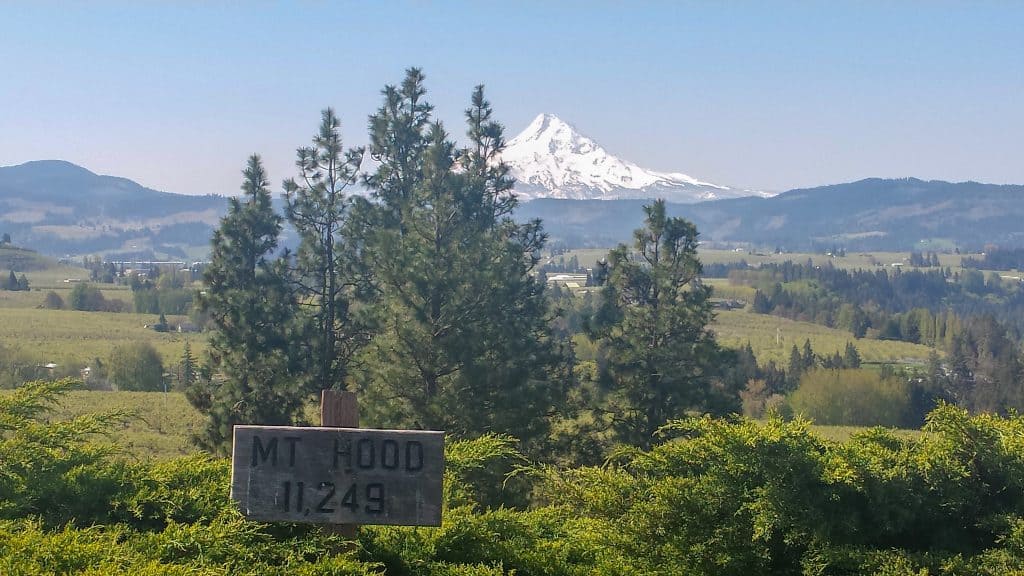
Washington’s law would be the toughest restriction on water bottling operations in the U.S. so far — but it wouldn’t be the first. Across the Columbia River from the state’s southern border, Hood River County, Oregon, won an improbable victory against a Nestlé bottling operation in 2016, setting the stage for efforts like the one in Washington today. Hood River County’s fight against Nestlé took a decade, but in the end it stopped the company from opening up a facility in the small town of Cascade Locks and banned commercial water bottling in the county entirely. The lessons of that fight offer a roadmap for similar efforts elsewhere.
An extractive industry
Despite the snowy mountain peaks and sparkling waterfalls that adorn their labels, nearly two-thirds of all bottled water sold in the U.S. come from municipal tap water. Not only is this water no safer or purer than water from the faucet (tap water is actually tested more frequently) it is 2,000 times more expensive. In addition, the bottled water industry creates millions of single-use plastic bottles that will never be recycled. In 2016, four billion pounds of PET (polyethylene terephthalate) plastic was used for bottled water production.
But it’s bottled water from spring-fed sources that can have biggest ecological impacts. “Bottling spring water can be disastrous to the water table because the company sucks a large amount from a small source,” says Julia DeGraw, who was the senior Northwest organizer at Food & Water Watch during the decade when Nestlé was trying to open a bottling facility in Cascade Locks.
DeGraw says that communities in Mecosta County, Michigan have seen their wells run dry, their springs stop flowing and their fish die off because of Nestlé’s aggressive water pumping operations. A spokesperson from Nestlé Waters North America does not directly deny this, but points to data from Michigan’s Department of Environment, Great Lakes and Energy showing that the state’s nearly 40 bottled water companies account for less than .01 percent of water used in the state.
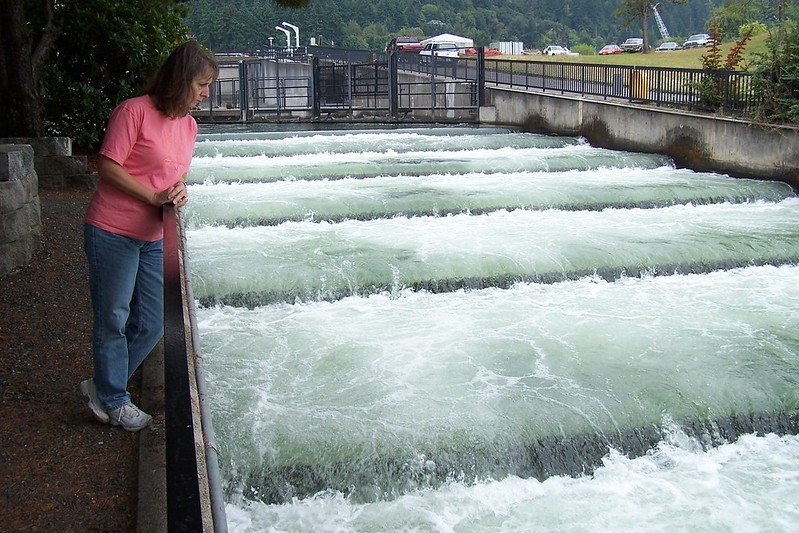
Hood River County’s fight against Nestlé began back in 2008, when the multinational company approached Cascade Locks with plans to open a $50 million bottling plant that would have extracted more than 100 million gallons of water a year from Oxbow Springs, which feeds a salmon hatchery.
DeGraw remembers those early days clearly. “We were the lead organization… really early on when we were trying to build a coalition,” she says. That coalition ended up being big, a fact that was key to the effort’s success. It included not just environmental groups like Food & Water Watch and the local Sierra Club chapter, but also public sector unions, Native American tribes, activist nuns, pro-bono lawyers, ultra runners, a hunger striker and ordinary people turned activists.
Also critical was the fact that although the effort was grassroots, it was also well-resourced. Food & Water Watch put money behind the campaign, hiring DeGraw to be the local organizer and helping to pay for the county ballot measure. And in 2012 the Crag Law Center donated its services, filing two protests challenging the Oregon Water Resources Department’s (OWRD) approval of Nestlé’s water exchange permit.
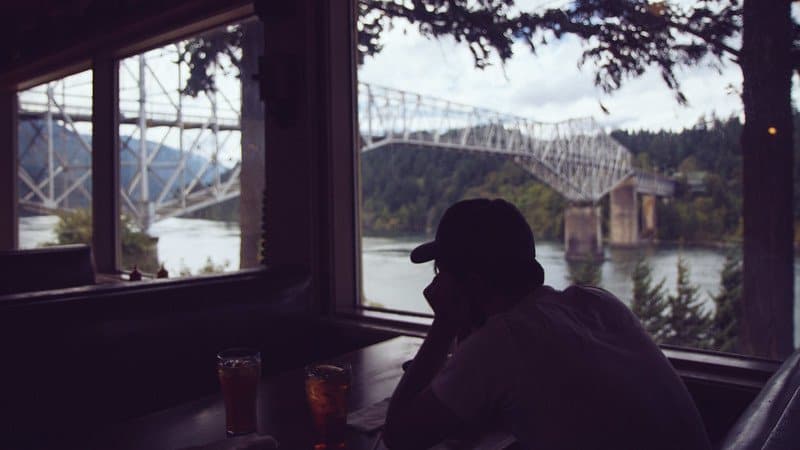
The broad reach and resources of the coalition, which named itself Keep Nestlé Out of the Gorge (KNOG), allowed it to confront the company’s U.S. water division, which has a pattern, the organizers say. They claim it seeks out economically distressed towns like Cascade Locks, which was once a boom town when the timber industry was thriving. In 2010, the town had a median income of just $42,917 and an unemployment rate of 15.5 percent, according to data from the U.S. Census.
“When the mill closed down, it really had a profound effect on the economy,” says Aurora del Val, a retired English teacher who got involved in the campaign to keep Nestlé out. “Cascade Locks is a town that has the profile that I think a lot of these water companies are looking for. And they’re saying all the right things. The Nestlé guy would shake hands with all the business people and gave money to the food bank. He made all these promises. There is a real standard way that they operate in a small town.” Nestlé’s spokesperson confirmed that the company makes significant economic contributions in areas where they operate. “We support many community organizations, locally and nationally, through donations of water, food, supplies, and money,” he wrote via email.
In Cascade Locks, Nestlé promised jobs and economic prosperity while playing down potential environmental consequences, and local officials took it at face value, del Val says.
“It’s kind of like the tobacco industry saying ‘Don’t worry, it doesn’t give you cancer!’” she continues. “The water plant might’ve provided a few jobs locally, but in terms of — for the larger economy — it would’ve put the water supply at risk.”
Resistance coalesces
Concerned about the negative repercussions — depleting groundwater that farmers and residents depend upon, siphoning off the cold creek water that’s essential for fish habitat — del Val started to talk to her neighbors, many of whom were also concerned. In the spring of 2015, she helped found a group called the Local Water Alliance, eventually becoming the group’s campaign director. Even though she calls herself a “reluctant activist,” del Val went door-to-door and talked to Democrats, Independents and Republicans alike.
In Cascade Locks, she and others were able to persuade long-time residents and independents Kathy and Bob Tittle, who own the Chevron station in town, as well as Joseph Shelley and Lynn Pruitt — a Libertarian and Republican, respectively — who felt so strongly about the campaign that they allowed their photos on the Local Water Alliance’s materials. In Odell, in the heart of orchard country, Butch Gehrig, a registered Republican, endorsed the Alliance’s campaign, too. “Water matters, and it doesn’t matter which political affiliation you are,” she says.
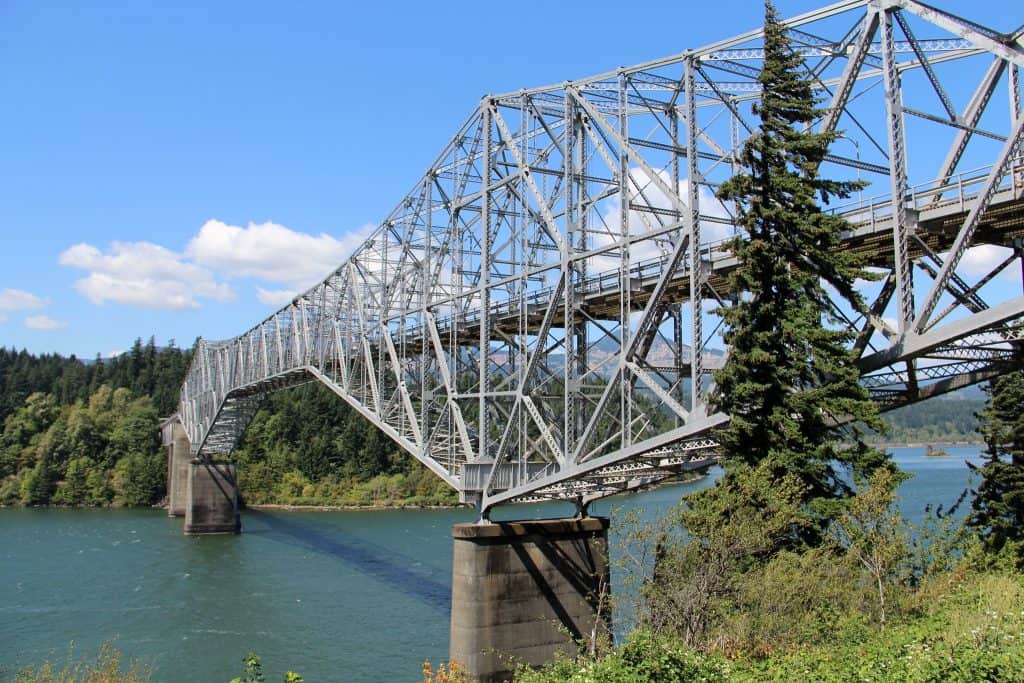
The Yakama Nation opposed the bottling plant at around the same time. Chairman JoDe Goudy spoke on the steps of the Oregon Capitol saying that the Yakama Nation would sue the state of Oregon if Nestlé was authorized to bottle water from Oxbow Springs. The Confederated Tribes of Warm Springs and Umatilla and Nez Perce tribes also sent Governor Kate Brown letters opposing the bottling facility and critiquing the process.
“Our natural resources are important and we can’t be extracting them,” says Carina Miller, who was a member of the Confederated Tribes of Warm Springs’ tribal council at the time. Miller says that tribal treaty rights were disregarded when the Nestlé deal was set into motion, and was troubled that this wasn’t what motivated Governor Kate Brown’s late-in-the-game decision to oppose the deal. On the other hand, Miller says, the fact that area environmentalists and conservative white farmers alike recognized that tribal people needed to be at the table was huge. “To go and have shared values — just that there was an acknowledgement that tribes should be included. That was a win.”
Even though Nestlé spent $105,000 to oppose the Hood River County Water Protection Measure — more than double what backers of the measure raised — it passed in May 2016 by nearly 70 percent. “It was democracy in action,” del Val says. “The power of the vote was pretty inspiring. Even though this is a real dark time, people do really make a difference.”
Even so, perhaps because Governor Brown hadn’t taken action, Nestlé, Cascade Locks and the ODFW continued to pursue a water rights swap, in violation of the voter-approved measure. (At question was whether a county government has the authority to tell a city government what it can and can’t do with its resources.) After a new round of emails and phone calls from local residents and a damning story from a local news affiliate, Brown finally told ODFW to halt its water exchange in October of 2017, putting the kibosh on the Nestlé facility for good.
Today, business is booming in Cascade Locks, according to del Val. A Basque cidery called Son of Man recently opened, sharing space with two natural winemakers. Thunder Island Brewing just broke ground on a 10,000-square-foot facility on the main street. And Renewal Workshop, a startup that takes discarded apparel that would normally go into the landfill and transforms it into new products or upcycled material, opened in 2016. “Those are the kinds of companies that are opening here,” says del Val. “They’re green and sustainable… and they’re hiring!”
Now Hood River County is passing on the lessons it learned from its epic battle. DeGraw and del Val have recently shared tactics and strategies with resident-turned-activists in Randle, Washington, who have been fighting a similar effort by Crystal Geyser. “You don’t have to reinvent the wheel,” says del Val. “Not everyone involved is a career activist. We’re just ordinary people who care.”
The post The Beautiful Place that Stopped Big Bottled Water appeared first on Reasons to be Cheerful.