Article URL: https://newatlas.com/energy/bavarian-brewery-carbon-free-renewable-iron-fuel/
Comments URL: https://news.ycombinator.com/item?id=24996153
Points: 737
# Comments: 251
Article URL: https://newatlas.com/energy/bavarian-brewery-carbon-free-renewable-iron-fuel/
Comments URL: https://news.ycombinator.com/item?id=24996153
Points: 737
# Comments: 251
The post When Racism Strikes, Here’s How to Record It appeared first on Reasons to be Cheerful.
Article URL: https://5kids1condo.com/dont-pay-for-95/
Comments URL: https://news.ycombinator.com/item?id=24755614
Points: 276
# Comments: 427
Article URL: https://supermemo.guru/wiki/Good_sleep,_good_learning,_good_life
Comments URL: https://news.ycombinator.com/item?id=24737026
Points: 431
# Comments: 116
Article URL: https://www.atlasobscura.com/articles/grapefruit-history-and-drug-interactions.html
Comments URL: https://news.ycombinator.com/item?id=24705855
Points: 390
# Comments: 163
Article URL: https://privpapers.ssrn.com/sol3/papers.cfm?abstract_id=3665046
Comments URL: https://news.ycombinator.com/item?id=24647487
Points: 376
# Comments: 327
Article URL: https://www.socialcooling.com/
Comments URL: https://news.ycombinator.com/item?id=24627363
Points: 2670
# Comments: 1047
Handedness—and the related concept of chirality—are double-sided ways of understanding how matter breaks symmetries.
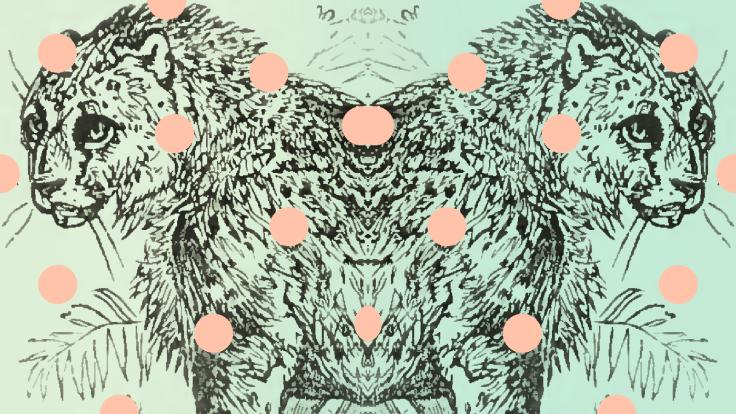
Our right and left hands are reflections of one another, but they are not equal. To hide one hand perfectly behind the other, we must face our palms in opposite directions.
In physics, the concept of handedness (or chirality) works similarly: It is a property of objects that are not dynamically equivalent to their mirror images. An object that can coincide with its mirror-image twin in every coordinate, such as a dumbbell or a spoon, is not chiral.
Because our hands are chiral, they do not interact with other objects and space in the exact same way. In nature, you will find this property in things like proteins, spiral galaxies and most elementary particles.
These different-handed object pairs reveal some puzzling asymmetries in the way our universe works. For example, the weak force—the force responsible for nuclear decay— has an effect only on particles that are left-handed. Also, life itself—every plant and creature we know—is built almost exclusively with right-handed sugars and left-handed amino acids.
“If you have anything with a dual principle, it can be related to chirality,” says Penélope Rodríguez, a postdoctoral researcher at the Physics Institute of the National Autonomous University of Mexico. “This is not exclusive to biology, chemistry or physics. Chirality is of the universe.”
Chirality was discovered in 1848 by biomedical scientist Louis Pasteur. He noticed that right-handed and left-handed crystals formed when racemic acid dried out.
He separated them, one by one, into two samples, and dissolved them again. Although both were chemically identical, one sample consistently rotated polarized light clockwise, while the other did it counterclockwise.
Pasteur referred to chirality as “dissymmetry” at the time, and he speculated that this phenomenon—consistently found in organic compounds—was a prerequisite for the handed chemistry of life. He was right.
In 1904, scientist Lord Kelvin introduced the word “chirality” into chemistry, borrowing it from the Greek kheír, or hand.
“Chirality is an intrinsic property of nature,” says Riina Aav, Professor at Tallinn University of Technology in Estonia. “Molecules in our bodily receptors are chiral. This means that our organism reacts selectively to the spatial configuration of molecules it interacts with.”
Understanding the difference between right-chiral and left-chiral objects is important for many scientific applications. Scientists use the property of chirality to produce safer pharmaceuticals, build biocompatible metallic nanomaterials, and send binary messages in quantum computing (a field called spintronics).
Physicists often talk about three mirror symmetries in nature: charge (which can be positive or negative), time (which can go forward or backward) and parity (which can be right- or left-handed).
Gravity, electromagnetism and the strong nuclear force are ambidextrous, treating particles equally regardless of their handedness. But, as physicist Chien-Shiung Wu experimentally proved in 1956, the weak nuclear force plays favorites.
“For a completely unknown reason, the weak nuclear force only interacts with left-handed particles,” says Marco Drewes, a professor at Catholic University of Louvain in Belgium. “Why that might be is one of the big questions in physics.”
Research groups are exploring the idea that such an asymmetry could have influenced the origin of the preferred handedness in biomolecules observed by Pasteur. “There is a symmetry breaking that gives birth to a molecular arrangement, which eventually evolves until it forms DNA, right-handed sugars and left-handed amino acids,” Rodríguez says.
From an evolutionary perspective, this would mean that chirality is a useful feature for living organisms, making it easier for proteins and nucleic acids to self-replicate due to the preferred handedness of their constituent biomolecules.
Every time an elementary particle is detected, an intrinsic property called its spin must be in one of two possible states. The spin of a right-chiral particle points along the particle’s direction of motion, while the spin of a left-chiral particle points opposite to the particle’s direction of motion.
A chiral twin has been found for every matter and antimatter particle in the Standard Model—with the exception of neutrinos. Researchers have only ever observed left-handed neutrinos and right-handed antineutrinos. If no right-handed neutrinos exist, the fact that neutrinos have mass could indicate that they function as their own antiparticles. It could also mean that neutrinos get their mass in a different way from the other particles.
“Maybe the neutrino masses come from a special Higgs boson that only talks to neutrinos,” says, André de Gouvêa, a professor at Northwestern University. “There are many other kinds of possible answers, but they all indicate that there are other particles out there.”
The difference between left- and right-handed could have influenced another broken symmetry: the current predominance of matter over antimatter in our universe.
“Right-handed neutrinos could be responsible for the fact that there is matter in the universe at all,” Drewes says. “It could be that they prefer to decay into matter over antimatter.”
According to de Gouvêa, the main lesson that chirality teaches scientists is that we should always be prepared to be surprised. “The big question is whether asymmetry is a property of our universe, or a property of the laws of nature,” he says. “We should always be willing to admit that our best ideas are wrong; nature does not do what we think is best.”
Article URL: https://utkusen.com/blog/security-by-obscurity-is-underrated.html
Comments URL: https://news.ycombinator.com/item?id=24444497
Points: 918
# Comments: 508

At the start of the COVID-19 lockdown in California this past spring—with work projects on hold, travel plans canceled, and the house suddenly full—I upped my walking, clocking 60 to 90 minutes most days.
Never had my suburban neighborhood’s streets seemed so inviting. Whether I was taking a leisurely stroll by myself or a brisk walk with one of my newly housebound teens, moving outside felt like the most natural way to enjoy my remaining freedom. All this movement felt great, and despite all the stressors of the pandemic, I felt more content than I’d been in years.
Why did it take a global pandemic for me to sit less and move more? Scientists have known for years that physical activity has a plethora of health benefits—and that movement feels good to many people. Yet almost half of American adults still fail to get the government-recommended 150 minutes of moderate activity per week.
On the whole, people around the world moved less, not more, as countries responded to the pandemic—especially in urban areas, according to Fitbit user data from March. One study of adults in the U.S. showed an overall decline in physical activity in April, with corresponding declines in mental health for people who exercised less.
Certainly, we all need physical rest—but most people in industrialized nations like the United States get far more of it than is good for them, a problem that is only getting worse. Sitting has increased by more than an hour a day in 15 years, according to epidemiologist Lin Yang, a research scientist at Alberta Health Services and the lead author of a 2019 JAMA paper analyzing sedentary behavior among Americans.
What is it about human nature that pulls people to the chair or the couch when they’d be better off moving on their feet? The resolution to this paradox lies in evolutionary history, says David Raichlen, a professor of biological sciences at the University of Southern California.
Raichlen is one of several anthropologists studying how the evolutionary history of the human body shapes health today. In 2012, for example, he and his colleagues published findings from an experimental examination of the runner’s high, the experience of euphoria that some people report during aerobic exercise.

The sense of joy some people feel during exercise may reflect an evolutionary adaptation that supported human endurance. Mentatdgt/pexels
The experiments compared levels of particular feel-good chemicals—called endocannabinoids—in the brains of humans and two other species before and after treadmill exercise. Raichlen and his colleagues found significantly higher endocannabinoid levels in humans and dogs—but not ferrets—following this high-intensity activity. This finding is revealing because humans and dogs evolved to need endurance for hunting food and ferrets did not. The runner’s high could therefore be evolutionarily advantageous to some species, helping creatures run for longer distances to hunt for food despite the high energy costs of running.
In his quest to understand human health, Raichlen also does fieldwork with Tanzania’s Hadza people, a contemporary hunter-gatherer tribe. This community attracts scholars in part because the Hadza way of life resembles that of hunter-gatherers who lived prior to the development of agriculture in many societies some 10,000 years ago. The Hadza, Raichlen notes with affection, are “super-wonderful people,” and studying them could offer clues to what life was like for hunter-gatherers in the past.
Even a cursory look at the Hadza makes it clear that their hunter-gathering lifestyle is extremely active. The Hadza walk several miles each day to forage for wild plants and animals. Hadza men, women, teens, and elders all move a lot.
Sedentary Americans and active Hadza follow the same simple rule for when to move and when to rest.
“For most of our evolutionary history, what we’ve done is engage in physical activity to find food,” Raichlen explains. So, all the walking, digging, carrying, and other exertion this foraging required was a matter of survival—not a deliberate choice the way, say, running on a gym’s treadmill is.
Research on the Hadza certainly supports the idea that physical activity benefits health. For example, Hadza are more susceptible to deadly infections than people in industrialized societies because of differences in hygiene and medical care. Yet those Hadza who survive these dangers tend to live long and healthy lives because they are far less prone than people in industrialized societies to what public health experts call “lifestyle diseases,” such as obesity, heart disease, and Type 2 diabetes. In fact, research shows that increasing one’s physical activity reduces the risk of developing these chronic diseases.
Raichlen’s studies of the Hadza have also informed his perspectives on the flip side of physical activity. In March, he and his colleagues published a paper that explored how the Hadza rest. They showed that Hadza adults spend about the same amount of time in resting postures as people in industrialized nations.
So, it’s not that the Hadza are somehow less eager to stop moving and take a break. The key difference, he and his team found, is that the Hadza rest by sitting on the ground, squatting, or kneeling—all positions that stimulate low-level muscle activity more than sitting on chairs or couches does. In other words, the Hadza rest in ways that protect them from the dangers of being sedentary.
All these findings shed light on the puzzling relationship between the need for exercise and the desire for rest. Like the Hadza, human ancestors moved to get food. And unlike most people in industrialized countries today, they needed no additional motivation to move.
“Today we’re in this bizarre environment where we don’t need to spend any energy to find food,” Raichlen says. “Walking to your car and then walking to the front of the supermarket—that could be all of the energy you spend to find food.”

Whether squatting or kneeling, the Hadza people of Tanzania rest in ways that protect them from the dangers of being sedentary. David Raichlen
The catch for people living with easy access to food is that human physiology—the workings of the heart, blood vessels, brain, muscles, and other organs and organ systems—evolved millions of years ago. As a result, human bodies today are still optimized to support the high activity level required to survive in a hunter-gatherer environment—much the way a strong appetite for sweets was optimal for survival in an era when energy-rich sugars were scarce. Like the sweet tooth at a time when calories are abundant, the need for much more physical activity than many people get is an evolutionary mismatch between human physiology and the present environment.
Making matters worse for humans in industrialized societies today is the fact that it was advantageous to human ancestors to take a break from physical activity whenever possible. Because energy from food took so much physical activity for hunter-gatherers to acquire—getting calories consumed calories—conserving energy through rest was a good idea. “The whole point of life is turning energy into kids—that’s evolution,” says Herman Pontzer, an evolutionary anthropologist at Duke University who frequently collaborates with Raichlen, including on the study of rest.
“Natural selection favors any strategy that makes you better at turning energy in your environment into offspring,” Pontzer says. Resting is part of such a strategy: In an energy-scarce environment, a strong drive to burn calories when you didn’t have to would have died out through natural selection.
The best evolutionary strategy for managing energy, then, boils down to a single rule, say Raichlen and Pontzer. If spending calories is good for your reproductive fitness, you should spend those calories; otherwise, you should just rest.
Though not through conscious choice, sedentary Americans and physically active Hadza both follow this rule. “Our desire to rest is as strong as it’s ever been,” Raichlen says. This desire, he adds, often overcomes the choice to exercise. When you take away the need to move and make exercise a choice, as our current environment has done, he adds, “it takes a lot of motivation to do it.”
The motivation required for exercise is probably higher than ever before. Yang thinks the adoption of new technologies has driven the increase in sedentary behavior between 2001 and 2016 that she has documented. Specifically, the prevalence of handheld devices such as smartphones and tablets “is the major difference in the past 15 years,” she says. Whether you can’t stop scrolling through Facebook, binge-watching Netflix, or playing 2048, these activities usually go hand in hand with sitting, not with moving.

In industrialized countries such as the United States, sedentary behaviors have risen with the increased use of new technologies. Cottonbro/Pexels
Unfortunately, people who live more sedentary lives can’t expect their bodies to adapt to that new mode any time soon. For one thing, in the time scale of human evolutionary history, “even a thousand years is the blink of an eye,” Pontzer says. “The other thing to understand,” he adds, “is that a lot of [lifestyle] diseases don’t kick in until after you’ve had your kids.”
That means there is no evolutionary pressure against, say, heart disease, which typically afflicts adults old enough to have already had children. As Raichlen puts it, “Evolution doesn’t care about health as long as you have reproduced.”
This message hit home for me, a middle-aged knowledge worker. As the pandemic wore on, my work picked up, and my daily walks grew shorter—yet I replaced some of the walking with jogging. Talking with these scientists motivated me to push my body harder. Evolution may not care about my health and well-being, but I do.
The post What’s Behind Humanity’s Love-Hate Relationship With Exercise? appeared first on SAPIENS.

There are certain things that separately I cannot stand but that together become tolerable, even enjoyable. Gin and tonic. Blue cheese and pears. And, now, gaming and riding my bike on a smart trainer.
Okay, let’s get back to the data. It’s about time. Okay, it’s way past time. Anyway, whatever. Here’s some data. Since it’s been a while, let’s start with a few high-level stats from around the Puget Sound.
First up: Median prices of single-family homes as of July. In a word: Up.

It’s a bit difficult to really appreciate just how much home prices are rising right now when looking at the raw dollar values, so here’s the year-over-year change for each of our eight counties:
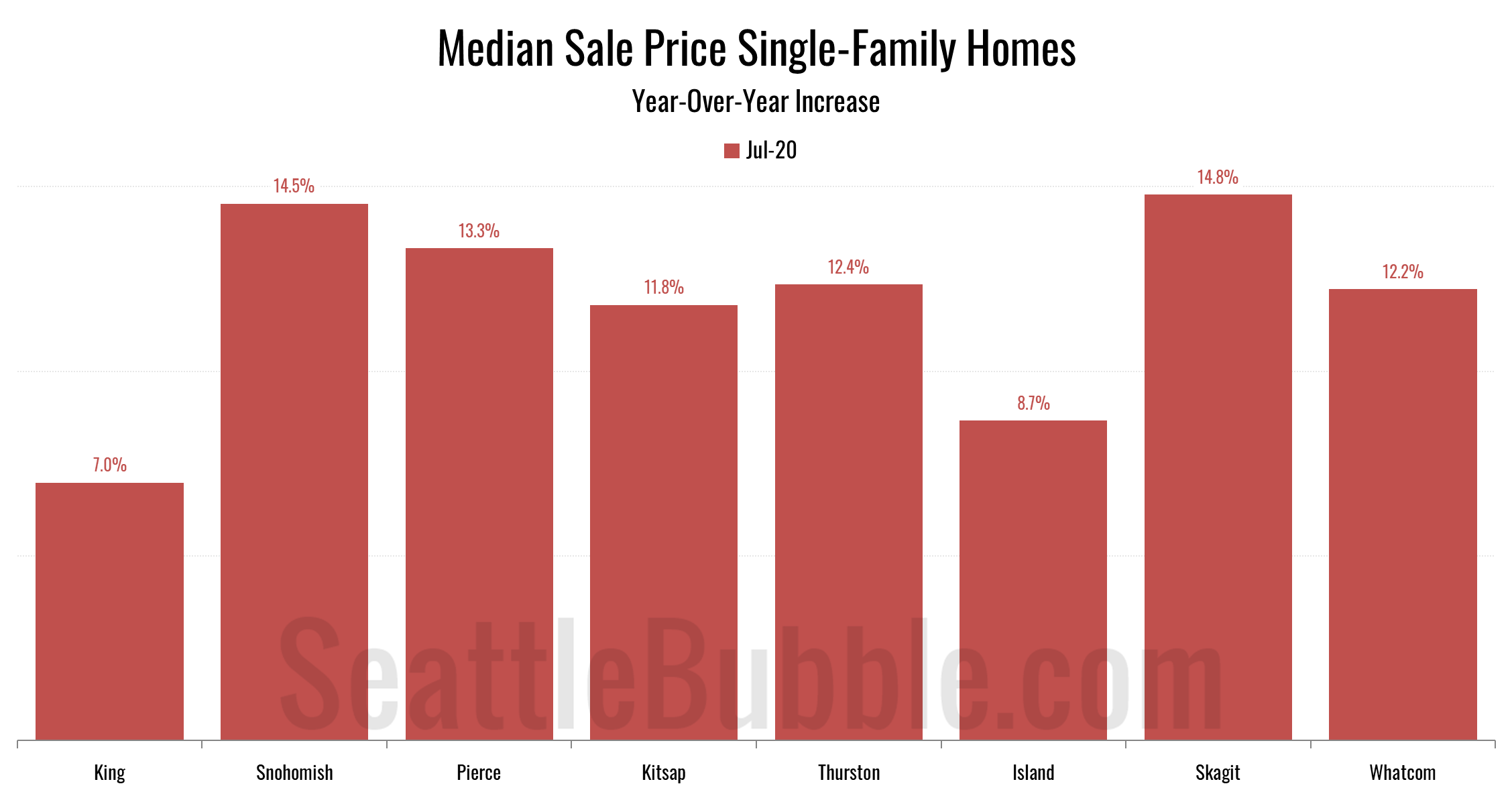
Home prices are increasing double digits in every Puget Sound county except Island and King, where they are still up 7-8% from a year ago. If homebuyers were hoping or expecting that the pandemic would lead to some good home deals, they’re no doubt very disappointed so far.
So why are prices rising so much? Well, this may have something to do with it:

Remember, “months of supply” is the ratio between closed sales and the number of homes on the market at the end of the month. We’re not quite at all-time lows, but every single county did see its lowest July on record for the measure. In other words, there are still plenty of homebuyers out there willing to buy, even in the midst of a global pandemic, and even when home prices are rising so quickly.
Crazy-low mortgage interest rates are probably at least partly to blame, but even that only goes so far to explaining the insanity of the current market. We’ll continue exploring this topic in the weeks and months to come, for sure.
The post The pandemic has sparked a massive seller’s market and big price spikes around Seattle appeared first on Seattle Bubble.
Article URL: https://www.smithsonianmag.com/travel/sudan-land-kush-meroe-ancient-civilization-overlooked-180975498/
Comments URL: https://news.ycombinator.com/item?id=24223899
Points: 316
# Comments: 132
Article URL: https://www.sleepsources.com/bed-time-calculator/
Comments URL: https://news.ycombinator.com/item?id=24139339
Points: 307
# Comments: 120
Article URL: https://www.vox.com/energy-and-environment/2020/8/12/21361498/climate-change-air-pollution-us-india-china-deaths
Comments URL: https://news.ycombinator.com/item?id=24143979
Points: 319
# Comments: 233