R.P. Aditya
Shared posts
Piecing Together the Next Pandemic

How Pandemic Lunches Gave Me Hope for the Planet
An Inside Look at Cuba’s Constant Struggle for Clean Water

Mantengamos al COVID-19 fuera de Casa
Para aquellos de nosotros que vivimos con otras personas, ya sea familiares o compañeros de casa, un diagnóstico positivo de COVID-19 puede ser aterrador y abrumador. ¿Cómo podemos proteger a las personas con las que vivimos de enfermarse, tanto antes como después de la entrada de COVID-19 en nuestro hogar, especialmente si tienen alto riesgo de enfermarse gravemente?
The post Mantengamos al COVID-19 fuera de Casa appeared first on PUBLIC HEALTH INSIDER.
Berkeley Unified is now offering free Wi-Fi for families. Here’s what you need to know.
 The school district is pairing up with Sonic to provide free internet access during remote learning.

Running Is a Total Body Affair

The Queen has more power over British law than we thought
Article URL: https://www.theguardian.com/commentisfree/2021/feb/08/queen-power-british-law-queens-consent
Comments URL: https://news.ycombinator.com/item?id=26081208
Points: 374
# Comments: 570
Arianna Rosenbluth Dies at 93; Pioneering Figure in Data Science
Solar-assisted fabrication of large-scale, patternable transparent wood
R.P. AdityaIt is not clear why anyone would want to live in a transparent house, but for people who do, it would be OK to throw stones…
Article URL: https://www.cbc.ca/1.5902739
Comments URL: https://news.ycombinator.com/item?id=26051883
Points: 308
# Comments: 155
A Few Covid Vaccine Recipients Developed a Rare Blood Disorder

Can Technology Help Us Eat Better?

Pandemic Lessons in Improving the Medical System

Suddenly the Man Couldn’t See. Was His Chest Pain Connected?
In the Oceans, the Volume Is Rising as Never Before

Me and ADHD
Article URL: https://www.linkedin.com/pulse/adhd-me-ish-verduzco/
Comments URL: https://news.ycombinator.com/item?id=25992390
Points: 245
# Comments: 363
A list of sharks that are obligate ram ventilators
(Edited 2021-02-04 to explain what obligate ram ventilators do.)
A- and I have been curious about which shark species are obligate ram ventilators and need to keep swimming with their mouths open in order to get oxygen from the water flowing through their gills. Here is an incomplete list. (Disclaimer: We’re not marine biologists and have no idea what we’re doing.)

20210128_121612 Obligate ram ventilators #nature #sketch.jpg
- Great white shark (Carcharodon carcharias) Source
- Bull shark (Carcharhinus leucas) Source
- Sandbar shark (Carcharhinus plumbeus) Source
- Porbeagle (Lamna nasus) Source
- Salmon shark (Lamna ditropis) Source
- Thresher shark (Alopiidae) Source
- Pelagic thresher (Alopias pelagicus)
- Bigeye thresher (Alopias superciliosus)
- Alopias vulpinus
- Mako shark (Isurus oxyrinchus, Isurus paucus) Source
- Hammerhead (Sphyrnidae) Source
- Winghead shark (Eusphyra blochii)
- Scalloped bonnethead (Sphyrna corona)
- Carolina hammerhead (Sphyrna gilberti)
- Scalloped hammerhead (Sphyrna lewini)
- Scoophead (Sphyrna media)
- Great hammerhead (Sphyrna mokarran)
- Bonnethead (Sphyrna tiburo)
- Smalleye hammerhead (Sphyrna tudes)
- Smooth hammerhead (Sphyrna zygaena)
- Whale shark (Rhincodon typus) Source
Some fishes are also obligate ram ventilators. Here is an incomplete list:
- Tuna Source
- Billfish Source – Structural Adaptations for Ram Ventilation: Gill Fusions in Scombrids and Billfishes
- Paddlefish (Polyodon) Source
- Swordfish Source
- Bonito Source – Structural Adaptations for Ram Ventilation: Gill Fusions in Scombrids and Billfishes
- Bluefish Source
So… how do they keep swimming? What about sleep?
Apparently, part of their brain stays active and keeps them swimming. Also, sometimes they rest in currents with their mouth open. Source
Automating my job with GPT-3
Article URL: https://blog.seekwell.io/gpt3
Comments URL: https://news.ycombinator.com/item?id=25930190
Points: 454
# Comments: 99
Weekend Reading: What’s Missing from Medicine
Saray Stancic. What’s Missing From Medicine: Six Lifestyle Changes to Overcome Chronic Illness. Hierophant Publishing, 2021.
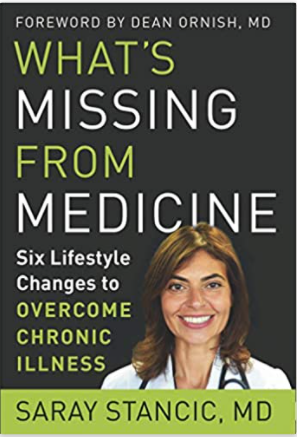
I don’t usually recommend books about topics other than food politics, but this one has dietary changes at its core and although I have never met the author, I greatly admire her and her work.
I first heard about Dr. Stancic, who has a practice in New Jersey, when I was invited to watch a documentary film about her, Code Blue. I was interested to see it because I was told I appeared in it, which I did for about 10 seconds. I don’t remember meeting her or filming it (I tend not to remember such things), but the film is impressive and well worth seeing.
It tells her personal story of how she was able to get control of her formerly debilitating multiple sclerosis with a plant-based diet and exercise—good advice for everyone. The film goes beyond the personal and talks about why she never understood the importance of diet: lack of nutrition education in medical schools, media confusion, inadequate government policies, and the overwhelming influence of drug, food, and beverage companies. The film moves quickly and I thought it was much better than most documentaries of this type.
What made it work for me is Stancic, who comes across as committed, but sane and likable. I would send anyone who has MS to see her in a shot. She’s my kind of doctor—one who listens to patients and works with them. The film’s message leans toward veganism, but without ideology and pushed only softly even by the strongest proponents she interviewed.
The book makes the same points. It’s great strength is that it makes lifestyle changes seem possible for anyone.
Here’s what drove her to healthier eating:
My physicians warned me that it was irresponsble to wean myself off of the ten to twelve medications I was taking daily (and that were making my life unbearable) and solely manage my MS with an “unproven lifestyle change” [i.e., diet]…I adoped a whole foods, plant-based diet becasue the overwhelming body of scientific literature pointed to those foods as the best diet for optimal health for all people. At that point, I knew I could not face a lifetime of living as I was—with a huge pillbox, cane, diapers, and the other physical and psychological burdens of MS [p. 36].
Her advice about how to eat more plant foods is sensible and easy to follow. I particularly like her lack of dogmatism. In a section on common food myths, she has two about meat:
Myth 1: We need to eat meat and dairy to be healthy. FALSE [p. 57].
Myth 2. Eating animal products of any kind is bad for your health. FALSE [p. 59]
Most of the book is about other changes that can help everyone cope with chronic disease: movement, stress management, sleep, avoiding substances, human connections. All of these messages are aimed at giving us the power to control our own health, and to make doing so seem entirely possible.
I found the book inspiring. Her wish for us:
May we eat well, relish physical and mental challenges, enjoy restorative sleep, and connect deeply with others [p. xxxiii].
This is good advice for all of us these days.
Select a muscle and it provides the exercises to workout the selected muscle
Article URL: https://musclewiki.com/
Comments URL: https://news.ycombinator.com/item?id=25854523
Points: 2000
# Comments: 325
Maximizing Developer Effectiveness
Article URL: https://martinfowler.com/articles/developer-effectiveness.html
Comments URL: https://news.ycombinator.com/item?id=25789295
Points: 400
# Comments: 156
Be My Eyes
Article URL: https://www.bemyeyes.com/
Comments URL: https://news.ycombinator.com/item?id=25793163
Points: 516
# Comments: 108
On US Capitol Security — By Someone Who Manages Arena-Rock-Concert Security
Smart commentary:
…I was floored on Wednesday when, glued to my television, I saw police in some areas of the U.S. Capitol using little more than those same mobile gates I had the ones that look like bike racks that can hook together to try to keep the crowds away from sensitive areas and, later, push back people intent on accessing the grounds. (A new fence that appears to be made of sturdier material was being erected on Thursday.) That’s the same equipment and approximately the same amount of force I was able to use when a group of fans got a little feisty and tried to get backstage at a Vanilla Ice show.
[…]
There’s not ever going to be enough police or security at any event to stop people if they all act in unison; if enough people want to get to Vanilla Ice at the same time, they’re going to get to Vanilla Ice. Social constructs and basic decency, not lightweight security gates, are what hold everyone except the outliers back in a typical crowd.
[…]
When there are enough outliers in a crowd, it throws the normal dynamics of crowd control off; everyone in my business knows this. Citizens tend to hold each other to certain standards which is why my 40,000-person town does not have 40,000 police officers, and why the 8.3 million people of New York City aren’t policed by 8.3 million police officers.
Social norms are the fabric that make an event run smoothly — and, really, hold society together. There aren’t enough police in your town to handle it if everyone starts acting up at the same time.
I like that she uses the term “outliers,” and I make much the same points in Liars and Outliers.
How Silicon Valley destroyed Parler
Article URL: https://greenwald.substack.com/p/how-silicon-valley-in-a-show-of-monopolistic
Comments URL: https://news.ycombinator.com/item?id=25747659
Points: 1052
# Comments: 1785
Simple Anomaly Detection Using Plain SQL
Article URL: https://hakibenita.com/sql-anomaly-detection
Comments URL: https://news.ycombinator.com/item?id=25731699
Points: 489
# Comments: 44
Vancouver Gave Homeless People $5,800. It Changed Their Lives.
“It took me about a week to really sink in that this money was for me,” Ray recounts. “You know, $7,500 bucks is a fair bit to be giving to someone in my situation.”
Ray was among 50 people experiencing homelessness in Vancouver, British Columbia selected in 2018 to receive a lump sum of cash deposited into their personal bank accounts — no strings attached. The gift (about USD$5,800) was part of a pilot project, the first of its kind, and the early results are so impressive that cities across Canada and the U.S. are looking to try it themselves.
For Ray, everything hit at once. After a 37-year-long career of heavy lifting in the warehouse and construction industries, his body was failing him. In 2017, he was laid off and had to chase his employer for owed wages. When he sought re-training, his high school English grade was two percentage points short of qualifying. And when he didn’t meet the bureaucratic hurdles of employment insurance, the government cut his payments. Suddenly, Ray couldn’t make rent.
As a survivor of what’s known as the ‘60s scoop, where an overwhelming number of Indigenous children were apprehended by the Canadian government and raised by non-Indigenous families, Ray was used to supporting himself. The loss of agency was a big blow. “My hands were kind of tied,” says Ray. “I just wanted to give up, I really did.”
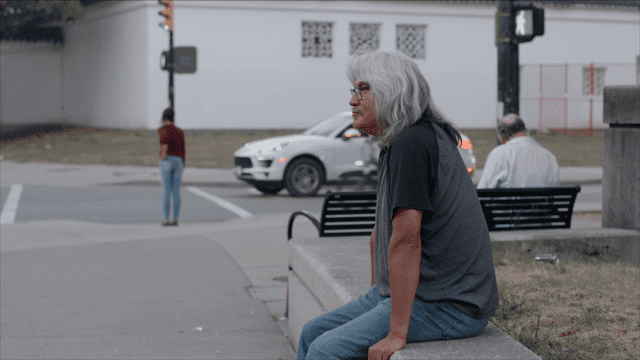
Ray stayed strong, even managing to honor his 15-plus years of sobriety. From a local homeless shelter, he continued his fight to go back to school. But even taking jobs at $100 a day back in warehousing, he just couldn’t get ahead. Without a fridge to store food or money for a monthly bus pass, Ray was paying the poverty premium. “By the end of the day, half of that money was gone,” he says. It was impossible to save enough to get himself back into stable housing.
That’s when Ray was approached by members of the New Leaf Project, run by the charity Foundations for Social Change (FSC). Through a research partnership with the University of British Columbia led by Canada’s research chair in behavioral sustainability, Jiaying Zhao, the pilot was designed as a randomized control trial to measure the effects that a one-time lump-sum gift had on people’s lives over the course of a year. Participants were recruited from local shelters and screened to ensure they were recently homeless and functional in their daily lives to reduce the risk of potential harm that funds might bring if they drove people deeper into addiction. Every three months recipients completed questionnaires and interviews about their spending and experiences. That data was then compared with a control group.
Typically, charitable and government efforts to help people like Ray are conditional on certain behaviors, like getting medical or addictions treatment, filing monthly reports, or spending on particular services. And most often, it’s distributed in small, incremental amounts.
“We inherently do not trust people living in poverty,” says Claire Williams, co-founder of FSC. “If you think of something like income assistance, welfare, even employment insurance, we make the burden of proof so high for people to access those benefits because we fundamentally assume that people are trying to cheat the system.”
Through repeated interviews over the year, the FSC team sought to answer a poetically simple question. Would the lives of homeless people improve if we just gave them what they needed: cash?
Spending for the future
“I was kind of lost with it actually at first,” Ray recounts about the transfer. But rather than head out for a nice meal to celebrate, Ray only spent what he absolutely needed to reach his goal.
“I really wanted to get into this frontline work with addiction and vulnerable people, because I mean, I’ve been there,” says Ray. “I felt that I could turn that around and do the same for people that are in my shoes.”
Within a month, Ray found his own room at an S.R.O. — a single room occupancy hotel, which are run-down buildings often used as stepping-stone housing in Vancouver’s Downtown Eastside. With stable housing — “It’s not the greatest place, but at least it’s a roof over my head,” says Ray — he was able to make the three trips it took to get approved for an education loan, jumping bureaucratic hurdles he never would have been able to clear if he were taking day labor jobs and scrambling from shelter to shelter. “Having the money there, I wasn’t worried about getting money for the day,” he says. He could take the time to focus on his bigger goal. He got training in the kind of outreach work he dreamed of, and even found some temporary work with one of the local shelters. While he’s back working for a construction company, he says, “Having a community service worker certification under my belt opens up doors for me.”
Though the formal research has yet to be published, the early results are staggering. Half of the cash recipients moved into stable housing one month after they received the money, compared to 25 percent of the control group. “That was phenomenal,” says Zhao.
Almost 70 percent of them were food secure in one month. Like Ray, they spent most of the money on the essentials — food, shelter, bills. On average, the cash recipients spent a total of three fewer months in a shelter than those in the control group, whose days spent homeless increased. After one year, cash recipients reduced their spending on alcohol, drugs and cigarettes by an average of almost 40 percent, challenging “the widespread misperception that people in poverty will misuse cash funds,” the report stated. At the end of the year-long study, participants had an average of $1,000 still left in the bank.
Cost savings
For Zhao, a major takeaway is the potential cost savings of a program like this for the government. Because of the reduced nights spent in emergency shelters, each cash recipient saved the government roughly $8,000 over the course of the year. Less the cost of the cash transfer, each cash recipient produced a net savings of more than $600 — and were substantially further along the path of pulling themselves out of poverty, experiencing a much more balanced life than they might have in the shelter system. While the pilot project was funded by Foundations for Social Change, which is primarily supported by foundation grants, Zhao says this evidence points to an obvious policy solution.
“For someone who just became homeless, who does not have a severe level of substance use or mental health issues, then the government should distribute a one-time cash transfer to help them move out of homelessness quickly.” says Zhao. She adds that income assistance or equivalent monthly supports also evidently need to be raised. ”The current income assistance” — $760 per month in British Columbia — “is not sufficient to propel people to move out of homelessness,” she says.
Crushed by negative news?
Sign up for the Reasons to be Cheerful newsletter.One of the reasons the cash transfer proved so effective is practical. When you consider what rent costs in an expensive city like Vancouver, income from assistance or employment will barely cover a damage deposit, let alone first month’s rent. With a larger sum, a person can pay a deposit and rent for a few months, says Zhao. Since many of the participants were either working or on income assistance, monthly expenses were more manageable.
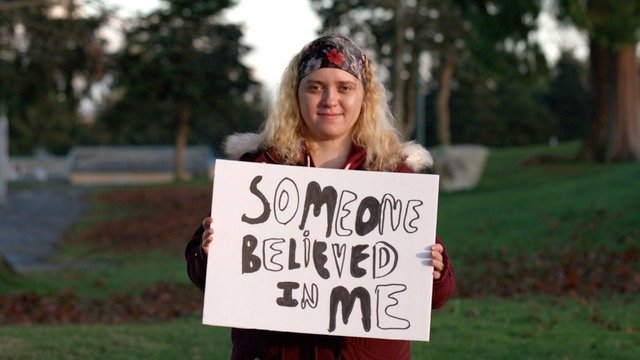
Receiving the cash is also empowering. “There’s a wide body of research that if you give someone a larger sum of cash it triggers long-term thinking,” says Williams. Or as Ray puts it, ”that energy of believing in myself again.” The effect is: “These people trusted me. Let me prove to them that I can be successful,” Ray says.
Ray, who’s still working to find a healthier place to live than the S.R.O., thinks the general public needs to be educated. “When people look at us as homeless they think immediately that it has to do with drugs and alcohol. It’s not. It’s all kinds of different avenues.”
FSC is currently fundraising to increase the number of cash recipients to 200 in its next phase and open it to any person experiencing homelessness that wants to get back on track, Williams says, no matter how long they’ve been homeless for. They also hope to connect people with services like affordable housing and education, and increase the amount of the transfer to CAD$8,500.
Williams and Zhao say they’re actively sharing resources to support U.S. nonprofits and government entities across the U.S. and Europe interested in piloting the approach. In San Francisco, the charity Miracle Messages is raising funds to launch a similar pilot. New Leaf has a proposal in to pilot the program in other Canadian cities with up to 400 cash recipients per city, and has received interest from cities across the U.S., including San Francisco, Los Angeles and New York, who are looking to learn from their experience. Eventually, after replicating the work in other jurisdictions, they hope they can determine the type of person this kind of intervention is best suited for. “Homelessness is not a one-size-fits-all problem,” says Williams.
“Basically it was a gift giving my life back,” Ray says. If other people living on the streets can access money for their goals, like education, he says, ”I’m sure that these people are going to make something of themselves.”
The post Vancouver Gave Homeless People $5,800. It Changed Their Lives. appeared first on Reasons to be Cheerful.
Finding Calm—and Connection—in Coffee Rituals
When I arrived from the Philippines to the airport in the city of Gondar in northern Ethiopia early last year—before the pandemic started—I was greeted with an intensely flavorful cup of coffee. All arriving passengers were welcomed in the same way. The East African country, historically known as Abyssinia, was already living up to my expectations as the widely regarded “birthplace of coffee.”
But it was in the succeeding days, as I trekked the Simien Mountains northeast of Gondar, that I came to truly appreciate the coffee as a source of comfort and warmth on the frigid, rugged peaks. At the start of each day, our guides would prepare coffee alongside a light meal. At the end of our daily trek of around 15–20 kilometers, coffee would once again make an appearance as we awaited dinner.
In Addis Ababa, the capital, I encountered more layers of Ethiopian coffee culture. In the traditional shops and restaurants, women, often dressed in traditional clothing, performed the buna ceremony: the name in the Amharic language for a coffee ritual whereby beans are roasted, prepared, and then served as a rich, bittersweet beverage.
I also went to cafés that showcased Ethiopian culture while conveying a more cosmopolitan vibe. In these shops, people were hanging out and studying—just like they do in coffee shops in other parts of the world. In Tomoca Coffee, one of the famous cafés, a paraphrased quote attributed to the French novelist and playwright Honoré de Balzac hung from the ceiling: “When you drink a cup of coffee, ideas come in marching like an army.”
What struck me was the diversity and complexity of coffee within the country, with each region and woreda (district) representing distinct varieties. I couldn’t detect all the tasting notes people often used to describe the coffee, such as blueberry and bergamot. Nor could I distinguish the beans from Sidama from those of Harrar—two of the most famous coffee-producing regions in the country. But I could appreciate the fruity, floral notes that Ethiopian coffee is known for among connoisseurs.
[signup]
When it was time for me to return home to the Philippines, I bought 6 kilos of coffee from different regions of Ethiopia, intending to give some to my friends. As it turned out, those 6 kilos became my lifeline throughout the first 100 days of the pandemic in the Philippines.
Coffee shops in the Philippines started reopening in May. But the need to fill out contact tracing forms and wear face masks (and even face shields) took the joy out of going to my local Starbucks. I no longer wanted to sit at my favorite table, or even stand in line to get a coffee drink to go.
I am hardly alone in feeling the loss of my daily coffee routine during the pandemic. But, like many others, I soon learned a new ritual: I started preparing my own coffee, from grinding the beans to brewing them—something I had never done before.
As an anthropologist, I also started thinking more about the “social life” of coffee, or how the drink has become so deeply integrated into many people’s daily routines. Globally, estimates show that people consume over 2 billion cups of coffee every day.

A woman in Ethiopia prepares a buna (coffee) ceremony at home. Rod Waddington/Flickr
While my own research doesn’t focus primarily on coffee, I’ve often encountered it while exploring other topics. For instance, as part of my fieldwork on protected areas in the mountains of Mindanao in the southern Philippines, I met volunteer forest guards who hoped that coffee production would help wean nearby communities off destructive forest practices such as logging—and ensure the sustainability of the mountains themselves.
Some anthropologists have followed coffee’s travels to better understand wide-reaching processes of globalization. Through fine-grained ethnographies, they explore the blend of local and global influences that find their way into each cup and each café. For instance, scholars studying the rise of Starbucks and other global coffee shop chains have noted how the music, artwork, interior decor, global newspapers, and other “signifiers of the international coffee trade” all evoke a sophisticated, worldly sensibility that forms part of the appeal for consumers. I saw a glimpse of this in Addis Ababa, where cafés draw inspiration not just from the Ethiopian culinary traditions but from Starbucks itself.
In the Philippines, as in other parts of the world, coffee shops also represent what researchers have called a “third place” outside of the home and workplace—neither totally private nor totally public. These spaces offer their regular customers a sense of familiarity, comfort, and even community.
But the coffee itself plays a major role too. Depending on the method of preparation, a cup of coffee contains 60–100 milligrams of caffeine—a central nervous system stimulant that makes people feel less sleepy and more alert.
Surely, those of us who have sat through a boring meeting or struggled to meet a grueling deadline can relate to the character in Gabriel García Márquez’s short story “Bon Voyage, Mr. President” who asked for an espresso “strong enough to wake the dead.” Such is the association of coffee with wakefulness and productivity that some cultural historians relate the rise of coffee with the demands of modernity.
Coffee matters to people because of the ritual involved.
Beyond its stimulating effects, the origins of the coffee itself also count, especially to a growing number of connoisseurs.
Consumers of specialty coffee pay close attention to the particular qualities and tasting notes associated with each variety’s terroir, or the growing conditions and farming methods specific to the places where beans are grown, harvested, and processed. In Ethiopia, specialty beans from plantations such as Gesha Village are highly sought after not just because of their taste, but also because of the farmers’ careful methods of selection and cultivation.
Finally, of course, coffee matters to people because of the ritual involved. Indeed, the act of drinking coffee reenacts the pre-pandemic “normal” of being able to travel and work. If nothing else, it gives me a sense of control: While many things have changed, the ability to enjoy my coffee ritual has remained.
I ground the last of my Ethiopian coffee beans in June. Thankfully, by then I had discovered that it was actually possible to buy all kinds of freshly roasted beans in the Philippines—including beans from all the Ethiopian regions, albeit at three times (or more) the price I had paid during my visit.
Meanwhile, coffee farmers around the world face risks and challenges in growing the beans, from pests and drought to the unpredictable shifts of global markets. While the “Ethiopia” label can command a premium on the global coffee market, the coffee farmers themselves struggle to make a profit. That’s because most of the markup on coffee occurs at the end of the production chain, when the beans get consumed.

Farmers in Ethiopia work together to sort coffee beans. fups/Flickr
Ethiopia is learning to capitalize on the increasing demand, not least by including coffee as part of their tourism branding. In early 2020, they organized a “Cup of Excellence” competition that aimed to promote specialty coffee with the hope of improving famers’ incomes. However, with the pandemic disrupting the economy, in general, and the coffee industry, in particular, it remains to be seen how coffee growers will manage.
A cup of coffee may seem simple and ordinary. But its existence relies on numerous itineraries and diverse universes of flavors and technologies. Every sip of a café latte I consume these days in the Philippines comes from Ethiopian beans that are ground by a machine made in the U.S., brewed in a glass contraption made in Japan, and mixed with milk from local cows.
As another new year begins, the pandemic continues—and travel restrictions in the Philippines make my trip last year to Addis Ababa seem more distant than ever. But just as the warm coffee in the Simien Mountains served as a source of comfort after each long day of trekking, the iced coffee at home makes each day more bearable.
The post Finding Calm—and Connection—in Coffee Rituals appeared first on SAPIENS.
How the placenta evolved from an ancient virus
Article URL: https://whyy.org/segments/the-placenta-went-viral-and-protomammals-were-born/
Comments URL: https://news.ycombinator.com/item?id=25655346
Points: 379
# Comments: 97
Inside the C.I.A., She Became a Spy for Planet Earth

How to overcome Phone Addiction
Article URL: https://cognitiontoday.com/phone-addiction-coping-solutions-research-statistics/
Comments URL: https://news.ycombinator.com/item?id=25616472
Points: 724
# Comments: 293