Shared posts

31 Oct 17:20

This Doctor Diagnosed His Own Cancer with an iPhone Ultrasound

files/images/butterfly010.jpg

Antonio Regalado, MIT Technology Review, Oct 31, 2017


Icon

I think that when the author writes "“Now we think it’s an individual purchase” and "anyone can afford it" they're living in a different economic reality than 99% of the world. But it is nonetheless true that the 2500 CAD device is a lot cheaper and more portable than any alternative, even if it will only appeal to the gold-plated iPhone X set. And it points the ay to devices that help you manage your own health (and by implication, your own education) on an ongoing and convenient basis. Now, what would be really great would be a cure for whatever the device detects.

[Link] [Comment]
31 Oct 17:20

Dr. Chuck on Inclusive Programming, Online Instructor Involvement and Coursera’s Paywall

files/images/Charles-1509090657.jpg

Tina Nazerian, EdSurge, Oct 31, 2017


Icon

By "inclusive programming" the article means "teaching programming to everybody". By "online instructor involvement" it means face-to-face meetings with students in courses (made more difficult in MOOCs). By "Coursera's paywall" it means Charles Severance's strategy to redirect students to his home page if they complain about the paywall. It ends with what is actually a neat idea: "to connect with students is through “Teach Out” events, like an upcoming one he’s doing with Douglas Van Houweling. Severance said it will be 'very live and agile' and will 'only be a week.'" This article does not appear to be paid placement, but with EdSurge you never know. 

[Link] [Comment]
31 Oct 17:20

Twitter Favorites: [Amywalshharris] Layer 3. Streetcar heading west on Queen and #bathurst #TTC #Toronto https://t.co/xyxZ1zviTk

Amy Walsh-Harris @Amywalshharris
Layer 3. Streetcar heading west on Queen and #bathurst #TTC #Toronto pic.twitter.com/xyxZ1zviTk
31 Oct 17:20

Your Christmas Reading List

by rands

It’s almost November and that means the holidays are close. One of my favorite aspects of the holiday seasons are extended periods of quiet… like days long. While there will be Destiny 2 and Mario Odyssey during these times, my goal is to fill those long silences with reading. Here are ten books you should read during the holiday:

What’d I miss? Tell me so I can add it to the wishlist.

31 Oct 17:19

Here we are

I've been at Mozilla for seven years now doing various things. Just over two years ago I was tasked with my biggest project yet at Mozilla, transitioning the add-ons community over to WebExtensions. In about three weeks Firefox Quantum will go out to all the Firefox users and WebExtensions will be the only way to run an add-on on Firefox 57.

That's over two years of work from an awesome team of people at Mozilla who came together and decided to make this change. I remember clearly the feeling in those first weeks of sheer dread at what I'd gotten myself into. There's many who have helped and supported me on this project, but I think without Kev Needham guiding us, we would have been sunk. A good example was those first weeks when I went from a severe state of panic and dread, down to only a mild state of panic as a result of multiple conversations with Kev.

In those first weeks we had Kumar McMillan, Stuart Colville, Matthew MacPherson and Kris Maglione on the engineering team and the job of going out and finding more engineers was my main goal in those months. We were soon joined by Christopher Grebs, Mathieu Pillard, Mark Striemer and Luca Greco. By the time we got to our first work week, Berlin in 2016 we had Matthew Wein, Andrew Swan and Bob Silverberg as well. Later we were lucky enough to be joined by Shane Caraveo and Andrew Williamson.

The quality of these engineers can't be overstated, with a diverse set of knowledge and skills it's been amazing what they've been able to accomplish. I tried to make a list of all the things that they've done in this post, but this post would be extremely long. Just go read all the many, many blog posts we've done or even write a WebExtension.

For me its been hard not to take this project personally, there are many people who disagree with the decision to do this. They let us know about this regularly in many different ways. I've never encountered this at Mozilla to this level. That's given me a real appreciation for what others at Mozilla have had to deal with.

The navigating around those concerns has been rocky and sometimes I didn't handle it very well and that didn't help. There's been a learning curve there for me.

On the other hand, the support from other people who do agree with this decision has been wonderful. Just last week in Toronto multiple people came up to us and gave us thanks for the changes we've made. To all of you who have helped, a big, big thank you.

I remain steadfastly convinced that this is one of the best things we could do for Firefox and I'm proud the work that's been done. It's been a big change and with it comes risk and uncertainty. To say that I'm a little nervous about how this will go, will be an understatement.

But here we are, in about three weeks Quantum will be rolling out and there won't be legacy add-ons.

31 Oct 17:19

Twitter Favorites: [DenimAndSteel] New book day! Our @pushturnmove book just arrived and it looks gorgeous and deep: https://t.co/MBbzTfwam1

Denim & Steel @DenimAndSteel
New book day! Our @PushTurnMove book just arrived and it looks gorgeous and deep: pic.twitter.com/MBbzTfwam1
31 Oct 17:19

Twitter Favorites: [Stv] I want you, dear reader, to know you’re amazing & you deserve flowers & chocolate. Maybe treat yourself to new shoes. Yeah, You.

All Hallows Steve @Stv
I want you, dear reader, to know you’re amazing & you deserve flowers & chocolate. Maybe treat yourself to new shoes. Yeah, You.
31 Oct 17:19

Twitter Favorites: [xolotl] @sillygwailo @hypothes_is I agree! An extra gravy benefit of @hypothes_is new #oauth log in.

Nate Angell @xolotl
@sillygwailo @hypothes_is I agree! An extra gravy benefit of @hypothes_is new #oauth log in.
31 Oct 17:19

Flickr Friday – Timing

by Marissa Jasso


People say life is all about timing. What they don’t tell you is how absolutely beautiful it all is once it stops. Unless you were the guinea pig of a mutant lab for some time, like the rest of us, you don’t have the ability to stop time. Something every Flickr community member has in common is that we’ve all found a way around this problem, using cameras. Shooting gives us the ability to savor the otherwise lost and futile moments that pass us by.  The few shots below best illustrate last week’s #Timing challenge.

One of the many remarkable photo categories is composed of framed and posed elements which people normally wouldn’t ever have the opportunity to see in the natural world without brilliant photographers taking the time to craft these moments.

Acqua corrente

Other times, photos allow people to experience paused portions of nature in high definition, giving value to the otherwise ignored. Commonplace subjects and activities are suddenly heightened in intrigue all because the details are accessible at 10,000 frames/second.

#Timing #FlickrFriday "No time for photography, mate! I'm busy eating"
IMG_012255 - Just in time

On a completely separate note, photography can also serve as a “relatively” healthy outlet for adrenaline junkies who have the nerve to enter into close quarters with incredibly dangerous (and incredibly cute) wildlife. To you, we express the utmost gratitude for your courage because we wouldn’t have featured photos on our Flickr Friday Blog without you!

Grey wolf

If your photo didn’t make it on the blog or gallery, we encourage you to keep trying. This sort of fabulousness doesn’t come easily. If you’ve lost all hope of getting your photo featured and you now completely loathe Flickr at its very core, you can feature your photo yourself! Add it in the comments section with this format: [FLICKR URL], everyone can still see your #Timing themed photo!

Next week’s theme will be announced tomorrow morning so make sure to keep your Flickr files ready for submission!


31 Oct 17:19

Sorting Algorithms Visualized

files/images/sorting.JPG

morolin, Imgur, Oct 30, 2017


Icon

This is a really nice use of graphics to demonstrate concepts. You can see different sorting algorithms (bubble, cocktail shaker, insertion, shell, comb, etc.) applied to the sorting of coloured squares (each colour has its own numerical value, so it's easy). This allows you to get a visual sense of what the algorithms do and also to compare the methods. At the end of the post the different algorithms are raced against each other. It's Imgur, so the comments are mostly rude, but there was one nice link to a set of videos showing the same algorithms with both colours and sound. These all have different properties - some are faster, some use less memory, some are optimal for certain sorts of data. 

[Link] [Comment]
31 Oct 17:19

The perceptions of the meaning and value of analytics in New Zealand higher education institutions

files/images/41239_2017_73_Fig2_HTML.gif

Hamidreza Mahroeian, Ben Daniel, Russell Butson, International Journal of Educational Technology in Higher Education, Oct 30, 2017


Icon

This article isn't about analytics, but rather, is what people think about analytics. Actually, it's about what a few people in New Zealand think about analytics. Normally I wouldn't care (even if their thoughts are published in an academic journal, and therefore, Better Than Us) but there's a nice observation to be found in the discussion. Some people "perceived analytics regarding its fundamental elements (e.g. data, statistics, numbers, KPIs, graphs, etc.)." Other people "viewed analytics in functional grounds... as the collection of a process... and tools... used to answer the difficult questions, techniques for extracting data and useful discerning information to describe and predict performance outcomes." It's unusual to see functionalism in academic papers about education; usually they're structural, describing processes and evaluations (but not what they're used for). As an aside, the journal editors should have corrected the Venn diagram, which should have used only two circles to depict the three concepts (structural, functional, structural and functional). 

[Link] [Comment]
31 Oct 17:19

Google’s Sentiment Analyzer Thinks Being Gay Is Bad

files/images/1508946273394-Screen-Shot-2017-10-25-at-114215-AM.jpeg

Andrew Thompson, Motherboard, Oct 30, 2017


Icon

As the subtitle says, "this is the latest example of how bias creeps into artificial intelligence." A sentiment analyzer looks at text-based content (like tweets or blog posts or emails) as determines whether the sender is happy or sad, anngry, bitter, sorrowful, or whatever. It does this based on the association between whatever is in the email and words associated with those sentiments. And that's where the bias creeps in. It is taking various sentences that should be neutral (like "I'm a Christian", "I'm a Sikh" or "I'm a Jew") and assigning positive or negative sentiments to them. "A chief obstacle to programming a non-biased language AI is that the data itself is rarely purified of human prejudice." 

[Link] [Comment]
31 Oct 17:19

Piolet Prototype Updates

by noreply@blogger.com (VeloOrange)
by Clint


We just received our final round of prototypes for the Piolet mkII and they look great! We made them 69% shreddier without taking away any of their original touring capability.  As of now, they're set to be released in the Spring along with the new Polyvalents.


Geometry updates! We've slackened and stretched a few tubes to tweak handling and dial in fit. Flat bar builds have been pretty popular for this frame so we've adjusted accordingly. Top tubes are slightly longer and slightly steeper. This lets you size up if you want to run flat bars, without running into standover issues. Other than that, chainstays are a little longer on the smaller models, and headtubes are half a degree slacker on the larger models (putting it more in the realm of XC headtube angles vs touring headtube angles). All of these updates have felt great on our test rides!


Aesthetic updates! Right off the bat, you'll notice we're switching colors. More discussion on that to follow. If you look closely, we've swapped out the rear dropouts for the hooded model we use on several of our other frames. It's a nice consistent look across our lineup and all use the same durable, replaceable stainless steel derailleur hanger.

Hooded rears.
Other than that, there are a few small changes to the fork. The most noticeable is the new larger segment plug.  It lines up nicely with the headtube and makes it easier to mount a rack.
Stout, Angular.
Now for the controversial color options. We're split between Desert Stan and Poppin' Purple.  Desert Stan is nice. Somewhere between sand and tan. Seems to be trendy now. Pairs well with black or silver. It's a pretty neutral color so makes your anodized bits really pop. I dig it!

Desert Stan

Basket compatible
Poppin' Purple is fairly tame as far as purples go. It's quite nice. If you want to spice it up, it's dark enough that bright colors look nice against it without being too crazy, and if you want a more tame touring build, the usual black and silver also look fantastic!  I think this frame color looks amazing with gumwall tires.
Not too bright Purple

But it pops when light hits it!

We also just got in these VeloORANGE water bottles. They're a nice alternative to metal bottles for offroad ventures and they hold water really well. Find them here!

Hydration Station!

31 Oct 17:18

The Unwomanly Face of War: An Oral History of Women in World War II

A fascinating oral history of Soviet women at war. When war came, an astonishing number of women ran to the defense of a country that no longer exists and of a dream that now seems forgotten. Studs Terkel at the front, this masterfully-crafted volume deserves the Nobel it won for its author.

31 Oct 17:18

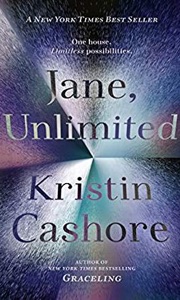
Jane Unlimited

Jane is invited by her former tutor, in town for a college reunion, to visit the family house for a holiday gala. Depressed by the recent death of the aunt who raised her, Jane takes her up on the offer and they arrive at the old family mansion, somewhere off the coast of Maine, where everything is always in an uproar. Jane doesn’t know where to look or what to believe.

Like Cashore’s Bitterblue, this book is filled with strangeness and a coyly theoretical sophistication. Cashore’s characters, whatever their stated ages, seem very young: they are impulsive enthusiasts who have no patience and who seldom know themselves. Jane is an accomplished and original artist, yet somehow has never had occasion to give much thought to her own sexuality or to anyone else’s feelings. This lends many scenes a mythic quality, a sense of meeting archetypes, that frequently works very nicely; elsewhere, as when we sit down for a nice chat at dinner, it feels like nobody knows how to behave.

The first encounter with the old family mansion is handled very well. (It’s described as being off the coast of Maine, but this place is more San Simeon or I Tatti than the old summer cottages of the richly rusticating gilded age.) You’ll like the dog, too.

The book had a long genesis, was originally written in second person, and is filled with complex story play. If Bitterblue sometimes seemed a refraction of Beckett through modern medievalesque fantasy, Jane Unlimited feels like David Mitchell or Jennifer Egan performed in the key of Neil Gaiman.

31 Oct 17:18

The Past is a Foreign Country: The Andromeda Strain

by chuttenc

I love the phrase from the opening line of L.P. Hartley’s “The Go-Between”: “The past is a foreign country”

For the author it was a hook for readers, but for me it is an axiom that only becomes more apt the longer I look at it. The past is strange. The people who inhabit it do not have the same culture we do. They don’t speak the same language. They don’t watch the same TV. The care about different things and have different priorities.

And sometimes it takes effort to visit.

I haven’t read “The Go-Between” but something I have recently read that struck me with how foreign it felt was Michael Crichton’s 1969 novel “The Andromeda Strain.”

The setting is the United States in the late 60s or early 70s. As such I was expecting a recognizable landscape. This led to several surprises.

First was how plausible American Exceptionalism seemed. The US was the leader of scientific thought in the late 60s. They had just reached the moon. They were outspending other nations in defense, but also at the same time scientific research and thoughtful contingency planning. It was plausible for Crichton to write that the US would invest $22M ($136M today) on a project with no direct applications to existing endeavours, but whose returns they expected to see in other related fields of inquiry and enterprise. That level of largesse coupled with the inevitability of knock-on benefits even if the program failed could only exist in a country that believed in its own ingenuity. It was stunning.

Second was how a portion of the scientific community planned for crisis. They sent a letter to the President with both allusions to the Einstein letter and containing highly technical terminology, expecting both of those things to be understood by the recipient. Two out of the past three administrations wouldn’t understand the letter. The other wouldn’t have reacted with haste, or with such extravagant funding, or at all, to the threat as described. Underlining the strangeness was how the fictional scientists were satisfied with government response to a theorized crisis. I can no longer imagine a US government response that the scientific community would applaud as satisfactory.

Third was the overt sexism. There were no women in the novel. Sure, they had a “girl” operating the switchboard and another “girl” running lab results and still others sprinkled about… but no women. Only two were permitted names, and one of those was a recording.

Fourth was the unfiltered promotion in the cover. The cover blazed that the book was able to rivet you to your seat to equal or greater measure than the televised walk on the moon. Given how exalted that moment has now become, given how small and commonplace scientific discoveries are now treated… it is both astonishing in the temerity of the copywriter’s claim, and in the fact that a comparison to a scientific achievement is being used in advertising at all.

There were dozens of smaller hitches: anything to do with computers or automation was a little too “gee whiz” and now seems quaint, the excessive page area devoted to ASCII art, the cover design… But I’ve read early Michael Crichton before, so these things I expected to a certain degree. Even the books in the back listed for mail order at prices between 95c and $1.25 (plus 10c postage) only stuck in my mind long enough to pull up an inflation calculator and realize that, actually, those are sensible book prices (though postage costs quite a bit more now).

All of these together (placed into an engaging, if flawed, narrative) emphasize the importance of experiencing old media. By seeing the differences and imagining and inferring how they made sense at the time we can broaden our own understanding of our own time and how naive, quaint, biased, or flawed we might appear in the future

With or without a metaphor, travel to a foreign country is illuminating. I recommend it to all who have the time and capability.

31 Oct 17:18

Burrard Bridge: Fences, Posts and Some Gorgeous Lamps

by pricetags

Irony Alert: the barrier fencing – an addition that most heritage advocates and others feared – became the needed justification for the restoration of Burrard Bridge’s best heritage feature.

More backstory: Burrard Bridge was over-designed – at least for its time.  Since it was being built during the Depression of the 1930s, it could have justifiably been much more utilitarian.

But its origins were in the late 1920s, as another recommendation of the Bartholomew Plan, where the bridge would be a gateway to the west side, to the downtown and, from the water, to False Creek, even though that was still an industrial basin.  As a public works project, it was a chance to make an optimistic statement about the city.

So Sharp and Thompson, architects, were commissioned to come up with something special in the Art Deco styling of the time, with abundant references to the emerging metropolis of the West Coast, its nautical history, and subtly, a homage to the soldiers of The Great War, some for whom, like Major J.R. Grant, the bridge’s engineer, it was still a recent and personal memory.

Given the view to English Bay, even the concrete balustrades were designed so that at a certain speed for automobiles, the railings would seem to disappear.

Don Luxton, the heritage consultant, recognized the obligation to be rigorous in meeting heritage standards for such a singular engineering and architectural work, even at additional cost.  The balustrades had to be completely rebuilt, and testing for the new ones was extensive.  Three different precast concrete companies were commissioned.  Details had to be consistent with the original design, with a high level of finish (even ironically the original rough finishes in the form work, done with wooden planks.)

But there was no budget for the concrete posts and lamps that decorated the balustrades and provided pedestrian lighting.  Still, the bridge as much as possible would be restored to its original look … until those concerned with suicide prevention convinced council that barrier fencing (known as ‘means prevention’) should be added to the bridge.  The proposal horrified some, who could see that such a structure would profoundly alter the look and feel of the bridge deck.  Council, after hearing concerns but sticking with the requirement for a barrier, told stakeholders to come back with a design all could live with.

The first schemes were not good.  “We hated all of them,” says Luxton. “Guantanamo” was the description of architect Roger Hughes on the Urban Design Panel, dismissing the idea of a long horizontal fence of metal bars.  Without some vertical breaks, there would be no relief, no rhythm against the skyline.

But there was a solution: if the original posts supporting the lamps were added, the fence itself would not dominate so much.  And so the money was found to do so.

Luxton gives credit to James Emery of Iredale Architecture, the architect on the bridge project, with doing a masterful job of making the fence work.  He designed the lightest, most delicate structure that could possibly work, even though it was a challenge to construct because of its very lightness.  (The bars, for instance, are set far enough part to allow cameras to get a clear shot.)

The result in the end was better than everyone thought it would be. Some even believe it’s part of the original design.


31 Oct 17:18

Domain of One’s Own: A Technical Overview

by Reverend

This post is part of a series I will be cranking out over the next 5 days or so as Reclaim Hosting prepares to run its first “Workshop of One’s Own.” What is that you ask? Well, next week Reclaim is hosting an event at its offices wherein system administrators and support folk at various schools running Domains will come together for two days in order to get in-depth, hands-on experience of how to manage and support Domain of One’s Own

When we provide an introduction for new schools one of the things I’ve started doing is to provide a conceptual overview of how the various pieces of a Domain of One’s Own work together. There are three application that work together to make Domain of One’s Own setup work, and below I’ll try and detail each hopes of better explaining how they work together. 

WordPress
The venerable WordPress is in many ways the face of a Domain of One’s Own installation. We describe WordPress as a wrapper in which we embed cPanel. In fact, that is literally what is happening, we are using various functions and API calls in WordPress to both create and embed cPanel within the Dashboard page of WordPress.

StateU's forward face is a WordPress site

StateU’s forward face is a WordPress site

Why WordPress? Two reasons: 1) often times folks are familiar with it so it makes it easy for administrators of Domain of One’s Own to get up and running given they often have used it before. 2) Given the robust open source development community around WordPress, it provides us all kinds of pre-written code to integrate features such as single sign-on, ghosting as another user, and more. Fact is, rather than trying to integrate with a campus instance of Shibboleth directly, we can use plugins for Shibboleth others have written and vetted to do this far more seamlessly. 

CPanel is embedded within a page in WordPress using functions and API calls to WHM and WHMCS

CPanel is embedded within a page in WordPress using functions and API calls to WHM and WHMCS

In this regard, WordPress is the place users will login with their school credentials, which will be checked against the single sign-on system, and then they are passed into the Dashboard that is embedding pages from both WHMCS and cPanel. And this might be a good moment to jump to the next  application we use….

WHMCS
If WordPress is the face of the project, and the wrapper for cPanel, then WHMCS is the almost invisible gateway between WordPress and the cPanel server (known as WHM). As a user you only see WHMCS for a brief time while you are signing up for your web hosting account. 

When you are choosing a domain, who are using WHMCS

When you are choosing a domain, who are using WHMCS

When you are reviewing your details you are also in WHMCS

When you are counting down to cPanel creation you are still in WHMCS

When you are counting down to cPanel creation you are still in WHMCS

The three screens above are the only time a user will be “within” WHMCS. While you are still technically in WordPress, these order forms are being pulled from WHMCS, which is a client management software that sits on top of WHM and creates new accounts and sets up invoices, renewals, etc. In many ways it is simply a bridge to WHM that creates and manages the business end of accounts.

WHM
Finally, we have WHM (which stands for WebHost Manager) and this is the cPanel software that you use for creating a shared web hosting server. CPanel is the web hosting industry standard, which provides a lot of continuity for folks who want to take their work elsewhere. Where WHM fits in is it is actually the software wherein you manage the shared hosting accounts. WHM is where WHMCS creates those cPanel accounts that are associated with the various users at a school. It is where you can change storage quotas, checked the firewall for blocked IP addresses, manage Installatron settings, manage the email queue, and much more.

WHM is the software that enables you to manage the various cPanel  web hosting accounts

WHM is the software that enables you to manage the various cPanel web hosting accounts

We will get into the various tasks you can perform through WHM, but for now it is important to understand that WHM is the software that manages the shared hosting accounts, and we are pulling those individual accounts back into the WordPress site’s Dashboard page using various functions and API calls to WHM to get this:

CPanel is now embedded within the Dashboard page of the WordPress site based on user credentials mediated through the school’s single sign-on service.

And that is the way in which the three major systems we use at Reclaim Hosting to build Domain of One’s Own operates.  There are many other details and specifics that we will elaborate on throughout the workshop, but this session is meant to serve as a more general technical overview to explain the various pieces before we dive into each of them in depth.


31 Oct 17:18

Tab closings

by Doc Searls

These are all the non-advertising-related items I just moved out of this post here on doc.blog.

This Wired piece on podcasting’s history fails to mention either Dave Winer or RSS. Huge oversights, those. Without mentioning the Wired piece, Dave offers many corrections.

Mount Hope Cemetery in Lander, Wyoming: the final resting place of many memorable characters in Ethel Waxham Love’s Lady’s Choice, which I am reading and re-reading right now. Such an amazing character. I visited her family’s abandoned ranch house (“one hundred miles from water, women and wood,” her son David said) this summer, for The Eclipse.

Radio ratings in Canadian cities. Which I want so I can complete this post about sports radio. I expected that post to be hugely provocative ad popular, by the way. The opposite was true. Still, I want to finish it.

Aeonyour brain is not a computer. No surprise there, but very much counter to the prevailing bullshit.

The RSA, where I’ve applied for a fellowship. We’ll see how it goes. I’m excited about the possibilities.

NiemanLab: Civil, the blockchain-based journalism marketplace, is building its first batch of publications…One of the most confusing efforts to fund journalism in recent memory is inching closer to reality.

Niche Publishers: DCN Research Report | January 2017— How to Create Sustainable Business Models in a Digital Marketplace. All good advice, but very hard to do with a small staff and little initial revenue flow.

Mastercard Simplifies Managing Your Digital Footprint with Launch of Consumer Control—New solution will help the 60 percent of people who say they don’t know where their card credentials are stored. Fine, but its just one credit card and its API. Real control will be something you own and control, and has scale across all your cards and services. Change your address, for example, one time for all of them.

31 Oct 17:17

Canvas, Episode 47: Longform Writing in Ulysses

by Federico Viticci

In this first episode of a mini-series on long-form writing on iOS, Fraser and Federico go deep on one of their favourite applications: Ulysses.

On this week’s Canvas, we talk about Ulysses for iOS and explain its unique take on Markdown, library organization, writing tools, and more. You can listen here.

Sponsored by:

  • Balance Open: Find out more about Balance Open and get $2 in Ethereum.

→ Source: relay.fm

31 Oct 17:17

The Germiest Places in Public Life

by Sandy James Planner

31be8dd700000578-3471754-to_determine_how_many_germs_are_riding_each_city_s_transit_syste-m-58_1456865138298

Mothers around the world have always told their children this universal truth-We live in a world of germs. That truth was right up there with being told never to run with scissors in your hand.  In that world of germs you will  never guess where they really survive and thrive in the daily life of the City. As reported by Monica Andrade in Mens’ Health, a handheld germ counter was used by that magazine’s editor to test the germ count of public surfaces in New York City including “a Starbucks door handle, a taxicab handle, a door knob at Grand Central Terminal, and a city-sponsored Internet kiosk. ” Using a tool that assesses germ contact based upon the bacterial and biological content on surfaces, a rating of 50 or over is something that “should not touch your food. ”

Which do you think is more germy-a hold bar on transit, or a city rental bike? The handlebars of that bike share are 45 times “less hygienic”  than the hold bars on the New York City subway. And you certainly shouldn’t have your hands touch food while riding that rental bike.

Here are the counts taken below.

1. Citi  Bikeshare handlebar – 1,512

2. Starbucks door handle – 1,090

3. LinkNYC Free Internet kiosk – 807

4. Taxi handle – 424

5. Grand Central door knob – 45

6. Subway hold bars – 35

The Chicago Tribune goes a step farther in identifying some things not normally thought of as being germy-escalator railings, shopping cart handles and gas pump handles.  While most bacteria is harmless, regularly washing hands is always a good thing to do.

Mom was indeed right.

washhands2


31 Oct 17:17

Canon Deal

If you've got some Canon lenses and are interested in sampling the EOS M, Canon has refurbished EOS M5 cameras with a refurbished EF-EOS M adapter (plus some additional gifts) for US$637. You have to enter the discount code TREATPLEASE at checkout to get this price. 

31 Oct 17:16

@stoweboyd

@stoweboyd:
31 Oct 17:16

@zephoria

@zephoria:
31 Oct 17:16

Krishnadev Calamur | Why Are There So Few New Countries?

Krishnadev Calamur | Why Are There So Few New Countries?:

The deck is stacked against the Catalans and Kurds, because sovereignty requires other countries to agree to your self-determination, including the country you are seeking to break with:

“We generally accept that we know that a state has sovereign recognition when it gains membership to the UN—it’s acceptance by the international community,” said [lecturer in international relations, Keele University, Rebecca] Richards. And the fact is that though the UN has 193 countries it considers member states, a number nearly four times higher than it had at its founding in 1945, the overwhelming majority of new members joined in the 1950s and ’60s, when European nations shed their Asian and African colonies; and in the ’90s, following the breakup of the Soviet Union and Yugoslavia. Only two new states have joined the UN since 2000: Timor-Leste and South Sudan. There are several reasons for this—mostly legal and political rather than purely geographical.

The 1933 Montevideo Convention, which set out the modern rules of statehood, says a country should possess a permanent population, a defined territory, a government, and the ability to enter into relations with other countries.

“Montevideo was written at the start of the end of empire and colonization, so it’s not too much of a leap to say that it reflects the sign of the times or what was expected to come,” Richards said. “It makes sense to have legal space for the creation of new states with the assumption that recognition will automatically come at the point of decolonization. And that is what happened for most post-colonial states that gained their independence in the 20th century.”

But in the second decade of the 21st century, the world is looking much different: There are more countries as well as many separatist movements. Most would-be states satisfy at least one of the criteria laid out by Montevideo: They have a permanent population. Some would say they have a defined territory, as well, but that would likely be challenged by the government of whichever territory they are trying to secede from. Some may even possess the ability to enter into relations with another country. An example of this is Taiwan, which has a defined territory, a permanent population, and a government with the ability to conduct foreign relations—subject to some limitations—but which is not considered sovereign by most countries in the world and is not a UN member.

There is another, perhaps more important reason why new states are rarely formed—or, if they claim independence, are rarely recognized by others. The parent state, under international law, must cede the territory.

“Existing sovereign states are not very keen to give up their territory. And other sovereign states are not keen to recognize new states without the parent state’s permission,” Richards said. “Doing so without the parent state relinquishing its sovereign claim over that territory would not only raise serious questions about the norm of sovereignty, but it would also set what many states would see as a dangerous precedent. Who would want to start the establishment of practice that said it was OK for an external actor to take away territory and give it to someone else?”

Sounds like a Catch-22. Unless the separatists can get the world to view their situation as being more like the end of a colonial period: Spain is the remnant of the Spanish empire, and Catalonia is just one of the first territories colonized.

31 Oct 16:26

What does this man see?

by pricetags
mkalus shared this story from Price Tags:
Sidewalks? Who needs sidewalks. I am sure the guy thinks every business should be a drive through and way too much space is dedicated to these no-taxes paying pedestrians. Just imagine how much more free parking there could be for him if there wouldn't be those pesky sidewalks.

When I look at Hornby Street, or Adanac, or West 10th – and especially the Burrard Bridge -I see cyclists.  Hundreds of them.  And walkers.  And runners.  Maybe it’s me, but I see the people of a healthy, happy city.  What does Steffan Ileman see?

He sees an absolute mess – according to this story in ‘Vancouver is Awesome.’

Hornby Street is an “absolute mess,” the West End is “a ghetto,” Pacific Street is a “nightmare” and Granville Street is a “big problem.”

Indeed, Steffan Ileman is all bike laned out. … Ileman has launched an online petition calling on Horgan to immediately halt the construction of bike lanes on 10th Avenue, specifically around Vancouver General Hospital. He’s also suggesting that any bike lane construction be decided upon by way of referendum only. …

Ileman’s current petition effort is not his first. In July he launched a similar exercise calling for all bike lanes and Mobi bike rental stations near the Burrard Street Bridge and Pacific Street to be removed. His suggests replacing parking stalls with Mobi bike share stations is a “travesty.” More than 3,500 people backed his previous petition.

I get that he’s been inconvenienced as a driver, West End resident and user of VGH.  That comes with construction. But does he not see the results?  Does he think they could all be accommodated on streets with only sidewalks and traffic lanes and parking spots, each competing with others for space, making everyone’s lives more competitive, frustrating and dangerous.

Leaving aside motivations, I wonder whether he and those who sign his petition don’t actually see what I see.  The people of a happy, healthy city.

Photos by Ken Ohrn


31 Oct 16:26

On this month's open letter of denunciation, of Roger Berkowitz & Arendt center; great response from Berkowitz: chronicle.com/article/Agains… pic.twitter.com/mhj9EnIXDf

by JonHaidt
mkalus shared this story from JonHaidt on Twitter.

On this month's open letter of denunciation, of Roger Berkowitz & Arendt center; great response from Berkowitz:
chronicle.com/article/Agains… pic.twitter.com/mhj9EnIXDf


Posted by JonHaidt on Friday, October 27th, 2017 12:49pm


46 likes, 14 retweets
31 Oct 16:21

Android 8.1 developer preview adds picture-in-picture mode to Netflix app

by Dean Daley
netflix application

While picture-in-picture (PIP) is not the latest Android feature to hit Oreo, some of its key additions haven’t been widely available with every media streaming app.

Picture-in-picture is new multi-tasking functionality that allows users to start streaming video in an app, and then minimize the window, allowing them to continue using other apps while the video plays.

Now, with the Android 8.1 developer preview, users can utilize picture-in-picture with Netflix.

PIP slides the Netflix viewing window into the corner of a display. The new feature can also be used with downloadable Netflix videos for offline viewing.

As of right now, the feature will only work with Nexus or Pixel devices currently running the 8.1 developers preview, with the latest version of the Netflix app from the Google Play Store.

Source: DroidLife 

The post Android 8.1 developer preview adds picture-in-picture mode to Netflix app appeared first on MobileSyrup.

31 Oct 16:21

Android users can view a list of their saved passwords on Chrome

by Dean Daley
Chrome on Android

The latest update to Chrome (version 62) for Android devices lets users view saved passwords, a feature that was previously available only on the desktop browser. The functionality is also available on the Chrome Beta (version 63).

The feature works like this: when a user makes an account on a website and Chrome gives the option of saving the username and password, it gets saved on a list. Users can find this list by launching Chrome, tapping the ‘Settings’ options and then tapping on the ‘Save passwords’ tab.

From there, Chrome users can view a list of websites with usernames and tapping them will reveal the password, after they go through the additional security step of a lock screen.

Google doesn’t allow screenshots of the passwords, but it’s important to keep in mind that using this feature means that if someone gets a hold of your phone and knows how to unlock it, they’ll have access to all your passwords.

For those who would rather not take that risk, you can turn off the ‘save password’ option in settings.

Source: XDA Developers 

The post Android users can view a list of their saved passwords on Chrome appeared first on MobileSyrup.

31 Oct 16:21

Android 8.1 lets you disable ‘App is running in the background’ notifications

by Sameer Chhabra
Android O

Google is letting Android 8.1 users maintain a clean notification drawer.

According to Android Authority, Android 8.1’s developer preview allows users to disable the persistent notification that identifies specific apps that continue to operate in the background.

The notification itself is meant to serve as a reminder that apps continue to drain battery and RAM, even if the app itself isn’t active.

For people like me, however, the inability to disable the background app notification is a little maddening — especially if we already know that apps like Facebook and Gmail never really stop draining our phone’s resources.

Here’s how to disable the notification:

  • Open the Settings app
  • Select ‘Apps and notifications’
  • Select ‘All apps’
  • Select the three-dot menu in the top right
  • Select ‘Show system’
  • Find and select ‘Android system’
  • Select ‘App notifications’
  • Toggle ‘Apps using battery’

Google’s been working on ways for software to improve phone battery and performance for years. For instance, the Doze feature, introduced with Android Marshmallow, specifically optimizes a device’s CPU in order to reduce battery drain as well as inefficient RAM consumption.

Source: Android Authority

The post Android 8.1 lets you disable ‘App is running in the background’ notifications appeared first on MobileSyrup.