Shared posts

04 Jan 18:42

How might we improve the voting experience?

by leisa.reichelt@gmail.com (Leisa Reichelt)

Originally published on the GDS User Research Blog

Once every 5 years, when UK general elections come round, we’re given the opportunity to research the experience of voting. Although voting is not something we’re really working on, the recent general elections offered an opportunity impossible for the GDS user research team to resist.

We conducted a small study

With some help from colleagues in the Home Office, we conducted a small study in the days before, during and after the general election. Our goal was to see if there were opportunities to make the voting experience better.

Our data comes from:

  • 30 phone interviews with young people who were mostly voting for the first time. We spoke to them the day after the election.
  • 44 participants from a varied demographic participated in a diary study using dScout.
  • We triangulated the data from these 2 studies with data that our social media team found using Brandwatch.

Recruitment constraints

We were recruiting during Purdah (the pre-election period) and without a budget, both of which were significant constraints. As a result, the participants in our study skew towards being more engaged in the democratic process than we’d expect to be typical. Still, we think many of the findings are widely applicable, although you’d probably unearth a lot more opportunities and insights if you did the same study with less democratically engaged participants.

Here’s what we found out.

Voting is emotional

Young people told us that casting their first vote felt like a rite of passage to adulthood. They felt compelled to vote because of the history of sacrifices made to be able to vote, and how hard-won democracy can be.

It is exciting that I could vote – afterwards I felt like an adult and I can get a mortgage next. – Ben

Many people talked about the act of voting as feeling historic, and an important moment for them and their participation in society.

Some people interpreted the paper and stubby pencils as signifying the ‘tradition’ of voting, but many others felt that the experience of voting was quite antiquated.

When leaving the polling station it is hard to believe that we are in 2015… I think next time I will wear a Victorian costume to fit the experience. – EV

The experience of voting can be a bit of a let down

I expected it to be exciting but there wasn’t much of an atmosphere – maybe because I went early. – Hatti

The general elections are a moment in time where people are more engaged in their community and in the democratic process than they might normally be. This may offer an opportunity.

People are looking for voting to be more of an experience, but the experience often turns out to be a bit of a non-event.

Many people are surprised at how little time it takes to vote. On the one hand, they feel this should be communicated more widely so that more people know that voting is not time consuming and difficult. On the other hand, they sometimes feel ‘rushed through’ and the importance of the act of voting is lost.

Several people felt confused and intimidated by people wearing rosettes and asking for their polling number. People taking exit polls don’t identify themselves, or what they’re doing, leading some people to mistake them as polling officials. For some people, this made the voting experience more stressful.

[I’m] At the school to vote. People outside asking for my polling card number. Don’t know why. They are wearing political party rosettes. Does this mean my details will be used by the party? I wouldn’t want that. How are you feeling now? Anxious. – DS/BK

Making sure you’re registered to vote is not always simple

For people who do want to vote, making sure you’re registered to vote is not always simple. Most people we spoke to were registered to vote, but they told us about friends and family who were not aware that they needed to register until it was too late.

The need to provide your National Insurance number when registering to vote is more difficult for young people – they don’t receive a physical card with their number on it, so it’s more difficult to provide that information.

Some people indicated that they weren’t sure whether they were successfully registered to vote, or where they were registered. This meant telephone calls to local authorities, which often went unanswered as the election drew closer, and people re-registering just to be sure.

I registered online but I didn’t feel confident that it had been done as I didn’t get a confirmation email, so I called the local council a few days before to confirm. – Elizabeth

Moving house or having two addresses (eg students) was particularly problematic. This meant that some people delayed registering to vote until the last moment because they weren’t sure where they were going to be at election time. Or, sometimes they’d discover that they were enrolled a long distance from their current address.

I registered on the last day. I wasn’t sure where I was going to be [on election day]. I moved placement during my degree and forgot where I had registered. – Scott

Polling cards are important but often fail

People use polling cards to confirm they are registered to vote, to know when and where to vote, and to find the polling station. Polling cards were a point of failure for many people, especially as they seemed to arrive at different times or not at all.

The polling card never arrived, so I’m not sure if I’m registered to vote. – Shad

They were often misplaced because they’d arrived very early, or caused stress because they arrived very late or not at all. Also, the polling station map on the cards seemed to be unreliable.

The map on the polling cards is to the wrong place – people in the queue are furious, they’ve been wandering about lost. One man asks them to put a poster up to direct people. They say they can’t – they only take notes and tell the council for next time. Bit awkward. – DS/RA

Working out who to vote for can be difficult

Most people we spoke to took the decision as to who they would vote for quite seriously. Most of them struggled to find information that was useful to help them make a decision. Many people told us that they used the online tools that anonymised the policies in the manifestos and then told them who to vote for. They found these tools useful.

People weren’t happy to discover new candidates in the polling booth at the moment of voting.

When I got to the sanctum of the booth I was amused to see that there were ten, TEN, candidates. So where were their leaflets? How am I supposed to consider voting for them if the first time I hear about them is in the bleeding voting booth? I mean, FFS! – DS/SW

Young people told us that they talked with each other openly about who they were going to vote for and who they did vote for – they’re aware of this being more of a taboo for their parent’s generation, but feel that talking openly was an important way to help them decide who to vote for.

People thought government could do a better job of helping them know when, where and how to vote

Young people in particular thought there was a lot that government could be doing to help more people feel more confident and knowledgeable about the process of voting. A lot of people felt they learned about voting in the polling station when it should have been taught at school.

They don’t teach you that at school. I know how to draw plant cells but not how to vote. – Yiannis

It would be nice to explain the details about voting – to say, this is your first election, when to register, you don’t need to bring ID etc. – Michael

People also thought that the government should be more proactive about messaging people to remind them that the election was coming up and when and where they should plan to vote. Less consumption of TV and newspaper content seemed to mean that it’s more possible for young people to not notice there is an election coming up.

What would have been useful is an email a week before the election saying ‘you are registered, remember to vote, this is your polling station’. – Sophie

Voting for two elections at once can be confusing

A number of people were registered to vote in locations where both the general and local elections were held at the same time. For two main reasons, this often caused confusion.

First: the focus on the general election often meant that people were not aware that the local election was being held and had not considered who to vote for.

Went with my husband to vote. Surprised there were council elections as we haven’t heard anything about them. No idea who the candidates are. – DS/MX

Second: there are different methods of voting for each type of election. This caused some confusion and people felt they had to be careful about voting to ensure their vote was valid – some weren’t sure that they had in fact voted successfully.

All done. Always find the mixing of local and national elections tricky. Two crosses on one, definitely one cross on the other. – DS/JS

The’localness’ of voting can be frustrating

Voting is very local – you can only vote in one location where you live and you vote for local members who represent that area. Many people found this difficult to understand and frustrating.

The requirement to attend a single location to vote is a point of failure for people who intend to vote but aren’t able to be in the correct place on the day – they often don’t know this sufficiently in advance to arrange for alternative ways of voting or don’t know that other methods are available. To some people, this seemed particularly unnecessary and archaic and is often an unexpected discovery for people who are voting in the UK for the first time.

I thought I could vote anywhere, my friend explained to me I had to vote where I was registered. I missed the deadline to change address. It is irritating that can’t go to any polling station, that it is linked geographically. – Shad

People were often very frustrated that the local representation limited their ability to vote for the party they wished to represent. Most people seemed to think about voting for a party rather than for a particular Member of Parliament – a mental model that’s perpetuated in the way the media talks about the election – then they arrive at the polling booth to discover they can’t vote for their party of choice. This is a frustrating and disenfranchising experience.

I live in Buckinghamshire so I was only offered Conservative, Green and UKIP. It was annoying not to have more choice. Instead of voting on my ballot I just wrote ‘none of the above’ because I was very annoyed at the lack of choice I had. – Joanna

Finally, people who lived in safe seats felt that their votes were much less valuable than those who lived in closely-contested seats.

Part of the reason [I didn’t vote] was that the Tory seat where I live isn’t going to change, so my vote felt a bit pointless anyway. – Liam

Plenty of opportunities for the future

So, it turns out there are lots of opportunities to make the voting experience better, which will in turn result in more people voting in a more informed way.

You can download the deck for more details. We hope you find it useful.
04 Jan 18:41

How I built A Quick Dashboard for #SpeakForMe Campaign

by Thejesh GN

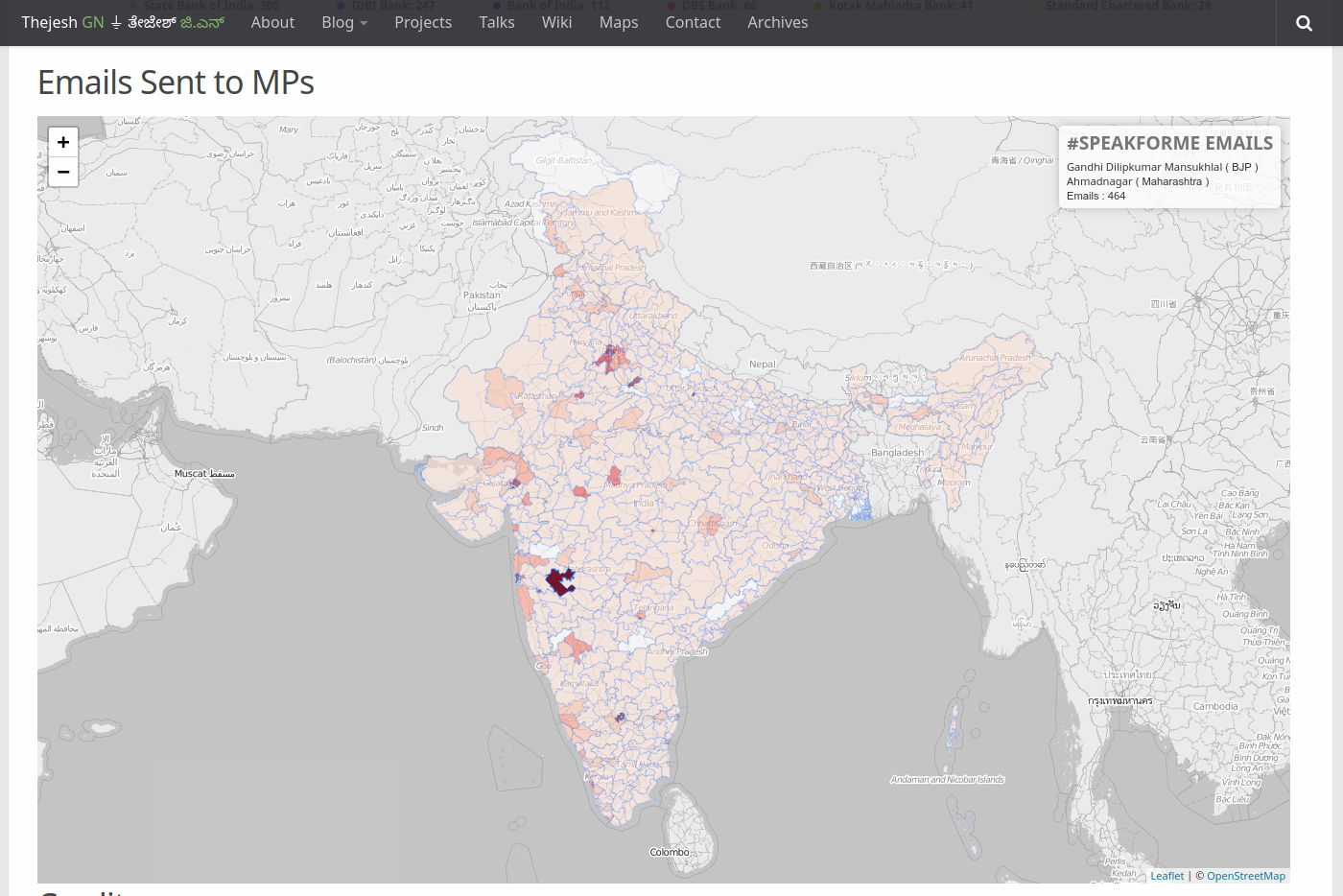
#SpeakForMe is a campaign to petition Indian MPs, Banks, Mobile operators and other service providers to speak for you against the Aadhaar linking coercion. You can go to #SpeakForMe to send your petition. As part of campaign I built a quick and dirty dashboard for the emails sent. This is a quick note on how I did that.

Part of #SpeakForMe dashboard showing emails sent to MPs on a PC map.

Part of #SpeakForMe dashboard showing emails sent to MPs on a PC map.

#SpeakForMe has a twitter account @bulletinbabu which used to tweet updates in a standard format, at regular intervals. At first I started parsing these tweets and started plotting them on a graph. The parsing script would run every hour find all the tweets and then parse them and insert them into a CouchDB. Parsed CouchDB document is very simple and can be used to directly for charting

{  
   "_id":"2017-12-13T18:20:02+05:30",
   "_rev":"1-67c8a405a19f3a787f42640fa1ac9aef",
   "govt":32,
   "stat":"email_sent",
   "mps":780,
   "campaign":"#SpeakForMe",
   "others":13,
   "mobile":69,
   "tw":940926800292540417,
   "total":1000,
   "banks":106
}

Scraper code is pretty standard too

#!/usr/bin/env python
# encoding: utf-8
import couchdb
import tweepy #https://github.com/tweepy/tweepy
import csv
import re
import arrow
import time

# The consumer keys can be found on your application's Details
# page located at https://dev.twitter.com/apps (under "OAuth settings")
consumer_key=""
consumer_secret=""

# The access tokens can be found on your applications's Details
# page located at https://dev.twitter.com/apps (located
# under "Your access token")
access_key=""
access_secret=""

#you will have to change this
couch_url = "https://username:password@mycouchdb.url.com"

remote_server = couchdb.Server(couch_url)
bulletinbabu_db = remote_server['bulletinbabu']

def get_all_tweets(screen_name):
	#Twitter only allows access to a users most recent 3240 tweets with this method
	
	#authorize twitter, initialize tweepy
	auth = tweepy.OAuthHandler(consumer_key, consumer_secret)
	auth.set_access_token(access_key, access_secret)
	api = tweepy.API(auth)
	
	#initialize a list to hold all the tweepy Tweets
	alltweets = []	
	
	#make initial request for most recent tweets (200 is the maximum allowed count)
	new_tweets = api.user_timeline(screen_name = screen_name,count=200,tweet_mode="extended")
	
	#save most recent tweets
	alltweets.extend(new_tweets)
	
	#save the id of the oldest tweet less one
	oldest = alltweets[-1].id - 1
	
	#keep grabbing tweets until there are no tweets left to grab
	while len(new_tweets) > 0:
		break		
		
		#all subsiquent requests use the max_id param to prevent duplicates
		new_tweets = api.user_timeline(screen_name = screen_name,count=200,max_id=oldest,tweet_mode="extended")
		
		#save most recent tweets
		alltweets.extend(new_tweets)
		
		#update the id of the oldest tweet less one
		oldest = alltweets[-1].id - 1
		
		print "...%s tweets downloaded so far" % (len(alltweets))


	for tweet in alltweets:
		print "--------------------------------------------------------------------------------------------"
		bulletinbabu = {}
		bulletinbabu['tw']=tweet.id
		bulletinbabu['campaign']="#SpeakForMe"		
		bulletinbabu['_id'] = arrow.get(tweet.created_at).to('local').format('YYYY-MM-DDTHH:mm:ssZZ')	
		text =  tweet.full_text.encode("utf-8")
		print str(text)
		if text.startswith("Emails from #SpeakForMe to:"):
			bulletinbabu['stat']="email_sent"
			regex_search = re.search('MPs:(.*) ', text, re.IGNORECASE)
			if regex_search:
				mps = regex_search.group(1)
				mps = mps.replace(",","")
				print str(mps)
				bulletinbabu['mps']=int(mps.strip())

			regex_search = re.search('Banks:(.*) ', text, re.IGNORECASE)
			if regex_search:
				banks = regex_search.group(1)
				banks = banks.replace(",","")
				bulletinbabu['banks']=int(banks.strip())

			regex_search = re.search('Mobile service providers:(.*)\ ', text, re.IGNORECASE)
			if regex_search:
				mobile = regex_search.group(1)
				mobile = mobile.replace(",","")
				bulletinbabu['mobile']=int(mobile.strip())

			regex_search = re.search('Government services:(.*)\ ', text, re.IGNORECASE)
			if regex_search:
				govt = regex_search.group(1)
				govt = govt.replace(",","")
				bulletinbabu['govt']=int(govt.strip())

			regex_search = re.search('Others:(.*)\ ', text, re.IGNORECASE)
			if regex_search:
				others = regex_search.group(1)
				others = others.replace(",","")
				bulletinbabu['others']=int(others.strip())

			regex_search = re.search('Total:(.*)\ ', text, re.IGNORECASE)
			if regex_search:
				total = regex_search.group(1)
				total = total.replace(",","")
				bulletinbabu['total']=int(total.strip())
			print str(bulletinbabu)
			try:
				bulletinbabu_db.save(bulletinbabu)
			except couchdb.http.ResourceConflict:
				print "Already exists"
				break
			time.sleep(0.1)
		elif text.startswith("Top recipients of #SpeakForMe emails:"):
			#bulletinbabu['stat']="top_rcpt"
			pass


if __name__ == '__main__':
	#pass in the username of the account you want to download
	get_all_tweets("bulletinbabu")

Since CouchDB provides http restful access to data, there was no issue in pulling the data from the database using standard AJAX requests for plotting. Couple of days later #SpeakForMe team wanted to see how many emails were sent to MPs. So I asked them to post the aggregate analytics 1 they were collecting to my CouchDB. They started posting two types of documents. One aggregate at services level, second aggregates at individual receiver level. Posting would be a simple web POST using python requests for them. Just like posting to any webhook

import requests
couch_url = "https://username:password@mycouchdb.url.com"
data = {'stat': 'email_sent', 'total':2339 , 'campaign': '#SpeakForMe', 'mobile':198 , 'tw':941038005199998978 , 'govt':78 , 'mps': 1824, 'others':6 , 'banks': 233, '_id': u'2017-12-14T01:41:00+05:30'}
r = requests.post(couch_url, json = data)

First document is similar to what I used to scrape. Second one is a bigger document. It has number of emails at the level of service provider or MP. Attribute “stat” differentiates the two types of document. _id which is primary key is just a standard time-stamp. As you can see in the partial “mailbox_email_sent” document below. The key has two parts “type of provider” and “provider name”, separated by “/”. For airtel it is “mobile/airtel” etc. For mps it starts with mp and then has state code and parliamentary constituency number, Eg: “mp/mh-47”. Here is the copy of full document if you like to see.

{  
   "_id":"2017-12-20T13:10:03.243684+05:30",
   "_rev":"1-b9ed7d5104bf0c8e1fbd341743829084",
   "gov/pan":344,
   "mobile/mts":1,
   "mp/ar-2":4,
   "mp/mh-47":28,
   "bank/bkid":24,
   "mp/ka-14":19,
   "mp/ka-15":65,  
   "mp/wb-41":1,
   "campaign":"#SpeakForMe",
   "bank/orbc":10,
   "mp/ke-20":167,
   "total":32354,
   "bank/lavb":2,
   "bank/synb":6,
   "bank/ibkl":19,
   "mobile/airtel":595,
   ...
   ....
   ...
   "mp/or-12":4,
   "mp/pb-8":17,
   "mp/wb-30":5,
   "bank/indb":14,
   "mobile/idea":183,
   "stat":"mailbox_email_sent",
   "bank/vijb":7,
   "mp/bi-38":18,
   "mp/bi-40":3
}

On the client side its just static html and javascript. I used Parliamentary Constituencies Maps provided by Data{Meet} Community Maps Project. They are displayed using leaflet and d3. In fact I borrowed parts of code from DataMeet maps project. I use Lodash, to query, filter and manipulate the documents returned by CouchDB. For example

let all_rows = _.reverse(returned_data.rows);
//Filter emails sent
let rows =  _.filter(all_rows, function(o) { return o.doc.stat == "email_sent" && o.doc.campaign == "#SpeakForMe"});
let latest_row = _.last(rows);

let rows_mailbox_email_sent = _.filter(all_rows, function(o) { return o.doc.stat == "mailbox_email_sent" && o.doc.campaign == "#SpeakForMe"});
let latest_mailbox_email_sent = _.last(rows_mailbox_email_sent);

You can see the code that does everything here. I used Frappé Charts for charting. I love them. They are simple and look great.

Basically analytics data gets stored in a CouchDB and served as standard restful that CouchDB provides to browser. Running couchdb to receive external authenticated webhook post and then serve the data as restful service worked like a charm. Of course I didn’t have much traffic to test under load. But since CouchDB is behind a CloudFront (Amazon CDN), I guess is it can take quite a bit of load. Usually the team pushes data every 5 minutes if there are updates. So it shows live status (see the last updated time stamp).

At some point I will create graph of email traffic (daily emails sent etc). Any other graphs you would like to see? I will be happy to answer any questions if you have.

  1. As you can see in the data json documents, only aggregates, no personal information
04 Jan 18:41

Why we say no to surveys and focus groups

by leisa.reichelt@gmail.com (Leisa Reichelt)

Originally published on the DTA Blog.

Surveys and focus groups aren’t used much in our user-centred design process. These are the reasons why.

You can’t get authentic, actionable insights in a few clicks

Think about the last time you filled in a survey.

As you were filling in that survey, did you feel as though you were really, genuinely able to express to that organisation how you felt about the thing they were asking you? About the actual experiences you’ve had?

If the answer is no, you’re in good company. I ask this question a lot and the answer is always the same.

This is important to remember whenever you’re looking at research reports full of statistically significant graphs. Always make sure you are critically evaluating the quality of the research data you are looking at – no matter how large the sample size or whether it has been peer reviewed.

Also, when you are looking at research outcomes you should think about whether they help you understand what to do next. Surveys and other analytics can be good at telling us what is happening, but less good at telling us why. Understanding the why is critical for service design.

Government services have to work for everyone

As researchers, we have a pretty diverse toolkit of research techniques and it is important that we choose the right tools for the job at hand.

Surveys and focus groups are research techniques widely used in market research where we want to understand the size of a market and how to reach and attract them. But most of the time, designing government services is not like marketing.

Randomised control trials are widely used in behavioural economics to understand how best to influence behaviour in a desired direction. Most of the time, designing government services is not like behavioural economics.

The job that multi-disciplinary teams have to do when designing government services is simple but difficult. We need to make sure that the service works for the widest possible audience. Everyone who wants to use that digital government service should be able to.

When we achieve this level of usability in a government service we are more likely to achieve:

  • desired policy outcomes
  • increased compliance
  • reduced error rates
  • a better user experience for end-users.

It’s not about preference

Government services work when people understand what government wants them to do. Success also means they’re able to use the service as quickly and easily as possible without making errors. These are the outcomes that the user researcher needs to prioritise.

To achieve this we use observational research techniques and iterative processes that predate both the internet and computers – having their foundations in ergonomics and later in human computer interaction.

There are 3 important things our user researchers and their multi-disciplinary teams keep in mind as they do their work to understand whether services are usable and how the team might make them more usable:

  • We care about what makes the service work better for more people, more than we do about what people (either users or stakeholders) tell us what they prefer
  • We take an evidence-based approach to evaluating whether our design is working better to help people use the service
  • We know that the more opportunities we have to iterate (test and learn) the greater the chance we have of delivering a service that most people can understand and use.

Setting real-life tasks is more valuable than ‘tell us what you think’

We used task-based usability as one of the main research tools when we are evaluating the design of digital services and iterating to improve them in the Alpha, Beta and Live stages.

To do this we come up with examples of important tasks that people need to do to complete that service. For example we might ask them to register for a service and complete a registration form as if they were doing it for real.

When we are testing content, we might provide a real-life scenario that represents a question that people should be able to quickly and easily answer. Using a real-life scenario makes it easier for us to be sure that users are getting the right answer. The worst case scenario is when users think they have the right answer but are actually incorrect.

A scenario might be something like this:

Samantha is 41. She is a single mother of a 14-year-old boy.

The building company she worked for has recently gone out of business and she’s now working part-time at the local supermarket while looking for work.

How much can she earn each fortnight before her payment stops?

We can do task-based testing in a moderated environment. This is where the user researcher is in the room (or on a video conference) with the participant and asking them about how they are interpreting the design and information as they move through the task. This helps us understand what people are thinking and why they are making the decisions they do and let’s us understand how to improve the design to work better.

Task-based testing can also be done in an unmoderated environment. This is where the participant is left alone to do the tasks and we use software to measure how long it takes to complete. We also measure the pathways the user takes, whether they can accurately complete the task and their perception of the effort involved. This can help us to create a baseline for usability which we can try and improve upon.

Both of these approaches give the team valuable insights into how well a service is performing. But critically we also learn what we can do to make the service work better for users.

Of course there are times to use surveys and randomised control trials – no research method is in itself inherently bad. But if you’re in the business of designing government services and making them work better for users (which means better outcomes for government too) then you need to make sure you’re not automatically defaulting to research tools that don’t let you dig as deep as our users deserve.

04 Jan 18:40

Twitter Favorites: [awesome] @doriantaylor same but every day

stephanie vacher @awesome
@doriantaylor same but every day
04 Jan 18:40

Twitter Favorites: [ReneeStephen] @doriantaylor Every time I use my full initials I get a little sad about it. I also am still annoyed about Google Reader.

Renée Stephen @ReneeStephen
@doriantaylor Every time I use my full initials I get a little sad about it. I also am still annoyed about Google Reader.
04 Jan 18:40

People Are Not Talking About Machine Learning Clickbait and Misinformation Nearly Enough

by mikecaulfield

The way that machine learning works is basically this: you input some models, let’s say of what tables look like, and then the code generates some things it thinks are tables. You click yes on the things that look like tables and the code reinforces the processes that made those and makes some more attempts. You rate again, and with each rating the elements of the process that produce table-like things are strengthened and the ones that produce non-table-like things are weakened.

It doesn’t have to be making things — it can be recognition as well. In fact, as long as you have some human feedback in the mix you can train an machine learning process to recognize and rate tables that another machine learning process makes, in something called a generative adversarial network.

People often use machine learning and AI interchangeably (and sometimes I do too). In reality machine learning is one approach to AI, and it works very well for some things and not so well for others. So far, for example, it’s been a bit of a bust in education. It’s had some good results in terms of self-driving cars. It hasn’t done great in medicine.

It will get better in these areas but there’s a bit of a gating factor here — the feedback loops in these areas are both delayed and complex. In medicine we’re interested in survival rates that span from months to decades — not exactly a fast paced loop — and the information that is currently out there for machines to learn from is messy and inconclusive. In learning, the ability to produce custom content is likely to have some effect, but bigger issues such as motivation, deep understanding, and long-term learning gains are not as simple as recognizing tables. In cars machine learning has turned out to be more useful, but even there you can use machine learning to recognize stop signs, but it’s a bit harder to test the rarer and more complex instances of “you-go-no-you-go” yielding protocols.

You know what machine learning is really good at learning, though? Like, scary, Skynet-level good?

What you click on.

Think about our tables example, but replace it with headlines. Imagine feeding into a machine learning algorithm the 1,000 most shared headlines and stories, and then having the ML generate over the next hour 10,000 headlines that it publishes by 1,000 bots. The ones that are successful get shared and those parts of the ML net are boosted (produce more like this!). The ones that don’t get shared let the ML know to produce less along those lines.

That’s hour one of our disinfo Skynet. If the bots have any sizable audience, you’re running maybe 20,000 tests per piece of content — showing it to 20,000 people and seeing how they react. Hour two repeats that with better content. By the next morning you’ve run millions of tests on your various pieces of content, all slowly improving the virality of the material.

At that scale you can start checking valence, targeting, impact. It’s easy enough for a network analysis to show whether certain material is starting fights for example, and stuff that starts fights can be rated up. You can find what shares well and produces cynicism in rural counties if you want. Facebook’s staff will even help you with some of that.

In short, the social media audience becomes one big training pool for your clickbait or disinfo machine. And since there is enough information from the human training to model what humans click on, that process can be amplified via generative adversarial networks, just like with our tables.

It doesn’t stop there. The actual articles can be written by ML, with their opening grafs adjusted for maximum impact. Videos can be automatically generated off of popular articles and flood YouTube.

Even the bots can get less distinguishable. An article in the New York Times today details the work being done in ML face generation, where believable fake faces are generated. Right now the process is slow, partially because it relies solely on GAN, and because it’s processor intensive. But imagine generating out a 1,000 fake faces for your bot avatars and tracking which ones get the most shares, then regenerating a thousand more based on that and updating. Or even easier, autogenerating and re-generating user bios.

You don’t even need to hand-grow the faces, as with the NYT article. You could generate 1.000 morphs, or combos of existing faces.

Just as with the last wave of disinformation the first adopters of this stuff will be the clickbait farms, finding new and more effective means to get us to sites selling dietary supplements, or watch weird autogenerated YouTube videos. There will be a flood of low-information ML-based content. But from there it will be weaponized, and used to suppress speech and manipulate public opinion.

These different elements of ML-based gaming of the system have different ETAs, and I’m not saying all of this is imminent. Some of it is quite far off. But I am saying it is unavoidable. You have machine learning — which loves short and simple feedback loops — and you have social media, which has a business model and interface built around those loops. The two things fit together like a lock and a key. And once these two things come together it is likely to have a profoundly detrimental effect on online culture, and make our current mess seem quite primitive by comparison.


04 Jan 18:40

Mitigations landing for new class of timing attack

by Luke Wagner

Several recently-published research articles have demonstrated a new class of timing attacks (Meltdown and Spectre) that work on modern CPUs.  Our internal experiments confirm that it is possible to use similar techniques from Web content to read private information between different origins.  The full extent of this class of attack is still under investigation and we are working with security researchers and other browser vendors to fully understand the threat and fixes.  Since this new class of attacks involves measuring precise time intervals, as a partial, short-term, mitigation we are disabling or reducing the precision of several time sources in Firefox.  This includes both explicit sources, like performance.now(), and implicit sources that allow building high-resolution timers, viz., SharedArrayBuffer.

Specifically, in all release channels, starting with 57:

  • The resolution of performance.now() will be reduced to 20µs. (UPDATE: see the MDN documentation for performance.now for up-to-date precision information.)
  • The SharedArrayBuffer feature is being disabled by default.

Furthermore, other timing sources and time-fuzzing techniques are being worked on.

In the longer term, we have started experimenting with techniques to remove the information leak closer to the source, instead of just hiding the leak by disabling timers.  This project requires time to understand, implement and test, but might allow us to consider reenabling SharedArrayBuffer and the other high-resolution timers as these features provide important capabilities to the Web platform.

Update [January 4, 2018]: We have released the two timing-related mitigations described above with Firefox 57.0.4, Beta and Developers Edition 58.0b14, and Nightly 59.0a1 dated “2018-01-04” and later. Firefox 52 ESR does not support SharedArrayBuffer and is less at risk; the performance.now() mitigations will be included in the regularly scheduled Firefox 52.6 ESR release on January 23, 2018.

The post Mitigations landing for new class of timing attack appeared first on Mozilla Security Blog.

04 Jan 18:39

Where athletes in professional sports come from

by Nathan Yau

Sports are growing more international with respect to the athletes. Gregor Aisch, Kevin Quealy, and Rory Smith for The Upshot show by how much, with a focus on leagues in Europe and North America.

I like how: The dominant home country in each chart doubles as background and a layer; the tooltip shades the country you moused over while still showing the other countries; and the missing data and gaps are shown clearly but don’t obstruct the overall view.

Tags: sports, Upshot

04 Jan 18:39

"Sleep is a way of getting rid of the memories in a way that is good for the brain."

“Sleep is a way of getting rid of the memories in a way that is good for the brain.” -...
04 Jan 18:39

Exclusive: What Fitbit's 6 billion nights of sleep data reveals about us

How we sleep is unbelievably important. Getting too little sleep not only makes you feel lousy and cranky, but it’s also linked to obesity, diabetes, hypertension, and even early death. (No pressure.)

But it’s amazingly hard to measure our sleep, as a population. Sure, one person at a time can stay overnight at a sleep lab, hooked up to scalp electrodes — but try sleeping normally that way, away from home and wired to strange equipment. Other sleep studies use self-reporting, where you write down each morning how you slept, but that data is famously unreliable.

Now, though, there’s a new way to study our sleep: Fitness bands, worn by millions of people. Most of Fitibit’s bands, for example, have built-in heart-rate monitors, which produce much more accurate sleep-measurement results than earlier bands. These bands track your sleep automatically, in your own bed, on your normal schedule, under normal conditions.

Since Fitbit began tracking sleep stages in March 2017, it has collected data from 6 billion nights of its customers’ sleep. This is a gold mine — by far the largest set of sleep data ever assembled. (This data is anonymous and averaged; it’s not associated with individual customers’ names.)

“It’s a really, really exciting and really rare data set,” Fitbit data scientist Karla Gleichauf says. “It’s probably the largest biometric data set in the world.”

The measurements include not just how long you sleep, but what stages of sleep you experience. Each morning, the Fitbit app shows which parts of the night you spent in REM sleep (the vivid-dreams stage, good for mood regulation and memory processing), in deep sleep (good for memory, learning, the immune system, and feeling rested), in light sleep, and awake. (It’s always disheartening to see how much of the night you waste in little one- or two-minute wake-ups that you don’t even remember.)

image
Each morning, the Fitbit app shows how you slept.

But wait, there’s more. The Fitbit app also knows your gender, age, weight, height, location, and activity level. Therefore, the company’s data scientists can slice and dice its massive sleep database in fantastic ways. They should be able to tell us who sleeps more: men or women. Northerners or Southerners. East Coasters or West Coasters. They should be able to calculate our national average bedtime. They should be able to draw all kinds of conclusions about the way we sleep — and what’s good for us.

Now, for the first time, they have. Gleichauf and her boss, Conor Heneghan, Fitbit’s lead sleep research scientist, agreed to mine that vast sleep database to unearth some of its secrets. Some of their findings reinforce what sleep scientists have already studied; some have never been measured before.

Here’s what Fitbit discovered — a Yahoo Finance exclusive.

Men vs. women

Women sleep 25 minutes longer a night than men. They average six hours and 50 minutes of sleep a night, whereas men get only six hours and 26 minutes. Neither group gets anywhere close to the recommended eight hours a night.

image
Women get about 25 minutes more sleep a night than men.

Women also get about 10 minutes more REM sleep than men every night, too — a gap that widens after age 50.

Why these differences? “It’s really not known if it’s a physiology thing, is it a cultural thing, who knows,” Heneghan says. “I think that would be super exciting over the next 10, 20 years for people to really get into why.”

The news for women isn’t all good, though: They’re 40% more likely to suffer from insomnia — trouble falling asleep — than men.

(Those two findings could be related, too: Since women’s sleep is less efficient, they have to spend more time in bed.)

Old vs. young

Getting older also affects your sleep. In this graph from Fitbit’s sleep study, you can see that we get less deep sleep as we age. When you’re 20, you’re getting half an hour more deep sleep a night than when you’re 70.

image
We get less and less of the good sleep as we age.

North vs. South

Yes, it’s true: Northerners go to bed five minutes earlier than Southerners. They wake up earlier, too.

That may seem like a very small difference, but on the scale of billions of data points, it’s significant.

On the other hand, Heneghan points out that statistics can be tricky. “I think North/South may be an artificial divide; urban/rural is probably a more meaningful divide,” he notes. In other words, there may just be more big cities in the North.

East vs. West

East Coasters, according to the data, stay up seven minutes later than West Coasters (and wake up five minutes later, too).

“I personally find this consistent with my experience of American culture,” Heneghan says. “I lived in New York. I lived in California. You get to 9 p.m. here in California, and the restaurant staff are kind of looking at you funny. There’s a great quote from Yogi Berra: ‘It gets late real early around here.’”

The national bedtime

Here’s a data point that no amount of sleep-lab studies could have unearthed: The average American goes to bed at 11:21 p.m.

Bedtime consistency

The biggest finding in Fitbit’s data may be the link between sleep quality and bedtime consistency.

That, Gleichauf explains, “is this idea that your bedtime varies.”

And in America, it really does vary — by an average of 64 minutes. You might go to bed at 11 p.m. on weeknights, but stay up after midnight on the weekends.

The Fitbit data shows that your sleep suffers as a result. If your bedtime varies by two hours over the week, you’ll average half hour of sleep a night lessthan someone whose bedtime varies by only 30 minutes.

And you’ll pay the price.

image
By the time your weekly bedtime variation is 2 hours, it’s costing you half an hour of sleep a night.

You know how jet lag works, right? “When you have jet lag, it’s the mismatch between the actual time, in the zone you’re in, and your circadian rhythm,” Gleichauf told me. “You’re not on the right part of that curve to make you fall asleep.” So, at night in your new city, you lie there for hours, unable to fall asleep — and then in the middle of the next day, you’re overcome by exhaustion.

When your bedtime varies over the week, then, you’re creating self-induced jet lag. Gleichauf calls it social jet lag: On Monday, when you have to go back to work (and drag your bedtime backward), you feel crummy and you’re more likely to get sick.

(Dr. Till Roenneberg, professor at the Institute of Medical Psychology at the University of Munich, calculates that every hour of social jetlag increases your risk of being overweight or obese by about 33%.)

“I’m super excited about this data,” Heneghan says. “For the first time ever, we were actually able to show the link between consistency and how long you sleep.”

Social jet lag, by city

Gleichauf dove into American geography to see if there were differences in bedtime consistency — and there is.

Can you guess which city has the most widely varying bedtimes over the week?

It’s Boston — probably because it’s a huge college town, with a huge population of young people.

image
Congratulations, Boston—you have the most erratic bedtimes in the country.

Can you guess which one has the least variation in bedtimes?

It’s Las Vegas. “People who live and work in Las Vegas — if they’re in the industry of nightclubs and casinos, their schedule is going to be much less weekend-dominated,” Heneghan says.

Wake-up times also vary. This time, Seattle is the winner, with the least variation across the week. The losers here are New Yorkers, whose wake-up times swing an average of 73 minutes over the week. (Well, it is the city that never sleeps.)

image
New York is the city that never wakes up consistently.

The takeaways

The reporting that Fitbit’s sleep scientists offer in this exploration is only the very, very beginning. The company has amassed big data — big sleep data — that could provide some incredible answers. We just have to ask the right questions.

Why do men and women sleep differently? Why do we get less deep sleep as we age? Beyond the “party on the weekend” effect, why do our bedtimes vary so much? We know that exercise is good for our sleep, but when should we exercise for the best sleep? When should we eat if we want to get the most deepest sleep? Is the kind of sleep (REM sleep, deep sleep) more important than the total time asleep? Should the nation’s school hours and work hours be adjusted to fit the way we actually sleep?

Fortunately, Fitbit plans to share its data, both with other scientific institutions and in science journals; it’s thrilling to think of the new knowledge that may result from it.

Until then, consider trying to get to bed at a more consistent hour throughout the week. You’ll sleep better, you’ll sleep longer, and you’ll feel better once you’re up.

Or just move to Las Vegas.

David Pogue, tech columnist for Yahoo Finance, welcomes non-toxic comments in the Comments below. On the Web, he’s davidpogue.com. On Twitter, he’s @pogue. On email, he’s poguester@yahoo.com. You can sign up to get his stuff by email.  

Read more:

Tech that can help you keep your New Year’s resolutions

Pogue’s holiday picks: 8 cool, surprising tech gifts

Google’s Pixel Buds: Wireless earbuds for the extremely tolerant

Study finds you tend to break your old iPhone when a new one comes out

Rejoice: Sonos Speakers are finally voice-controllable

04 Jan 18:39

The Raspberry Pi PiServer tool

by Gordon Hollingworth

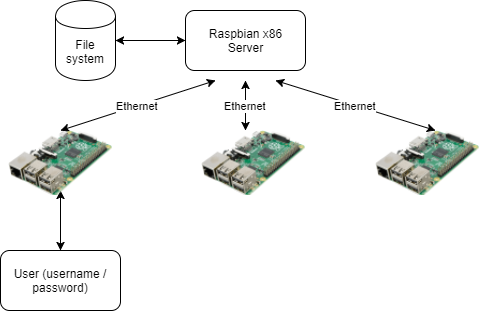
As Simon mentioned in his recent blog post about Raspbian Stretch, we have developed a new piece of software called PiServer. Use this tool to easily set up a network of client Raspberry Pis connected to a single x86-based server via Ethernet. With PiServer, you don’t need SD cards, you can control all clients via the server, and you can add and configure user accounts — it’s ideal for the classroom, your home, or an industrial setting.

PiServer diagram

Client? Server?

Before I go into more detail, let me quickly explain some terms.

  • Server — the server is the computer that provides the file system, boot files, and password authentication to the client(s)
  • Client — a client is a computer that retrieves boot files from the server over the network, and then uses a file system the server has shared. More than one client can connect to a server, but all clients use the same file system.
  • User – a user is a username/password combination that allows someone to log into a client to access the file system on the server. Any user can log into any client with their credentials, and will always see the same server and share the same file system. Users do not have sudo capability on a client, meaning they cannot make significant changes to the file system and software.

I see no SD cards

Last year we described how the Raspberry Pi 3 Model B can be booted without an SD card over an Ethernet network from another computer (the server). This is called network booting or PXE (pronounced ‘pixie’) booting.

Why would you want to do this?

  • A client computer (the Raspberry Pi) doesn’t need any permanent storage (an SD card) to boot.
  • You can network a large number of clients to one server, and all clients are exactly the same. If you log into one of the clients, you will see the same file system as if you logged into any other client.
  • The server can be run on an x86 system, which means you get to take advantage of the performance, network, and disk speed on the server.

Sounds great, right? Of course, for the less technical, creating such a network is very difficult. For example, there’s setting up all the required DHCP and TFTP servers, and making sure they behave nicely with the rest of the network. If you get this wrong, you can break your entire network.

PiServer to the rescue

To make network booting easy, I thought it would be nice to develop an application which did everything for you. Let me introduce: PiServer!

PiServer has the following functionalities:

  • It automatically detects Raspberry Pis trying to network boot, so you don’t have to work out their Ethernet addresses.
  • It sets up a DHCP server — the thing inside the router that gives all network devices an IP address — either in proxy mode or in full IP mode. No matter the mode, the DHCP server will only reply to the Raspberry Pis you have specified, which is important for network safety.
  • It creates usernames and passwords for the server. This is great for a classroom full of Pis: just set up all the users beforehand, and everyone gets to log in with their passwords and keep all their work in a central place. Moreover, users cannot change the software, so educators have control over which programs their learners can use.
  • It uses a slightly altered Raspbian build which allows separation of temporary spaces, doesn’t have the default ‘pi’ user, and has LDAP enabled for log-in.

What can I do with PiServer?

Serve a whole classroom of Pis

In a classroom, PiServer allows all files for lessons or projects to be stored on a central x86-based computer. Each user can have their own account, and any files they create are also stored on the server. Moreover, the networked Pis doesn’t need to be connected to the internet. The teacher has centralised control over all Pis, and all Pis are user-agnostic, meaning there’s no need to match a person with a computer or an SD card.

Build a home server

PiServer could be used in the home to serve file systems for all Raspberry Pis around the house — either a single common Raspbian file system for all Pis or a different operating system for each. Hopefully, our extensive OS suppliers will provide suitable build files in future.

Use it as a controller for networked Pis

In an industrial scenario, it is possible to use PiServer to develop a network of Raspberry Pis (maybe even using Power over Ethernet (PoE)) such that the control software for each Pi is stored remotely on a server. This enables easy remote control and provisioning of the Pis from a central repository.

How to use PiServer

The client machines

So that you can use a Pi as a client, you need to enable network booting on it. Power it up using an SD card with a Raspbian Lite image, and open a terminal window. Type in

echo program_usb_boot_mode=1 | sudo tee -a /boot/config.txt

and press Return. This adds the line program_usb_boot_mode=1 to the end of the config.txt file in /boot. Now power the Pi down and remove the SD card. The next time you connect the Pi to a power source, you will be able to network boot it.

The server machine

As a server, you will need an x86 computer on which you can install x86 Debian Stretch. Refer to Simon’s blog post for additional information on this. It is possible to use a Raspberry Pi to serve to the client Pis, but the file system will be slower, especially at boot time.

Make sure your server has a good amount of disk space available for the file system — in general, we recommend at least 16Gb SD cards for Raspberry Pis. The whole client file system is stored locally on the server, so the disk space requirement is fairly significant.

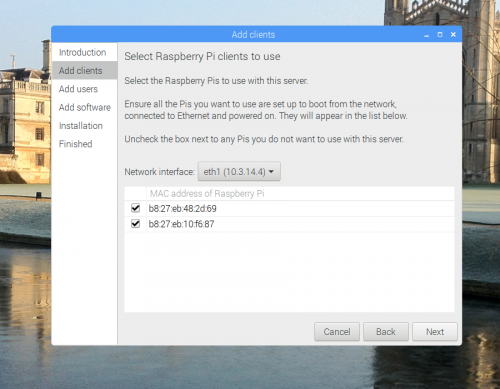
Next, start PiServer by clicking on the start icon and then clicking Preferences > PiServer. This will open a graphical user interface — the wizard — that will walk you through setting up your network. Skip the introduction screen, and you should see a screen looking like this:

PiServer GUI screenshot

If you’ve enabled network booting on the client Pis and they are connected to a power source, their MAC addresses will automatically appear in the table shown above. When you have added all your Pis, click Next.

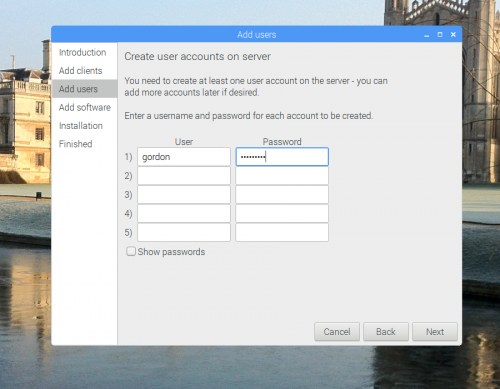
PiServer GUI screenshot

On the Add users screen, you can set up users on your server. These are pairs of usernames and passwords that will be valid for logging into the client Raspberry Pis. Don’t worry, you can add more users at any point. Click Next again when you’re done.

PiServer GUI screenshot

The Add software screen allows you to select the operating system you want to run on the attached Pis. (You’ll have the option to assign an operating system to each client individually in the setting after the wizard has finished its job.) There are some automatically populated operating systems, such as Raspbian and Raspbian Lite. Hopefully, we’ll add more in due course. You can also provide your own operating system from a local file, or install it from a URL. For further information about how these operating system images are created, have a look at the scripts in /var/lib/piserver/scripts.

Once you’re done, click Next again. The wizard will then install the necessary components and the operating systems you’ve chosen. This will take a little time, so grab a coffee (or decaffeinated drink of your choice).

When the installation process is finished, PiServer is up and running — all you need to do is reboot the Pis to get them to run from the server.

Shooting troubles

If you have trouble getting clients connected to your network, there are a fewthings you can do to debug:

  1. If some clients are connecting but others are not, check whether you’ve enabled the network booting mode on the Pis that give you issues. To do that, plug an Ethernet cable into the Pi (with the SD card removed) — the LEDs on the Pi and connector should turn on. If that doesn’t happen, you’ll need to follow the instructions above to boot the Pi and edit its /boot/config.txt file.
  2. If you can’t connect to any clients, check whether your network is suitable: format an SD card, and copy bootcode.bin from /boot on a standard Raspbian image onto it. Plug the card into a client Pi, and check whether it appears as a new MAC address in the PiServer GUI. If it does, then the problem is a known issue, and you can head to our forums to ask for advice about it (the network booting code has a couple of problems which we’re already aware of). For a temporary fix, you can clone the SD card on which bootcode.bin is stored for all your clients.

If neither of these things fix your problem, our forums are the place to find help — there’s a host of people there who’ve got PiServer working. If you’re sure you have identified a problem that hasn’t been addressed on the forums, or if you have a request for a functionality, then please add it to the GitHub issues.

The post The Raspberry Pi PiServer tool appeared first on Raspberry Pi.

04 Jan 18:38

We need more social scientists in STEM fields. journals.uchicago.edu/doi/abs/10.143… pic.twitter.com/aCR8JdIOSf

by RealPeerReview
mkalus shared this story from RealPeerReview on Twitter.

We need more social scientists in STEM fields. journals.uchicago.edu/doi/abs/10.143… pic.twitter.com/aCR8JdIOSf


Posted by RealPeerReview on Thursday, January 4th, 2018 2:14am


23 likes, 9 retweets
04 Jan 05:21

Fave 10 books from 2017

I only read 23 books in 2017. (31 in 2016; 42 in 2015.)

My favourite 10:

SPQR: A History of Ancient Rome, Mary Beard. I've been getting interested in Ancient Rome, thanks mainly to Dan Carlin's Hardcore History podcast -- in particular the series Death Throes of the Republic and the episodes on the Punic Wars. Beard has broadened my awareness to the social. The grand sweep of time - and the fact we're all still Roman in so many ways - makes this fascinating.

Four Futures: Life After Capitalism, Peter Frase. This book looks at two macro trends: abundance (via A.I. and automation) and scarcity (climate change). To see how these interact, Frase reintroduces the term class, built from first principles from the logics of capitalism and group allegiance. A vital term to navigate the late 2010s. Bonus: his four futures are illustrated with science fiction from books and movies.

Radical Technologies, Adam Greenfield. The first nine chapters are worth it in their own right, deconstructing technologies and asking the question: is the trade-off worth it. They serve to equip you for the barrage in the second half of the eponymous 10th chapter -- escape velocity ideas told with beautiful, luminous words.

Wolf Hall, Hilary Mantel. I'm late to Mantel's semi-fictionalised story of Thomas Cromwell's rise and fall (chief minister to Henry VIII and driving force of the English Reformation). The TV series is startlingly good: Mark Rylance is the embodiment of still waters running deep. It's the only TV that comes close to the 1979 BBC adaptation of Tinker, Taylor, Soldier, Spy with Alec Guinness. Like the TV series, the books - for complexity, legibility, and a gentle but relentless pace - do not disappoint. This is the first of a trilogy; the third is out in 2019. I'm reading the second now.

The Control of Nature, John McPhee. Nobody writes about nature like McPhee. He narrates complex tangles of people, history, fire, and water -- highly situated (the Mississippi, a volcanic eruption in Iceland, and an L.A. fire) but moving between the particular and general. Not my favourite by McPhee (that would either be his four volume Annals of the Former World for its weight and scope, or Encounters with the Archdruid for its humanity) but his deft sentences and ability to draw pictures are always a treat.

Neutron Star (collection), Larry Niven. I read a bunch of sci-fi. This year I've been enjoying collections of short stories all told within the same universe: it's neat to see an author explore ideas and consequences from a ton of different angles, and the the whole feels a lot bigger inside my head because of that. I've somehow missed reading into Niven's Known Space future history so far. He's got big ideas, and some cracking yarns. Great storyteller.

How Not to Network a Nation: The Uneasy History of the Soviet Internet, Benjamin Peters. Why didn't the Soviet Union build its own internet? The argument in From Newspeak to Cyberspeak (Slava Gerovitch) is that the political insistence on materialism stripped cybernetics (and therefore computing research) of metaphorical yet inspirational ideas like "memory" and "learning", constraining the vision of computing to simple calculation. Through detailed examination, Peters instead puts the blame on bureaucracy. Some interesting lessons here for institutions adopting (or not) new technologies.

(Peters has also shifted my attention from our familiar dichotomy of public vs private enterprise - that is, the state vs the individual - to polis vs oikos. When the state is, in parts, captured by private interests, it makes more sense to look at the two ends of the spectrum being the national community (polis) vs the household, or your flesh and blood (oikos). It's stuck in my head; worth thinking about more.)

The Good Immigrant, edited by Nikesh Shukla. What does it mean to be black, Asian, another ethnic group, or mixed in Britain? An immigrant or born here; in a race-based community or not; recognised or not? What do expectations from yourself and others feel like; what is identity. Here are 21 personal stories from different authors. Mind-expanding, thought provoking, intelligent, empathy-building, and it gets you in your heart -- not least because of my own story. A side note: I hope that this British perspective on race can contribute to an unpacking (and a reckoning) of our repressed memories of colonialism. This poisonous history is all the more poisonous for not being aired.

Platform Capitalism, Nick Srnicek. A look at the dominant technology platforms - Apple, Google, etc - not through the lens of technology as something new, but from the perspective of capitalism. Srnicek makes it possible to see that Uber's platform approach doesn't have any legs (it's just about exploiting labour, nothing new there) but that data extraction and processing does imply labour, and can help explain the weird adjacencies in the platform business models (e.g. why Google would get in such different businesses as advertising, email, virtual reality glasses and hardware.) This framing supports the view that data is the new oil.

One complaint: Platform Capitalism feels an introduction, like it's defining terms for a much bigger argument. And one misgiving: Srnicek says that social interactions cannot be seen as labour as (I paraphrase) they are not competitive. I disagree online - whether on Twitter, LinkedIn, Instagram, or a dating app - per Zygmunt Bauman's Consuming Life, we are marketing ourselves and competing for attention, such attention making ourselves more marketable. Given this misgiving, I don't know how stable Srnicek's set of ideas is as a foundation for debate. Stimulating none-the-less.

Living Dolls: A Magical History of the Quest for Mechanical Life, Gaby Wood. A series of interlocking essays on the history of automata from the construction of mechanical people and simulated animals, to Edison's recording of the human voice and the early history of cinema in France. What Wood does is focus on the individuals, the movement of ideas and artefacts, and the historical context.

04 Jan 05:21

The Gordie Award 2017 for Happiest Transportation Story~The Arbutus Greenway

by Sandy James Planner

59-1


arbutus-greenway-15-april-2017

The Gordie Award for 2017 for happiest transportation story goes to the Arbutus Greenway. After a bitter battle which spanned a decade and a half an agreement was finally made for the City of Vancouver to buy the nine kilometer long railway bed for 55 million dollars from CP Rail. At the time in 2016 the Mayor of Vancouver got pretty evocative, calling this “Vancouver’s chance to have a New York-style High Line”. Of course Vancouver does not have the supporting density around the Arbutus greenway~yet.

The City of Vancouver has embarked on a public process to look at interim measures for the greenway and to examine proposed long-term measures, which include a tram line, a pedestrian linkage and a bike way. But go to any part of the Arbutus greenway in any weather and you will see Vancouverites running, walking, and pushing baby carriages along this new space. You can also connect with the City’s plans for the Arbutus greenway here. 

As well Price Tags Vancouver editor Ken Ohrn has been following the process and and you can review his remarks here.

feature


04 Jan 05:20

Intel i7-8809G CPU With Radeon Graphics

by Rui Carmo

This is getting curiouser and curiouser—these chips would be quite handy on new mid-level Macs.

Previously.

04 Jan 05:20

Work Futures Daily - Day 3 of 2018 and Counting

I am not actually counting the days until the end of 2018, but the avalanche of 2018 predictions and...
04 Jan 05:20

2018: Some Hope

Mike Monteiro writes of Twitter CEO Jack Dorsey:

Jack let it happen. He watched as a once-entertaining, once-illuminating, once-vital network to global communication became a garbage fire of hate. He did nothing to stop it. Or curb it. He didn’t see a problem.

Our current crises of democracy and good faith did not just blow in with the wind and transform the air without our knowledge or consent.

These crises were made by people, and we knew what they were doing, and we agreed to this.

Jack Dorsey is one of those many people. Just one. But one with a kind of power that nobody in the world should have: the power to directly control a vast amount of the world’s communication.

It’s not that Dorsey failed to consider the good of the world. Or, really, it’s not just that. It’s that this kind of power should not exist at all.

But we agreed to it. We’re still agreeing to it.

Twitter — and Facebook, and the power of tech companies — is not our only problem.

But I have no doubt that had Twitter not become a loving home for hate, Trump would not be President now. In that universe we’d still have big problems, yes, but not like this.

How we can stop agreeing to this

The great social network is, or ought to be, the web itself.

The unruly web — unregulated and uncontrolled — is, perhaps paradoxically, the easiest place to limit hate. Not because we can stop people from publishing, but because we don’t have to live by Dorsey’s and Zuckerberg’s rules and designs.

I don’t know all the details of how we get there, or what it will be like once we do. That’s fine: that’s part of what makes the journey fun.

Software

Consider a few apps.

Overcast and Castro and others help ensure that podcasting is not just a vital and exciting medium of independent publishing but is also open and built on standards. Anybody can write any kind of podcasting software they want to — but nobody can control podcasting.

And nobody can force you to listen to hate. You pick the shows you want to hear.

MarsEdit lets you write whatever you want to write and publish it on the web. You’re limited only by the law and whatever terms of service your hosting provider may have.

All the words you read in MarsEdit are your own. And nobody can make you read what other MarsEdit users write.

Evergreen (which I’m working on), NetNewsWire, Reeder, Unread and other RSS readers work like Overcast and Castro but for written words. You choose what to read, and if a blogger you like suddenly turns hateful, you hit the Delete key.

Then there’s Manton’s new service, which needs its own section…

Micro.blog

It’s a publishing platform and a social network, based on standards.

You don’t even have to use Manton’s Mac or iOS apps: you can write posts in MarsEdit or other blog editor, or read your timeline using an RSS reader.

People could, though, sign up for it and flood your mentions with hate. In theory. So I asked Manton about that, and he wrote:

Micro.blog is similar to MarsEdit in a way in that it can be used to write hateful posts, etc. What we have to do as a social network is limit the damage. So, by default, if someone writes something terrible… No one sees it. It doesn’t automatically show up in trends (because we don’t have them, for this reason) and it doesn’t show up in Discover (because that’s curated by a human). Replies are where it’s an issue, and that’s where good tools and automatic flagging and reporting are needed.

In other words: the rules are different, and the easy exploits on Twitter are not so easy on Micro.blog. And there’s an actual committment to fighting this.

Manton also writes on his blog:

Imagine instead a service based on blogs, where the internal posts on the platform were the same format as the external posts. The curators of the platform would have more freedom to block harassing posts and ban nazis because those problematic users could always retreat to their own web site and leave everyone else in the community alone.

That’s how the web is supposed to work. It’s a core principle of Micro.blog.

(I’m @brentsimmons on Micro.blog, by the way. Here’s my microblog. I plan to post there more often than on Twitter in 2018.)

I should also mention…

Slack

I’m not sure where to put Slack in all this — except to say that admins control who’s in their groups, and I’ve never seen hate and harrassment there. I run a few groups, and I would have zero tolerance for this, and so would everybody I know who runs groups.

Well. One more thing about Slack: it meets some of the needs that Twitter used to meet. The talking-with-friends-and-family needs are very well covered there.

And the more we find ways outside of Twitter and Facebook to meet those needs, the less we’ll use Twitter and Facebook.

Maybe, back in 2012, Twitter did five important things for you that only Twitter did. I bet, in 2018, that that’s down to one or two.

Fun

The period from 1995-2008 (roughly speaking) was fun. It seemed like everybody was coming up with new things, and people were experimenting, and we were finding new joys in new connections, both human and technological.

Then, as Facebook and Twitter (and Google Reader; can’t forget that thing) grew, it’s as if we froze.

And those things were fun for a while, but they’re not now, and it’s obvious we made a mistake in allowing that much power to concentrate.

It’s time for the thaw: it’s time to get back to having fun. You’re free to make whatever you want.

What I’m Not Saying

Rebuilding the social open web is not the one cure that we need for all our ills. I’m fully skeptical of technological solutions to problems of culture and politics.

But it is an important thing we can and should do.

My small hope for 2018 is the knowledge that I’m not the only person thinking that way.

Related Reading

Me in 2011: What we talk about when we talk about RSS

Me in 2013: Why I love RSS and You Do Too

Anil Dash in 2012: The Web We Lost and Rebuilding the Web We Lost

IndieWeb is a thing I need to learn more about.

Tantek Çelik (video) - The once and future IndieWeb

04 Jan 05:19

Michael Wolff :: Fire and Fury :: Inside the Trump White House

by Volker Weber

Sketch

Buch des Tages. New York Magazine hat einen Ausschnitt.

More >

04 Jan 05:16

Analyst Gene Munster says Amazon will buy Target. Is he right?

by Josh Bernoff

On New Year’s Day, Gene Munster, former Piper Jaffray analyst and currently a venture capitalist at Loup Ventures, predicted that Amazon will buy Target. This prediction got picked coverage in hundreds of publications yesterday. Let’s look at why analyst types make predictions like this, how accurate those predictions are, and what they do for the … Continued

The post Analyst Gene Munster says Amazon will buy Target. Is he right? appeared first on without bullshit.

04 Jan 05:16

People Are Not Talking About Machine Learning Clickbait and Misinformation Nearly Enough

files/images/sua3wsg.jpg

Mike Caulfield, Hapgood, Jan 06, 2018


Icon

"In short," writes Mike Caulfield, "the social media audience becomes one big training pool for your clickbait or disinfo machine." True. But even without social media, there will be no shortage of data for the machines. Consider, for example, the content from our learning management systems. Or our loyalty card programs. Or the telephone listings. There are issues with the input end - biased training data, for example - but the real problems are happening at the application end. That's when this data is used by machine learning algorithms to perpetuate stereotypes, create fake news, teach falsehoods, etc., and this can't be solved by the technology. Nor even by teaching people how to spot fake news. It's a social problem. It's a governance problem.

[Link] [Comment]
04 Jan 05:16

A news site gave would-be commenters a quiz. Here’s what happened.

files/images/macbook-1913710_1920-1300x500.jpg

Jan 06, 2018


Icon

The Columbia Journalism Review is not above writing click-bait headlines, it seems (rememeber when clickbait headlines were the biggest problems in social media?). The idea has merit on first glance: make sure people have read the story before they can comment by asking them simple questions about what the story said. This did reduce the number of comments, but did not keep commenters on track. And critics point out that making it more difficult to engage with the story does not encourage people to engage with the story. When my high school English teacher used the same tactic on me I boycotted a year's worth of content quizzes.

[Link] [Comment]
04 Jan 05:16

Dude, you broke the future!

files/images/Charlie_Stross.PNG

Charlie Stross, Charlie's Diary, Jan 06, 2018


Icon

This is the text of science fiction writer Charlie Stross's address to the 34th Chaos Communication Congress in Leipzig in December. The speech rambles a bit but there are interesting reflections on how to predict the future (the key is combining the 85 percept of trends that will continue as expected and the small percentage that leave you wondering what happened), the role of corproations in society, the question of what AI wants, and what went wrong with it all (his explanation: the "mistake was to fund the build-out of the public world wide web—as opposed to the earlier, government-funded corporate and academic internet—by monetizing eyeballs via advertising revenue."). 

[Link] [Comment]
04 Jan 05:15

10 Reasons for Optimism About Ed Tech in 2018

files/images/duke-rubenstein-winter-sun-1651-1200x497.jpg

Matthew Rascoff, Learning Innovation, Jan 06, 2018


Icon

This article combines some much-needed optimism about educational technology (which has been in short supply lately) with some useful links. There's the HAIL Storm Network, Tsugi and NGDLE, Authorea (built on top of GitHub), and closer to the author's home at Duke, the OSPRI Lab's open source education technology project

[Link] [Comment]
04 Jan 05:15

Major Intel, AMD, ARM security bugs may affect most phones and PCs

by Bradly Shankar
Intel hq

Security researchers have discovered flaws in Intel, AMD and ARM Holdings computing chips that put nearly every modern computing device at risk to hackers.

According to researchers, there are two major bugs that are affecting devices — Meltdown and Spectre. The former flaw — which specifically targets Intel chips — allows hackers to bypass the hardware barrier between applications and a computer’s memory, which can leave any stored passwords exposed.

Spectre, meanwhile, affects chips from all three manufacturers and tricks applications into revealing private information.

Because the issues are at the chip level, devices that run Linux, macOS and Windows are all susceptible. However, researchers say Microsoft and Apple had security patches ready for affected desktop computers.

Intel has also acknowledged the flaw and said it is working on a solution with AMD and ARM Holdings. Incoming patches will need to be downloaded to update the operating systems and fix the issues, although doing so may slow down devices.

Fixes might not come so easily, though, said Daniel Gruss, one of the researchers from Graz University of Technology that discovered the Meltdown bug. Gruss told Reuters that Meltdown is “probably one of the worst CPU bugs ever found.”

Gruss said that Meltdown is the more serious current problem, although the bug’s Intel-specific nature makes it easier to patch with software. Spectre, on the other hand, will be harder to fix, he says, because it applies to nearly all computing devices. However, Gruss said Spectre is harder for hackers to take advantage of.

Via: Reuters

The post Major Intel, AMD, ARM security bugs may affect most phones and PCs appeared first on MobileSyrup.

04 Jan 05:14

My Predictions for 2018

by jbat

(cross posted from NewCo Shift)

So many predictions from so many smart people these days. When I started doing these posts fifteen years ago, prognostication wasn’t much in the air. But a host of way-smarter-than-me folks are doing it now, and I have to admit I read them all before I sat down to do my own. So in advance, thanks to Fred, to Azeem, to Scott, and Alexis, among many others.

So let’s get into it. Regular readers know that while I think about these predictions in the back of my mind for months, I usually just sit down and write them at one sitting. That’s what happened a year ago, when I predicted that 2017 would see the tech industry lose its charmed status. It certainly did, and nearly everyone is predicting more of the same for 2018. So I won’t focus on the entire industry this year, as much as on specific companies and trends. Here we go….

  1. Crypto/blockchain dies as a major story this year. I know, this is a silly thing to say given all the hype right now. But the Silicon Valley hype cycle is a pretty predictable thing, and while new currencies will continue to rise, fall, and make and lose tons of money, the overall narrative thrives on the new, and there’s simply too much real-but-boring work to be done right now in the space. Does anyone remember 1994? Sure, it’s the year the Mozilla team decamped from Illinois to the Valley, but it’s not the year the Web broke out as a mainstream story. That came a few years later. 2018 is a year of hard work on the problems that have kept blockchain from becoming what most of us believe it can truly become. And that kind of work doesn’t keep the public engaged all year long. Besides, everyone will be focused on much larger issues like…
  2. Donald Trump blows up. 2018 is the year it all goes down, and when it does, it will happen quickly (in terms of its inevitability) and painfully slowly (in terms of it actually resolving). This of course is a terrible thing to predict for our country, but we got ourselves into this mess, and we’ll have to get ourselves out of it. It will be the defining story of the year.
  3. Facts make a comeback. This has something to do with Trump’s failure, of course, but I think 2018 is the year the Enlightenment makes a robust return to the national conversation. Liberals will finally figure out that it’s utterly stupid to blame the “other side” for our nation’s troubles. Several viral memes will break out throughout the year focused on a core narrative of truth and fact. The 2018 elections will prove that our public is not rotten or corrupt, but merely susceptible to the same fever dreams we’ve always been susceptible to, and the fever always breaks. A rising tide of technology-driven engagement will help drive all of this. Yes, this is utterly optimistic. And yes, I can’t help being that way.
  4. Tech stocks overall have a sideways year. That doesn’t meant they don’t rise like crazy early (already happening!), but that by year’s end, all the year in review stock pieces will note that tech didn’t drive the markets in the way they have over the past few years. This is because the Big Four have some troubles this coming year….
  5. Amazon becomes a target. Amazon is the most overscrutinized yet still misunderstood company in all of tech. For years it’s built a muscular and opaque platform, and in 2017 it benefitted from the fact that, so far anyway, Russians haven’t found a way to use e-commerce to disrupt western democracy. Yes, Trump seems to have a bug up his bum about the company, but his tweets last year seemed to only increase Amazon’s teflon reputation with the rest of society. In 2018, however, things will change for the worse. The company is smart enough to keep hiding its power — it hasn’t accumulated the cash of its GAFA rivals, nor does it play (as much) in the high profile worlds of media and politics. But by 2018, the company will find itself painted into something of a box. Last year I thought the fear of automation and job losses would dominate the political discussion, but Russia managed to eclipse those concerns. This is the year Amazon becomes the poster child for future shock. In particular, I expect the company’s “Flex” business to come under serious scrutiny. And what it’s doing with in house brands is the equivalent of Google giving preference to its own products in search results (that hasn’t worked out so well in Europe). Further tarnishing its image will be its lack of leadership on social issues — Jeff Bezos is no Tim Cook when it comes to empathy. By year’s end, Amazon’s reputation will be in jeopardy. Then again, I do think the company will be nimbler than most in responding to that threat.
  6. Google/Alphabet will have a terrible first half (reputation wise), but recover after that. Why a terrible first half? Well, I agree with Scott, there’s another shoe to drop in the whole Schmidt story, not to mention more EU fines and fake news fallout, and that will kick off a soul-searching first half for the search giant. The company will find itself flat-footed and in need of some traditional corporate revival tactics — ever since Page stepped back into the obscurity of Alphabet, the company has lacked a compelling overarching narrative. I’m not sure how the company recovers its mojo, but it could be by pushing deeper into a strategy of letting its children grow up outside the Alphabet conglomerate structure. Perhaps not a government driven breakup, per se, but a series of spin outs, led by Sundar Pichai (Google), Susan Wojcicki (YouTube), and perhaps a new spinout around Doubleclick/Adtech, possibly run by Neal Mohan. Alphabet will remain as a holding company with stakes in all these newly (or soon to be newly) public companies, as well as a place that incubates new ventures and figures out what the hell to do with Nest.
  7. Facebook. Ah, what to say about Facebook. Well, let’s just say the company muddles through a slog of a year, with a lot of rearguard work politically, even as it starts to dawn on the world that maybe, just maybe, every advertiser in the world doesn’t want to be handcuffed to the company’s toxic engagement model. Of course, with YouTube in particular, Google has this issue as well, so here’s my Facebook prediction, which is more of an ad industry prediction: The Duopoly falls out of favor. No, this doesn’t mean year-on-year declines in revenue, but it does mean a falloff in year-on-year growth, and by the end of 2018, a increasingly vocal contingent of influencers inside the advertising world will speak out against the companies (they’re already speaking to me privately about it). One or two of them will publicly cut their spending and move it to other places, like programmatic (which will have a sideways year more than likely) and places like….
  8. Pinterest breaks out. This one might prove my biggest whiff, or my biggest “nailed it,” hard to say. But for more, see my piece from earlier in the week. Advertisers will find comfort in Pinterest’s relatively uncontroversial model, and its increasingly good results. The big question is whether Pinterest can both scale its inventory in a predictable and contextual way, and whether it can make its self service/API-based platform super simple to use. Oh, and of course continue to attract a growing user base. Early signs are that it’s doing all three.
  9. Autonomous vehicles do not become mainstream. I’ve said it before, I’m saying it again: This shit is complicated, and we’re not even close to ready. We’ll see a lot of cool pilots, and maybe even one (probably small) city will vote to let them run amuck. But I just don’t see it happening this year. However, I do think 2018 will be the year that electric vehicles are accepted as inevitable.
  10. Business leads. Business doesn’t change by fiat, it changes through the slow uptake of new social norms. And a crucial new norm in business poised to have a breakout year is the expectation that companies take their responsibilities to all stakeholders as seriously as they take their duty to shareholders. “All stakeholders” means more than customers and employees, it means actually adding value to society beyond just their product or service. 2018 will be the year of “positive externalities” in business, and yes, NewCo will be there to take notes on those companies who manage to live up to this new normal. A good place to start, of course, is the Shift Forum in less than two months. I hope to see you there, and have a great 2018!


04 Jan 05:14

Twitter Favorites: [bmann] How to install Windows 10 on your Mac using a “Boot Camp” external drive via Windows To Go https://t.co/2OjMwUbVt2 #tumbled

Boris Mann @bmann
How to install Windows 10 on your Mac using a “Boot Camp” external drive via Windows To Go bit.ly/2EQQvwM #tumbled
04 Jan 05:14

GE’s upcoming smart ceiling light and switch support Alexa and Google Assistant

by Dean Daley
General Electric ceiling light

Ahead of CES 2018, General Electronic (GE) has revealed two new entries in its ‘C by GE’ line of smart lightning products. The new ceiling fixture and light switch are slated to arrive later this year and can be controlled with Alexa and Google Assistant.

The ceiling fixture is shaped like a disk with a circular speaker in the middle. As previously mentioned, the light supports voice control feedback, which allows users to give voice commands in order to control other smart gadgets in the home.

The ceiling light is also capable of answering questions with the assistant of the user’s choice and play music and trivia games. The warmth of the light can also be changed through voice commands as well.

General Electronic Light Switch

GE’s new light switch supports the same features as the ceiling light, though one might find it odd to listen to music from an in-wall switch. The switch is also capable of connecting to GE’s C-Life Bulbs or C-Sleep Bulbs. The switch can also control regular lightbulbs it’s connected to and supports built-in motion, temperature and humidity sensors. The feature also suggests that GE might be considering working on its own products that control heat and humidity in the home.

Both of GE’s new devices feature built-in smart home hubs that allow them to control other C by GE lights as well. As of right now GE’s smart lights are not supported by HomeKit, though GE plans to add support for Apple’s smart home ecosystem in a few months.

GE will show off both products at CES 2018 starting this Sunday. GE has not shared Canadian pricing details yet, however, it’s likely it’ll retail for more than $180 CAD, considering the price of the C by GE Sol lamp. The company has confirmed that the products will arrive in Canada in Q2 2018.

The C by GE Sol lamp also works with Amazon Alexa and can utilize apps such as Spotify and SiriusXM.

The post GE’s upcoming smart ceiling light and switch support Alexa and Google Assistant appeared first on MobileSyrup.

04 Jan 05:14

SotD: Identikit

This is from Radiohead’s recent A Moon Shaped Pool, which I’ve been listening to a whole lot, and oh my goodness what a beautiful song.

I came to Radiohead late, missed them completely on the way up. For years all I knew was they were the band behind the OK Computer hits on the radio, but I guess I’m a fan now. I like pretty well all of Moon Shaped Pool, and it’s an absolute production triumph, the kind of thing I put on when people ask why I still have a big hulking old-school audiophile system down at that end of the room. The songs are strong but the whole album is a carefully-conceived end-to-end piece of work, a huge wide swatch of beautiful sonic fabric. Kid A was trying to be the same thing, but the tunes and sounds are just more beautiful here.

Identikit mixes multiple melodies, all strong, and deploys the most beautiful instrument currently existing in popular music, namely Thom Yorke’s voice. I can’t make sense of the lyrics, but I only put about fifteen seconds into trying to make them out which is about ten seconds more than I usually devote to pop words.

Another thing to like here is the song’s clean emphatic ending. Maybe it’s because I listen to and sometimes play classical music, but I do think a great song should come to a great end; few pop musicians pay enough attention to this.

This is part of the Song of the Day series (background).

Links

iTunes, Spotify, Amazon, live video - more powerful, more official. It’s interesting to watch the song develop in the videos over the years.

03 Jan 20:48

Spotify has quietly filed to go public

by Bradly Shankar
Spotify app on phone

Rumours that Spotify has plans to go public have been circulating for some time now, with the move long-expected to occur sometime between 2017 and 2018.

While the venture didn’t happen in 2017, the streaming service company is now one step closer to launching its IPO this year. According to Axios, Spotify confidentially filed IPO documents with the US Securities and Exchange Commission in late December.

Bloomberg, the filing suggests that Spotify is looking to list its shares in the first quarter of the year.

However, the news comes right as Spotify faces a new $1.6 billion USD lawsuit from Wixen Music Publishing over allegedly using thousands of songs without license or compensation. Therefore, it’s currently unclear if Spotify’s plans will be hindered at all by the pending legal dispute.

As it stands, though, Spotify is valued at around $16 billion and has over 60 million paying subscribers, putting it in a strong position to go public.

Source: Axios Via: Engadget

The post Spotify has quietly filed to go public appeared first on MobileSyrup.

03 Jan 20:48

The Mystery of the Lloydminster McDonald’s

by chuttenc

On our way back from a lovely family afternoon out at the local streetcar museum, we hit up a McDonald’s for a quick bit of dinner on our way home. There we found a new promotion:IMG_20171209_185212.jpg

So far so blah.

But then I looked closer:

img_20171209_185212-e1515009114286.jpg

I’m upgrading my phone shortly, so hopefully you won’t have to suffer such poor-quality images in the future. But for now, allow me to transcribe:

“Not valid with any other offer. At participating McDonald’s restaurants in Ontario, Quebec, Atlantic Canada, Alberta, Northwest Territories and Lloydminster, SK.”

First: What is Atlantic Canada? I know it’s a colloquial designation for the four Eastern provinces (New Brunswick, Prince Edward Island, Nova Scotia, and Newfoundland and Labrador), but I didn’t expect to see it referenced in legalese at the bottom of promotional copy. Apparently the term is semi-legitimate, as there is an official arm of the federal government called the Atlantic Canada Opportunities Agency/Agence de promotion économique du Canada atlantique. Neat.

Second: Oh good, Quebec gets the promotion, too. Quebec gets left out of many things advertised to the whole of Canada because of stricter laws governing gambling (including sweepstakes. Tim Hortons has to bend over backwards to make Roll Up the Rim To Win work there) and advertising (especially to children).

Third: What did Manitoba, Saskatchewan, British Columbia, and the other two territories (Yukon and Nunavut) do to be left out? Nunavut seems obvious: there are no McDonald’s restaurants there. But there’s at least two golden arches in Whitehorse, and scads in Manitoba, Saskatchewan, and BC. Must be some sort of legal something.

And that brings us to the titular mystery: Why, of all of Saskatchewan, is Lloydminster spared? Is it the one city where there’s competition? Is it to do with that urban legend about an older burger restaurant in Western Canada someplace that was called McDonald’s first? Is it because it’s licensed under a special food services employer contract that….

No.

It’s because Lloydminster Saskatchewan is here:

lloydminster

It straddles the border between the provinces Alberta and Saskatchewan. Alberta has the McDonald’s promotion. Saskatachewan doesn’t. Lloydminster, AB has two McDonald’s restaurants. Lloydminster, SK has one. It would be unfair to deny the Albertan restaurants the promotion, and unfair to exclude the Saskatechewanian restaurant. So what is McDonald’s to do?

They have to add a rider on their promotion to all corners of the Great White North that proclaims that there is one city (barely) in Saskatchewan in which you can partake of a five dollar meal deal.

Yeesh.