Shared posts

17 Apr 17:02

To Infinity and Beyond

by m.a. tateishi

In the summer, I went to see the Yayoi Kusama exhibition at the Seattle Art Museum. Don’t get me started on the antiquated system of lining up to get tickets. As I waited for 90 minutes to get the tickets, I wondered if the queuing was part of the hype for the show. Actually, it turned out to be practice for when you had line up for every single room installation in the exhibition. But all the staff at the SAM were lovely. The ticket people must be trained to defuse angry customers because in the time it took to buy three tickets, she complimented my glasses, my home city, and my pink wallet.

When you think of Yayoi Kusama, polka dots come to mind. Indeed, shops around the SAM are taking advantage by decorating with polka dots to lure people with Kusama fever. But none of these displays look as incredible as the dots in the show.

The reason for this is simple. What Kusama is really famous for is repetition. Repetition taken to a ridiculous level.

Last week, I wrote about the online course I took on modern abstraction.  Kusama was one of the artists covered, and we made a painting in the style of each artist. For Kusama, we were supposed to make an Infinity Net painting. This meant painting tiny loops all over a painted surface. Repeating one motion over a small canvas was both meditative and crazy-making for me. I can’t even imagine doing the same loops over a large canvas (up to 14 feet or 4 metres) as Kusama does. But that’s what makes her work great. It’s not the ideas, it’s the scale.

She creates a lighting installation and then multiplies it with mirrors. She creates environments where you have to experience visions as she intended them.

She takes something as simple as a stick-on polka dot and lets us repeat it all over a white room until it’s beautiful and awe-inspiring. Everyone in the installation room was smiling, either because they had participated in the art or because it was fun in there.

So whatever creative project you’re working on, think about scale. Is there a way you could blow up your project to a ridiculous scale? If you’re making art could it be bigger—so much bigger that it stretches your logistical mind? Or can you multiply the number of items? Don’t go for easy increases, push yourself to obsessive levels. There’s magic in the craziness.

16 Jan 22:09

Japan’s Season Of Culinary Death Is Almost Over; Goodbye And Thanks For All The Mochi

by subcultureist

Every country celebrates the holidays in their own way: Americans decorate Christmas trees, Germans drink Glühwein (mulled wine) and the Japanese make and consume rice cakes (mochi). Last year at the close of December, Japan’s largest organised crime group, the Yamaguchi-gumi even had the local neighbours over for their annual rice-making event in Kobe– while the police watched to make sure there was no trouble. However, these glutinous sweet rice cakes turn out to be much more deadly than Japan’s gun-shy mafia. In order to avoid more people choking to death on mochi this year, Japan’s Consumer Affairs Agency had issued a stern warning for the general public to chew over, urging caution in consumption of these holiday staples.

The worst way to start the New Year is choking to death on rice-cakes (餅) consumed to celebrate the New Year.

Mochi are a glutinous Japanese specialty, often turned into a dessert, made from pounded steamed rice that Japanese usually eat to celebrate the coming New Year and other festive occassions. The rice cakes are very chewy and sticky, like hot taffy; people can choke to death on them. In Tokyo alone, within the last five years, excluding this year, 542 people had to be given emergency treatment by the Tokyo Fire Department due to mochi related injuries. 35 were already ready dead by the time the ambulances arrived according to reports.

90% of the victims taken to the hospital were over 65.

Glühwein might give you a horrible hangover for the holidays but it won’t kill you, unlike Japanese holiday rice-cakes.

The Consumer Affairs Agency took a proactive measure this week and called for the public to cut up mochi into small pieces and thoroughly chew them before swallowing. This should help prevent people from choking on them. The agency also warned the elderly that rice cakes harden quickly in the winter and that before quickly chewing on them, it would be wise to warm up by having a conversation, doing a little exercise, and possibly drinking soup or other beverages to moisten the throat before consumption.

The agency also urged family members to closely monitor children and elderly relatives who eat the cakes.

According to the agency, in January last year,  a 91-year-old man was eating mochi with soup (o-zoni) in the evening, and after eating two pieces got them lodged in his throat and suffocated. Emergency workers who came to the scene were able to extract the food but the man never regained consciousness.  This year the fatalities by the 3rd, in Tokyo alone, were at least two people. Over 20 people had been hospitalised by the 5th. It appears that despite proactive efforts to deal with the problem, the Japanese government once again this year may have bitten off more than they can chew.

The agency’s call to safety refers to past pamphlets with instructions on what do when members choke, such as putting pressure on the area above the belly button or pounding the area between the scapula. In the past it was believed that a vacuum cleaner was the best way to remove the substance but it is no longer recommended. (No, not kidding. It was actually recommended).

The pamphlets also explains the need for vigilance in catching the warning signs. When a person grasps their throat with their thumb and index finger, this is a gesture that indicates the person may be choking. In such a case, one should quickly call for an ambulance.

In case you were wondering, Japan’s Food Safety Commission lists rice-cakes as the most dangerous food related to choking deaths. Bread was number four. Japanese new year festivities officially end on January 16th, the day after January 15th, known 小正月(koshogatsu), the little New Year, in reference to the old lunar calendar. Until then be vigilant, cut up your rice cakes into small portions, and chew well before swelling. Also, if your girlfriend or significant other keeps urging you to eat mochi, they’re probably trying to kill you. (Just kidding. Maybe).

Please remember, even when the New Year ends, mochi don’t go away. They may even show up on your pizza. So do take care.

Cod-roe, mayonnaise, seaweed and rice-cakes (mochi). This pizza is positively deadly combining the #1 and #4 most likely to cause death by choking ingredients.


16 Jan 21:52

From my inbox

by Volker Weber

ZZ260E2A5B

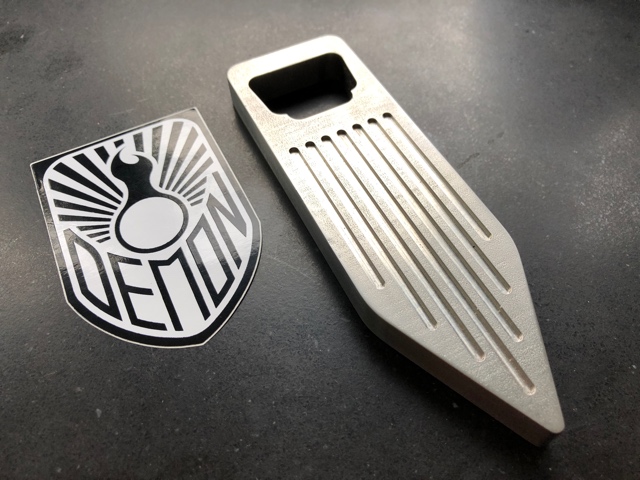
Sieht aus wie ein Flaschenöffner, ist aber eine Waffe. Danke, Matthias!

Das Geschenk hat einen Hintergrund. Wer sich schwer tut, den Brief* zu lesen, der schaue mal bei Demon Frameworks vorbei.

ZZ6DDEA351

*) Mit Erlaubnis gepostet.

16 Jan 21:52

1810 Alberni Street

by ChangingCity

This is the latest West End Plan tower to be submitted as a Development Application (not a rezoning).

It’s for 60 residential units (36 strata and 24 affordable market rental housing units) over a small retail unit on the corner of Alberni and Denman.

It will be 21 storeys high, and is designed by Rafii Architects for Landa. The architects note that it “has been designed as an array of “boxes” oriented in different directions which interplay with each other and departs from the more common vertical box of concrete and glass.”

Although each floor is under the 5,500 sq ft guideline, because of the projections the overall building footprint will need a relaxation to be allowed to go forward – so the views of the Urban Design Panel will be important.

16 Jan 21:52

Making tab switching faster in Firefox with tab warming

by Mike

Making tab operations fast

Since working on the Electrolysis team (and having transitioned to working on various performance initiatives), I’ve been working on making tab operations feel faster in Firefox. For example, I wrote a few months back about a technique we used to make tab closing faster.

Today, I’m writing to talk about how we’re trying to make tab switching feel faster in some cases.

What is “tab warming”?

When you switch a tab in multi-process Firefox, traditionally we’d send a message to the content process to tell it to paint its layers, and then we’d wait for the compositor to tell us that it had received those layers before finally doing the tab switch.

With the exception of some degenerate cases, this mechanism has worked pretty well since we introduced it, but I think we can do slightly better.

“Tab warming” is what we’re calling the process of pre-emptively rendering the layers for a tab, and pre-emptively uploading them to the compositor, when we’re pretty sure you’re likely to switch to that tab.1

Maybe this is my Canadian-ness showing, but I like to think of it almost like coming in from shoveling snow off of the driveway, and somebody inside has already made hot chocolate for you, because they knew you’d probably be cold.

For many cases, I don’t actually think tab warming will be very noticeable; in my experience, we’re able to render and upload the layers2 for most sites quickly enough for the difference to be negligible.

There are certain sites, however, that we can’t render and upload layers for as quickly. These are the sites that I think warming will help with.

Here’s an example of such a site

The above link is using SVGs and CSS to do an animation. Unfortunately, on my MBP, if I have this open in a background tab in Firefox right now, and switch to it, there’s an appreciable delay between clicking that tab and it finally being presented to me.3

With tab warming enabled, when you hover over the tab with your mouse cursor, the rendering of that sophisticated SVG will occur while your finger is still on its way to click on the mouse button to actually choose the tab. Those precious milliseconds are used to do the rendering and uploading, so that when the click event finally comes, the SVG is ready and waiting for you.

Assuming a sufficiently long delay between hover and click, the tab switch should be perceived as instantaneous. If the delay was non-zero but still not long enough, we will have nonetheless shaved that time off in eventually presenting the tab to you.

And in the event that we were wrong, and you weren’t interested in seeing the tab, we eventually throw the uploaded layers away.

On my own machine, this makes a significant difference in the perceived tab switch performance with the above site.

Trying it out in Nightly

Tab warming is currently controlled via this preference:

browser.tabs.remote.warmup.enabled

and is currently off by default while we test it and work out more kinks. If you’re interested in helping us test, flip that preference in Firefox Nightly, and file bugs if you see it introducing strange behaviour.

Hopefully we’ll be able to flip it on by default soon. Stay tuned!

Translations

Thanks to generous volunteers on the web, this article has been translated to the following languages:

  1. Russian, by HTR Mobile

  1. Right now, we simply detect whether you’re hovering a tab with a mouse to predict that you’re likely going to choose that, but there are certain more opportunities to introduce warming based on other user behaviours. 

  2. We can even interrupt JavaScript to do this, thankfully! 

  3. I suspect WebRender will eventually help with the raw rendering performance, but that’s still a little ways off from being shipped to users. 

16 Jan 21:52

SotD: Please Don’t

I mean Baby, Please Don’t Go of course, the blues chestnut to end all blues chestnuts. Nobody knows who wrote it, although apparently Muddy Waters first made it a hit; Wikipedia offers several plausible backgrounds dating from slavery days up to about 1925. The version I’m chiefly recommending was recorded by Lightnin’ Hopkins in the early Sixties.

That recording is on a collection called Prestige Profiles Lightnin’ Hopkins, it’s really pleasing. The audio is brilliant in that they apparently pointed a couple of good mikes at the musician and got out of the fucking way, an approach now unknown to the music business. It’s terrible in that most songs have Hopkins’ voice on the left his guitar in the middle, and the accompaniment on the right. But you can ignore it because the singing and playing are so good.

Lightnin’ Hopkins

On the record the song is billed as Back to New Orleans, possibly for legal reasons — I note it also features I’m a Crawling Black Snake, sung to the Kingsnake tune. Turns out Lightnin’ would do a studio session for almost anyone any time, demanding to be paid in advance, and refusing more than a single take on each tune.

He’s what you’d call a blues success story; got himself out of a field hand’s job into a decent career with a few hits in Texas around 1950, subsided into obscurity, but then made quite a few bucks upon his blues-revival rediscovery in the late sixties, and kept that going till he died of cancer in 1982. Near as I can tell, he was never in prison nor stabbed anyone nor raped anyone nor was addicted to anything. Like I said, a blues success story.

Back to New Orleans on Prestige is just a perfect performance; his voice is lilting, rich, and friendly, and the guitar line is sort of the mother-lode; it’s informed legions of honkie blues brats, some of whom became major rock stars. But I’ve never heard acoustic blues harmony played better by anybody, live or recorded, ever. It’s just a beautiful song.

Other performers

I mean, like everybody: Van Morrison and Them, John Lee Hooker, Big Bill Broonzy, Muddy Waters, AC/DC, Aerosmith, Ted Nugent, and well, the list goes on. What happened was, at some point around 1970 some guitar player with amps that went up to 11 noticed that you could take that nice bouncy guitar line, move it up an octave and play it three times as fast with really heavy distortion and boy, did it ever sound good. So lots of them did.

This is part of the Song of the Day series (background).

Links

Spotify, Amazon, iTunes, live video - amazingly, someone filmed Lightnin’ in a solo performance, which is a little flat compared to Prestige Profiles, but worth watching. Then… man, there are a lot of video clips out there. Here are the ones I liked the most: Muddy Waters and a good Chicago band augmented by the Glimmer Twins, AC/DC (wow), Aerosmith (double wow), and John Lee Hooker with Van Morrison (awwww). If you’re only going to watch one, I recommend Aerosmith. But listen to Lightnin’s original first.

16 Jan 21:52

Scale comparison of wildfires

by Nathan Yau

The past few days in California has been non-stop rain, but the months before that, there was unprecedented wildfires in the state. Lauren Tierney, reporting for The Washington Post, provides an overview along with a scale comparison of 2017’s biggest fire against anywhere on the globe.

Tags: California, fires, scale, Washington Post

16 Jan 21:52

Praktisch Lenovo

by Volker Weber

miix630
Photo Lenovo

Ich habe die CES recht gut vom Sofa aus verfolgt. Wenn man das ganze Getöse um die Gadgets wegräumt und die kleinen Verbesserungen bei den PCs ignoriert, dann bleibt doch mal etwas zunächst Unscheinbares im Netz. Für mich war das Miix 630 von Lenovo besonders interessant. Auf den ersten Blick ist das ein Surface Clone, so wie die bisherigen Miix auch. Aber das hier ist anders.

  • Das Miix 630 ist aus der Gattung Always Connected PC. Es läuft mit einem Qualcomm 835 statt einem Intel Core Chipset und bringt damit stets LTE mit. eSIM ist an Bord, aber auch eine normale SIM findet Platz.
  • Bis zu 20 Stunden soll es durchhalten, das ist aber wie immer ein untypischer Benchmark Local Video Playback. Selbst wenn es nur zwei Drittel davon sind, wird man das Miix tagsüber nicht aufladen müssen.
  • Die ganze Ausstattung ist dabei. Tastatur, Hülle mit Kickstand, Stift. Ein einziger USB-C Port.

Wir nüssen nicht länger grübeln, was nach Windows Phone kommt. Das ist es. Im Wesentlichen ein 12.3" Smartphone mit Tastatur und Stift. Ohne Telefon, das ja sowieso kaum noch jemand benutzt. Ich finde das Miix nicht so hübsch wie ein Surface, aber es ist praktisch. Die Hülle schützt die Rückseite, die Tastatur die Vorderseite. Der Stift hat einen Clip und kann in einer Schlaufe an der Tastatur sicher aufbewahrt werden. Die Kamera unterstützt Windows Hello und erspart so die Passworteingabe. Das Tablet kann man mit einem Griff von allem Zubehör befreien und dann möglichst wenig in der Hand zu halten.

Das Miix soll im zweiten Quartal erscheinen und "ab $799" kosten. 4 oder 8 GB RAM, "bis zu 256 GB" Storage. Man kann also wenigstens mit zwei Varianten rechnen: 4/128 und 8/256.

16 Jan 21:52

`let` vs `var` – Part 2

by princiya

Here is the interview series of posts. The Part 1 of this post is here.

In this tech-cartoon post, I am trying to explain the life cycle of variables, the temporary dead zone (TDZ) and how storage is created for let vs var in loops.

let vs var_1


let vs var_2

Reference:

ExploringJS ES6 variables

16 Jan 21:51

Best Place to Be a Driver Is Where?

by Ken Ohrn

Where in the world are the most satisfied motor vehicle drivers?  What!!  The Netherlands?  For 3 years in a row?   But . . .   but . . . splutter. . . fap . . .  bike lanes!

Check these results for 2017 from Waze.

As for the results…the best place to be a driver is (drumroll): The Netherlands. The European nation takes the top spot in our index thanks to prime traffic conditions, road quality, and infrastructure. 

It seems that designing, building and promoting safe and effective transportation choices is a solid strategy.  People like multi-modal travel and use it, and this makes the city better for everyone, including motor vehicle operators.

Here’s an article by Chris and Melissa Bruntlett in the DailyHive based on the 2016 Waze report.

Dutch.TravelFor the second year in a row, Waze’s Driver Satisfaction Index – which analyzes the driving experiences of 65 million monthly users in 38 countries and 235 cities across the globe – named The Netherlands the most satisfying place in the world to drive, specifically referencing its “smooth traffic conditions” and “solid road quality.”

. . .  With fewer motorists moving both short and long distances on the country’s roadways, space is freed up for those who really need it, such freight companies and emergency services. In addition to reducing the amount of congestion, this also decreases the need for road maintenance due to “wear and tear.” Finally, the report mentions the unparalleled safety of Dutch streets, statistically the safest in the world, having virtually eliminated deaths and serious injuries by engineering user error out of the equation.

16 Jan 21:49

Culture, Food Security and Development in Chinatown~

by Sandy James Planner

image_1-img-1280-high

There’s an event at  Simon Fraser University’s Harbour Centre location with the principal author of the Hua Foundation’s Vancouver Chinatown Food Security Report  Angela Ho, detailing her findings and observations on how this area lost half of its access to fresh food assets within the last  nine years.

The presentation will be followed by a panel discussion with Andy Yan (SFU City Program Director), Wes Regan (City of Vancouver Community Economic Development Planner), and Elvy Del Bianco (Vancity Program Manager for Cooperative Partnerships) to explore ideas on how various stakeholders can play a role to retain and revive these unique spaces where history, culture, food security, local economy and policy intersects.

You can register for this event here.


Saturday, January 20, 2018

Time
1:30 – 4:00PM

Location
SFU Harbour Centre
Room 1400 Segal Centre
515 West Hastings Street
Vancouver

tcp053


16 Jan 21:49

WeChat reaches audiences conventional media in China cannot

files/images/Weibo-Social-Media-Marketing-1080x720.jpg

Mia Shuang Li, Columbia Journalism Review, Jan 15, 2018


Icon

It's an interesting time in the world of social media. News agencies today are reporting that Facebook is changing it's news feed to show you more content from family and less from news sources (many of which were untrustworthy). They, along with Twitter and Google, are also being called to account for extremist content. But with Twitter, fame trumps discretion. The opposite is happening in China, as WeChat is becoming a major news source, despite the potential for misinformation spreading on WeChat just as it does on Facebook. But the tide is turning in China as well. In October, China banned anonymous social media registrations. That still leaves the problem of findind actual news not covered by authoritative news sources. In China there are Key Opinion Leaders (KOL) who dig up these stories. In the west we follow celebities and sports figures.

[Link] [Comment]
16 Jan 21:49

The 2017 Heroku Retrospective: Advancing Developer Experience, Data, and Trust

by Matt Schaar

2017 was a great year for Heroku and our users. We want to thank each of you for your feedback, beta participation, and spirit of innovation, which inspires how we think about our products and evolve the platform.

In the past year, we released a range of new features to make the developer experience even more elegant. We bolstered our existing lineup of data services while providing security controls for building high compliance applications on the platform.

With that, we’d like to take a moment and share some of the highlights from 2017. We hope you enjoy it, and we look forward to an even more exciting 2018!

Advancing the Developer Experience

Heroku CI

Run tests with zero queue time on every push to GitHub using a low-setup visual test runner that’s integrated with Heroku Pipelines for strong dev/prod parity.

Free and Automated SSL Certs

Heroku Automated Certificate Management handles all aspects of SSL/TLS certificates for custom domains. This makes creating secure web applications easier than ever.

Heroku Autoscaling

Check out how response-based Autoscaling ensures that your app users always have a good experience.

The Heroku-16 Stack

Heroku-16 includes updated stack libraries, a smoother Docker development experience, and improved compilation for Ruby and Python packages.

Container Registry & Runtime

Create your own stack with your choice of base operating system and install any dependency. Take advantage of Docker's local development experience for dev/prod parity.

Heroku ChatOps for Slack

Heroku ChatOps uses the power of Heroku Pipelines to bring a collaborative deployment workflow to Slack. Deploy code, promote code, and keep track of your CI test status—all from your Slack channel.

Einstein Vision Add-on

Learn how to embed custom image classification into your apps with a new Heroku Add-on.

Release Phase

Push your code and have Release Phase automatically run tasks that your app needs for production, such as a database schema migration, uploading static assets to a CDN, or invalidating a cache.

Heroku Exec & Language Runtime Metrics

Use JVM Language Metrics to identify potential issues early by viewing indicators like garbage collection activity and heap memory usage, then SSH into a running dyno with Heroku Exec for further inspection.

Heroku Webhooks

Integrate Heroku into custom workflows and third-party tools. Get notifications of changes to your domain settings, releases, add-ons, and dyno formations.

More Ways to Build Data-Centric Apps on Heroku

PostgreSQL 10 Generally Available on Heroku

The power of PostgreSQL 10—increased parallelism for performance, native table partitioning, and more—is now generally available on Heroku Postgres.

New Plans and Pricing for Apache Kafka on Heroku

Building event-driven architectures is now easier and more accessible with new managed Kafka plans and pricing for development, testing, and low-volume production needs.

Heroku Postgres Update - Configuration, Credentials, and CI

Customize Heroku Postgres to meet your team’s needs. Configure database settings, manage user permissions with credentials, and auto-provision Postgres for Heroku CI.

Heroku Connect Update - Fast Writes, Global Deployment, & Guided Management

The latest release of Heroku Connect lets you sync customer data with Salesforce on average 5x faster, deploy closer to customers in 6 global regions, and be more productive.

Extending Trust: Security Controls & Scale for Large Organizations

Heroku Shield

Heroku Shield introduces new flavors of Dynos, Postgres databases, and Private Spaces that make Heroku suitable for running apps with higher accountability and compliance requirements, such as HIPAA.

PCI Compliance for Heroku Shield

Build critical apps with the agility of the Heroku developer experience on a PCI-compliant platform with Heroku Shield.

Heroku Private Space Peering for AWS

Connect your Heroku apps securely and privately to AWS services, such as EC2, RDS, Redshift, and more, to build a new class of multi-cloud architectures.

DNS Service Discovery

We’ve made it easier to build microservice architectures with the introduction of Service Discovery, a simple way to find other services using a standard DNS naming scheme.

Dublin Region for Private Spaces

Deploy apps closer to your customers in Europe using a network-isolated, dedicated runtime environment with your own private network and data services.

Log in today, give the new features a try, and let us know what you think. And as an added treat, you can download your Heroku artwork here.

16 Jan 21:49

Leaving my BlackBerry Z10 for an iPhone SE

by chuttenc

z10_5iphone_se_rose_gold_copy

Black Friday 2017 was coming around and I was spending it repeating what I’d done many times over the course of the year: looking at smartphones.

My wife and I were then using BlackBerry Z10s: those venerable launch devices of the failed* mobile platform BlackBerry 10. These were holdovers from my time as an employee of Research in Motion (aka RIM) eventually renamed BlackBerry Ltd where I worked on the Browser Team from 2008 until 2015.

The Z10 was released in January 2013, which made our phones nearly five years old. This is an eternity for the rapidly-evolving handset hardware business. We were fine with our Z10s, but they were starting to age: batteries drained faster, free storage fell lower, and weird things like “turning off the Wi-Fi for no apparent reason” started happening with ever-increasing prominence, if not frequency.

We were past due for a change.

The BlackBerry Z10 is a small device (by today’s standards) so there were few acceptable choices from the current crop of phones with the correct form factor. Also at this level of concern were security, privacy, and how long it would be sent supporting software updates. The iPhone SE was recommended to me by a dev who sits next to me at my coworking space.

It seemed ideal: excellent support, world-class design, the first platform to get apps, and it kept Google’s data collection to apps instead of bleeding it through the entire phone.
So on Black Friday I bought into That Other Fruit Company at their most affordable pricepoint.

And I hated it.

First off, it had a voicemail indicator that never went away.

Secondly, the mail app showed at most six emails on one screen.

Third, I had to use separate apps to track email, calendar, BlackBerry Messenger, phone calls, SMS.

Fourth, its text-selection capabilities and fine cursor control were horrible.

Fifth, I couldn’t set a non-Safari default browser which meant I was copy-pasting URLs from emails to Firefox multiple times a day. (Something went wrong with the share framework so I couldn’t even “share” the URL to Firefox. Focus worked, though.)

Sixth, there as no way to get my messages and calendar to show on my desktop outside of GMail.

Seventh, and fatally, the WiFi would cut out whenever the screen turned off.

To be fair, the WiFi thing was a hardware fault, the voicemail thing is a problem with my carrier account that they still haven’t resolved, and I was likely going to hate it no matters what it did.

Apple was the enemy for so long I don’t think I could’ve given it a fair shake if the hardware were perfect and my carrier had spent any of its millions of dollars on improving its infrastructure so an empty voice mailbox would read as empty to new phones.

I returned the iPhones, my wife’s untouched. I had given it a week, and it was clear to me that I wasn’t going to be happy with even the smallest and most affordable iDevice.

This was unfair. The thing took amazing photos exactly when I asked it to. Its browser scrolled almost as well as the BlackBerry 10 Browser. It did what it was asked with quiet efficiency.

But it wasn’t as good as it needed to have been to overcome my apparently-still-strong anti-Apple bias. So back they went.

Luckily, there was nothing immediately forcing us to make a decision, so we could ride our Z10s into the dirt if we wanted. My wife expressed that she was going to be unhappy to switch to any new device in equal measure, so it didn’t really matter which one.

Also, she was happy to stick to her tried-and-trusted Z10. She had it configured just the way she liked it.

So that’s the story of my unsuccessful attempt to leave my BlackBerry Z10 for an iPhone SE. May it help you in your search for acceptable personal computing appliances amongst the garbage the resident duopoly have left us.

:chutten

16 Jan 21:49

Thirty-Four

by Matt

I am very thankful and grateful to have made it through the past year, which was a really special one personally and professionally. I learned to open myself up more to relationships, continued aspiring to be clear and direct with yellow arrows, and worked alongside some incredible people to tackle the biggest and hardest problems, whether it was getting plugin and theme support on WP.com or the start and growth of Gutenberg.

I read a lot more books, traveled 337k miles between 91 cities, spent more time in Texas, kept my health in a good balance with weight training, running, and a better diet including several months of 16/8 intermittent fasting, while still getting in some excellent meals with friends and loved ones (up to 58% of top 50 list). As I'm solidly in my mid-thirties now, and I want to continue to live by: all things in moderation. I consider what I do with WordPress and Automattic my life's work, and hope to continue it as long as I'm useful. Some days I pinch myself.

Thank you to all of you on this journey with me. I am imperfect but trying my darndest, and I'm lucky to have friends and colleagues doing the same.

Previously: 19, 20, 21, 22, 23, 24, 25, 26, 27, 28, 29, 30, 3132, and 33.

16 Jan 21:43

VanBikes Interviews Gordon Price

by Ken Ohrn

Among a series of cycling advocate profiles at VanBikes, author and interviewer Colin Stein has interviewed Gordon Price.

Gordon_8561

Photo by Jennifer Friesen

For all his leadership and accomplishments over six terms on Vancouver City Council, Gordon Price may be forever known for helping break the debate about cycling wide open, purely through his efforts to get a bike lane to stick on this one bridge. [Ed:  Burrard]

. . .  After all these years, nothing expresses the contentiousness, political footballing and see-sawing of cycling advocacy in the city like the struggles over the Burrard Bridge. Not the staggered, multi-decade implementation of the now-iconic seawall, not the will-they-or-won’t-they pre-Olympic drama of the Cambie Canada Line Bikeway, not even the angst surrounding the Hornby and Dunsmuir separated bike lanes.

The Burrard Bridge story was the boogeyman cycling project, and for a long time.

Today, as we prepare for a grand opening of two-way separated lanes on both sides of the bridge (plus separated walking and suicide barriers, lest they be forgotten), it can be broadly recognized as a triumph. Of planning, of engineering, and of political fortitude and patience.

[Says Price]:

“The NPA still can’t bring themselves to support it, to be passionate advocates. The most they’ll say is, well we could have handled it better, or….bullshit.

The blowback that initially occurs towards change is something a politician wants to be seen to be leading, if they’re in opposition.

So when Point Grey Road happened it was natural that the NPA would oppose it, because the blowback was so intense. Or Burrard Bridge.”

. . . .   today we celebrate Gordon Price for his double role as instigator of the city’s first bike lane controversy, and patron of the newest jewel in Vancouver’s all ages and abilities cycling network – the Burrard Bridge.

[Says Price]:

Making these commitments incrementally over time, as the network effects come into play, produces a cultural change. And that becomes a reflection of who we are.

I just can’t believe anyone who goes over the Burrard Bridge driving or on transit, and doesn’t see the flow of people and who they are. 

That’s who we are.


16 Jan 21:42

A Stack Story

Something remarkable has happened in our industry. I wouldn’t have thought it would even remotely been a possibility three years ago. But if you look at the facts, you really think about what has happened, the conclusion is inescapable:

I’m now a JavaScript developer.

This is weird.

More than a decade ago I started writing Ruby professionally. I loved Ruby, and still love it. I can solve pretty much all of my problems in Ruby, and I was content with that. I was never one of those polyglots that bounce around every six months on something new. Ruby was just a tool, and I never really cared much about tools. They just existed for me to use. And that was just fine.

I first started writing JavaScript almost two decades ago, and I got good at it. Well, not at JavaScript, but at copy and pasting snippets. First Dynamic HTML fireball cursors, and then jQuery plugins and approaches. But whatever, I was a Ruby developer, that was my game.

But I’ve been building my own company and I’ve found myself with an app that’s half Ruby, half JavaScript. And… I… like… it?

This got me to thinking. I mean, I don’t really care about Ruby, or JavaScript, or whatever language you use, or how you use it. But I started thinking a lot recently about the tools and stacks we choose, and how they impact our companies.

Companies

One odd thing that jumped out at me is that no one really chooses their company’s development stack.

Isn’t that weird? We have a gajillion blog posts and hot takes on which programming language is better, or faster, or hipper. But there’s only three times in the lifetime of a company where you make decisions on which stack to pick. The first and biggest is when the company is founded. Most reasonable technology companies will just coast on related technologies from whatever your founder initially picked. So tip number one: don’t work for shitty founders.

The second is when you’re spreading around the edges. You stand up a small service to do handle some small problem. And most importantly, that’s a small enough thing where you can write it in that Cool New Language you’ve been messing with, and no one will really get too mad at you. That’s really how you can build things at larger companies: just don’t mess with anything big, and hopefully no one will care enough about you long enough for you to innovate something dumb before they stop you.

The final, of course, is The Big Rewrite. You legitimately are running into problems with your tools and feel like starting from scratch will improve your life in measurable ways. I think this happens less regularly than most people think. You’re up against a lot of problems, though: you’ve already hired a lot of people who might have to change skill sets, and they’ll sometimes work against these big changes if it makes their own stature in the company less valuable. It also takes time to change everything over, too, and most companies are terrible at doing a big rewrite while at the same time pushing forward on new features and functionality.

These big platform changes don’t happen very often in reasonable tech companies, and usually not all at once.

But even though it might not happen often… it’s still worth being critical and thinking about what this impact means for us.

Technology leadership

I joined GitHub in 2010. Saw us go from nine people to 250 people, and now they’re closing in on 800 employees.

GitHub’s always been a leader in the Ruby community. And it’s been really interesting — in hindsight — thinking about taking a leadership position in a programming language. There were others, of course: Basecamp, Engine Yard, Shopify, Heroku, Square, and Stripe have all had big impacts in the Ruby world, but GitHub was the most obvious example of a “Ruby shop” to most people.

We benefited immeasurably from that depth into a particular technology. For one, we could hire anyone. Pretty sure for awhile there if you had vaguely heard of metaprogramming we would have thrown you a sack full of money, an option grant, and access to the main github/github repo.

That’s the benefit of being locked-in to a particular set of technology. Of being known for that technology.

And that’s the whole point of a startup: you feel like you have a perspective on the universe that’s obvious to you and non-obvious to everyone else. And if your bet wins, well, you really, really do well.

So being known for a language, framework, or whatever it is… getting really deep into a particular language… that’s good stuff if you’re right. We weren’t already right, though.

GitHub’s an interesting example to look at because it’s so heavily dogfooded. We could build a great product because we ran into those pains ourselves. But years ago those cracks had started to show in the product.

Take a look at it this way. GitHub internally, from the start, is primarily one giant Rails application. There was always a smaller constellation of microservices surrounding it, but most of the product work is going to be bottlenecked in that one repository.

Why is it so hard to do work across multiple repositories in GitHub? Because a lot of their product people only work in one repository every day.

Why do you think it took almost a decade for GitHub to add unlimited private repositories? Because every GitHubber already had free private repositories as an employment perk. They didn’t face the pain that others did.

Why do you think GitHub still doesn’t have deeper integrations with Docker? Because GitHub had written its own library with Puppet to handle development environments, and hardly anyone had used Docker in a professional context. GitLab, for example, came up a little later, and had a team with a broader, fresher background, and that helped lead them to build out a container registry inside the product.

None of this is to say that what GitHub is doing is bad, or good, or anything, really. They’re just tradeoffs. This goes back to an ancient discussion of do you want a lot of depth in one thing, or a lot of breadth across a lot of things?

And there’s a point you reach where you need to start looking at those tradeoffs you’re making and determine if the tradeoffs you made in the past are still valued the same today.

20% Time

Google’s 20% time is, as far as I can tell, bullshit, resulting in requiring 120% of your time. But the sentiment is still worth considering.

If you get away from the math of whatever percentage you’re talking about, what 20% time means is that the company is paying you to work on something that isn’t necessarily your job. It’s a forcing function to get more eyeballs on processes in the company that otherwise wouldn’t be able to justify changes, or a rewrite, or auxiliary services. It gets you explicitly thinking about bigger-picture questions that the company would otherwise not want to address.

I think that’s a powerful thing. If some new technology comes around that legitimately is a game changer, you need people with the experience to have used it in a professional context prior to adding it to your production stack. And you’re never going to have the ability to do that unless you’re uncomfortable enough to build this type of self-reflection into your own workflows. Because if you don’t, you’ll never get to it. There’s always more work to do. More work that needs to be done before you can rewrite this. More work that needs to be done before you can optimize this. More work, more work. Not enough time to dance around and experiment, so you can catch those order-of-magnitude jumps when they do pop up.

So this is how your company can build upon your existing stack, and level it up. Your old way of thinking might have worked in the past, but maybe it’s time for something new. It’s important to challenge yourself, to put yourself in a position of failing.

You

Some of you might have picked up that I’m not really talking about companies. I could give two shits about companies, really. I care about you. I care about me. I care about people. So this talk isn’t about companies. It’s about the people at those companies.

You should spend some time thinking about the tools you use. Not all the time, not even a lot of the time. But sometimes. Ask yourself if the values you held years ago still ring true today. They might, and that’s fine. They might not, and that’s fine. But sometimes you have to make that self-assessment of your own environment.

Sometimes it’s the opposite: you can have just as much problems from bouncing around between technologies too much. Sometimes you just need a home. Depth is just as important as breadth. But again, just thinking about these issues is the important part.

It’s easy to be jaded in this industry. It’s easy to become complacent.

Failing fast

The Fresh Prince himself, Will Smith, of all people, had this pretty good Instagram story this week. He talked a lot about failing fast, and failing forward. That you can’t really get ahead without fucking up, and embracing those fuckups. Part of that is understanding that complacency can be a killer. I wasn’t asking enough of myself, and as such, I found myself complacent. I’d go to the same conferences, see the same people, build the same apps. And again, that’s cool — it’s good to get deeper on concepts, just as much as it is to go broad on other concepts. But I wasn’t self-critical about myself enough to see the problems until I had incurred enough debt to where it was hard to unbury myself.

Again, no one really should care much about developer tools, not really. I’m not really trying to talk like switching to JavaScript holds the secret to happiness. I mean, the language doesn’t have static typing. But developer tools are a small part of life, and a big part of how we express our professional careers.

A lot of this just depends on identifying what you want out of your career. Are you focusing on upward mobility? Do you want to manage people? Do you want to be a senior engineer? A founder? An investor? I wish I would have asked these questions of myself a lot earlier. Because once you start asking these questions of yourself, you start making changes to make it to that result earlier.

Anyway, all of this is just a long winded way of saying: ask yourself questions, see where you’re at, and if you’re not happy with where you’re going, make some changes. I know way too many people who get complacent and then wonder why everything around them sucks.

So get ahead of the curve and start thinking about your Big Rewrite before you actually need it.

16 Jan 21:42

Council Makeover

by Ken Ohrn
Tim-Stevenson-vote-in-council-July-2015_credit-James-Goldie-2042x1361

Tim Stevenson — Photo by James Goldie

Joining the crowd that will no longer be on Vancouver City council in late October, 2018 — Tim Stevenson.

Vision:

  • OUT:  Robertson, Stevenson, Reimer and Meggs.
  • IN: Louie, Deal, Jang

NPA:

  • OUT: Affleck.
  • IN:  De Genova, Ball, Bremner
16 Jan 21:42

An Undented Universe

by Eric Karjaluoto

Original image from the Library of Congress: Workers at the roundhouse of the C & NW RR Proviso Yard, Chicago, Ill. (I added the speech bubbles and cheeky words.)

“We’re here to put a dent in the universe. Otherwise, why else even be here?” says Noah Wylie’s character in Pirates of Silicon Valley. (At some point, Steve Jobs might have said something like this, too.) The questionable origin of this quote doesn’t make it any less seductive. Business speakers and marketing bloggers repeat it like scripture.

I recently spoke with a startup founder. She had returned from Silicon Valley where she met with other tech people. She explained, “No one there cares about what you’re making. They want to know how you’re going to change the world.” This experience affected her. She no longer believed it was enough for her team to create a good product. Without some grandiose vision to share, she felt inferior.

I didn’t challenge this viewpoint. She was convinced—and I doubted my ability to shake her new belief. Silicon Valley lore is so potent that it often defies common sense. Persuading her would have felt like attempting to convince a teenager that high school popularity doesn’t matter. Even if she agreed in principle, she might be powerless to the gravity of that Bizarro World.

You and I? We don’t put dents in the universe. Nope. Not a chance. To the universe, our species represents a blink of an eye. As individuals? Not even that. So, even if your new digital audio player dominates the market, it’s still only a digital audio player. The universe doesn’t care—and there’s nothing wrong with that.

You know what people need? All kinds of stuff that doesn’t put a dent in the universe. They need soap bars to clean themselves. They need spark plugs to start their cars. They need reusable containers to store their leftovers. They need belts to hold up their pants; movies to distract them from tough days; and tissues to blow their runny noses into. Few of these things put a dent in the universe, but that doesn’t make them any less necessary (nor profitable).

There’s nothing wrong with doing something meaningful. Just don’t get tricked into thinking that what your company offers isn’t meaningful. Even if what you do only benefits one or two people… Even if it’s sometimes mundane… And even if it’s imperfect… Do something meaningful.

(Because no matter how mundane it might seem, I still need toilet paper.)

The post An Undented Universe appeared first on Eric Karjaluoto.

16 Jan 21:41

Whose data is it anyway? Open Banking, PSD2 and what it means for you

by Marie Steinthaler

There’s been plenty of noise in the press recently about the introduction of ‘Open Banking’ or ‘PSD2’, but not too much information on what it will mean for consumers. Here, we give you some more detail on what it’s all about…

What is it?

For a long, long time, your banking data has been locked away in banks’ systems and databases. You might know from personal experience how hard it can be to switch banks or even open additional bank accounts – not least because all your history is in one place.

This information, like your transaction history, can be really helpful for making better decisions about your finances. But because it’s been hard to access and aggregate this data across all your different accounts, it’s been hard to get a meaningful overview of your finances.

However, a few years ago some smart people at the EU got together and agreed that the data in your bank account is actually your data, not your bank’s. And because it’s yours, it should be easier for you to do with it whatever you choose.

Enter PSD2 (the Payment Services Directive 2), which comes into force on January 13th 2018.

PSD2 introduces the obligation for payment service providers to make it easier for you to do what you want with your banking data (in totally different news, it also bans UK retailers from charging you extra fees when you use your card to pay for things, from flights to concert tickets!).

And Open Banking?

In the UK, an initiative called Open Banking comes into force at the same time. It’s in the same vein as PSD2, and was brought into life by Her Majesty’s Treasury (HMT) and the Competitions and Markets Authority (CMA) to drive more competition in the current account market. It introduces a safe and standardised way for customers to share their banking data with regulated third parties, who will be able to do much more for you with your data than your bank does.

In short, the hope is that consumers will be able to share data more securely with regulated third parties, and take more control of their money.

What does it mean for you now?

 As with anything new, time will tell how many of the great ideas that exist today in this area will actually work ‘in the real world’, but at Zopa we’re working hard to create features that will make a real difference to our customers.

For our first feature, we’re launching quicker and easier income verification when you apply for a loan. At the moment, one in every three customers applying for a loan needs to manually upload bank statements to verify their income, which isn’t always the most convenient thing to do. We’ve built a way for you to verify your income by securely pulling in transaction data from your bank account instead of uploading documents.

Of course, it’s entirely your choice of whether you want to try this new feature – and if you do, we would love to hear your feedback on contactus@zopa.com!

What’s coming up next?

While the new income verification feature will be available next week, there are a range of other exciting Open Banking-enabled features which we’re working on right now. Here are just a few examples of ideas we are exploring, and we would love to hear from you on what you would like to see.

 A simplified way to stay on top of all your accounts: By aggregating any accounts you have connected to Zopa, we could give you the ability to manage all your financial accounts in one place – regardless of who provides the underlying product. The benefit for you would be that you’d be able to see all aspects of your financial life in one user-friendly app instead of having to log in to lots of different banking apps.

Smart insights to help you feel in control of your finances: Using the data, that you have given us access to, we could provide you with useful insights to help you manage your money better. This could make spending, budgeting, and paying bills easier to understand. For instance, we could give you a heads-up that you’re about to go into a nasty overdraft and suggest ways to avoid it.

We have more ideas in store, but over to you. Tell us what would help you feel more in control of your money at contactus@zopa.com.

What about my privacy and data security?

Open Banking is about giving you control over your banking data, so none of your data will be shared without your explicit consent. And of course, wherever we introduce features which use this kind of technology, you will have the choice of whether you want to provide us with access or not. If not, no hard feelings; we get it.

On data security, PSD2 imposes a lot of requirements on companies that you might share your data with (including Zopa!): the need for proper controls and audits, dedicated processes around sensitive payment data, and much more.

Even so, we know that sharing your financial data isn’t something we should take lightly at Zopa. We take it very seriously, and have strict information security policies and procedures that we follow whenever building new products.

We also regularly run so-called ‘penetration testing’ on our systems. This is where we pay an accredited third party to try and ‘penetrate’ our systems, as a hacker might, to flag up any possible vulnerabilities. Finally, we encrypt sensitive data so, in the highly unlikely case that someone got their hands on it, it would only be gobbledegook to them.

These are just some of the things we do to keep your data safe. Stay tuned for a more in-depth technical blog about more on this.

Hopefully, this has given you an idea of what PSD2 and Open Banking is all about.

More questions? Find us on Twitter, or send us an email to get the conversation going!

Marie Steinthaler is head of new products and Open Banking lead at Zopa. 

The post Whose data is it anyway? Open Banking, PSD2 and what it means for you appeared first on Zopa Blog.

16 Jan 15:36

The WeChat mini programs ecosystem in one map

by Guest Editor

Editor’s note: This was contributed by Thibault Genaitay, front-end developer and China head at Le Wagon coding boot camp. Before running Le Wagon, he worked with luxury brands in digital strategy for the Chinese market. You can connect thibaultgenaitay on WeChat. 2017 was marked by the arrival and quick rise of WeChat mini programs. No way […]

The WeChat mini programs ecosystem in one map originally appeared on TechNode

16 Jan 15:36

Baidu launches own blockchain open platform

by Timmy Shen

Baidu, China’s search engine giant, launched today its own BaaS (Blockchain as a Service) open platform. According to the Baidu BaaS website, the platform was built based on its self-developed project and has been successfully implemented in businesses related to asset securitization and exchange. “Based on the core technology, the platform can help make and […]

Baidu launches own blockchain open platform originally appeared on TechNode

15 Jan 19:05

Samsung unveils new QLED curved monitor with Thunderbolt 3 at CES 2018

by Dean Daley
Samsung curved monitor

During the 2018 Consumer Electronics Show, Samsung Electronics showed off a new, signature curved monitor. The CJ791 is a 34-inch, 178-degree curved display monitor that uses Intel’s Thunderbolt 3 connectivity.

Due to its Thunderbolt 3 connection, the CJ791 runs at a processing speed of up to 40Gbps, which Samsung claims is four times faster than other USB alternatives.

As for image quality, the CJ791 offers 3,440 x 1,440 pixel UltraWide QHD resolution with a 21:9 aspect ratio. Moreover, Samsung claims the precise colour reflection across a 125 percent sRGB spectrum, “with deeper blacks, brighter whites and pristine shades.”

CJ791 also comes with gamer-friendly features, such as dynamic gamma setting to adjust the colours to be more true-to-life. Additionally Samsung promises a four milliseconds response time for better transitions, which results in a batter experience with many games, especially multiplayer titles.

“The CJ791 aligns Thunderbolt 3 connectivity with our best-in-class curvature and QLED picture quality to captivate and engage users, while also promoting improved organization and productivity…” said Seog-gi Kim, executive vice president of visual display business at Samsung Electronics.

We’ve reached out to Samsung Canada for pricing and availability.

Source: Samsung

The post Samsung unveils new QLED curved monitor with Thunderbolt 3 at CES 2018 appeared first on MobileSyrup.

15 Jan 19:05

Google reportedly plans to revamp its store with Assistant as the focus

by Dean Daley
google

At CES 2018 a variety of products that feature Google Assistant integration have been shown off, but Amazon and Alexa are still a threat significant threat to the Mountain View, California-based tech giant’s plans to expand into the voice-activated assistant space.

According to a Bloomberg report, analyst EMarketer estimates Google’s Home products will control 25 percent of the 2018 smart speaker market share, which pales in comparison to Amazon’s 68 percent market share with the Echo.

With that being said, according to sources familiar with Google’s plans, the company will revamp its existing online store in February. This redesign will place Google Assistant at the centre of it the company’s digital retail experience.

Google is also looking into a strategy for buying products and services with Assistant, similar to how Alexa is capable of purchasing items. Though it’s to note that Google does offer Google Express, a feature which lets users buy Walgreens, Costco and Toys ‘R’ Us products. At CES 2018, LG announced several products that feature Google Assistant, though the company’s fridges feature Amazon Alexa integration.

Google’s focus in 2018 will likely be the spread of Assistant to more home gadgets, mobile devices and vehicles, according to Google Assistant engineer and vice president Scott Huffman.

Huffman also mentions that his team is working on adding additional customization options “longtime Google partners.” This includes Assistant updates such as voice commands for troubleshooting batteries on smartphones and payments of mobile-carrier bills, though it would likely be many years before Canadians would see the latter.

Source: Bloomberg

The post Google reportedly plans to revamp its store with Assistant as the focus appeared first on MobileSyrup.

15 Jan 19:05

HTC U11 EYEs leaks with dual front-facing cameras

by Igor Bonifacic
HTC's leaked U11 EYEs smartphone with dual front-facing cameras

HTC’s newest smartphone has leaked courtesy of Evan Blass.

In a tweet sent out early this morning, Blass shared images of the upcoming smartphone, which he says is called the HTC U11 ‘EYEs.’ Rumours of this device started to filter out late last year when Blass and others reported that HTC was working on a smartphone codenamed “Ocean Harmony“.

According to Blass, HTC will launch the new smartphone on Monday, January 15th.

Blass says the U11 EYEs features a 6-inch 1080 x 2160 LCD3 display, Snapdragon 652 chipset, 4GB of RAM, 64GB of expandable storage, 3,930mAh battery, USB-C connectivity, IP67 water- and dust-resistance and the company’s Edge Sense technology.

Based on the renders, the U11 EYEs will also feature dual front-facing cameras (hence the branding, which is a call back to the Desire Eye, a smartphone HTC released back in 2014).

Blass also notes that the phone will ship with Android Nougat. If true, it means the U11 EYEs likely won’t support Project Treble; only devices that ship with Android Oreo are required to support the protocol, which is designed to speed up the rate at which Android devices receive major software updates.

In a subsequent tweet, Blass revealed the U11 EYEs will cost approximately $510 USD.

The phone is unlikely to come to Canada, and the device is bound for China.

Source: Evan Blass (1), (2)

The post HTC U11 EYEs leaks with dual front-facing cameras appeared first on MobileSyrup.

15 Jan 19:05

Alleged Samsung Galaxy S9 box reveals camera with variable aperture and super slow-mo

by Dean Daley
Samsung Galaxy S8

Reddit isn’t always the best source for information, but when a leak like this comes around it’s difficult to ignore.

A leaked image has surfaced on the platform that ostensibly shows the Samsung Galaxy S9’s retail packaging, revealing details about the South Korean company’s upcoming smartphone.

DJ Koh, Samsung’s chief of mobile, revealed this past week that the Galaxy S9 will be unveiled next month at Mobile World Congress. Following that announcement, many altered photos and fake leaks hit the web, so it’s best to take this latest image with a grain of salt. Still, from the font to the work gloves, the image’s details indicate this leak might just be the real thing.

S9 Box

Getting into the specifics shown in the photo, the box reveals a 5.8-inch Quad HD+ AMOLED display, 8-megapixel front facing camera, iris scanner, 64GB of storage, 4GB of RAM and IP68 water and dust resistance.

Moreover, the box states the S9 uses stereo speakers tuned by AKG and earphones tuned by AKG, as well as wireless charging. While the aforementioned details aren’t all that impressive, it is possible that the S9 will feature a variety of RAM and internal storage configurations. The S9+ may also use a higher RAM/ROM combination.

The leak also reveals that the S9 potentially features a ‘variable aperture.’ To explain further, a variable aperture allows the camera to mechanically switch between a f/2.4 aperture for daylight and a wider f/1.5 aperture for improve low-light performance. This seems plausible due to Samsung releasing a flip phone in China with the same feature. Additionally, the box says the S9 will feature a 12-megapixel dual pixel shooter with optical image stabilization, similar to the Galaxy S8.

The alleged Galaxy S9 box also mentions a “super slow-mo” feature, which according to past rumours, might allow the camera to shoot images at 1,000 frames per second.

Per previous news, the Samsung Galaxy S9 will carry the Exynos 9810 chipset in some regions and is expected to carry the Qualcomm’s Snapdragon 845 in others (it is the foundry partner, after all).

Other rumours point to the Galaxy S9 featuring a Face Unlock feature similar to the iPhone X, powered by one of the two chipsets. Additionally, the S9 will likely use a fingerprint sensor placed lower than the camera sensor similar to the recently unveiled Galaxy A8.

Nothing is certain, however, until Samsung reveals the Galaxy S9 next month.

Source: Reddit Via: Engadget

The post Alleged Samsung Galaxy S9 box reveals camera with variable aperture and super slow-mo appeared first on MobileSyrup.

15 Jan 19:05

Cogeco CEO voices support for Wi-Fi-first MVNO model

by Rose Behar
Cogeco sign

Cogeco’s CEO Louis Audet has added his voice to the chorus of those advocating for a new model of wireless reselling in Canada.

Cogeco sells cable and internet services in Ontario and Quebec, but has yet to enter the wireless market, instead advocating for lower wireless reselling rates.

Audet told The Globe and Mail in a recent interview that Canada’s Big Three carriers, Bell, Rogers and Telus, don’t offer “commercially reasonable” rates that would allow wireless resellers (also known as mobile virtual network operators or MVNOs) to offer more competition in the market, as they do in the U.S.

“The established players have no interest in seeing MVNOs and greater competition. So, if the government becomes serious about enabling competition, it will grant WiFi-based operators the status of facilities-based competitors, which can then roam on other people’s networks,” said Audet.

In fact, the government has taken the first step in that direction. Minister of Innovation, Science, Innovation and Economic Development (ISED) Navdeep Bains ordered the CRTC to reconsider a decision related to Wi-Fi-first MVNOs in June.

The 2017 decision sewed shut a loophole that allowed Sugar Mobile to operate in all areas of the country. Previous to the decision, the carrier relied on Wi-Fi service as its ‘home network’ and allowed users to roam on Rogers’ wireless network by piggybacking on sister brand Ice Wireless’ roaming agreement.

Following the reconsideration, Sugar Mobile CEO Samer Bishay told MobileSyrup: “I think is great news for Canadians overall, because we’re going to do our part to deliver what we said we would and I think it’s just a matter of time before we maybe re-enter into some discussions with the operators that have been fighting us all along.”

The CRTC has been directed to complete its reconsideration by no later than March 31st, 2018.

During the interview with the The Globe, Audet also said Cogeco would also consider buying its own wireless spectrum if the licences in the upcoming 600MHz auction were tailored to smaller geographic areas to cover just its existing cable footprint.

Additionally, he responded to speculation that Rogers might sell its stake in Cogeco — worth about $1.5 billion. Audet stated he thought it was “perfectly reasonable” for Rogers to want to get rid of what he called “dormant capital,” but said it was ultimately Rogers’ decision.

Source: The Globe and Mail

The post Cogeco CEO voices support for Wi-Fi-first MVNO model appeared first on MobileSyrup.

15 Jan 19:04

Google found a ‘moonshot’ solution for a variation of the Spectre CPU vulnerability

by Sameer Chhabra
google

As the world’s major tech giants issue patches and updates to the Spectre and Meltdown CPU vulnerabilities, one thing has become incredibly clear: the tech industry wasn’t entirely unprepared.

That’s probably because, as a recent The Verge story reports, Intel was well aware of the CPU exploits and was working to figure out how to patch up the security risks before harmful actors took action and took advantage of the vulnerabilities.

Adding to the list of companies that definitely knew about the CPU exploits is Google, whose Project Zero team was part of the group that publicly revealed information about Spectre and Meltdown.

Now, however, Google is saying that not only did it know about the three specific Spectre and Meltdown CPU exploits, it worked to patch its own product line against a variant of Spectre that “was going to be much harder to mitigate.”

According to Google, the company started looking for a “moonshot — a way to mitigate [Spectre Variant 2] without hardware support.”

In doing so, Google turned to one of its engineers who worked as part of the company’s Technical Infrastructure group.

Paul Turner’s ‘Retpoline’ software binary modification technique was able to work towards resolving Spectre Variant 2 without Google needing to issue new hardware.

“With Retpoline, we could protect our infrastructure at compile-time, with no source-code modifications,” reads an excerpt from a January 11th, 2018 Google blog post. “Furthermore, testing this feature, particularly when combined with optimizations such as software branch prediction hints, demonstrated that this protection came with almost no performance loss.”

That concern about performance loss is also important, especially since companies like Microsoft and Intel have specifically warned users about Meltdown and Spectre patches potentially slowing down systems and devices.

Ultimately, Google deployed its Retpoline-based fix and, “by December, all Google Cloud Platform… services had protections in place for all known variants of the vulnerabilities.”

“We believe that Retpoline-based protection is the best-performing solution for Variant 2 on current hardware,” reads another excerpt. “Retpoline fully protects against Variant 2 without impacting customer performance on all of our platforms.”

While patches and updates are being issued across a broad spectrum of devices — and device hardware — no company has issued an all-clear just yet.

Source: Google

The post Google found a ‘moonshot’ solution for a variation of the Spectre CPU vulnerability appeared first on MobileSyrup.

15 Jan 19:04

Nintendo announces new Pikachu-themed 2DS XL

by Bradly Shankar
Pikachu 2DS XL

Nintendo has announced a New Nintendo 2DS XL system featuring a Pikachu-themed design.

The new system, which sports a stylized close-up of the Pokémon mascot’s face, will release on January 26th and cost $209.99 CAD.

This is the second Pokémon-themed New 2DS XL system to be released, following the launch of a Pokéball edition in November.

The new Nintendo 2DS XL is a larger version of the 2DS system that plays all of the same games as the 3DS, only without the latter system’s autostereoscopic 3D functionality.

As part of the ‘new’ family of Nintendo systems, the new Nintendo 2DS XL also features a faster processor than the original 3DS and 2DS systems, as well as additional buttons for extra controls and a built-in NFC reader for amiibo figures.

“The New Nintendo 2DS XL Pikachu Edition is a charming addition to the Nintendo 3DS line-up that is sure to delight Pokémon fans of all ages,” said Pierre-Paul Trepanier, Nintendo of Canada’s general manager, in a press statement. “With a massive library of games, the Nintendo 3DS family of systems continues to deliver one-of-a-kind experiences for every type of gamer.”

For more on the new Nintendo 2DS XL, check out MobileSyrup‘s review.

That’s not the only Pikachu-related news, however. Nintendo has also confirmed that Detective Pikachu, a 3DS adventure game featuring a speaking, snarky version of the popular Pokémon, will finally be making its way to North America this March.

The game first released in Japan in February 2016 and has since gone on to inspire a film adaptation of the same name, with Vancouver-born actor Ryan Reynolds set to voice everyone’s favourite electric mouse.

On the mobile game front, players of Pokémon Go will also be able to take part in Pikachu-centric events later this month.

The post Nintendo announces new Pikachu-themed 2DS XL appeared first on MobileSyrup.

15 Jan 19:04

Google removes 60 apps from the Play Store that hid pornographic ads

by Igor Bonifacic
Google Play storefront

Google has removed 60 games from the Play Store after security firm Check Point Research informed the search giant that the apps hid malicious code that would, in some circumstances, display pornographic ads.

Check Point found the malicious code, named ‘Adult Swine’ by firm, in a number games aimed at children, including McQueen Car Racing Game, an app based on the Disney Pixar character from Cars. According to Play Store statistics, collectively the 60 apps have been downloaded between 3 and 7 million times.

Besides displaying pornographic ads, Check Point also found the malicious code would attempt to trick the user into downloading fake security apps, as well as attempt to phish their phone number, which it would then use to sign the user up for a premium service. To make themselves difficult to remove, the infected apps had code to hide their icons.

In a statement to the Financial Times, a spokesperson for Google said the company will notify users that they’ve downloaded the malicious apps. “We’ve removed the apps from Play, disabled the developers’ accounts, and will continue to show strong warnings to anyone that has installed them. We appreciate Check Point’s work to help keep users safe,” said the spokesperson.

It should be noted, none of the apps in Google’s Family collection had Adult Swine hidden in their codebase.

The full list of infected apps can be found on Check Point’s website.

Source: Check Point Researchers Via: Financial Times, The Verge

The post Google removes 60 apps from the Play Store that hid pornographic ads appeared first on MobileSyrup.