Our every day routine has the ability to be completely consuming and it often becomes difficult to remember the little things. More importantly, it becomes harder to take notice of the good things in life when we’re so busy putting out the fires that have the potential to take over completely. This Flickr Friday challenge was encouraging people to take notice of the #SimplePleasures in life.
Don’t mistake that for kryptonite and a meteor, it’s just your savory companion salt and pepper. As simple of a pleasure as this is, it leads us down a long road of good thoughts for complimentary food items. Where are the pictures of the ketchup?
We’re not sure how much of this wine is a pleasure as opposed to a necessity given the pose of the character in the background. Either way, it’s definitely relatable and we wish hope you get what you need out of that glass! (Or the second)
Yes, it’s true. Disneyland has nothing on the happiest place in the house. There’s nothing quite like “sleeping in on a Saturday.” When the Sunday blues haven’t dared to come into sight and the post-Friday hype has settled in, the bed is most definitely a popular simple pleasure.
Another forgettable simple pleasure sits on the shelves you walk past every morning on your way to better things. I think they only accumulate dust so that when we sneeze, we’ll hopefully wonder where all the dust is coming from and remember the books. Now that’s a tragedy.
For more simple pleasures, be sure to check out the gallery! Have a happy Friday:)
I do pay attention (and always have) to diversity in the references in this newsletter and in my work in general. But I do it a bit differently than suggested here. In one sense, I have to - over the years I've referenced thousands of authors. So I can't spend time figuring out wherether they're gay or black or indigneous - how could I? It's not like people put race/gender/orientation/identity metadata in their posts.
I can and do ensure some gender balance, based on what I can tell from the author's name. Beyond that, I ensure diversity by focusing on diverse sources and diverse oplaces. I try to internationalize. I look for writing from India and Africa and Estonia. It's not perfect. I'm rooted in my own community in Canada, as I should be. And I'm limited to content written in English, which means people from diverse backgrounds need to make an extra effort to be included (eventually, with decent auto-translation, that will change).
Finally, diversity isn't simply about language, gender, colour, and orientation. It includes these but includes so much more. I see people who are marginalized because of poverty, because of geography, becuse of disability, because of occupation, because of nationality, because of socialization, because of age, because of ugliness, because of education, because of size, because of musicality, because of faith, because of introversion, and so much more. These are all important to me.
Back in summer 2015 I read “The Martian” by Andy Weir and I found it so extraordinary that I read it in 2 days flat. I can’t remember when I’ve done that the last time. Now his latest novel is out: Artemis. I didn’t actually notice it at first, my ad filters seem to work pretty well. But then, he was interviewed by Leo Laporte on Triangulation and what can I say, I was instantly convinced to get a copy of his latest novel as well.
The story this time is about a colony on the moon and the story starts in pretty much the same way as in his previous book: All hell breaks loose for the protagonist. Unlike in his previous book, however, he lets things cool down a bit every now and then to give the reader a bit of breathing space. I guess I was secretly hoping for something that would rival the Martian in terms of addiction, but Artemis did not do that for me. Make no mistake however, I really liked the story line, went through the book within a week and had to read the finish in one piece and start work a bit later that day than usual. So for all of you who enjoy a good book that mixes science fact with science fiction and a good story, Artemis is definitely a book to pick up!
It seems that ouseful.info has disappeared from DNS, but I’ve no idea why; maybe s/thing to do with a recent upgrade on the easily.uk host I use, or maybe something else. I don’t really know and I don’t really care.
TBH, I’m burned out, and this is the last straw. Tech is too brittle – things work then they don’t – and the lack of backlinks ever into this blog show the web is not what it was, or at least, the web doesn’t credit this blog as part of the web any more.
Looking at my wordpress-com upgrade package, the blog.ouseful.info domain mapping expires in a week or two, so now may be a good time to call it a day.
Laterz…
PS This was the final straw:
not helped by the fact that easily did not make it easy to track this down.
Everything is breaking. And failures are going to start cascading for the worse.
I bought this book used at my neighborhood anarchist bookstore, so I expected it to have a viewpoint. It certainly did.
The common thread running through the arguments is that the contributors believe anti-semitism is conflated with anti-Zionism, and the two should be separated in discourse. They retell crimes against Palestinians and repeat the story of the USS Liberty to illustrate the relationship between the US & Israel.
The quality of the pieces varies, but I found the majority to be readable and fascinating. Not in the sense that it’s completely persuasive, but more in the sense that I can now see the landscape that frames this viewpoint.
There are low points, and they’re very low. I thought that Poetry as Treason? was inappropriate, centering around a claim with no grounding in reality.
“If nonalcoholic beer helped athletes recover more quickly from grueling workouts, then it could allow them to train harder. Scherr credits the nonalcoholic beer’s salubrious effects to its high concentration of polyphenols, immune-boosting chemicals from the plants with which its brewed.”
“In greek mythology, the Olympians were said to drink ambrosia, which bestowed upon them immortality. […] Today’s Olympians have been swept up in a new trend largely emerging from Bavaria: non-alcoholic athletic recovery beers. A number of breweries, such as Erdinger and Krombacher have, over the last few years, expanded their offerings of sober sports beers. This year, beers from both brands are a common sight in the Olympic Village.
But how much science is there to support the use of beer as an athletic recovery drink?”
The central message of this post from Michael Caulfield is that you have to trust someone, but the question is, whom? And I can accept that, though the phrase "trust but verify" springs to mind. But I really dislike the idea of trust as currency, which is the other core message of this post. That aside, he also says, "our problem is not gullibility, but rather the gullibility of cynics," using three examples of unwarranted doubt. But one of those involves Canada's National Post, which is most definitely not a trustworthy source. Another involves the Mayo Clinic - "they make money off of patients so they want to portray regular hospitals as working” - which strikes me as a goodreason to distrust the U.S. hospital system. Even the academic article is questionable. Compared with the hundreds of cites other articles about birds, biologists, and indigenous knowledge get, 34 cites really is "meh" and a good reason to be sceptical. Ultimately, if nobody is trustworthy, you don't have to trust anyone.
When I tell people that I’m both a political scientist and a human geographer, they tend to be somewhat shocked. After all, I am in a public administration department, I publish in interdisciplinary journals, and attend conferences ranging from area-specific (International Association for the Study of the Commons, IASC) to discipline-specific (Midwest Political Science Association). But I also consider myself a human geographer, because I was trained as one. And my doctoral dissertation was an examination of industrial restructuring of the leather and footwear clusters in the Mexican cities of Leon (Guanajuato) and Guadalajara (Jalisco). The funny thing is that I started studying the economic geography of industrial decline by accident, not by a well-though-out decision-making process. I wanted to explain why in this blog post.
I have always been known as a specialist in the study of cooperative governance from a comparative public policy perspective. Hasn't changed
Since I was a child, I have been interested in cooperation. I considered myself “a good friend”, someone who was always able to cooperate and collaborate with everyone. My interest in cooperation has remained at the core of my personal and professional lives. My undergraduate thesis was a mathematical model of the kinetics of biodegradation of chemical compounds in leather tanning wastewater. Activated sludge bioreactors’ bacteria are able to degrade much of the biochemical and chemical oxygen demand by cooperating. My Masters’ thesis was a game-theoretic model of collaboration between two unlikely collaborators: small biotechnology firms, and large pharmaceuticals. This is a game under moral hazard and asymmetric information, and I created a methodology to enable strategic alliances across biotechnology firms and pharmaceutical companies.
A model of a leather tanning drum. Exhibit in the Museum of Art and History of Guanajuato.
For my doctoral dissertation, I was originally interested originally in studying voluntary programs for pollution reduction in North America. However, as time went by, and as I took courses in economic history, economic geography, urban geography, and ethnography, I realized that there was a topic that I found even more interesting than environmental regulation: the economic geography of industrial decline in Mexico. In fact, I’m interested in the topic beyond Mexico. If you do a Google Scholar search for the topic, you’ll see that much of the scholarship on the topic comes from the United Kingdom, particularly examining the transition away from steel manufacturing in Sheffield and Manchester. Many scholars in the United States point to the transformation of Pittsburgh, and the decline of the steel industry, as examples of industrial decline.
Why study industrial decline, and more specifically the economic geography of plant closure? There are a number of reasons, but one of the most powerful, for me, was the excessive focus that scholars paid to entrepreneurship and the emergence of new firms. The strategic management literature (a body of scholarship I know very well because I studied it during my Masters in Economics of Technical Change and Technology Management) is overflowing with studies of how new firms are created, and the positive impacts that they bring along to regions and societies. But there’s a paucity of studies on why plants close. What drives companies to shut down operations and how can we prevent this from happening?
The irony of it all is that A LOT of companies shut down all over the world, and we continue to be obsessed with what drives entrepreneur to create new firms. The question that I believe deserves further examination is: why do companies take their sunk costs with them and shut down their firms? What are the drivers of industrial restructuring and how does this process of structural change modify the structure of cities? And this last question is precisely one of the main reasons why I am fascinated with this topic. Much as I consider myself a comparativist (across nations), I’ve also done many studies of sub-national, city governance processes and therefore I remain fascinated with cities, urban structure and industrial change.
Moreover, studying the economic geography of industrial decline of closely-allied industries like leather manufacturing and shoe-making allowed me to understand the formation of industrial districts (clusters). This literature is fascinating if you’re an economist and/or someone fascinated with cooperation. What drives companies to co-locate within the same region? Why do competitors perform better when they’re all close-by to each other? How can we better understand the dynamics of industrial location and geographical agglomeration? These questions can’t be solely answered with economic geography. While vital for our understanding, you need to know policy sciences, political science (urban politics), environmental regulation, economic history. This topic is tremendously interdisciplinary and it fascinates me.
A shoe exhibit at the Museum of Art and History of Guanajuato.
For me, seeing leather tanneries in the city of Leon shut down presented an extraordinarily interesting research puzzle. Why would an industry that was perceived as the heart of a city decide to close their tanneries and what factors drive these closures? Clearly, it wasn’t only strict environmental regulation. My research found that tanneries and shoe factories respond to a multiplicity of external pressures (including water scarcity, increased regulatory pressure, changes in land use and zoning regulations, technological change, consumer presferences) in different ways and therefore, their collaborative relationship can be strained.
So, at the core, my research was, and continues to be fundamentally about collaboration. Even as I am now leading a project on water conflicts, I’m still primarily focused on understanding how can we solve conflict and bring about cooperation across agents. This interest transcends my departmental affiliation (public administration) and disciplinary one (human geography and political science). I study cooperation for the benefit of society, not a specific discipline. I also live and breathe cooperation and collaboration.
That’s one of the main reasons why I find my research so tremendously rewarding. I research exactly what I love studying and I get paid to do it.
A week in which a lot got done, but still unhurried.
Some of the things that I worked on this week.
Met up with the open data working group at Province Overijssel, to discuss the results of the program board meeting, and how to move things into regular operations
I spent two days at the Dutch Royal Library in The Hague working with colleagues of the Frisian regional library service, Gráinne Hamilton of Open Badges, Hannah Gent of Public Libraries 2020 and others. I presented my Agency model, and we collaborated on outlining a two-year international project. In this project the agency model is used to position libraries as catalysts in local communities for community-initiated projects. At the same time it uses open badges as a way of making the digital literacies acquired in those projects demonstrable and ‘transportable’ to other contexts and environments.
Met up with the open data working group in Fryslan, where the province, the city of Leeuwarden and the regional archive Tresoar are working towards an end-of-March deadline to extend the open data they provide in the Frisian open data platform.
Did an open data workshop with the department for nature and environment of the Province of Overijssel, to look at open data opportunities in their work. We ended up with about 6 potential cases to use open data to either allow other stakeholders to behave differently, or to save time yourself. In the coming weeks we’ll try to turn a few of them into real cases for the department to act on.
Was interviewed on camera for a video report on the ‘Impact through Connection’ project of early last year.
Worked on a project proposal to estimate and quantify potential open data impact for the Serbian national government, on behalf of the UNDP, and started preparations for a visit to Belgrade for the Serbian open data week in early March. Looking forward to return to Serbia after two years.
Had a meet-up at our favourite micro-brewery Maximus with all of our new The Green Land additions, and arranged our participation in the Open Belgium conference in mid-March. All 8 of us will be there.
I wrote this short piece on the current state of apps on my iPhone. People started sharing their home screens and I was blown away. The full list can be seen here. Here are a few that I .
This eventually became
Muddy Waters’ signature tune, which is sort of a pity because there were
usually more interesting songs in his set, but he seemed to genuinely love it, and brought so much to each performance that you had
to join in the love.
I managed to see most of the big-name bluesman, mostly in a pretty elderly condition, but those are still highlights; I even
interviewed Willie Dixon for
the student paper; I seem to recall asking him what he thought about white college kids
joining his audience and he looked at me like I was crazy; “Blues is for everyone, man.”
I saw Muddy at the long-gone Ontario Place Forum in Toronto; he was really old and had to perform sitting down; then
lurched out of his chair for Mannish Boy, busting some moves and hollering “I’m a MAN!”; it was so awesome.
At the Last Waltz.
There are loads of Mannish Boy recordings, but for me it’s not close; the one you want is from
Hard Again, produced by and featuring Johnny Winters. I wrote
a whole blog piece about that record, and a
related follow-up about listening to vinyl in the 21st century. It’s a gem,
and will convince you you’re in a basement club with Muddy and Johnny and the band at the other end of the room.
Spotify
playlist.
This tune on
Amazon,
Spotify,
iTunes.
Now, as for live video, the most famous is when Muddy
lit up the stage at The Last Waltz; it’s a solid performance (particularly
the harmonica backfill) and the photography is brilliant. But there is a lot of Mannish-Boy video out there
on the Net, and most of them are good. Here’s
one from 1971 that feels somehow the purest to me.
No, this isn’t a Surface joke. In fact, that computer is alive and well, and has been an excellent counterpoint to my iMac over the past couple of weeks, during which I was working throughout the clock on a customer engagement. Looking back, it was a lot of fun, but two weeks of sleeping less than 6 hours a day tend to drain the wits out of you, so I’m still recovering.
The arrival of my new iMac was stupendously timely, since my workload snapped to infinity only a few days after I had cleaned up my desk. So having 9K worth of pixels to draft documents, work on code and flesh out Azure configurations to deploy was super-handy.
However, I am never going to run Windows natively on this iMac, and have zero reason to do so when I have a Surface, a much more powerful Linux/KVM box in my closet and just about anything Windows-y I need on Azure, so I spent all that time working inside Remote Desktop.
(Any regular reader will know that I’ve effectively spent years fine tuning Remote Desktop clients of just about every description, so this shouldn’t come as a surprise.)
Stupid Remote Desktop Tricks
Although the official Microsoft client for macOS works fine, it does not support SSH tunnelling (which I rely upon for most of my Azure scenarios), so I use Jump Desktop instead. I still have a bug open with Jump regarding the Portuguese keyboard layout on a Mac (the § and < keys are sending out the same keycodes, but otherwise it works beautifully over the LAN, and handles multi-screen HiDPI over gigabit Etherhet fast enough for any glitches not to matter.
The trick for a fully productive experience, however, is to understand the right settings to use.
Case in point: I spend hours in Skype for Business conference calls, and even though I can map audio playback to the Mac just fine (and even watch live video on it in sync), I can’t map audio input properly (if at all), so I prop open my Surface on my desk and remote to it with the “leave audio on remote computer” setting on – and it works so well that I don’t think twice about it.
What did take some thinking was dealing with CPU throttling. Since I wasn’t using Windows 10 locally, after a while power management kicked in and my Remote Desktop session would become ever so slightly slower–not much, but enough to break my stride, as it were.
So far the only workaround that has stuck is to set up a power management scheme where the Surface is set to 4 hours of idle time before entering power saving mode, which is kind of daft but good enough for the moment (I intend to figure out how to at least turn off the display without triggering the rest of the power saving features).
Backlog
Since the past two weekends were pretty much wiped out and I still spent most of this one catching up on sleep and doing some quick triage of personal (paper) mail, I’ve yet to catch up on real life (let alone writing), but I’ve got three sets of topics that I’d like to cover in the near future.
Miscellaneous container nerdery that I’ve been engaging in
All the machine learning stuff I’ve left by the roadside these past six months or so
Also, I got a Samsung S8 as an office phone, and am considering writing about why I refuse to use any shape or form of Samsung products ever since Vodafone 360 (which is long dead and gone). Although I was planning to wait until a full decade had passed…
If I can scrape off the vitriol associated with that long-standing grudge and the utter dislike for what Samsung has let ferment atop the standard Android OS over the years, I might even write a review of the thing.
One thing that I like about Facebook and Twitter is how easy it is to share quick updates, especially from my phone. If I'm going to be serious about POSSE, having a good iOS application that removes friction from the publishing process is important.
I always wanted to learn some iOS development, so I decided to jump in and start building a basic iOS application to post notes and photos directly to my site. I've already made some progress; so far my iOS application shares the state of my phone battery at https://dri.es/status. This is what it looks like:
Sharing the state of my phone's battery might sound silly but it's a first step towards being able to publish notes and photos from my phone. To post the state of my phone's battery on my Drupal site, my iOS application reads my battery status, wraps it in a JSON object and sends it to a new REST endpoint on my Drupal site. It took less than 100 lines of code to accomplish this. More importantly, it uses the same web services approach as posting notes and photos will.
In an unexpected turn of events (yes, unnecessary scope creep), I decided it would be neat to keep my status page up-to-date with real-time battery information. In good tradition, the scope creep ended up consuming most of my time. Sending periodic battery updates turned out to be difficult because when a user is not actively using an iOS application, iOS suspends the application. This means that the applications can't listen to battery events nor send data using web services. This makes sense: suspending the application helps improve battery life, and allows iOS to devote more system resources to the active application in the foreground.
The old Linux hacker in me wasn't going to be stopped though; I wanted my application to keep sending regular updates, even when it's not the active application. It turns out iOS makes a few exceptions and allows certain categories of applications – navigation, music and VOIP applications – to keep running in the background. For example, Waze continues to provide navigation instructions and Spotify will play music even when they are not the active application running in the foreground.
You guessed it; the solution was to turn my note-posting-turned-battery application into a navigation application. This requires the application to listen to location update events from my phone's GPS. Doing so prevents the application from being suspended. As a bonus, I can use my location information for future use cases such as geotagging posts.
This navigation hack works really well, but the bad news is that my application drains my phone battery rather quickly. The good news is that I can easily instruct Drupal to send me email notifications to remind me to charge my phone.
Scope creep aside, it's been fun to work with Drupal 8's built-in REST API and to learn some iOS application development. Now I can post my phone's battery on my site, posting notes or photos shouldn't be much more difficult. I'm guessing that a "minimum viable implementation" will require no more than another 100 lines of code and four hours of my time. My current thinking is to go ahead with that so I can start posting from my phone. That gives me more time to evaluate if I want to use the Micropub standard (probably) and the Indigenous iOS application (depends) instead of building and maintaining my own.
Facebook’sFacebook’s stated mission is to connect the world. They have already done that in the US, but their subsequent actions show that their real agenda is to extract user data — not strengthen connections. Just read their 10k filing and you’ll see it in black and white.
The increase in the ads delivered was driven by an increase in users and their engagement and an increase in the number and frequency of ads displayed on News Feed, partially offset by increasing user engagement with video content and other product changes.
Facebook is about making money by keeping us addicted to Facebook. It always has been — and that’s why all of our angst and headlines are not going to change a damn thing.
In other words: you are a sucker if you keep using Facebook. Uninstall its apps from your phone and enjoy your life. It may look hard to go cold turkey, but it's easier than you think. You will not wish your spent more time on Facebook.
Scarborough Cycles is a community based program that is promoting cycling in the east end of the city. They have been running programs for three years now, including safe cycling workshops, group rides, and DIY drop in bike repair. They are currently based at Accesspoint Danforth, on Danforth just east of Victoria Park. They advertised a winter group ride, and I thought that I’d join in.
Here is our group at the start of the ride. Program manager Marvin is in blue, together with three of their youth volunteers, and Linda, who came over from midtown to join in as well.
Here we go down Victoria Park. The pavement is in pretty bad shape, but I’ve seen potholes all over the city after this particularly cold winter.
.
Downhill towards the lake.
On the Martin Goodman Trail, just west of Balmy Beach.
Working our way around one of the many remaining patches of black ice.
As we approached Woodbine Beach, we took the opportunity to check out the Winter Stations. Some of them were not finished yet, as the official opening is not until this Monday. We liked this Pussy Hat. The extensions made for nicely padded seating.
The next one had some pivoting cones on stilts. I was a bit disappointed that they weren’t designed to make noise; the cones were just hollow.
Here’s a closeup of one of their program bikes: a nicely kitted out Simcoe city bike.
Could have used a fat bike today.
The next exhibit was still under construction.
Regrettably, we didn’t have time to check the two or three remaining stations. We decided to head back up the hill, taking advantage of the Woodbine bike lane. Here we are riding through the infill neighbourhood that used to be the site of the Woodbine race track.
Some green paint has been laid down near some of the intersections. Here the green paint is “protecting” us from the cars to our left that are wanting to turn right.
Then a quick ride east along the Danforth back to home base.
Marvin got this shot of me riding sweep.
The community hub has many services, including a walk in medical clinic, education workshops, settlement services, and youth activities. Here are just a few shots of the interior of the building, which is a converted warehouse. The green roof has some gardens for produce, herbs, etc.
This shot looking down at the first floor shows the movable walls that are used to reconfigure rooms to accommodate events of different sizes. The place was buzzing, with a Bengali language activity in one area, and a seed swap in another.
Scarborough Cycles has big plans for 2018. Last year they provided about 1300 services, while they were running from May to December. This year they will be running all year round (hence the winter group ride), they have a second bike hub at the Birchmount Bluffs Neighbourhood Centre, and they will be opening a third bike hub. As Marvin pointed out to the audience at this year’s Reading Line, there is only one bike shop in Scarborough, and so these bike hubs provide an accessible and essential service to the community.
Thanks to Marvin for showing me around, and for organizing today’s ride.
Round about the middle of January, I started recording my rides in parallel on Cyclemeter and Strava. The reason was that Strava seemed to have a pretty active ecosystem, and I was particularly interested in the features offered by Veloviewer. Veloviewer offers many of the features of Strava Premium, but at minimal cost. For example, it can plot fun infographics like this:
It can also provide a personal heat map. Here you can easily see that my riding is dominated by my regular commute from High Park to downtown.
In addition, there is a subculture of veloviewer riders that collect tiles, which are squares about a mile on a side, that are a measure of how much area you have covered with your riding. It is a clever incentive to vary your riding so that you explore different areas around your home. It certainly works for me. This past weekend, I took advantage of a little more leisure time than usual to add to my tile collection. On Saturday I rode with Scarborough Cycles, and collected about six tiles in the east end of the city. They are shaded on the map below.
You can see that there are gaps in the pattern of my riding, so today I decided to take a really long detour on my way into work to fill in some of the gaps.
First up: adding a little riding on the southwest corner. Here you can see that the Humber Bay Bridge is now clear of ice, unlike last weekend.
Next up: checking out Trillium Park and the William Davis trail on the east side of the Ontario Place lands. One nice surprise is that the gate to the rest of Ontario Place is open, letting me get this picture of a really scenic smoking area.
On the way back to the MGT, you can see the city from a new vantage point.
Here’s a good shot of the fixed choke point on the MGT. It took several years and the cooperation of all three levels of government to get a small triangular area of pavement installed so that the sidewalk is separated from the multi use trail.
The waterfront proper had a series of art installations called Icebreakers. The easternmost installation was a giant percussion instrument.
Video
The second was this giant gummy bear. It was covered in a lot of pink pile fabric.
The third one, Winter Fanfare, actually looked better in person than in photos.
A driftwood sign with the inevitable hashtag.
This piece was called Black Bamboo.
The final piece is a cabin made of tree roots. What was sad was the traces of clothing indicating that this was used as a makeshift homeless shelter.
Now working my way further east, I see these crazy balconies on the side of this condo; they look like diving boards.
Now that’s a pothole (Unwin Ave)
After my little ride, I see that I’ve filled in seven more tiles
and Veloviewer also tracks how many tiles I collected this weekend.
It’s a fun incentive to ride more, and to explore the city at the same time.
With the weather forecast looking pretty good, it was time to switch back to the pink bike.
However, sadly it had a flat, so I took the opportunity to swap out the rear tire as well. It had plenty of cuts, and the tread wear was a bit asymmetric.
The new tire; takeoffs from a couple of years ago when I bought my Norco winter beater.
The other thing was to replace the saddle cover, which I had put onto the Haul a Day. Just like the other one, it was waxed canvas, and made in the US by Randi Jo fabrications. When you order from them, things are wrapped in a eco friendly way.
The unique feature of these saddle cover is that it has a flap to protect the underside as well. The one that I’ve been using for a year or so doesn’t show appreciable wear. These covers are much much better quality than the covers I’ve used from Brooks, Carradice, or Planet Bike.
Here you can see the openings for saddle loops. This cover is specifically tailored for the Selle Anatomica saddle.
Looking forward to riding in without studded tires, at least for a while.
Update: note how nicely the saddle cover conforms after a ride or two.
Peter has been quite busy thinking about the most ergonomic mobile gestures and came up with a complete UI shell design. While the last design report was describing the design of the lock screen and the home screen, we will discuss here about navigating within the different features of the shell.
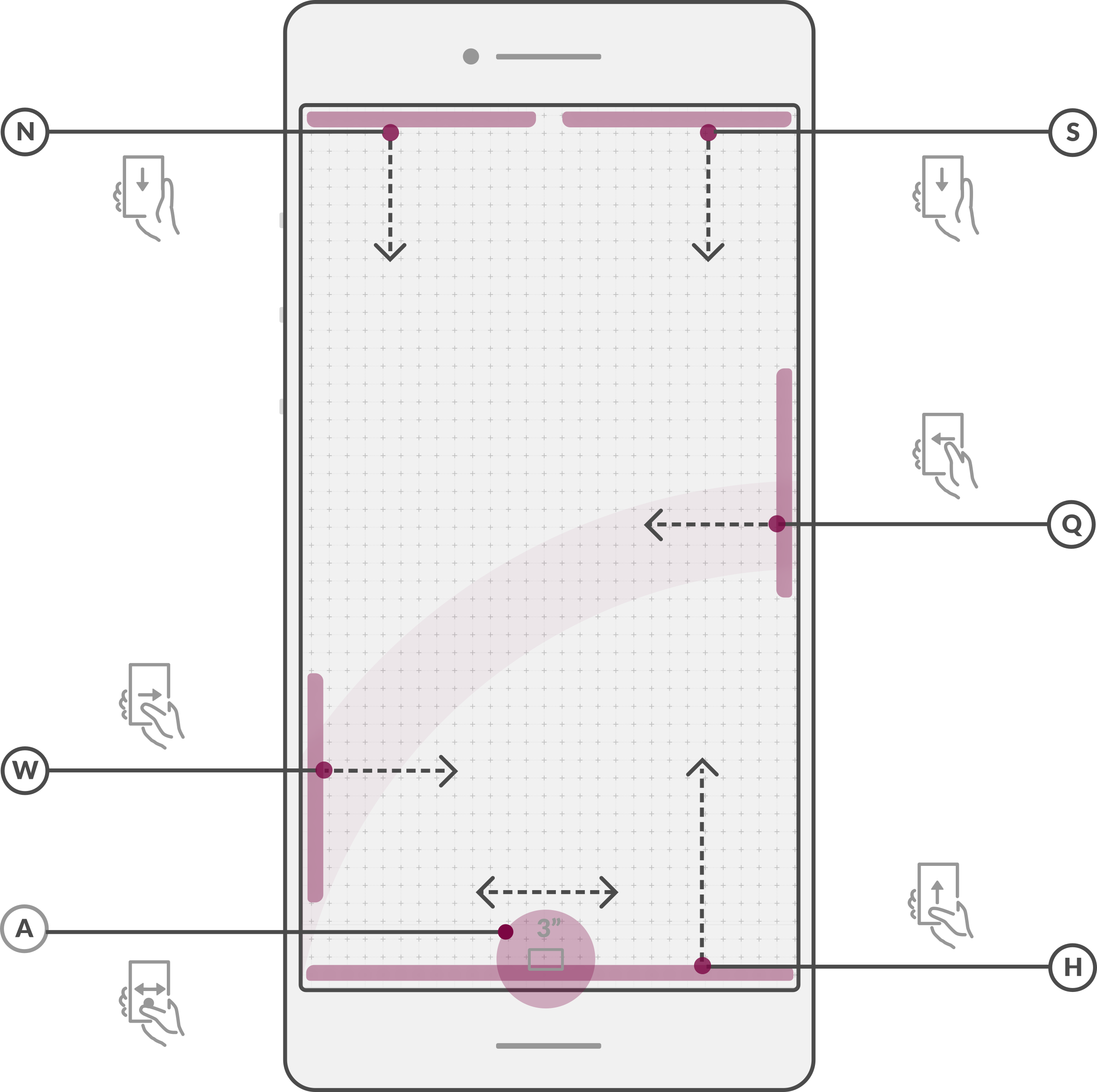
The mock-up on the right describes the main navigation principles. It shows the basic gestures that can be used to navigate through the different features of the shell.
From top to bottom:
(N) – Pulls down the full list of notifications.
(S) – Pulls down the full list of system settings.
(Q) – Reveals the most frequently used settings.
(W) – Quick launcher (to quickly access the communication features).
(A) – (3 seconds) Reveals the list of running applications.
(H) – Navigate back to the home screen.
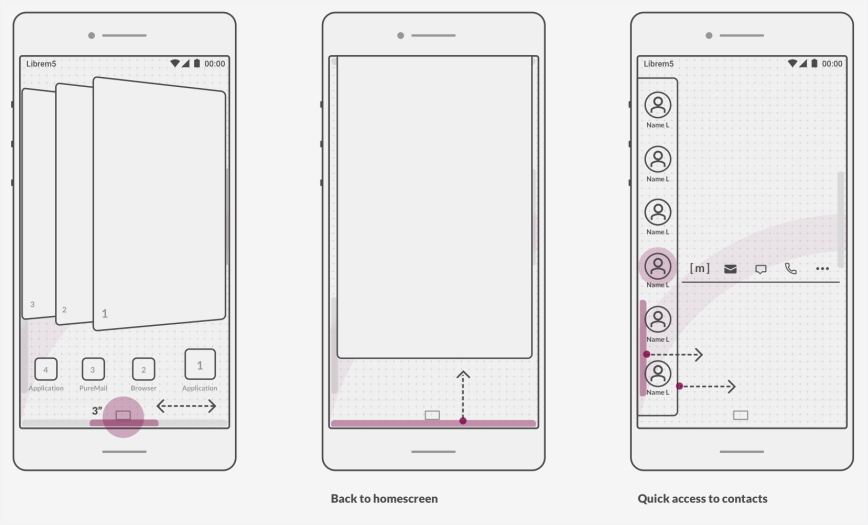
And below are a few more mockups illustrating additional planned features of the Shell:
The multitasking overview screen that is revealed through the gesture (A) shows a carousel of all running apps along with their icons to make them easier to spot and access in a touch.
Swiping up from the bottom of the screen, from gesture (H), brings back the home screen
The “quick launcher” from gesture (W), in this example, is launching a list of (favorite) contacts for a quick access to the communications features.
An experience for people first, not just “app stores”
Now that we have defined the main features and gestures of the shell, it should be time to take care of the applications’ interfaces next.
If the Librem 5 was “Yet Another Android phone,” I would say “Go! Let’s make a bunch of apps!” But the Librem 5 is not just a regular phone, and Purism is very different from Apple and Google in term of philosophy and business model—they have been focusing on having the “biggest” app stores, selling apps, and mining data… and we don’t do that.
Therefore, before hastily moving forward with designing applications interfaces “like the other platforms”, not only must we study the current state of the mobile industry in term of User Experience, we must also try to think on how to improve it with a user-centric paradigm instead of necessarily app-centric. I think that, in some ways, there are many areas where the Librem 5 can bring greater simplicity, making iOS and Android look over-complicated in comparison. It may sound crazy to say that, but bear with me for a moment, we’ll get back to this later on.
By understanding a few concepts, we can try to define some human interface guidelines that will help getting a better user experience by default. This won’t prevent the phone to remain a highly customizable FLOSS platform—it will just help making the Librem 5’s “out of the box” experience more useful for everyone.
𝕆𝕡𝕝𝕠𝕡𝕒𝕟𝕒𝕩@lithohedron
Rather than the grating "beep beep beep" the various services vehicles in South Korea play little songs.
This one… twitter.com/i/web/status/9…
Nokia today unveiled the Nokia 1, its first Android Go (Oreo) smartphone. Additionally, the company also unveiled a 2018 variant of the Nokia 6 with powerful internals, quick charge, and an improved camera.
Continue reading →
We’ve spent more than 300 hours researching and testing laser printers over the past seven years, and we’ve come away convinced that the best choice for a full-featured laser printer is the HP Color LaserJet Pro M254dw. Of the 40 current laser printer models we considered in 2018, it’s the most reliable and least annoying to use of the bunch, and it can print just about anything most people would want, with beautiful results.
More than 40 hours of research and tests of 17 ice scrapers—including on 28 windshields in a -3 °F cold-chamber at Ford’s vehicle test facility in Detroit—prove the Hopkins SubZero 80037 is a far better tool to clear snow and ice off your car than those cheap handheld scrapers we’ve all had to use in a pinch.
You can call this one of the great songs in just about any musical conversation and you’ll get no argument. A great big swirl of
the sacred and the sensual, with a razor rhythm and lots of chances to show off.
It was written in 1974 by Al Green and guitarist Teenie Hodges for
Al Green Explores Your Mind; it wasn’t a hit, particularly, although a cover by Syl Johnson did
OK.
Then, four year later, the Talking Heads covered it on
More Songs About Buildings and Food,, and that was a really big deal. The Heads had a
following who liked their light-punk Manhattan sound, and this was a surprise. I can remember it like yesterday; I was listening to
a late-night Toronto radio station, back in the days when FM radio stations could be cool and quirky. The DJ said “listen to this”
and put on the Heads’ Take Me To The River; then when the song ended the DJ played it again!
I thought “Damn, that sounds good” (having never heard of Al Green at that
point). It was good. So is Al Green’s original.
Let’s see… Al’s horn section is fabulous. He’s got
a more interesting voice, and gets more out of the
verses. The Heads’ bass/drums/organ sound is way bigger and badder,
they have more surge and space between the notes. David, well, for a
suburban white guy, on this track he really sings well. And
generally I think his approach of singing the title one word at a time, on the beat, works better than Al’s barking out
“TakeMeToTheRiver”, although they both sound great, especially on the
all-star video linked below. I wouldn’t want to be without either.
Google introduced a new permissions model for third-party apps in Android with the release of Android 6.0 Marshmallow. Instead of giving apps access to all permissions while installing them, Google adopted an approach similar to iOS where apps would explicitly ask for permission as and when they require it.
Continue reading →
The battle between grocery delivery services is heating up in Canada.
Most national grocers, including Sobeys, IGA, Longo’s Grocery Gateway, Amazon, Loblaw and Walmart currently offer customers online ordering and in-store pick-up. The next foray is to deliver right to your door.
Loblaws recently teamed up with U.S.-based Instacart to bring grocery delivery to Canadians. Today, Walmart Canada announced plans to bring home delivery to the Metro Vancouver-area with a partnership with Sustainable Produce Urban Delivery (SPUD) and its Food-X platform.
Walmart Canada notes that it will also share the Food-X warehouse for faster delivery times and will begin shipping to customers in summer 2018.
Products will include fruits and vegetables, 100 percent Canadian AAA Angus beef, pork, chicken and seafood, dairy, baked goods, deli, frozen foods and various organic items. Similar to its online ordering service, customers will be able to receive deliveries “as early as next-day.”
“We are always looking for new ways to offer convenience and choice to our customers so they can shop when they want and how they want at Walmart’s unbeatable prices,” said Lee Tappenden, CEO and president of Walmart Canada. “Our strategic collaboration with Food-X allows us to serve customers in the heart of Vancouver in an environmentally friendly and sustainable way.”
Facebook’s Messenger app now allows users to add more people into a video or audio chat.
Previously, Messenger required users to hang up a one-on-one video or audio call to add more people to start a group call. However, a new feature permits users to start a group call within a one-on-one video call.
While within a video chat or audio call, tap the screen and select the “add person” icon and then choose another Facebook user you’d like to join in on the call. Filters and effects are still available within the call. After the call ends, Messenger automatically commences a group chat within all of the users’ inboxes.
This update is available on Android and iOS and is even accessible in Canada. To try this update get the latest version of Messenger.
The City of Brantford is currently under a state of emergency due to flooding and rising water levels. The total number of homes impacted in the evacuation order was 2,200, which is approximately 4,900 residents.
A number of politicians, including Premier of Ontario Kathleen Wynne and Prime Minister Justin Trudeau have reached out to Brantford inhabitants via social media.
My thoughts are with everyone affected by the flooding in Brantford, ON – stay safe, listen to your local authorities and please follow evacuation orders.
From a Canadian carrier perspective, Rogers is first to assist during the time of need, noting on Twitter that it will be waiving overage charges for domestic calls, text or data overages until February 24th.
For our customers in evacuated areas of #Brantford, we’re waiving overage charges for domestic calls, text or data overages until Feb. 24 so you can stay connected worry-free. Stay safe! @CityofBrantford
At Christmastime, in the noble tradition of proud parents everywhere, I unloaded — I mean, generously donated — my 2009 Honda Fit to my college-student son.
That gesture wasn’t pure, heart-warming nobility; I wanted a new car. Specifically, an electric car.
I don’t know if you’re aware of how juicy the deals are on these things. Obviously, the main reason you’d get one is because they’re much better for the environment. (Yes, they run on electricity, which still requires burning some fossil fuels to generate — but the impact of electric cars is drastically lower than gas cars.)
But even if you don’t care about being green, an EV (electric vehicle) still get you all of this:
A tax credit from the Federal government. That’s not a tax deduction, which lowers your income before you calculate the tax. It’s a tax credit, which is money in your pocket after taxes. Depending on the car’s electric range, it’s up to $7,500.
Money back from the state. Forty-five states currently offer juicy EV incentives, usually cash. I live in Connecticut, where it’s $2,000. Nothing to do with taxes — it’s just a check they send you.
You save tons of gas money. Electric-car owners never, ever pay for gas.
Special parking places. My Connecticut town is more progressive than most, but it’s got dedicated electric-car parking spaces at the grocery, library, train stations, town hall, and so on. They’re right next to the handicap spaces, and each one has a charging station. Free electricity while you’re shopping!
Drive alone in the carpool lane. Many states welcome EVs to the carpool (HOV) lane.
The brakes last, like, forever. When you brake, magnets capture your momentum and use it to recharge the battery, saving the brake pads.
They ZOOM! An electric car has incredible torque (translation: instant acceleration). They are fun!
They’re silent. There’s no engine noise, obviously. You hear only a faint hum/whine when you put the pedal down. Your music sounds that much better.
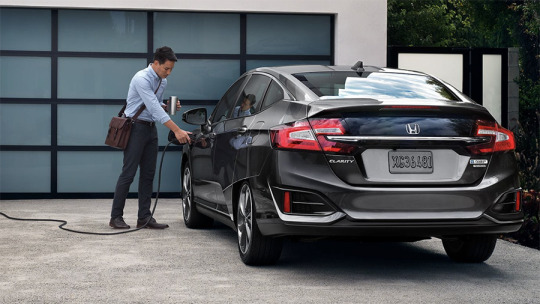
Owning a plug-in means remembering to plug in.
Of course, we all know why more people aren’t buying electric cars: range anxiety. Unless you’ve got something like a Tesla or a Chevy Volt (over 200 miles on a charge), you’re limited in the drives you can take. And it’s not like you can pull into a station and refuel in five minutes. You have to plan your life around charging stops: lunch, overnight stays. It’s a hassle.
But here’s the point of this article: There is a way to get all the advantages of electric without the range anxiety: plug-in hybrids. (Geeks call them PHEVs, for plug-in hybrid electric vehicles. Man, they really need a catchier name.)
A plug-in hybrid is electric with a gas-engine backup. Once the big battery’s dead, the car becomes a regular hybrid, like a Prius or whatever. Amazingly, the gods of legislation have determined that these cars are entitled to all the same goodies that pure electrics are.
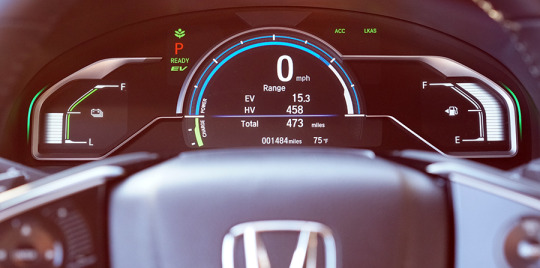
In a plug-in hybrid, you have two “fuel gauges” one each for battery charge (left) and gas level (right).
You can plug in one of these cars into a standard power outlet in your garage, as you would a lamp or something; it charges overnight. Or you can install a 240-volt outlet, like the one for a refrigerator; the car charges in a couple of hours. (Handily enough, public charging stations are 240V, too.)
There are lots of plug-in hybrid models. As a handy benefit, most of them are loaded with the latest autonomous safety features:
Lane keeping. If you start to drift out of the lane without your blinker on, the car warns you and guides you back into the lane.
Collision avoidance. If you’re coming too fast toward a slowing car ahead, the car warns you and actually brakes for you to avoid a collision.
Adaptive cruise control. You set a speed you want to maintain — let’s say 65 mph. At that point, the car speeds up and slows down (even stopping, if necessary) as necessary to avoid hitting the car in front of you. A button on the wheel controls how many car lengths you want your car to hang back.
Self-parking. Well, sort of: The car turns the wheel for you, but you still have to manage the shift lever and gas/brake pedals.
Here’s the journal of my quest to buy the perfect plug-in hybrid family car — and why we wound up buying an obscure, no-name Honda in the end.
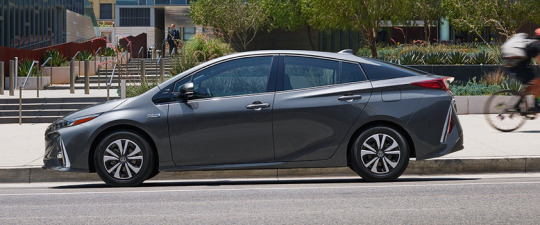
Prius Prime
My wife and I started with a test drive at the local Toyota dealership. Our other car is a Prius, which we’ve always loved. (If the Tesla 3 I ordered two years ago ever shows up, we’ll sell the Prius.)
Anyway, we liked the looks of the Prius Prime, a plug-in hybrid. OK, we didn’t actually like the looks, but — you know.
The Prius Prime has a distinctive, polarizing look.
Here’s what we loved about this car:
The price. The base model is $27,100. The Federal tax credit is $4,500 for this model. With the Connecticut kick-in, my final price would be $20,600.
The hybrid MPG. You go 25 miles on pure electric; after that, the hybrid (gas-and-electric) mode gets an amazing 55 miles a gallon. Total range is 640 miles on one gas tank, which is extraordinary.
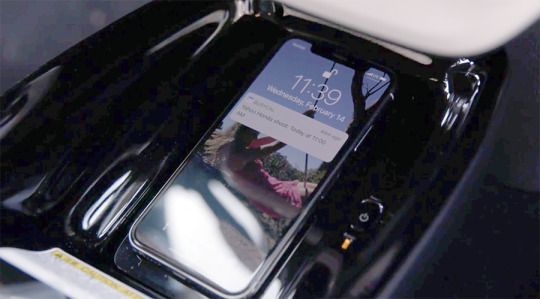
The wireless phone charger. If you have a recent iPhone or Samsung Galaxy, for example, you can just set it down in the center console — it instantly starts to charge, magnetically.
Why don’t all cars have Qi wireless phone charging pads built-in?
Cool smart stuff. Lane-departure warning, front-collision braking, and automatic high beams are all included in the base model.
The heads-up display. Just as on a fighter jet, the Prime can project important stats in space in front of the driver — your charge status, speed, current speed limit. It seems to hover a few feet in front of the windshield.
Here’s what we didn’t love:
It’s a four-seater. My wife and I have a blended family with, on and off, five kids. We’d really miss a fifth seat.
The trunk is the size of a subatomic particle. The batteries in this baby take up most of what would have been the trunk. We sometimes have to drive to our kids’ colleges in Massachusetts and Vermont, loaded up with stuff. That wasn’t gonna work.
25-mile electric range. That’s really not a lot. Would 25 miles cover your commute both ways? Remember that cold weather can cut your battery capacity in half.
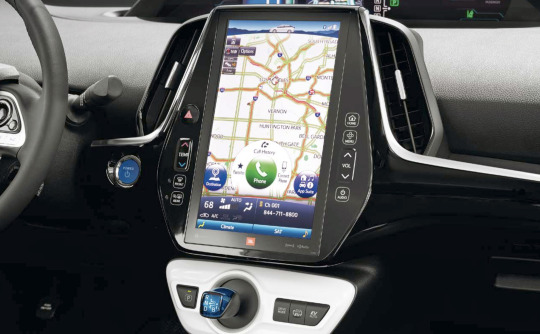
All touchscreen. No volume knob at all. Auuugh! And no Apple CarPlay or Android Auto.
As on a Tesla, most of the Prius Prime’s controls have been moved to a touchscreen, meaning you have to take your eyes off the road to use them.
The ride. Man, this car hates rough pavement. It’s a bumpy ride. Also, as Car & Driver puts it, this is no sports car. “You buy this car to pass gas stations, not other vehicles.”
The good stuff costs. The heads-up display, phone charger, self-parking, and blind-spot monitor stuff are available only on the higher-end models, which erase a lot of the price advantage.
Chevy Volt
Man, if you want electric range (and you do), it’s hard to beat the Chevy Volt. This baby goes 53 miles on pure electric, more than any other PHEV. For a lot of people, especially commuters, that should cover it most of the time. (It’s easy to confuse this car with the Chevy Bolt, which is all electric — 238 miles of range, no gas hybrid mode.)
We took a test drive, and concluded that we loved these things about the 2018 Volt:
53-mile pure electric range. Of course, that also means it takes longer to charge fully: 13 hours on 120V, and 4.5 on 240V.
Super fun to drive. It’s a great ride.
It looks amazing. It’s a great-looking car.
The Chevy Volt looks awesome, even in a dealership parking lot in winter.
There’s also, unfortunately, quite a bit not to like:
It’s another four-seater. Chevy says it seats five, but that’s hilarious. You’d fit in the back middle seat only if you were a Barbie doll. Even the two actual rear seats are super-cramped; at 6 feet 2 inches, my head was mashed firmly against the roof.
The Chevy Volt’s back seat isn’t made for tall people.
It’s claustrophobic. Visibility is not good from the driver’s position.
It’s pricey. The base price is $34,100 — that’s $7,000 more than the Prius Prime. If you want the self-driving stuff (lane keeping, forward collision avoidance, self parking), the grand total is $40,000! Yeah, the tax credits and refunds will help, but… wow. This is a subcompact car.
The marketplace
We sat down that night to look at our other options. There’s a huge range of plug-in hybrids available; here’s a sample, showing base price and electric range. Notice anything in common with their all-electric ranges?
Audi A3 eTron: $37,900, 16 miles
BMW 330e: $44,100, 14 miles
Chrysler Pacifica (minivan!!): $42,000, 33 miles
Ford C-Max Energi SE: $27,120, 20 miles
Ford Fusion Energi: $31,100, 22 miles
Hyundai Sonata PHEV: $34,600, 27 miles
Hyundai Ioniq PHEV: $25,000, 29 miles
Kia Optima PHEV: $35,210, 29 miles
MiniCooper S E Countryman: $36,800, 18 miles
Volvo XC90 (SUV): $67,800, 14 miles
Those are puny ranges! What’s the point of a plug-in when you can drive only 9 miles in cold weather?
The Honda Clarity
In late December, we were just about to pull the trigger on the Chevy Volt when my wife suggested one final Google search. And incredibly, something popped up that I hadn’t seen before: Something called the Honda Clarity.
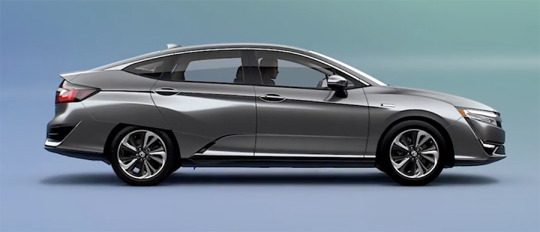
The Honda Clarity’s front half looks better than the back half.
It seemed to have everything we wanted: Room for five adults, full-sized trunk, all the cool autonomous features included in the base model, and 47 miles of electric range! That would make it the No. 2 longest-range plug-in hybrid on the market — and the only midsize, five-adult car with that kind of range.
I found that bizarre, and I still do. Why does the industry think nobody wants a family car with great electric range?
The weird thing is that this car was a total mystery. There was nothing about it online. No reviews —only a few blogger descriptions of a test-driving event Honda staged last fall. The local dealers didn’t know anything about it. There were no ads or marketing of any kind.
(Part of the confusion, no doubt, is that there are two other Honda Clarities: One’s pure electric, and one runs on hydrogen!)
We found a dealer an hour away with one Clarity in stock, and took it for a test drive. The car was an utter mystery to our salesman. He told us, for example, that the car is three feet longer than the Chevy Volt (it’s actually one foot longer), and that it takes 19 hours to charge (it actually takes 12, or 2.5 hours with a 240V outlet). He had no idea how to turn on the autonomous features. And the car hadn’t been charged, so we had to take our test drive on gas (42 mpg).
Here’s what we loved:
The ride. Maybe it’s because this is a midsize, and most of the others are compacts — but man, what a glorious ride. It floats like a magic carpet, except that you still have a great feeling of the road. And it’s soquiet on electric! Combine that with the zoomy acceleration from a stop (232 foot-pounds of torque, if you’re scoring at home), and you’ve got a really fun car to drive.
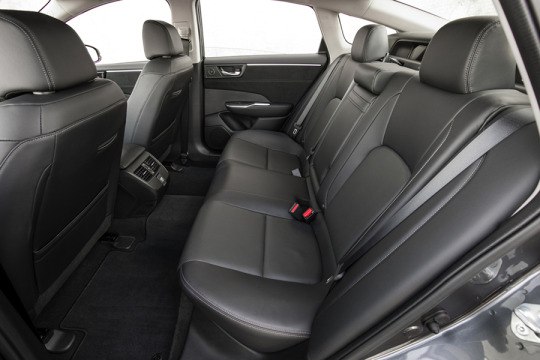
The space. Our kids have never known anything but compact cars. They could not believe the headroom and legroom when they climbed in.
Nobody will complain of being crowded in the Honda’s back seat.
The trunk. It’s really big. But it’s weirdly shaped. It has a secondary sub-trunk, accessed with a trapdoor, and when the seats are folded down, the pass-through hole to the front is bizarrely shaped. But yeah — plenty of suitcases.
The Honda’s trunk is vast and deep, if weirdly shaped.
Adaptive cruise control. Unlike most cars with this feature, the Clarity’s adaptive cruise works even at low speeds, like in stop-and-go suburban traffic. It works reallywell. I use it a lot.
Blind-spot screen. When you turn on the right turn signal, the dashboard screen becomes a closed-circuit TV, showing you your right-side rear view. No more blind spot! (There’s nothing equivalent when you turn left, alas.)
Cup-holder cup holders. Each cup holder has two flip-out tabs to accommodate taller or narrower cups and bottles. A clever touch.
The Honda’s cup holders have flip-out tabs.
Auto-lock and unlock. The car unlocks itself as you approach (with the key fob on you), and can also auto-lock once you’re 15 feet away.
Phone pockets in the back. Such a little thing, but so great: A place to hold the back-seaters’ phones to get them out of the way.
A place to hold your phone while it’s charging.
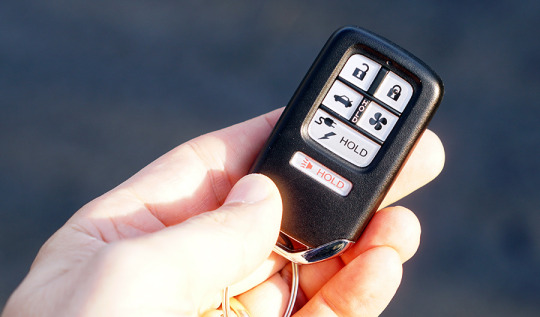
Smart fob. You get two key fobs with the car, labeled Driver 1 and Driver 2. As you approach the car, it unlocks automatically, of course — but it also moves the driver’s seat into your preferred position and angle automatically, as memorized by your fob. (The fob should also adjust the rear-view and side mirrors, temperature, and radio stations for each driver, too. Well, someday.)
That wide button pops open the electric charging socket; the fan button warms up (or cools down) the car before you get in it.
Bio–plastics. The fabric surfaces inside are made of plants, not petroleum; on the high-end model, the dash is covered by suede, which looks and feels cool and is made of recycled material.
LED lights. All the lights — front, rear, turn signals — are LEDs, and they look awesome.
All the lights are LED and cool-looking.
All the goodies. So much stuff is included in the base model ($33,400)! Lane-keeping, front-collision auto-braking, adaptive cruise control. Apple CarPlay and Android Auto. An 8-inch touchscreen that’s not horrible. (There’s no volume knob, but a physical volume control is on the steering wheel.) Automatic high-beam dimming. Automatic rear-view-mirror dimming at night. Side-mirror heating, front-seat heating.
The Clarity’s drive shifter is electronic—buttons, not a shift stalk—which makes it clearer when you’re putting it in reverse.
The price. At $33,400, the Clarity is pricier than the Prius Prime ($27,100), but it definitely beats the much smaller Chevy Volt, comparably equipped ($40,000). The Clarity also earns the full $7,500 back from the government, plus, in my case, $2,000 back from the state of Connecticut. My final price would be $23,900.
The Touring model ($36,600) adds eight-way power-adjustable driver’s seat, leather seats, a built-in navigation system, and remote-control heating/cooling (you hit a button on the fob while you’re finishing breakfast).
We quickly found a few things we didn’t like, too:
It’s kind of ugly in back. The car looks great from the front, but the back end strikes us as weird/ugly. Some of that comes from aerodynamics: The back wheels are partly covered, for example; the bottom of the car is completely enclosed and flat; and funny little wind intake holes are tucked in the grille and in front of the rear wheel.
Lane assistance barely works. When the Clarity starts to creep out of the lane, it’s supposed to alert you (by vibrating the wheel and flashing a warning) and auto-steer gently back into the lane. It works amazingly well — when it works. But it doesn’t kick in until you’re going over 45 mph, and even then, it doesn’t seem to notice when it’s creeping over a yellow center line.
Occasional engine noise. When the gas has to kick in, it can be loud, and out of proportion to the accelerator position.
The paddles. Behind either side of the steering wheel, your fingers easily reach two paddles. They govern regenerative coasting, in four levels. That is, tug the left paddle four times, and your car reallyslows down during coasting (to recharge the battery more); tug the right one to lighten up. That setting resets to 0 when you next use the accelerator, though. Honda told me that “this feature can be especially useful as you drive downhill,” but using the brake also recharges the battery, so… why?
No self parking. Oh well.
No USB in back. There’s a cigarette-lighter charger in the back for the kids’ phones — but why on earth no USB jacks?
The name Clarity. My wife thinks it sounds like an antihistamine.
The biggest adjustment we had to make was accepting that the Clarity is a midsize car. Obviously, that’s why we get such great interior space, but it also means a wider turning radius and tighter parking. Mainly, my wife and I both grew up thinking that bigger cars equals worse bad fuel economy. It’s a mind-fuddler to realize that this is our green car!
So guess what? We bought it.
My first time parking the Clarity at an “EV CARS ONLY” spot!
Two months in
All of that happened the first week of January. I’m happy to report that somereviews for the Clarity are finally starting to appear online (spoiler: they like it too), and Honda Inc. is starting to do some marketing and dealer training, too. I guess we were just geniuses, buying this car before the world knew it was great.
The good news is that owning a plug-in hybrid is exactly what it’s cracked up to be: Super fun to drive, instant acceleration, and NO GAS STATIONS. We come home, we plug in the cable, we never use gas. We drive it every day, and we’ve refilled the gas tank once in two months (I had to drive to JFK airport in freezing weather).
We charge the car from an ordinary 3-prong wall outlet on the garage.
The dealers I interviewed for the video above all say that consumers aren’t jumping on PHEVs the way you’d expect. It’s because people don’t know about plug-in hybrids, or don’t understand them, or don’t like change.
Well, if that’s you, change your mind; you’re crazy not to look into this category. Who doesn’t like saving money and getting a zippier car?
All three dealers also said I should have leased the car instead of buying it, because technology is moving along so quickly, this car will seem out of date in a few years. Of course, that’s what a dealer would say, right? But it’s something to consider.
Then again, if it gets to the point where I can’t stand having an ancient 2018 car, I won’t be stuck with it. I’ve got three more kids who will one day head off to college.
David Pogue, tech columnist for Yahoo Finance, welcomes non-toxic comments in the Comments below. On the Web, he’s davidpogue.com. On Twitter, he’s @pogue. On email, he’s poguester@yahoo.com. You can sign up to get his stuff by email, here.










 .
.








 Nokia today unveiled the Nokia 1, its first Android Go (Oreo) smartphone. Additionally, the company also unveiled a 2018 variant of the Nokia 6 with powerful internals, quick charge, and an improved camera.




 Google introduced a new permissions model for third-party apps in Android with the release of Android 6.0 Marshmallow. Instead of giving apps access to all permissions while installing them, Google adopted an approach similar to iOS where apps would explicitly ask for permission as and when they require it.