Coming from an editorial content background, I have always valued taxonomies for making content findable, but more recently I have come to appreciate how taxonomies can also play a role in making data accessible and useful.
Taxonomies have successfully aided people in finding and retrieving desired content since the 1990s and even decades earlier, if we consider thesauri within the scope of taxonomies. Nevertheless, the focus had always been on content: originally printed content such as periodical articles, web pages, intranet or CMS pages and attached documents, etc., and then multimedia content, such as images, animation or video clips, audio files. Each content item gets tagged with taxonomy terms of different types for what is about and for kind of content it is. Taxonomies have become increasingly important as content volume and types have grown, especially as more people in varied roles create content.
Meanwhile, data has grown even faster in its volume and potential value. We are hearing more and more about big data, data warehouses, data lakes, data fabrics, data catalogs, data analytics, master data management, data governance, FAIR data, data-centric architecture, data-driven enterprises, and data science in general. Tools and technologies to make use of the data have included programming/scripting, machine learning, algorithms, natural language processing, and other forms of artificial intelligence.
These tools and technologies for data do not replace taxonomies and other controlled vocabularies, though, which still have an important role to play in connecting people to the desired data and information, and ultimately knowledge. I see two ways in which taxonomies are linked to data:
1. Managing and understanding the data in a standardized way with better metadata, which depends on controlled vocabularies.
2. Connecting the data with graph databases, knowledge graphs, ontologies, and ultimately taxonomies.
Taxonomies and metadata
Metadata refers to the standardized data types, properties, fields, or elements, and the specific individual values that populate those types or properties. From a content perspective, we think of metadata as serving content management and retrieval, such as the content’s format type, title, source, creator, date, language, subjects, category, audience, etc. But metadata exists in databases and spreadsheets, too, where column headers are the metadata properties. For example, contact metadata would include name, phone number, email address, city/state, country, contact type, initial contact date, contact owner, etc. Product metadata would include SKU number, product name, product type/category, price, color, features, supply source, retail availability, etc. Transactional metadata would include purchased product name, purchaser, purchase date, purchase price, purchase location.
Data can be better managed and analyzed if the metadata properties and values are standardized and controlled. Controlled vocabularies should be used to standardize the metadata for many of the properties: format type source, subjects, category, purpose, country, contact type, product name, product category, color, features, availability, etc. Hierarchical taxonomies serve some of this metadata, such as product categories.
As an example, I’m planning to attend a conference in Austin, TX, and I wanted to look up contacts in the Austin area in my CRM (customer relationship management) system. Filtering results by city, I found some with the city of Austin, but others had the city of Round Rock. Filtering on Austin, I would have missed those, had I not known that Round Rock was a suburb of Austin. What was needed was a metadata property for “Metropolitan area,” rather than “City,” a controlled list of metropolitan areas, and Round Rock as an alternative label for Austin area in that controlled vocabulary.
Taxonomies and ontologies
Taxonomies, controlled vocabularies, and metadata alone are good for filtering or queries to find content that meets a set of criteria (based on metadata properties or faceted taxonomy selections). But what if you want to discover and explore relationships across the data? Instead of merely looking for all the contacts in the Austin area that have the customer or sales-qualified-lead status and have a contact owner, I want to limit that further to contacts whose employers in turn meet certain criteria, such as belonging to specific industries or meeting an annual revenue minimum. Another query example would be to find the locations in the past 10 years of industry events in which a specific organization has participated. These connections across different metadata types, vocabularies, or categories, are made with an ontology.
An ontology has, besides any hierarchical relationships characteristic of a taxonomy, additional semantic relationships that connect across types or classes of entities. Classes may be for metropolitan area, company name, person name, industry event name, etc. Semantic relationships across these classes may include is-employed-by-company/employs-employee, sponsors-event/has-sponsor, is-located-in/is-location-of. Attributes are additional metadata for the entities of each class, such as address. “Ontology” typically refers to just the knowledge model of classes, relationships and attribute types. But to become useful in information retrieval and data analysis, an ontology is connected to a taxonomy or other controlled vocabulary to extend those semantic relationships and attributes to all the concepts/terms.
Taxonomies and knowledge graphs
A growing use of ontologies is in knowledge graphs. Knowledge graphs extend the ontology+taxonomy knowledge organization system further by integrating instance data that is a of set too large to fit into controlled vocabularies and tends to reside in databases or spreadsheet cells. This could be the 10,000s of contacts in a CRM or products and product parts in a PIM (product information management) system. The knowledge graph brings, actually or virtually, the data from these different systems into a graph database. A graph database is structured of nodes and edges (connections between nodes), rather than of tables of rows and columns characteristic of a relational database. Data entities are at the nodes and connections of relations or property types are designated along the connecting edges. The graph structure thus supports the model of the applied ontology, which has classes and individuals at the nodes and semantic relations or attribute types describing the edges.
Why knowledge graphs? Taxonomies, controlled vocabularies, and metadata alone are good for finding information in a single content/data repository, database, or content management system. But often the same, similar, or related information exists in multiple different sources or systems, as data or as content “silos,” such as product information residing in the PIM, the web ecommerce platform, the marketing content management system, and the sales management system. By extracting the data from these different sources and storing it in a single graph database, the connections between the data from all sources can be made.
Knowledge graphs link data that is in different repositories and systems, both structured and unstructured data and as such provide a unified view of the data. Furthermore, with taxonomies tagged additionally to content, relevant data and content and be linked to each other.
Opportunities for taxonomies and data together
In conclusion, taxonomies alone are focused on content, but if you combine taxonomies with ontologies and/or diverse metadata, you extend the use of taxonomies to data. I am also seeing the connections of taxonomies and data in more places.
My current job title is Data and Knowledge Engineer, which reflects the combination of the knowledge management and data science realms. Actually, I am not a data engineer at all, but my department at Semantic Web Company has standardized the job titles, as we knowledge engineers and data engineers work very closely together on the same teams. This is to provide combined services and solutions to our customers.
In other ways data and taxonomy are combined in jobs. Last year I had a contract taxonomy job that was heavily into data (managed in spreadsheets). In the other direction, data related job postings have taxonomies in their job descriptions. A search today on “taxonomy” in descriptions of LinkedIn jobs brought up Data Governance Consultant, Data Analyst II - Taxonomy, Taxonomy Data Architect, Data Custodian, Data Governance Lead in the top 25 results, and on Indeed it brought up Data Analyst, Junior Data Analyst, Data Annotator, and Data Entry Specialist in the top 15 results.
Have you ever been in that situation where you need to give your email address over, but you don’t want to? There could be a security reason. Can you trust who you’re sharing with not to spam your inbox? Are you certain they won’t expose you to data breaches due to lax security on their part? Can you protect your email from being sold in lists, used for ad tracking and targeting or even be uploaded to platforms like Facebook to track and target you there? Or it could be a case of inbox fatigue. Or maybe you just don’t want your email associated with some entities and in their database? Enter the burner email account.
What is a burner email account?
A burner email account is an alias that you don’t plan to use for important personal purposes, and you can throw it away later without messing up your preferred email account. You would use a burner email to sign up for trial services or junk registrations or things you don’t want to associate your legit email account with. The benefit of an email alias is that you can ignore it, check it when needed and dispose of it when it’s no longer useful.
Five reasons to use a burner email account
Just trying something out
A burner email account helps when you’ve landed on a site and can’t get to the content you want unless you register. This is especially true if you’re not committed to the content, service or account, and just want to try things out. Want to read a white paper but don’t want to deal with follow-up sales messages? Use a burner alias. Want to unlock a coupon without committing? Same thing. Once you get going, you’ll find tons of instances where it’s better to use a disposable email instead of your regular one.
Getting a different view
The world is full of so many different opinions, right, left, center and every touchpoint in between. An email alias can let you see what folks are reporting, sharing and publishing without using your real email address. For example, you can subscribe to a newsletter that’s outside your political or cultural comfort zone, and you don’t have to worry about your real email account getting bombarded with related fundraising messages or campaign messages that don’t interest you.
Reducing spam
Sometimes it feels like you can’t fully delete your email contact information from promotional databases. You unsubscribed from one list, but others seem to mushroom in its place. Using a disposable email account can reduce your inbox spam. If it gets out of hand, you can delete that account and the spam goes with it.
Protecting your privacy
You probably have only a few email addresses, yet hundreds of online accounts are connected to each one. Your email address is a unique identifier — after all, you’re the only one with it. It’s closely tied to your online identity. That makes your email address a great source of data collection. Firefox Relay is a smart solution for shielding your personal email.
Boosting your security
We all have many online accounts, but most of them are linked to just one or two email addresses. This means if just one account is hacked, every account using the same email address is also at risk. (See: scraping explained.) Using a burner email aliases instead of your real email address can protect your online accounts from hackers.
When not to use a burner email
Keep in mind that burner accounts aren’t ideal for all your email communications. Preserve your main email address for important, confidential or private communication, like with your bank, school, job applications, sports clubs, etc.
There are plenty of services out there for creating email aliases. Some are quick-shots with emails that expire fast. Others send ads to you along with the relayed messages, or track your data in different ways. Some services are one-way, only forwarding messages to your inbox without a reply feature.
How to set up burner email accounts with Firefox Relay
Firefox Relay is an email forwarding service from Mozilla and is backed by a not-for-profit. It’s a straight-forward service that lets you generate email aliases that forward to your real inbox. Use it to hide your real email address and protect yourself from hackers and unwanted mail. Get started by creating an account at the Firefox Relay website.
Limitations of burner email accounts
Burner email services are great for all the reasons above, but they do have limitations. Occasionally a site might recognize and reject an email address from an alias provider. Disposable email addresses are more likely an issue for the service you’re signing up for, especially if you delete the alias instead of unsubscribing or cancelling your account.
But if you’re looking to protect your real email address — the one most closely tied to your online identity — and control what hits your inbox, an email alias and forwarding service like Firefox Relay could be just what you need.
AWS Lambda added support for Docker containers last year, but with a very weird shape: you can run anything on Lambda that fits in a Docker container, but unlike Google Cloud Run your application doesn't get to speak HTTP: it needs to run code that listens for proprietary AWS lambda events instead. The obvious way to fix this is to run some kind of custom proxy inside the container which turns AWS runtime events into HTTP calls to a regular web application. Serverlessish and re:Web are two open source projects that implemented this, and now AWS have their own implementation of that pattern, written in Rust.
Our energy supplier Green has gone bust. So we’ve been automatically assigned as a new customer to… Shell. I’m not happy. This illustration was originally created for #breakfreefromplastic This Thinkery was captured live during a series of workshops by We Are Open, for Catalyst.
I hate single-use plastic, and how its waste is a problem pushed down to the consumer. It’s where legislation is so important. One of my biggest Brexit fears is that UK standards will lag behind the EU, because in a small capitalist state, big businesses call the shots. This is the path of least resistance, […]
“We need to build an app.” Maybe you do, and maybe you don’t. Take a few steps back and think about what would work best for your user. Chances are, whatever you create will need to be meaningful, bring value and be online. This Thinkery was captured live during a series of workshops by We Are […]
The Art of the Personal Project is a crucial element to let potential buyers see how you think creatively on your own. I am drawn to personal projects that have an interesting vision or that show something I have never seen before. In this thread, I’ll include a link to each personal project with the artist statement so you can see more of the project. Please note: This thread is not affiliated with any company; I’m just featuring projects that I find. Please DO NOT send me your work. I do not take submissions.
The ocean surface is the thinnest of lines between two worlds—”molecular thin”— underwater photographer David Doubilet calls it. Below is what Jacques Cousteau called “the silent world,” a realm as alien as outer space with galaxies of fish and kaleidoscopic corals as spectacular as the burst of a supernova. Above lies the world of human habitation with the clang and clatter of cars, factories, and fishing fleets, all of which imperil the world below.
Doubilet has married those realms in Two Worlds: Above and Below the Sea(Phaidon) to be published on November 3. The images, relating those “two worlds,” are a particular passion made over a trajectory of 50 years of underwater photography for National Geographic. We spoke with Doubilet by phone. The interview has been edited and condensed for clarity.
A hat tip to Jacques Cousteau who inspired you: “Civilization vanished with one last bow,” he wrote of moving from the cacophony of the world above to the silence below. But you also brought your own experience to the worlds of air and water at an early age. You were 8 years old when you asked your parents for a mask and fins…
I had devised a daring plan to circumnavigate the jetty at the Ocean Beach Club on the Jersey shore. While I was out there, I was spotted by a screaming lifeguard. I sank until I could see, but not hear, him and discovered I could be in two worlds at one time. I could see him red-faced, blowing his whistle, and could look down at this world of green shafts of light and see tautogs admiring my new flippers. It was a world I wasn’t just happy in, but comfortable in as well. It was all mine.
That was a first step on the road to what you call “the unalloyed joy of making images underwater.” Talk about the role technology played in creating these over/under photographs.
They were made possible by the invention of an underwater camera housing called the OceanEye by National Geographic photographer Bates Littlehales. I began making these [above/below the sea] pictures on every assignment. I realized I could create a window into the sea, a way to invite people through a portal into a world just out of their sig
One of your memorable half and half images was made in the Cayman Islands: stingrays below; clouds above.
Want to see the power of the photograph? When National Geographic ran the story, everyone went to the Caymans to see the stingrays. Now thousands of people a day get off cruise ships [before COVID, at least] to meet those gentle ocean ambassadors and go home thinking and talking about them.
With half a century of underwater photography and more than 77 stories under your weight belt, you’ve had an unprecedented opportunity to compare then with now. Let’s consider the Great Barrier Reef. What changes have you witnessed?
We did a Great Barrier Reef story in 2001, then another in 2009. Reefs are the glory of the planet. They are the most vivid and visually diverse environment in the world. I always think of coral as weightless architecture if an architect didn’t have to worry about gravity. One of the best examples was Opal Reef off Port Douglas [Australia] one of the places the snorkeling boats went to. It was dreamlike. When we went back in 2018 that section of reef was devastated. We made those 2009 pictures with the same crew, so we knew we were in exactly the same place — a 5,000-year-old reef dead in eight or nine years!
Climate change strikes again. Explain how that impacts reefs.
If you want to know what climate change looks like, look at a reef. Reefs are the thermometers of the world. When the water gets more than 89 degrees and does so repeatedly, the algae that lives inside and powers the coral—a kind of underwater photosynthesis—is expelled. The coral turns white, a process known as bleaching. The reef becomes a boneyard. But the ocean has resilience. Scientists like Peter Harrison in Australia are working on ways to reseed and reconstitute reefs.
So, all is not lost?
There’s always hope. We can change. We can improve things. As of January 2020, 80% of Palau’s waters are protected— an island nation preserving their reefs for the next generation. In 2011, the Bahamas became a shark sanctuary, setting an example that a living animal is more valuable than a dead one.
Though you are most often associated with images made in tropical waters, the book includes some spectacular photos of icebergs.
I came late to the ice. An iceberg is a metaphor of the ocean. There’s a little bit above which we can see and understand, and the rest is out of sight. You are also talking climate change. As glaciers melt more and more icebergs are being produced.
You’ve called natural history photographers like yourself the frontline reporters of the world.
The greatest story on earth is the earth itself. It’s all we have. There is no Plan B.
Cathy Newman is a former editor at large at National Geographic whose work has appeared in The Economist, The Wall Street Journal and Science. Follow her on twitter @wordcat12.
Zayrha Rodriguez photo edited and produced this piece. Follow her Instagram @zayrharodriguez.
APE contributor Suzanne Sease currently works as a consultant for photographers and illustrators around the world. She has been involved in the photography and illustration industry since the mid 80s. After establishing the art-buying department at The Martin Agency, then working for Kaplan-Thaler, Capital One, Best Buy and numerous smaller agencies and companies, she decided to be a consultant in 1999. She has a new Twitter feed with helpful marketing information because she believes that marketing should be driven by brand and not by specialty. Follow her at @SuzanneSease. Instagram
Success is more than a matter of your talent. It’s also a matter of doing a better job presenting it. And that is what I do with decades of agency and in-house experience.
At long last, we get a decent amount of CPU power on the Zero.
Too bad it still doesn’t have EMMC or more RAM (512MB is going to be pretty tight if you run a 64-bit OS, although it will be faster doing so) but at least I can now move away from the Series A, which was my personal favorite for quite a few things.
Fortunately, I have already managed to order one (there were only a handful on sale here in Portugal, and I snagged one of the last ones), which I intend to overclock to 1.2GHz and use for an Airplay remote display.
I mentally slice stories into two types – those that can be in our world and that can’t. Sometimes a story world slides from one to the other and loses its magic.
Take: James Bond.
(This is old enough that it doesn’t count as spoilers.)
In Skyfall (2012) there is a bombing at the London spy HQ and the top of the building is blown off. I pass that building on the regular: its in Vauxhall on the south of the river, near where I live, and the real-life headquarters of MI6. If an explosion took out half the building, it would be huge news.
Before that moment, the Bond movies could be happening today – in our world but in the shadows (I’m just thinking about the Daniel Craig collection of films).
After that moment, Bond exists in a parallel world. Like ours, but clearly not because we have a divergent history.
The magic of Bond pre-Vauxhall is that it’s a secret layer of reality. Spies generally and Bond specifically could be anyone you meet. The movie is access to secret knowledge; it adds a enchantment to everything you see even outside the theatre – what if this were part of a conspiracy? What if they were not commuters but part of an elaborate and clandestine operation? There is magic everywhere.
More: if you see someone wearing the wristwatch that Bond wears, maybe they are a double-0 agent. If you wear that watch, maybe you are! That’s why the product placement advertising is so potent: with this type of “new layer to the universe” narrative (which is particularly powerful with a spy movie where Bond has had, over the franchise, a variable face) you, the viewer, are immersed in the world and in the actual lead character.
This all evaporates when the HQ is blown up. I didn’t see the explosion on the news. Therefore the stories are just… stories.
Something similar happened with Doctor Who.
Post rebooted Doctor Who, the magic was that it could be happening around the corner. It involved regular people with regular lives who become enmeshed suddenly in fantastic - and distant - adventure.
No matter what was happening with you in the day, no matter how dull, there was always the chance that you would glimpse the Tardis, meet the Doctor, and be swept off to an alien planet.
Or it could happening on the next street! Hear a weird sound? Aliens. See a strange cat? Aliens. A person in an unusual hat? The Doctor in a new incarnation. Maybe, just maybe there could be an extraterrestrial time travel adventure happening right this second, around the corner. And that lets the imagination fly.
Secret layers of reality fiction is MSG for the mundane.
But then there was that swarm of daleks that invaded Canary Wharf, and say what you like about the BBC but that would definitely have hit the news. I lost interest after that episode. Doctor Who descended to being just another story. There are no time-travelling benevolent aliens. As a tale it works or it doesn’t, depending on your taste, but what it can never be, any longer, is a way of animating everything you see.
There’s just a touch of this with Apple’s adaptation of Asimov’s Foundation novels (which I am enjoying, by the way).
The original stories (from the 1950s and onward) were shaped by John Campbell’s “competent man” thesis. Campbell was the editor of Astounding, the biggest sci-fi magazine at the time, and Asimov’s mentor. Campbell was deeply weird-by-which-I-mean-racist (I mean Asimov was deeply weird-by-which-I-mean-sexist too, the whole crowd) and he had a fierce grip on the magazine and what was published. His preferences shaped that whole era of sci-fi – and a lot of what we have now is either an evolution or a counter-response to his brand (which is why it is so exciting to see new voices in the genre).
The “competent man” is the idea that there is nothing necessarily special or unique about the protagonist. Instead they are smart, clear-eyed, scientifically-minded, and, well, capable.
Also men and also white. And yes, a bit ubermensch-y too.
Put the weirdness aside and there is something magical there for the (white, male) mid-20th-century reader: you don’t have to be psychic or unique to find your way through a historically important crisis. But if you are smart and recognise what’s happening, you can do it. The reader likes to think of themselves as “competent” in the Campbell sense, so the story places them centrally in the narrative. The hero.
The early Foundation stories were very much about competent men. A vast galactic backdrop, sure, but primarily about smart, rational individuals who in a crisis keep both their head and a sense of humour, and that’s always the key. It could be you.
Whereas I get the sense that in the Foundation TV show, the protagonists are special and unique.
But we know, each of us, that we’re not psychic, we don’t have superhuman powers. So the TV show becomes automatically a story about someone else. Distancing.
What makes me feel loss is that these are all stories where the fictional reality enlarged the reader’s or viewer’s reality – their world or their self. The layers muddled, the realities multiplied. It’s why genre fiction is never just fantasy. I would call this “unreal but realistic” fiction fantastical. It lifts our eyes and weaves story in the air around us.
Then, with these stories, after a transition, the inner fictional reality shrank and became segmented as something other. Not fantastical but fantasy. It’s still transporting! But our world became smaller as a result.
It’s usually a dramatically powerful transition too: a building blows up; the daleks invade. But it pays for a moment of drama with undermining what makes the narrative world special.
I don’t know why I feel so sensitive to layers of reality and the fuzzy boundary of fiction. And yet.
Pro photographer Austin Mann has been testing a new MacBook Pro M1 Max with 64GB RAM and an 8TB SSD in Arizona. As always, his review includes beautiful images that required substantial computer power to create. After running the highest-end version of the MacBook Pro through its paces, Mann came away impressed by the laptop’s fast charging and power efficiency, as well as its overall performance:
In summary, the most impressive performance from the new MacBook Pro M1 Max wasn’t just speed (it was about twice as fast), but it was insanely efficient in how it managed both its power and heat, which matters as much or more than pure speed.
Mann’s review does an excellent job capturing how the new MacBook Pros work as a package. It’s not just that they are power efficient or fast, but the combination of multiple advances that has enabled such a substantial leap forward over previous models.
Mozilla’s Firefox is thrilled to be named one of the nearly 100 brands within Fast Company Magazine’s inaugural and high-profile, Brands That Matter 2021 ranking and recognition program for companies and nonprofits that have had an undeniable impact on business and culture.
Mozilla’s Firefox was recognized by Fast Company specifically for “continuing to do what it can to put itself forward as the browser that seeks to protect against disinformation and take digital responsibility as hallmarks of its brand.” Fast Company also noted that, “The Unfck campaign and YouTube Regrets work embody its mission perfectly, illustrating Mozilla’s David vs. Goliath relationship with Big Tech, and its work for people over profits and humanity over technology. As these issues become front-page concerns, Firefox’s position and brand has only grown stronger.”
At the near-end of 2021, the words privacy, transparency, access and control are on the lips of every tech company in the world these days, directly because of Mozilla’s efforts over more than two decades. Beholden to neither shareholders nor investors and enabled by our innovative structure, which puts us in a class by ourselves, as the only tech company backed by a not-for-profit organization (Mozilla Foundation). In a technology industry focused on profits at all costs, Mozilla stands apart. Our unique corporate structure guarantees that every decision we make upholds our mission: to ensure the internet remains open and accessible.
“It’s an honor to be recognized by Fast Company as a brand whose mission-driven position is only growing larger,” said Lindsey Shepard, Chief Marketing Officer at Mozilla. “Our team continues to put in the time and heart to be the technology company that people can trust. We’re always inspired by the other challenger and mission-oriented brands that are recognized in these lists and we’re glad to be amongst them leading the charge in creating a safe and open internet.”
For over a decade, Fast Company magazine has showcased the very best of innovation through the renowned awards programs: Most Innovative Companies, Innovation By Design, World-Changing Ideas, and now Brands That Matter to recognize game-changing companies that are more than the products they sell or the services they provide, that have achieved relevance through cultural impact and social engagement, and whose branding authentically communicates their missions and ideals. Mozilla will join Fast Company’s progressive and creative community where this roundup will be shared with millions of Fast Company readers, many of whom will learn how Mozilla and Firefox brands work together to show people that it is possible to build a better internet, just by making a few simple choices.
This recognition is the latest industry accolade for Mozilla, which recently celebrated Pocket’s Webby win for the ‘Best Of 2020’ campaign.
One of the best things about having a turntable is the massive selection of used—and often cheap—records out there. Building a collection is easy, but those records often come in less-than-ideal condition. Cleaning your records, both new additions and old ones, improves their sound quality and reduces the wear and tear on your stylus, so it won’t need to be replaced as often.
Over the last few years, one of the most acute commentators on Brexit has been Jonathan Lis, and in a recent article he concludes that the three fundamental consequences of Brexit are that “if you erect trade barriers, trade will be harder. If you gut the workforce, there will be fewer people to do necessary jobs. If you leave a club, you no longer enjoy the perks”.
Once, these would have been warnings. With those warnings ignored, they are now accomplished facts, although what should flow from them is a matter of legitimate political debate. What matters, therefore, is no longer to argue about whether Brexit was right or wrong but to respond to the realities it has brought.
Of course those two things can’t be entirely decoupled. For it is politically impossible for the present government to acknowledge that most of the country’s long-term economic problems either derive from, or are intertwined with, or have been exacerbated by, Brexit. Its entire existence is bound up with the Brexit project, and it demands fealty to that project from its members.
So it is both astonishing yet unsurprising that this week’s budget statement did not contain any acknowledgment of the problems Brexit is causing, referring instead to global issues and the pandemic in relation to supply disruptions and inflation as being “not unique to the UK”. This was, at best, disingenuous in ignoring the additional role of Brexit, which is unique to the UK. It also ignored that, as stated by the head of the Office for Budgetary Responsibility (OBR), the long-term negative impact of Brexit on GDP will be twice that of the pandemic. In fact, the actual word ‘Brexit’ was not used once during the statement, although there were a couple of mentions of having left the EU.
However, these will have disappointed anyone expecting that by now, surely, we would be reaping the dividends of doing so. Indeed, the only announcements of things which might be described (by some) as such were about a trivial tax break for merchant ships flying the red ensign (£) and the cutting of air passenger duty on domestic flights (a strange decision in the run up to COP-26). There was also a claim that the restructuring of alcohol duties was in some way a result of leaving the EU, but it wasn’t clear which elements of it this referred to, not least as Chancellor Rishi Sunak said that many of the anomalies being corrected had built up over 140 years, long before the EU even existed.
The budget statement is just the latest manifestation of the more general way that for months now Brexit has either been left unmentioned, or not addressed honestly. The result is that the UK doesn’t currently have anything like a serious policy response – by which I mean one that is realistic, pragmatic and effective – to any of the three core consequences of Brexit that Lis identifies.
Trade: no serious policy
Aggregate figures for international trade are a mess because of the pandemic, because of multiple and changing measurement methodologies, because of data lags, and because the transition period only ended ten months ago. So it’s still possible to quibble about the numbers. But although not mentioned by Sunak in his speech, the latest figures from the OBR which accompanied the budget show that UK goods trade with the EU is down by 15% and with non-EU by 7% since 2019. This suggests a very considerable negative Brexit effect above and beyond that of the pandemic.
There’s also some evidence (£) that as trade recovers globally from the pandemic the British recovery is lagging behind that of other countries because of more restricted trade with the EU. And there is compelling firm-level evidence that trading with the EU is more difficult, although, as an excellent new review by Dr Anna Jerzewska of the UK Trade Policy Observatory shows, there is a lot of variation in how firms are affected by, and respond to, these difficulties.
In any case, the full picture of what Brexit is going to do to trade isn’t yet available for the simple reason that the UK has twice postponed introducing full import controls, and won’t do so until July 2022 (unless there is another postponement). And whilst the EU’s import controls were in place from the beginning of this year, there was a grace period on the provision certification of product origin (i.e. of whether a sufficient percentage of a good is made in the UK to qualify for tariff-free trade). This expires at the end of this year, and there are reports (£) that many British firms are not ready for this new complexity. Thus the figures are likely to get worse because there are still significant Brexit trade frictions to come on top of those which have already depressed UK-EU trade.
However, even before watertight data are available and even before full implementation, we can be certain that UK-EU trade will be less than it would have been as a result of Brexit. As Lis indicates, there is nothing complicated about it: Brexit introduces new trade barriers, so by definition there will be less trade than there would otherwise have been. In a similar way, whilst a government spokesperson said it was “too early to draw conclusions” about it, the news that Welsh ports like Holyhead are declining because Irish freight to other EU countries is re-routing was inevitable. Like water, trade will find new routes if existing ones are constrained.
Of course the Brexiter claim and the current government’s policy is that this will be offset by increased trade with non-EU countries as a result of new trade deals. If it is, then at best that would be damage limitation. But it almost certainly won’t be. Free trade agreements with faraway countries simply won’t be large enough, as the much-trumpeted deal in principle with New Zealand (NZ) which will add virtually nothing to UK GDP shows.
Moreover, especially because the government is so keen to make such deals for the symbolic reason of ‘proving’ Brexit benefits, they come at a hefty price. In the case of the NZ deal this will be paid especially by British lamb farmers, as NZ reporting of the deal shows, and shellfish producers (£). In both cases, these industries have also already suffered in their trade with the EU, so the NZ agreement is actually a double blow, not a mitigation.
This isn’t to say that no one benefits from any of this. For example, lawyers and architects will be able to work in NZ a bit more easily. Northern Ireland could have new opportunities, for example in hosting distribution hubs to service both UK and EU markets. But, overall, in what for the UK is the key economic domain of international trade, we have a policy that makes no economic sense - even viewed as damage limitation, seeking improvements to the trade agreement with the EU would make more sense. Worse, it is a policy which is concealed by vapid boosterism and, at best, misleading claims.
One of the false arguments for Brexit, often made by Lexiters and recently embraced by Johnson’s government, was that immigration from the EU drove down wages. From that point of view, wage rises now (to the extent that they are happening) are a vindication that the argument was correct. But it conflates two different things. The idea that immigration drives down wages is founded on the ‘lump of labour’ fallacy – that there is a fixed amount of work to be done in the economy, so more workers means lower wages. The reason it is a fallacy is because immigration produces new economic activity which creates new jobs. That’s only a general principle, but empirical evidence as regards EU migration to the UK suggests that any negative impact on wages was small, whilst the net fiscal benefit is well-established.
On the other hand, what cutting off immigration does do is to create a ceiling on the amount of labour available. So wages may go up in response, but so do prices (negating the real effect of the wage rise) unless there has also been an increase in productivity, whilst some work goes undone – meaning shortages of goods and services. In fact, the Institute for Fiscal Studies expects real wages to remain stagnant until 2026. At the margin, it could be that some people who are able to work but were previously unemployed or under-employed are brought into the workforce, but despite longstanding myths of shirkers making unemployment a lifestyle choice because of generous benefits, the numbers are not large enough to make much difference.
This can’t be detached from the consequences of being a country with a rapidly rising proportion of the population who are over 65 and a declining fertility rate. There simply aren’t enough workers for the work needed, and it’s going to get worse, not better. Nor is training up the answer – for all that it may well be desirable in itself – as it just shifts the labour shortage from higher skill to lower skill occupations. And, in any case, the government’s immigration policy, which favours “the brightest and the best”, as re-iterated in Sunak’s budget, is actually predicated on the default of lower skill and lower pay jobs being done by British workers.
There’s clearly a lot more that could be said about all this. I’m not pretending for a moment that it is a simple issue, but the point is precisely that the complex interactions of immigration, demographics, employment, productivity, skills, wages, and inflation mean that simply ripping up freedom of movement overnight, and making immigration in general more difficult and less appealing, is a recipe for chaos. That is exactly what is unfolding, with hardly a sector of the British economy not suffering from labour and skills shortages, and job vacancies at a record high.
And if all this sounds rather abstract then consider a couple of recent stories. First, Polish journalist and lorry driver Tomasz Orynski’s explanation of why EU lorry drivers are unlikely to be tempted back to help out with the supply crisis (see also comedian Matt Green’s take on this kind of issue). Or, second, that Sunak’s announcement of £5.9 billion of capital funding for the NHS to deal with the treatment backlog caused by the pandemic is likely to founder on the lack of staff, such as anaesthetists, needed to operate the new equipment and facilities.
In these and similar cases, the ultimate pain of a lack of serious policy is felt by all of us whose lives get gradually harder and meaner as shelves stay half-empty, operations are postponed, building work is delayed, or social care is unavailable to ourselves or our relatives.
Relationship with EU: no serious policy
Meanwhile, the UK is going to have to learn to live with the realities of being a third country to the EU. In principle, this should not be so hard, at least for Brexiters, since it is what they wanted. But from the outset, the consequences of Brexit have been treated as EU punishment, rather than Britain’s choice, and that sentiment still permeates the pro-Brexit press. It is also present in the way the government continues to grizzle about the Brexit deal it agreed. This in turn means that, rather than try to develop a harmonious partnership, the government continues to make bellicose demands, most obviously over the Northern Ireland Protocol (NIP).
So far as that is concerned, this week has seen the wearying re-play of the kind of thing we saw when the Trade and Cooperation Agreement (TCA) was being negotiated, with some reports suggesting the government would insist on all its demands being met, others that the EU would make no concession on what is now the core ECJ issue, and still others claiming that a compromise deal is in the offing (£). Each statement is picked over for signs as to what it means but, as at the time of the TCA talks, it’s a pointless exercise because it’s impossible to disentangle the substance from Boris Johnson and David Frost’s tedious gamesmanship.
The real point is that the UK’s choices, whilst they exist, are quite limited. The government can accept the latest EU proposals on checks and formalities, and perhaps get a fairly pointless fudge on the ECJ’s role. In which case, what do the theatrics achieve? Or it can make good on its ongoing threat to trigger Article 16 – but then what? Just more negotiations, but in an even more sour atmosphere. And then what? What is it actually hoping to achieve? The most hardline answer, presumably, would be to completely unpick the NIP and force the EU to put checks in between Ireland and the rest of the single market. But, even assuming that happened, it just leaves a permanently toxic legacy with the EU – not to mention with Dublin and, very likely, Washington.
As this goes on, and the same will be true in any future rows, the EU has plenty of ways of exerting pressure on the UK. It’s claimed by Bill Cash that the EU is delaying ratification of Britain’s associate membership of the Horizon Europe scientific research programme as leverage in the NIP negotiations. Suppose that’s true: welcome to the real world, in which the currency is relative power. What’s the UK going to do? Decide to pull out of Horizon Europe? That would be far more damaging to the UK than the EU. In this and countless other areas the EU can squeeze the UK in pursuit of its own interests, and the UK doesn’t have much to squeeze back with. That’s not ‘punishment for Brexit’, it’s the self-punishment Brexit has inflicted on the UK*.
We’ve left the EU, but we haven’t left Europe
Of course I understand the argument that there’s some domestic political dividend for the Tories in having an antagonistic relationship with the EU. But that isn’t a serious policy if the criterion of such a policy is national and strategic interest. That interest lies in having good neighbourly relations with the economic and regulatory hegemon next door. We have little clout because we’re no longer ‘in the room’ where decisions that affect us are made. That was the choice we (collectively) made. But the facts of geography, history, economy and politics mean that – whether Brexiters like it or not – we live just outside the room. We’ve left the EU, but we haven’t left Europe, to coin a phrase. So we need to be realistic about what that means, namely that we have a bit more clout as a trustworthy friend than as a dishonest antagonist.
Realistically, there’s almost no chance that the present government will develop serious, effective post-Brexit policies in any of the three fundamental areas. It’s possible that no UK government ever will. If that is so, it is a serious problem because the magnitude of Brexit means that ‘post-Brexit policy’ isn’t a discrete area, but shapes what can and can’t be done across just about every other policy area from health and social care to science and innovation.
This also has to mean that any political party which aspires to making a meaningful policy offer has to address Brexit. Clearly that includes the Labour Party, which remains largely unwilling to discuss Brexit as it response to the budget showed. The exception to that is as regards new trade deals such as that with NZ where Shadow Trade Secretary Emily Thornberry has been robust in her criticisms. Presumably that is because it is seen as not being directly critical of Brexit. But that actually applies across the board in that the debate now needn’t – and perhaps at this time shouldn’t – be in terms of whether Brexit should have been done, but must be realistic about the consequences of its having been done.
The danger, as I see it, is that UK politics is moving too slowly, if at all, towards such realism, whilst the economic and other consequences are happening much more quickly, and will be structurally ingrained by the time, if ever, that the politics catches up.
It’s tempting to post broad questions which are easy for most members to answer.
In theory, this should increase participation. In reality, it tends to depress participation.
General questions aren’t exciting for genuine experts to answer. They’re too general to produce any useful information. They’re also close cousins of the dreaded ‘what do you think?’ discussions.
Dumbing down the questions simply dumbs down the value of the community. It erodes any unique value your community can offer the audience.
People don’t come to a community to have general conversations, they (typically) come to get insights that will help them be better at what they do. Communities are a place for the nerdiest (or most passionate) people about a topic to have the kinds of discussions they can’t have anywhere else.
We also need a quick clarification here. Don’t confuse specific with advanced. You don’t need to have advanced discussions to deliver great value. Compare the two questions for newcomers below:
General Question 1:“How did you get started in [topic]?”
Specific Question 2:“Which software did you use to get started [xyz], what were the costs, pros and cons?”
Answering the former question doesn’t let members feel smart and doesn’t give the reader any useful insights. The latter question, however, clearly offers much better value to both.
Generally speaking, the more specific the question, the greater the value in the answers (and the greater the value of the community).
A couple of weeks back, I saw an article in which Malcom Gladwell noted
that he did not know The Triggering Town, a slim book of essays
by poet Richard Hugo. I was fortunate to hear about Hugo many years ago
from software guru Richard Gabriel, who is also a working poet. It had
been fifteen years or more since I'd read The Triggering Town,
so I stopped into the library on my way home one day and picked it up.
I enjoyed it the second time around as much as the first.
I frequently make notes of passages to save. Here are five from this
reading.
Actually, the hard work you do on one poem is put in on all poems.
The hard work on the first poem is responsible for the sudden ease
of the second. If you just sit around waiting for the easy ones,
nothing will come. Get to work.
That advice works for budding software developers, too.
Emotional honesty is a rare thing in the academic world or anywhere
else for that matter, and nothing is more prized by good students.
Emotion plays a much smaller role in programming than in writing
poetry. Teaching, though, is deeply personal, even in a technical
discipline. All students value emotional honesty, and profs who
struggle to be open usually struggle making connections to their
students.
Side note: Teachers, like policemen, firemen, and service personnel,
should be able to retire after twenty years with full pension. Our
risks may be different, but they are real. In twenty years most
teachers have given their best.
This is a teacher speaking, so take the recommendation with caution.
But more than twenty years into this game, I know exactly what Hugo
means.
Whatever, by now, I was old enough to know explanations are usually
wrong. We never quite understand and we can't quite explain.
Yet we keep trying. Humans are an optimistic animal, which is one
of the reasons we find them so endearing.
... at least for me, what does turn me on lies in a region of myself
that could not be changed by the nature of my employment. But it
seems important (to me even gratifying) that the same region lies
untouched and unchanged in a lot of people, and in my innocent way
I wonder if it is reason for hope. Hope for what? I don't know.
Maybe hope that humanity will always survive civilization.
This paragraph comes on the last page of the book and expresses
one of the core tenets of Hugo's view of poetry and poets. He
fought in World War 2 as a young man, then worked in a Boeing
factory for 15-20 years, and then became an English professor at
a university. No matter the day job, he was always a poet. I
have never been a poet, but I know quite well the region of which
he speaks.
Also: I love the sentence, "Maybe hope that humanity will always
survive civilization."
As Mark Zuckerberg announced, Facebook, the company, is now “Meta.” Meta is the parent company of the applications Facebook, Instagram, WhatsApp, and Oculus. Many have seen this as an attempt to get out from under the flood of terrible publicity that the company is suffering since the leak of the Facebook papers. In this vein, … Continued
An Interview with Mark Zuckerberg about the Metaverse
This interview was conducted on Tuesday, two days before the Facebook Connect keynote where Zuckerberg unveiled his vision for the metaverse, and announced his company’s new name: Meta. There were no limitations on the interview; it was my choice to focus on the company’s new vision and not the current controversies about Facebook.
This interview is also available as a podcast; to listen in your podcast player register for a free Stratechery account and add your personal podcast feed.
On to the interview:
So I just watched your presentation. I did get a view of it before you showed the world, but I don’t know the name so the name is not going to come up in this conversation, it is definitely being kept close to the vest. Who is the target for this presentation? Given that you’re painting a picture of something that is several years in the future, I could definitely see critics saying it’s just a bunch of vaporware. I get your point is you said you’re spending all of this money to build something, you want to show what it is you’re building, but who is it you want to show it to? Is it employees, is it recruits, is it investors, is it developers? I suspect you’re going to say the last one, but there doesn’t seem to be a huge number of opportunities outside of games quite yet for this sort of vision that you painted, which is many years down the road.
Mark Zuckerberg: This film was meant to be a description of the vision of what we’re doing. I tried to be pretty clear up front that this was not a traditional corporate keynote in the sense of “Okay, we’re just going to tick through this year’s product announcements” or anything like that. It was meant to be a more expansive view of what we’re hoping to build over the next, I don’t know, call it ten years, and help build there.
But I think that there’s a lot of ambiguity around what the metaverse means. I think people say different things and it means different things to different people so I thought it would just be useful to put our stake in the ground on what we thought some of the most important use cases are going to be, but also just philosophically what some of the principles are that are most important around building it. What needs to be interoperable, what some of the foundational components are, what the business model should be, the different ways of looking at that. What a bunch of the foundational pieces of technology that need to come together are. We tried to put this piece together, this film together to basically outline all of that.
You talked about things like interoperability and the importance of openness and you referenced your experience being an app on someone else’s platform and how that influenced your thinking. But there is a tension here where to deliver on a metaverse vision, particularly when you talk about things like being able to carry, say purchases, across different experiences, where it actually may be easier if there is one company providing the totality of the fabric, and that does seem to be this vision where Facebook is the water in which you swim when you’re in the metaverse, not Facebook, but whatever the new name, the new idea for this metaverse is, and then other people can plug into it. Is that a good characterization of the way you’re thinking about it? Or do you see this really being a peer-to-peer thing, where there are other metaverses and those are also interoperable? What’s your vision on how that plays out?
MZ: I think it’s probably more peer-to-peer, and I think the vocabulary on this matters a little bit. We don’t think about this as if different companies are going to build different metaverses. We think about it in terminology like the Mobile Internet. You wouldn’t say that Facebook or Google are building their own Internet and I don’t think in the future it will make sense to say that we are building our own metaverse either. I think we’re each building different infrastructure and components that go towards hopefully helping to build this out overall and I think that those pieces will need to work together in some ways.
We’re trying to help build a bunch of the fundamental technology and platforms that will go towards enabling this. There’s a bunch on the hardware side — there’s the VR goggles, there’s the AR glasses, the input EMG [electromyography] systems, things like that. Then there’s platforms around commerce and creators and of course, social platforms, but there will be different other companies that are building each of those things as well that will compete but also hopefully have some set of open standards where things can be interoperable.
I think the most important piece here is that the virtual goods and digital economy that’s going to get built out, that that can be interoperable. It’s not just about you build an app or an experience that can work across our headset or someone else’s, I think it’s really important that basically if you have your avatar and your digital clothes and your digital tools and the experiences around that — I think being able to take that to other experiences that other people build, whether it’s on a platform that we’re building or not, is going to be really foundational and will unlock a lot of value if that’s a thing that we can do.
I’ve talked a bunch about how I think that we should design our computing platforms around people rather than apps and I guess that’s sort of what I’m talking about. On phones today, the foundational element is an app, right? That’s the organizing principle for kind of your phone and how you navigate it. But I would hope that in the future, the organizing principle will be you, your identity, your stuff, your digital goods, your connections, and then you’ll be able to pretty seamlessly go between different experiences and different devices on that. I think that building that in upfront is going to be pretty important to maximizing the creative economy around this and making it so that somebody who’s building one of these digital goods or experiences can make it as valuable as possible because it just works across a lot of different things.
This idea of organizing around people instead of apps is not a new one that we’ve heard from you in particular. I think this was something that you articulated a lot. When I first started Stratechery, I actually spent a lot of time being fairly critical of Facebook, particularly efforts around building your own phone and your own launcher and things on those lines, in part because I disagreed with this it ought to be organized around people thinking. My view was that the app organization made sense because you wanted your phone to do a whole host of jobs, not all of which were necessarily social and that Facebook was being a little solipsistic and focusing on this particular point of view.
Do you think I was wrong? Do you still hold by your view that phones ought to have gone a different way? Or do you think maybe, “Well, actually the paradigm ended up making sense, but for this next paradigm, it really should be about people this time”? Or should have phones developed differently, in your view, had Facebook had the underlying platform instead of Apple, would we think about the mobile Internet very differently than we do now?
MZ: I think it would have been a little bit different, but I do think that there’s a big opportunity for it to be quite different going forward, because I think the metaverse is this embodied Internet, where instead of looking at the Internet, you’re in it. So organizing it around your personal experience and your identity in that I think just makes a lot more sense in terms of making it so that you can travel between different experiences and bring your stuff.
There’s the vision way of looking at this, which is the high level abstract version, and then there’s just a lot of specific trade-offs that you make along the way when you’re building out these platforms. One of them that we talked about a little bit in the film is what we’re doing around building Project Cambria, which is the next VR headset that we’re going to release where one of the big new features is around eye-tracking and face-tracking. The reason why we’re putting those in is because we’re really optimizing for social presence, which I think is going to be important across a lot of use cases that we talked about in the film, not just the ones that you would think about as social where you’re hanging out with someone. But eye tracking, it’s really important for, among other things, being able to make eye contact in VR and AR. Face tracking is valuable so that way, you can smile physically and your avatar can smile and it creates a much richer sense of presence. The reality is, is that there’s a real trade-off about including those sensors. In addition to the financial cost of including them, it also makes the device a little bit bigger, maybe it makes it a little thicker. So if you were trying to design the package with the goal of having it be as thin as possible, which other companies might do, then maybe you’d trade that off.
I think that there’s a real intellectual battle, if you will, about what will be the default package of things that is in our VR experience or our AR experience. We’re trying to propose our set of ideas for how we think that’ll go. Of course, if that ends up not being useful to people, then it’ll go in a different direction, but I think that there’s a good chance that it will be, and I think that that will basically just influence, hopefully, the direction that this whole next platform evolves in, not just for the devices that we’re building, but for the ones that other companies build as well.
These decisions about how much the platform is designed around human connection — it’s not just like one thing, right? There are always different decisions in each iteration of the hardware and the software that we’re going to do that I think are going to add up to a picture that could end up looking pretty different over time.
In a similar vein, I’ve always been, I think like a lot of people, more bullish about AR versus VR because like a phone, it’s something that accompanies you in the real world, as opposed to being immersive and you go somewhere else. That always seemed like a valuable and important part of technology, but sort of a different road.
I do have to say, the last couple of years, particularly the COVID era, has changed my perspective a little bit as there does seem to be more and more of sort of a bifurcation between your online reality and your offline reality. It’s something I wrote about in the context of work, where people call it working from home, but I actually think that’s a misnomer: it’s actually working online, and you can work online from anywhere but when you go online, you’re in a different place cognitively speaking than you are when you’re at home or playing with your kids, or you’re seeing your friends or whatever it might be.
As I’m thinking through this, if there is this sort of bifurcation, is it possible that VR actually does end up becoming more important and more meaningful in this future then AR, where AR is a way to keep in touch with the virtual world when you’re out and about, but actually you’re going to want to spend more and more time actually fully immersed and withdrawn from the real world because they really are two different places?
MZ: I think that it all kind of fits together as one platform, but I’ve been more optimistic about virtual reality than most other people have. I think in the tech industry, there’s been this view that VR is sort of an entrée to this, but really augmented reality is going to be the big thing. I’ve always been a little more balanced on that, where I think augmented reality will be very important so I certainly wouldn’t discount that.
But if you think about the analogies to our current screens, augmented reality glasses are probably most like your smartphone. It’s a mobile product, you take it with you where you go places, and I think VR is somewhere in between your computer that you sit down for a session and you’re doing it, or it’s even more immersive like your screen and your TV. I think it’s easy for a lot of people, especially in the tech industry, to lose sight of the fact that I think most Americans spend almost as much time on their TV as they spend on their phone. And then, of course, if you added the computer in then it would probably be at least half the time.
I do think you’re potentially right, that I think virtual reality is going to be very important, but I also don’t think that they’re completely separate. Part of what we tried to outline in the film are experiences where you have people who are in augmented reality interacting with people who are in virtual reality, and then also having those people interact with people who are in these 3D spaces on their phones or on their computers, because I just think that this is going to need to be something that spans all these different devices, and I’m pretty optimistic about that too.
What’s the limiting factor in this vision? Obviously, you do a lot of pitching in this presentation about bringing developers on. As I noted before, a lot of the stuff still needs to be built, foundational stuff, and so some of the things like marketplaces and selling avatars and all that sort of stuff, none of that is really available yet. Is it just getting that ready and the developers will come and users will follow? Or is it getting users on board and convinced of this vision?
I think the big advantage that mobile had is the use case of carrying a phone with you was already present, and so the smartphone was just replacing a mobile phone, and it made the go-to-market much easier, whereas this feels like it’s something fundamentally new where we have to teach people new ways to work and operate and convince them why the old way is wrong. Or do you think there’s just going to be a way to seamlessly transition from where we are to where we want to go? Basically, I can buy your vision of the mountain where we’re trying to get to, and we’re on this hill here, but how do you get from here to there?
MZ: Yeah, that’s what we tried to lay out in the film. And you’re right, I think it’s not just one challenge. I think that there’s aspects of the technology that need to get built that just don’t exist today. We just can’t build yet the augmented reality glasses in the form factor that we want, and that’s still at least a few years away, that’s just to get to the starting line. Usually, it’s not the v1 product that’s the blockbuster. Even with something like the iPhone, it wasn’t really until v2 or v3 that it really took off in a major way. Certainly, we’ve seen that with Quest 2, where the original Quest I think had got the form factor right, but then it was Quest 2 that really took off in a major way. There are technological aspects of this and then there are use case aspects.
You asked earlier, who is the film for? I don’t know that it was specifically for any one of those audiences. I think it’s just to put our stake intellectually and philosophically around what we’re trying to build out there, and I think that there are elements of it for all of the audiences that you said. Partially it’s to put our stake in the ground around how we think this stuff should work for developers, some of it is certainly for employees or recruits. I want to establish our company as, if you want to work on this stuff, I think we’re going to be the most exciting place to go do that. For partners, I think I want them to know where we’re going so that way we can make the partnerships that we need to, and so on.
For consumers too, I think understanding the use cases is a really important piece. Gaming I think makes a lot of sense to people, people are used to buying an Xbox or a PlayStation, and I think quickly Quest is reaching the scales where I think in the not so far off future it’ll be at least as big as those platforms if we keep doing well. But then I think you’re getting new use cases like fitness that are really exciting to people. You have a Peloton bike I think in the back there — the vision of basically you have this $300 device and it’s now your workout device and you can take it with you to places, I think is going to increasingly resonate more as these different apps can add more different activities like boxing and dancing and different types of cardio or adding tracked weights so you can do resistance training. I think that that’s just going to be a completely new use case.
Then you can just go through these one by one. I think there’s a bunch of work things. There’s a bunch around training and education, certainly a bunch around commerce, and I think you’ll just layer those in over time. But you’re right, I do think that this is more different of a thing than smartphones were to phones before it. By the end of this decade or even by the middle of the decade, I would guess that we’re going to reach a point where our VR devices will start to be clearly better for almost every use case than our laptops and computers are. So I think at that point, that replacement will start to really make a lot more sense even just for day-to-day productivity. But yeah, I think it’ll be one use case at a time for a lot of people.
I will admit, I’ve been very impressed with Workrooms. I’ve actually been using it with my team that’s been working on Passport for meetings once a week, and your focus on presence I think — it’s one of those things you talk about it a lot but until you actually experience it, it’s hard to articulate why it is valuable.
It’s very interesting, you talk about there’s this distinction between people versus apps that we talked about. Is there a similar distinction between presence versus asynchronous communication? Because I think that’s one of the things people like about messaging, for example, is you don’t necessarily have to be right on top of it, it can be an ongoing conversation over days and weeks and months. Whereas the good thing about presence is it is quite tangible, I have to say, I’m very impressed by it, on the other hand, you do have to sit down, you have to put on the headset, you have to log in. There’s a very deliberate part of that, that feels very different than where we’ve been.
MZ: Yeah. I mean, I think you’ll get both sides of this. I think that there’s a clear arc of technology where — when I got started with Facebook, most of the content online was text, and that was for a bunch of technological reasons. And then we got phones that had cameras and the Internet became a lot more visual, and then the Internet connections got a lot better to the point where now the primary way that we share experiences is video. But at each step along the way, it’s not like text went away. You’re going to have a lot of that, but I do think that now what we’re enabling is a new level of immersion and experience.
I certainly don’t think you’re going to put on a VR headset in order to have a quick message thread. Although I do think that for augmented reality, for example, one of the killer use cases is basically going to be you’re going to have glasses and you’re going to have something like EMG on your wrist and you’re going to be able to have a message thread going on when you’re in the middle of a meeting or doing something else and no one else is even going to notice. Think about what we’ve had over the last couple of years during the pandemic where everyone’s been on Zoom, and one of the things that I’ve found very productive is you can have side channel conversations or chat threads going while you’re having the main meeting. I actually think that would be a pretty useful thing to be able to have in real life too where basically you’re having a physical conversation or you’re coming together, but you can also receive incoming messages without having to take out your phone or look at your watch and even respond quickly in a way that’s discreet and private. So I think that there are going to be those use cases. I think that there are going to be easier ways to get in and out of experiences where you’re experiencing that deep sense of presence.
But again going back to one of your opening points today, you were like, “Why did you put together this video?” I think a big part of it is that it has been very hard to explain some of these concepts without people actually experiencing them. You talk about presence in Workrooms, and I think no matter how many times I explain or try to express how profound of a sensation this feeling of presence is, it’s not really until people get into the experience that they actually have a sense of it. And I thought that putting together this film would start to elucidate some of the use cases in a useful way for people. But I think you’re probably right that it’s not until people really experience what that real augmented reality experience is or get a VR headset that fits the use cases that they need that a lot of these things are really going to come to life. I think it’s just going to keep growing because these are very useful use cases to people.
Why now for the vision? There is an aspect of Facebook’s seems very hamstrung as far as acquisitions go, is there really any other alternative for Facebook’s cash flow other than returning it to investors than this all-in bet on the metaverse? I guess, in other words, is Facebook building the metaverse because it is best positioned to build something that is inevitable, or because Facebook needs the metaverse to exist so that it has further growth opportunities that are independent of Apple?
To your credit, you did buy Oculus way back in 2014, so this obviously isn’t a new vision. But to right now reorganize the company, to paint out this vision, to start announcing how much you’re investing and to what degree, obviously there’s the news cycles going on, why now? Why in October 2021 is this the time to paint this vision and be super public and upfront about it?
MZ: Well, I think there’s a few things. There’s all the business reasons and product reasons. I think that this is going to unlock a lot of the product experiences that I’ve wanted to build since even before I started Facebook. From a business perspective, I think that this is going to unlock a massive amount of digital commerce, and strategically I think we’ll have hopefully an opportunity to shape the development of the next platform in order to make it more amenable to these ways that I think people will naturally want to interact.
One of the things that I’ve found in building the company so far is that you can’t reduce everything to a business case upfront. I think a lot of times the biggest opportunity is you kind of just need to care about them and think that something is going to be awesome and have some conviction and build it. One of the things that I’ve been surprised about a number of times in my career is when something that seemed really obvious to me and that I expected clearly someone else is going to go build this thing, that they just don’t. I think a lot of times things that seem like they’re obvious that they should be invested in by someone, it just doesn’t happen.
I care about this existing, not just virtual and augmented reality existing, but it getting built out in a way that really advances the state of human connection and enables people to be able to interact in a different way. That’s sort of what I’ve dedicated my life’s work to. I’m not sure, I don’t know that if we weren’t investing so much in this, that would happen or that it would happen as quickly, or that it would happen in the same way. I think that we are going to kind shift the direction of that.
Let’s come back to the timing because I think this is actually a really, really interesting point. You said something in the introduction to the video, to the effect of “I believe we’re put on earth to create”. Technology can make our lives better and the future won’t be built on its own. And there is this very “We have to go and seize the day” point of view to it that I agree with.
It does though seem to be somewhat in conflict with the narrative though, that many of Facebook’s challenges that you’re obviously dealing with in the real world right now are Internet challenges, right? Where when you get all of humanity online, you’re going to have these bad outcomes because humanity does a lot of bad things, and that suggests that these would exist even if Facebook didn’t exist.
How do you balance this idea — how would the world be different today if Facebook had never existed? And to your point that were driving at, how would the metaverse be different if Facebook doesn’t try and build it in your vision? Where’s the balance there?
MZ: I think it’s hard to answer the counterfactuals on some of these because I’m not sure who else would’ve filled whatever gaps or what time period, what would’ve happened. I can tell you one of the biggest lessons that I’ve taken away from the last five years is I do think that we’ve built up a lot of programs around basically fighting against harmful content in different ways, really strengthening our privacy program. Our programs around elections that I do think in retrospect it would’ve been better if I had invested in those a lot earlier in the company.
To some degree when I was getting started in my dorm room, we obviously couldn’t have had 10,000 people or 40,000 people doing content moderation then and the AI capacity at that point just didn’t exist to go proactively find a lot of harmful content. At some point along the way, it started to become possible to do more of that as we became a bigger business, and I do think taking some of those lessons and building it in up front, as which I care a lot about doing with our metaverse work, like building in privacy and safety from day one as well as interoperability, open standards, I think certain integrations with decentralized apps in the crypto community and supporting some of those projects, I think that’s going to be really important stuff to build in from day one.
Ogden Morrow says in Ready Player One, speaking of OASIS [the virtual world], which famously Oculus had everybody read Ready Player One, I’m not sure if that’s still the case for workers now, but he said that one of the reasons he was a little skeptical of what they had built was “It had become a self-imposed prison for humanity, a pleasant place for the world to hide from its problems while human civilization slowly collapses primarily due to neglect.” And it’s a very insightful passage in that the harm here is not OASIS per se, it’s that OASIS was so awesome that people no longer felt the need to invest and take the time to deal with the real world.
I think that’s one of the reasons why we talk about why do entrepreneurial innovative people want to work in tech? Well, because you can actually work in the virtual world. You don’t have to deal with all the real world regulations and gunk and political problems and all those sorts of things, and it’s very attractive because you can just build. But is that an affirmative vision? Is there a worry that at the end of the day we do still have to eat? We do still have to get energy, that we lose sight of the real world, or is this a thing where we’ll look at all the people that have terrible existences right now and if they can enter a metaverse and they can learn and they can experience new things, it’s actually a net uplifting of humanity? Where do you think about these bigger picture impacts of this vision?
MZ: So, a couple of thoughts. One is that I think that the phrase “the real world” is interesting. I think that there’s a physical world and there’s a digital world, and increasingly those are sort of being overlaid and coming together, but I would argue that increasingly the real world is the combination of the digital world and the physical world and that the real world is not just the physical world. That, I think, is an interesting kind of frame to think about this stuff going forward.
My grounding on a lot of this stuff philosophically is that human connection and relationships are one of the most important things in our lives. I kind of think that our society systematically undervalues that. I don’t know about you, but when I was growing up and my parents kind of told me, “Okay, go do your homework and then you can play with your friends.” I actually think in retrospect, those friendships were probably more important than the homework, and I think that that’s pervasive to our society, and I think is also one of the reasons why people to some degree think that social apps are sort of frivolous, and I think in a lot of ways, undervalue a lot of the day to day value that gets created there and why it’s so important. Then there’s that disconnect between some of the broader narrative and then how much billions of people around the world care about using this stuff. So, that’s all important too.
The third thing that I’d say is, I think it’s really important that the metaverse works for people, not just as consumers, but as creators, and that people economically have a stake in it as well. This is one of the lessons that I’ve taken away from the last five years of some of the issues that we’ve struggled with as well, is that it’s not enough to just build a product that people love. There needs to be an ecosystem that’s built around it where a large number of people have a stake in the success of that thing, and are benefiting not just as consumers, but also economically as it grows in order for it to be a sustainable enterprise in the world at the scale that we’re talking about. For Facebook and Instagram, I think a lot of that has been, there have been creators on the platform, there are advertisers who are part of that, but I think for the metaverse, the creator economy is just going to have to be a very fundamental thing to it. My hope for this is that it’s not just primarily a consumption oriented experience, like what I think the allusion that you were making to Ready Player One, but that this is something that a lot of people, millions of creators and developers will be active participants in and have an active stake in how it gets developed.
How does Facebook make money in this world? I mean, is there an app store fee? You’re proposing to spend over time, hundreds of billions of dollars, where does that return on investment come from?
MZ: I think at the end of the day, there’s going to be commerce, and I think commerce and ads are kind of closely related, because if there’s not any commerce, then there’s not much for people to advertise for. I think the first job that we need — well, I guess the first job is getting the foundational technology to work. Then after that, our next goal from a business perspective is increasing the GDP of the metaverse as much as possible, because that way you can have, and hopefully by the end of the decade, hundreds of billions of dollars of digital commerce and digital goods and digital clothing and experiences and all of that. And I think the best way to increase the GDP of the metaverse is to have the fees be as low as possible and as favorable as possible to creators.
I know this is a very different approach that we’re taking than what the mobile platforms today have taken. It’s much more similar to the approach that we’ve taken with our apps, right? Where the apps have been free, our ad auction gives every advertiser the lowest price that we can. For when we build commerce tools, we generally offer them either at no cost or at cost to us. And then the idea is you build as big of an ecosystem as possible, and then some things have to be scarce, right? So, whether that’s people searching for something at an app store or a limited number of ad units and a feed, and then you basically have a markets set the pricing there.
That’s basically the approach that I want us to take in the metaverse too, which is we’re going to build devices and we’re either going to subsidize them or offer them at cost. We’re going to make the app store model, I think, dramatically more open than anything that you’ve seen on mobile today, where we already do side-loading on Quest and we do App Lab and we do Link so you can have stuff running on your PC, and we’ll keep on doing that because I think the choice for consumers is important and for developers, and we’re going to try to make it so that the commerce tools that we build have as low fees as possible.
At the end of the day, I think that there are going to be some things that are scarce around attention, maybe when you’re searching for something in the app store or a billboard and when you’re in the metaverse. In those things, I think when the volume gets to be big, that’ll be a meaningful business for us. We’re certainly willing to invest dramatically ahead of the business opportunity in order to help create and sort of enable this whole ecosystem.
Where is your time going to be? I mean, so NewCo, I’m calling it NewCo as I don’t know the name yet, but presumably you are going to be the CEO of that. Is there going to be a new Facebook CEO, like a Sundar Pichai? I’m an analyst, so re-organizing your financial statements is a huge deal to me, I think maybe that hasn’t yet percolated out to the real world, the implications of this, but is there any insight on how you think your role might shift because of these changes?
MZ: I spend a lot of time on all the different parts of our business, more on the product parts, right? Sheryl [Sandberg] and other folks have always focused a little more on the business and the ad side of things and that’s never been the main part of what I’ve done. But I care deeply about the social media part of what we do, and I care deeply about the future platform work and what we’re doing there and I think my time has ramped up on the future platform work as the scale of that investment has grown, and most of what we do is still social media, so I still spend a lot of time on that.
I thought a bit about this, because one of the, I think, intellectual temptations is to assume that all the metaverse work is actually just the FRL — the Facebook Reality Labs part of what we do, the kind of VR and AR, and it’s actually not true. I think it’s going to be really important that you’re going to build up your avatar and your identity and your digital goods, and you’re going to want to use that in Instagram or in Facebook or when you’re making a video chat in Messenger or in WhatsApp. You’re going to want to be able to jump into different 3D games or experiences from your feed on Facebook or these different experiences. So I actually think a huge part of this vision for the metaverse, it’s not just about the Reality Lab stuff and the future platform, it’s weaving all of the new technology that we’re building and these products into the experiences that we build today to help advance and accelerate the coming of this and build some great new products along the way.
Are you sure about that, though? Because it seems that people increasingly want different personas for different scenarios. One of the things you mentioned in the video is people don’t always want to use their Facebook Login for everything. Do you regret forcing all Oculus users switch to their Facebook login? Sometimes you have a work persona that’s different than your social life persona, it might be completely different than some of your online personas. To what extent do people really want everything brought together?
MZ: This is an important point. I’m not suggesting that you’re going to have the same identity everywhere, but I think the basic technology around having an avatar system and being able to communicate across these things, I think that that’s going to be very important, so I’m saying that there’s a difference between those two layers.
In terms of the experience having people sign into Quest with Facebook, it’s not the direction we’re going to go in going forward. The feedback that we got on that was one of the things that made me actually feel a sense of urgency that we did need to make it so that people had a different brand relationship with the overall company than the Facebook app. Right now I think that there’s just some confusion where when you sign into Quest with Facebook, are you signing in with the social media app, or are you signing in with your relationship to our company overall?
It was not as clear as it should have been before and I think because of that, people had some concerns of, “Hey, if I’m signing in with a social media app, does that mean that my data from what I’m doing in VR is somehow going to be connected or is going to show up on Facebook?” or like, “If my Facebook account gets deactivated or I want to stop using that, does that mean my device is going to stop working?” I think that from a brand architecture for the company, that perspective, I think it is just very valuable and useful for people to have a different relationship with the company than with each of the specific apps. It’s sort of why in the same way that you have a Microsoft account or an Apple account that’s different from any of the specific products that you have there, I think that that’s a useful thing in terms of the universe of products that we’re trying to build out.
Is there a worry that Facebook is a liability for this future you want to build?
MZ: Are you talking about the app Facebook?
You can interpret that any way you want to. There’s the company, which is obviously valuable because of the cash it throws off that can fund this. There’s the social network, there’s the app, and there’s the brand.
MZ: I think that these things are all combinations of different equities. Clearly there’s a lot of scrutiny that comes because of the social media aspects of what we do, I think some of that is because we’re a big tech company, and I think some of that is because of specifically how controversial social media is compared to some of the other big tech businesses. There are certainly challenges that come with that scrutiny, I think that that’s what you’re alluding to, and I spend time working on a lot of improvements or solutions.
It could be positive or negative, right? I mean, it kind of raised the question if you’re maybe forcing everyone on Oculus to use the Facebook Login might not have been ideal for these various reasons. But that also kind of teases into, why Facebook? Why should Facebook build this? There’s a lot of investors that are like, “I wish Facebook would just invest in their core business. And it’s frustrating, they’re killing their margins by spending all this money on something that we don’t know if it’s going to exist.” Why Facebook? You got to it a little bit about it’s your vision, and it’s something that excites you and you’ve always wanted to build, but when you step back as not just a founder, but also as a manager, why is Facebook the company to do this?
MZ: Well, I think at the end of the day we’re the social company. All of the other tech companies basically are designing ways for people to interact with technology. We’re the one that looks at these problems from the perspective of designing technology so people can interact with each other. And I get that that’s not the only thing, there are going to be a bunch of use cases that you do by yourself or with an AI, but I think that’s a much bigger part of our lives than, I think, sometimes we give it credit for.
To the extent that the metaverse ends up being largely a social set of experiences, whether that’s just hanging out, or going to concerts, or working together, going to meetings together, or working out with friends, just all these different things, to the extent that this ends up being a largely social experience, I think that this is the clear extension and the ultimate expression of a lot of the social experiences that we’ve been trying to build. From that perspective, it’s hard to imagine what other company would even approach building this from the perspective that we will. I’m not saying that that’s the only perspective that matters going into this, but I think that it’s an important one for helping to shape the next platform.
If you look at it from that perspective of the user experience, delivering that real sense of presence is, I think, the ultimate expression of that kind of digital social experience. If you think about it from the business perspective, enabling creators to be able to create this massively larger digital economy of goods and people to use them in a lot of different ways, I think that all makes sense.
Then strategically, I just think we have a very large stake in helping to influence the development of technology platforms, because I think we’ve almost uniquely had this vantage point among the big tech companies of basically having to live under the rules of the other ones and deliver our services through competitors rather than getting to set what that frame is or the experiences that we can build ourselves.
That’s why we’re excited about it and why we’re focused on this. And I think that there’s just a lot that needs to get built. So I think we’ll have to play this forward a bunch of years and I’m pretty excited about everything that we can bring to the space.
Well, I look forward to checking in in a decade and seeing how it went.
MZ: (laughing) All right.
Thanks for talking, Mark.
This Daily Update Interview is also available as a podcast. To receive it in your podcast player, visit Stratechery.
The Daily Update is intended for a single recipient, but occasional forwarding is totally fine! If you would like to order multiple subscriptions for your team with a group discount (minimum 5), please contact me directly.
Thanks for being a supporter, and have a great day!
I’ve been feeling physically tired and increasingly lethargic over the past few months, so I decided to do something about it.
A couple of years ago, I was physically quite active, and even though I didn’t have an exercise regimen (like I did some ten or fifteen years ago), I was fit enough to actually prefer stairs to elevators. In fact, I essentially walked everywhere, and had enough on-site meetings and short business trips that I wore down shoes regularly–as well as my patience, sometimes, since there were some pretty stressful times trying to juggle work and family life.
During the pandemic, and in particular exactly a year ago, things took a marked downturn. Even though I had set up a standing desk (which improved my posture and lessened back aches), I still wasn’t (literally) going anywhere despite how well things were going at work.
That said, “well” was relative. The insanely long hours spent in meetings and wrestling paperwork didn’t help–I was getting both mentally and physically exhausted from essentially standing around, and it got steadily worse until before Summer vacation.
My recent role change meant I’ve had to re-shuffle my personal schedule a bit, so I decided to set some boundaries and re-shape it around three key goals:
Better demarcation between work and personal time. My work inbox is bombarded with work-life balance and mindfulness initiatives, but I never have the time to follow up on them and they feel like meaningless pixels taking up screen real estate, because it is up to me to plan for that. Turning off Teams notifications on my phone was just the first step, but a decisive one.
More, and more regular, focus time. If I’m working, and given that my work is largely a mix of practice management and strategy these days, I’m going to prioritise focusing rather than meeting. It is perfectly sensible to have a short meeting, spend some time mulling the problem and plotting a course of action, and then having another short meeting to present, agree and disband again. Collaboration is not about spending two hours building an Excel sheet with four people over Teams, and ideas and opinions can be shared and canvased via chat until some kind of critical mass is reached.
Improving my health across the board (not just physically, but also mentally), starting with stamina but also trying to bolster focus and concentration on stuff that matters. That involves getting decent food, regular exercise, proper bedtimes, and doing less stuff but better.
So I now get up and exercise daily on the hitherto seldom used exercise bike I’ve had in the office for ages, very seldom have calls at weird hours (for the moment, at least) and make it a point to leave the house once a day to fetch kids from school or run errands on foot as the bare minimum.
Eating healthier fare is also on the cards. I’ve stopped drinking coffee altogether (yay, tea) and am doing my best to avoid any manner of processed foods, although I’m betting on diversity right now (thank goodness for Uber Eats and the ready availability of so many salad/veggie restaurants these days).
After all, every year Autumn and Winter I go through some of the most intense parts of projects (it just seems to happen that way naturally), and I end up working nights, not eating well and generally burning myself out piecemeal, so I want to try to avoid it this year if at all possible.
I take less calls in the morning now, so it’s as if an entire hour was suddenly made “available”. This is going to sound cliché, but getting a good start to the morning does work for me, even though I’ve never been a “morning person”.
6:30-7:30 - Wake up, have breakfast (typically porridge and black tea now) while reading news and catching up on Twitter/Slack.
7:30-8:00 - Change for workout and exercise, mostly blearily, sometimes watching/listening to documentaries/YouTube/podcasts. Depending on weather, the sun might not even be visible yet from my office window, so I pump up the indirect lighting to a warm yellow color.
8:00-8:30 - Shower, change, fill water glass, turn on work machines, ignore them pointedly until it’s 8:30 or 9:00 depending on days and degree of sleep deprivation. Plan for the day, deal with any personal chores. Occasional bout of dishwasher loading/unloading and ranting about the kids’ inability to keep things tidy.
9:00-11:00 - Open Teams. First round of calls/documents/etc. Usually spent sitting since this is when I typically schedule most of my focus time and am more productive. May get interrupted by deliveries, which are a hazard for my concentration. In turn, music may be a sizable hazard for any neighbours, although I try to keep it down so I don’t miss the doorbell.
Music, incidentally, was one of the things I was missing terribly from my 17-meetings-a-day routine last year. I seem to have settled on PlexAmp and my personal music collection since I have some playlists there I’ve been listening to since I was studying for exams, and they get me in the right mood for focus work faster than random cloud streaming.
11:00-11:15 - Break, typically spent walking around the house at least twice to straighten my back. Follow-up on dishwasher duties and similar chores. Pick out what I will be having for lunch well in advance, because there might not actually be time for lunch.
The choice of time slot was almost organic since it is about this time I run out of water, start to feel antsy or sore from sitting and it turns out to be when most deliveries happen (our postman, in particular, always rings about the same time).
11:00-12:30/13:00 - Round two, usually at standing desk doing late morning calls with CET. Most formal business happens around this time, so I need to be on point. Hardly any writing or otherwise creative endeavor happens from this point onward – it’s all meetings and management of various kinds from here on out.
12:30/13:00 - Lunch may or may not happen sooner (or later) than this due to the need to sync/meet with folk in CET.
On a good day: zero calls, some house chores, occasional trips to post office/pharmacy or school runs. On a bad day: 5 minutes to rifle through the fridge for leftovers, microwaving them and hoping there’s enough sunshine to enjoy wolfing them down facing a window.
Most team calls now tend to happen between 13:00-15:00 my time, so there are plenty of “so-so” days.
14:00 - Main project call slots start here, typically spent syncing with folk in CET or the US East Coast’s 9AM. May take up most of the afternoon, and may be broken up by school runs, but is usually when I spend the most consecutive time at my standing desk.
17:00-18:00 - East Coast has lunch (or at least starts thinking about it), West Coast comes online. Some focus time is scheduled here for wrap-ups or preparing hand-overs for later/the next day.
I may or may not clock out at this point. Either way, I try to spend 30m unwinding at my sitting desk and catching up on news and personal mail as a sort of break–or if I’m feeling inspired, I crank up the music again and do some actual work.
18:00-20:00 - Some West Coast calls, occasionally later in the evening. I may or may not reply to e-mail around this time, but Teams gets shut down hard at 18:30 if I can help it, although I often clean my inbox around this time.
20:00-22:00 - Depending on logistics, the usual sequence is a light dinner, family calls, and watching something on TV with the kids (Ted Lasso and Lower Decks are family favorites, but we’re now making our way through The Expanse before the final season drops).
22:00-01:00 - I almost invariably try to cram four or five hours of personal projects and reading books into one and a half to two hours, lose track of time, and end up going to bed too late and sleeping around six hours – which is the one thing I need to fix somehow, as it has a massive impact on my overall wellbeing.
It’s been a couple of weeks since I started this, and other than the late nights I’d say things are largely OK. I still feel unnaturally tired a lot of the time, but am pinning that on my body getting used to the exercise schedule and not getting enough sleep.
Either way, my legs are noticeably stronger again and I no longer get winded when walking 2 Km uphill. If my apartment stairwell were properly lit I’d also likely use the stairs, but it’s actually hazardous to do so as it is right now.
Another thing I’m planning (but haven’t gotten around to) is to switch to a single sit/stand desk, but I need to get a couple of cubic meters of stuff out of my office first, and that’s going to take some time.
Going back to a “normal” office might help, but right now I just don’t see how it would be an improvement to spend two hours a day commuting, although I do know I will have to visit my office sometime.
To be honest, I also don’t see how that would be a massive improvement, even in terms of exercise tradeoffs.
As we head into another winter season of the pandemic, there are a number of scenarios that might play out from here. We are still enormously ignorant about many important facts about the virus and the pandemic, but some things are pretty clear:
We are not going to eradicate the virus; it is just too transmissible and capable of rapid mutation. As such, everyone on the planet will either get the disease, be inoculated against it, or both. Masks, distancing, and shut-downs can effectively delay infection until each of us is inoculated, but unless you are inoculated it is just a matter of time before you contract the disease. Waiting will not reduce your risk.
The death rate for the aged and for those with compromised immune systems is at least two orders of magnitude greater than that for healthy children, though no one is immune. This may change as additional variants emerge.
The death rate in parts of Asia and Africa is at least one order of magnitude lower than that in affluent, sedentary nations with high rates of obesity and low exposure to other viruses in their childhood and in their everyday lives. Though, again, no part of the world is immune or sufficiently isolated to avoid endemic exposure and some risk of dying — this virus is that contagious.
The vaccines have worked brilliantly, and have at least halved the number of deaths from the pandemic. Had they been introduced more quickly and universally, more than half of those who have died from the disease (and the vast majority of those who have died in the last six months) would likely have been spared.
Global average vaccination rate is about 30%. In affluent nations the rate varies from about 40-80% by country, state, and age cohort, with an average of about 60%.
There are no feasible ‘treatments’ for viral infections that might be used, now or in the future, to eliminate the need for vaccines. Viruses are staggeringly varied and quick to mutate, and antivirals are a hit-and-miss proposition with many dangerous side effects. And, as with antibiotics, the development of new antivirals raises the risk that viruses will emerge that are immune to them as well, eliminating their value even in the most desperate cases.
Globally, the pandemic continues unabated, with about 10-20,000 people dying of it every day, and roughly three million new infections every day. This is about the average rate of deaths and new infections that the disease has produced since its very start eighteen months ago.
After a year of remarkable stability, the last eight months have seen some dramatic mutations in the virus, all of them for the worse. A recent study described by NPR concluded that “SARS-CoV-2’s rate of adaptation is remarkably high right now, roughly four times higher for SARS-CoV-2 than it is even for seasonal flu, which changes so fast that people can be vulnerable to it each year.” NPR’s report goes on: “This fast evolution has immense implications, many scientists say. It essentially dashes the hopes of eradicating SARS-CoV-2 in the U.S. or even in smaller communities. As with the flu, the coronavirus will likely be able to reinfect people over and over again. It will keep returning year after year. ‘Eventually everyone will be exposed to SARS-CoV-2,’ says Dr. Abraar Karan, who’s an infectious disease specialist at Stanford University. ‘It’s just a matter of whether you’re exposed when you’re fully vaccinated or when you’re not vaccinated.’ “
Between a third and an eighth of those infected with the disease have symptoms of chronic or permanent injury from damage caused by the disease, to the respiratory, neurological, cardiopulmonary and gastro-intestinal systems of the body, and/or to the brain and other organs. Even if most of these “long CoVid” symptoms eventually ease, the cost in terms of lost healthy life, lost work time, support health costs, and shortened overall life, will be astronomical.
As the frequency and complexity of pandemic diseases continues to accelerate in the 21st century, we can expect more, and more severe, pandemics in the years ahead.
The complexity of our global systems is such that we will not be able to eliminate or even significantly diminish the causes that underlie pandemics — massive-scale factory farming; the cultivation, harvesting and exposure to exotic animals that are reservoirs for most pandemic viruses; and the invasion and destruction of the world’s last wilderness areas that currently contain many more unknown pathogens.
There is almost no evidence that we — the leaders and members of our political, social, economic, and health systems — have learned any lessons from CoVid-19 that will significantly change our response to the next pandemic. We are likely to repeat the same mistakes we are continuing to make now, and because the next pandemic is (statistically) likely to come from animal-to-human species-gap transmission from a factory farm reservoir, we may take even longer to respond to its more complex transmission mechanisms than we did this time around.
Some other things are completely unclear, and are likely to remain so, perhaps forever:
As with the 1918 pandemic, we will probably never know how many people caught the disease, or how many died from it, and hence, we will never know even approximately what the Infection Fatality Rate (IFR) for the disease is. There are credible estimates that range from 8-17M deaths so far, 15-60% of the population infected so far, and hence an IFR anywhere in the 0.17-1.7% range.
As with the 1918 pandemic, we have no idea how the disease will mutate from here on. A radical mutation of the 1918 virus created a late, devastating wave that killed four times as many as the earlier waves, and targeted especially the young and healthy, precipitating a violent immune system reaction that killed its victims — those with strong immune systems were essentially killed by their own reactions, not by any action of the virus itself. Such a mutation of the SARS-CoV-2 virus is entirely possible, especially as the disease’s spread continues largely unabated.
We don’t know how severe the effects of “Long CoVid” will be, nor what they will be, nor how long they will last, among the likely billions who will bear the scars of this disease, some in ways they do not yet know and cannot even imagine.
We don’t know how this pandemic originated. While there are some plausible theories of human incompetence causing it, there are far more tenable theories that the virus was transmitted by a bat directly to a human, and that such accidents, while rarely as devastating as CoVid-19 turned out to be, happen all the time.
We don’t know how the virus affects us, makes us ill, and kills us. We are still fighting the symptoms, not the mechanism that gives rise to them, because the virus seems to have many, many, complex, inconsistent and unpredicted effects on many different parts of our bodies.
We don’t know how long the vaccines, and getting infected, will continue to offer protection against new infections, and what effect “booster” shots will have on immunity to infection and reinfection.
We don’t know what proportion of the hold-outs will get vaccinated, and when, either because of work mandates (there’s some evidence at more than 80% of holdouts begrudgingly get vaccinated when their job is on the line), or because, in many less affluent countries, vaccines are finally made available when they haven’t been to date. This could make a huge difference on the duration of the pandemic and the likelihood of new, virulent variants emerging.
So that leaves us with the possible scenarios outlined in the charts above. What they suggest is that, far from the pandemic being close to its end, as we’d hoped when the vaccines were introduced, we’re really not far beyond the middle. Few countries have achieved the 80-90% vaccination rates needed to achieve herd immunity, especially with borders opening, mask mandates being dropped, and the extraordinary transmissibility of the Delta variant. The blue “business as usual” projections in these charts presume that vaccine take-up among the unvaccinated will remain sluggish, as we enter the winter season in the Northern Hemisphere which last year saw a sharp upward spike in CoVid-19 infections and deaths. It suggests that a year from now we will not be much further ahead than we are now in terms of getting the pandemic under control.
If there is a dramatic uptick in vaccine take-up, and if the aged and vulnerable get booster shots, then a year from now (grey lines) we might finally be able to do everything we could do before the pandemic, though we will probably still be using masks as prophylactics indoors with strangers or in areas of the country and world with continuing high case rates. That’s the best case scenario.
If there is a new, more virulent variant (and with current low vaccination rates there is lots of time and lots of places for one to emerge), then all bets are off. The radically virulent variant that emerged in 1918 after the initial waves put everything back to square one, as it primarily sickened and killed the young and the healthy, notably children, and this is the age cohort that would be most vulnerable to such a variant now, since their vaccination rate is very low almost everywhere in the world. We could see infection and death rates much higher than what we have seen to date.
Why is this going on so long? It’s a combination of factors. Our modern way of living and travelling allows new viruses to reach every part of the world with unprecedented speed. Our lifestyle in affluent nations prevents our immune systems from learning healthy and powerful responses to pathogens, because of our nutritionally poor, unvaried diets and our excessive use of antibiotics and chemicals. Fear of governments and other authorities has increased public opposition to mandates and vaccines, and hence led to much lower rates of compliance with health authorities’ recommendations. Public health departments have been systematically starved of needed resources for research and preparedness for decades. And bad luck has also played a part — the accident of the virus’ first appearance, its extraordinary transmissibility, and more recently the rapid pace of its mutation.
While flu pandemics have tended to be short-lived, other viral pandemics (such as polio and AIDS) have gone on for years, even decades. Just as 9/11 may have permanently changed our experience of air travel, it is possible that CoVid-19 will usher in permanent changes in our social and work behaviour. The real surprise is that, with all the preconditions in place, it has taken so long for a pandemic to have as great a global impact as CoVid-19 has. If you were dreaming about a celebratory mask-burning to mark the end of the pandemic, best put such thoughts out of your mind for the foreseeable future.
On Open Scholarship and how we might demonstrate it
I’ve been in a number of conversations recently where we’ve been talking about how we talk about Open Scholarship outside of our communities. If I talk to someone else who identifies as an open scholar, there’s no problem, I can just talk about my practice. But what if I’m in a tenure and promotion context? What if I’m trying to talk to someone who is considering open scholarship but they are concerned that the time spent will not be recognized.
And so… a series of conversations with people who are thinking about these things. This first conversation is with LenandlarSingh of the University of Guyana who I have been fortunate to be connected to online for close to 10 years and is currently thinking and researching on the usage of Twitter by early career scholars.
It was a fascinating window into his current thinking. It was, in effect, an open scholarly conversation on open scholarship. Some of the initial questions Lenandlar urged us to consider included:
How do we demonstrate open scholarship to people outside our communities?
What artifacts might you count/consider to be scholarly contributions?
If I’m looking at someone’s scholarship on twitter… what am I looking for?
What might be the evidence showing up in their engagement
Are they engaging with text and other scholarly work?
Are they using it to disseminate their work?
Why might they be doing that?
Who are they engaging with?
Is there any follow up?
Is there some kind of intertextual engagement?
What communities are they engaging in (hashtag inclusions etc…)
Are they running those communities or just echoing them?
What are they ‘not’ engaging in?
What might count over some period of time?
Are there changes of people’s ways of doing things?
One thing that really stood out to me was the idea of doing a Twitter autoethnography (i mean, doesn’t need to be Twitter, that’s what we were talking about). What would a framework that structured a review of your open scholarship for a year look like? How could you credit the people who influenced you in a way that would support their own reviews? How could we maintain a critical eye on that autoethnography so it could be a locus of growth rather than simply a catalogue of ‘connections’. Lots of people’s work was mentioned during the conversation (both during the recording and before and after) but one person that stood out was the work of Jon Rainford in the UK (unfortunately not open access).
This will hopefully be the first of a few conversations leading to some ideas about how we can translate open scholarship to the rest of the academy. Any resources you have, research that already does what I want (I don’t NEED to recreate it if it exists) or any other thoughts are very welcome.
Here’s an interesting phenomenon I came across recently on a router that was in constant operation for well over two years: The white LEDs that were constantly switched-on did not age very gracefully.
The picture above shows the power LED, the Internet LED and the 5 GHz Wi-Fi LED, which are very dim compared to the 2.4 GHz Wi-Fi LED that was off for the past two years. The picture is even exaggerating a bit. Under normal lighting conditions, the dim LEDs are hardly visible anymore. I haven’t come across this kind of aging before so I thought I’d post a picture here. The rest of the router aged much more gracefully, it still works perfectly.
The reason this trackpad just works is that its form follows its function. It's built to move the cursor without getting into your way when you do anything other than moving the cursor, and it's built to click when you actually want to click, not when you accidentally touch the trackpad wrong.
Recently, I was looking at Lenovo's newer notebooks, and I noticed that they had lost the buttons, and gained in size.
While watching LTT's review of the Surface Laptop Studio, it occurred to me that, in pretty much every notebook review they do, they talk about the size of the trackpad, and explain how an even bigger trackpad (the Surface Laptop Studio's trackpad is already way too big for my taste) would be better. That got me wondering: why do people like large trackpads?
As you do, I started typing this question into Google, and it turns out that I'm not the only person wondering about this.
So that's at least one finding. What I did not find, however, was an actual answer to this question. Many of the results Google spits out are people asking the same question, and not coming to any kind of conclusion. The people who do profess to loving huge trackpads tend to stick to "because it's nice."
I guess one advantage is that you might be able to operate the trackpad without moving your hand away from the keyboard, but that seems unusual - I've never seen anyone actually do this.
Maybe people use their trackpads differently than I do: I never actually move my hand while using a trackpad. I only move my index finger. Which means that, even with a small trackpad, I already can't reach each edge of the trackpad while using it. But I guess if you also move your hand while using a trackpad, a larger trackpad allows for larger movements?
Or perhaps the "large trackpad" trend is similar to the "glossy screen" effect. Just like those nice, shiny screens, big trackpads look enticing. The fact that they mostly get in the way is not apparent at the time of purchase.
By the way, if you love huge trackpads, that's great. I'm not trying to invalidate your personal experience, or take anything away from you. It would just be nice if there were more options for people who find them mostly kind of annoying.
Or, if manufacturers insist on having these huge slabs of glass, maybe they should do what Asus does, and put a screen in there. Then I can at least attach a mouse to my laptop, and turn that humongous touchpad into a secondary monitor.
Update: Lots of people pointing out that touchpads are getting big in order to support multi-touch gestures on Macs. However, multi-touch gestures with up to four fingers work on Windows, as well, and I never really had an issue triggering them on any of my laptops. Even comparatively smaller modern trackpads are plenty big, and can easily accommodate four-finger gestures.
If you require a short url to link to this article, please use http://ignco.de/783
But wait, there's more!
Want to read more like this? Buy my book's second edition! Designed for Use: Create Usable Interfaces for Applications and the Web is now available DRM-free directly from The Pragmatic Programmers. Or you can get it on Amazon, where it's also available in Chinese and Japanese.
I think this applies as much to students as to employees. "Data paints a picture of the future of work that is based on flexibility by way of autonomy. It also suggests that hybrid working strategies which approach the issue of flexibility by implementing granular policies on where and when to work are likely to be suboptimal or flat out rejected by the majority of workers." (Note: because Harvard only has $53.2 billion in the bank, it cannot afford to make this information available to the public free of charge, so you may encounter a paywall; I recommend using Firefox with Ublock Origin to get around this. I also note that I can get the full article in the RSS feed).
Although many people think a red sugar maple leaf is featured on the flag of Canada, the official maple leaf does not belong to any particular maple species; although it perhaps most closely resembles a sugar maple leaf of all the maple species in Canada, the leaf on the flag was specially designed to be as identifiable as possible on a flag waving in the wind without regard to whether it resembled a particular species’ foliage.
On a Friday afternoon in the late autumn of 1964, an urgent request came from Prime Minister Lester B. Pearson to the desk of Ken Donovan. Mr. Donovan was then an assistant purchasing director with the Canadian Government Exhibition Commission, which later became a part of the Department of Supply and Services.
The Prime Minister wanted prototypes of the proposals for the new flag to take to his new residence at Harrington Lake the next morning. The three proposals on the table included the single maple leaf design.
The only design samples in existence were drawings on paper. So Mr. Donovan and his team of designers managed to do the impossible. The flag prototypes were assembled in just a few hours. Graphic artists and silk screeners Jean Desrosiers and John Williams were called in to work on the Friday evening. Since no seamstress could be found, the flags were stitched together by the young Joan O’Malley, daughter of Ken Donovan.
The story bears more than a little in common with the story of the late Anne of Green Gables PEI license plate that I wrote about in 2007; from Baxter Ramsay, its designer:
“The next time I saw the Anne Plate it was done on a metal plate and all the mistakes were still there: her hair curls were wrong, door on the house in the wrong place along with the windows trees etc… I just did a fast sketch on ink and from memory (which was not very good) and sent it to motor vehicle. I said if it was to be used it needed to be corrected and made to fill in the plate more… Well what you see is what we got…”
I wonder how much of the design landscape is the result of processes like this, how much of what we assume was a long and deliberate process was, in fact, thrown together in a rush at the last minute.
The IEEE VIS 2021 conference is running virtually this week, and there’s a lot of work that’s caught my eye but I haven’t had the chance to look through it all yet. One of those things is the alt.VIS workshop that lead into the conference. The papers included such topics as Towards a Theory of Bullshit Visualization, Visualization for Villainy, and Manifesto for Putting Chartjunk in the Trash 2021!.
Surface saw a long succession of pens, all built on the the N-trig technology. It uses the same digitizer for pen and touch. It needs a battery for to work. These were initially two batteries, one for Bluetooth and another one for the tip. Then Microsoft eliminated the second battery and then pen could work with a single AAAA battery. The Slim Pen replaced this type of battery and became rechargeable, either in the pen garage on the keyboard cover or in a separate inductive charger.
Surface Pen, Surface Slim Pen, Surface Slim Pen 2
I like the solution with the keyboard cover, because it secures the pen against the screen when closed. This is much easier to handle than any other solution, even better than the ThinkPad stylus which is rather small. The slim pen is flat and has a button at the upper end which doubles as an eraser and a second button on the side.
Surface Slim Pen (back) and Surface Slim Pen 2 (front)
Slim Pen 2 improves on the design by moving the forward button from the tip of your index finger to your thumb, which feels a bit more natural. The tip of the pen got more pointy and there is a motor inside which provides haptic feedback.
This is a very minor update. It looks different but gives exactly the same feeling when writing. The haptic feedback seems weird to me. It vibrates when you erase something for instance. I toned it all the way down. I like the pointy look but I would not replace a Slim Pen with a Slim Pen 2.
Both pens can be charged in the same places and they pair automatically with the Surface Pro the keyboard cover is attached to.
Meistens benutze ich Headsets für Videokonferenzen. Aber wenn es mal länger dauert oder wir an einem Ende zu zweit sitzen, dann mache ich den Schrank auf und hole den Poly Sync 20 raus. Im Gegensatz zu anderen Speakern ist er dann noch zu 100 Prozent geladen. Der Klang ist super, die Bedienung einfach und durch einen USB-Port kann man den Akku sogar nutzen, das Telefon nachzuladen. Meine Empfehlung.
I do get a lot of press releases. It had not occurred to me that at one time such things were rare, and that someone had to invent them. It turns out that was Ivy Ledbetter Lee – someone I had never heard of – early in the twentieth century.
“Before Lee, companies had a pretty adversarial relationship with the press and vice versa. Lee thought businesses would do better to tell journalists more of their story themselves. It was so unusual that when he first began sending press releases to The New York Times, the paper printed them verbatim.”
So I had better not do that then. Except that I really do not know much more about this new web site other than what I read in the Press Release and what I found when I went to that link to find out that was there.
I do think that misinformation is a problem. It is not confined to one country, although this one commits itself to “the history of disinformation in America” by which I take it to be the United States. Having just read “Cuba“, I am more than usually alert to this misleading name given to just one part of a very large continent. Or Two. America includes Canada, Mexico and everywhere else all the way down to Tierra del Fuego. Misinformation bedevils all of that and most other places too. We call it Public Relations but its true name is propaganda. There really is not much of a distinction anymore between “spin” and flat out lies. Anyway, it seems to me that this web site will be a useful resource, and it is also unlikely to get a great deal of coverage from the sort of media outlets that rely on PR for so much of their content because they have gotten rid of most their real journalists.
So everything from this point onwards is indeed from the Press Release, but I do urge my readers to go check out rigged.media
__________________________
Today, just ahead of Congress’s Big Oil disinformation hearings this Thursday, independent investigative climate journalist Amy Westervelt launches Rigged, a new web project and companion podcast focused on the history and functionality of disinformation. It’s a rich archive of rare or never-seen disinformation material that Amy has dug up over years of research.
“I started Rigged because I realized I had hundreds of documents on my desk that weren’t doing any good there, and that could be useful to other reporters working on stories about disinformation, ranging from climate denial and Covid hoaxers to the Big Lie around the election,” Westervelt explains. “There’s a general sense out there that disinformation is a relatively new thing, and I think it’s important for people to understand that it’s more than a century old, that American corporations invented many of the techniques we’re still seeing today, and that it was created largely to help American industry circumvent democracy when it needed to.”
The website offers a rich archive of documents, many rarely or never-before seen, which Westervelt organizes and puts into context. Through her original reporting and writing, she demonstrates that disinformation is not only not a new phenomenon from Russia or Facebook, but it even predates Big Oil and Big Tobacco’s adoption of science denial. Westervelt also introduces readers to some of the key figures in the rise of disinformation, like Standard Oil publicist Ivy Lee, the self-proclaimed “father of public relations” Edward Bernays, corporate exec-whisperer Earl Newsom, tobacco spinmaster Daniel Edelman, and many more. A companion podcast, also called Rigged, will tell some of their stories in vivid detail. The first episode, “Fake Experts and Real Bacon,” explores how Beech-Nut food company publicist Edward Bernays convinced doctors to tell Americans that a heavier breakfast was healthier, thus giving birth to the “classic American breakfast” and sending bacon sales soaring. Rigged is available now on all podcast platforms.
Amy Westervelt is the founder of the Critical Frequency podcast network, and an award-winning print and audio journalist. She contributes to The Guardian, The Nation, and Rolling Stone, and has previously contributed to The Washington Post, The New York Times, The Wall Street Journal, KQED, The California Report, Capital Public Radio, and many other outlets. In 2007, she won a Folio for her feature on the potential of algae as a feedstock for biofuel. In 2015 she was awarded a Rachel Carson award for “women greening journalism”, in 2016 she won an Edward R. Murrow award for her series on the impacts of the Tesla Gigafactory in Nevada, in 2019 she won the Online News Association award for “Excellence in Audio Storytelling,” and in 2021 she won Covering Climate Now’s audio award. As the head of Critical Frequency, she has executive produced more than a dozen podcasts, including projects with Stitcher’s Witness Docs and Crooked Media. Her book “Forget Having It All: How America Messed Up Motherhood, and How to Fix It” was published in November 2018 by Seal Press.
The Tangled and Improbable Story of the Opera Bastille
This is a documentary that was broadcast last night on Knowledge Network. We got it by streaming but it may well be available elsewhere.
And once again instead of my opinions and typos here is what I got from Zoot Pictures
_______________
In 1982 the new socialist French president Mitterrand opens a blind competition, to build an opera at the site of the notorious Bastille prison. The jury seems to have found the best design, by prominent American architect Richard Meier. Or so they thought.
Until the Minister of Culture blanches and stumbles through the name Carlos Ott, Canadian. No one has heard of him and he has never built anything.
Hastily informed, Carlos flies to Paris with an expired passport and is tossed into an airport holding cell for immediate deportment. Official panic ensues. Things get worse from there.
When right wing Jacques Chirac is elected Prime Minister, he hates socialist Mitterrand and works to stop the Opera. Carlos Ott receives Chirac`s stop work order with threats of prison, then the money is cut off. It seems all the sacrifice was for naught.
But, like French politics, nothing is what it appears.
Building Bastille is a feature length documentary that tells the comic, dramatic and tangled story of modern history’s greatest case of mistaken identity and seized opportunity, combining current footage with archival images, and original 16MM film.
Building Bastille is produced by Zoot Pictures Inc. in association with Knowledge Network, TVO, RDI, SRC and with the participation of the Canadian Media Fund, the Canadian Film or Video Production Tax Credit, and the Manitoba Film and Video Production Tax Credit. Produced with the participation of the Rogers Documentary Fund.
Building Bastille was developed in association with Knowledge Network, the Canadian Media Fund and Manitoba Film and Music
The reason I am doing this is that when I published my picture of the Opera Bastille on flickr I wrote a slab of text that I have now come to regret. I feel the need to make amends. Not that my tastes in architecture have changed, but I wrote in ignorance. In Paris we had visited Opera Garnier, and greatly enjoyed walking around the auditorium and some of the building that was open to visitors. They were even polite enough to listen to our request for any tickets that might have been available. We ought to have known that they are as rare as hen’s teeth. In fact that was one reason why Mitterand wanted to build a new, bigger opera house in Paris. Opera was – and is – very popular but the existing building was just too small. Mitterand wanted not just a monument to his presidency – though it is that – but for somewhere ordinary people could go to enjoy the opera. Even ignorant tourists. When we got to the Opera Bastille there was some kind of demo going on for legalising pot. The doors were almost certainly locked against invasion. Anyway, we didn’t go back or even try to find out what was on, and what ticketing availability was like. I now think we ought to have done. And of course while I was aware that the new opera was a controversial project in the early eighties, I had my own concerns back then and had not yet decamped to Canada. So I did not know this engrossing story nor did I feel any kind of connection to the place. In fact while this was the site of the notorious prison it was also later the site of a large railway station. That had been closed and the viaduct converted into a delightful linear park the Passage Plantée. If anything I was a bit sad that the railway had closed: I have always had the feeling that we should hang on to railways and not turn them so readily into trails. In Paris they have been a bit more imaginative – and they have won much more convenience and service value by their skill at insertion of tramways into boulevards. So I am afraid that I was a bit prejudiced against the project from the start.
Do try and see this movie. It is well worth your time.
At the end of September, AWS
announced a big new feature for its
Step Functions product, and
my tweet noting the announcement got a shocking number of
impressions for something way out at the geeky end of Cloud tech. In retrospect, a design choice we made back in 2016
turns out to be working very well, and there’s a lesson to be learned here: If you need to integrate an arbitrarily
large and and diverse set of software capabilities, URIs are the best integration glue.
Background
Step Functions launched in December 2016, and I did a whole lot of work on it. In particular, my fingerprints are all over
the
Amazon States Language, a JSON DSL that describes all the workflow stuff:
What software to run, branches and loops, error handling, retrying, parallelism, and so on. In the States Language, each of the
steps in the workflow is represented by a little blob of JSON called a “state”, and each has a Type field saying
what it does. (I wanted to call the product “Amazon States” or
“AWS State Machines” but Andy and Charlie puked at that and we ended up with Step Functions, which isn’t terrible.)
The argument
When we first cooked up the product, the only real target we had was Lambda functions, and so the suggestion was that we have
a "Type": "Lambda" state, with another field that would give the name of the Lambda function.
But I said
“Long-term, we want to be able to orchestrate lots of other things, not just Lambdas, right?” Everyone agreed. So I said “OK
then, let’s just have a Task state which identifies the worker with a URI. That way, everything we orchestrate has the same contract,
you send it some JSON and you get some JSON back.”
People looked a bit puzzled and said “But Lambdas don’t have URIs.” I said
“Sure they do, they have
ARNs and ARNs are URIs.” (Well, they
would be if Amazon registered the “arn:” URI scheme, which I should have while I was there and they should now. But close
enough.)
There was a little push-back on making people use the long klunky-looking ARN as opposed to the nice user-friendly function
name, but I was pretty convinced and eventually won the argument.
I was remembering the dawn of the Web, quoting from someone (I think TimBL?) who said “On the Web, a resource is a unit of information or service.” Which I thought was a good fit here.
Flashing forward five years
Let’s just have a look at what Step Functions has been integrated with. Start
here, and scroll down (there are duplicate
anchors, grr) to the “Service Integrations” header, and look at the table. As I write this, there are 17 “Optimized”
integrations, and then 200+ SDK-based integrations. And they all use the same Task state and address the target
worker by URI (which at the moment is always an ARN).
The ARN for an “Optimized integration” looks like (taking EMR for an example):
arn:aws:states:::emr-containers:createVirtualCluster. “Optimized” means it’s smart about the way it calls the
service and can operate in either fire-and-forget or wait-for-completion mode. Also, it can autogenerate IAM policies to make
your life easier.
The recent announcement that kicked this discussion off made it possible to call more or less any API in the AWS SDK,
addressing it with an ARN like:
arn:aws:states:::aws-sdk:emrcontainers:createVirtualCluster. There’s a
really
excellent blog that walks you through the process.
I’m happy
I’m feeling just the tiniest bit smug that they were able to add all these integrations, and in particular this latest huge
one, without needing to make any major changes to the States Language.
But to be honest, all of that comes more or less for free
once you decide that everything you might want to integrate is a resource and thus should be identified by a Uniform Resource
Identifier. I recommend this design pattern.
The future
I’ve always thought that once you agree to address things by URI, well that includes HTTP URLs, so why shouldn’t a Step
Functions Task state be able to include an arbitrary external Web endpoint? SNS can already do this. Now… it’s kind of scary
making an AWS service take a runtime dependency on an uncontrolled external anything, so this would be tricky to implement.
But it’s another thing you could do with no language changes, just because you decided to do things the Web-native way.


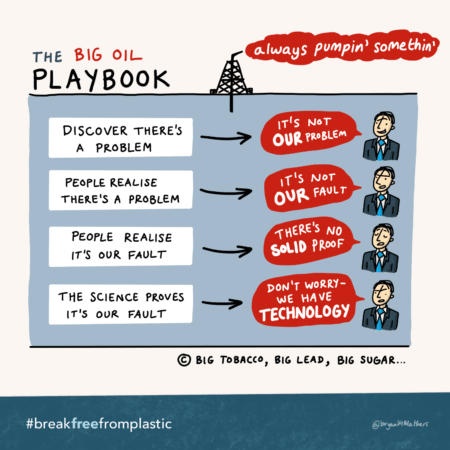
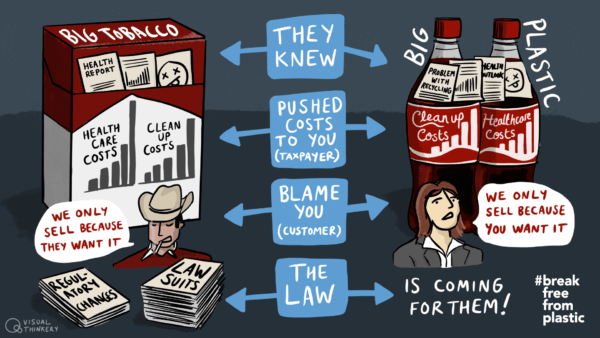
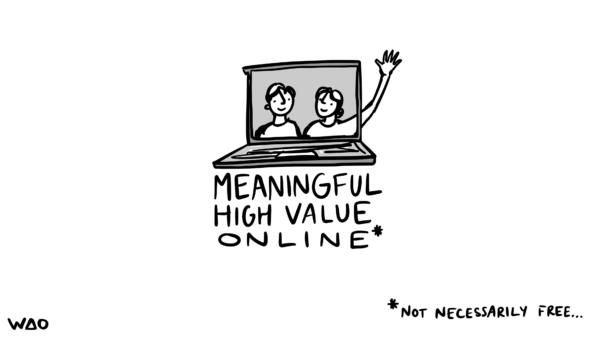
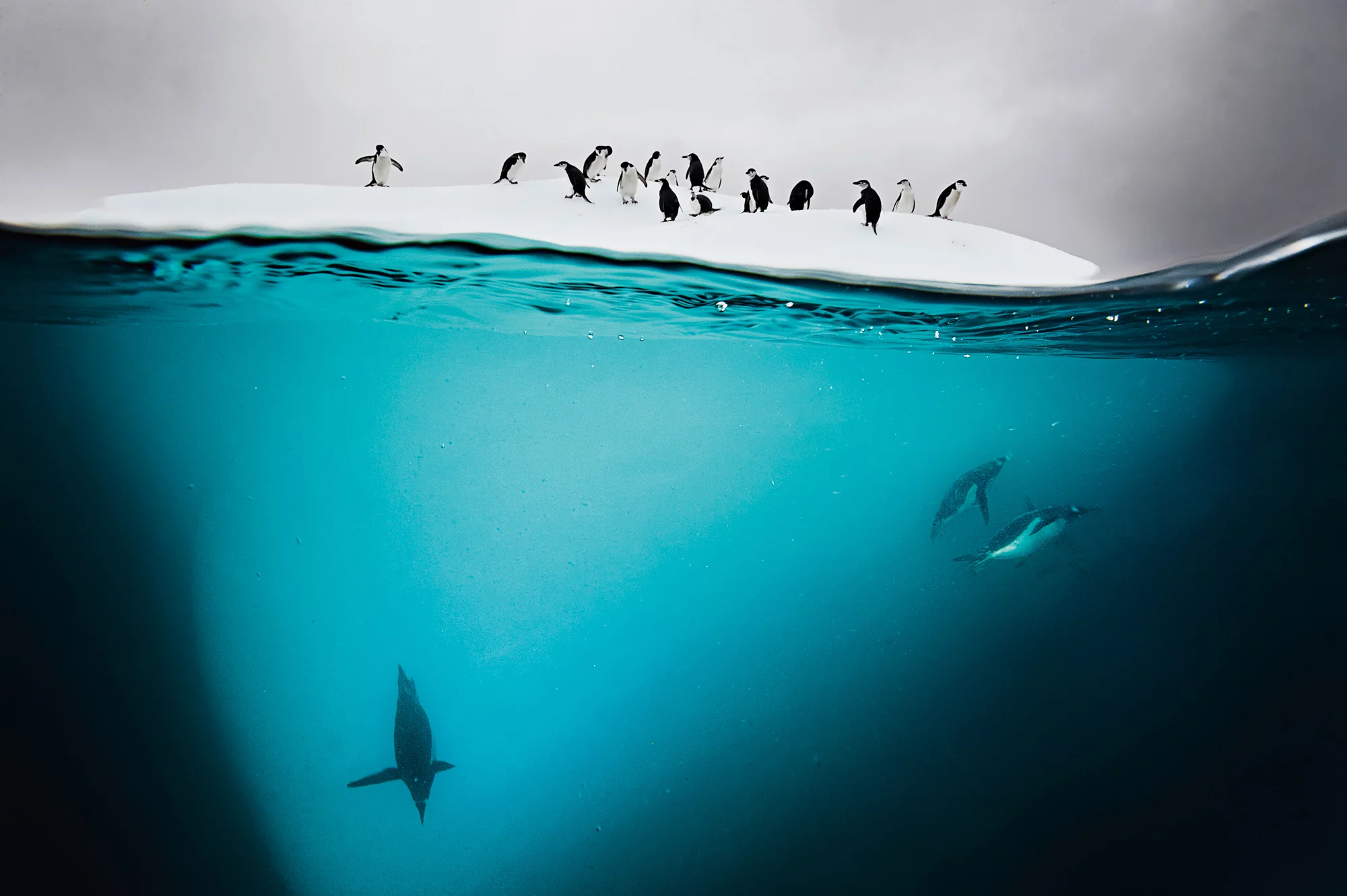







](https://cdn.macstories.net/_adm5040-min-horizon-noise_final-2-1635430810671.jpg)