Shared posts

08 Jun 02:56

Simplifying IT with the latest updates from Windows Autopilot

by Brad Anderson, Corporate Vice President of Enterprise Mobility + Security
mkalus shared this story from Microsoft 365 Blog.

With Windows Autopilot, our goal is to simplify deployment of new Windows 10 devices by eliminating the cost and complexity associated with creating, maintaining, and loading custom images. Windows Autopilot will revolutionize how new devices get deployed in your organization—now you can deliver new off-the-shelf Windows 10 devices directly to your users. With a few simple clicks, the device transforms itself into a fully business-ready state, dramatically reducing the time it takes for your users to get up and running with new devices.

Not only does Windows Autopilot significantly reduce the cost of deploying Windows 10 devices but also delivers an experience that’s magical for users and zero-touch for IT.

I’m excited to share that we are extending that zero-touch experience even further with several new capabilities available in preview with the Windows Insider Program today.

  • Self-Deploying mode—Currently, the Windows Autopilot experience requires the user to select basic settings like Region, Language, and Keyboard, and also enter their credentials, in the Windows 10 out-of-the-box experience. With a new Windows Autopilot capability called “Self-Deploying mode,” we’re extending the zero-touch experience from IT to the user deploying the device. Power on* is all it takes to deploy a new Windows 10 device into a fully business-ready state—managed, secured, and ready for usage—no need for any user interaction. You can configure the device to self-deploy into a locked down kiosk, a digital signage, or a shared productivity device—all it takes is power on.*
  • Windows Autopilot reset—This feature extends the zero-touch experience from deployment of new Windows 10 devices to reset scenarios where a device is being repurposed for a new user. We’re making it possible to completely reset and redeploy an Intune-managed Windows 10 device into a fully business-ready state without having to physically access the device. All you need to do is click a button in Intune!

Windows Insiders can test these features with the latest Windows 10 build and Microsoft Intune now.

I cannot wait to see the feedback from the Insider community! To see how this works, and several exciting updates to Windows Autopilot, check out this quick video:

 Source video.

You can head over to the Windows IT Pro blog right now for further details.

One final note: A big part of what we build is based on feedback from our customers. With this in mind, we also added several new Windows Autopilot capabilities into the Windows 10 April 2018 Update (version 1803) based on feedback, and these capabilities are also available today:

  • Enrollment Status page—We received tons of feedback from Windows Autopilot customers who want the ability to hold the device in the out-of-box setup experience until the configured policies and apps have been provisioned to the device. This enables IT admins to be assured the device is configured into a fully business-ready state prior to users getting to the desktop. This is made possible with a capability called “Enrollment Status” and is available today with Windows 10 April 2018 Update (version 1803) and Microsoft Intune.
  • Device vendor supply chain integration—We enabled Windows 10 OEMs and hardware vendors to integrate Windows Autopilot into their supply chain and fulfillment systems so that devices are registered in Windows Autopilot to your organization the moment your purchase is fulfilled. This makes the registration of Windows Autopilot devices completely hands-free and zero-touch for you as well as your device vendor/OEM. Contact your device reseller to find out if they are supporting Windows Autopilot.
  • Automatic Windows Autopilot profile assignment—We integrated Azure Active Directory (AD) dynamic groups with Windows Autopilot and Microsoft Intune to deliver a zero-touch experience for Windows Autopilot profile assignments on all Windows Autopilot devices.

I said this in my prior post and I’ll say it again—Windows Autopilot is an absolute game changer. I urge you to spend some time learning more about it.

To learn more about how to use Windows Autopilot and Co-Management together, check out this quick video.

*Requires network connection and TPM2.0.

The post Simplifying IT with the latest updates from Windows Autopilot appeared first on Microsoft 365 Blog.

08 Jun 02:56

Nerdiness has been totally co-opted by capitalism. A nerd used to mean studying something. There were science nerds, math nerds, etc. Today it means buying certain products from the biggest corporations in America. There are Nintendo nerds, Marvel nerds, Star Wars nerds, etc.

by existentialcoms
mkalus shared this story from existentialcoms on Twitter.

Nerdiness has been totally co-opted by capitalism. A nerd used to mean studying something. There were science nerds, math nerds, etc. Today it means buying certain products from the biggest corporations in America. There are Nintendo nerds, Marvel nerds, Star Wars nerds, etc.


Posted by existentialcoms on Thursday, June 7th, 2018 12:54am


5965 likes, 1669 retweets
08 Jun 02:56

People say that nerdiness has gone mainstream, but this is a mistake. It was never nerdy to buy anything, unless it was a chemistry set or a telescope. The very concept of nerdiness has been transformed drastically into something that can go mainstream in the commercial sense.

by existentialcoms
mkalus shared this story from existentialcoms on Twitter.

People say that nerdiness has gone mainstream, but this is a mistake. It was never nerdy to buy anything, unless it was a chemistry set or a telescope. The very concept of nerdiness has been transformed drastically into something that can go mainstream in the commercial sense.


Posted by existentialcoms on Thursday, June 7th, 2018 12:54am


1790 likes, 327 retweets
08 Jun 02:55

Groningen. Somehow the new infrastructure is never quite good enough

by David Hembrow
We've run cycling infrastructure study tours in this area for well over a decade. The tours are based in Assen where we live with (for three day tours) a day in Groningen which is just 30 km to the North. People always want to see Groningen because Groningen famously has the higher cycling modal share of any city in the world. It's certainly worth seeing, but Groningen's high modal share is
08 Jun 02:55

Urbanist Abroad: Day 3 – Hong Kong

by colinmstein

Despite the minor issue of a tropical cyclone bearing down on western Guangdong province (“its threat to Hong Kong still exists”, asserts the Hong Kong Observatory, in that classically anodyne yet ominous lingua franca of meteorologists everywhere), Gordon Price’s tour of Hong Kong continues.

Day 3 musings cover backstreet hidden gems, demographics on display, trees, and a Hong Kong “of course” — transit. Over 90% of the population makes use of the public transportation system.

How did this happen? For starters, they built it. And they had to — Hong Kong has virtually the same geographic area as Metro Vancouver, but almost three times the population.

Also with approximately 317, Hong Kong has the most skyscrapers in the world. That’s 25% more than New York City.

Instagram Photo
Instagram Photo
Instagram Photo
Instagram Photo
Instagram Photo
Instagram Photo
Instagram Photo
Instagram Photo

08 Jun 02:55

Air Canada now offering satellite internet services on international flights

by Sameer Chhabra
Air Canada plane

International airline and Canadian flag carrier Air Canada has announced that it is now rolling out satellite internet service on international flights.

According to a June 7th, 2018 media release, passengers flying on Air Canada Boeing 777-300ER and Air Canada Rouge narrow-body aircraft can now access in-flight satellite internet provided by Gogo.

Wi-Fi prices start at $5 CAD on 777-300ER aircraft, until August 31st, 2018.

Additionally, the entire Air Canada and Air Canada Rouge wide-body fleet will be equipped with satellite coverage by mid-2019.

“The speed and reliability of Air Canada Wi-Fi will also make it an excellent productivity tool for business travelers, who will be able to keep in touch and work during their journey so they can stay up-to-date and arrive fully prepared for any meeting or event,” said Benjamin Smith, Air Canada’s president of passenger airlines, in the same June 7th media release.

While 777-300ER passengers will be able to use satellite internet, Air Canada and Air Canada Express passengers flying on Airbus A319/320/321, Ebraer 175/190 and Bombardier CRJ-900 aircraft travelling within North America will be able to access Wi-Fi through a “ground-based system.”

The core difference between ground-based and satellite internet is latency. Whereas satellite service is considered high-latency — meaning it takes a long time for individual packets of data to move from a device to a server — ground-based services are low-latency.

In effect, this means that satellite internet services can often be slower than ground-based internet.

However, in the case of international flights — where airplanes often fly at around 35,000 feet — ground-based services are simply unable to connect to airborne devices. As such, satellite internet is the only feasible solution.

Passengers looking to find out if their flights support Wi-Fi can do so by visiting the Air Canada Wi-Fi website.

Source: Air Canada

The post Air Canada now offering satellite internet services on international flights appeared first on MobileSyrup.

07 Jun 17:55

Three Things I Learned from Teaching Happiness

files/images/LG-Blog-3.png

Discovery Education, Jun 09, 2018


Icon

Related to the Wil Wheaton post (keeping in mind that 'happiness' is not the opposite of, nor the cure for, depression and anxiety). So what are the three things? First, "The first mistake that people make is equating happiness, the overarching quality of life, with the temporary enjoyment we feel in response to something pleasurable." Second, "people enjoy what they are doing more if they are focused on what they are doing, right when they are doing it" (the thing I really enjoy about giving talks is that they uniquely allow me to be in the moment as I speak). Third, "it takes commitment to strengthen and reclaim the function of our core “pro-social” demeanor—to learn skills around trust, reconciliation, and teamwork." The idea that these are skills - not innate amibilities - is key. So is the idea of reclaiming the ability to do them after a major setback.

Web: [Direct Link] [This Post]
07 Jun 17:55

macOS Mojave: A Roundup of All the Little Things

by John Voorhees

Now that people have had a chance to dig deeper into macOS Mojave, a number of smaller features have been discovered that didn’t get mentioned during the keynote on Monday and weren’t included in our initial overview of the updated OS that will be released in the fall. Here are a few of our favorite discoveries:

macOS Updates in System Preferences. What Apple didn’t explain when it updated the Mac App Store is that macOS updates have been moved from the Mac App Store to System Preferences.

HomeKit Support for Siri. Among the iOS apps ported to macOS as part of the upcoming release of Mojave is Home. The app does not currently support AirPlay 2, but control of HomeKit devices is not limited to the Home app itself; Siri can also be used to control devices.

System-Wide Twitter and Facebook Support Removed. In High Sierra, users could log into Twitter and Facebook from the Internet Accounts section of System Preferences and share content using the share button in apps like Safari. Like iOS did in iOS 11, the Mojave beta has removed system-level support for sharing content via Twitter and Facebook.

The Final Version to Support 32-Bit Apps. During the State of the Union presentation, Apple confirmed that Mojave will be the last version of macOS to support 32-bit apps. When a user tries to open a 32-bit app, Mojave currently displays a one-time warning that the app will not work in future versions of macOS.

Favicon Support in Safari Tabs. Unlike Google’s Chrome browser, macOS doesn’t currently support favicons in Safari tabs. According to an article by John Gruber last summer, that led a significant number of people to use Chrome and third-party solutions like Faviconographer, which overlaid favicons on Safari’s tabs. When Mojave ships, Safari will add support for tab favicons, which are coming to iOS too.

Apple Mail Stationary Removed. According to the release notes for the macOS Mojave beta, Stationary, the HTML email feature that allowed users to choose from pre-built email templates, has been removed from the app.


You can also follow all of our WWDC coverage through our WWDC 2018 hub, or subscribe to the dedicated WWDC 2018 RSS feed.


Support MacStories Directly

Club MacStories offers exclusive access to extra MacStories content, delivered every week; it's also a way to support us directly.

Club MacStories will help you discover the best apps for your devices and get the most out of your iPhone, iPad, and Mac. Plus, it's made in Italy.

Join Now
07 Jun 17:55

Google app’s ‘Saved’ feature gets small redesign, faster saving

by Jonathan Lamont
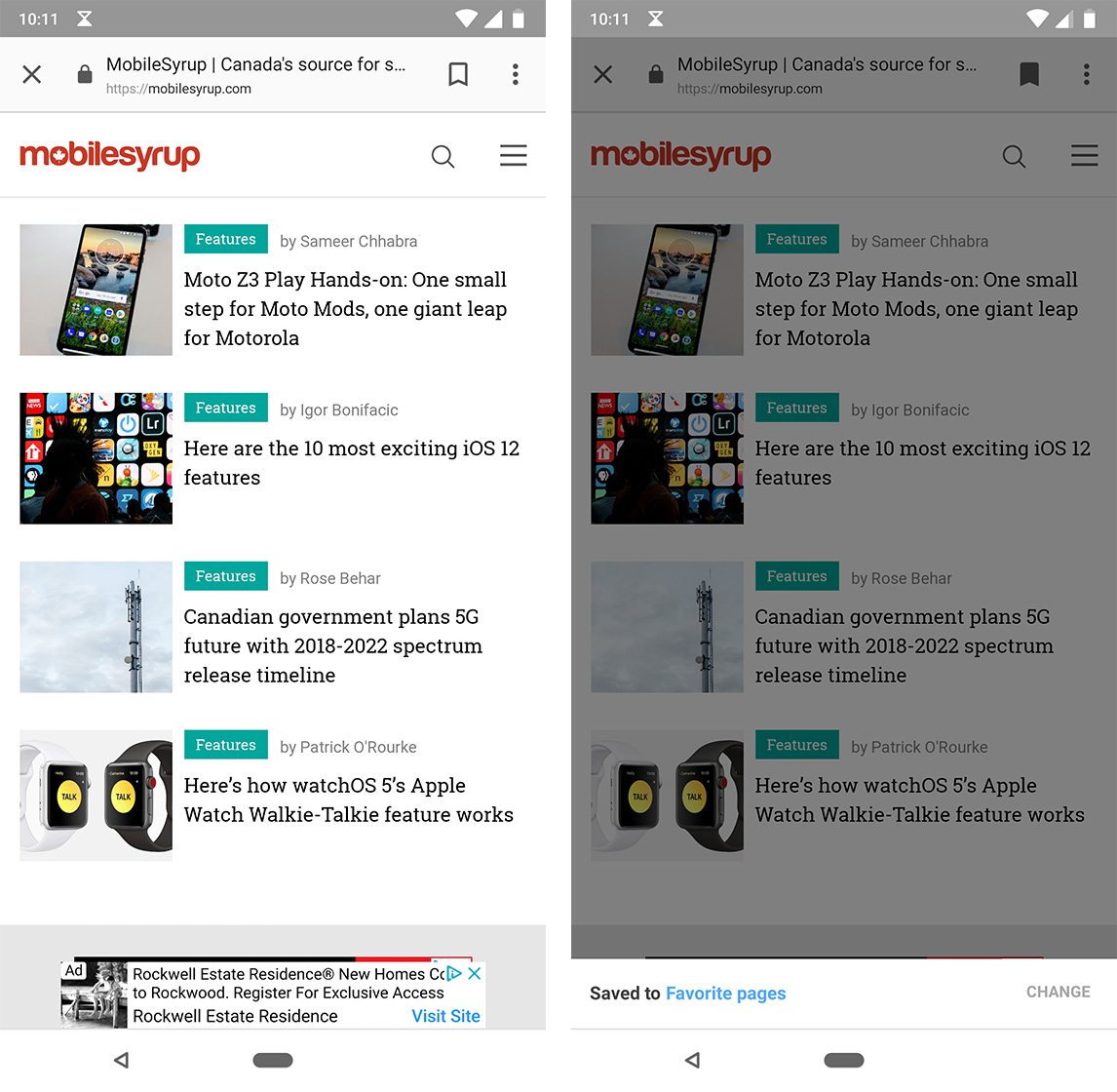
Saved on Android

The Google app’s ‘Saved’ feature is getting an update today.

Saved was introduced last October as a bookmarking and read-it-later service in the Google app. Users could save results from within the Google app as well as pictures from image search and Google Maps results.

Now Saved features a new look and a faster saving process.

Saving an item to Saved

When a user saves something now, it will go to a Favourites folder by default. Users can save an item in a different place if they want.

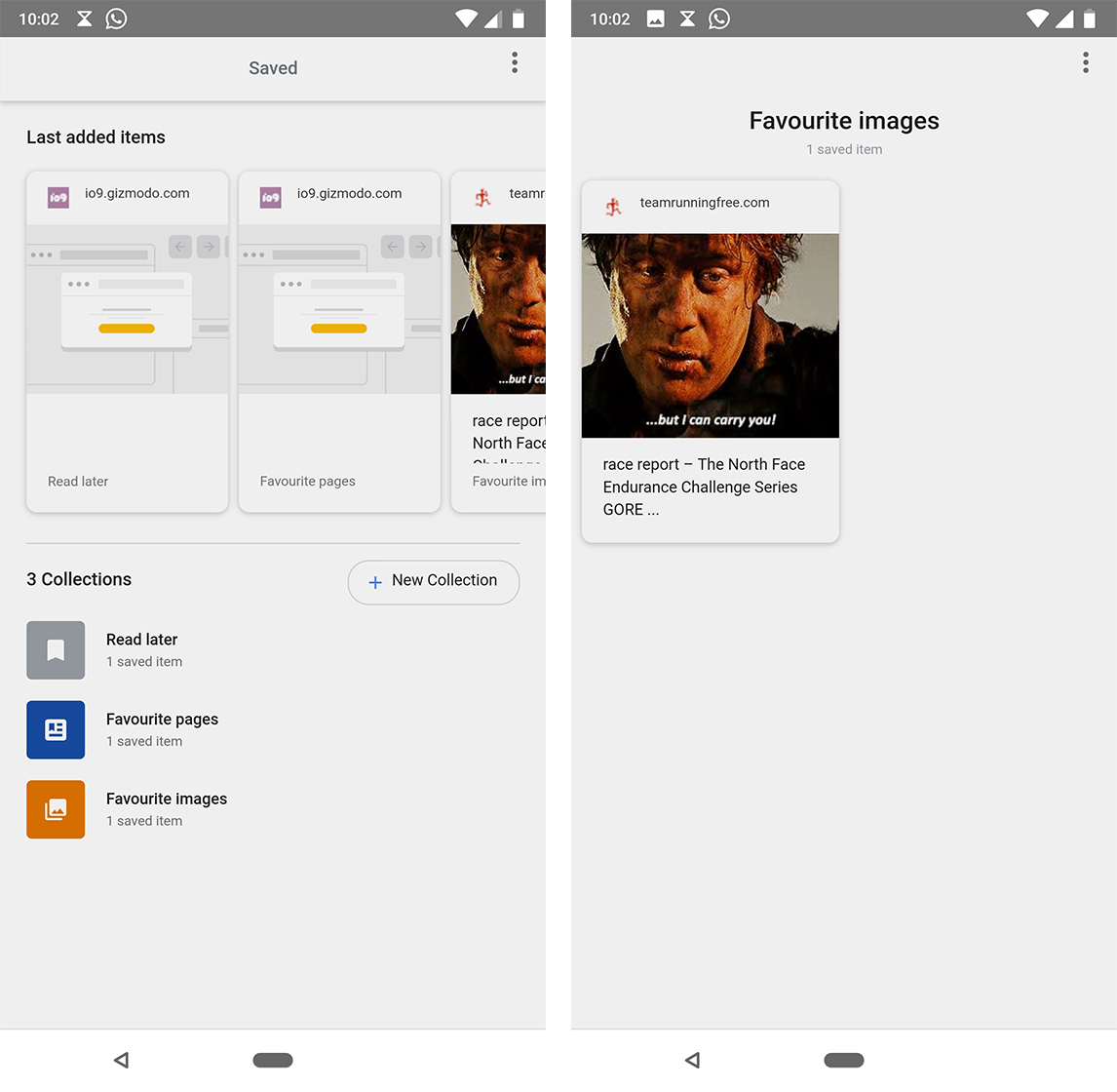
Users can access the Saved page by opening the Google app and tapping the fifth ‘More’ tab. After selecting the Saved option from the menu, users will be greeted with a carousel of recently added items.

The Saved page

Below the carousel is a list of the user’s collections. Users can add new collections as well.

The app has a new look as well. The new look features small, rounded cards. The new cards form two rows. The old style takes the whole width of the phone.

Furthermore, the item’s URL, title and collection are listed alongside a preview image.

Finally, Google removed the option to add notes. A menu also gives users the ability to delete or move items in bulk.

Saved isn’t the most refined as far as bookmarking tools go. However, it’s advantage lies in the integration into Google. The integration makes it much easier to quickly save something for later.

Unfortunately, Saved feels hidden. For me, I use the Google app most through the search bar on my home screen or by swiping into the Google Feed beside my home screen. I can’t access Saved easily from either of those places.

For Saved to really see use, it should be prominent and easy to access right from search. There’s certainly space for it there.

Source: 9to5Google

The post Google app’s ‘Saved’ feature gets small redesign, faster saving appeared first on MobileSyrup.

07 Jun 17:54

BlackBerry KEY2 :: A few thoughts

by Volker Weber

BlackBerry Mobile has finally unveiled the KEY2, if there was anything left to unveil. Time to give you my thoughts.

  • I am glad this phone exists. In a sea of similar slabs aiming for either "flagship" status or bargain basement prices, the KEY2 stands out as a device optimized for messaging.
  • You know you want one if you see it. Or you know you don't want it. For many people it's the latter. You trade in screen real estate for a keyboard, and that only makes sense if you do a lot of typing.
  • Last year, BlackBerry Mobile had two new devices: KEYone and Motion. I liked the Motion design way better, and this year I am not so sure anymore. KEY2 has the boxy shape that I like so much about the Motion, it has gotten thinner, the keys are larger, which was made possible by the screen moving up in a similar sized body. It's a millimeter thinner and no longer has these weird round radiusses around the edges. Also matte keys instead of glossy ones. It will come in black and silver, both are aluminium frames. My preference is for black.
  • The first KEYone batch had the screen come out of the device, because there was not enough adhesive around the screen, and boy did they fix this fast. I expect the KEY2 to not repeat that mistake.
  • KEYone shipped with 3 GB of RAM and 32 GB of storage. KEY2 doubles both. 6 GB of RAM and 64 GB of storage. If that isn't enough, there is a 128 GB option in some markets and you can extend storage via SDXC. Dual SIM will only be available in some markets. Germany being one of them.
  • It's running on the SD660 chip set. Paired with a 3500 mAh battery and a 4.5" screen, battery life should not be a problem, ever.
  • On/off moves to the right, between volume rocker and convenience key. Much easier to hit than the old one on the left side.
  • Keyboard gets a new speed key, which lets you invoke shortcuts from anywhere and not only on the home screen. This will make the KEY2 faster than any other phone out there.

All good so far. A number of concerns:

  • $650 and 650 € is a lot of money. It's a $100 more expensive than the KEYone launch price. BlackBerry is hedging their bets with another device, codename Luna, that will ship later. Apparently it looks very similar but it is designed with cheaper components to bring the price down. If you are ruling out KEY2 for its price, Luna might be for you.
  • The dual camera provices 2x zoom and portrait bokeh, but BlackBerry does not have the expertise to produce outstanding computational photography.
  • No wireless charging.
  • KEYone sold in the hundreds of thousands, three order of magnitude below the iPhone. Opinion: KEY2 is not changing this equation.
  • Development resources for software updates seem to be constrained. BlackBerry wants to update monthly, but often lapses or delays. KEYone and Motion shipped with Android 7 and have yet to be upgraded. It's coming, but it is taking a long time. I guess there will not be speedy updates to Android P. Caveat: KEY2 ships with 8.1 so it is required to support Project Treble, which makes it easier to upgrade. On the other hand, BlackBerry applies lot of under the hood changes to Android.
07 Jun 17:54

The new machine learning-powered Auto White Balance

by Pixelmator Team

Pixelmator Pro includes one of the best collections of color adjustment tools in any app on any device. And we want to make them even better. In Pixelmator Pro 1.1 Monsoon, we added some super cool Auto buttons next to three color adjustments: White Balance, Lightness, and Hue & Saturation. Although those buttons may be small, there’s a lot of machine learning power behind them and we wanted to talk a little bit about one in particular — Auto White Balance.

Fixing white balance

When editing photos, fixing the white balance is almost always the first thing photographers do before moving on to any other edits. It’s important to get it right because all your later edits depend on it. And if you’re not used to doing it, it’s not all that easy — there are two different sliders that are influenced by each other and it’s not that obvious what they do. I mean, adding yellow cancels out a blue tint, how does that work?

So, in Pixelmator Pro 1.1 Monsoon, we’ve added the machine learning-powered Auto White Balance to make fixing the white balance in any photo as simple as clicking one little button. Behind that button, there’s a 200-layer-deep neural network trained on millions of image pairs and integrated via the awesome Core ML.

Magic machines

Did you know that neural networks are practically magic and no one knows how they really work? Basically, getting machine learning models to do what you want them to requires you to test them on really huge datasets. The models then make complicated, seemingly random connections based on your tests and their quality depends on how good your tests and datasets are.

In this case, we needed millions of images with bad white balance and good white balance. It probably goes without saying that there’s no giant repository of badly white balanced images to just download. Even if there was, we’d still need to get someone to fix each one and that’s not exactly efficient either. For that reason, we had to find a different approach. We decided to take millions of good images and create a separate algorithm to ‘break’ them in as natural a way as possible to mimic real-world white balance issues.

Neural network training

Once we had our image pairs, we could start training. Except there was another little problem. Most neural networks work with small, fixed-resolution images, which usually have to be square. That meant we needed to turn every photo into a uniform small square image. But if the photo is portrait or landscape, potentially important details at the edges of the image would be lost if we cropped them. If we simply stretched them, then they wouldn’t look like actual photos people edit.

To get around this, we took each image and applied content-aware scaling. This separate algorithm identified features in the original images (for example, a sky, some trees, or people) and scaled them according to their importance to the photo. The content-aware scaling makes for some pretty strange-looking images — people look a little like weird aliens — but the neural network likes them a little better. Now we could start training and getting our model to learn. And once that was done, we could start testing how accurate our approach was.

Quality and accuracy

Most image editing apps have some sort of non-machine learning automatic white balance correction tools and we compared our approach with the results you get in those apps. We measured quality using the industry standard CIEDE2000 metric and found our Auto White Balance tool to be at least 50% more accurate, and usually between 2 to 10 times better than those standard tools. And we think our approach passes the eye test even better. Just looking at the results, the Auto White Balance adjustment seems to be much more natural and visually pleasing.

RAW friendly

One awesome feature of Auto White Balance is support for RAW images and any extended data within them. Our trained neural network uses extended-range information to correct white balance issues in RAW images with improved accuracy. Sweet!

Here are the Auto Color Adjustments getting a mention during the Platforms State of the Union at this year’s Worldwide Developer Conference in San Jose.

Better than humans

To round things off, here’s a fun fact. The new Auto White Balance correctly fixes the white balance in the infamous “dress” photo, which became an internet phenomenon in 2015. And that photo isn’t even in the training dataset! This is an especially good example of white balance and lighting issues which are tricky even for humans to solve. And Pixelmator Pro now makes it effortless with the help of breakthrough machine learning.

If you want to try out these awesome machine learning features on the dress or any of your own photos, you can download Pixelmator Pro 1.1 Monsoon — it’s available now from the Mac App Store and it’s a free update for everyone who has already bought Pixelmator Pro.

Download Now

07 Jun 17:53

The New York Times Documents Vancouver’s Housing “Frenzy”

by Sandy James Planner

vancouver

Trust the New York Times to call it like it is.

As the newspaper astutely observed this past weekend:

Last year, in a provincial election almost entirely about housing costs, citizens voted out the center-right B.C. Liberal Party, which had run British Columbia for 16 years, and brought in a government led by the left-of-center B.C. New Democratic Party. Since then, the New Democrats have not only tried to increase the housing supply, but have also proposed a slew of measures that aim to curb housing demand and chase away overseas buyers.


And The New York Times also noted that many homeowners think this is the “best idea they’ve heard in years”, as the province’s NDP government, “raised British Columbia’s foreign-buyer tax to 20 percent of a home’s purchase price, from 15 percent. (Ontario has a 15 percent tax.)”

In addition, the party plans to impose higher property taxes on second homes, on families whose primary breadwinner’s earnings come from money abroad and on homes valued at more than 3 million Canadian dollars ($2.3 million). Vancouver has passed a number of local measures, including a tax on empty homes.

Gil Kelley, Vancouver’s Director of Planning calls it, “getting out of the mind-set that more is better”, and by more, he means the cost of a house.

In 2016, the non-profit Angus Reid Institute conducted a public opinion poll, whose results suggested that almost two-thirds of respondents in Metro Vancouver wanted housing prices to cool off — anywhere from 10 per cent to 30 per cent, or more. And this was not just grumbling from renters; almost half of homeowners were on-board with a cooling off, with one in five homeowners wanting to see prices fall by thirty-plus per cent.

Our own Duke of Data Andy Yan has documented one of the contributing challenges to the affordability crisis — Vancouver’s low wages. Yan notes that, while there are certainly jobs in the region, you would need two or three to afford a house.

In the City’s bid for Amazon’s second headquarters, “Vancouver officials boasted about having ‘the lowest wages of all North American tech hubs.'” As the gap between wages and housing affordability has widened, Vancouver has been consistently promoting itself as a “subsidized resort town and retirement community” to the rest of the globe, according to Josh Gordon at Simon Fraser University.

The impact of demand for city housing from China is “hotly debated”; Yan notes that the surge in development of new buildings has not reduced prices, instead suggesting that there may be an “under-estimate of the influence” of foreign capital, as the data excludes Canadian immigrants with capital from overseas.

Regardless of the reasons, the end results are the same — people working in Vancouver cannot afford to live here, and the morphing of Vancouver into an international gateway city has shut out the hope of every buying a home.

From the Times:

People who live and work in Vancouver can’t afford to live here,” said Nathalie Baker, a lawyer who is in favor of measures to cool the market, even though she owns a home here. “And that is a very significant problem.

You can read the whole article here.

03vancouver-promo-facebookjumbo

Photos National Post & New York Times

07 Jun 17:53

Swimming in a Digital Ocean of Love

by Reverend

Yesterday Digital Ocean published a customer story featuring Reclaim Hosting. It was nice. A month ago Tim and I talked with Lisa Tagliaferri (a CUNY Grad Center alum-I love CUNY!) who is keenly interested in framing the power and possibility of Digital Ocean for the education community—a vision I can definitely get behind. She though Reclaim Hosting’s move to Digital Ocean might provide a solid case study, and we were happy to oblige because we have nothing but love for Digital Ocean. Not only have they made the process of spinning up and managing infrastructure simple, they allow us to geolocate servers, they have amazing guides and tutorials, and they even dropped their prices this year. Hard not to love all that.

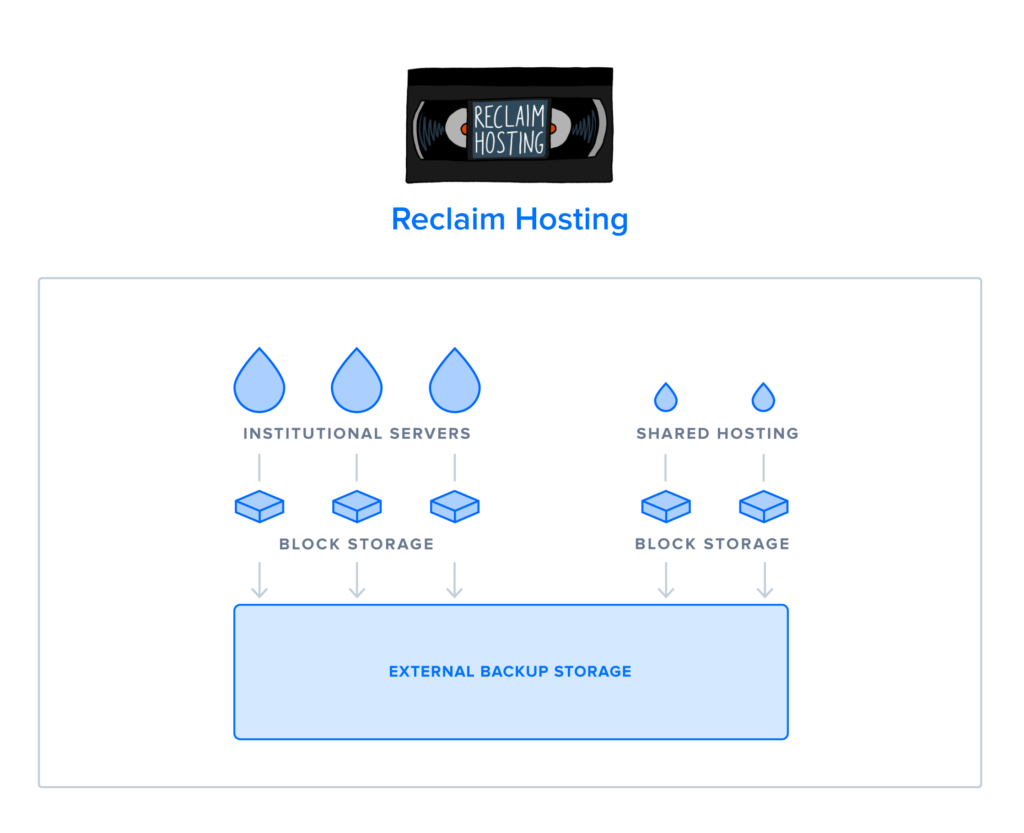
So we had a discussion with Lisa to articulate why we’ve been so happy with Digital Ocean, and while the reasons are myriad (as mentioned above), probably the single most important element for us has been the introduction of block storage a couple of years ago. Mounting additional storage to droplets has meant we could move all of our shared hosting and Domain of One’s Own instances to DO, and over the last year that is exactly what we have done. We have just a few more servers to migrate over the coming months, and by the end of 2018 we will have completed what has been an almost two year-long migration schedule.

That feels good, but it’s by no means the only advantage. Beyond scaling CPU and storage instantaneously—which you come to expect of cloud solutions—the ability to geo-locate servers around the world has become increasingly important for us with increased interest in Domains from schools in Canada and Europe. But the thing that remains special to me about Digital Ocean is their work epitomizes the challenge of making something that has heretofore been extremely complex (not only with dedicated servers, but through other cloud providers like AWS) quite simple and intuitive. Digital Ocean provides a peek at a future where managing your own personal cyber-infrastructure will not be that much more difficult that setting up your own WordPress site.  I do like the schematics they provide (even if Reclaim Hosting’s is dead simple), and they do a great job in the article of breaking down how and why we use Digital Ocean. I personally could not be more happy with our choice to move there, and cannot recommend them highly enough to other ed-tech folks who are in a position of managing their infrastructure externally, I can’t imagine a more painless alternative.

07 Jun 17:53

Announcing my Upload-to-Google-Photos Plugin for Lightroom: Prepare to be Disappointed

by Jeffrey Friedl

Six years after Google unveiled their “Google +” social network with photo hosting, with heavy emphasis on photographers, and a couple of years after Google shut down Picasa Web Albums, the sort-of-backdoor way to upload photos to Google, Google has finally released a photo-upload API, so that I can make a Google Photos plugin for Adobe Lightroom.

Sort of.

What Google allows at this point is extremely limited, and I don't hold much hope that it'll expand.

As of today's initial release, the plugin can:

  1. create an album in Google Photos
  2. upload photos and video to such albums.

That's it. Nothing more. The plugin can't upload to existing albums or any album not made by the plugin.

The plugin can't delete or update photos, even ones it uploaded in the first place, so we can't make a publish service.

From the employee-developer interaction I've seen so far, I don't hold much hope for this API.

More information, and updates as they happen, on the plugin's home page.

07 Jun 17:53

Vision Vancouver Acclaims Mayoral Candidate…and the Gloves are Off

by Ken Ohrn

It’s official now, but not much of a surprise — Ian Campbell will be the Vision candidate for Mayor of Vancouver in the October civic election. (With thanks to Justin McElroy).

See below for backgrounders and Vision’s opening pot shots in the campaign. Buckle up, everyone, it’s going to be a bumpy ride.

Vision’s announcement leaves only a wee bit of confusion to resolve. Bremner and the Density Bros (let’s Party!); Adriane Carr; and Independents Kennedy Stewart and Shauna Sylvester. [Hint:  don’t give up your day jobs just yet].

Vision’s quota of Council, Park Board and School Board candidates will be elected by the party on July 8. No word on when or how the NPA will choose their candidates, but apparently their tradition is to appoint them.

An introduction to Mr. Campbell, in the video below, and a backgrounder from BC Business in 2016, where Mr. Campbell comes across as a deep and broad thinker.  A rarity in civic politics:

We have to answer the question: Do we want to stay under the Indian Act, or do we want to play in the big leagues? We live in a sea of development, with thousands of buildings in our territory where we are the new entrants in our own lands. As we step into land management and development, it’s critical for us to articulate that vision to our young people so that they see the real opportunities as they transition into leadership— the role or responsibility that they have to contribute to the collective wellbeing. It’s an exciting era, and our parents and grandparents didn’t get that. It’s taken generations to get to where we are today.


Neither is it a surprise that Vision has already begun campaigning in earnest with a spirited attempt to put the NPA and its Mayoral candidate into a convenient box of negativity.

‘The NPA has chosen to run Ken Sim in the fall election,’ said [Vision Vancouver Co-Chair Michael] Haack. ‘But Sim’s non-existent record on tackling the key challenges facing our city – and his choice to run with a party that has failed to support critical action on housing, the opioid crisis and more, year after year – tells us everything we need to know going into October. It’s the same NPA we’ve come to expect, with the same billionaire backers who want to make sure big money stays in politics.

There is a reason no one’s heard of Ken Sim. Mr. Sim has no experience in public service, and no record of putting anyone but himself first. The one thing we do know: he has made it clear he will not stand up for Vancouver, or for protecting our coast and the jobs that depend on our environment.’

07 Jun 17:53

The Google Pixel 3 XL Reportedly Photographed Out in the Wild

by Evan Selleck
We have seen images of what is believed to be the screen protectors for the upcoming Google Pixel 3 and Pixel 3 XL, and now we’re getting a look at what’s believed to be the latter handset out in the wild. Continue reading →
07 Jun 17:53

Global MIUI 10 Announced with Focus on Speed, Fullscreen Design, and AI

by Rajesh Pandey
Alongside the Redmi Y2, Xiaomi also unveiled the global version of MIUI 10. The update focuses on four key aspects: speed, design, sounds, and portrait mode. Continue reading →
07 Jun 17:53

A co-operative fund.

by William

While here in Bologna, I’m thinking about those systemic advances we can make to accelerate the adoption of the co-operative model in BC. Many things we see here have grown up in this area and are inseparable from the local culture and economic ecosystem. Many of the aspects of the co-operative support system are hard to imagine being replicated back home. But there are definitely some things we’re seeing here that could be imported to support growth of coops in BC. Like I wrote in my previous post, a stronger coop sector in BC would be an important complement to the capitalist system and create greater equity and sustainability, augmenting governmental interventions.

We spent Wednesday morning visiting CoopFund, an economic support to startup coops and coops wanting to grow and develop. In Italy, all coops put 3% of net profits into a fund whose primary objective is to support new coops and expand the activities of existing coops. Their focus is on technological innovation, increasing employment opportunities, expanding into Southern Italy where there aren’t as many coops and expanding coop social enterprises into sectors such as health and integrating people with barriers to employment into the workforce.

When a coop is facing major challenges or insolvency, the fund is one of the refinancing agents along with local credit union equivalents and the coop apex organizations such as LegaCoop. The CoopFund also offers consulting services to the coop to help them through a difficult period.

I found it very interesting that the interest rate off the loans CoopFund makes can be variable based on terms and risk similar to commercial lending at home, but is also affected by the social outcomes the coop is delivering. If a social outcome of the coop creates employment, especially in barriered communities, the rate will be lower as it provides a general benefit to society. At traditional banks, social objectives don’t factor in at all – in fact those objectives can be perceived as distracting from the main economic objectives of the borrower and may lead to a higher risk profile and therefore higher rates. Here in Bologna the more the loan can be linked to social outcomes, the lower the rate. Rate is driven by alignment to values rather than solely to risk, as all loans have to meet a standard risk profile as a stage of application to the fund.

We do have a national coop fund now, finally. And the idea of the government requiring coops to create a national fund based on a percentage of net profits isn’t realistic or warranted. If a few key players came together to capitalize a fund, organizations like the Credit Union Foundation of BC, Vancity, MEC and others, working in concert with a provincial body governing economic and/or social development to ensure aligned outcomes, we could advance the creation of more coops.

As we see the trend towards solopreneurs and away from traditional employment options, the growth of worker coops kickstarted by a fund like this could create more opportunities for people to earn a higher standard of living for their work, have a greater sense of ownership and more collaborative workplaces and create more opportunities to those facing barriers. Such progress would be a win-win for employees, the government and the coop sector.

CoopFund specifically focused on Worker Buy Outs – having small businesses who have run into problems or have owners who want to sell their businesses sell to the workers who own the new business as a co-operative. I’ll post more on worker coops succession at another time.

07 Jun 17:53

Nintendo Labo Review: A Clever Building Kit for Crafty Kids

by Signe Brewster
Nintendo Labo Review: A Clever Building Kit for Crafty Kids

If you own a Nintendo Switch and have a patient child who loves building and craft projects, you should look into Nintendo Labo, a trio of clever cardboard construction kits that bring Switch games into the real world in the form of toys you build yourself. The Labo Vehicle Kit is our top choice after spending 25 hours researching and testing the three kits before handing them off to a test panel of school-age children and their parents.

07 Jun 17:52

The New York Times Documents Vancouver’s Housing “Frenzy”

by Sandy James Planner
mkalus shared this story from Price Tags.

vancouver

Trust the New York Times to call it like it is.

As the newspaper astutely observed this past weekend:

Last year, in a provincial election almost entirely about housing costs, citizens voted out the center-right B.C. Liberal Party, which had run British Columbia for 16 years, and brought in a government led by the left-of-center B.C. New Democratic Party. Since then, the New Democrats have not only tried to increase the housing supply, but have also proposed a slew of measures that aim to curb housing demand and chase away overseas buyers.


And The New York Times also noted that many homeowners think this is the “best idea they’ve heard in years”, as the province’s NDP government, “raised British Columbia’s foreign-buyer tax to 20 percent of a home’s purchase price, from 15 percent. (Ontario has a 15 percent tax.)”

In addition, the party plans to impose higher property taxes on second homes, on families whose primary breadwinner’s earnings come from money abroad and on homes valued at more than 3 million Canadian dollars ($2.3 million). Vancouver has passed a number of local measures, including a tax on empty homes.

Gil Kelley, Vancouver’s Director of Planning calls it, “getting out of the mind-set that more is better”, and by more, he means the cost of a house.

In 2016, the non-profit Angus Reid Institute conducted a public opinion poll, whose results suggested that almost two-thirds of respondents in Metro Vancouver wanted housing prices to cool off — anywhere from 10 per cent to 30 per cent, or more. And this was not just grumbling from renters; almost half of homeowners were on-board with a cooling off, with one in five homeowners wanting to see prices fall by thirty-plus per cent.

Our own Duke of Data Andy Yan has documented one of the contributing challenges to the affordability crisis — Vancouver’s low wages. Yan notes that, while there are certainly jobs in the region, you would need two or three to afford a house.

In the City’s bid for Amazon’s second headquarters, “Vancouver officials boasted about having ‘the lowest wages of all North American tech hubs.'” As the gap between wages and housing affordability has widened, Vancouver has been consistently promoting itself as a “subsidized resort town and retirement community” to the rest of the globe, according to Josh Gordon at Simon Fraser University.

The impact of demand for city housing from China is “hotly debated”; Yan notes that the surge in development of new buildings has not reduced prices, instead suggesting that there may be an “under-estimate of the influence” of foreign capital, as the data excludes Canadian immigrants with capital from overseas.

Regardless of the reasons, the end results are the same — people working in Vancouver cannot afford to live here, and the morphing of Vancouver into an international gateway city has shut out the hope of every buying a home.

From the Times:

People who live and work in Vancouver can’t afford to live here,” said Nathalie Baker, a lawyer who is in favor of measures to cool the market, even though she owns a home here. “And that is a very significant problem.

You can read the whole article here.

03vancouver-promo-facebookjumbo

Photos National Post & New York Times

07 Jun 14:34

Chapter 6: Different Types of Electrical Bike Motors and Battery

by Chandler Harris

The fundamental premise of an electric bicycle is that it is a hybrid bike that combines pedal power with motor-assisted power. But many who are new to electric bikes wonder how they work.

There are three main components that make an electric bicycle electric: Electric motors, electric batteries, and a display. The battery powers the motor, and the display is where you control how much power you want. It is good to know the main types of motor systems in order to know what works best for you. It’s also a good idea to know the main things to think about when comparing battery options and battery range. Below is a short summary of the most common motor and battery systems you will see when researching for your new electric bike:

Electric Bike Motor

There are two types of motors for electric bikes: Hub motors located on the wheel and replacing the regular hub, and mid-drive motors that are located on the frame. None of these types of motors are superior over the other, but they do have different benefit depending on what you need.


Hub Motors

You probably want an ebike with a hub motor system if:

You want the option to sometimes ride very conveniently with very little pedaling power, and you love the idea of having throttle when needed. You also don’t mind bringing the cost down a bit for your new electric bike.  


Advantages:

  • A hub motor gives you more flexibility in choosing the amount of pedal power you want to put in, because it drives the wheel and not the crank (where your pedals connect to) which makes it possible for the wheels to spin fast even though the pedals do not.
  • Because it drives the wheel itself and not the crank, it allows for a throttle where you can chose to not move the pedals and still have the wheel spinning from the motor!
  • Hub motors have been around for a long time and are in general very affordable compared to mid-drive motors.
  • Widely available in the after-market, giving you extra piece of mind down the road if you need to do any repairs or replacements.

Disadvantages:

  • Because the hub motor is sealed in the hub, it can be overheated if the controller fails to manage the power supplied. However, any quality ebike with sufficient quality controls should not have any problem with overheating. For example, all Blix bikes have been tested for many years to make sure that overheating is never at risk.
  • The hub motor is, in general, a little bit heavier than a mid-drive motor, even though it’s usually only 2-3 pounds difference.

You probably want an ebike with a mid-drive motor system if:

You want to always pedal harder in order to ride faster, similar to how it works on a non-electric bike. You mostly ride in very steep hills and frequently shift your gears to handle the climb easier.


Mid- drive Motors

Advantages:

  • Mid-drives generally perform better in very steep hills. The reason is that a mid-drive motor drives the crank instead of the wheel, which allow the rider to take full advantage of the gears in the rear wheel in addition to the motor power.
  • The centralized placement of the motor in the crank gives a better weight distribution on the bike as a whole.

Disadvantage:

  • Mid drive motors are in general closed systems, which means that you often need to replace the whole motor if there is something that needs to be repaired.
  • Mid-drive motors are mostly proprietary systems, meaning that spare parts have less availability and is restricted to the specific brand.
  • Mid drive motors puts a lot of wear and tear on the drive train, including cogs, sprockets and the chain.

To dig deeper into the details of different types of hub motors and mid-drive motor, see chapter 8!


Batteries

Relatively new developments in electric battery technology has had a direct impact on the evolution of electric bikes. When lithium batteries began being mass produced for computer products, their price fell, making an affordable electric bike possible. But portable lithium batteries also are advantageous for electric bikes because they are highly efficient, lightweight, and rechargeable.


Battery Range

When buying an electric bike today, the primary factor you should consider when it comes to the battery is the range of the battery. This is often described as how many miles you can ride on a single charge. The range of a battery certainly depends on how much it is used while riding - the more charge you use, the less range you have. Electric bike batteries should typically provide between 20 and 60 miles per charge. They should also fit into the design of the bike for proper weight distribution, the last place you want the battery placed is on the rear carrier where there’s no low center of gravity and where you typically load other things.


All Blix bikes have the battery placed vertically below the seat or low on the frame, keeping the center of gravity low for a stable riding experience. You can also choose between two different battery capacities: 11ah that takes you up to 40 miles per charge, or 17,5ah that takes you up to 60 miles per charge.

07 Jun 14:34

Komfort Prima Test by Electric Bike Action Magazine

by Andre Malmberg

The Blix Komfort Prima was recently tested and reviewed by Electric Bike Action Magazine, one of the leading electric bike publications in U.S. Describing it as "cycling with simple, clean designs in nice colors, but, more important, modernized with motorized assist." , the review captures the essence of this ebike's blend of classic design with modern technology.


Insider tip: Make sure to take advantage of the holiday sales that gives you a whopping $300 off the regular price of Komfort Prima.

Insider tip #2: If you want to carry things with you, and think that a beautifully designed front basket with wooden bamboo plate and integrated drink holder for your afternoon coffee is something for you - make sure to add the Blix basket to your new Komfort Prima!


True to its name, the Komfort Prima is built for comfortable riding, making it a great choice for daily ebike commuting or weekend leisure riding:

"This is one of the most comfortable bikes we’ve ridden all year. The ride quality is very high, and there’s ample and quiet power from the Shimano motor."


"This is a comfort bike in the truest sense of the word. It’s perfect for weekend rides on country roads, jaunts through town or even as a daily commuter. It’s a versatile bike that does well carrying home loads of veggies from the farmers’ market as it is carrying books to class or going out for a leisurely ride."


Some of the highlighted features were the easy to read LED display, the high performance disc brakes and the quality motor system by Shimano, which create great value at this price point.


"the bike offers some impressive features at this price point. Not just the great motor, but things like Tektro hydraulic brakes are easy to modulate and provide ample stopping power and speed control."


Blix electric bike shimano steps display

The LED display was reviewed as well-contrasted and easy to use. The fact that the battery indicator shows charge percentage as apposed to a bar or graph makes it very easy to understand how much power you have left. As a matter of fact, you can actually see the exact mileage you have left depending on what power level you're using!


This article captures the overall design features of this model very well, highlighting not only the many interesting tech specs that electric bikes usually have, but also the overall comfortable and seamless riding experience that are at the core of Blix bike design.


Read the whole article. 

07 Jun 14:32

Parlez-vous Deutsch? Rhagor o Leisiau i Common Voice

by Katharina Borchert

We’re very proud to be announcing the next phase of the Common Voice project. It’s now available for contributors in three new languages, German, French and Welsh, with 40+ other languages on their way! But this is just the beginning. We want Common Voice to be a tool for any community to make speech technology available in their own language.

Speech interfaces are the next frontier for the Internet. Project Common Voice is our initiative to build a global corpus of open voice data to be used to train machine-learning algorithms to power the voice interfaces of the future. We believe these interfaces shouldn’t be controlled by a few companies as gatekeepers to voice-enabled services, and we want users to be understood consistently, in their own languages and accents.

As anyone who has studied the economics of the Internet knows, services chase money. And so it’s quite natural that developers and publishers seek to develop for the audience that will best reward their efforts. What we see as a consequence is an Internet that is heavily skewed towards English, in a world where English is only spoken by 20% of the global population, and only 5% natively. This is increasingly going to be an accessibility issue, as Wired noted last year, “Voice Is the Next Big Platform, Unless You Have an Accent”.

Inevitably, English is becoming a global language, spoken more and more widely, and this is a trend that was underway before the emergence of the Internet. However, the skew of Internet content to English is certainly accelerating this. And while global communications may be becoming easier, there is also a cultural wealth that we should preserve. Native languages provide a deeper shared cultural context, down to the level of influencing our thought patterns. This is a part of our humanity we surely wish to retain and support with technology. In doing so, we’re upholding a proud Mozilla tradition of enabling local ownership by a global community: Firefox is currently offered in 90 languages (and counting), powered by volunteers near you.

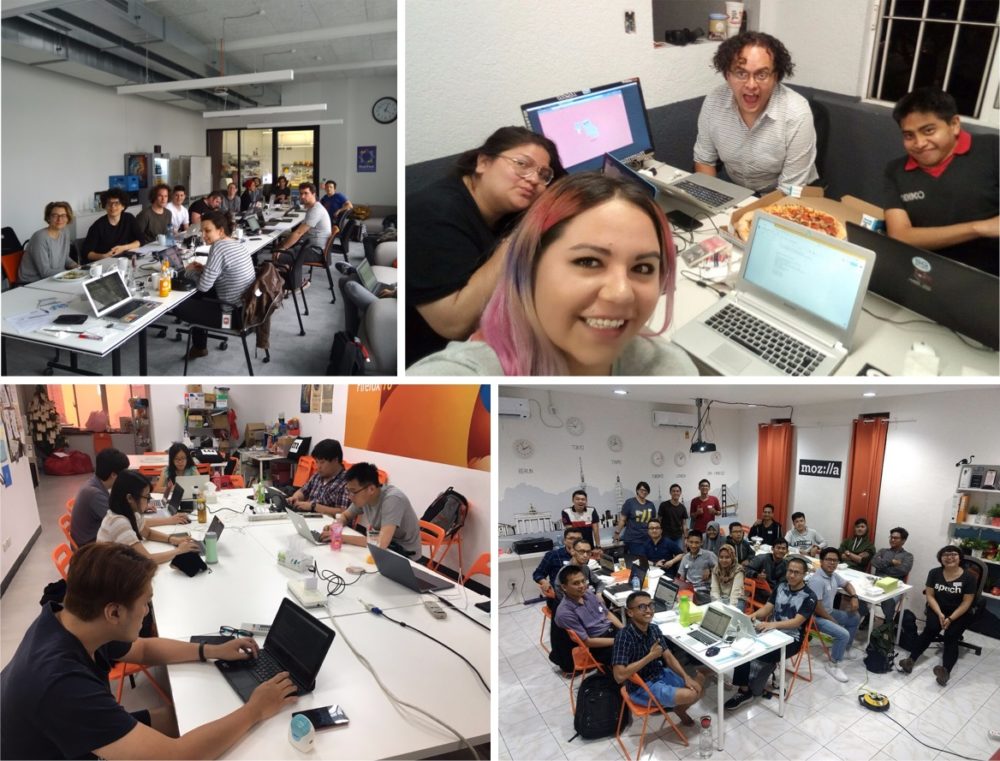
Common Voice contribution sprints in Berlin (credit: Michael Kohler), Mexico City (credit: Luis A. Sánchez), Jakarta (credit: Irayani Queencyputri) and Taipei (credit: Irvin Chen), from the top left to the bottom right

With Common Voice it’s the same volunteer passion that drives the project further and we’re grateful for all contributors who already said, “We want to help bringing speech recognition technology to my part of the world – what can we do?”. It is the underlying stories which also make this project so rewarding for me personally:

In Indonesia 20 community members came to our community space in Jakarta for a meet-up to write up sentences for the text corpus that will become the basis for voice recordings. They went into overdrive and submitted around 4,000 sentences within two days.

In Kenya a group of volunteers interested in Mozilla projects found out about Common Voice and started both localizing the website and submitting sentences in Swahili, Jibana and Kikiyu, all highly underrepresented languages, which we’re extremely happy to support. This is in addition to working with language experts in these communities like Laurent Besacier, the initiator of ALFFA, an interdisciplinary project bundling resources and expertise in speech analysis and speech technologies for African languages.

If we look at the country where I’m from, there has been one particular contributor to the Common Voice github project since the very early days. He originally contributed to the English effort, but he is German and wanted to see Common Voice come to Germany. He set himself on a strict schedule, wrote a few sentences every day for the next 6 months (while commuting to school or work), and collected 11,000 (!) sentences, ranging from poetry to day-to-day conversations.

Speaking of which: Another German contributor joined the Global Sprint in our Berlin office, utterly frustrated about a lengthy but fruitless discussion at the post office (Sounds familiar, Germany?). He may not have gotten his package, but I’d like to believe he had his personal cathartic moment when he submitted his whole experience in written form. Now Germans everywhere will help him voice his frustrations.

These are only a few of many wonderful examples from around the world – Taiwan, Slovenia, Macedonia, Hungary, Brazil, Serbia, Thailand, Spain, Nepal, and many more. They show that anyone can help grow the Common Voice project. Any individual or organization that has an interest in its native language, or an interest in open voice interfaces, will find it worth their while. You can contribute your voice at https://voice.mozilla.org/en/languages, or if you have a larger corpus of transcribed speech data, we’d love to hear from you.

***

Common Voice complements Mozilla’s work in the field of speech recognition, which runs under the project name Deep Speech, an open-source speech recognition engine model that approaches human accuracy, which was released in November 2017. Together with the growing Common Voice dataset we believe this technology can and will enable a wave of innovative products and services, and that it should be available to everyone.

The post Parlez-vous Deutsch? Rhagor o Leisiau i Common Voice appeared first on The Mozilla Blog.

07 Jun 14:18

Twitter Favorites: [skeskali] Yes, really // Vancouver Public Library's massive new rooftop garden to open in the fall | Daily Hive Vancouver https://t.co/aCQrSB2kf3

Cecily Walker 🍔 @skeskali
Yes, really // Vancouver Public Library's massive new rooftop garden to open in the fall | Daily Hive Vancouver dailyhive.com/vancouver/vanc…
07 Jun 14:13

Targeted OmniFocus Templates With Workflow

mkalus shared this story from Joe Buhlig.

I’ve been impressed by the speed of the Omni Group’s release cycles lately. It’s obvious they are hard at work on the automation methods for both iOS and macOS. One of these recent releases introduced the ability to create new projects within a specific folder on iOS.

It’s pretty straight-forward. You use the /paste URL as before but replace target=projects with target=/folder/FOLDERNAME, so you now get something like this:

omnifocus:///paste?target=/folder/Articles&content=TASKPAPERCONTENT

This opens a lot of doors, but I prefer to keep things simple by using a single Workflow. This new Workflow takes a text file in DropBox (containing a taskpaper template), replaces any placeholders (using this format: «PLACEHOLDER»), and places the new project in the folder you choose from the menu.

You can get this Workflow here.

If you look through the steps, you’ll see an action that looks like this:

These are the selectable targets in the Workflow. You’ll want to alter these to fit your structure. Just pay attention to the text and variable assignment under each choice and be sure to copy that format.

In the end, this allows me to pinpoint where I want my templated projects to land within OmniFocus without needing to manually move it after creation.

07 Jun 14:13

Vancouver to ban businesses offering conversion therapy

mkalus shared this story .

The City of Vancouver is banning any businesses that provide so-called "conversion therapy."

A motion passed unanimously at Wednesday's council meeting adds "the business of providing conversion therapy to minors" to Vancouver's business prohibition bylaw.

"The Council of the City of Vancouver is strongly committed to supporting the equality and human rights of the LGBTQ2+ community and all city residents," the motion, moved by Coun. Tim Stevenson read.

Conversion therapy is a widely discredited practice of attempting to change a patient's sexual orientation or gender identity through counselling, behaviour modification and even medication.

It is already illegal to provide the so-called treatment to minors in Ontario,Manitoba and the European Union and Wednesday's council motion noted opposition to the practice from groups like the World Health Organization and the Canadian Psychological Association.

City councillors voted unanimously to ban the practice of conversion therapy. (Cliff Shim/CBC)

The motion originally only banned conversion therapy for minors but an amendment by Coun. George Affleck expanded it to people of all ages.

Affleck says any religious group that needs a business licence will also be covered by the ban.

Staff, he says, will draft a bylaw to put the ban into force within a few months.

'I'm just elated'

Conversion therapy is often linked to religious groups but can be rooted in non-religious psychiatry and psychology.

Many professional medical and mental health organizations oppose the practice of sexual orientation change therapy because studies have not shown it to be effective and have shown it can cause psychological harm.

Vancouver resident Peter Gajdics, 53, knows about the harm all too well.

Peter Gajdics wrote about his six years in conversion therapy in his memoir, The Inheritance of Shame. (CBC)

He spent six years in conversion therapy in Victoria during the 1980s and '90s.

He wrote a memoir about his experiences and spoke at Wednesday's council meeting in favour of the ban.

"It was victorious," Gajdics said. "I almost burst into tears, actually. I'm just elated."

Gajdics says his ordeal began when he came out as gay to his family in his 20s. They took him to a psychiatrist.

"I was just in shock and depressed," he said. "He told me it was my homosexuality that needed to be cured. Corrected, as he put it."

Gajdics says that "correction" involved escalating doses of psychiatric medicine, injections with ketamine, "re-parenting sessions" and other dubious methods.

Expert says therapy is hush-hush

Elizabeth Saewyc, professor and director of the UBC School of Nursing, says "it's not uncommon" for her to be approached by parents with LGBTQ kids who want their kids to get into conversion therapy.

"Unfortunately, changing sexual orientation is not going to be a successful route," Saewyc told On The Coast guest host Angela Sterritt. "And the harms that go along with trying to do that make it really unwise to do so."

Saewyc says it's hard to know how prevalent conversion therapy is in B.C., because it's mostly advertised through word of mouth. Medical professionals rarely offer it these days, and it's mostly provided by faith-informed practitioners.

She says the goal of the therapy is to increase negative attitudes, guilt and shame about the person's sexuality.

"This creates a real conflict," she said. "That kind of distress, both emotional and psychological, that can lead to depression. It can lead to even things like suicidality."

Saewyc says the focus of reputable professionals is to show parents how to better support their kids and be more nurturing and accepting.

Listen to the full interview with Elizabeth Saewyc:

On The Coast

Vancouver to ban businesses offering conversion therapy

Share Audio

Playback Status: ready
Assigned test group: None
Identifier: mediaId 1249988163855
Asset: Undetermined
Bitrate: Undetermined
Streaming URL:
Events Log:

Elizabeth Saewyc, professor and director of the UBC School of Nursing, says "it's not uncommon" for her to be approached by parents with LGBTQ kids who want their kids to get into conversion therapy. 5:55

With files from CBC Radio One's On The Coast

07 Jun 14:09

SFDW x Mission Bicycle (win a bike)

by brandon

What happens when you put some of San Francisco's finest designers in front of our design wall? Well, you get a one of a kind bike that's as beautiful as it is functional- the official bike of San Francisco Design Week 2018. 

To make the week even more festive, we're raffling this rideable art piece off to one lucky winner at our Studio Crawl event on June 15th

You can also grab raffle tickets in advanced here.

If you aren't already familiar, Office is the design studio responsible for the vibrant visual theme you'll see accompanying this year's SF Design Week, both in print and online.

We had the absolute pleasure of working with them on this special one-off project, bringing their eye-catching graphic design to life on two wheels.

The frame's deep iridescent purple serves as a base, and is contrasted by a lively collection of colors. The welcome addition of our signature integrated lighting to the mix ensures you'll be seen both day and night.

Any designer will tell you that every detail counts, right down to the custom printed decals and complimenting bubble gum-pink cable housing.

The cherry on top, however, might just be the saddle. A Brooks C17 (designed in San Francisco by Ideo) adorns the seatpost, assuring you'll ride comfortably no matter what the weather throws your way. 

Why wait? Grab your raffle tickets here.

Disclaimer: Shipping not included with purchase of raffle ticket. Does not ship outside United States. Domestic shipping is $99.00

07 Jun 14:00

Another Problem for the Duopoly

Korean optics manufacturer Samyang and German optics maker Zeiss are starting to show a new problem for the "closed shops." 

What do I mean by that? Well, neither Canon nor Nikon have ever really shared their mount communications and complete specifications with others. …

07 Jun 14:00

Latest Essential Phone Android P beta includes June security patch, stability fixes and more

by Igor Bonifacic
Essential Phone in 'Pure White'

Less than a day after Google released its latest Android P Developer Preview, Essential is here with an Android P build of its own.

Essential announced on Wednesday that the PH-1’s Android P build is moving from developer preview to beta. The Essential Phone Android P Beta 1 includes the latest code from Google DP3, Android’s June security patch, improvements to the device’s adaptive brightness range, as well as various stability fixes.

If you’ve already flashed your Essential Phone with DP2, this update will come as an OTA. That is, all you need to do is wait for the update to arrive on your phone. If you’re thinking about installing the beta on your device, Essential provides instructions on how to do so on its website.

Following the Bloomberg report that stated Essential founder Andy Rubin was exploring a sale of the company, Essential reaffirmed its commitment to providing the PH-1 with two years of software updates and three years of security support.

Source: Essential

The post Latest Essential Phone Android P beta includes June security patch, stability fixes and more appeared first on MobileSyrup.

07 Jun 14:00

Intel shows off two dual-screen Windows PC prototypes

by Jonathan Lamont
Tiger Rapids prototype

Intel teased two dual-screen prototype devices earlier this week.

PCWorld reports that Intel developed the pair of devices as part of a ‘blueprint’ program of sorts. The idea is, Intel partners with some PC makers and devotes resources to engineering prototypes. PC makers are freed up to make those prototypes reality and focus on sales.

The first device, codenamed Tiger Rapids, features a 7.9 inch LCD touch-screen display on one side and a similar sized electronic paper display (EPD) on the other. The EPD display works like the e-ink displays seen on ereaders. It uses next to no power and Intel built it specifically with digital inking in mind.

Intel’s engineers reportedly designed the display with slight give in order to mimic traditional paper. Supposedly there is a noticeable difference compared to writing on a regular display.

Intel designed Tiger Rapids with a specific user in mind. The device works like a traditional pen and paper notebook. It’s roughly the same size as one. Tiger Rapids even features a loop for the digital pen on the side of the cover. Additionally, the device is incredibly thin — skinnier than an iPhone 8 at 4.85mm.

The other device doesn’t have a codename. However, it fits with recent rumours about Dell’s dual-screen device.

Intel’s second prototype functions like a traditional laptop, except the company replaced the keyboard with a second touchscreen. Users get the benefits of a larger display with the portability of a small tablet. The second display can take on many rolls, from acting as a keyboard to extending the main display.

We may not see Intel’s concepts on the market, but that isn’t really the point. The company is trying to inspire the market and show PC makers what’s possible.

Image: Mark Hachman / IDG

Source: PCWorld

The post Intel shows off two dual-screen Windows PC prototypes appeared first on MobileSyrup.