Shared posts

18 Jun 22:16

Real Estate Marketing 101: Trivision on the Arbutus Corridor

by Sandy James Planner

Also called Tri-Face, Three Message Sign, Prismavision, or Prismatic displays, this Trivision billboard sign rotates 120 degrees to show three different advertisements.

And the three messages on this Trivision billboard installed along Arbutus Street read sequentially like a prescription for the 20th century.

The first promises “Music to your Engine” by protecting your vehicular motor; next, the promise of wealth creation.

But it’s the third sign that stands out.

Two-thirds of the advertisement depicts a large house with warm light glowing out of the windows. The balance contains a well-dressed realtor in a business suit, with the starkly charmless value proposition for passers-by — a 5,360 square foot home on a 9,299 square foot lot, located on West 45th Avenue and Balaclava in Vancouver.

The price? An astounding $10,880,000. Have a look at the house that used to be on this site — a three bedroom, three bathroom house, listed at $2,900,000 just four years ago.

This new, replacement house has six bedrooms, seven bathrooms, six parking spaces, and a price well over three times the asking price of the original house.

Of course there’s no pretense or nuance about the price, it’s there in large billboard letters. They must know their audience, and have a finger on the pulse. The realtor’s website admonishes “Don’t miss this one!

Right.

18 Jun 22:16

Our past work with Facebook

by Denelle Dixon

Over the last three months, Mozilla has been a vocal critic of Facebook’s practices with respect to its lack of user transparency. Throughout this time we’ve engaged with Facebook directly about this and have continued to comment publicly as the story about Facebook’s data practices evolves.

Mozilla Corporation recently received two termination notices from Facebook about work that we did with them in the past. These appear to be part of Facebook’s broader effort to clean up its third-party developer ecosystem. This is good – we suspect that we weren’t the only ones receiving these notices. Still, the notices, and recent reporting of Facebook data sharing with device makers, prompted us to take a closer look at our past relationships with the company and we think it is important to talk about what we found.

At a high level we found that Mozilla Corporation had two agreements with Facebook initiated in 2012 and 2013 respectively. No information from Facebook was transferred to Mozilla Corporation in either situation but there were permissions granted to Mozilla Corporation in the agreements with respect to user data. In fact, in one case, our engineers noticed the overly broad access and requested that Facebook limit it. Here are some additional details:

In 2012, Mozilla Corporation had an agreement with Facebook that was intended to make it easier for individuals using Facebook through the Firefox browser to interface with the Facebook application. The relationship was part of our work on the Social API, an effort to integrate social experiences more seamlessly into the browser. As part of that agreement, Facebook was able to display web pages, including users’ data appearing on those pages, in specialized locations in the Firefox browser. This means that data was sent directly to the browser client, and none of the users’ Facebook information was shared with Mozilla Corporation. You can find more publicly available information about this integration here.

The 2013 agreement related to our now-defunct mobile operating system, Firefox OS. When users began using a Firefox OS device, they were given the explicit option of importing their Facebook contacts onto that device. Again, none of the users’ Facebook information was shared with Mozilla. When users disconnected their Facebook account, they were given the option of removing their Facebook data from the device. You can see in our public bug tracker that our team actually asked Facebook to remove some data access permissions because “we shouldn’t request permissions we don’t need.”

While these agreements have remained in effect, the work on these projects had already ended. We finished deprecating the Social API in 2017. Mozilla stopped development of Firefox OS in 2015, although any Firefox OS devices still in use today may retain access until Facebook shuts down that access in accordance with their termination notice.

We are bringing this to your attention because we want to be clear that our products technically had access to Facebook’s APIs and because we want to explain what was done with that access. We encourage other companies to review their relationships with Facebook and to be transparent about what those involved. That level of transparency is what is needed today to build a healthier, more trustworthy Internet that puts users first.

The post Our past work with Facebook appeared first on The Mozilla Blog.

18 Jun 22:16

Delta Police Asking the Public Where to Enforce Motor Vehicle Speed, Compliance

by Sandy James Planner

11626367_web_180502-NDR-TrafficEnforcement_1

In one of the most genius ideas we’ve seen in a while, the Delta Police Department is using social media to help manage safety and vehicular speed — with the ultimate goal of mitigating crashes — in their municipality.

As reported in the Delta Optimist, the police department is directly asking the public via Twitter where speed enforcement is required.

And the result has been brilliant, with cops at stop signs at busy intersections, at traffic signals in commercial areas enforcing the “no right turn” restriction, and even monitoring marked crosswalks to ensure that drivers are actually yielding to pedestrians.

The department has further adapted its unique communication-slash-enforcement approach, by also giving the public a “heads up” about potential enforcement areas, also at its @DPDTraffic Twitter account.

Whether you’re walking, biking or driving a motor vehicle in Delta, the results have been real, and measurable. Police say they have seen vehicular speeds slow almost to posted levels on Highway 17, as well as on streets in the city’s commercial areas.

Should this result in crash reduction — and should ICBC eventually provide more updated crash statistics on its public crash map — we may one day have a highly repeatable and portable tactic for all police departments to use across the province.

As Delta Police Staff Sergeant Ryan Hall states: “Although Delta police and other forces occasionally publicize enforcement efforts, we don’t think any other police force in B.C. has committed to giving the public a heads up on a regular basis.” 

The two-way communication, seemingly a simple protocol, is resulting in safer slower speeds on highway, commercial and residential streets.

delta-police

18 Jun 22:16

650b Wavy Fenders Arrive!

by noreply@blogger.com (VeloOrange)
by Igor


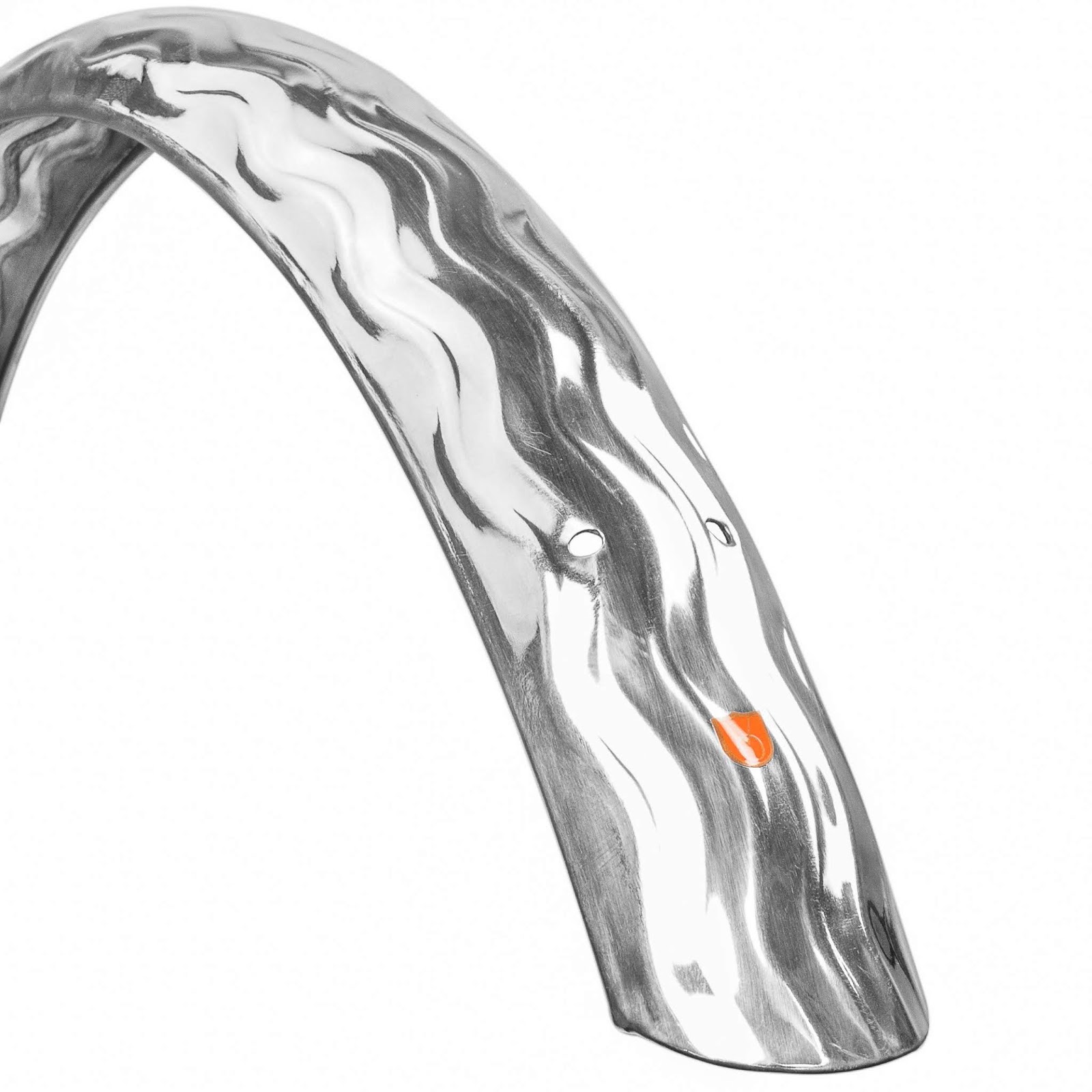
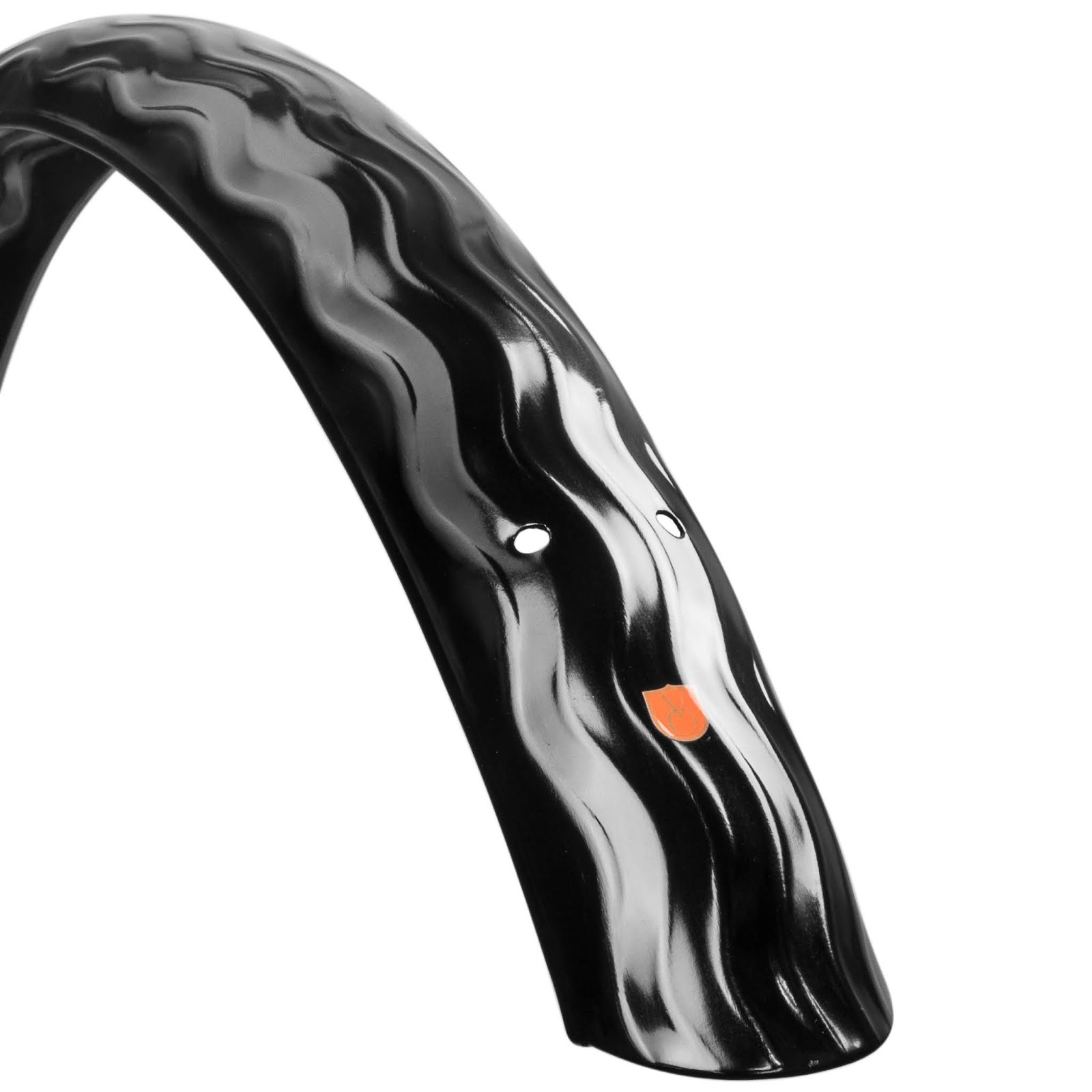
The Wavy Fenders have arrived! No longer will those of you with road+ tires have skunk-tail or fiendishly spray your riding friends with speckles of moist gravel.


In case you missed previous posts and teasers about them, they're 58mm wide, designed for 650b/27.5"/584 wheels, and cover tires up to 50mm - the meat 'n potatoes of gravel and all-road bikes.


While a high polished silver finish has always been our MO, the Noir line has been wildly popular, and so of course we're going to offer it, too! Who could have thought black components would have stuck?


The pattern tooling involved in these is more sophisticated than any other fender tooling we've invested in. Our other fendersets use a single roller, but the Wavys use two - a male and female pair working in tandem, with a very specific amount of pressure to make sure the fender receives the pattern properly without deforming the metal or damaging its mate. It's a delicate balance that leaves a ... lasting impression. Puns aside, they're gorgeous and we're super excited to add them to our extensive fender lineup.


18 Jun 22:16

Annotations are an easy way to Show Your Work

by Jon Udell

Journalists are increasingly being asked to show their work. Politifact does that with a sources box, like this:

This is great! The more citation of sources, the better. If I want to check those sources, though, I often wind up spending a lot of time searching within source articles to find passages cited implicitly but not explicitly. If those passages are marked using annotations, the method I’ll describe here makes that material available explicitly, in ways that streamline the reporter’s workflow and improve the reader’s experience.

In A Hypothesis-powered Toolkit for Fact Checkers I described a toolkit that supported the original incarnation of the Digital Polarization Project. More recently I’ve unbundled the key ingredients of that toolkit and made them separately available for reuse. The ingredient I’ll discuss here, HypothesisFootnotes, is illustrated in this short clip from a 10-minute screencast about the original toolkit. Here’s the upshot: Given a web page that contains Hypothesis direct links, you can include a script that pulls the cited material into the page, and connects direct links in the page to citations gathered elsewhere in the page.

Why would such links exist in the first place? Well, if you’re a reporter working on an investigation, you’re likely to be gathering evidence from a variety of sources on the web. And you’re probably copying and pasting bits and pieces of those sources into some kind of notebook. If you annotate passages within those sources, you’ve captured them in a way that streamlines your own personal (or team) management of that information. That’s the primary benefit. You’re creating a virtual notebook that makes that material available not only to you, but to your team. Secondarily, it’s available to readers of your work, and to anyone else who can make good use of the material you’ve gathered.

The example here brings an additional benefit, building on another demonstration in which I showed how to improve Wikipedia citations with direct links. There I showed that a Wikipedia citation need not only point to the top of a source web page. If the citation refers specifically to a passage within the source page, it can use a direct link to refer the reader directly to that passage.

Here’s an example that’s currently live in Wikipedia:

It looks like any other source link in Wikipedia. But here’s where it takes you in the cited Press Democrat story:

Not every source link warrants this treatment. When a citation refers to a specific context in a source, though, it’s really helpful to send the reader directly to that context. It can be time-consuming to follow a set of direct links to see cited passages in context. Why not collapse them into the article from which they are cited? That’s what HypothesisFootnotes does. The scattered contexts defined by a set of Hypothesis direct links are assembled into a package of footnotes within the article. Readers can still visit those contexts, of course, but since time is short and attention is scarce, it’s helpful to collapse them into an included summary.

This technique will work in any content management system. If you have a page that cites sources using direct links, you can use the HyothesisFootnotes script to bring the targets of those direct links into the page.

18 Jun 22:16

On Not Doing Prepared Talks Any More

Some time last year I decided to retire from doing prepared talks at conferences.

I’ve been doing them for 15 years, and I’ve enjoyed some of them. Eventually I started playing with the form, and that was kind of fun.

The best talks I ever did usually had some story-telling parts, and those turned out to be the parts that people liked most. The only problem with that is that my stories usually didn’t have anything to do with the conference. I just like telling stories. Stories about raccoons and squirrels. :)

Preparing a talk is a lot of work, and my standards for my talks kept going up, which meant ever more preparation, and more stress — and since I didn’t love it, I decided to stop.

I don’t mind being in front of an audience, though — I’ll emcee, appear on a panel, moderate a panel, or play in a Breakpoints Jam.

But the actual talks from me are over.

Here’s the thing, though: this means one less middle-aged white man taking up a slot. This is a good thing. If you were thinking of asking me to do a prepared talk at your conference, instead ask someone who doesn’t look like me.

And if you’re having trouble finding someone, just ask me and I’ll help.

18 Jun 22:15

Here Comes the Hammer: The Tech Industry's Three Crises

by Michael Mace
The next few years are going to be extremely uncomfortable, and maybe disastrous, for the tech industry. Political opposition to the big tech companies is coming to a head, and the industry lacks allies who could protect it. On the contrary, one of the few areas where many politicians on the left and right agree is that they want to see the tech industry punished (even if they're not completely sure what it should be punished for).

I think many people in tech are in denial about the situation. They think any punishment will apply only to a few firms, or they believe companies that have good intentions and haven't broken laws will be protected. Even big publications like the Wall Street Journal have indulged in this hope (link). That article is behind a paywall, so here's the key section:
"A growing number of critics think these tech giants need to be broken up or regulated as Standard Oil and AT&T once were...But antitrust regulators have a narrow test: Does their size leave consumers worse off? By that standard, there isn’t a clear case for going after big tech—at least for now. They are driving down prices and rolling out new and often improved products and services every week."

The reality is that the usual standards don't matter. Antitrust and regulatory law are incredibly vague, and their enforcement is driven by political attitudes more than by the rule of law. If enough politicians and pressure groups want to hurt tech companies, they can find many ways to do it.

Although the focus of public discussion is on the big American tech companies, that's not the real danger. The big companies will face some new regulations, but they have enough money and momentum to weather almost any storm, at least in the short term. I think the much larger danger is the collateral damage that may be inflicted on the leaders of the future, the next generation of tech companies that are just getting started now and can't survive adversity. Reckless regulation could disrupt their ability to create new markets, and changes in antitrust enforcement could dry up the flow of funding to new companies.

Ironically, careless regulations could easily strengthen the current tech dominators rather than weaken them, by stopping the growth of the new companies that would displace today's leaders. It could also shift tech leadership out of the democratic world by enabling firms in other parts of the world, where the government doesn't put the same restrictions on their business practices, to dominate the next wave of technology (link).

The challenge to tech is especially daunting because the industry doesn't actually have just one problem, it has three: a PR problem, a legal problem, and a political problem. They're all coming to a head at once, and they all interact to reinforce each other. I'm going to write a few posts exploring the problems, what caused them, and what we can do about them.

Let's start with the PR problem: the tech industry's mishandling of its own image.


How we hurt ourselves

I won't say the tech industry deserves what's happening, but part of it is our own fault. As a group, we don't communicate well with the rest of the world. We've created a distinct culture, language, and set of business practices that don't make intuitive sense to people outside the industry.

Because we're living in our own little bubble, we are profoundly tone deaf about the way we come across to the rest of the world. We assume people will understand our good intentions, but they don't. What we think is playful they see as arrogant. We celebrate a cool new technology and they see a threat to yet another segment of the economy. Our idea of good aggressive business tactics comes across like careless brutality.

There are so many examples of this that they could fill a book. But here are three recent incidents:

1. Elon Musk's decision to sell flamethrowers. What in the name of God is he thinking? Democracy is in trouble, nukes are proliferating, there's Ebola in Africa -- and Elon and his buddies play with fire guns. If you want to convince people that you're an unstable man-child unworthy to plan the future, I can think of no better way to do it. Elon's poor judgment and lack of self-control is especially troubling because he's running businesses that rely on public trust: trust me not to kill you with my car, trust me not to blow up your astronauts, trust that my tunnels under Los Angeles won't collapse in an earthquake, etc.

I care deeply about what Elon's doing with SpaceX. It's the sort of bold game-changing initiative that the tech industry ought to be driving. Why distract from it with self-indulgent trivia?

(Speaking of SpaceX, I loved the photos of the Tesla in space, but how much better would it have been to send into orbit something that was a symbol of peace and hopefulness rather than a commercial for your cars? Such a wasted opportunity.)

2. Google bamboozles an innocent hair-dresser. Technologically, one of the most interesting demos at Google's recent I/O conference was Duplex, the AI-driven appointment scheduler (link). It made a voice call to a hairdresser and set up a haircut appointment. To folks in the tech industry, it was a cool (if very limited) effort to pass a Turing test. But to everyone in the normal world, it came across as Google using its technology to trick a poor woman in a hair salon into thinking she was talking to a human being – while tech insiders laughed at her.

Sure enough, there were immediate calls for regulation of the technology. Way to go, Google – in one demo you made yourself feel good and simultaneously creeped out everyone else on the planet.

3. Amazon's headquarters competition. Jeff Bezos is an incredibly good businessman, probably the equal of Steve Jobs in his own way. But sometimes he lets his competitive instincts get in the way of good judgment. From Amazon's perspective, it makes perfect sense to have a big public competition for the location of its next headquarters: Amazon can play off all the cities against one-another, and it gets tons of free publicity in the process.

But politically the competition is awful. It positions Amazon as a colossus to which cities and states must genuflect, and it's generating dozens of communities that will be disappointed when Amazon turns them down. The politicians there will have to face voters asking why they lost the opportunity. Do you think those politicians will say "well, candidly, our business climate and incentives just weren't competitive"? No, they'll say Amazon was greedy and they'll blame it for jerking them around. Amazon is creating grass roots enemies for itself across the country.


Tech in the age of cynicism

The tech industry has always had these communication problems, dating back at least thirty years. But the problem was survivable in the past because we were kind of cute and dorky, and we weren't all that big a chunk of the economy. Huey Lewis told people it was hip to be square, and they gave us a pass.

But the dorky act doesn't come off well any more, for two reasons. First, the public mood has changed. The 1980s and 1990s were a time of optimism; many people were willing to trust that the benefits of our products would outweigh any disruption we caused.

But a series of shocks, starting with the terrorist attacks on 9/11, have systematically eroded public trust. Our institutions have repeatedly failed to keep us safe, and some huge companies have been revealed as corrupt at the highest levels. We've entered an age of cynicism and fear in which institutions are assumed to be dishonest and self-serving, and almost no one gets the benefit of the doubt.

For an industry that generates change and uncertainty, losing the benefit of the doubt is a severe problem.

Second, the tech industry has grown to be a much more prominent part of the economy. Tech companies are seven of the 10 most valuable companies in the world. That prominence has changed us. We used to be the outsiders who wanted to help destroy corruption. Apple sold the Macintosh as a tool to defeat dictators, and Google said it was going to break the monopoly of the wireless carriers. Today, in order to do business, we have to get along with those same entities. So Apple bans apps when the Chinese government tells it to, and Google cosponsors ads with the carriers it once wanted to destroy.

Somewhere along the line we became The Man. And in today's world, The Man isn't trusted.

Our rising profile and the loss of public trust alone would be enough to create a crisis for tech, but it's  actually the simplest of our problems. We're also in trouble legally and politically. Next time I'll talk about the legal situation.

I welcome your comments.

Copyright 2013 Michael Mace.
18 Jun 22:15

Other Cultures

by Matt

As the traveller who has once been from home is wiser than he who has never left his own doorstep, so a knowledge of one other culture should sharpen our ability to scrutinize more steadily, to appreciate more lovingly, our own.

Margaret Mead
18 Jun 22:15

The Power Of Talent

by noreply@blogger.com (BOB HOFFMAN)

Today, about a million or so people will pack the streets of my home town, Oakland CA, for a parade to celebrate the Golden State Warriors who last week won their 3rd National Basketball Association championship in 4 years.

This is a phenomenal achievement that has been equaled by very few teams in the history of the NBA.

The NBA has a few things in common with the ad industry. For one thing, management people and coaches are highly mobile. Steve Kerr, head coach of the Warriors, was once General Manager of the Phoenix Suns. Alvin Gentry, head coach of the New Orleans Pelicans (who the Warriors defeated in the Western Conference semi-finals) was most recently assistant coach under Steve Kerr with the Warriors. As a result of management and coaching mobility there are very few secrets in the NBA.

The systems, the data, and the tactics are all well-known to everyone and are easily interchangeable. While there are some management groups and some coaches that are certainly superior to others, by far the biggest difference between winning and losing boils down to one thing - the talent of the players on the court.

As Steve Kerr said after the Warriors' victory over the Cleveland Cavaliers,  
"We had more talent than they did, and talent wins in this league."
This is a lesson that has been lost in the ad industry. We have become obsessed with systems, data, and tactics. If we got a peek behind the curtain, I'm sure we would find that the systems, the data, and the tactics of one agency group are substantially interchangeable with those of another. We have forgotten that what makes one organization superior to another is the talent of the players.

Imagine if Publicis had taken the $20 million it is spending on its "Marcel" AI gimmick and instead had invested it in hiring 20 or 30 of the best creative people in the world (I don't know? What does a top creative make these days?)

Imagine the impact on the organization that this would have had. Imagine what this type of talent could have done for them.

But no. To Publicis, systems and woolly ideas about "co-creation" and "collaboration" are more important than talent. They'd rather spend $20 million to have some mediocrities in Paris be able to connect with some mediocrities in New York than spend the money to hire 20 or 30 brilliant creative people who could establish an unprecedented powerhouse of talent.

Is it any wonder that the ad industry is viewed as an industry in extremis? Any industry that values systems and processes over talent is an industry in decay.


18 Jun 22:15

Be better than “Fuck Trump”

by Josh Bernoff

“Fuck Trump” is having a moment. Robert DeNiro said it on the Tonys. It’s a T-shirt. And it’s unworthy of any of us. Passion is fine. But if you seek change, work for change. And recognize that change will require persuading some people who are on the fence. They’re unlikely to respond to such a … Continued

The post Be better than “Fuck Trump” appeared first on without bullshit.

18 Jun 22:15

Level Up with New Productivity Features in Firefox for iOS

by Maria Popova

Today, we’re announcing new features in Firefox for iOS to make your life easier. Whether you’re a multi-tasker or someone who doesn’t want to waste time, we’re rolling out new features to up your productivity game.

Taking your file downloads on the go

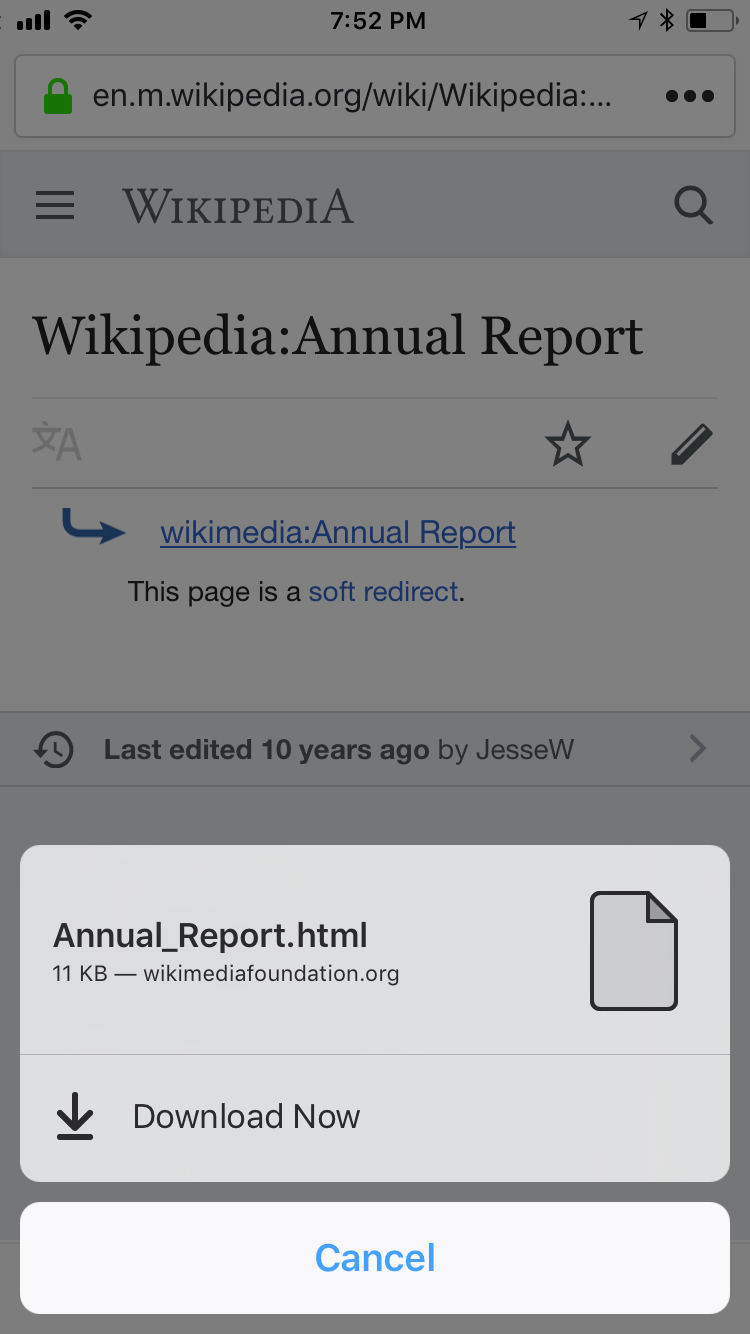
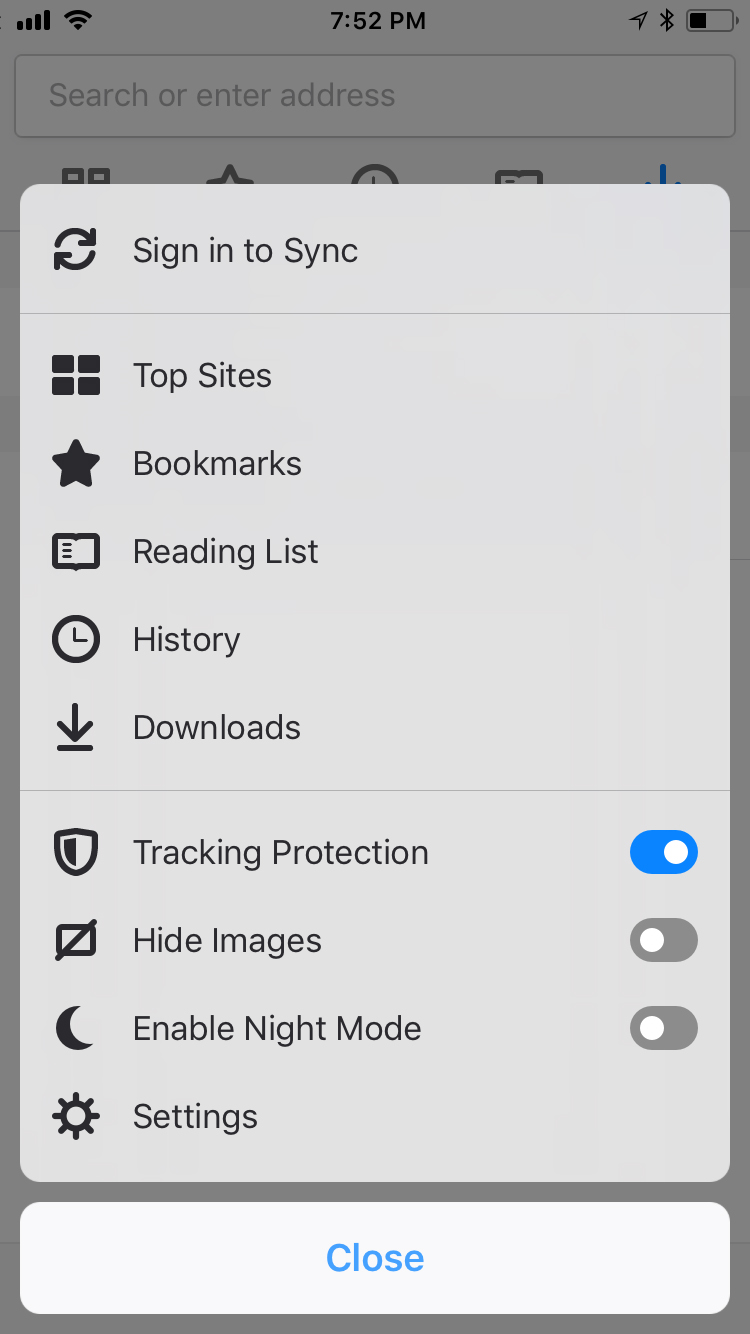
For those times when you need to leave the office but want to read that file during your commute or at a later time, we now provide support for downloading files to your mobile devices. First download them to your device, then access and share it in the main menu where you’ll find a folder with all your downloads.

Easy to download


A folder with your downloads

One-Stop Place for Saving your Links

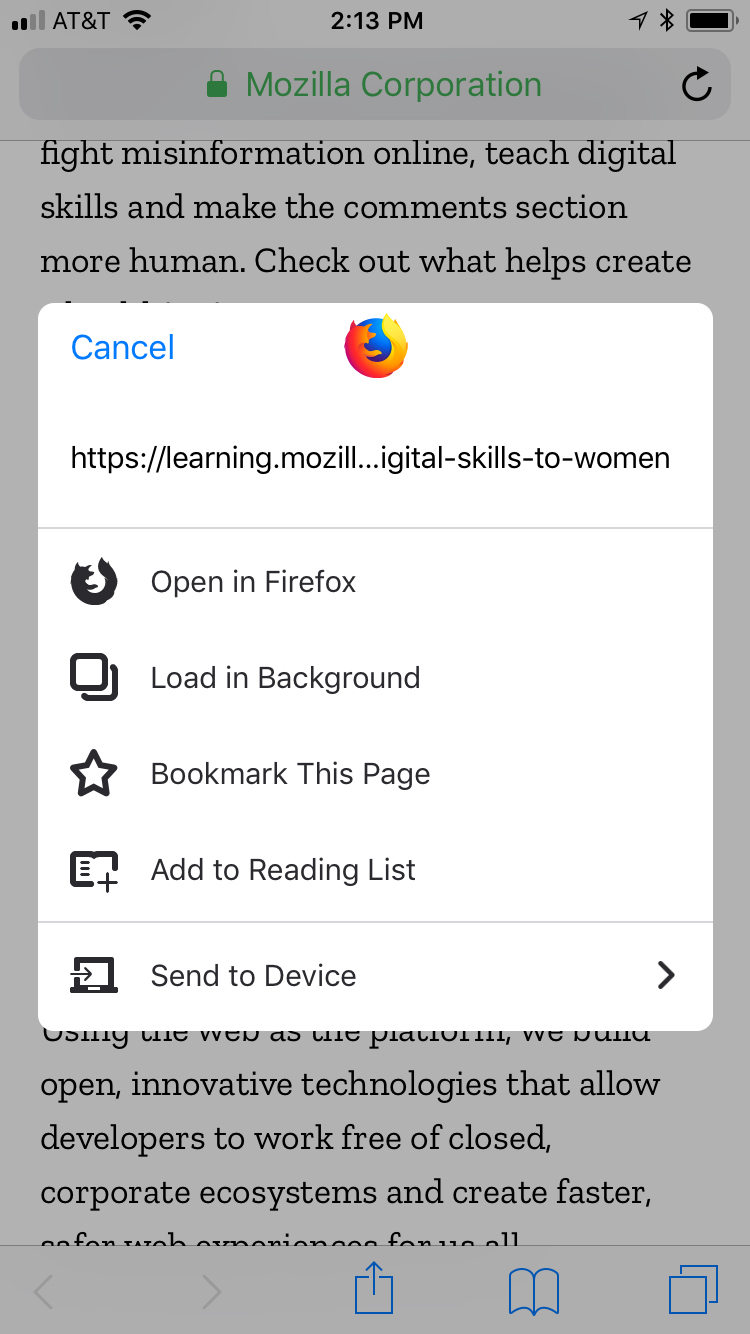
Did you ever come across an article that catches your eye but don’t have time to read it right away? We’ve added a one-stop menu to give you choices on what to do with the link. You can open it directly in Firefox, add it to your bookmark or reading list to peruse at your convenience, or send it to another device that’s linked to your Firefox account.

A one-stop menu with choices

Are you Synced?

You’ll get the answer quickly now that we’ve made it easier to see whether your mobile device is connected to all your devices where you use Firefox. Click on the menu button listed prominently at the top of the application menu. From there, you’ll see if you’re synced, and if you aren’t you’ll have the option to do so. If you don’t have a Firefox Account, you can sign up directly here.

From the top of the app menu you’ll see if you’re synced or not

Firefox continues to bring convenience to iOS users. To get the latest version of Firefox for iOS, visit the App Store.

The post Level Up with New Productivity Features in Firefox for iOS appeared first on The Mozilla Blog.

18 Jun 22:15

The End of the Beginning of Digital Service Units

by David Eaves
Balancing Users, Platforms, and Buy-in Strategies for National Digital Teams This week, digital HKS is partnering with Public Digital to convene digital services units from around the world. We will talk about what is and, more importantly, what is not working, with their work. Our intention is to make this an annual gathering where digital service groups can exchange learnings, […]
18 Jun 22:15

Annotating on, and with, media

by Jon Udell


At the 2018 I Annotate conference I gave a flash talk on the topic covered in more depth in Open web annotation of audio and video. These are my notes for the talk, along with the slides.


Here’s something we do easily and naturally on the web: Make a selection in a page.

The web annotation standard defines a few different ways to describe the selection. Here’s how Hypothesis does it:

We use a variety of selectors to help make the annotation target resilient to change. I’d like you to focus here on the TextPositionSelector, which defines the start and the end of the selection. Which is something we just take for granted in the textual domain. Of course a selection has a start and an end. How could it not?

An annotation like this gives you a kind of an URL that points to a selection in a document. There isn’t yet a standard way to write that URL along with the selectors, so Hypothesis points to that combination — that is, the URL plus the selectors — using an ID, like this:

The W3C have thought about a way to bundle selectors with the URL, so you’d have a standard way to cite a selection, like this:

In any case, the point is we’re moving into a world where selections in web resources have their own individual URLs.

Now let’s look again at this quote from Nancy Pelosi:

That’s not something she wrote. It’s something she said, at the Peter G Peterson Fiscal Summit, that was recorded on video.

Is there a transcript that could be annotated? I looked, and didn’t find anything better than this export of YouTube captions:

But of course we lack transcriptions for quite a lot of web audio and video. And lots of it can’t be transcribed, because it’s music, or silent moving pictures.

Once you’ve got a media selection there are some good ways to represent it with an URL. YouTube does it like this:

And with filetypes like mp3 and mp4, you can use media fragment syntax like this:

The harder problem in the media domain turns out to be just making the selection in the first place.

Here I am in that video, in the process of figuring out that the selection I’m looking for starts at 28:20 and ends at 28:36.

It’s not a fun or easy process. You can set the start, as I’ve done here, but then you have to scrub around on the timeline looking for the end, and then write that down, and then tack it onto the media fragment URL that you’ve captured.

It’s weird that something so fundamental should be missing, but there just isn’t an easy and natural way to make a selection in web media.

This is not a new problem. Fifteen years ago, these were the dominant media players.

We’ve made some progress since then. The crazy patchwork of plugins and apps has thankfully converged to a standard player that works the same way everywhere.

Which is great. But you still can’t make a selection!

So I wrote a tool that wraps a selection interface around the standard media player. It works with mp3s, mp4s, and YouTube videos. Unlike the standard player, which has a one-handled slider, this thing has a two-handled slider which is kind of obviously what you need to work with the start and end of a selection.

You can drag the handles to set the start and end, and you can nudge them forward and backward by minutes and seconds, and when you’re ready to review the intro and outro for your clip, you can play just a couple of seconds on both ends to check what you’re capturing.

When you’re done, you get a YouTube URL that will play the selection, start to stop, or an mp3 or mp4 media fragment URL that will do the same.

So how does this relate to annotation? In a couple of ways. You can annotate with media, or you can annotate on media.

Here’s what I mean by annotating with media.

I’ve selected some text that wants to be contextualized by the media quote, and I’ve annotated that text with a media fragment link. Hypothesis turns that link into an embedded player (thanks, by the way, to a code contribution from Steel Wagstaff, who’s here, I think). So the media quote will play, start to stop, in this annotation that’s anchored to a text selection at Politifact.

And here’s what I mean by annotating on media.

If I’m actually on a media URL, I just can annotate it. In this case there’s no selection to be made, the URL encapsulates the selection, so I can just annotate the complete URL.

This is a handy way to produce media fragment URLs that you can use in these ways. I hope someone will come up with a better one than I have. But the tool is begging to be made obsolete when the selection of media fragments becomes as easy and natural as the selection of text has always been.

18 Jun 22:15

More soon, but in the meantime…

I am in fact still alive, writing and working; there will be more here soon (and some temporary site changes coming up - long story). In the meantime:

18 Jun 22:15

SotD: I’m Not Afraid

If this series brings one or two of you one or two really hot rock-n-roll tunes you never know existed, then I can go home happy. Maybe this is one: I’m Not Afraid is by Fleming and John, a husband-and-wife tune who have never been big stars or anything like that, but should go down in history for this song.

It’s fast, it’s electric, it’s melodic, and the words run through your head in a fun way. Also, it’s an important question: What are you afraid of, and not afraid of? The answer, in this case, is heart-warming, but you’ll have to listen to the tune to hear it.

Fleming and John

No, I don’t know any more. I don’t know how I discovered this. I don’t know when. Great rock & roll doesn’t need a time or a reason, and that’s what this is. In particular, the voice. And the drums. And the guitar. What a cool sound.

This is part of the Song of the Day series (background).

Links

Spotify playlist. This tune on Spotify, iTunes, Amazon. There’s an official video, but I like this grainy live take from a 2012 Nashville benefit.

18 Jun 22:14

Say Hi to Elana!

elana our new support person

We’re very happy to introduce you to a new member of the Datawrapper team: Elana Levin Schtulberg. She will help you with all questions Datawrapper-related and will teach our tool in newsrooms. Elana’s filling the Support & Training position we blogged about in April. She happily answered our questions, so that you can get to know her better:

Hi Elana! Can you introduce yourself, and explain how you got interested in data vis?

Hey there :) So, where to start… I’m half Swedish, half Russian, was raised in England, where I studied physics and graduated with a masters in 2014. Since then I moved to Berlin, learned German and started studying Visual Communications here.

I guess it was during my physics degree that I first really learned the importance of and got a taste for visualizing data. This was compounded after my degree during a brief foray into the world of equity research. But as it turned out, neither the focus on science nor the focus on money were really for me and it didn’t take me long to realize that I instead wanted to pursue my creative interests. So I applied for and got accepted to study Visual Communications at the University of Arts here in Berlin.

It was during the course of this degree, around this time last year, that I first became conscious of (and then obsessed with) the exciting world of d3 and (interactive) data visualizations. I devoured everything I could find online with great excitement and threw myself into d3. Whilst researching for one of my university projects, I came across The New York Times’ ‘You Draw It’ concept. This fascinated and inspired me with the idea of using ‘fill-in-the-blanks’ interactive data visualizations as an educational tool and a means of confronting people with their understanding of various political situations (or lack thereof). One example of these that I made can be found here:

Elana’s “Terrorism regions” work

What will do you at Datawrapper?

I’m going to be the interaction point between all of you and all of us. If you ever run into any problems, need some help with Datawrapper, notice any bugs or have anything else you feel we should hear about, just send us an email at support@datwrapper.de. I will be the one sitting on the other end and be dealing with your request – advising you, helping you with your problems, or, when necessary, passing them on to whichever Datawrapper team member they should be passed onto. I will also make sure to keep you updated on the progress of your query.

Another part of my job involves Datawrapper training and outreach. I will be giving workshops to interested customers, in newsrooms, at universities, wherever you need it really – both in person and online. Please do not hesitate to get in touch if this is something that you think your team could be interested in!

Why did you want to join Datawrapper?

As I mentioned earlier I’ve been into data vis for about a year now, so when I again found myself browsing Gregor’s online portfolio back in April – in the process stumbling across Datawrapper and seeing that there was a vacancy – I knew I just had to apply. Aside from my interest in data visualization, I also really love helping people. In the past, I’ve tutored, led fun physics teaching sessions for school kids and volunteered to teach German to refugees. I’ve always noticed how helping people and passing on knowledge are two things that give me great pleasure and satisfaction. This position at Datawrapper seemed like the perfect way to combine this side of me with my creative-but-nerdy, data-vis-enthusiast side. And let’s not even mention my excitement at the prospect of getting to work surrounded by so many talented people with such a passion for data visualization! I’m extremely excited to be a part of the Datawrapper team and look forward to the time ahead :)

Is there anything else you want people to know?

Just briefly on the topic of languages, feel free to write me in English, German or even Swedish. Though I can unfortunately only guarantee a flawless reply in English! And yes, I know I said I’m half Russian, but unfortunately I don’t speak it, so for any Russians out there… pick one of the other three languages! :)


Thanks to Elana for answering all our questions, and welcome to the team! If you want to get in touch with her, find her on Twitter or just write to support@datwrapper.de.

18 Jun 22:14

A Close-Up Look at macOS Mojave’s Dark Mode

by John Voorhees

One of the marquee features that Apple showed off for macOS Mojave at WWDC is Dark Mode. As the company demonstrated during the WWDC keynote, Dark Mode is a far more ambitious feature than the dark theme added to macOS Yosemite in 2014. The new look extends much deeper into the system affecting everything from app chrome to window shadows and Desktop Tinting.

There is a lot more to Dark Mode than you might assume. To help developers navigate when and how to implement Dark Mode, Apple has provided developers with guidelines, which Stephen Hackett covers on 512 Pixels:

The biggest is that not all apps should always follow the Appearance that has been set by the user. As before, Apple believes that media-focused tools should be dark at all times. I don’t foresee something like Final Cut Pro X gaining a light theme anytime soon.

Apple has also given developers the ability to use the Light Appearance in sections of their applications. One example is Mail, which can use the Light Appearance for messages, but the Dark Appearance for its window chrome, matching the system[.] This lets text and attachments be viewed more easily for some users. I think it’s a nice nod to accessibility for text-heavy apps, and I hope third-party developers take advantage of this ability.

Hackett also covers Accents, an adaptation and expansion of what is currently called Appearances that affect the look of things like drop-down menus, and how Accessibility features affect Dark Mode.

I like the look of Dark Mode a lot and hope third-party developers adopt it quickly. I expect the pressure to add Dark Mode to existing apps will rapidly increase as more and more third parties begin to use it and hold-out apps become bright, glaring reminders among a sea of muted windows.

→ Source: 512pixels.net

18 Jun 22:14

Plus Ça Change

by Dave Pollard


photo by the author

“Everything had changed, but nothing seemed different”
— Meg Hutchinson, True North

Lately I’ve been reading back over some of the old posts in this 15+ year-old blog. Some of what I wrote still mostly makes sense, but a lot of it has my eyes rolling back in my head. How could I have been so naive, so arrogant, so blind, so caught up in what everyone else believed and said?

Yet, I am learning that what we perceive, or more accurately conceive, as time, and its passing, is just an illusion, something our brains made up as a convenient way to categorize, store and recall what we think of as memories. A figment of our imaginations, though one widely shared and (as Einstein said) “very convincing”.

If there is no time, no past or future, and most of all no “now”, there can be no change, which has to happen ‘over’ time. As John Gray has written “We act in the belief that we are all of one piece, but we are able to cope with things only because we are a succession of fragments. We cannot shake off the sense that we are enduring selves, and yet we know we are not.”

If this is so, what is this apparent change that ‘I’ have gone through? If there is no time and no ‘me’, how shall I account for the fact that I once apparently believed that our civilization culture could and ‘should’ be reformed? That I thought things would be better if we worked to elect different governments or “reconnect with the Earth”? That I used to blame people for what I saw as their deliberate bad behaviour and stupidity, and ridiculed the idea of us not having free will?

During ‘moments’ when my self has fallen away, and there has been a glimpse, a true perception (not a conception) of what really is, it has been apparent that this magnificent life just is, and that there is no ‘reason’ or ‘how’ or ‘why’ or purpose or meaning for any of it, including the astonishing feat of co-evolution that has seemingly brought about an incredible complexity of atoms, cells, creatures and environments into the co-choreographed dance of life on Earth that, in our quieter moments, we so appreciate that we call it, all-of-it-as-one, Gaia. When there is a glimpse, this is still appreciated, still wondrous, but seen to be just an appearance, a game that nothing plays appearing as everything, outside of time and space. Time is seen as just a way of looking at the tiny subset of the infinite, endless possibilities that our senses are able to perceive, a way of ordering them to try to make sense of them, a putting of them in a seemingly-useful sequence, like cels in a movie that can then be played backward or forward to make sense of the memories — when those cels are just appearances and have no need for order or sense-making.

This is not a psychedelic or other self-awakening or personal enlightenment, or even an ‘experience’; it is not something you finally wake up from and ask whether it was real or not. It is not a ‘knowing’ — in fact it is the realization that nothing is or can be ‘known’ since there is no reason for it, no continuity, no existence within (our conceptions of) time and space. There is no explanation for it, and it needs none — it is totally obvious. It is just seen to be true, as everything we seem to know, including the knowledge of our selves, is seen through as illusion, false patterning like the animals we read into cloud formations, and like the characters and events in our dreams we try to make meaning of.

Human nature and institutions are not immutable, unchangeable, as the expression plus ça change, plus c’est la meme chose suggests. But neither are they mutable. They just are, and (infuriatingly) also are not. They are our collective agreement of what is absolutely real, because ‘we’ can’t function without belief in absolutes, and belief in change. We’ve just all agreed, through mutual conditioning, to act as if our selves, and time and space, are real and separate and even controllable, even though very young children, who don’t get the joke, are incredulous and think we’re all acting, until we force them, with every word we utter and every action we take in their presence, to admit and then fervently agree that the naked emperor is indeed finely attired. Only on this strange footing can the business of the separate self and the adventure of ‘conscious’ human beings begin, ludicrously lacing together the unconnected fragments into a sad, veiled, and finite ‘life’. Our sense of separation is a horrible, fatal and incurable affliction. ‘I’ would rather be a bird, please.

Birds, I believe, are not encumbered with a sense of separateness, finiteness, mortality and self. That doesn’t mean there is no pain, no sadness, no fear; in fact I think these are felt much more by creatures without the veil of self, without the illusion that these are things to be suffered and (oh, progress!) overcome. And likewise, I believe, they feel more joy than our miserable selves are capable of. But for the birds these are not personal feelings; they are feelings that arise in what I can only, annoyingly, call ‘oneness’. These feelings do not belong to ‘them’ because there is no separate ‘them’. So there is no identification with these feelings, and the related thoughts, and hence they quickly dissipate, with no ‘one’ to attach them to.

I have thought a lot about what seems to be, in times of great stress, a sense of separateness, self-awareness and responsibility within wild creatures. How can there be what seems obviously ‘separation anxiety’ if there is no separateness? While the emotion is obviously real, that does not preclude it being instinctual — not automatic, but conditioned by the creature’s DNA and socialization. Wild animals show much more emotion when trapped than they do when they’re in (even acute) pain. Is that because entrapment is much more likely to be a death sentence in wild spaces than pain is, and the more virulent reaction is therefore evolutionarily selected for? Again, I am not saying they’re senseless — they likely feel much more fully and deeply than we can, living in our uncomfortable, artificial construct of reality instead of the ‘real’ world. I’m just suggesting that they are sensate creatures (alive and seeing and feeling the world principally through their senses and intuitions, seeing and feeling it as oneness, timeless, and endlessly wondrous) rather than ‘self-conscious’ creatures like our afflicted species (alive, and made endlessly anxious, only through the shallow representation of the separated world we conceive of and then attach our selves to).

‘I’ would rather be a bird, please.

The birds ‘know’, I think, that rien ne change, et rien ne reste immuable — that nothing changes, and nothing ever remains the same. We humans, sadly, will never understand.

18 Jun 22:11

The Needle

by Eric Karjaluoto

TL;DR: Founders commonly squander time on low-yield tasks. You can avoid this (sort of) by creating a system for rooting out distractions.

Hey! It’s been a while. Sorry about that. Life gets busy—but I don’t need to remind you of that. My bet is that your days are hectic, too.

This isn’t a “who’s busiest?” contest. Nope. This is a mea culpa. I began the year planning to write daily—but then dropped it. For two weeks, I stuffed your inbox with a post a each day. Then I disappeared. I can see how weird that must have seemed.

Again, I’m sorry.

What happened?

Last January, I identified four personal priorities. The last of those four was to share (hopefully useful) ideas on this blog. After two weeks, I realized that writing had consumed all the others. I neglected clients, family, and fitness—to meet an arbitrary writing schedule.

This isn’t uncommon. Non-essential tasks often balloon, leaving little time for the work that matters most. You blow 30 minutes responding to low yield emails. Somehow 2 hours dissolve, while reading product reviews (for a $20 app). Or, your morning goes into a crafting a social media post—you doubt anyone will even read.

“When you kill time, remember that it has no resurrection.”

—Aiden Wilson Tozer

I blame this poor use of time on fear. Who knows if one of those emails might turn into something? What if you pick the wrong app, and regret it? Will customers wonder if you’re out of business, if you don’t tweet something?

I also blame habit. For years, I responded to almost every email I received. What’s the return-on-investment for this time, though? In spite of knowing it’s low, I continue to write those responses. (In the back of my mind, a pesky voice sneers at me: “You keep doing this because of sunk cost1. You squandered your life on wasteful tasks like these. If you stop now, you’ll concede that this is true.”)

I take no pride in being busy. For entrepreneurs, there’s no gold-star for effort, nor any prize for who did the most. In business, the spoils go to the winner—whichever way they got there—in spite of how unfair this might seem.

Knowing this, you’d think we’d all be better at determining how to invest our precious time—but we aren’t. My bet is that we’re actually worse at it than ever before. Pings, vibrations, and other interruptions break our flow. This leaves us feeling busy, while accomplishing little.

If this were a good blog, I’d give you a 5 step method to organize your day for peak efficiency. Then, I’d give it a memorable title, like Smackdown!, Unleash the Ninja Within, or The 4-Second Mindset. It’d be a thing of wonder. LifeHacker would pick it up. Business Insider would reblog it. It’d show up in LinkedIn’s trending area. FAN. TAST. IC.

This is not that good of a blog. 🙈

Importance isn’t always clear

The best I can do, is share my experiences. And, like most experiences, mine are imperfect.

I always look for ways to be more efficient. This spring, though, I became more pointed in my efforts. I tore substantial tasks out of my day, to make better use of it. I then tested ways to optimize my days—and be as efficient as possible. This was a bit easier, as I had recently left social media. Distraction is not easily thwarted, though. In no time, I found myself absorbed by YouTube videos, Reddit threads, and other time-sucks. Even so, I persisted.

Some approaches worked for a while; others not at all. I clustered tasks. I set weekly objectives. I worked in Pomodoro bursts. Again, some of this worked. No matter the solution, though, I still found myself sucked back into non-essential matters. I suspect this is because value judgements aren’t clear cut.

Should I build a UI system for our new app2? Doing so would save time, long term, but is pointless if the app fails.

Should I contact journalists about our side-project3? One high-profile article could give it a lot of press—but what if none of them respond?

Should I use the old (not so great) photographer, who’ll get the job done? Or, should I put time into finding a better one?

This is the entrepreneur’s dilemma: Many tasks seem relevant. Deciding which are more relevant than the rest, isn’t easy.

“Deciding what not to do is as important as deciding what to do.”

― Steve Jobs

A simple mechanism

You can’t know which tasks will make the difference for your company. That’s because you’re traveling in uncharted territory. You’ll take some bad turns, end up in the wrong places, and wish you had made different choices. That’s how this stuff works. Beating yourself up about it won’t make it any easier.

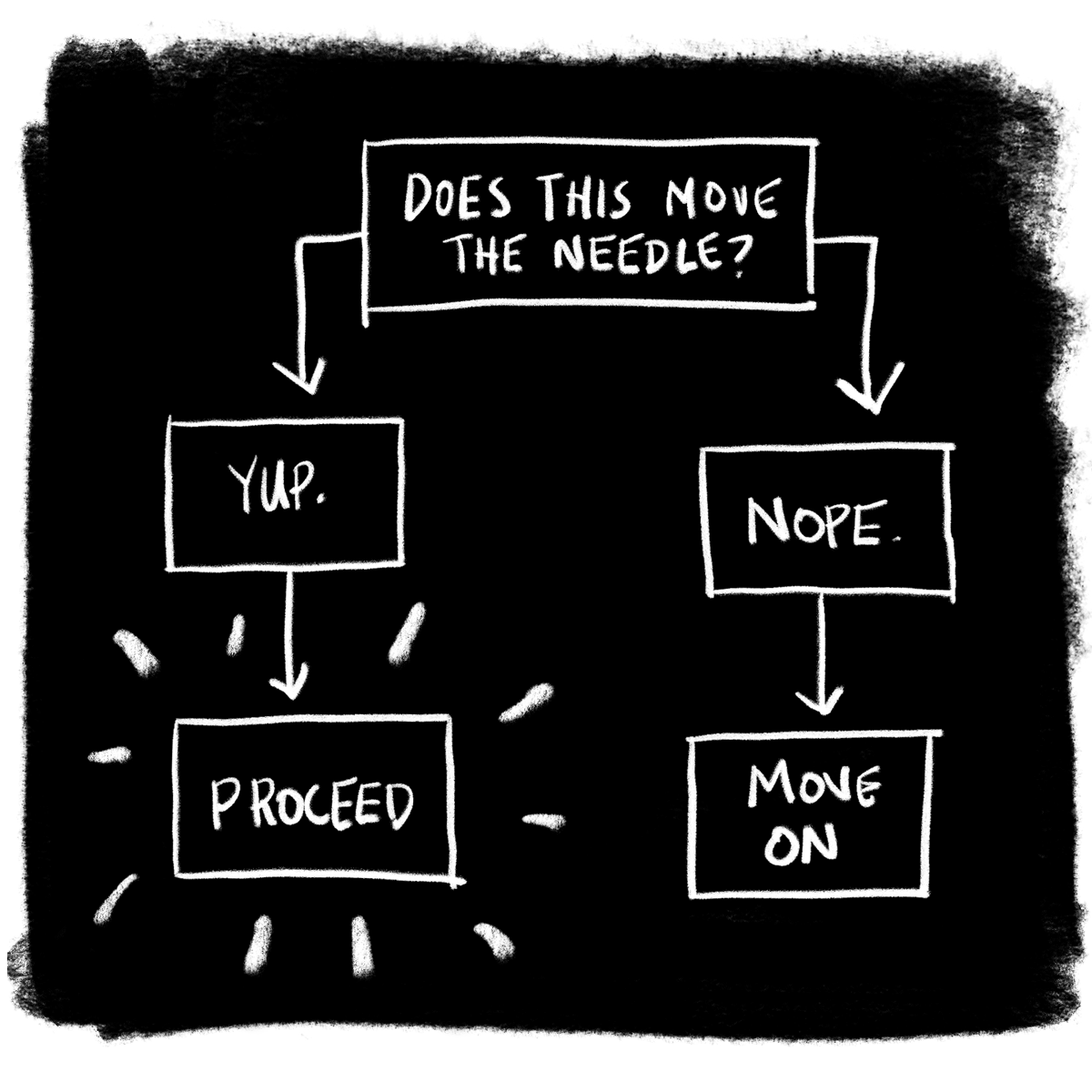
That said, there is a lot of shit you just don’t need to do. One way to spot such things is to ask whether the task at hand is of critical importance. My quick test for this is to ask the question: “Does this move the needle?” Put another way: “Will this task provide a significant yield for my company?”

My client asks whether we should adjust the label by 3/16″ to fill a bit more space. I ask whether doing so will move the needle. He ponders this for a moment, decides it won’t, and the job goes to press—no hold-ups.

A stranger wants to argue with me, on the internet. I ask myself whether this interaction will move the needle. It won’t, so, I resist the urge to respond. (This is not easy for me to do.4)

I stare at the logo for our new venture, realizing it’s not quite there, yet. I ask myself if getting it right (now) will move the needle. While significant, I realize it’s not critical. So, I put it aside and move on to structuring the app’s pricing model—which is important.

As a business owner, a lot of tasks are competing for your interest. The ones you decide to act on will make all the difference for your company. Sure, this is common sense. Yet, I know all too many leaders who neglect customers, so they can post self-promotion, on Facebook. (Pro-tip: When unsure of what will move your needle most, try focusing on whichever task matters most to your customers.)

Homework

The more tasks you’re juggling, the harder it is to determine which ones matter. So, if you find yourself unable to tell the relevant from the unnecessary, press pause. Close your task management app, step away from your desk, and do something… anything… else. Go for a run. Walk the dog. Take a breather.

Once you have, ask yourself whether the last task you worked on was actually moving the needle. If the answer is yes, you’re in good shape. Alternatively, you might learn that you were doing something that just didn’t need doing.

  1. Sunk cost makes otherwise rational people crazy. I once spent an entire weekend manually shredding paper. Seriously. Sheet by sheet, hour after hour. I did so, because the longer it took, the more embarrassed I was for not picking a smarter approach, in the first place. By Sunday night, I had (literally) burnt the machine out.
  2. If you run a B2C company, and want to better support and communicate with your customers, please let me know. We’ll soon be looking for companies to test our new customer engagement tools.
  3. I did put some effort into this, and Campnab received some amount of attention. That said, I had to throttle this outreach. Client work was more pressing—and still pays better.
  4. This is hard for most people. When you find yourself ready to go into internet-battle, I recommend you pause and repeat to yourself: “Don’t take the bait.” After the fifth or sixth time, you’ll start to calm down—and likely choose to move on to something more productive.

The post The Needle appeared first on Eric Karjaluoto.

18 Jun 22:10

512 Pixels on Dark Mode

512 Pixels on Dark Mode:

"As we’ve seen, this is far from a mere inversion of the default Appearance. Apple has gone through and fine-tuned the smallest details to make this work.

"For example, the window shadows are different between the Light and Dark Appearance. In Dark Mode, they are a little crisper and slightly more opaque, complete with an inner stroke around the edges of windows to help them appear more defined.

"Another example of this is Desktop Tinting, a technique Aqua uses to alter the grays used in Dark Mode to be more harmonious with the current Desktop picture."

When Dark Mode was first introduced in the keynote, up on the big screen, I was pretty disappointed. It looked incredibly garish. But after installing Mojave and trying it out in person, I've decided I really like it. I've got a bunch of work to bring Acorn and Retrobatch up to speed with it, but I think it'll be worth it.

18 Jun 22:09

Bad reviewer and editor habits (is this you?)

by Josh Bernoff

“Please review the attached draft,” reads the email. Now it’s your job to make things better by applying your expertise. You can be helpful . . . or you can be hated. See if you recognize yourself in the list below; if you do, resolve to stop behaving like an ass and help your writers … Continued

The post Bad reviewer and editor habits (is this you?) appeared first on without bullshit.

18 Jun 22:09

World’s best restaurants 51-100 list announced, Hong Kong fine dining stars all drop places

by Bernice Chan
Next week on June 19 the rankings for the World’s 50 Best Restaurants will be announced in Bilbao, Spain. In the meantime, the global gastronomic guide has just unveiled the dining establishments that placed 51 to 100. Hong Kong has three restaurants on the list – but all three dropped in the rankings this year. Amber at the Landmark Mandarin Oriental fell the most, from 24th place last year to 56th place. 8½ Otto e Mezzo, the flagship establishment of chef Umberto Bombana,...
18 Jun 22:08

[Members Only] How I Made That: National Dot Density Map

by Nathan Yau

Mapping one dot per person, it's all about putting the pieces together. Read More

18 Jun 21:53

Developing world leaders agree education is their top priority

files/images/aid-data-3.jpg

World Education Blog, Jun 15, 2018


Icon

This is a summary of a newly published report (120 page PDF) surveying priorities selected by citizens and leaders in the developing world. Education, along with peace and security, are at the top of the list. That said, "Poorer and less democratic countries are more concerned about ensuring access to basic public services — health, water, food, and energy." Interestingly, climate change just doesn't rank as a priority - this tells me that climate change and global development are linked. If we want people to care about climate change, then we have to make sure that their basic needs are met. Including education.

Web: [Direct Link] [This Post]
18 Jun 15:44

Twitter Favorites: [greenandblack13] Just like give a huge s/o to the awesome @depechemode sound tech for hooking me up with #setlist for the #Toronto s… https://t.co/xQkNJXti3u

GreenandBlack @greenandblack13
Just like give a huge s/o to the awesome @depechemode sound tech for hooking me up with #setlist for the #Toronto s… twitter.com/i/web/status/1…
18 Jun 15:44

Twitter Favorites: [counti8] The @CivicTechTO crowd is being transfixed by Joy Kogawa sharing her perspectives on money, scarcity and her experi… https://t.co/PPAwn5yiW1

Karen Quinn Fung 馮皓珍 @counti8
The @CivicTechTO crowd is being transfixed by Joy Kogawa sharing her perspectives on money, scarcity and her experi… twitter.com/i/web/status/1…
18 Jun 15:36

Echo Show für 150 €

by Volker Weber

Echo Show

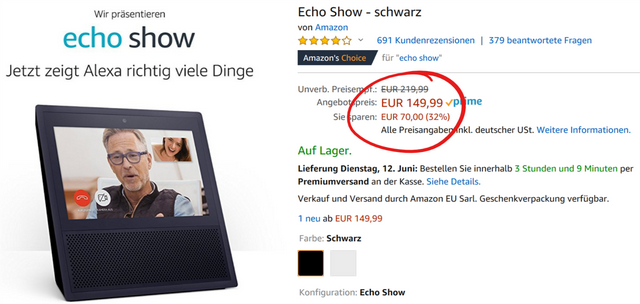
Ich habe geschrieben, ich sage Bescheid, wenn es den Echo Show im Angebot gibt. Jetzt hat Amazon den Preis um 70 Euro reduziert. Das ist keine einmalige Gelegenheit, sondern eine immer wiederkehrende Preisreduktion.

Der Echo Show kann was. Obwohl in den Echo Spot schnuckeliger finde, ist der Show durch seine Stereo-Lautsprecher weit überlegen. Bei mir steht das Ding auf dem Schreibtisch und der 27" iMac schämt sich. Man kann damit normale Videotelefonate führen aber selektiv auch so genannte Drop-Ins erlauben, bei denen man gar nicht annehmen muss. Während ein Warnton erklingt, bleibt das Bild zunächst unscharf und schaltet dann nach einige Sekunden scharf.

Der Echo Show taugt übrigens auch als Bluetooth-Lautsprecher. Das Einzige, was mir fehlt, ist eine Handset-Funktion, mit der man das sensationelle Mikrofon-Array für Handy-Telefonate nutzen könnte. Alles eine Sache der Software und in dem Sinne auch nicht für immer ausgeschlossen.

Kauft man zwei Stück, gibt es übrigens noch mal 20 Euro Nachlass.

More >

18 Jun 15:36

Stuff that works :: Nokia 7 plus

by Volker Weber

IMG 3511

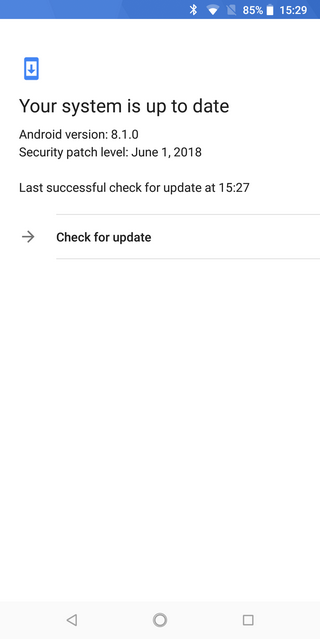
Das Nokia 7 plus ist im Augenblick mein liebstes Android-Smartphone. Das Gehäuse fühlt sich gut an, das umlaufende Antennenband sorgt für einen festen Griff und die Technik funktioniert. Ich habe per Developer Mode die Animationen ausgeschaltet und damit ist es super schnell, auch wenn der SD660 eher zur Mittelklasse zählt. Und das liegt vor allem an der Software: Android One, so nackig wie Google es schuf. Keine fette Bloatware, keine draufgestrickte Oberfläche, alles nur einmal statt wie bei vielen anderen Herstellern doppelt und dreifach. Vn allem ist genug da: 4GB RAM, 64 GB Speicher, 6" Display mit 1080 x 2160 Pixeln, 18:9 Format, 3800 mAh Batterie. Man kann entweder eine SD-Karte zur Speichererweiterung oder eine zweite SIM einlegen. Bluetooth 5.0 und NFC sind an Bord, nicht jedoch wireless charging. Der Mono-Lautsprecher ist eher bescheiden, dafür gibt es einen Kopfhöreranschluss.

Screenshot 20180613-152902Screenshot 20180613-152824

Das Android ist aktuell: 8.1 mit Security Patch June 2018 und hat monatlich das Update erhalten. Diese Updates installieren im Hintergrund. Man muss lediglich einmal kurz booten, um auf das neue System zu wechseln. Ich nuzte Brave und Mozilla statt Chrome, dazu ein paar ausgewählte Apps. Der Fingerabdruck-Sensor auf der Rückseite ist an der richtigen Stelle und ist fix und zuverlässig. Ich benutze ihn als Einschalter und um das Notification Shade herunterzuziehen.

Das Nokia 7 plus ersetzt nicht meine Kombination aus iPhone X und Apple Watch. Die sind unschlagbar. Aber für aktuell 379 Euro ist das eine dicke Empfehlung.

More >

18 Jun 15:34

"Trumpian chaos is, in fact, undergirded by a comprehensible worldview, a number of experts have..."

“Trumpian chaos is, in fact, undergirded by a comprehensible worldview, a number of experts...
18 Jun 15:34

"Remember when people used to imagine that Trump would be restrained by officials who would put some..."

“Remember when people used to imagine that Trump would be restrained by officials who would...