Shared posts

04 Jul 18:17

A Certain Type Of Imbecile

by noreply@blogger.com (BOB HOFFMAN)

There is a certain type of imbecile who can't see anything other than what is right in front of him. He has no peripheral vision and no rear view mirror.

He thinks the world started the day he was born and everything that has happened has happened on his watch.

He thinks that "disruption" is a new thing. He has no idea that progress has always meant that old technology would give way to new technology. He thinks this is new.

He has no idea that things are always changing but that change is rarely cataclysmic. He thinks that every new technology will "change everything."

He is astonished that the web hasn't killed television. He is surprised that 90% of shopping is still done in stores. He is amazed that 97% of cars still run on gasoline. He is astounded that social media marketing hasn't destroyed traditional paid advertising -- but has actually become traditional paid advertising.

Actually, he is not astonished, surprised, amazed, or astounded by any of this. He just denies it.

For some reason that is not clear to me, this type of imbecile has found a warm and welcoming home in the advertising and marketing industries. He is not just accepted here, he is celebrated.

He makes speeches and is quoted. He lives in a comfortable world where today's facts don't matter and his hyperbolic vision of "the future" is always home.

He is like a child with no perspective and an inclination to jump from one obsession to another. Yesterday he was lecturing us about millennials, today he is hyperventilating about Gen Z's. Yesterday he was pontificating about native advertising, today he's all over blockchain. He knows nothing, but has a trendy platitude about everything.

He is our new prophet. And you better be careful -- he may be an imbecile, but he's in charge.


04 Jul 18:16

Why the Civic Info Bill Is Such a Huge Deal

files/images/nj_forum.jpg

Mike Rispoli, Free Press, Jul 19, 2018


Five universities in New Jersey are participating in a state non-profit initiative " to strengthen local news coverage and boost civic engagement in communities across the state." It's good to see higher education institutions working for the social good; this is how they survive in the technological era. "Ideas included municipal-website templates designed for easy navigation, media-literacy programs for students and adults, mini-grants for reporting projects, young-journalist fellowship programs serving overlooked communities, and local data apps to provide mobile access to key government data." Such an initiative would have been life-changing had I access to it back when I was running Moncton Free Press.

Web: [Direct Link] [This Post]
04 Jul 18:16

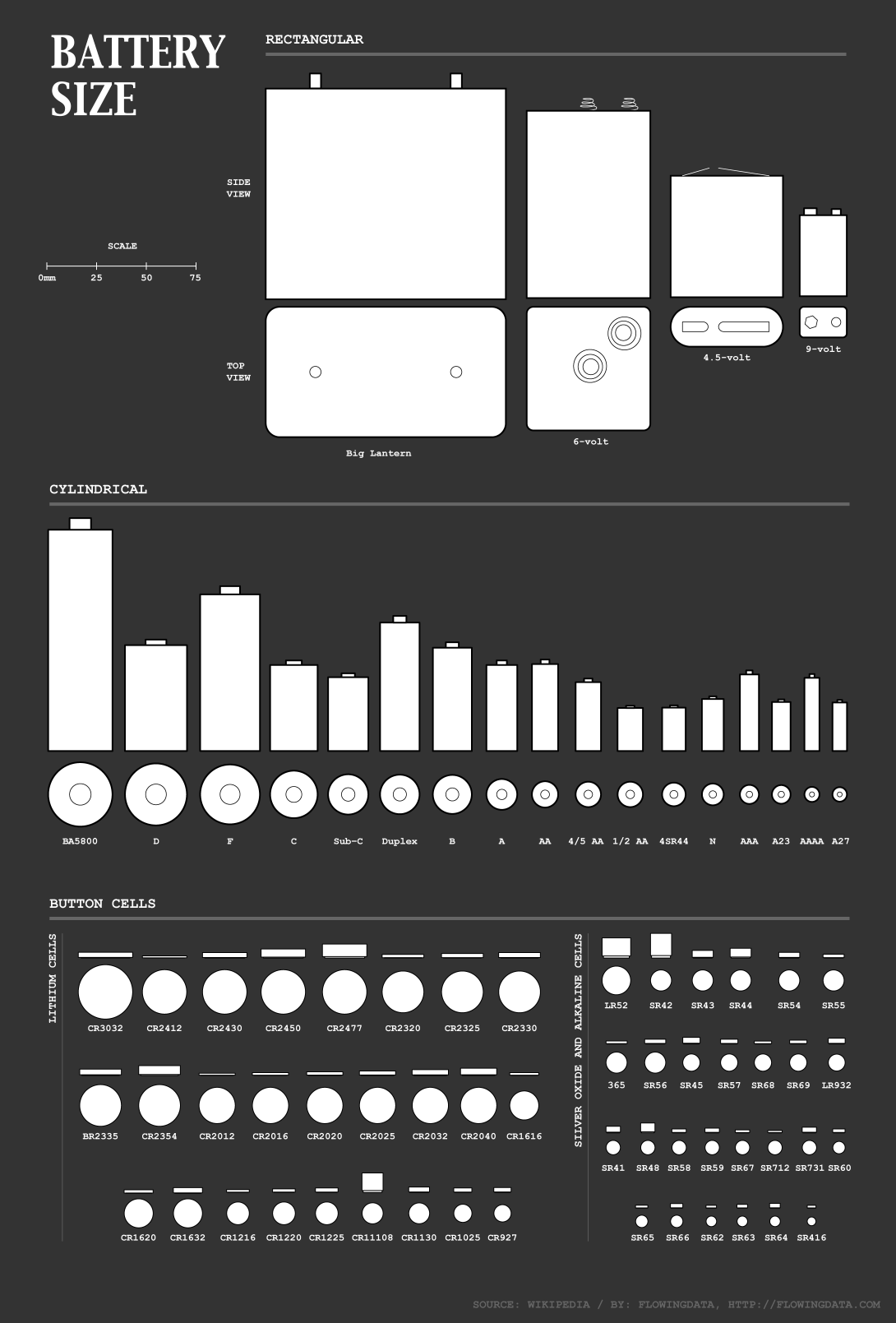
A Diagram of All the Batteries

by Nathan Yau

If parenthood has taught me anything, it’s that when your kid’s toy needs a battery, you will not have the right size. This is a simple fact of life.

In the most recent challenge to this pillar of truth, a Gekko toy (from the show PJ Masks, obviously) needed a button cell battery. I dug into my battery drawer — a reflection of toys past — naively thinking that I must have the right size. The excavation showed that I was in fact incorrect.

The natural next step was of course to look up battery sizes and chart all of them.

Notes

Tags: batteries

04 Jul 18:16

Co-Editing mit Word und OneDrive

by Volker Weber

Sketch

Ich hatte mit vorgenommen, auf Windows auch mit iA Writer zu schreiben, bin dann aber bei Word geblieben, weil es meine vielen Schreibfehler besser findet. Ansonsten ist das eine einsame Tätigkeit. Ich starre den leeren Bildschirm an bis die Stirn blutet, und dann lege ich los. Das fertige Dokument gebe ich dem Redakteur, von dem ich eine Fassung als TXT mit fester Zeilenlänge zurückbekomme. Diese Datei mit den Markups, siehe oben, importiert dann unser Layout. Wenn der Redakteur nicht zu mutig redigiert, lassen sich auch im TXT noch Änderungen kommentieren. Aber dieser Workflow ist schon archaisch.

Bei diesem Artikel für die nächste iX schreibe ich das Manuskript aber mit Peter Meuser zusammen und das lässt sich mit so einem Workflow nur schlecht bewerkstelligen. Deshalb habe ich in einem OneDrive einen Folder das Projekt angelegt, in dem wir unsere Assets ablegen. Eins davon ist das Manuskript, in das ich erst mal ein paar Absätze als "Anlasser" reingeschreiben habe. Dann hat Peter sein Wissen hineingeschüttet und ich habe ihm hinterher-editiert, damit das nicht nur Peter versteht. (Ich bin der Erklärbär im Team.)

Und heute hat sich unser Redakteur auch in Office Online gewagt. Das ist mir in 25+ Jahren noch nie passiert. Alles an einer Stelle, keine Forwards per Mail! Der Verbesserungsprozeß ist greifbar. Jetzt gehen wir noch mal in die letzte Kontrollrunde und erst danach kommt der Export nach TXT.

Drei Pfeile habe ich ans Bild gemacht. Der erste sagt "Autosave: On". File/Save erübrigt sich. Der zweite zeigt auf OneDrive. Der Dritte auf den Autor. Aktuell bin ich alleine im Text. Wenn Peter auftaucht, dann taucht eine Zeile darunter sein Avatar auf und das Dokument hat zwei Cursor. Magic!

Ja, kalter Kaffee mit Google Docs. Aber in einem Fat Client auf Windows ist das anfänglich scary und funktioniert doch wunderbar. Und überhaupt, ein Werkzeug, das komplizierter als Notepad ist, bei Heise!

04 Jul 18:16

My Ideal RSS Reader

by Ton Zijlstra

Triggered by some of the previous postings on RSS, I started thinking about what my ideal set-up for RSS reading would be. Because maybe there’s a way to create that for myself.

A description of how I approach my feeds, and what I would ideally like to be able to do, I already penned a decade ago, and it hasn’t really changed much.

The basic outline is:

  • I think of feed subscriptions as subscribing to people. I don’t follow your blog, but I follow and interact with you. I used to have a blogroll that reflected that by showing the faces of people whose writing I read. Basically the web is my social network always, In my feed reader every feed title is the name of the author, not the blog’s title.
    my blogroll in 2005, people’s faces, not site names
  • The feeds I subscribe to, I group in folders by subjective social distance, roughly following Dunbar-style group sizes. The dozen closest to me, the 50, the 150, the 500 beyond that, and above that 999 for people I don’t have a direct connection with at all. So my wife’s blog feed is in folder a12, and if I’ve just come across your blog this week and we never met, your feed will be in e999. The Keep Track folder are my own content feeds from various platforms.
    the folders in my current feedreader by social distance
  • There are three reading styles I’d like my reader to support, of which it only does one.
    • I read to see what is going on with people I know, by browsing through their writing from closer to further away, so from the a12 folder towards the e999 folder. This my reader supports, by way of allowing a folder structure for it
    • I read outside-in, looking at the general patterns in all the new postings of a day: what topics come up, what are people working on, what do they care about. This is not supported yet, other than scrolling through the whole thing. A quick overview of topics versus social distance would be useful here.
    • I read inside-out, where I have specific questions, ideas or topics on my mind and want to see if some of the people in my reader have been wrting about it recently. This is not supported yet. A good way to search my feeds would be needed.
  • I would like to be able to tag feeds. So I can contextualise the author (coder, lives in Portugal, interested in privacy by design, works independently). This allows me to look at different groups of people across the social distance related folders. E.g. “what are the people I follow in Berlin up to this week, as I will be visiting in a few days?” “What are the current concerns in the IndieWeb community?” Ten years ago I visualised that as below
    Plotting contexts
    Social distances with community and multi-faceted contexts plotted on them

  • I would like to be able to pull in tags of postings and have full content search functionality. This would support my inside-out reading. “What is being said today in my feeds about that conference I didn’t go to?” “Any postings today on privacy by design?”
  • I think I’d like visual representations of which communities are currently most active, and for topics, like heat maps. Alerts on when the level of activity for a feed or a community or subsets of people changes would be nice too.
  • From the reader follow actions, such as saving an article, creating a todo from it, bookmarking it, or sharing it in some channel. An ideal reader should support all those actions, or let me configure actions

From the whole IndieWeb exploration of late, I realized that while no feedreader does all the above, it might be possible to build something myself. TinyTiny RSS seems a good starting point. It’s an open source tool you can run as your own instance. It comes with features such as filtering and auto-tagging that might fit my needs. It can be hosted on my own domain, and it has a database I then have back-end access to, to build features it doesn’t have itself (such as visualisations and specific sharing actions). It can also produce RSS feeds. It seems with TinyTiny RSS I could do all kinds of things to the RSS feeds I pull in on my server, and push the results out again as RSS feeds themselves. Those I could load into my regular reader, or republish etc.

Now need to find a bit of time to set it up and to play with it.

04 Jul 18:16

Why is Vancouver Still Using Big Bang Fireworks?

by Sandy James Planner

There’s a funny thing about calling Vancouver a ‘green’ city. While we may judiciously recycle, reuse and repurpose, we’ve still not had a conversation about why Vancouver has huge fireworks festivals.

Festivals around fireworks bring in money, but there is also an ecological cost. Price Tags has previously written about the noise pollution and the impact on nesting birds in Stanley Park. There’s also the Point Roberts Eagle Man, who we’ve previously reported had been watching the nest activity of eagles and found that the sites near the fireworks displays were abandoned or did not produce viable eggs.

Some jurisdictions in the United States do not allow fireworks to be set off within specified distances of nesting eagles. The City of Enumclaw cancelled their July 4th fireworks last year when they found there was a nesting pair of eagles near the site.

Then there’s Steph Yin’s article exploring quiet fireworks in the New York Times . 

In parts of Europe, quiet fireworks displays have grown increasingly common. In Britain, venues close to residents, wildlife or livestock often permit only quiet fireworks. One town in Italy, Collecchio, passed a law in 2015 that all fireworks displays must be quiet. By relying on rich color effects and tight visual choreography, designers of quiet fireworks programs can forgo the big explosions and still deliver a stunning show. The hope is that softer celebrations mean less stress for noise-sensitive children, veterans, older people, pets and wildlife.

You can read more about Collecchio’s approach here. And in Alberta, Banff has switched to the type of pyrotechnics associated with rock concerts, which are heavy on light and colour but don’t make a lot of noise. Canmore and Jasper Alberta have also banned fireworks displays, seeing quiet pyrotechnics as the more fundamentally ecological and ethical thing to do.

We wanted to minimize the impact on wildlife in the townsite and obviously the surrounding national park, as loud fireworks can be stressful to them,” Deputy Mayor of Banff Corrie DiManno said. “And for us, moving to special-effect pyrotechnics helps us to walk the talk, so to speak. We consider ourselves leaders in this area of environmental preservation so we wanted to make sure that we were doing all we can.”

“Anybody who’s had a cat and dog in the vicinity of fireworks knows often what it’s like – you’ve got a pet adapted to an urban environment and often they run away or hide under the bed. So you can imagine the impact that might have on wild animals,” said Reg Bunyan, vice-president of the group that suggested the idea, the Bow Valley Naturalists.

Why is Vancouver still insisting on noisy fireworks?

04 Jul 18:16

Housing Crisis in the Bay Area: Where $117,000 is Low Income

by Sandy James Planner

Postcard-Row_6242-06f2a1

Postcard-Row_6242-06f2a1

The New York Times reports that in three counties in California’s Bay Area, a family of four with a household income of $117,400 is now classified as low-income. This is the threshold in San Francisco, San Mateo and Marin counties used to calculate entry into local and federal housing assistance programs.

“To generate the number, officials at the Department of Housing and Urban Development factor in the median income and average housing costs in an area. The second-highest threshold is in Honolulu, according to the agency — but the third is also in the Bay Area, in Santa Clara County, the heart of Silicon Valley. The New York City area, where a family of four earning up to $83,450 is classified as low-income, came in at No. 9.”

Locals in the three California counties see the tech industry as bringing highly paid employees into the region. Housing, transportation and food have also increased in price. “It’s arguably the most expensive city in the country, so what that translates to is really not that much money,” said Ed Cabrera, a Housing and Urban Development spokesman who is based in San Francisco. “Especially with children in an area where properties are considered affordable if they’re going for half a million dollars.”

For a two bedroom apartment in San Francisco, “fair market” rent is determined to be $3,121.  The median house price is now over one million dollars in San Francisco. Many residents travel far inland to afford housing, adding to very long commutes. As Ken Cole the Housing Director of the county observes, “What it means on the ground is that teachers, first responders, people who grew up here of average income are being forced out by the high prices.” 

Building high density accommodation close to commuter rail lines and increasing rent control are two methods he believes can provide more affordability. His words also ring true for Vancouver, where affordability for middle-income earners is very challenging. “The very success of the place undermines the viability of life for at least the lower half, if not the lower two-thirds,” Mr. Walker said. “And those are the people who get forgotten in the narrative of the glamour of tech changing the world.”

If low and middle-income people cannot remain in San Francisco, the Bay Area’s reputation as a diverse and innovative economy will diminish. As Kate Hartley, director of the San Francisco Mayor’s Office of Housing and Community Development, said: “the harder it is to house our artists, teachers, restaurant workers, health care providers, the more we put that great spirit and strong economy at risk.”


Photos: Hotpads.com & Zillow
04 Jul 18:16

@ImagineInternet

@ImagineInternet: For @stoweboyd, one of the most worthwhile benefits of digital life is simply...
04 Jul 18:15

Question for Surrey & Langley Candidates: LRT or Skytrain?

by colinmstein

This is the second in a series of pre-election “Questions for Candidates” — for mayor and council candidates in the City of Surrey, Township of Langley and City of Langley:

For the portion of the Surrey-Langley rapid transit line running along Fraser Highway, do you believe LRT or Skytrain technology is best, and why?

A bit of context follows.

Phase Two of the Mayors’ 10-Year Vision calls for 27 kilometres of rapid transit south of the Fraser River.

While TransLink provided planning, advice, and forecasts on population, employment and transit ridership growth, the Mayors Council itself is making technology decisions.

Light rail technology (LRT) has been selected for Surrey-Newton-Guildford, as the mayors decided the additional capacity of SkyTrain technology was not warranted; a final decision has apparently not yet been made for the subsequent Fraser Highway extension from Surrey into Langley.

There has been a surprising amount of public debate to which technology is best suited to the region overall, and so we want to hear how mayor and council candidates in Surrey and Langley might choose to inform the discussion, and decision.

As with all questions past and future, we will use Twitter, websites and email to get the question out to candidates. Thanks to Cambie Report for maintaining this handy Metro Vancouver 2018 elections candidate spreadsheet.

04 Jul 18:15

#4318

by Ton Zijlstra

Now turned the About section in my blog’s right sidebar into a proper microformatted h-card, including my pgp key. A small #IndieWeb step.

04 Jul 18:15

What have they got on me?

by peter@rukavina.net (Peter Rukavina)

In the summer of 1996 I presented a series on CBC Radio’s Island Morning program, produced by Ann Thurlow, called Consumed by Technology. I’ve managed to recover the audio of the episodes, along with the “show notes” and transcripts, from The Internet Archive and I’m posting each episode here for posterity.

This fourth episode of Consumed by Technology focused access to information; it aired on July 30, 1996. Karen Mair was the host.

It used to be that in rural communities on Prince Edward Island, the local telephone operator was the “central clearinghouse” for all types of information. If you wanted to know what the hymns were for church on Sunday, or whether Mrs. MacIsaac had given birth yet or what the price of apples at the general store was, you’d just pick up the phone and ask. The last rural telephone operator left service almost 20 years ago, but the idea of a “central clearinghouse” for information is still alive and well.

Show Notes

These are the original links that I released with the episode; each is a link to the Internet Archive’s cache of the site at the time.

Transcript

INTRO: It used to be that in rural communities on Prince Edward Island, the local telephone operator was the “central clearinghouse” for all types of information. If you wanted to know what the hymns were for church on Sunday, or whether Mrs. MacIsaac had given birth yet or what the price of apples at the general store was, you’d just pick up the phone and ask.

The last rural telephone operator left service almost 20 years ago, but the idea of a “central clearinghouse” for information is still alive and well.

For another in the series “Consumed by Technology,” Peter Rukavina joins me now to talk about this, and to tell us what he found out when he asked the question “What have they got on me?”

QUESTION: So the operators are all gone, but their spirit lives on?

ANSWER: Well, perhaps a vague shadow of their spirit, a distant cousin, you might say…

As you suggested, in days gone by, rural telephone operators played a central role in community life as the chief “keepers of information. “

After telephones came along, pretty well anything important that had to be communicated had to pass through the local telephone exchange. This meant that the operators had a pretty good handle on everyone’s life and goings on, and so if you wanted to know something, there was a good chance the local operator would either know themselves, or could tell you who did. In their own way, they were pretty powerful people in their communities.

Today, telephone operators are gone, but what has lived on is the notion that having a central clearinghouse for information makes you a pretty powerful person.

In this “wired world,” the place that information gets stored — the clearinghouse — is not in the minds of telephone operators, but in databases in computers. And so today, it’s really the person with the fastest computers and the best databases that holds the most power.

Now with all of that in mind, I decided to set out to answer the question “What have they got on me?” I was curious to know how much information about me and my everyday life is sitting out there in the computers of the world, what it’s used for, and who can get access to it.

QUESTION: Well… what did you find out?

ANSWER: I started by sitting down with a piece of paper and listing out all of the businesses and organizations and governments that I knew had a file on me. I started with things like my driver’s license, my bank accounts, my Social Insurance Number, the credit bureau and continued on to things like the local video store, my Internet provider, and all of the magazines that I subscribe to. And on and on.

Now I don’t tend to get surprised about much when it comes to information and technology, but I must say that I was overwhelmed by the size of this list when I was done… in 10 or 15 minutes I came up with almost 50 places that had some sort of information about me in their files. And those were just the places I knew about.

Once I had this long list in hand, I decided to zero in on a couple of the items, make some phone calls, and see what more I could find out about exactly how and what was being recorded about me.

I started with my driver’s license, which I figured was a good place to start because it has a reputation as being a sort of “universal card” — people ask for it when you want to rent cars or videos or sign up for a cheque cashing card at the grocery store.

I assumed that if someone had my driver’s license number they could just phone the driver’s license people in the government and find out where I lived and what kind of car I owned and whether I’d run over anybody lately.

QUESTION: And were you right?

Well, actually, no.

Much to my surprise, when I talked to the Highway Safety people in the Department of Transportation and Public Works I was told that driver’s license information is absolutely, positively confidential.

The only people who could get at it were them, me, and the police. I asked them why, if this was the case, people still asked for my driver’s license number when I signed up for things that had nothing to do with driving.

They had no idea. If it was useful to others, they said, it certainly wasn’t because of anything they were doing.

Now, as I said, this all came as something of a surprise to me; I’d always thought driver’s license information was public.

And then I found out why I’d always thought this.

Being an Ontario boy, I got on the phone to the Ontario Ministry of Transportation. I never actually did get to talk to a real live person, but I was told by the talking computer that answered the phone that if I sent them $12.00 and an Ontario driver’s license number, they would send me what they call a “Driver Record Search,” which lists the name and address and three years worth of accident and speeding ticket information for the person with that license.

And if I lived in Ontario, I could do the same thing simply by walking up to something called a “Service Ontario” machine where I could slip in my credit card, and get the goods on as many people as I could afford.

QUESTION: They’re obviously a little more liberal with their information in Ontario… what about closer to home in New Brunswick and Nova Scotia?

ANSWER: Again, it seems to depend on where you are.

The person I talked to at the Nova Scotia Department of Consumer Services gave me pretty much the same answer as I got from Prince Edward Island: driver’s license information is not public. They seemed shocked that I would even ask.

In New Brunswick, however, the Motor Vehicles Branch told me that if I sent $8.00 to their office in Fredericton, I could get the driver record of any New Brunswick driver and I wouldn’t even need their driver’s license number, just their name.

I was curious to see what the American take on driver’s license information was, so I headed out on the Internet so see what I could find out.

I did a search for the phrase “obtain driver’s license information” and, wouldn’t you know, that first thing that popped up was an business calling itself the “Internet Department of Motor Vehicles.”

Just by filling out a form right there online, giving them a state and a name, for some states a driver’s license number, and my credit card number, for $20.00 they would email or fax me back any driver record, for any driver, anywhere in the United States.

QUESTION: So it seems that we might be ahead of the pack here on the Island when it comes to protecting people’s privacy…

ANSWER: Well of course some people would suggest that we’re actually behind the pack… again, it depends on who you talk to.

In fact that brings up one of the Big Issues that surround keeping information about people on file, and that’s the question of who owns the information. Is, for example, my driver’s license file my property or the government’s?

Now you might think that someone having access to your driver’s license file isn’t such a big deal.

But what if that someone is an insurance company that turns you down because you got into an accident 5 years ago that wasn’t really your fault.

Or a local car dealer who just happens to have a deal on the latest model of the car you’re driving now — in your colour!

The point is that it’s hard to foresee what others might do with information about you.

The situation becomes somewhat more complicated if you start looking at the issue not just of one government database or another being public, but the potential power of several of those databases combined.

This is really where the telephone operators got their power: not from just knowing that Mr. Jones wasn’t at home on Sunday night because he wasn’t there to accept a long distance call, but also knowing that he used to be married to a mysterious woman from Toronto, a woman reported to be seen in Charlottetown on Sunday morning.

Computer people call this “the power of systems integration.”

QUESTION: So it’s not knowing all the little bits of information as much as having them all collected together…

ANSWER: Exactly.

Now if I continue down my list and just look at the branches of government who have files on me, I see Revenue Canada with a complete record of what I earn and what I spend in my business, the Passport Office with a record of my comings and goings in and out of the country, the Customs Office with information on what packages I’ve received from outside the country.

The Department of the Environment knows what size my septic tank is, the Land Office knows what my house is worth. If I owned a dog, I’d need a license and that a record of that license would be in somebody’s computer.

Now although I don’t really consider it anyone’s business but my own whether I own a dog or not, or what the size of my septic tank is, I’m not too concerned that information like that “gets out.”

Imagine, however, if all of these databases were, effectively, “One Big Database.” What if it was possible to go up to a machine in the mall, slip in a credit card, and for 10 or 15 bucks find out everything that government knows about any person: where they live, how long they’ve been there, what they earn, who they’re married to… whatever.

Now I should hasten to add that this is, in fact, not the case at least right now.

There isn’t, at least yet, “One Big Database” of government information and, in fact, government’s have been quite strict about how they share their information with other governments. But the potential is certainly there for this sharing to happen.

Take the example in Ontario where the provincial government is trying to get access to federal government files to help them track down people not making child support payments.

This is another one of those instances where the basic issues themselves aren’t really that new — governments have been keeping track of us for years — but the power that computers bring to the task of collating and sorting and distributing this information changes the dynamic of the issue so much that we all have be a little more vigilant about keeping an eye on what governments are doing with information about us because they can do so much more now than ever before.

QUESTION: Now that’s government information, what about information that businesses keep on file about us?

ANSWER: I’m reminded of a call that my friend Leslie Niblett got when she was living in El Paso, Texas for a time. A woman from Houston whose name was also Leslie Niblett phoned her up, out of the blue, one day in the midst of a hunt for the Leslie Niblett that was making her life hell.

It seems that some other n’er-do-well Leslie Niblett in Texas had skipped out on making their JC Penny Department Store card payments and that this fact had been incorrectly noted on the Houston Leslie Niblett’s credit file. She was now trying to buy a house, and was being turned down for a mortgage because of this. Her only solution was to call every Leslie Niblett in Texas until she found the one who was making her life so difficult. Lord knows if she ever did find her, and even if she did, what she could have said…

I’ll be back next week to talk about how this could have happened, how it could happen to you, and generally about how businesses can use the information they have about us to sell more stuff.

EXTRO: Peter Rukavina operates Digital Island in Kingston, PEI… he’ll be back next week with another in the series “Consumed by Technology.”

04 Jul 18:15

Bugs, glitches and other disasters

by peter@rukavina.net (Peter Rukavina)

In the summer of 1996 I presented a series on CBC Radio’s Island Morning program, produced by Ann Thurlow, called Consumed by Technology. I’ve managed to recover the audio of the episodes, along with the “show notes” and transcripts, from The Internet Archive and I’m posting each episode here for posterity.

This sixth episode of Consumed by Technology focused on computer bugs; it aired on August 13, 1996. Karen Mair was the host.

Late one August night in 1945, U.S. Navy Captain Grace Hopper and her co-workers were hard at work in their computer lab at Harvard University. They were frustrated. Their project, a pioneering computer called the “Mark One” wasn’t working. And after trying everything they could think of, they still couldn’t figure out why. Finally, someone located the trouble spot: using ordinary tweezers, they extracted a two-inch moth from the computer’s insides, a moth that was causing the computer to short-circuit. And so was born the world’s first “computer bug”.

Transcript

INTRO: Late one August night in 1945, U.S. Navy Captain Grace Hopper and her co-workers were hard at work in their computer lab at Harvard University. They were frustrated. Their project, a pioneering computer called the “Mark One” wasn’t working. And after trying everything they could think of, they still couldn’t figure out why.

Finally, someone located the trouble spot: using ordinary tweezers, they extracted a two-inch moth from the computer’s insides, a moth that was causing the computer to short-circuit.

And so was born the world’s first “computer bug”.

In another in the series “Consumed by Technology,” Peter Rukavina joins me now to talk about bugs, glitches and why you don’t always get what you pay for when you buy computer software.

QUESTION: That first “computer bug” wasn’t the last one, was it?

ANSWER: Not at all. Computer bugs or glitches or foul-ups or whatever you want to call them — Microsoft calls them “known issues” — they’ve been with us since we started using computers, and they’ll be with us for as long as we continue to use them.

QUESTION: Now it’s not actually two-inch moths that are causing these “bugs” anymore…

ANSWER: Well, you’d be surprised at what happens… there are probably still moths causing havoc out there somewhere. But “bug” has become a general term used to refer to anything that causes a computer program to break down and not do what it’s supposed to be doing.

On Sunday night, for example, I got a frantic call from my brother in Toronto. He had turned on his computer to look up a name in his electronic address book, only to find that all but the first four entries in it had somehow disappeared. He had no idea how this had happened, no idea how to get them back, and was afraid that he’d never be able to track down all of the 100 or so people he had on file.

He was but the most recent victim of the same thing that happened to Grace Hopper in 1945: a bug — in this case probably an error in the computer programming itself, not a moth or any other insect — had caused 96 of his addresses to be deleted, to just vanish into thin air.

This kind of thing probably sounds very familiar to a lot people listening.

It’s very rare that people who use computers at home or in their office haven’t had an essay disappear at the last minute, or their database get garbled beyond recognition, or had a strange message pop up while they’re working complaining of “General Protection Faults” or “Seek errors writing to Drive C”.

We almost take it for granted that, at some point, our computer is going to screw something up and we’re going to suffer for it. And we’re probably right.

QUESTION: Why do these bugs exist at all? Isn’t it possible for software companies to “stamp them all out?”

ANSWER: Unfortunately, it’s very difficult for that to happen.

Think of something simple: a shovel, for example. If you run a shovel making plant, you can make shovels and send them out to stores with a relatively high degree of certainty that you’ve produced a high quality product that’s going to dig dirt well for many years to come. The “quality control” checklist for shovels is pretty short: steel tempered correctly, handle on right, wood sanded well. Shovels are a pretty simple product to get right.

Software on the other hand is some of the most complex stuff around.

At its most basic, software is a long, long list of very, very simple instructions to a computer. Draw a line on the screen from here to there; put a letter “A” at the top of the red box; if the user presses the spacebar, print a space on screen. Absolutely everything that a computer program does has to be spelled out in intimate detail. And everything that we users could possibly do when using the program has to be taken into account — every key we could possibly press has to be recognised and acted on, things like saving files and erasing files and creating new files and changing old files, all has to be spelled out, simple instruction by simple instruction.

To have computer programs which do anything but the most simple of tasks requires literally thousands, and sometimes millions of lines of computer programming. And it’s very easy for a programmer to make a mistake in one of those lines… to put a comma in where a period was supposed to go, or to misspell “goto” as “growto”.

It’s also very difficult for a programmer to imagine every possibility that might crop up out there in the real world when people are using the program to do real things. It’s one thing to have a program work fine in the lab for computer programmers, quite another thing for it to work outside the lab with real everyday people.

QUESTION: It sounds like you’re speaking from personal experience here…?

ANSWER: You’re right. I’ve written a lot computer programs, and I’ve certainly been responsible for my share of bugs. It’s been my fault that books have been shipped to Timbuktu rather that Toronto, and that 20 kids showed up for canoe lessons when they were supposed to be learning macramé. Not nuclear meltdown stuff, but bugs nonetheless.

But I don’t want to make it sound as though having computer programs which break down is an inevitable fact of life, as though there’s nothing that can be done to make the situation better.

Imagine if you bought a new car and were driving along the highway and the engine fell out. You phone the dealer and they say, very off the cuff, “oh, that’s a known issue in the ‘96 models… if you return your car to the factory, we’ll install an upgrade for $2000.”

Most people I know wouldn’t stand for this sort of thing. And the car maker in question probably wouldn’t be around for very long.

But this is kind of thing that happens every day in the computer software industry. And anybody who’s ever tried to get their computer problems solves knows this very well.

Short of phoning me — which didn’t end up helping anyway — my brother’s only recourse in trying to figure out where all his addresses went would be to phone the place where he bought his computer; they would probably tell him to phone the software company; if he could find the software company, he’d probably end up waiting on hold for an hour before talking to someone who wouldn’t have the answer to his problem anyway. And so in the end, he’d be out half a day’s work and 96 addresses.

QUESTION: Have you got any advice for people who fall victim to computer bugs?

ANSWER: My best answer to that question is “don’t use computers.” And I’m only half joking.

But my first suggestion is not to blame yourself. It’s surprising how many people, when something goes wrong with their computer, think that it’s they who have done something wrong — pressed the wrong key or typed the wrong command or just did something wrong that caused the problems they’re having.

Nine times out of ten, this just isn’t true.

Quality control in the software industry is generally horrible. In many cases, the prevailing wisdom seems to be that consumers are the quality control people: version 1.0 of a product gets released, the bug reports roll in, version 2.0 gets released with those bugs fixed, more bug reports roll in, version 3.0 gets released. And so on.

It’s no coincidence that Microsoft Windows didn’t become widely used until version 3.1; versions 1 through 3 were simply unusable. Part of Microsoft’s rationale for changing the name of Windows 4.0 to Windows 95 was to avoid creating a situation where people would hold off for Windows 4.1 to get a reliable product.

In the same way that we don’t stand for cars with engines that fall out or lawnmowers with blades that going flinging off, we’re going to have to, as consumers, start demanding that quality control in the software industry simply gets better.

Now, unfortunately, this may be impossible. Software is getting so complex that adequate quality control — stamping out all of the bugs before the packages hit the shelves — is such a huge task, a task that would cost so much and take so long, that it wouldn’t be feasible; any company that tried it would fall behind in the marketplace.

Part of the solution to this problem is for consumers to demand simpler software. Look at program like WordPerfect, for example, a commonly used word processor. You can use WordPerfect to type essays and letters and reports, save them on a disk, print them out, make some changes, and so on. When you’re doing this, you’re using a very small proportion of WordPerfect’s capabilities. WordPerfect will also create an automatic table of contents, an automatic index, it will check your spelling and your grammar, let you merge addresses and form letters together. You can use it to mix pictures and graphics and tables and charts. The problem is that all of these “extras” require thousands of extra lines of computer programming, which increase the possibility that something is going to go wrong. This isn’t something unique to WordPerfect; it’s a problem that afflicts most computer software on the market today. The fact of the matter is, the more complex that software is, the more it’s going to break down.

If all you need is a simple computer program to type simple letters, then that’s all you need. And that’s all you should need to buy and use. It might not work perfectly, but the closer your program is to being a “shovel” of a computer program and the further it is from being, say, a “nuclear reactor,” of a computer program the better off you’ll be.

QUESTION: So consumers need to demand simpler software as well as more bug-free software.

ANSWER: Exactly.

Now that all said, the other thing you can do is to come to terms with the fact that things are probably never going to get any better. You will always lose important information to bugs. Your computer will always crash, eventually. You will always be frustrated by computer programs that don’t do what they’re supposed to do. Computer people will never learn to speak without the techno-babble.

You can do things to lessen the damage: save your work every 5 minutes, make backups of your disks every night and again every week, hire someone to translate what the computer people are saying. But that’s only making a bad situation slightly better. You’ll still be frustrated and bad things will still happen.

Once you’ve admitted this, though, you can look at the real costs of using computers to solve information problems and simply figure out whether it’s worth it or not.

There are a lot of everyday information tasks that have been “technologised” that worked quite well — much better, perhaps — in their “pre-technologised” state. In a mad rush to stay “modern” and to “keep up”, a lot of us have forgotten what a simple HB pencil and stack of index cards can do for an information problem. Index cards and other “low tech” solutions are not sexy, not wired, but they are often the cheapest, most effective, and most elegant solutions to many information problems.

It’s very rare that addresses disappear off the pages of a regular old address book.

Now I’m not suggesting that computers don’t have their place, that we should just throw them all out the window, no matter how much we might want to. Even with all of their foibles, computer actually do make a lot of tasks easier. In fact they make a lot of tasks possible for the first time.

But bugs and glitches and “known issues” will always be with us.

Perhaps the best that we can do is to steadily press software companies for programs with fewer bugs and at least a friendlier voice at the end of a phone to explain them to us. We can stop blaming ourselves for problems we didn’t cause. We can try and make computer people speak our language.

And, in the end, we can take steps to at least rescue ourselves when disaster does strike.

QUESTION: And watch our for those moths…

EXTRO: Peter Rukavina operates Digital Island in Kingston, PEI… he’ll be back next week with another in the series “Consumed by Technology.”

04 Jul 18:15

#4322

by Ton Zijlstra

Following up on my ideal feedreader: Turns out my hoster has Tinytinyrss available in their script installer. So I now have an instance on one of my domains to play with.

04 Jul 18:15

Why large organizations are choosing to contribute to Drupal

by Dries

During my DrupalCon Nashville keynote, I shared a brief video of Mike Lamb, the Senior Director of Architecture, Engineering & Development at Pfizer. Today, I wanted to share an extended version of my interview with Mike, where he explains why the development team at Pfizer has ingrained Open Source contribution into the way they work.

Mike had some really interesting and important things to share, including:

  1. Why Pfizer has chosen to standardize all of its sites on Drupal (from 0:00 to 03:19). Proprietary software isn't a match.
  2. Why Pfizer only works with agencies and vendors that contribute back to Drupal (from 03:19 to 06:25). Yes, you read that correctly; Pfizer requires that its agency partners contribute to Open Source!
  3. Why Pfizer doesn't fork Drupal modules (from 06:25 to 07:27). It's all about security.
  4. Why Pfizer decided to contribute to the Drupal 8's Workflow Initiative, and what they have learned from working with the Drupal community (from 07:27 to 10:06).
  5. How to convince a large organization (like Pfizer) to contribute back to Drupal (from 10:06 to 12:07).

Between Pfizer's direct contributions to Drupal (e.g. the Drupal 8 Workflow Initiative) and the mandate for its agency partners to contribute code back to Drupal, Pfizer's impact on the Drupal community is invaluable. It's measured in the millions of dollars per year. Just imagine what would happen to Drupal if ten other large organizations adopted Pfizer's contribution models?

Most organizations use Open Source, and don't think twice about it. However, we're starting to see more and more organizations not just use Open Source, but actively contribute to it. Open source offers organizations a completely different way of working, and fosters an innovation model that is not possible with proprietary solutions. Pfizer is a leading example of how organizations are starting to challenge the prevailing model and benefit from contributing to Open Source. Thanks for changing the status quo, Mike!

04 Jul 18:14

Japan’s Secret Shame (The Story Behind The Story)

by Mari Yamamoto & Jake Adelstein
Shiori Ito is a brave journalist who has taken on Japan’s rape culture and has pursued justice in her own case. The BBC released a documentary “Japan’s Secret Shame” about Japan’s lack of ability to deal with sexual assault in the country and why her accused assailant was allowed to walk away, even after an arrest warrant on charges of rape were issued by the police. The documentary is hard to view outside of the UK, so if you’d like to know mere, here’s everything you should know until it’s released here. Many of these articles were written for The Daily Beast, which has been supportive of the investigative journalism behind these stories.
Also, it should be noted that weekly magazine, Shukan Shincho (週刊新潮), was the first periodical to write about this story and pulled no punches in accused the administration of Prime Minister Shinzo Abe of blocking a rape investigation.
Below is a list of articles that we’ve written on the case, some at a time, when no other major news media outlet would touch the story.
The stories are in chronological order here and the final entry is being updated when possible.
The cover-up (June 2017)

Shiori Ito came forward to talk about her rape and the lack of investigation of sexual assault in Japan.

04 Jul 18:13

Twitter Favorites: [Living_Bee] @waxpancake Use Stylus. Its pretty much Stylish but it doesnt grab any of your data.

LivingB @Living_Bee
@waxpancake Use Stylus. Its pretty much Stylish but it doesnt grab any of your data.
04 Jul 18:13

Twitter Favorites: [counti8] Reducing peak hour congestion is the most important or only goal of transportation planning. https://t.co/SdWLQIeNJL

Karen Quinn Fung 馮皓珍 @counti8
Reducing peak hour congestion is the most important or only goal of transportation planning. twitter.com/mantia/status/…
04 Jul 18:09

HTC to cut 1,500 manufacturing jobs, roughly a quarter of global workforce

by Jonathan Lamont
HTC

Taiwanese electronics company HTC plans to cut roughly a quarter of its global workforce.

The Android smartphone maker, which once sold one in ten smartphones globally, has seen it’s market share decline steadily over the last few years. These cuts indicate more trouble for HTC.

The company said it would cut 1,500 jobs in its manufacturing unit in Taiwan. According to data from the company, this number amounts to about a quarter of the 6,450 employees employed globally as of June. The layoffs will be completed by the end of September.

The job cuts are a bid for HTC to better manage resources as smartphone sales continue to fall. Furthermore, the move comes as part of the company’s plan to consolidate its smartphone and virtual reality businesses under common leadership in each region.

The layoffs are likely due to significant plunges in revenue. The company reported a 55.5 percent plunge in year-over-year revenue in April 2018. Additionally, HTC reported over 46 percent declines in year-over-year revenue in May and March.

Earlier this year, Google completed an $1.1 billion USD acquisition of roughly 2,000 HTC employees. Those employees bolstered the search giant’s hardware division. Additionally, many of them worked on the Pixel and Pixel 2.

Unfortunately, the future doesn’t look bright for HTC, which is sad to see as the company was once legendary among Android phones. HTC was behind the first Android smartphone — the HTC Dream.

It was also HTC, in partnership with Rogers, that first brought Android to Canada with two devices. Alongside the Dream, HTC released the Magic in Canada with Rogers, before launching the device south of the border.

Last month HTC launched its new U12+ smartphone. As always the Taiwanese company released a superb piece of hardware. However, it doesn’t stack up to the competition. Furthermore, the U12+ is difficult to get for Canadians — a far cry from the HTC of old.

As MobileSyrup’s Dean Daley outlined in his review of the smartphone, the U12+ is a good smartphone, but in such a hyper-competitive market, it’s difficult for the device to stand out from the crowd.

Source: Business Insider

The post HTC to cut 1,500 manufacturing jobs, roughly a quarter of global workforce appeared first on MobileSyrup.

04 Jul 18:09

Facebook is shutting down its Hello, Moves and tbh apps

by Bradly Shankar
Facebook app on phone

Facebook has announced that it is shutting down its Hello, Moves and tbh apps due to low usage.

Originally launched in 2015, Hello allowed Android users in Brazil, Nigeria and the United States to combine information from Facebook with contact details in their phone. The app will be terminated in a “few weeks,” according to Facebook.

Moves, which Facebook purchased in 2014, is a fitness app that records daily activity, including walking, running and cycling. Moves and the Moves API will both end on July 31st.

Finally, tbh, which originally launched only 11 months ago, enables U.S. high school students to send anonymous compliments to one another. Facebook acquired the app in October.

“We regularly review our apps to assess which ones people value most. Sometimes this means closing an app and its accompanying APIs,” Facebook wrote in a blog post.

“We know some people are still using these apps and will be disappointed — and we’d like to take this opportunity to thank them for their support. But we need to prioritize our work so we don’t spread ourselves too thin. And it’s only by trial and error that we’ll create great social experiences for people.”

Source: Facebook

The post Facebook is shutting down its Hello, Moves and tbh apps appeared first on MobileSyrup.

04 Jul 18:08

Samsung Messages is sending photos without user permission: report [Update]

by Jonathan Lamont
The Galaxy S9 in pink

If you own a Samsung Galaxy phone, it may be time to change messaging apps.

A number of reports have surfaced indicating that an issue with the Samsung Messages app — the default texting app — is sending your photos to people on your contact list. If that wasn’t bad enough, Samsung Messages shows no history of those messages. Users don’t realize until the recipient tells them.

The reports started in a Reddit thread, and were later picked up by Android Central, Gizmodo and The Verge. So far, it seems only Galaxy S9, S9+ and Note 8 devices are affected.

According to the Reddit reports, some users are experiencing one of two issues. The first appears to resend all the photos that a user has sent to a specific person. The second — and much worse — case is the entire photo library is sent to a contact.

Potential Causes

While no one has discovered an official cause, it does seem to be related to a recent update to Samsung Messages. Many of the Reddit reports claim the glitch happened after the update. Some are speculating that the bug is related to the new RCS messaging standard.

A recent Samsung forum post outlines other issues with the Samsung Messages app and the recent update. According to the forum post, there are issues with scheduled messages being sent early or showing up in the wrong thread. Additionally, some scheduled messages show as sent when the other party has not received them.

Currently, no direct link appears between the two issues beyond the existence of bugs with the recent RCS update. However, both the Reddit and the Samsung forum issues are connected to U.S. carrier T-Mobile.

Due to that connection, some speculate the carrier is the cause. The carrier just started rolling out RCS last week. Additionally, at least one of the affected devices was on T-Mobile.

However, a T-Mobile spokesperson told The Verge to “check in with Samsung on this, it’s not a T-Mobile issue.”

Samsung told both The Verge and Gizmodo in a comment that it is aware of reports. Furthermore, the South Korean company has technical teams looking into it. Samsung also told them that other devices may be affected. The company is urging any users experiencing the issue to call the company directly at 1-800-SAMSUNG.

Temporary Solutions

Regardless of the cause of the bug, users looking to keep their photos private do have some recourse. Users can disable the app’s access to photos by navigating to Apps in the Settings menu. In Apps, scroll to Samsung Messages and tap it. Select Permissions and tap Storage.

Reports also indicate the Messages app may not work without permission to access storage, so you should probably download an alternative.

Android Messages is free and supports RCS as well. Additionally, the app recently released a new web client that allows users to read and answer messages on a computer.

If you don’t use RCS, or if Android Messages isn’t your thing, a free app called Textra could work as well.

Source: Reddit Via: The Verge

Update 07/03/2018: Samsung Canada replied to us with the following comment: Samsung has reviewed this matter thoroughly these past few days; however, there were no hardware or software issues found to be relevant to this particular case. While there have been no known similar customer reports globally, we will continue to investigate this issue further. We encourage any customers who may have questions or concerns to contact their local Customer Service Centre at 1-800-SAMSUNG.

The post Samsung Messages is sending photos without user permission: report [Update] appeared first on MobileSyrup.

04 Jul 18:08

Samsung Tab S4 to feature improved screen-to-body ratio, buttonless front: report

by Dean Daley
Samsung Galaxy logo

A new official press render of the Galaxy Tab S4 has surfaced online. The render comes via Android Headlines, which says it obtained it from a “reliable source.” The rear of the tablet features a single rear camera, as well as Samsung and
“Tuned by AKG” branding.

The front of the tablet is rumoured to feature a 10.5-inch display and a higher screen-to-body ratio than the majority of tablets currently on the market. Similar to its smartphones, it looks as Samsung wants to reduce the bezels on its upcoming tablets.

Samsung Galaxy Tab S4

In addition, it appears Samsung is removing the front facing home button from its tablet. Due to the lack of a home button, it’s possible the Tab S4 may include an iris scanner. Alternatively, an under-display fingerprint scanner or side-mounted fingerprint scanner are also possible, though not likely.

Spec-wise, the Tab S4 is said to feature 4GB of RAM, 64GB of storage, a Snapdragon 835 chipset, a 7,300mAh battery and Androud 8.1 Oreo. Further rumours indicate the tablet will sport a 13-megapixel rear-facing camera and an 8-megapixel selfie shooter.

Samsung will likely announce the Tab S4 at its annual IFA Berlin keynote in September.

Source: AndroidHeadlines

The post Samsung Tab S4 to feature improved screen-to-body ratio, buttonless front: report appeared first on MobileSyrup.

04 Jul 18:08

Tesla’s chief of engineering has left the company

by Brad Bennett
Tesla Model 3 car

Doug Field, Tesla’s engineering chief, has left the automobile company after taking an extended leave earlier this year.

Musk tasked Field with leading the company’s engineering and production teams. He was one of the company’s top employees until he took a leave of absence this past April. This was around the same time Elon Musk took over the Model 3 production line.

In May, Tesla stated Fields took a leave of absence to spend more time with his family, but now it appears as if he is not coming back, according to Bloomberg.

Field worked at Tesla for five years. At the moment, he hasn’t shared any new regarding his next job.

It’s interesting that Field has left the company during such a positive time. Tesla has spent months trying to reach its Model 3 production goals and just before Field left, the company claims to have met its targets.

Source: Bloomberg

The post Tesla’s chief of engineering has left the company appeared first on MobileSyrup.

04 Jul 18:08

Microsoft’s 10-inch Surface Tablet passes FCC certification

by Igor Bonifacic

Microsoft is working on a 10-inch Surface-branded tablet, according to a new U.S. Federal Communications Commission filling.

The filling, which was first spotted by WinFuture‘s Roland Quandt, corroborates a recent Bloomberg report that said Microsoft plans to release a more affordable $400 variant of its Surface Pro two-in-one.

According to Bloomberg, the tablet is 20 percent lighter than the Surface Pro 5 and features more rounded corners, improved battery life as well as USB-C charging. Additionally, the tablet will reportedly ship with a full version of Windows 10 preinstalled — not Windows 10 S as is the case with the Surface Laptop. What’s more, Microsoft allegedly plans to release a more affordable lineup of accessories, including a cheaper Type Cover, to sell alongside the device.

The filling itself doesn’t reveal too much in the way of new information about the device, other than the fact that it will come with a 24W charger.

Given that the tablet recently made its way through the FCC, Microsoft likely plans to announce it soon. With its more modest price tag, a new Surface tablet would compliment Microsoft’s annual back-to-school push.

Source: FCCWinFuture (German) Via: The Verge

The post Microsoft’s 10-inch Surface Tablet passes FCC certification appeared first on MobileSyrup.

04 Jul 18:08

Here are the most popular iOS apps and games of all time

by Patrick O'Rourke
iOS App Store

Ahead of the iOS App Store’s fast-approaching 10th anniversary, app analytics firm App Annie has revealed the app marketplace’s most popular apps and games of the last 10 years.

First, let’s take a look at the most popular apps in the App Store in 2010 vs. 2018. App Annie says that games are excluded from this particular part of the study. In terms of downloads, eight years ago Talking Tom Cat topped the list, with Tik Tok, a popular Chinese social media app, now sitting in the number one slot in 2018.

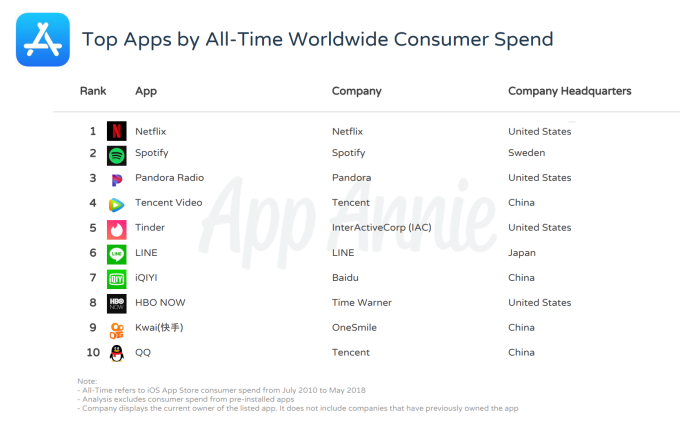
In terms of the dollars users have spent, Documents To Go was the most popular app back in 2010, with subscription-based apps like Netflix, YouTube and Tinder now taking that crown, according to the report.

Games

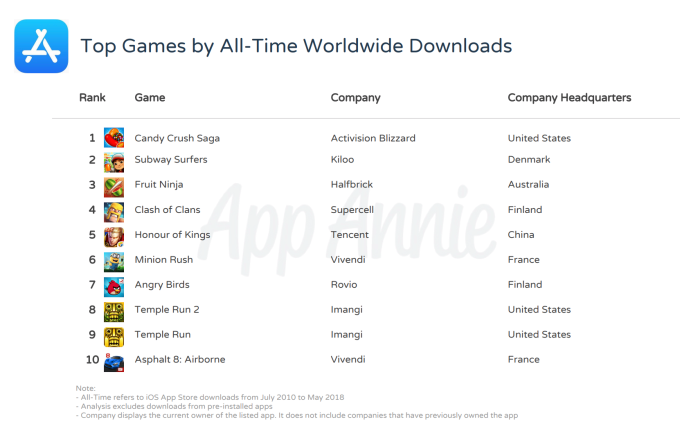
In terms of all time downloaded games, Candy Crush Saga, Subway Surfers, Fruit Ninja and Clash of Clans take the top slots.

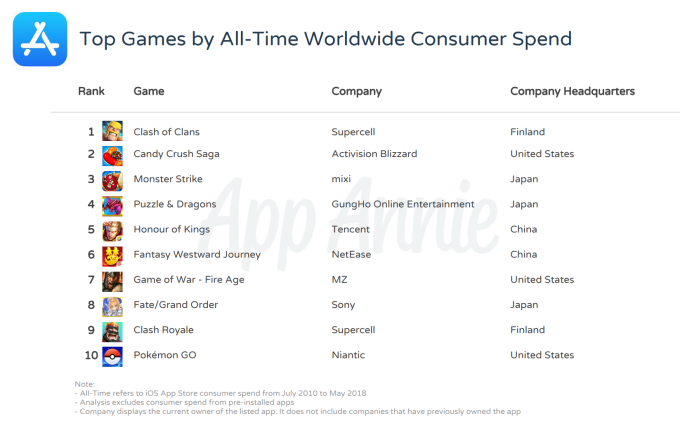
Further, the analytics company also took a look at the top all-time games in terms of consumer spend. As expected Clash of Clans, Candy Crush Saga and Monster Strike take the top three slots, with Pokemon Go, a relatively new entrant in the free-to-play space when compared to other titles in this list, taking the number 10 slot.

In total, Clash of Clans has managed to earn more than $4 billion in consumer spend since it’s release.

What’s perhaps most interesting about App Annie’s top games list is the fact that well-known titles such as Angry Birds and even Temple Run didn’t hit the top 10 list of all-time consumer spend.

App Annie also looked at the top publishers across the industry, which include brands like Electronic Arts, Tencent, Gameloft, Rovio, Glu, Disney, Zynga, King, Supercell, Activision Blizzard, Bandai Namco, Storm8, Ubisoft and more.

Apps

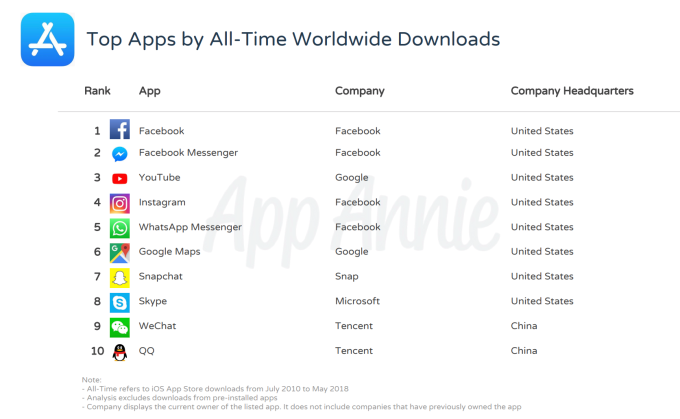
When it comes to app downloads, Facebook and Google’s various apps sit at the top of the charts. Facebook is number one, with Facebook Messenger coming in at number two. Google’s YouTube brings home the third spot, with Facebook-owned Instagram and WhatsApp messenger landing in third and fourth positions respectively.

Top worldwide consumer spend has slightly different results, with platforms like Netflix, Spotify and Pandora (which isn’t available in Canada) taking the top three positions. Next up is Tencent Video, Tinder and Line in the fourth, fifth and six slots.

Further, App Annie’s report also reveals other interesting information, such as the fact that the iOS App Store now has over 2 million apps that have been downloaded over 170 billion times, with nearly 10,000 of those apps hitting the $1 million USD revenue mark.

For a more detailed look at the analytic’s firms detailed analysis of the iOS App Store’s first 10 years of existence, check out the full report.

Source: App Annie 

The post Here are the most popular iOS apps and games of all time appeared first on MobileSyrup.

04 Jul 18:04

Light is working on a phone with up to a nine rear-camera setup

by Dean Daley

Currently, smartphones like the Huawei P20 Pro and the HTC U12+ boast four cameras — rumour has it LG wants to up the game to five (two on the front and three at the rear) — but all of that may pale in comparison to the nine camera smartphone camera startup Light is working on.

Light, the company behind the L16, a camera with, you guessed it, 16 lenses, is reportedly experimenting with a prototype handset that features between five to nine camera lenses on its rear.

Light says that its working prototype is capable of capturing 64-megapixel shots that’s capable of improved low-light and depth of field performance compared to the current crop of smartphone cameras.

The Washington Post says Light will announce the new phone later this year.

It’s unclear how much a phone with nine cameras will cost. However, Light’s 16-lens camera retails at $1,950 USD  ($2566.09 CAD) so it’s likely a phone with so many cameras will also be quite pricey.

Source: Washington Post Via: The Verge

Image Credit: Washington Post

The post Light is working on a phone with up to a nine rear-camera setup appeared first on MobileSyrup.

04 Jul 18:04

Leaked photos show Samsung’s skinned Android Go experience

by Igor Bonifacic
Samsung logo

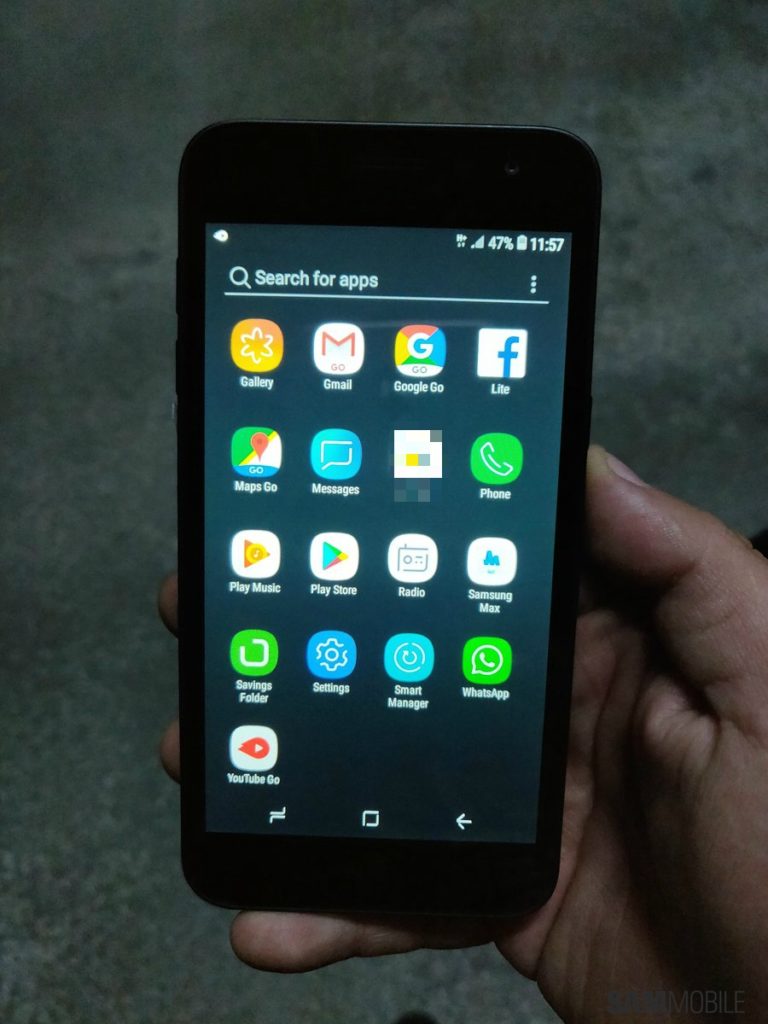
One of Samsung’s upcoming smartphones, what’s reportedly called the Galaxy J2 Core, has leaked courtesy of SamMobile.

The phone represents Samsung’s first attempt at Android Go. Android Go is a lightweight version of Google’s main Android mobile operating system. It’s designed to run on entry-level smartphones like the Galaxy J2 Core, which is said to feature an Exynos 7570 chipset, 1GB of RAM and between 8 and 16GB of internal storage.

Samsung's Android Go software skin

Besides its distinction as Samsung’s first Android Go device, the unreleased phone is also notable for breaking with an Android Go tradition. To date, every single Android Go device we’ve seen has featured stock Android.

In contrast the Galaxy J2 Core appears to include software flourishes associated with the company’s trademark Samsung Experience (née: TouchWiz).

Leave it to Samsung to be the first OEM to skin Android Go.

However, as both SamMobile and Android Police‘s David Ruddock point out, what Samsung has done here shouldn’t come as a surprise.

Google doesn’t forbid third-party OEMs from skinning Android Go, which is the case with Android One.

The back of Samsung Android Go smartphone

There’s no word yet on when Samsung plans to release the Galaxy J2 Core, nor in what markets the company will sell the phone, but with the device making its way online, it’s likely we’ll see Samsung announce it soon.

Source: SamMobile Via: Android Police

The post Leaked photos show Samsung’s skinned Android Go experience appeared first on MobileSyrup.

04 Jul 18:04

Android Excellence program recognizes stellar apps and games from Google Play

by Jonathan Lamont
Android Excellence

Google has announced a number of new apps and games the tech giant is adding to its Android Excellence program today.

The program recognizes high quality apps with great user experience and strong technical performance. These collections refresh on a quarterly basis. Users can see which apps are currently recognized in the Editor’s Choice section in Google Play.

Apps

Google has recognized a number of apps for Android excellence. For users looking to learn a new language, apps like Beelinguapp or Memrise. Trello, a handy productivity app I use on a daily basis, also received recognition. For a full list, look below.

Games

The list of games is a little smaller, but contains some great options. Animal Crossing: Pocket Camp got a nod from Google. The game from Nintendo saw 15 million downloads in its first week. Another popular game, Shadow Fight 3 was also recognized. The full list is available below.

If you’re looking for some high quality new apps or games, this list is a great place to start.

Google also puts a fair amount of effort into curating a selection of quality content from Google Play. You can check out the company’s Editor’s Choice list here. The list features a number of great app categories full of apps that go above and beyond.

Source: Android Developers Blog

The post Android Excellence program recognizes stellar apps and games from Google Play appeared first on MobileSyrup.

04 Jul 18:04

Telus is investing $110 million in its fibre optic network in British Columbia

by Brad Bennett
Telus logo

Telus is investing over $100 million CAD to bring fibre optic internet to 90 percent of homes and businesses in Richmond and Steveston, British Columbia.

The telecom giant has already started construction and is hoping to start connecting homes in 2019.

The company claims that its PureFibre network is one of the most advanced in the world and can deliver gigabit speeds to connected residents.

“For households, a direct fibre connection will pave the way for next-generation home entertainment and innovative smart-home technologies that promise to transform our homes and enrich our lives in ways we’ve yet to imagine,” said Tony Geheran, the company’s executive vice president and president of broadband networks, in a press statement.

Telus’ fibre optic framework will help lay out the groundwork for 5G technology in the future, providing necessary backhaul.

The company is also donating $25 CAD to S.U.C.C.E.S.S. for every sign-up. S.U.C.C.E.S.S. is a nonprofit that has more than 20 locations spread out over Metro Vancouver and works to help new members of communities find jobs or counselling. Telus will only donate a maximum of $20,000.

Telus has invested this money as a part of its $4.7 billion investment pledge to help connect more people in B.C.

Source: Telus

The post Telus is investing $110 million in its fibre optic network in British Columbia appeared first on MobileSyrup.

04 Jul 18:04

Local B.C. communities can now apply for grant funding for high-speed internet

by Bradly Shankar
Cell tower

The Government of British Columbia has announced that homes, businesses and other institutions can now apply for grants for high-speed internet through the Connecting British Columbia program.

The program, which is offered through B.C.’s Northern Development Initiative Trust, will also offer funding to help communities come up with plans for future high-speed connectivity strategies.

According to the government, successful applicants receive up to a 50 percent contribution for eligible costs. Funding will also be available for improving connectivity to entire regions of British Columbia. The government says applications for transport fibre projects will be accepted beginning September 1st, 2018, with a total of $16 million being offered.

“High costs are one of the main barriers to connecting communities,” said Jinny Sims, minister of Citizens’ Services, in a press statement. “This funding will support last-mile projects that will help close the gap between urban and rural areas, and allow B.C.’s smaller communities to better participate in the digital economy.”

“Connecting British Columbia has helped our province accelerate the growth of our digital economy. By leveraging funds from the private sector and other levels of government, the program has been critical in helping deliver the infrastructure projects B.C. needs to compete, now and in the future,” added Joel McKay, Northern Development Initiative Trust CEO.

Submissions will be “reviewed and assessed on a first-come, first-served basis.” Applicants are required to demonstrate that their projects will be completed by March 31st, 2020.

More information can be found here.

Source: Government of British Columbia

The post Local B.C. communities can now apply for grant funding for high-speed internet appeared first on MobileSyrup.

04 Jul 18:03

Google fixes critical bug that breaks licensing for paid apps

by Jonathan Lamont
Google Play Store

Google has pushed out a fix for a critical bug in the Play Store.

The License Verification Library (LVL), a tool utilized by developers to verify licenses for purchased apps, contained the bug. Instead of verifying licenses as per usual, the tool stopped working entirely. Worse yet, many apps would crash or freeze if they couldn’t access the verification.

LVL is an anti-piracy measure. It prevents users from sideloading apps they didn’t pay for. It can also help prevent users from buying an app, extracting its APK, returning it to the store and then reinstalling it via the APK.

The specific issue with LVL concerns a service called the ILicensingService. The service contains the command ‘checkLicense()’ which developers use to check the license on the user’s device. However, because of the bug the ‘checkLicense()’ can’t be called.

The bug first showed up in Play Store version 10.7.17 and is still present in version 10.7.18. With update 10.7.19 — available now — restores functionality of ILicensingService and checkLicense().

Thankfully Google fixed the issue. For a time, developers had to choose one of a few less-than-ideal situations. The first option was asking users to downgrade their Play Store to 10.6, or remain on 10.6. However, there’s no way for app developers to enforce that on a large scale.

Alternatively, developers can avoid having the app check for a license by forcing it into either a licensed or unlicensed state. However, assuming every user has a license encourages piracy. If developers assume no users have licenses, then paid users lose out on features they’ve paid for. There is no good solution to the problem.

The bug was reported to Google via the company’s issue tracker over the weekend. It’s good to see Google moving so quickly to fix those issues once they’re brought to its attention.

Source: Android Police

The post Google fixes critical bug that breaks licensing for paid apps appeared first on MobileSyrup.