Shared posts

13 Jul 05:59

MacBook Pros Updated with Faster Processors, Up to 32 GB RAM, New Keyboards, True Tone Displays, and More

by John Voorhees

In a press release today, Apple announced updates to its MacBook Pro line of notebook computers. The new models feature faster 8th-generation Intel processors with six cores in the 15-inch model and four cores in the 13-inch model. According to Apple, the 15-inch model is up to 70% faster and the 13-inch model two times faster than earlier models.

The new notebooks also support up to 32 GB of RAM and include a True Tone display and Touch Bar. The 15-inch model can be configured with up to 4 TB of SSD storage, while the 13-inch model is limited to a maximum of 2 TB. The new MacBook Pros feature Apple’s T2 chip, which debuted in the iMac Pro and adds ‘Hey Siri’ support to the Mac.

In the wake of issues with recent-generation MacBook and MacBook Pro keyboards, Apple has also updated the keyboard of the new MacBook Pros to a new, quieter third-generation model. Apple’s website doesn't address the new keyboard's performance or whether the issues experienced with earlier models have been resolved. However, according to a story on The Verge:

This new third-generation keyboard wasn’t designed to solve those issues, Apple says. In fact, company representatives strenuously insisted that the keyboard issues have only affected a tiny, tiny fraction of its user base.

In addition to the new notebooks, Apple introduced a leather sleeve for the MacBook Pro that is available in Saddle Brown, Midnight Blue, and Black, which is similar to the leather sleeves available for the MacBook.

The new MacBook Pros are also part of a Back to School promotion that Apple announced today.


Support MacStories Directly

Club MacStories offers exclusive access to extra MacStories content, delivered every week; it's also a way to support us directly.

Club MacStories will help you discover the best apps for your devices and get the most out of your iPhone, iPad, and Mac. Plus, it's made in Italy.

Join Now
13 Jul 05:59

Farrago 1.2 Brings MIDI Control and More

by Paul Kafasis

Our newest app, Farrago, provides robust, rapid-fire soundboards to podcasters, theater techs, and live performers. After its initial 1.0 release in January and a major 1.1 update in April, we’re pleased to be shipping Farrago 1.2 today. This update has many improvements, but focuses on two major features: MIDI support and multi-tile editing.

MIDI Support

Farrago’s new MIDI support lets you take control of your soundboard with any MIDI device. With a few seconds of setup, you’ll be able to control playback of any of your tiles via MIDI. As well, MIDI control is also available for playback shortcuts, set switching, and more! This was one of our single most-requested features, so it’s great to have it working.

Multi-Tile Editing

With the new multi-tile editing, it’s now a breeze to update settings in bulk. Just select two or more tiles, then edit settings in the Inspector. You can rapidly change the color of a group of tiles, adjust their playback settings, and more.

And More

Of course, there are also plenty of smaller fixes and improvements. The master volume control can now be controlled via keyboard shortcuts. Sets have also been enhanced, with a new ability to keep notes for a Set and an improved process for renaming Sets as well.

We’ve also refined our VoiceOver labels, to make things clearer for our visually impaired users. With Farrago 1.2, the Mac’s best new soundboard app just keeps getting better!

Download Farrago Now

Farrago is the perfect partner for your podcast, theater show, or other live performance. Learn more about Farrago on its product page, then test it out by downloading the free trial. Farrago’s introductory pricing runs out at the end of July, so act fast to save over 20% off the regular price.

For existing users, Farrago 1.2 is a free update. Just open up the app and select “Check for Update” from the Farrago menu. Get it now!

13 Jul 05:59

Web ad bargain?

Tim Peterson, on Digiday:

If an exchange or SSP declines to sign the agreement, it is limited to only selling non-personalized ads through DBM. Those generic ads generate less revenue for publishers than personalized ads that are targeted to specific audiences based on data collected about them. Some publishers that are heavily reliant on DBM have seen their revenues decline by 70-80 percent since GDPR took effect because they were limited to non-personalized ads, said another ad tech exec. That revenue drop has put pressure on exchanges and SSPs to sign Google’s consent agreement lest their publishers move their inventory to other platforms that can run DBM’s personalized ads on their sites, the second exec said.

(‘It’s impossible’: Google has asked ad tech firms to guarantee broad GDPR consent, assume liability - Digiday)

A lot of those "specific audiences" are, of course, adfraud bots. Fraud hackers are better at adtech than adtech firms are. So ads shown to bots, on shitty sites, are going for more than ads seen by humans on legit sites.

Meanwhile, tracking-resistant, personalization-averse readers are overrepresented in some customer categories. Web developers are a good example. (40% protected based on recent data from one popular site.)

Of course, today's web ad system is based on tracking the best possible prospect to the cheapest possible site, so it won't be easy to take advantage of this nice piece of market inefficiency. First step is figuring out how well protected the people you want to reach are.

More: blog.aloodo.org - Beware of averages: why you need a local tracking protection metric

13 Jul 05:59

Six months into Open Banking, how is it going?

by Marie Steinthaler

For the superstitious among us, this Friday 13 will be a day for avoiding ladders and black cats. For the hyper-political, it will be a day to keep an eye on Donald Trump’s first visit to the UK as US President.

But arguably more excitingly, Friday marks six months since the go-live date of the UK’s Open Banking initiative and its European relative, the Second Payment Services Directive (PSD2).

January’s launch came with a mixture of apprehension and excitement over what these new regulations could bring for consumers and financial services disruptors. Six months on, has anything actually changed in banking?

The answer is yes and no.

The Open Banking movement was always likely to take a while to gather steam. Widespread market adoption rides on the nine biggest UK banks providing high-quality application programming interfaces (APIs). Banks are now obligated to offer APIs (interfaces through which websites or apps can send requests to another system in a standardised way, and retrieve data) that allow customers to send payments via regulated third-party providers.

By 13 January, six of the nine largest UK banks had missed the deadline for the initial roll-out. Not a good start. Since then, most have caught up, but the onboarding processes are clunky and don’t live up to customers’ high expectations for their digital banking.

Understandably, this reduces the incentive for fintechs to integrate with the Open Banking standard APIs, thus creating an opportunity for intermediaries who offer alternative methods of connecting to customers’ bank accounts, such as screen scraping (the act of copying data from the public source code of a website). This is useful for this niche, but even for them it’s not entirely positive. If the official implementations were up to scratch, these intermediaries could spend more time enriching data and providing more value to fintechs and consumers, instead of patching the gaps.

Second, public awareness of the benefits of Open Banking is still low. Even though PSD2 has brought FCA regulation to previously unregulated services, there is still pessimism regarding the security of customers’ financial data. With cyber security breaches and data misuse scandals in the news on a weekly basis, it is no wonder that fintechs must work hard to win customer trust and gain consent to access their financial accounts.

Fortunately, there has been clear progress over the last six months in overcoming at least one of these barriers. Adoption is high when consumers see a clear benefit to connecting their accounts, and when they trust the financial provider who is asking for that connection. In short, the trick is to clearly communicate to data-protective consumers what’s in it for them.

For example, over 50 per cent of people who need to verify their income to take out a loan with Zopa choose to do so by connecting their bank account, and allowing us to access their transaction information automatically.

That’s a big deal: even for a relatively modest benefit (in this case, not having to upload a PDF copy of a bank statement), consumers are more than willing to embrace novel technology to enjoy a more convenient, streamlined application process. Convenience has a value. For us, it means we’ve drastically reduced the amount of time it takes for customers to verify their income, because we’ve been able to automate getting the information we need.

That’s the promise that Open Banking and PSD2 hold: advances in convenience, flexibility, and efficiency, for both consumers and financial services providers. Whether it means better lending products, smarter product comparisons, or more useful insights, consumers will finally have control and choice on where and how they manage their money.

These initiatives were never going to cause a seismic disruption from day one, but as an industry, we can collectively unlock the huge potential that awaits. Six months in, I am excited for that future, and I hope my counterparts within the incumbents will join me.

This article originally appeared in City AM on Wednesday 11th July.

The post Six months into Open Banking, how is it going? appeared first on Zopa Blog.

13 Jul 05:58

I Made a Hardcover Book

by peter@rukavina.net (Peter Rukavina)

Until I took a bookbinding workshop from Jennifer Brown in 2013, the craft of making books by sewing together sheets of paper seemed impossibly arcane, beyond the realm of something I might ever consider. Jennifer’s patient instruction proved that this isn’t the case, and I enjoyed the workshop so much that I took another variation of it in 2017.

One area that Jennifer’s workshop didn’t tread into was sewing together books with multiple signatures; she alluded to this being too complex a task to take on in a single day workshop, thus fixing it in my mind as the new impossibly complex thing.

This week, though, I busted through my preconceived notions about that, with the help of some YouTube how-to videos, and made myself a hardcover sketchbook.

Overview photo of my hardcover sketchbook, laying flat.

Photo my my hardcover sketchbook standing up.

Photo of endpapers of my hardcover sketchbook.

Photo of my hardcover sketchbook showing linen thread in binding.

I started out by making the text block, following the sewing instructions in this video. I used paper from La papeterie Saint-Armand that was leftover from the Confederation Country Cabinet project, and some red linen cord that I picked up somewhere along the way; for the endpapers I used two sheets of orange Japanese paper from an odds-and-sods pack I picked up in Halifax earlier this year from The Ikebana Shop. The orange bookmark-ribbon is something I found in a notions store (and something I should have made about 3 inches longer, so that it would loop through the book and out the bottom).

The linen cord was overkill–and a little knotty to wrangle–but it did the job. I managed to get the stitches in the right place in all but one instance, where the first signature was left flapping in the wind on one end, but I threw in a single stitch and a knot to secure it.

Next, I made the cover, combining the instructions from this video and this video. I purchased a sheet of “display board” from The Bookmark for the hardcover and spine and used a lovely sheet of heavy paper decorated with gold leaves that was a gift from Catherine.

There was a seemingly endless amount of PVA glue–purchased from Michael’s, Aleene’s Tacky Glue–involved in binding everything together, and my “not getting glue on everything” technique needs some work.

Each step of the process was aided by the book press that I found in a closet many years ago, a heavy cast iron beast that does an excellent job at holding things together and flat as the glue dries.

The final product isn’t perfect: there are air bubbles and glue bubbles in annoying little places, and it’s not completely square. But it’s much more than I thought mere mortals like me were capable of, and has stoked my thirst for making more books.

13 Jul 05:58

Vancouver’s Most Unloved Public Space?

by Ken Ohrn
Won’t you use me — I need some love. (Click to enlarge).

An earlier post on Price Tags shows Jim Deva Plaza, a well-loved public space.

Well, here’s one that is neither well-loved nor well-used. It’s near Cambie & Broadway, just north of the lovely City Square.

It seems to be a well-constructed, well-intended part of the nearby condo-townhouse development, but along with little use, it seems to get little upkeep either.  Maybe the two are related.

To be fair, there’s a small community garden on the east side, and a daycare on the south.  Local intelligence (my dentist) tells me that people occasionally use it as a shortcut from Cambie & Broadway (Canada Line station) to the City Square complex, and kids from the daycare sometimes run around on it. Also, the public space that’s north of City Square doesn’t get much use either.

13 Jul 05:58

New Features in Firefox Focus for iOS, Android – now also on the BlackBerry Key2

by Barbara Bermes

Since the launch of Firefox Focus as a content blocker for iOS in December 2015, we’ve continuously improved the now standalone browser for Apple and Android while always being mindful of users’ requests and suggestions. We analyze app store reviews and evaluate regularly which new features make our privacy browser even more user-friendly, efficient and secure. Today’s update for iOS and Android adds functionality to further simplify accessing information on the web. And we are happy to make Focus for Android available to a new group: BlackBerry Key2 users.

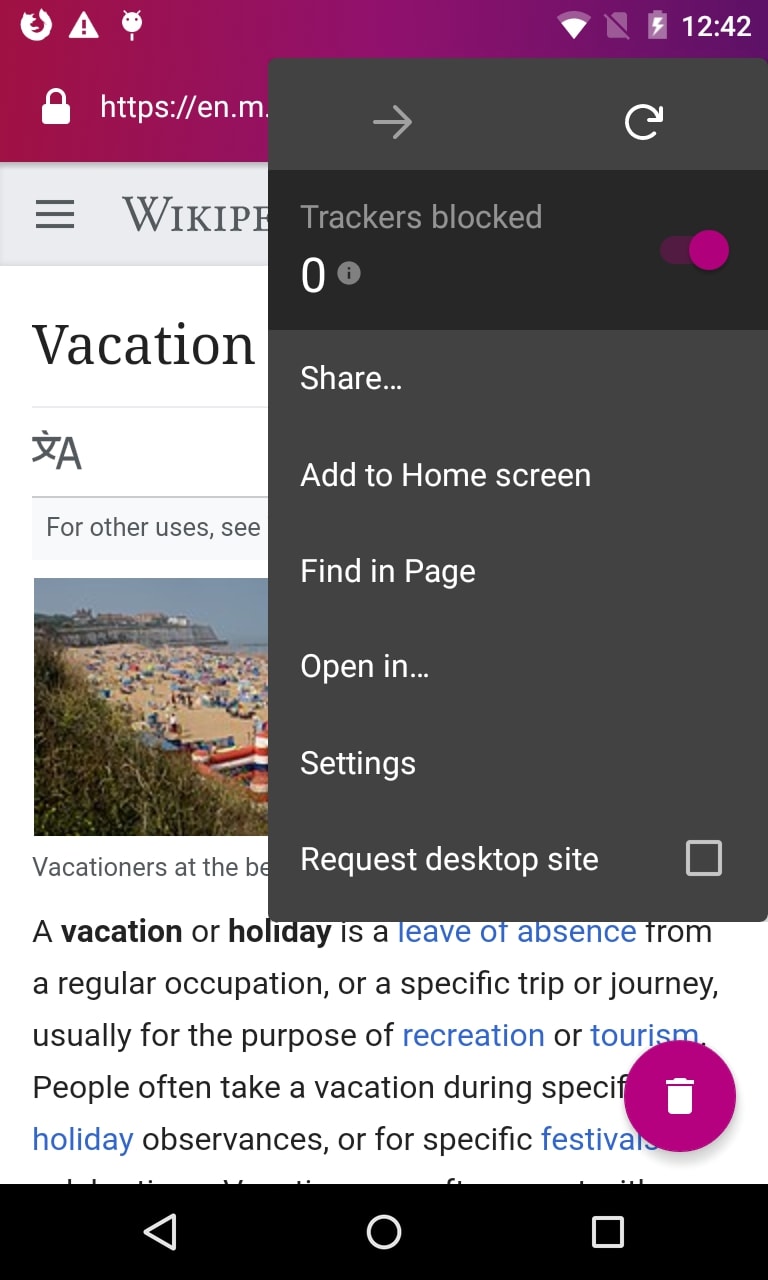
On point: find keywords easily with “Find in page” feature for all websites

Desktop browsing without the “search page” feature? Unthinkable! On mobile, it is now also super simple to find the content you’re looking for on a website: Open the Focus menu, select “Find in page” and enter your search term. Firefox Focus will immediately highlight any mention of your keyword or phrase on the site, including the count of instances. You can then use the handy arrow buttons to jump between the instances.

“Find in page” applies to all kinds of websites, no matter if they’re optimized for mobile browsing or not. Why are we pointing this out? Many users are still not completely comfortable browsing the web on their mobile devices because mobile, non-responsive versions of their favorite websites may not have the full range of features, are confusing or simply less appealing simplified versions of the desktop page, reduced to fit the smaller screen. As of today, Firefox Focus enables users to display the desktop page in such cases. Simply choose “request desktop page” in the browser menu to browse the more familiar desktop version of your favorite website.


Find your search terms easily on mobile and desktop versions of your favorite websites


Make Focus your own — with Custom Tabs and biometric access features

Our intent with Firefox Focus is to give users the most comfortable browsing experience — by making them feel safe and protected, enabling them to enjoy intuitive navigation as well as an appealing design. A great example for how we ensure that is our support and continuous improvement of Custom Tabs. When opening links from some third-party apps, such as Twitter or Yelp, and when Focus is set as default browser on the respective device, Firefox Focus will display the corresponding page in the familiar look and feel of the original app, including menu colors and options. Now you can share this experience even faster with your friends. Just long press the URL to copy it to the clipboard for sharing or pasting elsewhere. Currently, this feature is available only to Android users.

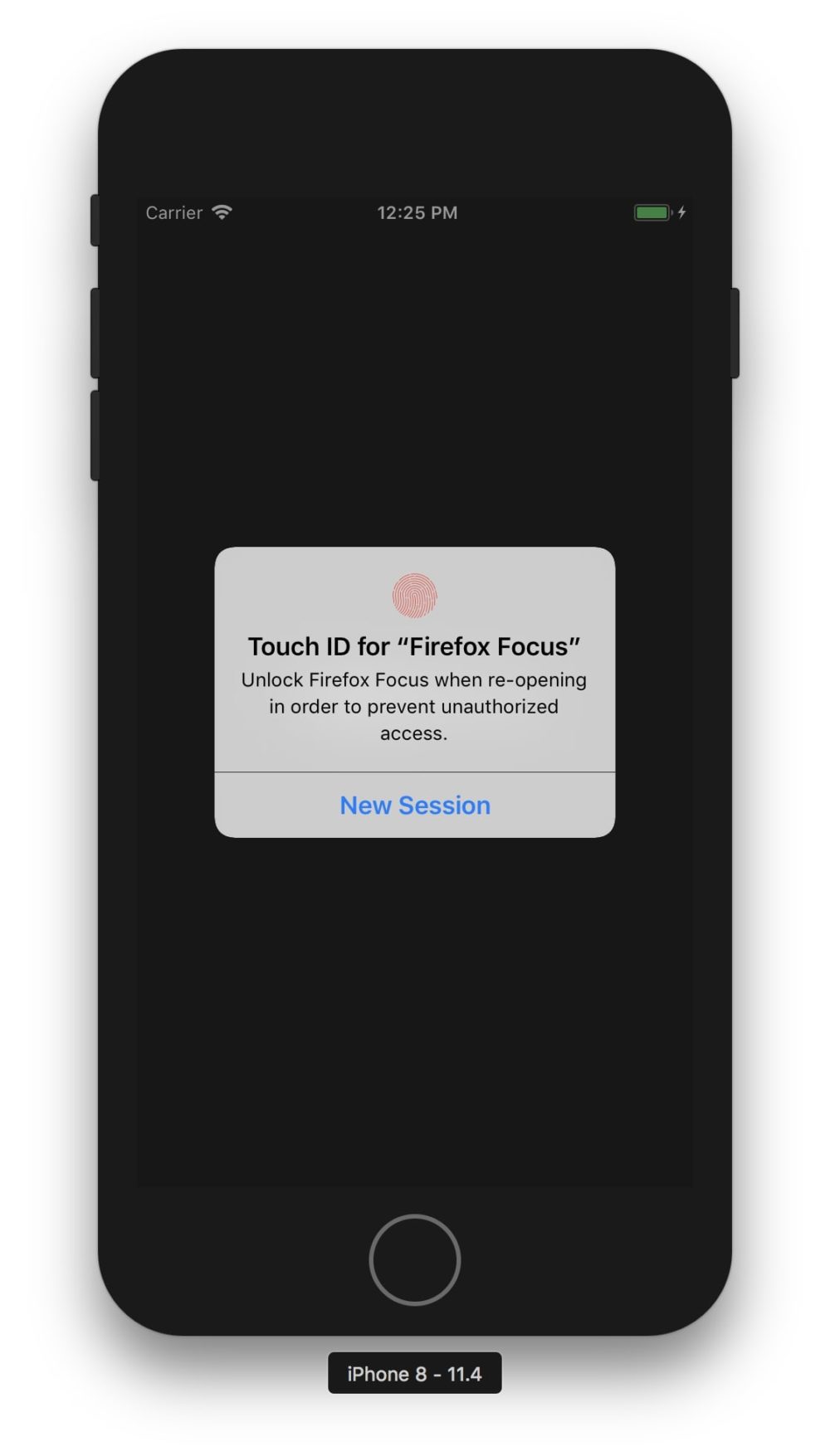
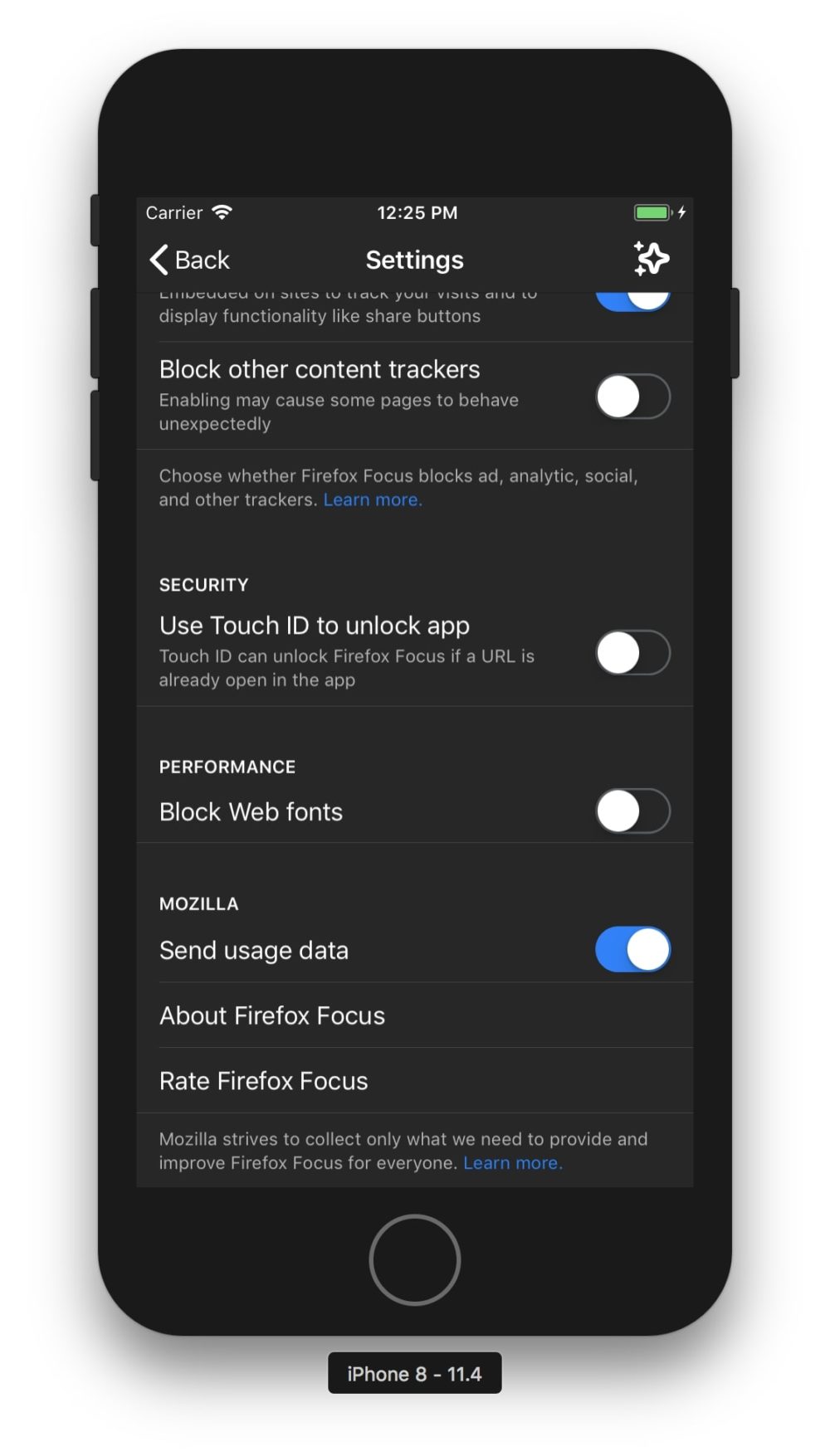
iOS users will enjoy even more personalization with today’s version of Focus because they can now set Focus up to lock whenever it is backgrounded, and unlock only with a successful Face or Touch ID verification. This feature is common in banking apps, and provides another layer of security for browsing privacy by only allowing you, and no unauthorized user, to access your version of Focus.

Unlock Firefox Focus via Touch or Face ID to add another layer of security to your private browsing experience.

A shout out to BlackBerry users

Recently, the BlackBerry KEY2 – manufactured by TCL Communication – was introduced, representing the most advanced Blackberry ever. Bringing Firefox’s features, functionality and choice to our users no matter how they browse is important to us. So we’re proud to announce that Firefox Focus is pre-installed as part of the Locker application found on the BlackBerry KEY2.

This data protection application, integrated into the KEY2 user experience, can only be opened by fingerprint or password, which makes it the ideal solution for securely storing sensitive user data such as photos, documents and even apps — as well as the perfect place for Firefox Focus.


The latest version of Firefox Focus for Android and iOS is now available for download on Google Play, in the App Store.

The post New Features in Firefox Focus for iOS, Android – now also on the BlackBerry Key2 appeared first on The Mozilla Blog.

13 Jul 05:58

The Art of the Personal Project: Angie Smith

by Suzanne Sease

The Art of the Personal Project is a crucial element to let potential buyers see how you think creatively on your own.  I am drawn to personal projects that have an interesting vision or that show something I have never seen before.  In this thread, I’ll include a link to each personal project with the artist statement so you can see more of the project. Please note: This thread is not affiliated with any company; I’m just featuring projects that I find.  Please DO NOT send me your work.  I do not take submissions.

Today’s featured artist:  Angie Smith

Stronger Shines the Light Inside is an ongoing photography project that tells the personal stories of refugees in the United States. In 2015, Los Angeles-based photographer Angie Smith began documenting refugees rebuilding their lives in Boise, Idaho. She’s since photographed communities in Salt Lake City, Albany, New York, and Los Angeles. Stronger Shines the Light Inside helps Americans understand the complexities, struggles, and personal triumphs that refugees experience in their everyday lives.

Of the 65 million displaced people worldwide, only 1% will eventually be resettled in a host country. And of that 1%, each has endured a long and grueling screening process, often spanning years. This project presents refugees as individuals, each with a unique story, grappling with questions of self-identity, reconciliation with the past, and sifting through the emotions of adjusting to an entirely new culture.

Every story is different, but each one speaks of hope, of refusal to give up. Many point to a serendipitous moment, a right person at the right time—someone who saved their life while fleeing, who offered a ride to a supermarket on their first day in America, maybe a friendly face who helped them read a bus schedule, or someone who simply smiled and said hello. All speak of their desire to integrate and contribute to the community, and many express gratitude for those who have helped them to do so.

In May 2018, Smith began an artist residency with Wieden+Kennedy where she spent three weeks photographing refugees and immigrants in the Portland area and the organizations that support them. Through these photographs, films, and interview excerpts, this exhibition aims to amplify the marginalized voices of immigrants, migrants, refugees, and asylum seekers and highlight the many contributions they make to our communities.

To see more of this project, click here.

Some film stories for the project: http://www.strongershinesthelightinside.com/films/

It is important to talk about this terrible incident that happened in Boise last week… Since this is the city where everything started…
and the print sale I am doing in response to it- all of the proceeds will go to support the IRC fund for the families. http://www.strongershinesthelightinside.com/shop/

APE contributor Suzanne Sease currently works as a consultant for photographers and illustrators around the world. She has been involved in the photography and illustration industry since the mid 80s.  After establishing the art buying department at The Martin Agency, then working for Kaplan-Thaler, Capital One, Best Buy and numerous smaller agencies and companies, she decided to be a consultant in 1999. She has a new Twitter feed with helpful marketing information because she believes that marketing should be driven by brand and not by specialty.  Follow her at @SuzanneSease.  Instagram: https://www.instagram.com/suzanne.sease/

------------------------

Visit our sponsor Photo Folio, providing websites to professional photographers for over 10 years. Featuring the only customizable template in the world.

------------------------

13 Jul 05:58

Kevin Thull's unique contribution to Drupal

by Dries

If you've ever watched a Drupal Camp video to learn a new Drupal skill, technique or hack, you most likely have Kevin Thull to thank. To date, Kevin has traveled to more than 30 Drupal Camps, recorded more than 1,000 presentations, and has shared them all on YouTube for thousands of people to watch. By recording and posting hundreds of Drupal Camp presentations online, Kevin has has spread knowledge, awareness and a broader understanding of the Drupal project.

I recently attended a conference in Chicago, Kevin's hometown. I had the chance to meet with him, and to learn more about the evolution of his Drupal contributions. I was struck by his story, and decided to write it up on my blog, as I believe it could inspire others around the world.

Kevin began recording sessions during the first community events he helped organize: DrupalCamp Fox Valley in 2013 and MidCamp in 2014. At first, recording and publishing Drupal Camp sessions was an arduous process; Kevin had to oversee dozens of laptops, converters, splitters, camcorders, and trips to Fedex.

After these initial attempts, Kevin sought a different approach for recording sessions. He ended up developing a recording kit, which is a bundle of the equipment and technology needed to record a presentation. After researching various options, he discovered a lightweight, low cost and foolproof solution. Kevin continued to improve this process after he tweeted that if you sponsored his travel, he would record Drupal Camp sessions. It's no surprise that numerous camps took Kevin up on his offer. With more road experience, Kevin has consolidated the recording kits to include just a screen recorder, audio recorder and corresponding cables. With this approach, the kit records a compressed mp4 file that can be uploaded directly to YouTube. In fact, Kevin often finishes uploading all presentation videos to YouTube before the camp is over!

Kevin Thull recording kit
This is one of Kevin Thull's recording kits used to record hundreds of Drupal presentations around the world. Each kit runs at about $450 on Amazon.

Most recently, Kevin has been buying and building more recording kits thanks to financial contributions from various Drupal Camps. He has started to send recording kits and documentation around the world for local camp organizers to use. Not only has Kevin recorded hundreds of sessions himself, he is now sharing his expertise and teaching others how to record and share sessions.

What is exciting about Kevin's contribution is that it reinforces what originally attracted him to Drupal. Kevin ultimately chose to work with Drupal after watching online video tutorials and listening to podcasts created by the community. Today, a majority of people prefer to learn development through video tutorials. I can only imagine how many people have joined and started to contribute to Drupal after they have watched one of the many videos that Kevin has helped to publish.

Kevin's story is a great example of how everyone in the Drupal community has something to contribute, and how contributing back to the Drupal project is not exclusive to code.

This year, the Drupal community celebrated Kevin by honoring him with the 2018 Aaron Winborn Award. The Aaron Winborn award is presented annually to an individual who demonstrates personal integrity, kindness, and above-and-beyond commitment to the Drupal community. It's named after a long-time Drupal contributor Aaron Winborn, who lost his battle with Amyotrophic lateral sclerosis (ALS) in early 2015. Congratulations Kevin, and thank you for your incredible contribution to the Drupal community!

13 Jul 05:57

LambdUp Speaker Interview

by Eric Normand

Here’s a video of my interview last Dec 6, 2017 at LambdUp Interviews.

LambdUp is a meetup on functional programming, it’s a unique event in the Czech Republic due to its size and focus.

The post LambdUp Speaker Interview appeared first on LispCast.

13 Jul 05:57

10 Years of App Store Controversies

by Ryan Christoffel

The App Store is a wildly successful product. In 2017 alone it brought Apple somewhere in the range of $11.4 billion, and app developers pocketed $26.5 billion – an increase of 30% over 2016. To kick off 2018, New Year's Day alone yielded $300 million of App Store purchases. With ever-more Apple devices in the world, the rest of 2018 is sure to end up in the record books.

When the App Store first launched in 2008, it was an unproven concept in the software market. Historically when you wanted to download software for your computer, you would usually visit the developer's website, which handled both the payment and actual download. While it could be argued that smartphones at that time weren't proper "computers," the computer designation undoubtedly fit the iPhone. With its powerful operating system built on Mac OS X, the expectation from many developers was that, eventually at least, the device would gain access to native third-party apps through traditional means. Instead, the iPhone – and subsequently, the iPad – has remained a closed platform. And for 10 years now, the App Store has been that platform's sole gatekeeper.

Apple's vision for the App Store has always been driven by privacy and security. Rather than sending users out to a host of unvetted websites to find software that may or may not be what it claims, the App Store was a single unified market for approved, malware-free software to live. As a user, you could download any app in the confidence that it wouldn't be able to bring harm to your device – and you could do so without providing your credit card details to anyone but Apple.

Apple created and has maintained the safety of its closed platform thanks to its thorough review procedures and guidelines. Every app on the App Store must follow Apple's rules, which for the most part is widely accepted as a good thing. If an app's aims are nefarious, it should be rejected by Apple and, hence, not allowed in public view. However, throughout the App Store's life, there have regularly been controversial app rejections that stirred up the Apple community. Here are a few of those controversies.

Early Days

Even before the App Store existed, developers were chomping at the bit to make software for the iPhone. As such, it should come as no surprise that a flurry of apps hit the App Store in its earliest days. Amid that wave of new apps, on a platform with new, restrictive guidelines, you would expect that app rejections were common in those days. And while there were certainly growing pains for developers in adhering to Apple's guidelines, for the most part, any negative response to app review procedures was relatively muted – for the most part, developers were simply happy to have the tools to make native iPhone apps.

One of the first high-profile cases of an app review controversy involved a seasoned Mac development team: Rogue Amoeba. Well known for apps like Audio Hijack and Airfoil, Rogue Amoeba published a blog post in November 2009 documenting their troubles getting a bug fix update approved for their sole iPhone app, Airfoil Speakers Touch (now known as Airfoil Satellite). Company founder Paul Kafasis wrote a scathing critique of the App Store, signaling his company's intent to halt future development efforts:

We wanted to ship a simple bug fix, and it took almost four months of slow replies, delays, and dithering by Apple. All the while, our buggy, and supposedly infringing version, was still available. There’s no other word for that but “broken”.
[...]
Rogue Amoeba no longer has any plans for additional iPhone applications, and updates to our existing iPhone applications will likely be rare. The iPhone platform had great promise, but that promise is not enough, so we’re focusing on the Mac.

Nine years later, despite iOS boasting a much larger market spanning both iPhone and iPad, and big and small changes to App Store review procedures and guidelines, Airfoil remains Rogue Amoeba's only iOS app.

Airfoil's use of Apple trademarks had to be removed before approval. Source: Rogue Amoeba.

In 2010, App Store review controversy expanded past the tech community and went mainstream. Mere days after cartoonist Mark Fiore won a Pulitzer Prize for his art, Fiore shared that an app featuring his work had been submitted to the App Store a few months prior, and rejected because:

it contains content that ridicules public figures and is in violation of Section 3.3.14 from the iPhone Developer Program License Agreement which states:

“Applications may be rejected if they contain content or materials of any kind (text, graphics, images, photographs, sounds, etc.) that in Apple’s reasonable judgement may be found objectionable, for example, materials that may be considered obscene, pornographic, or defamatory.”

After Fiore's story began to spread, Apple quickly reversed course and asked Fiore to resubmit his app, after which it was approved. The situation was resolved quickly due to the massive public spotlight, but the rules themselves, and their entirely subjective application, didn't immediately change.

Interestingly enough, the current version of Apple's review guidelines were clearly shaped – in part at least – by the Fiore debacle. Section 1.1.1 outlines objectionable app content being anything deemed "Defamatory, discriminatory, or mean-spirited," but there's a catch – the end of that paragraph states: "Professional political satirists and humorists are generally exempt from this requirement."

2014 and Widgetgate

While every year of the App Store's life has contained its own set of controversies and developer frustrations, 2014 is undoubtedly the one that stands above the rest.

In the time leading up to WWDC, Apple and developers seemed to have a relationship defined by ambivalence. In part this was due to developers' continued issues with app review, but it also perhaps stemmed from a growing belief that Apple didn't understand or care about the realities of indie developers' lives.

The previous year Apple had introduced iOS 7, which brought a major visual redesign to the platform. Developers had mere months to do the massive work of adapting their apps to fit with the new design, or they would run the risk of having apps that felt outdated overnight. That crazy summer aside, many developers were also growing impatient at the continued lack of power user features that could take their iOS apps to the next level. Apple's sandbox carried a lot of restrictions – not just for content, but for features – and while hope sprang eternal that that would change in time, the change felt far too slow.

Defying developers' low expectations, Apple brought a host of iOS improvements to WWDC 2014 that gave cause for excitement again. Share and action extensions, widgets, third-party keyboards, and more were announced as part of iOS 8. Developers breathed a huge sigh of relief – perhaps their requests had been heard, perhaps Apple did care.

Unfortunately, the week wasn't even out before a new controversy arose.

The bug fix rejection for Editorial was a reminder of past hurts, but it would pale in comparison to the controversy that would come later that year.

As I said, widgets were one of the hallmark features of iOS 8, and developers were excited to add them to their apps.

Apple had initially pitched widgets as a way to quickly view information supplied by parent apps. Developers quickly discovered, however, that they could be used for much more than that.

When iOS 8 launched to the public in September 2014, a new app called Launcher came with it. Launcher was inspired entirely by the new widget feature in iOS – using the app, you could set up custom actions and app shortcuts to be accessed from Launcher's widget. The "shortcut" functionality mirrored that of existing apps, but the convenience of the widget made Launcher more powerful than the rest. Federico remarked later on about how an existing launcher app had purposely avoided adding a widget:

Launch Center Pro, perhaps the most popular action launcher for iOS, stayed away from trying to add an iOS 8 widget as the developers feared the update could be rejected and, worse, led to outright removal from the App Store.

Launcher was a catalyst of powerful widgets, but unfortunately, it also became the poster-child for Apple's widget removal requests.

On September 23, 2014, [Launcher's developer Greg] Gardner was informed that widgets with the type of functionality seen in Launcher would be no longer allowed on the App Store...Three days later, Gardner tried to submit an update with a tweaked widget, but Apple rejected it and removed Launcher from the App Store.

Launcher was not the only app with a widget that drew Apple's negative attention. Developer James Thomson built a full-fledged calculator into the widget for PCalc that launched alongside iOS 8 and even was featured by the App Store editorial team. However, a month later, Thomson was asked to remove the widget entirely. It was a similar story for Greg Pierce's Drafts, which didn't have near as feature-rich a widget – it merely contained buttons to launch different parts of the app – but nevertheless was forced to reverse course in December 2014 and remove its widget.

In all these high-profile cases, an app's widget was initially approved and made available to users. Only later did Apple backtrack and require that the widgets be removed.

Like many other App Store controversies, the issue ultimately came back to app guidelines that weren't clear enough, and inconsistent interpretation of those guidelines from one app reviewer to another. If Apple had done a better job up front outlining what was and was not allowed in a widget, Gardner, Thomson, and Pierce wouldn't have invested any of their time into building the widgets they did. There may have been a little backlash against overly-strict widget rules, but overall iOS 8's launch would have come and gone free from any widget controversy.

What made matters even worse in this case is that not only had the time and resources been poured into developing these widgets, but the widget rejections had come after the respective updates were already published on the App Store. Users had already begun using and relying on these new iOS 8 features, and while forcing developers to later remove those features may have made Apple look bad to those in the know, all that the average user would know is that one of their apps removed a feature that used to be there.

A couple months after Launcher's removal from sale, Greg Gardner wrote:

Apple can try to spin this into a positive by claiming that fewer rules allow for more experimentation, but in reality it results in unnecessary developer confusion, fear and angst. The more likely results from such a system are:

  1. A tremendous amount of wasted time for both developers and reviewers when developers create apps that violate unpublished rules.
  2. Developers unsure of whether their app will be rejected end up developing the absolute minimum viable product just in case the time and effort put into the app is wasted if it is rejected.
  3. Developers not developing certain features or certain apps at all for fear of rejection.

It took a six month battle before Launcher finally was allowed back on the App Store. Eventually, Apple simply decided to change its mind on what a widget was allowed to do. Fortunately, PCalc and Drafts didn't have to wait that long before their widgets were reinstated; PCalc's re-approval took only a matter of days, while Drafts' was a couple of weeks.

The scars of 2014's widget battle are surely still etched into the minds of developers who were building apps at that time. Who can say how many great app ideas have never reached fruition because developers were afraid their apps would get rejected.

Modern App Store

Since 2014, controversies on the App Store have generally been much more muted. Mid-2016 brought a mild tiff involving Spotify's app update being held up by Apple's review team, reportedly because the app's in-app billing option was removed. The issue came and went in due time, garnering plenty of attention, but not as much from the indie developer crowd. Similarly, in early 2017 a New York Times report stated that Apple threatened to remove Uber from the App Store due to the service's dubious tracking practices. Again though, the matter involved a major company, not indie developers.

In late 2015, Phil Schiller took on primary responsibility for the App Store, and since that time, Apple has seemed generally more developer-friendly. App review times have sped up significantly, subscriptions have opened up to all apps, and there are now much more extensive analytics available to developers. Under the watch of Schiller Apple has offered more tools and features developers have asked for, while also avoiding highly-publicized app rejections in the indie community.

One near-exception to that took place earlier this year, when some apps that used Apple's emoji artwork started being rejected. Jeremy Burge chronicled the progress of the controversy at Emojipedia, with Apple's review team demonstrating rampant inconsistency on the issue.

Source: Emojipedia.

Because the main problem was inconsistency, rather than a uniform policy on the matter, the emoji saga tapered off before long. And during WWDC last month, Apple released updated app review guidelines that put emoji-lovers' fears at ease. Section 4.5.6 of the guidelines reads:

Apps may use Unicode characters that render as Apple emojis in their app and app metadata. Apple emojis may not be used on other platforms or embedded directly in your app binary.

In other words, emoji are officially allowed – provided developers use the proper Unicode characters to add them.


After 10 years, Apple's general approach to the App Store hasn't changed. It's still a walled garden, faithfully guarded by the company's review team and guidelines. However, what's allowed on the App Store has certainly grown and shifted as time has gone by. Some of that has been brought about by new technologies Apple introduced, while some of it has been won through hard-earned fights for functionality that benefits users and strengthens the platform we all love.

I'm really pleased to have seen App Store controversies kept to a minimum in recent years. Though I'm not a developer myself, Apple's review processes and guidelines still matter a great deal to me. Developers make their livelihood on the App Store, and the more trouble they have getting apps approved, the less likely users will be to receive innovative apps. In some cases even, App Store woes can lead to a reduction of great developers working on iOS altogether. That's a big deal for everyone, not just developers.

Apple appears to have gotten better over time at outlining its policies clearly. They're certainly nowhere near perfect on this, as this year's emoji controversy proves, but they've improved. Here's hoping the lessons of the past 10 years will help make the next 10 years quiet on controversy and heavy on app innovation.


Support MacStories Directly

Club MacStories offers exclusive access to extra MacStories content, delivered every week; it's also a way to support us directly.

Club MacStories will help you discover the best apps for your devices and get the most out of your iPhone, iPad, and Mac. Plus, it's made in Italy.

Join Now
13 Jul 05:55

That’s Where the Money Is

13 Jul 05:53

Engage the Plasma Drive

by peter@rukavina.net (Peter Rukavina)

After a three week delay due illness, I was back at Canadian Blood Services in Charlottetown this afternoon for my monthly plasma donation.

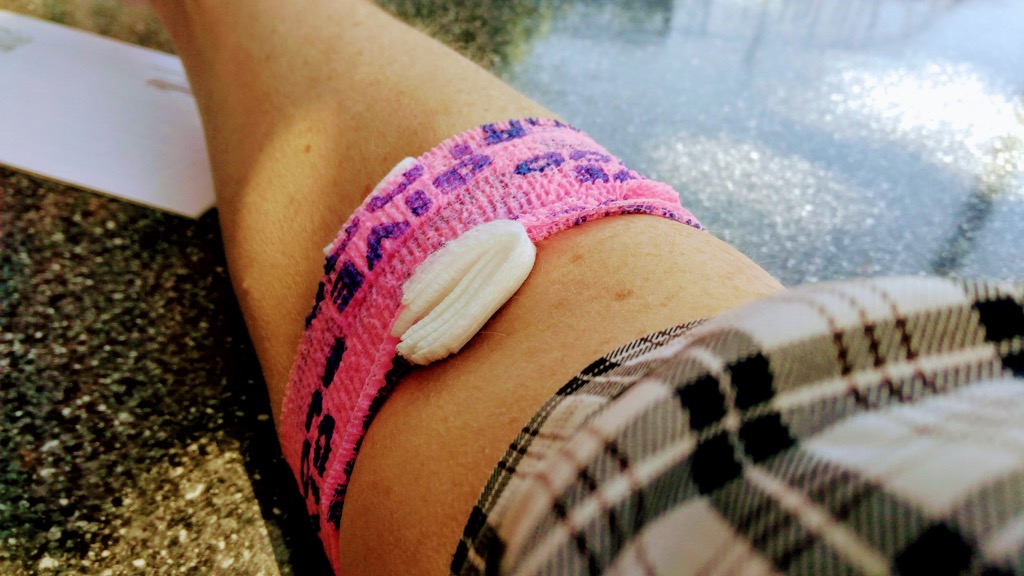
Since I started on this round of donating, after a 10 year gap, today was my first time back wearing summertime clothing, meaning that the bright pink wrap, with “Give Blood” printed on it, looped around my donation site, was in full view. Making me appear to be a member of a militant band of pro-blood-donating rebels. Which, in a way, I am.

Photo of my post-donation arm, with wrap

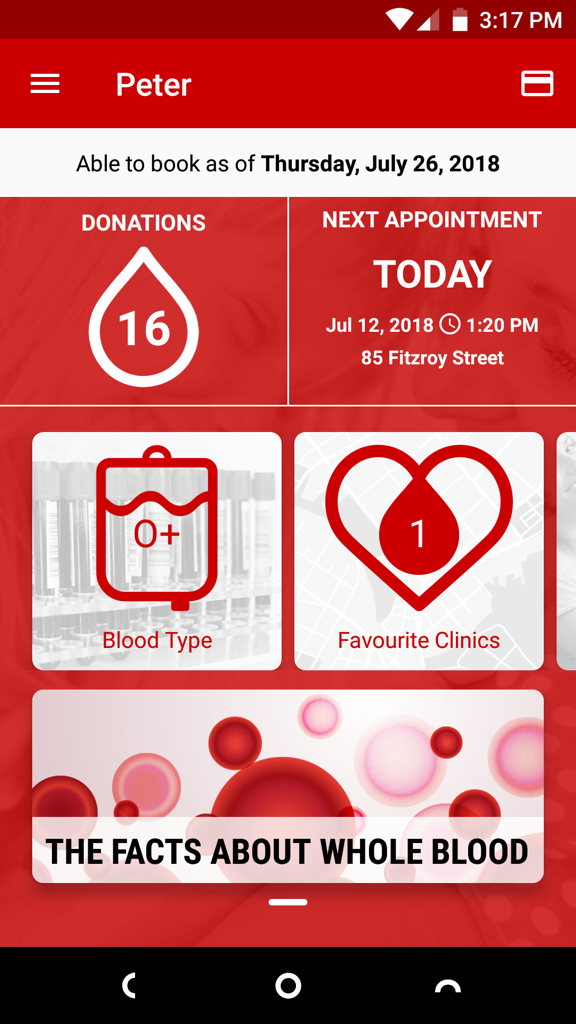
While I was having my blood pressure taken, during the pre-donation screening interview, I noticed a poster advertising Canadian Blood Services’ Give Blood mobile app, and I took advantage of the free donor wifi to install it on my phone while I was donating. It’s a slick, well-designed, helpful app packed with useful functionality, like calendar integration, notifications, a digital donor card, the ability to see (and reschedule, if needed) upcoming appointments, and a lifetime donation total (mine is 16; today’s will make it 17).

Screen shot of Give Blood app

As I’ve mentioned in this space before, Canadian Blood Services has really upped its game in recent years: the plasma donation time is now down to about an hour (from the time you walk in the door until the time you walk out the door), the pre-screening questionnaire can be filled out online before you arrive, the call centre is religious about calling with appointment reminders; and the nursing staff are as friendly and accommodating as they’ve always been (my nurse, looking at my plasma through the microscope during the screening, told me that I have “beautiful plasma”).

If you’ve a spare hour every month–or every two months, or once a year–and don’t mind being poked in the arm (by some of the best arm pokers you’ll meet)–I encourage you to make an appointment: just call 1-888-2-DONATE.

13 Jul 05:52

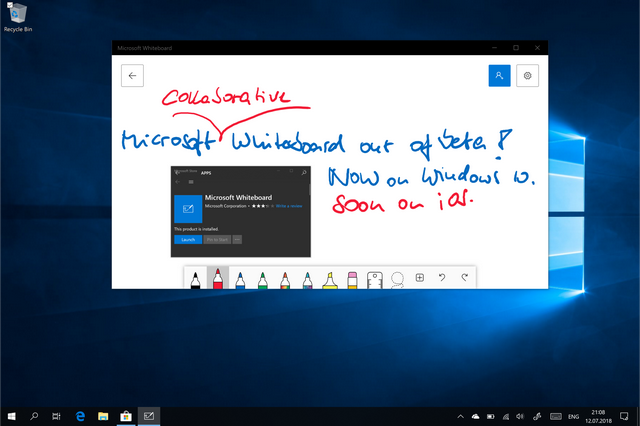
Microsoft Whiteboard released on Windows 10 :: iOS soon

by Volker Weber
13 Jul 05:52

Dog Poop Bag Dispensers on OpenStreetMap

by peter@rukavina.net (Peter Rukavina)

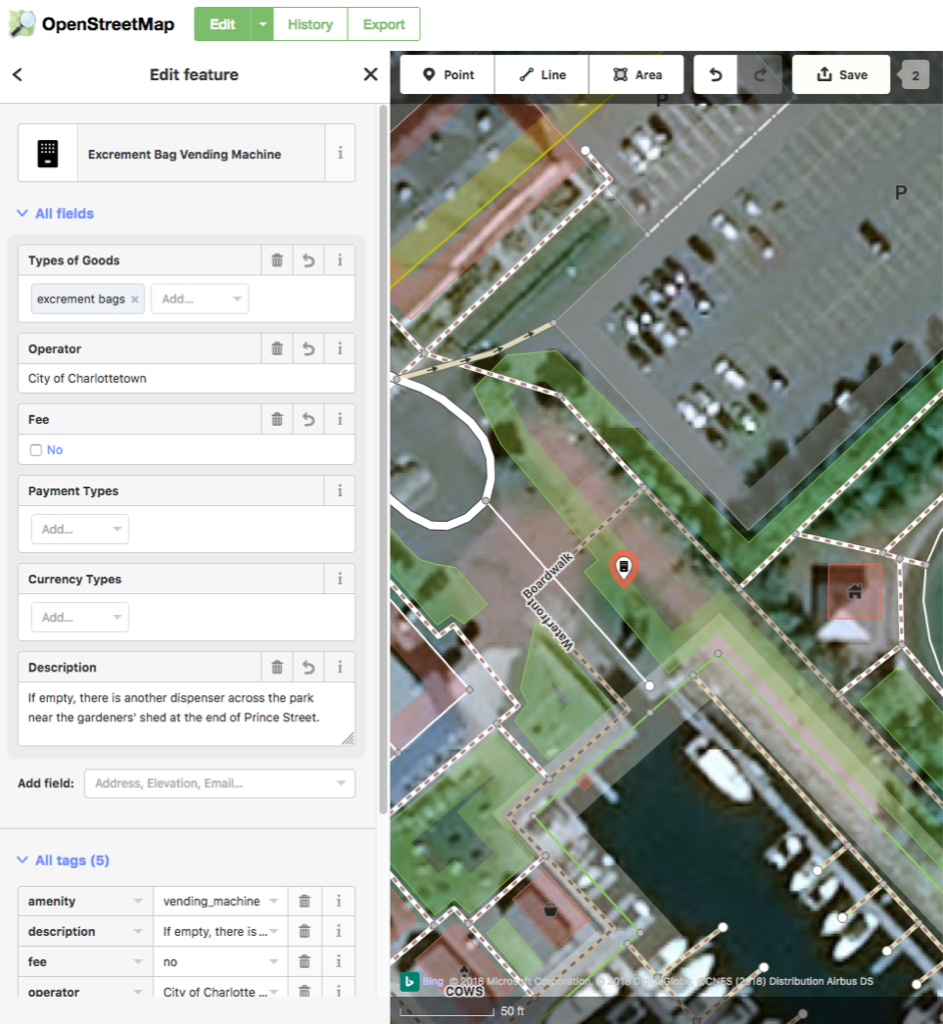
Metadata at its highest expression: OpenStreetMap has a feature for excrement bag vending machine that I discovered by accident today whilst supplementing the map around Confederation Landing Park.

I added the two (free) dispensers in the park, and the one at the PEI Humane Society Dog Park; are there others in town?

Screen shot of OpenStreetMap editor showing dog poop bag dispenser addition

13 Jul 05:52

LRT vs Skytrain: Candidate Responses 2

by Colin Stein

Two more responses to our last question, sent to mayor and council candidates in the City of Surrey, Township of Langley, and City of Langley.

For the portion of the Surrey-Langley rapid transit line running along Fraser Highway, do you believe LRT or Skytrain technology is best, and why?

Thanks to all candidates who responded, and to Price Tags contributors for your commentary. 

Gail Chaddock-Costello – Township of Langley (Council)

Thank you for the question and the opportunity to respond. I’m in favour of light rail. My conversations as a provincial candidate in 2009 and 2017 brought me into contact with many voters and the topic of transportation came up frequently. Once I reviewed your question, I polled neighbours and friends and the feed back was 100% in favour of light rail, my personal preference. Why? It is a cheaper alternative providing a similar service and makes sense to me considering the extensions through Surrey-Newton and Guilford have been recommended by the Mayors to be light rail. In addition it will be seen to be and will be, less environmentally intrusive.

Andrew Mercier – City of Langley (Council)

Skytrain is the Right Choice for Langley City

Folks in Langley may remember the conversation in the ‘90s about extending the Skytrain from King George to Langley Centre. The case for a Skytrain route to Langley has only gotten stronger as time has gone on. The Fraser Highway corridor is the missing piece in the lower mainland’s rapid transit map and Skytrain is the right choice for Langley City.

Skytrain’s benefits are significant. According to a 2012 joint study commissioned by Translink and the Ministry of Transportation, a Skytrain route down Fraser Highway would be faster and have a lower operating cost than light rail. Additionally, it could be built with minimal dislocation due to construction, and would not contribute to traffic congestion once it is operational.

Opponents of Skytrain may point to the lack of accessibility at current stations—anyone who is a frequent Skytrain rider knows the familiar refrain about the Metrotown elevators being out of service. The problems at current stations aren’t going away, regardless of which transit option is ultimately selected. But there is no reason that accessibility cannot be put front and centre in the design and construction of new above ground stations, ensuring that there is more than one accessible entrance.

This isn’t to say there isn’t a role for future investment in light rail in Langley City. Light rail may well factor in as a practical solution for rapid transit within the two Langleys (say, along 200th street). However, the factors that make it attractive for a local method of transportation within a municipality are also part of its drawbacks when conceived of as a main commuting route connecting two urban transit hubs, Surrey Centre and Langley Centre.

Skytrain is the right choice. If elected as a Langley City councillor I will support it as the best option available to complete the lower mainland’s rapid transit system.

13 Jul 05:50

Vancouver’s Most Unloved Public Space?

by Ken Ohrn
mkalus shared this story from Price Tags.

Won’t you use me — I need some love. (Click to enlarge).

An earlier post on Price Tags shows Jim Deva Plaza, a well-loved public space.

Well, here’s one that is neither well-loved nor well-used. It’s near Cambie & Broadway, just north of the lovely City Square.

It seems to be a well-constructed, well-intended part of the nearby condo-townhouse development, but along with little use, it seems to get little upkeep either.  Maybe the two are related.

To be fair, there’s a small community garden on the east side, and a daycare on the south.  Local intelligence (my dentist) tells me that people occasionally use it as a shortcut from Cambie & Broadway (Canada Line station) to the City Square complex, and kids from the daycare sometimes run around on it. Also, the public space that’s north of City Square doesn’t get much use either.

13 Jul 05:50

City council prioritizes greenway for Vancouver's northeast

mkalus shared this story .

Vancouver councillors have voted to make a pedestrian and cycling greenway a priority for the city's northeastern corner.

The motion, put forward by Vision Vancouver Coun. Andrea Reimer, was approved at a meeting Wednesday night.

"Vancouver is aiming to be the greenest city in the world and a big part of that is making sure all residents have access to quality green spaces," Mayor Gregor Robertson said in a news release.

"A new East Van Greenway would be a big boost to the existing network and help to connect the many diverse communities in the northeast chunk of our city."

Council has asked city staff to report back on the potential options for a new greenway in time for the route to be included in Vancouver's capital plan for 2019-2022.

Right now, there is no greenway in the northeast quadrant, defined as the area north of Grandview Highway, between Main Street and Boundary Road.

The area has the least tree canopy cover, the lowest green space per capita and some of the lowest per capita incomes in the city.

Vancouver's greenway plan includes three possible routes in the northeast.

Read more from CBC British Columbia

13 Jul 05:49

One tiny detail spoils that shocking organic milk headline: It was wrong - The Globe and Mail

mkalus shared this story .

Richard Bazinet is a professor of nutritional sciences at the University of Toronto and the Canada Research Chair in Brain Lipid Metabolism. Mark Schatzker is the author of Steak and The Dorito Effect.

What’s the difference between organic and conventional milk? We investigated and found none.

Headlines don’t get better than that. Last week, the Toronto Star published the result of an investigation into organic milk, which included laboratory analysis, and found that “the product is no different than cheaper regular milk.”

Story continues below advertisement

Canadians were rightly indignant. The news was “stunning,” according to one investigative reporter. The finding revealed “the power of the ‘health halo,’” tweeted a prominent CBC radio host, “believing that something brings you good when there’s no evidence that it does.”

The implication was clear: Those precious foodies were wrong all along. Conventional milk is just as good. Organic is overpriced and overrated. As bombshells go, the news that organic milk is all hype was downright delicious.

The news was also wrong.

Before we discuss exactly what the investigation got wrong, let’s take a moment to consider the scientific method. In science, sampling is considered extremely important. If a study uses a small number of samples, reaching definitive conclusions is impossible, because any observed effect, or lack of effect, may be simply due to chance

For example, if you asked 10 people in the departures lounge at Vancouver International Airport where they were traveling to, you might be astonished to discover that 70 per cent of were headed to Beijing. If you tested a larger sample – say, five thousand travelers, at all hours of the day, over the course of an entire year, and at various locations in the International Terminal, the Domestic Terminal and the South Terminal – you would find that the percentage of travelers headed to Beijing is, in fact, much lower.

To perform their analysis of nutritional differences, the Star analyzed milk from a single bag of Loblaw PC Organics versus a single bag of Neilson milk. In science, that isn’t considered data so much as an anecdote.

They found that both milks “showed the same proportions of Omega 3 and Omega 6 fats.” And from that, they came to the mind-boggling conclusion that “the cows producing Ontario’s organic milk are likely not grazing any more than conventional cows.”

Story continues below advertisement

Story continues below advertisement

The day this investigation was published, we attempted to replicate the findings. We purchased Loblaw PC Organics as well as Nielson milk. We also purchased and tested five other milks. Make no mistake, this is still a laughably small sample size. But our results match what numerous scientific studies have found, and they were revealing. We repeated our tests, just to be sure.

The organic milks we tested contained significantly different quantities of omega-6 and omega-3 fats. One organic milk had a ratio of omega-6s to omega-3s of 2:1. At the other end of the spectrum, one conventional milk had a ratio of 4.9:1.

This matches similar differences we have measured in samples of milk from Ontario and the rest of Canada over the past several years. Even in winter, our tests have found that the feed cows eat can have an effect on the milk they produce.

Like the Star’s investigation, we found that PC Organics and Nielsen had, curiously, the same ratio of the omega-6 to omega-3 ratio fats. But in our sample, the PC Organics milk had more of these polyunsaturated fats over all. Ratios, it seems, don’t always tell the whole story.

Do these differences in fats make one milk healthier than another? That is difficult to say with certainty. There will never be a long-term randomized control trial, in which one population of humans drinks conventional milk for 50 years and a similar population – which eats the same foods and leads the same lives – consumes organic milk.

This is the paradox of nutritional science. We will, similarly, never have such data for broccoli, carrots, spinach, red meat, potato chips or pork rinds.

Story continues below advertisement

The world is awash in ridiculous health claims and bogus products. Declaring the experts are all wrong can be satisfying. The zeal of organic milk enthusiasts, furthermore, can be excessive and annoying. Organic milk, however, is one of the few food products in the supermarket where the label is matched by differences both in farming and nutritional content.

You don’t have to drink organic milk. You don’t have to believe it’s healthier. But to say it’s “no different” is both wrong and unfair. Farmers deserve better. And so do consumers.

13 Jul 05:45

Shopify CEO pushes for cheaper wireless data in Canada

by Bradly Shankar
woman looking at high data usage

Shopify CEO and founder Tobias Lütke is calling for cheaper wireless data costs in Canada.

“We need to get wireless data to be cheaper here [in Canada] to make Canadian’s digital familiarity and disposition more in line with other advanced economies,” Lütke wrote on Twitter.

The 37-year-old businessman was responding to a tweet from journalist Peter Nowak, who shared a report detailing how wireless data usage growth in Canada is much slower than in other countries. The reason for this, as Nowak noted, is because Canadians pay some of the highest wireless data prices in the world.

Therefore, Canadians are deterred by the cost and end up using less than half of the data that Americans use.

While Canadians have been able to benefit from certain low-cost plans, like the highly-publicized $60/10GB promotion from December, the rate at which such deals are offered is very low. Part of the problem is that because standard prices are so high, the big savings end up being “more costly than expected” for carriers, according to Barclays analyst Philip Huang.

In a note to clients, Huang pointed out that carriers reported high churn rates and a “repricing of the base” after a significant portion of customers took advantage of the significantly lower-than-usual monthly rate. As a result, Huang said that a promotion on that scale isn’t likely to return, at least not any time soon. Even smaller bonus data promos that were offered for a longer period of time have recently ended, making it difficult for Canadian consumers to catch a break with their traditionally pricey plans.

On Twitter, Lütke also addressed the fact that certain data plan-related problems are unique to Canada among other advanced economies. In response to his original tweet, Twitter user @madmath said “I feel like innovation (outside of telcos helping) is hard because unlike cable/DSL internet which can be shared via networking equipment, mobile data is tied to a SIM card thus completely locked down to a single device. “Shared” plans are possible but Telco controls the price!”

As Lütke noted, however, these aren’t concerns with the other G7 countries — France, Germany, Italy, Japan, the United Kingdom and the United States.

Lütke pointed out that a protected home market in Canada and carrier side agreements with other companies are two big reasons for Canada’s higher prices.

The post Shopify CEO pushes for cheaper wireless data in Canada appeared first on MobileSyrup.

13 Jul 05:45

Progressive Web Apps

The browser is now a full fledged platform for apps. The major benefits of using the browser as a platform includes ease of universal deployment and avoiding concepts such as having to install software. It's also a very flexible and powerful environment. (Also available on CircleId)
13 Jul 05:45

Cup of Jo Featured Our Small Apartment !!

by Alison Mazurek
All Photos by the amazing Brit Gill

All Photos by the amazing Brit Gill

Still can't believe our apartment was featured on Cup of Jo this week. I have read her blog since the beginning. Her blog has seen me through so many stages of life... climbing the corporate ladder, being a new mom, small living with kids in the city. When she messaged me about featuring our home I almost fell over! Then I immediately messaged multiple girlfriends who I know love her as much as I do. One of the best parts of this process has been hearing other people's stories of the time Joanna re-shared one of your photos, or left a cute comment on your Instagram, or recommended a restaurant to you! I can't imagine what it feels like to touch so many lives by just being honest, thoughtful and using your platform for good. Anyway, to Joanna and Stella and the COJ team thanks for making my week, (I mean month!) by including our little family in your beautiful, inspiring and inclusive space on the internet.

Click here to read the post if you haven't yet.

I was a bit overwhelmed by all the questions so I took a breath and thought I would try to answer as many as I can here.

Britney-Gill-Photography_Cup-of-Jo_600SQFT-2 (1).jpg

SEAFINCH SAYS...
Beautiful place and wonderful family but I am totally perplexed, where are their clothes?


I think this question showed up a number of times. Our closets are quite boring and not photogenic and difficult to photograph (awkward angles). In the picture above you can see the kid's closet at the end of the dining table. It's actually designed to house a small home office but we have been using it for the kid's closet since Theo was born.  I'll try and do an update shortly. It is often messy but it does function for us. We try to keep kids clothes to a minimum but piles of clothes to give to friends when I see them next seems to make the closet messier than I'd like.

To the left in the photo you can see the corner of our master closet. It fills the entire west wall of the kid's room. The doors were removed by the previous owners and we put in floor to ceiling curtains. We also removed the bulkhead to get the most height our of our closet. The closet came with an organizer and we added an additional Ikea Pax wardrobe. The closet holds all of Trevor's and my clothes along with our two file boxes and some miscellaneous storage. The miscellanous storage includes one tote of kid's clothes I am saving from Theo or friend's hand-me-downs for Mae. One tote of shoes, beach towels and some artwork we can't seem to part with. Our closet is far from perfect and tends to become a dumping ground for things I need to deal with but haven't found the time yet. As our regular living space has become increasingly functional and organized I need to focus on our closets now to make sure they are using every inch effectively and not storing things we don't need! When I accomplish this I'll try and do a before and after for the blog!


DIRK SAYS...
I’m left wondering is what the neighbourhood is like, the exterior and the locale.


We live in Mount Pleasant, Vancouver and love it!. It's just south of downtown Vancouver. Here is a post I did recently about our favourite spots in our neighborhood. Come visit! Years ago we also lived in Kits (Kitsilano) and still love it there. We've also been keeping our eyes on the Hastings Sunrise neighborhood, and wish we lived on top of Le Marche St George.


MICHELLE SAYS...
They love to camp. WHERE DO THEY KEEP THEIR CAMPING EQUIPMENT. Inquiring minds want to know.


I answered this on my Instagram but figure I should address it here as well. We have our Westfalia that we park in our parkade at our building. We store our camping gear in there. It's a bit of a risk as parkades can get broken in to from time to time. But it's a risk we have to take as we have no space for our gear in our home! To see more of our camping adventures check out the category Ferdinand the Van.


KARIN SAYS...
My only question is doesn’t this setup cut into their sex life (even more than having 2 small children would normally do)?


Wow. Guys, I know I open myself up to this by sharing so much of our life on the internet. But the ins and outs of our sex life is not something I will be getting into unless you are coming over with a bottle of wine, ahaha.

Britney-Gill-Photography_Cup-of-Jo_600SQFT-6.jpg


NAT SAYS...
Love this! Especially the genius hook on the front door for the Bugaboo – where is that from?


That's our Stroller Buddy hook. It's really handy. I wrote about it here.
 

I'm going to save addressing the negativity surrounding Vancouver's housing market for another post as this post is just going to be about our home and what a thrill it was to be featured on my absolute favourite blog! Thanks for all the kind and supportive comments. And to anyone who said that Cup Of Jo and my blog are their favourites... I died!! I am not on her level by any means but so honoured to be included in the same sentence! When it comes down to it, I share about our life, living small in the city with kids, to show that it is possible and while, imperfect and chaotic and maddening at times, it's also wonderful!  

Also I need to shout out Trevor for putting up with my crazy, and friends Tina, Lori, Veronica, Erin (and more!) for listening to me talk about this house tour for weeks, helping me wrangle the kids in order to get photos of the space. Also know this is our home "photoshoot" clean and does not look like this all the time! Remember to not judge your own space based on Home Tours or Instagram Photos!!


Britney-Gill-Photography_Cup-of-Jo_600SQFT-39.jpg
13 Jul 05:45

Aeroplan renews multi-year partnership with Carrot Rewards

by Sameer Chhabra
Carrot Rewards app

Quebec-based loyalty rewards program Aeroplan announced a renewal of its multi-year partnership mobile rewards app Carrot Rewards.

According to a July 12th, 2018 media release, approximately 100,000 Aeroplan members currently use the Carrot Rewards app.

“We’re thrilled to renew our partnership with Carrot Rewards to continue to give our members more earning opportunities while motivating them to make healthy lifestyle choices,” said Jennifer Jones, vice president of retail, travel and strategic development at Aeroplan, in the same July 12th media release.

“We are proud to be one of Carrot Rewards’ founding partners and look forward to delivering more value together for members under our expanded relationship.”

The first 10,000 new Aeroplan members will be able to earn twice as many Aeroplan Miles when they download and register with the Carrot Rewards app between July 13th and July 31st, 2018.

The first 20,000 Aeroplan members who achieve their step goals for five straight days will also be able to earn twice as many miles.

The Carrot Rewards app allows users to accumulate loyalty points — including Scene Points, Petro Points and Aeroplan Miles — by completing a variety of different healthy challenges.

The app is currently only available to users in Ontario, British Columbia and Newfoundland and Labrador, though the July 12th media release suggests that users across Canada will soon be able to download Carrot Rewards.

“We’re thankful for our renewed partnership with Aeroplan, our exclusive travel partner loyalty program,” said Andreas Souvaliotis, founder and CEO of Carrot Rewards in the same July 12th media release.

“Canadians who have chosen Aeroplan Miles as their reward on the Carrot app represent some of our most engaged participants on the platform.”

The Carrot Rewards app is free-to-download on iOS and Android.

Source: Aeroplan

The post Aeroplan renews multi-year partnership with Carrot Rewards appeared first on MobileSyrup.

13 Jul 05:44

Microsoft is making its simple Windows Notepad app more sophisticated

by Rose Behar
Microsoft

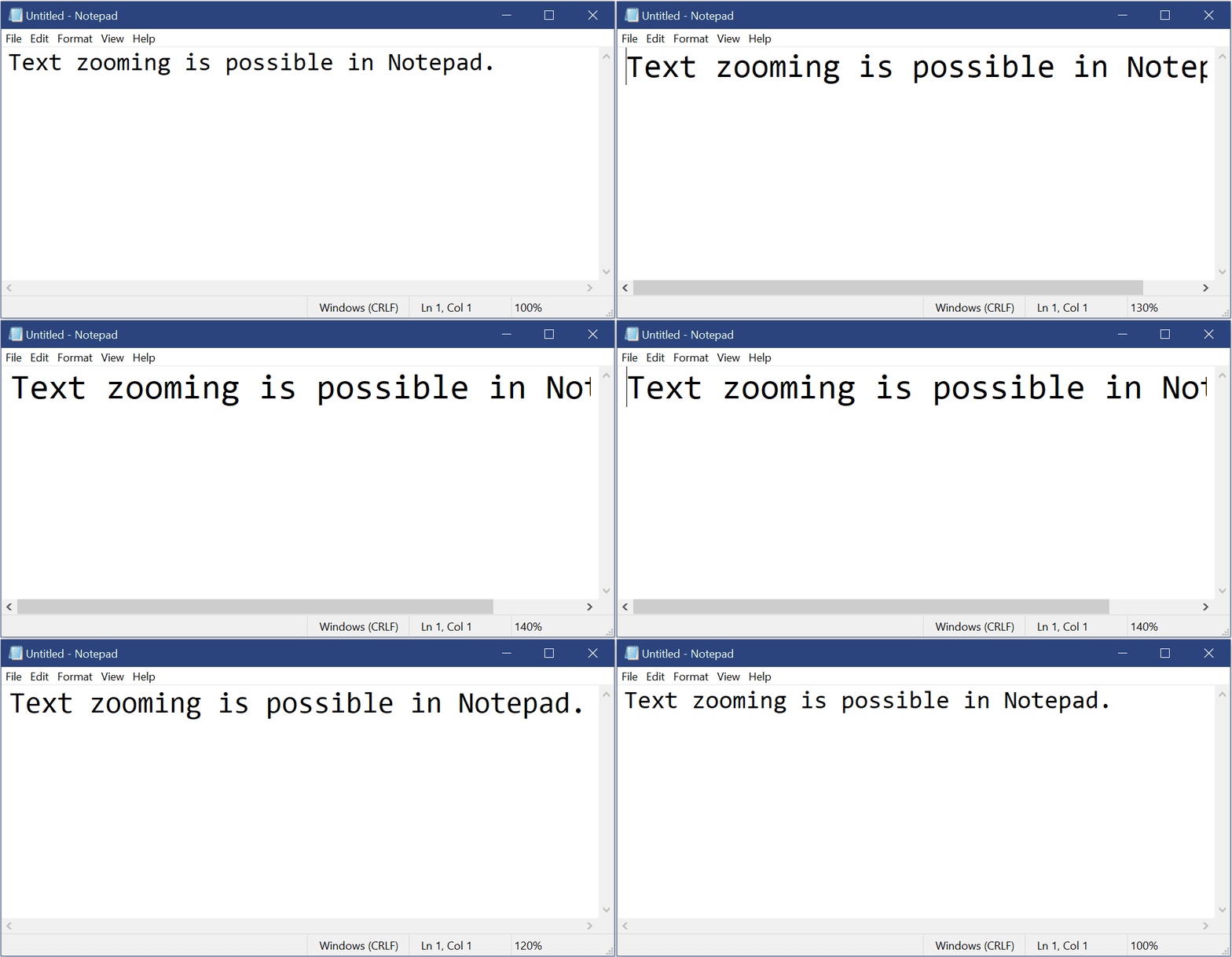
Microsoft’s Notepad app — the simple blank pad used mainly by developers or those with rudimentary note-taking needs — is getting some changes with the next Windows 10 update.

According to the company, it’s received feedback requesting new Notepad features (who knew it still had such a user base?) and is introducing several changes that amp up capabilities in the ultra-simple app, making it slightly more sophisticated.

Among them: Microsoft is adding new advanced find/replace capabilities, text zooming, line and column numbers while word-rap is enabled and a Ctrl + Backspace function to delete previous word, among other things.

See a full list of the changes that will come with Windows 10 Insider Preview Build 17713 in the official Windows blog post.

The updates for Notepad follow a May 2018 change that introduced extended line ending support for Unix/Linux and Macintosh.

In addition to the Notepad updates, one of the most intriguing elements of the Insider Build is the testing of per-site media autoplay controls.

The next public Windows 10 update will likely arrive in October as the aptly named ‘Microsoft Windows 10 October 2018 Update.’

Source: Windows Blog Via: The Verge

The post Microsoft is making its simple Windows Notepad app more sophisticated appeared first on MobileSyrup.

13 Jul 05:44

Review of Plus Sized Cycling Gear by Mrs. Average Joe Cyclist

by Maggie

Mrs. Average Joe Cyclist reviews plus sized cycling gear - the Conviction Cycling Jersey and a pair of Terry Cycling Shorts. The post includes a video of Maggie trying out these plus sized cycling clothes, and sharing her opinions about them.

The post Review of Plus Sized Cycling Gear by Mrs. Average Joe Cyclist appeared first on Average Joe Cyclist.

13 Jul 05:43

it's funny how Elon Musk keeps talking about how much he's apparently sacrificing but every time i open twitter he's trolling or scheming about stuff that has very little to do with fixing problems at Tesla. huge persecution complex pic.twitter.com/wMGib7TSBb

by uberfeminist
mkalus shared this story from uberfeminist on Twitter.

it's funny how Elon Musk keeps talking about how much he's apparently sacrificing but every time i open twitter he's trolling or scheming about stuff that has very little to do with fixing problems at Tesla. huge persecution complex pic.twitter.com/wMGib7TSBb


Posted by uberfeminist on Friday, July 13th, 2018 1:51am


7 likes, 1 retweet
12 Jul 18:36

Apple MacBook Pro with Touch Bar updated with faster processor and revamped keyboard

by Patrick O'Rourke
MacBook Pro

In a surprise move, Apple has announced a 2018 refresh to its MacBook Pro line — but only the higher end 13-inch and 15-inch version that includes a Touch Bar.

The 13-inch iteration of the Pro that doesn’t feature Apple’s touch screen strip will not be refreshed this fall, which is a strange move on the tech giant’s part.

Apple says that the 15-inch MacBook Pro, which starts at $3,199 CAD, is now “up to 70 percent faster” thanks to its 8th-generation six-core either i7 or i9 Intel processor.

“Apple has also revamped the MacBook Pro’s controversial butterfly keyboard for what the tech giant is calling ‘quieter typing.'”

The processor runs at 2.9GHz with Turbo Boost up to 4.8Ghz, while the laptop’s GPU with this configuration is still a Radeon Pro with 4GB of video memory. Along with this spec boost, the Pro can now be equipped with up to 32GB of DDR4 RAM and 4TB of storage. Previously, Apple limited the MacBook Pro’s RAM configuration to just 16GB.

Apple says the 13-inch MacBook Pro (starting at $2,399) features “two times faster performance,” thanks to its 8th-generation quad-core i5 or i7 setup. Clock speeds range between 2.7GHz and 4.5GHz with Turbo Boost, along with an Intel Iris 655 integrated graphics card with 128MB of eDRAM. Storage can be configured up to 2TB in the 13-inch 2018 MacBook Pro.

The battery capacity of both laptops has been increased to compensate for the additional power required to run these more powerful processors, though Apple isn’t changing the estimated battery life of either laptop.

As expected, the four Thunderbolt/USB-C and 3.5mm headphone jack configuration originally featured in the 2016 version of both laptops is back once again. If you were hoping Apple would eventually ditch USB-C, or include some sort of mix of USB-C and USB-A, that isn’t the case with this latest MacBook Pro refresh and likely won’t ever be. The #donglelife is set to unfortunately continue.

“It’s also unclear exactly what Apple has changed with the Pro’s keyboard in order to make it quieter.”

Further, both the 13-inch and 15-inch 2018 Pro also now features Apple’s True Tone display technology, allowing the screen to automatically alter its tint for optimal viewing under different writing conditions. True Tone is featured in the iPhone X as well as the latest version of the iPad Pro. These are also Apple’s first laptops to feature “Hey Siri” integration thanks to the laptop’s specialized T2 chip.

Perhaps most interestingly, Apple has also revamped the MacBook Pro’s controversial butterfly keyboard for what the tech giant is calling “quieter typing.” While you might assume that this keyboard revamp was spurred along by the reports of MacBook Pro keyboard issues, causing the tech giant to launch a four-year repair program for all Pro laptops that feature either the 2nd-generation or 1st-generation Butterfly keyboard, the company says this is not the case.

It’s also unclear exactly what Apple has changed with the Pro’s keyboard in order to make it quieter, though it’s likely related to key travel — which could exemplify the issues the 2nd-generation Butterfly keyboard is currently experiencing with unresponsive keys.

MacBook Pro sleeve

Apple is also releasing leather sleeves for the 13-inch and 15-inch MacBook Pro that are set to come in ‘Black,’ ‘Brown,’ and ‘Dark Blue,’ which are priced at $239 and $269 respectively.

Both the 13-inch and 15-inch Laptop are available right now through Apple.ca and can be purchased in-store later this week, according to Apple.

You can find the technical specifications for both the 13-inch and 15-inch 2018 MacBook Pro below:

15-Inch MacBook Pro Highlights

  • 6-core Intel Core i7 and Core i9 processors up to 2.9 GHz with Turbo Boost up to 4.8 GHz
  • Up to 32GB of DDR4 memory
  • Powerful Radeon Pro discrete graphics with 4GB of video memory in every configuration
    Up to 4TB of SSD storage2
    True Tone display technology
    Apple T2 chip
    Touch Bar and Touch ID

13-Inch MacBook Pro Highlights

Quad-core Intel Core i5 and i7 processors up to 2.7 GHz with Turbo Boost up to 4.5 GHz and double the eDRAM
Intel Iris Plus integrated graphics 655 with 128MB of eDRAM
Up to 2TB of SSD storage2
True Tone display technology
Apple T2 chip
Touch Bar and Touch ID

The post Apple MacBook Pro with Touch Bar updated with faster processor and revamped keyboard appeared first on MobileSyrup.

12 Jul 18:35

Google rolls out Morse code on Gboard for iOS

by Rose Behar
Gboard

Following an announcement at Google’s I/O developer conference in May 2018, Morse code support for Gboard on iOS is now available.

Google further announced that improvements to Morse code on Gboard for Android are rolling out now, along with a game available on Android, iOS and desktop, that instructs players on how to type in Morse code. Google promises that it’ll teach players the skill in less than an hour.

Additionally, the Mountain View-based tech giant published a blog post by Tania Finlayson, an expert in Morse code assistive technology who has cerebral palsy.

Finlayson explained how meaningful the introduction of Morse code assistive tech was in her own life, allowing her to easily communicate with a full vocabulary. Before using Morse code tech, she had employed a stick and typewriter combination to communicate. Previous to that she used a stick to point at a word board with approximately 200 words on it.

As technology becomes more advanced, so do the opportunities for technology to make an even more meaningful difference in the lives of individuals with specific accessibility needs. Google’s Morse code support for Gboard is a perfect example.

With the support, people with limited mobility can attach an external switch (meaning a controller like a joystick attached to a wheelchair) and input dots and dashes to to enter text — with auto-correct suggestions. This allows for super simple communication with friends and family, and gives the user more independence.

Google’s not alone in working toward better supports for people with disabilities. Microsoft and Apple are at work on improving accessibility features as well — but the industry still has a long way to go.

Source: Google

The post Google rolls out Morse code on Gboard for iOS appeared first on MobileSyrup.

12 Jul 18:35

Cogeco plans on using 5G to enter Canadian wireless market

by Sameer Chhabra

Canadian telecom and media company Cogeco used its Q3 2018 earnings call to deliver more information about a potential wireless launch.

Outgoing Cogeco CEO Louis Audet began by explaining that the company was previously hesitant to enter the space simply because the company “did not have the financial stamina to be successful.”

He also stated that the market and regulatory environment hadn’t been primed for a successful entry.

“Fortunately, two new trends have emerged which can help us enter the business on financially attractive terms,” said Audet.

First, Audet spoke to the “growing frustration with the public” when it comes to existing wireless pricing in Canada.

Second, Audet believes that the emergence of 5G technology “which plays directly to the strengths of deep fibre networks such as the ones operated by Cogeco Connexion throughout its Canadian footprint” will allow the company to position itself as a competitive wireless player.

“The opportunity exists to start with a blank sheet of paper.”

Bell and Telus have also previously cited fibre networks as a powerful benefit in 5G deployment.

“At this point in time, the opportunity exists to start with a blank sheet of paper and leapfrog existing legacy network topology and build directly using the networks of the future,” said Audet.

Audet further stated that when Cogeco eventually enters the wireless market with a consumer-facing product or service, the company will deploy a hybrid model.

“[It] will consist of segments that rely on the MVNO model… as well as some segments where we may be a facilities-based operator,” explained Audet.

It’s important to note that, in terms of capital allocation, Audet positioned Cogeco’s entry into the Canadian wireless market as third on a list of priorities.

Audet’s first priority is capital allocation to the U.S., with capital allocation to “continue to maintain and enhance our existing cable networks” as the second priority.

“A new business model will have to be developed and that is what we’re working on.”

“This means that the amount of capital towards wireless entry will of necessity be eminently reasonable,” said Audet.

“A new business model will have to be developed and that is what we’re working on.”

According to Audet, Cogeco will continue to acquire low-cost spectrum “where it is useable by us and makes sense.”

Audet specifically made reference to the upcoming 600MHz spectrum auction, set to take place in March 2019.

“With regards to the upcoming 600MHz auction, about which we’ve been receiving numerous questions, we will evaluate the opportunity of participating and we will only consider doing so through a partnership, whether with a current operator of otherwise,” said Audet.

Cogeco purchased 23 blocks of residual LTE spectrum in May 2018 and acquired Kian Telecom in June along with 10 spectrum licenses. The telecom spent over $50 million on its combined spectrum investments.

The post Cogeco plans on using 5G to enter Canadian wireless market appeared first on MobileSyrup.

12 Jul 17:32

Government of Ontario ends electric vehicle rebate program

by Brad Bennett
Tesla Model 3 on road

Ontario’s newly elected provincial Progressive Conservative government is ending rebates for new electric vehicle purchases.

Announced on Wednesday, the move comes after Doug Ford’s government cancelled the province’s cap-and-trade program last week.

The Ministry of Transportation said both electric and hydrogen vehicle rebates as well as vehicle charging installation incentives were funded by the program.

The cap-and-trade program also funded the province’s Green Energy Fund, which gave Ontario residents access to a variety of clean energy home renovation rebates, including $100 off smart thermostats from Nest and Toronto-based Ecobee.

The rebates for electric cars ranged from $5,000 to $14,000 and covered a variety of vehicles, including ones from GM and Tesla.

The Ministry of Transportation said it has cancelled charging station incentives, as well. Ontario residents who recently purchased a charging station or had a station installed by July 11th have 60 days to claim their rebate, according to the CBC.

In cancelling the cap-and-trade program, the government hopes to bring gas prices down by $0.10 per litre and save Ontarians $1.9 billion annually.

Source: The CBC

The post Government of Ontario ends electric vehicle rebate program appeared first on MobileSyrup.