Shared posts

30 Sep 05:16

Quick Hit: Using the New Equal Earth Projection in R

by hrbrmstr

In my semi-daily run of brew update I noticed that proj4 had been updated to 5.2. I kinda “squeee“‘d since (as the release notes show) the Equal Earth projection was added to it (+proj=eqearth).

As the team who created the projection describes it: “The Equal Earth map projection is a new equal-area pseudocylindrical projection for world maps. It is inspired by the widely used Robinson projection, but unlike the Robinson projection, retains the relative size of areas. The projection equations are simple to implement and fast to evaluate. Continental outlines are shown in a visually pleasing and balanced way.”

They continue: “The Robinson and Equal Earth projections share a similar outer shape[…] Upon close inspection, however, the way that they differ becomes apparent. The Equal Earth with a height-to-width ratio of 1:2.05 is slightly wider than the Robinson at 1:1.97. On the Equal Earth, the continents in tropical and mid-latitude areas are more elongated (north to south) and polar areas are more flattened. This is a consequence of Equal Earth being equal-area in contrast to the Robinson that moderately exaggerates high-latitude areas.”

Here’s a comparison of it to other, similar, projections:

©Taylor & Francis Group, 2018. All rights reserved.

Map projections are a pretty nerdy thing, but this one even got the attention of Newsweek.

To use this new projection now in R, you’ll need to install the proj4 📦 from source after upgrading to the new proj4 library. That was a simple brew upgrade for me and Linux users can do the various package manager incantations to get theirs as well. Windows users can be jealous for a while until updated package binaries make their way to CRAN (or switch to a real platform 😎).

After a fresh source install of proj4 all you have to do is:

library(ggalt) # git[la|hu]b/hrbrmstr/hrbrthemes
library(hrbrthemes) # git[la|hu]b/hrbrmstr/hrbrthemes
library(ggplot2)

world 

to get:

Remember, friends don't let friends use Mercator.

30 Sep 05:16

Rogue Amoeba’s Newest License Window

by Paul Kafasis

Rogue Amoeba’s 16th birthday is coming up this Sunday, so it seems an appropriate time to take a look back into the past. Join us for a quick tour of the evolution of our in-app License window.

Our Very First License Window

When we first started shipping software in 2002, our License window was very rudimentary. This image dates Audio Hijack Pro 2’s release in 2004, but we believe it was still using our very first License window design:

As you can see, this window offered only a small “Thank you” message at the bottom. Not long after Audio Hijack Pro 2 shipped, we decided this window should have a bit more flair and style.

The First Flashy License Window

As Quentin detailed when we made our first update, our goal in jazzing up the License window was two-fold. First, we wanted to show our appreciation to our paying customers by providing a little something special when they unlocked the software. In addition, we hoped to reduce the number of folks who lost their license keys, by encouraging them to print them out for safekeeping.

To accomplish these goals, we showed paying customers an old-timey stock certificate with the user’s specific details filled in. Here’s what that original certificate looked like in 2004:


Stately, like Wayne Manor!

Further Iterations

The above design lasted almost a decade, but the License window has since been updated several times.

A Different Certificate

After we hired our first full-time designer, Christa, we eventually got the third iteration of our License window. This started shipping in 2012:


I barely remembered this existed, but I actually quite like it.

However, this certificate lasted less than a year before it was supplanted by something quite different.

An HTML-Based Window

In mid-2013, we undertook a revamp of the entire License window to make it HTML-based. This led Christa to make an update to the window’s content as well. Here’s the least certificate-y version of our “certificate-style” window:


We also moved away from the typewriter font style at this time.

Neale’s First Design

The window looked like that until we finally undertook another update earlier this year. Our current designer Neale took over the reins from Christa back in 2015, and he’s now overhauled the window’s HTML with many small improvements to provide a better experience. While doing this, he also put his own stamp on the window’s look and feel:


We’ve started trending back towards a certificate.

The above design shipped briefly, before we decided to make a larger change.

License Window Number Six!

These days, we really don’t expect anyone at all to be printing out this certificate. Printers are less and less common, and we long ago developed an automated tool enabling customers to recover lost license keys. As a result, showing the actual license code in the window was of minimal usefulness, and we decided to remove it from display entirely:


We also added a fun gold foil seal.

This is the current iteration of our License window, and we think it looks pretty great. However, there’s something you can’t see in a static image. When the software is unlocked, we now show a delightful animation! Click below to have a look:

Digital confetti is by far the best confetti, because you don’t have to clean it up.

See for Yourself

You can experience this extremely brief party yourself, by purchasing any of our great audio tools, then entering your license key to unlock it. We hope you enjoy!

If you’re a loyal user who’s already unlocked our software, don’t worry. You too can join in the fun, thanks to this one weird trick. Just follow these steps to trigger an internal testing function which will let you re-unlock the software.

    1. Be sure you have the latest version of your Rogue Amoeba app (Airfoil, Audio Hijack, Farrago, Fission, Loopback, Piezo, or SoundSource).

    2. Open the application, but make sure the License window is not open.

    3. Hold down the option key as you select “License…” from the application’s main menu.

Now, the License window should look like this, with your key already waiting to be submitted.

Just click “Unlock” and your personal party will begin, then rapidly end. Whee!

That’s All for Now

This is just one way we show our appreciation for your purchase, and it’s a good source of fun for our designers as well. We hope you enjoy this little touch!

30 Sep 05:16

The Markup is a new journalism venture to examine technology through data

by Nathan Yau

Founded by Sue Gardner, the former head of the Wikimedia Foundation and Julia Angwin and Jeff Larson, journalists formerly for ProPublica, The Markup will aim to use data to help non-experts better understand everyday technologies that often go unchecked.

When Angwin and Larson worked together at ProPublica, their data-driven investigations included exposing discriminatory advertising practices at Facebook, bias in software that is used in criminal sentencing and algorithms that result in unfair car insurance pricing. They also uncovered evidence of domestic surveillance practices in the Snowden archives and revealed technology vulnerabilities at the President’s Mar-A-Lago country club.

“I’m excited to build a team with deep expertise that can really scale up and advance the work Jeff and I began at ProPublica,” Angwin said. “We see The Markup as a new kind of news organization, staffed with journalists who know how to investigate the uses of new technologies and make their effects understandable to non-experts.”

“People know that these new technologies are important and want to better understand their societal effects. We will help them do that,” said Larson. “The Markup will hold the powerful to account, raise the cost of bad behavior, and spur reforms.”

The venture is primarily backed by a $20 million donation from Craigslist founder Craig Newmark and $2 million from the Knight Foundation. Amazing.

Looking forward to this.

Tags: data journalism, technology

30 Sep 05:16

Jupyter Notebooks Seep into the Everyday…

by Tony Hirst

If you ever poke around in developer documentation, you’ll be familiar with the idea that it often contains code fragments, and things to copy and paste into the command line.

This morning, I noticed an announcement around the Android Management API, and in particular the detail of the Quick Start Guide:

To get started with the Android Management API, we’ve created a Colab notebook that you can follow to enroll (sic) an enterprise, create a policy, and provision a device.


Colab notebook [their strong emphasis]…

Which is to say, a Jupyter notebook running on Google’s collaborative Colab notebook platform.

Here’s what the start of the quick start docs, notebook style, look like:

As you’d expect, a bled of text and code. You can see the first code block at the bottom of the screenshot where you can enter your own personal project id; later code cells walk you through connecting to the API and working with it:


So – that’s interesting thing number one… Google using notebooks just anyway as part of “operationalised” tutorial materials (Interactive documentation? Operationalised documentation?

See also: [Jupyter Notebooks for Scheduling HESA Data Returns? If It’s Good Enough for Netflix…] (https://blog.ouseful.info/2018/09/25/jupyter-notebooks-for-hesa-data-returns/) for how notebooks can be used in production environments for scheduling operations and not just for analysis.

Second thing: Colab. It’s been some time since I looked at it, but one thing that jumped out at me was the inclusion of code snippets in the sidebar…

These working demo code snippets can be added the document at the cursor point:

Running them produces the example output, as you’d expect, in the output part of the cell:

Snippets to add linking and brushing (data vis 101; look it up…) or linked charts are also available:

I’m not sure if this sort of interaction (in terms of getting interactive assets into a document) is what the OpenCreate team are looking to provide, but this may be worth looking at just to see how the interaction feels, and the way in which it allows authors to add live interactive charts, for example, to a content notebook.


In other news, my belated and hastily written project bid to the internal Esteem group to look at creating “reproducible educational materials” as demonstrated by reworking examples of OpenLearn materials was rejected as “not a clearly defined scholarship project”. I’m going to carry on with it anyway, because I think we can learn a lot from it about how notebook style environments can be used to produce:

  • new forms of interactive educational material, opened up by the availability of “generative” content creation code/magics;
  • educational resources that are by their very “source included” nature capable of reuse with modification;
  • educational resources that can provide students with a rich range of interactive activities, presented inline/contextualised in a narrative document, added to the document by authors directly with little, if any, technical / programming skills;
  • an interactive environment where students/learners can create their own interactives and / or generative examples to explore a particular topic or idea, again without the need for much in the way of technical / programming skills.

I’m also going to start working on a set of training resources around Jupyter notebooks using my 0.2FTE not OU time; depending on how that goes, I may try to turn Jupyter training / development into an exit plan. Please get in touch — tony.hirst@open.ac.uk — if this sounds of interest…

30 Sep 05:15

Marzipan

by Rui Carmo
30 Sep 05:14

The complex process of obtaining Puerto Rico mortality data: a timeline

Rolando Acosta and I recently posted a manuscript on bioRxiv describing the effects of Hurricane María, based on an analysis of mortality data provided by the Demographic Registry. I was also an author on a paper published in May based on a survey of 3,000 households. These are very different datasets. Assuming it is complete, the Demographic Registry dataset provides much more precise quantitative information. However, this dataset was not made publicly available until June 1, 2018, three days after the paper based on the survey data was released. The story of how all this happened is somewhat complex. In this post I describe this process in some detail.

There is also a bit of confusion about why we performed a survey at all, as opposed to using the Demographic Registry as done by other groups. The main reason is that we were not provided the 2017 data and did not know if what was being published was official government data or not. We eventually obtained preliminary 2017 data, after our survey was finished, but, as I show below, these data appeared to be incomplete for November and December. The complete data for 2017 was not released until June 1.

As I was looking through my emails to remind myself of the multiple ways we requested the data, I found that the entire story to be interesting and informative. So I put together an annotated timeline. Note that I might update this list if colleagues or other involved parties send me corrections or more information.

Sep 20 – Hurricane María makes landfall in Puerto Rico.

Sep 20-30 – Reports from friends and family point to a dire situation. None of them have power, few have running water, and some have no way to communicate.

Oct 03 – The president of the USA visits Puerto Rico. In a press conference the governor states that the death count is 16.

“Every death is a horror,” Trump said, “but if you look at a real catastrophe like Katrina and you look at the tremendous – hundreds and hundreds of people that died – and you look at what happened here with, really, a storm that was just totally overpowering … no one has ever seen anything like this.” “What is your death count?” he asked as he turned to Puerto Rico Gov. Ricardo Rosselló. “17?” “16,” Rosselló answered. “16 people certified,” Trump said. “Sixteen people versus in the thousands. You can be very proud of all of your people and all of our people working together.

Oct 3 - 23 - The number 16 did not make sense to me. And if the government is incorrectly assuming things are fine, the response will not be appropriate and people will be at risk. This is when I first decide I should look for daily mortality data as we can probably get a decent estimate from studying the jump right after September 20.

Oct 23 – Dr. Caroline Buckee, the lead author of the survey paper, contacts me for the first time asking if I am interested in helping assess the situation in Puerto Rico. Based on reports from a colleague doing field work in Puerto Rico, she is “concerned that the mortality estimates in Puerto Rico following the hurricane are wildly wrong”. She is already organizing a cluster survey to try to quantify the true mortality caused by the hurricane. I agree to help. We start studying the literature on this topic and thinking about who to collaborate with groups in Puerto Rico.

Oct 31 - Caroline starts contacting people in Puerto Rico asking for help with the survey.

Nov 01 - We start designing the study. For the power calculation it would be convenient to get an idea of a possible range of death rates. We start trying to find public mortality data that can help us do this.

Nov 08 - The New York times publishes an article based on funeral home data confirming our suspicion that the situation in Puerto Rico is much worse than was reported on October 3.

Nov 14 – Not having any luck finding official government data online I email the Puerto Rico Institute of Statistics (PRIS) asking for help.

Nov 16 – PRIS replies that the Demographic Registry has these data. They email the directory of the Demographic Registry on our behalf.

Nov 20 – CNN publishes an article describing a funeral home survey estimates. They estimate about 499 excess deaths.

Nov 21 – The Penn State University (PSU) study with the first estimate of excess deaths based on mortality data is posted on SocArXiv They estimate about 1,000 excess deaths. This estimate is based on historical data from 2010-2016 and a count for September 2017 that the authors obtained from a public statement made by Puerto Rico’s Public Security Secretary.

Nov 27 - I email the corresponding author of the PSU study asking if they have the data.

Dec 03 - I scrape the data from PSU study, as described in an earlier post. This data helps guide our study design. Here is a plot of the data that clearly shows that there are more deaths than expected. The plot includes a count for October which is publicized later (see Dec 07 entry).

Dec 05 - We receive data from a Demographic Registry demographer, but it does not include the most important part: the 2017 data. They claim that they “still do not have these data available”.

Dec 05 - We start finalizing the study design for a survey. Based on the limited information we have, we perform a power calculations and decide to make the sample size as large as our funds permit.

Dec 06 - PSU study author replies. But email with data appears to be lost in the mail.

Dec 07 - Centro de Periodismo Investigative (CPI) publishes an estimate of excess deaths based on September and October data of about 1,000. It appears they have 2017 data!

Dec 07 – From this tweet, it appears PSU investigator also has the data. I ask on twitter if CPI or PSU investigator have official data.

Dec 08 – I email PSU investigator asking for data.

Dec 08 - New York Times published a comprehensive article with very nice data visualization and an estimate of 1,052. They have daily data!

Dec 08 – I email first author of New York Times article. She says it took 100 emails/calls to get the data and suggest we contact the Registry director. So now we know the Demographic Registry does in fact have the data.

Dec 08 – It appears that the 2017 data does exist and three different groups were given access. We were told, three days earlier, by the Demographic Registry that they “still do not have these data available”. So I email PRIS again to see if they can help.

Dec 09 – I ask Dr. Buckee to email Registry director to check that it is not just me that is being denied the data.

Dec 11 - PRIS replies. They give us the name of a Registry demographer that gave data to others. PRIS emails Registry directory, again, on our behalf.

Dec 13 – The official death count is about 55 now and Public Security Secretary dismisses current excess deaths estimates. He says this:

It should be noted that similar numbers are seen in December and January of previous years when no atmospheric phenomenom took place.

Source: https://twitter.com/julito77/status/940945756399243264

This statement shows ignorance of the well-known fact that death rates in the winter are higher than in the fall. You can clearly see this from the Demographic Registry data:

Comment - At this point we become quite concerned. A high ranking government official, who has seen the reports of excess deaths around 1,000 by three different groups, ignores the warnings and instead makes a misguided statement claming what we are observing is normal. It is also concerning that the government is only selectively sharing the data.

Jan 07 - The New York Times shares the raw data they obtained with us. It’s in PDF! But scrapable. This data shows very clearly that in September and October ther was a huge spike in deaths. However, it is immediately obvious from exploratory data analysis that data for November and December are incomplete:

Jan 16 - Field workers are deployed in Puerto Rico and our survey starts.

Jan 25 - Demographic Registry finally responds to Dr. Buckee saying “we are not authorized to provide new 2017 mortality data.”

Feb 01 - PSU investigator emails Public Security Secretary asking them to make data public.

Feb 22 – Puerto Rico government announces that they have contracted George Washington University (GWU) to perform an independent investigation into the death toll.

Feb 24 - Our household survey is completed. We start analyzing data right away. Our goal is to get the paper published before June 1, the start of hurricane season.

Feb 28 - Latino USA publishes an article showing data provided to them by PRIS. I email PRIS again and they send us data that same day. We immediately see that, like the data we received from New York Times, it appears incomplete:

Mar 16 - First draft of our survey paper is completed and submitted to the New England Journal of Medicine (NEJM). A particularly troubling finding is the large proportion of deaths attributed to lack of access to medical services. We also see evidence of indirect effects lasting until December 31, the end of the survey period.

May 04 - Survey paper is tentatively accepted by NEJM.

May 25 - Official death count is still at 64. We send a draft of our paper to PR governors office.

May 29 – Our NEJM paper comes out and gets extensive media coverage: 410 outlets including articles in NPR, Washignton Post, New York Times, and CNN. Despite our best efforts, including rewriting our university’s press release, most headlines focus on the point estimate and don’t report uncertainty. All the data and code is made available on GitHub.

May 31 - We post an FAQ (in English and Spanish) explaining the uncertainty in our estimate and making it clear that our study does not say that 4645 (the point estimate) people died.

Jun 01 – PR Governor is interviewed by CNN’s Anderson Cooper who grills him on why the government did not share the data. Governor says data was always available and that there will be “hell to pay if data not available”. That afternoon, PR government makes data public. Dr. Buckee requests the data again. This time we get it almost immediately.

Jan 06 - I post my first analysis with the official mortality data here. The newly released data confirms that the data we were provided earlier were in fact incomplete and that there was a sustained indirect effect lasting past October.

Aug 27 - GWU study comes out with a preliminary estimate of about 3,000 deaths.

Sep 05 - Rolando Acosta and I post a preprint describing an analysis of the newly released data including a comparison to the effects of other hurricanes. We also provide a preliminary estimate of about 3,000 deaths due to indirect effects lasting until April.

30 Sep 05:14

The limits of certainty

by Chris Corrigan

An interesting review essay by John Quiggan looks at a new book by Ellen Broad called Made by Humans: The Ai Condition. Quiggan is intrigued by Broad’s documentation of the way algorithms have changed over the years, from originating as “a well-defined formal procedure for deriving a verifiable solution to a mathematical problem” to becoming a formula for predicting unknown and unknowable futures.  Math problems that benefit from algorithms fall firmly in the Ordered domains of Cynefin. But the problems that AI is now be deployed upon are complex and emergent in nature, and therefore instead of producing certainty and replicability, AI is being asked to provide probabilistic forecasts of the future.

For the last thousand years or so, an algorithm (derived from the name of an Arab mathematician, al-Khwarizmi) has had a pretty clear meaning — namely, it is a well-defined formal procedure for deriving a verifiable solution to a mathematical problem. The standard example, Euclid’s algorithm for finding the greatest common divisor of two numbers, goes back to 300 BCE. There are algorithms for sorting lists, for maximising the value of a function, and so on.


As their long history indicates, algorithms can be applied by humans. But humans can only handle algorithmic processes up to a certain scale. The invention of computers made human limits irrelevant; indeed, the mechanical nature of the task made solving algorithms an ideal task for computers. On the other hand, the hope of many early AI researchers that computers would be able to develop and improve their own algorithms has so far proved almost entirely illusory.


Why, then, are we suddenly hearing so much about “AI algorithms”? The answer is that the meaning of the term “algorithm” has changed. A typical example, says Broad, is the use of an “algorithm” to predict the chance that someone convicted of a crime will reoffend, drawing on data about their characteristics and those of the previous crime. The “algorithm” turns out to over-predict reoffending by blacks relative to whites.


Social scientists have been working on problems like these for decades, with varying degrees of success. Until very recently, though, predictive systems of this kind would have been called “models.” The archetypal examples — the first econometric models used in Keynesian macroeconomics in the 1960s, and “global systems” models like that of the Club of Rome in the 1970s — illustrate many of the pitfalls.
A vast body of statistical work has developed around models like these, probing the validity or otherwise of the predictions they yield, and a great many sources of error have been found. Model estimation can go wrong because causal relationships are misspecified (as every budding statistician learns, correlation does not imply causation), because crucial variables are omitted, or because models are “over-fitted” to a limited set of data.


Broad’s book suggests that the developers of AI “algorithms” have made all of these errors anew. Asthmatic patients are classified as being at low risk for pneumonia when in fact their good outcomes on that measure are due to more intensive treatment. Models that are supposed to predict sexual orientation from a photograph work by finding non-causative correlations, such as the angle from which the shot is taken. Designers fail to consider elementary distinctions, such as those between “false positives” and “false negatives.” As with autonomous weapons, moral choices are made in the design and use of computer models. The more these choices are hidden behind a veneer of objectivity, the more likely they are to reinforce existing social structures and inequalities.


The superstitious reverence with which computer “models” were regarded when they first appeared has been replaced by (sometimes excessive) scepticism. Practitioners now understand that models provide a useful way of clarifying our assumptions and deriving their implications, but not a guaranteed path to truth. These lessons will need to be relearned as we deal with AI.


Broad makes a compelling case that AI techniques can obscure human agency but not replace it. Decisions nominally made by AI algorithms inevitably reflect the choices made by their designers. Whether those choices are the result of careful reflection, or of unthinking prejudice, is up to us.

In general I think that scientists understand the limits of this approach to modelling, and that was borne out in several discussions that I had with ecologists last week in Quebec. We do have to define what we mean by “prediction” though. Potential futures can be predicated with some probability if you understand the nature of the system, but exact outcomes cannot be predicted. However, we (by whom I mean the electorate and policy makers who work to make single decisions out of forecasts) do tend to venerate predictive technologies because we cling to the original definition of an algorithm, and we can come to believe that the model’s robustness is enough to guarantee the accuracy of a prediction.  We end up trusting forecasts without understanding probability, and when things don’t go according to plan, we blame the forecasters rather than our own complexity illiteracy. 

30 Sep 05:13

5G TDD: Synchronization Across Networks Required?

by Martin

I recently came across this paper of Huawei on 5G Spectrum matters and one paragraph in particular caught my attention:

“[…] inter-operator synchronisation and alignment of uplink/downlink transmissions (slot and frame synchronization) is […] necessary for efficient deployment of 5G NR networks in unpaired assignments.”

In other words this sentence says that network operators using adjacent spectrum have to synchronize their radio networks to avoid interference. So why is this necessary and what exactly does that mean?

Today, most 4G LTE networks in Europe use Frequency Division Multiplexing (FDD) which means uplink and downlink traffic uses different frequencies ranges. In other words, downlink and uplink traffic does not get in each others way as they are separated in frequency. With 5G things will be different as the spectrum in the 3.5 GHz band in Europe will be used in TDD mode, i.e. downlink and uplink use the same frequency and are separated by using different time slots. This is a challenge when two network operators start using two directly adjacent channels as uplink transmissions at the edge of one channel can interfere with downlink transmissions at the edge of the other channel if they happen at the same time. The solution to this is to synchronize the networks with each other and ensure both use the same times for downlink and uplink transmissions.

But there is a catch, and from my point of view a pretty big one: Synchronizing uplink and downlink transmissions in a TDD system with one or more network operators means that they all have to use the same downlink to uplink ratio. That means that they loose the flexibility to decide on their own which ratio is best for their customers. Qualcomm also recently discussed this topic in a public paper (which contains some technical details such as BEM, EIRP Emission mask limits and other things) and raises the additional issue that in 5G, future ultra low latency features use special timeslot arrangements that are difficult to synchronize across network operators. They therefore propose to think about semi-synchronized networks that leave it to network operators what they want to do in some timeslots.

Apart from the later issue it seems that inter-operator network synchronization is not a new thing. Huawei mentions in their paper that some network operators in China already use TDD for LTE today and have their radio networks synchronized to avoid interference.

30 Sep 05:13

The Agnostic Game

by Dave Pollard

This little guy, unlike ‘us’, is completely immersed in the game of life; while he thinks and feels and senses, he takes nothing personally. He is just a part of all-that-is, in no way separate. His life, unlike ours, is not seen through the veil of the self; it is more aware and more full of wonder than ‘ours’ can ever be. Photo by the author.

All my life I have loved games — playing them, inventing them, even watching them. It’s not the competition, not about winning or losing. It’s more I think about the Power of Constraints — seeing how things work out under a certain set of rules or limitations.

And games are an important coping mechanism: escaping into World of Warcraft, or Second Life, or even crossword puzzles or Sudoku or solving murder mysteries, may provide an opportunity for people struggling with reality to deal with a smaller, less overwhelming world in which the ‘player’ might have a little more control, some less awful choices.

Etymologically, the word ‘game’ originally meant nothing more than ‘people coming together for fun’, and it is only recently that games have had the connotation of competitiveness, that games could be played alone, or that ‘gaming’ a system meant exploiting it to unfair advantage. Today, what we call a game might broadly be defined as an unfolding subject to a particular set of rules or limitations.

Back in 1970 (very early days for computers), John Conway invented the Game of Life, which demonstrated how a simple set of rules can produce a staggeringly complex variety of results. It built on earlier research into the nature of self-organizing systems. This later evolved into theories about complex adaptive systems, including Gaia Theory. Students of such systems began to think of the evolution of the universe and of life on Earth as a type of game, and began to speculate on whether or not this game had a ‘purpose’ or not, with spiritualists and agnostics taking opposing sides.

The message of radical (agnostic) non-duality — that there is no such thing as the ‘self’, or time, or anything separate — is gaining credibility as scientists dig deeper into quantum theory and the mechanisms of the brain and discover that there does not appear to be, in fact, either time or a self to observe anything. That message suggests that there is “only this” and “nothing apart” and that the brain invented time and the self and separateness as an evolutionary means of making sense of sensory inputs, to improve the creature’s chance of survival, not as a means of representing reality. ‘Real’ reality, according to this message, cannot be known or realized or understood by any ‘one’, since there is not really any ‘one’. It is impossible to explain what is seen (by no ‘one’) when the self falls away — such terms as “empty fullness” and “just energy in the form of nothing appearing as everything” and “unconditional love” are at best metaphors, and at worst annoying.

There is no helping that, but, perhaps for some with a passion both for science and philosophy, another metaphor might be useful, or at least interesting. That metaphor is life as a game, à la Conway. Not ‘your’ life, but all life, everything that is.

Suspend your disbelief for a moment and suppose ‘all there is’ is a field of energy, outside of space or time, which, for no reason, can appear as ‘everything’. Yes, I know that’s hard to imagine. What appears can take any form, which means that it can appear to evolve according to an apparent set of rules (like the apparent rules that govern evolution). In metaphorical terms, this appearing-as-everything could be thought of as ‘all there is’ playing a game with itself. Imagine it as the fractal appearances of ice creeping across a frozen window in winter, but on an infinitely greater scale. To be clear here: This appearance is not an appearance ‘to’ any ‘one’; ‘all there is’ by definition precludes any ‘one’ separate from ‘all there is’. And it isn’t appearing to any kind of mystical universal intelligence, spirit or consciousness — consciousness implies that there is something ‘else’ ‘separate’ from ‘all there is’ to be the subject or object of consciousness, and (if ‘all there is’ is truly ‘all there is’) there cannot be. Likewise intelligence implies that there is something that can know something ‘else’ apart from it, and there cannot be. I call this an agnostic game because ‘agnostic’ means (not, as most people think, ‘I don’t know’ or ‘I’m indifferent’, but) that it cannot be known by anyone.

Somehow, although I will confess it’s possible I believe this only because I really want to believe it, this mind-boggling explanation of ‘all there is’ seems to me the most coherent explanation I have ever heard. It makes sense to me intellectually (it is internally consistent, elegant, unambiguous, and the simplest unified theory of everything that I have heard). It resonates intuitively (the inevitability of struggle and suffering in life does not). There have been glimpses during which my self disappeared and this was definitely seen (though not by ‘me’) to be true (And no, I can’t explain how anything can be seen without an ‘observer’, but somehow it can, no mystical universal consciousness required). And it resolves (though rather uselessly and hence unsatisfactorily for most scientists) the biggest puzzles and mysteries that scientists are grappling with today.

Einstein described time as a “stubbornly persistent illusion”, and said “I might be called an agnostic”, and he often expressed the view that science had not and possibly would never be able to fully explain the nature of reality or of human nature. From my readings of his work I am convinced he would be very open to the message of radical non-duality. He would, I think, still assert that despite its validity, we cannot help acting as if our selves were real, and cannot help striving to make things ‘better’, and to explain things ‘better’ in useful ways, however imperfect and illusory they might be. And he would be right: we have no free will over what we do, or believe.

Just as it is not possible for me not to react emotionally (and make judgements) when I do a crossword puzzle (make mistakes, finish in record time etc), or when I play online, or even when I watch a visualization on iTunes, it is not possibly for me not to react emotionally (and make judgements) when I play the game of life. I can say “nothing matters” a million times, and still everything matters. I can acknowledge that there is no time, no right or wrong, no life or death, and no ‘me’ to which things are happening, not really, but still I worry and dream about the future, get upset about the day’s news, worry about my health, and am fearful of many things I can imagine happening to ‘me’. I can’t not see the pervasive hallucination of a separate self that haunts me. I cannot choose to do anything other than what this body I presume to inhabit was going to do in any case. As Neil Young wrote “Though my problems are meaningless, that don’t make them go away.”

So, perhaps you’re saying, “So what? If there’s nothing I can do, if it changes nothing, and if I can’t ‘get it’, not really, other than in a kind of simple abstract intellectual sense, why is this clown going on an on about this?”

The reason I care about this is its implications. It means that all our ‘personal’ feelings of fear and sadness and anger are subjecting us to self-inflicted suffering and misery for no reason. When we feel responsible for something we did or did not do, when we dread something to come, when we react to bad news, we are uselessly causing ourselves unhappiness. You may say that doesn’t matter if we can’t help ourselves. But perhaps just knowing we’re doing this might alter our conditioning a tiny bit, so that our self goes a little easier on us. If you point out to a friend hallucinating because of a drug, or a drug withdrawal, or a mental illness, that from your perspective the terrible hallucination isn’t real, it just might help them cope a little bit better. (Then again, it just might make them feel even worse.)

It also means, if you care about the terrible world we’re leaving for future generations and for the more-than-human creatures we share this tiny globe with, that you need not feel bad about it. Notice I said ‘need not’, not ‘should not’. We have no choice over what and how we feel. But somehow, at least for me, when I hear more terrible news, the knowledge that I need not feel bad about it, that it’s just my illusory self stressing about something that’s just an appearance, just something happening in a game, while the stubborn self in me keeps saying “that’s just an absurd rationalization”, something deeper in me says “yeah, you know, that’s right, and I still feel bad, but maybe not quite so bad about it”.

The message of radical non-duality asserts that there is no path to the realization of the illusion of the self and of the illusion of the separateness of everything, but that there are things that can be done to make the prison of the self seemingly more comfortable.

I am sorry that I am, and almost everyone I know is, trapped in this prison without parole. For (it seems) a blessed few, a kind of liberation can apparently happen, in which the self, for no reason, falls away, and instead of playing the game of life from behind the prison bars, looking through a veil and buffeted by fear and sorrow and anger, suddenly the game of life is seen exactly as it is, full on, awesome and eternal and unconditional and wondrous and boundless and weightless — ‘selflessly’.

I wish you that freedom. I wish to see everything, flying free.

30 Sep 05:13

Penguin Against Plastic

by Bryan Mathers
Penguin against plastic

Penguin Against Plastic says:

Give plastic the flipper!

The post Penguin Against Plastic appeared first on Visual Thinkery.

30 Sep 05:12

Winner, Name that Ware August 2018

by bunnie

The Ware for August 2018 is Micom router, with an EasyRouter HCF feature pack installed. It’s interesting how the ROM cartridge drew many people to the conclusion this was some sort of an old laser printer motherboard thanks to the ancient practice of purchasing fonts as physical ROM cartridges — I would have thought the same initially, except most laser printers also have a pretty substantial general purpose CPU built into them, and there isn’t enough RAM on board either for that type of application. SAM nailed it — I only slightly blurred some of the numbers to try and give something to search for, as Micom is a pretty obscure company and almost everything about this piece of hardware pre-dates modern search engines. Congrats, email me for your prize!

30 Sep 05:12

Some values-based career advice

by Doug Belshaw

Earlier this week I got an email from someone I got to know a few months ago. They asked for the kind of advice that a few people have requested from me before, and which I’d usually dispense by email. However, given that it’s advice that could potentially help a wider audience, I’ve decided (with their permission and without identifying them), to reply in the form of a blog post.


The problem

In their email, the problem stated was broadly this: they want a different kind of life, and feel slightly envious of those who seem to be able to pick and choose opportunities that fit with their values. Why can’t they seem to do the same?


Introduction

I’m going to split this post into two halves. The temptation when giving advice is to jump straight to practicalities, but it would be remiss of me not to situate it in a wider context and framework. Where am I coming from and what assumptions am I making? To explain some of that, I’m going to use three quotations to get a bit philosophical and explain my approach to life — or, at least, the approach to which I aspire.

Then, in the second half of this post, I’ll get a bit more specific with three things I think you need to be ‘successful’ and find a position that’s in line with your values. I’ll give some examples, too.


1. Philosophy

I’m a big believer in quotations to motivate you towards action. In fact, as I look up from my desk, I’ve got two on my wall directly in front of me: “THINK LESS. DO MORE” and Albert Camus’ famous “invincible summer” quote.

I thought carefully about which quotations could sum up the advice I wanted to give in this post. Two of the quotations are taken from books I look at repeatedly as part of my daily reading, while the other one I lean on when procrastinating.. I’ll save that one for last.

1a. Aim for a ‘tranquil flow of life’

One thing I’ve learned in my thirties, and particularly after having children, is that you can try too hard to bend the universe in your direction.

“Seek not that the things which happen should happen as you wish; but wish the things which happen to be as they are, and you will have a tranquil flow of life.” (Epictetus)

That’s not to say that you should just give up and float along on the tide of popular opinion. Rather it’s a step towards living an antifragile life and a foot in the door to the world of Stoic philosophy. In that regard, I’d highly recommend purchasing Ryan Holiday’s The Daily Stoic: 366 meditations on wisdom, perseverance, and the art of living.

Hopefully, it’s pretty clear why I’ve included this quotation first. Stoics aren’t constantly raging against the machine, but nor are they bobbing along with the tide. Everything is an opportunity to put your values to the test. As I often say to my children, “your reactions tell people more about your character than your actions.”

1b. Master yourself

Stoicism isn’t something that you just learn in your head and then you’re done. It’s something that you practice. Perhaps the thing that needs practising the most is mastering your emotions.

“There’s no greater mastery than mastery over yourself and your emotions; it amounts to a triumph of free will.” (Baltasar Gracián)

I didn’t realise just how importance emotional stability was until I saw how hiring and promotion works within most organisations. We’ll get into the specifics in the second half of this post, but it’s a huge advantage both to you and those you work with if they can rely on your emotional stability.

For most people and organisations, they’ll favour reliability over brilliance every day of the week. I suppose that’s mainly because they don’t want people who may end up being a liability. When I’m hiring, I’m perhaps a little more tolerant of the ups and downs of emotional and creative life, but nevertheless I want to know that someone on my team isn’t likely to regularly have emotional meltdowns.

Anyone who knows me might well laugh at my giving this advice, as it’s perhaps the thing I struggle with most. I’m getting better, and certainly more emotionally stable than a decade ago, but (like everything!) it’s a constant work in progress.

1c. Make the jump

When all is said and done, the person who holds you back the most in your life and career is… you. That little voice in the back of your head, the thing Steven Pressfield calls The Resistance, is responsible for irrational fear, self-censorship, and missed opportunities.

“Leap, and the net will appear.” (John Burroughs)

I find this six-word quotation to be extremely powerful. It reassures me that things won’t be as bad as I think, and that at the end of the day I’ll be OK. The thing that’s likely to be damaged most if O do need the ‘net’ is my ego. And I can deal with that.

It’s worth saying that I’m all too aware that I’m writing this from a position of white, male, middle-class privilege. I get that. But at the same time, I see a lot of people scared to apply for a job that they feel under-qualified for, move to a different country, or even point to the work they’re most proud of, for fear of the consequences. You’re likely to be pleasantly surprised if you make the leap.

After all, to paraphrase Aristotle, we become brave by acting as if we were brave. Just get on and do it. And I write this as someone who has occasional anxiety issues. So send in the application, put your house up for sale, and send a link to your work to someone you admire.


2. Practical advice

OK, let’s get to some specifics. I’ve been hiring people recently for the work I’m doing on MoodleNet, so the following advice is given with that in mind. It’s also based on my career thus far, and what I’ve seen when coaching others.

I’m going to use the word ‘success’ here as a shorthand for success as defined by you. If you’re currently chasing status, I’d suggest that the first thing you need to do is re-read the previous section, reflect on what you’re trying to achieve in life, and perhaps read the story of the Mexican fisherman.

I reckon that you need (at least) these three things to be ‘successful’ in crafting the life you want to lead:

  • Proof of expertise
  • Character
  • Luck

Let’s break down what I mean by each of these, with some examples.

2a. Proof of expertise

The original question was about crafting a life that fits with your values. Let’s think about that and work backwards. To be in a position to pick and choose between what you do next, you need to either be well known enough to have people approach you, or have demonstrable skills and experience.

This is usually done through CVs or resumes that list bona fides (see examples here and here) and is what LinkedIn was set up for. It’s no good having the skills if you can’t prove that you’ve got them. That’s why I’ve been so interested and supportive of the Open Badges work over the last few years; it’s a way of demonstrating that you’ve got talent.

The reason eportfolios never really took off were because we still use proxies for expertise, rather than the evidence itself. So, for example, once you’ve got that PhD or have worked for Google, people aren’t asking for ‘three years project management experience’, and the like. We rely on other people’s filters that we trust to do the hard work.

When I worked at Mozilla, we hired a lot of people from the Obama For America (OFA) campaign. The OFA tech team had been lauded in the press for their work, and they (quite rightly) were snapped up by Mozilla and other tech companies as soon as they became available.

The OFA example is illustrative because it’s an example of volunteering for a role that becomes a stepping-stone to bigger and better things. The old advice was ‘dress for the job you want’. Nowadays, I’d say ‘volunteer for the job you want’. When I found out about Open Badges, I started volunteering and showing some leadership in the Mozilla community. A year later, I was flown to San Francisco by the MacArthur Foundation to judge the DML Competition, and was offered a job by Mozilla.

Show up. Put the work in. But also be aware of things that might act as a shortcut that you could use a springboard into your next gig.

2b. Character

To have a position that fulfills you and meshes with your values, you have to know what your values actually are. The reason I include ‘character’ here is not just because of the facet of ‘resilience’ or ‘grit’ (to which it seems to have been reduced recently, but all of the other things that it connotes.

To me, an individual’s character flows from their values, what they stand for. Perhaps I’m becoming middle-aged, but it seems that a lot of the problems with today’s society is that people don’t stand for anything other than individualism and whatever late-stage capitalism can offer them. You don’t have ‘values’ and demonstrate character just because you purchase one brand instead of another.

There’s an episode of Seth Godin’s Akimbo podcast cleverly entitled Don’t just do something, stand there. He explains that we’re always concerned with being seen to do something, rather than taking our time to figure out whether something should be done. That ability to stand firm in the face of adversity, criticism, or resistance, is more than just resilience, it’s character.

When it comes to your career, it means deciding on what it is that you’re willing to accept, and what you’re not. It may have a negative effect on how much money you earn.

I remember once meeting a couple of people at a conference somewhere in Europe. They’d both been hired by a pretty shady university that’s routinely accused of predatory practices. Rather naively, they assumed that they would be able to maintain their personal values while working for an employer that was 180-degrees opposed to them. I assume that they’ve either now abandoned those values, or they’re no longer working for the organisation. Something has to give.

So when it comes to choosing who to work for, trust your gut. Of course, there are times when you need money to ensure the base layers of Maslow’s hierarchy of needs are covered, but beyond that, use the Japanese concept of Ikigai to help prioritise your life. Your values don’t have real-world impact unless you’re willing to give something up in order to stick to them.

2c. Luck

As a society, as parents, as colleagues, we don’t talk enough about the role of luck, fortune, or serendipity and how it applies to success. For example, let’s take Tyler Blevins, who my eleven year-old son knows better through his Fortnite gamer handle ‘Ninja’. This is a guy who seems to be an overnight success.

But, digging deeper, you see that not only has he put in the hard yards, he also just happened to be at the right place at the right time. He ‘plays’ (i.e. practises) Fortnite six hours every day, and has been a professional e-sports player since 2009. Of course, even before that as a teenager he would have been practising and practising.

What sets Blevins apart is that he happened to start playing Fortnite at just the right time, just after its release. He couldn’t have known at the time that it would be the biggest free-to-play console game of all time, and a cultural phenomenon. Blevins is now earning a million dollars per month because he was in the right place at the right time with the right skills and character.

So how, I hear you ask, do I ‘get lucky’? Well, I’d suggest that you need to increase what I call your ‘serendipity surface’. If you’re in an occupation that has a strict path to career progression (for example in medicine or the legal profession) then by all means, focus on the narrowly-defined criteria that circumscribes your success.

If, however, you’re like the rest of us and deal in with a world that is more malleable and ambiguous, then a different approach can pay dividends. There’s a reason I travel so much. It’s to meet new people, be exposed to ideas that might not always be shared online, and to experience places that open my mind. These days, we gain a competitive advantage by connecting the dots in new and novel ways. That depends, of course, on knowing where the dots are.

In order to ‘get lucky’, then, means increasing the likelihood of being in the right place at the right time with the right skills. You’re unlikely to be able to do that by experiencing the same 9-5 grind, day in, day out.

Conclusion

We live in a world of huge opportunity. I’m reminded of one comedian’s comment that we have access to much of the entire store of human knowledge available in our pockets, yet we use smartphones to send cat pictures to our friends.

Plenty of people will give you advice on how you can get a leg up in your industry. That counsel, of course, is always looking in the rearview mirror. It’s about what’s worked before, not about what’s likely to work next. You don’t have to follow tried-and-tested paths if you don’t want to. Find topics and people you find interesting, and find out more about them. You don’t have to be a cog in someone else’s machine.

This is turning into an epistle, and there’s still a lot more I could say. So, if you’re interested, I’m happy to do some one-to-one coaching through my consultancy business. Otherwise, please do feel free to comment (anonymously, if you wish) and I’ll do my best to expand on anything I’ve written so far.

30 Sep 05:11

Notes on "turn off your ad blocker" messages

At least three kinds of software can be detected as "an ad blocker" in JavaScript.

full-service blockers, the best known of which is uBlock Origin. These tools block both invisible trackers and obvious ads, with no paid whitelisting program.

privacy tools, such as Disconnect (list-based protection) and Privacy Badger (behavior-based protection), that block some ads as a side effect. This is a small category now compared to ad blocking in general, but is likely to grow as browsers get better at privacy protection, and try new performance features to improve user experience.

deceptive blockers, which are either actual malware or operate a paid whitelisting scheme. The best-known paid whitelisting scheme is Acceptable Ads from Adblock Plus, which is disclosed to any user who is willing to scroll down and click on the gray-on-white text on the Adblock Plus site, but not anywhere along the way of the default extension install process.

So any ad blocker detector is going to be hitting at least three different kinds of tools and possibly six different groups of users.

  • People who chose and installed a full-service blocker

  • People who chose to protect their privacy but did not specifically choose to block ads

  • People who may have chosen their browser for its general privacy policies, but got upgraded to a specific feature they're not aware of

  • People who chose to block ads but got a blocker with paid whitelisting by mistake

  • People who chose to "install an ad blocker" because it got recommended to them as the magic tool that fixes everything wrong with the Internet

  • People who are deliberately participating in paid whitelisting. (Do these people exist?)

Sometimes you need to match the message to the audience. Because sites can use tools such as Aloodo to get a better picture of what kind of protection, or non-protection, is actually in play in a given session, we can try a variety of approaches.

  • Is silent reinsertion appropriate when the ad is delivered in a way that respects the user's personal information, and the user has only chosen a privacy tool but not an ad blocker?

  • When the user is participating in paid whitelisting, can a trustworthy site do better with an appeal based on disclosing the deception involved?

  • For which categories of users are the conventional, reciprocity-based appeals appropriate?

  • Where is it appropriate to take no action in a user session, but to report to a browser developer that a privacy feature is breaking some legit data collection or advertising?

Bonus links

Newsonomics: The Washington Post’s ambitions for Arc have grown — to a Bezosian scale

Open Access: The timely publishing solution truly serving scientists, science and the public

Watch out, algorithms: Julia Angwin and Jeff Larson unveil The Markup, their plan for investigating tech’s societal impacts

How to buy into journalism’s blockchain future (in only 44 steps)

How Ad Industry Destroys Brand Value

WTF is pubvendors.json?

Nucleus Claims It Now Has Throw Weight to Outperform Platforms on Ads

Instagram's new TV service recommended videos of potential child abuse

Joey Hess: censored Amazon review of Sandisk Ultra 32GB Micro SDHC Card

Apple's best product is now privacy

Storage access policy: Block cookies from trackers

30 Sep 05:10

Nokia starts shipping Android 9 Pie to the 7 Plus

by Volker Weber

The keyword here is 'starting'. Unlike Apple, which ships to all iPhones at once, that never happens on Android.

30 Sep 05:09

Was ist richtig? Schlaufe oben oder unten?

by Volker Weber

ZZ744D951E

Schaut man sich die Bilder bei Apple an, gehört das feste Ende des Sport Loop nach oben und die Schlaufe nach unten. Der Schweizer Kollege Rafael Zeier aber meint, es gehört anders rum, so wie es heute auch bei heise.de abgebildet war.

Wie tragt Ihr Euer Sport Loop?

ZZ5523D60F

30 Sep 05:09

Apple Watch Hermès Sport Band

by Volker Weber

IMG 4786

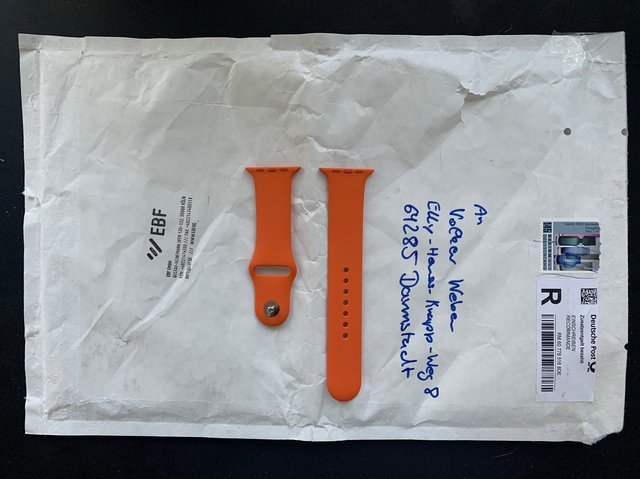
Man kann ja nicht genug Sport Bands haben. :-) Dieses hier kann man aber nicht einzeln kaufen, sondern es ist im Lieferumfang der Apple Watch Hermès enthalten. Und da der Marco sein Sport Band nie trägt, hat er es mir geschenkt. Danke, Marco!

IMG 4787

Dieses Jahr hat Apple das Sport Band Nectarine aufgelegt. Das ist für die meisten Leute kaum zu unterscheiden. Nectarine driftet etwas mehr Richtung Rosa, hat aber eine sehr ähnliche Anmutung.

30 Sep 05:09

Beats Studio 3 :: Die Hölle friert zu

by Volker Weber

ZZ741A5F83

Die Beats-Kopfhörer habe ich immer mit ein bisschen Snobismus betrachtet. Zu viel Bass, zu viel Bling, und überhaupt. Dass das mittlerweile ein Vorurteil ist, schwante mir, als ich immer mehr positive Berichte las. Das musste ich mal mit eigenen Ohren hören.

Heute kam ein schwarzer Studio 3 mit roter Verzierung. Das ist ein Sondermodell aus der Decade Collection. Normalerweise ist das komplett schwarz. Die Einrichtung ist so einfach wie bei den Airpods. Einschalten, in die Nähe des iPhones halten, aufpoppenden Dialog bestätigen und schon geht es los. Aufladen ist nicht nötig, weil sie schon zu ca 75% vorgeladen sind.

Ich habe mich erst mal zwei Stunden eingehört, ohne mich viel mit den Kopfhörern zu beschäftigen. Erster Eindruck: Die isolieren sehr stark von der Umgebung, auch ohne Noise Cancelling, aber sie klangen eigentlich recht langweilig. Jedenfalls nicht wie erwartet. Kein fetter Bass, nichts übertriebenes.

Und dann habe ich zum Vergleich die anderen beiden Kopfhörer rausgekramt, die ich gut kenne: Plantronics 8200 und Marshall Monitor. Welch ein Unterschied! Plantronics hat den fetten Bass, den ich den Beats zugeschrieben hätte. Der Marshall ebenfalls, aber etwas moderater. Dazu klang er viel klarer, einfach mehr Höhen. Gegen beide waren die Beats kreuzlangweilig.

Dann habe ich die Scheffin gefragt. Ganz klare Präferenz für die Beats. Potzdaus. Zum Vergleich habe ich die gleiche Musik über den Sonos abgespielt. Wieder ein klare Präferenz. Die Beats klängen richtig, der Marshall sei zu schrill, der Plantronics war ihr zu wuchtig.

Ich befürchte, meine alten Ohren taugen nicht mehr für solche Vergleiche. Und die Beats sind jedefalls komplett anders als ich erwartet habe. In jedem Fall brauche ich noch mehr Meinungen.

ZZ3D09F452

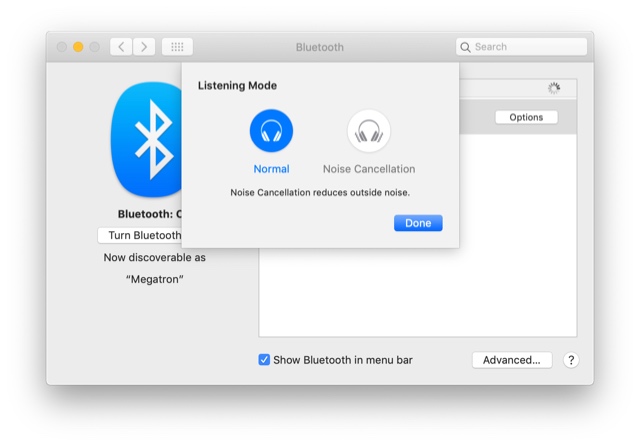
Die Softwareunterstützung für die Beats ist auf iPhone und Mac vorbildlich. Noise Cancellation schaltet man in den Bluetooth Preferences ein und aus. Alternativ drückt man doppelt auf den Power Button. Mit ANC sollen die Beats 22 Stunden laufen, ohne sogar 40. Wie bei allen vergleichbaren Headsets rauscht es leise, wenn man ANC einschaltet. Das hört man nicht mehr, sobald Musik läuft.

Ich werde noch länger brauchen, bis ich alles getestet habe. Vor allem interessiert mich, wie gut das ANC ist. Jetzt ist schon klar, dass der Marshall kleiner ist und besser auf meinen Kopf passt und dass der Plantronics auch zum Telefonieren taugt, was bei den anderen beiden nicht der Fall ist. Optisch gefällt mir der Marshall am meisten und der Plantronics am wenigsten. Aber beide kommen erst mal wieder in den Schrank und vowe fährt Beats. Wer hätte das gedacht?

30 Sep 03:51

Der Radverkehr kommt in die Schweizer Verfassung

by noreply@blogger.com (Christine Lehmann)
mkalus shared this story from Radfahren in Stuttgart.

Fast 74 Prozent der Schweizer Bürger/innen haben dafür gestimmt, dass die Förderung von Radwegen in die Verfassung aufgenommen wird.

Das bedeutet, dass der Ausbau der Radinfrastruktur in der Schweiz nicht mehr nur eine regionale Angelegenheit ist. Die Regierung in Bern kann mitreden. Vor allem aber kann sie Standards festlegen, die für mehr Sicherheit sorgen. Das scheint nötig, denn die Zahl der Verkehrstoten unter Radfahrenden ist in der Schweiz unverhältnismäßig gestiegen. Außerdem rechnen Experten damit, dass der Radverkehr in den kommenden zwei Jahrzehnten um zwei Drittel steigen wird.

In Deutschland haben wir bereits Standards für den Radverkehr, die in den Empfehlungen für den Radverkehr (ERA) festgelegt sind. Nicht dass sich die Radstreifen- und Sicherheitsstreifenbreiten in Stuttgart überall daran orientieren würden, weil sie teils älter sind, aber die neuen werden nach diesen Mindesstandards angelegt.

Unser größtes Problem in Deutschland sind über Radwege, Gehwege und Radstreifen hinweg abbiegende Autos und Lkw, die viele Radfahrende das Leben kosten. Hier sollten wir dringend eine bundesweit gültige Regelung finden und durchsetzen, die solche für Radfahrende meist tödlich endende Zusammenstöße verhindern. ganz dringend! Denn auch bei uns wird in den kommenden zwei Jahrzehnten der Radverkehr sehr stark zunehmen.


30 Sep 03:40

Support Localization – Top 50 Sprint and More

by Michał

Hello, current and future Mozillians!

I hope you can still remember that last month we kicked off a “Top 20 Sprint” for several locales available on the Support site. You can read more about the reasons behind it here and the way it had been going here.

In September, the goal has been extended to include a wider batch of articles that quality into the “Top 50” – that is, the 50 most popular Knowledge Base articles globally. You can see their list on this dashboard: https://support.mozilla.org/en-US/contributors/kb-overview

I wanted to share with you the progress our community has made over the last weeks and call out those who have contributed towards Mozilla’s broader linguistic coverage of support content, making all the possible versions of Firefox easier to use for millions of international users.

Arabic

After the impressive 1st milestone rush by Ahmad, the torch has been picked up by FFus3r, who has been working for the last few weeks on adding new and updated versions of Knowledge Base articles through the Arabic dashboard. شكرا لكم!

Bengali

Another case of passing the work on successfully, this time for Bengali localizers. We’ve had Nazir working hard on the Top 20 articles at first in August, and now we have S M Sarwar Nobin leading the charge in September. I also hear there’s an event for the Bengali community happening soon, so stay tuned for more details from that side of the world :)

Bosnian

Bosnian localizers have been quiet for a while now, so I hope we can hear from kicin again soon, as there is still time to add more content in that locale to our Knowledge Base.

Gujarati

Similarly to Bosnian, there’s not a lot of action taking place in the Gujarati part of the Knowledge Base, but hopefully we can see the localizers rally once more to reach the Top 50 goal soon.

Hindi

Hindi localizers have continued to contribute to the Knowledge Base, but with slightly diminished contributions, there’s still space for more contributions! If you know Hindi and want to join forces with Mahtab and Ritesh Raj, now is the time!

Tamil

It seems that the Tamil side of the Knowledge Base will have to wait for better days and more contributors with energy and time to spare. Here’s to hoping we can see that happen soon!

Telugu

To finish off the sprint part for the “magnificent 7” locales that responded postively to my summer call to action on a high note, I am happy to report that చిలాబు, sandeep, and Dinesh have continued improving the Knowledge Base with their translations and are well on the way of hitting the Top 50 articles if they keep up. ధన్యవాదాలు!

More news from all localizers of the above locales soon… While we wrap up September and move into October.

In the meantime, many other contributors have kept their parts of the Knowledge Base busy and updated… I would like to call out a few of them and thank them on behalf of the millions of users benefiting from their shared enthusiasm and knowledge.

The Czech team of soucet and Michal Stanke keep churning out update after update. Same goes for the Danish tag team of Joergen and Kim Ludvigsen. The unstoppable Artist makes most of the German Knowledge Base possible, together with graba.

Greek Firefox users have a lot to thank Jim Spentzos for, while those who prefer to use Spanish while browsing our site can enjoy high quality content coming from Ángela Velo (with us since 2012!). Jarmo is still looking for more people to help out with Finnish, but that does not stop him from contributing additional translations. The French language is proudly (and efficiently) supported by Mozinet, Cécile, YD, J2m06, Goofy , and Olpouin (a recent addition to the mix there – hello!).

Hungarian localizers Meskó Balázs and Kéménczy Kálmán slowly but steadily enable and improve the Knowledge Base for users over the blue Danube, while  Underpass and Michele Rodaro do the same for users on both shored of Tiber (and way beyond).

Over in Japan, dskmori (also active in Korean!), kenyama, hamasaki, and marsf provide great content for users who seem to (on average) spend the most time on each page they visit. Georgianizator is slowly working through the (obviously) Georgian (also known as Kartuli) Knowledge Base. For Korea, Narae Kim and seulgi work together with dskmori on more updates.

Tonnes (another localization MozGiant, active in the Knowledge Base – and not only – since 2010!) makes Dutch happen, while for Polish we have TyDraniu and Teo. MozBrazilians continue supporting their huge userbase through the work ofJhonatas Rodrigues, Marcelo Ghelman, leorockbar, and wikena (another new name, hello!).
Their tireless Portuguese counterparts on the other side of the ocean are Alberto Castro, ManSil and Cláudio Esperança, while over on the other side of Europe, the Russian trio of Valery Ledovskoy, Anticisco Freeman, and Harry is echoing the hard work of other localizers in the Cyrillic script.
kusavica and marcel11 keep clarifying Firefox in their own words for Slovak users, just like Lan and Rok do for Slovenians. The Turkish language is represented and supported by Burhan Keleş, SUNR, OmTi, and Selim Şumlu.
To wrap the long list of contributors up, we have Bor, ChenYJ, wxie, Yang Hanlin and xiaolu contributing for the benefit of all our Chinese users.
Each one of the people listed above helps countless others through their contributions to the open and helpful web that Mozilla is a part of. Adding their energy and skills to the language rainbow of the web, they help keep the web beautiful in its variety of cultures represented through modern and living languages.
Thank you all and may your weekend be unforgettable! Keep rocking the helpful web!
30 Sep 03:36

Here are the Google Pixel 3, Mate 20 Pro and OnePlus 6T leaks from last week

by Dean Daley

From Google to Huawei, a variety of smartphone leaks surfaced this past week.

Here’s a breakdown of most smartphone leaks from the last few days. The information below encompasses news ranging from September 22nd to September 28th.


Huawei

The Huawei Mate 20 and 20 Pro has leaked plenty of times over the past week. To check out everything we know so far about the Mate 20 Pro, click here.


Google

Google plans to launch the Pixel 3 next month, however, that hasn’t stopped new information about the handset from leaking.

Renders of the white variant of the Pixel 3 have leaked online. We’ve seen many press renders of the Pixel 3 XL, though this was the first image of the white Pixel 3 we’ve seen so far.

To see it, click here.


It also appears as the Google Pixel 3 will launch with Google Lens integrated directly in the phone. A leaked marketing video appeared online revealing that the handset will be able to scan a business card without turning on the Google Lens feature.

For more on the Google Lens integration, click here.


The Pixel 3 and 3 XL will both likely feature a 12.2-megapixel rear-facing camera.

For more on the Pixel 3’s 12.2-megapixel camera, click here. 


Google might also launch a sand-coloured Pixel 3 handset. A new code suggests this variant of the phone’s main colour is ‘Sand’ and that it might feature mint-colour highlights.

For more on the sand Pixel 3, click here.


OnePlus

OnePlus will launch the 6T at some point in the near future. The handset is rumoured to feature a 3,700mAh battery. This represents a 12 percent increase from the OnePlus 6’s 3,300mAh battery.

For more on the OnePlus 6T, click here. 


A leaked OnePlus 6T render reveals that the phone features a waterdrop notch and lacks a visible fingerprint scanner. The phone also features a dual rear-facing camera. There have also been reports that the 6T will not include a standard 3.5mm headphone jack. That said, another leak appeared this week that claimed otherwise. 

For more on the OnePlus 6T, click here.


The Razer Phone 2 leaked online. The new, rumoured phone looks very similar to the previous handset, but it seems like Razer might move the phone’s camera to sit right above the Razer insignia.

For more on the Razer Phone 2, click here

The post Here are the Google Pixel 3, Mate 20 Pro and OnePlus 6T leaks from last week appeared first on MobileSyrup.

28 Sep 22:58

SFU course in Community Data Science

by Gordon Price


From the SFU City Program:

We’re very pleased to announce a new offering of Community Data Science: Theory and Practice – the first immersive professional development program of its kind in Canada.

Making data-driven land-use, infrastructure, and policy decisions requires that planners, engineers, local policy-makers and managers understand various options, design choices, and trade-offs between them.

Our foundational, part-time Theory and Practice course leaps headfirst into public datasets, with exploring the most critical analytical tools, visualization approaches, and best practices in disseminating insights.

This course takes place over four days at the SFU Harbour Centre Campus:

• Fri Nov 9, 9am to 5pm
• Sat Nov 10, 9am to 5pm
• Fri Nov 23, 9am to 5pm
• Sat Nov 24, 9am to 5pm

Instructors: Craig Jones, PhD candidate, Department of Geography, University of British Columbia; Andy Yan, Director, SFU City Program

Learn more.

28 Sep 22:58

Is this the year of the Independent?

by Gordon Price

Mike Howell at the Courier does a feature piece on that very question.  He interviews Sandy Garossino, the former Crown prosecutor who chose to run as an independent for council in 2011 and looked to have a very credible chance to win.  She did well, but not even close to winning a seat.  Is the situation different this year?  Here are her comments – and mine.

Finance reform, coupled with Mayor Gregor Robertson and the majority of his council team retiring, are factors Sandy Garossino believes could give rise to the election of one or more independent candidates this time around. …

A recent Research Co. poll supports Garossino’s belief, with 39 per cent of respondents saying they will “definitely” or “probably” cast ballots for independent candidates. A total of 49 independent candidates are campaigning to be elected as mayor, councillor, school board trustee or park board commissioner.

Still, the brands of the NPA and Vision Vancouver persist. The Greens have also emerged as a force, with representatives on council, school board and park board. A total of 11 political parties, including COPE, OneCity, Coalition Vancouver, ProVancouver, Vancouver First and Yes Vancouver, are running candidates in the Oct. 20 election.

“Generally speaking, I think that is true — brands do carry the day,” Garossino said. “But I think right now, the brands are weakened. Vision is a weaker brand and the NPA always has to throw a huge amount of money to establish their brand. I think the brands themselves are suffering, independent of the campaign finance rules.” …

On this year’s ballot, only one candidate affiliated to a party is listed in the top nine choices for mayor. In fact, only six parties are represented among the 21 candidates. Five of the first 10 names on the council ballot are independents. …

But never say never, said Garossino, who “would love nothing more than to see” an independent elected, although she was quickly reminded what she said earlier about people not paying attention to municipal politics.

“I could be falling to prey to what I described. Political junkies see things, but the average person on the street — the average voter — doesn’t.”

Independent council candidate elected in 1986

Back in 2011, before Garossino launched her campaign, she met for coffee with Gordon Price, who was an NPA city councillor from 1986 to 2002. Price talked to Garossino about her decision to run as an independent.

“She was absolutely adamant about running [as an independent], and I always thought that was such a loss,” said Price, the past director of the City Program at Simon Fraser University and current fellow at the Morris J. Wosk Centre for Dialogue. “She’d make a great councillor, maybe a great mayor. But, no, she was insistent on running as an independent, and it went nowhere.”

He recalled that Carole Taylor was the last independent council candidate to get elected to council. That occurred in 1986 — the same year Price was first elected — but came after Taylor was left off the NPA’s candidate list and forced to run as an independent. The last independent mayor to get elected was Mike Harcourt in 1980, although he had the support of COPE.

A keen observer of local politics, Price is unable to predict what will unfold in next month’s election. There is evidence, however, that some independents could get elected, he said, citing many of the same reasons Garossino did.

“The conditions seem to be as good as they’ve ever been for the possibility of independents to win,” Price said. “You have so many vacancies, the new [finance] rules don’t give the parties as much of an edge as they did before — an edge, hell, an electoral bulldozer — and there are some good people running. Depending on your taste, there’s something on the menu for pretty much everyone.”


Mike also included by comments on the possible outcome if a council was dominated by independents:

That said, he noted the election of a variety of independents could create chaos in the council chamber.

“If people think that the free flow of ideas and exchange is something they would like, they will get very tired of what just appears to be argumentative back-and-forth, and no consistent governance,” Price said. “And that’s where I think the toleration for this would be pretty limited, unless a group of people get together to form a coalition that effectively becomes a party so they can govern, and you’re kind of back where you started.”

There’s a reason, Price said, that parties exist at all levels of government — and that’s to bring like-minded people together to create an identity or brand and govern.

“If you have a council of independents — and we can see this in other municipalities around the region where the party system is not in play — they very quickly find out who, more or less, falls within the same ideological or political direction that they want to take and they become a de facto party,” he said


28 Sep 22:56

The Developer Toolbar (or GCLI) is no longer in DevTools

by Soledad Penadés

The DevTools GCLI has been removed from the Firefox codebase (bug), which roughly translates into 20k less lines of code to think about, and the associated tests which are not running anymore, so yay for saving both brain and automation power!

We triaged all the existing bugs, and moved a bunch worth keeping to DevTools → Shared Components, to avoid losing track of them (they’re mostly about taking screenshots). Then the ever helpful Emma resolved the rest as incomplete, and moved the component to the DevTools Graveyard in Bugzilla, to avoid people filing bugs about code that does not exist anymore.

During this removal process we’ve heard from some of you that you miss certain features from GCLI, and we’ve taken note, and will aim to bring them back when time and resourcing allow. In the meantime, thank you for your feedback! It helps us better understand how you use the tools.

We also want to thank Eric Meyer for his everlasting appreciation of the screenshot feature, and his continuous dedication to making sure the world knows about this feature over the years. Thank you!

PS For background on why we removed it, you can read the initial intent to unship email.

28 Sep 22:55

OwnYourGram

Aaron Parecki, Oct 10, 2018


Icon

Pretty simple concept: "Sign in with your domain, connect your Instagram account, when you post to Instagram, the photos will be sent to your site!" Signing in with your domain requires IndieAuth (the modern-day answer to "whatever happened to OpenID?"). The code for OwnYourGram is open source.

Web: [Direct Link] [This Post]
28 Sep 22:55

iPhone XS Line Capturing Selfies with the Appearance of Skin Smoothing

by Ryan Christoffel

The iPhone XS and XS Max have been in the hands of users for a week now, and during that time many selfies have undoubtedly been taken on the new devices. Some users have noticed an unexpected difference with their selfies, however: their skin looks smoother and less realistic than it should. Juli Clover reports on this for MacRumors:

When taking a selfie in a situation where lighting is less than ideal, such as indoors or outdoors in areas with lower lighting, the iPhone XS Max appears to be applying a drastic smoothing effect that can hide freckles, blemishes, and other issues.

In full outdoor lighting the problem is less apparent, which has led to speculation that the skin smoothing is actually a result of some heavy-handed noise reduction techniques.

You can test the new camera yourself with an iPhone XS Max and an older iPhone like an iPhone X model by taking selfies indoors and outdoors and comparing the differences between the two. In almost all cases where the lighting is low or uneven, photos captured with an iPhone XS Max look dramatically different.

9to5Mac has a quote from one user, Abdul Dremali, who said, "Apple reached out to me yesterday and are working on this issue actively." That isn't necessarily confirmation that a skin smoothing effect is being applied, but it does indicate that something's happening with the XS front-facing camera that wasn't intended.

There's often one controversy or another surrounding the launch of a new iPhone, such as antennas not working properly or iPhones bending under pressure. This issue doesn't seem quite like those past problems, as it should be a quick fix in software if something's not functioning correctly. In 2018 there's a lot that happens in software every time a photo is taken on an iPhone; it wouldn't surprise me if a small tweak arrives in iOS 12.0.1 that helps skin remain natural to the eye no matter the lighting conditions. One way or another, we should hear more from Apple before long.

→ Source: macrumors.com

28 Sep 22:53

ARM’s latest chip is built for autonomous vehicle safety and performace

by Brad Bennett
ARM chip

Increasing numbers of companies are hopping into the autonomous car race, and now ARM has thrown its hat into the ring with its new Cortex-A76AE chip.

The chip is based on ARM’s Cortex-A76 design since it can handle machine learning while also being very efficient. The AE variant stands for ‘Automotive Enhanced,’ and it has a few different microarchitecture upgrades for functional safety and application flexibility.

Additionally, ARM claims the main benefits of the new Cortex are safer autonomous systems, better performance for Advanced Driver-Assistance Systems and autonomous driving and the ability to run different programs at different levels of Automated Safety Integrity Levels (ASIL).

The most significant change overall in the Cortex-A76AE is the addition of new safety features that bring it up to par with modern vehicles.

Specifically, the chip supports a ‘Split-Lock’ features that allow it to continue to run in a degraded mode if other parts of the system fail. To learn more about Split-lock, ARM has put together a blog post explaining the technology. 

All of this new technology is important to maintain the chip’s balance between performance, reliability and efficiency. Self-driving car chip advancement is something that isn’t thought about often, but without it, all of the sensors and code that cause the car to run will fail.

ARM is trying to future-proof this industry a little bit by providing a single chip that’s packed with the power, the safety and features to last in the market for a few years.

Source: ARM

The post ARM’s latest chip is built for autonomous vehicle safety and performace appeared first on MobileSyrup.

28 Sep 22:53

LG to announce long rumoured Watch W7 next week: report

by Igor Bonifacic
LG Watch Style

LG’s long-in-development hybrid Wear OS smartwatch will launch next week alongside the V40 ThinQ, according to premier device leaker Evan Blass.

Blass shared the launch date in a tweet he sent out late Thursday night.

LG will reportedly market the device as the ‘LG Watch W7.’ Previous rumours, including an extensive report from AndroidHeadlines, had said LG planned to call the upcoming wearable the ‘LG Watch Timepiece.’

The W7 is notable for reportedly featuring analog watch hands, in addition to an LCD display.

Source: Evan Blass

The post LG to announce long rumoured Watch W7 next week: report appeared first on MobileSyrup.

28 Sep 22:53

iPhone XS and XS Max owners are complaining about automatic camera skin smoothing

by Patrick O'Rourke
iPhone XS Max

With the iPhone XS and XS Max out in the wild, issues are starting crop up related to some of the pair’s new features, particularly when it comes to camera performance.

At first, reports came out that said the Pixel 2 XL’s camera captured more detail in images when directly compared to the iPhone XS’ camera, but this latest problem seems to be an entirely different issue altogether.

A variety of iPhone XS owners have taken to Reddit to complain that images shot with the iPhone XS feature what seems to be a skin smoothing effect. Worse yet, there’s currently no toggle to disable this effect, nor a slider that allows users to control its strength.

iPhone XS is applying skin smoothing/beauty filter on the front facing camera without telling you and no way to disable it. This is not acceptable. from r/iphone

The r/iphone thread starts off with a close crop of the skin smoothing feature posted by Reddit user ‘chemicalsam,’ which gives the best impression of the skin smoothing (seen above).

Some users have even gone so far as to compare the effect to Snapchat’s smoothing filter. Canadian YouTuber ‘Unbox Therapy’ (Lewis Hilsenteger) even put together an entire video focused on the problem.


It’s unclear what’s actually going on, but the skin smoothing seems to be happening when taking an image normally, as well as when the camera is set to ‘Portrait Mode.’ I ran a few tests myself and the iPhone XS does indeed seem to be applying some sort of smoothing algorithm to the subject’s skin.

Further, it also happens when snapping a selfie normally, whether smart HDR is on or off. Admittedly, the smoothing effect isn’t quite as noticeable when the images are viewed on a computer screen, as opposed to the iPhone XS or iPhone XS Max’s display.

Below are a few images you can check out yourself for comparison.

The left image was shot with the iPhone XS MX, while the right was taken with the iPhone X.

The skin smoothing is clearly visible in the left image taken with the iPhone XS. Both shots were snapped with the iPhone XS’ and iPhone X’s selfie camera.

The left image was taken with the iPhone XS Max, while the right image was snapped with the iPhone X. In this pairing smart HDR is turned on with the iPhone XS Max.

These photos were also shot in standard mode and not in Portrait Mode. Further, the pictures were shot with the rear camera on both devices.

The image on the left was shot with the iPhone XS Max, while the one on the right was taken with the iPhone X. In this case, Smart HDR is turned off with the iPhone XS Max. Both images were also shot with the iPhone X and iPhone XS Max’s rear camera.

According to 9to5mac, Apple reached out to photographer Abdul Dremali after seeing his post in the ongoing r/iphone reddit thread focused on the problem. Dremali says that the company told him that it is “working on this issue actively.”  

MobileSyrup has reached out to Apple for comment on the skin smoothing effect, as well as to find out if this is a planned iPhone XS feature.

Source: Reddit (chamicalsam) Via: 9to5Mac 

The post iPhone XS and XS Max owners are complaining about automatic camera skin smoothing appeared first on MobileSyrup.

28 Sep 22:52

Amazon opening warehouse on Tsawwassen First Nation land in B.C.

by Brad Bennett
Amazon Canada

E-commerce giant Amazon is opening a new fulfillment centre to serve the Metro Vancouver area on the Tsawwassen First Nation’s land in Delta, B.C.

The warehouse is a massive 450,000-square-foot facility that’s slated to create more than 700 full-time jobs. The company plans to have it up and running by the 2019 holiday season.

This is the first Amazon warehouse to be located on First Nations land. Specifically, it’s situated in the Deltaport area and is being developed by GWL Realty Advisors, a local firm.

In an interview with CTV News, a spokesperson for Amazon said the company looks for locations with “a talented workforce and proximity to customers so they can fulfil their one and two-day shipping promise.”

The Tsawwassen First Nation meets those requirements.

“Tsawwassen First Nation welcomes Amazon to our Lands,” said Chief Bryce Williams in Amazon.ca’s September 28th press release. “This is a promising advancement that will continue to unlock the potential of TFN as a leading development partner and key economic driver in Metro Vancouver.”

This is Amazon’s third Fulfilment centre in British Columbia. It will likely ship toys, books, home goods and small electronics.

Lynch mentions that the new centre is capable of shipping purchases all over the world.

Source: Amaozon.ca Via: CTV News

The post Amazon opening warehouse on Tsawwassen First Nation land in B.C. appeared first on MobileSyrup.

28 Sep 22:51

Volkswagen partners with Microsoft to develop VW Automotive Cloud

by Brad Bennett

German car manufacturer Volkswagen is partnering with Microsoft to develop a large-scale automotive industry cloud for all future Volkswagen digital services and mobility offerings.

The large-scale automotive industry cloud is a significant step for Volkswagen as it transforms “into a mobility provider with fully connected vehicle fleet,” reads an excerpt from Volkswagen’s September 28th press release.

“Volkswagen is harnessing technology to digitally transform and deliver innovative new connected car services to its customers,” said Microsoft’s CEO Satya Nadella in VW’s press release.

The concept is to transform 200 million of VW’s 2020 offerings into a fleet of connected cars that are capable of offering futuristic features like in-car media streaming, crash predictions, personalised driver identification, enhanced security and more.

VW is building the automotive cloud is on top of Microsoft’s Azure cloud computing service. VW is developing the cloud for its entire brand and the rest of the auto group’s subsidiaries like Audi, Bently, Lamborgini and Porshe.

To develop the platform, the group is opening an automotive cloud development office in North America near Microsoft’s headquarters in Redmond, Washington. Interestingly, the press release only mentions North America as a possible location for the centre instead of referring to the U.S specifically.

“Microsoft will provide hands-on support to Volkswagen as it ramps up its new automotive cloud development office, including resources to help drive hiring, human resources management and consulting services. The workforce is expected to grow to about 300 engineers in the near future,” reads the press release.

The release also states that Microsoft is giving Volkswagen’s cloud engineers access to the organization’s cloud development expertise. This is so “Volkswagen developers and engineers can benefit and learn from Microsoft’s strong culture of collaboration and agility and can transfer those experiences into the core Volkswagen organization,” reads the press release.

This is a compelling line as it speaks to how the traditional world-class automaker is looking to adapt and learn from the workplace culture of a more forward-thinking modern technology company.

For Microsoft, this is an exciting move since it’s been working behind the scenes with its automotive cloud platform. The company licensed its connected car technology to Toyota in March of 2017.

The car industry is going through a period of intense change with both autonomous and electric vehicles being new areas of focus for legacy vehicle manufacturers. On top of this, drivers want connected infotainment systems and futuristic features that are only possible through the power of cloud computing.

It’s an ideal time for tech companies to move into the changing space. Google recently partnered with the Renault-Nissan-Mitsubishi Alliance to bring a custom infotainment solution to its cars.

Even chip makers are starting to develop complex silicon that’s capable of supporting features like the connected platforms VW and Microsoft are pledging to build.

It’s still unclear what this all means for drivers, but it’s exciting to see legacy automakers like VW make moves to modernize their vehicles.

Source: Volkswagen

The post Volkswagen partners with Microsoft to develop VW Automotive Cloud appeared first on MobileSyrup.