Shared posts

03 Oct 23:21

Strange Loop 4: The Quotable Wadler

by Eugene Wallingford

Philip Wadler is a rockstar to the Strange Loop crowd. His 2015 talk on propositions as types introduced not a few developers to one of computer science's great unities. This year, he returned to add a third idea to what is really a triumvirate: categories. With a little help from his audience, he showed that category theory has elements which correspond directly to ...

  • logical 'and', which models the record (or tuple, or pair) data type
  • logical 'or', which models the union (or variant record) data type
  • a map, which models the function data type
What's more, the product/sum dual models De Morgan's laws, but with more structure, which enables it to model sets beyond the booleans!

Wadler is an entertaining teacher; I recommend the video of his talk! But he is also as quotable as any CS prof I've encountered in a long while. Here is a smattering of his great lines from "Categories for the Working Hacker":

If you can use math to do something, do it. It will make your life better.

That's the great thing about math. It lets you see something obvious after only thirty or forty years.

Pick your favorite algebra. If you don't have one, get one.

Let's do that in Java. That's what you should always do when you learn a new idea: do it in Java.

That's what category theory is really about: avoiding traffic jams.

Sums are the secret origin of folds.

If you don't understand this, I don't mind, because it's Java.

While watching the presentation, I created a one-liner of my own: Surprise! If you do something that matches exactly what Haskell does, Haskell code will be much shorter than Java code.

This was a very good talk; I enjoyed it quite a bit. However, I also left the room with a couple of nagging questions. The talk was titled "Categories for the Working Hacker", and it did a nice job of presenting some basic ideas from category theory in a way that most any developer could understand, even one without much background in math. But... How does this knowledge make one a better hacker? Armed with this new, entertaining knowledge, what are software developers able to do that they couldn't do before?

I have my own ideas for answers to these questions, but I would love to hear Wadler's take.

03 Oct 18:27

NewsBlur Blurblog: Fifteen Years of Tao of Mac

sillygwailo shared this story from The Tao of Mac.

Any way I look at it, this site is effectively fifteen years old this year–although it started out under another domain name, it’s been publicly called taoofmac.com since September 18th, 2003, and spotted by Netcraft in November of the same year. For most of that time I’ve written about the Mac, Apple or mobile tech in one form or another, and it’s been a rollercoaster in more ways than one.

The site itself has waxed and waned in popularity over the years, as has the balance between obligation and enjoyment in maintaining it, but it has chugged along throughout becoming a parent (twice), a number of medical incidents (of which this one was the most colorful, but certainly not the most serious), and three changes in employer (and industry).

Apple-related blogging was a niche thing fifteen years ago, and my not being in the US (or part of the anointed who actually attend Apple events) wasn’t a serious handicap in joining the fun, because most of the people who wrote about Apple and the Mac did so with their own voices and at a deeply personal level.

Right now it doesn’t really have the kind of popularity it had before social networks and commercial sites drew away the bulk of traffic by dint of hype and horrid fascination, but I still get enough visitors and feedback to make this more than a set of semi-personal notes–most of my audience doesn’t come from HackerNews or Twitter, and that’s a good thing.

Waves Of Change

Over the last decade and a half, the computing landscape changed tremendously, and even considering I enjoyed a ringside seat in the rise of mobility and connectivity1, the site soon stopped being just about the Mac and more about the iPhone–and, later, as the smartphone revolution raged on and my family grew, more about what tech I could squeeze in during my leisure time.

A nice change is that Linux, Android and Open Source are now everywhere, but that also means there is too much to cover and fiddle with, as well as the emergence of “new normals” for Apple’s ecosystem to compete with in several fronts.

As time moved on my priorities changed, but it’s fun to look back and watch some patterns emerge as mobility turned computers into phones and computing itself upside down. Software and applications bet increasingly on mass appeal2 over sophistication, and even if it meant seemingly endless variations on flashlight apps for mobile phones in the early days, billions more people have access to them now.

A broader audience also means that many niches became mainstream markets–just look at the size of Fortnite, which is today’s closest analogue to Quake, and how mobile gaming and streaming entertainment have grown into massive industries in their own right.

Behind The Scenes

The machinery running the site itself also changed a lot (and I’ve kept a list of the hows and wheres), but one of the main reasons the site lasted this long is that I removed nearly all the friction involved in authoring and publishing–for a long time now, I just drop Markdown files onto Dropbox and they pop up online, which is almost as easy as impulse tweeting even if it requires a lot more forethought and reviewing (which, as anyone in the writing business will readily point out, is the actual work it entails).

Fifteen years after I decided to go all out on the Mac to make my life easier, the Cambrian explosion of mobility and its demand for server-side compute has reached beyond carriers to the datacenter, and companies are (finally) following suit and moving their stuff to the cloud. Distributed systems and scalable software architecture is now the critical (but, alas, underrated) factor to grow a mass-market business, and high-impact, heavy demand workloads like machine learning are suddenly everywhere–so most software I care about these days is server-side software that runs on Linux, and not anything I can run on my Mac.

But I still develop on my Mac, and derive much more enjoyment from the experience than anywhere else3, even if the paradigms and user experience of the stuff I build have changed as dramatically as TV (which my kids can’t believe wasn’t pausable and rewindable before).

I can’t be sure that the Mac itself will be around (or in my life) for another fifteen years, but I had no guarantees back when I started writing, and what drove me to start (effortless, frictionless doing) is still valid today, and that is good enough for me.

Thanks for reading, and hope to see you around for another fifteen years.


  1. While I was at Vodafone (which resulted in dozens of posts with notes on phones, most of which were completely obsolete and have slowly removed). ↩︎

  2. Which, sadly, was largely about dumbing down both the apps themselves (and the experience) and the ways they are built (and no, I’m not happy about the rise of web apps, not technically). ↩︎

  3. Even working at Microsoft and quite liking Windows 10’s Linux subsystem, the Mac is still my favorite (more productive and less distracting) environment. ↩︎

03 Oct 17:56

NewsBlur Blurblog: Fifteen Years

sillygwailo shared this story from AVC.

Fifteen years ago, I sat down in front of a website called Typepad and wrote this post.

I ended that short post (six brief paragraphs) with this:

I read blogs a lot. And i think they are great. So i am starting a blog. I have no idea if i’ll write a lot in my blog or rarely. I hope its a lot, because i have a lot to say. But we’ll see about that.

Well, we did see about that. I do have a lot to say. As a hater commenter said here a few weeks ago, I talk too much.

But out of all of that writing has come a few gems that still are as good as the day I wrote them, a series of blog posts called MBA Mondays that people continue to come across and read from start to finish, and a connection to a readership that numbers in the hundreds of thousands.

For me, I have gained a daily practice that starts me off with a wide-open mind, that makes me think and articulate that thinking, that has led to numerous spectacular investments and has honed my ability to communicate, not just in the written word, but also in many other ways.

In those fifteen years, I have posted 8,033 times. That is way more than 15*365 because, in the early years, I would post multiple times a day. I settled on once a day about five years in and that has become my practice since.

I regularly get people coming to me and asking me to write a book. I always pass because I can’t imagine writing in a format that has an end. I can’t imagine writing in a format that doesn’t provide instant feedback. I can’t imagine writing in a format that requires a structure. I can’t imagine writing in a format that isn’t a stream of consciousness. I can’t imagine thinking about what I am going to write more than ten minutes before writing it. I can’t imagine killing trees to carry my words. So I will continue to write a blog. It’s the perfect format for me. AVC is way more than a book. It is a living breathing thing that sustains me and that is me.

When this blog turned ten, we had a big party. Many people traveled long distances to attend. It was a lot of fun. I met many AVC readers for the first time.

Five years later, I am in a different frame of mind on how to celebrate the anniversary. I want to acknowledge the moment and then move on. I am trying to contain what this blog is to keep it manageable for me. There are many times it has tested those limits. Lately, I have gotten it in a good place where it is working well for me. And hopefully for you too.

Happy fifteenth birthday, AVC.

02 Oct 00:46

Mozilla Tool Can Check if You Are Pwned — Firefox Monitor

by Robert "Bob" Reyes
“Pwn” or “Pwned” is pretty much a common word we see online these days. The Merriam-Webster dictionary defines the word as: ‘Pwn’ is a lot like the sense of ‘own’ that means “to have power or mastery over (someone).” It has also been used to describe the act of gaining illegal access to something. Data breaches, just like the one Facebook had earlier today (MNL time), had become rampant these past few months. Critical information such as (but not limited… Read the rest
02 Oct 00:46

Beats Studio 3 vs. Bose QC 35 vs. Plantronics 8200

by Volker Weber

ZZ5682EC4B

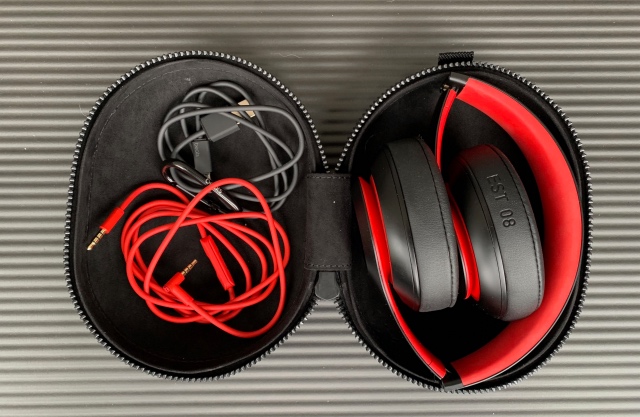
So ähnlich, und doch so unterschiedlich. Alle drei Headsets kommen mit einem Transportbehälter und sie versuchen sich für die Reise klein zu machen. Die Beats machen das so, wie schon dunnemals die Monster-Kopfhörer. Ja, auch die für Nokia. Kein Wunder, sie haben die gleiche Gene. Während Nokia damals eine Neoprenhülle mitlieferte, haben die Beats Studio 3 nun ein festes Ei. Das schützt das Headset, aber benötigt unfassbar viel Platz. Die Kabel legt man einfach rein, ein kleiner Karabiner erlaubt die Aufhängung außen an der Tasche. Das ist auch nötig.

ZZ36E5A5EF

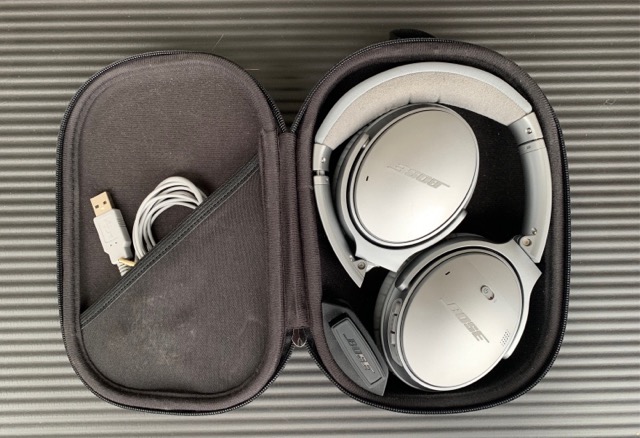
Die Bose QC 35 haben ein flaches Kunstleder-Etui. Die Kabel finden in einer Innentasche Platz, die Ohrmuscheln lassen sich umlegen. In der linken unteren Ecke findet sich ein Adapter für die merkwürdigen Doppelmono-Buchsen in manchen Flugzeugsitzen. (Bei den Bose QC35 II hat Bose den Adapter eingespart). Auf der Rückseite hat es eine weitere eng anliegende Tasche, in der man geschwind das Audiokabel oder den Adapter verstauen kann, ohne den Reißverschluss zu öffnen. Das Etui ist so groß wie eine Brotdose und aktentaschentauglich.

ZZ6590BA2D

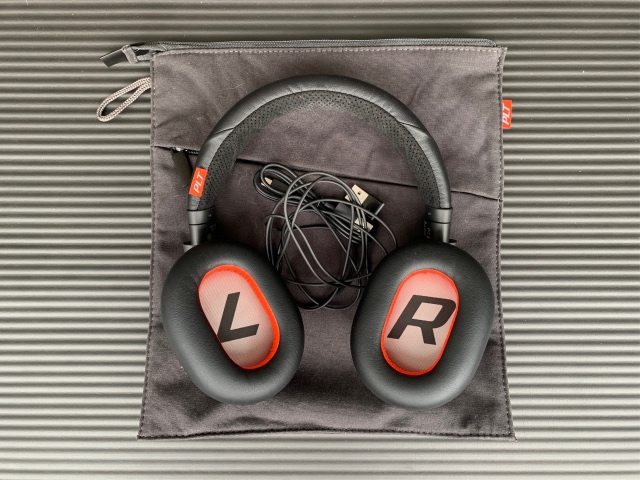
Plantronics liefert bei allen großen Kopfhörern einen wertigen Alcantara-Beutel mit verschließbarer Außentasche. Das Headset lässt sich nicht einklappen, aber die Ohrmuscheln drehen sich. Das Gesamtpaket ist so flach wie das von Bose, aber deutlich größer. Dafür finde ich den Beutel beim Fliegen ungemein praktisch. Er lässt sich mit der Schlaufe am Haken des Vordersitzes aufhängen und dient mir unterwegs als Aufbewahrung für iPhone, Bordkarte, Pass, etc. Das ist das Notgepäck, was ich greifen würde, wenn ich (hoffentlich nie) ein Flugzeug evakuieren müsste.

Alle drei Headsets haben ein Audiokabel mit abgewinkeltem Stecker, das man in der Sitzlehne nicht abknickt. Beats und Bose haben ein Mikrofon und eine Fernsteuerung im Kabel. Alle drei Headsets haben ein MicroUSB-Kabel zum Laden. Das von Bose ist extrakurz. Die Beats passen sich nicht in das Apple-Ökosystem ein - kein Lightning. Besonderheit beim Plantronics 8200 UC ist der eigene Bluetooth-Adapter für Mac oder PC, der das Headset als Audio-Device erscheinen lässt. Dieses Headset ist auch das Einzige, das Umgebungsgeräusche beim Telefonieren ausfiltert. Beats und Bose haben jeweils nur ein Mikro zum Telefonieren, Plantronics dagegen vier Mikros, welche die eigene Stimme aufnehmen, nicht aber die Kulisse.

Alle drei Headsets sind gut für mehr als 20 Stunden mit ANC. Beats lädt in 10 Minuten für drei Stunden Spielzeit, Bose 15 Minuten für gut zwei Stunden. Voll geladen sind alle drei nach ca. 2,5 Stunden.

Bose und Plantronics sprechen mit dem Anwender, während die Beats nur Piepsen. Plantronics hat einen On-Ear-Sensor, der die Wiedergabe pausiert, wenn man sie abnimmt. Außerdem hat dieses Headset eine Taste, mit dem die Außenmikrofone durchschalten kann. Das ist sowohl praktisch als auch hinterlistig. Niemand nimmt an, dass man mit Headset derart gut hören kann. Bei Bose kann man die ANC über eine App schalten, bei Beats per Bluetooth-Eigentschaften ohne zusätzliche App oder den Einschalter. Die Plantronics haben einen Schiebeschalter mit drei Positionen off/low/high.

Preislich gibt es keine Unterschiede. Aktuell kosten alle drei knapp 290 Euro. Die Bose haben die beste Geräuschunterdrückung, die Plantronics haben die meisten Funktionen und taugen auch zum Telefonieren in lauter Umgebung. Die Beats funktionieren bestens mit Apple Watch, iPhone/iPad und Mac durch den Apple W1 Chip.

Update: Über meine eigenen Beobachtungen zum Klangerlebnis hatte ich schon geschrieben. Gestern habe ich die Kopfhörer dem geschätzten Kollegen Dr. Michael Spehr aufgesetzt, der vor allem klassische Musik hört. Er empfand Bose und Plantronics auf ähnlichem Niveau, mit einer leichten Präferenz für Bose, weil sie frischer klingen.

Dann aber zwei Überraschungen. Der Beats gefiel ihm deutlich besser. Und dann habe ich zum Vergleich noch den Marshall Monitor herangezogen. Und den fand der dann am besten.


02 Oct 00:45

Styling Python and SQL Code in Jupyter Notebooks

by Tony Hirst

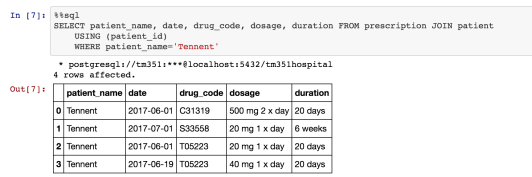
One of the magics we use in the TM351 Jupyter notebooks is the ipython-sql magic that lets you create a connection to a database server (in our case, a PostgreSQL database) and then run queries on it:

Whilst we try to use consistent code styling across the notebooks, such as capitalisation of SQL reserved words (SELECT, FROM, WHERE etc), sometimes inconsistencies can crop in. (The same is true when formatting Python code.)

One of the notebook extensions can help in this respect: code prettifier. This extension allows you to style one or all code cells in a notebook using a templated recipe:

The following snippet applies to Python cells and will apply the yapf Python code formatter to Python code cells by default, or the sqlparse SQL code formatter if the cell starts with a %%sql block magic. (It needs a bit more work to cope with %sql line magic, in which case the Python formatter needs to be applied first and then the SQL formatter applied from the start of the %sql line magic to the end of the line.

#"library":'''
import json
def code_reformat(cell_text):
    import yapf.yapflib.yapf_api
    import sqlparse
    import re
    comment = '--%--' if cell_text.startswith('%%sql') else '#%#'
    cell_text = re.sub('^%', comment, cell_text, flags=re.M)
    reformated_text = yapf.yapflib.yapf_api.FormatCode(cell_text)[0] if comment=='#%#' else sqlparse.format(cell_text, keyword_case='upper')
    return re.sub('^{}'.format(comment), '%', reformated_text, flags=re.M)
#''',
#"prefix":"print(json.dumps(code_reformat(u",
#"postfix": ")))"

Or as a string:

"python": {\n"library": "import json\ndef code_reformat(cell_text):\n import yapf.yapflib.yapf_api\n import sqlparse\n import re\n comment = '--%--' if cell_text.startswith('%%sql') else '#%#'\n cell_text = re.sub('^%', comment, cell_text, flags=re.M)\n reformated_text = yapf.yapflib.yapf_api.FormatCode(cell_text)[0] if comment=='#%#' else sqlparse.format(cell_text, keyword_case='upper')\n return re.sub('^{}'.format(comment), '%', reformated_text, flags=re.M)",
"prefix": "print(json.dumps(code_reformat(u",
"postfix": ")))"\n}

On my to do list is to find a way of running the code prettifier over notebooks from the command line using nbconvert. If you have a snippet that shows how to do that, please share via the comments:-)

PS clunky, but this sort of handles the line magic?

import json

def code_reformat(cell_text):
    import yapf.yapflib.yapf_api
    import sqlparse
    import re

    def sqlmatch(match):
        return '%sql'+sqlparse.format(match.group(1), keyword_case='upper')

    comment = '--%--' if cell_text.startswith('%%sql') else '#%#'
    cell_text = re.sub('^%', comment, cell_text, flags=re.M)
    reformatted_text = yapf.yapflib.yapf_api.FormatCode(cell_text)[0] if comment=='#%#' else sqlparse.format(cell_text, keyword_case='upper')
    reformatted_text = re.sub('^{}'.format(comment), '%', reformatted_text, flags=re.M)
    if not cell_text.startswith('%%sql'):
        reformatted_text=re.sub('%sql(.*)',sqlmatch , reformatted_text, re.MULTILINE)
    return reformatted_text

NB the sqlparse function doesn’t seem to handle functions (eg count(*)) [bug?] but this horrible workaround hack to substitute for sqlparse.format() may provide a stop gap?

#replace sqlparse.format with sqlhackformat() defined as follows:
def sqlhackformat(sql):
    #Escape the brackets, parse, then unescape the brackets
    return re.sub(r'\\(.)', r'\1', sqlparse.format(re.escape(sql), keyword_case='upper'))
02 Oct 00:45

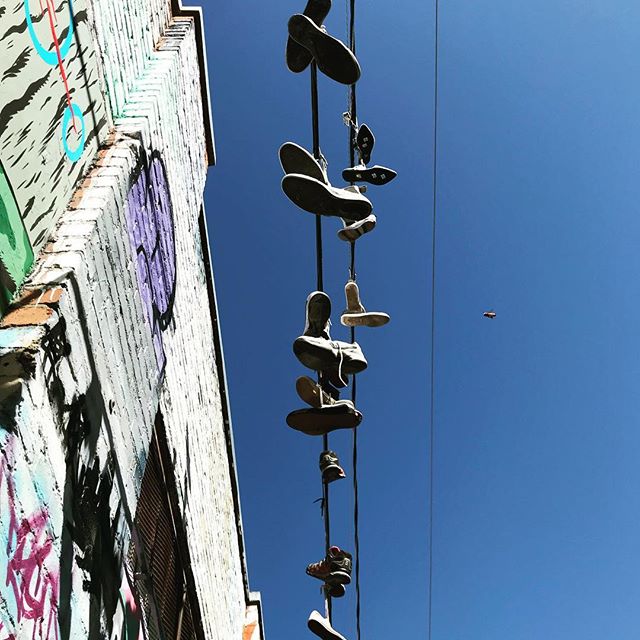
urban

by Emily Chang

urban

Photo Caption: urban

Photo taken at: Clarion Alley Mural Project

Instagram filter used: Juno

View in Instagram ⇒

02 Oct 00:45

found ourselves in alamo square on warm Sunday looking up at weeping willow trees and puffy clouds against an optimistic sky

by Emily Chang

found ourselves in alamo square on warm Sunday looking up at weeping willow trees and puffy clouds against an optimistic sky

Photo Caption: found ourselves in alamo square on warm Sunday looking up at weeping willow trees and puffy clouds against an optimistic sky

Photo taken at: Alamo Square

Instagram filter used: Clarendon

View in Instagram ⇒

02 Oct 00:45

All Maturity Levels

by peter@rukavina.net (Peter Rukavina)

The first thing Oliver did this morning was to update his Netflix profile to give himself access to shows of “all maturity levels.”

(He put on the previous restrictions himself, and could have removed them at any time).

02 Oct 00:45

Google Maps Adds Commuting Features

by John Voorhees

Google has announced that later this week, it will add several new features to its Maps app for iOS and Android commuters. The update includes live, personalized traffic data, support for ‘mixed-mode’ commutes, real-time bus and train tracking, and integration with Apple Music, Google Play Music, and Spotify.

The update will include a dedicated ‘Commute’ tab in the Maps app. After users identify their commute, Google Maps will provide live traffic data about the route. The Android app will also include notifications about delays as they happen so you can adjust your trip.

Google Maps will also support mixed-mode commutes. That means, for example, commuters who travel by car, train, and on foot will see commute information relevant to each leg of their journey. Real-time bus and train tracking is being added in 80 cities worldwide too.

Playback controls for Apple Music, Spotify, and Google Play Music is coming to Google Maps. Spotify users on Android will also be able to browse and select content from inside the app.

As someone who used to commute by train every day, I particularly appreciate the focus on public transportation. Google hasn’t said, but hopefully, these new features are included as part of Google Maps’ CarPlay integration too.

Google Maps is available as a free download on the App Store.


Support MacStories Directly

Club MacStories offers exclusive access to extra MacStories content, delivered every week; it's also a way to support us directly.

Club MacStories will help you discover the best apps for your devices and get the most out of your iPhone, iPad, and Mac. Plus, it's made in Italy.

Join Now
02 Oct 00:44

The Seven Deadly Sins Of Digital Badging In Education

Troy Markowitz, Forbes, Oct 11, 2018


Icon

I've been considering the use of badges in my upcoming MOOC and so this article resonated with me. Some of the key things to avoid: making the issuing of badges a manual process (imagine having to click on a button 3,000 times (let alone fill out 3,000 forms)); don't require students to 'apply' for badges (because the data suggest that they won't); make badges usable (locating them inside an LMS is not 'usable'); and make sure they actually measure something meaningful (which make it doubly hard to issue them automatically; I won't issue a badge for passing a multiple-choice test). Note: Forbes uses a spamwall, which will block access for many readers; I use UBlock Origin on Firefox to access this article without having to whitelist Forbes (you should not whitelist Forbes).

Web: [Direct Link] [This Post]
02 Oct 00:44

Andrew Yang Deserves to Be Heard. Will Our Politics Let Him Speak?

by John Battelle

Let’s be honest with ourselves, shall we? We’re in the midst of the most significant shift in our society since at least the Gilded Age – a tectonic reshaping of economic systems, social mores, and political institutions. Some even argue our current transition to a post-digital world, one in which technology has lapped our own intelligence and automation may displace the majority of our workforce within our lifetimes, is the most dramatic change to ever occur in recorded history. And that’s before we tackle a few other existential threats, including global warming – which is inarguably devastating our environment and driving massive immigration, drought, and famine – or income inequality, which has already fomented historic levels of political turmoil.

Any way you look at it, we’ve got a lot of difficult intellectual, social, and policy work to do, and we’ve got to do it quickly. Lucky for us, two major political events loom before us: The midterm elections this November, and a presidential election two years after that. Will we use these milestones to effect real change?

Given our current political atmosphere, it’s hard to imagine that we will. I fervently hope that the midterms will provide an overdue check on the insane clown show that the White House has delivered to us so far, but I’ve little faith that the build up to the 2020 Presidential election will be much more than an ongoing circus of divisive theatrics. Will there be room for serious debate about reshaping our fundamental relationship to government? If we are truly in an unprecedented period of social change, shouldn’t we be talking about how we’re going to manage it?

We could be, if Andrew Yang can poll above 15 percent in time for the Democratic debates next year.
Wait, who?!

Andrew Yang currently labors in near obscurity, but he is one of only two declared democratic candidates for president so far, and he’s been spending a lot of time in Iowa and New Hampshire lately. Yang is smart, thoughtful, and has the backing of a lot of folks in the technology world. He’s the founder of Venture for America, a program that trains college grads to work as entrepreneurs in “second cities” around the country like St. Louis, Pittsburgh, and Cleveland. He’s in no way a typical presidential candidate, but then again, we seem to be tired of those lately.

If you have heard of Yang, it might be as the “UBI candidate,” though he rankles a bit at that description. Yang is a proponent of what he calls the “Freedom Dividend,” a version of universal basic income that he argues will fundamentally reshape American culture. To get there, we’ll need to radically rethink our current social safety net, adopt an entirely new approach to taxation (he argues for a European-style value added tax), and get over our uniquely American love affair with the Horatio Alger mythos.

Can a candidate like Yang actually win the Democratic nomination for president, much less the presidency itself? I’ve not met a political professional who thinks he can, but then again, much stranger things have already happened.  Regardless, it’s critical that we debate the ideas his campaign represents during the build up to our national elections in 2020, and for that reason alone I’m supporting Yang’s candidacy.

I met Yang two weeks ago at Thrival, an event that NewCo helps to produce in Pittsburgh (the video of that event will be up soon, when it is, I’ll post a link here). For nearly an hour on stage at the Carnegie museum, I grilled Yang about his economic theories, his chances of actually becoming president, and his agenda beyond the Freedom Dividend. I do a lot of interviews with well known folks, and I must say, if the reaction Yang got from the Pittsburgh audience is any indication, the man’s platform resonates deeply with voters.

For anyone who wants to get know Yang better, I recommend his recently published book The War on Normal People. But read it with this caveat: The thing is damn depressing. Yang lays out how structurally and fundamentally broken our society already is. He persuasively argues that we’re already in the midst of a “Great Displacement” across tens of millions of workers, a displacement that we’ve failed to identify, much less address. Echoing the recent work of Anand Giridharadas, Rana FooroharEdward Luce, and Andy Stern, Yang cites example after example of how perilously close we are to social collapse.

It’s hard to win a presidential election if fear is your primary motivator. But we live in strange, fearful times, and despite the pessimism of his book, I found Yang an optimistic, genuine, and actually pretty funny guy. He calls himself “the opposite of Trump – an Asian man who likes numbers.”

For Yang to actually shift the dialog of presidential politics, he’ll need to poll at or above 15 percent by early next year. That’s going to be a long shot, to be sure. But I for one hope he makes it to the debate stage, and that as a society, we will seriously discuss the ideas he proposes. We can no longer afford politics as usual – not the politics we have now, and certainly not a return to the cliché-ridden blandishments of years past. The time to traffic in new ideas – radically new ideas – is upon us.


(Cross posted from NewCo Shift)

02 Oct 00:44

Beautiful Bikes from Boston's Builders' Ball - Porter Cycles Winged Victory

by noreply@blogger.com (VeloOrange)
by Igor


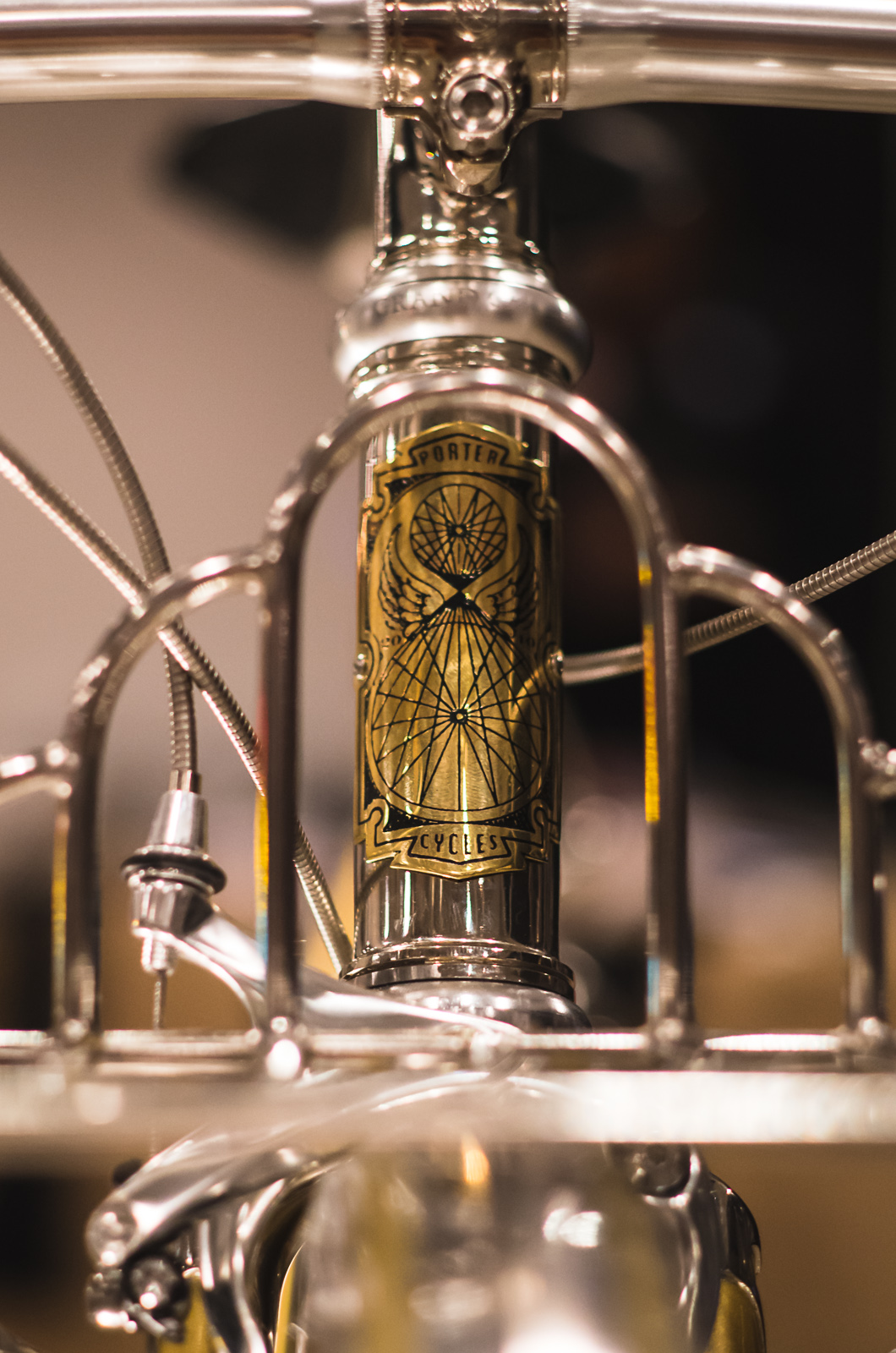
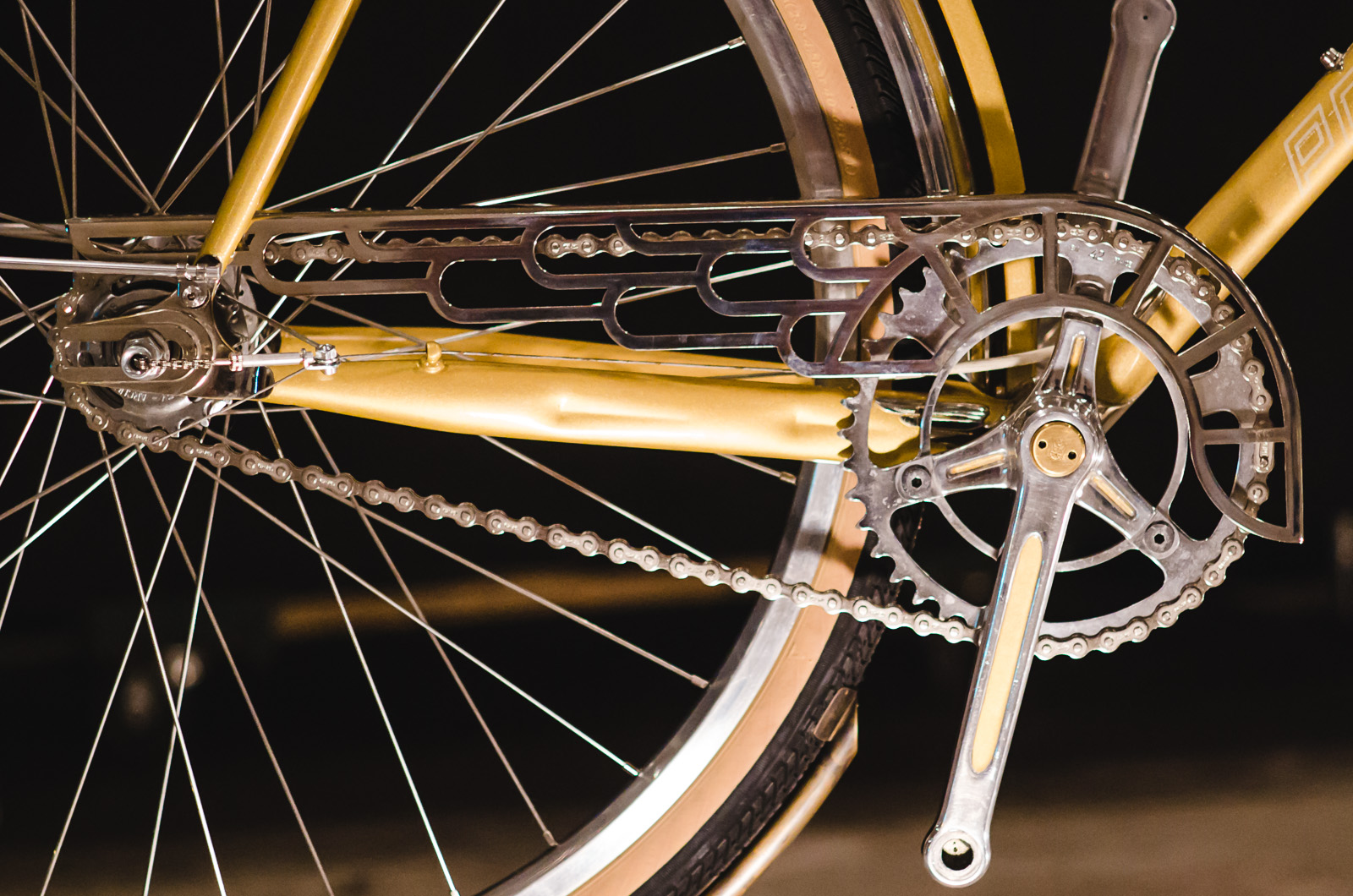
In today's installment, we're going to take a look at this amazing city bike that Tom of Porter Cycles built. You probably watched as it went together piece by piece on his Instagram, but to see it in person is a sight to behold. Stunning, glittering paintjob, seamless rack integration, carved and polished lugs, and a beautiful art-deco chainguard all make this bike a stand-out achievement!

From the man himself, Tom:


"It became clear to me as I was building this bike that it wasn't about making the most street friendly, point A-B ride, it was about building a dream of mine and showing it off piece by piece to the world (Instagram) as I went.  Major questions of security, economics, designed objects, 'real' world vs fantasy, 'can we have nice things' all became regular topics.  In building this bike I have stated openly to myself and to those paying attention: This is me.  This is something I want to put into the world.  This is an expression of my love for bicycles, and for the elegance of metal and all its characteristics and possibility. This is time well spent in my mind. 


Custom-cut Alloy Chainguard!

Paint-matched Zeppelin Fenders 


My philosophy with this project was not to do something because I was being paid to do it, or to put a valuation on my creative output, it was simply to make the most awesome and spectacular thing possible, to test my abilities of vision and execution, and to have as much fun as possible doing it. I wanted to build the equivalent of a fallen angel that would ride among us and inspire by its shear presence.  These thoughts all developed as the project unfolded, originally I just set out to build the winged lug set I'd been drawing for the last couple years on and off for a friend that I find unbelievably inspiring."


02 Oct 00:39

One Small Step for the Web...

Berners-Lee, Inrupt, Oct 12, 2018


Icon

On Saturday Fast Company broke the story that Tim Berners-Lee was launching a startup to develop and distribute his SoLiD application (which stands for Social Linked Data; I've covered it here before). There was also a Medium post the same day. This is a part of his plan to restore the web to its original decentralized vision. His new company is called Inrupt (which will be way easier to search for than 'solid') and is launching this week. "Solid is guided by the principle of 'personal empowerment through data' which we believe is fundamental to the success of the next era of the web. We believe data should empower each of us.... With Solid, you will have far more personal agency over data - you decide which apps can access it."

Another post notes, "For developers who haven’t dug in yet, you should start with the Solid Developer Portal, beginning with the Getting Started page. We just put this online two days ago, so the documentation you’re seeing today is only a small subset of what we’ve got planned." I have dug into it, and found it complex and messy - but that was a while ago, and I'm hoping (and expecting) it's a lot easier to get started now.

Web: [Direct Link] [This Post]
02 Oct 00:39

Truth in a Post-Truth Age

Jenny Mackness, Jenny Connected, Oct 12, 2018


Icon

Jenny Mackness writes in this article of "the necessity, as expressed by both Ghandi and Nietzsche, to recognise that human beings can only know partial and contingent truths and perspectives; there are a multiplicity of truths and perspectives." And she points out that we've lived through "post-truth" eras before (one of which was the one that started with the first newspapers). "This doesn’t mean that we shouldn’t continue to seek truth or a multiplicity of truths," she writes. "For Gandhi this requires action in every day practices of altruism, humility, compassion and self-evaluation. For Simon Blackburn it requires sifting out descriptions that really matter and sources of information that are more trustworthy."

Web: [Direct Link] [This Post]
02 Oct 00:37

So is it nature not nurture after all?

Andrew Anthony, The Guardian, Oct 12, 2018


Icon

The ideas reported in this article pose a challenge to the beliefs underlying a lot of progressive education theory. In his new book, Blueprint: How DNA Makes Us Who We Are, Robert Plomin argues that most of what makes up our personality is based on genetic, not environmental, factors. "Plomin’s argument is that, in a society with universal education, the greatest part of the variation in learning abilities is accounted for by genetics, not home environment or quality of school – these factors, he says, do have an effect but it’s much smaller than is popularly believed." Given the impact of nutrition on cognition, I would assume Plomin would assume a society with universal welfare as well. The objection to this view is stated by Oliver James "believes that if, as a society, we accept the heritability argument, then it will lead to blaming the poor for their own plight and privileging the rich for their good fortune. There's some really good discussion in this article, which should be read to the very end.

Web: [Direct Link] [This Post]
02 Oct 00:36

Vivo V11 Pro: How To Lock Apps Using Face Unlock and Fingerprint Scanner

by AndroidBeat Contributor
Vivo V11 Pro comes with an in-display fingerprint sensor and an infrared-based Face Unlock detection. Both of these security features allow you to secure your phones in multiple ways including the option to Lock/Unlock Apps. Continue reading →
02 Oct 00:36

An In-Depth Explanation of Computational Photography on the iPhone XS

by Ryan Christoffel

Outside of Apple employees, one of the people most knowledgeable about the iPhone's camera is Sebastiaan de With, designer of the manual camera app Halide. It is fitting, then, that Sebastiaan would publish what I believe is the best explanation of the iPhone XS camera system to date. Following up on a piece he wrote about the new camera's hardware changes, the subject of today's article is software – specifically, all the work of computational photography on the iPhone XS and XS Max.

The piece starts with an explanation of the iPhone's new Smart HDR feature, then details the exact reasons why selfies on the new iPhones appear to employ skin smoothing (a theory he soundly debunks). Finally, Sebastiaan details the problem that the XS camera poses for RAW camera apps like Halide, and shares about the forthcoming solution Halide's team came up with: something they call Smart RAW.

There are too many excellent, informative tidbits to quote here, so I highly recommend you check out the article in full. This year's iPhones are so full of interesting changes to the way the camera works, most of which are undocumented by Apple – as Sebastiaan says, it is "a whole new camera" in many ways.

→ Source: blog.halide.cam

02 Oct 00:36

She Really Rides!! Opening October 4 at Fix Coffee + Bikes

by dandy

She REALLY Rides!!

Bicycles and sculptures by Coco Menk

Fix Coffee + Bikes is pleased to host the opening reception for "She REALLY Rides!!" on October 4, 2018, from 7 p.m. to 10 p.m.

In the male-dominated world of cycling, jocks and gear-heads, “She REALLY Rides!!” explores the different ways women and other non-men can establish their own place and identity within athletics, and the internal struggle to look “cute” while also retaining fun and function.

Artist Coco Menk asks: In the current day and age, with so much objectification and self-sexualization, why do women and other female bodied people still hold on to expectations of looking “cute” or “hot”? Why feminize athletics at all? How do toys and branding appeal to our need to purchase? How does our vanity affect how we dress while we ride a bicycle? What things have women and non-men created amongst themselves to fit the requirements of fashion and function? What new molds and tropes are then created? How does our own biology affect our physical needs while riding a bicycle? Is it possible to be one-of-the-boys and still be a girl? Why does it matter? How do your childhood heroes and toys reflect our attitudes towards sense-of-self and sense-of-sport? How do we express ourselves in a way that celebrates an activity that incites one of our most basic childhood joys? With the burgeoning culture of gender fluidity and queerness, what will the future of athletics look like?

Coco Menk uses humour and up-cycled materials in her work. A transplant to Toronto from Chicago Menk says riding in Toronto is literally green. "There are so many trees and so much foliage that it makes it a joy to cycle through the city at all times of year. Chicago is very flat and spread out so it's physically easier to bike there, but I like the challenge of hills and valleys that Toronto has to offer. Living on the very west end of Toronto, I often have to bike upwards of 30 minutes to get somewhere - prime exploration and thinking time." Menk says more education for drivers and cyclists would help improve safety in the streets, along with more bike related stop lights and signs.

For more information on the artist check out cocomenk.net or go the opening on Thursday, Oct. 4 at FIX coffee + bikes at 80 Gladstone Ave.


Related on dandyhorsemagazine.com

BIKE MINDS storytelling event launches at Fix

Spotted: Bike Map Mural at Fix coffee +bikes

Nuit Blanche features bicycles (2013)

02 Oct 00:36

A Decade of Green Roofs

by Gordon Price

Vancouver started green roofs in the 90s.  Developers and landscape architects figured out how to do heavily-planted decks and roofs until it became standard practice, and then compulsory: the expression of sustainability.

It takes a decade at least for this landscape to emerge, and it’s happening now on the foliating cliffs and ledges of Yaletown and Downtown South.

Like this, as seen from the new roof garden of the public library:

02 Oct 00:36

Arrival in San Francisco, 1989

by Caterina Fake
On the first day I arrived in San Francisco, I wandered down to Fisherman’s Wharf, where I bought a sandwich, and sat on a bench with my book, reading, eating it and enjoying the salt air. A small black man, ragged, seemingly homeless, approached me, and asked for my sandwich. Which I refused to give him. So he started shouting, at the top of his lungs, “RACIST! RACIST” and all the tourists waiting on line to catch the boat to Alcatraz stared at me angrily, racist that I was. He wouldn’t stop, so I walked briskly away, and he continued following me, screaming “RACIST! RACIST!”, until I started running and ran up a hill and finally lost him and settled in at a nearby cafe where I had a cup of tea and caught my breath.
As I was sitting there, addled by this distressing experience, and trying to calm down, a man came up to me and without preamble said:

If you were going to get a pet
what kind of animal would you get.
A soft bodied dog, a hen­­––
feathers and fur to begin it again.
When the sun goes down and it gets dark
I saw an animal in a park.
Bring it home, to give it to you.
I have seen animals break in two.
You were hoping for something soft
and loyal and clean and wondrously careful­­––
a form of otherwise vicious habit
 can have long ears and be called a rabbit.
Dead. Died. Will die. Want.
Morning, midnight. I asked you
if you were going to get a pet
what kind of animal would you get.

And then smiled, bowed, and left the café. What an extraordinary city, I said to myself, and looked out the window into the overcast sky, a sky I would come to know so well. And I tried for a long while to find the poem, which I did, finally. It turned out to be by Robert Creeley, a poet from San Francisco and environs, and it was called If You.

I know it by heart now, and it was difficult to fathom. What was so unsettling about it? Why was it so rich in meaning?  It starts off so innocently, like a question by a grandmother to a child: the world is gentle and kind, and in order, and in the world are pets, so dear to us, and one can choose one as a friend. Suddenly you’re presented with a hen, which is not a pet at all–disconcerting–and then the author tells of animals breaking in two. Pets are animals, after all, and what is an animal? Hoping is introduced, and it fails by force of vicious rabbit. Death comes, finally, in all its forms, but then–the bliss of returning safely to the question again–a recovered innocence, and back again to the safety of being able to choose, and not have things happen to you.

Oh it is a magnificent poem. I was profoundly struck by it then, and every time I think of it. What a gift the stranger gave me, my first strange day in San Francisco.
02 Oct 00:27

Chromebook Data Science - a free online data science program for anyone with a web browser.

The Johns Hopkins Data Science Lab has been teaching massive online open courses for more than 5 years now. During that time we’ve reached more than 5 million learners who want to break into the number one rated job in America.

While we have been incredibly excited about the results of these training programs, we’ve also learned over the last 5+ years that there are still significant barriers to getting into data science.

  • You have to know data science is a thing before you can start learning it
  • Data science training programs often start by assuming advanced math or programming knowledge
  • Data science training programs often require expensive computers
  • Data science training itself is often expensive
  • Data science jobs are concentrated in tech centers
  • Getting a job in data science requires connections

About a year ago we started a project where our goal was to help overcome these barriers. Our goal was to create a system so that anyone with the ability to read, write, and do basic math could get into data science using nothing but a web browser and an internet connection.

Today I’m excited to announce the first part of our new system, a new set of massive online open courses called Chromebook Data Science. These MOOCs are for anyone from high schoolers on up to get into data science. If you can read and follow instructions you can learn data science from these courses!

The reason they are called Chromebook Data Science is because philosophically our goal was that anyone with a Chromebook could do the courses. All you need is a web browser and an internet connection. The courses all take advantage of RStudio Cloud so that all course work can be completed entirely in a web browser. No need to install software or have the latest MacBook Computer.

The program has several relatively unique components. It starts at the beginning, introducing data science, what it is, how it works. The Course Set covers how to use Google, through basic use of R and data analysis, all the way up to soft skills and getting a job. I’ll be posting more about some of the unique aspects later, but we are actively working to make this a program that anyone can do.

Finally, this set of MOOCs is our first set of MOOCs offered through Leanpub. Just like with books we have released in the past, each course has a free minimum price, so finances won’t be a barrier. At the same time, if you do decide to pay for the courses, all the money that makes its way back to the Data Science Lab will be used to support a new in-person tutoring and support system called CBDS+ that we are piloting in Baltimore.

This project is an exciting one for the JHU DaSL and I’m really grateful to all the people who have built the program. Shannon Ellis has done a huge amount of work in leading the project, designing the curriculum, creating the content, and fixing technology bugs. Aboozar Hadavand has been a huge help in creating content, designing the program, and helping set up our CBDS+ program that you’ll hear more about later. John Muschelli and Sean Kross have helped build new technologies that allowed us to produce the content for CBDS rapidly and efficiently using AI to synthesize videos and R to manage course publication. Leslie Myint, Sarah McClymont, Leah Jager, and Leonardo Collado Torres have all made important contributions to our final curriculum. The whole Leek Group as well as Ira Gooding and the rest of the Data Science Lab have helped contribute ideas and support. Finally, I’d like to thank Leanpub RStudio, and DataCamp for building the technology that makes our program possible. We are also grateful to a number of people who have graciously allowed their content to be used in our courses.

You can learn more about the program or sign up for courses at: http://jhudatascience.org/chromebookdatascience/.

02 Oct 00:26

DC Universe’s Titans series coming to Netflix Canada

by Bradly Shankar
Titans Robin

Netflix has acquired international streaming rights to Warner Bros.’ Titans series, which was previously exclusive to the company’s currently U.S.-only DC Universe streaming service.

As part of this deal, Titans will also come to Netflix Canada, the streaming platform has confirmed to MobileSyrup.

However, while Titans will debut on DC Universe in the U.S. on October 12th, a launch date has not yet been confirmed for Netflix Canada.

Titans is a darker live-action interpretation of the popular Teen Titans superhero team that follows the likes of Robin, Raven, Starfire, Beast Boy and more.

It remains to be seen if other DC Universe series will come to Netflix Canada as well. Warner Bros. is currently developing several DC Universe original series, including the third season of the Young Justice animated series, a live-action Swamp-Thing drama and an adult-oriented Harley Quinn animated series, among other content.

DC Universe also provides users with on-demand access to a variety of DC films and series, including The Dark Knight, Batman: The Animated Series and Superman: The Movie, as well as thousands of DC comic books.

Warner Bros. plans to eventually launch the service outside of the U.S., although specific countries and release windows have not been revealed. DC Universe debuted in the U.S. on September 15th.

“We’re really looking forward to bringing DC Universe to other countries, and we’re logging each and every request we receive,” a Warner Bros. representative said in a response on the DC Universe website last month. “For now, we are focusing on our U.S. service but we’ll be adding additional countries as soon as we can.”

Source: Variety

The post DC Universe’s Titans series coming to Netflix Canada appeared first on MobileSyrup.

02 Oct 00:26

What to expect from Microsoft’s event: New Surfaces, Windows updates

by Jonathan Lamont
Microsoft

Microsoft is hosting a media event in New York City tomorrow at 4PM ET. The event will likely be a small one, considering the company described it as a “moment of your time.”

While we don’t know all the details, there are a few big things to expect from the event. From new Surface hardware to the next big Windows update, here’s what to expect from Microsoft’s New York event.

New Surfaces

Several reports have indicated that Microsoft has new Surface devices coming at this event.

First up, we’ve got the Surface Pro 6, the next in Microsoft’s venerable Surface Pro line. This time around, however, the Surface is only getting a small internal spec bump. Don’t look for anything fancier than a faster processor.

The company allegedly might overhaul the Surface Pro design in 2019, so this looks like a hold-over release for Microsoft.

Surface Pro 6 hinge

Surface Pro 6 via WinFuture

The Surface Laptop is getting a refresh as well. Expect a faster processor as well as bumps to RAM and storage.

Furthermore, rumour has it the new Surface devices will have a new colour option as well. The higher-end models will come in black, as well as the silver and burgundy colours we have now.

Microsoft may announce a new Surface Studio. The company first unveiled the Studio at a New York event two years ago. The original Studio is currently sold out on Microsoft’s online store, leading some to believe Microsoft is planning to announce a new Studio.

The future of Windows

The next big Windows update is due out this month. Chances are, we’ll hear about the Windows 10 October 2018 Update at the New York event.

Most likely we’ll get the exact release date for the update as Microsoft has completed its internal testing. The company may even begin rolling it out after the event.

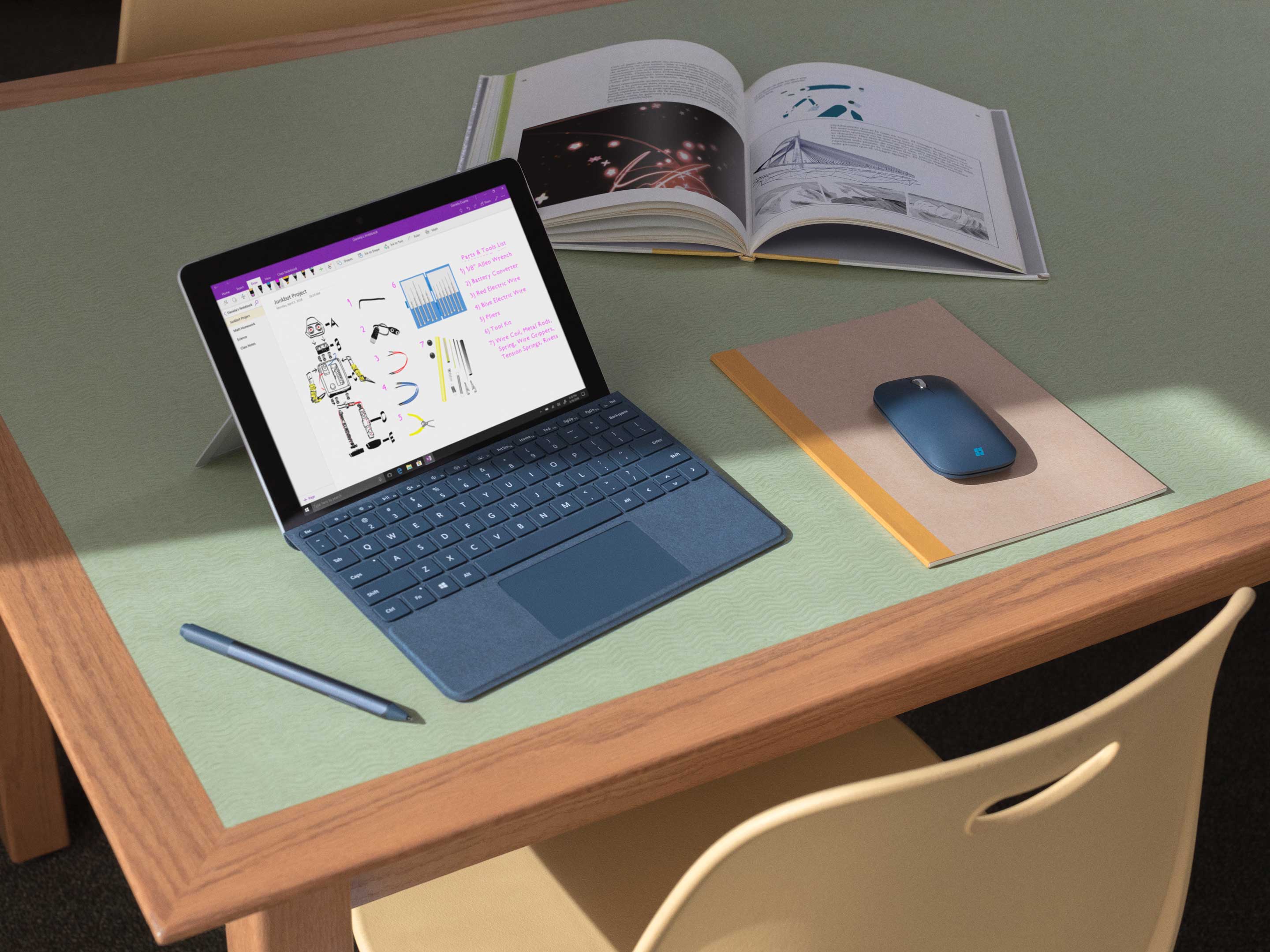
Surface Go

Furthermore, we should expect to hear some of Microsoft’s plans for Windows in 2019.

The company is already testing the next major Windows update–codenamed 19H1. While we likely won’t see the update until next year, Microsoft will probably give us a peek at what it’s planning.

We should see a focus on productivity in Windows, more tools to connect Android and Windows and more.

Other possibilities

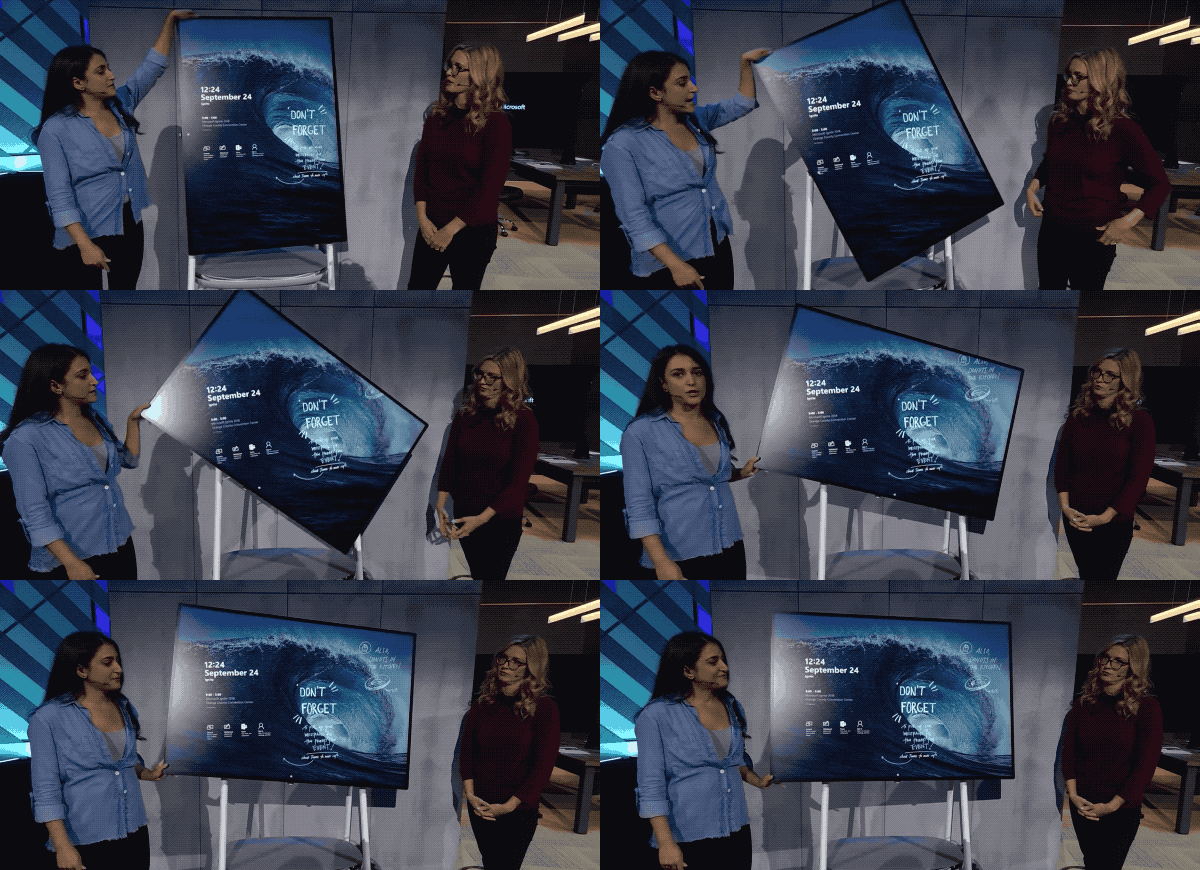
Along with the new Surface devices, Microsoft may unveil more details regarding the Surface Hub 2. The company recently showed off some features of the Hub 2 at its Ignite conference, but it has a lot more to reveal.

Surface Hub 2 rotation

Furthermore, we could see more about HoloLens 2. The Redmond-based company has plans to include a custom AI chip which may be ARM-based. That could make the device lighter and more comfortable to wear.

Finally, we could see a Surface-branded headset as well. It would likely be targetted at businesses and would integrate with apps like Microsoft Teams.

Keep your eyes on MobileSyrup tomorrow for the latest news from Microsoft.

Source: The Verge

The post What to expect from Microsoft’s event: New Surfaces, Windows updates appeared first on MobileSyrup.

02 Oct 00:25

Amazon Prime Video is now available on Roku devices in Canada

by Brad Bennett

Online e-commerce giant Amazon has finally brought its video streaming platform to Roku devices in Canada.

Prime Video has been notably absent from Roku’s Canadian platform since it launched here near the end of 2016.

Any Amazon customers that have a Prime membership can use Amazon’s music and video streaming platforms at a $79.99 CAD per year cost.

Amazon’s video platform is decent and features original programming like The Grand Tour and Tom Clancy’s Jack Ryan, though its selection of television shows and movies doesn’t compare to what Netflix offers. Additionally, it’s one of the few streaming video applications to support 4K HDR content on select Roku devices.

Prime Video is available in Roku’s channel store. Since Prime Video has finally made its way to Roku devices, the final holdout in Canada is Bell’s CraveTV streaming service.

Roku has been padding out the amount of content it offers in Canada significantly this year with the launch of the Roku’s free content channel in July.

If you’re a Roku user that’s excited to check out Amazon’s streaming platform, check out MobileSyrup’s list of what’s new on the service this month.

The post Amazon Prime Video is now available on Roku devices in Canada appeared first on MobileSyrup.

02 Oct 00:25

Upcoming Pixel Slate will support Windows, but maybe not at launch

by Jonathan Lamont

We’ll likely see new Pixelbooks from Google at the company’s upcoming New York event next week, including a rumoured ‘Pixel Slate.’ However, it looks like it may not support dual-booting into Windows 10, at least at launch.

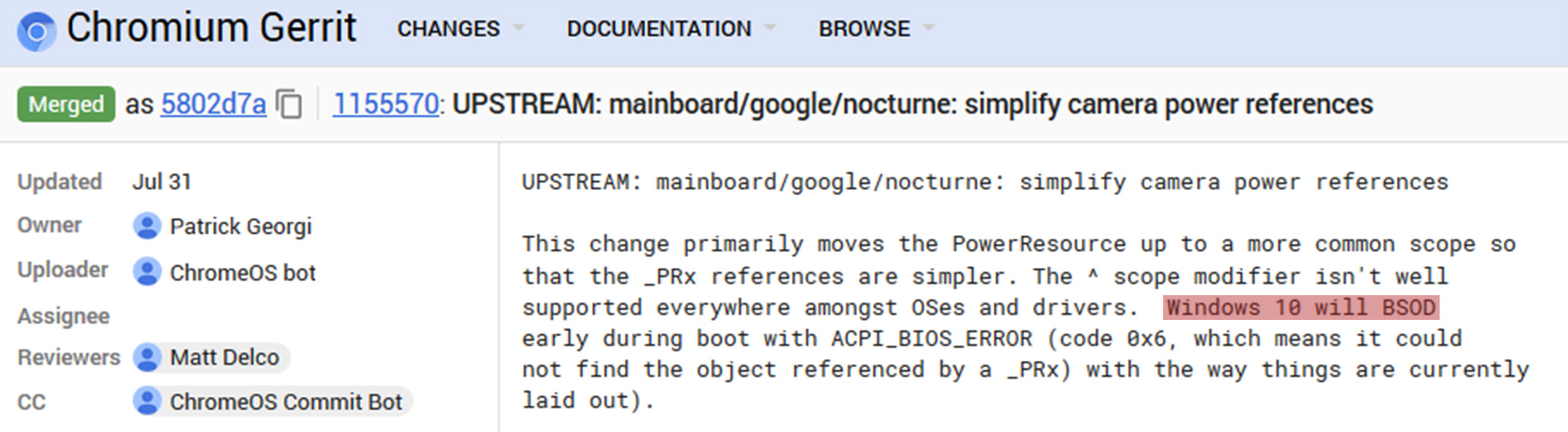
According to a commit on the Chromium Gerrit, a collaborative tool for developers, there are issues booting into Windows on Nocturne, a device expected to be the Pixel Slate.

The commit states that “Windows 10 will BSOD early during boot… with the way things are currently laid out.”

Chromium Gerrit commit Windows 10 BSOD

While BSOD could mean anything, typically it stands for ‘blue screen of death,’ a reference to the blue error screen displayed by Windows after a crash.

Furthermore, a previous version of the commit said: “I’ve got an OS that can’t boot with the way things are currently laid out.”

It appears that at least one developer was working to get Windows dual-boot working on Nocturne. It also seems that the developer was unable to resolve the issue.

However, developers posted the commit on July 31st, 2018. It isn’t clear if the issue was later resolved. Considering the length of time, I would imagine it has. If it hasn’t, this commit could mean we won’t see the dual-boot feature, called Campfire, at Google’s event.

Considering the nature of Google’s Campfire project, it’s no surprise it might not be ready for its October event. Campfire was always a secret project of sorts.

Furthermore, it requires some pretty complex adjustments and firmware updates. Those requirements have ruled out support for old Chromebooks, aside from the current Pixelbook.

New hardware shouldn’t have a problem supporting Campfire though. This includes the Pixel Slate, once developers get past the BSOD of course.

Source: Chromium Gerrit Via: 9to5 Google

The post Upcoming Pixel Slate will support Windows, but maybe not at launch appeared first on MobileSyrup.

02 Oct 00:25

Amazon is launching a new free video service this week: report

by Patrick O'Rourke
Amazon

Amazon-owned subsidiary IMDB is reportedly set to announce an ad-supported, free video streaming platform exclusively for Fire TV users later this week, according to a report from CNBC.

The new service is rumoured to be similar to the Roku Channel, the set-top box maker’s app that combines all of the free content available on its platform, as well as portions of U.S.-exclusive streaming platform Hulu. The platform will be available to all Fire TV users, according to CNBC’s report.

Commercials are set to appear between content, with advertisers also being able to wrap ads around the platform’s video player similar to embedded video ads on websites. Further, the report states that Amazon plans to give marketing companies access to user data in order to better target the video advertising.

In terms of content, CNBC’s report says that Amazon is in discussions with three major U.S. media companies to bring its programming to the Fire TV streaming service, though it remains unclear what specific networks the retail giant is in talks with.

Amazon’s Prime Video streaming service made its way to Canada back in April of 2017. It’s unclear if this new, ad-supported streaming platform will launch simultaneously in the U.S. and Canada.

The Information originally reported on Amazon’s rumoured free video streaming service a few months ago. Amazon is expected to confirm the streaming platform’s existence during advertising week in New York.

Amazon’s Fire TV Stick is the only Amazon streaming device currently available in Canada.

Source: CNBC

The post Amazon is launching a new free video service this week: report appeared first on MobileSyrup.

02 Oct 00:25

Google’s October security patch rolling out to Pixel, Nexus and Essential devices

by Bradly Shankar
Android Mascot

Google has begun rolling out its October Android security patch, which is starting to hit Pixel, Nexus and Essential devices.

According to the patch notes, the latest update addresses 23 vulnerabilities, including one related to the media framework. However, Google notes that there have been no reports of users being affected by these issues. 

Specifically, the update fixes a fast charging issue found in the original Pixel phones and adds improved Android Auto stability for the Pixel 2 and Pixel 2 XL. Meanwhile, Essential has brought back the notch settings menu to its phone. Finally, all devices will get “Modified Call Screening behavior when using Maps Navigation.”

The OTA updates can be downloaded via the following links:

Pixel: Factory Image — OTA
Pixel XL: Factory Image — OTA
Pixel 2 XL: Factory Image — OTA
Pixel 2: Factory Image — OTA
Pixel C: Factory Image — OTA
Nexus 5X: Factory Image — OTA
Nexus 6P: Factory Image — OTA

Via: 9to5Google

The post Google’s October security patch rolling out to Pixel, Nexus and Essential devices appeared first on MobileSyrup.

02 Oct 00:25

Netflix is bringing some of its acclaimed 2018 movies to Toronto theatres

by Bradly Shankar
Netflix app on iPhone

Netflix will play some of its fall Oscar-contending films in participating Toronto theatres, according to Variety.

Firstly, Captain Philips director Paul Greengrass’ 22 July will play in around 100 theatres around the world on October 10th, which will be one of Netflix’s widest theatrical releases to date. The drama will also begin streaming on Netflix on October 10th.

22 July, which garnered significant acclaim at the Toronto International Film Festival (TIFF), focuses on the July 2011 terrorist attacks in Norway that claimed the lives of 77 people.

Netflix will also release its Private Life comedy-drama film in theatres. Directed by Tamara Jenkins (The Savages), Private Life focuses on a middle-aged couple struggling to conceive. The film is set to run in 21 theatres across various cities, including Toronto.

It’s currently unclear which Toronto theatre(s) will play these two films. However, Cineplex typically releases showtimes for the following week on Tuesdays or Wednesdays, so more information should be revealed in the coming days.

Variety reports that Netflix is looking into other screenings for several of its other films, including Alfonso Cuarón’s Roma, the Coen brothers’ The Ballad of Buster Scruggs and David Mackenzie’s Outlaw King. However, specific theatres and runs-of-engagement have yet to be confirmed.

Source: Variety

The post Netflix is bringing some of its acclaimed 2018 movies to Toronto theatres appeared first on MobileSyrup.

02 Oct 00:25

University of Waterloo gets Canada’s first VR optometry training lab

by Jonathan Lamont
Samsung Gear VR on head

The University of Waterloo is getting a new virtual reality optometry training lab.

As one of two optometry schools in Canada, this is a considerable advancement for Waterloo. It will help train the next generation of optometrists. With this VR lab, students can learn to diagnose vision problems and eye disease more quickly and accurately than before.

FYidoctors, an optometrist-led chain of eye-care clinics formed in 2008 by a group of Waterloo optometry grads, invested $800,000 in the new lab. The investment will help accelerate the development of optometry skills.

The VR experience is highly authentic. It simulates a patient’s eye and allows students to practice with various cases, such as wellness checkups to disease examination.

“With the simulators, optometry students will now take the time they need to practice and master skills as they progress through increasingly complex training modules,” said Stanley Woo, director of the School of Optometry and Vision Science at Waterloo.

“Simulation technology is the future of healthcare learning and is directly aligned with FYidoctors spirit of harnessing innovation to help our patients lead more fulfilling lives,” said Dr. Al Ulsifer, CEO and chairman of FYidoctors.

The simulation equipment in the VR lab will help supplement limited real-life training. Additionally, it will allow students to practice binocular indirect ophthalmoscopy (BIO) on hundreds of real-life patient cases. BIO is a method of viewing the back of a patient’s eye.

The ability to practice BIO will help students recognize, identify and diagnose eye and systemic disease faster and with greater confidence.

In total, the lab will cost $1.5 million. It will also be the first of it’s kind in Canada.

The post University of Waterloo gets Canada’s first VR optometry training lab appeared first on MobileSyrup.