Shared posts

25 Oct 01:03

Journalism without Twitter

by Doc Searls

twitter down a holeSo I’m taking live notes at Blockchain in Journalism: Promise and Practice, happening at the Brown Institute for Media Innovation, in the Tow Center for Digital Journalism at the Columbia School of Journalism, to name the four Russian dolls whose innards I’m inhabiting here

In advance of this gathering, Linux Journal, which I serve as editor-in-chief (but can’t use as a blog, meaning editing it live is do-able but not easy), published When the problem is the story. I wanted it up, on the outside chance that stories themselves, as journalism’s stock-in-trade, might get discussed. Because stories are a Hard Problem: maybe one we can’t solve.

Okay, now the live blogging commences::::

“Token curated registratries, aka TCRs.” Mike Goldin of AdChain is talking about those now. Looking him up. Links: Token Curated Registries 1.0#18 Mike Goldin, AdChain: Token-Curated Registries, An Emerging Cryptoeconomic Primitive.

Observation: blockchain is conceptually opaque, in ways the Internet (the way everything is connected) and the Web (a way to publish on the Internet) are not.

Not quite technically speaking, a blockchain is a distributed way of recording data in duplicate. Or something close enough to that. (Let’s not argue it.) What makes blockchain hard to grok is the “distributed” part. What it means is an ever-expanding copy of the same record accumulates on many different computers distributed everywhere. Including yours. Your computer is going to have a copy of a blockchain, or many blockchains, for the good of the world—or the parts of the world that could use a distributed way of keeping an immutable record of whatever. See what I mean? (Yes and no are equally good answers to that question.)

Mike Goldin just said that understanding blockchain is as big a cognitive leap as it took to grok the Internet way back when. Not so. Understanding blockchain is a shit-ton harder than understanding the Internet.

“Identity procreator type tool” just got uttered. My wife, who knows blockchain better than I, just made two fists and whispered “Yes!” I believe @JarrodDicker of Po.et just uttered it.

RadioTopia just got some love from Manoush Zomorodi of ZigZag.

So let’s get to the title of this post.

Normally I’d be tweeting this, but right now I can’t. Nor can I write about it in Medium. Both are closed to me, because Twitter hates my @dsearls login, for reasons unknown, and my login to Medium uses my Twitter handle.

<gripe>

When I tried to troubleshoot my eviction from Twitter this morning, I went to the trouble of creating a new password, alas without help from Dashlane, my password manager, which for some reason wasn’t able to help by generating me a new one. Dunno why.

Deeper background: I’m active on four different Twitter accounts, spread across four browsers. I tweet as myself on Chrome, and as @VRM, @CustomerCommons and @Cluetrain on the three other browsers. The latter three are ones where multiple people can also post.

(Yes, I know there are ways to post as different entities on single browsers or apps, but being different entities on different browsers is easier for me. Or was until this morning.)

So I decided to try getting onto Twitter on one of the other browsers. So I logged out @VRM on Firefox, failed to log in as myself, created the new password through Twitter’s password creating routine, made up a new password (because Dashlane couldn’t help on Firefox either), and wrote the new password down on a sticky.

Then, once I got @dsearls working on Firefox, I logged out, and tried to log in again as @vrm there. Twitter didn’t like that login and made me create a new password for that account too, again without Dashlane’s help. Now I had two passwords, for two accounts, on one sticky.

Then I got in the subway and came down to Columbia, ready to tweet about the #BlockchainJournalism from the audience at the Tow Center. But Twitter on Chrome wouldn’t let me in. Meanwhile, the new password was still on a sticky back at my apartment, and not remembered by Firefox. So I thought, hey, I’ll just create a new password again, now with Dashlane’s help. But I got stopped part way with this response from Twitter when I clicked on the new password making link: https://twitter.com/login/error?redirect… .

This kind of experience is why I posted Please let’s kill logins and passwords back in August, and the sentiment stands.

</gripe>

So now that I’m experiencing life without Twitter, on which much of journalism utterly depends, I’m beginning to think about how we’ll all work once Twitter is gone—either completely or just to hell. Also about my own dependence on it. And about how having Twitter as a constant steam valve has bled off energies I once devoted to doing full-force journalism. Or just to blogging. Such as now, here, when I can’t use Twitter.

A difference: tweets may persist somewhere, but they’re the journalistic equivalent of snow falling on water. Blog posts tend to persist in a findable form for as long as their publisher maintains their archive.

Interesting fact: back in the early ’00s, when I was kinda big in the (admittedly small) blogging world, I had many thousands of readers every day. Most of those subscribed to my RSS feed. Then, in ’06, Twitter and Facebook started getting big, most bloggers moved to those platforms, and readership of my own blog dropped eventually to dozens per day. So I got active on Twitter, where I now have 24.4k followers. But hey, so does the average parking space.

I guess where I’m going is toward where Hossein Derakhshan (@h0d3r)has been for some time, with The Web We Have to Save. That Web is ours, not Twitter’s or Facebook’s or any platform’s. (This is also what @DWeinberger and I said in the #NewClues addendum to The Cluetrain Manifesto back in ’15.) Journalism, or whatever it’s becoming, is far more at home there than in any silo, no matter how useful it may be.


25 Oct 00:58

Random encounter: scooter demo on the bus

by Liz

Random encounter: On the 49 bus yesterday I explained my scooter to a woman who was very interested in one for herself. Then had to start over but this time in Spanish for another woman and then the first one began translating for someone who spoke Mandarin. 5 people took cards with the name of the scooter on it (at least…. I may have lost count). Somewhere between 24th St. and 14th St. I finally just took the whole scooter apart, folded it up, passed around the lithium battery, then put it back together (by request). “FREE SHOW Y’ALL!!!”

The first lady (the Chinese translator) nearly got off the bus with me to try it. She had opinions on reupholstering, making it easier to fold, a better cup holder, my decorations, the good qualities of the little bell on my handlebars (which she kept reaching over to ring, looking at me and giggling)

It was a little bit emotionally exhausting and I missed my usual Ingress hacking/Pokémon catching fun for the bus ride but it was also super fun. We had good cameraderie going in the front section of the bus.

If everyone I talk with about mobility scooters gets one, none of us are gonna be able to fit on the bus 😀 They will need more and better buses, that’s all!

25 Oct 00:55

Twitter Favorites: [JodiesJumpsuit] Toronto twitter hivemind: if you were making a Toronto themed music playlist, what songs would you include?

when she took off the jumpsuit, her head fell off @JodiesJumpsuit
Toronto twitter hivemind: if you were making a Toronto themed music playlist, what songs would you include?
25 Oct 00:55

Twitter Favorites: [cbcian] Thanks for the heads up Steve. Looking forward to someone updating my Wikipedia entry: "In 2018, appeared for 1/3 s… https://t.co/xyTd7D0VJF

Ian Hanomansing @cbcian
Thanks for the heads up Steve. Looking forward to someone updating my Wikipedia entry: "In 2018, appeared for 1/3 s… twitter.com/i/web/status/1…
25 Oct 00:55

Apple Watch is not really a watch

by Volker Weber

IMG 5092

Jony Ive interview in the Financial Times:

Sales are now such that Apple claims to be the number-one watch brand — though I question whether a wrist-worn device of this type is really a watch. His answer is surprising. “No, I think that this is a very powerful computer, with a range of very sophisticated sensors, that is strapped to my wrist. That’s neither very descriptive nor very helpful.” He laughs. “You and I share the same perspective and we had this same challenge with the product that we called the iPhone. Clearly the capability of the iPhone extends way beyond the function of what we would traditionally call a phone.”

I completely agree. However, Apple Watch competes with a traditional watch for some really valuable space: your wrist. For some people who value their traditional timepiece very much, that space is taken.

As long as you are willing to always carry a smartphone, you can keep your timepiece. Increasingly so, I want to leave the smartphone behind. And thus Apple Watch has become more important to me than the phone. LTE on the watch made that difference.

More >

25 Oct 00:54

So, my webmention issues can’t be solved in the...

by Ton Zijlstra

So, my webmention issues can’t be solved in the theme, as the content isn’t decided there. I need to dig deeper into the semantic-linkback plugin that I use to handle them.

I found out that webmentions are mentioned in full if they are short enough, and that I can set that limit. So I now want to change the way webmentions are stored. To solve my main issue, I need to select x characters around the spot where my site is mentioned, and set the character limit for webmentions to x+1.

25 Oct 00:54

Wrapping My Head Around Webmentions Pt3

by Ton Zijlstra

At IndieWeb Camp Nürnberg today I worked on changing the way my site displays webmentions. Like I wrote earlier, I would like for all webmentions to have a snippet of the linking article, so you get some context to decide if you want to go to that article or not.

It used to be that way in the past with pingbacks, but my webmentions get shown as “Peter mentioned this on ruk.ca”.

After hunting down where in my site this gets determined, I ended up in a file my Semantic Weblinks plugin, called class-linkbacks-handler.php. In this file I altered “get_comment_type_excerpts” function (which sets the template for a webmention), and the function “comment_text_excerpt”, where that template gets filled. I also altered the max length of webmentions that are shown in their entirety. My solution takes a snippet from the start of the webmention. I will later change it to taking a snippet from around the specific place where it links to my site. But at least I succeeded in changing this, and now know where to do that.

When the next update of this plugin takes place I will need to take care, as then my changes will get overwritten. But that too is less important for now.


The webmentions for this posting are now shown as a snippet from the source, below the sentence that was previously the only thing shown.

25 Oct 00:54

Find the Hard Work You're Willing to Do

by Eugene Wallingford

I like this passage from John Urschel Goes Pro, about the former NFL player who is pursuing a Ph.D. in math:

The world thinks mathematicians are people for whom math is easy. That's wrong. Sure, some kids, like Urschel, have little trouble with school math. But everyone who starts down the road to creating really new mathematics finds out what Urschel did: It's a struggle. A prickly, sometimes lonely struggle whose rewards are uncertain and a long time coming. Mathematicians are the people who love that struggle.

It's cliché to tell kids to "find their passion". That always seems to me like an awful lot of pressure to put on young adults, let alone teenagers. I meet with potential CS majors frequently, both college students and high school students. Most haven't found their passion yet, and as a result many wonder if there is something wrong with them. I do my my best to assure them that, no, there is nothing wrong with them. It's an unreasonable expectation placed on them by a world that, usually with good intentions, is trying to encourage them.

I don't think there is anything I'd rather be than a computer scientist, but I did not walk a straight path to being one. Some choices early on were easy: I like biology as a body of knowledge, but I never liked studying biology. That seemed a decent sign that maybe biology wasn't for me. (High-school me didn't understand that there might be a difference between school biology and being a biologist...) But other choices took time and a little self-awareness.

From the time I was eight years old or so, I wanted to be an architect. I read about architecture; I sent away for professional materials from the American Institute of Architects; I took courses in architectural drafting at my high school. (There was an unexpected benefit to taking those courses: I got to meet a lot of people were not part of my usual academic crowd.) Then I went off to college to study architecture... and found that, while I liked many things about the field, I didn't really like to do the grunt work that is part of the architecture student's life, and when the assigned projects got more challenging, I didn't really enjoy working on them.

But I had enjoyed working on the hard projects I'd encountered in my programing class back in high school. They were challenges I wanted to overcome. I changed my major and dove into college CS courses, which were full of hard problems -- but hard problems that I wanted to solve. I didn't mind being frustrated for an entire semester one year, working in assembly language and JCL, because I wanted to solve the puzzles.

Maybe this is what people mean when they tell us to "find our passion", but that phrase seems pretty abstract to me. Maybe instead we should encourage people to find the hard problems they like to work on. Which problems do you want to keep working on, even when they turn out to be harder than you expected? Which kinds of frustration do you enjoy, or at least are willing to endure while you figure things out? Answers to these very practical questions might help you find a place where you can build an interesting and rewarding life.

I realize that "Find your passion" makes for a more compelling motivational poster than "What hard problems do you enjoy working on?" (and even that's a lot better than "What kind of pain are you willing to endure?"), but it might give some people a more realistic way to approach finding their life's work.

25 Oct 00:53

iPhone drahtlos laden

by Volker Weber

91qI1bOcBrL

Ich wurde heute gefragt, ob ich Induktionslader fürs iPhone empfehlen kann. Zunächst wichtig: Jeder Qi-Lader funktioniert, egal ob von Ikea oder Nokia. Da die Dinger auf dem Tisch liegen, kommt es mir aber auch darauf an, dass sie ein bisschen nett aussehen. Deshalb haben wir immer noch zwei Nokia DT-901 im Einsatz. Darin steckt ein DT-900, den man auch ohne das Kissen betreiben kann. Vorteil des Fatboy: Das iPhone liegt auch dann gut fest, wenn es keine Hülle hat. Der DT-900 ist glatt und das iPhone muss in einer griffigen Hülle sein, damit es nicht heruntergleitet. Diese Restbestände gibt es zu sehr unterschiedlichen Preisen. Aktuell habe ich zwei Schnäppchen:

Da ist das Netzteil schon im Preis. Und damit kosten die deutlich weniger als ein Qualitäts-Lightning-Kabel plus Ladegerät.

Die normalen Qi-Geräte laden nur mit 5 W, was mir gerade egal ist, weil das iPhone über Nacht in jedem Fall voll ist. Die iPhones können mit einigen Ladegeräten auch 7,5 W beziehen, etwa diesem Mophie oder diesem Belkin. Mophie ist mein Favorit, weil es unscheinbar aussieht und gummiert ist. Da verrutscht gar nichts. Aber die Fatboys sind wirklich am schönsten. Und sie funktionieren auch durch Apple Cases hindurch. Zwischen iPhone und Ladeplatte ist nur eine dünne Schicht Stoff.

Aufpassen bei aufrechten Qi-Ladern: Die Spulen im iPhone und im Lader müssen zentriert sein. Deshalb funktioniert der DT-910 zum Beispiel nicht. Finger weg.

25 Oct 00:53

Feds launch ‘digital academy’ for public service

Kathryn May, iPolitics, Nov 01, 2018


Icon

This article describes a new initiative at the Canada School of Public Service to launch the Canadian Digital Academy "to improve the 'digital acumen' of all levels of public servants who are working to modernize operations, and to deliver the kind of digital services that Canadians expect." Having worked with CSPS on two projects leading to greater digital capacability over the last year or so I am happy to see this development. As Maryantonett Flumian  says, “The school appears to be going through a renaissance. It has a very dynamic management team, and that team is shopping for who can provide the best service."

Web: [Direct Link] [This Post]
25 Oct 00:53

Doing an IndieWeb Camp in the Netherlands?

by Ton Zijlstra

Now that we’ve visited the Nürnberg IndieWeb Camp this weekend, Frank Meeuwsen and I are thinking about doing an IndieWeb Camp in the Netherlands sometime next spring. Likely in Utrecht, although if we find a good event to piggyback on elsewhere, it can be someplace else.

If you want to get involved with organising this, do ping me.

24 Oct 23:31

Twitter Favorites: [Stv] Played a D&D session & the DM gave us clues to solve a puzzle. The lyrics to the Police’s “King of Pain” were the c… https://t.co/IFXR3en729

Steve @Stv
Played a D&D session & the DM gave us clues to solve a puzzle. The lyrics to the Police’s “King of Pain” were the c… twitter.com/i/web/status/1…
24 Oct 23:31

Instead of Breaking Up The Tech Oligarchs, Let’s Try This One Simple Hack

by John Battelle

(image)

Social conversations about difficult and complex topics have arcs – they tend to start scattered, with many threads and potential paths, then resolve over time toward consensus. This consensus differs based on groups within society – Fox News aficionados will cluster one way, NPR devotees another. Regardless of the group, such consensus then becomes presumption – and once a group of people presume, they fail to explore potentially difficult or presumably impossible alternative solutions.

This is often a good thing – an efficient way to get to an answer. But it can also mean we fail to imagine a better solution, because our own biases are obstructing a more elegant path forward.

This is my sense of the current conversation around the impact of what Professor Scott Galloway has named “The Four” – the largest and most powerful American companies in technology (they are Apple, Amazon, Google, and Facebook, for those just returning from a ten-year nap).  Over the past year or so, the conversation around technology has become one of “something must be done.” Tech was too powerful, it consumed too much of our data and too much of our economic growth. Europe passed GDPR, Congress held ineffectual hearings, Facebook kept screwing up, Google failed to show up…it was all of a piece.

The conversation evolved into a debate about various remedies, and recently, it’s resolved into a pretty consistent consensus, at least amongst a certain class of tech observers: These companies need to be broken up. Antitrust, many now claim, is the best remedy for the market dominance these companies have amassed.

It’s a seductive response, with seductive historical precedent. In the 1970s and 80s, antitrust broke up AT&T, ultimately paving the way for the Internet to flourish. In the 90s, antitrust provided the framework for the government’s case against Microsoft, opening the door for new companies like Google and Facebook to dominate the next version of the Internet. Why wouldn’t antitrust regulation usher in #Internet3? Imagine a world where YouTube, Instagram, and Amazon Web Services are all separate companies. Would not that world be better?

Perhaps. I’m not well read enough in antitrust law to argue one way or the other, but I know that antitrust turns on the idea of consumer harm (usually measured in terms of price), and there’s a strong argument to be made that a free service like Google or Facebook can’t possibly cause consumer harm. Then again, there are many who argue that data is in fact currency, and The Four have essentially monopolized a class of that currency.

But even as I stare at the antitrust remedy, another solution keeps poking at me, one that on its face seems quite elegant and rather unexplored.

The idea is simply this: Require all companies who’ve reached a certain scale to build machine-readable data portability into their platforms. The right to data portability is explicit in the EU’s newly enacted GDPR framework, but so far the impact has been slight: There’s enough wiggle room in the verbiage to hamper technical implementation and scope. Plus, let’s be honest: Europe has never really been a hotbed of open innovation in the first place.

But what if we had a similar statute here? And I don’t mean all of GDPR – that’s certainly a non starter. But that one rule, that one requirement: That every data service at scale had to stand up an API that allowed consumers to access their co-created data, download a copy of it (which I am calling a token), and make that copy available to any service they deemed worthy?

Imagine what might come of that in the United States?

I’m not a policy expert, and the devil’s always in the details. So let me be clear in what I mean when I say “machine-readable data portability”: The right to take, via an API, what is essentially a “token” containing all (or a portion of) the data you’ve co created in one service, and offer it, with various protections, permission, and revocability, to another service. In my Senate testimony, I gave the example of a token that has all your Amazon purchases, which you then give to Walmart so it can do a historical price comparison and tell you how much money you would save if you shopped at its online service. Walmart would have a powerful incentive to get consumers to create and share that token – the most difficult problem in nearly all of business is getting a customer to switch to a similar service. That would be quite a valuable token, I’d wager*.

Should be simple to do, no? I mean, don’t we at least co-own the information about what we bought at Amazon?

Well, no. Not really. Between confusing terms of service, hard to find dashboards, and confounding data reporting standards, The Four can both claim we “own our own data” while at the same time ensuring there’ll never be a true market for the information they have about us.

So yes, my idea is easily dismissed. The initial response I’ve had to it is always some variation of: “There’s no way The Four would let this happen.” That’s exactly the kind of biases I refer to above – we assume that The Four control the dialog, that they either will thwart this idea through intensive lobbying, clever terms of service, and soft power, or that the idea is practically impossible because of technical or market limitations. To that I ask….Why?

Why is it impossible for me to tokenize all of my Lyft ride data, and give for free it to an academic project that is mapping the impact of ride sharing on congestion in major cities? Why is it impossible for a small business owner to create an RFP for all OpenTable, Resy, and other dining data, so she can determine the best kind of restaurant to open in her neighborhood? I’m pretty certain she’d pay a few bucks a head for that kind of data – so why can’t I sell that information to her (with a vig back to OpenTable and Resy) if the value exchange is there to be monetized? Why can’t I tokenize and sell my Twitter interactions to a brand (or more likely, an agency or research company) interested in understanding the mind of a father who lives in Manhattan? Why can’t I tokenize and trade my Spotify history for better recommendations on live shows to see, or movies to watch, or books to read? Or, simply give it to a free service that’s sprung up to give me suggestions about new music to check out?

Why can’t an ecosystem of agents, startups, and data brokers emerge, a new industry of information processing not seen since the rise of search optimization in the early aughts, leveraging and arbitraging consumer information to create entirely new kinds of businesses driven by insights currently buried in today’s data monopolies?

Such a world would be fascinating, exciting, sometimes sketchy, and a hell of a lot of fun. It’d be driven by the individual choices of millions of consumers – choosing which agents to trust, which tokens to create, which trades felt fair. There’s be fails, there’d be fraud, there’d be bad actors. But over time, the good would win over the bad, because the decision making is distributed across the entire population of Internet users. In short, we’d push the decision making to the node – to us. Sure, we’d do stupid things. And sure, the hucksters and the hustlers would make short term killings. But I’ll take an open system like this over a closed one any day of the week, especially if the open system is governed by an architecture empowering the individual to make their own decisions.

It’s be a lot like the Internet was once imagined to be.

I’ve been noodling on such an ecosystem, and I’m convinced it could dwarf our current Internet in terms of overall value created (and credit where credit is due, The Four have created a lot of value). It’d run laps around The Four when it comes to innovation – tens of thousands of new companies would form, all of them feeding off the newly liberated oxygen of high quality, structured, machine readable data. Trusted independent platforms for value exchange would arise. Independent third party agents would munge tokens from competing services, verifying claims and earning the trust of consumers (will Walmart really save you a thousand bucks a year?! We can prove it, or not!). Huge platforms would develop for the processing, securitization, permissioning, and validation of our data. Man, it’d feel like…well, like the recumbent, boring old Internet was finally exciting again.

There’s no technical reason why this world doesn’t exist. The progenitors of the Web have already imagined it, heck, Tim Berners Lee recently announced he’s working pretty much full time on creating a system devoted to the foundational elements needed for it to blossom.

But until we as a society write machine-readable data portability into law, such efforts will be relegated to interesting side shows. And more likely than not, we’ll spend the next few years arguing about breaking up The Four, and let’s be honest, that’s an argument The Four want us to have, because they’re going to win it (more money, better lawyers, etc. etc.). Instead, we should  just require them – and all other data services of scale – to free the data they’ve so far managed to imprison. One simple new law could change all of that. Shouldn’t we consider it?

*In another post, I’ll explore this example in detail. It’s really, really fascinating. 

23 Oct 08:21

19 dishes make case for Pampanga as culinary capital of PH - ABS-CBN News


ABS-CBN News

19 dishes make case for Pampanga as culinary capital of PH
ABS-CBN News
ANGELES CITY -- “Culture is best served on a platter,” mused chef Sau Del Rosario in his opening remarks during the Kapampangan Festival 2017 held recently at the massive Fontana Conventional Hall in the Clark Freeport Zone. With President Rodrigo ...

23 Oct 08:12

Totalitarian Marketing

by noreply@blogger.com (BOB HOFFMAN)

This post is adapted from my book "BadMen: How Advertising Went From A Minor Annoyance To A Major Menace."

Advertising used to be concerned with imparting information. Today it is concerned with collecting information.

Online advertising, the predominant form of marketing communication, is largely reliant on "tracking" to accomplish this. Tracking is just a pleasanter word for surveillance. Our web browsers, our search engines, and the sites we visit use invisible software to keep track of everything we do and everywhere we go on line. Our emails and texts are read and archived by the providers we use.

All this information is collected, stored, and sold to third parties. Usually without our knowledge or consent. It has proven to be easily accessible to hackers, foreign governments, and other malefactors.

The preposterous rationale for all this abuse of our privacy is that it helps marketers provide us with more relevant advertising. As if the citizens of the world are taking to the streets demanding more relevant advertising.

We were taught to fear totalitarian governments. We feared they would know everything about us, follow us everywhere, know who we were talking to and what we were saying, and keep secret files about us which could be used to influence our lives in ways that were only vaguely visible to us.

We are well on our way to such a nightmare. Except it isn't our government that knows everything about us, follows us everywhere, knows who we are talking to and what we are saying, and keeps secret files about us. It is the marketing industry.

We know where totalitarian government leads. It lead to Iron Curtains, Gestapos, and Killing Fields. It leads to the trivialization of personal freedoms and the unchecked power of tyrants.

But we don't know where totalitarian marketing leads. It's hard to come up with a scenario that isn't frightening.

Surveillance marketing is little more than 10 years old but has already played a significant role in undermining our confidence in the legitimacy of our elections and the credibility of our news media.

It is time for us to demand that as a first step toward a reformed, credible web, tracking must be stopped. Tracking is a danger to democratic societies and to individual citizens.

The privacy rights of individuals are far more important to society than the convenience of marketers.

And, as you may have noticed...
...my posts on the blog have become rather sporadic. I have been focusing my attention on books and on my weekly newsletter. If you like the blog, I suggest you sign up for The Ad Contrarian newsletter here. I'll continue to post on the blog, but the newsletter will be more timely and consistent. 


23 Oct 08:12

Dreams of stairs and elevators

by Liz

Strange dreams of scootering down Valencia, not Valencia Street as it is now, but alternate-Valencia of around 30 years ago, out to do a quick errand, nearly but not quite picking up a nice brown striped scarf with fringe that was hanging over a bench (I figured that I should leave it for someone who needed it more). Everything was shut, and the streets were empty and ghostly in the middle of the night. The night had a wistful quality. Bright, moonlit, the iron gates with angular and scrolly shapes lit by soothing neon. I was happy to be there.

On my way to do this errand, I went up a side street, noticing that it was Elizabeth Street (which exists in the approximately correct location in the dream!) Elizabeth Street turned into mansions, difficult to navigate cobblestones, and ended in magnificent yet hostile giant flights of stairs going up the steep hillside. It was one of those wide multi-stage stairways meant to be monumental and beautiful, all in marble, spreading out over the hillside. I swore a lot & turned around.

I went back to the building where I was going to meet Danny to watch some scenes from a film be made (for a sequel to Superman where Superman was Jet Li, but in a powerchair). I had left this scene to do my errand and it was time to go back. There was no obvious way in, so I sneaked in via the back entrance and freight elevator, ending up in a back room, with people working, a tour group with badges coming through. I mingled successfully as if I had a right to be there, explored that level of the building, and found a second freight elevator to take me back to the film production studio. (Quite proud of sneaking back in successfully without fuss.)

In the studio as we sat in uncomfortable folding theater chairs, Danny explained things to me about what the film crew was doing. I was excited to see Jet Li. The people on stage kept trying to shoot a tiny part of one small scene where the actors were going down a hallway. I realized I was probably not going to see Jet Li do any sort of amazing martial arts from his powerchair because it was going to take all night to shoot the hallway scene.

It can be boring to read about other people’s dreams. They are so personal. Mine are often set in large rambling building complexes: 30 years after moving out of my housing co-op, I still get “like the co-op, but different” dreams. While I was walking pretty well for a few years I would still be using my wheelchair in dreams. I sometimes dream in Spanish, and I can read and write in my dreams. I’ve written stories and poems while on the verge of waking up and then quickly scribbled them in real life. And while I’ve been 99% using scooters since 2012, I still dream myself in my manual chair much more often. It still has a more “me” feeling sometimes. But this was a scooter dream!

The things that happen in my dreams feel like memories, not real memories, but like real feelings. They are atmospheric. If I dream of a completely non-existent person, I feel sad when I wake up that they don’t exist, but also amazed that our minds can come up with an impression of an entire human being. Dreaming of Alternate Not Quite Valencia Street gave me a specially happy and centered feeling this morning.

23 Oct 08:12

New Apple Watch complications

by Volker Weber

InkedImage-2 LI

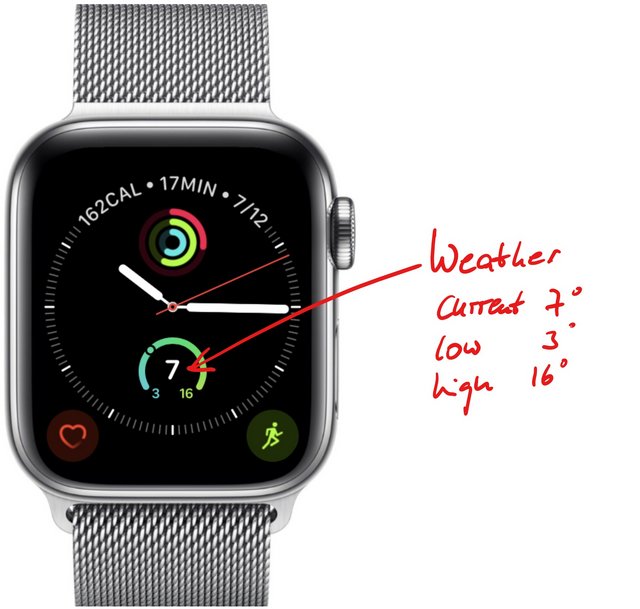
Watch Serie 4 has two watch faces that are not on the older watches: Infograph with an analog and a digital clock. This is the analog Infograph face with some of the new complications. The top one shows your activities both as rings as well as numbers. I love the new gauges, here on display as the new weather complication. It shows both the current temperature as well as low and high temperature for the day.

19 Oct 21:26

The Rise of the TSP: Uber Over All?

by Gordon Price

Some recent stories about the impact of ride-hailing companies, particularly Uber, and the longer term implications.

First, another confirming story that ride-hailing is measurably increasing congestion – from Tech Crunch:

In San Francisco … ride-hailing services are undoubtedly partially to blame (for the rise in traffic and congestion), but not entirely to blame, according to a new study from the San Francisco County Transportation Authority. …

Between 2010 and 2016, according to the SFCTA, ride-hailing services accounted for:

  • 51 percent of the increase in daily vehicle hours of delay
  • 47 percent of the increase in vehicle miles traveled
  • 55 percent of the average speed decline
  • 25 percent of total vehicle congestion citywide

So not surprising, then, that Uber wants to address the problem of congestion by supporting a mechanism that would reduce ‘free-riders’ on the streets they help congest.

From the Seattle Times:

Uber says it plans to spend money lobbying for congestion pricing in Seattle as part of a $10 million push for “sustainable mobility” policies in various cities.

The ride-hail app company and its rival, Lyft, have previously expressed support for the idea of tolling downtown streets in Seattle, where Mayor Jenny Durkan’s administration is working to develop a proposal.

But Uber’s new commitment to actively press for congestion pricing in the city, shared with The Seattle Times last week, could be the biggest boost yet for an effort certain to encounter political roadblocks, including concerns about affordability.

Uber thinks big and it thinks strategically – literally globally.   It can afford to.

From Vanity Fair:

The Wall Street Journal reported that the company had received proposals from Wall Street banks estimating its initial public offering at a market valuation as high as $120 billion, virtually twice its current private-market valuation, and larger than the combined market capitalizations of General Motors , Ford Motor Company, and Fiat Chrysler Automobiles. …

Uber … has a large, global footprint, and is possibly a primordial holding company for a series of future companies …  Uber already has one of the largest food-delivery platforms around today, and it is expanding its freight business, which has the possibility to grow infinitely. And then there’s the driverless car I.P. that the company owns, not to mention the investments in other global ride-sharing services …

“Some people see Uber as a car company,” (an Uber insider said).  “Uber sees itself as the next potential Amazon.”

I think this is bigger than even the evolution of another Amazon (if it first doesn’t buy or dominate Uber.)

We’re still thinking about transportation as essentially a problem of hardware: expensive pieces of metal crammed with technology, jamming the streets and highways. Motordom 1.0.

We analyse the problem from the point of view of the user, each distinguished by the hardware of choice: car or truck drivers, transit users, cyclists (and okay, maybe shoe wearers).

We assume this is primarily a problem for government – the owner of the streets, the licensor of vehicles, the regulator of traffic.

We need to shift our focus to Motordom 2.0 – the integration of every imaginable mode of movement, joined by information technology, delivered to us by a service provider who sells us transportation in the way telecommunications providers sell us data.  The TSP: the Transportation Service Provider.

We should be thinking not about hardware but about what Motordom 2.0 will really be about – issues of ownership, regulation, taxation and equality.  Above all, the vision we have for our urban environments, what we build, for whom, and who gets to decide.

Uber or its successor will likely want to be that decider – the shaper of cities, the creator of wealth, the leader of civilization.  Because that’s what we call what we build, how we move, and who rules over it all.

19 Oct 21:26

Apple CEO Tim Cook calls on Bloomberg to retract Chinese spy chips story: report

by Sameer Chhabra
Tim Cook education event

Cupertino computing giant Apple’s CEO Tim Cook took time out of an interview with BuzzFeed News to suggest that Bloomberg should retract a story alleging that Chinese spy chips were installed in Apple servers.

“There is no truth in their story about Apple,” said Cook during a phone interview with BuzzFeed News.

“They need to do that right thing and retract it.”

Bloomberg’s story implicated San Jose-based Super Micro Computer Inc. (Super Micro) for unwittingly opening up to attack approximately 30 U.S. companies, including Apple, e-commerce giant Amazon, as well as one unnamed major bank.

According to anonymous sources who spoke with Bloomberg, Chinese spies affiliated with the Chinese People’s Liberation Army were able to plant microchips onto Super Micro server motherboards intended to be used by the aforementioned companies.

Cook told BuzzFeed News that he spoke with Bloomberg‘s report along with former Apple general counsel Bruce Sewell.

“We were very clear with them that this did not happen, and answered all their questions,” said Cook told BuzzFeed News.

“Each time they brought this up to us, the story changed, and each time we investigated we found nothing.”

Both Apple and Amazon previously denied Bloomberg’s story, which is still available to read online.

Source: BuzzFeed News

The post Apple CEO Tim Cook calls on Bloomberg to retract Chinese spy chips story: report appeared first on MobileSyrup.

19 Oct 21:26

Chrome 70 brings ‘Picture in Picture’ video to Windows, macOS and Linux

by Jonathan Lamont
Google Chrome

Chrome 70 brought a wealth of changes to the desktop. Along with fixes to a controversial move to sign-in practices, Chrome 70 also brought ‘Picture in Picture’ (PiP) to the desktop.

Initially, Chrome 69 beta brought the feature to the desktop, but users had to enable it manually.

Chrome 70 turns it on by default for Windows, macOS and Linux. However, Chrome OS still requires you to turn it on manually.

How to activate PiP

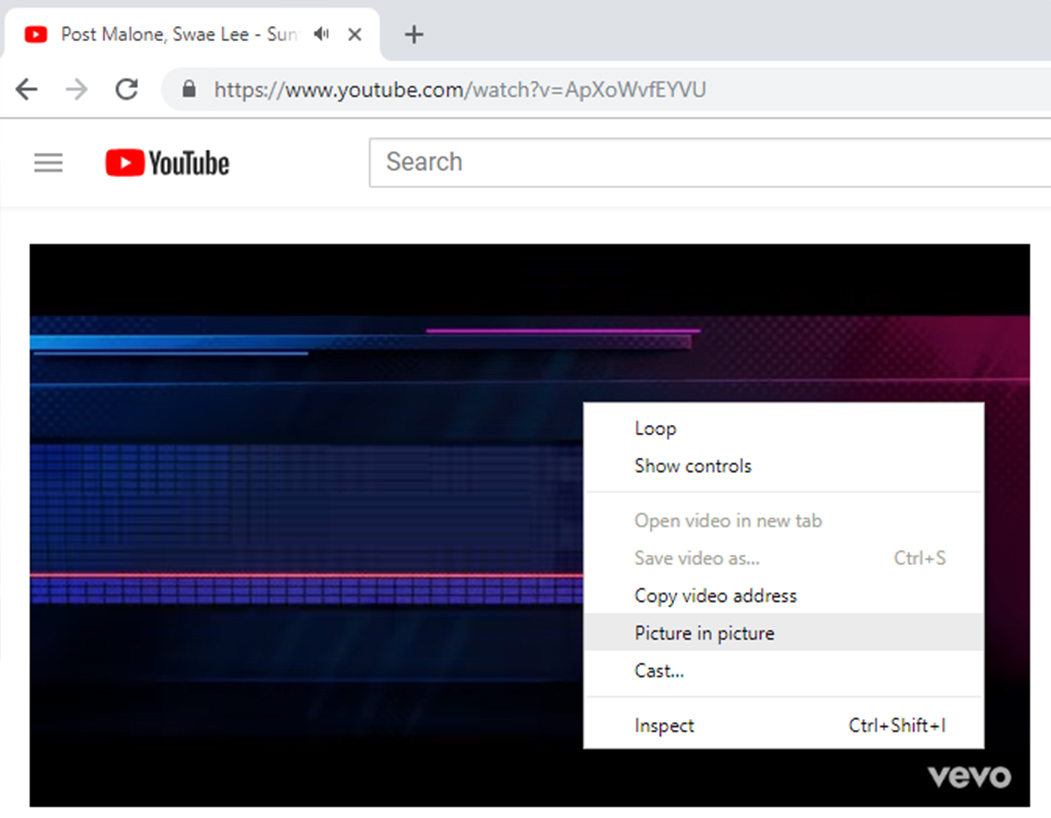
To use PiP, right-click on a video and select the ‘Picture in Picture’ option from the menu. It’s worth noting that some websites, like YouTube, have their own right-click menu and you’ll have to click twice to bring up the Chrome menu.

Once you PiP a video, you’ll get a small player in the bottom right corner of your desktop. You can drag it around to a different spot if need be.

Furthermore, Chrome will mark the PiP tab with a blue icon to make it easy to find.

Overall, this is an excellent addition to Chrome and part of a generally top-notch update to Chrome. Hopefully, Google will make this feature default on Chrome OS soon as well.

Source: Google Developers Via: Android Police

The post Chrome 70 brings ‘Picture in Picture’ video to Windows, macOS and Linux appeared first on MobileSyrup.

19 Oct 21:25

Photos shot with the Pixel 3 aren’t always saving, according to some users

by Patrick O'Rourke
Pixel 3 XL

Some Google Pixel 3 and Pixel 3 XL users are reporting that the smartphone isn’t always saving photos after they snap them.

Pixel 3 owners, both on Reddit and Google’s Community Support Forum are sharing various instances of the smartphone not consistently saving images. Further, the issue seems also to be affecting original Pixel smartphones, as well as the Pixel 2 and Pixel 2 XL.

The first instance of the issue being reported on Google’s Community Support Forums stems from Artem Russakovskii, the founder of Android Police.

Google still hasn’t fixed the issue of photos taken by the Google Camera sometimes not saving, happens on the Pixel 3 too and is absolutely infuriating from r/Android

The problem seems to occur when the user snaps a photo with Google’s stock camera app, then quickly switches to another app before locking the phone. A thumbnail of the photo reportedly appears in the camera gallery circle, but if you tap on it, the image disappears. That image then appears back in the gallery roughly a day later.

There are also reports of the Samsung Galaxy S9, Moto Z2 (which isn’t available in Canada), Moto E4 and even the Nexus 5X experiencing similar issues. Given that the problem seems to be affecting more than just Pixel devices and has only just appeared now, it’s likely linked to Google’s Android operating system, rather than a specific problem with the Pixel 3.

Card

Some have found that leaving the camera app open until the Pixel 3’s HDR processing has completed solves the problem. Others users have turned HDR functionality off entirely to fix the issue.

To be clear, none of the Pixel 3 or Pixel 3 XL smartphones we have at the MobileSyrup office have experienced this problem. Dean Daley, who has been testing the smartphone’s camera extensively for the last few days, says that he hasn’t run into the issue at all.

MobileSyrup has reached out to Google for more information about the issue and will update this story when we hear back.

Source: Reddit, Google Community Support Forums Via: The Verge

The post Photos shot with the Pixel 3 aren’t always saving, according to some users appeared first on MobileSyrup.

19 Oct 21:25

Sir Walter Scott

by Rui Carmo
the memorial against a cloudy sunset
The memorial to Sir Walter Scott, an impressive memento of a short trip to Edinburgh.
19 Oct 21:25

The Best Gear for Your Bug-Out Bag

by Doug Mahoney
The Best Gear for Your Bug-Out Bag

Whether it’s a wildfire, a hurricane, a flood, or any number of other emergencies, a fully stocked bag of emergency gear (commonly referred to as a “ready bag,” “go bag,” or “bug-out bag”) allows you and your family to quickly evacuate to a shelter or other secure location without forgetting any basic survival supplies and tools. “Bugging out” carries connotations of wilderness survival, but we spent over a hundred hours researching and testing to find survival gear that any household, rural or urban, could benefit from.

19 Oct 21:25

Just Another Fall Day in Vancouver

by Gordon Price

Getting bored yet?

19 Oct 18:29

Three-Year Moziversary

by chuttenc

Another year at Mozilla. They certainly don’t slow down the more you have of them.

For once a year of stability, organization-wise. The two biggest team changes were the addition of Jan-Erik back on March 1, and the loss of our traditional team name “Browser Measurement II” for a more punchy and descriptive “Firefox Telemetry Team.”

I will miss good ol’ BM2, though it is fun signing off notification emails with “Your Friendly Neighbourhood Firefox Telemetry Team (:gfritzsche, :janerik, :Dexter, :chutten)”

We’re actually in the market for a Mobile Telemetry Engineer, so if you or someone you know might be interested in hanging out with us and having their username added to the above, please take a look right here.

In blogging velocity I think I kept up my resolution to blog more. I’m up to 32 posts so far in 2018 (compared to year totals of 15, 26, and 27 in 2015-2017) and I have a few drafts kicking in the bin that ought to be published before the end of the year. Part of this is due to two new blogging efforts: So I’ve Finished (a series of posts about video games I’ve completed), and Ford The Lesser (a series summarizing the deeds and tone of the new Ontario Provincial Government). Neither are particularly mozilla-related, though, so I’m not sure if the count of work blogposts has changed.

Thinking back to work stuff, let’s go chronologically. Last November we released Firefox Quantum. It was and is a big deal. Then in December all hands went to Austin, Texas.

Electives happened again so I did a reprise of Death-Defying Stats (where I stand up and solve data questions, Live On Stage). We saw Star Wars: The Last Jedi (I’m not sure why the internet didn’t like it. I thought it was grand. Though the theatre ruined the impact of That One Scene by letting us know that no, the sound didn’t actually cut out it was deliberate. Yeesh). We partied at a pseudo-historical southwestern US town, drinking warm beverages out of gigantic branded mugs we got to take home afterwards.

Then we launched straight into 2018. Interviews increased to a crushing density for the role that was to become Jan-Erik’s and for two interns: one (Erin Comerford) working on redesigns for the venerable Telemetry Measurement Dashboards, and another (Agnieszka Ciepielewska) working on automatic change detection and explanation for Telemetry metrics.

In June we met again in San Francisco, but this time without Georg who was suffering a cold. Sunah and I gave a talk about Event Telemetry, Steak Club met again, and we got to mess around with science stuff at the Exploratorium.

This year’s Summer Big Project… y’know, there were a few of them. The first was the Event Telemetry “event” ping. Then there was the Measurement Dashboard redesign project where I ended up mentoring more than I expected due to PTO and timezones.

Also in the summer I was organizing and then going on a trip to celebrate a different anniversary (my tenth wedding anniversary) for nearly the entire month of July.

In August the team met in Berlin, and this time I was able to join in. That was a fun and productive time where we settled matters of team identity, ownership, process, and developed some delightful in-jokes to perplex anyone not in the in-group. I acted as an arm of Ontario Craft Beer Tourism by importing a few local cans (Waterloo Dark and Mad & Noisy Lagered Ale) while asking (well-intentioned but numerous and likely ignorant) questions about European life and politics and food and history and …

And that brings us more or less to now. September was busy. October is busy. I’m helping :frank put authentication on the old Measurement Dashboards so we can put release-channel data back up there without someone taking it and misinterpreting it. (As an org we’ve made the conscious decision to use our public data in a deliberate fashion to support truthful narratives about our products and our users. Like on the Firefox Public Data Report.) I’m looking into how we might take what we learned with Erin’s redesign prototype and productionize it with real data. I’m also improving documentation and consulting with a variety of teams on a variety of data things.

So, resolutions for the next twelve months? Keep on keeping on, I guess. I’m happy with the progress I have made this past year. I’m pleased with the direction our team and the broader org is headed. I’m interested to see where time and effort will take us.

:chutten


19 Oct 18:28

British relatives of Nazi-era refugees seek German passports before Brexit | World news

mkalus shared this story from The Guardian.

British descendants of refugees who fled Nazi Germany, including many Jewish families, are racing to secure German nationality so they can remain EU citizens after Brexit, according to official data.

The number of Britons applying for German passports using a special legal provision, article 116-2, that aims to make amends for Nazi-era persecutions has soared by more than 1,500% since the UK voted to leave the bloc in June 2016.

Germany received 43 such passport requests in 2015 and 684 in 2016, nearly all of them submitted after the Brexit referendum.

Last year the number jumped again to 1,667 requests, according to figures released by the German interior ministry in response to a parliamentary question.

According to the German government, the group “mainly includes German Jews” and members of opposition political parties at the time.

The legal provision is also open to descendants of those who were persecuted and sought safe haven abroad.

Other EU countries have likewise seen a surge in the number of passport applications from British nationals hoping to retain the same rights post-Brexit, including being able to live and work as locals in any member state.

In France there has been an increase of about 800% in the number of Britons asking for citizenship, from 386 in 2015 to 3,173 in 2017.

19 Oct 18:28

Over the hills and far away - Drenthe has built a hill for cyclists

by David Hembrow
Steve, Peter and myself on "our" new hill: The "Col du VAM". It's the highest point in Drenthe at 4800 cm above sea level ! Each week, a small group of recumbent cyclists ride together from Assen on short touring rides. This morning three of us went on a 70 km round trip to ride up a new hill which Drenthe has created for cyclists of all kinds to ride over. "Our" new hill is now the highest
19 Oct 18:27

Municipal Elections: “Handel’s Messiah or the Highway to Hell?”

by Sandy James Planner

messiah_hero_xlg

messiah_hero_xlg

Dustin-1130-CityHall6-e1458148671869

Dustin-1130-CityHall6-e1458148671869

Two excellent articles point at the need for a comprehensive approach in choosing the candidates for Mayor and Council in the various Metro Vancouver municipalities this Saturday.

Noted journalist Daphne Bramham points out the “complexity that the City of Vancouver has a voters’ planning guide on its website with candidate-supplied photos and profiles of the 21 people running for mayor, the 71 who want to be on council, and the 33 running for each of the park and school boards. Of course, Vancouver voters aren’t the only ones facing difficult choices with so few incumbents running, the collapse of traditional parties and so many Independents. In Surrey, there are 48 council candidates, eight running for mayor and 30 for school trustee, while Richmond has six mayoral candidates, 30 people running for council and 26 for school trustee.”

Decisions need to be made about housing affordability,  transportation accessibility and the overdose epidemic. And it is the  Duke of Data, Director of Simon Fraser University’s City Program that has come up with the “Handel’s Messiah or Highway to Hell” analogy. The people elected by citizens need to act for the greater good of all residents, not just the interests of the newly elected pundits’  inner circle. That includes diversity and listening to different voices.

“It’s about creating an ‘us’,” Yan said. “That’s hard and it’s a lot easier to create an ‘us’ if we all look the same, have same income and class.” So what do we do? “We have to look for candidates’ underlying humanity. Who appeals to our better angels?

Andy Yan was also interviewed by Vote Local and identified something that I have noticed has been missing in the discussion with Mayoral and Council candidates, and that is the importance of thinking regionally, not just insularly addressing the city.

As Andy states ” I’m seeing  a shift to reacting as opposed to planning. One thing missing from the discussion is that we’re an interdependent region – economically, socially and in terms of transportation.It’s not just about Vancouver, but how we are connected as various regional nodes within Metro Vancouver. I don’t think that has been talked about enough… about how development, social infrastructure, and economic activity needs to be both integrated and spread out throughout region. We need discussion about creating comprehensive social,economic, and infrastructure networks – not about individual one-off projects in each municipality. How do our communities leverage each other and work with each other’s synergies? For example, the development of social housing throughout the region, and not having it concentrated within just a few concentrated areas in certain cities. We should be engaging in a discussion about the role of each Metro municipality in terms of its responsibility to deal with specific populations, such as seniors. How do municipalities deal with young families and their needs? Or those who are homeless? There’s a broad spectrum on the demand side of housing that requires thoughtful and integrated strategies and solutions, working as a region and a province.”

It’s not about electing  independent councillors who make promises for creating more parks for people who own dogs. And beware of candidates who make those type of promises. It is about reviewing the established policy of the city as presented  in Council reports and in committee reports by the City Manager and staff, and ascertaining that the direction is fulfilled . It is about ensuring that the work done is supportive of Metro Vancouver’s Regional Growth Strategy .

It is about those councillors reading copious reports, asking questions of the city manager and of city staff, thinking about regional impacts and listening to all comment. It is about talking less, and taking in more, learning from the successes and missteps of previous Councils, listening to the public to do a more comprehensive job. As Andy Yan summarizes “The change in councils presents an opportunity for the next generation of leaders in the region to emerge and to learn from the past to build a better future together.”


highway_to_hell_by_noizkrewhighway_to_hell_by_noizkrew

I‍mage: Deviant Art

19 Oct 15:31

It looks like the new iPad Pro really will ditch Lightning for USB-C: rumour

by Patrick O'Rourke

While rumours regarding Apple’s upcoming iPad Pro revision nixing the traditional Lightning port in favour of USB-C have been circulating for some time now, a new report from Japanese publication Mac Otakara once again backs up this claim.

According to information the publication gathered from accessory manufacturers at the Global Source Mobile Electronics Trade Fair in Hong Kong, there is significant “talk” at the show related to Apple making the jump from Lightning to USB-C with the new iPad Pro.

Analyst Ming-Chi Kuo, who is typically reliable, stated back in September that he expects Apple’s 2018 iPad Pro models to utilize USB-C instead of Lightning. Further, Kuo said that the port will open up new functionality, including the ability to connect the iPad Pro to a 4K monitor, a first for Apple’s iPad line.

Mac Otakara goes on to state that manufacturers at the trade show cited a photo of the 2018 iPad Pro’s dimensions. The image indicates that the new iPad Pro is set to measure in at 7-inches wide (178.52mm) and 9.7-inches tall (247.64mm), with the larger model coming in at 8.5-inches wide and (215mm) and 11-inches tall (280.66mm).

The new iPad Pro models will also feature reduced bezels that are approximately 6mm across all sides of the device. It’s still unclear if the new iPad Pro will feature an in-display notch like the iPhone XS to accommodate the device’s Face ID module.

Apple is expected to reveal its 2018 iPad Pro along with a new MacBook Air at the company’s upcoming fall hardware event on October 30th.

Image credit: Mac Otakara

Source: Mac Otakara

The post It looks like the new iPad Pro really will ditch Lightning for USB-C: rumour appeared first on MobileSyrup.

19 Oct 15:30

Tesla’s new Model 3 trim option costs $58,800 before incentives

by Brad Bennett
Tesla Model 3 on road

Electric car manufacturer Tesla’s entry-level vehicle, the Model 3, is now on sale for a base price of $58,800 CAD before incentives.

The Model 3 was announced as a consumer-level electric car that would start at $35,000 USD (roughly, $45,843 CAD). Tesla has still been unable to hit that lower price point, but the $58,000 trim is a step in the right direction.

Tesla CEO Elon Musk announced the new car option on through an October 18th, 2018 tweet.

The entry-level vehicle trim has a mid-range engine and a maximum range of 418 kilometres. The new trim also has a top speed of 201 kilometres-per-hour.

The car costs approximately $52,100 with incentives and rebates, but those electric vehicle rebates are only available in Quebec and British Columbia.

Musk followed up his tweet with another that said “Tesla rear-wheel drive cars do actually work well on snow and ice. We did our traction testing on an ice lake!”

Musk’s comments are reassuring for anyone wondering how a rear-wheel drive Model 3 would stand up to a Canadian winter.

The Model 3 is also available in a dual motor all-wheel drive trim, with a range of 499km. However, the cost of the base model all-wheel drive trim before incentives is $70,700 CAD.

Customers looking to buy a 499 km range Model 3 with rear-wheel drive instead can order one “off menu for another week or so,” according to a tweet from Musk.

Source: Tesla Via: Engadget

The post Tesla’s new Model 3 trim option costs $58,800 before incentives appeared first on MobileSyrup.