Shared posts

08 Mar 01:35

What are timelines and what do they have to do with functional programming?

by Eric Normand

Timelines are a system I developed for modeling time in a distributed system. You will find timelines whenever you have multiple machines, multiple processes, multiple threads, or multiple async callback chains. Since virtually all software is distributed these days, modeling time is more important than ever. Functional programming may not have all the answers, but it is asking the right questions. In this episode, we go over what timelines are and how you can start to use them to model time in your software.

Transcript

Eric Normand: What is a timeline and what does it have to do with functional programming? By the end of this episode, I hope to give you a new perspective on distributed systems and at least one thing that makes them complex and also how functional programming can help reduce or manage that complexity.

My name is Eric Normand and I help people thrive with functional programming. This topic of timelines and distributed systems is more vital than it has ever been. Right now, basically every piece of software we write, virtually everyone, is a distributed system. It’s distributed programming. For program on the Web, we have a client and a server, just automatically by definition, it’s the distributed system.

Even the server, itself, is going to be talking to a database process. It could be on a different machine, but even on the same machine it’s a different process. We’ve got a third-party API that you’re talking to. Your mobile app is, probably, communicating back with the server, it’s using some cloud syncing, something like that.

We’re talking about distributed systems all the time. I hope that’s really clear and it’s awesome.

Distributed systems are cool, but the problem is that we’re still using a sequential, one step at a time, paradigm. Our programming paradigm, all the models of programming that we use…OK, I don’t want to say all, but the most common, most popular ones we use are all sequential. One thing at a time and anything that is dealing with the distributed system is bolted on.

Functional programming has been dealing with distributed systems for a long time and has…I don’t know if I would say it has all the answers, but it certainly been asking the questions for a long time. It knows the questions to ask.

That’s why I feel like functional programming is going to be helpful and that’s why functional programming is becoming more popular today.

Let’s talk about timelines. Timelines is my concept. I believe it is what experienced functional programmers who deal with distributed systems eventually get to. It’s just a kind of a more formalized process and model.

I believe that, when you’re dealing with a distributed system, you have to have an explicit model of time. You have to be in modeling time. Time becomes the most difficult thing because this computer’s time, not like the clock, but this computer’s time, meaning the order that things happen in, and that computer’s time are different. They’re different timelines.

My stuff executes in order, your stuff executes in order, but when you run them at the same time, we don’t know which ones are going to happen first between the two computers. You have to actually model that.

Your thing might happen before my thing happens, or my thing could happen before your thing happens. Are we going to get the same answer? What if they happen at the same time? Is that going to be a problem? We have to start thinking about this and modeling that these things could happen in different orders.

Our normal imperative programming does have a model of time, but it’s implicit. You might not notice it until you realize that there could be multiple models of time. The model of time for an imperative programming is one thing happens at a time. Everything happens after the thing that came before it. There’s not really an idea of other things happening at the same time.

I have the CPU. I’m going to do some stuff. Now, you have the CPU. You’re going to do some stuff. I can work in a sequential manner. It’s a very nice model of time. The problem is, it doesn’t work at all in a distributed system. What we have to do is manipulate this time. We need a model that lets us change and control how things happen, what order things happen in.

Timelines are my answer to that. They’re a tool for visualizing what happens on multiple threads, multiple machines, modeling, how they can interleave with each other, and then manipulating it. Once you figure out what are all the things happening, how can we make it so that it’s safer, it’s going to give us the right answer.

Let’s go into the model. A timeline is a sequential series of actions. That means each timeline has the semantics of an imperative program, a single-threaded imperative program.

Each thing happens and finishes before the next thing happens. Then you can have multiple of these, all at the same time.

Where can you find them? You find timelines…Let’s call it in the obvious places. If you have two machines running and communicating, you have two timelines. Each machine has its own timeline.

You could have multiple processes on those machines talking to each other, then you have those timelines, each process has its own timeline. You could have multiple threads in each process so each one of those would be a timeline.

Finally, this one is maybe the hardest to grapple with. Even a system like JavaScript, which only has one thread that you can directly program. It has a thread pool for network connections and stuff, but that’s all happening in the background. You don’t get to work with that. That single thread that you have still generates timelines even though it’s one thread because it’s got an asynchronous programming model.

Imagine if I make an Ajax request and that callback, I make another Ajax request, let’s call it A and B. From the callback of B, I make another Ajax request for C, when the callback for that, I print it out, I print out the answer.

I’m doing A and then B and then C and then print it out. Because it’s a sequential series of actions, that also is a timeline. I could start two Ajax requests at the same time. That is now two timelines that are running because I can’t determine which answer is going to come back first, which Web response is going to come back first.

I need to model that indeterminacy of the ordering of things because the order might matter.

Timelines, if you were going to draw them, what would you draw on them? You would draw the actions. You don’t have to draw the calculations or the data. Calculations, by definition, “are outside of time.”

They do not depend on anything like when they run, how many times they run, what else is running at the same time. They are timeless. Because they are timeless, they don’t have to show up on the timeline, which is a very valuable thing. It means that all you have to deal with on the timelines are the actions.

If you do more stuff, you push your code into calculations by removing what functional programmers often call “side effects,” you avoid having to deal with the messiness of actions.

I draw it like a line with boxes on it going down the paper. Each box is an action and the lines form between the actions and down is the flow of time, in the direction of flow of time.

When you have two timelines next to each other, they can interleave. The actions of each timeline can interleave, meaning all those lines between the boxes are allowed to stretch. If I make an Ajax request, I can’t control how long it’s going to take for the response to come back. It could be fast. It could be slow. The network could be really slow at that moment, or it could be really fast.

The actions of sending and the action of receiving, they could be separated by a lot of time. Those lines in between the boxes, they can stretch out, or they can compress. When they stretch out, that means there’s room for other actions to come in, other actions not come into their timeline but come in between them in wall-clock time.

If you could have some kind of master clock of when things are happening, another timeline’s actions can slip in there. You really have to deal with, at any moment, all the possible interleavings. And there are a lot. It is factorial in the equation for determining how many possible combinations there are. That’s a lot.

Just to give a quick example I know off the top of my head, if you have two timelines with 12 actions each, 12 steps in each timeline, there are already a million different ways that they could interleave. The question is, can you figure out if they’re always going to give you the same answer?

I’ve developed some concepts to help you figure that out. First of all, if they don’t share anything, if they don’t use the same resources, if they don’t communicate, then they’re always going to get the same answer relative to each other.

Like thread A and thread B, if they don’t share anything, the interleavings don’t matter. The thread A might interact with thread C. Then the interleavings matter. The thread A and B relative to each other, they don’t matter.

One way of reducing the complexity, the amount that you have to think about in your head, is to isolate two timelines, meaning get rid of any shared resources. That means the thread A and thread B both use the same global variable. Make it so that they don’t use a global variable. Make it so that they don’t have to do that.

The more you can do that, the less you have to worry about the interleavings between the two. The ideal would be that they have no shared resources. You can just totally forget about the interleavings, but maybe you have one or two that are left.

Once you got rid of all the ones you can and they’re not isolated. Maybe there’s some left because you’re always going to have actions. You need actions in your program where it won’t have any effect on the world.

Once you have that, what do you do with the actions that are left? The first thing is you can start coordinating. You use concurrency primitives to coordinate. One thing you could do is to use a queue. The order still matters. Thread A might get into the queue before thread B does, but at least they’re not happening at the same time.

It lets you do multiple actions. It’s my turn. I can do multiple actions and get a transactionality to it. I can do four things and then it’s released to turn to the next thread. Then it can do its three or four actions, and then release it.

Putting stuff in a queue is one way to coordinate different threads. Another thing to do is when you’ve got your timelines, you can start to shorten them. I call it a cut. It’s where you have like a checkpoint between the two threads.

I like to use simple examples. Imagine you’re counting a big pile of books. It’s too many books for yourself. You know you want to get to lunch, so you invite a friend to come over and help you count the books. You have some books in one room and some books in another.

You’re not coordinating between. You don’t know who’s going to finish first, so you make a little agreement before you start counting. You say, “Hey, look, when you’re done, come into the living room. Whoever’s done first, we’ll wait for the other. Then we’ll go to lunch together.”

You make a little coordination between you. You don’t know who’s going to finish first. You don’t want to spend your whole time asking, “Hey, are you done yet? Hey, are you done yet?” You just want to get the work done and then talk, but you don’t know who’s going to finish first.

This is a good way that each person is going to wait for the other. That’s a way to coordinate. What it lets you do is you can divide the timelines by what happens before the coordination point and what happens after the coordination points. You’re actually able to totally analyze them completely separately.

Before the timeline, the books have not been counted, or they’re impartially counted. After the timeline, they’re totally counted. You can just take the two answers and add them up, and you have the answer.

This is something you can do with something like Promise.all. It lets you wait for a whole bunch of promises. This is in the JavaScript world. If you’re not familiar with it, it’s OK. I just wanted to give a concrete coding example.

You have Promise.all. It will wait for all the promises before continuing forward. That’s a way of cutting, to say the stuff that happens before, there might be coordination I have to do. There might be other stuff I have to do, but I can deal with half the timeline at a time instead of the whole thing.

Let’s say you do put stuff in a queue. You’re still going to have ordering problems. The time you get into the queue is going to determine the effect of your actions. One other thing you can do is to make the actions not depend on order. This is a thing that we call commutativity.

We want to make it so that these two actions can happen, A first then B, or B first then A. We guarantee we get the same result. These things are very situation-dependent, but there are a bunch of data structures that have commutative properties. Here’s the example, it’s kind of a silly example.

Let’s say that we want to count people who are all…they’re like in a conference. They’re moving around in different rooms and I’m afraid that if I start counting people, someone’s going to leave and go to the other room and you’re going to count the same person and what do we do?

If we scan badges…every person has a badge and that badge has an ID. I can scan a badge and that person can leave the room and then you scan the same badge in the other room but we’re not going to count it twice. We’re just going to make a big set of all the IDs we counted and the IDs we scanned. Then once we are done, we think we’re done.

We counted everybody, then we are going to count how many unique IDs did we count. Now notice, if I scan them first, or you scan them first, it doesn’t matter. It’s all going into the same big bucket. That’s a way of making the order not matter.

Finally, there are things that you only want to happen once. You want a guarantee that it happens exactly one time. An example of this is sending an email. If I want to send an email to one of my customers, let’s say they buy something. I want to send them an email, with the confirmation, with their receipt. I only want that to happen once.

I don’t want it to…like, what happens in a distributed system is the network might go down. My server sends a message to the email server saying, “Hey, please send this person an email.” I never hear a response back. I don’t know positive or negative.

“What happened?” Probably something in the network broke or the program on the other side crashed, or something. I don’t know. I just didn’t hear back. What do I do? If I send it again, the same message again, what if they already sent it the first time? What if the program crashed after it sent the email? I don’t know. Maybe it crashed before. I have no idea because I didn’t get a confirmation.

If I send that again, it might send a second email. If I don’t send it, what if it had sent it zero times? From my perspective, the server, I’m in a bad place. What you’d want to do is introduce idempotency. Meaning, I can send the same request twice. I can have the same action, I execute it twice, but it only has the effect once.

I can send it a hundred times, if I’m really paranoid that you’re not going to send it, or that the network is so bad, I need to keep retrying, retrying, and retrying . I’m sure that it’ll eventually get through.

This is idempotence. It’s a way of guaranteeing that something won’t happen more than once. That lets you avoid the zero case. If the email server does come back up, I can keep sending the same request over and over, it only happens once. This is another thing that we do as functional programmers.

I’ve gone on quite long with this timeline idea. I’m developing this as part of the book that I’m writing. There will be a much better introduction to this in that book. It’s actually the chapters I’m working on right now.

Let me recap. We work in distributed systems now. All software is going to have multiple pieces to it that are communicating. We just can’t deal with this sequential model of time anymore. We need a way of visualizing and developing new models of time that are bespoke for the systems that we’re dealing with now.

The timelines are my attempt at making that. Timelines come about when you have multiple machines, multiple processes, multiple threads, or asynch callback chains. In all those cases, you’re dealing with timelines and you want to be able to manipulate those.

We can make timelines easier to work with by isolating them, meaning remove shared resources. If they still have shared resources, which many will, then you can start coordinating between them. Shorter timelines are easier to deal with than long timelines.

You want some way of being able to cut these timelines into pieces and deal with them at a smaller level. Actions that don’t depend on order are much easier to work with and reason about. Idempotence will allow you to deal with failures in a graceful way, without sending someone a thousand emails by accident.

I want to give you a win. I want to give you some takeaway in this. Go check out some bug that happens very rarely. I want you to map out all the pieces that you believe are involved in this bug. Draw out timelines. Draw boxes for every action in each of those pieces. See if you can figure out an order that generates that bug.

Just try it. If it’s too complicated, make up a scenario that’s simpler, that’s related. All right. Now do me a favor, please. If you found this useful, please like, plus one, thumbs up, up vote, share, heart, favorite, whatever you can do. All of it really helps. Please comment and, certainly, subscribe.

If you subscribe, you will get updates as they come out. If you found this one useful, I make more just like this. Also, if you want to ask any questions…I love answering questions in the future episodes. You can get in touch with me by email, eric@LispCast.com; on Twitter, @ericnormand, with a D; or find me on LinkedIn and ask me a question there.

Awesome. This has been pretty long, so I’ll cut it off right here. Thank you.

The post What are timelines and what do they have to do with functional programming? appeared first on LispCast.

08 Mar 01:34

Turn It Up and Disrupt

by Leanne

Find me at UBC’s International Women’s Day Festival

On March 9th, I’ll be returning to The University of British Columbia to speak about creativity and art and social change. Strangely enough, I’ll be one of the classrooms that I once inhabited as an art history student. Little did I know that one day I’d be back for Turn It Up and Disrupt.

My first talk in the morning will be talk with Q&A on social change and creativity. In the afternoon, Laura Farina and I stage a participatory writing session under our artistic collective called The Imprint. Come write with us!

Fundamental Rights Photo by Angelo Wagan on Unsplash

Workshop | Using Your Creativity for Social Change | Frederic Lasserre 105 (LASR) | 11:15-12:15pm

Author Leanne Prain (Yarn Bombing: The Art of Crochet and Knit, Hoopla: The Art of Unexpected Embroidery, and Strange Material: Storytelling Through Textiles) will give a talk about how artists, designers, and other creatives can use their work to activate social or political change.

What can we do as designers, artists, and makers to incite positive change in our communities? How do we make space for creativity, while also expanding our practice to include other voices? How do we know if our work has made impact? How can we scale our practice and share it with others? How can we change history by documenting and unearthing artistic practices? Why does collaboration make us stronger?

Art & Writing Workshop | Invite Her to the Table | Lasserre 105 (LASR) | Drop in from 1:30-4:00pm

Inspired by Judy Chicago’s 1979 visual artwork The Dinner Party, which invited accomplished women from history to fictional dinner party; Invite Her to the Table asks participants to invite women and femmes, to tell us who they value. Through participatory writing, we will invite women that we admire to attend a contemporary dinner party in 2019. We will write on the tablecloths, napkins and place settings – and bring others to the table.

This project is presented by The Imprint, a literary collective in Vancouver that engages citizens through participatory writing projects.  

To find out more about the Festival, and to purchase tickets, visit their website.

The post Turn It Up and Disrupt appeared first on Leanne Prain.

08 Mar 01:34

Alles doppelt: Das Nubia X hat zwei Kameras, Fingerabdrucksensoren und Displays

by Externer Autor
Nubia X – doppelte Innovation Das Nubia X ist eine wirklich interessante Erscheinung. Hier gibt es alles doppelt: zwei Kameras, zwei Fingerabdrucksensoren und zwei Bildschirme. Hinzu kommen ein schneller Prozessor und ein langlebiger Akku, die [...]
08 Mar 01:34

“Alles begann mit einem Witz”

by Andrea

Deutsche Welle: Wann wird die Zeitumstellung in der EU endlich abgeschafft? “Der EU-Verkehrsausschuss stimmt am Montag (04.03.) über ein mögliches Ende der Zeitumstellung ab, über die seit 200 Jahren gestritten wird. Benjamin Franklin hatte sie 1784 vorgeschlagen – allerdings nur zum Spaß!”

“Zwar stimmt der Verkehrsausschuss im Europaparlament am Montag, 4. März 2019, über ein mögliches Ende der Zeitumstellung ab, aber damit beginnt erst der langwierige Abstimmungsprozess in der EU.

Nach den Ausschüssen berät das Plenum, und nur wenn am Ende alle EU-Mitgliedsstaaten zustimmen, kann die Zeitumstellung in der EU abgeschafft werden. Aber das kann dauern. Als Datum für die letztmalige Zeitumstellung ist das Jahr 2021 im Gespräch. Ein großes Problem ist die bislang fehlende Abstimmung zwischen den Mitgliedstaaten. Gemäß dem Vorschlag der EU-Kommission würde jedes Land für sich entscheiden, in welcher Zeitzone es dauerhaft bleibt.”

08 Mar 01:34

Contemplation on not-ending, not-concluding

by thornet

My residency in motherhood

Many months ago, I set out to understand what a “small utopia” meant to me. Prompted by the birth of my son, and against the backdrop of social and political upheaval the world over, I strove to reevaluate what matters to me and how I could better dedicate myself to improving the little sliver of the universe around me.

And then, as these things go, life happened. And life ceased. Or perhaps it’s better to say that life does what it always does. It changed and took on new forms.

My mother passed away in June. She died from cancer — a kind of excess of cellular life. Fortunately, I could spend over a month with her. She met her grandson. She was with close family members. And in the end, she left on her own terms and without pain.

When you lose your mother, you can both say everything and nothing. No words suffice.

In the weeks since, it has felt that what I had been reading and thinking during my residency was secondary and inane. Who cares about material economies when your mother is dead? What difference does it make if we live under a dictatorship or democracy or something in between? Capital is central to how our world works, yet it means nothing.

It is only now, nearly two months later, that I can begin to discern where these things overlap and do matter.


Before you give birth, there are all manners of ways one can prepare. There are courses and books, stories from friends, advice from doctors, and in general just the internal pep talks to ready yourself for the inevitable day when you are no longer pregnant.

However, in that diabolically dialectic way of the world, you can both be prepared and nothing can prepare you. 46 hours after going into labor, my son was born. One can’t even compare that duration to a marathon, because it was ten times longer.

So how do you cope in that process, or even in surprising ways, find joy in it? One level was personal: I had to find my breath, my presence and my peace with it all. “I am here. There is only this moment. Each breath brings us closer to each other.”

Another level was interpersonal. My husband, the midwives, the doctor in the room, as well as the friends and family sharing their support from afar. The love and care of these people made me feel grounded, safe, and able to do it.

And for this to be a healthy birth, there was a less visible yet vital other level: universal basic services. The professional staff with their state-funded medical schools and training, the facilities and nursing paid for by public health insurance, the prenatal care and the midwife’s house visits also covered by health insurance, the compensated time off of work protected by law and paid for by the state, and the hundreds of other “behind the scenes” ways that my baby and I could be healthy and fully there for each other: drinkable water, clean air, hygienic spaces and supplies, affordable food, reliable infrastructure, and on and on.

My mother benefited from similar medical services, paid for through her status as a military veteran. This was a huge emotional and financial relief for our family, as it enabled us all to focus on the shared moments together without fretting about bills and administrative burdens.

And so, despite the sadness and the loss, isn’t that kind of alleviation a utopia?


Life is in the present moment. It’s the only time we really have. To experience it, you have to be here, now.

Therefore, I have resolved to be present for myself, for those I love, and for those I may interact with and affect directly or indirectly. I want to be peaceful and compassionate in every moment and not distracted by past regrets or tomorrow’s worries.

Furthermore, I am resolutely convinced that it shouldn’t be a luxury to have the time and means to be mindful. The ability to live in the moment without material hardship should be universal.

And so I am coming to the conclusion that the purpose of organized society is to cover the basics so that individuals can fully focus on the life they choose. Government should take care of “the stack” — by providing excellent universal basic services.

People should have access to excellent food, shelter, medical care, education, infrastructure and more. These services must be delivered in the context of peace, with a free press, transparency and democracy. Then we citizens can live the lives we choose, without the strain of making ends meet.

The material means to deliver universal basic services (UBS) do exist. In the UK, for example, the University College of London has outlined how to make a form of UBS a reality, a plan which the UK Labour Party is using to inform its thinking. UBS is about political will and the structures to deliver it.

In a place like Germany, the foundation for these universal basic services is available. It is a social democracy with a strong economy. The mainstream parties are committed to providing at least some configuration of these services, even though the details vary greatly. And while the current implementation is far from perfect, there still seems to be a widespread understanding that when more people in society have their basic needs met, we can all be safer, healthier and more prosperous. More human.

I recall a quotation from Thích Nhất Hạnh, a Buddhist monk and peace activist in Vietnam. “We need the vision of interbeing — we belong to each other; we cannot cut reality into pieces. The well-being of ‘this’ is the well-being of ‘that,’ so we have to do things together. Every side is ‘our side’; there is no evil side.”

Maybe ideas like UBS have to be truly universal in their design. They must go beyond national borders, as our lives already do. These services should be something that everyone on the planet, not just citizens of wealthy countries, benefit from. Imagine if everyone had access to food, shelter, education, health care and more.

Isn’t that a utopia worth fighting for?


In some ways, my residency has simply led to my continued intention to be intellectually engaged in the world — not knowing answers but being mindful about asking and searching. My son has brought into focus a specific responsibility that was previously diffuse and generalized: I now know that I want to be fully present and compassionate towards my fellow beings.

And my mother remains a guiding light for how to live a life of curiosity and questioning. She was a teacher and lover of books, happily quoting Chaucer’s The Canterbury Tales to tell me that she would always “gladly learn and gladly teach.”

I am thankful to all the friends and family who encouraged me throughout my residency. Your recommendations filled me with joy, and your thoughtful conversations propelled me onward.

In the end, there is no end. I am still a mother, a curious human, and someone endeavoring to be better to those around me. May my residency carry on as a commitment to reside in mindfulness.

08 Mar 01:29

The stories coming out of Revolut are really ba...

The stories coming out of Revolut are really bad. This kind of toxic behavior is never acceptable, regardless of what kind of pressures a company is under.

08 Mar 01:29

I gave into the .dev domain madness and registe...

I gave into the .dev domain madness and registered duncan.dev for my primary website domain. I’ll move things over the next few days, hopefully not breaking too much along the way.

I’m such a geek. It really didn’t help that our group’s internal Slack was talking about nothing but .dev domains. There was just way too much encouragement there from folks like @bketelson and @film_girl. Really, it’s a miracle I didn’t buy more than one domain.

08 Mar 01:22

Conceptualising the digital university – sharing the testimonials

by admin

Photo by rawpixel on Unsplash

My fellow authors Keith Smyth and Bill Johnson and I have been delighted with the response to our recently published book Conceptualising the Digital University: the intersection of policy, pedagogy and practice. The download figures we can see from the website are very encouraging.

We are actively working on some open access papers around key themes of the book but whilst we are working on these and wait for reviews we know about to come out, we thought it would be good to share the testimonials for the book given to us by some respected colleagues who got early access to the book.

Our thoughts about the book have been influenced by many people in our community and over in Keith’s blog we are sharing the acknowledgements section in the book as a way of saying thank you again to many colleagues and friends who have been inspired, challenged and supported our work.

I read this book with a sense of both recognition and urgency. This is not a manifesto about utopian digital futures, but rather a provocative invitation to re-think higher education and its role in increasingly open, networked, and participatory culture. Written in a language of “hope and critique” (Giroux, 2011), the authors use the lenses of critical pedagogy and praxis to offer a compelling case for troubling the existing boundaries of universities – and thus for greater openness and democratic engagement within and beyond higher education. The questions and analytical frameworks proposed by the authors should stimulate much dialogue and debate by educators, academic developers, policy makers, and all interested in the future of higher education. A vital and timely book.  – Dr Catherine Cronin.

This timely work examines the power of the digital in context with what is hap- pening to education today, and in particular to Higher Education. Understanding education in terms of human development, it is comforting that narratives of education as a public good are being related through the digital. We live with the golden promises of technology to emancipate and extend social and intellectual benefits to the many, however this thinking needs to be matched with the practi- cal details whilst not shying away from critique of expanding a successful mono- culture. Just as with the industrial revolution before, our technology industries are proposing revolutions which lead us round the same circle, down the same paths of behaviour. Scrutiny of formal education reveals how learning has been commodified and narrowed; just as we have come to consume the natural world we have come to consume education. This book provides robust analyses and alternative envisioning to the consumption of education exploring how technol- ogy can be used as a tool to open up vital opportunities to everyone, as well as essential vistas to those in the academy if it is not to atrophy as an intelligent organ of human society. – Alex Dunedin, Ragged University.

This is a timely and necessary book. All universities are in some form negotiating their relationship with the digital context they now operate within – what does it mean for students, staff, ways of learning, methods of research and the role of the university in society. What and how should we teach in order to give students the appropriate skills to operate as effective citizens in a digital world? These are all questions which the higher education sector seeks answers for. The issue is that often the answers to such questions are provided by those with a vested interest – technology vendors or ed tech consultants. What this book does is place these types of questions within a meaningful and well reasoned framework. The book addresses this in three sections, looking first at the broadly neo-liberal context within which the digital university operates, and what this means. In the second part, how the digital university might be conceptualised and practically implemented is considered. Lastly, the authors address how such a digital university is situated within a social context. By addressing these elements, a comprehensive, critical and nuanced picture of the digital university can be established, rather than one determined by a technological perspective alone. It is therefore essential reading for anyone with an interest in the digital evolution of the university. – Professor Martin Weller.

We’ve been waiting for this: a book-length critique of the ‘digital university’ that gives full attention to the political context. Johnston, MacNeill and Smith explore the role that digital technologies have played in corporatising the academy, from the curriculum to learning environments, and from business models to terms of academic employment. They’re hopeful enough and engaged enough in the wider world to also show how alternative digital pedagogies and strategies might be pursued, reframing higher education as an open, critical and democratic project. Helen Beetham.

08 Mar 01:22

StopTheMadness: Take Back Your Web Browser [Sponsor]

by MacStories Team

When you visit a website, few things are more frustrating than when your browser doesn’t work as expected because the site has disabled common interface features. StopTheMadness is a Safari and Firefox extension that prevents sites from modifying how your browser works when you visit them.

Available on the Mac App Store for macOS 10.12 Sierra and later, StopTheMadness puts you back in control of your browsing experience. Users often assume their browser isn’t working correctly when in fact, the trouble lies with the sites they visit. To see just how bad it can be, visit StopTheMadness’ test page for a demonstration. With StopTheMadness enabled, everything on the test page is returned to working the way you expect.

Whether you’re on Safari or Firefox, StopTheMadness ensures you can:

  • ⌘-click to open links in a new tab
  • Use keyboard shortcuts that rely on the ⌘ modifier
  • Open Safari’s standard contextual menu when you right click
  • Drag images and links
  • Select text
  • Paste text into any text field
  • Copy text from anywhere on a webpage
  • Auto-fill and complete passwords

StopTheMadness can even prevent clicked links in Google search results from being redirected to a different site. The extension can also be customized to work on a per-site basis allowing users to dial in the exact experience they want.

Get StopTheMadness today on the Mac App Store and take back your web browser. StopTheMadness is available as a separate purchase for Google Chrome on the Chrome Web Store.


Support MacStories Directly

Club MacStories offers exclusive access to extra MacStories content, delivered every week; it's also a way to support us directly.

Club MacStories will help you discover the best apps for your devices and get the most out of your iPhone, iPad, and Mac. Plus, it's made in Italy.

Join Now
08 Mar 01:21

District of No Vancouver?

by Colin Stein

It’s a motion that could be considered a little too on-the-nose.  The District of North Vancouver’s new council — which previously nixed a non-market and seniors housing project in order to preserve a parking lot —has set itself up to vote tonight on whether to grant operating funds to a housing affordability advocacy group.

Development planner Chuck Brook called out the motion in the latest episode of the Price Talks podcast, highlighting the potential for DNV to make yet another decision that not only exemplifies but exacerbates the housing problems on the North Shore.

The Community Housing Action Committee (CHAC), part of the North Shore Community Resources Society (NSCRS), provides “a tri-municipal voice and platform for discussion, sharing of ideas, advocacy, and research into housing affordability on the North Shore”. Like many other volunteer or non-profit groups — such as NS Childcare Resource & Referral, Family Services of the North Shore, or Hollyburn Family Services Society Youth Safe House — CHAC has relied on core funding from the District to fund its research, policy development and outreach activities, all focused on affordable housing advocacy.

Yet at a January 21 council meeting, DNV council passed a motion to review the CHAC funding request of $11,517.

Council has since received a report from DNV’s senior community planner Natasha Letchford, and the debate — and a decision — will likely occur this evening. (Live broadcast begins at 7pm.)

For those who may consider that this district council has been rather pointedly denying the existence a housing crisis, amidst a surfeit of infillable land, the implication is clear. If CHAC doesn’t serve the interests of the majority will of Council, perhaps that money is best spent elsewhere.

The choices, as laid out in the report:

  • approve the core funding request
  • deny, forcing CHAC to pursue a much smaller Municipal Community Services Grant

And if that’s a no? The committee won’t be able to sustain 2019 programming.

Who, then, would be the voice for housing advocacy and education on the North Shore? Why, residents of course.

The counter argument is one which, if it were EMS, wastewater treatment, or police, we wouldn’t hesitate to agree with:

“Do not put the decision-making into the local communities. This is too hard, and too important.”

We’ll get back to you about the vote (and perhaps the other controversial vote happening tonight on the North Shore). For more commentary about North Vancouver district and the challenges ahead of us all, listen to the latest episode of Price Talks.

08 Mar 01:21

European Parliament says Yes to Vehicular Speed Regulation

by Sandy James Planner

CO2_car_and_van_targets_800_450_70

CO2_car_and_van_targets_800_450_70

Kudos to the European Parliament who are not messing around about saving lives and reducing injury on European roads. Realizing that simply slowing speed on roads by one kilometer an hour would save 2,100 lives, the installation of  intelligent speed assistance (ISA) in new vehicles is being mandated to all new purchased cars in the next three years.

The ISA does not brake the vehicle, but limits the top speed by throttling engine fuel. Speed sign recognition cameras and a GPS-driven speed limit data system inform the vehicle about traveled speed.

Carlton Reid in Forbes.com observes that even though this technology has existed since the early 20th century speed regulators on vehicles have never been adopted by governments. The use of ISA if universally applied can reduce deaths by 20 percent.

Currently the vehicles with this technology can shut it off.

The European proposal is that if a vehicle has an ISA system it must be used. No surprise that the automobile industry appears to be in direct opposition to the compulsory use of these devices when their marketing emphasizes speed and quickness.

“Members of the European Parliament’s Committee on Internal Market and Consumer Protection voted last week to approve a range of new vehicle safety standards including automatic detection of pedestrians and cyclists, and a new direct vision standard for lorries and buses to enable drivers to have a better view of other road users around their vehicles.”

While this technology is already being used by buses and trucks, the automobile industry has not been as regulated. The European Parliament is also requiring vehicular “black boxes” to record critical incidents before crashes.

In the United Kingdom (despite their low fatality rate of  2.9  per 100,000) crashes involving speed kill 1,200 people annually. By comparison Canada’s road fatality rate is double the United Kingdom’s at  6.0 and the United States’s fatality rate is  triple at 9.7 per 100,000.

In the European Union 500 people die on roads a week.  By limiting vehicular speed the E.U. has a “once in a generation opportunity to make a real difference.”

CC0N73_2268160k

CC0N73_2268160k

Images: acea.be & daily telegraph

08 Mar 01:20

The Best Infant Car Seat

by Rebecca Gale
The Best Infant Car Seat

Infant car seats are designed to click in and out of a base you leave installed in your car—making it easy to get a baby into a house or stroller with minimal disruption. After 50 hours of research, including testing seven popular infant car seats at home and crash-testing four finalists in a top lab to measure their front- and side-impact performance, we think the Chicco KeyFit 30 is the best one for most families.

08 Mar 01:14

In praise of ignorance and being wrong

by Josh Bernoff

What comes before learning? In 1995, I was out of work and interviewing for a job as an analyst at a research company. As they described the job to me, I became very excited. My job was going to be to identify important questions for business clients where the answer was not yet known. Like … Continued

The post In praise of ignorance and being wrong appeared first on without bullshit.

08 Mar 01:14

The CP+ Roundup — Mirrorless Side

Warning: I'm going to include some compact and all-in-one cameras in this mirrorless article. After all, they don't have a mirror ;~). Note that I also consider anything released in the two weeks prior to CP+ as being CP+ related. …

08 Mar 01:14

The Best Gas Stoves and Ranges

by Tyler Wells Lynch
The Best Gas Stoves and Ranges

We looked at 66 freestanding gas ranges (which typically cost less than $1,000), and frankly, it was hard to tell most of them apart. But the GE Adora JGB720 is one model that stood out (just a bit) from the pack. It has the sturdiest build and some of the best-looking finishes for the price without skimping on cooking performance or features.

08 Mar 01:14

IP, User Agent, and Referrer Tracking Disabled on cinc.rud.is and git.rud.is

by hrbrmstr

Not flagging this with an “R” tag since I don’t want to spam R-bloggers but I mentioned here that I’d be disabling logging on https://cinc.rud.is and https://git.rud.is and I wanted to follow up on that with an addendum that I’ve opted to disable user/system tracking in the access logs of both those sites vs just drop access logs entirely.

I’ve configured nginx with ipscrub and have defined a new log_format:

log_format special '$remote_addr_ipscrub - [$time_local] "$request" $status $body_bytes_sent';

that anonymizes the incoming IP address and does not log referrer (it only logs what you see above).

That way I can get usage info without tracking you b/c I rly have no need for the extra info.

It was super-easy to install and I can recommend it for anyone who runs nginx and wants to avoid capturing information you really don’t need to measure engagement.

08 Mar 01:14

Geliefert

by Volker Weber

aa127433f389a0e9425f727eef41666e

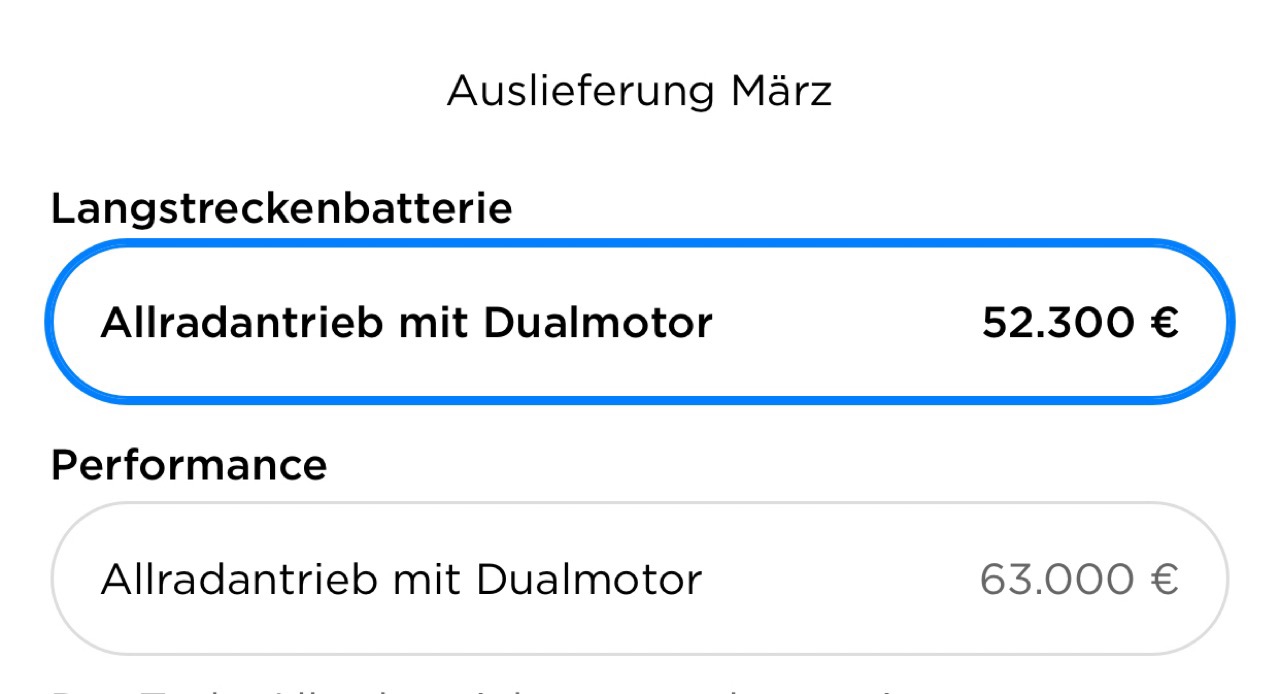
Wer sich vor Jahren als vermeintlicher Trendsetter in die Schlange vor den Tesla-Showroom gestellt hat, bekommt jetzt sein Auto. Alle anderen auch. Die Nachfrage nach einem Tesla für umgerechnet 30.000 Euro war enorm. Bei den tatsächlichen Preisen sieht das anders aus.

Jetzt macht die Firma erst mal die Läden dicht, damit der Preis sinken kann. Hilft denen, die jetzt zahlen, dann auch nicht mehr.

08 Mar 01:14

The Seven Stupidest Things Cyclophobes Say

by Average Joe Cyclist

Seven stupidest things cyclophobes sayThere is a small but vocal minority of people who waste their energy vigorously disparaging cyclists. Unsurprisingly,  many of their arguments are downright stupid. Here are the seven stupidest things that people who hate cyclists say.

The post The Seven Stupidest Things Cyclophobes Say appeared first on Average Joe Cyclist.

08 Mar 01:07

Work Futures Digest — 2019–03–03

by Stowe Boyd

Work Futures Digest — 2019–03–03

  • Beacon NY — 2019–03–03 — Trying a new feature at Work Futures Daily: a weekly digest. I will be collating the four most clicked on stories, one from each day of the past week. So if you missed one, or were too busy, this is the answer.
  • Update: I forgot to remind people that I am on a four day workweek, so only four stories.
  • Workism Is Making Americans Miserable | Derek Thompson digs into the culture of overwork in the US.
  • :::
  • Don’t Fight the Robots. Tax Them. | Eduardo Porter revisits the economic arguments for taxing robots, and despite the criticism the idea has received he winds up supporting it.
  • :::
  • In Some Feedback About Feedback, I summarize research by Marcus Buckingham and Ashley Goodall (paywall) who wonder how should we give and receive feedback, and they question the inherent goodness of feedback, and the unexamined premises that underlie our obsession with it (post for paying sponsors only).
  • :::
  • The Future of The Future Of Work: Survey 1 Results | Earlier, I created and promoted a survey for the Work Futures community, looking to uncover a baseline regarding themes and topics of interest. This is the first order analysis of the survey results, based on 98 responses.
  • Quote of the Week

“The modern labor force evolved to serve the needs of consumers and capitalists, not to satisfy tens of millions of people seeking transcendence at the office.”

Originally published at workfutures.org on March 3, 2019.


Work Futures Digest — 2019–03–03 was originally published in Work Futures Institute on Medium, where people are continuing the conversation by highlighting and responding to this story.

08 Mar 01:07

frillmag: Pattern.


frillmag:

Pattern.

08 Mar 01:07

Our Falling and Rising Towers

by Gordon Price

Towers go up, towers come down – like the Landmark on Robson, going, going …


On the other side of the peninsula, Vancouver House nears completion.


At ground level, it’s already evident that the podium and low-rise infill buildings – their volumes shaped by the Granville bridge ramps – could have a bigger impact on this downtown district than the tower itself.


08 Mar 00:58

Flickr login freedom is here.

by helen@flickr
Flickr login freedom is here.

For more than a decade, login on Flickr has been bound to Yahoo’s login authorization system, requiring each of our members to own a Yahoo account to access their Flickr account.

From the day we announced Flickr was joining SmugMug, the single most requested feature by our community has been overwhelming and consistent: a new login.

We set to work right away to bring all our members a new, secure login method that doesn’t require a Yahoo account, and we’re thrilled that the time has come to begin migrating members to the new login.

Due to the massive number of account holders at Flickr, this process will take a little time, but over the next few weeks, we’ll introduce more and more Flickr members to our new login.

What to expect.

The first page of the login experience has already been updated with a new look, but you will continue to log in to your Flickr account with your Yahoo credentials as you always have until the rollout reaches you.

Once the update is available to you, you’ll be led through a simple process that will allow you to select your new login email address and a new password.

Initially, you’ll be required to use either your Yahoo sign-in email address or your primary contact email address. If you like, you can update the primary address by following these instructions. The address you choose will be the only email address used by your Flickr account, for both login and all correspondence. In the near future, you’ll be able to change the address you’ve chosen in your account settings.

Please make sure you have access to your Yahoo login credentials so your login upgrade goes smoothly. If you need help recovering your account or accessing your current login credentials, visit our help pages.

We hope you love this new, simpler login experience. We’re still hard at work on performance and stability improvements across the site (as discussed here), but we’re delighted to check this key item off our members’ wish lists.

08 Mar 00:58

One call to change my life, and another to redefine Spatial Computing

by Robert Scoble

Irena Cronin called me last year.

That call lead to the development of a new Spatial Computing Agency, Infinite Retina, which opens its doors today. Thought I’d give you a little detail behind what brought 20 people together, and offer the community to come together to define, for Wikipedia, what Spatial Computing is (Magic Leap has been popularizing the term, but we think it is bigger than just their form of augmented reality glasses).

Back to the call and what has happened since.

We had stayed in touch because we both are passionate about the same things: helping entrepreneurs grow their businesses and seeing Spatial Computing make life better for all of us. Spatial Computing is computing we, or machines, move around in. More on the definition in a bit.

See, eight years ago Peter Meier, then CTO of Metaio, promised me monsters on the sides of buildings in the video I embedded here. He, today, is working inside Apple on the augmented reality team.

For me, it is personal. My son, Milan, is autistic, and has trouble communicating, reading social cues that I take for granted, and doing other tasks.

I see how a pair of Spatial Computing glasses will give him, and really all of us, super powers.

It wasn’t the first time I had seen these technologies demonstrated.

Yelp, back in 2009, added a feature because I heard that it was working on such. They claim they weren’t, but an intern there added the feature after I came up with it. Before that I’ve seen various augmented reality or virtual reality projects come to life, both in military, and in R&D labs.

Anyway, back to Irena’s call. She floated the idea of me working on a book with her, aimed at helping businesses. I answered, “I think there’s a lot more than a book here, want to build a business together?” I had spent the past year doing homework on the Spatial Computing industry, visiting tons of companies, and building new databases on social media and elsewhere of the industry and I saw a major new need coming that would need more than a book, it would need a team of people helping companies figure out their journeys as they build new technologies for products we haven’t yet seen yet (last week Microsoft launched a new Hololens, which shows that development is active and interest is going up).

After that call, the idea for a company quickly grew. Which leads us to:

  • Our team, seven other people who inspire me every day. On our podcasts, newsletters, or videos, you’ll eventually meet them, and see why I am humbled to work beside them.
  • Our advisors. 14 people who each bring something to the table, from being one of Steve Jobs’ key people who brought us the iPhone, to innovators in optics and sensors, to AR Cloud pioneers, to business experts.

Here’s the core team at our first meeting, which we did in Apple’s Palo Alto store. An aside, our name, “Infinite Retina” comes, in part, from Apple’s name for high resolution screens, “Retina screens.” Since Spatial Computing gives you all the virtualized high resolution monitors you want, we thought of a world of “Infinite Retina.”

Today, we turned on the InfiniteRetina.com website, shipped a new newsletter, more on that in a second, came up with a menu of services, recorded a podcast, and revealed two video interviews that we did, including with the head of Augmented Reality research at Niantic, the folks under Pokemon-Go. They represent our new research where where we dig into the business side of Spatial Computing and the companies building products and services using Spatial Computing technologies.

You’ve never seen me really dig into the business life of companies before, but we see the press that’s covering Spatial Computing isn’t really focusing on that much yet, and since our thesis is that many new companies will come over the next five years, that they will need help in seven areas (internally we call them “the Seven Voxels” but you can think of them as business imperatives). Things like getting funding, gaining attention, finding customers, winning talent, choosing and/or building infrastructure, guiding culture, and handling legal.

Which gets me to a question we have for the community.

One of the things that our team talks a lot about is how do we define Spatial Computing? While this term is not a new one, it’s not one that has been frequently used so far. There isn’t even a Wikipedia page for it yet.

In our first newsletter, we lay out our definition of Spatial Computing. We think it’s broader than just augmented reality or mixed reality or virtual reality, or even, all three put together. Spatial Computing technologies are being used in ovens, in cars, in drones, on factory lines, and lots of other places, which we’ve been tracking on our Twitter feed as we retweet the most interesting tweets from people and companies in this space.

We want to know what you think about our definition? How would you improve it, change it, etc? Feel free to tweet about it, or send us a note on our Facebook or LinkedIn pages, and we’ll aggregate and publish the best feedback. My friend Reuben Steiger did most of the homework for us, in his Ultimate Guide for XR evangelists.

To wrap it up, so excited that one phone call turned into so much already, with much more on the way. Our dreams of a new, more personal computing system that we can use all day instead of phones, laptops, TVs, etc, are still probably many years away, but we can see about $50 billion in investments already from companies like Apple, Facebook, Google, Magic Leap, Huawei, and many others, and when this wave comes in we predict it’ll create many new billion-dollar companies and we’re here to help.

We are working on a set of corporate values, and chief amongst them is that a rising tide lifts all boats, and we’re just offering to be helpful: to everyone who cares about Spatial Computing and all the magic that it can bring.

I’m honored to be Chief Strategy Officer at this new company and I’m here to answer your calls: robert@infiniteretina.com or +1-425-205-1921.


08 Mar 00:57

Minister of the Future

by Stowe Boyd

Beacon NY — 2019–03–04 — In the Quote of the Day, below, Marc Benioff makes a suggestion that leads to the perfect job description for me.

:::

If you’re getting this you probably signed up at workfutures.org (or one of its predecessors) or stoweboyd.com. If someone forwarded this to you, sign up here.

Consider becoming a paid sponsor to support our work, and to receive in-depth investigative reporting and discounts to other events, reports, and activities.

sponsor message from Boundaryless SRL

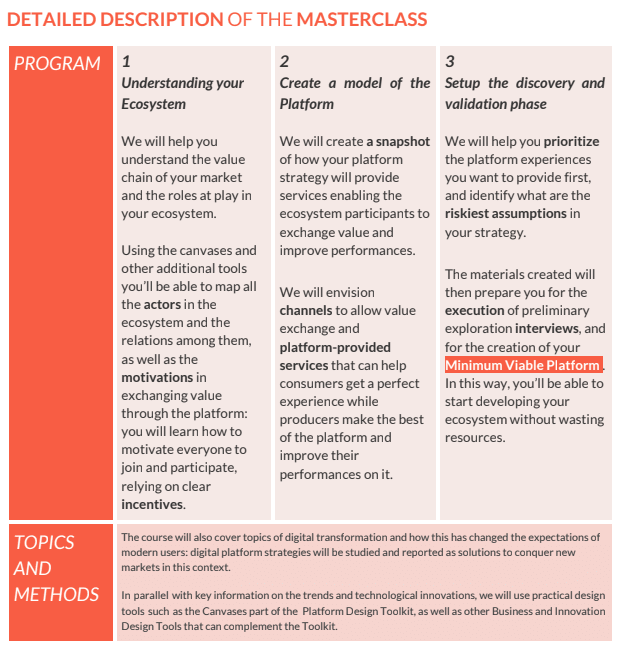
Platform Design 2-Day Masterclass New York City 18–19 March led by Simone Cicero

Look to the bottom of the newsletter for more information.

Links

US Army developing AI-powered autonomous weapons | Justin Rohrlich reports on the US Army Atlas program, which seems to be designing and building killbots:

“The Army Contracting Command has called on potential vendors in industry and academia to submit ideas to help build its Advanced Targeting and Lethality Automated System (ATLAS), which a Defense Department solicitation says will use artificial intelligence and machine learning to give ground-combat vehicles autonomous targeting capabilities. This will allow weapons to “acquire, identify, and engage targets at least 3X faster than the current manual process,” according to the notice.
Stuart Russell, a professor of computer science at UC Berkeley and a highly regarded AI expert, tells Quartz he is deeply concerned about the idea of tanks and other land-based fighting vehicles eventually having the capability to fire on their own.
“It looks very much as if we are heading into an arms race where the current ban on full lethal autonomy” — a section of US military law that mandates some level of human interaction when actually making the decision to fire — ”will be dropped as soon as it’s politically convenient to do so,” says Russell.
[…]
Last fall, UN secretary general António Guterres said the “prospect of machines with the discretion and power to take human life is morally repugnant.” More than 25 countries have called for an ban on autonomous weapons, a measure that explicitly requires human control when it comes to lethal force. However, the US, South Korea, Russia, Israel, and Australia have pushed back strongly and defense contractors including Boeing, Lockheed Martin, BAE Systems, and Raytheoncontinue to invest heavily in unmanned weapons development.”

Uh-oh.

:::

Facebook says that Workplace now has 2M paying users | Ingrid Lundgren reports on new numbers from Facebook re Workplace:

“Being Facebook and already working at a huge scale with more than 2 billion monthly active users of its flagship service, the company has always pitched Workplace as a tool for very large enterprises, and today it said that it now has 150 companies with more than 10,000 users each on the platform.
These have included companies like Walmart (the world’s biggest employer) as well as Nestle, Vodafone, GSK, Telefonica, AstraZeneca and Delta Airlines.
Picking these metrics to talk about the company’s growth is a strategic move for Facebook. They are different enough from what Slack measures that it’s not immediately easy to draw a comparison and claim that Slack is much larger. At the same time, it highlights Workplace’s success in an area that Slack, Teams and others competing in this space are also chasing: enterprise users. These are the most lucrative customer segment, as they not only generate larger recurring revenues, but they are often slower to churn once they do sign on to your service.”

Oh, and Workplace is a work media tool, while Slack is a work chat tool, but as usual this piece is all horse race and no actual tech analysis.

:::

Work of the Past, Work of the Future | David Autor wrote a paper based on the Ely Lecture he gave at the American Economics Association annual meeting in January, and I wrote about last month in Work of the Future.

“Urban U.S. labor markets today are vastly more educated and skill-intensive than they were five decades ago. Yet, urban non-college workers currently perform substantially less skilled work than in prior decades. This deskilling reflects the joint effects of automation and international trade, which have eliminated the bulk of non-college production, administrative support, and clerical jobs, yielding a disproportionate polarization of urban labor markets. The unwinding of the urban non-college occupational skill gradient has, I argue, abetted a secular fall in real non-college wages by: (1) shunting non-college workers out of specialized middle-skill occupations into low-wage occupations that require only generic skills; (2) diminishing the set of non-college workers that hold middle-skill jobs in high-wage cities; and (3) attenuating, to a startling degree, the steep urban wage premium for non-college workers that prevailed in earlier decades. Changes in the nature of work — many of which are technological in origin — have been more disruptive and less beneficial for non-college than college workers.”

Very, very important work.

:::

The dark side of creativity | Hansika Kapoor looks at the shady side of creativity:

“Laypersons and academics alike have largely viewed creativity as a positive force, a notion challenged by the philosopher and educator Robert McLaren of California State University, Fullerton, in 1993. McLaren proposed that creativity had a dark side, and that viewing it without a social or moral lens would lead to limited understanding. As time went on, newer concepts — negative and malevolentcreativity — included conceiving original ways to cheat on tests or doing purposeful harm to others, for instance, innovating new ways to execute terrorist attacks.
[…]
What if, after knowing that the dark side exists, we consciously try to use it? Is that really always bad? Khan and I think it depends. Perhaps we won’t lie to get into a theater — but what if a surprise birthday party for a friend requires sly and crafty planning, coordination, and a great deal of deception and misdirection? Can we then channel our dark energies to bring joy to others? Sure; but this can become a slippery slope. If the goal switches to planning a surprise theft, the same skills can harm others.
[…]
What Khan and I found in our research is that no matter what type of creative misbehavior you engage in, someone might get hurt. It is the extent of harm compared with the benefit that we must figure out. Negative behaviors can disrupt society, but disruption sometimes is good. That said, our study of dark creativity has led to more questions than clarity across a number of domains. How does one classify ethical hacking? Should we applaud new methods of suicide as creative? What degree of harm is required as a byproduct of a creative act for it to be called dark? Should we reject negative creativity if self-benefit is the primary goal? And is there really a distinction between a negatively and a positively creative person — or are they just the same people compelled by different circumstances in life?”

I am reminded of my friend Jamais Cascio who pointed out that something as useful as the hashtag could be used for nefarious purposes, like inciting genocide.

Quote of the Day

“Every country needs a Minister of the Future.”

| Marc Benioff

sponsor message from Boundaryless SRL

Platform Design 2-Day Masterclass New York City 18–19 March led by Simone Cicero

A moment of training and strategic thinking at the same time: two days in which you will learn — either independently or in a team — to use the Platform Design Toolkit, the most comprehensive set of tools for the design and prototyping platform strategies, used by thousands of practitioners around the world.

You’ll be able to apply it directly to your product, a process, or to the whole organization, a new service, a startup idea or to explore a market that you care about.

After building your strategic vision, we will help you prepare an implementation plan to validate your platform idea and test it through a lean prototyping approach that will avoid mistakes and waste of energy and money.

We will help you to get straight to a Minimum Viable Platform that will validate the appeal for your reference ecosystem, and we will prepare you to grow after. These two days will:

  • save you from bad investments and wasted expenses
  • take you from zero to a clear execution plan for the coming months.

Click to register, or for more information.

Stowe’s endorsement:

“I recently experienced a presentation by Simone Cicero about the strategy and economics of platform organizations, and he is the real deal. If you or your organization is interested in getting up to speed on the economics of platform ecosystems, this is an essential investment.”

Originally published at workfutures.org.


Minister of the Future was originally published in Work Futures Institute on Medium, where people are continuing the conversation by highlighting and responding to this story.

08 Mar 00:57

Interview: App-Entwicklung – Wenn aus Werkstudenten vollwertige Entwickler werden

by Carsten Thomas
Die App Überliste wurde auch mithilfe von Werkstudenten entworfen.Überliste, eine kostenlose Einkaufslisten-App der Berliner Informatikfirma binaere bauten, ist offiziell im App Store erschienen. Entstanden aus einem Werkstudentenprogramm, stellt sie einen Meilenstein des Unternehmens dar. Seit der Gründung im Jahr 2009 wurden hier bereits [...]

08 Mar 00:57

Word generator

by Liz

This pun generator seems amazingly useful for making up words!

Check this out, putting in liberation and subway (Danny’s idea) got some good stuff:

https://www.punchlinedesign.net/pun_generator/liberation+subway

A “represstroom” should just be the new word for an inaccessible or locked bathroom! Playing around a bit, you can come up with distressroom and depressroom!

And an “oppresscalator” is just amazing no matter how you use it — the opposite of an accesscalator! When it’s covered in poop, it’s a grotesqualator! A pee filled elevator is a repelevator!

I may never get anything accomplished ever again other than playing with this.

08 Mar 00:42

I’m not done trickling on you!

by Joe Gregorio

Look at poor Ken, so freaked out that everyone is talking about taxes. Obviously a firm believer in trickle-down economics, his entire screed boils down to:

Don’t tax me, bro! I’m not done trickling on you!

Ironically he refers to Bill Gates, who appears not to agree with Ken at all.

To get the full context it’s useful to watch the video from the beginning where Historian Rutger Bregman schools Michael Dell on his ignorant comment about a top marginal tax rate of 70%:

08 Mar 00:42

CEO Pay

by Joe Gregorio

I’ve said the Harvard MBA is the most second most damaging thing to happen to business in the last 40 years. I might have to clarify that to “the myth of the Harvard MBA is the second most damaging thing to happen to business in the last 40 years”.

We found no statistically significant alphas — despite testing every possible school with a reasonable sample size. MBA programs simply do not produce CEOs who are better at running companies, if performance is measured by stock price return.

But if there is no evidence that stock returns are attributable to CEOs, then what justification is there for their stratospheric pay? How much longer will investors and boards be fooled by randomness and hollow credentialism?

Oh, and the first most damaging thing to happen to business in the past 40 years? The Chicago School of Economics.

07 Mar 21:30

Psychopedagogical Predecessors of Connectivism as a New Paradigm of Learning

Roberto Sánchez Cabrero, Óscar Costa Román, International Journal of Educational Excellence, Mar 04, 2019
Icon

The proposition advanced in this paper is that since connectivism draws on a number of precedent concepts, which are listed by the authors, it follows that connectivism should be seen as a new theory of learning. "This theoretical approach means an evolution from the existing theoretical knowledge instead of a real theoretical revolution, as it was stated in the initial thesis," write the authors. But there's a difference between drawing on previous theories, including the adoption of their explanatory framework, and drawing on them and offering a new explanation for what came before. I thing connectivism does the latter, and in so doing causes us to look at old phenomena in new ways.

Web: [Direct Link] [This Post]
07 Mar 21:26

Measuring Open Data Impact – #OpenBelgium19

by Ton Zijlstra

Today I gave a brief presentation of the framework for measuring open data impact I created for UNDP Serbia last year, at the Open Belgium 2019 Conference.

The framework is meant to be relatable and usable for individual organisations by themselves, and based on how existing cases, papers and research in the past have tried to establish such impact.

Here are the slides.

This is the full transcript of my presentation:

Last Friday, when Pieter Colpaert tweeted the talks he intended to visit (Hi Pieter!), he said two things. First he said after the coffee it starts to get difficult, and that’s true. Measuring impact is a difficult topic. And he asked about measuring impact: How can you possibly do that? He’s right to be cautious.

Because our everyday perception of impact and how to detect it is often too simplistic. Where’s the next Google the EC asked years ago. but it’s the wrong question. We will only know in 20 years when it is the new tech giant. But today it is likely a small start-up of four people with laptops and one idea, in Lithuania or Bulgaria somewhere, and we are by definition not be able to recognize it, framed this way. Asking for the killer app for open data is a similarly wrong question.

When it comes to impact, we seem to want one straightforward big thing. Hundreds of billions of euro impact in the EU as a whole, made up of a handful of wildly successful things. But what does that actually mean for you, a local government? And while you’re looking for that big impact you are missing all the smaller craters in this same picture, and also the bigger ones if they don’t translate easily into money.

Over the years however, there have been a range of studies, cases and research papers documenting specific impacts and effects. Me and my colleagues started collecting those a long time ago. And I used them to help contextualise potential impacts. First for the Flemish government, and last year for the Serbian government. To show what observed impact in for instance a Spanish sector would mean in the corresponding Belgian context. How a global prediction correlates to the Serbian economy and government strategies.

The UNDP in Serbia, asked me to extend that with a proposal for indicators to measure impact as they move forward with new open data action plans in follow up of the national readiness assessment I did for them earlier. I took the existing studies and looked at what they had tried to measure, what the common patterns are, and what they had looked at precisely. I turned that into a framework for impact measurement.

In the following minutes I will address three things. First what makes measuring impact so hard. Second what the common patterns are across existing research. Third how, avoiding the pitfalls, and using the commonalities we can build a framework, that then in itself is an indicator.Let’s first talk about the things that make measuring impact hard.

Judging by the available studies and cases there are several issues that make any easy answers to the question of open data impact impossible.There are a range of reasons measurement is hard. I’ll highlight a few.
Number 3, context is key. If you don’t know what you’re looking at, or why, no measurement makes much sense. And you can only know that in specific contexts. But specifying contexts takes effort. It asks the question: Where do you WANT impact.

Another issue is showing the impact of many small increments. Like how every Dutch person looks at this most used open data app every morning, the rain radar. How often has it changed a decision from taking the car to taking a bike? What does it mean in terms of congestion reduction, or emission reduction? Can you meaningfully quantify that at all?

Also important is who is asking for measurement. In one of my first jobs, my employer didn’t have email for all yet, so I asked for it. In response the MD asked me to put together the business case for email. This is a classic response when you don’t want to change anything. Often asking for measurement is meant to block change. Because they know you cannot predict the future. Motives shape measurements. The contextualisation of impact elsewhere to Flanders and Serbia in part took place because of this. Use existing answers against such a tactic.

Maturity and completeness of both the provision side, government, as well as the demand side, re-users, determine in equal measures what is possible at all, in terms of open data impact. If there is no mature provision side, in the end nothing will happen. If provision is perfect but demand side isn’t mature, it still doesn’t matter. Impact demands similar levels of maturity on both sides. It demands acknowledging interdependencies. And where that maturity is lacking, tracking impact means looking at different sets of indicators.

Measurements often motivate people to game the system. Especially single measurements. When number of datasets was still a metric for national portals the French opened with over 350k datasets. But really it was just a few dozen, which they had split according to departments and municipalities. So a balance is needed, with multiple indicators that point in different directions.

Open data, especially open core government registers, can be seen as infrastructure. But we actually don’t know how infrastructure creates impact. We know that building roads usually has a certain impact (investment correlates to a certain % rise in GDP), but we don’t know how it does so. Seeing open data as infrastructure is a logical approach (the consensus seems that the potential impact is about 2% of GDP), but it doesn’t help us much to measure impact or see how it creates that.

Network effects exist, but they are very costly to track. First order, second order, third order, higher order effects. We’re doing case studies for ESA on how satellite data gets used. We can establish network effects for instance how ice breakers in the Botnian gulf use satellite data in ways that ultimately reduce super market prices, but doing 24 such cases is a multi year effort.

E puor si muove! Galileo said Yet still it moves. The same is true for open data. Most measurements are proxies. They show something moving, without necessarily showing the thing that is doing the moving. Open data often is a silent actor, or a long range one. Yet still it moves.

Yet still it moves. And if we look at the patterns of established studies, that is what we indeed see. There are communalities in what movement we see. In the list on the slide the last point, that open data is a policy instrument is key. We know publishing data enables other stakeholders to act. When you do that on purpose you turn open data into a policy instrument. The cheapest one you have next to regulation and financing.

We all know the story of the drunk that lost his keys. He was searching under the light of a street lamp. Someone who helped him else asked if he lost the keys there. No, the drunk said, but at least there is light here. The same is true for open data. If you know what you published it for, at least you will be able to recognise relevant impact, if not all the impact it creates. Using it as policy instrument is like switching on the lights.

Dealing with lack of maturity means having different indicators for every step of the way. Not just seeing if impact occurs, but also if the right things are being done to make impact possible: Lead and lag indicators

The framework then is built from what has been used to establish impact in the past, and what we see in our projects as useful approaches. The point here is that we are not overly simplifying measurement, but adapt it to whatever is the context of a data provider or user. Also there’s never just one measurement, so a balanced approach is possible. You can’t game the system. It covers various levels of maturity from your first open dataset all the way to network effects. And you see that indicators that by themselves are too simple, still can be used.

Additionally the framework itself is a large scale sensor. If one indicator moves, you should see movement in other indicators over time as well. If you throw a stone in the pond, you should see ripples propagate. This means that if you start with data provision indicators only, you should see other measurements in other phases pick up. This allows you to both use a set of indicators across all phases, as well as move to more progressive ones when you outgrow the initial ones.finally some recommendations.

Some final thoughts. If you publish by default as integral part of processes, measuring impact, or building a business case is not needed as such. But measurement is very helpful in the transition to that end game. Core data and core policy elements, and their stakeholders are key. Measurement needs to be designed up front. Using open data as policy instrument lets you define the impact you are looking for at the least. The framework is the measurement: Only micro-economic studies really establish specific economic impact, but they only work in mature situations and cost a lot of effort, so you need to know when you are ready for them. But measurement can start wherever you are, with indicators that reflect the overall open data maturity level you are at, while looking both back and forwards. And because measurement can be done, as a data holder you should be doing it.