Shared posts

09 Aug 02:05

So what’s a notional machine anyway? A guest blog post from Ben Shapiro

by Mark Guzdial

Last week, we had a Dagstuhl Seminar about the concept of notional machines, as I mentioned in an earlier blog post about the work of Ben Shapiro and his student Abbie Zimmermann-Niefield. There is an amazing amount being written about the seminar already (see the Twitter stream here), with a detailed description from Andy Ko here in his blog and several posts from Felienne on her blog. I have written my own summary statement on the CACM Blog (see post here). It seems appropriate to let Ben have the summary word here, since I started the seminar with a reference to his work.

I’m heading back to Boulder from a Dagstuhl seminar on Notional Machines and Programming Language Semantics in Education. The natural question to ask is: what is a notional machine?

I don’t think we converged on an answer, but here’s my take: A notional machine is an explanation of the rules of a programmable system. The rules account for what makes a program a valid one and how a system will execute it.

Why this definition? Well, for one, it’s consistent with how du Boulay, coiner of the term notional machine, defined it at the workshop (“the best lie that explains what the computer does”). Two, it has discriminant utility (i.e. precision): the definition allows us to say that some things are notional machines and some are not. Three, it is consistent with a reasonable definition of formal semantics, and thus lets us imagine a continuum of notional machines that include descriptions of formal semantics, but also descriptions that are too imprecise — too informal — to be formal semantics but that still have explanatory value.

The first affordance is desirable because it allows us to avoid a breaking change in nomenclature. It would be good if people reading research papers about notional machines (see Juha Sorva’s nice review), including work on how people understand them, how teachers generate or select them, etc., don’t need to wrestle with what contemporary uses of the term mean in comparison to how du Boulay used the term thirty years ago. It may make it easier for the research community to converge on a shared sense of notional machine, unlike, say, computational thinking, where this has not been possible.

The second affordance, discriminant utility, is useful because it gives us a reason to want to have a term like notional machine in our vocabulary when we already have other useful and related terms like explanation and model and pedagogical content knowledge. Why popularize a new term when you already have perfectly good ones? A good reason to do so is because you’d like to refer to a distinct set of things than those terms refer to.

The scope of our workshop was explicitly pedagogical: it was about notional machines “in education.” It was common within the workshop for people to refer to notional machines as pedagogical devices. It is often the case that notional machines are invented for pedagogical purposes, but other contexts may also give rise to them. Consider the case of Newtonian mechanics. Newton’s laws, and the representations that we construct around them (e.g. free body diagrams), were invented before Einstein described relativity. Newton’s laws weren’t intended as pedagogical tools but as tools to describe the laws of the universe, within the scales of size and velocity that were accessible to humans at the time. Today we sequence physics curriculum to offer up Newtonian physics before quantum because we believe it is easier to understand. But in many cases, even experts will continue to use it, even if they have studied (and hopefully understand) quantum physics. This is because in many cases, the additional complexity of working within a quantum model offers no additional utility over using the simpler abstractions that Newtonian physics provides. It doesn’t help one to predict the behavior of a system any better within the context of use, but likely does impose additional work on the system doing the calculation. So, while pedagogical contexts may be a primary locus for the generation, selection, and learning of notional machines, they are not solely of pedagogical value.

Within the workshop, I noticed that people often seemed to want their definitions, taxonomies, and examples of notional machines to include entities and details beyond those encompassed by the definition I have provided above. For example, some participants suggested that action rules can be, or be part of, notional machines. An example of an action rule might be “use descriptive variable names” or “make sure to check for None when programming in Python.” While both of these practices can be quite helpful, my definition of notional machines accepts neither of them. It rejects them because they aren’t about the rules by which a computer executes a program. In most languages, what one names variables does not matter, so long as one uses a name consistently within the appropriate scope. “Make sure to check for None” is a good heuristic for writing a correct program, but not an account of the rules a programming environment uses to run a program. In contrast, “dereferencing a null pointer causes a crash” is a valid notional machine, or at least a fragment of one.

Why do I want to exclude these things? Because a) I think it’s valuable to have a term that refers to the ways we communicate about what programming languages are and how the programs written in them will behave. And b) a broader definition will refer to just about everything that has anything to do with the practice of programming. That doesn’t seem worth having another term in our lexicon, and it would be less helpful for designing and interpreting research studies for computing education.

The third affordance is desirable because it may allow us to form stronger bridges to the programming languages research world. It allows us to examine — and value — the kinds of artifacts that they produce (programming languages and semantics for those languages) while also studying the contradictions between the values embedded in the production of those artifacts and the values that drive our own work. Programming languages (PL) researchers are generally quite focused on demonstrating the soundness of designs they create, but typically pay little attention to the usability of the artifacts they produce. Research languages and written (with Greek) semantics have difficult user interfaces, at least to those of us sitting on the outside of that community. How can we create a research community that includes the people, practices, and artifacts of PL and that conducts research on learning? One way is to decide to treat the practices and artifacts of PL researchers, such as writing down formal semantics, an instance of something that computing education researchers care about: producing explanations of how programming systems work. PL researchers describing languages’ semantics aren’t doing something that is very different in kind than what educators do when they explain how programming languages work. But (I think) they usually do so with greater precision and less abstraction than educators do. Educators’ abstractions may be metaphorical (e.g. “There’s a little man inside the box that reads what you wrote, and follows your instructions, line by line…”) but at least if we use my definition, they are of the same category as the descriptions that semanticists write down. As such, the range of things that can be notional machines, in addition to the programming languages they describe, may serve as boundary objects to link our communities together. I think we can learn a lot from each other.

That overlap presents opportunities. It’s an opportunity for us to learn from each other and an opportunity to conduct new lines of research. Imagine that we are faced with the desire to explain a programming system. How would a semanticist explain this system? How would an experienced teacher? An inexperienced teacher? What do the teachers’ explanations tell us about what’s important? What does a semanticist’s explanation tell us about what’s the kernel of truth that must be conveyed? How do these overlap? How do they diverge? What actually works for students? Can pedagogical explanations be more precise (and less metaphorical) and still be as helpful to students? Are more precise definitions actually more helpful to students than less precise ones? If so, what does one need to know to write a formal semantics? How does one learn to do that? How does one teach educators to do that? How can we design better programming languages, where better is defined as being easier to understand or use? How can we design better programming languages when we have different theories of what it means to program well? How do we support and assess learning of programming, and design programming languages and notional machines to explain them, when we have different goals for what’s important to accomplish with programming?

There are many other questions we could ask too. Several groups at the workshop held breakout sessions to brainstorm these, but I think it’s best to let them tell their own stories.

In summary, I think the term notional machines has value to computing education research, but only if we can come to a consensus about what the term means, and what it doesn’t. That’s my definition and why I’ve scoped it how I have. What’s your take?

If you’d like to read more (including viewpoints different than mine), make sure to check out Felienne’s and Andy’s blog posts on this same topic.

Thank you to Shriram, Mark, Jan, and Juha for organizing the workshop, and to the other participants in the workshop for many lively and generous conversations. Thanks as well to the wonderful Dagstuhl staff.


17 Jul 20:57

Einstein’s biggest legacy may be the idea that ...

Einstein’s biggest legacy may be the idea that some changes don’t change anything at all.

17 Jul 20:57

New research from ETH Zürich shows that there’s...

New research from ETH Zürich shows that there’s room for a trillion trees which would sequester two-thirds of all the CO2 emissions humans have generated. Ever.

Wow. It’s time to start planting.

17 Jul 20:56

Screen Time, Sacred Time

by Skyler Balbus

Last year, as part of the release of iOS 12, Apple introduced a feature called Screen Time, which allows users to monitor and set boundaries around their phone use. Marketed as a souped-up timer, an addiction fighter, and a surrogate parent all at once, the feature permits you to set time limits on how much you can use different types of apps and displays comparative data visualizations of your daily phone usage. It also includes “family” options with which parents can control their children’s screen time remotely.

Around the same time, Facebook and Instagram also released features that provide similar metrics about usage and can give optional reminders to close the app after a user-defined period of time. Google, too, recently launched its Digital Wellbeing suite of similar features, adding the ability to combine notifications from different Google apps to decrease their noisiness and intrusiveness, plus voice-command functionality to save users from having to interact with a screen. The company claims that these features encourage the healthy integration of technology into everyday life: “So that life, not the technology in it, stays front and center.”

Screen Time construes immersion as a kind of vulnerability masquerading as a desirable form of focus

Whereas earlier time-tracking apps were developed by third-parties as add-ons, these new initiatives are being developed by major tech companies themselves and integrated directly into their products. Why, after devoting so much effort to developing products that are seamlessly, easily, and perhaps compulsively usable, are these companies suddenly working to help us mitigate that usage?

In part, they seem to have been inspired by former Google employee Tristan Harris’s “Time Well Spent” movement, since renamed the Center for Humane Technology. The perspective of the movement is that technology companies have proven too effective at developing absorbing products, transforming engagement from functionality into a form of harm and wreaking havoc in daily life. The Center’s aim is to “realign technology with humanity” — by offering users different tools to manage their impulses. It’s not hard to see how the tech companies’ new time-management features aim to address some of the concerns outlined in the Center’s “Ledger of Harms” about attention, compulsive usage, and children’s vulnerability.

As of its latest redesign, the Center has emphasized the phrase human downgrading — “While we’ve been upgrading our technology, we’ve been downgrading humanity,” reads a graphic from its website — adopting the language of technical releases to describe the deleterious effects it believes technology has on humanity, and positioning its “world-class team of deeply concerned former tech insiders” as uniquely equipped to solve these problems. Throughout, the assumption is made that humans are simply no match for “technology,” which is designed to prey on our natural, evolutionary instincts for the sake of scrolling, clicking, and other increases in metrics. By simply using our phones, our human agency becomes lost, dissolved in immersive digital experiences.

This is fundamental to the Center’s approach: the idea that users need to be protected from immersion in the world of the phone so that they may remain in contact with the “real world.” Immersion is construed as a kind of vulnerability masquerading as a desirable form of focus. This is immersion as submersion, as if one may drown in a bottomless sea of content.

This echoes the phenomenon of falling into a “wikihole” (as referenced in these tweets) and going from one topic to another to another until you’re lost in information. The interconnected, link-saturated structure of Wikipedia becomes a kind of digital quicksand. Platforms like Netflix and YouTube that default to autoplaying content work on a similar principle, allowing users to binge television shows or movies with no regard to how long they’ve spent doing it. And social media platforms are notorious for creating endlessly scrolling feeds of new, possibly important information that users must continually keep refreshing and consuming.

Of course, immersiveness is not in and of itself automatically dangerous. Media producers, especially those working in virtual or augmented reality, also seek to create “immersive experiences,” and viewers intentionally seek out such content precisely because they want to be absorbed by the experience and removed from reality. They aren’t necessarily tricked into a trap. As someone who designs and makes apps and websites for a living, I have created my fair share of “immersive” experiences. Here’s the secret: if someone wants something on a screen to feel more “immersive,” it means it should be full-screen or full-width, with a total focus on the content, while eliminating almost anything else, including clock and the system UI within apps. These approaches are not dangerous in and of themselves; they are often intended to elevate the user’s experience of their chosen content within their digital environment.

What drives the concerns of groups like the Center for Humane Technology — and features like Screen Time — is the idea that immersion and compulsion are linked: that app developers deliberately try to create experiences that induce a “lean-back,” passive state, overriding the will of users who can no longer escape from their escapism.

The idea of a hard divide between the screen and reality is not consistent with much of everyday experience. But built into the very name of Screen Time is the idea that time onscreen is somehow discrete and fundamentally different from time offscreen. Time spent in a digital environment is purportedly immersive to the point where one loses all track of time; this positions time away from screens as ordinary and measurable, a common temporal experience shared among people.

The approach of time-management apps is to shock users out of immersive, digital experiences

The tension between “screen time” and “real-world” time that these features help structure echoes historian Mircea Eliade’s framework of “the sacred and the profane.” Eliade argues that historically, members of religion-dominated premodern societies split their experience of life and of time into those two discrete categories. According to Eliade, sacred time is nonlinear. It is repeatable and cyclical; it doesn’t end or change or become exhausted. It is mythological, religious, sacred, shamanistic, transcendent. It is a time before time, an “original time,” where one is situated with the divine and eternal, participating in and understanding the mysteries of the universe, of creation, of existence, of time. By contrast, profane time is innately chronological, human, and finite. It ends. And it is always structured with ends in mind.

For Eliade, the idea is not that you get one or the other — both sacred and profane time exist simultaneously, and they are directly linked. Sacred time makes profane time possible and is the paradigmatic model for profane time. The experience of linear, real-world time is only possible in opposition to sacred, nonlinear time, and diving back into the experience of sacred, nonlinear time is necessary for the continuation of linear time.

To move between these two states requires ritual markers like ceremonies, festivals, meaningful interactions with objects, or other behaviors that signal the entry into sacred time. Through this conscious action, one’s experience of time is transformed from profane to sacred.

The immersiveness of sacred time could be likened to the immersiveness of screen time. When we fall into wikiholes, aren’t we operating outside time, searching for knowledge, for a better understanding of the universe and its mysteries?

But this is not at all how the Center for Humane Technology conceives of it. Instead, the Center vilifies immersion as a technology-induced form of coercion, focusing on the negative effects that has on society.

It’s undoubtedly the case that immersive digital environments can unmoor users from meaningful markers that reflect real-world needs. There are thousands of anecdotal stories of people forgetting to eat meals or take care of personal hygiene in service of watching just one more video or playing one more level of a video game. But the language around immersion as a danger often frames the problem as one of productivity or optimization. If only we can overcome our “human downgrading,” we can evolve our relationship with technology to become better at work, in relationships, or in life.

From the perspective of Harris and other similar tech reformers, the goal is to prioritize human control and choice over experiences. The more immersive an experience is, the more detrimental it is presumed to be to our ability to take agency over our actions and our time. But this view militates against the possibility that we can develop a holistic relationship with technology, bridging immersive and real-world experiences. Instead, the solution seems to be to fragment our experiences even further, insisting we treat on-screen/off-screen as hard alternatives with strong value judgments assigned to both (bad and good, respectively), rather than recognizing them as mutually supporting and interrelated modes. Even when the well-being language nods to ideas of balance (as in “work-life balance”), this is still positing a split between digital and “real-world” experience.

The approach of Screen Time and the other time-management apps is to simply shock users out of immersive, digital experiences, and use notifications and alerts attempt to return them back into the “real world” of normal, “profane” time. Once you’ve been brought out of immersion, you supposedly will now be able to spend your time ”meaningfully.” For instance, the “about” section of Google’s Digital Wellbeing claims it exists to help users “focus on what matters most,” letting you decide what that really is but strongly implying, somewhat hypocritically, that it is not on your device. But so much of what is on our devices is intensely important to us and is part of what we seek out in our lives, and simply eliminating those experiences may risk removing us from what truly matters most.

Features like Screen Time purport to make our experience of digital immersion less burdensome, but they actually make the duality between screen and “real-world” time an even more prominent part of our everyday lives. The existence of these features underscores the effectiveness of apps and features in isolating us from reality and opening us to manipulation. And the duality they are premised on works against the idea that screen time can be elective and fulfilling and sustaining — and the idea that screens are often integrated into and welcomed as an essential part of our reality.

There are no ritual markers that can move us in and out of Screen Time with intention

While time-tracking tools may help us manage and compartmentalize our time, merely changing focus through the use of alerts does not facilitate a transition between different experiences of time. There are no ritual markers that can move us in and out of Screen Time with intention, as there are in Eliade’s conception of sacred time.

There are reasons for that: companies’ business models are often structured around the immersive state as a means toward a zero-sum interpretation of engagement, measured in advertising views and other attention metrics that are seen as directly correlated with business value. It is easy to track the value of time spent in an experience, but much harder to track the value of time spent transitioning in and out of one.

In its approach to immersiveness, the Center for Humane Technology broadly applies the same user-centric, product-design perspective that produced the experiences it deems a “problem” — and now seems to respond to it with a unilaterally imposed engineering solution. The compulsiveness of an app is, therefore, obviously corrected by reliance on another digital tool. The Center’s concern with tech companies’ business models is similarly conceived from a technologist’s perspective. It has completely failed to acknowledge the work of academics in science and technology studies, whose decades of research and study have articulated how technology use is shaped by broader social forces. Instead, the Center persists in placing responsibility for changing technology in the hands of either the industry practitioners creating technology or the isolated users who must navigate its intercession into their lives more or less alone.

Instead of continuing to battle the issue using the language and presuppositions that nurtured it, we ought to focus instead on multifaceted and interdisciplinary ways of integrating technology with humanity, which may benefit more than just those users most deeply affected by it — or the companies who stand to gain the most.

17 Jul 20:53

NewsBlur Blurblog: Why I Always Travel with a Cellphone

sillygwailo shared this story from FullNomad.

TELUS asked me if I’d consider writing about my experiences abroad with cell phones. I said sure! So, this post was sponsored by TELUS, but the opinions and experiences are mine


Returning to Canada after three and a half years abroad – everywhere from Southeast Asia and Europe’s Balkans to Northern Africa and Central Mexico – conjures many things to me, but two stand out – freedom and space. I have a whole new appreciation for the immensity of this beautiful nation. And, as I make my way east to my new home in Ottawa through mountains, prairies, and river valleys, I find myself marveling at the strength and speed of our wireless networks, which keep me safely and continuously connected, regardless of where I am. 

Europe, where I lived in 17 different countries for between four to nine weeks each over my travels, has 44 nations crammed into its borders. Among the countries belonging to the European Union (EU), residents enjoy the freedom to physically roam across borders. People often literally live in one country and work in the other, and their commute is an hour: the same as living in Chilliwack and working in Burnaby, or driving from Kitchener to Toronto. In fact, I met a Swiss woman who’d fly to Lisbon for her haircut every two months, because the flight, cut, and a hotel stay cost the same then as getting styled in Zurich!

international SIM cards

Some of the SIM cards I’ve collected during my travels. I only bought one in my last 10 months, thanks to the new roam-free law in the EU.

Mobile service is so integral to the European experience that, in 2017, the EU banned roaming fees. That’s why, after racking up 20 or so SIM cards in my first 2.5 years as a nomad, just one SIM covered 11 of the final 12 countries in my journey.

Coverage by the Numbers

I’ll miss the price over there, since the population density in Europe leads to cheaper mobile service. Europe averages more than 370 people per square-kilometre versus Canada’s “almost four people,” making Europe’s system much easier and more cost-effective for carriers to implement, which is passed on to Europeans.

Mobile service is also a lifeline in much of Europe, where life is hard and compromises are frequent – like in the Balkans, where I spent a year. There, places like Bulgaria, Albania, and Romania may have cheap service, but the average income is around $700 a month, while minimum wage in somewhere like Albania is $300 monthly. A “cheap” plan for us is costly for them. For the Balkans, mobile service and smart phones can be equalizers, allowing everyone online access at a reasonable price based on their national average income.

And being cheaper elsewhere in the EU doesn’t mean better service either, as some countries have old infrastructure.

I learned the hard way that “fast” internet at home is truly subjective. I struggle to remember all the times I’d turn my phone’s WiFi off just to get online, because it happened so frequently in my 17-country European experience.

That’s why mobile service is so critical in struggling countries like those in the Balkans, where “WiFi-assist” is a necessity. Here in Canada, I have to turn off Apple’s WiFi-Assist, lest I unnecessarily drain my data package, since free WiFi is widely available, like with Telus’ 20,000+ free hotspots across the nation.

Public networks in Canada are great, but I was apprehensive about relying on them in places like Bulgaria, Turkey, Albania, and Thailand, where privacy threats come from both authoritarian governments and tech-savvy criminal underworlds. Despite keeping my phone constantly updated and a VPN powered up abroad, I was always anxious about hacking, so it’s nice to be home, where I’m less alarmed about security.

man playing violin in Rome

This was the night I wished more than ever that I wasn’t travelling alone, because I knew I’d never be able to turn to someone and say “Remember that night in Rome?” The sunset that followed this is one of the most spectacular I’ve ever seen. It was a good night to be able to share content with friends back home, to take the sting of loneliness out.

Enhancing Travel with Mobile Phones

I’ve often been chastised for being mobile-dependent in my travels, especially by travellers who boast about doing a “digital detox” to be “present” during their journey.

I’m baffled by people not using phones abroad, or even stateside. For short trips, mobile providers have fairly affordable packages for uninterrupted coverage. For longer trips, it’s easy to buy SIMs with tourist packages – often well-priced, and I’d say indispensable. This incredible site includes information on mobile options in every country, perfect for nomads and intrepid travellers.

I stayed in around 75 AirBNBs as a nomad. Guess how many had phone lines? None. Zero. Zilch.

What if the WiFi went out, then what? Powerlines in foreign countries like Albania and Mexico are a marvel – a plethora of cables strung hodge-podge from every direction, tied and knotted, drooping and looping, all connected to a single pole. Of course there are frequent outages. Of course there are! Good luck using WiFi at home then.

But what about languages? And learning about all the amazing spots on your travels? And food! Sure, lots of restaurants in tourist hubs have English on their menus, but you know what restaurants you should avoid when travelling? The ones with English! Enter Google Translate to the rescue.

pizza in naples, italy

When you have two nights in Naples, Italy, and all the food is INCREDIBLE, you need to do your research. My research served me well. This is Pizzeria da Attilio’s ricotta-stuffed crust. Amazing. AH-MAZ-ING.

Most of my fondest memories abroad include food, and I depended on Google Maps and other resources to seek great meals. One such memory comes from Split, Croatia.

Open my wallet and you’ll spot a paperclip on a credit card slot and, behind it, a little yellow envelope holding those SIM cards used through 25 countries. The paperclip rescued me after 90 minutes of trying to find something, anything, to open my SIM card tray in Split, Croatia. Eventually, a pharmacist saved me.

Despite being home for the long haul now, my paperclip remains as a reminder of the resourcefulness and inventiveness I often needed through my adventures. But it’ll also remind me of trying to navigate the maze of Split’s 1,500-year-old Diocletian’s Palace,  the only UNESCO World Heritage Site in which people still live.

Surrounded there by restaurants, I turned to Google Maps for ratings, and it led to the greatest bowl of pasta I’ve ever eaten, a simple Bolognese that reduced me to tears as I finished my meal. (I will spend next winter trying to perfect that recipe.)

Mobile Abroad Can Save (or Change) Your Life

The gloriousness of food aside, the most I ever truly needed a smartphone was in Albania, where I had an emergency hysterectomy. The hospital had no WiFi! Imagine being alone after major surgery 10,000 kilometres from home, waking groggily in a foreign hospital, and trying to communicate with nursing staff who don’t speak English. Luckily, I’m pragmatic, so I doubled my data pack before surgery, ensuring I’d also be covered during frequent power outages while “home” recovering. It proved critical in hospital, where Google Translate became invaluable, as I could understand their after-care instructions and went home less scared about fending for myself with just drop-in hired help, who also never spoke the language. Google Translate helped me to understand the doctor’s Mediterranean take on the “right recovery foods” to eat, integral for avoiding a return to hospital later. (Plenty of olive oil and Albanian yogurt, doctor’s orders!)

smiling Thai men

These old men were always lounging a block from my rural Thai home on the Mekong River, where no one spoke English. I used a bit of Translate to help me with these guys sometimes. They’ll never know how sad I was to leave them behind. Beautiful people.

Sometimes, using data led to transformative moments, like emerging from Revolucija Café in Sarajevo, Bosnia, to discover a red resin splatter on the sidewalk. The splatter was a “Sarajevo Rose” – a marker of mass casualties in the Bosnian War. I searched the web for names on the plaque above the rose and learned 22 people died there, standing in line to buy bread, when mortar attacks slaughtered them for Bosnia’s first mass death in the war.

Then I unearthed the story of heartbroken cellist Vedran Smailovic who, lamenting his comrades’ deaths, took his cello there to play a concert daily for 22 days, commemorating each victim.

The story goes that a reporter later asked, “Aren’t you a little crazy to be playing cello with a war going on around you?” To which he replied, “I think they’re a little crazy to be warring while I play my cello.”

We see so much when travelling that it’s easy to later forget to Google a spot or a thing we saw, when we get back to WiFi somewhere. I feel it’s so much more impactful to learn then and there about a place, like with that Sarajevo Rose, and having data allows that.

Moments like that changed me. After weeks of blissful ignorance working in that café, I learned unimaginable loss and pain had happened right there. It’s a lesson that everything changes, time doesn’t stand still. Some places reinvent themselves while paying homage to their past horrors. Like us humans, I guess.

spring snow in Sarajevo Bosnia

So much about Sarajevo, Bosnia, captivated me. There’s so much history in so many places, that having a cell plan for research-on-the-go can make so much difference to the experience. I highly recommend visiting Bosnia.

Take a Different Path with Cell Phones

Having a constant smartphone connection allowed me to travel my way. It’s the joy of being a blue dot on a map and always having information handy about where I was, not just geographically, but culturally too.

Travel books can be great because they’re written by local experts, but they lead to bottlenecking, an overload of visitors and lots of lines for same-same-but-different experiences. A phone, a translating app, and value-added rich mapping like Google Maps (or Maps.me) means discovering interesting places that are visited less frequently. Plus, apps like Moovit empower you to ride transit internationally and explore more while staying budget-friendly.

And now, here I am, back in Canada, moving to Ottawa so I can explore and learn in a place steeped in maple-flavoured history, the birthplace of this nation. I look forward to roaming Boston and Vermont, New York and Quebec, the autumn colours of Prince Edward County, and so much more in the next two years.

Some may love to demonize smartphones, claiming they prevent people from “being present,” but that’s the fault of the operator, not of the equipment. Used right, a smartphone while travelling can put you in a place like nothing else can. It helps preserve memories, track experiences, and can be that light in the dark when travel gets tough and things get scary. Using technology better, for an enhanced travel experience, is up to you.

horsedrawn cart in Bulgaria

Men play backgammon and drink coffee in the background. Horsedrawn carts are a reality in rural Bulgaria, and thanks to a data plan, I could use Waze for driving instructions and avoiding radar traps.

17 Jul 01:03

The 7 Most Important Supplies for a Starter Earthquake Kit

by Eve O'Neill
The 7 Most Important Supplies for a Starter Earthquake Kit

On Friday, July 5, Southern California experienced its largest earthquake in over 20 years, felt in places as far away as Phoenix and Mexico.

As a West Coast resident for over 15 years, I know the constant, underlying anxiety that’s part of day-to-day living in earthquake country. Every time we hang a mirror or put a glass vase on a shelf, we’re reminded that it’s not a matter of if, but when the ground will start shaking.

And yet so many people are still unprepared, because the long list of must-dos can be so daunting. If you feel overwhelmed by emergency prep, don’t shut down. Instead, start small, and gather these seven basic items for your emergency kit. At Wirecutter, a New York Times company that reviews and recommends products, we’ve concluded that assembling relevant tools piecemeal is a better bet than buying a premade kit. “Many contain products we know are no good, like cheap collapsible water containers, junky radios and multi-tools, and flimsy flashlights,” said Wirecutter senior editor Kalee Thompson. “Meanwhile, we found that the gritty, block-like food bars weren’t anything you’d want to eat unless you were actually on the verge of starving to death.”

(When you’re ready to flesh out your kit with everything you’ll need, read more in Wirecutter’s guide to the best emergency preparedness supplies.)

Water storage

It’s hard to overstate the importance of water. After an earthquake, you could be without it for days or weeks, depending on how bad the damage is. Experts recommend 1 gallon per person, per day. The bare minimum to store is three days’ worth, but after a major disaster, planning for two weeks’ worth of water is more appropriate.

Wirecutter recommends the Reliance Aqua-Tainer. In tests, rigid water containers made of blue polyethylene consistently performed better than opaque collapsible ones for both storage and pouring. They offer more durability and leak resistance, and they prevent bacterial growth.

A gas shutoff tool

A ruptured gas or other utility line is a common hazard following an earthquake. If you smell gas, turn off your line. But keep in mind that you can’t use a tool to turn the gas back on by yourself, so if you don’t smell anything, don’t turn it off—you could be without gas for days while waiting for technicians to service your home.

A simple crescent wrench should do the job. If you want a dedicated tool, Wirecutter recommends this gas valve shutoff tool, which was created by San Francisco firefighters in the wake of the 1989 Loma Prieta earthquake specifically for this purpose.

Once you have the wrench, learn how to use it. Find your gas shutoff valve, preadjust the tool (if you're using a crescent wrench), and store it right there so you don’t have to look for it when you need it.

Emergency radio

An emergency radio is worth the investment. It can get reception not only from AM and FM bands, but also from the National Oceanic and Atmospheric Administration (NOAA), commonly referred to as the weather bands. NOAA is a reliable source of emergency information after a major catastrophe, but your radio must be able to receive VHF frequencies for you to hear it. Wirecutter recommends the Midland ER210, which receives both AM/FM signals and the weather stations. You can charge it in multiple ways, including solar, hand crank, and rechargeable USB battery. It can also work to charge your phone.

Headlamp

Although any light source you have on hand will do in case of a power outage––a lantern, a flashlight, a candle––a headlamp is the most useful lighting tool in an emergency. Wirecutter recommends the Black Diamond Spot, along with extra batteries. Unlike a flashlight, it keeps your hands free, and after an earthquake specifically it’s wise to avoid candles or matches in case of undetected gas leaks, according to the Earthquake Country Alliance.

First aid kit

After a big disaster, there is always potential for small wounds and fractures. But a good first aid kit should also be able to treat other minor maladies, such as allergies, nausea, or blisters. Wirecutter recommends the Adventure Medical Kits Sportsman Whitetail first aid kit, which can handle basic injuries (and less common issues) for up to four people.

Phone charger or battery pack

People rely on their calls and social media to communicate during and after a natural disaster, so it’s important to have a power source for your phone. Wirecutter recommends the Anker PowerCore 20100 battery pack. It can charge a smartphone once a day for about a week, and it’s about the size of two decks of cards stacked end to end. When you stash it in your emergency kit, include an extra power cable for your device as well.

Emergency contact number

One of the most important things you can do to prepare is to designate an emergency contact for you and your family. Tammy Franks, program manager for Home and Community Injury Prevention at the National Safety Council, said, “I think a family communication plan is essential so that number one, you know how you’re going to contact each other after an emergency.”

Pick a contact who lives out of town. Then, write the number down and put it in your wallet. “So often we don’'t know each other’s phone numbers any more, because everything is on speed dial,” Franks said. Be sure to coach young children who don’t carry a wallet to memorize important numbers.

And finally, know that sending a text is better than calling: Texts have a higher likelihood of getting through when signal coverage is compromised, and it frees what little bandwidth there is for emergency responders.

17 Jul 01:03

This is where Microsoft takes their business this fiscal year

by Volker Weber
17 Jul 01:02

Burrard Bike Lanes at 10: Why did the media miss the big story?

by Gordon Price

Kevin Quinlan, who was working in the mayor’s office at the time of the Burrard-bike-lane blow-up, apparently saved files of the coverage, perhaps with the intent of doing what he does here – a delicious reiteration of how over-the-top most of the assumptions and criticism was at the time.  Here are excerpts from his Twitter thread.

.

@KQ_VanCity

Guess who is 10! Happy birthday, Burrard bridge bike lane: today marks 10 years since the Burrard Bridge bike lane opened. Let’s take a casual bike ride back through time and look at the calm, nuanced media commentary that greeted the plucky bike lane in 2009.

Quick refresher: 6 car lanes on the Burrard bridge went down to five, to enable separated bike lanes to keep people from falling into traffic. Months of media hysteria that it would be a complete disaster. it would fail within days!

Political opponents tried to get ‘Gregor’s gridlock’ to become a catchy slogan (lasted about as long as ‘who let the dogs out’.) Radio pundits predicted Mayor and Vision would be trounced in next election. Nobody bikes! It rains! Social engineering! Radical green agenda!
.
On first day, morning commute had news choppers flying overhead. CKNW set up a live booth on Burrard at Drake to talk live to all those angry commuters stuck in traffic. ARE YOU MAD CALL IN NOW AND GIVE US A PIECE OF YOUR MIND NOW HERE’S A RADIO AD FOR ALARM FORCE.
.
The Burrard Bridge bike lane media commentary has aged really well. Vancouver Sun: BURRARD BRIDGE BIKE LANES DOOMED TO FAILURE. Not just won’t work: DOOMED TO FAIL. Like a curse.
.

Image

Image
Jon McComb at CKNW was having none of it. The bike lane is a “battle for the hearts and minds of city residents.” Totally. Like the Cold War. Communism and capitalism, except with spandex 
.
More classic McComb. A “disaster” that awaits commuters. “three month trial project is going to evoke howls of outrage so loud and angry, you won’t need a radio to hear them.” “SOCIAL MANIPULATION MADNESS”
.

Image

Image
Top story on Global news the night before the launch. Includes a charming clip of a tour bus driver saying the Mayor should be hanged over the bike lane that had not yet opened. Shout out to my boys at City Caucus who saved the video! 
.
.
Jon Ferry at the Province: “Sucking up to bicycling minority may cost Mayor his job.” Nailed it.
.
Spoiler alert. The bike lane launch was smooth, and the traffic chaos never materialized. It ultimately became a huge success and was instrumental in making Vancouver a leader in North America in cycling.
.
.
ImageImage
.
.
2 months after the bike lane opened, cycling numbers had jumped. BUT THAT’S JUST THE SUMMER, said critics. Wait for the cold weather. Then you’ll see!
.
.
Burrard bridge bike lane project so successful it was written up in academic journals as a case study on how to deliver difficult public policy.
.
.
And now, it’s been named the busiest cycling route in all of North America.
.
.
Happy ten year birthday, burrard bike lane!
.
City engineering staff did an amazing job working out the design details of the Burrard bike lane. And they were under incredible scrutiny as drivers drove past during construction – and bore lots of verbal abuse from irate drivers. could never thank them enough.
.
Without the success of Burrard bridge bike lane, there wouldn’t be safer cycling and pedestrian routes now on Cambie bridge, Dunsmuir, Hornby, Union, Helmcken, Pt Grey, or west 10th. Definitely no public bike share. Remember that the next time you ride over it!
.
Car-mageddon, forecast with much wailing and gnashing and dour expressions, once again failed to occur. Will anyone ever be held to account for their abysmal thinking??
.
Price Tags: It’s not so much that the media in its herd mentality got the story so wrong.  That happens – and they were reflecting the consensus at the time.  It’s that the media and commentators who got it wrong didn’t follow up and ask: Why didn’t the bike lanes cause massive congestion?  The one-lane experiment in 1996 did before; it’s reasonable to expect that it would again.  And yet this 2009 trial (and many of the interventions before, like West End diverters and miniparks) didn’t result in Carmageddon.  Why is that?  There must be a really interesting story here.
.
But they never pursue it.


17 Jul 01:02

Live Charlottetown Bus Map

by peter@rukavina.net (Peter Rukavina)

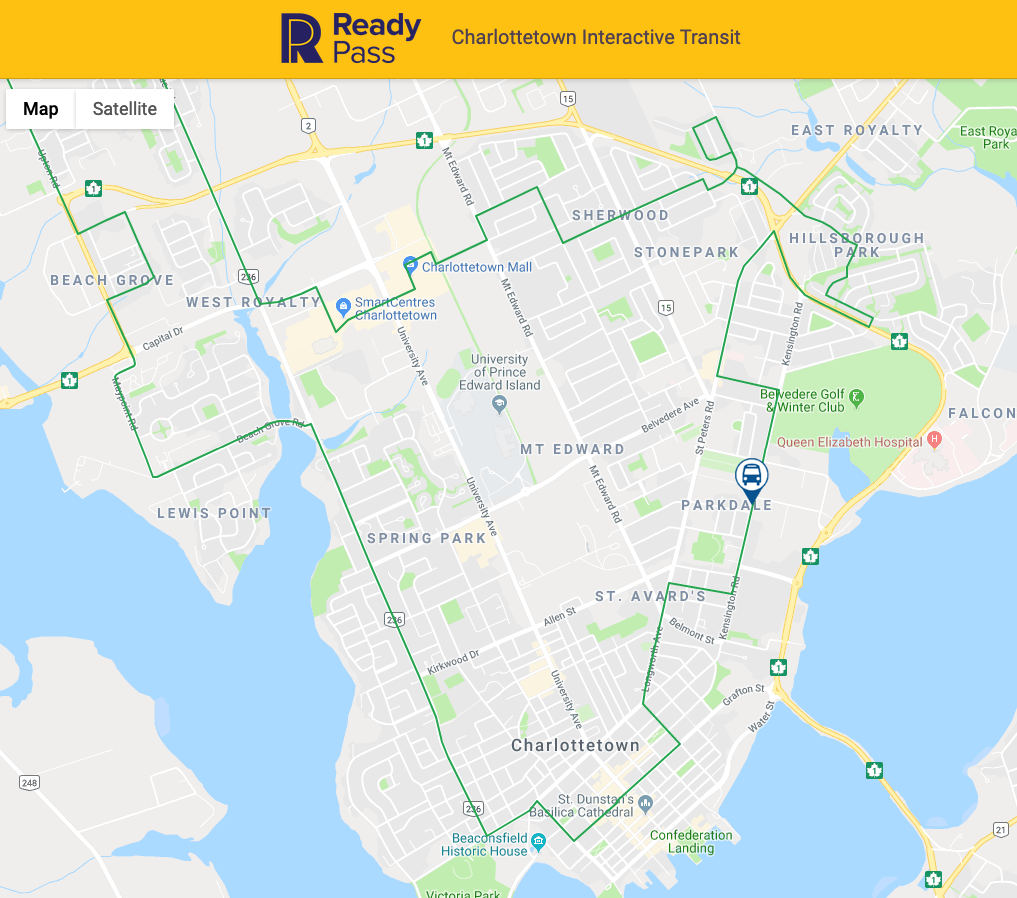
Something that might have escaped your attention is that, in addition to having a mobile app, T3 Transit also provides real-time bus location information on the web.

Here, for example, is a screen shot of the Route № 2, as I type, traveling through Parkdale. I’m about to catch this very bus, in front of the Polyclinic, and knowing when it’s time to walk over to the stop is a huge time (and pressure) saver.

(That said, I have not clicked “Save” on this post until now, an hour later, as I realized that the bus was getting very near; it not for a daring dash across traffic, I would have missed it).

Screen shot of the T3 Transit real time bus location map, showing Route 2 in Parkdale.

17 Jul 01:01

Working With A Million Member Identities

by Richard Millington

“Actually, you’re wrong”.

…probably isn’t the beginning of a conversation which is going to end well.

Community management is not customer support.

You’re not just dealing with problematic issues, you’re dealing with thousands, perhaps millions, of unique (and often problematic) identities. Publicly contradicting the advice of someone who considers themselves an expert will provoke a defensive, negative, response.

This can lead to an ongoing tit-for-tat discussion where neither side wants to back down because everything is in public. Backing down means accepting damage to a member’s identity.

If you’re deep in engaging with dozens of members every day, remember your work is about helping members nurture a positive identity – ideally an identity they associate with being a positive contributor to your community.

All the tiny judgement calls you’re not even aware you’re making in each response have a defining impact.

For example, if you’re going to provide contradictory information to a member who considers themselves an expert, it might be best to deliver the information in private. Maybe they can update their own post with the updated information? Now they have more unique expertise they can share with the group.

Or you can affirm their expertise (and identity) and add additional context at the same time in your own responses. A few extra words of context here can take you far.

Too often, the times we believe members to be acting irrationally are simply members acting naturally to protect their identities.

Before replying to members take the extra few seconds to judge their identity today. If your response threatens that identity, reconsider it.

The very best community managers I know are naturals at this. The rest of us need the practice.

17 Jul 01:01

New Apps of Interest - Luhmann

I find the current user interface overly complex and difficult to use, but version 2 is in beta and should come out this summer. I am not a beta tester, but I will look at Clickup again after they release that version... One thing that I did like about it was the ability to make different lists work in different ways. This is useful because one of the problems with Dynalist / Todoist / 2Do is that each has only one way of treating lists. Being able to customize which features are available for different lists could help make it easier to use one app for multiple purposes. Let's see what version 2 looks like...

Ken wrote:
>While quite comprehensive, this app looks interesting and seems to have
>gathered a lot of reviews on comparison sites. Has anybody actually
>used it? And if so, what are your thoughts?
>
>--Ken
17 Jul 01:01

Lenovo Thinkbook :: Review eines Nutzers

by Volker Weber

Lenovo ThinkBook 13S Front Left

Dies ist ein Kommentar von Stefan Funke, der eigentlich hier auf die Frontseite gehört:

Das Thinkbook hat kaum jemand auf dem Schirm, es gibt auch so gut wie keine sinnvollen Reviews. Der Straßenpreis ist auch weitaus interessanter als die UVP - die i5 Version gibt es für faire 800.

Die Hardware (Gehäuse) hat natürlich nicht die Qualität eines Macbook Unibodies, aber das ist ein Abstrich, mit dem man durchaus leben kann. Der Akku hat ordentlich Ausdauer und das Gerät fühlt sich super schnell an. Hier zeigt sich einfach der Fortschritt, wenn man von einem ~6 Jahre alten Gerät kommt. Unter Linux gibt es Punkteabzug für den nicht funktionierenden Fingerabdruck-Sensor und die bekannten Probleme mit Suspend. Beides sollte sich mit weiter entwickelnden Kernel-Versionen aber über die Zeit quasi von selbst erledigen. Unter Windows berichten die Kollegen von keinen Hindernissen.

Das Display lässt sich typisch für Lenovo flach klappen und verzeiht Rempler in Bahn und Flugzeug, bleibt dabei aber schön steif. Die eingebaute HDMI Schnittstelle hilft dabei mit gutem Gewissen ohne Adapter unterwegs zu sein. Die Tastatur macht Spaß - Bonuspunkte gibt es für die FN Taste, die RECHTS neben der STRG Taste angebracht ist und so im Alltag nicht behindert. Über den eingebauten USB-C Port kann das Gerät leider nicht geladen werden. Warum die Hardware Full-Disk-Encryption als Passwort nur Kleinbuchstaben zulässt will man vermutlich nicht wissen.

Das Lenovo Thinbook ist kein geschminktes Pony, keine Luxuskarosse, keine Multimedia-Station, Schnittrechner oder mobiler Gaming-PC. Es ist dort zu Hause wo mein Leben heute stattfindet: Zwischen Browser, Messaging-Anwendung, Terminal und PDF-Reader auf externen Präsentationsflächen.

Brandneu, voll-alu, Fingerabdrucksensor, 2xUSB-A, USB-C, HDMI, sehr preiswert bei dieser Ausstattung: i7/16/512 für 1099 € oder i5/8/256 für 999 €.

More >

17 Jul 01:01

Reality is dead and can not be in any UK intern...

by Ton Zijlstra

Reality is dead and can not be in any UK internal political debate . No mention of what 27 governments might think of it of course, that would be too close to involving reality.
The extension is being squandered as France suspected. No deal Brexit and the binning of the GFA by November 1st it seems. Madness.

17 Jul 01:00

The Internet and My 53 Years Online

With the upcoming celebration of the 50 years of the Inter-net, I’m trying to figure out how the traditional story misses the powerful idea that has made the Internet what it is – the ability to focus on solutions without having to think about the network or providers.
17 Jul 01:00

What if Cities Are No Longer the Land of Opportunity for Low-Skilled Workers?

by Stowe Boyd

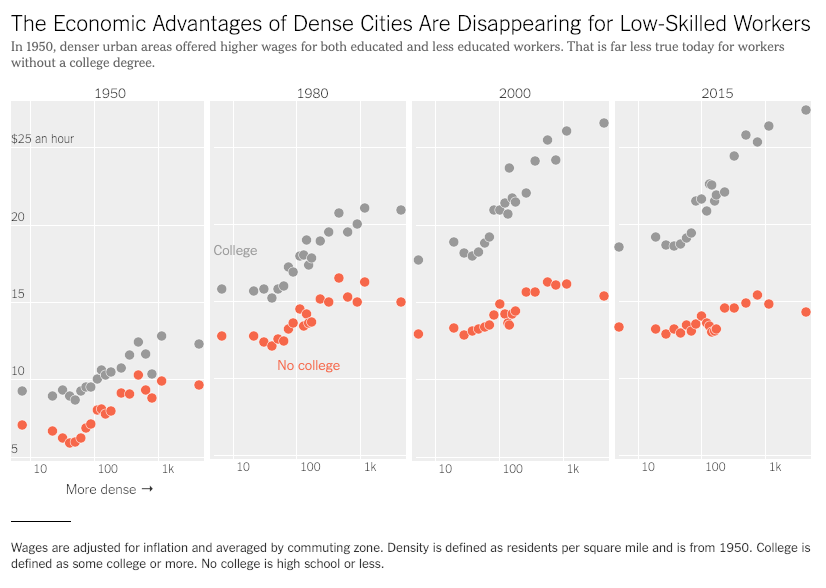
Cities no longer offer low-skilled workers the economic advantages they once did

Continue reading on Work Futures »

17 Jul 00:58

The Muji Hotel: Where Japanese Consumerism Meets Cute With Zen Minimalism But They Don’t Make Out

by Kaori Shoji


By Kaori Shoji 

I am at the reception counter of Muji Hotel – the much touted and long awaited hotel produced by Muji, Japan’s popular minimalist clothing and household products brand. Muji, as you may know, stands for Mujirushi (無印) which literally means “no seal or stamp”; it’s a brand who’s trademark is no (visible) brand. Which is very Zen-like unless you look at the label inside.

When the hotel first opened in early April, rumor had it that every room was booked solid for the next 2 years. In late May, procuring a room (on a weekday) proved easy. Muji (rhymes with Fuji) has grown into a global label touting Japan-style simplicity and aesthetics but to the average  non-minimalist Japanese, it remains inscrutable, even unfathomable. Many see the pared down surfaces and uniform designs of Muji products as a tad too aggressively simple to fit into their own lives. 

Aggressive maybe, but never offensive. There’s not the tiniest fragment of offensiveness anywhere in the Muji Hotel, including the young woman who checks me in. She’s an epitome of serenity and calm, her hair in a neat bun at the nape of her neck and wearing what is clearly a Muji outfit (white shirt and loose black cardigan plus black pants) the uniform of the hotel staff. She speaks almost flawless Japanese along with English and Urdu which she says is her native language. Before handing me the card key to my room, the young woman gives me an ‘omamori’ or talisman, compliments of Muji – and explains that inside the tiny cloth satchel there’s an emergency whistle (“in case of a natural disaster and other unforeseen events”) and a tiny leaflet containing instructions on getting through emergencies great and small. I open this leaflet and on the last page there is this advice: “If you should feel lonely, look up at the stars in the night sky.” 

My room which is a single, feels spacious thanks to the high ceiling measuring over 3.5 meters. In Tokyo, high ceilings are a luxury and when it comes to hotel rooms, they’re the exclusive domain of high-end imported brands like the Peninsula, the Park Hyatt and the Ritz Carlton. Muji is distinctive in that it’s a genuine Japanese hotel, located in one of the choicest pieces of real estate in Tokyo, but only charges a fixed rate of 140 USD per single room, per night. Most importantly, it doesn’t suck or resemble a prison cell.

On the other hand, you can’t imagine anyone having a tryst here– it’s far too pristine and devoid of emotion. And a hotel without a tryst is like a cupcake without icing. Or am I being offensive? (Editor’s note: Not offensive. ‘A donut without a hole’ might have been an offensive metaphor but then again they eat donut holes in Australia, so who’s to say?)

Back in my room, a faint scent of linen combined with lavender lingers in the air, piped out from a portable aroma diffuser, one of Muji’s most popular items. Actually, everything in the room is made by Muji, from the bed to the packets of shampoo and conditioner precisely laid out in an oak chest (also Muji), to the little bag of complimentary snacks and the bottled water in the mini-fridge (also Muji). The idea is to let the guests get a taste of what it’s like to live a life defined by Muji, by spending some time in a space designed and totally controlled by Muji. And afterwards,  we can take the escalator down to any of the five floors of Muji’s flagship store that’s located right below the hotel. The hotel and the shop are in the same building, and some of the tourists check in with empty suitcases, to stock up on Muji products during their stay. It’s a pretty nifty arrangement for Muji and The Minimalists–which could be a great ambient music band name. 

The brand has always opted for discretion, restraint, understatement with a whiff of snobbishness. To admit to a love of Muji is to tell the world that as a consumer, you’re very woke. Muji covers all the bases that would gladden the heart of a discerning shopper: recyclable materials, ethical off-shore manufacturing, diversity among the staff, organic cotton in the clothing line and energy efficient appliances. Add to that the flat, unobtrusive, utterly desexualized designs and it all totals up to something that is for many minimalists, a guilty pleasure. Indeed, many Japanese minimalists admit on their blogs that if they have to shop at all, they shop at Muji. Others have taken it several levels higher by buying Muji houses (yes, they will make an entire house from the ground up) and outfitting it with Muji kitchens and bathrooms, after which they proceed to fill it up with Muji furniture and Muji food. 

Muji was launched in 1980 by retail giant Seibu Conglomerates, as an alternative brand to what (then) Seibu CEO Seiji Tsutsumi saw as the nation’s misguided and excessive consumerism.  Japanese consumers were hurling themselves into the go-go economy, believing that shopping nirvana was the closest thing to paradise. All of a sudden, the cramped living spaces of the average Japanese were overflowing with stuff. Few of it matched or made sense, and perhaps for the first time in Japanese history, people found themselves in possession of with more STUFF than they ever thought possible. 


Muji offered an escape hatch from the clueless clutter of it all, with uniform, collapsible shelves and drawers designed to hold the simplest, most non-intrusive products. Now, forty years later, any discussion of Japanese minimalism almost always precludes a discussion of Muji. Konmari may be riding on her big wave at the moment, but Muji had been on the beach long before she was decluttering the ocean.

But as the hotel room shows, Muji has perhaps, gone a bit overboard. They had always walked the fine line between selling their ideals and selling their products but with the opening of the hotel, it seems that boundary has been obliterated. Muji has merged the product with the ideal, and the whole package comes with a price tag. 

Consequently, the last thing you’d want to do in this space is to indulge in carnal pleasures, though to be fair, the hotel does encourage it. (Muji Prophylactics are sold on the third floor.)  But since I was alone, what else was there to do but open my laptop to work at the Muji desk, lit by a Muji lamp, wearing Muji slippers after taking a shower in the Muji bathroom? Maybe I’ll even follow Muji’s suggestion and look up at the night sky for a few twinkling stars–and then fall into a dreamless Muji sleep. 

Note: In a homage to Muji style, none of the photos in this article have been captioned.

17 Jul 00:58

How the American Work Day Changed in 15 Years

by Nathan Yau

The American Time Use Survey recently released results for 2018. That makes 15 years of data. What's different? What's the same? Read More

17 Jul 00:58

Recommended on Medium: Why the ‘Weird Internet’ of the GeoCities Era Had to Die

Simple and boring rules the day — for a pretty good reason. But there are still tools out there for the experimenters

Continue reading on OneZero »

17 Jul 00:54

Using my Desktop USB Keyboard with my Android Phone

by peter@rukavina.net (Peter Rukavina)

There’s this standard, which seems mostly ignored by mostly everyone, called USB On-The-Go, that allows mobile phones and tablets to connect to USB peripherals like flash drives, keyboards and mice.

It turns out that my Moto G7 Play Android phone has support for this standard. I bought a UGREEN USB C OTG Cable Adapter from Amazon1 for $8.99 to try this out. And it worked!

Here’s a little video of me using my Microsoft Sculpt Ergonomic Keyboard with my phone: I plugged the keyboard’s wireless dongle into the OTG cable, the OTG cable into the USB C port on the phone, opened up my email client, and started typing. The phone automatically recognized the keyboard; I didn’t need to configure it or set anything up.

I also tried the OTG cable with my Apple Mighty Mouse, and with a USB flash drive, and both worked as expected.

I hate typing on the tiny glass keyboard of my phone, so this is a good way for me to try out the idea of getting a Bluetooth portable keyboard to allow for typing-on-the-road.

I’m also interested in seeing whether I could plug the OTG cable (likely with a male-to-male USB A adapter) into one of the scanning-photocopiers at Robertson Library and thus gain the ability to “scan to my phone.”

1. Not an affiliate link.

17 Jul 00:54

In which I scoff at influencers

by Josh Bernoff

In the New York Times, Kevin Roose writes “Don’t Scoff at Influencers. They’re Taking Over the World.” Sorry, dude. I’m scoffing. Bigtime. Here’s some of what Roose wrote: [T]he teenagers and 20-somethings who have mastered these platforms [like TikTok] — and who are often dismissed as shallow, preening narcissists by adults who don’t know any … Continued

The post In which I scoff at influencers appeared first on without bullshit.

17 Jul 00:54

Pete vs. The Dishwasher

by peter@rukavina.net (Peter Rukavina)

The dishwasher wasn’t draining.

I methodically (read: in a random, chaotic, increasingly raging fashion) tracked the clog to a tiny piece of plastic that had found its way into the drain near the sink.

I did not, I’m happy to report, break the dishwasher.

Indeed, I learned a lot about how the dishwasher works, and how it’s installed, something that had previously been locked in the “black box that makes dishes clean” realm.

This is good, as a broken dishwasher can plunge our household into despair.

Also good for my psyche, which has been sending me dreams about intractable infrastructure issues for the last week.

17 Jul 00:54

Identity, EduTwitter, and Power

Jennifer Borgioli Binis, Identity, EduTwitter, and Power, Jul 16, 2019
Icon

What caught my eye about this post wasn't the self-realization on the part of the author that debating on Twitter wasn't helpful, nor was it the useful set of thoughts about how to better interact with people on social media. No, it was the observation that "In those days, EduTwitter was much smaller, and as such, more intimate." And I think that the author's experiences are pretty common - you begin  with the feeling that you are the 'whatever' community, and then it appears to get bigger and bigger and more hectic. But in fact, there is no such thing (nor was there ever) as the EduTwitter. There were many small groups of educations, each of whom thought they were EduTwitter. We all think we are definitive of whatever we are, and that the rest of the world is watching. But none of us is.

Web: [Direct Link] [This Post]
17 Jul 00:54

Future perfect

Dave Coplin, JISC, Jul 16, 2019
Icon

What should an education system of the future look like? "Creativity, empathy and accountability. I want an education system that delivers that," says Dave Coplin in this brief article. "How am I going to choose the correct course of human action? What parts of my human judgment can I add to the algorithm to give me what the right choice is? That's a core skill that we have to learn – as individuals and as organisations – and it is a core skill we have to teach." I think there's a point here, but I also think we need to think much more deeply about what this means, exactly. Machines can be creative, they can make decisions, and they can even decide what's important. It's not clear yet where we fit into that picture. Why are we training people to make decisions? Why are we training people for jobs? What do people want in a machine-supported world?


Web: [Direct Link] [This Post]
17 Jul 00:53

Is Netflix bad for the environment? How streaming video contributes to climate change

Jeannette Cwienk, DW, Jul 16, 2019
Icon

I can't imagine that using Netflix creates more greenhouse gas than piling into a car and driving to the cinema, but there's no escaping these articles describing this or that aspect of internet activity as harmful to global health. The arguments depend on two key features: not comparing them to the alternative practice, and arguing that "to generate... electricity, the world still predominantly uses fossil fuels." This very much depends on where you live. In Canada, for example, we actually refer to electricity as "hydro" because so much of it is generated by dams. This article takes the position that it is basically impossible to stop burning fossil fuels to produce electricity, so we should practice "digital hygiene...  If instead you delete a few things here and there, you can save energy." No, I think the better plan would be to vote for governments that are serious about building alternative energy.

Web: [Direct Link] [This Post]
17 Jul 00:53

RT @Channel4News: Exclusive: Brexit Party MEP Alexandra Phillips has finally admitted she worked for Cambridge Analytica - after initially…

by Channel4News
mkalus shared this story from mrjamesob on Twitter.

Exclusive: Brexit Party MEP Alexandra Phillips has finally admitted she worked for Cambridge Analytica - after initially denying any connection with the disgraced data company. channel4.com/news/brexit-pa…


Posted by Channel4News on Tuesday, July 16th, 2019 4:12pm
Retweeted by mrjamesob on Tuesday, July 16th, 2019 4:30pm


1277 likes, 1049 retweets
17 Jul 00:53

These Brexit ‘Party’ divots are complaining about having a vote in that hotbed of non-democracy, the EU Parliament, today. Farage is even ‘striking a blow for democracy’ by casting his! I will never cease to be amazed by the credulity of the people who swallow this guff.

by mrjamesob
mkalus shared this story from mrjamesob on Twitter.

These Brexit ‘Party’ divots are complaining about having a vote in that hotbed of non-democracy, the EU Parliament, today. Farage is even ‘striking a blow for democracy’ by casting his! I will never cease to be amazed by the credulity of the people who swallow this guff.


Posted by mrjamesob on Tuesday, July 16th, 2019 4:35pm


2834 likes, 648 retweets
17 Jul 00:53

Behind the scenes of the 1926 German film FAUST: FW Murnau, right, applies some makeup to a devilish Emil Jannings. pic.twitter.com/I3FrtFuMRg

by moodvintage
mkalus shared this story from moodvintage on Twitter.

Behind the scenes of the 1926 German film FAUST: FW Murnau, right, applies some makeup to a devilish Emil Jannings. pic.twitter.com/I3FrtFuMRg


Posted by moodvintage on Tuesday, July 16th, 2019 5:15pm


107 likes, 29 retweets
17 Jul 00:53

USB-C :: It's always the cable

by Volker Weber
How many kinds of USB-C™ to USB-C™ cables are there?

tl;dr: There are 6, it's unfortunately very confusing to the end user.

If something doesn't work, it's likely the cable. Or the power supply. Or it isn't just a USB-C receptacle and a Thunderbolt protocol.

Read the whole thing >

17 Jul 00:50

Amazon Canada’s Prime Day sets 24-hour sales records, reveals top-selling items

by Ian Hardy
Amazon Canada header

Amazon Canada has announced that its popular 48-hour Prime Day sale has officially set new records.

In the first 24-hours of Prime Day in Canada, Prime members purchased more items than on Cyber Monday, which is one of the biggest shopping days of the year. Amazon did not release a specific number but surely the 2-day bonanza will see millions of products purchased and shipped.

Amazon Canada did note the following items are some of the top sellers:

Amazon also stated that ‘customers worldwide have purchased millions of Alexa-enabled devices.’ In addition, sellers around the world ‘saw the biggest 24-hour sales day in Amazon history.’

Amazon Prime is $7.99/month CAD (plus applicable taxes), or $79 per year. If you’re not a Prime Member, Amazon Canada is offering a 30-day free trial here. Quebec residents, instead of a free trial, receive an initial 2-month membership for $7.99.

Source: Amazon Canada

The post Amazon Canada’s Prime Day sets 24-hour sales records, reveals top-selling items appeared first on MobileSyrup.

17 Jul 00:49

Carved’s wood and resin smartphone cases are stunning

by Patrick O'Rourke

If you’ve been a longtime MobileSyrup reader, you’ll know I’m a smartphone case fanatic. If a company offers me a case to test out, I’ll often more than likely say yes.

So when Carved, a manufacturer that constructs smartphone cases out of wood, reached out, I jumped at the chance to test out one of the accessory maker’s enclosures. I was also already somewhat familiar with Carved’s products because a couple of years ago my partner purchased me a remarkable Carved sailboat case for my Nexus 4 that I was a big fan of.

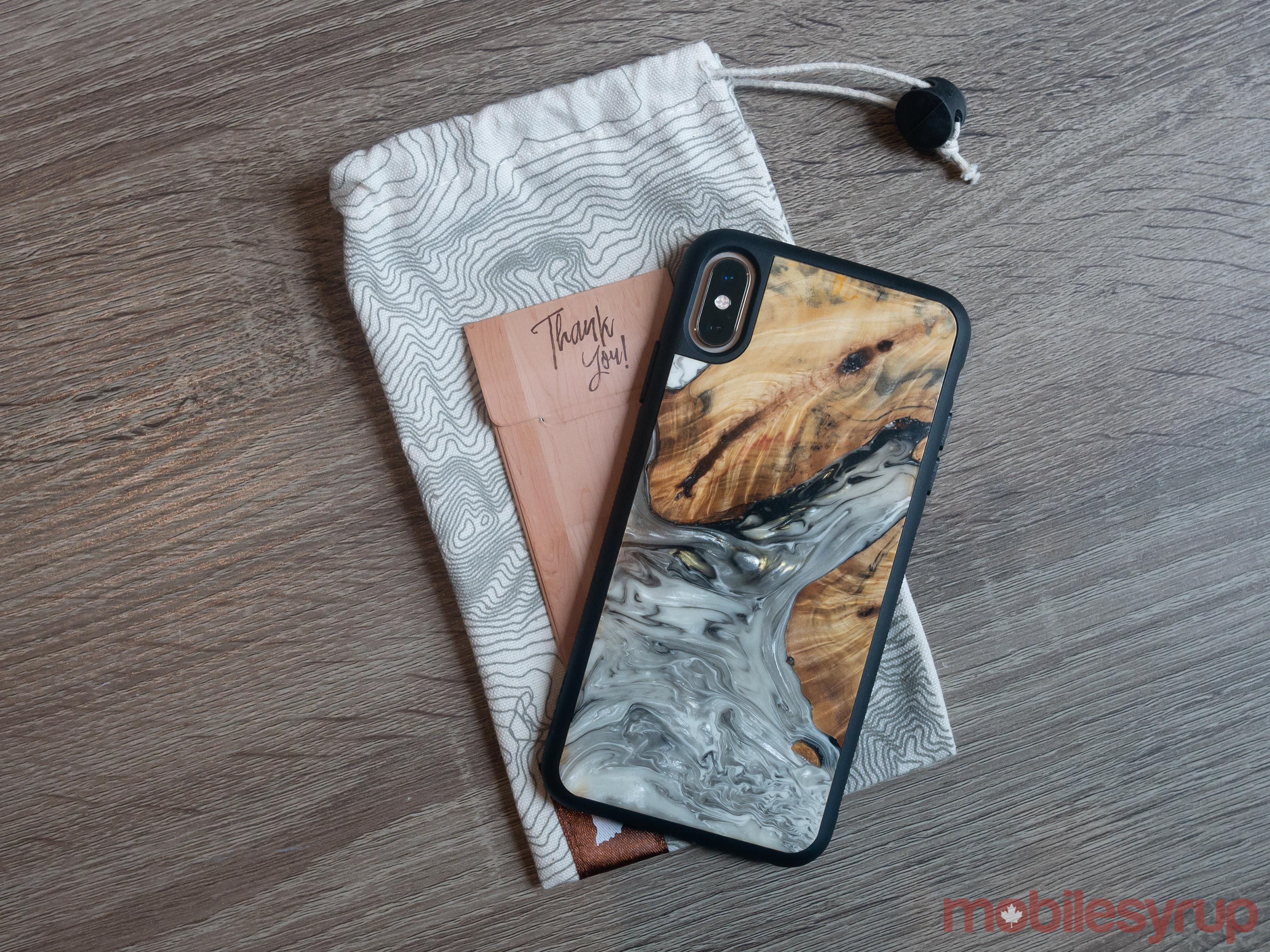
Carved smartphone case rear

Carved’s new cases are a little different, though. Each enclosure is made of a combination of wood burl — strange growths that sometimes appear on trees — and coloured resin. Further, every case is created by hand, “one at a time,” according to Carved.

There are three different types of button covers if you select the wrap-around ‘Live’ wooden cases: ‘Titanium,’ ‘Brass’ and ‘Black Anodized Titanium.’

Carved smartphone case side view

Also, each block of cases features unique patterns and colours and are available for a limited time. For example, Carved’s Live Edge dases typically take between seven and 10 days to create and sell out pretty quickly. The company releases each new “block” of Live Edge cases at 11am ET every weekday.

There are other case options as well, including the one I received, Carved’s ‘Wood+Resin‘ case ($65 CAD), as well as Adventure ($52), Lumea ($60), Naturals (starting at $39) and the aforementioned Live Edge variation. The particular case you’ll see pictures of in this story is a $65 ‘Gaylene’ Wood+Resin enclosure.

Carved smartphone case with wireless charger

With Live Edge cases being the only exception, Carved’s enclosures are available for nearly every recent major smartphone, including the iPhone XS Max/iPhone XS, Galaxy S10/S10+, Pixel 3 XL/Pixel 3, Huawei P30/P30 Pro and many more.

It’s also worth noting that Carved offers a one-year warranty on all cases related to damage, with one free replacement.  The company does acknowledge that owners should be a little more careful with its smartphone enclosures when compared to other case manufacturers, given that its products are manufactured of mostly wood and not silicon or plastic.

For instance, Carved says its cases don’t react well to significant changes in temperature and humidity.

Carved Qi wireless charger

In general, I’m impressed with the quality of the Wood+Resin case I’ve been using for the last few days. I’m also glad I didn’t end up with a Live case because I have a feeling the wrap-around wood wouldn’t be as durable as the firm silicon edges of the Wood+Resin variation, especially since I drop my phone quite frequently.

Along with cases, Carved also sells $65 wood and resin Qi wireless chargers that are capable of outputting at 5w, 7.5w and 10w of charging power. While the accessory maker’s Qi chargers are undeniably cool looking, they seem to charge devices rather slowly, similar to other wireless chargers.

The post Carved’s wood and resin smartphone cases are stunning appeared first on MobileSyrup.