Shared posts

09 Dec 18:42

Twitter Isn’t That Important

by RWG

Elon, what are you doing? I don’t know. None of us knows.

But it appears you’re tearing Twitter apart. And this is driving people to Mastodon. I will talk about Mastodon at some other point – I am, of course, writing a book about it.

Here, I want to talk about the fall of Twitter and what I think it means.

The TL;DR version is: I don’t think Twitter was all that important.

One thing I keep hearing: what are we losing if Twitter goes away? This is asked in many different ways — are we losing a town square? Are we losing insight into how people socialize? Are we losing an archive of human history? Perhaps the clearest explanation of what Twitter may have meant comes from Anjana Susaria’s Conversation article.

Now, academics and journalists are mourning Twitter. But I would suggest that this moment is a good one to reconsider some very basic assumptions about that site.

I wonder if instead of thinking of Twitter as a “town square,” maybe what’s really happening is we are losing the conceit that a relatively small facet of human life has been conflated with a “town square” because the elites who use that system have declared it to be a town square?

What if instead of a record of all human activity, we are losing easy-to-gather datasets to make overly simple claims about sociality? And what if all we are losing an archive that, were it to persist, would warp our conception of this period of history?

I don’t want to downplay the importance of Twitter to your life – if it was important to you, that’s fine. Many people find community online.

What I am questioning is Twitter’s overall social utility. For every claim about the Arab Spring or Black Lives Matter (e.g., “how could social protest possibly happen without Twitter?!?”), let’s talk about governments using Twitter to monitor and dominate populations. For every claim about revealing previously unseen facets of social behavior, let’s talk about how Twitter reduces us to a small set of social verbs – so small, in fact, that socialbots can successfully mimic our behavior in the site. For all the claims about “the archive,” let’s not forget that this system was designed to get us to declare our likes and desires, generate data about those things, and sell us back to ourselves qua commodities. Some archive.

To be fair, anyone who knows my work for the past decade will probably not be surprised that I am dismissive of doom-and-gloom over Twitter’s loss. I’ve been calling for people to leave sites like Twitter for over a decade.

But even if it survives – and it may just – let’s take this moment to stop elevating it to a status that it really doesn’t deserve.

Post-Script: On Donald Trump

As I write this, the news just broke that Musk will let the insurrectionist Donald Trump back onto the site. Again, here is exactly what I’m talking about: because media elites have relied on Twitter, it is only right and proper that Trump is brought back so we can have access to his contributions to the “town square.” Frankly, this is utterly insane. He. Tried. To. Become. The. Dictator. Of. The. World’s. Biggest. Military. Power. The idea that we have to debate issues with him and his ilk in a corporate website is bankrupt.

Post-Post-Script: I’m out

I just deactivated my Twitter account.

26 Nov 09:44

Arc You Ready For A New Browser?

by hrbrmstr

Cross-post to Substack where I dropped some details on the newest browser in town: Arc. Intro:

It feels like it’s been forever since The Browser Company started teasing us about their new browser, Arc. I did the dance many of you almost certainly did and typed in my throwaway email address to try to get access to the beta when it came out. I noticed some tech rags starting to cover Arc in-depth this past week, so I checked my email (50/50 chance I’m reading email on any given day), and — sure enough — I had my download link as well.

I won’t be able to give a multi-thousand word review today, especially since I did not get time to capture Netflow over a couple hours to see how skeezy Arc may be, so consider this an Arc introduction vs full review. (I am also, sadly, out of invite codes but drop me a message if you want one as I’m trying to get more invites).

26 Nov 09:43

Remembering George Zawadzki, a Bowen Island legend

by Chris Corrigan

George Zawadzki, photo from Bowen Island Undercurrent

Every community has larger than life characters and it seems like the smaller the community the larger these characters loom. I live on a small island of just under 5000 people and last week, on November 16, we lost a lion-hearted beauty.

George Zawadzki was probably the biggest man on Bowen Island. He stood at least 6’5″ and was a BIG man. He used to drive a small car around that had a permanent lean to the left. The first time my kids met him, he was coming up the driveway with a friend to do some window cleaning for us, and they came running into the house at the appearance of this veritable bear of a man.

But if George had the biggest body on Bowen Island, he may well have also had the biggest heart. He cared so deeply for this place and he fell in love with all the characters here and he poured himself into creating relationships. He drove a taxi, and was an enduring member of a poker game (and he took a crack at a professional career at the game too), twice ran for Council, and made a famous local film of Jacob Two-Two and the Hooded Fang which included a huge cast of local characters, almost all the children on the Island, everyone with a long beard and with George himself playing the Hooded Fang.

In 2014 when he ran for office, he set up a unique, rolling, all-Candidates meeting on Facebook, and asked me to moderate it. My job was to elicit complex open ended questions from the community and posed them to candidates on Facebook so we could see folks working together in real time. I like to think that initiative helped change the character of Council after a couple of really divisive and toxic terms. We learned a lot and I documented it here.

His insatiable curiosity about the people and place here caused him to start a local TV channel on YouTube in 2008, back in the day when you could only upload 10 minute segments. As a Toronto boy of a similar vintage to me, it was instantly recognizable that he was inspired by the 1980s and early 1990s videographers of CityTV – a crew of journalists who carried cameras around the city interviewing regular folks and covering interesting neighbourhood happenings from BEHIND the camera rather than in front of it.

So while the island was going through a very interesting set of changes, George started uploading video to the Bowen TV channel on YouTube where it lives to this day.

Bowen TV captures a moment in time when things were changing in all kinds of ways. Artisan Square and Village Square were well established, giving a new shape to our village. Bowen traditions like the polar bear swim, Light up the Cove and Hallowe’en were still solid community fixtures, political debates raged around development, environmental preservation and planning, and affordable housing. There had been a period from the 1960-1990s which was post-Union Steamship company-town era and the island was still a small and quiet place. Starting about the early 2000s that changed, and lots of new folks (me included) arrived bringing all kinds of changes with us. Some good, some bad, as usual.

Bowen TV captured that era when that general shift was in full swing and his videos span that time, introducing newcomers and featuring old timers. It is a rich historical legacy of a moment in our history lovingly curated by a man that adored this place and was curious about where it was going. He considered it the most important work of his life.

We are going to miss George around here. A larger than life hole has been left in our collective community heart.

26 Nov 09:42

Foggy Toronto

by Richard

A fog wave rolled through Toronto recently, and it made for muted streetscapes and haunting photographs.

End of the Line

Yonge St. Sunshine Cutting Through the Fog

The Sky's the Limit

I can’t believe I live in Toronto

That last one is mine. Every time I pause to look at the CN Tower, the thought "I can't believe I live in Toronto" occurs to me. So I take a photo of it, post the sentiment to the now-defunct social media site Twitter, and copy some over to an album on Flickr.

It made some sense to come here in 2015, but since then, it has progressively made less and less sense to stay here. Aging (and dying) parents back home in British Columbia, family get-togethers that I can attend briefly on video, the closing of the office I moved across the country for make it increasingly difficult to remain. Remembering how much it rains in B.C., plus the prospect of packing everything I acquired in Toronto, which constitutes almost 100% of my possessions, keeps that feeling at bay. In the past month, I've signed on for another year as Secretary of the Icelandic Canadian Club of Toronto, and accepted the nomination for Secretary of the Garment District Neighbourhood Association, asked if there were any other nominations, and, hearing none, was elected to the position by acclamation. So I have stronger connections to Toronto than I did a year ago.

Still, everything, including going to the corner store, seems harder after the pandemic started. That must have something to do with coming down with COVID-19 in the summer and "fully recovering" and, since then, starting again to do more or less everything I did pre-pandemic. Hopefully that means more to catalogue here in the coming months.

26 Nov 09:40

The Daily Edit – Jeremiah Watt

by Heidi Volpe

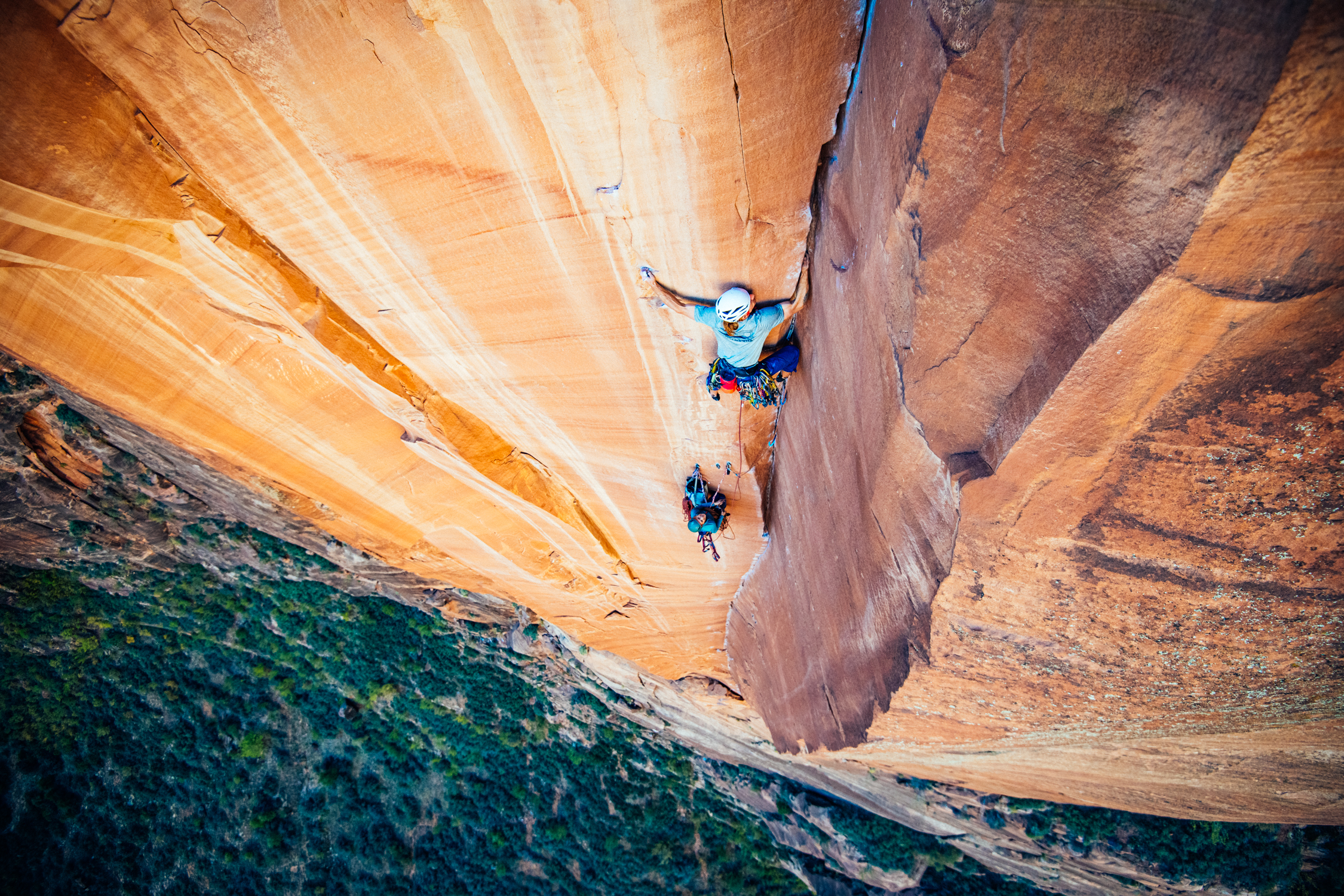
Paul and Marni Robertson, Moonlight Buttress, Zion National Park, UT
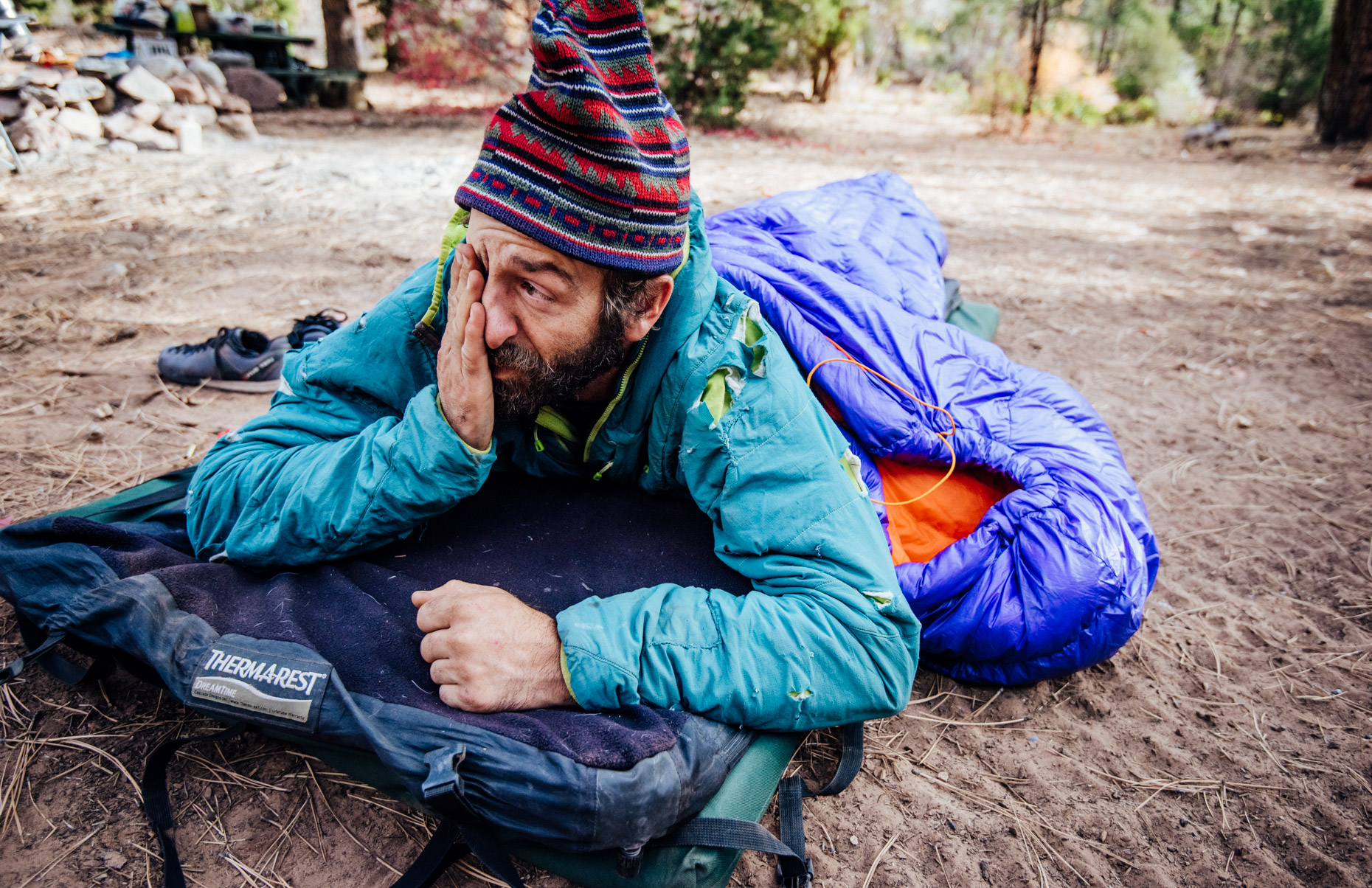
Pat Kingsbury waking from a late night celebratory evening after the team send of Hell Yeah Bitch, 5.13, in Arch Canyon, Bears Ears National Monument, UT
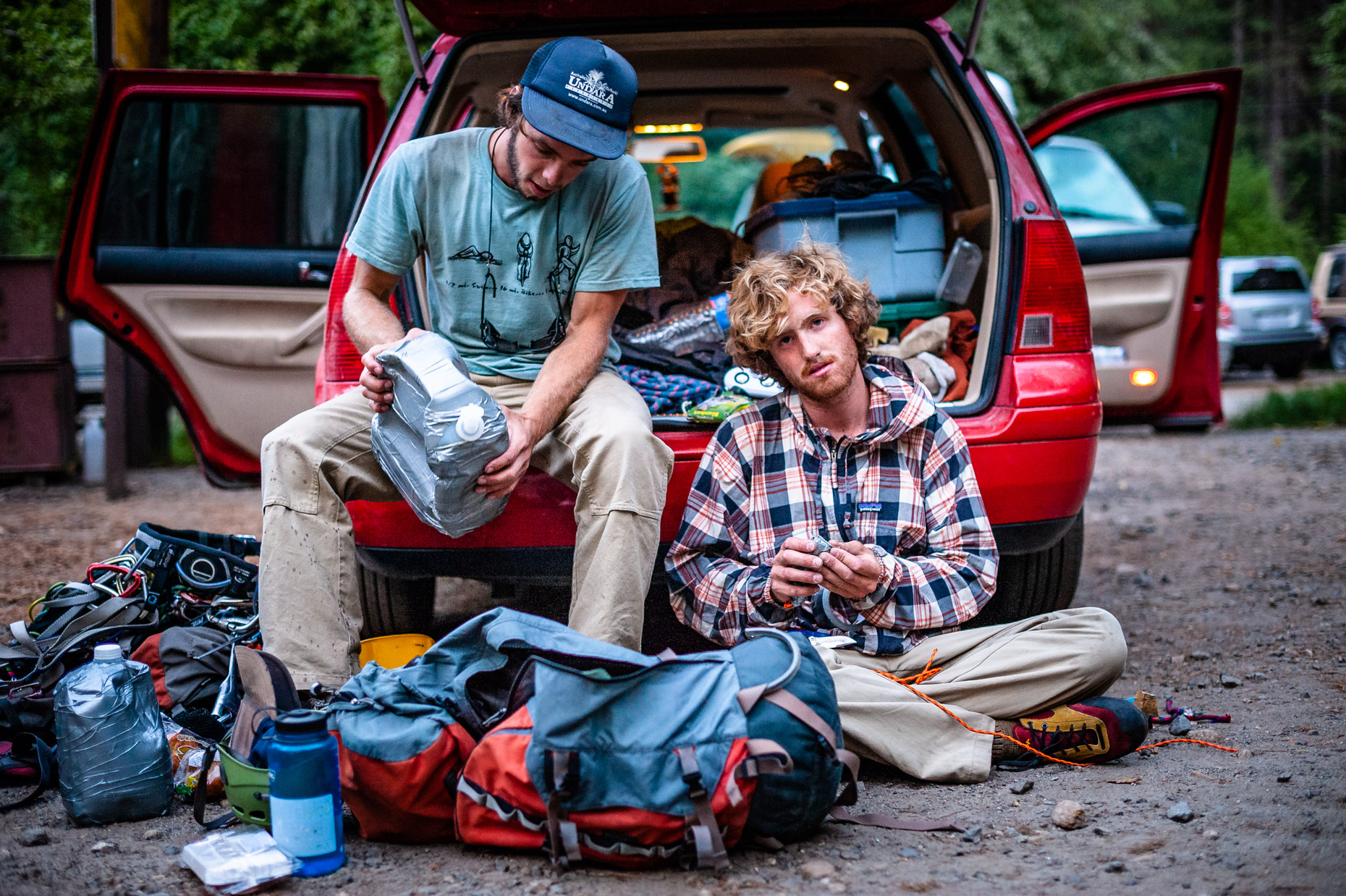
Nick Sullens, and Will Barnes, lat minute prep before heading to the Captain., Yosemite NP.


Photographer: Jeremiah Watt

Heidi: Doing sport is a lifestyle, how has that added to your ability to get work, are you training for work or life?
Jeremiah: Photography is a reflection of the photographer and this is particularly apparent in adventure sport. My history immersed in the culture and joy of adventure sport and community is directly reflected in my shooting style and has created many of the client relationships I now hold close. Without my backstory, my photos – both adventure related and beyond – would lack that special sauce that helps them ring true. As for fitness, that varies and changes with age. I no longer think of gin and tonic as a recovery drink and actively work at maintaining fitness. The face of training varies depending on the season but consistent play, complex movement, downtime, and a conscientious diet are always a priority.

What would you tell your younger self about photography?
There’s a difference between taking photos and being a photographer. Be a photographer.

The blend of work, play and family shines bright in your work. Is there a discussion on trips whether this is work and play, or only one of those?
Not really. It’s always centered around an activity, experience, and just being present. The photos are secondary but if everything’s in place the photos are a natural extension of the experience.

How often do you road trip with your family?
I think of a road trip as being on the road for at least a week, so we only do one of those a summer. Typically we try for two international trips – one short, one long – and multiple shorter trips. During the summer and peak climbing season we’re often out for 2 – 3 days multiple times a month playing in the water, hanging in the hills, or climbing.

How has all the road tripping with family informed your work and family life? You’re playing a lot of roles, father, husband and professional.
This is really a chicken and egg type question. My wife and I had this lifestyle long before we had a family and before I picked up a camera I was either working in the outdoor space – ski patrol, occasional climbing guide –  or had a job that allowed maximum time in the outdoor space – bartender, medical flight dispatcher. When I picked up a camera documenting adventure sport and lifestyle was a natural fit and our family is a natural extension of our desire to maintain that lifestyle. In the order of roles, family always comes first and sometimes that means missing the family, to provide for the family, which can be a difficult thing to wrap one’s head around.

Alexander Watt adventure bound in Scotland.
Jennifer Watt, Sayulita, Mexico

Jenn Watt adventure bound in Scotland.

Do you ask your family for do overs?
Not really. Here and there I’ll ask for a specific shot or set up a situation that provides what I have in mind. Mostly it’s being aware of time and space and then situating myself to capture a moment organically. That being said, I often park the van, or pitch a tent, to catch first or last light, am very aware of where the sun is (or isn’t), and plan trips that work for spec shoots so it’s not nearly as haphazard as it sounds.

Did you travel much as a kid with your parents? Where does your love of the outdoors come from? 
Turns out this gets complicated…I grew up in a small town in Wyoming, the eldest of six children w/ little money, divorced parents, and a very rigid, religious upbringing on one hand, a liberal, informed, gracious background on the other. Like most folk from small towns in Wyoming, travel wasn’t on the table and traveling out of the state was a big deal. I didn’t see the ocean until my mid-twenties and the only flight I remember as a child was to Iowa to attend my father’s wedding in my early teens. For reference, Alexander played in the Caribbean before he could walk and has seen more at fourteen than I had at 30.

My step dad was Native American and we hunted as a means of putting food on the table. While my step father and I were never close, some of my fondest early memories are of hunting elk on horseback deep in the Wind Rivers and I’m sure those experiences helped build a foundation rooted in outdoor experience. Growing up in the shadow of religion was a fairly solitary endeavor and as a child I spent hours reading adventure and fantasy novels. As I got older playing outside with these stories in mind became a way to escape the chaos and push the boundaries. Later, in my late teens, I turned my back on religion, the family went haywire, and I was up for anything – good or bad – to fill the void created from growing up in a box. I wouldn’t say the times were dark but a promising future wasn’t part of the picture. Fortunately, I bumped into climbing, college, and photography shortly after, and that was the beginning of a new reality. Climbing then was as much a lifestyle as a sport and it offered a new family and path that laid the foundation for the life I live today.

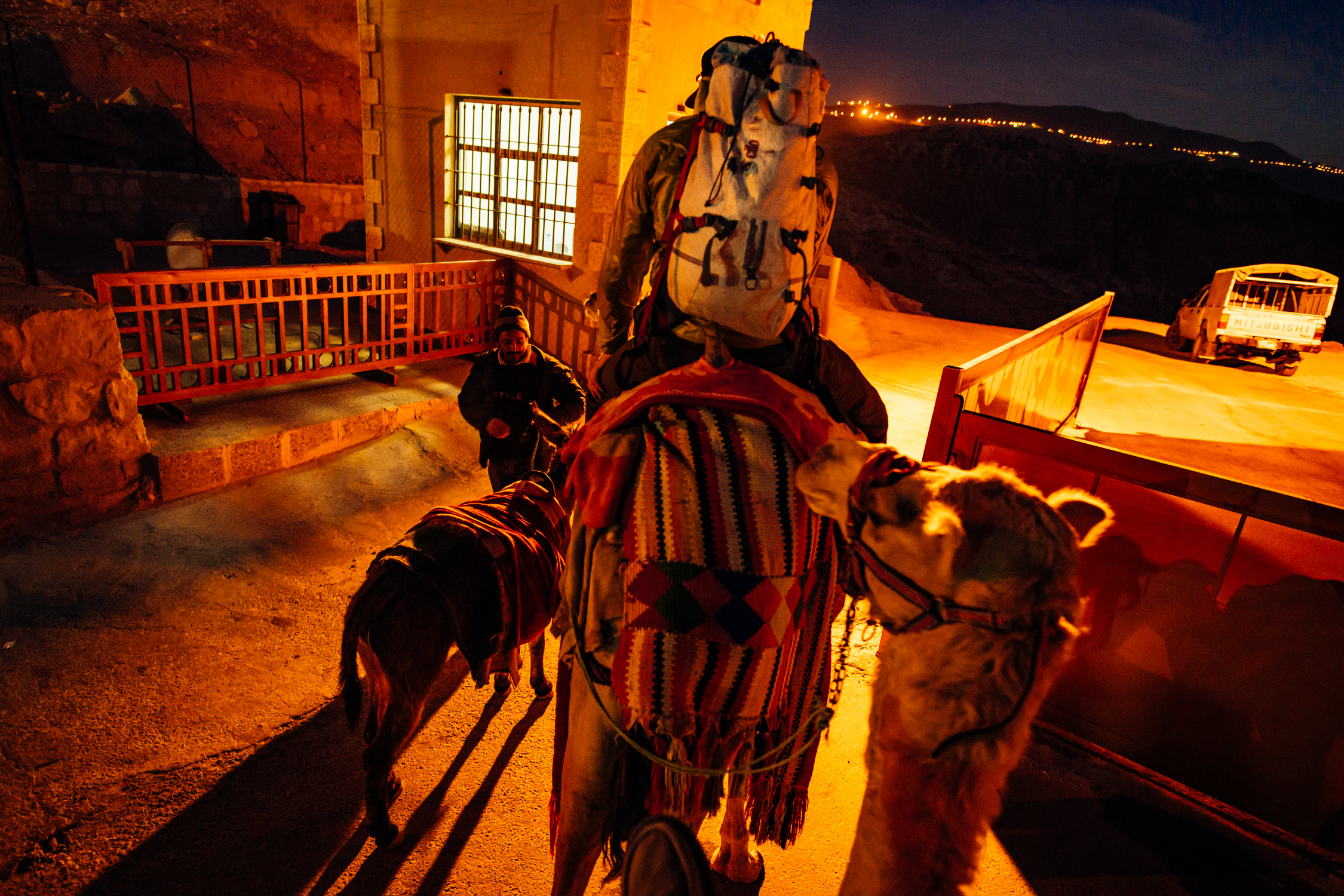
Mohhamed Hussein al-Zarabia – father, host, guide, and center of all things climbing – in Wadi Rum, Jordan.


Phil Jack and Daniel Kiragu, Samburu Country, Kenya
The scene at Maasai Mara, Kenya.

You’ve spent the last few decades in the outdoor space, what projects speak to you the most lately?
While I’m always interested in authentic experience and hope to always work in that field, I’m looking for more conservation and alternative energy stories. Modern media has been consumed with the doom and gloom of the day and I’d like to share stories of hope and renewal. We’re not doomed (yet) and there’s huge potential to create a tomorrow that’s brighter than today, however, an alternative reality won’t happen on it’s own. I’ve developed a talent for creating compelling imagery and I’d love to use that tool to help propel us into the future. There’s huge potential for agriculture to shift global norms on food production and carbon sequestration through regenerative farming – I want to tell this story. Stunning habitats and cultures are on the brink of being lost forever – I’d love to create imagery to save and empower these spaces. Multiple brands are implementing full circle, sustainable business models – I want to promote those brands.
I’m excited for the Klamath to run free and plan on photography that.


Sean Brass, Caribbean outliers.
Kyle George, Dan Powell, and Sean Brass, Caribbean outliers.


Dan Powell and Kyle George, Caribbean outliers.
Zak Hoyt, SE Alaska

What are you working on now?I’m looking for a few fresh clients that would be a good fit – new work in conservation / alternative energy and/or brands that I can get behind as a human . Hopefully someone’s up to collaborate.

There’s a lot of space out there worth experiencing. Snow’s falling in the hills so the split board is waxed and out. The rock down low is prime and the rivers are flowing. Training is never ending and I’ve a few trips on the horizon that need to be flushed out. A buddy and I began #strokeyourbone as a self inflicted DIY bonefishing excursion nearly a decade ago. It’s become a winter highlight that’s taken us throughout the Caribbean and morphed into a valuable tool for collaboration. This year it looks like the Bahamas and we still have space for fresh brands to jump onboard. We aim for 10 days on location and the photos always stand out as a direct reflection of the good times. There’s a family trip to Fontainebleau this spring. And a Mexico surf trip. Plenty of space for new clients. Life really. Just working on the present.

26 Nov 09:39

A List of Non-Crazy Conservative Journalists and Commentators

by Caterina Fake

It seems like a good time to post this list of non-crazy conservative journalists and commentators to follow online, given to me by my friend Jason Hirschhorn. I haven’t fully vetted these, and I welcome any comments on where these writers lie on the nuts/not nuts continuum, their general merits and/or shortcomings, whether or not they are actually conservative, which ones you read, and who is missing from this list. Many of these writers write for many publications, so if you find someone’s work interesting there’s likely more out there on different sites.

Yes, that is an Elephant Nutcracker.

The List:

George Will writes for the Washington Post

Nick Gillespie writes for Reason

SE Cupp appears on CNN

Matt Lewis writes for The Daily Beast

David Frum writers for the Atlantic

Ross Douthat writes for the NY Times.

Michael Gerson wrote for the Washington Post, but died just this week.

Peggy Noonan writes for the Wall Street Journal

Yural Levin writes for the National Review

26 Nov 09:38

The Windows Subsystem for Linux in the Microsoft Store is now generally available on Windows 10 and 11

by Craig Loewen

Today the Windows Subsystem for Linux (WSL) in the Microsoft Store is dropping its “Preview” label and becomes generally available with our latest release! We are also making the Store version of WSL the default for new users who run wsl --install and easily upgradeable by running wsl --update for existing users. Using the Store version of WSL allows you to get updates to WSL much faster compared to when it was a Windows component.

In response to the WSL community’s requests, WSL in the Store will now also be available on Windows 10 in addition to Windows 11. So, Windows 10 users will also be able to enjoy all of the latest features for WSL including systemd and Linux GUI app support!

What’s new in the Store version of WSL?

There are 100s of bug fixes and improvements that you can read through on our release notes page to see all the improvements that we’ve put into the Store version of WSL. In this blog post I’ll highlight some of the significant changes that you might see as a user upgrading to the Store version for the first time.

  • You can opt in for systemd support
  • Windows 10 users can now use Linux GUI apps! This was previously only available to Windows 11 users
  • wsl --install now includes:
    • Direct installation from the Microsoft Store by default
    • --no-launch option to not launch the distro after installing
    • --web-download option which will download the distro through our GitHub releases page rather than through the Microsoft Store
  • wsl --mount now includes:
    • --vhd option to make mounting VHD files easier
    • --name option to make naming the mountpoint easier
  • wsl --import and wsl --export now include:
    • --vhd option to import or export to a VHD directly
  • Added wsl --import-in-place to take an existing .vhdx file and register it as a distro
  • Added wsl --version to print your version information more easily
  • wsl --update now includes:
    • Opening the Microsoft Store page by default
    • --web-download option to allow updates from our GitHub release page
  • Better error printing
  • All of WSLg and the WSL kernel are packaged into the same WSL package, meaning no more extra MSI installs!

The Store version of WSL is now the default version of WSL

As part of this release, we are also backporting WSL functionality to Windows 10 and 11 to make the Store version of WSL the default experience. These changes are:

  • wsl.exe --install will now automatically install the Store version of WSL, and will no longer enable the “Windows Subsystem for Linux” optional component, or install the WSL kernel or WSLg MSI packages as they are no longer needed (The Virtual machine platform optional component will still be enabled, and by default Ubuntu will still be installed).
  • wsl.exe –install` also now includes:
    • --inbox Installs WSL using the optional Windows component instead of using the Microsoft Store
    • --enable-wsl1 Enables WSL 1 support during the install of the Microsoft Store version by also enabling the “Windows Subsystem for Linux” optional component
    • --no-distribution Do not install a distribution when installing WSL
    • --no-launch Do not automatically launch the distro after install
    • --web-download Download the most recent version of WSL from the internet instead of the Microsoft Store.
  • wsl.exe --update will now check for and apply updates for the WSL MSIX package from the Microsoft Store, rather than updating the WSL kernel MSI
  • When running WSL using the Windows optional component version, once a week we will show a message on start up indicating that you can upgrade to the Store version by running wsl --update.

How to get the latest generally available version

The easiest way to get all these improvements is to get the latest backport. Currently it is available to seekers only, and will be pushed automatically to devices in mid-December. To get this update please go to Windows Settings and click “Check for Updates”. If you see a message saying a new update is available please install it. You will need to be running Windows 10 version 21H1, 21H2, or 22H2, or on Windows 11 21H2 with all of the November updates applied. You will know you have this update when you check that KB5020030 is installed on Windows 10, or KB5019157 on Windows 11.

Once you have the right Windows version, if you’re a new user you can just run wsl --install and you will be set up right away to use WSL. If you’re an existing user run wsl --update to update to the latest Store version. You can always check if you’re on the Store version by running wsl --version which will show you the version number, and will fail if you’re using the in-Windows version of WSL.

Alternatively you can also visit our releases page on GitHub to see the latest WSL builds and install them manually.

Known issues

These are the current known issues for users that are in the Store version of WSL, but not in the inbox version:

  • When running in session 0 session (Such as inside of a GitHub action, or when SSHing into the Windows machine) the Store version of WSL will not start

What this means for WSL 1 and the in-Windows version of WSL

Support for running WSL 1 distros still requires the “Windows Subsystem for Linux” optional component. This can be enabled during install by running wsl --install --enable-wsl1, or manually at anytime. Additionally, the in-Windows version of WSL will still receive critical bug fixes, but the Store version of WSL is where new features and functionality will be added.

Understanding WSL names

Now with the Store version of WSL, there are a lot of names to keep track of! Here’s the clear explanation on them. There are two types of WSL distros: “WSL 1”, and “WSL 2” type distros. These matter for how your distro runs and behaves, as they have different architectures. WSL 2 distros have faster file system performance and use a real Linux kernel, but require virtualization. You can learn more about WSL 1 and WSL 2 distros here. There is also the “in-Windows” version of WSL as a Windows Optional component, and WSL in the Microsoft Store as the “Store version of WSL”. These matter for how WSL is serviced on your machine, and what latest updates and features you’ll get. This is just a change on how WSL is serviced, the user experience and product is the same. Learn more here.

With this update our goal is to simplify our versioning story. Since WSL 2 is the default distro type, and the Store version of WSL is the default install location, you can just say: WSL is an app in the Microsoft Store that lets you run actual Linux that integrates directly into Windows.

Feedback

If you find technical issues please file them at the WSL GitHub repo, and for general questions the WSL team and I are on Twitter. Check out our WSL docs for tutorials, best practices and more info on how to use WSL. Our goal is to move as many people as we can to use the Store version of WSL, as it gives the best experience with the latest features. We look forwards to hearing your feedback, and thank you for supporting us. Happy coding!

The post The Windows Subsystem for Linux in the Microsoft Store is now generally available on Windows 10 and 11 appeared first on Windows Command Line.

26 Nov 09:37

My old Richter scale for system outages, revisited

It’s follow-up week! I’m blogging new words about old posts.

Re: A Richter scale for outages (2015).

Following a flurry of system outages (part of the Visa network was down, then iCloud for a bit) I scribbled some notes about quantifying the disruption…

Like the Richter magnitude scale, each magnitude is incrementally ten times bigger. So 4.0 is 100x bigger than 2.0. But like apparent magnitude it’s subjective: The scale of the human effect is taken into account.

Here’s what I reckon the scale might look like.

Full details in the post, but some highlights:

  • 2.0 (Facebook down, outage lasts less than a day)
  • 4.0 ("broad human inconvenience without threat")
  • 8.0 (e.g. the 2008 credit crunch or the Icelandic volcano grounding European flights)
  • 10.0 (major network collapse, global and unrepairable).

It’s an idea that keeps coming back in my head since 2015. It feels like it would be useful to have in the public discourse! It’s not like we’re going to have fewer system outages in the future.

But I’ve never been really satisfied with the scale itself. I’ve always been meaning to try to put my finger on why.


Short reviews of a few other scales

Beaufort wind force scale (1805) – I like how practical, human, and sometimes poetic this is. Beaufort 2 is: "Wind felt on face; leaves rustle." Beaufort 12, hurricane-force: "Devastation."

I think one of the reasons it works so well is that the lower numbers are very everyday, so it you can extrapolate and build a visceral understanding of extreme and rare events.

Kardashev scale (1964) – the classic scale of cosmic civilisational complexity, as measured by energy use. Type I: like the Earth, a planet making use of energy ultimately derived from its sun. Type II: a civilisation which has captured the entire energy of its sun, for example by building a Dyson sphere around the star. Type III: as II but able to direct the energy of an entire galaxy.

Not sure how applicable the Kardeshev scale is here but it’s fun…

Rohn Emergency Scale (2006) – this scale has three independent dimensions: scope (measured in % of max population, or % loss in GDP); topography ("the estimated visual fractional change in the environment" – the collapse of a house is high; the collapse of a stock exchange is low); and speed of change.

It’s more of a descriptive framework than a scale, I’d say. I like that speed of change is in there.

Viking Impact Magnitude (2012) aka “A Richter Scale for Power Outages” – this paper shows how the scale is derived in a bottom-up fashion, which is super interesting. It’s rigorous, but again there’s the focus on the human impact. The scale of 1–10 is "obtained by multiplying the number of affected people by the duration of the interruption."

The scale makes different events comparable: for example a 2007 cyclone in Sweden has the same impact as an earthquake, or maybe a hacker attack. Then the scale number can be correlated with a $ cost.

ALSO, one fictional datapoint. The jackpot, coined by William Gibson in The Peripheral (2014) and summarised here. The climate crisis, mass extinctions; no more bees, antibiotics exhausted; rolling pandemics and water shortages, just… all of it and all at once. Whatever the scale is, the jackpot is the Big One.


Towards a revised Richter scale for system outages

Learning from the above, a revised scale should ideally:

  • start with recognisable, everyday occurrences, and be more irritating than disruptive until about 4.0. It’s worth working to maintain a 1 to 10 scale.
  • describe the impact not the cause. Dimensions are probably similar to the Viking scale, number of people affected and duration.

I wonder how to include some measure of damage. Like, a 7 day WhatsApp outage would be a massive main but you can route around it (although not if you’re an informal worker in Brazil). A 7 day water outage is a catastrophe in the making.

But maybe that’s not for this? A Richter 8.0 earthquake in the middle of a city and a Richter 8.0 in the remote wilderness are given the same number on the scale. You differentiate by giving the location.

Also under damage I’d put “effort to remedy.” Like, is it a reboot required, or a product recall?

A thought experiment: the 8 years and counting Flint water crisis is a water infrastructure disaster affecting 100,000 residents. In terms of damage, it’s way up there – but the remedy has taken its time probably due to a lack of will rather than actual severity.

Compare with a WhatsApp outage that is less sever but would affect 2 billion users. Should they both be a 6.5? Or do we add context – is WhatsApp a widespread 4 and Flint a localised 8? The latter I think.

Being careful to specify the location answers many of my concerns I think. Twitter lost its timeline for a couple of hours the other day; we could describe that as a short sharp Twitter-localised 3.5, just enough to remind us of what we might lose, and you’d known what I meant.

One thing I’m certain of: this scale is for system outages. If there’s a fault on a weather satellite, then it’s not the satellite that this scale is concerned with, it’s our weather forecast infrastructure generally.

Taking all of this into account, the scale in that old blog post stands up ok. I’d add some notes about usage and interpretation but that’s it.

So I’m going to leave the 2015 scale intact for now.

It needs a v2. But the purpose of that work should be to refine and add rigour. It should start with collected examples, and work to define its terms on both infrastructure and impact.

That’s not something I can do on my own…

However there are not one but two upcoming books about infrastructure I am excited about: Public Utility by Debbie Chachra (she briefly ran me through the core argument and I can’t wait). And, by Georgina Voss, her new book on complex systems for Verso. I don’t know the title but I got a preview of the chapter topics and I am equally psyched.

Which means my next step is to wait until those are published, inhale them both, chase down some references, and then start buying people coffee until someone who actually knows what they’re talking about wants to co-author a paper.


More posts tagged: complexity (6), eschatology (7), new-words-about-old-posts (5).

26 Nov 09:37

Tumblr to Twitter

Preparing for a possible Twitteropolyse, so I did a IFTTT applet to cross post to Twitter from...
26 Nov 09:32

Destination Ski Resorts In The West

by bob
People e-mail me asking where they should book their ski vacation. So I’m putting down my thoughts. If you are not a skier, you can just ignore this. Then again, I advise all to ski (or snowboard), because of the inherent freedom involved. You’re out in the mountains sliding at the limit of your ability […]
21 Nov 04:29

World Day of Remembrance for Road Traffic Victims 2022

by jnyyz

Today is World Day of Remembrance for Road Traffic Victims. The Toronto event has moved around to highlight deficiencies in road traffic design in different neighbourhoods. This year’s event was in Scarborough, starting at Victoria Park subway station.

While riding there, I encountered these fine gentlemen on their hipster fixed gears.

Crossing the viaduct.

The Danforth bike lane was mostly in good shape, with the protected sections having been plowed, and the usual unplowed sections around bus stops.

However, things went south east of Dawes where the cycle tracks were a rough frozen mess, and we took the road the rest of the way to Vic Park. Thanks to Michael and David for slowing enough so that I could keep up.

Here we start to gather at Vic Park, and posters of victims were being handed out.

We remember Brian Woods.

We remember Joshua Okoeguale.

Our fearless leader Jess Spieker gets us organized, and tells us what this event is about. There are apparently 60 such gatherings today across North America so we are in good company.

She introduced MPP Doly Begum who has reintroduced the “Moving Ontario Safely Act” AKA vulnerable road user legislation. MPP Begum tells us about how her father was hit by a speeding driver and thus suffered life altering injuries.

She says that she is only asking for justice on behalf of the family and friends of all victims of road violence.

Now we head south towards Danforth.

At Victoria Park and Danforth, Jess asks the crowd how many collisions have occurred at this intersection over the past eight years. Various numbers are shouted out, but we are all shocked to hear that the real number was more than 1400.

She also points out that this is the boundary between two wards, with some bike infra (i.e. the bike lanes on Danforth) west of here, and absolutely nothing to the east (Crawford’s ward).

A little further east we pause across the street from Access Point where Marvin Macaraig runs Scarborough Cycles. He reiterates that it is frustrating that the only bike infra in the area is cut off east of Victoria Park, just a few blocks away.

A much better picture of the same stop courtesy of CycleTO, where you can actually Marvin just behind Jess (and me behind him taking the above picture).

Another pause where Jess tells us about some more collisions, and also points out a refugee island in the middle of the road that does nothing to slow cars, and is not connected to either side by a crosswalk.

Another stop, some more statistics about collisions at this intersection, and it is pointed out that these bollards are place to protect only property, not people.

Another stop. Why are there no crosswalks wherever there are TTC stops?

We remember Alex Amaro.

Kevin Rupasinghe tells us about he heard concerns about road safety while canvassing during his campaign for city council.

Next, the spot where Danforth makes a sweeping turn to the north. This is an especially dangerous intersection for pedestrians.

Finally a longer trek towards Birchmount. Kevin points out that there are no street lights on the south side, and when the sidewalk is not cleared, there are people walking on the roadway on that side in the dark.

Our final intersection at Birchmount. This is where 17 year old Nadia Mozumber was killed last year. The response from the city was a comment that drivers had to be more careful. Nothing about the road design that was only directed towards the flow of high speed traffic.

On the median, a note from the family.

Jess reads out a long list of victims of road violence. I know far too many of these names from ghost bike rides in past years.

Thanks to everyone who joined us on a cold, windy evening. Special thanks to the family members who also attended.

Thanks to Jess for her organization, her scouting of the route, and the gathering of statistics. Thanks also to Kevin and Marvin, and MPP Doly Begum for speaking. Thanks also to Cycle Toronto for their support of Friends and Families for Safe Streets.

Here are a few of the cyclists just starting their rides home. Hope everyone made it home safely.

Update: CTV news coverage (note that the photo is from the 2019 walk in North York)

A correction from Jess: 1450 is the number for the whole 2km stretch we walked (and those 1450 crashes caused 225 injuries and 2 fatalities). For just Vic Park, the intersection had 617 crashes since 2014, causing 61 injuries.

Still, 617 is a very high number for one intersection.

21 Nov 02:28

AWS and Blockchain

This week saw the cancellation of the Australian Stock Exchange’s long-running effort to build a blockchain-based trading system. Which, oddly, has me thinking of 2016, when AWS decided not to make a strategic investment in blockchain, with my input a contributing factor. It felt like a good story while it was happening.

Since I left AWS in 2020, I’ve been super-careful not to share things from behind the scenes. I can’t actually remember the details of the nondisclosure agreement, but I have strong feelings about the ethics. This story, though, doesn’t reflect poorly on anyone and I’m pretty sure nothing in it is material to any business plans at AWS or elsewhere.

Andy meeting

At some point in mid-2016 I got hauled into a conversation with Andy Jassy. I can’t remember if it was video or f2f, can’t remember how many of his staff were there. There were four of us present who were senior techs, not Jassy staff.
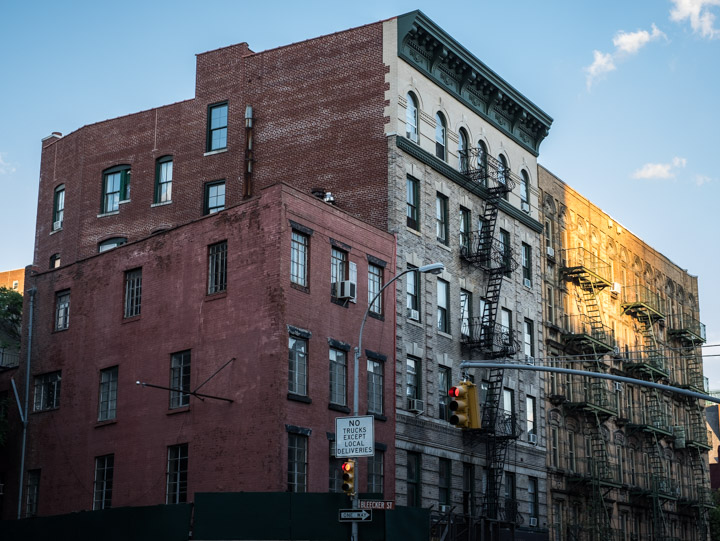
Brick buildings on Bleeker street in lower Manhattan

On Bleeker Street, in lower Manhattan.
There’s a reason for the picture; read on.

Andy is an outstanding communicator and was eloquent on this occasion. You have to understand that one of the most important parts of his job was listening to the CIOs and CTOs of huge enterprises explain their problems and concerns.

He said something like this: “All these leaders are asking me what our blockchain strategy is. They tell me that everyone’s saying it’s the future, the platform that’s going to obsolete everything else. I need to have a good answer for them. I’ll be honest, when they explain why it’s wonderful I just don’t get it. You guys got to go figure it out for us.”

Well, OK then. I can’t remember whether it was right there in the room or by email after a short caucus, we got back to Andy along the lines of “We mostly think it’s mostly bullshit and probably not strategic for AWS, but we’ll look harder.”

Before I move along, Dear Reader: There was a dead give-away in Andy’s presentation of the problem. I’ll get back to it later but do you see it?

The hunt

We went looking around the industry from behind our screens and discovered a few things:

  1. Actual working business applications of blockchain were really, really hard to find.

  2. Plenty of blockchain products were on offer, characterized as “polished”, “robust”, “production-ready”, and “regulator-approved”. But if you looked hard at their customer stories, it got pretty vaporous pretty fast.

  3. The throughput of proof-of-waste blockchains was just as bad as we thought.

  4. In practice, the technology is a database. Everyone who did anything had some sort of a database structure mapped over the actual blockchain, with the usual B-trees and so on. It wasn’t obvious how anything would be different if there were something other than a blockchain behind the B-trees.

  5. The Australian Stock Exchange was betting the farm on blockchain, which seemed to prove this was no joke.

  6. A huge, almost incomprehensible, volume of venture capital was flowing into the sector, and that money was localized in the Finance sector, specifically in Manhattan.

  7. AWS was already making a lot of money off blockchain. All these venture-financed companies had to build out infrastructure, and most of them were all-in on cloud, either AWS or GCP (don’t think Azure got much of that biz). So there was a serious flow of cash from VC firms into AWS.

We found ourselves in conversation with the Finance-sector sales organization, naturally headquartered in Manhattan. We got their entire attention right away, because they’d noticed the crazy venture-money flow, and they were getting questions, the same kind that Andy had described, from their institutional clients.

The right thing to do was obvious.

New York, New York!

In August of 2016, four of us went down there for a few days. We talked to big established Wall-Street firms and a few startups.

There’s this amazing thing about working for AWS. You can get the attention of the IT leadership of pretty well any organization in the world and say “Hey, could we drop by and talk about…” and most times they’re happy to do it.

(That weeping you hear is the former me, the one who had two startups and spent months bashing at the doors of enterprises in the usually-vain hope of getting anyone meaningful to look at our technology.)

So, no doors were closed to us. Which was pretty nice, except for it was stinking hot that August and we were on multiple steamy subway trips every day; got back to our hotel rooms pretty well emptied out.

(The pictures decorating this entry are from that trip.)

New York bar interior

In a lower-Manhattan bar.

The questions

We really only had two questions, both for the big-finance players and for the startups. “What is it you want to do?” and “How does blockchain help?”

The answers, to our disappointment, failed to shatter any preconceptions. The things they wanted to do were perfectly reasonable. Some of them were damn exciting. They all needed databases. They could all make use of ledger-like data structures, also cryptographic hashing and signing. But, um, why did they need blockchain? Severe lack of clarity on that.

The key moment was when we got in a room with the CTO of this one startup, in Tribeca I think. When I heard their VC funding number I thought it was the valuation, not the investment dollars. The customer list was blue fucking ribbon and don’t you forget it. These guys were razor-sharp.

They presented some of the systems they’d built and yep, we were impressed. Then, with the startup CTO in the room, one of my fellow engineers asked the key question: “All these systems, are there any that wouldn’t work without blockchain?” The guy didn’t even hesitate: “No, not really.”

And that was about that.

Obviously we also talked to a few leading lights from the crypto scene. That wasn’t very helpful, because they seemed mostly concerned with the aspects that got you out from under troublesome government regulation and contract law; it all had an unsubtle aroma of libertarianism.

Lots of them mentioned the Australian Stock Exchange and said you must be a peasant if you questioned technology that was about to be adopted in such a Serious Enterprise full of Serious People. After all, it was being built by Accenture, no less! (Cue eye-roll.)

And then there was the other faction, all about number-go-up-we’ll-get-rich; these were the days of ICOs, each sketchier than the last.

There was still a gaping hole when we asked “What useful thing does it do?”

What Andy said

It looked like the conclusion was going to be “no there there”. We shouldn’t have been surprised. Remember Andy Jassy saying “when they explain why it’s wonderful I just don’t get it”?

At this point in history Andy was possibly the world’s single most accomplished person at listening to people talk about Enterprise IT problems and the tools needed to fix them. If he couldn’t see the value in blockchain, that was really a dead give-away right there, at the business level. Maybe looking at the technology side had been a waste of time.

An AWS service?

We didn’t just try to ascertain market realities. We asked ourselves “OK, if we had a distributed ledger technology, what would we build with it?” then came up with a few proposed AWS services.

Mine was a database with special features optimized for representing fungible units of value (you could call them “tokens” but I didn’t) that could be exchanged between parties, with each such exchange accompanied by a description of whatever was being exchanged for the tokens. I thought the schema setup for describing the “whatever” was pretty clever at the time, but I forget it now.

[Tim, so you designed NFTs? -Ed.] [No comment. -T.]

It included a shared public ledger with crypto-provable integrity that recorded all this stuff. But no blockchain because we just couldn’t convince ourselves that the real world wanted zero-trust; so there was a transaction manager you had to trust.

Dear Reader: I think that at some point, in a civilization, there has to be trust. I think that’s maybe the main reason we have civilizations. Call me crazy.

Do I think AWS should have built this thing? Eh, I can’t get excited either way.

The end

I can’t remember the details of how our findings got back to Andy. They were of the form “Ledgers are useful, cryptography tech is useful, blockchains aren’t, the field is full of grifters, but we could build distributed-ledger infrastructure and then these cool services on top of it.”

I seem to recall that about a year later we got another outreach from Andy’s office saying they were still getting blockchain heat, oh and Australian Stock Exchange. Could we have another look and get back to them? We did and I think the only thing that changed was we said “Keep an eye on Ethereum.”

Subsequently another group decided that if people were spending their VC money building crypto infrastructure on AWS, we should help them do that more efficiently, and thus was born Amazon Managed Blockchain, offering Hyperledger and Ethereum platforms as a managed service, in the typical AWS style.

I wasn’t involved and have no idea how that product did; wouldn’t surprise me if it made a pleasing but nonstrategic amount of money, because the VC crypto spasm didn’t stop till this year.

Now in November 2022 I can’t imagine that service has a bright future, but I’ve been wrong before.

Sunset at Newark Airport

Heading home; EWR sunset.

Coda: Property marks

At some point toward the end of this story, I got a call asking me to come down to Seattle. An important customer was coming in for a few days at the Executive Briefing Center; they wanted to hear about Blockchain and someone pointed them at me.

The customer was a very major international agency that you’ve heard of; not sure if they’re big AWS users or were just kicking the tires. In any case, they were being taken very seriously; presentations from a dozen or more product teams stretched over two or three days.

I huddled with the sales team lead and disclosed that we weren’t planning to ship anything big and that the engineering leadership was skeptical of blockchain in general. I wondered if it would be OK to share that. She looked troubled and said “That’s a judgment call and I can’t make it, you have to. But listen first.”

So I made a presentation about the virtues of ledgers and of cryptographic signatures, mentioned Byzantine generals, and noted that the area was extremely interesting but somewhat unproven in practice.

Silence fell.

The customer CIO, an extremely smart person, spoke up, in beautifully-rounded European vowels: “Here’s a use case I’ve been told about that’s on my mind.” He named a region in Asia and explained that the small farmers there mark their landholdings carefully, but then the annual floods sometimes wash the markers away. Then unscrupulous larger landowners use the absence of markers to cut away at the smallholdings of the poorest. “But if the boundary markers were on the blockchain,” he said, “they wouldn’t be able to do that, would they?”

Dear Reader: What do you think?

I thought. Then said “As a lifelong technologist, I’ve always been dubious about technology as a solution to a political problem. It seems a good idea to have a land-registry database but, blockchain or no, I wonder if the large landowners might be able to find another way to fiddle the records and still steal the land? Perhaps this is more about power than boundary markers?”

Later in the ensuing discussion I cautiously offered something like the following, locking eyes on the CIO: “There are many among Amazon’s senior engineers who think blockchain is a solution looking for a problem.” He went entirely expressionless and the discussion moved on.

P.S.: What now?

I still think about those boundary markers.

Up until this year, most of my conversations with crypto promoters have had problems. For example “This person thinks proof-of-waste is OK and thus can be safely ignored.” And “This person is pretending that the proportion of crypto biz that is actually Ponzi doesn’t round to 100%.”

Bitcoin itself can rot in hell and I hope it implodes tomorrow. But the Eth folk managed to get proof-of-stake to work at scale; good on ’em. Still, the explosions of non-Btc crypto Ponzi schemes continue, in a boring and discouraging rhythm.

I’m not prepared to say that no blockchain-based system will ever be useful for anything. But I’m gonna stay negative until I see one actually at work doing something useful, without number-go-up greedheads clamped on its teats.

And I’m glad AWS didn’t make a big bet on it back then.

And I’m sorry for the folk at the Australian Stock Exchange who tried so hard for so long.
21 Nov 02:24

Twitter Favorites: [Sean_YYZ] Next month, Red Arrow will launch a bus service between Toronto, Kingston, and Ottawa, joining Megabus, Rider Expre… https://t.co/bq6IQOAVgf

Sean Marshall @Sean_YYZ
Next month, Red Arrow will launch a bus service between Toronto, Kingston, and Ottawa, joining Megabus, Rider Expre… twitter.com/i/web/status/1…
20 Nov 21:55

20nov2022

by Leah Neukirchen

Twittoons, cartoons about life at Twitter. By Manu Cornet.

Why Did the OpenSSL Punycode Vulnerability Happen, by Filippo Valsorda.

Why CVE-2022-3602 was not detected by fuzz testing, saved you a click: because they didn’t.

Sheaf Theory through Examples, by Daniel Rosiak. New book, with open access.

Flent: The FLExible Network Tester, by Toke Høiland-Jørgensen.

Multics Emacs: The History, Design and Implementation (1996), by Bernard S. Greenberg.

typo.el, Emacs extension for typographical editing.

R49081 is prime!, that is 1…1 with 49079 ones in between.

20 Nov 21:50

Journal of Comprehensible Explanations

I really, really want the ACM to start a “Journal of Comprehensible Explanations” in which people can publish peer-reviewed summaries of research findings (recent or otherwise) that are accessible to practitioners. JCE would specifically not allow reporting of novel discoveries; instead, articles present novel, peer-reviewed explanations.

20 Nov 14:59

Tracking Mastodon user numbers over time with a bucket of tricks

Mastodon is definitely having a moment. User growth is skyrocketing as more and more people migrate over from Twitter.

I've set up a new git scraper to track the number of registered user accounts on known Mastodon instances over time.

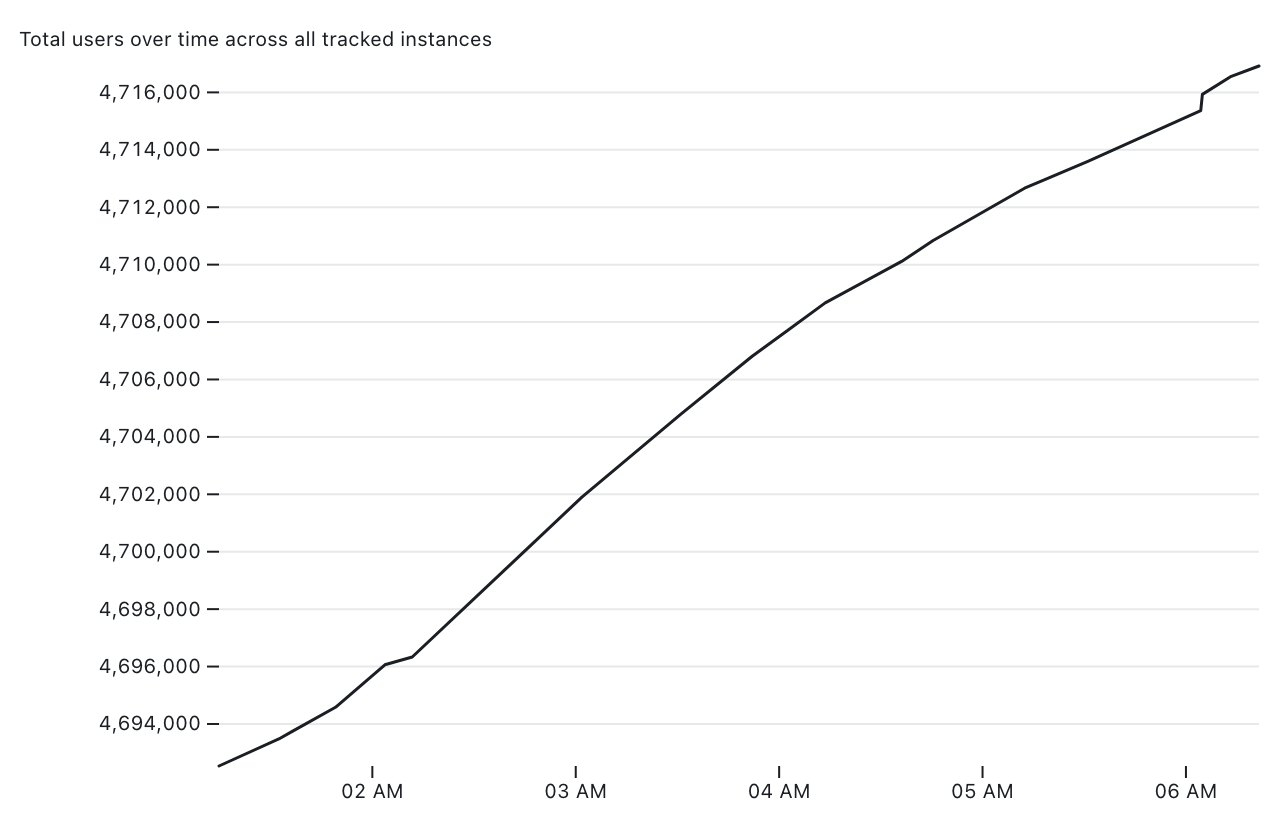
It's only been running for a few hours, but it's already collected enough data to render this chart:

The chart starts at around 1am with 4,694,000 users - it climbs to 4,716,000 users by 6am in a relatively straight line

I'm looking forward to seeing how this trend continues to develop over the next days and weeks.

Scraping the data

My scraper works by tracking https://instances.social/ - a website that lists a large number (but not all) of the Mastodon instances that are out there.

That site publishes an instances.json array which currently contains 1,830 objects representing Mastodon instances. Each of those objects looks something like this:

{
    "name": "pleroma.otter.sh",
    "title": "Otterland",
    "short_description": null,
    "description": "Otters does squeak squeak",
    "uptime": 0.944757,
    "up": true,
    "https_score": null,
    "https_rank": null,
    "ipv6": true,
    "openRegistrations": false,
    "users": 5,
    "statuses": "54870",
    "connections": 9821,
}

I have a GitHub Actions workflow running approximately every 20 minutes that fetches a copy of that file and commits it back to this repository:

https://github.com/simonw/scrape-instances-social

Since each instance includes a users count, the commit history of my instances.json file tells the story of Mastodon's growth over time.

Building a database

A commit log of a JSON file is interesting, but the next step is to turn that into actionable information.

My git-history tool is designed to do exactly that.

For the chart up above, the only number I care about is the total number of users listed in each snapshot of the file - the sum of that users field for each instance.

Here's how to run git-history against that file's commit history to generate tables showing how that count has changed over time:

git-history file counts.db instances.json \
  --convert "return [
    {
        'id': 'all',
        'users': sum(d['users'] or 0 for d in json.loads(content)),
        'statuses': sum(int(d['statuses'] or 0) for d in json.loads(content)),
    }
  ]" --id id

I'm creating a file called counts.db that shows the history of the instances.json file.

The real trick here though is that --convert argument. I'm using that to compress each snapshot down to a single row that looks like this:

{
    "id": "all",
    "users": 4717781,
    "statuses": 374217860
}

Normally git-history expects to work against an array of objects, tracking the history of changes to each one based on their id property.

Here I'm tricking it a bit - I only return a single object with the ID of all. This means that git-history will only track the history of changes to that single object.

It works though! The result is a counts.db file which is currently 52KB and has the following schema (truncated to the most interesting bits):

CREATE TABLE [commits] (
   [id] INTEGER PRIMARY KEY,
   [namespace] INTEGER REFERENCES [namespaces]([id]),
   [hash] TEXT,
   [commit_at] TEXT
);
CREATE TABLE [item_version] (
   [_id] INTEGER PRIMARY KEY,
   [_item] INTEGER REFERENCES [item]([_id]),
   [_version] INTEGER,
   [_commit] INTEGER REFERENCES [commits]([id]),
   [id] TEXT,
   [users] INTEGER,
   [statuses] INTEGER,
   [_item_full_hash] TEXT
);

Each item_version row will tell us the number of users and statuses at a particular point in time, based on a join against that commits table to find the commit_at date.

Publishing the database

For this project, I decided to publish the SQLite database to an S3 bucket. I considered pushing the binary SQLite file directly to the GitHub repository but this felt rude, since a binary file that changes every 20 minutes would bloat the repository.

I wanted to serve the file with open CORS headers so I could load it into Datasette Lite and Observable notebooks.

I used my s3-credentials tool to create a bucket for this:

~ % s3-credentials create scrape-instances-social --public --website --create-bucket
Created bucket: scrape-instances-social
Attached bucket policy allowing public access
Configured website: IndexDocument=index.html, ErrorDocument=error.html
Created  user: 's3.read-write.scrape-instances-social' with permissions boundary: 'arn:aws:iam::aws:policy/AmazonS3FullAccess'
Attached policy s3.read-write.scrape-instances-social to user s3.read-write.scrape-instances-social
Created access key for user: s3.read-write.scrape-instances-social
{
    "UserName": "s3.read-write.scrape-instances-social",
    "AccessKeyId": "AKIAWXFXAIOZI5NUS6VU",
    "Status": "Active",
    "SecretAccessKey": "...",
    "CreateDate": "2022-11-20 05:52:22+00:00"
}

This created a new bucket called scrape-instances-social configured to work as a website and allow public access.

It also generated an access key and a secret access key with access to just that bucket. I saved these in GitHub Actions secrets called AWS_ACCESS_KEY_ID and AWS_SECRET_ACCESS_KEY.

I enabled a CORS policy on the bucket like this:

s3-credentials set-cors-policy scrape-instances-social

Then I added the following to my GitHub Actions workflow to build and upload the database after each run of the scraper:

    - name: Build and publish database using git-history
      env:
        AWS_ACCESS_KEY_ID: ${{ secrets.AWS_ACCESS_KEY_ID }}
        AWS_SECRET_ACCESS_KEY: ${{ secrets.AWS_SECRET_ACCESS_KEY }}
      run: |-
        # First download previous database to save some time
        wget https://scrape-instances-social.s3.amazonaws.com/counts.db
        # Update with latest commits
        ./build-count-history.sh
        # Upload to S3
        s3-credentials put-object scrape-instances-social counts.db counts.db \
          --access-key $AWS_ACCESS_KEY_ID \
          --secret-key $AWS_SECRET_ACCESS_KEY

git-history knows how to only process commits since the last time the database was built, so downloading the previous copy saves a lot of time.

Exploring the data

Now that I have a SQLite database that's being served over CORS-enabled HTTPS I can open it in Datasette Lite - my implementation of Datasette compiled to WebAssembly that runs entirely in a browser.

https://lite.datasette.io/?url=https://scrape-instances-social.s3.amazonaws.com/counts.db

Any time anyone follows this link their browser will fetch the latest copy of the counts.db file directly from S3.

The most interesting page in there is the item_version_detail SQL view, which joins against the commits table to show the date of each change:

https://lite.datasette.io/?url=https://scrape-instances-social.s3.amazonaws.com/counts.db#/counts/item_version_detail

(Datasette Lite lets you link directly to pages within Datasette itself via a #hash.)

Plotting a chart

Datasette Lite doesn't have charting yet, so I decided to turn to my favourite visualization tool, an Observable notebook.

Observable has the ability to query SQLite databases (that are served via CORS) directly these days!

Here's my notebook:

https://observablehq.com/@simonw/mastodon-users-and-statuses-over-time

There are only four cells needed to create the chart shown above.

First, we need to open the SQLite database from the remote URL:

database = SQLiteDatabaseClient.open(
  "https://scrape-instances-social.s3.amazonaws.com/counts.db"
)

Next we need to use an Obervable Database query cell to execute SQL against that database and pull out the data we want to plot - and store it in a query variable:

SELECT _commit_at as date, users, statuses
FROM item_version_detail

We need to make one change to that data - we need to convert the date column from a string to a JavaScript date object:

points = query.map((d) => ({
  date: new Date(d.date),
  users: d.users,
  statuses: d.statuses
}))

Finally, we can plot the data using the Observable Plot charting library like this:

Plot.plot({
  y: {
    grid: true,
    label: "Total users over time across all tracked instances"
  },
  marks: [Plot.line(points, { x: "date", y: "users" })],
  marginLeft: 100
})

I added 100px of margin to the left of the chart to ensure there was space for the large (4,696,000 and up) labels on the y-axis.

A bunch of tricks combined

This project combines a whole bunch of tricks I've been pulling together over the past few years:

  • Git scraping is the technique I use to gather the initial data, turning a static listing of instances into a record of changes over time
  • git-history is my tool for turning a scraped Git history into a SQLite database that's easier to work with
  • s3-credentials makes working with S3 buckets - in particular creating credentials that are restricted to just one bucket - much less frustrating
  • Datasette Lite means that once you have a SQLite database online somewhere you can explore it in your browser - without having to run my full server-side Datasette Python application on a machine somewhere
  • And finally, combining the above means I can take advantage of Observable notebooks for ad-hoc visualization of data that's hosted online, in this case as a static SQLite database file served from S3
20 Nov 14:57

A Week Later

by Rui Carmo

It’s been over a week now and we’re all still testing positive for COVID, plus a few random things have happened.

First off, I’m not exactly better. My propensity for upper airway and sinus trouble means that today I woke up in the middle of the night with a headache and am now actively trying to manage things to avoid getting another ear infection, which sucks.

Overall, I have little or no fever anymore but am still feeling tired and achy all the time, which does not mesh well with my anxiousness in getting back to work. I certainly tried, but what quickly put a stop to it was that “brain fog” is indeed a thing.

At first it was really weird (I would just sit and stare at a screen, not really reading), but now that I’m “better” it’s just a notch above the usual sinus pain-induced haze I’m sort of used to muddling through.

I eventually gave up on trying to work and just tried to rest, read and binge TV series while sipping tea in a daze (I suspect I will have to re-watch Andor, since I fell asleep partway through at least one episode).

I also avoided spending too much time using “regular” computers, to the point where I haven’t stepped into my home office for almost a week and, thanks to a week’s worth of pouring rain and shuttered windows, the air in there smells stale (my sense of smell is somewhat back, but not all there yet).

And, of course, through it all we had the weird background music from the implosion of Twitter, which I glimpsed through the small bursts of focus I was able to muster to keep track of social media1 and a bunch of disparate IMs on my phone from folk closer to the madness.

Like many tech people, I am finding Mastodon to be a more civilized experience, although some ultra-idealistic regions of its ideological archipelago can be a bit off-putting.

I may have something more to write about all of the above if I can muster the stamina, but, in short, this week was not the way I expected to spend another birthday, and it isn’t over yet (any of it).


  1. That Musk is beeing cheered on by tech bros who confuse 60-hour weeks with manliness and that Trump is actually getting reinstated through a public poll in a bot-ridden environment are just two facets of how insane things have become, and that I will refrain from commenting upon. ↩︎


20 Nov 14:56

Bookmarked RSS Feeds in Mastodon (by Frank Meeu...

by Ton Zijlstra

Bookmarked RSS Feeds in Mastodon (by Frank Meeuwsen)

Very useful tip from Frank Meeuwsen. Mastodon has RSS feeds, and you can also follow #topics through RSS that way. I knew that. But… you can use the feeds of any instance, and the feed for a hashtag is different per instance depending on the part of the fediverse they are aware of. This means that if you follow a hashtag feed from a large instance it will contain much more than if I follow the same feed on my personal instance (limiting the search to what the people I follow see). It also means you can follow hashtag from more focused or specialised instances, e.g. AI related terms from an instance focused on AI and ML. You can decide if you’d like the feed to come from the ‘general public’ as far as that exists on Mastodon, or from a more specific group of people. I hadn’t realised this, and it seems powerful. Thank you Frank.

Het valt mij op dat dezelfde hashtag verschillende berichten geeft over verschillende servers. Dat heeft vermoedelijk met de federatie van servers te maken. Server A volgt meer andere servers dan Server B. Dus de output van een feed bij A is anders dan bij B.

Frank Meeuwsen

20 Nov 14:56

Fall view of Woodland Park #eastvan

Fall view of Woodland Park #eastvan

20 Nov 14:49

Journalists and Twitter

I am 100% in favor of the destruction, de-construction, or outright implosion of all centrally controlled for-profit walled-garden[1] social media sites, and none more so than Twitter. The primary harm such sites promulgate is a positive feedback loop of extremism, fostered in the corporate chase of engagement, solely in the name of profits, while the social discord they engender, now veering sharply toward political violence, is foisted on the rest of us as an unpriced externality.

The second harm, in this case of Twitter alone, is the horde of lazy journalists that flocked to Twitter and for the last decade have outsourced their brains to a single website. Here, for example, is a quote from Kai Ryssdal on Make Me Smart:

“I’ve invested a huge amount of time curating, and taking care to maximize Twitter for my purpose, which is news gathering with a soupçon of serendipitous discovery..”

What blows my mind is the complete lack of self-awareness when journalist like Kai admit to relenquishing their editorial filter to a single corporate entity, wide open to not only corporate manipulation, but also from swarms of bots bought and paid, for the express intent of getting a story in front of them. And yet, even in the shadow of electing DJT president they didn’t learn their lesson. See, for example, this whiny piece of handwringing by Katie Notopoulos.

From the same episode here is a quote from Make Me Smart co-host Kimberly Adams:

I keep going back to the role Twitter played in the Arab Spring, and I just wonder how something like that happens and gets the attention and pickup that it did on Twitter in a Mastodon or Counter Social or any of these other decentralized networks…

I don’t know, maybe some journalists will pull their heads out of their asses, start looking around the world, doing some, you know, actual work, and go back to reporting on events instead of scanning their Twitter Explore page for what to write about next? And then maybe the rest of us non-journalists could go back to reading those reports in reputable news outlets? I’m just spit-balling here, but that seems a far better solution than having every journalist in the world spoon fed stories by a single corporate entity, or as it now stands, a single private entity owned by our own American Oligarch, Space Karen.

[1] When I first wrote this piece I left off “walled-garden”, which was a mistake. The “walled-garden” attribute is required to earn my wrath, as there are many fine companies that seem to be able to play nicely on the open web and still make a profit, such as WordPress. Even more infuriating is that both Twitter and Facebook started off as a part of the open web, for example, by providing RSS feeds for each account, and allowing crawling by search engines. Only after luring a large number of users onto their platforms did they raise the walls and cut themselves off from the rest of the web.

20 Nov 04:51

The Bitch Is Back

by bob
“Elon Musk Reinstates Trump’s Twitter Account – Mr. Musk, who had run a poll on Twitter about whether to bring back the former president to the service, said, ‘The people have spoken.'”: https://nyti.ms/3Gu1A9e That was then and this is now. Donald Trump was a disrupter. He said the unsayable. He broke norms. He rallied people […]
20 Nov 04:05

Cantonese barbecue meat was almost banned in Canada if not for 'the good fight': Vancouver Island professor

mkalus shared this story .

Char siu, barbecue pork and roasted duck are all popular Cantonese dishes — which Vancouver authorities attempted to ban when they shut down Cantonese meat shops in Vancouver's Chinatown during the late 1960s and early 1970s.

The efforts were part of a movement across Canada to ban the meats.

"The health officer at the time was clearly working at trying to get it banned. There was a big fight," Imogene Lim told Stephen Quinn on CBC's The Early Edition Friday morning.

In the end, business owners and activists prevailed.

"The Chinatown merchants came out in full force, there were allies in the community. We are fortunate to continue to have barbecue meats because of the good fight that happened," said the anthropology professor at Vancouver Island University.

"Why they wanted to ban it makes no sense," Lim added.

"There were reportedly two people who died of food poisoning in Tacoma, Wash., from barbecue meat that was not from a Chinese meat store. It was from a supermarket and apparently it was chicken. It set off this wave of basically anti-Chinese business in Vancouver."

Lim gave a talk at the Museum of Vancouver on Saturday, where the film, Under Fire: Inside a Chinese Roasted Meat Shop in Vancouver is screening as part of the museum's A Seat at the Table: A Seat at the Table: Chinese Immigration and British Columbia feature exhibit.

The following transcript of their conversation on The Early Edition has been edited for clarity and length.


Why would something like this happen? There's the obvious, but go ahead. 

It's pure and simple racism. This occurrence happened in 1965 in Tacoma. Well what was happening throughout Canada and the United States? The purposeful means to try and eliminate what the city saw as "blighted" areas.

And we all know that Chinatown wasn't just Chinatown. There was the Italian community there, the Black community. It was a cluster of marginalized peoples. And the Chinese were the largest population in that area.

How much of this do you think had to do with the visibility of Chinese barbecue meats in Chinatown?

Certainly it was very popular and it was also very big business. Today if you're passing through Chinatown, it's readily available and there were lots of barbecue meat stores in Chinatown as well as restaurants offering it.

You can see what's happened to Chinatown since then. It was big business. When you have big business, who are the other players that we're not necessarily aware of that might be interested in the fact that it was a multi-million dollar business? At that point in time, $8 to $10 million. That's a lot of change.

It is. Who would have an interest in stopping it? 

The Chinese have always been viewed as taking away jobs from the "real" Canadians. I'm not going to speculate, but there has been this thread throughout history that Chinese are good labourers, but let's keep them in their place. Don't let them be successful.

The name of this film is Under Fire: Inside a Chinese Roasted Meat Shop in Vancouver. When was that documentary filmed? 

It's a few years old now. I can't remember the exact date for it. It is very interesting because people don't know the process of producing the meat. It's just like the baker, they got to get up really early to produce the meat.

So I think in the film they say that they were up at five o'clock, you know, doing the filming, and then there's a shot at the very end where the two filmmakers, they're slumped in their cars, napping. 

How did you get in the field of food anthropology? 

Part of it is my background. I am the daughter of a restaurateur from Vancouver's Chinatown. Back in the day, my family were part of the partnership that ran the WK Gardens. And we had the big banquets and all that. Chinatown was really a big part of who I am.

After I did my doctoral degree, I got a postdoctoral fellowship and I would say that was my reconnecting to my roots. When I did it some people say, "Oh look at that, somebody got some grant money to look at food." And it's really about social history.

The Early Edition8:42"Making Space: Banning Cantonese BBQ Meats" tomorrow at the Museum of Vancouver

Char Siu, Cantonese roast duck, and crispy roast pork are all popular Cantonese barbeque dishes. But not that long ago, there were efforts to ban these delicacies in Vancouver. Imogene Lim is giving a talk about this tomorrow at the Museum of Vancouver and joined us for more on the show.
20 Nov 04:03

Recommended on Medium: Mastodon is Pretty Similar To Twitter

If you are a Twitter user, the overall Mastodon experience will feel pretty familiar to you. It’s a microblogging platform. You have a box to write words in; and a timeline of words you read. You have a notifications tab. You can reply to the posts other people have made, and you can favorite or boost (retweet) things. The sum total of the day to day experience is likely to not be hugely different than using Twitter.

Mastodon Accounts Are Not Segregated By Topic

There is a common misunderstanding that Mastodon accounts are segregated by topic. They are not. The content you can see is not separated based on the “instance” you are on: you can (and will!) follow people from a wide mix of servers, and content from other servers can be seen in your timeline (and even from people you don’t follow, you will see them as “boosts”/retweets). Some things this means:

  • You are not expected to post only about a specific topic based on the instance/server you are on. The “identity” attached to a server has approximately the same weight on content expectations as your Twitter username.
  • You do not need to worry that your server will limit the content that you see.
  • You can follow anyone, from any server. They can follow you, regardless of what server you’re on. You are not entering a silo.

Many people and UIs encourage the use of Mastodon servers that are topic-based. This offers a little value, in the same way that getting added to a Twitter Group DM of people who care about a topic does: that is, it can be a little bit of an identity helper, and let you find some people to connect with more easily, but largely doesn’t impact your day to day experience. However, you do still have to choose a server to be on.

You should choose a Mastodon instance based on trust

Because you can see the content of anyone from any server, and they can see the content from yours, the “topic” of the server is less important than trusting the people who are running it. There are a handful of different elements of trust that matter:

  • Other individuals or (or entire servers) can block an entire server from their feeds. This means that you don’t want to be on a server that is seen as being a “bad actor” in the community. Check the moderation policies and rules for the server to make sure that they indicate admins who are thoughtful about moderating content.
  • Is the server going to be up 6 days from now? 6 weeks from now? 6 months from now? 6 years from now? Mastodon is experiencing a serious influx of users; are your instance admins relatively capable (or willing to ask for help)? Are they prepared to be around to help fix the server if it goes down — or are you okay with it going down for a weekend, and know it will come back later?
  • Do you trust them to take appropriate care with your account? Things like “messages limited to followers” (or “only visible to those tagged”, the equivalent of “Direct” messages) are visible to server admins, as are details like your email address. Ensure your server is run by folks who are not going to abuse that access.

It’s Mostly Okay To Move Later

Mastodon instances have a feature that lets you move your followers from one account to another. That means that I was able to move my followers from my @crschmidt@mastodon.social account account to my @crschmidt@better.boston account. You can also export and re-import the list of people you follow, so you can move the people you follow as well. If you make a mistake in where you set up camp, and want to move, your social graph can come with you.

Your post content, on the other hand, will remain in the old location. So long as the server stays up, this probably isn’t a huge deal–most people aren’t going to reply to old content anyway, and it will still be accessible. But it does mean that people who reply to things I wrote on Mastodon before this month will be replying to “me” in a way I will never see. On the other hand, I’ve been posting on Twitter for 15 years, and the number of times when I get interactions on posts older than about two weeks is about twice a month, so this isn’t a huge problem.

In general, this means that moving does not mean abandoning your network; but will leave your posts behind. Given how microblogging works, this makes moving relatively low cost.

Does Local Instance Matter At All?

There are a few things that which server you’re on does influence.

  • Each instance has a “local” feed. This is a handy way to get started finding some new people. On smaller instances, this will be more meaningful than on larger instances.
  • The content that shows up in search will be limited to content that has made it to your instance for some reason or another. This means that things like searches for hashtags will be across “the content on the local server, and any content that anyone from the local server follows.”
  • Mastodon does not have a lot of experience to scaling to massive servers. Joining an instance with 250,000 active users is likely to be a bad experience. Instances with 1,000–20,000 active users have a much longer history and are likely practical.

The first of these is a feature: It’s a nice local discovery tool. The second of these is a limitation: it would be better if search was more federated and you didn’t get a different view of search from each server. The last of these is just a veiled warning to not join mastodon.social (or whatever the next “big instance” that comes after it is).

Twitter Features You May Miss

Mastodon doesn’t have quote-tweeting. Usually people instead encourage for you to create a reply (possibly including some more context, since the original post won’t be as visible) and then boost your own reply.

Mastodon doesn’t have full-text search. Finding “That tweet I saw go by a couple days ago” will likely be impossible. Aggressive use of the bookmark feature may help you somewhat here.

Mastodon only has the “Latest” feed equivalent from Twitter, not the “Home” / algorithmic feed that is the default. As a regular use of both on Twitter, I think that people sometimes overestimate both the positive and negative impacts of algorithmic feeds. It does mean that your content will be influenced more heavily by who you follow, and what time of day you’re reading, and you are likely to see very popular content (with many boosts) more often than on Twitter.

Likes are not used to surface content to other people in your network, so if you want other people to see something, boost it, rather than liking it.

Engagement statistics on posts are largely not intended to be complete. (Specifically, they are only accurate on the “home” instance where the post was made.) You will see accurate stats on your own posts, but don’t assume that you are seeing a full list of “who has boosted / faved this post”; the “ratio” that people talk about on Twitter largely isn’t visible by default on Mastodon.

Direct messaging doesn’t really exist as a first class feature. You can create a post which is limited to visibility of “people mentioned”. It is just a mention that only a limited number of people can see. Some UIs (including the main Mastodon web UI) surface this in a tab that says “Direct Messages”. But it’s not similar to most other DM platforms. There is no “Group Chat” equivalent.

Things You May Want To Know

People use hashtags more often. Hashtags are an explicit search signal: If you want something to be visible to other people in search, tagging it with a hashtag will be more likely to let them find it. However, most people don’t use search to find other things on Twitter, and they likely aren’t going to on Mastodon either; building up a stronger social network of people to share content is much more likely to be effective. “I hear that you’re supposed to use hashtags for things to be found here” is often said; I consider that to largely be a misunderstanding of the most likely way for people to discover content.

Hosting servers is not free. Twitter, overall, makes about $50/year/user in the US from advertising. Hosting Mastodon is more technically involved, and done at smaller scale, which means higher cost per user. Self-hosting an instance as a small user would probably cost you about $5-$10/month. While most servers at the moment are done on a volunteer basis in spare time and resources, you should look to your instance’s server pages and see if there are ways you can contribute, if you’re able.

There are no “Mastodon Moderators”; no paid staff or centralized review board. Reporting posts will go to instance admins and moderators, who are largely volunteers. You may want to offer to help your instance admins review moderated posts on your server, if you’re on a small server where reported content is likely to be not painful. (Moderating content on a large instance will be a horrible job; stay as far away from it as possible.)

You can block posts from an entire instance. Since instances are often grouped by interest, topic, or social community, this can be useful as a tool: while not every bot will be on the “botsin.space” instance, the majority of posts from that instance will be from bots, so you can block it rather than each account from that server individually.

Mastodon is still an early adopter community, and the growth in the past 2 months is drastically changing it. What this means is that there are still a lot of things that are evolving rapidly. The community has existed for more than 5 years, and there are some norms that existed for 4.5 years that are now evolving with a massive influx of new users.

Mastodon users are trying to maintain norms that are kinder to marginalized communities. These include the use of the “content warning”/content note feature (which hides words/photos behind a click-through; similar to “spoiler tagging” on some other platforms); doing more work to include image descriptions (which exist on Twitter, but are often skipped; try not to do that); and use of #TitleCaseHashTags, which make reading hashtags easier for screen readers. (Basically, because the community is still small, people are kinder than they will be as the community grows. Be one of the people making it more kind, not less.)

I hadn’t intended to write nearly this many words, but since I keep thinking a lot of these things but not writing them out (especially 280 characters at a time), I guess I had a lot to write. Hopefully these comments help some people a little bit in making Mastodon more approachable.

20 Nov 04:03

Twitter Favorites: [jaketobin] New! Bring Vancouver's rotating pig home with this print of Save-on-Meats, part of a new series of iconic signs.… https://t.co/vIpFxUOkVQ

Jake Tobin Garrett @jaketobin
New! Bring Vancouver's rotating pig home with this print of Save-on-Meats, part of a new series of iconic signs.… twitter.com/i/web/status/1…
20 Nov 04:03

Coachella NFTs stop working due to FTX collapse

A concert poster for Coachella 2015, featuring a bird with intricate feathers walking through a patch of plants and circus rides in a desert

Coachella partnered with FTX to sell a collection of NFTs in February, ultimately raking in around $1.5 million. The NFTs were paired with physical items—Coachella passes, art prints, and photo books—and the NFT owners had the option to "redeem" their NFT to receive the item. However, all of this was done through FTX, and with FTX no longer fully operational, redemptions are no longer possible. The FTX server storing the artwork for the NFTs was also intermittently available, so holders reported seeing broken images when going to view their NFT.

Ten of the NFTs in the collection came with lifetime passes to Coachella, and sold for six figures. Each year, the NFT holder has to go through the redemption process to obtain their festival pass.

Many of the token owners bought their NFTs with FTX and simply left them in their accounts on the platform. Some were able to transfer their tokens before FTX's NFT platform stopped operating, but many did not.

19 Nov 16:33

Help us Start A Co-op Mastodon Server for Canada

by evanprodromou

I am part of a group trying to start Canadian member-run cooperative to run Mastodon servers in Canada.

Similar to social.coop but Canadian. We’re calling it cosocial.ca. Here’s how it will work, we think.

– 1 co-op membership gets you 1 Mastodon account with guaranteed allowances (file uploads, API use, toots per day, etc.) plus a co-op vote

– has local servers per city or neighbourhood, but membership is national

– run a first emergency server nationally to catch the next wave of Twitter migration

– Member run, nobody gets paid for now

– CAD$5/month membership fee

We need:

– Diverse voices, especially women and nonbinary, 2SLGTBQIA+, Black, Indigenous, francophone. Initial people to be directors/incorporators. Able and willing to do the hard work of helping a group remember to make a social web that is welcoming to everyone in Canada from the get-go.

If that sounds like you, please let me know at evan -at- prodromou -dot- name.

19 Nov 16:33

Sturzerkennung kann Leben retten

by Volker Weber

Nach dem Sturz von einer Steilklippe im Wiehengebirge bleibt ein Mann schwer verletzt und ohne Bewusstsein unterhalb des Kammwegs liegen. Sein Leben verdankt er den Einsatzkräften, darunter Spezialisten für Höhenrettung – und einer Smartwatch.

Mindener Tagblatt 18.11.2022

Den Rettungskräften gilt höchster Respekt, aber losgefahren sind sie in erster Linie, weil der Verunglückte eine Smart Watch mit Sturzerkennung getragen hat. Bei 6-7 Grad und vermutlich etlichen Stunden, bis man ihn gefunden hätte (wenn überhaupt), wäre das sicher böse ausgegangen.

Ich kenne nur eine Uhr, die das kann.

More >

19 Nov 16:29

Bookish

by russell davies

Craig Mod has probably had more sensible ideas about the future of the book than any single person (and done more sensible, actual things). And somewhere, recently, I think he wrote something about how the dominance of Amazon/Kindle had killed most of the interesting things we all imagined would happen when books had computers in them. 

I remember being vey excited about how you'd add things to text: music, moving images, game-like stuff, all that. There are probably blog posts in here excitedly proclaiming all that inevitable. Well, obviously, that didn't happen.

What's just occurred to me, though. is that some of what we meant, some of those possibilities, are starting to show up on the web.

This, for instance, is way more useful and engaging than any textbook you could read about sound. (h/t Matt)

Of there's watches, or GPS. Magical.

There's the lovely stuff Ableton made. (Or is that now something else? Is that not sufficiently bookish?)

I'm trying to write a book at the moment and I'd kill to be able to use Nutshells.

Or there are Maggie Appleton's essays.

These are all great things on my computer and phone. But they're somehow different in a browsing moment than they might be as part of a longer, book-like reading experience. Dunno.

Anyway. 


19 Nov 05:30

2022-11-18 BC small

by Ducky

Charts

From Jeff’s spreadsheet using MetroVan data:


The percent of people in BC vaccinated by age for 1, 2, 3, and 4 doses, from the federal vaccine page:


Flu/Colds

While the US and Canada Back East is legit getting walloped by respiratory illnesses, BC has not really gotten hit… yet.

Anecdata: I live on an ambulance route, not far from St. Paul’s Hospital. While I don’t count sirens, I have an awareness of when activity is high. (During the heat dome, I noticed a lot of sirens.) Activity has felt on the low side recently. Last Saturday, I happened to walk past the St. Paul’s ambulance bay at about 3:30 PM, and there were four ambulances hanging out waiting. I talked to one of the paramedics, who said:

  • They are busy (mostly due to staffing issues!) but not overwhelmed at the moment.
  • BC respiratory season tends to be later than Back East because our winter hits later. As evidence, he mentioned that paramedics here aren’t required to get their flu shot until 1 December.
  • They are very worried about what might happen in coming months.
  • Vancouver’s populace is generally healthier than most cities’ populace, being more physically active. (I was surprised momentarily, before I remembered that I was in the middle of a totally discretionary 5km walk.)

I walked past St. Paul’s again at about 5 PM, and there were five ambulances in the (5-parking-spot) bay, hanging out.

Children

Wait time at BC Children’s hospital right now, at 12:45 PM on 18 Nov, is 2.5 hours. That’s obviously not fantastic, but it sure doesn’t look like “overwhelmed”. (I watch the ED rates, and 2.5 hrs is actually a bit low; it seems to more normally between 5 and 8 hours. While I’m happy to believe that it occasionally spikes to higher, I haven’t seen it. Caveat: I look less often in the evenings than during day and late at night.)

Addendum: Friday night/Saturday morning at 1:30AM, the wait at Children’s was just under nine hours. Saturday evening at 5:30PM, the wait was 4.5 hours.

From the BC CDC Pathogen Characterization page:

RSV positivity in kids has gone up, but not as excitingly as influenza, and the absolute values are still pretty low — 35 on 6 Nov 2022 vs. 100 on 7 Nov last year.

The enterovirus/rhinovirus positivity has actually dropped a lot recently (probably because testing has gone way up, which I am guessing is because they started looking for flu?). Still, there are on 48 cases now vs. 70 a year ago.

Now, it is possible that the province is lying has inaccurate data about the levels of infection and wait times. I sure hope not.

Everybody

From the BC CDC Pathogen Characterization page again, the absolute number of flu cases in BC is still low, but the positivity is rising really fast. (Note that the obvious purple bars are the number of tests. The number of cases is the dark purple that you can barely see.)

RSV positivity is also going up fast, although the absolute numbers are still small (80 this year vs. 376 this time last year):

The crown for high positivity, however, is what I think of as the “common cold” bucket:

Here’s everything (except COVID-19) all together:

Other places

Other places are legit having a beastly time. Alberta is having an incredible number of cases:

Positivity in the US Northwest has gone up slightly (the line, not the bars), but it’s not accelerating:

19 Nov 05:19

Why Every Twitter User Should Archive and Lock Down Their Data

by Thorin Klosowski
Why Every Twitter User Should Archive and Lock Down Their Data

Elon Musk acquired Twitter in late October and almost immediately made a huge mess of the platform. New features have been rolled out only to be quickly walked back, advertisers are mad, and thousands of employees are apparently fleeing the company, including people on key teams that handle privacy and security.

Dismiss