Shared posts

14 Nov 01:57

Agitating for bike lanes on Weston Rd

by jnyyz

Weston and Mount Dennis are neighbourhoods in northwest Toronto that have not had any improvements in cycling infrastructure as part of ActiveTO. This is particularly ironic since Weston styles itself as “the home of the bicycle” referring to the fact that CCM had a large bicycle factory in the neighbourhood. Weston’s history with CCM was written up in Dandyhorse Magazine.

A petition has been circulated by a community group in Ward 5 that calls for bike lanes along Weston Rd, extending further south on Keele, all the way to Bloor St. Parkdale High Park Bikes wrote to Councillors Nunziata and Perks in support of this initiative.

Nunziata’s office replied as follows:

Our office did receive a copy of the petition you reference below and recently had a conference call with some of the creators of the petition.

During the call we discussed the feasibility of cycling lanes on Weston Road north of Junction Road. This section has previously been investigated by cycling staff and unfortunately it has been ruled out for future cycling infrastructure due to the below reasons:

  • The issues are related to the speed/volume as well as road width and Right of Way
  • Due to the speed and volume  – we need to build separated cycling infrastructure on Weston Rd.
  • We can’t afford to remove lanes of traffic due to the volume of traffic on the road and the way that this road is used as a feeder to Black Creek / Hwy 400.
  • There isn’t enough Right of Way room north of Birdstone to build anything in the boulevard – the building frontages are right at the sidewalk.
  • We do have the centre painted median – but there are driveways on both sides that use the median as a turning lane.
  • Councillor Nunziata is very supportive of improvements to both cycling and pedestrian infrastructure in Ward 5. As you may be aware, our former Ward 11, Pedestrian Safety and Cycling Committee (PSCC) submitted the attached report to the Public Works and Infrastructure Committee two years ago which was reported back on by Transportation Services. Although cycling is not an option in along Weston Road, we continue to advocate for cycling infrastructure in other areas of our ward.

You can access the PSCC report here. The report called for a feasibility study for bike lanes on Weston, and one surmises that the above list of bullet points was the result.

Last weekend, some of the usual suspects were spotted in the vicinity of the Weston GO station.

Donna as the turtle.

Arthur, and our high wheeler rider Darren of Bedford Unicycles. I’ve blogged about Darren on two other occasions.

Darren being very patient while doing multiple passes in front of the mural.

photo Janet Joy Wilson

Ring leader Albert showing off his new Nihola.

photo Janet Joy Wilson

This video was the result of our efforts that morning.

Thanks to Albert and Janet Joy from the Toronto Community Bikeways Coalition for organizing the creation of the video, and all the other volunteers involved.

Here is Rob’s account of the morning, along with his ride back via the new bike lanes at Six Points.

14 Nov 01:57

Explore Accolades and FAQs

by Leticia Roncero

Earlier this year, Flickr rebuilt the infrastructure that powers our beloved Explore page. Explore features about 500 exemplary images from across Flickr every day, highlighting photos that have caught the attention of the Flickr community. In rebuilding the tooling that powers Explore, we wanted to make sure it features a wide array of Flickr members, and that the images being highlighted represent great quality and community engagement. Today, we want to share some exciting data on Explore and celebrate some impressive accolades with our community.

Explore Accolades and FAQs

We also wanted to take this opportunity to address some of the frequently asked questions that we get from community members about the feature.

What is Explore?
Flickr’s Explore page is one of the most beloved features for photographers in the Flickr community. Powered by an algorithm we continue to fine-tune, the page displays a rotating array of about 500 images from Flickr members every day. Explore is a great way to seek inspiration, discover fantastic talent from the community, and connect with photographers who share your interests.

Do I have to be popular to be on Explore?
It depends on your definition of popular, but the short answer is no. The images on Explore are picked by an algorithm based on activity on the photo. What really matters is the amount of authentic, organic interactions in the form of comments, faves, and views your photo gets after being posted, regardless of how many followers you have.

Do I have to be a Pro member to be featured in Explore?
No. We did experiment with giving priority exposure to Pro members in the past, but we found the best Explore experience when giving every member an equal chance to be featured. There is currently no consideration of account or billing status. Nevertheless, we continue to look at new ways to give our Pro members more exposure.

Why do I see photos with fewer faves or comments or views than mine on Explore?
The images featured in Explore aren’t necessarily the ones that gathered the most views, faves, or comments. We try to weigh in the quality of those actions over quantity. The timing of when you posted also plays a role.

Is there a limit on how often a Flickr member can be featured in Explore?
Yes. There are limits to how often a single member can be featured on the Explore page. We try to avoid predictability and give more of our members a fair share of exposure by setting some frequency limitations.

Is there a frequency with which I need to post photos in my account to be considered for Explore? Do people who post daily have a higher chance of being featured?
Regular posting is one of the factors that helps keep your audience engaged, but your focus should be on building an authentic community of people who value and interact with your work in a genuine way.

Does adding tags, titles, and descriptions to my photos impact my chances of being in Explore?
Yes. Providing more metadata and information about the upload influences the scoring of the photo. The more the system can understand the content uploaded, the better the chances of it being Explored.

Does adding my photo to groups help my chances of getting into Explore?
Adding your photos to on-topic groups is a great way to connect with other Flickr members interested in the same kind of photography that you do. It is also a great way to build community and interaction around your work, thus improving your chances of getting featured!

Why are there so many birds on Explore?
If you see that a particular theme is more popular in Explore than another, that’s a sign of a very deep community on Flickr that’s coming together to show their appreciation for those photos. The best you can do to get a more diverse range of topics showcased in Explore is to get your audience to engage with other members interested in the sort of photography you’d like to see featured.

I haven’t been featured in Explore yet. What can I do to increase my exposure on Flickr?
We know that it’s a coveted spot, but having your photo appear on the Explore page shouldn’t be the only thing that motivates you! After all, there are only so many photos we can show in Explore every day. We also curate thematic galleries on specific topics and occasionally do Explore takeovers to celebrate Flickr’s different communities. If you’re looking for ways to grow your audience, watch our first Flickr FAQs episode for some useful tips. We also encourage you to add your photos to the Flickr Social group, an official group run by Flickr, to promote your photography across our various official channels on social media.

To explore a larger selection of “Community Favorites,” visit this gallery.

14 Nov 01:56

Why Am I Still Using Social Media?

Dean Shareski, Ideas and Thoughts, Nov 11, 2020
Icon

You wouldn't think this would be a question that needs asking, but in today's world with so many toxic aspects of social media, it's a serious question. As Dean Shareski says, " If you’ve watched The Social Dilemma or done any other extensive reading, you’re quite aware of the harm it has and continues to cause our society." It used to be better; "one advantage of those early days was its lack of status and metrics. Everyone was equal and I think it made things less competitive as there was nothing to compete for." And it became too easy to lose our vision of social media as a happy place and to begin contributing our “airing of grievances“ (and sometimes, I guess, feats of (verbal) strength). And yest, says Shareski, "I still find value and take pride in making someone smile." Perhaps that's enough.

Web: [Direct Link] [This Post]
14 Nov 01:56

Non La Vegetarian Cafe

by peter@rukavina.net (Peter Rukavina)

Non la is the name for a traditional Vietnamese conical hat; it’s also the name of a new vegetarian café on University Avenue (bringing the number of Vietnamese restaurants in Charlottetown to nine; I’ve updated the map accordingly):

Photo of Non La Vegetarian Cafe on University Avenue in Charlottetown, housed in an older home freshly paint brown.

Although today was the Remembrance Day holiday here in Charlottetown, Non La was open, and I took the opportunity of Oliver and I being home for the day to place an online order; we then walked up, in the late autumn sunshine, to pick it up.

Inside the restaurant, showing cash area, refrigerated case, and decor, which features faux grey brick wallpaper trimmed with faux green leaf border.

Despite having ordered 30 minutes previous to our arrival, we had to wait a bit for our order–two bánh mì, a smoothie and a brown coffee–to be ready. We were given glasses of water and invited to sit while we waited; there’s a pleasant little dining room out front with seating for about 8 people.

The wait was worth it: we collected our food and walked over to the Prince Street School steps to eat it. The bread was perfect, and the sandwich well-spiced and very tasty. Non La catapults to near the top of my bánh mì preferences in the city (imagine being able to have enough places to get bánh mì in Charlottetown that one can have preferences!).

Oliver holding a sandwich from Non La in his hand: a baguette filled with vegetables and herbs.

Non La is having its official grand opening from November 18 to 25, 2020, and offering 15% off all orders that week.

Banner ad for Non La's grand opening next week.

Thanks to Martin and his foodie contact for pointing the way.

14 Nov 01:56

The Notion of “Double Descent”

by matloff

I tend to be blase’ about breathless claims of “new” methods and concepts in statistics and machine learning. Most are “variations on a theme.” However, the notion of double descent, which has come into prominence in the last few years, is something I regard as genuinely new and very relevant, shedding important light on the central issue of model overfitting.

In this post, I’ll explain the idea, and illustrate it using code from my regtools R package.  (See also a related discussion, with a spline example by Daniela Witten.)

The idea itself is not new, but is taking special importance these days, in its possibly shedding light on deep learning. It seems to suggest an answer to the question, “Why do DL networks often work well, in spite of being drastically overparameterized?”

Classical statistical thinking, including in my own books, is that the graph of loss L e.g. misclassification rate, on new data against model complexity C should be U-shaped. As C first moves away from 0, bias is greatly reduced while variance increases only slightly. The curve is in descent. But once C passes a minimum point, the curve will go back up, as variance eventually overwhelms bias.

(Technical note: Bias here is the expected value of the difference between the predicted values of the richer and coarser models, under the richer one, and taken over the distribution of the predictors.)

As C increases, we will eventually reach the point of saturation (nowadays termed interpolation), in which we have 0 training error. A common example is linear regression with a polynomial model in a single predictor variable. Here C is the degree of the polynomial. If we have n = 100 data points, a 99th-degree polynomial will fit the training data exactly — but will be terrible in predicting new data.

But what if we dare to fit a polynomial of higher degree than 99 anyway, i.e. what if we deliberately overfit? The problem now becomes indeterminate — there is now no unique solution to the problem of minimizing the error sum of squares. There are in fact infinitely many solutions. But actually, that can be a virtue; among those infinitely many solutions, we may be able to choose one that is really good.

“Good” would of course mean that it is able to predict new cases well. How might we find such a solution?

I’ll continue with the linear regression example, though not assume a polynomial model. First, some notation. Let β denote our population coefficient vector, and b its estimate. Let ||b|| denote the vector norm of b. Let p denote the number of predictor variables. Again, if we have p predictor variables, we will get a perfect fit in the training set if p = n-1.

If you are familiar with the LASSO, you know that we may be able to do better than computing b to be the OLS estimate; a shrunken version of OLS may do better. Well, which shrunken version? How about the minimum-norm solution?

Before the interpolation point, our unique OLS solution is the famous

b = (X’X)-1 X’Y

This can also be obtained as b = X Y where X is a generalized inverse of X. It’s the same as the classic formula before interpolation, but it can be used after the interpolation point as well. And the key point is then that one implementation of this, the Moore-Penrose inverse, gives the minimum-norm solution.

This minimum-norm property reduces variance. So, not only will MP allow us to go past the interpolation point, it will also reduce variance, possibly causing the L-C curve to descend a second time! We now have a double U-shape (there could be more).

And if we’re lucky, in this second U-shape, we may reach a lower minimum than we had in the original one. If so, it will have paid to overfit!

Empirical illustration:

Here I’ll work with the Million Song dataset. It consists of 90 audio measurements made on about 500,000 songs (not a million) from 1922 to 2011. The goal is to predict the year of release from the audio.

I took the first p predictors, varying p from 2 to 30, and fit a quadratic model, with O(p2) predictors resulting.

One of the newer features of regtools is its qe*-series (“Quick and Easy”) of functions. They are extremely simple to use, all having the call format qeX(d,’yname’), to predict the specified Y in the data frame d. Again, the emphasis is on simplicity; the above call is all one needs, so for example there is no preliminary code for defining a model. They are all wrappers for standard R package functiona, and are paired with predict() and plot() wrappers.

(Added, 10/18/2022: The qe* functions are now in a separate package, github.com/matloff/qeML.)

Currently there are 9 different machine learning algorithms available, e.g qeSVM() and qeRF(), for SVM and random forests. Here we will use qePoly(), which wraps our polyreg package. Note by the way that the latter correctly handles dummy variables (e.g. no powers of a dummy are formed). Note too that qePoly() computes the Moore-Penrose inverse if we are past interpolation, using the function ginv() from the MASS package.

Again to make this experiment on a meaningful scale, I generated random training sets of size n = 250, and took the rest of the data as the test set. I used from 2 to 30 predictor variables, and used Mean Absolute Prediction Error as my accuracy criterion. Here are the results,

Well, sure enough, there it is, the second U. The interpolation point is between 22 and 23 predictors (there is no “in-between” configuration), where there are 265 parameters, overfitting our n = 250.

Alas, the minimum in the second U is not lower than that of the first, so overfitting hasn’t paid off here. But it does illustrate the concept of double-descent.

Code:


overfit <-  function(nreps,n,maxP)
 {
    load('YearData.save') 
    nas <- rep(NA,nreps*(maxP-1))
    outdf <- data.frame(p=nas,mape=nas)
    rownum <- 0
    for (i in 1:nreps) {
       idxs <- sample(1:nrow(yr),n)
       trn <- yr[idxs,] 
       tst <- yr[-idxs,]           
       for (p in 2:maxP) {
          rownum <- rownum + 1
          out<-qePoly(trn[,1:p+1)],
'V1',2,holdout=NULL) preds <- predict(out,tst[,-1]) mape <- mean(abs(preds - tst[,1])) outdf[rownum,1] <- p outdf[rownum,2] <- mape print(outdf[rownum,]) } } outdf #run through tapply() for the graph }
14 Nov 01:52

iPhone and iPad Apps Are Coming to the Mac App Store

by John Voorhees
Source: Apple.

Source: Apple.

Apple’s M1-based Macs will start to be delivered to users next week and are capable of running iPhone and iPad apps natively. In an App Store story and developer documentation, Apple has explained how that will work.

iPhone and iPad apps will be available on the Mac App Store by default, although developers can opt out of offering their apps there. A developer might not want to make their iPhone or iPad app available on the Mac App Store for a variety of reasons. For example:

Some apps available on Mac may not function as they normally would on iPhone or iPad. For example, features that rely on hardware unique to iPhone or iPad—such as a gyroscope or a screen that supports complex Multi-Touch gestures—may not work on Mac. In some cases such a feature may be central to the app’s functionality, while in others the app may be usable without it.

Developers who want to offer their iPhone and iPad apps on the Mac App Store don’t have to do anything to make them work on the Mac. However, Apple is asking developers to consider adopting things like keyboard support, multitasking, and Auto-Layout, which will add Mac keyboard and window resizing support, for example.

Apple is also encouraging developers to verify that their iPhone and iPad apps work on the M1 Macs. Apps built for iOS and iPadOS will be labeled as ‘Designed for iPhone’ and ‘Designed for iPad,’ so users can identify them, and if an app hasn’t been verified by its developer yet, it will also be labeled as ‘Not verified for macOS.’

Search results will feature a toggle that separates Mac apps from iPhone and iPad apps. Source: Apple.

Search results will feature a toggle that separates Mac apps from iPhone and iPad apps. Source: Apple.

Apple’s developer documentation notes that iPhone and iPad apps can be found on the Mac App Store,

by browsing curated selections and charts, or by searching and clicking the “iPhone & iPad Apps” toggle at the top of search results.

The toggle strikes me as a good way to handle search results to help ensure that users understand which version of an app they are downloading. Also, developers who offer their iPhone or iPad app on the Mac App Store can later replace it with a macOS version, which will be delivered to users as an update to the app. However, if developers already offer a Mac app as part of a universal purchase, they cannot later offer an iPhone or iPad app instead.

It will be interesting to see how many apps opt out of the Mac App Store. There are many reasons why a developer might not participate, but I expect those that do will verify their apps relatively quickly to provide users with the confidence to try their app on a new M1 Mac.


Support MacStories Directly

Club MacStories offers exclusive access to extra MacStories content, delivered every week; it’s also a way to support us directly.

Club MacStories will help you discover the best apps for your devices and get the most out of your iPhone, iPad, and Mac. Plus, it’s made in Italy.

Join Now
14 Nov 01:51

Apple Add Automatic Updates in TestFlight 3.0

by Alex Guyot

Chance Miller at 9to5Mac:

The addition of automatic updates in TestFlight is a notable improvement. This means that when you’re beta testing an application, the app will automatically update whenever a new version is released by the developer. Previously, you’d have to go to the TestFlight app and manually install updates.

For developers, this also means that it will be easier to ensure that all beta users are using the most up to date version of the app.

If you’ve ever been on a TestFlight beta, you know how great this feature addition is. Personally I fell out of the habit of checking for app updates once I enabled automatic updates in the App Store, so I’m quite excited that this change will help me stay up to date on the TestFlight betas that I’m running.

TestFlight is an App Store app, so make sure your version has been updated to 3.0 from there. Once it has been, launch the app and accept or decline the automatic updates dialog that should pop up on launch.

→ Source: 9to5mac.com

14 Nov 01:51

Intent to Remove: HTTP/2 and gQUIC server push

Intent to Remove: HTTP/2 and gQUIC server push

The Chrome / Blink team announce their intent to remove HTTP/2 server push support, where servers can start pushing an asset to a client before it has been requested. It's been in browsers for over five years now and adoption is terrible. "Over the past 28 days [...] 99.97% of connections never received a pushed stream that got matched with a request [...] These numbers are exactly the same as in June 2019". Datasette serves redirects with Link: preload headers that cause smart proxies (like Cloudflare) to push the redirected page to the client along with the redirect, but I don't exepect to miss that optimization if it quietly stops working.

Via @cramforce

14 Nov 01:51

The Basics Of Creating Successful Programs Within A Community

by Richard Millington

It’s common to recruit a group of your most active members into a superuser program.

Within this program, members are rewarded for performing a range of different actions.

In practice, this often results in members being nudged to do things they haven’t done before. Members who are responding to lots of questions might suddenly be asked to give feedback, create reviews, and manage groups.

Superuser programs often become an umbrella term that encompasses a range of different members doing different activities – often with disappointing results.


Run Multiple Community Programs

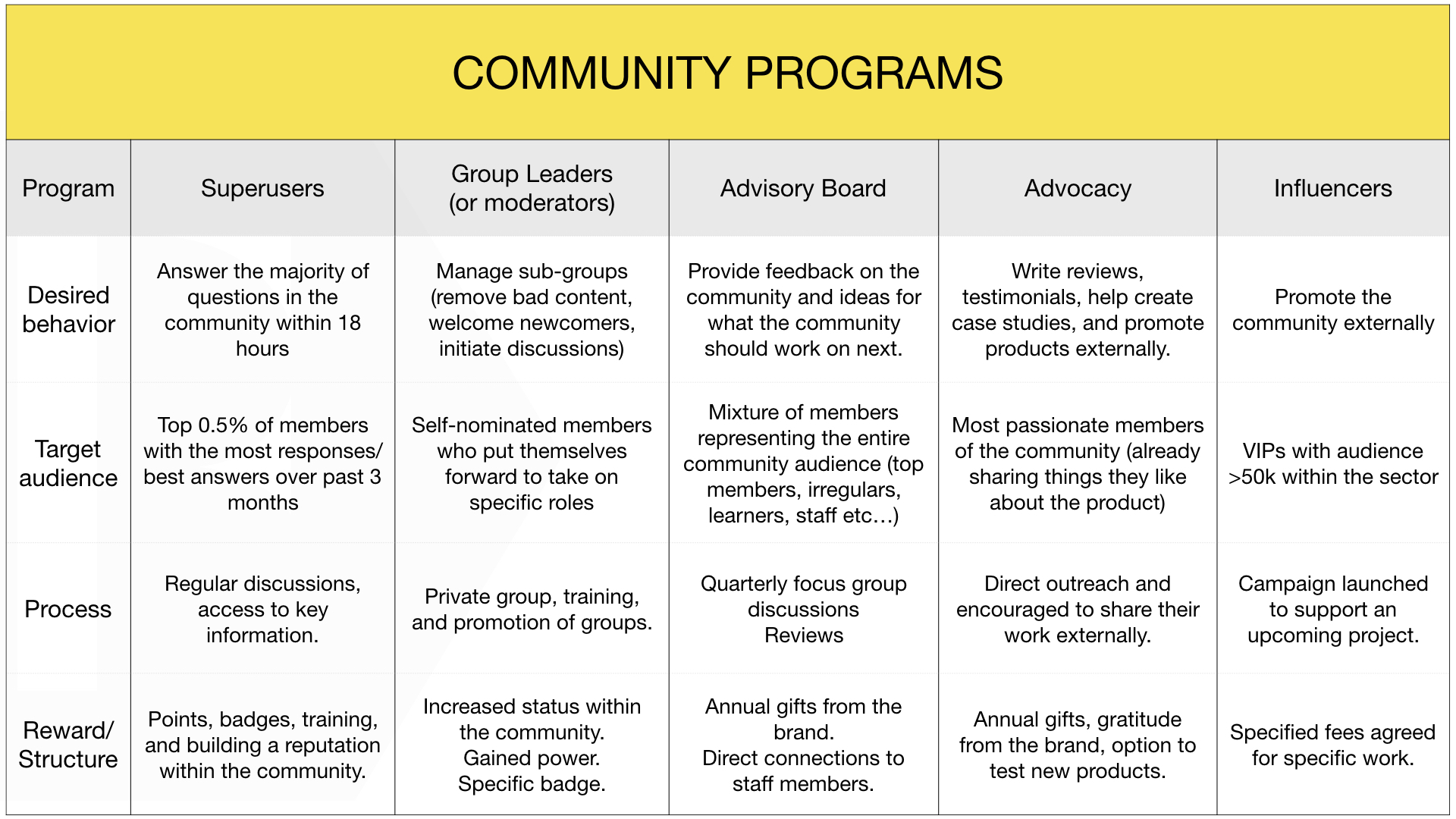
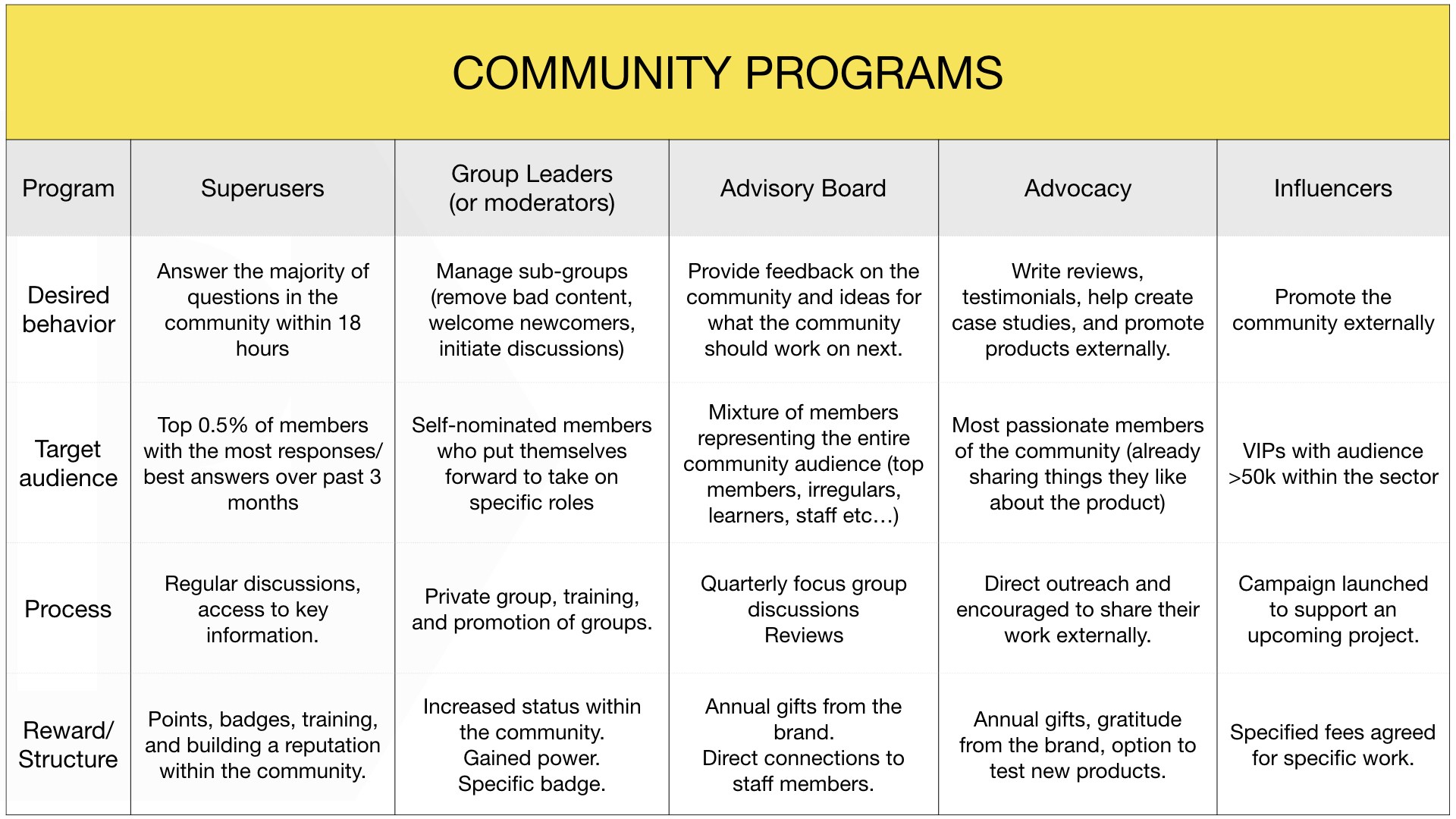
As you expand, you can begin to run multiple programs targeting different members to perform different behaviors.

Click to view this table:

Finding members already performing (or nominating themselves to perform a behavior) and encouraging them to do more of it is far more effective than trying to get members to do things they haven’t done before.

1) Identifying Problems To Solve

This also lets you get really specific in the running of specific programs to address specific issues.

First, you identify the behaviors you need more of. For example:

  • If your response rate is low, you need more answers to questions.
  • If the speed of response is low, you need faster answers to questions.
  • If the number of questions is low, you need more questions.
  • If you’re struggling to properly tag, remove, and edit contributions, you need moderators (or group leaders).
  • If you want to know what members want, you need feedback.
  • If you want more members, you need external promotion.
  • If you want more value, you might need more case studies, reviews, and testimonials.

Prioritise these problems by urgency too. Not every problem is equal.

2) Recruit People Most Likely To Solve The Problem

Once you know the behaviors you need, you can select the right group of members for the program. This is pretty easy.

  • If you want people to post a lot of answers, recruit people posting a lot of answers.
  • If you want people to post faster answers, recruit the kinds of people who post quick responses.
  • If you want people to run parts of the community, ask for people to step forward to run parts of the community.
  • If you want a feedback or advisory group, recruit a diverse set of members who represent different parts of the community.

It helps to have a single dataset to filter and search for these members.

3) Design the process and reward structure

Now you can decide how each program will run and its reward structure (ideally invite members to participate in this process).

For some that might be direct access to the brand. To others, it might be points, badges, and status. A little research will uncover the best results for each audience.

For sure, don’t try to launch multiple programs at once. But a superuser program isn’t the only kind of program you can run either. You can create multiple programs targeting specific members with specific activities.

14 Nov 01:51

How to Write Microcopy That Improves the User Experience

by Betsy Mikel

Writing clear microcopy can sometimes take a surprising amount of time.

Photo of typesetting letters of various shapes and sizes.
Photo by Amador Loureiro on Unsplash.

The small bits of copy you see sprinkled throughout apps and websites are called microcopy. As content designers, we think deeply about what each word communicates.

Microcopy is the tidiest of UI copy types. But do not let its crisp, contained presentation fool you: the process to get to those final, perfect words can be messy. Very messy. Multiple drafts messy, mired with business and technical constraints.

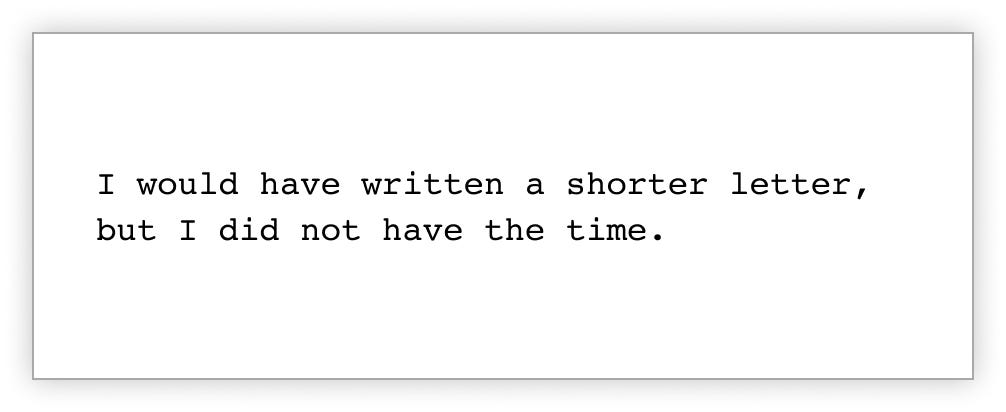
Quotation attributed to Blaise Pascale that reads: I would have written a shorter letter, but I did not have the time.
Blaise Pascal, translated from Lettres Provinciales

Here’s a secret about good writing that no one ever tells you: When you encounter clear UX content, it’s a result of editing and revision. The person who wrote those words likely had a dozen or more versions you’ll never see. They also probably had some business or technical constraints to consider, too.

If you’ve ever wondered what all goes into writing microcopy, pour yourself a micro-cup of espresso or a micro-brew and read on!

1. Understand the component and how it behaves.

As a content designer, you should try to consider as many cases as possible up front. Work with Design and Engineering to test the limits of the container you’re writing for. What will copy look like when it’s really short? What will it look like when it’s really long? You might be surprised what you discover.

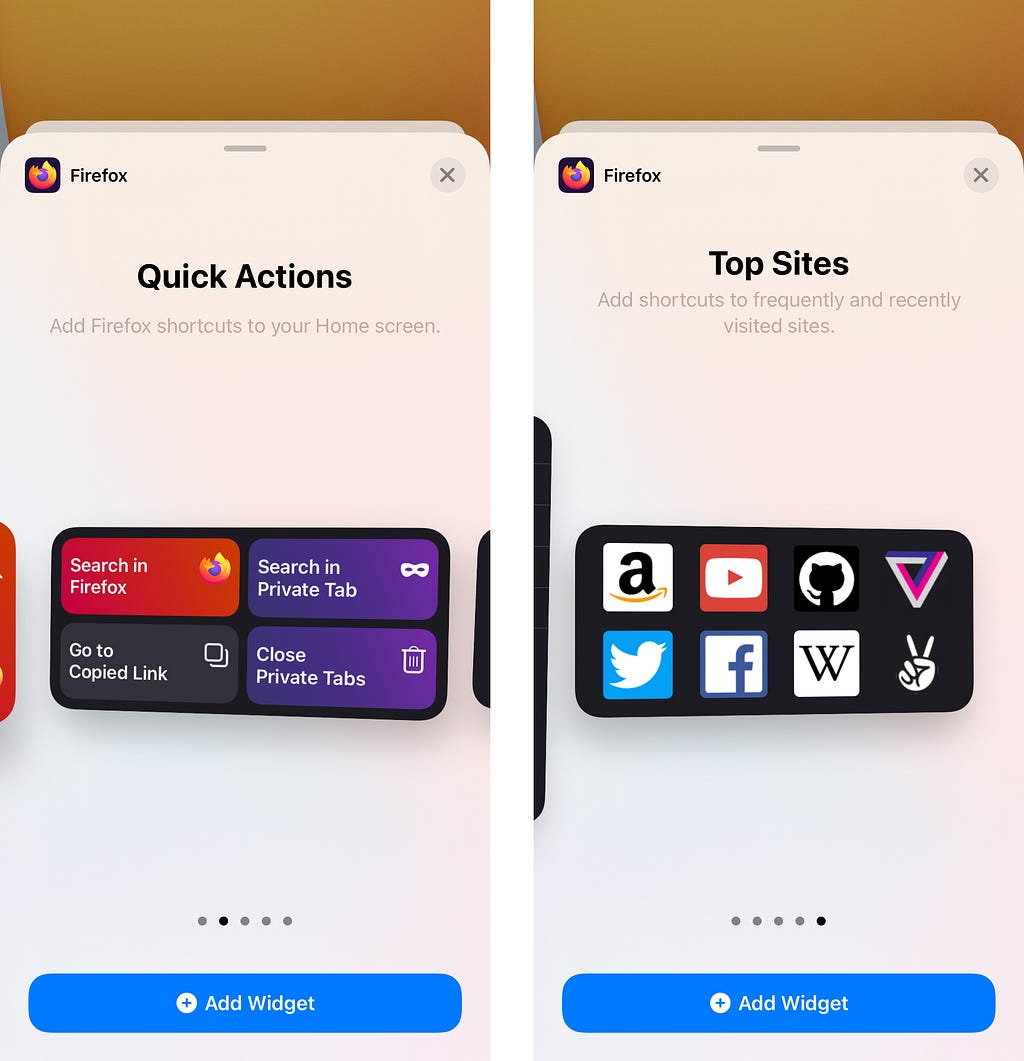
Images of two Firefox iOS widgets: Quick Actions and Top Sites.
Before writing the microcopy for iOS widgets, I needed first to understand the component and how it worked.

As an example, I wrote the descriptions for new iOS widgets. Apple recently introduced these widgets to elevate app content and actions directly on your Home Screen. You can use Firefox widgets to start a search, close tabs, or open a favorite site. Each one has a corresponding description that tells you what the widget does.

Before I sat down to write a single word of microcopy for the widget descriptions, I would need to know the following:

  • Is there a character limit for the widget descriptions?
  • What happens if the copy expands beyond that character limit? Does it truncate?
  • We had three widget sizes. Would this impact the available space for descriptions?

Because these widgets didn’t yet exist in the wild for me to interact with, I asked Engineering to help answer my questions. Engineering played with variations of character length in a testing environment to see how the UI might change.

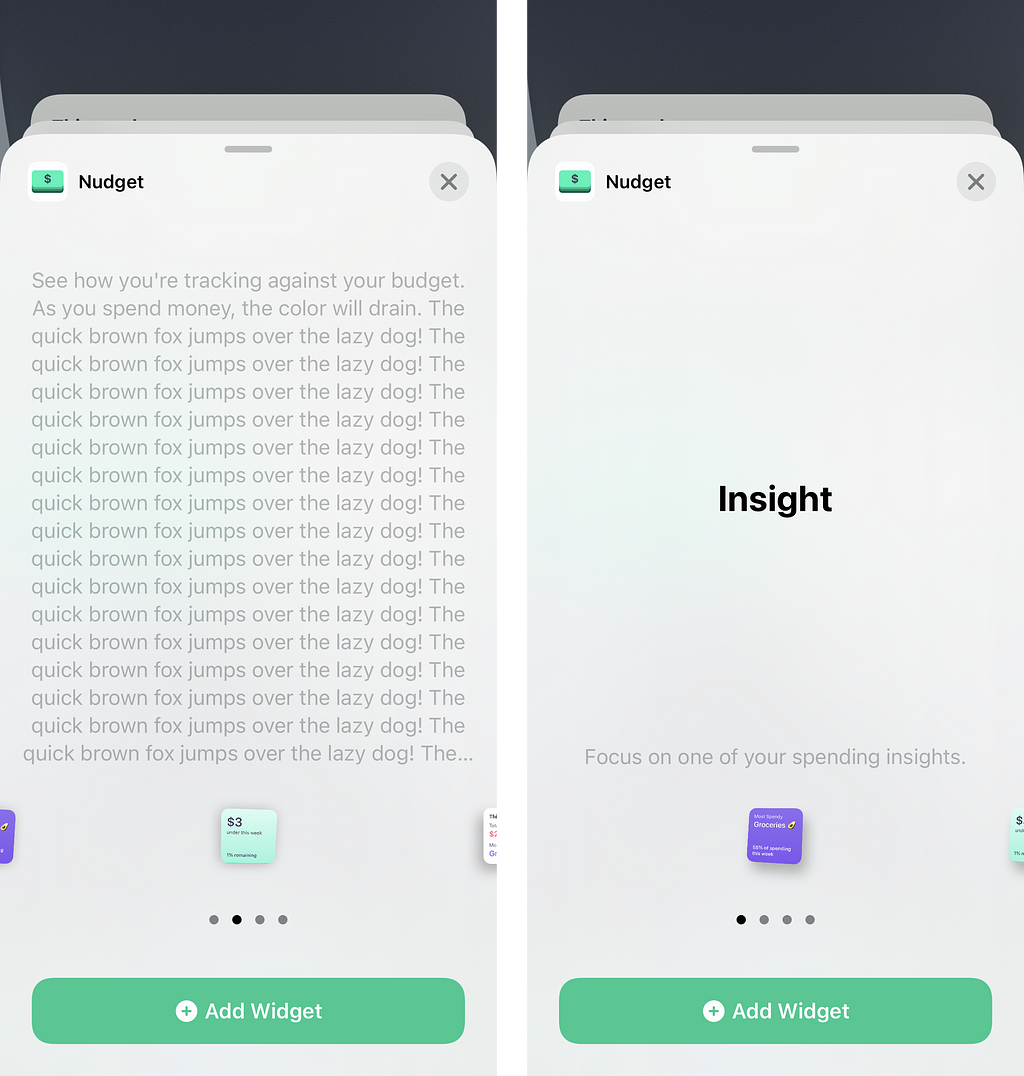
Image of two iOS testing widgets side-by-side, one with a long description and one with a short description.
Engineering tried variations of copy length for the descriptions in a testing environment. This helped us understand surprising behavior in the template itself.

We learned the template behaved in a peculiar way. The widget would shrink to accommodate a longer description. Then, the template would essentially lock to that size. Even if other widgets had shorter descriptions, the widgets themselves would appear teeny. You had to strain your eyes to read any text on the widget itself. Long story short, the descriptions needed to be as concise as possible. This would accommodate for localization and keep the widgets from shrinking.

First learning how the widgets behaved was a crucial step to writing effective microcopy. Build relationships with cross-functional peers so you can ask those questions and understand the limitations of the component you need to write for.

2. Spit out your first draft. Then revise, revise, revise.

The next step is the writing. And the rewriting. In my own experience, I rarely land on the final line of microcopy right away.

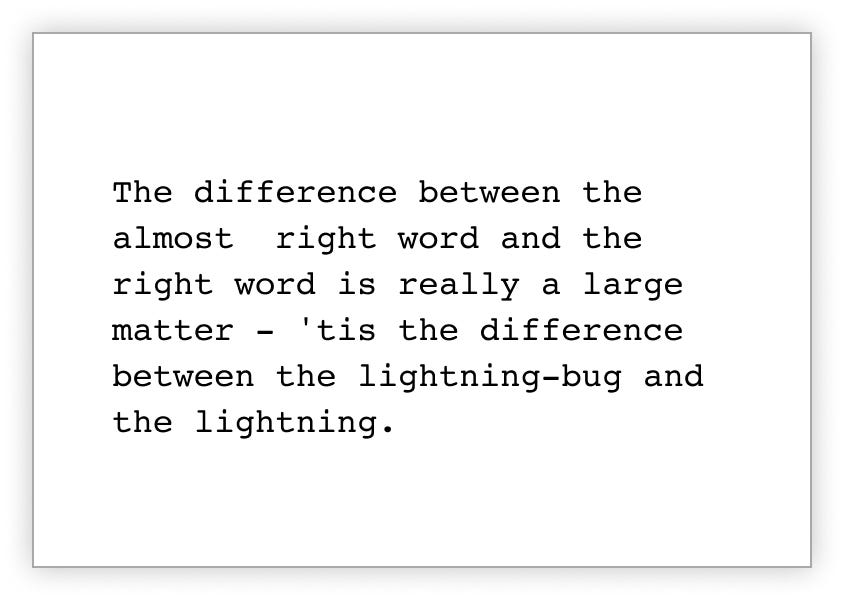
Image of a Mark Twain quote: https://www.goodreads.com/quotes/4957-the-difference-between-the-almost-right-word-and-the-right
Mark Twain, The Wit and Wisdom of Mark Twain

Now that I understood my constraints around the widgets, I was ready to start typing. I typically work through several versions in a Google Doc, wearing out my delete key as I keep reworking until I get it ‘right.’

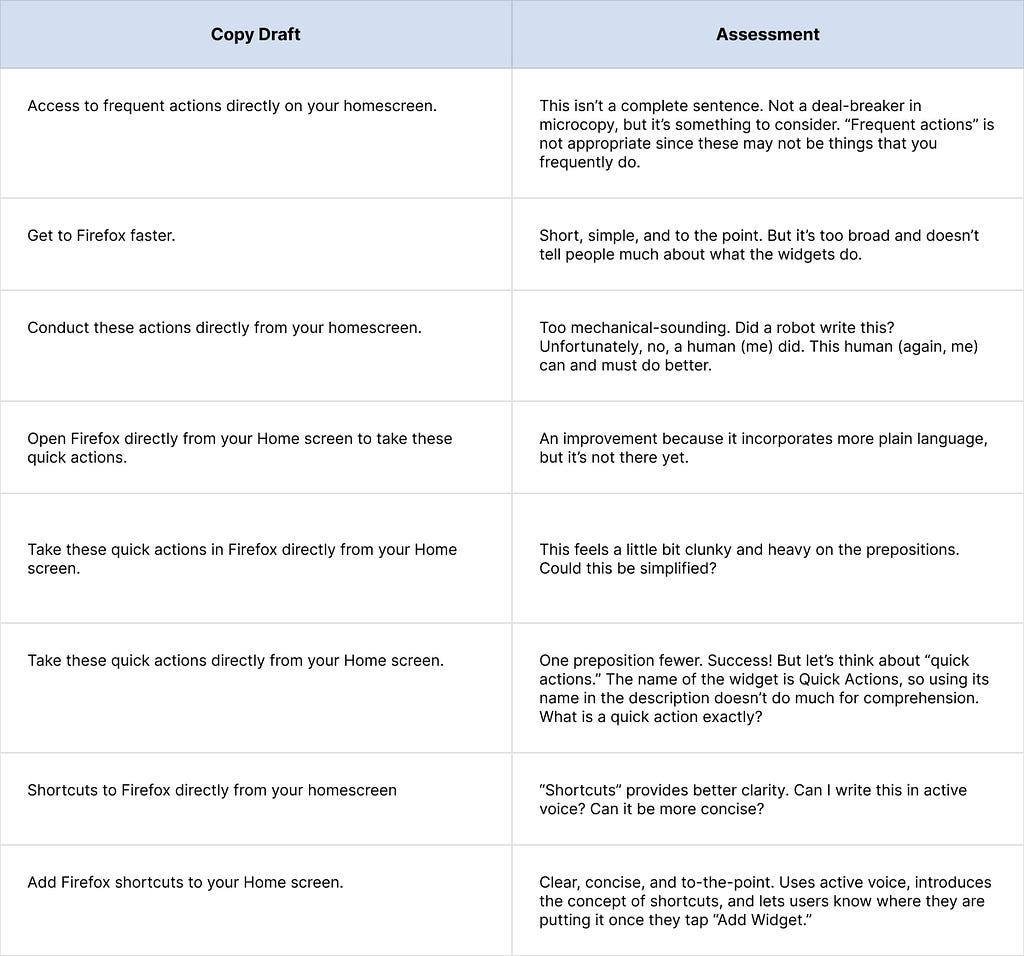
Image of a table outlining iterations of microcopy written and an assessment of each one.
I wrote several iterations of the description for this widget to maximize the limited space and make the microcopy as useful as possible.

Microcopy strives to provide maximum clarity in a limited amount of space. Every word counts and has to work hard. It’s worth the effort to analyze each word and ask yourself if it’s serving you as well as it could. Consider tense, voice, and other words on the screen.

3. Solicit feedback on your work.

Before delivering final strings to Engineering, it’s always a good practice to get a second set of eyes from a fellow team member (this could be a content designer, UX designer, or researcher). Someone less familiar with the problem space can help spot confusing language or superfluous words.

In many cases, our team also runs copy by our localization team to understand if the language might be too US-centric. Sometimes we will add a note for our localizers to explain the context and intent of the message. We also do a legal review with in-house product counsel. These extra checks give us better confidence in the microcopy we ultimately ship.

Wrapping up

Magical microcopy doesn’t shoot from our fingertips as we type (though we wish it did)! If we have any trade secrets to share, it’s only that first we seek to understand our constraints, then we revise, tweak, and rethink our words many times over. Ideally we bring in a partner to help us further refine and help us catch blind spots. This is why writing short can take time.

If you’re tasked with writing microcopy, first learn as much as you can about the component you are writing for, particularly its constraints. When you finally sit down to write, don’t worry about getting it right the first time. Get your thoughts on paper, reflect on what you can improve, then repeat. You’ll get crisper and cleaner with each draft.

Acknowledgements

Thank you to my editors Meridel Walkington and Sharon Bautista for your excellent notes and suggestions on this post. Thanks to Emanuela Damiani for the Figma help.


How to Write Microcopy That Improves the User Experience was originally published in Firefox User Experience on Medium, where people are continuing the conversation by highlighting and responding to this story.

14 Nov 01:51

What Happens When Ed-Tech Forgets? Some Thoughts on Rehabilitating Reputations

I was a guest today in Chris Hoadley's NYU class on ed-tech and globalization. Here's a bit of my rant...

Thank you so much for inviting me to speak to you today. I have been really stumped as to what I should say. If you look at the talks I've given this year — and I've done quite a lot since I've volunteered to visit Zoom school and speak to classes — there are a couple of notable themes: behaviorism and surveillance. I could talk about both of these for hours, and I want to leave plenty of time after I rant at you for a bit for us to maybe tackle some of these issues. It’s worth noting that these were things I talked about before the pandemic — behaviorism, surveillance, and trauma — but many folks seem a lot more amenable to hear me now. Unlike previous moments when ed-tech was in the spotlight — notably in 2012, "the year of the MOOC" — I am now inundated with media requests to talk about the drawbacks and the dangers about the move online, particularly as it relates to online test-proctoring companies, at least one of which is proving to be as villainous a character in ed-tech circles as we've seen since (perhaps) Blackboard.

One of the things I have written about quite a bit is this idea of "ed-tech amnesia" — that is, this profound forgetting if not erasure of the history of the field. And I don’t just mean forgetting or erasing what happened in the 1950s or 1980s. I mean forgetting what happened five, ten years ago. Some of this is a result of an influx of Silicon Valley types in recent years — people with no ties to education or education technology who think that their ignorance and lack of expertise is a strength. And it doesn't help, of course, that there is, in general, a repudiation of history within Silicon Valley itself. Silicon Valley's historical amnesia — the inability to learn about, to recognize, to remember what has come before — is deeply intertwined with the idea of "disruption" and its firm belief that new technologies are necessarily innovative and are always "progress." I like to cite, as an example, a New Yorker article from a few years ago that interviewed Anthony Levandoski, the Uber engineer sued by Google for stealing its self-driving car technology. "The only thing that matters is the future," Levandoski told the magazine. "I don't even know why we study history. It's entertaining, I guess — the dinosaurs and the Neanderthals and the Industrial Revolution, and stuff like that. But what already happened doesn't really matter. You don't need to know that history to build on what they made. In technology, all that matters is tomorrow." (If this were a literature class, I would tie this attitude to the Italian Futurists and to fascism, but that’s a presentation for another day.)

There are other examples of this historical amnesia in ed-tech specifically, no doubt. Narratives about the “factory model of education” and whatnot. Some of these other examples appear in the introduction of my forthcoming book, which I won't spoil since I have to save a chapter like that for the book tour — if we can do book tours.

I want us to be vigilant about this amnesia, in no small part because I think it's going to be wielded — I use that verb because I'm thinking here of that little flashy light that Will Smith had in Men in Black — in the coming months and years as many people want us to forget their mistakes, as they try to rehabilitate not just their bad ideas but their very reputations. By "many people," of course I mean Jared and Ivanka. But I also mean any number of people in education and education technology, who've not only screwed up the tools and practices of pandemic teaching and learning today, but who have a rather long history of bad if not dangerous ideas and decisions. These are people who have done real, substantive damage to students, to teachers, to public education. We cannot forget this.

We already have, of course.

Remember AllLearn? (I'm guessing not. There's not even a Wikipedia entry. We've just memory-holed it.) It was a joint online education project founded by Yale, Stanford, and Oxford in 2000 that had over $12 million in investment and created over 100 courses. (Do the math there on the per course costs.) It closed some six years later. AllLearn was short for Alliance for Lifelong Learning. The pitch was that it would provide digital courseware from "the world's best universities" to those university alumni and to the public. The former would pay $200 a course; the latter $250. The Chair of AllLearn was also the head of Yale University at the time: Richard Levin. Despite the failure of AllLearn, in 2014, Levin was named the CEO of Coursera. (His Wikipedia entry also fails to mention AllLearn.)

AllLearn wasn't the only online education failure of the early 2000s, of course. Columbia University invested $30 million into its own online learning initiative, Fathom, that opened in 2000 and closed in 2003. Fathom, for its part, does have a Wikipedia entry. There, you can learn that this initiative was headed by one Michael M. Crow, who is now the President of Arizona State University and according to plenty of education reformers, the visionary behind "the new American university" — one whose interests are not those of the public, I'd say, but rather those of industry. (Crow's Wikipedia entry, for what it's worth, does not mention Fathom either. It does mention that he's the chairman of the board of In-Q-Tel, the investment arm of the CIA.)

I talk a lot about the problems of industry when it comes to ed-tech — how venture capital and venture philanthropy have enormous influence on shaping the direction of education policy. But we should recognize too that the call, if you will, is also coming from inside the house. Terrible ed-tech isn't simply something that's imposed onto universities from the outside; it's something that certain folks on the inside and certain institutions in particular are readily promoting, designing, and adopting. The learning management system, for example, originated at universities. (We can debate which one. You can trace the LMS to PLATO at the University of Illinois Urbana Champaign, for example, or you can trace it to CourseInfo at Cornell.) Plagiarism detection software originated at universities. (TurnItIn was founded at UC Berkeley.) And online test proctoring software has roots at universities as well. (ProctorU was founded at Andrew Jackson University. Proctorio was founded at Arizona State.)

Online test proctoring is pretty abhorrent. We're quite literally asking students to install spyware on their machines. This spyware extracts an incredible amount of information from students, including their biometric data, audio, and video, and then runs it through proprietary algorithms designed to identify suspicious behavior that might signal cheating. I don't think I need to detail to this audience why this is a bad idea technically and a bad idea politically and a bad idea pedagogically.

It's been fascinating, I think, to see the media pick up on this story, because for far too long critiques of ed-tech have been overwhelmed by the sheer volume of hype, overpromising, and marketing fluff. But I want to call out Proctorio in particular in this talk because this company has demonstrated it has no business in schools; its products have no business in classrooms. Online test proctoring is, as PhD student Jeffrey Moro has called it, "cop shit," — that is, "any pedagogical technique or technology that presumes an adversarial relationship between students and teachers." Cop shit supposedly brings order to the classroom by demanding compliance. Cop shit, like "broken windows policing," takes the immense amount of data that schools and ed-tech collect about students and uses that to identify potential criminal behavior — cheating and otherwise. Cop shit relies on carceral pedagogy (and carceral ed-tech), which stands in complete opposition to any sort of liberatory practice of teaching and learning. It stands in complete opposition to education as a practice of care and justice.

But Proctorio has taken its cop shit one step further, invoking the law to threaten students and university staff who challenge them. Proctorio is currently suing Ian Linkletter, an instructional technologist at the University of British Columbia, for infringing on its intellectual property rights. A critic of the company, Linkletter posted links to unlisted YouTube videos — that is, publicly available information — on Twitter. The company has also insinuated they might take legal action against an academic journal that published an article critical of online test proctoring. Proctorio also filed a DMCA takedown notice against a Miami University student who'd posted snippets of Proctorio's Google Chrome extension onto Twitter and who raised questions about some of the claims the company was making about its product. Proctorio's CEO, Mike Olson posted a student's private chat logs with the company's customer support to Reddit after the student complained about the product. What kind of leader does that? What kind of company culture sanctions that?

Proctorio has demonstrated again and again and again and again and again and again that it holds students and staff in deep disdain. It has demonstrated that it will bully people to get its way — to maintain and expand its market share, to spread the adoption of "cop shit." Let's not forget that.

For a long time, arguably Blackboard was one of the major ed-tech villains. I mean, nobody is particularly fond of the learning management system as a piece of ed-tech, but the LMS is not so much evil as it is insidiously unimaginative. Blackboard, however, really upset folks in 2006 when it filed a patent infringement lawsuit against its competitor Desire2Learn (D2L), one day after receiving the patent for "Internet-based education support system and methods." As I mentioned earlier, one can trace the origins of the learning management system and to "Internet-based education support system and methods" to much earlier technologies, including the PLATO system at the University of Illinois in the 1960s. But Blackboard filed the patent; and Blackboard decided to be the patent bully. What kind of leader does that? What kind of company culture sanctions that? Blackboard won its lawsuit against D2L, although after several years of legal wrangling, the patent office eventually rescinded some 44 IP claims made by Blackboard, and the two LMS companies announced in 2009 that they'd settled all the litigation between them. Nevertheless, this left a bitter taste in a lot of folks' mouths. We'll never forget, some said.

But guess who's back? Michael Chasen, one of the co-founders of Blackboard and its CEO from 1999 to 2012. He's launched a startup that offers a layer on top of Zoom to make it work "better" for schools — offering things like attendance, proctoring, and eye-tracking. And guess who else is back? Coursera founder Daphne Koller. She and her husband have launched a startup that also offers a replacement to Zoom. Just like Richard Levin did when he was appointed the CEO of Coursera, these folks are going to claim that they have deep experience with online education, but we might want to balk at that because they've never demonstrated any willingness to learn from the mistakes they have made in the past.

It makes me rather depressed to say I gave a talk six years ago called "Un-Fathom-able: The Hidden History of Ed-Tech" where I touched on some of these very same themes, these very same stories. I called it "Un-Fathom-able," thumbing my nose at the failures of Columbia University's Dot Com era disaster Fathom, sure, but also at what I knew at the time — 2014! — we'd see as the failure of Coursera. There wasn't a sustainable business model for AllLearn and there wasn't a sustainable business model (at the outset at least) for Coursera. (I'm not sure that there is one quite yet, although the company has ditched any pretense of "free and open" once heralded as the great innovation of the MOOC.)

Unfathomable. Impenetrable. Incomprehensible. Inexplicable. Unknowable. There's so often this hand-waving in the face of grave mistakes in ed-tech that no one could have possibly predicted, no one could have possibly known. But people did predict. People did know. That expertise, however, was dismissed; experiences were forgotten; reputations were rehabilitated without any reflection or humility.

This pandemic has given us a pretty pivotal moment for educational institutions, one in which we have to decide what we want school to do, to look like, whose values should it represent and carry forward. But I'd argue we won't be able to move forward with any sort of progressive politics or progressive pedagogy or progressive university mission until we reconcile where we've been before. We can't move forward towards any semblance of educational justice, until there is reconciliation and repair to the harm that ed-tech and it's proponents have caused. We will move forward if we just forget. We'll just keep getting the LMS and expensive video lectures and "cop shit" repackaged and sold to us as innovation.

14 Nov 01:51

What I do when I don’t know what to do

by Doug Belshaw

Back before the pandemic, when I ran out of steam sitting in my home office, I’d go somewhere else to work. Often that was a coffee shop, but sometimes it was the local library, or even the beach.

I don’t have the same flexibility now that it’s getting towards winter and we’re in the second Covid-related lockdown in the UK. So what is a remote worker to do when they’re feeling less motivated than usual?

Here’s three things that I do, just in case they’re useful for other people:

  1. Take a moment to reflectwhat’s going on? I’m not suggesting a full OODA loop, but I consider how I’m feeling and why I’m not getting on with stuff. Is it because I don’t have anything to do (unlikely!) or because I’m not sure how to do it, or something else?
  2. Gain claritycan I move somewhere else? I’ve realised that, pre-pandemic, moving physical location was a proxy for moving conceptual location. So can I go for a walk to figure things out? Or shut down something that is taking my attention (e.g. social network) and move it somewhere else (e.g. email/Slack)?
  3. Actwhat can I do? If there’s something that needs clarifying, I try to gain that clarity as soon as possible. If not, I have to decide how comfortable I am in sitting in the uncertainty. If that’s the case, instead of ruminating, I act, often by doing something else. Like writing this blog post!

This might seem like the world’s most obvious advice, but the first step is the most important. A healthy introspection helps me move from feeling stuck to understanding what’s going on, and then to action.


This post is Day 61 of my #100DaysToOffload challenge. Want to get involved? Find out more at 100daystooffload.com

The post What I do when I don't know what to do first appeared on Open Thinkering.

14 Nov 01:47

Instapaper Liked: 'She made music jump into 3D': Wendy Carlos, the reclusive synth genius

Wendy Carlos’s Switched-On Bach topped US classical charts for three years.Photograph: Len DeLessio/Corbis/Getty Images T his summer, an 80-year-old synthesiser…
14 Nov 01:47

Apple’s M1 arrives

With Apple’s event announcing the release of new MacBook Air, MacBook Pro, and Mac mini models based on the M1 system on a chip, the Mac’s transition away from Intel and onto its very own silicon platform is now solidly underway. With initial shipments next week — my order is two weeks away, presumably because I ordered a 16 GB model with a US keyboard in Germany — it will be a few days we get true impressions of how these systems perform.

That won’t stop people from speculating. The best I’ve seen is Andrei Frumusanu’s article on Anandtech, which paints a very optimistic picture. The not so great are the takes that Apple is simply stuffing a mobile phone chip into a laptop and the Mac is heading to the same fate that befell Windows RT.

Then, there are the complaints that Apple hasn’t done enough because the enclosures are the same or whatever. The people making those complaints must not have looked at history. When Apple did the PowerPC to Intel transition, they started by changing the CPUs, leaving everything else the same. After they were safely past the point where customers believed that the transition was going to work, then they fully took advantage of what the new platform could do. The same process will play out this time.

I like Apple has approached the technical specifications for the new machines. Clock speed is nowhere to be seen. And, almost every reference to the performance of the M1 is stated in terms of power consumption — performance per watt — which equals heat. And, if you were watching the presentation closely, you may have noticed they explicitly called out in the event presentation that the MacBook Air has a 10W thermal envelope.

It doesn’t matter how awesome a chip you put into a laptop is, if you can’t keep it cool, it doesn’t make a difference. We’ve seen this in action with the last few generations of MacBook Pros. Better and theoretically faster Intel chips haven’t really moved the needle on real-world performance. Faster SSDs and other system architecture enhancements are where we’ve seen the bulk of improvement in the last few generations. Outside that, the only way to buy a faster computer has been to buy a bigger computer.

The M1 puts us on a new curve. Somebody (that I’d presume works for Apple) ran GeekBench on new MacBook Air, and the single-core numbers come in better the CPU in any available Mac. The multi-core numbers beat out the current top-of-the-line 16" MacBook Pro. Wow.

That promises a lot of potential for the future. Imagine a future 16" MacBook Pro on this performance curve. There’s a lot to look forward to. I’m curious to see the shape of the more powerful variants of the M1. Will they expand the package to hold 32 or even 64 GB of memory on-board? How many high-performance cores will they scale up to? And how will they handle memory architectures with an external GPU or multiple CPU packages? There’s a lot to look forward to.

If you’re going to go ahead and jump in now into the Apple Silicon future, how do you decide between the MacBook Air and MacBook Pro with the same M1 chip? For me, it was easy. For 110 grams of extra weight and a bit more money, you get a brighter screen, bigger battery, and an expanded thermal envelope which will result in longer sustained performance. Done.

14 Nov 01:47

We’re Changing Our Name to Content Design

by Meridel Walkington

The Firefox UX content team has a new name that better reflects how we work.

Co-authored with Betsy Mikel

Stock photo image of a stack of blank business cards
Photo by Brando Makes Branding on Unsplash

Hello. We’re the Firefox Content Design team. We’ve actually met before, but our name then was the Firefox Content Strategy team.

Why did we change our name to Content Design, you ask? Well, for a few (good) reasons.

It better captures what we do

We are designers, and our material is content. Content can be words, but it can be other things, too, like layout, hierarchy, iconography, and illustration. Words are one of the foundational elements in our design toolkit — similar to color or typography for visual designers — but it’s not always written words, and words aren’t created in a vacuum. Our practice is informed by research and an understanding of the holistic user journey. The type of content, and how content appears, is something we also create in close partnership with UX designers and researchers.

“Then, instead of saying ‘How shall I write this?’, you say, ‘What content will best meet this need?’ The answer might be words, but it might also be other things: pictures, diagrams, charts, links, calendars, a series of questions and answers, videos […], and many more besides. When your job is to decide which of those, or which combination of several of them, meets the user’s need — that’s content design.”
— Sarah Richards defined the content design practice in her seminal work, Content Design

It helps others understand how to work with us

While content strategy accurately captures the full breadth of what we do, this descriptor is better understood by those doing content strategy work or very familiar with it. And, as we know from writing product copy, accuracy is not synonymous with clarity.

Strategy can also sound like something we create on our own and then lob over a fence. In contrast, design is understood as an immersive and collaborative practice, grounded in solving user problems and business goals together.

Content design is thus a clearer descriptor for a broader audience. When we collaborate cross-functionally (with product managers, engineers, marketing), it’s important they understand what to expect from our contributions, and how and when to engage us in the process. We often get asked: “When is the right time to bring in content? And the answer is: “The same time you’d bring in a designer.”

We’re aligning with the field

Content strategy is a job title often used by the much larger field of marketing content strategy or publishing. There are website content strategists, SEO content strategists, and social media content strategists, all who do different types of content-related work. Content design is a job title specific to product and user experience.

And, making this change is in keeping with where the field is going. Organizations like Slack, Netflix, Intuit, and IBM also use content design, and practice leaders Shopify and Facebook recently made the change, articulating reasons that we share and echo here.

It distinguishes the totality of our work from copywriting

Writing interface copy is about 10% of what we do. While we do write words that appear in the product, it’s often at the end of a thoughtful design process that we participate in or lead.

We’re still doing all the same things we did as content strategists, and we are still strategic in how we work (and shouldn’t everyone be strategic in how they work, anyway?) but we are choosing a title that better captures the unseen but equally important work we do to arrive at the words.

It’s the best option for us, but there’s no ‘right’ option

Job titles are tricky, especially for an emerging field like content design. The fact that titles are up for debate and actively evolving shows just how new our profession is. While there have been people creating product content experiences for a while, the field is really starting to now professionalize and expand. For example, we just got our first dedicated content design and UX writing conference this year with Button.

Content strategy can be a good umbrella term for the activities of content design and UX writing. Larger teams might choose to differentiate more, staffing specialized strategists, content designers, and UX writers. For now, content design is the best option for us, where we are, and the context and organization in which we work.

“There’s no ‘correct’ job title or description for this work. There’s not a single way you should contribute to your teams or help others understand what you do.”
 — Metts & Welfle, Writing is Designing

Words matter

We’re documenting our name change publicly because, as our fellow content designers know, words matter. They reflect but also shape reality.

We feel a bit self-conscious about this declaration, and maybe that’s because we are the newest guests at the UX party — so new that we are still writing, and rewriting, our name tag. So, hi, it’s nice to see you (again). We’re happy to be here.

Thank you to Michelle Heubusch, Gemma Petrie, and Katie Caldwell for reviewing this post.


We’re Changing Our Name to Content Design was originally published in Firefox User Experience on Medium, where people are continuing the conversation by highlighting and responding to this story.

14 Nov 01:45

'Unfair surveillance'? Online exam software sparks global student revolt

Avi Asher-Schapiro, Thomson Reuters Foundation, Nov 12, 2020
Icon

Student pushback against intrusive online proctoring systems is reaching mainstream news. As they should. In this item (via MediaSmarts) we read about a system complaining "Due to poor lighting we are unable to identify your face." In a Washington Post article (which may be dying in darkness behind a paywall) the warning reads "'A student in 6 minutes had 776 head and eye movements,' adding later, 'I would hate to have to write you up.'" If you think this is ridiculous, you're not alone. "'How the hell are we [supposed] to control our eyes,' one student wrote — and Brown shared the email in a tweet that quickly got administrators’ attention, as well as more than 100,000 likes."

Web: [Direct Link] [This Post]
14 Nov 01:18

The Best Thunderbolt Docks

by Nick Guy
Three Thunderbolt docks (clockwise from left): Plugable Thunderbolt 4 Dock, Anker Prime TB5 Docking Station, and Kensington SD5900T DisplayLink Docking Station; situated amongst each other and a few SD cards.

Thunderbolt docks offer a powerful way to connect multiple monitors, storage drives, and other accessories to your computer, all through a single cable. Although they’re more expensive than USB hubs, they provide better performance and broader multi-monitor support.

After extensive testing, we recommend the Plugable Thunderbolt 4 Dock (TBT4-UD5) for most situations. It offers convenient HDMI monitor connections, a comprehensive port selection, and solid performance at a reasonable price. It doesn’t have a Thunderbolt 5 connection, but most current laptops don’t support Thunderbolt 5 anyway, and comparable Thunderbolt 5 docks would cost more.

14 Nov 01:18

CNAME Cloaking and Bounce Tracking Defense

This blog post covers several enhancements to Intelligent Tracking Prevention (ITP) in Safari 14 on macOS Big Sur, Catalina, and Mojave, iOS 14, and iPadOS 14 to address our latest discoveries in the industry around tracking.

CNAME Cloaking Defense

ITP now caps the expiry of cookies set in so-called third-party CNAME-cloaked HTTP responses to 7 days. On macOS, this enhancement is specific to Big Sur.

What Is CNAME Cloaking?

In the eyes of web browsers, the first party of a website is typically defined by its registrable domain. This means that www.blog.example and comments.blog.example are considered same-site and the same party. If the user loads a webpage from www.blog.example, and that page makes a subresource request to comments.blog.example, that request will carry all cookies that are set to cover the blog.example site, including login cookies and user identity cookies. In addition, the response to that comments.blog.example subresource request can set cookies for blog.example, and those cookies will be first-party cookies.

Enter CNAMEs. CNAME stands for canonical name record and maps one domain name to another as part of the Domain Name System, or DNS. This means a site owner can configure one of their subdomains, such as sub.blog.example, to resolve to thirdParty.example, before resolving to an IP address. This happens underneath the web layer and is called CNAME cloaking — the thirdParty.example domain is cloaked as sub.blog.example and thus has the same powers as the true first party.

CNAME Cloaking and Tracking

Cross-site trackers have convinced site owners to set up CNAME cloaking in order to circumvent tracking prevention, such as ITP’s 7-day expiry cap on cookies set in JavaScript. In our blog case, this would be making track.blog.example resolve to tracker.example.

A recent paper from researchers at the Graduate University for Advanced Studies (Sokendai) and the French National Cybersecurity Agency (ANSSI) found 1,762 websites CNAME cloaking 56 trackers in total.

CNAME Cloaking and Website Security

Site owners who set up CNAME cloaking risk full website takeovers or customer cookie hijacking if the CNAME records aren’t properly managed, for instance if CNAME cloaking isn’t decommissioned when no longer in use. It was recently reported that 250 websites of banks, healthcare companies, restaurant chains, and civil rights groups had been compromised through mismanaged CNAME cloaking. In June this year, Microsoft documented these attacks and how their cloud customers should prevent them.

ITP’s Defense Against CNAME Cloaking Tracking

ITP now detects third-party CNAME cloaking requests and caps the expiry of any cookies set in the HTTP response to 7 days. This cap is aligned with ITP’s expiry cap on all cookies created through JavaScript.

Third-party CNAME cloaking is defined as a first-party subresource that resolves through a CNAME that differs from the first-party domain and differs from the top frame host’s CNAME, if one exists. Yes, the whole site can be CNAME cloaked, when it uses so called edge servers.

The best way to explain this is through a table (1p means first-party, 3p means third-party):

1p host, e.g. www.blog.example 1p subdomain other than the 1p host, e.g. track.blog.example Capped cookie expiry?
No cloaking No cloaking No cap
No cloaking other.blog.example (1p cloaking) No cap
No cloaking tracker.example (3p cloaking) 7-day cap
abc123.edge.example (cloaking) No cloaking No cap
abc123.edge.example (cloaking) abc123.edge.example (matching cloaking) No cap
abc123.edge.example (cloaking) other.blog.example (1p cloaking) No cap
abc123.edge.example (cloaking) tracker.example (3p cloaking) 7-day cap

SameSite=Strict Cookie Jail for Bounce Trackers

In June 2018, we announced an update to ITP to detect and defend against first party bounce trackers. In March 2020, we announced an enhancement to also detect delayed bounce tracking. Since then, we have received a report of one specific website engaged in bounce tracking while also being likely to get frequent user interaction. To combat such issues, we proposed to the W3C Privacy Community Group what we call a SameSite=Strict jail as well as other escalations.

What the SameSite=strict jail does is detect bounce tracking and, at a certain threshold, rewrite all the tracking domain’s cookies to SameSite=strict. This means that they will not be sent in cross-site, first-party navigations, and they can no longer be used for simple redirect-based bounce tracking.

Our implementation is rather relaxed, with the threshold set to 10 unique navigational, first-party redirects (unique in the sense of going to unique domains), and an automatic reset of that counter once the cookies are rewritten to SameSite=strict. This automatically gives the domain a new chance so that they can disengage in bounce tracking and “get out of jail.”

Our current list of domains we subject to this protection is empty because the domain reported to us has stopped their bounce tracking. But this protection remains in our toolbox.

Partitioned Ephemeral IndexedDB

Up until now, WebKit has blocked cross-origin IndexedDB. WebKit now allows partitioned and ephemeral third-party IndexedDB in an effort to align with other browsers now that they are interested in storage partitioning too. You can partake in the ongoing standardization effort for storage partitioning on GitHub.

Partitioned means unique IndexedDB instance per first-party site and ephemeral means in-memory-only, i.e. goes away on browser quit.

Third-Party Cookie Blocking and Storage Access API In Private Browsing

Private Browsing in Safari is based on WebKit’s ephemeral sessions where nothing is persisted to disk. This means ITP would not be able to learn things between launches of Safari. Further, Private Browsing also uses a separate ephemeral session for each new tab the user opens. To uphold this separation between tabs, ITP wouldn’t be able to classify cross-site trackers from the user’s full browsing even in-memory.

However, full third-party cookie blocking doesn’t need classification and is now enabled by default in Private Browsing. This might seem simple to support but the challenge was to make the Storage Access API work with the aforementioned tab separation. This is how it works: Say identityProvider.example wants to request storage access as third-party on the login page for social.example in Tab A. Interacting with identityProvider.example as a first party website in Tab B will not suffice to allow it to request storage access in Tab A since that would leak state between the separate ephemeral sessions. Thus, the user must interact with identityProvider.example in the same tab as where identityProvider.example later requests storage access as third-party. This makes sure that login flows where two different parties are involved and third-party cookie access is required, is possible in Private Browsing mode.

Home Screen Web Application Domain Exempt From ITP

Back in March 2020, when we announced ITP’s 7-day cap on all script-writeable storage, developers asked about home screen web applications and whether they were exempt from this 7-day cap. We explained how ITP’s counter of “days of use” and capture of user interaction effectively made sure that the first party of home screen web applications would not be subjected to the new 7-day cap. To make this more clear, we have implemented an explicit exception for the first-party domain of home screen web applications to make sure ITP always skips that domain in its website data removal algorithm.

In addition, the website data of home screen web applications is kept isolated from Safari and thus will not be affected by ITP’s classification of tracking behavior in Safari.

Thanks To My Coworkers

The above updates to WebKit and ITP would not have been possible without the help from Kate, Jiten, Scott, Tommy, Sihui, and David. Thank you!

14 Nov 01:17

Transport 2050: Remote Work and the Future of Transportation

by Gordon Price

Remote working, fad or future?

The pandemic has had a major impact on transportation, including prompting a massive shift towards working from home. At the outset of the public health crisis, one in ten Canadians traded their work commutes for a home office to ensure social distancing. With the remote-work trend presenting major challenges and opportunities for employers and employees alike, many are asking if mass tele-commuting will endure.

TransLink’s Transport 2050 conversation about remote work and transportation will discuss the trends, impacts, and how remote work can fit into the future of regional transportation.

Panel

  • Eve Hou, Manager of Policy, TransLink (facilitator)
  • Patricia Mokhtarian, Professor, Civil and Environmental Engineering and Associate Director, Institute of Transportation Studies, Georgia Tech
  • Havi Parker-Sutton, Director, Sales – Enterprise Health & Crowns, Telus
  • Leah Riley, Managing Director, Nelson\Nygaard and former Director, Portland Bureau of Transportation


Tuesday, November 24

10 – 11:15 AM

Registration link here         


14 Nov 01:17

Guido Van Rossum joins Microsoft

by Rui Carmo

The Benevolent Dictator For Life of Python (in case you have no clue who Guido is), and responsible for creating my favorite programming language (and my kids’) just joined Microsoft as a Distinguished Engineer.

And explicitly mentions the company stance on Open Source, which I wish was the industry norm.

Let this sink in (I’m having a moment here, for not completely unrelated reasons).


Want to show your appreciation?
14 Nov 01:17

Representing Joins

It has been a quiet couple of months for TidyBlocks development: everyone on the team was hit with work deadlines at the same time, and our first attempt to secure a bit of funding didn't work out. But the break has given us a chance to reflect on our current interface, and one thing...
14 Nov 01:17

Open Practice in Practice

Lorna M Campbell, Open World, Nov 12, 2020

This is a short post on a presentation, but I mostly want to quote it to share these resources (quoted):

  1. OEP to Build Community – which included the examples of Femedtech and Equity Unbound.
  2. Open Pedagogy –  including All Aboard Digital Skills in HE, the National Forum Open Licensing Toolkit, Open Pedagogy Notebook, and University of Windsor Tool Parade
  3. Open Practice for Authentic Assessment – covering Wikimedia in Education and Open Assessment Practices.
  4. Open Practice and Policy – with examples of open policies for learning and teaching from the University of Edinburgh. 

Good stuff, and reflective of the different dimensions of open learning.

Web: [Direct Link] [This Post]
14 Nov 01:17

The Best Notebooks and Notepads

by Melanie Pinola
Note books and note pads we tested side by side.

A notebook is more than just a practical tool. It can be a source of joy, a covetable item that turns an ordinary, everyday task — note-taking, journaling, task-planning, brainstorming, or doodling — into a sublime experience.

Upgrading from a cheap notebook to a high-quality one usually costs just a couple more cents per page (or about $2 to $5 overall), and you’re worth it.

After interviewing experts, researching over 100 notebooks, and writing zealously in 34 of them side by side over several weeks, we have picks in a number of sizes and styles, priced from about $9 to $40 (at this writing). Any of these notebooks will provide an appreciably better writing experience than what you can get from a generic, off-the-shelf-at-Walgreens notebook.

We mention price per page when it’s notable, but our picks average 11 cents per page (at this writing). We also mention paper weight or thickness when that spec is important, but most of these high-quality pages are 80 to 90 grams per square meter (gsm); thicker isn’t always better, but all of the paper in our picks felt substantial and satisfying for us to write on. And most of the notebooks we tested had 7 mm lined ruling (close to college rule), but we note the exceptions below.

14 Nov 01:16

Healthy Baller [Flickr]

by vanderwal

vanderwal posted a photo:

Healthy Baller

I'm at Healthy Baller! ift.tt/2SDP6lX

14 Nov 01:16

Brexit, beached

by Chris Grey
With Joe Biden’s victory now assured, millions of words have now been written – in the UK, if nowhere else – as to what it means for the US-UK relationship and for Brexit in particular. Of these, I’ve found the analyses of CNN’s Luke McGee, James Kane of the Institute for Government, and Lisa O’Carroll, the Guardian’s Brexit correspondent, especially insightful. There are also some intriguing thoughts about the wider consequences of a Biden presidency, so far as I know only in the form of a twitter thread, from Charles Grant, Director of the Centre for European Reform.

2016 recedes into history

My own take is that it’s worth taking a step back from Trump’s defeat to recall what his victory in 2016 meant for Brexiters, namely to validate their project as being not an anomaly but as having caught the tide of history. With the self-proclaimed ‘Mr Brexit’ in the White House, and plucky Brexit Britain at his side, the EU would shortly collapse and a new era would begin. And it’s important to clarify what the Brexiters and Trump shared in their imagination of that new era – it was one of separate nations, unhampered by the constraints of international organizations or multi-lateral agreements, but making bilateral agreements if and when it was in their interests. A US-UK trade deal would be emblematic of how that new world would be, as well as a symbolic affirmation of Brexit itself.

It’s true that Trump’s hostility to NATO, the WTO, the UN, the WHO and so on was never matched, or even shared, by the UK government or by most Brexiters. Indeed, the latter seem to find the prospect of obeying ‘WTO rules’ positively exciting. But they very much shared his vision of the nation state. Ironically, Brexiters failed to appreciate that, by definition, that meant that for all his talk Trump was never going to grant the UK a trade deal on any terms other than his own, and actually he blew hot and cold on the whole idea. In any case, despite his delusions of grandeur he operated within his own constraints. In particular, it has been plain since at least August 2019 that Congress would not ratify any trade deal if Brexit posed a threat to the Good Friday Agreement (GFA).

Much attention is now focused on the prospects of such a trade deal with Biden’s America, and his own very strong and stated commitment to the GFA. But the more important point is that his election strips away the last vestige of Trump’s 2016 boost for Brexit. The EU has manifestly not collapsed and is not going to, there is no sign of any other member wanting to follow the sorry path of Brexit, and the populist wave has not triumphed. And of course all the predictions of how as ‘the fifth largest economy’ the UK ‘held all the cards’ in delivering Brexit have long ago been discredited.

Now, there will be a US administration strongly committed to the EU and more generally to multi-lateralism and international co-operation. It’s only necessary to read Nigel Farage’s snivelly lament for the hours he spent in Trump Tower to see how fatally isolated the Brexit project now is. That sense is compounded by the emerging news of the imminent departure of Dominic Cummings and the rest of the Vote Leave team from Downing Street. Far from having caught the tide of history it is now beached on the mudflats of a failed international putsch, the ghastly remnants of an experiment that has gone so horribly wrong that government ministers are supposed to no longer refer to it by name.

Can the government recognize what’s changed?

So the question now is whether the UK government recognizes all this or whether it is so captured by Brexiter ideology as to be incapable of doing so. As it happens, there is a very precise litmus test immediately available to answer that question in the form of the Internal Market Bill (IMB) or more specifically those clauses relating to Northern Ireland which, on the government’s own admission, would be in violation of international law. If the government persists this will make not just a trade deal but harmonious relations with the US generally impossible, as it will with the EU.

It is increasingly clear that this is not simply because of what the effects on the GFA might be but also, more broadly, because of the disdain of the EU and, now, the US for Johnson’s brazen disregard for international law even if the GFA isn’t damaged. In that sense it is irrelevant whether the IMB clauses do or – as can certainly be argued - don’t in themselves threaten the GFA, or even whether or not they are ever invoked. What matters is simply their existence if they are passed into law. Comments this week from both Simon Coveney, the Irish Foreign Affairs Minister, and US Congressman Brendan Boyle underline this. For both, the key issue is the betrayal of trust over an agreement so recently signed by the UK government.

Sovereignty and independence in an interdependent world

This in turn goes to the heart of the inadequacy of the Brexiter understanding of what ‘independence’ and ‘sovereignty’ mean, which seems to be one of untrammeled freedom of action. On the one hand, this is what led them to believe, as no other EU member does, that being in the EU meant not being an independent and sovereign state (a lie nailed by the very first Brexit White Paper in February 2017, which stated that “Parliament has remained sovereign throughout our membership of the EU”). On the other hand, it led them to think that as an ‘independent’ country the UK can operate without constraints.

This was the gist of Suella Braverman’s advice that the IMB was legal: “Parliamentary supremacy means it is entirely constitutional and proper for Parliament to enact legislation, even if it breaches international treaty obligations”. It also permeates Johnson’s negotiating position with the EU within which the idea of being ‘sovereign equals’ translates into the accusation of ‘bad faith’ if the EU doesn’t give the UK exactly what it wants (£). It even drizzles right down the food chain to the boorish antics of the Brexit Party in the European Parliament, as if ‘independence’ is a licence to ridicule and insult others.

The way the Brexit Ultras think about independence was well-illustrated this week by Iain Duncan Smith’s insistence that Brexit has nothing to do with the US because “we are a sovereign nation” as if this precluded the US – also a sovereign nation, after all – from taking its own view of Brexit. In a similar vein was John Redwood’s letter to Joe Biden (draft text here), which can be read as “a warning” to the President-elect to recognize the significance of the UK “becoming a truly independent nation again”.

Despite insisting that the UK will uphold the GFA (and, following the bizarre new line of Brexiters, that it is the EU that threatens it), it is clear that Redwood does not understand the Biden concerns about the IMB and, from his tweets, that he doesn’t accept that it breaks international law. Instead, he waves the size of the 2016 leave vote as if it had any significance now that Britain has left the EU, and as if it provided an alibi for Britain to conduct itself however it wants. That vote is all they now have, since they are incapable of identifying what benefits this ‘independence’ has, what they actually want to do with it, or how it can possibly justify the mounting damage it is causing (for which, see the latest updates to Yorkshire BylinesDigby Jones Index)

‘So what?’ would be an obvious reaction and, presumably, that of the third assistant letter-opener to the Biden junior staffer who is most likely the closest person to him to read it (although, that said, it is unlikely, along with the Foreign Secretary’s equivocation, the Prime Minister’s terse – and botched - congratulations and the putrid tweet of some previously obscure peer that got reported in the US, to have done anything to endear the UK to the incoming President). But, unfortunately, we in this country are obliged to take notice of Redwood, Duncan Smith and their fellow ERG backwoodsmen since they continue to exert a grip upon our politics. Indeed, to read Redwood’s letter one could be forgiven for thinking that he spoke for the British government, rather than being a mildly eccentric backbencher who has not held ministerial office for 25 years. So their understanding of what ‘independence’ means matters.

And it is an understanding based on fantasy. The real world is an interdependent one, in which nations face constraints, their actions have consequences and, indeed, they must reckon with the sovereignty of others. Even if the formal enforcement mechanisms of international law and of international agreements are relatively weak, the realpolitik is that other countries, especially those with which you want to do deals, have ways of showing their displeasure. At the other end of the scale, behaving insultingly to other countries does not make them admire your independence of action but reduces their respect for, and goodwill towards, you.

Same old issue: purism vs pragmatism

So in the coming days, even hours, Johnson’s government is going to have to decide whether to prioritise the purism of this ersatz independence above pragmatic reality and, in a way, that is just the latest version of the choices Brexit Britain has faced all along. And, as has also always been the case, the answer lies in the internal battles of the Tory Party. In general, these have always pushed the government towards purism – the main, almost the sole, exception having been when Johnson agreed his deal which, awful as it was, was more pragmatic than no (withdrawal) deal at all.

But the political circumstances are very different now. Johnson was far more popular and powerful within his own party, and the Brexiters had glimpsed the possibility of losing Brexit altogether. So they supported a deal they hated and which they have since sought to repudiate. Now, he is beleaguered on every front, especially because of Covid-19, his inner team is in disarray, and his backbenchers are in a febrile and rebellious mood. The Brexiters have got Brexit – there is no going back on that – and no longer have the fear of losing it, and many would be happy with a no (trade) deal outcome. So if Johnson moves to do a deal with the EU they are likely to strike. It’s true that their parliamentary scope to derail it is fairly limited, but they have other weapons, most potently that of challenging his leadership, something which is already rumoured in any case.

Yet pragmatism suggests that if Johnson wants to avoid quite serious international isolation he will need to do a deal with the EU – it will be a thin deal, though potentially could develop into something more extensive in the future – both for its own value and as a way of aligning with Biden’s wider agenda. To do so will entail not only U-turning on IMB but also offering substantive concessions to the EU on one or all three of fisheries, subsidies and governance. And it can’t be assumed that the concessions EU will seek will be unchanged by events. After all, just as the Biden presidency leaves the UK isolated so too does it strengthen the EU.

Some regard it as inevitable that he will now do a deal, although the apparent insistence on retaining the offending clauses of the IMB, even though their rejection by the House of Lords provided a ready get out, suggests otherwise. As Peter Foster, writing in the FT (£), suggests it would be wrong to “underestimate the emotional attachment of Mr Johnson and his inner Brexit circle” to the clauses as “a vital assertion of British sovereignty”. But with that inner Brexit circle now dissolving, as Cummings and Cain depart at the end of the year, does that mark a shift away from their purism making a deal more likely – or even, as some rumours suggest, does it arise from that shift having happened - or will no deal be the last hurrah of their final weeks in power? What, if anything, is the significance of the rumours that David Frost was about to resign but that he has now decided not to?

The deep roots of Brexit’s failure

My own view is still that even now it is impossible to predict which way Johnson will go, and pointless to try not least given the chaos of his administration. But clearly the IMB issue is going to come to a head very soon – the negotiations as a whole are going to the wire but 19 November seems to be the absolute deadline – and when it does then, whatever the outcome, it will represent the latest episode in one of the deepest flaws in the Brexiters’ entire project. For as Jon Worth outlines in detail in an excellent blog this week the IMB mess arises from the Brexit Ultras’ refusal to accept or even to understand the ‘trilemma’ posed for (hard) Brexit by Northern Ireland (see also this explanation from law Professor Phil Syrpis).

At root, that comes from an even deeper failure, as outlined in my post of March 2017, to understand the nature of borders – both why they exist and what is needed to make them disappear. Brexit has been constantly caught on the ‘cakeist’ hook that Brexiters want both to leave all the institutions that make borders disappear whilst refusing to accept that this means that borders must re-appear.

It is, as ever, worth recalling what Boris Johnson, like other Brexiters, had to say about the Irish border when they were selling Brexit to the British people: “the situation would be absolutely unchanged”. Even in September 2018 he described the border problem as “a gnat”. He rejected the initial idea of a sea border, rejected May’s backstop arrangements, then signed up to a sea border and has ever since sought to deny the consequences of having done so, with the IMB being the result. As to what he does now, with no pain-free choices left then as Rafael Behr argues it will simply be a matter of how he calculates he can best avoid blame.

Johnson is Johnson, and bears a heavy responsibility for Brexit. But it shouldn’t be forgotten that he was one of many leading Brexiters who, orchestrated by Dominic Cummings, cajoled voters into leaving the EU without knowing or caring about what happened to Northern Ireland, to the GFA, and certainly to Ireland. For that matter, they didn’t know or care what Brexit meant for everything from creating customs arrangements to disrupting medical supplies to road haulage (£) to musicians’ tours to financial services (£) to data transfer, police and judicial cooperation to the millions of lives left in limbo, and so much else besides. They didn’t know or care at the time of the Referendum and, for the most part, they haven’t bothered to find out since. Worse, throughout all these years they have vilified and belittled those who did know and care.

So as Brexit limps on, the unloved orphan of a failing populism, to some kind of resolution of at least what the end of the transition period will mean, we shouldn’t forget the lies shamelessly told, the promises blithely made, and the fears viciously propagated which have brought us to this shambolic point.

14 Nov 01:16

Neues aus Absurdistan, Folge 201113

by Volker Weber

Wenn ich einmal was zu diesem Thema schreibe, dann kommen viele Reaktionen, manche per Mail, weil man sich nicht aus dem Fenster lehnen will.

Wichtiger Einwand zu diesem Fall:

Das geht nicht, siehe diesen vier Wochen alten Tweet:

Das ist schlicht inkompetent. Jitsi speichert ... nichts. Wenn die Stunde zu Ende ist, dann ist alles weg. Keine Metadaten, Verkehrsdaten schon gar nicht.

14 Nov 00:49

TikTok says it hasn’t heard from Trump administration in weeks as deadline looms

by Aisha Malik
TikTok on the App Store

TikTok hasn’t heard from the Trump administration in weeks, prompting confusion around the company’s future plans.

The popular social media platform is trying to figure out whether it should proceed to sell a stake in its business to Oracle and Walmart ahead of the November 12th deadline.

Sources say that TikTok is still interested in its partnership with Oracle to satisfy security concerns, even if President-elect Joe Biden isn’t as adamant about the situation.

The November 12th deadline calls for TikTok’s parent company, China-based ByteDance, to “divest any tangible or intangible assets or property, wherever located, used to enable or support ByteDance’s operation of the TikTok application in the United States.”

TikTok has filed a petition to the U.S. Court of Appeals on November 10th and is calling for a review by the Committee on Foreign Investment in the United States.

“In the nearly two months since the president gave his preliminary approval to our proposal to satisfy those concerns, we have offered detailed solutions to finalize that agreement — but have received no substantive feedback on our extensive data privacy and security framework,” TikTok outlined in a statement.

Trump has alleged that the social media platform poses a national security risk because the Chinese government could access data on American users. TikTok has repeatedly denied this claim, but wants to move forward with the deal to satisfy concerns.

Source: CNBC

The post TikTok says it hasn’t heard from Trump administration in weeks as deadline looms appeared first on MobileSyrup.

14 Nov 00:49

HomePod mini Review: Big sound in a small package

by Patrick O'Rourke
HomePod mini

The slightly over $100 smart speaker category is growing extremely competitive.

There are already several great low-cost smart speakers like Amazon’s new circular Echo and Google’s Nest Audio. Now, with the release of the $129 HomePod mini, Apple also aims to enter this space with its own tiny audio device.

While the new HomePod mini is indeed quite miniature, especially compared to the standard HomePod, it still manages to emit decent-sounding audio for such a small package.

That said, despite Apple continuing to expand Siri and the HomePod’s features with functionality like ‘Intercom,’ the tech giant’s voice-activated assistant isn’t quite as capable as competitors like Google Assistant and Amazon’s Alexa.

HomePod mini beside the HomePodFurther, music streaming service compatibility, unfortunately, still isn’t great. Via voice commands, you’re only able to use the HomePod mini with Apple Music and Amazon Music in Canada. Spotify, my music streaming platform of choice, still works over AirPlay 2, but not through voice commands.


While this might be an issue for some, if you live in Apple’s walled-garden, you don’t have anything to worry about.

There’s still a lot to like about the HomePod mini, especially its sleek design, smart home device compatibility and easy to use touch controls. Further, Apple is quickly approaching feature parity with Nest and Echo speakers in several respects.

Fabric orb

HomePod mini beside the iPhone

The first thing I noticed about the HomePod mini is how small it is. The smart speaker is tinier than both the Nest Audio and Amazon’s Echo, measuring in at just 3.3-inches.

Its ‘Space Grey’ and ‘White’ colours, coupled with the same weaved-fabric design as the full-sized HomePod, blend perfectly into your house, allowing it to fade into the background of its decor.

The bottom of the device features a soft plastic base ensuring the speaker doesn’t move around. The top of the HomePod mini also includes a small LED display that shows an animated waveform when music plays or Siri speaks.

This gives the HomePod mini a sleek and somewhat unique look in the increasingly crowded smart speaker space. Along with looking cool, the display also controls audio, allowing you to tap it to play/pause, double-tap to move to the next track, triple-tap to go to the previous track and to launch Siri by touching and holding. You can also turn the volume up and down by tapping the plus and minus icons on the display.

As far as smart speakers go, the HomePod mini is one of the best looking out there, especially in the mid-range category.

S5-powered

HomePod mini beside AirPods Pro

The HomePod mini’s core is powered by Apple’s S5 chip, the same processor included in its Apple Watch Series 6 and Apple Watch SE. In comparison, the HomePod features Apple’s A8 chip.

Though it’s unlikely the tiny speaker will ever take full advantage of the power offered by the S5, it’s good to know the underlying technology behind its computational audio and tuning algorithms is more than capable.

Apple claims its tuning algorithms shift audio over 180 times a second to adapt to the song’s unique characteristics or podcast currently being played. The chip also allows the HomePod mini to optimize its loudness, adjust its dynamic range, and predict its driver’s and passive radiators’ movement in real-time.

HomePod mini bottom

All this technical jargon means the HomePod mini can emit room-filling sound with a wide soundscape despite its small size (more on the sound quality later).

Other notable specs include a four-microphone design. During my few weeks with the HomePod mini, the smart speaker detected my voice commands in nearly every instance, even when music is playing loudly. Apple says one of the HomePod mini’s microphones is utilized for echo cancellation to allow Siri to hear you when music is playing. In fact, I’d even say Siri responded to my voice commands more accurately when music is playing than the standard HomePod.

Decent sound

HomePod mini on window

First off, while the HomePod mini doesn’t come close to matching the likes of the standard HomePod and Sonos’ excellent, but more expensive One speaker, its quality is in-line with the Nest Audio and the most recent Echo.

This means it’s capable of producing a wide, detailed sound stage and features a surprising amount of bass. Whether I was listening to heavier, guitar-driven tracks like Silverstein’s ‘November,’ softer acoustic music like Taylor Swift’s ‘Betty’ (check out the live version — it’s sick), or something with a little more bass like Brakence’s ‘fuckboy,’ everything sounds great pumping through the tiny HomePod mini. I’m especially impressed the smart speaker’s bass never feels overwhelming, an issue the standard HomePod often suffers from unless you adjust its EQ.

This wide soundscape is amplified when you stereo pair two HomePod mini speakers, a process that only requires you to set up both minis in the same Home room. Again, I’d describe the stereo playback quality as comparable to my experience syncing two Nest Audio speakers together.

HomePod mini top-down view

Apple has also played catch-up with its competitors in the smart speaker space over the last few years. The HomePod mini and standard HomePod are now capable of multiroom audio and can even control other AirPlay 2 speakers via voice commands. I’m also fond of the new ‘Proximity Controls’ that take advantage of any iPhone with a U1 chip, making it super easy to handoff music playing on your iPhone 12 simply by moving the smartphone near the HomePod mini.

Of course, you could do this through Apple Music on your iPhone, but there’s something magical about just holding your device near a HomePod and having the music instantly play.

The HomePod mini, unfortunately, doesn’t calibrate its sound to the specific room it’s sitting in like the HomePod or Google Home Max, though this is to be expected given it’s a mid-range smart speaker.

Siri is trying

HomePod mini beside skeleton

It’s clear Google Assistant, and to a lesser extent, Amazon Alexa are more capable digital assistants than what Apple’s Siri has to offer.

That said, if you live in Apple’s tech world, you’ll likely be more than happy with the HomePod mini’s Siri integration. For example, along with using voice commands to select what room music is playing in, you can also take advantage of Siri to make phone calls, send texts, access the ‘Find My’ app and create Notes/Reminders and Tasks.

You can even get personal updates related to your day pulled from Apple’s Weather, Calendar, News and Maps app simply by just saying, “Hey Siri, what’s my update?,’ or get traffic information pulled from Apple Maps by asking, “Hey Siri, what’s the traffic like to my work?”

HomePod mini cord

Of course, this all hinges on you using Apple’s apps and services solely. Basically, if you’re like me and use a mix of Google’s and Apple’s hardware and apps, the experience is far more hit and miss, especially when it comes to getting my ‘Personal Update’ at the start of the day.

You can also now set up Siri Shortcuts for tasks like starting your HomeKit compatible smart vacuum, pull answers to questions from Safari, get Apple News story summaries and set Alarms and Timers.

Then there’s Intercom, Apple’s new feature that allows you to send quick messages between HomePods like a modern-day intercom system. Though I didn’t spend much time sending messages over Intercom given my house is tiny and it’s only myself and my partner living here (I’d rather just yell, personally), it works just as well as similar features available on Echo and Nest Audio devices. This is, once again, Apple playing catch up with its competitors in some ways.

HomePod mini LED display

Even the smart home situation has improved significantly when it comes to Apple’s HomeKit platform and its Home app. While I still prefer Google’s Home app and overall smart home ecosystem, nearly all of my smart home devices, including my several Philips Hue lights, Sonos One speakers and Apple TV 4K, all work great with Siri’s voice commands and the HomePod mini.

I still have issues getting my AirPlay 2 compatible Vizio TV and Nanoleaf Shapes Panels to work via the Home app consistently. To be fair, this could be partially the fault of the smart home manufacturers behind these devices, but they all work perfectly with the Google Home app.

My main takeaway from the few weeks I’ve spent with the HomePod mini is that it’s a far more capable digital assistant than it was a few years ago as long as you reside solely in Apple’s ecosystem of devices and apps, which many people likely do.

HomePod Mini on table

The post HomePod mini Review: Big sound in a small package appeared first on MobileSyrup.

14 Nov 00:48

macOS Big Sur is now available

by Patrick O'Rourke
macOS Big Sur

Following its reveal at WWDC 2020 a few months ago and what feels like a delay of at least a few weeks, macOS Big Sur is now available.

The new look includes more rounded icons, a transparent menu system and an overall design that more closely resembles iOS and iPadOS. This makes sense given Apple recently announced that its M1-equipped Macs will be capable of natively running iOS and iPadOS apps.

Other new features include Messages featuring improved overall search functionality, Safari getting a new privacy shield similar to FireFox’s and increased compatibility with Apple’s new ARM-based M1 MacBook Air, 13-inch MacBook Pro and Mac mini.

To download the update, click the Apple symbol in the top left corner of your display, select ‘About This Mac,’ and then, ‘Software Update.’ If the update is available for your Mac, it should appear.

The full list of Macs capable of running macOS Big Sur are as follows:

  • MacBook (2015 and later)
  • MacBook Air (2013 and later)
  • MacBook Pro (late 2013 and later)
  • Mac mini (2014 and later)
  • iMac (2014 and later)
  • iMac Pro (2017 and later)
  • Mac Pro (2013 and later)

macOS Big Sur hit my MacBook Pro (2020) at 1:53pm ET. If it hasn’t made its way to your Mac yet, it should appear soon.

The post macOS Big Sur is now available appeared first on MobileSyrup.

14 Nov 00:48

Disney+ surpasses 73 million subscribers worldwide

by Bradly Shankar
The Mandalorian

Disney has revealed that it has accumulated 73.7 million Disney+ subscribers around the world as of October 3rd.

This is a marked increased over the 60.5 million paying subscribers it reached as of August 4th.

Moreover, it’s significantly ahead of Disney’s own expectations, which pegged the streaming service landing in 60 million and 90 million subscriber range by 2024. Disney+ officially launched in Canada, the U.S. and the Netherlands on November 12th, 2019, meaning the entertainment giant has hit its subscriber target in less than a year. The service is now available in more than 30 countries worldwide.

In general, streaming services have seen much higher demand in 2020 as people stayed at home amid the COVID-19 pandemic. In April, Netflix reported bringing in 15 million new subscribers in Q1 2020 — well above the seven it had expected.

To bolster the Disney+ catalogue amid increased demand, Disney has brought several films to the service early, such as Onward in April (which had a brief theatrical run before cinemas closed), Artemis Fowl in June, the film version of Hamilton in July and Mulan in September. The latter film was initially only offered to subscribers for an additional $34.99 fee, but it will become available to all subscribers at no further cost in December.

At the same time, some of the Disney+ content pipeline has been pushed back due to COVID-19. Two of Disney+’s biggest original series, Marvel’s The Falcon and the Winter Soldier and WandaVision, were both delayed due to COVID-19 related production shutdowns.

The Falcon and the Winter Soldier missed its August 2020 premiere and is now set to drop sometime in 2021. WandaVision, meanwhile, was originally supposed to be the first of the two to drop in 2020, but is now releasing in January 2021.

On the other hand, Disney had wrapped filming on The Mandalorian Season 2 before COVID-19 shutdowns so that the company could continue production remotely without any delays. The second season premiered on October 30th, with new episodes coming out every Friday.

Disney will also release Soul, the next film from Pixar, directly on Disney+ on Christmas Day.

A Disney+ subscription costs $8.99 CAD/month or $89.99/year in Canada.

Image credit: Disney

Via: Variety

The post Disney+ surpasses 73 million subscribers worldwide appeared first on MobileSyrup.