Finally bought my plane ticket for @DrupalIceland ! I'll be doing my offline talk there in late February.

HTTPS, the secure variant of the HTTP protocol, has long been a staple of the modern Web. It creates secure connections by providing authentication and encryption between a browser and the associated web server. HTTPS helps keep you safe from eavesdropping and tampering when doing everything from online banking to communicating with your friends. This is important because over a regular HTTP connection, someone else on the network can read or modify the website before you see it, putting you at risk.
To keep users safe online, we would like to see all developers use HTTPS for their websites. Using HTTPS is now easier than ever. Amazing progress in HTTPS adoption has been made, with a substantial portion of web traffic now secured by HTTPS:
Changes to Firefox security user experience
Up until now, Firefox has used a green lock icon in the address bar to indicate when a website is using HTTPS and a neutral indicator (no lock icon) when a website is not using HTTPS. The green lock icon indicates that the site is using a secure connection.
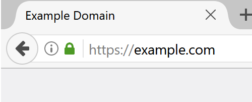
Current secure (HTTPS) connection

Current non-secure (HTTP) connection
In order to clearly highlight risk to the user, starting this month in Firefox 51 web pages which collect passwords but don’t use HTTPS will display a grey lock icon with a red strike-through in the address bar.
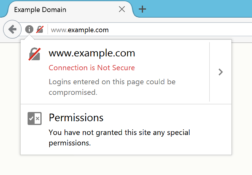
Clicking on the “i” icon, will show the text, “Connection is Not Secure” and “Logins entered on this page could be compromised”.
This has been the user experience in Firefox Dev Edition since January 2016. Since then, the percentage of login forms detected by Firefox that are fully secured with HTTPS has increased from nearly 40% to nearly 70%, and the number of HTTPS pages overall has also increased by 10%, as you can see in the graph above.
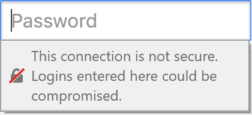
In upcoming releases, Firefox will show an in-context message when a user clicks into a username or password field on a page that doesn’t use HTTPS. That message will show the same grey lock icon with red strike-through, accompanied by a similar message, “This connection is not secure. Logins entered here could be compromised.”:
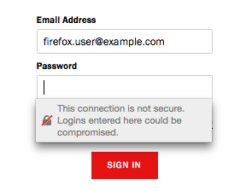
In-context warning for a password field on a page that doesn’t use HTTPS
What to expect in the future
To continue to promote the use of HTTPS and properly convey the risks to users, Firefox will eventually display the struck-through lock icon for all pages that don’t use HTTPS, to make clear that they are not secure. As our plans evolve, we will continue to post updates but our hope is that all developers are encouraged by these changes to take the necessary steps to protect users of the Web through HTTPS.
For more technical details about this feature, please see our blog post from last year. In order to test your website before some of these changes are in the release version of Firefox, please install the latest version of Firefox Nightly.
Thanks!
Thank you to the engineering, user experience, user research, quality assurance, and product teams that helped make this happen – Sean Lee, Tim Guan-tin Chien, Paolo Amadini, Johann Hofmann, Jonathan Kingston, Dale Harvey, Ryan Feeley, Philipp Sackl, Tyler Downer, Adrian Florinescu, and Richard Barnes. And a very special thank you to Matthew Noorenberghe, without whom this would not have been possible.
The post Communicating the Dangers of Non-Secure HTTP appeared first on Mozilla Security Blog.

A speechwriter’s x-ray look at the inaugural speech finds something disturbing.

Here in the Geek Girlfriends Lab, we have tried many Bluetooth phone headsets. I subject them all to the same rigorous test: How do they hold up to a conversation with my mother. Nobody is happier to hear my voice, but if I don’t sound perfectly clear then she derails the conversation into an interrogation about my well-being. So she is the benchmark I measure every headset by, and few pass this test.
I call her from my truck (a loud vehicle), driving on the freeway (a loud environment), with the windows open (so loud that I can’t easily converse with someone in the passenger seat). There are many wireless headsets that can handle basic communication, filtering out freeway noise while still piping our voices in with reasonable clarity. But headsets that don’t sound great cause her to pelt me with worried questions, and we usually end up discussing the headset. When a headset fails my lab test, our freeway chats end in one of two ways:
“Honey, are you sure you aren’t getting a cold?! You sound stuffy.”
Or, “Oh, just put me back on speaker phone. You don’t sound like yourself talking to me through that thing and it’s giving me the creeps.”
Following my usual testing procedure, I donned the Plantronics Voyager 5200 ($117), stepped on the gas, merged into full-speed Bay Area traffic, opened my windows, and hit the call button. I chatted with my mom for about five minutes before she finally asked, “Where are you, honey?”
“On the freeway, mom.”
“No, really? Are you doing another one of those headset tests on me right now?”
“Yep!”
“Wow, that’s hard to believe, because you sound good. I can’t tell you are in the car at all. Well anyway, your sister and I had so much fun last week…”
And that was it. We were back to talking about friends and family. And the Plantronics Voyager 5200 made it to this review. No lengthy discussions about how well we could or could not hear each other, just a casual conversation with mom at 65 miles an hour, the wind howling through my truck cab.
In addition to fantastic noise cancellation and unparalleled voice clarity on the road or in the office, the Voyager 5200 is comfortable to wear, has excellent battery life (5 hours of talk time per charge), was easy to set up, and maintains a very reliable connection to my phone. It’s got some great controls including hands-free voice commands that let you “Answer,” or “Ignore” incoming calls, and it has intuitive volume buttons. And when you take it off your ear, it magically knows and switches the sound back through your phone. There is also an incredible charging case accessory ($33) for this headset. When you drop the headset into this case, the case charges up the headset and keeps everything tidy in your bag, pocket, or glove box. When the case finally runs low (which takes multiple charging cycles), you can quickly charge everything back up via USB in your car or at your desk.
I’m thinking of getting one for my mother.
The CLA bot for the PSF is designed defensively because if the bot accidentally lets a pull request through from someone that has not signed the CLA that could lead to legal troubles. To alleviate any worries I may have about bugs lurking in the code I have made sure that the CLA bot's code is thoroughly tested. I use Travis to make sure that continuous integration is passing, I use Codecov and coverage.py to make sure that there's 100% branch coverage, and the bot does not deploy to Heroku unless CI is passing (aside: thanks to Heroku for donating free hosting to the PSF which I'm taking advantage of for the bot).
But one thing I had not taken advantage of until today to help code defensively is type hints and mypy. I didn't do this from the outset because mypy didn't support async functions when the CLA bot was initially written. But with the advent of variable annotations in Python 3.6 and mypy's support for async functions I thought I would see what it was like to add type hints to pre-existing code.
Following the general approach outlined by the Dropbox team during their Dec 2016 BayPiggies talk, which mirrors what Zulip outlined in October 2016, worked out well. Basically you run mypy with no types to make sure it won't trip over anything, and then you slowly add types, one object at a time. Since mypy only types things that have been given types you don't have to worry about mypy over-reaching and making false-positives. This gives you a nice iterative process where you can don't have to convert all of your code at once.
Unfortunately mypy isn't ready to take full advantage of Python 3.6. Now for most people this won't be a problem, but if you're not aware of this it can trip you up. For instance, even though typing.Collection exists, typeshed doesn't support the class. And because of how mypy is structured, if typeshed doesn't have something from the typing module it will claim it doesn't exist. In the end I was able to work around this by using typing.AbstractSet, but it was a bit frustrating to not get to fully use all the types available in Python 3.6.
You also can't use f-strings in mypy yet (I've been told they're coming). Since mypy has to mirror so much of the Python internals spanning Python 2 & 3 it hasn't had its parser updated yet to handle f-strings. Luckily it's coming, but it would have been nice if support was available when Python 3.6 was released (which is not a criticism since the mypy team has only so much time and their own priorities).
I did end up skipping the type hinting of the test suite to avoid the work. When you're faking things out and using types that you know you should not normally be passed in it leads to a lot of type errors (all of which were legitimate, but I simply did not care). I could have updated the test code to pass the appropriate type, but I was lazy. I also could have loosened the type hints to be more permissive, but I did not think that was the best solution due to my laziness. (It's now an open issue to resolve this.)
You can look at the pull request which added type hints. While mypy did find a couple bugs, all of them would have been found by most linters anyway.
What mypy really got me was better documentation. While I was adding the type hints there were a couple of times where I had to examine the code to realize what the appropriate type was. Now that I have the functions and methods all hinted I don't have to guess anymore. That should make long-term maintenance a bit easier. And I don't think the code reads poorly because of the type hints so I don't think there's a penalty there. This is also useful for the CLA bot as it's entirely abstracted out into a few abstract base classes to make swapping out any server that it communicates with easy; having type hints means mypy verifies the type hinting contract between ABCs and their subclasses.
After having gone through the experience, would I bother typing new Python 3 code? My answer is yes once mypy supports f-strings. When I design an API I already have to think about what type of objects would be acceptable, so quickly writing down my assumptions doesn't hurt anything, it's relatively quick, and it benefits anyone having to work with my code. But I also wouldn't contort my code to fit within the confines of type hints (i.e. if type hints forces me to write cleaner code then that's great, but if something is so dynamic that it can't have type hints then that's fine and I'll happily use typing.Any as an escape hatch).
In the end I view type hints as enhanced documentation that has tooling to help verify that the documentation about types is accurate. And for that use-case I see type hints worth doing and not at all a burden.
Wirecard führt heute seine mobile Bezahllösung boon in Frankreich ein. Nach der Einführung auf dem britischen Markt im Mai vergangenen Jahres, ist Frankreich nun der erste Markt innerhalb der Eurozone, wo boon mit Apple Pay genutzt werden kann. Die voll digitalisierte mobile Bezahl-App ermöglicht Kunden ab heute mobile Zahlungen, die einfach, sicher und schnell getätigt werden können.
boon basiert auf einer automatischen App-to-Wallet-Integration über einen Prepaid Account mit einer digitalen MasterCard, die von Wirecard Card Solutions herausgegeben wird. So können Nutzer ihr Konto per Banküberweisung, Debit- oder Kreditkarte aufladen. Die mobile Zahlungs-App funktioniert an jedem NFC-fähigem Kassenterminal, das MasterCard Kontaktlos akzeptiert.
Das ist eine praktikable Lösung, um in Deutschland mit der Apple Watch oder dem iPhone zu bezahlen. Wirecard gibt Dir eine virtuelle Prepaid-Karte, die Du in Apple Pay registrieren kannst. Prepaid heißt, die Karte kann nur so viel bezahlen, wie aufgeladen ist. Aufgeladen wird sie kostenlos per Überweisung oder mit 1% Gebühr per Kreditkarte.
Um das einzurichten, stellt man erst iPhone und Apple Watch auf Frankreich um, lädt dann die App aus dem französischen (oder britischen) Store und registriert sich mit deutscher Adresse und Telefonnummer. Sobald die Karte in Apple Pay registriert ist, kann man iPhone und Watch wieder auf Deutschland umstellen.
Ein Jahr lang gibt es diese Prepaid-Karte kostenlos. Danach zahlt man 99ct im Monat. Bis dahin haben sich hoffentlich auch die deutschen Banken bequemt, Apple Pay zu unterstützen.
[Danke, Jochen]

Yuri is a delightful hand-drawn platformer for iOS and macOS by Fingerlab that follows the adventures of Yuri, a small child who wakes up in a dreamlike world. You may recognize the Fingerlab name from one of its previous iOS releases, DM1 - The Drum Machine, an excellent music app for the iPad that won an Apple Design Award in 2012.
Yuri was conceived of by French brothers Ange and Aurélien Potier. Ange drew Yuri for over ten years as a comic strip and made short films featuring the character before he and three others built a game around Yuri. As a game, Yuri immediately reminded me of Limbo because of its monochromatic, dream-like art. According to Fingerlab, the game is also a tribute to comic adventures like Tintin by Hergé and Little Nemo by Winsor McCay, the influences of which shine through in the plot and artwork.

The whole package is tied together with incredible sound design. Right from the opening screen of the game, the sound of rain against Yuri’s window adds to the atmospherics. That, combined with an exceptional soundtrack that is available separately on iTunes, bring Yuri’s dream world to life.
The game itself is easy to play. Yuri wakes up lying in his bed surrounded by vegetation. On iOS, there are buttons with left and right facing arrows in the bottom left corner of the screen for moving forward and backward. In the lower righthand corner of the screen is a button with an upward-facing arrow for jumping. On the Mac, the left and right arrow keys are used to move forward and backward, and the spacebar makes Yuri jump.
When Yuri first gets up, his bed turns into a sort of scooter, which is how he navigates the strange world that surrounds him. The world is dark like Limbo but rendered in shades of blue that create a less foreboding atmosphere than Limbo. As you explore, there are birds and bugs everywhere, some of which are obstacles that will cause you to die if you run into them too many times. The consequences of dying in Yuri are minimal, though; you just restart close to where you left off, and try again. That makes the game less challenging than some but fits well with the theme of the game. Yuri is more about exploration than defeating enemies.
In all, there are ten levels to play in Yuri, and the developers say more are on the way. That isn’t very many levels, but each is detailed and longer than many games, so the level count is a bit deceiving. Moreover, the length of the game strikes me as reasonable in relationship to its price. The iOS version of Yuri is also available on the Apple TV, where its simple controls make it a delight to play.
Yuri drew me into its mysterious world immediately. It’s the kind of game I love to relax with because it’s as much about experiencing the story as it is a game. If you want to get lost in another world this weekend, Yuri is an excellent choice.
Yuri is available on the iOS App Store for $2.99 and the Mac App Store for $2.99.
Club MacStories offers exclusive access to extra MacStories content, delivered every week; it’s also a way to support us directly.
Club MacStories will help you discover the best apps for your devices and get the most out of your iPhone, iPad, and Mac. Plus, it’s made in Italy.
Join NowIn the olden days, it was easy to tell the difference between amateur and professional video. Even if the composition was identical, pro video had obviously better picture and sound—and it was stable.
Over the years, the video and sound quality of phone cameras have dramatically improved. But in general, the stability of the picture is still a giveaway. Pros use tripods or Steadicam rigs; amateurs hold their phones in their jiggly, unsteady hands.
To help out, the tech industry has devised a whole raft of mobile stabilizing rigs to hold your phone or GoPro (GPRO), like these.

They’re not as good as an actual Steadicam, the expensive, professional, body-worn rig that lets you walk or even run while still allowing the camera to float, bump-free. (That shot of Rocky running up the Philadelphia art-museum steps was an early, famous Steadicam shot.)

But they’re infinitely better than trying to shoot with your hand, as my video above should make clear.
(A note about stabilized phones: Some high-end phones have built-in, optical stabilizers—the iPhone 6s Plus, 7, and 7 Plus, for example, and the Galaxy S6 and S7. They work at least as well as the inexpensive stabilizers described here, but not nearly as well as the motorized ones. Lots of people get truly amazing footage using a stabilized phone in one of these stabilizing products—but lots also report that the two stabilizers sometimes fight each other, resulting in an unpleasant “judder” [shudder/jitter] when you’re panning. The solution would be to turn off the phone’s built-in stabilization—but most phones offer no way to do that. You’ve been warned.)
There are, by the way, dozens of these stabilizers. I tested four of them in a range of designs and price tags. Here’s what I discovered.
Weirdest darned thing you ever have seen. The StayblCam ($75, a Kickstarter hit) is a 10-inch, white or black plastic capsule/stick thing. You wedge your phone into the rubber grippers. You pull the plastic capsule ends apart, revealing a metal extension pole In the center of it with a ring on a ball bearing.

The central idea is that you’ll hold onto this ring, allowing the stick to swing freely like a pendulum.
To set this up, you must first fiddle with the ends of the StayblCam until it balances on that ring horizontally. Getting that right is fussy, and there’s no way to memorize the positions of the end chunks to make the setup faster the next time.
Once it’s perfectly balanced horizontally, you can turn the whole thing vertical. You wrap your thumb and index finger around the ring, and use your ring and pinky fingers on the pole itself, to prevent the whole thing from swinging as you walk. Even then, the swinging can be a problem, especially if it’s windy.

If you compare the footage, there’s no question: Your video is smoother with the StayblCam than without it.
But this is a polarizing pole; on Amazon (AMZN), people tend to give this thing either 5-star or 1-star ratings. It’s goofy, it’s clunky to set up, and it only kind of works.
On the other hand, it’s waterproof and rugged. It never needs charging. You can unscrew the phone holder and replace it with a threaded mount for a camera or GoPro. You can turn the whole thing upside-down, for smooth ground-level (or pet-level, or baby-level) video that’d be hard to shoot otherwise. And poles telescope out quite a bit—enough for the phone to sit 3 feet above your hand.
The Steadicam Smoothee is another steady-er that uses gravity as its stabilizing force ($90). This time, though, you’re holding a pistol grip, and a curved arm places the counterweight directly below your fist.

Here again, the first step is to make sure everything is balanced; this time, you use two little red knobs to tweak the rig’s center of gravity. Also here again, the pendulum effect both helps you—by stabilizing the phone or camera—and hurts you, by swinging as you move. And finally here again, you’re supposed to keep additional fingers on it, to keep it from turning off the axis you want.
The footage is indeed much, much smoother than what you’d get handheld. Like many stabilizers, though, the Smoothee’s weak spot is quick pans. When you’re pointed in one direction—shooting a skateboarder just ahead of you, say—it’s a champ. But if you suddenly whip your hand to a different angle, you get a delayed reaction and an overcompensating swing.
Note, too, that you can’t hold the Smoothee upside-down, as you can the other products here. You can’t shoot those great dog’s-eye-view videos.
Incidentally, the gravity-based handheld stabilizer concept is available from copycat brands at much lower prices. I found these on Amazon:

I haven’t tried them, but it’s likely they’ll offer the same pros and cons as the Smoothee.
You may recall (or maybe not) that GoPro, the struggling sports-camera company, unveiled a drone last fall, the GoPro Karma. (Here’s my review.) One of its chief virtues was the stabilizer that held the GoPro itself—a stabilizer you could pull out of the drone and use handheld.

The Karma drone is a flawed product (and not just because it was recalled when a glitch caused some units to shut off in mid-flight). But the Grip, sold separately for $300 (GoPro not included), is a cool idea.
This is a motorized gimbal. You can move your hand all around, and the camera just sits locked in space, as though freed from the bonds of physics. It’s freaky in the way that a spinning toy gyroscope is freaky.
You have to charge it up before you use it; fortunately, the Grip also charges the GoPro attached to it.
The stabilization is unbelievable. It’s miles better than the gravity-based steadiers. In fact, no other product touched the fluidity of the chase shot it produced in my tests (see the video above); I mean, it looked exactly like a Hollywood movie shot. I tried it again, holding the Grip upside-down, with the camera down by my feet. Once again: GORGEOUS, smooth, floating video.
Since it’s just a handle, something like a flashlight, you can also stuff it into your jacket or backpack strap, point it forward, and let it film your skateboard, skiing, or mountain-biking run. You will be so happy with the results.
On the other hand, the Karma Grip has a couple of forehead-slapping drawbacks. First, it can’t hold a phone; the only thing you can put on it is a GoPro Hero 4 or 5 (be sure you buy the correct version).
Second, the gimbal mechanism spends most of its time blocking the Hero’s screen—and covering up one of its microphones. Oops.
DJI is another drone company that has branched out into stabilization products. The Osmo Mobile ($300) is another motorized gimbal, but this time, your smartphone is the camera. (It’s a spinoff of the regular Osmo, a much more expensive device that has a built-in camera.)

Here again, the results are astonishing. You just can’t believe this video came from your phone. It looks like it was shot from a helicopter or a camera on a dolly (“train tracks”).
But it gets better—much better. There’s a four-way sliding button on this handle that motorizes the pans (side-to-side) and tilts (up-and-down) of your camera. The Osmo not only stabilizes your phone, but it also motorizes its movements, smoothly and gracefully. Between your own arm’s motion and this button, you can create spectacular, cinematic moves—either at arm height or, held upside-down, way down low.
The grip has dedicated shutter buttons for video and still photos, too. On the far side, there’s a trigger; hold it in with your index finger to make the camera lock its gaze. Now you can raise or lower your arm; the camera tilts to stay focused on the subject.
You can use your phone’s regular camera app. But if you download DJI’s companion video-capture app, you get some bonus features. One of them lets you draw a box around your subject—and then as you move (or it moves), the Osmo automatically tilts and pans the phone to keep the subject in the frame. So cool.
Another app feature is designed for time-lapse video: It stretches out a pan or a tilt over a very long time.
The whole stabilizer field is about to get a jolt with the Volt, which is SteadiCam’s motorized consumer stabilizer. If it were a movie, it would be called “Volt: SteadiCam’s Revenge.”

It’s only a Kickstarter prototype right now (although one that’s already shot way past its goal), so I haven’t tested it. But once it’s a shipping product, it will offer two killer advantages.
First, its price will be $200, not $300. Second, the company says that it doesn’t lag when you do quick turns—like sudden pans or tilts—the way the Karma Grip and even the DJI Osmo Mobile do. If you want to do a whip pan, do a whip pan. (The Kickstarter video shows this feature in action.)
Of course, $300 or even $200 is a lot if all you ever film is your toddler’s waddles or your roommate’s antics. But it’s next to nothing compared with the $50,000 SteadiCam rig whose steadiness these motorized handles resemble. If you’re aspiring to be a YouTube celebrity, journalist, extreme sportster, or budget filmmaker, a stabilizer could be a powerful way to upgrade your work without changing cameras.
And you know what? Even one of the cheapies works better than your hand.
David Pogue, tech columnist for Yahoo Finance, welcomes non-toxic comments in the Comments below. On the Web, he’s davidpogue.com. On Twitter, he’s @pogue. On email, he’s poguester@yahoo.com. You can read all his articles here (http://finance.yahoo.com/news/david-pogue/), or you can sign up to get his columns by email (http://j.mp/P4Qgnh).
Biases. Preformed opinions. The conditioned response to feel a certain way about a specific stimulus. We all have them. We’ve been training our brains since birth to help us make sense of the world we live in. Many of them are innocuous. Some are not.
“I don’t like tuna fish sandwiches.”
“I like barbecued hamburgers.”
“I don’t like asparagus.”
All food-related opinions formed over the years based on our cultural programming. The things you were subjected to as a child, influenced by those around you. Maybe you don’t like tunafish sandwiches because they smelled funny in your lunch bag and one of your classmates made fun of you for it. Maybe you like barbecued hamburgers because the smell of charcoal reminds you of pleasant times growing up. Maybe you don’t like asparagus because you noticed that your pee smells funny after eating it.
Some of you right now will read that last line and think, “some people have a gene that allows them to smell a compound contained in asparagus.” Others might think, “that’s absurd. I just don’t like asparagus.” Still others might think, “maybe some people just produce smelly urine.”
Still others might say that some have this adaptation to detect plant-based neurotoxins.
The science is currently not entirely conclusive on the subject, but chances are, you’re already biased in one way or another towards asparagus. And probably hamburgers. And likely tuna (fish) sandwiches.
Our biases become more complex – more nuanced – when we start reading the news. The things we share on social media become a record of our internal biases. It is a picture of part of the neural network we’ve formed over the years from our earliest memories mapped out in a series of articles and stories taken from around the web. You might suppose that going through the things a person shares online, you could generate an approximation of that person’s public persona – a limited version of a person’s external projection of themselves (to paraphrase the Matrix).
It begins at an early age. Walking around the house asking our parents “why?” forms the early pathways in our brains and gives them the structure they need to bootstrap more complex thoughts and opinions. After years and years of training, we reach a point where we see a headline on a news article and think, “yes, this is true,” or “no, this is wrong.” Sometime we do this without even reading the article. Social media conditions sharing in people. Retweet this, reshare that. Often basing our decision to share on a headline that may not bear any resemblance to the content in a story. Or because it has a picture we find appealing.
This is bizarre behavior when you think about it. It’s a dopamine response to getting “likes” or “favorites”.
I have a personal example of a case where my own biases got me into trouble a couple of weeks ago. I was reading through one of the aggregators I have in my daily routine, and saw a headline about a supposed backdoor security hole in the popular online messaging app Whatsapp. Aha! Thought I. They were acquired by Facebook. Of course they’re up to no good. Also, it’s in The Guardian, a reasonably respectable, left-leaning news organization. (speaking of biases…)
I reshared the thing on Twitter and on Facebook. It didn’t take long before some Facebook people called me on it, telling me this had already been debunked by security experts and wasn’t true. Fake news! went up the cry. Or something like that. I felt a little silly about it, honestly.
Why did I share that article? Why did I think it might be true? Where does this preconception that Facebook is a nefarious, Orwellian monitor of thought come from?
I suppose it goes back to reading Orwell and Huxley and Bradbury and Dick during my formative years. I have a deep distrust of anything designed to catalog and identify individuals. It’s not paranoia if there is someone actually watching you.
Well that’s weird, you might be thinking. You’re probably right. That is your bias.
If I were to try to break it down more concretely, the feeling that Facebook is somehow sinister, I’d have to go back to the early oughts, when I was working for Canada’s Border Services Agency. Just after 9/11, I saw a memo about a DARPA RFP to create a system that could track and store everything a person did on the internet. I’m not making this up. It was worded just like that. I was working in the intelligence unit on some big brother type stuff at the time. We all laughed when we saw it. “That’s crazy,” we said. This was probably in 2002.
It was around that same time that we saw a demo of a facial recognition system being developed by an Israeli company, I think. It was crude. They talked about fingerprinting facial keys and showed a demo of a system that could take a surveillance image and compare it to a primed database full of mug shots and score a hit with about 60% accuracy. The face had to be pretty clear on the surveillance image, at the right angle, not obscured by glasses or hoods or hats. And it was slow. Running on a dedicated box with all the correctly-massaged and cultivated data, it still took an uncomfortable number of seconds to score a hit. We calculated that it would take a good amount of time to scour a national intelligence database-sized load to find a particular face. Like… probably minutes.
That was in 2002.
When I first saw Facebook in 2006 or 7, I was horrified. Literally. I think my jaw fell through my ass. “You mean, people are going to put this stuff online… willingly?” “These buttons people are putting on these websites do what now?” Then I found out about Peter Thiel being an original investor and later learned about Palantir and now he’s an advisor to … well you know all that.
So yeah. Biases. We all have them. They don’t always make sense. Be careful what you share online. Read the article first. Consider it. Think about it. And if you feel strongly about what you’re reading, take a step back for a minute and ask yourself why you feel that way.
Question everything.
Share this on Facebook! Subscribe to my mailing list. I promise I won’t track you!
Have a nice day.
Bike theft has always been a problem in Toronto. We decided to talk to cyclists about bike theft and surprisingly none of them have gotten their bike stolen *knock on wood*. So the question we asked was why do you think your bike has never been stolen?
Photos by Cayley James, interviews by Cayley James and Taylor Moyle
Here's what they said:
Liana Ernszt  "My bike looks so gross I don’t think anyone would steal it. For one the tires are flat, it looks a little junky. I normally park around other bikes as well."
Nino Kokolari "You just have to keep people from walking away with it, I think. That’s what a lock does. I think U-locks are the best because you can lock out the back tire and kind of dump it there."
Jerome Boswarlos "Obvious things like don’t lock it by the wheel, don’t always keep it in the same spot that makes it a target."
Mika Konishi 
"I think it's just good luck."
Susan Pereria 
"It kind of makes me sounds like a dick but I usually park near the nicest bike I can find and then they see my junky bike and they’re like ehhhh"
Cassandra Bobbie  "This is a really crappy bike with the rust. People don’t want to steal it because they’ll have to fix it to sell it for crack, so it’s too much work."
We'll have more stories on bike theft so stay tuned. Hopefully you have as much luck as these cyclists in the new year.
More from dandyhorse magazine:
Srinivasan Ramani is Deputy National Editor who works with data at The Hindu. He has been a long time member of DataMeet community. This week I caught up with him to talk about Demonetisation move by Government of India.
Show Notes
Meant to post this yesterday. But it seems that might be wrong too. Or?
Metro Vancouver Parks, the entity responsible for a major regional park on my home island has posted a warning about the conditions on Killarney Lake.
Or perhaps it’s a commentary on global affairs.

Reply to article Optimist Jan. 20 2017 “Due diligence done on bridge” The Minister of Transportation and Infrastructure Todd Stone makes some statements that need to be answered.
Although the decision has been made to remove the George Massey Tunnel and build a new 10 lane bridge I feel the following information should be shared.
On May 25, 1959 the Deas Tunnel (George Massey Tunnel)as it was known then was opened for traffic. In the first 41 hours 135,000 motorists travelled through the tunnel, this exceeded the tunnel’s rated capacity of 7,000 cars per hour by 300 additional cars. On April 26, 1960 George Massey received a letter from the B.C. Toll Highways and Bridge Authority that stated that 1,000,000 mark in the number of vehicles using the Deas Island Tunnel (GMT) was reached on Oct. 31, 1959. One has to remember that there was no port or ferry terminal at that time.
If the statistics from the BC Ministry of Transportation and Infrastructure are correct that in 2015, the Annual Average Daily Traffic was 80,666. which would equal some 3, 361 vehicle per hour, well below the GMT tunnels capacity of 7,000 cars per hour, why then is there a problem at rush hour?
Could it be that Delta Port is the only major port in North America that does not operate 24/7? The fact that one container or large transport truck could displace up to 1.5 to 4 cars and subject to the fact that heavy trucks take up more space and are slow to accelerate could result in taking up the space of up to several more cars, perhaps up to 10 cars on the road,as at least 13 % of the vehicles using the GMT during rush hour are large heavy duty trucks.
One has to ask why then has the B.C. Ministry of Transport and Infrastructure not even considered a modern day policy of banning all heavy duty large trucks during rush hour, and requiring all receiving and delivery points of cargo to be open 24/7 as is required in most cities around the world?
My second point refers to the statement the Minister made that it is a fallacy how anyone could think that they are removing the GMT so that the Fraser River could be dredged deeper to accommodate deeper ships, and that the province was not part of that project, could not be further from the truth. One part is true that they would not be doing the dredging because that is the responsibility of the federal agency, Port Metro Vancouver.
But building a bridge and removing the tunnel would be their preference. and at the urging of industrial interests of the Pacific Gateway Strategy Plan on the Fraser River they chose the bridge.
A representative from the Ministry of Transportation and Infrastructure was present at meeting of the Pacific Gateway Strategy Plan on April 2006 and on Feb. 2. 2012, the Assistant Deputy Minister of Transportation and Infrastructure of the B.C. government met to discuss the constraints to increasing the Fraser River channel depth because of the existence of the George Massey Tunnel and recommended the removal of the George Massey Tunnel to achieve their goals. So you see Mr. Minister and the public it was not a fallacy but a conspiracy.
Submitted by: Douglas George Massey


Overnight a light rain fell on the city, viagra 100mg so I decided to head to Queen Elizabeth Park before dawn. Walking around nature after it has rained always feels so refreshing. As the sun rose, I found a tree where the raindrops on the branches mimicked leaves beginning to bud.
Pretty cool to experience.
To recap: On Sunday, January 14th, I completed Cycle 26 Week 1. I have Multiple Myeloma and anemia, a rare blood cancer. It is incurable, but treatable. From February to November 2013, I received Velcade chemo through weekly in-hospital injections as an outpatient. Since February 9th 2015, I have been on Pomalyst and dexamethasone chemo treatment (Pom/dex).
Weekly chemo-inspired self-portraits can be viewed in my flickr album.
 May 2014: Granville Island
The post Week 101 complete: After the rain appeared first on Fade to Play.


Many commentators have highlighted that one of the factors that put Mr. Trump in the White House was the concern around eroding jobs in the mainland. A large source of that jump disappearance has been rapid technology changes so today, I’d like to explore areas where the technology industry needs to start developing a code for more ethical practices being embedded into our offerings. This is an industry-wide call for more ethical technology.
At the risk of shocking many my readers, let me state that to date, there’s been a lack of political involvement from the tech community in the world of politics. Over the years, a large political divide seems to have opened up between the culture of Silicon Valley and the culture of other technology centers. A large portion of that divide is due to the isolated nature of Silicon Valley, where tech people spend time with other tech people and driving is the main way to get from point A to point B.
I’ve discussed this phenomenon in the past but it is one that is worth reinvestigating as the disease has only spread wider. When one creates a community of like-minded individuals, the kind of thinking that arises from said community pushes unpopular ideas out of the way.
For Silicon Valley, the basic truth of politics has broken along two paths: On one side is the idea that technology will solve all ills and regulations are largely a constraint to be routed around (the corollary being that getting involved in politics or policy is inefficient and thus should be avoided); On the other side is the idea that large companies can leverage policy to either block competitors or gain some other advantage (the corollary being that involvement in politics is a game best left to the bigger companies).
Outside of Silicon Valley, in places like Boston, New York, or Seattle, the lack of dominance from the tech industry has meant that companies born or run in those cities tend to be managed by individuals with more civic mindfulness.
Both of those views are rough archetypes but they are important ones to understand because they dictate the kind of companies that are built. The valley’s blind belief in technology as the savior leads to solutions that drive to increase individualization and customization. That drive leads to sorting of people in sub-groups and sub-sets consuming a personalized diet of products, entertainment, and news. The personalization that arises leads to increased isolation from people who are not following a profile similar to yours.
So today, the largest show on TV has 19 million viewers, a number that would not have placed it in the top 10 a decade ago. The shared experience of 3 broadcast TV channels or a few large newspapers and magazines are arbitrators of the mainstream is dead.
Cable TV news offering different channels for people on the right (Fox News) and the left (MSNBC and in a lot of cases CNN). And online news, which is in large part replacing traditional newspapers and magazines, has sliced the pie so thin through micro-targeting for advertising purpose that your news may be radically different from mine. Combined with analysis that presents what appeals to people and eliminates what doesn’t this result in a million spaces where like-minded individuals gather with other like-minded individuals and are “protected” from other groups.
Today, as a somewhat privileged member of the tech class, I can live in an enclave like New York or Silicon Valley, take an Uber to and from the airport (largely avoiding mingling with “locals”) while watching shows or listening to music that has been customized to my taste and reading or watching news targeted to provide me with the greatest entertainment and the least amount of pain.
This total isolation results in shock when the bubble gets popped.
The election of Donald Trump came as a shock to people in the technology world largely because it presented a vote from people who were not part of the same bubble. While the tech industry has seen increased growth, a large part of the blue collar class has seen its job disappear as a result of increased globalization (made possible by great technology tools like the Internet) and automation.
But let’s not just indict Silicon Valley here. That would be too easy.
While the Valley’s game has been to largely say “forget politics, we know better,” other technology centers fell under the slightly modified version of this by thinking “government can fix the big things so we’ll narrow our focus to things the government hasn’t fixed.” Both are trapped in their own type of bubbles. Here in New York, we’ve long thought of ourselves as more enlightened because we focused on issues of inclusion in our industry (that’s not to say that those issues are unimportant).
The challenge is that we’re all trapped looking at the world through the prism of navel gazing that has resulted from filter bubbles.
We must reinstate a world where it is OK to sit down with people you disagree with, converse, and find common ground with them. Disagreement breeds dialogue; dialogue breeds progress.
There is a long-held belief among technologists that “code is law.” In a world where artificial intelligence is increasingly a driver of dialogue, the urgency of defining what that means is increasing. I cannot claim to have the full answer for this but I’d like to propose a basic set of questions technologists should use when assessing how to move forward with a new technology:
Or maybe one can turn to a paraphrase of Asimov’s 3 laws of robotics and turn them into technology ones:
By applying such filters, we may be able to not only build new paths but do so in a way that works for everyone.
As technologists, we have a mission of building the future. Over the last few years, we’ve been tested in terms of building a better world and sadly I must report that, as an industry, we have failed. The disconnect highlighted by the recent election should serve as a wake-up call to all developers: the era of developing software without thinking of its ethical implications is over. It’s time to “pivot” to ethical technology if we want the march of progress to continue.

It's always the small details that delight me. An extra USB port on the Surface Pro 4 power brick for instance. No need to bring an extra charger for your phone. On the Surface side of things you have this connector:
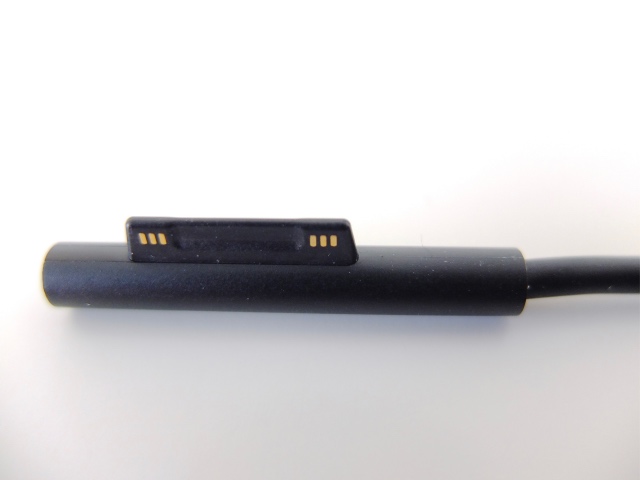
This slots in easily and is held by a magnet. If you trip over your cable you will not yank your Surface from the table. It also goes in both ways. And the cable does not stick out but follows the contour of the device.

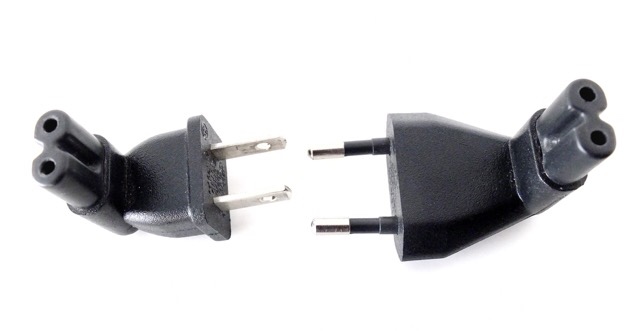
On the other end of the brick there is a standard plug that lets me connect a cable that fits the country I am currently traveling in. No need for adapters, just a cheap cable available everywhere.

I also have a few of those but they are harder to get:
Apache Drill is a nice tool to have in the toolbox as it provides a SQL front-end to a wide array of database and file back-ends and runs in standalone/embedded mode on every modern operating system (i.e. you can get started with or play locally with Drill w/o needing a Hadoop cluster but scale up almost effortlessly). It’s also a bit more lightweight than Spark and a nice alternative to Spark if you only need data wrangling and not the functionality in Spark’s MLlib.
When you’re in this larger-data world, parquet files are one of the core data storage formats. They’re designed to be compact and are optimized for columnar operations. Unlike CSV, JSON files or even R Data files, it’s not necessary to read or scan an entire parquet file to filter, select, aggregate, etc across columns. Unfortunately, parquet files aren’t first-class citizens in R. Well, they aren’t now, but thanks to this project it might not be too difficult to make an R interface to them. But, for now, you have to use some other means to convert or read parquet files.
Spark and sparklyr can help you write parquet files but I don’t need to run Spark all the time.
If you’re already a Drill user, you already know how easy it is to make parquet files with Drill:
CREATE TABLE dfs.tmp.sampleparquet AS
  (SELECT trans_id,
   cast(`date` AS date) transdate,
   cast(`time` AS time) transtime,
   cast(amount AS double) amountm,
   user_info, marketing_info, trans_info
   FROM dfs.`/Users/drilluser/sample.json`);
If you’re not used to SQL, that may seem very ugly/foreign/verbose to you and you can thank Hadley for designing a better grammar of tidyness that seamlessly builds SQL queries like that behind the scenes for you. That SQL statement uses a JSON file as a data source (which you can do with Drill) make sure the field data types are correct by explicitly casting them to SQL data types (which is a good habit to get into even if it is verbose) and then tells Drill to make a parquet file (it’s actually a directory of parquet files) from it.
I’ve been working on an R package — sergeant — that provides RJDBC, direct REST and dplyr interfaces to Apache Drill for a while now. There are a number of complexities associated with creating a function to help users make parquet files from R data frames in Drill (which is why said function still does not exist in sergeant):
dfs. file system? HDFS?OK, perhaps not that last one (but I think it still remains a mystery despite claims by Jan and Dean).
It’s difficult to wrap something like that up in a simple package that will make 80% of the possible user-base happy (having Drill and Spark operate behind the scenes like “magic” seems like a bad idea to me despite how well sparklyr masks the complexity).
As I continue to work that out (you are encouraged to file an issue with your opines on it at the gh repo) here’s a small R script that you can use it to turn R data frames into parquet files:
library(sergeant)
library(tidyverse)

# make a place to hold our temp files
# this is kinda super destructive. make sure you have the path right
unlink("/tmp/pqtrans", recursive=TRUE, force=TRUE)
dir.create("/tmp/pqtrans", showWarnings=FALSE)

# save off a large-ish tibble
write_csv(nycflights13::flights, "/tmp/pqtrans/flights.csvh")

# connect to drill
db <- src_drill("localhost")

# make the parquet file
dbGetQuery(db$con, "
CREATE TABLE dfs.tmp.`/pqtrans/flights.parquet` AS SELECT * FROM dfs.tmp.`/pqtrans/flights.csvh`
")
## # A tibble: 1 × 2
##   `Number of records written` Fragment
## *                       <int>    <chr>
## 1                      336776      0_0

# prove we did it
list.files("/tmp/pqtrans", recursive=TRUE, include.dirs=TRUE)
## [1] "flights.csvh"                  "flights.parquet"
## [3] "flights.parquet/0_0_0.parquet"

# prove it again
flights <- tbl(db, "dfs.tmp.`/pqtrans/flights.parquet`")

flights
## Source:   query [?? x 19]
## Database: Drill 1.9.0 [localhost:8047] [8GB direct memory]
##
##    flight arr_delay distance  year tailnum dep_time sched_dep_time origin
##     <int>     <dbl>    <dbl> <int>   <chr>    <int>          <int>  <chr>
## 1    1545        11     1400  2013  N14228      517            515    EWR
## 2    1714        20     1416  2013  N24211      533            529    LGA
## 3    1141        33     1089  2013  N619AA      542            540    JFK
## 4     725       -18     1576  2013  N804JB      544            545    JFK
## 5     461       -25      762  2013  N668DN      554            600    LGA
## 6    1696        12      719  2013  N39463      554            558    EWR
## 7     507        19     1065  2013  N516JB      555            600    EWR
## 8    5708       -14      229  2013  N829AS      557            600    LGA
## 9      79        -8      944  2013  N593JB      557            600    JFK
## 10    301         8      733  2013  N3ALAA      558            600    LGA
## # ... with more rows, and 11 more variables: sched_arr_time <int>,
## #   dep_delay <dbl>, dest <chr>, minute <dbl>, carrier <chr>, month <int>,
## #   hour <dbl>, arr_time <int>, air_time <dbl>, time_hour <dttm>,
## #   day <int>

# work with the drill parquet file
count(flights, year, origin) %>%
  collect()
## Source: local data frame [3 x 3]
## Groups: year [1]
##
##    year origin      n
## * <int>  <chr>  <int>
## 1  2013    EWR 120835
## 2  2013    LGA 104662
## 3  2013    JFK 111279
That snippet:
drill-embedded at a shell prompt, but try out Drill in 10 Minutes if you don’t believe medfs.tmp points to /tmp (i.e. you need to modify that if yours doesn’t…see, I told you this wasn’t simple).csvh extension which tells Drill to read the column names from the first line so we don’t have to create the schema from scratchcsvh file firstdplyr the cold shoulder and talk directly to Drill anytime we feel like it with DBI calls by using the $con list field (the dbGetQuery(db$con, …) line).It’s a naive and destructive snippet, but does provide a means to get your data frames into parquet and into Drill.
Most of my Drill parquet needs are converting ~20-100K JSON files a day into parquet, which is why I haven’t focused on making a nice interface for this particular use case (data frame to parquet) in R. Ultimately, I’ll likely go the “wrap parquet-cpp route” (unless you’re working on that, which — if you are — you should @-ref me in that gh-repo of yours so I can help out). But, if having a sergeant function to do this conversion would help you, drop an issue in the repo.
As I settle into a new semester of teaching students functional programming and programming languages, I find myself again in the role of grader of, and commenter, on code. This passage from Tobias Wolff in Paris Review interview serves as a guide for me:
Now, did [Pound] teach Eliot to write? No. But he did help him see that there were more notes to be played he was playing. That is the kind of thing I hope to do. And to counsel patience -- the beauty of patience, which is not a virtue of the young.
Students often think that learning to program is all about the correctness of their code. Correctness matters, but there's a lot more. Knowing what is possible and learning to be patient as they learn often matter more than mere correctness. For some students, it seems, those lessons must begin before more technical habits can take hold.
I’ve been pretty quiet over the past few weeks, partly due to a protracted flu (which has escalated to an earache and a couple of nosebleeds, although fortunately nothing like what happened a few years back) and partly due to the current political and business climate, which is disheartening to say the least. So much so that my customary dislike for politics has had to take a step back regarding what is currently happening in the US and the likely consequences (even if attenuated by distance and economic buffering).
Although it might be argued that we’re on the brink of one of those dystopian futures books like The Handmaid’s Tale and 1984 cast upon our collective subconscious, I side with those who point to masterful (if transparent) disinformation of the style that swept up Germany in the late 30s, and fear the echoes of general incompetence and purposeful malice that new apparatchiks leak in their interactions with established institutions (witness the controversy surrounding the Department of Energy, for instance).
Closer to home, I have been under a considerable amount of stress regarding my own situation (both current and future). Real-life stuff (like playing with the kids over Christmas break) has been a great way to let off steam, but my current line of work has all but buried my motivation to sit in front of a computer at home, so I’ve been skimming academic papers in search of the next big thing I want to do and systematically knocking off stuff from my reading list.
Right now, and besides other factors I cannot (as yet) mention, I blame my overall dissatisfaction squarely on lack of structure and utterly random assignments (also known as “playing calendar battleships”). Hopping about from customer to customer like the rabbit in Alice in Wonderland is frustrating, and all the more so when I’m being asked to put out fires instead of prioritizing closure on existing engagements, which when coupled with an impedance mismatch between the engineering approach to fixing problems (i.e., carefully husbanding and delivering a solution) and the sales mindset has a dramatic effect on derived satisfaction.
In retrospect, rather than (post-)sales, I should have aimed for a business development or partnership management position – which is what I’ve been trying to do despite having been “promoted” again to resident firefighter, a position I successfully held (and thoroughly despised) for many years at Vodafone and that now seems to have come back to haunt me – everyone seems to have my phone number these days, and as flattering as that might be, it’s not half as rewarding.
Frustration waxes and wanes, but the underlying sensation that I am not learning anything new (only re-hashed pitches delivered by folk with limited vision, actually less experience and definitely no strategic forethought) is becoming bothersome, and I have my mind set on doing something about it. Soon.
To end on a high note (or at least on a tech note) my usual approach of relentless compartmentalization is paying off handsomely. The first thing I did when I got sick was set up a Windows VM I could run whatever I wanted in, and (most importantly) from whatever device I was using, so that I could stop using my work laptop (which I find hobbling and distracting). The end result is accessible via Remote Desktop, looks stunning on a 4K display and is powered by the i7 box I built last month, so it is unapologetically fast and quite pleasing.
As luck would have it, one of the devices I use that from is a brand new 2016 MacBook Pro (the controversial 13” Touch Bar model). My opinion1 of it is hardly relevant (even for me) at this point considering everything else that is currently on my mind, so you’ll have to excuse me if I defer that to a later date.
I’ve also taken to using Amethyst a fair bit, which is worth mentioning because most of the time I spend on computers (and off work) these days is hurried and full of little hassles, so I’m quite happy with the way it removes the need to move and place windows manually most of the time.
One thing I can assure you of, though, is that Apple is wrong about how people want to use touchscreens (even Dan Moren is now politely hinting that) and that the Touch Bar, despite a major achievement, is not really that useful – or finished. ↩︎
China is emerging as a leading fintech market on a global scale. Half of the global investment in financial technology is happening in Asia, especially China, according to the World Economic Forum.
Contrary to trends in many developed countries, Chinese consumers are ready to embrace fintech technology as seen from the common use of Alipay, WeChat Pay, and e-commerce services such as Taobao and JD. The willingness of Chinese customers to embrace fintech offerings is beyond expected supply, creating opportunities for both incumbent and new financial services providers.
According to a report published by DBS and EY, 40% of Chinese consumers are open to using fintech payment methods compared to 4% in Singapore. The rate of fintech participation in wealth management and lending also tend to be higher. The report says that China has moved beyond the point of disruption compared to the West which is only just reached the tipping point of inflection.
Chinese lives are deeply integrated with technology giants both financially and non-financially. China already accounts for 47% of global digital retail sales, resulting in a massive domestic retail market in a closed digital economy. The digital generation in China is also driving the online retail market and leading the charge in China’s mobile payment adoptions. 66% of post-1990’s millennials shop and 54% of them bank via their mobile phones according to the EY report.
Major markets for fintech are also under-banked or unbanked populations in China. Traditional banks are not winning consumer’s’ trust, and a rising number of young Chinese consumers end up turning to digital disruptors with higher interests rates. They are more risk-embracing and less reluctant to greater propensity to spend than the older generations. The Chinese younger customers also demand higher-quality and client offerings.
“We hope the new generation of the financial system will be more inclusive focusing on the underserved or unserved including small-to-medium-sized enterprises (SMEs),” says Jonathan Lu, vice chairman of Alibaba Group and CEO of Alipay during his DAVOS 2017 panel discussion.
“In a small county in Tibet, 90% of overall electronic payments are made through mobile payments. This number is the highest mobile penetration that can bridge the gap for the people in the West and the developing East,” says Lu sharing his optimism for new opportunities.
Moreover, the willingness and trust Chinese customers put money into fintech give them a huge advantage compared to the Western world. Many of the Western companies are slow to adopt financial disruption system compared to the US.
China possesses unusual advantages of rapid urbanization, regulatory acquiescence, a massive and underserved SME market, escalating e-commerce growth, and explosion in online and mobile penetration that create a fertile ground for innovation in commerce, banking, and financial services as shared by EY report.
To meet the growing demand of online financial technology, the Chinese technology giants BAT are aggressively creating all-encompassing platforms with the aim of embedding their services into customers’ lives.
“There has been a lot of experiment around the financial technology,” says David Craig, President of Thomson Reuters during the panel discussion, “Financial industries have not historically been particularly good at collaboration. It tends to be a lot of group of people sort of collaborating, sort of competing. And this [fintech] actually offers a way changing how we operate and things work.”
China is already positioned to be the next global financial technology leader. There seems to be little doubt whether it will happen. It is, rather, a matter of timing.
Being a fan means you start to put interest and context around your loved one. VREX is a Korean startup wants to mingle fan power with AR technology to digitally connect fans with their loved stars.
K-pop is not just a cultural phenomena, it has both economic and social impacts. Lu Han, a member of EXO took a selfie in front of a mailbox on the Bund in Shanghai and posted on Weibo. That evening 20,000 EXO fans lined up and took selfies there. Fans of another member of EXO Yixing, put up a happy birthday message on a giant billboard in Time Square in New York.
“Fans travel to China and South Korea to experience K-pop, and they generate 6 billion in revenue. However, 88% of fans responded that they feel they are disconnected to their stars,” Rudy Lee, CEO and founder of VREX says.
There are more than 35 million K-pop fans worldwide, according to Korea Foundation’s global hanliu (韩流 or “Korean wave” in English) data from 2015. YG Entertainment‘s top band group Big Bang made revenue around 150 million USD in 2015 in concerts.

Rudy Lee, CEO and founder of VREX
Tons of content, but no context
As interaction rate on Instagram has plummeted by 40% globally in 2016, the demand for a much more immersive photo sharing experience has been growing.
“There are tons of photo content, and we go whipping through the photos on Instagram other apps, but there is no context that the fans can really relate to,” Rudy told me. “There is a lot of content, but less context.”
By combining content with context, VREX came up with an app called Rush (the Chinese version is called Tiele or 贴了) to connect fans with stars. When fans visit designated locations they can see floating AR messages from the stars, to which they respond by taking selfies with special K-pop stickers offered in the app. The company is currently offering stickers related to boy band BTS and EXO’s Zhang Yixing. Rush has also partnered with LOEN entertainment.
Previously, Rudy co-founded a co-production company that made music videos and commercials. Being a Big Bang fan himself and having worked with the Korean celebrities, he could easily feel and observe the influence they have in the fan community.

From left to right: A user posts a selfie at a bookstore, asking her boyfriend to come and read the book she is holding; a group of Fiestar fans post a group photo of themselves with a sticker; Jackson Wang of GOT7 has overtaken the LED screen in a mall in Shanghai. (Image Credit: Tiele)
Rush is seeing traction strong from its users in China, South Korea, Indonesia, Philippines, India, Taiwan, Pakistan, as well as many other countries outside Asia. Using special stickers inside Rush, K-pop fans can post love messages for their favorite stars including hashtags. Rush counts the hashtags and posts and creates a real-time K-pop ranking billboard on their website.
Every two weeks, the K-pop star who has claimed #1 on the Rush chart will have a fan-created video of them displayed on a massive LED screen on the 1st floor of the Henderson Metropolitan Mall in Shanghai. The first period, Zhang Yixing of EXO took the center stage, and now Jackson Wang of GOT7 has overtaken the EXO star on the LED screen.
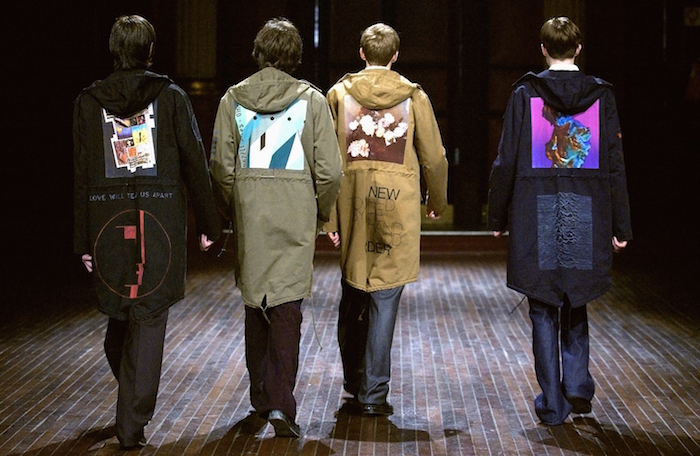 Raf Simons AW 2003 Image courtesy of Raf Simons
With its idyllic pastures, coastal views, and post-industrial factory towns and cities like Leeds, Liverpool, and Manchester, Northern England has historically provided major inspirations for fashion, editorial photography, and even music. In a new exhibition at Open Eye Gallery, North: Identity, Photography, Fashion, the region’s influence on global fashion, street style, and popular culture gets deconstructed. Co-curated by SHOWstudio’s Editor-at-Large Lou Stoppard and fashion critic and theorist Adam Murray, North uses video, installation, photography and fashion by artists and designers including video art pioneer Mark Leckey, master fashion photographer Nick Knight, and iconoclasic creative designer Virgil Abloh to demystify the North Country.
“In 2008 I noticed that fashion editorials were explicitly referencing Northern England, coinciding with the height of model Agyness Deyn,” explains Murray to The Creators Project. “I’ve been based in the North West for 15 years and my practice and research is rooted in exploring the region in relation to photography and fashion,” adds Murray, who created the zine Preston is my Paris as an exploration of the English city’s culture. “In many ways, an exhibition on this topic is long overdue,” enthuses Stoppard. “The North has had an incredible cultural output. Just think of the global reach of the Madchester music scene, the graphics of Peter Saville, music by bands like Joy Division, The Beatles, and New Order, or the acclaim around designers, artists and image-makers who hail from the North, such as Gareth Pugh, Stephen Jones, Christopher Shannon, Mark Leckey,” explains Stoppard of the many influencers on display in North.
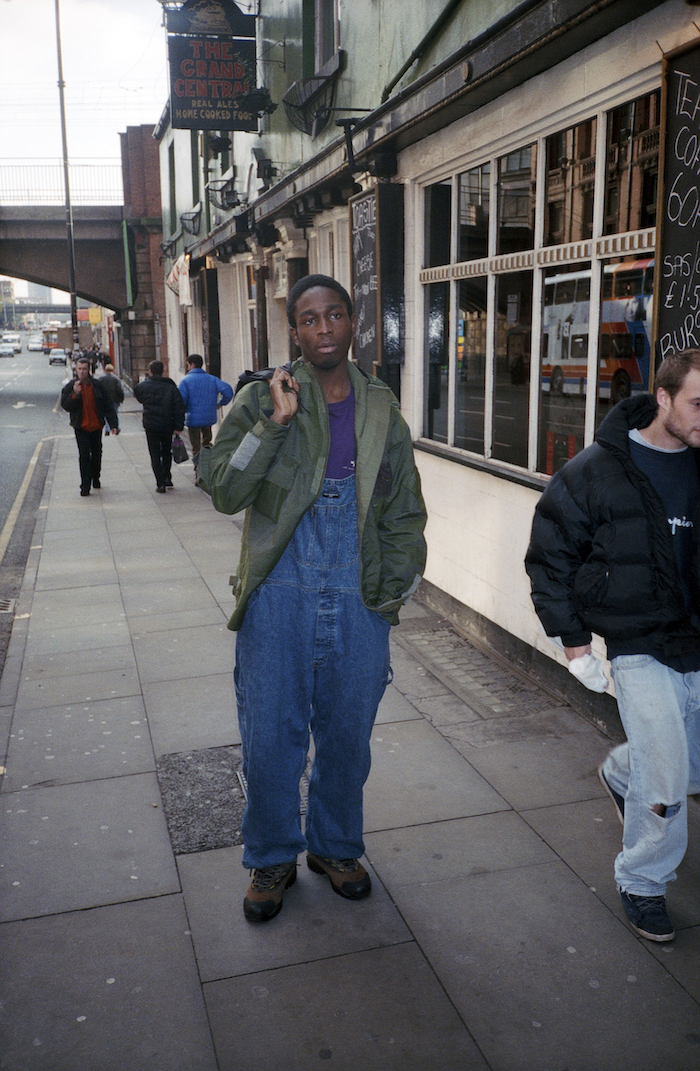 Jason Evans, Untitled, Manchester, 1997
The art, fashion and photography on view speaks loosely to a recurring influence the region has had on art and shaping ideas about identity—masculinity, music, domesticity, sportswear, certain landscapes and backdrops—though editorial representation. The featured street style photography and portraits by artists Brett Dee, Jamie Hawkesworth, Alasdair McLellan, and Jason Evans speak to the dawning of imaging, what Stoppard calls, “causal culture” in fashion. The influence is seen, for instance, on the runway, in Raf Simons AW 2003 “Closer” menswear collection (top). The parkas made in collaboration with the Manchester born, graphic designer Peter Saville, bare a northern street aesthetic. The Northern tradition is also on display in Simons acolyte, Virgil Abloh’s contemporary label Off-White.
 Installation View: North. Identity, Photography, Fashion. Open Eye Gallery, 2017. Image by Adam Murray
“In the exhibition Lou and I have identified some iconic figures and imagery, but what the exhibition hopefully communicates is that it is groups of people that are the real influencers--sports fans, clubbers and workers,” explains Murray. “As a mass these groups are more influential than any single person could ever be.” Stoppard says, “[With] the focus on sportswear in men’s fashion today, a lot of the references that designers are currently obsessed with relate to Northern culture. But as Adam says, the influence is much broader and diverse than that,” she notes. “I think some of it relates to formative experience. So many of today’s most acclaimed creatives were teens when say, the Manchester scene was exploding.” She says, “Things that shape you when you’re young never leave you.”
 Installation View: North. Identity, Photography, Fashion. Open Eye Gallery, 2017. Image by Adam Murray
The exhibition also features an installation of the interiors of a home traditionally found up north. The domestic scene speaks to the spirituality and working class nature of the subcultures that have left their marks on visual culture. The inventiveness of Northern England's subcultures speak to the lack of representation the community once endured in the mainstream—it's as if the region created its own languages for style in order to better articulate the peculiarities of its lived experience. Northern culture draws parallels to the ways in which hip-hop continues to influence fashion, pop culture, and representation nearly five decades since its birth in the working class neighborhoods of 1970s Bronx.
 Stephen McCoy, From the series Skelmersdale, 1984
“The North of England has been influential internationally for centuries. It wouldn’t be going too far in saying that the Industrial Revolution changed the world, much of which originated in the North. The role of the towns and cities in this has clearly changed, but the influence is inherent,” explains Murray. “Manufacturing and engineering may have shifted, but it has been replaced by cultural movements that are likely to remain influential for many decades to come.” For Stoppard, the exhibition feels more timely: "There’s a focus on regional divides, splits in ideas and lifestyle,” she says. “We conceived the exhibition idea long before Brexit but that has increased our drive to too look beyond the capital. You realize how huge areas of the UK can be overlooked and ‘othered.’”
North: Identity, Photography, Fashion continues through March 19 at One Eye Gallery. Click here for more information.
Related:
Obsess Over Boy Culture at a New Fashion Exhibit in London
The new year has arrived and it’s going to be one big year for wearable tech. Evey year I look into my connected crystal ball and peek into the future to predict what might happen in the world of wearables. Here is how I think 2017 will shake down for the wearable world.
The biggest buzzword of 2017 is AI and it’s set to be the saving grace of IoT and wearables. Deep learning is a massive missing piece when it comes to our connected world, wearable tech included, as cognitive computing and machine learning will make use of big data and connect the dots for users.
While we won’t see it all come together in 2017, this year AI will start to put wearable tech in focus by showing users why they should be wearing sensors on their body by using the data collected to enhance their lives rather than just displaying it back to them. As part of this, I suspect that voice assistants including Google Assistant, Siri and other AI assistants like Viv and Xperia Agent will play an even greater role this year with wearable tech to help prove its value.
The wearable war is moving from our wrist to our head as a variety of smartphone players, headphone manufacturers, hearing aid companies, and startups, vie for a spot in your ear. We will see a number of new hearables launch in 2017 including devices that put voice-assistant in our ears, capture biometric data, provide a more realistic listening experience with spatial audio, and even augment listening experiences by enhancing and even changing what we hear.

Apple’s entry into the hearable market in 2016 with the launch of its AirPods, will be key to driving this space. I expect we will continue to see AirPods get smarter and become an even more integral part of the iOS ecosystem in 2017 and beyond. While big players like Samsung, Sony, Jabra, Bose and possibly even Google, will drive adoption in 2017, it will be what startups like Doppler, Nueheara, and Bragi, that will illustrate the power of this category.
Google Glass may have died in the public sphere back in 2015, but we will see connected eyewear successfully adopted by the mainstream in 2017. These devices will not be full wearable computers like Glass or even have a display, and they certainly will not look like props from a cyborg Sci-Fi movie.
Instead, fashionable glasses that look almost identical to those you would buy today will house bone conduction speakers, LEDs, touchpads, microphones, sensors and even cameras to let you listen to music, track your wellbeing and even capture your point of view.
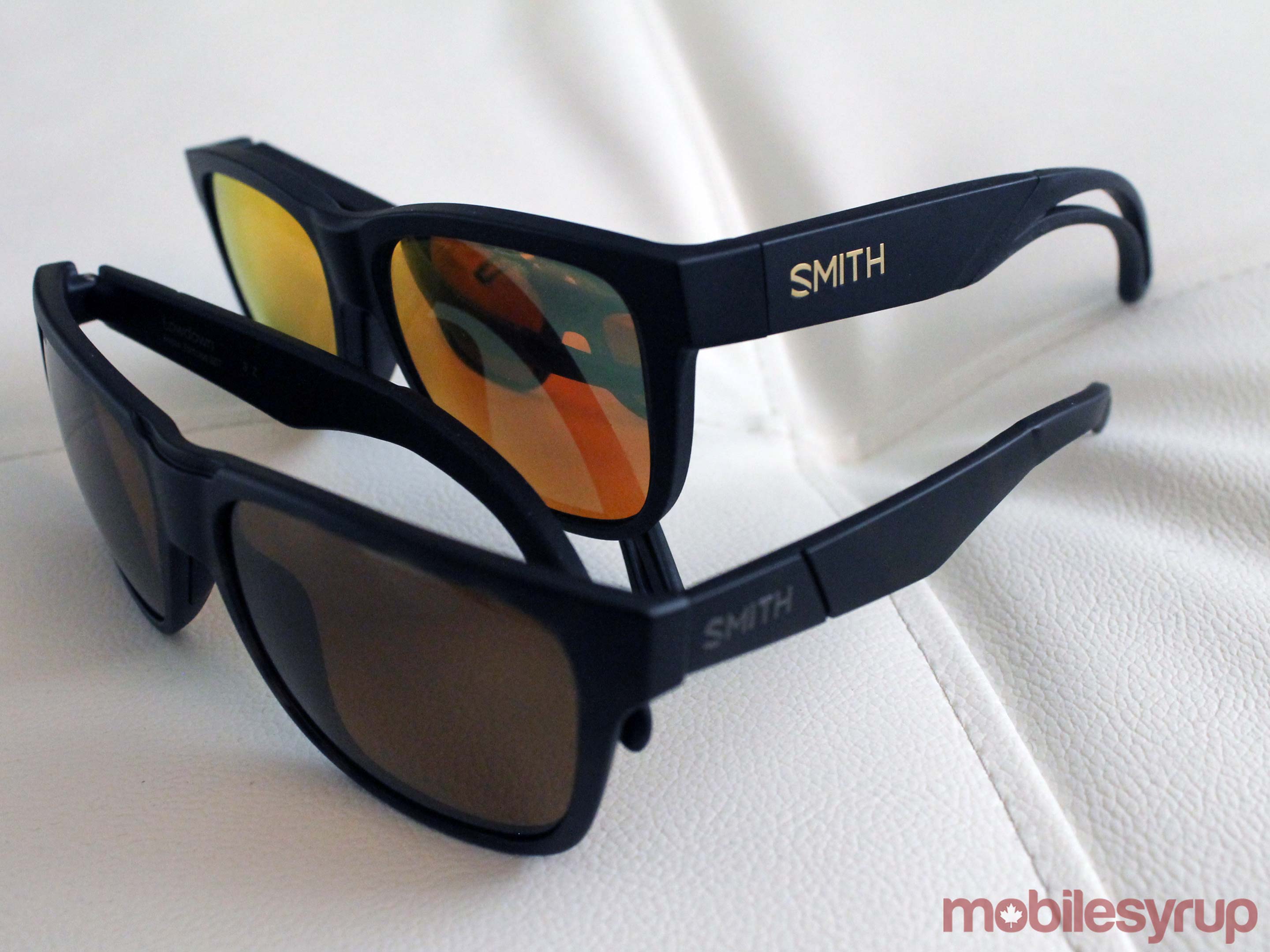
We already caught a glimpse of this future in Snap’s Spectacles which are now on sale and are being worn by avid Snapchatters. Oakley and Intel’s athlete-focused Radar Pace and in Vue’s connected glasses which raised more than $2.2M on Kickstarter at the end of last year.
It will be devices that are being produced by leaders in eyewear fashion such as Safilo and InteraXon’s Smith Lowdown Focus, that I will have my eye on as I believe that these brand partnerships will be wholly necessary for this type of wearable to thrive.
Fitbit continued its reign as the wearables king in 2016 just as I predicted. I believe the fitness band company will do it again in 2017, but in order to accomplish this it’ll need to open itself up to offer more value to users. Fitbit’s acquisition of Pebble’s software assets in late 2016 positions them well to do this as does its purchase of Coin’s wearable payments technology.
Fitbit has already started to move beyond just being a social step-counter with its focus on corporate wellness partnerships with the likes of UnitedHealthcare, New York Life, Pitney Bowes, SAP which see the use of fitness data to earn money or earn discounts.

2017 could see Fitbit make these types of exchanges outside of the workplace. I suspect that this year we will see Fitbit offer greater integration with smart home systems and voice assistants, including Amazon’s Alexa which it’s already working with. I wouldn’t be surprised to see Fitbit introduce a new wristband that has voice control and there are already rumours that this year we will see Fitbit launch its own app store.
Perhaps the most successful example of consumer use of wearable tech is Disney’s MagicBand. A $1 billion investment by Disney, these customizable RFID wristbands transformed the way millions of people move through Walt Disney World. MagicBands are used by theme park goers to enter rides, buy goods, enter hotel rooms and personalize the Disney experience. One of wearable tech’s killer apps is authentication of the wearer resulting in the ability to make everyday tasks frictionless and personalized. But in order to do this, the world around you needs to be smart. While the world at large has few smart touchpoints, Disney’s world has many because they are in complete control of their environment.
There are many controlled environments where the MagicBand model could be replicated especially in tourism and live events. I predict that this year we will see the tourism and live event sector will heavily invest in wearable systems, changing the resort, cruise, concert and theme park experience.
In fact, it has already begun with the recent announcement of Carnival Cruise rolling out its Ocean Medallion wearable program. Expect to hear more announcements of this kind this year as the dumb wristbands you are given for your vacation or entertainment experience all become connected. Or potentially the smart fitness bands you own see new uses in full connected environments.
Soon there won’t be very many dumb watch options for you to purchase. Although smartwatches haven’t exactly taken off the way some had expected it to, one thing is clear, the traditional watch industry has been disrupted by wearable tech.
I suspect that this will be a banner year for smartwatches led by the hybrid smartwatch model like Fossil’s Skagen, Michael Kors or Kate Spade models or Withing Activité and Steel HR, which give the fashionable analog watch look users crave, along with the benefits of notifications, fitness tracking and other “smarts.”

While smartwatches will eat the traditional watch market, I’m not convinced they will be able to crack outside of it. I expect to see smartwatch numbers continue to be sized according to the number of people that want to wear any watch on their wrist. Smartwatches will continue to struggle to prove their value to non-watch wearers, especially as digital displays on our wrist face competition with AR and VR headset solutions that will offer overlapping use cases. In this way, I expect the wristband market outpacing the smartwatch market in the wearable wrist category.
One of the biggest announcement coming out of CES is the upcoming Asus ZenFone which is the very first Tango-enabled and Daydream compatible smartphone. I suspect that in 2017 we will see multiple Tango smartphones and even other non-Google depth-sensing smartphones, like one from Apple, be made available to consumers making AR a standard feature of the smartphone.

While we will see AR smartglasses continue to hit the faces of workers this year, the consumer AR journey will be a mobile one to start, and in this way mainly a handheld one. Although I do expect that VR goggles and other mobile headset solutions like Daydream will offer users a hands-free AR experience for specific use cases.
What does the pager, cellphone, PDA and even the smartphone have in common? They were all tools we used at work before they found themselves become an integral part of our everyday lives. History repeats itself and we should expect this same pattern for this next wave of computing. In fact, we already have.
In my round up of 2016 predictions, I noted that 2016 saw many companies piloting the use of smartglasses, including DHL and Boeing. This year I suspect that we will hear of full deployments of smartglasses being used as integral tools to workforce solutions. Beyond these integrated solutions, I also suspect that this year we will begin to see these devices being used to explore how they can better office productivity as office workers begin to put glasses on their face to provide them with more screens or better telepresence opportunities to make their jobs more efficient.
Using smartglasses as tools at work will make users more comfortable with face-tech and immediately prove the value of wearing smartglasses which will begin to pave the necessary foundation for these devices to break out of the office and into the home.
Let’s face it, 2016 was a great year for VR but we are a far way off from widespread adoption. Dedicated PC VR is still way too expensive for the casual non-gamer. While I expect VR sales to be on the incline in 2017, especially as next generation devices cause the first gen products to go on sale, I believe it will be the emergence of VR arcades and experience centres that will see the most activity in 2017.

While VR experience centres are becoming commonplace in China and other parts of Asia, we have yet to really see them take off in North America. In 2017 we will see the IMAX make a big push in this area with the launch of IMAX VR centres and HTC’s commitment to offering fantastic virtual reality experiences to the masses through its HTC Viveport arcade initiative. A resurgence of nights out at the arcade, theatre, or weekends at the theme park will be driven by brand new VR experiences you can’t get at home.
Mobile VR saw a huge year in 2016 with the introduction of Daydream. But while I expect people to be transported to new worlds in VR with robust systems in the arcade, I suspect that we will see the mobile VR growth mainly driven by video.
While I believe there will be some compelling 360-degree video use cases especially in sports, for the most part I expect users will be drawn to mobile VR headsets to simply have a heads-up and much larger viewing experience of regular video content on platforms like Netflix and Hulu. But like many video technologies before it, porn will drive a big part of mobile VR adoption as more adult content providers begin to offer a wider selection of 360 and 180 degree content.
We’ve been waiting a while for smart clothing to take off. I went on record saying that 2016 was not going to be the year we saw this category take off. Well, this year I am saying that again. 2017 will be the year that we start to see our clothing become smart, as sports apparel brands like Under Armour begin to use sensor data in order to compete in a saturated market.
Under Armour now has four pairs of smart shoes available to consumers. I suspect that we will see other brands come out with shoes with sensors soon. Meanwhile, this year will also see the launch of two highly anticipated smart clothing products: Wearable Experiments connected yoga wear, Nadia and the Levis and Google connected trucker jacket powered by technology from Project Jacquard.
While I believe that connected apparel will stay niched in fitness and gym clothing for the time being, it will be interesting to see the impact a large brand like Levis has on driving awareness, possibly allowing smart clothes to push beyond the fitness vertical.
Two of the biggest foundational elements necessary for the wearable and IoT revolution to succeed are connectivity and energy. The 5G revolution is on its way with larger trials expected to roll out this year. As we get closer to its full debut in 2020, we will continue to hear more about what it is, how the networks are preparing and the how it will change our lives. Like our networks, batteries are also on the brink of transformation.
From over-the-air charging to a move beyond lithium-ion batteries to aluminium-air, graphene or solid state batteries, we have seen a lot of activity from academia and startups which prove that we are close to cutting the cord for our devices. The challenge is commercialization of these solutions. I expect that this year we will see these commercialization partners emerge to lay the groundwork necessary to take new batteries to scale.
Think you’ve seen the future too? Let me know what predictions you have for wearable tech this year in the comments below.