Last week, Sun writer Dan Fumano wrote a column that asked:
The idea that apartment buildings should be built along busy commercial arterials — and not on quiet, leafy side streets — is a widely and deeply held belief in Vancouver, but it’s by no means universal.
And it’s certainly not historic. For most of the city’s existence, apartment buildings (there weren’t a lot, but they were there from the beginning) were built on side streets.
Apartment-district zoning emerged in the 1920s, highrises sprung up in the 1950s, and the arterials stayed commercial – the legacy of the streetcar era. Many such districts have aged remarkably well, surprising those who thought they would be the ghettoes of the future.
But here’s the point: we never stopped building apartment buildings of all kinds – from four to sixty storeys – on side streets. We even built side streets to put them on.
Here’s a Google Earth tour of examples from around the region.
Let’s begin with the example from a recent post: Arbutus Gardens, where even one of the side streets – 11th Avenue – was closed off and greened over as a de-facto park for the community:
Arbutus was one of the seven megaprojects from the ’90s. All the megaprojects had multiple-family dwellings on side streets, mews and, in the most mega of them all, Concord Pacific, the seawall:
Of course they were all comprehensively planned single sites where the opportunity availed itself to build in the tradition of side-street locations. But the predecessor of them all, the West End was entirely on side streets from the beginning, and then rebuilt in the highrise era of the 1960s:
The West End, a surprisingly low-rise neighbourhood despite its highrise image, was not unique – just the largest of the apartment districts rezoned in the mid-1950s. Here are two others from some of the most affluent neighbourhoods in the region. Ambleside in West Van:
And Kerrisdale on either side of 41st, which has hardly a single apartment building on an arterial:
There are other largely low-rise apartment districts, all off arterials, from Marpole to South Granville:
Elsewhere in the region, there were similar development areas from that era that tend to get overlooked, like Lougheed in Burnaby – a transit-oriented community before there was transit:
From the 50s through to today, what we used to call walk-ups, now termed low-rises up to six storeys, were common in almost every municipality. Here’s an example from Surrey:
And one entirely without highrises in White Rock:
Some municipalities which really didn’t have their own version of a West End are creating one now – notably the City of Vancouver on either side of Lonsdale:
And of course, Richmond – combos of high, low and townhouse:
Here’s one of the latest examples at UBC – Wesbrook Village:
The use of arterials for apartments is a very recent development, justified by the housing crisis. The vast majority of apartment buildings are not built on arterials, and still by preference are located on those quiet, leafy avenues we all love.
But as you can see, it was done by zoning at the district level, whether as a conversion from a pre-existing streetcar bungalow neighbourhood, or as an apartment district from the 70s a la Burnaby, or as a late 20th-century megaproject.
The question for Vancouver is really whether we should go back to do what we did from the 1950s and rejected in the 1970s – bulldozing the streetcar fabric house by house to convert from single to multiple-family. To go back to the higher-density forms which, under the Grand Bargain, allowed whole apartment and highrise districts to be developed, required an understanding that left the ‘single-family’ texture intact on most of the land in the municipality, even when it was an illusion and the homes were really all multiple-family dwellings with lane cottages. Though unfair, it’s a compact that has worked so far, and the political capital required to overturn it, even for a single apartment building, is very high, often with little return in the way of new housing.
So is it time to think not building by building but zone by zone? In other words, a return to what, after a lot of bulldozing, produced some of the most successful neighbourhoods in the region – like the Kerrisdale apartment district, three blocks on either side of a transit-oriented commercial high street.
That’s a lot tougher question than asking, as the City is doing here, whether apartments should be built on side streets.
I met an executive two years ago who described himself as “something of a visionary”.
His vision was to “10x the level of participation” and make the community “central to everything we do”.
The only catch was he didn’t want to invest the resources to match this vision.
This isn’t visionary, it’s delusional.
Anyone can set a really high target for a community.
A true visionary would’ve seen the amazing potential of a community and bet big on it by reallocating resources from elsewhere.
Sure, you can usually get more (sometimes a lot more) from your current resources in a community. That’s what a great strategy does. But when you start talking about multiples of your current metrics (e.g. 3x, 5x, 10x etc..) then you need an increase in the budget to match.
WWDC highlighted how Apple's differentiation is based on integration; the company ought not risk that differentiation for exploitive App Store policies.
Apple acquired Dark Sky, the popular weather app and weather API provider, in March of 2020; the Android version was shut down in July, and the API in December. The real storm, though, arrived in yesterday’s WWDC keynote, when Senior Vice President of Software Engineering Craig Federighi spent 49 seconds previewing iOS 15’s new weather app, filled with new features and wrapped in a gorgeous interface featuring real-time weather elements like accumulating snow and bouncing raindrops.
What made these 49 seconds notable is that they came at a developer conference, and yet Apple’s acquisition of Dark Sky and iOS 15’s new weather app are quite clearly focused on obviating 3rd-party weather apps built by the developers WWDC is theoretically for. This isn’t a complete surprise — the public WWDC keynote is focused on consumers, while the afternoon Platforms State of the Union is for developers — but the new Weather App was only the most extreme example of Apple deciding what part of the iPhone user experience was theirs, and what was left for developers.
The Dark Side of Weather Apps
There is another way of thinking about Apple’s new Weather app; in 2019, a year before the Dark Sky acquisition, the city of Los Angeles sued the IBM-owned Weather Company for collecting and selling location information from its popular Weather Channel app; the company eventually settled with an agreement to better disclose that it was leveraging user location data for more than delivering weather reports.
The problem for users is that it is not as if they could turn location data off: unless a user wanted to manually enter their location every time they used a weather app the app would be fairly useless for its intended function — displaying the weather wherever the user was. The challenge for weather app makers, though, is that weather information is a commodity that costs money: app makers had to pay for the data, but that data was open to anyone willing to pay. The result was a race to the bottom, with user privacy as the casualty: AccuWeather was shown to be sharing precise geolocation data with advertisers, as was WeatherBug, Weather Forecast, and World Weather Accurate Radar.
From this perspective Apple deciding to nuke the entire category, not by outlawing weather apps from the App Store, but rather by investing in delivering a superior weather app by default on the iPhone, is less about being anti-developer than it is about being pro-user. Now users can get useful weather information without having to worry that their data is being traded for access to said information — it’s a reason to buy an iPhone.
Unfortunately, as is often the case with major news stories, many folks’ positions hardened into one of two extremes: either Apple was 100% in the wrong, and ought to completely loosen the reins on the App Store, or Apple was being unfairly maligned for profiting from its innovations. I tried to dig out the nuance between these two positions two weeks ago in App Store Arguments, but the example of the iOS 15 weather app, along with the overall tenor of yesterday’s announcements, is a useful one to add more definition to that nuance, and show why Apple ought to change its approach out of self-interest, not just the goodness of its corporate heart.
Apple’s Integrated Announcements
The case of the weather app is, as I noted above, straightforward: the nature of the App Store market, combined with the cost of weather data, left users with poor choices as far as App Store weather apps are concerned (CARROT weather, I would note, is one weather app that does not sell user data; it requires a subscription for ongoing use). Therefore Apple invested money to build out the default weather app and also committed to funding the acquisition of weather data for all iPhone users forever. Similar justifications apply to a bunch of other new features; in the order in which they were announced:
FaceTime not only added the ability to send links for scheduled calls, making it an alternative to services like Zoom, it is also adding features competitors can’t, like screen-sharing on iOS devices.1 Apple can break FaceTime out of its sandbox because it owns the entire widget.
Apple also announced SharePlay, allowing users to listen to the same music or watch the same streaming video services while being on a FaceTime call. While Apple did announce a SharePlay API for third-party music and video services to incorporate, there is no similar API for other video-calling services.
“Shared-with-you” surfaces content shared in Messages in the relevant Apple app, whether that be Photos, Apple Music, Apple News, Safari, Apple Podcasts, or Apple TV.
Apple’s slide showing which apps can participate in “Shared-with-you”
It is a deep level of integration that is only possible if you control all of the pieces involved.
Focus lets you reorganize everything from your home screen to your notifications to fit your current context, from working to relaxing to exercising; naturally, it syncs across all of your Apple devices.
Intelligence and Spotlight understand and bring together not just textual information but also image-based information, and combines them with Apple services like Maps and Siri.
Photos Memories is integrated with Apple Music to provide a soundtrack to its auto-generated photo montages.
Wallet is expanding from credit cards, transit cards, and previously-announced car keys to home keys, hotel keys, and even ID cards. All of these are stored in the secure element on Apple’s own chips.
AirPods have a much deeper integration with Siri, which can now initiate conversations, not just respond to them, and are expanding their spatial audio capabilities from iOS devices to Apple TV.
Quick Note, first demoed on the iPad, makes Apple Notes into a system-wide note-taking service that is available within other Apple apps, and, naturally, syncs across Apple devices; Apple Translate is also available as a system-wide service across Apple devices.
The integration of these features across everything Apple sells was emphasized by Apple’s introduction of the next version of macOS towards the end of the keynote: beyond a truly puzzling re-design of Safari, there really wasn’t much to demo, because Apple had announced all of macOS’ new features in the context of other devices.
One could make the case that nearly all of these features, like the new weather app, were bad for developers:
FaceTime now has system-level advantages over Zoom, Teams, and other video-conferencing services.
Messages now has special tie-ins into system-default apps like Photos and Safari; those apps, like Apple Music, have special tie-ins into the default messaging service.
Apple Maps and Siri are tied into Intelligence and Spotlight in a way that Google Maps and Alexa can not.
Photos Memories doesn’t have an option to use Spotify.
Apple limits access to both NFC and the secure element.
Google Assistant doesn’t have special access to AirPods, nor do non-Apple devices.
3rd-party note-taking apps or translation services can only operate in their sandbox, not across the entire system.
At the same time, there are real user benefits to these decisions:
The foundation of iOS security is its sandboxed architecture; the fact that an app can’t touch anything else on the system is not only a win for users, but also developers broadly, as it was an essential elements in re-invigorating the market for apps after the mess that was Windows malware a decade ago.
While API-driven interconnections offer the most power and flexibility in the long run, it takes a long-time to get it right, and, more importantly, secure; by controlling both sides of an integration, like those between Messaging and the “Shared-with-you” suite of apps, Apple can focus on a seamless user experience that delivers on useful capability sooner and in a more intuitive way than it might have otherwise (and, over time, perhaps open up an API to 3rd-parties).
Direct access to hardware like NFC and the secure element are more straightforward from an API-perspective, but given the security implications of both you can understand why users might prefer the confidence from knowing that only Apple leverages either one.
That’s not to say that Apple itself doesn’t benefit from these integrations: not only do they drive deeper iPhone lock-in, many of these integrations tie into Apple’s subscription offerings. It’s a mistake, though, to focus solely on the direct financial upside.
The Integration Advantage
John Gruber analogized iOS to a theme park on Daring Fireball:
Good column (and video) from Joanna Stern on Apple’s “walled garden”. The people who use the term “walled garden” in this context typically do so as a pejorative. But that’s not right. Literal walled gardens can be very nice — and the walls and gates can be what makes them nice. That’s been a recurring theme in the testimony from Apple executives in the Epic trial. Asked about rules and limits on iOS that Epic presents as nefarious — nothing but tricks to lock users in — Apple witnesses typically responded by presenting them as features. That iOS is wildly popular not despite the “walls”, but because of them…
Better than “walled garden”, I like the comparison to theme parks. People love theme parks. Not everyone, of course, but a lot of people. They’re fun, safe, and deliver a designed experience. They’re also expensive, and the food, to put it kindly, generally sucks. Public parks are great too — in very different ways. We should have great public parks, and we should have great open computing platforms. But not every park should necessarily be public, and not every closed computing platform would be better off open.
I for one prefer open computing platforms; part of the implication of being a bicycle of the mind is that you can efficiently travel anywhere, and I am frustrated whenever I run into the training wheels and guide rails inherent in iOS. At the same time, there is another kind of freedom that comes from knowing that you won’t fall down, or end up somewhere you never wished to go; Apple absolutely grants that kind of freedom to users who take advantage of their devices to do more than they ever could on a more open platform, for fear of screwing up, if nothing else.
I also enjoy the advantages that come from Apple’s deep level of integration, both in terms of individual devices and also across their ecosystem. To take one small example, AirDrop is an essential part of my workflow for writing Stratechery, and, despite my hesitance about using any platform-specific app with inscrutable data structures for permanent data, the new Quick Note feature has me seriously considering a switch to Apple Notes.2 Yes innovation springs from openness and a philosophy of letting a thousand flowers bloom, but it can also come from control and the ability to integrate across non-obvious interfaces. I wrote in 2013’s What Clayton Christensen Got Wrong:
The issue I have with [the traditional] analysis of vertical integration — and this is exactly what I was taught at business school — is that the only considered costs are financial. But there are other, more difficult to quantify costs. Modularization incurs costs in the design and experience of using products that cannot be overcome, yet cannot be measured. Business buyers — and the analysts who study them — simply ignore them, but consumers don’t. Some consumers inherently know and value quality, look-and-feel, and attention to detail, and are willing to pay a premium that far exceeds the financial costs of being vertically integrated.
If you were to boil Apple’s philosophy and attractiveness to customers to one word, that word would be “integration.” And guess what? First party integration is bad for third-party developers — everything is a tradeoff.
Greed and Risk
This is where the nuance I discussed in App Store Arguments becomes much more black-and-white. Yes, Apple created the iPhone and the App Store and, under current U.S. antitrust doctrine, almost certainly has the right to impose whatever taxes it wishes on third parties, including 30% on purchases and the first year of subscriptions, and completely cutting off developers from their customers. Antitrust law, though, while governed by Supreme Court precedent, is not a matter of constitutionality: it stems from laws passed by Congress, and it can be changed by new laws passed by Congress.
One of the central planks of many of those pushing for new laws in this area are significant limitations on the ability of platforms to offer apps and services, or integrate them in any way that advantages their offerings. In this potential world it’s not simply problematic that Apple charges Spotify 30%, or else forces the music streaming service to hope that users figure out how to subscribe on the web, even as Apple Music has a fully integrated sign-up flow and no 30% tax; it is also illegal to incorporate Apple Music into SharePlay or Shared-with-you or Photos, or in the most extreme versions of these proposed laws, even have Apple Music at all. This limitation would apply to basically every WWDC announcement: say good-bye to Quick Note or SharePlay-as-an-exclusive-service, or any number of Apple’s integrated offerings.
I think these sorts of limitations would be disappointing as a user — integration really does often lead to better outcomes sooner — and would be a disaster for Apple. The entire company’s differentiation is predicated on integration, including its ability to abuse its App Store position, and it would be a huge misstep if the inability to resist the latter imperiled the former.
This, more than anything, is why Apple should rethink its approach to the App Store. The deeper the company integrates, the more unfair its arbitrary limits on competing services will be. Isn’t it enough that Spotify will never be as integrated as Apple Music, or that 1Password will not be built-in like Keychain, or that SimpleNote will only ever be in its sandbox while Apple Notes is omnipresent? Apple, by virtue of building the underlying platform, has every advantage in the world when it comes to offering additional apps and services, and the company at its best leverages that advantage to create experiences that users love; in this view demanding 30% and total control of the users of its already diminished competition isn’t simply anticompetitive, it is risking what makes the company unique.
You can share the screen of an iOS device via your computer on alternative services, but not from the iOS device itself ↩
Introducing the redesigned Firefox browser, featuring the Alpenglow theme.
We just launched a major redesign of the Firefox desktop browser to 240 million users. The effort was so large that we put our full content design team — all two of us — on the case. Over the course of the project, we updated nearly 1,000 strings, re-architected our menus, standardized content patterns, established new principles, and cleaned up content debt.
Creating and testing language to inform visual direction
The primary goal of the redesign was to make Firefox feel modern. We needed to concretize that term to guide the design and content decisions, as well as to make the measurement of visual aesthetics more objective and actionable.
To do this, we used the Microsoft Desirability Toolkit, which measures people’s attitudes towards a UI with a controlled vocabulary test. Content design worked with our UX director to identify adjectives that could embody what “modern” meant for our product. The UX team used those words for early visual explorations, which we then tested in a qualitative usertesting.com study.
Based on the results, we had an early idea of where the designs were meeting goals and where we could make adjustments.
Sampling of qualitative feedback from the visual appeal test with word cloud and participant comments.
Improving way-finding in menus
Over time, our application menu had grown unwieldy. Sub-menus proliferated like dandelions. It was difficult to scan, resulting in high cognitive load. Grouping of items were not intuitive. By re-organizing the items, prioritizing high-value actions, using clear language, and removing icons, the new menu better supports people’s ability to move quickly and efficiently in the Firefox browser.
To finalize the menu’s information architecture, we leveraged a variety of inputs. We studied usage data, reviewed past user research, and referenced external sources like the Nielsen Norman Group for menu design best practices. We also consulted with product managers to understand the historical context of prior decisions.
The Firefox application menu, before and after the information architecture redesign.Changes made to the Firefox application menu include removing icons, grouping like items together, and reducing the number of sub-menus.
As a final step, we created principles to document the rationale behind the menu redesign so a consistent approach could be applied to other menu-related decisions across the product and platforms.
Content design developed these principles to help establish a consistent approach for other menus in the product.
Streamlining high-visibility messages
Firefox surfaces a number of messages to users while they use the product. Those messages had dated visuals, inconsistent presentation, and clunky copy.
We partnered with our UX and visual designers to redesign those message types using a content-first approach. By approaching the redesign this way, we better ensured the resulting components supported the message needs. Along the way, we were able to make some improvements to the existing copy and establish guidelines so future modals, infobars, and panels would be higher quality.
Cleaning up paper cuts in modal dialogues
A modal sits on top of the main content of a webpage. It’s a highly intrusive message that disables background content and requires user interaction. By redesigning it we made one of the most interruptive browsing moments smoother and more cohesive.
Annotated example of the content decisions in a redesigned Firefox modal dialog.
Defining new content patterns for permissions panels
Permissions panels get triggered when you visit certain websites. For example, a website may request to send you notifications, know your location, or gain access to your camera and microphone. We addressed inconsistencies and standardized content patterns to reduce visual clutter. The redesigned panels are cleaner and more concise.
Annotated example of the content decisions in a redesigned Firefox permissions panel.
Closing thoughts
This major refresh appears simple and somewhat effortless, which was the goal. A large amount of work happened behind the scenes to make that end result possible — a whole lot of auditing, iteration, communication, collaboration, and reviews. As usual, the lion’s share of content design happened before we put ‘pen to paper.’
Like any major renovation project, we navigated big dreams, challenging constraints, tough compromises, and a whole lot of dust. Software is never ‘done,’ but we cleared significant content weeds and co-created a future-forward design experience.
Thank you, team!
As anyone who has contributed to a major redesign knows, this involved months of collaboration between our user experience team, engineers, and product managers, as well as our partners in localization, accessibility, and quality assurance. We were fortunate to work with such a smart, hard-working group.
As I’ve said before, I’ve been homeschooling my kids for a long time now. Some subjects are fun to teach to them, and some are not. For the short time my older son was in public school (first grade), he was being taught writing in the way that seems fairly typical for public schools: he would be assigned some topic to write about, and given a length requirement (whether minimum or maximum or both) and told to write. In my experience, this way of teaching writing is frustrating for a lot of kids and a lot of them don’t ever “get it”.1 My son found this task nigh impossible, and I found it baffling how he found it impossible when he could talk for hours and hours, very fluently, about the proposed topic. He clearly had thoughts about it, so what was preventing him from being able to write them down?
I’m going to use a recent viral tweet thread as a jumping off point to summarize here what I’ve learned about teaching kids to write.
Learning to Draw
The central thesis of that thread and the subsequent blog post is that copying other people’s artwork is a useful and reliable way to learn how to draw. The author notes that children in Japan are very proficient in drawing, without the drop off in the progression of drawing ability that is often seen elsewhere.
I taught in Japan, in public elementary schools, for a couple of years, and I noticed at the time that it is taken for granted that everyone can draw to some level of proficiency and that the style of the drawings done by most Japanese schoolchildren (and, often, their teachers) is very heavily influenced by manga and anime styles. They took it for granted that I would be able to draw and thereby create many of my own teaching materials such as flashcards and the like. So, I had to learn to do that, and I did it by doing the same things I saw my students doing: copying anime and manga. I wouldn’t say that I ever got really good at it, but I became proficient enough over the course of my teaching there that when I drew a “frog” flashcard to teach the 3rd graders the word ‘frog’, they could easily recognize it.
I have in the past summarized this as Americans tend to think of drawing as a talent while Japanese people tend to think of it as a skill. If something is a talent, some inborn you-either-have-it-or-you-don’t quality of you as a person, then teaching or copying or what have you isn’t going to help very much, and in my view, Americans treat too many subjects like this: drawing, writing, math. Viewing these as skills instead of talents means you believe that you can teach them, or at least, that they can be learned to some degree of proficiency. But, as Neil Cohn mentions in the thread and accompanying blog post, Japan has been much less subject to the pernicious influences of Rousseau.2
Handwriting by imitation
When we talk about learning to write, we typically mean two different things. The first is learning handwriting, whether printing or cursive or both, a subject that we teach exclusively (as far as I know) through having students copy letter shapes and word shapes in notebooks designed for the purpose. We give them paper that has squares and lines designed to help them get the proportions of letters correct, to teach them to make some letters rise above the midpoint of the line and some to stretch below the line. And to a first approximation, every student who is taught to do this learns to do it, although it doesn’t always come immediately or easily to every child. Many students make certain letters backwards, or confuse ‘p’ and ‘q’, and the like, sometimes for many years.
Perhaps more surprisingly, these kinds of mistakes are not very susceptible to correction. In fact, it isn’t clear that any errors children make in language acquisition are susceptible to correction. That is, you can correct a child making his ‘J’ backwards or saying “I sleeped” until you’re blue in the face, and it will have little impact on how long it takes the child to stop making the mistake.
And this isn’t only true of children. I have also taught English as a second language to adults and the mistakes adult language learners make when acquiring a second language, spoken or written, are also not very susceptible to correction! It is probably the case that very little of our linguistic skill is what you would call conscious and hence it is nearly impervious to conscious attempts to correct it. But imitation of the correct forms does, over time, correct even our worst habits.
Learning to speak your native tongue, learning to draw, learning handwriting, learning a second language all seem to have in common that the best way to learn to do it right, to develop basic proficiency if not creative and expressive genius, is imitation. I think in America that’s somewhat controversial for learning to draw but not very controversial for the others.
The copybook method
The other thing, the more usual thing, we mean when we talk about learning to write is learning how to make sentences, paragraphs, whole essays, on paper, and this, because we view it as a creative or expressive activity, is where we depart from what we know about learning handwriting. Here we think we need to give students a prompt and let them express themselves, and many teachers hesitate to offer too much guidance — except after the fact when they return papers marked up to “correct” everything that the student did wrong.
This is not the right way. This is what was happening in my son’s one year of public schooling. This was what we had to correct for once we started homeschooling in earnest.
In something like desperation, I looked around for another way. I didn’t want my son to hate writing — or, to be honest, I’m not sure I cared about that exactly, but I did have old-fashioned notions that it was one of the handful of skills every person should learn to do reasonably well. It’s fine if he’s not going to become a novelist; it’s not fine if he can’t put together a coherent paragraph.
So, we started using a copybook method. The basic idea is simple: students should literally copy good writing until the ways that punctuation, capitalization, and written grammatical structures appear on the page become completely habitual for the student, as we do with handwriting.
A typical lesson would go like this:
Read a short passage or poem to the child.
Ask them a series of questions aimed at getting them to summarize the main point of that passage. For very young children, you want short passages with a theme that can be summarized in a single sentence. Fables work particularly well for this, but descriptive passages from favorite books can also work. For older children, you want summaries to be longer, but you should still help guide their summaries by asking leading questions.
Write their summary down for them. Write it correctly, saying the correct version aloud as you write.
Have them copy what you wrote. Watch them while they do it and if you sense that anything is a struggle for them help them do it correctly rather than letting them make a mistake and then correcting them. This is a very important part of this process.
Over the course of the next few days, review their summary until they can write it correctly as it’s being dictated to them, where they now have to get it right without being able to see it. Again, help them where they need help to get something right rather than letting them write down something that is wrong.
For adults, this process is often tedious, and we adults typically think that since we find it tedious, the children will, too, and therefore it is bad and will teach children to hate writing. I’m not going to tell you that children do not find this tedious; I think some do and some don’t particularly. There is still a lot of novelty in it for young children, because this is a new experience for them, and many children are enchanted by the whole idea of reading and writing because they often understand what we have forgotten, that it is a remarkable, almost magic, thing that we invented. At least until they get disenchanted from it by teachers’ red pens.
What I am going to tell you is that you have to stop worrying about what children do and do not find tedious. These lessons are short; they will rarely take more than 10 minutes a day, at least until they are teenagers, and children will usually tolerate a tedious thing that takes a short time and only ever results in positive feedback and growth, particularly when the lessons are so carefully structured that you can guarantee that they will be short and neat.
There are books structured to help you do this3, with teacher scripts and pages for student writing included. Or you can do more of the planning yourself and use an ordinary notebook, although if you’re working with young kids who are also still learning to make letters correctly, I recommend a notebook that has guide lines for relative letter heights.
In part this is successful because of the literal physical copying, and the muscle memory and fluency in how good writing looks on the page, but the fact that the content of their first writing is also “copied” (being summaries of what others have already said) matters, too. It keeps the originality and novelty of the lesson tightly constrained.
Writing in this sense, as opposed to handwriting, is really several different tasks, including (although perhaps not limited to):
The physical process of doing it;
Getting the grammar and visual structure of written language correct;
Expressing ideas.
The copybook method focuses on the first two of those and doing them until they are mechanical, and neglects the third. It’s the third one that people who already know how to write find useful and interesting, which is what makes this process seem tedious to us. But that constraint, limiting the amount of new stuff we expect children to do and learn at a given time, gives them the confidence-building freedom to master skills before moving on to increasingly more difficult and interesting tasks.4
Some advice for adults
As I said above, I used to teach adults how to read and write college-level English as a second language; now I teach adults how to read and write the Haskell programming language. And one of the most difficult aspects of my job is that adults don’t want to do things they have decided in advance are tedious. Programmers in particular think they are much too clever to need professional teachers and rote exercises. Much of the success of my first book was simply that it was full of exercises intended not to challenge and thrill experienced programmers but to force them (if they would do the exercises) to type things into their text editors until the grammar of the Haskell language sticks with them, until the way Haskell looks on the screen becomes a habit rather than something they have to google every five seconds.5
Doing the wrong thing and “beating your head against the wall” doesn’t work very well for learning. Correction just doesn’t work very well as a teaching tool. Maybe that’s how you learned; many of us did, just like many of us were spanked as children and yet we can still be open to the possibility that corporal punishment is neither necessary nor ideal as a child-rearing strategy. As Chris said, we’re humans and we can come up with better ways.
What works instead is doing the right thing, and doing the right thing over and over until it’s a habit, experiencing that positive feedback every time you do the right thing. Whatever you want to learn, copy it until it sticks.
It’s worth saying here that I am one of the people who did “get it.” The standard way of “teaching writing” in public schools worked OK for me, which made it extra confusing why it was so terrible for my son. But, in retrospect, this is a perfect example of why people who “are good at” some field of expertise often have no idea how to teach it, because they do not really know how they learned it and cannot duplicate that success with students are unlike them.↩︎
I’ve always wondered why it’s the case that we have this conflict between learning to draw and learning to play music. As far as I can tell, it is normal to believe that, to learn to play music, you should copy and do rote exercises such as scales; after learning some basic notes (and chords or scales or the like, depending on the instrument), you’ll learn how to play some standard songs and move on to more complex pieces of music that someone else wrote long before you will be expected to compose your own music. And yet, for drawing and other visual arts, we are still romantics.↩︎
Whatever you are trying to teach, you should not be trying to teach all of it at once. Some subjects are easier to chunk into discrete topics than others are, but one of the most common mistakes experts in a field make when they try to teach that field is wanting to talk about the interesting stuff while their students are still frustrated by what seem to the expert like small details.↩︎
Which reminds me, adults have this mindset about math, too, or at least about arithmetic: that making children memorize, e.g., the multiplication tables or do too many exercises of the same variety, will be boring and turn kids off math. Instead, I take an opposing view: that children and adults alike become frustrated by having to keep searching for or reasoning through answers that they could have access to as quickly as our memories work, if only someone had encouraged them to bank a lot of math facts in their nimble brains.↩︎
Today I learned that "hash aggregate" is the name for the algorithm where you split a list of tuples on a common key, run an aggregation against each resulting group and combine the results back together again - I'd previously thought if this in terms of map/reduce but hash aggregate is a much older term used widely by SQL engines - I've seen it come up in PostgreSQL explain query output (for GROUP BY) before but didn't know what it meant.
I was reading a facebook thread today where someone posted about changing the name of British Columbia to something else, something indigenous. And one of the responses was “no. too much change, too fast.” And that got me thinking.
The process of changing the name of a place does indeed take awhile, but the act is instantaneous. One minute you are living in the Northwest territories, and the next minute you’re living in Nunavut. One minute you’re living in Upper Canada, and the next minute you’re living in Ontario. One minute you’re living in the colony of Newfoundland, and the next minute you’re living in Canada. One minute you’re living in the city of Scarborough, and the next minute you’re living in the city of Toronto.
And of course this happens all the time all over the world as countries change their names cities change their names and regions change their names. Bombay to Mumbai, northern Somalia to Somaliland, Cambodia to Kampuchea and back again, the USSR to the CIS to just Russia (and a bunch of other countries.)
It happens in our personal lives too. Many people change their names when they get married. Many people take new names when they change genders. People change their names for all kinds of reasons and we get used to using the new ones out of kindness and respect and because it is right to call people by their chosen names.
The point is that the changing of names is an instantaneous act and it rarely changes anything else instantaneously. We just keep living, making dinner, looking after our families, tending our gardens and going to work. So the objection to a new name is often rooted in some other kind of anxiety despite the fact that it happens all the time all around us. I don’t completely understand the emotional connection to the name “British Columbia.” I don’t really relate to events in Invermere or Atlin. Even folks outside B.C. call us all coastal hippies with warm winters when in fact the vast majority of the province is nothing like that. To me it’s just a label on a map, but of course I didn’t grow up here so I might be missing something. I certainly don’t feel a provincial patriotism or allegiance with people 700 km away just because we have the same kind of license plates. But I have been actively involved in working with changing the names of places including on my home island, Bowen Island, which has been known by at least three official names and several nicknames through its history.
For for the vast majority of its history, Bowen Island was (and still is) known as Nexwlelexwm because we live in Squamish territory and that’s the Squamish name for the island. When the Spanish visited here they briefly named it Apodaca, and that is still a name associated with one of our three mountains and one of our water taxis. A few weeks later, Captain George Vancouver changed the name to Bowen Island – named for one of his English friends who never saw this place – and it has been also known as that for the last 200 years or so. The island also has a few nicknames including The Rock and The Happy Isle. So it’s clear that names are not at all permanent in time and we all have multiple ways of referring to our place.
The question of renaming British Columbia, especially as we develop a deeper and deeper awareness of the traditional homelands in which we live, is an interesting prospect. But the land area known as British Columbia is somewhat arbitrary and doesn’t really conform to any of the traditional social or geological boundaries in this part of the world. British Columbia spans across more than 30 different indigenous languages, which are at least as diverse as the languages of Europe, or the languages of a similar size territory in Asia. In fact “British Columbia” is essentially the name of a mini continent populated by dozens of nations with distinct histories and cultures and names for their places.
For me I would be less interested in changing the name of the province, and much more interested in finding a way to acknowledge the names of the traditional territories in formal ways. For example it would be great if Canada Post would deliver mail to my address if it were sent like this:
In fact, you could probably send me mail this way if you included the local postal code. But the point is I actually feel a closer connection to Squamish territory – which encompasses the familiar islands, mountains, oceans and rivers of this place, than I do saying I live in British Columbia. This is the territory in which I live. It’s very different from the Syilx, and Nlaka’pamux territories the east of me which are full of desert and sagebrush, or the Saulteaux territories to the north east which are rolling hills and prairies. These landscapes are as different to where I live as the languages are to each other.
So perhaps it’s not too much change too fast to begin thinking about the places we live beyond a pro-forma territorial acknowledgment. Perhaps it’s time to deepen our connection and understanding to the territories in which we live and understand that our history here, no matter how recent, is bound up in the ancient history of the people who have lived on these lands from time immemorial, and that what happens here in the present day is the result of a shared history that has been made up of moment of both astonishing brilliance and horrific violence.
Perhaps indeed it is time to place the ancient names officially back on the maps and highways and mailing addresses so that we have a true sense of where we live and what it takes for us to continue to be here. It is one way we can begin to reverse the tide of genocide; restoring the names is critical to recognizing the continued existence of the peoples in whose lands we all reside.
RSS was essentially disappeared because there wasn't a good business model for commercialization. Centralized social networks work much better for user tracking and link promotion. But they lose this advantage if they support RSS.
That's why, for example, when Google was trying to build the audience for Google+, it discontinued its RSS reader. It also discontinued RSS on YouTube (it was very quietly restored a couple of years ago). Similarly, that's why you still can't get RSS feeds from Twitter without an adapter (like RSS.app) or at all from Facebook platforms.
We're seeing the same trend play out, years later, with podcasts. These, like RSS, are openly accessible and decentralized. However, over the last year or so, Spotify has been buying out most of the popular podcast listening applications (known as 'podcatchers') and converting then to a centralized user-login model.
Like Apple has been doing for years, Spotify wants to create a market for fee-based subscription content, which it can only create by making it harder to access free and open content, and building user tracking and content promotion.
Google's recent interest in RSS, where they are experimenting with a feed reader bundled into Chrome, has the same objective. Most users are logged in (and therefore tracked) while they are using Chrome. Google wants to add 'private feeds' that require subscription fees. The browser essentially provides the centralization needed to make RSS commercially viable.
I think this is Google's response to another form of open and decentralized content distribution: paid email newsletters. Services like Patreon and Substack are enabling content producers to stay outside social networks and directly reach (and monetize) readers. This was a service FeedBurner also used to provide, but Google has discontinued Feedburner email subscriptions.
It also allows Google to respond to Spotify and Apple by enabling users to listen to podcasts though the same Chrome interface. HTML already supports audio and video, and it is trivial for Google to enable content distributed through podcasts to play on the browser platform. YouTube Music is poor substitute for the discontinued Google Music, but a feed-based music subscription service through Chrome may be more satisfying and would be a much more effective marketing vehicle for live events and specialized subscription content.
In all cases the business model is created by placing an essential service between the content producer and the end user. This allows them to shape traffic to the user in a way that benefits advertising partners, and to extract a percentage from payments from the user to the producer.
However, this business model is created by undermining the ability of the user to shape their own traffic and to do so without being tracked. It also undermines the viability of free content by creating costs for producers. People who produce free content don't but advertisements or pay for preferential placement. They're also less able to meet the increasing technical demand placed on them by the platform.
RSS survived being disappeared because it continued to perform a valuable service for the people that used it, and because platforms remained available to create and consume RSS content. It's less clear that it will survive being co-opted by the browser-as-social-network.
Over the last couple of weeks, I’ve been dabbling with a new version of the software environment we use for our TM351 Data Management and Analysis course, bundling everything into a single monolithic docker container (rather than a more elegant docker compose solution because we haven’t yet figured out how to mount multiple personal volumes from a JupyterHub/k8s config),
Hmm… in a docker compose set up, where I mount a persistent volume onto container A at $SHAREDPATH, can I mount from a path $SHAREDPATH/OTHER in that container into another, docker compose linked container?
At the final hurdle, have fought with various attempts to build a docker container stack that works, I hit an an issue when trying to open a new notebook:
Crap.
The same notebook works fine in JupyterLab, so there is something wrong, somewhere, with launching notebooks in the classic Jupyter notebook UI.
Which made me a bit twitchy. Because the classic notebook is the one we use for teaching in several courses, and we use a wide variety of off-the-shelf extensions, as well as a range of custom developed extensions to customise our notebook authoring and presentation environment (examples). And these customisations are not available in JupyterLab UIs. For a related discussion, see this very opinionated post.
For folk who follow these things, and for folk who have a stake in the classic notebook UI, the question of long term support for the classic UI should be a consideration and a concern. Support for the classic notebook UI is not the focus area for the core Jupyter UI project developers effort.
And here’s another weak signal of a possible fork in the road:
The classic notebook user community, of which I consider myself a part, which includes education and could well extend into publishing more generally as tools like Jupyter Book mature even further, need to be mindful that someone needs to look after this codebase. And it would be a tragedy if that someone turned out to be someone who forked the codebase for their own (commercial) publishing platform. An Elsevier, for example, or a Blackboard.
Anyway, back to my 500 server error.
Here’s how the error starts to be logged in by the Jupyter server:
And here’s where the problem might be:
In a third party package that provides and an “export to docx (Microsoft Word)” feature implemented as a Jupyter notebook custom bundler.
Removing that package seemed to fix things, but it got me wondering about whether I should treat this as a weak signal of software rot in Jupyter notebook. I tweeted to the same effect — with a slight twinge of uncertainty about whether folk might think I was dissing the Jupyter community again! — but then started pondering about what that might actually mean.
Off the top of my head, it seems that one way of slicing the problem is consider rot that comes from two different directions:
inside: which is to say, as packages that the notebook depends on update, do things start to break inside the notebook server and its environment. Pinning package versions may help, or making sure you always run the notebook server in its own, very tightly controlled Python environment and always serve kernels from a separate environment. But if you do need to install other things in the same environment as the notebook server, and there is conflict in the dependencies of those things and the notebook server’s dependencies, things might break;
outside: which is to say, things that a user or administrator might introduce into the notebook environment to extend it. As in the example of the extension I installed that in its current version appears to cause the 500 server error noted above.
Note that in the case of the outside introduced breakage, the error for the user appears to be that something inside the notebook server is broken: for the user, they draw the system boundary around the notebook server and its extensions whilst for the developer (core notebook server dev, or the extension developer), they see the world a bit differently:
There are folk who make an academic career out of such concerns of course, who probably have a far more consdered take on how software decays and how software rot manifests itself, so here are a few starters for 10 that I’ve added to my reading pile (no idea how good they are: this was just a first quick grab):
Le, Duc Minh, et al. “Relating architectural decay and sustainability of software systems.” 2016 13th Working IEEE/IFIP Conference on Software Architecture (WICSA). IEEE, 2016.
Izurieta, Clemente, and James M. Bieman. “How software designs decay: A pilot study of pattern evolution.” First International Symposium on Empirical Software Engineering and Measurement (ESEM 2007). IEEE, 2007.
Izurieta, C., Vetrò, A., Zazworka, N., Cai, Y., Seaman, C., & Shull, F. (2012, June). Organizing the technical debt landscape. In 2012 Third International Workshop on Managing Technical Debt (MTD) (pp. 23-26). IEEE.
Hassaine, S., Guéhéneuc, Y. G., Hamel, S., & Antoniol, G. (2012, March). Advise: Architectural decay in software evolution. In 2012 16th European Conference on Software Maintenance and Reengineering (pp. 267-276). IEEE.
Hochstein, Lorin, and Mikael Lindvall. “Combating architectural degeneration: a survey.” Information and Software Technology 47.10 (2005): 643-656.
The results are stark. According to Forbes, those 25 people saw their worth rise a collective $401 billion from 2014 to 2018. They paid a total of $13.6 billion in federal income taxes in those five years, the IRS data shows. That’s a staggering sum, but it amounts to a true tax rate of only 3.4%.
It’s a completely different picture for middle-class Americans, for example, wage earners in their early 40s who have amassed a typical amount of wealth for people their age. From 2014 to 2018, such households saw their net worth expand by about $65,000 after taxes on average, mostly due to the rise in value of their homes. But because the vast bulk of their earnings were salaries, their tax bills were almost as much, nearly $62,000, over that five-year period.
As you might guess, a lot of the disparity has to do with wealth held in unrealized capital gains. The other part is how the ultrawealthy still pay for everything when most of their money is in investments and how that factors into deductions.
This is a reminder to take care of you. Don’t go AWOL. Take a Moment.
I know what it’s like juggling the demands of several clients who want to feel like my only client just like my kids, spouse, pet, and friends do. I want to take time for everyone but where is my “me time?” That sometimes gets short shrift.
When Momentasked if I would like to try this new beverage that claims, through botanicals, superfoods, and adaptogens, to deliver the equivalent of a short meditation to my brain, I said “Yes, please!” They asked in a frantic moment when mainlining meditation was exactly what I needed to do. I was super skeptical though. I meditate, when I can find the time, and it is a powerful antidote to stress and the rabbit-brain lack of focus that comes from juggling too many demands. But I did not believe a drink could do that.
The stuff is yummy, though, which is hard for me to find in a packaged drink because I don’t drink anything with sugar in it. So, I loved having something easy and refreshing in the fridge that was more interesting than water but not sweet. Each flavor — tulsi lemon, rooibos blood orange, and hibiscus dragon fruit — has it’s own particular charm and I failed to develop a favorite. All the flavors are interesting, complex, and mild and created from herbs, fruits, and other natural ingredients. It’s the L-theanine and ashwagandha that fuels your brain by increasing alpha brainwaves.
Now that I’ve developed a Momenthabit, though, I do believe it helps with focus and calm. I tend to hit green tea in the afternoons, instead of coffee, because it helps me through my afternoon slump without jacking me up. But Momenthelped me sail through the afternoon without slumping and I found myself not just enjoying a tasty Momentbut also it’s after effects of calm and focus.
You can get it on Amazon ($35 for a 12-pack.) But, if you love the stuff, head over to the company site and subscribe. It’s $29 for a 12-pack, if you sign up for automatic delivery. (You choose how often it shows up.) A subscription also comes with rewards, like VIP access to new flavors and surprise gifts. The company claims that drinking it regularly unlocks extra health benefits, too.
I only review products I have tried and that I like enough to recommend to a friend. If you buy something by clicking one of my links, I might make a little money.
This is not about flickr as an organisation, it is about my experience of it. I saw the tweet I have copied above this and it moved me to write a blog post. I can’t do this in a tweet. I may not even be able to do it in a blog post.
What I really need to be able to do is to reach out to someone. Someone I do not know in real life. But he comes from the same part of the world I do and shares at least some of the same enthusiasms. But on flickr he has decided to block me. When that happens flickr doesn’t tell you right away. You get “Contact Notifications” when someone follows you, but not when they block you. You find that out when you try to comment on their post. Or when you want to add one of their images to your gallery.
I blocked someone because they accused me of being creepy, and frankly I don’t see anything to be gained by arguing with someone who does that. I wasn’t expecting the subsequent “revenge”. But then no-one expects the Spanish Inquisition.
So why did I get blocked by someone else? Interesting that, so I have to explain a bit. I wasn’t fighting with him. I just thought the word he used to describe a municipal transportation service to be inappropriate. East Ham Trams were not a company.
Now the person I am talking about actually encourages this kind of communication. Under every picture he posts to flickr it says “If there are any errors in the above description please let me know. Thanks”
So yes, calling the Tramways Department of the County Borough Council of East Ham a “company” is an error.
So I let him know. And he blocked me!
I happen to be the Administrator of the flickr Transportation group. There are other groups on flickr where I have seen the clear message “Block the Administrator and you will be removed from the Group”. Mine don’t say that. As long as the pictures meet the definition of Transportation then I have no concerns. But, for goodness sake, say you want to know about errors and then block the people who tell you …
One other thing. Not especially relevant or important. But he didn’t take the pictures. He has been buying old photographs and then – because they are in black and white, almost inevitably – he colorises them. And does a pretty credible job. And then puts his copyright on the colorised version.
“(if you want to use it, at least credit me and link to this description!) “
Sophie Zhang, ex-Facebook, describes how millions of Facebook users have signed up for "autolikers" - programs that promise likes and engagement for their posts, in exchange for access to their accounts which are then combined into the larger bot farm and used to provide likes to other posts. "Self-compromise was a widespread problem, and possibly the largest single source of existing inauthentic activity on Facebook during my time there. While actual fake accounts can be banned, Facebook is unwilling to disable the accounts of real users who share their accounts with a bot farm."
Sandoval, Chela. Methodology of the Oppressed. Vol. 18. University of Minnesota Press, 2013.
Vogler, Stefan. Sorting Sexualities: Expertise and the Politics of Legal Classification. University of Chicago Press, 2021.
Papers and Chapters
Adams, Mary Louise. “There’s no place like home: On the place of identity in feminist politics.” Feminist Review 31.1 (1989): 22-33.
Berk, Gerald, and Dennis Galvan. “How people experience and change institutions: a field guide to creative syncretism.” Theory and society 38.6 (2009): 543-580.
Björgvinsson, Erling, Pelle Ehn, and Per-Anders Hillgren. “Participatory design and” democratizing innovation”.” Proceedings of the 11th Biennial participatory design conference. 2010.
Bjögvinsson, Erling, Pelle Ehn, and Per-Anders Hillgren. “Design things and design thinking: Contemporary participatory design challenges.” Design issues 28.3 (2012): 101-116.
Bridges, Lauren E. “Digital failure: Unbecoming the “good” data subject through entropic, fugitive, and queer data.” Big Data & Society 8.1 (2021): 2053951720977882.
Britzman, Deborah. “Is there a queer pedagogy? Or, stop reading straight.” Curriculum: Toward new identities (1998): 211-232.
Callon, Michel. “The role of hybrid communities and socio-technical arrangements in the participatory design.” Journal of the center for information studies 5.3 (2004): 3-10.
Caselles, Eric Llaveria. “Dismantling the Transgender Brain.” Graduate Journal of Social Science 14.2 (2018): 135-159.
Cifor, Marika. “Affecting relations: introducing affect theory to archival discourse.” Archival Science 16.1 (2016): 7-31.
Clarke, Adele E. “Situational analyses: Grounded theory mapping after the postmodern turn.” Symbolic interaction 26.4 (2003): 553-576.
Cohen, Cathy J. “Punks, Bulldaggers, and Welfare Queens: The Radical Potential of Queer Politics?” Black queer studies. Duke University Press, 2005. 21-51.
Collins, Patricia Hill. “Social inequality, power, and politics: Intersectionality and American pragmatism in dialogue.” The Journal of Speculative Philosophy 26.2 (2012): 442-457.
Cull, Matthew J. “Engineering is not a luxury: Black feminists and logical positivists on conceptual engineering.” Inquiry 64.1-2 (2021): 227-248.
Epstein, Steven. “Cultivated co-production: Sexual health, human rights, and the revision of the ICD.” Social Studies of Science (2021): 03063127211014283.
Fischer, Clara. “Consciousness and Conscience: Feminism, Pragmatism, and the Potential for Radical Change.” Studies in Social Justice 4.1 (2010): 67-85.
Franco-Torres, Manuel, Briony C. Rogers, and Rita M. Ugarelli. “A framework to explain the role of boundary objects in sustainability transitions.” Environmental Innovation and Societal Transitions 36 (2020): 34-48.
Hammack, Phillip L., Leifa Mayers, and Eric P. Windell. “Narrative, psychology and the politics of sexual identity in the United States: From ‘sickness’ to ‘species’ to ‘subject’.” Psychology & Sexuality 4.3 (2013): 219-243.
Häußermann, Johann Jakob, and Christoph Lütge. “Community-in-the-loop: towards pluralistic value creation in AI, or—why AI needs business ethics.” AI and Ethics (2021): 1-22.
Hayward, Clarissa Rile. “Why does publicity matter? Power, not deliberation.” Journal of Political Power (2021): 1-20.
Jowett, Adam, and Sophie Barker. “Rhetoric and etiological beliefs about sexuality: Reader responses to Cynthia Nixon’s New York Times interview.” Journal of homosexuality 65.6 (2018): 766-783.
Jutel, Annemarie. “Uncertainty and the inconvenient facts of diagnosis.” Endeavour 45.1-2 (2021): 100764.
El Kassar, Nadja. “The Place of Intellectual Self‐Trust in Theories of Epistemic Advantages.” Journal of Social Philosophy 51.1 (2020): 7-26.
El Kassar, Nadja. “Authenticity and the Significance of Self-Knowledge and Self-Ignorance.” Authenticity. Springer VS, Wiesbaden, 2020. 29-49.
Kompridis, Nikolas. “Technology’s challenge to democracy: What of the human?” Parrhesia 8.1 (2009): 20-33.
Llaveria Caselles, Eric. “Epistemic Injustice in Brain Studies of (Trans) Gender Identity.” Frontiers in sociology 6 (2021): 63.
Marres, Noortje. “The issues deserve more credit: Pragmatist contributions to the study of public involvement in controversy.” Social studies of science 37.5 (2007): 759-780.
Metcalf, Jacob, and Emanuel Moss. “Owning ethics: Corporate logics, silicon valley, and the institutionalization of ethics.” Social Research: An International Quarterly 86.2 (2019): 449-476.
Mulligan, Deirdre K., and Helen Nissenbaum. “The Concept of Handoff as a Model for Ethical Analysis and Design.” In The Oxford Handbook of Ethics of AI (2020): 233.
Perin, Constance. “Operating as experimenting: Synthesizing engineering and scientific values in nuclear power production.” Science, technology, & human values 23.1 (1998): 98-128.
Petersen, Anette CM, et al. “” We Would Never Write That Down” Classifications of Unemployed and Data Challenges for AI.” Proceedings of the ACM on Human-Computer Interaction 5.CSCW1 (2021): 1-26.
Pierre, Jennifer, et al. “Getting ourselves together: Data-centered participatory design research & epistemic burden.” CHI 2021: The ACM CHI Virtual Conference on Human Factors in Computing Systems. Association for Computing Machinery (ACM), 2020.
Pyne, Jake. “Autistic Disruptions, Trans Temporalities: A Narrative “Trap Door” in Time.” South Atlantic Quarterly 120.2 (2021): 343-361.
Redshaw, Sarah. “Feminist preludes to relational sociology.” In Conceptualizing Relational Sociology. Palgrave Macmillan, New York, 2013. 13-26.
Rolin, Kristina. “Standpoint theory as a methodology for the study of power relations.” Hypatia 24.4 (2009): 218-226.
Rupp, Leila J., and Verta Taylor. “Forging feminist identity in an international movement: a collective identity approach to twentieth-century feminism.” Signs: Journal of Women in Culture and Society 24.2 (1999): 363-386.
Siemiatycki, Matti, Theresa Enright, and Mariana Valverde. “The gendered production of infrastructure.” Progress in Human Geography 44.2 (2020): 297-314.
Sullivan, Shannon. “Reconfiguring gender with John Dewey: Habit, bodies, and cultural change.” Hypatia 15.1 (2000): 23-42.
Taylor, Verta. “Gender and social movements: Gender processes in women’s self-help movements.” Gender & Society 13.1 (1999): 8-33.
Vasilovsky, Alexander T. “Aesthetic as genetic: The epistemological violence of gaydar research.” Theory & Psychology 28.3 (2018):
Voronov, Maxim, and Russ Vince. “Integrating emotions into the analysis of institutional work.” Academy of Management review 37.1 (2012): 58-81.
Wilson, Ara. “The infrastructure of intimacy.” Signs: Journal of Women in Culture and Society 41.2 (2016): 247-280.
Young, Jason C. “Disinformation as the weaponization of cruel optimism: A critical intervention in misinformation studies.” Emotion, Space and Society 38 (2021): 100757.
On Wouter’s blog I read mention of his interest in fountain pens, an interest we share that was later reinforced by Ton purposefully connecting us based on it.
As one does in such situations, I invited Wouter to attend our monthly Pen Night on Zoom, and he generously agreed to do so, despite the time difference meaning our 7:00 p.m. start was midnight for him.
In addition to sharing his pen passion that night, Wouter also touched (because I asked) on his interest in bread baking, and this led to a small diversion where pizza was discussed.
The next day Wouter sent me a recommendation for the book American Pie by Peter Reinhart. Which, of course, I immediately ordered a copy of.
Tonight, as it happened, was our weekly pizza night. Finding myself without cheese, I made up my dough, set it to rest, and cycled over to Kent Street Market for some mozzarella. On the way there I remembered a voicemail from The Bookmark telling me to come in and pick up a book, so I diverted to fetch it.
The book? American Pie.
Which is how I ended up with ingredients for pizza, plus a book about pizza, in my bicycle carrier late this afternoon.
I had a session with my therapist yesterday, and we were talking about what I like to do. What I truly like to do, in my heart of hearts. I related to her my small story about finding Iona as an example of when I feel I am my truest self; the best description I can come up with for that activity is creating the necessary preconditions for serendipity, seeing what happens, and telling the story.
Meeting Wouter was an example of that. So was meeting my late friend Harold and visiting him in Thailand. And going to the Reboot conference. And spending the summer in Berlin. And organizing an unconference. And riding my bicycle to an early morning flight from the airport. Serendipity is how I’ve found every job I’ve ever had and every romance I’ve ever had. It’s how I ended up producing radio shows, and how I became a modern dance promoter.
We didn’t end up coming to any conclusions as to what might come next for me, my therapist and I, but I emerged convinced that serendipity is going to be the engine that takes me there, and likely a good part of the there itself.
To the extent that I lost my mojo in recent years, it was due those necessary preconditions not having a chance to develop: I was needed elsewhere, and happenstance was my enemy not my friend.
One of the gifts of having a blog that’s 22 years old, though, is that I’ve plenty of reminders of what those preconditions look like, and thus a helpful tool in making branching life decisions: “will doing this thing (that I am probably afraid to do) power the serendipity drive or not.”
Good lighting is the key to looking sharp and professional on camera, whether you’re streaming, vlogging, or sitting through endless video calls. Without it, even high-quality cameras can make you appear dull and out of focus.
A well-designed ring light provides soft, even illumination that enhances your presence and ensures you’re always seen in the best light.
After researching and testing more than a dozen ring lights, we recommend the Elgato Ring Light as the best option for nearly any setup because of its beautifully diffused light, easily adjustable settings, and premium accessories.
Sometimes the hardest thing to write is the first word. It means you’re committed. No looking back now. You can’t leave that lone word just sitting there. Better add a second word, then a third. Now you’re on your way.
Procrastination can be a major blocker for writers. While putting everything off until the last minute may work for a few thrill seekers out there, for most of us it means the work suffers with little time to reflect on early drafts or an opportunity to improve your phrasing and flow. If you’re looking for help on writing projects, here are some great browser extensions for Firefox that are perfectly suited for writers.
Focus first
I’ll get started on my paper after a quick detour on Twitter and my newsfeed… you said to yourself two hours ago.
LeechBlock NG and Block Site have many of the same core functions that effectively allow you to block specific websites entirely, or for certain designated periods, so you can’t even be tempted to turn your attention to clickbait.
But they each have a few distinct features, too. LeechBlock NG has all sorts of highly customizable ways to restrict yourself—from blocking just portions of certain sites (e.g. you can’t access the YouTube homepage but you can see specific videos) to setting limits on specific days (e.g. no Facebook Monday through Friday) to 60-second delayed access to some websites to stave off instant gratification and make sure you’re not about to make a horrible time-sucking mistake! Block Site has a nice custom redirection feature, so you’re taken to more productive websites whenever you try to visit one of your online weakspots; you can also leave yourself custom messages whenever you try to stray (Get back to work, buddy, you can do it!)
What if your writing project involves online research, so you can’t avoid potentially troublesome news or other information sites? Tranquility Reader removes everything but a web page’s words. Gone are distracting ads, images, tempting links to other stories—everything but the words you want to focus on.
Supported in more than two-dozen languages, LanguageTool is like having your own personal copy editor with you wherever you write on the web. It automatically finds misspellings and awkward phrasing and suggests helpful corrections; it even spots common forehead-slapping mix-ups like you’re/your and there/their.
Time management
Tomato Clock is a simple but effective tool that helps break up your work sessions into focused “tomato” intervals inspired by the Pomodoro technique. Let’s say you prefer to write in 45-minute chunks before taking a break. The Tomato Clock extension lets you set your preferred work intervals and break times, and uses Firefox’s built-in notification system to alert you when time is up.
I've had the original 900 mAh PiSugar UPS backup battery for the Raspberry Pi Zero for several years now and it's an absolute game changer. With the wireless capabilities of the Raspberry Pi you have a completely portable and networked computer available that is extremely tiny. It's much more capable than hooking it up to a power brick and is actually designed for the Raspberry Pi!
In this article I'll cover how to set up a full UPS battery backup with several hours of available power using the the PiSugar as well as the PiSugar 2 and some of the shortcomings in the first version the 2nd revision fixes. Let's get started!
If a book is good and the story is engaging, I tend to read it over the course of a week or two. But every now and then there is a superb book that I just can’t put down, which then has a serious impact on my work/live balance and my day/night rhythm. Andy Weir’s latest book ‘Project Hail Mary’ definitely falls into the second category, and I was glad I stumbled over it while I was on vacation.
In case the author’s name doesn’t ring a bell, Andy Weir is the author of ‘The Martian‘, a book I stumbled over before they made a movie out of it. If you liked ‘The Martian’, don’t read reviews or try to find out anything about ‘Hail Mary’. Just get a copy, let yourself be sucked into another great science fiction story with lots of ‘science fact’, and read or listen to the reviews later. And in case that’s not practicable, the first 30 minutes of Leo Laporte’s recent interview with Andy is mostly spoiler free. This is how I actually came across the book in the first place, so thanks Leo for doing that!
In my professional life I'm frequently faced with a request for some document or another where a model version of the document would be a real help. And if, say in the case of a proposal, it's being evaluated, a rubric would be a real help as well. And I see a similar need in just about every field, whether it's a document that's required or something more tangible like an algorithm, model or practice. So we should provide these in learning, right? Clark Quinn says so: "learners can internalize the framework to guide their performance. Further, they can internalize using the framework..." This would help in the real world when there are no model answers or rubrics.
This is very clever. Oh, not so much the content of the piece, though I admit it was enticing; I was pulled in by an 'everybody in tech is reading this' kind of post and attracted by the content. No, what's clever is the way this is effectively an advertisement for Coda, which presents itself as a platform that mixes document types and supports team self-organization. When you go to read sections of the post, you get a popup saying 'sign up for Coda with Google and you get $10 credit and the author gets $10. Clever. If you want to read the whole document without being blocked, scroll down to the bottom and follow the comment-enabled link, which is not actually comment-enabled unless you've signed up for Coda, but at least you can read the whole thing. The specific practices described in the article are relatively common and definitely not for everyone, but I have no doubt such a tightly regimented team - if everybody buys in - can be successful for a time. The same, I think, applies to Coda.
RSS survived being disappeared because it continued to perform a valuable service for the people that used it, and because platforms remained available to create and consume RSS content. It's less clear that it will survive being co-opted by the browser-as-social-network.
Though there are many statues around the country to remind us of our history, I was never taught about residential schools and the effort to "remove the Indian" from Indigenous peoples in this country. And I never learned about the existence of mass unmarked graves of their children until this week. Statues don't teach people about the past, they help those in power obscure that past. Teaching needs to be an active, continuing and open process of growth, facing the past honestly and, where necessary, remorsefully. And as Doug Peterson says, "Just don’t let students leave your school saying they were never taught." As he adds, if your school district isn’t providing the resources, or you’re looking for more, the web resources https://www.fnmieao.com/students/ and https://etfofnmi.ca/ are good places to turn. Image: Whose Land.
"One of the new behaviours here to stay," writes google, "is streaming digital video through connected TV (CTV) in the living room." Maybe. But far more relevant for our purposes is this factoid: " there are several categories seeing growth in watch hours.... watch time of travel, music, cooking, and education YouTube content on TV screens has each grown 45% year-over-year in Canada, as of December 2020." Of course this allows for a broad definition of 'educational'. And it's based on unreferenced "YouTube internal data."
A section of the Allen expressway between Eglinton and Lawrence was closed today as part of ActiveTO. The occasion was to mark the 50th anniversary of the cancelling of the Spadina Expressway that would have extended further south past Eglinton down the Cedarvale Ravine, and would have also obliterated a large part of the Annex Neighbourhood (where Jane Jacobs lived).
The only entrance to the closure area was just east of the Allen on the south side of Lawrence. Although everything I heard was that this was a one time only event, in case they do it again, if you are approaching from the south, you should bike up Shermount from the belt line and then turn left on the last street before Lawrence. There is a pathway at the end of the street that takes you right to the entrance of the closure. Marlee Ave is not a good alternative since it had much more traffic than usual, probably due to the closure.
Heading south towards Glencairn.
Nice to see Keagan (executive director of CycleTO), Sam and their daughter.
The south end of the closure. People were taking full advantage of the shade provided by the many overpasses.
Racing the subway back north.
Approaching the north end.
CycleTO had a tent set up under the northernmost bridge.
There were also plenty of these “slow down” signs on Shermount, but signs do nothing. Shermount is a straight, wide street, and if the city wanted cars to slow down, they would actually change the configuration with traffic calming measures like features to narrow the roadway. Wait a minute: what about a protected bike lane?
Aktuell habe ich das neue Focus 2 neben dem Evolve2 hängen. Beide Headsets sind um Welten besser als ihre Vorgänger. Das Jabra habe ich schon genug gelobt und ich will mal ein paar Dinge hervorheben, die Poly sehr gut gelöst hat.
Am linken Ohr
Am rechten Ohr
Der Mikrofonbügel lässt sich links oder rechts tragen
Der Arm mit den beiden Mikrofonen lässt sich an der Muschel drehen. Zeigt er nach oben, sind die Mikrofone stummgeschaltet. Dort rastet der Arm spürbar ein. Je nachdem, in welche Richtung man ihn dreht, ändert sich die Orientierung des Headsets. Das hört man sehr deutlich bei Stereoaufnahmen.
Perfekt angeordnete Mute-Taste
Die Mikrofone werden entweder über die senkrechte Position des Arms oder diese Taste stummgeschaltet. Sie befindet sich an der Wurzel des Arms und man drückt ihn einfach zwischen Zeigefinger und Daumen, egal auf welcher Seite er ist. Perfekt.
Drei Tasten für alles. Laut, leise und eine dritte Taste für den Rest
Laut und leise mit rauf und runter, das habe ich sofort kapiert, besser als die Drehwippe auf dem anderen Ohr wie beim alten Focus. Dort ist das vorwärts und rückwärts skippen einfacher als mit der Dreifachbelegung der mittleren Taste.
Das elastisch aufgehängt Kopfband ist eine Besonderheit der Focus-Reihe
Das Kopfband sitzt stets ohne Druckstellen zu verursachen. Das finde ich sehr bequem, aber es führt zu Knarzen, wenn man Treppen läuft. Das Focus ist gut zum Stillsitzen aber nicht für Workouts.
MicroUSB in 2021
Dieser Anschluss gehört ausgerottet. MicroUSB ist fummelig und muss richtig herum eingesteckt werden. Damit sollte man 2021 nicht mehr bei einem neuen Headset antreten. Immerhin lässt sich das Focus 2 nun mit diesem Anschluss als schnurgebundenes Headset benutzen. Headset ausschalten, Kabel zwischen PC und Headset ziehen und schon geht es los. Gleichzeitig wird der Akku geladen.
Sprache nimmt das Focus 2 viel besser auf als das alte Focus, aber nicht so warm wie das Evolve2. Auch beim Klang muss sich das Focus geschlagen geben. Dafür ist die Unterdrückung von Nebengeräuschen sensationell gut. Wer nur eins von beiden hat, wird in jedem Fall glücklich.
Billboard’s Micah Singleton interviewed Apple executive Eddy Cue about this week’s update to Apple Music, which added Spatial Audio, a surround sound technology based on Dolby Atmos, and lossless streaming. In the interview, Cue explains why Apple is enthusiastic about Spatial Audio and emphasizing it more than lossless streaming:
…when you listen for the first time and you see what’s possible with Dolby Atmos with music, it’s a true game-changer. And so, when we listened to it for the first time, we realized this is a big, big deal. It makes you feel like you’re onstage, standing right next to the singer, it makes you feel like you might be to the left of the drummer, to the right of the guitarist. It creates this experience that, almost in some ways, you’ve never really had, unless you’re lucky enough to be really close to somebody playing music.
Although the number of Spatial Audio tracks numbers in the thousands compared to Apple Music’s catalog of 75 million songs, Cue expects it to gain momentum over time. To that end, Cue explains that Apple is evangelizing Spatial Audio:
So we went after the labels and are going to the artists and educating them on it. There’s a lot of work to be done because we have, obviously, tens of millions of songs. This is not a simple “take-the-file that you have in stereo, processes through this software application and out comes Dolby Atmos.” This requires somebody who’s a sound engineer, and the artist to sit back and listen, and really make the right calls and what the right things to do are. It’s a process that takes time, but it’s worth it.
I’ve had the chance to try both Spatial Audio on AirPods Pro and AirPods Max and lossless streaming over my home stereo system. Lossless sounds excellent on my dedicated surround-sound system, but I think Apple is taking the right approach by emphasizing Spatial Audio over lossless. As good as lossless streaming sounds, the difference is small by comparison to Spatial Audio. Also, lossless is anchored to my living room, whereas I can enjoy Spatial Audio anywhere.
I was an early adopter of DVD-Audio and SACD, which also offer a surround-sound music experience, but neither format really caught on. I think Spatial Audio could be different, though. First of all, the format isn’t an add-on cost to an Apple Music subscription. When you couple that with the popularity of Apple’s products and the competitiveness of the music streaming industry, I think the format has a fighting chance at gaining a foothold where others have stumbled.
Donald Trump started a Twitter-style blog called “From the Desk of Donald J. Trump” 30 days ago. Yesterday his team took it down — apparently there was just too little traffic to make it worthwhile, and Trump was disappointed. What went wrong? The correct reason is not “the blog was filled with bombastic and hateful … Continued
There are many (many) people who predict the downfall of music sales and the irrelevancy of the album as an economic entity. I am not one of them. In my opinion, the value of an album is, and will continue to be, based on the amount of heart and soul an artist has bled into a body of work, and the financial value that artists (and their labels) place on their music when it goes out into the marketplace.
In recent years, you’ve probably read the articles about major recording artists who have decided to practically give their music away, for this promotion or that exclusive deal. My hope for the future, not just in the music industry, but in every young girl I meet is that they all realize their worth and ask for it.
The Internet commentariat was unimpressed; Nilay Patel wrote in Vox:
Taylor makes a nice little argument in favor of paying for music. “Music is art,” she says, “and art is important and rare. Important, rare things are valuable. Valuable things should be paid for. It’s my opinion that music should not be free, and my prediction is that individual artists and their labels will someday decide what an album’s price point is.”
This is an impressively-constructed syllogism. It is also deeply, deeply wrong…On the internet, there’s no scarcity: there’s an endless amount of everything available to everyone. The laws of supply and demand don’t work terribly well when there’s infinite supply. Swift is right that “important, rare things are valuable,” but she’s failed to understand that the idea of rarity simply doesn’t exist in the digital marketplace.
Three months after that op-ed it looked like Swift’s argument had the upper-hand; 1989 launched as a digital download or on physical media, but was not available on Spotify. It went on to sell 1.2 million copies at launch, the biggest one-week number in over a decade, topped the Billboard 200 for 11 weeks, and has received a ninefold platinum certification from the RIAA.
Eight years on, though, and Swift has fully embraced streaming: Lover, folklore, and evermore were all available on both Spotify and Apple Music at launch. The most interesting album of all, though, is the one Swift released last week.
Fearless (Big Machine’s Version)
The original Fearless, released in 2008, was Swift’s second studio album and her big commercial breakthrough. It was also the second of six albums Swift owed Big Machine Records, the record label that had made Swift its first signing. In 2018, having fulfilled her contract, Swift switched to Republic Records and Universal Music group; six months later, Scott Borchetta, the founder of Big Machine Records, sold the label — and crucially, the masters to Swift’s first six albums — to an investment group headed by Scooter Braun.
The drama that followed (summarized in this Yashar Ali Twitter thread) pulled in a whole host of Swift history, from her initial signing with Borchetta to Braun client Kanye West, who (in)famously stormed the 2009 MTV Video Music Awards to complain that Beyoncé deserved Swift’s award for Best Video by a Female Artist, launching a feud that would wax and wane for over a decade. Swift accused Borchetta of betrayal; Borchetta claimed Swift misrepresented her negotiations with Big Machine. What is most interesting, though, is this tweet from then Big Machine board member Erik Logan, where he posted an open letter, including the following:
Somewhere you have told a story to yourself that you have the right to change history, facts and re-frame any story you want to fix with any narrative you wish. But, as someone who has been by Scott’s side from before you were born, I’m not going to sit on the sidelines and allow you to re-write history and bend the truth to justify your lack of understanding of a business deal. The facts will come out, you will be proven wrong, and people will begin to see that the world you perpetuate, only through your lens, is not reality…
I don’t know what happened between Swift and Big Machine Records; as I noted in Five Lessons From Dave Chappelle, while it is easy to take the side of creators who signed away their rights to record labels or networks when they were unknowns, few remember that those same record labels and networks also own a bunch of rights for creators that never came close to paying off the investment made in their (failed) careers. It doesn’t matter.
Chappelle’s Redemption Song
As Chappelle made abundantly clear, the fact that Comedy Central lost money on other comics didn’t change the fact that they made a whole bunch of money on Chappelle, and that Chappelle’s ongoing lack of control and cut of royalties made him upset; more importantly, because of the Internet, Chappelle could rally his fans to his side:
This was, to use Logan’s words, re-framing the story, with Chappelle’s narrative, through his lens. And it worked! Chappelle posted an update to Instagram a few months later; here is the key section:
A few weeks ago I put a special out. I called it ‘Unforgiven’. I told people what my beef was with Comedy Central. I never talked about it, I demanded that the network pay me. Many of my peers laughed at me because that’s a ridiculous thing to demand. They said, “You signed the contract so what are you even mad about?”
Here’s the thing: I’m very good at minding my own business. The trick to minding your own business is know what is your business. These people that talk about me, these cowards that rejoice, well they don’t understand what greatness looks like.
I never asked Comedy Central for anything. If you remember, I said “I’m going to my real boss”, and I came to you, because I know where my real power lies. I asked you to stop watching the show and thank God almighty for you, you did. You made that show worthless, because without your eyes it’s nothing. And when you stopped watching it, they called me, and I got my name back, and I got my license back, and I got my show back, and they paid me millions of dollars. Thank you very much.
Swift is doing the exact same thing, which is why the story of her breakup with Big Machine and the question of who was right or wrong ultimately doesn’t matter; Swift, like Chappelle, is taking her masters, whether she owns them or not.
Fearless (Taylor’s Version)
Just look at the art for last week’s release:
It’s not just Fearless, it’s Fearless (Taylor’s Version); which version do you think that Swift fans will choose to stream (which, after all, is where most of the residual value of Fearless lies)? That’s the part that Logan forgot: when it comes to a world of abundance the power that matters is demand, and demand is driven by fans of Swift, not lawyers for Big Machine or Scooter Braun or anyone else.
It’s easy to see how this plays out going forward: Swift probably doesn’t even have to remake another album; she has demonstrated the willingness and capability to remake her old records, and her fans will do the rest. It will behoove Shamrock Capital, the current owner of Swift’s masters, to buy-out Braun’s share of future upside and make a deal with Swift, because Swift, granted the power to go direct to fans and make her case, can in fact “change history, facts, and re-frame any story [she] want[s] to fit with any narrative [she] wish[es].”
What is notable about Swift’s tactics is that they are the opposite of what she urged in that 2014 op-ed. Instead of treasuring “Fearless”, Swift devalued it; instead of asking for what her masters are worth, Swift is simply taking them. Patel was right that while art may be important, on the Internet it’s not rare; what he missed is how that makes Swift more powerful than ever.
Smart contracts are code that is stored on a blockchain, which contain the various conditions entailed in the contract; in the case of an NFT, a smart contract would contain the unique token ID of the piece of digital art and the conditions under which it can be transferred (NFTs can represent anything, including physical assets, but I’m going to assume digital art for now for simplicity sake).
There has been a great deal of excitement in creative industries about NFTs restoring the “value of art”; in addition to digital drawings, there have been music albums sold for millions of dollars. You can see the allure: Patel wrote about the end of scarcity, so technology that brings scarcity back seems like a panacea. Perhaps Swift’s 2014 vision was simply ahead of its time?
It was, in fact, but not because NFTs are inherently valuable, at least not in the way so many aspiring artists wish they were. At the end of the day an NFT is simply an entry in a blockchain, and a blockchain is intrinsically worthless. That, to be clear, does not mean blockchains cannot be a store of value; I wrote in 2017 about Bitcoin:
Bitcoin has been around for eight years now, it has captured the imagination, ingenuity, and investment of a massive number of very smart people, and it is increasingly trivial to convert it to the currency of your choice. Can you use Bitcoin to buy something from the shop down the street? Well, no, but you can’t very well use a piece of gold either, and no one argues that the latter isn’t worth whatever price the gold market is willing to bear. Gold can be converted to dollars which can be converted to goods, and Bitcoin is no different. To put it another way, enough people believe that gold is worth something, and that is enough to make it so, and I suspect we are well past that point with Bitcoin.
Bitcoin’s value is rooted not in the Bitcoin blockchain, but rather in the collective belief of millions that it is in fact valuable; NFTs, to the extent they capture and retain value, will require the same sort of collective belief (this is why I find NBA Top Shot particularly interesting: it is rooted in real world copyright). That means the real power is not the record of belief, but rather the ability to inspire belief in the first place.
Artists, Not Art
This explains what Swift got right in 2014:
A friend of mine, who is an actress, told me that when the casting for her recent movie came down to two actresses, the casting director chose the actress with more Twitter followers. I see this becoming a trend in the music industry. For me, this dates back to 2005 when I walked into my first record-label meetings, explaining to them that I had been communicating directly with my fans on this new site called Myspace. In the future, artists will get record deals because they have fans — not the other way around.
This is the inverse of Swift leveraging her fans to acquire her masters: future artists will wield that power from the beginning (like sovereign writers). It’s not that “art is important and rare”, and thus valuable, but rather that the artists themselves are important and rare, and impute value on whatever they wish.
To put it another way, while we used to pay for plastic discs and thought we were paying for songs (or newspapers/writing or cable/TV stars), empowering distribution over creators, today we pay with both money and attention according to the direction of creators, giving them power over everyone. If the creator decides that their NFTs are important, they will have value; if they decide their show is worthless, it will not. And, in the case of Swift, if she decides that albums are valuable they will be, not because they are now scarce, but because only she can declare an album “Taylor’s Version”.






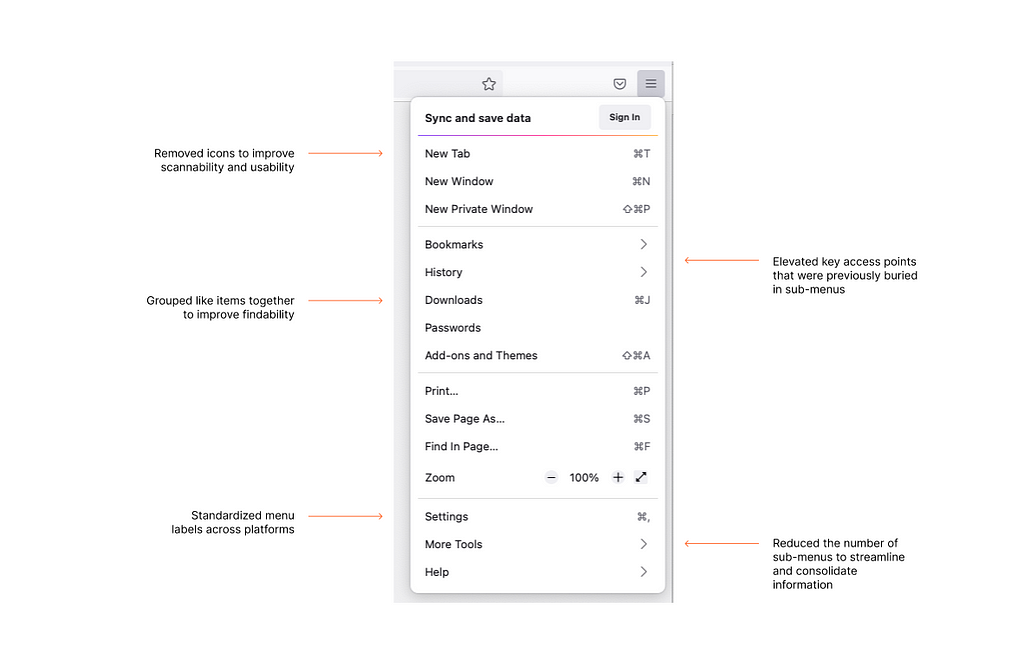
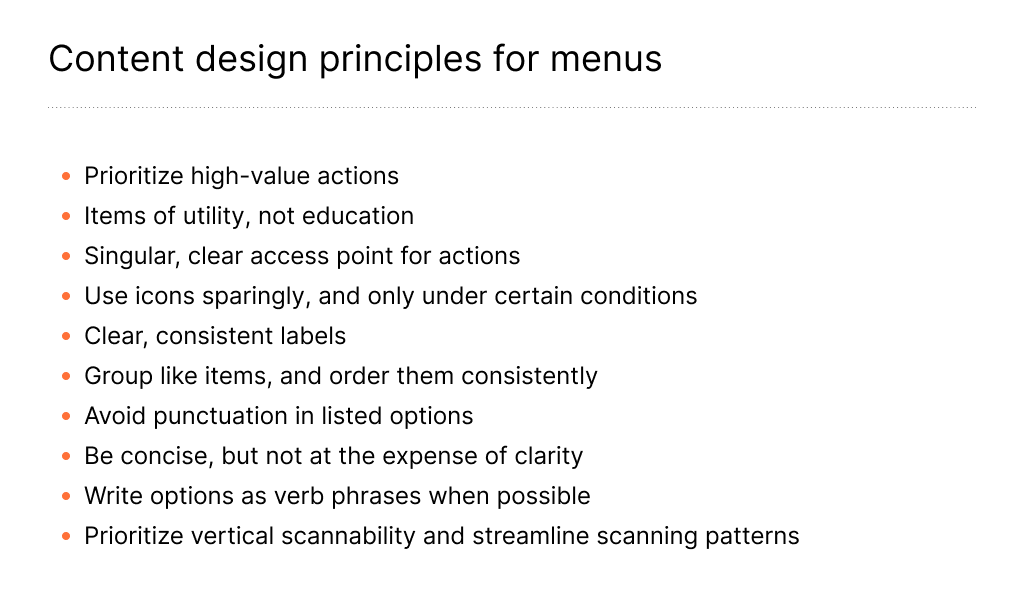
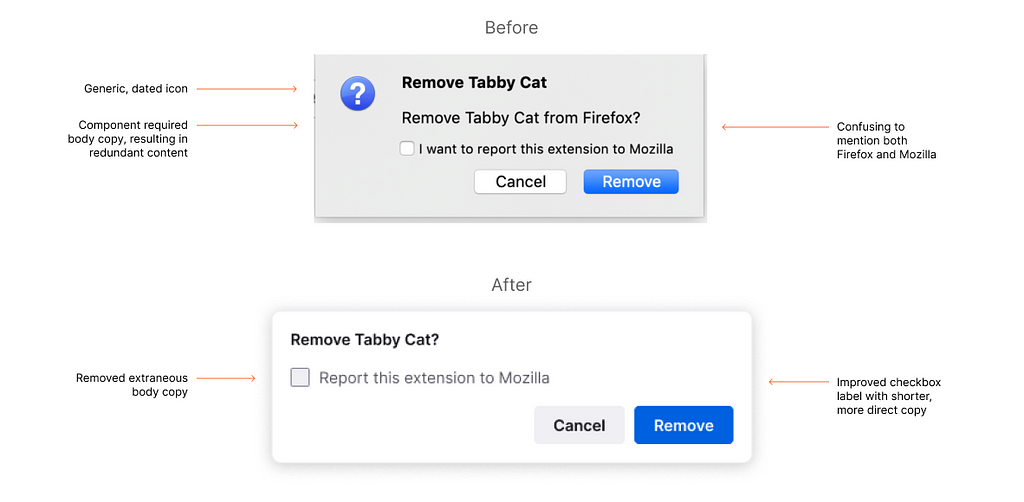
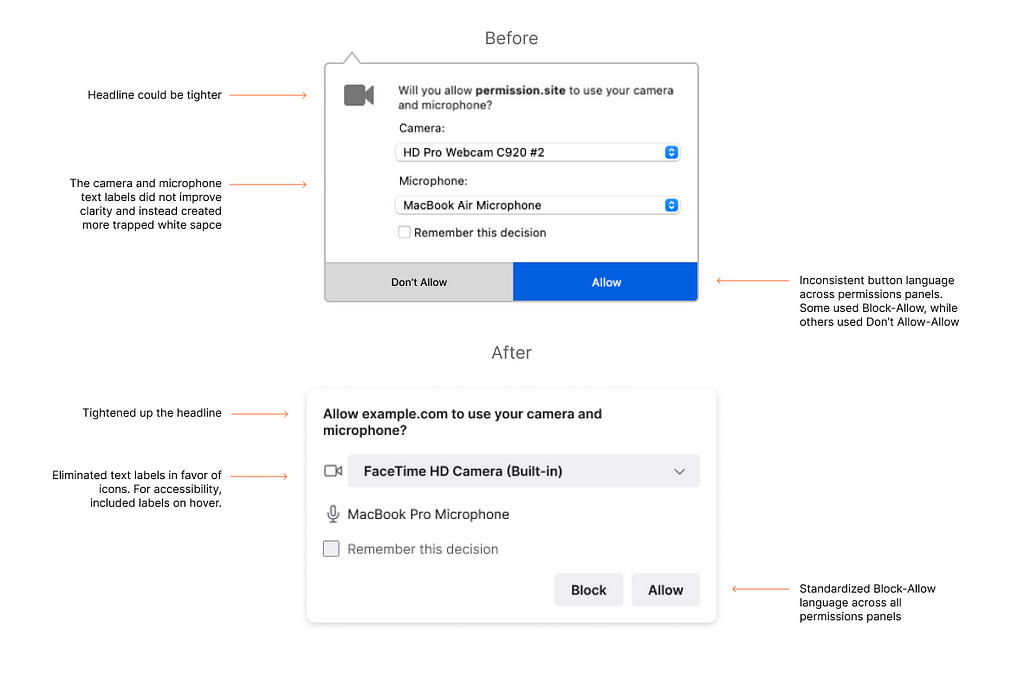








 ,
, 


 I've had the original 900 mAh PiSugar UPS backup battery for the Raspberry Pi Zero for several years now and it's an absolute game changer. With the wireless capabilities of the Raspberry Pi you have a completely portable and networked computer available that is extremely tiny. It's much more capable than hooking it up to a power brick and is actually designed for the Raspberry Pi!
In this article I'll cover how to set up a full UPS battery backup with several hours of available power using the the PiSugar as well as the PiSugar 2 and some of the shortcomings in the first version the 2nd revision fixes. Let's get started!
I've had the original 900 mAh PiSugar UPS backup battery for the Raspberry Pi Zero for several years now and it's an absolute game changer. With the wireless capabilities of the Raspberry Pi you have a completely portable and networked computer available that is extremely tiny. It's much more capable than hooking it up to a power brick and is actually designed for the Raspberry Pi!
In this article I'll cover how to set up a full UPS battery backup with several hours of available power using the the PiSugar as well as the PiSugar 2 and some of the shortcomings in the first version the 2nd revision fixes. Let's get started!