Shared posts

09 Apr 19:37

Strait and Narrows: Episode 5 – Creative Outlets

by pricetags

The latest podcast:

Episode 5 – Creative Outlets


The closing of beloved music venues and galleries, artists leaving, and declining support for the arts—it seems Metro Vancouver’s art scene is disappearing. But, is that actually the case? Three artists share what’s really happening.
.
.

09 Apr 19:37

The Sustenance Anthology

by Ken Ohrn

While transportation is a big part of our lives, food is maybe bigger.  Here’s Vancouver’s Poet Laureate calling for submissions of prose and poetry about food. The submissions will become an anthology called “Sustenance”.

PoetLaureate2014_RachelRose2_600Writers are invited to submit short essays or poems on the subject of food. We welcome collaborative pieces. We also welcome individual submissions on subjects as diverse as exile, hunger, food scarcity, bulimia, fat shaming, urban beekeeping, rural hunting, community gardening, foraging, feeding a baby, waitressing, dumpster diving, butchering, eating vegan, or reflections on family feast days.

Submission Guidelines:

Deadline: April 15th, 2017
Sustenance will be published by Anvil Press September 1, 2017.
Please submit to sustenanceanthology@gmail.com

To which I might add:  locavores, California drought, foodies, food banks, food trucks, types of sausages available, food fads, gourmet cupcakes, cooking schools, coffee accompaniments.

And let’s not forget health, honoured in this dish by its wanton disregard

Poutine


09 Apr 19:37

Film: Citizen Jane – Apr 21-29

by pricetags

From the Vancouver International Film Festival:

 
 .
.

In 1960 Jane Jacobs’s book The Death and Life of Great American Cities sent shockwaves through the architecture and planning worlds, with its exploration of the consequences of modern planners’ and architects’ reconfiguration of cities. Jacobs was also an activist, who was involved in many fights in mid-century New York, to stop “master builder” Robert Moses from running roughshod over the city.

This film retraces the battles for the city as personified by Jacobs and Moses, as urbanization moves to the very front of the global agenda.

Panel discussion to follow our Tuesday, April 25th, screening. Panelists include: former Vancouver city planner Brent Toderian, designer Yuri Artibise and architect Elizabeth Mackenzie.

FRI APR 21 – 5:40PM • MON APR 24 – 8:30PM • TUE APR 25 – 7:00PM
WED APR 26 – 6:30PM • THU APR 27 – 6:30PM • SAT APR 29 – 5:30PM
 .
.
.

09 Apr 19:28

The Ministry of Four Wheels Doesn’t Care if you get Doored

by dandy

Illustration by Warren Wheeler for issue 2 of dandyhorse.

Story by Albert Koehl

This story originally appeared on Torontoist.

Bam! You’ve been doored. You land awkwardly, and hard, on the asphalt. Luckily there are no passing cars or trucks. You untangle yourself from your bike and hobble to the curb -- a bit dazed. Your front tire is badly warped. You consider phoning 9-1-1 but you’re already embarrassed by the attention you’ve drawn from bystanders. “I’m OK”, you say. The driver is very apologetic and offers to drive you home. You decline then lock up your bike and take the subway.

The next morning your ankle is aching and you have a few colourful bruises. You decide you want your collision to be documented, if only so that authorities know the extent of this road safety problem. You’re surprised to discover after some internet research that you have not been in a ‘collision’, according to the provincial Ministry of Transportation (MTO). Indeed, it’s not a ‘collision’ even if you had been seriously injured, or worse. You wonder if anyone at MTO has ever crashed into a car door (and decide you will send them an instructional video.)

In 2015, the province increased the fine for dooring a cyclist to $365 (plus demerit points) to show how seriously it takes the matter, although, curiously, it stopped counting doorings as collisions or to include them in their annual road safety report.

So then, what is considered a ‘collision’ in the eyes of the MTO? A collision is property damage, injury, or death that results from contact with a motor vehicle that is in motion. Since doorings involve a cyclist being hit by a stationary motor vehicle, your collision is not – according to MTO –  a collision. It doesn’t matter that your bicycle is, in fact, a vehicle under the Highway Traffic Act or that your vehicle was clearly in motion.

One consolation from this odd definition by MTO is that you won’t be sent to a Collision Reporting Centre because, officially, there is no collision to report.

There are two reporting centres in Toronto – one on the alien-sounding Toryork Drive, in Far North York and the other near Lawrence and Warden. Toronto motorists involved in one of the City’s 70,000 annual road collisions are routinely sent there for minor collisions not investigated by the police. When cyclists are in ‘collisions’ (not doorings) they too may be sent there if the matter was not reported at the scene. (The City of Toronto website suggests cyclists won’t be sent to a reporting centre for car-bike collisions, but Constable Clint Stibbe of Toronto Police says, “If reported later (next day), then [cyclists will get] a referral to CRC where person is able to attend …”

Although doorings don’t seem to matter to the MTO, they are (now) documented and tracked by the Toronto Police --- thanks in part to a push by dandyhorse, the Toronto Star, and Cycle Toronto.  (doored.ca offers a non-official reporting option for cyclists.)

Toronto Police will attend the scene of any collision, including a dooring, involving a cyclist (or pedestrian) and a motor vehicle. Where the event is a dooring, the police do not use the provincial Motor Vehicle Collision Report, because you were not involved in a ‘collision’, but instead use their own “dooring incident” report. This report is more rudimentary than the standard collision report, and not sent to MTO, but allows Toronto Police to track doorings.

In 2016, 209 doorings were documented by Toronto Police. Whether doorings are similarly documented in other Ontario cities is unclear.

Where the police have not been called to the scene of a dooring, a cyclist can still call the police non-emergency number (416-808-2222) after the event. The police will dispatch an officer to speak to the cyclist and take a report for any dooring. Constable Clint Stibbe of Toronto Police says that, “if reported later, the priority would be lower, so an officer could take some time to get there, but the officer would attend (our emphasis).”

The cyclist will not, of course, be told by the police to go to a Collision Reporting Centre for a dooring. It’s unclear if a cyclist who goes to a local police station to report a dooring will be turned away. When you phone the non-emergency number, an officer says he would not object to preparing a report for a dooring from a cyclist who has come to the station. (Ideally, the cyclist would have recorded information like the car’s licence plate, make and model, the driver’s name, telephone and insurance details, witness contact info, and a description of the person who opened the door, especially if it wasn’t the driver.)

As a result of changes made by MTO in 2015, doorings no longer fall into the definition of collision. MTO spokesperson Bob Nichols says MTO regularly reviews its collision reporting forms and procedures “to ensure that they best capture relevant road safety events, and that they provide comprehensive data for research and policy development to protect the safety of all Ontario road users.” But how can injuries from doorings not be a “relevant road safety event”?

Nichols says that dooring injuries are captured in the National Ambulatory Care Reporting System (NACRS). The NACRS website says it, “contains data for all hospital-based and community-based ambulatory care: Day surgery, Outpatient and community-based clinic, and Emergency departments.” (This would only cover doorings that involve hospital care, and figuring out where to find dooring data in the document is a big challenge.)

Does the MTO’s approach to doorings matter?

Yes, partly because MTO has been very slow to recognize cycling as a mode of transportation. The way MTO deals with doorings suggests it still behaves like the Ministry of Cars and Trucks. And when the MTO doesn’t bother to document a serious hazard like dooring, it leaves the impression that cycling safety is not a priority. The fact that cycling advocacy groups have to rely on obscure documents like the NACRS for relevant statistics, doesn’t promote confidence in the MTO.

In fairness, the MTO has started making a greater effort to include bicycles in its work. In 2013, for example, MTO introduced the #CycleON strategy to replace its outdated cycling policy. MTO has ear-marked money for cycling infrastructure, even if in the absence of obvious benchmarks for success. MTO’s website now also includes a section on “Bicycle Safety” that directs cyclists to helpful resources like the Toronto Cycling Committee. (The Cycling Committee, a citizen advisory body, was disbanded five years ago, so visitors are actually directed to the City of Toronto’s cycling page.)

All of this leads you to the conclusion that it’s no surprise that collisions involving cyclists are under-reported, and if the MTO wants to be taken seriously by cyclists it has to re-think its definition of collision.

Albert Koehl is an environmental lawyer, road safety advocate, and co-founder of Bells on Bloor.

This story originally appeared on Torontoist.

Related on dandyhorsemagazine.com

Lawyers Patrick Brown and Albert Koehl share TCAT’s 2012 Active Transportation Champion Award / recap of this year’s Bicycle Friendly Business Awards

Mikael Colville-Andersen: Building City Streets to Move People (on Bikes)

Pride and privilege on Bloor

09 Apr 19:28

Before and, five years later, After

by pricetags

In May 2012, Andy Coupland asked, in a PT post (A Parking Lot Conspiracy): Why is there a parking lot no one can get to (in a car)?

Today, Andy sends the answer:

The new Crosstown School at International Village


09 Apr 04:21

The Best Wireless Earbuds

by Lauren Dragan

After putting 25 models through more than 30 hours of testing by our expert listening panel, we’ve chosen the Phiaton BT 100 NC as the best Bluetooth earbuds for most people. Music sounds fantastic, calls are clear to both you and your caller, and the fit is comfortable. Plus, this pair is a fantastic value, with better performance and features than headphones that cost twice as much.

09 Apr 04:21

Life / Training Plan 2017 (and beyond)

by Michael Kalus
Life / Training Plan 2017 (and beyond)

This is long, would you like it to go? ePub / PDF

Introduction

Back in December of 2014 I decided to “restart” a huge part of my life. Until the end of 2006 I ran a lot, biked a lot and had gotten into Ultra Running. After a car accident with a serious concussion though I first “fell off the wagon” and then ended up falling in with the “wrong” people.

I took stock though and realized that running had been a large part of what had made me happy, and indeed had been the reason why I had moved to Vancouver in the first place. So, back to basics as one would say.

Life / Training Plan 2017 (and beyond)

I was overweight, borderline obese (around 6’ (183cm) and 220 pounds (100kg) give or take a few. My cardio was okayish but my strength was basically non-existing.

I started out looking at my diet first, then training and a bit over two years later I am at a much healthier weight, stronger and thinner than I was back then, even better in some aspects than I was before the accident.

This here is a summary on what I changed and why and how I am intending on going forward.

Before we get into this though, a disclaimer: This has worked for me, and I am still learning and modifying as I go along. Including blood tests etc. Take this as guidelines but don’t follow blindly. Do you own research and most importantly of all: Use common sense. If it hurts when you do something, stop doing it until you can find out why it hurts.

The Approach

One of the things that had always bugged me during my racing days was the sheer amount of sugar you were taking in. From Gatorade, to gels to defizzed cokes during the race, not to mention the large amounts of Pizza, Pasta etc. To be honest, I never felt too good stuffing all of that in and often forewent eating enough, which had a performance impact and didn’t really make me feel all that great either.

So when I “jumped back in” I decided that nutrition was going to be the first thing I would be tackling. My thinking was that if I could run (mostly) on my body fat I would need to eat less. I had messed around a bit with this before my accident but hadn’t really gotten that far.

Since then though there has been a lot of discussion over the harm of sugar in the diet and how it seems a lot of the obesity and heart problems were driven by an over consumption of carbohydrates. To be fair, the whole “fat makes you fat” mantra I first encountered when moving to North America never had made sense to me.

I did get rather anal during the first month. I weighted out every meal and every ingredient. I logged it in MyFitnessPal, it provided some interesting insight into how much I was eating and what the composition was. I discovered two things:

  1. My idea of what “one serving” was was off by around 20%.
  2. I was eating way more carbs than I thought I was.

After logging it all for a month I made changes. I reduced carbs, increased my protein intake to recommended levels and filled the rest in with fat, natural one like avocado, olive oil but also butter and I kept the fat on my steak.

I started hitting the gym to build up strength and started doing shorter runs again.

Now, two years later I have nailed things down to a degree where I am actually happy and the rest of this post will go into more detail on food, workout and life structure.

Food

As noted above, my original idea was to run more on fat than on carbs. We have lived in a “low fat world” for the last 20 to 30 years and the effects on most people seem to have been negative. Let me put something out there right now: Carbs aren’t evil and neither is fat. It seems we are now going from a “fat is evil” to a “carbs are evil” mindset and I suspect in 10 - 20 years we will see similar negative effects in the high-fast, no carb part of the population.

Sugar

One of the major proponents of “Sugar is poison” is Gary Taubes, who, to put it mildly, is a pretty controversial character. Some hail him as a “truth speaker”, others as a charlatan. I have read his books and he makes some interesting observation / arguments and his main hook, the insulin cycle, seems to appear correct based on my understanding of how it works. As a simplified summary: If you eat any carbs it raises your insulin level as this is the way that carbs get into cells, it basically acts as a key to both muscle and fat cells. You get fat if there are more carbs around than the muscle can accommodate, so it gets moved into fat cells. Eventually if you over use the insulin cycle the muscle cells stop responding to the insulin and carbs go straight to the fat cells. This is basically part of metabolic syndrome and a pretty good indication that you are at the very least pre-diabetic).

If you want to get an idea as to what he thinks about all of this, here’s an hour long interview:

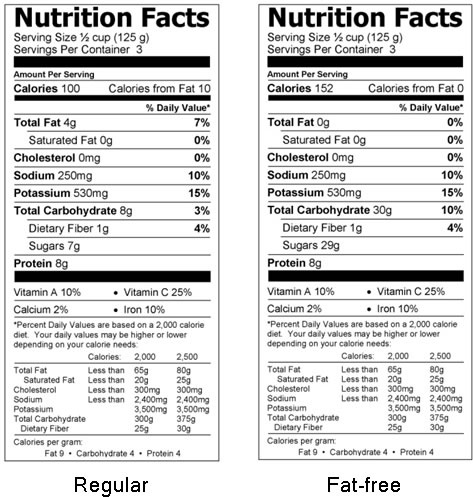
So reducing sugar or carb intake seems to make sense. One of the main arguments by the “sugar is poison” group is that sugars weren’t really readily available to our ancestors and historically this is true as well. Sugar, in vast quantities, wasn’t available to the average person essentially until the industrial revolution when sugar cane could be processed and shipped in large quantities. It is also true that in a lot of processed foods, especially those reduced in fat, sugar and salt are often substituted. So it’s not just the candy bar that you eat that will give you that sugar rush but also that pre-made, low fat yoghurt or meal.

I still remember how hard it was for me to find a yoghurt in the US that didn’t either have starch (a carb) in it or tasted awfully sweet, even if / when it was “plain”. Almost all of the industrial food seems to come with added sugar.
Life / Training Plan 2017 (and beyond)

So even if you eat “healthy”, you may actually get a lot of sugar you may not want or need. Our ancestors by and large really didn’t had that ability. Most of the sugar either came in vegetables, milk or fruit, with both vegetables and fruit being seasonal.

There is no doubt that sugar and carbs are preferable for our body to use. It can be used straight in the cells and provides an instant kick. You know this when you ever feel down, then have a bit of sugar and find yourself suddenly humming again. But as the old adage goes: The dose makes the poison.

Life / Training Plan 2017 (and beyond)

Lastly, there is the WHO’s new recommendation for maximum added sugar in the day, which was revised in 2015:

A new WHO guideline recommends adults and children reduce their daily intake of free sugars to less than 10% of their total energy intake. A further reduction to below 5% or roughly 25 grams (6 teaspoons) per day would provide additional health benefits.

Note that “free sugars” here means sugars that are not part of a plant or unprocessed food. So the apple you may have for breakfast won’t count against your allotment, that Grande Starbucks White Chocolate Mocha comes with 59 grams of sugar, which blows most people’s allotment right out of the water.

BTW Starbucks, way to go to make it hard to actually find that info. Is a PDF really the most customer friendly way to convey this information?

To summarize: I counted my sugars and carbs, I reduced the added ones and now only really take an occasional gel during very long and hard activities, e.g. during a race. I will get more into training fuel / race fuelling in the later sections.

Fats

So now onto the whole fat thing. To be honest, this is still throwing me a bit for a loop. There is the talk of “good fats” and “bad fats”. The arguments on both sides are a wee bit confusing.

The first one is that the pro-fat-is-good group tends to point out that LDL and HDL are both raised, so it’s a wash, the more nuanced ones even point out that LDL (the “bad cholesterol”) is not just one, but two different pieces with only one being bad.

The counter is that LDL rises faster on a diet high in saturated fats than the associated HDL, thus bad.

As I said, this is a wee bit confusing and I am not sure this has even closely been settled. What seems to have been settled though is that triglycerides are a good indication as to how healthy your heart is and how likely you are to actual develop heart problems later in life.

In the human body, high levels of triglycerides in the bloodstream have been linked to atherosclerosis and, by extension, the risk of heart disease and stroke. However, the relative negative impact of raised levels of triglycerides compared to that of LDL:HDL ratios is as yet unknown. The risk can be partly accounted for by a strong inverse relationship between triglyceride level and HDL-cholesterol level.

So my approach on this for now is to “not worry” and get a test for cholesterol and triglycerides done twice a year to keep an eye on where it goes. So far it seems my numbers have improved.

There seems to be a strong indication that a lot of your cholesterol levels are more influenced by your genetics than by your diet. Most of the cholesterol is created in the body and not consumed with food (so egg yolks are a-okay).

Life / Training Plan 2017 (and beyond)

There are other things to consider with fats though, mostly in cooking, that is: The smoke point. The reason this matters is that as you heat oil it starts breaking down. When it hits the smoke point you’re on a good way to set your kitchen on fire, but you already are converting the fat into many things you don’t really want.

Hydrolysis and oxidation are the two primary degradation processes that occur in an oil during cooking. Oxidative stability is how resistant an oil is to reacting with oxygen, breaking down and potentially producing harmful compounds while exposed to continuous heat.

So cooking with olive oil is probably not so great, on the other hand having it in your salad is quite tasty.

A final note on fats, as I have reduced my carb intake I am essentially left with two energy sources, one is fat, the other one is protein. More about protein in the next section. But my general “noshing” is now mostly nuts (not peanuts though, as I found out, they aren’t really nuts, they’re legumes).

While “nut” is in their name, peanuts are in fact legumes. Peanuts actually grow underground, as opposed to nuts like walnuts, almonds, etc. that grow on trees (and are sometimes referred to as "tree nuts").

Protein

The final of the three main groups of nutrients. Protein is used to build muscle and other tissue in the body and you probably have seen / heard stories of the body builder diet which often includes huge amount of protein.

The general consensus seems to be that you need between 0.8 - 2grams of protein per kg of body weight. Women less than men and also depending on activity level. The average person probably can get away with around 1 - 1.2grams per kg of body weight.

Having said that, even at 85kg that’s still quite a pile of protein I need to eat and when I started logging I realized I often fell short of the goal.

Having said that, there is an interesting “side effect” if you eat more protein than the body needs. It gets broken down into sugars via Gluconeogenesis (GNG) and used, or stored, by the body.

Gluconeogenesis (GNG) is a metabolic pathway that results in the generation of glucose from certain non-carbohydrate carbon substrates. From breakdown of proteins, these substrates include glucogenic amino acids (although not ketogenic amino acids); from breakdown of lipids (such as triglycerides), they include glycerol (although not fatty acids); and from other steps in metabolism they include pyruvate and lactate.

Something you probably have heard of before is that a high protein diet is bad for your Kidneys.

Some quick thoughts on Dairy, Salt and Organic Food

If you had any exposure to food discussion one food you will have come across over the last few years that will apparently give you cancer and kill you dead if you consume it is dairy. I don’t really buy into this. I think like with most things, moderation is key, but I do like my cheese and I have added milk, whole milk at that too. But it’s not something you can drink like water. It has calories and it is the one exception where I do buy organic because I do think it does make a difference (if for no other reason than that it comes from much closer than the non-dairy milk I can buy in the supermarket).

As for salt, I have never really worried about it. It is a concern if you eat a lot of processed foods, but as the big idea here is to get away from it, you shouldn’t be worry either. Plus, at least for me, I do sweat a lot. So getting rid of any excess salt is somewhat easy.

As for organic food, I do like the original idea behind it, the more “natural” way to grow and caring about the welfare of wildlife and the animals. Unfortunately, as it became clear that people were willing to pay a premium for organic food the standards were “tweaked”. Additionally, people still expect perfect produce which means the waste that is so common in general agricultural production is now also around for organic food.

Lastly, organic does not mean pesticide free, the pesticide just has to be organic. This does not mean there aren’t some benefits, but if you buy organic purely because you think it’s better / healthier you’re probably wasting your money. Buying in season and at a farmers market will probably have a better net benefit (but beware of cheaters).

What to eat?

So how do I eat now? I have mostly removed a bunch of items from my diet. I am saying mostly here because having an occasional pizza or a can of coke is not the end of the world, but they are no longer in my daily diet, rather I consider them a treat. Interestingly enough, after an adjustment phase the cravings for them have mostly disappeared. More specifically items I have pretty much removed from my diet and only eat on occasion:

  • Bread
  • Pasta etc.
  • Sugar in my coffee / tea
  • Pop
  • Cookies, candy bars, chips, pretzels etc.

It did surprise me quite a bit how hard it was to “kick the sugar habit”. I never thought I ate a huge amount of sugar. But as I went through this I had giant cravings for something sweet and found myself occasionally giving in and basically inhaled a chocolate bar or two in one go.

So what do I eat these days?

  • Lots of veggies
  • Salads, with fatty foods like avocado, fish or I add some chicken or steak to it (with a simple, home made dressing).
  • (Mostly) in season fruits.
  • Nuts and seeds (for snacking)
  • Eggs, chicken, fish, pork and beef.
  • Fermented foods, like Sauerkraut, Kimchi and Kefir

I do have a slow cooker and absolutely love making all kinds of stews in them they are easy to prep and do, and once you’re ready to eat you just grab them out of the fridge / freezer and you are good to go.

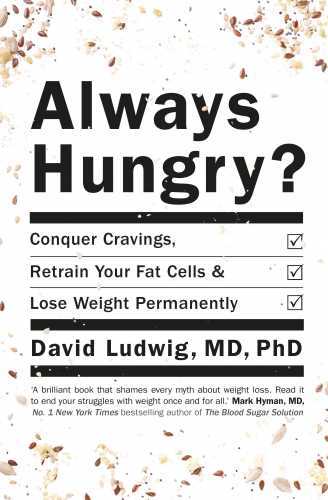
If you’re scratching your head as to how to eat low carb a book with recipes is:
Life / Training Plan 2017 (and beyond)

Always Hungry? is intended to help you make a transition to a low carb diet, but unlike many other diet books or advice online it isn’t overzealous. No attempt to try and shame you into getting rid of all carbs or processed foods in your life. It takes a more balanced approach and not only talks about the benefits / science behind each of the recommendations but also comes with a lot of tasty recipes. So if you have no idea how to replace that pasta in a tasty way, that’s the book for you. Otherwise: Get creative and experiment, just cooking from scratch will make a huge difference if you’re not already doing it.

This is all about moderation when it comes to carbs, not an outright banning of one of the three macro food groups. Don’t stress over it and don’t hate yourself if you end up failing on occasion. This isn’t about perfect, this is about better and in my case, eating for a better performance / experience out on the trails and in the backcountry.

Supplements

There are a few supplements I take, mostly it is magnesium as this can be hard to get enough from in the diet if you’re very active. I also take a C + D tablet during the winter months to supplement. The occasional protein shake / bar is also in the mix, though I am careful around the bars because they often contain quite a bit of sugar and as noted above, too much protein isn’t that great either.

I find that the vast majority of my protein requirements I can fulfill with my diet, a glass of whole milk or Kefir a half an hour or so before bedtime usually ends my day.

Intermittent Fasting

I had experimented with this quite a bit over the last few years on and off. Taking a day off. These days I often can eat little or nothing until it’s past lunch time.

There is a growing body of evidence that caloric restriction / fasting does have some health benefits. It reduces insulin levels and other stress markers and may even play a role in cancer prevention. Note I bolded the may here because this hasn’t been proven, but we are starting to understand authophagy better and it seems to be active in humans as well.

Autophagy (or autophagocytosis) (from the Ancient Greek αὐτόφαγος autóphagos, meaning "self-devouring" and κύτος kýtos, meaning "hollow") is the natural, regulated, destructive mechanism of the cell that disassembles unnecessary or dysfunctional components. Autophagy allows the orderly degradation and recycling of cellular components. In macroautophagy, targeted cytoplasmic constituents are isolated from the rest of the cell within a double-membraned vesicle known as an autophagosome. The autophagosome eventually fuses with lysosomes and the contents are degraded and recycled. Two additional forms of autophagy are also commonly described: microautophagy and chaperone-mediated autophagy (CMA). In disease, autophagy has been seen as an adaptive response to stress, which promotes survival, whereas in other cases it appears to promote cell death and morbidity. In the extreme case of starvation, the breakdown of cellular components promotes cellular survival by maintaining cellular energy levels.

As a general pointer. If you read anything where the word may appears next to a claim that something does something, regardless of health related or otherwise, work under the presumption that it probably doesn’t or at least not in the way it is described. I noticed that health “foods” and supplements are notorious in their prescription. It’s a trick often used by the manufacturer, because if it doesn’t work they can always say: “Well, we didn’t say it does that, just that it may be doing it.”

Caveat Emptor

Training

Goals
Life / Training Plan 2017 (and beyond)

In no particular order:

  • Increase strength to be able to move my own body weight around.
  • Build a deep(er) cardio well
  • Increase / maintain flexibility
  • Have fun
  • Run the Squamish 50 in August Well, that’s not happening, as I didn’t register in time. Looking for an alternative race now.

These goals really aren’t in any particular order or priority, rather they complement each other with the race in August acting as a “check point”.

Strength
Life / Training Plan 2017 (and beyond)

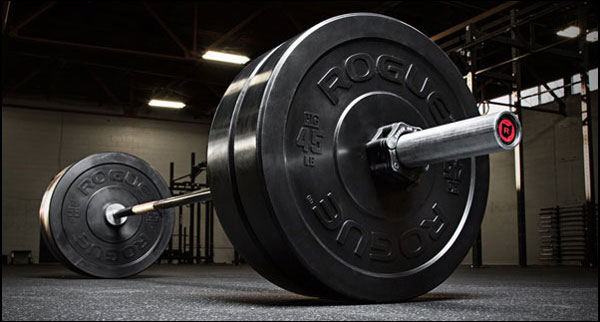
I have done the usual strength training exercises in the past. Lifting weights, going by how much I could lift / how I looked / felt. Through the course of my reading I have come across a new approach I am going to employ: Maximum Sustained Power (MSP) and also have come to define some easy metrics:

The metrics

The goal is to be able to do the following:

  1. 50 pushups
  2. 50 squats
  3. 2 minutes plank
  4. 12 pull-ups.

I am a bit more than halfway to the pushups as of this writing in early April and suspect a month from now I will hit that target. Squats I can already do (though I start feeling it around the 40 mark). With regards to the plank I am at 100 seconds, also expecting to hit the two minute mark a month from now.

Now pull-ups? That’ll take a while longer. They were always my bane. I’ll get there, but it will involve a lot of cursing.

MSP

Intro

So what’s MSP? The idea behind MSP is that unlike traditional weight lifting that has you do lots of reps with (low) weights, the idea is to put maximum effort into fewer reps to build strength and endurance. This isn’t a really new concept, HIIT has been around for a while and I know a few people that swear on it.

How-to

Where in traditional weight training you load up your plates, then do 8 - 12 reps, MSP sets a starting weight with five (5) reps. This is the weight you will continue to do the rest of the set.

The sets go (number of reps):

5-4-3-2-2-2-1 with 10 - 20 seconds recovery between each rep. Then 3 minute recovery and repeat twice more for a total of three.

The exercises done are basically two types of exercises:

  • Squats
  • Deadlifts

Here are two quick videos that introduce you to the correct form. And yes, it’s “bro”:

Variations

Beyond the deadlifts and squats the other other good moves are standing jumps (measure height) and stairs (jumps or sprints). Similar, set a baseline first, then repeat as long as you can hit the target you established with the baseline.

Long term

As the reps become easier, just add weight, simple, isn’t it?

Cardio

Life / Training Plan 2017 (and beyond)

So now we’re coming to the meat of this. The goal is to do endurance events again. This year the goal is the Squamish 50 as I didn’t register in time that won’t happen, I am now looking for an alternative race. For next year I am eyeing the Canadian Death Race.

The challenge here is of course mental as well as physical. Mentally I am pretty certain I am there, physically… well, this is what this is about.

The main challenge I found in the past is that feeding always was a problem. Mostly, I couldn’t really eat as much as I was supposed to and that ended up hurting me. So in early 2015 as I considered going back to this I was wondering: “What if I could run more on my body fat?”.

The answer to this seems to be that this is indeed possible as a lot of my reading seems to shown (see the diet section). In order to get into the fat burning zone the rule of thumb seems to be: 180 - age for the majority, this is surprisingly hard for me to hit, or was initially. I am getting better at it, and I noticed that “feel” gets me pretty close to it. The proof of course will be in the pudding once I go beyond three hours.

Speed training, or how to get faster

Life / Training Plan 2017 (and beyond)

I admit it. I hate hate hate speed workouts. I have always avoided them, long story short that goes way back, not going to bore you with it.

But there are advantages to it, not in the least you end up getting faster.

Good news for me (and others) though is that you do not really need to do extensive / long sessions. Once a week appears to be enough.

All kinds of claims around sprinting have been made over the years, just look on the internet, I am not going to repeat them here because some I find a bit suspect / esoteric. Judge for yourself. But I do see value in getting faster and recruiting more muscle fibres during my workout.

Traditional speed work was a tempo run.

A tempo run is a faster-paced workout also known as a lactate-threshold, LT, or threshold run. Tempo pace is often described as "comfortably hard." Tempo running improves a crucial physiological variable for running success: our metabolic fitness.

I am changing this now and more about the why and how in the cardio section.

I will supplement temp runs with sprint workouts, presuming I am feeling ready for a sprint work out and not too tired / time challenged.

How

The sprint workouts will be time instead of distance based. In the past I hammered down a certain length of track over and over, but, see cardio section, this is a bit counter productive to what I am trying to accomplish now. Instead after a thorough warmup (sprinting is hard on the body) I set a time based workout. That is 15 - 20 second sprints with a 20 - 30 seconds recovery period.

If the performance (distance) drops significantly it is time to cool down and head home.

Similar to the MSP workout, repeating these sets of fives after a few minute rest is possible, but if the performance drops too sharply it signals the end of the sprint workout.

Then perform a cool down (e.g light jogging for a few minutes.

Running only?

The nice thing with these sprint workouts is that they cannot only be done running, but also on the bike or in the pool. The idea here is to reach maximum effort during these periods.

Running is high impact, so once a week is probably all that should be done. On the bike you can do the sprint workouts more regularly, same in the pool. But in all scenarios 100% rested should be the starting position. Feeling tired or off means no sprinting. You may cause more harm than good.

What’s the goal?

To recruit more muscle fibres, build up some fast twitch muscles, which can be used during slower activity as well reducing muscle fatigue during long periods and prime the overall nervous system. This is similar to what HIIT and similar workouts are trying to accomplish. This is also the only targeted workout where I am planning on hitting my aerobic threshold or exceed it for short periods of time.

Misc. “Training”

There is a variety of other “daily” training I have incorporated in my daily routine.

The first thing is that I am aiming for a 1000kCal “active burn”, even on days off. That is pretty much anything I do physically, from walking up stairs to going for a stroll or moving stuff around. Workouts count against this goal, it’s really more of a “minimum activity” goal.

It is quite interesting to see just how far one has to walk to burn 1000kCal, even at my size / height / fitness level.

Training Plan
Life / Training Plan 2017 (and beyond)

Sun Mon Tues Wed Thur Fri Sat
Fast / Recovery Run Strength Sprint / Tempo Run Strength Run Long Run

And a daily stretching routine before bed.

Race Feeding
Life / Training Plan 2017 (and beyond)

This I am still experimenting with. I did 30K a few times on cross country skis this winter and because my form sucks I made it harder on me than it should have been. The most interesting aspect in all of this was that I rarely felt “out of power” and my tracked times showed this as well as I did not see a huge drop off in my times.

For now the plan is to extend my long runs on weekends and continue the weekly fast. All the while I will keep an eye out on how it develops and try a few different gels and other items. So far I seem to do well with the Gu gels

Life / Training Plan 2017 (and beyond)

Experimenting with Skratch in my water bottle / bladder worked well enough, and Nuun I have been using for a few years and during the summer when it got hot.

Weights, Measures and logging
Life / Training Plan 2017 (and beyond)

One thing I didn’t do in the past when I was racing / training was to actually log / quantify things. This time, it’s different as they say.

I am logging different things and do so consistently now.

Body composition

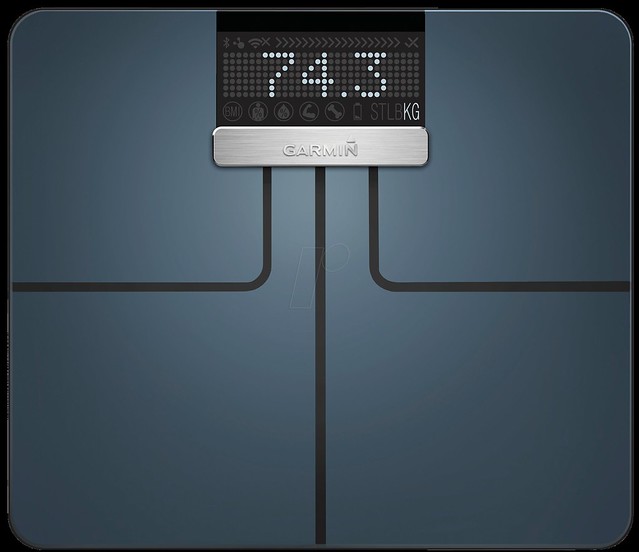
Garmin Index Smart Scale
Life / Training Plan 2017 (and beyond)

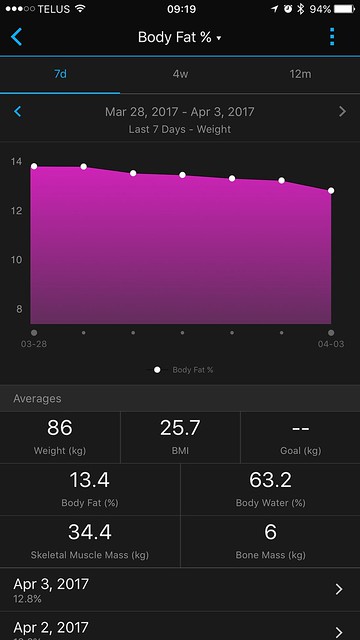
I did buy a Garmin Index Smart Scale. There were two reasons for this. The first one was that I didn’t really trust my old scale, it was a bog standard one and when I did a body composition (DEXA) scan late last year it was off by 1% when it came to body fat. The Garmin scale is aimed at athletes, so I figured it would do a better job. Additionally it ties into Apple’s Health Kit which I use as a central exchange point for all my workout data between different apps / devices as well as a “single place to check” on progress / review data.

The scale measures body fat, bone mass, skeletal muscle mass and body water and the iPhone app can graph your progress, like this:
Life / Training Plan 2017 (and beyond)

I use it to evaluate body composition mostly. My target goal is 10% body fat. I will have another DXA scan in June to validate the scales results.

DXA Scans

Life / Training Plan 2017 (and beyond) As mentioned, I did get a body comp / DXA scan last December. These are great because they can tell you where your muscles are and also where the fat sits. In this case, although I seemed to have low fat under the skin, the scan revealed (as suspected) that there was way to much fat in me (in the gut). This is the stuff that’s considered bad. I was what is known as TOFI (Thin Outside, Fat Inside). I had almost 30% fat in my abdomen, with an overall body fat content of 21.4%.

Heart Rate Variablity (HRV)

In the “good old days”, your resting heart rate was always considered the standard to determine if you were overtrained or not. Essentially, the lower your heart rate, the more rested you were.

Since then though it has been shown that Heart Rate Variability (HRV) is a much better indicator for your rested state.

In short, the difference between the beats is more important than the number of beats and the higher the variability, the better. The explanation behind this is that there are two nervous systems. The sympathetic system, which tries to prime your body for a fight or flight response and the parasympathetic system which is active when you’re more relaxed. The sympathetic system also gets activated when you are overtrained, your body is basically in a stress situation. This leads to a very “precise” rhythm. Think of your body having an “iron grip” on almost every aspect of your body so that it can marshal whatever resources it needs on short notice. You wouldn’t want to take five minutes to get ready to run away from that animal that thinks you make good dinner.

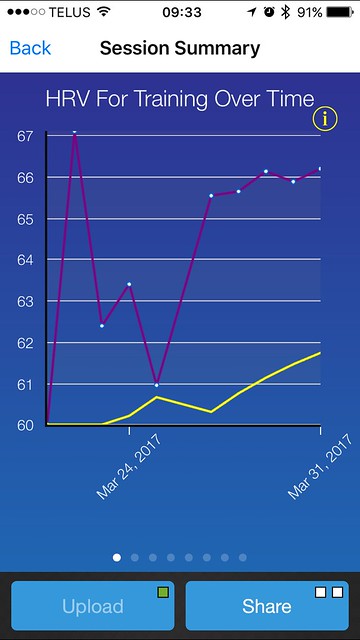
When I get up in the morning I spend five minutes with my HRM and an iPhone app to measure my HRV, see it as a relaxed five minute wakeup in bed.

The app is called “SweetbeatHRV” and their website as well as app design is pretty atrocious, but in around a month of using it I did find some interesting correlations between my feeling of rested and the numbers the app showed. I can even see impacts when I had alcohol or did something else “stupid”. For now, this seems to be a useful tool, if in a few months I come to the decision that it’s all crap I’ll update.
Life / Training Plan 2017 (and beyond)

Heart Rate Monitoring

I am tracking my heart rate in two ways right now:
Life / Training Plan 2017 (and beyond)

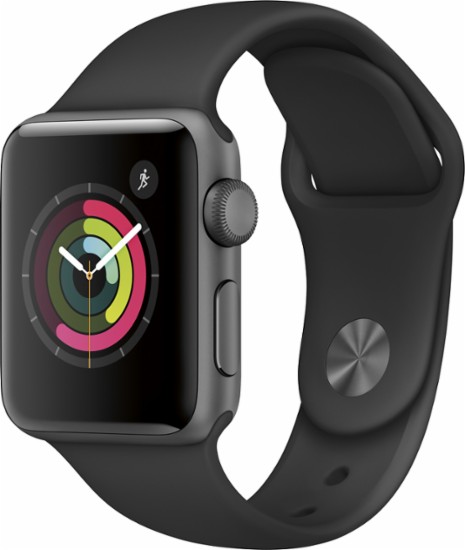
  • AppleWatch Series 2
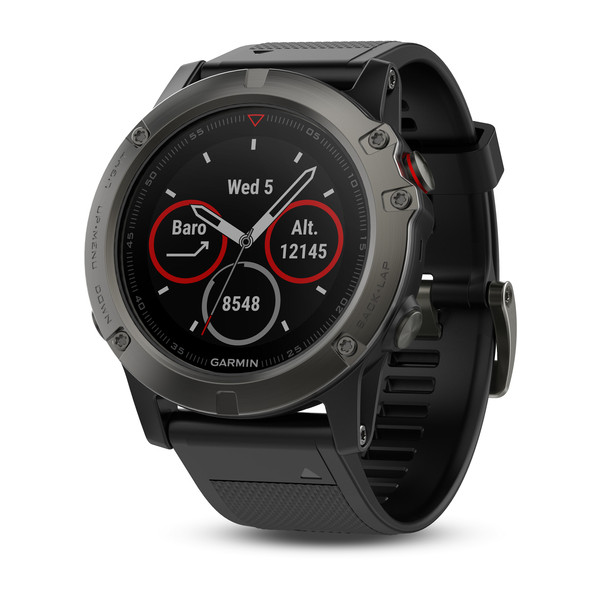
  • Garmin Fenix 5x

Life / Training Plan 2017 (and beyond)

I initially had hoped that the AppleWatch could provide an “all in one” solution, unfortunately as nice as it is for logging, it’s really not good to define heart rate zones and train within them. Because of my attempt to primarily work in the fat burning zone that is a must though. So I did bite the bullet and bought a Fenix 5x as well to use for actual training. The added bonus of the 5x is that it lasts up to 100 hours vs. the AppleWatches six.

Both work without a chest strap and instead use LED lights in the wrist to measure the heart rate and seem to be accurate, at least when I was testing it against my polar chest strap.

Activity Monitoring

As mentioned above, I do have a daily “activity budget” of at least 1000kCal. This I track mostly with the AppleWatch, with other devices / apps feeding into this via health kit .

Life / Training Plan 2017 (and beyond)

Workout Tracking

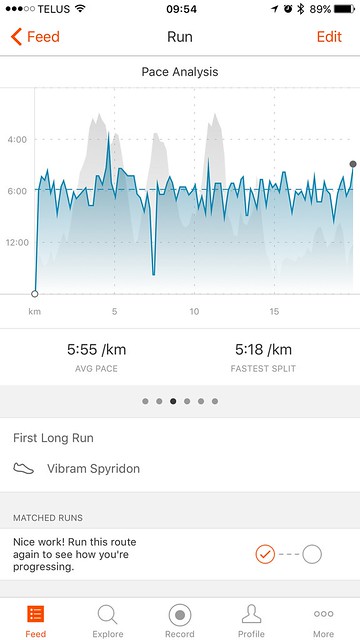
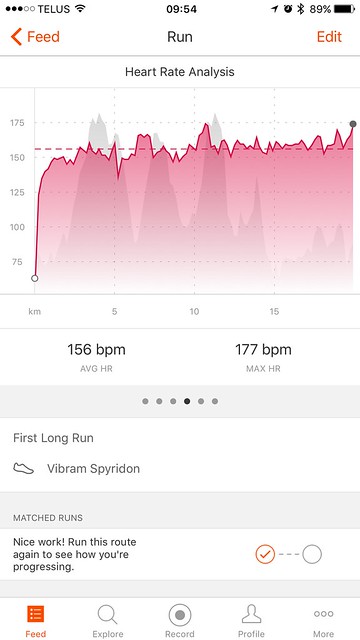
The Garmin Fenix 5x is the main device to track workouts. It allows me to set the heart rate training zones and thus “reigns supreme”.

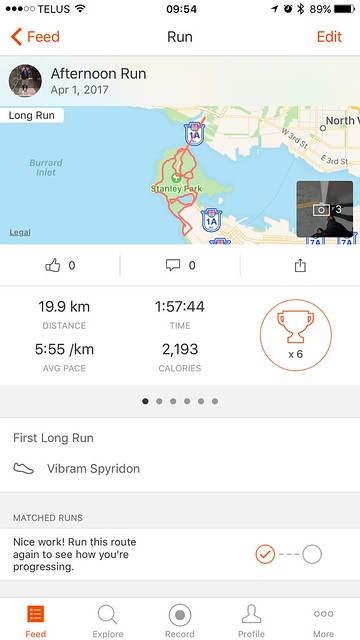
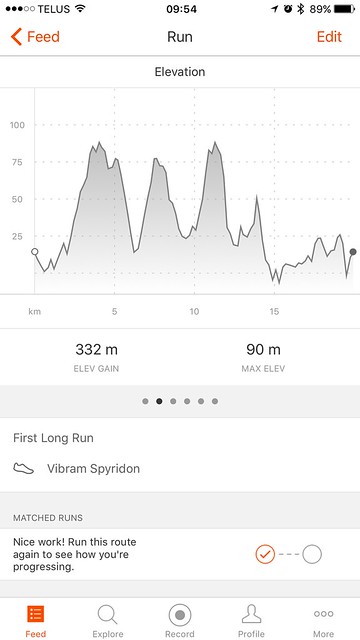
Additionally I use Strava for my “workout logging” as it provides some interesting insight and I have already been using it. Here is an example from my long run:
Life / Training Plan 2017 (and beyond)Life / Training Plan 2017 (and beyond) Life / Training Plan 2017 (and beyond)Life / Training Plan 2017 (and beyond)

I am not sure if I will continue to use Strava in the long run. There are some problems, mostly the battery life on the phone for longer runs.

Other logging

Apple Health provides the ability to track some other things as well. I have a small little device to measure blood alcohol levels (you blow into it), I bought it for fun last year and now use it before going to bed to check my levels.

Additionally I have a cheap blood pressure cuff, so once a week I tend to test that as well. No particular reason outside of: “I have it, why not use it?”.

Lastly, as mentioned in the diet section I do get regular blood tests done to verify that my dietary changes aren’t doing anything badly.

Life

This is the final “piece to the puzzle”. I have made some major changes on that front over the last year as well.

Less stress
Life / Training Plan 2017 (and beyond) This is a multi pronged approach, mostly I have evaluated relationships I had and cut those out I found not very beneficial.

Additionally I greatly reduced my exposure to the news media. Not so much that the bad news got me, but the “public discussion” around it.

To that end I have stopped partaking in public discussion forums. I have abandoned reddit, social media etc. Social media actually for quite a while as I saw little benefit in it to begin with.

Overall this has freed up quite a bit of time I use for more reading, enjoying the outside and generally spending less time on the computer.

Have fun

Life / Training Plan 2017 (and beyond) This is the other thing I have started to change. I review what is fun and what isn’t and if something isn’t fun I’ll stop doing it.

This also has an impact on the training, if there is a fun chance to do a hike / bike ride or a social event, I am okay with dropping that particular workout and instead do that. Of course this won’t overrule every single time, but I am going to be less hardcore when it comes to this than I was in the past.

Be Mindful

Life / Training Plan 2017 (and beyond) Over the last two years I neglected meditation / mindful relaxation a bit. I am starting to incorporate this back into my life, even if it is only a few minutes here or there.

I am also including a weekly fast day into my schedule. Currently this is on Sundays, there seem to be quite a few benefits in these types of fasts, so we’ll see where it goes. It’s interesting how these become easier and easier as you do them more.

Less compromise

This sounds a bit contradictory, but in the past I often put my own needs and wants behind that what others wanted. This often resulted in more stress and unhappiness for me and pretty much every body.

Last year for the first time I was able to produce a list of needs, wants and nice to have’s in relationships (both romantic and friendships) and the needs ones are not negotiable. There aren’t many, about five for the needs, but these are now my core principles I will follow and not negotiate on.

A final thought

What I have written here I have tried to live, with ups and downs, for about six months now. It had definitely a physical and mental impact for the better. Like any plan some of the things may not work for you and you may find additional / different things you want to try. So. Explore and try for yourself what works. See this as a guideline, not a guide / instruction manual.

Further Reading / Source Material

There are several books / sources I culled this from. Too many to list them all here, but a few that “stuck out” I am linking here. Check them out and make up your own mind.

Born to Run

The book has been made fun of and been hailed as the “besets book ever” and it kicked off the “barefoot running” craze. For better or worse. What it did for me was that it reminded me on where I was actually happy an in a way set me back on track to writing this.

Born to run

Always Hungry

This wasn’t really a book I used, but recently read and I think it will be useful if you want to make diet changes. It comes with recipes and other useful tips to make the transition easier.

Always Hungry

Primal Endurance

This book was an interesting read, it is almost a (longer) summary of what I have written here, it did add the MSP workouts that I hadn’t on the horizon to my plan, but otherwise if you prefer a more in-depth discussion about the underlying principles / science this is a good book.

As I said a few times already: Test things for yourself, and to the books credit, it does not claim to be 100% correct for you, but rather encourages you to experiment with the principles they teach.

Primal Endurance

The Running Revolution

This book has helped me greatly with my running form and has made a huge difference. The technique taught here is known as the “[Pose Running Form]”. You can find a lot of teachers out there that will be more than happy to teach you the correct form.

This is by far not the only one, there are others, like ZEN running etc. If you google around you’ll find a lot of very similar techniques.

The Running Revolution

Misc sources

Lastly, the internet is full with all kinds of resources. So look around, but make sure to truly understand the underlying principles behind what is recommended. Many sites and blogs offer either an oversimplified or caricature version of what most of these ideas truly represent. So, be skeptical, and if something sounds weird / odd, try to find another source that explains the same concept differently and see if it makes sense. Of course, this is the internet, you should also check out any “counter” argument and see if that makes any more sense to you.

Lastly: Don’t be afraid to experiment, just make sure you keep an eye on what the changes you do does to you. Nothing is worse than blindly following someone else’s advice without evaluating what it does to you.

09 Apr 04:20

Screencast: How to green up Firefox test jobs on new infrastructure

by Armen Zambrano G.
In this blog post I go over the basics of investigating if a new platform on the continous integration system is ready to run Firefox test jobs.

In this case we look at Windows 7 and Windows 10 jobs on TaskCluster.
Some issues are on the actually machines (black screenshots; audio set up) and others are tests that need developer investigation.

You need about 30 minutes to watch these.


Creative Commons License
This work by Zambrano Gasparnian, Armen is licensed under a Creative Commons Attribution-Noncommercial-Share Alike 3.0 Unported License.
09 Apr 03:48

Why 'A Domain of One's Own' Matters (For the Future of Knowledge)

These remarks were given at Coventry University as part of my visiting fellowship at the Disruptive Media Learning Lab

I am best known, no doubt, for my criticism of education technology. And perhaps for that reason, people perk up when I point to things that I think are interesting or innovative (and to be clear, interesting or innovative because of their progressive not regressive potential).

Often when I say that I think that the “Domain of One’s Own” initiative is one of the most important education technologies, I always hear pushback from the Twitter riffraff. “What’s so special about a website?” folks will sneer.

Well, quite a lot, I’d contend. The Web itself is pretty special – Sir Tim Berners-Lee’s vision of a global hyperlinked information system. A system that was – ideally at least – openly available and accessible to everyone, designed for the purpose of sharing information and collaborating on knowledge-building endeavors. That purpose was not, at the outset, commercial. The technologies were not, at the outset, proprietary.

The World Wide Web just had its 28th anniversary, and Tim Berners-Lee penned an article – an “open letter” – in which he identified three major trends that he’s become increasingly worried about:

  • We’ve lost control of our personal data
  • It’s too easy for misinformation to spread on the Web
  • Political advertising online needs transparency and understanding

These are trends that should concern us as citizens, no doubt. But they’re expressly trends that should concern us as educators.

I think we could slightly reword these trends too to identify problems with education technology as it’s often built and implemented:

  • Students have lost control of their personal data
  • By working in digital silos specially designed for the classroom (versus those tools that they will encounter in their personal and professional lives) students are not asked to consider how digital technologies work and/or how these technologies impact their lives
  • Education technologies, particularly those that enable “algorithmic decision-making,” need transparency and understanding

(You can substitute the word “scholar” for “student” in all cases above, too, I think.)

By providing students and staff with a domain, I think we can start to address this. Students and staff can start to see how digital technologies work – those that underpin the Web and elsewhere. They can think about how these technologies shape the formation of their understanding of the world – how knowledge is formed and shared; how identity is formed and expressed. They can engage with that original purpose of the Web – sharing information and collaborating on knowledge-building endeavors – by doing meaningful work online, in the public, with other scholars. That they have a space of their own online, along with the support and the tools to think about what that can look like.

It doesn’t have to be a blog. It doesn’t have to be a series of essays presented in reverse chronological order. You don’t have to have comments. You don’t have to have analytics. You can delete things after a while. You can always make edits to what you’ve written. You can use a subdomain. (I do create a new subdomain for each project I’m working on. And while it’s discoverable – ostensibly – this work is not always linked or showcased from the “home page” of my website.) You can license things how you like. You can make some things password-protected. You can still post things elsewhere on the Internet – long rants on Facebook, photos on Instagram, mixes on Soundcloud, and so on. But you can publish stuff on your own site first, and then syndicate it to these other for-profit, ad-based venues.

I recognize that learning these technologies takes time and effort. So does learning how to navigate the VLE. Website design, I promise you – skills like HTML and CSS and Markdown – are going to look better on a CV than… well, no one boasts they can use a VLE except instructional technologists, and I don’t think the mission of Coventry is to graduate hundreds of those.

I’m pretty resistant to framing “domains” as simply a matter of “skills.” Because I think its potential is far more radical than that. This isn’t about making sure literature students “learn to code” or history students “learn to code” or medical faculty “learn to code” or chemistry faculty “learn to code.”

Rather it’s about recognizing that the World Wide Web is site for scholarly activity. It’s about recognizing that students are scholars.

Washington State University’s Mike Caulfield has laid out a different set of concerns than Tim Berners-Lee’s (although I think they overlap substantially when it comes to questions of misinformation and democracy). Mike talks about the difference between what he describes as the “garden” and the “stream.” The stream are the other threats to the Web, I’d argue – these are Twitter and Facebook most obviously. The status updates and links that rush past us, often stripped of context and meaning and certainly stripping us of any opportunity for contemplation or reflection. The garden, on the other hand, encourages just that. It does so by design.

And that’s the Web. That’s your domain. You cultivate ideas there – quite carefully, no doubt, because others might pop by for a think. But also because it’s your space for a think.

09 Apr 03:48

Timothy Taylor’s Vancouver

by pricetags

The surprisingly popular essay on Vancouver by local writer Timothy Taylor:

Still, for me, West Coast wackiness doesn’t capture it entirely. Sure, Vancouver can be seen as culturally contiguous to other coastal urban zones that celebrate individual expression: the Castro district in San Francisco, Echo Park in Los Angeles, Portlandia, etc. But what really defines it is a relative lack of assumptions. I travel a lot and I love urban life generally. And what strikes me about where I live is that local residents cannot resort to a unifying cliché. Parisians and Romans, Shanghainese and Chicagoans seem always to know the essential civic myths. In Vancouver, ask a random citizen and you’re liable to get anything. …

It reads like no planning, although that’s not quite true either. We have had no Haussmann in Vancouver, no L’Enfant Plan. But there is Vancouverism, a clustering of planning principles that gives rise to tall residential towers, view corridors, lots of parks. The city is friendly to immigrants and our streets reflect that. Only a little over half of us are Caucasian. Visit Gastown and count the languages you hear as you walk up Hastings Street, past the downtown campus of Simon Fraser University to Victory Square — Arabic, Japanese, Korean, Mandarin, Portuguese, Spanish. …

People will continue to come here and make up their stories as they go along. And if the sense of impermanence gets to us on occasion — which it will as we age, as we see ourselves ever more clearly, more soberly, more compassionately aware of all that we still do not do well — then we Vancouverites can take a moment to raise our eyes out of the city to those towering highlands, to the crisp lattice of snow. We’ll picture the cougars still prowling there, the swaying trees. We will see ourselves as if from a pebbly shore, a mirage trapped between what is above and below: a rolling, improvisatory work in progress.

Full essay here.


09 Apr 03:18

Visual simulations to show Uber game strategies

by Nathan Yau

Uber uses psychology and video game mechanics to encourage drivers to work longer and drive in certain areas. Noam Scheiber for The New York Times details the gray area that Uber resides in since drivers aren’t official employees.

Uber exists in a kind of legal and ethical purgatory, however. Because its drivers are independent contractors, they lack most of the protections associated with employment. By mastering their workers’ mental circuitry, Uber and the like may be taking the economy back toward a pre-New Deal era when businesses had enormous power over workers and few checks on their ability to exploit it.

This probably doesn’t come as a surprise to most, but it’s interesting to hear about it in such detail. It’s also fun to play with the simulations by Jon Huang, which help you better understand the strategies Uber use.

Tags: New York Times, simulation, Uber

09 Apr 02:34

Audiobus 3.0

by Federico Viticci

Even if I'm not a musician, I've always been fascinated by the concept behind Audiobus and its implementation on iOS. Audiobus is the premier iOS ecosystem for inter-app audio – it's an app and an SDK for third-party developers to create audio apps that can collaborate with each other in complex workflows and routines. The developers of Audiobus describe it as creating "virtual cables" between apps, and it's an apt analogy. Take a look at the hundreds of apps that integrate with Audiobus (over 900). Audiobus has fostered an entire mini-ecosystem inside iOS that also includes Apple's own GarageBand.

Audiobus launched a major version 3.0 today and it comes with some deep changes. The MIDI routing system has been rewritten with support for Apple's Audio Unit Extensions, a built-in mixer, superior preset management, and a new feature that can launch audio apps in the background. Just watch the video below to see how impressive Audiobus' inter-app communication based on compatible apps and extensions can be:

I'm surprised every time I come across Audiobus and consider that Apple didn't build this functionality natively into iOS. From a mere technical standpoint, Audiobus is one of the most intriguing and powerful additions to the iPad's music ecosystem. If you're a musician or like to play around with music apps, you should check out Audiobus 3.

→ Source: itunes.apple.com

09 Apr 02:34

Apple Reveals its Mac Pro, Display Plans and More

by John Voorhees

I recall staring at the then-new Mac Pro at WWDC, which was displayed in a clear tube, not unlike the original iPhone. The design was unlike anything on the market then or since. That was 2013. The Mac Pro shipped just before Christmas 2013, but it hasn’t been updated since.

As the years wore on, pro users fell out of love with the Mac Pro. It was less upgradeable than other pro PC systems, and its internals quickly began to show their age. Disillusionment with the Mac Pro evolved into open speculation about whether Apple cared about the pro user market anymore.

Apple answered that question today. A new modular, more upgradeable Mac Pro is in the works. As John Gruber describes it on Daring Fireball Apple is working on:

a “completely rethought” Mac Pro, with a modular design that can accommodate high-end CPUs and big honking hot-running GPUs, and which should make it easier for Apple to update with new components on a regular basis.

To go along with the new Mac Pro, Apple is developing a new pro-level display. Unfortunately, the new Mac Pros and display won’t ship in 2017, and no firm launch date has been announced. In the meantime, Apple has bumped the speeds of existing Mac Pros:

The $2999 model goes from 4 Xeon CPU cores to 6, and from dual AMD G300 GPUs to dual G500 GPUs. The $3999 model goes from 6 CPU cores to 8, and from dual D500 GPUs to dual D800 GPUs.

In addition to the Mac Pro, Apple told Daring Fireball and a group of four other writers that it has a new iMac that will ship this year that is designed with pro users in mind.

So what went wrong? Why hasn’t the Mac Pro seen an update for so long? Senior Vice President of Software Engineering Craig Federighi told Matthew Panzarino of TechCrunch and the other writers in the room:

I think it’s fair to say, part of why we’re talking today, is that the Mac Pro — the current vintage that we introduced — we wanted to do something bold and different,” says Federighi. “In retrospect, it didn’t well suit some of the people we were trying to reach. It’s good for some; it’s an amazingly quiet machine, it’s a beautiful machine. But it does not address the full range of customers we wanna reach with Mac Pro.

Apple’s discussion with five writers covered a lot of ground. In addition to the new Macs discussed, Federighi said Apple is committed to the Mac mini and that scripting and automation on macOS remain ‘super important’ to Apple. It was also revealed that notebooks make up 80% of the Mac market and the pro market makes up roughly 30% of the Mac user base.

With the increasing drumbeat of discontent from pro Mac users over the past months, it is refreshing to see Apple address the pro market head-on and explain what happened with the Mac Pro. It’s disappointing that new Mac Pros are still many months off, but the breadth and depth of Apple’s candor with the writers it spoke to should provide comfort to pro users who can hold off on buying new hardware for a while longer. The key now will be whether Apple can execute its plans for the pro market.


Support MacStories Directly

Club MacStories offers exclusive access to extra MacStories content, delivered every week; it’s also a way to support us directly.

Club MacStories will help you discover the best apps for your devices and get the most out of your iPhone, iPad, and Mac. Plus, it’s made in Italy.

Join Now
09 Apr 02:33

Pogue's Basics: The secret keystroke that shows the Mac's invisible files

On the Mac, it’s sometimes helpful to be able to see all the invisible files that teem on your drive, especially if you’re a pretty competent techie. But how can you make them appear? If you’ve ever heard someone tell you, the procedure probably involved typing some arcane Terminal command, or downloading a shareware program.

But nay! You can, in fact, make them all visible with a single keystroke that nobody knows about: command-shift-period!! BOOM! There they are!

Hit that same combo again to send those invisible files back into invisibility.

Undocumented and handy.

David Pogue, tech columnist for Yahoo Finance, welcomes non-toxic comments in the Comments below. On the Web, he’s davidpogue.com. On Twitter, he’s @pogue. On email, he’s poguester@yahoo.com. You can read all his articles here (http://finance.yahoo.com/news/david-pogue/), or you can sign up to get his columns by email (http://j.mp/2mCizxV).

More Pogue:

Pogue’s Basics: Use YouTube’s built-in stabilizer

Pogue’s Basics: Bring back Photoshop’s New Document box

These 6 systems will get rid of Wi-Fi dead spots in your house

iOS 10 Hidden Feature: Bedtime-consistency management

Pogue’s Basics: Money – The Amazon card

iOS 10 Hidden Feature: Do Not Disturb Emergency Bypass

Pogue’s Basics: Money – Extended warranties

Pogue’s cheap, unexpected tech gifts #2: ThinOptics glasses

A dozen iOS 10 feature gems that Apple forgot to mention

GoPro’s most exciting mount yet: a drone

Professional-looking blurry backgrounds come to the iPhone 7 Plus

Pogue’s Basics: Turn off Samsung’s Smart Guide

Pogue Basics: Touch and hold Google Maps

The Apple Watch 2 is faster, waterproof—and more overloaded than ever

We sent a balloon into space — and an epic scavenger hunt ensued

Now I get it: Snapchat

The new Fitbits are smarter, better-looking, and more well-rounded

Apple has killed every jack but one: Meet USB-C

09 Apr 02:33

The Top Ed-Tech Trends (Aren't 'Tech')

files/images/robo-platform.PNG


Audrey Watters, Hack Education, Apr 06, 2017


Audrey Watters gives us a reprise of some of her annual 'tech trends' reports and talks about some of the thinking behind them. I'm inclined to agree with the observation that the trends resemble themes or categories or narratives more than they do trends. She also admits "they’ re narratives that are quite US-centric. I’ d say even more specifically, they’ re California- and Silicon Valley-centric." And she says "my reference to 'Silicon Valley narratives' are meant to invoke these: libertarianism, neoliberalism, and 'the ideology of the ‘ new economy.’ " She takes this through a nice turn into a discussion of personalization and platforms. Still, from my perspective, the more her narrative focuses on a specifically U.S. social and political view of the topic, the less relevant that narrative becomes.

[Link] [Comment]
09 Apr 02:33

My open source Instagram bot got me 2,500 real followers for $5 in server costs

files/images/follower_check_report.PNG


Tim Grossman, Free Code Camp, Instagram, Apr 07, 2017


The author's Instagram bot is described in detail in this post, with links to Github and to a lot of documentation on the various tests he ran. Stuff like this is why  Facebook is in trouble and why Instagram isn't worth the effort. I don't use Instagram at all and left Facebook last August. But even closer to the core of the problem is this statement: "Likes and engagement are digital currency..." No they're not. They are dross. The number of followers you have is meaningless, just as meaningless as the number of people you  follow. Amassing quantity is industrial-age thinking. Creating quality is millennial thinking.

[Link] [Comment]
09 Apr 02:32

Creating Usability with Motion: The UX in Motion Manifesto

files/images/UX_Motion.PNG


Issara Willenskomer, Medium, Apr 07, 2017


When people talk about 21st century literacies, or digital literacies, they usually talk about using social networks and spotting fake news. But this is the sot of thing they should be thinking about. We've never really had motion in user interfaces before; the closest we've come is television, which has its own set of tropes. But with modern web design, motion in user experience (UX) design has become standard. This article leads with 12 principles of motion in UX. I look at these and ask, what do they mean? What do they signify? And of course there is no meaning inherent in the motion; it is entirely socially constructed. And that process is still underway, which makes it really fascinating.

[Link] [Comment]
09 Apr 02:32

Why 'A Domain of One's Own' Matters (For the Future of Knowledge)

files/images/2017-04-04-garden.jpg


Audrey Watters, Hack Education, Apr 07, 2017


The hardest thing to convince people of in education technology, it seems to me, is that students need a space to create. This is what i discovered in the years working on a PLE, where there were all sorts of ideas for content recommending and resource consumption, but outright resistance to creative workspaces of any kind. But this is what is needed, and this is what is behind initiatives such as Domain of One's Own. So I a, supportive of Audrey Watters's argument in this post.

[Link] [Comment]
09 Apr 02:32

The New Skills Agenda for Europe

files/images/bookish.PNG


Dana Bachmann, Paul Holdsworth, DVV International, Apr 07, 2017


This is one of  four papers article that set the stage for a virtual seminar currently taking place in Europe (register here). "The proposal is that Member States should introduce a Skills Guarantee, which would involve offering to low qualified adults... skills will to a great extent determine competitiveness and the capacity to drive innovation. They are a pull factor for investment and a catalyst in the virtuous circle of job creation and growth. They are key to social cohesion." There are numerous priority areas listed which should be the subject of discussion and debate.

[Link] [Comment]
09 Apr 02:26

Who Actually Reads The Welcome Message In An Online Community?

by Richard Millington

Nutanix launched their community last week.

You can read the welcome post below.

Like me, you probably died of boredom halfway through.

Consider who would voluntarily read a welcome post. It’s not the mass of people with a question they need help with. They’re too busy looking for the place to ask the question.

It’s the people who have made the unique effort to explore the community. It’s the people more likely to become dedicated, active, members. It’s the people who most love the topic.

What do you need to give these people? The answer is easy.

Give them something to do!

Cut the legalese and patronising requests to behave. Focus on lifting them up.

Give them a challenging problem to solve, invite them to tackle some of the biggest challenges, get them engaged and excited about the journey you’re about to go on together. Highlight some exciting things coming up (which they can sign up for). Tell them what kind of expertise they can acquire to help members etc…See who might be interested in an MVP program etc…etc.

You’re not going to get many better opportunities than the welcome message to set the tone for the most likely active members. Don’t waste it on boring reminders and redundant information.

07 Apr 13:22

Expanding the BC license plate program

by Stephen Rees

IMG_2048When the BC Government announced that they were launching a new license plate program to support BC parks, I signed up the next time my car insurance needed to be renewed. I actually think that it would be reasonable for the government to increase spending on BC’s provincial parks – but of course that would mean raising taxes. In the same way that we support food banks through donations instead of increasing welfare payments.

They have now announced that this initiative was so successful that they are going to extend it to other worthy causes. This is going to be limited to “charity and not-for-profit organizations”.

Well I have a serious proposal. A lot of us have been saying that we want to see better transit, including better provision for people with limited mobility. We want to see increased spending on things like greenways, and we would also like to see increased levels of bus service. Senior levels of government seem to be happy to spend tax dollars on capital projects – especially when the announcements can be made just before an election. But they seem unwilling to provide adequate funds for operations and maintenance. One option was going to be a regional transit levy funded by a tax sticker on license plates. That was cancelled by Ujjal Dosanjh. Why not a regional transit license plate? It is run by a not for profit, after all. And no-one can argue that there isn’t a need that government has been ignoring. And it could be collected for other regional transit systems that are also in need of support like Victoria, or Abbotsford. It will also be a way for those of us who think we need to have a way to say that we would rather be using a more convenient transit service than driving ourselves. Or just a reminder to government that not everyone agrees that the answer to every issue in politics is to propose a tax cut – especially those aimed at those already much better off than the average.

Of course the sad thing is my new I Support Transit license plate will replace my I Support Provincial Parks plate. But you can’t have everything.


Filed under: Transportation
05 Apr 14:00

What’s New in Android 7.1.2 Nougat

by Rajesh Pandey
Earlier today, Google rolled out the final build of Android 7.1.2 Nougat. The second maintenance build of Android Nougat comes with some minor new features and fixes plenty of bugs plaguing various Nexus and Pixel devices. Continue reading →
05 Apr 14:00

Android O Feature Highlight: Autofill API

by Rajesh Pandey
This is not a feature per se but a new Autofill API introduced by Google in Android O will allow password managers to work more elegantly in the OS. Using the API, password managers will be able to use the Autofill API to easily fill your login credentials in other apps and services. Continue reading →
05 Apr 13:59

Apple squashes bugs in the latest iOS update, version 10.3.1

by Zach Gilbert
product red iPhone iOS Update

Just a week after Apple released iOS version 10.3, the company has another update to its mobile operating system, version 10.3.1. This update is focused on bug fixes that were uncovered i the previous update.

According to Apple’s release notes, iOS 10.3.1 includes bug fixes and improves the security of the iPhone and the iPad.

iOS 10.3 brought a handful of new features like ‘Find My AirPods,’ a new file system, CarPlay updates and more.

You can prompt the update by going into settings on your iOS device, tapping general, then tapping software update. After that, your device will search for the latest OS and download it if it’s available.

As always, ensure you’ve performed a full backup prior to any software update.

The post Apple squashes bugs in the latest iOS update, version 10.3.1 appeared first on MobileSyrup.

05 Apr 13:58

Netflix offline viewing comes to Windows 10

by Rose Behar
netflix sign at hq - netflix thumbs up rating

The long-awaited offline viewing feature for Netflix has now arrived in Windows 10 via an update to the company’s Windows app.

The feature, titled ‘Download & Go,’ adds a download button in the top left corner of the episode/movie summary for most shows and films. Those downloads are then accessible through a ‘My Downloads’ section in the side hamburger menu.

Since Netflix doesn’t allow users to download all content, there’s also an ‘Available for Download’ section where you can find all the content that is eligible.

Netflix offline playback first arrived in Canada in late November 2016 for iOS users, while Android users got the ability to download content to their SD cards in January 2017.

To start offline viewing on Windows 10, update your Netflix app or download it here.

Via: MS Power User

The post Netflix offline viewing comes to Windows 10 appeared first on MobileSyrup.

05 Apr 13:58

W|W: The Wearable Weekly – Palmer Luckey leaves Facebook

by Tom Emrich
Palmer Luckey Oculus

Welcome to The Wearable Weekly, your trusted guide to all things wearable tech. If you only have time to read one thing about wearables this week, this is it.

Don’t forget to subscribe to The Wearable Weekly using the form below to make sure it hits your email inbox every week!


Statistics & Forecasts

IMAX LA VR centre sees 15,000 admissions since January (UploadVR)


Device announcements

BlackBerry announces that wearables and smart appliances will be coming (The Verge)

Owlet launches new smart socks for babies (Wareable)

Samsung adds a controller to the Gear VR, will bundle both with Galaxy S8 preorders (TechCrunch)


Major milestones

Android Wear 2.0 delayed due to bug (MobileSyrup)

Oculus hires former Apple Executive (Fortune)

Windows 10 mixed reality support arrives next month (UploadVR)

Microsoft hires Liz Hamren from Oculus to head up mixed reality marketing (UploadVR)

Microsoft HoloLens turns 1, celebrates 150 apps (The Verge)

Oculus co-founder Palmer Luckey leaves Facebook (MobileSyrup)

watchOS 3.2 brings six unique face colours to Apple Watch Nike+, new band-matching colours to other faces (9to5 Mac)

Unity 5.6 launches, bringing native Google VR Support for cardboard and daydream (VR Focus)

Elon Musk launches BCI company Neuralink (The Verge)


Rumours

Apple patent suggests 3-dimensional crown on Apple Watch (Patently Apple)

Amazon looking into VR/AR furniture stores (UploadVR)


Subscribe to The Wearable Weekly

Don’t forget to subscribe to The Wearable Weekly using the form below to make sure it hits your email inbox every week!

* indicates required
Email Address *
First Name 
Last Name 

The post W|W: The Wearable Weekly – Palmer Luckey leaves Facebook appeared first on MobileSyrup.

05 Apr 13:57

CIBC adds voice navigation features to its app

by Dean Daley
CIBC building

CIBC has announced new voice commands for its banking app.

The in-app voice commands allow customers to use their voice for different banking tasks and explore products or services. The in-app voice commands work with the recently launched ‘Digital Cart’ service, where users can open a new deposit account, apply for overdraft protection and secure a credit card.

“By adding voice commands, we’re deepening the mobile experience and laying the foundation to build a unique, personalized in-app search engine that will allow clients to verbally call up any past banking transaction on their mobile device,” says Aayaz Pira, senior vice-president of CIBC’s digital retail and business banking divisions.

The voice navigation is available for iOS and Android and uses the dictation feature already present in users’ smartphones to search and access banking tasks through hands-free keyword search voice prompts. For instance, a user can say “send money” and the app will provide a list of options for sending money, such as e-transfer or global money transfer.

The newly-launched digital cart portion of the app allows users to research, apply for and add multiple products to their ‘shopping cart’ without having to visit a banking centre. If anything gets confusing with the digital cart functionality there is a ‘Save and Resume’ option that allows for users to book an appointment on their mobile device and continue where they left off at a CIBC bank.

Digital Cart also has a real-time adjudication that allows their app users to get recommendations on pre-approved products based on their financial needs and whether or not they qualify.

Source: CNW

The post CIBC adds voice navigation features to its app appeared first on MobileSyrup.

05 Apr 13:57

Apple’s updated Mac Pro is coming to Canada [Update]

by Patrick O'Rourke
Mac Pro computer update

With the last Mac Pro update coming way back in 2013, not much has changed in the last few years about the once powerful workhorse of Apple’s Mac line.

According to a roundtable discussion held in Cupertino this week, however, Apple’s senior vice president of worldwide marketing, Phil Schiller, says that a new, more modular Pro is coming at some point in 2018. Schiller also says that a new Pro all-in-one display will launch alongside the revamped Mac Pro.

He did, however, tell Buzzfeed that “You won’t see any of these products this year,” so those hoping for a full update to their aging Mac Pro still have a long wait. Apple’s design team is apparently working on a way to ensure that the new Pros can easily and efficiently be upgraded, arguably one of the current model of the computer’s most significant problems and a stark move away from Apple’s traditional ‘walled-garden’ approach to hardware.

During the roundtable, Schiller also noted that desktop Macs make up 20 percent of the Mac devices the company shipped last year, though he also mentioned that Mac sales were up in 2016.

In a rare turn, even Apple’s Craig Federighi, the company’s senior vice-president of software engineering, also admitted that “we designed ourselves into a bit of corner,” when discussing about the current Mac Pro.

“The Mac has an important, long future at Apple… and if we’ve had a pause in upgrades and updates on that, we’re sorry for that — what happened with the Mac Pro, and we’re going to come out with something great to replace it,” said Schiller in an interview with Techcrunch.

Apple has announced a performance bump to the existing Pro designed to make the line faster and cheaper. The tech giant has cut the price of its 6-core Intel Xeon processor, dual AMD FirePro D500 GFX rig down to $3,499 CAD and is adding another $4,699 build that features an 8-core processor and dual FirePro D700 graphics.

Apple Canada has confirmed to MobileSyrup that all of these updated Mac Pro devices are set to arrive in Canada and that we’ll receive specific Canadian pricing information related to each device later this week.

Apple’s complete revamped Mac Pro devices will not launch until 2018.

Update 04/04/2017: Canadian pricing has been confirmed and added to the story.

Source: Buzzfeed, Techcrunch

The post Apple’s updated Mac Pro is coming to Canada [Update] appeared first on MobileSyrup.

05 Apr 13:57

Samsung discusses the design details of the Galaxy S8 and S8+

by Dean Daley
Samsung Galaxy S8 Design

Samsung has discussed the thought process behind many of its design decisions regarding Samsung Galaxy S8 and S8+. In a new post in the Samsung Newsroom, the company’s internal blog, the South Korean manufacturer discusses aspects of the phone like its materials, various colours, its heavily touted ‘Infinity Display’ and Bixby, its new virtual assistant.

The Newsroom post first looks at the “oneness” of the Samsung Galaxy S8 and S8+. Samsung claims to have gotten rid of anything that felt ‘needlessly mechanic’ on its devices so it was able to focus purely on design.

Hardware design

Samsung Galaxy S8

Samsung feels the S8’s ‘Infinity Display’ is the best way to immerse the user in the device. The company also says the space the home button usually occupies is better for screen real estate, and that the device’s 18.5:9 screen aspect ratio improves the content viewing experience of the phone.

In the newsroom post Samsung also says the curvature and the rounded edges of the S8 create a comfortable feeling in the user’s hand. “The subtle curvature of the devices’ front, back, and middle convene at each of the edges to form a perfect symmetry, thereby virtually eliminating the bezel,” writes Samsung. The company also says the glass material’s glossy finish was used to make the phone stand out. Samsung says the hidden rear camera (meaning a camera without a camera bump,) creates a sense of unity that goes with the fluidity of the S8’s design.

Samsung’s Design Interface

Samsung Galaxy S8

In the post Samsung mentions the flowing wallpapers used with the S8 and S8+ interact well with the device’s infinity display. The company explains how the wallpapers are visible throughout the users whole interaction with the device. Samsung tells us why they’ve changed the icons on their devices from what we’re used to and says its part of a design concept called ‘Light & Line,’ which, “cuts a part of the visual line so that real life shadows and light are mimicked.”

The Newsroom post also gives more information about Bixby. Samsung explains how its Bixby combines touch and voice commands, allowing users to switch on the fly while using its voice activated assistant. Bixby is also a constantly evolving interface and Samsung claims the longer the user interacts with it, the more it becomes ‘an essential confidant’ in our lives.

The Samsung Galaxy S8’s Bixby will also display Google Now-like cards related to time-based events, such as when you’re coming home from work or going to work. Bixby also interacts with the camera and gallery, allowing S8 and S8+ users to press the Bixby Vision icon while using the camera or looking at an image in their gallery, resulting in the assistant searching for information about whatever it’s currently looking at.

Source: Samsung Newsroom

The post Samsung discusses the design details of the Galaxy S8 and S8+ appeared first on MobileSyrup.

05 Apr 13:57

iPad (2017) review: Perfect for first-time tablet buyers

by Igor Bonifacic
new apple iPad 2017

The 2017 iPad is not an exciting tablet.

But then it’s not supposed to be exciting, and that doesn’t mean it’s not a compelling device. Like the iPhone SE before it, Apple’s latest tablet is an iterative update designed to appeal to a specific subset of consumers.

With its simpler name — iPad succeeds the iPad Air 2 as the company’s mainline tablet offering — and with a more affordable price tag, it’s a device that’s designed to appeal to first-time iPad buyers or those looking to upgrade from one of Apple’s older tablets and the education market.

In attempting to capture the attention of those consumers, Apple’s newest iPad is mostly a success. Let’s take a look.

Design, build quality and internals

Side photo of 2017 Apple iPad showing volume rocker

At first glance, the 2017 iPad looks exactly like the device it replaces, and for the most part, the two devices are identical. Measuring in at 9.4 x 6.6 x 0.29 inches, the iPad shares a similar footprint as the iPad Air 2. However, at 469g, it does weigh a touch more than its predecessor. Without access to an iPad Air 2, I wasn’t able to confirm whether cases that were designed for the iPad Air 2 will fit the new iPad. However, judging from pictures of the iPad Air 2, form-fitting cases designed to fit Apple’s previous tablet will also fit iPad, though some of the cutaways designed to give quick access to iPad’s physical buttons may not align perfectly.

If you’re coming from an older iPad, you’ll notice one minor physical difference between the new iPad and some of its older siblings. Like the iPad Pro and the refreshed iPad mini 4, the 2017 iPad does not feature the physical mute switch found on older iPad models. To mute the new iPad, users need to either hold both the volume up and volume down buttons simultaneously or pull up iOS 10’s Action Center and tap the relevant button. In the former case, more often than not it takes a second or two before the iPad registers the user’s intention.

Back of 2017 Apple iPad

However, the biggest external change between the iPad Air 2 and 2017 iPad is that the new iPad does not feature a fully laminated screen or any type of anti-reflective display coating, two features found on every other iPad model currently manufactured by Apple.

If you’ve never used an iPad with a laminated screen, then you’ll be hard pressed to notice what it brings to the experience of using one of Apple’s tablets. Without a laminated display, there’s a subtle bend when you press your finger against the screen and it emits a hollow sound when tapped. It still feels great to use the new iPad, though some might feel like something is missing if they’ve used other versions of Apple’s tablet before.

“Without a laminated display, there’s a subtle bend when you press your finger against the screen and it emits a hollow sound when tapped.” 

Meanwhile, The loss of any type of anti-reflective is something of a non-issue. While glare is still apparent when viewing the new iPad’s screen outside, its display is 500 nits brighter than the screen featured in its predecessor, making it easy to read in all but the sunniest conditions. I’ll also note here that screen resolution remains unchanged from the iPad Air 2’s 2048 x 1536 pixel Retina display. The display also doesn’t feature the True Tone technology found on the 9.7-inch iPad Pro, nor does it feature its wide colour gamut display.

One other welcome change is a bigger battery, with the iPad featuring a 32.4 Wh power cell. However, like every iPad ever released, Apple promises 10 hours of continuous video playback. In my short time with the device, I got a little more than 10 hours watching movies on Netflix, browsing the internet and using apps like Tweetbot and Lightroom.

Screen aside, this is an evolution of the same well-built tablet Apple has offered to customers since 2010. Even as Apple’s most affordable mainline product, the 2017 iPad feels exceptionally made. At launch, iPad is available in ‘Silver,’ ‘Space Gray’ and ‘Gold.’ Unfortunately, like with the iPad Air 2, there’s no Rose Gold option for those who want it.

Performance

The 2017 iPad’s marquee addition is the new A9 processor.

While I’m usually not one for benchmarks, in the case of the iPad and its A9 chipset, I’ve decided to include several Geekbench comparisons to help illustrate how the A9 compares to the iPad Air 2’s A8X and the iPad Pro’s A9X.

After putting it through the benchmarking tool, the iPad’s two core A9 processor earned a 2410 single-core score and 4095 multi-core score. By contrast, the iPad Air 2’s three core A8X processor received a 1825 single-core score and a 4397 multi-core score. Meanwhile, the iPad Pro, beating both the iPad and iPad Air 2, scored 3085 and 5240, respectively.

Therefore, depending on the situation the iPad Pro A9X chip can deliver between 17 and 25 percent better processor performance. In practice, I never found the iPad lacking in the performance department. It handled everything I threw at it with ease and iOS 10 always felt responsive. Those coming from an older iPad like the iPad 2 will appreciate just how smooth using the new iPad feels.

That said, if you’re looking for reasons to get the iPad Pro instead, it will theoretically deliver about 20 percent better performance depending on the task. Conversely, if you’re currently own an iPad Air 2, you should skip the new iPad, as the former actually delivers better performance in certain scenarios due to its three core design.

For everyone else, the new iPad will be a meaningful update, in part because their current device might not even allow them to take advantage of iOS’s iPad multi-tasking features.

Software

2017 Apple iPad with iOS 10 lockscreen

The 2017 iPad comes with iOS 10.3 preinstalled.

While a meaningful update for iPhone, iOS 10 was less of a milestone for iPad owners thanks to the fact that not a single one of Apple’s tablets currently supports 3D Touch.

Starting with iOS 9 and continuing more explicitly with iOS 10, Apple has built much of the iPhone’s most useful time-saving functionality around 3D Touch. Unfortunately, those shortcuts aren’t available to iPad owners. With iOS 10 on the iPad, there’s always more busy work than there is on the iPhone.

For example, something as simple as clearing the pulldown notification pane can take several extra taps because the user can’t press down on the ‘Clear’ icon to bring up the clear all notifications command. Similarly, users can’t press down on the Setting app icon to jump straight to the Wi-Fi, Bluetooth and battery settings. The fact that this functionality is missing doesn’t make the iPad unusable by any means, but it does feel like it could be more efficient.

Another issue is that iOS 10’s iPad multi-tasking features still don’t feel particularly elegant or polished. Changing how apps are displayed within iOS 10’s split-screen mode is one particular annoyance. To make an app that was launched using iOS’s Slide Over panel the primary app on the screen requires the user to first pull the divider that appears when two apps are running side by side all the way to the right and then pull out the Slide Over panel again to launch a new app.

Neither of these two issues make the iPad usable, but they’re issues that have been with Apple’s tablet since the start. Seven years after it first came out, it still feels like software is the main issue holding Apple’s tablet platform from being something more than a platform primarily designed for consuming content. To be fair, this particular iPad was never going to solve that issue, but every time I come back to try a new iPad, it feels like the platform is an update of iOS (or melding of operating systems) away from real greatness.

Of course, if you’re in the market for a simple and approachable software experience, then the flaws I mention above will seem more like positives.

The post iPad (2017) review: Perfect for first-time tablet buyers appeared first on MobileSyrup.