Oh my. I haven’t made any progress in understanding Vancouver at all. There are byways and back eddies that I’ll never penetrate or understand. Depressing. Totally.
Thanks to Councilor Andrea Reimer for this tweet.
Yacht owners, it seems, had an affordability problem at some point that called them to action. I do know that “BOAT” is an acronym (“Bring On Another Thousand”). And that such boats are often described as holes in the water that you throw money into.
But forming a low-cost alternative yacht club?? It seems we were a much different but still very first-world city way back then.
Here’s the hash tag for collecting further hilarious examples. #AltYacht
It’s also a great choice for any Windows customer looking for consistent performance and advanced security. By limiting apps to those in the Windows Store, Windows 10 S is ideal for people who have everything they need in the Windows Store and prefer the peace of mind that comes with removing the risk of downloading apps from other places.
This is what I want. Windows as easy as iOS, without all the old junk that has accumulated over the years, but as powerful as Windows 10. I did not get it with Windows RT, I may not get it with Windows 10 S. But this is the future.
Microsoft will make more Windows smartphones, according the company’s CEO Satya Nadella.
In an interview with Marketplace, Nadella said that the tech giant may make Windows phones again down the line, but they’d be different from the norm.
“We make phones today, we have OEMs like HP making phones and others and we picked a very specific area to focus on which is management, security, and this one particular feature that we have called Continuum, which is a phone that can even be a desktop,” he said.
He said that the ‘2-in-1’ idea of devices being used in multiple ways might be applied to smartphones as well. “No one before us thought of 2-in-1s, and we created that category and made it a successful category to the point where there are more 2-in-1s coming,” he said. “And that’s what we want to do. So when you say we’ll make more phones, I’m sure we’ll make more phones, but they will not look like phones that are there today.”
The company even held a major live conference in New York on Tuesday, which focused on a the education-focused Windows 10 S, the Surface Laptop and mixed reality technology, without any mention of Windows phones.
There is some industry speculation that Microsoft will leverage the Surface label to brand future Windows phones, which line up with Nadella’s comments about making “2-in-1” technology work within the context of the smartphone space.
This week, just nine weeks after its launch, we will ship the 250,000th Pi Zero W into the market. As well as hitting that pretty impressive milestone, today we are announcing 13 new Raspberry Pi Zero distributors, so you should find it much easier to get hold of a unit.
This significantly extends the reach we can achieve with Pi Zero and Pi Zero W across the globe. These new distributors serve Australia and New Zealand, Italy, Malaysia, Japan, South Africa, Poland, Greece, Switzerland, Denmark, Sweden, Norway, and Finland. We are also further strengthening our network in the USA, Canada, and Germany, where demand continues to be very high.
A common theme on the Raspberry Pi forums has been the difficulty of obtaining a Zero or Zero W in a number of countries. This has been most notable in the markets which are furthest away from Europe or North America. We are hoping that adding these new distributors will make it much easier for Pi-fans across the world to get hold of their favourite tiny computer.
We know there are still more markets to cover, and we are continuing to work with other potential partners to improve the Pi Zero reach. Watch this space for even further developments!
Who are the new Pi Zero Distributors?
Check the icons below to find the distributor that’s best for you!
Australia and New Zealand
South Africa
Please note: Pi Zero W is not currently available to buy in South Africa, as we are waiting for ICASA Certification.
Denmark, Sweden, Finland, and Norway
Germany and Switzerland
Poland
Greece
Italy
Japan
Please note: Pi Zero W is not currently available to buy in Japan as we are waiting for TELEC Certification.
Malaysia
Please note: Pi Zero W is not currently available to buy in Malaysia as we are waiting for SIRIM Certification
Canada and USA
Get your Pi Zero
For full product details, plus a complete list of Pi Zero distributors, visit the Pi Zero W page.
Ever felt like your whole morning slipped by before you got any real work done? Have you woken up grouchy, then felt grumpy all day? Unproductive days often have a sneaky culprit: a bad morning routine. Good morning routines improve your focus, put you in a positive mindset, and set you up for a day of success. Bad morning routines do just the opposite, draining your creative energy and decreasing your concentration.
With this in mind, we set out to find a few simple morning habits with proven track records—routines backed by studies, endorsed by experts, or practiced by successful entrepreneurs. Here are six ways you can start your morning to make for a more productive day.
1. Set your goals the night before
You’ve probably woken up to a handful of email requests, a list of questions from colleagues, or a series of invites to impromptu meetings. If you haven’t already defined your goals, you’ll be busy responding to these messages all day.
One solution is to set high-level goals each night before going to bed. With your priorities set, you’ll be able to see which requests are important, and which ones can wait. The next morning, it’ll also help your brain filter emails and invites more naturally.
2. Begin your morning with positivity and gratitude
Many successful people are skeptics. By default, they anticipate how things can go wrong, and do their best to avoid likely problems. But being a skeptic doesn’t mean you have to be a pessimist. Science suggests that optimists tend to be more successful than pessimists in the long run—they’re more likely to believe they can push through problems and accomplish their goals.
As such, it pays to think positive thoughts in the morning. Even if you’re a pessimist by nature, try training your brain to think positively for at least the first few minutes each day. For some people, this means practicing gratitude. When your alarm goes off, think about all the things you’re thankful for, whether or not they’re related to work. Over time, you’ll likely find your at-work attitude improving too.
3. Less caffeine and sugar, more water and protein
Caffeine and sugar are among the world’s most popular morning stimulants, but their effects are artificial, and the high doesn’t last long. Try cutting down a bit on coffee and sugary breakfasts, and replace what you can with water and protein, each of which will give you more lasting energy…without the afternoon crash. If you still need your sweet fix, consider trading out the maple syrup for apples, bananas, and other natural fruit.
For coffee addicts, it’s probably not feasible to go cold turkey, but substituting even one cup for a glass of water can be the right baby step toward a doctor-approved morning diet.
4. Exercise before work, even for just five minutes
Exercise increases focus and releases endorphins, and science says it helps employees improve their performance. Unfortunately, few people have the discipline for a 5:00 am swim or bike ride. And even if you do make time to work out, it’s often after work, when your creative energy is already mostly depleted.
So if you’re not likely to hit the treadmill before breakfast, consider adding a five- to 10-minute workout into your morning routine. Anything works, from sit-ups to lunges, yoga to a brisk walk. The burst of activity will help sharpen your concentration for the next hour or two, and you can repeat as necessary with small breaks throughout the day.
5. Find your tailor-made creative outlet
Some people swear by meditation. Others like chatting with family members. Still others like to journal or listen to music. While these are very different activities, what matters is finding a morning ritual that jumpstarts your creative thinking. It’s a common thread among routines practiced by successful entrepreneurs.
Try picking an activity that will help break you out of your morning auto-pilot…in a style that works for your personality.
Social: call a friend, chat with a family member, or check in with a colleague during your morning commute
Expressive: listen to music, write in a journal, or create your own artwork
Each activity will train your brain to be flexible, experiment, and find new solutions to existing problems.
6. Become (more of) a morning person
Psychological research suggests that morning people are consistently more proactive than night owls. In most workplaces, being proactive leads to higher performance and ultimately, more success. But maybe you still love your evenings, and you couldn’t imagine coding before noon or writing a marketing plan before two cups of coffee.
So even if you’re not cut out to wake up every morning at 4:00 am, you might try waking up just a bit earlier than you do now. Maybe that means setting your alarm 30 minutes earlier, or changing your workout from 5:00 pm to 8:00 am.
It also might mean moving your most important work to earlier in the day. Science author and journalist Jennifer Ackerman found that people tend to think the most clearly between 2.5 and 4 hours after waking up. If possible, consider moving your most important projects to your morning hours, when your concentration is at its peak.
Sometimes all it takes to change your whole day is a few simple adjustments to how you spend your mornings. If you can start your day with a good routine, you might find your daily habits naturally improve as well.
Did you hear about the new Microsoft Surface Laptop? The usual suspects are claiming it’s a MacBook competitor, which is true insomuch as it is a laptop. In truth, though, the Surface Laptop isn’t a MacBook competitor at all for the rather obvious reason that it runs Windows, while the MacBook runs MacOS. This has always been the foundation of Apple’s business model: hardware differentiated by software such that said hardware can be sold with a margin much greater than nominal competitors running a commodity operating system.
Moreover, the advantages go beyond margins: the best way to understand both Apple’s profits and many of its choices is to understand that the company has a monopoly on not just MacOS but even more importantly iOS. That means Apple can not only capture consumer surplus on hardware, but developer surplus when it comes to app sales; that some apps are not made is deadweight loss that Apple has chosen to bear to ensure total control.
And yet, as far as regulators are concerned (and rightly so), the iPhone is simply another smartphone, and the MacBook really is competing with the Surface Laptop. The functionality is mostly the same, and if users value a sustainable advantage in the user experience Apple deserves the profits — and power — that follow.
Apple’s Earnings
Apple announced its second quarter earnings yesterday; from Bloomberg:
Apple Inc. reported falling iPhone sales, highlighting the need to deliver blockbuster new features in the next edition of the flagship device if the company is to fend off rivals like Samsung Electronics Co. Investor confidence has been mounting ahead of a major iPhone revamp due later this year. Yet competitors released new high-end smartphones recently, putting pressure on Apple to deliver a device that’s advanced enough to entice existing users to upgrade and lure new customers.
Oh look! It’s an example of what I was just complaining about: yes, Samsung makes smartphones, and yes, they have high-end features. But — and this is the point that was forgotten the last time Samsung was held up as an iPhone threat — a Samsung smartphone does not run iOS. That has always been Apple’s trump card, and it was once again this past quarter. On the earnings call CFO Luca Maestri stated in his prepared remarks:
Revenue for the March quarter was $52.9 billion, and we achieved double-digit growth in the U.S., Canada, Australia, Germany, the Netherlands, Turkey, Russia and Mexico. Our growth rates were even higher, over 20% in many other markets, including Brazil, Scandinavia, the Middle East, Central and Eastern Europe, India, Korea and Thailand.
To be clear, these numbers reflect more than just the iPhone; in the most recent quarter Apple’s most important product contributed 63% of revenue, which means some of the change in overall revenue was due to Mac (mostly thanks to increased ASP), Services, and Other Products (primarily Apple Watch and AirPods) growth, counterbalanced by the iPad’s continued slippage. Still, the iPhone is the most important factor, and while it seems quite clear that the iPhone 6 did pull forward upgrades from the iPhone 6S, the iPhone 7 is growing quite nicely.
Moreover, this sort of growth is exactly what you would expect given Apple’s iOS monopoly: iPhone users very rarely switch to Android, while a fair number of Android users switch to iPhone, which means that even in a saturated market Apple’s share should grow over time. Plus, that share increase will result in not only increased iPhones sales but ever-growing Services revenue, and, in the long run, increased sales of other Apple products as well.
This picture, though, is incomplete: it doesn’t include China.
Apple’s China Problem
Here are those revenue numbers once again, this time with the Greater China region:
Is [the iPhone] out-of-reach for the vast majority of consumers? Yep. But it will be aspirational, something you put on the table to show others you can afford it. And, to be clear, there are a lot of people that can afford it. Saying stupid things like “the iPhone 5C is equivalent to the average monthly salary in China” belies a fundamental misunderstanding of China, its inequality, and its sheer size specifically, and all of Asia broadly. Moreover, when you consider a Mercedes is tens of thousands of dollars more than a Toyota (and on down the line in luxury goods, for whom Asia generally and China specifically is the largest market by far), $300 more isn’t that much.
Moreover, in China it’s Apple’s brand that is, by far, the biggest allure of the iPhone. Apps are free (piracy is mainstream), larger screens are preferred, and specs and customization move the needle with the mainstream far more than they do in the US. But no one else is Apple.
Of course those large screens did eventually arrive in the same timeframe that Apple launched on China Mobile: that is why those Q2 2015 numbers are so eye-popping (71% growth!). And you could certainly argue last year that, much like the rest of the world, Apple had pulled forward a huge number of would-be buyers (China was down more than the rest of the world, but about the same as the rest of Asia).1 However, that does not explain the weak results this year: every region in the world — especially the rest of Asia — is up, except for China, which is down 14%. Apple has a China problem.
iOS Versus WeChat
In rather stark contrast to just a couple of years ago, when, in the midst of the iPhone 6 boom, Tim Cook was eager to sell the story of how many iPhone customers had not yet upgraded, this quarter the Apple CEO preferred to move the goalposts, telling analysts to wait for the next iPhone:
We’re seeing what we believe to be a pause in purchases on iPhone, which we believe are due to the earlier and much more frequent reports about future iPhones. And so that part is clearly going on, and it could be what’s behind the data.
But that is not what is going on in most of the world: plenty of folks — more than last year — are happy to buy the iPhone 7, even though it doesn’t look much different than the iPhone 6. After all, if you need a new phone, and you want iOS, you don’t have much choice! Except, again, for China: that is the country where the appearance of the iPhone matters most; Apple’s problem, though, is that in China that is the only thing that matters at all.
The fundamental issue is this: unlike the rest of the world, in China the most important layer of the smartphone stack is not the phone’s operating system. Rather, it is WeChat.2 Connie Chan of Andreessen Horowitz tried to explain in 2015 just how integrated WeChat is into the daily lives of nearly 900 million Chinese, and that integration has only grown since then: every aspect of a typical Chinese person’s life, not just online but also off is conducted through a single app (and, to the extent other apps are used, they are often games promoted through WeChat).
There is nothing in any other country that is comparable: not LINE, not WhatsApp, not Facebook. All of those are about communication or wasting time: WeChat is that, but it is also for reading news, for hailing taxis, for paying for lunch (try and pay with cash for lunch, and you’ll look like a luddite), for accessing government resources, for business. For all intents and purposes WeChat is your phone, and to a far greater extent in China than anywhere else, your phone is everything.
Naturally, WeChat works the same on iOS as it does on Android.3 That, by extension, means that for the day-to-day lives of Chinese there is no penalty to switching away from an iPhone. Unsurprisingly, in stark contrast to the rest of the world, according to a report earlier this year only 50% of iPhone users who bought another phone in 2016 stayed with Apple:
This is still better than the competition, but compared to the 80%+ retention rate Apple enjoys in the rest of the world,4 it is shockingly low, and the result is that the iPhone has slid down China’s sales rankings: iPhone sales were only 9.6% of the market last year, behind local Chinese brands like Oppo, Huawei and Vivo. All of those companies sold high-end phones of their own; the issue isn’t that Apple was too expensive, it’s that the iPhone 6S and 7 were simply too boring.
Perhaps the most surprising takeaway from this analysis is that Cook is right: there is reason to be optimistic about the iPhone 8. Rumors are that there will be an all-new edge-to-edge design that will stand out in the hand, or on the coffee shop table. And, of course, like any modern smartphone, it will run WeChat. And to be sure, an iPhone is still status-conferring: Apple is by no means doomed, and it’s possible those China numbers will turn positive this fall.
That, though, is a long-term problem for Apple: what makes the iPhone franchise so valuable — and, I’d add, the fundamental factor that was missed by so many for so long — is that monopoly on iOS. For most of the world it is unimaginable for an iPhone user to upgrade to anything but another iPhone: there is too much of the user experience, too many of the apps, and, in some countries like the U.S., too many contacts on iMessage to even countenance another phone.
None of that lock-in exists in China: Apple may be a de facto monopolist for most of the world, but in China the company is simply another smartphone vendor, and being simply another smartphone vendor is a hazardous place to be. To be clear, it’s not all bad: in China Apple still trades on status and luxury; unlike the rest of the world, though, the company has to earn it with every release, and that’s a bar both difficult to clear in the abstract and, given the last two iPhones, difficult to clear in reality.
As an aside, Apple continues to blame Hong Kong for weak China numbers, but as I have explained in the Daily Update, I don’t buy this excuse: I suspect a huge number of Hong Kong sales were for China; once distribution in China increased those sales went down. Plus, Hong Kong’s dollar is pegged to the U.S. dollar, so currency isn’t an excuse either
After researching 40 portable, lithium-ion jump starters and testing 10 models, we recommend the PowerAll Deluxe PBJS12000-R as the best jump starter for most drivers. It delivers the most impressive combination of power, safety features, build quality, and value of any model in our test group. For an accessible price, the PowerAll Deluxe offers enough oomph to start everything from a compact car to a beefy pickup truck, and enough capacity to do it time after time without needing a recharge.
In the past two years, B.C. residents have found themselves having to dig into their pockets for an extra $5 if they want to buy a 24-case of Lucky Lager.
They’re paying more for a litany of other boozy drinks, too.
That’s according to a report from an unidentified consultant that was released by BC NDP candidate David Eby on Monday.
The study looked at 156 randomly-selected alcoholic drinks as part of its study.
It found that 153 products saw price hikes of anywhere between one and 64 per cent, while just two saw their prices go down.
Glenlivet Archive 21-Year-Old Scotch Whisky saw the most dramatic price hike, going from a pre-tax cost of $173.90 in 2015 to $285.99 this year.
Meanwhile, the pre-tax cost for a 24-pack of Lucky Lager was $30.43 in 2015. This year, it’s $33.99.
Add in sales taxes of 15 per cent, and the after-tax cost went from $34.99 to $39.09 in two years.
These pricing changes have come at the same time as a new liquor pricing model came into effect in B.C. in 2015.
The report said that the pricing model was intended to keep prices “the same.”
But that’s not happening, according to the study.
While liquor prices have gone up, government revenues from the Liquor Distribution Branch (LDB) have grown from $935.2 million in the fiscal year ended March 2015 to $1.03 billion in the following year.
<img class="story-img" src="https://shawglobalnews.files.wordpress.com/2015/12/cpt112314375_high1.jpg?quality=70&strip=all&w=512&h=288&crop=1" alt="Wine and sparkling wine are shown on display at a B.C. liquor store in Vancouver, Friday, Dec. 19, 2008.">
HD
“It’s a very clear relationship between higher prices and more revenue to government,” Eby told Global News.
“This is a hidden beer tax, that’s all it is.”
Meanwhile, industry operators say they haven’t exactly seen a windfall since 2015.
“We’re not making any more than we were two years ago, individual government stores aren’t making any more money than they were two years ago,” said Jeff Guignard of the Alliance of Beverage Licensees.
For her part, BC Liberal Leader Christy Clark laughed off the study’s findings at a Tuesday news conference.
“You know, the NDP reports are probably about as reliable as their platform,” she said.
The consultant’s report noted that it’s “not possible to definitively conclude that the price increases were a direct result of the new liquor pricing model.”
But there’s no doubt that, for many products people can find in a B.C. liquor store, they’re having to fork out more than they were used to just a couple of years ago.
mkalus
shared this story
from Comments on: After ‘In Defense of Transracialism’ sparks outrage, editors of philosophy journal castigate its Canadian author.
The editors of an influential feminist philosophy journal have denounced an academic research paper that argues racial identity can be just as fluid as gender, castigating its Canadian author for causing “harm” and ignoring “violence upon actual persons.”
Curiously, these editors run the journal that published the paper in the first place.
The “profound” and grovelling apology from associate editors of the journal Hypatia stops short of formal retraction. But it indicates the editors are appalled that Hypatia peer-reviewed, edited, and published the article, titled In Defense of Transracialism.
In it, Rebecca Tuvel, a Toronto-born, McGill educated assistant professor of philosophy at Rhodes College in Memphis, Tennessee, makes an argument by comparing two cultural phenomena: the ridicule and scorn directed at Rachel Dolezal for assuming a black racial identity despite being born white, and the praise and admiration directed at Caitlyn Jenner for assuming a female gender identity despite being born male.
<a href="http://FayesVision/WENN.com" rel="nofollow">FayesVision/WENN.com</a>Caitlyn Jenner in Los Angeles
Tuvel is also writing a book on this theme, that society might be obliged to accept transracial identity because of its philosophical “parity” with transgender identity.
After evaluating several possible philosophical arguments as to why this comparison is misguided, Tuvel concludes that “society should accept such an individual’s decision to change race the same way it should accept an individual’s decision to change sex.”
The immediate response was a classic Twitter outrage party, with ironically gendered digs at Tuvel for being a stereotypically clueless “Becky,” memes about obliviously privileged white people, and claims that her paper amounted to “epistemic violence.” One major objection was her use of the term “transgenderism,” which carries negative connotations.
There was also an open letter of protest shaming the journal for sending the message “that white cis scholars may engage in speculative discussion of these themes without broad and sustained engagement with those theorists whose lives are most directly affected by transphobia and racism.”
It might have blown over, had Hypatia’s editors not issued this week’s 1,000-word apology, which also promised a wholesale editorial policy review. In the apology, they lamented Tuvel’s foundational comparison of Dolezal to Jenner, which perpetuated “harmful assumptions.” They criticized her for ignoring scholarship by transgender philosophers, for “deadnaming” Caitlyn Jenner (by using her previous name, Bruce), and for showing “insufficient engagement with the field of critical race theory.”
“We recognize and mourn that these harms will disproportionately fall upon those members of our community who continue to experience marginalization and discrimination due to racism and cisnormativity,” reads the apology, signed anonymously by a “majority” of the editorial board. “Clearly, the article should not have been published, and we believe that the fault for this lies in the review process.”
They also apologized for the journal’s Facebook posting about the affair, which characterized the controversy as “sparking” a new “dialogue.”
Requests for comment to members of the board were not acknowledged on Tuesday, including one to a Canadian board member, Cressida Heyes, Canada Research Chair in Philosophy of Gender and Sexuality at the University of Alberta.
Tuvel also declined to comment, but issued a statement. “I wrote this piece from a place of support for those with non-normative identities, and frustration about the ways individuals who inhabit them are so often excoriated, body-shamed, and silenced,” she wrote.
She described receiving hate mail and anonymous expressions of disgust, largely from people who had not read her paper.
In it, she acknowledges that Dolezal’s claims of transracial identity strike her as “decidedly odd,” but seeming odd is not the same as being false. She rejects the idea that there is some constant, universal experience of gender that can exclude people who do not share it. Feminists, for example “have long attempted to show how reductive and problematic it is to assume that all women share some core, let alone some biologically based, kernel of experience,” she wrote.
Clearly, the article should not have been published, and we believe that the fault for this lies in the review process
Her thesis is that the same might be true for race, given that the folk races — black, white, native, etc. — do not have a basis in genetics. One common illustration of this point, for example, is that there is more genetic diversity within Africa than without.
Her tone is dry and academic, but she skips quickly over the intellectual perils of race, gender, their biological bases, and their social functions as systems of oppression.
Her conclusions are notably grand and sweeping for a paper that is only 15 pages long, such as her claim that “someone who genuinely identifies with blackness could perhaps be viewed as affirming blackness instead of insulting it, insofar as this suggests it is desirable to be black. In a world where the worth and value of blackness is routinely denied, perhaps Dolezal’s transition could therefore be viewed in a positive light.”
Brian Leiter, a philosopher of law at the University of Chicago, who runs a popular blog, wrote about the “atmosphere of reckless attack” in modern philosophy, and said Tuvel has a case for defamation.
“This is a witch hunt,” wrote Jesse Singal in a long explanation for New York Magazine. “Because the right has seized on Rachel Dolezal as a target of gleeful ridicule, and as a means of making opportunistic arguments against the reality of the trans identity, a bunch of academics who really should know better are attributing to Tuvel arguments she never made, simply because she connected those two subjects in an academic article.”
National Post <a href="mailto:jbrean@nationalpost.com">jbrean@nationalpost.com</a> Twitter.com/JosephBrean
Amidst an ongoing legal dispute with Apple, Qualcomm is reportedly seeking a U.S. import ban on all iPhones.
According to Bloomberg, Qualcomm is preparing to ask the International Trade Commission to stop the iPhone, which his produced in Asia, from being imported into America. This would block the three iPhones rumoured to be released this year from entering the American market.
The two tech companies have been at odds over Qualcomm’s patents, which let it charge a percentage of the price of every modern high-speed data-capable smartphone – regardless of what device is using the chips. Apple’s stance is this system is unfair and Qualcomm is illegally helping it semiconductor unit in doing so.
Jonathon M. asks: Is it true that the Chinese government owns every panda in the world?
Whether in D.C., London, Adelaide or Madrid, nearly all giant pandas in today’s zoos are technically there on a 5 or 10-year loan from China, and at a substantial price.
It hasn’t always been this way, though. Beginning in the late 1950s and through the early 1980s, the People’s Republic of China used the gift of a giant panda as a means of diplomacy; during those three decades, they gave over 23 pandas to nine countries including Great Britain, Japan, Spain, United States and Mexico.
Most of these gifted pandas have perished (in captivity, giant pandas have an approximate 30 year lifespan compared to about 20 years in the wild), although at Mexico City’s Chapultpec Zoo, two “grandfathered” pandas who are offspring of former gifted parents, Shaun Shuan and Xin Xin, remain. However, other than these two, it is difficult to find a giant panda that doesn’t belong to China.
Why? In the early 1980s, China changed its policy and decided to make a little money off of this one-of-kind creature that, up until recently, was really difficult to breed in captivity. Accordingly, today China charges around $500,000 to $1,000,000 per year for the loan of a giant panda, with, at least in the case of the United States rentals since 2011, a considerable amount of that money required to go to giant panda conservation efforts.
As for the offspring of rented pandas, according to the terms of the loans, any cubs born to rented-out giant pandas are China’s property and must be returned to the country after roughly two years; in addition, if a cub dies while on loan and it is deemed to be because of human error, a penalty in the hundreds of thousands of dollars range may also be assessed.
The Chinese government also requires a life insurance policy be taken out on each panda loaned out. In the United States, the contracted life insurance policy must be $1 million, set to be paid to the Chinese government should the panda die. In addition, according to the current U.S. contract, if the death is deemed to be from improper care or otherwise caretaker error, an additional $800,000 must be paid to China.
Beyond the cost of acquiring them, giant pandas are also expensive for zoos to maintain, as they require special housing and, of course, enormous amounts of fresh bamboo – with an adult eating up to 40 pounds of the fibrous plant each day. (Note: if the bamboo isn’t fresh enough, the pandas simply won’t eat it, requiring that it either be grown nearby or imported regularly.)
For reference on the total costs here, in the last two decades the San Diego Zoo claims, after all associated costs have been tallied, they’ve spent over $40 million on their giant panda exhibit. However, the president of Zoo Advisors, David Walsh, notes that “Yes, they are expensive to maintain and exhibit, but they are a tremendous draw. It does make economic sense, if you have the right market.”
For example, in the year 2000, the first year the Atlanta zoo had giant pandas, it broke attendance records, and after its first cub, Mei Lan, was born in 2007, it saw another attendance surge of 25%.
Giant pandas’ only natural habitat is in bamboo forests in the mountainous regions of China’s Sichuan, Shaanxi and Gansu provinces. There are somewhere around 1,600 living in the wild and approximately 300 in captivity.
Growing up to five feet in length, the largest giant pandas can weigh 300 pounds (about the size of a black bear).
Pandas spend up to 12 hours a day eating bamboo, but also, at least in the wild, will eat rodents, insects, birds and fish.
In the wild, giant pandas live alone and if they stumble on another, will engage in lame “fights” where they slap at, and occasionally bite, each other. Generally the only time they willingly get together is to make baby pandas, which gestate for between 100 and 180 days, and females produce only one or two cubs.
Giant panda cubs continue to nurse for up to 18 months and aren’t considered mature until they are 4-5 years (for the females) and 6-8 years (for the males).
Regular readers of this blog will recognize a long running idea of mine, that we need something that is “better than a bus but cheaper than a taxi”. Now back when I was actually working in the industry we had not yet got the sort of systems that we have now that would make this sort of thing possible. But one thing has stuck with me, and that first entered my mind in 1988. I was new in town (Toronto) and writing a proposal for the TTC in response to an RfP on what they called WheelTrans.
They used these Orion II vans for the specialised dial a ride transit service (“paratransit”) offered by the TTC to those who need door to door transit. Of course, wheelchair users are a minority among those whose disabilities make conventional transit difficult or even impossible. But also the number of rides they could actually offer, and the ability to match routes of the vans to potential riders, was very limited. The company I worked for was at the leading edge of demand forecasting, so my proposal was that we would come up with better ride matching software. We did not get the job because the people reviewing the proposals simply did not understand what I was proposing. You have to bear in mind that in 1988 cell phones were a novelty and most people did not have a PC on their desk.
It seems that even though we now have much better hardware and software, there is still a big issue: transit needs subsidy. The recent closure of Bridj in Boston shows that.
Transit depends on subsidies, and if microtransit really is an answer to underused, oversized public buses traveling along 30-year-old routes, then at least some of its backing should come from taxpayers, without the expectation of turning profits.
In this region, the oversized buses have been taken away to run on the overcrowded routes. Some routes now run as Community Shuttles, which have somewhat lower costs (due to a different union agreement) but still run on fixed routes.
The HandyDART service has a different vehicle – the lift is at the back not on the side – and operates on routes which are based on prior bookings.
There have long been complaints that this service is woefully inadequate to meet the needs of those who cannot use conventional transit, and while some changes have been made, and Translink is looking at more, the cost per ride of this service is much greater than conventional transit – or even taxi services. One advocate even suggested at one time that taxis be used as the contractor for all these trips – but I think he was out of touch with both basic economics and the expectations of most HandyDART users.
DART by the way is the acronym for “dial a ride transit”. But you can’t just call for a ride like you do for a taxi. First you must be qualified, and second you must book in advance. And currently trip bookings are allocated by priority – work/school, medical, other. Unsurprisingly, given the demographics of users it is the second one which accounts for most of the trips. To allow for some spontaneous trip making, registered HandyDART users can buy taxisavers to make subsidized taxi trips.
It seems to me that microtransit has the potential to solve a number of issues.
What Bridj offered was nothing new, really: services like jitneys and dollar vans act as informal, quasi-public shuttle transport all over the world, and plenty of agencies serve paratransit needs this way. What Bridj brought (and others bring) to the table is super-smart software that formulates routes and spits out pick-up spots in real time, based on demand, for any type of rider.
The idea I had back in 1988 – and still think might work – is that we could use some super-smart software to provide better door to door transit for all. It should be accessible to everyone. And to make sure that people with disabilities get first dibs we come up with a booking system that works like the dedicated seating on conventional transit. People who can use conventional transit would have to give up their seat if someone who needs it more wants it. If the software is smart enough that can be done without bumping. This ought to make transit much more attractive – after all fixed routes take you from where you aren’t to where you don’t want to be. So if you are saving some walking you ought to be prepared to pay more for that convenience: people who can’t walk, wouldn’t have to pay that premium.
Both need subsidy, but it ought to be less than the current dedicated system, and it will also be cheaper than running a big bus nearly empty. It will also remove whatever stigma is associated with a specialised service. As the US Supreme Court famously noted “separate isn’t equal” (Brown vs Board of Education).
A number of things need to happen to get this to work. Firstly, the current contracted out HandyDART has to be brought back in house. Secondly the legislation that governs ride sharing in BC needs to be revised. It also needs to recognize that it is quite legitimate for existing taxi operators to expect some protection from predators like Uber and Lyft. While they are currently aiming at getting a monopoly of taxi like services, it is clear that transit is also in their long term strategy. And some politicians of the “anti-subsidy except for my favourite corporations” parties want to facilitate that. So a public service obligation has to be baked in with provision of subsidies.
But most importantly, transit planning for the future has to be for everyone and not just for those who can run up and down stairs. Transportation planning also has to be for everyone and not just those who want to drive or ride in a single occupant vehicle.
Are there any platform ideas or policies in any party’s platform that are particularly innovative, fresh, interesting or just worth trying? How about any transit or development-related tidbits worth singling out?
For years and years, Dr. Todd Calhoun’s vanity licence plate caused almost no one to bat an eye. If another driver did glance at it and chuckle, Calhoun, an anesthesiologist at North York General, assumed they worked in a hospital too.
His licence plate read: FENTANYL.
Fentanyl, an opioid painkiller that is 50 to 100 times more powerful than morphine, is commonly used in anesthesia. Over the last several years, it has also become a particularly lethal component of the ongoing opioid crisis, contributing to a rising number of overdose deaths across Ontario, the rest of Canada and the U.S. as it is misused, abused, and ingested unwittingly.
Last month, Calhoun received a notice from the Ministry of Transportation that his licence plate had been terminated and must be returned to the province. He says he was happy to comply: he himself lodged a complaint with the ministry to avoid paying the fee to get a new personalized plate.
A spokesperson for the ministry says it received a total of three complaints related to the FENTANYL plate, and that “it was determined that the plate in question is objectionable under the existing Personalized Licence Plate (PLP) criteria.” The ministry’s guidelines for objectionable vanity plates include “reference to the use of or sale of legal or illegal drugs.”
Calhoun says the plate was a birthday gift nearly 20 years ago from his spouse, who doesn’t work in medicine and who tried a few other anesthesia-related words before discovering FENTANYL was available. When Calhoun first attached it to his car in 2000, “nobody would ever know what fentanyl was.”
“Every once in a while, you’d be driving and somebody looks at it and starts laughing, so you know they obviously work in the ICU (intensive care unit) or the operating room.”
Then, last May, Calhoun saw an article in the Star about Ontario drivers who had been asked to return their vanity plates by the province. (The offending plates were VI6SIX, NTFADA, REV JO, and JEHAD, all withdrawn because they were deemed to be religious references. Retired reverend Joanne Sorrill and plateholder Jehad Al Iweiwi were eventually permitted to keep theirs.) The story contained a list of the criteria under which the ministry might reject or recall a personalized plate, including the drug reference category.
Soon after, Calhoun was driving his family to Canada’s Wonderland. As the car idled at a red light, a man knocked on the car window. He said he had prescriptions for fentanyl and asked if he could get into the back seat.
Calhoun rolled up the window and zoomed away. “I thought, ‘Oh gosh. OK, now it’s time.’”
Fentanyl has become the drug most commonly involved in opioid-related deaths in Ontario, which rose 548 per cent between 2006 and 2015. Opioids killed an average of two Ontarians every day in 2015, the last year for which figures are available.
Asked if it ever occurred to him that it might be inappropriate to drive around with a FENTANYL licence plate in the middle of an opioid crisis, Calhoun said that it did.
“I’ve been wanting to get rid of it, but basically I’ve got a very busy life,” he says. He has two young children and an active practice at the hospital. Besides, no one in 17 years had ever complained to him about it, he says. Border agents questioned what the plate meant when he drove into the U.S., but his answer always satisfied them. In other words, Service Ontario did not exactly beckon.
“I’d rather play with my kids than change my (licence plate),” Calhoun says.
That changed when the man knocked on his window: “Now it’s at the top of my list of things to do.”
But Calhoun says that when he visited Service Ontario, they told him that he couldn’t just trade in his own objectionable licence plate for an acceptable one. If a driver returns a personalized licence plate, that person would have to pay $310 for a new one. If the ministry recalls a personalized licence plate because of a complaint, however, the plateholder has the option to order a new personalized plate at no extra charge or apply for a refund.
“So I go home and I write a letter to the minister, saying I’m complaining about my own licence plate,” Calhoun says. The Ministry of Transportation says it received three complaints about the FENTANYL personalized plate. Calhoun thinks the other complaints might have been lodged by his friends, who offered to help because the process was taking so long. The ministry says the identities of the complainants can’t be divulged for privacy reasons.
Three weeks ago, Calhoun got a notice informing him that somebody had complained about his vanity plate and he had two weeks to send in a rebuttal. “So I called them up and said, ‘I’m the one who complained . . . I’m still complaining. I want to get rid of it.’” They told him to wait out the rebuttal period. So he did, and finally traded in his FENTANYL plate for another personalized plate last week.
Also last week, Manitoba Public Insurance asked the holder of an “ASIMIL8” vanity plate to surrender it. The phrase is a reference to the fictional alien Borg race from Star Trek, but the insurer had received complaints it was offensive to indigenous people. In March, the Nova Scotia government withdrew a man named Lorne Grabher’s personalized plate, because without context his “GRABHER” vanity plate could be read as promoting violence against women.
Calhoun says he’s relieved to be rid of the FENTANYL plate, which he replaced with a much more innocuous anesthesia-related phrase: DR DORMIR, French for sleep doctor.
“At least I’m not going to have anybody knocking on the windows,” he says, later adding: “It was funny for the longest time, because nobody knew anything about it. It was not a drug of abuse out there, it was not a street drug. It was a hospital drug, as it should be.”
You might be interested in
You might be interested in
Delivered dailyThe Morning Headlines Newsletter
The Toronto Star and <a href="http://thestar.com" rel="nofollow">thestar.com</a>, each property of Toronto Star Newspapers Limited, One Yonge Street, 4th Floor, Toronto, ON, M5E 1E6. You can unsubscribe at any time. Please contact us or see our privacy policy for more information.
Social conservatism (that is, the conservative attitudes regarding the family, romance and sex, and adherence to conformity with the community) is wrong on just about everything, from my perspective. It’s also, thankfully, been in full-out retreat for several decades. I am glad about this because I reject the moral and political arguments of social conservatism. But there’s one thing social cons get right: they are correct when they predict the consequences of the next social change. The thing is those consequences are usually good or, at least, not bad in the way they think. But their predictions, as predictions? Usually correct.
Social cons said that no-fault divorce would read to vastly higher divorce rates, and it did. Social cons said that ending the norm of the two-parent family would lead to more single-parent households, and they were correct. Social cons said that widespread access to birth control would lead to sexual licentiousness, and they were right. Social cons said that legalized abortion would decouple sex from procreation, and that happened. Social cons said that decriminalization of gay sex would lead to social acceptance of gay people, and so it was. Social cons said that social acceptance of gay people would lead to gay marriage, and that was true. Social cons said that efforts to end stigma against trans people would lead to a general rejection of the gender binary, and so it has.
Again, these are mostly all good consequences, which is the difference between me and them. I mean divorce isn’t good, obviously, but a higher divorce rate isn’t something that we should be working to prevent with public policy. Decline of the two parent household isn’t good, but it also isn’t something we should fight by keeping people in bad marriages. The rest of the stuff? Good. Sex without fear of procreation is good. Troubling the gender binary is good. Abortion on demand and without apology is good (and the success the pro-life movement is bad). On substance, we’re right, they’re wrong. But still: as far as making predictions that turn out to be correct goes, social conservatives have done a better job than progressives. This isn’t universal. (Sorry, Rick Santorum, your man-on-dog fantasies have not come true.) But it happens with enough regularity to be notable.
(Some of this is generational. Young progressives have no idea how common it was for liberals, up until the late 1990s, to say shit like “I am as pro-gay as anyone, but of course we’re not asking for gay marriage.” Demanding gay marriage was seen as the kind of thing that would result in a backlash and was thus strategically impermissible. It was the era of High Clintonism. Now all those people pretend they were always on board.)
Now I look around and, again, predictions that conservatives have made for years seem to be coming true. The media’s almost universal disdain for Donald Trump is the most obvious part of this. I’ve been denying the idea of a liberal media for my entire adult life, and the media is still not left-wing in any sense. But how can anyone look out there and deny broad antipathy to Trump and his administration and policies in our news media? I mean… come on, you guys. Clearly, old school newspapers and magazines are opposed to Trump and his voters. Clearly, the average journalist is deeply antagonitsic to Trump. Again, on balance I think that’s a good thing. I am not a fan of the View From Nowhere. But it’s a thing that’s happening that liberals have insisted for decades would never happen.
And so too with campus, which is my world, where I grew up and now live and where I intend to stay until I die. For years and years I have denied the idea that campus is a space that’s antagonistic to conservative students. I thought Michael Berube’s book What’s Liberal About the Liberal Arts? was the last word on the subject. I still reject a lot of the David Horowitz narrative. But as a member of the higher education community I just have to be real with you: the vibe on campus really has changed. I spent years teaching at a university in a conservative state recently and I was kind of shocked at how openly fellow instructors would complain about the politics of their students, how personal they go when condemning their students who espoused conventional Republican politics. I encounter professors all the time who think that it’s fine for a student to say “I’m With Her” in class but not for a student to say “Make America Great Again” — that’s hate speech, see — despite the fact that both are simply the recent campaign slogans of the two major political parties. Yet those profs recoil at the idea that they’re not accepting of conservative students.
I hear people say that they won’t permit arguments against affirmative action in their classes — hate speech, again — despite the fact that depending on how the question is asked, a majority of Americans oppose race-based affirmative action in polling, including in some polls a majority of Hispanic Americans. The number of boilerplate conservative opinions that are taken to be too offensive to be voiced in the campus space just grows and grows, and yet progressive profs I know are so offended by the idea that they could be creating a hostile atmosphere, they won’t even discuss the subject in good faith.
And while I think conservative students can mostly get by fine on the average campus, I really can’t imagine going through life as a conservative professor, particularly in the humanities and social sciences. Is that a problem? That depends on your point of view. But if it’s happening, shouldn’t we talk about the fact that it’s happening?
Ann Coulter, I’m told, not only should be barred from campus, it is so stunningly obvious that she should be barred that no one feels compelled to tell me what the rules are about who should be banned and who shouldn’t be. “Ann Coulter is not here to actually exchange ideas!” But then some would say the same about Michael Moore, and the idea that he would be disinvited from campus is unthinkable. They say Ann Coulter is a fringe figure. But surely Condoleeza Rice, as odious as she is, is the definition of a mainstream figure, and she faced her own disinvitation campaign. What are the rules? Who can say what on campus? I have no idea, and when I ask, people act as though it’s offensive that I’ve asked — I am supposed to intuit the rules, and a failure to do so shows that I too am offensive.
When I say “there are some legitimate free speech concerns on campus,” people immediately say “you’re saying professors should be able to shout racial slurs at students in class?!?,” leaping immediately to such absurd hypotheticals that there’s no ability to discuss the actual tough cases. (Another thing we’re antagonistic towards these days: the idea of hard political questions.) The very idea that there should be conservative representation in the New York Times op/ed space has been roundly mocked. The idea that we need any intellectual diversity at all invites immediate incredulous statements like, “you’re saying we should debate eugenics?!?,” as though the only positions that exist are the obviously correct and the obviously horrible. The idea that you’re supposed to read the publications of the antagonistic viewpoint has been dismissed as a relic. People call for conservative books to be pulled from library shelves; they insist that the plays of conservative David Mamet have no place in the contemporary theater; they call for the resignation of some video game exec dude because he donates to Donald Trump. These are all the sorts of things that for years we said we weren’t doing, and now we’re doing them.
Conservatives have been arguing for years that liberals essentially want to write them out of shared cultural and intellectual spaces altogether. I’ve always said that’s horseshit. But I’m trying to be real with you and take an honest look at what’s happening in the few spaces that progressive people control. In the halls of actual power, meanwhile, conservatives have achieved incredible electoral victories, running up the score against the progressives who in turn take out their frustrations in cultural and intellectual spaces. This is not a dynamic that will end well for us.
Of course by affirming this version of events from conservatives, I am opening myself to the regular claim that I am a conservative. Which is incorrect; I have never been further left in my life than I am today. But you can understand it if you understand the contemporary progressive tendency to treat politics as a matter of which social or cultural group you associate with rather than as a set of shared principles and a commitment to enacting them by appealing to the enlightened best interest of the unconverted. That dynamic may, I’m afraid, also explain why progressives risk taking even firmer control of campus and media and Hollywood and losing everything else.
I honestly didn’t want to say this, but. I did have other things to do tonight than write about advertising. Again. But g’damn, folks. Can we get our shit together?
I know Google thinks it is doing something about it. But that Chrome feature you call ad blocking? Well, OK, there’s some good in it — it even addresses the issue I’m on about right now, sort of*. But come on. It has no power unless you block ads in Facebook’s feed, amiright?!!! (Wink!)
Anyway, just now, five minutes ago, I was grokking Sam Harris’ latest podcast, featuring a very controversial intellectual by the name of Charles Murray (long, looooong fucking story). Yeah, I’m late to the podcast game. It’s been NetFlix, music, sports and Stern during Normal Podcast Times, so I kind of side-stepped that resurgence for the past few years till recently.
And Harris’ interview with Charles Murray this week was, well, a revelation in a couple ways. First….two hours? On an intellectual tempest that underpins a fair amount of the shit going on in our country today? What a … novelty, right? And second…damn! I knew the Bell Curve was a major thing, but…Harris *really* put his reputation on the line here, and, that makes for some good baseball, no matter your point of view.
Anyway, I’ve spent enough time around ideas and the folks who create them to know there’s always more to the story, so after listening, I googled around (yes Google, I did that on purpose, sorry, but it’s lower case usage for you from now on, please block Facebook ads in your Chrome extension that would be such a cool dust up to watch okthanksbye) to find out who might disagree with the cautious but still high-on-camaraderie conversation I had just ingested.
That’s when I found this extremely contrarian post on a site I’d never heard of (which is quite normal for me. The independent web is huge and growing. Don’t believe the hype that says the platforms have won — it’s plain wrong). I still haven’t grokked *the site itself*, though I did read the post. And that’s not because I didn’t want to (I do, I always do), but because midway through my focused read of the post itself, the site did something that will forever place it on my shit list: It forced a pop-under ad into (well, under) my browser, which then autoplayed, quite loudly, commercial audio that interrupted a particularly wonderful passage in “Dawned on Me” from Wilco’s The Whole Love, the album I had chosen as my companion for my minor but heretofore pleasant intellectual journey.
And that is some Serious Bullshit. Some serious, serious bullshit. As I immediately said on Twitter (because, really, the best and first use of Twitter is to mutter like an old man to the sympathetic person you imagine is in the room with you, right?):
What I learned was that the ads (and by extension, the site) had exactly zero interest in my current state of mind, despite the fact that the content I was consuming was entirely about influencing my state of mind. Nope, the site said, all we care about is that you’re *paying attention.* That can be arbitraged for a twelve-dollar CPM! So fuck you, reader. I’ll take the cash.
These asshats crashed my Wilco-enhanced journey of intellectual advancement. That kind of pisses me off. Maybe I’m wrong to assume I have a right to that journey. I understand. (But honestly, fuck you.)
I think we can do better.
So, sorry, site, I’m done with you, despite your best efforts to change my mind about Sam Harris and Charles Murray, or to inform what may or may not be a rational point of view about the critical issues I am attempting to consider (and damn, they are pretty damn critical right about now).
So. Here’s my conclusion. We need a place to discuss ideas that is absent the dark gravity associated with this kind of advertising.
The Samsung Galaxy S8 and Galaxy S8+ are the first handsets from the Korean smartphone maker to make use of on-screen navigation buttons. The company had to ditch the physical home button on its latest flagship devices this time around due to the lack of space at the front as it wanted to achieve a bezel-less look.
Continue reading →
The word 'death' in this post is about as exaggerated as you can get. After all, many people still own and use traditional hand-set phones that are now several generations obsolete. Not everything that rises must fall; we still use the wheel, fire and shoes. But sure, Silicon Valley must invent something new in order to survive. Is it, as the author suggests, virtual and augmented reality glasses? "Smartglasses will in turn be a stepping stone to smart contact lenses or even the mind-reading tech that Facebook announced last week" Sure. But these are a decade away.
David Ball with Metro News reports on the City of Vancouver’s unorthodox use of road reader signs that normally let drivers know whether there is construction ahead or a detour. In this case, the City of Vancouver enlisted “maintenance equipment…to remind commuters of fentanyl’s fatal toll, according to a tweet posted to the city’s official update Twitter account in mid-April.”
The sign read “1000+ lives lost,” the sign flashed, followed by, “1+ year fentanyl crisis.” The fentanyl crisis is devastating and there are very few people who have not been personally impacted by the depths of this epidemic. The surprise though-why are these reader boards being used to alert motorists? Are they a key group? Does the City not have other places to put this information up, along with links to assist and educate?
And if we are using reader boards to remind drivers of the horrifying fentanyl tragedy, could they also not be utilized to remind motorists to slow down and watch for pedestrians, especially after 2016 where a one pedestrian a month reportedly died on city streets? Between 2010 and 2016 the Coroners’ Office of British Columbia reported that 64 pedestrians were killed on Vancouver streets. Of that number, 61 per cent where over the age of 50 years , with one-third of all killed over 70 years of age. Of the 47 pedestrians who died in British Columbia from January to October 2016, 40 per cent were killed in intersections, with 2/3 of those pedestrians crossing with a green light.
This rate of death in the City of Vancouver is twice that reported by the City of Toronto who is actively looking at alternatives to stop the carnage. Could these reader boards also remind drivers of the horrific civic pedestrian road toll and request drivers to slow down and alter behaviour?
Meanwhile at Translink, they're busy building bridges that nobody needs and doctoring studies to show how awesome their toy trains are.
Siemens is to supply an additional 30 light rail vehicles (LRVs) for Seattle’s public transport operator Sound Transit.
The agency’s board of directors today (May 3) approved the order which will provide the necessary capacity for the opening of Sound Transit’s Link extension projects to Federal Way and Redmond in 2024.
The deal, which is worth $131 million, is an option left over from an order placed in 2016 for 122 vehicles. Sound Transit said it would allow it to take advantage of a lower unit price.
Manufactured in Sacramento, California, the additional LRVs are scheduled to arrive no later than 18 months after final delivery of a previous order – the first of which will be delivered in 2019.
Sound Transit chief executive Peter Rogoff added: “Ordering more Link cars earlier than planned is just one example of how we’re moving aggressively forward to build a light rail network that will serve up to 188 million riders a year by 2040.
“By the time pre-revenue testing begins in 2024 on the first two Link extensions approved by voters last November, we’ll be ready.”
The total number of LRVs procured under Sound Transit’s contract with Siemens is 152.
Siemens has announced its intention to buy the Hanover-based software company HaCon.
Confirming the acquisition, Siemens said the two companies had agreed not to disclose any financial details but hoped to finalise the deal within the first half of this year – subject to approval by antitrust authorities.
HaCon, which provides transport and trip planning software for passenger and freight operators around the world, will be run as a wholly-owned subsidiary of Siemens’ Mobility division.
Its addition will support the company’s digitalisation strategy, said Siemens chief executive Jochen Eickholt.
“The acquisition of HaCon will enable us to enter a completely new business area that complements our current portfolio, expanding it to include timetable scheduling as well as trip planning by passengers.
He added: “With this move, we’re rigorously implementing our digitalisation strategy and opening up new growth opportunities for our company along our customers’ value chain.”
With Dropbox’s document scanner, a user can take a photo of a document with their phone and convert it into a clean, rectangular PDF. In our previous blog posts (Part 1, Part 2), we presented an overview of document scanner’s machine learning backend, along with its iOS implementation. This post will describe some of technical challenges associated with implementing the document scanner on Android.
We will specifically focus on all steps required to generate an augmented camera preview in order to achieve the following effect:
Animated gif showing the live document preview in the android doc scanner
This requires custom interaction with the Android camera and access to individual preview frames.
Normally, when a third-party app requests a photo to be taken, it can be achieved easily in the following way:
Intent takePictureIntent = new Intent(MediaStore.ACTION_IMAGE_CAPTURE);
startActivityForResult(takePictureIntent, REQUEST_TAKE_PHOTO);
This delegates the task of taking a photo to the device’s native camera application. We receive the final image, with no control over intermediate steps.
However, we want to augment the live preview, detecting the document and displaying its edges. To do this, we need to create a custom camera application, processing each individual frame to find the edges, and drawing a blue quadrilateral that symbolizes the document’s boundaries in the live preview.
The whole cycle consists of the following steps:
System diagram showing the main steps involved in displaying live previews of the detected document
Needless to say, steps (2) – (7) must take as little time as possible so that the movement of the blue quadrilateral appears to be smooth and remains responsive to camera movements.
It is believed than 10-12 frames per second is the minimum frequency required for the human brain to perceive motion. This means the whole cycle presented on the diagram should take no more than 80 ms. The Android hardware landscape is also very fragmented, which poses additional challenges. Cameras range from 0.3 to 24 megapixels, and unlike iPhones we can’t take the presence of any hardware feature (such as autofocus, back-facing camera or physical flash LED) for granted. The code needs to defensively check if each requested feature is there.
In the rest of the post, we’ll discuss each of the steps presented in the diagram.
(1) Initializing camera preview
The first step to the augmented reality preview is to create a custom camera preview without any augmented reality. For gaining access to the device’s camera, we will be using android.hardware.Camera object.
Note: The android.hardware.Camera has been deprecated in version 5.0 (API Level 21) and replaced with much more powerful android.hardware.camera2 API. However, at the time of writing this post, roughly 50% of the active Android devices ran versions older than 5.0, so we were unable to avail of the improved camera API.
The very first step before starting preview is to confirm whether a device has a rear-facing camera. Unlike iOS, we cannot assume it is true; the Nexus 7 tablet, for example, was equipped with a front-facing camera only.
We can perform such a check using the following snippet:
As per the documentation, PackageManager.FEATURE_CAMERA refers to the camera facing away from the screen. To check for the presence of a front camera, there is a separate flag available – FEATURE_CAMERA_FRONT. Hence, we are fine with the check above.
Tip: Accessing device camera requires proper permissions. This includes both defining required permissions in AndroidManifest.xml: <uses-feature android:name="android.hardware.camera" android:required="false" /> <uses-feature android:name="android.hardware.camera.autofocus" android:required="false" /> <uses-feature android:name="android.hardware.camera.flash" android:required="false" />
and requesting permission.CAMERA permission at runtime so that it works on Android M and later versions.
Another issue is that the camera sensor orientation that can vary depending on a specific device. The most common one is landscape, but so-called “reverse landscape orientation” used for the Nexus 5X camera sensor has caused a lot of problems to many apps that were unprepared. It is very important to set the display orientation correctly so that it works properly regardless of the device’s specific setup. The snippet below shows how to do it.
private void setCorrectOrientation() {
    CameraInfo info = new CameraInfo();
    Camera.getCameraInfo(getBackCameraId(), info);
    int orientation = getWindowManager().getDefaultDisplay().getRotation();
    int degrees = 0;
    switch (orientation) {
        case Surface.ROTATION_0:
            degrees = 0;
            break;
        case Surface.ROTATION_90:
            degrees = 90;
            break;
        case Surface.ROTATION_180:
            degrees = 180;
            break;
        case Surface.ROTATION_270:
            degrees = 270;
            break;
        default:
            throw new RuntimeException("Unsupported display orientation");
    }

    mCamera.setDisplayOrientation((info.orientation - degrees + 360) % 360);
}
Another very important thing to remember is the fact, that unlike iOS, there are multiple potential aspect ratios to support. On some devices, the camera capture screen has buttons that float over the preview, while on others there is a dedicated panel holding all the controls.
Camera capture screen on the Samsung Galaxy S5
Camera capture screen on the Xiaomi Mi4
This is why we need to calculate the optimal preview size with the closest aspect ratio to our preview rectangle.
The camera parameters object has a method called mCamera.getParameters().getSupportedPreviewSizes() that returns a list of preview dimensions supported by a given device. In order to find the best match, we iterate through the returned list and find the closest dimensions to the current preview size that match our aspect ratio (with some tolerance).
This way, the document scanner will behave correctly even when unusual aspect ratio is needed due to e.g. operating in multi-window mode.
Document scanner in multi-window mode on Samsung Galaxy S6 (Android 7.0)
Binding the camera preview to a UI component
There are several ways in which camera sensor data can be tied to an UI component.
The oldest and arguably simplest way is using SurfaceView as shown in an official Google API demo example.
However, SurfaceView comes with several limitations, as it’s just a drawing surface embedded inside the view hierarchy that is behind the window which contains all views. Two or more SurfaceViews cannot be overlaid, which is problematic for augmented reality use cases such as the document scanner, as issues with z-ordering may arise (and these issues will be likely device-specific).
Another choice is a TextureView which is a first-class citizen in the view hierarchy. This means it can be transformed, scaled and animated like any other view.
Once the camera object is acquired and parameters are set, we can start the preview by calling mCamera.startPreview() .
Tip: It is very important to hold the camera object only when your app is in the foreground and release it immediately onPause . Otherwise, the camera may become unavailable to other apps (or our own app, if restarted).
Displaying controls over the live preview
In order to place UI components on top of the live preview, it’s best to use FrameLayout . This way, vertical ordering will match the order in which components were defined in the layout file.
(1) First, we define TextureView
(2) On top of it, we place custom view for drawing quadrilateral
(3) As a last component, we define the layout containing camera controls and last gallery photo thumbnail
This assumes that a TextureView is being used for the live preview. For SurfaceView , z-order can be adjusted with the setZOrderMediaOverlay method.
Offering flash and torch options
In order to improve the user experience in low light conditions we offer both torch and flash toggles. These can be enabled via camera parameters Parameters.FLASH_MODE_TORCH and Parameters.FLASH_MODE_ON correspondingly. However, many Android devices (most commonly tablets) don’t have a physical LED flash, so we need to check for its presence before displaying the flash and torch icons. Once the user taps on the torch or flash icon, we change the flash mode by calling mCamera.getParameters().setFlashMode().
It is important to remember that before changing camera parameters, we need to stop the preview, using mCamera.stopPreview(), and start it again when we are done, using mCamera.startPreview(). Not doing this can result in undefined behavior on some devices.
Managing focus
On devices that support it, we use FOCUS_MODE_CONTINUOUS_PICTURE to make the camera refocus on the subject very aggressively in order to keep the subject sharp at all times. On devices that don’t support it, it can be emulated by requesting autofocus manually on each camera movement, which in turn can be detected using the accelerometer. The supported focus modes can be obtained by calling mCamera.getParameters().getSupportedFocusModes()
(2) Listening for new frames
In order to receive a callback each time a new frame is available, we need to register a listener.
For TextureView , we can do this by calling mTextureView.setSurfaceTextureListener
Depending on whether a SurfaceView or TextureView has been used, the corresponding callback is either Camera.PreviewCallback with onPreviewFrame(byte[] data, Camera camera) invoked each time new frame is available or TextureView.SurfaceTextureListener with onSurfaceTextureUpdated(SurfaceTexture surface) method.
Once a SurfaceView or TextureView is tied to the camera object, we can start preview by calling mCamera.startPreview() .
(3) Receiving new frame from the camera
Every time a new frame is available (for most devices, it occurs 20-30 times per second), the callback is invoked.
When onPreviewFrame(byte[] data, Camera camera) is being used to listen for new frames, it’s important to remember that the new frame will not arrive until we call camera.addCallbackBuffer(mPreviewBuffer) in order to signal that we are done with processing the buffer and the camera is free to write to it again.
If we use SurfaceTexture callbacks to receive new frames, onSurfaceTextureUpdated will be invoked every time new frame is available and it is up us whether it should be processed or discarded.
(4) Converting the frame
Our document detector described in the previous blog posts requires the frame, which is later passed to C++ code, to be of specific dimensions and in a specific color space. Specifically, this should be a 200 x 200px frame in RGBA color space. For onPreviewFrame(byte[] data, Camera camera) , the data byte array is usually in NV21 format, which is a standard for Android camera preview.
This NV21 frame can be converted to an RGBA bitmap using the following code:
The bad news is, using this method, it takes 300-500 ms to process a 1920 x 1080 frame, which makes it absolutely unacceptable for real-time applications.
Fortunately, there are several ways to do this conversion much faster such as using OpenGL/OpenCV or native code. However, there are two RenderScript intrinsic scripts that can provide the requested functionality without having to drop down to lower-level APIs — ScriptIntrinsicResize combined with ScriptIntrinsicYuvtoRGB. By applying these two, we were able to get the processing time down to 10-25 ms thanks to the hardware acceleration.
Things look much simpler when the preview is implemented using TextureView and onSurfaceTextureUpdated(SurfaceTexture surface) callback.
This way, we can get the bitmap straight from the TextureView once a new frame is available:
int expectedImageWidth = pageDetector.getExpectedImageWidth();
int expectedImageHeight = pageDetector.getExpectedImageHeight();
Bitmap bitmap = mTextureView.getBitmap(expectedImageWidth, expectedImageHeight);
TextureView#getBitmap is generally known to be slow; however, when the dimensions of the requested bitmap are small enough, the processing time is very reasonable (5-15ms for our 200×200 case). While this isn’t a universal solution, it turned out to be both the fastest and the simplest for our application.
Moreover, as we mentioned earlier, the camera sensor orientation is usually either landscape (90 deg) or reverse landscape (270 deg), so the bitmap will most likely be rotated. However, instead of rotating the whole bitmap, it is much faster to rotate the quadrilateral returned by the document detector instead.
(5) Passing frame to document detector
On top of the scaled bitmap, our document detector requires passing a so called rotation matrix. Such matrix essentially provides information about phone movement direction (like tilting), which expedites calculating the next position of the quadrilateral. Knowing the coordinates of the quadrilateral at a given time, and the direction in which the device was moved, the document detector can estimate the anticipated future position of the quadrilateral, which speeds up computations.
In order to calculate the rotation matrix, we need to listen for two types of sensor events — Sensor.TYPE_MAGNETIC_FIELD and Sensor.TYPE_ACCELEROMETER that represent magnetic and gravity data. Having these, the rotation matrix can be obtained by calling SensorManager.getRotationMatrix . The document detector is written in C++, hence we need to make the call using JNI.
In case we cannot obtain sensor data, we pass an identity matrix.
Tip: Since calls to the detector can take anywhere from 20-100ms depending on Android device, they cannot be executed in the UI thread. We run them sequentially in a separate thread with elevated priority.
(6) Receiving quad coordinates
Once the call to document detector returns, we receive coordinates of the four points representing the quadrilateral that delimits the document edges. Understandably, these coordinates apply to the frame that was passed to the detector (e.g. 200×200 square that we mentioned), so we need to scale the coordinates to the original size of the preview. We also need to rotate the quadrilateral in case the camera orientation doesn’t match the orientation of the preview (see step (4) Converting frames, above).
(7) Drawing document outline (quad) over the preview
Having received frame coordinates, it is time to draw the quadrilateral over the camera preview (yet below camera controls). For simplicity and better control over z-ordering, we decided to create a custom View with an overriden onDraw() method that is responsible for drawing the quad on the canvas. Starting from Android 4.0 (Ice Cream Sandwich), drawing on a canvas is hardware-accelerated by default, which greatly improves performance.
Each time we receive an updated frame, we need to call invalidate() on the View . The downside of such an approach is that we have no control over the real refresh rate. To be precise, we don’t know how much time will elapse between us calling invalidate() and the OS invoking onDraw() on our view. However, we have measured that this approach allows us to achieve at least 15 FPS on most devices.
Tip: When implementing a custom view, it is very important to keep the onDraw() method as lightweight as possible and avoid any expensive operations, such as new object creation.
If drawing using a custom view is too slow, there are many faster, yet more complex solutions such as having another TextureView or leveraging OpenGL.
Sample performance measurements
We measured the time consumed by each step (in milliseconds) on several Android devices. In each case, the Dropbox app was the only non-preinstalled app. However, since there are many different factors that influence the performance (e.g. phone movements), these results cannot be treated as a benchmark and are here solely for illustrative purposes.
Timings for one full cycle of the preview process on various devices
Note that faster devices usually have better cameras, so there is also more data to process. The worst case scenario for the document scanner would be a slow device with a very high resolution camera.
Turning existing photos into scans
The thumbnail we display in the lower left corner allows a user to preview the last gallery item. Tapping on it takes the user to the phone’s camera roll, where an existing photo can be selected for scanning.
Using an existing photo in the doc scanner
The last available thumbnail (if any) can be retrieved using the following query:
Tip: To ensure proper orientation of the thumbnail (and a full-size photo), we need to read and interpret its ExifTags correctly. This can be achieved using android.media.ExifInterface class. There are 8 different tags representing orientation that need to be interpreted.
If the cursor is empty (there are no photos in the gallery yet) or retrieving the bitmap threw an error (such as getting a null bitmap or exception), we simply hide the preview and make scanning from the gallery unavailable.
Try it out
Try out the Android Dropbox doc scanner today, and stay tuned for a future doc scanner post where we will describe the challenges in creating a multi-page PDF from a set of captured pages.
The idea of web pages that send and receive data without reloading has been around for a while now, but the ability to do this easily has always depended on JavaScript libraries like JQuery. This article describes a new method called 'Fetch', which is supported by recent browsers (though not, of course, by Internet Explorer). The article is rich with code examples showing data retrieval and uploading with error checking. It won't be useful to you if you don't write JavaScript code, but all readers should at least be aware that this functionality exists.
CTV Vancouver
Published Wednesday, May 3, 2017 8:44AM PDT
Last Updated Wednesday, May 3, 2017 9:07AM PDT
The series of earthquakes that struck northern B.C. and the Yukon this week has trapped an experienced mountain climber on the highest peak in the country.
Natalia Martinez, an Argentinian woman whose partner lives in Vancouver, was nine days into a solo climb of Mount Logan when the quakes hit on Monday.
Martinez, who was at an altitude of nearly 4,000 metres, was forced to retreat part way down the mountain to a previous camp location on more stable terrain.
Natalia Martinez was nine days into a solo climb of the Yukon's Mount Logan, Canada's highest peak, when a series of earthquakes hit on Monday. (<a href="http://Expenews.com" rel="nofollow">Expenews.com</a>)
"She's on a knife edge ridge," said Sian Williams, a friend who works for the air touring company that dropped Martinez off.
"She's in a safe area where she is right now, but to move up or down would be quite dangerous for her at this time."
Martinez is on a technical route that requires crampons and ice axes, Williams said, and Monday’s earthquakes triggered multiple avalanches that left much of her surrounding area unstable.
She is unharmed, but it's expected she will have to wait a few days for the weather to clear before she can be airlifted out by a helicopter.
Williams said Parks Canada will be coordinating the rescue.
Mount Logan is the second-highest peak in North America after Alaska's Denali, and Williams said people usually attempt the climb in groups, but some do head up alone.
Prior to heading up in late April, Martinez had been in the area on scientific expeditions, and Williams believes she is well-equipped to take care of herself.
"She has the skills to make the right decisions in the situation," she said. "I'm concerned for her, but I'm less concerned for her than I would be for other people."
Martinez's partner, Camilo Rada, is a PhD student at the University of British Columbia. They have been in contact through a satellite phone.
While apps like Amazon and eBay may not be well-suited for the Apple Watch to begin with, the bigger story here is how long it took for anyone to notice that the Watch apps were removed. Hughes writes:
The fact that these high-profile removals have gone largely unnoticed could be a sign that the apps simply were not widely used. In contrast, removing iPad support from an iOS app, for example, would likely be noticed immediately and generate headlines.
The Apple Watch has proven to be a challenging platform for developers to find success on. Initially that could be attributed to slow hardware and limited developer tools, but Apple has made significant improvements with watchOS 3 and its 2nd-generation hardware. Perhaps part of the challenge is that not every app belongs on the Apple Watch, and for the ones that do, the implementation has to be just right.
On Monday, AppleInsider noted that the latest updates for the Google (GOOGL, GOOG) Maps, eBay (EBAY), Amazon (AMZN), and Target (TGT) apps were missing one element they used to have: companion apps for the Apple Watch.
Google later tweeted that it intends to bring the Apple Watch app back at some point. But the larger question remains: What’s going on?
Or is this just a temporary hiccup that means nothing? “The fact that these high-profile removals have gone largely unnoticed could be a sign that the apps simply were not widely used,” says the AppleInsider story.
On Tuesday, during Apple’s financial conference call, CEO Tim Cook said that Apple Watch sales have nearly doubled since last year (“in six of our 10 top markets,” whatever that means). Yet the company still doesn’t disclose how many Watches it has sold. You still see few Apple Watches on wrists outside of the early-adopter and techie crowd, you still have to take the thing off to charge it every night, and (as a result) it still can’t track your sleep, as the latest Fitbits do with astonishing accuracy.
So which is it? A sign of impending doom, or a minor wobble in the timeline that means very little?
David Pogue, tech columnist for Yahoo Finance, welcomes nontoxic comments in the comments section below. On the web, he’s davidpogue.com. On Twitter, he’s @pogue. On email, he’s poguester@yahoo.com. You can read all his articles here, or you can sign up to get his columns by email.
The most recent version of Google’s still unreleased Android O at first looked like it included few new features, but a more detailed apk teardown of the update has revealed new things that could possibly make their way to the operating system.
One of the five newest and potentially useful features in the developer preview version of Android O, is the inclusion of notification channels. The stock Android Phone app has been given its own dedicated notification channel update. According to the teardown, the phone app will have notification channel involvement with its incoming, ongoing and external calls, missed calls, voicemail and miscellaneous features.
Though the notification channels seems to somehow effect all of these factors, according to Android Police, only the miscellaneous notification channel appears to be visible in the notification settings currently.
Post-call messaging is another update found in the apk teardown of the developer preview of Android O.
Within the apk there is also code entitled ‘post-call messages’ that seems to prepare a message for after a call has been made. Messages such as ‘Add message,’ ‘say why you called,’ This is urgent,’ ‘Call me back,’ ‘No urgent,’ ‘Call me later,’ and ‘Message sent,’ are included. As the name states, post-call messaging would react after you make a call, most likely a call that doesn’t go through because the receiver is busy.
It’s unclear if a user would be sent to their default messaging app if they create a custom message, or if a text field would appear within the quick messaging screen.
Lastly, it also seems like Android O might include a feature that easily allows picture messages to be sent during a call.
Though the coding for all these features appears within a teardown of the newest update to the developer preview of Android, it’s unknown whether these features will make it to the live build of Android O.
Charles Jennings is right at the outset of this post. "Learning takes place in our heads. We alone make it happen... The same could be said of the phrase ‘ knowledge transfer’ . We can’ t and don’ t transfer knowledge between people." Quite so. But then he says, "We transfer information.... We can share information in the form of data and our own insights." But if the idea of the transfer of knowledge is a fiction, so is the idea of the transfer of information. How do we know this? Because what counts as information depends on the receiver. Any artifact - a printed page, a thermometer, an old woman saying "Beware the Ides of March" - any artifact becomes information only if it is recognized as such by the receiver. And recognition is a property of the person, not the artifact. This, of course, changes the nature of what we are doing when we design learning. We don't ask, "how can I transfer information to people?" We ask, "what would count as information to this person?" and then arrange our artifacts accordingly.
This is a rattlesnake. “Look out! This week’s challenge is about the unexpected thrill of danger.” So yes the sight of this beautiful creature was indeed unexpected and did carry a thrill. But actually not dangerous really, as long as you don’t do something really stupid. Like pick up a short stick and poke it. Or stray off the path and walk in the long grass. Treading on a rattlesnake is not going to bring you anything but grief.
We did show the picture to a park ranger and she confirmed that this was a rattlesnake. The location was Dinosaur Provincial Park in Alberta, and of course the park warns people about the dangers of the wildlife in the park.
Actually the humans are the real danger. So please indulge me a little and read some more. Because the following was neither unexpected nor a thrill. But no-one got hurt either.
This is a picture of some people enjoying the surf on the beach at Varadero, Cuba.
Playing in the breakers probably seemed like fun. What these people had not seen – or not understood – was this red flag.
Yes, well, that seems understandable. It is not a large flag, nor is it immediately obvious that it is meant to be a warning. And, yes there was a lifeguard.
He did blow his whistle and wave at them. But you will also note that when they looked back at the guy whistling at them he seemed to be wearing a plain white T shirt. He also did nothing more than that. When they did not respond to him, he simply went on his way.
I happened to be walking on the beach (fully dressed and shod) and I noticed all of this and decided to do something. I did not, of course, have a whistle, and I did not know if these people actually spoke English, so I tried yelling “Attention” (in a French accent) and making a clear arm length gesture beckoning them closer. I established that two of them did speak English and they did understand when I said “Come closer please, I need to tell you something.” (There were a lot of people from Quebec in our resort, but also lots of Europeans.)
When they got closer I asked them if they understood the term “undertow“. They thought it meant “current”.
The beach has a steep slope. The strong winds, that had been blowing even stronger the previous night, were pushing water up this slope, but gravity was pulling an equal amount back – and that could only travel under the waves. Anyone losing their footing in the soft, waterlogged sand would find their foot, leg and then themselves, dragged by this flow, under the waves. They had not understood the little red flag – not even noticed it – or understood why the guy was whistling at them. The other couple they did not know, but they noticed me, and came in too. I went through the same routine.
There was no-one else paddling. I felt suddenly very tired. I told the second couple that if they had been knocked over by a wave I would not have gone in after them. I also told them about the search we had seen conducted a couple of days earlier on the same beach. Uniformed Coast Guards, a motor boat and guys in wet suits looking for someone. Not asylum seekers, as I had presumed at the time, but someone who had also ignored the red flag. I never heard if they recovered the body.
So the people in the second picture were in real danger, and blithely unaware of it.


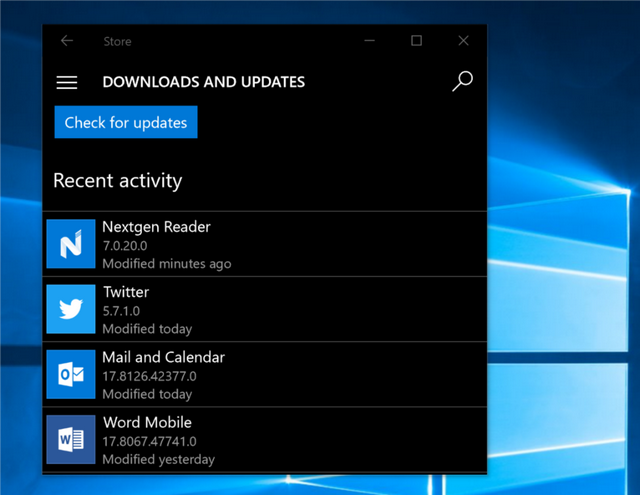

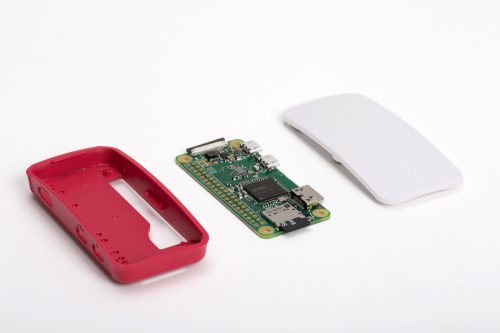
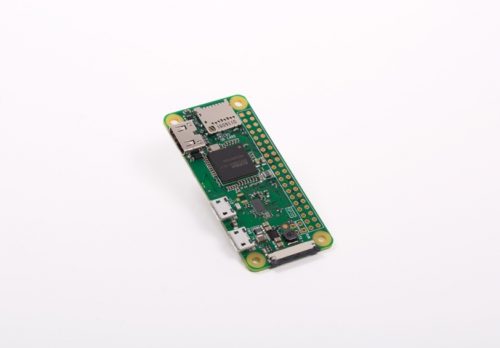
















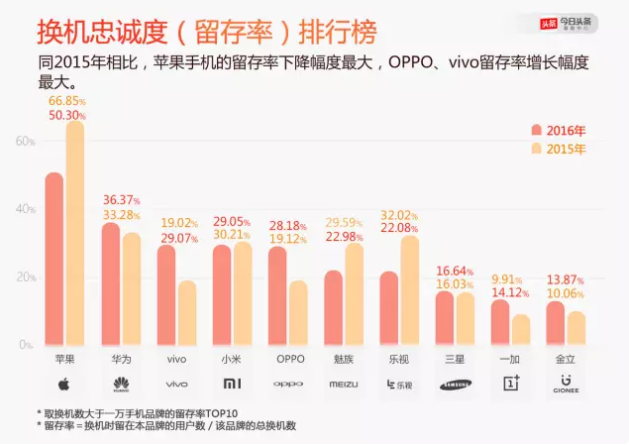

 Global News:

 Comments on: After ‘In Defense of Transracialism’ sparks outrage, editors of philosophy journal castigate its Canadian author.

 shutupmikeginn on Twitter.
 shutupmikeginn
 Today I Found Out.



 The Samsung Galaxy S8 and Galaxy S8+ are the first handsets from the Korean smartphone maker to make use of on-screen navigation buttons. The company had to ditch the physical home button on its latest flagship devices this time around due to the lack of space at the front as it wanted to achieve a bezel-less look.




 Global Rail News:



 CTV News - Vancouver.