Shared posts

14 May 16:07

Espresso

The web editor Espresso from MacRabbit is back in a new edition. If you do much CSS, you need it.

Interestingly, they’ve adopted the Tinderbox model for upgrades: free updates for a year, then you buy an upgrade with another year of free updates. Sustainable software matters.

14 May 16:07

Ich habe einen dummen Fehler gemacht

by Volker Weber

Vor zwei Monaten habe ich eine "Probe BahnCard" für drei Monate gekauft. Das dachte ich zumindest. Tatsächlich bin ich in eine Abofalle gestolpert. Wird die "Probe BahnCard" nicht binnen sechs Wochen gekündigt, dann nimmt die Bahn an, man wolle eine "BahnCard" bestellen, im Jahresabo, zu kündigen sechs Wochen vor dem Ablauf.

Natürlich wollte ich das nicht, aber das ist nun meine Schuld. "/ch" vom Twitter-Team der Bahn weist mich darauf hin: "Ärgerlich, wenn der Hinweis bei der Bestellung nicht beachtet wurde." Auf welcher Schulung lernt man so eine Reaktion?

Damit Euch dieser ärgerliche Fehler nicht auch passiert, könnt Ihr das Einzige tun, was mir bleibt: die "BahnCard" einfach mal kündigen. In drei Jahren hat sich nichts verbessert:

Update: Es scheint, diese Erinnerung wurde fleißig genutzt.

14 May 16:07

Cortana Replaces Windows Phone

Wired:

Redmond put a lot of complicated tech behind this cross-platform strategy—it involves XAML and .NET and whatever the Microsoft Graph is—but wrapped it all up in a tidy bow called Cortana. Microsoft’s virtual assistant is by all accounts very good, better in some ways than Siri or Google Assistant. But it can’t compete with assistants baked into a phone. No one wants to download a third-party app when the same features are a tap of the home button away. And once you’ve started using an assistant, you have little reason to switch.

So Microsoft gave Cortana a job Siri and Google Assistant can’t do. Or, rather, all the jobs they can’t do. Now, Cortana is how you access that spreadsheet you started earlier. It is how you transfer a photo from your phone to Photoshop on your laptop. It stays in the background, and pops up when you need it.

I've been on Android for more than a year now, and have never felt the need to get Cortana. With the Fall Creators Update that all changes. Same goes for Swiftkey thanks to its integration with the upcoming cloud clipboard. For people who are not Windows users, these announcements may not make a difference to their pick of personal assistant and keyboard. But as a Windows user, anything that's a true enabler of the "mobility of experience" I won't be able to ignore. What this more significantly implies is I'll have one less reason to switch from Windows, whereas other Android users on a Mac in particular will now have a reason to switch to Windows.

14 May 16:06

Canadians are watching more online video than ever, says study

by Sameer Chhabra
Netflix app opened on an iPhone 7

Canadians can’t get enough of online videos, according to a report from AOL.

AOL’s annual ‘State of Industry Video’ report revealed that 43 percent of Canadians watch online videos every day on their smartphone, while 70 percent watch online videos (on some kind of device) on a daily basis.

Additionally, 41 percent of Canadians watch more than four hours of online video every week.

What’s interesting is that Canadians aren’t just watching YouTube or Netflix — they’re consuming live content, like breaking news and sports, online too. About 47 percent of Canadians watch live content online at least once a week.

The report outlines that a significant number of Canadians — 56 percent — say they “consume more online content today than a year ago.” 

These trends correspond with numbers published by cable networks that indicate that fewer people are subscribing to cable television services.

The AOL report suggests three possible reasons for the shift towards online video:

“‘The flexibility to start/stop a program whenever they want’ (68 percent)…‘fewer commercials’ (58 percent), and ‘there’s more content available’(53 percent).’”

Personal computers, like laptops and desktops, are still the most popular devices used to view online videos, with 54 percent of those surveyed saying they watch online videos on a computer.

However, 68 percent of those surveyed say they “can’t live without their smartphone.” It’s no surprise, then, that 43 percent of Canadians watch online videos on their smartphones.

The report also highlighted some of the hurdles involved with online video consumption.

Canadians are picky with their online videos; 74 percent of those surveyed said they “expect an ad to last 15 seconds or less if it’s before an online video that’s under a minute.”

Interestingly enough — and what should be good news for advertisers — is that 55 percent of Canadians said that “they don’t mind watching ads before online video ‘if they are entertaining.’”

According to Aaron Caissie, a media representative for AOL, “in terms of Canadian statistics, there actually isn’t a report to link to (just raw data), but all the statistics are outlined in the [State of the Industry Video] press release.”

The post Canadians are watching more online video than ever, says study appeared first on MobileSyrup.

14 May 16:06

Feds Launch Major Smackdown On ‘Tech Support’ Scams

by Mary Beth Quirk
mkalus shared this story from Consumerist.

If the world of scams was a wrestling ring, the Federal Trade Commission would be launching itself from the corner to deliver a world of hurt on tech support scammers who claim consumers’ computers are full of malware and other nasty stuff that can only be vanquished by paying them hundreds of dollars.

The FTC isn’t taking issue with just one or two scammers right now, nope: As part of “Operation Tech Trap” — a coordinated effort with international partners and state authorities to crack down on such scams — the agency announced 16 new actions [PDF] it’s taking against scammers. Those actions includes complaints, settlements, indictments, and guilty pleas.

Most of the scammers targeted in the operation have similar MO’s: They populate a victim’s computer with fake security alerts that look like they’re from a legit tech company like Microsoft or Apple, warning them that their computers are full of viruses, are being hacked, or are otherwise vulnerable to hackers.

The ads urge computer users to call a toll-free number for help ridding their machines of infection or prevent an attack. Here’s an example:

Not realizing that the person on the phone isn’t actually a tech expert working for a major company, some consumers will go along with whatever the scammer says, including allowing them remote access to their computer so they can “fix” the issue.

Subsequent “diagnostic tests” inevitably spit out the same result: Your computer is in grave danger, and you have to pay hundreds of dollars for completely unnecessary computer repair services, service plans, anti-virus protection or software, and other products and services.

“Tech support scams prey on consumers’ legitimate concerns about malware, viruses and other cyber threats,” said Tom Pahl, Acting Director of the FTC’s Bureau of Consumer Protection.

Here’s the quick rundown of the actions announced today (full list here [PDF]):

• The FTC alleges in four of the new complaints that defendants used these kinds of tactics to scam Americans out of millions of dollars. In three of those cases, the agency says it’s already obtained temporary restraining orders that halts business at the companies in question by freezing their assets and appointing a temporary receiver to handle things.

• Settlements against two massive tech support operations that they had previously sued for bilking consumers out of millions of dollars.

• Federal criminal charges against seven individuals in connection with an investigation into two companies that formerly operated a tech support boiler room in Florida. The Florida Attorney General’s Office sued and obtained an order halting the business in June 2016.

• The campaign against tech support scams reaches beyond our borders as well, as the FTC says it’s been working with Indian officials to wage war on such scams operating there.

If you believe you’ve been the victim of a tech support scam, here’s what the FTC suggests you do:

• Update or download legitimate security software and scan your computer. Delete anything the software says is a problem.

• Change any password you shared with someone, on every account that uses those passwords.

• If you paid for a bogus service with a credit card, call the credit card company and ask to reverse the charges. Keep a close eye on your statements for any charges you didn’t make and request to reverse those charges as well.
• Report the scam to ftc.gov/complaint.

“The FTC is proud to work with federal, state and international partners to take down these scams, and help consumers learn how they can safeguard their computers against real cybersecurity threats,” Pahl said.

For more information on tech support scams, check out the FTC’s recently updated consumer education portal on that topic.


14 May 16:06

Early Warning Signs of Fascism

by Ronny
mkalus shared this story from Das Kraftfuttermischwerk.


(via RBYN)

14 May 16:05

A preview of the new engineering building at U of T

by jnyyz

Today I had the opportunity to take a look inside the new engineering building going up on St. George St on the University of Toronto campus. It is called the Centre for Engineering Innovation and Entrepreneurship, or CEIE. It will provide office space for many institutes within engineering. Additionally, the first four floors are student centred, and are given over to interactive classrooms, design spaces, and a light fabrication facility.  The pouring of the concrete should be done by the end of May, and the building will be more or less done in January 2018. However, it will probably be next September before classes are run in most of the new spaces.

We took this construction elevator up to the sixth floor.

DSC00411

From there it was a climb up some stairs to get to the top (eight) floor.

DSC00390

Here we are on the 8th floor.

DSC00393

It is with the leadership and vision of Dean Cristina Amon that this building came into existence.

DSC00401

It’s that time of year when they fence off front campus so that by the time convocation rolls around, the grass will actually look decent.

DSC00402

I guess you have to be an architect or a constructor worker to really make the “safety vest and helmet” look work. The rest of us looked a bit like Michael Dukakis.

DSC00405

Another panorama.

IMG_5365

They are still pouring the last of the concrete.

DSC00396

Temporary trusses provide the support for a concrete slab to be poured as the roof of the 8th floor. On top of this there will be a “penthouse” for ventilation equipment.

DSC00394

Now back down to the 6th floor.

DSC00407

The Hatchery is an undergraduate focused start up incubator that will be moved onto the sixth floor. Joseph, Hatchery director, is all smiles as he checks out his future home.

DSC00409

The design of the building had to be substantially altered to satisfy the requirement that Convocation Hall still had to be visible from Russell Ave. Here is a reverse angle view of that street. At the end, you can see Spadina Circle, where the new Architecture building is almost complete.

DSC00412

Back down on the ground floor, you can see the wall of a large auditorium classroom to the left.

DSC00415

This is a 468 seat auditorium where all of the seats will be grouped around small tables. Here, Prof. Stickel is taking a panorama. Many first year classes will be in this space.

IMG_5369 (1)

I’m most interested in this space in the basement, called the arena. It will be a shared space for all the student design teams.

IMG_5367 (1)

Celebrating with a bit of champagne and pizza. You can see the sloped underside of the tiered seating in the auditorium in the background.

DSC00417

Here is a cross sectional drawing of the whole building.

16527-55089

Can hardly wait to see the project complete.


14 May 16:02

Drug Use In The Third Reich

mkalus shared this story .

Despite Hitler's anti-drug rhetoric, Nazi Germany used a little courage pill called Pervitin to take Europe by storm. Turns out it was pure methamphetamine.

Pervitin Marching

Wikimedia Commons, German Federal Archives

Just before meeting with Benito Mussolini in the summer of 1943, Adolf Hitler was feeling seriously ill.

Still, he couldn’t ditch an Axis power meeting, and so Hitler’s personal physician injected the Führer with a drug called Eukodal — think oxycodone combined with cocaine — to perk him up.

The physician took a significant risk in doing so. After all, Hitler was prone to latching on to addictive substances and refusing to let go. But in this case, the injection seemed warranted: Hitler was doubled over with violent, spastic constipation, refusing to speak to anyone.

Immediately after the first injection and despite his doctor’s wishes, a revived Hitler ordered another injection. Hitler then left for the meeting with the gusto of a soldier half his age.

At the meeting with Mussolini, Hitler reportedly spoke for several hours without stopping. The Italian dictator — who sat massaging his own back, dabbing his forehead with a handkerchief, and sighing — had hoped to convince Hitler to let Italy drop out of the war. He never got the chance.

This was but one episode amid Hitler’s almost daily drug use, which included barbiturates, bull semen, testosterone, opiates, and stimulants such as Pervitin, a “courage” pill made out of methamphetamine.

Hitler wasn’t alone in his use of Pervitin. Throughout that time period, everyone from German soldiers at the front lines to menopausal homemakers wolfed down Pervitin like candy.

Widespread drug use wasn’t exactly new in the country. A generation earlier, Germany was mired in large-scale drug use — that is, until Hitler rose to power in part on an anti-drug campaign. But when Hitler changed course and became an addict, the same fate befell many in his country.

By the outset of World War II, German soldiers were using Pervitin to help them storm and conquer much of Europe. The high eventually vanished, however. By the end of the war, when hubris had untethered the Nazis from reality, soldiers used drugs like Pervitin simply to survive.

Norman Ohler’s recently-published book, Blitzed: Drugs in Nazi Germany, tackles the role that drugs played in the Third Reich — and it’s overwhelming.

The Poison In Germany’s Veins

Cocaine Deal

Georg Pahl/German Federal ArchivesDrug users purchase cocaine on the streets of Berlin, 1924.

Although he would later usher the Third Reich into a period of heavy drug usage, Hitler first used a radical anti-drug platform to seize control of the state.

This platform was part and parcel of a broader campaign built upon anti-establishment rhetoric. At that time, the establishment was the Weimar Republic, the unofficial name that Hitler had coined for the German regime that ruled between 1919 and 1933 and that had grown economically dependent on pharmaceuticals — specifically cocaine and heroin.

To give you an idea of this dependency’s scale, the year before the victors of World War I compelled the republic to sign the treaty of the International Opium Convention in 1929, Berlin alone produced 200 tons of opiates.

In fact, Germany was responsible for 40 percent of global morphine production between 1925 and 1930 (cocaine was a similar story), according to Ohler. All in all, with their economy largely wrecked by World War I, the Weimar Republic had become the world’s drug dealer.

Film Poster

PinterestA 1927 German film poster warns of the dangers of cocaine, opium, and morphine.

Hitler wasn’t a fan of it. A teetotaler who wouldn’t even drink coffee because of the caffeine, Hitler avoided all drugs. Famously, he reportedly never smoked again after throwing a pack of cigarettes into a river at the end of World War I.

When Hitler and the Nazis took control of Germany in 1933, they began extending Hitler’s no-poison-philosophy to the country as a whole. The Nazis had their work cut out for them, however. Describing the state of the country at the time of Hitler’s rise, German author Klaus Mann wrote: “Berlin night life, oh boy, oh boy, the world has never seen the like! We used to have a great army, now we’ve got great perversities!”

So the Nazis did what they did best, and combined their anti-drug efforts with their signature practice of accusing those they didn’t like — particularly those of Jewish descent — of being the ones stabbing Germany in the back.

Nazis thus used propaganda to associate addicts with these subjugated groups, coupled with harsh laws — one of the first laws the Reichstag passed in 1933 allowed the imprisonment of addicts for up to two years, extendable indefinitely — and new secret police divisions to bolster their anti-drug efforts.

Nazi Drug Propaganda Mushroom

Ernst Hiemer/Norman Ohler.An illustration from The Poisonous Mushroom, as presented in Blitzed: Drugs in Nazi Germany.

The Nazis also threw medical confidentiality out the window and required doctors to refer any person with a narcotics prescription lasting longer than two weeks to the state. The Nazis then cut off those who passed the ethnicity test cold turkey and imprisoned those who did not, sending them to concentration camps. Repeat offenders suffered the same fate.

On the surface, this large-scale shift away from rampant drug dependency looked like a Nazi-induced miracle. Of course, it only lasted until Hitler had his first taste of methamphetamine.

Hitler’s Descent Into Hypocrisy

Theodor Morell

WikimediaTheodor Morell, Hitler’s personal physician and the man responsible for introducing the dictator to many harmful drugs.

In 1936, the official photographer of the Nazi Party, Heinrich Hoffmann, came down with an extreme case of gonorrhea. He was a friend of Hitler’s — he had introduced Hitler to his lover, Eva Braun, who had been Hoffmann’s assistant — and so a call went out for the best, most discreet doctor that Germany had: Theodor Morell. Known for his vitamin shots and energy injections, Morell was the “it” doctor for Berlin’s celebrities.

Morell successfully treated Hoffmann, who was so grateful for the relief that he invited Morell to his home for a meal. It was a fortuitous choice. Hitler decided to drop in that night, and mentioned in passing that severe stomach and intestinal pains had tormented him for years. Not one to miss a chance to climb up the ranks, Morell offered Hitler a consultation.

Hitler took him up on his offer, later telling Morell in private that he was in so much pain that he could barely move, let alone lead a struggling country in the midst of upheaval. Morell lit up: he knew just the thing.

He prescribed Hitler a capsule full of healthy intestinal bacteria called Mutaflor, an experimental treatment at the time and one that is still used today. This helped Hitler’s stomach pain and increased flatulence issues enough that he appointed Morell as his personal physician.

From then on out, Morell would seldom leave Hitler’s vicinity, eventually injecting Hitler with everything from glucose solutions to vitamins multiple times a day, all to relieve Hitler’s chronic pain.

Hitler Speer

Heinrich Hoffmann/German Federal Archives via Wikimedia CommonsHitler meets with Albert Speer in 1943.

Despite these early successes, some evidence suggests that Morell grew careless after becoming Hitler’s favorite, a claim made by leading Nazi Albert Speer, Minister of Armaments and War Production. He would later write in his autobiography, dismissing Morell as a quack:

“In 1936, when my circulation and stomach rebelled . . . I called at Morell’s private office. After a superficial examination, Morell prescribed for me his intestinal bacteria, dextrose, vitamins and hormone tablets. For safety’s sake I afterward had a thorough examination by Professor von Bergmann, the specialist in internal medicine at Berlin University. I was not suffering from any organic trouble, he concluded, but only from nervous symptoms caused by overwork. I slowed down my pace as best I could and the symptoms abated. To avoid offending Hitler I pretended that I was carefully following Morell’s instructions, and since my health improved, I became for a time Morell’s showpiece.”

Moreover, some allege that Morell was downright deceitful.

For one, Ernst-Günther Schenck, a physician in the SS who would later write a book theorizing that Hitler had Parkinson’s disease, acquired one of the vitamin packets that Morell injected into Hitler every morning and had a laboratory test it. It turns out that Morell was injecting Hitler with methamphetamine, which helps explain why Hitler couldn’t get enough.

But that wasn’t the only drug Morell treated Hitler with: the physician would offer the Führer an ever-increasing laundry list of drugs, including caffeine, cocaine (for sore throat), and morphine — all the drugs that Hitler had railed against for years before the war. The most significant of these drugs was Pervitin, a methamphetamine.

Pervitin And The Great Methamphetamine-Fueled German Spirit

Pervitin Packaging

Wikimedia CommonsThe German armed forces used Pervitin to soldier through tough nights, but it came at a cost. Colloquially called “panzerschokolade,” or “tank chocolate,” its creator mimicked soda packaging to market the drug.

Temmler, a German pharmaceutical company, first patented Pervitin in 1937, and a German population caught up in the whirlwind of Nazism seized upon its positive effects.

Temmler commissioned one of the most successful PR agencies in Berlin to draw up a marketing plan modeled after the Coca-Cola Company, which had achieved tremendous global success.

By 1938, posters advertising Pervitin were everywhere in Berlin, from train station pillars to buses. Along with launching the PR campaign, Temmler sent each doctor in Berlin a sample of the drug in the mail, with the hope that the medical community would lead the general public into the arms of Pervitin by example.

The German people indeed ignored the drug’s adverse effects, and instead focused on the energy it provided, energy very much needed in a country first rebuilding itself after World War I and then mobilizing for World War II. It was almost unpatriotic not to be as hardworking, and Pervitin helped when nothing else could. Besides, it was much cheaper than coffee.

The Wehrmacht, the combined German armed forces during World War II, first had a taste of methamphetamine’s power when the Nazis invaded Poland in 1939. Troops were ecstatic about Pervitin — and so were their commanders, who wrote glowing reports advocating for the use of the drug.

“Everyone fresh and cheerful, excellent discipline. Slight euphoria and increased thirst for action. Mental encouragement, very stimulated. No accidents. Long-lasting effect. After taking four tablets, double vision and seeing colors,” read one drug usage report from the front lines, according to Ohler’s book.

Another report read: “The feeling of hunger subsides. One particularly beneficial aspect is the appearance of a vigorous urge to work. The effect is so clear that it cannot be based on imagination.”

Pervitin allowed soldiers to weather days at the front — days consisting of little sleep, copious trauma, empty stomachs, and violently enforced obedience — better than anything else.

Of course, there are consequences to distributing millions of addictive pills to as many soldiers. Addiction became a problem, with the Nazis shipping 35 million units of Pervitin and similar substances to army and air force troops in April and May 1940 alone. Letters recovered from the front show soldiers writing home, begging for more Pervitin at every turn. Everybody, from generals and their staffs to infantry captains and their troops, became dependent on methamphetamine.

One lieutenant colonel entrusted with running a Panzer Ersatz division described the massive drug usage in no uncertain terms, writing in a report:

“Pervitin was delivered officially before the start of the operation and distributed to the officers all the way down to the company commander for their own use and to be passed on to the troops below them with the clear instruction that it was to be used to keep them awake in the imminent operation. There was a clear order that the Panzer troop had to use Pervitin.”

He had been using the drug during battles “for four weeks taken daily 2 times 2 tabs Pervitin.” In the report, he complained of heart pains, and also mentioning how his “blood circulation had been perfectly normal before the use of Perdition.

The writing was on the wall, and people took notice. In 1941, Leo Conti, the Nazi Reich Health Führer finally had enough and managed to categorize Pervitin underneath the Reich opium law — officially declaring it an intoxicant and making it illegal.

The Third Reich’s top health official believed — writing in a letter, quoted in Ohler’s book — that Germany, “an entire nation,” was “becoming addicted to drugs,” and that Pervitin’s “disturbing aftereffects fully obliterate the entirely favorable success achieved after use…The emergence of a tolerance to Pervitin could paralyze whole sections of the population…Anyone who seeks to eliminate fatigue with Pervitin can be quite sure that it will lead to a creeping depletion of physical and psychological performance reserves, and finally to a complete breakdown.”

Methamphetamine’s long-term effects on the human body are indeed disastrous. Addiction is highly likely to swallow users whole, and with that addiction comes depression, hallucinations, severe dehydration, and constant nausea.

Nazi doctors knew that these side effects couldn’t be solved by short rest periods, but couldnothing they could do. Soldiers either died of heart failure, suicide or military errors caused by mental fatigue. The drug always caught up with them.

And Conti’s attempts to rein in the Nazi state’s runaway dependence on methamphetamine was for naught. Germans barely observed the prohibition and civilian use — let alone in the military, which was about to invade Russia — actually increased in 1941.

Much like Hitler became dependent on Morell for survival, Germany became dependent on Pervitin. Germans turned to methamphetamine for the faith to endure, not realizing the harm the drug could be. And as the war dragged on, the Nazis never regained control of the pill that promised them the world.


Next, check out these absurd Nazi propaganda photos with their original captions, before finding out how IBM helped the Nazis carry out the Holocaust.“.

Hitler’s Descent Into Hypocrisy

Theodor Morell

WikimediaTheodor Morell, Hitler’s personal physician and the man responsible for introducing the dictator to many harmful drugs.

In 1936, the official photographer of the Nazi Party, Heinrich Hoffmann, came down with an extreme case of gonorrhea. He was a friend of Hitler’s — he had introduced Hitler to his lover, Eva Braun, who had been Hoffmann’s assistant — and so a call went out for the best, most discreet doctor that Germany had: Theodor Morell. Known for his vitamin shots and energy injections, Morell was the “it” doctor for Berlin’s celebrities.

Morell successfully treated Hoffmann, who was so grateful for the relief that he invited Morell to his home for a meal. It was a fortuitous choice. Hitler decided to drop in that night, and mentioned in passing that severe stomach and intestinal pains had tormented him for years. Not one to miss a chance to climb up the ranks, Morell offered Hitler a consultation.

Hitler took him up on his offer, later telling Morell in private that he was in so much pain that he could barely move, let alone lead a struggling country in the midst of upheaval. Morell lit up: he knew just the thing.

He prescribed Hitler a capsule full of healthy intestinal bacteria called Mutaflor, an experimental treatment at the time and one that is still used today. This helped Hitler’s stomach pain and increased flatulence issues enough that he appointed Morell as his personal physician.

From then on out, Morell would seldom leave Hitler’s vicinity, eventually injecting Hitler with everything from glucose solutions to vitamins multiple times a day, all to relieve Hitler’s chronic pain.

Hitler Speer

Heinrich Hoffmann/German Federal Archives via Wikimedia CommonsHitler meets with Albert Speer in 1943.

Despite these early successes, some evidence suggests that Morell grew careless after becoming Hitler’s favorite, a claim made by leading Nazi Albert Speer, Minister of Armaments and War Production. He would later write in his autobiography, dismissing Morell as a quack:

“In 1936, when my circulation and stomach rebelled . . . I called at Morell’s private office. After a superficial examination, Morell prescribed for me his intestinal bacteria, dextrose, vitamins and hormone tablets. For safety’s sake I afterward had a thorough examination by Professor von Bergmann, the specialist in internal medicine at Berlin University. I was not suffering from any organic trouble, he concluded, but only from nervous symptoms caused by overwork. I slowed down my pace as best I could and the symptoms abated. To avoid offending Hitler I pretended that I was carefully following Morell’s instructions, and since my health improved, I became for a time Morell’s showpiece.”

Moreover, some allege that Morell was downright deceitful.

For one, Ernst-Günther Schenck, a physician in the SS who would later write a book theorizing that Hitler had Parkinson’s disease, acquired one of the vitamin packets that Morell injected into Hitler every morning and had a laboratory test it. It turns out that Morell was injecting Hitler with methamphetamine, which helps explain why Hitler couldn’t get enough.

But that wasn’t the only drug Morell treated Hitler with: the physician would offer the Führer an ever-increasing laundry list of drugs, including caffeine, cocaine (for sore throat), and morphine — all the drugs that Hitler had railed against for years before the war. The most significant of these drugs was Pervitin, a methamphetamine.

Pervitin And The Great Methamphetamine-Fueled German Spirit

Pervitin Packaging

Wikimedia CommonsThe German armed forces used Pervitin to soldier through tough nights, but it came at a cost. Colloquially called “panzerschokolade,” or “tank chocolate,” its creator mimicked soda packaging to market the drug.

Temmler, a German pharmaceutical company, first patented Pervitin in 1937, and a German population caught up in the whirlwind of Nazism seized upon its positive effects.

Temmler commissioned one of the most successful PR agencies in Berlin to draw up a marketing plan modeled after the Coca-Cola Company, which had achieved tremendous global success.

By 1938, posters advertising Pervitin were everywhere in Berlin, from train station pillars to buses. Along with launching the PR campaign, Temmler sent each doctor in Berlin a sample of the drug in the mail, with the hope that the medical community would lead the general public into the arms of Pervitin by example.

The German people indeed ignored the drug’s adverse effects, and instead focused on the energy it provided, energy very much needed in a country first rebuilding itself after World War I and then mobilizing for World War II. It was almost unpatriotic not to be as hardworking, and Pervitin helped when nothing else could. Besides, it was much cheaper than coffee.

The Wehrmacht, the combined German armed forces during World War II, first had a taste of methamphetamine’s power when the Nazis invaded Poland in 1939. Troops were ecstatic about Pervitin — and so were their commanders, who wrote glowing reports advocating for the use of the drug.

“Everyone fresh and cheerful, excellent discipline. Slight euphoria and increased thirst for action. Mental encouragement, very stimulated. No accidents. Long-lasting effect. After taking four tablets, double vision and seeing colors,” read one drug usage report from the front lines, according to Ohler’s book.

Another report read: “The feeling of hunger subsides. One particularly beneficial aspect is the appearance of a vigorous urge to work. The effect is so clear that it cannot be based on imagination.”

Pervitin allowed soldiers to weather days at the front — days consisting of little sleep, copious trauma, empty stomachs, and violently enforced obedience — better than anything else.

Of course, there are consequences to distributing millions of addictive pills to as many soldiers. Addiction became a problem, with the Nazis shipping 35 million units of Pervitin and similar substances to army and air force troops in April and May 1940 alone. Letters recovered from the front show soldiers writing home, begging for more Pervitin at every turn. Everybody, from generals and their staffs to infantry captains and their troops, became dependent on methamphetamine.

One lieutenant colonel entrusted with running a Panzer Ersatz division described the massive drug usage in no uncertain terms, writing in a report:

“Pervitin was delivered officially before the start of the operation and distributed to the officers all the way down to the company commander for their own use and to be passed on to the troops below them with the clear instruction that it was to be used to keep them awake in the imminent operation. There was a clear order that the Panzer troop had to use Pervitin.”

He had been using the drug during battles “for four weeks taken daily 2 times 2 tabs Pervitin.” In the report, he complained of heart pains, and also mentioning how his “blood circulation had been perfectly normal before the use of Perdition.

The writing was on the wall, and people took notice. In 1941, Leo Conti, the Nazi Reich Health Führer finally had enough and managed to categorize Pervitin underneath the Reich opium law — officially declaring it an intoxicant and making it illegal.

The Third Reich’s top health official believed — writing in a letter, quoted in Ohler’s book — that Germany, “an entire nation,” was “becoming addicted to drugs,” and that Pervitin’s “disturbing aftereffects fully obliterate the entirely favorable success achieved after use…The emergence of a tolerance to Pervitin could paralyze whole sections of the population…Anyone who seeks to eliminate fatigue with Pervitin can be quite sure that it will lead to a creeping depletion of physical and psychological performance reserves, and finally to a complete breakdown.”

Methamphetamine’s long-term effects on the human body are indeed disastrous. Addiction is highly likely to swallow users whole, and with that addiction comes depression, hallucinations, severe dehydration, and constant nausea.

Nazi doctors knew that these side effects couldn’t be solved by short rest periods, but couldnothing they could do. Soldiers either died of heart failure, suicide or military errors caused by mental fatigue. The drug always caught up with them.

And Conti’s attempts to rein in the Nazi state’s runaway dependence on methamphetamine was for naught. Germans barely observed the prohibition and civilian use — let alone in the military, which was about to invade Russia — actually increased in 1941.

Much like Hitler became dependent on Morell for survival, Germany became dependent on Pervitin. Germans turned to methamphetamine for the faith to endure, not realizing the harm the drug could be. And as the war dragged on, the Nazis never regained control of the pill that promised them the world.


Next, check out these absurd Nazi propaganda photos with their original captions, before finding out how IBM helped the Nazis carry out the Holocaust.“.

14 May 16:02

Bombardier adds two new locomotives to Traxx line

by News
mkalus shared this story from Global Rail News.

Bombardier has added two new electric options to its Traxx line of locomotives.

In addition to the Traxx AC3, Bombardier Transportation has added new Traxx MS3 (multi system) and DC3 (direct current) locomotives.

The announcement was made at the Transport Logistic trade fair in Munich.

The MS3 can be used under each of the four voltages commonly found in Europe – 25kVAC, 15kVAC, 1.5kVDC and 3kVDC – while the DC3 version can operate on direct current routes, such as those found in Italy and Poland.

Making the announcement, Bombardier’s president of locomotives and light rail vehicles, Michael Fohrer, said: “Our new locomotive platform offers operators suitable solutions for all electrification systems.

“The advantages are mainly in the areas of tractive power, economical and ecological operation and tailor-made service variants.

“Our new platform will enable operators to rely upon the last mile feature across all of Europe, making it possible to bridge non-electrified track sections in harbours and borders as well as compensate for power failure.”

The Traxx platform was established 15 years ago. Currently there are around 1,750 Traxx units in operation in Europe.

14 May 16:01

Twitter Favorites: [Remy] Can genuinely say that "Thanksgiving" from Master Of None S2 is one of the best TV episodes I've ever watched.

Dan Dickinson @Remy
Can genuinely say that "Thanksgiving" from Master Of None S2 is one of the best TV episodes I've ever watched.
14 May 16:01

NASA Denies Trump’s Request to Send Astronauts Past the Moon on New Rocket

mkalus shared this story .

Including astronauts would have also required significant work, like adding a fully operational life-support system to the Orion crew capsule, where the astronauts would have been seated.

Even without that additional work, Mr. Lightfoot announced that the launch date has slipped again, to 2019 from the previous target of November 2018, because of various technical challenges and some bad luck. In February, a tornado struck the Michoud Assembly Facility in Louisiana, where pieces of the rocket are being built, damaging the roof and equipment.

“That really set us back in a big way,” said William H. Gerstenmaier, the associate administrator for the human exploration and operations directorate at NASA.

This month, a big dome-shaped piece at Michoud was badly damaged while being moved; it was to become the bottom of a liquid oxygen tank that will be used for testing. “It’s probably not repairable,” Mr. Gerstenmaier said. But there are additional domes, and Mr. Gerstenmaier said he did not expect that to add much to the delay.

The construction of the European Space Agency’s contribution to the rocket — a service module that will provide propulsion, power and supplies for the Orion capsule — is also behind schedule.

NASA will now follow its original plan. For the first flight, Orion is to fly thousands of miles beyond the moon during a three-week trip. Mr. Gerstenmaier said one advantage of a crewless mission is that it will allow more thorough testing, closer to the edge of the capabilities of the spacecraft. “We will push as hard as we can,” he said.

The second flight, the first with astronauts, will come about three years later. It is scheduled for August 2021, but will also likely be delayed.

The delays will add to the skepticism of those who think the Space Launch System and Orion will be obsolete by the time they get to the launchpad.

SpaceX, the rocket company started by Elon Musk, is planning to finally launch this summer its long-delayed Falcon Heavy rocket. The Falcon Heavy is not as powerful as the Space Launch System, but with a $90 million price tag, far cheaper. The Space Launch System, which would launch only about once every two years, is estimated to cost $1 billion per mission.

Blue Origin, a rocket company started by Jeff Bezos, the founder of Amazon, is also developing a large rocket called New Glenn, which may begin launching as soon as 2020.

The Trump administration’s preliminary budget proposal for 2018 keeps NASA’s financing level almost unchanged, while it includes deep cuts to many other agencies. The administration has not offered many details of its plans for NASA in the coming years.

At a symposium in Washington this month about efforts to speed the development of much cheaper, fully reusable rockets, Newt Gingrich, the former House speaker who has advised President Trump on various issues including space, described the Space Launch System as less capable than the Saturn 5 rocket that took astronauts to the moon in 1969, yet far more expensive.

“The handwriting is on the wall,” Mr. Gingrich said. “Those kinds of programs are going to look stupid.”

Continue reading the main story
14 May 16:01

Canadian-developed vaccine could help response to new Ebola outbreak in Congo

mkalus shared this story from The Globe and Mail - World.

A Canadian-developed vaccine is being considered as a potential response to a new outbreak of Ebola in a remote corner of the Democratic Republic of the Congo.

One case of Ebola has been confirmed and eight other suspected cases are being investigated, including three deaths, according to a statement by the World Health Organization on Friday. Six people are now in hospital with a hemorrhagic fever as blood specimens continue to be examined in laboratory tests.

The outbreak occurred in Bas-Uele province in the north of the country, more than 1,300 kilometres northeast of Kinshasa, the national capital. The suspected cases have been reported over the past three weeks.

Read more: What it’s like ... to help patients during an Ebola outbreak

“We urge you not to give in to panic,” Congo Health Minister Oly Ilunga Kalenga told the country in a televised address. “The ministry of health is taking all measures to respond quickly and efficiently to this new outbreak.”

Teams of epidemiologists, biologists and other experts are on their way to the scene of the outbreak and are expected to arrive by Saturday.

Among the questions that they will assess is whether to recommend the use of the Canadian vaccine. About 300,000 doses of the experimental vaccine have been stockpiled and could potentially be made available at the site of the outbreak in Congo if the health experts recommend it.

More than 11,300 people died in a devastating Ebola epidemic in West Africa in 2014 and 2015, the worst in history. But the new outbreak in Congo has several big differences from the West African outbreak.

The new Congolese outbreak is in a remote region, far from the big cities where Ebola spreads more easily. Congo has had plenty of experience in containing and eliminating Ebola outbreaks in recent years. And the new Canadian vaccine has provided an effective weapon for the Congolese authorities that didn’t exist before.

The vaccine has not yet been given formal regulatory approval to be licensed, but last month a group of experts at the World Health Organization said the vaccine should be used promptly when Ebola outbreaks occur.

Since 1976, Congo has experienced eight Ebola outbreaks, giving it valuable experience in containing the virus, unlike the West African countries where Ebola spread rapidly in 2014. Each of the last three Congolese outbreaks of Ebola over the past decade was contained with less than 100 cases. The WHO has described Congo as “the country that knows how to beat Ebola.”

The Canadian vaccine, known as rVSV-ZEBOV, is the first Ebola vaccine to show success in containing the so-called Zaire strain of the virus, which has been the deadliest strain.

The vaccine was developed by scientists at the National Microbiology Laboratory in Winnipeg over a 15-year period and has now been licensed to Merck and Co., with the Canadian government continuing to give financial support to its clinical trials.

In 2015, during the waning months of the West African epidemic, the experimental vaccine was given to about 5,800 people in Guinea who had had close contact with new Ebola patients, along with the contacts of those contacts. Of those who received the vaccine immediately, none developed the Ebola virus. But 23 cases occurred among those in a control group whose vaccination had been delayed.

This showed that the vaccine was highly effective, according to a study published last December in the medical journal Lancet. Experts predicted the vaccine could be 80 per cent effective when deployed across an entire population.

Last month, a panel of scientists at the U.S. National Academy of Medicine raised questions about the methodology of the Guinea trial and the effectiveness of the vaccine. It concluded that the vaccine “most likely provides some protection,” but the protection might be “quite low.”

The World Health Organization, however, continues to support the Canadian-developed vaccine. “The world’s first Ebola vaccine provides substantial protection,” said Dr. Margaret Chan, director-general of the WHO, in a speech in Guinea this month.

“A safe and efficacious Ebola vaccine was the world’s best gift during 2016,” she said.

At a meeting last month, the WHO experts said the vaccine should be used when Ebola outbreaks occur, but under strict conditions, including a requirement that its recipients give their informed consent.

The vaccine should not be given for mass immunization of the general population, the experts said. Instead, they said it should be given to those who have close contacts with Ebola patients, the contacts of those contacts, and the local and international health workers who might be treating anyone infected with Ebola.

In a visit to Guinea in 2015, The Globe and Mail witnessed the rollout of the Canadian vaccine and saw the difficulty of persuading some people to accept the vaccine, because of frequent false rumours about its dangers.

In some cases, it took several days of regular visits by doctors and community leaders before the vaccine was accepted by the families of those who had been infected by the Ebola virus.

The virus has been cloaked in fear and rumours for so long that many Guineans were afraid that the vaccine could spread the virus. But they were eventually reassured by persistent campaigning by health workers, local chiefs and religious leaders.

Report Typo/Error

Follow Geoffrey York on Twitter: @geoffreyyork

14 May 15:50

O'Reilly, Deeper reading: Doughnut Economics

O'Reilly, Deeper reading: Doughnut Economics:

Last week we highlighted Richard Bookstaber’s new tome, The End of Theory: Financial Crises, the Failure of Economics, and the Sweep of Human Interaction. This week we feature Kate Raworth’s innovative theoretical framework for the economy—Doughnut Economics: Seven Ways to Think Like a 21st-Century Economist. Beginning with the premise that current economic theory is centuries out of date, Raworth constructs a new model based on the common good and environmental sagacity. She lays out the seven tenets of her theory—from moving beyond the goal of GDP growth to adopting regenerative design—in this article. TL;DR? This clever animation summarizes Doughnut Economics in less than 1.5 minutes. This review in the Guardian lauds the clarity and simplicity of Raworth’s bold, radical representation of a new economy that works for everyone, inextricably bound to social justice, resources, and the environment. Raworth discusses her “Doughnut Economics” theory in this video from TEDxAthens 2014. And in this article from the World Economic Forum, she takes on income inequality, arguing that the Kuznets Curve be replaced by a new paradigm: economies that are distributive by design.

14 May 15:50

O'Reilly, Have we reached peak gig?

O'Reilly, Have we reached peak gig?:

Having geared up and gained momentum, the gig economy is hitting some serious bumps in the road, beyond the myriad foibles of Uber and Airbnb’s scuffles with various municipalities, most recently San Francisco. The bloom is off this young sector; reports from the frontlines are disheartening. In March, the New Yorker highlighted the plight of on-demand workers and the callousness of the platforms they work for in a dramatically titled opinion piece, “The gig economy celebrates working yourself to death.” In April, the New York Times editorial board weighed in with “The gig economy’s false promise,” addressing the manipulation and exploitation of workers devoid of legal protections and benefits by gig economy startups (and generating a few meaty letters to the editor from some heavy hitters). At the end of April, Quartz ran an analysis of the shaky financials and consumer dynamics of the gig sector, proclaiming “The on-demand economy is a bubble—and it’s about to burst.” This week the New Yorker was back on the beat with a long-form piece—"Is the gig economy working?“—examining the on-demand ecosystem spawned by Airbnb, the true beneficiaries of that ecosystem, and alternative platform business models—like Hello Alfred—that hire W-2 employees with benefits. In the midst of these high-profile stories came news of the demise of two on-demand companies with more enlightened worker policies: ride-hailing startup Juno—which promised its drivers a stake in the company—was acquired by Gett; and Maple—a high-quality food preparation and delivery startup—just called it quits.

The repeal of Obamacare could torpedo the gig economy.

12 May 21:46

Doing what doesn’t come naturally

by sheppy

I’ve been writing developer documentation for 20 years now, 11 of those years at Mozilla. For most of those years, documentation work was largely unmanaged. That is to say, we had management, and we had goals, but how we reached those goals was entirely up to us. This worked well for me in particular. My brain is like a simple maze bot in some respects, following all the left turns until it reaches a dead end, then backing up to where it made the last turn and taking the next path to the right, and repeating until the goal has been reached.

This is how I wrote for a good 14 or 15 years of my career. I’d start writing about a topic, linking to APIs, functions, other guides and tutorials, and so forth along the way—whether they already existed or not. Then I’d go back through the page and click the first link on the page I just created, and I’d make sure that that page was solid. Any material on that page that needed to be fixed for my new work to be 100% understood, I’d update. If there were any broken links, I’d fix them, creating and writing new pages as needed, and so forth.

How my mind wants to do it

Let’s imagine that the standards gurus have spoken and have decided to add to a new <dial> element to HTML, providing support for creating knobs and speedometer-style feedback displays. My job is to document this element.

I start by creating the main article in the HTML reference for <dial>, and I write that material, starting with a summary (which may include references to <progress>, <input>, and other elements and pages). It may also include links to articles I plan to create, such as “Using dial elements” and “Displaying information in HTML” as well as articles on forms.

As I continue, I may wind up with links to subpages which need to be created; I’ll also wind up with a link to the documentation for the HTMLDialElement interface, which obviously hasn’t been written yet. I also will have links to subpages of that, as well as perhaps for other elements’ attributes and methods.

Having finished the document for <dial>, I save it, review it and clean it up, then I start following all the links on the page. Any links that take me to a page that needs to be written, I write it. Any links that take me to a page that needs content added because of the new element, I expand them. Any links that take me to a page that is just horribly unusably bad, I update or rewrite as needed. And I continue to follow those left-hand turns, writing or updating article after article, until eventually I wind up back where I started.

If one of those pages is missing an example, odds are good it’ll be hard to resist creating one, although if it will take more than a few minutes, this is where I’m likely to reluctantly flag it for someone else to do later, unless it’s really interesting and I am just that intrigued.

By the time I’m done documenting <dial>, I may also have updated badly out of date documentation for three other elements and their interfaces, written pages about how to decide on the best way to represent your data, added documentation for another undocumented element that has nothing to do with anything but it was a dead link I saw along the way, updated another element’s documentation because that page was where I happened to go to look at the correct way to structure something, and I saw it had layout problems…

You get the idea.

How I have to do it now

Unfortunately, I can’t realistically do that anymore. We have adopted a system of sprints with planned work for each sprint. Failing to complete the work in the expected amount of time tends to get you dirty looks from more and more people the longer it goes on. Even though I’m getting a ton accomplished, it doesn’t count if it’s not on the sprint plan.

So I try to force myself to work on only the stuff directly related to the sprint we’re doing. But sometimes the line is hard to find. If I add documentation for an interface, but the documentation for its parent interface is terrible, it seems to me that updating that parent interface is a fairly obvious part of my job for the sprint. But it wasn’t budgeted into the time available, so if I do it, I’m not going to finish in time.

The conundrum

That leaves me in a bind: do strictly what I’m supposed to do, leaving behind docs that are only partly usable, or follow at least some of those links into pages that need help before the new content is truly usable and “complete,” but risk missing my expected schedule.

I almost always choose the latter, going in knowing I’m going to be late because of it. I try to control my tendency to keep making left turns, but sometimes I lose myself in the work and write stuff I am not expected to be doing right now.

Worse, though, is that the effort of restraining myself to just writing what’s expected is unnatural to me. My brain rebels a bit, and I’m quite sure my overall throughput is somewhat lower because of it. As a result: a less enjoyable writing experience for me, less overall content created, and unmet goals.

I wonder, sometimes, how my work results would look if I were able to cut loose and just go again. I know I have other issues slowing me down (see my earlier blog post Peripheral neuropathy and me), but I can’t help wondering if I could be more productive by working how I think, instead of doing what doesn’t come naturally: work on a single thing from A to Z without any deviation at all for any reason.

12 May 21:45

Celebrating #Dropbox10: Drew and Arash’s favorite songs from 2007

by Ben Taylor


Since the company’s founding day in 2007, we’ve been honored to see the Dropbox community develop, grow, and thrive. To celebrate, we’re putting together a series of posts looking back at an exciting—and often surprising—decade. Join us as we reminisce, share a few stories, and reflect on how the industry has changed.

One of the best ways to capture a moment in time is through music. We asked founders Drew Houston and Arash Ferdowsi to share the songs they listened to most when they were first creating Dropbox. Here are the tunes they most frequently streamed…or rather, synced to their iPods.

Drew

1. “Anna Molly” by Incubus

“If coding the first prototype of Dropbox had a soundtrack, Incubus’s 2006 album Light Grenades would be it.”

2. “Unemployable” by Pearl Jam

“I’ve always been a big Pearl Jam fan; for years they’ve recorded all of their shows and made the bootlegs available for download. I remember they played a show in Boston right after I finished college in 2006 and dedicated this song to all the new grads.”

3. “Dani California” by the Red Hot Chili Peppers

“Whenever I visited my friend Adam (fellow MIT classmate/fraternity brother and fellow YC founder) in San Francisco he’d always have [the album] Stadium Arcadium playing.“

4. “Garden Grove” by Sublime

“I remember Sublime’s self-titled album playing on repeat into the middle of the night as I slogged through making take after take of the first Dropbox demo video/screencast in March 2007 (using some audio equipment borrowed from my ‘90s rock cover band), hoping to get Y Combinator’s attention (it worked!)”

5. “Say It Ain’t So” by Weezer

“We had just gotten Rock Band which was one of the company’s favorite pastimes in the early days. ‘Say It Ain’t So’ became the ‘Dropbox National Anthem’—it was a team karaoke favorite and the one song all our musicians knew how to play (in real life).”

6. “Someone Great” by LCD Soundsystem

“One of our fellow Y Combinator companies, Fuzzwich, allowed anyone to create little cartoon videos (no talent required). We all made and watched hundreds of these ‘minivids’ and this was one of the default backing tracks. Ten years later, listening to it still conjures up images of Flash players and dialogue bubbles.”

7. “Umbrella” by Rihanna

“You couldn’t go far in 2007 without hearing this song. Ella, ella, ella…”

Arash

“A sampling of ’07 hits I remember hearing/playing a lot :P”

8. “Say It Right” by Nelly Furtado

9. “The Way I Are” by Timbaland

10. “Party Like A Rockstar” by the Shop Boyz

12 May 21:44

Reply about Drupal OSCON 2005 shirt v1

by theunseen

theunseen has posted a comment:

This is still in the T-shirt rotation

Drupal OSCON 2005 shirt v1

12 May 21:44

Google announces Project Treble, possible solution to slow carrier and device maker updates

by Sameer Chhabra
Android-O

It’s no secret that carriers and device makers take their time updating Android.

In fact, for a lot of consumers who purchase phones directly from carriers — or for customers who buy non-Nexus and non-Pixel phones — the number one reason to avoid Android devices is the lengthy wait times between updates.

Google’s now proposing a solution that might just make it easier for carriers and device makers to release Android updates faster: Project Treble.

Android-Update-Flowchart

The usual Android update cycle follows a simple process.

First, the Android team publishes the latest version of Android. Next, silicon manufactures build chips surrounding the new Android version. Device makers build phones that utilize chips built for Android. Then carriers ensure that their software is built into the new version. Finally, device makers and carriers release their revised versions of Android to users via over-the-air (OTA) updates.

With the exception of owners of Nexus and Pixel devices, users can wait anywhere between months and years for the latest version of Android, with many carriers and device makers simply opting to not update devices at all.

With Project Treble, however, Google’s plan is to reduce the time between Android updates by making it easier for carriers and device makers to transfer over specific software, without needing to update that software for each subsequent version of Android.

Android-Update-Before-TrebleAndroid-Update-After-Treble

According to Google, “Project Treble will be coming to all new devices launched with Android O and beyond.”

Project Treble is also currently available on the developer preview for Android O. Google will no doubt delve deeper into Project Treble and Android O’s other features at the Google I/O on May 17, 2017.

Source: Android Developers Blog

The post Google announces Project Treble, possible solution to slow carrier and device maker updates appeared first on MobileSyrup.

12 May 18:33

More Power to the Transpo Engineers?

by Sandy James Planner

need-more-power-fig-1

As reported in Metro News, by  Matt Kieltyka there’s a report going to Vancouver City Council next Tuesday with the title “Complete Streets Policy Framework and Related By-law Changes”. What that really means is that the City Engineer is asking for changes in the Streets By-law to undertake work under the guise of the Complete Streets Policy as outlined in the Transportation 2040 Plan without having to schlep to Council for approval of things like lane changes or the making of public spaces that generally follow the plan.

The challenge with the lack of reporting back to Council is establishing what Council should know about-or not. My years working as the City’s greenways planner showed that even something that would be seemingly a public good and not contentious-like closing the street for a small greenway at 11th Avenue and Maple Street in Arbutus-brought over twenty delegations to Council. While Council approved the greenway, the final design that was built incorporated the existing street instead of the specialized surface promised to the residents, and was not to the design approved by Council. At some time when redevelopment occurs on that section of street, I am sure that the residents will remind Council of this lapsed undertaking and request a greenway reboot.

There’s been some contention over the City’s move towards walking and biking priority as per the 2040 Plan, especially  in recent events with the Point Grey Road, Commercial Drive, and the Kitsilano Beach bike lane and the Tenth Avenue Hospital improvements that will take out all but two metered parking spots on Tenth Avenue west of  Ash Street. These big “events” would still be going to Council.

One councillor, George Affleck wants to maintain council oversight on road use changes.  “It’s a great way for Vision Vancouver to avoid having to talk about bike lanes ever again. It would make me very uncomfortable,” said Affleck. “In my mind, the buck stops at council. Decisions on major developments, how we build our city, streets … those kind of decisions should be discussed in public with council oversight. That’s our job and when we start skipping that process, we’re in big trouble.”


[The bylaw revisions] go against what I believe was the intention of that plan and why I supported it,” he said. “Changing a speed bump is one thing. But if you’re changing and getting rid of a lane or parking for bike lanes, making change that has significant impact not only on the neighbourhood but the city at large, city council should be making a decision on it.”

It’s an interesting point, as when changes do go to Council there is the opportunity for public debate and learnings for Council and the public. Do we need to have that discussion? Or should the engineer use delegated authority for changing modes and uses on public right of ways and do diversions and rerouting traffic routes? Are we at a place where the public good is recognized and  served by less Council oversight and public debate?

img-0-6492714-jpg


12 May 18:31

Provincial Government Versus Mayors Council-“Ethical Issues Chipped Away Credibility”

by Sandy James Planner

mayors

Rob Shaw’s article today in the Vancouver Sun does not pull any punches-and finally there is some truth-telling in the Provincial government’s ranks about what was REALLY going on with the lack of co-operation at supporting accessibility and good public transportation in Metro Vancouver. Kevin Falcon who used to be minister in the Liberal government said the party “lost considerable urban ground to the NDP because ethical issues chipped away at their credibility, and because of the lengthy political dispute over funding Lower Mainland transit projects…lack of  progress over transportation projects, and just a little too much politics and not quite enough initiative”.

There’s been a lot of drama-the Province insisted that the Mayors Council put forward their proposed way of funding transit to a 2015 plebiscite. The Province also “nixed or delayed potential local funding sources for transit, such as a vehicle levy, road pricing or carbon tax expansion, and the result has been a multi-year fight with local politicians over money.”

And that’s not all. At the end of the campaign the Province announced that the Mayors Council would have to hold another referendum for new revenue resources to fund things like the Broadway subway or Surrey rapid transit.

Nobody in government is perfect,” said Falcon. “But I think it’s a mistake to say we’re going to force a referendum before we make any major transportation decisions. At the end of the day, the public hates that kind of politics. What they want to see is leadership in action.”

Of course the bridge tolls, the lack of Uber or ride share and the need for taxi reforms also didn’t help to smooth things over either for Metro Vancouver. And the Massey Bridge, overbuilt and in the wrong place to support regional growth and industry became a Port project, completely against the principles established by Metro Vancouver and the Mayors Council-supported only by  the  Mayor of Delta with the Port in the backyard.

It’s a new day.


newskytrainmainst-e1432301248242


12 May 18:30

Who Matters? Sexual Assault and Inadequate Police Response in Japan

by subcultureist

Recently Japan Subculture Research Center’s acting editor-in-chief, Jake Adelstein,  and managing editor, Mari Yamamoto, published an article, “Do Men In Japan Ever Get Convicted For Rape?” in the Daily Beast on the need for change in the sexual assault laws and the handling of the cases in Japan.

An excerpt of the actual attempted assault of a visiting scholar was a large part of the article and since it has triggered a tremendous response,  below is the full account. The overall response to the article has been immense and there will be a follow up but it is worth reiterating, the official numbers of sexual assault cases are most likely grossly underestimated. Sexual assault in Japan is seldom discussed even in the confidence of friends.

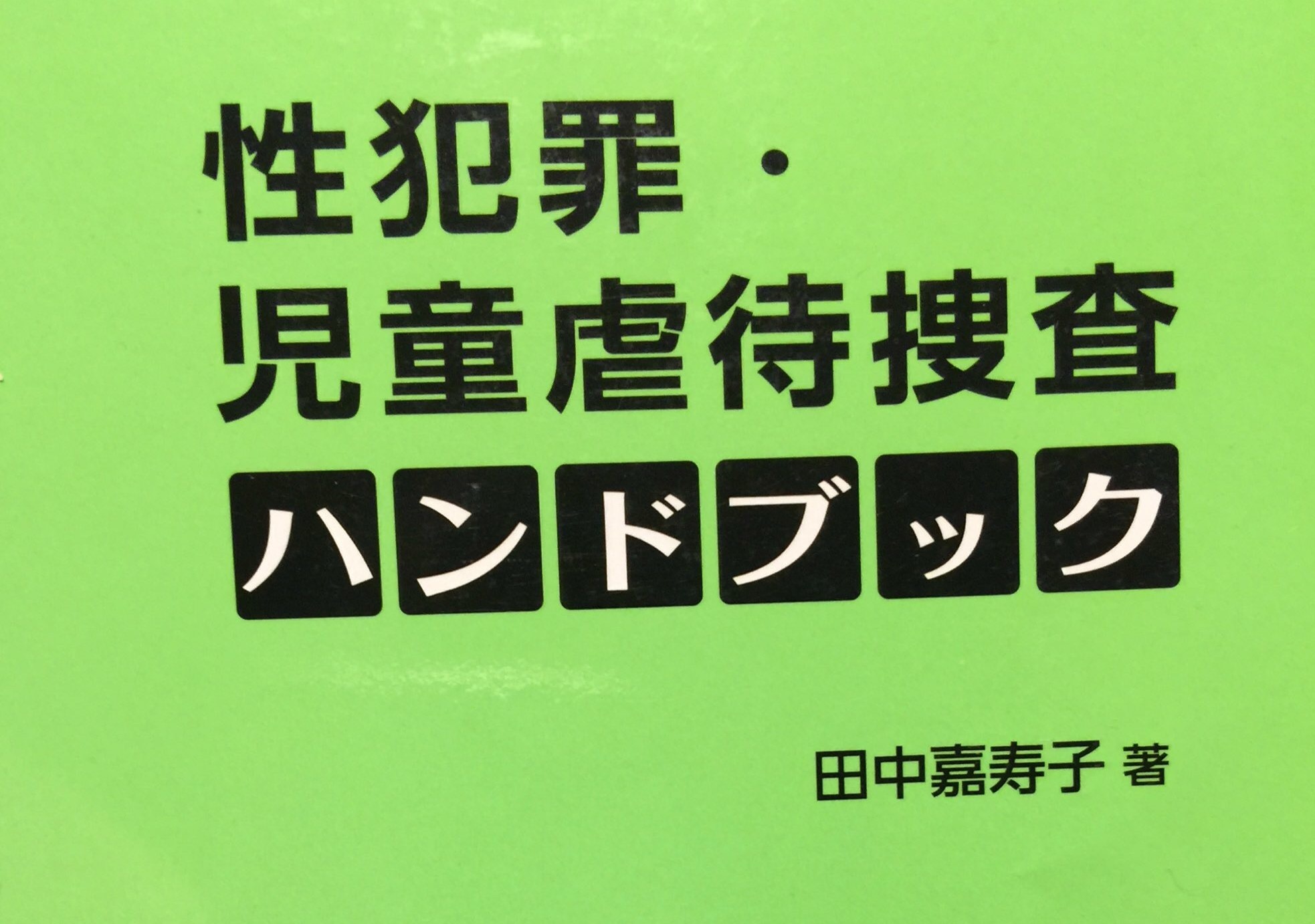
Long time prosecutor Kazuko Tanaka depicts the bleak landscape of sexual assault investigation in her book “Sexual Crimes and Child Abuse Investigation Handbook” published in 2014.

“While 100% of those who are victims of theft would (be assumed to) file a police report, according to a 2008 Ministry of Justice’s research of the estimated actual numbers of crimes, the rates of reports made were 13.3%. However, in the 2011 Cabinet Gender Equality Bureau’s “Research on Violence Between the Sexes” (男女間における暴力に関する調査) they found that only 3.7% of people who confided in others went to the police and 67.9% of the victims did not tell anybody at all. Therefore it can be estimated that only 4% of the cases are being reported and if the report rate was 100%, the case numbers (of sexual assault in Japan) would increase by 25 times.”

For those who can read Japanese, the book documents in great detail, many of the problems with sexual assault in Japan, both the low rate of reporting and the poor handling by law enforcement.  We have received many personal letters and emails from other victims. A harrowing account of a foreign woman who was raped in Japan in 2014, was also published in the Japan Times. The majority of victims in Japan, are of course, Japanese women. And sometimes men.

Here is the account of one woman in Japan, who barely escaped sexual assault, and who experienced the police at their laziest.

“I lived in a sleepy neighborhood close to a prestigious University, a place where most residents were over sixty and my biggest fear was how I could ever make enough cakes to repay them for the treats they regularly brought me. I often told friends and colleagues how relieved I was to be spending my two years of dissertation research in an area free of the hustle and bustle of Shibuya or Shinjuku’s youth and seedy corners. Like many people, I considered Japan the safest country I had ever visited. Here, I rarely feared walking alone after dark or glanced around with the same caution I would even in the safest towns in the U.S.

But last year, as I returned home late from a weeknight birthday celebration, a man quietly followed me down a side street two blocks from my apartment. Past the cozy stoop where I normally pause to pet the neighborhood Labrador and snap photos of the local store cat, to the residential interior not visible from the main road. Unknown to me, he trailed only a few feet behind. As I passed in front of the local childcare center, I glimpsed him over my shoulder just as he rushed to quickly seize me from behind and force me to the ground. Though he groped at me from above as I thrashed in resistance and screamed a litany of English profanities at him, my attacker soon gave up and just as quickly fled the way we had come. Sprawled in the street under the lighted windows of dozens of nearby apartments and bleeding from the elbow I’d hit the concrete on, I stared at the scattered contents of my purse and the lost shoe that lay a few feet away. No one looked outside. No one opened their doors. I was alone.

As I gathered my things and walked the block to my apartment, all I could think about was what I had heard from others—that Japanese police don’t take assaults on or the molestation of women seriously. The article I had read two years ago in the Japan Times on the shamefully poor handling of one woman’s rape case was running through my mind. Shaken and trying not to touch my bloody arm, I called my best friend in America, agonizing over the thought of waking my elderly neighbors up, or having to go back to the police station alone (in the direction my attacker had run), only to face the coming ordeal in Japanese, when it was hard enough to endure in English.

I finally settled on walking back to the police box several blocks away, and there, my every expectation of being taken lightly and having the truth of my experience denied was met with an insidious subtly that was not subtle at all.

Don’t get me wrong, people cared that I was hurt. The elderly officer at the police box was immediately alert and upset. He sat me down and called someone with more haste than anyone else I saw that night. This kind of crime, I was told, had never occurred in my area. He was alarmed. Even more alarmed, or perhaps especially so, after I mentioned I was a researcher at said renowned University. Suddenly, I really mattered.

After an awkward call to a policewoman that I struggled through, not knowing the vocabulary for my attack (when had I ever had the need to learn the word for ‘physical assault’ or ‘rape’?), the tiny police box was soon filled over capacity with other officers. Only the elderly gentleman had the presence of mind to tell them to move me to the back, away from the door and windows, to question me.

I was interrogated about the attack over and over again by multiple officers, asked where, when, what he looked like, to mimic the motions of the way the man grabbed me, again, again. They snapped photos of my bloody elbows, trying to find a good way to do so crammed in the tiny back room. I wondered if this was how questioning normally occurred, stuffed into this claustrophobic space, loomed over by five officers in a room, only two of whom really fit in the room with me. But more than the inappropriateness of the space, I began to notice the tenor of the questions.

“What did he look like? He was a foreigner, wasn’t he? Was he white? An American?”

No, I said, he was Japanese.

“A Korean? Probably a Korean or a Chinese person?”

No, I said, he was Japanese.

“She said he looked like a regular salaryman [white collar worker],” the one female officer in the room interjected, “She said he was Japanese.”

“Are you sure he was wearing a white dress shirt? Wasn’t it more like a t-shirt?”

No, I said, repeating myself for the third time. It was a short-sleeved collared shirt.

“And pants like these?” A male officer suggested, tugging on his black cargoes.

No, I said, repeating myself again. They were slacks.

“Like a salaryman,” the female officer echoed. “That’s what she said.”

Interspersed with the suggestions that my attacker could not have possibly looked like a Japanese business man, the officers inserted every few minutes, “You don’t want to submit a police report, right?”

The first few times I hadn’t caught onto the word, and from context I couldn’t tell if I should say yes or no. I heard the word “higai,” damage or injury, in there, but didn’t realize “higaitodoke” was a police report, and stumbled through the questions adrenaline-addled; avoiding giving an answer to something I didn’t understand.

Not twenty minutes after this inquisition, they drove me back to the scene of the crime and for half an hour had me show them the exact spot where it happened. The how, the when, the where. This time, they wanted me to re-enact the situation with a female officer, so they could take photos of what the event must have looked like. What if I had been raped? I wondered. Or of a more delicate state of mind after this attack, like others might be? How traumatizing could it have been for four officers to take me back to the scene not half an hour later and make me walk them through it while a stranger put their hands on me in the exact same way I had been assaulted? It made me sick to my stomach to later learn this is standard procedure, and even women who have been raped are made to reenact or watch reenactments of their attack for the sake of police records.

I was asked several more times about submitting a police report, in the same manner as before. “You could submit a police report, but…”, “Are you sure you want to?”, “You know you don’t have to…”, “It’s already so late at night, aren’t you too tired?” The female office was the only one who stepped in, saying “But what if it happens again to another girl?”

I understood the meaning fully this time.

The realization that the way every male officer had been asking me about the police report, as if to file a formal complaint about my assault was a giant inconvenience, a futile and wholly unnecessary effort, made me livid. I thought about how many other women in Japan must have been encouraged not to submit police reports. To bury their stories and their (perceived) shame for the sake of convenience. It was 2 AM. I assured them a police report was exactly what I wanted.

I was driven to the police station, where two male officers took me into a small room and set up a laptop and portable printer. All of the previous information was gone through several more times, with mind-numbing repetition, and equally mind-numbing insensitivity. The same series of questions about whether I was sure he was Japanese.

“How do you know?” One officer asked.

“I’ve been studying Japanese for ten years, and I’ve lived in Japan for four years, I know what a Japanese person looks like.” I had made the mistake of mentioning a Korean restaurant nearby as a landmark in describing the small street I went down. They jumped on it.

“So it was surely a Korean man,” the officer said with confidence.

The restaurant is, in fact, owned by a very kind Japanese lady.

“He was Japanese,” I protested.

You can tell the difference between Japanese, Korean, and Chinese people?” the officer scoffed.

“I can usually tell the difference.”

“What? Can you really? Even I can’t do that,” he countered.

Of course, I thought to myself. My truth did not fit the standard, discriminatory narrative in Japan: That Japanese people don’t frequently commit crimes, foreigners do. Sure, there is room for doubt—it was dark, I was struggling, he was a stranger. The reaction of pure disbelief at my story, several times over, layered with a healthy dose of anti-foreign sentiment was startling but not shocking. As a victim, I was unsettled; as someone familiar with the deeply ingrained racism prevalent in many areas of Japanese society at large, I recognized with disappointment what I heard.

But worse yet was the more common disbelief that is shared widely around the world: that assault on women is not a real crime, especially not if it doesn’t go too far, and that men must have their reasons. In the middle of the report, I was asked to do another reenactment, this time in a tiny tatami room on another floor of the police station. The female officer joined us again, and once more I had to relive my attack under the watchful eyes of two more male officers, one with a camera, one an observer, while the woman apologetically asked where she should put her arms on me and we repeatedly paused in awkward mid-motion so they could take photos of our positions.

Amidst the perverse recreation, the older male officer paused us, and added, “But grabbing you like that, he didn’t actually grab your boobs, did he? Or did he try to? Did he actually put his hands on them or not? He only grabbed your arms?” I gawked at the questions. Not only because I had never heard a professional use the casual term for breasts, oppai, and never expected to in such a serious situation, but because the officer seemed to want to downplay the seriousness of the attack.

“He didn’t have the chance,” I fumbled to explain. While it could have been an innocent line of inquiry, it didn’t feel that way at all from the way he asked—it was very clear that there was a line to be drawn here between assault and sexual assault. A gravity no one wanted to lay claim to in this situation. “Did you think he wanted to rape you? No, right?” Someone had asked at some point. Why else, I wondered to myself, would they think a man stalked a woman several minutes down a dark empty street in the middle of the night and attack her? Sure, it was an assault, but maybe it wasn’t sexual, they implied.

Then there was the question of alcohol. Several times over it came up. Was he drunk? Did he smell like alcohol? Did he walk funny? Maybe he was just drunk, and it was a mistake. I doubt a drunk man would have the presence of mind to stalk after me so quietly, for so long, to rush at me just as I took notice of him. To run that fast once I had fought him off too vigorously and too loudly to be worth the trouble any more. But if a man is drunk, sexual assault is perfectly normal, isn’t it? Their brief actions have little impact? Isn’t that what society tells us? Clearly Americans are not the only ones.

Even as the officers were finishing up my police report, one of them looked to me and said, “You know, you’re going back home at the end of August. If you file this report and it goes to trial, will you really come back here?” I answered sharply, “If necessary,” so fast that he looked taken aback. How many women, I wondered, did police regularly convince to deny the truth of their attack? To drop making a report, because it was unlikely to lead to conviction? Because it might hurt their crime statistics? Because assault on women didn’t actually matter?

I do not write this with the intention setting flame to the reputation of my local police or to vilify these officers that rallied quickly when I told them I was hurt. I write this because it is apparent to me— now through vivid personal experience— that in Japan, just as in many nations, sexual assault on women (to speak nothing of others who suffer as well) is taken lightly in a manner that points to a disturbing lack of proper training, sensitivity, and respect for women and victims.

Inherent cultural biases against the belief that Japanese can commit crimes, that crimes against women are important enough to report, that such crimes have to be grave to matter—all of these issues meant that my story was questioned at every step, and that subtle or not, I was constantly dissuaded from “enduring” proper procedure for reporting a serious crime.

The Japanese National Policy Agency’s informational materials on police support for sex crime victims state that “It is also unavoidable that officers, in their contacts with victims, often cause them to suffer secondary victimization,” and then lists the measures and policies the police take to support victims who suffer this type of assault, such as counseling, special investigators, or appointing female officers to offer assistance. But the fact of the matter is that secondary victimization is largely avoidable, if officers are trained to handle responding to victims appropriately.

Throughout my experience there was no awareness that taking a victim back to the scene of the crime only minutes after it occurred, making them re-enact the event several times, and using insensitive language or lines of questioning could be at all traumatizing. Every person involved was absolutely oblivious, and I was not asked once if anything made me uncomfortable. I was never formally told what the police procedures were at any point of the process (other than the option to not submit a report at all). With the exception of the contact information memo I received at the very end of my four hours at the station, only one person– the elderly man with whom I first spoke at the police box— ever showed me a badge or gave me their names. The extent to which officers failed to fundamentally understand what it meant to properly handle this type of assault with consideration of and respect for the victim was appalling.

Throughout the entire ordeal I wondered to myself, how much worse or more unprofessionally would I have been treated if I had not been a researcher at a prestigious university? If I didn’t know Japanese? Would I have been afforded any more respect if I had been seriously injured? Raped? Would they have considered me important at all if I had just been some twenty-something young tourist? If I had been a Japanese woman, even? That I even had to ask myself such questions about who matters points to the gross negligence in training Japanese police officers to handle these sensitive subjects. To see beyond their personal biases and the deeply embedded flaws in the legal system to do good police work and bring justice to those who sorely need it.

With the Olympics around the corner and a huge influx of foreigners expected to populate the greater Tokyo area in the next four years, perpetrators will find ample opportunity to harass, assault, or sexually prey upon foreign victims, especially. And without a doubt, they will be more likely to do so because they know the system all but guarantees that the chance they will be caught or punished is abysmally small.

I returned to the U.S. shortly thereafter, and the police, refusing to accept any form of contact information from me except a Japanese phone number, defunct after my departure, will never be able to contact me again.

They will never catch the man. But that police report mattered. Women matter. Their safety matters. Procedure matters. Their stories matter. Their dignity matters. Though you would not have known it to be sitting in that police station.”

We make it our mission to keep writing about sexual violence in Japan. If you have a story you would like to share, please email us at japansubcultureresearchcenter@gmail.com


12 May 18:29

Metrolinx signs deal to buy light-rail vehicles from Alstom in shot across Bombardier’s bow

mkalus shared this story from Comments on: Metrolinx signs deal to buy light-rail vehicles from Alstom in shot across Bombardier’s bow.

Ontario’s transit agency Metrolinx, a major customer of Bombardier’s light rail vehicles, announced Friday that it has turned to a competitor of the Montreal-based company over “serious concerns” quality vehicles won’t be delivered on time.

Metrolinx said it has entered a contract with French-manufacturer Alstom for 61 light rail vehicles, a plan it calls “a safety net” in case Bombardier fails to deliver light-rail vehicles for two major projects in Toronto.

Under the $528-million agreement, Alstom will build 17 vehicles for the Finch West LRT project and, if necessary, 44 for the Eglinton Crosstown, both projects that Bombardier has already agreed to build vehicles for. The deal also includes an option for additional vehicles.

If Bombardier meets its contractual obligations and delivers vehicles on time, the Alstom vehicles will be reassigned to the Hurontario LRT project.

“Over the past several months, Metrolinx has had significant concerns concerns regarding Bombardier’s ability to deliver quality vehicles according to the contract,” Ontario’s Minister of Transportation minister Stephen Del Duca said at a news conference Friday.

“I refuse to stand idly by during this time of uncertainty. From my perspective, it’s essential that we take responsible action in order to ensure that we successfully deliver on our promise to open these transit projects on time.”

Bombardier spokesperson Simon Letendre said the company is “ready, able, and willing to deliver these vehicles to the people of Toronto on time.”

“As the Minister and Metrolinx are well aware, these vehicles can be ready ahead of schedule and well before a single track has even been laid on the Eglinton Crosstown,” Letendre said in an emailed statement, adding that the pilot vehicle Metrolinx ordered is ready and undergoing qualification testing.

“We believe what’s best for the people of Toronto and Ontario is that we work together to ensure taxpayers are not on the hook for another cancelled contract,” he said.

“We have addressed the issues raised in the past and we are confident this will be upheld in the dispute resolution process.”

Last November, Metrolinx formally notified Bombardier it intended to cancel a $770-million contract for 182 light-rail vehicles, citing “significant quality and manufacturing issues.” Bombardier responded by filing a court injunction to stop the cancellation, claiming Metrolinx was in fact responsible for project delays.

In April, the Ontario Superior Court of Justice ruled in favour of Bombardier, granting an injunction that temporarily halted the government’s transit agency from terminating the deal. Both parties will now participate in a court-ordered dispute resolution process.

Del Duca would not say whether the province would still consider Bombardier for future projects.

While the province said it still respects the court ruling, concerns over how long the dispute resolution process will take led them to seek alternative options.

“We are going through a dispute resolution process with Bombardier, but that could take 8-12 months, and we can’t wait that long to determine whether Bombardier will be able to deliver,” Metrolinx president and chief executive John Jensen said in a statement.

“We are hopeful that Bombardier can get its program on track. However, the steps we are taking give us a safety net if it turns out Bombardier is unable to fulfill its contract.”

12 May 18:29

It’s true: Pop music has become more repetitive

by Rachel Kaser

Does it ever seem to you that pop song lyrics are getting more repetitive? Evidence of one researcher and an algorithm suggests it’s not your imagination — in fact, it’s measurably true. In an essay on The Pudding, Colin Morris demonstrates repetition by compressing pop songs using the Lempel-Ziv algorithm, the same algorithm that compresses gifs. The algorithm looked for repetition of lines and parts of words, then removed them, reducing the overall size of the song. The chorus of the Sia’s “Cheap Thrills,” for example, was reduced by 46-percent after all repetitions were removed. In total, Morris collected data from 15,000 songs on…

This story continues at The Next Web
12 May 18:28

The night team

by CommitStrip
mkalus shared this story from CommitStrip.

12 May 18:28

How to Fix Google Pixel and Pixel XL Bluetooth Issues

by Rajesh Pandey
When Google first launched its Pixel handsets last year, they were marred with various issues. While Google has managed to fix most of them with software updates, a common complaint that still persists among Pixel owners is in regards to its Bluetooth connectivity. For some reason, the handset suffers from serious Bluetooth connectivity issues that continue to linger around six months after its launch and multiple software updates from Google. Continue reading →
12 May 18:28

Lecture: Housing in Vienna – May 19

by pricetags

ALTERNATIVES TO THE HOUSING CRISIS: CASE STUDY VIENNA

Using Vienna as a case study, this lecture explores the relationship of affordable housing to urban planning politics and will discuss historic and current housing policies, not least in a critical cross-analysis with the Vancouver case.

Click here for more information on the Vienna Model.


Gabu Heindl is an architect/urban planner and theorist in Vienna, Austria.  Since 2013, she has been president of ÖGFA (Austrian Society for Architects) and a lecturer at the Institute for Art and Architecture at the Academy of Fine Arts.

Friday, May 19

7 – 10 pm

Djavad Mowafaghian World Art Centre, Goldcorp Centre for the Arts, 149 West Hastings

Free

MODERATORS

Sabine Bitter and Jeff Derksen are members of the research collective Urban Subjects that is based in Vancouver and Vienna (with the artist Helmut Weber).

RESPONDENTS

Stephanie Allen has developed real estate for almost 15 years, with focus on multi-family residential projects in the private and public sector in BC, Alberta, and Arizona.

Matt Hern is the author of What a City Is For: Remaking the Politics of Displacement (MIT Press, 2016) and Common Ground in a Liquid City: Essays in Defence of an Urban Future (AK Press, 2010), amongst other titles. He currently teaches in SFU’s Urban Studies department.

Wendy Pedersen is a community organizer, author and researcher who is currently the Coordinator of the DTES SRO Collaborative Society that works on habitability campaigns with Tenant Organizers to preserve their low-income rentals. S


This event is in conjunction with The Vienna Model: Housing for the Twenty-First Century, Museum of Vancouver, May 17-July 16, 2017.


12 May 18:28

New Wide Rims, Not Tubeless Compatible (And I Like It That Way...)

by noreply@blogger.com (VeloOrange)
by Igor


These prototype triple-box section rims have an outer width of 28mm, inner width of 21mm, and are suitable for tire sizes ranging from 40mm to the mid 50s. Basically, they are made for the meat n' potatoes of touring, commuting, and gravel riding. Not only can they take floaty tires, they are also the widest rim you can use while still being able to implement a normal rim brake setup.


We'll be testing them on our Polyvalent Disc prototypes in the months to come. Wheel building and tire installation was a breeze with the bead seating perfectly the first time. I picked double-butted DT Swiss spokes with brass nipples and Velox 22mm Rim Tape. Right now they are wearing the new WTB Byways for double-duty road and trail use. When inflated to 55 40psi (I should have had my afternoon coffee, max for these tires is 50psi), the tires measure true at 46.8mm while 56ft above sea level.


Ok, so are they tubeless compatible? No, and I prefer it. It's not because of any retrogrouch tendencies. I'm more than happy to accept new technologies when they provide a genuine better level of cycling enjoyment. Electronic shifting is nifty, pinion gearboxes are snazzy, and disc brakes are the bees knees.

But tubeless doesn't really do it for me. You still need to carry a tube, pump, and extra fluid if you're out for longer adventures. Carrying these things negates the argument that tubeless is lighter. Heck, I just carry a basic Rustines patch kit on daily rides and an extra tube for longer treks. Yes, you can run lower pressures with tubeless, but you have to watch out for burping in tough corners.

In addition, a rim standard hasn't been widely adopted yet, so not every tubeless tire and rim combination is compatible. I feel like I'm seeing "standard hasn't been widely adopted yet" more and more nowadays in the cycling industry.


If you want to run a heartier setup but you don't want the hassle of tubeless, you can remove your valve core, dump some sealant into the tube via an injector, swish around, and inflate.

Do you use tubeless? What sort of conditions do you think tubeless is 100% necessary?
12 May 18:28

FocusList Review: A Minimalist, Pomodoro To-Do App

by Jake Underwood

Through testing productivity apps like Doo and Time, my to-do preferences have changed; while I was once a fan of feature-rich task managers, I’ve learned to appreciate the simplicity of apps that just focus on helping me get stuff done.

FocusList is a great example of that sort of minimalism in action, an unadorned display of your tasks, their estimated completion time, and, on occasion, a timer. Its content is driven by your list of tasks, but no more – its one goal is to focus you on your work.

Complimenting your task list are a couple of handy features: the project duration and a Pomodoro timer. For each task, you can assign an estimate for the time you anticipate to spend on the project, with swipes left or right raising and lowering the total by 30 minutes. And to help you complete the tasks, FocusList will use the Pomodoro technique – 25 minutes of work followed by 5 minutes of rest – displaying a timer above your task list.

To review how your performance, a stats view can be opened in the app’s hamburger menu. By peeking at your stats, you can see how and when you worked, as well as how accurate your estimates were.

FocusList syncs across your iPhone, Apple Watch, and Mac using iCloud. Once you log in, your data will be available on each of your devices and backed up to iCloud.

All in all, FocusList is an efficient and easy-to-use to-do app that will find favor with those looking for a simple productivity tool. For routine tasks, FocusList is a stellar app.

You can pick up FocusList in the iOS App Store here and in the Mac App Store here for $4.99 each.


Support MacStories Directly

Club MacStories offers exclusive access to extra MacStories content, delivered every week; it’s also a way to support us directly.

Club MacStories will help you discover the best apps for your devices and get the most out of your iPhone, iPad, and Mac. Plus, it’s made in Italy.

Join Now
12 May 18:27

The Economist interview: Orwellian rambling from Donald Trump

by Josh Bernoff

The distinguished editors at The Economist interviewed President Trump. When I set out to analyze his statements, I felt as if I had wandered into a hall of mirrors. Donald Trump is a persuasive person who, one-on-one, has been able to make deals all over the world. He’s the master of communicating in tweets and campaign rallies. But … Continued

The post The Economist interview: Orwellian rambling from Donald Trump appeared first on without bullshit.

12 May 18:27

CC attribution

by Bryan Mathers
CC attribution

My brother often corrects my grammar. It’s as easy to get it right as to get it wrong… he would say. Even though I find this mildly irritating, especially as he’s my younger sibling, he’s quite right – and secretly I upgrade my grammar without giving him any satisfaction, only to knowledgeably correct others on the same point.

So this thinkery about Creative Commons attribution might feel mildly annoying, but when it comes to attributing an author or creator for something you get to use for free, I think it’s worth the secret upgrade…

The post CC attribution appeared first on Visual Thinkery.