Shared posts

21 Aug 16:58

Blueprint for a car-lite life

by mark simmons

For couples with two vehicles looking to reduce their car dependency, here’s a suggestion. This is an infographic of how I managed to achieve a car-lite life.

My path started with option four, moving closer to work. Oh, the joy of an extra hour in bed. Then a few years later, option three was realised, the wife and I both working from home. Oh, the joy of a very relaxed morning coffee in the garden before I commuted 30ft to my home office. The cars just sat outside, not being used often for a couple of weeks. So it was easy to sell one. It was a welcome improvement from wearing mine out every three years. It was also a step towards an easier life, not having to maintain two cars and the admin that goes with it. Most welcome.

I hope sharing this helps you take a positive step towards this kind of freedom that I personally really enjoy.

infographic

The post Blueprint for a car-lite life appeared first on Lifestyle Cyclist.

21 Jul 15:29

Music Notes

Herewith notes on what I’m listening to in 2021, and why that’s a problem. With recommendations both for music and for things we can do to keep it alive.

Sometimes I listen to music on LPs — usually a combination of classical, elderly, and obscure. Otherwise these days it’s mostly YouTube Music (YTM). Which is very good at one of its jobs, namely finding me interesting music. But it’s terrible at its other job, which is being a constructive part of the music ecosystem.

Pretty soon, Covid allowing, I’ll be adding another mode: Live concerts! You should too; more on that below.

YouTube Music

YouTube Music

It’s the successor to Google Music, which attracted most of its customers because it was quick, easy, and free to upload your own personal music collection (however acquired). My collection is old and eclectic and includes lots of stuff that, I’ve always assumed, would never make it into a mainstream online service. From my social-media stream, I learned I was far from alone in liking this.

GMusic automatically scanned your iTunes music library and efficiently uploaded it all with no fuss. YTMusic can upload but you have to do it a track at a time, so your 10K-song collection is a real problem. I wonder which Google Thought Leader decided to toss out the most attractive feature? Now to be fair, YTMusic did bring along my uploaded GMusic library so I’m fine personally. Maybe this was something useful only to grizzled Boomers and Google knows what it’s doing.

I decided to pay for YTMusic in the hope that money would filter through to musicians. When you first fire it up, it throws up a huge random selection of artists and asks you to select a few you like. It reacted badly to me picking twenty-five or so.

Given a little time for the algorithm to stabilize, I’d have to say it does an awesome job of discovery. I’ve fallen in love with multiple artists who (probably due to being old) I’d never heard of.

Having said that, I occasionally feel like I’m wrestling with the algorithm. The only tool you have are the thumbs up/down buttons, but it seems to interpret those sensibly. For some reason it initially thought I was all about slow dreamy/doomy stuff and yeah, I do like a lot of that, but then the world also has Rock & Roll and funk and bluegrass and, you know, everything created before 1900 or so.

Bohren & der Club of Gore

For a while it got the idea that all I really wanted was Bohren & der Club of Gore —  German Doom Jazz, more or less. And yeah, they’re fine. For a while.

Enough bitching. When I turn on what it calls “Your Supermix” I usually end up happy with what I hear.

On top of which there are some really brilliant thematic mixes; probably my favorite is Produced By: Sly & Robbie, just dripping with Reggae/Dub excellence and then some occasional surprises from for example Grace Jones.

I’m not saying Spotify or Apple or Amazon isn’t just as good at this stuff. I don’t use them so I don’t know.

Musical breakage

I’d like to introduce you to a couple of my new jams. But first, there’s something wrong with this picture: It’s starving musicians. For an excellent (albeit UK-focused) overview I recommend the BBC’s MPs call for complete reset of music streaming to ensure fair pay for artists. Basically, the streaming services pay a derisory pittance for each song delivered, which the business side eats most of and emits a few pennies to the actual musicians. It’s horrible.

I pay about US$8.50/month for YTMusic. A while back there was a week when I had to do a lot of driving. I told Android Auto “Play Radiohead” and left it there for a few days. I tried to work out how much Thom & the boys took home for earning quite a few hours of my continuous attention. It’s hard because the whole system is opaque; the answers I got were all over the map, but all amounted to “not enough for anyone to live on”.

Neither musicians nor (it seems) music lovers enjoy much political influence. And the music biz is, what’s left of it after recovering from its Twentieth-century addiction to selling cheap pieces of plastic at like 90% gross margin, is pretty happy with the way things are.

How can we help out the creators? Well, to the extent there are petitions to sign and campaigns to support, sign and support. But there’s one concrete thing you can do starting now that will send money to the people who need it and also improve your own quality of life.

Buy concert tickets!

Live performance is about the last useful way that a musician can generate noticeable revenue and retain a sane proportion of it. And it’s not a bed of roses, what with Ticketmaster’s egregious monopoly and the way a high proportion of tickets mysteriously migrate to extra-cost resellers. By the way, my own province is trying to do something about it with the just-arrived BC Ticket Sales Act. Good on ’em!

I’ve been watching the concert announcements like a hawk and have purchased tickets to upcoming Vancouver shows by Cousin Harley, Tinariwen, the Cowboy Junkies, July Talk, Godspeed You! Black Emperor, and Sons of Kemet.

You know what? Some of these are many months off. I might be out of town. I might be sick. I might be dead. Covid might come back and screw everything up again. So what? My concert-going budget for the last 19 months has been exactly zero, and it’s time to make up for that.

The classical concert scene seems to be having a really tough time getting rebooted. I hear them saying things like “We can’t book anything until we have absolute clarity about allowed audience sizes.” Um, there’s no flexibility even when the alternative is impoverishment? Go learn from the rockers and the jazzbos, they’re getting back on the damn road, figure it out.

Enough ranting about the industry. By way of thanks for listening, let me introduce you to a song.

Farewell Transmission

I was driving somewhere and suddenly there was a pair of voices flowing like water, a nice sinuous mellow male and then this woman wielding her voice like a razor. They sang alternately and together, in a graceful descending line:

The real truth about it is no one gets it right
The real truth about it is we’re all supposed to try
There ain’t no end to the sands I’ve been trying to cross
The real truth about it is my kind of life’s no better off
If I’ve got the maps or if I'm lost

Farewell Transmission

This song is Farewell Transmission, written by Jason Molina, whom I’d never heard of. He created a lot of good music and drank himself to death in 2013, aged 40. Damn, rock & roll eats so many of its children. The performance is by Kevin Morby and Waxahatchee’s Katie Crutchfield; the two are currently sweethearts.

There’s a YouTube video but they both look nervous, out of sorts —  here’s the YTMusic link or just dial it up on whatever other streamer.

And when streaming technology turns you on to an artist you hadn’t known about, go look up their tour schedule and pull out your credit card if they’re coming anywhere near. Because streaming isn’t anywhere near the least you could do.

21 Jul 15:27

Defending Against Spyware Like Pegasus

by Kyle Rankin

This has been a busy week for security news, but perhaps the most significant security and privacy story to break this week (if not this year), is about how NSO Group’s Pegasus spyware has been used by a number of governments to infect and spy on journalists and activists and even heads of state by […]

The post Defending Against Spyware Like Pegasus appeared first on Purism.

21 Jul 14:58

The ‘not normal’ return to normal in September

Tony Bates, Online learning and distance education resources, Jul 21, 2021
Icon

Tony Bates says he is "freaked out" by what's happening as schools ramp up for a "return to normal" in September. For one thing, he writes, we may be seeing an end to the non-interactive in-person lecture. It's hard to imagine; the impersonal lecture was almost all I experienced in the first few years of university. "Perhaps more significant," he writes, "is the demand from at least undergraduate students, and particularly first year or freshman students, for ‘the campus experience.’" A lot of this is non-academic and raises the question why we should have to pay for it. "Perhaps it’s time to deconstruct tuition fees, and charge separately for instruction, overheads, and other services on campus," says Bates.

Web: [Direct Link] [This Post]
21 Jul 14:58

Grades Have Huge Impact, But Are They Effective?

Ki Sung, KQED, Mind/Shift, Jul 21, 2021
Icon

I like the thinking here that suggests that traditional practices ought to be studied as rigorously for effectiveness as new practices. And grading is a well-established older practice that bears scrutiny. Unfortunately, this article is more of a marketing campaign for a book than it is a consideration of the evidence about grading; we have to take the word of author Joe Feldman for it, and of course the book is nothing like open access so we can't check for ourselves. Now there's a lot of literature on grading - different grading schemes, different interpretations of 'effectiveness', different research methods - and I would be utterly surprised if the consensus were as simple as represented in this article.

Web: [Direct Link] [This Post]
21 Jul 14:57

Re-Orient

by James Bridle

I wrote this essay in 2016, for the Witte de With (now Kunstinstitut Melly) Review, but it is no longer available online, so I am reposting it here.

In the Interfaith Worship Room at Athens International Airport, someone is disagreeing with the architect on fundamental matters of faith and geography.

The Athens interfaith room is among my favorites of all the airport chapels I have visited, and I make a point to stop by it every time I come to what is now my home airport. Up a set of stairs away from the main concourse, it is an entirely white room with smoothly curving corners, gently lit by large, shaded windows. The room’s designer, interior architect Dimitris Plageras, cites his own fear of flying as one of his main inspirations, resulting in a smooth, distraction-free space intended to foster a sense of calm and quiet. It certainly does the trick.

Mr. Plageras took his lead for the interfaith room from the United Nations Meditation Room in New York, personally designed by the Swedish secretary general Dag Hammarskjöld and dedicated in 1957. In his dedication, Hammarskjöld wrote, “We all have within us a center of stillness surrounded by silence. This house, dedicated to work and debate in the service of peace, should have one room dedicated to silence in the outward sense and stillness in the inner sense.” The only features of the UN room are an abstract painting and a six-and-a-half-ton block of iron ore, serving as an altar “dedicated to the God whom man worships under many names and in many forms.” In a tradition continued in Athens, benches rather than chairs are set out for visitors.

Mr Plageras’s greatest achievement in the Athen’s interfaith room is to make its one distinctly religious architectural feature into something accessible to those of all faiths and none. The qibla—the direction which Muslims should face when performing prayer—is indicated by a green stripe on the floor, which terminates at the foot of a vertical strip of white light. This groove serves both as mihrab, the niche in a mosque that indicates the qibla, and a sort of surrogate Dan Flavin, pleasingly echoing both the “diagonal of personal ecstasy” and the Tatlin monuments. Light, says Mr Plageras, is something which all faiths look to, and even the green, usually associated with Islam, is also based on the shade used in nurseries for its its calming influence.

On my last visit, however, there was evidence of discord. Just to the right of the qibla/Flavin, on the carpet and above the skirting board, twin arrows rendered in thick blue biro cross-hatching have been used to indicate a direction some ten degrees further south than the architect’s stripe implies.

When you start to look for them, the qibla-scribblers are all over, as qiblas are apparently a contested part of interfaith chapels. In the Stille Rom at Oslo’s Gardamoen Airport, two prayer mats lie alongside one another at angles to one corner of the space, but no qibla is evident, until, once again, you crouch down and peer at the floorboards, to find another set of arrows—this time in black biro—gouged into the woodwork. At least three different hands have been at work here, with another arrow in blue above the skirting board, and the word ‘qibla’ itself, in Arabic, next to it, to remove any doubt.

In London Stansted’s Prayer Room, the qibla is a laminated piece of gray paper pinned in a corner (another Flavin reference?). In Amsterdam’s Schiphol’s Meditation Centre it’s a white plastic compass rose on the floor. At London Gatwick’s Multi-Faith Chapel, a laminated notice pinned to the wall reads: “For Qibla / Please look up at the ceiling.” And you do, and there it is, a star and crescent moon bisected by an arrow, screwed to a ceiling tile, in a style uncomfortably reminiscent of Ceiling Cat. The reason for this strange placement is unclear, but the need for the notice is betrayed in smaller, bright-red type: “DO NOT WRITE ON THE FURNITURE OR ON THE WALLS OR SKIRTING BOARD.”

In the standardized multi-faith prayer rooms in each of London Heathrow’s terminals, which incidentally have absolutely the worst carpets of any prayer rooms or maybe generally any room ever, the qibla is indicated by no-nonsense metal studs set into the floor. There is something very British and discreet about these, particularly as they are, in each room and for no apparent reason, paired with identical studs indicating north. A possible clue to this is another floor sign, which accompanies some but not all of the Heathrow medallions: a plaque that reads “Compasses do not work in room.” This may be significant.

The direction to Mecca indicated by the qibla has been reckoned in many ways over the centuries. Science has been applied, in the form of the astrolabe, an ancient Greek invention which was further developed by medieval Islamic scholars, and which has the ability to both define the times of day for prayer, and to adjudge its direction. Many learned theses have been written on the subject, by such notables as Muhammad ibn Musa al-Khwarizmi, who gave his name to the algorithm, and Shams al-Din al-Khalili, who, in the fourteenth century, calculated 3,000 separate and highly accurate qiblas for every latitude and longitude in the Muslim world (to this day nobody is entirely sure how he did it). In 2006, the Malaysian National Space Agency sponsored a conference of scientists and religious scholars to decide in which direction an astronaut should face to pray in space (Malaysia sent Sheikh Muszaphar Shukor, the ninth Muslim in space, to the International Space Station in 2007). They decided that they should face Earth.

Today, the qibla is most often reckoned in the same way that we decide everything else: by using a smartphone. A search for “qibla” on Apple or Google’s app stores returns hundreds of results with titles like iSalaam and Muslim Pro. I have three on my own phone, for reasons too complicated to go into here, but which involve the White House. Smartphones use their own internal compass to determine direction, which measures the deviation of an electric current caused by the Earth’s magnetic field. When I show him a photo of the defaced qibla, Dimitris Plageras claims that the proliferation of smartphones, and their technical limitations, is behind the disagreement in the interfaith room. Having tested a number of these devices himself, he believes they are easily and obviously confused by the profusion of competing signals and metal shielding in contemporary airports. The alignment of the Athens qibla was personally calculated by him based on the highly accurate architectural plans for the room, an arrangement of some importance and which he took very seriously. I am inclined to believe him.

Today, Plageras is employed full-time by the airport, and the correct alignment of the qibla is no longer the most pressing issue for its architecture. Opened in 2001, five months ahead of schedule after a decade of planning, the airport has seen greatly increased traffic over the last few years and is in a process of continual renewal. One of the architects’ goals is to introduce more of a Greek identity into the international airport style—Plageras cites Spain’s Madrid-Barajas Airport, with its primary colors and extensive views, as an example in developing a local vernacular for national infrastructure. As a result, newer areas of the Athens airport are based on rounded and geometric Cycladic forms, a recognizably Greek style which prefigures contemporary minimalism. But international politics play a part too: as new plans for the revamp of the airports intra-Schengen areas start to be made, there are already concerns over whether Greece will still be benefitting from passport-free travel in the European Union when the renovations are complete.

Flying out of Athens in the last few months has shown that such worries are reasonable. At every supposed Schengen airport I have flown into, passengers from Greece are confronted by a hastily assembled checkpoint. It is, certainly, a minor inconvenience compared to that endured by those facing far harsher measures at many of Europe’s supposedly open borders, but it is telling. And so I seek out the airport chapel, interfaith space, prayer room, or meditation center, and see how each country’s particular tics and prejudices play out as spiritual architecture in technopolitical space. I rarely see other people in my visits to these places. Most common is to see people sleeping under the prominently displayed “No Sleeping” signs, or Muslim staff members at prayer times. When asked, Plageras reveals that, alongside the tired and devout, the most frequent visitors to his room in Athens are amorous couples. “They think there isn’t a camera, but there is. And then they hear the Voice of God from the speakers…”

21 Jul 14:54

Twitter Favorites: [skinnylatte] The congee discourse is over. It’s in my tummy. https://t.co/n3wt0nvwuQ

Adrianna Tan 陈丽珍 @skinnylatte
The congee discourse is over. It’s in my tummy. pic.twitter.com/n3wt0nvwuQ
21 Jul 14:48

Introduction to Deep Learning

by Nathan Yau

Sebastian Raschka made 170 videos on deep learning, and you can watch all of the lessons now:

I just sat down this morning and organized all deep learning related videos I recorded in 2021. I am sure this will be a useful reference for my future self, but I am also hoping it might be useful for one or the other person out there.

It’s split into 19 lessons over five parts: introduction, mathematical foundations, neural networks, deep learning for computer vision, and generative models. Might be useful, even if you just want to learn more about machine learning is.

Tags: deep learning, Python, Sebastian Raschka

20 Jul 18:03

2021-07-19 General

by Ducky

Mitigation Measures

This article says that fully-vaccinated Americans/permanent residents will be able to come to Canada starting on 6 August 9 August; the rest of the world can come starting on 7 September. There are strings:

  • Travellers must present evidence of gotten the full course of shots of some Canada-approved vaccine (Pfizer, Moderna, AZ, or J&J) at least 14 days before crossing the border.
  • Travellers must use the ArriveCAN portal.
  • Travellers must submit a PCR test from within the past 3 days.
  • The border agents will do random PCR checks on arriving travellers.
  • Because you might get called to a random PCR test and might fail it, everyone still has to have a quarantine plan.
  • Children under 12 do not need to quarantine. They are advised to avoid group settings.
  • Travellers still have to follow provincial and territorial public health orders. What if BC says you have to quarantine after entering BC if you have been outside of Canada in the past two weeks?

The government also announced that the border would open to the rest of the world on 7 September, if things went well.

I am a little concerned that there was no contingency plan mentioned for the US opening if the pandemic gets worse. For example, suppose a new variant Omega explodes in the US. Can we close the border again? Do we have the criteria for closing the border again?

Note that the US has not opened the border to Canadians yet for non-essential travel. They are thinking about it.


Canada is extending the ban on direct flights from India because of their high number of COVID-19 cases and prevalence of Delta.

A very good question is why direct flights from the UK are still allowed, given that there are more confirmed cases per million in the UK right now than in India.

One obvious answer is racism; another possible answer is that the Canadian government does not believe the official Indian numbers. (This report used three different methods to estimate excess deaths, and estimates between 3.4M and 5M excess deaths, while the official number is about 400K.)


This article says that some cruise lines are not accepting passengers with mixed vaccines.

20 Jul 18:00

HomePod schläft wieder

by Volker Weber

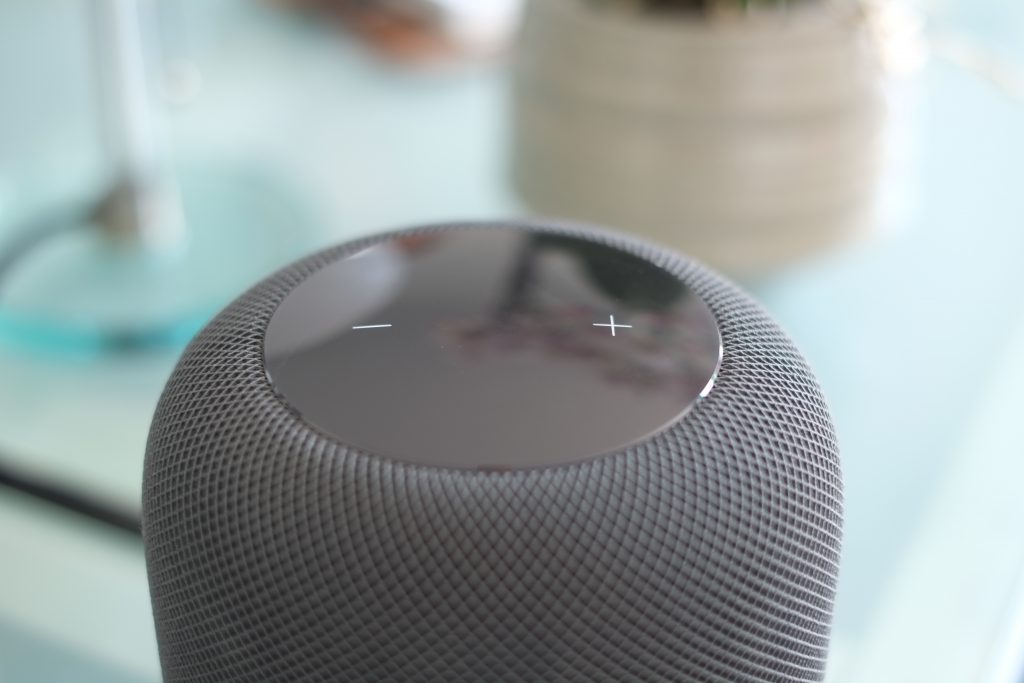
Mit dem Update der Software von AppleTV und HomePods auf Version 14.7 kann der verbundene HomePod endlich wieder gut schlafen. Nach der Einführung der automatischen Wiedergabe des AppleTV-Tons auf den oder die verbundenen HomePods ging das Display nicht mehr aus. Das scheint nun behoben zu sein und Plus/Minus leuchten nur noch nach “Hey Siri” oder wenn die HomePods auch etwas abspielen.

20 Jul 17:59

Scaffolding Social Presence in MOOCs

Dilrukshi Gamage, EdArXiv, Jul 21, 2021
Icon

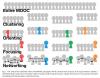
This paper (11 page PDF) describes a framework to encourage interactivity and participation in a MOOC and is based on a study at a university in Sri Lanka. The mechanisms proposed - clustering, orienting, focusing and networking - will sound familiar to long-time MOOC watchers, echoing as they do Dave Cormier's stages for success in a MOOC. But there are important differences. Dilrukshi Gamage changes the order, beginning with clustering instead of orienting. More significantly, there's much more of an emphasis on commonality and coordination (see especially the definition of 'focus', which is essentially community moderation) than in Cormier's work. If I had to characterize the Gamage model, I'd say it's "create a group, then take a MOOC together". See also: Gamage and Whiting, Together we learn better: leveraging communities of practice for MOOC learners.

Web: [Direct Link] [This Post]
20 Jul 02:57

Organize and Index Your Screenshots (OCR) on macOS

Organize and Index Your Screenshots (OCR) on macOS

Alexandru Nedelcu has a very neat recipe for creating an archive of searchable screenshots on macOS: set the default save location for screenshots to a Dropbox folder, then create a launch agent that runs a script against new files in that folder to run tesseract OCR to convert them into a searchable PDF.

Via @alexelcu

20 Jul 02:56

Using the tesseract CLI tool

by Simon Willison

Tesseract OCR has a command-line utility which is woefully under-documented. Thanks to Alexandru Nedelcu I figured out how to use it today.

To install on macOS:

brew install tesseract

To convert an image into an annotated PDF (which you can then copy and paste text out of, and which will be correctly indexed by Spotlight):

tesseract image.png output-file -l eng pdf

The second output-file argument there is the path and filename of the output - note that I didn't include a .pdf extension because Tesseract adds that automatically - so the output will be in a file called output-file.pdf.

To get out just the plain text:

tesseract image.png output-file -l eng txt
20 Jul 02:56

Week Notes 21#28

by Ton Zijlstra

I don’t think this was a particular productive week, but it was both a busy and a relaxed one, and ultimately, writing this early evening in the garden makes me feel content. By the end of this week it became clear that despite increased travel restrictions by the Danish and German authorities for Dutch travelers in the face of rapidly rising numbers of positive tests, we’ll still be able to go to Denmark this summer for two weeks.

This week I

  • Read up on the European Gaia-X infrastructure project, and the Dutch hub that launched last week
  • Participated in a Kickstarter, getting something for everyone in our team
  • Had the car serviced and checked for the mandatory yearly tech and safety check-up
  • Had the weekly client meetings
  • Prepared and moderated a session between a client and a European agency on the green deal dataspace, exploring joint activities and next steps
  • Worked on a review of the first phase of our air quality citizen science project and a plan for the next phases
  • Submitted contract changes of two of our team to the salary admin service, one of which is a fixed contract that I’m pleased with we can do.
  • Arranged the right SSL certificates and DNS settings for a project of the Open Nederland association (which brings together makers that use Creative Commons licenses). In the context of upload filters and faulty automated copyright violation detections, we’re building a tool that adds better CC metadata and uses the faceted privacy platform Irma in the background to assure that the uploader is the originator they claim to be. The SSL certificates and DNS settings are to ensure the right interfacing between Irma, an intermediary and our tool.
  • Had a pleasant extended conversation over coffee with a colleague of a client, about energy transition, the Green Deal, the data needs involved, and the data governance and infrastructure currently used in the energy sector in the Netherlands
  • Had a more or less all-hands meet-up of my company, in the form of a vegan bbq, enjoying the nice weather after all the rain in the garden of my colleague F. A pleasant way to chat with our team before everyone takes time off at different moments the coming weeks.
  • Picked up Y from school on Friday before lunch, which marked the offical end of her first full year in school! She’ll go to group 2 after the summer holidays, which is the same group she now is in as it is a combined year 1-2 group. During dinner she spontaneously read a few simple words, cat, fish, chicken, bee, without help, quite amazing to see and hear.
  • The weekend was above all a lazy one. We went to Utrecht for E to get her second jab, and Y and I meanwhile walked along the canal from the vaccination center to the house of Y’s great aunt and uncle to say hi, while enjoying the various rowers passing by on the water. Afterwards we had coffee together outside in the sun, and drove home.
  • During dinner today Henriette sent a message reminding us of how 7 years ago today we visited bringing a 3d printer for her daughter P to experiment with, as an extension of our ‘Make Stuff That Matters‘ unconference that they couldn’t attend. We hope to be in Denmark again this summer, and it would be great to also go meet Henriette and catch up.

CPH 2014
Reminded by Henriette’s message of our fun visit to Helsingør 7 years ago today. Elsinore harbour and castle, image by Ton Zijlstra, license CC BY NC SA

CPH 2014
3D printing at Henriette’s home with their then 10 yr old daughter, today in 2014. Image by Ton Zijlstra, license CC BY NC SA


This is a RSS only posting for regular readers. Not secret, just unlisted. Comments / webmention / pingback all ok.
Read more about RSS Club
20 Jul 02:56

This should be interesting reading the coming d...

by Ton Zijlstra

This should be interesting reading the coming days. Pegasus: Global abuse of surveillance tool supposedly only made available to government entities. Back doors are never picky about who goes through them.

20 Jul 02:56

Estimating using a granular sequence of values

by Derek Jones

When asked for an estimate of the time needed to complete a task, should developers be free to choose any numeric value, or should they be restricted to selecting from a predefined set of values (e.g, the Fibonacci numbers, or T-shirt sizes)?

Allowing any value to be chosen would appear to provide the greatest flexibility to make an accurate estimate. However, estimating is an intrinsically uncertain process (i.e., the future is unknown), and it is done by people with varying degrees of experience (which might be used to help guide their prediction about the future).

Restricting the selection process to one of the values in a granular sequence of numbers has several benefits, including:

  • being able to adjust the gaps between permitted values to match the likely level of uncertainty in the task effort, or the best accuracy resolution believed possible,
  • reducing the psychological stress of making an estimate, by explicitly giving permission to ignore the smaller issues (because they are believed to require a total effort that is less than the sequence granularity),
  • helping to maintain developer self-esteem, by providing a justification when an estimate turning out to be inaccurate, e.g., the granularity prevented a more accurate estimate being made.

Is there an optimal sequence of granular values to use when making task estimates for a project?

The answer to this question depends on what is attempting to be optimized.

Given how hard it is to get people to produce estimates, the first criterion for an optimal sequence has to be that people are willing to use it.

I have always been struck by the ritualistic way in which the Fibonacci sequence is described by those who use it to make estimates. Rituals are an effective technique used by groups to help maintain members’ adherence to group norms (one of which might be producing estimates).

A possible reason for the tendency to use round numbers might estimate-values is that this usage is common in other social interactions involving numeric values, e.g., when replying to a request for the time of day.

The use of round numbers, when developers have the option of selecting from a continuous range of values, is a developer imposed granular sequence. What form do these round number sequences take?

The plot below shows the values of each of the six most common round number estimates present in the BrightSquid, SiP, and CESAW (project 615) effort estimation data sets, plus the first six Fibonacci numbers (code+data):

The six most common round number estimates present in various software task estimation datasets, plus the Fibonacci sequence, and fitted regression lines.

The lines are fitted regression models having the form: permittedValue approx e^{0.5 Order} (there is a small variation in the value of the constant; the smallest value for project 615 was probably calculated rather than being human selected).

This plot shows a consistent pattern of use across multiple projects (I know of several projects that use Fibonacci numbers, but don’t have any publicly available data). Nothing is said about this pattern being (near) optimal in any sense.

The time unit of estimation for this data was minutes or hours. Would the equation have the same form if the time unit was days, would the constant still be around 0.5. I await the data needed to answer this question.

This brief analysis looked at granular sequences from the perspective of the distribution of estimates made. Perhaps it makes more sense to base a granular estimation sequence on the distribution of actual task effort. A topic for another post.

20 Jul 02:55

Twitter Favorites: [torontomike] #ActiveTO is bangin' today. This is just west of Fort York on Lake Shore. https://t.co/xpmE8PpUGA

Toronto Mike @torontomike
#ActiveTO is bangin' today. This is just west of Fort York on Lake Shore. pic.twitter.com/xpmE8PpUGA
20 Jul 02:55

Twitter Favorites: [MetroManTO] It’s been close to 4 years since the #KingStreetPilot (not 3 as I said in the video, pandemic time freeze and all)… https://t.co/cM4PCCCmaV

Pedro Marques @MetroManTO
It’s been close to 4 years since the #KingStreetPilot (not 3 as I said in the video, pandemic time freeze and all)… twitter.com/i/web/status/1…
20 Jul 02:55

Twitter Favorites: [firefoxx66] I want to repeat what others have said: **If you do not get vaccinated against SARS-CoV-2, you /will/ get infected… https://t.co/yxj1T4sUZT

Dr Emma Hodcroft @firefoxx66
I want to repeat what others have said: **If you do not get vaccinated against SARS-CoV-2, you /will/ get infected… twitter.com/i/web/status/1…
20 Jul 02:54

Twitter Favorites: [skinnylatte] All of the Guys Who Know Asia And Have Congee Thoughts are so annoying

Adrianna Tan 陈丽珍 @skinnylatte
All of the Guys Who Know Asia And Have Congee Thoughts are so annoying
20 Jul 02:50

Twitter Favorites: [jayrosen_nyu] Why People Are So Awful Online is a good column by @rgay. https://t.co/Ju8vHfptum I have been posting a lot less… https://t.co/PPDLBFjP6A

Jay Rosen @jayrosen_nyu
Why People Are So Awful Online is a good column by @rgay. nytimes.com/2021/07/17/opi… I have been posting a lot less… twitter.com/i/web/status/1…
20 Jul 02:45

Beware explanations from AI in health care

Boris Babic, Sara Gerke, Theodoros Evgeniou, I. Glenn Cohen, Science, Jul 19, 2021
Icon

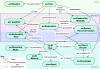
Substitute 'education' for 'health care' and the same argument applies. We want explanations for decisions or diagnoses made by artificial intelligence; this requirement shows up in any number of documents on the ethical use of AI. But we should be cautious in making this demand, according to this article. "This consensus, at least as applied to health care, both overstates the benefits and undercounts the drawbacks of requiring black-box algorithms to be explainable." The article is behind a stupid paywall, but it's short and can be viewed on Twitter in full here. See also Eric Topol's full thread. Image: Explanation ontology (full size version).

Web: [Direct Link] [This Post]
20 Jul 02:12

Fixing to Die

by Jack Bandy

In a recent piece for the New Yorker, Keeanga-Yamahtta Taylor described the police violence that came in the waning days of Derek Chauvin’s trial for the murder of George Floyd. As some celebrated the apparent resolution of one atrocity, other atrocities were just beginning the all-too-familiar cycle: Documented violence, an attempted cover-up, public reckoning, legal proceedings, a verdict of some kind, and then another new wave of “incidents” by law enforcement.

Tech companies have also grown into a certain kind of cycle, with their products regularly generating widespread social harm. Facebook, for instance, has provoked such atrocities as genocide, fascist insurrection, and mass shootings. Just as it was publishing transparency reports and apologies about its role supporting interference in the 2016 election, it helped enable the Myanmar military’s genocidal violence that killed 25,000 people and displaced 700,000 more. Last summer, a Facebook post played a key role in the Kenosha, Wisconsin, shooting, and Mark Zuckerberg acknowledged the mistake and apologized. Then, during the 2020 election season, Facebook helped facilitate the “stop the steal” conspiracy theory and allowed Trump supporters to organize the violent attack on the Capitol, all while also allowing disinformation denying the ongoing Uyghur genocide in China to spread.

Whatever the next egregious tech abuse will be, the response will likely follow the established pattern: After public criticism, companies will apologize, perhaps testify before Congress, share their plans to improve, and then move on to provoking a new wave of atrocities. Without serious intervention, the cycle will likely continue.

Faced with cycles of police violence, a growing movement for police abolition seeks to reimagine public safety from the ground up. For abolitionists, police violence is best understood as an everyday symptom of policing rather than a set of anomalous incidents, requiring not mere reform but an entirely new paradigm for justice and community safety. The emerging abolitionist movement offers important lessons for breaking cycles of harm, imagining new futures, and delivering meaningful change.

Whatever the next egregious tech abuse will be, the response will likely follow an established pattern. Without serious intervention, the cycle will continue

What if the critique of tech companies followed similar principles? In some ways, the limits of reformist efforts to tech are approaching fast. Labor organizing can prevent or delay government contracts, regulation like GDPR and CCPA can help protect user privacy, and five ambitious antitrust bills in U.S. Congress may even break up some tech companies in the near future. These bills would also address monopolistic practices, forcing companies to pay higher merger fees and offer portability options to simplify migration to other products — all welcome changes.

But just as police reform cannot change the fundamental goals of policing, tech reform cannot change the fundamental goals of large technology companies. What would it look like to apply an abolitionist approach to big tech?


One of the key rhetorical shifts in the police-abolition movement involves focusing on deeply rooted everyday harm rather than the “itemized atrocities” that can dominate public discourse. Lists of atrocities can sometimes be helpful for hooking attention, substantiating historical analysis, and working toward public accountability, but abolitionists argue that real change requires close attention to what Saidiya Hartman, in Scenes of Subjection, calls “the terror of the mundane and quotidian.” Discussing the concept, Tamara Nopper and Mariame Kaba note that long lists of shocking incidents can lead to desensitization, as “the atrocities itemized need to happen more often or get worse, to become more atrocious each round in hopes of being registered.”

The “incident” framing also suggests that shocking events are anomalous problems of excess, as if a “bad apple” police officer merely knelt for too long or shot too often. As Nopper and Kaba argue, “we must accept that the ordinary is fair, for an extreme to be the problem.” But an abolitionist politics suggests that the ordinary is anything but fair.

After all, many police forces were not originally created to serve and protect the public interest. In a piece for the New Yorker, historian Jill Lepore traces “the invention of policing” back to urban slave patrols. In a similar vein, historian Simon Balto describes how the early Chicago police department was “developed primarily by elite business owners in the city with the primary purpose of controlling immigrant behavior.” The early Chicago police department supported Al Capone’s organized crime group, and squelched groups working for labor rights and tenant rights.

If the problem is policing itself, then reforms, however useful they might be in reducing immediate harms, will result in only reformed cycles of harm

Within a historical framework, “incidents” of police violence are not really incidents at all, but inevitable events that serve the original purpose of the larger criminal punishment system in the U.S. As legal scholar Dorothy E. Roberts puts it, that purpose is “reinstating the subjugated status of Black people and preserving a racial capitalist power structure.” Historical accounts show that from the beginning, the system of policing guaranteed everyday violence of surveillance, harassment, and abuse targeted toward Black people.

If the problem were one of excessive violence, then it could be solved with banned chokeholds, more body cameras, and tweaked police-training programs. But if the problem is — and always has been — policing itself, then reforms, however useful they might be in reducing immediate harms, will result in only reformed cycles of harm. In the words of Naomi Murakawa, author of The First Civil Right: How Liberals Built Prison America, reforms merely “tinker with the techniques of police violence.” Any real solution, then, would need to imagine alternative institutions and alternative paradigms for public safety.


In seeking to borrow from police and prison abolitionist theory to address the harms caused by technology companies, a helpful starting point is to distinguish between listing big tech’s “itemized atrocities” and articulating its equivalent of the “terror of the mundane.” Many academic articles, essays, and documentaries include different versions of the “itemized atrocities” list, often including “incidents” such as 2016 election interference or Facebook’s role in the January 6 attack on the Capitol. Other example “incidents” include Google’s role in radicalizing the white supremacist responsible for the Charleston church massacre, Amazon selling fraudulent “coronavirus supplements” during the pandemic, and Uber’s “mistakes” calculating low wages for workers.

If these events are anomalous, then incremental reforms such as expanded privacy features, more content moderators, improved AI systems, and new antitrust bills might prevent future incidents with technology companies.

But just as a growing chorus of abolitionists recognize police violence as “the system working as designed,” a growing chorus of tech critics view the atrocious “incidents” committed by tech companies as inevitable consequences of the products and services being offered. The incidents come to appear as familiar, rather than exceptional.

As with police violence, the itemized atrocities can be helpful insofar as they illustrate clear cycles of harm. That is, the growing list of incidents suggests that they may not be “incidents” at all. Chris Gilliard’s metaphor of technology companies as polluting factories further illustrates the point: Harm flows continuously and inevitably from the design of certain tech products. Uber was premised on low-wage gig labor, Twitter was premised on reactive dialogue, and Amazon Ring was premised on invasive surveillance. The associated consequences are simply unavoidable, and in many ways actively stimulated.

To use Gilliard’s words, Facebook’s business model necessitates a continual flow of hateful and otherwise problematic content. As articulated by the “Stop Hate for Profit” campaign, such content drives engagement and can help Facebook make advertising money. But even if Facebook removed advertising and became a nonprofit organization (as in a recent thought experiment from Casey Newton), the flow would not stop, because there is no way of effectively moderating content at Facebook’s scale. With tens of thousands of workers reviewing hundreds of posts per day, Facebook can still only review a negligible fraction of content across its products. To make matters worse, hate speech and conspiracy theories proliferate further in the private groups that Facebook has been promoting for several years.

Low-wage labor, reactive public dialogue, invasive surveillance, and problematic content are some of the everyday harms perpetrated by large tech companies. These harms sometimes escalate to high-profile atrocities, but every day they are part and parcel of products offered by the likes of Uber, Twitter, Amazon, and Facebook.

A growing chorus of tech critics view the atrocious “incidents” committed by tech companies as inevitable consequences of the products and services being offered

Google also perpetrates everyday harms in its course of doing normal business. Safiya Noble showed in 2013 that Google search results for “Black girls” reflected discriminatory stereotypes on the basis of race and sex. While the company has since plucked out some of the most egregious examples of algorithmic racism and misogyny on its products, The Markup found last year that Google’s advertising systems still associated “Black girls” with pornographic content. This year, an extensive analysis by Rodrigo Menegat found similar problematic stereotypes in Google’s image search results. Even Google’s response admitted that stereotypes embedded in their algorithms present an endless game of whack-a-mole: “Our improvements will not solve every possible query in every country or language.”

Viewed through an “incident” framing, election interference, hate speech, conspiracy theories, and algorithmic racism were all just anomalous, maybe even resulting from “bad actors” abusing tech products. But an abolitionist lens recognizes the cyclic nature of these atrocities and the fact that many tech products support this “misuse” by design. Mar Hicks sums it up with a technical metaphor: Racism and misogyny are features, not bugs, of how large technology companies profit.

A number of helpful frameworks help formalize the everyday harms associated with large technology companies. For Shoshana Zuboff, the key problem is that these companies apply capitalist market incentives to the practice of surveillance. For Ethan Zuckerman, the “original sin” of the internet was its reliance on advertising, which made constant manipulation the “default model” for funding online infrastructure. For Nick Couldry and Ulises A. Mejias, the root problem is dispossession and extraction, the fact that large technology companies extend settler colonialism into the digital age through
“data colonialism.” These and other frameworks have helped drive the “techlash” of recent years, as each provides unique insights about the data capitalist complex — the system that seeks to monetize any human behavior involving technology. The data capitalist complex also represents an underlying ideology, one that paints humanity as Homo economicus, existing primarily for the marketplace.

Like the prison industrial complex, the data capitalist complex has its alibis. Facebook’s executives and employees regularly tout a “net positive” impact on the world, and Google often showcases technology to address climate and health care challenges. Besides, shouldn’t we just be grateful to have internet search and social networking “at no cost?” For all the harm they do in the world, at least Google and Facebook never charged you $1 a month (more than enough to cover either company’s revenue, based on a 2013 analysis). And if people actually prefer monthly fees over advertising, surely “the market will do its thing” and eventually offer a monthly fee option. The best options will prevail, we just need “fair competition.” Then, instead of griping, anyone who wants Amazon to treat their workers better should simply choose another way to shop online, and anyone who wants the same from Uber should simply find another ride-hail app. Once there are more options, consumer choice will help the “invisible hand” to sort things out.

The antitrust bills in Congress promise to prime the marketplace for such options, to “level the playing field” so that consumers can more easily use different online shops, ride-hail apps, social networks, and search engines. But leveling the playing field and changing the rules will not uproot the underlying game, and thus will not address the ultimate culprit. If the game is still capitalism, the data capitalist complex will only manifest in new varieties. Companies are already offering samples of this reform: Ring surveillance, now with encryption! Reactionary dialogue on Twitter, now for crowdsourced content moderation! Google advertising, soon targeting to small groups instead of individuals!

In a world where Congress passes the currently proposed antitrust bills, these reforms will likely continue, unleashing a new wave of privacy-washed, green-washed, pink-washed, and ethics-washed tech products. This kind of reform does not change the underlying assumption that human behavior — especially human behavior involving technology — aligns with the end goals of capitalism. So in addition to breaking up big companies and creating new ones, an abolitionist movement for big tech must also offer alternative ideologies.


To counter the entrenched ideology of punitive justice, police abolitionists offer transformative justice. This alternative paradigm can be loosely defined as a collective approach to “making things right” which seeks to avoid violent state systems (like police and prisons) and take active measures to prevent violence (like building community and resolving conflicts). In parallel, a helpful paradigm shift for tech abolitionists might be from capitalist competition to mutual aid. Mutual aid can offer both practical and ideological alternatives to big tech, instilling different kinds of everyday interactions with each other and with technology, while also establishing different goals for the future.

Rather than framing life in terms of hierarchy and competition, the theory of mutual aid (in anarchist Peter Kropotkin’s work) frames life in terms of interaction and cooperation. Discussing his book on the topic, Dean Spade contrasts mutual aid with capitalist charity: Whereas charity often serves “to quell uprisings that people would engage in against systems that are so extractive,” mutual aid “focuses on helping people get what they need right now, as we work to get to the root causes of these problems.” Through the lens of mutual aid, the world is fundamentally abundant. Rather than competing to accumulate the most resources, one of the main tasks in life is collaborating to make sure others have the resources they need.

Whether working toward an abolitionist future based on transformative justice or mutualistic technology, some of the most important work is imagining what it might actually look like. In widely circulated comments from last summer, Congresswoman Alexandria Ocasio-Cortez pointed out that a world without policing may not require much imagination at all: Wealthy suburban communities tend to prioritize funding for education, youth, health, and housing projects over funding for police. And when someone does something harmful in a suburb, the community will “bend over backward to find alternatives to incarceration for their loved ones to ‘protect their future.’” As Kaba puts it in this interview, “there are groups of people who are living a type of abolition now … think of [affluent, white] neighborhoods in the Chicago area like Naperville where there are no cops to be found.”

Whereas capitalism presumes individuals can choose the best tools from the marketplace, mutualism presumes communities can create the best tools for themselves

Similarly, there may already be communities living in a world without big tech, at least to some extent. Many wealthy executives in the technology industry abstain from using big tech products, and force their children to do the same. But neither families in the suburbs nor tech executives from The Social Dilemma offer truly viable alternatives, because they both fail to grapple with the roots of today’s issues. When it comes to children, for example, suggesting abstention as a solution can “gloss over how young people can make positive social connections online,” and also neglects larger systemic factors that impact childhood wellness, such as economic anxiety and the climate crisis.

For meaningful change to take place, a world without big tech products must also be a world without the data capitalist complex and its supporting paradigms. In part, this means there can be no wholesale replacements that work on the same massive scale as big tech — communities must imagine and develop their own local alternatives for online information portals, social networks, and other tools that operate as monopolies in today’s ecosystem. Whereas capitalism presumes individuals can choose the best tools from the marketplace, mutualism presumes communities can create the best tools for themselves.

Mutualistic information portals are closer than one might think, at least in physical form. Since the 1700s, local public libraries have been storing, curating, and distributing information in the public interest. They also provide a host of other public services to their respective communities, including physical meeting space, educational workshops, public internet access, and support for new immigrants. A future without Google might be a future where search engines are modeled after libraries, as suggested in Safiya Noble’s work. Sure, some people might still need massive commercial search engines for some use cases, but the ecosystem could operate locally and mutualistically, without presumptions of cut-throat competition, unpredictable changes, and centralized control.

In terms of social networks, a few projects provide helpful glimpses of a mutualistic future. The app Herd, for example, has been designed to “cultivate a kinder, friendlier, calmer environment. Herd’s founders said they would “rather make a platform that means a lot to a smaller group than nothing to millions.” Within this paradigm, Herd is simply designed to support the people who use it, not to grow and profit by any means necessary. This is a promising shift for a future with localized, mutualistic technology, and these ideals could also help guide similar projects.

With 20 employees and 200,000 users, Front Porch Forum — a once-a-day newsletter that connects neighbors in Vermont — is another platform “that means a lot to a smaller group.” Co-founder Michael Wood-Lewis has said there are no real plans to “scale up” in terms of geography, features, or otherwise. Because of its small scale, Front Porch Forum is totally useless to big tech companies, but all the more meaningful to people who actually use the app every day.

If and when Congress passes antitrust bills to reform large technology companies, that must be seen as a beginning. The bills do not guarantee transformation. Just as it is impossible to separate policing from the punitive logics of the prison industrial complex, it may prove impossible to separate Google, Facebook, Amazon, and Uber from the extractive logics of the data capitalist complex. To abolish big tech will require abolishing its core capitalist ideologies, allowing communities to build and maintain alternative technologies premised on care, cooperation, and mutual aid.


20 Jul 02:12

No, Mr University, I expect you to die

Martin Weller, The Ed Techie, Jul 19, 2021
Icon

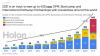
It was a natural, I think, following the acquisition of EdX by an online program management (OPM) company, to come up with a categorization blending the two. And it's not unrealistic to imagine this new blend, which we'll call OPX, continue the undermining of the university system as it takes on more and more contracts from various institutions to manage their online programs. That's what Holon does, that's what George Siemens reports, and this is how Brian Lamb responds: "If your 'plan' for higher ed is to outsource to an OPM... maybe... quit? Don't worry, corporatization, privatization and the drive to learning as commodity will somehow manage without you." Martin Weller points out that this is only one of four scenarios for the future of online learning. Now I have a hard time seeing the university system somehow defying the odds to survive and save the day, though I guess they are best framed as defenders of class and privilege like James Bond. My preference would be to sustain a publicly-funded community-based model, as I outlined at OECD in 2006, despite the misgivings of David Wiley (who was in the room when I outlined it).

Web: [Direct Link] [This Post]
20 Jul 02:11

Is it possible to ban remote proctoring?

Sarah E. Silverman, Autumm Caines, Jul 19, 2021
Icon

The answer to this question is essentially "no". The authors explain, "This is because directly purchasing a proctoring service from the provider is only one way to make use of proctoring software. Many other educational technology companies offer proctoring services, often for 'free' or passing the cost on to the student." Point well made, with a list of vendors to substantiate the claim.

Web: [Direct Link] [This Post]
20 Jul 01:49

Reflections on a Year of Studying Mandarin Chinese with Duolingo

by Richard

The impetus for my interest in all things China came from a woman in my high school that I admired, who thought I was a communist. She was part of a conservative family, my being part of a social democratic family was a source of debate between me and her, and as a graduation gift, she gave me the controversial book The Private Life of Chairman Mao: The Memoirs of Mao's Personal Physician by Li Zhisui. Little did she know that I would devour it, and it would propel me into studying Chinese history, politics, and language in university, and stay in the country for two months (and visit for work a few years later).

When studying Chinese in my twenties, I found that the cue cards available at the time a) didn't match the textbook created by our teacher and b) didn't match my learning style. I would go on to create 4-sided cue cards (folded in half with the simplified character (which we were learning), translation, pronunciation and traditional character (which is more prevalent in North American Chinese communities) to help me memorize. I did well in those classes, and wanted to purse it post-university, but I found my interest waned as other events like starting my career and shacking up with someone taking over my time. (Also as a result, I don't have a strong sense of the history of the country from 2008 or so on, so I'm on the lookout for a book-length treatment of the Hu Jintao and Xi Jinping eras.) I had intelligent things to say about China thanks to that part of my education, though.

Years later, as a way to pass the time in the COVID-19 pandemic era, I started practicing through Duolingo. It is definitely not the same as in-class participation with homework, writing exercises and practice partners, that's for sure. It's definitely fun, but Duolingo is not a strong way to learn a language. Having someone to speak with and continuously practicing writing (memorization being especially important for a language with so many characters) is essential in learning a language. I found some classes at the continuing studies department at Canada's largest and therefore best university, though I'm waiting for them to have an in-person component1, and Clubhouse (and their clones) seem to offer an interesting way to deliver lessons over voice-only medium. While I don't think I learned much beyond a few grammar points (I now know how to ask "Where in [city name] do you live?"), it did help bring what I learned in university back to me.

Today I'm celebrating a year of daily lessons, making it all the way to Diamond League. Maintaining a streak of its own sake can be motivating, and this is no different. It got me thinking of taking French lessons again (not through Duolingo) and while I don't think I'll ever return to China, I'm going to continue my long-held interest in the country and its people.


  1. I'm not holding my breath. ↩︎

20 Jul 01:49

From How to Own the Room

by russell davies

"To be the speaker you want to be is much more important than the actual speech."

"Lots of women say, ‘If I was going to be a speaker, I’d want to speak like Michelle Obama.’ But if you had Michelle Obama’s support system, you probably would be able to speak like Michelle Obama very easily."

"This illustrates a piece of advice from Jennifer Palmieri, who was Hillary Clinton’s director of communications during her election campaign. She also worked in the White House for Barack Obama. In her book Dear Madam President, she writes about the tip she received from Bill Clinton’s press secretary, Evelyn Lieberman: ‘People take their cue from you. That’s it. If you act like you belong in the room, people will believe you do. If you act like your opinion matters, others will too.’"

How to Own the Room: Women and the Art of Brilliant Speaking

by Viv Groskop

20 Jul 01:49

Hashtag in a crossword


Hashtag in a crossword

20 Jul 01:38

8 types of USB-C cables – Yet they all look exactly the same

by Volker Weber

There are currently 8 types of USB-C cables defined. Benson Leung’s post lists them and explains how they relate to power and data transfer rates. Drawing from that we can observe that cables differ in two dimensions. The first is the kind of data signaling a cable supports, and the second is the amount of current it can carry. Based on this we can give data signaling colors.

More >

20 Jul 01:38

Biden claimed Facebook is killing people. Facebook’s response missed the point.

by Josh Bernoff

On Friday, President Biden said social media platforms including Facebook are “killing people” with misinformation about COVID-19. Facebook’s response: “It’s not us, really.” Facebook’s statement is classic deflection; I’ll deconstruct it for you. On July 15, Vivek Murthy, the US Surgeon General, made a public statement about virus misinformation, which he called “an urgent threat … Continued

The post Biden claimed Facebook is killing people. Facebook’s response missed the point. appeared first on without bullshit.