Shared posts

30 Nov 17:22

Brand Strategy For The Startup CEO

by Derrick Daye

Brand Strategy For The Startup CEO

A startup business faces many difficult challenges getting off the ground. For many early stage CEO’s assessing their priorities, product development and the seed money to grow are their primary concerns. Few if any are thinking much about brand building – because they believe it to be sophisticated marketing they simply can’t afford, or they don’t realize the significance of making brand strategy decisions at the embryonic stage of their big idea.

For startup CEO’s, brand building is as important to early success as product development and raising money. You can have the most innovative, groundbreaking product ever conceived, but if you can’t create a strong foundation for communicating that value to the marketplace, chances are the business won’t go far. Developing a strong brand is critical to the early success of startups.

The Ugly Baby Syndrome.

Many startups have a difficult and awkward task of communicating the value of their product/service innovations in ways that matter to investors and potential customers. At the beginning (especially when seeking investment capital) founders have a tendency to believe that everyone will “get the big idea” of their next big thing. As a result, they usually message their value badly at the beginning.

Like any newborn, learning to walk the talk requires falling down and getting up again and again. But the break neck pace of the VC deal making machine is not very forgiving to the stumbles of startup founders not able to tell a compelling story of why their innovation matters to anyone beyond their Mother.

The heart and soul of brand building embodies a relevant and differentiated value proposition. Founders must be able to articulate why their baby matters to a select group of people. Remember, at the beginning you may be the only one who cares.

What Makes Your Startup Good And Different?

The marketplace is overcrowded. Every year new businesses, products and services are born into a vast sea of ubiquitous sameness. For startups to have a chance of making it past the infant stage, their value must be well defined.

No one will deny the fact that startup CEO’s work long days, weeks and years in their business. However, few CEO’s will work “on” their business. Brand strategy is the process of working on the business. Having the clarity and the confidence to define value in compelling ways is the first step in building a sustainable brand.

Founders need to take a long, hard introspective look at how they will discover and articulate why their innovation is good and different. In a world of increased commoditization, relevant differentiation is the source code to brand building success.

Good and different means the value the business brings to the world must be highly valued by a well defined target customer and not in abundant supply elsewhere. When you can define what that is for your business, you will enjoy competitive advantage in the industry category in which you are operating and command premium pricing as well.

It doesn’t get any better than that.

Brand Strategy Is Not Marketing.

One of the big misconceptions startup CEO’s have about brand building is that it is a marketing activity. In fact, these are two separate (yet related) activities. Brand strategy is about knowing the DNA of the value offered to the marketplace, marketing is the process of communicating that value through various channels.

It makes no sense whatsoever creating elaborate marketing schemes without those plans being anchored and informed by a higher guiding strategy about what the brand will represent in the mind of a target customer. Marketing is an expensive proposition and with limited resources its imperative to get it right the first time. If you don’t, you will create a new obstacle – people with the wrong impression about your offering and it’s value to them. Its hard and expensive to generate awareness, it’s even harder to get people to see you in a new light after encoding the wrong image in their mind. Marketing should always follow brand strategy.

Further, brand strategy requires real market insight and creative thinking, while marketing requires cash.

Branding Begins With A Good Name.

Over time the startup business will grow. It will acquire loyal customers, it will have created trusted relationships and enjoy a reputation that will translate into greater financial value. All of this will happen more effectively and efficiently if you start with a good name to build your good reputation on.

Nothing is more valuable to a startup business than a good name. Start by creating one that will serve the growth and expansion of your value over the long haul. Like all business decisions, naming must be strategic.

The Four Components Of A Strong And Enduring Startup Brand.

There are many definitions about what a brand is. I prefer the definition that it is the sum of all experiences a customer has with you. Regardless of how the idea of a brand is defined, a startup brand requires four well-designed components:

Brand Purpose:
Why your brand exists. (Not to be confused with positioning which is how the brand is perceived in the context of competitive alternatives) A brand’s culture, organization and strategy are what reveal its purpose.

Brand Identity:
The essence of what your brand represents to customers. It is “who” the brand is. This is represented by symbols, language, and the culture or heritage of the organization.

Brand Promise:
The benefit your brand brings to customers. This is “what” the brand provides that is highly valued and not in abundant supply. These associations are based in the functional, rational and emotional benefits customers receive from the brand.

Brand Experience:
The tangible experience customers have in their interaction and transaction with the brand. This is “how” the brand delivers on its promise. These associations are based in real life engagement with products, people and places.

Each are critical in building an enduring brand right from the beginning and each of these components must be designed. They do not come into form on their own. The process of design is the critical discipline in making all four components come together in harmonious alignment within the mind of the target customer. Applied correctly and consistently, design will enable your startup brand to emulate its values to the marketplace with more credibility and effectiveness.

You Don’t Get A Second Chance To Make A Good First Impression.

Everyone has heard that statement before. But for startup brands the statement holds even more significance. Whatever startup brands are doing, chances are they’re doing it for the first time. The first presentation to an investor, customer or important employee must be simple, clear and compelling–there are no second chances.

To be successful, today’s startup CEO must get many decisions right and in the correct sequence.

The Blake Project Can Help: Define your competitive-advantage in this unique brand strategy workshop for startups and emerging brands.

Branding Strategy Insider is a service of The Blake Project: A strategic brand consultancy specializing in Brand Research, Brand Strategy, Brand Growth and Brand Education

FREE Publications And Resources For Marketers

30 Nov 17:18

Want to Create a Subscription Service Business? Here’s How to Get Started

by Jared Atchison

E-commerce is on the rise. Nowadays, with all the technology we have at our fingertips, consumers expect a convenient, simple, and quick shopping experience. They don’t want to deal with large crowds and long lines. The easier something is to obtain, the likelier it’ll sell. That’s why subscription service businesses are becoming so popular.

Think about the last time you had something delivered to your door. At the click of a button, you sent data into cyberspace and then ended up with a package a few days or weeks later. You’re not alone — studies by BigCommerce show that 96 percent of people in the U.S. shop online. It’s not a trend that’s going away any time soon.

Subscription services are becoming more and more popular because of their convenience not just for the consumer, but for the owner as well. You’re cutting costs for yourself that you’d normally have to pay if you owned a retail store.

If you’re looking to create a subscription business, you probably have a lot of questions about what to expect.

Here’s a plan for what you need to get started.

Develop a niche

When it comes to business, it’s infinitely better to stick to a niche subject rather than stay general. No one wants to subscribe to an all-you-can-eat type of service because they know it won’t be the best if it specializes in everything.

Pick a niche for your business and own it. It’s likely you won’t be the first of your type in the subscription service, but that doesn’t mean you can’t make it your own. Whether it’s snacks, skincare products, or wine, think of ways you can stand out from services similar to yours.

The more you can narrow down what kind of products you sell, you’ll have a clearer idea of who you’re selling to. Fleshing out your audience is an important aspect of any business because it tells you who to target. Who is going to buy from you? More importantly, who’s going to continue to buy from you time and time again?

The whole point of a subscription service is to build a clientele of consumers who eagerly await their next order. It’s not enough to sell to customers who like a product here and there and eventually unsubscribe from your products. Take time to think about what your customers want next and they’ll keep coming.

Flesh out your business model

Think of all the details you need to know to get your business started tomorrow if you could.

Here are a few things you need to map out before getting started:

  • How often your subscription will be sent out
  • How much revenue you plan to make in the upcoming months and years
  • A budgeting plan
  • The number of products that will come with each purchase
  • What each subscription costs so that you still gain revenue
  • What strategies you’ll use to promote your brand
  • A customer service strategy including return and exchange policies and cancellation fees

You need to come up with pricing that isn’t so steep no one can afford it, but not so cheap you don’t make a profit. CrateJoy suggests pricing your product or service around a 40 percent margin.

Create a killer site

If you’ve got an awesome product that you know will do well in the market but your site isn’t optimized, your business has just killed itself.

What’s of the utmost importance is the user experience (UX) because the entire subscription transaction process is online. You don’t have the opportunity to communicate with your customers face-to-face, so it’s imperative you give them a good impression when they come to your site.

There are a lot of ways you can create a killer website with an awesome UX.

You want to give customers the option of paying a premium subscription or not. If you only sell high-priced products, you’re missing out on all the loyal customers who would buy a cost-effective alternative.

Create every piece of copy on your site with a purpose in mind. Know what each page is for and how it convinces customers to convert. Ensure that there are no broken links to any web pages. It should be easy for users to navigate through each page and find something specific if they need to.

For the best customer service, make it easy for consumers to interact with you. Have clear navigation links to a contact page and boost the visibility of your social media for rapid engagement. Ask them what they think of your subscription process and the quality of the products. Get friendly with your customers and ask them what could be done better.

Moving forward

The subscription business model is getting more and more popular with time. It attracts loyal followers, brings in recurring revenue, and can be a more personal way of getting in touch with consumers. The most essential thing is creating each part of your business strategy with your niche and the consumer in mind.

30 Nov 17:11

How to Use Mentoring in Succession Planning

by Darleen DeRosa

styles66 / Pixabay

When it comes to grooming future leaders, organizations already have a tremendous resource in the form of their existing leaders. By encouraging these leaders to become mentors, they can not only pass along their experience and institutional knowledge, but also help to create a sense of continuity for employees throughout the organization. A succession situation can be far less stressful when everyone has some familiarity with the potential candidates and trusts that they’ve been well-prepared for the role.

The importance of a mentor is difficult to overstate. Implementing a mentorship strategy as part of succession planning shouldn’t be done haphazardly, however. Here are a few tips for how to use a mentor in successful succession planning:

Pick the Right Mentor

One of the biggest challenges of a successful mentoring program is matching candidates with the right mentor. This person not only needs to possess the skills, knowledge, and experience that the candidate could benefit from, but also has to be committed to putting in the work associated with mentorship. Being a mentor is distinct from training or coaching, but they should not be an entirely informal role model. The candidate isn’t there to hear stories about the early days of the mentor’s career, they want to learn how to apply the skills and strategies that will make them more effective leaders.

Successful mentors have a number of characteristics that make them effective. First and foremost, they’re willing to share what they know and take the time to explain the principles behind their success. They should be prepared to put in the work of being a mentor, which will be an additional obligation atop their current responsibilities. Perhaps most importantly, they should have a reputation for honesty and empathy. This will make it easier for them to form trusting relationships with candidates hoping to learn from their experiences.

In terms of succession planning and talent management, the mentor will often occupy a position comparable to the one the candidate will eventually fill. Depending upon the size and complexity of the organization, this could be any number of positions, but they should have a similar success profile and entail many of the same responsibilities. A mentor will be able to provide the sort of information about the position that may not be evident from a mere job description. The importance of picking a good mentor is critical.

Identify Goals

While candidates can gain a great deal of general knowledge from interacting with a mentor on a regular basis, the relationship should not be one left up to chance. Mentors should work with candidates to identify specific, measurable goals that they want to achieve together. This gives the relationship direction and purpose, making it possible for the mentor to understand how they can provide leadership coaching and facilitate candidate development.

Mentoring goals could be highly specific or more generalized, but they should be clearly defined from the beginning. Candidates need to have a good idea of what skills and knowledge their mentor can help them to develop, just as mentors must know what they’re trying to accomplish by lending their expertise. The flexibility of this relationship is one of its greatest benefits because it allows both parties to set the terms of success.

For succession planning situations, the mentor may well be grooming their eventual replacement. In such cases, the goals will often entail getting to know the department and the people working there. If the candidate is not intended to replace their mentor, their goals will likely have a broader focus, honing in on what it takes to be successful in a comparable position.

Develop an Action Plan

Once goals have been defined, mentors and candidates can work together to determine how those objectives are best achieved. The mentor may assign specific tasks or have the candidate set the agenda by bringing questions or concerns to their meeting sessions. Regardless of their approach, they need to develop a clear action plan to guide development and dictate what steps need to be taken next.

For instance, if a candidate is working with a mentor to learn how to become a better influencer, they may keep a record of situations where they used or could have used influencing strategies and then discuss each one with their mentor to understand why some approaches worked and others didn’t. Based on their conversation, the mentor could then task them with trying a different strategy in the next situation or recommend some form of outside research that might prove useful in the future.

From a succession planning and talent management standpoint, the action plan should have an eye toward the future position the candidate might eventually be filling. If the candidate is going to replace their mentor eventually, the plan will likely involve exposing them to the people they’ll be working with to ensure that the future transition goes as smoothly as possible. In other cases, the action plan will be more concerned with exposing the candidate to the responsibilities of a leadership position and helping them develop the skills they will need to eventually step into a comparable role.

Review and Assess Progress

After an action plan is implemented, the mentor and the candidate should take a step back to evaluate their progress from time to time. Referring back to the action plan, they can review what they’ve accomplished so far and determine if they’re still on pace to achieve their overall goals. This evaluation will most likely be shared with the organization to demonstrate that the mentorship is still delivering value toward the candidate’s development. For succession planning and talent management, this review period could well assess whether or not the mentor believes the candidate is prepared to step into a certain role.

Strong mentoring programs are an effective tool for succession planning, allowing a new generation of high-potential candidates to learn directly from experienced leaders. While these relationships will not always result in a mentor directly overseeing their replacements, it does provide them with the opportunity to pass on their institutional knowledge to employees who will be taking on more responsibilities in the future. Mentorship helps to foster a sense of continuity that is essential to successful succession planning and provides significant learning opportunities for both mentors and aspiring candidates.

30 Nov 17:11

How Do I Create a Link Building Campaign? Link Building Strategies

by Garry Grant

What is Link Building?

Link building refers to the process of actively increasing the number of links to your website, generally because you’re trying to increase your search engine ranking, or spread the word about your business. It uses assets you create and host on your website to acquire the links – whether that’s an eBook, white paper, case study, infographic, or other helpful resource.

Think about what kinds of links you need to get. Link building strategies include:

  1. Homepage links
  2. Links to deep pages within your site
  3. Links that contain your brand or company name
  4. Links that contain keywords you’re targeting

Link building takes time and effort – and Google wants to see those links come in naturally over time. Black hat SEOs often turn to buying links – which is a huge no-no – to try to cut out the hard work involved in proper link building. While it may help increase ranking temporarily, it always comes back to bite you in the end. But, do it right, and your efforts will pay off tremendously.

Designing Your Link Building Campaign

As tempting as it may be to just go out and start asking people to link to your content – that’s not an effective way to accomplish it, and will more often than not be a gigantic waste of your time. Approaching it systematically with a clear plan in place will take longer, of course, but it will yield a much higher ROI.

Set Your Goals

bulls eye dart in center of bulls eye

Knowing the goals you’re trying to accomplish with the link building campaign will help you devise the best possible strategy to help you reach those goals. Whatever your goal with the campaign is, it should tie into your overall business goals. If your goal is to build 10 links – that’s not a good goal to hit if building those 10 links won’t affect the overall success of your business.

Sure, you have a goal to build as many links as possible – the more links the better, because those play such a major role in search engine rank. But, because link building won’t make you an overnight success and impacts aren’t instant, you need more intelligent goals than “Build 100 links.”

Developing Your Assets

Your assets are what you will use to attract and earn the links. What works for you will vary from business to business and from industry to industry. A good way to think about it is what can you use to hook people? What will make them care about you and what you have to offer? The most common asset is content, but others include data, products, services, and people. Regardless of which assets you want to use, they need to be created to serve the audience you’re trying to attract.

To figure out which ones you need, begin with a detailed link analysis on your current website. Also take a look at how you’re ranking for certain keywords compared to your competition. Use Open Site Explorer for this analysis so you know what your link profile looks like at the start. It can help you identify opportunities for improvement, which may help guide you in asset creation, or help you see current assets you can use to attract links.

Finding Link Targets

Think about the type of people you should contact, because you don’t want to waste energy on those who wouldn’t be interested in your content. Randomly contacting people will lead to a lower response rate and a hit on your reputation.

Before you start your link building campaign, at least have a rough idea of who you think will care about what you’re doing. Who will care enough to link to it? That’s what really matters.

Let’s say you’re putting together a piece of content called, “The Stress-Free Guide to Holiday Meals with Family and Friends” because you know how much people enjoy eating the holiday meals, but stress out about making them or hosting the gatherings.

Who would be interested in this guide?

  • Food bloggers: They make a habit of sharing recipes with their audience all the time!
  • Parent bloggers: They know how stressful it can be managing a household with littles running around, and are usually willing to receive stress-reduction and time-saving tips.
  • Recipe sites: They’re willing to share anything that contains fantastic recipes!

Now that we know who we’re after, it’s time to dig a bit deeper to find them.

Locate Blogger Lists with Google

Search “list of food bloggers”, “list of parent bloggers”, and “list of recipe sites” and you’ll find no shortage of lists to work through, where someone has already done the hard work of putting together the list.

Use a tool like Scraper to grab all the URLs from the page. Put them in a spreadsheet for later, and then use URL opener to open all of them with a single click. This way you can look at them to make sure they are relevant to your content and locate contact information.

Harness the Power of Twitter


You can search Twitter for lists of bloggers and influencers, but you can also use a third party tool, Followerwonk, to search bios. Search again for food blogger, parent blogger, or recipe site, to find Twitter users to connect to. Download your results to a spreadsheet, and you’ll be able to find the websites associated with those people to include in your list.

Researching Link Targets

At this point, you want to do a bit more research on the people you’re targeting. Look at their social media profiles to see what they’re sharing, to make sure they’re still active, and whether they only promote their content or include others, too.

As you go through their websites, take notes of what they’ve shared and what interests them, so you can use it to craft a personalized pitch to them when you contact them later. Using a generic approach shows the person you don’t care about what they have to offer you – and you haven’t’ done your homework. It’s the quickest way to get ignored.

Next, look for contact details for the websites you find relevant. Check the header and footer for a link to a contact page, or an about page that often lists contact details. You can use the ToutApp Chrome plugin to highlight email addresses on the page for you.

Prioritizing Link Targets

Once you have your list of link targets, it’s time to group them by priority so that you can customize your messages accordingly. You can prioritize them any number of ways. However, you feel is most appropriate for you.

  • By blogger influence, for example, number of social media followers on Twitter, Instagram, or Facebook
  • By likelihood of linking, for example, food bloggers compared to parent bloggers
  • By domain metrics, for example, domain authority

Outreach

Crowd of small symbolic 3d figures linked by lines, reaching tentacles, over white, isolated

Now it’s time to start talking to people about your campaign. Begin with your high-level targets because they can get you good results if they respond. And, you can use them later for social proof when you reach out to the smaller websites. If smaller sites seen other influencers have picked up on your content, they will be more open to sharing your content when you contact them.

Remember, you’re contacting a real person, so craft your pitches with the information you noted in your research. Call out particular content you like that they created and shared. Focus on real conversation and prove to them the value your content will offer them. They don’t owe you anything, and you’re asking them for a favor. Keep the message short and sweet, but detailed enough to show them why they need to care, and what action you want them to take. Offer to write the content for them, because they may like your content but not have enough time to write about it. However, save that last bit for the biggest influencers because it will require additional time and resources on your part – so it’s not something you want to offer everyone.

Personalize the message with their name, a good subject line, something specific about their work, and a proper email signature. If you come off as a spammer, this and any future attempts to connect will be ignored.

Follow Up

If you don’t hear from someone after that first email, it’s okay. People get busy, and the more popular bloggers and influencers will get lots of emails like this every day. It’s okay to follow up once if you don’t get a reply the first time. Following up reinforces the fact that you’re a real person and not a spammer using automated software to make contact.

Keep your outreach organized so you can tell who you need to follow up with and when. You can track replies in a CRM or a standard spreadsheet.

If you get negative responses, it can be discouraging, but you should always take the time to reply instead of ignoring it. Replying builds a relationship because you never know when you could have a better opportunity to work with this person again in the future. Get as much feedback and information as possible so you can use to improve future campaigns.

Tips for Link Building Campaigns

Guest Blog for Other Websites in Your Niche

The author byline is a great way to get links back to your site – and encourages people who like your work to go back there to learn more about you. You want to guest post on high quality, high profile websites, though, because those are the ones that are going to do the most work for you. If you’re blogging on sites with no authority or traffic, then it’s not going to do you any good.

Find sites in your niche that allow for guest posting, by going to Google and searching “write for us” or “contribute” with your niche keywords. Sites like SEMRush, Search Engine Journal, and Entrepreneur are great for those in the SEO, Online Marketing, or Business niches. Every niche has high powered and respected publications, but you can also find Medium publications that accept contributions if you’re looking for something a little different.

Make Use of Broken Links

Prospecting for broken links is an excellent way to connect with people. If you find a broken link on someone’s website that your content could be a viable replacement for, then you have a way to provide mutual benefit.

Use a tool like Check My Links to find broken links and email the site owners to let them know you found a broken link on their site. They’ll likely be thankful you spotted something for them, and you can casually mention you have a link they could replace it with.

Take your time with link building and remember you need different domains in your link profile, too. If your main competition has 1,000 referring domains, you need at least 1,001 to be able to have a shot at competing. You never know what kind of ongoing link building efforts they have, so you should never really stop trying to build links.

30 Nov 17:11

Here are the key differences between viewers and fans — and why they matter in the modern media era

by Sponsor Post

scSnvQHQ

  • Networks are looking for more than just casual viewers; they want dedicated fans.
  • Molly Battin, a Turner executive, knows the industry needs to focus on more than Nielsen ratings.
  • Turner knows that fans benefit when the walls around their favorite content come down.

You can't spell "fanatic" without "fan," so it's little wonder the intensity of fans has become an entertainment holy grail, eclipsing the mere attention given by viewers.

But how do viewers become fans? And once they cross over, what does true fandom look like?

"Viewers tend to be more passive," says Turner's global chief communications and corporate marketing officer, Molly Battin. "Meanwhile, fans are evangelizers and advocates and are more willing to invest in the experiences they love."

There's a clear reason a media company like Turner — which operates some of the world's most valuable brands — would apply to fandom levels of research, development, and field study normally reserved for scientific breakthroughs.

The home of Adult Swim, Bleacher Report, Cartoon Network, CNN, ELEAGUE, TBS, TNT, and more, Turner must cultivate and grow fans by catering experiences to their individual profiles and passions across all platforms.

In her role, Battin champions fans to marketers, advertisers, and other Turner business partners. She sees the core message — one of deeper engagement and enhanced detail around audience profiles — gaining traction.

"Our industry used to be focused on scoring the highest Nielsen ratings," she says. "But as technology and consumption habits change, it's time to rethink how we use metrics."

The advertising community, Battin finds, increasingly accepts engagement with content and experiences as compelling evidence of audience worth. She also points to research showing that fans can drive 80% or more of a franchise's overall business value.

At Turner, the instinct to give fans more of what they love has translated into new revenue lines, like sponsor-supported sports streaming via Bleacher Report Live, and Boomerang, a paid subscription service for new and classic cartoons.

Turner's "We Make Fans" brand campaign ripples into traditional advertising as well. "Advertisers are looking for content they can help shape," Battin says. The company's Ignite Studios produces branded content Battin calls "in tune with" Turner brands while creating higher-value touchpoints for fans.

She cites an innovative partnership between CNN and Volvo tied to 2017's solar eclipse — think a cross-country car race chasing the eclipse, as well as a virtual-reality livestream — as a program that delivered for the fans and for the advertiser.

"For us," Battin says, "it's a mix of art and science and data-driven decision-making that creates fans, and then fan rewards that also drive revenue."

Ultimately, this pivot to engagement is good for the fan, Battin points out. Whether it's a VR experience, an amusement-park enhancement, or a cruise ship takeover, the net gain to fans is increased access to the characters and content they love, and more opportunities to let the fan flag fly.

That's why Adult Swim launched its first-ever festival this year. Battin hopes to see it become a fixture in fans' lives the way the nine-year-old TCM Classic Film Festival has. That festival "shows how our devoted fans seek out a like-minded community."

Another key distinction between the viewer and the fan is the sense of unrivaled focus that our multitasking, on-demand age has pushed to near extinction. According to eMarketer, 70% of US adults use other devices while they're watching television.

At first glance, that's modern viewing: One eye on the show, the other on email, social media, or even another show. At Turner, the imperative is to make sure fan engagement runs so deep that those second screens are extensions of what's playing on the first.

"As the television landscape continues to evolve with new ways to measure programming, we're trying to understand and quantify the value of every environment where Turner's passionate fans tune in," Battin says. "We want to tell compelling stories across every platform so our fans can consume our content and experiences anywhere and everywhere they are, whenever they want it."

Click here to learn more about how Turner makes fans.

This post is sponsored by Turner.

Join the conversation about this story »

30 Nov 17:10

Top 5 challenges for Industrial IoT (IIoT) Implementation

by Rita Sharma

blickpixel / Pixabay

The physical world is transformed into being digitized. An explosion of smart devices and technologies has allowed mankind to be in constant communication with one another anytime. It’s more about now machine learning, artificial intelligence, robots and what not. Large volumes of data are easily managed and analyzed with Data Metric technology.

One such technology is Industrial Internet of Things (IIoT) which is also known as the Industrial Internet or Industry 4.0. The technology can bring together brilliant machines, advanced analytics, and the people involved at work.
On combining machine-to-machine communication with big data analytics in an industry, IIoT can drive unprecedented levels of efficiency, productivity, and performance.

Almost all the business is inclining towards IoT development companies to get the technology integrated into their businesses. With the evolution of the industrial internet of things, it has become evident in managing real-time dynamics of data analytics in the industrial sector.

This has created both new opportunities and challenges for business leaders.

“As per the analytical reports, the industrial internet of things will reinvent many sectors that account for approximately two-thirds of the global economic output hence driving economic gains of 14.2 trillion dollars by 2030.”

However not every enterprise is able to equip themselves with the benefits of IIoT. In a survey done on a half of the executives across industrial and healthcare sectors said they lack the talent required to consolidate and interpret the massive volume of disparate data that exists across their facilities.

It’s observed that within the next few years, 72% of those companies fear they will lose market share if they are unable to implement their big data strategy. There are a few challenges that are holding them back.

Let’s dig deep and learn about the top five IIoT implementation challenges currently faced by organizations.

Connectivity Outage Challenge

There is a constant need for uninterrupted connectivity if an enterprise is planning to go IIoT. Even while using Internet connectivity, its availability of 100% is nearly impossible. Either for maintenance or for some other reason, at one point of time, the connection is lost.

If an enterprise is planning to implement IIoT technology in their system, the critical need is to be present with an unremitted connection. It would be best to make sure to use the proper cables and set a system that guarantees zero data loss—even in case of connectivity Issues.

Delivering Value to The Customer

The plan to implement IIoT solutions can severely impact the efficiency, customer satisfaction, and productivity in the long run. Having IIoT is a big deal and the entire cycle needs great understanding as any business usually plans for new technology to fill the gap of understanding the customer problem statement.

Hence, it becomes extremely crucial for IoT consultants to figure out the key performance indicators to measure and improve through an IoT solution.

Data Storage

One of the major challenges for enterprises is Data storage. Today all forecasted activities heavily rely on the stored data from the past. No enterprise lives with an old traditional method to tackle data which usually would be analyzing high-frequency data, analyze it, and promptly throw it away.

Industrial Internet of Things supports to collect thousands of data points that have critical relevance to future aspects of the business outside of the OT network. And hence it becomes a necessity for any enterprise to plan for a secure storage of data before going full IIoT in long run.

Security

There had been numerous cases of cyber-attacks in the past. It’s much important to save critical data from cyber-attacks than maintaining typical IT networks. This had been the biggest IIoT challenge for the operation and technology teams since a regular threat can ruin the enterprise.

Even if a company plans to overcome such issues with IIoT, this would mean introducing new security tools to the network which means increased cost and heavy maintenance. Thus, businesses are usually resisting the idea of IIoT until they are equipped with a solid security plan in place.

Analytics Challenges

Even if IoT solution is implemented in the enterprise, its actual ROI value is realized through actionable insights derived from the collected IoT data. This could only be possible with the help of a high-performance analytics platform that can handle the gigantic amount of data added to the solution.

While implementing IoT architecture, it’s important for Data Analytics partners to involve data processing, cleansing, and representation too. This ensures leaving enough space for extensibility factor to add real-time or predictive analytics to an IoT solution easily.

Conclusion

Experts have suggested that industrial IoT will surely enhance production levels even further with time. It’s believed that involving IIoT will eventually become the driving force of innovations behind various types of revolution. Be it the enterprise, end users or the workforce itself, all segments will carry equal benefit and advantages as a part of the extensive automation process.

30 Nov 17:08

The First Frontier for Medical AI Is the Pathology Lab

by Elie Dolgin
But before adopting startup PathAI’s tools, doctors must see if they are worth the cost
illustration
Illustration: Carl De Torres

This is how a pathologist could save your life.

Imagine you’re coughing up blood, and a chest scan reveals a suspicious mass in your lungs. A surgeon removes a small cylindrical sample from the potential tumor, and the pathologist places very thin slices of the tissue on glass slides. After preserving and staining the tissue, the pathologist peers through a microscope and sees that the cells have the telltale signs of lung cancer. You start treatment before the tumor spreads and grows.

And this is how a pathologist could kill you: The expert physician would just have to miss the cancer. Or, more likely, misclassify the cells viewed on the slides as the wrong cancer subtype. Rather than getting a targeted therapy that beats your cancer into remission, you receive conventional chemo that buys you a few more months of life.

An artificially intelligent pathologist probably wouldn’t make that mistake. Trained on vast troves of digitized slides showing an enormous variety of tumors, artificial-intelligence (AI) systems will likely provide more accurate diagnoses than human pathologists, at least on fairly rote diagnostic tasks. They may even pick up on subtle features that the best-trained human eyes could never see. In this crucial, high-stakes branch of medicine, AI tools may soon offer diagnoses—and treatment recommendations—that are as close to infallible as we’re likely to get in the foreseeable future. And they’ll do so in a matter of seconds.

Lately, dazzlingly high success rates for AI-based systems in recognizing the presence of certain specific illnesses have prompted speculation that such tools will replace doctors. But the developments in pathology show us a more likely outcome: that machines will make the ever-increasing complexity of modern medicine manageable for human beings. This human-machine combination will outperform what either could do individually. At first, the improvement will be small. But eventually, it will be great.

“The promise of machine learning is to augment what a pathologist can do alone,” says Ulysses Balis, director of the division of informatics at the University of Michigan’s pathology department and chief strategy officer of a digital pathology company called Inspirata. “These technologies allow the profession to scale with increased demand.”

Pathology Goes Digital

In the typical pathology workflow, a biopsied tissue sample is sliced, preserved, and stained so a pathologist can examine the tissue on slides under a microscope. In the new digital workflow, the slides are scanned and imported into a software program, which uses its machine-learning training to spot subtle patterns and provide information to the pathologist.

  • img
    Patient
  • img
    Primary Sample
  • img
    Tissue Blocks
  • img
    Slides
  • img
    Scanned Slides
  • img
    Software
  • img
    Pathologist

It’s clear that the era of AI medicine has begun. Over the past year, a raft of diagnostic tools powered by machine-learning algorithms have entered the clinical marketplace, making it easier to spot wrist fractures, diabetic eye disease, and signs of stroke with little or no human input. But these early applications are merely automating tasks otherwise performed by expert diagnosticians, and they’re typically just interpreting imagery, such as X-rays and CT scans. The software may offer a slight edge over a trained specialist in analytic precision and accuracy, and it’s almost always faster. Yet the technology hasn’t radically expanded what’s diagnostically possible today.

AI pathology, in contrast, will be radical—and it’s coming soon. In 2019, several companies will ask the U.S. Food and Drug Administration to authorize the first AI-backed tools for this field. Unlike fields such as radiology and ophthalmology, in which diagnoses are typically limited to the visual realm, diagnoses in pathology can incorporate the tools of biochemistry, immunology, and genetics, adding molecular detail to images of thinly sliced and stained tissue specimens.

Combining all that data enables AI to draw diagnostic inferences that would be impossible for the world’s best clinicians. So says Andrew H. Beck, a pathologist by training who cofounded and runs a three-year-old startup called PathAI, based in Boston. He says his tools will bring real improvements in the accuracy of diagnoses and the efficacy of treatment. “Pathology will be one of the areas where we first see AI truly revolutionize medicine,” Beck declares.

Beck is not alone in this line of thinking. Software giants (including Google and IBM), medical-device manufacturers (including Philips and Leica Biosystems), and dozens of startups are developing pattern-recognition algorithms to help pathologists spot cancerous cells or other diseased cells using digitized imagery of tissue on glass slides. Proponents note that fewer than 2 percent of today’s medical graduates elect to go into pathology; smart software could alleviate the global shortage and lighten the workload on overburdened experts.

“These are intelligent guides that will help pathologists do their jobs more efficiently and effectively,” says Michael J. Becich, a pathology informatics researcher at the University of Pittsburgh Medical Center. “It is really a democratization of expertise in cancer care,” says Thomas Fuchs, a computational pathologist at the Memorial Sloan Kettering Cancer Center, in New York City. Both Becich and Fuchs recently started their own companies with similar goals to those of Beck’s PathAI.

Beck’s edge is his deep knowledge of both pathology and software. He’s a pathologist who sought out computer science training to bring his discipline—one rooted in 19th-century microscope techniques—into the 21st century. “Andy knows molecular biology and genetics, he knows deep learning, and he has the wherewithal to integrate all these things,” says Stuart Schnitt, a breast cancer pathologist at Boston’s Brigham and Women’s Hospital and a scientific advisor to PathAI. To drive home his point, Schnitt uses a sports analogy: “He’s the equivalent of a ‘five-tool’ baseball player.” Which is to say, a well-rounded virtuoso.

It’s an apt analogy for someone who chose to station his company less than 200 meters from Fenway Park, Boston’s hallowed baseball stadium. At the company headquarters, Beck offers a demo of the PathAI platform. He zooms in and out on a digital image of a tiny section of cancerous lung tissue, toggling between a standard view of the microscope slide and colorful overlays that enrich the view by highlighting specific cells or cancer-linked proteins.

Other digital pathology startups are also providing this Google Map–like perspective of the tumor’s cellular topography and underlying molecular patterns. But the real power behind the PathAI system is invisible to the user. The company trains its machine-learning algorithms on digitized slides coupled with clinical data, such as tumor aggressiveness, treatment plans, and patient outcomes, giving it the ability to do statistical analyses that are well beyond the ability of any human brain.

The company’s models not only do recon on the enemy, detecting cancer cells and rating the advancement of tumors; they also suggest lines of attack. They do this, in part, by counting the immune cells that have surrounded the tumor and determining whether those cells have certain properties that make them useful for the latest immunotherapies—treatments that amp up the body’s natural defenses to fight cancer.

All that information is invaluable to drug developers like Bristol-Myers Squibb (BMS), one of the many pharmaceutical giants using PathAI’s platform to determine why a mere fraction of clinical trial participants respond to anticancer drugs. The startup is now bringing in a steady stream of licensing royalties from drug companies, adding that revenue to the US $15 million it has raised in venture capital.

Michael Montalto, BMS’s head of translational pathology, explains that his team now relies on PathAI’s technology to determine whether tumor cells in a biopsy sample are cloaked in a disguise protein, keeping immune cells from recognizing the cancer cells as dangerous. Drugs like BMS’s immunotherapy agents effectively unmask the tumor—but they work only on those cancers that have concealed themselves in this way. And that’s just one example of AI’s usefulness, he says. “We are really driving toward using this technology routinely across all our trials,” Montalto says.

Cancer’s Secrets

img img
Images: PathAI
To help doctors plan an attack on a lung tumor, PathAI’s software maps the types of tissue present [top], showing in red the epithelial cells that are key to cancer’s progression. It also makes a map of immune cells [bottom], shown as yellow squares, to determine whether new immunotherapy drugs might be effective against the tumor.

The big market opportunity for AI pathology companies, though, lies not in the research setting. It’s in the standard diagnostic workups used to determine the nature of every cancer patient’s tumor—and to guide treatment options. There’s just one obstacle to seizing that market: The entire infrastructure of pathology has to change. “You can only use these algorithms if your slides are digitized before your pathologist goes to look at them for diagnosis, and there are not a lot of places that do that,” says Jeroen van der Laak, a computational pathologist from the Radboud University Medical Center, in the Netherlands.

Although many pathology labs now make digital copies of glass slides for archival purposes or after-the-fact research projects, there are only a few early adopters, mostly in Europe, that scan them up front for diagnosis. Hospitals have been slow to incorporate automated whole-slide imaging because the technology is expensive: upwards of $250,000 for the scanner, plus the additional cost of storing gigapixel-size image files.

The investment is worth it, insists Anil Parwani, head of digital pathology at the Ohio State University Comprehensive Cancer Center, one of the only sites in the United States where pathologists now digitally scan slides as part of their routine diagnostic workflow. Parwani says his hospital’s fully digital platform will pay for itself within five years, thanks to improvements in doctor productivity and reductions in diagnostic errors. Digitizing slides also allows for online file sharing, rather than shipping physical slides for remote diagnosis or second opinions. Plus, “it’s made the workflow more robust,” Parwani says, as pathologists can instantly compare biopsies taken months apart or review cases on the go.

If digital-slide scanning is paired with powerful quantification algorithms, the added value should become obvious, says David West, founder and CEO of Proscia, a digital pathology startup in Baltimore. “This will likely become the standard much more quickly than people expect,” he says. And when it does, “the role of the pathologist is certainly going to change. The best pathologists are going to become informaticians, and the best pathology labs are going to be informatics driven.”

“There’s definitely a disruptive nature to this,” West adds.

Beck, of PathAI, started down the road to disruption as a medical student at Brown University in the 2000s, when he began dabbling in quantitative image analysis. Working with pathologist Murray Resnick, Beck helped develop a computer program that evaluated the size, shape, and other features of esophageal cells to determine a patient’s risk of cancer. It wasn’t a deep-learning algorithm, but his interest in quantified medicine propelled him to Stanford, where he followed his pathology residency with a Ph.D. in the laboratory of AI scientist Daphne Koller. That research culminated in the development of the Computational Pathologist, or C-Path, system, a fairly primitive machine-learning tool for grading the severity of breast tumors. In 2011, the group published its findings, demonstrating one of the first applications of AI in pathology.

At the time, says Koller, “no one was taking this very broad, data-driven approach to this problem.” In previous attempts to automate tissue analysis, researchers had generally told their programs what features to look for—as Beck and Resnick had done five years earlier in their study of esophageal cancer. With C-Path, Beck fed his algorithm hundreds of features, practically every one he could think of and measure. He let the computer code take care of the rest.

AI is sometimes criticized for being a “black box.” Because deep-learning programs like C-Path effectively teach themselves how to interpret images, it’s impossible to know exactly how these algorithms arrive at their final decisions. Yet, “just because it’s a black box doesn’t mean you can’t get very useful ideas from it,” says Matt van de Rijn, a pathologist at Stanford and one of Beck’s mentors. Thanks to C-Path, for example, Beck discovered that the most predictive features for breast cancer survival were not in the tumor cells themselves, but rather in the surrounding region, where few human pathologists thought to look. “That was an amazing finding that could very well lead to new interpretations in pathology,” Van de Rijn says.

After Stanford, Beck moved back east to start his own research group at the Beth Israel Deaconess Medical Center, an affiliate of Harvard Medical School, where he stepped back from machine-learning algorithms and focused largely on cancer epidemiology. Then, in 2015, an international competition launched by Dutch researchers pulled him back into the disruptive world of AI.

Radboud University’s Van der Laak spearheaded the contest, which challenged machine-learning specialists to find new techniques for early detection of breast cancer. In particular, Van der Laak asked researchers to find invasive breast cancer lurking inside lymph nodes, a determination that’s essential to plotting the correct course of treatment. “It’s a task that every pathologist hates because it’s a lot of work and it’s not really intelligent work,” he says. If an algorithm could do the task as well as or better than a human, Van der Laak figured, it would show doctors that AI was an asset—something that could free overstretched pathologists to focus on more complex tasks—and not something to be feared as a job killer.

The Cancer Metastases in Lymph Nodes Challenge (Camelyon) did not have the cachet or financial payout of an Ansari X Prize or DARPA Grand Challenge. But people involved say it spurred innovation in computational pathology just as those better-known contests helped jump-start industries for private spaceflight and autonomous cars. “Everyone was driving each other to get better,” Beck says, “because everyone wanted to win.”

photo
Photo: PathAI
The Expert’s View: After training as a pathologist and an AI scientist, Andrew Beck became convinced that machine-learning tools could revolutionize the practice of pathology.

Beck’s team came up with a simple method that yielded big results. They devised a two-step verification system to ensure all patches of tissue initially labeled “clean” by the AI were indeed cancer-free. The resulting algorithm proved as good as and sometimes better than an expert pathologist at determining whether slides contained tumor cells, and also at determining where the cancerous masses sat within the larger tissue sample. Beck’s team ultimately beat out 22 other groups to come out atop the Camelyon leaderboard.

Besides bragging rights (and a gold-colored 1-terabyte external hard drive presented as a prize at the 2016 IEEE International Symposium on Biomedical Imaging, in Prague), Beck says that the victory also gave him the confidence to venture out on his own. In January 2017, he resigned from his tenure-track position at Harvard and devoted himself to PathAI.

The company is now working on three types of decision-support tools. First, PathAI is developing algorithms to take on pathologists’ most loathed and repetitive chores, such as identifying metastases in lymph nodes (the application in the Camelyon challenge) and other simple determinations of whether cancer cells are present. These aren’t difficult tasks, Beck says, but they’re time consuming and not considered the best use of human expertise. PathAI is currently partnered with Philips, the Dutch health-technology giant, on one such image-analysis system for automatically detecting cancerous lesions in breast tissue.

The second application involves determining the “grade” of cancer. Jonathan Epstein, a pathologist at Johns Hopkins University, in Baltimore, describes this decision about the aggressiveness of a tumor as “difficult, subjective, and one of the most critical aspects of treatment.” Epstein, an advisor to PathAI and an expert on urological cancers, is working with the company to train its algorithms to diagnose tumors of the prostate and other organs.

Lastly, the company is further developing biomarker detection tools like the one that pharmaceutical companies are using to understand who can benefit from their drugs. If validated in clinical trials, those same algorithms could help doctors personalize drug choices for all patients.

To date, PathAI has tested its software on cancers of the lung, bladder, skin, prostate, breast, colon, and stomach. “The platform is very transferable, and that’s why we’ve been able to work on pretty much all major solid tumors,” says Beck, adding, “The process gets faster and better with every new project and every new indication.”

As with any new technology, there’s a risk of overselling what machine learning can do for the field, but University of Michigan pathologist David McClintock insists that pilot studies have shown that the promise is real. “When appropriately deployed, machine-learning tools can be of assistance,” he says. “I don’t think that’s hype. That’s a fact.” The biggest obstacles to AI-powered improvements in patient care may be getting regulators to approve these new tools and getting doctors to use them.

But as the technology matures, one big question looms: Could AI go beyond assistance and eventually replace human pathologists entirely? Beck dismisses the possibility out of hand. “It’s just this cliché that people can’t get out of their heads,” he says. Machine learning may help with specific diagnostic tasks, he says, but finding the best treatment for a sick patient requires synthesizing many types of clinical information, including cell stains, protein annotations, genetic profiles, and electronic health records. Careful judgment is required to put all the information together and come to a definitive diagnosis and treatment plan. That synthesis is where human pathologists show their worth, Beck says: “AI is not going to figure that out by itself.” 

This article appears in the December 2018 print issue as “The AI Medical Revolution Starts Here.”

30 Nov 17:08

Rlay offers a blockchain-powered platform to help companies build better crowdsourced data sets

by Anthony Ha

The team behind Rlay believes that blockchain technology can play a crucial role in helping businesses crowdsource their data-gathering tasks.

Founder Michael Hirn said this is a problem he encountered while working with Sunstone Capital to develop a more quantitative approach to venture capital, which meant pulling startup data from a wide variety of online sources. It ended up being an incredibly time-consuming process, and he said, “90 percent of the time was spent cleaning the data and acquiring the data.”

CTO Max Goisser argued that this is a broad problem. There are already successful examples of crowdsourced data, most notably Wikipedia, but in his view, they succeeded because “these things were of value for the entire world — everyone’s interested in that.”

“But what if you wanted to crowdsource something that is [only] interesting to you as a company?” Goisser said. Then you’d need the right incentive system to convince people to contribute. And that’s where Rlay (pronounced “relay”) comes in — the startup is launching onstage today as part of our Startup Battlefield at Disrupt Berlin.

There are other startups, like Dirt Protocol, offering blockchain-powered tools for data collection and verification. But it sounds like one of Rlay’s big selling points is its ability to integrate with existing enterprise database technology.

In other words, Rlay leverages the blockchain side of things to provide a mechanism for people to contribute data and be rewarded for their contributions (each customer decides how they want to structure the incentives), but the goal is to collect the data in a format that’s useful for the company, and where, if the company desires, it can be kept private.

“We abstract over the backend database that you as a company would use, we abstract over the blockchain or ledger technology — it’s currently Ethereum, but technically, it doesn’t matter,” Hirn said. “So you don’t have to figure out how to work between Postgres and Ethereum, you don’t have to figure out ‘How do we represent the data?’, all of that is taken care of by Rlay.”

Rlay screenshot

As for the incentives, he said:

There are almost as many ways [of] incentivizing as there are different types of financial products. Obviously some ways are more robust than others and we outlined a very general and universal incentive mechanism in our whitepaper, but for most of the applications that is a little bit to complex. So with Rlay, we will provide some templates in the future and certainly advice for certain ways when we work with a client, but Rlay just gives a good interface to define these things very easily.

Ultimately, this should allow companies to acquire the data they need at a lower cost than going out and buying data sets or hiring their own data collection team. For example, Hirn said Rlay is working with “a big name in the blockchain space” to gather environmental, social and governance (ESG) data required by hedge funds and other investors.

For now, Hirn said Rlay is focused on working with developers to collect data that’s online but not aggregated or structured in a way that makes it easily accessible. In the ESG case, that means writing scripts to pull the data from the reports that many companies are already publishing. Ultimately, Rlay could move into collecting data from the physical world, as well.

Goisser said the company is also developing various ways to recognize and resolve conflicting data, so its customers can be sure that the information they’re collecting is accurate.

30 Nov 17:07

The $100,000 a year waitress isn’t a myth: Some hard truths about tipping in Canada

by Tristin Hopper

Last month, a widely circulated Reddit post complained a Vancouver liquor store was now asking customers to tip on their purchases. “What’s next, the freaking grocery store??” said writer OutrageousCamel.

Clearly, it’s gut-check time as a country. Tipping, a wildly irrational practice at the best of times, is beginning to enter entirely new frontiers of madness.

As many as 40 per cent of Canadians want tipping abolished and restaurants such as Earls are beginning to experiment with new “no tipping” policies. Despite this, the practice only seems to get stronger.

And it’s far from a harmless tradition. Below, some hard truths about the state of tipping in modern Canada.

Some tipped workers are staggeringly well paid
In 2014, the Canadian job-finding site Workopolis.com interviewed a former waitress who had once pulled down the after-tax equivalent of $100,000 a year. Kate (her true name was concealed because she had evaded tax on much of those earnings) worked at a hotel bar and was pulling down as much as $6,000 per month in tips. “Sometimes I would make my rent in one shift,” she said. This is an anomaly, but it is not unusual for servers at bars or fine dining establishments to pull in wages much higher than the Canadian median. The University of Guelph’s Bruce McAdams is a restaurant industry veteran who has studied the effects of tipping on Canadian restaurants. His data showed that when tips are accounted for, the average Canadian server is making about $30 an hour — with a select few making the meteoric wages enjoyed by “Kate.” These are wages equivalent to those pulled in by a registered nurse, making serving one of Canada’s most lucrative jobs that can be obtained without post-secondary education. Server wages are particularly high in Canada because tips are often piled on top of high minimum wages. In select U.S. states, the salaries for restaurant workers are as low as $2 per hour, leaving servers almost wholly dependent on tips. But in Canada, the absolute lowest minimum wage is $9.45 in Quebec, with Albertans making as much as $15.

… while the back of house staff makes less than half as much
A cook generally works longer hours than a server. While both server and cook must contend with the high-stress world of restaurant work, the cook must do it while enduring burns, cuts and the occasional vengeful lobster. Plus, unless most servers, a cook may have some industry-specific education such as a certificate from a culinary school. Despite all this, cooks are generally taking home $15 an hour to the server’s $30 an hour, said McAdams. “Servers are making twice as much as the cooks and our argument is they’re not creating twice as much value,” he said. Many restaurants try to spread the wealth with tip-out policies in which a server passes a portion of their tips to the kitchen. But even this generally only results in an extra dollar or two per hour going to line and prep cooks (tip-out policies are also notoriously rife for exploitation by crooked managers). And this is where talk of tipping reform gets dicey. Servers are currently benefiting from a system in which they receive a disproportionate share of the wage pie and any abolition of tipping is almost certainly going to result in a system wherein much of this advantage will be lost.

There’s no show called ‘Iron Server.’ Just saying.

There is almost nothing rational about tip compensation
Lawyers are paid by the hour. Cab drivers are paid by the kilometre. But when it comes to waitstaff, there is often little to no rational connection between the services they render and the tip received. Opening a $100 bottle of wine and a $30 bottle of wine requires the same effort and yet at a rate of 15 per cent, one yields a tip of $15 and the other $4.50. The three-second action of a bartender snapping the cap off a beer bottle is expected to yield a tip of $1. Meanwhile, the heavily involved process of preparing a hot lemon and water pays nothing. “It’s simply an irrational custom that is deeply embedded in our culture,” said Marc S. Mentzer, a professor at the University of Saskatchewan’s Edwards School of Business who has written a history of tipping. Icelanders believe in fairies, Spaniards set charging bulls loose in their streets for fun and North Americans tip.

Pictured: An irrational cultural practice.

Tipping amounts don’t really change based on good service
The generally accepted (and completely bogus) origin story of tipping is that it is an acronym for “to insure promptitude.” Thus, by holding out the promise of some extra coin, the diner ensures that their server hustles a bit harder than usual. “Tips are related to service, but only weakly,” Cornell University economist Wm. Michael Lynn, one of the world’s leading experts on tipping, told the National Post by email. His data shows that a measly two per cent of diners are altering their usual tip amount based on performance. The much more influential drivers of tip amount are factors such as the attractiveness of a server or what tip amount the patron is accustomed to paying. This is supported by Canadian data. A 2016 poll by the Angus Reid Institute found that only nine per cent of Canadians deviate from their standard tip if they receive good service. However, most servers seem to be tragically unaware that their tip amounts are in the hands of cruel fate. According to Lynn’s findings, about half of servers were still under the incorrect belief that working hard would get them a bigger tip.

Mandatory tipping is on the rise
Meanwhile, a rising number of establishments are dispensing with the optional nature of tips altogether. Automatic gratuities (usually of 18 per cent) used to be reserved exclusively for large tables. That way, a server could have their time monopolized by a large group without the risk of being hung out to dry if the group skimped on the tip. But automatic gratuities are now showing up at resorts, hotels and even for airport porters. A not-infrequent occurrence is that an inebriated patron will pay a tip on their final bill without realizing that one was already slipped into their charges. “Of course, that’s a big surprise at 3 a.m. and, of course, I’m not looking at my bill at three in the morning closely,” one Toronto bargoer told CTV after discovering that she had tipped on a bill that already carried 18 per cent in “party” charges.

Tip creep is real
In a post last year, radio host Amy Beeman detailed an average week in the life of Vancouver tipping: She was prompted to tip up to 25 per cent at her coffee shop. The same prompt turned up again at a self-serve frozen yogurt place. Finally, she was prompted for a tip at the liquor store. “Asking me to tip you when you have done nothing to deserve a tip is aggressive in an ‘in your face’ sort of way,” Beeman fumed. The culprit in all this is electronic payment machines. In an analogue era of cash or manual “clunk clunk” credit card machines, it would have been the height of gall for restaurants to provide their customers with a list of “expected” tips. But tip prompts of as high 30 per cent are now a standard feature of electronic pay machines. “Pressed for time, and faced with the challenge of calculating a more customary 15 percent gratuity on the fly, many people simply select the higher default options,” reads an analysis by City National Bank. Meanwhile, tip creep is encouraged by payment companies who boost their own earnings for every extra dollar flowing through the system. Square, a device that transforms any smartphone into a digital pay station, has become a particularly insidious agent of tip creep, delivering tip prompts at farmer’s markets, craft shows and even for girl guide cookies. What’s more, these electronic tips are often charged on top of sales tax. This is an easily missed detail, but it’s quietly funneling vast sums of money into the tip economy. For a 15 per cent tip on a bill of $100, for instance, tipping on tax sneaks in another $1.95 to the tip.

Convenient yet gratuitous.

Speaking of tax, a lot of servers don’t seem to be paying them
Tips are one of the most satisfying forms of income. Rather than a staid cheque or some zeros added to a bank account, wait staff leave work with much of their earnings in the form of wads of bills. The Canada Revenue Agency requires that servers report all tips as taxable income. But whenever the CRA actually audits servers to see if they’re telling the truth, they find thousands of dollars that aren’t ending up on T1 slips. A 2012 CRA blitz on 145 servers in St. Catharines, Ont. discovered that all of them had hidden some portion of their income, with about half reporting no tips whatsoever. The total tax evasion worked out to about $12,000 per server. This is part of why the United States has dispensed completely with the notion of trusting servers. The U.S. Internal Revenue Service now requires employers to estimate a server’s total after-tip income and then withhold taxes from the full amount.

It promotes discrimination
A group of middle-aged women generally doesn’t tip well. A group of young men from Bay Street generally does. A French tourist generally doesn’t tip. A Texan tourist does. Servers quickly learn the demographics of tipping and one of the hidden consequences of tipping is that it leads to clandestine discrimination among wait staff. Server discrimination is something that Canadians in border areas know all too well. “As a server, you dread the Canadians,” Syracuse, N.Y. waitress Bethany Wyatt told Syracuse.com in 2015. With Canadian tourists consistently tipping less than their American counterparts, some restaurants in Vermont have even instituted policies of tacking on mandatory gratuities if the server finds any reason to suspect they’re facing a table full of Canucks. Meanwhile, diners are discriminating right back at servers. A 2008 study by Michael Lynn even found that in the United States, black servers were generally tipped less than white servers — even when they were being tipped by black clientele.

Enthusiastic patriot to us. Nightmare to a Vermont server.

It’s tearing restaurants apart
In the early 1900s, the average North American restaurant manager would have looked with deep suspicion on anyone trying to slip their waiter a gratuity. “He would look upon it as a bribe for giving an unusually large serving or the best cut of meat,” said Mentzer. A century later and Canadian restaurateurs complain of a practice that has utterly consumed their business model. “Almost anything bad in a restaurant, I can show you how tipping plays a part in it,” said McAdams. Inventory control? A manager can find servers funneling free booze and desserts to diners in order to boost their tip. Seating? Servers may start greasing the palms of hostesses in order to direct higher-tip tables to their section. Tipping installs a shadow economy in the workplace in which servers are incentivized to acts in ways that are often not beneficial to the restaurant as a whole. In a 2012 TEDx Talk, McAdams noted that one of the most glaring discords of tipping is that it effectively punishes diners for spending more. “You’re going to charge people more for service when they spend more in your restaurant?” he said.

‘Toxic’ tipping culture is real
To see the most perverse consequences of the tip economy, look no further than certain notorious corners of Montreal. If a slate of online restaurant reviews are to be believed, the Quebec metropolis seethes with establishments where waitstaff will actively demand tips upfront, lie to customers that it is illegal not to tip and cut off service or confront clientele if the amount isn’t to their liking. In this 2017 Reddit post a Montreal bar customer details how they tipped 10 per cent for negligent bar service and ended up on the receiving end of a lecture on how tipping is done in Canada. “I’m guessing the reason he felt the need to outline that’s how it is in Canada is because I’m a brown guy,” wrote user CookieMonster1997. In the no-tipping realm of a shoe store or an A&W, it’s safe to say that these types of ugly confrontations aren’t a regular and expected cost of doing business.

The Bonhomme de Carnaval, pictured here possibly demanding a tip from Conservative leader Andrew Scheer.

• Twitter: TristinHopper | Email: thopper@nationalpost.com

30 Nov 17:04

7 Data-Backed Reasons to Ramp Up Google Business Reviews in 2018

by Justin Herring

Google Business Reviews

Google business reviews and reviews in general matter more than ever before.

Consumers are turning to them more often to make purchasing decisions, they trust them more, and they’re actively reviewing businesses on a more frequent basis.

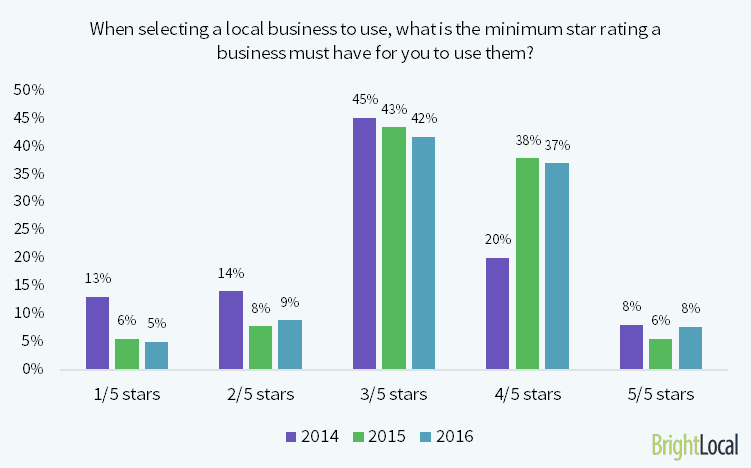
A recent 2017 study by Bright Local on local customer reviews backs these findings up (and much more).

The survey reveals some interesting trends in customer review behavior from 2010 to 2017 (the study has been conducted in 2010, 2013, 2014, 2015, and 2017).

However, the most important information is what this data means for businesses in the modern digital era.

How Does Your Business Compare to Competitors on Review Sites?

Use our Free Review Scanner to generate an Instant Reputation Report and see how your business appears on local review sites.

The takeaways can have profound impacts on how you approach Google business reviews and review marketing in 2018.

Because Google reviews for your business (or lack thereof) are already having a meaningful impact on your business and your competitors.

In this article, I will break down 7 data-backed reasons to ramp up your review and reputation marketing this year (especially for Google).

Each is backed by a key statistic from the study (or two) and the reasoning behind it.

But first, let’s go through a brief overview of the study…

About the Survey

The local consumer review survey was conducted and updated in late 2017 by BrightLocal.

The survey digs into how consumers read and use online reviews — focused specifically on local business services (not general products).

1,062 individuals in their U.S.-based consumer panel completed the survey.

Overall, the findings provide a compelling argument for increased investment in reputation management/marketing and review marketing.

Here are seven findings that should stand out to almost any business:

1. Most Consumers Read Reviews Before Making a Decision

Read Google Business Reviews

All survey images by Bright Local

Key Statistic: 91% of consumers regularly or occasionally read online customer reviews to determine whether a local business is good or bad.

This statistic indicates a vast majority of consumers turn to Google and other online reviews when determining how they feel about a business before engaging with it.

The social proof inherent in reviews and hearing about other people’s experiences is valuable information for an undecided consumer.

Since most people are reading reviews, businesses need to take their reviews seriously.

They are an extension of word-of-mouth–meaning what people say about you can theoretically be read by thousands of people, not just individuals in a customer’s immediate network.

And these reviews drastically affect your reputation in the marketplace.

2. People Trust Online Reviews as Much as a Personal Recommendation

Trust Google Business Reviews

Key Statistic: 84% of people trust online reviews as much as a personal recommendation.

Word-of-mouth has long been one of the most powerful marketing tools.

A recommendation from a friend, coworker, family member, or acquaintance carries a lot of weight due to the trust inherent in the relationship.

More people are trusting online reviews at a higher rate than ever.

And this trust is equal to a personal recommendation from someone in their network.

The importance of this cannot be understated:

If word-of-mouth is one of the most powerful marketing tools, and online reviews are being trusted just as much, then customer reviews are also one of the most powerful marketing tools.

But this also means they can work powerfully for or against you, depending on the nature of the reviews. (The impact of positive reviews will be discussed later on.)

Note: The perceived authenticity of the reviews is also an important factor. If consumers feel like the review is fake, bought, or has otherwise been “planted” there, this can affect their decision making.

3. Most Consumers Will Leave a Review if Asked To

Customers will leaves Reviews if asked

Key Statistic: 7 out of 10 consumers will leave a review for a business if they’re asked to.

A common concern among business owners is wanting more reviews but also not wanting to pressure their customers to leave them.

This statistic helps to qualm those concerns.

To ramp up your review marketing, you need calls-to-action asking for more Google reviews.

Not only is it difficult to get more reviews without asking (unless your business is gaining customers at a steady rate), but not asking for them while your competitors are will leave you falling behind.

You don’t need to shove it in their face at every turn.

Just place reminders around your store, on your website, or email and text them to leave a review of your service.

(And if you’re nervous about getting too many poor reviews, you might need to audit your service so it’s providing maximum value.)

4. Maximizing Positive Reviews Can Pay Quick Dividends

Maximizing Google Reviews

Key Statistic: 90% of consumers read 10 reviews or less before they feel they can trust a business.

A quality review system within your review marketing plan helps maximize your positive reviews.

And data shows this can pay quick dividends.

How?

Because 90% of consumers read just 10 reviews or less before trusting (or not trusting) a business.

In decision-making terms, this is an extremely short amount of time.

It’s also a testament to just how much consumers trust the information they gain from local business reviews.

You want to make sure as many of those 1-10 reviews are positive.

If most are negative, consumers will make a quick decision which will most likely lead to them researching your competitors.

If most are positive, consumers will make a quick decision which will most likely end up in increased business and revenue.

It’s that simple.

The quicker you ramp up your review marketing (especially Google) and maximize those positive reviews, the faster you will reap these rewards.

5. Positive Reviews Can Result in Direct Lead Generation

Google Reviews Generate Leads

Key Statistic: 54% of people will visit the website after reading positive reviews.

After reading positive reviews (and usually 10 or less of them) data shows most people will visit your website.

Here, they will gather more information, learn more about what you offer, and begin making a final decision about whether or not to do business with you.

(For comparison, the study found 19% of consumers will visit the business right after reading positive reviews, and 17% will continue to search for more reviews about the business.)

This means most people go directly from reading positive reviews to becoming potential leads, where your website does the final selling.

The survey also found a drastic change between 2016 and 2016. In 2015, 21% of people would continue to search for more businesses after reading positive reviews.

In 2016, just 3% would.

So reviews have increased their power to maintain a customer’s attention and trust.

6. Consistent New Reviews Can Increase Consumer Trust

Google Reviews Increase Trust

Key Statistic: 73% of consumers think reviews older than 3 months are no longer relevant.

This statistic provides insight which is twofold:

  1. If your more recent reviews are older than three months, they lose most of their trust with the market (and, therefore, their value to your business).
  2. The more recent your reviews, the more trustworthy they are (and, therefore, their potential value to your business increases).

As long as your reviews are positive, a consistent amount of new reviews can be extremely valuable.

They maintain all of their trust with the market and serve your business in a beneficial way.

However, if your reviews are recent but negative, or if they’re outdated (whether positive or negative) they can suddenly become either irrelevant or detrimental to your business.

Review marketing involves actively seeking out new reviews from your customers, along with optimizing them for positivity.

As these trends continue and consumer reliance upon reviews increases further, a review marketing plan can become a valuable asset.

7. Improving Your Star Rating is Key

Google Review Ratings

Key Statistic: 58% of consumers say the star rating of a business is most important.

87% of people also say a business needs a rating of 3-5 stars before they will use them.

Star ratings provide an overall ranking of your business based on the cumulative reviews of every customer.

It’s a quick and easy way for consumers to gauge the value of a business compared to its competitors and their other options.

For most consumers, a business must have a minimum of 3 or 4 stars before they will use them.

This should be your goal if you are at 2 stars or below.

4 Ways to Get More Online Reviews

Most businesses offer a good enough service to garner mostly positive reviews from their customers, clients, or patients.

The main issue is getting enough reviews for them to stay relevant, to increase their rankings on review websites, to gain more exposure, or to increase their overall star rating.

Here are a few ways to get more online reviews for your business:

1. Offer An Excellent Service

It goes without saying that offering a fantastic service to your customers will generate positive reviews from them.

But it will also attract more reviews because when people experience a service that blows them out of the water they feel compelled to write a glowing review.

(On the flip side, when they experience a service from hell, they also feel compelled to write a negative one.)

So offering an excellent service will net you positive reviews and more of them.

2. Ask For Reviews

As evident in the study, most people will leave reviews if you ask them to.

Many business owners simply need to get over the psychological hump of asking for a review after already “asking” for the sale.

If you’re providing a great service which provides more value than you receive from customers, you should feel 100% comfortable asking for 1 minute of their time to provide feedback on their experience.

Place reminders around your storefront/office, on your website, and send them an email or text.

You can also ask your social media followers to leave reviews.

Just make sure to spread it out so they don’t feel overwhelmed.

3. Engage With People Who Have Already Left Reviews

Most review sites allow you to comment or reply to individual reviews.

Use this opportunity to engage with these people, both the positive and negative reviews.

This shows people reading your reviews you care about people’s experiences.

This will increase the likelihood of them leaving a review (because they know you care about the feedback) and it will show people the service you provide is a top priority.

With positive reviews, simply say thank you for the review, address any concerns they might have brought up, and communicate you’re always working on improving your service.

With negative reviews, it’s usually best to acknowledge their concerns, say you will take action on them (only if you are actually going to), and thank them for their honest feedback.

4. Make It Dead Simple to Leave a Review

Many would-be reviewers are repelled from the activity because they see it as cumbersome and inconvenient.

Creating accounts, searching for the business again, and leaving the review sounds like a hassle which isn’t worth it.

However, if you make it as easy as possible to leave a review, and you let people know the process is simple, you will convert as many of these would-be reviewers as possible.

A clever review marketing funnel helps make this happen plus a fully optimized Google My Business listing. Here’s a checklist from Moon & Owl Marketing which can help.

Moving Forward

Based on this data and the insights gathered, you know ramping up your Google business reviews is a smart move in 2018, but you need to get started.

We’ve gained a lot of experience in the review marketing field, and we can set up a review funnel to maximize your positive reviews in no time.

How Does Your Business Compare to Competitors on Review Sites?

30 Nov 16:55

There's a very simple reason why the resurgent Microsoft is threatening to overtake the slumping Apple (MSFT, AAPL)

by Matt Weinberger

Satya Nadella

  • Microsoft and Apple are jockeying for position as the world's most valuable tech company. 
  • It's easy to chalk this up to Apple's weakness – but don't sleep on the fact that it's also because of Microsoft's strength. 
  • Where Apple has to deal with fickle consumers in a volatile market, Microsoft's focus on enterprise software and services is less exciting, but could be more durable and stable. 
  • Plus, Apple has to deal with the possibility that the iPhone will face tariffs from the Trump administration, whereas Microsoft does not. 
  • Finally, while Microsoft and Apple do go head-to-head on laptops and other devices, Microsoft is far less reliant on its gadget business.

As you read this, Microsoft is jockeying for position with Apple for the title of world's most valuable tech company – something that hasn't happened since 2010, when the Zune was still a thing. The two are roughly neck-and-neck, with each worth about $850 billion, plus or minus a couple of billion dollars, and each overtaking the other at different points during trading this week. 

It's easy to blame this turn of events on a slumping Apple, as the signs of weakening iPhone demand keep piling up, putting the hurt on the tech titan's stock. But as much as this reversal of fortunes can be attributed to Apple's stumbles, don't overlook the fact that it's also due in very large part to Microsoft's renewed strength. 

In short, it's starting to look like Microsoft's slow-but-steady growth in "boring" software and services for businesses is looking more attractive to Wall Street than Apple's reliance on the sexy, huge-but-volatile consumer market. 

When Satya Nadella took the CEO reins almost five years ago, it wasn't long before he called his shot: Microsoft would stop throwing good money after bad into dead ends like Windows on smartphones, and start focusing on fast-growing businesses like the Microsoft Azure cloud and the Office 365 subscription service. 

And, frankly, the follow-through has been a little boring for anyone who hasn't gotten rich from the fact that Microsoft stock keeps reaching all-time highs. Analysts expect Microsoft to show strong growth in its cloud businesses – and quarter after quarter, Microsoft delivers. All told, Microsoft posted $114 million in revenue for its 2018 fiscal year, up 14% from the year prior, with $23 billion of that from its various cloud businesses.

It's not as exciting as the launch of a new iPhone; customers aren't literally lining up around the block to try new AI services for the Microsoft Azure cloud, or placing preorders for its super-secure version of Linux for connected gadgetry. 

Still, it's in hot demand. Companies large and small are turning to cloud platforms like Azure to reduce their reliance on their own servers and data centers, which has the dual benefits of reducing costs while letting them modernize their business. These buyers are famously deep-pocketed, and willing to commit to long-term contracts that keep Microsoft in the black for the long haul. 

Furthermore, this model keeps Microsoft nice and insulated from several trends that have come to work against Apple. There's no seasonality to the cloud business; multinational corporations aren't much more likely to buy Office in the holiday quarter versus the summer. Plus, Apple is operating under threats from the Trump administration to place a tariff as high as 10% on the iPhone. Microsoft's core products, offered via the internet, aren't prone to the same.

Oh, sure, Microsoft still has a strong consumer brand, particularly with Windows operating system, Xbox video game systems, and its Surface hardware lineup. Some of those products, especially the Surface laptops, go right up against Apple. The difference, though, is that for Microsoft, these initiatives are often-lucrative and strategically-important side businesses; for Apple, selling devices (and services like iCloud and Apple Music to go with them) is the whole ballgame. 

Ultimately, though, the ongoing success of Microsoft under Nadella is a reflection of the motto of the famed Y Combinator startup program: Make something people want. It's just that in this case, the people who want it are the big spenders at large corporations, not the kinds of super-fans who buy a new phone on launch day every year. Besides, Microsoft isn't under the same kind of regulatory scrutiny as a Google or Facebook.

So while it's definitely possible that Apple recovers its footing, launches a blockbuster new iPhone, and gets back to being a $1 trillion company again, don't sleep on the fact that what Microsoft has accomplished is an extraordinary turnaround in its own right, with momentum that is very likely going to keep building. One isn't necessarily better than the other, but they're both very strong and not at all mutually exclusive.

SEE ALSO: The 50 most high-tech cities in the world in 2018

Join the conversation about this story »

NOW WATCH: 4 lottery winners who lost it all

30 Nov 16:46

4 Myths About Rebranding

by Chris Wren

4 Myths About Rebranding

Last year, many of our Branding Strategy Insider authors offered their perspectives on one of the most difficult brand strategies to pull off successfully: The rebrand. In our Rebranding Strategy Guide, Hilton Barbour observed, “Rebranding initiatives are typically driven by a need to reignite sluggish performance, capitalize on a new positioning or highlight the arrival of a post-M&A brand. In many cases the focus of these initiatives is external and therefore marketers look to rebrand for maximum impact among customers, prospects, partners and suppliers.”

With change comes risk, and in the case of a rebrand, it means transitioning established brand equity from one form to another. It can be an intimidating process for brand managers who’ve not yet gone through the exercise. Key to making the right decisions at the start is to remember that rebranding always sits downstream from business strategy. Take the time to, “include, consult, and decide,” as Mark Di Somma says, with those ‘hero’ senior managers from teams outside of marketing who will be responsible for helping drive the change and adoption that a rebrand carries with it.

Rebranding is about participation, not presentation.

With that in mind, here are four common myths about rebranding that work against successful outcomes.

Myth #1: The Rebrand Will Change Everything About Who We Are

A rebrand is going to change some things, but it doesn’t have to be the complete death of everything you once were. For many brands, the need to change and rebrand comes from the addition of new solutions that sit outside the zone where the brand resonated in the past. In these cases, the existing culture and values can evolve to incorporate what has been added or changed.

A recent rebrand of Pitney Bowes demonstrates how a rich brand heritage can be the foundation for a powerful and effective rebrand. CMO Bill Borelle commented on their rebrand saying, “We are at an important inflection point in the 95-year history of our company. Our new brand strategy brings clarity to how we enable physical and digital commerce and underscores our focus on getting it right in areas such as Location Intelligence, Customer Information Management, Global Ecommerce and Mailing & Shipping. We are incredibly proud of this work and what it represents for the future of our business.”

Myth #2: Loyal Customers Won’t Like The Change

Customer reactions to rebrands can range from outrage to delight with change for the most part being accepted, unless it comes with no purpose. Without this it’s seen as wasteful. Contrast the story of Pepsi and McDonalds. Pepsi spent $1.2 billion to rebrand back in 2008. The logo alone was $1 million. And for what? The new brand wasn’t a vast departure from the old one, and that subtlety left customers questioning why the change was needed.

But McDonalds’ rebrand directly addressed perceptions that the restaurant was cheap and unhealthy. Changes to their menu to include healthier options, modernizing locations to feel more like a Starbucks and less like greasy food joint, and a fresh campaign drove increases in sales and delighted loyal customers. We see similar success stories in the way Target and Wal-Mart executed their modernized rebrands.

The takeaway is to know what your audience wants and expects. Surprise them with positive change that directly addresses their needs instead of arbitrary change that confuses them.

Myth #3: The Logo Must Be New

Don’t confuse rebranding with a new visual identity. Both processes can be massive, which is why they are easily muddled. UPS mounted a massive rebrand to compete with FedEx in the late 1990’s, replacing their slogan with “Moving at the Speed of Business” and offering new services like overnight shipping. While they modernized their logo slightly, it was not a radical departure from what customers knew and recognized. Not all rebrands have to be radical and often they are most successful when they are evolutionary rather than revolutionary.

Myth #4: Rebranding Is All About The Visuals

Visuals are a part of your brand, but they’re not everything. As Paul Friedrichsen says, “They should be a signal of what has happened, not the sum of all that has happened.” This is why the 2016 ‘rebrand’ of Uber was such a disaster. Instead of using the controversy surrounding their CEO and bro-culture as a springboard for rationalized, strategic transformation, they led with the visuals. In this rush to change, they ditched important visual equity associated with Uber’s U… the sort that any brand would kill to have. Further, they failed to provide any sort of narrative (because there wasn’t any) and this kind of confusion leads consumers to wonder what the brand is doing and where is it headed. Not good questions to leave unanswered.

As Derrick Daye puts it, “The paradox of branding is you have to change to be consistent.”

Remember, brands are never finished, and a rebrand may very well be in your future. Be sure to think it through, myth-free.

The Blake Project Can Help: Please email us for more about how we help our clients successfully rebrand.

Branding Strategy Insider is a service of The Blake Project: A strategic brand consultancy specializing in Brand Research, Brand Strategy, Brand Licensing and Brand Education

FREE Publications And Resources For Marketers

30 Nov 16:46

6 New Lessons About Content Marketing Relevance

by Jay Baer

content marketing relevance lessons

You’re in a battle for attention. Figuring out the best way to earn attention in a maelstrom of information and entertainment is the great marketing challenge of modern times.

But the answer is obvious: relevancy.

Relevancy is the killer app. Relevancy creates attention.


Relevancy is the killer app. Relevancy creates attention.
Click To Tweet


I’ve said it before, and I’ll keep saying it: If you want your content to succeed, it must be somebody’s FAVORITE blog, podcast, video, or haiku in the world.


If you want your content to succeed, it must be somebody's FAVORITE blog, podcast, video, or haiku in the world.
Click To Tweet


And to be someone’s favorite, you need to be hyper relevant.

The trick is, as your audience grows, it can become more difficult to focus, and thus your relevancy wanes. We are constantly working on this issue at Convince & Convert. This is one of the very few online outposts that covers social media strategy, content marketing strategy, digital marketing strategy, word of mouth strategy, and customer experience. That breadth is a plus (I hope), but it also can produce relevancy issues, as we aren’t hyper-focused on ONE element of digital marketing and CX.

That’s why it is vital that we do routine surveys of our blog and email readers, to gauge what they REALLY want. We recently completed the 2018 update of our survey, and I learned these 6 lessons:

Lonna whiting

Congrats Lonna! Can’t wait to see you at CONEX.

But First, a Winner!

Big congratulations to Lonna Whiting, who won our survey-takers contest. Lonna is a veteran content creator who specializes in branding, customer and employee experience, corporate and internal communications, and social media strategy. She’ll be joining me at the CONEX event next August, in Toronto, on my dime.

Lesson 1: Analytics Can Fool You

If you look at our website analytics, approximately 50% of our audience is in the USA. But 76% of our survey respondents say their company’s headquarters is located in the US, followed by EMEA at 9%, and Canada at 8%. We presume survey respondents are really our “core” audience, so it’s interesting to see such a big gap in traffic geography between all visitors and core visitors.

content marketing relevance statistic

Lesson 2: B2B and B2C Can Coexist

We don’t play favorites on this front, and I think the B2B vs. B2C argument is usually misplaced. Our audience here at C&C is just slightly more likely to be B2B.

Lesson 3: Most Marketing Challenges Apply to All Sizes

Our audience works in both very large and very small companies, and everything in between.

35% of our survey respondents are in businesses with 10 or fewer team members. Conversely, 41% work in companies with more than 100 employees; and 27% are part of large organizations with 501 or more team members.

Lesson 4: Decision Makers Seek Information

73% of our audience influences or makes the decisions in the company about software, conferences, and similar. There is a story sometimes told about executives and managers that suggest they don’t do their own reading and learning; that they delegate that task to subordinates. This data indicates otherwise.

Lesson 5: Old Dogs Want New Tricks

One of the things I love about digital marketing is that it is always changing. And that constant flux requires constant learning. Our audience concurs, and many of them are OGs in this industry! 79% have been in marketing for 6 or more years, and an amazing (at least to me) 51% of our survey participants have 11 or more years of experience.

Lesson 6: 2019 Marketing Budgets are Going Up

Among our survey respondents, 54% say that they expect their marketing/sales/CX budget to go up in 2019; and just 5% believe their budget will go down next year.

Based on the lessons learned in this research, we’ll continue to make adjustments here at C&C, both in our editorial approach and in our media/sponsorship offerings. We work with more than 25 companies to generate awareness and leads for their solutions, via our blog, podcasts, webinars, videos, emails, and more.

In fact, this year we had the unique scenario where we actually sold out of media inventory. That being the case, we are deep into discussions with many MarTech and AdTech companies about 2019 programs. If we can help you with your demand gen, please let us know ASAP. Here are our 2019 opportunities. We are so excited to get to know you better.

convince convert media

The post 6 New Lessons About Content Marketing Relevance appeared first on Convince and Convert: Social Media Consulting and Content Marketing Consulting.

30 Nov 16:43

Timeboxing Can Double Your Sales Reps’ Output

by Albert Costill

rawpixel / Pixabay

Batching. Blasting. Replying. Cold calling. That’s what your sales reps are doing each and every day. The problem? They’ve got very little to show for all their hard work.

It’s not because you hired a subpar sales team. A majority of sales reps are in the same situation. In fact, Salesforce reported that 57 percent of sales reps were expected to miss their quotas.

Economic factors and changing customer needs are definitely factors, but the main culprit is that sales reps are falling short of customer expectations. In particular, customers are demanding a more personalized experience.

Sales reps are so overwhelmed by a variety of other tasks that, in my experience, they only spend about one-third of their time selling and interacting with customers. That’s not a lot of time to get to know their customers and create a customized experience.

One solution may be something called timeboxing.

Timeboxing as a Secret Weapon

Agile Alliance defines timeboxing as “a previously agreed period of time during which a person or a team works steadily towards completion of some goal.” However, instead of continuously working “until the goal is reached, and evaluating the time taken, the timebox approach consists of stopping work when the time limit is reached and evaluating what was accomplished.”

In short, timeboxing is opening your calendar and blocking off time dedicated to a specific task. As a result, you create a fixed schedule.

One example is the Pomodoro technique, a popular productivity hack. This entails working in 25-minute timeboxes and then taking a short break. Another example is “speed dating,” where couples go on a series of dates. Each date consists of a three- to eight-minute timebox.

“The critical rule of timeboxed work is that work should stop at the end of the timebox, and review progress: has the goal been met, or partially met if it included multiple tasks?” explains Agile Alliance.

How Timeboxing Can Boost Productivity

For personal performance, timeboxing eliminates procrastination because it forces you to start a task. You set time limits on the tasks you’re working on, which means you won’t be spending more time on a task than you should.

What’s more, because the brain needs breaks to recharge and refocus, you could create timeboxes in which you work for 52 minutes straight and then take a 17-minute break.

Timeboxing can boost focus and productivity because it encourages you to set aside blocks of time for your most important work. During this time, distractions and interruptions are avoided by turning off notifications or closing your door.

Timeboxing can also prevent perfectionism — there isn’t time to overthink and redo tasks.

How Sales Reps Can Use Timeboxing

As for your sales reps, the main advantage of timeboxing is that it helps them take back their schedules. They can set goals and objectives and incorporate them into their calendars.

For example, if you want to improve the customer experience, you may want your reps to call your high-profile clients. Instead of reps doing this whenever they have downtime, advise them to block out time in their calendars to call 10 clients.

Timeboxing can also be used for sales meetings so they’re not a waste of time. Timeboxing ensures meetings have defined start and end times. This guarantees reps aren’t spending hours in a meeting that should have only taken 30 minutes.

Bryan Gonzalez suggests on the TOPO blog that sales reps should start the day with phone calls to hard-to-reach individuals. This is also a good time to follow up with hot leads.

Then, they can use batching techniques to crank out time-consuming work when they’re most productive, like mid-morning. This prevents distractions during their most productive periods.

Salespeople should schedule meetings in the afternoon because this is “shallow work” that doesn’t require reps to be in peak mental shape.

The last hour of the day should be spent preparing for the next.

I like this approach. However, sales reps could also implement something called a “bookends approach.” This is where Mondays and Fridays are spent researching, responding to emails, reaching out to clients and attending meetings. Tuesdays, Wednesdays and Thursdays are spent prospecting and making calls.

The formula for timeboxing is simple. By spending X time, dedicated to Y activities, a rep should achieve Z this quarter. If you need to develop a more personalized customer experience, your sales rep could spend 30 minutes each day getting to know customers. This could be added to the calendar as phone calls, social media engagement or survey feedback reviews.

Because timeboxing organizes calendars, reps now have the time to spend on administrative tasks while doing deep work.

29 Nov 16:42

“We Chose The Vendor With The Most Complete Solution”

by David Brock

I just read a report, “The Mood Of The B2B Buyer.”  The results weren’t surprising, reinforcing most of the other research I see.

There was one piece that provoked me to reflect.  It was the response to the question, “In what circumstance might you opt for a more expensive solution to address a specific business need or pain point?”  53% of the respondents said, “If the vendor had a more complete solution.”

It’s not at all surprising, but I can imagine thousands of marketers, sales enablement, and sales professionals salivating at that statement.  I can just see how the majority will respond, “Let’s inundate them with features, functions, feeds, and speeds….”

I can see websites with the feature comparison charts–you know the ones that I’m talking about.  Usually, it’s a long laundry list of features the vendor thinks are important (the stuff that’s in their products) with columns comparing “our solution,” to the alternatives.  These are always constructed in a manner that our solution has twice as many boxes checked as the alternatives/competition.

Often, I go to the websites of those competitors, they have a similar checklist—some of the same features, but a lot different.  And their solution always has twice as many boxes checked as the competitors.

Sales people love these comparisons.  They take them to the customers claiming, “Our solution is much more complete than the alternatives.  After all, we check off twice as many boxes….”

Inevitably, there are the demos, which most likely end up being “death by feature overwhelm” experiences for the customers.

Somehow, all of us “pushing” a particular product interpret completeness of solution as the product with the most features, functions, bells, whistles, feeds, and speeds wins.

And they inevitably miss the point, pissing customers off, causing them to turn off or go somewhere else.

The issue is, completeness of solution has nothing to do with the number of features, functions, etc., that we can overwhelm the customer with.  It only has to do with the customer’s problem and what they are trying to achieve.

Customers evaluate the completeness of a solution by how well it helps them solve their problem.  They assess value based on the ability to solve the problem, along with the risk, ease of implementation, and a number of other things.

Too often, sales and marketing are oblivious to this.  Instead of focusing on understanding the customer problem and the “completeness” of the solution in solving the problem, they inundate the customer with more–often arguing, because we offer more, we create greater value and we can charge more.

Too often, sales and marketing, forgets that “more” is not helping solve the problem, in fact it might be hindering the customer in solving their problem.  It may make the solution more confusing, more difficult to implement/use, create more risk or exposure.

I’ve told the story before, but in a prior role, I was evaluating a software solution for my sales team.  The sales people for the vendors we were considering kept inundating my team and me with their laundry lists of features and functions, using the comprehensiveness as an indicator of completeness of solution.  After many pitches/demos where sales people went through endless functions that were meaningless to me, I finally said, in frustration, “We don’t need, we don’t want all that ‘extra stuff!’  It’s overhead and adds to the complexity and cost of implementing your solution.  Please remove it, or in the very least don’t charge us for them, we don’t need those functions, so we won’t pay for them…..”

You can imagine how the sales people reacted.  Interestingly, rather than focus on our organization’s needs and demonstrating the completeness of their solution in the context of what we needed–ignoring all the other capabilities we didn’t care about; they started coming back with deep discounts—which I gladly took advantage of.

What they missed was, I wasn’t concerned about their pricing, I was concerned about the completeness of the solution in addressing the needs of our organization.  I would have payed full price (OK, I would have negotiated some discount), but I wanted to understand that their solution would more completely address what we were trying to achieve than the alternatives.

Completeness of solution is critical to the customer!  The survey shows 53% of respondents are willing to pay more for completeness of solution.

But we get this wrong, it’s all about what completeness of solution means to the customer, not how many features, functions, bells, whistles, feeds and speeds we can inundate the customer with.  As is usually the case, sometimes, less is more.


29 Nov 16:35

How Sales Tech Can Strengthen the Human Touch in Selling

by Kylee Lessard
Sales Enablement Software Strengthens the Human Touch in Selling

No matter how hard you work, it can feel humanly impossible to keep up with the expectations and demands of today’s B2B buyers, who resoundingly desire personalized, relevant, and timely communications. And in reality, it basically is impossible to do so at scale, without the right tools.

But it is doable – and much less stressful – when you take advantage of sales enablement software. These digital technologies can ironically add a more human touch to your selling approach by freeing up time for the research and preparation that consistently enable authentic, genuine, and relatable interactions.

Successful Reps are Embracing Sales Enablement Software

Many buyers find conventional sales approaches and tactics impersonal. That’s because they are so often on the receiving end of canned outreach that shows little understanding of their business needs and role.

Our State of Sales 2018 report found that virtually all decision makers (96%) expect a human connection and understanding from sales reps. Specifically, they are more likely to consider a brand’s products or services when a sales professional shows a clear knowledge of their business needs and role by sharing relevant content and personalizing communications.

Rather than view sales technology as an added barrier to delivering on buyer expectations, savvy reps embrace these solutions to get closer to their prospects. It’s no wonder nearly three-quarters of sales professionals (73%) use sales technology to close more deals. And, of this group, 97% consider sales technology “very important” or “important.” Moreover, 65% of top performing-reps are spending more time using technology.

Achieving the Human Touch at Scale

So how exactly does sales technology pave the way for better interactions and relationships? It equips sales professionals with the information needed to connect with relevance, so they sound less like a robot during those initial engagements. Rather than sending out hit-or-miss messages en masse, reps can turn info into insights weaved throughout a tailored experience.

Use your sales technology well, and you’ll find yourself with more time to build and nurture a network of meaningful connections. With a tool like Sales Navigator, you can easily identify the most relevant prospects and quickly pinpoint key contacts at target accounts. The Advanced Search feature lays out organizational structures, allowing you to map the buying committee so you know exactly where to concentrate your efforts.

Sales technology can also reveal information about people’s functions, achievements, and strategic initiatives, even notifying you of buying signals. Plus, it can identify the best path for introductions to promising prospects.

By making short work of all these steps, sales enablement software frees you up to focus on developing an effective sales strategy and crafting compelling communications for each target account and stakeholder. In other words, it positions you to invest in the personal touch that separates sales leaders from laggards.

The State of Sales Enablement Technology

Undoubtedly, sales tech has transformed the sales profession. But no one is arguing that technology is a substitute for the human element. Authentic relationships and meaningful connections are irreplaceable.

As our State of Sales report shows, sales reps can get closer to prospects in less time by capitalizing on available sales technology that suits their needs. Through the information, insights, and efficiencies that these tools deliver, sales pros are able to enhance and scale their personalized approach.

For more on why sales technology is the key to modern sales success and how your peers are using it to their advantage, download LinkedIn’s 2018 State of Sales report.

29 Nov 16:35

What B2B Can Learn from Gaming

by Liz Cain

Over the past year or more that we have been exploring this phenomenon of product led growth (PLG), we’ve discovered that many of the principles of game design are applicable – both in building an amazing experience for the user and in building the actual business. Who better to learn from than someone who ran a gaming studio!?

During our third Product Led Growth Summit, I had the chance to speak with Catharina Lavers Mallet. Cat recently joined Bose as Head of Consumer Electronics Incubation, where she will be bringing innovative new product categories to market. But her PLG experience truly comes from her time in gaming as a GM at King Digital — the developer of Candy Crush and Farm Heroes.

Cat shared 3 key principles of game design and examples of how they can best be applied to a B2B model.

1. Validate your core loop

This comes down to focus and prioritization. The key is to make sure that the second-to-second experience that a user will be doing over and over again is really clear, fun and that it’s clear and obvious why players are doing that thing.

In Candy Crush it’s ‘match 3 candy pieces.’ In Call of Duty it’s ‘identify and shoot targets.’

The issue in many games is that they try to add on too many levels of depth and additional features. If the core loop isn’t really solid, players don’t know why they are there and they stop playing.

The parallels in B2B are obvious – it’s easy to get sucked into building feature after feature to meet the requests of customers, but you can’t lose sight of your core value prop. You have to ensure that piece of the experience is exceptional and the value is clear. If you take away all of the other bells and whistles, what would you have left?

We’ve heard this same piece of advice from Ian Siegel, Founder & CEO at ZipRecruiter. Siegel is adamant that each business only really sells one thing. One of the main secrets of success is knowing what that one thing is and putting all your effort and resources into being the best at that. Obsess over it.

His tip for uncovering what your one thing is (if you’re not sure) to have a current customer who loves what you do describe your product to a prospect. How your happy customer describes what you do and the value it delivers is your one thing.

2. Design with monetization in mind

Retention is king. In gaming, if you don’t have an experience that players want to come back to again and again, the other stuff doesn’t matter. However, you can’t ‘sort out monetization later.’ Bolt-on monetization tends to be really transparent. Either you have taken away something that players used to get for free, which really annoys your users, or it’s not core to the experience. Monetization is an exchange where the players need to feel like this is worth paying for, a fair deal.

So it’s important that you know how you will, or at least could, introduce monetization into the experience. Fornite monetizes through skins and ways to show off to your friends. Candy Crush monetizes through additional lives and boosts. Other games use subscription models, or flat one-off fees.

Games that don’t have a clear monetization strategy end up relying on ads, which is only economical if you generate a tremendous volume of impressions organically (aka you’re super viral).

When it comes to B2B, the same principle holds true. Buyers will only pay for the value they are getting and if you aren’t transparent in your intent, it’s possible to leave them feeling cheated.

LinkedIn built a large consumer data set with the clear intention of B2B monetization over time. They’ve taken the same basic product features and packaged them in a way that they can go to market targeting 4 distinct groups (professionals, job seekers, sales teams and recruiters), each with one clear product and message. Post-acquisition by Microsoft, they continue to increase the cost of each package, while also having dramatically cut the features included. Their monetization strategy is clear, but leaves customers feeling nickel and dimed because it was not communicated in advance.

3. Averages can be dangerous

Gaming is very data driven, and it’s tempting to rely only on top-line numbers like 2 day retention and ARPU. Those numbers are important indicators, but they are averages and can hide a host of sins. You have to pay attention to cohorts, and the full distribution of your player behavior.

“At King we spent a lot of time looking at the pass/fail rates on individual levels. For a while we thought the data was telling us that the harder a level was, the more likely a player was to pay. That was only partially true. If a level is too hard, it’s not fun. You want to feel like you are close, that you have a chance of passing the level if you just play one more time. If a level is too easy, it’s boring. Often by making a level a bit easier, it actually increased monetization, because people then felt like they were close enough for a small purchase to just push them over. If we were only looking at the top-line summaries, we would have missed this variation in types of player behavior.”

We heard similar feedback from Merci Grace, an early Product and Growth leader at Slack and former game designer. Slack is obsessed with the exact customer rather than personas or averages. This means getting to know your exact user, their real problems, their use case and how those tie back to the product.

Check out Lessons from OpenView’s 3rd Product Led Growth Summit for other key learnings!

The post What B2B Can Learn from Gaming appeared first on OpenView Labs.

29 Nov 16:31

35 Tools To Enhance Your Email Marketing Campaign

by Kevin George

Tumisu / Pixabay

Email marketing has evolved since its early beginnings in the 1970s when a Marketing Manager at Digital Equipment Corp sent a mass email to a few hundred recipients. Its novelty generated over $13 million worth of sales and heralded the birth of email marketing. Fast forward to today, 3.7 billion people use email and this will increase to 4.3 billion by 2022. This way, emails are great way for marketers to be in touch with their customers.

Contrary to the popular notion of email marketing being marketers ‘batch and blasting’ promotional emails to their subscribers, a lot of planning, testing and analysis goes behind an email marketing campaign. Even then, there is always a scope for enhancing your email marketing campaign and we have listed out 35 Tools to enhance your email marketing campaigns.

Preparing your email marketing campaign

Before you even hit ‘send’ you have a lot of preparation to do to ensure your email campaign is a success. There’s collecting emails and cleaning your database, designing your templates and coming up with the content for your email. Luckily, there are many tools available to streamline this process.

Project management

Email template production is not a task cut out for a single guy to handle, it is a collaboration of different teams. Involvement of multiple resources such as designer, copywriter, developer, marketer brings with the challenge of inter-dependencies. In a time-bound situation where a concept needs to be thought, designed, developed, tested and executed you need certain project management tools.

1. Forgett

Sending an email involves a lot of tasks to be checked off so why not make a checklist of them. If you want a standalone checklist to keep on top of things, then try Forgett. This online form will keep you updated on progress when building your email.

2. Trello

With so much to organize within your email, you’re likely to have many people working on it – from designers to coders and content writers. Keep everyone up-to-date and on one page with Trello. It allows you to collaborate seamlessly, check-off different tasks, archive completed jobs and assign roles. It can be used across the world, so works if your team are remote.

CRMs

A successful email marketer is the one who sends a relevant email based on the journey of the subscriber. Keeping track of thousands of subscribers is not an easy task without relying a good CRM software.

3. Contactually

Aimed at real estate agents, Contactually offers a CRM platform that can vet your contacts. It’ll gather information from your email inbox, website and social media to help make messaging more targeted and to put all your communications in one place. So, your subscriber list and overall campaign becomes more organized.

4. Zoho

Zoho is a multichannel CRM platform that collects multiple data from different touch points as specified and targeted by you. Additionally, for e-commerce industries Zoho also provides integration of your inventory as well as invoicing tools.

ESPs and Email Automation tools

Sending an email to all your subscribers at a time is difficult without an Email Service Provider and sending them individually based on certain trigger is not physically possible without automation. You upload your email template and your mailing list into ESP and send it simultaneously to all. By setting proper trigger in your automation workflow, an ESP sends specific email to your subscribers that satisfy a specific trigger.

5. Drip

Drip specifically assists eCommerce companies with marketing automation. You can design custom emails that are sent when a customer first purchases, when they abandon their baskets, or when they return to your website. It simplifies your sales funnel and has some impressive tracking capabilities – helping increase conversions.

6. E-goi

When you want to mix things up, try E-goi to send out alternative marketing messages. You can break up an email campaign through SMS, push notifications or web notifications. Variety is the spice of life, so this approach will help increase engagement in the long run.

7. MoonMail

This is a free-to-use ESP targeted for small businesses and people with small mailing list with option to scale up for a small monthly fee. Equipped with a strong but easy-to-use email editor and automatic weeding for Bounces, SPAM & Unsubscribe, this is a good for those who are dipping their toes in email marketing.

All-in-one Tools

All-in-one platforms are those that have CRM, Landing Page builder, ESPs, Social media manager all under a single roof. Some of the prominent All-in-one tools are:

8. MailChimp

Mailchimp initially started out as an ESP for small scale businesses and now it has progressed to become a fully-fledged marketing platform. You can monitor the performance of your email campaigns, monitor the social ads as well as check out the leads on your landing page. One of the USPs of using MailChimp is that it supports Polls and survey embedded in emails. To learn how you can also do the same, check out the blog.

9. HubSpot

This is consistently voted one of the best marketing automation tools available. It can help streamline your email marketing through automated workflows, as well as manage an entire CRM and inbound marketing campaign. This makes your overall marketing more organized and in-sync, which will ultimately increase engagement and give a cohesive brand experience across all your channels.

10. Moosend

This tool will provide real-time analytics, so you’ll instantly know how engaging your email campaign is. It will also tell you what links and content are performing well. Again, with the aim to increase click-throughs and conversions.

11. Campaign Monitor

Campaign Monitor offers a drag and drop email editor along with hundreds of professionally-designed templates and allows create personalized customer journeys to constantly engage different audiences. Additionally, you can also include content blocks that would dynamically fetch data at the time of email open to provide customized information without much tinkering in the back-end.

Lead Generating Tools

12. PageModo

PageModo is a simple tool that allows you to convert a pre-existing Facebook page into a landing page-style format. That way, you can collect leads via your Facebook and add them to your email list.

13. Hello Bar

This WordPress plugin provides an opt-in form to encourage email subscribers that’s less obtrusive than an annoying website pop-up. It can integrate with email campaign tools such as MailChimp, to automatically send subscriber data across. Marketing influencer Neil Patel is a fan, so it’s well worth a look.

14. Rafflecopter

What better way to encourage email subscriptions than through a competition? Rafflecopter enables you to run sweepstakes and giveaways – and drastically increase your email list at the same time.

15. Clearbit Connect

With 3.7 billion people on email, sometimes it’s a challenge to find the right address. Especially if that person is a high-ranking exec or CEO. Clearbit Connect can help, by finding the right contact in a company to email. It can provide other relevant details about a contact as well, including their job role and how long they’ve been at a company. The majority of this is publicly available data, so you shouldn’t fall foul of GDPR rules. But Clearbit does offer EU suppression that will stop some functionality that breaches GDPR.

16. Leadfeeder

Leadfeeder allows you to track visitors to your website and gather relevant information on them. Using this, you can send more targeted marketing, including emails that in turn should increase your open and click rates. It can integrate with most CRM systems and email marketing tools.

Building your emails

Content is king, and your email needs it to be engaging. Sending an email is only half the battle, the next step is to get people to open and click on it. These tools will help your emails stand out from the crowd.

17. Canva

Canva is best known for creating stunning images for social media. But it can be used to design and edit images for your emails. From something as simple as adding a logo, to creating a branded infographic, Canva is an easy-to-use option for people who aren’t full-blown designers.

18. Adobe

The Adobe suite of tools is part of every designer’s kit. There are Adobe Photoshop, Illustrator, Muse, InDesign and many other pieces of software to suit every design need. If you’re serious about designing your emails then you’ll need to invest in Photoshop, and perhaps Illustrator as well.

19. Royalty-free images

Less of a specific tool and more a range of resources, for stock photography without the price tag it’s worth checking out the free stock photo sites available online. Unsplash will give you artsy, social media worthy images, whilst Pexels is more classic stock imagery.

20. JPEGmini

This handy tool allows you to reduce the size of any images without making them go blurry or stretched. Your file sizes generally need to be small in an email so that it loads quickly – especially since many people view emails on their mobiles. Using JPEGmini, you ensure that any visual elements of your email will appear quickly.

21. Phrasee

An interesting tool that implements AI to create personalized subject lines that sounds human while constantly learning your audience for improvement. Additionally, it supports multiple languages and provides custom tailored algorithms to create your brand voice.

Bells and Whistles

Opting for a vanilla email template is not going to help your brand stand out off the crowd. The following tools can help you add some innovations in your email to improve user experience.

22. BombBomb

If images aren’t appealing enough, consider using video. BombBomb offers you the ability to record a video and send it via Gmail, Outlook, Salesforce and many other email providers. There’s also an app available for on-the-go recording. Using video has been found to increase click rates by up to 300%.

23. MotionMail

Another way to grab attention is to use a countdown timer – this is particularly effective if you’re offering a limited-time sale, discount or event. MotionMail offers free countdown timers that integrate with most email marketing systems. The urgency is likely to increase click through rates and conversions.

24. Feedblitz

If you struggle to keep on top of all your email marketing, social media, blog and RSS feed then let Feedblitz help you. This all-in-one service will convert your RSS feed and blog updates into email newsletters and automatically send them to your subscribers. You can segregate your mailing lists, so people receive only the most relevant content, as well as share via social media and schedule emails to send.

25. NewsletterBreeze

Stuck with writer’s block? NewsletterBreeze will curate content for your email in under five minutes. It collects the leading industry news and will work with most email marketing software.

Testing your email

An untested email client is a one-way ticket to ruin your brand reputation. The following tools are to check how an email template is rendering and how it can improve. For more in-depth analysis, there are some standalone tools to consider.

26. Litmus

Litmus is one of the best ways to test your emails across any device. 40% of consumers use multiple devices to access the Internet, so your email needs to look right on all of them. It will also make sure that your email isn’t classed as spam by the major email companies. Litmus will also provide some spam and subject line testing, along with optimising your landing pages.

27. Email on Acid

This catchily named company goes beyond email opens and clicks to provide a heat map of where in your email most caught the eye. It also tells you whether someone has read, skimmed or deleted your email. This is vital to creating engaging content over the long term, as you can prioritize parts of your email that performs well. Eventually this will lead to higher engagement and clicks.

28. Email subject line grader

This handy tool will grade the effectiveness of your subject line, depending on how compelling it is and whether it’s the right length (based on industry standards). Getting the right subject line is crucial to increasing your email open rate. Better still, the tool is completely free.

Checking Deliverability & SPAM check

29. Postmark Spam Check

Simply copy and paste your subject line, subheader and email copy into this online tool and it’ll warn you if your email will trigger spam filters. Plus, it will tell you what areas you should change to avoid being relegated to spam. Of course, nobody really opens their spam folder (or trusts the content inside) so avoiding being classed as spam is a surefire way to increase your opens and clicks.

Competitor Analysis Tools

Subscriber preferences dictates the type of content they expect in the emails. By studying how your competitors are performing, you can make improvements in your own emails and these tools help you conduct competition analysis.

30. Owletter

Owletter is a competition analysis purely designed for emails. It will collate all your competitors’ emails into a user-friendly dashboard, so you can see at-a-glance what other companies are doing (and maybe copy a few of their better ideas!). It also frees up your inbox for the important stuff, instead of clogging it up with endless newsletters.

31. Beetle.email

Beetle email caters to a wide variety of brand from different industries and curates emails from them. The USP of this tool is that you can also suggest for brands if not available in their database.

Misc. Tools

32. AudiencePoint

This new tool uses data to determine the best send times for your email. It will track when your target audience are usually online, ensuring that your email is seen by the most people when it is sent. Naturally, this helps to increase open rates.

33. Intercom

Intercom works within other marketing channels, such as apps, to send email messages to users. For example, if you wish to promote an event to app users or help someone who is having trouble using an app, Intercom will let you send email conversations within the app itself – generally giving a more unified, timely customer experience.

34. GetNotify

This free tool will tell you if your email is opened and read by a recipient. Admittedly, you might not want hundreds of ‘read’ notifications to flood your inbox, but for the select few (like the CEO of a Fortune 500 company) you can tell if they have read your message.

35. Mailzinger

Related to this is Mailzinger. When you send an email campaign, you might not want to receive hundreds of out-of-offices or replies to your inbox. Mailzinger will let you set a time when it delivers your campaign responses, instead of constantly interrupting you throughout your workday.

It also has a powerful email alias feature that creates a unique email address for each campaign. That way, you will instantly know what campaign a person is responding to.

Tools are there to help you, use them

There are many good tools available to make your email marketing easier, more effective, and engaging. It’s worth spending some time to figure out what tools work for your needs.

You can bet your competitors probably are. Businesses that fail to use today’s email marketing technology will find their emails gathering dust in inboxes. Or worse still, the spam folder.

29 Nov 16:31

6 Steps to Build a B2B Sales Organization from the Ground Up

by Liz Heiman

Stop! Before you spend $100,000 or more on a salesperson, set them up for success.

When you are building a house, before you do anything else, you put the infrastructure in place and lay the foundation. A solid foundation ensures a stable structure. The same is true when you build a sales organization. Think about what needs to be in place to build a stable organization that will support sustained growth.

Your first sales rep will cost you over $100,000 in the first year. That is a significant investment. One that is easy to make if they are going to bring in 10 X that in sales. But what if they don’t? Not only have you spent money on a salesperson, but you have also wasted precious time and possibly damaged your market position. 

To ensure success, before you hire that first sales rep, make sure everything they need to be successful is in place. Below are 6 steps you need to take to build a successful sales organization from the ground up

  1. Define Your Sales Strategy 
  2. Create a Lead Generation Process 
  3. Craft Sales Messaging 
  4. Outline a Sales Process 
  5. Construct a Sales Funnel 
  6. Determine the Hiring Criteria

6 Steps to Build a Successful Sales Organization

Step 1: Define Your Sales Strategy 

Everyone on your team must understand your vision for the company and its goals. When you are small it’s easier, but don’t overlook this. Be sure everyone on your team understands why your company exists, why that matters to your market, what you sell and who will buy it. Then they need to understand the sales goals and how you will hit them. When you are the only one selling it may not seem necessary to explain, but you are laying the foundation to hiring your first salesperson and probably many more after that.

Step 2: Create a Lead Generation Process 

How do you generate leads now? Will that lead flow be sufficient when you hire a salesperson? Salespeople don’t magically generate sales. It’s your job to provide a lead generation process that includes criteria for what type of companies will be most likely to buy. Including size, geography, industry and other important criteria that will target who you sell to. Provide a list of companies you want to pursue, and what products you want to sell. If you don’t have a marketing department, you can do it yourself or outsource, but lead generation is a must. If your new salesperson has to spend time researching and building a list from scratch it will be a long time before you get a return on your investment. The better marketing can support sales in the lead generation process, the better results you will get.

Step 3: Craft Sales Messaging 

We think that salespeople will know what to say. Well, they don’t. And, if you don’t tell them, they will make it up. Before you hire a sales rep you should have a solid understanding of your market position and the message that will attract your target customer. That message is your value proposition, and that message is focused on your customer’s problems rather than your products. You will have that message ready so you can teach it to your new sales rep and practice it before you send the rep out to talk to customers. This way, you can get a quicker return on your investment because your new rep will be prepared to have the kinds of conversations that build relationships and close deals.

Step 4: Outline a Sales Process 

Your sales process must be clear and documented so others can follow it. It may seem to you the path from meeting a prospect to closing the deal is obvious if you have been doing the selling. Document it so you can teach it. Your new sales rep should not be left alone to figure it out. The process may change, but you need to start somewhere. Your company’s sales process should reflect your customer’s buying process. How do your target customers buy? Map that out and then be sure the process you want a salesperson to use is a match. Make it easy for your customers to buy and you will be able to better predict your sales revenue. If you want an accurate forecast, process is critical.

Step 5: Construct a Sales Funnel 

You need a way to effectively track sales opportunities. You may have a CRM, that builds a pipeline or funnel report, but that may not be effective. Set your CRM up to mirror your sales process and provide reports that help salespeople effectively pursue leads without missing anything. The more complex your sale, the more information and people there are to keep track of, and the longer the sales cycle. Tracking properly becomes critical. As the sales leader, your sales funnel is your lifeline. At any moment in time, you need to have clarity about what will close and when. Your funnel should provide this clarity if you manage it properly.

Step 6: Determine the Hiring Criteria 

Before you hire, you will write out the type of salesperson you are looking for and exactly what you expect them to do. If you aren’t clear on your sales process from targeting your customers to closing, onboarding, retaining and growing, you won’t know who to hire. Which part of the sales process do you expect the salesperson to do? All of it? The prospecting only? Do you need someone to manage and grow your existing customers? Once you map out your sales process and determine what parts the salesperson will need to do, you will know what skills and experience you need to hire.


Want to know more? Join me for this FREE webinar, How to Build a Sales Organization from the Ground Up on Wednesday, December 5th @ 11 AM Pacific! Register NOW! Or give me a call and let’s talk about how to build your sales organization.

The post 6 Steps to Build a B2B Sales Organization from the Ground Up appeared first on Alice Heiman, LLC.

29 Nov 16:30

Data Science for Marketers (Part 2): Descriptive v Diagnostic Analytics

by George Karapalidis

In this series, we previously talked about the essential steps you should take before starting your big data analytics programme – decide on your end game and start the data consolidation process.

Now it’s time to move on to the more thrilling part – learning how to ask the right questions (using data science) and receive the best answers (using data analytics).

Your big data, once ready to use, enables you to understand:

  • What has happened? (descriptive analytics)
  • Why did this happen? (diagnostic analytics)
  • What will happen if…? (predictive analytics)
  • What should we do about this? (prescriptive analytics)

In part two of our series, we’ll focus specifically on descriptive and diagnostic analytics. Both of them serve as a pillar to your big data value chain and are essential to developing more advanced algorithms supporting predictive and prescriptive analytics.

What is descriptive analytics?

Descriptive analytics mines historical data to identify common patterns and correlations between certain outcomes. It is the best way to distill large volumes of data into succinct easy-to-understand insight.

Google Analytics is a prime example of descriptive analytics. You don’t need to go through a variety of numbers and apply formulas to see how your keyword positions have changed in the last week. However, you are not provided with the exact reason of why that happened – that’s up to you or a diagnostic algorithm to decipher.

Descriptive algorithms also help establish different relationships wired in your data. For example, they can be used to classify different prospects into groups. So a predictive algorithm attempts to forecast the likely behaviour of a consumer group. A descriptive model helps that algorithm to estimate the relationships between different consumers and different products, so it can later ‘join the dots’.

Use cases of descriptive analytics in marketing

Estimate intent

Social media monitoring tools and sentiment analysis tools help you identify who your potential customers are, what matters most to them and how they tend to behave on different social platforms.

Group leads

Curate your incoming leads automatically based on the available demographics information and additional data. Set different parameters that will keep your lists well organised for the sales teams. By adding predictive analytics to the mix, you can also estimate how likely it is that a certain prospect will buy from you.

Deploy advanced audience segmentation

Locate returning customers and those who will buy from you with little-to-no nudging or those who won’t budge unless prompted with an additional sales deal. You can also segment your audience to learn what kinds of content and messages resonate with them the most; whether they are responsive to certain types of advertising and so on.

Ultimately, descriptive marketing analytics tools help you receive more information about your audience, your leads and your past ad campaign performance. There are a lot of metrics worth estimating this way to get your daily fix of numbers.

What is diagnostic analytics?

The goal of diagnostic analytics is to understand why something happened. Why did you have 10% fewer sales in October, despite investing more in LinkedIn marketing? – asks your CEO.

A valid question you don’t have the answer to at the moment. In the Event Actions/Goals, you notice that some users from LinkedIn added the product to the cart, but did not check out. The data shows that Exit Rates are through the roof when customers were asked to provide their shipping address and payment details. A lot of things could have gone wrong:

  • The form didn’t load correctly
  • The shipping fee was too high
  • The form was too long and non-mobile friendly
  • Not enough payment options available

The goal of the diagnostic analytics is to help you locate the root cause of the problem. To do so, the algorithms use owned proprietary data, and leverage outside information (e.g. reports from LinkedIn or Google) to understand what exactly happened and help you find a quick fix.

Use cases of diagnostic analytics in marketing

Spot and respond to anomalies; some questions cannot be answered by simply looking at existing, albeit distilled, data. For example, what caused a sudden drop in website search traffic without any obvious reasons? A diagnostics tool can tell you that you have an imbalanced link distribution among inner pages and that caused a plunge.

Prioritise your insights and action. By knowing the root cause of certain problems, you can prioritise your actions to avoid them in the future. Know the areas where you need to pay special attention to achieve positive results, or avoid setbacks.

Refine your marketing messages and sales offers. Diagnostics helps you determine causal relationships between different data points. Your data can tell you that a free shipping promo deal leads to a 15% increase in average order size, whereas without the deal, you’ll get 25% higher exit rate. Big data consists of a lot of moving parts and diagnostic analytics helps you determine how exactly your actions will shake those up.

Uncover new data stories. You may be missing out on a bunch of hidden relationships within your stash of data. For instance, you can compare consumer response to the same advertising campaigns in different areas and discover that female travellers aged 18-25 from Manchester are more likely to fall for the “sunny and luxurious resorts in Spain” rather than “affordable and boho homestays in Greece”. You can diagnose how different tech health aspects of your website contribute to your rankings and so on. Furthermore, you can then turn those data stories into marketing storytelling.

Part 3 coming soon…

Your data has now gained new context and can be further cooked up for the final step of your journey – understanding “what will happen if…” and what is the right course of action to take. That is exactly what we will be discussing in the third and final part of our series – the transition to marketing foresight and unlocking accesses to actionable insights.

28 Nov 21:17

A Suburban Model For Incremental Transit Improvement

by Sylvia Menezes Roberts

The City of Brampton is the quintessential American suburb. In 1951 it was a rural town with some manufacturing, and a surrounding township revolving heavily around agriculture. It had a population of 8,389 people. As soldiers came back from WWII, they wanted to start families. In a region rapidly adopting car culture—highways were being built by 1934—the solution was car-oriented suburbs, backed with government home loans to veterans. The city expanded and expanded, replacing prime farmland with subdivision after subdivision. In 1962, a subdivision boasted a shopping center that was “the world’s largest all electrically heated and air conditioned mall.”

By 1971, Brampton had 41,211 people and the township boasted having built the nation’s first satellite community, Bramalea. Touted to “potentially end suburban sprawl,” Bramalea was a master-planned community, complete with its own town center, a police station, library, etc. It was to be a balanced community with industrial, commercial, and residential land uses, with many walking trails and small lakes to provide recreation.

In 1974, the entire township was amalgamated into Brampton, and by 1981 had grown to 149,000 people as city officials fully adopted suburban development strategies, with single-family residential subdivisions as its main growth plan. By 2001, Brampton reached a population of 325,000 people, and by 2016 a staggering size of approximately 600,000 people.

Residential Brampton is now about 73% single family homes, and of those, 52% are detached. It is filled with strip malls, and monstrous stroads, some spanning eight lanes with speeds as high as 50 miles per hour.

You are probably wondering why you have never heard of this “American” suburban city. That is because this city, which is perhaps an exemplar of American suburban design, is in Canada. The US is not the only nation whose postwar growth has been dominated by car-dependent suburbia; Canada in many ways is similar.

Toward A More Complete Transit System

With all the suburban expansion, more and more cars moved in and out of Brampton, inducing traffic, and congestion became a serious issue. People were spending more of their time trapped in an increasingly hellish commute, and something had to be done.

In the 1990s, the city of Brampton had a bus system that ran infrequently, with long and circuitous routes. In the early 2000s, it was decided it wasn’t working, and in 2005, the transit system was reoriented into a grid system. Bus routes aligning with the city’s long straight arterial roads were deemed to be the new backbone of the transit system, and a two-hour free transfer was put in place. The residents recognized the value, and Brampton Transit became one of the fastest growing transit systems in Canada in 2006, surpassing 10 million rides that year.

Ridership continued to grow, and Brampton increased the grid routes to a minimum standard of service: they now ran at least every 30 minutes, seven days a week. In 2004, a new transportation and transit master plan was created, recognizing higher-order rapid transit systems being layered onto the current structure. In 2006, the Province of Ontario partnered with Brampton to introduce Bus Rapid Transit (BRT), and in 2008 the Canadian federal government added money to the pool.

 A Brampton stroad with dedicated right-turn lane from which buses alone are allowed to proceed straight. (Source: Wikimedia Commons)

A Brampton stroad with dedicated right-turn lane from which buses alone are allowed to proceed straight. (Source: Wikimedia Commons)

With this funding, Brampton introduced Züm, a limited stop bus service, which would run in parallel with regular Brampton Transit routes and stop only at main intersections. The limited stop service was combined with bus pullouts (bays where the bus can pull out of traffic to load, or unload passengers), large bus shelters (the fact that they have heaters is appreciated during Canadian winters), traffic signal priority when the buses are running late, and queue jump lanes. The queue jump lanes are at the major intersections with channelized right turns for regular traffic. Buses alone are permitted to go straight, allowing them to cross the intersection, thus ‘jumping the queue.’ These improvements help buses keep to their time tables and be reliable from the user’s perspective.

The first Züm buses were introduced In 2010 on the busiest East/West corridor known as Queen Street, connecting the downtown of Brampton to the core of the former community of Bramalea, and further East into a neighbouring city, terminating at York University. Following the debut of Züm service, ridership grew by 18% in 2011.

In 2011, the city put in a north/south Züm on Main Street, intersecting the Queen Street Züm at the downtown transit terminal, running north to Sandalwood (a major parkway in the north end of town) and south into the neighbouring city of Mississauga, terminating at its downtown transit hub at Square One Shopping Mall.

 Züm service map (Source: Brampton Transit. Click to view larger.)

Züm service map (Source: Brampton Transit. Click to view larger.)

2012 saw the introduction of the first articulated buses, and another East/West line on Steeles, the southernmost arterial road with two regional rail commuter stations, two colleges and a community mall.

By the close of 2014, Brampton Transit hit 20 million rides, and saw the addition of it’s third East/West Züm, on Bovaird, an enhanced bus service line that was put in place to increase the system’s coverage, build out the grid of routes, and grow service as the city continued to add population.

As ridership grew, Brampton Transit also added more buses to existing lines, and reconfigured other lines to better reflect ridership patterns. For 2018, Brampton is on track to surpass 30 million rides, a tripling since 2006, which works out to averaging ~9.5% growth per year for 12 years. Even after adjusting for Brampton’s ~50% growth since 2006, that still works out to a doubling, for an annualized growth rate of around 6% a year per capita.

What Did Brampton Do Right?

Amid U.S. transit agencies’ alarm about falling ridership south of the border, how has Brampton managed to double its per capita ridership in only 12 years? In a suburban city of mostly single-family homes and only moderate population density (5,772 people per square mile, much less than that of famously car-dominated Los Angeles)? And not with glamorous rail or streetcars, but good old-fashioned buses?

Brampton Transit didn’t make any massive bets; they placed some medium sized bets, and many small ones, where each individual experiment was thought likely to succeed. And if one didn’t, the agency just reallocated buses accordingly. Where changes succeeded, they were rewarded with more resources, as bus lines initially introduced with 15 minute headways later became 12, 10, and then 8 minutes apart. The original Queen Züm is now at 6 minute headways during peak times, with ridership likely to exceed 20,000 per day in 2018. Planning has begun for implementing a true BRT line on Queen Street with dedicated bus lanes. The day it opens, it will already have the ridership to make it a continued success.

 Brampton Transit’s system map shows the clustering of routes along a regularly spaced “super-grid” of arterial roads. (Click through to view full-resolution version on original site.)

Brampton Transit’s system map shows the clustering of routes along a regularly spaced “super-grid” of arterial roads. (Click through to view full-resolution version on original site.)

Lest you think that this growth is being heavily subsidized by the city, Brampton Transit now has a farebox recovery of over 50%, putting its ratio well above that of metropolitan core cities in the American West and Sunbelt, cities which have a similar development pattern. You don’t have to have a tight grid system like the old cities of New York City, Boston, Washington, Toronto, and Chicago, where the cores were laid out before the mass adoption of the automobile. Even a grid based on large blocks like one sees in Sunbelt cities like Los Angeles, Dallas, Houston, Miami, Atlanta, Tampa, and Phoenix, can experience what Brampton has achieved with its adaptations to the way it operated.

For Brampton, switching to a grid for major routes was a big start to improving farebox recovery, because it represented money being shifted from coverage to frequency. Because these routes were now more frequent, they became actually useful, and so people started taking them more. As this occurred, the city rewarded the routes that experienced growth with more funding. Because the portion of the budget that went to routes that had a higher farebox recovery increased, overall the system lost less and less money as a proportion. This became a positive feedback loop: more investment begat more ridership, and more ridership begat more funding.

In 2017, the budget finished with 54% of operating costs coming from fares, and another 5% from other sources such as advertising, for a total of 59% of operating costs coming from revenue, and total city subsidy rate of 41%. That increase was due to higher than expected ridership growth. And when it came time for increases, 80% of the city-allocated budget increase came from expected fare revenues. At this point, ridership growth is being constrained by operating hour increases.

What was the ‘higher than expected ridership growth’? 2017 saw an 18% ridership increase; the previous year was 9%. For the 2018 budget year, the city projected for an 8% increase, and nine months into the current year, Brampton Transit is already seeing increases well within the 15-20% range.

Where is Brampton’s ridership coming from? Brampton Transit may be reaching a tipping point where more and more people who used to drive are now opting to park their cars and taking transit.

Brampton has now hit the point where it is attracting the mythical “choice rider”: people who very much have the choice to drive a car or take transit, and opt to take transit. It really goes to show that you don’t have to spend massive amounts on rail transit with fancy stations to attract middle-class riders to transit. Charlotte, North Carolina’s Lynx Blue Line cost more to build than Brampton’s Queen, Main, and Steeles Züm lines combined, yet the former carries 16,900 passengers per day, while those three lines in Brampton carry 48,000 passengers each day, a factor of 2.8x (ridership data for both is from the 4th quarter of 2017). The smaller capacity of buses actually becomes an advantage, as you don’t need to add a massive amount of capacity to increase the frequency by one vehicle per hour. The more fine-grained capacity addition of buses greatly lends itself to incremental improvement across many lines in any city.

Take-Home Points

The lessons to take from Brampton are:

  • Grids are highly efficient for transit systems (even if they are super-grids like in Brampton, or U.S. sunbelt cities like Phoenix)

  • Frequency is more important than coverage for ridership, and you don’t have to spend a fortune to build out a good transit system.

  • Redistribute your resources to form a grid of higher frequency routes. Then as ridership goes up, start prioritizing routes for more resources according to ridership.

  • Keep fares paced with inflation, and just keep incrementally improving the system. If some chunks of the route experience much higher demand, feel free to use buses that only run that segment, so you can deliver more service to busier areas.

Putting in limited-stop buses on busier routes is great. They cost very little to implement, yet for people who take longer stretches it can offer substantial time savings when instead of stopping every couple hundred feet, the bus stops every quarter mile or less. Brampton Transit favours 750m to 1500m stop spacing (a little under a half mile to a mile). People are willing to walk further to get on a faster bus route. Traffic signal priority when buses are late (allowing the bus driver to trigger a green light as he/she approaches) can also help put buses back on schedule and improve reliability; people hate it when the bus is late and they miss their connection.

The funny thing is, to most transit planners, very little of this is likely new. The core reasons most transit systems in the US and Canada struggle are a lack of political will and a lack of funding. People don’t like change, and politicians don’t like major change-ups, because they will have constituents complaining about their route going away—especially older people who vote in disproportionate numbers. Politicians also favour rail over buses because the former is seen as politically attractive, with fancy ribbon cuttings.

A good path forward is to separate transit from being entrenched heavily in the city administration. Push for more autonomy for transit agencies, where the City actually gives them enough funding to do their job, and grants them the flexibility to decide how best to use the allocated money. This could be the tipping point that sees more and more bus-based systems being adopted in an already car-centric society.

Buses may be stodgy, and rail seems to have pizzazz, but for most North American cities, the bus is the backbone of the transit system.

(Cover photo: Wikimedia Commons)


About the Author

Strong Towns member Sylvia Menezes Roberts is a passionate advocate for the importance of municipal government, based out of Brampton, Ontario. In her free time, she attends city council meetings, and city open houses where she live-tweets them @BramRecorder.

28 Nov 21:01

How to get a lot done but accomplish nothing

by Matt Heinz

Over the past ten years, I’ve learned to Put Values First and simultaneously Put Myself First.  My third of “ten lessons from ten years in business” is to Recognize and Prioritize Two Distinct Levels of Focus.

I work day to day from a combination of to-do lists and a calendar that together keep me focused.  In the midst of a busy workday, I want to know where my time is best spent.  If something is on my calendar, it’s there for a reason.  And rather than muddle through my inbox aimlessly, responding to other people’s priorities first, I try hard to focus instead on the to-do list of priorities that I’ve pre-determined as critical to my success.

I’ve long been a productivity nut. It started when I read Getting Things Done by David Allen and attended one of his workshops.  I don’t use the term “life changing” often but this counted as one of those moments.  Since that moment ~14 years ago I’ve developed a detailed system of habits that help me focus – on the right things, minimizing distractions in the moment, hacks for better capturing ideas in the car, etc.

In other words, I’ve invested time in ensuring I make best use of my time day to day.

Unfortunately, it’s really easy to feel busy, check a lot of things off your daily to-do list, and still not accomplish your goals.

You can think of this as the distinction between micro-focus and macro-focus.  You may be getting a lot done, but are those tasks leading you towards your larger goals?  Are the things you’re getting done focused on a larger goal that really drives your success and happiness?

Verne Harnish offers a nice intersection of micro and macro focus with his “one of five” daily prioritization system.  The way I’ve interpreted his strategy is this way: Create a to-do list for today made up of only your top five priorities but be intentional about putting your most important priority at the top of the list.  Then do that first.

Whatever you put as your “one of five” is ideally most directly tied to achieving your macro success but is also probably a bit intimidating, something you might otherwise procrastinate on.  But I get priorities two through five today, combined, won’t as directly help you achieve success and happiness as that one of five will.

To help me stay macro focused, I develop annual and quarterly goals for the business as well as annual and quarterly goals for myself personally and for our family.  I use David Allen’s “Projects” system to track a wide variety of current initiatives in a separate list and review that weekly for next steps.  That weekly Projects list is itself focused on those quarterly and annual goals.  I do have longer-term (three to five year) goals as well, but my most productive macro focus mechanisms look 3-12 months ahead.

Staying focused on a daily basis is critical.  I have to focus intentionally throughout the day vs reacting to what comes at me.  But in order to choose the right daily focus areas, I must have determined the right macro focus areas in advance.  And knowing those macro focus areas can help you triage and sometimes actually re-direct focus to something inbound that aligns with those longer-term focus areas and goals.

I don’t know anybody (myself included) that is perfect at executing this all of the time.  But perfection isn’t the goal. If you could improve your day-to-day focus by just a few percentage points, and make a similar percentage of those daily tasks more focused on your macro goals, I expect it would over time have a massive impact on your momentum and achievement of your higher-level objectives.

Only you can define what success and happiness means for you.  But you won’t find either in simply crossing off tasks each day.

So, in my ten lessons from ten years in business so far, 1) Put Values First, 2) Put Yourself First, 3) Recognize and Prioritize Two Levels of Focus.

Next, The Power of Thank You.

The post How to get a lot done but accomplish nothing appeared first on Heinz Marketing.

28 Nov 20:59

How to Effectively Grow Your Affiliate Marketing Program by Attending Industry Trade Shows

by Rosemarie Spiher

There are lots of affiliate marketing events each year. Along with network conferences, trade shows and expos, there is no shortage of events to attend. We have a detailed list on our blog of the 2018 conferences and we will be updating you soon with a list of 2019 conferences.

While it can be time-consuming and expensive to attend these events, they are so beneficial and an important part of your job. So as you peruse the list and decide on what conferences you should attend, let’s look at why you should attend these events.

There are many reasons why attending these events is beneficial and can help grow your marketing program:

1. Relationships

The affiliate industry thrives on relationships and there is no substitute for face-to-face meetings. In the world of e-commerce, partners live all across the globe and we don’t get the opportunity to meet on a regular basis. These events are a great opportunity to see top partners and grow the relationships. While I like to carve out some meeting time to discuss business, I also like to meet partners for coffee, lunch or dinner. This one-on-one personal time really helps me get to know the people that I deal with. Remember, people do business with people they like.

2. Networking Opportunities

affiliate marketing workshopsThese events aren’t all work. There are usually happy hours throughout the day and parties hosted each evening. I would recommend setting aside some time to attend some of the events as it’s a great way to spend time with partners outside of a work environment and also a great way to meet new people. The more I attend these events, the more people I know from previous events that I have attended. While these may not be people that I currently do business with, you never know when that might change. It’s always great to chat with like-minded professionals and learn from what they are doing. It gives us a new perspective on our own position and hopefully gives us fresh ideas.

3. Educational Opportunities

Industry events will always have a great line up of guest speakers (like our very own affiliate marketing keynote speaker, Geno Prussakov). Take advantage of this opportunity and go listen to what is going on in the industry and gain insight from the best in your field. There is always something to learn and its good to hear success stories and challenges from others. The knowledge that you gain can improve your skills and help your clients.

4. Brand Exposure

This is a great exposure opportunity for your brand. Get your name in front on existing and new customers, whether they are an attendee or an exhibitor. There is always the opportunity to have a booth to showcase your company. With a well-designed booth, you can create a lasting impression on prospective customers. Share some branded materials, have a giveaway and hand out sales material. It’s also a great way to collect the email address of prospective customers that you can reach out to after the event. Most of these events have a large attendee list that is specific to your industry, so these people have an interest in what you have to offer.

If you don’t rent a booth space, there are still ways to promote your brand at these events. While the attendee badges will have your name and company here are a few other ways to gain exposure:

  • Wear branded attire so that at a glance, people can see your company name.
  • Give promotional materials to new and prospective customers. This can be a simple as pens, coffee mugs, branded shirts or notebooks. Branded PopSockets for phones were a hot new item at some events I attended last year. Get creative and share something that people will use regularly to reinforce your brand.
  • Sponsor an event. Find out about sponsorship opportunities. This would usually result in your name on promotional materials or banners at some of the events.
  • Reach out to the organizers about being a speaker or hosting a workshop. While this gives you the opportunity to speak about your brand and services, it can also be a learning experience and help develop your public speaking skills.

5. Competitive Intelligence

Attending these events lets you see what others in the industry are doing. Do your research prior to walking the exhibit hall. Look through the brochure and see who is attending – are there are a lot of repeat exhibitors or new exhibitors? What are the new exhibitors offering – is it a new product or service? Gather promotional materials as you walk around. You can learn about upcoming products and services along with pricing information.

6. Seminars and Workshops

affiliate marketing eventsHere is another area where you need to do your research. Seminars and workshops can fill up fast so identify the ones that are of importance to you and register early. Not only do these sessions keep you informed but attending a workshop will have discussions by experts and real-life examples that are pertinent to your day to day job. There is often the opportunity to share experiences and exchange perspectives.

7. New Technology

There is always new tools/software that can help you grow your program. Discover the latest and greatest and be at the forefront of your industry. On the expo floor, you can meet with the owners that can chat you through why you should use it or give you a hands-on demonstration.

8. Getting Inspired

Attending these events can help you obtain new ideas and feedback. There may be attendees who have the same struggles or issues and by having conversations, you may come up with new solutions. Sometimes you need to take a step back from your day-to-day tasks to really see the big picture and come up with new and creative ideas. Plus it’s great to be in a room with others from your industry and see how some of them are so passionate and fired up about their job! Its contagious and should send you home motivated for success.

To review, attending industry events are hugely beneficial in helping to grow your affiliate program. Not only do you to get to network with your peers but you also get to meet top partners and hopefully find new prospective partners. Plus there is also the opportunity to hear from industry experts about what makes them successful.

As with any event/meeting, planning is key:

  • Secure accommodation at the conference facility if possible. Often there are discounted rates and the benefit of being on site is that you can go back to your room easily if you have a break in your day to catch up on work/emails.
  • Pre-plan and schedule meetings. Allow adequate time between meetings as if one meeting runs over and you have a tight schedule, you will be running behind schedule all day.
  • Book session/workshops that you would like to attend as early as possible.
  • Be prepared to have some people cancel on you and leave some slots for last minute meetings that you would like to take.
  • Take lots of notes and bring back information to the rest of your team.

Best of luck and reach out below with any tips that you make have for attending conferences to make them worthwhile.

The post How to Effectively Grow Your Affiliate Marketing Program by Attending Industry Trade Shows appeared first on Affiliate Marketing Blog by Geno Prussakov.

28 Nov 20:59

Which CRM Applications Matter Most In 2018

by Louis Columbus

According to recent research by Gartner,

  • Marketing analytics continues to be hot for marketing leaders, who now see it as a key business requirement and a source of competitive differentiation
  • Artificial intelligence (AI) and predictive technologies are of high interest across all four CRM functional areas, and mobile remains in the top 10 in marketing, sales and customer service.
  • It’s in customer service where AI is receiving the highest investments in real use cases rather than proofs of concept (POCs) and experimentation.
  • Sales and customer service are the functional areas where machine learning and deep neural network (DNN) technology is advancing rapidly.

These and many other fascinating insights are from Gartner’s What’s Hot in CRM Applications in 2018 by Ed Thompson, Adam Sarner, Tad Travis, Guneet Bharaj, Sandy Shen and Olive Huang, published on August 14, 2018. Gartner clients can access the study here (10 pp., PDF, client access reqd.).

Gartner continually tracks and analyzes the areas their clients have the most interest in and relies on that data to complete their yearly analysis of CRM’s hottest areas. Inquiry topics initiated by clients are an excellent leading indicator of relative interest and potential demand for specific technology solutions. Gartner organizes CRM technologies into the four category areas of Marketing, Sales, Customer Service, and Digital Commerce.

The following graphic from the report illustrates the top CRM applications priorities in Marketing, Sales, Customer Service, and Digital Commerce.

Key insights from the study include the following:

  • Marketing analytics continues to be hot for marketing leaders, who now see it as a key business requirement and a source of competitive differentiation. In my opinion and based on discussions with CMOs, interest in marketing analytics is soaring as they are all looking to quantify their team’s contribution to lead generation, pipeline growth, and revenue. I see analytics- and data-driven clarity as the new normal. I believe that knowing how to quantify marketing contributions and performance requires CMOs and their teams to stay on top of the latest marketing, mobile marketing, and predictive customer analytics apps and technologies constantly. The metrics marketers choose today define who they will be tomorrow and in the future.
  • Artificial intelligence (AI) and predictive technologies are of high interest across all four CRM functional areas, and mobile remains in the top 10 in marketing, sales and customer service. It’s been my experience that AI and machine learning are revolutionizing selling by guiding sales cycles, optimizing pricing and enabling CPQ to define and deliver smart, connected products. I’m also seeing CMOs and their teams gain value from Salesforce Einstein and comparable intelligent agents that exemplify the future of AI-enabled selling. CMOs are saying that Einstein can scale across every phase of customer relationships. Based on my previous consulting in CPQ and pricing, it’s good to see decades-old core technologies underlying Price Optimization and Management are getting a much-needed refresh with state-of-the-art AI and machine learning algorithms, which is one of the factors driving their popularity today. Using Salesforce Einstein and comparable AI-powered apps I see sales teams get real-time guidance on the most profitable products to sell, the optimal price to charge, and which deal terms have the highest probability of closing deals. And across manufacturers on a global scale sales teams are now taking a strategic view of Configure, Price, Quote (CPQ) as encompassing integration to ERP, CRM, PLM, CAD and price optimization systems. I’ve seen global manufacturers take a strategic view of integration and grow far faster than competitors. In my opinion, CPQ is one of the core technologies forward-thinking manufacturers are relying on to launch their next generation of smart, connected products.
  • It’s in customer service where AI is receiving the highest investments in real use cases rather than proofs of concept (POCs) and experimentation. It’s fascinating to visit with CMOs and see the pilots and full production implementations of AI being used to streamline customer service. One CMO remarked how effective AI is at providing greater contextual intelligence and suggested recommendations to customers based on their previous buying and services histories. It’s interesting to watch how CMOs are attempting to integrate AI and its associated technologies including ChatBots to their contribution to Net Promoter Scores (NPS). Every senior management team running a marketing organization today has strong opinions on NPS. They all agree that greater insights gained from predictive analytics and AI will help to clarify the true value of NPS as it relates to Customer Lifetime Value (CLV) and other key metrics of customer profitability.
  • Sales and customer service are the functional areas where machine learning and deep neural network (DNN) technology is advancing rapidly. It’s my observation that machine learning’s potential to revolutionize sales is still nascent with many high-growth use cases completely unexplored. In speaking with the Vice President of Sales for a medical products manufacturer recently, she said her biggest challenge is hiring sales representatives who will have longer than a 19-month tenure with the company, which is their average today. Imagine, she said, knowing the ideal attributes and strengths of their top performers and using machine learning and AI to find the best possible new sales hires. She and I discussed the spectrum of companies taking on this challenge, with Eightfold being one of the leaders in applying AI and machine learning to talent management challenges.

Source: Gartner by Ed Thompson, Adam Sarner, Tad Travis, Guneet Bharaj, Sandy Shen and Olive Huang, published on August 14, 2018.

28 Nov 20:59

Primary research for B2B pricing

by Rashaqa Rahman
181128.png

At Ibbaka, a question that we frequently come across is “What does primary research for B2B pricing work look like?” For many organizations, the biggest obstacle to pricing research is not limited internal resources, but not knowing what to ask. Market segmentation is the foundation to value-based pricing. Market segmentation studies start with understanding how differentiated value is created for various customers (differentiated V2C). This is usually done through a combination of surveys, in-depth interviews and analysis of usage data. So how does one glean insights into value creation, especially within the B2B context through surveys and interviews?

Unlike B2C markets, the scale of primary research work for B2B markets is usually limited to smaller sample sizes. This means that there is a smaller window of opportunity to ask the right questions and uncover the underlying patterns in needs and behaviour that can be used to segment the market, thereby simplify marketing, sales, support and pricing.

Here are some primary research best practices that we follow at Ibbaka that can have a positive impact on pricing design:

The focus of the research is around value creation and not product/service features and functionality

It is important to take an outside-in approach and understand how an offer creates or can potentially create emotional and economic value for the customer. More often than not, organizations get fixated on asking questions related to the features and functionality of their offer. This limits the scope of the research, focusing on the validation of existing features whereas the focus should be on uncovering the potential for creating a differentiated offer. Without differentiated value, there is nothing to price. Value questions should not be so guided that we miss the customers’ perspective on their unmet needs and what value creation means to them.

Do not ask about willingness-to-pay

Sure, it seems like an easy enough question to ask. However, directly asking the research participant how much they are willing to pay is pointless because (a) we will get a misleading answer as it is a difficult question for the participant to answer arbitrarily, (b) willingness-to-pay is context specific and can be shaped by how the offer and price are framed. There are indeed statistical research methodologies like conjoint analysis that are used to glean customer willingness-to-pay, and can be used in addition to primary value research. However value research through surveys and interviews should only be focused on understanding customer value creation and buying processes, which can then be used to shape willingness-to-pay. Understanding value creation will also help craft robust value propositions that shape customer willingness-to-pay.  

Be Wary of confirmation bias

Given the limited sample size for primary research work in B2B, it is critical to remove confirmation bias when analyzing patterns within the data. If the analysis is done manually without the aid of algorithms, it is important to look at the data from multiple angles to differentiate between correlation and causation within the data. This work is foundational to pricing design. At Ibbaka, we have developed proprietary data clustering algorithms that can identify patterns in data. We use this with both structured data and open-ended survey and interview responses. This approach makes it possible to identify hidden patterns and to avoid confirmation bias.


Make the research work value added for the customer

Value research makes the customers a part of the value creation and pricing design process. The goal is to glean the most insight while making the process as quick and easy as possible for the participant (who may also be a customer or prospect). At Ibbaka, we structure surveys and interviews such that the process is value added for our clients as well as their customers or prospects. A good survey or interview helps the participant understand their own business better and it is often the first opportunity they are given to articulate how they experience value. The onus is on Ibbaka to craft surveys and interviews that are short and to the point, but well-balanced. It is also best practice to share insights from the research work with the research participants in appreciation of their valuable input. Sharing insights lays the foundation for an ongoing dialogue with customers and/or prospects.

At Ibbaka, we have a proven track record of crafting value-based pricing research across many different industries, from early stage startups to Fortune 500 companies. We boast a 100% completion rate by participants for our carefully crafted surveys for pricing work, indicating participants find our research methodology value-added and engaging. We would be happy to chat with you on how you could leverage your internal resources to undertake pricing research that is foundational to robust, enforceable, pricing design.

We believe in creating a shared community and dialogue around pricing. If you have a few moments to spare, and would like to share your insights on how organizations create, communicate and capture (in price) the value of their innovations, please take our pricing innovation survey. We will be sharing the survey results with participants.

Permalink

28 Nov 18:38

How to Start a Sales Conversation that Appeals to Buyers

by deb.calvert@peoplefirstps.com (Deb Calvert)

You’d like to open the sale. You’d like to appeal to the prospect so they’ll take your call. Here are five examples of how NOT to start a sales conversation:

28 Nov 18:38

How to sync the brains of buying committees and make the sale

by george@membrain.com (George Brontén)

Take several mechanical metronomes and set them to tick at different speeds, so that you create a chaos of random sound. Tick tick tock ticktick tick tickticktick tocktock tick. This is what buying committees can feel like. A chaos of random ticking in different directions at different speeds, all of it coming to nothing.

28 Nov 18:30

10 Ways To Optimize Your Sales Process Through Sales Data

by Stefan Groschupf
sales process automation crm data

You’re collecting all this sales data but are you really getting your best use out of it? Is your data working for you? Is it bettering your business and helping you make smarter choices?

One study found that 43% of companies gain little benefit from their data, while 23% gain nothing from their data at all. The key here is to collect clean data, gain insight through analytics and use that insight to make positive change for your organization.

Your data is the key to optimizing your revenue engine and kicking your sales process into high gear. Don’t rely on intuition to determine your organization’s sales processes but rather look to your CRM.

Here are 10 ways to improve your sales process by leveraging your CRM data.

RELATED: The Evolution of CRM (And Where it’s Going) in the Future

1. Key drivers

A study by Censuswide and Geckoboard shows that metric-driven companies are more than twice as likely to hit their goals.

Begin by identifying the key drivers for your sales process. Perform an in-depth analysis of your historical CRM data rather than only focusing on high-level key performance indicators (KPIs). This means looking at more than just the number of closed deals.

The three major KPIs to look into are volume, conversion and time. Every sales organization will already know these on a holistic level. But you can gain valuable insight by segmenting the CRM data, and this will show you where you can optimize.

When I say segment the data, I mean look at it through different lenses in regards to your three main KPIs. For example, you may notice that one industry you work with has longer sales cycles or that you have a high number of leads coming from a certain source.

These are the various data points you can segment by:

  • Lead source
  • Industry
  • Product
  • Sales rep or sales team
  • Deal size
  • Sales region / territory

For each of these parameters, think of your KPIs and ask yourself, “Which deals take longer? Which have a higher volume? Which have higher conversion rates?” Ask questions and find trends by working with these KPIs across your CRM data.   

Pinpointing these trends take you from seeing black and white to seeing your sales process in color. You can now see what’s going on within your organization and what your team needs to do to reach their goals.   

2. Lead data

Gleanster Research shows that only 25% of leads are legitimate and should advance to sales.

After segmenting your leads, you may notice that certain channels produce better, faster or more leads. Review all of your lead data to see where you’re seeing the most success.  

Audience

Audience is the people you’re targeting to receive tailored marketing messages. This can be broken down by industry, job title or parameters of a certain marketing campaign or promotion. Ensure audience data is tracked in the CRM and then segment the data to see which audience brings in the most positive KPIs.

Message

Your marketing teams will test out different messaging for ads, content, campaigns, etc. Message details will always vary, but you can track the overall “pain point” or “value prop” that brought the lead in. Segmenting this data shows you which messages resonate with which audiences.

Channel

Channel is where your audience exists. Maybe they spend their time on  certain social media networks or hang out in community forums. Do they come from a PPC ad or organically through SEO efforts? This data is incredibly valuable as it shows you where your organization is seeing success and where marketing needs to invest their efforts to fill the pipeline.

Asset

An asset is what a person gets from visiting a landing page or website. This could be  requesting a demo, signing up for a free trial, applying, or downloading an ebook or report. When sales reaches out to that lead they can reference that material as a base point.

For sales managers, this allows you see which combination works best through the lense of revenue and lead generation. You can report back to marketing on which audiences, messages, channels and assets are best at converting and help focus their efforts to drive sales.

3. Contact data

According to Salesforce, high-performing sales teams are 2.8x more likely than to say their organizations has focused on personalizing customer interactions over the past 12–18 months.

Personalizing your lead and customer messages increases the likelihood of that customer replying to the sales rep. The problem is many sales organization fail to track lead “personas.” Getting your sales team to manage contact roles as they input leads can fix that.

Knowing a lead’s role and place within the buying center gives your team the ability to customize sales conversations that provide the most value based on that persona’s pain point.  

Cleanly maintaining contact data and roles helps sales leaders understand who’s in the decision committee and helps reps personalize their messages. This also helps personalization when using an automated lead engagement tool.

4. Activity

Introhive reports that CRM users spend 5.5 hours each week on logging their activities and updating contacts, costing companies $13,200 each year per user.
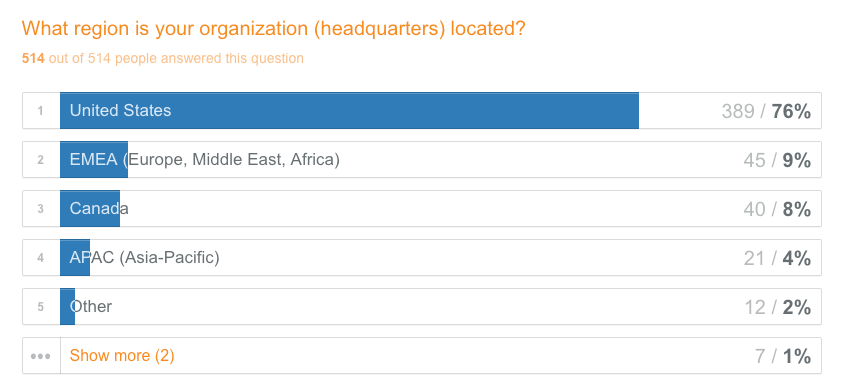
Managers can only understand the status of a lead, opportunity or customer if reps input, log and update their CRM tasks. But these tasks take up too much of a sales rep’s time (that is, if your sales rep is even taking the time for data entry). To optimize this process, look to automation.

Find easy-to-use tools that can automatically track activity data for your sales reps like CRM automation tools or a power dialer, so they don’t have to input all of this information manually.

Automation helps sales teams get higher quality data, takes away sales tasks that reps hate performing and helps them spend more time working with their customers.

Once you have automation tools in place, you can find patterns in sales rep activities. Ask yourself: Which email templates worked best? Which sales pitches? How many follow-up calls did successful reps make? How many emails did they send? Which cadence works best?

New sales process tools can analyze your data on an even deeper level. For example, Gong.io analyzes sales conversations over the phone to improve conversion rates.

As you collect enough critical data, you will find patterns. You may find that a certain time of day or day of the week has higher connection rates. Segment this by audience as well. Maybe plumbers are better to connect with in the evening or bankers before the bank is open? Finding these trends can help you adjust your call times so you have a better chance at connecting with the right people.

RELATED: How CRM Data Entry is Eating your Sales

5. Content

According to a DemandGen report, 95% of customers choose solution providers that offer relevant content at every stage of the buying process.

Content is an excellent indicator of where a lead is in their buying decision. An effective way to track and understand where that person may be is through what I call “content honey pots.” This is a way to break the marketing funnel and various types of content down and show how far along a person is based on their online behaviors.

This is best explained through top of funnel (ToFu), middle of funnel (MoFu) and bottom of funnel (BoFu) content. So a piece that offers general industry knowledge and education is considered ToFu, consideration falls into the middle category, and finally content that helps push a decision to purchase is BoFu.

As leads start poking around your website and read blog posts or download white papers, you’ll have an idea at how “ready” they are to buy or not. Remember to track the asset and as many online behaviors that you can in the CRM.

6. Conversation

A survey by Accenture found that 89% of customers get frustrated repeating themselves to multiple representatives.

Sales reps are busy. They have dozens, if not hundreds of conversations each week. There’s no possible way to remember every single one which is why tracking conversations in the CRM is crucial. Reps can look back in their records and re-brief themselves on conversations so that every contact they have with the customer is personal and helps push the deal forward.

Logging conversations also makes transitions within the organization much easier. If someone needs to take over a deal, as in the case of someone leaving the company or in SDR-AE handoffs, whoever takes over that deal will have all of details and know exactly how far along that deal is.

This data is also beneficial for forecasting. Sales reps are often overly confident about the number of deals they will close, skewing the sales forecast.

To truthfully know if a deal will close, look to conversation data. Contact between a sales rep and a prospect increases in frequency as a deal approaches a close. So, if a rep tells you their deal will close next week but they haven’t spoken to anyone from that account in two weeks, you can call BS. Also see who is contacting who. As deals are about to close, contacts from those accounts will reach out to the sales rep instead of only the other way around.

The days are over where this data needs to be tracked manually. Using SalesHero or other sales automation tools can ensure all of this critical data is not lost while improving the quality and accuracy of sales predictions.

7. Length of sales stages  

Salesforce’s State of Sales Report found that 25% of sales teams consider reducing the length of the sales cycle to be one of their most important objectives in the coming year.

It’s no surprise that you want to shorten your sales cycle to save money. Try taking a look at conversion rates between stages to see where you can shorten your cycle.

You can first assess if there are processes prolong certain stages. If so, implement an automation tool that will save your reps time and increase efficiency. For example, if your team has a long closing stage try implementing a tool that makes sharing and signing documents easier.

Then segment this by sales rep. If a rep takes longer than others during a certain stage this tells you where they can improve and perhaps get additional training. Personalize your sales coaching efforts to shorten the cycle of each rep.

Also look at this by conversion rate. See how many leads convert for each rep per stage. Assess which stage in the sales process these leads fall out in and consider the quality of the leads.

While speed is important, you need to make sure reps are practicing due diligence when working their leads. Don’t just assume that shorter means better, as they may be un-qualifying leads that would be a fit should they have taken more time to nurture them.

RELATED: CRM Implementation Best Practices: Your Nifty 4-Point Checklist

8. Deal size

A Pacific Crest Securities survey shows that the typical customer acquisition cost for companies to earn $1 is $1.18.

Many sales organizations struggle when deciding whether to focus their attention on a few large deals or several small deals. The truth is, there’s no universal answer.

The strike zone is an advanced sales measurement that shows where you have the most success. It compares the dollar value of a deal to the amount of time (and money) it took to close that deal.

Small deals bring in less revenue but take less time to close. Larger deals require longer decision making processes, take more resources and have a lower probability of closing.

The longer one of your sales reps spends working a deal, the more your customer acquisition costs go up (and, truth be told that deal may never close). It’s almost like high stakes gambling but with your sales reps’ time.

Once you’ve found your sweet spot for success, tailor your sales process and optimize for deal size within your strike zone. Encourage sales reps to chase deals within that threshold and attempt to avoid deals that drive up customer acquisition costs.

9. Lost reason

The Bridge Group 2018 SDR Metrics & Compensation Report shows that the average ramp time (from hire to full productivity) sits at 3.2 months.

Lost reason data is critical to capture as it shows why people chose not to buy your product. This data alone could lead to major improvements in your sales process (and product development). Be sure that this is a mandatory field that must be completed when a deal is moved to “close – lost.”

Analyze these reasons. Is it mostly pricing objections? Was there no need for the product? Then segment this information with other data points.

You can segment by sales rep, which will show where they may need more training should they be getting too many objections in a certain area. Or by industry, which shows where you can scale back your efforts. For example, if the closed-lost reason for retail industries is always no need for product this tells you to stop targeting retail. Also try segmenting by company size, location and budget.  

Segmenting lost reason data gives you insight on what doesn’t work so you can focus on what does.

10. Forecasting

According to CSO Insights, 60% of forecasted deals do not close.

Don’t make the mistake of relying on your reps for an accurate sales forecast. I had a great sales team at my last company, but they were terrible at predicting if a deal would close.

As I said before, sales reps are a confident bunch when it comes to predictions. They would commit to closing a certain number of deals, but would fail to deliver those numbers at the end of the quarter. So I turned to my CRM data to accurately forecast how many deals would close.

I built the base for my forecasting model based on my sales reps predictions. Whatever number they predicted at the beginning of the quarter, I would estimate that only 10% would close. As the quarter went on and their probability would go down my confidence in the numbers would go, and on the last week of the quarter this would end with an 80% accuracy.

My model always met exactly in the middle and we were great at forecasting. Rely on your overall conversion rate and historical data to build your own model that solves for sales reps’ terrible predictions.

Data collection dilemma

ESNA reports that 79% of opportunity-related data that sales reps gather are never updated in the CRM system.

Manual data tracking is the biggest waste of time and your sales reps are already spending so much time away from their customers. Automating data collection saves them time and gets you all the data that you need.

Thanks to emerging technologies, managers can collect data without taking any selling time away from their sales reps or sacrificing accuracy. Implement a sales AI automation platform to mine and log important sales data.

Automation not only gives reps more selling time, but also improves efficiency, speeds ups sales cycles and ensures you’re getting accurate and consistent information.

The key to optimizing and streamlining your sales process is implementing tools that enhance your reps’ ability to sell rather than hindering it.

Iterate, iterate, iterate

Don’t tackle your sales process all at once. Use the above as guidelines and optimize one step at a time. Focus on being better than yesterday and making 1% improvements that will eventually add up over time.

For enterprise sales teams, even just a 1% improvement can go a long way in increasing productivity and driving revenue. Good luck on your optimization journey.

The post 10 Ways To Optimize Your Sales Process Through Sales Data appeared first on Sales Hacker.

28 Nov 18:30

Three Shifts in B2B Lead Gen in 2019

by Tobin Lehman

It’s time for those 2019 prognostications to come out, and here’s our list. These are the strategies and tactics that are going to make the most sense to capitalize on in 2019 as the year progresses. Get them in your playbook now.

Experiences Matter

The big shift in 2019 will be toward experiential and event marketing in the B2B space. Yes, trade show marketing has always been around, but it’ll be increasingly supplemented by the use of experience in the marketing funnel to help shape and gather contacts.

We see this happening in two ways. First, it’s happening through the use of more live or web-casted video conferences and seminars. These will go far beyond typical webinars; they’ll morph into experiences that rival those of online engagement platforms like the online education market, and they’ll even take inspiration from real-world conferences.

Second, there will be more in-person events targeted toward buying groups or personas. I see this happening more in the professional service industries – they’ll be able to use space and time as a marketing venue to help position value to the prospective buyer.

This will work for you if two things are important to your buyers: 1. localization and 2. trust.

Localization will be a defining component of service firms as they work to create a “showroom” experience for their product and services and create a showcase of their business that appeals to potential employees.

Trust seems like a no brainer, but it’s something that becomes harder for companies to articulate outside of personal engagement. Events are relational. That makes them perfect for building trust.

Content Video is King

It’s the age of video content production by any serious players. Five years ago, a blog was enough. Now, video is quickly becoming the leading form of influencing content, right above images. Video will be gaining more attention and engagement as brands pour more money into the medium.

What does this mean for you? It’s time to push into video. We’ve been talking about this, and we’ve been working on living it out by embracing the shift ourselves. But this reality means learning how to communicate in a medium that is both visual and auditory. It’s much more costly, but it has higher engagement.

Yet, there’s a sentiment that I think remains true as channels change: the quality of content will always reign. In other words, if you have a great, fantastic blog and you do that well, it will still work for you. If you do a great podcast or email newsletter and your engagement is through the roof, that is clearly working for you as well.

In other words: don’t jump into video and do the same crappy job you were doing with your blog and email campaigns. You’re not going to get the return that you need to be successful, and you’ll spend more money chasing your prospects.

The Return of The Cold Call

Yes, it’s coming back. But it’s revised, it’s all new, and it’s supported with a ton of data and strategy (think ABM campaigns) to help it along. So it won’t be so cold, exactly; it will actually be a warm call, and it won’t be the sales team’s first touch.

The number of marketing messages your prospects receive is increasing each day. As the pendulum swings and the majority of companies are focused on inbound and digital tactics, the traditional touches like phone, personal mail, and pop-bys, are a way to stand out – and they’re being welcomed. Yet, now they’re based on analytics, too; they’re being logged in the CRM, measured for effectiveness, and tracked after opens in a whole new light.

Hem and haw as you want, but tried-and-true tactics combined with new-era analytics are winning the game.

All of this is to say that relationships still matter. They matter a lot in B2B tech sales. And without clear relationships, lead development strategies just don’t get very far in marketing.

Maybe its time to invest in BDR, or business development, through personal contact and outreach methods beyond the promise of SEO and inbound methodology.

Now’s the Time

With these three shifts, you should be on a better track for 2019 that’ll let you capture more leads for your B2B technology marketing and increase your lead generation efforts. If you’d like to talk more about these shifts or create more value in your marketing, let’s talk via our free 30-minute marketing review.

28 Nov 18:30

Here's how manufacturing analytics improve factories, products, and customer satisfaction

by Sponsor Post

manufacturing analytics (1)

Manufacturing is undergoing massive changes thanks to the use of data-driven smart analytics to dramatically improve productivity, optimize supply chains and distribution, offer new types of after-sales services, and reduce the costs of sales and operations planning (S&OP).

New types of sensors and other connected devices — the Internet of Things (IoT) — are driving this revolution by generating enormous amounts of data that offers new opportunities to monitor and control production equipment and supply chains. That leads to greater efficiency: Manufacturers are using these insights to improve processes, create big jumps in productivity, and reduce time-to-market by as much as 50%.

Unfortunately, the underpowered business intelligence (BI) tools that have entered the marketplace in the last decade are not going to get the most out of this data. Yes, their beautiful dashboards can seem compelling as they give everyone from production engineers to product managers a snapshot answer for “What is happening?” on the factory floor and elsewhere.

But that isn’t enough if you plan to be a next-gen manufacturer. The real question you need to be answered by your manufacturing analytics tool is “Why is it happening?”

The pitfalls of basic BI tools and unskilled users.

Achieving next-generation success in manufacturing requires you to uncover hidden insights that tell you something new. You need to go beyond figuring out the effects of production scheduling on supply and inventory levels, and the effects of machine downtime on production. Basic BI tools cannot go deeper to help ensure that your factory responds to critical events whenever they occur.

Nor can those tools give you the insights you need to tie together all the pieces of the production process, for example, so that quality defects can be immediately shared with the design team, or so you can make quick changes to a bill of materials or an automation design.

In addition, the users of basic tools can introduce a slew of problems of their own. Some of them might lack the skills to use the tools well. Even if they do know how to use them, they could still take bad approaches — for instance by trying to prove causation with mere correlation or using KPIs to explain results. Then there is the most persistent danger of all: users who look at data and results through the lens of their own bias, perpetuating business-as-usual and overlooking breakthrough insights.

These pitfalls raise the question: Is your manufacturing company hearing what it wants to hear or what it needs to hear?

A new kind of manufacturing analytics.

So, how can your company make the insightful, unbiased decisions that improve processes, reduce costs, and deliver groundbreaking products? It takes a new breed of manufacturing analytics, one that infuses traditional BI with more smarts. In this context, “smarts” means augmented intelligence, which drives analytics features that can learn and adapt to individual needs and give users precise answers based on contextual recommendations.

You also need the smarts of automated pattern detection, which helps users reach better answers by minimizing human bias. The result? Analytics that go way beyond descriptive dashboard reporting and put smart data discovery, natural language queries, and sophisticated data storytelling capabilities in the hands of every data-driven professional in your company. In that setting, everyone works more efficiently and effectively, and your factory is better able to meet production needs and deliver customer satisfaction.

If you want to dig into the details of smart analytics for manufacturing, check out “Leveraging the Analytics Cycle for Smarter Manufacturing,” a new paper from Cabot Partners that explains how manufacturers are benefiting from advanced analytics. One such solution offering these advanced analytics is IBM Cognos Analytics. This flagship BI software has been completely reconceived to include machine learning, automated pattern detection, intelligent and interactive dashboards, and simple, reusable, drag-and-drop reporting. Beautiful visualizations will help you find hidden patterns so you can understand, for example, how inventoried materials and lead times affect plant maintenance, or when a key product will run out so you can ship another on time.

Find out more about Cognos Analytics.

This post is sponsor content from IBM and was created by IBM and Insider Studios.

Join the conversation about this story »