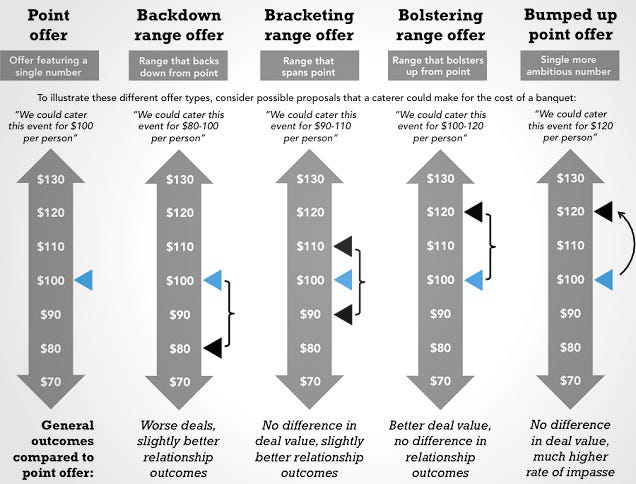
Whether you're negotiating some kind of business deal, there are a lot of ways you can approach it. A recent study suggests, however, that the best strategy for negotiating down might be to offer a "bolstering range offer."
Whether you're negotiating some kind of business deal, there are a lot of ways you can approach it. A recent study suggests, however, that the best strategy for negotiating down might be to offer a "bolstering range offer."
Alberta, the Canadian province holding the world’s third-largest oil reserves, expects 31,800 jobs to be lost for the remainder of the year as a crude price crash forces producers to cut costs.
Even with the job losses, overall employment will rise 1% in 2015 because of gains carried over from December, the provincial finance ministry said Tuesday in a statement to reporters in Calgary. That compares with a 2.2% increase in employment last year. It would take a loss of 80,000 jobs before year-end to prevent employment from growing, the government said.
Suncor Energy Inc., Cenovus Energy Inc. and other oil producers have already shed thousands of jobs this year as they cut spending on new projects. The energy industry accounts for about a quarter of Alberta’s economy, making the province the most reliant on crude in Canada, and previously fueling a boom that saw real estate prices and the number of millionaires in Calgary surge.
West Texas Intermediate, the U.S. benchmark crude, will likely average $62 a barrel this year, Premier Jim Prentice said in an interview on Feb. 6 at Bloomberg headquarters in New York. The finance ministry declined to provide an update on its forecast for oil prices.
Alberta’s finance mininstry said on Tuesday it still expects to end the current fiscal year with a budget surplus but warned the full impact of lower crude prices won’t be felt until the next fiscal year.
For the current fiscal year ending March 31, the government will post a surplus of $465 million , down from an earlier forecast of $1.1 billion. The slump in crude prices has erased about $7 billion of government revenues, Prentice has said.
Alberta’s economy will expand 0.6% this year, the finance ministry said. That compares with 3.5% growth estimated for 2014. Consumer spending and exports of oil will keep Alberta from falling into a recession, the government said.
“Alberta is clinging to a surplus in FY14/15, but a much tougher fiscal challenge lies ahead. Exactly how the province chooses to handle it remains to be seen, and will make the 2015 budget one of the most anticipated in years,” said BMO economist Robert Kavcic.
The province in the early part of 2014 accounted for more than half of the jobs created in Canada before the price of oil began to tumble from a June high of more than $100 a barrel.

Last week, AT&T launched its GigaPower internet service in and around Kansas City with a curious type of tiered pricing: $70 a month if you let the company track your web browsing — and $99 if you don’t. In effect, AT&T is taking its baseline product – internet service with tracking – and, for an additional $29 a month, removing something.
This is an interesting twist on a standard product marketing strategy known as “versioning.” With versioning, a marketer takes a base product – say a DVD player – and offers the plain vanilla unit for one price, one with bells and whistles for a higher amount, and a stripped down version at a discount. What marketers don’t normally do is strip a product down and raise the price. You can imagine that this could backfire badly if consumers feel they’re being taken for a ride. But done thoughtfully, charging a premium for a product that lacks certain components can deliver value to companies and customers alike. Simply identify an aspect of your base offering that some segment of customers will willingly (“willingly” is key) pay to avoid, and remove it. Let’s call it a “product-minus” strategy.
Decaffeinated coffee is a case in point. The base offering has caffeine — and it’s a key feature for many coffee drinkers. Although it’s not expensive to decaffeinate coffee beans, it does add to the product’s cost. Subtract the caffeine and raise the price enough to preserve your margin but not so much that you piss off customers. Starbucks, for example, sells Pike Place roast whole bean for $11.95 a pound but charges a dollar more for the same product, minus the caffeine.
It’s not hard to think of cases where companies already have a product-minus offering but don’t charge more for it. Fragrance-free versions of “regular” products come to mind. Mennen Speed Stick antiperspirants and deodorants, for example, come in a profusion of scents – Regular, Musk, Irish Spring, Ocean Surf, Icy Blast and more – but the difficult-to-find unscented version is available at the same price as the “regular” and other scented versions.
Likewise, Amtrak, provides a “Quiet Car” on many of its corridor trains. The quiet car offers a library-like haven from the loud conversations, cell-phone calls, and other distractions found on the train’s regular cars. It’s a base offering (standard cars) minus an aspect of that offering – noise. Although Amtrak provides a product-minus service that a subset of passengers clearly values, quiet car seats are priced the same as seats on the other cars.
Removing components of a base offering and upping the price is a model similar to “reverse positioning” described by Harvard Business School’s Youngme Moon. But unlike that model, the product-minus approach does not introduce new features – it simply subtracts existing ones and leaves it at that. Mennen and Amtrak could probably charge a higher price for their product-minus offerings. The key is to make the value exchange explicit. Consumers will launch a scorched-earth social media attack on any company they think is exploiting them, or they’ll simply defect (remember Netflix’s Qwikster debacle?). A product-minus strategy has to clear a high bar for value because it can so easily look (and actually be) exploitative. Tim Wu, writing in the New Yorker, describes the airlines’ strategy of making the base offering so degraded that customers will pay a fee to escape it. “In order for fees to work,” he writes “there needs be something worth paying to avoid.” The soul-crushing fight for overhead space (now a standard aspect of the base offering) can be removed — for a price. Just check your luggage. But airline customers don’t feel that they’re getting value in this deal. They feel they’re being bilked.
On the flip side, customers will willingly pay for a product-minus offering that they feel is fair and delivers real value. A really good cup of decaf coffee will be worth a few cents more to some customers – particularly if the supplier emphasizes the care and costs that go into the process. Making scarce scent-free Speed Stick easier to find, and highlighting the absence of potentially irritating additives, could justify a premium. And a quiet car whose norms are vigorously enforced by the train crew is surely worth a few bucks. Allow customers to reserve quiet-car seats and the value would climb further.
How AT&T customers respond to its pricey tracking opt-out policy is an experiment in progress. Since the company rolled out a similar plan in Austin a year ago most people choose the cheaper service says a company spokesperson, giving up privacy in order to save money. If consumers feel that’s a fair deal, it could work. But if they come to feel that AT&T shouldn’t be spying on them in the first place, and resent paying extra for their privacy, the company stands to lose more than a little revenue.
 When the Apple Watch debuts, it will be the most expensive smartwatch on the market — and that's just for the cheapest of its three wrist-worn devices.
BI Intelligence estimates the Watch Edition, the highest-end version of the watch, will retail at a starting price of $2,499. Other estimates have put the price of this 18K gold watch as high as $10,000.
So who's going to pay for such an expensive piece of tiny computing equipment?
With the Watch, Apple isn't focused on the tech enthusiast market. They're aiming these devices — particularly the first- and second-tier models — at luxury watch consumers.
In a new report on the smartwatch market and the luxury wristwatch market, BI Intelligence takes a close look at the opportunity for Apple's wearable device, how it might impact the market for luxury watches, and forecasts shipments for Apple Watch, smartwatches, and the broader luxury watch market over the next five years. We also examine the pricing and design strategy behind Apple Watch, the new retail distribution opportunities with this device, and the wider opportunity among tech-savvy consumers.
Access The Full Report And Data By Signing Up For A Subscription Trial Today >>
Here are some key points from the report:
The report is full of charts and data that can be downloaded and put to use.
In full, the report:
Join the conversation about this story »
NOW WATCH: 14 things you didn't know your iPhone headphones could do

Last September, the AA-ISP, an international association dedicated exclusively to advancing the profession of Inside Sales, released their 2014 Inside Sales Top Challenges. And they discovered that the number one challenge sales leaders are facing today is training inside sales people to perform well. In fact, many sales organizations complain about a high turnover of inside sales representatives as they don’t manage to bring them to the performance levels they expect in the calculated timeframes.
Why is training such a hot issue?
A 2013 study by InsideSales.com reports inside sales is growing 300% faster than field sales. This trend is expected to continue. That’s because inside sales:
· cuts costs
· is accepted by customers who have become comfortable learning about companies remotely via websites, social media, content downloads such as e-books and white papers, email and phone calls
In fact, many customers prefer the flexibility of phone calls to face-to-face meetings.
Due to the benefits of inside sales, the B2B sales model is changing. Inside sales representatives are taking over more sales duties, sometimes handling the complete sale by themselves rather than working hand in hand with a field sales person. Even if they are working with a field sales executive, they may be doing more up front to transform leads into qualified sales opportunities before passing the baton to the field sales person.
The growth in demand for inside sales people has resulted in a shortage of qualified reps on the market. That means companies now need to hire and train people who may not have a proven track record in inside sales.
Solving the Training Problem
It turns out that the inside sales person is a unique individual, especially when it comes to B2B sales. So, before you even worry about training, you need to ensure you hire the right people.
What should you look for when recruiting? Education and experience are not always good predictors of success in inside sales. Instead, you should seek individuals who have a natural curiosity and interest in learning and growing. They need to exhibit good judgment, the ability to think on their feet, and an aptitude for listening and asking the right questions.
With the right people on board, your training efforts will produce results.
As a shortcut to training, many companies sit the new rep down next to a top performer and have them listen in on calls. The theory is that the inexperienced rep will acquire the skills that have taken the proven performer to the top by the power of osmosis.
However, there’s a problem with this approach. Everyone has their personal style and it’s essential that they use it in order to come across as authentic as possible in a phone call. So, it’s better to give the new reps some call guidelines, let them do role play calls and provide pointers on how the rep can become more successful. It’s certainly a good idea to provide new reps with the example of an experienced rep, but this will never replace the necessary time for professional training with the new rep.
Another significant area of training is to hone your new rep’s listening skills. Teach them time tested listening techniques that are proven to work and also help them understand critical questions that will give them insights into the prospect’s needs, such as:
Once they have the basic skills down, you have to provide in-depth training on your product or service so your reps can speak about it naturally and confidently.
Hiring the right people and getting them up to speed takes time. But there is also a quicker solution.
You can outsource some or all of your inside sales tasks to a tele-services company that acts as an extension of your staff, presenting themselves as your company’s representatives. The advantage of this approach is that such companies hire and train professionals who do business development on the phone every day. They have the systems to support inside sales people and can deliver results much faster than most companies can do internally.
The sales funnel is about as old as time, in one way or another. Yet, despite its seemingly immortal existence, most companies struggle to identify, predict and perfect their approach to moving customers from lead to close. How can something so crucial to a business’ success still be so mystifying?
Sales cycles can range in length from seconds—think a pack of gum or your favorite tabloid at the notorious grocery store “impulse buy” checkout kiosk—to years, like cars, houses and spouses.
Spouses? You may ask yourself. Yes. Spouses. I use this unexpected example because too often, marketers lose sight of what they are supposed to do: make people fall in love with your product or service. Ask any sales guy or gal in the company and his or her complaint about the marketing team is almost always the same: Marketers don’t deliver quantifiable benefit. While salespeople are busting their collective humps to get people to bite on an offering (often driven by the cutthroat phenomenon of commissions), marketers enjoy the cushy life of higher base salaries and Facebooking all day.
What’s a marketer to do? Job security aside, it’s essential that every marketer understand that, though their title may not reflect it, they are still very much a part of the sales team. As the public-facing voice of the company, it’s marketing’s job to grow enthusiastic, loyal customers – whether you find them commenting on your blog, tweeting at you or liking your Instagrams.
The most important time to connect with your audience is during the buyer journey stage of contemplation. That’s the time between when a prospect shows up and when they turn into a customer. Obviously, then, you want to minimize your customer’s contemplation phase to optimize your close rate. If you’re a pack of gum, clear messaging like “sugarfree” or “fights cavities” might be all you need. However, if you’re a higher dollar item, potential buyers will almost always spend time doing research, which inevitably brings them to your website.
Here’s the bottleneck in conversions (usually): The main reason your website has a high bounce rate is almost always because customers were lead to your website and didn’t find they were looking for. This is a problem for anyone, but even moreover if you are actually offering something of value. If you don’t believe this about your company, then keep doing what you’re doing, because you obviously don’t have the emotional buy-in to truly convince a third party of your value.
Any number of errors could be to blame for low conversions. Is your SEO out of whack? You may think not, but often organic traffic-crushing errors lurk below the surface of your website, unbeknownst to your marketing team. Other issues could lie in poor user experience, complicated steps to checkout, or general lack of appeal.
These problems are nothing new, and yet most businesses struggle to keep their website maintenance, messaging and sales cycles moving rhythmically, simultaneously and in synchronization.
If your products and services are top-notch, your site might need a facelift. Common contributors to a negative user experience could simply be poor SEO, an outdated site design or an overly complicated checkout process.
So, instead of making potential customers fall in love with their offering, most marketers are spread so thin trying to troubleshoot web errors, research influencers to pitch, craft content in a timely manner and keep the appearance of a managed social presence. Ultimately, marketing professionals spend more time doing administrative tasks than using their creativity to produce stellar concepts.
It’s shocking that, until very recently, integrated software solutions did not exist to remove the wrinkles in ushering customers through the sales funnel. Onboarding, licensing costs and the need for multiple products from various providers prevents marketers from bringing their campaigns into the cyber age. The result is stagnation in the same, semi-functional sales cycle, which has worked well enough to not get anyone fired yet.
Enter the new way to automate leads, nurture and loyalty. Now you can identify your customers online just by paying attention to what they’re saying in forums, on social or via search. Forget re-targeting; think pre-targeting. Determine exactly who is going to come knocking on your door before they’ve done it for the first time, and then target them with the content you know causes them to convert.
By paying attention to audience behavior, you can shape their buyer journey by targeting them with individualized, tailored content every step of the way. The customer feels like you are engaging directly with them, not blasting out mass messaging that’s too broad to resonate with any one kind of customer.
For more information about customization, download this whitepaper, “Intro to 1:1 Marketing.”
So instead if investing your time and dollars in administrative work, consider a platform that automates your opportunities for growth. Stop spending your time researching influencers and take the guesswork out of who and where your online customers are. The need for lead generation and closing sales is as old as business itself. There’s no reason we should still be struggling to get customers to your door.

 As an Eagle Scout, I can discuss the topic of “Be Prepared” easily and, based upon my upcoming vacation next week, I could lend more credibility. I am leaving Friday morning, catching two planes and a ferry to end up on an island in the Caribbean. While that sounds somewhat easy, it took planning and preparation. Taking a vacation for me becomes a big project for a variety of reasons —but mainly it’s time to unplug and “breathe fresh air”.
We researched a wide variety of destinations, resorts and optional packages, narrowed the search, checked out online evaluations and then compared costs. I posted potential locations and asked for opinions on Facebook and asked my travel agent. All of this helped us pick a great spot, it was rated the “best beach resort in the world.”
Next I had to organize my professional life. Client projects needed to be finalized, meetings re-scheduled, mobile phones had to find international plans, and new proposals completed.
Now, just a few days to go, we had to pack, purchase last minute necessities and think through options like umbrellas, sun tan lotion, books, mosquito spray and other health-related items.
What does this have to do with sales management? As a manager you must be prepared at all times for almost any event. The best plan is to have a plan and to consider what might go wrong or what could impact your ability to exceed your objectives. I have simply listed below a series of topics for your consideration and for you to double-check against your plan — or lack of plan.
Do you have a plan?
That’s enough for now, but if I missed anything, comment below — let’s build a complete list for the future.
HINT: This is a great idea for your next management meeting, simply begin by asking each of the departmental managers about their problems or contingency issues that arise on a day-to-day basis or what might occur if a disaster of any kind happens-then ask them for their plan.
Why is this critically important today? In any kind of business environment, the organization that operates the most efficiently generally out-performs their competition; in more challenging times a focus on efficient effectiveness must become the mantra for the day.
For more success secrets from top influencers, visit our website or download the free e-book.

 You are in the business of making money (unless you are a not-for-profit or philanthropic). If you aren’t, you should be. As a business owner, or potential business owner, turning a profit should be your primary goal. If you’re not keeping an eye on your bottom line, then you soon won’t be in business at all, no matter how revolutionary or innovative the products and/or services you offer may be. The most successful entrepreneurs understand and embrace this concept. They never shy away from the chance to turn an opportunity into a profit.
Effective lead generation is one of the most important elements of any successful business. When you are able to generate leads you are able to generate sales, and sales equal money. Therefore, learning the how to successfully generate leads, time and time again, is the number one way to ensure that you are in, and remain in, the business of making money.
As the title suggests, this article is about learning the most innovative, as well as the most effective, ways to generate solid leads. Good leads equal good prospects. Good prospects equal sales opportunities and the more sales opportunities you have, the more actual sales you will generate. However, before we get to the specifics of lead generation, let’s take a look at a couple of the primary concepts that quality leads depend upon.
Lead generation, at its most basic, is the process of creating interest in and/or awareness of a product or service offered by a business among the general public.
This awareness and interest can be created to directly generate sales. An example of this is television and print advertising. Here, the business directly solicits the general public with information in an attempt to generate sales.
Alternatively, awareness and interest can be created to indirectly generate sales by first directing a consumer to free content which, in turn, will lead to more awareness and interest.
As this dynamic between the potential consumer and the business grows, the consumer’s trust and confidence in the business increases. At the appropriate time, the business solicits the potential consumer with a direct offer. Because of the pre-existing trust-based relationship, the likelihood of the consumer responding positively to this offer is greatly increased. In this way, the indirect lead generates a sale.
The bottom line is that understanding what a sales lead is, and how it works, is the first step to profitability for any business. Speaking of profitability, let’s take a look at the next concept.
No matter what the method, lead generation is the fuel that fires the engine of any business.
Without interest and awareness on the part of the general public of what a business is, does, and sells, there can be no sales. Without sales, there is no business. It’s that simple. It really is.
Some business owners fail to fully understand the importance of this extremely simple concept. They tend to treat profit as an afterthought. They make the mistake of assuming that they are in the business of “fill-in-the-blank,” whatever that “blank” may be. Making that assumption is often a fatal mistake.
There is not a single successful business in the world that is in the business of manufacturing a product or providing a service. Instead, successful businesses are in the business of attracting interest in and awareness of what it is they do. Some people may refer to this as marketing, but lead generation is a very specific form and far more direct. The businesses that implement lead generation out-compete the competition precisely because of the level of interest and awareness they generate. They understand they are in the business of making money and they make that money by generating solid leads.
A clear understanding of the process involved in getting potential consumers to become paying customers is essential to understanding how to generate leads.
This is because the concept of generating leads is intimately tied to the concept of the sales funnel.
Your sales funnel is one of the most important tools you have as a business owner to increase profits.
How your funnel is constructed determines how your potential customers approach your product or service. If the funnel is too wide, too many potential customers end up being exposed to your sales pitch before they are ready. If your funnel is too narrow, the opposite occurs. You end up sacrificing sales because solid leads can’t get to the products or services they need.
The goal is to develop the perfect funnel for your particular business.
The funnel your business needs is unique to your business and the product or service for sale. There is no template, or one size fits all solution. Every different offer requires a different funnel.
A funnel that is too wide for one can very well be too narrow to another.
What’s the difference between a prospect and a lead?
It depends on who you ask.
A prospect is sometimes a good lead. Other times a lead is a prospect who expressed interest. Sometime a prospect and a lead are exactly the same thing. This confusion breeds a complete lack of clarity. The answer is simple. A lead is someone who has contacted you, while a prospect is someone you have corresponded with. Although not always this simple, using, and keeping to, this definition allows you, as a business owner, to use these sometimes confusing terms more clearly and with some consistency.
In the typical sales funnel, leads provide contact information in return for content. This is the initial contact. These leads become prospects when a lead expands the scope of this initial contact by expressing further interest in your product or service. This can occur, for example, when they take advantage of an offer for additional content farther down your sales funnel. In sum, leads become prospects and prospects become opportunities for conversion into sales.
Today, there are two basic approaches to marketing your product or service. You can outbound market or you can inbound market. While the choice is yours, a clear understanding of the differences between inbound and outbound marketing will help you to decide which method is right for you.
Outbound marketing is the type of marketing we grew up with and are familiar with. A business sends an unsolicited offer about a product or service to a segment of the general population. The business selects this market segment based on some relevant criteria, usually geographic for a brick or mortar company. Some percentage of the market segment responds to the offer and sales are made.
Inbound marketing is, as the name implies, the opposite of outbound marketing. With inbound marketing, a business makes content, usually informational in nature, available to anyone in exchange for contact information. This contact information is then used to direct interested consumers to a further level of product engagement. The goal of inbound marketing is to find those potential customers who have an interest in, or affinity to, a product and develop an ongoing, natural dialogue with those people. This dialogue then results in sales.
In short, a business using outbound marketing attempts to actively find a market segment for its products, usually through one time, unsolicited, offers. A business using inbound marketing, on the other hand, lets a market segment develop an interest and need for products through an ongoing informational dialogue that develops a trust relationship in the business and what it sells. One actively grabs for a market segment through monologue. The other cultivates that same segment through dialogue.
There are virtually no barriers for communication now as people can communicate with each other through many different channels like, email, social media, blog posts, text messages, etc. We have access to all of those forms at our fingertips making forms, other than talking in person, instant and real-time.
So how do you best engage with your audience without facing a sense of overwhelm because there are so many channels to interact with them on? Where are the top places to engage with your audience?
It will depend on your audience and the behaviors of those individual users that determine the specific communication channels; however, there are staples that almost every audience can be found on. Are you in those places?
Over 74% of US internet users are using a social media platform, which makes it one of the perfect places to engage with your individual contacts in your audience. Granted, each social media platform behaves and delivers content differently, but taking the time to interact with a contact on these channels can be very effective.
LinkedIn
LinkedIn has become my favorite social media platform and it is now responsible for 64% of all social media visits. It’s no longer a network for users just looking for a job, but it’s almost a complete media platform where users can publish their own pieces and share content that pertains to their network. Now, “the two biggest reasons professionals access content on LinkedIn is to ‘keep up with industry news’ and ‘discover new ideas within the industry,’ at 78% and 73% respectively.” People, like your users or prospects, are using LinkedIn as a content source and are waiting for you to engage with the content they share or post.
Another example of engagement can be found with an automated email I received from WordStream the other day about connecting with their CEO, Larry Kim. Although I knew it was automated, it didn’t take away how engaging it was. Of course, I want to connect with Larry Kim on LinkedIn! 51% of LinkedIn users have 0-500 connections and many are looking to expand their connections. Connecting with your users on LinkedIn is a simple method to stay engaged with them. You’ll then be able to see what content they post to then interact from there. Take it a step further by asking influencers, like your CEO, in your company to connect with your users or prospects. Your users or prospects will feel delighted that the executives in your company care who they are to connect with them on LinkedIn.
Twitter
Twitter is an easy outlet to engage in conversations and provides a quick way for you to get to know who is in your audience on a surface level. One way to engage with your audience on Twitter is to create a Twitter list with some of your top users or customers, use this list to follow what they are tweeting about and to potentially answer questions they have.

My (@sabelharris) Followers’ Interests
To level up your approach, be proactive and check your Twitter analytics to see what your audience is interested. You’ll see these interests under the “Followers” tab. Some more insight can be gained through Twitter Analytics, you’ll be able to see what your audience’s top interests are. Based on that, you now have ideas on what content you can share with those top users. Let’s say they tweet out saying they need an article on growing your network you then can go to a source that speaks to that topic to deliver them a relevant article.
Facebook
I use Facebook for personal purposes and of course sharing awesome Contactually content, but I think I would be taken aback if a company or someone from sales added me on Facebook. I can’t say for certain that others would feel the same way I do; yet, I did find a study by Pew Research that outlines how people use Facebook and they find that people have more personal reasons to use the platform too.
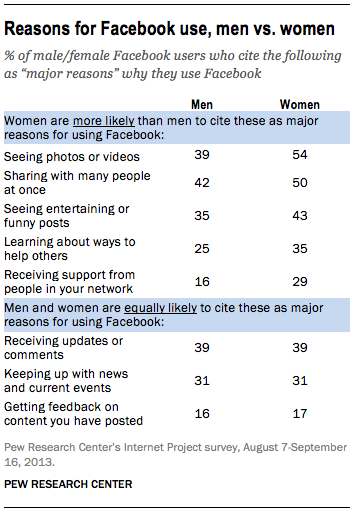
However, interacting on your company’s page is the best place on Facebook to engage with your contacts. If you see that there is a user that you interacted with on a call or you were the rep to sell them your service, it would show that you still want to engage with them as a person. Just because the deal is done or the one interaction has passed doesn’t mean all interactions must die.
Instagram
Instagram is one of the newer rising social media platforms, but it is the fastest growing out of the list with over 300 million users. It is a visual discovery platform, where photos and videos take center stage. However, it represents a huge opportunity for companies to interact with their audience base. According to a study done by Forrester, Instagram leads the pack with the highest social engagement.

Their “study found that top brands’ Instagram posts generated a per-follower engagement rate of 4.21%.” Which means that these brands generated 58% more engagement per follower vs. Facebook and 120 times more engagement than Twitter. Establishing or using your company’s own Instagram account can reach your audience in a more visual way. Since brands also function like individuals on Instagram, you can interact with your contacts photos, encourage them to tag you (if relevant), or search for hashtags that would relate to your company to then like those pictures.
Although, this channel appears in many posts on this blog, it’s the tried and true form of communication for almost anything.
80% of sales require 5 follow-up calls after the meeting and 44% of salespeople give up after 1 follow-up. This is the perfect chance for you fill that gap to engage with your contacts to consistently interact with them. Don’t overdo it as it may come across as annoying; however, people are genuinely busier these days and following up more than once can ensure the proper engagement.

You can schedule a Program in Contactually that will automate the process for you and/or we’ll tell you when you need to follow up with a certain contact based on the timeline you set for your segments or your contact buckets. For one-off emails, using Boomerang to schedule out emails to be sent in the future, if you remember in the moment and have the time, can still offer the personal touch your contacts wish for.
Millions of pieces of content are published and shared every day. At even faster rate, people are consuming these pieces and expecting more. The printed publishing industry has been on the slow decline for over the past couple decades. People are no longer reading their preferred newspaper delivered to their door each morning, instead they are consuming multiple sites and publications daily. They have more access to content than they ever did before. The American Press Institute found that Americans get their news from 4-8 sources every week.
Think about your industry peers’ blogs or influencers in your space, you now have the chance to curate content from those channels to share on your social media platforms. Or did you see a relevant article that falls within your expertise? Feel free to comment to express your views on the piece and additional insight you may have.
I would avoid posting sales pitches on other blogs your audience might read, but there will probably be similar people, who aren’t in your audience already, who might be curious into who you are because you took the time to comment.
You can’t expect your audience is always going to come to you for their needs. Now, it’s your job to proactively be in the places they are using every day and you have the opportunity to engage with them effectively on those channels.
Follow the old school rules. Old school rules.
The post New School and Old School appeared first on The Sales Blog.
Importance: ★★★★ (For B2B Marketers looking to attract nurture leads through the sales funnel)
Recommended link: LinkedIn Launches new Lead Accelerator
LinkedIn are positioning this new programme as a way for marketers reaching business (B2B) audiences to attract quality visitors, to nurture them through the sales funnel, via targeted display and social ads across the web and LinkedIn.
It appears targeting is based on your visitors profile and what they're doing on your website (like retargeting), so the advert is relevant within the buying cycle and to the online behaviour of your visitor.

 Infographics are proven traffic generators. They offer infotainment with their eye-catching designs and concise information, and they have the power to add some serious oomph to your content marketing strategy, and in turn, your revenue.
It’s important to note, however, that success is not guaranteed. It would be naive to assume that one could simply throw an infographic into the void and watch as web traffic and sales shot through the roof like magic. Don’t get me wrong; that would be great, but the reality is that readers—aka your current (and future) customers— are quick to reject poorly presented infographics.
Here are five mistakes to avoid when creating an infographic for your business!
The charm of infographics lies in their ability to present data in a visual manner that is easily digestible to quickly engage the viewer. But if an infographic fails to depict the information visually and forces you to add a lot of supporting text then it has failed in its primary motive. It’s a letdown for the reader. Even a regular bar chart, suitably dressed up can be used as an infographic, the point being, keep the experience visual.
An unoriginal infographic reeks of laziness even if the data has been presented in an interesting manner. Poorly chosen topics tantamount to taking readers for granted. It’s as if you’re mass manufacturing poor quality infographics to make the most of the demand. Bland facts about a topic spruced up and presented as an infographic leave readers with a poor taste in the mouth. Keep things fresh, and research your topic thoroughly in order to come up with new and compelling content.
Just as a vague infographic is bad for business, so too is one that is overcomplicated. An infographic too complex to be understood in a glance or even a single reading is unlikely to resonate with your intended audience. If readers have to spend time and energy deciphering your content, then you can kiss prospective shares and desired backlinks goodbye. The solution is to break down a complex topic into smaller, easy-to-grasp portions and tie them to a whole.
Of course you want your infographic to lend itself to the promotion of your product or service—but—in order to be successful, you have to do this in a strategic and subtle way. A sure way to leave visitors feeling cheated is to promise one thing in the title or intro, and then proceed to deliver nothing more than a promotional pitch for your business, with little information or substance. Branding is expected, but over promotion is a temptation best avoided.
Colors and fonts make a big difference. If your choice of colors makes the reader work hard to digest the information, you haven’t really succeeded with your efforts. Choosing no more than three colors, their shades and black and white is a safe approach, and the lightest color should ideally serve as the background. Fonts are also powerful, and they subtly convey messages about your brand, so choose them wisely. For example, if you wish to project an image of reliability, then Baskerville Old Face may be a good choice. Comic Sans, on the other hand, would be a poor choice due to its cartoonish nature and inherent playfulness.
Bad infographics are destined for a quiet online burial, and that’s definitely not what you want for your business. In order to be successful, your visual content needs to be conceived and executed right. For many business owners or marketing managers, this means hiring a professional design firm to create your infographic for you.
It may cost a little bit of money, but in the scheme of things, the potential ROI is much greater because the people creating your infographic will know exactly what works and what doesn’t, and they’ll have expert answers for any questions you may have about visual content.
If you don’t have an in-house team or professional writers and designers, take my advice and look into some other options.
Regardless of how you go about creating an infographic for your business, the key takeaways here are to focus on quality content, expert design, and most importantly, always avoid the five success-killing mistakes I’ve listed above.
Want an inside look at the State of Marketing for 2015? Visit our website or download the free report.


Rapid Learning Mini-Course Video #2
Welcome back. Today we’re going to look at how to use agile selling strategies to quickly master LinkedIn. Now, we’re not going to turn you into an overnight expert. However, in just 30 days we can get you up-and-running, so that you’re getting some real value out of it.
Why did I choose to tackle LinkedIn? Because whenever I speak to a group or do a workshop, I discover that the majority of reps only use a small fraction of what’s available – and they don’t do it very well.
I believe that everyone needs to learn more about LinkedIn. It's a perfect opportunity to demonstrate how to use rapid learning skills.

 "Let’s assume that you think you have a choice of eight paths to follow (all pre-defined paths, of course). And let’s assume that you can’t see any real purpose in any of the eight. THEN— and here is the essence of all I’ve said— you MUST FIND A NINTH PATH."
Read the rest
"Let’s assume that you think you have a choice of eight paths to follow (all pre-defined paths, of course). And let’s assume that you can’t see any real purpose in any of the eight. THEN— and here is the essence of all I’ve said— you MUST FIND A NINTH PATH."
Read the restWhy Sales Objections Can be Opportunities
As sales professionals, we are quite familiar with sales objections. We hear them on a daily basis, and sometimes, several times a day. We can hear them at any part of the sales process: when we open, when we discuss our solution, or when we close the deal.
The ability to resolve these sales objections is crucial for a number of reasons:
Sales objections are most often thought of as roadblocks in the sales process, carrying negative connotations. In reality, sales objections represent an opportunity — the client is willing to share objections, which gives you the chance to address them and move the sale forward.
It’s important that you don’t make assumptions about the objection and instead ask the client to elaborate. This demonstrates your interest in learning more, while giving you extra time to think. It also confirms that you’re dealing with the right objection, as most times, the objection you first hear can be a smokescreen. I call this the Matryoshka effect, like the Russian nesting dolls: inside one there is another and another hidden away.
Clients feel strongly about their objections, and there is an emotional component attached. So, you must acknowledge and show empathy to defuse any negativity and to avoid becoming defensive or aggressive yourself. If the client says, “I am happy with my current provider (X),” you might start with, “X is a good company.”
Your questions should be open and linked to the objection. You don’t want to fall into the “flight” trap (“How good is their service?”) or into the “fight” trap (“There are always things that a long-term provider can do better.”), trying to fish for areas of weakness. You might ask, “What specifically do you like about your relationship with X provider?”
These are important steps that shouldn’t be bypassed in favor of positioning your solution. As sales professionals, this is our comfort zone, our bread and butter. We love any chance to talk about our solutions. Going there too quickly risks creating other objections. Instead, take the time to relate, question, and listen. This will be the most effective use of your time.
Finally, check to ensure that you get the client’s feedback. Silence doesn’t mean agreement. Don’t force a “yes” by asking a closed-ended question. You might ask: “How comfortable do you feel now that we have discussed X?” or, “What are your thoughts?”
If you don’t know how to resolve objections positively, you will likely lose some deals, weaken the relationship, make the sales cycle longer, or leave money on the table.
So, remember to acknowledge and get on the client’s side. Ask open-ended questions to gain more insights. Position your solution, idea, or recommendation persuasively. Finally, check to make sure you have resolved the objection. You might ask: “How does that sound?”
I pose this same question to you, the reader. How does this approach to resolving sales objections sound to you?
——————–
Want to learn more about how to resolve challenging sales objections? Click the image below or the following link to download a brochure on our award winning Consultative Selling sales training solutions! Or you can contact Jim Brodo, SVP of marketing directly at jim.brodo@richardson.com

The post Why Sales Objections Can be Opportunities appeared first on The Richardson Sales Excellence Review™.

Earning US$7 on the dollar is any investor’s dream. Buyout group Apollo has shown with its investment in oil exploration and production company Athlon Energy that such reveries can become reality.
A slump in oil prices has spurred activity among private equity investors around the world hoping for their own bumper returns by scooping up assets on the cheap.
“Clearly what you’re seeing in the energy market with the cataclysmic fall in oil prices – halved in such a short period – I think you will have haves and have nots,” said Leon Black, founding partner at Apollo.
“We along with others in our industry are dusting off (opportunities),” added Black, speaking at the annual private equity SuperReturn conference in Berlin.
Global crude prices almost halved to around US$60 a barrel in the past 12 months, slashing company values, forcing budget cuts and putting more than US$150-billion of oil and gas exploration projects in jeopardy this year.
The time may look right for investments now, but what if oil prices continue to fall or fail to rebound for years?
Indeed, despite the Athlon deal, the value of Apollo’s overall portfolio suffered in the final three months of 2014 because of a markdown in the equity value of some other energy-related companies, or their loans and bonds.
“You’re catching a falling knife,” said Simon Henry, chief financial officer at Royal Dutch Shell, explaining limits on dealmaking in the sector.
While some investors are taking a wait-and-see stance, others are more bullish.
“I think when these knifes are falling is when the opportunities actually present themselves. Everyone is running in the opposite direction,” Joseph Landy, co-CEO of Warburg Pincus told Reuters. The private equity group is flush with cash after closing an energy-focused fund in October.
ACTIVITY PICKS UP
While several funds are working out their strategy quietly, afraid to tip off rivals, others like Blackstone are more vocal about it.
“Our people are scrambling and trying to come up for air, we are very busy looking at specific deals,” Blackstone’s President Tony James said last month.
Already, buyout groups’ activity in the oil and gas sector has picked up significantly.
They poured US$31-billion into the oil and gas sector in 2014, clearly outstripping the US$8-billion in investments that sponsors have invested in the sector over the five prior years, according to ThomsonReuters data.
After equity investments in the software sector, oil and gas came in second on buyout groups’ shopping list last year.
“In the long-term the equilibrium point of oil prices is in the US$70-85 range. The question is when is it going to get there, are we talking 9 months or 30 months? That is were the risk lies,” Warburg Pincus’ Landy said.
Investment opportunities seem abundant. Based on company filings and announcements compiled by oil and gas consultancy 1Derrick, assets worth about US$112-billion are up for sale.
Half of these are North American, mostly U.S. oil and gas shale fields such as Anadarko’s Wyoming field and Reliance Industries’ Eagle Ford assets, as well as ConocoPhillips’ oil-sands operations in Canada.
Outside North America, Russian oil giant Rosneft is offering its non-core operations while Apache has mainly Egyptian assets for sale.
While oil majors are offloading assets to cope with lower earnings some smaller companies are being forced to sell oil fields, exploration and infrastructure firms to survive.
Blackstone is raising its first energy-focused credit fund in the latest sign that private equity firms are seeing investment opportunities among distressed assets.
Blackstone is betting that the bonds of some exploration and production companies that rode North America’s oil and natural gas boom are now undervalued, or could be soon.
Marcel Van Poecke, managing director of Carlyle International Energy Partners, agreed.
“After a crash like this, there is clearly more upside than downside. This will be a great time to invest but there is no need to rush into it, because I don’t think we have seen the bottom yet,” he recently told Reuters.
© Thomson Reuters 2015

Is the deck stacked against your startup business or for it?
Depends on how you decide to arrange the cards.
Thanks to Chris Dixon of BuzzFeed, we have yet another business neologism — the “full stack startup approach.” The objective of this approach is to completely control the customer experience using all the channel(s) required to deliver it. Instead of inventing a widget and selling that technology to another business to bundle with their product or service, you sell it directly to your customers, sometimes in your own bundle.
The challenge is that you have to be good at a lot of things: software, hardware, supply chain management, design, marketing and anything else that goes into making, selling and distributing a product. Manage that, and you essentially lock out competitors who can’t replicate all these interlocking pieces.
Dixon cites Apple as a classic example of the full stack approach. By contrast, Microsoft builds only portions of the stack. Back in the 1990s, Microsoft dominated business and consumer markets just by making an operating system and applications software. During that era, Apple was widely criticized for not emulating the Microsoft’s cornerstone strategy to license its software to other hardware vendors. Apple has had the last laugh with last quarter profits of $18 billion, the largest ever recorded by a public company, and cash reserves sufficient to buy the equivalent of every American at a price of $556. Dixon attributes such success with Apple’s ability to create a “magical experience” for its customers by building products from end-to-end in a way that completely bypasses the competition.
Examples of startups using the full-stack approach include ride-sharing companies Uber and Lyft, Nest and Tesla, not to mention Dixon’s own BuzzFeed, which recently obtained $50 million in financing from Andreessen Horowitz to expand its own full stack. (The New York Observer comments, “For its next trick, we expect BuzzFeed will work on colonizing Mars.”)
Full-stacking seems to be limited to high-tech companies, and should not be confused with traditional notions of vertical integration used by “old-style” manufacturers. The difference is the focus on the customer experience. In vertical integration, a manufacturer or producer contracts with suppliers to reduce production costs and improve efficiencies. The customer may get a better product, or a more affordable product, but it doesn’t provide the entire customer experience.
Full stack means that a tech company is building that experience from the ground up and using non-tech functions, such as unique retail stores or independent drivers, to deliver the tech. Uber isn’t merely an app, it’s a new way to get a better ride; essentially, it’s a new kind of taxi service.
Industry segments that are ripe for full-stack approaches include education, healthcare, food, transportation and financial services. All are sectors where prices have outpaced inflation, which Dixon believes is the result of lack of technology. If you have a technology that can help bring down pricing models in these sectors, the full-stack approach may be your best approach.
For those who may be skeptical of what might be seen as just a trendy phrase, Anshu Sharma points to a number of companies over the last 20 years that essentially were full-stack companies before Dixon came up with the term. These include Netflix, Amazon, YouTube, eBay and Google.

According to a report from Mobile Media Consumption, consumers today spend nearly 60% of their time on the Internet on their mobile devices, as compared to their desktop or laptop computer, tablet and other devices. These findings support what we as modern marketers already know: Mobile marketing is more important today than ever before.
Unfortunately, many marketers approach mobile marketing as an afterthought, and make costly mistakes that not only add up to lost clicks — but lost customers.
To help, here are the top five most egregious mobile marketing mistakes — and how they can be fixed.
Mistake #1: Not investing in an app or a mobile-optimized site.
Yes, you need a mobile site designed for mobile! Consumers today don’t have patience for poorly functioning mobile sites.
Fortunately, these upgrades pay off: Mobile-optimized redesign results in a nearly 15% increase in unique clicks for mobile users, according to Litmus and MailChimp “The Science of Email Clicks: The Impact of Responsive Design & Inbox Testing.” Not to mention, once customers are on your mobile site, they’re much less likely to look for greener pastures. According to comScore, 46% of shoppers say they are less likely to shop around for other options when they’re using a company’s mobile app.
Mistake #2: Not optimizing for tablet, too.
Don’t forget — there’s more than one kind of mobile device out there. In fact, Gartner projects ultramobiles, which include tablets, hybrids and clamshells, will take over as the main driver of growth in the devices market beyond 2014, with a growth rate of 54 percent. Make sure your mobile site looks as good on tablets of all sizes as it does on the traditional smart phone screen.
Mistake #3: Creating a CTA button that doesn’t grab a user’s attention.
Mobile users who find your business online have a conversion percentage nearly three times higher than the same search done on a desktop or laptop. In fact, 70% of mobile searches lead to online action within an hour. But to make this magic happen, users need a clear, easy to find and easy to use call to action button.
Mobile users are on the go, often in a hurry and highly mission oriented. When they grab a smartphone to search, they have a specific intention — whether it’s food, a service appointment or a coupon.
Make it incredibly easy to meet their needs: Create a call to action button that won’t be ignored. Change the color to an attention-grabbing hue, or add some minor animation.
You should also take this opportunity to customize your CTO button. The most popular buttons are “Register” and “Submit,” but the text can also communicate your value proposition. Add specific language that motivates visitors to take action, like “Join the community” or “Click here to save 20%.”
Finally, put some thought to placement. Position your signup form at the top of your landing page, alongside some other engaging content. This strategy will deliver maximum views to your form without requiring page visitors to scroll all the way down to the bottom.
Mistake #4: Not investing in social autofill.
Many consumers struggle to remember the slew of logins and passwords required to function in 2015. Social autofill and has a lot of potential to improve the consumer experience. Not only does it reduce your customers’ time on site —it’s a sanity saver, too. According to consumer research firm Janrain, 64% of users who frequently leave sites due to forgotten login information say social login is an option companies should offer.
Mistake #5: Putting too much content on your mobile site.
According to SuperMonitoring, 57% of users say they will not recommend a business with a poorly designed mobile site. And the quantity of content on your mobile site — and how you display that content — is a big part of the design equation. The amount of space available for website content on a mobile device is often significantly smaller than the space available on a desktop browser. The screens are smaller, it’s harder to scroll, and impossible on many devices to scroll horizontally. With this in mind, make sure your most important content displays in the top few pixels of the page, and reduce your viewers’ need to scroll whenever possible.
The good news is – we can all learn from these mistakes. Fixing even one of these mobile marketing missteps can better position your campaign for more clicks, and more conversions in the future.
For one minute, let’s not worry about ALL your customers. Let’s just worry about the best one. So, who’s your best customer? If you know your #1 customer, you’ve already taken your first step on the road to meaningful website personalization.
When I worked on the website for a global luxury travel brand, I was overwhelmed by customer data. We had our own analytics, sales reports, and surveys. Plus we were tapping into industry statistics, Google search data, and competitor benchmarks. I built a cumbersome matrix in an attempt to analyze it all. But how were we going to serve all these customers with custom content to move them down the conversion funnel?
Then I met—or, rather, created—John Tavenport. Everything became clear. More than a persona, he was the customer who guided our personalization efforts. We used John to bring customer segmentation to life. Read on to find out how I created John.
1) Ignore the long tail of your data (for now).
If you haven’t addressed your main customers yet, don’t worry about the fringes. On that long-tail bar graph, focus not on the tiny bars way to the right, but on the big bars on the far left, the “short head.” To do that, I plotted the volume of travel to all the global destinations we covered. While our brand was trying to capture travelers from Tahiti, the Seychelles, and other far-flung exotic locales, the data showed that the vast majority of travel was to Caribbean destinations.
2) Go deeper into the “short head” of data.
On those big bars, most travel was to the Caribbean. So I concentrated my analysis there. Where in the Caribbean? The Dominican Republic. How? Via cheap direct flights from the U.S. east coast, especially New York. Where in the Dominican Republic? The beach town of Punta Cana. Why? Amazing deals on a diverse range of all-inclusive resorts. Punta Cana has the highest concentration of all-inclusives in the world.
3) Distill a story from your demographics and psychographics.
Next I went into our survey data and took the same approach of going after the “short head.” Most customers were male, married, age 45–54, with household incomes of $200k+. They took about two international trips a year. Their kids were older or out of the house. And they bought high-end cameras.
4) Create your “John.”
With all these data, I was ready to build our best customer. Again, this wasn’t meant to be an advanced persona or a comprehensive set of all personas. This was one example guy. Our best guy. Our #1 person. Our “John” wanted to take a two-week vacation in Tahiti, but for now, he just wanted an easy beach getaway with zero stress. And somewhere beautiful, so he could put his new camera to the test. We gave him a face, dubbed him “John Tavenport,” and put his picture on everyone’s desk. The purpose was to get our entire team to see how there was an actual person there behind the data, so we could build an effective website personalization strategy for people like him.
5) Build your personalization strategy around John.
With John created, we were ready to create a customer segmentation plan. We weren’t dealing with that big matrix. We were just trying to give John what he wanted. I pulled in some more data to shed light on John. So here’s John, in his New York corner office on a cold Thursday in January. It’s too late to plan a getaway for this weekend, but what about next weekend? John wants something easy, warm, and for a good value. With the latest personalization tools at our disposal, we could target John with a special “Escape the Cold” weekend getaway to Punta Cana. It would give him maximum relaxation with minimal effort. John’s happy; we’re happy.
When you get more in tune with John and optimize your personalization efforts with him in mind, it’s time to find your next John. This approach gets you in the right mindset for true personalization and helps you prioritize your tactical resources.
Rapid Learning Mini-Course Video #2
Welcome back. Today we’re going to look at how to use agile selling strategies to quickly master LinkedIn. Now, we’re not going to turn you into an overnight expert. However, in just 30 days we can get you up-and-running, so that you’re getting some real value out of it.
Why did I choose to tackle LinkedIn? Because whenever I speak to a group or do a workshop, I discover that the majority of reps only use a small fraction of what’s available – and they don’t do it very well.
I believe that everyone needs to learn more about LinkedIn. It's a perfect opportunity to demonstrate how to use rapid learning skills.
Three themes have dominated much of the conversation about marketing over the past few years – technology, data, and content. The explosive proliferation of marketing technologies has been frequently documented. For example, Scott Brinker’s latest graphic of the marketing technology landscape includes almost 1,000 solution providers. “Big data” has become one of the hottest buzzwords in marketing circles, and many companies are investing heavily in analytics technologies to gain the benefits that big data appears to offer.
Meanwhile, the popularity of content marketing continues to grow According to the latest content marketing survey by the Content Marketing Institute and MarketingProfs, over 75% of companies are now using content marketing, and about 70% of marketers say they are producing more content now than they were a year ago.
Technology, data, and content are all critical components of successful marketing in a world of abundant information and empowered buyers. However, it’s equally important to remember that buying decisions are still made by human beings, and therefore it’s never been more important for marketers to understand how people make economic decisions and to incorporate psychological principles of human decision-making into marketing strategy and marketing content.
For decades, most economists have assumed that humans make economic decisions rationally. According to standard economic theory, they weigh the economic costs and benefits of their decisions, have relatively stable preferences, and they usually act to maximize their economic self interest. In the late 1970’s, psychologists Daniel Kahneman (who later won the Nobel Prize for economics) and Amos Tversky began publishing a number of scientific papers that contradicted the rational view of human nature held by mainstream economists.
Kahneman and Tversky’s work pioneered a new discipline that later came to be called behavioral economics. In 2008, two books – Predictably Irrational by Dan Ariely and Nudge by Richard Thaler and Cass Sunstein – raised popular awareness of behavioral economics and put it on the radar screens of business and marketing leaders.
The truth is, marketers have been using some principles of behavioral economics for years, albeit largely unwittingly. A 2010 article in McKinsey Quarterly put it this way: “Long before behavioral economics had a name, marketers were using it. ‘Three for the price of two’ offers and extended-payment layaway plans became widespread because they worked – not because marketers had run scientific studies showing that people prefer a supposedly free incentive to an equivalent price discount or that people often behave irrationally when thinking about future consequences. Yet despite marketing’s inadvertent leadership in using principles of behavioral economics, few companies use them in a systematic way.”
If behavioral economics were nothing more than an interesting academic topic, marketers might be justified in giving it only passing attention. In reality, however, behavioral economics is important for virtually all aspects of marketing. For example, in all five of the annual content marketing surveys by CMI/MarketingProfs, producing engaging content has been one of the top three challenges identified by survey respondents. Behavioral economics provides many insights that can help marketers make their content more engaging and effective.
My main objective of this post is to introduce the topic of behavioral economics to those who may not have heard of it. I also want to make the point that, despite the growing importance of technology and data in marketing, an understanding of human decision-making remains critical to marketing success. In coming weeks, I’ll be publishing several posts that will describe some of the major principles of behavioral economics and explain how marketers can apply those principles to improve the effectiveness of marketing content.

Continuing on the theme of B2B lead generation, let’s talk about the behemoth of lead generation: LinkedIn. Recently, we posted about using LinkedIn for lead generation so take a look at that post, but today I’d like to focus our attention on using Company Pages on LinkedIn as a tool for lead generation.
In case you’re unconvinced of the value of LinkedIn for lead generation, take a look at the graphic from HubSpot (using data from over 5000 B2B and B2C companies) showing the massive conversion of website visits to leads — a conversion rate that dwarfs all other social networks COMBINED.
According to Buffer, 80 percent of LinkedIn users say they want to connect with companies on LinkedIn and users are 50 percent more likely to buy from a company they’re connected with. Despite this, Forbes contends only slightly more than 50 percent of firms use LinkedIn company pages and most of those just created a company page in 2014.
Here’s an excerpt from the Forbes article:
Google generally reports LinkedIn company pages within the top 1-2 pages of results. This is “free money” for small- to mid-size companies. Reports one respondent: “I am a self-employed housecleaner, pet sitter and house sitter. Many of the clients I have worked for in the last five years tell me that they found my LinkedIn site while doing a Google search and were interested in meeting me in person. I am also grateful for the LinkedIn recommendations. It is not uncommon for someone to tell me that after viewing my LinkedIn profile and reading the recommendations that this is a deciding factor on whether or not to contact me and/or use my services.”
So, what does that mean for businesses?
LinkedIn is a great opportunity. Not only does it boast the highest conversion rates, but the competition is still learning the ins and outs of using LinkedIn for B2B lead generation, so you’re not trying to play catch-up.
Let’s take a closer look at how you can use LinkedIn company pages for B2B lead generation.
At the heart of a successful LinkedIn campaign is building relationships with potential buyers and company pages are a great way to do that (although I recommend key executives also create LinkedIn profiles that support B2B lead generation in addition to company pages).
LinkedIn recommends a five step process for building effective relationships based on social media best practices:
You’ll attract followers as you post fresh, valuable content (see next tip), but there are other ways to build your network on LinkedIn.

Looking at the types of content getting the highest engagement (see graphic), LinkedIn finds stories that humanize the brand or its employees get the highest bang for your buck. Followed by employment and tips.
Posting a variety of content, on a consistent basis is the best practice on LinkedIn, just as it is for other social networks. This content should consist of sharing website content updates, as well as crafting unique content to share with your connections on LinkedIn. I automatically share my posts on LinkedIn using SproutSocial (which is about the only social media automation I recommend, as social media should be social and personal).
Content marketing raises awareness of your brand and establishes you as an authority. As with all content marketing, make sure your content is SEO optimized. For LinkedIn, SEO optimization is particularly important as Google preferentially displays LinkedIn content in search results.
Remember to include a clear (but subtle) call to action (CTA) in your LinkedIn posts. Linking back to your website is a great way to increase your lead generation results.
Content marketing includes content curation and is also a good way to encourage followers by sharing updates from influencers and target companies in your own updates. You can’t expect amplification of your message unless you’re willing to share the great content produced by others.
LinkedIn updates should occur at least once per day (with no more than a couple per day). LinkedIn contends sharing posts in the morning works best, although my sweet spot is at 2 p.m., as folks return from lunch. Experiment to see what timing works best for you.
LinkedIn company pages are an extension of your brand so they should support your branding efforts. That means not only carrying forward your visual branding, but offering a clear brand message that supports your overall branding. The description of the company page is the most valuable branding real estate on the page as Google SERPs contain the first 156 characters from this description.
Here’s my company page, which clearly contains SEO-rich text, but doesn’t reflect my new visual branding:
The lesson here is to update all your social networks each time you change your branding. And, another case of the cobblers kids having no shoes.
I’ve talked about this before — content should match the needs of folks as they travel the customer journey. In today’s digital world, B2B customers do most of their information gathering online, not waiting for your salesperson to show up. In fact, many B2B customers prefer to purchase online — that’s how IBM created a billion dollar business selling computers online in the 90s.
Don’t look at your content as a teaser or preface to B2B lead generation — it’s the main event. Give visitors all the information they need to work with, not just a few tidbits. Include sample pricing rather than forcing them to fill out a form to get prices from a salesperson.
Your efforts should carry customers from awareness through post-purchase, so including information on using, answer questions about installation or use, and encouraging feedback are all important factors in providing for the entire customer journey.
Showcase pages allow brands to target specific audiences and engage with them. These pages are extensions of your company page designed to highlight specific products and provide content specific for that target market. While LinkedIn positions Showcase pages as tools for brands to highlight specific products, Showcase pages can also be used to target different markets with content that resonates best with that particular audience.
No marketing campaign is complete without analytics to assess performance and provide information to tweak the campaign. LinkedIn provides some good analytics to track performance of your LinkedIn company pages including clicks and other interactions. Make the most of these analytics by doing conscious testing — headlines, post types, post times — not just monitoring passively.
Today I’m droppin’ a guest post from my boy and Chief Sales Office over at Hubspot, Mark Roberge. Mark has written a new book and it drops today; The Sales Acceleration Formula. Mark has done some killer stuff over at Hubspot, growing them from 0-100M in reve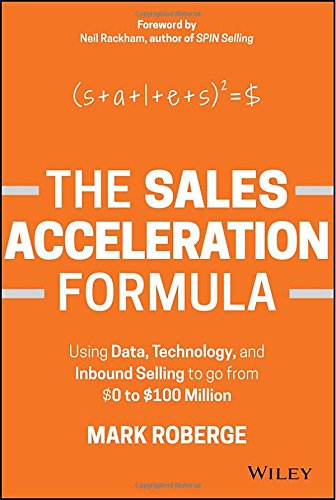 nue. I say that qualifies him on teaching the rest of us how to grow revenue.
But, if 0 – 100M isn’t enough, Anthony Robbins reviewed his book and said this;
A new breed of disciplined, data-driven leaders are re-shaping the field of sales. The Sales Acceleration Formula explains why.
I love this post ’cause we make too many assumptions with inbound leads. Inbound leads are new and as Mark says, too many of us are screwing up in the transitions.
This post does a great job of breakin’ it down.
——————————-
Every day, more and more sales calls are being made to inbound leads rather than cold prospects. It is a great trend. These inbound leads are further along in their buying journey. They close faster and at a higher rate.
Unfortunately, traditionally trained salespeople often struggle with the transition from calling a cold prospect to an inbound lead. Here are 3 common mistakes salespeople make when calling inbound leads.
Mistake #1: Assuming a non-decision maker is a bad lead
Outbound salespeople are trained to “call high”. Why deal with someone that does not have the authority to buy?
Unfortunately, the contact on an inbound lead is not always the C-level executive holding the purse strings. Instead, the contact may be a front-line worker or even an intern. Traditionally trained salespeople throw up their arms stating, “these leads suck”.
Actually, the leads do not suck. I admit, the contact on the lead is not a buyer. The contact has no budget authority. However, who do you think told the contact to do the research, conduct the Google search, and download the eBook? It was likely an executive driving the decision… and the budget.
When deciphering the quality of the lead, focus less on the contact’s role and more on the company’s fit with your product. The fact that someone started the research process indicates a trigger at the company aligned with your product’s value proposition. A potentially easy deal is on the line. Don’t let it pass you by.
Mistake #2: Leading with the vanilla elevator pitch
In a cold calling environment, salespeople are throwing darts in the dark. They have no idea whether the value proposition they are pitching will resonate with the companies they are calling. With fingers crossed, cold callers deliver a well crafter elevator pitch and hope it resonates with the recipient on the other end of the line before they hang up.
This approach of leading with the vanilla elevator pitch is the kiss of death in an inbound environment. Your company enticed the prospect with a thought provoking tweet, engaged them with a well written blog article, and convinced them to exchange their contact information for a valuable eBook, written about a problem they have been researching. Then, you, the salesperson, ignore these breadcrumbs of contextual interest and simply deliver the vanilla elevator pitch?
Inbound leads have much more context associated with them than a cold prospect. These leads have read blog articles, viewed webpages, downloaded specific eBooks, and even conducted precise Google searches to find your company. Leverage this context when you first engage an inbound prospect.
“John, I noticed you downloaded our eBook on XYZ. What specific questions did you have?”
Break the ice with that opener. Lead with their interests, not the vanilla elevator pitch.
Mistake #3: ABC: Always be closing
Traditional salespeople are trained to “Always Be Closing”. Connect. Pitch. Close hard.
However, today’s buyer is far more empowered than a decade ago. All the information they need to evaluate a purchase is at their fingertips, whenever they want it. Modern buyers are not going to put up with these archaic tactics.
Instead of ABC, salespeople need to ABH – “Always Be Helping”. Once you break the ice with the prospect’s interests, answer their questions. Do not withhold information. Answer as many questions as the prospect wants to ask. With every question, you are building trust.
Eventually, you can leverage the trust to evaluate whether you can help the prospect’s organization and whether you should both invest more time together. Ask them questions like:
Now you are in a position to engage the decision maker with deep context that will surely impress.
Inbound leads are gold. However, traditional sales methods may turn off the buyer… and the sale. Align your sales tactics with the context of an inbound lead to create a more efficient process for you and the buyer.

Go check out Mark Roberge’s new book that launched this week, “The Sales Acceleration Formula: Using Data, Technology, and Inbound Selling to Go from $0 to $100M”, about his experience in building the HubSpot sales team. It’ll make you happy and all giggly inside.
Many companies rely on technology to help manage sales leads, track customer relationships, and work through the sales process – and this is totally fine. There is a lot of excellent technology today that makes life easier for sales people, from Customer Relationship Management (CRM) systems to automated e-mail responses to online sign-up forms to help you get more information about your prospective customers.
But sometimes, companies rely too heavily on technology, and they forget about the human element of building relationships with customers and prospects. For example, I often see situations where companies will be using an automated lead qualification process to evaluate new sales leads. The company might have an automatic signup form on the website that asks new prospective customers to answer a few questions, or reply to a follow-up e-mail. These automated systems can be effective in helping to sort through lots of sales leads and quickly find the people who are most urgently looking to buy. However, there is a blind spot in the automated system – if you only use automated lead qualification, you might be missing out on good sales leads that just aren’t quite saying what your automated system expects to hear.
Technology is great, but one of the most important technologies for sales people is still one of the “old-fashioned” technologies: the telephone. When you’re trying to qualify sales leads and figure out which buyers are really “ready” to buy or which ones are “right” for your company, there’s often no better way to do it than to get on the phone and talk to a real live person.
Here are a few reasons why it helps to have a real person follow up with sales leads by phone:
No matter what new technologies emerge to help streamline the sales process, there will probably always be a place for the simple act of picking up the phone and calling the customer. Phone calls are still one of the most important technologies in the sales person’s toolbox.

*That Depends on You.
When you spend time, staff, and money on marketing initiatives, you want to know that they’re meeting expectations. It’s clear that some of those who have budget line and revenue responsibilities have an impression that their marketing isn’t as effective as it should be. And they might be right.
Here’s what I find are some leading causes for marketing bloopers. This isn’t exhaustive. But what follows are some main problems, and offers a good way to start re-thinking your approaches.
Your expectations aren’t realistic.
Prospecting emails don’t get a 60% conversion rate, and they won’t get a 60% open rate. If you directly contact 1,000 people, then you haven’t made a notable impression to boost your brand on 1,000 people. Not even close. If you’re a marketer and you’re not setting proper expectations, then you’re setting your projects up for failure, and your company or client for disappointment. If you’re a business owner or leader who’s expecting consistently unrealistic returns, you’re doing just the same.
It’s not integrated with other initiatives.
You see this in larger companies, or companies with multiple divisions. The left hand and the right are out of sync due to different operational leadership, or bad communications. This kind of poor organization leads to market confusion and depressed performance from all marketing initiatives.

The Road to Success.
There’s no engagement.
Good marketing is like a good novel. It draws you in so you want to move to the next page and onwards towards the next chapter. That’s the pull of engagement. If your marketing is only talking about you, your product, or your service, that’s not engagement. That’s what bad marketing does. Position your messages toward what’s important to your prospects. Give them a reason to care, and then you’ll begin to see better results.
It’s a one-off.
Multiple touches to the marketplace are essential. We marketers wish that prospects pay more attention to our communications. But wishing doesn’t make things so, right? Rigorous planning and a smart level of repetition make things so.
There’s no way to determine the effectiveness of your outbound marketing.
The red flag goes up, way up, if there’s no way to determine how your marketing push will live up to expectations. Why will there be no metrics? Change the game by changing the rules. No metrics, no investment.
There’s no pull.
Pushing messages out is one thing. But then what? If your inbound initiatives – your pull marketing — don’t match your outbound, then you won’t convert enough prospects to customers. A strong content marketing portfolio is a must today. Without it, your competitors will be eating your lunch.
The only metrics that matter are tied to overall objectives. Most times I couldn’t care less about open rates on email campaigns. That’s typically not the overall objective. The objective is what happens next, the action that takes place. The objective is to create a lead, or make a sale. Don’t get distracted by a lot of numbers and percentages. Keep your eyes on the prize, and prizes are given when marketing contributes to the sales process.
Are there more things that might need fixing? You bet. But when you take an unfiltered look at all that you’re doing wrong with your marketing, then you’ll be able to move towards a more effective program, and better results.

On the social web we’re here to help, to listen, to serve. We’re not supposed to expect sales though blogs, right?
Well, sometimes it’s OK to sell. You have to make money at some point, right?
In fact, your blogging space is a very important sales opportunity because if people are finding you through search, these are high-potential leads.
I am NOT saying to be “sales-y” in the content of your blog. But there are ways to surround that content with opportunities for readers to connect and maybe even buy something.
Here are 10 ideas to optimize sales through blogs. And by the way, with a little work, almost every idea on this post can be accomplished by this time tomorrow!
1. Have ads for your products. Use the sidebars of the blog to promote your products and services. This is helpful to people trying to figure out what you do.
2. Tell them who you are and what you do. If you’re like me, the majority of the visitors to your blog have probably never been there before. Devote a little space somewhere on your blog telling people who you are and why you are blogging.
3. Give something away. Once you have people on your blog, you want to entice them to stay on you site. Tell them what to do next. Download a free eBook, a guide, a whitepaper, a calculator? Many blogs have “pop-up” offers. I am not a fan of these personally but they do work for many people.
4. Make sure the blog is integrated — Even some big company blogs have made the mistake of having a site that is disconnected from the main website (it has a separate URL). If this is your situation, fix this right away for two reasons: a) you are building SEO to a place that is not your website and b) you are attracting all those people to your blog but they can’t dig into your site and learn more. Do not let any IT person or design professional talk you out of this. Integrate!
5. Take out the useless stuff. Don’t clutter your blog with widgets that distract people from going deeper on your blog. Here are two that drive me crazy with links to the reason why: word clouds, on-site Twitter stream.
6. Add your social sites — A key idea is getting blog visitors to stay connected to you enough to get to know you and eventually buy something. Please add links to your social media sites. So many people overlook this.
7. Make it easy to share your post — And speaking of the basics, are you making it easy for fans to share your content? Power on the web does not come from content. It comes from content that moves. This is so essential but 50 percent of the blogs I see don’t have this.
8. Use internal links — If you refer to goods or services in your blog post, create an internal link (same process as creating an external link on WordPress) to a page on your site dedicated to that product. It will help your customers and provide some SEO value.
9. Place contextual ads on your site — I don’t like ads in the middle of blog posts. It just seems disrespectful to interrupt the reader. But I see nothing wrong with putting a relevant and helpful ad at the end of a post. Let’s say you sell lawn equipment. If you do a post reviewing lawn mowers, why not feature a buyer’s guide or coupon at the end of your post?
10. Use Linked Within — This is a free app that displays thumbnails of similar blog posts at the bottom of each post (look below to see what I mean). Suggesting similar posts keeps people on your site, increases the visibility of other products, and increases page views by about 8 percent.
BONUS IDEA– If you spend one dime on marketing your business, please make sure you have an attractive, well-designed website. If you try to do it yourself, chances are it is going to look home-made and is that the message you want to send to your customers? Make sure your front door to the world is first class and with the number of low-cost templates out there, there really is no excuse for a bad blog design.
Did this post help you? What ideas would you add?
Regalix Research recently published their State of B2B Marketing 2015 report. The report detailed the budgets, priorities, digital and offline channels and the content preferences of B2B marketers.

According to those who responded to the survey the top five objectives were as follows:
As a follow-on commentary the analysts from Regalix stated the following, “Improved Engagement/Customer relationship seems to have fallen in priority this year, giving us the feeling that marketers, especially in the B2B space, are yet to find a direct correlation between increased customer engagement and sales. . .”
Does anyone else see a problem here?
When looking at these top five objectives, it is clear that they are all inter-connected, however, there are two major issues that I believe this prioritization and drop in Improved Engagement/Customer Relationship highlights.
1. Marketers Are Still Struggling With Measurement & Analytics
As the analysts from Regalix state, marketers are not finding a direct correlation. However, it is due to the fact that they do not know HOW to make that correlation. Measurement, analysis and optimization are the job of any B2B marketer who is involved in Demand Generation. The idea that 50% of marketers, according to the study, are going to spend more and do more, but cannot demonstrate how that “more” leads to increased sales is quite astonishing.
At last week’s Content2Conversion Conference, the theme across many presentations, including mine, was aligning content to your buyer and engaging with them at a deeper level. While this is not an easy task unto it’s own, if this is going to be the focus of B2B marketers, then it is also necessary that they show the benefit of how this alignment is driving revenue to the organization.
2. Marketers Are Prioritizing Outcomes Ahead of their Buyers
In order to achieve the outcome of increased revenue, leads, sales, and customers acquired, it necessitates that you improve the ability to engage with your buyers and improve customer relationships. Today’s sophisticated buyers have more options than ever before, more ways to access information and want to have relevant conversations with vendors. By lowering this as a priority (perhaps because it requires big changes), marketers are actually working against themselves in achieving their top objectives. As one ANNUITAS CMO client recently told me “now that we have taken the steps to be a buyer-first Demand Generation organization, our sales people are more engaged, we have made their jobs easier and they are closing more deals. It is all because we took the time and made the changes necessary to truly understand the buyer and build those relationships.”
It does not matter that B2B marketers are seeing increased budgets, are creating more content and acquiring new technologies. Unless there is a clear understanding that the buyer is priority number one, the expected outcomes will not be realized, no matter what you spend or create.
Author: Carlos Hidalgo @cahidalgo CEO/Principal, ANNUITAS
If you’re looking to convert leads and increase revenue, your marketing campaigns must be targeted and relevant to the recipient. Rather than blasting emails to all of your contacts, make sure that you’re using data to drive your marketing strategy.

Your buyers aren’t one-size-fits-all
Businesses typically cater to more than one type of customer, even if they only offer one product or service. Your messaging should reflect this. For instance, if you send the same message to both marketing and sales managers, you’re not being relevant to all of your recipients, which will decrease the effectiveness of your campaign. Some contacts may even opt out, meaning you can never email them again.
In order to create targeted marketing campaigns, you first need to identify your buyer personas. Buyer personas are detailed profiles about your customers and are based on real demographic and firmographic data. This information gives you the ability to personalize your messaging based on different segments, ensuring your contacts receive information relevant to them.
Your buyers are in different phases of the sales funnel
Your marketing database is full of contacts in different phases of the sales funnel. As such, they require different types of information and content.
Let’s take a closer look into your CRM. Sally Marketer recently read your blog post about how to grow a marketing database. Then there’s Sam Sales, who already spoke with a sales rep and downloaded a customer case study. Unlike Sally, who would benefit from more general content, Sam is aware that he’s in the market for your solution. As such, it would be better to provide him with targeted content that matches his place in the sales cycle.
If you’re not segmenting your B2B data properly to address these types of common situations, then you’re missing out on huge business growth opportunities.
Marketing relevancy = Increased revenue
Buyers are more likely to take action when your campaigns are highly targeted. In fact, recent studies suggest:
Have you thought about your own B2B data recently? Let us know in the comments below!
Sales Question: "How many attempts should I make to connect with a prospect before moving on?"
SalesBuzz Answer:
I’ve read statistics that says it takes 6, 12 even 18 attempts to reach a prospect. But here’s the thing, I don’t use one rule across all lead types.
I believe it is best to analyze the lead to determine how much time and effort you will put into getting that prospect on the phone.
In order to make an educated decision in this area, you have to know a few KPI’s (Key Prospecting Indicators) such as:
Is this a cold call or a warm lead?
Warm lead = They were raising their hand in some way – such as they filled out a form on your website asking for pricing info. Warm leads obviously tend to be a little farther along in the buying cycle, so they get top attention.
What is their Title?
If it’s a straight up cold call, you control who you are targeting, therefore, you should only be reaching out to those with the title of someone that is typically heavily involved in the decision making process.
Quick side note: This does NOT mean you always have to speak to the CEO unless that is the person that is almost always the decision maker for what it is that you offer.
For example, when I’m personally working a larger deal, the CEO (for my specific industry) is almost NEVER involved. If, however, the lead is a small to mid-size business, the OWNER / CEO is almost ALWAYS involved. You have to know your targeted audience!
If you don’t know the top three titles of those who normally make a decision when it comes to buying your product / service, that’s a problem that needs to be fixed today.
When it comes to warm inbound leads, you have no control over who decided to raise their hand. Even though a warm lead presents itself, it could be from someone that has little to no power. On the flip-side, they could have been directed by a decision maker to get some info and could really be a hot lead.
So what do you do? How do you proceed?
I’ve found that if there’s a warm lead and the title of that person is what I know to be a non-decision maker, in most cases, if they were instructed to look into this, it won't take many attempts on my part in order for them to give me a call back.
If, on the other hand, it’s a warm lead, but the title of the prospect is what I know to be a non-decision maker and they were looking into this on their own, it seems to take more attempts. And here’s the problem: non-decision maker + self interest = lots of chasing and little to zero ROI.
Why would I want to have a standard rule that says I have to try and contact someone 16 times when statistically, based on the info given (lead type + title) shows there will be little to no ROI?
There is one last bit of data or KPI that I take into account when deciding how many attempts I will make and that is:
Opportunity Size
All leads aren’t created equal. If you sell software, typically the more “seats” the larger the order. If you sell “logistics” the more they ship, the higher the ROI. If you sell medical supplies, the more patients your prospect sees, the more consumables they will use on a monthly basis, the more revenue you will bring in. Hopefully you get the picture here.
Even if I were to make 16 attempts to an individual who expressed interest in what I offered, and they finally called back and signed on, the ROI or “opportunity size” was as low as possible, next to being ZERO. Yet, look at all the work I put into that, to only get one small sale.
Therefore, I have a three strikes rule that I use as a basis.
It works like this: I know I will make a minimum of three call attempts. Each call attempt will be immediately followed-up with an email and there will also be a LinkedIn connection request following my first call attempt.
That is a total of 7 attempts or “touches” Three calls + three emails + one LinkedIn connection request.
In addition to that, they will receive at least 1 of my newsletters within that week making the total touches up to 8 within a week’s time.
If after that I still haven’t heard back from them, I will then make a decision on how many attempts I will continue to go after someone and that will be based on 1) Lead type - cold or warm lead 2) Title and 3) Opportunity size.
If it’s a warm lead and the right title, but they haven’t called me back yet, I will simply call the front desk and ask a question or two that will let me know the opportunity size. (For me, all I have to do is call and ask “How many sales people does your organization have?”) If it’s a nice size number, they stay on my attempt to make contact list. If it’s not, I move on. Simple as that.
 Nurturing through Every Stage Until the Magic Happens
Traditionally, we used to speak of the sales funnel and how it’s important to make sure you filter down the best quality leads, progressing them to conversion. In these days of digital marketing and social media optimization, we engage more time and resources studying and analyzing buyer behaviour through the sales lifecycle. As more advances in digital tools and technologies are made, there will, undoubtedly, be increased sophistication in how we follow a buyer through the sales journey. The point I’m getting at is, the more we are evolving our tools and processes to “simplify” lead generation and marketing, the more complicated it will become—that’s inevitable.
So what’s the solution? In my opinion, it requires going back to the basic 4 stages of a B2B lead generation lifecycle. You have to examine your cycle and determine where you are:
1. Is it in the infancy stage? So perhaps you are still trying anything and everything to see what sticks.
2. Are you in the prime of the lead generation cycle? Your buyers are engaged and getting closer to conversion. It’s easy to get complacent and drop the ball, or literally, allow a hot lead to turn cold due to lack of attention.
3. Is it beginning to come of age? Beware of the dangers of this stage where it’s easy to get stuck in a silo, caught up in legacy systems and processes and become averse or inflexible to change.
4. Has conversion happened already? Well then, its’ time to repeat the success. Identify the steps in your process that are repeatable and the ones that need adjustment for the next sale to be faster, longer-lasting and of greater value (not just monetary value but customer lifetime value).
Needless to say, you have to nurture your high quality leads through every stage until the magic happens. And by magic, I don’t mean closing the sale. I mean going far beyond a sale to achieve the highest Customer Lifetime Value (LTV) you can for every customer. Its sounds really easy, but it takes a lot of commitment, passion, a shared vision and close alignment of your internal and external resources before you can get to this point. Let me give you an anecdotal experience to explain.
Last week I was on an island that is the site of one of the largest volcanic eruptions ever recorded in history. Over 3600 years ago, the Minoan eruption left a caldera or cauldron-like feature, which is now the beautiful island of Santorini, Greece. It is ranked the world’s top island by many leading magazines and travel sites. Besides the natural setting, gorgeous sunshine and turquoise blue waters around, I enjoyed the warm hospitality of the local people. In particular, my visit to this local restaurant called Naoussa Tavern left me feeling completely overwhelmed.
I was lucky to be in Santorini off-season so there were no usual tourist crowds, the local shops and restaurants were not busy, the pace of life was, in general, very relaxed and peaceful. The best part of the off-season was that the local people had plenty of time to talk to me. I enjoyed my interactions and my learning of their culture, lifestyle, history and local economy. One late afternoon, I stepped out for a meal and went into this local restaurant. It wasn’t a very fancy place and it was empty; I was the only one there. A gentleman, who I thought was the server, came out to speak with me. He turned out to be the chef and he was most enthusiastic about knowing what I would like to eat. We chatted for a while and he served me the most delightful meal. I didn’t even look at the menu—he custom-made every dish he believed I would truly enjoy; he was absolutely right! And, he refused to let me pay. Gosh, where was I? Surely this place must be where the Greek Gods live!

After the meal, the chef chatted with me some more and didn’t want me to leave. He brought me coffee and then would not allow me to call a taxi, saying the restaurant owner would drive me home. By this point, I was completely mesmerized by his genuine show of hospitality. The owner came and his driver drove us to my hotel. We kept chatting on the drive back, so I learned that he owned nine restaurants. The chef and the owner invited me back the next day for a special meal. I was treated to the most delicious octopus I have ever eaten in my life. The special sauce for the accompanying beef dish took five hours to prepare. The dessert was exquisite and it was accompanied by a very special bottle of 12-year old dessert wine which the owner brought me from his own winery—a Vinsanto Santorini. The type of grape used in this wine is only grown in Santorini. Then I was ready to leave—but wait, I was told; there’s more! So I stayed longer watching some live entertainment and enjoying my host’s warm company.
I have made friends now in Santorini—the kind I will never forget and I don’t think they will forget me either. See how the magic happened for me? I was out looking for a meal. Not only did I find one that satisfied my hunger but it elevated my experience as a customer to an unmatched level of delight and lasting memories. It could very well have been a run-of-the-mill “transaction”. I would walk in, ask for the menu, order my food, eat, pay and leave. The chef, who is an employee, took it upon himself to win me over (and how!), and the owner picked up the lead beautifully to make me his friend and customer for life.
If you enjoyed this post, please click here to receive updates and information about B2B lead generation and do leave me a comment.