Shared posts

04 Mar 18:48

What To Do in an Emergency!

by admin

Accidents and medical emergencies don’t happen often, but they do happen. It’s good to know what to do if you’re in these situations. Dr. Mike talks through some of his own experiences and what to do after calling 911. From anaphylaxis, and cardiac arrest, to severe cuts and catching fire, you can be prepared to help.

Here are some resources for listeners to check out.. I prefer memorable … as its all about remembering in the moment..

Bet you didn’t know the guy from the hangover (ken Jeong) went to medical school? https://www.youtube.com/watch?v=n5hP4DIBCEE

Ricky Rubio (its ok if you don’t know who he is) and friends use AED. More likely to happen with older people but this shows can happen to anybody.. and also shows how simple it is to use an AED. https://www.heartrescuenow.com/sudden-cardiac-arrest-ricky-rubio-save-life.html

Choking.. A video from the UK (we are 911 not 999!) I know , she speaks to calmly for a choking video but… https://www.youtube.com/watch?v=SwJlZnu05Cw

Want to learn CPR? Here is a list of options from the Heart & Stroke; from simple to more comprehensive courses … to one you can do at home. https://www.heartandstroke.com/site/c.ikIQLcMWJtE/b.3483921/k.DCD2/First_aid_CPR_and_AEDs_Learn_to_save_a_life.htm


06 Jun 14:36

Is There Value in the Voicemail You’re Leaving?

by TheSalesHunter
  As promised, I’m digging deeper into 5 Ways Voicemail Can Work for Prospecting. So far we’ve covered making sure voicemail is only one of your tools and keeping your voicemails short. We are now at #3:  Your voicemail must contain something of value for the person receiving it. The message is not about you, […]
06 Jun 14:34

Why you don’t need any sales stages in your sales pipeline

by bob@inflexion-point.com (Bob Apollo)

blocked_pipeline_225_softThe above assertion might appear counter-intuitive, but please bear with me. I’m going to try and make the case that you don’t need - and in fact you shouldn’t have - any sales stages in your sales pipeline.

I’m not arguing that you don’t need a sales pipeline. Far from it. The universe would probably grind to a halt if every sales organisation decided to abandon their pipeline. I’m just convinced that there’s a far better way of managing it than by using sales stages.

The alternative? It’s to value your pipeline and measure your progress with reference to the stage your prospects are at in their buying decision process. In other words, you don’t need sales stages - you need buying stages…

The idea of managing the pipeline with reference to the buyer’s journey isn’t a new concept. It dates back at least to Hugh Macfarlane’s ground-breaking book “The Leaky Funnel” which was first published in 2003.

But if ever there was a time to put it into practice, that time is now. More stakeholders than ever are involved in buying decisions - and their numbers are growing. More well-qualified opportunities than ever are ending in “no decision”. B2B buyers are more risk averse than ever.

Given all of these uncertainties and complications, the idea that sales pipelines can best be managed as a succession of completed sales activities has never been less plausible, or less effective - at least in the complex sales environment.

The Forecast Accuracy Challenge

As if we needed any proof, the latest CSO Insights research confirms that sales forecast accuracy on a deal-by-deal basis remains stubbornly stuck below 50%. Tossing a coin would, on average, offer a more accurate prediction.

That’s why tracking the progress of your opportunities with reference to your prospect’s buying decision process is such an important idea. It’s harder to achieve, but resulting increase in the accuracy of pipeline valuations and sales forecasts make it more than worth the effort.

Introducing Buying Process Aligned Sales Pipeline Stages

After modelling the prospect buying decision process for dozens of clients in high-value, multiple stakeholder complex sales environments, a clear pattern has emerged. Your environment may show some subtle variations depending on the nature of your solution, but broadly speaking:

Satisfied with the Status Quo

Prior to the start of the buying process, your prospect is broadly satisfied with the status quo, but they are still interested in trends and issues that may affect their organisation, department or role. This is the perfect point at which to introduce an issue, implication or fresh perspective they may not have been aware of or have previously not given any thought to.

Open to the Possibility of Change [Phase 1]

But then something happens (preferably as a result of your stimulus) - a trigger event that draws their attention to the idea that sticking with the status quo may not, after all, be their best option going forwards. This is the first active phase of their buying decision journey, and an opportunity to shape their early thinking about what may be needed.

Deciding if They Need to Act [Phase 2]

A clear need has been established, and the individual who first identified the issue is typically reaching out to colleagues who may also be impacted. Your prospect (usually by now a group of interested stakeholders, rather than a single individual) is assessing their situation, investigating their options, and trying to decide whether there is a compelling case for change.

Defining their Vision of a Solution [Phase 3]

Having concluded that there is a compelling case for change, your prospect’s attention now turns to defining their requirements, deciding which options to short list, and agreeing the decision team, process, timing and criteria. It’s usually critically important to your chances of success that you are actively involved and influencing their thinking by this stage.

Selecting their Best Option [Phase 4]

Your prospect is evaluating their shortlisted options against the criteria that were decided in the previous phase, reconfirming the business case, and striving to achieve decision team consensus around a single preferred option. Your focus needs not to be just on winning their recommendation - you must also ensure that you reinforce the need to take action. If you first get involved at this stage (for example receiving an RFP that you have not helped to shape), your chances of winning are very slim.

Validating their Decision [Phase 5]

By this stage, your prospect has identified their single preferred solution, and is trying to eliminate any remaining risks or reservations and to negotiate the best possible contractual and commercial terms. It remains possible that they could still either decide to do nothing or to reopen the evaluation of alternative solutions. Depending on the value or the strategic importance of the project, the decision may still have to pass a final investment approval process.

Decision Confirmed and Order Placed

The prospect has decided to act - and preferably chosen your solution. If they have, your focus must now turn to ensuring that they successfully achieve the goals of the project. But whether the outcome is a win, a loss or decision to do nothing, it’s critical that you learn from the process and use the lessons learned to further refine your understanding of how these decisions are made.

Putting the Principle into Practice

When creating models of the buying decision process, it’s easy to assume that the process is linear - but it rarely is. Prospects will often get stuck in stage, or revert to a previous stage as a result of some change in circumstance. It’s also very possible that different members of the decision team may be at different points in their thinking than others. That’s why it’s called a complex sale.

When you think about the evolution of a buying decision from the prospect’s perspective, it becomes obvious that vendors need to engage as early as possible in the decision making process - preferably before the prospect had decided whether they need to act and certainly before they have established their vision of a solution.

Defining your sales pipeline from the buyer’s perspective isn’t as easy as the conventional sales activity based approach. It requires that your sales people pay particular attention to determining where their prospects are in their decision journey, and intelligently adapting their tactics to match their prospects circumstances. It is most effective when sales organisations are focused on early engagement. But the impact - in terms of win rates of properly qualified opportunities - can be profound (I’ve observed 2-3 fold improvements as an average).

The Sting in the Tail

But there is a sting in the tail: almost inevitably, once you make the shift to a buying-stage defined pipeline, many of the opportunities you thought were in your pipeline will either be shown to be at a much earlier stage, or will drop out completely. The apparent value of your pipeline will initially decline. But you can be comforted by the thought that you’ve now shown that those other “opportunities” were never real, anyway.

At least your sales people might now spend less time on opportunities that were never going to close or you were never likely to win. And your success rate in closing the winnable opportunities will more than make up for the difference.

Interested in learning more? You can download a copy of a one-page summary of a buying stage defined pipeline here.

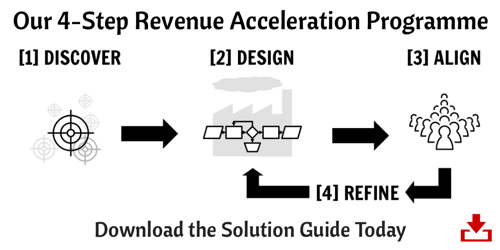
And if you'd like to learn more about taking a structured approach to accelerating revenue growth, please click on the image below... 

Discover>Design>Align+Refine

06 Jun 14:34

Are You Alienating Your Buyers? A Touchpoint Analysis Will Tell You.

by vince.koehler@salesbenchmarkindex.com (Vince Koehler)

On paper, you’ve profiled your customers (buyer personas). You’ve mapped their moves through the funnel (buyer process). You know them quite well, in the abstract.

06 Jun 14:33

Meet Your Buyers Where They Are: Differentiating How You Sell in a Digital Economy

by Brian Walsh

There’s a plethora of research that demonstrates how today’s B2B Buyers are more digitally engaged than ever before. They’re not only more informed, they’re leveraging social networks and online sites to find solutions to their problems and vendors who can deliver. This connected B2B buying environment presents an unprecedented opportunity for salespeople who take the steps to meet their buyers “where they are,” connecting and adding value through a variety of distribution and engagement channels.

Remember, there’s as much differentiation in how you sell as there is in what you sell. Here are five ways you can appeal to the digitally savvy buyer:

1. Be Social

Most of us are flooded with emails. If you’re connecting with economic buyers, it’s likely that every day they’re maneuvering through an inbox filled with vendors touting the next great feature and function. Separate yourself from those who use traditional selling methods. Use social to share content that demonstrates the value of your solution.  Sharing valuable information helps you build connections and business acumen with potential buyers.

2. Be Informed

We know that B2B buyers engage digitally, but a solid understanding of how your customers specifically use digital will help maximize your time and resources as a salesperson. For many organizations, this intelligence likely lives in the SalesForce contact record. But, for a more broad understanding, check with your marketing department. They likely have garnered their own data about the B2B prospects they’re targeting with their campaigns. Use the information to determine your own digital operating rhythm including which social networks demand the most of your time and what content is relevant for you to share.

3. Be Valuable

If I meet someone at a conference and we exchange business cards. I’ve successfully connected with that person. However, if I simply take the card and put it in my wallet, I haven’t done anything to develop that connection. It’s the same with digital engagement. If I connect with someone on LinkedIn, I have a way to reach that person in the future, but I’m not doing anything to build and engage that relationship. You don’t demonstrate value to the B2B buyer by clogging their digital networks with sales pitches. Rather, share information that points to the business problems you help solve, and the outcomes your solution delivers. When you share value, you build legitimacy and account for the digitally savvy buyer.

4. Be Purposeful

It’s important to remember that although the digital buyer presents a great opportunity for salespeople who want to differentiate themselves, it’s not a free for all. Don’t spam your networks posting every piece of content your marketing team provides.  Don’t blanket every prospect with a generic “let’s connect” request.  Engage purposefully with prospects and customers. Develop an end game. What do you want to lead your prospects to? Develop a roadmap that works backward from that goal.

5. Be Agile

Digitally informed buyers do their own research, meaning that when they finally engage sales they believe they’ve defined requirements and are ready to talk price. When you have that initial sales conversation, you may have to adjust your sales pitch, back track on requirements, and reset the sales process. Agility will help you keep your sales conversations buyer focused, speeding up the sales cycle and closing opportunities.

Want to accelerate your sales performance? Download the free e-book to learn 7 tips for success:

06 Jun 14:32

Think of Pricing as One Element of Persuasion

Valerie Casey, founder of The Designers Accord, talks about how data and pricing play into the equation for determining a product's value.


06 Jun 14:32

Airbnb’s new Price Tip is probably better than you at pricing listings

by Kyle Wiggers

Airbnb's new Price Tip tool leverages machine learning to suggest the best price for your listings. It factors accommodations, date, location, and hundreds of other data points to determine the right number.

The post Airbnb’s new Price Tip is probably better than you at pricing listings appeared first on Digital Trends.

06 Jun 14:31

New Sales Competency – Use Content to Sell

by Jim Burns

  The digital era has ushered in many behavior changes, especially for B2B buyers. Sales professionals have been slower to change their sales methods to adapt and align with new buying processes and the expectations of buyers. Those who are not actively and effectively using content to sell are missing an important opportunity to capture a selling advantage, lower selling time and costs, and accelerate successful sales outcomes. “Social selling” while new and popular, doesn’t yet represent a significant breakthrough in the way B2B sales people sell. As currently applied, social selling is primarily a different (and hopefully more efficient way) to research buyers, to network, and to conduct some initial touches. In reality, and almost by definition, most sales people have never really used content to sell. Two supporting reasons for this are the traditional lack of sales ready, customer relevant content, and poor ability to find content for specific selling situations. SiriusDecisions Perspective The significance of this issue is under-scored by SiriusDecisions’ clarification of their assertion that 67% of the B2B buyer journey is conducted digitally. First, because in most B2B business models, sales people must still generate 60-90% of leads. They must do this of course, without the legions of content marketers who’s primary day job is to create content, deploy content to well-honed lists and social channels using marketing automation systems and related social media technologies. Second, because in addition to conducting individual prospecting activities to generate most of their leads, each rep must: Cultivate and develop […]

The post New Sales Competency – Use Content to Sell appeared first on Avitage.

06 Jun 14:31

How to Structure Your Organization for Sales and Marketing Alignment

by Dayna Rothman

iStock_000021604258_Small

Most marketers know that sales and marketing alignment can be tough! A great way to build more alignment between the two functions is to staff your teams in a way that promotes collaboration and cross-functional goal setting. Creating the right structure between marketing and sales is imperative for proper alignment. This means defining roles in marketing and sales in a way that helps you move leads through the pipeline more effectively. Outlining specific roles ensures that every part of the customer’s journey is accounted for.

Let’s take a look at some ways to consider structuring your marketing and sales teams for success. And to learn more about sales and marketing alignment, be sure to download our new ebook, Jumpstart Revenue Growth with Sales and Marketing Alignment.

Marketing Roles

How does your marketing team work with sales? Take some time to look at your role descriptions to ensure that they are truly cross-functional. The following are a few of the specific marketing roles we suggest defining:

  • Demand Generation: The core function of this role is lead generation. This team supports revenue goals by generating more qualified leads to pass on to the sales team. This group focuses on many things, including full-funnel marketing programs, lead nurturing, and analytics.
  • Product Marketing: Product marketers focus on positioning the product or service in a way that is unique within the industry. This role supports sales enablement through content creation, understanding the sales process, and product and data sheet creation.
  • Customer Marketing: This role supports sales through customer advocacy, testimonials, and references. Happy, engaged customers not only lead to greater revenue, but also greater trust from new prospects. According to Nielsen, 92% of customers trust recommendations from friends and family more than advertising. Therefore, customer advocacy plays a key role in gaining trust from new prospects.
  • Content Marketing: Content is an increasingly vital part of marketing as the buyer’s journey becomes more digitally-oriented. This team creates valuable and educational content to help out sales reps during the sales cycle and provides materials for lead generation and nurturing.

Sales Roles

Dividing sales into a lead qualification team—and one that works specifically on closing deal—creates the best results. Lead qualification teams can focus on qualifying leads, and your sales account executives can focus on closing deals. Here are a couple of specific sales roles we suggest defining:

  • Sales Development Representative: The focus of this role is to review, contact, and qualify leads passed down from marketing. SDRs work closely with marketing to bridge the gap between the two teams. Including Sales Development Representatives can further help you streamline the sales qualification process and ensure the best results in the handover from marketing to sales. SDRs get in touch with MQLs to determine whether these contacts are ready to talk to an account executive. The sole focus of this position is to follow up with leads and overcome objections. As a result, companies with SDRs convert 80% more leads than companies without this role clearly defined.
  • Account Executives: Account executives exist to close sales. In the end, it’s more cost effective to have your top sales representatives talk to the most qualified leads. You don’t want your best closers wasting their time on leads that have no possibility of converting. Instead, have them work on leads that have been qualified by SDRs.

Creating role descriptions and goals that support both sales and marketing is critical to alignment. What other cross-functional roles to you have in your own organization?

To learn more about sales and marketing alignment (and watch your revenue numbers skyrocket!), please download our new ebook, Jumpstart Revenue Growth with Sales and Marketing Alignment.

06 Jun 14:31

Sales Success Trap – Confusing Busy With Productive

by Richard Ruff

Salespeople like everyone else can succumb to the temptation to stay busy. Research tells us that most people have an aversion to idleness and a bias toward taking action – especially when facing uncertainty.

The rub is it doesn’t seem to matter if the action is a productive effort or not. People just feel better “doing things.” In an interesting HBR article, Francesca Gino and Bradley Staats reported people said they feel more productive when executing tasks than planning them – even though they knew planning usually leads to higher performance than simply diving into tasks without a predetermined course of action.

With all this in mind let’s turn to the world of Sales and examine some of the “busy traps” and some of the productive activities that are likely to fall by the way side.

  • Chasing bad business. We have all experienced the account that despite continuous work it will not move from Stage 3 of the pipeline. Yet it is too painful to pull the trigger – perhaps tomorrow will be the day. Chasing bad business will certainly keep you busy but productive – not so much.
  • Confusing institutional friends and internal champions. Developing and rehearsing internal champions is a key best practice in major account selling but it takes time; hence the potential internal champions must be selected with great care. They must be both willing and able to help you actually pursue the business. You can spend a lot of time with an institutional friend – nice to do, yes – busy, yes – productive, usually not.
  • Excessive attention to paperwork. Top sales reps are very good at distinguishing paperwork that can be postponed or ignored from that which needs to be a priority. In major organization paper work can become an unbelievable time sink – talk about busy!
  • Jumping in too soon with a solution. Gino and Staats also reported that a bias towards taking action can lead to jumping in too soon with solutions before fully understanding the problem. Sound familiar? How many sales managers have been on sales calls with sales reps that jumped into soon and talked too much about their product before understanding the breath and depth of the customer’s problems.

The problem with “busy” is that “productive” gets postponed until Friday and then never gets done. Here are three sales winners that often experience that fate:

  • Developing and updating the account strategies for your major accounts.

Most sales reps do not spend enough time selling and the time they do spend is not optimized from a productive perspective. If one had a 100 person sales force and tomorrow you could get a 10 percent shift from busy things to productive things – what a difference a day would make.

06 Jun 14:31

Trust Leads to Sales… But What Leads to Trust?

by Deb Calvert
It’s simple. In sales, you need to make enduring connections with your buyers. But you cannot form solid connections without a firm foundation of trust. Trust brings buyers and sellers together and keeps them together. A lack of trust inhibits buyers, and a breach in trust shuts them down completely. Trust is vital to forming […]
06 Jun 14:31

Top 5 Mistakes Made by CEOs Managing Sales (and How to Fix Them)

by Gretchen Gordon

I had a meeting yesterday with the CEO of a small business that currently has six people on their sales team. He is stuck in an awkward place because they are now big enough that they need to have a sales team, but they still don’t think they are quite big enough yet to have a dedicated sales manager. This is a tough spot that tons of business owners find themselves in. He needs to build sales to propel the business to the next level (so he can justify hiring a rock star sales manager). But until then, it means that the responsibility of sales management falls on him.

That is where the problem lies. Because despite being great business leaders and perhaps brilliant salespeople,CEOs in general don’t have what it takes to be great sales managers. How can I make such a sweeping statement? Simple. It’s because I know that being a great sales manager requires significant time, something that is in short supply for any CEO.

top_5_mistakes_made_by_ceos

Unfortunately, CEOs like the one I spoke with are forced to muddle through the sales management process as best they can out of necessity. Finding a way to balance this role as effectively as possible with their other CEO duties is critical to getting over the hump and growing their business enough to adequately support a high-performing sales team.

With that in mind, I put together a list of the Top 5 Mistakes I frequently see made by CEOs managing sales. More importantly, they are accompanied by tips on how to fix them.

Here are the five main problems CEOs run into when managing sales:

Reason #1: They make non-strategic sales hires out of desperation.

This one is simple enough. Businesses with smaller sales teams may avoid hiring until they are way past overdue to bring an additional salesperson on. By that time, they already needed new revenue coming in yesterday, and they are crunched for time. Plus, they are less likely to have the resources, time and know-how to successfully attract, screen, hire and onboard a salesperson who is going to be a revenue machine. So they often make impulsive hires based on gut feelings and resumes. These impulsive hires frequently end up being a slow, sad drain on the company’s bottom line. So there is a gap the size of the Grand Canyon between what they want to get and what they end up with.

what_you_want_vs_what_you_get_sales_hiring

The fix: GET HELP! Seriously, hiring and onboarding for sales is an art and a science. When you are counting on getting a rock star salesperson, plan ahead and get some help. Trying to save money in the short term by doing this in-house is likely to end up costing you an average of 3-5 times the new hire’s annual compensation. So instead of boosting your revenues it can hold your company back. This happens all the time. Rizan Flenner recently wrote a blog on iSEEit.com about how much a bad hire cost his company. He guessed $120K wasted on salary and training . . . and nearly $4 million in lost revenue.

If you know it’s time to hire and you are ready to invest in a new team member, do so strategically. For example, we use a screening tool that can tell you with 96% accuracy whether a candidate will actually perform. Out of 750,000 salespeople who have been screened with this tool, 92% of the candidates it identifies as recommended to hire rise to the top 50% of their sales force within 12 months. This takes the gamble out of hiring.

Reason #2: Failing to have a consistent onboarding process.

If you think that a new salesperson will be able to succeed based on watching you or other salespeople interact with some leads and existing clients, you are not alone! Unfortunately, it takes more than that. According to a recent Sales Management Association research brief, only 31% of companies described their onboarding programs as structured. This is where most companies fail. But those who do have a structured, consistent onboarding program in place have more positive results and shorten the time to productivity by 37%.

The fix: Don’t forget to factor in onboarding time, processes and training to empower your new hire to be effective. Put together the tools you need for an effective program once and you will have it to re-use again and again. I recently wrote an eBook which goes into significant detail about effective onboarding programs which should be very helpful to anyone who does not currently have a formal hiring and onboarding process in place for sales. If you are doing your onboarding yourself it provides a great model to work from.

Here’s an example of one thing you can do easily as a CEO managing sales:

– Share stories about how your products or services have solved actual problems for clients. Let the new salesperson really know these stories so they can re-use them as their own.

Reason #3: Not having a systematic, repeatable sales process.

This is an area we find flawed in almost every company we work with. Salespeople haven’t been taught effectively and aren’t comfortable enough with the product/service to sell it. As a CEO, you may be inclined to think that your sales team knows your service/product as well as you do, which is not likely the case.

The fix: Create a repeatable sales process that will allow every salesperson to be knowledgeable about your product or service. Your process might include a set of templates and training materials that you can reuse ─such as scripts and questions ─ and will also include regular, ongoing practice time.

If you train your team on commonly-asked questions about your product or service, they will know how to respond. Practicing with them ahead of time allows your salespeople to avoid situations where they could falter under pressure; they will be comfortable with anything that comes at them. Following a well-designed, repeatable sales process with tools such as scripts and role-plays will increase confidence and allow salespeople to become better questioners, listeners and advisors. And, there will be greater consistency of message and experience across the company.

what_you_want_vs_what_you_have

Reason #4: Failing to account for motivation and incentives.

By default, people often expect that others will think the same, perform the same and be motivated by the same things as them ─ until they have a reason to think otherwise. This is a common pitfall with CEOs and even non-CEO sales managers, because (let’s be honest) you are where you are because you’re a rock star. You are a do’er and a go-getter, you care about increasing company revenues and you may never have been short on motivation. That may be less true of your sales team. They may be motivated to different degrees and by different things. Understanding their motivations will help you obtain better sales performance from them.

The fix: Talk to each member of your sales team individually and find out what motivates them. What is their goal? Is it to buy a new house, become sales manager, get a ton of recognition, or maybe even to spend more time with their kids? Not everyone is money-motivated. You may care about corporate revenue and the number of deals closed, but that may or may not move them. Once you know what drives each individual, you can work with them to ensure both of your goals are met by aligning the benchmarks to get there. Everyone will be happier, and that will be reflected in your sales performance.

Also, make sure your sales compensation plan is consistent with your goals. For example, you may tell your sales team that you want them to close 5 deals on X product this month, but if your compensation plan is set up so that they make more commission when they close product Y, you are setting yourself up for trouble.

Reason #5: Not spending enough time coaching.

This is perhaps the biggest challenge for a CEO managing sales. The other items don’t necessarily require as much time and constant attention on an ongoing basis. For your sales team to be consistently successful and become a high-performance machine you need to spend 50% of your time actively coaching your sales team. Collectively, individually and correctly. And 50% of your time, as a CEO, is out of the question.

Coaching means pre-briefing, de-briefing, sitting on calls without jumping in, having regular meetings and holding salespeople accountable.

The fix: In the short term, fake it (a little) until you make it. The amount of time that you have as a CEO to devote to sales management is neither sufficient nor sustainable, but until you can get a better solution, here are some sales management hacks that will help you make the most of your limited bandwidth. Keep in mind that these steps assume that points # 3 and #4 are being addressed, at minimum.

sales_management_hacks

At minimum:

  • Work out with each individual salesperson their math of success, or activities required for them to meet their personal goals and your mutually-agreed benchmarks.
– This should not be a blanket goal for each salesperson to make X calls a day; activity doesn’t equal productivity.

– How many deals must they close to meet goals and how many leads and opportunities are needed to close that number of deals?

– Make sure goals are realistic and appropriate.

– Account for lead generation and opportunities in the pipeline.

– Use this template to help you work through the math of success with each person.

  •  Ensure every salesperson understands what is expected of them in terms of goals and activities.
– To be sure they “get it,” have them tell you what it is they will be doing, based on the math of success you have worked through together.
– Make sure that their activities are appropriate and logical to meet their goals.
– This will be their weekly plan of action.
  • Have periodic sales team meetings to stimulate cross-pollination of ideas for doing things better, identify what is and isn’t working, themes in feedback from customers and prospects, etc.
  • Schedule individual SET IN STONE sales meetings with each salesperson weekly (preferable) or bi-weekly. These are critical, so don’t put them off. If your days get crazy quickly, schedule these for first thing in the morning. Do them via Skype if you have to, but make sure they happen. They should be 30-45 minutes each.

In the meetings, review their weekly plan of action and whether they took the steps to do what they committed to do.

– If not, why not?

– What will they do differently next time?

– Does their plan need tweaking?

-What is the next step for each opportunity in their pipeline? If there is fluff in the pipeline, get it out of there. Move it or blow it up.

– Review their year to date success and what behaviors they may need to change if they are doing the right activities but still not getting results.

– If their performance is “in distress,” carve out some time to pre-brief and de-brief to help coach them through some of their sales calls, and accompany them on some calls if necessary.

  • Once you have this system in place, and assuming points three and four were addressed (having a systematic sales process and accounting for motivation and incentives), you should think about getting rid of any salespeople who are not performing. Replace them with high-performing salespeople through a better hiring and onboarding process as discussed in points one and two.

to_be_a_sales_coach

TO RECAP:

CEOs managing sales are in a tough, but relatively common predicament: they need to grow sales but they don’t have the time to do so.

The top five sales management mistakes for CEOs to watch out for:

  1. Making non-strategic sales hires out of desperation.
  2. Failing to have a consistent onboarding process.
  3. Not having a systematic, repeatable sales process.
  4. Failing to account for motivation and incentives.
  5. Not spending enough time coaching.

The fixes are:

  1. Get help for sales hiring. Use candidate assessments to take the gamble out of it.
  2. Create a re-usable onboarding program that will set each salesperson up for success.
  3. Use tools and training time to create an ongoing and consistent sales program.
  4. Learn each salesperson’s motivations, leverage them to meet both of your goals together and be sure you aren’t being undermined by your compensation plan.
  5. Use sales management “hacks” to do the bare minimum for sales management that does not suck, until you can find a better solution.
This includes:
– Doing the math of success together.
– Communicating about effective plans of action.
– Having weekly or bi-weekly meetings with each individual salesperson.
– Holding them accountable to their plan of action, coaching and helping them switch gears if needed.
– Replacing salespeople that are unable to perform.

That’s it. If you had time to read this blog post you probably had time to do a meeting with one of your salespeople! If you’d like to chat with me about more interim fixes and hacks to make sales management more effective under less than optimal conditions, let me know.

Download our CEO as Sales Leadership Toolkit here.

Do you agree with my choice of the top five mistakes CEOs make managing sales? If you’ve been (or been managed by) a CEO managing sales, please chime in on the comments and tell us about some of the biggest challenges as you see it.

06 Jun 14:30

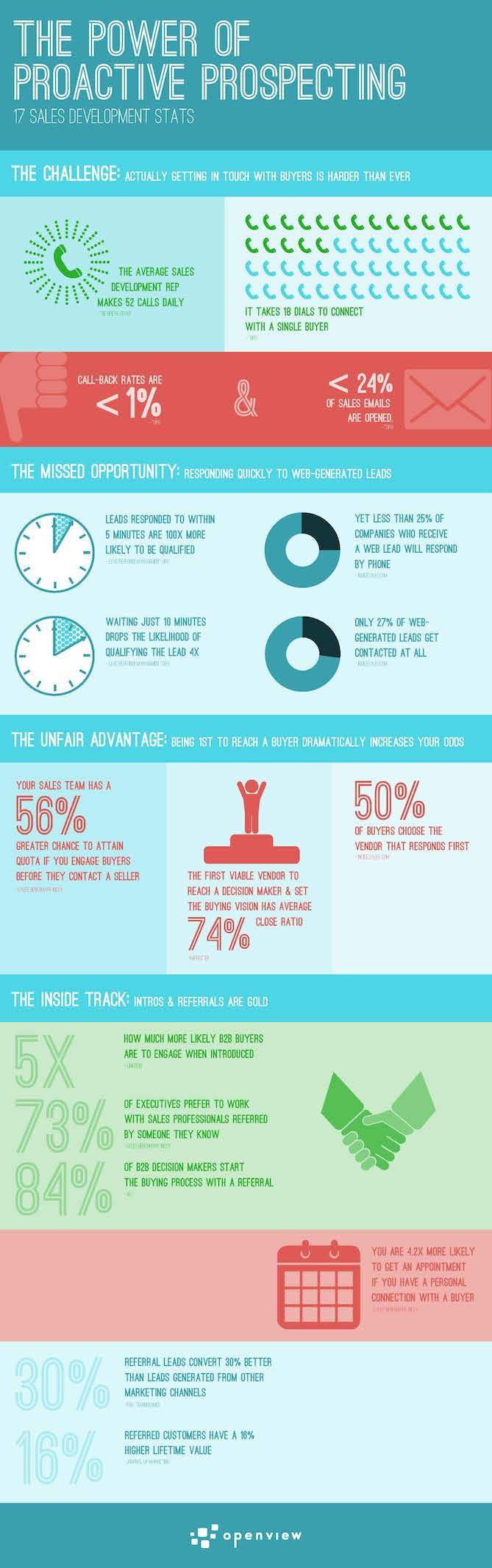
17 Surprising Stats on Sales Prospecting That Will Change the Way You Look at Cold Calling [Infographic]

by esnider@hubspot.com (Emma Snider)

rotary_phones.jpg

Cold calling isn't as cold as it once was. Salespeople now have access to search engines and social media to research their prospects before they pick up the phone. There's no excuse for a rep to go into a conversation completely oblivious to what their prospect cares about and what's happening at the contact's company.

But just because cold calling has gotten warmer doesn't mean it's become any more data-driven. Sales reps generally don't consult data to determine the best time to call their prospects, and they often give up trying to contact a lead after a single attempt. How soon they reach out to a lead after receiving an inbound inquiry has less to do with the timeframe in which they have the best chance to make a sale and more with how busy they are at the moment. 

To inject some science in your outbound prospecting efforts, check out the statistics in the following infographic from OpenView Labs. You'll never approach cold calling or emailing in the same way again.

Think an inbound lead can wait an hour or two for a response? Salespeople that reach out within five minutes are 100 times more likely to qualify the prospect. Doubtful that seeking an introduction to a prospect from a common connection is worth the time? 84% of B2B decision makers kick off their buying processes with referrals. 

Whoa. If data points like these don't make you reconsider your cold calling strategy, I don't know what would.

Check out the full graphic below, and contemplate incorporating these action items into your outbound outreach:

  1. If you share a common acquaintance with a prospect, seek a referral instead of or before cold calling/emailing.
  2. Strive to respond to all inbound leads within five minutes.
  3. Curate content and engage with your buyers on social media to increase your chances of being the first sales rep invited to present a proposal.

Which statistic is the most surprising to you? Share your thoughts in the comments.

power-of-proactive-prospecting-infographic.jpg

get the free hubspot crm


01 Apr 16:13

Mark Zuckerberg hopes this book will help shape his vision for Facebook

by Richard Feloni

mark zuckerberg

Facebook CEO Mark Zuckerberg's 2015 New Year's resolution was to read an important book every two weeks and discuss it with the Facebook community.

For the seventh selection in his book club "A Year of Books," Zuckerberg has chosen "Rational Ritual" by UCLA economist Michael Chwe, which was published in 2001. Chwe explains the importance of what he calls "common knowledge."

"I am more likely to support an authority or social system, either existing or insurgent, the more others support it," Chwe writes in the book. "Public rituals, rallies, and ceremonies generate the necessary common knowledge. A public ritual is not just about the transmission of meaning from a central source to each member of an audience; it is also about letting audience members know what other audience members know."

Chwe's concept is readily apparent in the dynamics of social media. When a media organization posts a link to an online article on Facebook, for example, and people begin "liking" it, others will begin to assign some level of importance to the story and some will be compelled to share it and discuss it. The idea of "common knowledge" may also lend itself to thinking about advertising strategies on social media.

Zuckerberg explains his latest pick on his personal Facebook page:

The book is about the concept of "common knowledge" and how people process the world not only based on what we personally know, but what we know other people know and our shared knowledge as well.

This is an important idea for designing social media, as we often face tradeoffs between creating personalized experiences for each individual and crafting universal experiences for everyone. I'm looking forward to exploring this further.

Zuckerberg announced recently that Facebook will be experimenting with an app store and video ads in an attempt to boost ad revenue, and he and his team will be determining ways to make these relevant to Facebook users without interfering with their individual experiences.

"A Year of Books" so far:

SEE ALSO: Why Mark Zuckerberg wants everyone to read this landmark philosophy book from the 1960s

Join the conversation about this story »

NOW WATCH: Watch Mark Zuckerberg explain what the new Messenger app will do


01 Apr 16:09

Lululemon Athletica Inc’s new men’s ‘anti-ball crushing’ pants grab media buzz and sales

by Nicholas Misketi, Special to Financial Post

Lululemon Athletica Inc. has connected with men right where they need it the most. The Vancouver-based athletic apparel retailer’s new ABC (anti-ball-crushing) pants promise to give men and their “family jewels room to breathe.”

Handout/ Lululemon.
Handout/ Lululemon.Lululemon really cares about the comfort of their male clientele and their, uh, business.Handout/ Lululemon.

Everyone from Fortune to Forbes to The Guardian to Mashable to Bloomberg News went gaga over the “anatomy-friendly” garment that drew sly digs across the Internet hall of mirrors.

Social media was also abuzz. Many took to Twitter to make fun of their name. “Lululemon’s ABC pants are but a first step toward the serious-yet-casual, austere-yet-virile masculine style,” read one tweet.

The pants also caught the attention of consumers too, who are lining up to buy them.

Already the new pants have helped generate a 16% increase in same-store sales last quarter for the company’s men’s business, according to a recent Bloomberg report.

Lululemon’s strategy appears to be to open up more men’s-only retail stores, as many others are doing, including Holt Renfrew in Toronto. One testing ground Lululemon outlet is in Soho, in New York City, according to Sandy Silva, an apparel industry expert at the market information provider NPD Group in Toronto.

Ms. Silva said Lululemon may want to see how it works out there before investing in more space.

Meanwhile, the ABC campaign has still got legs, jumping out March 26, still grabbing attention Tuesday.

“It’s cheeky, it attracts attention and it begs you to go find out what ABC stands for,” said Ms. Silva.

“It’s a well-crafted, well-thought out strategy and they’ve executed it well,” she said.

The pants have a slim-fitting style and are made from a stretchable and sweat-wicking fabric called Warpstreme, with the pants were designed “with all-day comfort and performance in mind.”

Ms. Silva said the clever name and design is largely targeted toward the millennial man, a demographic who is more “fashion forward” and wants the slimmer pant look.

It may also drive those customers to Lululemon’s other clothing within their men’s line.

Lululemon may be introducing this product at just the right time as overall sales of men’s apparel have grown by 7% in the past year and activewear is driving most of that, according to the NPD group. An analysis NPD conducted found that apparel sales only increased by 2% without athletic apparel factored in.

“At a minimum it will drive traffic to the [Lululemon stores],” Ms. Silva said.

“That customer that comes in to try it on will hopefully leave with that and something else,” she said.
nmisketi@nationalpost.com

01 Apr 16:07

Gloomy data out of China, Japan add to pressure to stimulate Asia’s 2 biggest economies

by CB Staff

BEIJING, China – China and Japan reported gloomy industrial data Wednesday, adding to pressure on leaders of the world’s second- and third-largest economies to launch new stimulus.

Two surveys showed Chinese manufacturing was weak in February and employers cut more jobs. In Japan, a central bank survey found companies expect conditions to deteriorate and plan to cut investment.

The latest data muddy the global outlook at a time when the U.S. is the only major economy to show signs of healthy momentum. Both China and Japan are relying on U.S. demand and a strong dollar to offset internal problems. Either could send shockwaves through the global economy if efforts to overhaul their economic models fail.

The loss of manufacturing jobs is a setback for Chinese leaders who are trying to steer their economy to more sustainable growth based on domestic consumption while avoiding a politically dangerous spike in unemployment. They have cut interest rates twice since November but want to avoid a large-scale stimulus that would set back efforts to reduce reliance on investment.

The surveys by HSBC Corp. and an industry group, the China Federation of Logistics and Purchasing, found manufacturing was weak in February. HSBC said companies shed jobs at their fastest rate in seven months. That came after China’s central bank governor, Zhou Xiaochuan, warned Sunday economic growth had fallen “too sharply.”

Despite improvement in the federation’s index, “growth is still likely to have slowed sharply last quarter,” said Julian Evans-Pritchard of Capital Economics in a report. “We expect more policy support measures, including further rate cuts and required reserve ratio reductions, as the government moves to avoid missing its annual growth target.”

The Bank of Japan’s quarterly “tankan” survey, the country’s leading measure of corporate sentiment, highlights a dilemma for leaders who are trying to break out of two decades of stagnation.

Japanese media assert there is growing friction between the central bank and Prime Minister Shinzo Abe’s administration over expanding stimulus further. The central bank governor, Haruhiko Kuroda, says the economy is on course for a moderate recovery and inflation will pick up again after it cools due to lower oil prices.

The central bank has been pumping trillions of yen (tens of billions of dollars) into the economy through asset purchases aimed at keeping interest rates low and stimulating inflation. But Kuroda and other economists say government action alone cannot fix Japan’s problem with weakening demand.

Two-thirds of the 11,126 companies surveyed anticipate further deterioration in conditions. Some 83 per cent of large manufacturers found conditions “not so favourable” or unfavourable.

The survey found companies plan to reduce capital spending by nearly 5 per cent in this fiscal year, which ends March 31, 2016. The companies expect to cut spending on land purchases by nearly 37 per cent.

Japan emerged from recession last year following a sales tax hike that dented consumer and corporate demand. But growth still is weak.

In China, economic growth slowed to 7.3 per cent in the latest quarter. That prompted concern the decline brought on by Beijing’s efforts to shift the economy to self-sustaining growth based on domestic consumption might be deepening too sharply.

The top Chinese economic official, Premier Li Keqiang, said in March that Beijing might intervene to stimulate growth if employment weakens too much.

Manufacturing “continues to struggle to gain growth traction,” said economist Annabel Fiddes of Markit Economics, which conducted the HSBC survey, in a statement.

“Company downsizing policies contributed to a further decline in manufacturing employment,” said Fiddes. “Any savings were generally passed on to clients as part of attempts to attract new business, suggesting a further squeeze on profit margins.”

Instead of the uptick usually seen as Chinese factories resume work following the Lunar New Year holiday, HSBC said its survey showed new orders declined for the first time in three months. New export work also fell for a second straight month.

On Sunday, the Chinese central bank governor, Zhou Xiaochuan, said growth had fallen “too sharply.” He said inflation has fallen so low the country should be alert to the possibility of deflation, or a damaging overall decline in prices.

___

HSBC Corp.: www.hsbc.com

China Federation of Logistics and Purchasing: www.chinawuliu.com.cn

The post Gloomy data out of China, Japan add to pressure to stimulate Asia’s 2 biggest economies appeared first on Canadian Business.

01 Apr 16:04

Use These 5 Steps to Simplify Your Pricing And Grow Sales

by aaron.bartels@salesbenchmarkindex.com (Aaron Bartels)

Are you making it difficult for your customers to buy from you? If your pricing is complicated or too different from your competitors, you might be.

Make it an easier “yes” for your customers. Eliminate objections up-front by simplifying your pricing.

Here are five steps to simplifying your company’s pricing and improving the sales process.

01 Apr 16:01

Massive Revenue Growth Now

by S. Anthony Iannarino

This morning I did a webinar with Jeb Blount, Miles Austin, Mark Hunter, Mike Weinberg, and John Spence (What? You don’t know John Spence? Well prepare for a real treat). You can watch the replay here.

Some people emailed me to ask me for a written transcript, and we’ll try to get that done. In the meantime, here are my annotated notes on how to get massive revenue growth now.

Focus on the top of the funnel

Sales leaders and sales managers focus on what is close to closing. They review deals at the end of the sales process, late stage opportunities, to their detriment. This gives them a distorted view of their real pipeline, and a distorted view of their forecast.

Start with a shift in focus to opportunity acquisition. Ask these questions:

  • How many new prospects moved into the funnel from target to qualified?
  • How many new prospects moved from qualified to discovery (or needs analysis)

Focus on client acquisition not order acquisition

A lot of us sell things for which we can win an order and not actually win the client. Shifting to the front end of the pipeline shifts the focus to value creation instead of transactions. Coaching deal reviews in discovery in the early stages allows you to build relationships of value and focus on developing the client and the opportunity. Make these changes now.

  • Review new opportunities created early in the process.
  • Verify that the client believes they have a compelling reason to change.
  • Verify that the process builds value at every stage of the buyer’s process.

Focus prospecting activity and nurturing on dream clients

I would have put this one first, but I was afraid you’d tune me out. This idea isn’t sexy; it’s the grind.

Your sales force has limited time and energy. They need to win clients for whom you can make a difference. You need to win clients for whom you create breath taking, jaw dropping, earth shattering value.

Your sales force avoids your dream clients because they aren’t receptive, and they already have someone they trust. You and your team need to:

  • Insist that these dream clients are nurtured. And provide the tools.
  • Develop a minimum of 12 value-creating touches.
  • Prevent the sales force from moving downstream to more receptive prospects.

Teach your sales force to develop latent dissatisfaction.

The biggest challenge your sales force has is helping your client make the case for change. The status quo is deeply entrenched. You need to provide your sales force with a plan to develop dissatisfaction. Give them answers to these questions:

  • What are the challenges your clients face that you can solve for them?
  • What should they be concerned about?
  • What are their opportunities to improve their business that they don’t recognize?
  • How do you develop consensus inside your dream client’s company?

The post Massive Revenue Growth Now appeared first on The Sales Blog.

01 Apr 16:01

How to Successfully Roll Out Your Company’s New Tone of Voice

by Steve Rotter

Once you’ve identified your brand values and defined a new tone of voice, the final step in the tone of voice development process is making sure that it’s understood and used throughout your organization. That’s easier said than done. Fortunately, creating a guide for people to refer to when they write will go a long way toward helping.

Creating a guide is pretty simple. The basic idea is to outline the key concepts and back them up with relevant examples. That said, we also recommend including the following sections within your guide:

  1. Positioning statement. Why you’ve decided to start managing your tone of voice, and how this guide can help people in their writing.
  1. Brand values. A summary of the brand values you’ve identified.
  2. Tone of voice. How your brand values translate into writing style.
  1. Key phrases. Forms of words that express something crucial about your brand or your values. These could be public content like ad slogans or corporate taglines, or just frequent sayings within your business.
  2. Sample texts showing how your tone of voice works in different situations. You may also want to include illustrations of what not to do (for example, how not to respond to complaints).
  1. Hints and tips. Mnemonic devices to help people remember your tone of voice guidelines, or suggestions to help them integrate your tone of voice into their day-to-day writing.

Your guide doesn’t need to be a 100-page monster. It should have enough detail to be useful, but not so much that it becomes daunting. Around 10-15 pages should be plenty, depending on how many examples you need to cover. Importantly, whatever you do write should be in your tone of voice — ironically, something some brands forget.

10 Tips for Rolling Out Your Tone of Voice

Of course, there’s no point creating a new tone of voice — or a guide to it — if it doesn’t get used. That’s why we’re focusing the majority of this post on offering tips for making sure your tone of voice becomes part of the day-to-day writing throughout your organization.

  1. Make it memorable

For day-to-day writing, you need your guidelines in a form so you can check them quickly and easily. A carefully crafted one-pager, or a well-designed poster, might be more useful than a book — or, at least, a useful complement to a book. Using mnemonics and acronyms is another simple, snappy way to help people remember tone guidelines.

  1. Offer some training

The most obvious way to teach people about your new tone of voice is to train them. You can commission a third-party trainer or do it yourself. If you have a very large organization, a “train the trainer” approach might work best, whereby experienced writers or trainers work with managers, who then go back and share what they’ve learned with their teams.

Whatever approach you choose, make sure the training involves a lot of hands-on work, not just sitting and listening. Your tone of voice only has value if people actually use it.

  1. Schedule regular health checks

To see how your tone of voice is getting along, hold a meeting where you review your writing over the last year or so. You can also look at examples from other brands — competitors, or companies in other sectors — that might fire you up to stretch your tone a little bit. You could even build tone of voice into people’s formal reviews, so their performance rating depends on them using your tone in their work.

  1. Kill some sacred cows 


Every business has its linguistic totems — key documents that everyone sees, and that set the tone for the whole organization. They might be everyday things like login screens, or highly visible publications like annual reports. By finding and changing them, you show everyone that your tone of voice has changed.

  1. Appoint tone guardians


To make sure tone of voice is being actively managed, consider appointing a “tone guardian” whose job it is to 
monitor tone of voice day to day. If it’s everybody’s job to monitor tone of voice, it ends up being nobody’s.

Bear in mind that your change leader or tone guardian doesn’t have to be a writer — in fact, it might be better if they’re not. The people who understand the positive effect, and relish the challenge of making it happen, can be more effective because they focus on the business benefits without getting bogged down in whether they like a piece of writing or not.

  1. Build processes

If you create a lot of text in your company, you’ll need a robust process for commissioning, editing, approving, and publishing your content, or it will be almost impossible to impose your tone of voice. Whoever checks or approves text needs to make sure it’s written in the right tone. If the approval process involves a lot of people commenting or amending, the text may need rechecking to make sure it’s still on tone.

  1. Win over the doubters

As with any other type of organizational change, there will be some people who resist your new tone of voice. For example, people might find a way to avoid training sessions, or attend without really getting involved. Language is an expression of our own personality, so people can get upset when you ask them to use the brand’s voice instead of their own. You need to be diplomatic and tactful.

  1. Find and fix your pain points

One effective tactic for building commitment is to find your company’s pain points, wherever they are, and focus your efforts there. Maybe your website badly needs updating, or you’ve been using the same lackluster client presentation for too long.

  1. Grab some quick wins

Another technique is to identify the documents that have the most measurable effect, and change them. This helps you achieve “quick wins” and make a strong case for the rest of your rollout.

  1. Share success stories

If someone has written something outstanding in your tone of voice, share it throughout the company. Maybe they found a neat way to express a complicated idea, or they dealt with a sensitive situation, or they developed a great advertising slogan. Whatever it is, 
it can show people that your new tone of voice is delivering real results, while also giving them another concrete example of how it can work.

To find out more and to learn how to help your company develop its tone of voice, check out Acrolinx’s free eBook, “Watch Your Tone! What Your Company’s Tone of Voice Matters and How to Get it Right.”

This is the fifth post in a series about tone of voice. In case you missed it, check out the previous post about how to adopt your tone of voice in your writing style.

01 Apr 16:01

How To Put Yourself In Your Reader’s Place

by Amanda Clark

blogging-manWhen writing a blog post, always put yourself in your reader’s place.

This is perhaps the most frequently cited piece of blogging and content marketing advice, and it’s a good one. You need to write with empathy if you’re going to engage readers. You need to write in a way that’s helpful and relatable, not merely promotional. So yes: Always put yourself in your reader’s place.

But, um: What exactly does that mean? Or, rather, how do you pull it off?

It’s one of those little content marketing mantras that seems incredibly obvious until you actually stop to think about it, and realize that—practically speaking—putting yourself in your reader’s place is tough. You’re not your reader, after all; you’re a small business owner, and you know a lot more about your niche than your readers will. So how do you write in a way that is accessible and appealing to them?

It’s possible, and we’ve got a few quick tips to prove it.

  1. Use buyer personas. We have written about buyer personas at length, and continue to recommend them highly. By having some clearly defined buyer personas, you can better think in terms of what your readers value; what they care about; and what problems they’re trying to solve—which might point you toward ways in which your brand can be a solution.
  2. Use the word “you” more oft This is a much more powerful word than you might think. It allows the reader to fit himself or herself into your writing, and it makes it feel like you’re making a more direct, personal address. In short, it makes your blog post or online content seem more like a personal conversation.
  3. Focus on emotions. How might the issues you’re writing about make your readers feel? If you’re writing content for a plumbing company, and you’re addressing homeowners, you can expect them to feel anxious or even a bit scared by potential plumbing problems. Recognize that and write accordingly—not stoking further fear, but positioning your brand as a balm.
  4. Avoid self-proclamations. There is no need to hammer your readers over the head with reminders of how you’re the best, or how your business is #1 in its field—especially not in the beginning of a blog post. Remember that your readers are looking for engagement and information, not to be advertised to.
  5. Write with online attention spans in mind. Have a killer headline and a strong opening paragraph. Keep sentences brief, and paragraphs compact. Don’t drone on; get to your point expediently.
  6. Be practical. Above all else, remember that your readers are looking for something actionable. Focus on problems and how your brand can be a solution!
01 Apr 16:00

Sales Territory Planning and Management: What You Need to Know

by richard.april@repsly.com (Richard April)

One of the essential pillars of a successful business is an effective sales territory strategy.

Sales territory planning requires careful thought and consideration — getting it right the first time is crucial. Constant changes in territory division can dampen your sales team's productivity and take a toll on employee morale. And from the client’s perspective, frequent changes in account managers can lead to unstable relationships and create a higher risk for churn.

Free Download: Sales Plan Template

In this post, we'll cover exactly how to execute sales territory planning and management that keeps your team and your customers in mind. You'll also get best practices for sales territory design, alignment, and the rules of sales territory engagement.

Understanding, planning, and managing sales territories can make or break your sales efforts. Your reps need a firm grasp on the specific customer segments they’re responsible for and the general framework of your team’s territories overall. Only then can your team successfully close deals using this strategy.

How you structure, define, and distribute the territories you work with has massive implications for your organization’s sales efficiency and bottom line.

A strategic sales territory design, exceptional territory management, and sales territory alignment are the building blocks of a successful sales territory plan. So here’s some perspective on how to do them right.

Building a Sales Territory Plan

If you choose to design your sales territories without a plan, you’ll quickly find that your resources and budget are disappearing faster than your ROI can keep up. Sound familiar?

If you're on borrowed time and money quarter after quarter trying to prospect and close new business, get familiar with these sales territory rules of engagement below.
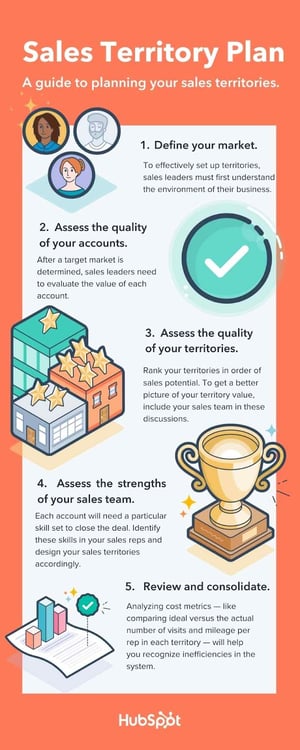
Sales Territory Plan

1. Define your market.

To effectively set up territories, sales leaders must first understand the environment of their business. There are numerous ways for a business to define a market. Factors could include geography, size, and consumer demographics, competition, and more. But starting with internal company factors is key.

Take a look at your company's core values, goals, and revenue. Which segment of your customer base is most aligned with these and generating the most revenue for the business?

Once you identify who this group is, look for similar niche markets that your sales team could tap into. For example, if your most profitable customers are in the consumer packaged goods sector, try targeting niche sectors of this industry like food & beverage or health & beauty products. These could become new territories for your business.

Know what is unique to your business and prioritize based on what your climate demands. Targeting a profitable market segment as its own sales territory will lead to lowered overhead costs, increased sales, and reduced customer churn.

2. Assess account quality.

After you've identified the perfect target market for your sales territory, you'll need to evaluate the value of each account within the market. The measurement could be either quantitative or qualitative, depending on the product or service your business offers.

For example, a beverage company might rank the value of its accounts by net profitability. In contrast, a company that relies heavily on customer recommendations could focus on accounts that are more likely to provide a referral for their company.

By determining the value of each account, you can prioritize each one in your sales territory planning. That way, your sales team understands which accounts are reflected in their quota metrics and can give these accounts the attention they deserve.

3. Determine territory quality.

After assessing the quality of each account, it’s time to determine how qualified the territory is as a whole. As with the accounts’ values, this process is subjective based on different business needs and priorities.

Continuing the consumer packaged goods example, if you have a food & beverage territory and a health & beauty territory, you may realize that each of them has different sales cycles, churn rates, and even repeat purchases. These are just a few examples of factors that could affect the quality of a sales territory.

Internally, you may decide that the sales cycle is the biggest determinant of territory quality and use this factor to rank each one from highest to lowest. A shorter sales cycle for the health & beauty territory could mean a quicker ROI for your team, so you could rank health & beauty as a higher quality territory than the food & beverage territory.

To get a better picture of territory value, include your sales team in these discussions. After all, no one knows the territories better than the reps who work within them each day. This way, you can assign the appropriate reps to maximize the potential of each territory.

4. Understand your sales reps’ strengths.

The next step of effective territory management may be the most important of all. After determining the quality of each sales territory, you must assign reps with the applicable skills to develop and optimize each one.

An example of an excellent sales territory assignment is assigning a territory defined by large enterprise deals to a rep who has experience closing big deals.

Now this isn't to say that as a sales leader you should cherry pick certain reps to work certain territories. This step represents the opposite. Instead of relegating reps to highly specialized roles to the point of creating silos, you can cultivate an environment of continuous learning. Use the expertise of each sales rep to introduce best practices for each territory that can be passed on to other team members.

By strategically assigning qualified reps to accounts, you will empower your entire team to deliver an amazing buying experience for your clients.

5. Review your sales territory plan.

The four steps outlined above will prepare your business to put a sales territory plan into action, but you'll need to do a final diagnosis of costs associated with each territory. Analyzing cost metrics will help you as a sales leader zero in on specific inefficiencies in the system and solve for them.

There are several ways to identify these industries, but I recommend you start with customer acquisition cost or CAC. By using this metric, you'll quickly come up with a list of costs associated with prospecting and closing each deal. You can even compare CAC over time, against competitors, or against industry standards to determine what a healthy CAC should be for the territory.

6. Design the final plan.

The last step of building a sales territory plan is to put it all together by designing your sales territories.

There are some strides businesses can take to ensure their sales territory management is as efficient and effective as possible. Below are some of the sales territory management best practices.

1. Put a stellar sales leader in place.

A sales territory plan is pretty much useless when you don't have the right sales leader in place to guide its execution. This person will be responsible for sales territory development, team management, and stakeholder alignment, so take your time and do your research when filling this role.

As you're considering promoting your next sales territory manager from within or hiring one externally, check out our post on what to look for in a good sales territory manager.

2. Practice sound cadence management.

Proper cadence management — the process of prioritizing, structuring, timing, and conducting account interactions — is central to successful sales territory management efforts. Your reps need to gauge account priority level, group accounts based on that assessment, and determine the best frequency, pattern, and nature of touches between them and contacts.

Cadences will differ from territory to territory. It might take some trial and error, but properly managing territories often hinges upon how you contact the prospects you’re trying to reach within each one.

3. Consistently keep track of your data and customer needs.

Territory management is agile by nature. You can’t expect a specific territory to remain stagnant in how it responds to your sales strategies. Customer circumstances change, and you need to be able to quickly adapt to them.

That’s why your reps need to keep records of their sales data in a CRM — making sure you’re keeping tabs on what is and isn’t working for you. Have reps maintain notes from their appointments and keep them on record. Stay abreast of every trend within all your territories to ensure they’re being catered to as effectively as possible.

4. Don’t forget to pursue new leads.

Effective sales territory management isn’t specific to existing accounts. Though this is a crucial component of the process, it’s not the only one. Always pursue new business — one way or another.

That doesn’t mean forgetting about current accounts. You still need to keep them happy — particularly high-volume ones. But if you want to grow your business, you have to consistently pursue new opportunities within your territories. Both kinds of customers serve an essential function to the health of your business, so both need their fair share of attention.

Remote Territory Management

Not all sales territories require an in-person presence, and there are instances when your reps will have to work remotely. If this is the case, your reps still need to abide by the best practices mentioned above, but in all likelihood, they’ll need to adjust their cadence.

A cadence that rests on in-person interactions will have to change if those interactions can’t happen anymore. It might mean finding a new progression that incorporates more phone time and remote tools like video calls.

It might take some trial and error, but you have to land on a cadence better suited to handle remote interactions — and that might not look like the one your reps are used to using.

In addition to adjusting cadence, you may have to adapt your sales territory plan to changes in the market or internally within the company. This is where sales territory alignment comes in.

The most common way sales territory alignment occurs is geographically, especially for remote sales teams who work in the field and meet customers face-to-face. If you notice that there's increased demand for your product or service in the northeast region, you can restrict the territory to the area with the most concentrated demand and expand the corresponding team in that area.

Sales Territory Alignment

You may have to align your sales territories three to four years, but as often as every year can be normal for fast-paced industries like technology, medical sales, and real estate.

Final Thoughts

An effective sales territory design can be the difference between well-organized, cohesive, successful sales efforts and inefficient, scattershot wastes of resources.

If you understand and implement the sales territory rules of engagement discussed in this article, you can increase your chances of success no matter the territory you find yourself in.

Editor's note: This post was originally published in June 2021 and has been updated for comprehensiveness.

sales plan


01 Apr 15:59

Connect Inventors with the Right Problems

by Jay Walker
APR15_01_157687231

When one of us (Walker) helped developed the idea that became Priceline.com, the challenge was to solve a decades-long problem: how could airplanes and hotels fill their last, otherwise empty and perishable rooms and seats while holding the line on the price and profitability of most bookings? Priceline’s unique “conditional purchase offer” – which allowed bidders to make low-ball offers which they were bound to honor if accepted – was an innovative solution that taught a big lesson: when underused assets are more fully exploited, everyone can win.

We’re being taught the same lesson by the rise of today’s “sharing economy.” Its common theme is that there are a lot of potentially productive assets sitting around, ripe for greater use. Whether we’re talking about a car, a private jet, or the guest room in a suburban home, more intense asset utilization benefits both consumer and supplier: the fractional buyer gets cheaper and often more convenient services, while many asset-owners make money in ways they never expected.

We suspect it is much less recognized that there also lots of innovation assets in the US economy that are being seriously underused. Firms constantly invest in processes of discovery and come up with innovations that others could put to productive use. Inventive people have ideas and are often able to develop them to the point of patenting (and given today’s tools, people have the capacity to do much more of this) but they lack the resources to make the world aware of their breakthroughs.

In all of these realms, the key to making assets more productive is a powerful information technology platform, with software capable of sifting through large warehouses of data – increasingly, the unstructured information coming from multiple sources known as “Big Data”. A good platform enables potential users and suppliers of assets to discover each other and do business.

This is the capability that has been lacking in the innovation asset space. Firms have often suspected that the solution they need already exists, and they hate reinventing the wheel, but they have been at a loss for how to find it. They might have scoured the Yellow Pages, but the ads there provided little real information, and making their fingers do the walking through every major U.S. city’s directory, let alone abroad, was a daunting task that few would even imagine undertaking. A little more fruitfully, they might have searched the U.S. or global patent data bases for more innovation-specific knowledge, but in pre-Internet days, this was both costly and time-consuming, and unlikely to locate useful information in adjacent fields or industries. Some firms hired expert industry consultants to help them find ideas outside their firms, but these individuals, too, had (and still have) limited knowledge, and in some cases conflicts of interest. (The best ones often are working with a firm’s competitors. How else would they really know what’s going on?).

Firms are often accused of suffering from a “not-invented-here” syndrome, but to some extent banking on homegrown solutions was rational. The tools to pursue “networked innovation” – innovation that includes and builds on ideas of others, perhaps through a patent license or a joint venture with the firm where the inventors of the ideas happen to work – have been of very limited value.

Even with the advent of the web and powerful search engines, it has been time consuming and expensive to discover patents and other documents about relevant innovations, much less their sources. The key words you enter, for example, can retrieve patents and other documents that contain precisely those words, but won’t likely lead you to other patents which use related concepts expressed in just slightly different words. Business social networks such as LinkedIn, meanwhile, enable you to find people and other firms with general expertise, but not with the highly specific expertise and knowledge that is typically required to be useful in refining an existing product or service, or developing an entirely new one.

All of this is changing now for the better. “Open innovation” platforms are connecting “seekers” of inventive answers to their problems with “solvers” who might be anywhere on the planet. Specialized search engines for conducting business-relevant searches of patent data bases and the technical literature are now coming online. The users and owners of innovation assets are finding, as they use these new tools, that their capabilities and horizons are expanding, greatly and continuously.

What difference could it make to get fuller use out of existing innovation assets? To the firm using the asset, potentially the difference between life and death. Businesses face a constant challenge to stay ahead of their competitors by making or delivering existing products and services cheaper, faster, and better, or developing entirely new ones. It has become a commonplace in business to say a company must “innovate or die.” (Indeed, researchers at the Kauffman Foundation have established that the life span of companies in the Fortune 500 has grown shorter over time.)

We’d say the aphorism already needs updating: today, firms must “get good at networked innovation or die.” They must look beyond their corporate silos for ideas to license, experts to consult, and partnerships to form in joint ventures. They can’t afford to spend a dime re-solving problems that have already been solved.

Meanwhile, higher utilization of innovation assets will prove an indisputably good thing for our economy (and others, too). Since the early years of the recovery from the Great Recession, economists have been divided over the outlook for the long-growth rate of the economy, which depends heavily on the pace of future innovation. If the growth pessimists are right and our economic pie is destined to grow much more slowly than in the past, then the political challenges of moderating or reversing the trend of increasing income inequality and undertaking major reforms in our tax system and entitlement programs will only increase.

But these challenges become a lot more manageable when the economic pie is growing rapidly. For that optimistic outcome to become a reality, innovation will have to pick up its pace. The prospect of more fully exploiting our economy’s most underused assets – our stocks of innovation – gives us reason to hope.

01 Apr 15:59

MARK CUBAN: Getting in trouble with the SEC is like getting an 'expensive speeding ticket'

by Julia La Roche

Mark Cuban

Billionaire entrepreneur Mark Cuban, the owner of the Dallas Mavericks, said that getting in trouble with the Securities and Exchange Commission is like getting an "expensive speeding ticket." 

Cuban came to the defense of private equity's "turnaround queen" Lynn Tilton. This week, the SEC charged Tilton and her firm Patriarch Partners with fraud for allegedly hiding poor performance in in three collateralized loan obligation funds since 2003.

"Even if they find [Tilton] liable, this isn’t a criminal case at this point, it’s like an expensive parking ticket or speeding ticket, you know," Cuban told CNBC, adding, "People don’t look at the SEC and say, 'Well, you had a problem with the SEC so there is something wrong with you.' The SEC isn’t what it used to be." 

The case against Tilton involves collateralized loan obligation (CLO) funds known as the Zohar Funds, which made loans to distressed companies that become assets. Collectively, the Zohar Funds have $2.5 billion in assets. The SEC claimed that many of the distressed companies in the Zohar Funds have performed poorly, and some also failed to make interest payments. The SEC claimed that Tilton left the valuations unchanged and was able to collect $200 million in management fees. 

Cuban, however, told CNBC that he sees a "red flag" in the SEC's case.

"It’s not the type of investment that changes day to day and because it was from more than ten years ago you know, did she all of a sudden change how she valued things. She probably didn’t just make a decision she probably went to her accountants and her lawyers and she has been doing it for more than ten years. And so the fact that they took, a, five years to make a decision to press charges, and b, that’s not something that changes on a day to day basis, makes me raise a red flag." 

Tilton posted on Twitter that Cuban, who defeated the SEC's insider trading case against him, is her "inspiration" to fight the charges. 

Patriarch Partners said in a statement that the SEC's allegations are "ill-founded and at odds with Patriarch’s investment strategy."

Join the conversation about this story »

NOW WATCH: 6 little-known Excel shortcuts that will impress your boss

01 Apr 15:58

3 Signs to Disqualify a Prospect ASAP

by jeff@mjhoffman.com (Jeff Hoffman)

garbagecan

Salespeople need to carefully qualify prospects to ensure they’re spending their valuable time on the most viable and profitable deals. Knowing when to disqualify is essential to being successful in sales. However, I think about disqualification a bit differently than most sellers.

Many companies use BANT (Budget, Authority, Need, Timeline) as their qualification process. If the prospect is determined to have the proper budget, the right level of influence, a pressing need, and an urge to buy now instead of later, salespeople will classify the lead as “qualified.”

But what if the salesperson can’t identify a clear need, or locate the decision maker? Does this mean they should therefore disqualify the prospect? Not in my opinion. To me, these are problems with the rep, not the potential account.

Remember that disqualification isn’t a bar for you -- it’s a bar for the customer. It’s only when the customer demonstrates very specific behaviors that a salesperson should actively disqualify. If the issue is not being able to determine need or find the decision maker, the rep simply needs to do more research.

In addition, it’s important to note the difference between disqualifying a certain contact at a company and disqualifying the company itself. While a given contact might not be worth pursuing due to an inadequate level of authority, this doesn’t mean the company should be disqualified. Find another person to deliver your pitch to before you cross the opportunity off your list.

That said, there are three circumstances in which a salesperson should disqualify a prospect right away. If any of these red flags surface during your conversation, you’d be wise to move onto the next lead.

1) When you’re competing with more than two vendors.

Competitive situations are expected in sales. However, overly competitive situations generally aren’t worth the effort.

For example, if your company is competing against another provider, the odds of you winning the business are 50%. Pretty good. If one more provider is added to the mix, your chance of signing the client becomes 33%. Not great, but it’s something you can work with. However, once you get beyond three or more vendors competing for a sale, the odds of winning decrease so drastically that it doesn’t make sense to pursue it.

While it seems unwise to turn down any sort of interest, it works out in the long run. If more than three vendors are being evaluated, the buying process is probably in a very early stage. The decision maker has likely delegated the initial research to a direct report who won’t be involved in the final choice.

If you deny a prospect’s request for an initial proposal, the person doing the research will report the results back to their manager without your quote included. And if your company was a serious contender, the manager will tell the researcher to go back to your company and ask again. If you receive a second request, you will know the prospect is truly interested, and you aren’t wasting your time by getting involved.

So don’t worry about disqualifying prospects who are considering upwards of three vendors. If they truly want to do business with you, they’ll let you know if you just hang tight.

2) When the prospect doesn’t have a strong appetite for change.

Somewhere in the qualification process, I always make a point to ask about the prospect’s appetite for change. Note that I don’t ask, “How likely are you to change with the help of my company?” At this point, I’m not interested in whether they want to buy from me -- I just want to know how motivated they are to buy from someone.

Prospects will usually try to be as non-committal as possible, so don’t be surprised if you hear answers like “We’re somewhat motivated to change” or “Kind of.” To avoid this problem, I ask buyers to rank how devoted they are to making a change on a scale from one to four. An even number of choices eliminates the possibility that they’ll choose the middle option.

Prospects who respond with “one” or “two” should be disqualified immediately. Prospects who respond with “three” or “four” should be pursued all the more diligently!

3) When there’s a roadblock on the calendar.

B2B buyers have priorities and responsibilities totally independent of any buying decision they might be involved in. Yet salespeople often ignore this fact, and become frustrated when a prospect’s budget meeting or quarter-end review derails the sales process.

During qualification, reps should make sure to ask about the most important event coming up on the contact’s calendar. If the rep cannot forge a direct connection between their product or service and the resources the contact needs to successfully manage their meeting, the rep should put the relationship on ice until the critical date has passed.

Instead of disqualifying forever, this is more of a temporary disqualification. Save yourself the frustration when your contact inevitably falls off the map, and reengage when their plate isn’t so full.

Want to learn more of my proven techniques? Join me on April 6th in San Francisco for my Why You? Why You Now?™ Prospecting and Your SalesMBA™ Management ½ day workshops.

Get HubSpot CRM today!

01 Apr 15:58

Stop Selling & Start Leading: 5 Steps to Competitive Differentiation, Part 1

by Deb Calvert
Buyers don’t want to spend time with you. Why? Because you are a seller. They don’t listen to your pitch. They don’t accept calls from you. They don’t make time to meet with you. They don’t read your e-mails or pay attention to information you send. Why not? Mainly, for one simple reason. It’s because you […]
01 Apr 15:57

Facilitating The Evolving Buyer Journey: Both Marketing and Sales Must Adapt

by Dave Hubbard

The Evolving Buyer Journey - Marketing Outfield image

The B2B buyer purchasing journey has fundamentally changed yet most companies are still using the same sales and marketing processes that they did 20 years ago. The buyer is self-educating online using Social Media and mobile, and we’re successfully adapting to this technology evolution. However, technology is an enabler, not the strategy.

We have not adapted our underlying sales and marketing processes to the new and evolving buyer journey.

As Marketers, we have myriad technologies at our disposal, yet the quality of leads that we give to our Sales force has not substantially improved.

  • Twenty years ago, as soon as a visitor to our trade show booth gave us a business card in return for a raffle ticket, they became a lead for Sales.
  • Today, as soon as a visitor to our website fills out an online form to gain access to a piece of content, they become a lead for Sales. No meaningful difference in lead quality.
  • With the new self-educating buyer, we in Marketing can do better at lead qualification. If we truly understand the self-educating buyer journey, than with all the technology and marketing expertise we currently have at our disposal, we are very capable of understanding exactly where the buyer persona is in their purchasing journey. We must adapt our marketing process to serve the new buyer.

As Sales professionals, we use multiple technologies to improve our sales performance, but our sales productivity, win rates and forecast accuracy has not substantially improved.

  • Twenty years ago, as soon as we were able to meet with a prospect we would start educating them on our product with in-person presentations, meetings, demos, etc.
  • Today, as soon as we are able to meet with a prospect, we start educating them on our product with in-person presentations, meetings, demos, etc. No meaningful difference in selling technique.
  • With the new self-educating buyer, we in Sales can do a better job selling. If we truly understand the self-educating buyer, than the first thing we must determine is exactly where they are in their purchasing journey, and what information they have consumed, before we auto-magically appeared on the scene. We must adapt our sales process to serve the new buyer.

The buyer has changed and continues to evolve their journey. How do we adapt to better align with the self-educating buyer, and stay aligned with that buyer as they evolve? Let’s start by better understanding our new self-educating B2B buyer.

Understanding The Self-Educating Buyer Journey

B2B Buyers are real people, not just fictional persona representations. When they consume content sometimes it’s for personal entertainment, sometimes it’s because they are shopping for their daughter’s gift, and yes, sometimes it’s for their business.

We don’t understand where they were prior to visiting our advertisement/website/social page, or what they actually consumed, and quite frankly, we don’t need to in order to start serving our customers better, today. Future technologies will enable us to have increased insight into the buyer journey, which will be exciting for marketers, but in the meantime we can all make dramatic progress with the expertise and technology we have today.

The Buyer Journey

When the buyer is self-educating for their business, their employer or their department, it’s a serious mission. It is part of their job, but it’s always an add-on to their existing and overwhelming workload, so they don’t have time to waste on thinly disguised brand or product pitches.

  • The B2B Buyer is looking for compelling content that educates them about industry risks, solution options, best solutions that fit their unique situation, solution provider comparisons, etc. If they land on our website, and do not find information that will facilitate their journey, they will go elsewhere to find it. If they find a vendor or website that facilitates their education journey, they will return often to consume more.
  • Engagement is not consumption. Just because they landed on our webpage or downloaded some content does not mean they actually read it. Too many pieces of content on the net are “puff pieces” and thinly disguised product pitches, often with compelling but misleading headlines.
  • Content consumption is not facilitation. Just because they consumed it doesn’t mean they agreed with the content, or even valued it. Did the content actually help them move forward in their purchasing journey, or not?
  • Your opinion (or mine) about whether the content is compelling is not relevant. The buyer will judge how compelling our content is and whether it actually helped facilitate their journey.
  • The buyer does not want to talk to a product salesperson. If we send them to a sales rep before they are ready, it will waste their time, it will waste the Sales rep’s time, and it will reduce the buyer’s trust in our brand.
  • Really, the buyer does not want to talk to a product salesperson. They don’t want to talk to a telephone sales rep who doesn’t understand their business concerns, just to repeat the same useless discussion with a field sales rep who doesn’t understand their business concerns, just to sit through an in-person product pitch as if they were cut off from society for the past 20 years. This process simply eliminates any remaining trust the buyer had in our brand or our sales department.
  • The self-educating customer will happily self-qualify themselves. If we have earned their trust by facilitating their self-educating journey, they will tell us insightful information about their journey, if we ask them properly.
  • The buyer will eventually need to talk to a trusted advisor (aka sales consultant). The self-educating buyer will become overwhelmed with all the information that they consumed and will need someone who can help guide them to an informed decision that best meets the needs of all the buyer team members. Sales reps who pitch products or read scripts need not apply.

Adapting Marketing To Serve The Self-Educating Buyer

Marketing is about understanding the needs of the target market buyers, defining the products and services that meet those specific market needs, educating the market about the value that the company brings to solving these important customer needs, and enabling the direct and channel sales organizations to generate profitable revenue. It isn’t rocket science, but it does require marketing training, business knowledge and relevant experience.

Buyer Journey- Updated Marketing Process image - Marketing Outfield

Here are 3 key actions that can help Marketing better understand the target buyer, educate them, and enable the sales organizations to generate profitable revenue.

    1. Educate and Facilitate: Document and execute a Content Strategy that facilitates the B2B Buyer Purchasing journey from purchasing stage to purchasing stage, throughout their complete customer journey. Help each persona educate themselves at their own pace. If they didn’t act on the CTA (Call to Action) at the end of our content, then we can safely assume they didn’t find the content compelling enough to read it and take the next step.
    2. Always be More Relevant: Every piece of content that facilitates the journey uncovers additional insights/concerns that will set up the next piece of content. When they take action to view the next piece of content, we have one confirmed data point; they liked the first piece of content to look at the next piece. When they take action to view the third piece of content, we have two confirmed data points, and a much clearer perspective of where they are in their purchasing journey. Always offer the buyer relevant options for next steps (i.e. read “next piece of content” for this stage, or, “first piece of content” for next stage, or, speak with a sales consultant regarding what you have read so far?
    3. Encourage the buyer to Self-Qualify: Each time they take action on a CTA, immediately ask them for the next most important piece of qualifying information that we need. What industry? What size of company? What’s the industry challenge they are trying to solve? Then, feed them information that is most relevant to that new buyer insight. The more they consume, the more they self-qualify themselves as a good lead for Sales.
      Facilitating The Buyer Journey - Marketing Outfield

From a Marketing perspective, the end result is that we have facilitated the buyer journey, we have enhanced the buyer trust in our brand, and we have delivered a high-quality lead to Sales with amazing insight into the buyer.

If Sales can just do their magic and close these leads, we’ll be able to take the company to an exciting new level of revenue growth!

Adapting Sales To Serve The Self-Educating Buyer

Sales is about understanding the needs and concerns of the specific account, tailoring the products and services to address those specific needs, educating the buyer team about the value that the company brings in solving both the account’s needs and the individual buyer team member needs, and closing the transaction as soon as possible to generate revenue this month. It isn’t rocket science, but it does require sales training, business knowledge and relevant experience.

Buyer Journey- Updated Sales Process image - Marketing Outfield

Here are 3 key actions that can help Sales better understand their target buyer, educate them, and enable the sales organizations to generate profitable revenue.

    1. Educate and Interact: Document and execute a Sales Process that facilitates the B2B Buyer Purchasing journey from purchasing stage to purchasing stage, online and offline, throughout their buyer journey. Leverage highly relevant Marketing content, with Social and Strategic selling techniques, to educate and stay top of mind with each of the account’s personas.
    2. Always be Probing and Listening: The buyer team will continually be self-educating throughout their journey, with or without our counsel. Some of the information will be positive, some negative, and some misunderstood. If we have earned their trust as an advisor/consultant, they will share what other information they have consumed, if we ask them, so that we have the opportunity to put the information into perspective. Since the buyer journey continues to evolve as new information is consumed, our sales process also needs to evolve to reflect real-time, best practices for the field sales organization.
    3. Encourage the buyer to Self-Forecast: If we have earned their trust as an advisor/consultant, they will help us understand what’s involved in the account’s next purchasing stage: what’s the purpose, what’s their process, who’s involved, how long will it typically take? If we fully understand their goals and concerns, we are in an ideal position to help develop their timeline. For example, based upon industry experience regarding the average time it takes to have the solution fully integrated into the buyer’s business operations, what business factors should the buyer consider to start the purchase and implementation sooner, rather than later?

From a Sales perspective, the end result is we have shortened and influenced the buyer journey, we have increased the buyer’s trust in our company and our sales organization, and we have delivered a potential repeat customer who will actively provide high-quality business referrals.

If Marketing can just do their magic and give us more high-quality leads, we’ll be able to take the company to an exciting new level of revenue growth!

Our Sales and Marketing Journey Must Adapt

Here is the reality of our situation:

  • The buyer is self-educating and they will continue to self-educate, with or without our help.
  • Life is hectic, businesses are complicated, and buyers have no time to waste in identifying opportunities and solutions.
  • Buyers need trusted advisors who are willing to understand their unique business needs and willing to apply their expertise to help them identify and implement the right solution.
  • Marketing cannot meet the self-educating buyer expectations without the help of Sales.
  • Sales cannot meet the self-educating buyer expectations without the help of Marketing.

Buyer Journey- Updated Sales & Marketing Intergated Process image - Marketing Outfield

The first step in our journey is for Marketing and Sales to pool their insight of their company’s target buyer purchasing journey, in detail. It’s only a starting point, but with a common understanding of their target buyer, the two functions can start collaborating more effectively to evolve their internal processes and systems.  Consider bringing in an expert Marketing and Sales consultant who can kick-start an impactful collaboration.

Both Marketing and Sales must evolve their processes to stay aligned with the new buyer reality.  For additional insight into how to adapt to the self-educating buyer to drive accelerated revenue growth, see my articles on Business2Community, including  Marketing and Sales: Alignment, Integration or Collaboration.

The longer we delay in taking this step, the wider the gap between us and our customers will grow, and the more vulnerable our livelihoods we become to more agile competitors.

How will you close the gap? Please keep the discussion going by commenting and sharing this post with your colleagues. Thank you.

01 Apr 15:57

3 Ways To Boost Sales Effectiveness With Geolocation

by ​Aleksandr Peterson

Businesses are constantly seeking ways to optimize the sales process, whether it’s through new software, more efficient workflows, or better analytics. One of the latest, widely-discussed innovations is geolocation.

If you keep up with business technology trends, you’ve likely heard of geolocation, but few people truly understand what it means. Even fewer are using it for gain. Is it a device that tracks customer movements? A hunt for buried treasure? A way to recover lost or stolen products? Well, it can be any of those, but in the business sense, we’re after something a little different.

Geolocation is a set of tools and geospatial data that help sales and marketing reps track and analyze customer locations, and sometimes even navigate directly to them. There are a lot of differing interpretations of how this manifests itself, but most perspectives revolve around two main aspects:

The remote acquisition and analysis of customer locations

Examples include proximity and location data from mobile app usage, IP location from site browsing, or location data attached to social media activity (check-ins, location-based posts, tweets, etc.).

Territory management based on existing proprietary data

This kind of geolocation typically relies on addresses and locations already stored within customer relationship management (CRM) software or other business systems. It allows salespeople to analyze regional markets, plan visits based on the optimum route, and even navigate directly to customers.

The synergy between geolocation tools and CRM software in particular has seen an uptick in recent years with the launch of third-party geolocation apps. These apps are designed to integrate with major CRMs (e.g. Salesforce, Microsoft Dynamics) and use customer data to provide reps with territory insight and greater efficiency in the field.

Most business leaders are still testing out the waters for geolocation, trying to decide the value it offers, and how they can put it to practical use. Here are three ways your sales team can use geolocation:

1. Better analytics

Many CRM-integrated geolocation apps give you visualization and analytical tools for the contact data inside of your CRM. You can display customers and leads within a specific area and apply filters based on demographics, purchasing behavior, or level of opportunity. This helps sales agents better manage their territories, see where the market is concentrated, and keep local prospects from falling through the cracks.

2. Route optimization

Sure, you could look up each customer’s address and use your own GPS to travel from one to the next until the day is over, but there’s a better way. Geolocation tools that integrate with CRM software (like Geopointe, for example), help you plan routes between multiple contacts in an area based on the most direct sequence of visits, and stay apprised of nearby opportunities that might arise. Many apps even have built-in GPS and voice-navigation services, so you won’t have to bounce around between maps, your CRM mobile app, and your notepad. Seamless navigation means sales sales reps can spend less time meandering and more time selling.

3. Targeted engagement

Geospatial data can also be used to better contextualize content and offers to customers based on location-specific behavior, such as entering a retail store, browsing an e-commerce site from a particular region, or posting a location-specific tweet. These measures usually require that the customer download a mobile app or give location-tracking permission to a third party. Of course, location-based targeting is a practice typically relegated to marketing teams, but what is marketing if not a prolonged sales effort?

As the new wave of customer experience initiatives increasingly demand relevance (relevant content, relevant products, relevant engagement), businesses will need to understand not only who their customers are and what they might buy, but where they are. Along with greater efficiency, insight, and sales optimization, geolocation promises to deliver just that.

Get more sales tips in the RingLead ebook, Sphere of Influence Selling: An Inside Sales Approach to Crushing Your Quota.

01 Apr 15:57

It’s Official: Selling Will Be Automated From This Day Forward

by Nancy Nardin

19539639 123rf.com

Fasten your seat-belts and get ready to have your mind blown. The perfect sales tool is finally here. This is huge folks! It marks the first major shift in sales solutions since SFA (Sales Force Automation) was first introduced in the mid-80’s. Instead of being beholden to a CRM tool (or any sales tool), salespeople and sales managers will be served the right information at the right time without the hassles of today’s tools. The notion of “Lean Selling”–where the seller no longer has to fetch what they need to manufacture a sale and instead, has it delivered to their device (all devices simultaneously)–has finally come to fruition.

This new software solves the biggest sales issues of all: knowing who to call (and what number), what to say, how to follow up, when to follow up, how to get answers, how to schedule more appointments, what to do next, where to go next, who to focus on, what to up-sell, where to cross-sell, when deals are at risk, and a lot more; and it does all of this with minimum intervention from the salesperson or manager.

I have seen demos of 100’s of sales and marketing solutions in the past seven years, but I’ve never seen anything like this new product. It’s a revolutionary sales software solution  – and I do mean revolutionary.

Here’s what you need to know about this incredible new sales solution:

  • CRM will only be a system of record. Salespeople and Managers will rarely need to use the CRM system as most information will automatically be delivered based on the activity you’re engaged in.

  • Reps are presented with current literature, presentations, and other marketing material automatically. The system determines who they’re emailing or calling, (industry, co. size, past conversations) and presents the right options.

  • The solution continuously updates your organization’s prospect database so no contact information is ever out-of-date.

  • All new leads are automatically appended with missing data like company size and industry.

  • All new prospect and lead records are presented to reps, one-at-a-time based on machine-learning in order of highest probability, potential, and due date.

  • Simply speak a contact name or account and you’ll see a summary of key information such as company background, key executives, recent announcements, network connections, and suggested talking points based on prospect activity.

  • Reps get a notice on all devices so they can dial and login to online meetings with one-click . They’ll also get automatic navigation to the next in-person appointment.

  • The system will also ping a rep when they have to leave in order to make the next appointment on time (based on distance and traffic).

  • Unanswered out-bound calls are logged automatically into the CRM system as an “attempt”, when the rep hangs up, no matter what device they’re calling from. The days of manually logging information into CRM will forever be behind us.

  • When a prospect or client calls back, their phone number is recognized by the system and their contact name and history are shown on the screen so reps are instantly prepared for a conversation.

  • Reps can create a cover letter and the system will print, sign, and insert it along with selected brochures into an auto-addressed & metered envelope which gets mailed automatically. (Yes, mail. Printed material will resurface as a way to rise above the noise).

  • Follow-up emails are easy to compile. The system automatically inserts templates based on the recipient name and the most recent interactions. Machine-learning helps the system become more and more accurate over time.

  • Reps see an alert as soon as the email is opened and they’re provided with the recipient’s contact information for one-click dialing.

  • Reps get an alert when an email they’ve sent has gone unanswered or unopened beyond the normal response time.

  • Appointment times are easy to coordinate with prospects or colleagues. No back-and-forth necessary.

  • Managers know key stats for each rep such as the number of calls, number of demos, number of appointments, and number of proposals.

  • Forecasts are created automatically and rolling-up the forecast the organization is also an automated process.

  • Every rep hits his or her quota.

  • Revenue is predicted with accuracy.

  • Employees and customers are happy.

This software is the answer to any sales leader’s wishes. Of course, there’s only one problem … It doesn’t exist. Yes, it’s April Fool’s day.

Is the software I describe out there? No.

Can the solution be cobbled together using multiple products? Not yet.

How hard would it be to create. Perhaps impossible.

How much would it cost? A lot.

What if we started with a fresh piece of paper to define a  solution that could do all of these things. Don’t think about how, or whether, it can be done. Just ask yourself, “What would the ultimate sales solution look like?”

Add your ideas to the comments section and let’s define the ultimate solution together.

01 Apr 15:56

2015 Horoscope for Sales Executives: from Danmac the Magnificent

by dan.mcdade@pointclear.com (Dan McDade)

Danmac the MagnificentThis year is all about Saturn. Saturn has moved from Scorpio to Sagittarius. Saturn will backpedal to Scorpio again from June 14 until September 17 in 2015, but after that he'll be in Sagittarius until December 19, 2017. What does all of this mean? I have no idea. Here’s how I, Danmac the Magnificent, read the stars for your sign in 2015:

Taurus (April 21 - May 21): You are working close to full-time trying to beat your quota in the first half of the year. Your intentions are clear. You want to coast and sandbag your way through the second half. Killing Q1 and Q2 will allow you to put rivalries at work into perspective. Yes, I mean two words and they’re not Happy Easter.

Gemini (May 22 - June 21): You were going to improve time management skills this year and learn how to sort the essential out from the trivial … but face it, the trivial is a lot more fun. Think Pinterest or Sports Illustrated Swimsuit Edition 2015. Find some quality time with your buddies and commiserate about how “cold calling’s dead” and “according to a ton of books and blogs it doesn’t work anyway.” Gemini, don’t believe it.

Cancer (June 22 - July 22): The burdens imposed by Saturn will make room for the light-heartedness, fantasy and the joyful energy of Jupiter. If you believe that, I have some land in Detroit I would like to talk to you about. You were feeling pretty good about work until the new SVP of Sales & Marketing announced that leads sourced by marketing have to be proactively accepted or rejected by sales; AND if you reject a lead you have to say why. Oh, and, Pluto is somehow figuring into your fall. Pluto isn’t even a real planet anymore so big whoop.

Leo (July 23 -August 21): Most of the leads you get from marketing are not so hot, and as usual, you already knew about all of the good ones anyway. Credit belongs where it’s due … with you. It’s time to take a more mature approach to your feelings. You've been working on your own communication skills, and frankly, it’s about damn time everyone else did too.

Virgo (August 22 - September 23): Like a butterfly, in the first half of the year you break the cocoon and in the second half you emerge from it. (Really, who writes this stuff?) Saturn will retrograde back into your house of communication, so at least you have that going for you. You'll continue to pursue the seemingly impossible balance between solitude and connection, but will fail miserably.

Libra (September 24 - October 23): Almost nothing you do between now and August is going to pan out, so why not lay low and enjoy some down time (but, keep your smart phone charged in case a bluebird calls you). You'll need August through December to prepare for one of your biggest years ever in 2016. Even if you don’t believe that, you have work to do to convince your boss that next year will be great.

Scorpio (October 24 - November 22): I don’t like scorpions so I don’t read the stars for Scorpios.

Sagittarius (November 23 - December 22): During this potent eclipse cycle, your needs will be top of mind. Quota—not so much. Your eyes are wide open to your true priorities and making cold calls is not one of them.

Capricorn (December 23 - January 20): When Jupiter changes signs in August, you will be almost 70% of the way through the year and at 35% of your quota. Chin up! Based on CSO Insights you can still beat most of the other sales reps out there with just a little effort. Your next break won’t come until 2017 so either figure out how to outlast your boss, or run an ad in Auto Trader and dump that $1,200 per month gas guzzling Dodge SRT Hellcat.

Aquarius (January 21 - February 19): I do know that you Aquarius types tend to be guarded and get bottled up with anger by holding in your feelings. The next time your boss gives you grief about your lack of prospecting, just let him know that HubSpot says prospecting doesn’t work. You are fascinated by the deeper mysteries of life, such as, “Is bottled water expensable?” … “Were the ‘Glengarry Glen Ross’ leads really all that good?” … “What’s the difference between a marketing automation score of 75 vs. 100?” The answers: yes, no and about 25.

Pisces (February 20- March 20): You have a sensible and permeable style. I looked up “permeable” on Google and it is defined as “allowing liquids or gases to pass through it.” I know what that means to me, but I have no idea how that ties into a person’s style—except in a bad way. Your boss will have a standoff with Neptune this July bringing the whole business of alignment with marketing into focus. Personally, I would stop taking the cute marketing intern out for two-margarita lunches immediately, but that’s just me.

Aries (March 21 - April 20): Make the most of the second quarter because you missed the first quarter by a mile. You will have the chance to turn the page in 2015 and reverse the downward spiral—after all, the average Aries hit just 50% of their quota in 2014. A mentor will try to explain the difference between authentic and obnoxious to you this year. You won’t get it.

Hopefully, you knew early on this was written as an April fool’s joke! I have nothing but the upmost respect for sales professionals. Some of the hardest working professionals I have known have been sales reps or managers. Having said that, a SVP of Sales friend of mine answers the following question: “How many sales reps work for you?” Answer: “About half.”

And of course many hard-working marketing executives are consistently delivering the qualified, nurtured leads that sales needs. Then again, some aren’t.

A happy day, and hopefully a smile or two are in my forecast for you today.

01 Apr 15:56

7 Keys to Creating B2B Product Pages That Convert Leads Into Customers

by Rachel Foster

Man drawing a product page wireframe on a glass window

B2B buyers are conducting research online and waiting longer to speak with sales reps. Think of your product pages as a virtual sales team that educates buyers and answers their key questions.

Here’s how to improve your product pages to engage leads and boost your sales.

As a B2B marketer, you’re likely creating a ton of content … such as blog posts, social updates, videos and white papers. This content is great for educating early-stage leads and raising brand awareness.

Eventually you want to move leads from your blog and social channels to your website, where they can check out your products.

But what do your leads find when they land on your product pages?

Do these pages contain compelling information that motivates them to learn more about your products? Or are your product pages unclear, boring and driving leads away?

Here are seven keys to developing B2B product pages that bring you leads and sales:

1. Don’t cram too much info on the page.

Many product pages try to do too much at once. They attempt to describe all of a product’s features in long, dense paragraphs. However, this makes it hard for leads to read and understand your message.

You don’t need to say everything about your product on a single web page. Instead, focus on a few key messages. From there, leads can download a brochure or check out another piece of content to learn more.

Also, try not to list all of your products on one page. You’ll improve your SEO and make it easier for leads to find you if you have a separate landing page for each product.

2. Include social proof.

Today’s buyers are wary of marketing. Instead, they want to know what their peers think of your products. Include case studies, testimonials and peer reviews in your product descriptions to help boost your credibility.

3. Show the benefits.

Many B2B product pages include long lists of features and technical specifications. However, you must show readers the benefits to pique their interest and motivate them to learn more about your product. How will your product help them overcome some of the big challenges that they’re facing? How will it make their jobs easier? How will it improve their business results?

4. Consider your call to action.

Whenever I ask B2B marketers what call to action they want me to include in their copy, they almost always say, “Contact us to buy our product.” Unfortunately, it’s not that easy. Most of the leads who view your product page won’t be ready to speak with a sales rep.

While you should provide your contact info on your product pages, you may also want to consider softer calls to action for leads who need to do more research before they speak with you. Some options include:

  • Download a brochure or data sheet.
  • Read a case study.
  • Sign up for a webinar.

5. Use video and images.

Not all of your buyers will want to read about your product. Post a short video (less than two minutes long) that outlines the challenges your customers face and how your product will help them solve these challenges. You can also include screenshots of your product, so readers can see it in action.

6. Optimize your product pages for mobile.

According to the State of B2B Procurement study, 44% of B2B buyers use mobile devices when they research products. Optimize your product pages so buyers can easily view them on their mobile devices. Place your most important information and your call to action at the top of the page so mobile users won’t need to scroll far to take action.

7. Split test.

Split test various elements on your product pages to see what delivers the best results. For example, you can experiment with:

  • Headers
  • Images
  • Videos
  • Page layouts
  • Call to action text and buttons
  • The type of call to action that works best (e.g. download a white paper, contact a sales rep, check out a brochure)
  • The number of calls to action per page
  • Whether your site’s navigation or design elements are distracting visitors and harming your conversions

Studies have found that B2B buyers are completing more research on their own before they speak with sales reps. Think of your product pages as virtual sales reps that educate buyers and answer all of their initial questions.