Shared posts

10 Jun 15:21

surprising outbound success for Cheeky Monkey

by Aaron Ross

how Cheeky Monkey added $250K+ in extra pipeline in 3 months

if you’re looking to kickstart or reboot your outbound prospecting, here’s a great success story.  especially since i would have guessed it wouldn’t have worked!  (shows what i know).

Read more on surprising outbound success for Cheeky Monkey…

The post surprising outbound success for Cheeky Monkey appeared first on Predictable Revenue.

10 Jun 15:21

How to Make 2x More Money as a Writer

by Guest Blogger

boss-fight-stock-images-photos-free-old-typewriterThis is a guest contribution from Puranjay Singh.

Around six months ago, I quit my job to make a living as a writer. It wasn’t that I didn’t enjoy my work; it was just that I wanted to travel and needed the freedom of freelancing. I didn’t know a lot about writing, but I knew I could turn a phrase or two.

Besides, how hard could it be?

The answer: very hard. Freelance writing is a hyper-competitive industry where you are fighting against thousands of writers for the same jobs. Sheer writing skills count for nothing, degrees for even less. Add writers willing to underbid you, and you have a recipe for total disaster.

To succeed, I had to go against a lot of conventional advice. I had to change the way I approached my writing. I also had to bring in all my years of marketing knowledge to get the jobs I wanted.

In the process, I ended up making 2x more money as a writer.

Here’s how you can do the same.

Think Like a Business Owner

I started my freelance writing career like most others – I found gigs online, wrote long cover letters highlighting my education, then waited patiently for a response.

I won a grand total of two jobs this way. My proposal to job conversion rate was an abysmal 4%. Clearly, this was no way to replace a full-time income.

It took weeks of despair and error before I realized my approach was completely wrong. I was thinking like a writer, not like a business owner.

I took a couple of days off and thought hard about why businesses wanted to hire me in the first place. Obviously, it wasn’t because I had read all 154 of Shakespeare’s sonnets or knew five different synonyms for ‘tempest’. No, they wanted to hire me because they had a business problem and needed a solution.

Ultimately, this problem boils down to two things:

  • Businesses need high quality marketing content to sell their products and services.
  • Businesses don’t have the time or expertise to create this content on their own.

When you sell yourself as a writer, you are only solving half of the problem (creating quality content). A business will still have to invest time and effort into training and monitoring your writing in order to meet its business goals.

To the business owner, thus, a writer is a cost center, not a revenue center.

Top marketers and consultants know this. This is why they always sell themselves as solutions, not as mere skills. Instead of talking about their education or their experience, they talk about how they can help a business make more money and have more free time.

In other words, you must be more than a writer. You must provide solutions.

This is the bedrock of a successful freelance career. Once you adopt this thinking, you will see opportunities where none existed before. You will become an asset to every business you work with, not just a replaceable writer.

Once you’ve adopted this strategy, you can work on some tactics to get better paying clients.

5 Ways to Get Better Writing Jobs

These are my top five tactics to increase freelance writing income:

1. Position yourself as a premium provider

When I started my freelancing career, I was convinced no one would ever pay me over $10/article. It wasn’t that I was bad writer; it was just that I hung out on internet marketing forums where this was the going market rate.

I then learned about top content marketers charging big brands $150+/hour to create content. You couldn’t tell my $10/hour article from the $150/hour blog post. The only difference was in the way we had positioned ourselves.

“Positioning” is marketing speak for how a brand projects its solutions with respect to competitors. This is why Rolexes start at $20,000 and why Apple can charge twice the going price for a laptop.

Positioning is also crucial for freelancers. When you sell your services for cheap, you attract cheap clients. By marketing yourself as a premium service provider, you can often charge 2-5x more for the same work.

A few of my favorite positioning tactics are:

  • Increase rates. Just as people naturally assume more expensive items on a menu are better, they also assume more expensive freelancers know more.
  • A carefully crafted, well-designed brand presence can give your service a ‘premium’ perception.
  • Selective clients. Showcase your best clients on your website/portfolio. This can also be websites you’ve been featured/mentioned in. Recognizable brand names have a multiplying effect on your own brand.
  • Function like a business. Register as a LLC, use professional billing tools, have a standardized onboarding process (more on this below).
  • Professional imagery. Use professionally portrait shots on all your social media profiles. It just makes you come across as more savvy and serious about your work.

2. Don’t market yourself as a writer

Writers occupy the bottommost rung in the content marketing ladder. Sure, they are important, but unless they work themselves into an editorial/managerial role, their responsibilities are as limited as their earnings.

This is why I market myself as a content marketer, not a writer.

As a content marketer, I have a lot more responsibilities – I have to come up with a content plan, create content, then help marketing distribute it. But because it requires more skills and knowledge, it also pays way more.

You don’t have to sell yourself as a content marketer, of course. You can be a blogger who runs a startup’s entire blog independently. You can also be a copywriter who helps businesses sell more with conversion-oriented copywriting.

Your main objective is to get off the bottommost content marketing rung. Once you do that, your income will go up automatically.

3. Operate as a business, not as an individual

I understand this is something many of you will be uncomfortable with, but branding yourself as a business, not just an individual, is the true secret to unlocked 2x higher rates.

Why?

Because businesses hire individuals, but work with other businesses.

I’m not saying that you should get an office and hire employees. I’m saying that you should operate with the rigor and professionalism of a business.

For example, every time I get a new client, I invite them to Basecamp. This serves as our project management tool throughout the duration of the engagement. Besides streamlining our communication, it also tells them that I am serious about the success of their project.

There are a lot of ways you can show off your professionalism, such as:

  • Registering as a business. LLC registrations cost as little as $149.
  • Using branded templates for content plans.
  • Onboarding new clients with a branded ‘welcome’ guide.
  • White labeling software, such as WordPress theme backend.
  • Sending professional invoices through tools like FreshDesk.

When you do all this, you tell the customer that you are a professional, experienced veteran, not just a dabbler who started a few months ago.

4. Be a specialist, not a generalist

There is a simple rule in business: you get paid more for knowing a lot about one topic, than knowing a little about a lot of topics.

Readers of ProBlogger should understand this better than anyone else. Darren has made a habit of talking about the importance of niche selection. If all things are equal, a niche blog will become far more successful than one targeting a broad topic.

You must approach writing the same way. Don’t pitch your ability to write about “any topic under the sun”. Instead, pitch your expertise in writing about “marketing, SEO and social media” or “DIY and home décor”.

You can also target specific clients, such as small businesses only or startups (like I do).

Sure, this constricts your market, but you also get access to far better paying gigs.

5. Choose higher paying writing work

Author James Patterson made $94M through book sales in 2014.

Screenwriter Shane Black netted $4M for writing the script for The Long Kiss Goodnight.

David Ogilvy wrote copy for much of his life. The company he founded today does billions of dollars in annual revenue.

The point is: writing is a vast industry. It includes everyone from the $2 article rewriter, to the author earning a $1M advance.

The key to unlocking higher earnings is to target higher value work.

For example, few businesses will pay over $100 for a blog post. However, the going rate for a whitepaper is easily over $1,000, for the same number of words.

In business, the perceived value of any content is directly proportional to its impact on customer acquisition. While blog posts are good for traffic, they seldom directly lead to sale. Whitepapers, on the other hand, are typically offered only to a handful of qualified leads

Thus, there is a higher chance of converting a prospect into a customer after she reads a whitepaper. This is why whitepaper creators tend to get paid more than blog writers.

It’s the same with website copy. Good copy has a direct and immediate impact on conversion rates. Copywriters, hence, can often get away with charging businesses upwards of $200/hour.

This is the easiest way to increase your earnings as a writer: write more whitepapers, eBooks and website copy, fewer blog posts and articles.

Your Turn

Building a freelance career doesn’t have to be hard, nor does it have to be underpaying. It takes a few shifts in thinking and approach to get the kind of jobs you truly deserve.

It’s now your turn to adopt these strategies to get the results you want. Start by thinking like a business owner, targeting the right kind of jobs and branding yourself as a premium service provider.

Then share your results and queries in the comments below. I’ll be happy to help as much as I can.

Puranjay Singh is a writer and content marketing consultant. He is passionate about helping small businesses run result-oriented content marketing campaigns. Drop him an email at puranjay@growthpub.com.

Originally at: Blog Tips at ProBlogger
Build a Better Blog in 31 Days

How to Make 2x More Money as a Writer

The post How to Make 2x More Money as a Writer appeared first on @ProBlogger.

10 Jun 15:19

The 'Internet of Things' will be the world's most massive device market and save companies billions

by John Greenough

IoT devices by Sector

The Internet of Things (IoT) is beginning to grow significantly, as consumers, businesses, and governments recognize the benefit of connecting inert devices to the internet.

In a recent report from BI Intelligence, we examine what is currently driving growth in the Internet of Things and how various sectors of the economy will embrace IoT innovations. 

Purchase the full report >>

Here are a few of the key findings from the BI Intelligence report:

In full, the report:

Purchase the full report >>

THE ‘INTERNET OF THINGS’ REPORT $395.00

Join the conversation about this story »

10 Jun 15:19

10 Tips to Attract Top Sales Talent With Your Company’s Brand

by Dr. Christopher Croner

Making an Impression: Being the Desirable Boss

tips to attract top salespeopleDrive is important to find in candidates, but many highly-skilled salespeople are looking to be a part of a talented sales team.

To improve your sales team, you not only need strong individuals, but people who can work together to bring your company’s sales to the next level.

Once you have identified incoming candidates who can really make a difference, do you know how to catch them?

The Search Is Only Half the Battle

Recruiting is not a seasonal job. Many sales managers understand that to get the best candidates, the search is about more than putting a job description out there and waiting for responses.

If you want to recruit the top candidates in your field, you need to make your company stand out.

Whether it is your company’s charming culture or ability to offer more than a great commission, by using marketing as a recruiting tactic, you have the potential to hook much better candidates.

Once you have caught the eye of a talented individual, you need to offer something your competition cannot. Determine your value proposition before you head into a negotiation to ensure your team is the one that walks out with the winning arrangement.

finding the right salesperson for your company

Create your team by focusing on the personality traits you need to get the job done. Not every candidate will be a hunter, a farmer or even flexible between the two.

By focusing on different attributes and highlighting your company’s brand, you can build a Driven team ready to help you and your company achieve success now and over the long haul.


Selling Your Brand to Desirable Candidates

You may find a wonderful sales representative through several different venues. Many successful sales representatives started out in completely different fields. They may not have much experience, but they do have the generic makeup needed to succeed in sales.

Whether you are trying to attract entry-level talent or established sales veterans, here are some tips to improve your sales team by selling your brand:

  1. Be real. Quality sales representatives are looking for a job they can sink their teeth into. Tell them about day-to-day activities and the aspects of the jobs that may be more uninviting. By being open, honest and revealing an insider view of the company, you will gain the candidate’s trust rather than promoting an overly glorified image of the place in which he or she would be working.
  2. Know the position inside and out. Remember, you are the one driving the interview; a candidate will look to you as an authority figure regarding the position. Make sure you are prepared to talk about and answer any questions the candidate may have. Highly skilled candidates may want to know about specific reporting requirements or other questions your company should be prepared to answer.
  3. Remember that you are both interviewing. Many people mistakenly believe the hiring company has the upper hand in the recruitment process. The process is actually more of a mutual convergence or even a “date.” Each party is evaluating the other for fit, expectations and willingness to compromise. If you want a candidate, it is just as important that you make a good impression on them as it is that they make one on you.
  4. Focus on the people. While individuals may come to a company for the pay, they will stay for the people. Sell the people you work with. They are the ones you and the prospective employee will work with day in and day out. Make sure you describe the culture to gauge whether or not the atmosphere and team will be the right match for your candidate.
  5. Bring in your team. Consider dividing your interview process into two parts. One part should focus on identifying and seeing firsthand the sales skills that a candidate claims to possess. The other could include the team the individual will be working with to determine fit.have your sales team join in the interview Keep this part of the interview more casual and conversational. You may be surprised by what you learn while the team is becoming comfortable with the candidate. Later, ask other team members for their opinions. You may be able to identify reasons for or against hiring that you may not have seen before.
  6. Network. Improve your sales team by asking them and others if they know of any qualified candidates. You may find that someone you know is looking for work and would fit well into your current team dynamic. But rather than taking a relationship as a sign that a candidate will work well with your team, be sure to use the same sales assessments to ensure the right fit.
  7. Invest in advertising. Many sales teams make the mistake of recycling generic recruiting advertisements. Create a customized listing that you update regularly, as positions often evolve over time. Use your online and local networks to highlight the position and attract talent. Make sure you not only list requirements, but the advantages of working with your team, as well.
  8. Give everyone an opportunity to shine. Sometimes talent may come through unconventional routes. Remember that experience is not everything when it comes to sales. If an individual repeatedly applies or makes an extra effort in getting your attention for the position, make sure you give him a fair shot. You may find the best sales recruits come from a variety of places.
  9. Highlight company culture. Every company starts out with a mission to make a difference in peoples’ lives. Sell whatever your company is known for. Include information about company outings, appreciation days and little known facts.
  10. Alternative sales structures are enticing. Commission style sales are going out of fashion. They work well for a small percentage of top producers, but leave others feeling discouraged and unable to achieve their full potentials. Highlight what makes your team’s structure unique, whether it is team accountability or further training opportunities.


If you have an existing team, let them help you figure out the qualities that are missing. Then look for those in your new sales candidates.

Remember that it takes different personalities and skill sets to truly create a well-oiled sales team. Do not be afraid of looking for non-traditional candidates and letting your company’s culture shine. By opening yourself up, you may find the talent you need to take your team from mediocre to spectacular.


The post 10 Tips to Attract Top Sales Talent With Your Company’s Brand appeared first on SalesDrive LLC.

10 Jun 15:18

4 Secrets of Successful Thought Leadership Marketing

by Mike Templeman

Thought leadershipWe all want thought leadership in our respective markets. But in the rush of everyone clamoring to reach that lofty pinnacle, the pursuit can get noisy, tiring, and sometimes very frustrating.

However, in times of frustration, it helps to know with clarity — or in some cases, rediscover (if we’ve wandered off the path) — what thought leadership means at its core. Forbes defines it in two parts:

[1] A thought leader is an individual or firm that prospects, clients, referral sources, intermediaries and even competitors recognize as one of the foremost authorities in selected areas of specialization, resulting in its being the go-to individual or organization for said expertise…[2] A thought leader is an individual or firm that significantly profits from being recognized as such.

The value of thought leadership reminds us why we’re in the race to begin with, and that can give us a second wind. But there’s more: the good news is that there are tangible, things-you-can-do-now steps that will bring you closer to that prized title of thought leader.

  1. Know Thyself: Where Is Your Innovation?

Leadership cannot be faked. For this reason, step one to thought leadership will always be something very easy to define: identify the most innovative characteristics of your product and services.

Be warned: your strongest points — whether you’re looking for the best innovation in your products or in your people — can come when you least expect it from whom you least expect it. And identifying these strong points in unusual places might require a change in your company’s culture. As FastCompany writes:

…ideas within the enterprise can grow organically from anywhere—engineering, management, HR, even finance. While innovation doesn’t just happen, often an element of serendipity can drive an idea forward. In order for organically conceived ideas to take hold, the company’s culture must be conducive, treating every contributor as a partner in the process.

Here’s a perfect example: Adobe achieved this task by distributing innovation kits to every employee in their company. Each kit had instructions on how a person could develop an idea he or she is passionate about and refine the idea through feedback and beta-testing until it’s ready for the limelight. This brilliant move made every company employee a potential innovator who could change the course of the company. (And, by the way, if that’s not a fantastic employee motivator and morale booster, I don’t know what it is.)

  1. Get Your Strong Points Out There with Creative Social Media Hacks

Once you identify your strongest points — the ones that have the greatest potential for transforming you into a thought leader in your industry — it’s time to unveil your treasures to the world.

And one of the best ways to do this is through innovative social media hacks.

For example, Josh Light on Quora.com put together this simple but oh-so-beautiful technique that creatively repurposes Twitter’s advanced search feature. (And I will quote his bullet points exactly as he laid them out so you can see his thought process.) In six simple steps:

1) Create landing page

2) Create some piece of content that is related to landing page (think advertising scent)

3) Insert call to action in content somewhere that directs reader to landing page

4) Tweet the content. Include picture…use Flickr to find a picture that is cool, and is available in the public domain

5) Search for keywords in Twitter’s advanced search that are related to the content you’ve just created

6) Follow people that show up from the advanced search. First thing new followers will see is an email notifying them of your follow. They’ll see your picture and bio. Use bio as copy to promote them to visit Twitter page. First thing they see on page is your tweet…because they just talked about this same subject the probability of a retweet is higher. 15% or more will follow you back. Some will go to your landing page.

This example is a very simple trick, but that’s why it’s such a beauty. Some of the best hacks are the ones that make you slap your forehead and say, “This is so simple, yet effective. Why didn’t I think of that?”

These are just a few of the things you can do with social media. There are tons of great social media best practices. This recent blog post by Chad Sloan gives you some great ones.

  1. Listen Well

The most elite salesperson knows that it’s not strong-arm pitches that separate the top 3% in sales from the rest.

It’s listening skills.

It’s having that uncanny ability to ask the right questions and listen patiently — almost obsessively — until you know exactly, and I mean exactly, what the potential customer wants.

The same principle applies to thought leadership. No one will follow you if they don’t feel you understand their wants and needs. Listen well. Search through forums and find the questions related to your product or service that people are dying to know. When you meet a potential client, don’t monopolize the conversation or apply pressure. Just listen. Ask open questions. Really dig deep to understand where the person is coming from.

  1. Don’t Stop the Generosity: Engage and Become a Mentor

After you’ve gained followers, the next step is to keep the dialogue going. When they ask questions, go above and beyond as you engage them, whether online or in person. Don’t be afraid to overload them with information or invest in a long, time-consuming conversation or email thread. The more you dialogue with your followers and invest in their success, the more they will see you as a mentor, a role that is also known by another name.

Thought leader.

10 Jun 15:17

Successful Storytelling Is Quick, Not Fast

by Robert Rose

storytelling-quick-not fast-cover

Agile is a tune to which all the marketing kids are dancing these days. But, interestingly, what gets lost in translation is the distinction between being fast and truly being agile.

The pressure to move faster and faster is everywhere. As Jim McGinnis, Vice President at Intuit, said in a recent interview:

The world has sped up in the past 20 years. The need to move fast is a requirement and yet, the rate of change is so rapid that it’s difficult for companies to stay nimble enough to keep pace with market demands.

But, of course, no sane person or team is able to keep up with this pace. The digital disruption has left many marketers struggling to rediscover the joy in the practice of marketing more broadly. An IBM C-Suite study found that 66% of CMOs feel pressure from their CEO or board to prove that marketing has value, and 60% say that CEOs are “turning up the heat.”

Quick, not fast

Quick is a measure of time; fast is a measure of speed.

Really, what McGinnis is speaking to in that interview – and what marketers are feeling – is not a pressure to move faster. When we move fast, we are much more prone to mistakes, and everything close to us turns into a blur.

Instead, the important strategy here is the ability to move quickly – to adapt to situations on the ground; and to move in and out of areas of engagement with a more fluid nature.

This is something we can take to our bosses. If we can start to reconfigure processes around managing content and digital assets across silos in a more fluid way – and in a way that helps us adapt more quickly – we can slow down the process and take more time to produce the high-quality assets that will move the business. This is how we’re seeing marketers rediscover the joy in marketing more broadly – and cool off that increasingly hot seat.

Collaborative, not protected content

Guess who also feels that “quick” fire directly under their feet? It’s the rank-and-file team members who have to make stuff work. That’s a huge challenge given that many marketing teams are separated from each other – working on their own projects, their own strategies, and sometimes with their own metrics that are sometimes (ironically) in competition with each other.

The teams at brands that are succeeding recognize that content collaboration and simplification are the critical pieces in managing digital content across all channels.

Today, creative and content managers in marketing must open their asset workflow beyond their internal enterprise. They need to collaborate – in real time – with external agencies, creative freelancers, and other enterprise systems that will manage and display the content to customers.

The critical factor here is agility. Marketers need to be able to customize the content and communicate it quickly to make better connections. That isn’t possible in the digital asset management of yesterday when assets were highly secure files protected from unauthorized users. Today, the creative marketing department lives in an on-demand world where marketing assets need to be accessed, iterated, published, and measured in real time.

Content marketing at scale

As content marketing becomes an increasingly important part of the overall strategic mix, marketers are feeling their chairs warm up as they have to learn how to become mass producers of rich media experiences.

We’ve seen this firsthand at CMI: Frustrated marketers looking to develop more creative and collaborative content management processes struggle to scale their content marketing.  The fear of moving too slowly is causing marketers to do foolish things and to develop more media, more experiences, and more digital content at a faster rate, rather than optimize a set of well-defined digital experiences in an agile way.

So, what’s the answer? Well, high-performing brands are reorienting their digital media creation and management. They’re finding they must step away from “more and faster.” These marketers understand the difference between quick and fast and have developed a better process for creating a rich digital content experience.

Their new asset creation and management methodologies help their teams create and manage more impactful customer-centric experiences. As they evolve beyond old, stale hierarchies and governance-oriented processes, these companies are infusing these experiences intelligently into every part of the customer journey. Put simply, they are reorienting to agile asset management strategies – not faster strategies.

To learn more about agile and managing rich media assets, read the two newest white papers from CMI and Widen:

Cover image by Joseph Kalinowski/Content Marketing Institute

The post Successful Storytelling Is Quick, Not Fast appeared first on Content Marketing Institute.

10 Jun 15:17

How to Get a High-Quality LinkedIn Recommendation [ + Email Template]

by esnider@hubspot.com (Emma Snider)

How to Request a Recommendation on LinkedIn

  1. Go to the LinkedIn profile of the person you're requesting a recommendation from.
  2. Click the "More ..." button below their profile picture, and select "Request a Recommendation" from the drop-down menu.
  3. Select your relationship to the recommender and your position at the time you worked together.
  4. Write a brief note about what you would like the recommender to say, and click the "Send" button.

Recommendations are crucial for salespeople's credibility. A glowing recommendation from a client provides social proof that can put new prospects' minds at ease.

Because they're so important, reps shouldn't just wait for reviews to come in naturally -- they should proactively seek them out.

Use these tips to source personalized, persuasive LinkedIn recommendations that will make your profile stand out against a sea of competitors.

How to Request a Recommendation on LinkedIn

1. Think about what you'd like to communicate

Not every recommendation serves the same purpose. Are you looking for a new job? Trying to attract new clients? Attempting to make a drastic career shift?

Before you ask for a recommendation, think about what you're trying to accomplish, as this will impact who you'll ask and how you direct this person.

For example, if you're looking for a new job, a recommendation from a manager or colleague about exemplary work performance will help you stand out to recruiters and hiring managers.

But if you'd like to source new clients, a recommendation from a client detailing the results you helped them achieve will mean the most to prospects.

2. Identify the person you'd like to recommend you

Next, zero in on the person you want to write a recommendation. Keep in mind the best person to write a recommendation isn't always the one you're closest with or the one with the most impressive title.

Here are some guidelines to help you find the perfect person to recommend you. Choose someone that:

  • You've worked with for six months or more
  • Has experience with other professionals like you
  • Has benefitted in a material way from your work
  • Is in a similar industry or holds a similar job to the target audience you'd like to attract (clients, recruiters, executives, etc.)
  • Is a strong writer
  • Regards you in a positive light (obvious, but critical!)

3. Identify three topics you'd like the person to focus on

Generic recommendations like the below aren't all that effective:

  • "Steve is great! He's a really nice guy."
  • "Jill is a hard worker and a smart worker."
  • "Collaborating with Stephanie was awesome."

Sure, these statements are nice. But what do they really say about you in particular? These accolades could be applied to almost anybody.

Odds are, you're hoping a recommendation will get you chosen for something -- a job, a deal, an organization. With this in mind, recommendations need to be specific enough to convince the decision maker to select you specifically, and not just someone like you.

To ensure you get a customized recommendation, prompt the person you ask with a couple topics or questions. Just make sure to do it gently and courteously. After all, this person is doing you a favor -- you don't want to seem demanding.

Here's an example of how you might phrase your prompts:

"I'm really proud of the work we did on the Corp Inc. project. Could you write a bit about that initiative and what our collaboration and results were like?"

In addition, consider adding a length guideline. This serves two purposes. First, it gives people an idea of how long this task will take. Second, it relieves the stress of wondering whether they're writing too much or too little.

4. Offer value

Never ask for something without offering value first. Before sending your recommendation request, find something to send to your contact, such as an interesting blog post, webinar invitation, research report, or even a referral.

Instead of thinking about what you find most interesting, think about what would be most helpful to your contact.

5. Send the request

All that remains now is sending the request. You can do this through email or directly through LinkedIn.

To ask for a recommendation via LinkedIn, follow these steps:

Step 1: Go to the LinkedIn profile of the person you're requesting a recommendation from.

Screen-Shot-2018-01-15-at-1.45.02-PM-compressor.png

Step 2: Click the "More ..." button below their profile picture, and select "Request a Recommendation" from the drop-down menu.

Screen-Shot-2018-01-15-at-1.10.49-PM-compressor.png

Step 3: Another drop-down menu will appear. Select your relationship to the recommender and your position at the time you worked together.

Screen-Shot-2018-01-15-at-1.11.56-PM-compressor.png

Step 4: Using the guidelines in this post, write a brief note to your recommender, and hit the "Send" button to submit your request.

Screen-Shot-2018-01-15-at-1.25.07-PM-compressor.png

Email Template to Request a LinkedIn Recommendation

To request a LinkedIn recommendation over email, use the following template:


Hi [first name],

I hope all is well with you. I recently came across this ebook on [topic they care about] that I thought would interest you:

[link to content asset]

You'll find section X particularly valuable.

I really enjoyed working with you on/at [project/company], and I was wondering if you would write a brief LinkedIn recommendation of my work. I'd love it if you could touch on Y initiative and our collaboration on Z. Just three to five sentences is all I'm after.

I know a recommendation from you will significantly elevate my profile. I greatly appreciate your time, and hope to hear from you soon.

Thank you,

[your name]

send-now-hubspot-sales-bar

LinkedIn recommendations can set you apart from competitors and help your career in more ways than one. Add a few to your profile and see what they do for you.

Get HubSpot CRM today!

10 Jun 15:17

We do a better job when we don’t know what the reward will be

by Sissi Wang
Woman at combination slot-vending machine selecting a soda.

(Illustration by Kagan McLeod)

We’re more motivated to complete a task when we don’t know exactly what the reward will be, according to a joint study from the Chinese University of Hong Kong and the University of Chicago. Researchers found that people are more likely to complete a task when the magnitude of the reward is uncertain as opposed to certain.

In the study, 87 college students from the University of Chicago were given the task to drink 1.4 litres of water in two minutes for different cash rewards. The study divided the participants into two groups and rewarded them differently: some participants would receive $2 upon completing the task, whereas in the other case the experimenter would flip a coin to determine whether the reward would be $2 or $1. What they found was that 70% of the participants in the uncertain-reward condition successfully completed the task, but only 43% of the participants in the certain-reward condition.

The researchers wrote: “the findings suggest that uncertainty increases motivation even though the uncertain reward had a lower expected value.” In follow-up studies, they found that motivation boost from uncertainty only occurred when participants were focused on the process of pursuing a reward and not the outcome. When the researchers ran a study on the process of bidding, they discovered that when the participants were solely focused on the process, uncertainty increased their investment. But when participants shifted their focus to the outcome, uncertainty decreased their investment.

So why does the process of pursuing an uncertain reward drive people to accomplish it? Researchers explained that uncertainty triggers positive experiences such as excitement, which in turn increases motivation. Uncertain rewards can also be applied to marketing and be beneficial for marketers, they argued. First, uncertain rewards can be less expensive. For example,  a promotion that offers either $30 or $50 if customers spend over $200 is less expensive than a promotion that definitively offers $50. Second, from a motivation perspective, uncertain rewards can increase our investment in the outcome. Finally, it can make otherwise rote tasks seem more fun. But remember: know when to fold ’em.

MORE ABOUT LEADERSHIP & MANAGEMENT:

The post We do a better job when we don’t know what the reward will be appeared first on Canadian Business - Your Source For Business News.

10 Jun 15:16

First Look: June 9, 2015

by Sean Silverthorne

Employees don't know your strategy

Surveys suggest that 50 percent of employees don't have a clear understanding of their company's strategy. What's worse, that lack of knowledge is even more pronounced for sales and service employees. Frank Cespedes' article for ThinkSales "outlines the issues and explains why withholding information about strategy for competitive reasons often results in greater risk for the business."

Do consumers care about how much the CEO makes?

Pending legislation would require firms to to disclose the pay ratio of CEO wage to the average employee's wage. Do consumers care? Read Paying Up for Fair Pay: Consumers Prefer Firms with Lower CEO-to-Worker Pay Ratios, by Bhavya Mohan, Michael I. Norton, and Rohit Deshpandé.

Imagining the future of South Korea

How should South Korea's leadership deal with an aging population, tense relations with its neighbor to the north, and a weakening system of business conglomerates known as chaebols? The new case study "Korea," written by Forest Reinhardt and colleagues, encourages readers to think through those questions.

— Sean Silverthorne

Publications

  • June 2015
  • Perspectives on Psychological Science

Three Principles to REVISE People's Unethical Behavior

By: Ayal, S., F. Gino, R. Barkan, and D. Ariely

Abstract— Dishonesty and unethical behavior are widespread in the public and private sectors and cause immense annual losses. For instance, estimates of U.S. annual losses indicate $1 trillion paid in bribes, $270 billion lost due to unreported income, as well as $42 billion lost in retail due to shoplifting and employee theft. In this article we draw on insights from the growing fields of moral psychology and behavioral ethics to present a 3-principle framework we call REVISE. This framework classifies forces that affect dishonesty into three main categories and then redirects those forces to encourage moral behavior. The first principle, Reminding, emphasizes the effectiveness of subtle cues that increase the salience of morality and decrease people's ability to justify dishonesty. The second principle, Visibility, aims to restrict anonymity, prompt peer monitoring, and elicit responsible norms. The third principle, Self-Engagement, increases motivation to maintain a positive self-perception as a moral person and helps bridge the gap between people's moral values and their actual behavior. Combined, the REVISE framework guides the design of policy interventions to defeat dishonesty.

Publisher's link: http://www.hbs.edu/faculty/Pages/item.aspx?num=49229

  • June 2015
  • International Journal of Sales Transformation

Aligning Strategy and Sales

By: Cespedes, Frank V.

Abstract— Much current opinion asserts that strategy is less important (and may, in fact, be an impediment) in an era of constant change. This publication discusses why claims about business change are often overstated and misunderstood, why strategy is even more important as markets and buying processes change, and key levers for linking strategy and selling behaviors.

Publisher's link: http://www.hbs.edu/faculty/Pages/item.aspx?num=49188

  • June 2015
  • ThinkSales

It Doesn't Matter If Competitors Know Your Strategy

By: Cespedes, Frank V.

Abstract— It is difficult for people to implement what they don't understand. Yet, research indicates that, on average, more than 50% of employees in organizations say they do not understand their organization's strategy. Further, the percentage of people reporting ignorance of their firm's strategy increases the closer one gets to the customer in responses from sales and service personnel. This article outlines the issues and explains why withholding information about strategy for competitive reasons often results in greater risk for the business.

Publisher's link: http://www.hbs.edu/faculty/Pages/item.aspx?num=49214

Working Papers

Lifting the Veil: The Benefits of Cost Transparency

By: Mohan, Bhavya, Ryan W. Buell, and Leslie K. John

Abstract— A firm's costs are typically tightly guarded secrets. However, across a field study and six laboratory experiments, we identify when and why firms benefit from revealing unit cost information to consumers. A natural field experiment conducted with an online retailer suggests that cost transparency boosts sales. Six subsequent controlled lab experiments replicate this basic effect (Studies 2-6) and provide evidence for why it occurs: just as interpersonal disclosure of intimate information increases attraction, cost transparency by a firm increases brand attraction, in turn boosting consumer purchase interest. This relationship persists even after controlling for perceptions of price fairness and product quality (Study 3). Study 4 suggests that the beneficial effect of cost transparency holds when firms spend more on "less desirable" costs relative to "more desirable" costs. Studies 5-6 show that the effect of cost transparency weakens when high profit margins are made salient. Finally, Study 7 shows that the beneficial effect reverses (i.e., cost transparency backfires) when it is revealed that a firm's profit margins are high relative to those of its competitors.

Download working paper: http://www.hbs.edu/faculty/Pages/item.aspx?num=48019

Paying Up for Fair Pay: Consumers Prefer Firms with Lower CEO-to-Worker Pay Ratios

By: Mohan, Bhavya, Michael I. Norton, and Rohit Deshpandé

Abstract— Prior research examining consumer expectations of equity and price fairness has not addressed wage fairness, as measured by a firm's pay ratio. Pending legislation will require American public companies to disclose the pay ratio of CEO wage to the average employee's wage. Our six studies show that pay ratio disclosure affects purchase intention of consumers via perceptions of wage fairness. The disclosure of a retailer's high pay ratio (e.g., 1000 to 1) reduces purchase intention relative to firms with lower ratios (e.g., 5 to 1 or 60 to 1, Studies 1A, 1B, and 1C). Lower pay ratios improve consumer perceptions across a range of products at different price points (Studies 2A and 2B), increase consumer ratings of both firm warmth and firm competence (Study 3), and enhance perceptions of Democrats and Independents without alienating Republican consumers (Study 4). A firm with a high ratio must offer a 50% price discount to garner consumer impressions as favorable as a firm that charges full price but features a lower ratio (Study 5).

Download working paper: http://www.hbs.edu/faculty/Pages/item.aspx?num=49226

Cases & Course Materials

  • Harvard Business School Case 315-030

The Emergence of M&A in Microfinance

Mibanco, a microfinance icon, is for sale, and Edyficar, owned by Banco del Credito (BCP), Peru's largest bank, is evaluating its acquisition. Until recently, such a transaction would have been fanciful given Mibanco's preeminent role in Peruvian microfinance, which has made it the country's fifth largest bank. The case examines why Mibanco is on the block, while also relating the evolution of Edyficar and its own acquisition by BCP several years earlier. Percy Urteaga, Edyficar's CEO, and Gianfranco Ferrari, the chair of his board and senior BCP executive, must decide whether to go forward and, if so, at what price.

Purchase this case:
https://cb.hbsp.harvard.edu/cbmp/product/315030-PDF-ENG

  • Harvard Business School Case 915-027

Resuscitating Monitter

After a Twitter API change and policy change block his fledgling startup, solo entrepreneur Alex Holt evaluates his options. Should he double-down with a major investment in new servers, rewriting his app from scratch, and charging users for a service that he had prided himself on offering free? Or give up and admit defeat? Was there any middle ground?

Purchase this case:
https://cb.hbsp.harvard.edu/cbmp/product/915027-PDF-ENG

  • Harvard Business School Case 815-067

Quincy Apparel (A)

Quincy Apparel designs, manufactures, and sells work apparel for young professional women that offers the fit and feel of high-end brands at a lower price. In late 2012, Quincy's cofounders are debating how to approach a crucial board meeting. Their seed-stage startup is running low on cash; to survive, they will need more capital, probably in the form of a bridge loan from existing investors, who will attend the board meeting. Quincy's sales have been strong, but due to the company's novel sizing scheme, which provides more measurement dimensions than typical women's clothing, inventory is high and operations are complex. Operational challenges have made it difficult to consistently deliver better fit, and merchandise return rates are high. With more time and capital, the cofounders are confident they can resolve operational problems. But will they be able to persuade investors to provide more capital?

Purchase this case:
https://cb.hbsp.harvard.edu/cbmp/product/815067-PDF-ENG

  • Harvard Business School Case 815-095

Quincy Apparel (B)

The (B) case provides post-mortem analysis from Quincy's cofounders on why their startup failed and what they could have done differently. Explanations for failure focus on Quincy's ambitious value proposition and resulting operational challenges, cofounder conflict, poor approaches to hiring and motivating employees, a dysfunctional relationship with lead investors, and shortcomings in Quincy's go-to-market plan.

Purchase this case:
https://cb.hbsp.harvard.edu/cbmp/product/815095-PDF-ENG

In October 2013, Colgate-Palmolive Company, the world's leading oral care company, was about to launch its new Colgate® Maximum Cavity Protection™ plus Sugar Acid Neutralizer™ toothpaste in Brazil. The oral care category accounted for 46% of Colgate's $17.4 billion sales worldwide in 2013. The new toothpaste was clinically proven to reduce and prevent cavities more effectively than toothpaste with the same level of fluoride alone. All major industry players, including Procter & Gamble, GlaxoSmithKline, and Colgate itself, had long ago launched products with the maximum amount of fluoride allowed by health authorities. Yet caries remained a significant threat to public health in many countries, both developing and developed. As Suzan Harrison, Colgate's president of Oral Care, prepared to launch CMCP+SAN in Brazil, the world's third largest oral care market, her executive team was divided over the product's positioning and pricing. Should it be positioned as a basic product to maximize reach for its health benefits or as a premium product for consumers who sought superior cavity protection?

Purchase this case:
https://cb.hbsp.harvard.edu/cbmp/product/515050-PDF-ENG

In June 2014, leading healthcare and consumer technology company Royal Philips (Philips) announced its HealthSuite Digital Platform to house healthcare data and enable applications used by physicians and patients. Philips had strong equity in the healthcare technology space due to its extensive portfolio of medical devices and related software sold primarily to hospitals. Philips designed the first two apps for the platform (eCareCoordinator and eCareCompanion) in-house, but it planned to open it up to third-party developers who would create an array of health-focused apps. Healthcare had long lagged behind other industries in adoption of technology as well as patient-relationship management. However, many health players had recently increased investment in new infrastructure and data analytics. Would the new Philips HealthSuite Digital Platform find success in the rapidly evolving industry?

Purchase this case:
https://cb.hbsp.harvard.edu/cbmp/product/515052-PDF-ENG

  • Harvard Business School Case 715-047

Korea

South Korea's economic success and its transition from authoritarianism to democracy teach important lessons in national strategy and political economy. Now, though, its famous chaebols may need reform, the population is aging, and relations with the North are as tense as ever. What should the country's leaders do?

Purchase this case:
https://cb.hbsp.harvard.edu/cbmp/product/715047-PDF-ENG

  • Harvard Business School Case 315-002

Nokia's Bridge Program: Redesigning Layoffs (A)

"Not another Bochum." Nokia Board Chairman Jorma Ollila was clear in the goals he set for the 2011 restructuring that Nokia's new CEO, Stephen Elop, had decided was necessary to address the dramatically changed competitive environment the company faced in smartphones and mobile phones. The strategy shift would include transitioning Nokia's phone operating system to Microsoft Windows and closing phone R&D centers and factories in 13 countries, with layoffs that would eventually impact 18,000 employees. Yet with several important R&D projects still under development, and capacity needed in factories for many more months, Nokia's board and leaders wanted to avoid the mistakes the company had made in a plant shutdown in Bochum, Germany, in 2008. EVP of Corporate Relations and Responsibility Esko Aho was mandated to develop a "Nokia way" to implement the restructuring that would reflect the company's values and allow them to maintain morale and commitment among the employees who would eventually lose their jobs. The case describes the development of Nokia's "Bridge" program, a comprehensive approach to helping employees find new employment opportunities and to replacing jobs in communities where Nokia had been a major employer. The case challenges students to make decisions such as when and how to tell employees about a layoff, how to manage local government leaders, and what support to provide in 13 different countries, each with its own legal and regulatory environment, cultural norms, and expectations and needs of employees and local communities.

Purchase this case:
https://cb.hbsp.harvard.edu/cbmp/product/315002-PDF-ENG

  • Harvard Business School Case 315-003

Nokia's Bridge Program: Outcome and Results (B)

Nokia's leaders reflect on the Bridge program, lessons learned during its implementation, and the business benefits it brought to the company. Nokia's Bridge program resulted in 60% of employees knowing their next step the day they exited the firm. It also helped employees start 1,000 new companies and replaced jobs in communities where Nokia was a major employer. One-third of all mobile phone sales between 2011 and 2012 came from new products that were developed at R&D sites and manufactured at factories that were to be closed down or downsized as part of the restructuring.

Purchase this case:
https://cb.hbsp.harvard.edu/cbmp/product/315003-PDF-ENG


10 Jun 15:16

Smart Pricing Strategies for Generating Higher Conversions (Part 2 of 2)

Pricing is more than cost plus margin or lowering your prices just a tad below competitors'. Think like a buyer to zero in on profitable pricing strategies tailor-made for you, with the added benefit of setting you apart from the competition. Read the full article at MarketingProfs
10 Jun 15:14

The Lost Art of Closing Sales

by QBS Research, Inc.

Most top performers in sales are good closers. But, instead of just focusing on “doing deals,” effective closers are keenly aware of the importance of securing smaller commitments on the way to consummating larger transactions.

Closing ‘deals’ in sales is easy if the customer has an immanent need, and they recognize the value of your product or service, and you’ve successfully differentiated your offering to the point where the customer believes their return on investment far exceeds the cost. What’s not to like? At that point, all the salesperson has to do is place an order form in front of the customer and say, “Press hard, five copies.”

I talked at length about closing strategies in my first book, Secrets of Question Based Selling, and one of my focus points was how the final phase of the sales cycle should be somewhat anticlimactic. Meaning, if a customer is indeed ready to buy, then you don’t need a magic formula or clever one-liner to coerce the decision maker into wrapping up the transaction. But when the customer is not ready, that’s when an effective closing strategy can be the difference maker.handshake

Because buyers are increasingly skeptical toward vendors, it’s only natural that they hesitate before pulling the trigger at the end of the sales cycle. This trepidation shouldn’t surprise anyone, as most customers know what’s like to make a bad decision they later regret. Hence, this natural hesitancy on the part of potential buyers is the new reality that forms the backdrop for most sales opportunities.

That’s why I teach sellers to rely on “logic” when closing sales, rather than doing anything like pleading, or pressuring, or coaxing the customer into buying? To understand how to maximize your probability of success when closing, one must first understand the fallacy of those older-school approaches. Here’s a scenario you might relate to…and an example of how not to close:

Salesperson: “Mr. Customer, what do you say we go ahead and sign the paperwork and put you behind the wheel of this beauty?”

If you were the buyer, what’s the first thought that pops into your head upon hearing these words? I’m thinking, “This salesperson just turned up the pressure; he wants to close the deal right here and now. But, why should I care what the salesperson wants? I’m the one who has to live with the decision.” Another popular closing question goes something like, “Ms. Customer, what will it take for us to do business today?” This salesperson is clearly trying to turn the screws to press the customer to ‘put up or shut up.’

There are very few times in the QBS Methodology where I recommend exact wording, as the context and circumstances of one sales opportunity may be very different than the next. But there are times where specific wording and verbal precision can help a lot. How to secure commitments needed to close more sales sooner is one of those times.

While I’m not searching for a foolproof or surefire closing trick, I am happy to share the single most productive closing question I that know with you. The reason it works so well is because it taps into the customer’s motivations to act as opposed to sounding beggish or desperate. As you near the end of the decision cycle, and you think the customer is ready to be closed, simple ask the following:

Salesperson: “Ms. Customer, would it make sense to move forward with your purchase decision, so you can start reaping the benefits of our solutions?”

Notice I specifically asked if “it would makes sense” to move forward with a purchase. The underlying strategy here is pretty simple. If, for whatever reason it does not “make sense” to move forward, they will surely respond by saying, “No,” in which case, it’s easy to ask more questions to find out where the opportunity really stands. On the other hand, if it does make sense to move forward, you’ve made it easy for the customer to say, “Sure, let’s do it.” Either way, you get to know where you stand relative the opportunity, rather than just closing and putting your head on the proverbial block and hoping it doesn’t get chopped off.

Critics of this straightforward approach could argue that I’m giving the customer an “out.” Perhaps, but in today’s day and age of buying and selling, the vast majority of customers already know full well that they don’t have to buy from you. So, I’m willing to trade also the “outs” I’m ‘giving’ for the volume of accurate information I get in return by not verbally backing the customer into a corner.

Additionally, asking if ‘it would make sense to” move forward is just as viable early in the sales process as it is when you’re trying to wrap up the transaction. On the initial call, for example, if you’re able to pique the customer’s interest and establish enough credibility where they want to explore how your solutions might meet their needs, all you have to do is ask:

Salesperson: “Mr. Customer, would it make sense to get the appropriate people together onto a Web-x or conference call, to further explore your options, how they might impact your business, and review the associated costs?”

The significance of this technique is sometimes lost in its subtlety. Asking customers if ‘it makes sense” brings logic into the equation, thus taking the emotion out. Essentially, you’re just asking for their thoughts relative to taking the next step, which sidesteps the perception that you’re only focused on padding your own pocketbook.

As an added bonus, if the customer does agree to get “the appropriate people together,” there’s a good chance your suggestion of involving other key players in a conference call, Web-x, or meeting, could significantly shorten your sales cycle. The net result translates into closing more deals sooner, and more easily!

10 Jun 15:14

How Salespeople Can Tell a Story: A Burger and Bill Gates

by Bryan Colyer

I read a great article in Fast Company about the founder of Yammer Adam Pisoni and his go-to success story about a burger. In a crucial meeting with Bill Gates he needed to convey the value of Yammer to help companies be more responsive. Adam told a story about restaurant chain Red Robin. Here is an excerpt from the article about Adam’s story.

“They released a new type of burger at a handful of restaurants, the Tavern Burger, and allowed servers to directly and instantly communicate with the product’s creators on Yammer. This allowed kitchens to literally iterate on the burger within the same day based on what customers were saying,” Pisoni explains. With a change in communication, the company empowered its employees, responded immediately to customer feedback, increased their rate of experimentation and decreased the cost of failure. And they rolled that new burger out in four weeks—down from the 18 months it usually took to launch a new product. Pisoni’s story was a slam-dunk, and he got heads nodding about why organizations should be built for agility.

Have a Story

Buyers want to hear stories from salespeople about how other customers use their products and services to help solve the problems they have or even better the problems they don’t know they have. In a study conducted by Forrester 78% of executive buyers state that salespeople they meet with don’t have relevant case studies or stories to share with them. Two out of ten salespeople have stories, who do you think gets the next meeting?

Every sale your company makes is a story. A customer who used your product or service to improve their life can be made into a story you can tell prospects. The burger story that Pisoni describes to Bill Gates takes less than a minute to tell and I bet every Yammer salesperson tells the story to other restaurant companies.

A success story doesn’t have to be a 15 page white paper or a 10 page case study. Although important in the buyer’s journey a relevant short story your prospect can relate to builds trust. 33% of buyers believe what a salesperson tells them but 92% of buyers believe what another buyer tells them. Buyers want to hear a story.

If you are in sales and you want to know what your teammates are doing to win deals you might have to wait until the weekly or monthly sales meeting or even worse the annual sales kickoff meeting to hear a story you could have used months ago, and by that time a competitor has closed a deal with your prospect. You might have to wait until marketing creates a white paper or case study missing more opportunities to help a prospect.

Like the burger story sales teams need to directly and instantly communicate with teammates who just won a deal. Sales teams need to ask questions of the winner on how they won the deal, what where the challenges and how they overcame them in a matter of minutes. They need to know the industry and the job title of the customer and how the customer used your product or service to solve a problem. Sales teams need to know to find similar prospects in LinkedIn or their lead database and share a great story with them in an email, phone call, and LinkedIn or blog post.

Anyone who watches sports can relate to a head coach being interviewed by Erin Andrews after a big win. “How did you overcome a 30 point deficit in the first half to come back and win coach?” Although your sales team may not ever be interviewed by Erin Andrews after they win a big deal who wouldn’t mind the CEO of their company with an immediate congrats and a question or two on how you did it?

In many ways, creating sales stories isn’t hard. Give your team access to a tool to instantly communicate freely wherever they are about the latest win is actually pretty easy. Try a new communication tool or add a communication tool to every sales win and watch better leads and more sales come in.

10 Jun 15:13

5 Phrases That Are Poison to a Sales Conversation

by jeff@mjhoffman.com (Jeff Hoffman)

poison.jpg

Salespeople entice prospects to book meetings with them based on their words, either spoken or written. With this in mind, word choice is incredibly important to be effective in sales. While an emotionally charged phrase might compel a prospect to sign the contract, an off-putting word could kill the opportunity. Get HubSpot's free CRM here to start sending customized sales emails.

If you’re good at selling, you likely spend the bulk of your day talking to prospects and customers. During your next conversation or email exchange, audit your communication for these five poisonous phrases. They might just be to blame for flagging numbers, or put-off prospects.

1) “I’m just checking in”

Reps often start follow up calls or emails with this seemingly innocuous phrase. Buyers don’t like to feel rushed or pressured, and salespeople hope to impart a sense of ease about the interaction with these words.

But this is disingenuous. This phrase sets the tone that this is a no expectation call or email, when in fact, the salesperson does want to get something out of it.

Here’s an example:

Salesperson: “Hi, Jill. I’m just calling to touch base with you.”
Prospect: “Oh, okay. Well, things here are fine.”
Salesperson: “That’s good. Hey, could I get your manager’s email address?”

Whoa! Even though a sales rep would likely warm up their prospect a bit more before diving into the ask, it’s still a pretty jarring transition.

If you’re picking up the phone or writing an email, you obviously hope to get some information to advance the sales process. So don’t kick off the exchange with “just checking in” or “touching base” -- after all, that’s not really what you’re doing. Instead, ditch this conversational crutch and simply dive into the purpose of your call.

2) "Competitor X does a lot of things well"

This phrase or a variation usually crops up after a buyer asks a question about a competitor. Because salespeople don't want to sling mud, they often hedge their criticism with a compliment of sorts:

  • "They have an interesting way of doing Y"
  • "They take a different approach than we do"
  • "I think their Z system is pretty good"

You might be thinking, what's wrong with saying something nice about a competitor? It shows the buyer that you can be impartial, and give praise where praise is due.

Too bad these types of phrases achieve the exact opposite. Whenever a salesperson offers an "unbiased" opinion on a competitor that doesn't contain any real substance, their credibility immediately plummets. Buyers know salespeople are inherently biased, and when reps pretend they're not, they insult their prospects' intelligence and lose trust. 

When it comes to competitive positioning, there are only two options: Give your honest opinion, or say nothing at all. Anything in between will only be to your detriment.  

3) “And” and “Or”

How could two little conjunctions derail a deal? Like so:

“I’d love to get your thoughts on this industry trend and how it’s affecting your business, and how you expect it might evolve in the future. Or is a totally different issue the most pressing for you today?”

Even though the salesperson poses the above as one question, it actually contains four separate queries:

  • What are your thoughts on this industry trend?
  • How is it affecting your business?
  • How do you expect this trend to evolve?
  • What’s the number one challenge for you today?

Rolling up all four questions into one produces a long, ugly, run-on sentence. Can you blame prospects if they don’t know how to answer (or don’t want to)?

If your question includes “and” or “or,” it’s probably too long. Parse out the distinct thoughts and pose them as separate questions to your prospect. This enables the conversation to flow back and forth and keeps the prospect engaged.

4) “Just” and “Only”

Kicking off meeting requests with “just” or “only” is all too common in sales. I’ll bet you’ve written or said a variation of the following sentences before:

“The call will only take 15 minutes.”
“Just a half hour long meeting is all I need.”

I get it -- buyers are busy and you want to reassure them that the meeting won’t take too much time. But salespeople don’t book meetings based on duration. They book meetings based on value.

Think about it this way. If a buyer agrees to a call with a salesperson, it’s because they expect to get something useful out of it. They probably wouldn’t accept an invite for a meeting they see no purpose in -- even if it was only for 10 minutes.

So the next time you’re trying to nail down a meeting, drop the “just” or “only,” and focus on selling the value instead of the time limit.

5) "Good question"

Reps often use this phrase to buy some time to think after the prospect asks a question -- regardless of whether it's a truly "good" one or not.

But in my opinion, this phrase is condescending to buyers. They don't need you to validate their question; after all, if they asked it, it's important to them. No commentary necessary. 

Replace this with phrase with "Let me think for a moment." Not only does this afford you the same (or longer) amount of time as "good question," it implies that the answer you're going to come back with will be thoughtful. And this inherently indicates to the buyer that their question is a good one -- if it was an obvious question, you wouldn't need extra time to think.  

Most every salesperson I come into contact with is guilty of using one of these words or phrases. But ridding your speech of these treacherous tics will boost your trust with prospects -- not to mention, your sales. Win-win.

Want more of Jeff's sales advice?  He'll be in San Francisco and Boston this summer teaching Prospecting, Social Selling and Management principals and techniques. Learn more here.

HubSpot CRM

Editor's note: This post was originally published in July 2015 and has been updated for comprehensiveness and accuracy. 

10 Jun 15:13

3 SEO Predictions You Need to Know for 2016

by Huyen Truong

Road to SEO predictions in 2016

Google freaks me out.

How about you?

It seems like they are always on the verge of making a big search algorithm change.

As marketers we feel handcuffed, gagged and strapped to a chair – the search engines can do what they want to us.

Recently I attended the Search Marketing Expo, and it helped.

Things are a little clearer in my mind now, and Google doesn’t seem as scary anymore.

Today I will share my biggest takeaways and the SEO predictions I learnt from the most popular search marketing conference in the world.

If content marketing, search ranking and SEO make up a core component of your work this article may be the most important article you’ll read all year.

The punch line?

Mobile and voice search are shaping the future of SEO, and Google is putting new emphasis on ‘direct answers’ to queries.

Here’s what business owners, digital marketers, content creators and SEO experts need to know about these key changes and how they impact their work and their websites.

1. Mobile is the future

Mobile searches will surpass desktop in 2016

According to eMarketer, 2015 will see mobile search reach the tipping point—the stage at which the majority of spend, organic traffic and paid clicks comes from smartphones and tablets rather than the traditional medium of desktop and laptop search.

Mobile search advertising spend

Figure 1: Increasing search ad spending on mobile over time from 2013 to 2018

What does this mean for your business?

Apart from making your website both mobile friendly and responsive to all devices, you need to go a little further.

It means you need to have a mobile mindset for all of your website and product based decisions. Consider how your content will appear on a smartphone before finalizing your website, product pages, service pages and layouts.

The aim is to give mobile users the same optimum experience when they visit proper desktop websites.

In other words, businesses must give thought to all of the following; mobile marketing strategy; mobile design, mobile search marketing and advertising, mobile e-commerce and mobile payment, mobile CRM (customer relationship management), mobile coupons, and integrating mobile, local and social.

PlusNet mobile mindset for SEO

Figure 2: A case study of PlusNet whose “mobile first” mindset led to increased conversions on mobile

Mobile design tips for SEO

Figure 3: The difference between past and present mobile designs. Note, the new focus on better visual experience and the use of space to highlight important elements of the web page

Example of mobile design - Zazzle

Figure 4: Example of Zazzle Mobile Design changes:

What did Zazzle do?

  • Created simpler, more focused product pages
  • Kept only features that are useful to mobile users
  • Prioritized products that are popular with mobile users
  • Created mobile-only deals and promotions

The results?

A 186% increase in mobile sales

Call-only ads in search

Figure 5: The tactic of using “Call-Only” ads can work well for businesses who want to increase the call conversion on mobile devices. This could work for products where users don’t need to gain an understanding about them and want a quick answer, for example: removal, storage, laundry, car rental…etc

Claim your business across Google Search, Maps, and Google+

50% of consumers visit a store within a day of searching on a smartphone.

72% of consumers who searched for local information on a smart phone visited a store within 5 miles* (Source: Google, May 2014) and of the 69% of Australians who use social media 30% post reviews. *(Source: YP Sensis 2014)

Soaring mobile search will have a major impact on local businesses, especially for retail stores and hospitality venues such as restaurants, cafes, and hotels.

This emphasizes the importance of getting your business listed on Google Plus Local, Maps and customising your search appearance.

Businesses should ensure they have completed the full description of products, services, images, videos and social reviews.

2. The rise of voice search

Next time you use Siri, Cortana, or Google Now think about how your interaction is different.

Examples of voice search

Figure 6: Voice search is now available on Apple Siri, Google Now and Windows Cortana phones

With text-based search, you type something like “Home Depot” and you click on the address to find its location.

With voice search, you’ll say, “Where is the nearest Home Depot?”

Think about how you began your search. Did you open the search box by touch or did you prompt the assistant by saying “OK, Google.”

Not long ago an agency, Rosetta, published a brilliant article that shared the unique idea that voice search is marked by the use of question words: Who, What, Where, Why, and How.

These are the question terms that will define our changing search patterns on mobile devices.

While desktop searches will be used for in-depth content that can’t be answered in basic short form.

Mobile device search volume growth

Figure 7: As you can see tablet growth is the highest, due to the growth of Wi-Fi and voice search.

Ready to act based on search queries

Figure 8: The ready-to-act level changes when it comes to different type of search queries.

As you may know, Google is launching voice recognition search features on Google apps.

Voice search changes the behaviours of consumers by moving faster than type search. Although Google hasn’t provided exact stats on the superiority of voice recognition over type search yet.

Part of this change is to embrace the increasing popularity of mobile search and to make the search engine more proficient, saving the consumer both time and effort.

Conversational search helps users answer fact, stat-based questions such as “tell me the hotels in the Sydney CBD”, it can then refine the search to “find me the cheapest hotel in Sydney CBD”.

You can appreciate how efficient the search assistant system is, making the entire process much easier for the time-pressed consumer.

What You Can Do To Embrace This Change?

You need to improve your efforts on local SEO. Search results depend on many factors, among them are full details about products/services (pricing, location), reviews, and local citation. All of which are important factors to get your site ranking highly in search results

It is now important to make your apps search friendly. Apps are becoming more integrated within Google search results since Google has started indexing app content. Accordingly, businesses can make sure their app appear in search results under web and applications, making it more accessible to users.

Example of apps appearing in a search tab

Figure 9: Example of apps appearing in search results

Another key point I took from the conference was the importance of the mix between content marketing and SEO.

It is important to integrate your SEO strategy with your content marketing.

For example, conducting comprehensive long tail keyword research to identify the popular words and phrases that users are searching is only necessary or pertinent when combined with the relevant content strategy which could involve FAQs, Facts, How-to-articles, Explainer Videos and so on.
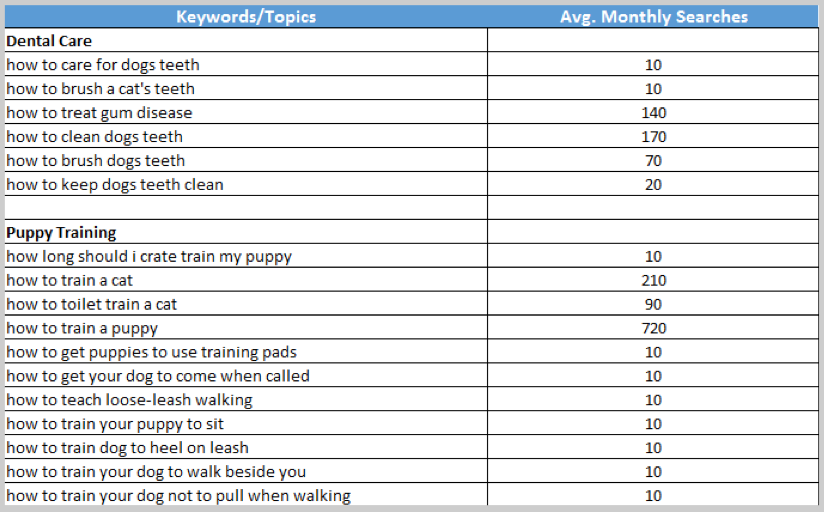
Long tail keyword research example spreadsheet

Figure 10: Example of Result Driven SEO’s long-tail keyword research.

Analyse your long tail keywords to find patterns, and consider using those that stretch into six and seven words in length, including question phrases and positives or negatives accordingly. Then you can write content using these terms.

Voice searches and long tail keywords graph

Figure 11: Voice searches contain more words – this means long-tail keywords are even more important as part of the SEO process.

Google has yet to comment on how conversational search will impact ad listings, but I doubt any significant changes will occur any time soon.

3. Structured data and direct answers are trending

Direct answers are Google’s attempt to show you the an exact answer to your search query at the top of the search page.

They were not originally designed with mobile in mind, but the requirements and restrictions of mobile search have pushed its growth.

Bad news

  • Google: “we built Google for users, not websites.”
  • Approximately 19% of queries result in rich/direct answers
  • Bad for specialized search engines and competing answer engines –i.e. weather sites, shopping searches, yellow pages and lyric sites
  • If your business strategy is to collect and present data and facts you don’t own, Google is now a direct competitor

Good news

  • Most direct answer platforms are not commercially valuable.
  • Some answer engines (Weather Underground) provide data to Google via licensing –additional revenue + traffic stream
  • If you are the answer to a direct answer (what is the best restaurant in Sydney) then life is good!
  • About 75% of the time, links to the source are provided
  • Most searches can’t be turned into a direct answer, and many search sessions are multi-step
  • Major sites are not reporting a downturn in traffic as a result (so far)

How to adapt

Provide structured data for everything you can.

Do you ever wonder how some e-commerce sites get yellow stars, prices, or thumbnails in their search result listings?

That’s structured data at work.

Structured data sounds a bit off-putting, but it’s simply a way of tagging the data in your web pages so that search engines can easily understand. These data elements can be anything from pricing and availability to breadcrumbs and video.

So what exactly does structured data look like in search engine listings?

Structured data is the “extra” information that you see next to a website and meta description. For example, if you are searching for a restaurant, you will not only see the restaurant’s name, but also additional information such as hours, pricing and stars to indicate positive reviews.

So do you need a web developer to manage structured data and SEO for you?

Unfortunately, yes you do, your time is better spent growing your business rather than trying to figure out how to implement structured data on your website.

Google reviews in search

Figure 12: Example of Google review and video mark-up

Additional information next to reviews in Google search

Figure 13: You can mark-up not only for rating but, time, price and other specs

Structured data is definitely not only for search engines. If done correctly it will make your result much more attractive and increase your click through rate.

Tools and Resources For Your Markup

Change how Google displays your brand

Your brand’s ‘Knowledge Graph’ panel is your new digital business card, your brand’s first impression.

It is the box that shows up on the right side of a Google search.

Here’s how you tell Google what needs to be there.

Companies and people can now customize their own data in the ‘Knowledge Graph’ by adding structured data mark-up to their official website. The following types of data may be customized:

Structured mark up in Google search

Figure 14: Businesses can now customize their logo, contact info, and social profiles in the Knowledge Graph by adding structured data mark-up to their official website

Customize what Google shows about your brand

Figure 15: The information about Result Driven SEO is accurate and, fortunately, our previous clients have left some good Google reviews

Wrapping it up

Mobile searches out number desktop, it has become crystal clear that mobile is the future of digital marketing.

As marketers and site owners we need to think “mobile” in all of our digital dealings, and we must have a mobile marketing strategy in place.

Voice search and direct answers are also growing strongly, meaning content marketing and SEO should go together to make your site a source of authoritative information.

With the increasing integration of apps to search results, make sure that your apps are search friendly.

Finally, make use of Google Products such as Google Plus Local and Structured Data to make your site easily crawlable by Google through text-based and voice searches.

The results of which should be more leads to your website, and more sales. Good Luck!

10 Jun 15:12

14 Parts of Your Day Job That You Can Automate – 1 to 5

by Dani Kostyra

To be fair, we did get a bit carried away with things like using a marketing automation platform to remind us to make the team a cup of tea or coffee (we all know how important caffeine is!) by email, SMS or twitter etc. But we also looked at tasks like our marketing update to the company – we use Podio – and wouldn’t it be great if we could automatically pull our completed tasks with detail and links into an email that was sent to the company at the end of every week?

We do have a few programs on our hit list. And here’s one that we’ve already checked off: using a pop up to capture our blog visitors’ data which enters them into an automation program. An email gets sent to this list every week with a roundup of our blog content. It had such little impact on our resources that half our team didn’t even know it was up and running until I started this blog. How cool is that?

Anyway, when we put our heads together and got down to business, we came up with 9 different programs you can create using a marketing automation platform. And 5 cool things that a marketing automation platform enables you to do.

We don’t want to overload you with information in one blog so have split it into a two part series. Whether you’re an SME, Enterprise business, in B2B or B2C, there’s something here for you.

So let’s get started with the more strategic part of marketing automation and look at 5 cool things you can automate with a marketing automation solution.

1. Email Marketing

As you might have heard, email marketing isn’t dead. In fact, 90% of consumers prefer to receive updates via an email newsletter, and 60% of marketers say that email marketing is producing ROI for their organization.

By using a marketing automation platform you can automate your email marketing from basic things like welcome emails, website engagement emails (i.e. thanks for downloading our whitepaper!) to full on nurture programs like cart abandonment or product replenishment. In our next blog post we’ll delve into more detail, with actual examples from B2B and B2C companies.

2. Landing Pages

I can’t stress how important landing pages are. A targeted landing page will increase your conversion rates and subsequently your ROI. It’s as simple as that. And every marketer’s objective is to increase conversion rates! However, according to MarketingSherpa, the number one reason businesses don’t use landing pages is because their marketing department either doesn’t know how to set them up – or that they’re too overloaded.

A good marketing automation platform will let you easily and quickly create targeted landing pages. But more importantly, they’ll let you personalize them and customize them in the same way you do with your email marketing. And all automatically. Whether that be pulling in your customer’s demographic data, their behavior and engagement with your brand, social interests or lead score. Which takes me nicely onto my next point.

3. Lead Score

If you’re in B2B you want to know who your hot leads are so you can pass them on to the sales team. And who your cold leads are so you can warm them up and keep them moving through the sales funnel. If you’re in B2C, you want to know your customers intent to purchase and be able to influence it and increase customer retention.

It might take time to set up but once you’ve decided on your demographic and engagement scores you’re well on your way to lead scoring. And using a marketing automation tool means that every time someone in your database performs an action or you find out a bit more about them, their score will automatically get updated.

The best thing about this is that it’s intertwined with the other parts of your marketing automation platform. Based on a contacts score they’ll be automatically removed and moved into different email automation programs you have set up. Content they see will change dynamically in emails or on landing pages. And they could receive content in different formats – for example a hot lead could be sent a direct mail piece like a freebie or your brand new high gloss brochure. So your contacts are constantly getting nurtured, all without you lifting a finger.

4. Multichannel Marketing

Every customer is different. And they all expect to be able to engage with you on a platform of their choice and at a time of their choice. Hello multichannel marketing. In a nutshell, multichannel marketing lets you interact with your customers across multiple channels (like email, SMS, social and direct mail) and maintain a consistent customer experience the entire time.

The right marketing automation platform will let you integrate your traditional and digital marketing activities so you have your data, channels and campaigns all in one place. This means you can automatically reach that person via their preferred channel without spending more time on ad hoc campaigns and still get better response rates. Win win!

5. Advanced Personalization

In today’s digital world where customers are getting contacted on a mass scale, it’s important you get noticed. Not only do you need to add personality to your emails, you need to craft an email that sounds as if it was written by a real person for a real person.

Being able to automatically personalize your emails is a good start. Being able to automatically display different content in the same email to hundreds or thousands of people is even better. And having the ability to take this to another level is where advanced personalization is at. And all automatically of course.

The next big thing in marketing automation is having the freedom to personalize not just the recipient name or the images but the body of your text too with information specific to each individual customer. You can set multiple rules and send to multiple segments all completely customized. It’s exactly the 1 to 1 service your customer would expect when talking to them face to face, but all within your email and landing page. Clever huh?

10 Jun 15:12

17 Tips to Get Sales Leads to Convert Faster [Infographic]

by leslieye@hubspot.com (Leslie Ye)

alarm-clock-gold-hands-of-a-clock-1778-636510-edited.jpg

When I was in school, my mother used to tell me each night that I should review all the notes I’d taken in class that day. She reasoned that I should reinforce the material while it was fresh in my mind, so that when midterms rolled around, I would have already studied once.

“Strike while the iron is hot,” she would say.

I was usually too busy procrastinating to take her advice, but it was prescient, especially in regard to B2B sales.

As a sales rep, your time is your most critical asset, and how you choose to spend it is an incredibly important decision. Your buyers are busy people too, so it’s in both your best interests to make the buying process as efficient as possible.

So what are the best ways to get your leads to convert quickly?

According to the infographic below from Cloudswave, the window of opportunity to get in touch with leads is at its widest between 8 a.m. and noon on Tuesdays, Wednesdays, and Thursdays. The best time to hit buyers with informative content is between 9 p.m. and midnight.

Making substantive changes to how you sell can help, too. Using visual elements in your presentations will dramatically speed up prospects’ comprehension of your material, since visuals get processed 60,000 times faster than text. Focusing on how your product can solve your prospect’s problems can drive lead to customer conversion rates as high as 70%.

Read on to find out more tips for getting leads to convert quickly, and let us know your tried-and-true tactics in the comments below.

leads-convert-quickly.jpg

get the free hubspot crm

10 Jun 15:12

Email Lists: 5 Email Lists Building Tactics That Leads to Sales

by johnwarne13
09 Jun 15:23

Calculate ROI with one measure

by Expert commentator

Separating ROI from data noise

ROI MetricsLearn what metrics can help you truly understand the value of your spend, and what technologies really deliver on this most important metric.

Small-to-medium businesses are investing in their marketing at jaw-dropping new levels. BIA/Kelsey predicts that 2015 will be a banner year for local media expenditure on the part of these organizations, with investment exceeding $50 billion. Digital investments are at the forefront, with 28% of marketers reducing their traditional advertising budget to fund more digital marketing and search marketing capturing the largest share of online spend at 47%, according to Business2Community. But with so many dollars on the line, how can a business know what investments are really paying off?

Return on Investment is the gold standard that today’s marketers are seeking. But with each new media channel, there is new complexity in the metrics used to calculate ROI. A couple of examples:

PPC Metrics

Pay-Per-Click (PPC) advertising has 8 typical Key Performance Indicators (KPIs) to track the effectiveness of campaigns, including:

  • Impressions: How many times an ad is shown
  • Quality Score: A search engine’s calculation of ad copy relevance to keyword or query
  • Clicks: How many times someone clicks on an ad
  • CPC: Cost per click
  • CTR: Click through rate
  • CPA: Cost per acquisition
  • Conversion Rate
  • Total Spend

Social Media metrics

Social media metrics include reach and engagement, in addition to platform specific metrics, including:

  • Likes
  • Followers
  • Shares
  • Retweets

All of this data can cause a marketer’s head to spin. Many SMBs and their marketers are asking:

  • 'In my social media, should I focus more on reach or on how many likes a promoted post has gotten?'
  • 'Are shares more important?'
  • 'Is Click-through-rate what I’m worried about, or conversions?'

Answering these questions involves making sense of a kaleidoscope of new and evolving metrics. Many online marketing products couple their campaign platforms with dashboards in order to help business owners visualize the results they are trying to comprehend. But what this often becomes is confusing noise that makes a simple ROI calculation more difficult. Without a straight answer as to which marketing investment is paying off, marketers and the companies they work with are less likely to open their wallets to more advertising.

How to rise above the noise

There is one clear metric that, regardless of the media channel, provides a simple way to begin calculating the elusive advertising ROI.

This metric can be measured the same way regardless of campaign, whether social media, search marketing, even a simple print ad. Think of this metric above all else: Lead Acquisition Cost (LAC).

Why is LAC so effective at connecting results to efforts? Because it focuses not on a click or a 'Like', but an actual prospect engaging with a business. Similar to Cost Per Lead (CPL) or Price Per Lead (PPL), it’s basically a business’s calculation and qualification of the amount paid for each lead, of any form, that a business receives.

It’s calculated by taking the cost of all investments in lead-generating campaigns and dividing that cost by the new leads acquired during a fixed amount of time.

For the purposes of this calculation, you should only count what some marketers call qualified leads. Qualified leads reflect the number of leads that were actually in the market for services or products your company provides. If you’re having a hard time figuring out how to qualify leads coming in, then focus on total leads for now. Once you begin to calculate LAC, your appetite for refining the data will grow along with your understanding of how to do it.

Affordable LAC tracking

It used to be more difficult for a small-to-medium business to track their own LAC, but new tools are available that are making it easier. These tools are tracking lead engagement at a much lower point in the marketing and sales funnel than the typical platform-specific metrics mentioned above. Knowing how many times an ad is clicked is much less helpful in calculating LAC than lower funnel metrics like appointments booked, in-store traffic, and phone calls from first time callers.

Tools such as call tracking analytics use a phone number assigned to a specific keyword, ad or campaign when a customer is calling a business as a result of a specific marketing effort. Since these numbers can be assigned and inserted into a campaign anywhere, the lack of platform-specific tools that measure lower funnel activity is irrelevant.

There’s also been significant growth in other low-funnel services like in-store beacons and appointment booking software over the past year, as well as dashboard software that connects to these applications. Even old technologies like people-counting devices at retail stores are seeing an uptick.

What do these changes mean for the marketer seeking ROI? It means you can gain LAC data without an expensive, complicated effort.

While data is the key to insight, too much noise in the data renders it useless. By focusing on LAC, you can streamline your analytics to a point that they are truly meaningful. The result will be a solid picture of what marketing investments are paying off, what expenses need to be trimmed, and what efforts might need to be abandoned completely.

marksullivan Thanks to Mark Sullivan for sharing his advice and opinions in this post. Mark is the Director of Analytics at CallRail, and inbound call tracking platform. You can follow him on Twitter or connect on LinkedIn.
09 Jun 15:23

The Delightfully Short Guide To Adding Value With Video

by Matt Aunger

If you find yourself intimidated by the concept of creating video content, you’re not alone.

It doesn’t matter how many times I read the stats, I am constantly amazed at the sheer volume of videos that are being uploaded and watched online.

Every minute of the day, YouTube users alone upload 72 hours of new video content, not to mention uploads to Facebook, Vimeo, Daily Motion or Wistia.

With all that noise, making your video stand out, increasing engagement and finding ways to add value is a mammoth task; which makes doing it right even sweeter.

What does it take to create valuable, meaningful video content?

I’ve taken a closer look and have put together a “delightfully short” guide to adding value with your video content. I’ve included some great examples of interesting videos, a few tips from the experts and a quick step-by-step checklist to help you make engaging, meaningful and valuable videos.

If you’ve got any more tips or examples of great brand videos, I’d love to hear them in the comments.

pablo (5)

Why video?

At first glance, taking on the challenge of adding video to your content marketing mix might seem enormous to say the least.

So why would you want to take on such a mammoth task?

  1. Video generates 3x as many monthly visitors to a website as other content
  2. Visitors spend 88% more time on a website that includes video
  3. Organic traffic from search engines increases by 157%
  4. Consumers are 46% more likely to seek information about a product or service after seeing in an online video
  5. Consumers are 85% more likely to buy after watching a product video
  6. 52% more confidence in their online purchase

Online video presents a huge opportunity for you to add tremendous value to your brand, whether you overall goal is increasing conversions, improving brand confidence or simply to #ShowUCare.

With the advent of social streaming platforms such as Meerkat and Periscope, and in a world where the majority of marketers already have some way of recording HD video and access to easy-to-use editing software, no matter your budget or ability, creating value with video is well within your grasp.

3 Examples of valuable video content

There are some excellent examples of brand videos scattered across landing pages, blogs and social channels. You don’t have to look far on YouTube or Facebook to find something valuable and engaging that ticks all the right boxes.

I’ve handpicked three of my favourite video content examples below.

Each one provides great value for their audience and illustrates different ways you might look to add value with video.

Educate

Video hosting platform Wistia offer an incredible series of videos that set out to educate their audience and inspire them to make better video content.

wistia

The brand goal is simple; highlight Wistia’s expertise while educating existing and potential customers, helping improve the video content their audience produce.

Entertain

Although uploaded in 2012, Dollar Shave Club’s viral commercial continues to set a high standard for entertaining and amusing content.

With tongue planted firmly in cheek, the goal of the video was to drive awareness of the Dollar Shave Club brand, highlighting the key benefits to their audience, in a fun and entertaining way.

Engage

In her recent Emoji post Courtney highlighted great use of brand video from PETA, using Emojis to communicate their powerful message to a very specific audience.

With their sights firmly set, PETA took a brave and unconventional approach, engaging the target audience in relatable terms yet still delivering the brand’s disturbing message in a simple yet effective manner.

The three examples are a tiny drop in the ocean of incredible brand video content I’ve found. Each show that by simply understanding the audience they are targeting, brands can create a more rich, valuable and meaningful content.

If you’ve experienced some great brand video content, let me know in the comments.

5 steps toward valuable video

User guides to making rich and engaging content seem to be a dime-a-dozen, so I’ve gone through a few of them and highlighted a few of the key steps that the experts suggest you consider when adding value with video.

Here is a quick rundown of my 5 steps toward more valuable video:

  1. Listen and understand your audience
  2. Align with your brand goals
  3. Create the content and make it resonate
  4. Share. Share. Share again!
  5. Measure. Analyse. Understand.

1. Listen and understand your audience

Listening to your audience seems to be the most important consideration when it comes to adding value with video.

Before settling on an idea for your video, spend some time getting to know your audience, looking at what your they want to know about your brand and what they are talking about in the industry.

Earlier in the year, Kevan’s post covered some really useful tools that can help you understand and get to know your audience.

research tools

If asking your audience directly is out of the question, try looking to your inbox or your support team’s inboxes and pick out a few FAQs. Maybe you could use some of your social listening insights to find out what people are talking about in your industry.

No matter how you do it, making the effort to understand what your audience wants can add a huge amount of value to your video.

2. Align with your brand goals

After you’ve taken time to understand your audience, Katherine Hipwell of Red Bee Media suggests looking toward your brand goals and seeing how these align with the needs of the audience.

“What is a brand’s objective? What is the audience interested in? And how can this be done in real time?”

venndiagram

The most effective online video sits between the overlap of three questions.

If it becomes a struggle to align brand objectives with audience wants and needs, consider shelving the idea for the time being.

It is a tough thing to do, but will help you focus on the most valuable ideas for both the brand and audience.

3. Create the content and make it resonate

Once you’ve figured out your audience and how you’re going to get their attention, spend time thinking about what sort of response you want to get from your audience before after you’ve created the content.

What change in thinking, motivation or behaviour do you want your video to affect?

To make your video more interesting and shareable, consider the following:

  1. Make it emotional – Try to get a strong emotional response from your audience. Focus on personal triumphs, positivity and inspiration.
  2. Make it positive – According to Unruly there are 18 specific psychological responses you should aim to achieve from your videos , with positive emotions being most effective at driving shares.
  3. Make it exciting – Next to happiness, excitement and exhilaration are key emotions for driving sharing of your video.

4. Share. Share. Share again!

Once you’ve made your awesome and engaging video, you’ll be set to upload and share it, ready to watch the views roll in.

To get the most effective results, approach sharing your video in the same way as any other content and spread your social posts out over a long period of time.

Think about how often you should post to different networks, and if you’re on the forever free plan at Buffer, you can connect a profile from each network (one from Facebook, one from Twitter, etc.) and schedule ahead 10 posts for each network.

You could be sharing your video and adding value consistently for days!

5. Measure and attribute success

One of the most frustrating and confusing parts of making video content is knowing what success is and how to measure ROI.

After you’ve spent hours successfully creating this amazing content that is tailored toward your audience while aligning with your brand objectives, how do you even know if it worked? You might already know you need to set some KPIs, but which metrics even matter?

Carla Marshall of ReelSEO suggests focussing on 2 or 3 key areas, such as audience, expression and participation.

reelSEO

When it comes to metrics, it’s always seemed that there was a lot of pressure to get ‘views’. In fact experts are now considering ‘view count’ as a secondary metric, with the majority suggesting shares and view time to be more important than views themselves.

My favourite tip for measuring the value and success of your video comes from TheMediaOctopus (from their really interesting infographic):

key-tip

Summary

Hopefully this helps show that creating valuable, engaging and meaningful video is well within your grasp. And by taking a step back and aligning your business goals with your audience wants and needs, you can add tremendous value to your brand.

What questions do you have about including video on your content marketing strategy? How do you measure the value of your videos? Have you experienced some great brand videos? I’d love to hear what you think in the comments.

09 Jun 15:22

Why You Don’t Need Any Sales Stages In Your Sales Pipeline

by Bob Apollo

blocked_pipeline_225_softThe above assertion might appear blasphemous, but please bear with me. I’m going to try and make the case that you don’t need – and in fact you shouldn’t have – any sales stages in your sales pipeline.

I’m not arguing that you don’t need a sales pipeline. Far from it. The universe would probably grind to a halt if every reader decided to abandon their pipeline. I’m just convinced that there’s a far better way of managing it than by using sales stages.

The alternative? It’s to value your pipeline and measure your progress with reference to the stage your prospects are at in their buying decision process. In other words, you don’t need sales stages – you need buying stages…

The idea of managing the pipeline with reference to the buyer’s journey isn’t a new concept. It dates back at least to Hugh Macfarlane’s ground-breaking book The Leaky Funnel which was first published in 2003.

But if ever there was a time to put it into practice, that time is now. More stakeholders than ever are involved in buying decisions – and their numbers are growing. More well-qualified opportunities than ever are ending in “no decision”. B2B buyers are more risk averse than ever.

Given all of these uncertainties and complications, the idea that sales pipelines can best be managed as a succession of completed sales activities has never been less plausible, or less effective – at least in the complex sales environment.

The Forecast Accuracy Challenge

As if we needed any proof, the latest CSO Insights research confirms that sales forecast accuracy on a deal-by-deal basis remains stubbornly stuck below 50 percent. Tossing a coin would, on average, offer a more accurate prediction.

That’s why tracking the progress of your opportunities with reference to your prospect’s buying decision process is such an important idea. It’s harder to achieve, but resulting increase in the accuracy of pipeline valuations and sales forecasts make it more than worth the effort.

Introducing Buying Process Aligned Sales Pipeline Stages

After modelling the prospect buying decision process for dozens of clients in high-value, multiple stakeholder complex sales environments, a clear pattern has emerged. Your environment may show some subtle variations depending on the nature of your solution, but broadly speaking:

Satisfied With The Status Quo

Prior to the start of the buying process, your prospect is broadly satisfied with the status quo, but they are still interested in trends and issues that may affect their organisation, department or role. This is the perfect point at which to introduce an issue, implication or fresh perspective they may not have been aware of or have previously not given any thought to.

Open To The Possibility Of Change [Phase 1]

But then something happens (preferably as a result of your stimulus) – a trigger event that draws their attention to the idea that sticking with the status quo may not, after all, be their best option going forwards. This is the first active phase of their buying decision journey, and an opportunity to shape their early thinking about what may be needed.

Deciding If They Need To Act [Phase 2]

A clear need has been established, and the individual who first identified the issue is typically reaching out to colleagues who may also be impacted. Your prospect (usually by now a group of interested stakeholders, rather than a single individual) is assessing their situation, investigating their options, and trying to decide whether there is a compelling case for change.

Defining Their Vision Of A Solution [Phase 3]

Having concluded that there is a compelling case for change, your prospect’s attention now turns to defining their requirements, deciding which options to short list, and agreeing the decision team, process, timing and criteria. It’s usually critically important to your chances of success that you are actively involved and influencing their thinking by this stage.

Selecting Their Best Option [Phase 4]

Your prospect is evaluating their shortlisted options against the criteria that were decided in the previous phase, reconfirming the business case, and striving to achieve decision team consensus around a single preferred option. Your focus needs not to be just on winning their recommendation – you must also ensure that you reinforce the need to take action. If you first get involved at this stage (for example receiving an RFP that you have not helped to shape), your chances of winning are very slim.

Validating Their Decision [Phase 5]

By this stage, your prospect has identified their single preferred solution, and is trying to eliminate any remaining risks or reservations and to negotiate the best possible contractual and commercial terms. It remains possible that they could still either decide to do nothing or to reopen the evaluation of alternative solutions. Depending on the value or the strategic importance of the project, the decision may still have to pass a final investment approval process.

Decision Confirmed And Order Placed

The prospect has decided to act – and preferably chosen your solution. If they have, your focus must now turn to ensuring that they successfully achieve the goals of the project. But whether the outcome is a win, a loss or decision to do nothing, it’s critical that you learn from the process and use the lessons learned to further refine your understanding of how these decisions are made.

Putting The Principle Into Practice

When creating models of the buying decision process, it’s easy to assume that the process is linear – but it rarely is. Prospects will often get stuck in stage, or revert to a previous stage as a result of some change in circumstance. It’s also very possible that different members of the decision team may be at different points in their thinking than others. That’s why it’s called a complex sale.

When you think about the evolution of a buying decision from the prospect’s perspective, it becomes obvious that vendors need to engage as early as possible in the decision making process – preferably before the prospect had decided whether they need to act and certainly before they have established their vision of a solution.

Defining your sales pipeline from the buyer’s perspective isn’t as easy as the conventional sales activity based approach. It requires that your sales people pay particular attention to determining where their prospects are in their decision journey, and intelligently adapting their tactics to match their prospects circumstances. It is most effective when sales organisations are focused on early engagement. But the impact – in terms of win rates of properly qualified opportunities – can be profound (I’ve observed two to three fold improvements as an average).

The Sting In The Tail

But there is a sting in the tail: almost inevitably, once you make the shift to a buying-stage defined pipeline, many of the opportunities you thought were in your pipeline will either be shown to be at a much earlier stage, or will drop out completely. The apparent value of your pipeline will initially decline. But you can be comforted by the thought that you’ve now shown that those other “opportunities” were never real, anyway.

At least your sales people might now spend less time on opportunities that were never going to close or you were never likely to win. And your success rate in closing the winnable opportunities will more than make up for the difference.

Interested in learning more? You can download a copy of a one-page summary of a buying stage defined pipeline here.

09 Jun 15:22

Lean Listening, Part 2: Listen for Value

by Jack Malcolm

In the previous post, we said that lean listening is about listening for lean—paying close attention to the elements of the conversation that add value and minimize waste. This article focuses on the value part of that equation.

The thing about listening for value is that most of us are already pretty good at listening for value in conversations—as long as it’s our value. But in persuasive business conversations, there are usually two other parties that could potentially benefit: the other person, and the larger purpose.

Value in lean communication is defined as communication that improves outcomes for one or both parties while respecting the relationship. In lean communication, value can be added by one party, or jointly created by both. Listening is crucial either way, but especially so for the joint creation of value. It’s the key to getting the best thinking out of all parties in the conversation, first by allowing you to ask questions that dig deeper into the situation, and second by making it safe for the other person to bring up thoughts they might have kept to themselves. And, by involving the other person in whatever is agreed to, it makes it more likely that they will follow through.

You may recall that one of the tests of lean communication is who did the work. For example, the speaker may dump a mass of details and expect the listener to make sense of it. But lean listening does not care who did the work—just that the work gets done. In a conversation, you should take more than 51% of the responsibility to ensure that value is created, even if it’s you who has to do the work for the other person.

This 51+ rule means that if you are the one presenting the idea, you need to pay close attention to how the idea is being received, and whether you are getting active commitment rather than passive acquiescence; if you’re unsure, don’t hold back from asking questions to ensure the level of agreement you’re getting. If you’re the listener, listen for the question: what do you want me to do and why? If a question is asked, did you or they answer the question?

You can extract more value by taking positive control of the second conversation. If you don’t take control, your second conversation will default to looking for and noting negatives, such as differences between you and the other person, or obstacles that stand in the way of getting what you want. Try to listen actively for intersections of your interests and theirs. If your individual differences seem to be too far apart, listen for a higher purpose that you both can support, such as a specific value or goal of the organization.

Remember that value is defined by the customer, which in lean communication means the person you are speaking with. But the customer is not always right, because what they define as value may not be what is best for them or for the larger purpose. So, besides listening carefully for their view of value, you must always be on the alert for signals that indicate additional chances to add or create value. It’s like driving: your eyes are fixed on the road ahead, but your peripheral vision is alert for signs of unexpected danger.

In conversation, these signs fall into two categories: intentions and obstacles. Intentions are where they want to go, such as their plans, goals, desired future states, and values. Obstacles are elements of the situation that hinder their realization of intentions, and they fall under four general categories: Problems, Opportunities, Changes, and Risks (POCR).

They may not be explicit in these, or even be totally aware of them themselves, so listen carefully for the signs of value; it’s amazing how much extra you can pick up if you’re alert for these. I once videotaped a sales role play in which the “buyer” revealed five potential intentions or obstacles in about thirty seconds. When we reviewed the tape, the seller had missed all five, and the buyer was not even aware of three of them that had come out of his own mouth! But what’s interesting is that when we reviewed the video and looked specifically for signals of value, they popped right out.

All this may seem like a lot to remember, so here are just two questions you should have in mind to help you listen for value:

  • How can I help?
  • What can I learn?

If you keep these questions involved in your second conversation while listening, you are almost guaranteed to improve outcomes for all parties concerned; and you will definitely respect the relationship at the same time.

09 Jun 15:21

Don’t Fall Into Chaos: Ensure A Steady Climb Toward Sales Maturity

by Amanda Wilson

Just like every one of us, each sales organization is different. An organization carries with it an ongoing load of positive attributes as well as sets of not-so-favorable qualities that hinder success. And as organizations struggle to improve top and bottom lines, today’s shift in buyer behavior has made it difficult to rise to the levels of productivity and effectiveness needed to meet revenue goals. We’re constantly looking to ease these struggles, but instead it seems as if we’re bogged down by seemingly endless inconsistencies caused by ad hoc efforts and poorly defined sales processes.

If you’re an avid reader of this blog, I’m sure the fact that over 58 percent of the buying process is completed before a buyer ever engages with a vendor isn’t quite news. However, what this tidbit does is hone in on the need for reps to be better equipped to engage with the buyer at the precise point in the process and align with their needs and expectations. Additionally, with quota attainment being 50 percent on average, it’s clear this alignment is not happening and buyers are not seeing value in their interactions with sellers. Thus, the inability to communicate value remains a top reason why sales reps can’t move the needle.

Layering on to that, sales reps spend 30 percent of their time completing administrative and non-sales tasks – a rise from about 15-20% in years past. With a more complicated sales process, more administrative requirements, and a buyer who expects more from a sales rep, it’s no wonder average turnover of sales professionals is 34 percent.

Many solutions, such as CRM systems, are available in the market to help mitigate these risks. While CRM systems are critical back-end infrastructure to ensure data capture and knowledge share, it remains an unfulfilled promise where improved customer engagement and better sales performance are not realized. CRM systems carry low user adoption, and simply stores prospect and customer data, not delivering the results that organizations need for successful sales execution.

The result is that organizations have turned to sales enablement activities to try and fill the gap left by CRM. These tools are point solutions for smaller problems, supporting points in time across the sales funnel, and are not focused on end-to-end sales execution. They also tend to be ad hoc in practice, neglecting to support any structure to a sales process or strategy.

These efforts do not provide the scalability modern sales teams need to be competitive in today’s changed environment. Sales leaders continue to work overtime on enabling their salesforce with repetitive maintenance strategies, while not spending nearly enough time on executing effectively to grow and scale their sales initiatives.

So what’s the solution? Or, more accurately – is there a solution? The answer depends on how you’re willing to work to climb up the Sales Execution Maturity ladder.

Let us explain…

The Sales Execution Maturity Model identifies five levels of your organization’s sales execution maturity as relative to business impact. Each level includes specific elements that contribute to the success or failure of your organization’s ability to scale and succeed in growing its selling competency.

Once an organization is aware of its level of maturity, an action plan can then be put in place to progress up the model to a more desired state; resulting in improved top and bottom lines, and achievement of business goals.

09 Jun 15:21

Sell More, Sell Faster: Sell to the Subconscious Mind

If you're trying to sell something, don't try to sell to people using logic. It's a waste of time. You need to connect with buyers on a subconscious and emotional level, says Erik Luhrs, aka The Bruce Lee of Sales and Lead Generation. If you can do that, you will increase sales volume and decrease sales cycle length.

09 Jun 15:20

The Struggle Is Real: Content Marketing’s Blockers + Success Stories In 2015

by Anastasia Dyakovskaya

NewsCred has teamed up with eMarketer to present a new Content Marketing Roundup for 2015, jam-packed with articles, interviews, and helpful insights that promise to bring any pro up to speed on the ever-evolving world of content. Brimming with valuable information pulled from studies near and far by Salesforce, the Content Marketing Institute, MarketingProfs, and others, the report is an essential document for anyone in the industry looking to keep abreast of what’s new, changing, and challenging in crafting a content marketing strategy today.

content marketing stats 2015

By now it’s clear that the field is no passing phase, with investments in content teams growing across the board and marketers in B2C and B2B alike approaching these efforts more seriously. These days, brand awareness, lead generation, and engagement are among top goals for those in the business around the world, while social posts, e-newsletters, videos and articles are the most common kinds of content produced. It’s an industry that’s still relatively new, however, and the challenges that go along with that are real and rife. Proving ROI continues to be complicated, as is securing funds for things like paid promotion while overseeing an always-expanding array of assets and team members – thanks to those increased investments.

So how are they measuring success? Mainly via website traffic, sales, and conversion rates, although gauging accuracy and effectiveness remains a struggle. Even more surprising is that only one fifth of B2B marketers report having a dedicated mobile strategy, which means that a shocking 80% of respondents haven’t thought this through. With mobile responsible for over half of all Internet usage, no one needs to be reminded just how vital it is to optimize messaging for on the go users. In this day and age, it’s just common sense.

And that’s just one of the things standing in the way of major success. Lack of resources, budget, and overall strategy were found to be the biggest burdens for marketers worldwide, along with the fact that many have no plan in place when it comes to auditing past content for effective reuse and repurpose. That’s just the kind of focus that helps stretch budgets and resources, and highly important to keep in mind moving forward.

content marketing stats 2015

The report goes on to highlight the specific activities as well as challenges facing UK marketers in particular – such as the startling fact that just over half have no documented strategy in place at all, making it all the more difficult to keep track of anything. Then there’s the remarkable rise of Instagram, with 77.6 million Americans and counting – projected at 100 million by 2018 – logging on to scroll through their feeds every single month, and what posting images versus videos, for instance, means for brands (hint: one drives more engagement than the other).

Rounding out the collection is a spotlight on how nonprofits use content to boost awareness and engagement, as well as three interviews with marketing leaders that shed light on today’s pressing topics, like using social media platforms in innovative ways, the correlations between original content and the growth of mobile commerce, and, of course, how senior marketers go about measuring the success of content marketing efforts.

Read the free report here to learn more about the key differences between B2C and B2B efforts, what kind of content marketers find to be most effective, the main blockers between marketers and consistent messaging, and more vital stats to ensure successful content marketing for you and your team in the years to come.

09 Jun 15:20

How to Turn 70% of Your Prospects Into Customers [New Data]

by leslieye@hubspot.com (Leslie Ye)

hatched_chick.jpg

Sales organizations should double down on making sure sales reps go above and beyond in providing great customer experiences, according to “Start Your Winning Streak: 7 Lessons for the Modern B2B Sales Leader,” a new study from PeopleMetrics.

The research found that customers’ Net Promoter Scores increased from 37 to 51 (on a 100-point scale) when their salespeople went above and beyond. NPS is a numerical representation of how likely customers are to recommend a product to a friends or colleagues, and is calculated by subtracting the number of unhappy customers (those who rate a product a 60 or below) from happy customers (those who rate a product 90 or above). An NPS above 0 indicates that a company has more happy than unhappy customers, and an NPS above 50 is considered excellent.

But what does it mean to go "above and beyond?" Survey respondents who gave this label to their sales rep identified the following four characteristics:

  • Communication: The rep had strong listening skills, sent the appropriate amount of correspondence, was responsive to the prospect, and provided thorough explanations of the product.
  • Personalization: The rep provided personalized solutions and demonstrations.
  • Attitude: The rep was welcoming, interested, authentic, and candid.
  • Thoughtfulness: The rep attended the prospect’s company events, sent thank-you cards, and entertained stakeholders.

And reps who delight customers can tap into the benefits of the “champion cycle,” the process by which existing customers’ referrals create even more leads and customers for a product or service provider.

"Once the work begins under the new contract, buyers who have experienced extra effort during the sales cycle are more engaged clients," the study report explained. "They are also more likely to say they love working with the company, and more likely to be promoters of the company to others by spreading positive word-of-mouth."

In an age where 78% of B2B buyers begin purchasing decisions by asking for network referrals and 76% of successful vendors were referred, according to the data, the importance of having customers who act as vendor spokespeople can’t be understated.

In addition, salespeople who go "above and beyond" tend to lead “high-value meetings,” according to the study, and the quality of meetings correlates with larger deals. Buyers who rated meetings with a “5” value spent $100,000 more on average per contract than buyers who rated meetings with a “4” value. Of the buyers who experienced high-value meetings, 70% became customers and evangelists for their vendors’ products.

The reach of a sales meeting or engagement extends far beyond its implications for the current month or quarter. If sales reps build the right foundation, they can find themselves looking at multiple future referrals, and an ever-expanding network of customer advocates.

get the free hubspot crm

09 Jun 15:20

How to Be Persistent in Sales Without Annoying Your Prospects

by nshah@hubspot.com (Niti Shah)

annoyed_buyer.jpg

This post originally appeared on HubSpot's Marketing blog. For more content like this, subscribe to Marketing

So you've done the preliminary research on a prospect and they look like they could be a company you could really help. Next step? Get them on the phone.

There will be times when you get a prospect on the phone and talking on your first try. More often than not, however, you have to try very hard to stand out from the rest of the people interrupting their day. How do you break through inbox clutter and the black-hole that is voicemail? And how do you toe that fine line between persistence, and harassment?

Before you reach out to a prospect, have a goal in mind. You want to connect with the right person, add value from the get-go, and begin to understand the prospect’s challenges and goals. Keep this in mind as you decide how to present yourself, prepare questions to ask, and think through information you want to share. Now, here's how you can toe that fine line between persistence and harassment.

First, Decide Between Email and Phone Communication

Whether you choose to first reach out to a prospect via email or the phone is up to you and your sales organization. Some salespeople start with an email; others prefer to just get on the line and talk. There are pros and cons to both approaches. Let's start with the "shooting over an email" approach, though.

Shooting Over an Email

Email is visual, allowing time for a prospect to think through what you’re saying. It can be bookmarked, tied to a label like “follow up later,” and forwarded along if the prospect feels like someone else in the company would be a better fit to talk to you.

But think about how many emails you get in your inbox each day. How many of those do you actually read? Any messages from someone you can't immediately identify is probably going to get a quick subject line glance followed by a trip either to the archives, or the trash. Chances are that you're not going to get a response from your first email -- inbox clutter is all too common, so be ready to send multiple emails if you use this approach.

Picking Up the Phone

A call can grab a prospect’s ear more quickly and immediately establish you as a human, versus a spam-bot. If you're comfortable jumping to a phone conversation, you could get to the coveted connect stage sooner, and get a follow-up call on the books.

However, you should also always be prepared to leave a voicemail -- your prospect won’t be near his or her phone at all times. And even if you do leave a voicemail, it doesn't mean it'll be heard, or receive a response. Often, voicemails go in one ear and out the other. This is, of course, the downside to the phone method of communication.

The best solution to getting in touch with your prospects, then, is to use phone and email as a complement to one another. One popular method (if you're looking for one) is Jeff Hoffman's BASHO Sequence -- it follows a series of four voicemail/email touches, starting with introductory, to persistent, and then, if the prospect hasn't responded after the first three attempts, to a break-up.

Now, It's Time to Grab a Prospect's Attention

Whether you choose email or phone, your message should be concise and attention grabbing -- with something that's tailored to what they actually need. Try to get three components in every message:

  1. First, why you are contacting the prospect, which focuses on him or her.
  2. Second, why you are contacting them now, which ties in to your company.
  3. Third, you should ask for something you want that is easy and quick to complete, such as a short pre-scheduled call at a specified time, or to be referred to a person you'd like to speak with within their organization.

So if you're on a sales team at, say, a content creation agency, your sales team might open with:

“I noticed you’ve been posting a lot of great content to your blog. I also see that you downloaded our ebook on lead generation, but don't have any calls-to-action on those great blog posts of yours. Would you be interested in discussing how you could increase leads from your blog by doing it a bit differently? I have times available at 8AM and 1:30PM tomorrow, or 9AM or 3PM on Friday.”

In a few sentences, you’ve let a prospect know that you’ve done your homework, that you have something of value that can help with a problem he or she is facing, and that your intention is to not talk at them but rather, start a conversation with them.

Then, immediately follow up with an email letting the prospect know that you left them a message, what it was about, and an open-ended question to encourage further conversation. Be personable. Avoid mentioning what you’re trying to sell -- it’s about the prospect, and nothing will turn him or her off faster than you leaving a sales-pitch in the inbox or voicemail.

Then, Be Persistent ... For a While

If you don’t get a response from your first voicemail/email combo, wait at least 48 hours and reach out again, this time repositioning the value you're offering slightly differently.

Start with a quick reminder that you reached out before, mentioned that you had checked out their company's ebook/recent blog post/new product, and had suggestions for helping them better achieve their goals. End the message with another open invitation to connect.

Still no response? Wait another 48 hours and then reach out again. The third message should reiterate that you've tried twice before (but not in an irritated tone, of course), and offer a bit more information. Let the prospect know you've been trying to reach them, and outline the value you could provide in a bit more detail. In your follow-up email, send one or two relevant materials from your own company's content, such as a long-form content resource or recent blog article that addresses a challenge that you think they might be experiencing. Make it clear that you're available to speak about their goals and that you have expertise in specific areas that matter to them.

Know When It's Time to Break Up

After the third attempt, you may want to consider sending a “break-up” email. You're letting the prospect know that you've tried to get in touch with them, and that since this might not be the best time to connect for them, you don't want to bother them if there's no fit.

In other words, use the break-up email as a way to remind the prospect one last time that you've been trying to get in touch. Ironically, this is the email that gets the highest response rate for many of the sales people I spoke to when researching this post.

Why?

Prospects are busy and they often do want to talk to you -- they were just busy when they read your initial emails and listened to your voicemails. But, those messages left a positive impression and they are interested in speaking with you about how you can help them. They were relying on you, like every other salesperson, to keep trying to get in front of them.

Remember, There Are Other Ways to Connect With Prospects!

Phone and email are often the default methods for connection with new prospects -- they're direct, and they work. But there are other ways to get in touch with prospects that allow you to be persistent, yet still unworried about crossing over into being too persistent. Here's what you can consider if you're interested in pursuing some other tactics:

1) Get social.

There are several ways you can get into the peripheral vision of a prospect if he or she isn't responding to your voicemails and emails. Interacting on social media also allows salespeople to build up little bits of rapport to nudge a prospect towards speaking with you. 

2) Get a referral.

Sometimes, you'll never get a prospect to pick up the phone or respond to email. They might not be social media users, either. Many salespeople do generate big business based on referrals. When working target accounts, smart salespeople are willing to talk to anyone to find out about the goals, challenges, and priorities of those accounts. Talking to that company's salespeople is often the best way to learn about how the internal company works -- they're easier to reach, and often open books about how their organization works, who does what, and who doesn't do a very good job. Often, salespeople have a lot of influence in an organization, too, so a referral or introduction from them is often well received when it's made.

3) Work the company, not the prospect.

Depending on how complex your sale is, multiple people at your target account might be involved in the buying decision. Reaching out to all of the influencers and decision makers involved through prospecting not only increases your connect rate with a target account; it also increases your eventual close rate.

In Sharon Drew Morgan's book Dirty Little Secrets: Why Buyers Can't Buy and Sellers Can't Sell, she talks about the importance of understanding the change management processes required before sales can happen, and how to become the facilitator of that process right from the first conversation. Before you can start that process, you must map out your target account's org chart and attempt to connect by prospecting multiple stakeholders. The more relationships you can build, the better chances you have of connecting and helping them understand how you can help them. 

4) Stay unemotional about it. It's a numbers game.

There's a whole slew of reasons why salespeople aren't able to connect to prospects. Some prospects are eager to talk; some will never pick up the phone. Salespeople often give up too soon or blow their chances of connecting by not taking the right approach. Some salespeople also have a serious fear of rejection which makes it hard for them to just pick up the phone over and over again. Regardless, it's the salesperson's responsibility to be pleasantly persistent with the right amount of prospects.

Reach out, and make it clear that you are here to provide value. And also understand when to back off. Most importantly, pick up the phone enough times to call enough prospects. Every salesperson has a quota -- work backwards to figure out how many prospects you need to call in order to hit that quota. Do the math. Calculate the number of connects you need to close a sale, and then multiple that by the number of sales you need to make. 

Are you in sales? How do you balance persistence with ... well ... too much persistence? Share your advice in the comments.

get the free hubspot crm

09 Jun 15:19

10 Great Apps For the Self-Employed

by Marc Prosser

There are lots of free apps available now that give self-employed business owners the tools they need to manage all areas of their business more quickly and efficiently. Here are 10 free apps that have you managing your business much more effectively this year, saving you both time and money.

  1. EverNote – The Note Taking and ClipBoard App

Evernote allows you to take notes on any device and access those notes on any of your other devices. If you take meeting notes on your computer, you can review them on your phone before an important recap meeting. Also, you can clipboard anything from the internet onto your Evernote app to review later. Evernote can also be a great tool to collaborate, allowing you to share and discuss various notes and clips with your connected users.

  1. Google Voice – Free Number and Online/App Calling

Google Voice is a free internet phone service (VoIP), most suited to self-employed businesses that would only need one user. You can get your own unique business number and then use that to receive and take calls via internet, on your computer or mobile app. You can make conference calls, configure personalized greetings, setup voicemail transcription, and more.

  1. Insightly – Customer Relationship and Project Management

Insightly is a slam-dunk app for small business owners. It allows you to manage contacts, track lead opportunities, co-ordinate/assign projects, and more. You can set up tasks and projects with multiple users, transferring responsibility of the task to different users/employees depending on the stage of the task. Insightly streamlines your business projects and does it for free, so that you will always be on-top of important projects and leads.

To learn more about Insightly and how it stacks up against other CRM’s including paid options, check out this  CRM buyer’s guide.

  1. MailChimp – Free email marketing (1000/month) and Contact List Management

MailChimp is all about email marketing and email contact management. It is a free service that allows you to send up to 1000 marketing emails per month. With a variety of templates, a solid contact management system, and nice email capture forms to put on your website, it is hard to go wrong with MailChimp.

  1. Square – Free Credit Card Reader and No Monthly Processing Service Fees

Square is one of the industry leaders in the mobile credit card processing space. They provide you with a free credit card reader and enable you to be accepting credit payments on your phone or tablet within hours. There is no monthly service fee. You simply pay 2.75% per swiped transaction. With inventory trackings, lots of third-party integrations, and a variety of add-ons, Square is hard to beat.

  1. TripIt – Trip Organization, Itinerary,  and Planning Tool

TripIt is an app that helps you spend more time getting ready for your business trip instead of stressing about it. When you get your hotel, plane, and car rental confirmation emails, simply send them on to plans@Tripit.com and your trip’s master itinerary is automatically created. You can sync travel plans with your calendar, manage travel documents in one place, and even share info with select contacts.

  1. TypeForm – Classy and Sophisticated Form/Survey Builder

If you need to create a customer survey to send out via email or to put on your website, then TypeForm is just what you need. Instead of having a one-page form like many other builders, TypeForm allows you to create sophisticated and interactive forms/surveys that ask one question at a time. The graphics are good, the process is smooth, and your customers will be impressed.

  1. UberConference – Free Phone Conferencing

UberConference is an app that lets you make high quality conference calls for free. You set up a call, create a call PIN, and then up to 10 callers can call-in, dial the PIN, and enjoy the benefits of a conference call service at no cost. You can even share your screen to go over sales figures/projects, if all contacts are logged into UberConference’s online site.

  1. Wave – High-Powered Accounting for Free

Wave is one of the top three providers in the accounting software industry (QuickBooks, Xero), and the only free one of the three. It allows you to import bank account info, manage both personal and business accounts using separate tabs, categorize/auto-categorize expenses, run over 40 reports, and more.

  1. Weebly – Free Drag-and-Drop Website Builder

If you are looking to build a website quickly and on the cheap, then Weebly is the way to go. The drag-and-drop builder is one of the easiest in the industry to use. Also, you can have a website with up to 10 pages for free (subdomain of Weebly). If you ever want to upgrade, Weebly has a variety of low-cost plans with all the features you will need to compliment your growing business.

To learn more about Weebly’s builder and how it stacks up against the competition, check out the Best Website Builder Guide.


08 Jun 14:38

Why it matters to keep the world's oceans pure and clean

by Matt Petronzio
Marine-protected-areas
Feed-twFeed-fb

Oceans may contain 97% of the Earth's water, but climate change, overfishing and other human impacts have thrown their health into decline.

Only about 3% of the world's oceans are legally protected, yet we have proof that marine protected areas — where human activity is restricted — offer healthier ecosystems, increased biodiversity and even have the potential to increase gender equality in nearby communities, among other benefits.

That's why international governments, organizations and individuals are stepping up, adding momentum to the movement to conserve increased volumes of Earth's oceans. Read more...

More about Environment, Features, Science, Social Good, and Water
08 Jun 14:29

6 Lessons About Email From ‘How I Met Your Mother’

by Simon Johnston

This is going to be Legen-wait-for-it…

I am not sure if the writers of How I met your Mother were deliberately drawing parallels between their key themes and email marketing, but applying the lessons from one of my all time favourite sitcoms with my work passion – email – has provided me with countless moments of amusement.

(Full disclosure – I own all 9 seasons and have watched every episode way too many times.)

Here are the lessons Barney Stinson and his HIMYM cohorts unwittingly provide to the email marketing industry:

1. Suit Up!

This is Barney’s signature line about gaining the advantage through always being properly attired and at your best (he appears without his suit only twelve times in the entire series).

Just like Barney, we want to make sure we have the best chance to hook up! Which, in the email space, means making sure design is both creative and optimised. Presenting your best look requires attention to detail: how the email looks on different devices and where your call to action (the hook-up button) is positioned, are all important aspects of ‘suiting up’.

suit-up-Barney-Stinson3

* Image used from http://wonderfulengineering.com/how-to-suit-up-like-barney-stinson-an-engineers-guide/

2. ‘New is always better’

Barney’s mantra is that he never goes back to an ex-girlfriend, because ‘new is always better’; whereas Ted continuously goes back to his ex-girlfriends with mostly disastrous results.

This lesson is about keeping your email content fresh and relevant. You have to grab the reader’s attention before you can attempt to engage them in a process (be it sales, subscription or otherwise). Because design trends evolve and people lose interest after seeing the same layout multiple times – it is vital to keep refreshing the design and targeting the content.

3. ‘Lemon Law – it’s a thing’

Ted says “I love you” on his first date and it backfires spectacularly. But it does work out in the end (if you like that kind of ending).

We understand the value of the ‘Welcome Email’. It’s a way of saying “I love you” on the first date. A welcome series builds a brand relationship when the customer engagement is fresh by showing immediate appreciation of them now being a part of your brand family.

But beware! Barney’s Lemon Law says that if you don’t like the person in the first five minutes of a date, you can invoke the Lemon Law . . . and leave. Seriously, it’s a thing! If your customers invoke the Lemon Law in the first five minutes of your relationship because you get the welcome email wrong, you will struggle to get a second date.

4. ‘Lawyered!’

Marshall becomes a lawyer in the series and often creates arguments that are irrefutable proof of the point he is making. This is known as getting ‘Lawyered.’

In certain countries, digital communicators must abide by different pieces of legislation, depending on the content and purpose of the message (for the acronym lovers: VAT Act, ECT Act, POPI Act). These acts govern for example: what information must be present on an electronic invoice, that consent must be received to communicate by email, and the security required to protect an individual’s personal information.

5. ‘Nothing good happens after 2am . . . ’

Ted’s mother offers the advice that one should go to bed because ‘nothing good can ever happen after 2am’.

For high open rate and click engagement, send time optimisation is vital. Much research has been published about when you should send an email. However, with the world now on the move and our emails going with them across multiple device types, send time optimisation depends on many factors. The only way to keep sending at the best possible time, is to keep testing the response against your objective. Who knows? You may get your best engagement on a Friday afternoon!

6. ‘The Playbook.’

Barney has a book he calls his Playbook, in which he records all the strategies he has used for hooking up with women.

A good email partner will have their own Playbook representing years of experience in digital marketing and secure document delivery. If you’re not sure whether you need an email partner – prepare yourself to recognise the signs by reading Sheryl-Lynn Collins’ article entitled ‘9 Signs you need a new digital communications partner’.

If you determine that you do need help with your digital strategy or execution- we say ‘Stop being sad and be awesome instead!’ We can dramatically increase your chances of a successful hook-up. True Story!

08 Jun 14:27

Help Marketing Know Buyers Well Enough…

by info@sharondrewmorgen.com (Sharon Drew Morgen)

Hi Everyone: I’m sending you something quite different this week; I hope you don’t mind but I find this topic important. My good friend Ardath Albee sent me this note below, asking us to vote for her to receive a grant for something near and dear to my heart: to develop new capabilities for the field of marketing enter the buy path earlier. Please read her sweet note and see if you can get behind this by voting for her. If she wins the grant, I trust that she’ll use the funds to help us all be more successful.

Albee-Ardath-Photo1Hi Sharon Drew,

I wonder if you can help. I’m seeking a grant from Chase Small Business in the area you’ve been writing about for decades: facilitating buyer’s pre sales decision making. Since you’ve been the leader in the field, and your readers have been reading your articles on the subject, for years, I thought I’d explain what I’m proposing to do with the funds and your community might find it relevant enough to cast a vote to help my company be considered for the grant.

My plan is to develop materials, consulting programs, training courses – hopefully with your collaboration – to help the marketing field enter earlier along the buying decision continuum (pre sales) and find the most effective ways to help more buyers buy. You and I have had so many lengthy discussions about the opportunities for marketers on this subject; I believe it’s  time for marketers to get in front of this process.

For those in your community who don’t know me, please let them know I’ve been on a crusade for years to help marketers become more relevant with their content marketing and engagement of buyers. To help your community decide if I’m worthy of their vote, here is a link to my latest book on emarketing and my site www.marketinginteractions.com. I am one of the leaders in the area of content marketing and emarketing; your ideas have helped me to see a new path for marketers to expand their skill sets and effect buying decisions. I believe it’s now time to put the ideas into action, which I’ll be able to do with the funding from this grant.

Thanks in advance for your help. If my company wins the grant, you and I can get to work on the opportunities we’ve been discussing to help marketers build better relationships with buyers. Here is the link for those who want to vote: https://www.missionmainstreetgrants.com/b/25545

Ardath

__________

Sharon Drew Morgen is the developer of Buying Facilitation® and has written 9 books, including one NYTimes Business bestseller (Selling with Integrity) and 2 Amazon bestsellers. A sales thought leader since 1985, she trains, consults, speaks to, and designs training for sales professionals in global corporations to facilitate buyers through the pre-sales decisions and steps they must complete prior to making a purchase. She recently published a new book on how to bridge the gap between what’s said and what’s heard: Get What? Did you really say what I think I heard? . She can be reached at sharondrew@sharondrewmorgen.com

Help Marketing Know Buyers Well Enough… is a post from: SharonDrewMorgen.com