If you need to train or teach new employees, cloud-based labs allow for increased flexibility in where and when courses take place and give trainers the ability to review several ongoing projects at once. Read More
Shared posts
24 Jun 16:56


See the rest of the story at Business Insider
How 15 highly successful people stay in shape
by Rachel Gillett

The most successful people know that exercise is the key to mentally and physically pushing themselves further, though some are more willing to keep up the habit than others.
Numerous studies have found exercise to be one of the most important habits you can develop to transform your life. Working out can make you healthier, happier, and better able to sleep; it can boost your memory, concentration, and mental sharpness; and you don't need to spend a lot of time doing it to reap the benefits.
From tennis to surfing to basketball, here are the exercise habits of 15 successful people.
Vivian Giang contributed to an earlier version of this article.
President Barack Obama sweats it out 45 minutes a day, six days a week.
Exercise has helped the president become the man he is today. Obama admitted in his autobiography "Dreams From My Father," to being a casual drug user and underachiever until he started running three miles a day.
Today, he continues to stick to his workout routine, which is a combination of strength and cardio. In an interview with Men's Health, Obama said he works out for 45 minutes, six days a week. He'll even wake up early to work out despite not being a morning person.
He's also known to play basketball on courts in federal buildings around Washington.
Richard Branson gets four additional hours of productivity every day by working out.
When author Tim Ferriss asked the mogul how he stays productive, Branson answered "work out," as recorded in Ferriss' 2010 book "The 4-Hour Body."
Branson said his physical activities, which can include swimming, Bikram Yoga, rock climbing, running, and weightlifting, give him at least four additional hours of productivity each day.
Warren Buffett chooses exercise over diet.
The billionaire loves his hamburgers, hot dogs, and Coca-Cola.
To avoid a change in diet as suggested to him by doctors, he chose to exercise instead, the "lesser of the two evils," he told CNBC.
See the rest of the story at Business Insider
24 Jun 16:55
6 Ways to Use Crowdfunding for Product Development
by David Drake
Instead of going through the tedious and costly traditional route of market research, more entrepreneurs are turning to crowdfunding for product-market fit.
24 Jun 16:52

Sell Your Skills Better by Tailoring Your Pitch to The Listener's Needs
by Eric Ravenscraft
If you’ve ever had to do a job interview or make a sales pitch, you’re probably familiar with how uncomfortable it is to come up with a list of positive traits for you or your product. Here’s a secret: it’s just as uncomfortable for the listener. Instead, focus on what you (or what you’re selling) can offer the person to make a better pitch.
24 Jun 16:42
Vancouver mining firm buoyant after province gives Red Chris the green light
Imperial Metals open pit copper and gold mine survives opposition from environmentalists, First Nation and Alaskans

24 Jun 16:41

B.C.’s tech sector is booming—but its workers are underpaid
by Alexandra Bosanac
Vancouver’s skyline at sunset. (Basic Elements/Getty)
It may still be small relative to the more established tech sectors in Ontario and Quebec, but British Columbia’s tech scene has been punching above its weight for quite a few years now.
New data from the provincial statistics agency confirms it—but it’s not like you needed a report to know this. Some of the most talked-about Canadian tech companies in recent years—think of players like HootSuite, Food.ee, RentMoola, Recon Instruments, General Fusion, Luvo, Real Estate Webmasters and the list goes on—originate in B.C.
PREVIOUSLY: Vancouver’s booming Gastown tech startup scene, mapped
Some background on how the data is presented in the report: despite being released earlier this week, the researchers only use data up to 2013. The researchers also distinguish between businesses that operate in tech manufacturing (such as pharmaceutical, electronics, aerospace and medical fields) and those that deliver tech services (engineering, mapping and surveying, consulting, movie production and research and development to name a few).
The full report is a useful window on to the industry. Here are the most important highlights:
1. B.C. tech workers are underpaid
Contrary to what’s happening in San Francisco and Silicon Valley, tech salaries in B.C. have not, most part, reached preposterous heights—in fact, they’re not even keeping pace with the rest of the labour force. In 2013, wages for tech workers rose just 1.7% compared to 2.8% across the rest of the province.
But don’t feel too bad for your coder friends. On average, they’re still earning a little less than double the average person at $1,390 a week versus $870 for the average B.C. worker.

The highest increase in pay was seen in the software publishing (12.4%), followed by the film industry (11.0%). Telecom workers and computer engineers saw their pay drop by 13.2% and 6.6%, respectively. However, this could be the result of “an influx of inexperienced workers at lower wage scales, given the strong growth in employment,” the report notes.
2. Tech is comparable in size to traditional industries
B.C.’s tech sector contributes around $12.5 billion to Canadian GDP, trailing three other provinces. Ontario leads at $45.8 billion, followed by Quebec ($24.9 billion) and Alberta ($17.7 billion).
However, tech generates approximately 6.5% of the province’s GDP, putting it in the same ballpark as mining, quarrying, oil and gas extraction and health care.
3. Our tech industries still lag the U.S., by quite a lot
High-tech is still a bigger overall player in comparable U.S. regions. Oregon’s tech sector alone was responsible for around 23% of the state’s GDP, compared to just 6.5% in B.C. It might come as “a surprise to many who see Oregon as largely a producer of lumber,” the report notes. However, high tech giants such as Intel and Hewlett-Packard have set up shop there.
MORE ABOUT STARTUPS & VANCOUVER:
- Vancouver’s booming Gastown tech startup scene, mapped
- The 15 Most Innovative Canadian Companies of 2015
- How to fix venture capital’s gender disparity problem
- Former Lululemon CEO Christine Day wants to reinvent the frozen dinner
- How Vancouver’s RentMoola aims to digitize Canada’s rent payments
- How Hootsuite built a truly cool office (that makes people work harder)
 Follow Us
 Like Us
The post B.C.’s tech sector is booming—but its workers are underpaid appeared first on Canadian Business - Your Source For Business News.
24 Jun 16:40

Truly productive people always leave some blank spots in their day
by David Fielding
(Anthony Lee/Getty)
If productivity were a religion, David Allen would be its high priest. Scratch that. He might the One True King of productivity. And his 2002 New York Times bestselling book, Getting Things Done: The Art of Stress-Free Productivity is his sermon. (“A new cult for the info age,” is how Wired once put it.) But in a recent interview with Fast Company’s Ciara Byrne, Allen spoke out to tell his disciples, “you’re getting me all wrong,” and outlined the biggest misconceptions about his patented GTD productivity method.
Allen’s system of checklists breaks productivity into five basic steps: capture, clarify, organize, reflect and engage. We’ll let you read up on the first three steps on your own time, but the ones Allen says people most often misinterpret are the last two—reflect and engage. It’s at that point that one should think hard about his or her daily activities to determine which items to handle now, and which to delegate before switching to action mode. But sometimes the best way to engage with an item is to actually do nothing, he says. The GTD method is not just about checklists and productivity for productivity’s sake: It’s about freeing up your time. “A hallmark of how well you can do this methodology is how well you can do nothing,” he tells Byrne. Here’s how she puts it:
Allen is a big fan of doing nothing, of daydreaming and napping as a means of engaging the reflective as opposed to the reflex brain. But having loose ends, or open loops, cluttering up your headspace makes that difficult.
In other words, the key to productivity zen lies in this question: How well can you actually have nothing on your mind? This will be a difficult concept for Allen disciples to swallow. After all, the most hardcore among them will have already shelled out US$89 for the official GTD Notetaker wallet with integrated productivity notepad.
But Allen has a point. Sometimes the best course of action really is to do nothing. Some items can wait a day. Some issues resolve themselves. And some problems weren’t yours to solve in the first place. So write your checklist, attack it with vigor and, when possible, maybe just put it down and enjoy the time you’re supposed to be freeing for yourself.
As Allen tells Byrne: “People assume that I am a hard-working, left-brained, results-oriented, OCD, anal-retentive kind of guy. In fact, the reason that I was attracted to this work was that it allowed me to be more creative, more spontaneous, freer. I’m a freedom guy.” Amen to that.
MORE ABOUT PRODUCTIVITY:
- Stop wasting your time on junk productivity hacks
- Offices are some of the worst places to truly get any work done
- Forget voice mail. Just get rid of your desk phone altogether
- Are you procrastinating? No, you’re making priorities
- The case for forcing your staff to leave the office at 5
- Just tracking how you spend your day can help you get more done
The post Truly productive people always leave some blank spots in their day appeared first on Canadian Business - Your Source For Business News.
24 Jun 16:40
Spies wanted info-sharing tweaks, government ushered in overhaul
by The Canadian Press
OTTAWA — The Conservative government alarmed privacy advocates by overhauling the law to give Canada’s spy agency easier access to federal data, even though the spies themselves said greater information-sharing could be done under existing laws, newly released documents show.
In a presentation to federal deputy ministers last year, the Canadian Security Intelligence Service said “significant improvements” to the sharing of national-security information were possible within the “existing legislative framework.”
The Canadian Press obtained a heavily censored copy of the secret February 2014 presentation and a related memo to CSIS director Michel Coulombe under the Access to Information Act.
Earlier this year the government introduced an omnibus security bill that included the Security of Canada Information Sharing Act, intended to remove legal barriers that prevented or delayed the exchange of relevant files.
The legislation, which recently received royal assent, permits the sharing of information about activity that undermines the security of Canada, something law professors Craig Forcese and Kent Roach called “a new and astonishingly broad concept.”
Privacy commissioner Daniel Therrien denounced the scope as “clearly excessive,” saying it could make available all federally held information about someone of interest to as many as 17 government departments and agencies with responsibilities for national security.
In the 2014 memo to Coulombe, CSIS assistant director Tom Venner stressed the importance of timely and reliable information exchanges, and he lamented the patchwork of existing authorities that hindered sharing.
“The absence of a clear authority to share information for national security purposes amplifies this challenge,” he wrote in preparing Coulombe for the meeting with deputies.
“Generally, information sharing with (other government departments) is carried out on a case-by-case and/or ad-hoc basis, which is antiquated and inefficient.”
However, he added that laws and arrangements “often allow for the sharing of information for national security purposes,” and that further strides could be made with “appropriate direction and framework in place.”
Venner cited a number of recently successful pilot projects and outlined “future opportunities” for sharing — all of them deleted from the memo.
CSIS clearly saw “room for workarounds” in the existing law “with a little bit more co-ordination within government,” Forcese said in an interview.
The spy agency’s memo seems “to belie the whole justification for the controversial information-sharing regime” in the government’s subsequent anti-terrorism bill, he said.
The office of Public Safety Minister Steven Blaney had no immediate comment on the documents.
Redactions make it difficult to fully understand the records, said Keith Stewart, an energy campaigner with Greenpeace Canada.
But it appears that the Harper government gave CSIS even more than it was asking for when the omnibus security bill greatly expanded the range of information that could be shared, he said.
“This reinforces the arguments of those who say that this bill is really a form of crass electioneering that sacrifices our rights and freedoms without making us any safer.”
The government still hasn’t made a case for dismantling barriers to information-sharing, said Carmen Cheung, senior counsel at the B.C. Civil Liberties Association.
“Where is the necessity for these laws? Why do we need them?”
The post Spies wanted info-sharing tweaks, government ushered in overhaul appeared first on Macleans.ca.
24 Jun 16:39
Beyond WIFM
by Jack Malcolm
One of the oldest ideas in selling is WIFM, or “What’s in it for me?”[1] It’s a great reminder that you should frame your persuasive message in terms of the other person’s self-interest. WIFM is enormously useful in persuasive communication, because it puts you into the outside-in thinking frame of mind, and forces you to consider your product or idea from the perspective of the person whose agreement you want. I love the idea of WIFM, and have used it for over two decades in my training classes.
But WIFM has limits; it does not always work, and it sometimes can even backfire on you, as illustrated in this story that Chip and Dan Heath tell in their book, Made to Stick: a marketer was testing messages to help sell a fire safety educational film to firefighters. He first asked fire units if they would like to review the film for their educational programs, and the replies were enthusiastically positive. Then, he asked them if they would prefer a popcorn popper or a set of steak knives for reviewing the film. The general response was “Do you think we’d use a fire safety program because of some #*$@! popcorn popper?!”[2]
The problem is that we are often wrong about others’ motivations. Clearly, people do consider their own self-interest when they make choices or decisions, but research has shown that we overestimate to what extent. First, consider your own motivations: how often do you consider other factors besides your own self-interest when making a decision, such as whether it’s good for the company you work for, or it’s just the right thing to do? Next, ask the same question with regard to others.
Chances are, the answer to the second question was much higher than the answer to the first. As to ourselves, we know that our motivations are a mixture of narrow self-interest—extrinsic rewards—and intrinsic rewards such as feeling good about ourselves, doing something worthwhile or meaningful, personal growth, etc. But when we think about others, we overestimate their reliance on “selfish” extrinsic rewards.[3]
This is not about logic vs. emotion, although that does tie into it. It’s about what behavioral economist Richard Thaler calls “bounded self-interest”—there are limits to WIFM. It is not the only driver of decisions.
So what? How does it affect our persuasive approach? We may leave a lot of motivational oomph on the table when we over-rely on WIFM. We use the hammer of WIFM to nail down measurable personal benefits, while ignoring other paths to agreement. We hang out at the lower levels of Maslow’s pyramid when there are better benefits and reasons at the higher levels of belong, esteem, and self-actualization. Higher levels of motivation bring powerful emotions on board, which help with commitment and not just compliance.
It’s not time to get rid of WIFM, but it’s a good idea to add other tools. The first is WIFU, or “what’s in it for us?” Many people will do things for the good of the group they belong to, even when it carries a personal cost to themselves. Asking this question in addition to WIFM, will enable you tap into higher motivations. And, even if the other person’s real motive is self-serving, you can at least give them cover to help them rationalize their decision to others.
You can also appeal to how they see themselves. If you can tie your idea to a higher purpose, perhaps their personal or corporate values, or to their professional identity, you can make them not just better off, but proud. How can you make it the kind of decision that the other person would be proud to go home and tell his family about?[4]
Besides our mental bias of overestimating others’ cynicism, I believe we over-rely on WIFM because it’s easier. It’s easy and socially acceptable to have a conversation with someone about their economic and business motivations, but it’s hard—and potentially risky—to dig deeper into their personal motivations. It’s easy to assume that someone in procurement, for example, is motivated mostly by price discounts; what’s hard is to understand him or her as a real person with fears, emotions, aspirations and pride.
But in order to go beyond WIFM effectively, you need to change your conversations and your questions, to try to either specifically find out what drives the other person, or to tease out their intrinsic motivators. If you think you haven’t yet earned the right to ask such personal questions, listen carefully for hints in their conversation, and then probe further into those and steer the conversation in that direction.
I am definitely not recommending that you drop WIFM from your persuasive toolkit; it’s probably still the most important tool you have. But, as the Heaths say, “Always structuring our ideas around self-interest is like always painting with one color.”
Go beyond WIFM—and tap into the rich rainbow of human motivation.[5]
[1] Purists call it the WIIFM.
[2] Made to Stick, Chip Heath and Dan Heath, p. 187-188. P.S. I just realized this is at least the third time I’ve used this example in my blogs; maybe it’s time to find another?
[3] Perspective Taking: Misstepping into Others’ Shoes, Nicholas Epley and Eugene M. Caruso.
[4] This is not just a sales idea; it’s a fundamental leadership idea. I highly recommend Why Pride Matters More than Money, by Jon R. Katzenbach.
[5] Heath and Heath, p. 191.
24 Jun 16:38

Assumptions Don't Make CRM More Valuable, or Help Salespeople Sell
The Role of Training and the CRM in the Sales Production System
Don't Bother with Sales Training or CRM Until You Face the Facts
by Michael Webb
by Michael J. Webb
Can You Handle the Truth?
Increasingly sophisticated software is becoming available for coaching salespeople. These systems respond to context, such as the industry the prospect is in, the contact's department, and the stage of the sales process. They may even collect answers to questions for future use in the selling effort. Some even offer elaborate strategy support, with color-coded organizational charts and more.
This should make sales training and CRM ought to go hand-in-hand, right?
Unfortunately, no matter how fancy the systems are, salespeople don't often use them unless forced to.
If it were a technical, procedural or a user interface issue, it could be fixed. But it isn't.
Instead the issue is the company's assumptions around what enables these software systems (and the people involved) to work.
Assumptions Don't Make CRM More Valuable, or Help Salespeople Sell
Although it is not their intent, the ugly truth is that adding training or sales methodology to the CRM mainly adds work to salespeople's lives, rather than value.
Why is this the case?Because the people designing these systems (not to mention buying them) make lots of unwarranted assumptions, such as these:
- Selling is something the salesperson does TO the prospect
- Every prospect has the same "percent chance of closing" at each selling stage
- The solution to sales problems is in what the salespeople do
- Some trainer or outside expert knows how to handle a situation better than the salesperson
- One set of scripts and coaching will work regardless of the quality of the prospect
If even one or two of these assumptions are wrong in a given sales opportunity, the salesperson is hampered, not helped. Consider things from the salesperson's perspective. What kind of improvements do they really need?
- Increasing the quality of sales opportunities
- Providing informative content that helps prospects become more motivated and qualified
- Gathering hard-to-get operational information about the prospect's business for use in ROI and cost justification
- Providing statistically accurate forecasts, so the salesperson can concentrate on selling, not managing their boss
Of course, every company environment is different, and there are many other things your sales team might need. The point is, if your CRM or sales training doesn't give salespeople what they really need to do their job, don't expect to change their behaviors easily.
Most companies have left the sales process up to the salespeople. Yet, the sales team can't control the website, product development, or service delivery. No one has bothered to step back to look at things from the customer's perspective - much less redesign them.
Today we have a condition where customers are using the Internet - and everything at their disposal - to solve their problems more effectively. Meanwhile sellers continue to function as disconnected marketing, selling, and servicing departments.
If your customers aren't following your company's sales process, your salespeople aren't going to follow it either.
Changing People's Behaviors Requires Changing Their Environment
Suppose a factory wanted to increase their production of parts. Then, some suggests that the workers could increase output if they had fancy instructions on how to use the manufacturing equipment. Would such a claim be credible? Perhaps, maybe. Suppose someone suggested those machine operators fill out information screens so other people can see what they are doing in addition to making parts. Would that enable them to produce more?
Not likely.
To increase the output of a production system, you need to know which part of the process is the bottleneck. Then, you proceed to maximize or expand the capacity of that bottleneck. You make the jigs and fixtures in order to prevent people from making a part the wrong way. You minimize the motions required for them to do their jobs. You clean and streamline their workspace. You ensure incentives and performance measures are aligned with the goals.
Most importantly, you don't expect a different outcome unless you physically change the work being implemented. You change the inputs that drive people's behaviors, and especially their capacity to produce quality. Then you look for the effects on the output.
When was the last time anyone streamlined the number of screens and clicks required for a salesperson to use the CRM system?
It is surprising how tough such issues are in the CRM world. I lost such a battle with an implementation team from SAP. They argued it was too expensive to cater to the sales force. Their CRM got installed, alright. And a few months after their sales results didn't improve, Motorola acquired the company.
Ask yourself when was the last time anyone measurably improved the quality of your company's leads? Is there even any agreement on what such quality looks like? What about making it easier to nurture relationships with prospects that were not yet ready to buy? How have you helped salespeople make more consistent decisions when prioritizing their sales opportunities?
These are the kinds of things that really change results.
As the saying goes, "Your process is perfectly designed to give you the results you are currently getting." If you want different results, you probably have to change something you haven't yet changed. And, you won't get very far if you haven't defined the problem you are trying to solve.
The Role of Training and the CRM in the Sales Production System
Value is created when a prospect moves along their customer journey in your direction. Salespeople know they must get their prospect's attention, information, and trust if they are ever to have a chance to earn any of their money.
A well-run company treats sales leads, qualified opportunities, and customer deals like inventory assets in a production system. They pay attention to what moves deals through the pipeline. They seek data telling them where their bottlenecks are.
Customers are seeking so solve increasingly complex problems. They need all the help they can get if they are to understand the effect of your machines on their production operation, or whether your approach applies to them. If they can't find this information on your website, they look elsewhere. You can't detect this sort of problem unless you are looking for it. Which doesn't happen if you expect marketing, sales, and service to keep doing what they usually do.
Sooner or later, the bottleneck in sales probably will involve a salesperson's ability to develop coaching relationships, reach decision makers, and create compelling value propositions. Until it does, improving those things won't make much difference.
Moving customers through their customer journey is important to the entire company, not just to the sales department. This helps align management with salespeople and their customers. Needed content, skills, behaviors becomes more apparent to everyone, and this simplifies the task of improving. Most important, it is easier to see and measure the results of improvements, such as training.
It is also easier to see time-consuming or repetitive tasks that could be automated via the CRM, such as reporting, or prospect nurturing.
Conclusion
Salespeople's behaviors can't change until their environment exhibits the following conditions:
- The language of the work (leads, opportunities, etc.) are traceable to observable evidence
- The work flow is reasonably repeatable and measurable
- The CRM's pipeline reports measured data rather than guesses or assumptions
- The salespeople use the CRM to do their work, because management has ensured it easier to do so
- AND when management INSPECTS those reports and makes decisions based on them
THEN and ONLY THEN will sales behaviors change in the way management would like them to change.
Get the definitive guide to improving sales and marketing productivity: Sales Process Excellence
24 Jun 16:36
10 Ways to Make Prospecting on the Phone Effective
by TheSalesHunter
1. Make the call about the prospect not about you. The reason for the call must be based around providing the prospect with information or insight they will find of value. 2. Speak with energy and believe in yourself. If you don’t believe in yourself and speak with confidence and energy, why should you […]


24 Jun 16:36
The Patterns of Effective Conversation
by Dave Pollard
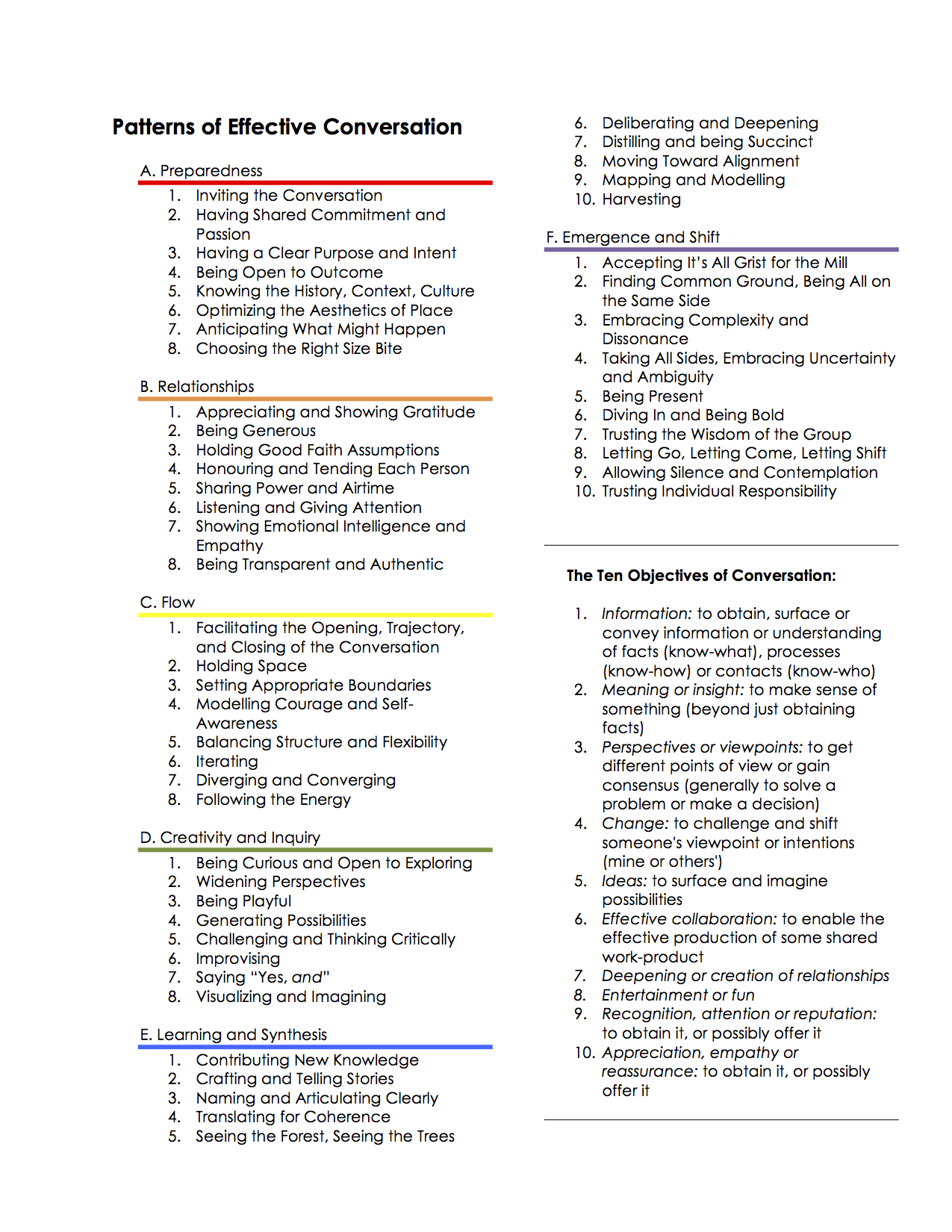
A week ago, at the Next Edge Festival in Montréal, I made a point of paying attention to the many conversations I had, or witnessed, in both small and large groups. It was an eye-opening experience. What I learned was:
- How incredibly important (in various senses of the word) conversation is
- The degree to which effective conversational skills among the participants affects the quality and value of the conversation (and hence, the urgent need for us all to become better conversationalists)
- That good writing skill does not necessarily correlate with good conversational skill
In chatting about this with a friend, the excellent writer and excellent conversationalist Paul Heft, he posed the question to me “What do you want from conversation?” My answer was, of course, that it depends on the subject, the context and the participants. What I might be looking for in any particular conversation could be one or more of the following:
- Information: to obtain, surface or convey information or understanding of facts (know-what), processes (know-how) or contacts (know-who)
- Meaning or insight: to make sense of something (beyond just obtaining facts)
- Perspectives or viewpoints: to get different points of view or gain consensus (generally to solve a problem or make a decision)
- Change: to challenge and shift someone’s viewpoint or intentions (mine or others’)
- Ideas: to surface and imagine possibilities
- Effective collaboration: to enable the effective production of some shared work-product
- Deepening or creation of relationships
- Entertainment or fun
- Recognition, attention or reputation: to obtain it, or possibly offer it
- Appreciation, empathy or reassurance: to obtain it, or possibly offer it
What I observed was that people seem to have varying biases among these objectives. Males generally seem to seek #9 more than #10, and women the opposite (with some notable and interesting exceptions). Narcissists seem to want both #9 and #10 (and are very clever at hijacking conversations to get what they want). Learning style appears to strongly influence conversational objectives: People who learn by debating tend to like objective #4, for example, while others who learn by contrasting different perspectives more passively seem to prefer objective #3.
I also learned that when the objectives of the participants in the conversation are not aligned, the conversation can be like a tug of war, almost comical (in a tragic way), and in most cases with very unsatisfactory results for all.
What was more distressing was to notice how often participants are clearly not aware of what their real objectives are at all; they seem to somehow expect other participants to figure it out and satisfy them nevertheless. From my observation, this expectation is usually not met.
In the ‘conversation’ between a writer and his/her audience, any reasonably coherent author is generally explicit about what the objectives of the writing are, and the reader/listener can choose to read/listen or not (and they will generally choose to read/listen only when the author’s explicit objectives and theirs are aligned). Not so in oral conversations, where you can see on the faces of people that they thought a conversation was going to achieve one of their objectives, and now feel trapped helping other participants achieve very different objectives.
Thinking back to my many years in business, the majority of the conversations seemed to have very narrow and explicit objectives (most often #1, and especially requests for “know-who” (“Who do you know who knows about…?”). Yet these conversations also clearly had a lot of unvoiced, unacknowledged and unrecognized objectives, what we call hidden agendas.
Social conversations, on the other hand, often seem to have no explicit objectives, which is perhaps why so many people are shy about them, and why these conversations are often awkward. Family conversations frequently appear even more so, and can also have hidden agendas. Easier to bury your face in your gadget and ‘converse’ online with people whose objectives are more overt and aligned with your own.
I have noticed that many young people have learned to cope with the ambiguity of written conversational text and with the general inarticulateness of the current age. Their rule seems to be: Don’t judge what you’ve just read until you get the context and clarification of what was really meant, which could be several dozen “I mean…” texts down the road. Someone has dubbed this “the successive approximation method of communication”.
Since I have been dabbling in pattern languages, I thought it might be interesting to see if it were possible to identify the patterns of effective conversation. Since conversation is a special type of “group process”, it seemed logical to start this inquiry with the pattern language for group process (“Group Works”), which I played a small part in bringing into the world. I reviewed some of the best and worst conversations I’ve experienced, and was able to cull the 91 Group Works patterns down to a more manageable 52 patterns of effective conversation. The result is shown in the diagram above. Please note that it’s just my own thinking, a “straw man” for discussion, and hasn’t gone through the rigorous validation process that Group Works has.
This pattern set acknowledges that (a) there are two stages to most conversations, the planning or preparation and the conversation itself; (b) conversations seem to have one or more of three ‘arcs': a creative arc driven by curiosity about possibility, a synthesis arc driven by desire to learn or decide, and an emergence arc driven by appreciation of complexity — and different patterns play out in the different arcs; and, (c) the best conversations entail collective sensitivity of the participants to both the participants (“relationships” patterns) and the process (“flow” patterns). Hence 6 different ‘categories’ of patterns.
The best conversationalists I know are extremely adept at invoking many or most of these patterns subtly and at opportune times during a conversation. If you read them through I’m guessing you know people who are particularly skillful at employing many of these patterns in conversations, with noticeable results. You probably know people who are particularly inept at invoking them (e.g. C3. Setting Appropriate Boundaries) with infuriating consequences — they can derail a conversation completely.
Note that these are patterns of good conversations, not techniques or practices. Some can be invoked but others just emerge (or fail to emerge) and need to be dealt with through an appropriate intervention in the moment. The skill is as much in noticing and learning the presence or absence of these patterns as in trying to employ them consciously. They are attributes of conversations more than instruments.
I’ve started keeping a copy of this list in front of me now during conversations (when I can do so unobtrusively), just to notice how I and the other participants in our conversations fare. I’m discovering specific patterns I need to work on more, and am starting to learn why the best conversationalists are so good at it. Feel free to download this PDF of the draft pattern list and tell me what you think — what’s missing, and where am I missing the point?
Now if only there were some way of improving the coherence and articulateness of conversationalists! I’m too old and impatient to learn the successive approximation method. So I’m learning that, for me, the patterns in Category F (Emergence and Shift) are essential to conversations with people who have very different conversational styles and worldviews from mine, and might save me from becoming even more of an impatient, misanthropic and curmudgeonly conversationalist than I already am.
Do you know the etymological origin of the word conversation, what it meant until the 16th century? Take a guess and then check it out — it might make you think differently about what a conversation really is.
24 Jun 16:35


Expand Your Publishing Reach on LinkedIn and Medium
by Tom Treanor

If you publish content on your website to reach new prospects, you may wonder how else you can find new audiences. We look at the benefits of publishing content on LinkedIn and Medium, and offer three bonus tips on how to produce more content with minimal time.
Publishing on LinkedIn
If you can publish content on your LinkedIn profile, then you have a powerful way to ensure that your contacts see your latest content. To find out if you can publish content to your LinkedIn profile, log in and look for this on your Home page.

If you don’t have it yet, you will likely have to wait until it’s rolled out to your account. Alternatively, you could contact support to see if they can enable your account for publishing.
Click on the option to publish a post. LinkedIn offers more detail about long-form posts on its publishing platform.
There are two main benefits of publishing content directly on LinkedIn:
- Your first-degree connections are notified.
- Your post can be featured on LinkedIn’s Pulse channels in a relevant category.
Let’s talk first about first-degree connections.
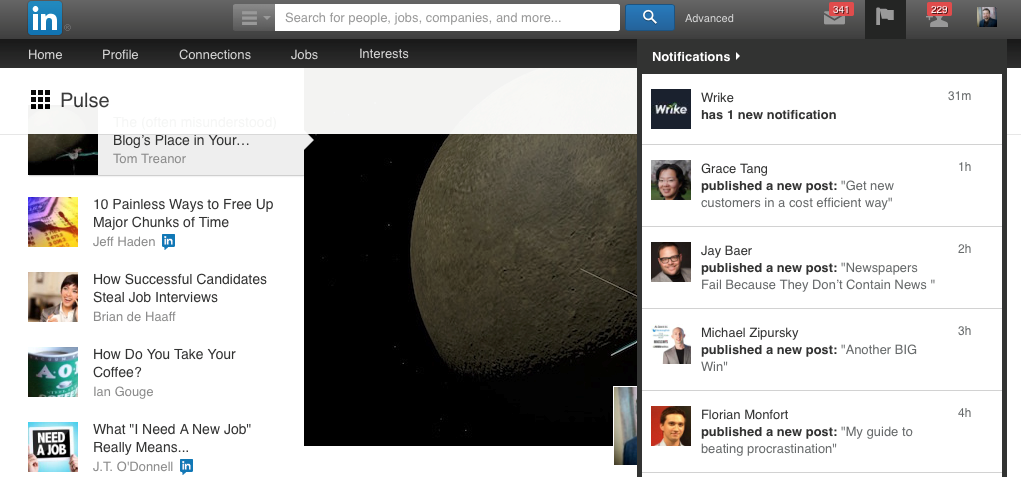
New post notifications are opt-out only for the time being, so your first-degree connections will receive notification through the LinkedIn website or app when you publish your first post.
You need to make your first LinkedIn post great. Offering great content is a must, and the headline is extremely important, as it will either encourage people to click to read your post or to turn off notifications about your future posts.
The key to making your content valuable is knowing who your connections are or knowing which ones you want to reach. For example, if your customers are CEOs in the marketing industry, then make sure you create posts with that profile in mind.
On the other hand, if you just want to make sure your content gets the most exposure possible, you will want to cater to the major commonalities among your first-degree connections. Start by going directly to LinkedIn’s people search.

In the sidebar, use search filters to see where the majority of your contacts are located and in what industries they belong.
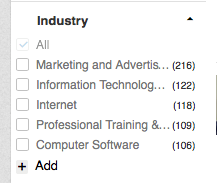
LinkedIn Premium members can see the groups to which their first-degree connections belong, job functions, and seniority levels.
All of these can help you determine what kind of content to create to appeal to the majority of your first-degree connections. You can’t cater to everyone, but you can make sure that the majority of your first-degree connections like your first and subsequent posts.
The second benefit is that your content can be featured in LinkedIn’s Pulse, which is a digest of top posts – typically by category – as selected by LinkedIn. The categories include entrepreneurship & small business, marketing & advertising, productivity, leadership & management, recruiting & hiring, careers, and big ideas & innovation.
To access Pulse from your profile, go to Interests and then click Pulse.
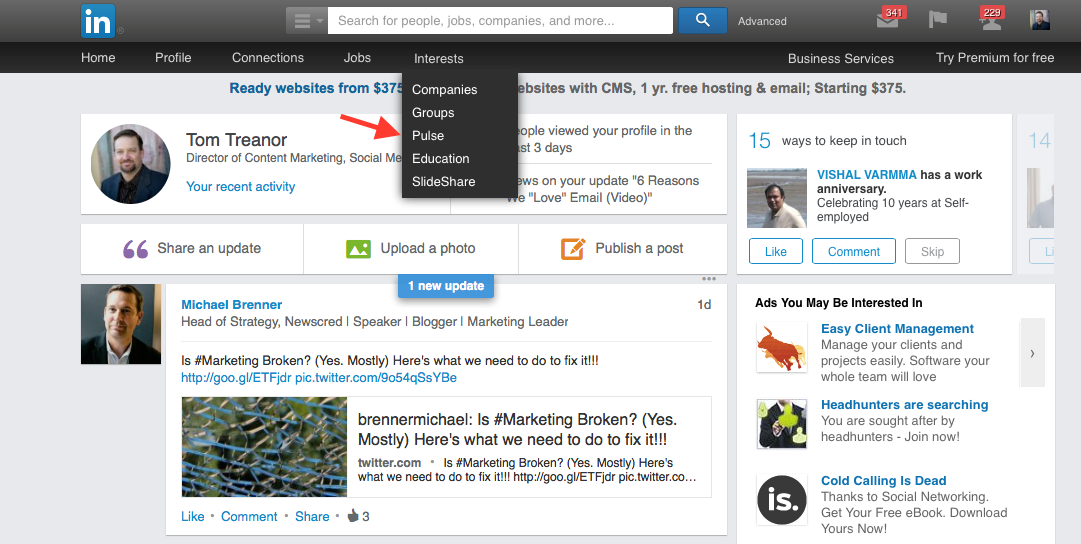
You’ll see the collection of featured posts as well as their categorization.
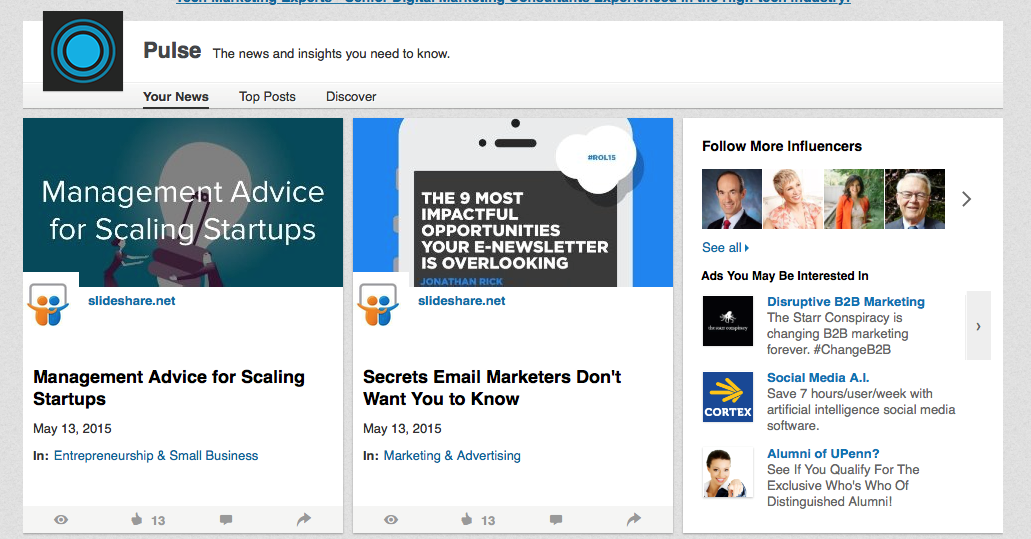
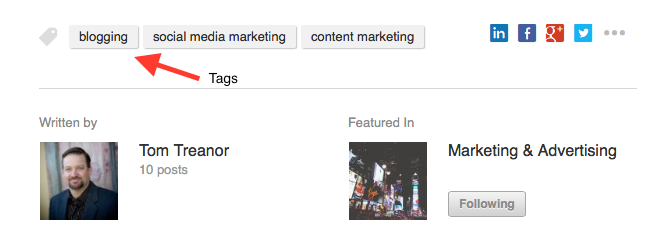
To get selected as a featured post in a category, choose a topic that fits squarely into a category, provide great educational content, select an appealing picture, and add relevant tags to the bottom of your post. Selection of featured posts by LinkedIn can happen quickly (sometimes within minutes of publishing, from my experience).
See the tags and the featured designation at the bottom of this post, below.
To select topics, it can be helpful to see what type of content does well on LinkedIn as a whole. You can run this search on BuzzSumo to find out.

Medium
Medium is a blogging platform that uses minimalist design to focus on high-quality content. It’s free to use – you just sign in with your Twitter or Facebook account when you have blog content to publish. You even get a free statistics dashboard to see the impact of your posts, referred to as stories.
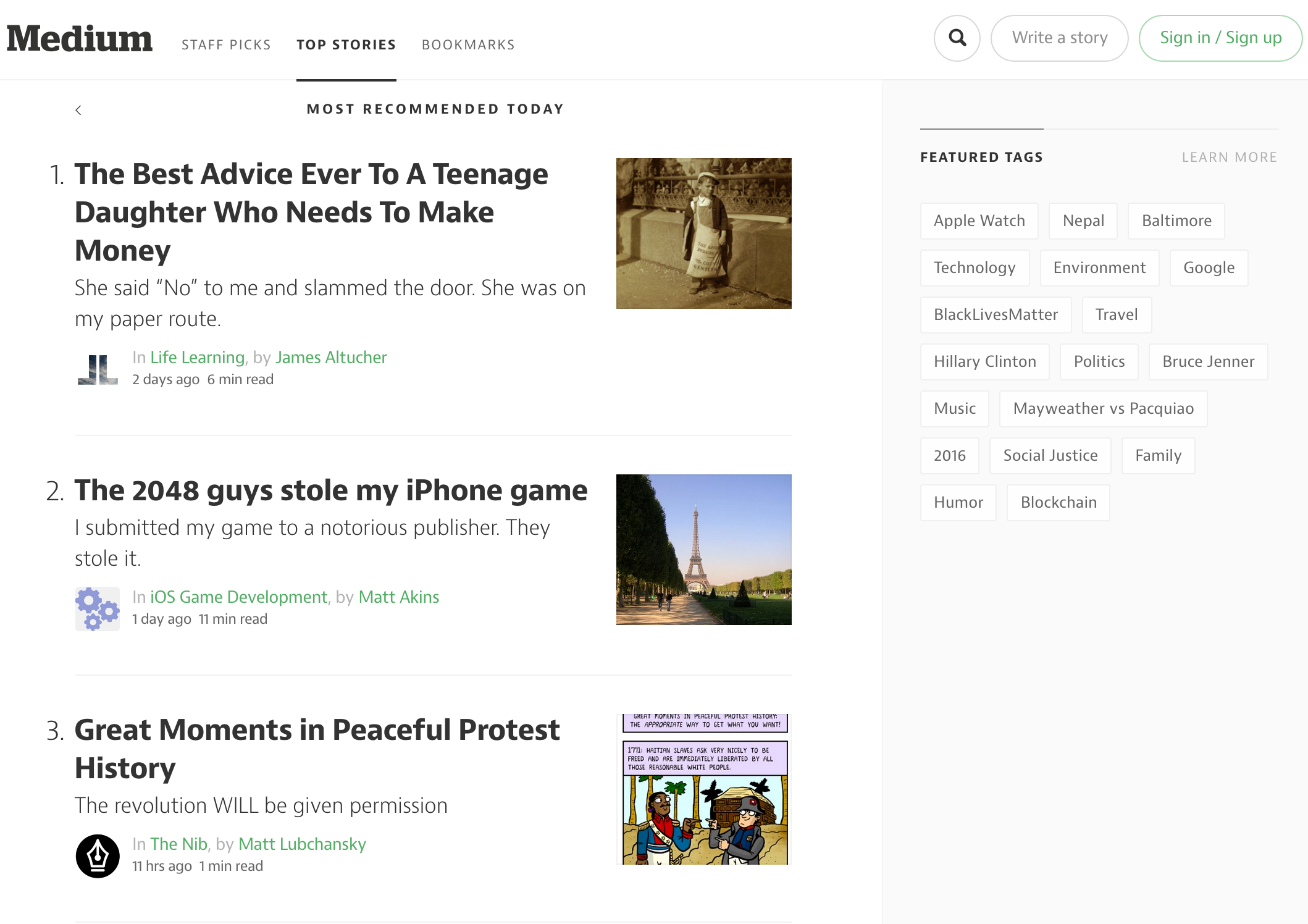
Unlike your own blogging platform, Medium recommends other stories published on the site. Therefore, your stories have the chance to get a lot more exposure than if you publish it on your own website.
One great benefit of publishing content on Medium is viral social sharing. The top post published on LinkedIn within the last year had 100,000 shares. The top stories on Medium have more than 300,000 shares.

Aside from the potential of going viral, you also can grow an audience of followers on Medium that are interested in your content. Your followers will see your latest content when they log in to their Medium accounts and browse their home newsfeed.
Bonus: 3 tips for content creators with minimal time
You likely are asking yourself how you are supposed to create content for all of these channels and your own blog? For those who do not have the time to create unique content for multiple channels, there are a few options.
- Republish your own content. Some authors republish their content from one site to another, with credit to the original site.

- Change the length. If you have a massive 2,000-word post on your blog, you can summarize it as a post on LinkedIn, and then link to your original post for traffic value.
- Write related content. Let’s say that you’re writing a post about how to use Facebook ads on your own blog. You can write a related post about how to use Facebook Power Editor to submit to another publication, and find a way to link to the original post on your own blog as a reference.
Grow your reach by publishing on other sites
If you follow these tips, you will be able to get more mileage out of the content you create so you can get added value from multiple channels.
Want to explore how to get your content in front of and shared by influencers in your industry? Download the CMI toolkit, The Complete Guide to Influencer Marketing: Strategies, Templates & Tools, which walks you through a simple 10-step process and provides three customizable templates.
Cover image by Viktor Hanacek, picjumbo, via pixabay.com
The post Expand Your Publishing Reach on LinkedIn and Medium appeared first on Content Marketing Institute.
24 Jun 16:35


Joe Pulizzi (The Godfather) Discusses the Content Marketing Revolution #CMWorld
by Lee Odden

Without anyone accusing me of exaggerating, I can safely say that Joe Pulizzi is a bona fide content marketing visionary. Joe started using the term “content marketing” in 2001, long before the rest of the industry caught on to its potential. In the past decade and a half, Joe has firmly established his thought leadership in the field, earning the nickname “The Godfather of Content Marketing.”
In 2007, Joe founded the Content Marketing Institute (CMI), which has grown into a vital resource for thousands of marketers worldwide. In addition to building a massive hub of marketing resources, classes, and training programs, CMI produces Content Marketing World, the world’s largest content marketing event.
I recently sat down with Joe for a sneak preview of his keynote address at the 2015 Content Marketing World. Read on for Joe’s thoughts on how content marketing is evolving, the strategies that led to CMI’s success, and how to become an “octopus of content love.”
If you focus on a subscriber approach to audience development, you can go deeper with your content and emphasize value.
Without giving too much away from your keynote, what are 3 exciting evolutions for content marketing that you see on the horizon?
- I’m really interested in the merger and acquisition scene. It’s going to hit people like a big surprise, especially in B2B. Particularly in tech, companies will see content factories already built and those will be attractive acquisitions when considering the time it takes to build.
- Only 30% of marketers have subscription growth as a key metric. It speaks to where we are with content marketing. The notion that we need to build content for the buyer’s journey and different stages has been overblown. It’s easier to simplify that idea and just become an ongoing guide and resource and we touch the customer with value – every day, every week. They’re going to create their own buyer’s journey anyways. If you focus on a subscriber approach to audience development, you can go deeper with your content and emphasize value. Instead of focusing on 57 segments and 5 stages, create an incredible experience for your customers and you’ll have an amazing outcome. Simplify and create more value.
- I’m excited about the field of journalism again. Marketers are bringing in professional journalists that have a nose for stories. The media business model is broken, but media itself is flourishing. There’s never been lower barriers to entry and easier ways for customers to access it. The more journalists in marketing, the better. If they want to tell great stories and have funding to do so, the opportunity is there.
Digital publishing has become more popular because we can, and not for the right reasons.
Based on your recent report at CMI, it appears that B2B and B2C marketers alike are continuing to struggle with measurement of content marketing activities. What do you believe are the biggest barriers to either collecting the data or focusing on the right metrics?
The clear majority of marketers have no documented content marketing strategy. If we can start with documenting the why, the business goal and audience, then you can begin to develop an action and execution plan that includes measurement. Digital publishing has become more popular because we can, and not for the right reasons.
People implementing content marketing do so because they’re told to, without understanding why. Content marketers need to ask the right questions relevant to achieving business goals.
We want to be an octopus of content love to provide them with options.
What are the biggest challenges that your own company faces when it comes to content creation, promotion and measurement?
Choosing the right activities – there are so many things we could do. Our key metric to everything is based on subscribers. I’m focused on creating a unique story that subscribers can’t get anywhere else. I’m focused on looking at subscribers and how we can improve.
Those people that engage with at least 3 different types of content, they are way more likely to attend CMI or buy something from us. We want to be an octopus of content love to provide them with options. The more we can do that the more positive results we’ll see.
Brands with huge budgets are struggling because they are so campaign focused.
What is the single most important thing you’ve learned in your journey from publishing to becoming the “Godfather of Content Marketing”?
If you build a loyal audience over time, you can sell them whatever you want. Focus on a content niche relevant to an area of business that you’re focused on, and develop an audience. As you build that audience, you can figure out what best to sell to your community.
Brands with huge budgets are struggling because they are so campaign focused.
There’s convergence – media companies are becoming product and product companies are becoming media companies. Soon you won’t be able to tell the difference.
What Content Marketing mix is CMI currently experiencing the most success with?
The podcast has been a pleasant surprise with a consistent flow of sponsorship that’s growing. In person events that I and Robert Rose speak at. The masterclass series of small workshops in different cities across the U.S. have been successful for driving registrations to the CMWorld event.
We have one person in charge of Internal content curation and repurposing that drives subscribers.
Do you believe that email marketing is dead or still very much alive? Why?
Not at all. It’s the most important thing we do. It’s harder to cut through the clutter but if you do, you get the lion’s share of attention.
Ready to Up Your Content Marketing Game?
Be sure to reserve your space at Content Marketing World for thought-provoking presentations from Joe and over 200 other luminaries in the content marketing industry.
Get a preview of Content Marketing World’s blockbuster lineup with Measuring Your Content Marketing Box Office Success, featuring advice from industry thought leaders Michael Brenner, Julie Fleischer, and of course, Joe Pulizzi.
Access All Three eBooks On-Demand

If you missed the premiere of any one of the eBooks in our triple feature, you are in luck! You can access all three of them anytime, anywhere. Select the links below, grab some Junior Mints and dig in.
The Big Picture of Content Marketing Strategy
Making Content Marketing the Star of Your Marketing
Measuring Content Marketing Box Office Success
 Gain a competitive advantage by subscribing to the
TopRank® Online Marketing Newsletter.
© Online Marketing Blog - TopRank®, 2015. | Joe Pulizzi (The Godfather) Discusses the Content Marketing Revolution #CMWorld | http://www.toprankblog.com
The post Joe Pulizzi (The Godfather) Discusses the Content Marketing Revolution #CMWorld appeared first on Online Marketing Blog - TopRank®.
24 Jun 16:35

9 Hacks to Find Anyone's Email Address
by esnider@hubspot.com (Emma Snider)

You've got a personalized, customized pitch for the perfect prospect. What you don't have? Their email address.
Not to worry. If you have a mere five minutes, you can find this crucial piece of information.
The nine methods below are guaranteed to surface almost anyone's business email address. If you're absolutely positive your email will benefit the intended recipient, don't let an unknown email address stand in your way.
Very important disclaimer: Use these tools for good, not evil. Spamming is never acceptable. Each and every single one of your sales emails should be personalized to the recipient and provide them some value -- whether big or small. A good test to determine whether your email is actually spam? If the message isn't customized enough to be appropriate for one person and one person alone, don't send it.
Without further ado, here are nine hacks to find just about anyone's email address in a matter of minutes.
1) Press releases
When a company announces news, the PR manager writes and publishes a press release. And what's at the bottom of most every press release? Contact information.
Companies often list a generic contactus@business.com email address, but the PR manager's direct email address will usually be printed as well. Now that you have the email convention for the company, simply apply the formula to your prospect. Voila!
2) Mailtester
Have a good idea of what the person's email might be? Enter it into Mailtester to verify if the address exists on the company's server.

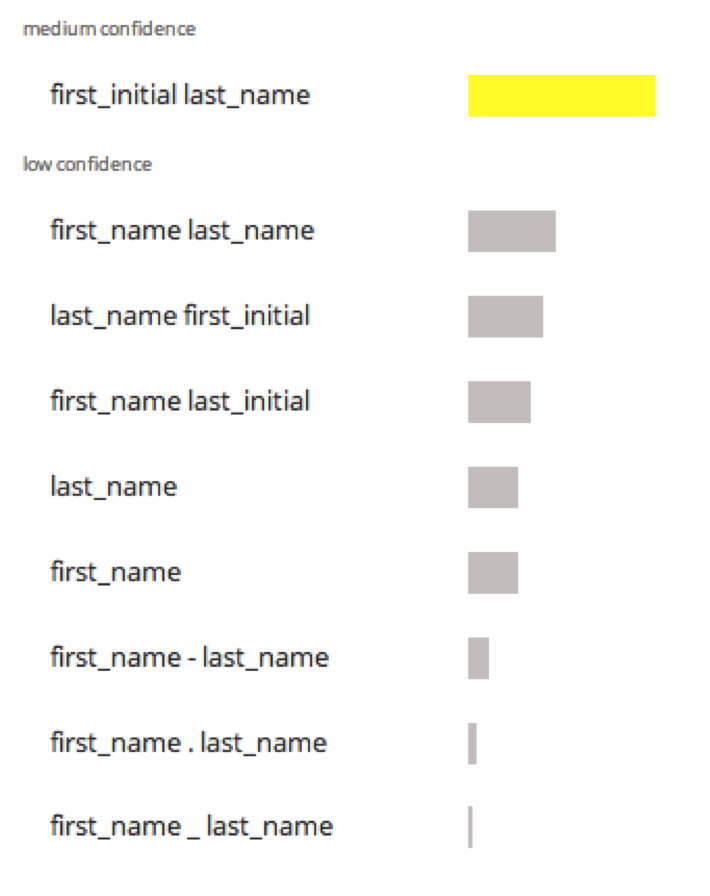
3) Email Format
Enter the domain your contact's email address lives on and click search. Email Format will turn up any email addresses it finds on the domain, and you can mimic the convention from there. If no email addresses pop up, the tool will list possible conventions in order of confidence:
4) Call the company
Sometimes to get an email, you have to call. Try calling the company's general inquiries phone number and asking for the contact information of the person you're looking for.
However, for this tactic to work, you'd be wise to turn down the "salesy" aspect of your request. You should never intentionally lie to or pull the wool over the gatekeeper's eyes, but choose your words carefully so as to avoid putting the person on guard. For instance, instead of saying "I'd like to get in contact with Jill Smith to tell her about an amazing new product my company released," you could explain, "I'd like to get in contact with Jill about HR expenses."
Check out this video for an example of how to gently ask for contact information over the phone.
5) AllMyTweets
From time to time, people will give out their email addresses on Twitter, usually in response to a direct comment. But considering the volume at which active Twitter users post, pressing "load more tweets" over and over again until you find contact information will probably take you all day (if not all week).
To view all the tweets someone has ever posted on a single screen, enter their handle into AllMyTweets. After the page is populated with tweets, you can simply search for "email" or "company.com," and their email address will appear if they've ever tweeted it out.
6) Email generator + Rapportive
This one is a two-step process. First, visit an email generator site such as Email Address Guesser and enter your potential recipient's name and email domain. The tool will generate a comprehensive list of all possible permutations of the person's email address.

Next, download Rapportive if you don't already have it. When you compose an email, this free Gmail add-on will display a sidebar with the recipient's public LinkedIn information such as contact data, recent social posts, and title.
Finally, open a new message in Gmail and copy and paste the list of potential email addresses into the "send to" line. Expand Rapportive and click on each email address. If Rapportive finds a LinkedIn account associated with that email address, the sidebar will autofill with data. Correct email address found!
For a step-by-step explanation of how to pull off the email generator + Rapportive hack, watch this video:
7) Anymail Finder
It doesn't get much easier than this. Anymail Finder asks users for the intended recipient's name and email domain. It then returns an email address.

Not sure it's the right one? Run it in Mailtester to verify the email address exists on the company domain.
8) Voila Norbert
Different tool, exact same functionality. Now with a digital butler!

9) Sell Hack
Sell Hack's email search extension functions similarly to Anymail Finder and Voila Norbert, except that users can also input social profiles. But be warned that after a certain number of uses, the tool will ask you to replenish your credit by sharing a link on social or emailing a friend.
Editor's note: This post was originally published in June 2014 and has been updated for comprehensiveness.

24 Jun 16:34
Value Creation as a Form of Discounting
by Dave Brock
There are all sorts of articles on creating superior differentiated value. Lots of them talk about creating more value than the customer expects, surprising and delighting them.
In truth, I’ve been raised in this camp and have espoused some of these concepts myself. Just the concept of “added value,” is actually value over and above what the customer needs and expects.
In reality, value creation can be a slippery slope.
We need to create the value needed to win the business, at a price the customer is willing to pay and that is acceptable to us. Going over and above that can be creating value the customer doesn’t want or need, or can be tantamount to giving value away and providing huge discounts.
Stated differently, value creation has value.
If it doesn’t create value, then we are wasting the customer’s time. If we provide more value than required, we are actually “giving it away.”
The trick is determining what value the customer is willing to pay for at a price that we are willing to accept—-and providing no more.
This may sound like a lot of double talk, and perhaps there’s an element of double talk. It’s hard to know, in any situation, specifically what the proper balance is—but I think there are ways that we can minimize the amount of “added-value.”
I think it goes to some basic principles.
- We have to really know what problems we are the best in the world at solving and who has those problems. These are the customers we can create value which they value and for which they will pay. Everything else is a waste of time.
- We have to really understand the magnitude and impact of those problems on the customer. This comes from understanding and engaging the customer very deeply in discussions about these problems. We can’t deal with them at a superficial level, we have to really dive into them. The good news is that in all but the simplest purchases, the customer needs the same deep understanding and analysis to know what value they need and should expect. Since we are, presumably, experts in solving these problems, we know how to get to these root issues most effectively and efficiently. Others less skilled, will stumble around, perhaps getting to the same point over a longer time and higher cost (good news for us, because it limits their discounting capability). Those that don’t engage at this level, aren’t creating the value the customer needs, so they are likely to be disadvantaged when the customer reaches a decision.
- We have to gain agreement from the customer about the magnitude and impact of those problems. As part of this, we need to understand what the customer values–each person involved in the buying process.
- As we move to discussing the solution, we have to do that in the context of what the customer values–each of them. Additionally we have to gain agreement about the value of the solution–that is the specific outcomes they expect. We are working on constantly shifting ground. What the customer wants/needs/values changes in the process–as they get smarter about the issues and solutions. What the customer wants/needs/values will vary by individual buyers in the customers through the buying process. And when they get together to “decide” this will change even more.
- The value we need to create is never formulaic, it’s constantly changing based on the changes in the buyers, our engagement, the competitors’ engagement, and how the buying dynamic changes in the buying journey.
- In determining the “right” value to create, the more we earn the right to help facilitate the customer’s buying process, the more they rely on us in making their buying decision, the better we can manage the value delivery process.
This is still somewhat theoretic and esoteric, so how do we bring this down to something we can implement and execute? We have to find ways of putting these principles into practice.
It starts with paying attention to the customer–what they are trying to achieve. Engaging them in discussions about what they really value–they often don’t know until you do really deep dives on this (You can’t ask them, “What do you value,” you have to explore to determine than validate/verify that it is meaningful.) Doing this actually helps us to determine how much value we need to create, and when we are creating more than needed or appreciated.
Sometimes there are things that we think customers should value–we can explore that, but if the customer doesn’t value it, then we are pushing a rope up hill. We need to stop it–regardless how important it is to us, if it isn’t to the customer, then focusing on it reduces our value.
This means paying close attention to the customer, challenging them, gauging their response actually enables us to determine what value we need to create at what price. Stated differently, it’s being engaged as well as being engaging.
Making it even less obscure, it being conscious that piling on more and more value simply doesn’t make sense. Creating the most value doesn’t create profitable wins. Creating the right value is what drives profitable wins.
We can learn a lot from Lean pracitioners. Lean focuses on understanding value and delivering it–not delivering too little or delivering more than needed. All of that is defined as waste.
24 Jun 16:34
 About the author

How to Use Scarcity to Get Lazy People to Act (Without Being Shady)
by Demian Farnworth

Let’s be honest with each other for a moment.
Both you and I know we are lazy when it comes to activities that don’t appeal to our self-interests. We stall. We resist. We ignore.
This is not a bad thing, mind you. In fact, it’s necessary. We do it to protect our limited resources. You and I only have so much time, energy, and money.
As digital marketers, however, with products we wish to sell, we need our audiences to overcome their resistance to taking action.
I love this line by Sonia Simone that perfectly sums up the situation we face:
You could have a product that granted immortality, robust health, unlimited wealth, and a lifetime of great hair … and people would still put off adding it to their carts.
First, you need to acknowledge that this resistance is a problem.
Don’t be ashamed

In a previous article, I talked about a common problem I see on landing pages, particularly when offering free opt-in content.
This problem is that when a product is free, many writers believe that they don’t have to offer much copy to their prospects. They think the word “free” will do all the work.
That’s simply not the case. You are asking “free” to do too much.
But there is another common problem I see when evaluating landing pages. It has to do with calls to action.
Of course all the pages I review have calls to action. I think we’ve impressed that principle enough on people that it’s become a convention.
But a standard call to action lacks power if it lacks a sense of urgency. A sense of scarcity.
At this point, two questions may be crossing your mind.
- “Does that mean I need to make something up to create scarcity?”
- “And if I make something up, isn’t that shady?”
To answer your questions: no, you don’t have to make something up, because, yes, that is shady.
In our effort to be known, liked, and trusted, we can’t lie in order to line our pockets.
And spin it any way you want, manufacturing scarcity is lying. Eventually you’ll be found out. And your short-term gains will lead to a long-term scarcity of customers.
That’s not the type of scarcity I’m talking about.
The return of FoMO

If you think about it, scarcity is just another species of what is known as Fear of Missing Out. It works on our brains in the same way.
Here’s the impact of what scarcity does to the mind.
A study published in May 1998, “Get’ em While They Last! Effects of Scarcity Information in Job Advertisements,” showed the number of application entries a company received from help wanted ads that listed how many job vacancies were available, as well as company image perception.
I think you probably know where this is going.
Companies that only advertised a few job vacancies not only received more applications, but the perception of Company A (with a few positions available) was significantly different from the perception of Company B (with an abundant number of positions available).
Now, our first impression of Company B goes something like this: since they have more jobs available, the chance of getting a job there is higher than the chance of getting a job at Company A.
So you might expect more applications to flood Company B. Yet the contrary happened.
People flooded Company A with applications because they made two assumptions about the company (whether or not they were indeed true):
- Company A paid better.
- Company A had to be a better place to work.
People interpret a company that has only a few positions available as highly sought-after employment. It suggests people really love to work for this company and don’t want to leave (perhaps they pay well).
By the way, these were positions for a restaurant server. Not some slick job at a Silicon Valley empire.
Another principle at work: social proof

The job advertisement example above is one version of social proof. It’s not the most common.
A common form of social proof is the long line of people running out of a restaurant and snaking its way around the corner. Without knowing anything else about the restaurant, you will assume that it’s popular, and if it’s popular it has to be good, and so you join the end of the line.
This is not unlike the practice of displaying (once it reaches a massive milestone) how many people have subscribed to your email newsletter, joined your training course, or bought your product.
There is power in a “Join a million+ breath-taking readers” message.
Social media shares are yet another example of social proof.
A quick look at the social shares on an article will help us decide whether or not to read it. We may ignore an article with two shares, but if there’s one with 14,000 shares? We screech to a halt and investigate.
But the true — and crazy — potential of scarcity can be seen when a whole heck of a lot of people want a very limited supply of an item.
The freak show known as Black Friday

One of the most visible examples of scarcity at work in the minds of consumers occurs on a Friday. After Thanksgiving.
Consider the conversation going on in the head of a typical Black Friday consumer:
“Tomorrow Best Buy has Xbox One consoles on sale.”
“Yeah, for nearly a quarter of their normal price.”
“Our son really, really wants an Xbox One. His love for us would never end if we got him one for Christmas.”
“Yes. We need our son to love us for a very long time.”
“But there’s a problem.”
“What?”
“Best Buy probably only has 40 of these consoles available.”
“Turds.”
“And there are nearly 400,000 people who live within a 15-mile radius of that Best Buy — that’s at least 1,000 sons wanting the same console.”
“At least.”
“And 1,000 sets of parents with the same thought on their minds as us.”
“Greedy turds …”
“Are you thinking what I’m thinking?”
“Yes.”
“You get the tent. I’ll grab the brass knuckles.”
That scary mix of low price, low quantity, and high demand creates a powerful effect.
And so, how do you recreate that scarcity effect in a legitimate way?
Here are six ways.
1. Create competition

You can recreate a legitimate sense of scarcity by creating competition among participants.
For example, I used to work for a guy (whom I love dearly) who would pound his desk and tell me, “Tell them how many people we are sending this offer to.”
So a line in my email would read:
By the way, I think it’s only appropriate to tell you that we are sending this limited offer to 24,545 other people. In other words, if you are the least bit interested, act now. Tomorrow might be too late.”
Add a refund policy, and we never had any problem moving product.
2. Raise prices

The impact that higher prices can have on the human psyche is interesting. For example, in Robert Cialdini’s book Influence, he tells the story of a jewelry shop for tourists who sold all of their items after raising the prices.
But the price raises were actually done by mistake.
The owners were going out of town, and they told the person watching the shop to lower the prices. She misunderstood and raised the prices. Tourists, under the assumption that high prices meant a scarce product, scooped up everything.
Keep in mind, these are people with money who want to spend money. Let me explain why this is important.
In a study published in 1992, “Product Scarcity by Need for Uniqueness Interaction: A Consumer Catch-22 Carousel?,” researchers discovered a relationship between a phenomenon known as Need for Uniqueness (a deep sense that we need to stand out from others) and product scarcity.
In summary, this need drives us to seek out those scarce products that promise we will achieve and maintain a sense of specialness.
So, in the Cialdini example, the tourists were looking to spend money to satisfy that high Need for Uniqueness because you know they wanted to go back home and show off their newfound treasures.
Right after they posted a picture on Instagram and Facebook, of course.
3. State strict requirements to join

The other day, Jerod Morris and I had a good laugh over the fact that I’ve never been invited to any type of mastermind group. I guess I’m not mastermind material. Not that I’m complaining.
Some mastermind groups use a special form of scarcity that makes those groups more exclusive. Think of a millionaire’s club. You can’t join unless your income exceeds one million dollars a year.
Then there are the clubs for billionaires only. Where the big kids play. With their vintage car collections. On their private islands.
Top-notch universities keep the general population at bay through tough entrance exams. But that still doesn’t keep thousands of people from wanting to pay $45,278 a year for undergraduate tuition at Harvard.
Strict requirements don’t only have to be for items you are selling. You can use scarcity and exclusivity for free membership sites. Here’s the one I love to hate: Beautiful People.

In order to be accepted, those already inside must vote you in. Talk about intimidation. If accepted, though, you then become one of them — the beautiful people.
And you can brag about it.
4. Take it away

Scarcity also works on our desire to want something even more when we are told we can’t have it.
Once we’ve made a commitment — even a very small one — we don’t like to be told we can’t have something. Our half-baked pledge turns into a hellbent determination when somebody suggests we don’t measure up.
How. Dare. They. I’ll show them.
In some cases, this takeaway could be as simple as pouring on a ridiculous amount of value so the reader sees a better version of herself that she really wants and then saying, “You know what? This might not be for you. I don’t know if you are actually willing to do x, y, and z. I’ve seen it so many times. People say they want these changes, but they are not willing to do x, y, and z. ”
5. Pull it off the market

A variation of “The Takeaway” is pulling your product off the market.
Let’s say you offer a limited window of time for joining a training course — and then pull it off the market when the deadline arrives. That closing window of opportunity will get people off their duffs and pulling out their wallets.
They don’t want to wait another six months for you to re-open registration.
While your product is off the market, you can encourage people to join a waiting list with the promise that they will be the first to be notified when the offer becomes available again.
6. Make a product so irresistible that demand goes up

Finally, you can create scarcity by drumming up good, old-fashioned demand for your product.
I love the economic concept of supply and demand. My father, a trained economist, used to instruct me and my sister on this idea using stick rabbits on a chalkboard in our attic.
We — two blonde, boney kids — giggled until he got pissed.
But that lesson stuck with me. And now I jump on every chance I get to teach this to my own kids.
Now it’s your turn. The concept is simple.
- If supply is low and demand is low, your price will be low. You will never sell a thing.
- If supply is high, however, and demand is low, if you want to move product, then you’ll need to cut the prices even lower.
- If supply and demand are both high, then cut production and raise your prices.
- But if supply is low and demand is high, then you raise your prices.
The last bullet point above is the freelancer negotiating sweet spot — or the sweet spot for anyone in the service industry (where you trade your time for money).
Since your time is limited, an increasing number of people who want your time creates a pool of people who are willing to pay higher and higher prices for it.
Naturally, you are probably wondering: what’s the best way to increase demand?
Become a purple cow. And once demand exceeds supply, don’t seek to correct that gap.
Simply raise your prices. That’s scarcity at work.
A powerful way to get people to act
Scarcity is a powerful way to get people to act. Often, though, marketers manufacture scarcity and lose trust with consumers.
Fortunately, there are legitimate ways to create scarcity. But ultimately, you need to create a product or service people can’t resist — a product that drives demand up, which will lead to higher prices for your product or service.
This is the scarcity sweet spot.
Now that you’ve gotten a little lesson on scarcity, you should be able to spot examples out in the real world.
Why not share some of your favorite examples in our LinkedIn discussion. And drop me any questions or comments you might have.
You can also find me on Twitter.
About the authorDemian Farnworth
Demian Farnworth is Copyblogger Media's Chief Content Writer. Follow him on Twitter or The Copybot. In the meantime, subscribe to his podcast: Rough Draft.
The post How to Use Scarcity to Get Lazy People to Act (Without Being Shady) appeared first on Copyblogger.
24 Jun 16:33


Navigating the Dozens of Different Strategy Options
by Martin Reeves
In this adaptation from the new book, Your Strategy Needs a Strategy (HBR Press, 2015), BCG strategy experts make sense of the all the different, and competing, approaches to strategy: Which strategy is right for your business? When and how should you implement it? The practical tool offered here helps executives answer such questions as: What replaces planning when the annual cycle is obsolete? Where can we — and when should we — shape the game to our advantage? How do we simultaneously implement different strategies across different business units?
Executives are bombarded with bestselling ideas and best practices for achieving competitive advantage, but many of these ideas and practices contradict each other. Should you aim to be big or fast? Should you create a blue ocean, be adaptive, play to win — or forget about a sustainable competitive advantage altogether? In a business environment that is changing faster and becoming more uncertain and complex almost by the day, it’s never been more important to choose the right approach to strategy.
And it has never been more difficult. The number of strategy tools and frameworks that leaders can choose from has grown massively since the birth of business strategy in the early 1960s (see the chart below — and keep scrolling, you’ll get to the end eventually). And far from obvious are the answers to how these approaches relate to one another or when they should and shouldn’t be deployed.
It’s not that we lack powerful ways to approach strategy; it’s that we lack a robust way to select the right ones for the right circumstances. The five forces framework for strategy may be valid in one arena, blue ocean or open innovation in another, but each approach to strategy tends to be presented or perceived as a panacea. Managers and other business leaders face a dilemma: with increasingly diverse environments to manage and rising stakes to get it right, how do they identify the most effective approach to business strategy and marshal the right thinking and behaviors to conceive and execute it, supported by the appropriate frameworks and tools?
To address the combined challenge of increased dynamism and diversity of business environments as well as the proliferation of approaches, we propose a unifying choice framework: the strategy palette. This framework was created to help leaders match their approach to strategy to the circumstances at hand and execute it effectively, to combine different approaches to cope with multiple or changing environments, and, as leaders, to animate the resulting collage of approaches.
The strategy palette consists of five archetypal approaches to strategy — basic colors, if you will — which can be applied to different parts of your business: from geographies to industries to functions to stages in a firm’s life cycle, tailored to the particular environment that each part of the business faces.
Five Strategy Environments
Strategy is, in essence, problem solving, and the best approach depends upon the specific problem at hand. Your environment dictates your approach to strategy. You need to assess the environment and then match and apply the appropriate approach. But how do you characterize the business environment, and how do you choose which approach to strategy is best suited to the job of defining a winning course of action?
Business environments differ along three easily discernible dimensions: Predictability (can you forecast it?), malleability (can you, either alone or in collaboration with others, shape it?), and harshness (can you survive it?). Combining these dimensions into a matrix reveals five distinct environments, each of which requires a distinct approach to strategy and execution.
Each environment corresponds to a distinct archetypal approach to strategy, or color in the strategy palette, as follows: predictable classical environments lend themselves to strategies of position, which are based on advantage achieved through scale or differentiation or capabilities and are achieved through comprehensive analysis and planning. Adaptive environments require continuous experimentation because planning does not work under conditions of rapid change and unpredictability. In a visionary setting, firms win by being the first to create a new market or to disrupt an existing one. In a shaping environment, firms can collaboratively shape an industry to their advantage by orchestrating the activities of other stakeholders. Finally, under the harsh conditions of a renewal environment, a firm needs to first conserve and free up resources to ensure its viability and then go on to choose one of the other four approaches to rejuvenate growth and ensure long-term prosperity. The resulting overriding imperatives, at the simplest level, vary starkly for each approach:
• Classical: Be big.
• Adaptive: Be fast.
• Visionary: Be first.
• Shaping: Be the orchestrator.
• Renewal: Be viable.
Using the right approach pays off. In our research, firms that successfully match their strategy to their environment realized significantly better returns— 4-8% of total shareholder return — over firms that didn’t. Yet around half of all companies we looked at mismatch their approach to strategy to their environment in some way.
Let’s delve a little deeper to see how to win using each of the basic colors of strategy and why each works best under specific circumstances.
Classical
Leaders taking a classical approach to strategy believe that the world is predictable, that the basis of competition is stable, and that advantage, once obtained, is sustainable. Given that they cannot change their environment, such firms seek to position themselves optimally within it. Such positioning can be based on superior size, differentiation, or capabilities.
Positional advantage is sustainable in a classical environment: the environment is predictable and develops gradually without major disruptions.
To achieve winning positions, classical leaders employ the following thought flow: they analyze the basis of competitive advantage and the fit between their firm’s capabilities and the market and forecast how these will develop over time. Then, they construct a plan to build and sustain advantaged positions, and, finally, they execute it rigorously and efficiently.
Mars, the global manufacturer of confectionery and pet food, successfully executes a classical approach to strategy. Mars focuses on categories and brands where it can lead and obtain a scale advantage, and it creates value by growing those categories. This approach has helped Mars build itself into a profitable $35 billion company and multi-category leader over the course of a century.
Classical strategy is probably the approach with which you are the most familiar. In fact, for many managers, it may be the approach that defines strategy. Classical strategy is what is taught in business schools and practiced in some form in the majority of strategy functions in major enterprises.
Adaptive
Firms employ an adaptive approach when the business environment is neither predictable nor malleable. When prediction is hard and advantage is short-lived, the only shield against continuous disruption is a readiness and an ability to repeatedly change oneself. In an adaptive environment, winning comes from adapting to change by continuously experimenting and identifying new options more quickly and economically than others. The classical strategist’s mantra of sustainable competitive advantage becomes one of serial temporary advantage.
To be successful at strategy through experimentation, adaptive firms master three essential thinking steps: they continuously vary their approach, generating a range of strategic options to test. They carefully select the most successful ones to scale up and exploit. And as the environment changes, the firms rapidly iterate on this evolutionary loop to ensure that they continuously renew their advantage. An adaptive approach is less cerebral than a classical one—advantage arises through the company’s continuously trying new things and not through its analyzing, predicting, and optimizing.
Tata Consultancy Services, the India-based information technology (IT) services and solutions company, operates in an environment it can neither predict nor change. It continuously adapts to repeated shifts in technology—from client servers to cloud computing—and the resulting changes that these shifts cause in their customers’ businesses and in the basis of competition. By taking an adaptive approach that focuses on monitoring the environment, strategic experimentation, and organizational flexibility, Tata Consultancy Services has grown from $155 million in revenue in 1996 to $1 billion in 2003 and more than $13 billion in 2013 to become the second-largest pure IT services company in the world.
Visionary
Leaders taking a visionary approach believe that they can reliably create or re-create an environment largely by themselves. Visionary firms win by being the first to introduce a revolutionary new product or business model. Though the environment may look uncertain to others, visionary leaders see a clear opportunity for the creation of a new market segment or the disruption of an existing one, and they act to realize this possibility.
This approach works when the visionary firm can single-handedly build a new, attractive market reality. A firm can be the first to apply a new technology or to identify and address a major source of customer dissatisfaction or a latent need. The firm can innovate to address a tired industry business model or can recognize a megatrend before others see and act on it.
Firms deploying a visionary approach also follow a distinct thought flow. First, visionary leaders envisage a valuable possibility that can be realized. Then they work single-mindedly to be the first to build it. Finally, they persist in executing and scaling the vision until its full potential has been realized. In contrast to the analysis and planning of classical strategy and the iterative experimentation of adaptive strategy, the visionary approach is about imagination and realization and is essentially creative.
Quintiles, which pioneered the clinical research organization (CRO) industry for outsourced pharmaceutical drug development services, is a prime example of a company employing a visionary approach to strategy. Though the industry model may have looked stable to others, its founder and chairman, Dennis Gillings, saw a clear opportunity to improve drug development by creating an entirely new business model and, in 1982, moved first to capitalize on the inevitabilities he saw. By ensuring that Quintiles moved fast and boldly, it maintained its lead and leapt well ahead of potential competition. It is today the largest player in the CRO industry which it created and has been associated with the development or commercialization of the top fifty best-selling drugs currently on the market.
Shaping
When the environment is unpredictable but malleable, a firm has the extraordinary opportunity to lead the shaping or reshaping of a whole industry at an early point of its development, before the rules have been written or rewritten.
Such an opportunity requires you to collaborate with others because you cannot shape the industry alone—and you need others to share the risk, contribute complementary capabilities, and build the new market quickly before competitors mobilize. A shaping firm therefore operates under a high degree of unpredictability, given the nascent stage of industry evolution it faces and the participation of multiple stakeholders that it must influence but cannot fully control.
In the shaping approach, firms engage other stakeholders to create a shared vision of the future at the right point in time. They build a platform through which they can orchestrate collaboration and then evolve that platform and its associated stakeholder ecosystem by scaling it and maintaining its flexibility and diversity. Shaping strategies are very different from classical, adaptive, or visionary strategies—they concern ecosystems rather than individual enterprises and rely as much on collaboration as on competition.
Novo Nordisk employed a shaping strategy to win in the Chinese diabetes care market since the 1990s. Novo couldn’t predict the exact path of market development, since the diabetes challenge was just beginning to emerge in China, but by collaborating with patients, regulators, and doctors, the company could influence the rules of the game. Now, Novo is the uncontested market leader in diabetes care in China, with over 60 percent insulin market share.
Renewal
The renewal approach to strategy aims to restore the vitality and competitiveness of a firm when it is operating in a harsh environment. Such difficult circumstances can be caused by a protracted mismatch between the firm’s approach to strategy and its environment or by an acute external or internal shock.
Excerpted from

When the external circumstances are so challenging that your current way of doing business cannot be sustained, decisively changing course is the only way to not only survive, but also to secure another chance to thrive. A company must first recognize and react to the deteriorating environment as early as possible. Then, it needs to act decisively to restore its viability—economizing by refocusing the business, cutting costs, and preserving capital, while also freeing up resources to fund the next part of the renewal journey. Finally, the firm must pivot to one of the four other approaches to strategy to ensure that it can grow and thrive again. The renewal approach differs markedly from the other four approaches to strategy: it is usually initially defensive, it involves two distinct phases, and it is a prelude to adopting one of the other approaches to strategy. Renewal has become increasingly common because of the number of companies getting out of step with their environments.
American Express’s response to the financial crisis exemplifies the renewal approach. As the credit crisis hit in 2008, Amex faced the triple punch of rising default rates, slipping consumer demand, and decreasing access to capital. To survive, the company cut approximately 10 percent of its workforce, shed noncore activities, and cut ancillary investment. By 2009, Amex had saved almost $2 billion in costs and pivoted toward growth and innovation by engaging new partners, investing in its loyalty program, entering the deposit raising business, and embracing digital technology. As of 2014, its stock was up 800 percent from recession lows.
Applying the Strategy Palette
The strategy palette can be applied on three levels: to match and correctly execute the right approach to strategy for a specific part of the business, to effectively manage multiple approaches to strategy in different parts of the business or over time, and to help leaders to animate the resulting collage of approaches.
The strategy palette provides leaders with a new language for describing and choosing the right approach to strategy in a particular part of their business. It also provides a logical thread to connect strategizing and execution for each approach. In most companies, strategizing and execution have become artificially separated, both organizationally and temporally. Each approach entails not only a very different way of conceiving strategy but also a distinct approach to implementation, creating very different requirements for information management, innovation, organization, leadership, and culture. The strategy palette can therefore guide not only the strategic intentions but also the operational setup of a company. The table below summarizes the key elements of the strategy palette and includes specific examples of companies using the five approaches.
The palette can also help leaders to “de-average” their business (decompose it into its component parts, each requiring a characteristic approach to strategy) and effectively combine multiple approaches to strategy across different business units, geographies, and stages of a firm’s life cycle. Large corporations are now stretched across a more diverse and faster-changing range of business contexts. Almost all large firms comprise multiple businesses and geographies, each with a distinct strategic character, and thus require the simultaneous execution of different approaches to strategy. The right approach for a fast-evolving technology unit is unlikely to be the same as for a more mature one. And the approach in a rapidly developing economy is likely to be very different for the same business operating in a more mature one.
Inevitably, any business or business model goes through a life cycle, each stage of which requires a different approach. Businesses are usually created in the visionary or shaping quadrants of the strategy palette and tend to migrate counterclockwise through adaptive and classical quadrants before being disrupted by further innovations and entering a new cycle, although the exact path can vary. Apple, for example, created its iPhone using a visionary approach, then used a shaping strategy to develop a collaborative ecosystem with app developers, telecom firms, and content providers. And as competitors jostle for position with increasingly convergent offerings, it is likely that their strategies will become increasingly adaptive or classical. Leaders themselves play a vital role in the application of the strategy palette by setting and adjusting the context for strategy. They read the environment to determine which approach to strategy to apply where and to put the right people in place to execute it.
Moreover, business leaders play a critical role of selling the integrated strategy narrative externally and internally. They continuously animate the strategy collage — the combination of multiple approaches to strategy — keeping it dynamic and up-to-date by asking the right questions, by challenging assumptions to prevent a dominant logic from clouding the perspective, and by putting their weight behind critical change initiatives.
To explore and apply these ideas to your own situation, we have developed a companion iPad app. To download the iPad app, visit Apple’s App Store and search for “Your Strategy Needs a Strategy.” You can also find it by visiting our website: www.bcgperspectives.com/yourstrategyneedsastrategy.
This excerpt is adapted from the book Your Strategy Needs a Strategy: How to Choose and Execute the Right Approach by Martin Reeves, Knut Haanaes, and Janmejaya Sinha (HBR Press, 2015)
adem likes this
24 Jun 16:33
Google’s “Long Click”: Why You Need a Good Website
by Ron Johnson
 There’s a lot of talk on the Internet about using keywords to show up on Google.
But what happens once you’ve “arrived” on Google’s first page of results? What happens next?
Hopefully, you get what Google calls “the long click”.
What is “the long click”?
This is when someone clicks on a search result and then does not return to Google. Google considers this a very good thing. The point of keywords and SEO is not just to play favorites, but to help Google’s customers find what they want. When someone leaves Google for good, the search engine assumes this is because the customer found what they were looking for.
This may or may not actually be the case, but for right now this is one of the best methods Google has for determining success.
Why should you care?
Because Google wants customers to find what they’re looking for, websites that get “the long click” are going to be ranked for favorably for that specific search term. The idea is, if one customer (or several customers) found what they were looking for on that site, then other customers searching for the same thing are likely to want the information on that site.
So how do you get the long click?
- Make sure your website is in tip-top shape. If someone comes to your website and it is old / outdated, it doesn’t reflect well upon you and they’re likely to leave.
- Make it easy to use. If someone comes to your website and doesn’t land on exactly what they’re looking for, they need to be able to easily find what they want. If not… you guessed it, they click the back button.
- Provide value. Make sure that no matter what page of your site someone lands on, the content they see is interesting and is going to provide value to them. You want them to stay on your website for as long as possible. You could provide this value through having a blog and keeping it up to date, having a gallery with examples of your work, whitepapers that someone can read detailed information in, etc.
- Target more specific keywords. Long search terms work better than short search terms. For example, a pet groomer in the Chicago area might want to include “Chicago pet groomer” in their content, instead of just “pet groomer.” Not only will they have fewer sites to compete with, they’ve also made it easier for people searching for a pet groomer in Chicago to find them.
The importance of getting the long click is about much more than just pleasing Google. If you can manage to get customers who come to your site to stay there, you will benefit. When you provide value, customers are more likely to come back to your site, sign up for your newsletter, make a purchase, or make an appointment – whatever your particular call to action might be.
What do you think of the “long click”? Is your website up to par, or are your competitors leaps and bounds ahead of you? Comment below.
24 Jun 16:31
Not Using Content Marketing? 5 Stats That Show You’re Becoming Irrelevant
by Travis Balinas
 Content marketing is an important piece in any business marketing strategy. The best way to win and retain customers is not by inundating them with sales pitches and discount offers. We receive so much of that already that we’ve learned to tune it out. You win people over by cultivating a relationship, which, in turn, translates into client loyalty.
Content marketing is the underlying conversation between transactions – content that adds value to a customer’s experience with you, content that provides them with helpful tips and information related to your business, and most of all, content that keeps you top of mind so they’ll keep coming back for more.
This isn’t to say you shouldn’t ever share discounts and offers with your customers or remind them that you’d love to do business with them. When you do get around to that direct pitch, content marketing helps the business proposition seem less harsh and impersonal. As of this year, 77 percent of B2C marketers use content marketing, meaning if you’re not integrating this as a key strategy you are lagging behind the competition.
Below are five ways you can use content marketing successfully throughout the marketing life cycle:
1. Generate Interest
Seventy percent of consumers prefer to learn about a brand through content rather than ads. The more content you provide in the digital world, the more opportunity you give someone to find you through a channel other than an ad. When posted directly on your website, usually through a blog, content marketing adds to your website’s indexed pages so that when someone asks Google a question, you’ll show up on the list of businesses that provide an answer.
Let’s say a potential client lands on your website. Is there a reason they should stick around and browse? Can they learn more about your products and services without a hard sales pitch?
You can get a lot of mileage from a single piece of content, as long as it is engaging, helpful, relevant and interesting. For example, you can share a how-to article on your blog, repurpose it in a newsletter for clients who may prefer information via email, and drive traffic back to your blog by sharing through your social media channels.
2. Turn Interest into Leads
Eighty one percent of consumers research online before making a purchase. Whether you are selling a product of service, the Internet offers endless possibilities for consumers to compare options. So what sets you apart?
Take content marketing as an opportunity to answer questions and concerns you’ve heard from customers over the years, provide insight, and position yourself as an industry expert. Check out my step-by-step guide: How to Do Content Marketing for Small Business.
3. Turn Leads into Customers
By being a reliable and consistent source of information through content marketing, you can covert leads into customers. On average, someone who eventually decides to buy your product or service will receive 10 marketing messages before making the leap to purchase. This means the more you reach out to someone in a strategic and thoughtful manner via content marketing, the more likely you are to seal the deal.
Crafting a plan detailing what you want to write and when you want to post will help keep you organized, as well as encourage your audience to come back for more information. For example, they’ll know to visit your blog for updates the first week of every month or expect bi-monthly updates in their email inbox.
Email campaigns are powerful because you can tailor them to where your lead is most likely to read them (most likely a smartphone) instead of waiting for them to come to you. Then, when they’re ready to make a transaction, you will already be top of mind.
4. Turning One-Time Customers into Repeat Customers
A Bain and Company study showed that a five percent increase in customer retention led to a 25 to 95 percent increase in profits. It’s far cheaper to keep an existing client coming back than to convert a new client.
To turn someone into a repeat customer, you need to add value to their existing transaction. The more you are able to keep the conversation going in a consistent manner, the more likely your clients are to become repeat customers. For example, a real estate agent could offer clients information on how to handle common house repairs like a leaky faucet, or how to conserve energy during the summer.
5. Encouraging Loyal Customers to Refer New Business
According to a 2014 study, 52 percent of small businesses surveyed reported that their most successful marketing tool was friend referrals – leaving advertising in the dust by 19 percentage points.
Let’s say you’re looking to have some work done on your house, or you’re looking for a new hair stylist; there’s a big chance you’re going to ask a friend, coworker or family member for recommendations first because you trust their opinion.
Content marketing is what helps to build your trust within your client base. When you have your clients’ trust, they are more likely to refer you to friends and family because they are confident in you as a business. If you invest time in generating referrals by promoting trust and loyalty, you’ll see the payoff.
In conclusion, content marketing is the new frontier for nurturing potential clients and seeing better ROI from repeat customers. Through quality content marketing, you’ll become a trusted and reliable source of information, keeping you top of mind when transaction time comes.
24 Jun 16:31
Creating Personas for Audience-Centric Story Design
by Marc Jadoul
“In this age of the customer, the only sustainable competitive advantage is knowledge of and engagement with customers.” – David M. Cooperstein, Forrester Research
Not so long ago, I participated to an ideation session in which we used personas to represent different user types of a new application.
In user-centered design and marketing, personas are fictional characters, created to represent classes of users that might use (or appreciate) a site, brand, product, or service in a similar way. Sketching imaginary characters with a name, a face, and a story makes it easier for people to generate and evaluate ideas. Musing about a day in the life of Fiona Wright, “a middle-aged female manager with two digital native children, who’s interested in technology and gastronomy” could e.g. facilitate brainstorming about the functionality and the GUI of a new restaurant finder app.
Defining and fleshing-out personas may also help you with personalizing your presentation for a specific audience, and building a narrative that resonates with a number of (possible) archetype customers in the room.

Starting from a sheet with made-up demographic information, such as their name (or nickname), age, gender and family situation (some marketers even search the web for a picture of a look-alike), these are a few other questions to ask and – consequently – assumptions to make about your targets:
- What is their job, level of seniority and role in their company or organization?
- What do they do in their free time? What are their personal interests?
- What does an average day in their life look like?
- What do they value most? What are their goals? How do they get motivated?
- What are their main challenges and pain points in their job? In their daily lives?
- What could be their most common objections to your product or service?
The answers to the above questions will empower you to tell a better story, by putting yourself into the shoes of (some in) your audience and establishing an emotional connection with them – as they’ll help you better understand what they think, believe, do, feel and need.
In older posts I have described a few tools for characterizing, predicting and influencing the reactions of people in the room. Drawing a power quadrant, an influencer quadrant, and a personality quadrant for each of the personas you create will enable you to adapt your content and presentation style to their anticipated behavior.
24 Jun 16:30
Here's what to do when an airline loses your luggage
by Sophie-Claire Hoeller
 It's an awful experience when an airline loses your luggage, and it happens to hundreds of passengers experience every single day.
Thankfully, the US Department of Transportation has started laying down the law on what should happen when you arrive somewhere and your baggage doesn’t.
Unfortunately, this still varies wildly depending on each airline and each specific situation.
To help you navigate these tricky waters, we've compiled everything you need to know for when your luggage gets lost
If your luggage is damaged, get the airline to pay for repairs
If a bag is torn, missing a wheel, or in any way damaged, the airline should pay for repairs. If it's beyond help, the airline will pay you its depreciated value. Same goes for anything inside that's been damaged, though you'll have to prove that you didn't pack the damaged goods inadequately, especially if the outside of the suitcase is fine.
If your bag is delayed, report it as lost ASAP
Most "lost" bags are only delayed, as airlines have increasingly sophisticated systems of tracking them down, and can usually do so within a few hours. Chances are, your bags simply got on the wrong flight.
However, you still want a paper trail. Even if airline personnel has located your luggage and say it's on the next flight, ask them to file a report. You can give them your baggage claim tags, just make sure to get a copy of the report. Also make sure to get a phone number so that you can follow up/pester someone just in case.
Pro tip: take a photo of your luggage before you depart: it'll be more effective than describing your black suitcase.
Check the back of your ticket for maximum claims
Certain airlines have a maximum claim they'll allow, but you can usually find that on the back of your ticket. This means that if they have a maximum claim of $200, you might want to keep your brand new iPad in your carry-on, or buy "excess valuation."
Get ready to negotiate
Generally, you're entitled to getting back "reasonable expenses" incurred while luggage-less, though what you consider reasonable might not be in line with what the airline considers reasonable. This is when you need to flex your negotiation muscles.
Back in the day, airlines would have you begging for enough cash to buy yourself a toothbrush, but since the DOTs 2009 regulation, domestic airlines can no longer make up ambiguous figures to pawn you off with, but need to cover "all reasonable, actual and verifiable expenses related to baggage loss, damage or delay," so keep your receipts. Today, the per passenger maximum is $3,400 for for domestic flights.
Realistically, you will only get that amount if it's your wedding day and they lost your dress (though why did you pack that?!), but in theory, it means that if you need more than the, say, $50 they're offering you, you can probably eek out more just by asking and citing the DOT’s decree. And if that doesn't work, file a complaint with the DOT.
International flights are a different ballgame
International round trips that start in the US, one-way trips between the US and international destinations, and international round trips have different limits, which are set by the Montreal Convention. Currently that limit is 1,131 Special Drawing Rights (an international type of monetary reserve currency), which is roughly $1,600.
Get reimbursed for your checked baggage fee
Whether you actually get reimbursed depends on the airline, but asking to get reimbursed for the outrageous fee you paid for the privilege of having your bag lost can't hurt.
Don't assume that your delayed luggage will be delivered to you for free
Ask the airline first; negotiate if need be.
If sports equipment is lost, get the airline to cover your rentals
If you've arrived in Vail without your skis, most airlines are amenable to covering the cost of rentals.
If your luggage is lost lost, set a claim
Ok, so your bag is really lost (according to the DOT’s latest Air Travel Consumer Report, there’s only 2.9 reports of mishandled baggage per 1,000 passengers, and that includes stolen, damaged and delayed luggage, so your chances of it being lost are slim — generally estimated at less than 2%), which means it's time to set a claim. The airline will do everything it can to find your bag and avoid having to pay out, but once it declares your stuff officially gone, they have to reimburse you for it. Basically, setting a claim involves filling out a claim form and explaining in detail what was in the bag.
Know that you will never get full prices on your things
Airlines will only pay depreciated values for things, so unless you can prove that something you lost is brand new, they'll only pay you a fraction of its value. The same goes for reimbursing you for clothes or anything bought while your luggage was temporarily lost — since they assume you will wear items again in the future they won't pay the full price.
Don't ask for too much
If airlines feel like you're exaggerating, or worse, lying, they might deny your claim entirely. They're also prone to asking for receipts or other documentation, so unless you're a hoarder with every receipt for everything you've ever bought, get ready to haggle with the airline on what your stuff is actually worth.
Check your home insurance and credit cards
Some homeowner's or renter's insurances will cover losses that occurred outside of your home. In a similar vein, some credit cards offer flight insurance or supplemental baggage coverage, which are often automatically applied when you buy a ticket with that card.
Be patient
It can take airlines anywhere from a few hours to a month to locate your bag, and another four weeks to three months to reimburse you. In some cases, they’ll offer you travel vouchers worth more than the cash they owe you, but you should make sure those aren’t constrained by restrictions and blackout dates.
SEE ALSO: 29 travel hacks that even frequent fliers don't know
FOLLOW US: BI Travel is on Twitter!
Join the conversation about this story »
NOW WATCH: This guy absolutely loses it as he bungee jumps off a tower in China's beautiful Qing Long Canyon
24 Jun 16:29

VB's research team is studying mobile user acquisition... Chime in here, and we’ll share the results.


Here’s why I see OpenStack becoming the most important cloud platform for business
by Mo Marshall
Got email marketing? We've got best practices from LivingSocial and estate sale guru Everything But The House in our next Insight webinar.
GUEST:
IBM’s and Cisco’s recent acquisitions of Blue Box and Piston Cloud Computing, respectively, just top the list of big names closing deals that position OpenStack as the coming standard for cloud solutions.
Although the smaller OpenStack-based cloud companies now being acquired had the edge on nimble, early-stage innovation in the early years of the open-source project’s development, IBM and Cisco, along with HP, EMC, and Oracle are now taking the lead. Their investments in OpenStack mean two things: 1) they see open standardized cloud architecture as the impending future and don’t plan on getting left in the dust, and 2) by bringing their financial, IP and R&D resources to bear, they will hasten the maturation of OpenStack to meet the demands for large, scalable cloud solutions.
Even as independent OpenStack solutions provider Nebula found it too difficult to survive (it shut down in April), Oracle was quick to snatch up 40 of its former employees to bolster its own cloud capabilities. These IT giants recognize that there is strong potential for enterprise-class capabilities with OpenStack that aren’t readily available with other architectures. Whereas companies moving their operations to the cloud previously had only two options — either to set up a private cloud or go to large public cloud operator — OpenStack gives them a third option: to burst to a compatible public cloud for scalability nearly instantaneously. Support from big names has already helped OpenStack get past several hurdles and will only continue to develop as the backbone for enterprise cloud in the near future.
Interoperability is OpenStack’s great strength, allowing for seamless scaling from private to public as well as easier transition and connectivity across vendors and networks. In Cisco’s announcement of its acquisition of Piston Cloud, it cited its capabilities for enhancing cloud automation, availability, and scale for hybrid cloud solutions as playing a major role in its new Intercloud network. HP sees similar value, using OpenStack to facilitate its Helion Network, a vendor-neutral cloud network that will extend workload portability across the span of its participating partners’ data centers. In the case of Nebula, which was certainly unfortunate news, things could have been much worse. As OpenStack is open-source, supported by many companies, it won’t be too difficult for former Nebula customers to find another OpenStack solution provider to move to. Open architecture means less vulnerability for vendor lock-in, which is extremely good news for new cloud adopters, whether they are small developers or large enterprise customers.
We can expect that the bigger players entering the market will use their access to powerful resources, strong customer bases, and brand trust to accelerate enterprise adoption of OpenStack and help mature the market.
This corporatization of OpenStack doesn’t mean it will lose its free, open-source roots but rather that it’s growing up to further its influence on IT. The landscape is changing for data management, moving away from commodity hardware and closed architectures. Propelled most by demand from ISVs for pay-per-use and hybrid cloud capabilities to deploy their SaaS products, large enterprise will eventually transition to this more practical, cost-effective model as it is proven to safely handle their complex needs. With cloud services available on a pay-as-you go basis and infrastructure as a service (IaaS) removing the factor for investment in commodity hardware to run clouds, the market is transitioning to a model more akin to utilities, with customers making decisions based purely on performance, pricing, and quality of service. And customers will be more able to switch providers when a new option makes better sense for them.
Cloud means everything to the future of business IT, enabling compute, network, and storage with unlimited capacity and scalability without the costly overhead and commitment requirements of yesterday. There is no question that open standards and interoperability will become the standard, and OpenStack is quickly becoming the architecture for delivering this next-generation model for business computing.
Orlando Bayter is chief executive of cloud solution provider Ormuco.
VB's research team is studying mobile user acquisition... Chime in here, and we’ll share the results.
24 Jun 16:28
The Salesperson is Either Dying or Never Been More Important. Who Do You Believe?
by Leif Kothe
 Much has been made of the salesperson going the way of the pager, the payphone and the Palm Pilot. In recent years, three prominent analyst firms have added fuel to that discussion with findings that support the purported “death of the salesperson:”
- “57 percent of the buyer’s journey is complete before a customer’s first contact with a supplier.” (Corporate Executive Board).
- “Customers rate salespeople as the least influential interaction in the buying process.” (Gartner)
- “93 percent say that they prefer buying online rather than from a salesperson.” (Forrester)
But a sharply contrasting view surfaced earlier this month at the SiriusDecisions Summit, where analysts explored the veracity (or lack thereof) of these claims along with several others.
So how much credence should you give to the idea that salespeople are being “disintermediated by digital?”
According to SiriusDecisions, not very much.
In a study of more than 1,000 respondents, they found that buyers actually interact with sales reps most during the early stage “education” phase of the buying cycle – regardless of the complexity of the sale. In fact, the study found that the more complex the selling scenario, the more early stage sales interactions tend to take place. What’s more, Sirius found that as deals reach higher expenditure levels, human-to-human interactions become even more frequent.
The relatively high degree of early-stage interaction suggests buyers may not be as far along as they think in the wake of the digital conversation. As a result, this is a stage of the deal where salespeople can and should make a mark.
Interestingly, in some of Corporate Visions’ own market research, 700 business-to-business marketers and salespeople ranked the opportunity creation conversation as having the highest impact on sales quota. However, the research found that they feel the least prepared by their companies to win the early stage dialogue. But why? Is it because companies are believing the analyst rhetoric and not focusing on this area?
To make sure reps thrive where it matters most, equip them with tools that help them defeat the status quo and cast your solutions as uniquely qualified to help them realize their goals:
- Enable reps with a “why change” story – With so many deals ending in no decision-Sales Benchmark Index puts the figure around 60 percent-it’s becoming clear that many buyers haven’t actually committed to leaving the status quo when they engage a sales rep. Your demand generation campaign has clearly incited a question or concern, but the prospect clearly hasn’t “flipped the switch” in favor of change, yet. In fact, in their first sales interaction, your reps need to be ready and able to dislodge the status quo, helping prospects and customers embrace the idea of pursuing something different before jumping into the competitive value proposition.
- Introduce “unconsidered needs” first in your sales dialogues – Identifying your buyer’s unconsidered needs-the challenges or issues they aren’t yet aware of-is an early stage sales interaction that can form the foundation of a compelling “why change” story. Some refer to these as insights – counterintuitive concepts that challenge the status quo. Here’s a simple recipe for building these nuggets of insight.
1) Introducing a surprising piece of data that unearths a potentially unconsidered, under-valued or unknown need;
2) Wrapping that data in a disruptive point of view or perspective that causes the prospect to re-evaluate their commitment to the status quo;
3) Launching the discussion with a provocative question that forces your prospect to “try on” this insight, specifically comparing their current state to the troubling perspective you just laid out.
By being prepared to inject this message into your conversation right away, you position yourself to create a buying vision, while adding an element of uniqueness and urgency to help you topple the status quo and distinguish your message.
While the war of competing data and research findings between the analysts amps up, the question you must ask yourself is what should you be doing about making sure your demand generation programs and sales enablement content are doing what they need to do to drive the growth you are seeking.
24 Jun 16:28
The Science Behind the Art of the Call-to-Action
by Lee Frederiksen
In part one of this series, we looked at the rationale behind the call-to-action (CTA) and how that influences professional services buyers’ behavior.
How should firms craft their CTAs for great marketing success? It all depends on context. By shifting the context of a CTA, you can encourage audiences to take a particular action.
And it turns out, every detail counts. For the best results, you’ll need to take a scientific approach.
Because context is so important, there is no universally ideal CTA. But certain general principles hold true across a wide range of circumstances. Important characteristics to consider include:
Color and size
Your call-to-action should stand out from the rest of the page, while making it clear that it is a clickable button. You can accomplish this through design elements like color and size. Bright, active colors are consistently more effective than grays, which tend to appear inactive. The particular click rate on a given call-to-action can vary dramatically according to its color, so this is a detail on which testing can be highly useful.
Here’s an example of one such test:

As a rule, bigger is better for CTAs. A call-to-action typically directs users toward the single action you most desire them to take. The mind interprets the significance of page elements according to their relative prominence, so large buttons lend a CTA an immediate sense of importance and give the page a forward drive. Consider this call-to-action from Spotify:

This CTA employs both bright, appealing, and active colors as well a large and clear design for the buttons to make users’ next step clear. In this case, that next step is to download Spotify. Note that there are actually two calls-to-action directing users to the same end, one in the page’s mainstage and one in the navigation bar. While multiple calls-to-action with different goals could confuse users, this design makes it clear what they should do next.
Copy
In call-to-action copy, active language is more engaging than passive description. Similarly, the text should feel both personal and specific. There are a handful of best practices you can follow to make your CTAs as effective as possible:
- Lead with a verb. Describe exactly what it is that clicking the button will do.
- Be specific. The CTA above doesn’t say “Download app” or simply “Download.” It tells users exactly what they will get.
- Try writing the copy in the first person. The language should speak directly to a desire on the part of the user, and it should feel personal. Try filling in the blank in the sentence, “I want to __________.” Sometimes you may write the copy explicitly in the first person – “Start my free trial,” for example, tests better than “Start your free trial.”
Surroundings
Remember Dan Ariely’s comparison of three different subscription offers for The Economist? It applies to directly to online offers and calls-to-action. When an offer is positioned as the mid-point between two other offerings, it tends to convert at the highest rate – and at a higher rate than if the offer were simply presented on its own.

The middle offer benefits from the presence of less appealing options, which may be pricier on one end and insufficient on the other. Given this context, strategic highlighting may nudge users toward the desired path. Once audiences have demonstrated a preference for this option, you may even reinforce the pattern by labeling this choice the “most popular.”
Testing is Critical
When it comes to CTAs, design and copywriting best practices will only take you so far. The best practice that matters most is testing. A/B testing – comparing the statistical performance of two variants with only one difference – is the only way to learn what works best.
For optimal results, professional services marketers must take a scientific approach to CTAs and maintain that approach diligently. As marketing evolves, the leaders in the field will increasingly set themselves apart by their mastery of the science behind their art.

24 Jun 16:28
Getting Inside Their Heads: Using Buyer Personas & Customer Journey Mapping as a Tactical Framework for Learning About Your Customers
by Nathan Tanner
 Creating buyer personas should form a critical piece of your digital marketing strategy, and is essential to understanding your clients’ target buyers; however, it is merely part of the process you and your organization must implement in order to really get inside the heads of your clients’ customers.
The other critical part is understanding a buyer’s journey through the various stages of your clients’ sales process.
What is customer journey mapping?
Customer journey mapping is simply diagramming the steps that a real or hypothetical customer makes as they engage a company at different touchpoints before ultimately deciding to buy a product or service.
Mapping the customer journey involves utilizing the buyer personas you’ve created for a client, something that was covered in Part 2 of this series. It means identifying the questions that one of your hypothetical customers has about a client’s product or service as they move through the traditional sales funnel.
Why should you spend time mapping the customer journey?
Yogi Berra, one of Major League Baseball’s most famous icons, famously stated that “If you don’t know where you’re going, you might not get there.” While this sounds like double-speak jibberish on the first read, it actually makes a lot of sense the more you think about it.
Having a clear vision of where you want to go, or having a map of your customer’s buying journey in this case, ensures that they end up exactly where you want them to be.
Taking the time to map the journeys that your different hypothetical customers make as they progress towards becoming loyal customers will ultimately help you enhance your overall digital marketing strategy. This includes improving the quality of your content, using the best methods to promote the content, and targeting the right places and platforms for promoting your content.
The most important reason to map the journeys of your clients’ customers, however, is to ensure that you are putting the customer at the center of your marketing strategy. What I mean by this is that you are taking their feelings, their concerns, and their problems into account more than you ever have before.
How do you create a customer journey map?
First of all, instead of creating a giant, one-size-fits-all customer journey map, plan to map the unique customer journey for each of the buyer personas you’ve put together for a client. Thinking in extremely broad terms about a client’s customers and campaign strategy does not bode well for digital marketers or digital marketing as a whole.
Second, there is no “right way” of creating a customer journey map; however, there are some great strategies that you should consider as you and your organization make plans to move towards this framework for marketing in the digital arena.
Here is a model that has proved extremely useful for us, and that can add tremendous value to you and your organization:
- Choose a Buyer Persona – Always think about one hypothetical customer at a time when you begin the process of journey mapping. This will allow you and your team to focus more intently on that customer, their needs, and solving their problems.
- Identify the Stages in the Buyer Journey – Once you have chosen a buyer persona to work with, you want to use both analytical and anecdotal research to identify the buying stages that the hypothetical customer would interact with your client’s company. Not every persona you create journey maps for will engage your client’s organization at every buying stage or touchpoint; based on your research, they may enter early, mid, or late in the game. For those of you who are new to “buying stages,” you can think of these in terms of the traditional sales funnel. Buyers in early stages are really prospects at the top of the sales funnel, buyers at the mid stage are prospects in the middle of the funnel, and so on. You can see a nice side-by-side illustration of these below.

- Develop a Q & A Matrix – After you’ve identified the buying stages in which a buyer persona engages your client’s company, you can develop a Q & A Content Matrix (see below). Using the matrix, you and your team should work to identify as many questions that the hypothetical customer would have at each buying stage or touchpoint. Knowing ultimately, that the nature of the questions will evolve as the customer progresses on their journey. Once you have developed the questions, you can spend the time to think about answers that appropriately address the customer’s issues or concerns in a way that your client’s product/service can provide the best solution. You might even decide to identify what types or forms of content might have the strongest impact for the customer at each buying stage.

- Give Your Map a Makeover – Once you’ve got a fully developed matrix, you’re nearly finished mapping the customer journey. The only thing left to do is make your map look really, really cool with a graphic design makeover. After all, a map should be visually appealing. There are a number of ways to design a customer journey map, and the way it looks is ultimately up to your and/or your clients.
It is seriously time to for digital marketers to start thinking about buyer personas and customer journey mapping as two sides of a coin that are inseparable, and that belong in your pocket with the other tools you use to promote products and services in the digital space. As you work to develop journey maps for the buyer personas you create for your clients’ customers, you will gain insights into customer thinking, concerns, and more that you never imagined was possible.
Look forward to the final piece of this series, that will explore the ways that you can leverage your customer journey maps to identify and fill the gaps in your clients’ content strategy.
24 Jun 16:28
5 Ways You Can Quickly Derail a Sale
by Deb Calvert
Over the past month, the CONNECT2Sell blog has focused on how and why to inspire your buyers. As we wrap up this series, consider the opposites of inspiring… If you are not inspiring your buyers, chances are that you’re making one of these five mistakes that derail sales. The antonyms of inspire include bore, deaden, depress, discourage, dissuade, […]
24 Jun 16:24


Proven Strategies for Local Lead Generation
by John Jantsch
Proven Strategies for Local Lead Generation written by John Jantsch read more at Small Business Marketing Blog from Duct Tape Marketing
Marketing Podcast with Mark Z. Fortune and Kevin Jordan
Every local-based business wants to improve their local lead generation process. Leads are the life-blood of your marketing efforts. The best salespeople can convert those leads into sales, but without leads even the best sales force on the planet can’t bring you more business.
That is why lead generation is one of my favorite subjects to discuss, and the topic of a new book from a group of my friends and Duct Tape Marketing Certified Consultants called Local Lead Generation: Proven Tips to Help Grow Your Business.
My guests for this week’s episode of the Duct Tape Marketing Podcast are Mark Z. Fortune and Kevin Jordan, Certified Duct Tape Marketing Consultants and co-authors (among others) of The Small Business Owner’s Guide to Local Lead Generation: Proven Strategies and Tips to Grow Your Business. We discuss the new book, how to improve your total online presence.
Questions I ask Mark and Kevin:
- What are some of the common mistakes small business owners make?
- How do I get customers to visit my website?
- Why shouldn’t you just buy traffic with pay-per-click?
What you’ll learn if you give a listen:
- Why it is so critical to focus on local search and local lead generation
- How reviews draw customers into your store
- What the role of social media is in local search
Related posts:
- 50 Simple Lead Generation Tactics If you’ve read this blog, or anything I’ve written for...
- Lead Generation for the Complex Sale I had a great conversation with Brian Carroll, author of...
- The 3 Cs of Lead Generation Lead generation is a numbers game and a momentum game....
24 Jun 16:24

Are You Exhausting Your Sales Team? How to Use Content to Attract Leads
by Kelsey Meyer

In an ideal world, every company would have an extensive sales force that could take calls, meet with clients, prospect and nurture leads, and close tons of deals every day.
However, your sales team probably consists of a few reps tasked with all of these roles -- odds are, they're stretched razor-thin. But if your team is constantly forced to make tradeoffs or struggles to properly prospect and nurture leads, you could be letting sales slip through the cracks.
How Content Can Help Your Sales Team
Fortunately, content can complement your sales force and lend a helping hand in a few key areas:
1) Nurturing leads through drip campaigns
If you create high quality content, consider incorporating it in a dynamic email drip campaign. This jumpstarts the nurturing and qualifying process so your salespeople can focus on the hottest leads. Create content that educates, engages, and provides real value to the reader -- not simply a sales sheet disguised as an email newsletter.
For example, imagine that someone comes to your website and is interested in learning more but isn’t ready to buy. Instead of carving time out of your sales team’s tight schedule to call an unqualified lead, encourage the lead to download one of your whitepapers to learn about common pain points and how your industry can help. Once the lead has downloaded the whitepaper, present an opportunity to opt in to your email list and receive weekly tips for making the most of a service like yours. Only after a lead has read a few emails and expressed interest should your salespeople make a call.
2) Streamlining the Q&A process
No one likes answering the same questions repeatedly -- especially an overextended sales team. Instead of posting a stale FAQ page on your site, create articles that dive deep into each of the most common questions your sales team hears. Then, when leads ask a question, you can send them a well-crafted article that answers it! This will save your small sales team time and add a veil of credibility to your company.
3) Prospecting new leads
Don’t underestimate the value of content for lead attraction. By publishing articles in external publications that link back to relevant blog posts, you’ll start creating natural funnels that lead prospects back to the obvious solution -- you.
Once prospects have engaged with your blog content, offer a piece of gated content -- such as a whitepaper or template -- as a seamless next step to capture their information and continue nurturing them with personalized, informative email campaigns. This content funnel will draw in the right type of leads and keep your sales team’s pipeline packed with qualified leads.
How to Create Content That Attracts Qualified Leads
For my company, the content that pulls in the most leads answers questions or overcomes a common objection. So we consistently create this type of content as a sales asset and a marketing tool for our company blog.
I recently talked to a prospective customer who said he wanted to use our service to convert new business, but he didn’t have a company blog. So I sent an article that explains how to shrink the sales cycle with content and told him to check out the content marketing funnel to understand how all the pieces work together to convert new business. That article was much more helpful and convincing than any long-winded email I could’ve drafted.
After my company generated more than 100 leads from just one piece of content, we reverse engineered our process to discover the secret to attracting new leads with content.
Here are a few strategies behind our success:
- Contribute external articles to niche online publications.
- Publish high-quality, timely blog content.
- Offer insightful gated content, such as whitepapers, ebooks, and templates.
- Deploy a drip campaign and an email newsletter to continue nurturing prospects once they’ve downloaded something or filled out a contact form.
- Dedicate a salesperson to qualifying new inbound leads to identify the most qualified leads and get them on the phone. Adding this human touch to our content funnel has been one of the biggest differentiators in our success.
Using content to attract and nurture leads empowers them to self-educate and, when the time comes, be the best clients possible. By teaching leads about your process and how it can meet their needs and accomplish their goals through content, you can start the relationship off on a strong note -- no overtaxed salesperson required.

23 Jun 18:59


The 6 Most Common Innovation Mistakes Companies Make
by Scott Anthony
The problem was clear. The executive team of a consumer healthcare company had concluded that the rise of new competitors meant the company needed to up its innovation game. The company had spent the past two decades focused on implementing Six Sigma processes across the enterprise and it was primed to execute on the best and smartest ideas.
We advised them that solving the problem required a carefully orchestrated set of interventions where we would “fight systems with systems,” making sure we linked a coherent innovation strategy to robust innovation processes, enabling structures, and work to make the underlying culture more supportive of behaviors and mindsets that drive successful innovation.
They chose … spandex.
A creativity consultant said to signal that it was a new era in the organization, all of the top executives should dress up as innovation superheroes. And that was it. No ring-fenced resources to pursue innovation. No tools or training. No special incentives. No definition of specific areas where the company should focus its energy.
The only piece of good news for the executive team is the “intervention” (which failed to have any impact, of course) occurred before smartphones were ubiquitous enough to capture video footage. (If this sounds familiar to some of you it is because we mentioned it to a BusinessWeek reporter in 2007, and IBM created a series of commercials with “innovation man” in them). We have nothing against spandex, and believe fun and play have a big role to play in a culture of innovation. But the real answer is surely more complex.
Because innovation is a system-level problem, a point solution – trying to drive widespread change by doing a single thing – is wholly ineffective. It is equivalent to attempting to turnaround a failing school plagued by disinterested students, overwhelmed teachers, and crumbling infrastructure by painting the walls blue. Soothing, perhaps, but unlikely to have any real impact.
We have seen far too many first hand examples of the equivalent of blue paint on a decrepit school wall. Rather, leaders hoping to boost their ability to drive growth through innovation need to simultaneously direct it strategically, pursue it rigorously, resource it intensively, monitor it methodically, and nurture it carefully.
This is clearly not easy stuff. Many of the most common missteps we see companies make would fit nicely in Steve Kerr’s management classic, “The folly of rewarding A, while hoping for B.” Here are the six most common mistakes we see:
Asking employees to generate ideas without creating mechanisms to do something with them. Executives often get fooled by inspiring stories of engineers at companies like 3M or Google coming up with germs of ideas in the 15-20% of their time they allocate to side projects. If your organization does indeed have mechanisms to take idea fragments, process them, and turn them into fully fleshed out innovations, by all means open up the idea spigot. Otherwise, all you create is a long list of ideas that never go anywhere, and substantial organizational cynicism. This doesn’t necessarily mean setting up a department, but at the very least develop a set of criteria by which to judge ideas and have suggestions for how the best ideas can be acted on.
Pushing for answers without defining problems worth solving. We define innovation as something different that creates value. You only create value if you solve a problem that matters. Executives often think that the best way to spur innovation is to remove constraints, to let hundreds or thousands of flowers bloom. Overly fragmented efforts result in nothing more than a lot of undernourished flowers. Constraints and creativity are surprisingly close friends. Problems can range from entering new markets to addressing everyday concerns such as low employee engagement. Whatever they are, the more specific, the better.
Urging risk-taking while punishing commercial failure. “If I find 10,000 ways something won’t work, I haven’t failed,” Edison once said. “I am not discouraged, because every wrong attempt discarded is often a step forward.” Indeed, the academic literature suggests that almost every commercial success had a failure somewhere in its lineage. But inside most companies, working on something that “fails” commercially carries significant stigma, if not outright career risk. It’s no surprise that people play it safe! That’s not to say that companies should encourage failure. When people do something stupid, or they are sloppy, or they screw up something that has dramatic repercussions on the business, they should absolutely be held accountable (can you imagine a heart surgeon talking proudly about the patients he or she killed?). The trick is simply recognizing that in the early stages of innovation what at first appears to be failure is anything but.
Expecting experiments without providing access to a well-stocked laboratory. It is increasingly well-understood that innovation success traces back to disciplined experimentation. Leaders transfixed with The Lean Startup or related books often urge their teams to develop minimum viable products or find other ways to rapidly prototype ideas. Indeed, finding smart ways to test is critical to innovation success, and this discipline goes well beyond prototypes. Consider what allowed the Wright brothers to successfully create a machine that allowed humans to fly. While most would-be aviators spent years building prototypes of their ideas, and then risked life and limb testing them, the Wright brothers flew kites and built wind tunnels. If your innovators don’t have the materials to build kites, or the space to fly them – or if they need to get 12 approvals to do so – don’t expect to see much experimentation.
Pleading for breakthrough impact without allocating A-team resources. Far too many companies create what you might call Potemkin portfolios. Just like the Russian prince Grigory Potemkin impressed Catherine the Great with villages that were nothing more than facades, companies build beautiful ideas on paper without considering the resources to turn them into reality. Innovation is hard work. The vast majority of startup companies fail, and that’s with tireless dedication from a team that has nothing to lose. If you don’t dedicate the right resources to your best ideas, you are consigning them to failure.
Demanding disruptive ideas, without ring-fencing resources for them. The essence of Clayton Christensen’s famous Innovator’s Dilemma is that companies privilege investments to sustain today’s business over those that have the potential to create tomorrow’s business. Along some dimensions, this is quite rational. After all, a dollar invested in the existing business produces a measurable, near-term return, whereas a dollar invested in a non-existent business promises ethereal returns at a difficult-to-pin down future date. Of course, over the long-run that disruptive investment might be a better proposition, but if the company hasn’t set aside resources specifically to drive disruption, the short-term will always win.
There is obviously a lot of value in pushing for more ideas, encouraging experimentation, and building breakthroughs. But take the time to think about the logical connection points inside your organization. Thinking at a system level will help to maximize your chances of driving impact. And minimizes the chances of being forced to wear spandex.