Shared posts

26 Aug 14:42

How People Buy Things with Google Mobile Search

by Sasha Zinevych

A common myth is that mobile users are always on the run leading companies to include only the most important information on their mobile websites and apps. In reality, people turn to their smartphones for virtually anything. Cooking, shopping, commuting, and waiting in line have become much more informative and entertaining thanks to mobile devices. Even at home, users prefer to use their smartphones for browsing rather than their desktop computers or laptops.

How People Buy Things with Google Mobile Search

Image credit: Tom Fishburne

Your clients turn to Google for many tasks, including searching for better prices, movie times, or translations. Your task is to offer content that best answers their question or provides the information they need. Moments of need or want that make users turn to their smartphones happen all the time. Let’s explore how users look for nearby locations with the help of Think with Google research. (By the way, you can discuss your own experiences with mobile ads in comments!)

Mobile maps with geolocation are a convenient way to find locations; compare them to what searching for locations was like just 20 years ago. The use of the “near me” search query has grown enormously (34x times!) in the last five years, and its use has almost doubled since 2013. Consumers have never been as informed as they are now, and this doesn’t merely affect the amount of information they have. It also influences the decisions they make on the spot regarding visiting a store, going to the movies, or driving to a restaurant.

Of the users who search for local stores on their mobile devices, 50% visit the store they searched for within one day, and 18% of those users buy something from that store. The use of local searching in terms of visiting cafes and restaurants is even more amazing: 40% of all users don’t even look for a place to eat until about hour before their anticipated visit. For Millennials, this number grows to 60%. However, mobile search queries related to food aren’t limited to “cafes near me”; people also search for calories, ingredients, restaurant reviews, and more.

Users expect high relevance and immediacy from mobile search results. Your company should work to be available at the right time. Use Google Trends to build your hypotheses and analyze observations about users’ behaviors. For instance, users travel more around Christmas and New Year’s, leading to a spike in “near me” searches. It also makes sense that searches for spas, manicures, and movies are more popular during the day on Saturdays while searches for locations offering pizza and drinks are more popular on Saturday nights.

How People Buy Things with Google Mobile Search

One great way to stand out from your competition is to provide all the information a user might want. For example, when a user searches on Google for bikes, he or she frequently gets information from online stores, which means placing an order and waiting until it ships. Meanwhile, the user could have gotten information about the closest store, the best price, the distance to each store, and how to get to those stores. This information is easily provided through Google inventory ads.

Research shows that 10–18% of all clicks on search ads lead to a store visit. However, users also make long-term decisions based on mobile searches, such as “jobs near me,” “dermatologists near me,” and “technicians near me.”

As a brand, how can you become as relevant as possible to your clients? Work on the usefulness and relevancy of your messages, and deliver them as often as possible when a client searches for what you can provide. Ask yourself the following questions:

  • Do your advertisements incorporate user context? Do you use location extensions/local inventory ads to inform users about nearby stores?
  • Do you include pricing, inventory, and directions to your store? If yes, is that information easy to find on your website?
  • Do you cross-analyze online and offline activities?
  • Does smartphone usage extend the user’s opportunities?
  • What are some typical user scenarios that lead clients to your website? Where do they look for information, and what search settings do they use?

What are your experiences with mobile advertising? Let us know in the comments!

Original post

26 Aug 14:41

The Value of Using a Managed Email Marketing Service Vs Do-It-Yourself

by Adam Baetu

Untitled 3

Like many other things in the digital world, the success of email marketing campaigns often depends on the tools, platforms and resources you use. Most email marketers make use of services like email marketing now, MailChimp and Constant Contact to design and manage their email campaigns, lists and contacts, but there are some who are still plodding on with a more DIY approach.

Here are just 8 of the many reasons why email marketing services could make your life a lot easier, as well as improving the professionalism of your campaigns and helping you track their success:

1. They help to prevent spam blocking. Sending a marketing email to a large number of addresses from a private email address can soon get you flagged as a spammer, meaning your contacts never even see your email and you end up blacklisted with email service providers.

2. They provide you with templates. With a choice of templates to choose from, you can design custom emails incredibly quickly, as well as making the tweaks and changes you need to. Most have a user-friendly interface to allow you to move things around, edit blocks and adjust text all without touching any code. Plus, these templates can help you avoid errors, to ensure your emails display properly and all links work.

3. They help you design professional-looking emails. As we’ve already mentioned, email marketing services provide you with templates, so you can easily create emails and newsletters. These templates also help you to create a professional looking email, with no errors, attractive designs and all the bells and whistles recipients have come to expect.

4. They save you an enormous amount of time. All of the features of email marketing services are designed to save the user time, from actually designing the content to importing contacts and tracking opens and click-throughs.

5. They allow you to manage, segment and target contact lists. Contact lists can soon get out of control on a system that isn’t set up to help you manage them, and segmenting lists can be a time-consuming nightmare. Email marketing services allow you to easily segment lists, update contacts and even send personalised and targeted emails.

6. Tracking and analytics are much easier. Services provide a surprising amount of detail when it comes to tracking opens and clicks, as well as telling you who is ignoring or junking your emails. This information can be hugely useful, helping to inform future campaigns and also to keep your contacts list updated and relevant.

7. They are built for scale. Your mail servers may not be able to cope with sending mass emails, but these services can – in fact, they are specially designed to cope with the scale of mass email marketing campaigns.

8. Built-in opt-out. As well as being easy for marketers to use, these services design emails that are user-friendly for the recipient too, with one of the most welcomed features being a clearly signposted opt-out option in every email.

26 Aug 14:41

3 Examples of How Partnering with Influencers on Content Creates a Winning Combination

by Ashley Zeckman

Collaborate-with-influencers

“Influencer Marketing” is a phrase that has gained momentum over the past few years. It seems that everywhere you turn, marketers are telling you that you need to incorporate influencers as part of your integrated digital marketing strategy. But the question is, does it really work?

Many companies may not have the staff or resources to run a full-fledged influencer marketing strategy, but that doesn’t mean you can’t begin dabbling in influencer marketing campaigns to help meet marketing and business objectives. A successful approach to influencer marketing provides value for both the company, and the influencers that participate. 

One ripe opportunity for building awareness and integrating influencer marketing into your marketing mix is to use it as a means to help promote events. 

Below are three stories of how TopRank Marketing helped three companies incorporate content and influencer marketing to create a winning combination for event promotion.

#1 – Collaborating with Influencers on a Blog Post to  Increase Target Conversion Pageviews

A leading genealogy research company wanted to leverage their involvement in the annual RootsTech event that averages around 20,000 attendees. In order to take advantage of a clearly identified and qualified audience, this company worked with TopRank Marketing to develop a content and social amplification plan that included contributions from industry influencers.

Objective: Collaborate with influencers to drive traffic to a specific high priority page on the business website.

Campaign elements included:

  • Content that included tips from influencers on how to best create a genealogy project
  • Thought leader outreach for contribution
  • Social message development to encourage amplification of the content
  • Cross promotion of influencers within social messages to increase reach

Results: Visits to the landing page increased significantly and the social reach exceeded all predictions and expectations. 

case-study-1

#2 – Using Influencers to Create Evergreen Content to Build Credibility

One of the largest healthcare technology companies in the United States participates in an annual event managed by Healthcare Information and Management Systems (HIMSS). Healthcare technology is an incredibly competitive field and marketing is heavily regulated. That means that companies in this industry have a unique opportunity to get creative with their approach.

Objective: Partner with influencers to create awareness at the event and develop evergreen content that is still promotable post-event.

Campaign elements included:

  • eBook including contributions from top healthcare experts
  • Gated landing page of the eBook on the company website
  • Optimization of the content for search
  • Paid and organic social amplification
  • Banner advertisement on the company blog
  • Supporting blog content

Results: This co-created campaign generated 22x the typical page views of previous landing pages and 3x as many downloads compared to other recent fulfillment pieces. 

case-study-2

#3 – Increasing Event Awareness with Co-Creation

Content Marketing World is the largest content marketing event in the world. But, competition in the digital marketing industry is becoming increasingly fierce, which means they need to find a creative way to provide valuable content for marketers. Content Marketing World partnered with TopRank Online Marketing to create a series of four eBooks (and supporting content) to provide attendees and potential attendees with tips from some of today’s top content marketers.

Objective: Develop an opportunity for influential speakers to participate in content creation that would promote their presentations, the CMWorld conference and create a useful and infotaining resource for all marketers interested in content marketing.

Campaign elements included:

  • 4 Alice in Wonderland themed eBooks co-created with conference speakers
  • 4 infographics that included tips from the speakers
  • Long form interviews to promote speaker sessions and expertise
  • Tweetable quotes to encourage social sharing
  • Paid and organic social amplification

Results: The campaign eBooks have garnered over 200,000 views on SlideShare and captured more than 1,000 leads.

case-study-3

Ready to Embark on Your Own Influencer Marketing Initiative?

These examples only provide a glimpse into the possibilities you can uncover with an influencer marketing program. Over the next few months, TopRank Marketing’s CEO Lee Odden will be speaking at some of the largest national and virtual conferences in the United States on the topic of influencer marketing and how to incorporate it into your digital marketing mix. 

If you’re interested to learn more about the benefits of adding influencer marketing to your integrated digital marketing strategy, please visit our website and learn more about our influencer marketing programs.

Header image via Shutterstock.


Email Newsletter Gain a competitive advantage by subscribing to the
TopRank® Online Marketing Newsletter.

© Online Marketing Blog - TopRank®, 2015. | 3 Examples of How Partnering with Influencers on Content Creates a Winning Combination | http://www.toprankblog.com

The post 3 Examples of How Partnering with Influencers on Content Creates a Winning Combination appeared first on Online Marketing Blog - TopRank®.

26 Aug 14:40

Selling on LinkedIn: What Goes Wrong?

by John Jantsch

Selling on LinkedIn: What Goes Wrong? written by John Jantsch read more at Small Business Marketing Blog from Duct Tape Marketing

Marketing Podcast with Mike Montague

Mike Montague

Mike Montague

Despite the awesome power of LinkedIn for B2B lead mining I see very few people using it well.

Because so many people simply spam folks a lot of people have actually started to ignore LinkedIn as a lead generation source.

Like everything worth doing, it takes work to do it well.

If you put in the work to research and connect in meaningful ways LinkedIn can be the most potent marketing network out there.

Think about it – people turn to Facebook to be entertained. They turn to Twitter for quick hits and links. They turn to LinkedIn to find a job, make a connection or do business with a supplier.

The problem is that most people just d0n’t want to put in the work it takes to develop a relationship based on value. I’m not suggesting it’s easy – I’m simply saying if you do it right, it’s worth it.

My guest for this week’s episode of the Duct Tape Marketing Podcast is Mike Montague, public speaker, author and certified trainer at Sandler Training. He is also a contributor to the LinkedIn and Sandler book: LinkedIn – The Sandler Way. We talk about social selling, particularly on LinkedIn.

Questions I ask Mike:

  • How do you create a hot sales list on LinkedIn?
  • Where do you find more people to connect with on LinkedIn?
  • How do you nurture a relationship to the point to where you can ask for a meeting?

What you’ll learn if you give a listen:

  • Why you don’t need a bunch of followers on LinkedIn.
  • How LinkedIn has changed over the years.
  • How and how not to use groups.

This episode of the Duct Tape Marketing podcast is brought to you by Sidekick by Hubspot. Duct Tape Marketing Podcast listeners can get a free month by visiting http://getsidekick.com/ducttape

No related posts.

26 Aug 14:40

The False Promise of the Single Metric

by Graham Kenny
AUG15_26_74573707

Managers and boards are often pushed by investors, fund managers, and analysts to focus intently on a single measure of success, such as shareholder value or profit, and then they do everything they can to maximize it. As a result, they tend to overlook other important measures — for instance, customer satisfaction, employee motivation, and supplier support — and their narrow view of the organization can do long-term damage. Consider “Chainsaw Al” Dunlap, infamous for his profit-at-any-price approach to corporate turnarounds. He left a trail of failed companies behind him, including the iconic Sunbeam. He’s an extreme example, but one that shows what happens when you lose sight of organizational complexity.

Companies should be managed much more holistically. As complex systems, they require systems of measurement to track progress against key goals. It’s common sense, but it bears repeating, given how many companies don’t operate that way.

I know firsthand how challenging it can be to take a holistic approach, especially when your organization is in crisis. I was once a CEO leading a corporate turnaround. After I’d taken the reins of a loss-making manufacturer of trusses and frames for houses, the management team had to give the bottom-line its sole attention to get the company back to profitability. In short, we had to be a bit myopic to survive. Unprofitable, but still promising, product lines were cut, timber stocks were reduced to a bare minimum, employee numbers were razored, and long-term development activities were curtailed. We saved the company from being wound up — barely. But we also cut away the company’s muscle, leaving only the skeleton. It was no way to run a firm over the long term.

Certainly, some enlightened CEOs and boards understand this. When Paul Polman became the CEO of Unilever, for example, he stopped giving analysts earnings guidance, dispensed with quarterly profit reports, and said there’d be no special treatment for hedge funds. Instead, he focused his metrics on the long-term needs of a full range of stakeholders, as Unilever’s annual reports demonstrate. Initially the market took a dim view of this shift, punishing the stock price. But it rebounded months later, after analysts accepted Polman’s wider lens.

Think of it this way: Organizations are a lot like individuals. To live a full, satisfying life, you probably wouldn’t focus exclusively on wealth, sacrificing every bit of joy so you can have a large bank balance on your deathbed. Nor, most likely, would you concentrate only on your health, wrapping yourself in cotton wool to take zero risks with your well-being. Maximizing one thing would mean giving up too much in other areas. Most of us have found that it’s better to work on a combination of things — to look after the whole self’s best interests — by making many choices over time, from the foods we eat to the relationships we build.

Similarly, business leaders and governance teams must look after the whole company. Indeed, they’re charged by corporate law to do so. Their mandate is to improve the probability of their organizations’ long-term survival and growth. To gauge their success, they need a composite scorecard with both objective and subjective targets for key stakeholders. For instance, they may want to gauge employees’ productivity, innovation, and contentment, and customers’ profitable revenue and satisfaction. And so it goes, stakeholder by stakeholder.

But here’s the thing: Even if a metric is classed as objective, someone ultimately has to apply the “good enough” test, which  is subjective. This requires continual judgment and adjustment —it’s much messier than using a single metric — but it’s what executives and boards get paid for.

26 Aug 14:38

Moving Beyond Price: Differentiating Yourself through a Consultative Selling Approach

by James A. Brodo

Moving Beyond Price: Differentiating Yourself through a Consultative Selling Approach

When we interview our clients to learn why they picked us for a sales training solution, the reason we hear given most often isn’t what you might expect. Although we offer comprehensive sales solutions, exceptional customization capabilities, outstanding facilitators, and many other tangible strengths, the reason we hear the most is that “you were the best fit.” When we look further into that answer, we usually hear phrases, such as “you really got our business and our culture” and “we had confidence in your ability to deliver what we need.” In a time when buyers have instant access to volumes of information at their fingertips, soft factors still matter. They can matter a lot.

As a sales professional, you work in a world where your competitors may be able to match you in price, product quality, and even features. So, how do you convince a potential client to buy from you? You must use a consultative selling approach to help differentiate your solution and yourself from your competitors. You don’t just offer yourself as someone who can supply good solutions; you offer yourself as someone who is fully vested in the client’s success, not just someone trying to sell to the client. You strive to be the best “fit.”

So, how do you become the best fit? This process starts with preparation before the conversation. You need to identify the decision makers and understand what matters to them the most. Your preparation also supports qualifying opportunities and making sure you are going after opportunities that align with your strengths. Preparation ensures that you have enough competitive intelligence to not just compete feature against feature but also to really describe how your solution aligns with client priorities and the factors that matter most to the decision makers. It’s not just a one-way process sale, but a truly collaborative sale.

To do this, find out how to connect what you offer with what the client needs. Move beyond price, but don’t forget about price. One of our trainers offers some sage advice on how this might be done:

I think one of the first things is don’t ignore price. Acknowledge that price is a factor. I think early on in the process, try to qualify that opportunity with the customer. Is this somebody who truly is just price shopping? They’ve got a relationship already, and they’re just seeing if you could save them some ridiculous amount of money. Otherwise, they have no intention of moving. So, acknowledge it; seek to qualify it. When we get to discussing price understand the customer well enough at that time to be able to lean on real value, not generic value but value to the customer.

If the client is basing a decision on more than just price and solution features, start by asking questions. Be curious. Seek to understand as much as you can about that person — his/her goals, aspirations, and accountabilities — before you start talking about the different ways that you can help them do specifics. But, too often, the questions are really eligibility questions — can the client afford what you are selling? — which then turns into a near rote recitation of product features and, possibly, some benefits. You will achieve much higher hit-rates if you just relax and qualify a little bit better and sooner. When your client is “in the moment,” ask people questions. ask more questions; ask deeper questions; ask broader questions, ask open-ended questions. Ask comprehensive questions because what you’re after here is to learn about the client. Ask questions to get the information you need to create a win-win outcome. Ask questions to get at least some idea of how the client thinks.

The client wants someone who provides a product or service that they need at a price that they consider a good value. The client wants a real solution to a real problem. The client also wants someone not only with whom the client can do business with, but with whom they want to do business. When you convince the client you are this person and company, you have differentiated yourself and are well on the way to a successful sale.

Download a Consultative Selling Brochure

Learn more about Richardson’s Consultative Selling Sales Training Solutions.

consultative-selling-sales-tips

The post Moving Beyond Price: Differentiating Yourself through a Consultative Selling Approach appeared first on Richardson Sales Enablement Blog.

26 Aug 14:38

Are You Selling When Buyers Are Ready?

Today, buyers are in charge.

Google is our first stop during any shopping excursion. We check out a company’s site and blog and YouTube channel before considering doing business with them. We fire up LinkedIn an hour before an initial business meeting. We check out the CEO’s Twitter feed to see what she is up to.

26 Aug 14:38

Ten Reasons your Customers are NOT Ordering from your Website

by Brian Strojny

greenscreen

Everywhere you turn it seems that business leaders are talking about user experience. Marketers are spending boatloads of money with agencies to build the next-generation “customer experience” on the corporate website. Unfortunately, they are forgetting one thing…the customer experience to actually order your product.

While B2C companies have learned this lesson the hard way, most B2B companies are just starting to wake up and realize that a great customer portal is no longer a luxury. It’s necessary for survival. You would be amazed at the uninspiring portals which billion-dollar companies have been providing to their dealers, distributors and key customers.

“A great customer portal is no longer a luxury…It’s a necessity.”

The CEO of a Fortune 500 manufacturer recently told me, “our customers are still old-fashioned and prefer a handshake to a click”. He went on to tell me that they have a customer portal but less than 5% of their customers actually use it. After taking a look at his customer portal I sent him a note back highlighting many of the same topics I have outlined below:

Top 10 Reasons Customers are NOT using your online portal:

  1. The user experience is dreadful. – Well, I was not that brash but certainly let the CEO know that the design and interface of the portal reminded me of an excel spreadsheet. Forget guided navigation…most products didn’t even have images.
  2. Your site was built by programmers. – No question that a strong dev team is critical but the front end user interface must be professionally designed.
  3. The search tool is worthless. – This is problem #1 for most complex sites today. If they cant find it quickly with a good search, they will go elsewhere.
  4. Personalization. – Too many sites are built for retail consumers and not buyers. The winning B2B site needs to be built for the buyer persona giving them the specific tools they need to do their job faster.
  5. It’s slooooooow. – Performance plagues many customer portals. The customer is used to waiting less than a second on other websites.
  6. Online help? –  If you are selling a complex product it is imperative that you provide a quick way to get online help. Chat is often a great option.
  7. Reviews. – Studies are showing that reviews in both B2B and B2C sites are a key factor in closing business online.
  8. Better content. – Too many customer portals put a sku, a picture and a 42 character description from their ERP on the website. Up your game here.
  9. Better communication. – One of the key reasons Amazon is successful is because of what they do after the sale. Emails and texts about orders, shipping and delivery are keys to order satisfaction.
  10. It doesn’t work on my phone. – Consider moving this one to the top of your list. The next generation of users may not even use a computer.

Unfortunately none of these issues are resolved with a quick fix. Often it takes a strong digital leader and partners who know your market and users. Solve these issues and you will find that your customers are not only willing to place orders online. They probably prefer it.

You can also view the original post.

26 Aug 14:38

Today’s Sellers Must Educate and Guide Buyers

Forget about old-school sales tactics. Those will not work in today’s selling world. Instead educate, guide, and collaborate with buyers. Use your team’s expertise about your products, the industry, and your buyers’ challenges to lead them to the right choice

26 Aug 14:37

Creating Eye-Grabbing Infographics: Start With Your Story

by Larry Alton

Content marketing today can’t depend on black and white text alone. While blog posts can be timeless, they aren’t enough to garner the shares and attention you need to boost your business. If you want conversions, you need content that your readers will see through until the end. According to an article from Tech Crunch, only 15 percent of readers make it to the end of the average blog post or article.

If you want readers to make it through an entire article, try adding a variety of high-quality multimedia to your content marketing strategy, including well-designed, eye-grabbing infographics. Here are a few ways to do so:

1. Tell a Story

Human beings are genetically predisposed to enjoy stories, no matter the plot or characters. That’s why the best infographics also tell a story. An infographic created by Venngage puts it best: “Don’t just present the facts. Reframe the facts in an unconventional and narrative way.” According to this information, finding your story is your best bet for drawing attention.

Once you have your story, work on visualizing it. Stories capture attention, particularly if they have a great hook at the beginning and include eye-grabbing media. Start your infographic with something your client base can relate to, such as “Don’t you hate it when…” or “Imagine a world where…” From there, your story will begin to blossom, and you can use it to attract clients from all over.

2. Focus on the Graphics

The graphics are everything when it comes to designing an infographic that sells. Before the internet, the graphics were just helpers to the actual advertisement. They helped to draw the eye to the words of the ad. Now, graphics are the message. Without great graphics to back up the text (and sometimes speak louder than the text) your infographic will get lost in the jumble of data being shared across the web.

Graphics need to have a good color palette that represents your brand, draws the eye, and complements all other elements. Most importantly, your graphics need to assist with transmission of the message. For example, if you were creating an infographic for a sandwich company that showed how much sandwich sales have risen in the last year, you could create a bar graph using sandwiches stacked on top of each other to represent the percentages. Thus, your graph represents both your product and the data in an intriguing way.

3. Research Relevant Information

Creating great graphics and curating helpful information goes beyond collecting commonplace statistics and graphics. It involves finding insightful, relevant and useful information for your data presentation. If possible, perform your own primary research and design your own graphics. This allows you the opportunity to present never-before-seen information and images to the consumer, which is great for increasing read-through rates, garnering shares and boosting leads.

4. Consider Animated Options

Flat infographics have their purposes; they can be very effective in delivering data and getting the message across. However, if you ignore the emerging world of animated graphics, you’ll miss a major opportunity for capturing audience attention. For example, when a video automatically begins playing on Facebook, is hard to ignore amidst the endless scroll; make this attention-grabbing effect our goal.

Animated infographics are a gateway to a world of opportunity for sharing information with clients. They facilitate storytelling, imprint your brand, and share useful information with your client base in a visually entertaining way. If you want to learn to include more animated infographics into your content library, do your research to see what works.

5. Make It Interactive

Interactive infographics are another form of animated data representation. This type of graphic actually allows the viewer to click through the infographic, discovering info through exploration rather than just scrolling. The benefits of this kind of infographic include longer page views and increased lead generation.

Some of the most popular animated infographics allow the reader the ability to scroll, explore the data on their own terms through user-driven data, view some animation, and click through, such as in a PowerPoint presentation.

Infographics can be difficult to master, but once you get the hang of them, you can harness their incredible advertising power and see your business benefit in the long run. First, find the story you want to tell. Then, research it thoroughly and work with coding and design experts (either in-house or outsourced) to pull it all together in a striking and engaging way. Infographics can help you stand out amongst all the noise—but only if you’re not adding to the noise with drab and useless information.

26 Aug 14:37

How To Action On a Lead

by Aleksandr Peterson

In my last post, I spoke about the true definition of a lead. This time around, however, I want to explore what the defining actions of a lead really are.

It often involves a form submission for gated content, but what lies behind that form will depend on your products and goals. Here are some common examples:

● Registering for a free trial

● Downloading an e-book, whitepaper, or research report

● Signing up for a mailing list

● Subscribing to blog updates or a newsletter

● Adding an item to a shopping cart

● Attending a conference or networking event

● Requesting a price quote or features list

Having a clear definition of what actions define a lead can help your business build better sales and marketing strategies and collaborate on common goals. It also helps establish a clear picture of the prospecting funnel, from first click to purchase commitment. Businesses with “mature lead generation and management practices” fulfill almost 10 percent more of their sales quotas, according to CSO Insights.

Next Steps: What to Do With a Lead

Keep in mind that these actions, while they do bring leads into your pipeline, don’t necessarily mean these leads are ready to purchase. For that, you must have a solid lead marketing framework in place — a system for coaxing leads down levels of the funnel toward conversion. Here are some key components to consider:


Relevant content:
Write content for specific buyer personas at different stages of the funnel. As prospects engage with content, the serious ones will gravitate toward bottom-of-the-funnel assets such as case studies and product sheets.

Email campaigns: Use lead nurturing programs to segment leads (by demographics, firmographics, digital body language, etc.) and send targeted content that keeps them moving down the funnel. A set of custom triggers can route leads to specific nurture tracks based on their engagement with previous emails or other recorded actions.

Lead scoring: As this process plays out, your scoring solutions play a pivotal role. Many organizations use a lead scoring system, which helps determine whether a lead is ready for sales based on their numerical score. The score, of course, comes from a set of inputs (demographic, behavioral, etc.) that add or deduct points to the lead during their lifecycle. If your sales and marketing teams are divided about what defines a lead (and what defines a qualified lead), it’s time for a discussion. Ask sales to outline its requirements and goals, and decide how your marketing tactics can best support those goals. Successful lead management isn’t just about “generating” leads; it’s about identifying the hand-raisers, nurturing them to maturity, and passing them to sales at the perfect moment.

26 Aug 14:37

Hire High Performance Sales Teams

by Ken Thoreson

Hiring High Performance Sales Teams Strive for high competence and high commitment

You’ve got sales quotas, plans, and deadlines. You can’t reach your sales goals without a complete staff, so when someone leaves it’s terribly tempting to hire the first person available to fill the job.Yet, a helter-skelter, frantic approach leads to hiring the wrong person. That adds expense, disrupts your sales team and, potentially, creates a customer service disaster. As Harvey Mackay says, “The worst mistake a manager can make, especially a sales manager, is to make a bad hire. You can’t build a business if you have a revolving door.”

That’s why I recommend that sales leaders spend 15 to 20 percent of their time in “recruiting mode.” You must invest that necessary time and effort to increase the odds of hiring the best. It’s the number one challenge in the channel, hiring top talent. In my book, Recruiting High Performance Sales Teams, I also provide a New Salesperson On-Boarding Training Plan.

As the sales leader, you are the key contact for candidates and have the greatest impact on whether they say “Yes!” to your offer. Here are a few tips to help increase your odds of selecting the right candidate for the job and building a winning sales team.

Prepare Ahead of Time Thorough preparation lets you:

  • Establish rapport with the candidate
  • Listen, instead of talk
  • Complete adequate interviews (use our Scorecard plan)
  • Seek meaningful credibility rather than be moved by surface characteristics such as appearance
  • Make thoughtful decisions, not based on personal preference or prejudice

Therefore, plan ahead. When scheduling, allow ample time to address your questions and those of the candidate. Determine when you are most alert and “on top of your game” and interview only during your best time of the day. Conduct interviews in an environment (on-site or off-site) where you are free from distractions. Turn off your cell phone.

Before the interview, decide on the five to seven most important characteristics that will make a person successful in the job. If you’re lucky enough to have two great candidates available, use their “score” on these characteristics as a tie-breaker.

Plan to make the interview highly interactive so that you can truly gauge the candidates’ competency and commitment in a short time. What kinds of problems and obstacles might an applicant experience in the job? Think of three or four scenarios for them to address. Challenge the candidates with pertinent, applicable questions and see how well they think on their feet—just as they would in a sales situation.

Competence and Commitment When recruiting, focus your thinking on two concepts—competency (sales skills) and commitment (attitude and culture alignment). Remember that you need the right combination of skills and attitude for this person to be both productive and to assimilate into the company’s chemistry and culture.

If the current opening is for a major executive sales position, the candidate must be a competent sales expert. For the entry-level sales representative, on the other hand, commitment and attitude become the most important ingredients. This is as important as the skill level. Having the “right fit” means skill and attitude.

Potential employees usually fall into one of four types. Understand these and you can more effectively choose the right person for the job and for your company.

High competency, low commitment—This person has strong sales skills but needs an attitude adjustment. Ask yourself: Is it the person or the previous company that caused past concerns or problems? Will your culture provide a self-motivational environment for this candidate to succeed? Do you have the time and energy to help coach this candidate to success?

Low competency, high commitment—this person needs sales training but has a great attitude, a great entry-level profile. You need to consider: Does your company offer education and training for entry level sales representatives? Do you have the time or resources to train entry level candidates? Is there a mentor program in place?

Low competency, low commitment—End the interview and move on. It is one thing to need sales training. It is a no-win situation if the candidate also has a poor attitude.

High competency, high commitment—Hire these people on the spot. Do everything in your power to create an environment where they can “hit a home run.” They have the sales skills and attitude for success.

Critical Points to Remember Here is how to be sure you hire the best and leave the rest:

  • Design a consistent, systematic interview process
  • Define now the ideal sales representative and write the job description
  • Construct a list of base questions to ask of all candidates
  • Communicate to all internal participants the job description, sales profile and your expectations

A good recruiting program brings rewards beyond just a stellar array of candidates. Interviewing is a valuable way to gain intelligence about the marketplace. You can gather tips about unhappy accounts. You can learn about competitors’ strategic changes as well as their weaknesses in customer support and product or service availability. Interviewees may even offer leads to sales people.

Hiring good salespeople is one of most important tasks a manager faces. Few decisions are essential to the success of your company than who represents your products and services. The time and money required for an organized recruitment process pale in comparison to the payoff.

26 Aug 14:37

Best Practices to Align Sales and Marketing

by Maxim Baeten

Best practices blog

According to a Benchmark Report study, aligning sales and marketing makes businesses 67% better at closing marketing-generated leads. This is because while everybody has an opinion on what works best, determining what really helps sell and what doesn’t only happens when the two groups work together as one. The same study found that businesses are more likely to generate twice as much value from their marketing efforts when sales and marketing are aligned. To see similar results across your organization, check out and implement the best practices below.

Best Practice #1: Talk to each other

It may seem obvious, but interdepartmental conversations don’t happen as often as they should. When sales and marketing plan together, companies experience more than a 38% increase in closed deals and a 36% decrease in customer churn. The unexpected side effect is that often marketing gets to engage in more varied and interesting conversations – as well as gain a wider appreciation of how they impact the full sales cycle, not just the top of the funnel.

For both groups, regular conversations and a unified team approach eliminate many challenges that traditional sales and marketing organizations face. When marketing aligns their programs to sales campaigns and provides briefings and training on promotions in advance, sales can be prepared for questions and maximize their lead generation efforts. At the same time, sales can provide qualitative feedback in addition to what the CRM system data says to let marketing know what works and what doesn’t. So your company can do more of what works and less of what doesn’t.

Best Practice #2: Be responsive and proactive

According to InsideSales.com, the average company only follows up on half of the inbound leads they generate, even though most companies spend 12.5% of their annual marketing budget generating those leads. But being responsive isn’t just about following up on sales leads, it’s also noticing what’s happening in the marketplace and adjusting your strategy accordingly. When marketing can arm sales with the latest research, trends, and competitive information, salespeople can proactively address these topics and avoid getting blindsided by prospects. Going back to the first point, be responsive and anticipate each group’s needs.

Best Practice #3: Learn what sells

More than half of all companies don’t formally agreed on the definition of a lead between sales and marketing and so leads are passed to sales that will rarely convert to revenue. Companies that create a single process for sales and marketing see a 31% increase in the acceptance of marketing-qualified leads. Even fewer organizations extend this collaboration further beyond an agreed lead flow into other areas in which marketing supports sales.

Consider when the content marketer begins to create a new piece of sales collateral. Sitting down with the user – key sales people – can really help with the structure and flow. If the sales team likes to walk the customer through a brochure, give them a narrative that structures the discussion logically. As another example, sales can communicate the different ways customers make purchase decisions so that marketing can provide the right materials to help close the sale.

Best Practice #4: Measure and report

Measure everything. The more you measure, the more scientific you can be about what works and what doesn’t, the more efficient you can be. If a business development team discovers that a higher percentage of leads from a certain site convert than from other sites, investing more in that site makes sense. If marketing finds that sales isn’t distributing specification sheets, they should look into why. Perhaps prospects are getting all the information they need directly from the website, so this level of detail as a separately-created and managed piece of collateral isn’t needed. Know what’s being used and talk about why.

Best Practice #5: Share and reward success

Always reward the behaviors and actions you want more of. When something works, let people know. If sales improves lead conversion rates or marketing creates a campaign that boosts sales, celebrate it. Add inter-team communication to your teams’ KPIs and quarterly objectives so your people know how important it is. Then celebrate and reward success. Give each other credit. Success breeds success so the more you share successes, the more success you’ll see.

As we’ve pointed out in a previous blog post, it all boils down to communication and teamwork. These five best practices for marketing and sales alignment are really about creating a team approach to increasing revenue and profit. Being responsive helps everybody stay ahead of the curve, and the more each group learns about what the other group needs, the more proactive both can be. The best part is that once it starts working, it’s easy to keep it going.

To learn more about how you can align sales and marketing, download the free “Mobilize your Marketing Content for Sales” e-book.

This article originally appeared on the Showpad Blog.

26 Aug 14:37

The 6-Step Guide to Prospecting at a Conference

by leslieye@hubspot.com (Leslie Ye)

If you’re not in field sales, chances are you do your prospecting online. And even if you spend your days traveling, there’s a big difference between a day of scheduled sales calls and the mayhem of an industry event.

Fortunately, in-person prospecting can be highly productive if you enter a trade show or conference with a gameplan. Follow this 6-step checklist to make the most of your next event.

1) Pick your conference wisely.

Choosing the conference isn’t all that different from choosing the leads you reach out to. Just as buyer personas can help define who you sell to, they can inform where you sell as well.

Think about your target buyer. What conferences are they likely to attend? If you work for a B2B company, you should also consider where target prospects might be exhibitors or vendors.

2) Research attendees ahead of time.

As with all prospecting, you’ll spend your time most wisely if you have a deliberate attack plan. Try and get your hands on a list of attendees or exhibitors before the event so you know who’s attending.

Many conferences have a hashtag or Facebook page devoted to the event. Scour social media to see who’s registered. You can also learn a lot from an agenda -- research sponsors, partners, and speakers to round out your target list.

In addition, if you’re attending a major industry trade show, you can use it as a trigger event to refresh your prospect database. Worked a lead that went silent two months ago? Running out of reasons to reach out a target account? Check in to see if they’ll be at the conference.

3) Schedule meetings beforehand.

Going to a conference with the intention of generating new leads doesn’t mean you can’t do some prospecting in advance. Don’t count on being able to grab even 15 minutes of your prospect’s time at a hectic event, especially if they’re speakng or participating in some other way. Ask for a brief block of time to meet up during the conference, and don’t book a meeting during conference-wide talks such as keynotes.

Note: Ask for your prospect’s cell phone number. They might not be checking email, so make sure you have a reliable way of reaching them during the conference.

4) Spend some time building rapport.

Depending on your selling style, you might not always spend a lot of time building rapport in a prospecting email or cold call, but meeting someone in person is far different than sending them a message.

You don’t have to try and become your prospect’s best friend, but you should at least ask them how they’re doing or how they’re enjoying the conference. (Hint: failing to ask your prospect how they’re doing through email or the phone isn’t a good idea, but it will seem especially cold in a face-to-face setting.)

Building rapport at a conference isn’t just polite, it’s necessary. You’re probably not the only salesperson your prospect will meet at this event, much less the only person. If you’re able to forge a genuine connection, your prospect is that much more likely to remember you.

5) Keep your meeting short.

You wouldn’t write your prospect an 800-word opus in a first-touch email. Similarly, you shouldn’t attempt to run through your whole sales process in one meeting.

Yes, it’s tempting to deliver your elevator pitch on the spot, especially if it turns out you’re speaking with an influencer or decision maker. After all, they’re right there. But resist that urge.

Don’t try to do too much. Get on your prospect’s radar, do some initial discovery to see if they’re worth pursuing, and try to set next steps. Leave your qualification checklist and hard sell at home.

6) Respect your prospect’s conference experience.

What’s the worst thing that can happen when you’re prospecting at a conference?

Getting in the way of your prospect’s conference experience and forever solidifying yourself in their minds as that guy who couldn’t take a hint.

Remember, your prospect isn’t here to talk to you. They attended this conference to learn, present, or maybe even do some selling of their own. So don’t interfere with that. Respect their time limitations or other obligations.

If you do your homework and plan ahead, attending a conference can be incredibly productive. How do you generate sales leads at industry events? Let us know in the comments below.

learn more about INBOUND 2015

26 Aug 14:36

How Loyal Are Your Customers? This Metric Has the Answer

by Ray Cheng

When I was 14, my parents, who owned a Chinese restaurant, realized that many of their hard-earned customers were starting to frequent a new competitor. To see if I could make a difference, I tried a tactic that would become very familiar to me later on in life: I launched my first direct mail campaign.

I took out my typewriter (it was the early ’90s) and an American Express Travel memo pad that contained the addresses of all the devoted customers we sent food deliveries to over the years. I wrote personal letters to each, thanking them for the patronage over the years and hoping to see them again when the fireworks and bright lights of that new place dimmed.

Sure enough, those customers came back, one by one. I was hooked on marketing, and from then on, I truly understood the impact loyalty could have on a business.

A few years later, loyalty is one of the most important concepts in content marketing. I hear a number of buzzwords that describe how to build and maintain a following: customer journey management, brand loyalty, customer retention, lifetime value. Getting customers to keep coming back is about more than just a reliable product or service; as I found out as a teenager, it’s also about great content. And tracking how your content impacts customer retention is one of the smartest ways for you to monitor the health of your company.

Why returning visitors are the best visitors

There may not be a concrete standard, but estimates generally claim that it costs at least five times more to acquire a new customer than retain an existing one, which is very important since these returning customers may have a significant ability to attract new customers for you. According to a 2007 article in the Harvard Business Review, marketers who leverage their returning customers to drive acquisition efforts can see an ROI of up to 15x, compared to only 4–6x ROI for traditional acquisition campaigns.

One of the key building blocks to customer loyalty and retention is how you approach audience engagement. The most common offline and online engagement channels are customer service departments, sales representatives, email, social accounts, and websites.

Your website is generally the most potent channel because it’s flexible, visual, and dynamic enough to simultaneously serve different audiences in real time. It often serves as the gravitational center for all other channels. How many times have you read something like, “Do you want more information? Please go to our website.”

If you can attract more people to your website and get more people to come back, then you’ll have a higher brand value and more long-term revenue tied back to your marketing efforts.

Of course, getting there isn’t just a simple proposition. And that’s why tracking your return visitor rate (RVR) is so important.

What is RVR, and why should you care about it?

RVR is a metric that measures the rate of return visitors to your website. It’ll often be a good indicator of whether your marketing communications and content marketing programs are healthy.

To calculate RVR, you just have to divide the number of return visitors to your website by the number of total unique visitors for a given period of time. In July, if you had 10,000 total visitors and 3,000 were repeat visitors, your RVR is 30 percent (3000/10,000 = .30).

Though there aren’t really comprehensive benchmarks out there on the ideal RVR, we generally believe that if your rate is under 25 percent, your content strategy probably needs some refreshing. If your RVR hits 30 percent, you’re publishing engaging content. And if your RVR is over 50 percent, your content game is excellent, but it also means you have an opportunity to invest more dollars in paid distribution (Facebook, Outbrain, etc.) and put more of an emphasis on attracting new users. As a point of reference, for companies in eCommerce (which rely primarily on their websites to grow their business), RVRs tend to range from 25 to 50 percent, per Clicktale.

At Contently, our RVR is about 40 percent (driven primarily by The Content Strategist), ranging between 32 percent and 43 percent depending on the month.

RVR is the thermometer of audience loyalty, which, in turn, builds short-term marketing value through more email subscribers and website leads as well as long-term value through purchases, repurchases, referrals, and share of voice. Basically, the better the ratio, the easier it’ll be for you to show you’re driving real results for your company when you ask for a bigger marketing budget.

What can you do to improve your RVR?

Adept marketers are now thinking about better leveraging the retention side of the house. They are thinking of each visitor as a guest, and these guests are treated more as a multi-step relationship rather than a point-in-time transaction. The guest continues to return to this house because the owners are friendly, attentive, engaging, and informative in a relevant way. The guest eventually falls in love with the company and becomes a customer for life. And content marketing becomes a core retention strategy:

The great thing about RVR is that the metric is easily accessible, understood, and actionable for most marketers. By referencing Google Analytics each month, you can see how your content influences your RVR. I’d recommend spending some time reviewing your most popular URLs, the content formats these pages offer, content topics that have resonated during this time period, the average time spent on your site with these pages, and shares counts and comments.

With these data points, you can build a good 3- to 6-month calendar of content ideas that should be published consistently and frequently. Keep in mind that this is your relationship-building content, not your promotional content.

Next, figure out how you are going to distribute this content through social media, affiliate marketing, content recommendations, and your email subscriber list. Email is often the most effective way of improving RVR. It not only serves as a great reminder that you have new, interesting things to say, but also helps serve as a potential “forwarding” vehicle to new audiences that your acquisition dollars can’t reach. For more on that, check out my previous post on importance of the email conversion ratio (ECR).

At Contently, 16 percent of our own visitor traffic comes from email subscribers. This number may not sound significant, but remember that the vast majority of this audience wants to develop a stronger relationship with us. Without this channel, the loyalty value would be far lower if we had to rely solely on a reader bookmarking this site (in a digital closet full of other bookmarks).

Your first impression matters most, but your second impression and subsequent ones need to be just as sharp to keep them coming back. Your email newsletter is the surest way to get audiences hooked because of its consistency.

Lastly, there are a few overlooked but useful RVR stimulants: retargeting, paid social, and referral traffic partners (who recognize and need good content to share), all cut through the noise and help you build up those lasting relationships with customers.

How does attention time factor in?

When I think back on my days as a restaurant marketer, I couldn’t really measure how much time someone spent with my typewritten letter. But in the digital marketing realm, if readers are going to give you more of their precious time and engage with your brand, you can track and take that data to your CMO to show the importance of these loyal customers.

Forward-thinking executives at companies like Chartbeat and Twitter have been pushing for all publishers to monitor reader attention, and now that smart marketers have listened, we’re starting to see how emphasizing attention time can really make a difference on building (and keeping) an audience.

Over the first half of 2015, for example, return visitors on TCS viewed 300 percent more pages per session and logged 61 percent more attention time per session than one-time visitors.

Most importantly, once you start focusing on nurturing these relationships with your loyal readers, the ROI will follow. Take our top-performing article this year, a Q&A with Seth Godin, which has been read by over 56,000 people and generated 18,000 social actions. This one article alone has helped generate an incredible 215 new marketing-qualified leads for our sales team. Let that be a cliffhanger for the next piece on another magic content marketing ratio: lead conversion rate (LCR).

For more on reaching and retaining an audience download The Ultimate Content Strategist Playbook No. 4: Engaging and Building an Audience http://contnt.ly/Playbook4B2C.

This post originally appeared on The Content Strategist.

26 Aug 14:36

How SaaS Companies Can Easily Segment Contacts for Personalized Content

by Casey Newman

ThinkstockPhotos-483426430

Picture this: You’ve just completed a cool new feature for your software. Your development team worked hard on it, and everyone at the company is excited for its debut. You’ve even created a beautifully designed and creatively written email to announce its availability. You send the announcement to your entire email list.

“Why not?” you think. “Everyone needs to know this feature is available.”

Wrong.

A brand new blog subscriber probably hasn’t even researched your software, let alone tried it. Why would she care about the new feature?

And the gentleman who downloaded one top-funnel eBook months ago? He doesn’t know how your product can make his life easier yet. He’s not going to care about your new feature either.

But the people who have researched your software’s features? And those who are currently using the software? They’re the ones who will want to know about this latest announcement.

So how can you find the right people to target at the right time? Segmentation. It allows you to provide the right content to the right person at the right stage in the Buyer’s Journey.

Here is how SaaS companies can start segmenting contacts for personalized content.

Start by Looking Closely at Your Data

Chances are your data holds a lot of valuable information about your prospects and customers: How they got to your site, what content they’ve viewed, whether they’ve taken any action, where they are in the Buyer’s Journey. The list goes on.

This is where consulting your buyer personas can be especially helpful. Once you’ve examined your data, taking a look at each persona’s goals and pain points, as well as similarities and differences, can help you segment with further accuracy.

Here are different types of segmentation to consider when starting your personalization strategy:

Segment by Role

This option allows you to target based on job title or responsibilities. For example, a CEO will have different pain points than a manager. An enterprise CEO will have different pain points than an SMB CEO, who probably wears many hats.

Segment by Behavior

If you know a prospect has been looking through your product’s features on several return visits to your site, but hasn’t clicked on a call to action to set up a consultation with a sales rep, you could place him or her on a campaign list that provides a free trial offer. Alternatively, you could create a campaign from a sales rep and target all those visitors who have examined your product’s features but haven’t moved down the sales funnel.

Or, if you know a prospect has been researching your data management resources, you could target him or her with your next data management white paper or a blog post.

Segment by Free Trial Users

Free trial users are often overlooked when it comes to segmentation efforts. These users often fall into one of three categories:

  • Tire Kickers: Users who don’t really have an interest in making a purchase but just wanted to check things out.
  • Purchasers: Users who are in need of a solution like your company offers, have tried the product, loved it and intend to purchase.
  • Unsatisfied Testers: Users who are in need of a solution like your company’s, tried the product and didn’t like it.

Segmenting these users into categories similar to those above can help you nurture these otherwise ignored potential relationships.

Try these strategies for targeting users in each of the above categories:

  • Tire Kickers: Based on their role or persona pain points, target them with resources that could help them improve their skills, industry news or articles about how a technology like yours helps them solve a pain point. Why bother? Perhaps these tire kickers will become qualified buyers down the road, or, better yet, they can become brand advocates within their companies. 
  • Purchasers: These folks don’t need much convincing. After all, they loved what they saw (and used). This might be a good opportunity to educate them on the benefits of different packages or additional features.
  • Unsatisfied Users: While it might seem tempting to target these users with stories of customers who love your product, don’t. Use this as a product development opportunity. Send them a survey and ask them to share their feelings on your product.

Segment by Industry

If your solution can be used in many industries, an easy option would be to segment contacts by vertical. You could send contacts who work in the retail industry the latest retail developments, case studies on retail clients, relevant retail blog posts and white papers or news about features that benefit retailers, for example.

Segmenting by industry could also be useful if your company attends industry trade shows. Using the retail example again, if you’ll be attending a retail conference or trade show, you could send an email to those in your retail segment letting them know you’ll be in attendance and encouraging them to stop by your booth.

Conclusion

Segmentation is an important spoke in the “wheel” of providing a dynamic Web experience. Without it, you’d be sending the same content to your customers and leads regardless of their interest, lifecycle stage or pain points — and you’d likely end up annoying many of them.

Today’s customers and prospects demand more, and segmentation is a simple way to provide your contacts with the information they want when they want it.

25 Aug 16:34

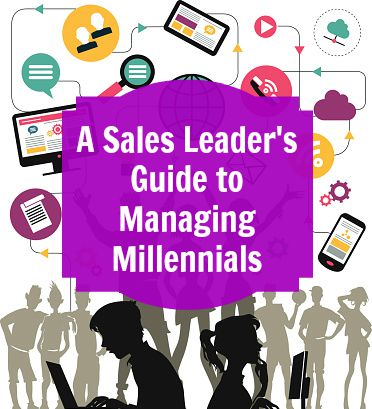
A Sales Leader’s Guide to Managing Millennials

by Dr. Christopher Croner

guide-to-managing-millennials 1

The Pew Research Center defines millennials as the generation born after 1980 that came to early adulthood in the early 2000s.

Reporters have a lot to say about millennials, who are stereotyped as entitled individualists who are slow to leave the nest but, like it or not, millennials are entering the workforce in large numbers.

It is important that managers spend some time getting to know this unique generation if they want to work well with them, especially in a sales environment.


What Makes a Millennial?

Technology

The millennial was the first to grow up with computers in his/her home, making her comfortably fluent with computers in all forms.

millennials sending text messages at workThe fact that technology has been evolving for her entire life makes it easy for her to adapt to new tools and incorporate them into her routine.

Social networking is second nature for her, which can be a big asset in business and especially sales.

The millennial worker uses technology resourcefully and expects quick feedback, data collection and results.


Economic Instability

The millennial worker entered the job market right as the recession hit, leaving her with the highest student loan debt of any previous generation and few career options with which to pay it.

This struggle has made the millennial worker somewhat risk averse and slow to trust or commit to big life choices. Convincing a millennial, even one with Drive, to enter the high-risk/high-reward field of sales can be tricky.


Desire for Balance

A millennial tends to value work/life balance more than previous generations.

A woman born in this generation is more likely to work full time than a woman in any previous generation, which means that home-running duties and childcare are left for both spouses to deal with together at the end of the work day and work week.

A millennial also tends to have less faith in the economic promise of retirement and so is less likely to put off leisure for when she is older. Healthy living is more important for a millennial than it has been to previous generations, so having time to exercise and make health a priority will factor into her career choices.


Idealism

A millennial wants to feel like she is involved in something meaningful that benefits more than her own self-interest. Growing up in the age of technology and information, she demands transparency from those with whom she does business.

The millennial’s desire to feel a sense of purpose and altruism in her life means that she is not as easily motivated by money alone, especially if the source of that money puts her other values in conflict.


Involved Parents

Parents usually have strong relationships with their millennial kids which transform into friendships as their children reach adulthood.

Part of the reason millennials tend to move home after college more than previous generations is because (apart from student loan debt and a slow economy) they get along with their parents relatively well.


How to Get the Most From Your Millennial Salespeople

1. Re-frame your team’s mission.

While commissions will always draw people to sales, you can earn a millennial’s loyalty and enthusiasm beyond payday by showing her how your product really helps people.

Any time you get the opportunity to highlight how your sales team’s work makes a difference for clients, the community, or even the other people in the company, you will be appealing to the millennial’s desire for purpose.


2. Encourage camaraderie.encourage-camaraderie-between-sales-team-members 1

Feeling like part of a team is a great motivator for a millennial and gives more meaning to her daily work.

Friendly competition, group goal setting and mentorship are all great ways to build a sense of team among your salespeople.


3. Manage expectations.

A millennial worker is accustomed to fast-paced action. Any time she wants to check a fact or learn a new skill, she has everything she needs immediately at her fingertips.

Learning to be a good salesperson takes time and practice, which can be frustrating for a millennial.

When you take on a new sales employee, make sure to give her a realistic idea of how much time and work it will take for her to see results, and give her benchmarks along the way to measure her progress.


4. Offer support and feedback.

Involved parents have trained millennials to crave feedback.

All sales teams need good training programs, but millennials are even more motivated by structure and communication with superiors than previous generations, so try your best to keep your employees in the loop.

A millennial’s behavior toward her superiors can tend to be informal because she is used to speaking openly with parents and teachers, but it is not a sign of disrespect.

There is no need for you to sugarcoat your feedback like a doting mother, but try to give criticism that is constructive as you would with any employee.


5. Focus on outcomes.

Millennials typically abhor the nine-to-five workday requirement, even though they average more than 40 hours of work per week.

If you focus on outcomes rather than time cards, you will make your millennial worker feel like she has the flexibility to lead a more balanced life.

Make your expectations clear from the beginning and assess salespeople based on what you expect them to achieve rather than face time you want them to give.


6. Consider mitigating risk.

If it is a possibility for your company, it might be a good idea to structure compensation for beginning salespeople with a slightly higher base salary and lower commission percentage.

Millennial salespeople will be more likely to try sales and move out of their parent’s house if the base salary offered is livable. Then, as they become more confident in their sales capabilities, you can give them the option to take a lower base salary with a higher commission percentage.


For all their quirks, millennials are a tech-savvy and passionate generation. Hiring millennials can benefit your sales team in big ways, especially if your target demographic includes their peers.

Old school sales tactics tend to drive millennial buyers away, but a millennial salesperson understands how her generation thinks and can appeal to them more easily.

That said, it would be a mistake to simply hire the first young person you find and expect her to help your sales team reach millennial clients. Hiring sales candidates with Drive is just as important with millennials as it is with any group.

Assess salespeople with a reputable pre-employment sales test during the hiring process to determine if they have the Need for Achievement, Competitiveness and Optimism necessary to keep up in the demanding world of sales. When you find a millennial candidate with Drive, you will have the tools you need to nurture her talent into a successful career in sales.


The post A Sales Leader’s Guide to Managing Millennials appeared first on SalesDrive LLC.

25 Aug 16:28

Screw salads: They’re not helping you and may be hurting the planet

by Tamar Haspel, Washington Post

As the world population grows, we have a pressing need to eat better and farm better, and those of us trying to figure out how to do those things have pointed at lots of different foods as problematic. Almonds, for their water use. Corn, for the monoculture. Beef, for its greenhouse gases. In each of those cases, there’s some truth in the finger-pointing, but none of them is a clear-cut villain.

There’s one food, though, that has almost nothing going for it. It occupies precious crop acreage, requires fossil fuels to be shipped, refrigerated, around the world, and adds nothing but crunch to the plate.

It’s salad, and here are three main reasons why we need to rethink it.

Salad vegetables are pitifully low in nutrition. The biggest thing wrong with salads is lettuce, and the biggest thing wrong with lettuce is that it’s a leafy-green waste of resources.

In July, when I wrote a piece defending corn on the calories-per-acre metric, a number of people wrote to tell me I was ignoring nutrition. Which I was. Not because nutrition isn’t important, but because we get all the nutrition we need in a fraction of our recommended daily calories, and filling in the rest of the day’s food is a job for crops like corn. But if you think nutrition is the most important metric, don’t direct your ire at corn. Turn instead to lettuce.

One of the people I heard from about nutrition is organic consultant Charles Benbrook. He and colleague Donald Davis developed a nutrient quality index — a way to rate foods based on how much of 27 nutrients they contain per 100 calories. Four of the five lowest-ranking foods (by serving size) are salad ingredients: cucumbers, radishes, lettuce and celery. (The fifth is eggplant.)

Those foods’ nutritional profile can be partly explained by one simple fact: They’re almost all water. Although water figures prominently in just about every vegetable (the sweet potato, one of the least watery, is 77 percent), those four salad vegetables top the list at 95 to 97 percent water. A head of iceberg lettuce has the same water content as a bottle of Evian (1-liter size: 96 percent water, 4 percent bottle) and is only marginally more nutritious.

Take collard greens. They are 90 percent water, which still sounds like a lot. But it means that, compared with lettuce, every pound of collard greens contains about twice as much stuff that isn’t water, which, of course, is where the nutrition lives. But you’re also likely to eat much more of them, because you cook them. A large serving of lettuce feels like a bona fide vegetable, but when you saute it (not that I’m recommending that), you’ll see that two cups of romaine cooks down to a bite or two.

The corollary to the nutrition problem is the expense problem. The makings of a green salad – say, a head of lettuce, a cucumber and a bunch of radishes — cost about $3 at my supermarket. For that, I could buy more than two pounds of broccoli, sweet potatoes or just about any frozen vegetable going, any of which would make for a much more nutritious side dish to my roast chicken.

Lettuce is a vehicle to transport refrigerated water from farm to table. When we switch to vegetables that are twice as nutritious — like those collards or tomatoes or green beans – not only do we free up half the acres now growing lettuce, we cut back on the fossil fuels and other resources needed for transport and storage.

Save the planet, skip the salad.

Salad fools dieters into making bad choices. Lots of what passes for salad in restaurants is just the same as the rest of the calorie-dense diabolically palatable food that’s making us fat, but with a few lettuce leaves tossed in. Next time you order a salad, engage in a little thought experiment: Picture the salad without the lettuce, cucumber and radish, which are nutritionally and calorically irrelevant. Is it a little pile of croutons and cheese, with a few carrot shavings and lots of ranch dressing?

Call something “salad,” and it immediately acquires what Pierre Chandon calls a “health halo.” Chandon, professor of marketing at INSEAD, an international business school in Fontainebleau, France, says that once people have the idea it’s good for them, they stop paying attention “to its actual nutritional content or, even worse, to its portion size.”

I won’t be the first to point out that items labeled “salad” at chain restaurants are often as bad, if not worse, than pastas or sandwiches or burgers when it comes to calories. Take Applebee’s, where the Oriental Chicken Salad clocks in at 1,400 calories, and the grilled version is only 110 calories lighter. Even the Grilled Chicken Caesar, the least calorific of the salads on the regular menu, is 800 calories.

Of course, salad isn’t always a bad choice, and Applebee’s has a selection of special menu items under 550 calories (many chain restaurants have a similar menu category). Applebee’s Thai Chicken Salad is only 390 calories (although it has more sodium than the Oriental Chicken Salad). Other chains, like relative newcomer Sweetgreen, have a good selection of salads that go further toward earning their health halo: more actual vegetables, less fried stuff.

I asked Bret Thorn, columnist at Nation’s Restaurant News and longtime observer of the restaurant industry, about salads. “Chefs are cognizant of what’s going on in the psychology of diners,” he said. “They’re doing a kind of psychological health washing,” not just with salads, but with labels like “fresh” and “natural,” and foods that are “local” and “seasonal.” “A chef is not a nutritionist, or public health advocate,” Thorn points out. “They make food that customers want to buy.”

Rose Reisman
Rose ReismanWendy's Baja Salad is heavy on fat and calories.

And we want to buy things that are fried or creamy or salty or sweet, or all of those things. Which doesn’t mean that the right salad can’t be a good choice for a nutritious meal. It just means that it’s easy to get snookered.

Salad has unfortunate repercussions in our food supply. Lettuce has a couple of No. 1 unenviable rankings in the food world. For starters, it’s the top source of food waste, vegetable division, becoming more than 1 billion pounds of uneaten salad every year. But it’s also the chief culprit for foodborne illnesses. According to the Centers for Disease Control, green leafies accounted for 22 percent of all food-borne illnesses from 1998-2008.

To be fair, “leafy vegetables,” the CDC category, also includes cabbage, spinach and other kinds of greens, but the reason the category dominates is that the greens are often eaten raw. As in salad.

None of this is to say that salad doesn’t have a role in our food supply. I like salad, and there’s been many a time a big bowl of salad on the dinner table has kept me from a second helping of lasagna. The salads we make at home aren’t the same as the ones we buy in restaurants; according to the recipe app Yummly, its collection of lettuce-based salads average 398 calories per serving (although a few do get up into Oriental Chicken territory).

An iceberg wedge, with radishes and bacon and blue-cheese dressing, is something I certainly have no plans to give up. But as we look for ways to rejigger our food supply to grow crops responsibly and feed people nutritiously, maybe we should stop thinking about salad as a wholesome staple, and start thinking about it as a resource-hungry luxury.

25 Aug 16:26

9 Social Media Hacks Every Small Business Can Benefit From

by VerticalResponse

Are you currently using social media sites to enhance your business’s online strategy? Posting to these platforms on a regular basis is a great place to start. If you want to increase sales, brand awareness, and website traffic, you’ll have to up your social marketing game by going a bit further.

These nine social media marketing hacks will help you:

  • Sell products on your social sites
  • Find enticing images to grow your brand awareness
  • Drive more traffic to your brand’s website and blog

Hacks to help sell products on social sites

Your website shouldn’t be the only place for customers to browse and buy your products. Remember that your social sites can also serve as mini digital storefronts too.

Why not entice your social audiences to make a purchase in 140 characters or less for example.  When it comes to selling items on your social sites, you have a few options.

1. Turn to Facebook ads

Facebook has an easy-to-use advertising platform, which allows you to showcase your product to an audience of your choosing. To maximize your views, be sure to target your ad by location, age or interests.

In terms of cost, the ads are affordable. You can start an ad campaign for as little as five bucks, with the idea of progressive spending as you focus on reaching more customers over time.

  • See it in action: Here’s an example of a Facebook ad.

9 Social Media Hacks Every Small Business Can Benefit From

2. Use a ‘shoppable’ app like Shoppost

This handy resource creates ads for your Facebook page. The ads can display an image and also provide pricing, colors, and sizes. When a customer clicks on the ad, he or she is taken directly to your site to check out.

Keep in mind, your website must use Shopify, Etsy, Amazon or Bigcommerce as its e-commerce platform for this tool to work, but it makes buying simple for your customers.

You can check out the site to see the ads.

3. Try a ‘Like2Buy’ button to increase sales

Ready to turn the great images you share on Instagram into transactional posts? Use Curalate’s Like2Buy option. Customers can see your products and, like the Shoppost app, are directed to your website to make a purchase. Users can even save products in their own gallery to purchase later.

Hacks to help you find and post eye-catching images

Social media is propelled by images. With so many images in social streams, you can’t post any old picture and expect viewers to pay attention. To beat the competition, you have to upload creative and clear images. So how do you get your hands on images that attract attention and spark engagement? Here are a few hacks to help:

4. Consider using paid stock sites

You can buy images on stock photo sites like iStock or Shutterstock. Set up a folder on your laptop and keep the images in an accessible folder so you can build a photo library.

Using stock photos is probably the most common way to obtain creative images, but it can be costly.

5. Browse free stock sites

If you don’t have a budget for pictures, turn to Flickr. Through their Creative Commons section, you can search images that are free. However, you’ll want to narrow your search depending on how you plan to use the image.

For example, if you plan to use the image for a commercial purpose, search under “commercial use allowed.” Just go to the creative commons section and use the drop menu on the upper left side to narrow your search. Here’s what you’ll see:

9 Social Media Hacks Every Small Business Can Benefit From

While the images are free, when you post it on your site you need to provide attribution.

6. Standout by creating a cinemagraph

Everyone is vying for visual attention, so how can you stand out? Try creating and posting a cinemagraph. What’s a cinemagraph? It’s a still image with a small section of animation. It’s like a GIF, but with better quality and control.

Since Facebook has an autoplay video feature and Instagram can play videos on a loop, these mini-moving images are powerful and attention grabbing. You can create cinemagraphs by using apps like Cinemagr.am or Flixel.

Hacks to use social media marketing to increase website traffic

Your website and social media networks should work well together. To accomplish this, you’ll want to shuttle traffic between the two sites. In other words, links on your social sites should direct people to your website, and links on your website should bring customers to your social sites.

What’s the best way to keep this digital highway flowing?

7. Install ‘ClickToTweet’

This free tool puts a small ‘Click to Tweet’ link next to any piece of text, which allows your customers to then share that selected text on their Twitter feed.

How can you incorporate it? You could put together a list of frequently asked questions on your website, or a short list of statistics that customers can share. The ‘Click to Tweet’ link can sit next to any valuable tidbit of information. When clicked, the sentence automatically loads to Twitter. All the customer has to do is click ‘share’, and it hits the Twittersphere.

Check out the ClickToTweet website to set it up. If you’re using WordPress, you can use a specific plugin to seamlessly add the ClickToTweet feature.

  • See it in action: A healthcare website wrapped up a blog post with these statistics and used the ‘Click to Tweet’ link after each one.

9 Social Media Hacks Every Small Business Can Benefit From

8. Increase social traffic with a ‘Hello Bar’

Create a call to action button on the top of your website that drives traffic to your social sites. A Hello Bar is a thin bar that appears at the top of your website that contains a short message and a call to action.

The best part about a Hello Bar is its versatility. You can change the call to action and the message to achieve a variety of goals. You can encourage people to visit your social sites, sign up for your email list, download an e-book or visit a specific page on your website.

Visit the Hello Bar website to learn more.

  • See it in action: Here’s what a Hello Bar looks like:

9 Social Media Hacks Every Small Business Can Benefit From

9. Use Colibri.io to ‘listen’ on social media

What are people saying about your business? It’s impossible to monitor every comment made, but Colibri.io makes it easier. This platform collects data across social media sites and shows you exactly what people are saying about your business, industry as well as your competitors.

With this information, you can insert yourself into the conversation. You’ll be able to offer help to customers that are unhappy with a competitor’s service, drive traffic to your website, and maintain your overall online reputation.

Final thoughts

These nine hacks will help improve your sales and customer engagement; however, you don’t have to implement all of these changes at once. Try to set up a new tool every month so you can learn how each one fits best with your digital brand.

25 Aug 16:21

The B2B Guide to Social Media Advertising Part 3 – Imagery

by Brandon Mecham

B2B Social Media Guide Part 3

There are four things to focus on when it comes to implementing good imagery into your social media advertising campaigns. Those include an image, ad copy, the call-to-action and the value proposition. With these four things, you want to help your target audience see the value of the product or service you are promoting. You want them to imagine themselves with that product or service in their life. Not only that though, you want them to see how that product or service will give them what they are looking for. If they can’t see this, then they wont be interested.

Image

The image that you use for your advertisement needs to catch the eye of the target audience. As was discussed in Part 2 of this blog series, there are billions of active social media accounts in the world. Next time you scroll through the news feed of one of your social accounts, pay attention to how fast you are scrolling. Billions of people are scrolling through endless amounts of updates in their social news feeds at a fiery pace everyday. Your content needs to catch the target audiences’ attention!

The goal with a good image in a social media advertisement is to get the target audience to engage and click on it. The best images to use are usually relevant to what product or service you are trying to promote. These images should have a good amount of contrast in order to stick out. An image in a social media advertisement should look organic and it should “fit in” the news feed. Avoid using images with too much of a stock photo vibe.

Ad Copy

The first step to constructing a good advertisement copy is to understand your target audience. What are they looking for and how would they phrase what they’re searching for? Use language that is specific to the product or service you are trying to sell.

The main copy should convey the theme and message of the promotion. You want to make the message short and sweet and most importantly, catchy.

Call-to-Action

These are more than mere “buttons” on an advertisement. These “buttons” are the key to getting your customer to click on the ad and complete a conversion. These call-to-actions should use action-packed text that relate with the offer you are providing. Substitute overused words such as “Enter” and “Submit” for more action packed-packed words like “Get Started” and “Request a Demo.”

Overall, these call-to-action buttons should be simple in design and guide the viewer to click on the ad and land on the landing page.

Value Proposition

Why does the target audience need to purchase this product or service? What is in it for them? If you write this from a salesman point-of-view, you could come off as fake or “sales pitchy.” You want to come off as an expert who knows the benefits of the product from experience. Show that in a quick value proposition! This should validate the ad copy “tagline.”

When a consumer can see basic points of why the product or service will benefit them specifically, then they will more likely find interest. Value propositions should be in line with the theme and message of the company you are promoting. When the viewer reads the value proposition, they should perk up. A good value proposition seals the deal.

Overall, these four attributes of a social media advertisement help prospective customers see this product or service in their life, helping them and giving them exactly what they need. If you get this imagery wrong, they will get confused and the message will be missed and you will have wasted precious advertising dollars. Maximize your spend with good imagery.

25 Aug 16:21

Who Wins in the Battle of Influencer VS. Advocate Marketing

by Jeff Ernst

The headlines are scattered with the aftermath and debated value of the social influencer. Kim Kardashian made network news headlines with the story where she and the manufacturer of Diclegis, a morning sickness drug, were warned by the FDA for Kim’s glowing one-sided promotion of the drug with blatant disregard for the minefield that is pharmaceutical advertising. While her millions saw the post (since taken down), the story in the news was how they didn’t follow requirements stating the side effects. The end result – the post is down and the news media has left people with the question “what are the side effects?” effectively acting as an anti-advertisement of sorts.

Situations like these have led many to question the effectiveness of influencer advertising. Placing the reputation of your brand in the hands of a social media celebrity, inexperienced in advertising, may not be a great idea. Today we’ll dive into the detailed differences between influencer and advocate advertising.

Who Wins in the Battle of Influencers VS. Advocates

In this corner we have…influencers

Last week, the New York Times had an article about how cool influencers are now being careful with their endorsements bringing up the story of Ricky Dillon. A social celebrity with millions of followers who, when he posted a photo of a couple personalized Coke cans, comments included queries if it was a paid sponsorship. It was. Audiences are keenly aware of this form of advertising in their midst and are definitely intelligent enough to recognize it.

Let’s be clear about what social/celebrity influencers are – they are the new paid reach, a different version of an ad. Much like an ad, you pay, they post. The length of the relationship is as long as the brand is paying for it. To the FTC, it is enough of an ad that they want to make sure the unsuspecting consumers are aware and recently updated guidelines that posts like this should indicate #sponsored (read #igotpaid).

Can this type of marketing be effective? Yes, it definitely can and has the capacity to create instantly large reach to a relatively targeted audience based on your choice of influencer. I’m unsure of the demographic makeup of Kim Kardashian’s 42 Million Instagram followers…but there are 42 million of them. All indications are that this type of advertising is more effective than a traditional paid ad, but I have yet to see a sizeable test on the business impact or efficiency of influencer vs. retargeting/programmatic.

The influencers dilemma

Let’s be equally clear as to what social/celebrity influencers are not. They are not trusted like a peer or advocate. Likewise, the facts regarding advocates do not translate to influencers.

  • 92% of people trust peers and advocates…not influencers.
  • 84% of people trust peers and advocates before ads…not influencers. The trust factor goes notably down for influencers.
    • Does anybody trust a celebrity influencer that actually uses a Samsung phone? After Manny Pacquiao, Ellen Degeneres, Kate Upton and David Beckham all tweeted their love of Galaxy followed by tweets from their iPhone, probably not.
  • People are 4-10x more likely to act on the recommendation of a trusted peer or advocate…again, not influencers.
  • An influencer impression is not worth 5-250x a paid impression like a word-of-mouth impression. It is simply a paid impression featuring a social celebrity.

Finally, when talking about the social/celebrity influencer, let’s examine the word ‘influence’:

in·flu·ence ˈinflo͝oəns/ noun. the capacity to have an effect on the character, development, or behavior of someone or something.

To have an effect on behavior – in the case of influencer marketing…get people to buy stuff. But, if people don’t trust it like they trust brand advocates – how much are they buying? How much actual influence do they have? Very few, in my opinion, meet the definition of true influencer. Oprah is probably the best example of a true influencer – if she talked about a book on her book club, sales went wild. Bonafide influence. But even she fell prey to influencer mishap when tweeting about how much she loved her Microsoft Surface…from her iPad.

The advocate right hook

By comparison, building brand advocates and a brand advocate community avoids many of these pitfalls. Real brand advocates have a passion for your brand and while influence can’t be taught/built/manufactured, passion for your brand cannot. They’re trusted by their peers and social networks and are viewed as there to help. You build a two-way relationship with your advocates, they get an exclusive experience and you get to harness their enthusiasm. The most common question – “what’s in it for them?” or “how much do you pay them?” – has an unexpected answer: you don’t pay them. The playbook would say to surprise and delight them, give them something unique that others can’t have, but the relationship with the brand is what they cling to.

An empowered brand advocate creates a ripple effect that reaches out to 8! – not an exclamation point, but factorial – 8x7x6 etc. = 40,000+. These advocates will be those who are engaged in the 100 or so conversations about brand each day that you aren’t. Build a social brand advocate community and you can gain so much impact. Genuine reach that is trusted that people actually take action on. You can gain insights for marketing and product development, procure valuable user generated content and the biggest part of it – it’s sustainable. You don’t need to reload a new campaign next week or next month. As a matter of fact, remove the military terms from your advocacy plans. It’s a movement, not a strategy. They’re people, not targets.

At this point, many marketers would be reaching for the credit card wondering how much these advocate communities cost and how quickly can it be up and running. Herein lies the rub – you can’t just buy advocates – you need to find them, foster them and ignite their collective enthusiasm to become a community. While various tools can identify, nurture and build enthusiast relationships within your social audiences into an advocate community, it takes time.

In the time-warped world of social media marketing we live in, sometimes business demands immediate returns, which is why ads and influencer marketing will continue to exist and should be a part of your strategy. To truly scale the social word-of-mouth about your brand, it takes investing a little time, but the impact felt will far exceed paid media results and your C-suite’s expectations for years to come.

The post Who Wins in the Battle of Influencer VS. Advocate Marketing appeared first on Social Media Explorer.

      
25 Aug 16:21

5 Must-Read SaaS Sales Posts by Tomasz Tunguz

by Leah Bell

Tomasz Tunguz, Partner at Redpoint Ventures, is one of the greatest bloggers in the SaaS sales space. From his simple-yet-creative visual breakdowns, to his researched analyses of ways to better your sales process, Tunguz’s attention to detail makes the tiniest of improvements induce the most epic of waves.

Selecting our favorite sales blog posts from tomtunguz.com was about as easy as picking a favorite child, but these are the five we deemed the most impactful blogs for improving your SaaS sales game:

1. The 5 Key People In A SaaS Sales Process

It’s common practice in SaaS to create a playbook for your sales process. But what’s equally as important as recognizing the key dynamics of your sales game is recognizing the key players.

TT5keypeople copy

From the Proponent of the Sale (your number one fan), to the Opponent of the Sale (your JJ Watt), to the Decisionmaker and other stakeholders, it’s the sales rep’s job to understand each position and build a relationship with each of these players.

2. How Faster Sales Cycles Become A Competitive Advantage

A tough-to-achieve but competitive advantage your SaaS sales team can have is a freaky fast sales process. Although it’s uncommon in the SaaS world, having a shorter sales cycle can give you the edge over your competition for at least five reasons:

  • More rapid discovery process for testing.
  • >Faster evaluation of new sales candidates.
  • Kickass sales velocity momentum.
  • Quicker market feedback = quicker product improvement.
  • More accurate, predictable, and simplified financial forecasting.

3. Challenging Your Customers During Your SaaS Startup’s Sales Process

Based on the Corporate Executive Board’s breakdown of the five core sales performers, the Challenger is the highest performing rep of all. Through teaching, tailoring and controlling the sales process, the rep that challenges their customers is going to be the rep that runs through brick walls.

Screen Shot 2015-08-24 at 4.19.44 PM

Successful SaaS sales reps may come in all shapes and sizes, but those who challenge — close.

4. Sales Funnel Optimization For SaaS Startups

A ridiculously common misconception in SaaS sales is a backloaded sales funnel. Teams focus too much energy trying to optimize conversions from opportunity to customer, when the sale is already in the AE’s hand. But the more effective (and less expensive) optimization comes at the top of the funnel. Increasing efforts behind the Sales Development Rep’s prospecting phase will dramatically improve overall conversion rates.

ttsalesfunnel

5. You’re Not Finished Selling Until You Change Your Customers Habits

Selling your product is all well and good. But you haven’t changed your customers lives until you’ve changed their habits. An unsuccessfully onboarded buyer is just as invaluable to you as a prospect that never bought.

Without the sale, we didn’t make money. Without adoption, our product didn’t work. It had no value and customers abandoned it.

A sale may have initial monetary value, but in order for a sale to be truly successful, you have to have a cohesive marriage of product education and adoption.

Sales development is a strong emerging faction in sales, but many resources are slim, out of date and aren’t driving today’s revenue machines. That’s why thought-leading blogs like Tomasz Tunguz’s are so valuable to sales development reps. It’s expert experience mashed with informative content and actionable takeaways — all winning resources for an SDR’s toolbelt.

The post 5 Must-Read SaaS Sales Posts by Tomasz Tunguz appeared first on SalesLoft.

25 Aug 16:20

How to Use and Measure Pinterest in Your B2B Content Marketing

by Jamie Heckler

B2B Content Marketing in Pinterest

Pinterest isn’t just for B2C marketers anymore. B2B marketers need to start caring about this visual search engine with a social twist.

As I wrote in part 1 of this two-part blog series, the platform can give your content an extended shelf life with little extra investment.

The question that remains, though, is how to get started marketing B2B content on Pinterest and how to measure its impact.

As with most promotional channels, a lot of trial and error will go into your brand’s efforts. Here’s what I’ve learned so far from my experience managing PR Newswire’s Pinterest boards in hopes that it can guide you.

HOW CAN I GET THE MOST OUT OF PINTEREST?

From what to pin and how to structure your page, there are a few best practices I’ve observed when setting up your brand’s presence on Pinterest.

Pin optimization

The long, scrolling format of the platform favors a vertical, or portrait, visual layout. The optimal size of a pin is commonly cited as 735×1102 pixels.

Users typically come to the platform with an aspirational mind-set, looking for tips or inspiration on how to create their best life. Quotes and infographics are popular among Pinterest’s users.

Among the sea of visuals in a Pinterest stream, you’ll need to consider how your graphic will stand out.

Brighter colors will more likely draw the eye. Also, text within a visual that can be easily scanned in both thumbnail form and on a smartphone will help your audience quickly decide if they want to see more.

Captions that work

Always be sure to include a caption with your image. They help users find your pins, drive engagement and spread your message.

Although Pinterest has invested in visual search recognition software, its capabilities are still limited. Including important keywords will help audiences find your content. Remember, text in the image is not indexed for search, so you may need to repeat the words within your caption.

Calls to action within pin descriptions have been reported to increase engagement by 80%. Unlike Instagram, URLs included in Pinterest captions are clickable.

Although there is no limit in character length for your pin’s caption, longer captions are truncated to three lines in the mobile app.

Plus, lazy pinners won’t bother writing their own caption, so the caption stays as you wrote it – spreading your optimized message to even more users.

Board structure

Most Pinterest boards are based on your targeted personas’ areas of interest. Your board titles should be interesting, but avoid being overly-clever – keywords still play an important role here.

Don’t skip filling in a board description, and again be sure to use keywords that match what your audience is likely to search.

You can also create separate boards dedicated to infographics, quotes, white papers, blog posts, employees, portfolios of work, humor, etc. This may be a great solution for seeding visual content into the channel that falls outside your main topics of interest and doesn’t fit into other boards.

Hopefully, users will follow all your boards, but for the more selective crowd be sure to place your most popular and/or important boards at the top of your page.

Keyword adjustment

Remember that Pinterest search is optimized within the platform. You may need to tweak your typical keywords to better match Pinterest users’ search terms.

Do a test search of your keywords to see what related categories and keywords pop up in the prompts at the top. Consider adding these to your board titles, captions, etc.

What to pin

Considering its long shelf life, keep to evergreen content. Avoid content with short-term references that will be invalid next week. That said, seasonal content can do very well – just group it into its own board.

Maintain a steady stream of content to your feed by posting fresh items from your editorial calendar, such as blog posts, white papers, and annual reports.

Create additional visuals to promote your most popular or important content. It’s ok to create multiple images that all link back to the same URL.

Because some of your followers will only be following one of your boards, it’s ok to pin a single piece of content to multiple relevant boards. You may wish to tweak the caption in each to better match audience interest.

Pin maintenance

Due to the viral nature of Pinterest, you will have little to no control over your content once it is pinned to other users’ boards.

However, you always have control over the source content, so make sure your popular pins are always linking to information that is up-to-date and include additional calls to action that align to your current strategy.

And for more information on using Pinterest for B2B content marketing, check out our companion SlideShare.

HOW CAN I MEASURE MY PROGRESS?

Demonstrating the worth of your brand’s promotional channels is a must-do for every marketer. Here’s how to effectively measure Pinterest’s impact on your content marketing goals.

Click-through value

Typical of many platforms, Pinterest offers free analytics to business accounts.

While information about pin visibility can be alluring, the most valuable data you should be tracking is clicks.

This conversion metric not only confirms a user has both seen and liked your pin, but also signals their desire to move forward as a possible revenue opportunity for your organization.

You can review “clicks” in the Pinterest Analytics dashboard, but the data here is limited. If you have a marketing automation system in place, it’s worth the effort to create trackable links for pinned content so that you can more effectively measure generated traffic, and ultimately revenue, from this channel.

Follower trends

Another metric I like to keep my eye on is followers. While the visibility of your pins goes way beyond just followers of your boards, this metric provides insight into how your board topics are connecting with audiences and how to further optimize your boards for even more engagement.

If you notice that a board is no longer connecting with Pinterest users, consider:

  • Re-arranging the order of your boards on your Pinterest page
  • Tweaking titles and descriptions for stronger keyword use
  • Reviewing board content for quality and audience relevance
  • Driving more engagement with promoted pins

THE TAKE-AWAY:

Pinterest offers a unique opportunity for B2B content marketers to engage with new audiences. If your brand is already investing resources in visual storytelling, the extra effort to optimize your content for this channel is minimal.

Quality visual content pinned to the platform can continue to drive engagement and click-throughs for months, and even years. It’s important to keep in mind that the benefits of this long tail channel may not be seen immediately — organic results may take some time.

A mix of quality content, promotion within the platform and some patience will help make this a profitable addition to your multichannel campaigns.

Learn more about social media’s impact on press releases and other content — and how to leverage it — by downloading our white paper Tips for Creating a Press Release that Maximizes Social Sharing.

And if you’ve used Pinterest to promote B2B content, leave a comment below about how it’s going so far!

25 Aug 16:20

Investors have reason to be skeptical about China’s economic plan

by Kevin Carmichael
People's Bank of China Governor Zhou Xiaochuan (Feng Li/Getty)

People’s Bank of China Governor Zhou Xiaochuan (Feng Li/Getty)

At least the headline writers and Twitter wags enjoyed themselves during yesterday’s global financial panic. There was a “Black Monday” tag everywhere you looked, while “The Great Fall of China” (pun intended) was also popular. My personal favourite headline appeared in the print edition of India’s Economic Times: “Don Yuan Causes Heartbreak.”

Oh, has he ever. Trillions of dollars of wealth have been erased since the People’s Bank of China (PBoC) devalued the yuan two weeks ago. The central bank’s move was entirely justifiable. The Chinese economy had been slowing for months, but the country’s currency continued to appreciate as the PBoC sold billions of dollars to buoy the yuan’s value—a gesture few seemed to appreciate. As China’s economy continued to slow, and international investors continued to book profits on their way to the exits, PBoC Governor Zhou Xiaochuan bailed on a losing strategy. That’s what any responsible central banker would have done.

What Zhou failed to take into account was that he hasn’t proved himself a responsible central banker. International investors don’t trust China, nor should they. Beijing operates behind a translucent veil, never entirely explaining its methods. The PBoC described the devaluation as small compared with the yuan’s appreciation in recent years or the depreciation of the currencies of its economic rivals in Asia and Europe. Policy makers pleaded innocence, saying the adjustment was part of a broader strategy to give markets a larger say in the yuan’s value.  Too many investors saw something else: a return to the bad old days of aggressive currency manipulation, evidence that the Chinese economy was much weaker than thought, or both. Cue the panic.

The global stock-market rout culminated with a massive 1,000-point plunge in the Dow Jones Industrial Average when trading commenced in New York on Monday. The unrelenting global financial press compared the unusually extreme trading volatility to every terrible episode in modern financial history—the Asian financial crisis in the mid-1990s, the Black Monday of 1987, and the Black Monday of 1929.

Investors quickly came to their senses, however. Stock exchanges in New York and Toronto pared losses Monday. And on Tuesday, most Asian and European equity markets rallied. The one important exception was China, where the Shanghai Composite Index plunged another 7.6 %. The country’s main stock index has now plummeted more than 20% since Aug. 19, according to Bloomberg News. Zhou responded by cutting interest rates and easing restrictions on bank lending, his latest attempt to restore confidence in the world’s second-largest economy.

It’s always a mistake to attempt to draw conclusions in the middle of a stock-market frenzy, especially in the current financial climate, when so much money is dedicated to trading rather than investing. Black Mondays quickly give way to Turnaround Tuesdays. Take India as an example: the country’s main equity exchanges crashed with those of China, dropping almost 6%, the most since 2008. But as a net importer, India stands to benefit tremendously from the collapse in commodity prices. Companies are becoming more profitable and the economy is gaining a competitive edge on rival emerging markets. Inflation is in retreat and the federal government’s finances are under control. These factors argue against the kind of stock-market retreat that occurred Monday, which explains why Indian markets partially recovered Tuesday.

China’s markets were due for a correction, but a crash feels overdone. There has been a great deal of emphasis placed on China’s poor trade figures, forgetting that it no longer is 2000 and that China has more going for it than exports. One of the more extraordinary events of Monday was Apple Inc. CEO Tim Cook’s email to CNBC host and personality Jim Cramer. Cook told Cramer that iPhone sales in China were “strong” through July and August, and that activations had accelerated in the previous few weeks. An economy that is increasing its consumption of the most expensive smartphone on the market can hardly be considered on the verge of collapse. And even as exports have struggled, a measure of China’s trade in services is at its highest level in almost a year. This is what the country’s leaders—urged on by the International Monetary Fund, the United States Treasury Department, and others—have been trying to achieve: sustainable economic growth supported by domestic demand rather than exports or investment. Weaker exports shouldn’t rattle investors, because that was always part of the plan.

It now is incumbent on Beijing to convince investors at home and abroad that it is serious about sticking to that plan. The PBoC’s latest interest-rate cut was appropriate—any central bank would have responded similarly in the face of such extreme volatility. Chinese officials on Tuesday also put out the word that Beijing was done trying to prop up stock prices with state resources. That could be a difficult promise for the country’s interventionist technocrats to keep. If they manage it, more investors will starting taking China’s government seriously. That would be good for everyone.

The post Investors have reason to be skeptical about China’s economic plan appeared first on Canadian Business - Your Source For Business News.

25 Aug 16:19

Crack The Client Code

by Devon Smiley

There is no amount of online research that can match the value of asking questions to real live people. You can Google til your fingertips are blistered, lurk in forums until it starts to feel kinda creepy, or even ask your best business buddies what their experiences have been with clients.

But nothing will come close to the insight and intel you’ll gain when you focus your attention on asking more questions. You’ll know what makes your clients tick, what success means to them, and uncover the absolute best ways to deliver it to them on a silver platter.

Crack that code and you’re on your way to better results, raving clients, and more referrals than you can shake a stick at.

Asking just any old questions won’t cut it though…it’s gotta be the right ones, at the right time.

During The Consult Stage

When you’re just getting started with a new potential client, your main focus in your line of questioning is to learn more about their needs and wants, what their priorities are. By uncovering this information early on, you can take a pre-packaged offering that’s 90% of the way there…and customize to be a surefire hit.

Some questions to try:

What one thing absolutely must happen for this project to be considered a success?

And then you’ll know what you need to deliver. Shout out to Jules Taggart for inspiring this one!

Where do you see your business/life 1 year from now?

Clear vision? That means you’ll have neat metrics to hit. Fuzzy vision? You may be more of a mentor or coach than a nuts ‘n bolts service provider for them.

How did you hear about me?

Random? Then they may not know much about you, or what you offer, so educate them. Referral? They’ve heard the (great!) stories – it’s now less about education, and more about execution.

Pro Tip: Being genuine, and actually giving two hoots about what the potential client is telling you is crucial. These first conversations will form the foundation of your future working relationship, so make sure you engage fully.

During The Negotiation Stage

Huzzah! The client is keen to work with you. Now to seal the deal, and hash out the details. Asking questions at this stage serves two purposes. First, it helps you move the conversation from ‘Yes, I’m really interested’ to ‘Yes, I’m in!’. Second, it opens up a world of flexibility for you to get creative in finding a solution for any contractual or commercial disagreements.

Try these questions:

What’s the element of the proposal that’s holding you back from saying yes?

When a client is hesitant to sign on the dotted line, we often assume it’s related to price. Don’t! Instead, asking this questions gives them the opportunity to share what the realy hold up is. Timing? Features? Or yes, maybe price.

Can you please explain the change you’ve made to the contract?

When a contract comes back with a few tweaks, but no explanations, it’s best not to assume why they were made. Book a call, and go through each change asking this question. Make note of the answer, then make your yay or nay decision.

What are some of the drivers behind this solution not working for you?

A.K.A. A more elegant way of asking ‘Why did you say no?’. If you’ve asked for something in your contract, and have heard a no, don’t give up. Find out why you got a no…so you can find a way to turn it into a big fat yes.

Pro Tip: Don’t rush through this process. Negotiations take time. Trust me. It’s better to spend a few extras days or weeks in this zone of discomfort, than to take on a client or project under terms that will leave you feeling flat later on.


During The Active Client Stage

Sale made. Ink dry. Time to just keep your head down and churn out the work, right? Wrong. Continue to be engaged with, and enthusiastic about your client’s project by keeping in touch and asking more questions to guide the work that you’re doing. This will help you stay on the right path, tweaking as you go – rather than finding out you missed the mark after allllll the work is done.

Give these questions a shot:

How do you feel about the direction we’ve taken so far?

The drafts or progress reports you’re providing may technically hit the mark, but you need to make sure that your client is still on board with the direction, and that they’re feeling good about what’s happening.

What can we do to get comfortable moving ahead with Option A?

Sometimes, you need decisions. And sometimes, clients don’t like to make them. Follow-up to that radio silence by guiding them through the process. Maybe there’s nothing that can be done to get them into Option A. Super. Then let’s get them into Option B instead…because we gotta keep moving this forward.

Phase 1 of the project is nearly wrapped up. Can you please confirm that the Phase 2 payment will be arriving on the 20th?

Matching the work you’re doing to a payment plan is a great idea – no money, no work. However, when that next payment runs late, it can throw off your whole project timeline. There’s nothing wrong with asking for a confirmation of that next payment as the due date approaches.

Pro Tip: Clients may be asking you a whole bunch of questions about status – and handling those can get in the way of actually doing the work. Proactively arrange for weekly or bi-weekly check ins with your client as their opportunity to ask questions and provide feedback.

During The Wrap Up

Whew. The project is done, your sessions wrapped up, and everyone is a happy camper. Right? This is a great time to make sure by asking for feedback on your work.

Take these questions for a spin:

What results do you expect to see in the next 6 months as a result of our work together?

Some of your work may yield immediate results, but often the benefits only mature a few weeks or months later. Asking your client to predict what lies ahead for them is a great indicator of how confident they are in what you’ve done for them, and makes for great testimonial copy.

Is there anything that I could have done to make your experience or result any better?

Continuous improvement is the name of the game. Even small pieces of feedback will help you refine your process and performance to best match your clients’ needs. Be open to hearing it…and implementing changes though – no one likes to give feedback just to have it blatantly ignored.

How are things going? What’s the Next Big Thing on your horizon?

A month or so after completing your work together, reach out and ask the client for an update. Did the predicted results manifest? Are their customers raving? This is valuable information. Being curious about their next moves in business is also valuable…because it may uncover a need for your work!

Pro Tip: Following a successful gig, one of the biggest and best questions you can ask is “Do you know of anyone else who would be a great fit to work with me?” It takes serious courage to come right out and ask for referrals – but it’s worth it.

There’s no hard and fast rule about what questions you need to ask. Or who you need to ask. Or what the absolute best phrasing of those questions is. Sometimes an open-ended questions works, and sometimes a simple yes or no does the trick. Mix ‘em. Match ‘em. Find what works best for you, your business, and your clients.

25 Aug 16:19

Differentiation, Dissimilarity, Disruption

by Dave Brock

Recently, I was being interviewed on value creation and differentiation. I was asked the question, “What’s the difference between differentiation and dissimilarity?” The question caused me to pause for a moment. Frankly, I hadn’t thought about it before, but the more I thought, it’s an important distinction for sales people and can become an important strategic issue for executives and business strategists.

It’s easiest to understand these concepts if we take a walk into a friend’s garage. It’s an interesting, eclectic set of vehicles: A Porsche 911, an F-150 Pickup, Ducati and KTM motorcycles. Let me add to this idea. Whenever he travels, an Uber car comes to his home to take him to the airport. On the surface, these are 5 very similar solutions. They each get him from point A to point B. They even fit into the same general product/solution category — personal transportation.

But here’s where his buying behavior becomes interesting. As he considered the purchase of each alternative, he was looking at fundamentally different “problems.” When he bought the Porsche, he was looking for transportation, but a lot more–he was looking for a certain driving experience, perhaps some “social positioning,” (OK, he calls it the “chick magnet” factor.)

As he made the purchase decision, he didn’t evaluate broad alternatives of cars, motorcycles, pick-up trucks, or service providers, his buying decision focused on alternatives to a certain type of driving experience. Consequently, in buying the Porsche, he evaluated Audi’s, Jag’s, Mercedes, and Ferrari.

This is where differentiation comes in. As he was evaluating the alternative sports cars, each differentiated itself and the experience he was looking for. Differentiation is important and relevant in specific buying decisions. As he was evaluating alternative sports cars, differentiation between alternatives was critical. The sales person for each brand tried to differentiate the driving experience and other factors-aligning with the things most critical to him in making a choice.

This is the same with everything we sell, we seek to differentiate ourselves from other, typically non-dissimilar, alternatives.

Customers typically don’t evaluate dissimilar opportunities, so in my friend’s case, even if a pickup truck sales person had called him with a fantastic deal, he would not have considered that alternative–at least for the sport car decision.

However, buyers change their perspectives and problems, so what was a valid solution in the past, may be a irrelevant for current requirements. For example, my friend is solving different transportation/lifestyle problems with his pickup, bikes, and when he uses Uber.

The Porsche sales person would have had no success when my friend was looking for pickups, even though my friend had bought from him and had been very happy.

As sales people, sometimes we miss this shift with our customers, they may be loyal customers, but every once in a while they may be solving a dissimilar problem. If we don’t recognize that, then we waste huge amounts of time and potentially create a lot of customer ill will.

Why is this important? Sometimes, as we sell, we confuse dissimilarity with differentiation. We think the customer is looking for a vehicle and we try to sell a vehicle, rather than the solution the customer is looking for.

But this is seldom a real problem, even if we don’t recognize the dissimilarity, the customer does and immediately disqualifies the dissimilar from their consideration.

So typically all our strategies as sales people and companies focuses on differentiation.

Now here comes the shocker–it’s probably something that business strategies, product management have to be more concerned with than sales people, but sales people probably see it first. What happens when there is disruption?

Disruption is a game changer, a paradigm shifter. Disruption is where the buyer considers dissimilar alternatives. Disruption threatens whole industries and categories, not just individual vendors.

Using the car/lifestyle/transportation example, in some cases Uber might become a disruptor–at least when challenging the notion of vehicle ownership. For example, many people are moving away from the concept of vehicle ownership, looking for services of various types. Uber, Lyft, Zipcar, Car Rentals, and other types of sharing services (Zipcar is dissimilar to Uber and Lyft).

Disruption happens when someone, a provider of a dissimilar solution, or the customer starts reframing their problem. It’s when, all of a sudden there is a different competitor than we’ve seen before. For instance, it would be as if my friend opened his evaluation of sports cars to include Zipcar.

We don’t know how to compete, we can’t differentiate because it is truly Apples and Oranges (or Porsches and Zipcars.) Sometimes, we don’t recognize we have to compete–we don’t realize how seriously the customer may be considering the disruptor.

A great example of this is in the shift from premise/license based software solutions to cloud based solutions. It disrupted not only the software solution providers but also the systems providers. What Salesforce.com was selling in competition to Oracle/Siebel, wasn’t really a competitive CRM system, it was selling a different way of viewing the implementation/installation/support problem.

What do we do about this?

Well, nothing as long as the customer isn’t considering dissimilar solutions. The danger happens when we start seeing our customers include dissimilar solutions in their evaluations. It means the customer is redefining how they look at a problem. (Either on their own, or because someone has convinced them to redefine their problem.)

When we start to see this, we need to reframe what we think of as a solution–and how well what we sell fits the new definition of the “problem.” Too often, we ignore it, to often we become defensive and more strident in protecting the traditional view of the problem.

I suspect disruption doesn’t happen “disruptively,” at least overnight. I suspect it sneaks up on us until there is a tipping point, where the world has changed and we and are similar similar competition become irrelevant.

In reality, the seeds of disruption are being planted every day. If we are to stay relevant to our customers we have to be attentive. When we see our customers including dissimilar solutions into their consideration, we need to be worried. We need to recognize the customer is beginning to reframe the way they are looking at their problem.

As we start seeing “non-traditional” or dissimilar competitors increasingly come into consideration, we have to be attentive. These non-traditional alternatives may not be selected initially, but the fact the customer is considering them, indicates the customer is reframing how they define the problem. The more frequently they show up, as they start to win, we can be certain our markets are being disrupted.

We can’t ignore this, we have to continue to learn, innovate, and change our own solutions and approaches if we hope to be relevant, grow, and thrive.

25 Aug 16:18

Why Do People Share What They Do? Here’s What Neuroscience, Psychology, and Relationships Tell Us About Highly Shareable Content

by Mridu Khullar Relph

What makes you stop scrolling through an article, open up a social media app and hit the share button?

Is it logic, emotion, or something else?

Turns out, there’s more to social sharing than just measuring metrics: Psychology.

The strange nature of our brains is the reason we hotly debate the color of a dress or why we freely and emotionally share a post by a grieving widow after the death of her husband or why we feel an urgent need to pass on that video of the ice-cream eating dog to our animal-loving father-in-law. (Guilty!)

It’s not logic that guides those shares; it’s emotion. How else can you explain 8.2 million hits to a YouTube music video that a majority of people claim to have not liked?

If you want your content to be shared and shared regularly, understanding the “why” and “how” behind social shares can go a long way in showing you how to craft the perfect post for your audience. In order to do so, you might want to:

  1. Understand why people share content
  2. Know what kind of content they’re more likely to share
  3. Set about the task of creating content that satisfies those emotions

We’ve put together a few handy tips on how to understand what your audience wants and start the process of delivering it to them.

pablo (1)

5 Reasons Why People Share to Social Media

1. Neuroscience: We share to entertain, inspire, and be useful

Even though social media does have a tendency of having people focus on themselves, the primary reason that people share things on their Facebook pages or Twitter feeds, research shows, is to be useful to others.

In a 2013 study conducted by psychologists at UCLA, the researchers were, for the first time, able to determine which brain regions are associated with ideas that become contagious and which regions are associated with being an effective communicator of ideas.

NYT study -1

The TPJ or the temporoparietal junction is this area of the brain that lit up during functional magnetic resonance imagine (fMRI) brain scans when people were first exposed to new ideas that they would later recommend.

Matthew Lieberman, a UCLA professor of psychology and of psychiatry and biobehavioral sciences and author of the book Social: Why Our Brains are Wired to Connect, noted:

Our study suggests that people are regularly attuned to how the things they’re seeing will be useful and interesting, not just to themselves, but also to other people. We always seem to be on the lookout for who else will find this helpful, amusing or interesting, and our brain data are showing evidence of that. At the first encounter with information, people are already using the brain network involved in thinking about how this can be interesting to other people. We’re wired to want to share information with other people. I think that is a profound statement about the social nature of our minds.

2. Psychology: We share to express who we really are

In 1986, psychologists Hazel Markus and Paula Nurius recognized that there is a disparity between our “now self” and our “possible self.”

In a paper they published at the time, they developed the concept of our possible selves:

  1. the ideal selves that we would like to become
  2. the selves that we could become, and
  3. the selves that we are afraid of becoming

This first self, the idealized version of ourselves is what we frequently tend to share on social media.

Whether or not this representation of our possible self is realistic or not is irrelevant, researchers note. The point is that we’re picturing in our minds this possible self that we are or may someday be and sharing information that fits in with this notion of who we are.

When we share in this mode, sometimes what we’re sharing is a sense of our ideal self and who we aspire to be. This is why some people share political commentary, outrage over particular issues, and success stories of people who they hope they can be like someday.

As the authors themselves so eloquently note:

Possible selves contribute to the fluidity or malleability of the self because they are differentially activated by the social situation and determine the nature of the working self-concept. At the same time, the individual’s hopes and fears, goals and threats, and the cognitive structures that carry the are defining features of the self-concept: these features provide some of the most compelling evidence of continuity of identity across time.

3. Community: To nurture our relationships

Whenever I see a funny comic about procrastination, I share it with my closest friend, a proud procrastinator. Whenever I see a funny dog video, I send it straight to my father-in-law, the animal lover.

Every time I see any of these things, I feel an immediate connection to those people. I think of them and feel the urge to share what I’ve found with them.

I’m not alone.

In a study undertaken by The New York Times Customer Insight Group in conjunction with Latitude Research titled “The Psychology of Sharing: Why Do People Share Online?” 78% of respondents said that they shared information online because it let them stay connected to people they may not otherwise stay in touch with.

Further, 73% of them said they shared information because it allowed them to connect with others who shared their interests.

NYT study - 2

4. Motivation: To feel more involved

In my days of daily journalism, an editor at a local newspaper once told me his fix for a slow news day.

Dogs and babies.

“They’re cute,” he would say. “They pull at your heartstrings. No one can resist a cuddly dog or a cute baby. Preferably both together.”

The medium may have changed, but the message hasn’t. People still love cuddly dogs, cute babies, preferably both together.

In fact, as far back as fifty years ago, studies were being undertaken to see why people talked about brands and coming to the same conclusions that we are today. In 1966, in a study reported on by the Harvard Business Review, the researcher Earnest Dichter found that 64% of sharing is about the sharer themselves.

He noted that there were four motivations for a person to communicate about a brand.

  1. The first (about 33% of the time) was because of product involvement, that is the experience was so good, unique, or new that it had to be shared.
  2. The second (about 24%) was self-involvement, that is, to gain attention by showing people that you were part of an exclusive club of buyers or had inside information.
  3. The third (around 20%) was other-involvement, that is wanting to help out and express caring or friendship.
  4. And finally, the fourth (also around 20%) was message-involvement, that is, the message was so wonderful or funny or brilliant that it deserved to be shared.

sharing-motivations

5. Altruism: To get the word out about specific causes

In the New York Times Customer Insight Group report, 84% of respondents said they share because “it is a way to support causes or issues they care about.”

In fact, the report further goes to show that 85% of people say reading other people’s responses helps them understand and process information and events. So not only do we share information about the causes that are dear to us, but we respond to causes that are dear to other people if they take the time to share that information with us through social media.

Remember the ALS Ice Bucket challenge?

What People Share and How to Make Your Content Go Viral

In a research study titled “Why Content Goes Viral,” assistant professor of marketing at the Wharton School of Business Jonah Berger (who you may also know as the author of the book Contagious) and co-author Katy Milkman looked at 7,000 articles published at The New York Times to see which ones got the most views and social shares and why. The goal of the study was to document what makes content go viral and how to replicate those findings to create viral content.

This infographic from CoSchedule does a great job capturing some of the findings of the study:

Blog_Garrett_PyschSharing_Infograph2

The researchers from the study came up with three key ideas based on their findings:

1. Positive content trumps negativity

You may not know it from your Facebook feed, but Berger and Milkman found that positive content and stories were far more likely to be shared and to go viral than negative news stories.

Are you surprised by this finding? Most people are. But the reason bad news sticks in our minds more than good news is because of our brain’s “negativity bias.” Human brains are wired to react with greater sensitivity to bad news and feedback than anything positive, and so you may see and hear a hundred pieces of positive news throughout your day but remember that one news story about a sick child. It also explains why you remember an insult or attack decades after all the compliments and accolades have been forgotten.

Yet, research shows that if you want your content to go viral and reach more people, it has more of a likelihood of doing so if it comes in a positive package.

How to create positive content

Try framing events in a positive context. Research shows that superlatives can be super effective in headlines. For example:

  • Best
  • Biggest
  • Greatest

As Courtney explains in this post, Buffer’s focus on positivity and happiness means that we turn this technique inside out with posts such as 10 Things To Stop Doing Today to Be Happier, Backed by Science.

2. Content that evokes high arousal emotions does better

This is probably not quite as surprisingly, but Berger and Milkman found that the more a piece of content could evoke a high-arousal emotion such as awe, anger, anxiety, fear, sadness, humor, or wonder, the better its chances of being shared repeatedly and going viral.

That’s why counter-intuitive takes on issues do so well and why articles that make you angry are often the ones that you forward to friends.

In fact, this is backed up by our own research here at Buffer. In a recent experiment, we found that one of the key things that makes images go viral is an element of surprise.

In the NYT study, the articles that scored highly on different dimensions were:

Emotionality:

  • Redefining Depression as Mere Sadness
  • When All Else Fails, Blaming the Patient Often Comes Next

Positivity:

  • Wide-Eyed New Arrivals Falling in Love with the City
  • Tony Award for Philanthropy

(Low-scoring)

  • Web Rumors Tied to Korean Actress’s Suicide
  • Germany: Baby Polar Bear’s Feeder Dies

Awe:

  • Rare Treatment Is Reported to Cure AIDS Patient
  • The Promise and Power of RNA

Anger:

  • What Red Ink? Wall Street Paid Hefty Bonuses
  • Loan Titans Paid McCain Adviser Nearly $2 Million

Anxiety

  • For Stocks, Worst Single-Day Drop in Two Decades
  • Home Prices Seem Far From Bottom

Sadness

  • Maimed on 9/11, Trying to Be Whole Again
  • Obama Pays Tribute to His Grandmother After She Dies

How to create emotional content

One of the driving forces for emotional content is someone’s first touch with your content: the headline.

There are some amazingly useful tools out there to help ensure your headline packs the right emotional punch.

  • CoSchedule Headline Analyzer – This fantastic tool will quickly tell you how to improve your headlines by scoring you on your word choices. It takes a look at the words in your headline and sorts them into four categories: common, uncommon, emotional, and power. The more emotional and power words, the better your headline.
  • Advanced Marketing Institute Headline Analyzer – This free tool analyzes your headlines to determine the Emotional Marketing Value (EMV) score of your headline. The tool analyzes the total number of EMV words in relation to the total number of words in the headline and comes up with a score.

Coschedule

3. Practical and useful information wins out every time

Finally, no surprise to anyone who has read and shared our own content here at Buffer (thank you, by the way!), content that helps you solve a problem, gives you actionable tips, and shows you practical strategies for living your life is destined for success as long as it can meet the needs of a large number of people and do it in a unique and interesting way.

How to create practical, useful content

In her article Transforming Content From Lifeless to Actionable, blogger Amanda Gallucci offers the following tips on how to do this effectively. She writes:

  1. Involve your audience: This might involve comments, surveys, or questions, but most importantly, referencing your audience in the content itself. Gallucci suggests creating interactive modules that readers can use within the content itself.
  2. Link your research to applications: Research and numbers are great, but showing how users can apply that research to their lives or solving their problems can be a great way of providing value.
  3. Look beyond your industry: When it comes to inspiration, don’t let your industry experts be the only thing that guides you towards creating useful content that is a match for your audience. If your business focuses on finances and numbers, considering learning from creative businesses, and vice versa.
  4. State the intended outcome early on: Whenever you’re creating a piece of content, it’s always a good idea to state, right upfront, what the visitor or reader will get if he or she reaches the end of the article. Make a promise to your reader to teach or educate them, and then keep it.
  5. Think ahead: One of the best things you can do for your content is to have an editorial calendar that guides your day-to-day content decisions and gives you the flexibility and room to comment on industry-specific events and anniversaries and give readers an analysis of any big news that comes up in your space.

So there you have it. Be positive, touch on some emotions, and be useful. The three keys to creating content that gets shared again and again. And again.

Over To You

I’d love to hear from you about your experiences with viral content. Have you ever had anything go massively viral? What did you learn from the experience?

25 Aug 16:17

When Your Lead Based Marketing Runs Dry, Flip Your Funnel with Account-Based Marketing

by Sangram Vajre

Copy of Copy of Measuring and Optimizing Account Based Marketing (1)

We all know working in B2B marketing is tough. Your team busts it all quarter to pour leads into the funnel, yet sometimes it doesn’t generate revenue because not all of the leads marketing brings in become sales opportunities.

How can we increase revenue, and faster, knowing that all our geese will lay a golden egg? When your lead based marketing runs dry, it’s time to flip your funnel with account-based marketing.

This is the main point I addressed in my recent webinar with AdStage “How Digital Marketing Can Drive Revenue for B2B Marketers.” We discussed what causes lead based marketing efforts fail, and how the funnel can be tweaked to increase revenue using account-based marketing.

Check out the full interview here:

In order for our B2B marketing strategies to work, we need to look at it from another vantage point: account-based marketing. After all, marketing is what greases the wheel to increased revenue.

This is what the traditional lead based marketing funnel looks like. You have lots of people at the top of the funnel. You’re trying to generate leads as fast as possible. Then what do we do?

Lead Based Funnel

We analyze who from these leads are viable prospects. The marketing team spends a ton of money to get any and everybody, then you have to spend more money to determine the right people who would buy your product or service. That’s the inherent problem with lead based marketing.

Once we find out who the right people are, we spend even more resources to find out if they’re ready to buy and the funnel gets super skinny at the bottom. That’s how the traditional lead based marketing funnel has always worked. There’s clearly something wrong with this model.

The problem stems from the fact that this is a sales funnel with different stages of the sales cycle, and marketers said “Ok, let’s adopt this funnel and use it so that we are in alignment with sales.” We’re adapting the sales funnel as our marketing funnel.

Now we’re finding ways to look at the funnel from a completely different viewpoint with account-based marketing. Hopefully, this will be something the average marketer can take and apply to their strategies.

As my good friend Michael McEuen, Director of Demand Generation at AdStage, said during our webinar, when we look at the traditional funnel in terms of status quo there are many challenges which can cause lead based marketing efforts to fail.

Here are 4 Lead Based Marketing Challenges

4-Lead-Based-Marketing-Challenges

  1. The funnel isn’t optimized for B2B marketing

Because the traditional funnel comes from a sales process, it’s not optimized for marketing. This model is better attune for a B2C process, where the stages are well known, there are quick cycles, and the progression is very linea

Less than 1% is a huge time suck and budget suck. The modern B2B marketer has to think differently about what’s generating revenue and double down on those efforts.

  1. Marketing is focused on getting leads instead of accounts

The VP of Sales or CEO will say, “We need to double revenue!” In the past, that’s when the marketing executive tells the team to crank up demand generation so they can double the amount of leads adding more to the top of the funnel therefore closing more revenue.

Sadly, it will come to the end of the quarter and the marketing team will have decreased cost per lead (CPL) and increased leads, but then they didn’t move the needle on revenue produced.


  1. Lead volume is weighted more than precise targeting

With lead based marketing, it’s easy to look at your conversion rate and you’ll think that you need to add more leads to the funnel to close more revenue. That’s not quite the answer.

This is where account-based marketing can really come into play, as it helps you focus on the best-fit prospects and companies – your ideal customer profile (ICP) – and then engage with them on their own terms with channels like mobile, social, display, and video.

  1. Assumed linear path for all customer journeys

When you’re looking at the funnel, it looks like logical steps in a progression which isn’t always the case for a customer journey, No prospect wakes up and says “I’ve got to solve this problem today”. Your potential customers are jumping around and going online to Google looking for answers.

We then create marketing content which answers that problem and blast it everywhere hoping to find people who need this problem solved. That’s another reason why lead based marketing fails, as we are putting our message in front of people who aren’t trying to solve this problem.

Here’s the account-based marketing model we’re proposing with #FlipMyFunnel

2

The whole idea stemmed from my frustration with the traditional lead based marketing funnel. I tore up a bunch of paper into pieces and wrote on them the stages of the funnel. After all, it is the funnel that is supposed to align sales and marketing.

It starts with accounts. For example, let’s say you’re selling to financial services companies, and you are targeting any FiServ company that’s in the Fortune 500. Thanks to technology, you’ll be able to get the information on the accounts you need to target in a matter of minutes.

There’s no secret or mass marketing, which is why account-based marketing is inherently cool. We’re targeting then defining a list of companies. We’ve ID’d these companies, and we know we’re selling to IT people in these 70 companies. That’s step 1 of #FlipMyFunnel = Identify

The second step of this inverted account-based marketing funnel is to Expand. We want to put our message in front of the people who actually care about what we have to say. Now, let’s say we’re figuring out the number of IT people we want to hear our gospel.

We can put the right content in front of these prospective buyers through the right channels which make sense. You’ll create a webinar or whitepaper, then see the higher click through rates because it’s customized.

That’s how we Engage prospects in the third stage of our new account-based marketing funnel. From the 70 companies we’re targeting, we turn lead generation into advocacy which is what leads to my personal favorite stage of the funnel is Advocate.

This is a topic I recently addressed in my interview with Jim Williams at Influitive. If you can turn your current customers into advocates of your product or services, it’s the most organic type of marketing. It’s time to try something new with account-based marketing and that is creating customer advocates.

I’d love to know your thoughts and hear your thoughts and success stories. Let me know in the comments section below!

25 Aug 16:15

5 Best practices of trade show lead qualification

by John Coe

pixabay_imats-450959_1280

Following my last blog on lead qualification, I received some great comments and several questions as to whether lead qualification differs for trade show leads. Yes, it does, and here is a revision of my last blog specifically addressing trade show lead generation and qualification.

Lead qualification is one of the primary jobs for B2B marketers, and a great deal of time and money is spent on this step of the sales cycle. This is particularly true for trade show marketers as the primary reason for exhibiting at shows is lead generation, not qualification. Recent studies by a number of firms, including Exhibit Surveys and Center for Exhibition Industry Research (CEIR), identify lead generation at 80-85% as the reason that companies exhibit at trade shows. This is closely followed by branding and customer engagement. We all know this!

But what happens after an individual visits a booth, and has their badge scanned or their information recorded in some other way by the exhibitor? While these individuals are often called “leads,” they are not. They probably should be termed “inquiries,” or “prospects.” Therefore, with rare exception, the next step is lead qualification; as most interactions at the booth are short, and do not adequately qualify the individual as to their true level of interest and/or ability to buy the products or services being promoted.

This is particularly important for trade show marketers, as not only are there many “leads” from a successful show, but the ability to prove an initial ROI is dependent on how many qualified leads came from the show, and not how many people visited the booth. This is one of the most challenging jobs any B2B marketer faces as the problem simply is:

  • How do we follow-up hundreds if not thousands of “leads” before the individual forgets they even visited our booth ?
  • How do we do this with limited time and resources?

Unfortunately, I don’t have one silver bullet to solve this quandary, but I do have 5 best practices that will help qualify more leads from among the inquiries and increase the ROI. Better yet, I’ll be able to answer that dreaded CFO question – “so what did we get for all that money we spent at that (insert name of trade show) trade show?”

5 BEST PRACTICES OF TRADE SHOW LEAD QUALIFICATION

  1. Speed Kills The Competition

Any trade show marketer faces two competitive issues:

  • The first issue is how to separate our company from all the other booths the attendee visited? Depending on the size of the show and how active the attendee was at walking the show floor, they might visit 20 – 30 or more booths. The comment often heard from these attendees after the show is “I can’t remember the booths I visited, as it’s all a blur.” That’s the trade show clutter problem marketers’ face.
  • The second issue is how can I beat my direct competition, assuming the individual has also visited them? Individuals with a serious buying interest will seek out all companies who offer the product or service they are interested in, and that means your competition!

To win both competitions, the faster the booth visitor receives a contact (either email or text), the more likely they will not only remember their visit, but also be even more impressed with your company. Therefore, at the end of the day or show, send each visitor an automatic email or text message thanking them for visiting the booth and predicting a further follow-up. This speed of follow-up will go a long way to winning against both competitive issues.

2. Don’t Spin Your Wheels

At the end of most trade shows, a large number of booth visitor’s badges have been scanned, and some information may even have been recorded in a CRM system (or other method) to record potential leads. But the actual amount of qualifying information is usually not satisfactory to sort the potential leads from the unlikely leads. This problem is even more acute when the in-booth promotions, demonstrations and/or shows were compelling to a large number of attendees, and drew many of them into the booth. While no definite industry statistics are available on this, likely only 10-20% of booth visitors are potential qualified leads, if that many. So the question becomes how to sort out the best potential leads from the rest before initiating an expensive and time consuming lead qualification process?

Here’s a best practice to institute. You have a good idea of who the best market segments are either due to customer profiling and/or input from product, marketing, and sales managers. The first level targeting matrix is usually industry code (SIC or NAICS) and company size. This matrix is frequently referred to as the “sweet spots” for marketing. Yet, many trade show lead qualification efforts do not first distinguish best prospects from others, and spin their wheels on nonlikely prospects.

To separate the likely leads from the unlikely, immediately following the show send the entire list of booth visitors to an outside firm who can enhance the list with industry code and company size, and return the enhanced show database. From this profiling step, a separation of your best potential market segments can be accomplished. This process can be accelerated by working with the data firm beforehand to establish your best prospect profile so the resulting enhanced list is divided into these two segments upon its return.

The subsequent telemarketing or follow-up lead qualification process will be more cost effective by simply cutting down on the number of prospects to call. For other prospects that do not fall into any sweet spot, an email follow-up is sufficient assuming it contains an offer for response that might help in further qualifying them for a telemarketing call.

There is one caveat to add to this best practice. Be sure that the data firm knows B2B data, as it is far more difficult to match and profile than consumer data. Many data firms think they can do it, and in fact they cannot, and the resulting match rates will be very low. Average B2B match rates are, at best, in the 70-80% range, so don’t expect 100%.

3. Know Who You’re Calling

Even though you may have the registration information on the attendee list it does not define who the company is and what they do. The outbound telemarketer is therefore faced with a blank page of information, and begins the qualification script somewhat cold. Only on about 1 or 2 of 10 lead qualification calls I receive does the caller know anything about my company. As a result, my responses are rather curt (sorry callers), as I feel this is a waste of my time. This lack of homework does not lend itself to effective and efficient lead qualification.

Here’s why this matters, and it certainly is critical when calling managers and senior level executives who make purchase decisions. It is well accepted that senior executives expect that you will have done some research on their company that includes, but is not limited to, visiting their website. The more you demonstrate your knowledge about their company and industry, the more they will open up and willingly answer the qualification questions.

4. Do Progressively Qualify

When beginning a lead qualification process, the tendency is to attempt complete qualification during the first call. One of the failures of BANT (yes, I was at IBM) was attempting to answer the four qualification criteria during the first contact. As a result, many potential leads were lost due to the inability or resistance of the individual to answer the Budget, Authority, Need, and Timing questions. Frequently, the individual just didn’t know these answers, and were then scored “not qualified”.

If you are using BANT, or a variation of this lead scoring model, don’t attempt to determine the answers to these questions too quickly. In fact, any of the qualifying criteria might take a period of time before an accurate answer can be given by the individual.

The initial ROI of exhibiting at trade shows is how many qualified leads came from the show, and the tendency is to try and arrive at this number too quickly to justify the show’s budget. Don’t speed this process up unnecessarily, as leads will be lost if you do.

5. Don’t Ditch Old Trade Show Lead Lists

It’s only natural for marketers to strive to generate new leads by attending multiple trade shows. In fact, the average number of shows a company participates in is 10 per year according to CEIR. But at best, only 10% of qualified leads convert to sales, and thus 90% or more do not! In addition to buying from a competitor other reasons exist for lack of sales conversion, and the big one is postponement of the decision and/or no decision due to long buying cycles. If the sales staff hears that the timing is “down the road” or some other reason for a “no decision,” they will likely move on and drop the lead. Some studies have shown that as much as 30-50% of leads do not convert for these reasons, but eventually do buy.

Therefore, to paraphrase an old axiom – “where there is smoke there might be fire,” old lead lists from trade shows from the past 12-24 months should not be filed or tossed. Continue to use them for other outbound lead generation campaigns, as they will likely be more responsive for several reasons than any other type of rented list. There are a number of lead nurturing software systems in the market for just such a job.

Trade show budgets are the #1 expense category for B2B firms and consume an average of 20% of a firms total marketing budget. Yet this category is one of, if not the most difficult, to measure results and justifies repeating. Have you ever been in a yearly budget meeting when the trade show budget was questioned and/or attacked? I have, and it is difficult to provide enough measurable results in the face of these questions. Unfortunately, the defense of “if we don’t exhibit they will think we’re out of business” is too often used. This type of justification is a losing argument in these days of data-driven marketing and measurement.

What’s needed are more proof points of value created by exhibiting at trade shows, and that starts with the number of qualified leads. The preceding 5 best practices to deliver more qualified leads are part of the measurability answer. Follow them and see your results increase!

Here’s a paraphrasing of the 5 best practices:

  • Follow-up FAST
  • Focus on the most promising prospects
  • Do your homework before qualifying
  • Don’t rush the buyer
  • Squeeze more out of each show’s list

The result will be more sales, and the improved ability to answer that dreaded CFO’s question – “so what did we get for all that money we spent at the show?”

25 Aug 16:14

The 5 Elements of a Strong Inbound Marketing Strategy

by Margot da Cunha

Are you a huge fan of cold calls? What about the marketing emails – that you never signed up for – invading your inbox? TV commercials in the middle of your favorite show? Unless it’s the Super Bowl, these marketing messages tend to be frowned upon or ignored rather than delightfully consumed.

Inbound marketing strategy

Most people that I know record TV programs solely so they can fast forward through the commercials. My TV capabilities are less sophisticated, but I typically use commercials to brush my teeth or clean the kitchen. I’m already on a “do not cold call list” with Verizon, and marketing emails are unsubscribed from more often than read. Non-remarketing display ads (i.e. the banner or sidebar ads we see when scanning websites) are clicked on an average of only 0.2%, according to Double Click. All of these methods fall under the family of “outbound marketing.”

Shockingly enough, these disruptive outbound techniques convert at a much lower rate than inbound marketing strategies, where someone chooses to engage with your brand and actively seeks you out.

Inbound marketing strategy comparing to interruption or outbound marketing

Image via Moz

Inbound strategies are all about being found naturally rather than aggressively pursuing leads through in-your-face tactics. Which person do you think would be more likely to buy a house? A. The person who received a message saying “Buy this house!” or B. The person who searched for and found the perfect house on their own? We both know the clear winner, which is inbound.

“Imagine a popup ad (outbound) vs. a funny infographic you chose to look at (inbound),” says Marketo’s Johnny Cheng. “Data clearly shows that people who choose to interact with your brand naturally convert higher.” Take a look at this conversion rate data by acquisition channel – inbound strategies have one of the highest rates, at almost 4%.

Inbound marketing strategy data proving the effectiveness of inbound on conversion rates

Convinced that inbound marketing strategies kick ass for driving targeted leads and sales? Here are the 5 elements of a strong inbound marketing strategy, which you should be using!

#1: SEO

SEO (search engine optimization) is a hard-to-control, waste-of-time tactic, right? Wrong: SEO is the process of optimizing your website’s content and structure for search in order to receive organic placements on the search engine results pages or SERPS. Having a quality website and content optimized for SEO ensures that Google’s web-crawling technology is able to identify and index your site’s content to have it appear for free to people searching. SEO is a critical part of your inbound strategy because if you can’t be found, then you’re not going to get business.

Inbound marketing strategy screenshot showing organic results on SERPS

When SEO comes to mind I think keywords, code, website structure, link-building, and then my head starts spinning. SEO can actually get very complicated, quickly, so what should you be focusing on to get started? Start by identifying and utilizing the most important keywords to your leads. Of course, you want to ensure these keywords have high enough search volume and user intent to attract the most relevant audience.

“There are many aspects of SEO, from the words on your page to the way other sites link to you on the web. Sometimes SEO is simply the matter of making sure your site is structured in a way that search engines understand,” explains Moz.

I’m not an SEO guru by any means. Luckily, there are a plethora of free resources online so I’d recommend hopping over to Moz to get started.

#2: PPC

Now we’re speaking my language! You might be thinking, wait – PPC is a paid tactic and aren’t paid strategies against the inbound methodology? Wrong! Paid search is technically still part of the inbound marketing family since search ads appear when a user is actively searching for something, therefore PPC ads are not interrupting another activity. Not all aspects of PPC will qualify inbound (like display ads), but ads on the search network are certainly one of the strongest elements of a strong inbound strategy, because search queries show so much intent.

Inbound marketing strategy showing paid results on SERPS

So, how is PPC different then SEO? With paid ads you’re paying for the placements on the SERPs rather than appearing organically. Why pay when you can appear organically? For multiple reasons… With SEO:

  • You have far less control over when and how you appear on the search results page
  • A tweak in the algorithms can ruin your organic visibility
  • Seeing results often takes a long time (and isn’t guaranteed!)

With paid search, you’re able to pay for the top placements where people are more likely to see your ads, and bid on specific keywords to attract qualified visitors. You have the control to adjust your budget, pause your ads during irrelevant times, target mobile searchers, easily measure your ROI, and the list goes on.

Moral of the story is that you should be doing both SEO and PPC to get the highest volume and quality of leads.

#3: Content Marketing

You wouldn’t have guests over and not serve a cocktail, right? The same goes for leads! Now that you’ve warmly welcomed them in the door through PPC and/or SEO you need to provide them something to drink, aka content. Oftentimes marketers think of content as the sole component to inbound marketing strategy, and while it’s certainly not the only aspect, it is a very critical one. Without fresh and useful content, there is no chance of keeping and converting your leads. Your content should come in multiple forms with the goal of helping your audience answer a question or solve a problem.

The key to content marketing is that your content needs to stand out. “Your content must be remarkable enough to break through the clutter. It’s not enough to just produce content,” says Entrepreneur’s Murray Newlands. “Your content must educate, inspire or entertain your audience.”

So, where to start?

  • Create a blog: You should already know this, but a quality blog is one of the most effective ways to market a business. Blogging will help you attract new visitors, gain returning visitors, and convince warmer leads. A blog is a hub to keep your audience informed and prove that you’re a thought-leader in your industry. Here at WordStream, our blog accounts for more than half our total traffic!

Inbound marketing strategy screenshot of WordStreams blog

  • Create guides, e-books, and other downloadable content: This will help your nurture your leads with longer-form content where you can sell how your products or services will help them.
  • Gather customer testimonials and create case studies: Case studies and customer testimonials will help convince leads that are further down the funnel. Hearing from someone like them will instill trust and up the chances of conversion.
  • Create a content calendar: to ensure you stay on top of publishing fresh content regularly.

#4: Social Media

So you’ve created phenomenal content, published it on your site, and now you’re lounging on your beach chair enjoying a glass of wine? Well, you’re certainly not going to get profitable results with that attitude. You NEED to be attracting new and returning readers by sharing and promoting your content on social media. Creating the content is only a small piece of the puzzle. Ensuring the content reaches relevant people is where social comes in. This is inbound marketing because only people who want to see your content will follow your brand, and it’s a great way to “subsidize” your organic traffic if you don’t have great rankings yet.

Nowadays, anyone who’s anyone is on social media, whether it be Facebook, Twitter, LinkedIn, Vine, Instagram, or Periscope; your audience is likely on multiple of these channels. Determining which platforms are most relevant to your buyer personas in a task in itself, but I can guarantee that several of your leads are spending a significant chunk of their time consuming content through their personal social channels.

Inbound marketing strategy screenshot of a social post

Spend time creating a social media promotion plan to distribute your content to the right people, analyzing your top performing content, and paying to promote and gain even more traffic to the content that’s resonating with your audience.

#5: Landing Pages

Your landing page is where your leads land after clicking on your call-to-action (another important element of your inbound marketing strategy). Whether it be a product page, a form fill-out to download a whitepaper, or a subscription service page, you need to ensure your landing page is top-notch unless you’d like to jeopardize potential conversions from coming in. Some important elements to keep in mind…

  • Relevancy: You need to make sure that the landing page is relevant to the call-to-action. For example, if your visitor lands on your page from a paid search ad advertising birthday cakes, you wouldn’t send them to a landing page selling Christmas cookies, right?
  • Focus: What is the goal of your landing page? Is it to “Sign Up for this E-Newsletter!” or “Download this Guide Today”? Make your landing page’s purpose singular. Ensure the CTA is big, prevalent, and above the fold. Also make sure to restrict the navigation to other pages and keep forms short.
  • Design: This is a major component of keeping visitors engaged. Using videos or images, testimonials, and trust signals are all design elements that can help improve the conversion rates of your landing pages. Run A/B tests to decide on the best designs for your landing pages.

Bonus Inbound Marketing Tip: Remarketing

Once a lead has visited your site, expressed interest in your content, products or offerings, you need a strategy in place to keep them engaged. One of the most effective tactics? Remarketing. This tactic cookies your site visitors and follows them around the web with ads reminding them to come back. Remarketing can be set in a variety of ways. For instance, you can remarket to anyone who visited your site, show specific ad to visitors who went to a certain page (or a set of pages), or even an ad to someone who has placed items in a shopping cart, but hasn’t converted.

My older sister called me the other day blown away when she saw an ad on Facebook of the exact dress she was just looking at on Nordstrom’s website. Yes, she is a stay-at-home mom who’s a bit disconnected from the marketing world, but it just proves that this tactic resonates with shoppers. Remarketing says “Hey there, remember us? Are you still interested?,” which is why the tactic is considered a member of the inbound family since the shopper has already expressed interest.

Covering these five elements will provide a solid infrastructure for a killer inbound marketing strategy.