Shared posts

05 Oct 16:45

To Send or Not To Send The Proposal

by Jeremy Jadczak

This is a great question and should be asked when a potential prospect asks you to send them a proposal so they can review. Just send a proposal? Really? That was way too easy. You are really excited, you want to close that deal right away but maybe you should ask yourself are they really that ready to move forward with us?

It may sound harsh, but the reality it that unless you are sending a cookie-cutter type of a proposal, you are going to be spending a lot of time working on something that may or may not pan out. If you already have a standard proposal that you send to everyone for the same product, then it really is no effort.

Maybe you are reading this and are saying to yourself, “Jeremy that’s part of the game. Not every proposal you send is going to land a deal, it is what it is.” That is true, and we also know that writing proposals is an exhaustive and time-consuming process. If your days are anything like mine, when you get the request for one, you drop everything and focus most of your time and attention to it. It becomes a hurried process and you are always under a really tight deadline.

As I was writing this blog post, I though of a few examples of instances that happened to me.

I Got Nuthin’ But Love

I worked really long hours on a proposal for a statewide ballot initiative with a co-worker. He was feeling good that we had a great chance of landing the deal because his buddy was asking for a proposal. We had some time one our side but in the span of two weeks we went through ten to twelve drafts of the proposal. Each version was longer and more time consuming to edit.

In the back of my mind, I was a little concerned that I dropped everything else I was working on to work with my colleague on this proposal. We thought our work was excellent and if we submitted it on our own we thought we would have closed the deal. We submitted it, and it was dead a week later. We were shocked.

Turns out that our proposal was included in a much larger proposal submitted by the guy we submitted our proposal to in the first place. It turned out that there was an issue advocacy organization who would ultimately be making the final decision and controlled the purse strings., We had no idea who they were and could not communicate with them directly.

Our buddy was told that his proposal was too much and was asked to scale it back. Guess who was not there to defend our portion of the proposal and was first to get cut out? Yep it was our portion. You know the portion of the proposal that went through twelve rounds of edits and was over twenty pages long!

We should have asked a lot more Discovery questions and come to a determination if it made sense to submit it or not. I believe if we had, we might have passed because we were going through another person and did not have all the facts about the problem and how our service could have helped.

I Wrote It For My Competitor

Many years ago, I had been in a situation where I was talking with a prospect and they expressed mild to little interest in the solutions I had to offer. They were using the services from one of my competitors and I was suspicious but I sent the proposal along with our pricing anyway. Yeah I know what your thinking, maybe it isn’t such a good idea to put your pricing in there. I know that now, thank you but not then….

Well the deal went nowhere and I never heard from them again. I later learned that they person was asking for this information on behalf of their vendor and our competitor. Heck we were asking for information about our competitors from our partners as well.

There were just some red flags and an uneasiness I had about the prospect’s interest level. This happened a couple times thereafter but then we stripped out pricing for services and then created a few supporting documents like a Discovery worksheet, or an eBook to help with the Buyer’s Journey – leading the buyer to the decision phase of the deal. When someone would ask me to just send them a proposal and I had my suspicions, I would send them some more information instead. Then I would sit back and wait. If they were really serious, they would continue the discussion.

As you know, writing a proposal is a lot of work. Do yourself a favor and ask yourself a bunch of discovery questions or dig deeper before rushing into writing a proposal. I have done this too many times before I learned that it is OK to question whether you should send a proposal or not.

If you ultimately decide not to submit a proposal, make that known to the prospect. Let them know that you do not believe the solution you are offering is a good fit or that you have some reservations. Be honest with them. You may have read the situation wrong and they ARE interested. You can be honest with people, if you see red flags, tell them about that – they may have the answers.

I hope you do not make the mistakes that I have. If you have, I would love to hear from you!

05 Oct 16:42

5 Uncommon Tips For Your Blog (Via Tim Ferriss)

by Denise McArthur

Over the past decade, author/speaker Tim Ferriss has carved out a niche as one of the leading voices when it comes to efficiency, entrepreneurship and self-help. With a trio of bestselling books—The 4-Hour Workweek, The 4-Hour Body and The 4-Hour Chef—Ferriss has been able to find success by boiling down big, daunting concepts into underlying principles while offering up unorthodox approaches to excel in those spaces. And with the increasing corporate value of producing fresh content and hosting business-tailored blogs, one can’t help but wish that Ferriss had something similar to say on the subject. Well, as it turns out, he does!

Years ago—eight years and two days to be precise—Ferriss brought this kind of approach to the topic of blogging. Although a good chunk of time has passed, many of his insights are universally applicable (or can be tweaked to fit our current digital landscape), so we thought it would be valuable to take a closer look and reexamine The Top 5 Uncommon Timesavers For Bloggers/Writers.

1. Decide how you’re measuring success before writing a post. What’s your metric? Form follows function.

It may seem frustrating to think about tailoring your content towards a specific, not-necessarily-content-oriented end goal. Shouldn’t good content, you might wonder, be enough? It is, I would argue, but the follow-up question to that is this: enough for what? And that, really, is what Ferriss is trying to get it; delivering that good content to a good-sized audience. Is your objective to garner comments? Be shared by others? Increase your company’s SEO ranking? In an ideal scenario, it’s all of these things, but sometimes blindly swinging for the fences is less impactful than consistently getting on base. And much like baseball—a sport driven by stats—it’s important to define and identify a measure for success because, as Ferris points out, “Form follows function.”

measure something

2. Post less to be read more.

This is one that I think may have changed a bit over the past eight years, especially as distribution channels make it easier for readers to consume content on their own schedule. That said, the sentiment here remains the same: quality will always be more valuable than quantity. Especially in an ecosystem where ever blog is fighting for attention. And I think Ferris does a good job of pointing out that while it’s important to get in the habit of posting with frequency, “don’t feel compelled to keep up with the frequency ‘you have to post three times before lunch’ Joneses.

3. Define the lead and close, then fill it in.

“Decide on your first or last sentence/question/scene,” Ferriss recommends, “then fill in the rest. If you can’t decide on the lead, start with the close and work backward.

This is a great and underutilized suggestion. While skeptics may view this almost as a clickbaity sort of trick, the truth is that highlighting a lead and defining parameters will inherently structure the way you think and write. So while this strategy will ultimately help create a better reader experience, it will also most likely inculcate a better writing experience as well. And that is good for both the short-term and long-term.

4. Think in lists, even if the post isn’t a list.

Number 4 feels almost like a natural extension of Number 3, touching on the importance of structure (for the sake of clarity and consumption). And there’s a reason that you see so many lists on the Internet: they work! That’s the case for a variety of reasons. Not only are they less dense and easier to read (particularly in a mobile environment), but the framing device works well with how our brains are structured; utilizing discrete partitions for disparate information. In addition to the value of list-like content, Ferriss also touches upon the importance and crafting a work schedule that is best for you. “It’s important to identify your ideal circadian schedule,” he says, “and pre-writing warm-up for consistent and reliable results.

5. The best posts are often right in front of you…or the ones you avoid.

“Fear is the enemy of creativity,” Ferris begins. “If a good serious post just isn’t coming, consider trying the obvious or ridiculous. Obvious to you is often revelatory for someone else…”

If you read back over Ferriss’ tips, this notion of fear being the enemy of creativity is ultimately what his suggestions are all about. What’s one way to chink away at fear? Build confidence by uniquely defining your own success (#1). And what are other ways? Be disciplined (#2), be resourceful (#3) and be prepared (#4). All strong pieces of advice that will help you (as well as us, and likely Tim Ferriss as well) better achieve that success we are searching for.

05 Oct 16:41

A VC’s guide to the saturated digital health market

by Michael Matly, M.D., Montreux Equity Partners
healthtech

GUEST:

You don’t have to convince the average investor that the healthcare technology market is the hottest place to be these days. As the desire for consumer-facing tools like Fitbit grows and the need for cost-efficient care becomes more apparent, health IT startups are getting a lot of attention and a lot of capital. It seems that nearly each day a new financing is being announced.

But amid all the buzz over the latest wearables, cloud solutions, or the most robust EHRs, concerns of over-valuation are growing louder.

This past May at Rock Health’s Digital Health Investor Summit, when a room full of investors was asked whether private digital health companies are overvalued, 62 percent said yes. While there are more and more healthcare IT unicorns, there are fewer IPOs — in tech for example, there were about half as many IPOs in the first six months of 2015 than in the same time period one year prior. This proves public investors are taking a more critical look at fundamentals, such as revenue, actual growth, spending fluctuations, comparable multiples, valuations, etc.


From VentureBeat
Got translation? You got problems. We’re here to help. Localization and translation tips from the best minds in marketing.

With that in mind, how does an investor pick the health IT players that are most likely to provide returns and a path for an eventual exit such as getting acquired or going public.

First, investors must be wary of hype. With so much promising, health-centered technology coming out, it’s all too easy to get sucked into courting a startup before looking at market viability. As a late-stage investment firm, we only invest in two or three companies per year — and we don’t get too attached without asking ourselves: Is this solution addressing a large market? Is it innovative enough? What’s the potential market opportunity five years from now? What do their customers say?

It’s natural to get excited when you see a bunch of investors starting to put in term sheets. However, it’s almost like folks forget fundamentals just to be “in the deal” vs. asking “does this price make sense?” Many of these companies are not profitable and burn a lot of cash, so that means another financing is likely in the future. The higher the valuation, the higher the hurdle to find new capital as new investors will need to justify the valuation from a returns perspective. You then risk a down-round or, even worse, a “no-round.”

Next, let’s look at the company and do real due diligence by putting a potential investment under a microscope and looking at day-to-day operations as well as future prospects. At Montreux, if we’re intrigued by a health IT company’s cutting-edge ideas and ambitious plans, that’s a start. But we also need to know whether it’s backed by a management team that understands the key points of where the solution can go and the product pipeline and that can account for daily activities and expenditures. One of the benefits of coming in late is that you usually have a business that has operations and revenues. Oftentimes you can use comparable companies (based on size, growth rate, operating metrics, Total Available Market) that are publicly trading to see whether or not the valuation is in the right zip code.

Our most recent investment, for example, was in Kareo, a provider of cloud-based EHR, billing, practice management, and integrated electronic claims processing. We were able to spend the important time understanding the market, revenue growth, massive user base, product pipeline, all of which was top among its peers.

An investor has to be patient to find the right deal where he or she can get the right return. For us, embarking on a new venture means we believe we’ll make a solid return for our investors and add value to the company at this critical stage. The healthcare industry is transforming before our eyes in major ways; we just have to keep to some fundamental investing principles. Stay away from the hype, and we will have more sustainable companies, better more consistent returns, and a robust exit ecosystem.

Michael Matly, M.D., is a Principal at Montreux Equity Partners. He has been actively involved in Montreux’s late-stage investments in health services and technology. Before joining Montreux, he led Business Development and New Ventures at the Mayo Clinic Center for Innovation. He is also a founding advisor to Rock Health, a health incubator based in San Francisco.


05 Oct 16:41

The inside story of how $1 billion Evernote went from Silicon Valley darling to deep trouble

by Eugene Kim

Phil Libin

In 2012, the note-taking app Evernote became one of the first “Unicorn” startups, joining the exclusive club for private tech companies worth $1 billion or more.

That year, Evernote passed 30 million registered users, brought its total funding to $270 million, and seemed like a sure-fire candidate to hit the public market in the coming years.

Fast forward three years, and the tables have turned.

Despite reaching 150 million registered users this year, Evernote has been slow to develop the revenue side of its business and is grappling with departures and cost-cutting, according to interviews that Business Insider conducted with more than a half dozen current and former employees of the company. 

Evernote has laid off roughly 18% of its workforce in the past nine months, and said it will shut down three of its 10 global offices last week. Earlier this year it replaced its long-time CEO Phil Libin with former Google exec Chris O’Neill. 

“It’s going to be a tough road ahead,” one source familiar with the matter told us. “They want to go public, and to do that, the focus on revenue now has to be a ruthless prioritization on things that make money.”

Depending on where you stand, Evernote is either a sinking ship or a maturing company going through a normal transition cycle. But most people we spoke to seem to agree that the company has failed to take advantage of its red-hot growth and make enough money from much of its huge user base — and is starting to show early signs of being an ailing unicorn.

It's a sobering reality check about the business challenges that can derail even the hottest tech sensations. 

Wrong priorities

Several former employees believe a lack of focus hampered Evernote's growth. Instead of focusing on its core note-taking product and on converting users to the paid service, Evernote spent more time releasing a bunch of new products and features that only helped it grab news headlines, they said.

For example, in early 2014, TechCrunch published a scathing blog post, hammering Evernote’s glitch-filled product. Libin quickly addressed the issue, even personally reaching out to the writer and vowing in an all-hands meeting to focus on improving “quality” that year.

But six months later, Evernote was back to pumping out new releases that often didn’t live up to expectations.

“There was a feeling that we were working on the wrong priorities,” a former employee said. “It was clear the motive was to just continually drum up press. They had no idea how to optimize and improve growth.”

This person said Evernote didn’t have a formal market research or usability testing team as robust as what companies of its scale have until earlier this year.

Another source said that until last year A/B testing was not always taken seriously, referring to a standard web company technique in which two different versions of the same product are tested in the market.

evernote food for android

That resulted in inferior products with lots of bugs, drawing bad reviews and heavy criticism from its users. PenUltimate, a handwriting app Evernote acquired in 2012, received a lot of complaints when it rolled out an updated version for the first time in 2014, causing the company to issue an apology and another update within a week.

Skitch, an app that lets you add captions or mark ups to photos, has a 3-star rating (out of 5) on the Apple App Store, while Work Chat, the new messaging feature it released last year, is seeing a lot of negative feedback on its own forum. Evernote Food, a standalone app that lets users share recipes and food photos, entirely shut down last month, as did other experimental products like Evernote Hello and Peek.

“It was kind of like move on to the next shiny thing, let’s just talk about the next thing we’re going to do,” another former employee said. “There was no prioritization circled down, none of that structure existed at all.”

But another former employee notes that the seemingly scattershot approach was not as random as it appeared. "Everything was done with intent," he said. The messaging feature, which was criticized as being a naked attempt to mimic hot messaging upstart Slack, was conceived as a way to draw more people into Evernote's "ecosystem" and ultimately to boost paying subscribers. 

And elements of some shuttered products, such as the structured data technology used in Evernote Food, have since been incorporated into the core Evernote product.

Failure to convert “free” users

o neill libinEvernote originally grew users quickly by following the “freemium” model, in which the product is offered for free in the hopes of eventually turning those users into paying customers.

The problem is most of those users haven’t converted to the paid service, taking a toll on Evernote’s overall business — last year, TechCrunch pegged the company's revenue at around $36 million, and while revenue has increased, we've heard the numbers are still short of internal expectations.

Evernote recently began adding new pricing tiers, designed to offer more options for non-paying users to give the company money.

That move is long overdue, say some people close to the company, who say the company spent too much time experimenting with random products instead of refining its monetization efforts. 

An Evernote spokesperson said the number of paying users is currently in the "millions," that 20,000 businesses use the company's business version of the product, and that the number of users paying Evernote for the first time is up 40% from the same time last year. But she declined to provide specific revenue figures, as the company is privately held and does not disclose its financials.  

Tightening the belt

With the greater focus on revenue growth, Evernote is becoming more disciplined with its spending, according to multiple sources.

The layoffs were the first signs, but cost-saving is showing up in perks too.

Evernote used to provide house cleaning services every two weeks to all employees, but that’s gone now. Most people could easily request to work in overseas offices for 3 weeks, fully covered by the company, but that’s more tightly controlled, a former employee said. Any new requests for the monthly electric car charging stipend has been suspended too. Some offices say their food has been downgraded from specialized delivery service to a mix of vendors catering food. 

MythbustersBut perhaps the biggest savings will come from canceling its annual developers conference called Evernote Conference, which has been held in San Francisco for the past 4 years. Last year’s conference featured celebrities like the hosts of “MythBusters” and LinkedIn cofounder Reid Hoffman.

“If someone cancels a developers conference, it’s usually a sign that there’s stress around cash management,” said Jason Lemkin, a veteran tech entrepreneur and venture investor. “It doesn't mean the company's going under, but it's usually one of the first things to go.”

Evernote appears to be downsizing the team in charge of the platform it provides for developers. Among the employees let go in the recent round of layoffs were its director of developer relations, Chris Traganos, as well as several members of his team. 

But contrary to recent rumors of Evernote closing off its API, the company said it's still open, and we've heard its platform integrations could get even stronger in the coming weeks. 

Evernote also told us it never intended to have its annual developers conference in the Bay Area this year, because 75% of its users come from outside of the US. Instead, it recently held a 1,500 person event in South Korea and large events in other cities as well.

All of the changes are causing some employees to leave the company, according to various insiders. One former employee said companies like Uber, Twitter, and Dropbox have been poaching a lot of its talent. One of the floors at its Redwood City headquarters is like a "ghost town," said one insider. 

“There’s been a fair number of people who left, not necessarily because they’re disgruntled or unhappy. People are just making decisions to figure out if this new version of Evernote is for them or not.”

A respectable move

Despite all the troubling signs, the fact that Evernote is taking the initiative to try to fix its problems is encouraging, said Byron Deeter, partner at Bessemer Venture Partners.

"They could have probably BS’d around a little longer. But if you actually want to build a great company and try to make a run at the big vision, then you do need to take a step back when things aren’t working optimally, and then try to take the two steps forward," said Deeter, whose firm has investments in Evernote competitors such as Box. 

“I suspect what they’re doing is cutting now so they can control their own destiny later,” he added.

Lemkin also agreed, pointing out that new CEOs could often bring renewed energy to the company. “Having a new CEO can often reinvigorate a company, especially if he or she can bring in good management team. [O’Neill’s] got a huge customer base and a great brand,” he said.

One former employee said the team at Evernote has been excited about O'Neill's arrival about two months ago. "I really think Chris O’Neill is making some smart decisions, and I would say most people in the office, even though it’s pretty painful, thinks this guy has a good plan," the source said.

Evernote isn't in dire straits yet. It still has a large user base, and as most subscription-based software companies do, it could probably improve its cash flow by cutting back on some of its investments. But being a billion dollar “unicorn” and being truly worth its perceived value is another story — and Evernote may be quickly drifting away from the glorified "unicorn" status.

“It’s not a fundamentally flawed business. It’s just not working as well as people expected it to,” Deeter said. “They’re still likely worth hundreds of millions of dollars. They’re just probably not worth billions today.”

Some VCs we spoke to anticipated Evernote will have to show substantial improvement in the next 12 to 18 months, or otherwise, it could even be sold off to others. But the real damage, perhaps, may not be in its business: it's that Evernote is losing its edge as a cool company in the Valley, making it harder to recruit talent and form partnerships for the future.

As one of the former employees told us, “It’s a shame because Evernote used to be the place you wanted to go. It was the top tier company where you pretty much did cutting edge stuff. And little by little, that faded away.”

SEE ALSO: The clock is ticking for Dropbox, valued at $10 billion more than a year ago

Join the conversation about this story »

05 Oct 16:41

A Simple Secret to Success: Teach What You Know

by Jeff Goins

There are people out there who want to sell you things they have no right trying to sell. Ironically, the most qualified experts are often the quietest voices. So how do we fix this?

teach

I have a simple suggestion: Teach what you know. Here’s why it works:

  • If we all taught what we knew, we would waste a lot less time trying to impress other people, pretending to be smarter than we really are.
  • If we all taught what we knew and didn’t hoard our knowledge, we would all be smarter.
  • If we all taught what we knew, those around us would value what we offer more.

This is harder than it sounds, though, because we all suffer from the curse of knowledge. We are too close to the things that we know to even recognize their value. So we need a little perspective.

I love what Derek Sivers says about this: “What’s obvious to you is amazing to others.” If you know more than most people about something, then you are an expert to someone. And that means you have a responsibility to share with them what you know.

“What’s obvious to you is amazing to others.”
Derek Sivers
Tweet this

So let’s say you have some gem of an idea that you may not even realize you have. How do you get started teaching what you know? Here are a few quick tips:

  1. Write a book. I’m a big fan of this, obviously, as I’ve written four books already in the past three years. I think there’s no better way to figure out what you think about something than to write a book. And just between you and me, I like writing books because it forces me to learn things better than I really know them. So even if you’re not an expert, if you have an appetite to learn, writing a book is not a bad idea. The best place to begin is with a writing habit of 500 words per day.
  2. Speak at an event. There’s a reason why the Greeks used to gather in public squares to debate philosophy and why politicians travel from city to city to win over voters. The best way to spread an idea is still via word of mouth. If you have something to teach or share, getting in front of an audience and telling them about is a great way to do this. I love going to conferences and events to share my ideas and stories. And honestly, getting booked to speak isn’t as hard as you think.
  3. Teach a course. It could at your church or place of worship, the local community college, or even online. I’ve made a good living sharing unexceptional things with an audience of people who find them interesting — all through online courses. It’s humbling, but also incredibly energizing. Teaching courses like Tribe Writers has got to be some of the most fulfilling work I’ve ever done.

You don’t need more information. You need to stop stalling and share what you know. If it resonates with someone, ask them to share it. Before you know it, you’ll be reaching people who you never knew needed your message.

Some people say success follows passion. But I don’t think that’s true. Success follows value. And teaching what you know just might be the best way to create value.

“Success doesn’t follow passion. It follows value.”
Jeff Goins
Tweet this

If you don’t know where to start, here are three practical suggestions:

  • If you want to write a book, you need to start writing daily. Join the My 500 Words daily writing prompt. You’ll get a short email prompt every day for 31 days plus free access to an online community of other writers who can encourage you. It’s one of my favorite communities online.
  • If you want to speak, sign up for the free webinar I’ll be hosting with Grant Baldwin later this week about getting booked and paid to speak. He is the expert on this and has been doing it for a decade. I’m a firm believer that writers need to speak, and Grant will teach you how to do it right.
  • If you want to build and sell an online course, check out Course Builder’s Lab. It’s the best education I’ve ever seen on how to do this the right way. The course opens once or twice a year. In the meantime, read Teach and Grow Rich by my friend Danny Iny.

Whatever you do, don’t just sit there. Teach what you know.

How can you start doing this today? Share in the comments. I’ll be randomly picking people who take action and giving away special prizes, like books and stuff.

05 Oct 16:40

3 Quick Ways to Find Anyone's Email Address

by dkhim@hubspot.com (David Ly Khim)

This post originally appeared on HubSpot's Marketing blog. For more content like this, subscribe to Marketing.

So you've created a truly awesome resource that you want to share with as many people as possible. You think, “It would be a good idea to get in touch with influencers on this topic. Maybe they’d be open to sharing it with their followers.”

But how should you get in touch?

Influencers likely get hundreds of Twitter notifications and LinkedIn requests a day. There’s too much noise. You think email's your best shot. But how do your find their email address?

We have some solutions for this scenario. The following three methods each take less than five minutes to find an email. We’ve also included a video walking you through our favorite technique.

Solution 1: Try Voila Norbert.

Voila Norbert might become your best friend when it comes to influencer outreach. The tool is simple. Put in someone's first and last name as well as the domain of the company they work for, then press “Work for me, Norbert.” And … voila.

If for some reason you can’t find which company the person works at, this tool won’t be as helpful. Sometimes the influencer is a consultant and doesn’t work at one company. In this case, you might get lucky putting “gmail.com” as the domain.

Solution 2: Export LinkedIn connections.

If you're connected to the influencer on LinkedIn, you're in luck. There’s a slightly hidden method for collecting the information of all your LinkedIn connections. Here’s how:

  1. Log in to LinkedIn and from your homepage.
  2. Click on “Connections” at the top.
  3. Click on the cog icon to the right of the screen.
  4. Click “Export LinkedIn Connections” on the right side.
  5. Choose to export as a .CSV file.
  6. Open the .CSV in Excel or Google Sheets.
  7. Find the name of the influencer and their corresponding email.

Below is a quick GIF showing how to do it.

**Note: If you misuse this tactic for list building, it will result in a spam penalty.

Solution 3: Strategic guessing.

While this method is more involved, it still takes less than five minutes to guess their email. Again, this method has a higher chance of success if the influencer works at a specific company and has a company email address. Here’s how it works:

  1. Search for other company email addresses (use Email Breaker to find out a company’s email structure).
  2. Plug the person’s information into that structure.
  3. Check the email with Sidekick.

Below is a video walking us through these steps more concisely.

Just like that, you can find an influencer’s email address. Now, it's up to you to write an email that demonstrates the value of your project and gets the influencer to respond. Good luck!

Get HubSpot CRM today!

05 Oct 16:40

3 Questions About Marketing to Millennials You Should Be Asking But Aren’t

by Elizabeth MacAulay

Part 2 Millennials

You can have the best content in the world that is targeted to millennials but it will only be effective if your content is published where your audience is and provides immediate value. When looking at the landscape of how to reach millennials, it’s important to know the lay of the land. As we discussed in a previous post, it starts with understanding the anatomy of a millennial:

  • Understanding who millennials are
  • Understanding their values
  • Understanding their behaviour
  • Knowing where to reach them

The next step is to figure out how to effectively reach them and the action you want them to take. Your wonderfully crafted content and messaging will likely go unnoticed if you aren’t engaging with millennials on their terms, or through their preferred platforms. Get your next marketing initiative noticed and heard by millennials by answering these key questions:

1. What do you want from millennials?

Knowing what you want from this budding relationship will play a significant role in your strategy on how to use various social channels. Narrow down the key action you want a millennial to take by asking yourself: What is the most important goal? And how can I develop clear calls to action to achieve this goal?

  • Are you looking for millennials to be repeat visitors on your site to consume product info, industry news or current events?
  • Are you trying to convert them to a paying customer? Increase their current spend?
  • Do you want them to tell their friends about their great experience with your brand?
  • Do you want to increase customer loyalty?

If yes to any of these, you should also be asking yourself:

  • What is the most effective platform for attaining these goals?
  • What type of content will resonate with millennials?
  • Who will they actually listen to?

2. What is their behaviour and expectations?

With smartphones allowing millennials to constantly be connected, millennials have become conditioned to want information right now. Over 55 percent of the 684 millennial teens interviewed stated that their smartphone is the most important device to them, according to Social Media Today. They want to conduct a search the moment they need an answer and they expect to be able to do so quickly and efficiently. This group is making decisions faster and more often than ever, to the point that it can lead to decision fatigue. So knowing what type of information millennials are looking for on specific platforms is a key piece of the puzzle in your marketing success.

But what’s more, is knowing how they engage and interact across social communities.

By answering the questions listed earlier, and using data and what we know about various social channels, a sound marketing plan for targeting millennials can be developed. I will add the caveat that social media use is always evolving so what may be true today may be different in six months. One of the responsibilities of a modern marketer is to constantly be learning and staying up-to-date, however by asking these questions and looking for the most current facts you’ll be on the right path.

3. Where can I find millennials?

52% of online users in 2014 used two or more social media sites, compared to 42% in the previous year. With the majority of people subscribing to multiple social networks and each social network serving a different purpose, there isn’t just one simple answer to this question. But that’s not a bad thing. It means there are more opportunities to reach millennials that provide different ways of getting creative with your content.

social media accounts

Facebook

Two key themes have emerged in millennials use of Facebook. 88 percent of millennials use Facebook for news and current events and 57 percent do so at least once a day, according to the American Institute. Knowing that this is the source of info for this target market is powerful if your content and business model focuses on subscribers of readers and return site visitors. Millennials are looking for others’ opinions and to share and comment with theirs. You can improve your engagement and amplification through shares and comments by going to the audience and their social community.

The millennial group also participates in news in ways that are not entirely possible in more traditional platforms. Six in 10, for instance, say they regularly “like” a posted news story, headline, or link. 42 percent say they regularly post or share news content to Facebook themselves, and 34 percent say they regularly comment on news stories, headlines, or links. Only 11 percent of Facebook users say they do not do any of these things.

6 in 10 millennials stat

Getting a new customer is only half the battle. The other half is keeping customers and making them loyal brand advocates. Facebook is also incredibly useful in providing customer service. There are no character restrictions and millennials tend to choose making a customer complaint on Facebook versus a website because it will often provide a faster response. This explains why 52 percent of brands now believe that it is more effective to use social media for customer service.

Blogs

Millennials turn to blogs before making a purchase decision far more than any other platform. 33 percent of millennials refer to blogs in their buying process vs 3 percent that go to the news, TV or books. This is largely due to the fact that 43 percent of millennials value authenticity over content when consuming news. They consider the source and tend to value and trust individuals and employee advocates over companies. By partnering and establishing a relationship with influencers and brand advocates who own these blogs, you can gain credibility and the trust of your target market.

Twitter

Millennials make up more than half of users on Twitter so it’s an effective platform for reaching this market. However, millennials do not simply respond to general tweets and sponsored ads. 62 percent of millennials say that if a brand engages with them on social networks, they are more likely to become a loyal customer. They are looking for engagement and a brand that is connecting on a personal level. Like Oreo, who uses humour and regular promotions to engage their audience.

Oreo Twitter

Another great example is Taco Bell who exchanges tweets with customers on a regular basis.

Taco Bell Twitter1

Taco Bell Twitter2

Instagram

It’s no secret that visuals have become one of the most important aspects of social media marketing. And one of the most effective social platforms for sharing visual content is Instagram, a favourite amongst millennials. Instagram has over 300 million active users and of that, 73 percent are millennials.

As the old saying goes, a picture is worth a thousand words, which makes Instagram a fantastic place for marketers to share the story of their brand. Millennials have also adopted it as an integral and continuous part of their daily routine. Unlike other social networks, it doesn’t have large fluctuations of use and engagement in small windows throughout the day as it’s accessed by its users on an ongoing basis. In a study conducted by Facebook, 69 percent of millennials check Instagram at home, 39 percent while going to sleep whereas 33 percent of them when they wake up.

Snapchat

Millennials make up 7 in 10 Snapchat users so if you are looking for a high concentration in numbers of millennials, this is the place to be. Unlike many other areas of advertising, millennials are likely to pay attention and engage with brands that they see content from on Snapchat. In fact, 77 percent of college students are using Snapchat on a daily basis, and what’s more compelling is that almost half of those ‘snapchatters’ said they would open a Snap from a brand they have never heard of, while 73 percent would open one from a known brand.

Snapchat users

Pinterest

As mentioned above, visuals are increasingly playing a larger role in social media marketing as people are taking a preference to consuming content that is entirely visual or is supported by pictures and videos. Although adoption of Pinterest may have been slower out of the gate after it launched in 2010, it has been increasing its user base, including with millennials. Between fall 2013 and spring 2014, Pinterest usage rose from 25 percent to 33 percent, according to Business Intelligence. Not only is Pinterest’s adoption rate increasing, but so is its conversion rate, making it a valuable sales tool for your brand.

Pinterest is very influential with millennials when it comes to their purchasing decisions. 47 percent of respondents said that they made a purchase after pinning it on Pinterest, according to this survey by the Center for Marketing Research University of Massachusetts Dartmouth.

Video

Five years ago, when you thought of search engines, Google was the obvious first choice. People even refer to searching as ‘Googling’. But for millennials, YouTube is considered the #2 most used search engine in the world. Video content on social media has changed how millennials consume content. It’s changed the way millennials are making purchasing decisions. 90% of users say that seeing a video about a product is helpful in the decision-making process. It also allows marketers to create more dynamic content on social. Video has become such an integral part of marketing to millennials we decided to create a post dedicated to video, so stay tuned for part three in our millennial series.

YouTube Stats

Next Steps:

Amplification

Let’s revisit the questions above and consider how marketers and brands can amplify their message. Are there relationships that can be leveraged? Are you ensuring the content is getting out to where your target market is hanging out online?

Millennials tune out mass advertising and turn to peer reviews for advice on products and services. Partnering with influencers can help create brand awareness, get the word out there about new products and increase engagement.

When trusted influencers in the social media community are talking about a new product or service they love, millennials listen. Influencers have created their own personal brands through their passion, subject matter expertise and authenticity. That’s what millennials love. They know that influencers are honest and authentic. They aren’t creating their content for increase market share, they are doing it because of a personal passion and interest in a certain topic. This resonates with millennials on an emotional and intellectual level.

Establishing appropriate content, knowing where to publish, and partnering with the right people to amplify to their audience creates a very powerful marketing strategy.

Knowing that 1 percent of millennials pay attention to ads and 33 percent refer to peer reviews, I know where I’m hedging my bets when it comes to marketing and content placement.

Cross-Channel Experience

When you put all of these components together there’s still one piece of the puzzle missing: A strategy that includes cross-channel experiences.

Each social platform provides its own unique value and the majority of social media users have numerous social network accounts that are used regularly. Appeal to the masses and your target audience by investing in a strategy that takes advantage of what each network has to offer.

Attract new customers through visuals through Snapchat and Instagram. Create a fun community through YouTube and Facebook, and keep your customers and brand advocates loyal through effective customer service engagement on Facebook and Twitter. Think of the cross-channel experience as an eyeshadow palette or sports team. You can’t create a smoky look with one colour or a football team solely with offensive players.

Be dynamic. Be fun and creative. Be where your audience is.

05 Oct 16:40

What 31 highly successful people were doing at age 25

by Jacquelyn Smith and Rachel Gillett

Beyonce

• There's no rule that says you have to become successful by the age of 25.

• Just look at what some of the most successful people out there were doing in their mid-twenties.

• Some individuals, like Beyoncé and Steve Jobs, had already made it big.

• But many other famous and successful individuals were just starting out.


Everyone's path to success is different.

For some, it's mostly linear. Others encounter more twists, turns, and bumps along the way.

Donald Trump, for example, was born into a real estate development family, and he inherited his father's business at 25, according to Bio.

J.K. Rowling, on the other hand, was still a struggling writer daydreaming about a magical world in her mid-twenties.

To prove that no two paths to success are alike, we've highlighted what Trump, Rowling, and 29 other successful people were doing at age 25.

SEE ALSO: 11 wildly successful people who dropped out of high school

DON'T MISS: Inside the marriage of Barack and Michelle Obama, who met at work and kissed outside an ice cream store on their first date

J.K. Rowling came up with the idea for the Harry Potter series on a train.

Rowling was 25 years old when she came up with the idea for Harry Potter during a delayed four-hour train ride in 1990.

She started writing the first book that evening, but it took her years to actually finish it. While working as a secretary for the London office of Amnesty International, Rowling was fired for daydreaming too much about Harry Potter, and her severance check would help her focus on writing for the next few years.

During these years, she got married, had a daughter, got divorced, and was diagnosed with clinical depression before finally finishing the book in 1995. It was published in 1997.


Donald Trump took over his father's real estate development company.

At the age of 25, US President Donald Trump was given control of his father's company, Elizabeth Trump & Son, which he later renamed the Trump Organization, according to Bio. He soon became involved in large, profitable building projects in Manhattan.


Mark Cuban was a bartender in Dallas.

At age 25, Cuban had graduated from Indiana University and had moved to Dallas. He started out as a bartender and then a salesperson for a PC software retailer. He got fired because he wanted to go close a deal rather than open a store in the morning. That helped inspire him to open his first business, MicroSolutions.

"When I got to Dallas, I was struggling — sleeping on the floor with six guys in a three-bedroom apartment," Cuban writes in his book "How to Win at the Sport of Business." "I used to drive around, look at the big houses, and imagine what it would be like to live there and use that as motivation."


See the rest of the story at Business Insider
05 Oct 16:40

How to Revive the Lost Art of Customer Loyalty for Millennials

by Tom Eggemeier

I was looking at wireless plans the other day and was struck by the sheer complexity of what the big carriers are offering. It’s a complex hodgepodge of new contract-free monthly plans, two-year contracts, special promotions, data bundles, family plans, equipment pricing discounts, and activation fees. I’m in the business of technology sales, and trying to determine the best deal still baffled me.

What’s driving the mobile carriers to endless-option distraction? And what lessons can other companies learn? While many factors are at play, I think the main takeaway is this: The rise of the Millennial generation is forcing brands to adapt to an entirely new consumer model in which traditional customer loyalty seems to count for much less than it used to.

The Biggest Generation
By 2020, Millennials—typically defined as the group in their early 20s—will account for a third of the adult U.S. population. Millennials are becoming the biggest age group in the country, overtaking the baby boomers. Last year, there were more 23-year-olds—4.7 million of them—than any other age, according to The New York Times.

This generation is changing the way everything is sold, and companies are scrambling to figure out how to connect with a group that is typically seen as indecisive, unpredictable, and, as Vanity Fair’s article on Tinder evinces, reluctant to commit.

Commitment-Phobes and Digital Natives
As AT&T, Verizon, Sprint, T-Mobile, and other wireless carriers compete for market share, they are playing to this audience by eliminating contracts or, in the case of T-Mobile, even paying for customers to break their contracts with other providers.

The average Millennial consumer apparently doesn’t have a problem with that. They live in a world where change happens fast, the customer is always right, and commitment is a challenge for most.

And their consumer behavior simply reflects the very different world they’ve grown up in. Twentysomethings are digital natives, socially conscious, burdened with debt, highly educated, and born of tough economic times. They also represent $1.3 trillion in consumer spending, according to marketing company Moosylvania, so brands are understandably eager to lure them in.

But once you’ve snared a Millennial customer, can you actually keep them?

Death to the Dinosaur Brands
A survey of Millennials found that three-quarters choose their favorite brands differently from their parents. Most felt that they’re as brand-loyal as their parents but, crucially, companies have to work harder to earn their loyalty.

“Millennials can call B.S. faster than any other audience,” reports a study by NewsCred. The bottom line is that these attitudes may spell certain doom to the dinosaur brands out there that aren’t willing to adapt—and tread carefully.

It’s not just corporate marketers and customer experience officers with a lot to lose. Witness the derision that recently met Hillary Clinton when she faced accusations that she compelled Millennials to sign a “commitment pledge” as a prerequisite for being allowed to attend a campaign event.

That attempt to curb the tide of Millennials’ legendary fear of commitment only compounded the embarrassment that Hillary suffered with this age group earlier in August, after she insulted their intelligence with a tweet asking them to share how their crippling student loan debts made them feel “in three emojis or less.”

Three Keys to Connecting with Millennial Consumers
But it’s not all bad news. Marketing to a consumers who are increasingly hard to market to may seem like a Zen riddle. But it can be done.

Research reveals that this audience loves to be addressed in a customized, personal way—hence the vast array of customizable options the mobile carriers provide. You must have a deep understanding of who they are and what motivates them. The essential keys to winning them over are:

  1. Target consumers by life stage, not age: Millennials don’t follow the well-worn path of their parents. Milestones like buying a home or marriage are being postponed or skipped entirely. They view life differently, and it’s not linearly. Touchstones like family, career, and identity have myriad definitions in an era where many traditional cultural mainstays are becoming fluid concepts. One 27-year-old isn’t inherently comparable to another.
  2. Be relevant and engaging: The NewsCred research found that Millennials are bombarded with more than 5,000 marketing messages a day. They have learned how to tune out anything that doesn’t add value—and catch their attention, quick. They connect with brands that address them in thought-provoking, meaningful, and genuinely helpful ways.
  3. Authenticity matters—a lot: Millennials connect with emotions. They are passionate about causes, and the study found that 70% said that their main reason for sharing content was that it made them laugh. Find the genuine voice of your brand and the feelings that align with it. Be true to those values. Take a point of view; don’t be a chameleon. If there’s anything Millennials despise most, it’s inauthenticity.

In the end, companies may be comforted to remember that Millennials aren’t the first generation to confound marketers. Baby boomers were equally puzzling in their day. (Remember pet rocks and bell bottoms?) Brands are all going to have to work hard to get inside Millennials’ heads.

“No one truly understands millennials,” the Moosylvania researchers concluded. “Not even millennials.”

05 Oct 16:39

Your Brand: The Missing Piece That’s Costing You Customers

by Hillary Bassett Ross

Your Brand: The Missing Piece ThatBuilding brands are the cornerstone of marketing, and for good reason: it’s a direct spinoff of how the brain categorizes and organizes products and services. It is parallel to how we engage with products and build bonds and alliances with others, with experiences, with concepts, and with products and services.

But when numbers begin to fall, the customer retention conversation begins. What’s going wrong?

Are we missing the big picture?

Most people are familiar with the idea that brands are logos and that they include attributes such as, “our tools represent durability”. You may also know brands as the look-and-feel, or the different touches added to an overall experience.

These aren’t incorrect, but they’re not the full picture—they’re just a small subset of what a brand truly is.

A brand captures the meaning behind the entity, product, or organization. Brands are also the experience that the product or service has created for the customer.

So what is a brand? A brand captures the meaning behind the entity, product, or organization. Brands are also the experience that the product or service has created for the customer. Which means there’s a very clear distinction we need to consider:

1) The brand as defined by marketers
2) The brand as experienced by the customers.

Where can brands start to fall down? When they overlook this difference. If the actual experience, the actual takeaway doesn’t align with what the marketers planned, your message and your efforts are falling on deaf ears. It’s the customer’s experience that spreads through networks and out into the marketplace.

This is a distinction I encourage all marketers embrace, but I’m not the only one: Eduardo P. Braun discusses this discrepancy in this great article on the Huffington Post. And Scott Cook, co-founder at Intuit says, “A brand is no longer what we say it is. It is what consumers tell each other it is.”

Let’s take a look at some real-world stats of this issue out in the marketplace:

  • The Chartered Institute of Marketing surveyed 100 businesses in their 2012 Branded Customer Experience Study, and found that 69% of brand leaders felt an investment in strong, day-to-day experiences outweighed other investments such as marketing collateral. And yet only 25% felt that employees were able to uphold that brand promise.
  • Also found in this study, only 19% of marketers strongly believed in their organizations’ ability to link the quality of brand experience to an impact on business value.
  • In Oracle’s 2013 report on Global Insights on Succeeding in the Customer Experience Era (surveying 1,342 senior-level executives from 18 countries), respondents estimate that the average potential revenue loss for an inability to offer a positive, consistent and brand-relevant customer experience is around 20% of annual revenue.

Delivering the experience, cultivating the relationship

Your brand is the meaning derived from experiences. Which means that as marketers, what we define for our customers are really just prompts—they’re suggestions we provide, hoping they’ll agree with us. So we’ve got our work cut out for us: we need to drive programs that deliver the experience we’re trying to convey.

More than just colors, more than just messages: what it means to create a brand

Our actual role in branding? To design, create, attract, and funnel our customers through the experiences we are trying to create. To actually have customers walk away agreeing that our brand is indeed what we say it is. To build experiences, to cultivate relationships, and to make sure we deliver on the story our brand is here to tell.

Here are a few ways to do this:

  • Consistently solicit feedback. One perspective is never enough, and yours may not represent the opinion of the whole. From focus groups to soliciting informal (but honest) opinions, build a culture of gathering feedback and having the agility to incorporate your findings on the next round.
  • Monitor conversations before the sale, during the product experience, and afterward. Feedback comes from a direct request, but monitoring conversations happen through listening. This may be social listening, it might be observing a potential customer’s interaction with the product, or it might be listening to what customers say when you’re broaching the topic of a repeat sale. Here you’re looking for patterns and clues that tell how your brand is being received.
  • Build feedback loops into the brand experience. I love seeing examples of brands requesting ratings after a customer experience because it serves two initiatives: the customer has the opportunity to share his or her thoughts and the employees know they will be rated. Both approaches can nip issues in the bud.
  • Make it measurable. Initiatives that include KPIs not only lend themselves to keeping your finger on the pulse, they also serve as a forcing function to incorporate the objective into your overall strategy. And even better, numbers allow you to track progress and map significant upswings and downturns to their possible causes, which is valuable intel.

The gap between customer experience and brand promise is a pervasive challenge for us as marketers, and I’d love to hear your thoughts. A fan of this article? Tweet me to let me know. Comments are welcome (and encouraged), opinions are valued, and sharing is caring!

05 Oct 16:38

Don't Ask This Common Sales Question Unless You Want to Lose the Deal

by arts@businessbyphone.com (Art Sobczak)

I was waiting in an unusually long checkout line at Walgreens. Instead of checking email to pass the time, I watched the guy in front of me.

He had just a couple of items in his basket.

Then he noticed the “As Seen on TV” rack to our right. You know the one.

His eyes got big. His breathing rate increased.

He stared for a few seconds and then I saw a slight grin appear, like a mischievous kid opening up a drawer he shouldn’t be in. He jumped out of line and stepped over to the items typically only seen on cable TV commercials.

He put a Perfect Tortilla Pan Set in his basket. Then snatched a box of Hanger Cascaders. He scanned for another moment and grabbed a Pocket Hose (Disclaimer: I have one too … my current one has lasted eight months -- a new record.)

Then he looked around to see if anyone was watching (I looked away just in time) and out of the corner of my eye watched him select a pair of Slimming Sauna Shorts that he buried underneath the other stuff in his basket.

Then he strolled to the back of the line with a very satisfied look on his face.

Not sure, but he might have even gotten more items before it was his turn to check out.

So here’s my question for you: Do you think this guy came to Walgreens intending to buy any of that stuff? Do you believe that he had a set budget for any of it?

Of course not!

At the moment he saw that section of goodies, a sensory and chemical reaction exploded within his brain like Fourth of July fireworks. Any semblance of rational thought left him, and the “Want” emotion occupied his total being.

What’s my point?

How often have you, or any sales rep you have been around, asked, “Do you have a budget for this?” or, “What’s your budget for this?”

I maintain that more sales have been lost due to this question than perhaps any other.

When a salesperson asks about a budget before someone has reached “Want” mode, they will say the money isn’t available. And of course it’s not!

Money is what is exchanged in proportion to perceived value. If that value is not perceived as high enough, or worse, non-existent, there is no chance any money will be available.

On the other hand, think about something you didn’t need, but really wanted. I mean totally lusted for. Just had to have. Even if you didn’t have the “budget,” you found a way to buy it, didn’t you?

And what is a budget anyway? A plan. A document. A spreadsheet. Perhaps the amount that was spent last year on a category of something. All created by people. People who can change their mind when the “Want” becomes strong enough.

Granted, I’m a realist and know that in some situations there is a set amount available for certain things. Or perhaps there is the dreaded “spending freeze” in place. But these situations occur far fewer times than the number of sales that are lost unnecessarily when sales reps ask a budget question when budget is not really an issue. 

So here’s my action step for you: Focus on helping people arrive at the "Want "emotion. That means, above all, understanding why someone would reach that state in the first place.

What problems and pains are they experiencing, or do they want to avoid? What are the costs of those issues? What will they potentially get and enjoy from the results of your product or service? Your questioning should be engineered to help lead them to the "Want" state of mind.

Gotta run -- headed back to Walgreens. There was this cool Perfect Bacon Bowl I saw and now decided I must have …

Editor's note: This post originally appeared on Smart Calling Online and is republished here with permission.

Get HubSpot CRM today!

05 Oct 16:36

12 Cringe-Inducing Mistakes Salespeople Make on Prospecting Calls

by billcates@referralcoach.com (Bill Cates)

Prospecting calls are an invaluable tool in every good salesperson's repertoire. You can find out more information on a five-minute call with someone than you can in a multiple-email exchange, if you play your cards right. But on the rare occasion that a prospect picks up the phone and wants to talk, many reps squander their opportunity. 

The 12 behaviors below are a quick checklist of classic telephone prospecting mistakes you can refer to before your next call. Are you making any of them? If so, take action to correct your behavior before you sabotage your next outreach call.

12 Common Sales Prospecting Call Mistakes

1) Opening the call with “How are you today?”

This smacks of telemarketing -- and bad telemarketing at that. This is not a question you ask a stranger, unless you want to put them on the defensive immediately. Since you haven't scheduled a call, assume you're being interruptive and get to your point quickly.

2) Asking “Are you busy?”

Of course they are -- everybody is busy. Your prospect will say “Yes,” and you’ll immediately feel pressure to cut your call short. Instead, say, “I know you’re busy, so I’ll get right to the reason I’m calling.” After you state your reason and the call opens up a little, then you can follow up with, “Is now a good time to talk?”

3) Assuming the prospect is a match for your business and you’re a match for their situation.

Qualify a little over the phone before you try to set an appointment. The buyer will appreciate your careful approach to making sure you’re not wasting their time. In fact, it doesn't hurt to say so explicitly. Try a soundbite like: "I don't want to waste either of our time, so my goal in today's call is to figure out whether it makes sense to keep talking further."

Double down on that promise by not leading with your elevator pitch or even talking about your product until you've gotten buy-in from the prospect.

4) Thinking you can wing it.

Have a clear goal in mind for the call and your likely path to get there. Think through your calls and potential outcomes before you pick up the phone. If you're new to your role, run through different scenarios with your manager and teammates so you're prepared to handle a handful of common situations. Even if you're a veteran, do some homework (see #11) to determine whether this prospect seems similar to customers you've sold to in the past to anticipate potential responses.

5) Reading from a script.

It’s okay to write out your scripts, but then you need to own them through consistent practice and real-life application. If you rely too much on your script, you’ll have no flexibility. You have to strike a balance between ad-libbing and sounding scripted. Rely on a template or general call framework that contains customizable areas per prospect instead of reading a speech off index cards.

6) Talking too fast.

Slow down! Talking too fast can make you appear nervous or lacking in confidence. When leaving your phone number on a voicemail, take your time and leave the number twice … slowly ... so the prospect can write it down.

Check out more sales voicemail tips here.

7) Using the “alternative choice” close.

Don’t say, “How about tomorrow at 3:00 or Tuesday at 11:00?” Just ask the prospect to pull out their calendar and match it against yours. You don’t want to trick them into setting an appointment with you. That’s a no-show waiting to happen.

This blog post contains more advice on preventing no-shows in sales.

8) Going on an appointment without confirming it a few days in advance.

Consider emailing or mailing something of value before the appointment. A report that teaches the prospect how to buy what you sell is always appreciated. For example: “7 Tips to [solve X business problem your product addresses].”

9) Expecting one email or one phone call to result in an appointment.

You must have a series of value-oriented reasons to stay in touch. Timing is everything and it often takes five or more contacts to generate an appointment. Don’t give up too easily!

10) Expecting time for calling prospects to magically appear on your calendar.

Prospecting is one of those sales activities that's easy to brush off because its impact isn't immediate. But by the time you notice your empty pipeline (due to a lack of prospecting), it'll be too late.

Block off enough time each and every week for prospecting calls. Treat that appointment with yourself like a client appointment. Don't move it.

11) Not knowing anything about your buyer before picking up the phone.

Obviously, you won't know everything about your prospect's problems before you get on a call -- that's the point of having a connect call. In fact, you should never enter a prospecting call assuming you know everything about your prospect. You should actively work to discover new information.

However, you should also never make a prospecting call completely blind. You'll only get your prospect to open up if you're able to ask thoughtful questions -- and that means doing some research.

12) Not asking for a next step.

Every touchpoint in the sales process should build upon itself, and set the stage for your next interaction. Never close a prospecting call without asking for something from your prospect. Do you want them to review a whitepaper? Get on another call with the decision maker looped in? Try out a sample of your product you'll send in the mail? Define a next step and then ask for it before getting off the phone.

In summary, be thoughtful, prepared, and systematic with your prospecting calls. Think through your processes and the words you plan to use. The work you do is too important to not put your best foot forward from the very beginning!

Editor's note: This post was originally published in October 2015 and has been updated for comprehensiveness and accuracy.

HubSpot CRM

05 Oct 16:36

‘A future of participation over isolation’: Harper praises vast Trans-Pacific Partnership trade deal

by Krista Hughes and Kevin Krolicki, Reuters

Canada has signed on to the Trans-Pacific Partnership trade deal, which creates the largest trading bloc in the world. The federal government will also spend billions of dollars to support Canadian farmers as part of an accord that will have immediate implications on the election campaign.

Prime Minister Stephen Harper made the announcement in Ottawa Monday morning, calling it a “historic day for Canada” that will have significant long-term benefits for the economy.

“This is a once-in-a-lifetime agreement, a once-in-a-lifetime moment of decision. You are either in or out, and we choose to be in because there is simply too much to gain for Canada,” the Conservative leader told reporters in Ottawa.

“We have chosen a future of participation over isolation.”

Trade ministers meeting in Atlanta wrapped up a furious negotiating session earlier in the day for an agreement that will have enormous economic ramifications – including in sensitive sectors such as dairy and autos – and is sparking significant controversy in the home stretch of the campaign.

Anticipating potential concerns, Harper said “the decision for the next Parliament will be whether to ratify and implement or not,” and added that his party’s view is that “ this deal is without any doubt whatsoever in the best interests of the Canadian economy.”

He said the deal “frankly exceeded my best expectations.”

The Canadian government has agreed to make “limited” concessions on its supply managed dairy and poultry sectors that will allow more duty-free imports of products from TPP countries into Canada, but it has kept the pillars of the controversial supply management system intact.

To compensate Canadian dairy and poultry farmers for potential financial losses from the deal, the government is promising to invest $4.3 billion over the next 15 years in new income- and quota guarantees, and other programs to keep dairy and poultry farmers “financially whole.”

“I know what the criticisms are, but the supply management system is the basis of the rural economy in significant parts of our country. Its continuity and stability is essential for those parts of our country,” Harper said.

The additional duty-free access to Canada’s dairy and poultry market for TPP partners will be granted through quotas phased in over five years, and amounts to 3.25 per cent of Canada’s current dairy production (with the majority of the additional milk and butter being directed to value-added processing); 2.3 per cent for eggs; 2.1 per cent for chicken; two per cent for turkey; and 1.5 per cent for broiler hatching eggs.

A typical dairy farmer will receive total federal government compensation of approximately $165,600 over the next 15 years, with an average chicken farmer receiving $84,100 and turkey farmer receiving $88,000. A typical egg farm could expect $71,500 and a hatching egg farm would receive approximately $191,700.

The Canadian government also says that it secured better terms for the rules of origin for vehicles and automotive parts than other TPP partners like Japan and the United States had initially been pushing for.

Nathan Denette / The Canadian Press
Nathan Denette / The Canadian PressStephen Harper speaks during a press conference regarding the Trans-Pacific Partnership deal in Ottawa on Monday, October 5, 2015.

The TPP deal requires 45 per cent net-cost domestic content rules for cars, 45 per cent of net-cost content for “core parts,” and 40 per cent for other parts.

NAFTA rules up to now have stipulated that cars must have 62.5 per cent North American content for finished vehicles and 60 per cent for auto parts in order to be sold tariff-free in Canada, the U.S. and Mexico.

Harper said the agreement on autos and parts will “clearly benefit our auto industry here at home.”

The Conservative leader said he will announce new measures over the next few days to attract new auto investment to Canada and “to ensure the long-term stability and presence of assembly operations here in Canada.

“I am very confident that our sector will compete and will succeed, and of course we will be working with them to make sure that happens,” he added.

Japan had been pushing to allow for the duty-free movement of vehicles and auto parts containing as little as 30 per cent content produced in TPP countries. Canadian auto parts makers, meanwhile, are worried they will lose business to low-cost Asian producers that aren’t part of the trade deal, such as China and Thailand.

Unifor, the largest private sector union in Canada, assailed the trade accord Monday and said it will put an estimated 20,000 Canadian auto jobs at risk, at a time when the government is supposed to be in “caretaker” mode because of the election campaign.

All the signs point to the TPP posing a major threat to good-paying jobs in Canada

“All the signs point to the TPP posing a major threat to good-paying jobs in Canada,” Unifor national president Jerry Dias said in a statement.

Canadian auto parts manufacturers and Unifor have raised concerns about the agreement allowing Japanese auto companies to export cars to North America with significantly less North American content than is currently required.

The Conservatives have been trumpeting the proposed agreement of 12 Pacific Rim nations as a boon to the Canadian economy and another example of why they are the only party that should be trusted to run the country as voters head to the ballot box in two weeks.

Tom Mulcair’s NDP says a New Democrat government wouldn’t be bound by the contents of the “secret agreement,” and is campaigning heavily against parts of the deal in hopes of shoring up support in Quebec and Ontario.

Liberal Leader Justin Trudeau has criticized Harper and the Conservatives for being too secretive about the negotiations. He hasn’t gone as far as Mulcair in expressing concerns with the deal or said if the next government would be tied to its terms.

The #TPP could put thousands of good-paying jobs at risk. Send Harper a message: ndp.ca/tpp #NDP http://t.co/6leCEqyz5o


Tom Mulcair (@ThomasMulcair) October 05, 2015

Harper expects the full text of the agreement to be released in the next few days, with signatures on the finalized text and deal early in the new year, and ratification over the next two years.

The 12-country TPP – which includes Canada, the United States, Japan, Mexico, Australia, Brunei Darussalam, Chile, Malaysia, New Zealand, Peru, Singapore and Vietnam – represents a market of nearly 800 million consumers and almost 40 per cent of the global economy, with a combined GDP of about $28.5 trillion.

The TPP agreement is expected to surpass the North American Free Trade Agreement (NAFTA) in economic importance to Canada and includes two of the world’s three largest economies (the U.S. and Japan).

The agreement must be ratified by parliaments in each country, which could prove a serious challenge and take several years to complete in the various countries.

The agreement will reduce or remove tariffs and other barriers on sectors across the economy over the next 15 years and potentially increase Canadian exports in a wide variety of products and services, including beef, pork, canola, wines and spirits, and seafood, among many others.

There could be political fallout in the coming days.

Ontario, home of Canada’s auto sector and second-largest number of dairy farms (about 4,000), also holds 121 of the country’s 338 seats; Quebec, with its 78 federal seats, is home to the largest number of dairy farms in Canada (about 5,900).

There are approximately 12,000 dairy farms in Canada.

The supply management system is seen as crucial to Canada’s agricultural sector and helps keep many family farms operating, but it forces consumers to pay higher prices for milk, butter and other dairy products.

The system supports 215,000 jobs and contributes about $19 billion to Canada’s GDP and $3.6 billion in taxes.

Dozens of upset dairy farmers parked their tractors and walked their cows in front of Parliament Hill last week to protest the trade deal their fear it could lead to a flood of foreign milk imports into Canada.

Some TPP countries, notably New Zealand and the United States, had been pushing for greater access to Canada’s dairy market. Harper promised he would not sacrifice Canada’s supply management sector.

Harper, however, had cautioned that Canada’s automotive industry might not be happy with parts of the TPP.

The manufacturing of vehicles and auto parts contributes roughly $20 billion to the country’s GDP and directly employs 120,000 people, not including spinoff jobs, according to a 2014 report from the Automotive Policy Research Centre at McMaster University.

— With files from The Canadian Press.

05 Oct 16:35

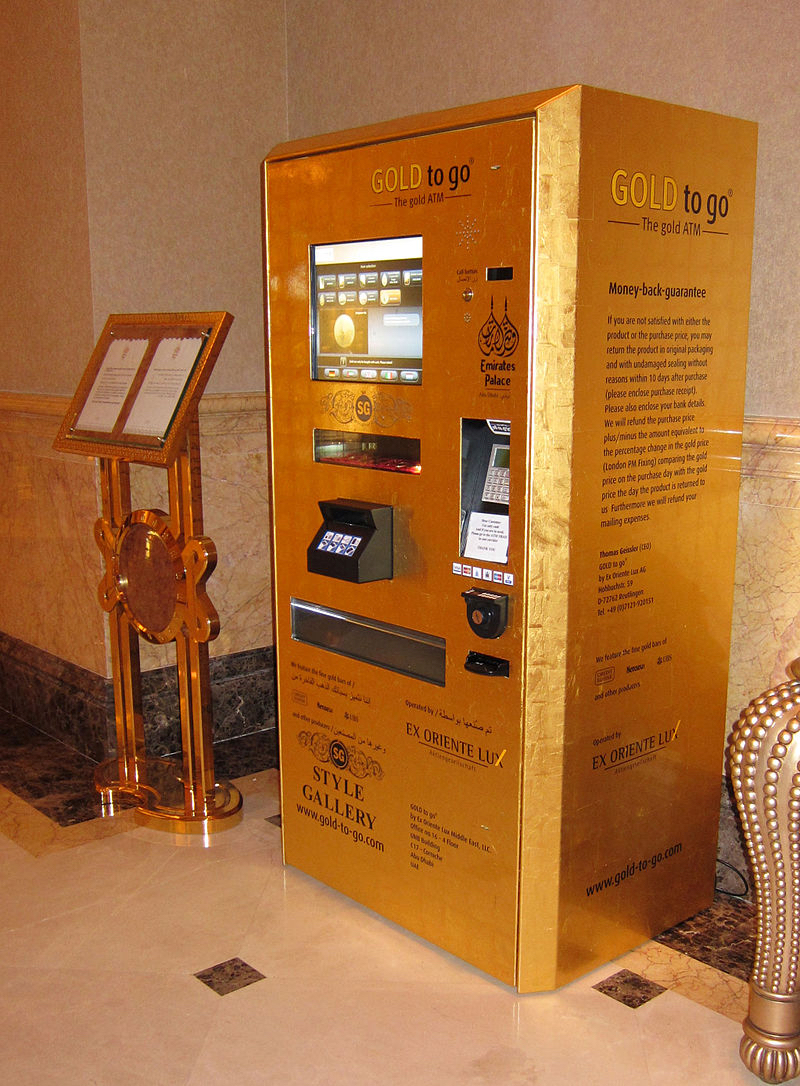
Vending machine for gold bars

by David Pescovitz

800px-GOLD_to_go_vending_machine

Gold to Go is a gold-plated vending machine that dispenses gold bars in various sizes and gold bullion coins. The first one was installed several years ago in the Emirates Palace Hotel in Abu Dhabi. The prices adjust based on market value via a Web connection. In the US, you can find a Gold to Go ATM in Manhattan, Atlantic City, and in Las Vegas's Golden Nugget Hotel & Casino, natch.

https://youtu.be/eRa0Mnd93wE

05 Oct 16:31

Boldly Going in B2B Sales: Less Kirk, More Spock

by bob@inflexion-point.com (Bob Apollo)

Kirk_and_SpockThe traditional profile of a successful sales person isn’t a million light-years away from the personality of Captain James Tiberius Kirk - someone who has been variously described as “cunning, courageous and confident, and with a tendency to ignore regulations when he feels the end justifies the means”.

Apparently, the inspiration for Kirk’s character came from such diverse sources as Captain Horatio Hornblower, Shakespeare and Alexander the Great. So it’s no surprise that Kirk comes across as the all-action hero, capable of rescuing apparently fatal situations through exceptional acts of derring-do.

How to avoid vanishing up your own event horizon

But, of course, real life isn’t like the movies. And it’s often a great deal easier for most sales people to get themselves into some sort of avoidable scrape through a reckless or thoughtless act of bravado than it is for them to escape from the hole they have just dug for themselves.

That’s why, of course, the success of so many of the Star Trek story trajectories relied on the creative tension between Captain Kirk’s “take that hill” Ying and Commander Spock’s more cerebral, considered and thoughtful Yang.

In fact, it’s pretty clear that - no matter how inspired some of his individual actions - Kirk’s innate recklessness would have seen him removed from command before the end of his first tour of duty if it had not been for Spock’s restraining influence.

In a complex world of better-informed buyers today’s sales people cannot afford to rely solely on their creativity, affability and ability to build relationships. Those traditional virtues remain important, of course, but they need to be mindfully melded with a measure of dispassionate analysis.

Kirk and Spock: Ying and Yang

The truth of the matter is that we need our sales people to combine the virtues of both Kirk and Spock. We need them to be creative, persuasive and committed. But we also need them to be rational, analytic and considered in their actions.

How can we create an environment where both sets of value prevail? Well, we might usefully start by embracing the lessons learned by aviation and medicine, and create simple frameworks and checklists that help to ensure that - even in an emergency - we thoughtfully make the correct decisions.

We can help every sales person develop their creative side by coaching them in the art of inspirational, motivational story-telling and showing them how to share compelling, thought-provoking insights that serve to shape the prospect’s sense of priorities.

Creative Analytics

We can invest in sales analytics to help us identify patterns of performance and - just as important - enable sales people to rationally assess whether they are following what is likely to be a successful sales cycle and if not, to identify the support and resources they need to get back on track.

We can provide our sales people with qualification guidelines that help them to identify whether they are about to embark on a Quixotic and hopeless mission that no amount of bravado is going to enable them to emerge as a winner.

Artist, Scientist and Engineer...

And, of course, we can look for a blend of qualities that span art, science and engineering when it comes to recruiting new hires. But one thing should be clear: the age of the sales superhero is coming to an end. In the future, we all need to be a little less Kirk and a lot more Spock.

Note: this was the concluding theme from my recent MyCustomer briefing on the subject of sales analytics. You can download the original presentation here, or follow it on SlideShare here. Live long and prosper!

05 Oct 16:29

Do Your Personas Need A Makeover?

by Lee Anne Wimberly

Right now there are a lot of misguided, well-meaning marketers working on beautifully crafted, useless personas. Now, I’m not joining the persona naysayers (you know who you are). It’s true that there are a lot of less-than-actionable personas being built, but we shouldn’t throw the baby out with the bathwater. And, speaking of babies, even though no one likes to hear that theirs is ugly, unlike babies, those personas aren’t going to get any cuter with age. It’s going to take some work.

shutterstock_318634583

It’s hard to argue with the concept of trying to understand your customers and prospects to produce demand generation that drives revenue. There are a lot of reasons why personas are valuable:

  • Personas build understanding. Not everyone interacts with customers every day, and even those who do may not be able to distil essential elements into something usable. Even if you, personally, know your buyers, can you say the same of every team member who could benefit from that knowledge?
  • Personas create focus. You can’t be all things to all people. It’s true that it takes a village now more so than ever to make a purchase, but that buying committee does have a limit, and personas will help you narrow your focus to those audiences.
  • Personas drive alignment. If you’ve built solid personas, reviewing their goals and motivations when there is dissension can help to move in the right direction for your buyers. It’s not a question of what you or your boss likes, but what your buyer needs to move along the buyer journey.

So, here’s where execution comes in. If everyone is on board with the concept of personas, the way organizations go about building them varies wildly. There are a few common ways personas often go off the rails.

Window Dressing-
People confuse personas with the document that captures the essential elements of the persona as the same thing. They’re not. When more effort goes into the presentation layer than the insights they should be built on, it’s easy to understand why some critics dismiss personas as fluff.

Foregone Conclusions-
Going purely from “your gut” or from exclusively internal research to create personas misses the point. To know what motivates a buyer, ask one. Or better yet, ask 10. Don’t just talk to customers either, unless that’s your exclusive audience. Talk to some prospects and losses if possible. Do some research into what’s going on in their environment to get some context as well.

Too Much Information (TMI)-
Personas should guide action. Would someone three layers removed from you know what decisions to make on content or channels based on your personas? Some personas are valuable from an attitudinal perspective, but don’t have enough of a data component to allow marketers to categorize them or include any information that a prospect could self-identify.

How do you build an actionable, insight-driven persona to guide your demand generation efforts? There are a few key questions to guide your research:

  • What are his or her objectives?
  • Where are their pain points?
  • What would trigger them to enter a buy cycle?
  • How long does it take to buy a solution like yours?
  • What is their role in the buying process? Are they an influencer or a decision maker? Part of a large committee?
  • How do they consume content?

From these foundational questions, you can begin to build a framework that will guide decisions on content strategy, engagement channels, and lead management to create a demand generation program that is a growth engine for your organization.

For more tips on building better buyer personas, check out this webinar: The Role of Buyer Personas in Demand Generation Strategy.

05 Oct 16:29

3 Ways To Bridge Marketing and Sales

by Mikita Mikado

Marketing and sales are disconnected. While both are responsible for generating revenue, marketing teams claim salespeople can’t close deals while sales reps suggest marketers deliver low-quality leads. Though there may be some truth to each complaint, interdepartmental bickering will quickly ruin high-potential business opportunities. The secret to long-term success is marrying marketing and sales so workers from both sides may operate in harmony while strategically leveraging each other’s strengths and weaknesses.

To do so, here are 3 concrete ways companies can bridge marketing and sales.

1. Track MQLs and SQLs Separately

Scaling sales in a cost-efficient and timely manner is no small feat. That is where marketers come in. Marketers swoop in to generate leads at volume, using a variety of tactics such as content marketing, paid advertising, social media promotion, and trade show sponsorships. As a result, they drive a significant number of Marketing Qualified Leads (MQLs).

SOMAmetrics defines MQLs as “prospects that have indicated interest in your company’s products or services by doing something such as downloading a white paper, attending a webinar or seminar, giving you their cards during a trade show, etc.” Though they have demonstrated interest, businesses must learn more about these prospects before passing them onto sales reps. That is because only a fraction of MQLs are strong candidates to become long-term customers.

Since sales is such a laborious process, salespeople should spend their time exclusively interacting with Sales Qualified Leads (SQLs). RingDNA considers an SQL to be a prospect who has the budget to buy your product, the authority to make a purchasing decision, the need for your specific solutions, and is ready to close the deal and implement your offerings.

Effective marketing and sales teams keep track of MQLs and SQLs closely, measuring overall performance monthly or quarterly. Growing companies should aim to increase both figures, while improving the number of MQLs that convert into SQLs.

2. Integrate Marketing Automation Software with your CRM

At a certain point, the number of leads you nurture becomes unmanageable. Opportunities will fall through the cracks and your business may falter.

Integrating marketing automation tools with your CRM simplifies your approach to sales at scale. With the ability to score leads, track each buyer’s individual behaviors and share other insights gathered about each customer, sales teams become smarter and convert more prospects into paying customers.

A 2013 survey by Focus Research suggests 75% of companies that leverage marketing automation generate positive ROI within 12 months. Coupled with CRM technology, businesses benefit 8 ways according to Kapost:

  1. Simplified lead nurturing and increased brand affinity.
  2. Better educated customers who are more likely to purchase and convert at a lower customer acquisition cost.
  3. Intelligence concerning customer behaviors around the web.
  4. Lead scoring which measures their interest and purchase intent.
  5. Shorter sales cycles with automated content delivery.
  6. Reengages inactive leads through retargeting.
  7. Smart filtering that only sends sales-ready leads to sales representatives to target.
  8. Analytics that help identify critical contributors of success.

3. Recruit a Sales Enablement Manager

To make sense of the collateral marketers develop, hire a sales enablement manager who will be responsible for supplying frontline salespeople with the knowledge, information and materials they need to engage potential buyers and close more deals. This individual will be responsible for coordinating with marketing to build a library of content sales reps may reference when interacting with clients.

Forrester explains sales enablement as “a strategic, ongoing process that equips all client-facing employees with the ability to consistently and systematically have a valuable conversation with the right set of customer stakeholders at each stage of the customer’s problem-solving life cycle to optimize the return of investment of the selling system.” Sales enablement allows teams to coordinate the various types of messages they plan to send to potential clients, ensuring accuracy and consistency with each sales pitch.

Sales enablement managers also work closely with marketers to provide important context about sales team goals, client needs, and related success metrics. Acting as a liaison between the two departments, sales enablement managers foster a highly-effective working relationship between marketing and sales.

How do you connect the dots between marketing and sales to drive real results for your business?

05 Oct 16:29

Inside Scoop on Lead Follow Up Strategies

by Ken Thoreson

If you’re struggling to connect with web lead contacts, you’re not alone. On average, 80% of B2B sales calls end up in voicemail and over 90% of voicemails go unreturned according to numbers from the sales data verification service, RingLead.

Call volume matters with web leads too, but calling warmer web prospects offers some smarter-not-harder shortcuts.

Recently, Find Accounting Software gathered data about web lead follow-up that was too interesting to keep under our hats.

The study takes on four questions that every sales and marketing employee deals with on a daily basis:

    1. How does the speed of follow-up affect the results?
    2. How many calls should be attempted?
    3. What is the best time of day to call leads?
    4. What is the best day of the week to call leads?

The quicker we called contacts the more likely we were to speak with them and successfully qualify their interest. Calling within 1 minute of lead submission doubled our first call successful contact and qualification rates.

Would some people be turned off by the quick follow up? Definitely not. In fact, the quicker the call, the better the qualification rate. We qualified nearly twice as many prospects (39.6% versus 20.9%), just by picking up the phone immediately versus waiting an hour.

So how many follow up calls should be made?

Calling contacts a full 10 attempts lead to nearly twice as many qualified leads versus calling only once. Research shows the average number of call attempts salespeople make to inbound leads is 1.3—far too few to maximize contact.

Statistically the first call is your best bet to get someone on the line.

We found that we spoke to almost twice as many contacts on our first call as on our second (42.9% versus 22.2%). From there, the per call contact rates drop off. By the time we reached the 10th call, we were down to less than 1 in 20 individual calls resulting in conversations.

Admittedly, it is hard to get excited about a per call contact rate under 5%. But the cost of making an additional call is cheap (maybe 30-60 seconds). More importantly, over time the contact numbers add up. We discovered that continuing through the 10th call increased our overall contact rate to nearly 80%—almost doubling the contact rate resulting from calling just a single time.

What effect does time of day have on contact rates? We found a few brief points

  1. The difference in the effect of time of day for calls is fairly minimal
  2. If you don’t correct for some variables, the data can be a bit misleading

We generally experienced the most success calling leads in the morning hours. However, the time of the day of call attempts had a relatively minor influence on lead contact. The difference in contact rates for the best and worst hours of the day was less than 5%.

What is the best day to follow-up?

The middle of the week (T-Th) is a slightly more effective time to reach out to lead contacts. Calls on Thursday had the highest contact rate. But day of the week is even less of a factor than time of the day on lead follow-up success. The difference in contact rate between the best day (Thursday) and the worst (Friday), was less than 3%.

In summary, numbers are great, but they don’t mean much without acting on them. In our case, we’ve enacted a number of process changes to increase the effectiveness of our outreach. One measure of the progress can be seen in our follow up times. Over the past year, if you calculate our average follow-up time, we’ve been able to get it down to within 3 minutes. More than half the prospects who request follow-up on our site will now hear their phone ring within 1 minute.

Your Thoughts?

05 Oct 16:28

Customers: A New Sales and Marketing Channel

by Richard Beedon

customers as new sales leads

More and more companies are starting to implement strategies and systems to leverage customers, customers and 3rd party influencers to become sales and marketing channels. And they are doing it with great success.

Why customers make a good sales and marketing channel

There are many reasons why customers have the potential to be a powerful sales and marketing channel for your brand. First, in today’s connected world, customers can reach their social networks on the brands behalf, easily and often. They have a strong voice. In addition, customers are typically very knowledgeable about your products and services and a good percentage of them are passionate about the company. Lastly, their friends listen to them and they can drive your brands message. More than ever before, buyers look to a trusted source before making a purchase decision. Customers can and will reach out to their social networks and spread a brand’s message, especially if they are encouraged and enabled to do so.

What customers can do to drive sales and marketing productivity

Customers do many things that are very important to the brand. They can:

  • Introduce their friends to your product or services
  • Recruit new hires and great talent
  • Amplify marketing messages
  • Forward content about new products and promotions
  • Write testimonials

Even better? They can do these things at scale.

The benefits of recruiting customers to become brand advocates

The benefits are impressive. Attracting new and retaining current customers is crucial for a successful business. Enabling and encouraging customers to refer their friends, brands can:

  • Build brand awareness and build a highly positive reputation
  • Generate the highest quality leads – leads that drive new customer acquisition
  • Create higher levels of customer enthusiasm and loyalty to your company
  • Save money and lower risk when compared to traditional advertising and marketing initiatives

Why now?

Although customer advocacy isn’t a new concept, in the past it has been an operational nightmare to create and manage these programs. But today’s technology has made it easy for administrators to set up, support and manage advocacy programs. Technology makes it easy to:

  • Enroll customers into the program
  • Provide customers the tools to easily reach out to their networks
  • Track and manage all the workflows and controls so brands can measure results all the way through to a sale.
  • Automate the process of brands thanking and nurturing customers for their contributions so they continue to advocate on behalf of the brand

This is not a future pipedream. We have seen some very compelling case studies. I have seen accounts has over 1.2 M customers registered to take part in a program, and these customers made over 1.0 M referrals, which generated over 400,000 new acquisitions last year alone.

Mobilizing customers, employees and 3rd party influencers to leverage their trusted relationships is happening everywhere because it is smart business: they are the sales and marketing channels of the future.

Questions? Email me at RBeedon@amplifinity.com

What is brand advocacy?

05 Oct 16:28

Making A Business Decision? Trust Your Network

by Dan Stratton

shaking_hands

Over the past decade, the buying cycle for business-to-business (B2B) deals has slowly shifted to what it is today. Gone are the days of cold calling and sellers owning all the power by controlling the entire sales cycle. Now, buyers have all the facts that they need to make a decision at their fingertips before they’ve even chatted with a sales rep or seen a demo of the product.

One of the major causes for this shift is the explosion of information available. You can easily find details on any product, how it has been used, and how happy customers/non-customers are with their past experience. Rating and review sites like G2Crowd and Capterra have become increasingly popular as buyers continue to educate themselves on which company and product is best for them.

In fact, a recent eMarketer study surveying business-to-business decision-makers found that 95% of them labeled Peers and Colleagues as their most trusted source for information. Making sure that your current and past customers are happy has never been more important as they have a tremendous amount of influence over future purchasing decisions by prospects you don’t even know exist yet. This is why it is always important to not only make your customers as happy as possible, but to give them the tools they need to evangelize your brand for you. Anticipate customers sharing experience on online review sites, giving presentations about their experience with your company, or simply taking the time to hop on the phone with some of your prospects as a referral customer – and arm them accordingly.

The other thing to remember from that eMarketer study is the importance of leveraging all those connections that are around you. Every organization has the potential to be a goldmine for leads by leveraging the relationships of various colleagues. This tactic is what has led LinkedIn to a market cap of $24 billion. When leveraging relationships though, the big thing to remember is that not all of them live within LinkedIn – and they’re not all created equal. In fact, in an old blog post of ours titled Leveraging Relationships – It’s More Than LinkedIn, we analyzed the data within our Introhive database and found that only 42% of business relationships actually reside in LinkedIn with the rest being found in mail and mobile devices.

05 Oct 16:28

Push vs. Pull Supply Chain Models – What You Need to Know

by Annie Bustos

For companies that supply physical products, inventory management throughout the supply chain is one of the most important tasks that will largely determine the business’ success or failure. The trick is to always have stock on hand to meet demand, but not have too much capital or storage space taken up with excess inventory.

One solution for inventory management is known as the “push.” It is so named because the retailer essentially plans for customer demand in advance, so therefore it produces and then actively “pushes” this inventory in order to meet the forecasted demand. The other solution is the diametric opposite – the “pull” approach which essentially bases inventory on actual real-time orders.

The Push Approach

Benefits:

  • If the forecasting is done correctly, then the company can be relatively certain it will have enough product to meet customer demand. This should prevent “out of stock” scenarios which can severely hurt a brand.
  • It can be a part of Material Requirements Planning (MRP), a system that combines operational, financial, and logistical plans that are intended to have materials and funding ready at all times.

And the considerable drawbacks:

  • Forecasting is still largely guesswork, even if analytics and past buying behaviors are used. Consumer demand can change quickly (think of the trendy kid’s products from the past few years) and it’s difficult to predict these changes.
  • Overestimation of product demand can cause problems from too much stock such as carrying costs, while underestimation can result in the need for rush orders and the accompanying costs.
  • Push systems are often more concerned with order processing times, instead of focusing on the customer.

With the push system of inventory management, the negatives typically outweigh the positives, especially for companies that are managing a large number of SKU’s. These companies employ a “one-size-fits-all” model for their products which can often ignore individual product-level spikes or drops in demand. It’s a model that doesn’t take enough account of real-time customer demand. All of the players in supply chains from the product manufacturers, to distributors and on to the actual retailer are discovering the need for inventory control that is mainly influenced by actual purchasing, not simply informed forecasting.

This leads to the “pull” method of inventory management, one where the system starts when a customer places an order, so the company only produces inventory to demand.

The Pull Approach

Disadvantages of the pull:

  • Problems in the supply chain can cause the needed shipment of inventory to not arrive on time. Perhaps there is an issue with the supplier who is not able to assemble or ship the order.
  • Unexpected spikes in demand can overcome the supply chain’s ability to keep stock on hand.

Advantages of the pull:

  • The entire premise of the pull system is that it eliminates the chance for excess of inventory and the carrying costs that go along with it.
  • A popular example of pull inventory management is the just-in-time solution, where companies have just enough inventory to match up with demand. It creates a lean environment where stock sizes are more manageable, and opens up space to carry a larger number of SKU’s if desired.
  • It’s a more granular approach that is based upon product-level demand, providing a more realistic picture of needs.

Retailers that employ the push inventory system run the risk of having too much or too little inventory of product. This not only incurs costs, but can damage the broader brand. With a cloud-based pull system, there is quicker response time built in, so product is frequently being created and stocked. Greater availability of product can have a net positive effect on the brand, as customers are less likely to be met with “out of stock” notices or see deeply discounted sales (after they bought a week prior) that are needed to clear up the excess inventory. The pull method is a leaner method of operation, one that fits well with other business processes.

View Omnichannel Webcast Now

05 Oct 16:22

3 Tips For More Efficient Lead Generation

by Emma Vas

A lengthy sales process is all too common in B2B IT and software sales, partly due to the highly technical products and services being sold. But a long cycle may also indicate inefficient lead generation and sales efforts.

Learn how to drive efficiency in outsourced lead generation.

Here are three tips for aligning your organization and achieving a more robust sales cycle:

1. Outsource Your Lead Generation
Every business benefits from a robust sales cycle and shorter ramp-up time for demand generation and lead development. To achieve this, many companies now rely on outsourced B2B demand and lead generation partners, who serve as efficiency catalysts between a company’s marketing and internal sales teams.

This efficiency is particularly valuable in the B2B sales process. When you have an outsourced sales partner delivering higher-quality warm appointments to your internal sales team, it reduces your follow-up time on initial leads. In addition, an outsourced lead generation team is already bought into your program, so they start kicking off your sales cycle on day one.

2. Use Training To Maximize Sales Effectiveness
Each sales process is unique, and often quite complex. Training is important for every sales rep, especially when working with an outsourced sales team. The quality of your training program from an outsourced sales provider determines how quickly and accurately the team is able to sell your brand, products and/or services. Therefore, it’s crucial that your sales team features skilled trainers and coaches who work alongside these reps.

The training program should ensure that the outsourced sales team is able to speak to your competition, hold meaningful conversations about the prospect’s business and be technically versed on your product. In the best-case scenario, an outsourced sales team becomes an extension of your company, providing seamless integration between their lead outreach and follow-up from your sales teams.

3. Use A Demand Generation Strategy To Unite Marketing And Sales
As you work to improve efficiency in lead generation or outsourced sales, it’s important to facilitate communication and collaboration across the sales cycle. If your marketing and sales specialists aren’t able to communicate clearly with each other about every prospect they handle, it’s going to have a negative impact on your business – and your bottom line.

In fact, a 2014 benchmarking study on B2B demand generation found that marketing teams need to interact more closely with sales in developing demand generation strategies and activities.

The study, conducted by ANNUITAS, was based on a survey of over 100 enterprises. Additional takeaways from the study include:

For efficient, effective sales cycles, consider developing a demand generation strategy that’s supported by today’s customer relationship management (CRM) and marketing automation software. This combination of strategy and technology helps ensure fluid internal communication throughout the sales process and a seamless customer experience.

Ready for efficient sales cycles that drive more revenue? Gain insider tips from Invenio Solutions® by downloading our free guide, The 7 Principles Of IT B2B Demand Generation.

05 Oct 16:21

How to reach your audience through targeted content distribution

by Expert commentator

Leverage the power of your data

Too many marketers are spending vast amounts of ad spend to essentially learn about how their campaigns should work. Why not rethink your approach and use your existing data to transform your paid activity and enhance your return on investment.

The problem with paid content distribution

A campaign manager for a major sportswear retailer is looking at the brand’s customer base, eCRM insight and its demographic profile data. Amongst this data, they identify that a large proportion of their customers has a keen interest in football shirts. It’s the peak season for new shirts being released from all of the major football clubs, so this is a prime moment to be launching paid social and retargeting campaigns for the latest football strips. The retailer starts the campaign, and throws a significant investment behind it – in terms of both content and ad spend.

However, there is a problem. The content and imagery for this campaign prominently features the new shirt for Manchester United, yet the campaign actually reaches supporters of Manchester City, Liverpool and Arsenal. In fact, it reaches supporters of all of the other 19 Premier League clubs. As a result, the campaign misses its target, and huge sums are invested in targeting users with an ad that not only failed to appeal, but actively disengages those audiences.

old process model

That might sound like a simplistic and extreme analogy, but many advertisers are doing exactly this with their paid content, social advertising and retargeting campaigns.

It is a problem that has its roots in brands struggling to use their first party data effectively prior to deploying paid activity. This results in brands spending the greatest proportion of their ad spent on targeting incredibly wide audiences on generic terms until, eventually, they find their optimum audience.

The key to better campaigns? Your audience data

The good news is that your brand should have existing data to hand that can address this problem, transform your approach to paid activity and enhances your return on investment.

Using raw data from your CRM database and remarketing tags, and applying some basic levels of audience insights, you can transform your strategic output, segment your customer base and create new strategies for your paid activity.

Going through this process will allow you to identify demographic or behavioural trains that are intrinsically linked, and then group these into target personas. These personas can then be segmented and built into incredibly granular targeting pools.

The result is a much more efficient may of running paid ad and content distribution campaigns.

new process model

In this more efficient model, a very small level of the campaign resource (namely, time and budget) has been invested in understanding the audience at the very beginning of the campaign. Gathering the learnings from this insight ensures that you can target a more relevant audience to drive stronger engagement.

From this, we can develop the campaign by expanding the target audience with lookalike data. This data comes primarily through social networks, particularly Facebook, which allows advertisers to import CRM data of their target audiences. Facebook then identifies audience groups and segments that share the same behavioural, demographic and socio-economic traits as your most currently engaged audience groups.

Step 1: Building your audience personas

If you want to get your content to an audience, you need to know where that audience resides online (in other words, where they are digitally active) and how they engage with brands. Without this insight, paid content distribution can be a costly exercise.

The importance of personas

Your eCRM data provides you with a huge amount of data on your existing audiences, including your regular customers, your big spenders and your dormant account holders. By segmenting these audiences, you can create a clear picture of your core customer base and your target audience.

personasThis process allows you to spot clear demographic traits between audience groups and, most importantly, allows you to understand what is likely to trigger them into performing a positive consumer action. These key incentivisation points will ultimately dictate which messaging is targeted to each audience group, and at which point in the buying process.

Introducing lookalike marketing

Using sophisticated lookalike technology, combined with further audience insights tools based on engaged users, it is possible for a brand to grow its audience extremely quickly.

Using the traits identified from your first party data, it is possible to use Facebook’s advertising interface to find audiences that share the exact same or similar demographic profiles and behavioural traits as your current audiences, as identified by the data held by Facebook.

This method delivers ads to the social profiles of users who are more likely to engage with a brand’s content. This has the potential to significantly reduce the volumes of wasted ad spend.

segmentation

Step 2: Segmenting your audience

Having identified where the opportunities to grow your audience are, you now need to segment them. This is where your retargeting activity becomes increasingly powerful.

Let’s go back to our football shirt analogy from earlier. That situation is a result of broad customer segmentation and broad content messaging. It is something that, through the correct use of retargeting tags, is easily addressed.

By creating much more detailed and granular audience segmentation buckets, based on both demographic – activity behaviour, we can ensure that any retargeting message is optimised for that audience based on the behaviour traits that we would expect for that group.

incentive requirements

This level of segmentation can be applied to almost any form of customer activity. For instance, travel companies can assign different segments for users that searched for different classes of aircraft cabin or hotel, ensuring that those that searched for premium class flights or five star accommodation aren’t being served content that leads with budget pricing.

This level of granularity has the power to transform your content distribution strategy into a channel that can really deliver significant return on investment.

Step 3: Turning content into acquisition

This level of segmentation takes significant ‘guesswork’ out of paid content distribution, ensures that a brand’s ad budget is directed only at audiences that will drive acquisition, and only in ways that will most effectively engage those audiences. It ensures that only those customers that may welcome a ‘harder-sell’ message are exposed to it, whilst those that prefer less aggressive messaging are not exposed to overtly sales-heavy content.

acquisition process

This means that ad spend can be directed on growing and reaching audiences that are directly aligned to the overall business objectives, that spend isn’t wasted on audiences that you are unlikely to convert, and that your return on investment on paid content distribution is vastly improved.

Five takeaways you can use right now

Rethink your approach

Too many marketers are spending vast amounts of ad spend to essentially learn about how their campaigns should work. This means that budget isn’t being utilised effectively and isn’t delivering a return on your investment. There are better ways to learn about your audience without utilising your ad budget.

Get stuck into your customer data

One of those better ways is to dive into your first party data. Your customer data provides you with an unrivalled level of insight into who your customers are, how they behave and why they interact with your brand.

Understand your audience

Using this data, you can build a clear picture of your most engaged customer groups, your most profitable customer groups and the customer groups that have left your brand.

Grow your audience reach

It’s highly likely that the audiences that you want to reach share the same behavioural and demographic traits as the audiences that you are already reaching. By performing lookalike matching on your current audience groups, you can identify a potentially huge target audience for your brand to target.

Target them with the right content

Understand how those audiences interact and engage with your content, and retarget them with something that is relevant. The more granular your customer segmentation is, the more effective this retargeting will be.

For a quick and easy guide to optimising your social strategy request our ebook now and start driving ROI from social.


Thanks to Tony Booth for sharing their advice and opinions in this post.
Tony Booth is Head of Biddable Media and PPC at independent digital marketing agency Stickyeyes. He has a wealth of experience on Google, Yahoo and Bing as well as the management of campaigns on social and 3rd party re-marketing platforms.
05 Oct 16:21

How Did Picasso Create 50,000 Works of Art?

by James Altucher

Barbara Cortland broke the world record – in 1983, she wrote 23 novels. She was 82 years old. Two novels a month that year.

Altogether she wrote 723 published novels. Her last at age 97. When she died a year later there were 160 unpublished novels still waiting to be published.

Did people like her work? Depending on what estimate you use, she sold between 600,000,000 and 2,000,000,000 books. Most of her books were romance novels.

Was she creative? Was she an artist? I don’t know if those questions matter.

She loved doing it else she would not have done it. And people loved her work else she would not have sold around a billion or so books. Is Art a question or an answer?

Picasso might know. He said “the less Art there is in painting, the more painting there is.”

In other words, just do it. Leave behind everyone else’s definitions or else you will drown in them.

Why listen to him? He made 50,000 works of art in his life. On average two per day.

Is being prolific a requirement of being creative? No, not at all. Many great writers and artists have their master works and then they are done. Others…more prolific.

Jimi Hendrix made around 70 albums before he died at age 27. Mozart composed over 600 pieces in his lifetime. Charles Schulz made 17,897 Charlie Brown strips before he died.

I want to be like them. The cruelest thing is that blank page each morning. To create something that never existed before out of complete nothing.

People say, “everything has already been written”. Everything has already been said.

But that’s a lie.

I think every outline has already been written. But each human has a unique fingerprint.

Just putting that fingerprint on an outline makes it yours, different, unique. And through practice and vulnerability, you make that fingerprint something others want to see.

I don’t know if there is such a thing as rules of creativity. I look back on the past 15 years. I’ve published 17 books and maybe 2000-3000 articles. And today I sit here and can’t think of any “rules”.

Fortunately I can steal some rules and splash my own pompous interpretation on them.

So I’ll turn to Picasso and see what he has to say:

A) “Unless your work gives you trouble, it is no good.” – Picasso

I love this quote. “Trouble” means so many things. Maybe people will not like you. Maybe you are experimenting too much. Maybe the trouble is for you – is what you are doing too new?

How could Barbara Cortland write 700 romance novels? And they are all formulaic. But that is where the trouble begins.

In all 700 books, two lovers meet. But a problem happens that keeps them apart. Cortland had to come up with 700 different problems to keep her lovers apart. And then solve them.

In every thriller, John Grisham is required to have a scene where the hero is completely at the mercy of the villain. In every James Bond movie, Bond is tied up and about to die at the hands of the bad guy.

If they solve the problem in the same way each time then they lose their creativity. The “trouble” is: the artist has to solve the problem in a new way, different than any solution before it.

The bigger the trouble, usually the better the outcome.

I lost a lot of money earlier this year when a business I was involved in failed. It was big trouble.

So I poured myself into other projects that I would’ve forgotten about or not cared about. So far, the outcomes are incredible. Thank you, bad company, for that horrendous loss.

Am I getting into enough trouble with this article?

The trouble with THIS article is that it is egotistical to write on creativity. Since what do I know? I know nothing.

So I solve it by passing the buck to Picasso and Barbara Cortland and Mozart and try to piece together the clues on creativity they left us.

I am the student. They can be my teachers.

B) “Learn the rules like a pro, so you can break them like an artist”. – Picasso

Kurt Vonnegut did nothing correct in his novels. His peers before him would have elaborate plots, floral descriptions, deep characters.

In Vonnegut’s classic, “Slaughterhouse Five”, the hero is wimpy guy who goes in and out of time and space and in the middle of it all, experiences the slaughter of Dresden.

Despite, time travel and space travel, Slaughterhouse Five is ultimately a memoir that breaks all the rules.

But Vonnegut said, “You can’t break the rules of grammar until you know the rules of grammar”.

He only wrote the book after many years of following the traditional “rules” of science fiction and then more traditional fiction writing.

As Shawn Coyne write in “The Story Grid”, every genre has its obligatory scenes. Don’t break them. Be creative around them.

When Luke was at the mercy of Darth Vader…BAM!…”I. am. Your father.”

But is that art then? If we follow a formula? Shawn makes the point that Steve Jobs followed the very strict genre of the phone before making an iPhone, a work of art.

Elon Musk followed the genre of the car before making his first Tesla.

There’s magic in taking what’s been done a billion times before and doing it your way.

C) “Action is the foundational key to all success.”

I know too many people who have an idea for a book, or a show, or a business. But “when I have time” or “it’s too late for me”, ignoring that Barbara Cortland wrote 23 books in her 82nd year.

The one thing in common from anyone above is that they wrote every single day. It’s hard to sit down every day and…sit. Blank paper. Blank canvas. Blankness.

And then…if you do something…it might suck. It might be the worst thing you ever do.

Kobe Bryant, one of the greatest basketball players of all time, has an incredible world record: he’s missed more shots in professional basketball than any other player. He’s missed over 13,000 shots.

So taking action is more important than anything else.

Nothing => Thinking => Doing => Finishing => Repeat is a daily practice for…I don’t know.

But I hope I can do it every day.

D) “To copy others is necessary, but to copy oneself is pathetic.”

I wrestle with this. People ask me, “what is a problem for me?” This is a problem.

Sometimes I look back at a post and think, “people liked that. I should do that style again.”

I hate that feeling.

I need to do “D” more often. Every time Picasso felt comfortable, he changed styles completely. His “blue period” is nothing like “cubism” is nothing like his “Surrealism” (see “Drawing for Guernica”).

I’m sure each period borrows from the others. But he was not a lone genius.

While Picasso may be the father of cubism, he was standing on the shoulders of Cezanne and Matisse, both competing with them and trying to outdo what they had done before.

He copied them, and left his old style behind, forming a new meld which became what we now think of as Cubism. And then he left that behind, never to return to it.

To be fair, Barbara Cartland, perhaps did copy herself too much. The last two decades of her life, while prolific, resulted in less sales. But who can say? She loved what she did and wanted to keep doing it.

On the same topic, Picasso once said, “Success is dangerous. One begins to copy oneself, and to copy oneself is more dangerous than to copy others. It leads to sterility.”

I need to figure out what to do next. Maybe that’s why I’m exploring all of these masters of reinvention.

Reinvention is scary. And it’s risky. But it is unavoidable. I’m scared right now.

E) “The chief enemy of creativity is good taste.”

When “50 Shades of Grey” was on its way to selling 40,000,000 copies everyone hated it.

I wrote an article about why it was a great work of literature. I got emails that said, “this is why America is falling apart – people with no education are liking drivel like this.”

Ok.

And yet 40,000,000 people thought reading it would make their lives better. And the average sales for this year’s National Book Award finalists is 5,000 copies.

Sales aren’t everything. I get it. And sometimes a work of art can be intended for the few and not the many.

But the arbiters of taste are all using the past as their metrics. The future is still a blank slate. Else we’d be there.

F) “Everything you can imagine is real.”

Elon Musk wants to die on Mars. “Just not on impact,” he says.

Ok, maybe he will and maybe he won’t. But he made a rocket that can get him there. The first advance in rocket technology in 40 years.

He’s making batteries and solar cells that can fuel the rocket. He’s launched rockets into space and electric cars that can go from 0 to 60 in 3.2 seconds.

I don’t know. Maybe he will get there.

One time I wanted to pitch an idea directly to the CEO of HBO. On the way there, I ran into a friend of mine and told her where I was going.

She said, “You can’t do that!” I can’t just go over my boss and his boss and his boss and his boss and his boss.

But I did.

And he said, “yes”.

Most of the time, people say “No”. In almost everything I’ve done, I’ve gotten 20 Nos for every Yes.

Is this good or bad? Maybe I should try to get more Yesses. Ok. I’ll try. Maybe it will happen.

Picasso also says, “I am always doing things I can’t do, that’s how I get to do them.”

My daughter lost a tennis match the other day with her school.

I asked her, “What did you learn?”

She said, “What do you mean? I was disappointed.”

If she always sticks to only what she can do (a safe, consistent serve instead of a harder one that will miss more) then she will never get better at what, right now, she can’t do.

It’s the can’ts that add up to a win or a loss. The “cans” just keep you in the box of what was safe.

In 1953, Picasso gave up painting. He thought forever. For the first time in his life, he started writing poetry. Then singing.

Was he good? Probably not. He went back to painting. But turned a “can’t” into an “I did it”.

G) “Accidents, try to change them — it’s impossible. The accidental reveals man.”

Real life is not in a self-help book. Or in an article on the “10 ways to be a leader”.

It’s the accidents that allow you to measure who you are as a person. Or as a creator. It’s when betrayal and disappointment visit you that you can test what you are made of, process it, transform it.

I wonder sometimes, “can people change?” Because normally I don’t like people who do things that I find dishonest.

But I’ve been dishonest. I’ve been despicable. I hope I can change.

How to put these quotes to work? How to be creative?

For me: I have my daily routine.

I wake up and I’m grateful. I try to think every day of new things to be grateful for.

I sleep well, exercise, and try to eat well.

I try to love the people in my life. It’s hard. There are “accidents”. But maybe it gets easier with practice.

I try to be creative.

I bow down and surrender to what I can’t control.

And then at each of these things, I try to improve 1% – which means nothing – what is the math of gratitude?

But here’s the math. Compounding 1% a day in X, makes X 38 times better in a year.

Because this 1% gets me in that scary void of “can’t”. How to be most grateful when a business fails. Or someone sends me hatemail. Or Claudia is upset at me (I’m not good at any of the above).

How?

And then I sit here. And I try to find a new vein to bleed from. Or I take everything in my house and throw it away. Sometimes that works also.

Recommended Post: The Four Golden Keys to Art and Happiness

James Altucher Show Podcast: PJ O’Rourke – Thrown Under the Omnibus!

The post How Did Picasso Create 50,000 Works of Art? appeared first on Altucher Confidential.

03 Oct 15:24

The surprising things millennials love — and hate

by Mallory Schlossberg

black friday teens shopping

Retailers are obsessed with millennials. Stores are consistently trying to cater to this generally elusive demographic.

Sometimes, when retailers try so desperately to lure this desirable (albeit generally broke) demographic, they make bizarre mistakes. Other times, they get it right.

Here's what retailers do that millennials love — and hate.

SEE ALSO: The top 10 food brands for millennials

Hit: Gourmet Pizza

"You may have three roommates. You may not own a house ... But you can splurge and get a really awesome pizza," millennial expert and marketing strategist Jason Dorsey of The Center for Generational Kinetics told Business Insider earlier this summer. "And added to this great equalizer [is] uniqueness, which is just fabulous." These specialty pizza places include up-and-coming restaurant chains like Pieology, Blaze Pizza, and Chipotle's Pizzeria Locale.


Miss: Pseudo-gourmet pizza

Remember when Pizza Hut attempted to overhaul its business and cater to millennials by offering pseudo-gourmet toppings like honey Sriracha sauce and Peruvian cherry tomatoes — and it totally backfired?

"Unfortunately, we haven't been as effective as we've liked with our marketing and need to balance its appeal to millennials with mainstream pizza customers," Greg Creed, CEO of parent company Yum Brands, told investors at a conference covered by Nation's Restaurant News.

This summer, the company got back to its over-the-top roots with the ridiculous hot-dog crust pizza.


Hit: Buying cars...online

"Millennials are buying cars in record numbers online and through services from ebay to truecar.com because the traditional retail experience doesn’t play to how millennials like to buy," Dorsey explained to Business Insider.


See the rest of the story at Business Insider

NOW WATCH: The most expensive and extravagant vacations in the world

03 Oct 15:23

Marketing Automation for Beginners

by David Hurley

Okay so let’s take a very introductory look at marketing automation what it is, and how you can use it in your business. Although the term of marketing automation may be a bit confusing or different to you I’m sure you’re familiar with the concept so will begin by looking at what exactly marketing automation is and how you can apply to your business.

Starting with an IP address

When someone comes to your website they’re basically just an IP address there may be some geographical data or some other information attached to that IP address but really all they are is an anonymous visitor. Which you want to do is find some way of tracking that anonymous visitor and turn them into a potential need for your business. So with market information the whole idea is your tracking all of these anonymous visitors to your website keeping track of every page they visit how long there on that page for and what causes them to take further action.

Landing pages to collect more data

One of the ways the businesses do this is by creating landing pages with specific call to actions. These call actions may simply be something like filling out a form, or clicking a button to download something, or something else in which to encourage them anonymously to enter more information. And they’re going to enter this information in a form. So now what you have is an anonymously that fills in the form, this gives you more information about them typically those fields would be a name, email address, and maybe some other information about them. As a business you now have a lot more information about this individual now they’re no longer in anonymously you can now link all the pages they visited by their IP address to a specific name and email address. This is where information begins to come into play. Now that you hold an email address you can do a variety of tasks. You can look up their social networks based on their publicly available information, you can add them to specific lists, and you canbegin drip flow marketing email campaigns.

Beginning a drip flow campaign

So let’s talk next about drip flow email campaigns. The whole idea behind a drip flow email campaign is that you’re going to be sending targeted emails to specific lists automatically on predefined schedules. There’s two forms of campaigns, the first is a time-based campaign, and the second is a user-driven campaign. Obviously you can do a mix of the two campaign styles or hybrid campaign quite easily. What do these campaigns actually look like?

Example: Let’s say someone comes to your website they have browsed around a couple of different sections, and then they fill out a form on the landing page in order to receive a white paper about a specific product. Now you know first of all what pages they visited, the product of their interested in, and the resources they’ve downloaded. In your marketing automation tool you may set up a list for everyone who might fill out that form. Now what you can do is you can define specific campaigns to send those leads on that list. Targeted emails on a predefined schedule. You may send them an email directly after they download the asset, or you may choose to wait a week (or longer). Either way you can then set up a decision tree.

Create a Decision Tree

A decision tree means that if they opened the email your system is going to take a specific action, and if they don’t open the email you take a different action. That’s just one example! You can have decision trees based on links within emails, assets that they’ve downloaded, or a variety of other tasks that the user might perform. Perhaps if they don’t open the email you wait 30 days and then send them another email just as a gentle reminder. The whole idea of drip flow campaigns and decision trees is to nurture your leads along a specific path.

You nurture these leads along the path by assigning points to all of the activities they take. This means you can assign a point value if they visit a certain page, fill out a lead form, download a resource, or open an email. And these are just a few examples of ways in which you can assign points to your leads. The whole concept is designed to help create a value associated with each of your leads. So as your leads earn more points they become a more valuable lead. Eventually at a point total that you define that lead can be automatically moved into your CRM.

Establish critical integrations

This is where it gets exciting! Now when your sales team logs in to your CRM system they are greeted with a list of qualified leads that have been nurtured along the process for however long that process took and they are now ready to be contacted. What this process does is save tremendous amounts of time for your entire sales team. no longer are your sales team members stuck cold calling all sorts of potential leads that haven’t been fully qualified or maybe only slightly interested because maybe they only visit the site once and downloaded a single asset. instead they can spend their time calling those leads or contacting those leads who are qualified through the lead nurturing process that’s been done automatically by your marketing automation software.

Save Time

This is a pretty exciting process. When a business implements marketing automation into their workflow they eliminate the tedious time-consuming tasks which consume far too much of their sales team members time. So when we look at the idea of marketing automation we’re not talking about an impersonal relationship with your leads. What we’re talking about instead is redefining those personal touches in the communication that occurs and having them automatically triggered.

The contact is still personal but the timing has been automated.

And that my friends is marketing automation for beginners. Simple, effective, and incredibly powerful.

03 Oct 15:23

Here's how America's most secret, elite warrior units operate

by Amanda Macias and Alex Lockie

Army Rangers Mortar Training

The US Special Operations Command (SOCOM) oversees roughly 70,000 operators, support units, and civilians from each of the military's sister service branches.

America's elite soldiers, work under a shroud of secrecy to carry out high-risk missions with swift precision, laser focus and firm perseverance.

Operators work in up to 80 countries with sometimes less than 48 hours notice to accomplish assignments in counterterrorism, unconventional warfare, capture and assassinations of wanted peoples, and training of foreign forces.

Working with the military's most advanced technology and weapons, the projected FY2015 budget for US Special Ops forces is approximately $9.9 billion. 

In honor of Special Operations Appreciation Month, we explained the strengths of each unit and how these elite warriors combine their skills to serve the interests of global security.

SEE ALSO: America's secret elite warriors explained in one simple infographic

Army Special Forces aka Green Berets

These soldiers are trained in a variety of climates and terrains and are expert skiers, mountaineers, and divers. They are the only group tasked with training ally foreign forces in combat tactics and specialize in multiple languages.

Source: Special Newsweek Issue: Special Ops, 2014


75th Ranger Regiment aka Army Rangers

The familiar command "Rangers lead the way" is exemplary of what Army Rangers do best. This company goes into special-operations missions first, clearing the way for other service forces behind them. Can be deployed anywhere in the world within 18 hours. 

Source: Special Newsweek Issue: Special Ops, 2014


1st Special Forces Operational Detachment-Delta aka Delta Force

The most clandestine of the special-operations units, Delta Force, aka The Unit, specializes in high-risk air, land, and sea missions. Each member of Delta Force is capable of carrying out solo missions, and they are considered the best in close-quarter combat.

Source: Special Newsweek Issue: Special Ops, 2014


See the rest of the story at Business Insider

NOW WATCH: The most expensive and extravagant vacations in the world

03 Oct 15:23

Google employees confess all the worst things about working at Google (GOOG)

by Jim Edwards

Sergey Brin

A job at Google.

It's career heaven, right? How could a gig at the biggest, most ambitious tech company on the planet possibly be bad?

Well, take a look at this Quora thread, which is being used by current and former Google employees to dish the dirt on working for the search giant.

Turns out that working at Google isn't all free food and bike rides around campus.

Take their complaints with a grain of salt. These are the complainers, after all. But we've heard many of these same things from our own sources.

Sam Colt contributed to this report.

SEE ALSO: How to see all the companies tracking you on Facebook — and block them

They can hire the very best people — so *everyone* is overqualified.

"There are students from top 10 colleges who are providing tech support for Google's ads products, or manually taking down flagged content from YouTube, or writing basic code to A|B test the color of a button on a site."


There are too few "bozos."

"There are enough talented people that being talented won't guarantee you an inside track on good projects, because there are thousands of equally smart people ahead in the queue and equally underutilized, but there are just enough bozos that you have to prove that you're not one of them," said a former engineer.


Google staff are so outstanding that there's an internal joke about it.

"I used to joke with my colleagues that Larry & Sergey go out on their yachts — tie them together, sit back on the same recliners you'll find on their jumbo jet, each on his own yacht/set of yachts, smoke cigars, and put up pictures of Googlers with little snippets like 'was a GM at multi-national telecomm company, got a Harvard MBA and is now answering Orkut tickets.' and then they would erupt in laughter and clink their cigars & Scotch together in celebration. This, of course, is highly unlikely given neither of them would ever smoke a cigar or drink Scotch. Remainder is plausible."


See the rest of the story at Business Insider
03 Oct 15:08

The Ten Commandments of Content Marketing

by Amanda Clark

iStock_000026784544XSmall

You may already do content marketing for your brand; perhaps it’s something you’ve been doing for a long time now. Still, it never hurts to be reminded of the fundamentals—the basic dos and don’ts that will keep your content marketing efficient, effective, and ever on track.

The ten rules we have compiled here are basic, but foundational: You won’t have a good content strategy without them, and you won’t get results. And because these rules are so basic, we can say that they really are rules, more or less etched into stone. We doubt you will find many exceptions to these ten precepts.

So, with no further adieu… our stone tablets of content marketing:

  1. Thou shalt esteem quality over all else. Don’t commit idolatry with SEO gimmicks or fall into the heresy of content marketing “short cuts.” Everything you do should be in service of quality, first and foremost—content that is well-written, polished, organized, and value-adding. Sacrificing quality is content marketing’s cardinal sin.
  2. Thou shalt serve thy customer, for all thy days. Selfishness is another unforgivable offense. If you want your content marketing to be effective, you have to develop it in service to your customers and your audience, first and foremost; help, provide value, or simply entertain. By putting your customers first you will be, in effect, putting your brand first, as well.
  3. Thou shalt sell without selling. There’s nothing wrong with casting your products and services in the best possible light, of course—but content marketing is not about the hard sell. It’s about building relationships and trust over time. Don’t exasperate your audience by going into “sell” mode all the time; instead, entice them to your brand by offering free guidance and value.
  4. Thou shalt not market without a strategy. Hopefully, you have a marketing plan that you’re working from, or at the very least a written expression of your company mission, values, and goals. Make these documents your marketing Bible, and use them to guide you forward at all times.
  5. Thou shalt post new content regularly. If you’re not there, your customers won’t be, either. Feed the content monster and ensure brand visibility. Post new stuff regularly and consistently.
  6. Thou shalt write like a human, not like a corporation. People like doing business with other people, not with faceless corporate entities—so make sure you humanize your brand with a unique voice, with humor, with compassion, and more.
  7. Thou shalt not overdo it. Don’t spread yourself too think by attempting to post 10 times daily to a dozen different social platforms; be judicious and practical, and don’t bite off more than you can chew.
  8. Thou shalt not rush it. Content marketing is about building relationships—and that takes time. Don’t expect to see huge results overnight.
  9. Thou shalt review thy content marketing plan on a monthly basis. Audit your content and your strategy to make sure that you’re making an impact, and tweak/revise as needed.
  10. Thou shalt not forsake data. If you’re not tracking your results and measuring your profess, you have no idea whether you’re advancing toward your goals.

Follow these content marketing commandments and they will surely lead to some sublime reward; neglect them and there could be hell to pay.

03 Oct 15:05

Boldly Going in B2B Sales: Less Kirk, More Spock

by bob@inflexion-point.com (Bob Apollo)

Kirk_and_SpockThe traditional profile of a successful sales person isn’t a million light-years away from the personality of Captain James Tiberius Kirk - someone who has been variously described as “cunning, courageous and confident, and with a tendency to ignore regulations when he feels the end justifies the means”.

Apparently, the inspiration for Kirk’s character came from such diverse sources as Captain Horatio Hornblower, Shakespeare and Alexander the Great. So it’s no surprise that Kirk comes across as the all-action hero, capable of rescuing apparently fatal situations through exceptional acts of derring-do.

How to avoid vanishing up your own event horizon

But, of course, real life isn’t like the movies. And it’s often a great deal easier for most sales people to get themselves into some sort of avoidable scrape through a reckless or thoughtless act of bravado than it is for them to escape from the hole they have just dug for themselves.

That’s why, of course, the success of so many of the Star Trek story trajectories relied on the creative tension between Captain Kirk’s “take that hill” Ying and Commander Spock’s more cerebral, considered and thoughtful Yang.

In fact, it’s pretty clear that - no matter how inspired some of his individual actions - Kirk’s innate recklessness would have seen him removed from command before the end of his first tour of duty if it had not been for Spock’s restraining influence.

In a complex world of better-informed buyers today’s sales people cannot afford to rely solely on their creativity, affability and ability to build relationships. Those traditional virtues remain important, of course, but they need to be mindfully melded with a measure of dispassionate analysis.

Kirk and Spock: Ying and Yang

The truth of the matter is that we need our sales people to combine the virtues of both Kirk and Spock. We need them to be creative, persuasive and committed. But we also need them to be rational, analytic and considered in their actions.

How can we create an environment where both sets of value prevail? Well, we might usefully start by embracing the lessons learned by aviation and medicine, and create simple frameworks and checklists that help to ensure that - even in an emergency - we thoughtfully make the correct decisions.

We can help every sales person develop their creative side by coaching them in the art of inspirational, motivational story-telling and showing them how to share compelling, thought-provoking insights that serve to shape the prospect’s sense of priorities.

Creative Analytics

We can invest in sales analytics to help us identify patterns of performance and - just as important - enable sales people to rationally assess whether they are following what is likely to be a successful sales cycle and if not, to identify the support and resources they need to get back on track.

We can provide our sales people with qualification guidelines that help them to identify whether they are about to embark on a Quixotic and hopeless mission that no amount of bravado is going to enable them to emerge as a winner.

Artist, Scientist and Engineer...

And, of course, we can look for a blend of qualities that span art, science and engineering when it comes to recruiting new hires. But one thing should be clear: the age of the sales superhero is coming to an end. In the future, we all need to be a little less Kirk and a lot more Spock.

Note: this was the concluding theme from my recent MyCustomer briefing on the subject of sales analytics. You can download the original presentation here, or follow it on SlideShare here. Live long and prosper!