Shared posts

04 Feb 17:25

How to Prioritize Your Work

by Anthony Iannarino

If you look at a list of tasks, you will notice that each task is something you need to do or something you have been asked to do, each sitting on a line of a page with a check box next to it, or instead in a software program with a similar design. Because each task is something you must do, each task appears to be equal, allowing us to view each task as being equal to 1.

But all projects and tasks are not equal. While some have a weight of 1, other projects and tasks are worth many times more than 1, and some are worth far less, creating negative value. There is no such thing as time management, and what we mean when we use that popular phrase is prioritization.

Prioritization is a Values-Based Decisions

If you are going to have priorities, you have to make values-based decisions. You have to believe that one thing is more important than some other thing. You also have to be willing to see some things as negative, things that subtract from your goals and outcomes and purpose and meaning.

You have great clarity about what your most important task is, but your email is piling up, and your friend just invited you to be part of a new and exciting project, one that you want to be part of. These simple routine conflicts require that you make decisions that consider the future you.

What Is the Impact

Let’s stick with the idea that all tasks are given a weight of 1. How do you decide which tasks are a 10 and which are a negative 10? You have to start by testing the work to see what it is worth, and one test is the impact of completing that task.

If you complete this task, does it move you closer to your goals and ambitions for the future? Does it impact the work you are here to do and is it something that contributes to your purpose and meaning? Or will this task only steal your time away from the things that make the greatest impact?

Will the future you look back and be grateful that you spent time on a project or task, or will future you regret giving time to things that made no real impact? What is a ten on impact and what is a negative ten on impact? What looks like a ten on impact but will likely be zero and is only on your list because you don’t want to miss out on something that sounds like fun?

How Important Is It to Your Future

There is another test you might consider when prioritizing your projects and tasks: How important is it to your future?

Some projects and tasks are more important to your future than others. The challenge for most of us is that we have more of the type of work that produces short-term results that we invest in those things to our detriment, leaving too little time for the projects and tasks that, seen from the future, are far more critical. Our balance here is often tilted in the wrong direction. Steeply, too.

Without the context of looking backward from the future, it can be difficult to assess the difference between two projects or two tasks that both seem to be a ten as it pertains to their impact and importance. Asking which one is going to produce the greater long-term benefit is how you prioritize the most proactive, impactful, and meaningful projects and tasks.

Let Future You Decide and Present You Act

Let future you decide what is going to be most important to you and let present you block the time to do the work to make that future a reality.

Essential Reading!

Get my latest book: The Lost Art of Closing

"In The Lost Art of Closing, Anthony proves that the final commitment can actually be one of the easiest parts of the sales process—if you’ve set it up properly with other commitments that have to happen long before the close. The key is to lead customers through a series of necessary steps designed to prevent a purchase stall."

Buy Now

The post How to Prioritize Your Work appeared first on The Sales Blog.

04 Feb 17:24

Why Value Degrades Over Time

by Anthony Iannarino

The value of your solution was enough to win your dream client’s business and their loyalty. But value is sometimes subject to entropy, or deterioration in effectiveness over time.

Solving the Last Problem Doesn’t Solve the Next

When you won your dream client’s business, they had a challenge, and they needed someone to help them create better results. The value you created through the sales conversations and the value of your solution together solved their problem perfectly. That solution, however, only addressed the last challenge, and has so far been impotent when it comes to dealing with new issues.

The reason the value you create degrades over time is that it was designed to solve one set of problems or challenges and is now confronted with new ones, ones for which it was not intended—and opening you up to being competitively displaced.

The Changing Environment Creates Challenges That Aren’t Quickly Perceived

The changing environment continues to provide new realities, some of which aren’t very quickly perceived, creating a disruption that limits the value of what was once considered value.

At the JFK airport in New York City, there are two lines of cars at baggage claim. One row of cars is made up of traditional taxis; the other line is black cars from Uber or some other ride-sharing service. As you walk by the taxis, most of whom have been watching the Uber line zip by them as they wait for a fare, you will notice each car has a sign in the window to inform you they have an app you can install on your phone.

A taxi cab was once the standard in value as it pertains to getting around in New York City. The threat of Uber was not perceived fast enough, and the value of the taxi was massively degraded. The displacement here was through the disintermediation of the model.

Advances In Technology, Processes, and Systems

The Blackberry was better than the cellular phone, as it allowed for email messaging and the use of a calendar. As crude and monochrome as it was, the technology allowed for more than what came before it. The iPhone was to the Blackberry what the Blackberry was to the flip phone; the technology and its capabilities evolved.

The process of buying the products you find in retail stores shifted from a trip to the mall to a trip to Amazon.com, some other website, or a click on the same smartphone described above. It’s not the same experience as browsing through a book store, and so the value in one category is lessened, only to be increased in the availability of almost anything you can imagine and search.

Over time, what was once perceived as value is replaced by something of greater value. The key to retention is new value.

Essential Reading!

Get my first book: The Only Sale Guide You'll Ever Need

"The USA Today bestseller by the star sales speaker and author of The Sales Blog that reveals how all salespeople can attain huge sales success through strategies backed by extensive research and experience."

Buy Now

The post Why Value Degrades Over Time appeared first on The Sales Blog.

04 Feb 17:24

What Can an Incentive Program Do for Your Business?

by Jay Kang

Customer incentives can take many forms. They could be reward points or discounts for loyal customers, or referrals. Sometimes, it means advance access to newly released products or freebies. It does not matter what form the incentives take. We need to think about their ripple effect.

The question we want to think about briefly here is “what can an incentive program do for you?”

It helps achieve customer loyalty

A customer incentive program will help your customers to feel more appreciated, and connect emotionally with your brand. As well as share the same values your brand espouses. The customers will, therefore, make repeat purchases, an aspect of customer retention.

Incentive programs also have a ripple effect of increasing customer patience in the event of an unfortunate experience with your brand, for example, like with brand recall.

digital marketing metrics

It is one way to collect customer data

Customer incentive programs are a way to collect customer data in exchange for a benefit for the customer. If customers are to be asked to share their personal data, they may be unwilling to do so.

But, if a customer benefits from it, like with an incentive program, they might be more willing to give you their personal data to sign up. The data can then be used for insights into customer purchase behavior and to personalize customer experience, as well as creating highly targeted marketing campaigns.

Increased revenues

Existing customers spend more than new customers. In the US, 40% of revenue comes from returning or repeat purchasers, who represent only 8% of all website visitors. Since you already have the customer data, you can target them appropriately based on their purchase behavior.

For example, you can target new product releases for week 3 in the month to customers who purchase more towards the end of the month. This will increase the chances of the customers including your new product when planning for their monthly expenditure.

Other ways incentive programs can benefit your company:

  • It makes it easier to raise funds for charitable courses
  • It contributes to higher brand reputation via user-generated content like testimonials and reviews
  • Can attract new customers especially if the incentive is worthwhile

climbing to the top 2125149 640

What rewards are most popular in recognition programs?

There are several factors come into play for a customer incentive program to be successful.

For example,

  • customers seeing that they can save money
  • customers feeling that a brand truly understands and cares about them
  • a program that is easy to access and use

While these factors should be considered, it should be noted that the reward is still important. As it is what will help the customers decide to enroll for the incentive or loyalty program in the first place.

Different customers will be drawn by different incentives, financial rewards, or a focus on the customer’s need. Demographics like age also determine the incentives that will attract different customer segments.

Millennials value personalization and supporting causes, according to this Accenture research. This means that you want to go for rewards that incorporate what your customers value.

Let’s now look at the most popular rewards in customer incentive programs. You may need to combine them in order to engage with different customer segments.

Redeemable loyalty points

Uber Rewards Tiers Perks Chart

Why not look at an example here? Uber launched Uber Rewards in November 2018 beginning with 9 cities in the US. Uber users will earn points on the various Uber products (Uber Pool, Uber Eats, UberX, and luxury Uber rides). The points are based on tiers and will accumulate to take users from one tier to the other. The most basic tier is Blue. When you get to 500 points, you move to the next tier, Gold. 2500 points get you to Platinum, and 7500 to Diamond.

Each tier has different benefits, from Uber cash, where $5 is added to your cash balance, which means you pay less; priority support, and flexible cancellations, among others.

Lifestyle apps

These are more popular in the hospitality industry and are used together with customer reward programs. An example is the Starbucks app. The app can be used for order placement and payment, and access to streamed music. Note that you do not leave the app since the payment system is integrated into the app. You earn stars for money spent via the app (2 stars for every $1). The stars add up to rewards that can be redeemed for food or drinks.

Additional benefits for subscriptions

A good example here is Amazon Prime. This program allows for benefits like fast shipping (to street addresses bordering the US). It could be as fast as next day shipping. Members can also order merchandise for delivery to other addresses other than their own for free. Other benefits include unlimited movie and TV show streaming (commercial free), thousands of books that can be borrowed or read for free for those members who own Kindle devices, and even digital photo storage. Remember, all these benefits are at an annual fee of $79. The benefits are clearly more than the users pay for in their annual subscription offering something of great value to the user.

Personalization

This may not sound like a reward in itself, but it is to some extent. Let’s delve more into it. Sephora, one of the biggest beauty brands with about 300 brands has taken personalization to a new level. The brand is able to create customized newsletters and delivers web pages based on their rewards program, Beauty Insider.

The brand uses insights from individual purchase history on the reward program to deliver external web pages. Moreover, customers create customized profiles based on their skin type and age, preferences and other criteria used in the beauty industry. Users can customize their beauty profiles the way they like. The profiles make it easier for the brand to give appropriate freebies, beauty products, makeovers, and services.

Mystery, wonder, and a sense of surprise

These, like personalization, may not be rewards, from phase value. But think about it. If all the reward program is about is points accumulation, it may get monotonous and boring for your customers. You may see customers dropping off and disengaging from the loyalty program.

Mystery, wonder, and a sense of surprise need to be classified as rewards too. An example here is Swarm, an app that keeps a record of visited places. Users earn discounts for check-ins at particular locations. There are weekly contests where users can participate to win shopping trips or vacations. The best part is that the users may just walk into a participating location, unknowingly and win a dream vacation or a reward that was totally unexpected. When a user shares their location, they get to see nearby friends. This may be a great opportunity to connect with a long lost friend (bonus incentive).

milky way 1031138 640

What kind of incentive programs are there?

There are different types of customer incentive programs. We will look at each so that you can determine which one would work well for your business and customers. You may find that you need to combine several types in order to reach a particular customer segment or to keep your customers engaged.

Points-based reward programs

This is the most popular rewards program type. The customer accumulates points for a particular behavior, like making a purchase, or in store-visits. Sometimes, the points are earned when a particular platform, a website or app is used, or even for non-transactional behavior, signing up an email, spending a night in a hotel (hospitality), following the brand on their social media profiles (liking the pages), and downloading an app. The points are then translated into rewards. The rewards depend on the business. It could be the brand’s products or services, or discounts.

An example here would be Topps Now. Where you earn points that can be traded in for dollars off a purchase. You can earn points for signing up for the reward program, having a birthday, making a referral, following on social sites, and of course making purchases.

Omnichannel-based reward programs

This is an approach that uses several touch points in order to reward customers across multiple channels, spending in-store, on an app, sharing social media content, referrals, and reading emails. The approach uses customer data to help personalize messaging and customer experiences. Customers stay engaged and informed about the brand’s activities, increasing customer retention and expenditure. An example is Tarte’s reward program where the users are known as tartelettes.

Partnership centered reward programs

Brands partner with other brands to offer their customers more value than they would on their own. An example of partnership is the Wyndham Rewards Program, which was crowned the best hotel loyalty program in the USA Today 10 Best Readers’ Choice Awards, 2018. The program has over $50 million users. Members earn points and redeem them for a free night stay across 25,000 Wyndham hotels worldwide, based on their membership levels. The brand also works with other hotel brands.

Wyndham Rewards Caesars Entertainement Total Rewards 700x402

In 2017, Wyndham partnered with Caesar Entertainment’s reward program, “Total rewards” where users of any of the reward programs (Wyndham or Caesar) could log in and have their “status” matched. The users could then transfer their credits and enjoy benefits from either brand.

Tiered programs

This can be seen as an advanced version of the points reward program. This model allows for the customers in higher tiers to receive better rewards and decreases the amount of time customers have to wait in order to start receiving awards. Customers tend to spend more in order to reach the higher tiers and gain better rewards. An example here is Zappos Rewards which has 4 tiers: Silver (0-1199 points), Gold (1200 to 5999 points), Platinum (6000 points) and Elite (invite only). Each of these tiers has different benefits, and the benefits increase as the users move up the tiers.

Fee-based programs

FLM 1485 LP PremierePerks 1200x856

Here is where customers pay a fee and they receive several benefits. Customers join a sort of VIP membership club, where they receive benefits that other customers who have not subscribed to the club do not receive. An example is AMC Stubs, the AMC Theatres subscription movie plan – an “A list”, where members achieve “star” status. This reward program had over 500,000 subscribers less than 5 months after its launch in July 2018. Some of the benefits for AMC Stubs members include earning points on tickets, making free reservations online that allow you to watch movies in a variety of formats (Dolby Cinema, RealD® and

IMAX® g. Members who upgrade to AMC Stubs Premiere get additional benefits like $5 back for $50 spent, free popcorn and fountain drink, and even priority lanes at the box office.

Other types of reward programs:

There are other types of customer incentive programs like

  • Reward Programs supporting social responsibility initiatives
  • Value-based programs (that align with customer values)
  • Cashback programs
  • Advocate loyalty programs (where customers receive rewards for promoting your brand on social media

As you may have noticed, even where specific reward program types have been used, there is integration with other types of reward programs. It can difficult to exclusively use only one type. A combination of the different types will achieve more desirable results as we have already seen.

what 2711657 640

What kind of incentive programs should you offer?

We have just looked at the different reward programs that exist and mentioned that you need to combine at least two for more desirable results. We will briefly look at what your reward program should offer no matter what type it is.

Simplicity

Your program needs to be simple to understand, sign up, and use. Otherwise the customers will get bored. Simplicity should also boil down to how rewards accumulate. There is no need for customers to keep entering a coupon code in or PIN in order to see what rewards they are qualified for. Moreover, your program needs to be easy to use mobile devices, user-friendly, and seamless.

Real rewards

Your reward program needs to give real rewards that customers can actually benefit from. The customers need to see the value that being part of your rewards program brings them, how it saves them money. We have already looked at the different rewards that you could go for.

Make it a surprise

There are many customer reward programs. Why would customers sign up for your brand’s and not another brand’s? The most successful programs have an element of surprise, wonder, and mystery. You want your customers to keep coming back for more. If the program gets monotonous, then customers will drop out.

Continuous participation

You need to continuously engage your customers in order for them to continuously participate. Reward them even for non-purchase actions like sharing your content on social media. You may also need to add a bit of urgency to your reward program. You could have a points expiration date, for example. This will push your users a little in order to use the points before they expire. In using the points, they could earn more rewards for being active. Regular reminders to remain active and use their points are also a way to encourage your users to remain active.

Emotional connection

Users need to emotionally connect with your reward program. They should feel that the program is not just there to try and get them to spend more. They need to feel that the program benefits them and not just you.

Better rewards for more loyal active customers

The rewards should ideally get better as your customers become more loyal or active. This could be defined by the amount of money spent on your brand or number of purchases. As the customer buys more, they should get better rewards as it incentivizes them to return again.

Good customer support

Users will not always fully understand your program, no matter how much you simplify it. Customer support is vital to your business growth and you need to have an efficient system to handle their queries. Another reason why you would need to put heavy focus on customer support is to initiate relationship marketing with your customer. According to Gallup’s customer database, half of all customers (50%) say they are satisfied with a given brand, but only 38% of customers say they are engaged with one. If you want serious ROI, just imagine incentivizing highly engaged customers and see what happens.

What incentive programs are producing the greatest ROI for companies?

In this section, we will look at some of the highest performing customer reward programs. You could learn a thing or two that you can implement in your own program.

CVS Extracare

cvs health extracare app article image

This program boasts of over 80 million active users. The CVS app has been downloaded over 19 million times. One in every 4 US households uses ExtraCare. These statistics are a simple illustration of the kind of ROI a loyalty program can bring.

National Car Rental Emerald Club

Screen Shot 2016 03 04 at 2.35.20 PM 830x288

The National Car Rental company rewards its users through the Emerald Exchange Club, which is a private, online community. The approach that the Emerald club is feedback from their customers about their Car Rental experiences, usually through photos and videos. The members in exchange earn rental credits for qualified car rentals, a free rental day when they reach 7 credits, and can get to choose any car (midsize and above) and pay the midsize rate, among other benefits. The active Emerald membership has increased by 27% since the launch of the program and the company’s revenue increased by 32%.

Patagonia’s Common Threads Initiative

6a00d8341d07fd53ef0154353c40dd970c

This is one of the most unique loyalty programs. Patagonia’s customers get to resell their Patagonia clothing via the brand’s site. The customers, through the Common Threads Pledge buy pre-owned gear and re-sell it when they no longer need or want them. This emphasizes the brand’s message of durability while benefiting the customers. One could re-sell the brand’s clothing and use the money made towards purchasing brand new clothing. The initiative has over 70,000 subscribers, and over 57,000 items have been sold thus far. The initiative is also environmentally conscious which makes it even more appealing.

In conclusion

We have looked at various aspects of customer incentive programs: what they can do for you, the most popular rewards, the types of incentive programs, what your reward program should offer, and examples of reward programs with high ROI. It is now time to start thinking about your reward program, and how it can best serve you and your customers.

04 Feb 17:23

The sales methodology that outperforms all others

by bob@inflexion-point.com (Bob Apollo)

Sales Funnel ParachutesEvery established sales methodology attracts its own fan base. Some are fans of SPIN®, others Challenger®, Miller-Heiman, Sandler, Solution Selling® and so on – the list goes on for ages. I’m particularly but not exclusively attracted to "value selling" myself.

Some of these methodologies have even seen fit to act as if their approach makes all others redundant. You may remember the Challenger-inspired and mischievously-titled article in the Harvard Business Review that proclaimed the “The End of Solution Sales”. It was a headline that may have sold a few more copies of their book but otherwise hardly justified the hype.

But amidst all these claims and counter-claims, one approach seems to consistently outperform all the others across a wide range of sales environments…

That methodology – if that is indeed the correct term – is “situational selling”. It recognises that there is no such thing as a “standard” sales situation and that, therefore, there can be no one universally perfect approach. To the purist (or the author with a book to sell) it may seem something of a hybrid or mongrel. And yes, there was even a book on "situational selling" dating back to 1985, although it now seems to be out of print.

A situational state of mind

Situational selling is a state of mind. It acknowledges that before we can determine the most effective sales approach, we must first diagnose our customer’s situation and buying style. It recognises that no two sales situations are ever quite the same, so following exactly the same sales approach for all is never going to allow us to achieve the best possible outcome.

It recognises that no one published sales methodology or doctrine is sufficiently complete to be able to address all likely circumstances, and that every formal methodology has strengths, weaknesses and blind spots. It also acknowledges that our sales people need to intelligently adapt their strategy to each customer’s particular circumstances.

The importance of discovery

And it highlights the pivotal importance of discovery in our sales “process”. Rather than pursuing a misguided and often misplaced “one size fits all” approach, it encourages and equips us to learn as much about our customer as we practically can, as early as we can, before we commit to a particular sales strategy or set of tactics.

Sometimes, it will be appropriate to challenge our customer. Under other circumstances, that is likely to be the worst possible approach. Sometimes we will want to disturb the status quo and at other times, we will want to reinforce it.

Staying curious

But the common thread is that the more curious we are, and the more we understand about our prospect’s situation, the smarter choices we will make. Some of the most obvious factors include:

  • Where they are in their decision journey? Are they unconcerned, exploring, defining, selecting, verifying or confirming?
  • Are they a new customer, or an existing customer?
  • How clear are they about what they want to achieve?
  • How clear are they about how they intend to achieve it?
  • Do they already have a preferred option in mind?
  • Have they already established a clear case for change?
  • Have they already established a clear vision of a solution?
  • Is the need to take action already widely accepted?
  • Has the decision group already been formed?
  • Has a source of funds already been identified?
  • Are we trying to persuade them to continue an existing course of action (such as a renewal or the expansion of an existing project), or to undertake a new course of action (such as a brand new project or initiative)?

You can probably think of other diagnostic discovery and qualification questions that are specifically relevant to your own sales environment. You can probably recognise how having the answers to these questions will affect your sales strategy and even the desirability of pursuing the opportunity.

And then, following on from your analysis, you can then blend appropriate elements from a range of sales tools and methodologies. Your “sales process” is no longer a rigid cage, but a flexible framework that more accurately reflects how your most effective sales people are probably already working.

Stimulating situational fluency

Top sales people, in my experience, understand and implement this sort of thinking instinctively.  They exhibit situational fluency. They don’t feel constrained by or obliged to rigidly follow any one methodology, or even by their organisation’s defined sales process, particularly if they regard the latter as unhelpful, unnecessarily confining or unrealistic.

They intelligently and flexibly blend different approaches and techniques to reflect the realities of the current situation. They do what is necessary, and avoid doing what is unnecessary. They demonstrate a great deal of situational fluency and flexibility.

Of course, this requires a significant amount of intelligence, experience and talent. Your averagely able sales people may not be able to fully emulate the behaviours of their top performing colleagues. But with the appropriate guidance, they are almost certainly able to make smarter decisions than they do today.

Flexible frameworks, not rigid processes

I suggest that your first focus must be to recognise the most common opportunity types and buying styles in your sales environment, and give your sales people simple tools to categorise each opportunity appropriately. Then give them a few simple guidelines as to how to best approach each opportunity type/buying style combination. And equip them with simple discovery tools that enable them to accurately diagnose each customer’s specific circumstances and react accordingly.

Help them to recognise that one size does NOT fit all. Establish your own organisation's “way of selling” as a flexible framework, rather than a rigid process. Guide your salespeople in what they need to know and do. Help them to make smarter choices.

And don’t be surprised when they deliver progressively better results...

This article was first published on LinkedIn.


ABOUT THE AUTHOR

bob_apollo-online-1Bob Apollo is a Fellow of the Association of Professional Sales, a member of the Sales Enablement Society, a regular contributor to the International Journal of Sales Transformation and the Sales Experts Channel and the founder of Inflexion-Point Strategy Partners, the leading UK-based B2B value-selling experts.

Following a successful corporate career spanning start-ups, scale-ups and market leaders, Bob is now relishing his role as a pro-active advisor, coach and trainer to high-potential B2B-focused sales organisations, systematically enabling them to transform their sales effectiveness by adopting the proven principles of value-based selling.

04 Feb 17:23

7 Surefire Strategies to Bring the Best B2B Marketing Talent Onboard

by Kelly Barcelos

hiring-marketing-talent

Building a top-notch marketing team that efficiently meets business goals requires constant scouting for the brightest B2B marketing talent. So, if you want to tap this elusive category of talent that is both analytically gifted and creatively skilled, then you need to optimize your recruitment and selection process on an ongoing basis.

Follow these 7 steps during your search to spot and source top-choice marketing talent:

1 – Identify Your Needs

Before you start headhunting make sure you’ve clearly understood the specific needs of your B2B marketing team. List down all the responsibilities your potential employees will be performing and audit the skills and experience that the current team has. This will help you identify the skills that are entirely missing at the moment or need massive improvement so you can complete your current marketing lineup.

These insights coupled with the growth you expect in the coming years will make your search more focused, enabling you to find the right fit much faster. When you have a clear idea of the role and its responsibilities, you can tweak your job descriptions and conduct your interviews more efficiently.

2 – Initiate an Employee Referral Program

Sometimes top-choice candidates come through job boards or social networks, but most often they come through referrals. So ask your existing team members to recommend suitable candidates who can fill your current vacancies.

When you make your own employees the brand ambassadors of your talent acquisition process, it makes for a strong selling point and accelerates your time to hire. Engaging your in-house team in the selection process will also ensure that you make fewer hiring errors and increase the sense of belongingness. Finally, it promotes a strong work culture and makes the onboarding easy for new hires.

3 – Look Beyond the Resume

The standard resume may not always coincide with the actual candidate so shift your focus from the candidate’s personality to the projects they’ve handled. Look at their work performance based on the business goals and check how well they’ve collaborated during the campaigns they worked on.

Understand their marketing approach and the methods they use to achieve their targets on timelines. If your potential candidates have been learning through their roles, you know can end your search right there!

4 – Identify Exceptional Talent

A knack for learning combined with a growth mindset is way more important than the previous experience a potential candidate has. A candidate, who is adaptable and open to learning and change, is sure to add value in a dynamic B2B environment.

You can tap these learners by looking for candidates who are regularly reading industry publications to stay current with emerging tools, trends, and techniques. Any professional training that they may have undergone is always a plus.

5 – Scan Your Talent Pool for Strategic Thinkers

B2B marketing requires solid strategies so you need to look for someone who strikes a perfect balance between business goals and creative marketing. Your best fit is the one who can see the bigger picture, has a clear direction in mind to follow and is equally efficient at collaborating with internal team members.

6 – Consider Culture Fit

If your potential candidate has all the skills you are looking for but his/her personality is a complete clash with your current marketing team, your new hire is sure to be unhappy and unproductive.

Use the interview to identify the traits and characteristics of your potential employees so you know they will blend well with the larger team members and also get the collaboration they hope for.

7 – Create a Compelling Offer

The interview is the recruiter’s final chance to pitch so you need to show the candidate that your offer is irresistible. Use this opportunity to build a convincing case by showing why you make a great employer with ample growth opportunities. Top industry talent needs autonomy and ample room to experiment, innovate and grow professionally. If your job offer can provide all of this, the odds are highly in your favor!

Always be on the Lookout

It is never too late to be an assertive marketer if you want to build a competent team with coveted talent. Go to industry seminars and marketing events because that is where you can meet up with marketing leaders. As a recruiter or hiring manager responsible for sourcing top B2B marketing talent, you need to be networking always. An easy way to find time to do all of this is through automation. You can put all the manual tasks of your hiring process on the autopilot mode with HR tech and stay focused on implementing these 7 tips to maximize your conversions.

04 Feb 17:22

Controlling the Nonlinear Sales Conversation

by Anthony Iannarino

As much as we have come to describe the sales conversation (or buying process) as linear, it is nonlinear. Our slide decks that show pictures of boxes that start on the left side with target, finishing on the right with the sale complete. Deals do not often proceed as such, many times going forward only to later retrace ground you have already covered.

Because this is true, managing the process is critical, and that outcome allows for an agile, dynamic process for an equally dynamic conversation.

Go Backwards to Go Forward

A new entrant to the conversation shows up after you have done good discovery work with the contracts with whom you have been working. This new stakeholder has missed out on the entire discovery process, and even though you asked who else might need to be part of this process, no one mentioned this person’s name. But now they are involved.

Depriving this person of the chance to participate in discovery opens up the genuine possibility that you will leave out of your solution the very thing they need to agree to move forward. To go forward, you are going to go backward first. Even though you believe this is going to take more time, the investment of time here is better than a faster path to a loss.

Serve Stakeholders Where They Are without Giving Up Commitments

Some salespeople refuse to even discuss pricing without first doing the deep discovery work they believe allows them to create enough value to justify the investment they require. Others refuse to talk about solutions, resisting answering questions until they gain context. But one size fits all approaches to sales aren’t as useful as being able to focus on winning the right commitments while being flexible in your approach.

You will find prospects further ahead in the process than you wish they were. They may buy what you sell frequently enough to have definite ideas of what they need, what they want, and what they need from a potential partner. You may have been taught to qualify prospects without ever being informed that they are sometimes qualifying you.

You take clients where you find them, which is to say, you may have to answer questions before you earn the right to go back and pick up some of the commitments you still need your prospect to make and keep, like collaborating, building consensus, and reviewing potential solutions.

Proposing Next Steps That Advance the Initiative

Managing the process will almost invariably require you to propose what next steps are necessary for you and your prospect to do your best work together. There are some who would tell you that you must follow your prospective client’s lead, fearing that doing anything other being compliant puts the opportunity you are pursuing at risk—even though your obligation to your client is to do what’s right, even if it means you have to deal with some small conflict, and even if it makes you and your client uncomfortable.

If you want to be consultative, you have to do what is right, not what is easy. You need to do your best to control the process, at least as it pertains to doing all the things necessary to succeed in helping your client—and in doing so, winning their business. Even if it isn’t a straight line, you need key moving forward, even if not in the optimal order.

The process may be nonlinear, but that doesn’t mean you should give up doing what’s right. It means you need to more flexible in your approach, more aware of what you still need to do for and with your clients and to propose next steps that move you both forward together.

Get the Free eBook!

Learn how to sell without a sales manager. Download my free eBook!

You need to make sales. You need help now. We’ve got you covered. This eBook will help you Seize Your Sales Destiny, with or without a manager.

Download Now

The post Controlling the Nonlinear Sales Conversation appeared first on The Sales Blog.

04 Feb 17:22

Four Types of Sales Objections and How to Overcome Them

by Mike Schultz
overcoming sales objections image

Objections come in all shapes and sizes and rear their ugly head throughout the sales process.

You’ve likely encountered responses like:

  • I like your solution, but I don’t think it’ll work for us
  • I’ve been talking to a few other providers and your fees are at least 20% higher
  • Sounds good in theory, but I have a pretty full plate for the foreseeable future
  • We’re already working with someone who handles all of our needs in that area
  • I just don’t think a project like this is within our current budget

Overcoming objections is an important step to winning any sale. How you approach objection handling is often the difference between gaining a new customer and losing an opportunity.

The Four Most Common Types of Objections

Objections tend to fall in four common categories, regardless of the product or service you sell:

  1. Lack of need. Buyers either don’t perceive the need to solve a problem or don’t perceive there is a problem. In this case, what you’re selling doesn’t resonate with the buyer or they simply don’t see the value in what you offer.
  2. Lack of urgency. Buyers don’t see the full impact and value of your solution. Typically, when urgency is an issue, other priorities trump your project.
  3. Lack of trust. Buyers feel uncertain about you, your solution, or your company. In this case, buyers may have a need and want to address it, but they don’t believe that you can achieve or deliver what you say you will.<
  4. Lack of money. While this is the most common objection, pricing objections can also be a disguise for something else. It’s important to get to the heart of the matter.

Identify which category objections fall into as they arise so you can respond to them effectively.

A Simple Process for Overcoming Objections

The next time you’re on a sales call and there’s an objection, follow this simple,  powerful process to handle objections and move the sale along.

Listen: When sellers hear an objection, their first instinct may be to address the objection immediately. They want to immediately overcome it and move forward with the close.

This, however, leaves hidden and un-voiced objections lingering beneath the surface. Instead of responding immediately, ask the buyer: “What else?” Get to the bottom of what’s really concerning them. Give them room to speak. Let silence fill the air as they ponder the question.

You may find that their first objection is not the real problem after all.

Understand: Seek to understand the objection. If you followed step one, you know many objections hide underlying issues that the buyer isn’t ready to articulate. Often the true issue is not what the buyer first tells you.

Seek to get to the heart of the objection. Use “why” questions to clarify. Questions like:

  • Why do you think that?
  • Why is that important?
  • What caused you to have that concern?

Respond: Address the objections and concerns after you’ve uncovered and understood them. Discuss the most important one first and, if possible, work to resolve the issue immediately. If it’s an objection you need to look into, let them know the next steps you need to take and when you will get back to them.

Don’t let any objection linger longer than necessary and don’t leave any objection untouched or unaddressed.

Confirm: Work to gain commitment from the buyer on the resolution. Ask the buyer if they’re satisfied with the resolution, don’t just assume they are. Ask if there are any other concerns. Don’t move forward until all concerns have been addressed with confirmation.

Some objections require a process to overcome and there won’t be an immediate answer. If this is the case, schedule another time to continue the discussion.

This process is so powerful and effective because it solves the problem most salespeople face: they rush to overcome sales objections too quickly. Buyers don’t like that, and it puts them on the defensive. With these four steps, sales reps are more likely to earn the trust of the prospect in order to then dispell their concerns. before dispelling their concerns.

Planning Ahead for Common Objections

Think about the common objections you hear and write them down. Then ask yourself:

  • How can you respond to this objection? What are the different responses or negotiation options for each situation?
  • Are there any actions you can take in the future to minimize this objection? Addressing objections upfront before a buyer has a chance to articulate it can help move the sale through the process more quickly.

Thinking about objections ahead of time and practicing how you will respond will go a long way toward effectively handling and overcoming objections.

The next time you’re faced with an objection, remember to listen, understand, respond, and confirm. Follow this process and you will not only overcome objections but also win more sales.

The post Four Types of Sales Objections and How to Overcome Them appeared first on Sales Hacker.

04 Feb 17:21

Can’t We Do Better Than NPS?

by Kyle Poyar

Investors look closely at retention rates as a signal of customer health, product stickiness, competitive differentiation and pricing power. Happy customers are the best long-term store of value at your disposal. They drive word-of-mouth adoption, demonstrate credibility with prospects in the sales cycle, and fuel continued innovation.

This is doubly true today as COVID-19 has forced buyers to reevaluate their software budgets and figure out ways to do more with less. Retention rates are an objective measurement on whether your product is truly essential in an organization.

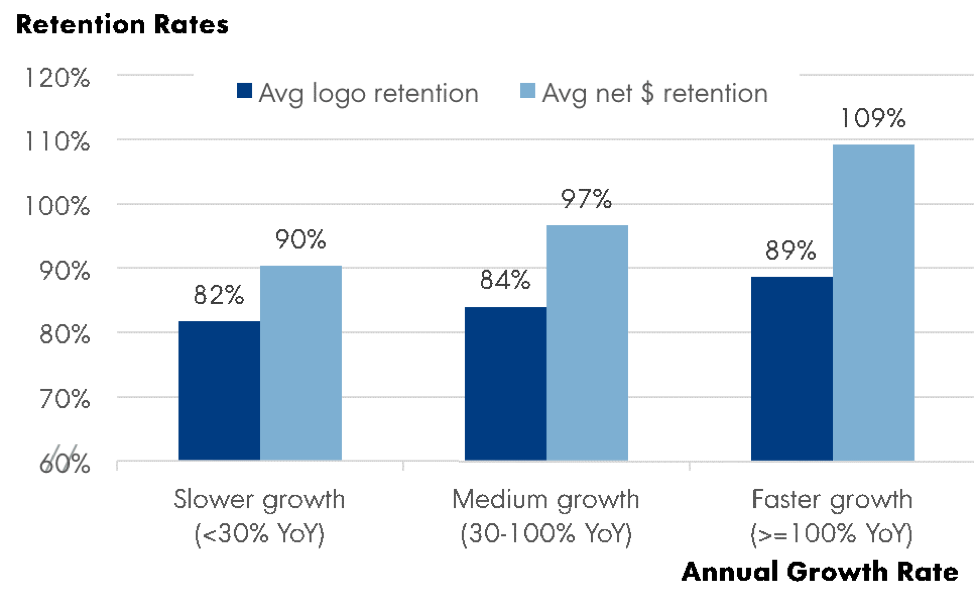
Retention rates—particularly net dollar retention—also strongly predict a SaaS company’s growth rate. The fastest growing SaaS companies see 89% annual logo retention and 109% net dollar retention (NDR) in their cohorts, according to data from OpenView’s SaaS benchmarking survey. That’s compared to 82% and 90%, respectively, among slower growing companies.

Somehow NPS has become synonymous with retention. These days it’s difficult to find a SaaS company that isn’t tracking their NPS on an ongoing basis (or boasting about their impressive NPS relative to peers). NPS is even a Board-level discussion point at many companies.

It’s time to take a step back and ask: Is NPS really the best we can do?

There are certainly some admirable benefits to measuring NPS. To (over-)simplify, tracking NPS:

  • Enables a culture of customer obsession
  • Helps you see (and address) unhappy customers before they churn
  • Creates a conversation across teams/functions to spot and address problems
  • Allows you to easily benchmark against peers on an ongoing basis

The problem: NPS does not equal retention

NPS doesn’t have mystical powers and it should not be exalted. For starters, NPS doesn’t turn out to be very predictive of logo retention or net dollar retention rates across SaaS companies, according to new analysis of OpenView’s 2018 SaaS benchmarking data.

NPS

There does appear to be a correlation between NPS scores and logo retention rates (left chart), but it is extremely small. For every 10 additional points to a company’s NPS scores, there’s only a 0.9% higher logo retention rate. For statistics nerds out there, the R-squared is only 0.038, which means that NPS only explains 3.8% of the variance in logo retention rates across SaaS companies.

The correlation is even weaker when comparing NPS scores and net dollar retention rates. For every 10 additional points to a company’s NPS, there’s just a 0.55% higher net dollar retention. The R-squared is a measly 0.0053.

Now, to state the obvious, this analysis is comparing across all different kinds of SaaS companies and ignores a number of potentially confounding factors such as the size of the SaaS company, their target customer, and their product market.

Even still, it doesn’t look good for NPS and I think that’s because there are all sorts of measurement issues with collecting NPS data. Just off the top of my head those include:

  • Low response rates. Even when measured in-app, response rates for NPS surveys aren’t all that great.
  • Different sampling approaches. Who in the account do you send the NPS survey to—the economic buyer, the champion, the individual users, all of the above? Which accounts do you send the NPS survey to—everyone or only those who’ve implemented the product? Who sends the survey—the sales rep, an independent third party?
  • Data manipulation. At this point, NPS is such a well known and widely adopted metric that it’s particularly prone to manipulation from respondents.
  • Sensitivity. By the nature of how NPS scores are calculated (i.e. subtracting detractors from promoters), they’re extremely sensitive to slightly different scores. Every 5 or 6 can have a radical impact on the overall score. NPS scores tend to fluctuate quite a bit month-to-month or quarter-to-quarter for no great reason.
  • Lack of relevance. Let’s face it: some categories of products just aren’t casually recommended to friends or colleagues (Windows 10, anyone?).

Moving past NPS

It’s certainly fine to track NPS, but let’s be realistic about what it tells us and what it doesn’t. You should think of NPS as a thermometer, but not a diagnostic tool. It can be useful to know your temperature, but it doesn’t always correlate with being sick or well.

You should always read the qualitative feedback behind the second NPS question, the why. This can be an untapped pool of input about the product that’s generated while someone is actually using the product.

And NPS needs to be complemented with other metrics that better predict customer satisfaction, advocacy and stickiness. Here are five KPIs to add to your list.

  1. ACTUAL referrals. NPS scores are a measurement of intention, not action. NPS quantifies how many customers would be likely to refer a product to their friends or colleagues. Why not measure what percentage of customers have actually made a referral and the average number of referrals per customer? Perhaps NPS surveys could be replaced (or supplemented) with actually asking a customer for a referral? This could also be as simple as changing the NPS question from “would you recommend us” to “have you recommended us to anyone in the last 3 months?”
  2. Customer health score. Defining a customer health score is by no means new, but it’s often under-appreciated and neglected. When set up thoughtfully, customer health scores can strongly predict a customer’s likelihood to churn well before they actually churn. They can also be refreshed in real-time across all customers, not just a select few who answer an NPS survey. Let’s redirect some time and resources away from NPS and towards creating a best-in-class customer health score. Here’s how to do it.
  3. CSAT. While the metric has gone out of style, you could simply ask your customers how satisfied they are (happy / sad / neutral). This simple and visual question can yield much better response rates and serve as a useful input into the customer health score.
  4. Product stickiness. One useful emerging metric is to ask customers howdisappointed they would be if they could no longer use your product. Would they be “very disappointed,” “somewhat disappointed,” “not at all,” or “N/A—already stopped using it”? If 40% or more of your customers would be “very disappointed” without your product, you’re on the right track. This is a great measurement of product stickiness and product-market fit.
  5. ROI delivered. Roll up your sleeves to ultimately tie an ROI to your product that’s so compelling your customer never wants to leave. An added bonus is that you can repurpose these ROI studies for case studies and sales collateral.

What did I leave out?

Do you have a different experience with NPS? Tell me on LinkedIn.

Editor’s note: This post was originally published in June 2019 and was updated with new information in August 2020.

The post Can’t We Do Better Than NPS? appeared first on OpenView.

04 Feb 17:21

Why no one really quits Google or Facebook

by Danny Crichton

Another week, another set of scandals at Facebook and Google . This past week, my colleagues reported that Facebook and Google had abused Apple enterprise developer certificates in order to distribute info-scraping research apps, at times from underage users in the case of Facebook. Apple responded by cutting off both companies from developer accounts, before shortly restoring them.

The media went into overdrive over the scandals, as predictable as the companies’ statements that they truly care about users and their privacy. But will anything change?

I think we know the answer to this question: no. And it is never going to change because the vast majority of users just don’t care one iota about privacy or these scandals.

Privacy advocates will tell you that the lack of a wide boycott against Google and particularly Facebook is symptomatic of a lack of information: if people really understood what was happening with their data, they would galvanize immediately for other platforms. Indeed, this is the very foundation for the GDPR policy in Europe: users should have a choice about how their data is used, and be fully-informed on its uses in order to make the right decision for them.

I don’t believe more information would help, and I reject the mentality behind it. It’s reminiscent of the political policy expert who says that if only voters had more information — if they just understood the issue — they would change their mind about something where they are clearly in the “wrong.” It’s incredibly condescending, and obscures a far more fundamental fact about consumers: people know what they value, they understand it, and they are making an economic choice when they stick with Google or Facebook.

Alternatives exist for every feature and app offered by these companies, and they are not hard to find. You can use Signal for chatting, DuckDuckGo for search, FastMail for email, 500px or Flickr for photos, and on and on. Far from being shameless clones of their competitors, in many cases these products are even superior to their originals, with better designs and novel features.

And yet. When consumers start to think about the costs, they balk. There’s sometimes the costs of the products themselves (FastMail is $30/year minimum, but really $50 a year or more if you want reasonable storage), but more importantly are the switching costs that come with using a new product. I have 2,000 contacts on Facebook Messenger — am I just supposed to text them all to use Signal from now on? Am I supposed to completely relearn a new photos app, when I am habituated to the taps required from years of practice on Instagram?

Surveillance capitalism has been in the news the past few weeks thanks to Shoshana Zuboff’s 704-page tome of a book “The Age of Surveillance Capitalism.” But surveillance capitalism isn’t a totalizing system: consumers do have choices here, at least when it comes to consumer apps (credit scores and the reporting bureaus are a whole other beast). There are companies that have even made privacy their distinguishing feature. And consumers respond pretty consistently: I will take free with surveillance over paid with privacy.

One of the lessons I have learned — perhaps the most important you can learn about consumer products — is just how much people are willing to give up for free things. They are willing to give up privacy for free email. They are willing to allow their stock broker to help others actively trade against them for a free stock brokerage account with free trading. People love free stuff, particularly when the harms are difficult to perceive.

This is not to say that Facebook and Google shouldn’t try to improve their shoddy records on privacy, or rebuild trust with users. Those consumers are always able to leave, and their sentiment should never be taken for granted. But after more than a decade of abuse, we should look deeper at our analysis and perhaps conclude that these issues aren’t abuse at all, but rather a bargain, a negotiation, and one that people are quite willing to live with.

China’s influence pushed MSCI to add shares to index

(Photo by China Photos/Getty Images)

MSCI runs some of the most important financial indexes in the world. Trillions of dollars of capital are pegged to these metrics, which is why changes to them can be so controversial. Few decisions by MSCI have been as significant though as the addition of Chinese “A-shares” to its emerging markets indexes last year, which for the first time added mainland Chinese stocks to these important benchmarks. Billions of dollars of capital was expected to flow to those stocks, as wealth managers matched their allocations to the updated indexes.

Now, we have learned just how much pressure MSCI faced in adding those shares. Mike Bird at the Wall Street Journal reports that China placed enormous pressure on MSCI to change its indexes, threatening to cut off its access to domestic wealth managers and stunt its growth in the number two economy. From the article:

MSCI’s discussions with several Chinese asset managers were abruptly curtailed in 2015 and 2016 after the firm didn’t add Chinese-listed stocks to the emerging-markets index following its midyear reviews, according to people close to or directly involved in the discussions. The Chinese firms communicated that they had been instructed by authorities to cut off negotiations with MSCI, the people said.

China’s two national stock exchanges also threatened to withdraw MSCI’s access to market pricing data, which the company provided to its customers all over the world, the people added. It was akin to “business blackmail,” said a person familiar with MSCI’s negotiations with Chinese regulatory authorities.

Companies the world over attempt to manipulate these indexes, particularly given the increasing amount of money flowing to ETFs and other index-backed funds. But few companies have the clout required to actually get MSCI to make changes that benefit them. China, with its huge market, clearly does.

MSCI is “now considering quadrupling China’s weighting in the emerging-markets index.” Maybe that’s objective and fair — after all, China is crucial for the global economy. With China’s meddling and MSCI’s capitulation though, one has to wonder how much is blackmail, and how much is financial science.

More links

TechCrunch is experimenting with new content forms. This is a rough draft of something new – provide your feedback directly to the author (Danny at danny@techcrunch.com) if you like or hate something here.

Share your feedback on your startup’s attorney

My colleague Eric Eldon and I are reaching out to startup founders and execs about their experiences with their attorneys. Our goal is to identify the leading lights of the industry and help spark discussions around best practices. If you have an attorney you thought did a fantastic job for your startup, let us know using this short Google Forms survey and also spread the word. We will share the results and more in the coming weeks.

This newsletter is written with the assistance of Arman Tabatabai from New York

04 Feb 17:17

Embracing Interactive Content: 19 Statistics Every B2B Marketer Needs to Know

by Anne Leuman

Interactive Content Statistics You Need to Know

Interactive Content Statistics You Need to Know Modern B2B content marketing evolved out of the opportunity to provide buyers with the information they seek at every stage of their customer journey. But in an increasingly crowded content landscape and as consumer preferences and technology evolve, it’s no longer enough to just inform buyers. Today and beyond, to connect on an intellectual and emotional level with their audience, B2B marketers need to provide engaging content experiences. And that’s precisely were interactive content can play a massive, highly-effective role. Not sold on the potential of interactive content for B2B? Let’s look at some of the research and commentary from several sources, including:
  1. Buzzsumo
  2. Content Marketing Institute and Ion Interactive
  3. Inc.
  4. SnapApp
  5. Demand Metric
  6. Cisco

19 Interactive Content Statistics B2B Marketers Need to Know

The Use of Interactive Content is On the Rise

? via GIPHY 1. 53% of marketers report using interactive content (2) 2. 93% of marketers agreed that interactive content is effective in educating its buyers versus just 70% for static content (3) 3. 88% of marketers said that interactive content is effective in differentiating their brand from their competitors (4) 4. 63% said they use interactive content to educate their audience (2) 5. The number of interactive posts has increased by 33% (1) More and more marketers are feeling the pressure to create new experiences for their target audience in order to stand out from the crowd. And interactivity offers them a way to do that, causing interactive content marketing to rise in popularity.

Interactive Content Ups the Engagement Factor

????? via GIPHY 6. The most shared quiz in the last 5 years has gotten a total of 5.4 million social interactions (1) 7. 81% of marketers agree that interactive content is much more effective at grabbing people’s attention than static content (2) 8. 66% of marketers have reported greater audience engagement after using interactive content (2) The big takeaway here? As Caitlin Burgess, our Senior Manager of Content Marketing, recently shared: “The real opportunity doesn’t lay in the interactivity itself. The real value creation is in the excitement or connection that you can make with your audience, as well as the potential to hold their attention for long enough to engrain your message or inspire action.”

Interactive Content Drives Results

? via GIPHY 9. 79% of marketers said that combining interactive content with other content marketing tactics increases message retention (2) 10. 79% of marketers said interactive content can be reused a lot, leading to repeat readers (2) 11. 75% of marketers said non-gated interactive content offers a sample of the brand and nurtures leads (2) 12. 68% of marketers said interactive content makes it easy to repurpose passive content (2) 13. Interactive content generates 2x more conversions than passive content (5) So how good is interactive content at doing all of the things it promises to do? According to the reports cited above, it does a pretty good job. Improved message retention? Check. Reusability? Check. Nurtures leads? Check. And, once you have the interactive technology, the opportunity is there for you to take your static content that already exists and make it interactive, improving productivity and efficiency.

Interactive Content Has Multiple Formats

?? via GIPHY 14. 54% of marketers use interactive assessments, making it the most common type of content (2) 15. The top five most effective types of interactive content for the top of the funnel are: contests, games, quizzes, interactive infographics, assessments (2) 16. The top five most effective types of interactive content for the middle of the funnel are: calculators, interactive white papers, interactive eBooks, interactive lookbooks, wizards (2) 17. Interactive content is most commonly used on landing pages, social media platforms, microsites, and blogs (2) 18. The most effective type of interactive content for the bottom of the funnel are configurators (2) 19. Virtual Reality (VR) and Augmented Reality (AR) traffic will increase 12-fold between 2017 and 2022 globally (6) Interactive content has widespread applications that do more than making a quiz or calculator. In fact, AR and VR are two landscapes where interactive content can thrive, and it’s rapidly growing. There are a number of different assets and experiences you can create thanks to interactivity and its functionality. For example, just this past year we used interactivity to create a multi-media microsite for our client, Prophix. To educate our audience on AI and the future of finance, we created a simulated voice assistant (a la Siri or Alexa) to “host” our expert influencers in AI and finance as users navigate through the microsite experience. AI Finance The result? Our CEO Lee Odden summed it up in a recent post: “The combination of interactive experience, voice and text content, relevant finance and AI influencers plus brand thought leadership resulted in a record-setting engagement.” For more ideas on what you can create with interactivity, check out these cool interactive content ideas.

Supplement Your Content With Interactivity

As my colleague, Josh Nite, recently shared: “Interactivity isn’t a substitute for quality, just a supplement.” While interactive content is a solid investment for B2B brands, helping them differentiate their content marketing, the level of quality still has to be high. If your content doesn’t provide value to your audience, no one is reading it – regardless of interactivity. But if you’re able to create high-quality content that resonates, and enhance it with interactivity, that’s the ticket to rising above the competition, creating deeper engagements with your target audience, improving message retention, and more.

Learn how to put Interactive Content into action

at the B2B Marketing Exchange conference on February 26th in Scottsdale, where our CEO Lee Odden will be presenting, "How to Break Free of Boring B2B with Interactive Influencer Content". B2B doesn’t need to mean “boring to boring” and yet much of business marketing has earned its reputation. In a world of information overload, buyers expect engaging content from sources they can trust. The solution? Content co-created with industry experts delivered as interactive experiences. In this presentation you’ll learn:
  • 5 top interactive formats for B2B
  • Best practices for influencer content engagement
  • How to pull it all together through B2B brand case studies
Registration and complete B2BMX conference details are available on the official event website.

The post Embracing Interactive Content: 19 Statistics Every B2B Marketer Needs to Know appeared first on Online Marketing Blog - TopRank®.

04 Feb 17:16

Goals of a Startup Entrepreneur That Will Set the Business Up For Future Success

by Tommy Wyher

Entrepreneurs have visions of success but setting a business up for success will take a proactive approach. Being reactive can lead to issues with clients or staff and distracts from the ultimate goal of maximizing productivity/profits. Do not worry about details of things that are out of your control and impact areas that are under your control. A lack of planning can lead to future issues that can cripple a company. Not handling HR issues in a steadfast way can lead to a lawsuit of some kind while simply hiring an HR firm could have eliminated the possibility of this problem completely. The following are goals that startup founders need to focus on in order to set the business up for long term success.

Keep Overhead Costs Low

For a small business startup it is important to keep overhead costs low in the beginning. Crippling cash flow can be an issue if a larger than necessary office is leased or from hiring too quickly. Take time to list out every monthly cost so a goal of a certain amount of revenue can be set. Costs like software, labor, rent, and insurance needs to be incorporated in this as you might find certain costs that can be reduced or eliminated. Not all startups are blessed with investors that have unlimited funds so keep costs low and profits high!

Scale Processes So Order Volume Is Not An Issue

One thing that a startup does not want to happen is landing a huge client only to find out that they will not be able to take the work or complete it by the deadline. For this reason it is important to create scalable processes that will not break when a client puts in a huge order. The freelance community can be a huge help with this as having multiple freelancers that can complete rush work is invaluable. Automation is also important as it can help reduce mistakes as well as save time so employees can do more important things. Take a look at current processes to see what can be improve and what might be a struggle under high order volume.

Rank For The Company’s Most Competitive Keywords

Digital marketing is important for all startups as the first place a prospect looks for the company is on that of a search engine. Being able to rank on the first page for the products/services that the company provides helps boost website traffic and leads generated. Blog content should be high quality as should content that is contributed on the behalf of the company. Do not waste money on low quality content that cannot educate or engage the reader. Content is everywhere so people are beginning to be far more discerning about which pieces of content they spend their time consuming. Social media needs to also be used in order to promote content and engage with followers. This not only can attract customers but it can also be used in order to increase loyalty of current clients.

Setting Up An Internship To Hire Program

One huge battle that many startups encounter is nailing down a hiring process that consistently picks candidates that are high quality. An internship program can be the perfect opportunity to see how a person works and whether they are a company culture fit or not. Attracting top talent with these programs can be quite easy as many college students will compete to earn a job immediately after graduation. Other options can be hiring a person for a contract job to see how their working style is. Then offering this freelancer a job can allow for the company to get a “paid tryout” at working with the business.

Stabilize Company Income

Stabilizing company income will take hard work and favorable contracts with clients. Once this is done budgeting for marketing and advertising campaigns will become clear. Set realistic goals for sales and keeping client retention high are both important as you do not want the sales team to start being negative. Adding a few new clients per month can make a huge difference by the end of the year. It is wise to offer long term discounts so clients sign longer contracts during the infancy of a startup. Knowing that a company will be working with you for a few years can also quell fears that staff have about the stability of the company.

Achieving the goals above can help set a company up for years of profitability. This does not mean that new goals should not be set but these are what you need to do during the infancy of the company. As an entrepreneur it is important to prioritize the healthy growth of the company and establish a brand that puts the customer first. What are some things that you would do to set your company up for success?

04 Feb 17:16

Who generates the leads — marketing or sales?

by Drew McLellan

CSO Insights, the research division of Miller Heiman Group, the world leader in improving sales performance through research, training, and technology, today announced the official release of its “2018-2019 Sales Performance Report.”

The study, based on a global survey of nearly 900 global sales leaders, looks at the four primary objectives driving performance improvement efforts over the next 12 months: improving lead generation, securing new accounts, expanding penetration into existing customers, and increasing win rates. The purpose of the annual report is to assess how sales organizations are performing against these core objectives.

The study includes a year-over-year comparison of sales performance along with an overview of what companies are doing in each of these four areas to drive success. “Even though the objectives of sales leaders haven’t changed – most continue to be focused on making their number while being effective with resources – it’s a mistake to assume their sales organizations have a permanent set of customers or a permanent suite of sales technology and resources.

These types of changes can either advance their organizations forward or leave them behind,” said Seleste Lunsford, chief research officer, CSO Insights, the research division of Miller Heiman Group. “In an age of ceaseless change, sales performance improvements are a continual quest that should remain a constant priority for sales leaders. This is why it’s so critical to assess performance year-over-year to gauge opportunity for improvement.”

According to this year’s report, more companies are meeting revenue commitments, with the average revenue attainment rising to 93.9 percent to make this the third straight year of growth. However, the leading indicators of conversion rates – win rates and quota attainment – haven’t changed. Rather, 15 of 16 seller abilities included in the report show lower performance than they did five years ago.

Sales leaders managed to find a way to reach their goals, but it wasn’t necessarily through improving the performance of their salespeople. This presents a massive opportunity for global sales leaders, who can earn substantial gains by getting sales systems running more effectively. “Every year, we ask sales leaders for lessons learned. We want to understand what they would do differently to improve sales performance,” adds Lunsford. “To no one’s surprise, sales leaders aspire to transform the foundation of their sales systems. And yet, given the risks associated with making large-scale changes, many report a tendency towards incremental change.

This can be effective if such changes are implemented systemically. But often, we find this approach is too slow and limited in scope to help sales organization change fast enough to keep up with the markets.” The report provides actionable insight on how sales leaders can accelerate “sales transformation” through continuous improvements.

The overarching message is that sales transformation isn’t a project that will eventually reach completion — It’s a ceaseless evolution that feeds off data and uses technology as a driver, not an enabler. And, above all, it ensures every action an organization takes is in full alignment with the customer’s journey.

To download the study, click here.

The post Who generates the leads — marketing or sales? appeared first on McLellan Marketing Group.

02 Feb 17:38

Are Lead Magnets the Bread and Butter of Content Marketing?

by Abhishek Talreja

There isn’t a day in the life of a content marketer when she’s not thinking about her lead generation targets. While quality content is at the forefront of any content marketing efforts, it’s the results that can build or break careers for content marketers. In 2018, only 20% of B2B marketers rated their content marketing approach as very successful.

lead magnet

Source: Content Marketing Institute

Wondering what’s the reason behind those grim numbers?

There’s content all around, and it’s hard for businesses to get the users’ attention, forget about collecting leads.

When the audience knows that content is marketing, it’s quite an uphill task to stand out and earn those extra brownie points.

60% of people recognize business content they consume online as content marketing. – (Source)

A lead magnet is a juicy giveaway that helps induce a site visitor into signing up for a mailing list. It’s an upgrade to regular content pieces available on a website. There are a variety of lead magnets that marketers can produce:

  1. eBooks
  2. Reports and white papers
  3. Online courses
  4. Infographics
  5. Polls, quizzes, and assessments
  6. Tools and templates
  7. Webinars
  8. Contests and games
  9. Product demos and consultations
  10. Checklists

lead magnet

Studies show that giving the audience a clear idea of the content they would receive, increases the chances of an opt-in by 85 per cent.

Giveaways not only add leads to the sales pipeline but also help understand prospect preferences. The sales team can use this data to personalize follow-up emails and get more conversions.

Lead magnets help marketers to start a relationship and two-way communication with prospective customers.

Resolute Technology Solutions, an IT consulting company, created the following eBook to educate its audience on managed IT services:

lead magnet

The company also offers a free 30-minute consultation to help potential customers experiencing IT challenges. The IT solutions provider gets 10 leads every month from the ebook and 4 from the gated consultation. Whether it’s an ebook or a one-on-one, the idea is to solve problems for target customers while creating product awareness on the side. The results for each lead magnet may vary. Some may fetch a higher lead quality while others may result in more leads. An analysis would help decide what to offer and where to focus the promotional efforts.

“We get a lot more ebook leads than consult requests, but consults have a much higher conversion rate,” says Colton DeVos, Marketing and Communications Specialist at Resolute Technology Solutions.

Marketers should know that publishing and offering an ebook for free is not enough. It’s essential to understand audience pain points and provide them with a unique piece of information.

“Offering a downloadable content in exchange for contact information is a classic awareness tactic, but it works if readers find real value,” says Swati Singh, Growth Marketer at WebEngage, a marketing automation tool for consumer businesses. The company saw a 17% boost in traffic and 20% growth in top-of-the-funnel leads from the following eBook:

lead magnet

The lead magnet contributed to 25% of the total monthly leads for the automation software.

Video content is in vogue. Videos can work as excellent lead magnets providing education and entertainment to site visitors.

70% of B2B marketers claim that videos are more effective than other content when it comes to converting users to qualified leads. – (Source)


The purpose of a lead magnet is to attract the right people. Many marketers prefer doing a trend analysis before creating content pieces that would work well in a niche. Publishing an industry study helps provide valuable insights to users ensuring their success comes first.

“We do market research using Google Trends to create a realistic content calendar for all marketing channels,” says Joseph Sloan, who’s an SEO expert at Advice Media, a digital agency that specializes in the medical and health niche. Advice Media created a website grader and a gated industry best practices content. The agency got 13 new customers from these two upgrades alone.

lead magnet

Here’s another example of a niche template from Crazycall, a calling tool for sales professionals and call centres:

lead magnet

It’s critical to have a smart placement strategy as well. Marketers can experiment with different placement options: home page popup, blog page popup, blog side scroll, and blog post banner, etc.

“We display targeted lead-gen content based on the topic of each specific blog post, and use in-line CTAs with embedded forms,” says Frank Brogie, Content Marketing Manager, at Repsly, a performance tool for retail teams.

lead magnet

“As a result, we convert close to 1.5% of our blog visitors into leads, a number that has scaled alongside a significant rise in traffic. We work on lead-generation beyond our blog when promoting time-sensitive offers like new webinars. The lead magnets appear as slide-out sidebars across the rest of our site. We customize the messages to match the language of the page on which they’re displaying,” he adds.

An easy and quick lead magnet option is a free template. You can create a template in a presentation or a spreadsheet or a word doc. Take a look at this example of an expense report template from Spendesk, a business expense management software:

lead magnet

The template worked very well for Spendesk in regional markets. The upgrade fetched over 1000 leads from the French market, for instance.

Creating new freebies and content upgrades is not enough to get off the ground and start collecting email addresses. Marketers must have a definitive promotional strategy.

Besides placing banners and popups, dedicated landing pages are essential for communicating the USPs of a lead magnet. A powerful CTA is essential for raking in those conversions.

lead magnet

Image Source: Tapad

Marketers can use social media channels to share links to lead magnet pages and run paid campaigns as well.

lead magnet

Image Source: CloudShare

Another good way to promote such content is to share it through newsletters and strengthen relationships with existing subscribers.

Over To You

Most businesses suffer from a high website drop-off and poor content performance. While lead magnets are terrific for content conversion optimization, it’s the intent behind creating them that matters most. While offering giveaways, you must create authentic, industry-relevant and audience-centric content. Such content will not only add real value and get repeat site visitors but also create lasting customer associations that convert into more sales and revenue. Last, but not least, you must promote your lead magnets and achieve optimum business outcomes.

02 Feb 17:37

Using Customer Data to Benefit and Not Abuse Them

by Paul Selby


Photo by Samuel Zeller on Unsplash

Customer data. Companies collect it at the time of purchase or during product registration. Some companies offer online portals where customers can maintain their personal information, view product purchase history, and otherwise “stay in touch.” Today, most companies would maintain it’s the most valuable commodity they own, and many studies and articles would back that claim.

The data itself isn’t where the value lies, though; it’s how the data can be used. Value can be derived for future product development, cross-sales to complementary products, up-sales to better and new products, and more.

With such significance associated with it, one would think that companies would guard their customer data closely and limit how it can be used. Unfortunately, that’s not always the case. We’ve seen the “customers” of social media have their personal information misused as well as brokered out. And companies have not done a great job protecting that information from breaches, as that number continues to rise, because hackers are now interested in stealing any information–not just credit card details–and selling millions of stolen records to the highest bidder due to the value of personal information.

It comes as no surprise that governments have taken notice and are working to protect their citizens. The General Data Protection Regulation (GDPR) went into effect for European Union citizen in mid-2018 and the effects of non-compliance are beginning to be felt by the technology industry as the first cases come to court. Despite the challenges it creates, leaders in technology advocate that GDPR-style protection should be in place in the United States, and though similar legislation has failed to materialize, it has been considered. Not willing to wait around for the federal government, many states have moved ahead on their own. In addition, some companies have voluntarily chosen to offer a subset or all GDPR protections even to their non-European Union customers.

The fact that legislation had to be created shows both the extent of the problem and that customers are fed up with the abuse–and rightfully so. Their personal data should be protected from theft. It should not be used to manipulate them. Until territory-specific laws go into effect, customer-centric companies are doing right by their customers to universally apply GDPR regardless of their customers’ citizenship.

Clearly, businesses want to hold on to customer data do for the benefits it has to offer. But what advantage does that offer the customer? Companies should use customer data to enhance their customer service in two ways while demonstrating good stewardship of their customers’ data.

Simplify service requests

Beyond simple demographic information, customer data collected typically includes the products and services a customer has purchased. In the case of connected services or devices connected to the internet, additional information such as how, when, and where the device is used may also be collected. Those seemingly disparate pieces of information can be used to help simplify service interactions when a customer encounters issues.

When customers have problems, they typically go online first. In the company’s customer service section of their website, a knowledge base is a common repository of solutions. By tapping into their customer information and their product purchase and use history from their online account, knowledge base searches can promote more likely solutions and demote or even hide those that wouldn’t apply based upon what the company knows about its customers. This added filtering in conjunction with the customer’s search terms will significantly increase the likelihood of them finding the correct solution to their problem and provide a better service experience. Similarly, a chatbot’s queries and responses could be tailored only to those that would apply to the products and services the customer is known to possess. These are only two examples of techniques that are possible to personalize the experience using customer information to ensure a higher likelihood of customer success.

Deliver proactive service

By knowing how to get in touch with a customer (and their preferred contact channel) as well as the products and services they use, it is possible to “flip the customer service script.” Rather than waiting for customers to contact customer service about known issues, customers can be preemptively notified of problems they are likely to encounter and when a solution becomes available.

The intent is not to warn every customer about all the issues they might encounter. Start by evaluating the level of impact the problem will have on the customer experience and whether or not it should be communicated: is it a minor annoyance or are they likely to encounter breakage, an outage, or other disturbance? Then, determine the characteristics of the customers most likely to face the issue–is it all customers or a subset, such as those in a particular geography? This creates a group of customers who require proactive assistance.

When contacting them using their preferred contact channel, clearly communicate the problem and the timeframe for resolution, if known. As the situation unfolds, keep customers updated as pertinent information becomes available. No one likes it when things don’t just work, but proactive service is still not commonly practiced and pleasantly surprises customers, defusing the situation. It has the added benefit of taking some of the heat off of customer service since those customers won’t reach out independently for a solution.

Put the data to good use

Customer loyalty goes beyond selling quality goods at fair prices. If customers don’t trust a company due to mismanaging their information, there is little chance for recovery.

That doesn’t mean companies should stop collecting information about their customers. They must ensure every protection is in place to guarantee its security. They should abide by legislation where applicable and willingly offer similar safeguards to customers where it does not. With these protections in place, companies can cement trust from their customers by employing their data to provide better service.

02 Feb 17:28

'We're all passengers in a billionaire hijacking' says the critic who has the world's richest people buzzing

by Richard Feloni

anand giridharadas

  • Anand Giridharadas is an author and professor whose book "Winners Take All" is a scathing critique of the way elites treat philanthropy.
  • He said Western elites have cloaked themselves in "changing the world" to protect their interests and reduce the efficacy of democratic change.
  • He's critical of Davos, corporate proclamations of solving societal problems, and Howard Schultz and Michael Bloomberg as presidential candidates.
  • The only way destabilizing inequality can be meaningfully addressed in the United States needs to come from public policy, he said, with increased taxes on the wealthiest of prime importance.
  • This article is part of Business Insider's ongoing series on Better Capitalism.

By 2015, Anand Giridharadas felt that the world he was inhabiting was built on a charade.

As a Aspen Institute fellow for five years and a former McKinsey analyst, he lived and worked among a collection of elites who believed their exchange of ideas, philanthropy, and so-called conscious capitalism could "save the world." But it began to feel like "MarketWorld," a term he coined for the bubble where it's accepted that the private sector can fix anything with enough money.

He decided he would be transparent with the rest of the Aspen crowd, and gave a speech where he declared that, "we may not always be the leaders we think we are," which brought a mixture of praise and outrage.

Giridharadas has written for the New York Times and taught journalism at New York University, and late last year, he published his book "Winners Take All." It's a thorough but nuanced takedown of MarketWorld that declares companies should work to do less harm, but that systemic changes must come from policy changes. Giridharadas's thesis is therefore not only a cultural critique but a political one, with a progressive lens.

The book is currently in a second wave of popularity in the wake of the World Economic Forum's annual meeting at Davos, where it came up in conversation, and with the official start of the 2020 presidential race.

Giridharadas spoke with Business Insider about Davos, the idea of "better capitalism," why he's so avidly against Howard Schultz and Michael Bloomberg as presidential candidates, and why he wants Americans to take back their country from billionaires. 

The following transcript was edited for length and clarity.

Richard Feloni: What does Davos stand for in your view? Do you have any particular thoughts on this year's, specifically?

Anand Giridharadas: I think Davos is a family reunion for the plutocrats that broke the modern West. I've never been to it, so I'm a cultural critic looking from a distance, but it seems to me to be a gathering of people who think that they are changing the world when they are exactly what needs changing. A gathering of people who use the idea of making a difference as a kind of lubricant in the engine of making a killing, of people who promote generosity as a cheap substitute for justice.

And what was so great about Davos this year is that the mask flipped. Normally, they're able to go there and pull off their Bono impact investing, ESG something, give-one-get-one something, social impact, social this, social that — anything but actual social justice. And it works. And this time, in great measure because there has been this rising chorus of critics — I'm one out of many. Way more prominently, you have AOC [Alexandria Ocasio Cortez] out there, Elizabeth Warren out there, staking really bold positions about how to actually change the world, how to actually fight structural inequality. And a lot of these guys, when actually pushed about those specific proposals  —I don't know if you saw the Gates and Blair clips about me...

Feloni: Good plugs for your book!

Giridharadas: Kind of amazing. It became clear that changing the world isn't quite what it seems, and that changing the world is actually a way for them to — I don't want to use the word "cock block," which I feel isn't appropriate for Business Insider, but there's no other equivalent word ...

What became clear when they shot down AOC's proposals or when they insinuate I'm a communist or laugh off my critique, "change the world" has become a way for them to shoot down and remove from serious consideration ideas that would threaten their power of privilege. And so then what Davos is becomes clearer, which is that it is a way of getting together, using the world's problems as a convening mechanism, to form a cartel against real change.

The genius thing that these people understand, that maybe prior generations of plutocrats didn't, is you don't fight public pressure for people-friendly change by shooting mine workers and busting unions in the light of day. They do that secretly. But what you actually do is you fight back by claiming to be one of those people. You claim to be a revolutionary yourself. You claim to be fighting for the people yourself. And your relatively modest do-gooding provides you credibility that pays for itself, many, many times over.

Companies shouldn't be small governments 

Feloni: You have people like Larry Fink from BlackRock saying how every company needs to align around a purpose beyond profits. What executives will often tell me is, look, whether it's customers or potential employees, this is what they want. How do you see social initiatives coming from companies that actually do something good, even if they're done cynically?

Giridharadas: I want to resist getting into motivation because when you say what kind of place is it coming from, like in their hearts, first of all, I don't know. My guess, is the Toms shoes guy is not trying to make as much money as possible and distract us from something, and that he thinks he has found a way to help people in the best way that he knows how. My guess is when Goldman Sachs or JPMorgan operates in some of the same communities that Toms shoes has made something in, is they're coming from a very different motivation set.

But what I'm arguing is it doesn't really matter because what both represent is an effort to solve necessarily public problems privately, and therefore, what both represent is an attempt to reclassify problems. And if you think back historically to problems like in the early part of the 20th century, a lot of kids, instead of being in school, worked in factories. Obviously that is now illegal, and I think most people would agree that was progress. I don't think you could have solved that issue by having some factory owners be more conscious capitalists. You either as a society allow children to work instead of be invested with knowledge or you don't. That is a necessarily public choice.

Similarly, when you think about racial segregation, I think you and I would agree it would be weird if your approach to segregation in the 1940s in Alabama, was to say, "Well, let's create some points of light. Let's create some white owned restaurants that don't mind having black people, and we'll celebrate that, and we'll give them a certification, and we'll put them on magazines and on change-the-world lists. Let's celebrate the good." I think that would actually rub you and me the wrong way. I mean, on the surface, what's wrong with that? But it feels like a weird response to a problem that is necessarily systemic.

It's like saying, "OK, well, let's have better healthcare companies that compete against Oxycontin and are more responsible in how they prescribe." Again, I think you and I would agree that that's just not going to work given the kind of problem the opioid crisis is, given the dynamics of addiction, the ways in which pharma companies have political power, the way the whole doctor-sales rep process is so rigged. Having just better, nicer, conscious capitalism to compete against the others, it's just not going to work.

Feloni: I'm thinking of a conversation I had with Jay Coen Gilbert, and he's one of the cofounders, of B­Lab — I know you spoke with Andrew [Kassoy, another B Lab cofounder], and something I learned is he does see what he's doing as trying to create momentum that leads to governments taking action. That's whether it was individual states passing benefit corporation legislation or Elizabeth Warren citing them in her essay where she announced drafting the Accountable Capitalism Act, which would extend and enact a lot of what Coen Gilbert wants on a federal level.

Read more: The United States is undergoing a second Gilded Age, and it shows the same struggle has defined America for 150 years

So even if we can agree that these are problems that need to be solved publicly, if you have someone like Coen Gilbert with B Lab or you have someone in a position of power in a corporation, what are they supposed to do when the field is already set up in a way that's basically the second Gilded Age and corporations are stronger than democracy at this point?

Giridharadas: I think the B Corp example is fascinating, and I think that Elizabeth Warren proposal next to it is a great development. The B Lab thing on its own is part of this feeling that's very influential in our time, which is, as Andrew Kassoy explained to me in the book, "making good easier." A lot of CSR, corporate social responsibility, impact this and that, it's all about let's create more mechanisms and modalities and even just social praise for companies to get more approval when they do good. And I think that's great and I think there's a powerful demonstration effect, but I think again, what you need in the moment that we happen to be in, it behooves us just as much if not more on making it harder to do something bad. It seems to me that making 5,000 or 10,000, or even 20,000 companies do good, better, or certify themselves as doing better, pales in comparison to the effect that you'd have making it illegal to ruin the climate, making it illegal to employ people in ways that drive them into hunger when they work 40-hour weeks.

Feloni: Is there a way, though, that you could see an initiative on the private as a positive development if it even brings an issue into the conversation, so that public action can then take place?

Giridharadas: I think what has happened with B Lab is actually the ideal case that I advocate for, which is a small, private experiment not remaining private, but they have fought to change laws at the state level, to first just making it possible to be good and then Elizabeth Warren can take that and run with it. This is exactly what I would hope would happen. I actually wish that more things would follow that model of something that where you really start with something that's private that filters into public policy.

Feloni: I went to Detroit and did a profile on Dan Gilbert, and it to me it's an extreme example of where the country is right now. He's invested over $5 billion into the city, which is just, it's pretty crazy how a billionaire has that much influence over a major American city. But what also happened at that point was that you had years of both the state and city governments completely failing the people. What does that say to you about the US, in a situation where the public sector failed a city and then a billionaire becomes the main source of capital flowing in?

Giridharadas: Let me answer it this way. Look, I think private giving can be incubation for public action. There can be a case for private philanthropy in a place where public systems aren't working; however, those things should be directed towards strengthening public capacity. Whereas, in New Orleans, you ended up with the lack of public capacity and a surplus of philanthropy created a system where there's only charter schools now, there's no public schools in the whole city. That's not a great model. A model where you start privately, like where [Andrew] Carnegie built libraries privately in order to turn them into public libraries and create a habit of public libraries around this country, and on a scale that not even he could have afforded. Those are two very different approaches.

Don't elect another billionaire

Feloni: I saw your commentary on Schultz running. And I mean whether it's Howard Schultz or potentially Bloomberg down the line, why are you so passionately against them?

Giridharadas: Bloomberg suggested that Warren's wealth tax may be unconstitutional and then it's basically Venezuela. I just want to say these old billionaire, encrusted oligarchs are really showing their terror. I really feel like I am winning the conversation, and AOC is winning this conversation, and Elizabeth Warren is winning this conversation, and Edgar Villanueva, who wrote "Decolonizing Wealth," is winning this conversation, and thousands of people who are talking about this in different ways. And these guys are terrified.

When you hear old white guy billionaires telling you a wealth tax is Venezuelan, or Howard Schultz saying twice in 24 hours that two ideas emerging from offices of women of color in Congress are un-American, these are billionaires who understand that the politics have changed America.

For the first time in my lifetime, we're talking about whether billionaires should be able to be here, and I think my message to these guys is, you are free to go. Taxes, all these policies that we're talking about, these policies are just the rules of the road of a society. We can set whatever rules we want consistent with the law in the Constitution. And then everybody has a free choice about whether these laws and everything else this country offers as a package works for them or not. And if you don't like the tax rates, you're allowed to go. If you think it's confiscatory to have a 3% wealth tax, you're absolutely free to go.

I'm willing to play poker with any these billionaires because I think they're all bluffing. I don't think any of them are going to leave. I don't think any of them will leave. Mike Bloomberg's going to move to Singapore? America's an extraordinary country. I'm here for the long haul and I suspect that Mike Bloomberg's here for the long haul too.

So we might as well actually rebuild this country using a tiny fraction of those resources that those people have been lucky enough to get because we have all together built an extraordinary country. And these guys are, honestly, asking, begging, to be overthrown and they need to wake up to the moment they're in.

These ideas should only be scary to a few

Feloni: What would the ideal system in America look like to you, including the role of corporations? Is this idea of "better capitalism" we have even a valid goal to you?

Giridharadas: If we did some of the things that I'm talking about, America would become what most people imagine it is. It wouldn't become some alien thing that we don't recognize. It would actually become the country we think we live in but don't. It would become a place where, to a somewhat greater extent, people ended up where they did based on their effort, not their circumstances of birth. It would end up a place where it's actually easier to run companies because you don't have to pay people's health care, and navigate all this crazy stuff around scheduling people because you just won't be allowed to do that to begin with. In the America that I'm talking about, we would have women and African­ Americans and others who historically have been shut out been shut out of power actually share in the nation's power, decision making, and wealth. In the America that I'm talking about, we'd go from leading the planet off a cliff to leading the planet away from that cliff.

The kind of change I'm talking about sounds scary to people, but it should only really sound scary to a very few people, who have been profiting from an unfair system. They are scared that people now realize that America actually doesn't have to be run for billionaires' benefit. What is actually un-American, to use Howard Schultz's term, is an America run for the few. That's not the promise on which this country was founded.

Feloni: So it's a billionaire co-­opting of the American dream?

Giridharadas: I think we're all passengers in a billionaire hijacking. We were all drugged on the plane, and these guys are now terrified in the cockpit because they're realizing that in the back there we just woke up.

SEE ALSO: 'This is going to end badly for everyone': Wealthy venture capitalist Nick Hanauer is on a mission to fix the American economy before it's too late

Join the conversation about this story »

NOW WATCH: Here's the massive gap in average income between the top 1% and the bottom 99% in every state

02 Feb 17:28

Don’t Miss Buyer Intent Signals; Adopt AI for B2B Marketing

by Amy Koski

Many B2B Marketing and Sales organizations have already implemented some level of AI to optimize their activities, including personalization of the buyer’s journey. But according to a blog post by Nida Chughtai, 2019 is the year AI for B2B marketing and sales will explode. In a Mintigo blog post, Chughtai explores the ubiquity of AI, the winning power of human + artificial intelligence, and the potential for B2B organizations to use data to drive revenue, particularly by using AI to decipher buyer intent signals.

She projects organizations will prioritize development of strategies for selling more products and services, new product development, expansion to new markets, maximizing average deal sizes, and improving customer retention rates. These goals will be attained by augmenting strategic operations and human intelligence with AI.

B2B Marketing and Sales outfits rely on actionable insights to drive revenue; they must have deep understanding of their ideal customer profiles (ICP), their marketspaces, brand perceptions, buyer’s journey, purchase histories, and more, to be able to ultimately close deals.

Augmenting operations and human intelligence with AI enables B2B organizations to more accurately and quickly unlock, and even predict, the best business decisions. And timely, data-driven decisions about which accounts or prospects to target — and when, with which message, and with which kind of message! — is the key to taking a buyer intent signal all the way to a converted, satisfied client.

Chughtai said, “By applying AI in both your business strategy as well as your automated processes, you’ll be able to reach your revenue goals faster and with a much higher success rate.”

Augment Marketing Activities with AI

In her post, Chughtai lays out five benefits of applying AI and machine learning to a B2B marketing strategy, and they include better targeting of accounts, guided market expansion, accurate and fast automation of marketing processes, higher quality lead scoring and prioritization, and improved, more relevant personalization.

Lead scoring is crucial when determining which accounts to target. Effort, time, and resources are saved by identifying which leads are most likely to respond and enter your funnel, and which leads aren’t ready for engagement or don’t need your solution or services. In other words, using AI to score leads and accounts helps to accurately and quickly prioritize prospects emitting legitimate buyer intent signals, determine which prospects to nurture, and disqualify and filter out “the pure crappy ones,” according to Chughtai.

Personalization is a topic that should be on every B2B marketer’s radar in 2019. In fact, a lack of personalization is a contributing factor to low conversion rates of website visitors.

As such, it is imperative to augment personalization activities with data about the buyer’s journey that is collected via third-party APIs or a third-party partner who specializes in operationalizing intent data.

Data relating to the buyer’s journey is vast, and the smartest human brains can neither compute nor contextualize countless volumes of buyer intent signals. AI, however, can easily contextualize active research conducted by target accounts, provide actionable insights to marketing, and then augment its own predictive capabilities with what it has learned about the buyer’s journey.

Chughtai posits that incorporating AI into business processes in real time can speed up marketing returns on investments.

Given the speed at which AI improves and automates business-critical marketing programs, decision making, and intent data crunching, B2B Marketing and Sales organizations who have not yet augmented their activities with AI and machine learning should do so — before your competitors’ AI prioritizes your clients’ buyer intent signals and turns your past wins into real-time losses.


Do you know which specific companies are currently in-market to buy your product?

Wouldn’t it be easier to sell to them if you already knew who they were, what they thought of you, and what they thought of your competitors?

Good news – It is now possible to know this, with up to 91% accuracy. Check out Aberdeen’s comprehensive report Demystifying B2B Purchase Intent Data to learn more.

01 Feb 17:38

Things That Are Not (Necessarily) In Conflict

by Anthony Iannarino

The idea that one should “stop selling” and “start helping their clients produce better results” is to pretend that the first conflicts with the second the truth is that the first is one way to describe the second.

A directive that suggests that one should “stop pitching” and focus on serving the buyer is to believe that there is no place for pitching, even though at some point you are going to give your dream client some hint about what you can do to help them.

The admonition that “no cares about your product” and that all the value you create is found at higher levels of value is to forget that there are groups of stakeholders who care deeply about your product and want explore all the features and benefits.

One of the more dangerous ideas is that one “must not interrupt” their dream client with a phone call and should instead “nurture the relationship over time and wait for them to engage. How much time, they never say. Nor do they acknowledge that these two things can be done simultaneously to great effect.

An equally poor and dangerous idea suggests that one can have either “variable compensation” or “salespeople with a value system that ensures they serve the client,” creating a conflict where there isn’t much of one (these folks have spent too much time watching Glengarry Glenn Ross)

Some suggest that the ideas above are in conflict when they are not. The ideas are only in opposition when one approaches any of them with bad intentions, a poor value system, and poor a moral grounding.

Essential Reading!

Get my first book: The Only Sale Guide You'll Ever Need

"The USA Today bestseller by the star sales speaker and author of The Sales Blog that reveals how all salespeople can attain huge sales success through strategies backed by extensive research and experience."

Buy Now

The post Things That Are Not (Necessarily) In Conflict appeared first on The Sales Blog.

01 Feb 17:37

Here's How to Value a Company [With Examples]

by dtyre@hubspot.com (Dan Tyre)

As a seasoned business consultant, I‘ve been asked countless times: "What’s the market value of your company?“ or ”How much is your business worth?" These aren‘t just idle questions — they’re crucial to know whether you're considering selling your company or seeking seed funding from investors.

My biggest learning? There‘s no one-size-fits-all approach to valuing a company. However, I’ve found that the time-revenue method is often the most reliable for determining a company‘s maximum value. It’s a method I‘ve used successfully with numerous clients, and it’s particularly useful in today's fast-paced business environment.

In this post, I‘ll share my insider knowledge on the key factors you need to consider when valuing your business and walk you through various calculation methods I’ve seen work best. Whether you‘re a startup founder or a seasoned entrepreneur, my goal is to equip you with the insights and tools you need to accurately assess your company’s worth in today's market. Let’s dive in!

→ Download Now: 5 Financial Planning Templates

Table of Contents

What is a Business Valuation?

A business valuation determines a business or company's value. During the process, all areas of a business are carefully analyzed, including its financial performance, assets and liabilities, market position, and future growth potential.

Ultimately, the goal is to arrive at a fair and objective estimate that can be useful in making business decisions and negotiating.

1. Company Size

Company size can sometimes play a huge part in its valuation. For example, smaller companies can appear riskier to investors than large companies and enterprises.

The reason? It's pretty simple. Larger companies have more resources, different product offerings, and a good market share, whereas smaller companies have little market power and are more negatively impacted by the loss of key leaders.

In addition, smaller firms need to show greater returns and come with a greater size premium, which means lower business value.

2. Profitability

Profitability is, unsurprisingly, the most important factor for calculating a company’s valuation. A higher profit means a higher valuation. It demonstrates that customers are willing to buy products or services, and they stand to the market demand.

In my experience, the primary strategy for valuing a business based on profitability is understanding its sales and revenue data.

Note that there is a difference between sales and revenue for larger businesses. For such businesses, sales means the money that the business earns through selling products and services, whereas revenue is the total amount of money that the company makes from all its sources.

3. Revenue

To understand the company’s financial well-being, businesses use the profitability ratio to evaluate the business’s ability to make a profit from revenue.

Though a business might take various approaches to calculating its valuation, time-based revenue is one of the most common.

Time-based revenue estimates the valuation based on future profits. It is calculated by assigning a multiple to the company’s revenue for a specific period in the future.

Here’s how business value is estimated using time-based revenue:

Business Value = Annual Revenue x Adjusted Revenue Multiple

Here is how a company calculates a valuation based on the times revenue method:

  • Determine the company’s revenue by using an average of the past 1-3 years.
  • Select an appropriate multiple depending on your industry and other factors such as growth potential, profit margins, and risk profile. For instance, a revenue multiple for tech companies is estimated to be 1.5x - 4x.
  • You can also adjust the revenue based on certain strengths and weaknesses.

Watch this video to learn more about the times-revenue method:

[Video: https://youtu.be/Fqy23miQ6L0]

4. Market Traction and Growth Rate

Another way to value your company is to determine the industry growth rate and anticipate its future. So, how do you predict market growth?

I use this simple calculation to predict market growth by industry over a period of time. It also depends on market demand, your target market, and consumer expectations.

For example, everyone knows the hype about SaaS and AI in the future. With this market demand, the AI industry is expected to reach $632 billion by 2028.

To calculate the market share, we use the formula as follows:
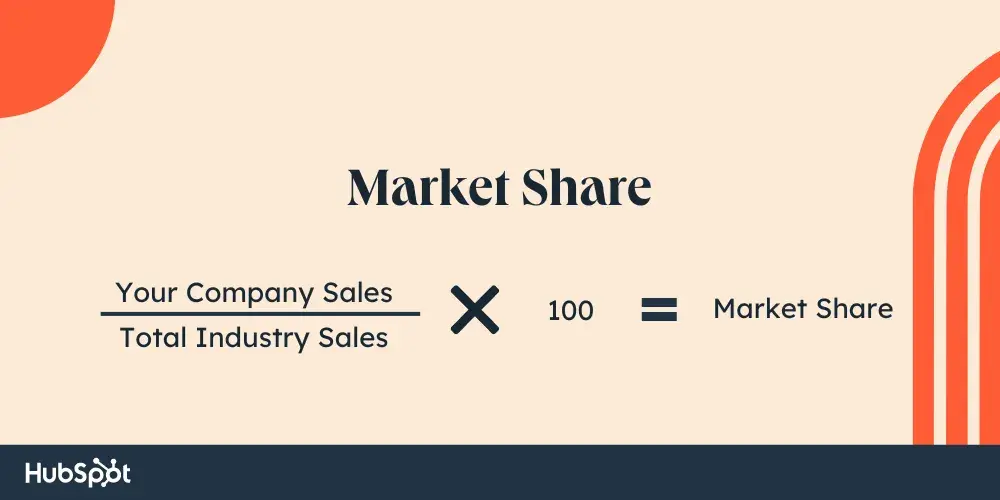
(Your company sales / Total industry sales) x 100

5. Sustainable Competitive Advantage

What sets your product, service, or solution apart from competitors? Competitive advantage refers to the set of skills and attributes of your company that outperforms the competition. Or, I would say, a competitive advantage is a term that predicts how long your product will last in the future, and others shouldn’t copy it.

If this competitive advantage is too difficult to maintain over time, this could negatively impact your business valuation.

Here’s an example: A company that has developed a unique technology or intellectual property will be protected by the patent or trademark label.

Buyers may even consider this as one of the primary criteria to consider when valuing a company.

6. Future Growth Potential

Is your market or industry expected to grow? Is there an opportunity to expand the business's product line in the future?

Factors like these will boost the valuation of your business. If investors know your business will grow in the future, the company valuation will be higher.

The financial industry is built on trying to define current growth potential and future valuation accurately. All the characteristics listed above have to be considered, but the key to understanding future value is determining which factors weigh more heavily than others.

Depending on your type of business, there are different metrics used to value public and private companies.

Public vs. Private Valuation

While businesses use the same valuation methods, public and private companies find different ways to value their businesses.

I’ve created this quick graphic comparison between the two types of valuation.
how to value a business; public vs. private valuation

Public Company Valuation

For public companies, valuation is referred to as market capitalization (which we’ll discuss below) — where the value of the company equals the total number of outstanding shares multiplied by the price of the shares.

Public companies can also trade on book value, which is the total amount of assets minus liabilities on their balance sheet. The value is based on the asset’s original cost minus any depreciation, amortization, or impairment costs made against it.

Private Company Valuation

Private companies are often harder to value because they have less public information, a limited track record of performance, and financial results that are either unavailable or might not be audited for accuracy.

Let's take a look at the valuations of companies in three stages of entrepreneurial growth.

1. Ideation Stage

Startups in the ideation stage are companies with an idea, a business plan, or a concept of how to gain customers, but they‘re in the early stages of implementing a process. Without any financial results, the valuation is based on either the founders’ track record or the level of innovation that potential investors see in the idea.

A startup without a financial track record is valued at an amount that can be negotiated. A first-time entrepreneur creates most startups I've reviewed and starts with a valuation between $1.5 and $6 million.

All value is based on the expectation of future growth. It's not always in the entrepreneur’s best interest to maximize its value at this stage if the goal is to have multiple funding rounds. Due to these factors, the valuation of early-stage companies can be challenging.

2. Proof of Concept

Next is the proof of concept stage. This is when a company has a handful of employees and actual operating results. At this stage, the rate of sustainable growth becomes the most crucial factor in valuation. Execution of the business process is proven, and comparisons are easier because of available financial information.

Companies that reach this stage are either valued based on their revenue growth rate or the rest of the industry. Additional factors are comparing peer performance and how well the business is executing in comparison to its plan. Depending on the company and the industry, the company will trade as a multiple of revenue or EBITDA (earnings before interest, taxes, depreciation, and amortization).

3. Proof of Business Model

The third stage of startup valuation is the proof of the business model. This is when a company has proven its concept and begins scaling because it has a sustainable business model.

At this point, the company has several years of actual financial results, one or more products shipping, statistics on how well the products are selling, and product retention numbers.

Depending on your company, there are a variety of equations to use to value your business.

Company Valuation Methods

Businesses use various methods for determining company valuation. I’ve shared various ways to formulate company values and why it matters.

Market Capitalization Formula

Market Value Capitalization measures a company’s value based on its outstanding shares. However, the valuation fluctuates with the share price.

Here is the formula you would use based on your business's specific numbers:
market capitalization formula; company valuation methods

Here’s a quick example: a company with 10 million shares and $100 per share would have a market cap of $1 billion.

So, if HubSpot has 51.1 million outstanding shares in 2024 and each share costs $503.07, its current market cap is USD 25.83 billion.

Pro tip: In my opinion, market cap isn’t always the best way to value a company since it's only best for the companies that have gone public and sold their shares.

Multiplier Method Formula

You would use this method if you’re hoping to value your business based on specific figures like revenue and sales. Here is the formula:
multiplier method formula; company valuation methods

Pro tip: Choose your multiplier carefully. In my experience, most small to medium businesses use 3-6 times annual revenue, but this can vary based on industry, growth rate, and market conditions. Don‘t be afraid to adjust this number to reflect your company’s unique story and potential.

Discounted Cash Flow Method

Discounted Cash Flow (DCF) is a valuation technique based on future growth potential. This strategy predicts how much return can come from an investment in your company. It is the most complicated mathematical formula on this list, as there are many variables required. Here is the formula:
discounted cash flow formula; company valuation methods

Here’s what the variables mean:

  • CF = Cash flow during a given year (you can include as many years as you’d like; simply follow the same structure).
  • r = discount rate, sometimes referred to as weighted average cost of capital (WACC). This is the rate that a business expects to pay for its assets.

Pro tip: This method, like others on this list, requires accurate math calculations. To ensure you’re on the right track, it may be helpful to use a calculator tool. Below, we recommend some high-quality options.

Business Valuation Calculators

Luckily, there are plenty of tools that can help you as you learn how to calculate the value of your business. Here are some business valuation calculators I recommend:

1. CalcXML

This calculator looks at your business's current earnings and expected future earnings to determine a valuation. Other business elements the calculator considers are the levels of risk involved (e.g., business, financial, and industry risk) and how marketable the company is.

2. EquityNet

EquityNet's business valuation calculator looks at various factors to create an estimate of your business’s value. These factors include:

  • Odds of the business' survival
  • Industry the business operates in
  • Assets and liabilities
  • Predicted future revenue
  • Estimated profit or loss

3. ExitAdviser

ExitAdviser‘s calculator uses the discounted cash flow (DCF) method to determine a business’s value. To determine the valuation, "it takes the expected future cash flows and ‘discounts’ them back to the present day.”

Company Valuation Example

Example 1

It may be helpful to have an example of company valuation, so we’ll go over one using the market capitalization formula displayed below:

market capitalization formula; company valuation methods

For this equation, I need to know my business’s current stock price and the number of outstanding shares. Here are some sample numbers:

Shares Outstanding: $250,000

Current Stock Price: $11

Here is what my formula would look like when I plug in the numbers:

250,000 x 11

Based on my calculations, my company’s market value is 2,750,000.

Example 2

Say a company's current market price is USD 200 per share, and its cash flow is USD 300 for the next five years. The cost of capital or discount rate is 10%.

For this, I would use the above equation, 300/ (1 + 0.10) ^5 to obtain the value per share as USD 186.27.

Hence, the company has a higher value, and its share can be bought since its market share is higher than the DF value.

Learn the Art of Business Valuation to Sell, Buy, and Invest in Businesses

Business valuation is a crucial component of selling, buying, and investing in a business. In my experience, starting with financial planning is great — but you’ll want to look beyond the financial numbers. Consider your company's unique value proposition, market position, and growth potential for a more accurate picture.

Whether you‘re seeking funding, selling equity, or gauging market value, these factors are vital in evaluating your business. Remember, valuation isn’t just about numbers; it‘s about showcasing your company’s story and potential. Regular valuations can provide insights into your business's health and guide strategic decisions.

Knowing your company‘s true worth empowers you in negotiations and future planning. Take the time to value your business correctly — it’s an investment in your company's future.

01 Feb 17:34

The 4 Key Reasons For a Strategic Employee Advocacy Program

by Todd Kunsman

When done correctly, employee advocacy is one of the best assets any business can use to exponentially expand the reach of the company on social media and to cultivate a more positive brand image.

Yet, this is only a portion of how an employee advocacy program benefits your company and brand. There are tons of valuable statistics from over the last few years.

The problem is, some businesses set their employees loose on social media with little training in how to be an effective advocate, thinking they’ll learn as they go.

This is a huge mistake.

It’s how your program ends up chaotic, weak adoption, or social media mistakes end up happening.

Employee advocacy can’t be a leap of faith for anyone – not for the employer or the employee.

To be effective, your company employee advocacy program must be rolled out strategically, with extensive training, ongoing support, and top-notch technology resources provided to participants.

Here are the key reasons employee advocacy should never be a leap of faith.

Strategic advocacy builds audience and brand recognition:

When relegated to a leap of faith, employees cannot be expected to know how to build audience and brand recognition for their employer.

Not every employee is a social media expert or knows exactly what is and isn’t acceptable ways to approach it.

Employee advocacy that’s strategic, by contrast, has built-in processes to ensure employees are properly trained in how to build a loyal following on social media and how to write and share posts that positively build brand recognition on social media.

This applies to the company brand, helping buyers, customers, and prospects see great content and information. It also applies to employees personal brands, which influences their career growth and professional development.

Strategic employee advocacy increases enterprise collaboration:

With leap-of-faith advocacy, the notion that employees will learn to work more effectively together becomes a crapshoot. The “provide it and they will come” idea has no guarantee to work for your company.

Building a strategic employee advocacy program ensures employees have infrastructure and processes in place to learn together, provide feedback, and share knowledge with one another.

It requires informing your workforce why this matters, how it works, what benefits they’ll see besides for the company. This all helps to create a unique enterprise collaboration among the entire workforce.

Through message boards set up by the employer and ongoing training and mentoring opportunities, employees learn how to translate the individual power of social media into the collective power of social media, for the benefit of their employer.

Strategic advocacy fosters the development of thought leadership:

One of the most valuable but elusive forms of employee advocacy is thought leadership.
Yes, yes you might groan at the term. But regardless of your feelings on the word, thought leadership is still incredibly valuable.

When employees become thought leaders, they learn to write authoritatively about their industry and develop a loyal, unique social-media following in the process.

Thought leaders aren’t cultivated through leaps of faith; they stem from a conscious effort by the employer to train, mentor and encourage employees in this elusive art.

Not all employees will care to be thought leaders either, which is perfectly fine. No one should be forced to do so. But relaying the benefits and options to share, many will naturally become thought leaders without realizing it.

Strategic employee advocacy motivates and inspires:

Employee advocacy initiatives built on leaps of faith are likely to lead to cacophony and frustration among the rank and file.

By contrast, an employee advocacy program with a strategy behind it can motivate and inspire employees. High-performing employees can be singled out for recognition, which, in turn, motivates others to continue to want to achieve more.

You know the saying, lead by example.

Gamification leaderboards and other technologies for cultivating employee advocacy can effectively encourage employees to take part in and to remain part of the initiative over the long term.

The trust and confidence that are engendered among employees by these well-thought-out efforts have trickle-down effects on all aspects of employee performance.

Final Thoughts

In an age in which corporate social-media initiatives can make or break a business’s reputation and standing on social media, it’s more important than ever that employee advocacy not become a leap of faith for your business.

Hoping to throw an idea and piece of technology to your team without any strategy, support, or behind the scenes context, only spells doom.

Remember, strategic planning for advocacy initiatives is essential for building your audience and brand, increasing collaboration among employees, fostering the development of thought leadership, and motivating and inspiring employees to achieve more.

01 Feb 17:33

Follow-Up Emails: The Smart Salesperson’s Guide

by Colin Campbell
sales follow up email guide image

If you’re getting all the responses you’ll ever need on the 1st email you send to prospects, let me know. You’re a walking, talking miracle worker!

If you’re like the rest of the sales world, and need to send several follow-up emails to get a response, this one’s for you.

Here’s what we’re covering:

  1. Balance Scale with Personalization and Relevance
  2. Have a clear purpose
  3. Open strong
  4. Follow up email body tips
  5. Move forward – even if it’s towards a “no”
  6. Email automation tools
  7. How long to wait before following up on an email
  8. How often to follow up with sales prospects for higher response rates
  9. When to stop sending follow up emails
  10. Monitor and analyze your email data
  11. Sales Follow Up Email Templates
  12. Be willing to challenge best practices

Balance Scale with Personalization & Relevance

Never, ever forget that leads are people. They value their time, care about their privacy, and don’t love being interrupted with unsolicited sales pitches (most of the time). They’re smart too. But just like the rest of us, they tend to make decisions based on emotions, as demonstrated by behavioral economics.

Few leads will respond promptly and favorably to your outreach. But with strategic and authentic lead nurturing, enough of them will see the value you provide— with a little personalization and patience on your part.

If you only send mass email campaigns, leads might feel like they have a stalker who is not detail-oriented. That won’t get you very far. On the other hand, you won’t cover enough leads to meet sales targets if you personalize every email individually.

Instead, group your prospects by their persona, and personalize to that.

“It’s possible to personalize so much that you compromise productivity. Personalize to the persona, tell a relevant story, and spend more time on follow-up emails than on the initial one. Doing so can have a massive impact on response rates without slowing you down.”
Mark Kosoglow, VP of Sales at Outreach

Have a Clear Purpose

Committing to a strong follow-up sequence is one thing. How you approach each step in that sequence matters too.

You should have a clear next step you’d like to achieve when you follow up. You should also understand what your prospect would want to achieve in a next step. You should find a reason to talk that serves both purposes and clearly communicate that in your email.

For example, using the phrase “just checking in” is usually discouraged by sales leaders. It’s even worse if you’re checking in without offering anything new that’s valuable to the prospect!

This looks lazy:

email follow up example just checking in

There are tons of other reasons Ben could have provided, explaining the purpose of his email. He could have:

  • Given me a recap of our last phone call and reminded me of next steps
  • Asked me specifically what’s changed on my end that has made me not respond
  • Sent me some additional information pertaining to our last conversation (if we had one)
  • Asked for additional information so he can provide me something extra
  • Sent me a helpful resource, or a news article that might affect my work

If all Ben wants is to talk, he just needs to ask for that, and tell me when he’s free! I at least deserve an idea of why we should speak.

Open Strong

Subject lines matter. In fact, catchy ones can drive up to 42% open rate for your emails. Here are some ways to make subject lines more effective:

  • Keep them short, sweet, and straight to the point.
  • Be casual and personal. (But don’t say anything you wouldn’t say to your grandparents).
  • Reference the prospect’s company and/or name.
  • Use a simple call to action.
  • Be highly relevant.

Now, I know it can be tricky to put that advice into practice, so here are some examples you can play with. These aren’t one-size-fits-all example subject lines, so make them your own!

sales email sample subject lines

Warning: Great subject lines are not enough. If you’re getting improved increased open rates, great. Now turn your attention to reply rates.

sample sales email follow up

Follow-Up Email Body Tips

If you’ve gotten a prospect’s attention, you’ve got a new challenge: keeping it.

The key to writing great follow-up email copy is to be valuable and relevant as quickly as possible. This 3-item checklist should help make your efforts worthwhile.

1.  Personalize. You are engaging a person, not a robot, so extend all the respect and attention the email recipient deserves. Even if you are using a marketing automation software, ensure that your emails do not sound automated, generic, or irrelevant.

However, make sure that you are personalizing in a thoughtful way. Just referring to someone’s title, work history, or the school they attended just proves you can do basic internet research. It doesn’t tell them you took the time to really understand them.

For example, you could instead reference content the prospect has personally written, something unique to the prospect’s industry, or recent news about the prospect’s company.

According to Outreach SDR Manager Sam Nelson, you can execute personalization at scale through a combination of personalized and automated messages. For example, personalizing just the first two sentences of an email can deliver a dramatic increase in open rates. Bottom line: understand your buyer persona and fine-tune the message in a way that makes your value proposition shine.

2. Go for short and sweet. Don’t go beyond what’s necessary to generate a response from the recipient. Get straight to the point, and plainly state the email’s purpose at the onset. Then quickly offer up unique personalized value and end with a simple, clear CTA.

If you can’t catch the prospect’s attention during the first few seconds, it’s unlikely you’ll get a response anyway. So avoid getting too wild and creative, or spinning a long tale.

3. Provide relevant value. They key word here is relevant. Your marketing department’s latest ebook might be valuable, but make sure it directly addresses your prospect’s main concerns.

One example: if the recipient recently attended a conference or trade show, follow up by citing event highlights or attaching resources. Make sure whatever you share relates to the prospect’s business, activities, interests, or problems. Or, you can mention newly published news or trends that impact the prospect’s company or industry.

Move forward – even if it’s toward a “no”

You’re following up because you want the email recipient to sign something (eventually).

For that to happen, the prospect needs to make a series of decisions that result in a purchase. Including CTAs (calls-to-action) is what allows you to connect the present with that future scenario.

Any sales email is useless without a clear CTA. Regardless of what you would like the next step in the journey to be, make sure it’s also compelling to your prospect.

Short and direct is better.

Use this: “Do you have 20 mins for me next week?”

Instead of this: “Are you available for a quick 20-minute introduction call on Monday or Tuesday next week to discuss driving your sales efficiency and saving you and your team 10 hours per week?”

Email Automation Tools

Automation makes it easier to craft, send, and track sales-related emails. While a one-to-one correspondence is ideal, sales is a numbers game. New tech can help find the happy medium between massive scale and heavy personalization.

Here are some of the most useful tools for reinforcing your email-based efforts:

  • LinkedIn – the primary source for contact’s professional information
  • Rapportive – provides relevant business intelligence within your email service
  • Cirrus Insight – offers tight integration with Salesforce so you can access CRM data without leaving your email
  • Close.io – centralizes your sales call and email workflow; provides analytics to optimize sequences
  • HubSpot Marketing – excellent inbound marketing platform and overall resource on best practices, templates, and other email-related topics
  • MailChimp – the industry leader in email marketing
  • Constant Contact – helps you manage all aspects of your email: contacts, lists, templates, and tracking; has an image library and social media integration
  • Boomerang –  tracks whether the recipient opened the email, schedules transmission
  • Outreach – the market leader in sales engagement with robust leading-edge email capabilities
  • Yesware – syncs with CRM data and provides prescriptive analytics to propel your email prospecting campaigns
  • Zoho Campaigns – links your email marketing and social media campaigns

sales email follow up timing

How long to wait before following up on an email

There’s no absolute rule on how soon you should send a follow-up email. It all depends on the context and finding the sweet spot between keeping the deal moving forward and stalking/ spamming the prospect.

You should have agreed with your prospect ahead of time on an appropriate follow-up time. That way, there’s no guesswork involved.

If you weren’t able to do that, or just haven’t spoken to the prospect yet, here’s a rough guideline to consider.

Follow up the same day or within 24 hours if…

  • You just had a meeting and need to send confirmation of next steps
  • You’re thanking the prospect for anything (an introduction, for example)

Wait at least 48 hours if…

    You’re just following up on an email you sent previously
  • You provided them with lots of material for their consideration
  • Your prospect needs to meet

Wait at least 3 weeks if…

  • You already sent 5 emails and got no reply

Sending follow-up emails at different times of day and different days of the week improves your chances of getting a reply. That way, you’re not always sending the email at a bad time for the prospect, like on Tuesday afternoons when she attends a live six-month training program.

Obviously, there’s no one-size-fits all solution here. A controlled trial and error approach will help fine-tune your team’s email effectivity and maximize impact.

How often to follow up with sales prospects

Again, the best answer is “it depends”. Your relationship with the recipient, their decision-making authority, and stage in the buyer journey all matter.

Sales experts disagree on how many follow-ups is an effective number, too. A joint guide published by Ambition and SalesFolk successfully used an 8-touch sequence composed of a cold email and 7 follow-up emails.

Meanwhile, Close.io’s Steli Efti recommends a maximum of six follow-ups for completely cold prospects. That’s not the case if you’ve had some form of interaction and the lead doesn’t ask you to stop emailing them. Then, Efti says you can and should send follow-ups until you get a response one way or another.

Efti’s recommended sequence adopts the following model:

steli efti sales email sequence

Note: This is an extreme example that worked for Efti. But you should never treat templates or tactics as dogma. In sales, contexts are never identical. Even if a situation featured here sounds similar to yours, treat your selling situation as completely unique. Plus, a model or template that proves to be effective today may not deliver the same outcome tomorrow.

When to stop sending follow-up emails

You can be relentless but sometimes, there’s a point where you’ll have to stop. Email outreach requires time and resources to get done even when you are using smart tech to make it more efficient.

If you have tried all the hooks in the book, it’s time to let go. A little attrition keeps the pipeline cleaner and allows you to focus on engaged prospects. Send a courteous break-up email that leaves the prospect a final chance to respond. End with a jolly farewell knowing that you’ve tried your best. Of course, leave a link to the resources you think will resonate most with the recipient (just in case).

Monitor and analyze your email data

So you ran your sequence, and you got some replies. Other’s didn’t even open your emails. That’s not the end of it!

Even if you don’t get replies, you can get value from your efforts. Monitor your campaign, analyze email data, and document what you’ve learned. You’ve just made all your future efforts more efficient!

Consider using email tracking and analytics software, which help elevate performance. If it’s possible on your platform, run A/B tests, too.

Ask yourself:

  • Which emails drove the highest reply rates?
  • Did those replies correlate with deals that closed/won?
  • How many emails did it take to get your desired action?
  • Does your sequence work better for some prospect personas than others?

sales email templates and best practices

Sales Follow Up Email Templates

To help you jumpstart your email follow-up efforts, here’s a runup of useful templates that you can use. As you try these out, use A/B tests to identify which work best for your business and prospects. Then, try some new ones of your own.

A. Sample follow up email to a prospective client.

sample sales follow up email prospect

B. Follow-up sales email after a meeting.

sample sales follow up after meeting

C. Follow-up email after no response.

sample sales follow up email no response

If you’ve already had a meeting with this person, you can add more of a Challenger element here.

Your opener could instead be:

“You’re busy and on to something big. I get that. But we make time for the things that matter, and based on {{problem they shared}}, I do believe we can help.”

D. And since it happens a lot, here is another follow-up email sample you can send after no response.

sample sales follow up email no response 2

E. Generic sales follow-up email sample after a touchpoint.

sample sales follow up email tourchpoint

F. Follow-up sales email after an event or trade show.

sample sales follow up email after event

G. Break-up email sample after another follow-up.

sample sales follow up email breakout

Be Willing to Challenge Best Practices

I began by saying that “just checking in” is a bad idea. Then, I gave you lots of subject lines and sample follow-up email templates to use.

But you should also know that a lot of the advice about follow-up emails is really untested. Plus, it depends entirely on your context, and your prospects.

Case in point: the data science team at Outreach recently A/B tested the phrase, “just checking in”.

They analyzed its impact on more than 4000 bump emails. The results were surprising, and went against all of the other advice we’ve heard. It turned out that using the phrase lifted email reply rates by as much as 86%.

What’s the lesson? Use these templates how you like, but don’t treat anything like dogma. Contexts change and assumptions aren’t always what you expect. Conduct A/B tests to find out what works best for you and your prospects in each scenario.

The post Follow-Up Emails: The Smart Salesperson’s Guide appeared first on Sales Hacker.

01 Feb 17:33

Pop-ups vs. Chatbots: Which Works Better for CRO?

by Conor Bond

Getting people to your website isn’t easy. And isn’t cheap, either.

Clicks cost money. Impressions cost money. Blogg—ahem—content marketing extraordinaires cost money.

pop-ups-vs-chatbots-pensive-writer

This pensive gentleman needs money for small plants and non-branded laptops.

And although there are ways to get more out of your online advertising budget, you want to be certain you’re always driving some kind of return on your spend.

In recent years, marketers have come to rely heavily on two mechanisms for turning website visitors into leads: pop-ups and chatbots.

And while this magical content marketing leprechaun is a tad skeptical about all the talk of these methods REVOLUTIONIZING the digital marketing landscape, there’s no doubt that they’re effective.

In fact, as we’ll discuss in this here blog post, pop-ups and chatbots can make for a dynamic duo of lead generation—as long as they’re used appropriately. In this article, you’ll learn:

  • How pop-ups and chatbots work
  • Best practices for setting up and optimizing pop-ups
  • When to use pop-ups in your lead gen strategy
  • Best practices for using chatbots
  • When to use chatbots in your lead gen strategy

Let’s see what all the hype is about.

What are pop-ups?

Forgive me, readers—my language is about to get a smidge technical.

In a marketing context, a pop-up is a website overlay, a secondary window that temporarily overtakes the parent window and encourages the page visitor to take some kind of action (e.g., sign up for a newsletter, download a whitepaper, register for a webinar).

Basically, it’s a small window that pops up (roll credits) on your screen and takes your attention away from whatever you had been reading or watching.

pop-ups-vs-chatbots-know-more-waste-less

Types of pop-ups

Although you may see them referred to by various names, there are five basic pop-up types, based on what action triggers the pop-up to appear:

  • Click pop-ups appear when someone clicks on a link.
  • Scroll pop-ups appear when someone scrolls down to a certain point on a page.
  • Timed pop-ups appear when someone spends a certain amount of time on a page.
  • Exit pop-ups appear when someone moves the cursor to the top of a page (thus indicating that he or she is about to leave).
  • Entry pop-ups appear as soon as someone lands on a page.

pop-ups-vs-chatbots-wordpress-newsletter-offer

If someone reads your entire blog post, offer a newsletter sign-up. Via wishpond.

Best practices for pop-ups

Although every marketer has a unique perspective—some think pop-ups are nonsense, others think they’re ingenious—the following are generally considered best practices:

  • Make it easy for visitors to close your pop-ups.
  • Use cookies. If someone is already a customer, or if a visitor consistently closes your pop-ups without thinking twice about it, it’s best to not serve a pop-up.
  • Present a compelling CTA.
  • Limit your pop-ups to one per site visit.
  • Ask for information sparingly. A name and an email address are more than enough, and a lot of people are unwilling to volunteer more.
  • A/B test everything—copy, images, CTA, button color, layout.

One marketer who makes very effective use of pop-ups is WordStream’s own Kristina Simonson (with, of course, the help of our design team). Considering she specializes in lead generation, I asked for her perspective on pop-up marketing.

Kristina uses OmniConvert—a comprehensive conversion rate optimization tool—to manage our pop-up campaigns. “If you want to maintain good user experience while still capturing leads,” she says, “exit pop-ups are the way to go.” This makes sense. If you’re going to disrupt a site visitor, it’s best to do so when he or she is about to leave, right?

pop-ups-vs-chatbots-icegram-exit-intent

Via Icegram.

Kristina is not a fan, on the other hand, of entry pop-ups—unless they’re small, overlaid banners that don’t disrupt the user experience. If the best time to ask a site visitor to take action is right before he or she leaves, it follows that the worst time is as soon as he or she arrives.

And speaking of user experience, Kristina pointed out during our conversation something that I hadn’t seen anywhere online when I was doing research: If you don’t need to send a prospect to a landing page, don’t. “Some of our pop-ups allow visitors to enter their information in the same window in which they clicked,” she explains. “I try to minimize the number of steps people have to take before engaging with us.”

One of the most important insights Kristina shared, I thought, was this: Do your best to make the pop-up relevant to the page it overtakes. You can capture the logic behind this piece of advice in a single word—intent.

“If someone is reading a blog post about click-through rate,” she says, “it doesn’t make much sense to serve them a pop-up about a whitepaper on web design.” The more closely you can match the pop-up offering to the context of the parent page, the more conversions you’ll see.

One final tip from our resident pop-up expert: Keep your designs consistent and on-brand. If you serve the same visitor two pop-ups that look like they’re from two different galaxies, you can’t expect him or her to engage. Stick to something of a design formula (constantly optimized through A/B testing, of course) to ensure better ROI.

Why should I use pop-ups to generate leads?

The whole point of your website is to attract visitors and to subsequently turn visitors into leads. That’s why you’ll often see CTA buttons in the margins of blog posts.

pop-ups-vs-chatbots-sej-margin-offer

But what if your site visitors don’t realize that they have an opportunity to volunteer information? What if you don’t give highly qualified prospects the chance to become leads?

Without pop-ups, you and your prospects are like trains passing in the night. With pop-ups, you and your prospects are like trains establishing healthy, mutually beneficial relationships.

Although you certainly don’t want to spam your site visitors and earn a bad reputation—something you, unlike Ms. Joan Jett, should care about—you also don’t want to let them consume your awesome content without some kind of effort to get them to take action.

Web design, content creation, and SEO are resource-intensive endeavors. Lest you want to shovel time and money into a fire, you need to drive returns.

Plus, pop-ups are not only lead generation tools; they help with SEO, too. If you can successfully keep site visitors around longer and direct them to multiple pages per visit, you’ll give a small boost to your SERP rankings. Additionally, if the content you advertise through pop-ups is great, the improvement in your brand authority should earn you more clicks down the line.

When should I use pop-ups to generate leads?

Remember what you’re trying to do here: disrupt people in the least disruptive manner possible. Whenever you’re trying to decide whether a pop-up is the right lead generation tool for the situation at hand, ask yourself: If you were the site visitor and this pop-up were served to you, would you feel engaged and appreciative, or spammed and annoyed?

  1. When someone is consuming your content. Whether they’re reading a blog post or watching a video, a site visitor who’s consuming your content is engaged with your brand. This creates an appropriate context for suggesting a webinar or a newsletter.
  2. When someone demonstrates substantial engagement with your site. If someone clicks onto multiple pages in a single site visit or visits on several occasions in a short period of time, it’s safe to assume they will engage with a pop-up.
  3. When someone clicks a link sent via email. If someone arrives on your blog by clicking through an emailed link (something most of your email subscribers won’t do), he or she is clearly interested in what you’re creating.
  4. When someone shares a content on social media. This is another indicator of above-average engagement.
  5. When someone leaves a comment on a piece of content. You’ve got the idea.

What are chatbots?

Chatbots are computer programs designed to simulate conversation with human beings. They provide automated customer service to your website visitors—in theory relieving you of the need to have employees on the clock at all hours (more on this in a minute).

pop-ups-vs-chatbots-driftbot

This is Driftbot.

Chatbots run on the same technology that powers Siri: natural language processing, or NLP. When someone sends a message to a chatbot, it uses a process known as parsing to scan the text. Then, it algorithmically interprets the content of the message—thus determining what the messenger wants—and produces a series of responses that make sense.

They’re not infallible, of course; hit a chatbot with an onslaught of metaphors, and it will almost certainly get confused. Nonetheless, we can only expect them to get smarter and more natural.

Best practices for chatbots

As Brett McHale of Empiric Marketing points out, however, chatbots are not going to replace the need for human interaction between prospects and customer support specialists.

(“Give it a couple years,” mutters Karl Marx from a London grave.)

Contrary to what all the chatbot hype may lead you to believe, they’re only programmed to conduct the simplest of conversations (more on this below). When it becomes clear that the prospect needs help with a more complex question or issue, the chatbot passes them along to a human being.

It’s important to think of chatbots not as alternatives to your employees, but as tools designed to make their lives easier. If, rather than offering a chatbot, you simply direct people with questions to your phone number, your team is going to deal with some nonsense.

pop-ups-vs-chatbots-ralph-wiggum

By filtering out low-quality queries, you give your customer support team more time to focus on stuff that matters. And if the customers and prospective customers with legitimate questions and concerns spend less time on hold and more time talking to your staff, everybody wins.

We should also point out that chatbots aren’t limited to websites. They’re available for Facebook business pages, too, and using one on yours is a smart move.

Why? Because cutting out steps is always a good thing. If a Facebook user goes to your page in search of information and finds nothing, there’s no guarantee that he or she will then navigate to your website and try again. Rather than losing that potential lead, you can use a chatbot to provide the desired information and connect the user to a person if need be.

And whereas pop-ups are strictly a marketing tool, you can leverage chatbots for everything from marketing to sales to customer service. For the sake of brevity, let’s look at how they can impact your lead generation efforts.

Why should I use chatbots to generate leads?

According to our neighbor, Drift, three main difficulties frustrate consumers during a traditional online experience:

  1. They can’t navigate the business’s website.
  2. They can’t get clear answers to simple questions.
  3. They can’t find basic details about the business.

This information becomes all the more revealing when you uncover the situations in which consumers predict a chatbot would be most useful:

  1. Getting a quick answer in an emergency
  2. Resolving a complaint or a problem
  3. Getting detailed answers or explanations

And if that wasn’t enough, check out the three most common answers consumers provided when asked to name the potential benefits of chatbots:

  1. 24-hour service
  2. Getting an instant response
  3. Answers to simple questions

So there’s an obvious problem: Consumers want readily available information, and traditional websites are often unhelpful.

And when you ask those same consumers in what capacity chatbots would be most useful, the answer is resounding: to make information readily available.

pop-ups-vs-chatbots-google-featured-snippet

Featured snippets are Google’s response to the demand for fast answers. Via Moz.

When you’re trying to generate leads, the last thing you want is friction. The easier you make it for people to volunteer information, the more opportunities you’ll have to sell whatever it is you’re trying to sell.

Your prospects don’t stop being your prospects when five o’clock rolls around. While you’re watching Young Sheldon navigate through pre-adolescence as a misunderstood boy genius, people are landing on your website and shaking their fists at the sky due to the lack of information and the absence of assistance.

Unless you can afford to 1) pay customer support specialists around the clock or 2) throw leads directly out the window on a daily basis, a chatbot is probably a worthwhile investment.

And that’s not only true because it solves the crucial pain point of insufficient information. Chatbots are also valuable because they’re constantly collecting data about the questions they’re asked, thus enabling them to offer more personalized experiences to individual prospects as they move through your funnel.

I’ll wrap up this section with a stat: consumers are 50% more likely to buy from a brand after using some sort of chat feature.

When should I use chatbots to generate leads?

As is the case with pop-ups, you should always keep in mind why you’re using a chatbot to generate leads: because it meets the demand for instantaneous information and reduces the obstacles standing in the way of a visitor becoming a qualified lead.

pop-ups-vs-chatbots-friction-reduction

Make it easy for people to buy your stuff.

Ask yourself: If you were the site visitor, would you benefit from more information?

  1. When someone lands on your homepage. Why make them intuit your site navigation before getting the answers they’re looking for? Give them the information they want as quickly as possible.
  2. When someone lands on your product page. There’s really only one reason to visit a business’ product page: to learn about the product. Assume your page copy doesn’t include every piece of information the prospect may want to know.
  3. When someone lands on your pricing page. Same idea. Assume your site visitors have questions, and assume they want the answers ASAP.
  4. When someone lands on your FAQ page. Sure, you may have come up with 95% of the possible questions people may have about your business. But what about the remaining 5% of questions? For someone with one of those questions, getting an answer may be the deciding factor between converting and going elsewhere.
  5. When someone quickly bounces between several pages during a single visit. If, during a single site visit, someone bounces between a number of pages without staying on any of them for more than a couple seconds, it’s likely that visitor isn’t finding the information they’re looking for. This is precisely why chatbots exist.

Pop-ups and Chatbots: Best in Tandem

There’s no shortage of ways to get the people who could benefit from your product or service on your website. You can hook them with killer ad copy. You can entice them with stellar blog content. You can combine both of those with a splash of Facebook Story ads.

It would be awesome if you could focus solely on site traffic and call it a day. But that traffic doesn’t really mean much if none of your visitors takes action.

So what do you do? Per usual, the answer to this question depends on your goals.

If you want to encourage the people consuming your content—and, more broadly, interacting with your brand—to stay connected, pop-ups are an effective tool. With the power of segmentation, you can target individuals with exactly the right materials to make sure they remain engaged with your business.

If you want to minimize friction between you and the people who want to know more about you—while simultaneously collecting the data required to open increasingly personalized communication channels—look into chatbots. What could be better than cultivating a reputation of promptness and support while delivering qualified leads to your sales team at the same time?

To be clear, these are not mutually exclusive objectives. Indeed, it’s best that you leverage both pop-ups and chatbots to achieve on-site lead generation excellence!

01 Feb 17:33

3 Negotiation Rewards

by Mladen Kresic

rawpixel / Pixabay

Your Three Rewards from Effective Sales Negotiations

I’m occasionally asked by clients or business colleagues: “What actions can I take that will have the biggest effect on my top line (revenue) or bottom line (profit)?” This is a great question and cannot be oversimplified. After all, no two companies are alike, and each set of solutions has different competition, sales ecosystems, etc. However, there are concepts that are true for any organization regardless of circumstance.

The short answer to the above question is to infuse the entire sales organization with the insights, strategies and techniques of effective sales negotiations. I answer this way because I have experienced and seen hundreds of millions of dollars in deals that have been achieved because individuals from reps, to sales managers, to CSOs and other executive team members, have understood and practiced positive sales and negotiation skills. That is why we have made our company’s mission to “improve our clients’ profitability by providing the tools and training necessary to win wisely in their negotiation activities.”

As Hank Barnes of Gartner reports in The High Cost of Buying Complexity, both sellers and buyers are frustrated by the amount of time it takes to get to a decision. In fact, buyers report that it takes them 97% longer to buy than anticipated. Worse yet, many sales engagements result in a “no-decision” and leave both parties feeling frustrated and not likely to do future business.

The factors that lead to these poor outcomes include too much complexity in the sales process and the involvement of more and more individuals on all sides. Fortunately, learning about, and practicing, effective negotiation strategies can help you reap three big rewards.

Reward 1: Improved Deal Win Rates

Everyone, from the business development rep (BDR) to the sales rep, sales manager, and CEO, wants to see better close rates. Put simply, an improvement of 10% in this one area, if nothing else changes, can have a profound impact on your team, your customer and the productivity of the entire process. Improving win rates will also enhance your revenue and profit results. But what in your sales negotiation quiver can help you get there?

One tool we use throughout the sales negotiation cycle is the Risk/Reward/Action analysis. If the risks of action for the customer, i.e., of making a decision in our favor, are not overcome by the risks mitigated and the rewards gained of taking the action, it is highly likely that the deal will not close … unless we take steps to address those “risks of action.” For example, certain new implementations of technology solutions take too long and will jeopardize the customer’s return unless you can demonstrate that you have previously delivered the solution in a timely manner under similar circumstances. By looking at a risk/reward matrix early in the cycle, you can develop a strategy to mitigate risks or make a decision to focus on a different opportunity that has a higher chance of success. This will definitely improve your win rate!

Reward 2: Shortened Sales Cycles

Many sales people offer buyers deep and limited-time discounts, or other incentives to close deals by certain end-of-quarter or end-of-year deadlines. However, as discussed in my book, Negotiate Wisely in Business & Technology, the dynamic of shifting leverage is critical, especially in sales negotiations. At end of your fiscal quarter or year, buyers almost always have the leverage because they know sales people are desperate to close deals and make quota.

As a result, the incentives sales people give are intended to help compel or motivate the customer to act. Then, by definition, any such incentive must expire by the deadline. Otherwise, the leverage doesn’t shift away from the buyer as the buyer is not being given additional reason to act. As we heard from a recent customer of one of our clients, “I’ll get the incentive anyway.” If the incentive does not come off the table, there is no reason to offer it in the first place!

In fact, if you extend the incentives such as a reduced price beyond the deadlines you set, you will prolong the closing process, and impact both your credibility and your margins! Put yourself in the shoes of the customer: “If I am the buyer, I will not act until the benefit of my acting outweighs the benefit I perceive of continuing to wait for future incentives or better solutions.” This leads us back to building a compelling value proposition for your solution and relying on value-based leverage to compel the customer to make the decision now rather than waiting. If you feel that additional incentives are necessary to close now, make sure they come off the table when “now” ends.

Changing the end-of-period incentive habit is a hard, but important, lesson to learn. That is why we prefer to utilize a principled negotiation strategy: one that uses only principled concessions (rather than arbitrary ones) that are made for credible business reasons that can be explained to the customer. When the customer sees that you will only make principled concessions, they will feel more comfortable that they received a good deal when you decline their next negotiation request. This creates an environment in which the customer is less likely to ask for things that have no sound business rationale and in which both sides will know that the process has a rational end – and one that happens faster. This and five other strategies are explained in our executive brief, Six Actions to Shorten the Sales Cycle.

Reward 3: Better (and More Profitable) Relationships

Given how much of our life is spent negotiating, we should enjoy the process. This includes you and your prospect or customer. Fortunately, you can enjoy the process more if you know what you are doing, the goals you and the customer are after and why. This enables you to have a principled negotiation approach that will result in good relationships. Good business relationships that result from successful negotiations lead to additional deals and greater revenues and profits.

We’ve all had the experience of dealing with a sales rep who insisted on pitching us in a way that has nothing to do with our needs. Don’t be this type of rep. If you properly focus on the Mandatories (what the customer really cares about) you will minimize conflict and reduce acrimony.

Even a customer who knows you have quota pressure, and has leverage because they have choices, will respect your effort to explain why and how your solution impacts their business. After all, even if they like you, they care more about their business than yours!

This is even truer when you have the leverage because they have no choice but to do business with you, either because they already standardized on your solution or because you are the only game in town. If you win only because they feel they have no adequate alternatives, they may do business now, but will switch to another partner or supplier as soon as the opportunity presents itself.

However, if you win because they feel like they are getting value because your solution has a positive impact on their business, they will voluntarily continue to do business with you. That is why you need to continuously affirm your value after contract signing (we call this Affirming Client Value or “ACV”). ACV builds positive leverage for continuing your client relationships!

What can be better than a sales negotiation process that results in higher win rates, shorter sales cycles and better relationships? This is the trifecta of good sales negotiations. Let us know how we can help.

01 Feb 17:32

Inside Sales Compensation Plans for Long-Term Revenue Generation

by Jeff Kalter

Inside Sales Compensation Plans for Long-Term Revenue Generation

Customer Acquisition or Retention?

When it comes to inside sales compensation plans, many companies fall into the trap of focusing squarely on customer acquisition. When they do so, however, customer retention may suffer. Because the cost of keeping a customer is one-fifth the cost of acquiring one, deciding whether to direct your efforts toward acquisition or retention is essential. In most cases, a business is more likely to shore up its long-term health by retaining and growing current customers. Thus, if their inside sales compensation plans prioritize customer retention, they are more likely to be successful.

Let’s look at how two companies have addressed sales to existing customers in their compensation plans.

A Tale of Two Companies

  • The HubSpot Story

Once upon a time, HubSpot, a business offering inbound marketing solutions, was a startup. As such, they eagerly focused on acquiring new customers. They had inside sales reps whose goal was to close deals and others who followed up to consult with customers once they were on board.
After a while, however, they noticed a problem — high customer churn. They naturally thought that some of the post-sale consultants were underperforming. When they dug into their numbers, however, they found these consultants performed equally poorly on retention. There was little to learn from this line of inquiry.

So they looked at the salespeople in charge of customer acquisition and found the source of the issue. Some of these reps had customer churn rates ten times worse than others! What were the low-performers doing wrong? It appeared they were onboarding the wrong customers and sometimes setting expectations too high. For an enthusiastic inside salesperson who wanted to make a good income, it made sense. Their incentives were entirely based on acquisition — they were paid two dollars upfront for every one dollar of recurring revenue. (There was a claw-back on commissions if a customer defected within four months.)

After their discovery, HubSpot reinvented their inside sales compensation plan, staggering payouts over the year to focus salespeople on the importance of retention. As an additional incentive, top-performers were paid on a curve. Those in the highest quartile received more per dollar of recurring revenues than those in the second, third and lowest quartile.

This compensation plan not only worked better for the company because customer retention increased, but it also benefited the customers. Those that adopted HubSpot were better fits for the solution. Also, they had reasonable expectations about what the solution could do for them and the amount of effort required on their part to be successful.

  • The HelpScout Story

Acquiring the right customer is a good foundation, but often retention and growth requires post-sales support that helps customers maximize the value they derive from solutions.

For instance, HelpScout, a company that offers a help desk solution, bases their inside sales and support staff compensation on the average revenues per customer rather than the initial sale. The theory is that the company succeeds when they empower their customers to achieve more with their products. With this customer-centric compensation structure, they find that the average revenue per customer increases steadily over a customer’s tenure with the company. Reps do not sign up new customers and then move on. Instead, they develop strong relationships with customers, playing the role of a valuable consultant.

Aligning Compensation Plans with Customer Retention and Growth

Companies that want to be more customer-centric, retaining and growing their existing clientele, must transition from a transactional relationship to a human, personal one in which salespeople and support staff help customers find all the potential value in the products they offer. Upselling and cross-selling become a natural result of getting to know the customer better, understanding their problems and seeking ways to resolve them.

Also, with compensation structured around delighting and retaining customers, inside salespeople are more likely to support marketing initiatives that might once have been considered disruptive to their number one goal of closing sales. For example, the marketing department may want reps to promote an upcoming tradeshow, inviting customers to the booth or a party they are holding there. Since customers will learn about the solutions firsthand and develop a deeper relationship with the company, doing so supports customer retention and growth. Thus, it will likely increase customer lifetime value, helping reps to earn commissions and bonuses and encouraging them to support the initiative.

Can One Compensation Plan Work for the Whole Sales Cycle?

In structuring your incentives, you may find it challenging to incorporate the complete sales cycle in a cohesive program. Does it make sense for your inside sales reps to qualify leads, close sales and retain customers? If not, you might want to consider outsourcing part of the sales cycle, such as lead qualification. That way you can keep your team focused on who they bring into the fold and making sure those customers stay with you and grow.

01 Feb 17:32

How to Build Data for ABM Success

by Sarah Mead

Account-based marketing (ABM) is no new phrase for B2B marketers, and there is a rapidly growing demand as the race to focus on personalized marketing is more prevalent than ever. The number of companies choosing to implement ABM and the shifting of marketing budgets to support this strategy are both on the rise, with 48 percent of growth leaders ranking ABM as a top five priority, according to ITSMA.

The great thing about product-first organizations is they are notoriously innovative, vision-driven, and poised to scale, because rather than gathering research from potential customers and building a product to meet their needs, a product-first company will attract customers that need the product—this is where marketing comes into play and why marketing investments must be made before building a sales team.

As with inbound and any other marketing strategy, it is important to think through your company’s strategy carefully and follow key steps in order for a successful ABM implementation to happen.

Why ABM Can Be Such an Effective Strategy for Organizations

ABM provides B2B companies with the ability to hone in on the right leads for the organization, rather than chasing too many leads who simply aren’t the right fit. This shift in strategy allows the team to devote their time to the accounts that matter most, which saves time, money, and manpower over the long term.

A 2017 state of marketing report, published by Sirius Decisions, surveyed more than 200 account-based marketing leaders. In this report, 91 percent of respondents shared that deal sizes were consistently larger with ABM accounts—with one in four reporting that ABM deals are on average 50 percent larger than non-ABM accounts. Ninety-two percent of respondents also shared that they saw an increase in closed deals from qualified opportunities associated with ABM accounts.

B2B organizations across different industries are seeing similar success with implementing ABM strategy. ABM has the ability to improve processes and shortened sales cycles, while also increasing closed opportunities and cutting costs—if it’s done right.

Why ABM Can Fail

ABM isn’t a foolproof, set-it-and-forget-it strategy. As with any other marketing tactic, this approach needs to be well thought out prior to implementation or the effort may fall flat.

Common mistakes with ABM include:

  • Lack of understanding about the buying team you’re targeting
  • Lack of content customization for your target audience
  • Use of incomplete or inaccurate data
  • Lack of buy-in from stakeholders in the organization
  • No alignment between sales and marketing

Do any of the above resonate with you? Not to worry—there are easy ways to avoid these common pitfalls. The steps below are outlined to help ensure that your team is set up to build the data needed for ABM success:

7 Steps to Build Data for ABM Success

1. Determine Your Goal

Goal setting is a crucial starting point for any ABM strategy. Are you looking to improve lead generation? Do you see an opportunity to accelerate the pipeline? Or is this a means to more closely align sales and marketing in your organization? Each of these goals will yield very different KPIs and tactics. With this in mind, make sure your team agrees on the overarching goal so you can collectively use this as a compass moving forward.

2. Define Your Market of Target Accounts

Naturally, this will look different based on your organization’s goals, your industry, and the types of buying teams you want to be targeting. When considering who you want to be targeting, be sure to keep your target personas in mind so you are consistent with inbound and ABM efforts.

3. Align Sales and Marketing

As with anything, buy-in can make or break your ABM strategy. You’ll want to make sure all key sales and marketing stakeholders are working closely together when implementing this strategy. This will keep you on the same page in terms of vision and will set expectations regarding expected returns, workflows, and roles in the process.

4. Identify the Data Needed to Get Started

Now comes the fun part—selecting which type of data you’ll want to collect that will be most beneficial for your specific ABM needs. This will take some thorough research, but it is time well spent to ensure you are getting high-quality, relevant data.

Some types of data you will want to consider:

  • Firmographics: Variables include industry, location, size, structure, and performance
  • Engagement data: Measures how engaged a prospect has been with your brand
  • Intent data: Identifies behaviors associated with those closer to a purchasing stage
  • Technographic data: Types of technologies the company uses
  • Individual/persona data: Specific information about individuals in an organization
  • Predictive modeling: Identifies how accounts may behave in the future

5. Determine How to Gather Data

Although some of the above can be gathered internally from team members and existing data in your CRM, it’s important to also identify areas where you need more information and fill in those gaps by partnering with companies who have access to quality data.

Be sure to choose your third-party vendors wisely to ensure that data is well-informed and accurate—and remember that data can change very rapidly. Although no set of data is perfect, quality control is still key, so take your time in this process and be sure to do your due diligence.

6. Set Up Your CRM to Support ABM

It is important that you have a technology stack that supports your ABM strategy, especially your CRM. This should be a reliable hub for all of your sales and marketing needs. If your CRM is not robust in its current form, you can always look at integrations that cover other aspects of ABM, such as ad targeting, account mapping, data enrichment, and predictive analytics.

7. Measure, Adjust, Test, Repeat

As with any campaign or marketing strategy, testing is a key part of the iteration process—and no campaign is ever perfect the first time around. Your ABM workflow should factor in a QA process that allows you to analyze the data and make adjustments as needed. The more engaged your team is with this process, the better the outcomes will be.

Conclusion

The decision to pursue an ABM strategy should not be taken lightly—it is important that you consider all of the above steps as you embark on this journey. The more time you spend up front ensuring quality data and aligned efforts, the more successful your team will be in practice.

01 Feb 17:32

10 Steps For Generating More Leads & Sales For Your Business

by Taj Ridgeway

As an entrepreneur, it may seem as if there is always something more that needs to be done. But in the area of sales, there is a way to know when you have done enough for the day, talked to enough new people, made enough presentations, and close enough sales in order to meet your goals.

Whether you are solely responsible for your company’s sales or have salespeople who work for you, applying this system can help you create solid benchmarks by which you can tell “how much is enough.” This method can also assist you in becoming more effective at each stage of the selling process, thereby improving the final result — increased sales. Whether you have a retail establishment or sell consulting services, you can easily adapt this system to your specific business.

10 Steps For Generating More Leads & Sales For Your Business

Free-Photos / Pixabay

The Sales Pipeline

Each type of business has a generally accepted selling cycle, a step-by-step process that starts when you first make contact with a potential prospect and ends (at least for the moment) when you close the sale. If you are in retail, this may all happen fairly quickly; if you sell capital equipment, the process will take much longer. Of course, once you have closed that first sale with a particular customer, the cycle may begin all over again, depending on what product or service you offer.

While your goal is a certain amount of sales, you will never reach it if you look only at that figure. For example, Julie Kimsey sells health insurance to small businesses in the North Dallas area. She knows that she not only needs to close sales every week but must also talk to a certain number of new people every day, as well as follow up on her qualified prospects. If Kimsey focused only on closing sales, eventually she would run out of prospects. In order to have the sales come out at the far end of the pipeline, she has to keep putting new prospects in at the front end, and following up with existing prospects in the middle.

But how many new prospects are enough? How many conversations with new or existing prospects will it take for Kimsey to reach her sales goal? Here’s how to figure out what that number is for you.

Steps for focusing on new business to help get you sales

Free-Photos / Pixabay

Ten Steps To Sales Success

Please keep in mind that what follows is a fundamental system. Although you can apply it to rather sophisticated businesses, it still results in a set of guidelines, not rules. Use these steps as tools to help you do a better job of selling, not to define a rigid structure.

Also, this method assumes that you are already in business and have some experience with your sales process. If you are just starting out, research your industry enough to understand the typical sales process, and then come up with your own data. With thanks to Hank Trisler, author of No Bull Selling, here’s how to know when you’ve “done enough.”

1. Annual Sales Goal.

Determine a realistic annual sales goal in dollars, if you haven’t already done so. Nobody ever got where they wanted to go without a goal.

2. Average Sale.

What is an average sale worth in dollars? This entire system is a game of averages. Don’t worry if your sales vary widely. If you have a realistic average sale figure, the rest of your statistics will make sense.

3. Number of Presentations to Make a Sale.

Trisler defines a presentation as “any time you get to tell your story to a qualified prospect.” This could be in person or on the phone. It could even be in a retail store where you help a customer find merchandise. To get to this number, keep track of your presentations and sales over a month’s time. Then divide presentations by sales to determine the number you need to make a sale.

4. Dollars per Presentation.

Divide your average sale dollars (2) by presentations per sale (3). This gives you the dollars per presentation. One way to look at this figure is that every time you make a presentation, you are theoretically bringing in this many dollars, whether the customer buys or not. Therefore, make more presentations — don’t just follow-up with your existing prospects.

5. Number of Conversations to Get a Presentation.

A conversation can be with a new or existing prospect, or with a customer who might place another order. To calculate how many conversations it takes to get a presentation, keep track of your conversations over a month’s time. Just make a little mark in your calendar each time you have a conversation. Total them up and divide that figure by the number of presentations you did that month. That’s the number of conversations you require to get a presentation.

Sales Presentation Conversions And Closing More Leads

StartupStockPhotos / Pixabay

6. Dollars per Conversation.

To get this figure, divide your dollars per presentation (4) by conversations per presentation (5). This is the amount you make every time you have a sales conversation, whether the customer buys or not.

7. Weekly Sales.

Divide your annual sales by the number of weeks in a year. You can use 52, but 50 might be more realistic (the other two weeks are called vacation).

8. Daily Sales.

Divide your weekly sales by five or six, depending on the number of days you work each week. This is how much you need to bring in each day. (Remember we are working with averages.)

9. Number of Conversations per Day to Reach Your Sales Goal.

Divide your daily sales (8) by your dollars per conversation (6). This is the number of conversations you need to have each day in order to reach your sales goal.

10. Making #9 Feasible.

When you finally arrive at this figure, it could amount to an outrageous number of conversations to have each day, in addition to presentations and everything else you need to do. So what are your options? You could settle for less money. Or you could work on being more effective at presentations, thereby improving your ratio of presentations to sales. You could also improve your ratio of conversations to presentations. If none of those options works for you, consider raising your prices. If your average sale is higher, you will need fewer sales, and therefore fewer conversations, in order to reach your goal.

Improving Your Sales Statistics

rawpixel / Pixabay

Improving Your Statistics

Assuming you come out with a realistic number of conversations to have each day, you can now keep track of your progress, and see where you slack off, or where you have improved. If you substantially improve your ratios of presentations per sale and conversations per presentation, you can wind up spending a minimum amount of time having conversations, and much more time writing orders.

As you improve your percentages, you will need fewer new contacts coming in at the beginning of the pipeline and will be able to spend more time managing existing client relationships.

Successful selling may remind you of the Chinese plate juggling trick, where the juggler has several plates spinning on the ends of long sticks. Once the juggler has all the plates in motion, all it takes to keep them going is a little flick of the hand. In the same way, once you get some momentum in your sales efforts, you can keep things going with a minimum of effort, but with a lot of appreciated attention to clients and prospects.

Manage Activity, Not Results

In order to reach your sales goal, you must manage the activity that leads to the desired result. If by using this formula, you make sure you are having enough conversations with qualified prospects, then you will be well on your way to attaining your goal.

Of course, there are always other factors that may affect your sales effectiveness, including the economy, your level of customer service, and the quality of your product or service. However, all things being equal, if you have done an excellent job of putting your business together, using this system will help you reach your desired goal. You will know, without a doubt, that you have done enough if you have had a sufficient number of conversations each day, and kept the pipeline full and moving briskly.

Taking Action To Generate More Leads & Sales For Your Business

rawpixel / Pixabay

Single Daily Action

Another way to manage sales activity is to decide upon a single daily action which, if carried out every day, would help you reach the desired result. For many small business people, that action consists of having conversations about new business.

A new business conversation can be with a new prospect or an existing client but must focus on new business — whether that means a new project, an additional order or a new client altogether. Meeting someone at a networking event or making a follow-up call both qualify as new business conversations, as long as that is what you are discussing. If you’re just phoning to say hello, the call doesn’t necessarily move the prospect forward to making a purchase. Focusing on new business will definitely help get you sales.

For Example

The annual sales goal of one of Kimsey, who sells health insurance to small businesses, is $70,000. Her average sale totals $350, and she knows that, on the average, she needs to make two presentations to garner a sale. Every time she makes a presentation, therefore, she is theoretically halfway to a sale, so her dollars per presentation figure is $175, or half of her average sale of $350. This same client has also found that it takes an average of 10 conversations to get an appointment for a presentation. This gives her $17.50 for item # 6 (dollars per conversation).

Working 50 weeks a year, Kimsey’s weekly sales goal is $1,400 ($70,000 divided by 50), and her daily sales goal (working five days a week) is $280 ($1,400 divided by five). To determine the number of conversations she needs to have per day to reach her sales goal, Kimsey divided $280 by $17.50 to get 16.

Therefore, in order to meet her annual sales goal, she must initiate 16 conversations a day. She organizes her week, so all of her calls are made during the first two days (40 calls daily) and then spends the other three days out in the field giving presentations. With her weekly goal of $1,400, Kimsey needs to close an average of four sales a week ($1,400 divided by $350) and make eight presentations. Remember, it takes her an average of two presentations for each sale.

This client has found that this approach works very well for her. Using a simple checkmark system in her calendar, she keeps track of her sales, presentations, and conversations on a daily basis. At any point, she knows if she has done enough, or if she needs to increase her efforts to reach her goal.

01 Feb 17:32

Improve Your Gmail with These 4 Email Management Tools

by Susan Gilbert

Four Better Email Management Tools for Gmail

Improve Your Gmail with These 4 Email Management Tools

It’s important to have a professional email message when it comes to reaching out to your contacts through Gmail. These top tools will help you create a quality email that will get opened and read. Would you like to increase your leads and sales? Take advantage of these resources, and let me know how these work for you!

1) Effortless email management – Sortd

Get better organized in Gmail with this free add-on for Google Chrome. Sortd helps your business to create to-do lists, launch a new event, announce a special deal for your contacts, and follow up with important replies. The drag and drop features work inside Gmail, and even allows you to group multi-conversations together. You’ll never miss a follow-up again with this great add-on.

2) Create team tasks inside Gmail – Yanado

Seamlessly collaborate with anyone using Gmail with this free add-on for Google Chrome. Yanado allows you to create and generate tasks in minutes and instantly share them with others. Easily find previous projects that you’ve been working on without the need for additional software. This will help keep your business running efficiently and effectively without having to log out of Gmail.

3) Connect and get in touch with anyone – Clearbit

Save valuable time in your search for the right email address for important contacts. Clearbit is an easy to use tool that provides everything you need to know right inside Gmail. Add other professionals to your list of contacts and view the details of their profiles in just three easy steps. Search is for both businesses and individuals, and include details such as location, job title, and more.

4) Gain insights in your inbox – FullContact

Would you like to have more detailed information on your contact? Here is a great tool for Google Chrome to help you find the best in your industry and better communicate with them. FullContact helps you gather precise company information including the social media accounts, location, size and demographics. Get a peek at upcoming meetings and who is attending so that you can join in on the action. Keep this all in sync by adding notes and tags to your contacts.

Hopefully you will find these email management tools for Gmail helpful for increasing your bottom line and network. Are there any that you would like to add as well?

01 Feb 17:32

What Content Appeals to Your Audience and Converts Best?

by Meryl Kremer

Free-Photos / Pixabay

Great marketing content does more than just attract attention—it attracts a specific audience, compels them to engage with your brand, and ultimately drives sales. But how do you know if the content you created is actually attracting and resonating with the right people? What is the secret formula that makes certain pieces of content more effective than others? Below, we’ve outlined how to identify the content that appeals to your audience and be more deliberate in your approach.

Conduct a Content Audit

Whether you’re fairly new to content creation or are a seasoned veteran looking for improvement opportunities, it’s never a bad idea to start with a content audit. Conducting an audit essentially means taking an inventory of all the content resources on your site. Using Google Sheets, Excel, or your preferred charting platform (preferably a cloud-based solution), create a template of the basic information you’ll collect.

If you don’t have a wealth of historical data to work from, start by recording the title, type of content, persona, topic, CTA, and Buyer’s Journey stage targeted by each asset. To start off, you should have at least three pieces of content for each persona (one piece for each stage of their Buyer’s Journey). Charting out this information makes it easier to locate gaps in your content strategy to focus your attention on moving forward.

In addition to looking at the persona and Buyer’s Journey stage, check to see that the topics covered align with the needs and challenges of the persona in question. By working to fill conversion gaps and rectify any misalignment that exists, you’ll improve the relevance and resonance of your content for your target audience (a.k.a., the secret formula that makes it appealing). Even if you find that no gaps exist, the audit will help you determine what topics you’ve covered too much or not enough.

If, on the other hand, you find that it’s difficult to map content according to the criteria mentioned above, you’ll need to take a step back in order to progress forward. Focus on editing and tweaking existing assets so that they better align with a specific persona and Buyer’s Journey stage. One of the greatest benefits of conducting an audit in the early stages of launching a blog or website is that it can double as an editorial plan. Simply map-out content you’ll create to fill existing gaps.

Seasoned content marketers should expand their audits to include subtopics and key performance metrics like page views and conversion rates. Connecting key performance metrics to specific personas and funnel stages will help you understand what’s working in specific contexts—and which individual assets are having the greatest impact on revenue. By examining the date each piece was published, you’ll also get a sense for how recently you covered each topic and when updating a high-performing asset might be warranted.

Take a Closer Look at Your Top Performers

As you attempt to distinguish between your top-performing content assets, remember that page views aren’t everything. If a blog post is getting a high volume of visitors but little to no conversions, check to see that the topic is truly relevant to your buyer personas (or if you’re simply attracting unqualified visitors).

If the post is properly targeted, then move on to the CTA. As a rule, the CTA should align with the same criteria as the content with which it appears. It should also provide clear direction as to what your audience should do next. Are readers clicking on the CTA but not making the final conversion leap? Check to see that the gated landing page copy is concise, value-driven, and action-oriented.

If the reason why a popular piece isn’t converting isn’t immediately evident, consider factors such as the title and content format. As prospects search Google for answers to their questions, titles are the primary way they prioritize results. Once they’ve clicked, it’s your job to show them that they’ve made the right choice.

A sensational title may drive traffic to your site, but if you can’t follow through on its implicit promise, visitors won’t stick around for long. Make sure that the expectations set by your blog titles are fulfilled in the article in a straightforward way. If you title your article “5 Secrets for Driving Traffic to Your Site,” but don’t format your content as a numbered list (or worse, don’t stay on topic), then you’ve set your readers up for disappointment and breached their trust.

Once you’ve confirmed that your top performers are truly exceptional in every sense, take the time to examine why they’re outperforming their peers. How are leads finding these assets? Where are they coming from? Is there something unique about the topic or the medium that is driving greater engagement and conversions? Asking “why” will help you apply your success elsewhere.

Identify New Topics

Using your high-performing topics as a starting point, brainstorm ways you might expand on what’s been published or approach it from a different angle. As you do so, refer back to your content audit chart to make sure that you’re not unintentionally repeating ideas that have already been covered. If you’re stuck, you can use HubSpot’s Blog Ideas Generator tool for inspiration.

To help guide your brainstorming process, consider the SEO value of each potential topic. Using HubSpot’s SEO tools, you can identify related keywords and build out topic clusters related to your primary keyword. By focusing your content creation efforts around these topic clusters, you’ll capitalize on the traffic generated by your star asset and ensure that visitors have enough content to keep them engaged once they arrive.

31 Jan 17:49

Five Reasons Your Marketing Messages Aren't Hitting the Spot, and How to Make Sure They Do

A lot of marketing directors are constantly tweaking their messaging--because it just isn't doing what they want it to do. And it's not easy to fix... with so many moving parts. But here are five of the most common issues that show up in marketing messaging of all kinds. Let's ... Read the full article at MarketingProfs
31 Jan 17:28

The Best Areas to Focus Your Sales Coaching Efforts

by Lisa
By Gabrielle Hughes The purpose of sales coaching is to get the absolute best performance from your salespeople – but coaching is a demanding job, and can overwhelm many sales managers. To help you stay focused, here are the key … Continue reading →
31 Jan 17:28

Choosing the Right Sales Metrics for Management

by Laura Hall

Guest post by Karen Rhorer, Customer Success & Sales Strategy @ Atrium
For those of us who are immersed in the world of SaaS sales every day, it’s easy to forget how new the SaaS concept is. Salesforce was founded in 1999 and has been selling software for less than 20 years since. Concur, one of the oldest SaaS companies, only moved from selling CD-ROMs and traditional on-premise software licenses to a SaaS model in 2001.
This business model shift fundamentally changed enterprise software sales from what was a relationship-based, in-person sales process that traded in multi-million dollar contracts, or an SMB software sale that occurred via a brick-and-mortar retail channel. Now, we have a sales process that allows companies to purchase software online and on demand, directly from the provider, at a range of price points.
Salespeople shifted their processes to use these SaaS software products and work more in the cloud. Therefore, data about what happens during the sales process could be tracked for the first time. It became both economically feasible and technically possible to set up an inside sales team to sell to mid-market and SMB customers. Sales cycles became more transactional, enabling repeatable approaches.
With this evolution, the “art” of sales made room for sales science to be included. However, this newly available sales data created a new issue – what do we do with it? What are the right sales metrics for management?

What Sales Metrics are Important to Measure?

Peter-Drucker-Quote-You-can-t-manage-what-you-don-t-measure
“You can’t manage what you don’t measure.” – Peter Drucker
Drucker’s oft-repeated management advice means that you can’t know whether or not you are successful unless success is defined and tracked. So, what metrics are really important to measure?
All sales roles – whether it’s sales development rep, account executive, account management, or customer success – have one thing in common. Ultimately, for any sales discipline, there will be certain results they’re accountable for. For closers, this is bookings. For SDRs, it’s often qualified opportunities created or meetings scheduled.
There has to be a “source of truth” to measure how individuals and teams are performing against expected results.
The next question to ask is obvious. What are the key inputs that generate those results?

Defining the Formula

First, there’s a mathematical answer to that question. A formula to calculate the output. In the case of AEs in the B2B SaaS space, that formula is:
Sales Math - bookings equation

Bookings = (Number of Deals Engaged * Win Rate on those deals * Average Selling Price) / Average Sales Cycle Time

Each of the variables in this formula represents a lever that an AE’s manager can pull to drive higher bookings. Here is a calculator you can play with to understand the impact of each of these levers.
Other selling motions will have a similar formula. It could be understanding net dollar retention rate for a renewals business or meeting conversion and AE acceptance rates for SDRs. For non-SaaS businesses revenue will still equal price times quantity, regardless of the sales motion that gets you there.
Results will always be a lagging metric. Effective management and coaching have to take a broader view, far beyond looking in the rear-view mirror. Even the intermediate metrics in these kinds of formulas tend to be lagging indicators to overall performance. They can be difficult to determine how to impact directly. If, for example, an AE manager wants to push their team for a higher win rate, how can they actually coach them towards that?
Further upstream are metrics that correlate to these more intermediate drivers. The specifics of the inputs you want to measure here will depend heavily on your buyer and sales motion. However, they should include efficiency metrics that give an indicator of the quality of sales activities and effort metrics that show the quantity of those activities.
Sales Math
For an AE in the SMB space, those key efficiency metrics may include opportunity conversion rates by stage and number of opportunities progressed through the pipeline. Effort metrics may focus on total number of prospect-facing meetings and count of opportunities left untouched for a set number of days.
If instead, you’re managing an Enterprise AE team of experienced sellers, you might focus on others. For example, stage-weighted pipeline, number of contacts engaged at each account, and the average number of days between touches on open opportunities.
SDRs and AMs will have different metrics feeding into their sales motions, but the principle will hold. That is, a large quantity of high-quality prospect- or customer-facing activity will generate results.

The Bottom Line

As you look at your sales motion, ask yourself which activities are most important in actually driving outcomes? How can you measure whether those activities are being done well? The answers to those questions will tell you which of your up-funnel metrics are most important to home in on.
Once you’ve decided which metrics to focus on, the hard work begins. You must ensure you’re capturing the data to track those metrics. Then, you need to include time in your managerial cadences to consume said metrics and understand their implications. Lastly, you’ll want to take appropriate coaching actions with your team to drive results.


For additional sales math insights from Karen Rhorer, join us at Rainmaker – the sales engagement conference – March 11-13 in Atlanta. Karen will partner with Pete Kazanjy (of MSP fame) to drop more sales math knowledge on sales leaders.
Karen leads Customer Success and Sales Strategy for Atrium. She ensures customers receive actionable insights from their software to improve the way leaders coach and performance manage their teams. Karen’s extensive experience in sales operations is reflective of her passion for helping sales leaders understand performance and plan for organizational growth.
Learn more and purchase tickets here.
Rainmaker 2019