Shared posts

26 Jan 19:29

Why the TPP won’t cost 20,000 manufacturing jobs in Canada

by Mike Moffatt
Workers on an automotive assembly line.

(Bill Pugliano/Getty)

The latest meme to circulate in Canadian economic policy circles is that the Trans-Pacific Partnership could cost 20,000 automotive manufacturing jobs in Canada. Unlike the oil bailout meme, the TPP automotive meme has an obviously identifiable source: my good friend Jim Stanford, the now-ex Chief Economist of Unifor. The estimate is a rounding from the September 22nd, 2015 blog post “TPP: Renegotiating NAFTA, By the Back Door” where Stanford writes:

[T]he industry could outsource approximately one-quarter of the value of its existing value-added activity to jurisdictions outside of the TPP, yet still preserve its made-in-the-TPP trade preferences.  Applying the lower of these two weighted-average calculations (24 percentage points) to Canada’s existing automotive manufacturing footprint (and assuming that the dislocation for Canada’s industry is only proportional to the overall North American shrinkage, an assumption which is probably optimistic), allows us to generate an estimate of the potential scale of economic loss if the U.S.-Japan rules were implemented.  Canada could lose 24,600 jobs (ie. 24% of existing automotive manufacturing employment), $6 billion in parts shipments, and a large chunk of its assembly footprint as well.

The blog post, along with Jim’s 2014 reports CETA and Canada’s Auto Industry and Canada’s Auto Industry and the New Free Trade Agreements are invaluable resources for anyone wanting to learn more about Canada’s automotive industry and recent trade agreements. That said, the claim that TPP could cost 20,000 jobs simply does not hold up to scrutiny, for three reasons. To understand why, a short primer on the industry is useful.

Canada’s Automotive Industry

In 2015, Canadians purchased roughly 1.9 million cars and light trucks and assembled roughly 2.4 million, causing a trade surplus in vehicles of around 500,000 units. Toyota and General Motors assemble the most vehicles in Canada, each representing 26% of the market, with Chrysler at 23%, Honda at 17% and Ford making up the rest at 9%. Because Canada makes a limited set of models, around 80% of cars driven by Canadians were imported from other countries, and 85% of the cars assembled in Canada are exported to other markets, with the overwhelming majority destined for the United States. In 2014 (the most recent year with data), 68,000 Canadians were employed in “motor vehicle parts manufacturing”, 40,000 more were employed in “motor vehicle manufacturing” (assembly) and an additional 13,000 had jobs in “motor vehicle body and trailer manufacturing” (Statistics Canada provides a useful historical comparison for these figures).

Assuming TPP does not affect the total number of cars and trucks sold in North America (in reality, the number of vehicles should increase somewhat due to the downward impact tariff removal will have on prices), TPP could affect employment levels in Canada through several mechanisms:

  1. It could affect the number of vehicles that Canada manufactures for export (currently 1.5 million), as Canadian manufactured cars become more or less competitive than those assembled elsewhere.
  2. It could affect the number of vehicles that Canada manufactures for domestic consumption (currently 0.4 million), as Canadians may substitute more (or fewer) Canadian-assembled cars for ones assembled abroad.
  3. It could affect the level of Canadian part-content in cars manufactured in Canada (either for export or domestic consumption).
  4. It could affect the level of Canadian part-content in cars manufactured in the United States or Mexico.
  5. It could affect the market share for Canadian after-market part manufacturers.

With that context in mind, here are the three reasons why the 20,000 job loss estimate does not hold up to scrutiny.

1. It Gets the Counterfactual Wrong

The Stanford estimate is based on comparing a world with TPP to one without TPP. But from Canada’s perspective, that is not the most relevant question, as Canada cannot unilaterally scuttle TPP. The more relevant question in the automotive employment context is “how many jobs will Canada gain or lose being inside TPP versus outside of it?” Examined this way, much of the possible routes of job loss are eliminated. Suppose, for the sake of argument, that Canadian automotive assemblers will lose market share in the United States because American tariffs on cars assembled in Japan are lowered (and, again, this is only a hypothetical).

Those tariff reductions (and subsequent Canadian employment declines) happen regardless of whether or not Canada is a signatory to TPP, which is significant given that only a small percentage of Canadian assembled vehicles are for domestic consumption. Furthermore, Canadian assembly plants and parts manufacturers would be placed at a significant disadvantage if Canada is outside of TPP, as American and Mexican factories would receive beneficial rules of origin treatment under both NAFTA and TPP, while Canadian plants would only fall under NAFTA. A TPP-less Canada would be fighting with one hand tied behind its back when trying to attract automotive assembly or part manufacturing mandates.

Even if the relevant counterfactual were a world with TPP versus one without, the 20,000 estimate would be highly problematic, but much of the potential for job loss falls away completely when the more pertinent counterfactual is used.

2. It Is Contradicted by Economic Studies on the Issue

Jim and I are kindred spirits when it comes to the value of back-of-the envelope modelling of economic effects. In the absence of a detailed study, very simple models are incredibly useful in sketching out the possible effect of a policy, so I use them quite often. However, we are not limited to back-of-the envelope calculations as there exist two detailed studies of the possible automotive employment effect of TPP.

In “The Trans-Pacific Partnership is a trade agreement, and then some,” Head and Mayer find a net gain of automotive assembly jobs in Canada, largely at the expense of Mexico:

The orange bars add the MP gains to the TPP (a rise of operating efficiency in another member state that we estimate to be around 6%). From the point of view of Japanese workers, deeper integration is unappealing, as it reduces the gains in production by about 500,000 cars (1.1 versus 1.6 million). This occurs because TPP raises efficiency in Japanese plants in the US, Australia, Canada, Mexico, Malaysia, and Vietnam. The response to this ‘γ effect’ is big enough for Canada to convert a net production loss of 163,000 into a production gain of 229,000. The main changes are due to Canadian Toyota and Honda factories, which are predicted to ship nearly 100,000 fewer cars to the US under shallow integration, while they increase their sales to the southern neighbour by more than 80,000 if the ‘γ friction’ also falls. In contrast, the plants located in Mexico face greater erosion of preferences when serving the US and Canada as the TPP experiment applies deeper integration. This is due to the fact that Mexico already has a regional trade agreement in place with Japan since 2005. Therefore, the ‘γ gains’ by Japanese brands operating in Canada or the US are very harmful to Mexican plants of the same brands, which do not experience any gains, and instead suffer from a strengthening of competition in their main markets.

Canada may also gain at the expense of Europe, as Head and Mayer suggest that “if TPP makes Japanese plants more efficient in Canada, it will contribute to an expansion of Toyotas and Hondas exported from Canada to countries inside and outside of TPP, in part at the expense of the exports of Japanese or EU-made Toyotas and Hondas.”

Using a different model, Van Biesbrock, Gao and Verboven estimate a small loss in Canadian assembly jobs:

The highest effect we ever find for Canadian trade policy is in the case of full unilateral elimination of tariffs for vehicles from all three trading partners—Korea, Japan, and the E.U.—and assuming a restrictive demand system. Even in this scenario, total loss of local production is estimated to be at most 14,407 vehicles, or 0.70% of total domestic production. Using the average jobs-per-vehicle ratio for the entire Canadian automotive market, this translates into 660 jobs.

Neither model produces results even within an order of magnitude of a 20,000 job loss. Of course, these two models do not model every possible dynamic, so it is certainly possible that they are wrong and Stanford’s estimates are closer to the truth. However, given that these models are more sophisticated, consider more factors, and get to similar (though non-identical) results through very different means, my money is on the models.

3. The 20,000 Estimate is Highly Sensitive to two Rather Dubious Assumptions

It is helpful to return to Jim’s blog post to see where the 20,000+ job estimate comes from. Here are the details, direct from the post:

The weakening of auto content rules would facilitate the offshore outsourcing of about one-quarter of the total value of a finished vehicle by North America’s auto industry.  The parts content rule would be reduced by 30 percentage points (from 60% to 30%), and the finished vehicle rule by 17.5 points (from 62.5 to 45)…

Another way of calculating the proportional reduction in the content rule, is to consider the combined effect of the two thresholds.  An auto part can qualify as TPP-made with just 30% TPP content.  A vehicle can qualify as TPP-made if 45% of its content originate within the TPP — including auto parts which only had minority TPP content in the first place.  This “double jeopardy” effect means that the theoretical minimum regional content for a finished vehicle to qualify for TPP trade preferences would be only 13.5% (equal to 30% of 45%).  That is a theoretical minimum; in practice, true content will be higher than that (in part because the deal would require final assembly within the TPP to qualify for tariff-free status).  The equivalent value for NAFTA is 37.5% (60% of 62.5%), hence the weighted average reduction in the regional content threshold is 24 percentage points.

By either method, the industry could outsource approximately one-quarter of the value of its existing value-added activity to jurisdictions outside of the TPP, yet still preserve its made-in-the-TPP trade preferences.  Applying the lower of these two weighted-average calculations (24 percentage points) to Canada’s existing automotive manufacturing footprint (and assuming that the dislocation for Canada’s industry is only proportional to the overall North American shrinkage, an assumption which is probably optimistic), allows us to generate an estimate of the potential scale of economic loss if the U.S.-Japan rules were implemented.  Canada could lose 24,600 jobs

Emphasis added by me. There are at least three rather large problems with these assumptions:

  1. It assumes that companies will seek to produce at the minimum possible level of content rules. But history suggests that will not be the case. As Stanford mentions, NAFTA has a 62.5% minimum finished vehicle rule. But currently the actual industry average under NAFTA is “closer to 75 per cent,” in part because it does not make economic sense for assemblers to run long and complicated supply chains all across the globe.
  2. As Jim Stanford mentions in the above quote, he assumes that Canada’s “automotive manufacturing footprint” will remain in the same proportion to that of its NAFTA partners. But there is no reason why this should hold. NAFTA does not guarantee any assembly or parts manufacturing will take place in Canada; a vehicle could have no Canadian content whatsoever and still meet the rules of origin under NAFTA. As noted earlier, this causes problems if the United States and Mexico are in TPP but Canada is not, as parts and vehicles in those two countries would meet both NAFTA and TPP rules of origin requirements, but Canada’s would meet only NAFTA’s. Furthermore, Jim’s assumption also ignores Head and Mayer’s evidence that Canada gains at Mexico’s expense under TPP.
  3. Finally, the assumptions ignore the fact that Japanese automotive imports into Canada and the United States currently have no rules-of-origin requirements. In order to receive beneficial tariff treatment under TPP, Japanese-assembled cars will need to ensure they meet TPP rules-of-origin requirements, which could help Canadian parts manufacturers.

The Stanford model is based solely on the dual assumptions of “companies source at the minimum” and “Canada retains NAFTA proportionality,” neither of which are at all realistic. The results of Stanford’s model should be seen as a mathematically possible but highly unlikely outcome.

Finally, there’s one big group that’s missing in all of this: the consumer. Head and Mayer find that:

Canadian consumers gain 6.8% under deepest integration. This is because the reduced cost of distributing Japanese models in Canada leads to greater variety of Japanese models available at lower prices.

Greater variety and lower prices? That is a fantastic win for Canadians, even without considering the secondary effects of Canadians spending or investing those extra dollars.


Disclosure: Mike Moffatt is the co-owner of Nexreg Compliance, which provides regulatory consulting services to manufacturers, including several in the automotive industry. Mike has also had a number of helpful background conversations with the Japan Automobile Manufacturers Association of Canada (who are not a Nexreg client) on trade issues. The opinions expressed in this piece do not necessarily represent those of Nexreg Compliance, its clients, or the Japan Automobile Manufacturers Association of Canada.


MORE ABOUT INTERNATIONAL TRADE, TPP & THE AUTO INDUSTRY:

The post Why the TPP won’t cost 20,000 manufacturing jobs in Canada appeared first on Canadian Business - Your Source For Business News.

26 Jan 19:29

One of the world's best value investors has a warning about those Silicon Valley 'unicorns'

by Julia La Roche

Unicorn, Silicon Valley, startups, hoodie

Legendary value investor Seth Klarman has a warning about so-called unicorns — Silicon valley startups valued at $1 billion or more.

Here's Klarman in his fund's 2015 year-end letter: 

Another area that has been especially bubbly is venture capital, resulting from highly visible and rapidly growing companies like Uber, now “ubervalued” at $70 billion. A voracious appetite for tech startups has driven prices sky-high, giving rise to the term “unicorn,” meaning privately held firms worth $1 billion or more. In today’s overheated environment, “unicorns” are no longer a rare breed: there were an estimated 143 extant at year-end, up from 45 two years ago. This constitutes an enormous potential pipeline of future public offerings that could someday overhang the stock market. With investors sitting on large paper gains (the estimated combined value of the unicorns is $513 billion), but having experienced few monetization events, it seems likely that many unicorns will be drawn into the public market zoo. Unicorns also need to be fed, gobbling large amounts of cash as they grow. A change in investor psychology could impair people’s willingness to continue to pour in capital at high and growing valuations. Recently there have been downward revisions in the valuations of several of the unicorns held by major mutual funds, a sign, perhaps, that excesses in that sector are in the process of being corrected, that the herd is about to be thinned.

Klarman, the founder of $27 billion Boston-based hedge fund The Baupost Group, is spot on here. 

As Business Insider's Portia Crowe reported, betting on unicorns has been like flipping a coin lately. Of the seven unicorns that went public in 2015, three ended the year down, while one was flat and three traded up.

And Business Insider executive editor Jay Yarow reported last week that Jim Breyer, the venture capitalist who made a fortune investing early in Facebook, thinks that 90% of the unicorn startups will be repriced or die and 10% will make it.

Klarman's Baupost Group has one of the best long-term track records in investing around. In 2015, however, Baupost suffered its third-losing year in its 33 year history.

Its public investments lost 6.7%, while its private investments gained 2.4%. 

Join the conversation about this story »

NOW WATCH: Volkswagen's brand chief gave an extended apology before their CES keynote

26 Jan 19:28

Renaissance Florence Was a Better Model for Innovation than Silicon Valley Is

by Eric Weiner
jan16-25-90771775

Urban planners the world over yearn to replicate the success of Silicon Valley: witness Thames Valley (England) and Silicon Oasis (Dubai), to name just two of these attempts. Invariably, these well-intentioned efforts fail for the simple reason that they’re trying to replicate the wrong model. Silicon Valley is too new, too now, to glean lessons from. Those hoping to launch the world’s next great innovation hub would be better off looking to an older, even more remarkable genius cluster: Renaissance Florence. The Italian city-state produced an explosion of great art and brilliant ideas, the likes of which the world has not seen before or since. This hothouse of innovation offers lessons as relevant and valuable today as they were 500 years ago. Here are a few of them.

Talent needs patronage. The Medicis of Florence were legendary talent spotters, leveraging their wealth with selective generosity. That was especially true of Lorenzo Medici, better known as Lorenzo the Magnificent. One day when he was strolling through the city, a boy not more than 14 years old caught his eye. The boy was sculpting a faun, a figure in Roman mythology that is half man, half goat, and Lorenzo was stunned by both his talent and his determination to “get it right.” He invited the young stonecutter to live in his residence, working and learning alongside his own children. It was an extraordinary investment, but it paid off handsomely. The boy was Michelangelo. The Medicis didn’t spend frivolously, but when they spotted genius in the making they took calculated risks and opened their wallets wide. Today, cities, organizations, and wealthy individuals need to take a similar approach, sponsoring fresh talent not as an act of charity, but as a discerning investment in the common good.

Insight Center

Mentors matter. In today’s culture, we tend to value youth over experience and have little patience for old-fashioned learning models. Ambitious young entrepreneurs want to tear down the corner office, not take lessons from the people in it. However, the experience of innovators in Renaissance Florence suggests this is a mistake. Some of the greatest names in art and literature willingly paid their dues, studying their craft at the feet of the masters. Leonardo da Vinci spent a full decade — considerably longer than was customary — apprenticing at a Florentine bottega, or workshop, run by a man named Andrea del Verrocchio. A good artist but a better businessman, Verrocchio surely spotted the burgeoning genius in the young artist from an “illegitimate” family, but he nonetheless insisted Leonardo start on the bottom rung like everyone else, sweeping floors and cleaning chicken cages. (The eggs were used to make tempera paint before the advent of oil.) Gradually, Verrocchio gave his charge greater responsibility, even permitting him to paint portions of his own artwork. Why did Leonardo stay an apprentice for so long? He could easily have found work elsewhere, but he clearly valued the experience he acquired in the dusty, chaotic workshop. Too often, modern-day mentoring programs, public or private, are lip service. They must instead, as during Leonardo’s time, entail meaningful, long-term relationships between mentors and their mentees.

Potential trumps experience. When Pope Julius II was deciding who should paint the ceiling of the Sistine Chapel, Michelangelo was far from the obvious choice. Thanks to the Medici patronage, he had become well-known as a sculptor in Rome as well as Florence, but his painting experience was limited to small pieces — and little in the way of frescoes. Still, the pope clearly believed that, when it came to this “impossible” task, talent and potential mattered more than experience, and he was right. Think of how much that mindset differs from what we do today. We typically hire and assign important tasks only to those people and companies who have previously performed similar jobs in the past. A better approach might be to take a page from Julius II and assign difficult tasks to those who don’t seem like the best fit but who can succeed (often in a more innovative way) because they have demonstrated excellence in another field. We need to bet on more dark horses like Michelangelo. Is it risky? Yes, but the potential payoff is enormous.

Disaster creates opportunities. Florence reminds us that even devastating events can yield surprising benefits. The city’s Renaissance blossomed only a few decades after the Black Death decimated the city, and in part because of it. Horrible as it was, the plague shook up the rigid social order, and that new fluidity led directly to artistic and intellectual revolution. Likewise, Athens flourished after it was sacked by the Persians. A period of upheaval almost always precedes a creative awakening. Innovators must internalize this lesson. They need to constantly ask themselves, “What good can come from this? Where is the opportunity hidden amid the distress?” Consider Detroit’s attempt to remake itself into something other than Motor City as car industry employment declined, or New Orleans’s slow but steady efforts to rebuild after Hurricane Katrina. Don’t aim to restore some glorious — and likely illusory — past. Instead, leverage catastrophe to create something entirely new.

Embrace competition. Renaissance Florence was rife with rivalries and feuds. The two giants of the age, Leonardo and Michelangelo, couldn’t stomach one another, but perhaps that’s what propelled them both to produce such fine work. The decades-long feud between Lorenzo Ghiberti and Filippo Brunelleschi had the same effect. When Brunelleschi failed to win the commission to build the Gates of Paradise in Florence, he traveled to Rome to study ancient structures, like the Pantheon, then brought those lessons home to build the city’s iconic landmark, the Duomo. The Florentines appreciated the value of healthy competition. We’d be wise to do the same, recognizing that both “winners” and “losers” benefit from it.

Seek out and synthesize ideas. Florence was not exactly a democracy, but its leaders recognized the importance of injecting fresh faces, and ideas, on a regular basis. For instance, the bylaws of the Opera del Duomo, the committee that oversaw construction of the now-iconic cupola in the city center, demanded that leadership change every few months, no matter how well the group was performing. They knew that nothing torpedoes a creative endeavor as quickly and thoroughly as complacency. The Florentines (and especially the Medicis) also looked to different cultures and the past for inspiration. They dispatched emissaries far and wide in search of prized ancient Greek and Roman manuscripts. This was not cheap — a single book cost, in relative terms, as much as a car does today — so every acquisition was carefully weighed, its potential value patiently considered. They recognized that innovation involves a synthesis of ideas, some new, some borrowed, and there’s nothing wrong with that.

26 Jan 19:27

A month after raising rates, Fed faces darker global economy

by CB Staff

WASHINGTON – Since the Federal Reserve raised interest rates from record lows last month, the global picture has darkened. Stock markets have plunged. Oil prices have skidded. China’s leaders have struggled to steer the world’s second-biggest economy.

All of which raised a delicate question: Did the Fed err in raising rates for the first time in nearly a decade?

Don’t expect the central bank to answer or even acknowledge that question when it issues a statement after its latest policy meeting ends Wednesday. But in their meeting, the Fed’s policymakers will surely grapple with whether — and, if so, how — to respond to an altered economic landscape.

No one thinks the Fed will suddenly reverse course and roll back the quarter-point increase in its key short-term rate it announced Dec. 16. But some analysts say the Fed might signal that the pace of three or four additional rate increases that many had expected this year could become more gradual — with perhaps only two rate hikes this year and not starting until midyear.

“People are just scared right now,” said David Wyss, a former Fed staff economist and now an economics professor at Brown University. “It isn’t just China weighing on things. Europe hasn’t solved its problems, we have geopolitical risks in the Middle East and in the United States there is a lack of confidence in the political parties and the candidates.”

The most visible sign of the economic fear has been the sharp fall in the stock market. Even after a gain of 211 points Friday, the Dow Jones industrial average shed more than 7 per cent of its value in the first three trading weeks of 2016.

China has unnerved investors because of an economic slowdown that Beijing seems incapable of managing properly. The country’s decelerating growth has shrunk global commodity prices and the emerging market countries that have supplied them to China. Last week, the price of oil reached a 12-year low of $28.15 a barrel before rebounding to around $32 on Friday.

Many see the Fed’s December rate hike as a key factor in the stock market’s tumble. The move amounted to only a small rise in the Fed’s still-extremely low target rate for overnight bank lending. But it signalled that a seven-year period of near-zero rates was ending and that while borrowing costs wouldn’t be rising fast, they would be headed steadily up.

The Fed’s critics had warned for years that by keeping rates so low for so long, it was fueling dangerous bubbles in assets such as stocks. Some now see the falling stock prices as the correction that they had forecast would occur after the Fed started raising rates.

Others say the market’s swoon seems hardly due to a small increase in the Fed’s benchmark rate. They point instead to China’s economic troubles, the slide in oil prices and weakness in some key areas of the global economy. Still, some economists suggest that if the Fed could have foreseen what has ensued in the month since it raised rates, it might have reconsidered.

“At the time they raised rates, it seemed like a reasonable decision, and it certainly has been supported by the strong employment numbers we have seen,” said Nariman Behravesh, chief economist at IHS Global Insight. “But starting at the beginning of the year, it seems all hell broke loose. The rather inept handling by Chinese authorities of the stock market troubles in that country has really bothered global markets.”

A prolonged drop in the stock market can sometimes — but certainly not always — signal an impending recession. Most analysts note that the 6 1/2-year-old economic expansion has lasted longer than most. Yet they don’t see a recession as imminent. Behravesh said he puts the possibility of a mild recession starting later this year at around 20 per cent. But he said his firm’s forecast is for the economy to rebound from a slow final three months of last year to growth of around 2.5 per cent this year.

And what should the Fed be doing?

Analysts expect no course shift this week. The Fed may make some slight changes to its policy statement to express concern in particular about intensified global pressures. That could assure investors that the Fed will weigh such developments in deciding when to next raise rates.

“The Fed will probably acknowledge that global economic conditions have deteriorated since the December meeting, but they will balance that by saying U.S. economic conditions have not changed,” suggested Sung Won Sohn, an economics professor at the Martin Smith School of Business at California State University.

But, he added, “They don’t want to be changing policy significantly every month.”

Sohn foresees only two quarter-point rate hikes this year. But some other analysts think the Fed could stick with the four rate increases that officials had signalled could be coming this year.

“I still see four Fed rate hikes this year,” said Mark Zandi, chief economist at Moody’s Analytics. “I believe the market turbulence will abate. The labour market has not been damaged by the turmoil, and job growth will be sufficient to achieve full employment by the middle of this year.”

The post A month after raising rates, Fed faces darker global economy appeared first on Canadian Business - Your Source For Business News.

26 Jan 19:27

How to Drive Organic Traffic Without Ranking in Google’s Top 10

by Justin Herring

How to drive organic traffic without ranking in Google

The internet has evolved over the years.

Search engines have as well.

Where Yahoo once garnered most of the attention as the go-to search engine, we are now more familiar with Google as the one that most tend to prefer.

Once upon a time, you could stuff keywords in your content and just build backlinks to easily take over the top ten rankings.

Google SEO

Those days are long gone, after all of the shakeups and algorithm changes that Google has gone through.

Now, there’s much more that needs to be done to get those coveted top ten rankings, and it can be rather difficult.

However, that isn’t the ONLY way to get traffic, yet time after time that is the ONLY thing that people try.

Front door lock

Don’t try to break through the steel door

It’s almost like trying to get through a five-inch thick steel front door, when there are other ways to sneak into the house.

Sure these ways may be a little tricky to get through such as the side windows, but they’re much easier than trying to push and break through that front
door.

Make sense?

You can STILL get traffic, a lot of it, even if you aren’t on the first page.

How do you do this?

Well, to be frank with you, it’s just doing what makes sense and what has been working in the background for a while now. Here’s a closer look.

Longer Quality Content

Longer quality content always performs well.

Always.

You don’t need a search engine to tell you that. In fact, you don’t even need a search engine to bring you the traffic.

Longer quality content that educates its audience will be passed around and shared AND will get the traffic it deserves.

Why?

Here’s why, because the potential traffic is now in the hands of the user.

If the user finds VALUE in it. Yes VALUE, not keywords or phrases – VALUE, then it will be shared.

Adding Value with Content

Think about your own search behaviors or when someone shares ANY KIND of information with you that’s valuable.

What do YOU want to do with it?

Keep it to yourself? Not likely.

You want to share it with the people you know need to hear about it.

While you may think that longer content just won’t get read, we respectfully disagree. Many content experts have long argued that it does and that readers WANT longer content.

Think about these two articles, the first is one page in length while the second is four pages:

“5 Ways To Make More Money”

“20 Ways To Make More Money”

Keep in mind that the second article goes into greater detail and offers more ways to make more money.

If you wanted to learn HOW you could make more money, which one would you want to read AND which one would you be MORE interested in reading?

The first or the second?

Which one do you think you may be more inclined to share with others?

The first or the second?

Sure you might argue “Well, if the first one showed me a way I’m comfortable with, then that would do.”

Okay, point taken, BUT most of us need more direction, more information, and more options.

If there is a topic that we’d like to learn more about, we most definitely want to learn as much as we can.

This aspect of share-ability, being more content rich, is one of the ways your information can get more traffic.

Share content for SEO

Which leads us into one of the fastest ways (aside from someone emailing the link on) to get your content more traffic.

You probably know of it and use it on a daily basis. It’s…

Social Media

Whether your favorite Social Media platform is Facebook, Twitter, LinkedIn, or Pinterest these Social Media monsters can put your content on the fast track if readers find value, there’s that word again – VALUE.

VALUE, and there it is again.

Can’t say it enough. If you provide content with a ton of value then it will eventually gain attention.

Yes, if someone reads your content and finds it valuable or finds extreme value, then the potential traffic you can get is truly limitless.

Here’s how Social Media and long-form content work together – Neil Patel of Quicksprout took a look at his long form content to see how it did. Want to know how often it got shared?

He looked at nearly 400 blog posts that he wrote. The results were as follows:

  • Posts under 1,500 words got an average of 174 tweets and 59 Facebook likes
  • Posts over 1,500 words got an average 293 tweets and 75 Facebook likes

As you can see, longer content does perform much better when it comes to becoming shared socially.

Here’s an example from our very own YEAH! Local blog.

The post titled “6 Super Useful Steps To Improve Your Online Presence” came in close to 1,500 words AND received a total of 258 social shares; 63 Tweets and 72 LinkedIn shares alone.

Improve online marketing presence

You can view it here in its entirety:

http://yeah-local.com/6-super-useful-steps-improve-online-presence/

Now, please understand that we are not encouraging that ALL you need to do is JUST write longer content, no.

You can write tons of content with no value, that’s easy to do, however, it won’t get the kinds of shares you’ll want.

If you plan on writing longer form content, don’t do so just because you want to hit that 1,500 word mark – do so with the intent of providing more value.

Become An Engineer, Reverse Not Civil

You have probably heard the term “Reverse Engineering” before. All this entails is taking a look at where you want to be, and then picking apart their
process to see how they got there.

Reverse Engineer SEO

In terms of traffic, what you can do is take a look at your competitors to see HOW they are getting the traffic that they are receiving.

Do they have a large social media following? Are they industry experts that do a lot of guest blogging? Do they advertise with paid traffic to build their mailing lists up?

If you take a look at what your competition is doing, you should be able to get an idea of what they are doing so you can reverse engineer it.

In doing so, you will be able to bring in the traffic you have been looking for.

Don’t know WHO your competition is? Then check out:

SimilarSites.com

Similiarsites.com for SEO Company research

When you enter your website, you will be able to see who your competition is in your given field. You’ll see the specific areas that they target.

You can then visit their sites to pick apart their process to see how they are doing things. If you are looking to build a large mailing list and want to see how they are able to keep subscribers and readers on it, then you can do one simple thing today.

Sign up.

Hmmm…sound uncomfortable?

Maybe.

However, how are you going to know what to do if you don’t know what it is they are doing?

We know, thought provoking.

Please understand that we are NOT suggesting that you sign up to your competitor’s list and plagiarize their content.

No. Sign up with the intention to learn. Are they sending out content on a specific area? Do you notice that their newsletters are longer? Do they mail on a weekly basis?

If you want to beat your competition, then you’ll need to know WHAT they are doing in the first place.

It’s the same as watching game film. For our Atlanta Braves, Atlanta Hawks, and Atlanta Falcons fans out there, you know what we are talking about.

No one goes into a competition WITHOUT learning about their competition first, and here’s the thing – Whether you want to or not, you ARE in a competition.

Share It Yourself

The last way we’ll discuss getting traffic for your business without the search engines is this – Be Proactive.

You want some? Go get some.

You want traffic? Go out and get it.

How?

Here are two ways. The first is guest blogging. That’s right, take that valuable content that you created and share it with others whose audience could use that kind of content AND will find VALUE in it.

Guest Blog

Man, there’s that word again.

For example, let’s say that you created a special type of fishing lure. The kind that will get ANY and ALL kinds of fish, but you’re new to the scene.

So you create a neat little infographic on WHY it works so well, how it works and all the kinds of fish you can catch. So you write a short piece on it and reach out to fishing blogs to “Guest Post” it.

All you ask for is a one-line link back to your site.

You reach out to 100 sites, half of them (that’s conservative) take you up on it.

It’s a win-win.

The blogs are providing tremendous value and you in turn get a mountain of free traffic, with little work on your end.

Here’s the second way of being proactive – Find sites to share your value filled information that interested parties will visit, and want to share with their audience.

A site that comes to mind is Growth Hackers Community. You can post things such as your infographic for others to find and share.

While the paid alternative to creating an infographic are much better, you can still get away with a free web-based program such as Piktochart to create yours.

You can visit the site at: http://piktochart.com/

YouTube Video

Ideally, your content will contain a link back to your site. In essence, you are piggy-backing off of their authority ranking and everyday traffic.

Closing Thoughts

As you can see there are many other ways to get your content out there, get your site noticed and get more traffic without relying on the search engines.

However, these aren’t the only ways that we here at YEAH! Local suggest you do so.

If you are ready to get started and want the best Atlanta SEO company to get you the ranking your company needs, then fill out our Discovery Form and we’ll be in touch with you as soon as possible.

Also, share this post and leave a comment below to continue to conversation.

Want to Learn How to Grow Your Business with Content Marketing? Download Our Content Marketing Guide Instantly!

26 Jan 19:17

Ultraresponsive touch devices up to 100 inches on diagonal in size enables new applications

by noreply@blogger.com (brian wang)
Cima NanoTech, a developer and manufacturer of transparent conductive film solutions, is has large ultra responsive large touch screens.

SANTE® ProTouch™ module is the industry’s first high performance projected capacitive (pro-cap) solution for large format touch screens that can be mass-produced in high volumes. With ultra fast response and excellent touch performance, this module enables an exceptionally intuitive multi-touch, multi-user experience for a wide array of applications such as interactive digital signage, kiosks, vending machines, tabletops and whiteboards. The company’s patented SANTE technology allows manufacturers to produce highly customizable touch displays with a significantly lower cost structure.


Key Features and Benefits of SANTE ProTouch Module:

  • Ultra fast response time with a scan rate of up to 120Hz (6ms) for a more intuitive and interactive experience
  • True multi-touch capabilities of up to 32-points for greater interactivity and better collaboration
  • Edge-to-edge cover lens for enhanced aesthetics and ease of maintenance
  • Narrow bezel of 20mm to enhance visual appeal


Available
65-inch Interactive Whiteboard
55-inch Interactive Digital Signage
40-inch Interactive Tabletop
40-inch Interactive Digital Signage

Email interview with Nextbigfuture

So how is this superior to surface Table and other touch devices?

In terms of performance, our touch modules deliver better performance in terms of speed and accuracy than you would get from your phone or tablet, but at sizes up to 100”. So we enable products that encourage creativity, collaboration and interactivity on a whole new level.

What is the cost relative to the competing touch devices?

Thanks to our joint venture with Foxconn, we are able to mass produce touch modules very cost competitively and so for our customers, this translates into the ability to deliver unique high performance products that are affordable. We have the industry’s first vertically-integrated supply chain for large format touch modules. This means we have full control over materials, costs, processes, and quality.

How does the increased speed and accuracy translate into applications that are not possible with lower resolution or slower response?

Having faster response and better performance in large touch devices compared to the less responsive IR technology on the market today means a totally different experience for the users. This heightened experience will open up an increased demand in general for large touch devices, and we will see them become much more commonly used throughout the retail, hospitality, food and beverage industries etc.

Customers’ preference for touch interfaces will lead to the integration of touch functionality in common home and work devices and appliances as well. Consumer applications such as interactive tabletops, mirrors, smart home, and IoT (Internet of Things) devices are not only possible, but also starting to gain traction in product development circles. Imagine a coffee table that displays a digital collage of family photos that can be resized and reorganized with the swipe of a finger.

Are there new video games?

The size and true multi-touch nature of our technology means that several players can interact and play simultaneously, which brings a new dimension of interactivity to playing all the old favourites. In terms of new multi-touch applications specifically developed for gaming there is a lot of opportunity for developers to create more dynamic software, and in the coming year we expect to see more advancements.

Walmart has 50" TVs for $339. How much would a touch enabled version be?

The cost of modules sold to our customers would depend on a number of factors – including volume, level of customization, etc. and the price of a finished device would depend on the pricing strategy of that particular customer. We are incredibly cost competitive which enables our customers to deliver products which are high performance yet very affordable. With this affordability comes the opportunity for large touch devices to open up new markets and product categories so we are excited about what this means for the consumer market and expect to see new, novel touch devices emerging for the home.

Read more »
26 Jan 19:12

Why It’s Best to Say “No” Before Your Prospect Does

by Bob Apollo

Rejected.jpgMany sales people seem to have an abiding fear of hearing the word “no”.

As a result, they go to often-extraordinary lengths to avoid asking questions that might cause the prospect to give them a negative answer that will kill the deal.

But this desire to avoid negative answers usually turns out to be an entirely counter-productive strategy, and here’s why…

Avoiding wasted effort

One of the abiding differences between top b2b sales performers and the rest seems to be that top sales people have too much respect for their own time (and too much confidence in their own abilities) to waste it chasing opportunities that are going nowhere, whilst their weaker minded colleagues often seem to cling onto opportunities until all hope is lost, for fear that letting go of them will make their pipelines appear smaller.

Top sales performers know that even in a highly-effective sales environment, the majority of “opportunities” entering the top of the funnel are destined to either decide to do nothing, or decide to do something else. So they determine to systematically qualify prospects in or out early.

Their sales funnels tend to narrow quickly from the top as they exclude these poorly qualified “opportunities” early on in the process, and their average sales cycles are typically shorter because the remaining opportunities have real momentum, and they can afford to pay enough attention to each remaining deal to do every one of them justice.

Logjams and zombies

Meanwhile, the middle-to-late stages of their serially underperforming sales colleagues’ pipelines are often log jammed with poorly qualified opportunities that – by any rational assessment – they have no chance of winning, and should have been thrown out long ago.

They won’t give up until the prospect has finally said “no”. Of course, many prospects never actually get around to saying a definitive no. By denying the sales person closure, these (for the most part) unwittingly cruel prospects contribute to a lifeless army of directionless zombie deals.

Needless to say, even if their pipelines appear larger at face value than those of their more discriminating colleagues, the value is illusory and never likely to be converted into revenue. It’s not unusual to find deals that have hung about in the same place for months or years without any real signs of life.

Knowing when to say “no”

There are a number of reasons why you will want to say “no” to an opportunity:

  • The prospect is unlikely to do anything – usually because the problem or project isn’t sufficiently compelling, or because the champion lacks the authority or political nous to get the project approved internally
  • The opportunity is a poor fit for your solution, or the organisation is nothing like your “ideal customer” profile – so that even if you can persuade them to buy from you, it’s unlikely to ever turn into a successful implementation or a referenceable customer
  • The opportunity is unlikely to ever be profitable enough to justify the effort required to win the deal – so that your efforts would be much more productively applied chasing more attractive opportunities
  • The prospect’s requirements or decision process are unfairly biased to another solution or vendor – so that the odds are heavily stacked against you from the start and you end up being disrespected and treated as “column fodder”
  • As a specific variation of the above situation, you receive an unexpected RFP that you have had no involvement in shaping or which appears to have another vendor’s fingerprints all over it

If any or (heaven forbid) many or all of these characteristics apply to a potential opportunity, you are usually far better off politely declining to bid at the earliest possible stage in your sales process.

Assuming a negative outcome

Despite the obvious common sense in qualifying out opportunities that are a poor use of their sales time, it’s remarkable how many sales people come up with reasons why they should not abandon them just yet.

Unfortunately, most of their arguments depend on either a miracle or an unnatural act happening – and neither of these are a sensible basis for a rational sales strategy.

So I’d like to suggest an alternative approach to opportunity qualification, which I’ve seen used to very great effect in a number of sales organisations: the sales manager starts from the presumption that the opportunity should be qualified out unless the sales person can come up with a credible rationale and strategy that depends on neither miracles nor unnatural acts.

So the onus is on the sales person to justify why their resources – and those of their colleagues – should be invested in pursuing the opportunity. If nothing else, this mind-set (the presumption of a negative outcome) forces the sales person to be much more rigorous in thinking through why the opportunity is worth the organisation’s continued attention.

Implementing this strategy does not guarantee that the customer will not say “no” at the end of the day. It is also possible that an occasional outlier deal will get rejected that could – through extraordinary effort – have been closed. But the remaining opportunities are much more likely to be closed and average sales cycles are likely to be significantly shorter.

That’s why it’s better to say “no” before your prospect does…

10-Point Online Healthcheck

26 Jan 19:12

China just published a nasty warning to traders around the world

by Linette Lopez

china target gun shooting practice

Don't be stupid.

That's the message to yuan traders around the world the Chinese government just published in state media outlet, Xinhua.

Stupid, to the Chinese government in this context, simply means having the nerve to short the yuan, the country's currency.

The yuan has been depreciating in value steadily since December, becoming a source of volatility in global markets. This runs counter to the government's desire to let the currency stabilize.

That's why, in an editorial written by a known alias of the Chinese government, authorities told the shorts to drop dead [emphasis ours]. 

Some people believe that the Chinese capital market is experiencing a major crisis, of which they try to take advantage with speculative actions and even vicious shorting activities.

The latest example is that some radical speculators tried to short sell the Chinese currency yuan, which has been depreciating against the U.S. dollar recently. However, with the Chinese monetary authority taking effective measures to stabilize the value of the yuan, those speculators are expected to suffer huge losses.

The Chinese economy is transitioning from one based on investment, to one based on domestic consumption. Old industries, like manufacturing and property, are declining and the economy is slowing. This has put pressure on the yuan at a time when the government wants to portray stability.

Authorities see this as a temporary phase in China's economic development — one in which the market's free hand cannot be allowed to guide the economy quite yet. That's why they're warning currency traders to back off and stop selling the yuan.

The editorial frames this as a longterm bet no investor would want to lose:

A smart, far-sighted investor would seize the opportunity arising from China's economic restructuring, and achieve a win-win outcome by investing in China's future and reaping the fruits of China's reform and robust new economy.

As for those who want to bet on the "ultimate failure" of the Chinese economy, they should look back at the past four decades, which witnessed China's growth from an underdeveloped economy into a global economic powerhouse through continuous reform and opening up.

Hong Kong

Not a threat, a promise

China isn't kidding about what it can do to traders either. Earlier this month we saw what happened when the government decided to run yuan shorts out of the market — the shorts got killed.

First, a primer: There are two kinds of yuan — the onshore yuan, which is controlled by the government, and the offshore yuan, which floats more freely in the market. The spread between the two yuan has become a source of global volatility. It shows the market that the onshore yuan either is or is not fair value — that the government is or is not manipulating price.

During the week of January 12, China said no more, and went into the offshore market, which is mostly traded in Hong Kong, and bought up a ton of yuan. That drove the cost of borrowing yuan up sharply. 

Liquidity dried up. The Hong Kong Interbank Offering rate, or Hibor — the benchmark rate at which banks will lend to one another — shot up from 4% to 66.8% in 2 days. The shorts were murdered.

“It looks like PBoC wants to maintain a high cost of shorting CNH,” Zhou Hao, Asia economist at Commerzbank in Singapore, told The Financial Times. 


Yuan shorts, you've been warned. This is not your market.

SEE ALSO: This is the first thing investors should look at in the morning

Join the conversation about this story »

NOW WATCH: How to know if you're a psychopath

26 Jan 19:11

Bill Gates mastered a key productivity technique that's fueled his massive success

by Richard Feloni

bill gates

It was February 1975 and Bill Gates, a Harvard sophomore who looked 15 years old at best, typed line after line of code that would become the software behind Microsoft, which would launch two months later.

Gates, his business partner Paul Allen, and a Harvard math student named Monte Davidoff spent two weeks in the school's Aiken lab. Gates was particularly relentless, forgoing studying for exams to build the software.

As author Walter Isaacson writes in a 2013 issue of the Harvard Gazette:

In the wee hours of the morning, Gates would sometimes fall asleep at the terminal. "He'd be in the middle of a line of code when he'd gradually tilt forward until his nose touched the keyboard," Allen said. "After dozing an hour or two, he'd open his eyes, squint at the screen, blink twice, and resume precisely where he'd left off — a prodigious feat of concentration."

It's a perfect example of "deep work," Georgetown professor and author Cal Newport says in his new book of the same name, and it's the reason why Gates had such a remarkable rise to success while still in his early 20s.

Newport defines deep work as "professional activities performed in a state of distraction-free concentration that push your cognitive capabilities to their limit, [which then] create new value, improve your skill, and are hard to duplicate."

Newport also quotes Isaacson's 2014 book "The Innovators" to bolster his point. "The one trait that differentiated [Gates from Allen] was focus," Isaacson writes. "Allen's mind would flit between many ideas and passions, but Gates was a serial obsessor."

deep workIn a 2014 Reddit Ask Me Anything interview, Gates writes that in his older years as a philanthropist, he has channeled his obsessive nature primarily into the Bill & Melinda Gates Foundation and tempered it with a more reasonable schedule, but that "20 years ago I would stay in the office for days at a time and not think twice about it."

Newport argues that it's not as simple as equating hard work with success. Rather it's about understanding how — more than ever in the age of constant internet connectivity — perpetual distractions threaten to limit our potential and minimize the impact of our work.

You don't need to take it to Gates' level and regularly work through the night at the office. A dedication to deep work requires setting aside stretches of time each week (of say an hour or two) when you work with urgency and your concentration is not disrupted by anything, not even a brief moment of daydreaming or getting up for a cup of coffee.

It's about being constantly aware of what work is considered "shallow" and what is "deep," and ensuring that shallow work doesn't overtake your schedule.

"A commitment to deep work is not a moral stance and it's not a philosophical statement — it is instead a pragmatic recognition that the ability to concentrate is a skill that gets valuable things done," Newport writes. "Deep work is important, in other words, not because distraction is evil, but because it enabled Bill Gates to start a billion-dollar industry in less than a semester."

SEE ALSO: Theodore Roosevelt used this productivity trick to get more done in a couple hours than most people do in a day

Join the conversation about this story »

NOW WATCH: A Navy SEAL explains the one key to success

26 Jan 19:06

Habit #4 Article: Promote the Value, Promote the Value of Your Content

by Amanda Wilson

Have you read the Seven Habits for Highly Effective Sales Content yet? Don’t worry – either way, we’ve created this series of posts to highlight those 7 habits for success.

The one upper. The conversation monopolizer. The spotlight seeker. No, these are not characters from long-forgotten Seinfeld episodes. Unfortunately, they are those friends and acquaintances we all have that look for more attention or attempt to steer any discussion back to them. It’s kind of like that old joke: “Enough about me. Let’s talk about you. What do you think of me?”

I’m only guessing, but it seems like this kind of behavior is based on insecurity or simply a lack of confidence. Instead of trusting that the discussion will offer the normal give and take – like a tennis match – these people feel the need to force the conversation to focus on them. Unsolicited, they will tell you how great their career is, how wonderful their children are, or their latest “significant” achievement. Let the eye-rolling begin.

Now for a hard question: Could your content be creating the same reaction? In other words, does your content focus too much on you – your organization, your product line, or any other reason why you think you’re the best?

If so, you could be inadvertently sending the wrong message to your buyers and missing a significant opportunity to engage them more effectively.

Communicate the Value

Worse, this disconnect is happening more than you think. For proof, consider the fact that today, more than 60% of buyers are disengaging from sales teams because the sales rep didn’t present the value or really understand the buyer’s business challenge.

At first glance, it may be tempting to assume this is an example of salespeople not doing their job effectively. Instead, take the message to heart and take a good, hard look at your content to see if it could be doing the same thing.

For example, does your content focus too much on your latest product feature, capability, or release? Worse, does it present this information in a way that does not communicate the benefit and value to the prospect? Remember, if we don’t like this kind of behavior in a social setting, we (as potential buyers) definitely won’t enjoy it as we attempt to learn about your company and offering.

It is true that this information is important, and potential buyers need it to make informed decisions. It’s about context, or making sure you clearly communicate what your prospect stands to gain. It could be describing a solution to a problem they haven’t addressed yet, or creating the perception that your solution will help them achieve a benefit they can’t get anywhere else.

The specific language will always be different, but the important takeaway is that you have to develop content that puts yourself in your prospect’s shoes and communicates why they should care. Only then will they want to hear what you have to offer.

Additional content best practices

Interested in learning additional strategies for improving sales content? Check out our whitepaper, Seven Habits for Highly Effective Sales Content, for a closer look at six other content best practices.


Interested in other ways to improve your content? Please download our whitepaper Seven Habits for Highly Effective Sales Content, to get a closer look at seven proven strategies for developing highly effective content.

26 Jan 19:05

Good, No, GREAT Things Come in Threes: Build a Winning Trio for Customer Success

by Karrie Sundbom

Team Trifecta

What do the Bee Gees, primary colors, tricycles, and some little pigs have in common?

The answer is, of course – the number three.

Some really good things, no – some really great things come in threes. The same is true when we speak about the importance of creating alignment between marketing and sales. Integrate those two and you are moving in the right direction, but add the customer success team into the mix too, and you’ve unleashed the ability to unify communication and engagement across all phases of the customer lifecycle, creating a winning team trifecta.

Understanding the Modern Buyer

Over the past decade or so, it’s undeniable that there has been a radical shift in the relationship between businesses and their customers. The modern buyer is empowered and informed, and expects businesses to engage with them in real-time, across multiple channels, with a highly personalized experience. Companies who successfully adapt to this change understand the need for implementing collaborative efforts between all three customer-facing teams: marketing, sales, and customer success.

The goal: Build meaningful, mutually beneficial, trusted, lasting relationships with customers.

But building such fruitful relationships requires efforts that go well beyond the sale. To be successful, it is vital that the company appreciate (and leverage) the untapped opportunity that lies in customer retention and relationship expansion. Econsultancy and many others have published studies showing that keeping a customer is much less expensive that acquiring a new one.

Gone are the Days of “One and Done” Customer Lifecycle Marketing

If your marketing efforts stop the minute the deal is sealed, you’re missing a huge opportunity to turn your buyers into shout-your-praises-from-the-rooftops advocates. Expending effort to onboard, continue to educate, engage, and support your customers will pay off in more consistent revenue (investors love that), more profitable revenue, referral business, and advocacy. These inspired, loyal advocates will share the love of your brand with their circles of influence, engaging and exciting future customers on your behalf.

According to a Forbes article, a Gartner Group study shows that 80% of your company’s future revenue will come from just 20% of your existing customers. Numbers like that are difficult to ignore –and shouldn’t be– so take the time to decide how best to invest in that later stage of the lifecycle, and turn it into a beautiful friendship.

But how do you integrate your customer-facing departments to create that amplification?

4 keys to integration

Here are four key ways to integrate these three, too-often siloed, teams to realize the full potential of your customer relationships:

  1. Ultimately, a successful customer experience relies on the company culture. There needs to be buy-in from the CEO on down. The CMO should lead the charge to consider the customer experience through each touch point, but each customer-facing team needs to seamlessly work together towards the common goal of consistency.
  2. These three customer-facing teams all need to work from a shared, single view of the customer’s history with your company – their purchases, preferences, communications, and any other relevant information.
  3. The customer needs to perceive interactions to be personalized and highly individualized. This requires coordination between the trio of customer-facing teams to share the information that enables personalization, and an agreement about who is responsible for connecting when.
  4. Use behavior-based communications, e.g., email trigger campaigns, effectively to employ personalized and targeted segmentation and communication strategies.

In order to successfully deploy these tactics, you need a team effort with each part of the trifecta bringing their specific skills and talents to the table. Because marketing is the only piece (of the trio) that stewards communication during each phase of the customer lifecycle, it’s a natural candidate to foster the integration process. Marketing can and should provide both the strategic leadership and vital technology to ensure success.

Implement the Right Marketing Technologies to Get the Right Results

When contemplating cross-team alignment, there are two core technologies that are essential to achieving desired results.

  1. Customer Relationship Management (CRM): This software is typically owned by sales.
  2. Marketing Automation (MA): This software typically owned by marketing.

Both of these systems contribute the data that allows your company to assimilate a full and accurate picture of a customer’s purchases, communications, interactions, and preferences. Both technologies are absolutely necessary to providing every stakeholder across the trio a single view of each individual customer when they reach out to engage, no matter where they are in the customer lifecycle.

Beyond those basic technologies, each department will have favorite best-of-breed tools. Again, marketing is the through-line, providing the tech platform that makes integration of these other supporting systems a breeze. Integration of the data flows provides easy, consistent, 360-degree visibility across teams of your customers’ activities, interests, and inclinations.

The Big Take-Away

Integration of your customer-facing teams will require effort and perhaps even new technology. But the payoff is beyond just effective collaboration; it’s having the ability for every department to put the customer at the center of the experience.

So remember: some great things come in threes. If you’re contemplating alignment – remember that you can go beyond sales and marketing and incorporate your customer success teams. You’ll be rewarded with powerful, long-term revenue growth as you build your loyal army of brand advocates!

26 Jan 19:05

Foreign investors are cashing out of Canada’s provinces just when we need them the most

by Bloomberg News

Foreign investors are cashing out of the Canadian provincial-bond market just when borrowers need them the most.

Yields of Canadian provincial bonds have widened against their federal benchmarks, with oil-producing regions such as Newfoundland, Saskatchewan and Alberta hit the hardest. Spreads for those provinces have widened at least 35 basis points since the beginning of August, when the first wave of selling began, compared with about a 25-basis point increase for Ontario, Quebec and British Columbia debt, according to Bank of America Merrill Lynch data.

Relative borrowing costs for the provinces have increased as global central banks are cashing out their Canadian reserves in an effort to prop up their own currencies, according to National Bank Financial. Meanwhile, oil-dependent Canadian provinces are looking for more capital as the protracted crude price rout has wiped out revenues.

“That earlier foreign selling pushed provincial-credit spreads to the widest levels that we’ve observed in the post-crisis period,” said Warren Lovely, a managing director and head of public-sector research and strategy at National Bank Financial in Toronto. “We digested and observed what really, by recent standards, was some pretty exceptional cheapening of provincial credit versus the underlying Government of Canada bonds.”

Reserves Trimmed

Global foreign-exchange reserves have declined more than 5 per cent over the past year to $11 trillion amid plummeting commodity prices and volatile financial markets. Chinese reserves, representing about a third of the world total, have declined 13 per cent to $3.3 trillion as the country seeks to defend its currency amid an economic slowdown.

Foreign investors poured money into Canadian and provincial debt after the 2008 financial crisis, when the country’s strong budget position, AAA credit rating, and secure banks made its currency look like a good bet, said Raymond Humphrey, a portfolio manager at AllianceBernstein Holding LP in New York, who helps manage $400 billion in fixed income.

Since then, the economy has suffered from the global plunge in commodities, with the Canadian dollar declining to its weakest level versus its U.S. counterpart in almost 13 years this month. It traded at C$1.4196 at 8:19 a.m. in Toronto. At the same time, yields on Government of Canada bonds are at almost all-time lows on haven demand.

“All those things kind of helped them weather the storm, but now it seems the maple leaves may be turning a little bit,” Humphrey said by phone. “With yields as low as they are, something’s got to go.”

‘Find Value’

Humphrey’s fund is underweight Canadian provincial debt, with a preference toward the more easily traded and stronger credit from Ontario, Quebec and British Columbia. He said he has no immediate plans to buy more provincial debt.

“We’ve gone elsewhere in the global fixed-income markets to find value,” Humphrey said. “If those trades work out, we’ll probably come home, and parking in the provinces would probably be a pretty good idea.”

International investor retreat from the Canadian provincial-bond market is going to make it harder for issuers to find buyers for the $70 billion to $75 billion they’re going to need to borrow this year, Lovely said. Domestic investors aren’t rushing into the market either because new regulations make it harder to trade, he said.

The average sovereign-wealth fund or central bank has about 2 per cent of its reserves in Canadian dollars, and about 10 per cent of Canada’s $540 billion Canadian dollar-denominated provincial-bond market is held by foreigners, Lovely said.

Pimco’s View

There are still some investors who like provincial bonds, including Pacific Investment Management Co.’s Ed Devlin. He sees a buying opportunity, particularly in Alberta.

“Alberta has cheapened up a lot because of some of the difficulties in the oil patch, so we’ve actually bought some Alberta bonds recently,” said Devlin, who manages the Canadian investments of Pimco’s $1.5 trillion in assets. “While Alberta has problems, it has a pristine balance sheet and it’s got a lot of tax capacity.”

Still, Alberta is forecasting a $6.1 billion deficit in 2015, while Newfoundland expects to be almost $2 billion over budget. Both provinces recently had their outlook lowered to negative from stable by credit-rating company DBRS Ltd. With a weak global backdrop and competition from other markets, Canadian provincial debtors are still hunting for the right price point for investors, Lovely said.

“We’re just going to need to find a level — a low enough price, a wide enough spread, a cheap enough currency — where those investors care to participate,” he said.

Bloomberg.com

26 Jan 18:45

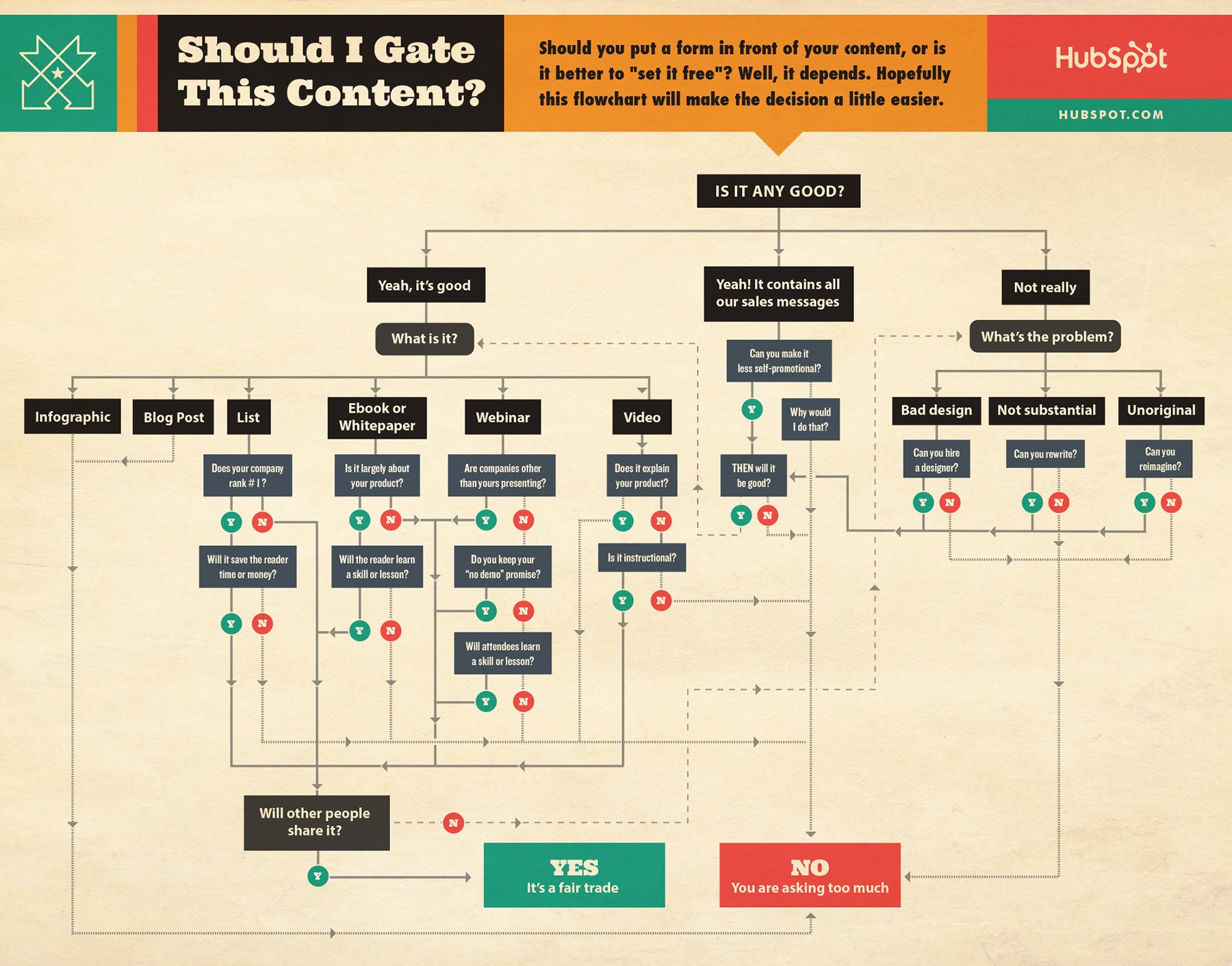
7 Types of Content That Will Drive Leads and Revenue

by Matthew Buckley

types-of-content.jpg

Gated content offers are one of the nine essential elements of any inbound marketing campaign, and that’s not changing anytime soon. But as the amount of investment in content being produced by businesses continues to increase in 2016, it’s more important than ever that as an inbound marketer, you’re choosing the correct type of content to produce.

With this in mind, here are six types of content that are primed to deliver results this year according to the CMO Council.

One quick thought before we begin, that with any of these types of marketing content, it’s critically important that the content is high quality. As well as related to the specific stage in the buying process that you’re hoping to improve upon. One great way to do this is a persona mad lib exercise.

7 types of content that will generate customers in 2016

1. White papers

A white paper is a long form offer and detailed guide on a specific topic. They are written in a more formal tone than a blog post and will feature more design production. One of the best ways to easily create your first white paper is by combining three or four of your top performing blog posts on a given subject.

White papers and guides are great offers when your persona sits at the coordinator or manager level of a company where they are able to spend time consuming this long-form, actionable and in-depth content.

2. Analyst reports

Traditionally speaking, you might think of an analyst report as being prepared by an analyst or strategist at an investment bank or stock brokerage. However, in today’s age where brands are publishers, we’ve seen this type of report expanded with companies conducting independent research and then publishing their findings.

This type of content is great when your audience is hungry for data that supports the latest industry trends to help guide broader decision making. One of the best examples of this that I saw in 2015 was Bizible’s State of Pipeline Marketing report. I asked Andrew Nguyen of Bizible why he felt this campaign had been so successful, and he hit the nail on the head, saying:

“When marketing to highly skilled, motivated and intelligent professionals, B2B marketers need to first gain trust and credibility. They need to be knowledgable and credible in the minds of their customers. And publishing high quality, rigorous content like analyst reports is how B2B marketers can achieve this.

Publishing an analyst report comes with so many benefits for the B2B marketer. It’s great for demand generation and PR. And the data is usable for a variety of future content, like sales collateral and blog posts.”

3. Webinars

The percent of B2B marketers investing in webinars has increased each of the last three years and that’s showing no sign of stopping in 2016. Webinars offer a great opportunity to bridge the gap between downloadable, gated content and an in-person event as attendees are given the opportunity to ask questions and engage with the presenter.

When you get into webinars, there are a few key points to keep in mind:

  • Webinars are best suited for the awareness and consideration stages of the buyer’s journey
  • 40-50 percent attendance rate from those that sign up is the industry average
  • Webinars can have a higher cost per lead, but nearly three in ten webinar leads have been rated excellent by sales teams
  • Polls and Q&A sections are a great way to keep your webinar audience engaged

4. Videos

Video is a great medium to put a face to a brand and build a more personal relationship with a potential buyer, and can be used by B2B marketers in many different ways. Skyword wrote a great post on their favorite uses of video for B2B marketing and they highlighted uses such as:

  • Product demos
  • Customer stories
  • Influencer interviews
  • Conference keynotes or presentations

To dive deeper, I asked Andrew Capland, User Acquisition Manager at Wistia for this thoughts on the uses of video, here’s what he had to say:

“We’ve found video has shown to increase engagement when combined with other marketing communication channels like email, blogging, and product help content, so we’ve invested heavily across the funnel.

It’s great for education in the top of the funnel. The internet is saturated with blog content right now, but the amount of engaging, interesting video content is just beginning. We’ve found that creating informational/educational videos where we teach our users something gets fantastic engagement and drives as many leads as most of our ebooks/downloads when done correctly.

For the middle of the funnel, we create lots of video demos, where we give high-level overviews of our tools, and more feature-specific tours depending where on our website the video lives. The great thing about video is that you can use heat map data to see where users watch, re-watch, and skip. You can use that data to revise your product videos making them more powerful over time.

We’re a company with no sales team. The bottom of the funnel is super important to us. We have lots of onboarding videos that help guide our users through first signup to becoming a power user. Again using video data, and comparing the viewer engagement to our product actions. Over time, we’re able to optimize both the video and the app to work together.”

Now with tools like Wistia’s Turnstile you can easily capture leads directly from a video and even integrate with your core marketing tools, such as HubSpot.

5. Slide presentations

SlideShare has become an amazing resource for presentations of all kinds, and with the integration with LinkedIn deepening that is showing no sign of stopping in 2016.

Just like blog posts being a great jumping off point to creating white papers, you likely already have some great assets you could use to create your first SlideShare campaign. Whether that’s the presentation you gave at INBOUND last year, or the latest presentation from your internal lunch and learn session, opportunities for B2B marketers to create valuable visual content abound, and SlideShare is primed to be the channel of choice to highlight those initiatives.

Here’s a great SlideShare presentation on how to generate leads.

6. Ebooks

Ebooks, though also long form, generally include more graphical elements and design imagery than a white paper. Because of this, ebooks are a great opportunity for marketers–when the audience has a preference for easily digestible visual content and are generally used to drive awareness at the very top of the funnel.

7. Infographics

Infographics differ slightly from the content that we’ve talked about so far since they should not be gated. However just like analyst reports, there is a huge opportunity for B2B marketers who can effectively create and communicate a narrative around industry trends, especially since 65 percent of the population is made up of visual learners.

Infographics can be great visual representations of the key takeaways of an industry report, or to bring statistics to life. And because they are easily shared, they are great for PR and if it’s really great, maybe even going viral.

If you’re looking to create your first infographic, tools such as Pictochart, Canva, Visual.ly and Venngage are a few of our favorites.

What this means for your content strategy

Clearly, there is no shortage of options for types of content that you can use to drive leads and revenue for your business. But before you begin, carefully consider the types of content that your business should be creating. Reflect on your buyer personas and map their needs and content preferences to the buyer’s journey. Once you get going, you’ll then be able to capitalize on the ability to repurpose and reuse content in different ways across different types and mediums to scale your B2B inbound marketing machine.

The Ultimate Guide to Inbound Marketing - Free Download

26 Jan 18:45

The 6 biggest sales-tech trends to watch in 2016

by Nicolas De Kouchkovsky, CaCube
growth

GUEST:

2015 was a busy year for sales technologies in terms of innovation. The sales stack is growing strong, and I added 40 new companies to my Inside Sales Landscape (see below).

We also saw validation from the financial community and incumbents that the sales stack is real. InsideSales.com and Apptus officially became pure play Unicorns, and VC funding reached a record high with 65 funding rounds representing $ 1.6 billion.

Through its Ventures arm, Salesforce has been particularly active, participating in nine funding rounds, including InsideSales.com and Apptus. it also acquired Quote and Proposal provider Steelbrick for $ 360 million. LinkedIn bought Fliptop and Refresh.io, bringing its acquisition count in the space to five.

Inside Sales Landscape

A high-resolution version of the landscape is available here.

Between new companies, interest from VCs, and validation by existing players of high valuations, I expect 2016 to be another year of growth and innovation for the inside sales tech industry. Here are some of the trends I see for 2016:

Artificial intelligence will rescue email

Email continues to be a prominent channel, but its continued volume growth is creating new challenges. Cluttered mailboxes translate into overwhelmed prospects, less likely to open or respond to solicitation emails. Vendors are turning to artificial intelligence. Crystal has introduced a solution to tailor the content and tone of emails based on recipients’ personalities. Conversica offers an Intelligent Assistant that automates the early engagement phase using two-way personalized email conversations. I expect to see continued innovation to tackle email efficiency and effectiveness.

Continued experiments with social

Social networks, while essential tools for prospecting and distributing content, are used carefully when it comes to reaching out to prospects and customers. LinkedIn inMail is used sparsely, and organizations are still trying to figure out what is appropriate and how to avoid a social media backlash. However, the promise of being able to communicate with potential buyers using social networks is too big to be ignored. I expect continued experimentation on this front with companies such as Socedo using analytics to find relevant leads and engage with them.

New channels for B2B sales

Voice and email continue to be the prevalent channels for engaging and prospecting, but new channels are being explored. Historically used for e-commerce, video is now being explored for B2B sales. It is safe to predict that the popularity of messaging applications will add this style of communication to the mix of channels used. Already, companies are experimenting with text SMS. You should expect a better coverage of these emerging channels in a future iteration of my landscape.

Multichannel orchestration will replace desktop unification

The integration of email and call management into a unified desktop application has been an important trend. In 2015, we saw a shift in the approach to enable multi-touch, multi-channel engagement. The core capability has become to orchestrate communications across channels and over time. Often referred to as “cadence,” a concept pioneered by SalesLoft, this new technology schedules the desired series of communication attempts across channels and sends reminders to sales reps. It not only automates these sequences but tracks them, providing insights on what works and what doesn’t. While desktop unification was technology-driven, multichannel sales orchestration ties into a trend in larger organizations to define and enforce sales playbooks and processes for inside sales teams.

With increased volumes, time and priority management have become bigger issues. Inside sales reps need to allocate the best time slots to call someone to outbound activities and defer the others. Although time blocking has become a best practice, I am unaware of solutions to help manage it. Prioritization of activities seems to be the sweet spot for predictive technologies. Industry veteran InsideSales.com has snapped up C9 to put predictions at the heart of its platform.

Expansion of data sources

Four trends are driving inside sales departments to use expanded sources of data and insights:

  1. Prospect research continues to steal more than 20% of sales reps’ time, according to CSO Insights.
  2. News insights can be uncovered from the Internet and social networks. There is no shortage of innovation: One fourth of the companies added to this last version of my landscape are within the data and sales intelligence layer.
  3. Inside selling is used more frequently for larger projects or sales situations involving numerous stakeholders and requiring deeper intelligence.
  4. Predictive Analytics are more effective when patterns can be correlated with a rich set of customer data.

We’re seeing a plethora of solutions. Also, many providers are buying information from each other. So, for many companies, the only way to evaluate options is to try them. With such a breadth of possibilities, many companies are adopting a portfolio approach for their data providers. They continuously review their existing solutions and test new ones, keeping several that, together, provide them with the best combination.

Expansion in role

Most inside sales organizations continue to focus on lead development and prospecting. However, the point at which the opportunity is handed over to a sales rep keeps being pushed. Also, the envelope of what can be sold remotely without the involvement of field reps continues to expand. These increased responsibilities are putting additional pressure on inside sales departments to hire the right talents and train them.

Inside sales roles have also become entry positions into the sales profession for millennials. To attract talent, organizations need to offer growth and promotion opportunities to these new hires. That translates into higher levels of churn. LinkedIn shared that it has a 60% churn in its inside sales organization, mostly due to promotions to other roles.

These trends are making training, coaching, and development a vital element of inside sales. It is first and foremost an organizational and human challenge, but technology will play an important enabling role.

With so many trends on deck, 2016 will be a fun year.

Nicolas De Kouchkovsky is the principal of CaCube Consulting. You can track his 340+ company Inside Sales Landscape on VBProfiles.com.


26 Jan 18:45

3 Ways of Building a Stronger Relationship With Your Prospects

by KC Claveria

stop-annoying-your-prospects

A friend marketer of mine was recently talking to me about salespeople. She’s annoyed with many of them. One salesperson from a high profile SaaS company, according to her, started calling her three times a day last week—this was in addition to the daily emails he was sending.

“It was getting ridiculous,” she confided. While there was some chance that she would have consider what the salesperson was selling, she started actively avoiding him because she was turned off.

My friend’s story reiterates the fact that to be effective, sales pros need to move the process along but they also need to avoid becoming annoying. It’s a fine balance, and unfortunately one that many salespeople fail at. You need to follow-up with your prospects—but you need to do so at the right time.

There is no good excuse to be an annoying sales pro. Here are three simple steps to developing a more mutually beneficial relationship with your prospects.

1. Bring real insights.

When you send ebooks, blog posts and other types of marketing content to your prospects, make sure those pieces are actually useful and insightful. Just because your marketing department produced it doesn’t mean it’s actually relevant or useful to your prospect.

Is it provocative? Is it well-researched and does it offer new ideas and tips? Or is your content simply a thinly veiled advertisement for your company? The biggest mistake you could make when it comes to marketing content is trying to sell your product all the time—so don’t do it.

2. Gauge the readiness of your prospect.

No matter how useful your content or no matter how credible you are as a sales person, sometimes your prospect simply isn’t ready to move the process along. Hold off calling your prospect unless you have enough indication that he or she is ready to talk.

Use analytics and lead scoring to gauge whether your prospect is ready to talk again and to identify relevant opportunities for further discussion. Being data-driven is a much more efficient, strategic approach than hounding all your prospects and hoping that some of them will bite.

3. Engage some other way.

Let’s face it: many of us don’t like getting calls. We’re not in the 90s anymore—there are other less intrusive ways of contacting your prospect. Often, an email is better than a call. Engagement via Twitter or LinkedIn (for instance, by “liking” or commenting on your prospects’ posts) is a good way of nudging your prospects without being on their faces all the time.

One cool tactic that I’ve been exposed to recently is direct mail: a company sent me an unexpected gift (a book related to my field) and a short personal note after I filled out one of their forms. I wasn’t considering their software before, but they’re definitely on my radar now after their cool, thoughtful gift.

Conclusion

Figuring out when’s the best time to contact your prospects will increase your chances of converting them, but it has another added benefit: it will help you become more efficient and avoid spending time on leads and prospects who aren’t ready to take the next step. So take the time to assess your processes. Your prospects will thank you.

26 Jan 18:45

3 Dirty Little Secrets About Marketing

by Scott Gillum

Screen Shot 2016-01-14 at 10.59.59 AMGo ahead and get mad at me. Feel free to fill up the comment section below. I’m going to share our closely held secrets with sales people, skeptics and other critics of marketing. I know you would rather I not, but it’s best for all of us, trust me. Here we go…

#1 – You got lucky – if you generate leads off the first drop/wave of a new account acquisition or a lead generation campaign for a solution, you’re more likely to be lucky, than right. Yea, you may have had a compelling offer, and the call to action was intriguing, but the chances are, you just happened to hit a prospect at the right time.

Sure, in some industries you can buy data that identifies a company’s spend on certain products or services. But you don’t know if the budget is available, what portion of it, or who controls it. And since this is a prospect, you are most likely targeting a title, which could be a decision maker, a budget holder, or just a curious information seeker.

At the beginning of a campaign you simply don’t have the information on a prospect to know where they are, or how to advance them in the buying process. So, if a prospect does put their hand up and says, “Call me,” you most likely hit them at the right time in the buyers’ journey.

#2Your messaging is weak – the effectiveness of your message is being compromised by the fact that you are trying to motivate an audience to think or feel differently without explaining why. According to Pat Spenner, co-author of the new book entitled The Challenger Customer, marketers spend too much time focusing on how they want audiences to think, or feel, without understanding their current mindset.

Research for the book found that the receptiveness and/or openness to a message depends heavily on an audience’s existing belief system, which drives their behavior. According to Spenner, marketers first need to understand and break down the audience’s current mindset using insights about their business, customers, markets, etc. It’s an opportunity to “teach” audiences that their current thinking is no longer valid and why a new way of thinking is needed. If done well, the new mindset will uniquely lead them back to your product/services or brand.

For example, Merck developed the cholesterol-lowering drug Mevacor at a time when doctors knew little about the effects of cholesterol on the body. The current mindset was that hypertension (high blood pressure) caused heart disease. Merck used clinical research to show doctors the impact of high levels of cholesterol on arteries and the correlation of plaque buildup with coronary heart disease (the “teaching” moment).

As a result, doctors should test patient’s cholesterol levels to see if they are at risk. If a patient had a LDL-cholesterol level above a certain point, doctors should start with a therapy regiment that included diet and drug treatment (the new mindset). The only cholesterol-lowering agent available at the time was, you guessed it, Mevacor. Merck, by getting doctors to change their mindset about the causes of heart disease, lead them back to their product. As Spenner puts it, effective storytelling for marketers should “lead to, not with.”

#3 – You’re doing lead nurturing the wrong waychanging mindsets takes time. Yes, you’ve built prospect profiles, aligned content to their interest, and you may even know how to engage them in their preferred communication channel. The problem may not be your content marketing efforts but the fact that prospects are stuck in the status quo. They may find your information interesting, but it hasn’t convinced or motivated them to change their behavior.

Nurturing efforts should continue to break down, or build up, the new mindset across the buying group. The ability to drive specific information aligned to individual buyer’s needs may actually be causing more dysfunction within an already dysfunctional group. To advance a prospect/s refocus efforts on driving consensus on the issue and solution within the buying group. If done correctly, like Merck, prospects will come to own conclusions that you offer the best solution for their needs.

Motivating an audience to change doesn’t happen overnight. Unfortunately, marketers are under constant pressure to perform and rarely have the luxury of time to change their approach. It’s the reason I shared the first dirty secret, to buy marketers time to create the type of campaigns that deliver insights told as a story revealed over time.

The first wave of your campaign will generate leads, but it’s the waves that come after that really count. If marketers can stop telling customers why they need their product and let them come to that conclusion on their own, response and conversion rates will double based on my experience. But don’t tell anyone, it’s a secret.


26 Jan 18:45

Five Performance-Based Sales Habits That Yield Remarkable Results

by Doug Dvorak

Transforming your daily performance from sluggish to quota busting success is achievable. Utilizing proven techniques and strategies that change your game, injecting fresh ideas and habits into your daily routine is all it takes.

  1. Study Your Current Daily Habits

The first habit that will reward you with results begins with examining the structure of your day. If you think about your daily routine, perhaps there is something you are doing that’s holding you back. Are you waiting too long to return calls? Do you hesitate or not have all the information you need to provide answers to questions? Take the time to revisit what you’re doing. Decide on a few things you could change (replace with new habits) that will improve your sales efforts. Keeping yourself educated and informed about what you are actually doing will allow you to make proactive decisions that are sure to boost your potential.

  1. Don’t Wait for Leads to Come to You

Always seek out new leads whenever you can. Create new strategies and try new things while prospecting to keep yourself engaged with your work. Strong, simple, interactive and informative pitch strategies are what makes a winning connection. Start asking questions to help you learn how to develop a better pitch. Ask them what they are looking for so you can find the way in to assure them that your product is what they need. Kill two birds with one stone and ask your current customers what they like about your product and service and what you could improve. Develop this information into a stellar sales pitch! Also, ask the client for referrals if the timing seems right and they are giving you the positive feedback you were looking for. Remember, switch up your pitch to engage your prospects in new ways. Look for ways to motivate the sale. Meet a client for coffee at their favorite shop. Get to know your customers and cater to them. It can make all the difference between their not being able to fit you into their busy schedule and enjoying your sales pitch over coffee.

  1. Do Your Research

People often forget to do the research necessary to truly make them look like a professional. If you’re coming up short with answers to objections, do some quality fact checking. Learn more about how customer objections can be countered with strong, friendly rebuttals and strengthen your sale potential. Ask your co-workers and/or bosses what strategies have worked for them while dealing with rejections. Consult a sales coach and learn proven methods of dealing with rejection. When you have confidence in the product you are selling and the facts to back it up, you’ll present a winning sales pitch. Ensure sincerity is at the core of your conversations; this will build trust and loyalty in your brand. Finally, do not forget to research the company and person you are pitching to. This will build even more trust and a personal connection that will improve your chances of making the sale compared to your competitors.

  1. Go the Extra Distance

The fourth habit that will help to improve the results related to your sales efforts is to observe the work habits of the winning sellers on your team. If you are just noticing your co-worker in the corner cubicle who arrives early every day and stays late, maybe they are on to something. There’s something to be learned from someone willing to go the extra distance to win the customer over.

  1. Keep Detailed Records

The fifth and final performance based sales habit to learn is recognizing that just making the call isn’t enough. Keeping detailed records of your interaction can lead to another opportunity. Jotting down notes that describe your encounter is a great habit that you need to develop. Perhaps you caught them on their way out. Bad timing isn’t always a lost sale. Perhaps they’ve mentioned a decline in profits, and they’re not in a financial position to buy. Note that in your records and follow up on how things are doing. When you follow up, you will have detailed notes to make you look caring and help them remember you. Learning about potential customers is good business practice all around, and it can boost sales.

Learn how to present a sales proposal like a boss!

26 Jan 18:43

7 Tactics to Convert Blog Readers Into Paying Customers

by KeriLynn Engel

7 Tactics to Convert Blog Readers Into Paying Customers

It’s a proven fact that businesses that blog get a lot more traffic than those who don’t.

But even if you’re getting thousands of visitors a day, it won’t help your business if none of those readers turn into customers.

Sure, the attention is nice, but you’re not in business to be flattered. You’re not blogging for fun – you’re blogging to grow your business!

So how do you turn those avid readers into actual paying customers? Here are 7 concrete tactics you can use today.

1. Write Blog Posts That Directly Answer Objections

When you’re blogging for a business, you know you need to write posts that are targeted for your buyer personas so you can attract the right readers.

Some of those readers might be interested in buying, but have some reservations.

TOM BIHN does a phenomenal job of overcoming price objections in their FAQ

TOM BIHN does a phenomenal job of overcoming price objections in their FAQ

Your audience might have questions like:

  1. Which product model is the right one for my needs?
  2. Will my personal information be kept safe if I buy from this website?
  3. Is this service provider the right fit for my personality?
  4. Is this the best price on this product, or can I get it cheaper somewhere else?

The specific objections will vary widely depending on your business, but they’re always there.

To find out what’s keeping your audience from buying, try doing a survey or some one-on-one interviews of your current customers or clients.

Then, write blog posts that directly address these concerns:

  1. “Model A vs Model B: Which Is Best for SAHMs/Busy Professionals/etc.?”
  2. “How Our Partnership With SecurityBiz Keeps Your Data Safe”
  3. “7 Reasons You Shouldn’t Hire Me” (This post’s quirky, negative title will attract clicks while the content will weed out clients who are a bad fit for you.)
  4. “Why Is [Product] So Expensive?”

2. Eliminate Distractions

If you’re asking your readers to do 10 different things, is it at all surprising that they don’t do any of them?

If your blog has:

  • Social media widgets
  • Advertising
  • Lots of outbound links
  • Badges

…these are all calls to action (CTAs).

elna-cain

Writer & coach Elna Cain eliminated distractions and focused her website and blog on her #1 goal.

If you have a goal for your blog, it’s important to focus on that goal and make it clear to your readers.

Writer Elna Cain does a great job with this on her website. It’s clear that her #1 goal is to get people signed up for her new email course for beginning freelance writers. Her site focuses on that goal with:

  • A single-column layout (no sidebars), which places the focus on her content
  • A big banner on the homepage inviting you to sign up for the course
  • Placing “Free Course” as the first menu option
  • Including a link to the course landing page in her author bio at the end of every post

Taking a look at her website, you can see that everything focuses on that email course. There are no distractions.

Now, take a look at your own business blog. (Go ahead and open up your business blog in another tab.)

What are you asking your audience to do?

  • Do you have a sidebar full of widgets, ads, badges, and links?
  • Is your blog’s menu clear and focused, or cluttered?
  • Is it 100% clear what action you want your readers to take?

Be honest with your answers, and consider removing anything that distracts from your main goal.

3. Ask Your Readers to Buy

It seems obvious, but many people are shy about self-promotion.

But really – your readers won’t know what you want them to do unless you ask them!

If you’re blogging with a goal in mind, it’s crucial to include some kind of call to action (CTA) on your blog.

That doesn’t mean ending every post with “Thanks for reading, now buy my product!”

Using a variety of CTAs can help you to deepen your relationship with your readers, keeping them coming back for more content and eventually turning into customers.

You can also use CTAs to encourage readers to comment, share the post with friends, follow you on social media, etc. These are great tactics for engaging loyal readers and building your audience.

But in order to convert that audience into customers, you eventually need to ask them to buy!

4. Sell Through Your Email List

Asking a casual blog reader to immediately buy something can be a big leap if they’re just on your site for information.

That’s why email newsletters are so powerful. They’re a great way to:

  1. Stay in touch with interested people who aren’t ready to buy
  2. Allow you and your readers to get to know each other and see if your business is a match for their needs

Subscribing to a newsletter is low-risk, unlike giving their credit card info to a new site, or spending money on a course they’re not sure they need. To turn those casual readers into customers (and find out if they’re really your ideal audience), a newsletter is ideal.

To convert them, ask your readers to sign up for your email newsletter by including opt-in forms at the end of every post, and include a freebie for new subscribers. Even better, set up an autoresponder series or free course that will alleviate their concerns, answer their questions, and prove your value. Tools like OptinMonster and GetResponse are great for this.

5. Show Them Exactly How You Can Help

This point especially applies to those who are offering services instead of products.

With services, it’s not always 100% clear to your readers exactly what you’re offering and how that will help them. You can explain till you’re blue in the face, but what really brings the point home is a real-life example.

Case studies help to clear up confusion and overcome objections by demonstrating exactly how you help your customers.

They’re an incredibly effective way to answer questions like:

  • What exactly do you do?
  • How will your services fit into my existing life/processes?
  • What kind of results should I expect?

Get started by contacting a few of your past or current customers and letting them know you’re starting a new “customer spotlight” series on your blog, and would love to feature them. Make sure you have their approval on the blog post before you publish.

At the end of the post, be sure to include a call to action for your readers to contact you if they feel they could benefit from the same services.

6. Create Urgency

When you create a sense of urgency, it encourages hesitant readers to buy now.

As human beings, we’re social creatures and have a fear of being left out of the crowd. We don’t want to miss out on something great – so if there’s a chance we’ll miss out, we’re more inclined to act now!

Some sleazy salespeople use this tactic by lying or taking advantage of people, but it doesn’t have to be that way.

You can create a true sense of urgency by:

  1. Creating limited-time deals, bundles, or coupons
  2. Offering seasonal products, services, or sales
  3. Sharing a limited edition of a product

7. …But Don’t Be Too Pushy

Yes, it’s important to be clear and ask your readers to take action.

But you don’t want to be so pushy that you push them away.

It’s a difficult balance, and business owners are often so afraid of being pushy that they avoid any self-promotion whatsoever!

That’s counterproductive, though. You can be clear and ask for your readers’ business without being pushy or manipulative.

Just be honest, and ask for what you want!

26 Jan 18:43

Why You Should Break Lead Assignment Rules for a Referral Program

by Trisha Winter

Breaking the rules has never been so rewarding

Let’s be honest, you take a little pleasure in breaking the rules, mostly because there are so many rules that ought to be broken, like laws such as:

  • If you have a mustache it is illegal to kiss a women (Nevada)
  • It’s illegal to sing off-key (North Carolina)
  • If you harass Bigfoot you can be arrested or fined (Washington)

Personally, if I see Bigfoot I plan on getting a selfie with him, and I take great pleasure in singing off-key. But one of most important rules I highly suggest you break is your lead assignment rules for you referral program.

Don’t get me wrong, lead assignment rules are important for your sales team. But for every rule there’s always an exception and your referral program is that exception. And while lead assignment rules might not be the most fun to break, I can tell you it’s certainly much more rewarding than breaking any of the laws above.

3 Reasons why rules were meant to be broken…for your referral program

There are 3 marvelous benefits to breaking your leads assignment rules for your referral program.

1. Motivate sales to recruit advocates– When you opt to break lead assignment rules in your referral program you add increased motivations for salespeople to recruit advocates. This is done through advocate ownership, or in other words any referrals a salesperson’s advocate makes aren’t distributed by the lead assignment rules you’re traditionally using but given directly to the salesperson who owns the advocate. The salesperson then gets the credit and benefits of closing the referrals sale, motivating them to increase their recruitment and nurturing of advocates.

2. Prompt sales to take better care of the referrals – Along with motivating salespeople to recruit advocates, breaking lead assignment rules also prompts sales to take better care of referrals because they get attributed the sale of the referrals. This can include qualifying referrals by contacting the advocate who referred them before contacting the referral so as to learn everything they need about the referral from one of the people who knows them best.

3. Increase an advocate’s willingness to refer – Half the battle of obtaining new prospects is getting them to trust you brand. But by breaking lead assignment rules your advocate’s willingness to refer is drastically increased because of the understanding that their referral will be interacting with the same salesperson they already trust and not someone new.

These 3 benefits galvanize your advocates and salespeople to accelerate the success of your referral program and increase your amount of successful referrals. Your sales team plays a large role in making your referral program a success and by providing them with the tools to leverage your program you increase your ROI substantially.

Want to learn more about how you can close more deals in 2016? Download the free Salesforce e-book.

26 Jan 18:43

Why You Need More Than One Rep On Your Sales Development Team

by Craig Ferrara

Your sales development team has heard it before: cold calling is not a walk in the park. Sometimes, it will seem like a monumental struggle, trudging through lists full of incorrect contacts and trying your best to influence influencers. It can be difficult for a sales development rep to manage these challenges on their own without the ability to rely on a team of peers for advice or to bounce ideas off of one another. At QuotaFactory, we’ve found that having a team of sales development reps, rather than just one, can help to increase productivity and assist in training. In addition to a full team of SDRs, we have an entire client success and operations management team to help with their support and training.

Many times we come across companies that just don’t have the cash flow to afford to hire someone to manage their sales development reps. As a result, we hear horror stories of SDRs receiving one day of training, a list of target accounts with incomplete or outdated data, and little to no support. Then, they are supposed to somehow make quota. Good luck with that!

If hiring a manager isn’t a possibility, why not consider bringing on another sales development rep? You not only could double the lead out-put, but there can be many other benefits that can help to drive their success.

Here are 5 reasons why you should build a sales development team to maximize your company’s sales efforts:

1) Team Dynamic.

Burnout is a common reason for attrition in our industry. Hundreds of calls on a weekly basis can wear out the best of us. Now, we realize that we can’t expect sales development reps to do this forever, but dedicating the time to hire someone who only lasts 3 months is a waste of your time and company money. If you can build out a team of like-minded individuals who can lean on one another, you’d be surprised at the additional mileage you can get out of them.

2) Benchmarking.

Multiple reps can help set the bar. If you only have 1 rep, 20 calls a day and 3 leads a month might seem adequate, but the problem is, you really have no one to contrast their performance against. How many calls a day are reasonable? How many leads a month should we expect? These questions could more easily be answered if you calculate the average between the reps making calls to determine reasonable goals.

3) Competition.

Nothing motivates a good sales development rep more than competing for top dog. By building out a team of sales development reps, you can motivate them with a weekly metric-based competition to ensure that each rep is striving for the best results at all times. We’ve found that a weekly contest can help provide that extra bit of motivation that is needed and can help to break up the monotony of cold calling.

4) Peer Training.

If you don’t have the time to train your team, have them train each other. It’s always a good idea to encourage your reps to listen in on each other’s calls in order to pick up on a few best practices and provide some constructive feedback in return. The same goes for lead qualification. Sales development reps can work off of each other to find the best questions to ask their prospects in order to fully qualify a lead for their outside rep. This helps to ensure that the outside rep will follow up on each lead and have a higher chance of pushing them further down the sales funnel.

5) Mitigate Risk.

It is very common for us to see a monthly ebb & flow of lead output. If you are only relying on one sales development rep to feed a hungry outside, inside, or field sales team, you are setting yourself up for failure on certain months. Generally the minimal growth of your forecast on a low lead month won’t make the VP of Sales very happy. We’ve found that can be offset with multiple sales development reps helping to balance out any low performers.

When you begin to consider whether building a sales development team is right for you, remember all of the above factors. Rather than hiring one rep at a time, weigh the pros and cons of hiring in multiples in order to provide your reps with the resources they need to succeed. What have you learned from building your own sales development team?

26 Jan 18:42

3 sales team structures for building a high-performing sales organization

by steli@close.io (Steli Efti)
sales team structure organization

Your product’s taking off. You’ve got traction in your market, and you’re looking to go even further. Your first basic sales model has accomplished wonders for your business so far, but after weighing the various factors involved and taking a close look at the market, you’ve decided to start building your sales organization. This is the time to determine which of the 3 sales team structures is best suited for you.

Now what?

This is a critical juncture for many startup founders, and one that people often struggle with. We like to paint a picture of salespeople as cowboys, who walk in with guns blazing. The best salespeople are go-getters, who seize initiative and take charge. You might think that it’s best to just hire amazing sales talent, and let them hit the ground running, and you got yourself a great sales team. 

You’d be wrong. A Harvard Business Review study shows that 50% of high-performing sales organizations have well-documented sales processes that are explicitly structured, compared to 28% of under-performing organizations. You can’t just haphazardly start hiring sales reps, and expect your business to grow automatically.

As a founder, it’s your responsibility to choose the appropriate sales team structure that fits your business and your culture. In doing so, you’ll cultivate a high-growth environment that will allow your sales team to truly shine.

Here are the three basic sales team structures that you can use to ramp up your sales game and build a high-performing sales organization.

(Note: We've put together a complete sales management toolkit for you: checklists, onboarding plans, meeting agenda's, comp plan calculators and more. Download your free copy now!)

Sales team structure 1: The island

The island model of sales organization leads to a more traditional, “sell-or-die” environment that people typically associate with sales reps. There’s actually very little organizational structure that goes into it. You provide your team with some basic back-end services: some training, a range of products they can sell, a commission structure, maybe an office—and that’s it.

sales_team_organization_individual_island-min

In this model, every sales rep is essentially responsible for each step of the sales process on their own. They have to generate leads by themselves, qualify them, and close them. Reps within this framework tend to be more aggressive. They’ve got their elbows out in fierce competition—not just with the larger market, but their own teams as well.

Each member of your sales team essentially becomes their own entrepreneur.

This way of structuring your sales team dominates traditional sales operations, like real estate or financial services. Think about your average real estate agent. She’ll walk into her office each day, and nominally represent a larger real estate agency, like Coldwell Bankers, or the Corcoran Group. But she’ll promote her listings mostly on her own, by posting them online, calling prospects on the phone, and running open houses—all in hopes of a close.

Pros:

  • Very little managerial oversight required on a one-on-one basis
  • Good for simple sales processes, like a one or two call-to-close product

Cons:

  • Creates a very aggressive sales environment
  • You have much less control over how your brand is represented in the market, because it’s highly dependent upon each individual rep’s style.
  • Because everyone does everything, it’s difficult to keep track of key sales metrics and benchmarks

Takeaway

The island model isn’t great for most startups—it’s too aggressive, and too competitive—but there’s always exceptions. It typically suits companies that work in established markets, with high levels of competition. The island model works best for low complexity, high-transaction sales processes. Sometimes, simplest is best.

sales-management-island

Sales team structure 2: The assembly line

The assembly line drove the Industrial Revolution, and built Ford’s famous Model T. It essentially specialized the labor force, and sequentially arranged production processes for max efficiency.

You can apply the assembly line structure to your sales team. Your raw materials are essentially your prospective customers, who are cultivated and refined during the sales cycle. The assembly line typically breaks down a sales force by function into four different groups:

  • Lead generation team: Responsible for developing leads, and gathering names, phone numbers, emails, and data.
  • Sales Development Representatives (SDRs): Also commonly referred to as Qualifiers/Prospectors. SDRs reach out to prospects and qualify them by asking questions that focus on customer needs, and identify the decision-making process.
  • Account Executives (AEs): Responsible for closing the deal. They call up qualified leads, give demos, manage objections, move the deal forward, and ultimately try to close the deal.
  • Customer Success team: Once a deal is closed, new customers are passed on to this team. They’re focused on account management and keeping customers happy, increasing lifetime value (LTV) for each customer. They also help upsell customers to higher plans.

If you want to more help managing your team better, download our free sales management toolkit.

In his book, Predictable Revenue, Aaron Ross breaks down one assembly line model you can use to structure your sales team:

sales_team_organization_assembly_line-min

The assembly line allows your sales team to specialize among different functions and roles. Each step of the sales cycle has a dedicated team. As customers walk through the funnel—from leads, to qualified opportunities, to new customers—they’re passed on to the next team.

Because each unit of the assembly line is so specialized in function, you can hold each team accountable to the various sales metrics they’re responsible for.

By specializing your sales team, it becomes much easier to isolate bottlenecks in your funnel, and fix them accordingly. For example, perhaps you set an overall sales goal of closing 12 deals out of every 100 leads sourced. If the results you’re pulling are five deals out of every 100, you can look closer at each stage of the funnel to find the friction. You might look at your AEs and see that they’re closing an acceptable 25% of qualified leads, but your SDRs are only managing to qualify 20% of raw leads.

You can dive right in, and see what’s up with your SDR team—whether an individual member of the team simply isn’t converting quality leads, or whether it’s a more global problem. You could institute further training and data-driven coaching, to boost SDRs up to 50% of leads qualified rate, and hit your broader sales goals. Looking at the segmentation of your funnel is one of the most powerful ways to fine-tune the engine of your sales machine.

Even with only two sales reps, you can still start specialization early. Have one focus on prospecting new clients, and the other on closing deals, based on their natural abilities and talents. Use the 80/20 rule to determine when to build new stations on the assembly line—when your reps spend 20% or more of their time on a secondary function, it might be appropriate to pass that role on to a specialist.

80_20_rule_click_to_tweet-minPros:

  • This sales team structure creates predictability for your business
  • Makes it easy to isolate problems in the funnel, and laser in on them
  • More specialization in your sales organization equals more efficiency

Cons:

  • When you’re starting out with two sales reps, it’s difficult to split them into four different teams—you just won’t have enough manpower for the job.
  • By splitting up the funnel into different stages, there can be friction between the hand off of customers as they travel through the funnel.
  • Because teams are highly specialized, each team member becomes increasingly disconnected from the overall business goals of the company. They’re focused on their own specific numbers and metrics instead.

Takeaway

Most startups will find that some form of the assembly line will work best for them. It’s great for reducing the complexity of your sales cycle, increasing sales efficiency, and scaling your team. Your sales cycle is probably relatively complex—and will grow more complex along with your business. The higher your annual customer value (ACV), the more important it is to have specialized sales team members dedicated to each part of the customer journey.

The power of the assembly line sales team structure lies in creating a reliable and repeatable process for nurturing leads. In doing so, it takes your funnel and transforms it into a revenue powerhouse as you build your business to scale.

sales-management-assembly line

Sales team structure 3: The pod

A pod works along similar lines to the assembly line model of sales, but instead creates focused tight-knit groups, or “pods” that are composed of team members that play different roles. A podular organization is customer-centric.

For example, a six-person sales pod would be composed of three SDRs, two AEs, and one Customer Success rep. Instead of having large teams, you create little pods of specialized roles, and each pod is responsible for the entire journey of specific customers.

Dave Gray, author of The Connected Company, provides this diagram of the pod model:

sales_team_organization_pod-min

You still utilize the specialist roles we outlined above, with SDRs, AEs, and Customer Success reps. But instead of having all of your SDRs or AEs compete against each other, with a podular organization of your sales team, pods compete with other pods. Each pod works together to win the customer, and keep them happy afterwards. They’re more fluid, and come up with ideas independently.

With the pod, you build a more modular and flexible structure than the traditional model. Since success is measured by pod, each member of the sales force has a larger, more holistic view of the entire company. Pods build more meaningful connections between people who are working together. You can specialize pods based on different industries, verticals, or countries.

Pros:
  • Because pods work in close-knit teams, your sales team doesn’t just care about their own step in the process, but about the entire customer journey.
  • High empathy and understanding within pods, less friction and better communication
  • Pods are more flexible and agile

Cons:

  • With the pod structure, there’s less opportunity for your individual sales reps to compete and grow, and push each other to excel
  • Less specialization with each role, as each member becomes more of a “jack-of-all-trades”

Takeaway

The pod structure of sales organization is essentially a refined version of the assembly line. It’s perfect for more mature startups trying to optimize existing sales resources to tap into new markets and verticals.

If you work in a competitive industry, with aggressive companies cranking well-run assembly lines, it can be hard to compete with a pod model—the pod trades efficiency for versatility. But if you’ve established your market, and have significant traction, organizing your teams into pods creates a highly flexible, agile sales team, ready to meet a variety of challenges, and pounce upon new opportunities.

sales-management-the pod

Don’t forget the culture

There’s two simple goals you want to meet when it comes to organizing your sales team:

  1. Drive maximum results.
  2. Create the best cultural fit for your organization.

Take a look at the other competitors within your industry—how are their sales teams structured? You don’t have to imitate what they’re doing. But if everyone in your market is crushing it in a specific way, it’s worth asking why—and finding out if there’s a good, rational reason behind it.

As you structure your sales team, what’s most important is finding the right fit that will drive the results you’re looking for.

It’s critical that you constantly ask yourself: “What kind of sales team are we? What kind of culture are we trying to create?” The team you build and the way you structure it in the early-stages of your startup will leave a huge footprint on your sales process, as you further grow and scale your business. Don’t leave it up to chance. Choose the sales model and team that works for you, and you’ll build a sales organization capable of sustaining long-term growth.

Want more tips on building winning sales organizations? Get The Sales Hiring Playbook - An actionable guide on building winning sales teams in 2017.

book-cover-hero.png

Grab your free copy of The Sales Hiring Playbook


26 Jan 18:42

6 Marketing Reports Used To Develop Competitive Advantage

by Andrew Nguyen

In 2007 the Harvard Business Review Press published, “Competing On Analytics: The New Science of Winning” and made an observation.

Companies are competing on analytics and those that can make use of those analytics are the ones who gain a competitive advantage.

Making this relevant to marketers, competitive advantage means:

  • Establishing a lead nurturing path that works
  • Improving velocity through the funnel
  • Increasing BOFU win rates
  • Spending less on paid media and content but generating more leads

So you’ll get that done by Friday?

These are ambitious goals, but you’re not alone. Our customers are making progress towards these goals, too. And they do so one marketing report at a time.

In this post I’ll share some of the marketing reports our customers use to build competitive advantage for their orgs. We’ll explain why they help marketers make better decisions and why they are so important to demand generation.

But first let’s discuss what makes a good marketing report.

The Anatomy Of A Good Marketing Report

A good marketing report helps you make decisions.

Great marketing reports rely on a bit of science, but there is art involved in asking the correct questions and interpreting the results.

The process starts with choosing metrics, developing analytics, getting insights and then making decisions.

ingredients_for_a_good_b2b_marketing_report-01

Imagine you woke up one day and someone told you all your data and statistics are completely innaccurate. They are nowhere near a reflection of who your customers are, where they come from, how much they spend, and what industry they work in.

Scary.

Accurate data is a luxury. Did you know marketing and advertising is much less reliant on data in countries like Russia? It’s true, where we have demographic data, touchpoints data, and data warehouses where we can access reliable and accurate information on our target customers, marketers in other countries cannot rely on their domestic statistics because they are wildly inaccurate, or plain non-existent.

Luckily we have the ability to understand our prospects and our sales cycle.

Good marketing reports begin with carefully chosen metrics. A metric is a standard of measure, for example conversions rates, sales qualified opportunities generated, or click-through rates. Analytics refers to a logical analysis for understanding what affects your metrics, how they relate or how they interact.

So here’s a description of five marketing reports our customers are using.

Leads By Marketing Channel First-Click and Last-Click Reports

These reports are used by customers who are investing in demand generation and need to measure the performance of their top-of-funnel (TOFU) activities. For marketers whose goals include growing their company quickly, the lead by marketing channel first-click report measures how well money spent on demand generation is generating site visitors who eventually turn into leads. In other words, this measures how well your ads and websites generates awareness and brand discovery.

Once these anonymous site visitors become leads their first-touch data is pushed to the CRM so they can see which ads, ad campaign, or blog post leads originated from on their first visit.

Whether the first-click happened in the same session, or six months later, our customers can identify the campaign and ad.

Why this matters: Often the observation needs to be made of whether an ad, ad group, or ad campaign worked. The creation of ad copy, content offers, and graphics is an art form. Deciding which one ones increased brand discovery and holds value in terms of demand generation does not have be an art. This is how you take budget from ads that do not hold value in terms of generating SQL’s and invest in ads that do. As a result, marketers facilitate brand discovery and kick off the nurturing process faster than their competitors.

Similarly our customers use the last-click attribution marketing report to measure and identify ads, ad campaigns, and landing pages (blog posts) that were the last touchpoint before an anonymous web visitor submitted a form to become a lead.

Why this matters: When our customers generate a click on an ad it only tells them they did a good job of getting someone’s attention. But did they do enough to convince someone to fill out a form? These two reports are give marketers different insights on their prospective customers:

  • Leads by first-touch = What did you do to generate a click?
  • Leads by last-click = What did you do to generate a form fill?

With these two reports, our customers can decide — and control — the effectiveness of their dollars. They can decide which demand generation campaign to put more money in and control the TOFU like a valve.

There are times when you need to focus resources on the middle and bottom-of-the-funnel, and there are times when you need to fill the top. Our customers use these marketing reports to control the top-of-the-funnel.

Brand discovery and lead generation is no longer like trying to grow crops based on a rain forecast from your local news station. Simply gain control of the weather and grow demand when you want.

marketing_forecast_accuracy_meme

First-Touch To Last-Click Velocity By Marketing Channel Report

There are certain variables that dictate what report you need to create. Whether or not increasing pipeline velocity is one of those variables. For many of our customers, the answer is yes, increasing pipeline velocity is important.

For them, first-touch to last-click velocity by marketing channel is an indispensible marketing report.

Side-by-side you can see which channels generate visitors who become leads quickly, or identify the channel where this process is slow. You can drill down to see ad campaign and keywords associated with these velocity metrics.

Understanding these velocities adds a level of predictability. When our customers go to spend on demand generation, they not only have an accurate understanding of lead volumes, they know when they can expect conversions. Our customers have sales teams and this velocity report enables marketers to plan ahead with their sales teams.

For example, we have X number of leads expected for next month from Y channel, this will require Z kind of follow up from sales. For B2B companies where sales and marketing alignment is important for success, this marketing report is the perfect illustration of how to get there.

Why this matters: Our customers use this marketing report to understand how to shorten TOFU conversion rates. They can build analytic models that test and identify the factors that contribute to shortening the velocity of anonymous-click to lead-conversion-click.

Being able to improve velocity provides the kind of competitive advantage that wins races. It’s a race to:

  • Acquire a market segment
  • Establish the branding benefits of being “first” in the eyes of customers,
  • Or simply first to know which ad campaign generates the demand quickly.

The TOFU velocity report is essentially launch control.

In the history of automotive racing, launch control was a major engineering innovation. The fastest way to go from zero to 100 mph is through the balance of grip and power. Too much power and you lose tire grip, your car spins its tires, generating smoke and not traction. If you aren’t using every ounce of grip available through your tires, then you aren’t going as fast as you can, and your competitor will beat you to the first corner. Use too much power and you’ll spin tires, go slower, and your competitor will beat you to the first corner.

Launch control optimizes your car’s acceleration to maximize grip so you can go fast. Controlling pipeline velocity using analytic models with velocity data is the same kind of innovation. Rather than making a race car go faster, marketers are making their prospects go faster through the funnel.

meme_first_touch_to_last_click_velocity_marketing_report

Revenue By First-Touch and Revenue By Last-Click Reports

Take a look at the conversion rates for a marketing campaign below:

  • Day 1: 4% conversion rate. (5000 visits, $100K in monthly recurring revenue)
  • Day 2: 10% conversion rate. (1000 visits, $500K in monthly recurring revenue)

Now imagine you don’t actually see the revenue numbers and you’re asked to continue managing a large budget for demand generation.

You aren’t feeling super confident are you?

Where long sales cycles exist, these reports are crucial to TOFU activities and decision-making. These reports are used by our customers to measure the important questions around spending money. How much money did we make back? What factors predict revenue and closed-won deals?

While it’s a simple concept, there’s a lot that must be measured in order to understand what happens between first-click and sales-closed. And it begins with these two reports. These reports tell you where to investigate when it comes to promising campaigns or problematic campaigns. They also help you give credit to the teams responsible for generating TOFU pipeline.

Why this matters: As marketing leaders, our customers must be able to attribute credit to their teams, and do so in an accurate way. They must provide their teams with guidance and direction based on metrics and analytics. The result? Your team continues winning and hitting targets.

Leadership is action. And actions are better when the calculations are right. Think about one the most important factors for a sharp shooter’s success: his spotter. The spotter is responsible for watching the first bullet fired by the sniper in order to help him readjust his aim. He watches where the bullet lands and the vapor trail, a visible mirage caused by the change in air density and heat generated by air friction as the bullet travels, to advise the sniper on how to adjust for the second shot.

As a marketing leader you do the same for your team, advising them on how to readjust their aimt. Just to be clear in this analogy, we’re shooting dinner plates, i.e. the precious china you inherited that’s too delicate to use but too morally important to just throw away.

marketing_first_touch_and_last_click_marketing_report_meme

A marketing team that optimizes and spends budget wisely every quarter? That’s building competitive advantage.

Quarterly Revenue Attribution By Channel Report

Marketers use the revenue attribution by channel report to review and compare channel performance. With this unified view of marketing channels, our customers understand which channels are falling short of expectations and which ones are performing above expectations.

Why this report is important: Reconciling between different marketing automation platforms and ad networks creates datasets that are inaccurate. Leads are miscounted, or double counted.

Additionally, marketing platforms measure conversions differently and formulate or define metrics differently. Having a unified view of revenue attribution via reporting through a central database (the CRM) allows marketers to compare apples to apples. In other words, one conversion, one lead, or one SQL is exactly that, no matter what channel or platform the data comes from.

Conclusion

So far we’ve focused on marketing reports relevant to improving demand generation and TOFU activities. We’ll be following up with reports for account-based marketing and the most important aspect of B2B marketing: bottom-of-funnel conversion rates and velocity. Stay tuned for more.

 The Definitive Guide to B2B Marketing Operations Learn how to havigate the complex MarTech landscape Download Now

26 Jan 18:42

Gifts from the Groundhog: Sales Lessons from Punxsutawney Phil

by Susan Payton

Gifts from the Groundhog: Sales Lessons from Punxsutawney Phil

Superstitions can feel a little silly at times. Still, many people avoid walking under ladders, crossing a black cat’s path, or opening umbrellas indoors. Although superstition isn’t grounded in reality, people connect through tradition and folklore, and the stories are passed from generation to generation. Groundhog Day is a holiday steeped in superstition and story.

The tradition stems from Candlemas Day, a holiday Roman legions introduced to the Teutons or Germans during the conquest of Northern Europe. On Candlemas Day, if the sun made an appearance, it would cast a shadow over a small hedgehog, predicting more bad weather.

When German settlers came to Pennsylvania, they carried the tradition with them. Instead of using a hedgehog, they chose a groundhog for its similar looks and demeanor.

Since the beginnings of Groundhog’s Day in the late 1880’s, folks have gathered on Gobbler’s Knob to watch Punxsutawney Phil emerge from his den. To this day, people await his appearance to find out if he sees his shadow and retreats back into his hole, which means we’re in for six more weeks of winter. If he doesn’t see his shadow, an early spring is predicted.

Although Punxsutawney Phil has only been right 39% of the time, people still flock to watch his prediction. What draws such a crowd? And what lessons can you draw from this annual tradition to help your business? Let’s dig in.


Coordinate Your Efforts

When Punxsutawney Phil originally made his debut, he didn’t do so in front of media lights and crowds of thousands of people. It was a private occurrence in the wooded Pennsylvania town.

Pulling a major media event off year after year is no easy feat. For businesses planning events and coordinating this level of excitement around a product or service, having a superior communication system in place is essential.

An online CRM is ideal for managing leads, contacts, partners, and suppliers so no one gets lost in the shuffle. It also helps you keep a pulse on what the customers want from the show every year by tracking audience cues. With a CRM you’re able to monitor every stage of the project throughout the year in one central database.

When the team gathers on February 3 to go over their successes for the year, they can pull up business overviews and reports, update contact information, make notes about what worked and what didn’t, and decide whether it’s wise to use the same vendors in the future. With a single tool, they’re able to manage the entire event.

In your business, this same tool can help you manage your teams, projects, and social cues and give you reporting to let you know where you succeeded and where you might have missed the mark.


A Fun Story Keeps People Interested

Groundhog Day has been successful because the story is told in unique ways without breaking away from the same traditions. This renews attention and gets more people excited. For example:

● During prohibition, Phil turned into “Prohibition Phil.” Instead of threatening 6 more weeks of winter, he threatened 60 more weeks of frigid cold if he wasn’t allowed to drink.

● In 1981, Phil honored the American hostages in Iran by wearing a yellow ribbon.

● In 1995, he appeared on Oprah.

In your business, you can keep the same excitement in your story by infusing unique, timely elements. Don’t be afraid to stir things up. As long as the story is grounded in the fundamental tradition, you can keep people excited and wanting to buy from you by adding a few unique elements to the mix.


The Tradition Continues On

By incorporating your brand story into your sales and marketing, you can gather thousands around your brand to watch in anticipation while you unveil new products, services and offerings time and time again.

Image via Shutterstock

26 Jan 18:42

Why Hiring Isn’t the Only Key to Building a World-Class Sales Team

by dkhim@hubspot.com (David Ly Khim)

building_blocks-3.jpg

Recently hired sales reps aren’t usually the best performers. In fact, it would be really surprising if a sales rep were to crush the role during their first week on the job.

While training and the ramp up period for new sales reps is important, there’s another aspect to the development of sales reps that is often overlooked: coaching.

Why does coaching get overlooked? Some of these reasons may be:

  • "They got training -- that should have prepared them."
  • "They’ll learn on the job."
  • "Just tell them what to do and they’ll improve."

But all of those things leaves one thing on the table: the sales rep’s potential. There’s so much wasted potential, because no one’s taking the time to unlock it.

Imagine working with a rep and after just one 30-minute coaching session, you see dramatic improvements in her phone calls and her lead-to-opportunity conversion rate doubles.

Or during a coaching session, you realize that a rep has been approaching his prospects with the wrong messaging, which explains why the leads he followed up with went dark. Then after prescribing a change, his leads close at triple the rate.

Imagine the possible results if that coaching was done on a consistent basis.

However, coaching doesn’t come naturally to everyone, and sales managers and leaders aren’t always the best coaches.

The coaching issue has two faces to it:

  1. Coaching is difficult. What’s the easiest way to start?
  2. Reps must be coachable. How do you know which reps are receptive to coaching?

We’ll be hosting a webinar on February 4th, 2016 at 1PM EST with Jim Keenan, CEO of A Sales Guy Inc., and Mark Roberge, CRO of HubSpot to answer these two questions.

During the webinar, they’ll discuss:

  1. How to determine if a new sales rep is coachable and
  2. A simple three-step framework for coaching a sales rep into a world-class performer

Click below to register for the webinar.

Register for the Sales Coaching Webinar

23 Jan 20:28

This brutal new ad may be the best attack on Donald Trump yet

by Juana Summers
Gop-2016-trump_gilm
Feed-twFeed-fb

Republicans have been going negative in an attempt to stop Donald Trump, who is currently the favorite to win the party's presidential primary. So far, with a little more than a week to go until the primary process kicks off in Iowa, it hasn't worked.

But a new ad launched by a super PAC with the goal of taking down Trump just released an ad that focuses on Trump's previous liberal policy views.

"How much do we really know about Donald Trump," the text of the ad reads

The ad shows clips from Trump's past interviews, including one where he labels himself a Democrat and another where he declares that "Republicans are just too crazy right." Read more...

More about Donald Trump, Us World, Politics, Us, and Election 2016
23 Jan 20:25

10 Ways to Heal Health Care: How Consumers Can Revolutionize Their Care Experience

Bridget Duffy, M.D., Chief Medical Officer, Vocera Communications; Recognized by Various Media as 2015 Woman of the Year, One of the Most Influential Women in Bay Area Business for 2015, and Among 20 People Who Make Healthcare Better

This program was recorded in front of a live audience at The Commonwealth Club of California on January 21, 2016.

23 Jan 20:25

4 Reasons Why Demand Marketing Orchestration Will Be Huge in 2016

by David Crane

Demand-Orchestration.png

When I was a kid and all my friends were hell-bent on becoming professional football or baseball players, I diverted from the pack. My friends were all sheep, focused on relatively easy sports that mostly depended on one’s ability to throw and catch a ball.

Not me – I gravitated toward a much more arduous, masculine sport; one that requires great strength, endurance, flexibility, grace, artistry, precise timing and…the ability to hold one’s breath. Yes, I’m talking about synchronized swimming.

Okay, there’s not an ounce of truth to any of that, but it segued nicely into the following simile: much like synchronized swimming, marketing is continuously growing more dependent on an organization’s ability to orchestrate precisely arranged moves.

Here are four reasons why such demand marketing orchestration will be more important in 2016 than ever before:

1. Automation means little without coordination

First, I should provide my definition of “demand orchestration”: The precise, harmonious coordination of all demand marketing factors (people, tech, data sources, etc.) so that the whole operation is greater than the sum of its parts, like a symphony.

A couple years ago, when even the most advanced marketing organizations were only using a few marketing tech tools, focusing on the precise coordination of demand marketing efforts was less important, because it’s a lot easier to arrange 4 things than 14.

But these days, many marketing teams are dealing with tech stacks pushing 20 components or more. Such complexity requires deeper commitment to understanding how exactly these networks of technology communicate and contribute to overall customer experience and business value.

Clearly, this is why the marketing technologist role is growing across the board. Twenty tools may automate 100 processes, but if these processes aren’t in sync, all the automation will do little good. One bottleneck in data or gap in process can suck all the added value right out of your tech investments.

2. Sources of data continue to evolve and multiply

The marketing technology stack has largely been developing from the bottom of the funnel up. (Though AdTech has always sat above the funnel, it’s just recently starting to be enveloped by the larger “Marketing” stack).

B2B marketing’s first real taste of the MarTech stack was CRM, into which data was mostly manually imported. Then it was marketing automation platforms, which while enabling added sources of data through inbound efforts (websites, blogs, landing pages, etc.), it was still pretty straightforward and manageable.

Advancements in search and social tools have slowly heaped more data into the mix, complicating things as the matching of known and anonymous data have become a chief concern. But even this didn’t quite tipped the scales, due to MA vendors’ commendable efforts to integrate these social tools into their platforms.

These largely inbound efforts, however, have been unable to keep pace with demand marketers’ growing appetite for customer and prospect data. So, to remain competitive and sustain growth, many B2B marketing orgs (and the vast majority of enterprise companies) are shifting budget to outbound marketing initiatives – content marketing, events, third-party social efforts, telemarketing and more.

While these outbound efforts quickly stoke demand, they also complicate matters, because they’re multiplying the number of data sources, all of which need to be monitored and adjusted according to developing trends and changing needs. And as we all know, the greater the number of moving parts, the greater the chance something will go wrong. Hence, the growing importance of cross-channel demand coordination.

Moreover, all these additional sources are enabling our addiction to data, because…

3. We’re all data hoarders

Have you ever seen the show Hoarders? It’s disgusting and depressing…don’t watch it. But suffice it to say, marketers are becoming data hoarders – we want all the customer, prospect and program data we can get our hands on…until it overruns our jobs (and lives) with often useless information. It gets to the point where all the useless data blocks our ability to access the useful information.

Now, if you have seen Hoarders, you’ll know that the first thing the “counselors” do is force the afflicted, hoarding homeowner to organize all their junk (and hopefully throw out the unnecessary stuff).

Orchestrating demand marketing is becoming more and more like this on a daily basis – we’re learning to coordinate our sources of data (and the data itself) with specific tools to be able to find and access the useful information.

In the coming year, we’ll all need to ensure our novice orchestration efforts become professional skills, and that we’re effectively connecting demand marketing tools and processes to separate the wheat from the chaff. Those who don’t will simply suffocate in the success of their demand generation efforts.

4. The pace of change just keeps speeding up

…and good demand marketers must continuously adapt their processes and systems to keep up. This requires constant testing.

You can’t properly test, adjust and evolve your demand marketing initiatives without a high-level view of how all your programs, processes and tools affect one another. Demand marketers need a level of holistic insight and control over their entire operation that allows them to compare sources, campaigns, systems, content, engagement tactics and more against one another in ways that provide clear results so that they understand what works, what doesn’t and why.

This all comes down to orchestration. Just like an orchestra conductor can single out that spectacular violinist ready for a solo or the overzealous tuba player that should be booted, marketers must be able to pinpoint the good and bad regarding all the elements that make up their demand marketing orchestra.

The coming year will witness a tipping point. As organizations continue to adopt more technology and increase the volume of data in their systems, there will be a growing need to divide roles according to individual specialization. And all these individual efforts will need to be coordinated with growing precision. Marketing organizations will thus become more like orchestras, where specialization is balanced by precise coordination from the top down.

Iron-Mountain-Demand-Gen-CTA

23 Jan 20:25

Is VC The Right Money For Fintech?

by Micah Rosenbloom
moneyrubicks Financial technology has never been a more exciting or innovative category — especially in New York City. Oddly, tech is not the driving force in many of these ventures. The Blockchain and Bitcoin notwithstanding, most of what we’re seeing now is financial product evolution and the unbundling of the large bank. Most of these companies could have been built 20 years ago. Read More
23 Jan 20:17

Google and Udacity are bringing a free deep learning course to you

by Lulu Chang

If knowledge is money in this progressive society of ours, then Google is seriously spreading the wealth. On Thursday, the Silicon Valley giant announced the launch of a "new deep learning course developed in collaboration with Udacity."

The post Google and Udacity are bringing a free deep learning course to you appeared first on Digital Trends.

23 Jan 20:08

AP sources: Bloomberg eyeing independent White House bid

by CB Staff

NEW YORK, N.Y. – Former New York Mayor Michael Bloomberg is taking early steps toward launching an independent campaign for president, seeing a potential path to the White House amid the rise of Republican Donald Trump and Democrat Bernie Sanders.

Bloomberg has retained advisers and plans to conduct a poll after the Feb. 9 New Hampshire primary to assess the state of the race and judge whether there is an opening for him to mount an independent campaign, according to three people familiar with his thinking. They spoke on condition of anonymity because they were not authorized to speak publicly about his plans, which were first reported Saturday by The New York Times.

Bloomberg has set a March deadline to decide on whether to enter the race, to ensure his access to the ballot in all 50 states.

The billionaire media executive, who served three terms as mayor of New York, is said to be concerned by Trump’s lasting hold on the Republican field and is worried about the impact of Sanders’ campaign on Hillary Clinton’s bid for the Democratic nomination.

Bloomberg’s efforts underscore the unsettled nature of the presidential race a little more than a week before the first round of primary voting. The months-long rise of Sanders and Trump has shaken up the political establishment in both parties and on Wall Street, who’ve struggled to combat their climb in primary polls.

A longtime Democrat who became a Republican to run for mayor in 2001 and later switched to be an independent, Bloomberg would strongly consider a bid if the general election looked like it could turn into a contest between Sanders and Trump or Texas Sen. Ted Cruz.

He is not ruling out a bid if Clinton is ahead on the Democratic side, though people familiar with his plans believe it is not particularly likely Bloomberg would challenge Clinton in a general election. But they said Bloomberg has expressed concern about the damage caused by revelations she used a private email address and server while serving as secretary of state, and he fears she may emerge atop the Democratic field as a weakened nominee.

The two New Yorkers have a cordial relationship, people close to them say. They met privately at Bloomberg’s offices a few months before Clinton announced her campaign last April, before an event announcing a philanthropic initiative to measure and track data about issues affecting women and girls. Bloomberg has also spoken at events hosted by the Clinton Foundation.

To prepare for a potential run, Bloomberg has also instructed aides to research previous third-party runs and is said to be willing to spend up to $1 billion of his own fortune, estimated to be about $37 billion, to finance his campaign.

Bloomberg, 73, has no personal animus toward Trump — he believes the real estate developer is “a nice guy,” according to one of the people familiar with his plans— and knows him from New York’s social circuit and from dealings with Trump when Bloomberg was mayor. But he strongly disagrees with Trump’s political positions, particularly his stance on immigration, the person said.

One of the richest people in the United States, Bloomberg has previously toyed with presidential runs, but concluded ahead of the 2008 and 2012 campaigns he could not win. He delivered a powerful late endorsement of President Barack Obama’s re-election effort, though he’s been known to criticize the president personally in private conversations.

The founder of the financial news and information provider Bloomberg LP, he was a political novice when he launched an unlikely bid for mayor in 2001.

He was trailing badly in the polls before the 9-11 attacks, but then received the endorsement of the popular then-Mayor Rudy Giuliani. Bloomberg played up his business expertise and campaigned as the candidate best able to help steady New York’s economy in the aftermath of the attacks.

He won a narrow victory and was re-elected handily four years later. He then spearheaded a change to the city’s charter to allow him to win a third term in 2009. He oversaw a gilded age in the nation’s largest city. Manhattan shed its gritty image to become the sparkling star of film and television. Record numbers of tourists arrived. So did young professionals seeking their future. But critics noted the growing gap between the city’s rich and poor.

The former mayor is largely a social liberal — he fought for same-sex marriage in New York and is pro-abortion rights — and implemented a number of health reforms in New York City, banning smoking in public places and instituting calorie counts on menus.

He has also became arguably the nation’s most vocal proponent of gun control, using his fortune to bankroll candidates across the country who clash with the National Rifle Association.

But liberals have found fault with his cozy ties to Wall Street and his unquestioned support for the New York Police Department, which drove down crime during his tenure but engaged in tactics that a federal judge later ruled discriminated against minorities.

___

On Twitter follow Jonathan Lemire at http://twitter.com/jonlemire and Lisa Lerer at http://twitter.com/llerer

The post AP sources: Bloomberg eyeing independent White House bid appeared first on Canadian Business - Your Source For Business News.