Shared posts

05 Mar 18:59

5 Small Tweaks to Improve Web Content for Better Sales

by Matt Brennan

Is your web content doing all that it can to improve your business? Your website should be the base of your marketing operations. It’s the location where you can convey your message in its entirety, and where you set the rules. If your web content hasn’t been generating sales, here’s five small tweaks that can help you improve web content:

1) Use a call to action – Your readers may not immediately understand what you want them to do. A call to action clarifies your request. It doesn’t have to mean asking for the sale, but in web copy, brochures, sales letters, and other traditional marketing it should. In blogging it can mean asking for the sale, but it can also mean asking people to: download your eBook, sign up for your newsletter or comment on your post. There are a variety of actions you can ask your readers to take, and you want them to stay engaged.

2) Write conversationally – Your readers probably won’t have as much knowledge about your industry as you do. You’re also asking them to stick with your blog instead of moving on to the next search result. If you want people to identify with you and your business, one of the best tricks is to write how you’d talk. Picture yourself out for coffee with your reader. You’ll sound stuffy if you avoid contractions. So just be natural. Just be you.

3) Answer your readers’ questions – Your readers are busy people, and they are on a quest. There’s an underlying purpose that brought them to your blog. So give them the information they are looking for. Be direct, stay on topic, and make sure that readers will have a strong idea of why they are on your site. If your post is about how to do something, make sure your headline states that purpose. If your post is about reasons product A is better than product B, make sure readers understand that’s exactly what they’ll get by sticking around-otherwise they’ll be on to the next search result.

4) Think visually – Readers don’t have a lot of time, and if they can sense that what they are looking for may not be on the page in front of them, they might just move on. Many readers scan to evaluate what’s there. If you have 2,000 words with no images, and nothing to break it up, you aren’t doing yourself any favors – it doesn’t matter how useful the information is. Select the best images, break long text up with subheads, and throw in some bullet points once in awhile. More readers will be able to go from point A to B, which is the whole goal of what you are doing to begin with.

5) Show your value – What happens when someone has a problem and uses your product to solve it? What happens when someone has a problem and doesn’t use your product to solve it? Will it cost more to fix the worse the problem gets? Make sure you convey your value to your audience. Make sure they understand how important it is to take immediate action.

04 Mar 18:30

4 things you never knew about freelancing and taxes in Canada

by TurboTax
Freelancer
Feed-twFeed-fb

Freelancing can be a sweet gig. You can choose your clients, create your own hours and take as many vacation days as your heart desires.

But freelancers will be the first to point out that it's not all easy. In fact, certain things — like figuring out your tax return — can feel more challenging if you’re on your own

Luckily, products like TurboTax Home & Business make it simple to navigate freelancing and taxes. Below are a few top tips for freelancers in Canada who may not know the drill when it comes to filing an accurate tax return. Read more...

1. The onus for tracking receipts, bills and business expenses is on you

More about Business, Small Business, and Brandspeak
04 Mar 18:29

Canada's Prime Minister needs to stop being so Canadian

by Portia Crowe

JUSTIN TRUDEAU cowboy hat

Canada is having a moment.

Ever since the young, attractive, charmingly feminist Justin Trudeau was elected Prime Minister in October, Canada has been all over the world stage.

In Davos, Trudeau was the star of the World Economic Forum. He's already buddies with President Obama. Even The New York Times has declared Canada once again "hip" since his election. 

But Trudeau runs the risk of squandering his moment in the most frustratingly Canadian way.

In an interview with CBS to be aired on Sunday, he talked about America's dominance and said Canadians must always be aware of what's going on with their neighbors to the south.

He added, according to an AP transcript: "I think we sometimes like to think that, you know, Americans will pay attention to us from time to time too."

Come on.

That sort of dejected (and slightly passive aggressive) language that Canadians have always adopted is what makes them such an easy target.

Canada has always suffered from the short-man's syndrome — you would too if you were America's younger sibling. But now is not the time. 

After nearly 10 years under conservative leadership, Canada is finally starting to regain its reputation as a progressive leader on issues like immigration, the environment, and human rights. 

And the world is paying attention. This week there was a record spike in Google searches on how to "move to Canada" following Donald Trump's victories in seven states on Super Tuesday.

I'm not going to sit here and tell you that Canada is set to become the next global power when America falls. But a lot of folks are looking to Canada — and to Trudeau — for inspiration right now, and that stands for something.

Trudeau needs to do the most un-Canadian thing imaginable and learn to own that popularity.

SEE ALSO: Canada needs to be a global economic role model — even if its prime minister doesn't want to cause a scene

Join the conversation about this story »

NOW WATCH: Canada warmly welcomes its first refugees from Syria

04 Mar 18:21

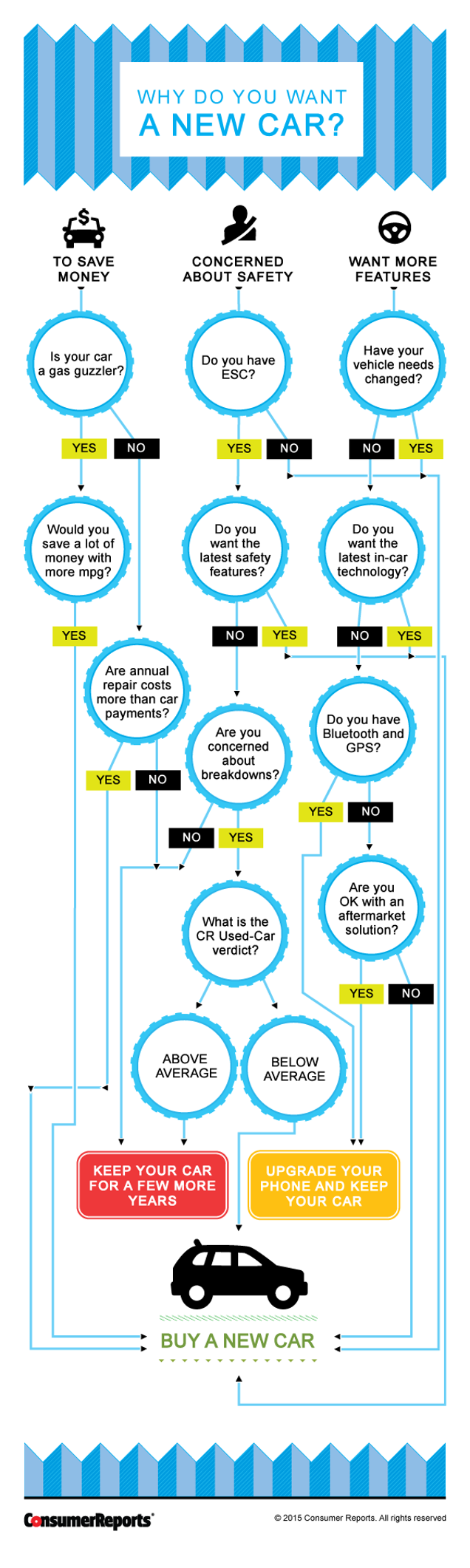
Three Basic Factors to Consider When Deciding to Buy a New Car

by Kristin Wong

If your car is crapping out and you’re thinking of getting a new one, or even a new-used one, it’s a big decision. Cars cost a lot of money, so it’s not a decision you want to make lightly. Here are the three main factors to consider when deciding whether or not to buy a new car.

Read more...

04 Mar 18:20

College hackers compete to shine spotlight on cybersecurity

by CB Staff

BOSTON – Teams of students from MIT and Britain’s University of Cambridge will spend the weekend hacking one another’s computers, with the blessing of their national leaders.

The two schools are competing in a hacking contest that President Barack Obama and British Prime Minister David Cameron announced last year among other joint cybersecurity projects. The contest will be hosted at MIT starting Friday.

But instead of facing off against each other, the schools are placing their top hackers on teams made up of students from both institutions. For 24 hours, teams will try to hack into one another’s computers to steal a trove of files. Winners will receive prizes topping $20,000.

The contest is meant to spark interest in the cybersecurity field, which experts say has a shortage of skilled workers.

The post College hackers compete to shine spotlight on cybersecurity appeared first on Canadian Business - Your Source For Business News.

04 Mar 18:18

How the rest of the world limits foreign home buyers

by Aaron Hutchins
A "For Sale" sign stands on display outside a house in the suburb of Eastwood in Sydney, Australia, on Saturday, Jan. 11, 2014. Purchases by locally resident Chinese and those from mainland China are inflating housing bubbles in and around Sydney, where prices in some suburbs have surged as much as 27 percent in the past year. (Ian Waldie/Bloomberg/Getty Images)

A “For Sale” sign stands on display outside a house in the suburb of Eastwood in Sydney, Australia, on Saturday, Jan. 11, 2014. Purchases by locally resident Chinese and those from mainland China are inflating housing bubbles in and around Sydney, where prices in some suburbs have surged as much as 27 percent in the past year. (Ian Waldie/Bloomberg/Getty Images)

As house prices in red hot markets like Toronto and Vancouver soar, squeezing out first-time buyers, many have blamed the influx of foreign home buyers for driving up prices. To that end the government of British Columbia, in its 2016 budget, included a promise to track foreign home ownership by requiring all those who buy a home in the province to disclose their citizenship. While the goal is to determine the impact foreign investment has on home prices, the government stopped short of saying what, if anything, it would do with the information.

So what are some options? Here are nine ways other countries and regions (plus one province) have tried to manage foreign investment in local real estate markets.

Mexico: Foreigners can purchase property in the country’s interior region, but are unable to directly buy inside Mexico’s “restricted zones”—a prime area encompassing 100 km from the country’s borders or 50 km from the coastline. However, there are ways to work around the regulations with the fideicomiso, which is essentially a trusteeship in which a Mexican bank holds the deed to the property for the buyer. (A constitutional amendment to ease these restrictions passed the government’s lower house in 2013, but has yet to pass in the Senate.)

Hong Kong: Non-permanent residents and foreign companies should expect an added 15 per cent surcharge on home purchases.

Switzerland: The Swiss government imposes annual quotas for how many homes can be sold to foreign non-residents in the country’s various cantons. Some regions have their own additional restrictions, which could include limiting the size of the property, requiring foreigners to buy homes that are already foreign-owned or setting the bar for non-Swiss at one property per family.

Guernsey: An island located between Britain and France, Guernsey has a two-tier housing market: the local market and the open market. While there are no controls on who can buy in either, only qualified residents can live in local-market housing (meaning foreigners can buy those homes but can’t live in them). If non-qualified residents want to own and live in a home, they must buy one of the 1,597 private dwellings on the open market, which typically are much more expensive. The Open Market Housing Registrar is presently closed, so no new properties are being added to the list.

Malaysia: To prevent foreigners from snapping up all the low- and mid-level priced properties, each region has a minimum property price for foreigners. On the lowest end, it would cost foreigners 300,000 Malaysian ringgit (approx. $100,000) to live in the state of Sarawak. On the high end, foreigners would have to pay at least two million Malaysian ringgit (approx. $650,000) to live in Selangor.

Thailand: While foreign nationals can own a house in the country, they aren’t permitted to own the residential land the home sits on. Foreigners can also own a condo, so long as at least 51 per cent of that building’s units are Thai-owned.

Australia: Non-resident foreign buyers must generally buy new homes or new apartments, or they build on vacant land for residential development, so long as the development is completed within four years. Foreigners living temporarily in the country can buy an existing home, so long as they live in it and sell the property once their visa expires.

Philippines: Foreigners can own a home in the country, but they can’t own the land on which it’s built. In terms of buying condo units, that’s permitted so long as the amount of foreign-owned units doesn’t exceed 40 per cent.

Singapore: In addition to an 18 per cent property sales tax, foreigners can only buy a condo unit or apartment without first getting government approval.

Prince Edward Island: Yes, P.E.I. is part of Canada, but when it comes to limiting foreign buyers, it shares more in common with other countries. Non-residents—and this applies to Canucks living outside the province too—are limited to five acres of land or 165 feet of shoreline.

The post How the rest of the world limits foreign home buyers appeared first on Macleans.ca.

04 Mar 18:13

Whatever Happened to the Sales Guru from Corporate?

by Lou Washington

Complex technology has never been easy. This was especially true in the pre-connected world. First off, tech is expensive. Second it always promises to solve old problems in a new way; usually an unproven way. Complex technology was and can still be risky.sales-guru-replaced-by-cpq

In the pre-connected world, sales reps had to spend nights getting fluent in the language and technical aspects of whatever technology they were selling. Sales cycles would run long and much of it would be spent convincing skeptical buyers that you knew what you were talking about and that your solution was not some goofy, snake oil, 3 card monte invention.

Buyers did not have the same level of technical expertise or comfort that they often display today. Sales guys would frequently run into a credibility wall that they just could not get over or around. If the sale was going to progress any further, the only course of action was to bring in the guru from corporate.

High Tech causes High Drama

Almost every company involved in complex products had at least one corporate guru.

These guys were always ready. Ready to grab the next flight and get onsite to back you up, build the customer’s confidence and help close the sale. It didn’t matter if you were talking about computers, peripherals or any other complex device. The corporate guru was just a phone call away.

Sales guys would know when they had to bring in the big guy. The sale would stall, demo after demo would show the product as effective, but, skeptics remained skeptical. It was frequently just a trust issue.

At some point during yet another demo, the rep would tell his customer contacts that he’s bringing in some help.

“What help” everyone asks?

Dramatically, the rep lets everyone know that Ray Wilson is coming in from corporate.

“Who the hell is Ray Wilson?” someone asks.

The Guru from Corporate

The sales rep gathers himself and in a hushed voice intones, “Ray Wilson invented this technology. Ray can make this baby dance a tango, Ray knows everything there is to know about these machines.”

In short, Ray Wilson is the Guru from Corporate. Ray will be flying in, first class. Get ready, because Ray will explain it all. Ray is a genius.

A few days later, the rep has his customer contacts gathered together in a conference room onsite. There is silence around the table as they wait for the MAN. Ray is running late. The clock ticks, fingers drum, watches are checked and then rechecked. The management heavyweights in the room are just getting to the point where they’ve had enough waiting and they start fidgeting around.

Then, the door suddenly opens, a figure appears. London Fog rain coat, three piece Armani suit, calfskin briefcase, Johnson & Murphy shoes, a diamond bezel Rolex President adorns his wrist, several gold chains are revealed under his spread collar and to top off the image, designer glasses with gradient tint lens. Ray Wilson has arrived.

He quickly looks around, figures out who is who and pulls out a stack of business cards. “Let’s go to lunch” he orders as he hands out cards to the management guys.

Ray hands a product datasheet to the sales rep and tells him to have it memorized and ready to demo by the time they’re back from lunch. The rep jumps to his feet and moves off to get started. The lunch party starts out the door.

One of the managers asks Ray, “What am I supposed to tell our president about how much this thing costs?”

Ray Wilson stops in his tracks, smiles, turns to the manager, “Tell him if he doesn’t like it, to buy his new system where he buys his whiskey!”

Wow! Ray is tough. Ray has been through this before. Nothing intimidates Ray.

They all laugh nervously. They are starting to feel better. They have confidence in Ray. This guy isn’t afraid of anyone. They all wish they could be like Ray!

Ray asks if there is a decent steakhouse nearby.

Hours later, the lunch crew returns. They are all about half blasted. The booze was free, so why not. Ray picked up the tab. The admin hands out stacks of pink phone message slips to virtually everyone except Ray. Within a few minutes, at least one manager is overheard telling someone on the phone to buy something where they buy their whiskey. Clearly, the power of Ray, the KC Strip and three martini lunch is at work.

Meanwhile, the sales rep is getting his presentation ready. He’s going to be telling everyone about the newest feature which was explained in the datasheet Ray gave him. Ray gets everyone together and lays down the law. He’s done hundreds of these installs, they have countless customers who are now killing their competition, managers have to step up and push for change in order to stay competitive.

Ray makes a final promise, “If you buy today, I will personally handle the implementation!”

The sales rep steps up, runs through the new feature and starts passing out contracts for signature, Ray Wilson collects his stuff and quietly slips out the door. His work is done. By the time the paperwork is signed, Ray is downing his second Martini at the airport bar, his flight is called. A few minutes after that, Ray Wilson disappears into the sunset.

Corporate Guru as Closers

Being the Corporate Guru was fun. They backed up sales with real knowledge about the product, how it was best used and who was the ideal reference customer. This is where the Corporate Guru really earned their keep.

Sales reps frequently lacked the technical training needed to sell complex products. They built the relationship, they set the expectations and then they brought in Ray Wilson to help close the deal.

Ray may or may not have been a genius, but he was always portrayed that way. When things got rough after the sale, they could be called upon again to smooth things out.

High tech products cost a fortune and when companies spend big money, they expect to be fussed over. The customer also knew making a purchase of this magnitude might be a job killer if the wrong choice is made.

Ray Wilson, his image, his knowledge and his liberal expense account were designed to inspire confidence and to make the customers feel important. Important enough to make a buy decision. An afternoon with Ray at the steakhouse would be just the ticket to rid the buyer of any worries about making a bad purchase decision.

CPQ and the Demise of the Corporate Guru

Today the Corporate Guru is a dinosaur. They are gone, never to return again. Connectivity means that sales has all the necessary knowledge about the product, pricing, usage and configuration at their fingertips.

Today, all of that corporate guru expertise is built into the business rules driving the configuration engine in the CPQ solution. Every sales rep has CPQ onboard their tablet. Today, instead of bringing in Ray Wilson, the sales rep brings along a tablet and several user stories that mirror the customer’s own experience.

The customer also has confidence now because they do their own research before they engage with a sales rep or any vendor. When the sales rep does come into the picture, both parties are equipped to have a real conversation because the questions are real and the answers are correct. That builds confidence in both buyer and seller.

They no longer have to “believe in” Ray Wilson.

When the time comes to present the proposal to management, the buyer and the sales rep have examined all the hard questions and with the help of their configuration technology, the solution proposed is matched specifically to the customer’s unique application.

The people present at the close will be the folks that need to be there. No one will have to fly half way around the world to buy martinis, steak dinners and tell stories.

The corporate guru is out of a job.

04 Mar 18:11

Lost a Deal? 3 Phrases That Increase Your Chances of Closing it in The Future

by Adam Honig

lost-deal-phrases-1.jpg

We all know what to say when we win deals, right? But professional salespeople also need to know what to say when a deal goes bust.

As salespeople, we’ve all been there. You’ve spent weeks or even months courting a prospect. You’ve sent them materials, completed demos -- heck, you’ve probably even priced out a six-month trial program for them. Your follow-up, perhaps using a tool like Spiro, has been stellar. And at the last minute, they decide they aren’t ready for the solution, don’t have the budget, or have simply picked a different vendor.

But that doesn’t mean your reputation as a salesperson has to go down in flames as well. Here are my tried-and-true phrases for ending an unsuccessful deal with your dignity (and your chances for a future deal) intact.

3 Phrases That Keep Lost Deals Alive

1) “You picked a great company to work with.”

Even the most resilient salespeople can take a lost deal personally. I can remember one particularly heartbreaking loss -- my team and I were pitching a huge deal at a Fortune 500 company that seemed to be going really well. We had great alignment on product fit and were in agreement on the budget.

What we didn’t know was that at the same time, one of our biggest competitors was working on a similar deal with a different division at this company. Once the timing was right for the prospect to move forward, they combined the two initiatives and we were pushed out by the long-standing relationship the prospect had with our competitor. Sometimes it’s true -- it’s not what you know, but who you know.

Could we have told this company to buzz off for not being forthcoming about another deal they were working on? Sure, but that would have gotten us nowhere. Instead, by saying, “You picked a great solution,” and “We understand your reasoning for moving forward with Company X,” we were able move on with our heads held high.

2) “Let us know how we can make your transition process easier.”

I know what you’re thinking. “If I’ve just lost a deal, why am I offering to help this company move forward with another solution provider?” And you’re right -- it’s counterintuitive. But think about all the work you’ve done ahead of getting the disappointing “no” that could now be perceived as a waste of time.

It rarely benefits anyone to allow a prospect to go into a deal unprepared. Taking the time to educate them on key challenges they might face during the process with any supplier -- including yours -- positions you as a valuable resource for the future. In the lost deal with the Fortune 500 company, we didn’t want them going into the deal blind, even if they weren’t working with us.

When offering yourself up as a resource, consider phrases like, “Implementations of this nature can be tricky, so let us know if we can help,” or “We have a great case study that outlines a similar project, let me send it to you.” Positioning yourself as a knowledgeable expert is always good for business – and gives you a leg up if your former prospect decides to pass your information along to someone else looking for the same solution.

3) “Let’s be sure to stay in touch.”

Most salespeople are great networkers, so this phrase is in our vocabulary by default. But how often do you say this and never actually stay in touch? We’re all guilty of it. But when it comes to prospects who have turned you down, it’s important to actually follow through.

Saying things like, “I’ll be sure to keep you in mind for future promotions our company is running,” or “I’ll let you know when we update our product,” sets you up for future contact. And this is particularly important if your prospect said “no” to the deal because your product or pricing didn’t quite line up with their specific needs.

With our Fortune 500 prospect, we continued to include them in our prospecting and marketing efforts to remind them that we were an alternative. Bottom line: We didn’t let them go, nor did we let them forget our existence and previous hard work on their behalf.

Tracking Your Results

While the results of your efforts may not always be immediate, conducting yourself with integrity and professionalism in the face of a lost deal will always yield a positive outcome -- whether it boosts the reputation of you and your company, or presents the opportunity to pitch a new deal in the future.

Remember that Fortune 500 company we’ve been talking about? By following the advice and using the phrases I’ve outlined, we ended up receiving three referrals from them that turned into profitable opportunities. This company had thought highly enough about our efforts that they continued to advocate for us to other companies.

The cherry on top? Ultimately, we ended up pitching them again and won the deal.

Does it hurt when a deal falls through? Of course. But with persistence, sound advice, a solid solution and plenty of integrity, even failed deals can come full circle to success.

HubSpot CRM

04 Mar 18:10

Customer Stories: Secret Weapons for Your Sales Team

by Neil Chase

Who’s the best person to tell your company’s story? It might be the CEO or a sales rep or a spokesperson, but often it’s a customer. Someone who loves what you’ve done for them and is willing to share the story can be a powerful asset. These case studies, or customer stories, or testimonials, are often the most compelling way to explain how well you serve your customers and meet their needs.

But the logistics of telling those stories can be tricky. How do you get the customer in front of a camera when the sales team owns the relationship and doesn’t want marketers getting in the way, or taking up the the client’s time, or asking it it would be OK for a video crew to invade the office for a few hours? Especially when we’re just a vendor, and the customer doesn’t owe us any favors.

Here are some tips our customers have found useful:

  • Identify Your Allies: You don’t need the entire sales team on board to produce your first amazing customer story. You need one rep whose face lights up at the idea, who gets the value, who knows a customer who would be excited to be on camera. You might pitch the idea to 20 salespeople and have no takers, but you’ll see a glimmer in someone’s eyes and approach them afterward to get things rolling.
  • Sell to Your Sellers: Don’t ask your reps to support the program just because it’s a good idea, or because it’ll boost brand awareness or help future sales. Sell them on its immediate value to the right customer: “Think about the client you’re closest to, the one who retweets what you share about the company and has referred others to you. Someone who’s proud of what was accomplished with our help. Now think about how they’ll feel if you ask to tell their story, on video, and share it with the world. Is it their chance to become more visible and get promoted? Or get speaking gigs? Or get a recruiter’s attention? Or just the chance to be on video? And even if they say no, will they maybe feel flattered and a bit more open to your next upsell opportunity?”
  • Show Your Work: Promise that, once the video is ready, you’ll do more than send the sales team a URL. Explain that you’ll attend the national sales meeting, or the weekly sales call, and share a complete package ready for the field. The ultimate valid business reason to reach out to every customer and prospect. I’ll come with email scripts, draft social posts, formats that can be shared in all the right channels, a PDF wrapper, a printable summary with a URL, a flash drive … any format and supporting material they need to put it to work right away. Or demonstrate that approach with an existing asset, like a white paper, to show you mean business and that the investment of their time in connecting you with clients will pay off handsomely.
  • Tell a Great Story: Don’t just ask the client (or ask the rep to ask the client) to deliver a testimonial. Especially if nobody will be surprised that you provided good service — as Saturday Night Live explained so well in the ultimate customer testimonial video in 1988. Offer to tell the customer’s story, both because it’s more interesting and because it’s what the customer wants to discuss. You’ll work in mentions of the partnership with your company, but sell the customer, not yourself. Now you’re not asking the customers for favors; you’re offering to help promote their businesses.

Once you break through the initial hurdles and get those customer stories rolling, share them quickly with the rest of the sales team. You’ll know you’ve succeeded when the rest of the reps start suggesting clients, and when that first client asks to put the video on their own website because it tells their story so well.

04 Mar 18:09

7 Most Important Elements of an Effective Landing Page

by Keval Padia

7 Most Important Elements of an Effective Landing Page

The job of an effective landing page is primarily to convert prospects into clients. Every business would give anything to automate this process but to no avail. It is tricky to convince prospects to buy.

But making an effective landing page is tricky. If you get it wrong, your site is bound to be a ghost town, which is visited only by occasional tumbleweeds.

Effective landing pages serve one clear objective, of exhorting a visitor through the conversion funnel from converting a prospect into a lead by closing a deal.

#1. An Effective Landing Page Needs to Grab Visitors Attention

On average, any site will get less than 8 seconds to attract a visitor’s attention. Most visitors are aware of sifting through web pages and are always anxious to move on, and if the main page is worthwhile their attention, they continue to linger.

A unique value proposition is a clear and compelling message that can enable a visitor to stay on a web page by offering something that they care about. Always let the landing page show how the site can benefit them.

One needs to stand out unique too from other websites. Anyone who has organized a usability testing session will help in communicating results to your team. Find out why users leave a website and implement tactics that can get them to stay on the page itself.

Put the UVP in big fat letters and talk end-benefits, maybe in one powerful sentence. One might need several iterations to craft a good UVP! Learn from masters and test different versions.

#2. An Effective Landing Page Needs to Communicate in a Clear, Precise Manner

Answer the curiosity of the visitor right away by capturing their interest. The visitor should exactly know what the site can offer through concise content, imagery or a simple video.

Explain what the website is offering, with simple and unambiguous language so that no visitor is confused about the offerings. Don’t use meaningless adjectives or superlatives which are vague.

#3. An Effective Landing Page Needs to Exhort Visitors to Perform an Action

“Call to action”, or CTA, is one of the key elements of a landing page and every page needs to have a clear objective which is to exhort a visitor to perform a desired action (sign up, submit contact info etc. ). The CTA should compel the visitor to get the act done.

A high-contrast button will always attract attention and stand out from the rest of the content. So always have a good contrast colour and design of the button ready to get the visitor to perform the action. Strategically positioning the button, right under the UVP is also essential so that the message is to “consume their value proposition.”

Here are some points to get a killer CTA:

  • Have a single objective.
  • Represent the action you need on the landing page.
  • Let it stand out from the rest of the page.
  • Design a call to action button which is short in command and clickable in design and event.
  • Make it clear about what is there in the next page before you get a click from them.
  • The CTA should promote a feeling of urgency along with an incentive.
  • It should be specific and indicate what the user is getting in return to the action.

#4. Make an Outstanding First Impression with Catchy Headlines and Sub-Headlines

Great first impressions are crucial for effective landing pages, and act immediately if they are created perfectly. These lines prompt landing page conversions in the true sense. A strong header and sub-head can go a long way in creating a favourable impression along with relevant images. Your headline must be brief and concise focusing on motive and purpose with a bit more detail. Images should be relevant to the offerings and should be of great quality and resolution.

#5. Solid Copywriting Has the Ability to Build Trust

Never sabotage your visitor’s trust by tall claims and with poorly worded content on the landing pages. Landing page content doesn’t have to be literary gems but needs to be specific, and compelling in terms of the benefits on offer. Excellent copywriting has the ability to build trust and goodwill about the site.

#6. Keep a Narrow Focus with Content and Design

With your landing page, it is necessary to target a specific action, and hence the entire content and imagery should be tailored to gaining that specific action. Never overwhelm visitors with multiple choices. Although the rest of the site should be logical, no navigation bars are required for landing pages, or else you will lose the visitor’s focus. Do not give detailed explanations and introduction on the landing page too.

#7. Use Analytics to Test and Improve

Web design is important to the landing pages and the page needs to collect sufficient analytics for better assessment of what works and what doesn’t. It will also allow for effective A/B testing of every element and what is appealing to visitors on a consistent basis. Your strategies should respond appropriately.

04 Mar 18:09

Happiness Delivered: Coca-Cola’s Mastery of Millennial Buyers

by Julia Hanson

In today’s installment, we’re switching gears. What about brands whose products can’t be flaunted as easily as those in retail? What happens if your job is to sell shiny aluminum cans?

According to Forbes, millennials will spend $65 billion on consumer packaged goods (CPG) over the next 10 years. But here’s the catch. While their pockets run deep, millennials possess very different spending behaviors compared to those who came before them. This presents an obvious challenge for even the most innovative CPG brands.

Forbes also notes that millennials tend to spend a modest premium on brands they deem as “worthy,” but when a brand fails to provide enough value, they’re quick to buy private label. As a marketer, you have to wonder – do millennials think you’re worth it?

As a CPG marketer, there are many things you can do to win over millennial buyers. For example, it’s in your best interest to focus on packaging, to build your social communities, and to speak to a lifestyle when promoting your products. These are elements that millennials take into consideration when weighing the benefits of spending a little extra on an item.

Helping Millennials “Taste the Feeling”

visual marketing to millennial buyers

Credit, from left to right: Coca-Cola Facebook, Instagram, Pinterest

Coca-Cola is among the most recognizable and massive beverage brands on the market today. They own dozens of the most popular drink labels internationally, and each product line has its own unique vibe and marketing MO.

In building its brand, Coca-Cola has demonstrated time and again that they are really good listeners – especially when it comes to the millennial market. By paying attention to this important demographic—their wants, needs, priorities, goals—Coca-Cola has managed to stay relevant year after year after year.

Some of the best practices that have enabled Coca-Cola to penetrate the millennial market include:

  1. Appealing to the importance of transparency and social responsibility.
  2. Tuning in to the idea of millennials as “visual eaters” on social.
  3. Weaving pop culture throughout their marketing messaging.

Let’s break each of these down here.

1. Sustainability and Social Responsibility

There’s no question that millennials are mindful consumers. This speaks to a larger cultural shift in the way people think about the items they choose to buy. From ingredients to packaging and labor conditions, millennials feel particularly connected to brands that keep sustainability and social responsibility top-of-mind. The more transparency you create around your employees, suppliers, factories, distribution, raw materials and so on, the better.

One way Coca-Cola communicates this level of commitment to consumers is through their sustainability page, which lives on the company website. Filled with inspiring images, the page highlights Coca-Cola’s water stewardship programs, their sustainable packaging, and a host of other initiatives.

Coca-Cola 5by20 films

Screenshot from coca-colacompany.com

Take their 5by20 Artisans film—profiling women around the globe who are creating beautiful goods from their beverage packaging—for example. By showcasing their benevolence, the Coca-Cola brand builds trust – and that trust translates to loyalty.

2. Embracing “Visual Eaters”

Something else we know about millennials? With a phone at arm’s length—always—they are a generation of visual eaters. No phones at the dinner table? Not likely. Millennials absolutely love snapping photos of, and sharing, their experiences with food.

Needless to say, this is a goldmine of opportunity for CPG brands. Marketers can now leverage a plethora of social channels, from Instagram and Pinterest to Snapchat and Facebook, to share recipes, to highlight entertainment ideas, or to simply publish #foodporn.

According to Maxwell PR, millennials are consistently setting food trends, looking to friends and social media for advice on what to buy and where to dine. More than that, they view food as a form of entertainment and self-expression. They are more likely than other groups to ask friends before selecting a restaurant. They spend time reading about food online.

These attributes make up the “visual eater” – that socially-inclined individual who shares a photo of their meal before ever taking a bite. Coca-Cola has latched on to millennials’ hunger for social sharing, and their efforts are paying off.

#ShareaCoke

Millennial Shoppers #ShareaCoke

According to Eater, “Selfies are the Hail Mary play of every food brand trying so unbelievably hard to get that sweet, sweet millennial dollar.”

If that’s the case, consider Coca-Cola’s #ShareaCoke campaign to be a million dollar idea (although they probably made slightly more). It didn’t take long for the campaign—which features cans that say “Share a Coke with…” followed by a popular first name or nickname—to take off in popularity. At the time of this blog post, #ShareaCoke had been shared on Instagram nearly 700k times.

This campaign is particularly attractive to millennials not only because it personalizes an otherwise ubiquitous product, but also because … well, it’s ultra social. Who wouldn’t want to share a photo of a Coke can with their name scrawled across it? At it’s core, it’s just plain cool. To leverage this excitement, Coca-Cola even created an option on their website to bulk order custom cans or bottles – a great idea for weddings and other celebrations.

Make it Pinteresting

Coca-Cola also appeals to visual eaters by maximizing their Pinterest presence. Why Pinterest? Simple. It’s a discovery-oriented platform that is absolutely perfect for sharing recipes. And pins live on forever. Coca-Cola’s content can continue to be pinned and repinned by an endless number of users.

Coca-Cola

To make sure their content is ultra-targeted and speaks to different buyers and occasions, Coca-Cola creates millennial-minded boards, such as the “Ultimate Tailgate Party,’’ “Coke Swag” and “Easy Recipes.” The brand offers recipes for pre-game celebrations, retro gifts and accessories, and drink ideas that are destined to be party hits.

3. Enlisting Popular Themes and Trends

As one of the most prominent brands in the beverage market, Coca-Cola has been affiliated with many celebrity and entertainment partnerships over the years. This has worked well for the brand. By incorporating buzzworthy topics of conversations throughout their marketing, Coca-Cola is able to playfully take part in millennial banter on social.

Coca-Cola and Starwars

For example, Coca-Cola recently paid homage to Star Wars: The Force Awakens with this image (^), which was published to their Instagram feed. According to The Guardian, men ages 18-49 were most likely to see the film, the majority of who fell into the millennial bracket. This makes the content both fun for and relevant to this coveted consumer.

04 Mar 18:09

We’ve Forgotten What “Greatness” Really Means

by Dov Seidman
mar16-04-hbr-vincent-tsui-uncertainty
vincent tsui FOR HBR

“Make America Great Again!” Donald Trump’s campaign slogan has clearly hit a public nerve.

But what, exactly, is “greatness”? This is a question very much worth asking. After all, if we’re going to aspire to greatness together, we should have a common understanding of what we’re talking about.

Often, greatness is defined by how much. How much money did I make, how much is our market share, how much is our stock worth, what’s the country’s GDP?

The easiest and most efficient method of measuring greatness is size, whether it’s revenue or gross domestic product. If you want to see a simple scoreboard of greatness, size gives you that. But there are significant problems in equating greatness with enormity. Among the many recent economic consequences of “bigger is better” thinking in business was a very bad outcome: the creation of massive financial institutions deemed “too big to fail.” And think of Enron, which, before it went bankrupt, was one of the largest and most profitable companies in the United States. Enron’s obsession with profits led senior management to focus obsessively on deceptive accounting tricks rather than managing its core businesses. In the end, the magnitude of the real losses was too large to conceal. Billions of dollars in shareholder value was destroyed and tens of thousands of people lost their jobs.

An alternative to the how much definition of greatness is how. How do we conduct ourselves in life and business? (Do we act fairly? Do we treat our colleagues, customers, and community with respect?) How do we sustain success so it lasts for decades, not just fiscal quarters? How can we all work together to build something greater than ourselves?

It’s in how that we should find our inspiration for greatness. And this is not idealistic: the individuals, organizations, and even countries that end up consistently winning over the long term are those in the grip of how, a far bigger idea than how much.

What’s the United States’s definition of a great how? In a sharply polarized country, maybe this, too, is up for (heated) debate. But it’s something I think about every time I pull out my wallet and see the motto on the Great Seal of the United States, that little phrase on every dollar bill: e pluribus unum. Out of many, one.

The 13 states forming a union despite their competing agendas — that was a daring reach for greatness. The U.S.’s founders aimed to bring together a diverse population of people to make “a more perfect union,” in the famous phrase of the Constitution’s preamble. More than 200 years later, we’re still in the grip of their project. Or, at least, we should be. Much more than GDP or employment statistics or the S&P 500 Stock Index, it’s the journey toward e pluribus unum that makes the U.S. great.

And yet in both politics and business, the language of cutthroat competition can take over. So much can seem like a zero-sum game. But if one Latin phrase can stir you, try another: competere, the Latin root word for “compete.” It means to strive or, broken into its component parts, to seek together.

Greatness requires persistence and resilience, but not as solitary actors. It requires us to keep pushing toward progress as one, improving the how to sustainably increase the how much — despite plenty of evidence that we’re still far from perfect.

04 Mar 18:07

10 Copywriting Tips You Can Use Right Now To Boost Conversion Rates

by Julie Ellis

10 Copywriting Tips - Featured

Writing great content is quite possibly the quickest and most cost-effective way to increase your conversion rates. Great content creates engagement among your followers, generates valuable social shares, and incites readers to heed your call to action. All of these things are an important part of your efforts to increase your online presence. Even more importantly, they are the driving factors behind getting the conversions that you need. So, the question is this: what makes great content? What kind of content gets shared, has the chance to go viral, and gets those prospects into your sales funnel?

Hooking the Reader – That’s Where It’s At

Hook the reader through your copywriting. Hook the reader through your copywriting.

Writing engaging content is a challenge, especially if you are new to it and do not have the budget to hire writing experts. The first thing you need to understand is that writing a great blog post requires a strong hook. Your post will not draw readers unless there is something there to engage them. With that in mind, here are 10 things you can do right now to breathe some life and excitement into your content.

1. Make Your Content Stand Out With Images and Video

If you want to increase conversions, make a commitment, right now, to include at least one image in every post that you publish. It may be the single most beneficial thing that you do when it comes to producing content that is read and shared. According to a post from content marketing guru Jeff Bullas, content with images receives 94% more views than content that is text only.

Obviously, the more interesting the images you use, the better response you will receive.

How about photos of customers using your product(s)? ModCloth does a phenomenal job of this. It sells clothing and accessories geared to millennial women. It openly solicits photos of customers wearing its clothing along with some text that tells their “stories” of how great wearing the item made them feel. This is a perfect testimonial with a picture to prove it is real. They also post pictures of clothing items and hold contests for readers to name the item and thus win it.

Millenials also love photos. Just see how popular Snapchat and Instagram are. By adding a memorable photo, like the hook photo above, you can develop those critical relationships that keep current customers coming back and new ones moving into your sales funnel.

Creating video based content can have an even stronger impact on conversions. Stacksandstacks.com is an online store that sells organizational and storage items. They have found that customers who view a product related video are 144% more likely to add an item to their cart, when compared to customers who do not watch a video. How to use your product in really effective ways motivates viewers to give it a try.

2. Use Storytelling

Everyone loves a story. That’s why Geico has that great little lizard running around the country with his adventures. Everyone now knows the product name, and they keep watching the commercials to see what the lizard will do next. Of course, your customers have stories that they may love sharing. Solicit them. You may have stories to tell too.

Tom’s Shoes has a great story to tell. For every pair it sells, it donates a pair to a needy child. Its stories are told on its website, on its blog, and on every social media outlet, complete with photos and videos.

Use storytelling in your copywriting to improve conversions. Use storytelling in your copywriting to improve conversions.

What reader will not be compelled to read these stories and be inspired to make a purchase? Jack Daniels has a great time with its stories and so do its customers. It holds contests for customers to come up with the strangest bar experiences they have had. People check the site all the time for the latest stories. And they are promoted all over social media. The Jack Daniels brand is kept “front and center” all the time. You may not be a Jack Daniels or a Tom’s Shoes, but you can entertain and inspire your readers with stories – stories that they will want to share with their communities. It’s all about brand promotion without a hard sell.

Improve your copywriting through the use of stories. And crazy cat ladies. Improve your copywriting through the use of stories. And crazy cat ladies.

3. Think Small and Short (Attention Span and Screen)

When you write copy, it is a wise idea to assume that the majority of your viewers are accessing your content using mobile devices. It is also safe to assume that your readers want to be able to quickly scan your content in order to get answers to the following questions:

  • What is the topic of this post?
  • How is it valuable to me?
  • What are the main things I will learn if I read this content?

Fortunately, writing content that appeals to shorter attention span and mobile users requires that you follow some easy rules. For example, you want to use short sentences, include numbered lists and bullet points, and use lots of white space. Ideally, paragraphs will also be short. Try setting a ten second goal. You want your reader to decide within ten seconds that reading your post is worthwhile. If you want perfect examples of “small and short,” check out Buzzfeed. This is the most popular blog on the planet because it understands how busy, pre-occupied readers of content actually read today.

Most of the posts at Buzzfeed are in list format, the subheadings are in bold, and there are generally pictures attached to each list’s points. They generally also write in pithy, action-oriented short sentences which get straight to the point. Get on this site and read some of the posts. You’ll get the idea pretty quickly. Model your posts after these.

4. Spend Time Crafting Your Headline

Craft a headline right and readers will come.Craft a headline right and readers will come.

Underestimating the importance of your headline is a major miscalculation. Sure, it’s nice to think that it is the meat of your content that matters, but the truth is, if your title isn’t compelling people aren’t going to click. Only a very small percentage of people who scroll past your article will read it. The best way to maximize that number is to write a title that stands out. Experienced content writers have found that titles written according to the following guidelines are more likely to get readers to view your content:

  • Use a number in the first few words of your title
  • Keep your titles short so they aren’t truncated in search engine results
  • Use vivid adjectives and strong power words in your title
  • Write a title that creates a sense of urgency
  • Use the title to communicate the value of your content to potential readers
  • Appeal to a sense of greed or desire to be part of an elite group


According to a post by Neil Patel, Upworthy has grown much faster than other popular websites, including the Huffington Post, Business Insider, and Buzzfeed. One of the reasons that Patel cites for this growth is the ability of the writers at Upworthy to craft headlines that grab attention.

Another thing to keep in mind when crafting headlines is SEO. However, optimizing should always take a backseat to writing a title that that clearly communicates the topic of your article in an engaging way.

Which of these two titles are you more likely to read?
“Here are Ways that Storytelling Can Increase your Traffic,”
or
“What a Lizard Taught Me about Storytelling and Conversions”

5. Create a Bond With Your Readers by Writing Content that is Personalized

Many articles on writing copy that drives conversions will advise you to write in the second person. This is very good advice. Using words like you, your, and you’re gives your reader the sense that you are addressing him/her directly. But this is only one small part of crafting personalized content.

The other part of this equation is to know who your audience is, and to write content that is specifically tailored to its needs. Then, when you write your content, let readers know who is going to benefit from reading it. Yes, this does mean that not every post that you publish will be for your entire audience. That’s okay, as long as you are producing written content on a regular basis and you address each segment of your audience every few publishing cycles.

One example of a company that has done a brilliant job of producing audience focused content both on and offline is the Coca Cola Company. Most recently, their #shareacoke campaign went viral on social media. What could be more personalized than producing bottles of cola with your customers’ names on them and then encouraging them to share on social media?

Make your copywriting better through personalization. Make your copywriting better through personalization.

Often, personalization means that you create content that is only indirectly related to your product or service. You might be selling a piece of personal finance software. And you already know that your target market is young professionals who likely have student loan debt. A post on ways in which they can lower, re-finance, and eliminate some of that debt will be wildly appealing and demonstrate that you care about their pain. These are the things that build bonds between you and your readers.

6. Make a Dedicated Effort to Become a Better Writer

Copywriting is hard work. It requires a strong mastery of the rules of spelling and grammar, and the ability to communicate in a way that appeals to the average internet user.

You will need the creativity to write blog posts, articles, emails, social media posts, and web copy that your audience is eager to read. The more copy that you write, the better you will become at it. And the more you read the content of your competitors and non-competitors alike, the better you will become.

However, if you feel as if you have a deficit in your writing skills, you may wish to bone up by looking into an online writing class. As an alternative, you can also use a website such as www.read-able.com that will help you by measuring the readability of your content, by letting you know the grade level of what you have written. A good rule of thumb on writing for a general audience is to aim for about an 8th grade reading level. Of course, this number might vary depending on your niche. And use a tool like Hemingway to analyze your content and make suggestions for improvement. Remember, Hemingway was the master of saying a lot with very few words. You need to do the same.

Which would you prefer to read?

  • “We’re going to show you how your content can maximize your readership, engaging your audiences so that they then become interested in what you have to offer and then take the next step toward conversion by visiting your site.”
  • “You’re going to find how to make your content work for you. When you use these tips and tricks, you’ll get the results you want – traffic and conversions.”

Your readers are no different. Keep is simple!

7. Don’t Ask Your Readers to do too Much

Your goal is to get your audience to answer your call to action. Ideally that call to action involves them becoming a customer (making a purchase) or taking a step that brings them closer to that purchase. What you don’t want to do is wear them out by making too many demands on them before they answer your call to action.

This is where things get can get complex. Embedding contextual links in your content or adding videos makes it more appealing to your readers, and increases the likelihood of your posts being shared. Doing so also improves your search engine rankings. Another bonus is that if you link to your other posts on your blog, you increase readership of those posts. However, you also must remember that your readers have a limit in the number of clicks or keystrokes they are willing to execute while reading a single post. Your goal is to make sure that you do not reach that limit before they get to your call to action.


If you are a realtor writing a post about staging a home for a sale, you might want to include a video showing a home perfectly ready to receive prospective buyers. But the important conversion you want is for them to come to your site and download the e-guide you have written on home staging. You are doing this not because a reader has his home on the market right now. You are doing this so that if and when a reader is ready to sell, he calls you. The one video is enough.

8. Make the Most Efficient Use of Social Media

You already know that you have to promote your content on social media. But you also have to use it wisely. Here are some important tips:

  • You should have a typical customer persona developed by now. If you do, then you need to know where that persona hangs out on social media. Instead of splattering promotion all over, choose the 2-3 platforms that your target audience uses, and do those well.
  • Know the best times to post. There is a lot of great research out there about what times of day and what specific days you are likely to read your audience.
  • Engage in multiple postings of the same promotional “teasers” and snippets. There really are some great benefits to posting the same content several times.
  • Automate your postings by using any of the free apps to do this – save yourself lots of time and grief.

Suppose you know that your target audience surfs Twitter a lot. You don’t want to miss catching as many followers as possible with the perfect post and hashtag you have crafted. But people who use Twitter do so very randomly when they have a few moments. It only makes sense, then, to post a tweet several times a day for several days in a row. You want your followers to see it, take the bait, and then re-tweet it to others.

9. Learn to Use Power Words in Your Posts and Headlines to Motivate Your Customers

There are certain words and phrases that evoke an emotional response. As an example, here is a brief list of power words and the potential impact that they have:

  • Rip-Off – incites anger and indignation
  • Top Secret – appeals to the desire to get insider information
  • Deep Discount – this is an appeal to greed
  • Sexy – Just like the word implies, appealing to lustful tendencies works
  • Act Now – Creates a sense of urgency
  • Awe Inspiring – Inspires a sense of wonder and anticipation
  • Free – Getting something for nothing – always a good thing

According to an article in the Scientific American, content that evokes positive emotions is more likely to be shared, which is something to be kept in mind. It may be best to save power words and phrases that evoke anger to drive people directly to landing pages, and use power words that make people feel good to generate shares.

10. Embrace Curation

Please remember that every bit of content that you publish doesn’t have to be personally created by you. After all, you presumably have responsibilities beyond copywriting. Don’t be afraid to share content, to turn old content into something new, or even to crowd source content.
When you get a topic idea, access Buzzsumo – a site that directs you to the most socially shared articles on any given topic. Then, read those articles, take what most relates to your audience, and re-constitute it. Think about transforming that content into an infographic or a slide share. Focus on taking that content and making it better than it started.

Remember that All of Your Content Matters

If your content shines, that is great. However it does you no good if people come to your Pagewiz created landing page or home page and the quality of your copy drops. This is why you must be vigilant in managing all of your content down to the most atomic level. Your links, your terms of service and other pages, your product descriptions, etc., must all be written in a way that reflects your branding and quality standards. You can’t have a great “come-on” title and then disappoint. You will lose readers quickly. They see no value in your content and they will lose trust in you.

Ten tips – there are many more. What would you add to this list?

04 Mar 18:06

6 Critical Sales Skills All Reps Need to Master

by Kevin Smith

critical-sales-skills.jpg

One of my favorite questions to ask sales managers is, “How good are your sales reps?” I get responses about tangible metrics, such as deals closed, revenue attainment or opportunities in the pipeline. But what I don’t hear is how well their sales professionals perform when interacting with buyers.

It’s a shame, because the quality of a rep’s interaction with a buyer becomes the key factor in building relationships -- more so than technical knowledge, marketing materials, or value propositions. At Richardson Sales Training, we have identified six critical skills essential to developing and expanding rep-client relationships.

6 Critical Skills That Lead to Sales Success

1) Presence

This is a salesperson’s ability to project confidence, conviction, and interest through their body language and voice. Strong presence is essential in gaining credibility, and it helps opens the door to continuing the dialogue by demonstrating authority to a client. A common body language tip is to keep good eye contact when answering a client’s question as well as an open posture while keeping your back straight and arms uncrossed.

2) Relating

Relatable sales reps use acknowledgement, rapport, and empathy to connect with clients. Although most sales professionals feel they are already strong at relating, it is one of the toughest skills to master. Strong relating skills can help differentiate sales professionals from competitors.

3) Questioning

Reps who are good at questioning explore needs and create dialogue using open-ended questions. This skill furthers the conversation as new information is revealed. Questioning is important because a client’s answers provide the foundation for reps to position products and services to meet the client’s needs. Try some of these open-ended questions in your next sales meeting:

  • “Who do you think will benefit most from this initiative and why?”
  • “What do you see as the biggest challenges to this approach?”
  • “How will you know this solution is being effective?”
  • “Why isn’t your current solution working for you?”

4) Listening

This is the ability to understand both the content and emotional message being communicated by your prospect. Active listening lets the client know they are heard. It demonstrates that the sales professional is fully engaged in the dialogue.

5) Positioning

Positioning is presenting information in a way that differentiates products and services and leverages client needs to be persuasive. This is done using the right words to shape client perceptions, while encouraging them to listen and remember.

6) Checking

Checking is the ability to elicit feedback to make sure both parties heard the same message. By checking for client agreement and understanding key themes, sales professionals can keep the dialogue on track and interactive.

If your prospect offers an idea or problem, repeat it back to them in your own words to make sure you are both on the same page. You can lead into this by saying, “I want to make sure I fully understand before we move forward.”

How Managers Can Coach Critical Skills

To begin the process of coaching the six critical sales skills, and to help sales professionals be better in the moment with clients, focus on the following areas: 

  • Preparation: Preparing thoroughly for client interactions, from setting an objective and questioning strategy to preparing to handle possible objections that might be encountered.
  • Needs-Focused Dialogue: Learning to ask questions to better understand client needs, objectives, and challenges versus reciting a monologue or pitching products.
  • Interactive Discussion: Practicing a natural, conversational tone and actively listening to responses instead of following a script and focusing only on the points you want to make.
  • Customization: Positioning solutions that are tailored to the client’s situation and needs, rather than pitching the same idea to every client in a generic manner.
  • Action Close: Asking for the business or next steps to maintain momentum on sales opportunities.
  • Follow-Up: Keeping lines of communication open by providing useful insights over time, from market trends and the latest research to new perspectives and the views of peers and competitors.

By focusing on critical selling skills, and following a regular coaching cadence, sales managers get a much clearer picture of how their sales professionals perform. These are the managers who know just how good their salespeople are now -- and what they need to be better in the future.

HubSpot CRM

04 Mar 18:06

5 Persona Development Mistakes That Can Impact Your ROI

by Ania Rodriguez

At the heart of marketing is a desire to focus content on what people need, want, and think.

Rather than blanket mass-produced messages to everyone, it’s imperative to dig into what audiences truly identify with, and then target them with the right material at the right time.

Assigning personas to clients and users can be a great way to achieve this goal. More and more brands are better understanding their audiences by taking deep data- and feedback-driven dives into the different types of people they work with.

While this technique has been floating around for a while, its popularity has skyrocketed over the past year or so.

It Pays to Use Personas

It’s more vital than ever for marketers to stay up-to-date with the changing needs and habits of their users. Modern audiences now expect to receive content that’s specific to them. In fact, one survey shows 74 percent of consumers get frustrated when they’re shown irrelevant content.

This is where persona development can be so helpful. Personas help you avoid wasted time by enabling you to focus only on specific buyers. Plus, they create a common audience for everyone in an organization to keep in mind — not just the marketing department. With this consistent view, it’s easier to communicate messaging across all departments and keep every employee aligned.

Finally, behavioral personas can remove the guesswork and allow you to understand the actual needs and wants of your users. They focus on real people, their real lives, and their real emotional drivers. They can provide insight into behavior and the context around your product that’s relevant to each user.

Best of all, personas can work if they are tied to behavioral data. As you probably know, similar to behaviorally targeted ads being twice as effective as those that are not targeted, websites that create marketing personas are two to five times more successful and can be easier to use than those that don’t.

Using Personas Correctly

There’s no doubt personas are the industry standard for understanding customer experience — but just using them isn’t enough. Here are five common mistakes brands need to avoid when developing their personas:

  1. Creating fluffy personas

Too many marketers create high-level marketing fluff personas and have no way to tie them back to any type of metrics. With no attributes to measure, they can’t assign anything to their current customer relationship management (CRM). Plus, if personas are too conceptual or broad, they lose their core value: the fact that they present a true picture of your target audience and accurately reflect how their values, wants, and needs apply to your brand.

For example, knowing that a client loves to go shopping on Thursdays will help a clothing store know when to run a flash sale, but knowing that she owns three cats is only adding fluff to the equation. Be sure you can tie your personas to metrics that validate user behavior, as data-driven personas add stability better than projected assumptions.

  1. Forgetting to apply personas to prospects

Personas are a valuable tool for understanding your current customers, but they’re also invaluable for prospecting. Without looking at their online behaviors or general interactions, it’s impossible to know the best way to engage with people.

By defining your prospects and tracking their behaviors, you’ll be better equipped to understand what type of content appeals to them, what times of day they are more likely to engage, what websites they enjoy reading, and more.

  1. Disregarding the Hawthorne Effect

The Hawthorne Effect happens when subjects know they’re being studied and modify their behavior accordingly. In the case of personas, it’s important to make sure you’re basing them on actual behaviors and not self-reported ones. So many of my company’s clients — even the Fortune 500 companies we work with — realize that analyzing behavioral data leads to completely different insights than they were expecting.

Actually looking at what people are doing — rather than asking them for their sides of the story — opens up new, more accurate insights for companies. Users don’t always remember their exact actions, nor do they always know how to properly document their past experiences. Studying behavioral data avoids this confusion.

  1. Confusing personas with segmentation

Segmentation and personas are complimentary to each other, but they answer different questions. It is important to make this distinction because people often label them as one in the same.

Segmentation essentially uses a variety of data, including clusters and demographic information, to tell you who your defined users are. Personas, on the other hand, drive design and focus on experience goals (what the person wants to get out of your product).

  1. Assuming one time is enough

A one-time webinar on personas or a quick email mention is not enough to drive home the big idea. The more touchpoints a marketing staff has with defined personas, the more likely they will be to understand, remember, and adopt them.

Further, the more fun you have with your personas, the better. Try using video or even desk drops (like bobbleheads or coasters) to get your staff engaged and excited by them. For some of our clients, we have hired actors to act out each persona on stage at various company meetings.

Personas also must be revalidated periodically to ensure they’re still relevant and leading to the best returns. This is certainly not a one-time project. I recommend updating based on how often you are refreshing data.

For example, for some clients, we have created a tie to their CRM so that they are automatically updated based on “real” behaviors. The majority of our customers are more on the quarterly, biannual, or annual plan, however. Again, this is based on how often they are refreshing their customers’ insight research and if they want to tie it their real-time analytics.

The proper development of personas is vital to the success of any marketing campaign, but you must first design and capture the needs of your users in order to tailor personalized experiences for your customers. By avoiding these five mistakes, you can develop personas that accurately reflect the values and behaviors of your audience in a way that optimizes all of your brand touchpoints with them — and, ultimately, your ROI.

revcontent-98%25-of-sites-get-denied-are-you-in-the-2%25

04 Mar 18:06

The 5 Things That the Top 1% of Salespeople Do To Prepare for Success

by Brandon Redlinger

A football game isn’t won on the field. A game is won in the days, weeks, and even months leading up to the 60 minute of actual playing time.

The game is won by the preparation is team does watching film, memorizing plays, hitting the gym, and eating properly. Preparation is key!

Just ask the all-time greats of any sport. Jerry Rice started training for the next football season the day after a season ended. Michael Jordan was the first person on the court and the last one off. Every minute Wayne Gretzky wasn’t playing hockey, he was watching and studying it.

Sales is no different.

If you want to be the best in sales, you have to become a better salesperson off the phone, away from your email, and disconnected from LinkedIn.

Here are the top five things that the most successful salespeople do to prepare themselves for success before they ever contact a prospect.

  1. They’re prepared for anything – especially the negative circumstances
  2. They’re genuinely interested in their prospects
  3. They check their ego at the door
  4. They master the art of managing expectations
  5. They have done their research

Let’s dive in and explore each.

1. They’re Prepared for Anything – Especially Negative Circumstances

If you expect positive results, you must be prepared for anything and everything thrown at you – especially rejections, questions and objections.

To do that, you must think of every negative circumstance, and then thoughtfully and carefully construct a way to handle them in advance. Examine every potential weakness in your product and position, then craft effective responses. An mentor of mine, Dan Kennedy, calls this “the positive power of negative preparation.”

Preparation not only includes objections, but it also includes question about your competition. You need to know your competition and their product as well as your own so can you articulately and intelligently answer questions that arise. If you don’t know about your competition, the only option for your prospect is to visit their site and talk to them (and you definitely don’t want that).

That is how you easily lose control of the sale.

Here are four steps for using the positive power of negative preparation:

  1. Make a list of every question, concern or objection that your prospect might come up with. List of everything that could go wrong.
  2. Develop clear, logical, and persuasive responses to every possible question, concern and objection.
  3. Think of how you can get ahead of these negative circumstances if possible, by using stories and anecdotes, case studies and testimonials, statistics and facts, demonstrations, etc.
  4. Have your information, ideas, and documentation well organized so you can reference the appropriate notes and materials at moments notice.

For more on preparing for the negative, check out the book The Positive Power Of Negative Thinking by Julie Norem.

2. They’re Genuinely Interested In Their Prospects

As salespeople, we all know the importance of asking questions. However, we get this instinctual drive to tell prospects how we can help solve their problem as soon as the opportunity arises.

It’s vitally important that you DO NOT pitch your product or service and go in for the close at your earliest chance. (click to tweet)

Asking the right questions makes a good sales rep successful. Remember, this is not sneaky salesmanship– it’s simply understanding needs before speaking. By doing this, you’re more efficiently moving buyers through a progression from unmet and implied need into fully developed, explicit need taps directly into the psychology of human buying behavior.

The only way this happens is if you, the sales rep, focus on listening to your prospect and being genuinely interested in uncovering problems. Let them help you make the sale! Research by Sales Benchmark Index shows that a sale done without needs discovery is 73% less likely to close successfully.

Why Salespeople Suck at Listening

There are many reasons the average sales reps doesn’t listen:

  1. They’re preoccupied with other thoughts

These thoughts range from “What do I say next?” or “How can I overcome that objection?” to “Where should I go for my afternoon coffee?” However, the sales pro learns to turn off all other thoughts and center his or her attention on the prospect.

  1. They’re tired

Salespeople wear the “I don’t need sleep” badge with honor. I’ll be honest – when I was closing a deal from my corner office in New York, I was guilty of this too. However, only with time and experience I learned that the lack of sleep impeded my ability to sell. Selling isn’t easy. It takes a lot of physical and mental energy. Why put yourself at a handicap by running on coffee and fumes? If you’re tired, you’re concentration dwindles, memory wanes and patience declines.

  1. They’re impatient

Speed doesn’t always mean efficiency. In fact, speed often leads to inefficiency. Doubling back to fix errors costs you more time than if you have taken the time and are to do it right in the first place. This is especially true in sales. There’s no way to speed up listening. You have to let the sale come to you.

  1. They’re don’t realize their prospect’s need to be heard

Some buyers just need to be heard, even in B2B situations. You’d be surprised how far the simple act of listening can go. There are few things more flattering than having someone’s complete attention on you.

What Are You Listening For?

The proverb “seek first to understand” goes a long way in selling. Don’t listen just to be polite. Don’t listen just to “build rapport.’ Don’t listen as a persuasion tactic. Listen with the intent of understanding and gaining vital information.

To accomplish this, you have to be genuinely interested in helping your prospect.

So what are you listening for?

  • What problem keeps your prospect up at night?
  • What does your prospect fear she will lose?
  • How is this problem affecting other areas of his/her life or business?
  • What other implications does that have on your prospect?
  • What does your prospect think the solution is?
  • What does your prospect wish the solution is?
  • How would his/her life change if the problem were solved?
  • What would fixing the problem allow him/her to do?

Here’s how you can be a better listener.

  1. Clear your space. Before you take your next call, clear not only your physical space, but also clear your mind. Dr. Maxwell Matlz calls this Clearing the Calculator. Before you move on to the next math equation, you need to hit the “clear” button.
  1. Get on the same team. Understand that you and your prospect are seeking the same result. You both want to solve the prospect’s problem, and in order to do that effectively, you have to work together.
  1. Give feedback. Active listening means nodding, leaning in, and acknowledging and reaffirming your prospect’s needs.
  1. Take notes. There’s debate about whether notes should be handwritten or typed. When you annotate freehand, a deeper level of processing occurs, which leads to a deeper understanding of the situation.

For more on becoming a better listener, check out The Art of Listening by Erich Fromm.

3. They check their ego at the door

The media portrays salespeople as egomaniacs with slick-backed hair and a “do whatever it takes to close the deal” mentality. While there’s always some truth to stereotypes, the biggest exceptions to the rule generally lie at the extreme ends of the spectrum.

Ego plays a huge role in top sales reps’ success, but not how you’d think.

In most sales situations, ego can (and does) hurt you more than help you. Here’s what I mean:

The sales rep with a large ego can easily mistake refusal with rejection. When you make this mistake, it’s all too easy to take it personally. The worst part is that far more people will say no than say yes.

So, how can you fix this?

You must learn to not internalize rejection. Dr. Maxwell Matlz teaches us that “you are not your failures” in his book Psycho Cybernetics. Exerting power over your emotions is a useful skill in business and in life.

At the Sales Kickoff Summit 2016, Gary Vaynerchuk put it well: “When you are about the other person more than you care about hitting your quota, when you make that shift, you go into the jedi-ness of becoming a salesperson.” (click to tweet)

Here are the four steps for handling “no” like a pro:

  1. Exert Control over the Situation. Determine that you are in control and can (and will) get positive results even when faced with rejection. Perception is reality.
  1. Let Go of Your Ego. Believe it or not, it’s not always about you. The prospect is not saying no to you, she is saying no to the product.
  1. “No” Does Not Always Mean “No”. Don’t confuse rejection with refusal. “No” could mean “not now.” Following up appropriately and offering true value often leads to a “yes” in the end. This doesn’t mean badgering prospects, rather, it’s taking time to understand the prospect’s needs better in the context of your solutions.
  1. Learn. Every situation can be a learning opportunity. Once you adopt this perspective, then you can move on, conquer your ego, and become stronger. Failure only comes when you fail to learn from your experiences.

For more on getting past “No,” read 5 Most Common Reasons People Say No & How To Get To Yes.

4. They Master the Art of Managing Expectations

You must go into each call with clear expectations. By setting clear expectations and outcomes for the call ahead of time, you’re much more likely to achieve your desired result. This sounds simple enough, but you would be amazed at how many people go into a call in reactive mode, answering questions, overcoming objections and trying to put out fires?

In complex B2B sales, 99% of the calls you make won’t result in a sale. There are many things that have to happen, often in a specific sequence, before a deal closes. Do you know what these things are? Do you know where you’re at in the process with each prospect?

Every call must be intentional. “Just checking in” is not intentional. You must make sure every call is an intentional step that will get you closer to a “yes” or “no.” No the second best answer. (click to tweet) There’s a subtle but important distinction between continuing the conversation and advancing the conversation.

Here are five rules for managing expectations:

  1. Seek to understand what has come before

Expectations are based on past experiences. Ask questions like “what solution are you currently using?” and “How have you and your team made decisions like this in the past?”

  1. Don’t assume everyone knows what will happen next

After every call, recap what the call was about and set very clear expectations of what will happen next (and when). Make sure you provide your prospect with any and all supplies necessary to follow through.

  1. Anticipate your prospect’s needs before they even know

This takes time and practice, but when mastered can be one of the biggest game-changers in your sales career. The best way to stay ahead is to listen to your call recordings, take notes and begin to draw connections. A conversation becomes a well-choreographed dance, as you fluidly guide the prospect exactly where you want and sweep her off her feet.

  1. Communicate constantly and clearly

Though you don’t want to overwhelm your prospect with information, it’s better to give the customer too much than not enough. Don’t leave any room for misinterpretation. If this happens just once, it can kill a deal.

  1. Under-promise and over-deliver

You’ll never have a client complain that you’ve done too much to help them succeed.

For more on managing expectations, check out the book Managing Expectations by Naomi Karten.

5. They Have Done Their Research

If you’ve been following the PersistIQ blog, this topic has come up a few times before, and you shouldn’t be surprised to see it again here. You’d think it’s pretty straightforward, but how many times have you been pitched to where the rep on the other ends hasn’t done any research on you beforehand? Probably more than you can count.

Now, think: how many calls have you made as a rep, where you didn’t do the necessary preparation beforehand?

Don’t worry, it happens. There are many legitimate reasons for being underprepared, but for every reason, there is a solution. Here are three of the most common reason that reps don’t do their research.

  1. Your last call ran long and you had to rush to the next one

This always leaves you unprepared, but there’s an easy fix. Refer back to point #4: manage expectations. The solution is setting expectations at the beginning of every call. It can be as simple opening with “Thanks for taking the time today. I have 30 minutes booked for us, so let’s dive in.” Then, when you’re coming up on time, say “I know we only have 5 minutes left, and I want to be respectful of your time. So, as we wrap up, I think our next steps are…”

There are few skills more vital to selling than the ability to effectively manage your prospect’s expectations (click to tweet).

  1. You’re counting on your memory from your last call

Newsflash: your memory is unreliable! Do you remember what you had for dinner last Tuesday? How can you expect to remember all the details of the last call with a prospect? Make it a standard practice to take meticulous note and review those note before a follow up call. Better yet, go the extra step and do some additional research on them. Which leads to…

  1. You’ve assumed nothing new has changed since your last call

You’d be surprised how much can change in just a few days between calls. Always take a few minutes to do extra research on the company and contact before a new call. You may be able to find a new point to connect with the contact on, or you may be able to gain new insights that will help you sell.

This is where technology can come in handy. You can leverage tools like CharlieApp, Owler, Mention.com, Lead411 and Newsle to keep tabs on your accounts and contacts without having to do more manual research.

There are many other reasons why sales research falls short, but each excuse is as worthless as the next. If you want to be one of the top quota-carrying reps for your company, you cannot miss this easily-overlooked step.

For more one the important role that research plays in modern selling role, read Rethinking the R is SDR.

Conclusion

It’s worth saying again: a game isn’t won on the playing field. Your success is determined by what you do with every minute leading up to the big dance. If you want to reach the next level in your sales career, it’s imperative that you spend more time preparing. It’s foolish to say that it’s about working smarter, not hard. If you really want to win, you have to work harder AND smarter.

So, before you have your next call, remember to leave your ego at the door. Take a genuine curiosity in your prospects. Prepare for any and every situation. Learn to manage expectations. And do your research.

How do you prepare for success in sales?

04 Mar 18:06

What Investors Are Looking For: 5 Suggestions For Sales Teams

by Nic Poulos

As a VC firm focused on early-stage B2B startups, we pay a lot of attention to the revenue generation strategies of prospective investments. Most of the issues we’ve come across in the first 1-2 years of scaling sales are related to 1 of 5 common mistakes. Below you’ll find an explanation of these 5 themes, as well as some effective solutions we’ve seen over the years.

Don’t Hire Senior Sales Leaders Prematurely

We are groomed to believe that experience is the most valuable asset in an employee. As such, it comes as no surprise that founders often feel inclined to immediately hire a senior sales leader to grow the team quickly and take pressure off the CEO. Unfortunately, this does not always work out. For one, many candidates that might seem like good “senior” hires may be unfamiliar with the early stage startup environment — these folks are efficient when they have a full understanding of the sales funnel, but may struggle without the resources of the larger company around them. Most early stage startups are still developing their sales strategy, and need someone who can be agile. Sometimes, this means CEOs need to stay on as primary deal-closers until they truly understand what it takes them to close a deal.

The second trap here is that the cost associated with hiring a senior level employee is likely to be significant: often a multiple of, for example, an SDR. A senior-level salary, coupled with the time spent to get them on board, may be an inefficient use of resources.

Start with a couple junior hires instead of one experienced senior hire. With two or more junior hires, you will be able to go through more volume, turn over more leads, and learn more about the entire sales process. Regardless of how these junior salespeople perform, you will learn and gain priceless knowledge about how your sales process works.

Map Out An Ideal Customer Profile (ICP) Early

Founders often have two customer sets in mind: the broader universe of customers down the road, and the low-hanging-fruit customers than can benefit from where the product is today. This information is critical and can’t just sit in the CEO’s head; it must be shared with and handed off to the sales team at some point, so they can test those hypotheses and focus in on the leads that matter. Without a clearly outlined and detailed ideal customer profile, your sales team will be selling blind and, in turn, will not be given their best chance to deliver results.

By not creating an ideal customer profile, a company can waste a great deal of time and resources in pursuing the wrong prospect demographics. Simply put, if a sales team cannot do their job to the best of their ability then there will be tons of missed opportunities. In this case, the missed opportunities might be the founder’s fault for not prioritizing focused lead gen, rather than the reps’ fault for not closing (this depends on the setup of your sales team of course, since cold-to-close reps may indeed hold full responsibility).

Give your sales team their best shot by formalizing your ideal customer profile early on, right after, or even before seed funding. Do your research and get the specific information you need to develop the customer profile. List out the factors you think might possibly make prospects more or less inclined to close a deal with you; these are startup-specific, but some examples include revenue scale, employees, web traffic, ad spend, financing raised, etc. Gather all of this data in a spreadsheet shared by your entire sales org. This will not only be beneficial to your current sales team, but also in building out the company in the future.

Develop A Long Term Game Plan

Managing a company and meeting its daily needs makes it difficult for founders or a CEO to create a vision or plan beyond the next 6 months. While entrepreneurs focus on the today and near future, investors place a spotlight on the future so they can see a trajectory for the future growth of your company and how your current plans fit into that story.

Failing to think ahead can cost a business investor interest and, as a result, funding. Without funding and investor backing, there are limited options for growth and expanding the business.

To keep investors in mind, always think on a larger scale. Figure out how your plans for the next 6 months will fit into the company’s plans for the next 1-3 years. The best way to do this is through basic financial modeling exercises (Excel or Google Sheets) — develop an operating model to show how your sales team and revenue will grow over time. What are your key assumptions and drivers? Which of these is most fundamental to the model working (e.g. low cost of customer acquisition, salesperson efficiency, limited burn, etc.)? This will not only show investors that you are thinking about a longer term story, but also help your company effectively build out its sales processes when the time comes.

Formalize Your Training And Scaling Process

Being a part of a startup means that things are a “work in progress” and policies are constantly evolving. Many new businesses forget to create a clear structure for their sales team, as they often cannot afford a sales manager, who is usually the person in charge of the training and scaling process.

Not having a formalized process creates confusion and an inefficient sales process. Things can fall through the cracks when each sales employee does not know what their exact responsibilities are and if they are unaware of the whole sales process and their role within it.

Create an internal SLA that clearly outlines all the aspects of the sales process and those involved. Make it detailed so that the ownership of leads and the handoffs are well defined. Outlining how to handle specific situations makes things clear for everyone involved and also your job easier. This also allows you to highlight the importance of everyone on the sales team and create a culture of codependence. As your company grows, investors want to see that you have a plan to efficiently scale out the sales team and also the train them.

Conduct Team And Individual Check-ins Regularly

A startup may think check-ins are premature since the company is new and finding its way, but there needs to be a monthly or quarterly review with the entire team. Failing to check-in with the team as a whole means that any existing team problems may not be getting addressed and resolved.

By not addressing team issues and inefficiencies, the long term growth and value of a business is directly impacted. A small issue can turn into a bigger problem, which could have been avoided altogether if handled appropriately from the get-go.

Schedule regular business reviews (most often monthly and / or quarterly) and establish a core set of metrics that each of your team members must report on at each of these meetings. Early on, you probably won’t have a sales operations person to keep track of the team, so it is essential that you train your team to understand what they need to keep track of themselves. These teams reviews also give you the opportunity to check the progress of the sales team as a whole and look at what needs to be improved on moving forward.

hiring for sales teams

04 Mar 18:06

You’re Not Using LinkedIn Right — Here Are 6 Ways to Fix It

by Josh Turner

When you say “social media interaction,” most people think Snapchat, Twitter, or Facebook. But one of your most important social media profiles — and one you might not update often — is LinkedIn.

The site is geared toward professional networking and job mining, and it has more than 400 million members in more than 200 countries and territories. Beyond that, a recent survey found that 76 percent of executives check the site on a daily basis.

In fact, research firm IPSOS found that LinkedIn reaches more C-suite executives than any other site measured. With such a huge database of professionals from every imaginable industry using it, LinkedIn is more than just a branding site — it’s a great way to interact directly with influential players and potential customers and partners.

If you’re trying to be a mover and a shaker, ignoring LinkedIn is a big mistake. It is the perfect platform for capturing business leads among educated, high-income adults and provides a variety of methods to reach out and pitch someone.

Where to Start

The right way to use LinkedIn is a little counterintuitive to most business people. They think, “I want people to know about my business. I want to make a sale. So I should tell them all about the amazing things we can do for them, right?”

Wrong.

That’s actually the quickest way to turn people off and make them click elsewhere. First, you have to offer real value and build relationships, and then start introducing your business.

Here are six ways to make the most of your LinkedIn account:

1. Post relevant content. It’s not uncommon to see people promoting their brands, products, and services through LinkedIn posts or on its Pulse platform. While this may help to achieve some level of success, blatant promotion misses the point of content marketing.

Say you’re an attorney who specializes in business law. Posting detailed information about business law may seem like the perfect way to market — and this is true on search engines like Google and Bing. On LinkedIn, though, this will get old quickly, as most business owners and entrepreneurs don’t think about business law until they need it.

Instead, you should also include items that the type of people you’re hoping to attract will find valuable and interesting. While it may not lead to an immediate sale, it’ll boost your credibility and visibility among LinkedIn users. Your thoughtfully conceived, personal messaging has the potential to go viral, extending your marketing reach and making you a relatable lawyer who knows interesting facts about business as well as law.

2. Stand out from the crowd. The majority of users turn their companies and job titles into the headline for their profiles, making it hard to tell one mechanical engineer from another. LinkedIn profiles are like online résumés, so your headline should grab the attention of your target audience and make them want to read more.

Consider making your headline a statement that conveys the benefit your services can provide. For example, one of my clients is a wealth adviser, and his headline — “Wealth advice that enables business owners and retirees” — appeals directly to users seeking such advice.

Adding a few of your most relevant or current projects is a good way to showcase your expertise, too. And don’t forget to include a high-resolution photo of yourself looking like a seasoned pro.

3. Include a call to action. It’s important to include call-to-action links in your profile. Think of your profile as a landing page. When a prospect views your profile, what action do you want him or her to take? Structure your summary section to make it happen.

You can also add a call to action above your summary section using the “Projects” feature with links to a landing page or other site. As it relates to your summary section, bracketing it in Unicode symbols can also help get the reader’s attention.

4. Join groups your prospects belong to. If you work in marketing and join a marketing group, you may learn a few things, but you probably won’t gain any business prospects. Marketers aren’t usually looking for other marketers; they’re looking for companies that need marketing assistance and might sign on as clients.

So figure out what types of businesses you want to market to, and join groups related to those industries. This gives you a chance to learn about potential customer pain points so that by the time you reach out to a customer, you’ll already know how to target your sales pitch.

5. Use advanced search to identify prospects. With such a deep archive of profiles to browse, LinkedIn provides extensive search filter options and Advanced People Search, which can help you find potentially thousands — even millions — of prospective customers. By targeting people based on geographic location, job title, industry, company, and more, you can create targeted demographic lists of who’s who in your local region and around the world.

Sometimes simply knowing the right name is enough. For example, if you had an idea for a new toy and wanted to pitch it to toy companies, LinkedIn could help you find the names of relevant executives and departments. Then, you could directly reach out and begin developing a relationship with the person who has purchasing authority for the company.

6. Publish on LinkedIn Pulse. Finally, get to know the Pulse channels and write about two or three topics your prospects would find interesting. Make sure you write a compelling title, ask a question to encourage engagement, and include a call to action at the end.

LinkedIn is more than just an online resume — it’s an active social media network where business professionals connect. If you focus on providing potential customers with the information they want to see, it won’t be long before your LinkedIn profile starts pulling real, viable sales leads.

04 Mar 18:05

5 Things to Look For in a B2B Data Provider

by Suzanne Stock
looking for data

5 things to look for in a B2B data provider

A B2B data provider can help you transform your marketing efforts – and your business. By using high-quality, targeted data, you can connect with more of the right people, achieving higher numbers of leads and cutting costs in the process. On the other hand, using the wrong data can see your marketing campaigns failing to gain traction, with negative consequences for your organisation.

Therefore, choosing a B2B data provider is an important decision. You need to be certain that the partner you decide to work with has the credentials and ability to deliver the results that you seek.

Whether you require email addresses, phone numbers, postal addresses, or a combination of the three, you’ll only have peace of mind if you truly believe that your provider genuinely cares about your business and will work with you to get the best data for your specific needs.

So here are five important criteria to look for.

1. Verifiable data sources

Can your provider tell you exactly how they get the data they are selling to you? And do their sources stand up to scrutiny? If the answer to either of these questions is no, alarm bells should ring. In this scenario it’s time to look elsewhere – it’s simply not worth putting your money and reputation on the line.

Once you have proof that the data is from a credible source, it’s a good idea to find out how often it is updated. B2B data is a constantly evolving entity and it decays very quickly, at a rate of around 35 per cent a year. Therefore, data lists need to be constantly cleaned and refreshed. Otherwise, you won’t achieve the excellent results you expect.

2. The right accreditations

Your data provider should be registered with the Data Protection Act. All data providers in the UK are obligated to register with the Information Commissioner’s Office (ICO) and to collect data both fairly and lawfully.

It’s also worth seeking out a provider that is registered with the Direct Marketing Association (DMA). This is a membership-only network of over 1,000 companies – and Europe’s largest marketing association. It offers industry best-practice guidelines, legal updates and all members must adhere to the DMA code. Regular events are held to promote innovation and responsible marketing. If your data provider says they are DMA registered, it’s a good idea to directly check whether they are listed on the DMA’s website.

And while you’re undertaking this process, it’s a good idea to review the provider’s own website in a more general sense. Most importantly, do they provide valid contact information, such as a phone number and postal address? A shady provider may hide behind their website, selling you data lists and then becoming uncontactable thereafter.

3. Thorough, targeted data records

What you classify as thorough and targeted will depend on your specific business needs. However, it is generally better to have more detailed information than less! For example, are you just given names of employees or are you told more about their role and other important information? And can data be paired up – for instance, an email address linked to a postal address?

The best providers will work closely with you to source the data that best aligns with your marketing and wider business goals. They will carry out “profiling” or “penetration analysis”, which involves analysing your current customers to find out what drives them and what they have in common. This information can then be used to acquire similar prospects from the provider’s own database, to help boost your sales.

4. Deliverability guarantees

It’s vital that your B2B data provider can verify that your marketing messages will get to the people you are targeting the majority of the time. Of course, a 100 per cent deliverability guarantee is unrealistic as there are so many variables that can affect the outcome.

But your partner should be able to demonstrate that your direct mail and emails will get to their intended recipients, and your phone calls will be answered by the correct people, most of the time.

5. TPS and CTPS suppression

When it comes to telemarketing, you should not contact anyone whose number is listed on the Telephone Preference Service (TPS) or Corporate TPS (CTPS) – unless they have specified otherwise. Therefore, it’s imperative that the telephone numbers your provider sources for you are regularly suppressed against the TPS and CTPS. If you breach these rules, you could end up with a fine of up to £500,000 from the ICO.

A B2B data provider can help your business to scale new heights, reaching previously inaccessible prospects and growing your brand. However, not every provider is up to the task and so it’s well worth taking the time to probe your potential partner and ensure they can help you achieve your goals.

The best providers will garner their data from verified sources and will be able to prove their credentials to you. They will work with you to get the optimum data for your organisation and ensure that your marketing messages consistently reach the people you are targeting, without breaking any rules along the way.

04 Mar 18:05

5 Things to Consider Before Investing in A Sales Team

by Doug Dvorak

No matter how long your company has been in business, in order to maintain status quo or grow, you should consider investing in a sales team. Every industry is increasingly competitive and your sales force is an important aspect of keeping a competitive advantage. These are a few things to keep in mind when hiring and retaining a sales group for your company.

Job Description
Before you engage in any hiring, take the time to make a list of all the qualities you are looking for in a salesperson. What kind of background information should they have? How long have they been in sales? What are the types of responsibilities they will have and what are your expectations in how they fulfill them? Fleshing out all of the details will help guide the type of salespeople that you want to apply for the job. Furthermore, it will help flush out the sales people that you do not want on your sales force.

Be Selective
There might be a slew of people who appear qualified on paper, but will not fit in with your company’s culture. They could have a personality that does not mesh well with their co-workers. Conducting phone interviews before having them come in for a face to face will narrow down the field. A good salesperson should have a professional phone demeanor. When you have them come in, introduce them to the rest of the sales team to see how they interact.

Incentivize
Once you have created your sales force, it is never a good lose them to a competitor. Promote a welcoming atmosphere, one that lets them know they are a valuable member of the company. Let them know they have the ability to advance within the business. Create attainable goals for them to achieve. If they feel the environment is overbearing and has no direction, they will jump ship very quickly.

Motivate
Not only do the salespeople want to feel needed, they want to know they have been doing a good job along the way. Reward the small actions that lead up to the sale. Closing the sale is not always the end game. If they have improved in some aspect of their prospecting, recognize the advancements, too. You must be prepared to motivate your sales team with rewards, further education through seminars or workshops and constant positive thinking. If you are not prepared to provide motivation, do not expect as much from your sales force. Consider unique ways to motivate your team like hiring a motivational speaker or providing motivational materials to them on a regular basis.

Training
Every company has a different method to fostering referrals and converting leads into a sale. Even though they might have been a fantastic salesperson at their previous positions, their technique might not work in your environment. Keeping the sales team up to date on the latest methods and evaluating their usefulness will ensure a successful working climate. A sales coach or sales trainer can do wonders for your sales force.

It is scary to essentially put your company into someone else’s hands to increase business. Having a good backbone in place for hiring, retaining, motivating and training a sales team will make customer acquisition a smoother process and allow you to reap the benefits. Investing in a sales team should be an educated and thorough process that ensures you are hiring and retaining the correct force for YOUR organization.

04 Mar 18:05

How CMOs Can Prove the ROI of Tech Investments

by Daniel Kushner
How CMOs Can Prove the ROI of Tech Investments

Image via Unsplash

Technology used to be only a concern of the IT department, but these days, even the most entry-level employee is expected to have basic knowledge of online tools. It’s a field so important, it’s spread across all teams within an organization.

According to Gartner, by 2017 the Chief Marketing Officer (CMO) will spend more on IT than the CIO. Validating the increase in spending on marketing technology, such as marketing automation and social media management, will require an even more specific understanding of each tool’s ROI.

Only 44% of CMOs say, “I can measure ROI,” but this number has to increase if the CMO wants to increase their marketing budget. The CMO must have the right technologies to measure, test, and analyze their marketing efforts. Here are a few metrics the CMO must understand and track in order to prove the ROI of their investments.

Aligned Goals

First and foremost, the CMO must set in place goals that the executive team agree to and understand. It is important to have your marketing goals aligned with the overall company goals. With a solid strategy in place, you’ll have specific goals to measure and be able to effectively find out what tools you need in order to be successful.

Once you’ve established what tools can measure your goals, you can weigh the price of investing in such platforms with the benefits of using one. This is the most simplistic form of ROI, but an important model to understand and use when justifying a purchase. Naturally, ROI will become one goal within your many other goals for success.

Focused KPIs

While vanity metrics may impress the junior staff, the CEO is interested in real value. Focus your KPIs on measuring for success instead. Rather than focusing on followers, page views, or impressions, analyze your data on website analytics, audience engagement, and most importantly, conversions.

Converting your visitors into leads and sales will prove that the spend is worthwhile to the company. 79% of B2B marketers believe social media is an effective marketing channel, but you must be able to provide data and facts using your marketing software.

Whatever software you choose should easily demonstrate the statistics of who is converting, at what rates, and from what content. Engagement is a key indicator of marketing success. It’s what leads to conversion and is easily measured on social media. When it comes to proving ROI of tools that measure engagement, make sure to connect the dots from your marketing ideals to the end result.

Integrated CRM

51% of CMOs say that a lack of sharing customer data within their organization is a barrier to effectively measuring their marketing ROI. Make sure your sales team is aligned with your strategy and effectively following your leads through the funnel. Your platforms, such as social media management software, should be flawlessly integrated with your marketing automation and your CRM platform, such as Salesforce.

This should allow easy tracking of your lead source, any interaction, and all follow-ups. Data showing where the sales first originated will validate your marketing efforts. As most sales teams use CRM platforms, it’s easier to show the value of marketing software if it can work in tandem with an existing investment.

Proven Technology

Now that you are armed with the strategies to rationalize technology investments, it’s time to choose the tools to implement. Identifying the tools right for your business can be an overwhelming task when the market is overflowing with viable options. There are a few essential platforms, programs, and features you are probably already using, but if you are just working out budget details based on ROI, you can begin to work with these assets.

Marketing automation software is the broad stroke term used to describe the tools that aid your marketing efforts, from email campaigns to social media to larger-scale projects. The prices of these platforms and programs range from a couple hundred to thousands of dollars a month. Depending on the scale of your business and marketing budget, the solution fit to your needs is out there. However, it’s important to note that marketing automation enhances but doesn’t replace the manpower and creative thinking provided by a marketing team. (highlight to tweet)

In a world where users can read an email or access social media on just about any device, companies without responsive web design are missing a huge market of customers and limiting their reach. A recent study found that in late 2014, only 18.7% of top-tier websites analyzed were responsive. While that percentage is likely to have grown in a year, it is still a staggering number of businesses not adapting to a mobile world. Investing in responsive web design is one of the most measurable ROIs within your marketing capabilities.

Analytics are driving so many marketing strategies as of late, it’s surprising companies got by without them. While all marketing automation platforms have some form of analytics, you can also have a separate program to strengthen your comprehension of what works and what doesn’t. Having a proper analysis platform can take a statistics-driven plan to the next level. Some statistics hold more weight than others and can have a positive impact on aiming content to your audience or understanding customer needs. Engagement is a huge part of this, so make sure to look for an analytics program that includes numbers about user interaction.

Justifying value is an achievable goal when you have the right tools, right statistics and right strategies to lay out plans, KPIs, and integration across an organization. Social media marketing budgets are projected to double over the next five years, and 85% of companies are using social networks already. However, only 14% tie financial metrics to social media. The CMO must be able to validate their spending if they plan on increasing their budget on marketing technology.

More than a third of CMOs say that digital marketing will account for 75% or more of their spending within the next five years. In order to be successful in the digital marketing world, you’ll need technology platforms to provide and analyze your data.

Get more content like this, plus the very BEST marketing education, totally free. Get our Definitive email newsletter.


04 Mar 18:05

How Marketing Operations Can Align with Sales (and Why)

by George Verey

operations alignment

One of the most common phenomena I encounter in the wonderful world of B2B companies is the creation, and then continual expansion, of a chasm between sales and marketing.

What I mean by that is, as both departments grow and struggle to keep their heads above water while still operating at maximum capacity, a great divide begins to develop on a systematic level.

Typically, I find that marketing will implement new predictive technologies for advanced reporting and analytical strategy-making, but will fail to see that the sales team can use these technologies for greater prospect list and queue segmentation – if onboarded and trained correctly.

A few scenarios:

There are technologies out there that can grade and/or score contacts, leads, and accounts, based on a propensity to buy. Wouldn’t this be great information for a sales rep to have when building out prospecting lists!?

Other technologies can show which digital systems a prospect company uses, based on code found on their site. How this works: if a company uses a marketing automation platform, say Act-On, then they will have Act-On tracking code in the Cascading Style Sheets (CSS) code on their website. The technologies that look for code like this on sites to determine which tools that company is using follow up that discovery by transposing that information into your Customer Relationship Management (CRM) system. With a little bit of elbow grease and a solid understanding of these systems, you can arm your inbound and outbound sales development teams with this critical information which will translate into meaningful conversations while they’re prospecting.

Give both teams visibility into systems

Think about it this way: this engine – the duo of today’s sales and marketing teams – has matured dramatically in the past couple of years. Marketing has evolved into a data-driven content machine whilst sales has expanded into a very tactical and targeted revenue mechanism.

As a marketing operations professional, it’s your responsibility to ensure that visibility across all of these technological marketing platforms is accessible to your company’s sales team. After all, they’re the ones who have to get on the phone and talk to prospective customers all day long trying to sell whatever magical product/service you provide!

Take it from my personal experience over the last couple of years; your sales team:

  • Needs as much information possible about the people/companies they are calling into, and
  • Will be massively appreciative to see that marketing is doing everything they can to ensure that sales are armed to the teeth with valuable information that will be useful when engaging with potential customers.

You see, it’s a win-win situation. You’ll not only get a more empowered and confident sales engine, but you’ll create a bond between the two departments that is immensely more cohesive than it previously was. After all, what does marketing do all this work for!? To bring in more potential customers, that’s what!

empowered sales team

But if the end user (aka sales) is still in the bronze age while the marketing team is in the gold, you have an inefficient and unoptimized process that could be chronically losing your company revenue over time. It’s important to realize the gravity of these situations and to make sure you have both teams aligned on both technological and strategic levels. At the end of the day, revenue is what it’s all about. Empowering your sales team will dramatically increase their output and inevitably, your revenue.

Here are a few tips to make sure your marketing ops and sales teams stay technologically in sync:

1. Get in tune with your sales team

Immerse yourself into the happenings of your sales team. Join their meetings from time to time to get a feel for what’s happening in their world. There might be things that stick out that you can help with or provide guidance to that will be of great help. Plus, it’s always a good idea to keep abreast on all the happenings of sales; this can determine how you steer marketing in the right direction too.

2. Schedule a monthly or quarterly sync up meeting

By having a regular meeting with sales, you’ll ensure that there is a dedicated open forum for questions/concerns/comments that they may have. Let them know what’s new and how they can get up to speed on it. Also, any major initiatives in either department can be voiced as well to ensure parallel tracking and transparency for all.

3. Build a good rapport with specific members of the sales team

I cannot stress enough the importance of having a great relationship with core members of the team to keep up to date on all the things they’re working or struggling with. You will have eyes and ears everywhere if you can build a good rapport with some members of the sales team. This in turn will help you spot problems earlier.

4. Learn the funnel from end to end

Want to know how to become invaluable to an organization from a marketing operations perspective? Learn not only marketing’s piece of the pie, but sales’ too. Knowing only one half (your half) of the puzzle is fine, but if you can master the entirety of it, you’ll not only be an asset to one department, but a major player in two. Don’t underestimate the gravity of this.

5. Have an open door policy

Be sure to stress to your sales department that they can come to you for help at any time. You want to be known as a beacon of help for them; they’re go-to person for things they need. Even if you hand it off to another team member, you can act as a filter as to the severity of the situation and once again, keep an eye on things that are happening.

The key takeaway

In conclusion, just remember this one key take away…the goal is revenue. If your foot soldiers are ill prepared for battle, the whole organization suffers. The beauty of marketing operations lies in its versatility and wide breadth of knowledge. Just because the word “marketing” is in the title, it doesn’t mean that you’re confined to only one department. Learn the funnel end-to-end, become a symbol of empowerment, and most important of all, always be a beacon of positivity and giving and you’ll never run out of exciting things to do in your career.

Download Act-On’s eBook, “Alignment, Technology, And Revenue Impact: Critical Links for Sales & Marketing Success,” to learn the direct relationship between alignment and revenue performance and how the use of the right technologies will support business success.

04 Mar 18:05

The Ultimate Guide to Infographic Marketing

by Jack Knopfler

The Ultimate Guide to Infographic Marketing

In the words of entrepreneur and acclaimed author Gary Vaynerchuk, “Marketers ruin everything.” 

This couldn’t be more true for infographics, which became a highly popular and effective content marketing tool three or four years ago. While most brands were churning out generic blog content to gain visibility, infographics combined vibrant imagery with succinct text to help educate audiences on a wide variety of topics.

Unfortunately, as soon as we realized infographics could boost brand visibility, the well-researched, carefully written, expertly designed infographics became a small minority in a proliferation of terrible infographics created solely for linkbait. With honest beginnings, infographics were now a value-sucking black hole in the content marketing universe.

This phenomenon led many to decree that infographics are dead, but it’s not true. When properly crafted, infographics, like other forms of visual content, are still highly effective at cutting through the clutter and engaging an online audience. In 2015, 60% of marketers predicted that the use of infographics will increase in 2016.

Thanks to technological advances such as the widespread adoption of mobile internet access, the average human now has a shorter attention span than a goldfish, which makes visual content even more essential for capturing people’s attention. It should come as no surprise that high-quality infographics are liked and shared three times more than any other type of content. So long as your goal is to provide value to your audience rather than generate linkbait, infographics are still highly effective as a content marketing tool.

This guide demonstrates the essential steps of infographic marketing, including choosing the right topic, performing the research, writing the content, design, and promotion.

1. Choose the Right Topic

Once you’ve decided to create an infographic, coming up with a good topic is the first and most important step.

Style First

Thinking of all the different styles of infographics available, and which pertain most to your industry, can help spark some ideas. Timeline infographics are great for demonstrating the evolution of things (such as technologies, philosophies, and biographies). Instructional infographics are useful for breaking down the steps involved in completing a task. Comparison infographics place two concepts side by side and explain the differences (think entrepreneurs vs. employees or capitalism vs. communism). Spend some time browsing infographic directories such as Nerdgraph and Visual.ly, analyze the styles of infographics on display, and you’re sure to come up with some ideas.

Trending Topics

You’re probably able to think of a trending topic in your industry which could be elucidated with a powerful infographic. If you can’t, check out Google Trends, and learn about what topics are receiving the most search inquiries right now. Tools such as Buzzsumo, Digg, and Reddit are also useful for sparking ideas for an infographic topic. For industry-specific content, LinkedIn Pulse is also worth checking out.

Repurpose Old Content

Go through your old blog posts, presentations, and white papers. Content that received high levels of engagement could be worth revisiting and repurposing into an infographic. List posts about evergreen topics are always great candidates for repurposing. If you have customer survey data that provides insights into your industry, conveying it as an infographic could be highly effective.

Switch Angles

If there is already a popular infographic on a particular subject, it’s not wise to cover the same tracks (unless all the other infographics on the subject are terrible). Instead, you may wish to tackle the topic from a different angle, such as taking the counterargument. Although it’s best to avoid deliberately offending people, sometimes a bit of controversy is good for engagement. If a topic has two polarizing arguments, picking a side may result in a more fervid response (One of our most popular infographics is on the highly polarizing and emotionally charged subject of veganism).

Veganism infographic

One final word of warning: You should never create an infographic simply to promote your brand, products, or services. These kind of infographics never gain any engagement and are a waste of your resources. Infographics should always be created with the intention to give value rather than receive it.

2. Research

Your sources are the lifeblood of your infographic. Without credible sources, your narrative has no legs to stand on and will be immediately dismissed.

Facts and Statistics

Look within your organization for data that can be conveyed visually. Customer survey data, statistics from sales reports, and information about industry trends can all be used as sources to corroborate your infographic. If your budget enables it, you may even wish to commission a market research report to serve as the foundation for your infographic.

Depending on the topic of the infographic, there are many online resources which can provide you with useful data. For statistics about poverty in the developing world, World Bank has an abundance of information. If you’re looking for statistics about particular geographic regions or cities, Geob.ase is the place to go. Google Trends is great for demonstrating the growing interest in a particular subject, and The Census has some really interesting data about the population of America. For finding evidence from peer-reviewed journals and other scholarly literature, Google Scholar is highly recommended.

When citing facts and statistics, always ensure they’re recent and from credible sources. Evidence from peer-reviewed journals is always taken more seriously than evidence from a Wikipedia article. Always cite your sources in the footer of the infographic to show that you aren’t fabricating anything.

Quotes

While quotes are inherently subjective, so long as they’re credited to industry experts and thought leaders, they can really help boost the credibility of your argument. Never underestimate the power of social proof. You may wish to sprinkle some quotes throughout your infographic, particularly if they are witty and humorous. While empirical data is the best foundation for infographics, quotes are a great way to inject a human element into your argument.

3. Write

Once you’ve assembled a variety of compelling facts and statistics, it’s time to work them into a powerful narrative.

Thinking Visually

The key to great infographic copy is thinking visually. (highlight to tweet) The text needs to be succinct enough to support the visual elements without drawing attention away. For this reason, it’s best to use a copywriter who has a background in design or is experienced at writing infographic content. This is not the time to showcase your flashy vocabulary or intricate wordplay. When it comes to infographic copy, “Don’t say it; show it,” rings true.

Constructing a Narrative

Without a powerful narrative, you will end up with a bunch of disconnected data points and a confused audience. A narrative enables your readers to go on a journey through the infographic and leave feeling enhanced. The best place to start is by putting yourself in the shoes of your target reader and then consider the objective of the infographic (i.e. to educate or entertain). Next, reverse engineer the content accordingly. Ensure that your narrative fluidly moves from point to point, allowing your readers to soak up the information before arriving, unrushed, at your conclusion.

The headline of your infographic should deliver immediate impact, promising to impart valuable knowledge or definitively answer a question. The introduction is usually the most text-heavy part of an infographic and should summarize what’s to follow in two or three sentences (if possible). For the same reason list posts are so effective, subheadings help to break up your infographic into digestible chunks and move your readers from one section to the next.

Proofreading

It sounds obvious, but spelling and grammar mistakes can really destroy an infographic. After your copy has been finalized, ensure you proofread thoroughly and invite someone else to give their opinion. If you’ve worked tirelessly on your copy for days, it becomes increasingly difficult to spot your own mistakes. This is why a second set of eyes is of vital importance. Unlike a blog post which can be immediately edited, you definitely won’t want to find any spelling mistakes on your infographic after it’s been published and circulated!

4. Design

Design isn’t just about creating a beautiful aesthetic—it’s also about functionality. For this reason, it’s best to sketch out the content as a wireframe design in order to ensure your narrative works in a visual context.

Clarity

An infographic cluttered with images, text, and data points is not appealing to the eye and kills the primary goal of the infographic (explaining a concept or imparting knowledge using visual cues). Don’t be afraid to incorporate plenty of negative space around the elements of your infographic—this will improve its readability. When visual elements come too close to the edges of your infographic, things can start to look sloppy, so always leave a consistent margin of free space around the edges throughout.

An infographic is typically 800–1000 pixels wide and much longer in length. If you need to add more content, expand the infographic vertically rather than horizontally, as an unusually wide infographic will be more problematic to share.

Colors and Fonts

Colors impact on our mood and alter our perception of a piece of art. It’s important to choose a color scheme that fits the theme of the infographic. If your infographic is about a serious topic such as mental illness or poverty, skip the bright, flamboyant colors. For infographics about the environment, earthy tones are always a good choice. Don’t be afraid of contrast, and pick a color scheme of two to four colors—any more than this, and your infographic can quickly become an eyesore. Colourlovers is an excellent resource for determining a color scheme for your infographic.

Consistency is also important for the text, and you should avoid using more than three fonts (ideally two) throughout. There’s no need to use the standard font associated with your brand; the goal of the infographic should be to provide value to your audience, not promote your company.

Conveying Data

So long as they fit the style of the infographic (and don’t look like they were plucked straight from Microsoft Excel), pie charts and bar graphs are acceptable choices for conveying data in an infographic. However, there are more unique ways of doing things. A skilled designer can turn an icon which pertains to your topic into a data visualization (dashboard gauges and clocks are a common choice).

Ultimately, the way you choose to represent data can be exciting and unique, but the primary objective should always be to highlight key trends as quickly and effectively as possible. If a traditional bar chart functions better than a flashy pressure gauge, then so be it.

Icons

A quick search for infographic-related terms in Shutterstock will bring up an enormous amount of vector art that you can include in your infographic. While some infographic sets come with a significant price tag, you may find it economical in the long run, as you use the same elements time and time again for different infographics.

While originality is important, there’s nothing wrong with using someone else’s icons (unless they don’t simply work with the illustration style of the infographic). Just ensure you don’t use cheap icons, and always pay for licenses—it’s not worth putting your brand in a precarious legal position to save a few bucks.

Branding

Because your infographic will be targeted for an external audience, you don’t need to worry about overtly branding the infographic. Instead, simply include your company logo and web address in the footer of the infographic next to the sources. This enables readers to find your site even if some people repost the infographic without linking back to your site.

5. Promotion

Once your infographic is complete, and you have something truly worth sharing, use the following tips to create as much engagement as possible.

Landing Page Optimization

Ensure your landing page is as user-friendly as possible. Include social media buttons underneath the infographic so people can share it via their favorite platforms (such as Twitter, Google+, Pinterest, and Facebook). You may wish to include some tweetable quotes from the infographic on the landing page, so people can share the facts they find most interesting. Provide your readers with an HTML embed code underneath the infographic, so they can easily feature it on their own sites, should they choose to.

Infographic Directories

There are a number of infographic directories that would be proud to display your new infographic to their audiences. This will result in a new backlink and, hopefully, an increase in traffic to your site. Always remember to follow each site’s submission instructions carefully and prepare a succinct introduction to accompany your infographic.

Blogger Outreach

Bloggers are always looking for high-quality, contextually relevant visual content to show to their audience. So long as the topic of the infographic is actually interesting to people, you should be able to find a list of articles about similar topics with a quick Google search. Simply contact the site owners of each blog post you find, tell them that you came across their article while performing some research, tell them what you liked about their article, and then ask them if they’d be interested in seeing an infographic on a similar subject.

This is not an aggressive request for them to repost your infographic and provide you with a backlink. Instead, you’re simply offering them an awesome piece of visual content that their audience will appreciate (This is why your infographic needs to actually be awesome). If they request to see the infographic, and they like it, then you can make the pitch for them to republish it. By offering them a unique guest post to accompany the infographic, they will be more likely to approve your pitch.

Email

If you feel your infographic would be relevant to your mailing list, drop them a message with a thumbnail of the infographic included, and link back to your landing page. It’s best to bring people to your site to view the infographic, since this encourages them to share it via your conveniently placed social media buttons. If your infographic relates (hopefully not too overtly) to any of your products or services, help your readers find their way to the relevant pages.

Social Media

When you post the infographic on Twitter and Facebook, always include a thumbnail image and a hyperlink back to your landing page. Different social media platforms have different image restrictions, so tailor each thumbnail individually. You can post the link to the infographic several times with different thumbnail images from important parts of the infographic. Always use relevant hashtags when posting on Twitter to improve engagement.

For Instagram, it’s best to post the infographic in sections due to dimensional restrictions. You can even create your own YouTube video that scrolls through sections of the infographic, although this should only be attempted if your video editing skills are up to par.

SlideShare is another great platform for posting chopped-up pieces of your infographic in the form of a shareable presentation. If you do wish to convey your infographic as a presentation, it’s best to let your designer know in advance, so they can accommodate for this from the start. If you quoted any experts within the infographic, don’t forget to let them know about it via Twitter—they might give you a valuable retweet.

While traditional, direct marketing strategies involve making as much money from people as fast as possible, the philosophy of content marketing is that the more great content you produce, the more people will respect your expertise and trust your brand, which leads to conversions in the long run.

In other words, sustained revenue and brand reputation is a marathon, not a sprint. In order to be successful in the digital era, awesome content is essential. Research indicates that 73% of content creators plan to prioritize creating engaging content this year, and 55% plan to prioritize creating visual content.

So long as you’re in this for the long haul and genuinely wish to provide value to your audience, infographics can be a great asset in your quest for success.

Get more content like this, plus the very BEST marketing education, totally free. Get our Definitive email newsletter.

       
04 Mar 18:04

Real-World Blueprint for a $5-Million Week

by Tim Ferriss

Ramit Sethi is on the short list of people I respect in the world of finance. In a space saturated by gurus who promote one method of investing and then follow another, Ramit has always been willing to share real numbers. And as a guest on the podcast, he also revealed many of his best successes and experiments.

Ramit built his personal finance blog up to more than 1 million+ readers per month, and has turned it into a revenue generating monster and a growing business with more than 30 employees.

I asked Ramit to dig into the specific details of his most recent success: a $5 million week. Here’s the blueprint he used to make it happen. Enjoy!


Real-World Blueprint for a $5-Million Week

In April 2014, our business generated $5,524,714 over the span of 6 days.

$5million week

basic stats

In this post, I’ll show you the launch formula and strategies I used to grow a blog from $0 in revenue to a multi-million-dollar business.

Quick caveat: I had no idea that my blog — which I started from my dorm room in 2004 as a hobby — would ever turn into a “real” business.

The first version of my site was focused on personal finance.

The first version of my site was focused on personal finance.

Notice the horrible design and lack of any business model. It was just a hobby!

Along the way, I learned that you can create a business using your own rules.

Tim has already invited other great entrepreneurs to explain how to find your first business idea, how to gather 100,000 emails in a weekend, raise $100,000 on Kickstarter, or even travel the world while building your business.

These are the lessons you won’t learn in any MBA program, but they can be the difference between launching a product that struggles…and one that generates millions of dollars, year after year.

This is the deeper side of business that’s not often talked about. Most of the advice I found when I started my business focused on tools and “hacks,” like A/B tests on headlines…but very little about what happens at higher levels of business. That’s why I decided to write up what I’ve learned.

Since I never expected this to become a real business, I experienced the journey with a blank canvas, in a sense. Everything was new. I didn’t know what I was “supposed” to do, so I tried it all. Over 11 years, we made some unconventional decisions in our business. Some were big mistakes. Others paid off.

Now let me show you how we got to a $5 million week.

*     *     *

“It’s Not Magic, it’s Math”

I used to look at other entrepreneurs who seemed to intuitively “know” what products to create, how much to charge, etc. Years later, I learned they actually used sophisticated models to help them make decisions. (Weird how they failed to mention that.)

Over time, I learned that it’s not magic — it’s math.

Let me show you a simple version of these models, which can help you understand where to spend your time and where to not waste it.

Take a look at what it takes to generate $1 million over five years:

1 million revenue plan

Let’s ignore what the product actually is. We can figure that out later. For now, just focus on the numbers.

Here are a few things to notice and consider:

  • Isn’t it surprising how you can sell 30x more of the $50 product, but the $2,000 product still generates more revenue? (Of course, it’s much harder to sell a $2,000 product than a $50 product.)
  • These estimates are conservative: I chose 15 sales/month because anybody can achieve that with a little bit of work. I chose 5 years because — who knows? — maybe you’ll decide to move on and do something else. I like to be conservative in my projections.
  • QUESTION: Based on what you just read, would you create a $50 product or a $2,000 product? (Hint: There are successful businesses at either price point. Each has trade-offs. For instance, you could create a $50 product in a month or two, offer it for sale, and get market feedback FAST. A $2,000 product will take considerably longer — months, if not years. But the long-term rewards can be worth millions.)

Now here’s how we might get to $5 million:

5million plan

Things to note:

  • Here, we have the exact same 3 products, but a higher number of sales. If you want more sales, there are two primary ways to do it: more traffic or higher conversions. Simple and straightforward.
  • If someone buys from you once and likes what they get, they are far more likely to buy again. In our own analysis, a customer is 2,300% more likely to buy from us than a non-customer.
  • QUESTION: Should you optimize for more customers or more revenue? Based on the numbers above, if you had to choose, what would you do? For instance, with a lower-priced product, you’ll need a lot of customers to make substantial revenue (the “McDonald’s model”). Alternatively, you could sell a higher-price product and profit from fewer customers — but those take longer to build and test (the “Rolls Royce model”).

Now let’s get even more sophisticated: Let’s say we wake up and realize that selling a $50 product is a lot of work for a small return, so we decide to add a subscription product.

subscription model

This is starting to get really interesting.

  • Subscription revenue is considered “high-quality” revenue since it’s recurring. In other words, it really adds up, which is why businesses like Netflix are so amazing.
  • QUESTION: Can you spot which factors we’re leaving out to keep the model simple? (For example, retention, refund rates, cost of marketing, taxes…) That’s intentional. If this simplified model shows that you can’t realistically make a profit, none of that stuff matters. You only need to pay attention to these details if the model says the opportunity is worth pursuing.

What do you take away from the 3 examples above?

For me, seeing these numbers raised a lot of questions. Can an entrepreneur really survive selling a $5 or even $20 product? If you’re Procter & Gamble, sure. If you’re Alex The New Entrepreneur, that’s going to be tough. (Especially since low-price customers are lower quality, ask for refunds more often, and often make your life a living hell.)

Now let’s go one level deeper. Instead of just asking ourselves how many sales we need to make, we wanted to “stress test” our idea to see if it’s even realistic:

$5million revenue model

I don’t know about you, but I have no damn clue how to get 100,000,000 to visit my website. But I knew I could find a way to get 250,000 to find me.

By the way, this isn’t all-or-nothing. If you can’t find 250,000 visitors, you can start with 50,000 or even 5,000.

Let’s say instead of 250,000 visitors (which takes a lot of time to get) you have just 1,000 email subscribers. Also, instead of creating a $2,000 product (also tough when you’re starting out) you build a $250 product.

Using the same math above — a 1% conversion rate — you could earn $2,500 per month from just those 1,000 people.

Kevin Kelly calls this the 1,000 True Fans approach, where even 1,000 true fans can fund you for life:

A creator, such as an artist, musician, photographer, craftsperson, performer, animator, designer, videomaker, or author – in other words, anyone producing works of art – needs to acquire only 1,000 True Fans to make a living.

This is pretty amazing if you want to create something with impact. It means you don’t always need venture capital fundraising. It also means that 1,000 “true” fans are worth more than 100,000 vaguely interested readers.

We actually have data to support the “1,000 True Fans” idea. Take a look at the difference between a dedicated group of “true” fans vs. a larger group of onlookers.

prospectsvsstudents

Here, we got virtually identical sales from a small group of 10,422 customers vs. a larger group of 178,111 subscribers

We got more sales from a much smaller, focused list than a huge list of 178,711 subscribers! You don’t need everyone — you just need the right people.

Unlike building an audience of 250,000, you can get 1,000 true fans from a single guest post. On Tim’s podcast, we talked about how one blog post can be “life-changing”(skip to 23:35).

And just like you don’t need 250,000 people on day one, you don’t need all 1,000 True Fans on day one. If I were starting from scratch today, here’s how I’d frame it:

“Yes, 1,000 fans would be amazing, but I can start with 1 fan. And if I can get 1 fan, I know I can get 10 fans. Then 100. And once I have 100, I know I’m onto something.”

Nobody builds a massive audience overnight. I wish I could go back in time and shake myself to stop comparing myself to people who’d been in business for years and years. Trust your models, put in the work, and your business will grow.

I used these simple models that told me some basic things:

  • How much could a $50 product generate vs. a $2,000 one
  • You don’t need $10 million in venture capital to start a business
  • In the beginning, you just need a few fans who love you instead of aiming for tons of people.

Were these models perfect? No. Later, when my business grew, I showed these models to more sophisticated entrepreneurs. They laughed.

But you don’t always need the fanciest tools to grow. These models were good enough to take me from idea, to launch, to sales. Leave perfection to losers. “Good enough” is the motto of every entrepreneur who lives to fight another day.

Once I started generating a little revenue, I noticed something I wouldn’t have expected.

The World Wants You to be Vanilla

Have you ever noticed how the minute you start trying something new, the entire damn world tells you what you should do?

This happened when my business started growing:

  • “Ramit, you really need to get on Facebook”
  • “LOL $99? Maybe I’d buy it if were $0.25 and had a 30-year-guarantee” (I hate these people)
  • “So you’re just one of those scammy ebook guys who writes those long sales pages?”

If you’re ever tried to change your diet, you know what happens: Your boss, your aunt, and your garbage man all start giving you their advice.

I got this a lot. People would laugh at the name of my book (Tim and I both joke that we have the scammiest sounding book titles of all time). They told me my headshot sucked. And they had all kinds of tips for places I needed to advertise, including buying random people McDonald’s meals and talking to them about personal finance. Never ask the general public for marketing advice.

Here’s an unexpected lesson I learned: The world wants you to be vanilla. They want you to be the same as everyone else. But the minute you are, they abandon you.

They’ll try to get you to charge less. They’ll critique your design. But as soon as you conform…you look like everyone else. And in a world full of websites and ebooks and apps, if you look like everyone else, you’re dead.

When I started growing business, I realized something: I could choose. This was MY business. I didn’t have to follow someone else’s formula to be successful.

Marketing tactics

This chart should surprise you — not at all the things we did, but at all the things we chose not to do. If you listen to the advice of internet pundits, they’ll tell you how you “need to” use podcasts, SEO, SEM, marketing automation, email marketing, webinars, and on and on. Ignore them. The worst thing in the world is to be mediocre at 15 different platforms.

We’re very selective about what we pursue and when. For example, it makes no sense to split test until you have enough traffic for statistically significant results.

Sometimes the stakes are even higher. Here’s a type of marketing funnel that’s been effective for us:

marketing funnel

You see a lot of people on the internet trying to launch on day 1 with funnels like this. The truth is not so simple.

When I was in 4th grade, they separated the boys and girls into separate rooms and taught us a sex-ed class. I’ll never forget my teacher, Mr. Binning, giving us a serious warning:

“Guys, avoid shaving for as long as possible. Once you start, you can never stop.”

I think about his advice a lot. For instance, we used to use Aweber, a simple email service provider. As we grew, we kept hearing people tell us we “needed” to switch to a more sophisticated platform. The world wants you to be vanilla — why don’t you buy a new car? Why don’t you upgrade your software? Come on, dude.

I resisted for years because I knew that once we switched, we’d need more and more staff to support it. Finally, after we were bulging at the seams with over 150,000 subscribers, we switched to a more sophisticated email platform. Now I don’t even know how to send an email! We have an entire staff dedicated just to running the new platform! Be careful of when you choose to upgrade — you can never go back down.

“Get a real marketing automation platform. Run Facebook ads! You definitely need SEO.”

The world wants you to be vanilla.

Another example: there’s a great sushi restaurant in San Francisco where it’s almost impossible to get reservations. If you try to walk in after 7:30pm, sorry — you’re out of luck. When I finally got inside, like a true weirdo, the first thing I did was start analyzing how much revenue they were leaving on the table.

I’m sure they could generate 25% more revenue by squeezing more tables in. But they just don’t care. They run their business the way they want to, and they have a line out the door every day. That attitude inspires me — to be able to run my business the way I want, and to be able to choose the customers I want to work with. To sacrifice short-term revenue to create a business I am proud of.

Most entrepreneurs don’t explicitly decide what kind of business they want to run. I’m challenging you to think about it. Do you want a business like McDonald’s or Louis Vuitton? There are no wrong answers, but your decision will have profound effects as you go from $10,000 a year, to $10,000 a month, to $10,000 a day, and even $2 million in one day, as we did on 4/4/14.

Just think about the way Louis Vuitton sells its items. How do you expect to be treated when you walk into their store? How much merchandise is on the shelves? How is it displayed? What does the staff member look like? How do they treat you?

Now compare that to McDonald’s or Home Depot. Totally different. Not better or worse. Different. Different prices, brands, scalability, etc.

How to Draw the Line in Your Business

Years ago, we made a decision not to play in the $50 sandbox. I’d rather give away 98% of my material for free and charge premium prices for top-tier material for elite students. Once you make a decision to play at the top of the market, that narrows your audience, the channels you use, and your marketing strategies. That’s exactly what you want to do — make a decision, then focus.

For example, here are a few decisions we made that makes us starkly different from most businesses in our space:

  • We spend millions of dollars testing, refining, and perfecting our products before they ever see the light of day.
  • We make it difficult to join our courses and actively encourage people not to join. We consider student selection a strategic decision
  • We send long, meaty emails — even though the “experts” say you should get straight to the point because “nobody has time anymore”

You can do some of this, all of this, or none of this. The point is that it’s up to you.

We chose to operate in a premium market. Now let me show you how selling works at the $2,000+ level.

Sales Strategies to Generate $5 million+ in 6 Days

Selling a $2,000 product is nothing like selling a $100 product. Think how the Four Seasons is marketed vs. Holiday Inn.

By the way, I keep reading posts where nutcases (usually Silicon Valley engineers) rant about enterprise software businesses that don’t show the prices on their website. “What a waste of time,” they say, “I would never buy from this site.” They are right. They are not the customer. Instead of trying to understand the real business model, they dismiss the companies as stupid.

These companies are not dumb. They just know their customer, and it’s not the person who wants to comparison shop on price.

Here’s an example of how we sell one of our flagship courses, Zero To Launch, a course on creating your own online business:

Actual $5 million email funnel from IWT

Actual $5 million email funnel from IWT

This is the sales funnel for the product, consisting of emails, blog posts, and webinars. Certain marketing elements are obvious, but others are not.

First, we aren’t reinventing the wheel in places we don’t have to. Just like Tim wrote in The 4-Hour Workweek, “I don’t walk down the street on my hands just because everyone else walks on their feet.”

Similarly, much of the structure of this sales funnel is quite standard:

  • We sent 3-5 emails per week (ignore people who say that’s emailing too much — people actually love getting emails as long as they’re good)
  • We did a webinar to introduce our sales week
  • We used case studies and money-back guarantee elements to provide “risk reversal”

We also used a variety of tools to power the launch:

So far, none of this is out of the ordinary. Many entrepreneurs have used the exact strategies and tools above to generate a 6-figure launch. But I didn’t want the typical 6-figure launch.

It turns out that the real decisions that drove $5 million in sales were not the tools I used nor the pricing tier we chose. In fact, many of the most important decisions contradict the “rules” we’ve all been taught.

The real decisions that drove $5 million in sales were made years before we ever launched this product.

$5 Million Lesson #1: We’re Selective About Who We Serve

We’ve all heard about “niching it down,” or choosing your customer. When I learned more about that sushi restaurant in San Francisco, I started to admire how they lived and breathed this.

If you weren’t there early enough, sorry. If you asked for substitutions, you should probably try another place down the street. Of course, they had to have the best sushi to set these rules, which made their restaurant even more interesting to me.

Over time, we’ve learned to be very selective about who we allow to join us. Notice we use the word “allow” — not to be arrogant, but because we spend millions of dollars developing and testing our material, we consider it a privilege to allow someone to join.

That means we don’t allow anyone with credit card debt to join our flagship programs, a decision that costs us more than $2 million dollars per year. We use the carrot-and-stick approach:

  • The carrot: If you’re in credit card debt, we don’t want your money until you’re financially comfortable. We believe you should be focused on paying your debt off, not joining a $2,000+ course. So we send them a free copy of my book chapter on paying off debt and tell them to email us when they’re debt-free. We’ll be here to welcome them in.
  • The stick: We also tell them that if they join with credit card debt, we’ll refund their money and ban them for life. We take this seriously and maintain a “DNS” — Do Not Sell — list.

We also make it intentionally difficult to join our courses. One of the first things you’ll notice when you visit GrowthLab is that you cannot buy anything from it. We strategically and intentionally only allow you to buy from our email list, so we can first build a relationship and show you how our material is different.

And even then, courses only open for a few select windows throughout the year, then close days later. They remain closed for months or even years.

We’re looking for decisive students who are ready to take action. (When students miss a deadline, we get predictable requests to let them in. We always say no.)

Perhaps, it would be easier to simply post a list of our products with a link to buy, and if our courses were $100, we would take a very different approach. But that’s not the customer we want, just as a high-end handbag store does not run 70%-off sales.

In fact, we have actual data showing the difference in quality between prospects (non-buyers) vs. students (buyers). Remember how we generated 649 sales from 10,422 people — and just 619 sales from over 15x as many people?

Tim often writes about 80/20 analysis. When you focus on your true customers — the ones who are ready to take action, the ones for whom price is a mere triviality — you can counterintuitively spend more time and more money serving them.

This is why every single student who joins one of our courses receives a live phone call from a trained representative.

It’s why we continue to send high-quality material and free updates years after they’ve joined a course.

And it’s why we’re able to extend 12-month payment plans when our competition typically only offers up to 3 months.

How to Find Your Rabid Fans

I’m going to show you the first step to attracting diehard, lifelong fans who buy from you and tell their friends.

First, just for fun, let’s assume you’re creating a product about careers. Right off the bat, we can answer some important questions:

  • Who are you targeting? Based on what we covered today, do you want to target (1) college students who have never had a job, (2) unemployed people, or (3) people who already have jobs but want to make a change? You could choose any option, but let’s pick #3, people who already have jobs but want to change.
  • What’s going through the mind of people who want to change their careers? If you went to the bar with a friend, what actual words would he use to describe it? Maybe it’s “I don’t want to be chained to this desk for the next 40 years.”
  • Why haven’t these people already taken action? Do they say things like “I know I need to network, but I’m an introvert and I hate selling myself?”

Here’s a tool to get even more specific about who your customer really is:

rabid fans

This is called a Customer Desire Map. Here, you write down the pains and fears, hopes and dreams, barriers and uncertainties of your best customer. This tool has helped us nail down the positioning for million-dollar product launches in multiple industries.

Now you try it: Pretend you’re building a fitness product. Using the same format above, paint the perfect customer for a fitness product using the same phrases they would.

For instance, your map might include phrases like this:

  • “I try so hard, and nothing works.”
  • “I need more energy.”
  • “You want me to eat less bread? No way.”

By the time you build your Customer Desire Map, you will know who your most likely rabid fans are. You would recognize this person if you met them in a bar. And when you sit down to build your product, write your copy, or publish guest posts, you’ll be 100% clear on who you’re speaking to.

$5 Million Lesson #2: The “Students For Life” Philosophy

For 8 years, we’ve sent 3-5 emails per week, plus blog posts, plus videos — all free.

My goal is to create free material that’s better than anyone else’s paid stuff. And when a reader uses my free material to negotiate a $28,000 raise, they instantly become a student for life.

At that point, price is practically a triviality.

One of the primary reasons we can sell products that are 10x – 100x the price of our competition is that we get them results before they even have the chance to buy. That’s because 98% of our material is free. In fact, if you look at the sales funnel above, you’ll notice that the first two weeks are focused on getting our students successful results — whether or not they pay us a cent.

We believe that as long as we continue producing the best material — free and paid — it’s just a matter of time until they join us. With that long time perspective, you can do some really cool things.

You can invest in them first by sending them free PDFs, detailed videos, and even host meetups around the world because you know when you invest in your prospects first, eventually they’ll invest in themselves. It could be with you or with someone else, but if your material is the best, they’ll eventually come to you.

You can get more personalized. I get 2,000+ emails per day and read every single one.

If someone emails asking whether a course is right for them or not, we’re completely candid and often direct them to a competitor product. We know the power of trust you build when you’re honest with a prospect, especially when it goes against your best interest. In the short term, it might cost us $2,000 or $5,000. In the long term, it’s priceless. This is based off of my mentor Jay Abraham’s strategy of preeminence.

In short: While others focus on sales-page optimization, by the time we make our sales page live (“open” it), we aim for the sale to be a foregone conclusion.

Here are some specific suggestions for creating fans for life:

  • In your emails and blog posts, aim for a ratio of at least 80% meat (valuable content with no selling whatsoever) and 20% pitch (sales material).
  • Prove how good your material is first — for free. There are millions of other sites out there. Why would anyone listen to you? Prove it, using great content, success stories, and even personal interaction using email and chat. You’ll instantly stand out.
  • Employ the Damaging Admission. If someone wants to buy your product, but you know it’s the wrong fit, be honest. You’ll give up short-term revenue, but they’ll respect you, tell their friends, and someone will be 10x more likely to buy when the time is right.

$5 Million Lesson #3: The CEO Sets the Strategy, Not the A/B Test

We once ran a low vs. high price test. According to the test, we would maximize revenue if we charged the lower price. I reviewed the data and thought about it. Deciding on the low price would instantly generate hundreds of thousands of dollars of revenue.

As an entrepreneur, some of the most challenging decisions are those where lots of money is staring you in the face. But I don’t think business is always just about money. Ultimately, I decided against the lower price because it would attract the wrong kind of customer (and headaches).

Tests are terrific. Data is critical. But the CEO ultimately sets the vision and makes the call.

Don’t get me wrong: testing is a huge component of my business. For example, we ran a successful test to optimize our email subscribers that generated $87,000 for us.

Can you guess which variant was the winner?

split test

The winner was variant 3. This one test produced a sizeable increase in email subscribers, which is worth over $87,000 annually to our business.

You see lots of winning split tests on the Internet. They’re fun to brag about. But almost nobody will tell you two things:

  1. How much revenue their test generated. It sounds impressive to say you got a “50% lift in email subscribers,” but if that doesn’t generate actual money for the business, who cares?
  2. The shameful secret of the testing industry is that most tests produce 0 winners!

At IWT, between 70%-80% of our tests do not move the needle in any way. And we’re good at what we do! Would you be comfortable doing something and knowing that 70% of the time, it would fail?

The key is the strategy of being methodical, not any one test. It’s like writing a book — your table of contents matters more than any individual page.

When you understand that failure is part of the process, you just keep going. A few years ago, I was sure my readers wanted a product on healthcare. After all, I’m an educated guy and I couldn’t figure out how to choose my health insurance!

We spent over $50,000 building a product, beta testing it with students, even writing copy for a launch.

We locked this healthcare product away in our vault and it will never be sold to the public.

Because after all that testing, we realized this product was going to be a complete failure. It turns out people love to complain about healthcare…but few want to really do anything about it.

This was a very expensive lesson for us. It taught us to become much more rigorous around testing. Our goal is to virtually guarantee success before we ever launch something.

Of course, sometimes your gut choices backfire. 

I once decided we needed to switch email service providers. We hired someone to help us lead the evaluation process, which took more than 3 months. We finally conducted the due diligence, legal and engineering checks, and signed the $100,000 contract. The next week, when my team logged in, they realized — to their horror — that the software couldn’t perform a simple function that was critical for us to use the software. Their engineering team wouldn’t promise when they’d build this feature in the future, so we were stuck. My team asked me what we should do.

By this point, we’d already paid them $30,000. I gave them a call and said, “Look guys, I’d appreciate your help on this. We made a mistake. We’ve already paid you $30,000 even though we haven’t imported a single piece of data. Honestly, you should keep that money. But I’d personally appreciate it if you could cancel the rest of our contract so we don’t have to pay $70,000 for software we don’t use.”

Their response:

Translation: We feel sorry for you, but we’re still collecting your $100,000.

Translation: We feel sorry for you, but we’re still collecting your $100,000.

I can’t really blame them. After all, it was my fault for not overseeing the project. I fired the team member, swallowed the $100,000 cost, and set systems in place so we’d never make the same mistake again. Sometimes your gut leads you the wrong way.

Still, if we were to base every decision on what test data showed us, we’d soon look like every other site — with loud, shrieking claims, blinking headers, and page-long testimonials. I’d rather be dead.

We do use rigorous testing methodology. In fact, we’re running more than 20 tests at any given time. But we always balance science with art.

Let me show you what I mean. There are two kinds of posts that gets tons of likes on Instagram: food pics and inspirational quotes. I love nachos as much as anyone, but I’ll be damned if my Instagram is going to turn into a food-review account.

Yet if we follow the raw data, that’s what many businesses become: a test-driven Frankenmonster built to appeal to the lowest common denominator. They chase the empty click, the easy “like.”

It’s tempting to post something that you know will get 500 likes tomorrow. And sometimes, you really want to post an inspirational quote. Great! Do it!

But the pursuit of a cheap click at the expense of all other standards is the beginning of the end for a business. Every time we’ve insisted on quality, it’s paid off. And every time we’ve tried to take a shortcut, we’ve paid dearly.

To make sure you can set strategy, here are a few important considerations.

How to Find Time

The first thing I learned was to be intentional. I wasn’t going “find” time unless I made it. So I started by clearing one hour per week for big-picture thinking. Eventually, I blocked off an entire day.

It’s on the calendar so my team knows:

“Strategy Wednesdays” on my calendar. DND = Do Not Disturb

“Strategy Wednesdays” on my calendar. DND = Do Not Disturb

At first, it feels weird to block off this time without any clear-cut purpose. Do it anyway. I found several million-dollar breakthroughs on my strategy days and they’ve become a catalyst for my business.

Once you have time, it’s important to read the right material

Personally, I like to read books from people I admire. Here are five books I suggest you start with:

Good ideas can shape your mindset and strategy. So, making time to read is inevitably a part of building a better business.

The True $5 Million Lesson

I thought that as I grew my business, I’d learn about the super-secret tools that successful entrepreneurs used once they crossed $1 million, $5 million, and beyond.

But actually, I learned two very different lessons:

My first lesson was that business isn’t just about creating money. Of course, you need to get paying customers. And when you launch, you should be fiercely focused on building an audience of people who love what you’re doing (and are delighted to pay). Ultimately, every successful entrepreneur I know looks for more meaning than another $100 of revenue. For me, it’s about impact and generosity.

My second lesson was that you can create a business your way.

There will always be people who criticize you for charging too much. Let them complain. They’re not buyers.

There will be people who tell you that you “need to” set up a Facebook page, or Twitter account, or Instagram. I didn’t have those for years. And even if you took all my social media accounts away today, it would make zero difference to my business.

There are even people who think that online courses are a total scam! Nothing I say will change their mind. I love getting their hate mail, though.

And don’t always be different, especially conspiciously. I once had a friend tell me he wanted to charge $62, an unusual price, for his product. “Why?” I asked. “I just want to try something new.” My friend was being an idiot. There’s no need to reinvent the wheel: Most things in business are remarkably similar. You need a website, an email list, a sales page, and a product. Get those basic things right, and you will grow. You don’t need to reinvent the wheel on everything.

The most successful entrepreneurs — the top 1% of the top 1% — learn when to break the rules. It’s like when you learn how to dress well and you start experimenting with patterns and textures because you want to. One day, someone’s going to say, “Dude, that doesn’t even match,” and you’ll say, “So?”

It’s the same with your business. Know the best practices, execute them, but as Marshall Goldsmith says, “what got you here won’t get you there.” Your greatest successes won’t come from imitating best practices. Your competitors are almost certainly following a me-too playbook.

We were fortunate to generate $5 million in 6 days. Sure, the tools helped. Yes, the headlines mattered. But ironically, when we stopped chasing revenue and instead shifted to impact and students for life, that’s when we grew faster than ever before.

Ramit Sethi is the New York Times best-selling author of I Will Teach You To Be Rich. He writes for over 1 million readers/month on business, careers, negotiation, and psychology. If you’re interested in launching an online business, get our exact, word-for-word funnel that generated $400,000: GrowthLab.com/400k

04 Mar 18:04

Master the Art of B2B Selling

by Liza Holmes

When it comes to selling to businesses, it’s a completely different game than selling to consumers. It requires a specialized set of skills and strategies that cannot be copied from consumer sales. To hit the right buttons B2B sellers are using not only different techniques compared to their B2C colleagues, the entire process for them is different. In theory the steps in a business-to-business selling process include understanding business needs of the prospective customer developing a personalized approach that would eventually lead to a closed sale. In B2B sales the decision to buy is often influenced by a group of people who offer their own preferences and expertise to the table. Identifying and congregating these influencers right from the beginning heavily impacts results. Imagine your sales team discovers buyers’ needs, spends days working with the delivery team to scope the project and develop a proposal only to find out that all of this work has been sent to a person who has no authority in making a decision to buy… So the entire work of your sales team is wasted. Innovative sellers are finding effective ways to get to the right people:

Map out decision makers and influencers on a visual diagram. Indicate their relationships, influence level, and loyalty to your company. Store it in your CRM along with the history of all communications. Such map will become an ultimate tool to make the right steps in the sales process.

Marketing eBook

B2B sales is also a long process that requires persistency and even innovation in keeping the communications with the prospects. It’s hardly a linear process however many sales people still strive to close deals in the first shot. Check this numbers:

Studies reveal that only 2% of deals takes place when the parties meet for the first time while 44% of sellers throw leads out of their sales pipeline after they hear the first “No” from the prospect.

80% of sales require 5 follow-ups!

Today, how you sell matters even more than what you sell. Keeping communications going even after a few “No” is one the sales life hacks we’ve outlined in our eBook. The study also focuses on practical tips and advices that can boost your sales and help to build new sales habits. As a bonus learn the how to smoothly move opportunities through the sales pipeline, leverage business process management capabilities in CRM or sales force automation system to guide sales reps to more profitable activities.

Download eBook

04 Mar 18:04

Doing the Right Things With the Right Attitude Is the Key to Sales Success

by logan.strain@nextgenleads.email (Logan Strain)

sales_game.jpeg

The other day, I was talking shop with a software developer at my company when he tossed me a question that threw me a little off guard. He said, “Why do salespeople always talk about motivation and confidence? What exactly does that have to do with doing your job? I’ve never read a software development book that talks about how important it is to hustle.”

I paused for a few moments to gather my thoughts, because I’ve never been asked that before. Though I can’t say I’ve ever read a book on software development, I bet they don’t emphasize the importance of motivation or optimism like sales books do. Though honestly, that’s not a knock against salespeople. In fact, I’d argue that’s a sign that dev books are doing something wrong. I want more coders to look themselves in the mirror every morning and say “I’m the greatest Ruby developer THIS WORLD HAS EVER SEEN.”

Though what my colleague said is technically true, I think he revealed a misunderstanding of sales on two levels. First of all, sales pros do talk about techniques they use to do their job better. They identify and experiment with pitching strategies and prospecting methods that help boost their numbers. Second of all, he didn’t seem to realize that those techniques are useless without motivation and confidence to execute them.

They’re two bread slices on the same ham sandwich.

This is what I call the difference between the inner game and the outer game of sales. The inner game is all about your values, your emotions, and other important factors that exist inside your head. The outer game is all about strategy, execution, and factors that are important out in the world.

Both halves of this equation are essential. If you’re all inner game you’ll be more hyped and passionate than Tony Robbins and Gary Vaynerchuk put together, but you’ll do the wrong things. There’s nothing sadder than being motivated to do useless tasks. It’s like being super enthusiastic about digging a hole for your backyard pool with a toothpick. Good attitude. Wrong strategy.

If you’re all outer game, you’ll know what to do, but you won't have the fire necessary to do it. You’ll be smart enough to see the step-by-step strategy that will guide you to sales dominance. But when it comes time to the actual important part (doing the work), you won’t have it in you to follow through. You’ll look at the mountain of work in front of you, shrug, and think “why?” And if you don’t have the fire, then even a genius sales strategy isn’t going to help you.

The Inner Game of Sales

So what is this inner game all about? There are three parts: goals, emotions, and knowledge.

1) Goals

Your goals are your engine. They’re what you hope to accomplish. They might be small scale daily goals (“I will send X customized prospecting emails a day”) or they can be the big, hairy audacious goals (“I will be the number one rep in my industry.”) They can even be deeply emotional or personal (“I will buy a house for my family.”) In fact, your biggest goals should be.

Goals are essential because you need to remember the reason why you do everything you do. They make you enthusiastic about the work. Plus, they give you a sense of the big picture. After all, it’s impossible to hit a target if you don’t have one.

2) Emotions

Unlike some professions, sales requires you to directly communicate with other people constantly. (No disrespect implied, keyboard jockeys.) And people are ruled by their emotions.

If you don’t have a solid grasp of emotional life, you’ll flounder. There are two dimensions of emotional life that are important to understand: other people's and your own. Empathizing with the emotions of your leads will help you understand their pain points and their aspirations. The better you know what’s going on in their head, the easier it will be to communicate the value of your product. It’s a cliche because it’s true: people buy with their hearts, not their heads.

Understanding your own emotional life as it relates to sales can help you overcome roadblocks preventing you from reaching your potential. Some people let their confidence slip or allow sales fear get the better of them, without ever reflecting why. A little introspection will give you the insight you need to feel more powerful and act more effectively. Plus it will help you better connect with other people.

3) Knowledge

Education doesn’t stop at school. The third component of the inner sales game is how much you know about your product and industry.

The most successful sales reps are trusted advisors who know what they sell better than anybody. They read trade magazines, books, and blogs that help them understand their customers, their field, and the practice of selling itself.

The Outer Game of Sales

What about the outer sales game? I think there are three components to that as well: strategy and process, personal network, and productivity.

1) Strategy and Process

What does your ideal customer look like? What is your prospecting strategy? How do you acquire highly qualified leads? How do you close a deal faster?

This is the nitty-gritty of sales. It’s the trade secrets that pros swap when they’re bragging about their week’s victories at happy hour. And it’s the plan of attack that sales managers write up and hand off to their team.

Your strategy spells out exactly what you should be doing and in what order. Smart strategies have a solid reason behind every step that bring you closer to closed sales. This is critical to mastering the outer game of sales.

2) Network

People will always buy from people they know first.  Salespeople should constantly look for opportunities to expand their network, either through networking events or through old-fashioned outreach. Every seasoned pro tells the story of how a casual connection led to a big deal. A strong network of top players in your industry increases the number of opportunities that come your way.

3) Productivity

Obviously, it’s cheap and misleading to say that sales is a “numbers game.” That discounts the significant intellectual work that goes into forming a strategy that brings in sales at a predictable rate.

But at the same time, the volume of work that you do counts. Time is the great equalizer. Everyone gets 24 hours in a day. And if you can figure out how to maximize your time to send the most effective emails, make the most effective calls, and do better research, you’re going to be more successful. Now, that might mean putting more hours. Or it might mean discovering ways to work smarter. But it’s a just a fact that your ability to get things done matters.

Putting it Together

Salespeople who really crush it are those who put all these pieces together. First you take a rep with strong goals, high emotional intelligence, and comprehensive industry knowledge. Then you add in a rock solid strategy, a powerful network, and an indomitable work ethic. Add them all up, and you have an unbeatable recipe for success.

HubSpot CRM


03 Mar 18:17

How 6 Simple Evernote Templates Boost My Daily Productivity

by Nancy Messieh
evernote-templates

One of Evernote’s many hidden gems is the ability to create templates. Rather than repeatedly type up the same information over and over again, with Evernote’s templates, you can stay organized and keep the focus where it needs to be — on your projects. With a few basic tips on how to create custom templates, and what kind of templates you can use, you can boost your productivity at work and in your personal life. How to Create a Custom Template? There are several ways you can create custom templates in Evernote. Some of these methods require a bit of effort on your...

Read the full article: How 6 Simple Evernote Templates Boost My Daily Productivity

03 Mar 18:00

The 'Fourth Industrial Revolution' will be great for lawyers

by Elena Holodny
03 Mar 17:56

The Link Between SEO and Generating Top Quality Leads

by Kaitlin Loyal

Guess what? B2B marketers say their primary objective is to deliver quality leads to their sales team. Okay, so that’s not surprising, but what is interesting is the tactics marketers are using to attract those leads – specifically an important tactic that they seem to be using less and less.

Link_Between_SEO_and_Generating_Top_Quality_Leads.png

The new info comes from a report released this week on the state of B2B digital marketing by DemandWave, which outlines digital marketers’ biggest challenges and top priorities for 2016.

The marketers surveyed said their number one objective is to deliver quality leads (38 percent) and drive more leads (28 percent). Lead generation has been the number one objective each year this study has been conducted, but it’s important to note that companies are now largely focusing on quality over quantity.

When it comes to achieving that objective, the same B2B marketers note that email (95 percent) and social media (93 percent) are a part of their digital marketing mix, with fewer marketers reporting that they focus on organic search (88 percent) and paid search (64 percent). These digital marketing pros also note that email drives leads more than organic search.

That might be true, but it’s very surprising that this many marketers are turning away from SEO and SEM. And we think it’s a mistake.

With the emphasis on driving quality leads, B2B marketers should place more of an emphasis on growing an audience of engaged readers who are interested in what your company has to offer.

Here’s how to use SEO and content – together – to reach a wider audience and generate quality leads.

Start with understanding your customer
The foundation for a smart, effective marketing program that will drive leads is understanding your customer. What are their pain points and how can you solve them? Your sales team can offer up details on what customers and prospects reveal during the sales process, or you might want to gather information from your customers through a survey.

Research long tail keywords
Once you have a strong understanding of what your customers’ challenges are and how your company can solve them, it’s time to put yourself in your potential customers’ shoes. Start by researching long-tail keywords—phrases of four words or more that your customers might search to find a solution to their problem. Long tail keywords that describe a very specific problem will help you weed out low-quality leads that might not be interested in your product. Google’s Keyword Planner and Google Trends are great places to start.


Generate consistent, high-quality content
Now that you understand what a customer might search for, create content using those long tail keywords to boost your SEO rankings, appear higher in search results and drive relevant traffic to your site. To set your plan in motion, incorporate the research you’ve done up to this point into a thoughtful content marketing strategy that includes topics, distribution and measurement.

Use tools to monitor and improve SEO performance
It’s vital to review your content marketing and SEO strategy frequently to see what’s working and what’s not. Google Analytics and Google Search Console can help you dig into how your content program is driving SEO—and more importantly, high-quality traffic—to your site.

While it’s important to have a well-balanced digital marketing mix that also includes social media and pay-per-click advertising to drive high-quality leads, SEO is a foundational marketing activity. Without focusing on SEO, your customers won’t be able to find you.

03 Mar 17:56

10 Important Sales Analysis Reports [+ 4 Sales Report Templates]

by lye@hubspot.com (Leslie Ye)

Are you finding it difficult to hit your sales goals, unclog your sales funnel, and increase your sales velocity? Sales reports can help.

Sales reports allow you to improve your sales process, fill knowledge gaps, and hit your quotas consistently. As a sales manager, creating a sales report also allows you to gather hard data for your colleagues or C-suite to make informed decisions quickly.

Doing data analysis without confidence is like mountain climbing without a map: You want a clear view from the top, but you're not sure how to scale it without getting lost. The right sales analysis tools will offer you an elevator ride straight to the viewpoint (risk of frostbite avoided).

If you‘re like me, too much data makes your head spin. Sales reports won’t make this worse — they're your solution to feeling overwhelmed. In this post, I'll show you what sales reports are, their benefits, and how to use sales report templates to make your data actionable.

Download the Sales Metrics & KPI Calculator

Table of Contents

What Is Sales Analysis?

Sales analysis is the process of using a broad range of sales data to make informed business decisions and improve revenue growth. This is a large umbrella term that encompasses an enormous amount of business objectives:

  • Using historical sales data to understand market trends and forecast future sales.
  • Uncovering what‘s helping and what’s hurting your sales revenue.
  • Improving sales team efficiency.
  • Identifying opportunities.

Sales analysis can be done on an individual product level (AKA product sales analysis) or on a business-wide level. I can’t overstate its importance.

Importance of Sales Analysis

What payoffs lie within the sea of spreadsheets? Here's what CEOs I talked to have to say about the importance of sales analysis for their companies.

Identify trends.

By gathering enough sales data for your company, you can search for predictable trends. This is called sales trend analysis, and it's incredibly powerful.

Joseph Passalacqua, CEO of Maid Sailors, says that sales analysis is the crystal ball at the core of his expansion strategy, and it has shown valuable sales trends for his company.

“We use sales analysis as a tool to sort through the chaos and concentrate on the things that are really important to our clients,” Passalacqua shared. With this data, Maid Sailors has been able to:

  1. Improve their service packages by closely analyzing their sales patterns.
  2. Foresee seasonal swings in demand.
  3. Adjust their scheduling.

“No matter how busy the city becomes, we're always ready to provide excellent service thanks to our data-driven strategy,” he added. “Our sales analysis doesn't just show us where we've been; it lights the route to our destination.”

Make data-driven decisions.

We've all experienced a manager or project leader who makes emotionally driven decisions. Not only is it ineffective, but this approach erodes trust within teams, impacting team performance and morale immeasurably.

What‘s your best product? When do you make most of your sales? What’s your most important time of the year? How much does your sales team make in a normal quarter? How satisfied are your customers? Which sales channels are most important?

All of these questions have factual answers, and answering them with anything but data is a costly mistake. I’ve found sales analysis enables data-driven, proactive decisions. This improves revenue and builds trust within teams. In-depth sales analysis is important at all times in business, not to mention during a recession or time of economic uncertainty.

Fuel sustainable growth.

Sales analysis is about more than just crunching numbers. James White, CEO of Amazing Moves, says that it explains the heartbeat of his business.

"Through sales data, we get very good insight into customer preferences, market trends, and operational efficiencies. That allows for improved decision-making and strategy optimization, which in the future will lead to attaining sustainable growth with profitability."

Types of Sales Analysis

Remember the ghosts of Christmas past, present, and future who visit Scrooge in “A Christmas Carol” to deliver an urgent message about how he's living his life? Sales management (present), forecasting (future), and reporting (past) are these ghosts in your organization.
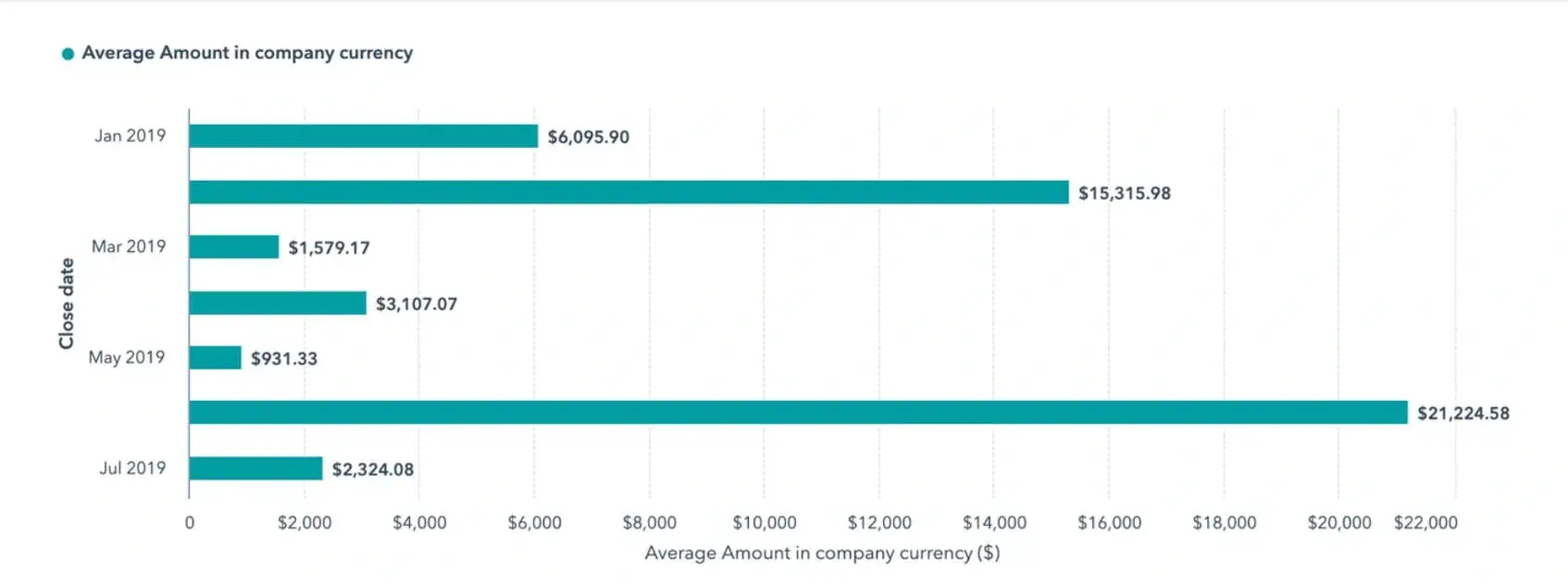
They have a pressing message about where you‘ve been, where you’re honestly at now, and where your sales are going. Here's what they have to say.

Sales management.

Sales management is an assessment of how successful your sales team's performance is. How effective is your team at identifying new prospects, nurturing relationships, and closing deals?

Sales management enables you to oversee how effective your sales strategies are in practice. Your sales management is the culmination of all of your forecasting and reporting efforts.

Insightful sales management statistics from our 2024 Sales Strategy Report:

  • Efficiency is more important than ever: 70% of sales pros say that budgets are being scrutinized more than before.
  • In-person meetings are the most effective sales channel, according to 51% of surveyed sales reps.
  • Sales and marketing need to align, and companies are 107% more likely to exceed their goals when this happens.

Pro tip: An effective client relationship management (CRM) tool is needed for your team to reach their sales potential. Get instant access to HubSpot's Free CRM. Our research found that 43% of sales managers count CRM usage as one of the most important productivity measures.

Sales forecasting.

Sales forecasting is an estimate of your future sales. With enough historical data, you can get a predictive sales analysis for the week, month, quarter, and year. Sales forecasting is a valuable dataset that predicts revenue, but it actually does much, much more for sales teams. Sales forecasting ...

  • Improves motivation for sales reps by setting realistic key performance indicators and sales goals.
  • Identifies trends and revenue opportunities that otherwise would've been missed.
  • Exposes threats and predictable dips in sales revenue.

Accurate forecasting also helps reinforce the trust between leadership and sales teams. Unfortunately, accurate forecasting is more difficult to achieve than I expected. Less than half of teams have high confidence in their forecasting accuracy. It's been estimated that only one-quarter of sales organizations have 75% or higher forecast accuracy.

There are serious threats to accurate sales forecasting, including a lack of sales history, inaccurate data, lack of collaboration, seller subjectivity, and technology limitations. This is where effective sales reporting will save the day.

Challenges in creating sales forecasts for sales analysis

Image Source

Sales reporting.

From the very basic data like revenue generated to advanced sales analytics like customer acquisition costs, sales reporting is the backbone of all sales processes. All sales analysis tools rely on accurate reporting data.

With tools like our sales reporting software, you have an unlimited amount of data at your fingertips for analysis, but where do you start? I’ll zoom in on sales reporting and examine the most influential sales reports that you can generate for your company today.

Tip: Skip the report learning curve with our Sales Software, which is built for productivity and efficiency.

Benefits of Sales Reporting

In my experience, reporting data in a standardized way is crucial to the success of your business. Here are the common benefits of developing a sales reporting cadence.

Improving Team and Reps Performance

Sales reports provide data-driven insights about the sales performance of individual reps and your entire team. This allows you to know if underperforming reps need coaching. I think it’s also helpful that you can identify who would benefit from regular one-on-one meetings to level up and hit their quotas.

The same applies to your team. If your team isn’t hitting the company’s revenue goals, you can use sales reports to find gaps to improve your sales process.

Assisting Fast Decision-Making

Making informed and timely decisions is vital to the success of any sales strategy. This is where sales reporting shines.

With regular sales reporting, your C-suite or managers can quickly iterate on what drives the company's growth. You can also track and adjust sales tactics that are performing below par.

Boosting the Morale of Your Sales Team

Creating daily sales reports may be time-consuming. But whether you do this daily, weekly, or monthly, these reports can take team morale to new heights.

Monitoring and showing the sales performance of each team member motivates them to do more. Gamifying performance results can challenge other team members to quit settling for average performance. Put another way, sales reporting can create healthy competition and push your sales team to aim for the “best” outcomes.

How to Write a Sales Report

The goal of every sales report is to pass actionable and detailed sales information to your team. To do this, you need to know the purpose and audience of your sales report. You’ll also need to use the right data, decide on a reporting timeframe, and create engaging slides.

Here’s my breakdown of how to write an engaging sales report.

1. Know the purpose of your sales report.

Identifying your goal is the first step toward creating a winning sales report. With your goal in mind, you can easily determine the best data to include and decide on a reporting timeframe.

Let’s say the purpose of your sales report is to motivate your reps. A weekly report showing several KPIs will show your team how far they are from the company’s monthly goal.

Monthly sales report data gets consolidated to annual report

Image Source

2. Tailor your sales report to your audience.

Metrics that interest your sales reps may not interest your CEO. Those that interest your CEO may not interest your director or VP of marketing. These folks are in the same organization as you, but they have different interests.

Sales reps may want granular details on their sales performance. Your marketing lead may only be interested in the sales reports from marketing campaigns. And, your busy CEO may only want the overall results of your marketing and sales activities without the specifics of how you reached your goals. See, different strokes for different people. I recommend you tailor your sales report accordingly.

3. Determine your sales reporting timeframe.

Your reporting timeframe depends on your sales objectives and how frequently you need to update your team or management. You can do this in three ways.

Daily Sales Reporting

A daily sales report tracks the sales activities of each business day. This report increases your rep’s accountability, encourages productivity, and includes sales performance metrics like:

  • Duration of each outbound call.
  • Number of sales opportunities.
  • Number of outbound calls.
  • Number of proposals sent.
  • Number of emails sent.

Weekly Sales Reporting

A weekly sales report measures the weekly sales performance of individual reps and your entire sales team. This report allows sales leaders to know which reps are on track to hit their KPIs. Weekly sales reports track metrics like:

  • Call/contact volume.
  • Lead-to-opportunity ratio.
  • Lead conversion ratio.
  • Number of appointments set.
  • Number of closed deals.
  • Sales volume by channel.
  • Total sales by region.

Monthly Sales Reporting

A monthly sales report summarizes your sales performance for the month. This report helps you determine the effectiveness of your sales strategy so you can tweak it if necessary. Monthly sales reports track metrics like:

  • Number of deals at each stage of the pipeline.
  • Number of scheduled meetings.
  • Length of the sales cycle.
  • Average close rate.
  • Average deal size.
  • Sales volume.

4. Get your sales data.

Collecting and analyzing your sales data is a lot easier when you’re using a CRM. With a CRM, you can use filters to remove duplicate records and pull specific information. That’s more fun than relying on clunky spreadsheets, right? You can create custom reports and dashboards with HubSpot’s sales management and reporting software.
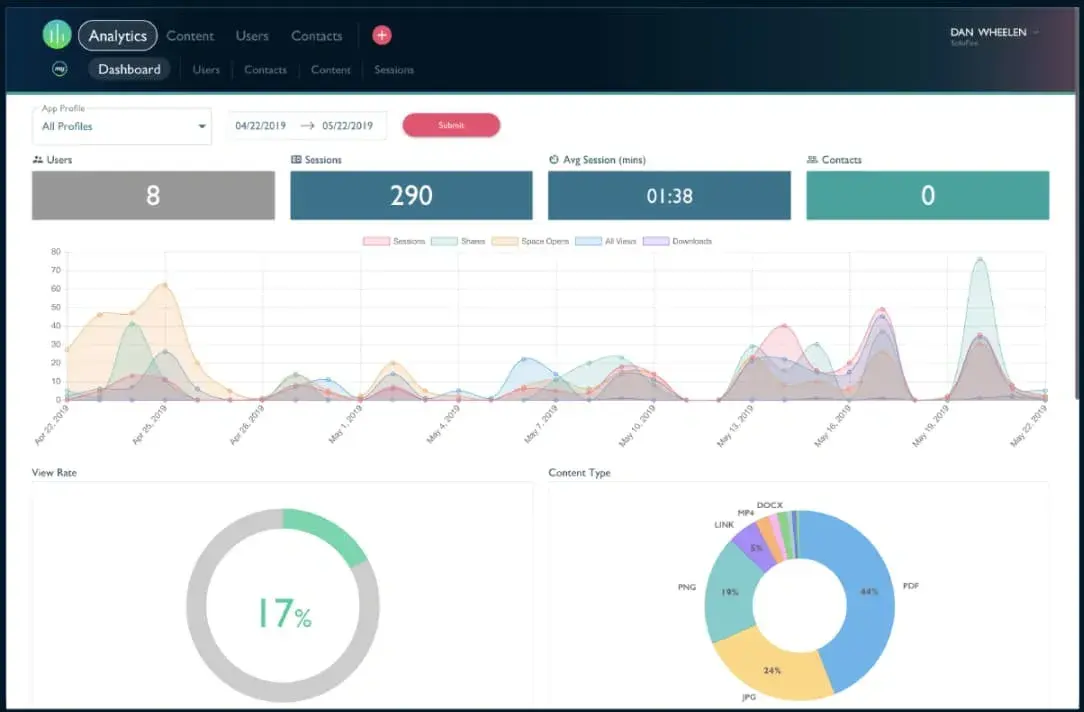
Here’s a quick video I found on how you can gather sales data for your reports.

You can also create custom reports if you regularly use certain sales data. Here’s how:

5. Explain key insights from your sales data.

You need to make sense of your sales data by explaining the “why” of each one.

  • If there was a dip in the close rate, why?
  • If there was a high lead conversion ratio, why?
  • If there are more won deals in a specific region, why?

Just as the questions are endless, so are the insights you can gain by evaluating your sales data. For instance, more won deals could have resulted from a new tactic your team tried, a new channel they started using, a partner ecosystem they joined, and much more.

In my opinion, when you state why there’s an upward or downward trend in your data, you provide a roadmap for what your team can improve and what they can continue doing to achieve the best sales results.

Note: If possible, I recommend you attribute which changes to your sales data were caused by team tactics and which are attributed to the larger macroeconomic environment. A spike or dip in sales may be the result of factors beyond your control. You’ll want to distinguish those factors where possible.

6. Use visuals to show vital sales trends and metrics.

Remember the popular saying, “A picture is worth a thousand words?”

It’s true, especially with sales reporting. In my experience, when you create attractive visuals, your audience won’t have to wade through spreadsheets with lots of numbers. This saves their time and allows you to quickly communicate the insights in your report.

The best part? You can generate engaging visuals directly on HubSpot. Think pie charts, bar charts, line charts, and more.

sales report, sales dashboard in HubSpot

Having dedicated technology to track lead and customer data makes it easy for sales leaders to analyze team performance and identify areas for improvement. But what are some essential reports every sales leader needs to track? I've listed some of the most important ones below.

1. Sales Pipeline Report

A complete and accurate pipeline is a must-have. Without one, you can’t assess the sales health of your company. As a sales leader, you need to know the deals that are likely to get closed, those that may not, and how much of an impact each deal has on your bottom line.

To accurately forecast these, I suggest ensuring your reps are doing their due diligence to guarantee a realistic sales pipeline.

This is an example of what a pipeline report looks like in HubSpot Sales Hub. You’ll notice each stage of the pipeline and where opportunities are within it. You can even add forecasted deal amounts to see the worth of each deal and its proximity to closing.

sales analysis report: sales pipeline

Image Source

Best for: Understanding the sales pipeline stages where your team excels and needs help. I also like how you can identify the specific actions your reps should take to move prospects through each stage of your pipeline, the number of prospects in the pipeline, and how close your team is getting to their targets.

2. Conversion Rates Report

Conversion rate measures the ability of your team to turn prospects into leads and leads into customers.

By monitoring your conversion rate, you can identify where your team excels or underperforms in the sales lifecycle. If your team consistently has a high conversion rate of turning leads into opportunities, you can scale the strategies that are already working. Otherwise, you can start finding areas for improvement.

This report is also a litmus test for the strengths and weaknesses of individual reps. If a rep is performing below par, looking into their conversion rate helps you uncover why.

sales analysis report: conversion rate

Image Source

Best for: Revealing the efficacy of your overall sales strategy on an operational or team-wide scale. It also measures the effectiveness of your sales team at converting leads into customers.

3. Average Deal Size Report

Your average deal size helps in predicting revenue. For instance, if your revenue target is $200k per quarter and your average deal size is $20k, it means you have to land 10 deals to hit your quarterly target.

The average deal size report provides the basis for your reps‘ quotas and lets them know how many deals they’re expected to land. It also allows you to set expectations and milestones for your sales cycle. Ultimately, it might seem like a no-brainer, but I think it's still worth reminding you — always monitor your average deal size because it’s vital to your sales operations.

sales analysis report: average deal size

Image Source

Best for: Setting expectations for each rep, creating weekly and monthly milestones, tracking the performance of each rep, and gauging the overall success of your company’s sales strategy.

4. Average Sales Cycle Length Report

Average sales cycle length is the average time it takes a rep to close a sale. This metric shows the sales performance of individual reps and the overall efficacy of your sales process.

When considering the metric, I suggest you establish an ideal timeframe to use as a benchmark. One of those benchmarks is how long it takes a rep to work through your sales cycle. If you find some reps with much longer sales cycles compared to their peers, you can evaluate their efforts and identify areas for coaching.

If all your reps can’t keep pace with your target average sales cycle length, then it‘s probably time to take an objective look at your operations. You might find flaws in your approach, training, or management style, and these insights can help you fix the issues. To enable your reps to see how they’re performing with real-time visualization dashboards, tools like Datapine can help.

sales analysis report: average sales cycle length

Image Source

Best for: Knowing if your reps are closing deals at a similar rate as their peers. You can also create contests to foster healthy competition and unify your team to work towards a common goal.

5. Marketing Collateral Usage Report

Marketing teams expect sales reps to put the collateral they create to good use. This helps the sales reps move prospects through the sales process quickly.

That said, some marketing collateral may be irrelevant to your rep’s prospects. With this report, you’ll know which marketing content works. Communicating this information to your marketing team gives them the insights they need to create more useful content.

I like sales enablement platform SoloFire because it tracks how many people have used a piece of collateral, how many times they’ve interacted with it, and for how long.

sales analysis report: marketing collateral usage

Image Source

Best for: Determining which marketing collateral gets the most traction with prospects and collateral that could use a refresh.

6. Won and Lost Deals Analysis Report

To understand the state of your business, you shouldn’t track only deals in progress. You should track deals you win and lose.

Perhaps prospects go crazy for specific features that you offer. Or, you notice that there’s a preference for a competitor’s product. Both trends provide an overall picture of your product’s overall strengths and weaknesses.

I think this is also a good way to spot under- and over-performers. For example, two reps who have the same average quota attainment could both appear to be stellar but differ wildly in actual performance.

If your data reveals that one rep spends a lot of time helping others get deals across the finish line while still maintaining high attainment, you have a great manager candidate on your hands.

On the flip side, records could reveal that a second rep has the same attainment as the first but relies on other teammates to run demos or closing calls.

In my experience, there’s always a story behind the numbers. Analyzing won and lost deals by rep will reveal it.

sales analysis report: won and lost deals analysis

Image Source

Best for: Evaluating performance against variables like company size, product type, sales reps, and sales teams.

7. Churned Customers Report

Every company will always experience customer churn. However, churn rates higher than your company or industry average can reveal larger problems.
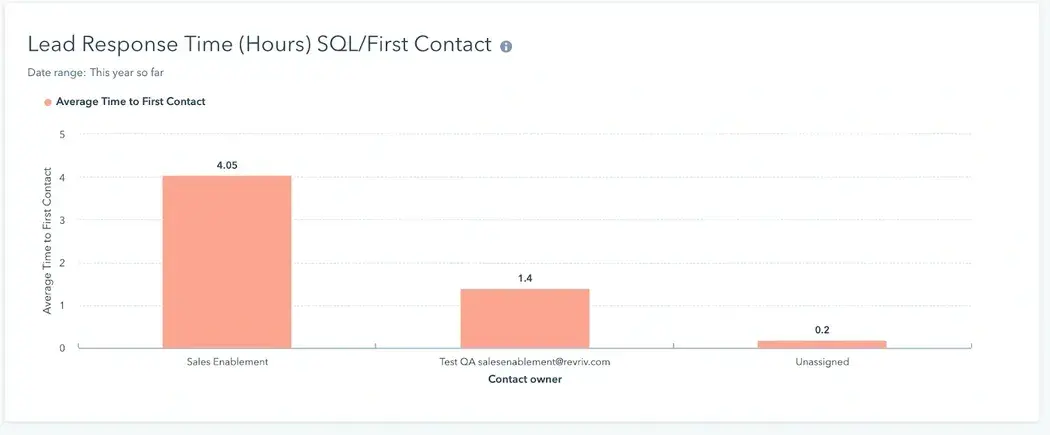
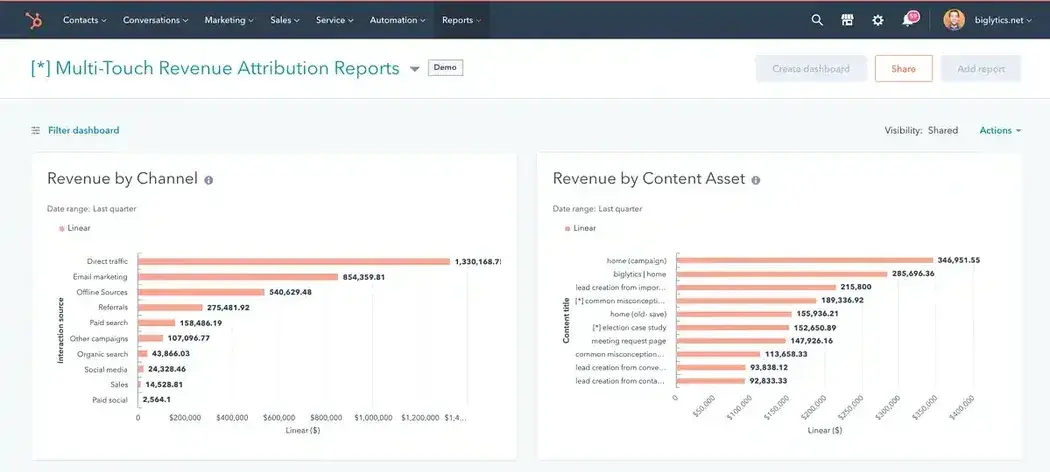
There might be an issue with your pricing, service, product quality, product features, or delivery. You may also identify misalignment during the sales process or some other aspect of the customer experience.

If your report shows higher than normal churn, speak to your customers to understand their challenges and fix them. This can improve your customer retention rate and overall customer experience.

sales analysis report: churned customers

Image Source

Best for: Closely monitoring trends in churned customers so you empower your team to fix bad patterns throughout the sales process.

8. Sales Call Report

One way to measure the effectiveness of your sales reps is to track the number of calls or visits they make to prospects. You can use this report to track and find gaps in your team's close rate.

Ideally, you want your reps to close a healthy number of deals compared to the number of prospects they meet with. If they meet with 10 per day but close none, this report will allow you to understand why and propose better closing techniques. If the opposite is true, you can find what’s working and share those tactics with the team.

I also think the sales call report is useful because it can help you segment data. For example, if a certain industry is responding well to your products and services, you could advise your team to narrow down their call list. You can then prioritize the highest converting segment.

sales analysis report: sales call report

Best for: Identifying the most effective tactics for closing deals, setting daily call benchmarks for new hires, and iterating on your sales closing techniques.

9. Lead Response Time Report

Regardless of the length of your sales cycle, lead response time should be relatively quick. Studies show contacting prospects within the first five minutes after they become a lead increases their likelihood of converting into an opportunity.

Five minutes is short, and if you’re far from meeting this time, the best thing to do is track your progress. You won’t move from a 48-hour lead response time to five minutes overnight. But by making strategic decisions and prioritizing your team’s workload, I know you can attain this goal.

Here’s how a lead response time report looks in HubSpot:

sales analysis report: lead response time

Image Source

Best for: Measuring the average time it takes sales reps to follow up with a lead. Plus, you can compare this metric to industry benchmarks.

10. Revenue Report

As a nice complement to the average deal size report, a revenue report can help you and your reps see how their work impacts the bottom line.

sales analysis report: revenue report

Image Source

Best for: Seeing a breakdown of new business and renewals, as well as the reps who contributed to each. To get the most out of this report, you’ll want to first set your sales and revenue goals.

Sales Report Templates

Many sales teams focus on identifying potential clients and closing deals, leaving little time for detailed reporting. But I have good news for you: Your team can use several powerful templates to expedite your sales reporting.

Here are four sales reporting templates I recommend.

1. Forecasted vs. Actual Sales Report Template

A forecasted versus actual sales report can help your salespeople compare their progress against monthly and quarterly goals. These reports provide a quick way to analyze sales numbers and make adjustments as necessary.

For instance, this free sales report template from HubSpot allows you to track deals in your pipeline and know which ones to prioritize. That helps you hit your quota.

Sales report template, forecasted vs. actual sales report

Image Source

2. Reasons for Lost Deal Report Template

While every sales team strives to close as many deals as possible, some customers will inevitably say no. Understanding why your reps lose deals provides insight into why potential clients go elsewhere.

When creating this report template, I suggest adding a column or prompt to your current sales pipeline. This allows salespeople to choose why your team lost the deal. Here are a few reasons to include in your lost deal report:

  • Pricing.
  • Losing to a competitor.
  • Not the right time.
  • Lack of product features.
  • Poor sales experience.

Sales report template, reasons for lost deals report

Image Source

3. Overall Activity Report Template

For managers, having the ability to quickly view their team’s overall activity can be a great way to track productivity. It also provides information on key business development metrics, such as emails, prospect visits, and client calls.

I recommend customizing your report to include the metrics that matter most to your sales team. For instance, if your organization places a higher value on meeting prospects in person, you’ll want to include KPIs focused on visiting prospects.

Sales report template, overall activity report

Image Source

4. Total Sales Report Template

Creating a custom total sales report dashboard allows your management team to quickly see how each salesperson is doing over a period. In my opinion, this information makes it easier to identify team members who outperform their peers and those who may need coaching.

Sales report template, total sales report

Image Source

Build Reports Your Sales Team Will Use

As a sales leader, I know you have a lot to keep track of. That’s where these sales reports shine. These documents provide critical insights into what’s working and what you could improve.

Here’s my key takeaway: Always track your customer and lead data. If you don’t, you'll miss out on reports that will undoubtedly help your business drive revenue growth.

Editor's note: This post was originally published in March 2016 and has been updated for comprehensiveness.