Shared posts
12 Mar 19:06
The Biggest Sales-Enablement Problems and Their Solutions [Infographic]
Most companies say their sales teams lack the right content at the right time. Here's a quick look at those sales-enablement problems and ideas for solving them. Read the full article at MarketingProfs
12 Mar 19:06
How Coaching Can Help You Grow Your Business
by Brian Basilico
 There are known knowns. These are things we know that we know. There are known unknowns. That is to say, there are things that we know we don’t know. But there are also unknown unknowns. There are things we don’t know we don’t know. – Donald Rumsfeld
Now, I am not trying to get political or anything like that, but the major point I wanted to get across is, “You don’t know, what you don’t know!”
Getting Help
 Many times I have said, “Every doctor needs a doctor, every mentor needs a mentor, and every coach needs a coach”, but that’s really just the beginning of the story. When I wrote my book, “It’s Not About You, It’s About Bacon”, almost 3 years ago, I had a book, but no clue what to do to market it. So, I hired a coach.
I had no idea what a coach was, what they did, or what to expect. Then I began to learn what I needed to know that I didn’t know. I created a book launch event. I started to create products on the principle of the book. Then, I started to associate with influencers who could help me take my book to the next level.
That’s when I learned what I didn’t know and how a coach could help me!
What Are Your Weaknesses?
 Frankly I thought I knew what my weaknesses were, but it took hiring coaches to really wrap my arms around them. What I thought were strengths (teaching, speaking and relationships) were just that, but they were being compromised by my weaknesses (money, BSOS – bright shiny object syndrome and systems). I did not know what I did not know!
Having that outside perspective really reshaped my thoughts and my business. My coaches (yes I have worked with multiple, even some at the same time) have really changed my focus and helped me to find places where I was weak and strengthen them in a way that I had no clue I could.
ROI
 So what makes a good coach into a GREAT coach? It is ROI (return on investment). Every coach I have chosen to work with has been initially evaluated by this benchmark. Can I make more money than what I spend on this coach? Keep in mind that money is not the only measurable, but it sure helps if when you spend money hiring help, they help you earn more!
What really matters is how fast they can propel you and your business forward! It may not happen immediately, but still worth the cost of admission and efforts to open up the flood gates for potential and income! What really matters is how you propel your business forward!
Why Hire A Coach?
That’s a great question, but the bigger question to ask is how do you hire the RIGHT coach? Here are some of the things I have learned…
- Results – As much as you or I want to tie coaching to results, you have to look at it from this perspective … are you in a better place than you were before you started with the coach? I think it is fair that you should at least make as much money as it costs you. A break even is the least you should expect. If it costs you X, then you should at least make what you made before, plus ‘X’, so you are not moving backwards!
- Future Progress – Can what you have learned propel you in to the future? I have seen people who I have coached make massive profits in months, while others have taken years. While we all want the quick fix, sometimes it just takes time. You have to measure what will work now, and what will take you some time to implement for the future! Again, sometimes break even is an investment, so just make sure you don’t lose money!
- Intangibles – Saving money is often as valuable as making money. I have a client who was spending almost $2000 per month on wasted services, and hoped to make enough to pay for the cost of my coaching. Even though she has not seen the increase in income yet (she will if she continues with our plan), she has saved almost $20,000 per year by not spending money on false hopes. Sometimes you have to say that saving money is as important as making money. Have you ever spent money on promises that have 0% ROI? Oftentimes, stopping that can be even more of a value than making more money!
Final Thoughts!
 Marketing, like coaching, is an expense. However, it is an expense that can have some ROI (Return On Investment). If it sounds too good to be true, then it probably is! Do your homework, ask questions, get referrals and do the math. Can this strategy at least help you to break even? Is it worth your time and efforts? Will you be better off afterwards?
I will use myself as an example. I can honestly say that every coach I have paid for, and worked with, has paid for themselves, and I will recommend them whole-heartedly because of that!
Before, I could not imagine paying for coaching. Today, I could not imagine where I would be if I had not paid for coaching!
I would love to hear your thoughts and comments!
12 Mar 19:06
A huge new discovery in economics: The zero bound *is* absolute, after all
by Jim Edwards

People stopped talking about the "zero bound" several months ago, as central banks breezed through 0% to set negative interest rates far below zero. Zero wasn't a "bound" for anything, it turned out.
But in recent weeks, there has been a shift in the tides among economists. People have slowly come round to the realisation that negative rates don't have their intended effect. They may in fact do the opposite of what they are supposed to.
The zero bound, in other words, really may be the lowest a central bank can seriously set rates and retain influence over macroeconomic liquidity. If that is the case, basic economics textbooks will have to be rewritten.
Economists used to talk about the "zero bound" as if it were a theoretical scenario that would never happen in real life. Central banks would never set interest rates at zero because it would look so desperate, sending a strong signal to the market that the bank could go no lower and was out of extra liquidity to stimulate the economy.
Today, of course, zero interest actually looks high.
In Sweden, where the Riksbank has a policy rate of -0.5%, zero would be considered a dramatic tightening of the money supply.
The theory behind negative rates is that if depositing banks are charged costs for leaving cash at the central bank, they will prefer to lend it out at cheap rates to investors and consumers. Thus extra money will be flushed into the economy, raising inflation and triggering growth.
But that has not happened.
Growth in Europe — which has five central banks offering negative rates — is sluggish and in decline. Inflation is nowhere to be seen. Deflation is a bigger worry.
What appears to have happened is that banks have treated negative interest charges as an increase in the cost of doing business. In order to protect their profits, they have made loans more expensive, not cheaper, in order to recoup those charges. Bank of England governor Mark Carney told Parliament recently:
In Switzerland, what has happened as interest rates have gone [to -0.75pc] is that mortgage rates have gone up despite the fact that 10-year yields are flat to slightly negative. And they’ve gone up because banks have tried to square the circle, and they’ve added on fees and other charges on mortgages.
So it’s not clear that the domestic transmission has been effective.
Bank of America Merrill Lynch produced this chart of those costs. It assumes the ECB lowers its policy rate to -1%:

That's 20 billion euros banks will lose — and you can bet they will claw it back from their customers, not give it to them in negative interest coupons on loans. (Carney made a related argument at the G20 meeting in Shanghai.)
In Sweden, negative rates have not increased inflation, because the country is importing far stronger deflation from elsewhere and because the inflation it has created has flowed quickly into house prices. Those two factors suggest central bankers may currently misunderstand how inflation works.
And here is Blackrock chief investment officer of global fixed income Rick Rieder:
Moving to extreme and excessive robbing of savings through charging for storage takes money from savers but doesn’t significantly enhance demand among borrowers. In fact, businesses and consumers may have a lower marginal propensity to spend in uncertain economic times.
Reider argues that the step that comes after zero ought to be fiscal stimulus — government spending — not negative monetary stimulus (something that Business Insider has argued here).
This is important: A year or more ago, people thought negative rates would be a dramatic, world-shaking policy event that turned economics on its head. But they haven't. They just don't function in any useful way. That's a new lesson in economics: Zero really is zero, and the boundary is harder to cross than we thought.
Join the conversation about this story »
NOW WATCH: The days of restaurant tipping are dying
12 Mar 18:56
Better use of data would improve health outcomes in B.C.
Harnessing comprehensive, real-time health data helped researchers beat HIV/AIDS and the lessons learned there can be used to tackle other diseases and conditions, a conference on so-called big data was told in Vancouver Friday.

12 Mar 18:50
6 Steps for Using Infographics in Influencer Marketing
by Nadya Khoja
I spend a lot of time every day reaching out and marketing to various influencers.
It’s not easy, especially since the internet is so saturated with marketers trying to get ahold of one another and many have no sense of boundaries. Simply asking for a favor is just not enough anymore.
You have to be willing to reach out so well they can’t say no. But what does that entail?
How do you convince the top marketing gurus to share your content with the rest of the world?
To answer that last question in complete honesty, it’s nothing. There’s nothing that make you so much more special than every marketer out there, so you’d better offer the influencer an excellent partnership.
At Venngage, we did this with the magic of an infographic. Here’s the process we used, so you can start getting your own results.
To learn more about how to build relationships with influencers, read our guide to influencer marketing.
Track down a bunch of influencers
The SumoMe blog has a very useful and actionable guide on putting together a content calendar and growing your website’s traffic. It explained a method you should consider when putting together a list of influencers.
Start by creating an Excel document listing out some “top tier” influencers you would like to work with. If you need a reference, this outreach guide highlights my personal tips for getting in contact with them.
You should end up with something looking roughly like this:

Start filling it in with influencer names and links to their best content. Make sure the people you include in the spreadsheet have audiences that would find your product useful and engaging. You want to ensure that you’re relevant to every influencer on the list.
After all, would a cat open up a dog training school? No, because that’s crazy. Don’t be crazy.

Give yourself a day to fill your spreadsheet with as many names as possible. By the end of the day, you should have at least 20-30 contacts for each column.
Start your analysis
Okay, so this is the time-consuming part. If you want to max out your potential for working with influencers and strengthening your relationship with them, you’ve got to do your research.
Start by finding important points from each of the influencer’s articles. The reason you have multiple columns is to find multiple opportunities for infographics to create, but also so you can tackle your analysis bit by bit.
At this point you’re probably thinking, “But Nadya, I thought you said I should aim to fill each column with 50 contacts? You expect me to analyze 250 articles?”
I said it was a lot of work. You don’t need to study each blog post thoroughly, though. That would take you a lifetime, and by then someone would have definitely beaten you to the punch.
Rather, try to skim posts, and pick out the first nugget that really stands out. Don’t spend more than 30 seconds to one minute per post.
In another spreadsheet, list out the specific statistics, tips and takeaways that you consider the most useful and actionable from the blog posts. Do this for each column.
Hypothetically, you should be able to do 250 articles in about 4 hours.
Here’s what it might start to look like:

You also want to leave a column for documenting their email address or Twitter handle for contacting people.
Begin your outreach
Once your spreadsheet is full of condensed and practical insight from the pros, you can start to do your outreach. Do this before you begin to create the infographics to make sure there’s at least some interest in what you’re making.
Try something along the lines of:
“Hey [FIRST NAME]
I’m working on an infographic about [SUBJECT] called [TITLE]. I read this article [URL] that you wrote, and pulled out some of the juiciest and most actionable tips from it.
Would you be interested in taking a look once it’s complete?”
That’s it. Don’t ask them to post it on their blog, don’t ask them to share it. Don’t ask them for anything! Just see if you can glean any interest.
Not everyone will get back to you, but the ones that do, keep their responses in a separate folder in your email. After a few days, you should have a pretty decent sized list of positive responses. Those are whose tips and tactics you actually include in the infographic.
If, however, you’re lucky enough that everyone wants to see the infographic, you can narrow down the information nuggets you found and see if any two are similar. You can combine the two separate nuggets into one bigger point.
Making your infographic
At last, it’s time to create your infographic! You have a couple of options: 1) you can design your own infographic, or 2) you can hire a designer.
If you’re up for the challenge and have the time, you could make your own infographic. Not only will it give you great practice, but it’ll be a lot cheaper. You can use an infographic maker like Venngage, which costs $19 a month, versus hiring a designer at $20-200 an hour. It’s totally doable to make a great infographic without a designer.

There are also a lot of useful resources to help you master the art of design. For specific tips and guidelines on fonts, color selection, and layout, check out Creative Market’s blog.
If this sounds like a personal nightmare, and you’re sweating at the sheer thought of having to take on an artistic challenge, it’s not the end of the world. Hire designer to give you a hand – feel free to reach out to me for some personal recommendations or check out sites like Upwork or Visual.ly.
Revise, and revise some more
Once your infographic is done and ready, revise it a few times. And then get someone else to revise it as well. You’ll be surprised at how frequently little mistakes go unnoticed.
Share your infographic with the world
Finally, once everything feels like it’s coming along, you can send your infographic to all those influencers who showed interest. Don’t forget to include the sources and links to their blog posts at the bottom of your infographic.

Now’s where you can ask them to share the infographic or add it to the existing post.
Why do I recommend you suggest adding it to a very specific article they’ve already written? Because these people are busy and don’t want to do extra work, especially if it’s for you. Because if you recall, you’re not special. Right?
If the infographic is specifically geared towards that content, and includes exact quotes from their article with a source link pointing to that blog post, it’s a win-win situation for them.
You want to make influencers think that everything you’re doing is for their benefit. Ideally, you’re going to be working with someone who’s more than willing to give you a hand, but not everyone has that attitude.
Using content to build relationships
Building relationships with influencers within your niche is a very important step in your marketing strategy. These are people with large audiences who might be looking for the exact thing you’re offering.

12 Mar 18:47
How Digital Plagiarism Detection of Your Content Protects Your Business
by Garrett Wilson
In today’s online marketplace, content is everything. It brings traffic to your website and into your sales funnel, which ultimately drives revenue and growth. According to Forbes, 88% of B2B marketers currently incorporate content in their overall strategy. With 85% saying they will focus on content for its lead generation potential in 2016.
A staggering amount of content, from blogs to videos to ebooks and white papers, is available online. Unfortunately, the tremendous digital production line has made it easy for content creators to steal, “scrape,” lift, and repurpose your content without correct attribution. There is a word for this unscrupulous behavior: Plagiarism.
Plagiarism is not, says legalzoom.com, “a criminal or civil offense.” But it is illegal “if it infringes on an author’s intellectual property rights, including copyright or trademark.” Alerting to plagiarism can be time consuming, proving it can be difficult and prosecuting can be costly. But one thing is certain. It happens.
That means your content marketing efforts may be developing leads for your competitors. Add to the insult, Google could penalize YOU if it considers the duplicate the original and yours the duplicate. So you have to be vigilant to detect and prevent the appropriation of your intellectual property in the digital world.
Recently, Hinge was the victim of plagiarism. An author took one of our high-performing blog posts, changed a few words, and posted it on a prominent social media site, all in an effort to position himself as a thought leader and original content producer. As soon as we learned of this unapproved use of our content, we reported the abuse to the social media site and it was quickly removed. But could the theft of our intellectual property have been prevented?
Protect Your Content
Plagiarism checking tools, once within the sole purview of academia, are now addressing the commercial need from websites and firms that rely on content marketing. Here are a few noteworthy tools and services.
- Copyscape: Like many other sites, Copyscape offers free URL and text checkers, but it also has a paid service called Copysentry, which will monitor your website pages and content on a regular basis and deliver reports.
-
CopyGator: This free service monitors your blog content as an RSS feed and checks against other feeds in the blogosphere.
PlagSpotter: Billed as a duplicate content checker and monitoring tool, PlagSpotter can scan for, detect and monitor unauthorized duplication of your website content. - MySiteCop: MySiteCop conducts monthly scanning and monitoring of your website contents to track any copies found on other websites
Always check pricing and features to be sure the solution you choose truly fits your needs. And, over time, your requirements may change, as may the services one offers, so periodically re-evaluate your plagiarism-checking options.
Take Action
But what to do if you’ve identified derivative content? There are many ways you can go about having it removed. Here are a few recommended tactics:
- Contact the author directly: Unfortunately, this can be ineffective; however if you communicate your intent to take meaningful action against them, it could be the quickest and least costly in terms of time and money.
- Report the offense to the publishing website: If the stolen content has been placed on publishing platforms like Linkedin, Huffpo, or other industry news outlets, you can file a complaint report directly with the publisher. They will likely investigate and remove any offending content, as they risk credibility with their audience. When reporting, be sure to send links to your original content and completely describe the issue with all the known facts.
- File a report with Google: In Google Webmaster Tools, you can file what is called a DMCA (Digital Millennium Copyright Act) complaint. Google will remove the offending content from search results based on copyright ownership law. A DMCA takedown is a thorough and detailed process, and it can be the best way to keep Google on your side.
- Appeal to the hosting company: Perform a WHOIS lookup (https://whois.icann.org/en) and report the derivative content to their hosting company. Offending sites or pages can be removed by the host with sufficient evidence of a copyright violation.
Automated plagiarism scanners are certainly not full proof. For every and people with malicious intent will beat the systems.
Remain Above Reproach
Most writers and content producers do not intentionally plagiarize. But unintentional plagiarism is common. The best way to combat the epidemic of plagiarism is to keep your own content pilfer-free. Here are common sense tips from Hubspots’ guide to correct attribution online, “How to Cite Sources & Not Steal People’s Content on the Internet.”
- Word for word. When you pull wording directly from another source, use quotation marks around what you’re lifting, and cite the original. If the information is online, it is easy enough to copy the webpage URL and provide link.
- Facts and data. If you want to take a fact or research from another source, weave into the sentence the original source. Another option is to use [source], with the appropriate URL link at the end of the sentence or paragraph.
- On social media. Go above the recommended citation advice and offer social media links to those you reference. For example, “Follow @HingeMarketing” on Twitter.
- Images and photographs. Probably the most frequently appropriated content are images, infographics, and photographs. Photos and graphics are covered by the same copyright rules as copy. Cite the original web source or artist just as you would an author or publication.
Has your content ever been plagiarized? Have a story on digital theft you want to share? Tell us about it in the comments.

12 Mar 18:45
4 Keys to Create a Differentiating Customer Experience
by Joe Ruiz
I wrote about five ways to create an engaging customer experience here. Based on the response there seems to be some interest in the topic.
In the post I identified five ways of creating an engaging customer experience as:
- Providing Utility
- Nurturing Community
- Creating Connection
- Offering Choices
- Delivering Convenience
Customer experience is becoming the new benchmark of business. Why all the fuss about customer experience? Perhaps it’s because there is an opportunity created by the significant gap between what customers expect and what they experience.
80% of companies believe they deliver “superior” customer service, but only 8% of customers think these same companies deliver “superior” customer service.
I consider customer service an important subset of the customer experience. I believe excellent customer service is highly correlated to a differentiating customer experience.
Consider these facts:
86% of customers quit doing business because of a bad customer service experience.
96% of unhappy customers don’t complain, however 91% of those will simply leave and never come back.
70% of buying experiences are based on how the customer feels they are being treated. Source: McKinsey
In a recent survey 64% of brands received a rating of:
Ok
Poor or
Very Poor
A Gallup Poll revealed that only 22% of Americans had a great deal or quite a lot of confidence in big business.
Brands that deliver a relevant customer-centric experience are positioned to generate value by nurturing loyal customers.
What’s the difference between an engaging and a differentiating customer experience?
It may be as simple as your goal.
Is the goal to get people to notice what you make? Or Are you setting out to make something people choose to talk about? Seth Godin
One can argue that an engaging customer experience is a necessary part of a differentiating customer experience; however, creating an experience that offers a competitive advantage requires more than just engaging customers. I believe there are 4 keys that must be present.
4 Keys to Creating a Differentiating Customer Experience
Mindset – Brands that are deepening customer relationships by creating raving fans think differently. Their vision, mission and values revolve around serving their customers and their internal stakeholders. Typically these brands are willing to make short-term sacrifices to grow long-term relationships.
Their ultimate goal is creating raving fans instead of satisfied customers. Source: Ken Blanchard There is a world of difference between the two.
Brands deepen relationships by delivering the right solution at the right time through the right channel. By extracting interactional data and feedback, small (or large) businesses can determine the current level of customer satisfaction, identify unfulfilled needs, and boost revenue in the process. Ann Ruckstuhl, SVP & CMO at LiveOps.
While many brands are intimidated by the risks of using a social business model, brands that are creating differentiating experiences see the opportunities, they are curious. Curiosity drives these organizations to experiment, to explore new and different ways of delivering value. They are continually looking for ways to help.
Sometimes it might look like creating an app that allows customers to more effectively run their business while using your products, or it might involve keeping track of previous purchases so you don’t have to.
Culture – Customer centric brands create an aligned culture where the values of associates and the organization are in sync.
70% of U.S. workers are not engaged at work. Source Gallup State of the American Workplace survey.
90% of leaders think an engagement strategy will have an impact on business success but barely 24% of them have a strategy. Dale Carnegie
Companies with engaged employees have 2.5 times more revenue than companies with low engagement levels. Hay Group
A study of 64 organizations revealed that organizations with highly engaged employees achieve twice the annual net income of those whose employees lag behind on engagement. Kenexa
Highly engaged employees were 87% less likely to leave their companies than their disengage counterparts. Corporate Leadership Council
Creating cultures where stakeholders are engaged requires leadership, investment and a strategy. Customer centric organizations realize that engaged employees are an essential key to delivering a differentiating experience and they invest in the necessary resources.
Here is some advice on creating a social media friendly workplace.
The culture of the organization extends to external stakeholders too. My friend Raymond Morin writes about the value of social media ambassadors in general and employees in particular here.
Neal Schaffer has a free e-book resource addressing employee advocacy.
It all begins with culture because the culture creates the environment where the other keys can flourish.
Feedback – Feedback isn’t tolerated at customer centric businesses it’s the lifeblood, it’s considered a gift. Organizations who take this seriously spend time and resources teaching the art and science of giving and receiving feedback.
Feedback has a correlation to employee engagement. 43% highly engaged employees received feedback at least once a week compared to only 18% of employees with low engagement. Source Towers Watson
External feedback is important too; in many instances I find brands telling me information about their customers or prospects. When I probe deeper I discover the information turns out to be assumptions inferred from anecdotal information.
76% of marketers feel they know what their consumers want, but only 34% have asked consumers what they want.
There are numerous tools, many of them free, at the disposal of marketers. These tools allow marketers to listen and observe conversations and behaviors. There are also useful survey tools that allow marketers to collect direct feedback.
One note of caution here, while feedback is useful be careful not to abuse this process.
Agility – The current marketing landscape is rapidly evolving. Mobile technology, the Internet and social platforms are continually shaping buying behaviors. Brands are struggling to keep up with the pace of change and the demands of empowered consumers.
Brands that want to create a differentiating customer experience recognize that empowered associates are essential. When Lowes deployed their app they provided iphones for 42,000 associates.
Empowered associates are more likely to collaborate and share the insights gleaned from interactions with consumers. Brands that encourage cross-functional cooperation are able to respond to evolving consumer needs and are more likely to maintain consumer relationships.
Socially connected consumers are providing a treasure trove of data; however, data without insight is useless. Brands that want to create a differentiating experience don’t collect data just because they can. They use the data appropriately to serve their customers.
A Quest not a Destination
Brands that want a differentiating customer experience understand they are on a quest. While this quest may have many waypoints ultimately it doesn’t have a final destination.
While this may sound obvious, it’s important to build in reminders because we can all become comfortable with success.
What are other keys? Can you identify brands that are creating differentiating experiences? I would love to hear your examples in the comments below.
12 Mar 18:44


The sale of Intel’s VC unit may cause more markdowns in values of startups
by Alexei Oreskovic, Business Insider
Intel is shopping around its in-house venture-capital business,according to a Bloomberg report.
The move to sell part of Intel Capital, which comes two months after the retirement of the group’s president, is an abrupt change of plans at the world’s largest chip maker. Intel has been one of the most aggressive corporate investors in up-and-coming startups for the past 25 years.
The move could cause reverberations across the tech landscape that extend far beyond Intel.
It would be selling its investments in startup companies. In 2015 alone, Intel Capital invested $514 million in 143 companies focused on everything from security software to wearable devices.
Intel is obviously aware of the markdowns in valuations that Fidelity and other big mutual funds have recently made to their tech-startup holdings. Those markdowns may have convinced Intel that now is a good time to cash out some of its own tech-startup investments.
Mark to market
By selling its portfolio, Intel will essentially be giving the market an opportunity to affix a new, and very public, price onto dozens of startups in its portfolio.
Unlike the Fidelity write-downs, which are calculated through a process that’s as much art as it is science, a sale of assets on the open market leaves no room for debate. The price paid is the price paid.
If the Intel Capital assets sell at a discount to what Intel paid for them, that resets the value of the equity that other investors have in those same startups. And that price reset could extend beyond just Intel’s portfolio companies, if investors decide to apply the same multiples to other startups that are in similar businesses or have similar products.
Sure, sales of private-company investments happen quietly all the time in the secondary markets, as limited partners in venture funds look to get liquidity. But typically these sales are much smaller, and are not nearly as public as the Intel Capital assets on the auction block, which Bloomberg pegged at $1 billion.
It’s also possible that Intel Capital has some winning investments in its portfolio, and that it will sell the overall portfolio at a premium. In that case, the sale could help buoy the startup market, at least for some companies.
But would Intel be so eager to part with its startup investments if it were doing so well? The answer to that question will have big implications across Silicon Valley’s tech startups over the coming months.
This post appeared first on Business Insider.
Get more stories like this: 


12 Mar 18:43
This Week in Content Marketing: Machines Are Coming to Replace Your Marketing Job
by Joe Pulizzi

PNR: This Old Marketing with Joe Pulizzi and Robert Rose can be found on both iTunes and Stitcher.
In this episode of This Old Marketing, Robert and I ponder some new research that suggests certain types of marketing jobs will be replaced by machine automation within a decade. Is your job at risk? Next, we discuss the implications of Viacom’s new branded content agency and get excited about the storytelling potential of Facebook Canvas. Finally, we’re fascinated by the BBC’s research into “atomizing” news stories and enabling readers to choose their own deep exploration paths through them. Rants and raves include Chick-fil-A’s clever “cell phone coop,” one LinkedIn group admin’s heavy-handed solution to self-promotion, and Rita Gunther McGrath’s analysis of Yahoo’s problems. We wrap up the show with an example from Miller Electric.
This week’s show
(Recorded live March 4, 2016; Length: 1:01:40)
Download this week’s PNR This Old Marketing podcast.
If you enjoy our PNR podcasts, we would love if you would rate it, or post a review, on iTunes.
1. Content marketing in the news
- Half of all marketing jobs will be replaced by machine intelligence (4:09): This article from MartechAdvisor summarizes recent research into the growth of machine intelligence, and what its impact on marketing could potentially be. Its conclusion: Marketing strategy and planning positions will not be at risk, but supporting tasks will be. According to the study, which was published by the U.S. Department of Labor, market research analysts and marketing specialists have a 61% probability of being replaced, and technical writers, 89%. Robert insists that the jobs where we can add unique value through creativity will never be replaced by machines. I caution that this technology will be upon us much faster than we expect, so be prepared!
- Viacom launches branded content agency (14:21): Viacom believes it has the creative expertise and distribution footprint to help advertisers go beyond the standard commercial. That’s why it recently launched the Velocity Content Network, a 20-person, in-house unit that will create and distribute branded content across social and digital platforms as well as TV. Robert views this as yet another step in the disintermediation of big media agencies, as advertisers and networks increasingly work directly with each other.
- Introducing Facebook Canvas (21:11): Facebook has launched Canvas, a new post-click, full-screen, immersive mobile ad experience that loads very quickly on mobile devices. Robert and I agree that this is much more than a new advertising platform. Brands can use it to tell stories in new and unique ways. It will make Facebook much more experiential and should enhance brands’ ability to pull viewers into their owned media properties.
- Elastic news: Skimming, digging, and using content (26:28): This BBC blog article explores the network’s efforts to create a mobile app that enables users to consume news in bite-sized chunks, and empowers them to drill down to additional details of their choice via multiple paths of information. The results of these experiments are fascinating. I believe this experiment is a glimpse into the future of journalistic news production. Robert points out that it takes a significant amount of human effort to figure out the content flow for something like this. For that reason, it probably won’t be used to convey breaking stories.
2. Sponsor (34:42)
- GoToWebinar: Webinars are consistently rated as the No. 1 marketing tactic for lead generation. Over 60% of all marketers utilize webinars. But many businesses still struggle with how to find their target audience and deliver the right message. Following a very simple five-step plan, the keys to using webinars for successful lead generation go from daunting to doable. From finding your audience and developing engaging content to authentic interaction and webinar promotion, you’ll discover the five steps to attract your target audience to your next webinar in this new report from GoToWebinar. You can download it here: http://bit.ly/gotowebinar-attract-audience

3. Rants and raves (36:57)
- Joe’s rave and rant: I love this article from Simplemost, which describes how select Chick-fil-A restaurants are encouraging customers to put away their mobile phones while eating. Families that put their phones in a small box called the “cell phone coop” get rewarded with free small ice cream cones.

- My rant comes from the Content Strategy group on LinkedIn, where the moderator has decided to put participants on moderation if their job titles contain marketing, advertising, or PR. Her goal is to eliminate self-promotional posts in the popular forum, but this approach seems a bit heavy-handed, in my opinion.
- Robert’s rave: Robert is a big fan of Rita Gunter McGrath, author of the book, The End of Competitive Advantage. In her most recent newsletter, she analyzes Yahoo’s business challenges and how they relate to her theory of disengagement – the methods a business can use to dispose of eroding business units. Robert believes this concept of disengagement also applies to content marketing initiatives, and he explains how.
4. This Old Marketing example of the week (50:50)
- Miller Electric: Miller, a leading manufacturer of welding equipment, is obsessed with understanding the needs of its customers. Because of the quality content Miller has provided to its customers for many years, they now look to the company for information that can help them with their most critical business issues, including reducing welding costs, increasing productivity, operator efficiency, and equipment purchase justification/ROI. A look at the home page of their website demonstrates how Miller Electric employs a content-first approach. Much of their website is devoted to educational content with some product promotion mixed in. Clicking on the resources section of the website reveals a comprehensive collection of information that can help visitors solve just about any welding challenge. It also includes other resources including welding calculators and video training. I urge anyone in B2B to visit this website to learn from Miller’s approach to content marketing. It’s an excellent example of #ThisOldMarketing.

For a full list of PNR archives, go to the main This Old Marketing page.
How do I subscribe?


The post This Week in Content Marketing: Machines Are Coming to Replace Your Marketing Job appeared first on Content Marketing Institute.
12 Mar 18:43
Are You Fooling Yourself About Your Funnel?
by Bob Apollo
 CSO Insights’ annual reports have always been a source of much inspiration, and this year is no exception. Their 2016 Sales Behaviours Study – involving over 1500 respondents – is the first one to be released as part of the MHI Group, (you may recognise them as Miller Heiman), but the conclusions have lost none of their edge – or their power to shock.
Funnel Management is a classic example. At face value, the surveyed organisations appear to have a relatively high level of satisfaction with their Funnel management process – 71% reporting that it was “good enough.” But when you dig into the underlying data, it becomes clear that the surface finish of satisfaction conceals a great deal of complacency.
In fact, the latest study concluded that suggested that the survey respondents were actually wildly optimistic about their funnel management capabilities. Here’s why…
Surely, one of the primary purposes of sales funnel management ought to be to generate reliable revenue forecasts? And this is where “good enough” rapidly morphs into “significant room for improvement.”
You see, when the participants were asked how often opportunities closed in the time frame originally forecasted, more than 60% of them felt that this was an area where their existing processes failed to meet or exceed expectations.
The majority believed that this was an area that needed significant improvement or a radical redesign. So it’s clear that most current funnel management and pipeline review processes are simply not fit for purpose.
Given all the money that has been thrown at CRM systems over the years, this is a pretty damning indictment of the current state of the art. Less than 50% of forecasted sales opportunities close as expected – which makes current sales forecasting techniques statistically less reliable than tossing a coin.
Now, I’m not going to suggest that you should give up any attempt to forecast – but I do want to propose that you adopt a number of initiatives that have been proven to facilitate funnel management and improve forecast accuracy.
QUALIFY THE PAIN
I suggest you start by qualifying the prospect’s pain. If it is merely irritating or important, rather than genuinely business critical, chances are they won’t mind deferring their decision for a while – or kicking the whole project into the long grass. Never mind their Return on Investment – that’s a later stage consideration. What about their Cost of Inaction?
WHERE ARE THEY IN THEIR PROCESS?
The next thing you need to do is to understand what stage your prospect has reached in their decision process. If you are still basing your pipeline stages primarily on what your salesperson has done, then good luck to you, because you’ll struggle to predict anything with any accuracy. The only effective way of defining pipeline stages in complex sales environments is with reference to your prospect’s buying decision journey.
WHERE ARE YOU IN THEIR RANKING?
If you haven’t managed to differentiate your solution in the eyes of the prospect, then you had better be either the cheapest or the safest solution, because that’s what they will end up choosing. Claiming that you add value in ways that are not directly relevant to them simply makes you look more expensive than you ought to be. Don’t do it.
CAN YOU REALLY DO BUSINESS TOGETHER?
Prospects might buy tactically – to solve a particularly compelling pain. But they choose vendors strategically – because of a shared vision. If you’re selling solely on the basis of product capability, rather than because your vision aligns with that of your prospect, then your prospect will treat you like any other vendor, rather than as a long-term partner.
IS YOUR FUNNEL MANAGEMENT REALLY “GOOD ENOUGH”?
If you’ve got any reservations about whether you’re currently putting all of these considerations into practice or if (more likely) you suspect a few top performers are, but the rest of your sales organisation isn’t, it’s time to shake off any remaining complacency about your funnel management.
I’d suggest that it’s time to rethink your sales process – and to ensure that what emerges reflects both the winning habits of your current top performers and the best practices of today’s leading sales organisations. You see, in today’s competitive climate, “good enough” is rarely actually good enough.

12 Mar 18:43

5 Things I Wish I Knew Before Becoming a Manager
by manderson@hubspot.com (Meghan Keaney Anderson)

When I was just starting out, management didn't seem like a career choice; it seemed like an inevitable. Something that would just sort of happen once I got old enough -- like wrinkles, or gray hair, or distinctly unfashionable pants. I figured: You work long enough, you'll manage someone.
I liked the idea of managing because it felt like progress. I wanted that nebulous trophy of achievement. I wanted it bad. But then something important happened ...
I started actually achieving. I was progressing in concrete and measurable ways that had nothing to do with management. And I saw my peers do the same. They were climbing into new and more challenging roles -- some involved management, but others advanced them as highly skilled and sought-after individual contributors.
Seeing the diversity of paths that careers can take, I stopped thinking about management as some sort of suit-sporting end-goal. And then I became a manager, and discovered that that realization was only the beginning of what I had to learn.
For starters, the skill set is totally different. In fact, the skills you mastered to become a top performer on your team might challenge you most as a manager. It's like spending your whole life developing skills as a tuba player, then being handed a baton. You could be a brilliant conductor eventually, but in the beginning you'll pretty much look like you're shooing flies longing for the days when you played music more directly.
Management is tricky like that. Unlike some roles, which can be studied in advance, most management skills are best learned on the job. You're going to make mistakes. Embrace them and learn from them. And if you need a little guidance, check out some of the lessons I learned below.
5 Key Things I Wish I Knew Before I Became a Manager
1) Don't aim to be liked. Aim to be transformational.
The first inclination of many managers is to make sure their team likes them. It makes sense -- you catch more bees with honey than vinegar, and you must be doing something right if people like you. But managers who focus too much on being liked miss the bigger picture. You do more for your team and for your company if you focus on being instrumental -- even when doing so requires an unpopular decision or a bit of radical candor.
I learned this directly from HubSpot's CEO Brian Halligan. Brian is widely regarded as a likable guy, but he'll trade in that popularity in a second if it stands in the way of a decision he thinks is critical for the company and its customers. He explained this thinking recently in a personal post:
I think the leadership hierarchy of needs is that managers need to solve for enterprise value first, then solve for their team, and then themselves. Oftentimes when managers on my team have stumbled, it’s because they got that equation wrong. Ironically, in almost all cases where this happened, the manager solved for his team, not for himself first. Inexperienced managers tend to coddle their teams, overspend on their teams, and put their team’s interest over the company’s interest if not properly guided. This coddling works for a while, but ultimately always breaks.
When you solve for your team, you earn popularity and your team stays comfortable. When you solve for the company, you earn respect and your team grows professionally. That's the difference between a decent manager and a transformational one.
2) Don't worry if your team doesn't always need you.
I wrote this in a similar post a few years ago, but it bears repeating: The scariest realization I had when I started managing was that my team would be perfectly fine without me.
Do you have any idea how terrifying that is?
I remember thinking, "My one job is to manage these people, but they're managing just fine." And I felt useless. As it turns out, I was an idiot for feeling useless.
I should have felt elated. I had a strong team. If you’re hiring right, you should be bringing on people who are fully capable at managing themselves. You should, in fact, be bringing on people who are smarter than you. It turns out management has very little to do with managing and almost everything to do with developing. Developing people. Developing opportunities. And developing new uses for raw talent.
Left alone, your team will manage just fine. But here again, just managing shouldn't be the end goal. The end goal should be excelling.
Managers who are too worried about being needed will spend all their time and energy on the wrong things. They will micromanage. They will put up hoops. They will inadvertently limit the potential of their team just to justify their own role in it. And the honest-to-God truth is: If you have to tell people you’re the authority, you’re likely not.
3) Coaches don't couch.
I'm nice. I can't shake it. As a teen, I listened to Rancid and Social Distortion in an effort to toughen up. I learned to curse like a sailor to add edge to my sentences. But the truth is, I'm just nice. It's never going to leave me. That made this lesson a particularly hard one to master.
Good coaches don't hold back hard feedback. They don't couch it to soften the blow or sandwich it between two compliments. They just tell it like it is. Couching tends to confuse the people receiving it rather than help them. You're not doing them any favors. You're only making yourself feel less mean.

There are two ways people fail at this:
- They can't bring themselves to give the hard feedback.
- They give hard feedback without building trust in the relationship first.
You can tell your direct report anything if they trust that you are doing so because you respect them.
Kim Scott, an author who's previously worked with companies like Twitter, Apple, Google, and Dropbox credits much of her development to having mentors who understood the critical intersection between these two things. In an interview with The Growth Show she recounted the time her mentor Sheryl Sandberg told her that the "ums" Scott had been interjecting while speaking made her sound unintelligent -- well, actually not unintelligent, "stupid."
“It was actually the kindest thing that Sheryl could have done for me. But part of the reason why she was able to do it for me was that she had shown me in a thousand ways -- and everybody that worked for her -- that she really did care personally about our growth and our development.”
Had Sandberg softened her feedback it may not have resonated so strongly. Had Scott not trusted that Sandberg wanted the best for her, she would never have put her defenses down to truly hear it. The combination of the two made this an important and formative moment for Scott.
4) Meetings really do matter.
When was the last time you left a meeting and thought, "That was exceptional."?
It's been awhile, right? For many, it's been a professional lifetime. While most productivity articles focus on finding ways to shorten meetings and optimize work-time, a better question might be: What would it take to make meetings actually worthwhile? It's a responsibility that sits largely in the hands of managers.
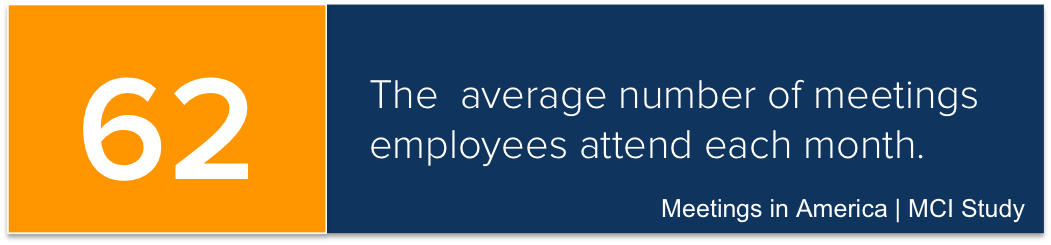
It may seem like a silly little thing, but the clearest way you can show your team you respect them is to prepare for team meetings. Don't just show up. Don't adhere to the same agenda month after month. Make every second of your meeting productive, educational, or interesting. You will inevitably bobble this. You will have some bad meetings, but it's a skill worth honing.
Treat your meetings like college professors treat their seminars. Set aside time before each major meeting to prepare for it. If a meeting takes your team away from their work for an hour, then you better be sure you put in the prep time to make that hour as productive as possible.
Make your meetings interactive. Research suggests people lose focus in a lecture somewhere between 10 and 18 minutes. At that point both you and your team need a break from hearing the sound of your voice. It's okay. Build that in. Tap members of your team to present or shift into a brainstorm when you hit that point. Again, make sure everyone presenting does the prep work and respects the time that their teammates have given up to be there.
5) You can't approach everyone the same way.
The one thing that has helped me the most as a manager, on both good days and bad, has been understanding the people on my team. It sounds obvious, but taking the time to get to know what motivates each team member and what discourages them is a strategic advantage. Having this understanding means that you can play to the strengths of individual team members when assigning projects and adapt feedback to the way each person learns.
There are a number of trainings and personality tests that can help you know your team better. Here at HubSpot, we use something called a DiSC assessment to help classify work styles so new managers have a basic roadmap. The real understanding however comes over time, through conversation, and by paying close attention. It doesn't hurt to ask directly how each person likes to be recognized for a job well done and what makes them happiest in their role. Use one on one meetings to discover how you can best coach the members of your team and what they're looking to do next in their roles and their careers.
There is no grand conclusion here. Everything you've just read comprises a starting point, a few stumbling blocks of what could be many in the path to managing well. That I suppose is the bonus lesson: Managers are almost never fully cooked. There are always more mistakes to be made and greater lessons to learn. But if you get a few essentials right, including those in this post, you'll have a good navigational compass for learning the rest.
What do you wish you knew before you became a manager? Share your thoughts in the comments section below.
Editor's note: This post originally appeared on HubSpot's Marketing Blog. For more content like this, subscribe to Marketing.
12 Mar 18:43
Optimizing Your Sales Team’s Productivity with Scorecards
by Ross Goldman
In my previous post, I talked about the best ways to optimize your SDR team’s performance. There are a lot of questions that come with that though – mainly, how do you know if your SDRs are having a productive day or not?
One of the biggest challenges that many SDR’s face is effective time management. They are asking themselves questions such as, where should I be spending my time? How do I effectively divide up my daily responsibilities? What metrics can help me understand if I had an effective day?
Often times, there are no clear answers to these questions. Because of this, myself and my team at Conductor decided to come up with a daily scorecard to track productivity. This focused on the specific metrics we identified as the biggest drivers of productivity for SDRs, with a point value assigned to each of these metrics.
The Scorecard
Like many tests we’ve all taken, the scorecard is based on a 100 point system. The key metrics, which have been given specific point totals based on their overall impact to the SDR’s goal, focus on the 3 main components of the SDR role:
- Prospecting
- Outreach
- Opportunity creation
Opportunity creation rewards the SDR with the highest point total as it is the ultimate goal for any SDR. We also factor in the amount of daily calls made as well as the call connects that a rep has each day. We distinguish between these two because while making calls is important, an SDR connecting with someone is what ultimately is going to lead to them creating opportunities.
By tracking these activities and giving them a numeric value, we effectively put a goal on each day for the SDR’s to hit.

Click here for our FREE scorecard template.
Using the Card
We have our SDRs manually fill out the card instead of pulling information from the CRM.
This helps answer the time management question as well as holding the SDR accountable. By having to look at the scorecard and input their own productivity or lack thereof, the SDR is reminded whether they are having a productive day or they need to step it up. Come the end of the day an SDR then knows where they potentially missed in terms of their goal and where they need to focus when they come in the next day.
It’s important to keep in mind that from time to time you may need to regroup and verify that the metrics you want to be tracking are the ones the scorecard is addressing.
Benefits
They’ll See the Positives
- Let’s face it, the best day an SDR is ever going to have is when they create an opportunity or numerous opportunities, but just because a day goes by when they don’t create any doesn’t mean that day wasn’t productive.
- An SDR is able to put a value on their day. If they did a great job with their prospecting and outreach, it can supplement an opp-less day. It’s also going to show the SDR that they are set up for big days to come with lots of created opportunities.
It Becomes an Evaluation Tool
- We are also able to use the scorecards to help in our individual forecasting for reps by looking at their day over day or weekly productivity – it’s an extremely effective talking point in one-on-ones with your SDR’s. You can go over them and identify where someone is struggling or excelling and properly plan accordingly.
If you’re hearing your SDR’s ask themselves, or you, about how to manage their day and what a successful day looks like, I recommend selecting your key productivity metrics and shaping them into a scorecard as well.
We’ve all learned to keep score at a baseball game, why not carry that onto the field of Sales Development battle?

12 Mar 18:41
What Type of Sales Forecaster Are You? Research Reveals the Art and Science of Forecasting
by Steve Martin
This Steve W. Martin research article originally appeared in the Harvard Business Review.
Predicting the future is difficult, if not near impossible. However, salespeople and their managers are asked to forecast the future all the time. Sales forecasting is an art and a science. It is the combination of metrics, qualitative information, intuition, and best practices. So who are the most accurate sales forecasters, and what separates them from the least reliable? I recently conducted a study of the forecasting habits of more than 350 business-to-business salespeople and sales managers to answer this question.

The study results suggest there are three basic types of forecasters: Exaggerators, Sandbaggers, and Heavy Hitters. Nineteen percent of the study participants were classified as Exaggerators, who are overly optimistic forecasters. They tend to interpret information in their favor. For example, if a customer says, “We understand your product, so there’s no reason for you to demonstrate it,” Exaggerators will interpret this as a positive sign, even though all the other vendors are demonstrating their products.
Exaggerators are happy-ear forecasters who take customers’ words at face value. When asked why they have forecasted a particular deal to close, they will say, “The customer told us he likes our solution.” They seem to have forgotten the old adage that “all buyers are liars.” Exaggerators may also continually paint the future as being incredibly bright. While this quarter might not look so good, the next one is always going to be fantastic.
Twenty-five percent of the participants were categorized as Sandbaggers, secretive forecasters who try to get by giving as little information as possible on the forecast. They figure the less information they give, the less exposure they have to upper management’s analysis of their forecast and their associated deal-inspection questions.
Fifty-six percent of the participants were classified as Heavy Hitters, who forecast per their conscience. They constantly analyze their forecast and strive for perfection. Regardless of whether they will have a good quarter or a bad quarter, they tell it like it is. They ignore the braggadocian, hyped-up forecasts of their teammates and consider it a personal obligation to be honest to themselves, their managers, and their company.

CLICK HERE TO READ THE ENTIRE RESEARCH REPORT
12 Mar 18:41


Email marketing: How to stay out of the spam folder and increase open rates by 500% (webinar)
by VB Staff
VB WEBINAR:
Consumers are more protective of their inboxes than ever, which goes hand in hand with the glut of email now. Join VB analyst Jon Cifuentes and guest panelist Realtor.com CMO Nate Johnson as they share how to how to break through instead of getting banished to email purgatory.
With 43 percent year-over-year growth and up to 50 million unique visitors a month, Realtor.com is the fastest growing online real estate company in the category. For Nate Johnson, CMO of Realtor.com, email marketing is central to their user engagement strategy.
“Every web property, every mobile app, wants people to come to their site multiple times a day,” Johnson says. “But the reality is, there are a lot of other places out there for people to visit.”
Email actually allows you to reach out to users and re-enage those that might not necessarily be coming back naturally. “We don’t really think of it as marketing emails,” says Johnson. “We actually think of our email as an extension of our product experience into a user’s inbox.”
Every email needs to have the same attributes and characteristics that their product does, Johnson says: It needs to be helpful, useful, relevant, timely. And when that content shows up in a user’s inbox, it should really feel like a very seamless experience between that email and actually visiting the site or opening the app.
It takes great content that’s highly relevant to address the delivery challenge and break through the cluttered inbox, says Johnson. Realtor.com boasts a long-standing relationship with the National Association of Realtors as well as the realtor community at large, which allows them to offer a ton of expertise to users, including news and advice content.
Personalization and testing are also key. They found that Realtor.com users were 3x more likely to open up an email with a zipcode-specific subject line, says Johnson.
And at LinkedIn, where Johnson spent three years as Head of Consumer Marketing, extensive multivariate testing revealed that the right opening hook in an email made users seven times more likely to take action on the LinkedIn website.
Even the time of delivery is an essential part of the puzzle. What day of the week and what time are users most likely to be thinking about your product and willing to engage? With Realtor.com, their sweet spot is towards the end of the week as home-buyers start to stake out open houses. Other businesses need to determine their customers’ habits specific to their industry.
“The motto is ‘Always Be Testing,’” Johnson says. “There are always new challenges, and this is why I think it’s such a fascinating medium in general.”
One of the other critical challenges email marketers face is mastering mobile. “We need to understand what our emails look like when they’re displayed on mobile screens,” says Johnson, “making sure they’re responsive and delivering a clear user experience.”
As important, is knowing what happens once a client clicks within an email. Deep-linking into apps is critical to create a seamless experience for Johnson, and if a user doesn’t have the app downloaded, or open, and clicks through to the mobile web from an email, Realtor.com will prompt the user to download or open the app for a better user experience. It’s connecting all these dots that makes Johnson see email as part of a much bigger picture in the total product experience.
Join this packed webinar for as Johnson will share more insights and best practices on leveraging the power of email marketing — and VB analyst will divulge the most helpful email solutions based on VB’s cutting-edge research.
Don’t miss out!
In this webinar, you’ll learn how to:
- Boost sales and cement customer relationships
- Address implementation challenges
- Discover best practices for high tier email marketing
- Choose the right, highly-rated email marketing solution for your business.
Panelists:
- Jon Cifuentes, VentureBeat Research Analyst
- Nate Johnson, CMO, Move Inc. (Realtor.com)
Moderator:
- Wendy Schuchart, Analyst, VentureBeat
Get more stories like this:

12 Mar 18:40
Opinion: Canadian forestry sector needs rebuilding
The Canadian forest industry is on the verge of another watershed moment. The Softwood Lumber Agreement has lapsed, while efforts are underway to ratify the Trans-Pacific Partnership, creating both opportunities to take advantage of new markets and growing fears about future trade actions from the United States, its largest trade partner. The weak Canadian dollar and rebound in the U.S. economy has raised the stakes for Canadian lumber producers looking to sell their products to American buyers.

12 Mar 18:36
The 27 Best Growth Hacking Tools of 2016
by James Scherer

No beating around the bush here. No fancy intro where I tell you about my weekend or provide some analogy about how marketing automation is like a sandbox or something.
Nope. Just 27 kickass growth hacking tools with a complete breakdown of why we like each one and how much they cost.
I want to give you exactly the information you need, and none of the fluff you don’t.
These 27 growth hacking tools are split into six sections:
- Email Marketing
- Social Media
- Marketing Automation
- Browser Plugins
- Sales Funnel
- Miscellaneous Favorites
Note: I’m not an affiliate for any of the tools you see below. These are just the tools or growth hacking platforms which Wishpond uses (or has used) that we think are awesome and recommend to you.
Sharing the love don’t need no reward.
To quickly see these 27 growth hacking tools, check out the slidedeck below:
Email Marketing

Mailchimp
Mailchimp’s simple and free email platform is the go-to tool for more than 10 million marketers.
The platform’s users send more than 600 million emails a day, and you can see why. Mailchimp’s simple automation, segmentation and targeting are enough for many entry-level growth hackers. The report function is also helpful in optimizing your email marketing campaigns over time.
Current Pricing Structure (as of March 8th, 2016):


Aweber
Aweber offers a bit more than Mailchimp in a few places, primarily a stronger automated email functionality (including auto-responder follow-up) and better sign up forms.
I’ve also found their campaign function to be more intuitive if you’re looking to combine email marketing with a lead generation campaign (for instance).
Current Pricing Structure (as of March 8th, 2016):


Emma
If Aweber offers a bit more power than Mailchimp, Emma offers a bit more than Aweber. Emma actually gets us into a bit of the more developer-friendly email platforms (so stop at Aweber if you’re just starting out).
Emma makes it easy to automate email campaigns, segment based on data stored inside of a integrated CRM, and heavy personalization using dynamic content (very cool).
Current Pricing Structure (as of March 8th, 2016):


Customer.io
One step up from Emma is Customer.io, which is a very developer-friendly platform (in as much as it’s almost difficult to use if you don’t have a developer handy). This is actually the platform Wishpond used before we started using our own email tool.
Customer.io has a great user profile functionality (allowing you to see individual actions of individual contacts). It’s very HTML-friendly and very integration-friendly, meaning “you can start sending emails based on what people do or don’t do after they log in to your software/website.”
Current Pricing Structure (as of March 8th, 2016):

Social Media

Buffer
Buffer has been Wishpond’s go-to social media platform for years now, and they’re the most solid tool we’ve seen in a very competitive market.
Buffer enables you to collate your social profiles into one place which means you can share the same piece of content quickly and easily across all of them. Their analytics dashboard (if you upgrade to “Awesome or go with a Business plan) is also extremely detailed and helpful.
Current Pricing Structure (as of March 8th, 2016):


Pablo
Pablo (from Buffer) is my favorite recent social post creator tool. The platform is super intuitive, and, while perhaps not quite as powerful as other similar tools, helps you design and share images quickly.
Current Pricing Structure (as of March 8th, 2016):
Pablo is currently free.
Notable social share design tools also include (but are not limited to)…

RebelMouse
So RebelMouse is primarily cool because it does what a lot of content curation/aggregation tools do, simply and powerfully. It’s also integrated a straightforward CMS element which is really strong.
I also like that it has a great mobile app which makes it easy to access and share curated (and original) content on the fly.
Current Pricing Structure (as of March 8th, 2016):
Contact the RebelMouse team for pricing (not available on their site).

Nuzzel
Nuzzel is a really cool (though largely unknown) content curation tool which is focused on the content most interesting to your social network. It aggregates stories, articles and images from your social media followers and then filters by the most popular content or whichever was shared most recently.
Nuzzel is great, particularly on Twitter, because it enables you to follow stories and get valuable insight into what content your Followers like – giving you more confidence to create content similar to it.
Current Pricing Structure (as of March 8th, 2016):
Nuzzel is currently free.

PostPlanner
Postplanner, beyond the somewhat straightforward social media management of Buffer (and Hootsuite, for that matter), offers a very helpful content curation element. Postplanner makes it easy to consolidate your own profiles as well as every social profile related to your business, allowing you to see (and share and schedule) the most interesting content your audience might find interesting.
Postplanner Bonus: I also love that Postplanner app has the Canva platform built right into it. Nice little perk right there…
Current Pricing Structure (as of March 8th, 2016):

Marketing Automation

Wishpond
What am I gonna do? Pretend we don’t have a marketing automation platform?
Marketing automation is the #1 most cost-effective tool for professional marketers with a bit of budget, and it’s far simpler than it was even a year ago.
Automating your lead generation, lead nurturing and lead management processes can save you hundreds of hours a month…
- Automate email nurturing campaigns which turn generated leads into qualified sales prospects.
- Automate the sales process with lead scoring, customer relationship tracking and workflows as complicated or simple as you like.
- Retain customers through automated loyalty campaigns and easy segmentation.
Wishpond is also integrated with many of the awesome tools in this article. See our Integrations Page for the complete list.
Current Pricing Structure (as of March 8th, 2016):

Browser Plugins

EyeDropper
Eye Dropper and the next tool, Nimbus Screenshot, are my most-frequently used plugins.
Eye Dropper enables you to pick any color off of a webpage, providing you with the hex code, rgb, hsl and official name of that color. It also stores your recently “dropped” colors for as long as you ask it too. This makes it super easy to keep your brand’s hexcodes around for easy access, or steal a color you like from someone else’s site.

Nimbus Screenshot
Growth hackers take a lot of screenshots – the constant messiness of my desktop can attest to that.
So we need a good screenshot tool, and of course the one built into my Mac or your PC isn’t going to cut it. You need to capture part of a page, scroll and capture, easily capture one element, edit, and save as whatever file type you like.
Nimbus gives you all that and more.

SEOQuake
SEOQuake has replaced both my Alexa plugin and my PageRank plugin, as it does both. It also has the added benefit of highlighting nofollow links (if I tell it to), display keyword densities and compare one site’s search optimization to that of another.
SEOQuake is my go-to plugin for SEO.

Ghostery
While I don’t look at Ghostery every single day, I like to have it watching my back.
The plugin allows me to see any and all trackers, pixels, bugs and beacons that are on the webpages I visit. This informs my own growth hacking strategies, as in “what is my competitor doing with tracking and remarketing that I’m not?”
I also like that Ghostery allows me to choose how and when I want to be tracked. As they say “a personalized digital experience is great, but shouldn’t you be in control of who’s tracking you?”

LastPass
LastPass stores passwords for you. So long as you remember your “master password” all the others are securely stored in the plugin. Initially this was a bit scary for me, but they have extensive security systems in place and are constantly helping me ensure my passwords are secure.
Another cool element of LastPass is that it allows you to share passwords with colleagues securely. There’s no point in all 40 of us having a different account for our analytics platform (especially as we all want to see the same reports and funnels), so using only a few accounts and sharing the passwords securely is super helpful.
Current Pricing Structure (as of March 8th, 2016):


Sniply
Sniply’s one of those plugins that I don’t yet use but really want to try. It allows you to send people to your site or blog via content you share on social media.
There are three main elements of Sniply:
- Owned Content. Sharing your own blog posts? Easily attach call-to-actions on screen without making changes to the page itself.
- Earned Media. Got featured in a publication? Share the link with your call-to-action so that readers can engage with your brand.
- Curated Links. Promoting someone else’s content? Get recognized for your referral by including a message for your followers.
They also have an A/B testing function which makes it simple to split test your CTAs.
Current Pricing Structure (as of March 8th, 2016):


PushBullet
PushBullet has largely replaced EverNote for me (though I still have lasting affection for Evernote). PushBullet is a bit simpler – allowing me to send text messages to friends directly from my computer and easily send links and files to my devices and those of my contacts.
Essentially, I use Google Drive sharing for interoffice files and PushBullet for interoffice and external link sharing.
Sales Funnel

Pipedrive
One of our most recent software adoptions, our sales team is raving about Pipedrive this month. Pipedrive does the standard Sales CRM stuff very well. They have the visual sales pipeline , lead organization (including filters), sales forecasting and a solid mobile app. But more than that they’re super intuitive and super easy to set up. Once you’ve done the initial setup though though, customization (including turning off features) is easy as well.
Current Pricing Structure (as of March 8th, 2016):
Pipedrive is $12/user/month.

Base
A little bit up the pricing scale from Pipedrive, Base has the number-one mobile sales app – enabling you to keep up with your leads, funnels and reporting on the go, They also have a great reporting tool and extensive integration possibilities.
Current Pricing Structure (as of March 8th, 2016):


Insightly
Insightly is a great starter sales CRM tool. It has a heavy incorporation of email (including pretty good templates) and 250MB of data storage in the free plan.
You’ll also get Dropbox and Quickbooks integrations, which are pretty cool if you use those platforms.
Current Pricing Structure (as of March 8th, 2016):

Miscellaneous Favorites

Zapier
Zapier is the answer to “But your software isn’t integrated to the platform I currently use! How can I make this work?”
Zapier is currently integrated with more than 500 software providers. If you integrate with it, you get access to all 500.
Let me give you a few Zapier use-cases…
Wishpond + Zapier + Slack:
Send a direct message when a lead visits a web page multiple times.
Wishpond + Zapier + Gmail:
Send emails from Gmail when someone converts on your Wishpond landing page, popup, form, or contest.
Wishpond + Zapier + Stripe:
Add new Stripe customers to a customer list in Wishpond.
Current Pricing Structure (as of March 8th, 2016):

To learn more about Zapier and how it works, check out my colleague’s article [Feature Release]: The Last Integration You’ll Ever Need.

Segment
Our COO loves Segment like he loves his child, I swear. It’s interesting, actually. Data, which most of us think of as one of the most boring subjects out there, often inspires the most passion.
Segment gives you data – complete, comprehensive website data in one place and with minimal fuss. And, of course, data is a massive part of growth hacking. Unless you know what you’re currently doing and how, you can’t possibly know how to hack it.
Once you have your initial growth hacking strategies set up (using the other 26 tools in this list), come back to Segment and start talking data.
Current Pricing Structure (as of March 8th, 2016):


SurveyMonkey
SurveyMonkey makes it easy to get incredibly valuable insight from your contacts, leads and merchants. Their survey tool embeds easily into email clients and makes responding not just easy, but appealing.
More recently, however, SurveyMonkey has launched their “Audience” feature, which gives your company access to a huge number of willing survey recipients who aren’t your customers. You can create a custom audience (similar to Facebook Ads) so you can be sure you’re reaching people similar to your prospective customers. This gives you an understanding of your audience, and is a great strategy before launching any large update, new software or even a new growth hacking strategy.
Current Pricing Structure (as of March 8th, 2016):


GotoWebinar
GoToWebinar is the chief webinar tool out there, and for good reason.
When you’re talking webinars you want a couple primary things…
1. You want your webinar to run without technological issues.
And this can’t just be the webinar itself. You need the emails, pages and links to work during the registration, attendance and post-webinar periods as well.
2. You want your webinar tool to be integrated easily with your lead generation and CRM (otherwise what’s the point?)
Luckily, GoToWebinar is really good about integrating with other platforms (they were one of Wishpond’s first integrations when we launched our landing page and marketing automation tools).
Current Pricing Structure (as of March 8th, 2016):


Slack
Slack is one of those companies you love to love. Their inter-office communication platform is always an open tab in my desktop and allows me to share files and images with individuals and groups easily.
Of course it’s primarily a chat tool, and it’s great for that as well. No more yelling across your open-plan office or emailing a single line to your colleague.
It’s also a fantastic company if you’re looking to develop your own brand “vibe,” as they’re a model of that casual excellence so many software companies are looking to cultivate.
Current Pricing Structure (as of March 8th, 2016):


AdobeStock
AdobeStock (along with Shutterstock) is our graphic design team’s go-to image library. Every one of their 45 million royalty-free images and videos can be accessed and managed from within the entire Adobe Suite (that’s Photoshop, Illustrator, InDesign etc).
When you’re talking about image libraries the primary thing you’re looking for is breadth of selection and quality. AdobeStock is fantastic in those areas and is priced about average.
Current Pricing Structure (as of March 8th, 2016):

Notable stock photo sites also include (but are not limited to)…

BuzzSumo
BuzzSumo is one of the chief content marketing tools the Wishpond Blog puts to use.
It’s a huge part of our strategy for discovering content opportunities, identifying influencers and quickly responding to alerts in our sector or around our brand.
Perhaps most frequently I use it to run reports on how a competitor’s article did on social media. I can see number of social shares, who shared it, who linked it, and more.
Current Pricing Structure (as of March 8th, 2016):

Wrapping it Up
Hopefully this list will help you save time and find success with online marketing. If you have any questions about any of the tools or platforms you see above, don’t hesitate to reach out in the comment section below!
11 Mar 22:50

Microsoft launches tool to help Evernote users on Windows move their notes to OneNote (Emil Protalinski/VentureBeat)
 Emil Protalinski / VentureBeat:
Microsoft launches tool to help Evernote users on Windows move their notes to OneNote — Microsoft launches OneNote importer tool for Evernote users — Microsoft today launched a OneNote importer tool that lets Evernote users bring their content to Microsoft's note-taking tool.
11 Mar 22:49


How to send personalized mass emails in Gmail
by Kellen Beck
If you want to send out the same email to multiple people, but want to personalize it for everybody, setting up a mail merge will save you a lot of time. Some email clients like Outlook have a built-in mail merge function, but if you want to use it with Gmail, you’ll have to download a Chrome extension.
A mail merge works by importing a spreadsheet and plugging in data from cells to fill in specific portions of an email, changing them for different recipients. You can start doing a mail merge by downloading the Mail Merge for Gmail add-on here.
More about Email, Gmail, Google Chrome, Tech, and Apps Software
11 Mar 22:48
A new report paints some striking differences between Obama and John Kerry on foreign policy
by Armin Rosen

There's an interesting subplot running through Jeffrey Goldberg's landmark Atlantic magazine report on US President Barack Obama's foreign policy: the constant and apparently continuing tension between the president and the man charged with implementing his foreign-policy vision.
Throughout his article, Goldberg reported of several instances in which Obama and Secretary of State John Kerry have been at odds.
For one, Kerry was not at the August 30, 2013, meeting in which Obama opted not to order a military strike on the regime of Syrian President Bashar Assad.
That came in the aftermath of the regime's use of chemical weapons outside Damascus. Kerry gave a speech advocating a strike earlier that day, but was not informed of the president's decision until the night of the meeting.
"'I just got f---ed over,' [Kerry] told a friend shortly after talking to the president that night," Goldberg wrote.
But the more notable source of disagreement is the secretary of state's continued advocacy for strikes against Assad regime targets. Goldberg reported that "over the past year, John Kerry has visited the White House regularly to ask Obama to violate Syria's sovereignty. On several occasions, Kerry has asked Obama to launch missiles at specific regime targets, under cover of night, to 'send a message' to the regime."
Kerry believes that US military strikes would convince Assad to take peace negotiations in the country more seriously, according to Goldberg.
"A few cruise missiles, Kerry has argued, might concentrate the attention of Assad and his backers," Goldberg reported.
Kerry's efforts have put him at odds with Obama and Vice President Joe Biden, according to the reporter.
"Obama has steadfastly resisted Kerry's requests, and seems to have grown impatient with his lobbying," Goldberg wrote. "Recently, when Kerry handed Obama a written outline of new steps to bring more pressure to bear on Assad, Obama said, 'Oh, another proposal?'"
Meanwhile, Obama has "announced that no one except the secretary of defense should bring him proposals for military action," something understood within the Defense Department as "a brushback pitch directed at Kerry."
This is more than just a standard policy disagreement. For the past several months, Kerry has been charged with leading a somewhat quixotic international attempt at reaching a negotiated solution to Syria's 5-year-old civil war, an effort that's so far yielded a fragile and loophole-riddled "cessation of hostilities."
As Goldberg detailed, Kerry doesn't believe that his effort can be successful without some added pressure on the Assad regime, which has had its position strengthened through Russia's late 2015 military intervention on the regime's behalf.
It isn't just that Kerry believes the US has some kind of moral or strategic imperative to weaken Assad's government. He also appears to think that his one of his primary objectives as secretary of state is all but unachievable without a greater US willingness to confront Assad, even if it's through direct military force.
 As secretary of state, Kerry negotiated the nuclear agreement with Iran and spearheaded an unsuccessful effort to reach a solution to the Israeli-Palestinian conflict.
Kerry has been at the forefront of Obama's riskiest and most controversial moves on the international stage. If Iran tests a nuclear weapon, or the Assad regime remains in power a decade from now, those developments will reflect back on Kerry's legacy as well as Obama's.
But on one of the most crucial questions of the Syrian civil war, Kerry's impressive record of carrying out some of the administration's biggest gambles hasn't won him all that much trust or good will.
SEE ALSO: 'The world is a tough, complicated, messy, mean place': Obama explains his foreign policy
Join the conversation about this story »
NOW WATCH: Here’s how Bernie Sanders could win the presidential nomination — it won’t be easy
11 Mar 22:48
UN adopts 1st resolution tackling sexual abuse by UN troops
by Edith M. Lederer
UNITED NATIONS (AP) — The U.N. Security Council on Friday approved its first-ever resolution tackling the escalating problem of sexual abuse by U.N. peacekeepers who act as predators when sent to protect vulnerable civilians in some of the world's most volatile areas.
The United Nations has been in the spotlight for months over allegations of child rape and other sexual abuses by its peacekeepers, especially those based in Central African Republic and Congo. The U.N. says there were 69 allegations of sexual abuse and exploitation by peacekeepers in 2015, with an additional 25 allegations so far this year.
The resolution was approved by a vote of 14-0 with Egypt abstaining after a last-minute amendment it proposed that would have weakened the text was defeated.
The U.S.-drafted resolution endorses Secretary-General Ban Ki-moon's plan for reform, including his decision to repatriate military or police units "where there is credible evidence of widespread or systemic sexual exploitation and abuse."
It also asks Ban to replace contingents where allegations are not properly investigated, perpetrators are not held accountable or the secretary-general is not informed on the progress of investigations. The Egyptian amendment would have required that all three conditions are met before a military or police unit is sent home, not just one of them as now required.
It's up to the home country of the soldier or police officer to conduct the investigation and determine the punishment if allegations of sexual abuse or exploitation are proven.
The United States, the biggest financial contributor to U.N. peacekeeping operations, said it wanted the U.N.'s most powerful body to send a strong signal that it will not tolerate the escalating problem.
"To the victims of sexual exploitation and abuse by peacekeepers, we pledge that we will do better," U.S. Ambassador Samantha Power said after the vote. "We will do better to ensure that the blue helmets that we send as your protectors will not become perpetrators."
Secretary-General Ban called the resolution "a significant step in our collective efforts to combat the terrible damage caused to victims of sexual exploitation and abuse" and pledged to ensure protection and support for those who have been abused, his spokesman said.
More than 100,000 troops and police are deployed in the U.N.'s far-flung peacekeeping operations, the vast majority from developing countries. The United Nations reimburses troop contributing countries for salaries and provides allowances for peacekeepers.
As part of the secretary-general's reforms, the United Nations has for the first time begun naming the countries of alleged perpetrators, a move meant to pressure states to pursue allegations that, U.N. records show, they often have let slide. Ban has also pledged to speed up investigations and to make information available about outstanding allegations on a new U.N. website.
Egypt, Russia and several other countries had argued that the council resolution would punish thousands of peacekeepers for the actions of a few. They say the issue should be addressed in the General Assembly instead. But General Assembly actions are not legally binding, while Security Council resolutions are.
Egypt's U.N. Ambassador Amr Abdellatif Aboulatta said libeling and "branding entire states" is totally unacceptable and "drastically and inevitably affects the morale of the troops." He said it would have been more appropriate if the Security Council focused on the root causes of sex crimes including training and supervision at camps for peacekeepers.
One of the 25 allegations this year is against an Egyptian peacekeeper in the Central African Republic. Egyptian authorities are investigating the case, according to the U.N. website.
Russia and China supported the Egyptian amendment but then voted in favor of the resolution.
Russia's deputy U.N. ambassador Petr Iliichev said it was "wrong" for the council to reject the Egyptian amendment which reflected the view of troop contributing countries. But he said Russia decided to support the resolution because the final text was expanded to call for all forces deployed by the Security Council — a reference to French troops accused of sexually abusing children in Central African Republic and African Union soldiers in Somalia, Darfur and elsewhere.
"Today is a step in the right direction," Amnesty International's Crisis Response Director Tirana Hassan said, "but it will still require significant reform throughout the U.N. system."
11 Mar 22:44

Preventing Crime for Pennies on the Dollar
by Freakonomics
President Obama meets with participants in the Becoming a Man project in 2013. (Official White House photo: Pete Souza)
Season 5, Episode 21
On this week’s episode of Freakonomics Radio: conventional crime-prevention programs tend to be expensive, onerous, and ineffective. Could something as simple (and cheap) as cognitive behavioral therapy (CBT) do the trick? First we go to Chicago, where at-risk teenagers who learn to be less impulsive have lower dropout and arrest rates.
Then, we take a look at Liberia, where a former child soldier and a team of researchers pair CBT with a cash incentive to help other former soldiers become productive citizens in peacetime.
To learn more, check out the podcasts from which this hour was drawn: “Preventing Crime for Pennies on the Dollar” and “‘I Don’t Know What You’ve Done With My Husband But He’s a Changed Man.'”
You can subscribe to the Freakonomics Radio podcast at iTunes or elsewhere, or get the RSS feed.
The post Preventing Crime for Pennies on the Dollar appeared first on Freakonomics.
11 Mar 22:44
 Researchers at Berkeley Lab have developed a new materials recipe for a battery-like hydrogen fuel cell that shields the nanocrystals from oxygen, moisture and contaminants while pushing its performance forward in key areas.
New Fuel Cell Design Powered by Graphene-Wrapped Nanocrystals
by Lawrence Berkeley National Laboratory
Researchers at Berkeley Lab have developed a new materials recipe for a battery-like hydrogen fuel cell that shields the nanocrystals from oxygen, moisture and contaminants while pushing its performance forward in key areas.
11 Mar 22:43
Charges approved in connection with B.C. government's 'triple delete' email scandal
George Gretes, a former assistant to Transportation Minister Todd Stone, is facing two charges under the province’s Freedom of Information and Protection of Privacy Act in connection with the B.C. government's "triple delete" scandal.

11 Mar 22:43
Mutual fund regulator collected just 16 per cent of fines ordered last year
by Barbara Shecter
The Mutual Fund Dealers Association of Canada collected about 16 per cent of fines imposed last year in disciplinary actions, according to the self-regulatory agency’s annual report.
Sixty-five hearings were completed, with total fines of nearly $5.4 million imposed. The MFDA collected $843,982 of that amount.
Related
In all provinces with the exception of Alberta, the self-regulatory organization has powers to collect fines only from those who remain in the industry as Approved Persons regulated by the MFDA. However, the annual report says the mutual fund dealers association is seeking to have the Capital Markets Act revised to allow self-regulatory organizations to file disciplinary decisions directly with the courts. This would allow them to be enforced as a court order.
Collecting fines and other financial penalties has long been a challenge for regulators, particularly self-regulatory agencies like the MFDA and the Investment Industry Regulatory Organization of Canada, which is also seeking changes to enlist court assistance with collections.
Since the MFDA began taking disciplinary action in 2004, hearing panels have imposed total fines of nearly $52-milion, of which just shy of $6.4 million (12 per cent) has been collected.
11 Mar 19:40
“Sprint offers a transformative formula for testing ideas that works whether you’re at a startup or a large organization. Within five days, you’ll move from idea to prototype to decision, saving you and your team countless hours and countless dollars. A must read for entrepreneurs of all stripes.” —Eric Ries, author of The Lean Startup

Sprint: How to Solve Big Problems and Test New Ideas in Just Five Days
by Dylan
“Sprint offers a transformative formula for testing ideas that works whether you’re at a startup or a large organization. Within five days, you’ll move from idea to prototype to decision, saving you and your team countless hours and countless dollars. A must read for entrepreneurs of all stripes.” —Eric Ries, author of The Lean Startup
Entrepreneurs and leaders ask tough questions every day: Where’s the most important place to focus our effort, and how do we start? What will our idea look like in real life? How many meetings and discussions does it take before we can be sure we have the right solution?
Three partners at Google Ventures—Jake Knapp, John Zeratsky, and Braden Kowitz—developed a surefire way to answer these questions both quickly and effectively: they call it “the sprint.” Together, they have completed more than 100 sprints with companies in mobile, e-commerce, healthcare, finance, and more. Now they’re ready to share what they’ve learned with the masses with Sprint: How to Solve Big Problems and Test New Ideas in Just Five Days (S&S; Hardcover; 3/8/16).
A sprint offers a path to solve big problems, test new ideas, get more done, do it faster, and have fun along the way. In Sprint, Knapp, Zeratsky, and Kowitz walk readers through the five-day process one step at a time:
- Monday: Start at the end and agree to a long-term goal. Next, you’ll make a map of the challenge and in the afternoon, you’ll ask experts at your company to share what they know. Finally, you’ll pick a target: an ambitious but manageable piece of the problem that you can solve in one week.
- Tuesday: You and your team will begin to come up with solutions. Start by reviewing existing ideas to remix and improve. Then, following a four-step process that emphasizes critical thinking over artistry, each person will sketch his or her ideas. These sketches will be used later to develop prototypes and tests.
- Wednesday: Critique the different solutions that were developed on Tuesday and decide which ones have the best chance of achieving your long-term goal. Then, take the winning scenes from your sketches and weave them into a storyboard: a step-by-step plan for your prototype.
- Thursday: You’ll adopt a “fake it” philosophy to turn your storyboard into a realistic prototype. The authors explain the mindset, strategy, and tools that make it possible to build that prototype in just seven hours.
- Friday: It’s time to test your prototype! You’ll interview customers and learn by watching them react to your product. This test makes the entire sprint worthwhile: at the end of the day, you’ll know how far you have to go, and you’ll know just what to do next.
In addition to providing a detailed step-by-step guide to running your own sprint, the book is also filled with dozens of behind-the-scenes stories of successful sprints, including Blue Bottle Coffee, Savioke, Medium, Nest, Foundation Medicine, and many more. Knapp, Zeratsky, and Kowitz also include checklists for necessary materials and personnel, sample questions that can help facilitate the process if your team gets stuck, as well as an FAQ section for easy reference.
A practical guide to answering critical business questions, Sprint is a book for teams of any size, from small startups to Fortune 100s, from teachers to non-profits. It’s for anyone with a big opportunity, problem, or idea who needs an answer today.
ABOUT THE AUTHORS
Jake Knapp created the Google Ventures sprint process and has run more than a hundred sprints with startups such as 23andme, Slack, Nest, and Foundation Medicine. Previously, Jake worked at Google, leading sprints for everything from Gmail to Google X. He is currently among the world’s tallest designers.
John Zeratsky has designed mobile apps, medical reports, and a daily newspaper (among other things). Before joining Google Ventures, he was a design lead at YouTube and an early employee of FeedBurner, which Google acquired in 2007. John writes about design and productivity for Wall Street Journal, Fast Company, and Wired. He studied journalism at the University of Wisconsin.
Braden Kowitz founded the Google Ventures design team in 2009 and pioneered the role of “design partner” at a venture capital firm. He has advised close to two hundred startups on product design, hiring, and team culture. Before joining Google Ventures, Braden led design for several Google products, including Gmail, Google Apps for Business, Google Spreadsheets, and Google Trends.
11 Mar 19:39
OneDrive Can Now Scan Your Whiteboard or Documents, Turn Them Into PDFs
by Eric Ravenscraft
Android: Microsoft’s OneDrive doesn’t always get the credit it deserves, but it’s a pretty solid competitor to apps like Google Drive and Dropbox. Now, it’s catching up more with a new scan feature.
11 Mar 19:38

The Case for Checking Email First Thing in the Morning
by Kristin Wong
Email can be a distracting time sink, but sometimes, it’s best to get it out of the way. Over at Harvard Business Review, contributor Dorie Clark makes the case for checking email first thing in the morning.
11 Mar 19:37
Get Around Cities in Style with These Super Mario-Themed Subway Maps
by Melanie Pinola
Sure, you could download your city’s public transit maps, but that’s not as fun as these city maps created in the style of Super Mario 3.