Today’s retail customer is always shopping around – in store, online, on the phone. And in a 24/7 global marketplace where it’s becoming increasingly difficult for retailers to differentiate on price and product availability, more and more it’s becoming customer service and the customer experience that means the difference between buy, buy, buy and bye, bye, bye.
• more than half (59%) of the 4,000 consumers surveyed have higher expectations for customer service today than they did a year ago.
• 97% say customer service is important to their choice of or loyalty to a brand.
• and 62% have stopped doing business with a brand this year due to a single poor customer service experience.
Yet, despite these increasing expectations, according to the American Customer Satisfaction Index, customer satisfaction is on the decline from a survey high set two years ago. Some attribute this to the economy, theorizing that brands were putting more focus on customer service then when consumers were spending less and every dollar meant more.
But now that consumer spending has rebounded, service is starting to fall back as a lesser focus instead of springing forward – a point of relaxation that could prove costly as PricewaterhouseCoopers’ Retailing 2020 report raises the stakes for the future of retail:
“By 2020, we believe the need for a unified consumer omnichannel experience will be complicated by the need for nearly perfect execution,” predicts PwC. “However, expert use of business intelligence tools, coupled with a profound understanding of shoppers’ needs and experiences in real time, may make omnichannel a realistic goal.”
Are We There Yet?
Where do customers think retailers are right now with their omnichannel goals? According to the TimeTrade State of Retail 2016 report, not very far. Only 26% of consumers feel that retailers today are providing a consistent customer experience across all channels (web, email, social media, call center, in-store, mobile and text).
And a historically strong service hub seems to be causing a major disconnect. Fifty-one percent (51%) of consumers said that the call center was the channel they felt was doing the poorest in terms of customer service compared to 26% in store, 23% social, 21% text, 20% web, 19% kiosk and 18% email. (According to the same report, only 5% of retail decision makers are making the call center a top priority in channel improvements. Social media was actually the top channel priority in this survey.)
Getting There…
So how can retailers go from where they are and how consumers perceive them today toward that 2020 vision of omnichannel consistency? Here are three areas of focus:
• Awareness: Not just collecting Voice of the Customer feedback, but reacting to it and acting upon it is key to retailers moving forward. Many brands are doing this today as a way to turn the corner and improve.
• Accessible knowledge for both agents and customers: Investment in a consistent knowledge source that can be used to deliver real-time knowledge both internally across agents and employees and externally to customers across channels, devices and locations is a must-have investment for an omnichannel future, not just for retail, but for all industries.
• Proactive, predictive, personalized insights and intelligence: Empowering customer service with the insights to acknowledge and react to trending issues and then proactively reach out to customers across channels with information could not only significantly increase customer satisfaction, but radically change and assist the call center by reducing historic volume, strain and frustration. Greater customer intelligence that is many times shared only between sales and marketing could also help service lead the way in more personalized engagement when it matters most for retention.
The same PwC report says “Retail brands in 2020, we believe, will have three key attributes: consistency, intensity and accuracy. Let’s bring service into the mainstream to help deliver on this 2020 omnichannel customer experience vision.
One of the most difficult aspects of sales development in the business world today is the cold call. The truth is, our prospects get countless emails and calls everyday that scream “generic.” As I became more experienced in a sales development role, I started practicing new ways to minimize the “cold call atmosphere” and stand out to prospects. The most effective way to achieve this is through the Linkedin Sales Navigator tool.
It’s common to hear reps ask the same questions at the beginning of every call. Most of the time it involves something like, “would you be the best person to speak with about XYZ?” I’ve learned that prospects tend to find this provocative of a sales call, which turns him/her away before the rep can even describe what his/her company does. With the Sales Navigator tool & Linkedin, I have access to every prospect’s page within any company I’m targeting. I’ll walk you through how I leverage the functionality of Sales Navigator to boost prospecting effectiveness:
Step 1: Find the Right Keywords.
The first step to using Sales Navigator effectively is to find about 3-4 keywords that are associated with your offering. Plugging in variations of these keywords will help you identify the most appropriate people to speak to within any company. Once you take the time to find the right points of contact, you can then prepare a personalized message to use when you call them. For example, if you are prospecting for a company involved with mobile/web application testing, try using industry-relevant keywords such as Quality Assurance (QA) or User Experience (UX).
Step 2: Take the Time to Read Each Target Profile.
Take the time to read over a prospect’s Linkedin page to learn about what they have the most experience with and what specific job responsibilities make them a good fit for an exploratory conversation. This way, the first time that you speak to “John at West Corporation,” rather than asking if he has involvement in a certain matter, you can begin the conversation by declaring how you noticed the high level of experience that he has with a certain matter based off of his Linkedin profile.
Step 3: Capture Attention Quick.
The notion that someone would take the time to learn about a prospect before ever contacting them appeals greatly to high-level executives. Especially because these execs don’t have time to reiterate information about themselves that should already be researched or to qualify themselves for you. Maximizing the pertinent information you have on hand to perform pre-call research before every cold conversation will simultaneously minimize the cold call atmosphere. Most prospects will initially tend to avoid expressing any pain points they are experiencing, so if you effectively gain intel before the call, you will have an idea of what’s going on internally before connecting with the prospect. As a result, you minimize the amount of unnecessary questions they’ve probably been asked 1,000 times by other sales development professionals.
Step 4: Take Interest in Your Prospect’s Interests.
When you know for a fact that you’ve found the right prospect within a target account, don’t be afraid to review his/her documented interests and education listed in their profile. Prospect’s tend to find it impressive if you can create small talk based around his/her past experiences, interests, and qualifications.
Overall, LinkedIn’s Sales Navigator tool is a great tool to leverage during your outbound prospecting efforts to supplement your pre-call research strategies. Are you using LinkedIn’s Sales Navigator? What other sales tools do you find effective? Comment below!
There are times when you're simply overwhelmed at work. You've got so much on your plate that none of it seems like it can be finished, and so none of it gets finished as you sit there panicking.
Whether it's the end of the day and you're struggling with decision fatigue or fear of failure has your heart racing, there's a quick way to collect yourself so that you can resume being productive, says Caroline Webb, Sevenshift's CEO, a McKinsey senior adviser, and a former McKinsey partner.
Her new book, "How to Have a Good Day," is a collection of best practices she's learned in her 16 years as a consultant.
It includes a simple mindfulness technique that you can do in as little as a couple of minutes or stretch out, if you'd prefer. Here's how to do it:
Sit or stand as comfortably as you can, moving to a quiet place, if necessary. Place your feet squarely on the floor and either close your eyes or look down.
Focus your thoughts with one or all of the following: Slowly take a deep breath in and then exhale deeply several times, focusing on the way your stomach rises; do a mental scan of your body, from your toes to the top of your head, noting without thinking how each part feels; count down from 100 to 0.
Pay attention to your thoughts, and if your mind wanders, don't become anxious. Recognize that it's normal behavior and refocus your attention.
Webb writes that if your panic hits you in the middle of a meeting, you can try an amended version of the technique, taking just one or two deep breaths or counting down from 10.
She interviewed a digital-marketing startup founder she refers to only as Anthony who told her that he uses a version of this exercise when his mind starts feeling overloaded and he runs the risk of making decisions that will harm his business.
When his stress becomes unmanageable, he'll ask himself, "Do I want to feel like this?" — no, he doesn't — and will do the breathing exercise.
"It starts to reengage rational thought, without fail," Anthony told Webb. "It's like pinching myself in a dream."
Interviews by Joe O’Connor. Illustrations by Chloe Cushman
Canadian hockey parents will tell you that they do not hang over the glass, bark at their kids and harangue the coach, but there are enough whispered stories to dispense with any illusion that minor hockey is as wholesome as it is portrayed to be in those nostalgic coffee commercials.
There is coffee at the rinks, but it is watered down and tastes terrible. Most bitter of all is the potent showcase of frequently naughty and often near-criminal behaviours adults will engage in, all in the name of hockey. We’re talking about Canadian hockey parents — and coaches — and we set out to interview as many as we could across the country, to pull from them the truth, the whole truth, in all its gory detail, about minor hockey.
The picture that emerged was often sweet but often incredibly ugly, rife with tales of extra-marital affairs in rinky-dink hotels, fistfights in the stands, threats uttered, coaches bribed and dads getting so sloshed at tournaments that they wind up in the hospital while their child is fast asleep back at the hotel.
This is our game. These are their stories.
The nurse who gets into fistfights with other parents
Hockey is a goon game. The kids don’t know any better because they are just kids, and they get all wound up and start running around and hitting one another — and that’s when the parents get all wound up. And then that’s when the real craziness begins, because it is the parents who are the real crazies.
There was this one mother, a nurse from the Whitby area east of Toronto, and she delivered babies for a living. And she was as sweet as you could imagine someone who delivers babies could be. But not when you got her at the rink. Maybe women can go crazy faster. Maybe it is our Momma bear instinct mixed with our hormones, but this nurse would start swearing at the parents on the other team and then she would go at them. Literally get up and go at them and get in their faces. There were two times — at least two times that I saw — where she got into an actual fistfight. And she was this sweet little thing otherwise. With the hockey dads, they might swear and yell, but it is the ladies in my experience who can truly go off the deep end at games.
There was another mother. Every parent thinks that their kid is perfect, and every parent thinks that their kid can do no wrong. So they get defensive about their kid. But this mother, if anyone went near her kid, if anyone so much as touched him and knocked him down and got a penalty, she would get up and go stalking around the arena to the penalty box and start yelling at the kid for touching her son. She would yell at the coach from the other team. I am pretty sure she was a stay-at-home mom. And these kids were 13-years-old. I came to dread the BS of going to games. Of course, we’re only talking about the bad stuff — the parents. — Anonymous Hockey Mom, Whitby, Ont.
The Dads who party like it’s Frosh Week
The dads are the worst. It is like university, and it is the guys that never get out, whose wives keep such a tight leash on them, that wind up going crazy at tournaments — while their kid is asleep in a hotel room. We had this one dad who got so drunk that he started smashing beer bottles and wound up in the hospital getting stitches in his hand. That was in London, Ontario. We’ve had state troopers come to our hotels. No one has ever been arrested, but it can be like prom night.
Crazy things do happen, and the dads are the worst
Part of the joy of it as a parent — is that it can be immature — and it is fun. We had t-shirts made for all the Moms on our team. We’ve had the Moms rent a limo to drive up to a game, so they could drink. But being a hockey parent is like being in a dorm in first year university. You get thrown together with all these different people, and you have dinners with them, and you go away for weekends with them, and some are people you would never hang around with otherwise — were it not for hockey — and you wind up becoming besties. But crazy things do happen, and the dads are the worst. — Justine Soler, Toronto Hockey Mom
The millionaires who buy teams so their kids get ice time
You meet Ivy League-educated self-made millionaires, doctors and lawyers and visionary entrepreneurs through minor hockey, but the second they walk into a rink they drop a chromosome. They lose every bit of common sense they have. They get infected with the craziness.
One father, and he is not the only parent to have done this, because there is a lot of wealth around minor hockey, but this gentleman bought into a team in the Great Toronto Hockey League and his son, as a result, had to play on it. If there had been open tryouts for that team this kid never would have made it. He should not have been on the team — and everybody knew it. And this kid, he was going to every extra skating class, every private lesson that you could possibly imagine, but it didn’t matter, because the poor kid just didn’t have it. Not everyone has it. So the coach wasn’t giving him a lot of ice time, and the dad goes straight to the other owners — and the coach gets replaced. The Dad ended up buying into another team and the kid went and played there. And he was a really bright kid, a really nice kid, but his Dad would use his money (the father denies this) to buy his son a spot on these teams.
At every age group in the Toronto area you are going to find one of these kids. In some cases the conversation will be like: ‘Well coach, I’d really like to get little Johnny on your team. So, how about I give you $10,000 — and I am going to put another $30,000 toward the team — and you’re going to put Little Johnny on the team, and how does that sound?’ Hockey is expensive. It can be $5,500 minimum to play Triple-A. And if it means the parents are going to have to watch Little Johnny, the ankle burner, play but also watch as their own costs go down they will do it. The things people do to get their kids to where they want them to be — it is a tough thing to watch — because in almost all the cases I’ve seen the kids don’t want to be there, because the kids know they don’t deserve to be there. — A longtime Toronto area coach
The parents who let loose at away games
There had definitely been some drinks consumed and, as can be the case in these situations, someone had an idea: running races. Luckily the hotels in Detroit are like hotels everywhere and they have long, straight hallways, which were perfect for running in. Things didn’t go so well for one of the Moms on the trip. She ended up crashing into the wall and banging up her shoulder quite badly.
Parents get caught up in all kinds of shenanigans at out-of-town tournaments, because of all the drinking. The best hotels will offer parents a suite for you to have the shenanigans in. I haven’t quite figured out why other hotels haven’t figured this out sooner, otherwise people are just hanging out in the hall, annoying other people. — Karin Cooksey, Toronto Hockey Mom
The team manager caught cheating with her son’s coach
We were at a tournament near Detroit over the American Thanksgiving weekend. All the Moms made a plan to hit the malls at midnight on Black Friday, so they could get the deals. But one of the Moms said she wanted to go shopping on her own. I remember thinking at the time that that was kind of weird, but I didn’t really think all that much about it.
This Mom was the team manager. Her son was on the team — he was a nice kid — and her husband, for whatever reason, wasn’t on the trip. So all these Moms go out shopping and when they get back to the hotel there is lots drinking and carrying on and someone decides to go and check in on the coach. The coach didn’t have a kid on the team, but he definitely had a girlfriend. And the coach was in his room – with the manager. There wasn’t any nakedness, but they were definitely swapping spit. They were making out. They were busted.
All the parents started whispering about what had gone on the next morning. It was awkward. The manager wasn’t saying anything, but a week later she sends this scathing email to all the parents blaming them for spreading rumours and lies and ruining her life. She quit being the manager. After that, we never saw her again at a game or a practice — and we never saw the husband either. They wound up getting a divorce. But their son kept playing. He would get dropped off outside the arena and picked up outside the arena. I guess the shame was too much for his parents to show their faces around the rink. But the coach didn’t quit. He kept coaching. — An anonymous hockey dad in a community east of Toronto
The goalie mom who can’t bear to watch her son play
Luc wasn’t a great skater. When he was eight the coach asked him to play goalie. I thought this was a great idea. I thought he would be less likely to get hurt in the net. My husband, Henri, thought I was crazy for thinking like that. He told me when things go wrong on the ice people blame the goalie. But that first year I was fine with it. It was house league and the parents clapped at the games. Having fun was all that mattered.
It was when Luc moved up to a more competitive league that the problems started for me. There was more pressure — the pressure didn’t bother Luc — but I would go to these games and I would hear these parents talking and I would find myself not wanting to be there. I just wanted to get out of there. The other Moms would make me sit in the middle of the row so I couldn’t run out. You can’t control any of it. I don’t know if it is a mother thing, wanting to protect your kid from peoples’ comments or his own self-criticisms, but my kid was the kid that had to stay out there, in the net, when things weren’t going well.
Those first years I made myself go to the games. Like any good Mom you are there for your kid and Luc loved hockey, so I went to support him. But this year was the year I found I couldn’t physically go to the games. It is strange. Luc is a pitcher in baseball and when things aren’t going well they take him out — and I don’t get anxious watching him pitch. But with hockey, my anxiety has been getting worse. I started skipping the games this year and having my husband go and watch and text me with the updates. Now I am thinking about retiring from being a goalie mom. Luc is 16 now. He has a girlfriend. She can go watch. — Louise Roy, Moncton, N.B.
The fan who carries cowbells
I didn’t start out as a cowbell mom. I grew up around hockey in Alberta when the Edmonton Oilers were good, and I loved the game. But I never actually played hockey. Now I have two boys. We went to an Edmonton Oil Kings game and they were giving away bells as a fan promotion. They were these tiny little bells, and so I gave mine a few shakes and then put it away in my purse and forgot about it.
I started bringing the bell to my eldest son’s games — mostly because it was still in my purse. And then I started ringing it. I admit it: I am one of those crazy hockey moms. Cheering goals and cheering saves — and cheering effort — and I found that the bell I had was too small for my hand. So I bought a bigger bell. It cost $2.99. It was blue and yellow — blue and yellow are the Leduc Roughnecks team colours — and it had a handle. I held onto the smaller bell because it was a good distraction for my younger son at the games — he was just an infant when this started. But now both boys play.
I keep my bells in my battle bag — it’s basically a giant purse. If I forget the battle bag at home on game days I will turn the car around and go and get it. The kids love the bells. They may not be able to hear me cheering or yelling for them, but they hear those bells. And I think it makes a difference. My sons actually gave me two cowbells for Christmas — the bells have kind of become a joke around the other hockey parents — but now I have these extra bells in my battle bag. When another Mom lost her voice at one of our playoff games I reached into my bag and I tossed her a bell. — Christina Martens, Millet, Alta.
The coach who made the $7,500 offer
Parents get blinded by the dream. Their kid scores 100 goals in a season and he is doing all these spectacular things on the ice when the other kids can barely stand up — and the parents go crazy. They think they are going to the show, and their kid is eight. They completely fail to understand what that 100 goals means because, you know what, lots of kids score 100 goals in a season. My kid scored 100 goals in a season. Frankly, nothing matters until your kid hits puberty. Your kid can be a star at 8 and want to quit at 13. But parents get these unrealistic expectations, and it is not just the parents. Coaches feed into this.
I was standing in the hall outside my son’s dressing room a few months ago when a coach from another team approached me. It was right before the game. He told me how he wanted my son to come and play for him and then he offered me $7,500 in cash. Don’t get me wrong: I could use $7,500 in cash — who couldn’t? Hockey is expensive. But the offer made me feel so dirty, like I was being asked to pimp out my own kid, and he has just turned 11. I said no. But the truth is these kinds of things are happening all the time in minor hockey because hockey blinds people. It is almost like a sickness. Coaches will promise to make a kid captain — if they come and play for them — and that kid might be eight. It is insane. — An anonymous hockey dad in Toronto
The parents who act like NHL agents
I didn’t exactly volunteer to be the coach. The team administrators didn’t have a coach and so I agreed to do it because, if I hadn’t, my son and a bunch of other seven-years-old wouldn’t have had a team to play on. I remember walking out of this meeting and there must have been 40 messages on my phone — from parents. It was bizarre. All these parents were calling me and leaving messages and literally marketing their kids to me and saying how they could do this, and that they had had extra hockey lessons or extra skating lessons or whatever it was.
It was like these parents were their kids’ agents, trying to get them a spot on the team — and these kids were all of seven. They could barely stand up. No one actually offered me any money, but there were offers from parents to help on the bench, to be the trainer, or the manager — in exchange for getting their kid on the team. Away from the rink, these are absolutely normal, high functioning people with good jobs. But, a few of them, you get to the rink and they become different people.
Away from the rink, these are absolutely normal, high functioning people with good jobs. But, a few of them, you get to the rink and they become different people
I have a good job. But I found that I was spending 20-25 extra hours a week coaching. So it was like having two jobs. It was like running a small business. And I was a volunteer. There were some good things about it. The team won a lot and the kids were really great kids — and their parents all seemed great. Everybody pretty much got along.
Things got crazy when we went to a tournament in Detroit. We had a team dinner in the hotel banquet room. There was pizza, chicken fingers and fries for the kids. The parents had some drinks and socialized, and the kids tore around the place, playing mini-hockey. It was a fun night. Then one of the player’s mothers stood up in front of the whole room — in front of her own kid, and he was a nice kid — and she ripped me a new one. She starts yelling at me and saying how I didn’t play her son on the power play and that he needed better linemates — and that he would score more goals with better linemates. I was completely dumbfounded. She apologized to me the next day — we even won the tournament — but I told her I preferred if we didn’t chat anymore that season. I coached the team for two years. Two years was enough. — A former volunteer coach in Markham, Ont.
The carpool mom who rules her minivan with an iron fist
I have flexible work hours, and so I can drive to hockey when others can’t. I drive a minivan, obviously. What else could it be? It is black. It can fit four kids, four hockey bags — and luggage. It has a DVD player — with headphones for the kids — and a selection of movies. One kid will be assigned to change the movies.
Before setting off, I set my music to Sirius Satellite Lithium or Pearl Jam Radio to keep me sane. I program all stops into the GPS ahead of time — to save time and confusion — if there is not an adult navigator with me. The van is stocked with healthy snacks like fruit, some cheese and crackers, maybe bagels or muffins, and water and/or juice (sometimes breakfast is on the go) in case the passengers get hungry. It is also stocked with children’s gravol, adult gravol, Pepto bismol and adult and children’s Advil and Tylenol.
I drive a minivan, obviously
I do a bag count to make sure that all the hockey bags have actually made it inside the vehicle and that none are sitting behind it, waiting to be run over. I have never run over a bag, but I have driven off without bags from a rink, which resulted in a lot of frantic phone calls and a rescued bag.
The van rules are restated before departure: the passengers are not allowed to touch one another — aka fight. Before a new passenger is brought aboard they are asked if they have gone to the bathroom, since full bladders and unanticipated bathroom breaks play havoc with punctuality. I make one personal stop, early on in any trip, for a tea or latte since, seriously, don’t I deserve some serenity? — Theresa Dostaler, Madoc, Ont.
The family who went to sea for hockey
My wife and I had always talked about building a boat and sailing around the Caribbean with our son, Max. The idea was to do something out of the box, to have a family adventure. Then Max got into hockey — he is a goalie — and our plans changed.
We were living in Gilbertsville, Pennsylvania. Our boat was a 30-footer named the Northern Light. I built it myself, sold my medical research company and the three of us, and our chocolate lab, Gus, moved to the Port Credit Harbour Marina in Mississauga. That was in 2002. The idea was that Max, he was 12 then, could play hockey with a bunch of Canadian kids in Toronto. Because that was his dream, to play hockey against the best players in the world. And for three winters he did.
It wasn’t like we cashed in everything and hoped Max made it to the NHL — we knew that it was most likely he wouldn’t make the NHL — but we knew he wanted to do it. And we knew we wanted to do something as a family that was adventurous and crazy, and so we said fuck it, let’s do it. I designed the boat so that each of us would have a space of our own. Every morning we would pile together and eat bagels and read the Toronto newspapers. Max was home-schooled by my wife, Shirley. She is my ex-wife now. But it wasn’t the hockey that broke us up.
We would talk as a family about the Maple Leafs and the American invasion of Iraq. There were some shops near the marina owned by Iraqis. We became friends. Hearing their perspectives on the war — it was an education for us. We could walk to the grocery store to pick up supplies. Max and his buddies, who were also home-schooled kids living on boats, would play pond hockey on the harbour ice and in warm weather they would hop in a boat we’d fixed-up and go up the Credit River looking for golf balls beside the golf course.
We moved back to the States in 2005. Max played college hockey and then minor pro with a team in Florida. Now he works as an anti-fraud specialist for a San Francisco bank. I honestly think that Max grew up to be a super well-rounded, worldly and educated young man because we went to Canada. We got to live on a boat in a foreign country — and play hockey. It was a neat adventure. As a family, we had the time of our lives. — Scott Strang, Sturgeon Bay, WI
The hockey mad family who lived apart for seven years
My husband Paul had begged me to sign our girls up for hockey when they were young, but I refused. I didn’t know anything about hockey. I thought I didn’t like hockey. And I can remember teasing my sister, who had three boys of equal age to our girls, because I predicted that she was going to spend half her life in a hockey rink. But then I got invited to join a ladies hockey league. After the first game I was hooked. It was by far the most fun I had ever had playing any sport. We pulled the girls out of ballet after that, all in one swoop.
What I loved about hockey was the fact that they were no longer going to be judged on their outfits, their hair and makeup, and how pretty they were or how skinny they were. Winning was going to be about teamwork and working hard — and these are healthy things for a kid to think about.
After several years in the Medicine Hat minor hockey system, Logan, our eldest, found a hockey academy in Kelowna, B.C., called the Pursuit of Excellence. She wanted to go in the worst way. Half the day is hockey, half the day is school, and so we let her go, but it opened a real can of worms with her three younger sisters because they all wanted to go when they got old enough.
We have bought and sold property in Kelowna (twice), Faribault MN, Calgary (twice) and rented condos/apartments in Ithaca NY, New Haven CT, Vancouver BC (twice) and Montreal QC (twice) — all in the name of hockey. And we are nuts, I know. Paul and I even lived apart, part time, for nearly seven years, because of hockey. I would move with the girls’ hockey and he would fly or drive on weekends to wherever we were. It was really hard at times, but at least I had the kids around. It was harder for Paul, because he would be commuting and missing time with us. I think being apart either kills a marriage or it makes it stronger, and for us it made us stronger. Paul was my best friend and I was his and our kids were happy and if your kids are happy — you are happy. But Valentine’s Day? Birthdays? Dinners out? Family holidays? Forget about it. Our lives were hockey, hockey, hockey.
My personal favourite story is of Paul driving Logan to a team Alberta camp in Calgary. We were talking on our cell phones from different vehicles. Paul got stuck in a traffic jam on the Deerfoot highway. He was so stressed out, because being late automatically meant being cut from the team. Then he says to me, ‘Kim, I have to go, an ambulance is coming and I have to move over.’ Paul will tell you I’ve had some crazy ideas before but this was my craziest — I blurted out — ‘Follow it.” And he did. Logan was mortified, and ducked down in her seat. But she got to that hockey camp on time. She ended up winning two Canadian national championships with McGill, and now she is working toward an MBA. Madi, our second eldest, played for Yale, graduated all Ivy and is also working toward an MBA. Kelly attended two team Canada camps, spent two years at Cornell and then transferred to UBC. She is an assistant captain there now, and UBC finished second at the Canadian national championships this year. Eden, the baby, is at Yale, and a member of Team Canada’s women’s program.
I am going to be just fine when all the hockey games end and we get on with the next chapter
Sometimes I question was it all worth it, where did hockey get us? What we gave up — we lost some traditional holiday time together and the lack of permanent roots for the girls — but what we gained was a great university education, important life skills from team sports, some dear friends and travel opportunities.
But was it worth it? The girls all say — yes — and I am grateful that sports kept them all busy and out of trouble. But I do know I am going to be just fine when all the hockey games end and we get on with the next chapter. — Kim Murray, Medicine Hat, Alta.
Snowbirds and cauliflower lovers were none too pleased in January when the Canadian dollar fell below US69 cents —a 13-year low—but an important saving grace for the Canadian economy was the boost the low loonie gave to the manufacturing sector. Earlier this month Statistics Canada said manufacturing sales for January hit a record high of $53.1 billion, while new figures show Canada’s economy grew at its fastest pace in three years that month, led by the manufacturing sector. On a month-over-month basis, manufacturing rose 1.9 per cent, faster than any time since 2004.
Since January, however, the loonie has only grown stronger, topping US77 cents this week.
So here’s the question, will this…
… which has immensely benefited from this …
… start to suffer from this?
At the moment, economists aren’t overly concerned with the Canadian dollar’s comeback. At least, not yet.
“If [the loonie] went back above 90 cents, it would start to put some of this at risk,” says Mike Moffatt, an economist at Western University. “But relatively speaking, 78 cents is still lower than what we’ve seen over the last 10 years. If you asked manufacturers 10 years ago what they would have thought of a 78-cent dollar, they would have been delighted.”
Just as it took many months for Canada to feel the benefits of the weak dollar, TD Bank economist Brian DePratto says it will similarly take months of steady increases in the loonie before Canadian manufacturers would feel the opposite effect. “A lot of these [sales] contracts aren’t things that change month-to-month.”
Besides, Canadian manufacturers haven’t just benefited from the low loonie but also a robust U.S. recovery. When Americans have more money to buy cars, it is going to aid Canada’s auto sector, regardless of the recent rally.
What manufacturers are likely more concerned about, Moffatt says, is the volatility of the Canadian dollar. From the summer of 2014 to January the loonie had fallen 27 per cent, and has now rebounded by 12 per cent. The currency roller coaster make it difficult for companies when it comes to their long-term planning. “If you know what the dollar is going to be over the next five years, it’s a lot easier to man plants and figure out how much you want to expand.”
Of course, no one knows where the loonie will be five years from now, so all Canadian manufacturers can do is ride the ups and downs—and ups again.
“When you’re finished changing, you’re finished,” said Ben Franklin. And in a business world that seems to change more rapidly than ever, his words are still relevant.
What can you change today in your business that will help you with demand generation and ROI? Here are six ideas that can pay off. All you have to do is put them into action.
1. Clean Up Your Database
Sadly, there’s nothing glamorous or exciting about keeping your database clean. It’s a tedious job. Like cleaning your closet, it’s often a task that falls to the bottom of the priority list until there is absolutely nothing better to do.
But think about how you feel after cleaning your closet and ridding it of the clothes you no longer wear. Every day of the week, you save time because it’s easier to find what you need and get dressed. In the same way, when your database is not contaminated with bad data, you’ll increase efficiency.
Below are some of the benefits of removing duplications and obsolete contacts, correcting errors and filling out incomplete information:
Higher email open rates
Increased engagement in emails due to better segmentation
Increased lead conversions because you have all the right information in a central hub
Saving money by not calling wrong numbers, mailing or emailing bad addresses and more
When you think of the savings that will hit the bottom line and the sales results that will feed the top line, cleaning up your database becomes a more attractive proposition.
2. Profile Your Accounts
How well do you know your key customers? If you’re selling complex, high-value B2B products or solutions, each of your top clients and hot prospects is a mini-market all by itself.
The better you understand an account, the more likely you are to maximize its sales potential.
Every account has multiple people who influence the buying decision, each with their own perspectives. You need to understand how to step from one person to the next providing the information that each individual needs.
Start your profiling by doing research online, but don’t expect to find the answers to all your questions in the digital world. To understand the decision-making maze within an organization, you will need to conduct one-on-one phone conversations.
The account profiling process will enable you to reach out to the right people at the right companies with a relevant message, giving you the competitive edge you need to bolster your demand generation process
3. Respond Rapidly
I’ve written about the incredible power of response management before. When you have a well-defined methodology for pre-qualifying the leads you receive via the internet that enables you to respond to the best-of-the-best within five minutes, it increases your likelihood of reaching those leads by 900%. The qualification rate is also 21 times greater than if you wait for 30 minutes.
Time is of the essence.
What are the steps to express response? In your web forms, ask as many prequalifying questions as possible, so you can use this data to score leads in your marketing automation platform. Integrate your marketing automation and CRM solutions. This integration allows you to distribute hot leads immediately to your inside sales people, so they can follow up in the magic five-minute window.
4. Qualify Leads
Passing a high number of unqualified leads to your sales force is not going to help you achieve your sales goals. In fact, contrary to popular opinion, sales is not a numbers game. It’s the job of the marketing department to whittle down the number of leads, empowering sales people to focus on those that are sales ready.
According to Forrester Research, businesses that nurture and qualify the leads have 50% more sales–ready leads than those that do not. Also, the cost per lead is 33% less.
5. Maximize Events
When I talk about maximizing events, I’m not referring to creating a stunning booth, presentation, or a party with sumptuous appetizers and cocktails. Yes, that’s the fun and visible part, but it’s not necessarily what makes an event successful.
First, plan ahead and decide who you want to attend your event or visit your booth. Send invitations to these people, follow up with them via email or phone, and set up appointments to meet with them face-to-face.
Second, when you’re at the event, make sure you gather all the information you need to follow up quickly. Up to half of the sales will go to the vendor who reaches out first. Of course, you will need to have follow-up materials such as content and brochures prepared before the event.
Lastly, follow up as soon as possible. If some leads are not ready to buy, put them on your email newsletter drip campaign to keep your company top of mind.
6. Manage Your Leads
A lead management process defines how you will work with your leads from capture to close. It prescribes the steps you will use to acquire leads, educate them, and build trust and interest. Also, it includes creating the all-important definition of a qualified lead that’s shared by marketing and sales. Based on that definition, you can set up your lead filtering and scoring rules to prioritize leads. In addition, it will help you to recognize the not-ready-yet leads so you can channel them into a nurturing program.
When putting your lead management process together, also determine:
The data you plan to include in a qualified lead when you send it to a salesperson
How you will track, measure and report leads
Each of these tactics can make a substantial difference in your demand generation program. Don’t try to tackle them all at once. Pick one, implement it, experience the results it generates, tweak as necessary, and then move to the next.
Whether you’re more focused on quality or quantity, lead generation is always top of mind for B2B marketers.
Between the tried and true (like webinars and in-person events), the bold (giving away a car) and the up-and-coming tactics, there’s a lot to keep on top of and test within your organization.
In this post, we’ve listed five lead gen ideas you may not have tried yet — but should.
1. Take advantage of Twitter Lead Generation Cards.
Convincing prospects to provide their information — even in exchange for informational content — is no easy feat. The key to securing that valuable data is to make it as easy as possible for them, which is why tools like Twitter Lead Generation Cards are uniquely effective.
With this Twitter Card, marketers can collect leads within a tweet. Even better? The only fields a user must provide are name, email address and Twitter handle — all of which are automatically pre-filled from their Twitter profile. The best part? It’s free to use.
Twitter make things extremely easy for marketers as well by including built-in integrations for popular CRM, marketing automation and email marketing systems. If you’re ready to get started, have a look at HubSpot’s overview and step-by-step instructions and check out this example from the Twitter blog.
2. Team up with partners to collaborate on content.
Establishing mutually beneficial content partnerships is essential for growing your database. By attracting your partner’s audience to your content, you gain brand exposure in previously untapped territories.
Try implementing one (or more) of these tactics to kick off your partnership initiatives:
Exchange guest blog posts. If you haven’t worked extensively with partners, this is a great place to start. Most marketers want to contribute to other blogs to get more exposure for their company along with golden backlinks. Depending on your bandwidth and content production pace, you can either syndicate one of your existing blog posts or create an original piece for your partner’s blog.
Co-host a webinar. Hosting a presentation with a partner is a proven technique to expose your company to new people who have not previously engaged with your brand (as long as both parties commit to promotions). During a live webinar, you have the attention of engaged viewers for an average of 37 minutes, providing an excellent venue to demonstrate your value to a new audience.
Co-sponsor a study. Insightful industry surveys are always interesting and can gather significant attention and coverage from external sites. However, they can be challenging to produce. Make sure to team up with reputable companies. Maximize your points for lead gen by externalizing the findings in a published report and a live webinar.
Co-host a physical event. In-person events offer unique opportunities for networking and making personal connections with prospects, clients and partners. But between travel expenses, booth costs and venue rentals, they can get expensive. So whether you’re thinking of throwing a big conference party or hosting a small networking happy hour, consider seeking out other companies who might be interested in working together to make it happen.
3. Refresh older popular content to make it relevant again.
It’s the secret weapon of leading content marketers — and for good reason. It’s simple, effective and easy to implement. By repurposing your most successful assets, you eliminate much of the time spent on net-new content production and can focus far more on distribution. You can add new statistics, current trends and updated benchmarks to polish your existing content and get more out of less.
By keeping the title and link the same, you maintain the SEO ranking and authority your post has gained over the years but push it out as fresh content and draw in a new audience to stay relevant.
4. Enable employee advocacy.
One of the most effective (but underutilized) distribution channels is closer than you may think. Your employees each represent a network of professional connections to which you can effectively distribute your content.
Messages shared by internal advocates are far more powerful than those coming from your brand. In fact, according to MSLGroup: “Brand messages reached 561% further when shared by employees vs. the same messages shared via official brand social channels.”
To maximize your content’s reach, equip your colleagues with:
· 3-4 suggested posts
· Trackable links to the content
· Relevant hashtags
· Speaker and company names and/or handles
If you want to go the extra mile, use Click-to-Tweet to create easily shareable tweets and remove barriers to adoption.
5. Extend the life of your content by recording it on demand.
According to our 2016 BrightTALK Webinar Benchmarks Report, you get 65% of your total viewership in the first 100 days after your webinar was live. This means that over ⅓ of your audience comes more than three months after the original event was run.
This is exactly why it’s crucial to make your content available on demand. You’ll gain a significant chunk of viewers over time, pointing to the power of long tail content marketing.
Now more than ever, marketing is all about testing new strategies and optimizing your existing programs. While it’s important to keep focused on data and analytics, it’s also necessary to keep innovating and testing new possibilities to grow your success. Learn more about B2B marketing trends and best practices in the BrightTALK Academy.
Although every explainer video is different, there’s one thing that the best ones tend to have in common: a strong hook.
How do they do it? Well, there’s no magic formula of course, but there are a handful of techniques that can increase the chances that your explainer will hit the ground running. So today we’ll explore some of those techniques–tried-and-true methods that can hook viewers from the getgos–so that your explainer video is more likely to start off with a bang.
6 Ways to Start Your Explainer Video with a Bang
1. A Startling Fact: Facts, indeed, are often stranger than fiction. And if you can find a fact that piques the interest of viewers, you’re likely on your way to engaging them. Naturally, the types of facts that work best tend to be on tone and on subject. But since this is the beginning of your video (and viewers don’t yet have any preconceived narrative notions), you actually have a lot of leeway here.
For example, consider the What Would Happen If You Didn’t Sleep? explainer that we recently featured as one of our picks of the PICK OF THE WEEK. It begins with a straightforward fact (“In 1965, 17- year-old high school student Randy Garner stayed awake for 264 hours…) and these relatively straight-forward visuals:
There’s nothing too splashy about this fact–particularly the lead into it, in which the viewer doesn’t even really know quite where it’s headed (1965? A 17-year-old?)–but towards the end of the statement it all starts to come together. Not only does it tie together thematically, but it creates a situation where the viewer craves more. What happened next, viewers can’t help but wonder? And, with that curiosity, the viewer is hooked.
2. A Company-Defining Fact: For outward-facing corporate explainer videos, the goal is to explain who you are and what your business does. Those things, inevitably, are difficult to condense (even a 60-90 second explainer only scratches the surface, really), so one way to help set up and define your company’s value is by referencing a moment of action that defines the organization.
Oftentimes, the best fit for a moment like this revolves around the origin of the company (or product). What need inspired its creation? And how did that creation offer a unique solution?
A good example of this can be seen in a recent explainer video that we made for GlobTek, a leading power solutions provider.
The audio and video begin by taking us back in time and setting up a problem:
“Back in 1984, as electronics were getting smaller…
…manufacturers had a big problem on their hands.”
Perhaps some curiosity is evoked with regards to that “big problem” but more importantly what’s accomplished here is the opening’s ability to carve out GlobTek’s identity. They are electronics-related problem-solvers who, as we know from the year that’s referenced (1984) have been around for a while and most likely have an incredibly strong track record.
Innovative. Customer-focused. Reliable. Okay, I’m interested, tell me more…
3. A Personal Question: In addition to relevant and compelling factual information, another effective way to hook viewers is by enticing them with a question. This can be a little tricky, as even target audiences have diverse demographics, but a well-framed and well-worded question can still cut through those differences.
One way to keep things personal while asking relatively broad questions is by focusing on wish fulfillment. You pose a question that offers them a solution to a universal challenges (for which they have personal frustrations). Are you sick of X? Is Y no longer doing the trick? Wouldn’t it be great if you could stop worrying about X and Y and instead have Z?
4. A Philosophical Question: Questions like those just above tap into a place of emotion which, for many types of explainers, can unlock many doors. But what it doesn’t tap into is that type of tell-me-more curiosity we see evoked in Examples #1 and #2. If that’s your objective, you might want to consider a different type of question. One that approaches some of the mysteries in life, scratching an itch you might not even know that you had.
These questions can be wielded in a variety of ways. For example, perhaps you want to begin with something that trivial but interesting (like “Why is the sky blue?” “Why do bears hibernate?). Or perhaps it’s a theoretical question that’s aimed at laying out a specific point of view (“Who is the best President of all-time? What would happen if the 2016 Warriors played the ’96 Bulls?). There are many different directions that broader questions like these can go, but just make sure that you’re able to segue from that inquiry into interesting and relevant content.
5. A Compelling Character: Have you ever watched a movie or TV show were not that much happened but you were still fully engaged just because of the actor’s performance? It doesn’t happen a lot, but when it does it’s a powerful thing. Accomplishing something like that with an unknown animated character in the span of an explainer video is not possible, but the what works about character-driven stories can be applied into this format.
For example, one thing we know is that it helps to like the main character. If we’re going to spend time watching him or her, we want to feel like we’re going to enjoy that time. Another thing we tend to like is characters who are, well, “characters.” Individuals who are memorable and unique because of how they act or how they speak. Perhaps that’s why anthropomorphized characters often work well in animation.
Even if unusual or dynamic, anthropomorphized characters need personality and high-level execution to be effective, but it’s hard to deny the joy of being invited into worlds where robots travel in posses and cars aspire to be happy…
6. A Joke: Opening with a joke might seem like an obvious way to begin (after all, that’s how many speeches begin) but we’ve included it last here because it’s often the hardest to achieve. Not only because everyone’s sense of humor is uniquely specific, but also because the risk can outweigh the reward.
Present a fact or a question that a viewer doesn’t connect with, and he or she may just shrug it off. But if you swing for a joke and strike out, you might alienate the viewer completely. So there’s that, plus the possibility of (depending on their tastes) offending that viewer. All of which is not to say that humor should be avoid (in fact, the contrary is often true) but just a way to say it’s important to tread lightly.
Or put in a more applicable way: perhaps it’s best not to rely on humor as the thing that hooks viewers, but rather as a tool that can be used to enhance other methods.
I’ve been talking to a team of people about Value Propositions. They need to start providing business justification to their solutions–demonstrating their business value and differentiation.
It’s exciting to see their excitement in doing this. Too few sales people understand how to do this, or take the time to present a business case for their solutions. Most of the time the customer is left to figure it out. You know what happens, the focus becomes more on price and less on business value.
Being able to prevent business justified solutions is mandatory for every deal, those that don’t do this will find it increasingly difficult to compete and win.
But increasingly justifying our solutions in business cases will become insufficient to win. Frankly, the business justification addresses only a small part of the customer problem–the solution itself.
If we are to maximize our probability of winning, we have to look more broadly at the value we create and claim.
I’ll dive into this a little more.
First, in today’s world of complex buying, the reality is we probably are 1 of 3. The customer has done their research, perhaps engaged us in their buying process, narrowing to 3 alternatives. Each of the alternatives will satisfy their requirements. In reality, while we don’t want to admit it, the business cases for each of the solutions is probably not hugely different.
As an example, while Salesforce.com, Microsoft, and Oracle might disagree with me, their CRM systems are very similar and the productivity/business case for each is likely to be similar. At least I’ve never seen one case where the productivity claims have been substantively higher than another.
Likewise, as we look at any of our usual competitors, if we are honest with ourselves, the capabilities and business cases are likely to be very similar. For years I sold mainframe computers — while it was tough to admit, we basically were not that different from our competitors. We’d try to make claims about quality, reliability, throughput and so forth, most of the time the differences were pretty minimal. As a consequence, there wasn’t much difference in the business case—unless we included a number of other services into the offer, to differentiate ourselves. For a while, that worked, until the competition started offering similar capabilities. So we ended up having very similar business cases.
For years, I led teams selling very complex analytic instruments. Again, we tried to claim superiority in terms of measurement sensitivity, accuracy, fidelity, repeatability, quality, speed and so forth. We’d develop business justifications to support the investment in our solutions. The problem was, we have very strong and capable competition, they were doing the same thing. In the end, the difference between our product business cases were not very different.
In today’s increasingly competitive world, business justification is mandatory, if you don’t provide a justification of your solution, you just won’t play–at least play to win. But the real issue is, that by itself it is insufficient in competing with other worldclass companies doing the same thing.
To compete and win, we have to do more, we have to raise the bar on what customers should expect and on our competition.
Here are 3 thoughts on doing this:
You have to go beyond the business case. You have to tightly link your business case to how it supports the strategic goals of top management in the company. Let’s say I’m the CRM sales person, I’ve build a business case on the ROI/Payback of the CRM system. Inherent in the business case is improved productivity of sales people. That ensure you meet the financial hurdles companies inspect in spending money. But what if the strategic priorities of the company are growing into new markets? What if it’s growing market share? What if it’s improving quality and reducing waste? How does your solution and business case contribute to the attainment of the strategic objectives? Top management has too many demands on their use of funds. Each demand has, on its own, and attractive business case. But the projects and vendors that will be prioritized are those that can demonstrate an impact on the corporate strategic priorities.
Depending on which research you rely on 40% of forecast deals, 60-72% of pipeline deals and in no decision made. I’m sure most of those deals had strong business cases (or the potential for a strong business case), but the customer ended cancelling the project. They didn’t cancel the project because they couldn’t make a product selection either. They cancelled the project because they couldn’t align the priorities, agendas, interests of the buying group (5.4) in determining the problem they were solving, developing a project plan, developing agreement on the goals/objectives/implementation of the project to solve their problem/opportunity. We differentiate ourselves, creating process value by helping the customer organize to solve their problem (making a buying selection on the way). Faced with competing solution business cases that are roughly the same, the customer is going to select the partner who helped them in their problem/opportunity solving process.
Disrupt the customer’s thinking about their current business operation. Help them understand the costs/consequences of their current operations and create a compelling need to change! First, customers will value the supplier that came to them with new ideas to improve, over the alternatives with similar business cases. There are two opportunities to create real value here. The first is you are initiating the need to change and driving the project from the first place. Doing this creates value and differentiation over those with a similar business case. Second, when you help the customer understand the costs of doing nothing–you have a foundation for building a richer more focused business case than your competitors who have not been involved in that. They are forced to build a business case with only part of the information they need.
Customers are continuing to raise the bar on their expectations of us and the partners they choose to do business with.
A business case justifying your solution is mandatory–it’s the first step, but ultimately, it becomes table stakes.
You have to look at value creation and justification differently and more broadly–connecting what you do to the corporate goals, creating value in the problem solving process, creating value and leadership in driving change.
Whoever said email is dead must have worked for a social media platform. Email marketing, especially for ecommerce brands, is a critical component of a customer loyalty and overall marketing strategy.
And, these campaigns have been proven to be more effective than customer outreach or communication in other channels. Just check out the stats:
You are 6x more likely to get a click-through from an email campaign than you are from a tweet.
Email subscribers are 3 times more likely to share your content via social media than visitors from other sources.
Email marketing drives more conversions than any other marketing channel, including search and social.
A message is 5x more likely to be seen in email than via Facebook.
Of course, we aren’t talking about implementing just any email campaign. When it comes to scaling your business, you have little time to spare. Instead, the team over at Soundest has determined which email marketing campaigns produce the highest ROI for ecommerce brands. These are the emails you should be getting in place first, and hint: promotional emails aren’t the highest revenue drivers. Data confirms that the average revenue per promotional email is $0.02. Meanwhile birthday emails result in $0.07, welcome emails $0.18 and abandoned cart emails $5.64.
Source: Soundest
OK, so automated emails based on customer behavior or personalization produce the highest ROI. Guess what: they also take the least amount of time. This is because you only have to build them once.
Here are five ways to begin your automated email marketing campaigns and increase ROI through your email channel.
1.Send a welcome email or series of emails to your new subscribers
Here’s the short of it: 96% of your new website visitors are not ready to buy. They have, however, expressed their interest in your brand by coming to your site and may be enticed to make a purchase. Use pop-up newsletter subscriptions to move those even more interested in your brand down the funnel. Apps like SumoMe have great options for this.
Then, once you have their email, send them a welcome note. Show your appreciation. Tell them your brand story, offer a discount for their first purchase. Get them more involved and gauge their interest (you can do this by seeing open rates and click-throughs using a tool like Soundest). This pushes them closer to the conversion point.
2. Send an abandoned cart email or series of emails
An abandoned cart email or email series is sent to customers who have put items in their cart but left the site without checking out. After cart abandonment, a shopping cart recovery tool sets up the visitor’s order, packs it into the email and sends it ready-made to the client as a friendly reminder to proceed with the purchase.
Now, in order to launch this type of email series, your website visitor needs to already be signed in to their account. Anonymous visitors will not receive these emails. That said, this type of email campaign is the highest producer of ROI –– and yet only 24% of online retailers activate this.
How One Brand Brought Back Nearly 10% of Customers to Purchase
Here’s a real world example of open rates for cart recovery email automation from a brand selling mobile accessories. The brand sends a series of abandoned cart emails in this cadence: the first email is sent an hour after abandonment, the second after 12 hours and the last after 24 hours. The total percentage of abandoners who ended up coming back to purchase is 9.8%
The brand uses default cart recovery emails. Here are their results:
The chart below compares the first abandoned cart email performance with average promotional email statistics.
Source: Soundest
There’s is very little reason not to set up these automated emails. It is truly making money while you sleep.
3. Send a birthday email
This email is automatically sent to the recipient on his or her birthday. Showing personal attention as well as offering a discount for any order on that day can show great results. The research has revealed that 75% of companies that send this kind of email series assess them as very effective and only 6% see little or any value in them.
Here’s a quick tip for launching a birthday email: give some extra time to your customers to redeem the discount. One great example of this in action is TopShop’s birthday email. It offers free shipping, discounts 20% of order value and gives time to redeem it.
4. Send a follow-up email after a purchase
This is one more type of triggered email. The purchase is done, so what else should you say to the customer? The answer is: Thank you.
Show your appreciation and interact with him or her once again. Follow-up emails are great for inviting customers to connect on social media, for offering a discount for the next purchase, sending related recommendations, etc. Be creative.
In the purchase follow-up email, Zulily promotes its loyalty program and encourages customers to spread the word and earn credit for the future deals.
5. Send reactivation emails
This email or series goes to customers who have not purchased from you in a while. These emails usually use incentives, i.e. free shipping, personal discounts, a special gift, etc. In most cases, the message in this email is: “We miss you, come back.”
Reactivation emails should be sent 30-90 days after the customer becomes inactive, but no later than 180 days after.
Conclusion
All in all, email communications are an important part of maintaining solid relationships with your customers. Moreover though, automated emails can also produce revenue for your business –– earning you back customers who would have walked away without the reminder. And, with only 24% of retailers using automated abandoned cart emails –– this is a huge opportunity for your brand to earn back customers and out compete your competitors.
What is the value of emotion? In marketing, it’s substantial, especially when you use empathy to appeal to your prospects in ways that have a lasting impact.
Many say empathy marketing is the way of the future, wherein consumers will demand that the brands they support show a true sensitivity to their struggles, concerns and issues.
In 2016, we’re moving ever faster towards completely customer-centric marketing. If you don’t know your customer, and you can’t identify with their issues, you’re going to be left behind.
So let’s dive into empathy marketing—and learn how empathy is your strongest ally when it comes to truly appealing to your customers.
What is Empathy?
It’s a word that gets tossed around a lot—but what does it actually mean?
Empathy is often convoluted with sympathy, but the two words mean different things and should be distinguished from one another:
According to Psychology Today, ‘empathy’ is defined as the “ability to recognize and share the emotions of another person.”
Empathy involves recognizing the other person’s position and identifying the emotions which that person is feeling.
Sympathy is different; while it does involve a transaction of compassion, it does not involve identifying with and sharing the emotions of another person. Sympathy doesn’t involve feeling what the other person is feeling. It’s simply an acknowledgement of their situation, combined with the good-natured hope that things get better.
Companies that rely solely on mass distribution and demographics to reach their audiences are missing a huge opportunity to build deeper relationships with their customers. Empathy is vital to those connections.
Customer Insight: Learn the Why, Not Just the What
Too many of us are task-oriented. We want to build the marketing plan, write the content and get it posted. We want to schedule our social posts for the month and rid the tasks from our list.
While tactical execution is great, it doesn’t take your customer’s emotions into consideration. It doesn’t infuse your posts, content and engagement with empathy.
Customer insight is one of the most important elements of placing empathy at the center of your marketing efforts.
Customer insight is far more convoluted and maze-like these days, with countless avenues to discover and quantify human behavior; many marketers and brands simply throw up their hands and head back to the demographics-based marketing they were doing before. This type of one-size-fits-all, mass marketing is dead, and companies who cling to it will either stagnate or disappear, as technology and social media continues to drive people’s purchasing decisions and emotional attachment to brands.
You have to start gathering customer insight now.
How Do You Do That?
Anthropologists and ethnographers have extensive insight into cultural behavior and decisions, lifestyle trends, and cultural context. They can help you understand your target audience, what motivates them, and how their culture plays into their decisions to purchase or not purchase.
Carefully-selected focus groups can help you understand how and why individuals choose to make a purchase. While the cost and logistics of a focus group may deter small companies with limited budgets, medium-sized companies might invest in focus groups frequently as a way of staying face-to-face with the consumer.
Build and constantly consult your buyer personas. A carefully fleshed-out buyer persona can give you amazing insight into your customer’s struggles and concerns, as well as different ways that your product or service could help them.
Using Empathy in Your Marketing
Now that you know a few ways to gain the customer insight you need, let’s talk about ways to actively use empathy in your marketing.
Targeted Ads
Social media ads are exploding in 2016, and are likely to stay on this upward trajectory throughout the year.
Brands who are invested in empathetic marketing can utilize the advanced targeting options available on a number of platforms like Facebook, Twitter, and LinkedIn.
Custom Targeting: Allows you to target potential customers on Facebook through criteria like email address, phone number or Facebook app UIDs
Interest Targeting: Available on Facebook, Twitter, Pinterest, and LinkedIn, Interest Targeting allows you to target your ads by users’ interests. This helps you avoid reaching prospects who aren’t as likely to engage or connect with your message.
Sprout Social offers a unique tool to help brands schedule and utilize ad targeting in their social media posts
Empathetic, Not Egocentric, Marketing
It’s important to center your content and posts around the interests and concerns of your customer, not your company.
While you do benefit from a certain amount of brand recognition, your audience is going to grow weary and disinterested when all of your brand’s content focuses on your company, products, services and accomplishments.
We have to reiterate the importance of consulting your buyer personas when crafting targeted content. Know who you’re speaking to and be familiar with their struggles. Don’t allow tone-deaf, mass-marketing messages to reach valuable prospects.
Don’t be afraid to change your existing content and campaigns to reflect a more empathetic angle for your customer. Change the language on your web pages to address their concerns and answer their questions. Change the tenets of a campaign to put your customers at the center.
Take advantage of the information stored in your CRM. Your CRM tool can yield fascinating information about customer habits and tendencies. Use this information to craft more personal and effective messages.
Educating and persuading your prospects is much more involved than telling them what you do. Those deeper connections with your audience depend on you understanding them, and placing their concerns at the center of your message.
Don’t miss numerous opportunities to share your audience’s point of view; when you reach them on an emotional level, leveraging empathy and compassion in your interactions, you’ll inspire the types of engagement that truly matter: shares, word-of-mouth recommendations, and repeat purchases.
The following is a guest post written by Ryan Robinson, an entrepreneur and writer who teaches people how to start meaningful, self-employed careers at ryrob.com. If you’re looking to start a business while working your day job, check out his upcoming online course, The Launch While Working Formula.
Since it’s inception, email marketing has catapulted into becoming the primary method by which most businesses generate a substantial portion of their revenue.
In fact, a few of my products are only available for purchase if you’re in my email community. To me, email marketing represents so much more than just a revenue driver for my business.
There’s already an incredible amount of resources out there about how to use email marketing for growing your email list and bringing in revenue. But not much is said about how you can use your email marketing to actually build more meaningful relationships with your subscribers. Relationships that are beyond just transactional.
In a world of increasing personalization and growing consumer demand for experiences that are custom-tailored to their exact wants and needs, both brands and individual business owners have a lot to learn about how to use their email marketing to create a reputation that’s built on something deeper than dollar signs.
Personalization in email marketing
Each week, I get anywhere from twenty to a hundred replies to my weekly updates and personalized autoresponders. While no doubt time consuming, choosing to create email content that directly calls my audience to action, engages me with many of my subscribers on a one-on-one basis.
I use a very simple principle employed by all great conversationalists, to get my subscribers to share with me – ask people to talk about themselves. This alone has had a dramatically positive impact on both the engagement and revenue on my website, ryrob.com.
Here’s an example of my primary autoresponder that new subscribers receive when they download one of my pieces of content, sign up for a waiting list, or for my weekly email updates on starting a profitable side business.
The subject line is simply, “Hello from Ryan.”
It’s short, to the point, shows my personality, and calls all of my new subscribers to one specific action. I ask each and every new person who joins my community to reply with their #1 question they want answered about starting a business while keeping their day jobs, which is often the reason they discovered me in the first place.
I get anywhere from 40-100 new subscribers on an average day. Since my autoresponders are so focused and personalized, about 10% of these new subscribers reply to them, which sets in motion a lot of one-on-one relationships with members of my community.
The open rate on my autoresponders hold steady at above 70%, which is almost unheard of in email marketing, especially for an email that really isn’t essential to open in the first place.
Through these exchanges, people share very personal stories, struggles, failures, ask highly detailed questions, and give updates on their progress as time goes on. I reply to every single one of them. It often takes me a week or two (or longer), but I make it a point to reciprocate the vulnerability they show, in taking the time to write me personally.
Vulnerability in email marketing
Beyond just my autoresponders, I extend my deep personalization and vulnerability into my weekly email broadcasts.
Each week, I share with my community something I wrote either on my blog, for a publication, or brand that I’m working with. All of my broadcasts start out with a personal story, transition into a critical lesson I learned in business (usually the hard way), and end with asking my community to read the related post & take a specific action either in the comments or by replying to my broadcast.
Here’s an example of a reply I received from a recent broadcast, where I shared the story and lessons learned, from my biggest failure as an entrepreneur.
This has become a winning formula for me.
Because my community knows I care about them personally, the open rates of my weekly broadcasts stay well above 30% with click rates around 10%.
The vulnerability I show through storytelling in my email marketing helps me establish deeper connections than if I were to simply deliver a bland RSS-template email each week with a new blog post.
Translating personalization and vulnerability into revenue
This approach isn’t for those who are looking to turn a quick profit on their email list. It’s an investment you’re making in your business, that over time pays off in great dividends.
Vulnerability and personalization always start the conversation. However, you’ll need to deliver on the value you’re promising, time and time again.
Over time, this is what allows me to warm up my audience, build long term relationships, and establish a platform of trust based on the genuine value and personal insights I provide through content like my detailed breakdown of the best tools for starting an online business.
After the foundation of trust is established, occasionally, I offer something deeper than everything else I cover for free on my site.
This is usually in the form of a course or activity that’s transformational enough to charge for, and if it’s relevant to a segment of my audience, I’ve already provided enough value to them, that their decision to buy isn’t impeded by a lack of confidence in me. They’re already sold on me as a person, which makes the decision to buy something I’ve created for them, much easier.
The first online course I created on Writing a Winning Freelance Proposal last year, was launched directly to a small segment of my email list that signed up for the waiting list to purchase this course once it became available, just over 400 people in total.
In the first week the course launched, 28 of my subscribers purchased the course, a 7% conversion to purchase rate at a relatively high price point of $129.
It’s no coincidence that most of the members of my community who end up purchasing a paid product of mine are those whom I’ve had one-on-one email exchanges with prior to purchase.
5 steps to using email marketing to build meaningful relationships
1. Provide value
Email marketing helps grow my business in several ways.
Instead of viewing your email list as a means to make money for your business, think about it as a vehicle to provide value to your subscribers. The amount of value you provide to your subscribers is particularly important when you’re just getting started with building your brand, because you don’t automatically command their trust. You have to work for it.
Ask yourself how you can provide such an insane amount of free value to your subscribers on a regular basis, that once you do offer a paid product, they are jumping at the opportunity to pay for more.
Take for example, my 9,000 word post about the best business ideas. It’s one of the largest organic traffic drivers to my website, and because it’s incredibly detailed, it converts into the most new subscribers for me each day.
Start with these simple, yet often overlooked questions to deliver more value to your subscribers, the way they want to receive it:
What do my subscribers want to know about most?
What do others charge for, that I could provide for free?
Which content medium is easiest for my subscribers to consume?
From a revenue perspective, my email list serves as the primary, and often the sole channel, through which I offer paid products and consultation sessions.
My subscribers are the people who know me best. The people who I’ve built trust-based relationships with. Ultimately, they’re the people most likely to value and pay for my services.
2. Be personal
All things being equal, people will always prefer personalized products and services. You need to write like you’re speaking to the individual person at the receiving end of your email.
With that in mind, I recommend adopting a very conversational tone with your email marketing. Having a style of conversation that shows your personality and differentiates you from the corporate sounding marketing emails will help you build the foundation for stronger long-term relationships.
Use first name personalization whenever possible. How much more likely are you to open an email that starts with addressing you by first name, compared to a more generic-sounding email that’s more clearly designed to sell you something?
Regularly ask what pain points your audience has, and you’ll get valuable feedback about future offerings you can create. Take time to read their responses and reply as much as possible. This will significantly help deepen your personal connection and nurture relationships that’ll strengthen over time.
3. Be vulnerable
Become a storyteller with your email marketing.
Share things that make you uncomfortable. Bring your subscribers closer to you, by getting them personally invested in your journey. If you can get them to care about you and your mission, you’ve already won half of the battle.
Ask yourself these questions to determine how you can effectively convey your vulnerability with your email marketing:
Which experiences that I’ve had could my subscribers benefit from hearing about?
What lessons have I learned that can be translated into meaningful advice for my subscribers?
Which of these experiences and stories can naturally relate back to the core offerings of my business?
4. Use intelligent autoresponders
Having a full-time business, or even one you’re just running on the side, takes an enormous toll on your time and energy.
Autoresponders, customizable email messages that follow a preset deliverability sequence, help you build one-on-one relationships with your subscribers.
In my experience, autoresponders provide my audience with more meaningful and individualized experiences. This in turn, helps build stronger connections, deeper engagement, and higher conversion rates.
Make sure your autoresponders meet the following criteria:
They’re customized based on signup source.
They’re personalized and address subscribers by name.
They have one (and only one) simple call-to-action and encourage engagement.
They set the right expectations for what’s to come in future emails and updates.
They convey the personality of your brand.
5. Stay in touch regularly
Think about the truly great marketing emails you receive. You don’t want to unsubscribe, and in fact you probably want more.
Your goal is to keep your subscribers always wanting more, and give them a clear expectation as to when they’ll be receiving more. Choose a regular cadence that you can realistically commit to for sending great email updates to your community.
I personally send weekly emails, so that I’m regularly appearing in my subscriber’s inbox. I want to stay very top of mind, so that they don’t forget who I am and the value I regularly provide in their lives.
But, it’s easy to bite off more than you can chew in this department.
Start with evaluating how often you can produce new content that your audience will be interested in. You absolutely need a call-to-action in your emails, because it trains your audience that they’re supposed to take action every time they open your emails. So, if you can only commit to publishing a new blog post, video, quiz, or something else, once a month, it makes sense to have an email frequency of once a month.
The only thing worse than not staying in frequent contact with your subscribers, is wasting their time with too many emails that don’t provide genuine value.
Build your email community the right way
The relationships I carefully build through my email marketing, are always meant to reach far into the future.
I gladly sacrifice the dollar today for the opportunity to show how helpful I can be with free content, and eventually offer a much more premium solution that digs deeper into helping my audience achieve their bigger goals. That’s exactly what I’m doing with my upcoming course, The Launch While Working Formula.
If you hope to eventually generate revenue from your email list, you have to provide value first. It’s as simple as that. If you aren’t willing to provide that free value, your subscribers will seek it out elsewhere.
The Internet of Things (IoT) — a vast network of connected devices — is set to become the world’s largest device market over the next decade, potentially creating trillions of dollars in economic value. However, without a reliable and secure network connection, these devices will fail to deliver that value. Device owners can choose between a number of established and emerging networking technologies to connect their IoT devices and collect data from them for analysis.
BI Intelligence’s new IoT Networks Report examines these different networking technologies, their pros and cons, and how well they are positioned for future growth in the IoT market. We also outline how different networks are best suited for connecting specific types of IoT devices, including connected cars, drones, smart home devices, and wearables.
Here are some of the key takeaways:
The need for interoperability — the ability for different devices to share data with each other — is driving the development of new networking technologies specifically designed for IoT devices.
How Nest’s Thread network standard is positioned against other standards for connecting the smart home like ZigBee and Z-Wave.
New developments in Wi-Fi and 4G LTE technologies could make them more suitable for connecting low-power devices like sensors and smart lights.
New standards for low power wide area networks (LPWANs) could make it more cost-effective to connect large numbers of small devices over large geographic areas.
In full, the report:
Examines how different networking standards will best fit the needs of different industries and environments.
Shows how the lack of interoperability between different IoT devices could damage the adoption of IoT technologies,
Forecasts the growth of new and established mesh networking technologies designed specifically for the IoT market.
Explains how existing networks that connect PCs, laptops, and mobile devices can be modified to better suit sensors and other small IoT devices.
Interested in getting the full report? Here are two ways to access it:
Subscribe to an All-Access pass to BI Intelligence and gain immediate access to this report and over 100 other expertly researched reports. As an added bonus, you'll also gain access to all future reports and daily newsletters to ensure you stay ahead of the curve and benefit personally and professionally. >> Learn More Now
Our BI Intelligence INSIDER Newsletters are currently read by thousands of business professionals first thing every morning. Fortune 1000 companies, startups, digital agencies, investment firms, and media conglomerates rely on these newsletters to keep atop the key trends shaping their digital landscape — whether it is mobile, digital media, e-commerce, payments, or the Internet of Things.
Our subscribers consider the INSIDER Newsletters a "daily must-read industry snapshot" and "the edge needed to succeed personally and professionally" — just to pick a few highlights from our recent customer survey.
I get a really bad feeling in my stomach when a buyer I've just started talking with sends me an email that says, "Give me your best price, Ali." Here we go ...
There are countless considerations that go into a product or service's price structure. However, most reps don't take the time to understand these mechanics. Most will jump to a discount conversation simply to get the deal inked -- offering what they think is the "best" price they can do. But this is a mistake.
First of all, reps should take the time to learn why the product or service is priced the way it is. This will make you much more comfortable and confident standing behind the price tag, even when your buyer is balking.
Second, "best" price means a lot of different things to a lot of different people. Being clear about the list price of your product or service, and transparently talking about price early and often in the sales process helps you and your buyer get on the same page. Where reps run into trouble is rushing to give the "best" price before the prospect fully understands the value of what you sell.
I never negotiate price unless I'm confident in the following:
I have established that the buyer sees the potential value in my product.
I have established that the buyer believes the product will address the problems we've discussed together.
The buyer is 100% ready to pull the trigger and make a purchase.
Nine times out of 10, when a buyer first asks the "best pricing" question, one or more of these three conditions has not been met. If the buyer does not yet fully recognize the value in the product or acknowledge that it would meet their needs, circle back to a value discussion.
And determining whether or not they're ready to pull the trigger today isn't all that hard. All you have to do is ask. Try one of the following questions:
"Why do you want to talk about price right now?" (This might sound obvious, but it will get the buyer to reveal where they are in their decision making process.)
"So are we at a place where you are ready to start using this product?"
"Have you made a decision that X is your choice?"
"Before we talk about pricing options I want to be sure you are choosing us over XYZ competitors. Is that right?"
If the prospect confirms that they're ready to sign, proceed to the negotiation stage. A sales rep's job during negotiation is to make the buying process easy. Say, "Sounds like you are ready to discuss getting started with us. What can we do to make you getting our product or service as easy as possible?"
But if it turns out that the prospect is not ready to buy today, follow up with this question:
"Let's back up ... if you are not 100% sold on this, then why would we talk about pricing? How is that going to help you?"
This question creates a natural segue back into a value conversation, and ensures you don't negotiate before the prospect is committed. At this point, I'm striving to understand what remaining issues are preventing them from making the decision. Until I know the buyer wants to go with my product, I cannot begin to work on pricing, and I tell them as much.
Even though the buyer thinks they're ready to talk about the "best" price, they may not be. As a sales rep, it is your job to help them understand they're not ready for that discussion yet, and why.
When you are talking price (or explaining that it's not the right time to talk price), the most important thing is to listen. Remember that "best price" means a lot of different things to a lot of different people. Explain that you need to clearly understand what they're asking for, and why, and assure them that you will put your best offer forward once you know what would help them.
That’s not Lennon or McCartney, but rather Janet Yellen.
If you went to sleep at the start of the year and just woke up to see the S&P 500 up 1 per cent on the year, you could be forgiven for thinking that you didn’t miss very much — but we could have said much of the same for all of 2015, and yet there was no shortage of volatility, peaks and valleys, intermittent corrections and sharp bear market rallies along the way.
The era of “buy and hold” is over; the near straight line up in the market really ended with the end of quantitative easing back in the fall of 2014, and so adding alpha now means being nimble and quick.
It is a traders’ market and it is likely to stay that way for some time yet.
Which brings me to the Fed, which seems to be front and centre yet again. At least we know who the boss is and it is not any of the particularly hawkish District Fed presidents — like the four in the past week who advocated a rate hike sooner rather than later.
It is now more obvious than ever that when Janet Yellen talks, people listen — as we saw in the initial bullish reaction to her speech in New York on Tuesday and the follow-through on Wednesday, taking the major averages to the highs for the year.
But I think it is instructive to focus on the one sector that has stuck out like a sore thumb, which is the banks, as they are lower now than they were prior to Janet Yellen’s dovish commentary — a Fed that is now on hold as far as the eye can see is not exactly good news for a part of the market begging for expanding net interest margins.
When we look back we will also see that rallies that do not have the financials participate are rallies you can take to the dance but that you cannot necessarily take home.
I also have to say that it does make me feel a bit queasy to see Yellen Rides to the Rescue of Markets on the front page of the USA Today the day after her speech on Tuesday — I mean, seriously, we are seven years off the lows, with equity returns more than tripling over that span, and we still need to hire Janet Yellen as Mr. Market’s hand-holder? Hard to believe but true.
It is now more obvious than ever that when Janet Yellen talks, people listen.
Well, maybe this is not the best time to play philosopher and focus on what makes markets tick today, which obviously is the ongoing drip of financial heroin from central banks (in fact, it may not be Janet who is the boss as much as all the other major central banks like the Bank of Japan and European Central Bank, whose relentless easing initiatives have forced her to the sidelines indefinitely).
The reflation theme is being underscored by the softening in the U.S. dollar — after failing recently not once, but twice, at the 50-day moving average, the DXY dollar index just made a failed approach of the 200-day trend line and is now faltering quite badly — at a key technical juncture right now actually, and this was clearly one of Janet Yellen’s goals (after all, she carefully isolated two sources of concern — China and Oil — and both can be remedied by what? Try a weaker U.S. dollar).
The greenback has slipped 4 per cent on a trade-weighted basis in March, and is on track for its second straight monthly setback — and the sharpest decline since September 2010.
To repeat, the vice on global liquidity from the super-strong dollar — the second most intense dollar bull market on record — which created more losers than winners in the process (what’s that about “too much of a good thing”, again?), has been broken.
All the major trend-lines are either flat or rolling over, so it is reasonably safe to say that the dollar bull market is over.
And consider this music to the ears of the U.S. manufacturing sector, dollar-denominated-debt-strained emerging markets, gold, industrial commodities, and resource-based currencies — our beloved Canadian dollar broke through the C$1.30 threshold as an example. The weakening greenback is also a key factor that will help ease foreign exchange pressures in China (as the yuan has been able to depreciate to 16-month lows on the trade-weighted index monitored by the PBOC).
So we have the fed fund futures market basically pricing out any residual probability of a rate hike at the next meeting (down from 10 per cent recently) and a move by November is now being treated as a coin toss — in fact, odds of any move in 2016 got marked down 10 percentage points to 63 per cent … now that is called power from the pulpit).
The Fed chief is more concerned about the downside risks to growth and inflation from the weakening pace overseas than before, that much is clear — and whenever a central banker is uncertain, rest assured that the only certainty is that he or she does nothing.
That was the message from Yellen’s speech. Rate risk is off the table, but the reasons for it — a lack of growth visibility — are why investors did not bid up stocks even more yesterday despite her overtly dovish tone.
I don’t think it can be lost on investors that the Fed is less of a sustainable positive force for the equity markets at current stretched valuations.
The market price-to-earnings multiple is two points above its historical fair-value. In other words, the market is priced for of operating earnings per share of $140 for the coming 12 months whereas the consensus among bottom up analysts has not budged from roughly $120.
Somehow and some time that bridge is going to have to close, and if it closes in price action that would shave 100 points off today’s level of the S&P 500.
So caveat emptor (let the buyer beware) in playing this Fed relief rally.
This market will remain broadly what it has been — more of an idiosyncratic market of special situations and creative ideas than one of merely playing the major averages and hoping for the best, which worked so well from march 2009 to May 2015 (the lack of participation by the financials remains a concern to me).
From my lens, we have rallied too hard and too fast off the February lows and I don’t expect this Fed induced rally to have a lot of legs.
David Rosenberg is chief economist and strategist at Gluskin Sheff + Associates Inc. and author of the daily economic report, Breakfast with Dave. Follow David and his colleagues at twitter.com/gluskinsheffinc
Your thoughts, actions, and even your choice of words could mean the difference between living a wealthy life and an average life.
"If you spend time around the wealthy and the middle class, it's an eye-opening experience to hear the differences in how the two groups speak," writes Steve Siebold, a self-made millionaire who has studied over 1,200 rich people.
"The middle class tends to be negative about money, and when it comes to earning a lot of it, most believe it's not possible for them."
Here are eight seemingly harmless things many of us say all the time that you wouldn't hear from the rich:
Do what you love, or you will lack the energy to become truly successful and wealthy.
"No man can succeed in a line of endeavor which he does not like," writes Napoleon Hill in his 1939 masterpiece, "Think and Grow Rich."
Nearly a century later, and this emphasis on passion and enthusiasm is just as — or even more — relevant. In a more recent study of over 1,200 of the world's wealthiest people, self-made millionaire Steve Siebold uncovered similar findings, which he details in his book, "How Rich People Think."
"The rich know that passion is the real secret of getting rich," writes Siebold. "It's a cause and effect relationship between effort and passion, but while the masses see passion as the effect, the great ones see it as the cause. In other words, the average person goes to work every day and hopes to find passion in his or her efforts. The rich go to work every day feeling passion for what they do, and their passion fuels their efforts."
Rather than saying you hate your job, redirect that energy towards finding a job that you're enthused about. "The first belief you must adopt is that it's possible to do what you love and get rich doing it," writes Siebold.
'I can't afford it.'
It's a seemingly harmless, but highly unproductive phrase.
"By automatically saying the words 'I can't afford it,' your brain stops working," writes Robert Kiyosaki in the personal finance classic, "Rich Dad Poor Dad." It lets you off the hook, and doesn't force you to problem solve your way to actually being able to afford whatever it is that you want.
Rather than stating "I can't afford it," ask, "How can I afford it?"
This doesn't mean you should buy everything, Kiyosaki emphasizes. The point is that you should constantly be exercising your mind, coming up with creative solutions, and thinking how can I make something happen, rather than I can't make this happen.
'Rich people deserve to be wealthy (and I don't).'
"There is a pervasive belief among the masses that tells them they don't have the right, nor are they good enough as human beings to ask, hope, or pray for prosperity beyond their basic needs," explains Siebold. "Who am I, they ask themselves, to become a millionaire? Who am I to live a lifestyle fit for a king?"
Meanwhile, he says, rich people ask, "Why not me?" They believe that success is natural — they believe that they deserve it.
"Being rich isn't a privilege. Being rich is a right," explains Siebold. "If you create massive value for others, you have the right to be as rich as you want."
With tuition at Ivy League colleges costing upwards of $60,000, (and increasing every year), those schools may seem unattainable for low-income students.
For example, Yale's website lists total costs at a whopping $68,230. Harvard's total cost is $66,900.
But that's the "sticker price" — the cost you see listed on a school's website, which includes tuition, fees, room, and board.
When you're applying to schools, it's more instructive to look at the net price of attending, or what families actually pay after factoring in financial aid, and federal grants like the Pell grant (which doesn't have to be repaid).
In 2015, the average need-based scholarship at Yale was a generous $43,989, knocking off a substantial amount of that school's sticker price. At Harvard, 65% of students receive scholarships, and the average need-based scholarship is $46,000.
These schools, along with the other Ivies, can offer such generous financial aid packages because they have extremely large endowments. Harvard's endowment alone is worth $37.6 billion.
Colleges generally spend 4 percent to 5 percent of their endowments per year on financial aid, prompting some administrators to cite this rough math: Sustaining one poor student who needs $45,000 a year in aid requires $1 million in endowment devoted to that purpose; 100 of them require $100 million. Only the wealthiest schools can do that, and build new laboratories, renovate dining halls, provide small classes and bid for top professors.
But while the net price of attending an Ivy might be really low for low-income students, those students are still not enrolling at any college in very high numbers.
Only 45.5% of low-income high school students attended college in 2014 (the last year data was available), compared to 78.5% of high-income students, reports Higher Education Today.
One reason low-income students may not enroll in large numbers is that many schools don't do a good job of publicizing the difference between the sticker price and the net price.
"You can make big statements about being accessible, and have need-blind admissions and really low net prices for low-income kids, but still enroll very few of those low-income kids, by doing minimal outreach ... There has to be a commitment to go out and find them," Catherine Bond Hill, the president of Vassar College, told The New York Times in 2013.
You’ve made the leap and decided to apply for an MBA. It’s an arduous process, usually requiring a resume, recommendation letters, an essay or two, a Graduate Management Admission Test (GMAT) test, academic transcripts and interviews. And even if you complete this marathon of paperwork, it’s still tough to get accepted. Canadian Business spoke with experts in the field of MBA admissions to gather some tips on putting together a successful application.
Engage early and often:
A business school should hear about you before your application arrives. “If the first time we get to know you is your application, you’re robbing yourself of an opportunity,” says JD Clarke, executive director of masters programs recruitment and admissions at Ivey Business School. Call up the school, says Clarke, and get a conversation going. Some schools, such as Ivey, will assess your resume ahead of time to determine whether there’s a potential fit and make suggestions to strengthen your application.
Don’t overlook the resume:
You know the essays, the recommendation letters, the interviews, the academic records are important. “Where people mess up the most is really the simple stuff—it’s the resume,” says MBA consultant Alex Chu of MBA Apply. It’s the first thing, other than standardized GMAT test scores, an admissions officer will look at. That first impression is important. “I don’t know how many times I’ve seen the most cluttered resumes … written in seven-point font, no margins, and it’s like, ‘This is scripture,’” says Chu. “It’s essential to make sure it’s clean and clear.” Chu suggests thinking of the resume like a movie trailer—a highly focused highlight reel of experience and achievements, rather than an exhaustive biography. “You need to be able to grab somebody within 30 seconds.”
In each component of your application, think less about detailing what you’ve done and more about presenting your accomplishments, says Clarke at Ivey. “That’s a hard thing, because we’re much more comfortable talking about what we do (rather) than what we’ve accomplished,” says Clarke. Consultant Stacy Blackman stresses the importance of highlighting stories that demonstrate leadership and impact, rather than simple involvement. “Stories can come from work or any number of experiences outside of work,” she says.
Mitigate your weaknesses
There’s nothing you can do about that poor GPA from undergrad but low grades aren’t necessarily a deal breaker. “There’s a kind of defeatist mentality about the academic record,” says Dan Bauer, managing director of the MBA Exchange. “It won’t neutralize it unless you do something about it.” If you’ve got a low GPA, you may be able to compensate with a sky-high GMAT score or upgrade your undergraduate level courses. If it’s a low GMAT, you could re-write the test. “Don’t hide failures and mistakes,” says Blackman. “Provide an explanation and lessons learned, using these experiences to demonstrate resilience, growth and self-awareness.”
Think of it not as an application but rather a “candidacy development process,” says Bauer. Admissions officers will be considering your history — where you’ve worked, what you’ve done, how you’ve related to supervisors, how you’ve managed your career. While a few months is enough time to put together a polished application, the candidacy it represents will suffer if you haven’t put in far more time on it. “There is no too soon to start this,” says Bauer. In some cases, it may even be worth putting off your application for a year or two to allow you time to bolster your candidacy.
Research, research, research
You’re probably going to get asked about why you want to go to the particular business school you’ve set your sights on. “You need a compelling answer that shows you really get what the program is about and how you can benefit the community and culture,” says Blackman. She recommends visiting the school, talking with alumni, reaching out to clubs. “Really probe to find out about great programs, teachers, activities and to understand the school culture,” says Blackman. This will “help you package yourself in a way that makes them want you.”
I get it. The “system” seems to be set up to commoditize sellers. There are procurement people with letters after their names that specialize in a special form of torture. Dreaded RFPs. Invitations to come do your Dog and Pony Show or present a capabilities overview. Buyers who seem disinterested in why and how you, your company, and your solution are different. Prospects dictating your sales process. Customers who jump to price within a nanosecond. And so on…
You’re correct. All of the above is happening. And it’s squeezing the fun, creativity, and margin out of our sales. I also sell to companies who attempt to do this to me. I even have a client where it feels like the purchasing department has more power than the senior executives. It’s crazy. Frankly, it’s also stupid because the customer ends up with a suboptimal solution. As I said to begin this article: I get it. This is real phenomenon, it stinks, and it’s happening to everyone who sells.
However, and this is a BIG however, do you think it’s also possible that maybe, just maybe, your own sales approach is causing customers to perceive and treat you as nothing more than a “vendor” instead of of the expert, value-creator, and consultant that you so badly want to be?
Is it possible that your own mindset, your words, and your actions are also contributing to getting you commoditized?
I would argue strongly that the answer to both of those questions is a resounding yes. I see it across sales teams in the wide variety of businesses I work with everyday – many of whom sell highly differentiated, high-value solutions. And that’s why I’m on a mission to expose these deadly sales sins that get salespeople and their companies relegated to vendor status and treated as nothing more than commodity sellers.
Late last year I penned this short ebook: THE SEVEN DEADLY SALES SINS – Why Salespeople Get Perceived as Nothing More than Vendors & Commodity Sellers. It’s free. No strings attached. And it’s less than a ten-minute read. Click here to view it online or download the PDF. All I ask is that you put down your defense shields and read it with an open mind. As you see the sins other salespeople are committing, ask yourself if you might be guilty, too. And if you get value from the eBook, please pass it along to others who might benefit.
The chances are that you and your product/service/solution deliver great value to your customers. Stop shooting yourself in the foot in the way you approach customers!
You’ve heard it over and over: The best salesmen are the ones who can make sales without ever making customers feel like they are being sold. But how do you pull it off?
The soft sell is easier said than done. It requires you to not only know your stuff, but your prospect’s stuff as well. The secret to the soft sell might surprise you because it's something not often associated with sales guys: authenticity.
Sales guys get a bad rap for being full of it -- a rap we don't deserve. The best sales guys I know didn't get where they are by lying through their teeth. They got there by developing genuine relationships with their prospects and customers and relating to them on a personal level.
So what's the first step to getting big deals? You guessed it: Stop sounding like a sales guy.
Here are four things salespeople say that make me want to sound the time out buzzer:
4 Sales Phrases That Make You Sound Slimy
1) "Honestly, Jane...."
This phrase always seems to crop up toward the end of a good conversation, which is the absolute worst time it should be said. If you don’t come clean with your opinion or disclose relevant information until the end of a call, you might as well kiss trust goodbye. This tactic is often used by sales guys who underestimate how much their prospect really knows. If you use this on a quality prospect, you'll just end up insulting him or her.
2) "We can increase [metric/performance] by X%."
Can you really? And where are your numbers coming from? The team statistician?
Buyers are don't want to hear false statistics. A lot of sales guys think shooting off bogus percentage numbers makes the pitch meatier, but they're most often meaningless. It sends up red flags, and it just sounds like BS. If you want to point to real results, leverage case studies instead.
3) "Do you have 90 seconds to talk about X?"
I know it’s hard to pick up the phone and call someone you've never spoken to before, but come up with a better ask. Be direct, say who you are, try to establish value, and just start talking.
You wouldn’t call your friends and say, "Do you have 90 seconds to talk about going to a movie?" Be human with your prospects and you’re more likely to see better results.
4) "What are the primary business challenges you’re facing?"
You might as well ask me how much money I have in the bank. Be prepared for an evasive answer, because prospects probably think it's none of your business!
A prospect, especially one you don't know well, might naturally be hesitant to expose all of their company’s pain points to someone who they don't trust yet. A better option is to discuss some problems that you've solved for other similar companies as a starting point.
There's something you have to do before all this can click. It's simple:
Stop Swimming in the Sales Fishbowl
If you want to stop talking like a salesperson, you need to quit immersing yourself in the world of sales. It's so easy to swim around in the same little fishbowl with other salespeople, constantly looking in the mirror and affirming one another’s behavior. The only thing that will get you is learning how to impress other salespeople.
Instead, focus on being a genuine person and speak the customer’s language. Focus on understanding your prospects and really getting to know them then stay on top of your relationships with sales tools like Spiro.
Don’t ask your prospects questions just so you can get closer to the sale. Ask your prospects questions because you are genuinely interested. Stay in touch by sending an email about something that interests them personally or might be relevant to their company or industry, even news about events happening in their region.
When you show genuine interest in someone else, you will begin to sound like a real person -- not a salesperson.
Deploy Simple Psychological Techniques
Sales is all about psychology. We shouldn’t be emotional bullies beating people over the head with the hard sale. We should be working as their friends. And trust me, in the long term, you get a lot more sales with honey than with vinegar.
In the ideal sales relationship, the prospect or customer looks at you as a trusted source of information. They’re looking for a person with the solutions that are a perfect fit for them, the one who knows their needs as well as, or better, than they do. People are more inclined to scratch your back if you scratch theirs.
This is the new era of sales. When our prospects see us as resources and not as bobble-headed sales guys, we all win.
Having a mobile application for your business, regardless of its size, can give you a leg up on your competitors. But it’s not enough to have an app. You need a good application that differentiates your business from those of your competitors and that adds to the customer experience in ways that similar companies do not.
Mobile applications are no longer the providence of the large, mega-corporations, as small businesses require a online and mobile presence to remain competitive. A January 2016 article on Entrepreneur rightly made the point that, “Simply put, smartphone apps have become too important a marketing tool for small business owners to do without.”
Even if you’re not aiming for the global marketplace, you need to consider that according to various sources, in developed countries, smartphone penetration is over 60 percent. Global penetration is up to 34 percent as well, with projections between now and 2018 expecting this to rise even further,
Now, put this penetration statistic together with the information that the average user checks their phone 85 times per day and it becomes easy to see why having a small or large business mobile application is essential for your long term viability and competitiveness.
Of course, your competition is probably looking at the same or similar information and preparing for their entrance into the mobile application arena – or they’ve already taken the plunge. Therefore having a mobile application strategy is going to be crucial for you going forward.
Have an Application Strategy
Before actually developing an application, your company or business needs an application strategy. Just putting together an application is not enough. You and your business needs to know how this application will work with your company or business and how it fits into the your business model. It isn’t enough to just have the app, you have to be able to use the app to shape your customer’s experience with your business.
While there are a number of different methods to creating a mobile application strategy for your business, Forbes points out seven important objectives or strategies that you should consider for implementation in your company’s mobile application strategy.
Importantly, your mobile application strategy will dictate the direction in which you develop your application. Thus, your mobile application strategy becomes your outline for the actual creation of your mobile application.
Seamless Integration
While this might seem obvious, often time, seamless integration is an afterthought. A key component of any strategy – and especially true with any business strategy that involves far-reaching implications – is that your strategy functions as a seamless integration, with not only your overall business strategy, but with the physical components of your business.
A customer who uses your application to place an order must be assured that the order will be received and processed promptly, while, at the same time, any backend activities must not be visual to the customer. In other words, your mobile application must do what it claims to do.
This means your mobile application must work with your current software, be updated as you update your other software and ensure timely updates to your mobile application, including applying bug fixes to the application itself.
For a small business owner, this can appear at first to be troublesome or that it might increase the overhead to an unsustainable degree. But this is why it’s essential to have a mobile application strategy – to help prevent you and your business from being overwhelmed with the prospect of developing and working with your mobile application.
Make Social Media Part of Your Application Experience
As part of your application development, a key element for adding to the customer experience is integrating your app to work with social media. Letting customers share what they looked at, considered, purchased and more on social media is a great way to expand your audience and promote your products or services.
Essentially, having social media as part of your application experience gives you the opportunity to be seen and heard straight from the customer themselves. Even for companies involved with B2B sales, social media is an important consideration, with over 62 percent of B2B companies reporting effectiveness on their social media outlets.
Developing the Experience
All of the above is fine, well and great, but how does it help to give you the edge? A comprehensive mobile application strategy that takes your business’s goals, objectives and integrates them into an mobile application gives you an advantage when it comes to competing for new customers (and retaining the same).
Basically, it’s about creating value between you and your customers or clients. Technology savvy customers gravitate towards those mobile applications that appear to add value to their shopping experience and interactions with your business. By the same token, a bad mobile application will generate a bad mobile experience and thus you have to get it right the first time.
This Whitepaper from UTest, a professional testing network company, outlines specifically the consequences of bad mobile application development. In summary, by investing the time in developing your mobile application’s foundation, you’ll correspondingly improve your customer experience. And as this matures, it adds more value to both your business and the customer, giving your business the edge over your competition.
Further, by giving your customers the option of sharing their experience over social media, your mobile presence will continue to grow and improve – again, adding more perceived value to both the business and consumer.
In or Out Application Development
An important question that always arises when considering application development is in house or outsourced application development. There are pitfalls for each, and there are advantages to each, but it really depends on a range of factors concerning your business.
In house development is really only effective for larger companies, where there are resources for a long term development cycle and ongoing maintenance. That said, even some larger companies will split development across both in house and outsourced components.
Outsourcing mobile application development or, in the case of a small, local businesses, just outsourcing the actual programming element, offers significant advantages, not least of which being cost. Entrepreneur offers several articles on outsourcing for application development, including tips for outsourcing said development in order to reap the most benefit.
For small business, the best idea is typically to develop your mobile application strategy and then work with an application developer to generate your application. In a practical sense, you put the ideas for your application together, and they handle the actual coding that brings it to life.
As long as you have a mobile application strategy in place, all it takes is the development and maintenance to get you on the road to providing value to both you and your customers.
Giving Your Company the Edge
You might still come around to asking the question of “How does this give me an edge over the competition?” The answer is that, by putting all the fundamentals in place – such as a strategy for mobile application and development, along with a social media component – and developing your application using cost-effective services, you’re generating a customer experience that gives your followers and prospective buyers value and purpose.
Mobile applications are more than just marketing tools, and their use extends well beyond marketing hype. Those applications that add or create value for the customer help drive positive sentiment towards your business, and this translates directly into a higher return or ROI.
Even something as simple as alerting your customers to new sales promotions via social media can have a significant impact on your business’s bottom line. For a local-only business, the value created by mobile applications could be critical to ensuring profitability over the long haul – not just by giving you the edge over the competition, but by increasing your exposure to consumers, both old and new.
Having an application is a sign that your company or business is up on the latest trends, and it gives consumers a means of interacting with your company or business on their time (thus adding perceived value for them). In turn this translates directly into better sales, better consumer perception and an overall better customer experience.
Agree or disagree? Share your own experiences building a small business app by leaving a comment below:
Setting Up Your Business for Massive Growth Through Facebook
One of my favorite tactics when speaking at conferences is to ask all “social media strategists” to raise their hand. And of those with their hands up, ask if anyone can define what exactly that is.
I’ve never gotten a clear answer…
Because there’s no such thing as a “social media strategist”.
There are business strategists and then there are channel-level tacticians.
If something changes a lot, then it’s a tactic– not a strategy.
If it’s at the channel level, it’s a tactic– not a strategy.
Social media changes A LOT.
If I wanted my house painted, I wouldn’t ask for a house painting strategist.
Snake oil has been peddled for centuries, so why wouldn’t social media marketing be the same?
Here’s a simple way to determine whether they’re telling you nonsense or giving you the goods:
Do they have a detailed process they openly share on what they do under which circumstances?
If you go to the emergency room (despair the thought), the highly trained medical staff has a process. And when it’s your turn, they take your vitals, analyze the data, and provide a treatment plan.
They don’t give you exactly the same diagnosis and treatment as everyone else in the room.
How many “social media strategists” operate according to well-defined procedures versus the Magic 8 Ball?
Were it only so easy to get rich quick and lose weight fast.
But actually, there is a process– just like there is a process to mend a broken bone, repair your car’s automatic transmission, or craft a 5 star meal.
And to use the cooking analogy, if you have right ingredients and follow the recipe exactly for the meal you’d like to prepare, there is no way that you cannot succeed.
Here it is:
Note: SEO, social media marketing, content marketing, remarketing, PR, and word of mouth are all different words that mean the same thing.
You still want your content shared by high authority sites, publications, and people. The “hack” is that you get crazy good efficiency when you get results with minimum dosage, which is where these 6 phases of growth hacking Facebook come into play.
If you would prefer, you can watch this video explaining how these 6 phases work, where I log in to various accounts to show you how to step through them quickly:
1. Digital Plumbing
The first phase is “digital plumbing”– meaning your tracking of audience and conversions, mainly via Google Tag Manager. Yes, Google Tag Manager, even though this is supposed to be about social media.
Social media, properly understood, is actually remarketing— following people around based on what they just did.
So web remarketing, smart email marketing, and even direct mail is remarketing.
You need this phase in place to build your audiences and track results. With reliable analytics, you can determine where an additional ounce of effort or dollar in ad spend can work the hardest.
This is what you must bring to the table as the client. GCT is your business strategy (remember what we said earlier about strategy not being a channel-level thing).
If you’re missing any one of these three items (goals, content, or targeting), no amount of Facebook witchcraft will overcome your deficiency. Here’s how they apply, broken down:
2. Goals
The Goals phase contains your story, mission, and goals will determine the key performance metrics that will measure your social investment.
Your story and mission is your WHY– your drive that attracts people to you and aligns them to your brands message.
When determining campaign goals, ask yourself: what are you trying to achieve? Are you:
Wanting more fans on your Facebook page?
Driving users to a checkout?
Collecting emails for a list?
Raising awareness for an event?
Every campaign has a different goal, so there’s no one-size-fits-all strategy that you can apply to everything– each one has it’s own requirements and end conditions, so make sure you have your frameworks in place to support your goal.
3. Content
Content is any sort of media (videos, pictures, text, etc) that delivers and supports your message, and is aligned with your Goals. Depending on where your audience is at in the funnel, you’ll identify key pieces of content that will nudge them along the funnel, until they convert.
Content can exist on your blog, on standalone pages on your site, on your pricing page, or entirely within a Facebook post. It’s up to you to come up with the proper strategy on how you structure and distribute your content…
But one thing is for sure, Social Media marketing is content marketing. A Facebook post is simply a (usually) small piece of consumable content placed closer to where your audience likes to hang out: on Facebook.
Thus your goal of any content on Facebook (be it an ad, a traditional post, a video, or even a Facebook note) is really to grab the attention of your prospective customers, and customers, and gently drag them back to your site, where you can capture additional information from them, give them additional information about you, your products and/or services, and, of course, eventually sell them something.
Design content for various stages of your customer’s journey, and serve Facebook ads targeting users based on where they are at in their journey. Which brings us nicely to the next phase…
4.Targeting
Within the Targeting phase, you’ll define the audience you’re wanting to reach. This will be the top few Target Groups that will help you reach your ideal target audience.
Always start narrow with your targeting and expand to encompass larger and larger groups as you scale your campaign. The more specific you start, the better chance your efforts pay off. But don’t get discouraged if many of your ad groups fail early on, it’s been said that 8 out of 10 Facebook ads fail. Your job is to recognize the 2 that succeed and double down on them.
To determine the quality of various target groups, measure their performance against your goals. In order to do that, you have your plumbing in place with pixels tracking conversions.
Without conversion tracking, you can never really properly scale a campaign, because there will be this glaring gap in your data where you “think” you are +ROI, but you can never really be certain. So make sure and connect the dots between your ads and your conversions.
And when targeting past website visitors, there are many different types of retargeting ads that you can consider running on a dollar a day in ad spend or less.
Start with something simple, like just getting them back to your website, or sending them to your best performing blog post, and test that out vs. sending them directly to your sales or pricing page and see which one yields the result you’re looking for.
5. Amplification
Amplification is paying to boost your content. You see these as sponsored posts or ads on social networks, and are powerful enough to target down to a single person, or even specific behaviors of your intended audiences.
Once we have established the triage of Goals, Content, and Targeting, you’ll create 3 kinds of ads and amplify the most important pieces of content that will attract the most relevant people and drive engagement.
You’ll want to intensify promotional efforts to the engaged crowd for conversions and place brand content in the news feeds of influencers to incept the media.
Compare the performance of all of your posts to determine which ones are getting the most likes, shares, and comments (LSC) from your audience and use that content, that messaging, or that strategy in your paid ads.
6. Optimization
Once you figure out what is working and what isn’t, it’s time to fine-tune your strategy.
Get your performance data, analyze the data, and then form a strategy based on your goals– all within a rapid iteration cycle of small, measurable changes every time.
The key here is that you have to constantly and repeatedly iterate. Stay in the game.
Use analytics to determine where to put your additional effort or dollar in ad spend.
Expand on working audiences, tweak bidding and creatives where necessary, re-allocate budgets and always measure your performance in terms of your Content and Targeting against your Goals to define success.
It’s as simple as keeping what performs, and dumping what doesn’t.
Final Thoughts
You must systematically go through these 6 phases of setting up and running a Facebook campaign in order to prepare the channel for massive growth.
Go out of order and you’ll have problems– just like a cake missing an ingredient or baked for a random amount of time at a random temperature… Hey, I wouldn’t eat that person’s cooking, either.
“Growth hacking” on Facebook is based on the same principles as old-fashioned PR, content marketing, word-of-mouth marketing, SEO, one-to-one marketing, or whatever you want to call it.
Why?
Because we’re trying to get high authority people to spread our message.
And the content plus our network has to be pretty good to convince these trusted peers to share it.
The result is that you get links in high authority places (SEO), get more media mentions (PR), and have a lot of legit retweets (social media marketing).
Different names for the output, yet the techniques are the same.
You’re still going through these 6 phases in the diagram above.
Now what’s super cool about Facebook tactically, provided you have the strategic elements (GCT) in place, is that you can get crazy good results for only a dollar a day.
Why a dollar? Because if you can micro-target exactly who you want to reach (instead of shotgun blasting the planet), then hitting the 200-300 most relevant people with your high quality message is sufficient.
The “influence the influencer” approach is to truly provide value (not sales literature) to people who have large audiences, such that they’ll share it.
That’s it. Not a big “secret”– just good old fashioned business strategy, but with a social, digital twist.
You don’t have to be a programmer or fantastic public speaker, nor do you have to have much money (a dollar a day– can you spare that?) Use the “dollar a day” technique to get your next job, impress your spouse, wreak havoc on competitors, or get your consumer complaint resolved nearly instantly.
What makes this a hack is that you need only start with one simple goal, one piece of content, and one dollar a day.
Then you can layer on as you start to see results.
You don’t need to buy fancy software, hire a social media guru, or sign up for the “secret” course. None of these can supply you with your goals, content, and targeting (GCT). Getting these items right is how you get crazy results on Facebook, which you can copy over to Google, Twitter, YouTube, LinkedIn, and other channels.
One hundred years ago, an article in the New York Times asked a provocative question: “Are salesmen needless?” In the article, a marketing expert explains why societal shifts would render the door-to-door salesman obsolete. “Advertising is producing better results than the old method of personal solicitation,” the article reported. “Things were different once upon a time before the railroads turned farms into cities… The traveling [sales]man is a middleman and the evolution of business is gradually eliminating the middle man.”
That 1916 prediction didn’t prove true. Over the next fifty years, sales force numbers kept expanding—but even as they did, pundits kept predicting the field of sales would soon enter a decline. In the 1962 book “The Vanishing Salesman,” author E.B. Weiss wrote about the “new age of self-selection and self-service” and how pre-selling, branding, and advertising would eliminate the need for traditional salesmen. (To his credit, Weiss also predicted that sales roles would not die, but would change in some industries.) Yet the number of salespeople continued to grow.
Fast forward to 2015. Forrester Research predicted that one million B2B salespeople will become obsolete by 2020, lost to e-commerce. Is this another doomed prediction? Or are things fundamentally different this time? Will there really be fewer B2B salespeople in 2020?
No doubt, some companies will have fewer salespeople four years from now. But other companies will have more salespeople–and history helps explain why.
Buyers have relied on salespeople to help them through their buying journey for centuries. In the early days of the United States, buyers (often farmers) in need of household goods relied on traveling salesmen for every step of buying. Buyers usually first became aware of new products when a traveling salesman showed up at the door. Buyers used the salesman’s help to evaluate what products to purchase, especially for new technologies like clocks and sewing machines. Buyers would purchase directly from the salesman, and relied on the salesman to fulfill the order by delivering the goods on wagon or horseback.
Over the years, innovations in distribution, media, and technology have enabled buyers to use non-sales force channels for various steps of their buying journey. In the early 20th century, advances in transportation, storage, and distribution largely took the task of physical fulfilment of goods away from salespeople. In the late 20th century, a proliferation of media options made buyers aware of products before talking to a salesperson, more so in B2C, but also in B2B markets. Innovation eliminated certain responsibilities for salespeople; yet at the same time, new responsibilities emerged, and entirely new kinds of companies and industries formed.
Today, buyers increasingly use the web to evaluate purchase options in both B2C and B2B markets. Specifically in B2B, buyers will reference web pages, online articles, videos, whitepapers, blogs, and social media resources (both inside and outside of their own company). Enabled by the Internet, corporate buyers can understand and compare products and decide what to buy, often without the help of a salesperson.
But this doesn’t mean there will be fewer B2B salespeople. As certain buying steps move from salespeople to online and other channels, new complexities and uncertainties for buyers will emerge. As in the past, innovation within companies and across entire industries will continue to produce new offerings and new ways to buy that are not yet apparent to buyers. This knowledge gap will create a need for salespeople to help buyers navigate unknown waters, even in today’s environment.
For example, between 1995 and 2013, the top five pharmaceutical companies shed more than 55% of their salespeople in the US. But in that same time period, new companies added salespeople. Google created thousands of sales jobs, including a huge inside sales team to sell locally-targeted online advertising to small businesses. Dell added thousands of salespeople as well, as it sought to help customers understand the changing world of technology and make complex purchases involving hardware, software and services. The total number of B2B sales jobs did not shrink.
We expect this dynamic to continue between now and 2020. Yes, hundreds of B2B sales jobs will get eliminated as e-commerce plays a larger role in straightforward buying steps and for well-understood products. But as complexity and uncertainty decline in some situations, new complexity and uncertainty get introduced elsewhere. Especially for business-critical buying decisions, this elevates the importance of salespeople. Companies such as Facebook, industries such as cloud services, and the many hundreds of B2B SAAS (software as a service) startups are furiously adding salespeople.
With the accelerated pace of innovation and new venture formation today, we believe that barring a significant economic downturn, the total number of B2B sales jobs is more likely to grow than shrink over the next several years. In the modern economy, complexity and uncertainty aren’t going away.
The success of platform businesses like Alibaba, Airbnb, and Uber is so remarkable that discussion about them often misses just how hard they are to build. For every successful platform, there are many more that struggle or simply don’t make it. Apple and Google, two of the world’s most valuable companies, have had their share of platform failures as we’ll show. Studying these successes and failures, we’ve identified half a dozen key reasons platforms fail, all of which boil down to managers’ misunderstanding of how platforms operate and compete.
Platform businesses bring together producers and users in efficient exchanges of value – Uber, for example, connects drivers and passengers just as YouTube connects videographers and viewers. And, they leverage network effects – the more participants on the platform, the greater the value produced. Managerial mistakes that inhibit value exchange or network effects can kill a platform. Let’s look at the key errors.
1.Failure to optimize “openness”
Because platforms depend on the value created by participants, it’s critical to carefully manage the platform’s “openness” – the degree of access that consumers, producers, and others have to a platform, and what they’re allowed to do there. If platforms are too closed, keeping potentially desirable participants out, network effects stall; if they’re too open there can be other value-destroying effects, such as poor quality contributions or misbehavior of some participants that causes others to defect.
How online marketplaces are changing the face of business.
Steve Jobs failed miserably at managing openness at Apple in the 1980s. He charged developers for toolkits – inhibiting the very software producers he should have wanted on Apple’s platform. The result was that Apple struggled to create a robust platform connecting Apple customers and software producers. For years Apple’s market penetration hung in the single digits. Apple has since figured out this balance, of course, by opening the iOS platforms to app developers. By contrast, Bill Gates opened Windows to both software and hardware developers, making Windows the dominant desktop platform by virtue of its superior ability to connect software and hardware producers with consumers.
Yet platforms can become too open. They must retain enough control over core assets to maintain control of the ecosystem and to make money. Google learned this lesson when Amazon and Samsung fragmented (“forked” in tech lingo) the open Android platform to create their own open-source versions. Google Android quickly lost market share to the new versions. Reacting quickly, Google regained control of the Android system by restricting access to difficult-to-replicate services such as mapping and by shifting important application programming interfaces (APIs) to the proprietary Google Play Store. Android’s story demonstrates that platform openness is one of the key managerial decisions that can determine platform success or failure.
2. Failure to engage developers
Opening platforms the right amount is necessary but not sufficient. The platform owner must also show software developers what’s in it for them if they contribute. In 2013, Johnson Controls invited developers to help them build Panoptix, an energy efficiency platform for buildings and office space. But by early 2015 they stopped accepting new submissions to their open market and discontinued their API support for external developers. Panoptix had not attracted enough new apps to justify pouring resources into supporting this limited external development.
It’s not enough to open the door and set the table. Successful platforms engage in platform evangelism, providing developers with resources to innovate, feedback on design and performance, and rewards for participation. Think of it this way: To host a successful event you must plan carefully, invite the right people, have the right food, and manage competition with the party next door. If Android throws a Hawaiian luau with a five-course feast, free travel, and attendees get to meet Robert Downey Jr. and Sandra Bullock the same night that Johnson Controls offers crackers in Cleveland and asks attendees to cover their own costs, which party will developers attend?
3. Failure to share the surplus
Having valuable interactions is the reason to participate on a platform. The consumer, the producer, and the platform all win if the division of value works for everyone. But if one party gets insufficient value, then they have no reason to participate. Back in 2000, several automakers including Daimler-Chrysler, Ford, GM, Nissan and others invested in Covisint, an online marketplace intended to match buyers and suppliers of auto parts. Unfortunately, Covisint’s ownership structure and auction format heavily favored auto companies (the consumers on the platform) while forcing suppliers into fierce price competition, leaving them with little or no residual value. As a result, parts suppliers left the platform and the market never became sustainably profitable. In 2004, the residual assets were sold off for a mere $7 million, a tiny fraction of the $500 million auto manufacturers had invested.
A simple rule for platform managers is to take less value than you make, and share value fairly with all participants.
4. Failure to launch the right side
Platform managers have to carefully determine which side of the platform market to emphasize, and when. Sometimes at launch it’s important to focus on attracting consumers over producers, sometimes it’s the reverse, and sometime both sides need equal attention from the outset.
Despite huge fanfare and an experienced platform leader, Google Health failed. Google Health was intended to be the premier place for consumers to consolidate their health information. Google tried its preferred strategy of focusing first on the consumer side of the market, an approach that worked beautifully for search, email, and maps. But this time, Google needed to focus first on providers — the other side of the market. Consumers might have used the service if the doctors and insurers who held their information were willing to engage. But they didn’t welcome the scrutiny or the loss of control over data they already possessed. Securing their participation will be critical if health-information platforms are to succeed.
5. Failure to put critical mass ahead of money
Do you remember Billpoint? It was the digital payment system eBay pushed before it gave up and acquired PayPal. As the insider on an established platform, Billpoint should have won. But where Billpoint emphasized fraud prevention, PayPal emphasized ease of use. While Billpoint charged higher transaction fees, PayPal gave away $5 and $10 payments to users who signed up other users. Fraud prevention can keep platform costs down over the long term but puts friction on user transactions, which dissuades value-creating activity. PayPal ate the costs of fraud and emphasized rapid growth by simplifying transactions and incenting participants to attract others. As a result, PayPal rapidly surpassed Billpoint as the payment system of choice on eBay. Conceding defeat in 2002, eBay bought PayPal for $1.4 billion and phased out Billpoint a year later. Billpoint made the mistake of emphasizing revenue generation at the start rather than, first, attracting a critical mass of participants.
Even after the subsidies end, platform monetization that comes at the expense of building network effects is rarely sustainable in the long run as it works against the core mechanism by which platforms create value at scale.
6. Failure of imagination
Perhaps the most egregious platform failure is to simply not see the platform play at all. It is also one of the hardest for traditional firms to avoid. Firms guilty of this oversight never get past the idea that they sell products when they could be building ecosystems. Sony, Hewlett Packard (HP), and Garmin all made the mistake of emphasizing products over platforms. Before the iPhone launched in 2007, HP dominated the handheld calculator space for science and finance. Yet today, consumers can purchase near perfect calculator apps on iTunes or on Google Play and at a fraction of the cost of a physical calculator. Apple and Google did not create these emulators; they merely enabled them by providing the platform that connects app producers and consumers who need calculators.
Sony has sold some of the best electronic products ever made: It once dominated the personal portable music space with the Walkman. It had the world’s first and best compact disc players. By 2011, its PlayStation had become the best-selling game console of all time. Yet, for all its technological prowess Sony focused too much on products and not enough on creating platforms. (What became of Sony’s players? A platform – iOS – ate them for lunch.) Garmin, as a tailored mapping device, suffered a similar fate. As of 2012, Garmin had sold 100 million units after 23 years in the market. By contrast, iPhone sold 700 million units after just eight years in the market. More people get directions from an iPhone than from a Garmin, not only because of Apple maps but also because of Google Maps and Waze. As platforms, iOS and Android have ecosystems of producers, consumers, and others that have helped them triumph over such products as the Cisco Flip camera, the Sony PSP, the Flickr photo service, the Olympus voice recorder, the Microsoft Zune, the Magnus flashlight, and the Fitbit fitness tracker.
When a platform enters the market, product managers who focus on features are not just measuring the wrong things, they’re thinking the wrong thoughts.
Like many brands, Lilly Pulitzer wanted to better understand millennial shoppers. But our strategy has always relied on serving a variety of age groups: we like to say we dress women “from 9 to 90.” Our marketing team thus understood that trying to target a monolithic “ideal millennial” shopper exclusively would alienate a large portion of our loyal fans and inevitably miss the mark. At the same time, we knew the brand could not survive by focusing only on the customers that had already been buying our styles for years.
As a company, we recognized the need for an approach that engaged millennial shoppers on their terms, while staying true to the values that made Lilly an icon. This strategy required a highly personalized marketing plan that delivered custom experiences by speaking to shoppers on an individual level, rather than addressing broad demographics. A successful plan to engage millennial shoppers had to start from a long-term and continuous effort to better understand the Lilly customer, which included people already shopping with the brand as well as potential fans.
We embarked on this journey in 2014 with a two-pronged strategy to enable a more customer-centric approach built on a foundation of solid data. Utilizing AgilOne, a predictive marketing cloud solution, we were able to break down data silos across marketing and operational systems, combining data from Lilly’s CRM system, website, and in-store interactions into a single unified platform to analyze and understand our consumer journey and preferences. Additionally, we hired new talent to lead our CRM efforts. The team married insights from this platform with observations of stores and larger marketplace research. To add to that understanding, we conducted personal interviews with customers and retail staff, to get a ground-level understanding of the Lilly fan’s preferences and desires.
In 2015, we formed a cross-functional team at Lilly, comprised of individuals from marketing, merchandising, and fashion design to analyze millennial shoppers and to brainstorm engagement tactics that would appeal to them while staying true to the brand’s positioning and overall strategy. This effort immediately led to several important discoveries. First, we reaffirmed our understanding of the importance of online shopping to our younger buyers: an overwhelming 85% indicated that e-commerce was their preferred means of shopping. We also found, as expected, that our millennial consumers showed a willingness to spend more on brands that focus on quality and authenticity – they valued the fact that the company hand paints all prints in-house and hides special surprises in the patterns, just as Lilly herself did in in the late 1950s. Finally, they liked the story of Lilly herself, identifying with her as a young entrepreneur taking a less-trodden path for women of that era.
But we also uncovered several bits of information that surprised us. We found that although spending among millennial shoppers wasn’t as high as other consumer segments, they formed a much larger percentage of our customer base than we’d realized, and more importantly, already had some of the highest levels of engagement with Lilly. Although the company had historically seen mothers and grandmothers passing their love for Lilly on to their daughters, a closer look uncovered that influence also flowed in the opposite direction. This revealed another important role of millennial shoppers outside of their future purchasing potential: they held enormous power to encourage other demographics to join the party.
We were also somewhat surprised to learn that despite the popularity of segmenting as a marketing tactic today, trying to tailor our direct mail and email messages according to demographic segments didn’t have nearly as much of an effect as simply using past purchase history to influence the content the customer was seeing. So instead of trying to tailor our direct mail and email messages according to a customer’s age in order to appeal to the “ideal millennial shopper,” we began to rely more on data and analytics.
Data analytics helped us identify critical points in the customer lifecycle and develop relevant marketing programs that best engage the Lilly girl in each situation. For example, the company began to use deeply embedded name personalization on direct mail pieces to reengage new customers soon after their first purchase, a time that was shown to be critical for overall retention. In addition to achieving high ROI, the customized mailers delighted Lilly’s customers, who actively took pictures of the mailer and posted them on social channels, generating greater brand awareness. As a result of this highly relevant, targeted content, Lilly’s email and direct mail response rates consistently exceed the industry average.
Deeper understanding of the Lilly customer provided the data to push forward on broader brand initiatives as well. To generate excitement among millennial shoppers that don’t yet have the purchasing power of other demographics but serve as influential brand ambassadors, Lilly began to implement new marketing tactics and partner campaigns with other powerhouse brands to further our reach. For example, we collaborated with Target on a line of more than 250 products that was especially popular among younger buyers (so popular, in fact, that it sold out quite quickly).
The Target collaboration allowed us to reach Lilly fans across a wider range of locations as well as expanded age and buying demographics, and give them a chance to get to know our Resort chic lifestyle brand firsthand. The Lilly Pulitzer for Target collection marked a new chapter for our company, and we were thrilled to give Lilly fans, including those who have loved the brand for years and those who got to know it for the first time through this collaboration, a new chance to experience the brand.
Recognizing the power of our millennial fans to influence other customer groups – especially on social media – we wanted create a campaign that made it fun and easy for them to share their passion for Lilly. We turned to Snapchat knowing that 71% of their U.S.-based users are between the ages of 18 and 34 (according to comScore) and understanding that Lilly’s millennial customers were very active on the platform. Engaging with this audience on their platform of choice, gave us the opportunity to build an emotional connection and to tell our brand story in a visual way (ideal given that color and print are the hallmarks of the Lilly brand). Lilly was the first fashion brand to work with Snapchat to offer branded Snapchat filters for users that visited Lilly stores. During our first two-week summer campaign, the Snapchat filters delivered 97% more engagements than on Facebook, Pinterest and Twitter combined.
Appealing to millennials is important for all brands, given their generation’s size, power, and influence. But pandering to millennials can backfire; millennials don’t like being patronized, and older customers don’t like feeling abandoned. So organizations should seek to fully understand their younger customers and encourage them in a way that’s true to their overall strategy.
“In order to draw meaning from an example it doesn’t have to be from your world.” – Malcom Gladwell
Mind Blowing Facts
Amazon, Facebook, Google, and Apple have a combined market cap (total market value of outstanding shares) of approximately $1.72 trillion US Dollars.
This equates to the GDP of Canada, thereby making them collectively equivalent to the 10th largest country in the world. Think about that for a moment.
These companies have one thing in common: Their business models are designed to capitalize on subscription relationships.
The good news is you can learn from their respective business models how to make your small business a winner in the subscription economy.
Amazon: A Retail Buying Subscription
Thanks to its Prime subscription product, Amazon controls 43% of all eCommerce worldwide. The roughly 10 billion US Dollars Amazon generates with Prime subscriptions pales in comparison to the revenue it generates from buyers with a subscription discount mindset.
Facebook: A Social Subscription Community
Everything Facebook does as a free membership community is designed to learn as much about our behaviors as possible. Then it monetizes that data with advertising. The reason this community remains free is the users are the product advertisers are paying to reach.
Google: A Subscription Identity Service
YouTube, Contacts and Docs (Drive) are just a few of the many free Google subscription services that collectively establish your online identity. Paradoxically, the more Google knows about you the better it can serve you with these services, while also better serving the advertisers willing to pay to reach you and people with similar identities.
Apple: A Subscription Experience
We think of Apple as a company that sells innovative products, and it does that exceptionally well because it is intensely focused on guiding your subscription experience with its products and services. This is why there are just a few product choices available from selected retail outlets, and why Apple now offers economic incentives to rent rather than own your next iPhone.
Your Digital Subscription Communities
One of the reasons blogging is not what it used to be is that when Google killed Google Reader many people stopped using RSS to subscribe to blogs. Smart businesses took notice and shifted to email subscriptions to deliver their content and marketing messages.
Start thinking in terms of digital subscription communities. You will realize that email newsletters, podcasts and membership sites are opportunities for capitalizing on the subscription economy. I’ll be using all three and more at Landscape Digital Institute.
That brings us to how you can monetize your digital subscription communities. This could be with advertising like the big dogs, or more likely the sale of your products and services.
Personally, I like all three for different reasons. We’ll discuss this further in a future episode of This Old New Business Podcast.
For a modern small business, cold calling is dead — or at least it should be. It may have worked in the days before caller id – when phones were attached to a desk or a wall. But today, sales and marketing channels are fragmented, putting consumers in the driver’s seat when it comes to who they want to engage with.
So before you pick up the phone, consider the following reasons why you should give cold calls the cold shoulder:
1. It’s Outdated
According to the International Smartphone Mobility Report, Americans prefer text communication over phone call communication. Nowadays, people are more likely to screen phone calls and avoid unfamiliar numbers. Even random calls from familiar business numbers provoke fear from otherwise willing customers.
When it comes to calling business clients, it’s increasingly more difficult to navigate extensions, operating systems, and voicemails. Many people refuse to give out direct lines and refer inquiries to email addresses instead. And, given the myriad communication options available today, cold calling is no longer creative or optimal.
2. It Wastes Time
As the adage goes, time is money; small businesses desperately need to conserve both. In fact the average sales rep makes 8 dials an hour and prospects for over 6 hours to set just 1 appointment (Source: Ovation Sales Group)
Both as an input and success output, cold calling wastes time. The act itself forces the caller to sit through:
Phones ringing
Dial tones
Gatekeeper blocks
Voicemail recordings
Directory messages
Dropped calls and disconnects
Other technical concerns
Industry statistics indicate that cold calls have an average 2% success rate. Common sense indicates that rate hardly counts as sales success.
3. It’s Irritating
As the world is becoming overloaded by brands due to modern technology, customers are increasingly looking to reputation as a means to sort out their options. Goodwill is crucial in the present business climate and cold calls are a great way to tarnish that goodwill.
Cold calls, by their nature, are disruptive. They take the recipient out of their likely busy day and set them in a state of momentary alarm. Why is someone calling me? Is there a concern I should know about? And how does this interaction actually benefit me?
Even if you’re calling with something they’d likely need, that doesn’t change the initial impression of frustration or alarm.
4. It’s Exasperating for Employees
Not only is cold calling taxing for recipients, it’s emotionally draining for assigned employees. Most everyone has been on the receiving end of a cold call and can understand the annoyance; with every call made, your employee feels the inconvenience being caused and braces for customer backlash.
This very quickly turns into burnout and high turnover. Employees who are asked to cold call day in and day out suffer mental fatigue and a drop in productivity—leaving them feeling that their emotional labor was spent on a highly unproductive and tedious tasks.
Marketing strategies in which the business initiates contact with the prospective customer are categorized as outbound or push strategies. Cold calling is a prime example, along with other strategies like direct mail and TV ads.
So if you’ve been convinced to hang up on your cold-calling, outbound marketing ways, how can you reach prospective customers and drive new business?
Consider The Alternative: Inbound Marketing
While outbound tactics like cold calling interrupt your potential prospects, inbound marketing pulls warm leads into your sales process through your blog, website, social media or other channels – giving you the chance to spend more of your time with people who are actually interested in your products and services.
With inbound marketing you still leverage conversations to advance the sale but in a different way. The calls come inbound to you versus having to dial up lists of un-interested people just to find the one that might be.
There are a number of reasons inbound marketing is the smart alternative:
1. Drive More Qualified Leads
Inbound leads are proven to be more qualified than cold calling sourced leads. Here’s why:
When you cold call to build your pipeline, the sales rep is responsible for moving the prospect throughout the entire buying cycle on one call. From initial awareness, to consideration, to decision. It’s a recipe for disaster. This highly inefficient approach burnouts your list, leaving your prospects more excited to get you off the phone than to stick to the meeting you just booked with them.
Inbound marketing attracts your ideal buyer to your website and uses content to pull them into your sales process. Then, by using marketing automation tools, you can nurture leads with valuable, timely content until they are ready to buy. In fact, studies show that when businesses use marketing automation to nurture prospects they experience a 451% increase in qualified leads.
2. Create Better Communication
Cold calling is a one way street that focus on what you want and how you can get the prospect on the other end of the phone to just say yes. When you leverage inbound marketing to engage with your prospects, however, you create a two-way communication stream. You might even call it a conversation.
With inbound, your business delivers valuable thought leadership content through professional networks such as Linkedin, social media channels such as Twitter or Facebook, or even through your blog. In doing so, you have a chance to build a relationship with your potential customers early in the sales process — and in sales, relationships win.
3. Save Time
There are only so many valuable selling hours in the day. If you do the math, based on a 2% conversion, you would have you make 50 calls a day just to set an appointment, much less a new customer. If you’re like most small businesses you need to find more efficient ways to do more with less.
By using inbound methods to bring hot leads to your doorstep, you’ll spend more time talking to prospects that are ready to buy and let your inbound marketing process nurture those leads that aren’t quite ready to have a personal conversation or might still be in research mode. Instead of chasing cold leads, you get valuable hours back in your day.
4. Save Money
If you look at the costs to staff an outbound sales team, procure the targeted call list and mash those up with the slim conversion rates into a customer – you are left with an inefficient way to grow sales in today’s digital world. Contrast the cost of outbound sales to the budget you need to get found online and drive inbound marketing leads, and it’s easy to see why cold calling is dead. In fact according to the Search Engine Journal, inbound leads cost 60% less than outbound leads.
When you build out an effective inbound strategy there is some initial work upfront such as creating your customer personas, building a website that converts, creating email marketing campaigns and developing content (such as your blog) that is aligned to your buyers’ greatest challenges. But once you create the assets for your inbound plan, you own them. Then, it only becomes a matter of testing the right channels to discover which ones drive the most leads at the best cost per lead.
So before you spend your valuable sales time making futile cold calls, give inbound marketing a shot. By shifting to an inbound approach, you’ll attract more HOT leads to your business and have a more cost effective way to boost sales and bring in new customers.
In the Spring of 2011, Aaron Ross started a movement that would forever change the way we sell. After Predictable Revenue hit the shelves, traditional cold calling began to die and Cold Calling 2.0 was born. Now, after nearly five years of generating pipeline with “spears, nets, and seeds” the magic is wearing off.
A new trend is emerging. A trend that is changing the way B2B sales teams operate and individual reps sell. It was a big focus at the 2016 SaaStr Annual conference and will also be front and center at the TOPO Sale Summit in April 2016. It’s been talked about on countless sales blogs and it’s been predicted as the future of sales by leaders in the sales world, such as Trish Bertuzzi, Lars Nilsson, John Barrows, Max Altschuler, Craig Rosenberg and many more.
This new trend is Account-Based Sales Development.
Simply put, account-based sales development (ABSD) means selling at the account level rather than the lead or contact level, though it’s complexities go much deeper. Overall, it’s a more focused prospecting process for selling to targeted accounts by strategically aligning and your team. This ABSD team must be comprised of sales, marketing and customer success reps to collaboratively find, nurture and close deals.
In 2015 CEB found that, on average, 5.4 decision makers now have to formally sign off on each purchase is a complex B2B sales. This means that nurturing multiple contact across the entire account is more important now than ever before.
Simply asking for an intro to the decision maker no longer works. It’s time to become more strategic by starting to leverage different technologies across the sales stack and hunting targeted accounts rather than chasing individual contacts.
The account-based sales development model has caused a fundamental shift in the way prospecting and outbound sales is performed. Previously, reps had to meet their goals with high volume efforts: engaging in more sales activities, sending more emails, making more dials, and moving on to the next prospect as quickly as possible.
However, now since the average contract size of a targeted account is much larger and more valuable, the focus is on high quality efforts; targeting high value accounts by following up multiple times, using numerous channels, and moving across decision makers within the account. Reps are now focused on creating new qualified pipeline. This approach not only allows for more time researching and creating highly personalized messaging, but demands it.
Why You Should Switch to an Account-Based Sales Development Model
If you haven’t already jumped on board the ABSD train, you may be wondering why you should consider account-based selling when your business seems to be doing fine. In short, the bottomline is revenue. For example, there is a huge difference between closing a deal worth $5M and closing a deal worth $50,000. Yes it takes more planning, skills, and resources to close these larger accounts, but not 100X more.
There are many benefits to ABSD.
Being more strategic leads to higher effectiveness. First, it’s a much more organized approach to selling. Instead of prioritizing volume in your strategy, with ABSD you can take the time to be more strategic and methodically plan out every step. In fact, in order to be successful at ABSD, you must be more strategic. Another benefit is that your results become easier to measure. Simply put, it’s easier to track, process, and manage fewer account transactions, giving you more visibility into what is working and what’s not.
Teams and individual reps are held accountable to metrics that actually matter. When you hone in on what’s working, management can begin to hold individual reps and entire teams more accountable to their numbers. The metrics and KPIs will be different, which we discuss in this ABSD playbook, but all managers know that an increase in accountability and responsibility directly correlates with an increase in performance.
You maintain brand reputation. The spray-and-pray model is what gives sales teams and companies a bad reputation. The combination of impersonal messaging directed at leads that may not be qualified, sent out at a high volume, burns your brand’s reputation. When you’re selling at the account level, you mitigate that risk and avoid the actions that burn reputation. Since accounts are pre-qualified and you’re taking more time with messaging, you are no longer interrupting prospects at every turn and you’re creating more value with each interaction.
CAUTION: Why You Should NOT Switch to an Account-Based Sales Development Model
I know we just made an argument for why you should take an ABSD approach, but the truth is it’s not for everyone. There are some companies that, if too caught up in the hype, can easily get sucked in and proceed to drain their resources on an approach that is inappropriate for them.
If you’re in enterprise sales, then there’s absolutely no reason your team should not be taking an ABSD approach. If you’re in the mid-market space, that’s when you’ll be required to take a little more time to decide if this is the right approach for you. If you’re selling to SMBs and startups, the chances are that your average contract value isn’t high enough to transition your sales process to ABSD. Trish Bertuzzi emphatically states that if your deal size is under $50K, then ABSD is not for you.
Every company’s sales structure, sales process, company resources and price point vary. Each section needs to be evaluated to ensure that the time and effort of setting up an ABSD approach will yield the expected results. If you fall somewhere in the middle and are still wondering if ABSD is the right approach for you, here are some reason you should NOT be taking an ABSD approach:
You’re pre-product/market fit (PMF). Don’t kid yourself here. I know it’s hard for an early stage company and the founding team (which if you’re pre-product/market fit is also your sales leadership) to admit they haven’t hit PMF. The result is you don’t have enough information to support your Ideal Client Profile. Today’s modern sales teams are able to achieve rocketship growth by using data to inform their decision. With all the new sales intelligence and predictive tools available, you’re able to pre-qualify a lead without ever having to talk to them.
However, if you don’t know who your ideal client is or you’re just guessing, then you can’t afford to put all your eggs in one basket and narrow your audience. You must get more data points to support your Ideal Client Profile before engaging in highly targeted selling. In fact, by talking to more people and moving in the opposite direction of ABSD, you’ll be able to get to PMF quicker.
You don’t have a predictable pipeline. In contact-based selling, opportunity pipeline value is determined after the first call with a lead. By this time, you’ve already done half the work and you’re only now discovering the value of the opportunity. This is similar to the previous warning that if you don’t have enough data or the right data, then you could be shooting yourself in the foot. In ABSD, pipeline value for an opportunity is usually part of qualifying criteria, therefore you have a more reliable and predictable pipeline.
You’re not positioned to move upmarket. Every sales team wants to be able to sell bigger deals. They all dream of the day they close their first $1M deal. But the honest truth is not all companies are setup to handle large deals. ABSD is a sales process, but it requires more than only your sales team. When done correctly, marketing is involved. Customer support and customer success will have pivotal roles as well. Legal will contribute, and likely more. If your entire team is not ready, you could be setting yourself and your team up for failure.
You don’t have the technology required to perform ABSD. Different technologies are better suited for different sales processes. Since ABSD requires a more personal approach, the tools that you have previously used in the past to automate everything won’t give you the flexibility to add the customization and personalization required to sell at the account level.
Luckily, this isn’t a hard fix. There are many companies like PersistIQ, QuotaFactory, LeanData, DataFox, EverString and many, many more to help you become more effective selling at the account level.
However, this should be the last step of implementing your ABSD approach, not the first step.
After you decide ABSD is right for you, but before the buy the tools and technology necessary, you need to know:
How to prepare & organize your team for ABSD
How to aligning sales, marketing and customer success
How to structure your ABSD team to stay on pace to goal
How to clean up and create your database for this new model
How to develop your database and identify and pre-qualify target accounts
How to manage your database for optimal health and visibility
In 2016, marketers and singles are suffering from a similar problem. While quality is more important than quantity—regardless of whether you’re publishing content or swiping right on Tinder—it’s easy to get stuck in a numbers game.
For marketers, this issue is most prevalent when we talk about lead generation.
Let’s say you check the results of an e-book campaign on Facebook and notice it’s driving hundreds of leads at a low cost per click. Your ad is great, right? Possibly. But chances are your chief revenue officer will want more information. The success of the ad will depend on the quality of those leads and whether or not you were able to account for ROI.
According to “The State of Lead Capture in 2016,” a new report from online form builder Formstack, 46 percent of marketers cannot confidently tie marketing ROI to specific lead-generation campaigns. This is a huge problem. When marketers can’t tie lead quality to individual campaigns, sales teams waste valuable time researching and tracking leads that should never have been pursued. Editorial and marketing teams, meanwhile, can’t tell if their content and ads are relevant to their target audience.
In this report, Formstack investigates why marketers are struggling to measure the ROI of their lead-generation campaigns and what can they do to remedy the problem. Here are the key takeaways.
Align metrics with goals
When marketers have KPIs and metrics that don’t match up, it can often lead to poor lead quality. According to the report, this misalignment is more common than you’d think. Fifty-four percent of marketers ranked driving higher quality leads as their main goal, but when asked what to identify their key metrics, 48 percent pointed to conversion rates and 47 percent to volume of leads.
Via Formstack
Based on this data, marketers are relying on quantity metrics even though they set out to gauge quality. If you bake a cake for a party and want to figure out if your recipe was good, it’s only vaguely helpful to know that guests took 20 out of 24 slices. You still don’t know how many people ate the cake or how much they enjoyed it.
As the report states, “More than half of marketers surveyed rely on high-level metrics (like web traffic) to prove ROI, as opposed to more results-oriented ones like new sales.” As with cake, high-level metrics don’t satisfy questions about quality; they can’t tell you with precision if a particular investment was worthwhile. It should come as no surprise that 64 percent of marketers admitted they’re having trouble proving ROI because they either don’t know where to start or which channels are misaligned.
Via Formstack
Organize data
“Marketers are overwhelmed by data,” said Lindsay Johnson, Formstack’s demand-generation team lead. “They don’t know how to get the data all in the same place or [somewhere] they can actually use it to optimize their campaigns.”
For example, while top-funnel traffic numbers might be important to judge the effectiveness of campaign ad artwork or call-to-action text, engagement metrics tell marketers what happens after the click—like how much time a user spends with a piece of content. Lead scoring (what happens after the download) tracks how well that lead was nurtured and follows the buyer from the first touchpoint through the sale.
Marketers need to build a technology stack that will allow them to track and nurture their relationships during the entire customer journey.
Track customer relationships
Formstack found that one hundred percent of marketers who tracked customer relationship metrics reported feeling confident in their ROI.
This is where content comes into play. The more high-quality content you provide, the more opportunities customers have to engage with your brand. And the more they interact with your brand, the more data you can collect about their interests and behaviors.
Marketers can then use these metrics to figure out which content or offers will best nurture leads. For example, they can set up an email newsletter to follow up with people who want know more about a particular topic or industry, or they can retarget these customers with relevant social media campaigns. This way, if the customer wants a purchase, the sales team can use all of these touchpoints to personalize the final stages of the customer journey.
Because when you take data back to your CRO, you want to be proud of the quality of leads on your arm.




 Whether you’re more focused on quality or quantity, lead generation is always top of mind for B2B marketers.


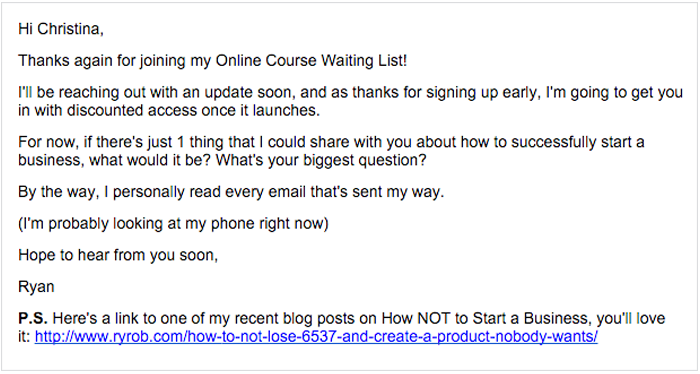

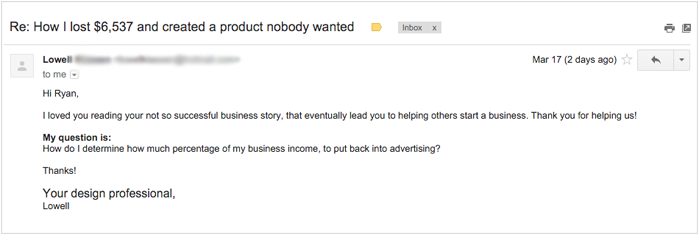
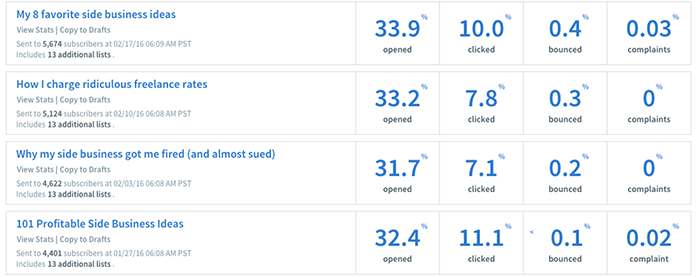
 The Internet of Things (IoT) — a vast network of connected devices — is set to become the world’s largest device market over the next decade, potentially creating trillions of dollars in economic value. However, without a reliable and secure network connection, these devices will fail to deliver that value. Device owners can choose between a number of established and emerging networking technologies to connect their IoT devices and collect data from them for analysis.
 PS. Did you know...


 Late last year I penned this short ebook: